

#stablecoins
stablecoins
Просмотров: 7.6M
29,437 обсуждают
Популярные
Новые

·
--
🚀 300 миллионов адресов: стейблкоины захватывают мир
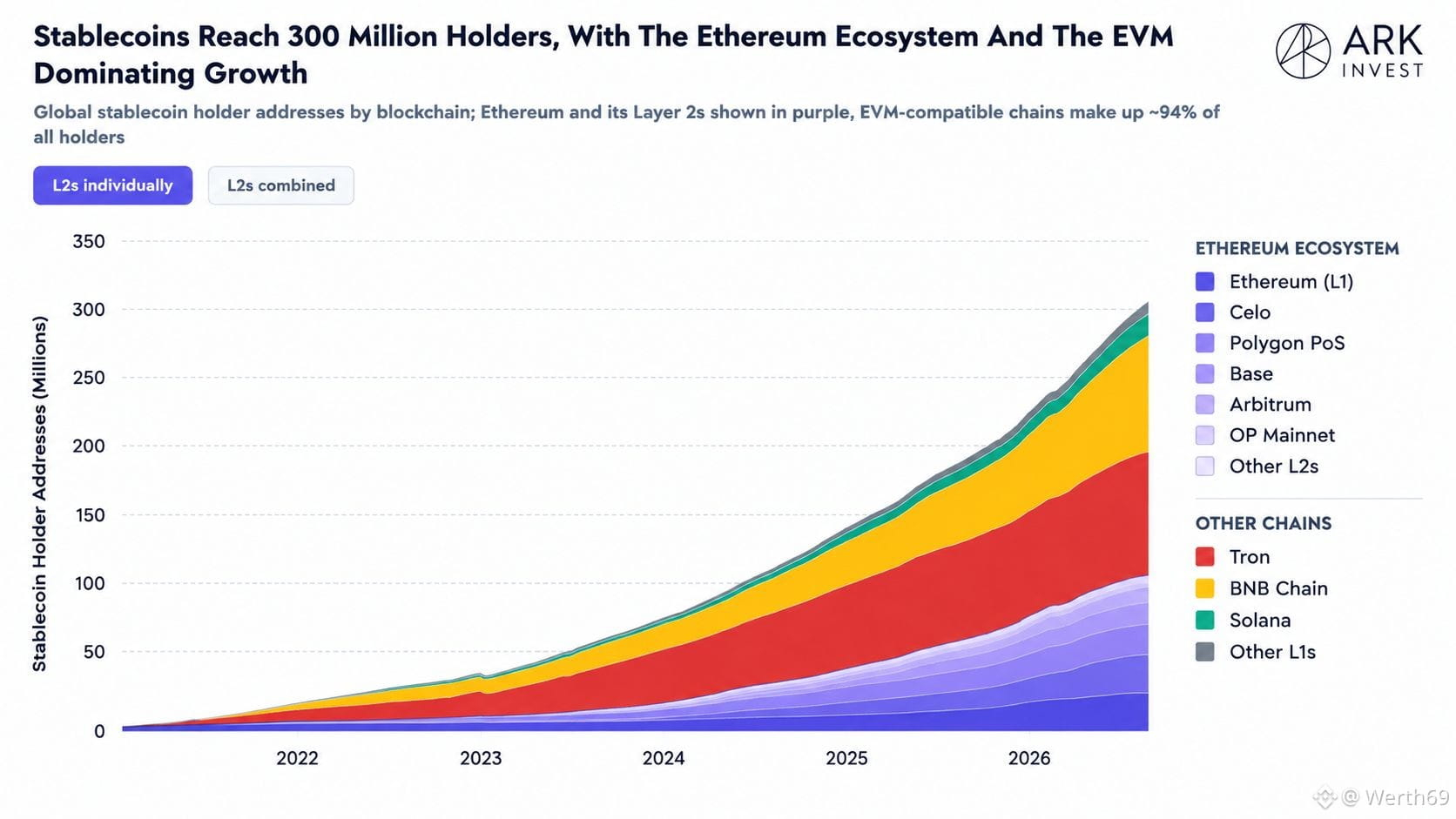
По данным ARK Invest, более 300 миллионов криптоадресов по всему миру уже хранят USDT, USDC и другие цифровые доллары.
И вот что важно: около 94% из них находятся в сетях, совместимых с Ethereum.
Конечно, это не 300 млн отдельных людей (у одного человека может быть несколько кошельков), но масштаб все равно впечатляет. Стейблкоины перестали быть просто инструментом для трейдеров. Люди используют их для хранения денег, переводов и расчетов, даже не интересуясь торговлей.
Это один из самых сильных признаков того, что крипта становится частью повседневных финансов.
Как думаете, когда цифровые доллары полностью заменят наличные в расчетах? 👇
#Stablecoins #CryptoAdoption #ArkInvest
$ETH
{future}(ETHUSDT)
$USDT $USDC
{future}(USDCUSDT)
🚀 300 миллионов адресов: стейблкоины захватывают мир
По данным ARK Invest, более 300 миллионов криптоадресов по всему миру уже хранят USDT, USDC и другие цифровые доллары.
И вот что важно: около 94% из них находятся в сетях, совместимых с Ethereum.
Конечно, это не 300 млн отдельных людей (у одного человека может быть несколько кошельков), но масштаб все равно впечатляет. Стейблкоины перестали быть просто инструментом для трейдеров. Люди используют их для хранения денег, переводов и расчетов, даже не интересуясь торговлей.
Это один из самых сильных признаков того, что крипта становится частью повседневных финансов.
Как думаете, когда цифровые доллары полностью заменят наличные в расчетах? 👇
#Stablecoins #CryptoAdoption #ArkInvest
$ETH
$USDT $USDC
По данным ARK Invest, более 300 миллионов криптоадресов по всему миру уже хранят USDT, USDC и другие цифровые доллары.
И вот что важно: около 94% из них находятся в сетях, совместимых с Ethereum.
Конечно, это не 300 млн отдельных людей (у одного человека может быть несколько кошельков), но масштаб все равно впечатляет. Стейблкоины перестали быть просто инструментом для трейдеров. Люди используют их для хранения денег, переводов и расчетов, даже не интересуясь торговлей.
Это один из самых сильных признаков того, что крипта становится частью повседневных финансов.
Как думаете, когда цифровые доллары полностью заменят наличные в расчетах? 👇
#Stablecoins #CryptoAdoption #ArkInvest
$ETH
$USDT $USDC
539

Проверено
#thailandlaunchesworptstablecointoqrpaymentapp
🚨 Thailand Launches WORPT, Letting Tourists Spend USDT and USDC Through QR Payments
Thailand is taking another step toward real-world crypto adoption with the launch of WORPT, a digital wallet that allows international tourists to convert stablecoins into Thai baht and pay merchants using the country’s existing QR payment network, PromptPay.
📱 How it works:
• $USDT and $USDC : Tourists can deposit supported stablecoins into the app.
• Instant spending conversion: Crypto is converted into Thai baht before purchases are made.
• QR payments: Users can pay participating merchants by scanning Thai PromptPay QR codes.
• Merchants receive baht: Businesses do not need to accept or hold cryptocurrency directly.
⚡ The bigger picture
WORPT was developed by Waan Exchange and Wipay and operates under Thailand’s Tourist DigiPay regulatory sandbox, with participation from major industry names including Tether, Visa and The Mall Group.
The project also plans to introduce a physical Visa prepaid card in mid-November 2026, followed by a virtual card in early 2027.
This development highlights an important shift in the crypto industry: stablecoins are increasingly being integrated into everyday payment systems rather than being used exclusively for trading or transferring funds between exchanges.
If adoption grows, initiatives like WORPT could help connect digital assets with tourism, retail spending and traditional financial infrastructure.
#Stablecoins #USDT #USDC
#thailandlaunchesworptstablecointoqrpaymentapp
🚨 Thailand Launches WORPT, Letting Tourists Spend USDT and USDC Through QR Payments
Thailand is taking another step toward real-world crypto adoption with the launch of WORPT, a digital wallet that allows international tourists to convert stablecoins into Thai baht and pay merchants using the country’s existing QR payment network, PromptPay.
📱 How it works:
• $USDT and $USDC : Tourists can deposit supported stablecoins into the app.
• Instant spending conversion: Crypto is converted into Thai baht before purchases are made.
• QR payments: Users can pay participating merchants by scanning Thai PromptPay QR codes.
• Merchants receive baht: Businesses do not need to accept or hold cryptocurrency directly.
⚡ The bigger picture
WORPT was developed by Waan Exchange and Wipay and operates under Thailand’s Tourist DigiPay regulatory sandbox, with participation from major industry names including Tether, Visa and The Mall Group.
The project also plans to introduce a physical Visa prepaid card in mid-November 2026, followed by a virtual card in early 2027.
This development highlights an important shift in the crypto industry: stablecoins are increasingly being integrated into everyday payment systems rather than being used exclusively for trading or transferring funds between exchanges.
If adoption grows, initiatives like WORPT could help connect digital assets with tourism, retail spending and traditional financial infrastructure.
#Stablecoins #USDT #USDC
🚨 Thailand Launches WORPT, Letting Tourists Spend USDT and USDC Through QR Payments
Thailand is taking another step toward real-world crypto adoption with the launch of WORPT, a digital wallet that allows international tourists to convert stablecoins into Thai baht and pay merchants using the country’s existing QR payment network, PromptPay.
📱 How it works:
• $USDT and $USDC : Tourists can deposit supported stablecoins into the app.
• Instant spending conversion: Crypto is converted into Thai baht before purchases are made.
• QR payments: Users can pay participating merchants by scanning Thai PromptPay QR codes.
• Merchants receive baht: Businesses do not need to accept or hold cryptocurrency directly.
⚡ The bigger picture
WORPT was developed by Waan Exchange and Wipay and operates under Thailand’s Tourist DigiPay regulatory sandbox, with participation from major industry names including Tether, Visa and The Mall Group.
The project also plans to introduce a physical Visa prepaid card in mid-November 2026, followed by a virtual card in early 2027.
This development highlights an important shift in the crypto industry: stablecoins are increasingly being integrated into everyday payment systems rather than being used exclusively for trading or transferring funds between exchanges.
If adoption grows, initiatives like WORPT could help connect digital assets with tourism, retail spending and traditional financial infrastructure.
#Stablecoins #USDT #USDC

1.7k


Статья
Ripple e Robinhood ampliam parceria: RLUSD ganha espaço no mercado financeiroEm 27 de outubro, a Ripple e a Robinhood anunciaram uma parceria estratégica para integrar stablecoins, serviços institucionais e gestão de tesouraria.
O destaque central é a RLUSD, stablecoin atrelada ao dólar desenvolvida pela Ripple.
O que foi anunciado?
A RLUSD já está disponível na Robinhood Chain e na Bitstamp by Robinhood, com previsão de chegada ao aplicativo da Robinhood ainda em 2026.
A parceria prevê o uso da RLUSD no XRP Ledger (XRPL) para liquidações institucionais e a integração do Ripple Treasury às operações financeiras da Robinhood.
As empresas também pretendem expandir a colaboração por meio do Ripple Prime, plataforma de serviços financeiros para clientes institucionais.
Por que isso importa?
Stablecoins estão sendo empregadas em atividades que ultrapassam a negociação de criptomoedas, como movimentação de recursos, liquidação de operações e administração de caixa.
A parceria representa uma expansão comercial relevante para a RLUSD, mas não demonstra aumento de demanda pelo XRP nem assegura valorização do ativo.
É importante distinguir as funcionalidades já disponíveis das previstas para implementação futura.
O que acompanhar?
O próximo marco verificável será a disponibilização efetiva da RLUSD no aplicativo da Robinhood, seguida de informações sobre utilização e volume de operações.
💬 Você acredita que a adoção de stablecoins por grandes plataformas financeiras poderá acelerar seu uso no cotidiano?
$XRP #Ripple #Stablecoins
Ripple e Robinhood ampliam parceria: RLUSD ganha espaço no mercado financeiro
Em 27 de outubro, a Ripple e a Robinhood anunciaram uma parceria estratégica para integrar stablecoins, serviços institucionais e gestão de tesouraria.
O destaque central é a RLUSD, stablecoin atrelada ao dólar desenvolvida pela Ripple.
O que foi anunciado?
A RLUSD já está disponível na Robinhood Chain e na Bitstamp by Robinhood, com previsão de chegada ao aplicativo da Robinhood ainda em 2026.
A parceria prevê o uso da RLUSD no XRP Ledger (XRPL) para liquidações institucionais e a integração do Ripple Treasury às operações financeiras da Robinhood.
As empresas também pretendem expandir a colaboração por meio do Ripple Prime, plataforma de serviços financeiros para clientes institucionais.
Por que isso importa?
Stablecoins estão sendo empregadas em atividades que ultrapassam a negociação de criptomoedas, como movimentação de recursos, liquidação de operações e administração de caixa.
A parceria representa uma expansão comercial relevante para a RLUSD, mas não demonstra aumento de demanda pelo XRP nem assegura valorização do ativo.
É importante distinguir as funcionalidades já disponíveis das previstas para implementação futura.
O que acompanhar?
O próximo marco verificável será a disponibilização efetiva da RLUSD no aplicativo da Robinhood, seguida de informações sobre utilização e volume de operações.
💬 Você acredita que a adoção de stablecoins por grandes plataformas financeiras poderá acelerar seu uso no cotidiano?
$XRP #Ripple #Stablecoins
O destaque central é a RLUSD, stablecoin atrelada ao dólar desenvolvida pela Ripple.
O que foi anunciado?
A RLUSD já está disponível na Robinhood Chain e na Bitstamp by Robinhood, com previsão de chegada ao aplicativo da Robinhood ainda em 2026.
A parceria prevê o uso da RLUSD no XRP Ledger (XRPL) para liquidações institucionais e a integração do Ripple Treasury às operações financeiras da Robinhood.
As empresas também pretendem expandir a colaboração por meio do Ripple Prime, plataforma de serviços financeiros para clientes institucionais.
Por que isso importa?
Stablecoins estão sendo empregadas em atividades que ultrapassam a negociação de criptomoedas, como movimentação de recursos, liquidação de operações e administração de caixa.
A parceria representa uma expansão comercial relevante para a RLUSD, mas não demonstra aumento de demanda pelo XRP nem assegura valorização do ativo.
É importante distinguir as funcionalidades já disponíveis das previstas para implementação futura.
O que acompanhar?
O próximo marco verificável será a disponibilização efetiva da RLUSD no aplicativo da Robinhood, seguida de informações sobre utilização e volume de operações.
💬 Você acredita que a adoção de stablecoins por grandes plataformas financeiras poderá acelerar seu uso no cotidiano?
$XRP #Ripple #Stablecoins
89
💵 USDC avança nas discussões sobre pagamentos na América Latina!
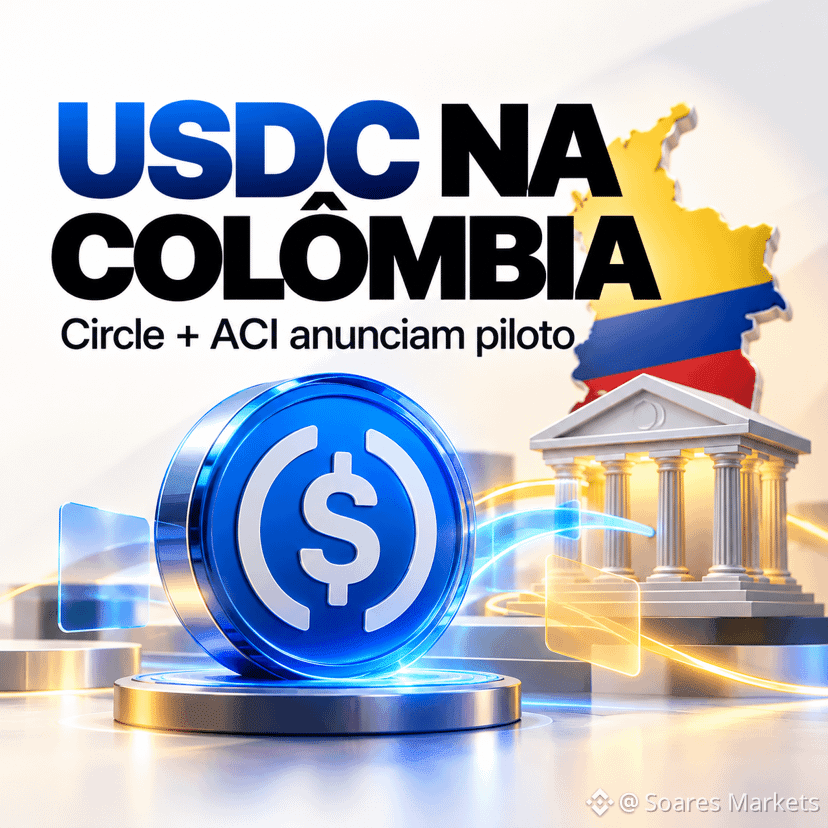
Circle e ACI Worldwide anunciaram uma iniciativa-piloto na Colômbia para demonstrar liquidações com USDC integradas aos sistemas de pagamentos existentes, por meio da plataforma ACI Connetic.
A proposta é complementar a infraestrutura bancária tradicional. A adoção comercial em larga escala ainda não foi comprovada.
💬 Esse modelo teria espaço no Brasil?
$USDC #Stablecoins #CriptoBrasil
💵 USDC avança nas discussões sobre pagamentos na América Latina!
Circle e ACI Worldwide anunciaram uma iniciativa-piloto na Colômbia para demonstrar liquidações com USDC integradas aos sistemas de pagamentos existentes, por meio da plataforma ACI Connetic.
A proposta é complementar a infraestrutura bancária tradicional. A adoção comercial em larga escala ainda não foi comprovada.
💬 Esse modelo teria espaço no Brasil?
$USDC #Stablecoins #CriptoBrasil
Circle e ACI Worldwide anunciaram uma iniciativa-piloto na Colômbia para demonstrar liquidações com USDC integradas aos sistemas de pagamentos existentes, por meio da plataforma ACI Connetic.
A proposta é complementar a infraestrutura bancária tradicional. A adoção comercial em larga escala ainda não foi comprovada.
💬 Esse modelo teria espaço no Brasil?
$USDC #Stablecoins #CriptoBrasil
1
163

·
--
USDC just flipped USDT in euro stablecoin trading — Kaiko puts its share at 56%.
On October 27, 2026, Cointelegraph and Kaiko reported that Circle’s $USDC now accounts for about 56% of stablecoin trading against the euro, up from roughly 10% in January 2024. Euro order books for USDC are also about 40% deeper than USDT’s, as European Economic Area venues tighten under the EU’s Markets in Crypto-Assets (MiCA) rules.
Tether’s $USDT remains larger worldwide — circulating supply still about 2.5 times USDC’s — so this is a euro on/off-ramp shift, not a global crown change. The European Banking Authority recently tagged USDC as the EU’s first “significant” e-money token, with deeper EBA oversight kicking in from November 12, 2026.
#USDC #Stablecoins #Crypto
DYOR. Not financial advice.
USDC just flipped USDT in euro stablecoin trading — Kaiko puts its share at 56%.
On October 27, 2026, Cointelegraph and Kaiko reported that Circle’s $USDC now accounts for about 56% of stablecoin trading against the euro, up from roughly 10% in January 2024. Euro order books for USDC are also about 40% deeper than USDT’s, as European Economic Area venues tighten under the EU’s Markets in Crypto-Assets (MiCA) rules.
Tether’s $USDT remains larger worldwide — circulating supply still about 2.5 times USDC’s — so this is a euro on/off-ramp shift, not a global crown change. The European Banking Authority recently tagged USDC as the EU’s first “significant” e-money token, with deeper EBA oversight kicking in from November 12, 2026.
#USDC #Stablecoins #Crypto
DYOR. Not financial advice.
On October 27, 2026, Cointelegraph and Kaiko reported that Circle’s $USDC now accounts for about 56% of stablecoin trading against the euro, up from roughly 10% in January 2024. Euro order books for USDC are also about 40% deeper than USDT’s, as European Economic Area venues tighten under the EU’s Markets in Crypto-Assets (MiCA) rules.
Tether’s $USDT remains larger worldwide — circulating supply still about 2.5 times USDC’s — so this is a euro on/off-ramp shift, not a global crown change. The European Banking Authority recently tagged USDC as the EU’s first “significant” e-money token, with deeper EBA oversight kicking in from November 12, 2026.
#USDC #Stablecoins #Crypto
DYOR. Not financial advice.

22

·
--
The crypto industry launches stablecoins like they’ve just discovered the concept of a dollar.
The real battle isn't issuance, but whether $XRP can force RLUSD into the liquidity loops that keep $USDC dominant. Institutional trust is earned through redemption speed, not press-release partnerships. Watch the daily volume on these new pairs to see if they actually clear or just sit there as digital wallpaper.
#stablecoins #Web3 #OnChain
The crypto industry launches stablecoins like they’ve just discovered the concept of a dollar.
The real battle isn't issuance, but whether $XRP can force RLUSD into the liquidity loops that keep $USDC dominant. Institutional trust is earned through redemption speed, not press-release partnerships. Watch the daily volume on these new pairs to see if they actually clear or just sit there as digital wallpaper.
#stablecoins #Web3 #OnChain
The real battle isn't issuance, but whether $XRP can force RLUSD into the liquidity loops that keep $USDC dominant. Institutional trust is earned through redemption speed, not press-release partnerships. Watch the daily volume on these new pairs to see if they actually clear or just sit there as digital wallpaper.
#stablecoins #Web3 #OnChain
5

·
--
Рост
#OCCUrgesCommunityBanksToEnterStablecoinPayments
🏦 Community Banks Explore Stablecoin Payments: A New Step for Crypto Adoption?
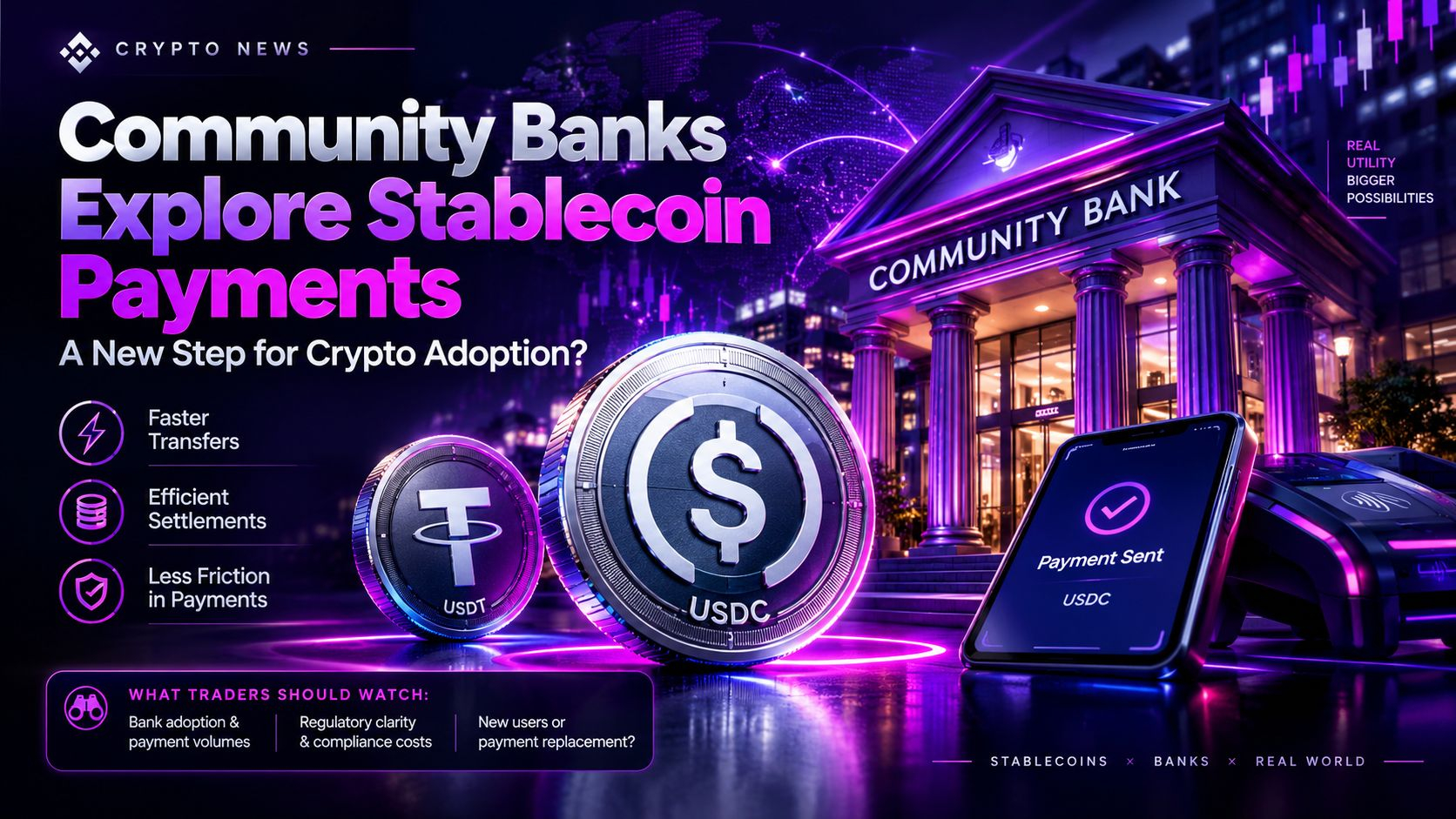
Community banks entering stablecoin payments could help bring digital assets closer to everyday financial services. Stablecoins offer the potential for faster transfers, more efficient settlements, and reduced friction in digital payments.
📊 Market Impact: If adoption expands, it could strengthen the real-world utility of stablecoins and blockchain infrastructure. However, greater payment activity does not automatically mean higher demand for Bitcoin or other cryptocurrencies.
🔎 What Traders Should Watch:
- Actual bank adoption and payment volumes
- Regulatory clarity and compliance costs
- Whether stablecoins attract new users or simply replace existing payment methods
Bottom Line: Community bank participation could be a constructive development for stablecoin adoption, but real usage matters more than headlines. The key question is whether this translates into sustained growth across the digital asset ecosystem.
#Stablecoins #Blockchain #CryptoNews
$ETH
{future}(ETHUSDT)
$SOL
{future}(SOLUSDT)
$USDC
{future}(USDCUSDT)
#OCCUrgesCommunityBanksToEnterStablecoinPayments
🏦 Community Banks Explore Stablecoin Payments: A New Step for Crypto Adoption?
Community banks entering stablecoin payments could help bring digital assets closer to everyday financial services. Stablecoins offer the potential for faster transfers, more efficient settlements, and reduced friction in digital payments.
📊 Market Impact: If adoption expands, it could strengthen the real-world utility of stablecoins and blockchain infrastructure. However, greater payment activity does not automatically mean higher demand for Bitcoin or other cryptocurrencies.
🔎 What Traders Should Watch:
- Actual bank adoption and payment volumes
- Regulatory clarity and compliance costs
- Whether stablecoins attract new users or simply replace existing payment methods
Bottom Line: Community bank participation could be a constructive development for stablecoin adoption, but real usage matters more than headlines. The key question is whether this translates into sustained growth across the digital asset ecosystem.
#Stablecoins #Blockchain #CryptoNews
$ETH
$SOL
$USDC
🏦 Community Banks Explore Stablecoin Payments: A New Step for Crypto Adoption?
Community banks entering stablecoin payments could help bring digital assets closer to everyday financial services. Stablecoins offer the potential for faster transfers, more efficient settlements, and reduced friction in digital payments.
📊 Market Impact: If adoption expands, it could strengthen the real-world utility of stablecoins and blockchain infrastructure. However, greater payment activity does not automatically mean higher demand for Bitcoin or other cryptocurrencies.
🔎 What Traders Should Watch:
- Actual bank adoption and payment volumes
- Regulatory clarity and compliance costs
- Whether stablecoins attract new users or simply replace existing payment methods
Bottom Line: Community bank participation could be a constructive development for stablecoin adoption, but real usage matters more than headlines. The key question is whether this translates into sustained growth across the digital asset ecosystem.
#Stablecoins #Blockchain #CryptoNews
$ETH
$SOL
$USDC
36

·
--
USDC欧元交易份额升至56%反超USDT,合规资金加速入场
稳定币竞争格局正在欧元区悄然生变。据Cointelegraph援引数据服务商Kaiko的信息,USDC在欧元稳定币交易中的份额自2024年1月以来已攀升至56%,首次超过长期占据主导地位的USDT。
这一变化的背后,是欧盟监管框架对稳定币使用的持续引导。随着交易所逐步限制部分稳定币的存取与结算,资金开始向合规属性更强的资产集中。USDC凭借相对清晰的合规叙事,成为欧元区交易者的更优选择,流动性也随之加深。
为什么这个信号值得关注?稳定币是加密市场的底层结算与计价工具,其份额分布往往折射出合规资金与投机资金的流向。USDC份额反超,意味着以欧洲为代表的成熟市场中,机构与合规资金正在加速入场,而非仅仅依赖散户的交易需求。
从数据看,56%的份额意味着USDC在欧元交易场景中已占据明显优势。这一趋势自2024年1月启动,历时一年多逐步固化,说明它并非短期波动,而是结构性迁移。更深的流动性也降低了大额交易的成本,进一步形成正向循环。
市场可能如何反应?对USDC而言,这是合规叙事获得数据支撑的直接体现,或继续吸引偏好确定性的资金。但对整体市场而言,稳定币份额的局部集中也需要警惕——交易所限制可能带来流动性集中风险,一旦政策变动,局部市场的波动或被放大。
需要强调的是,USDT在全球总量上仍占主导,欧元仅是局部市场,这一反超尚不能等同于全球格局的转折。此外,份额变化与交易所政策高度相关,政策一旦调整,结果或将反转。
接下来观察什么?交易层面更重要的是等待流动性深度与政策稳定性的进一步确认,而非仅凭单一份额数据做判断。如果正在关注 $USDC,值得留意其份额能否在政策扰动下维持,以及USDT在全球市场的占比是否随之松动。
$USDC #USDC #Stablecoins #CryptoMarket
以上为信息整理与个人分析,不构成投资建议。
关注我,持续跟踪关键市场变化与数据。
USDC欧元交易份额升至56%反超USDT,合规资金加速入场
稳定币竞争格局正在欧元区悄然生变。据Cointelegraph援引数据服务商Kaiko的信息,USDC在欧元稳定币交易中的份额自2024年1月以来已攀升至56%,首次超过长期占据主导地位的USDT。
这一变化的背后,是欧盟监管框架对稳定币使用的持续引导。随着交易所逐步限制部分稳定币的存取与结算,资金开始向合规属性更强的资产集中。USDC凭借相对清晰的合规叙事,成为欧元区交易者的更优选择,流动性也随之加深。
为什么这个信号值得关注?稳定币是加密市场的底层结算与计价工具,其份额分布往往折射出合规资金与投机资金的流向。USDC份额反超,意味着以欧洲为代表的成熟市场中,机构与合规资金正在加速入场,而非仅仅依赖散户的交易需求。
从数据看,56%的份额意味着USDC在欧元交易场景中已占据明显优势。这一趋势自2024年1月启动,历时一年多逐步固化,说明它并非短期波动,而是结构性迁移。更深的流动性也降低了大额交易的成本,进一步形成正向循环。
市场可能如何反应?对USDC而言,这是合规叙事获得数据支撑的直接体现,或继续吸引偏好确定性的资金。但对整体市场而言,稳定币份额的局部集中也需要警惕——交易所限制可能带来流动性集中风险,一旦政策变动,局部市场的波动或被放大。
需要强调的是,USDT在全球总量上仍占主导,欧元仅是局部市场,这一反超尚不能等同于全球格局的转折。此外,份额变化与交易所政策高度相关,政策一旦调整,结果或将反转。
接下来观察什么?交易层面更重要的是等待流动性深度与政策稳定性的进一步确认,而非仅凭单一份额数据做判断。如果正在关注 $USDC ,值得留意其份额能否在政策扰动下维持,以及USDT在全球市场的占比是否随之松动。
$USDC #USDC #Stablecoins #CryptoMarket
以上为信息整理与个人分析,不构成投资建议。
关注我,持续跟踪关键市场变化与数据。
稳定币竞争格局正在欧元区悄然生变。据Cointelegraph援引数据服务商Kaiko的信息,USDC在欧元稳定币交易中的份额自2024年1月以来已攀升至56%,首次超过长期占据主导地位的USDT。
这一变化的背后,是欧盟监管框架对稳定币使用的持续引导。随着交易所逐步限制部分稳定币的存取与结算,资金开始向合规属性更强的资产集中。USDC凭借相对清晰的合规叙事,成为欧元区交易者的更优选择,流动性也随之加深。
为什么这个信号值得关注?稳定币是加密市场的底层结算与计价工具,其份额分布往往折射出合规资金与投机资金的流向。USDC份额反超,意味着以欧洲为代表的成熟市场中,机构与合规资金正在加速入场,而非仅仅依赖散户的交易需求。
从数据看,56%的份额意味着USDC在欧元交易场景中已占据明显优势。这一趋势自2024年1月启动,历时一年多逐步固化,说明它并非短期波动,而是结构性迁移。更深的流动性也降低了大额交易的成本,进一步形成正向循环。
市场可能如何反应?对USDC而言,这是合规叙事获得数据支撑的直接体现,或继续吸引偏好确定性的资金。但对整体市场而言,稳定币份额的局部集中也需要警惕——交易所限制可能带来流动性集中风险,一旦政策变动,局部市场的波动或被放大。
需要强调的是,USDT在全球总量上仍占主导,欧元仅是局部市场,这一反超尚不能等同于全球格局的转折。此外,份额变化与交易所政策高度相关,政策一旦调整,结果或将反转。
接下来观察什么?交易层面更重要的是等待流动性深度与政策稳定性的进一步确认,而非仅凭单一份额数据做判断。如果正在关注 $USDC ,值得留意其份额能否在政策扰动下维持,以及USDT在全球市场的占比是否随之松动。
$USDC #USDC #Stablecoins #CryptoMarket
以上为信息整理与个人分析,不构成投资建议。
关注我,持续跟踪关键市场变化与数据。
23

·
--
$USDC and other stablecoins can now pay for street food in Thailand 🇹🇭
Thailand has launched WORPT, a wallet app for foreign visitors:
• Tourists convert stablecoins into Thai baht inside the app
• They pay local shops by scanning PromptPay QR codes, the same system Thai people use every day
• Merchants receive normal baht through standard payment systems, so they never have to touch crypto
• It was built by Waan Exchange and Wipay under the Thai SEC's Tourist Digipay regulatory sandbox
Why it matters: this is a practical, regulated use of stablecoins in everyday life. Thailand welcomes tens of millions of visitors a year, and many already hold crypto. Letting them spend it directly, without exchange counters or card fees, is a real convenience.
It also shows the pattern we're seeing worldwide: regulators are less interested in banning crypto payments and more interested in controlling them through licensed apps and sandboxes.
Would you pay with stablecoins on your next trip? 👇
#Stablecoins #Thailand #CryptoNews
$USDC and other stablecoins can now pay for street food in Thailand 🇹🇭
Thailand has launched WORPT, a wallet app for foreign visitors:
• Tourists convert stablecoins into Thai baht inside the app
• They pay local shops by scanning PromptPay QR codes, the same system Thai people use every day
• Merchants receive normal baht through standard payment systems, so they never have to touch crypto
• It was built by Waan Exchange and Wipay under the Thai SEC's Tourist Digipay regulatory sandbox
Why it matters: this is a practical, regulated use of stablecoins in everyday life. Thailand welcomes tens of millions of visitors a year, and many already hold crypto. Letting them spend it directly, without exchange counters or card fees, is a real convenience.
It also shows the pattern we're seeing worldwide: regulators are less interested in banning crypto payments and more interested in controlling them through licensed apps and sandboxes.
Would you pay with stablecoins on your next trip? 👇
#Stablecoins #Thailand #CryptoNews
Thailand has launched WORPT, a wallet app for foreign visitors:
• Tourists convert stablecoins into Thai baht inside the app
• They pay local shops by scanning PromptPay QR codes, the same system Thai people use every day
• Merchants receive normal baht through standard payment systems, so they never have to touch crypto
• It was built by Waan Exchange and Wipay under the Thai SEC's Tourist Digipay regulatory sandbox
Why it matters: this is a practical, regulated use of stablecoins in everyday life. Thailand welcomes tens of millions of visitors a year, and many already hold crypto. Letting them spend it directly, without exchange counters or card fees, is a real convenience.
It also shows the pattern we're seeing worldwide: regulators are less interested in banning crypto payments and more interested in controlling them through licensed apps and sandboxes.
Would you pay with stablecoins on your next trip? 👇
#Stablecoins #Thailand #CryptoNews
1

🦈 NEARLY $1B IN STABLECOIN CAPITAL FLOODED $TRX IN JUST SEVEN DAYS! 💥
Smart money isn't asking for permission—it's routing pure fuel into $TRX . 🌊 Capturing $903.4M in fresh stablecoin market cap over a single week puts this network far ahead of every competing Layer-1 on the map.
When institutional settlement rails absorb capital at this scale, price action usually follows the liquidity footprint. 📊 This isn't retail speculation; it is a structural expansion of on-chain collateral locking in real transfer dominance. 💡
💬 Are you tracking the capital flow into $TRX here, or waiting for the technical breakout to confirm? 👇
⚠️ Not financial advice. Always manage your risk. 🛡️
🏷️ #TRX #Tron #Stablecoins #Crypto
🌊 ⚡
🦈 NEARLY $1B IN STABLECOIN CAPITAL FLOODED $TRX IN JUST SEVEN DAYS! 💥
Smart money isn't asking for permission—it's routing pure fuel into $TRX . 🌊 Capturing $903.4M in fresh stablecoin market cap over a single week puts this network far ahead of every competing Layer-1 on the map.
When institutional settlement rails absorb capital at this scale, price action usually follows the liquidity footprint. 📊 This isn't retail speculation; it is a structural expansion of on-chain collateral locking in real transfer dominance. 💡
💬 Are you tracking the capital flow into $TRX here, or waiting for the technical breakout to confirm? 👇
⚠️ Not financial advice. Always manage your risk. 🛡️
🏷️ #TRX #Tron #Stablecoins #Crypto
🌊 ⚡
Smart money isn't asking for permission—it's routing pure fuel into $TRX . 🌊 Capturing $903.4M in fresh stablecoin market cap over a single week puts this network far ahead of every competing Layer-1 on the map.
When institutional settlement rails absorb capital at this scale, price action usually follows the liquidity footprint. 📊 This isn't retail speculation; it is a structural expansion of on-chain collateral locking in real transfer dominance. 💡
💬 Are you tracking the capital flow into $TRX here, or waiting for the technical breakout to confirm? 👇
⚠️ Not financial advice. Always manage your risk. 🛡️
🏷️ #TRX #Tron #Stablecoins #Crypto
🌊 ⚡
2

·
--
⚖️ $USDC | USDC at $0.9993: proof of a solid peg or a warning about reliance on reserves?
At the 2026-10-27 22:40 UTC snapshot, USDC traded at $0.9993, a -0.07% deviation from the assumed USD 1.00 peg, with a $71.1 billion market cap and $10.4 billion in 24-hour volume. Supporters read that tight tracking and deep liquidity as evidence that a fully collateralized, reserve-backed design works at scale. Critics counter that a peg is only as strong as the transparency and redeemability of the reserves behind it, and that a small deviation says little about stress conditions. Both readings rest on the same numbers.
Why it matters: For a stablecoin, the real question is not the price but whether reserves and redemption terms hold up when holders actually want their dollars back.
💬 Does a near-perfect peg like this reflect genuine reserve strength, or does it mainly show that redemption pressure has not yet been tested?
Source: Official site https://www.circle.com/en/usdc
#USDC #Stablecoins
⚖️ $USDC | USDC at $0.9993: proof of a solid peg or a warning about reliance on reserves?
At the 2026-10-27 22:40 UTC snapshot, USDC traded at $0.9993, a -0.07% deviation from the assumed USD 1.00 peg, with a $71.1 billion market cap and $10.4 billion in 24-hour volume. Supporters read that tight tracking and deep liquidity as evidence that a fully collateralized, reserve-backed design works at scale. Critics counter that a peg is only as strong as the transparency and redeemability of the reserves behind it, and that a small deviation says little about stress conditions. Both readings rest on the same numbers.
Why it matters: For a stablecoin, the real question is not the price but whether reserves and redemption terms hold up when holders actually want their dollars back.
💬 Does a near-perfect peg like this reflect genuine reserve strength, or does it mainly show that redemption pressure has not yet been tested?
Source: Official site https://www.circle.com/en/usdc
#USDC #Stablecoins
At the 2026-10-27 22:40 UTC snapshot, USDC traded at $0.9993, a -0.07% deviation from the assumed USD 1.00 peg, with a $71.1 billion market cap and $10.4 billion in 24-hour volume. Supporters read that tight tracking and deep liquidity as evidence that a fully collateralized, reserve-backed design works at scale. Critics counter that a peg is only as strong as the transparency and redeemability of the reserves behind it, and that a small deviation says little about stress conditions. Both readings rest on the same numbers.
Why it matters: For a stablecoin, the real question is not the price but whether reserves and redemption terms hold up when holders actually want their dollars back.
💬 Does a near-perfect peg like this reflect genuine reserve strength, or does it mainly show that redemption pressure has not yet been tested?
Source: Official site https://www.circle.com/en/usdc
#USDC #Stablecoins
1
·
--
⚖️ $USDT | USDT at $0.9988: a healthy peg or a warning sign?
At the 2026-10-27 21:46 UTC snapshot, Tether traded at $0.9988, a -0.12% deviation from the assumed USD 1.00 peg, with a $182.3 billion market cap and $42.4 billion in 24-hour volume. Supporters read the small gap as normal market friction for a token described as 100% backed by USD reserves, while critics see any persistent discount as a reason to scrutinize reserve transparency and redemption mechanics. Both readings rest on the same numbers, which is what makes the debate durable.
Why it matters: For a stablecoin, the peg and the credibility of its reserves matter more than any price move, since USDT underpins liquidity across many exchanges.
💬 Is a -0.12% deviation from the peg routine market noise, or does it justify demanding more proof of reserves and redemption terms?
Source: Official site https://tether.to/
#Tether #Stablecoins
⚖️ $USDT | USDT at $0.9988: a healthy peg or a warning sign?
At the 2026-10-27 21:46 UTC snapshot, Tether traded at $0.9988, a -0.12% deviation from the assumed USD 1.00 peg, with a $182.3 billion market cap and $42.4 billion in 24-hour volume. Supporters read the small gap as normal market friction for a token described as 100% backed by USD reserves, while critics see any persistent discount as a reason to scrutinize reserve transparency and redemption mechanics. Both readings rest on the same numbers, which is what makes the debate durable.
Why it matters: For a stablecoin, the peg and the credibility of its reserves matter more than any price move, since USDT underpins liquidity across many exchanges.
💬 Is a -0.12% deviation from the peg routine market noise, or does it justify demanding more proof of reserves and redemption terms?
Source: Official site https://tether.to/
#Tether #Stablecoins
At the 2026-10-27 21:46 UTC snapshot, Tether traded at $0.9988, a -0.12% deviation from the assumed USD 1.00 peg, with a $182.3 billion market cap and $42.4 billion in 24-hour volume. Supporters read the small gap as normal market friction for a token described as 100% backed by USD reserves, while critics see any persistent discount as a reason to scrutinize reserve transparency and redemption mechanics. Both readings rest on the same numbers, which is what makes the debate durable.
Why it matters: For a stablecoin, the peg and the credibility of its reserves matter more than any price move, since USDT underpins liquidity across many exchanges.
💬 Is a -0.12% deviation from the peg routine market noise, or does it justify demanding more proof of reserves and redemption terms?
Source: Official site https://tether.to/
#Tether #Stablecoins

·
--
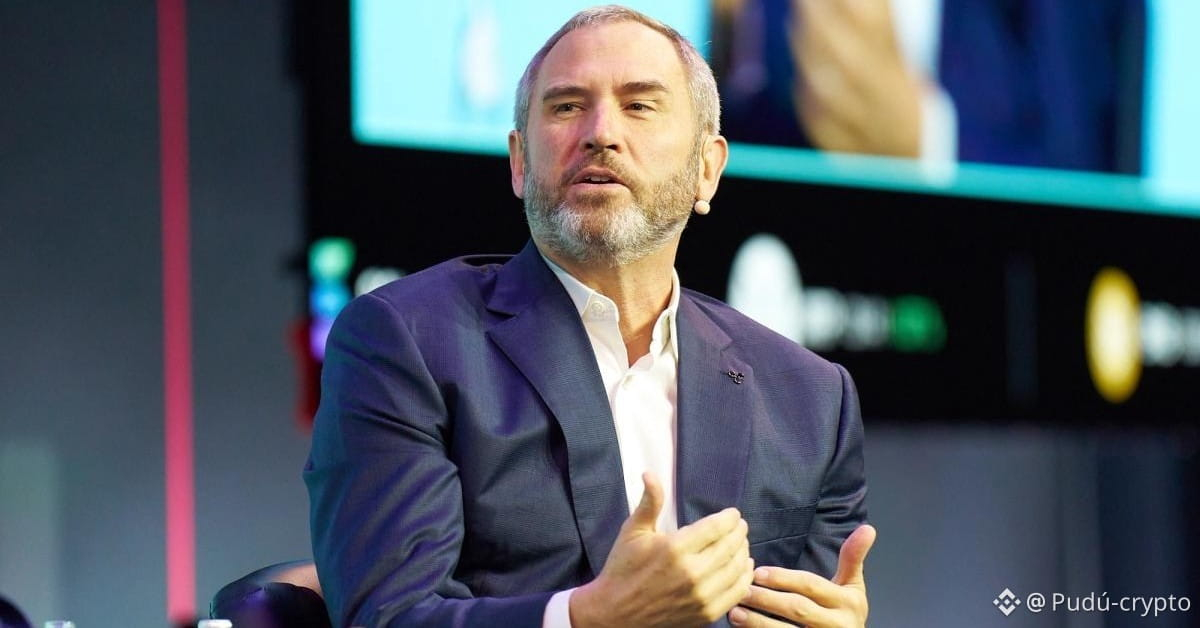
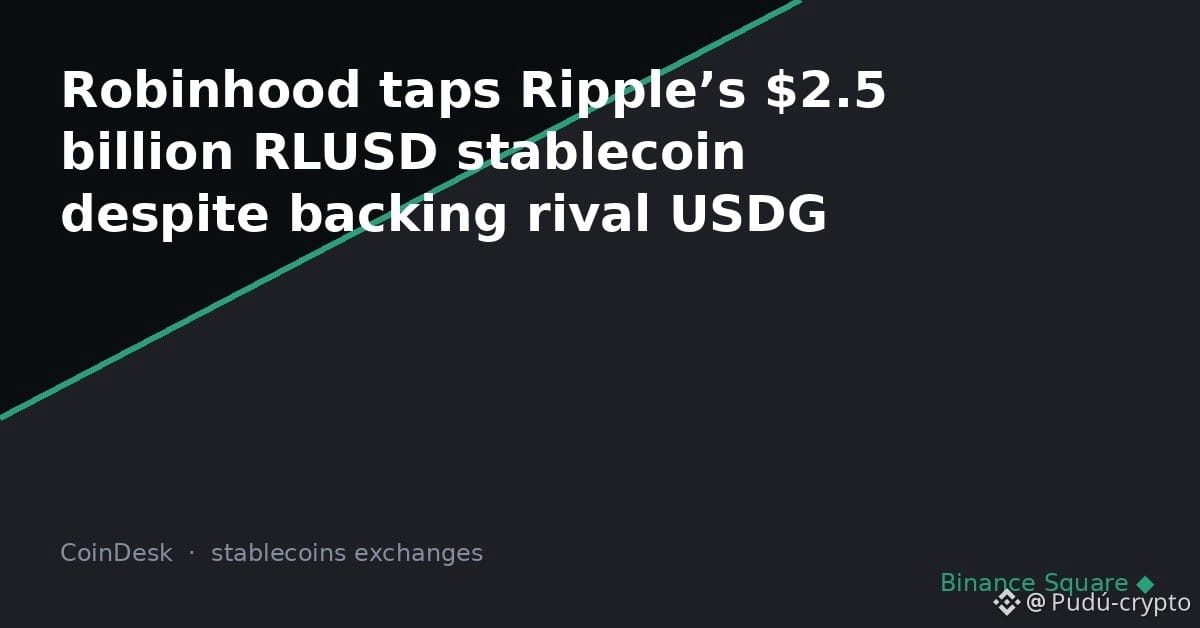
Robinhood está moviendo sus piezas en el mercado de las stablecoins.
La plataforma decidió integrar la nueva moneda de Ripple, RLUSD, para sus clientes minoristas antes de que termine este año.
Lo curioso es que esto ocurre poco después de que ayudaran a lanzar USDG, una stablecoin competidora.
Tener ambas opciones disponibles en la misma plataforma es un movimiento poco común.
¿Qué te parece esta estrategia?
$XRP $BTC
#Stablecoins #Robinhood
Robinhood está moviendo sus piezas en el mercado de las stablecoins.
La plataforma decidió integrar la nueva moneda de Ripple, RLUSD, para sus clientes minoristas antes de que termine este año.
Lo curioso es que esto ocurre poco después de que ayudaran a lanzar USDG, una stablecoin competidora.
Tener ambas opciones disponibles en la misma plataforma es un movimiento poco común.
¿Qué te parece esta estrategia?
$XRP $BTC
#Stablecoins #Robinhood
La plataforma decidió integrar la nueva moneda de Ripple, RLUSD, para sus clientes minoristas antes de que termine este año.
Lo curioso es que esto ocurre poco después de que ayudaran a lanzar USDG, una stablecoin competidora.
Tener ambas opciones disponibles en la misma plataforma es un movimiento poco común.
¿Qué te parece esta estrategia?
$XRP $BTC
#Stablecoins #Robinhood
1
64

Stablecoins in one minute 💵
A stablecoin is a crypto pegged to a stable asset, usually the US dollar. 1 coin ≈ $1.
Why people use them:
🔹 Park profits without leaving crypto
🔹 Wait out volatile markets
🔹 Move money fast between exchanges and wallets
Not all stablecoins are equal, though. Check what backs them and how transparent the issuer is.
Which stablecoin do you use most? 👇
$USDT $USDC
#Stablecoins #CryptoForBeginners #BinanceSquare
Stablecoins in one minute 💵
A stablecoin is a crypto pegged to a stable asset, usually the US dollar. 1 coin ≈ $1.
Why people use them:
🔹 Park profits without leaving crypto
🔹 Wait out volatile markets
🔹 Move money fast between exchanges and wallets
Not all stablecoins are equal, though. Check what backs them and how transparent the issuer is.
Which stablecoin do you use most? 👇
$USDT $USDC
#Stablecoins #CryptoForBeginners #BinanceSquare
A stablecoin is a crypto pegged to a stable asset, usually the US dollar. 1 coin ≈ $1.
Why people use them:
🔹 Park profits without leaving crypto
🔹 Wait out volatile markets
🔹 Move money fast between exchanges and wallets
Not all stablecoins are equal, though. Check what backs them and how transparent the issuer is.
Which stablecoin do you use most? 👇
$USDT $USDC
#Stablecoins #CryptoForBeginners #BinanceSquare
28

·
--
Robinhood helped launch $USDG… now it plans to offer Ripple’s $RLUSD too. That caught my eye. 👀
Robinhood plans to bring Ripple’s dollar-backed stablecoin to retail customers later this year, despite backing a rival token.
My takeaway: backing one stablecoin doesn’t mean shutting out the competition. Distribution is the interesting part here. 🧩
When choosing a stablecoin, what matters more to you: who issues it, or where you can use it? 💬
#Robinhood #Ripple #Stablecoins
Robinhood helped launch $USDG… now it plans to offer Ripple’s $RLUSD too. That caught my eye. 👀
Robinhood plans to bring Ripple’s dollar-backed stablecoin to retail customers later this year, despite backing a rival token.
My takeaway: backing one stablecoin doesn’t mean shutting out the competition. Distribution is the interesting part here. 🧩
When choosing a stablecoin, what matters more to you: who issues it, or where you can use it? 💬
#Robinhood #Ripple #Stablecoins
Robinhood plans to bring Ripple’s dollar-backed stablecoin to retail customers later this year, despite backing a rival token.
My takeaway: backing one stablecoin doesn’t mean shutting out the competition. Distribution is the interesting part here. 🧩
When choosing a stablecoin, what matters more to you: who issues it, or where you can use it? 💬
#Robinhood #Ripple #Stablecoins

·
--
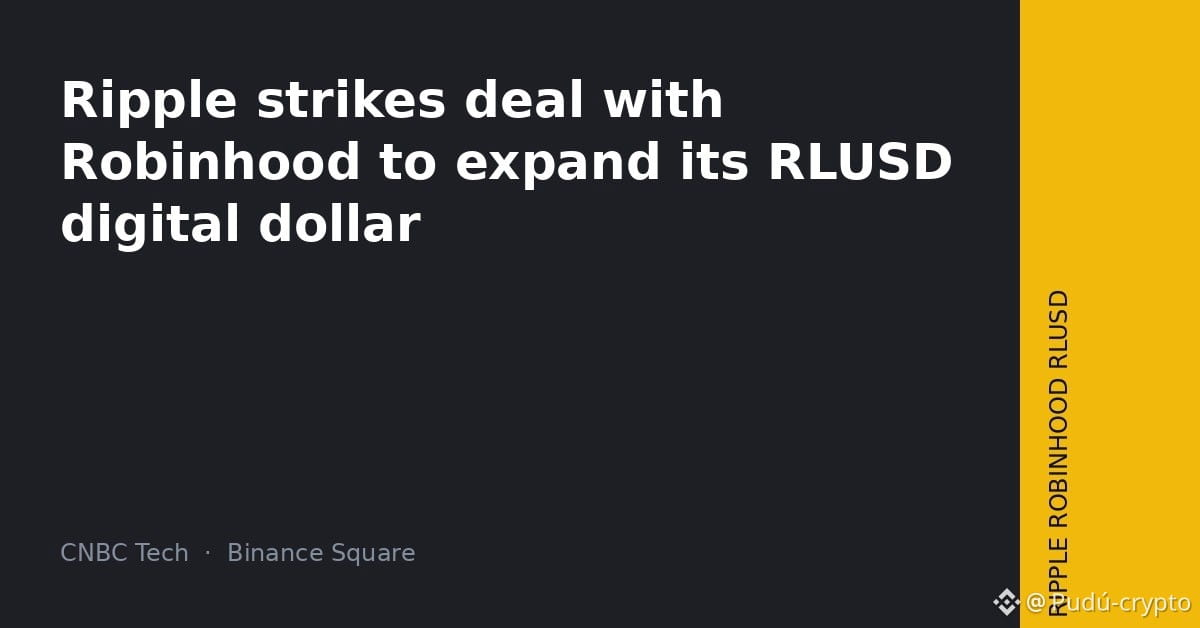
Ripple acaba de cerrar un trato con $HOOD para expandir su moneda estable RLUSD.
La idea es sencilla.
Buscan aprovechar la infraestructura de Robinhood para que este dólar digital tenga mayor alcance.
Es curioso ver cómo las stablecoins dejan de ser solo herramientas de trading.
Ahora se posicionan como parte fundamental del sistema financiero.
La liquidez 24/7 parece ser la nueva meta del mercado.
¿Qué te parece este movimiento de Ripple?
#Ripple #Robinhood #Stablecoins
Ripple acaba de cerrar un trato con $HOOD para expandir su moneda estable RLUSD.
La idea es sencilla.
Buscan aprovechar la infraestructura de Robinhood para que este dólar digital tenga mayor alcance.
Es curioso ver cómo las stablecoins dejan de ser solo herramientas de trading.
Ahora se posicionan como parte fundamental del sistema financiero.
La liquidez 24/7 parece ser la nueva meta del mercado.
¿Qué te parece este movimiento de Ripple?
#Ripple #Robinhood #Stablecoins
La idea es sencilla.
Buscan aprovechar la infraestructura de Robinhood para que este dólar digital tenga mayor alcance.
Es curioso ver cómo las stablecoins dejan de ser solo herramientas de trading.
Ahora se posicionan como parte fundamental del sistema financiero.
La liquidez 24/7 parece ser la nueva meta del mercado.
¿Qué te parece este movimiento de Ripple?
#Ripple #Robinhood #Stablecoins

73

🚨 WALL STREET TARGETS STABLECOINS WHILE $CRO HALTS AFTER DEFI EXPLOIT! 💥
Institutional capital is quietly laying the tracks while retail gets distracted by headline noise. 🏦 Over twenty legacy banking titans are targeting a unified dollar stablecoin, signaling that big money isn't leaving crypto—it's building its own front door. 💡
Meanwhile, the contrast between security friction like $CRO halting its chain and multi-billion-dollar platform valuations shows how rapidly this market is maturing. 🌊 Order flow always follows structural utility, and traditional finance is positioning to absorb serious liquidity. 🔍
💬 Which of these macro shifts will dictate market momentum heading into Q4? 👇
⚠️ Not financial advice. Always manage your risk. 🛡️
🏷️ #CRO #Crypto #DeFi #Stablecoins #MarketUpdate
⚡ 💎
🚨 WALL STREET TARGETS STABLECOINS WHILE $CRO HALTS AFTER DEFI EXPLOIT! 💥
Institutional capital is quietly laying the tracks while retail gets distracted by headline noise. 🏦 Over twenty legacy banking titans are targeting a unified dollar stablecoin, signaling that big money isn't leaving crypto—it's building its own front door. 💡
Meanwhile, the contrast between security friction like $CRO halting its chain and multi-billion-dollar platform valuations shows how rapidly this market is maturing. 🌊 Order flow always follows structural utility, and traditional finance is positioning to absorb serious liquidity. 🔍
💬 Which of these macro shifts will dictate market momentum heading into Q4? 👇
⚠️ Not financial advice. Always manage your risk. 🛡️
🏷️ #CRO #Crypto #DeFi #Stablecoins #MarketUpdate
⚡ 💎
Institutional capital is quietly laying the tracks while retail gets distracted by headline noise. 🏦 Over twenty legacy banking titans are targeting a unified dollar stablecoin, signaling that big money isn't leaving crypto—it's building its own front door. 💡
Meanwhile, the contrast between security friction like $CRO halting its chain and multi-billion-dollar platform valuations shows how rapidly this market is maturing. 🌊 Order flow always follows structural utility, and traditional finance is positioning to absorb serious liquidity. 🔍
💬 Which of these macro shifts will dictate market momentum heading into Q4? 👇
⚠️ Not financial advice. Always manage your risk. 🛡️
🏷️ #CRO #Crypto #DeFi #Stablecoins #MarketUpdate
⚡ 💎
6

·
--
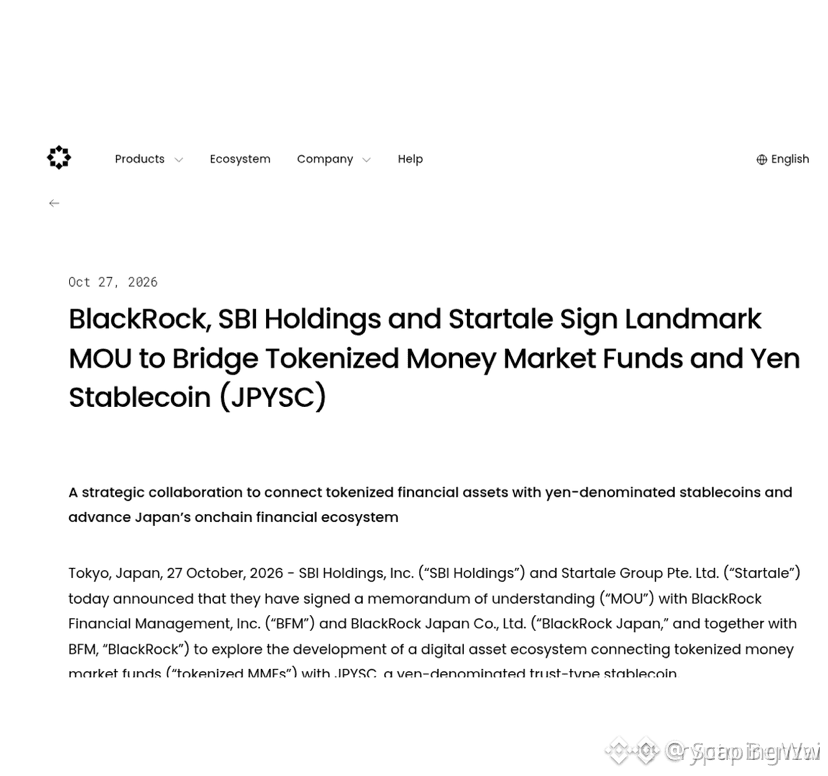
🦈 $JPYSC GETS BLACKROCK'S GAZE – ASIA'S NEXT YEN STABLECOIN SURGE? 🚀
🦈 BlackRock’s MOU with SBI signals that institutional capital is eyeing Japan’s first trust‑type yen stablecoin. 📊 Smart money is already scouting the tech and distribution layers, treating $JPYSC as a bridge between tokenized money‑market funds and real‑world yield.
💡 If the tokenized MMF can deliver genuine yen‑stable returns, we could see a fresh liquidity wave 🌊 flooding a top‑tier exchange, nudging the yen‑stablecoin premium higher. 📈 The regulatory backdrop remains a work‑in‑progress, but the alignment alone fuels bullish sentiment.
💬 Are you ready to lock in yen yield with a BlackRock‑backed stablecoin? 👇
⚠️ Not financial advice. Always manage your risk. 🛡️
🏷️ #JPYSC #Stablecoins #Tokenization #SmartMoney
🚀 💎
🦈 $JPYSC GETS BLACKROCK'S GAZE – ASIA'S NEXT YEN STABLECOIN SURGE? 🚀
🦈 BlackRock’s MOU with SBI signals that institutional capital is eyeing Japan’s first trust‑type yen stablecoin. 📊 Smart money is already scouting the tech and distribution layers, treating $JPYSC as a bridge between tokenized money‑market funds and real‑world yield.
💡 If the tokenized MMF can deliver genuine yen‑stable returns, we could see a fresh liquidity wave 🌊 flooding a top‑tier exchange, nudging the yen‑stablecoin premium higher. 📈 The regulatory backdrop remains a work‑in‑progress, but the alignment alone fuels bullish sentiment.
💬 Are you ready to lock in yen yield with a BlackRock‑backed stablecoin? 👇
⚠️ Not financial advice. Always manage your risk. 🛡️
🏷️ #JPYSC #Stablecoins #Tokenization #SmartMoney
🚀 💎
🦈 BlackRock’s MOU with SBI signals that institutional capital is eyeing Japan’s first trust‑type yen stablecoin. 📊 Smart money is already scouting the tech and distribution layers, treating $JPYSC as a bridge between tokenized money‑market funds and real‑world yield.
💡 If the tokenized MMF can deliver genuine yen‑stable returns, we could see a fresh liquidity wave 🌊 flooding a top‑tier exchange, nudging the yen‑stablecoin premium higher. 📈 The regulatory backdrop remains a work‑in‑progress, but the alignment alone fuels bullish sentiment.
💬 Are you ready to lock in yen yield with a BlackRock‑backed stablecoin? 👇
⚠️ Not financial advice. Always manage your risk. 🛡️
🏷️ #JPYSC #Stablecoins #Tokenization #SmartMoney
🚀 💎
4


Статья
Ripple Treasury quiere que la caja de las empresas no se pare de noche: IA para la tesorería y rendimiento sobre RLUSDLa tesorería de una empresa sigue funcionando al ritmo de los bancos: cuando cierran por la noche, el fin de semana o un festivo, el efectivo se queda quieto. Ripple quiere cambiar eso con las novedades de Ripple Treasury que presentó en Swell 2026, su congreso en Nueva York.
Hay dos piezas:
• Una capa de orquestación con IA. Su asistente de tesorería, GSmart, coordina y automatiza posición de caja, previsiones, conciliación, liquidez y pagos, para que las decisiones pasen directamente a ejecución.
• «24/7 Returns». Permite a clientes corporativos elegibles obtener rendimiento sobre activos digitales en Ripple, entre ellos RLUSD, su stablecoin respaldada por el dólar, fuera del horario bancario y sin gestionar ellos mismos las operaciones con esos activos.
Ripple cita entre las empresas a las que se dirige la plataforma a American Airlines, Christian Louboutin, Subway, Adecco, Kingfisher y Trax. Y apoya el argumento en la encuesta de liquidez de la AFP de 2026: el 46 % de las organizaciones aumentó su saldo de caja en EE. UU. el último año, y el 86 % de los profesionales de tesorería usaría fondos monetarios en tiempo real si encajaran con sus políticas de inversión.
Un detalle importante: la nota no da el tipo de rendimiento ni los requisitos concretos del programa. Solo habla de empresas elegibles que cumplan sus condiciones.
Mi lectura: la stablecoin aquí no se vende como un activo para especular, sino como una cuenta corriente que no cierra. Si las grandes empresas empiezan a dejar parte de su caja operativa en RLUSD para no perder rendimiento el fin de semana, la competencia de Ripple ya no son otras cripto, sino los fondos monetarios y los bancos. Habrá que ver qué rendimiento ofrece y con qué riesgos.
Análisis completo en territorioblockchain.com
#Ripple #RLUSD #Stablecoins #IA
Ripple Treasury quiere que la caja de las empresas no se pare de noche: IA para la tesorería y rendimiento sobre RLUSD
La tesorería de una empresa sigue funcionando al ritmo de los bancos: cuando cierran por la noche, el fin de semana o un festivo, el efectivo se queda quieto. Ripple quiere cambiar eso con las novedades de Ripple Treasury que presentó en Swell 2026, su congreso en Nueva York.
Hay dos piezas:
• Una capa de orquestación con IA. Su asistente de tesorería, GSmart, coordina y automatiza posición de caja, previsiones, conciliación, liquidez y pagos, para que las decisiones pasen directamente a ejecución.
• «24/7 Returns». Permite a clientes corporativos elegibles obtener rendimiento sobre activos digitales en Ripple, entre ellos RLUSD, su stablecoin respaldada por el dólar, fuera del horario bancario y sin gestionar ellos mismos las operaciones con esos activos.
Ripple cita entre las empresas a las que se dirige la plataforma a American Airlines, Christian Louboutin, Subway, Adecco, Kingfisher y Trax. Y apoya el argumento en la encuesta de liquidez de la AFP de 2026: el 46 % de las organizaciones aumentó su saldo de caja en EE. UU. el último año, y el 86 % de los profesionales de tesorería usaría fondos monetarios en tiempo real si encajaran con sus políticas de inversión.
Un detalle importante: la nota no da el tipo de rendimiento ni los requisitos concretos del programa. Solo habla de empresas elegibles que cumplan sus condiciones.
Mi lectura: la stablecoin aquí no se vende como un activo para especular, sino como una cuenta corriente que no cierra. Si las grandes empresas empiezan a dejar parte de su caja operativa en RLUSD para no perder rendimiento el fin de semana, la competencia de Ripple ya no son otras cripto, sino los fondos monetarios y los bancos. Habrá que ver qué rendimiento ofrece y con qué riesgos.
Análisis completo en territorioblockchain.com
#Ripple #RLUSD #Stablecoins #IA
Hay dos piezas:
• Una capa de orquestación con IA. Su asistente de tesorería, GSmart, coordina y automatiza posición de caja, previsiones, conciliación, liquidez y pagos, para que las decisiones pasen directamente a ejecución.
• «24/7 Returns». Permite a clientes corporativos elegibles obtener rendimiento sobre activos digitales en Ripple, entre ellos RLUSD, su stablecoin respaldada por el dólar, fuera del horario bancario y sin gestionar ellos mismos las operaciones con esos activos.
Ripple cita entre las empresas a las que se dirige la plataforma a American Airlines, Christian Louboutin, Subway, Adecco, Kingfisher y Trax. Y apoya el argumento en la encuesta de liquidez de la AFP de 2026: el 46 % de las organizaciones aumentó su saldo de caja en EE. UU. el último año, y el 86 % de los profesionales de tesorería usaría fondos monetarios en tiempo real si encajaran con sus políticas de inversión.
Un detalle importante: la nota no da el tipo de rendimiento ni los requisitos concretos del programa. Solo habla de empresas elegibles que cumplan sus condiciones.
Mi lectura: la stablecoin aquí no se vende como un activo para especular, sino como una cuenta corriente que no cierra. Si las grandes empresas empiezan a dejar parte de su caja operativa en RLUSD para no perder rendimiento el fin de semana, la competencia de Ripple ya no son otras cripto, sino los fondos monetarios y los bancos. Habrá que ver qué rendimiento ofrece y con qué riesgos.
Análisis completo en territorioblockchain.com
#Ripple #RLUSD #Stablecoins #IA
20
·
--
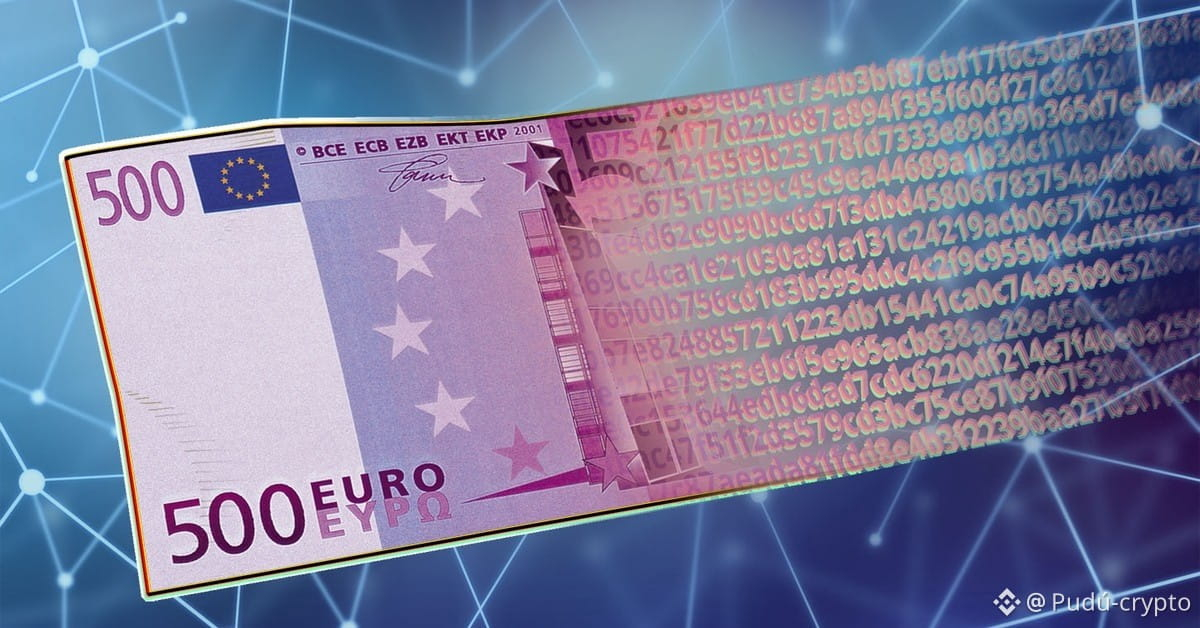
El mercado de stablecoins en euros acaba de cambiar de líder.
Desde enero, $USDC alcanzó el 56% del volumen de trading.
Esto ocurre mientras las nuevas reglas de la Unión Europea limitan el uso de $USDT en los exchanges.
La liquidez se está moviendo rápido hacia la moneda de Circle.
¿Te sorprende este cambio de tendencia?
#Stablecoins #Cripto
El mercado de stablecoins en euros acaba de cambiar de líder.
Desde enero, $USDC alcanzó el 56% del volumen de trading.
Esto ocurre mientras las nuevas reglas de la Unión Europea limitan el uso de $USDT en los exchanges.
La liquidez se está moviendo rápido hacia la moneda de Circle.
¿Te sorprende este cambio de tendencia?
#Stablecoins #Cripto
Desde enero, $USDC alcanzó el 56% del volumen de trading.
Esto ocurre mientras las nuevas reglas de la Unión Europea limitan el uso de $USDT en los exchanges.
La liquidez se está moviendo rápido hacia la moneda de Circle.
¿Te sorprende este cambio de tendencia?
#Stablecoins #Cripto
9
Войдите, чтобы посмотреть больше материала
Присоединяйтесь к пользователям криптовалют по всему миру на Binance Square
⚡️ Получайте новейшую и полезную информацию о криптоактивах.
💬 Нам доверяет крупнейшая в мире криптобиржа.
👍 Получите достоверные аналитические данные от верифицированных создателей контента.
Эл. почта/номер телефона
В тренде
1
#CanMicrosoftDeliverOnAI
Просмотров: 115,672
894 обсуждают
2
#CanGoogleDefindItsCore
Просмотров: 55,800
635 обсуждают
3
#FOMCWatch
Просмотров: 9.1M
28,148 обсуждают
4
#OSMOPlansToBurn100MTokensFromCommunityPool
Просмотров: 0
6 обсуждают
5
#EthereumDropsBelow$2300
Просмотров: 11,946
163 обсуждают
6
#BitcoinSlipsBelow$80KAgain
Просмотров: 33,565
131 обсуждают
7
#ThailandLaunchesWORPTStablecoinToQRPaymentApp
Просмотров: 70,906
851 обсуждают
8
#StrategySkipsBitcoinPurchasesSpends$205MOnSTRCBuybacks
Просмотров: 13,182
99 обсуждают
9
#BitmineAdds10452ETH
Просмотров: 120,465
1,271 обсуждают
10
#SouthKoreaConsidersEducationTaxOnCryptoExchanges
Просмотров: 75,826
881 обсуждают