
#openintelligence
openintelligence
Просмотров: 2,826
84 обсуждают
Популярные
Новые

#opg $OPG
$BTC to scalable, transparent, and verifiable infrastructure. This is where OpenGradient is making a difference.
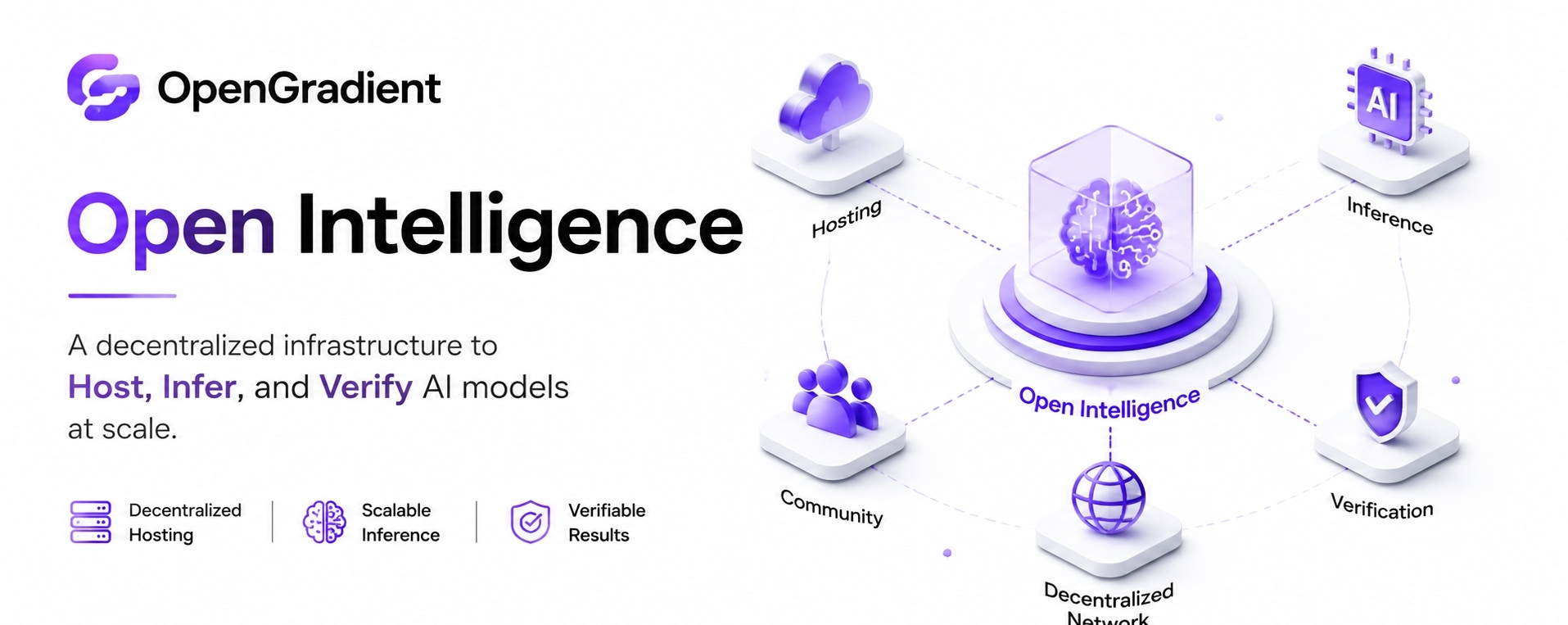
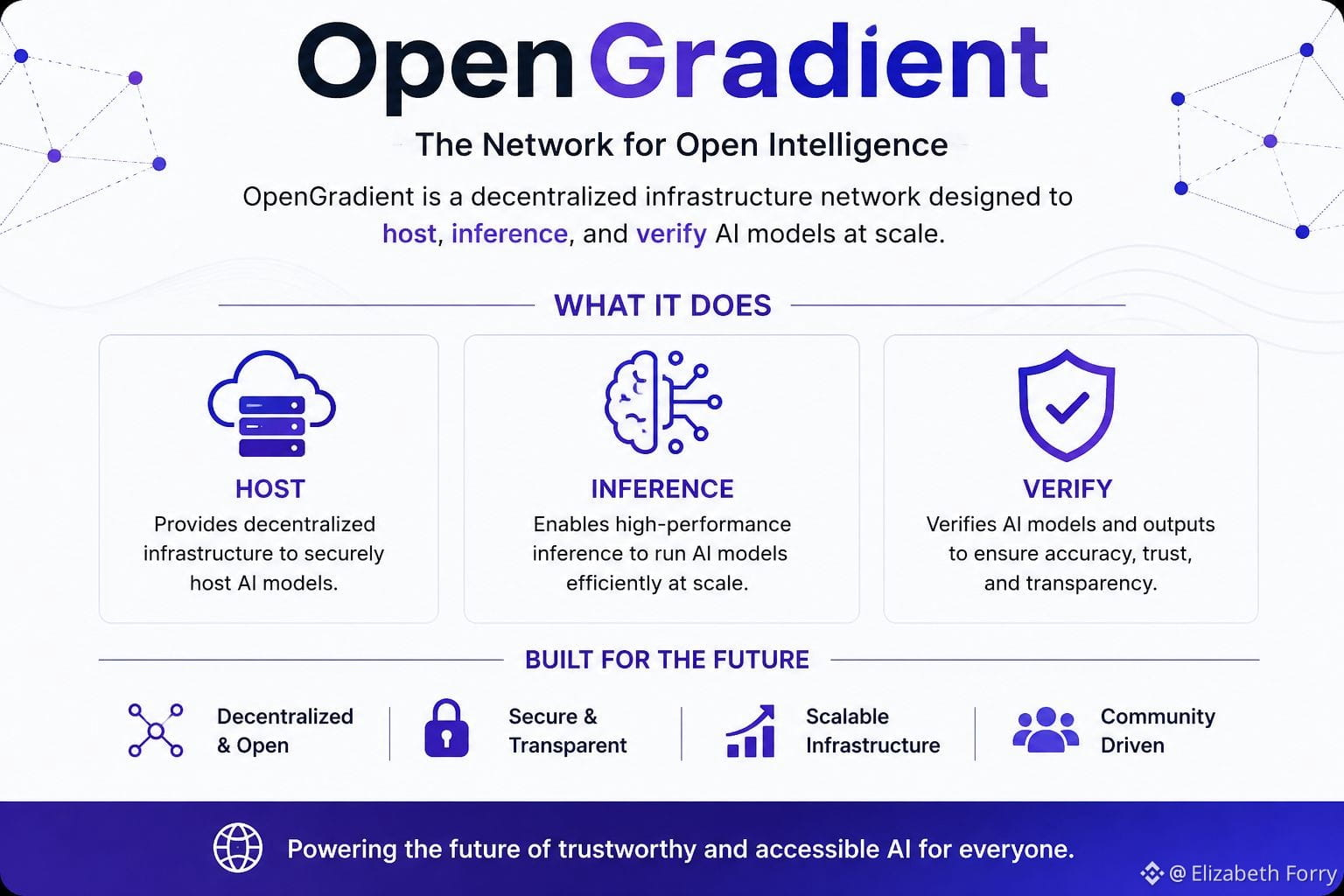
OpenGradient is building the network for Open Intelligence—a decentralized infrastructure designed to host, run inference on, and verify AI models at scale. Instead of relying on a handful of centralized providers, OpenGradient enables a more open and distributed ecosystem where AI can be deployed efficiently and transparently.
🔹 Decentralized AI infrastructure
🔹 Scalable model hosting
🔹 Fast and reliable inference
🔹 Verifiable AI outputs
🔹 Community-driven innovation
As AI adoption accelerates across industries, the demand for trust, transparency, and accessibility continues to grow. OpenGradient aims to provide the foundation that allows developers, businesses, and users to interact with AI in a more open and secure environment.
The vision is simple: make powerful AI infrastructure available to everyone, not just a select few. By combining decentralization with scalable AI services, OpenGradient is helping shape the next generation of intelligent applications.
The future of AI is not only about smarter models—it’s about creating an open network where intelligence can be shared, verified, and scaled globally.
🌐 Open Intelligence. Open Infrastructure. Open Future.
#OpenGradient #Blockchain #OpenIntelligence $BTC
$BTC to scalable, transparent, and verifiable infrastructure. This is where OpenGradient is making a difference.
OpenGradient is building the network for Open Intelligence—a decentralized infrastructure designed to host, run inference on, and verify AI models at scale. Instead of relying on a handful of centralized providers, OpenGradient enables a more open and distributed ecosystem where AI can be deployed efficiently and transparently.
🔹 Decentralized AI infrastructure
🔹 Scalable model hosting
🔹 Fast and reliable inference
🔹 Verifiable AI outputs
🔹 Community-driven innovation
As AI adoption accelerates across industries, the demand for trust, transparency, and accessibility continues to grow. OpenGradient aims to provide the foundation that allows developers, businesses, and users to interact with AI in a more open and secure environment.
The vision is simple: make powerful AI infrastructure available to everyone, not just a select few. By combining decentralization with scalable AI services, OpenGradient is helping shape the next generation of intelligent applications.
The future of AI is not only about smarter models—it’s about creating an open network where intelligence can be shared, verified, and scaled globally.
🌐 Open Intelligence. Open Infrastructure. Open Future.
#OpenGradient #Blockchain #OpenIntelligence $BTC

I used to think the future of AI would mostly be decided by who could train the biggest models and deliver the fastest outputs. But the more I watch how the space evolves, the more I think intelligence alone may not become the long-term advantage.
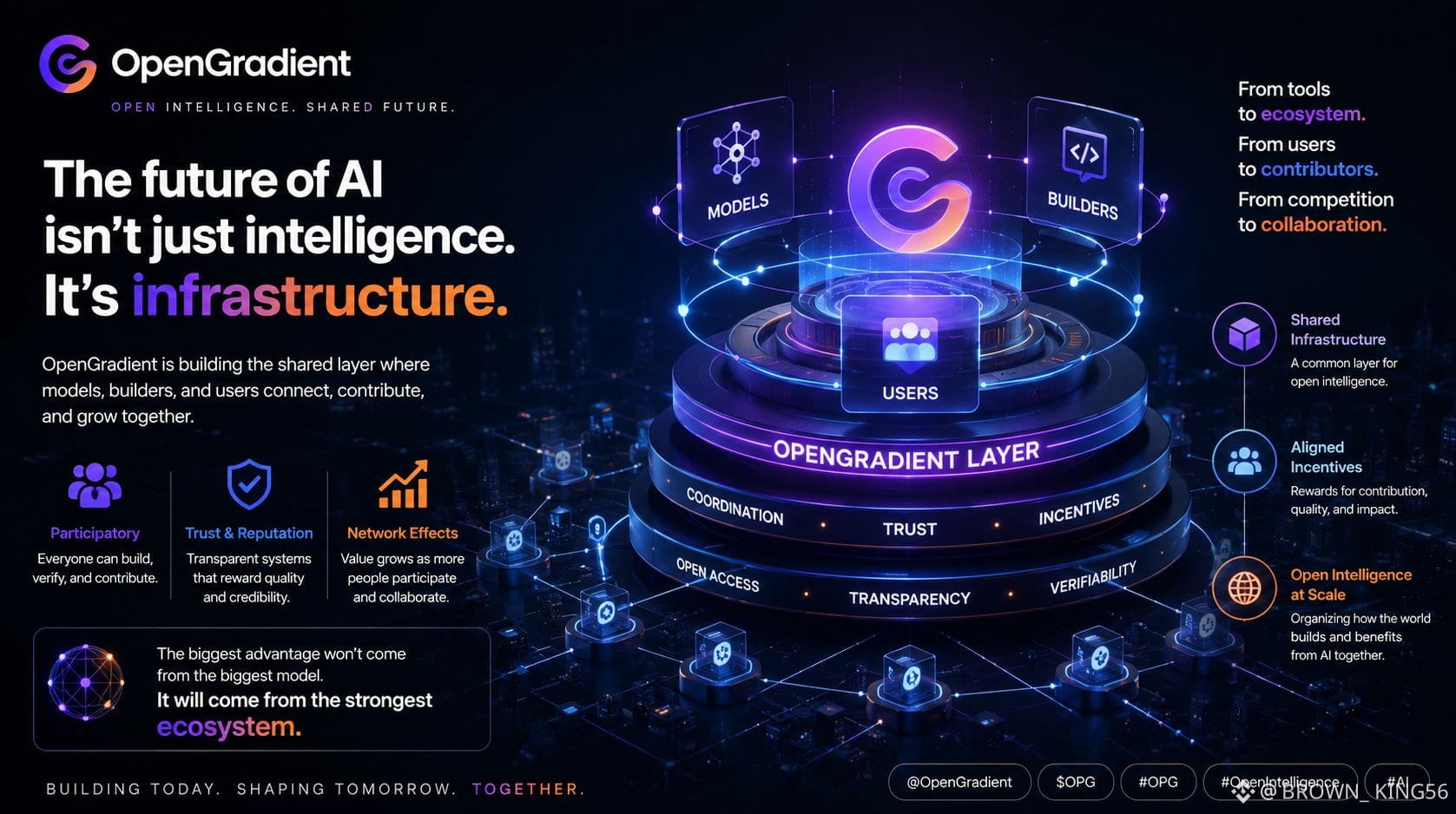
That is one reason OpenGradient caught my attention. Instead of positioning AI as a simple tool that people use and move on from, the bigger idea appears to be creating infrastructure where models, builders, and users can interact through a shared layer. When systems become participatory instead of purely consumable, value starts coming from coordination, trust, and contribution rather than only raw performance.
What makes this interesting is that networks behave differently from products. Products compete for users, but networks grow through participation. Once people begin building, verifying, and contributing within the same environment, stronger effects can emerge over time because reputation, access, and incentives start reinforcing each other.
Of course, infrastructure alone is never enough. Adoption decides everything. A network only becomes meaningful when enough participants consistently create value inside it. If that balance is achieved, OpenGradient could become more than another AI interface and evolve into a layer that helps organize how open intelligence operates at scale.
The bigger question may not be who creates the smartest AI. It may be who creates the ecosystem people continue choosing to build on.
@OpenGradient $OPG #OPG #OpenIntelligence #AI $SYN #opg $OPG
That is one reason OpenGradient caught my attention. Instead of positioning AI as a simple tool that people use and move on from, the bigger idea appears to be creating infrastructure where models, builders, and users can interact through a shared layer. When systems become participatory instead of purely consumable, value starts coming from coordination, trust, and contribution rather than only raw performance.
What makes this interesting is that networks behave differently from products. Products compete for users, but networks grow through participation. Once people begin building, verifying, and contributing within the same environment, stronger effects can emerge over time because reputation, access, and incentives start reinforcing each other.
Of course, infrastructure alone is never enough. Adoption decides everything. A network only becomes meaningful when enough participants consistently create value inside it. If that balance is achieved, OpenGradient could become more than another AI interface and evolve into a layer that helps organize how open intelligence operates at scale.
The bigger question may not be who creates the smartest AI. It may be who creates the ecosystem people continue choosing to build on.
@OpenGradient $OPG #OPG #OpenIntelligence #AI $SYN #opg $OPG


#opg $OPG
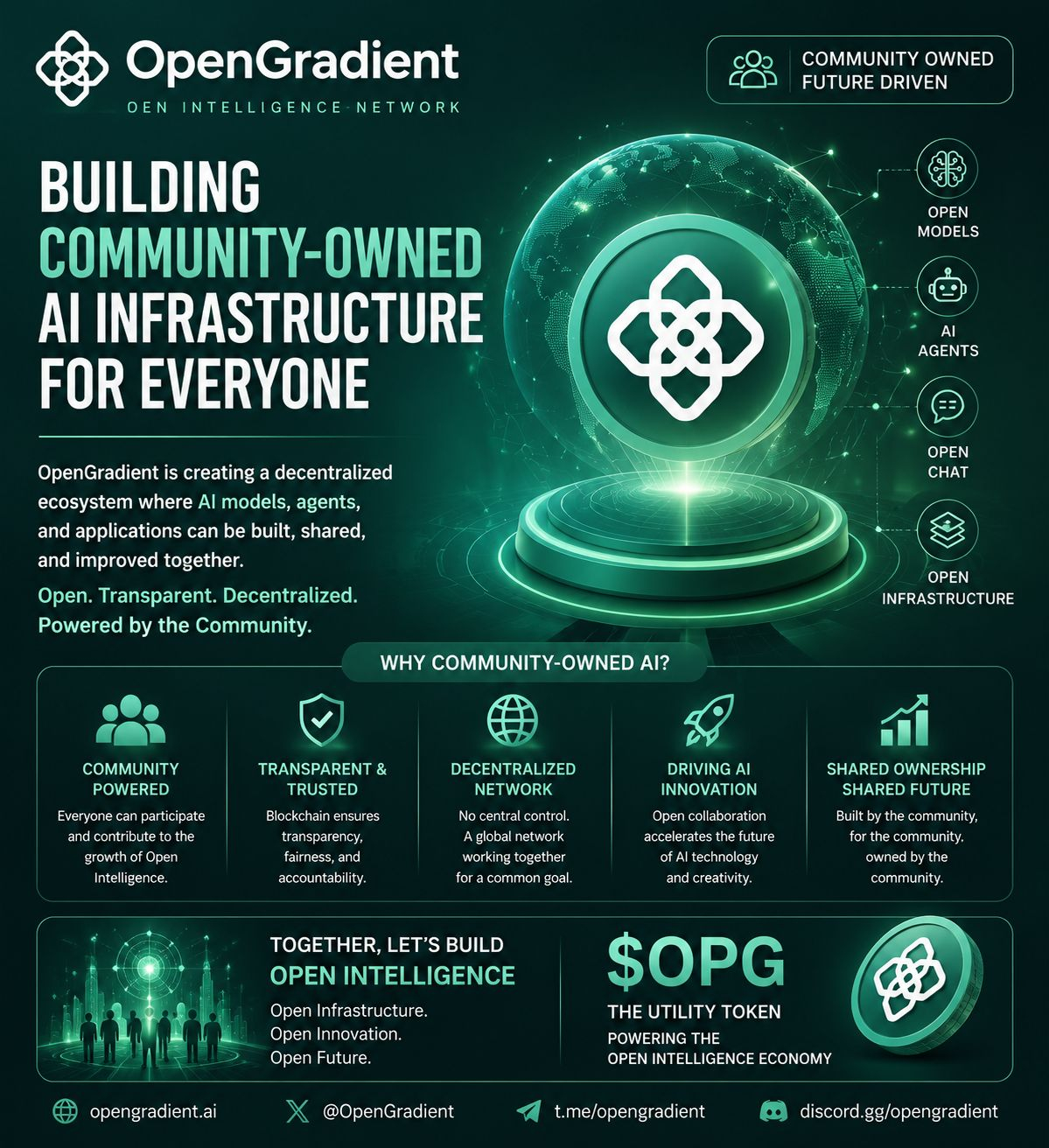
The future of AI belongs to open ecosystems, not closed systems. @OpenGradient is building a community-driven infrastructure where AI models and agents can evolve through collaboration instead of central control.
This shift from centralized AI to Open Intelligence could redefine how innovation happens in the digital world.
@OpenGradient $OPG #OPG #OpenGradient #OpenIntelligence #DecentralizedAI
The future of AI belongs to open ecosystems, not closed systems. @OpenGradient is building a community-driven infrastructure where AI models and agents can evolve through collaboration instead of central control.
This shift from centralized AI to Open Intelligence could redefine how innovation happens in the digital world.
@OpenGradient $OPG #OPG #OpenGradient #OpenIntelligence #DecentralizedAI

$OPG Is the access layer for open intelligence 🚀
OpenGradient is positioning around a real market shift: intelligence is becoming an access problem, not just a model problem. When access to advanced AI gets restricted, the value moves toward networks that make intelligence open, verifiable, and portable.
That’s the bigger thesis here. The market may eventually reward the coordination and verification layer just as much as the model layer itself.
Not financial advice. Manage your risk.
#OPG #AI #Web3 #OpenIntelligence
✦
OpenGradient is positioning around a real market shift: intelligence is becoming an access problem, not just a model problem. When access to advanced AI gets restricted, the value moves toward networks that make intelligence open, verifiable, and portable.
That’s the bigger thesis here. The market may eventually reward the coordination and verification layer just as much as the model layer itself.
Not financial advice. Manage your risk.
#OPG #AI #Web3 #OpenIntelligence
✦


$OPG and the rise of open intelligence 🌐
The latest access restrictions around advanced AI models highlight a bigger market shift: intelligence is becoming an access layer, not just a model layer. That creates a clear case for networks built around openness, verification, and distribution.
OpenGradient is positioning for that structural change. If AI access keeps fragmenting, the value may move toward infrastructure that makes intelligence portable, transparent, and broadly accessible.
Not financial advice. Manage your risk.
#OPG #AI #Web3 #OpenIntelligence
🌐
The latest access restrictions around advanced AI models highlight a bigger market shift: intelligence is becoming an access layer, not just a model layer. That creates a clear case for networks built around openness, verification, and distribution.
OpenGradient is positioning for that structural change. If AI access keeps fragmenting, the value may move toward infrastructure that makes intelligence portable, transparent, and broadly accessible.
Not financial advice. Manage your risk.
#OPG #AI #Web3 #OpenIntelligence
🌐


#opg $OPG Here's a short, natural-sounding English post based on the article:
AI is evolving fast, but the infrastructure behind it matters just as much. OpenGradient is building a decentralized network that can host, run inference on, and verify AI models at scale. It’s an interesting approach to making AI systems more open, transparent, and accessible without relying on a single centralized provider. As demand for trustworthy AI grows, networks like this could play an important role in the future of open intelligence. #AI #OpenGradient #Decentralization #OpenIntelligence
@OpenGradient $OPG #OPG
AI is evolving fast, but the infrastructure behind it matters just as much. OpenGradient is building a decentralized network that can host, run inference on, and verify AI models at scale. It’s an interesting approach to making AI systems more open, transparent, and accessible without relying on a single centralized provider. As demand for trustworthy AI grows, networks like this could play an important role in the future of open intelligence. #AI #OpenGradient #Decentralization #OpenIntelligence
@OpenGradient $OPG #OPG

A photo shows what you look like.
A prompt shows how you think.
Your fears.
Your goals.
Your ideas.
Your plans.
Sometimes even things you've never told another person.
That's why I find it strange that people worry about photo privacy but rarely think about prompt privacy.
As AI becomes part of everyday life, prompts are turning into a digital reflection of who we are.
The question is no longer:
"Can AI generate better results?"
It's:
"Who owns the information behind those results?"
That is one reason @OpenGradient caught my attention.
The idea that your prompts, conversations, and AI interactions can remain under your control feels increasingly important in a world where AI knows more about us every day.
Maybe the most valuable data we create isn't what we post online.
Maybe it's what we type into AI.
$OPG
#OPG #OpenGradient #Privacy #OpenIntelligence #opg $OPG
A prompt shows how you think.
Your fears.
Your goals.
Your ideas.
Your plans.
Sometimes even things you've never told another person.
That's why I find it strange that people worry about photo privacy but rarely think about prompt privacy.
As AI becomes part of everyday life, prompts are turning into a digital reflection of who we are.
The question is no longer:
"Can AI generate better results?"
It's:
"Who owns the information behind those results?"
That is one reason @OpenGradient caught my attention.
The idea that your prompts, conversations, and AI interactions can remain under your control feels increasingly important in a world where AI knows more about us every day.
Maybe the most valuable data we create isn't what we post online.
Maybe it's what we type into AI.
$OPG
#OPG #OpenGradient #Privacy #OpenIntelligence #opg $OPG

#opg $OPG
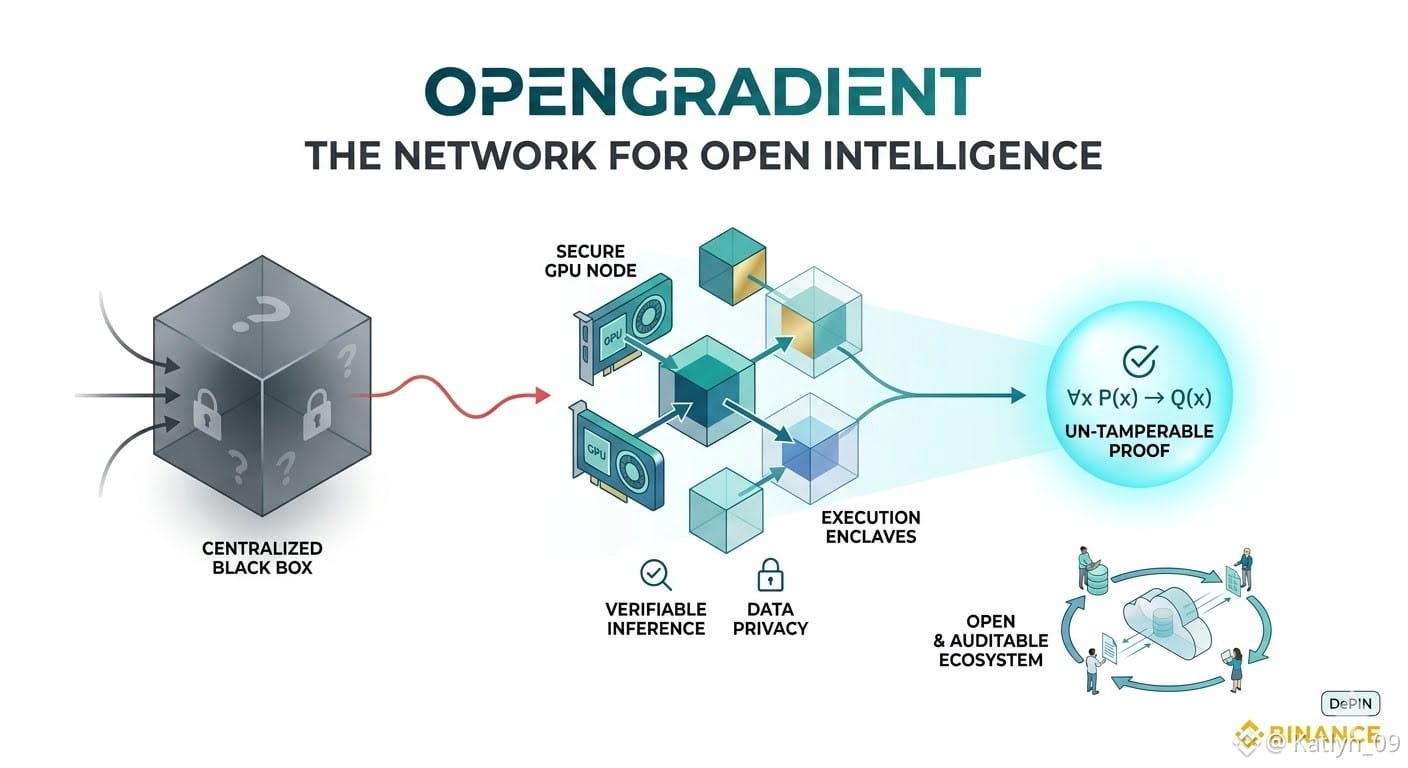
Every time we type a prompt into today’s dominant AI systems, we are blindly trusting a massive, centralized black box. This reality deeply concerns me. We have no real way of verifying if a model has been silently manipulated, what hidden data biases are steering its answers, or if our sensitive personal information is leaking into corporate logs. As AI integrates into our daily workflows, this absolute lack of transparency isn’t just inconvenient—it is a massive data liability and a systemic risk to digital trust.
Through my research into the future of decentralized tech, I am convinced that OpenGradient is the true Network for Open Intelligence. It stands out as a specialized, decentralized infrastructure network explicitly designed to host, inference, and verify AI models at scale. By utilizing a unique Hybrid AI Compute Architecture, it strips away the corporate middleman. Instead of forcing us to trust a company's vague privacy policy, it uses secure GPU nodes and execution enclaves to cryptographically prove exactly how an AI output was generated.
This shifts the entire paradigm from blind trust to un-tamperable mathematical proof. OpenGradient proves that decentralized AI doesn't have to sacrifice web2 speed to achieve real, verifiable data privacy. We are finally looking at an ecosystem where intelligence is open, auditable, and entirely owned by the community.
If you want to see how this network enables secure smart contract workflows, I can share details on its unique node structure.
@OpenGradient
#OpenIntelligence
#OpenGradient
#BuildInPublic
Every time we type a prompt into today’s dominant AI systems, we are blindly trusting a massive, centralized black box. This reality deeply concerns me. We have no real way of verifying if a model has been silently manipulated, what hidden data biases are steering its answers, or if our sensitive personal information is leaking into corporate logs. As AI integrates into our daily workflows, this absolute lack of transparency isn’t just inconvenient—it is a massive data liability and a systemic risk to digital trust.
Through my research into the future of decentralized tech, I am convinced that OpenGradient is the true Network for Open Intelligence. It stands out as a specialized, decentralized infrastructure network explicitly designed to host, inference, and verify AI models at scale. By utilizing a unique Hybrid AI Compute Architecture, it strips away the corporate middleman. Instead of forcing us to trust a company's vague privacy policy, it uses secure GPU nodes and execution enclaves to cryptographically prove exactly how an AI output was generated.
This shifts the entire paradigm from blind trust to un-tamperable mathematical proof. OpenGradient proves that decentralized AI doesn't have to sacrifice web2 speed to achieve real, verifiable data privacy. We are finally looking at an ecosystem where intelligence is open, auditable, and entirely owned by the community.
If you want to see how this network enables secure smart contract workflows, I can share details on its unique node structure.
@OpenGradient
#OpenIntelligence
#OpenGradient
#BuildInPublic

#opg $OPG @OpenGradient
Everyone keeps asking the same question about AI:
"Which model is better?"
But I think that conversation misses something much bigger.
The real issue isn't intelligence itself. It's dependency.
Every major technology wave follows a similar pattern. First people focus on what the technology can do. Later they realize the more important question is who controls access to it.
We're already seeing that happen with AI.
Millions of people now depend on AI tools to research ideas, write content, solve problems, learn new skills, and make decisions faster.
In many cases AI has become part of their daily workflow without them even noticing it.
The problem is that most users don't actually control the intelligence they rely on.
Access exists because a company allows it to exist.
A policy changes.
Pricing changes.
An API gets restricted.
A region gets blocked.
Suddenly the same tool people built their workflow around looks very different.
The technology didn't fail. The ownership model changed.
That's why I think the future AI debate shouldn't be framed as open-source versus closed source or even smart versus smarter.
The bigger discussion is resilience.
Can intelligence remain available when incentives change?
Can users verify outputs instead of blindly trusting them?
Can developers build without worrying that one decision somewhere else will break everything they're building?
These questions matter because AI is becoming infrastructure, not just software.
At the same time, ownership alone isn't enough. The most open system in the world means little if nobody wants to use it. Performance, reliability, security and accessibility still matter.
The winners of the next decade probably won't be the projects with only the smartest AI or only the most open AI.
It will be the ones that successfully combine both.
Powerful intelligence.
Open access.
And a system that users can actually trust.
That's a much harder challenge than building another model.
But it's probably the challenge that matters most.
#AI #OpenIntelligence
Everyone keeps asking the same question about AI:
"Which model is better?"
But I think that conversation misses something much bigger.
The real issue isn't intelligence itself. It's dependency.
Every major technology wave follows a similar pattern. First people focus on what the technology can do. Later they realize the more important question is who controls access to it.
We're already seeing that happen with AI.
Millions of people now depend on AI tools to research ideas, write content, solve problems, learn new skills, and make decisions faster.
In many cases AI has become part of their daily workflow without them even noticing it.
The problem is that most users don't actually control the intelligence they rely on.
Access exists because a company allows it to exist.
A policy changes.
Pricing changes.
An API gets restricted.
A region gets blocked.
Suddenly the same tool people built their workflow around looks very different.
The technology didn't fail. The ownership model changed.
That's why I think the future AI debate shouldn't be framed as open-source versus closed source or even smart versus smarter.
The bigger discussion is resilience.
Can intelligence remain available when incentives change?
Can users verify outputs instead of blindly trusting them?
Can developers build without worrying that one decision somewhere else will break everything they're building?
These questions matter because AI is becoming infrastructure, not just software.
At the same time, ownership alone isn't enough. The most open system in the world means little if nobody wants to use it. Performance, reliability, security and accessibility still matter.
The winners of the next decade probably won't be the projects with only the smartest AI or only the most open AI.
It will be the ones that successfully combine both.
Powerful intelligence.
Open access.
And a system that users can actually trust.
That's a much harder challenge than building another model.
But it's probably the challenge that matters most.
#AI #OpenIntelligence


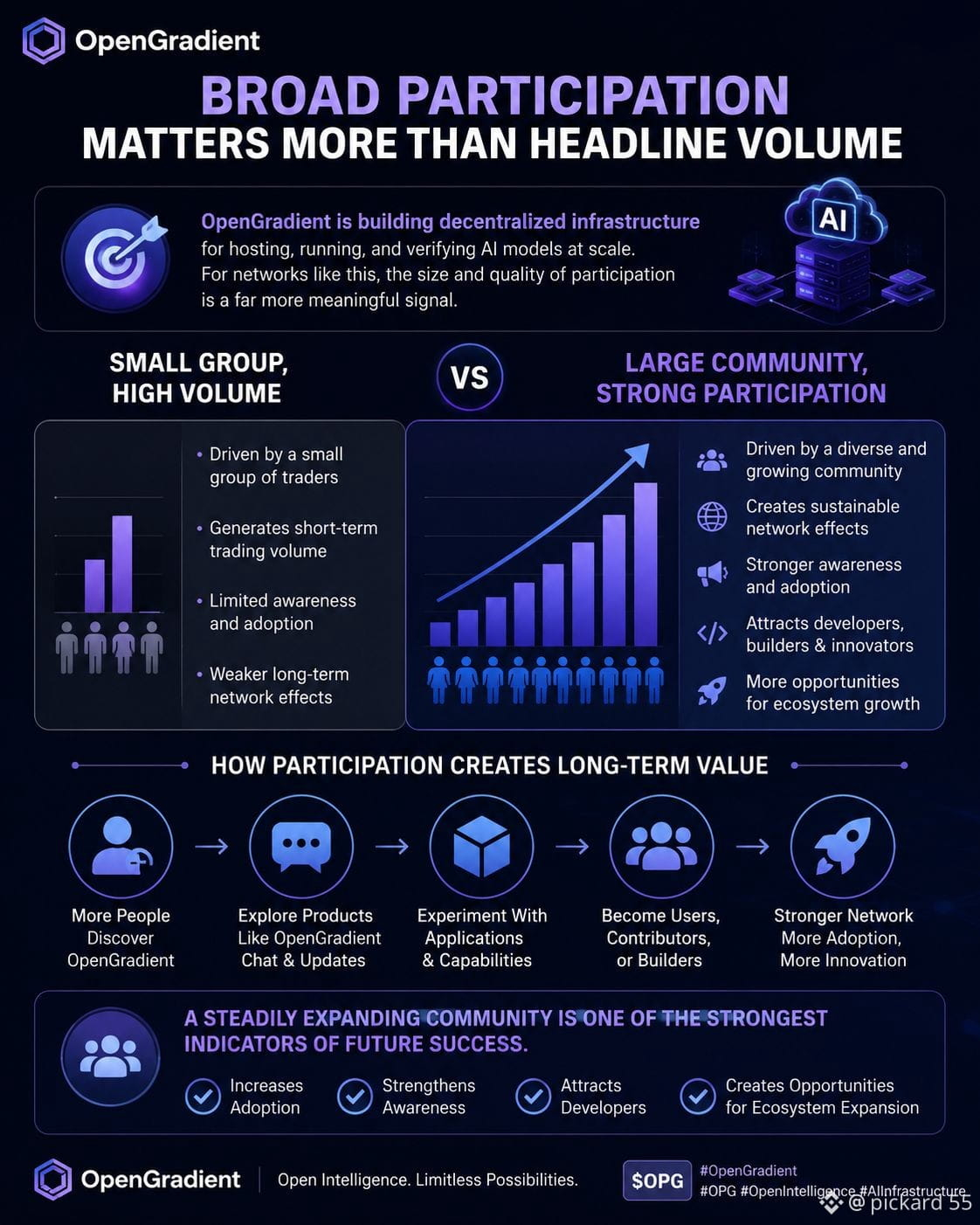
One underappreciated factor for OpenGradient is that broad participation may ultimately matter more than headline trading volume.
Many people focus on volume because it's easy to measure. But OpenGradient isn't just another token—it's building decentralized infrastructure for hosting, running, and verifying AI models at scale. For networks like this, the size and quality of participation can be a far more meaningful signal.
Infrastructure networks become stronger when they attract a diverse community of users, developers, builders, researchers, and supporters. A small group of traders can generate impressive volume, but a large and growing participant base creates something far more valuable: long-term network effects.
Every new person engaging with OpenGradient adds potential value to the ecosystem. Some begin by learning about the network. Others explore OpenGradient Chat, follow development updates, or experiment with emerging applications. Over time, many become active users, contributors, builders, or advocates.
That's why growth shouldn't be evaluated solely through trading metrics. A steadily expanding community may be one of the strongest indicators of future success because it increases adoption, strengthens awareness, attracts developers, and creates opportunities for ecosystem expansion.
For OpenGradient, the path to lasting value may come from building a large, engaged community around Open Intelligence. Strong participation creates the foundation upon which future applications, innovation, and network growth can thrive.
@OpenGradient $OPG #OPG #OpenIntelligence #AIInfrastructure
Many people focus on volume because it's easy to measure. But OpenGradient isn't just another token—it's building decentralized infrastructure for hosting, running, and verifying AI models at scale. For networks like this, the size and quality of participation can be a far more meaningful signal.
Infrastructure networks become stronger when they attract a diverse community of users, developers, builders, researchers, and supporters. A small group of traders can generate impressive volume, but a large and growing participant base creates something far more valuable: long-term network effects.
Every new person engaging with OpenGradient adds potential value to the ecosystem. Some begin by learning about the network. Others explore OpenGradient Chat, follow development updates, or experiment with emerging applications. Over time, many become active users, contributors, builders, or advocates.
That's why growth shouldn't be evaluated solely through trading metrics. A steadily expanding community may be one of the strongest indicators of future success because it increases adoption, strengthens awareness, attracts developers, and creates opportunities for ecosystem expansion.
For OpenGradient, the path to lasting value may come from building a large, engaged community around Open Intelligence. Strong participation creates the foundation upon which future applications, innovation, and network growth can thrive.
@OpenGradient $OPG #OPG #OpenIntelligence #AIInfrastructure

Most AI networks focus on building bigger models.
What caught my attention about OpenGradient is a different approach: creating a decentralized infrastructure where AI models can be hosted, executed, and verified transparently.
As AI becomes more integrated into finance, governance, and autonomous agents, trust and verifiability will matter just as much as intelligence.
OpenGradient is building the foundation for Open Intelligence by combining decentralized infrastructure with verifiable AI inference, making it possible to know not only what an AI model outputs, but also how that output was produced.
The future of AI shouldn't be a black box.
It should be open, verifiable, and accessible to everyone.
$OPG #OpenGradient #AI #crypto #Web3 #OpenIntelligence $OPG
What caught my attention about OpenGradient is a different approach: creating a decentralized infrastructure where AI models can be hosted, executed, and verified transparently.
As AI becomes more integrated into finance, governance, and autonomous agents, trust and verifiability will matter just as much as intelligence.
OpenGradient is building the foundation for Open Intelligence by combining decentralized infrastructure with verifiable AI inference, making it possible to know not only what an AI model outputs, but also how that output was produced.
The future of AI shouldn't be a black box.
It should be open, verifiable, and accessible to everyone.
$OPG #OpenGradient #AI #crypto #Web3 #OpenIntelligence $OPG
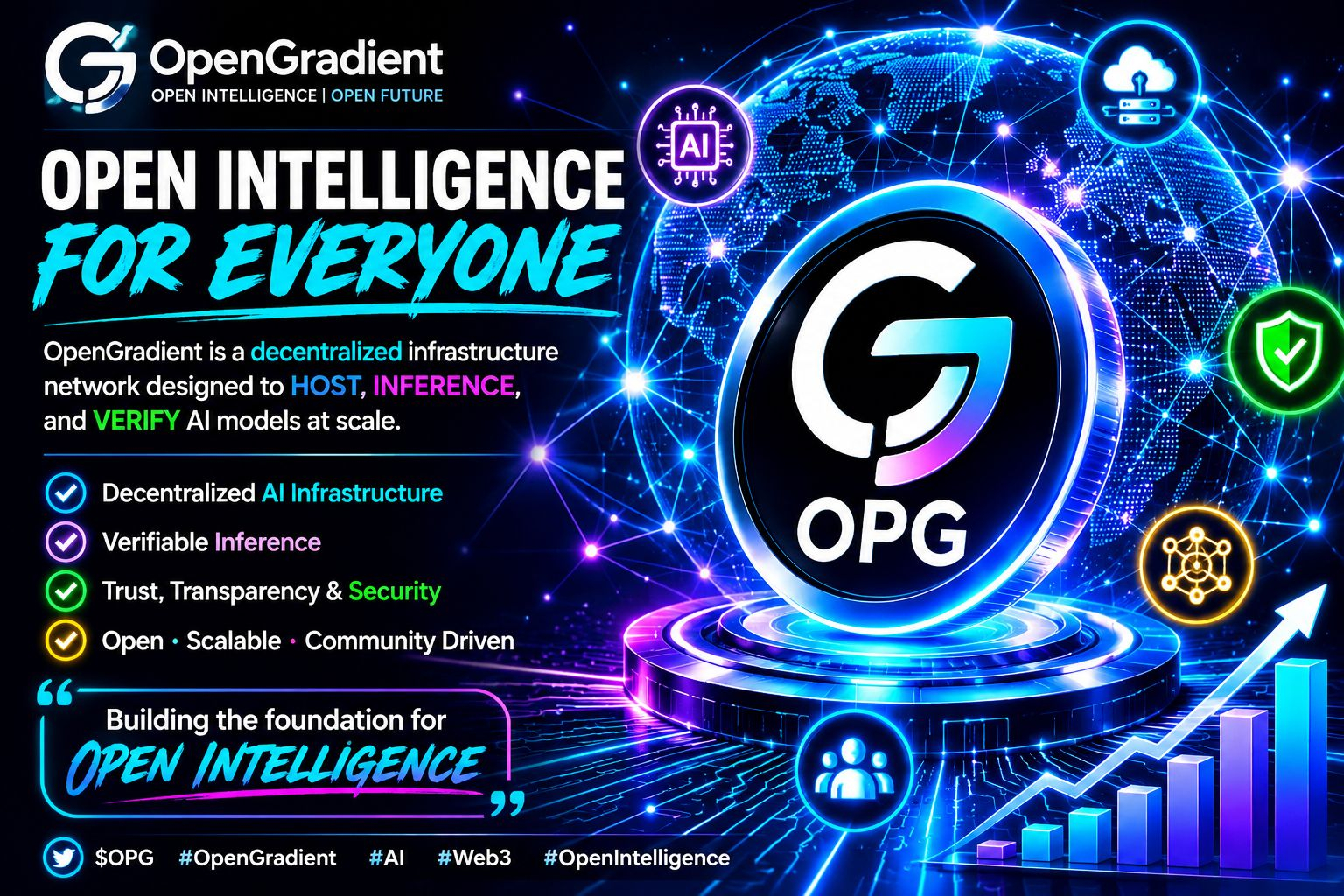

Everyone is talking about AI. Few are talking about who will own the future of AI.
That's where OpenGradient changes the game.
A decentralized network built for Open Intelligence—where AI models can be hosted, run, and verified without relying on centralized control.
Imagine AI that is transparent, trustless, scalable, and accessible to anyone, anywhere.
No black boxes. No gatekeepers. No single point of control.
Just open intelligence powered by a global community.
The internet transformed how we share information.
OpenGradient could transform how the world creates, verifies, and scales intelligence.
💡 The next AI giant may not be a company.
It may be a network.
And the smartest builders are paying attention before everyone else catches on.
The future of AI isn't closed.
The future of AI is open.
🔥 Open Intelligence starts here.
#OpenGradient #AI #OpenIntelligence #DecentralizedAI #Web3 #Blockchain #FutureTech #Innovation #Crypto #ArtificialIntelligence #Technology #DigitalRevolution
$OPG @OpenGradient #OPG
That's where OpenGradient changes the game.
A decentralized network built for Open Intelligence—where AI models can be hosted, run, and verified without relying on centralized control.
Imagine AI that is transparent, trustless, scalable, and accessible to anyone, anywhere.
No black boxes. No gatekeepers. No single point of control.
Just open intelligence powered by a global community.
The internet transformed how we share information.
OpenGradient could transform how the world creates, verifies, and scales intelligence.
💡 The next AI giant may not be a company.
It may be a network.
And the smartest builders are paying attention before everyone else catches on.
The future of AI isn't closed.
The future of AI is open.
🔥 Open Intelligence starts here.
#OpenGradient #AI #OpenIntelligence #DecentralizedAI #Web3 #Blockchain #FutureTech #Innovation #Crypto #ArtificialIntelligence #Technology #DigitalRevolution
$OPG @OpenGradient #OPG
$OPG $USDT
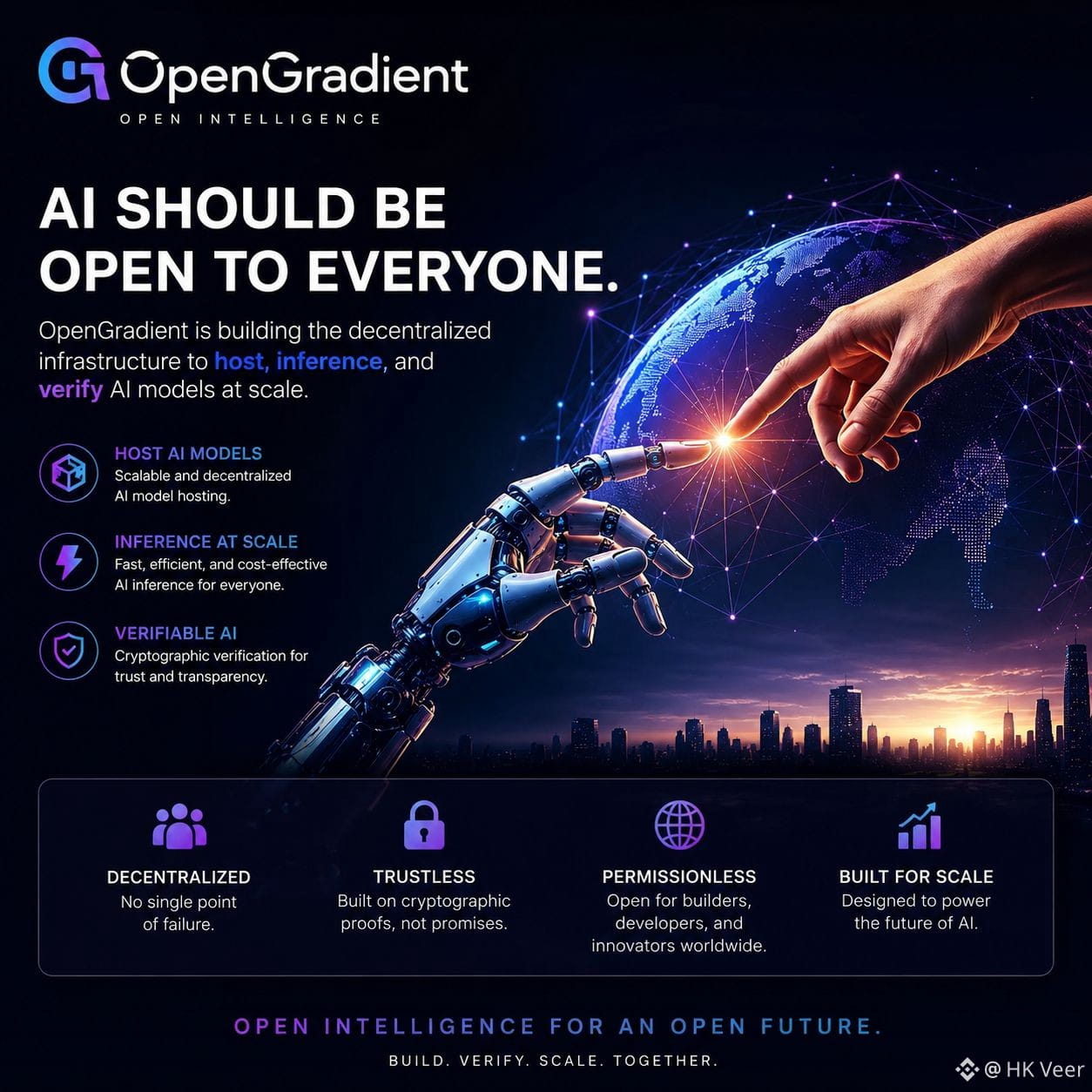
Artificial Intelligence is becoming a core part of our digital future, but true innovation requires openness and collaboration. @OpenGradient is building an Open Intelligence network where developers, AI models, and communities can work together in a transparent and decentralized environment. This vision could help make AI more accessible, scalable, and community-driven for everyone.
@OpenGradient $OPG #OPG #OpenGradient #OpenIntelligence #Aİ
Artificial Intelligence is becoming a core part of our digital future, but true innovation requires openness and collaboration. @OpenGradient is building an Open Intelligence network where developers, AI models, and communities can work together in a transparent and decentralized environment. This vision could help make AI more accessible, scalable, and community-driven for everyone.
@OpenGradient $OPG #OPG #OpenGradient #OpenIntelligence #Aİ

#opg $OPG
#OpenGradient está para quedarse y ser un gran aliado para todas las IA que vienen , la #IA es el futuro de los negocios #OpenIntelligence se convertirá en pioneros del alojamiento y seguridad de futuras aplicaciones de Inteligencia Artificial
$OPG
#OpenGradient está para quedarse y ser un gran aliado para todas las IA que vienen , la #IA es el futuro de los negocios #OpenIntelligence se convertirá en pioneros del alojamiento y seguridad de futuras aplicaciones de Inteligencia Artificial
$OPG
#opg $OPG
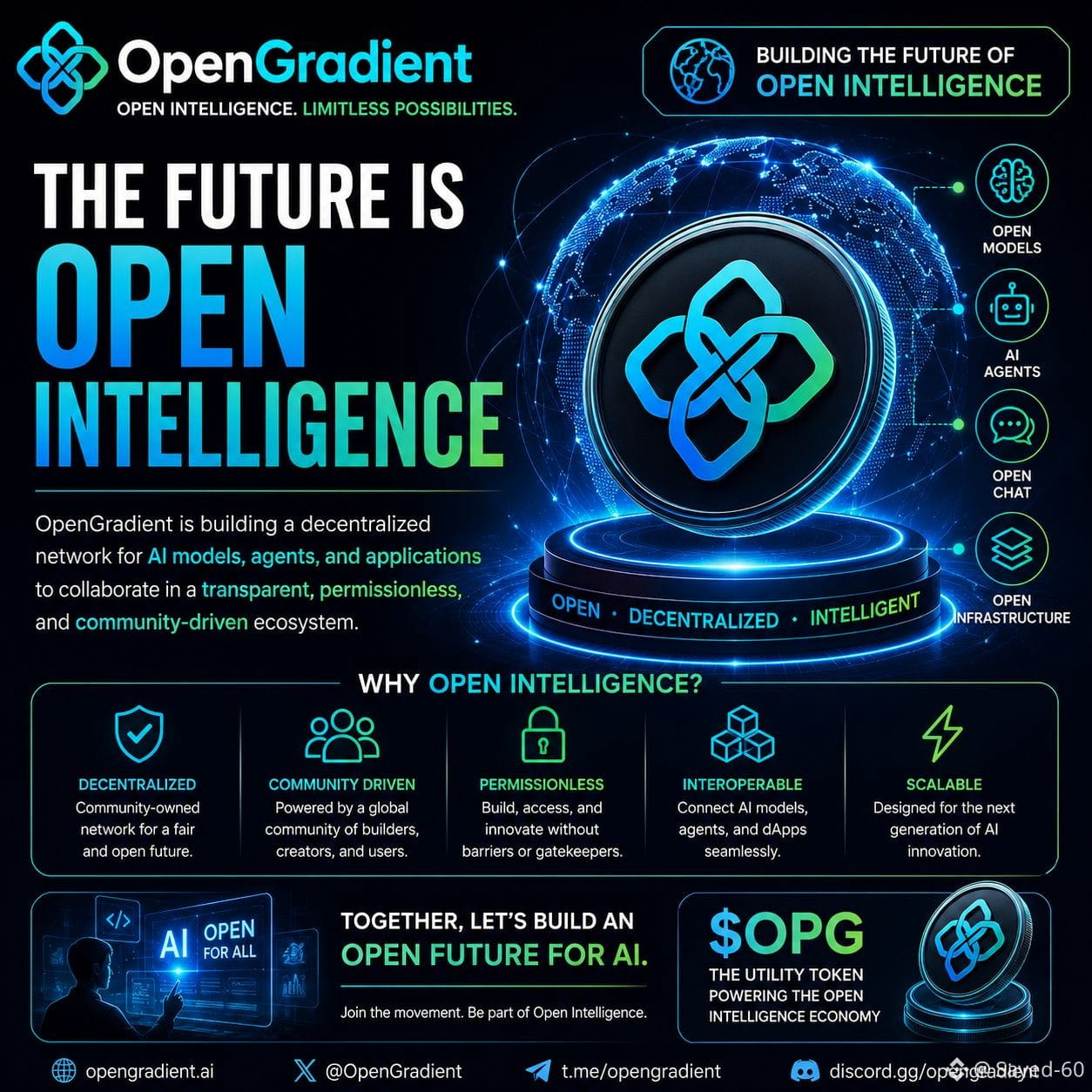
The future of AI should be open, transparent, and accessible to everyone. @OpenGradient is building a decentralized infrastructure for Open Intelligence, where AI models, agents, and applications can collaborate without relying on centralized control.
By combining blockchain technology with AI innovation, OpenGradient creates an ecosystem that empowers developers, creators, and communities to build, share, and scale intelligent solutions. OpenGradient Chat and the broader Open Intelligence network represent an exciting step toward a more open and community-driven AI future.
As demand for decentralized AI continues to grow, projects like OpenGradient are laying the foundation for the next generation of innovation. The vision is simple: open access, open collaboration, and limitless possibilities.
@OpenGradient $OPG #OPG锦标赛 #OpenGradient #AI #Web3 #OpenIntelligence
The future of AI should be open, transparent, and accessible to everyone. @OpenGradient is building a decentralized infrastructure for Open Intelligence, where AI models, agents, and applications can collaborate without relying on centralized control.
By combining blockchain technology with AI innovation, OpenGradient creates an ecosystem that empowers developers, creators, and communities to build, share, and scale intelligent solutions. OpenGradient Chat and the broader Open Intelligence network represent an exciting step toward a more open and community-driven AI future.
As demand for decentralized AI continues to grow, projects like OpenGradient are laying the foundation for the next generation of innovation. The vision is simple: open access, open collaboration, and limitless possibilities.
@OpenGradient $OPG #OPG锦标赛 #OpenGradient #AI #Web3 #OpenIntelligence


I don’t think the biggest question about AI today is how powerful it can become.
I think the bigger question is: how will we build trust around it?
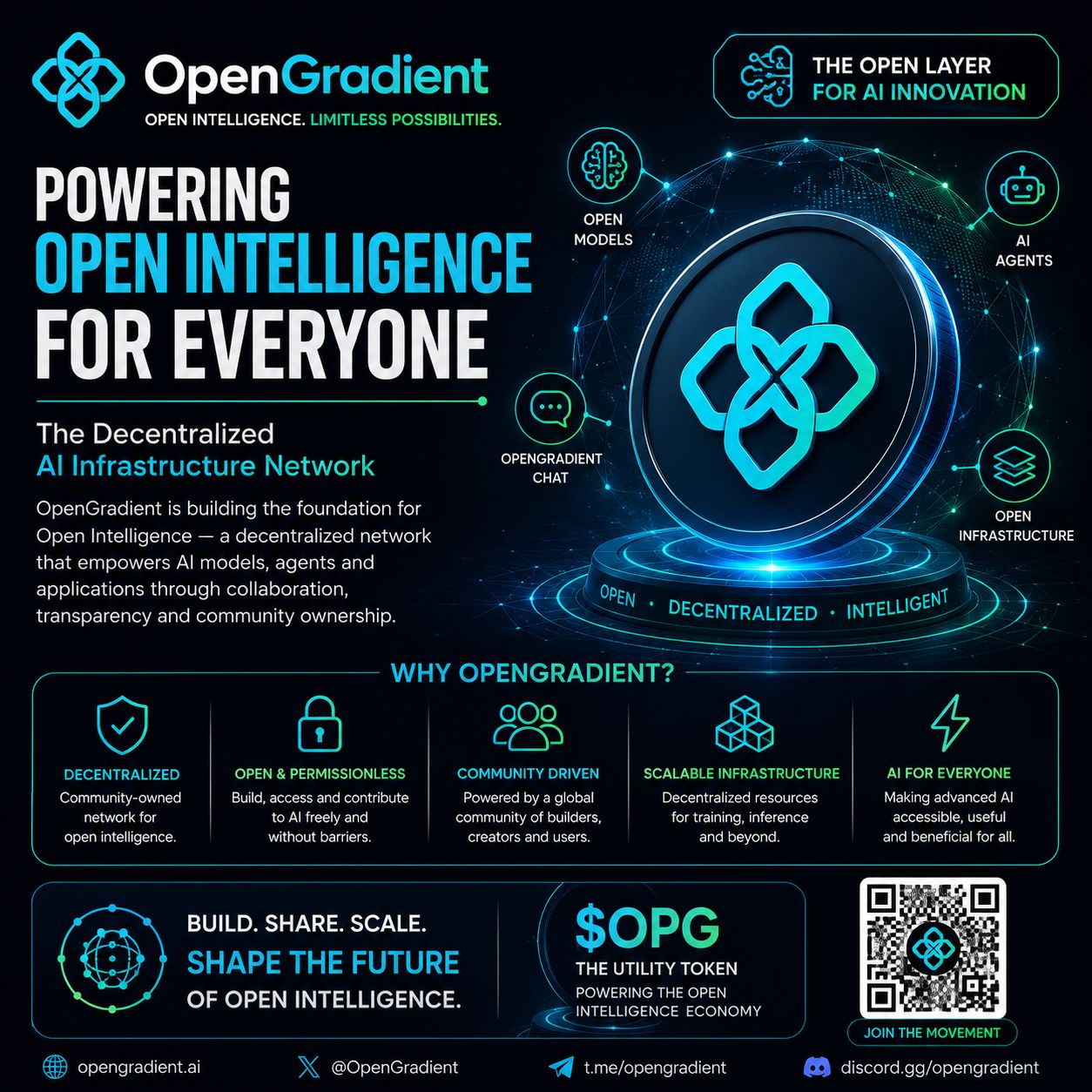
While exploring OpenGradient, one thing that stood out to me was its vision of Open Intelligence.
AI is moving extremely fast, but speed alone is not enough. The systems we create need transparency, verification, and a foundation that people can actually rely on.
That’s why decentralized AI feels like an important direction. Instead of keeping intelligence inside closed environments, OpenGradient is working toward a future where AI infrastructure can be more open and accessible.
For me, the most interesting part is not just the technology — it’s the idea behind it.
Because the future of AI should not only be about smarter machines.
It should be about creating intelligence that people can understand, verify, and trust.
The next era of AI may not belong to whoever builds the biggest model…
It may belong to whoever builds the strongest foundation.
Do you think open and decentralized AI will become the next major shift in technology?
#OpenIntelligence #AI #DecentralizedAI #FutureTech
#opg $OPG @OpenGradient
I think the bigger question is: how will we build trust around it?
While exploring OpenGradient, one thing that stood out to me was its vision of Open Intelligence.
AI is moving extremely fast, but speed alone is not enough. The systems we create need transparency, verification, and a foundation that people can actually rely on.
That’s why decentralized AI feels like an important direction. Instead of keeping intelligence inside closed environments, OpenGradient is working toward a future where AI infrastructure can be more open and accessible.
For me, the most interesting part is not just the technology — it’s the idea behind it.
Because the future of AI should not only be about smarter machines.
It should be about creating intelligence that people can understand, verify, and trust.
The next era of AI may not belong to whoever builds the biggest model…
It may belong to whoever builds the strongest foundation.
Do you think open and decentralized AI will become the next major shift in technology?
#OpenIntelligence #AI #DecentralizedAI #FutureTech
#opg $OPG @OpenGradient


#opg $OPG Every time I use AI, I find myself wondering who really controls the intelligence behind it. Today, most AI systems depend on centralized infrastructure, which means a lot of power is concentrated in a few hands.
That’s why OpenGradient feels like such a refreshing idea.
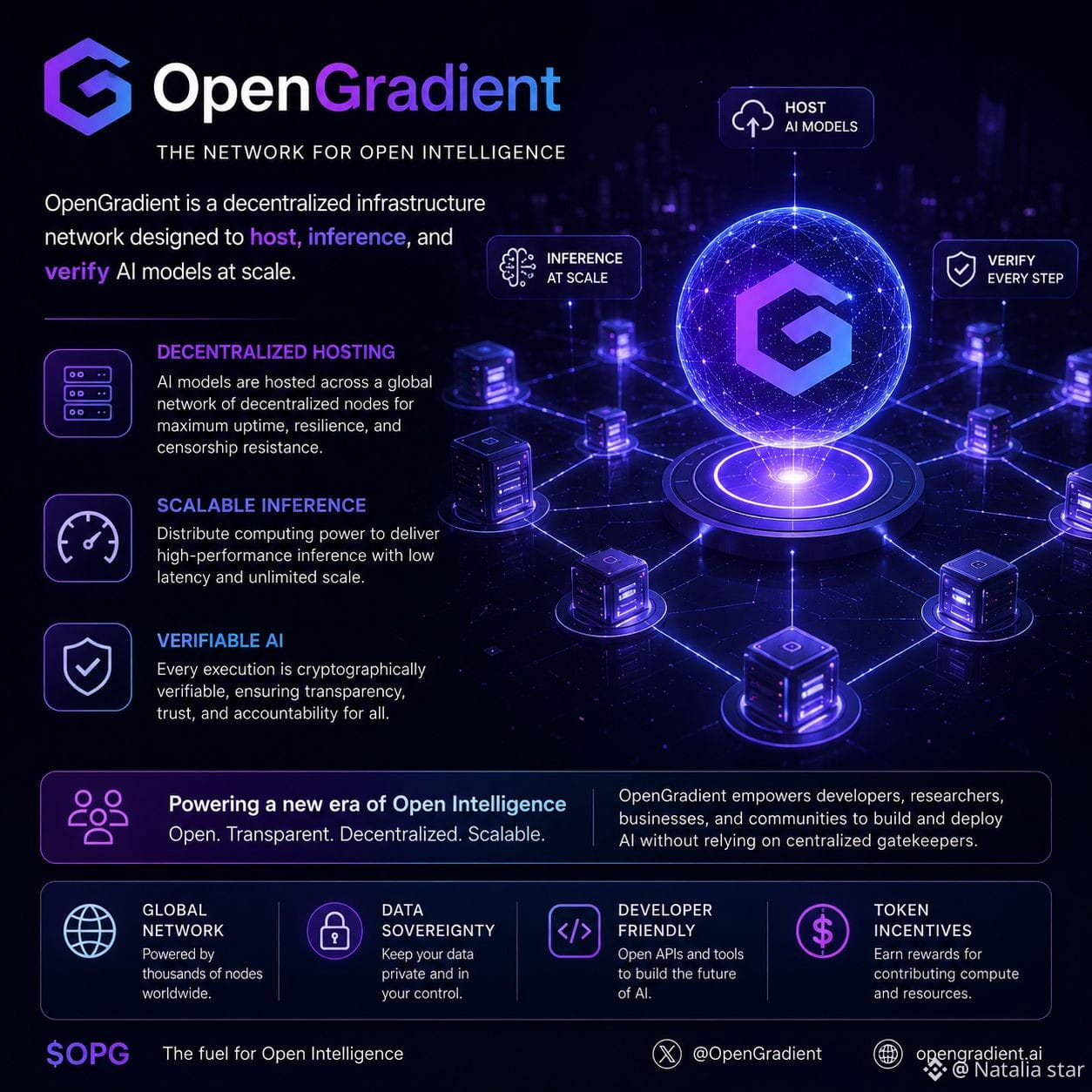
Instead of relying on a single company or server, OpenGradient is building a decentralized network where AI models can be hosted, run, and verified at scale. The goal isn't just to make AI more powerful it's to make it more open, transparent, and accessible to everyone.
What stands out to me is the focus on verification. As AI becomes part of everyday life, trust will matter more than ever. Knowing that AI processes can be verified across a decentralized network could help create a future where intelligence is not only advanced but also accountable.
We're constantly hearing about bigger models and smarter AI, but the infrastructure supporting them is just as important. OpenGradient is exploring a future where intelligence is distributed, resilient, and not dependent on a single point of control.
The idea of Open Intelligence isn't just about technology it's about creating an ecosystem where innovation can grow more freely. It's still early, but watching projects like OpenGradient push these boundaries makes me even more excited about where AI is headed.
@OpenGradient $OPG #OPG #OpenGradient #OpenIntelligence #DeAI #AI #Web3 #Blockchain #CryptoCommunity
That’s why OpenGradient feels like such a refreshing idea.
Instead of relying on a single company or server, OpenGradient is building a decentralized network where AI models can be hosted, run, and verified at scale. The goal isn't just to make AI more powerful it's to make it more open, transparent, and accessible to everyone.
What stands out to me is the focus on verification. As AI becomes part of everyday life, trust will matter more than ever. Knowing that AI processes can be verified across a decentralized network could help create a future where intelligence is not only advanced but also accountable.
We're constantly hearing about bigger models and smarter AI, but the infrastructure supporting them is just as important. OpenGradient is exploring a future where intelligence is distributed, resilient, and not dependent on a single point of control.
The idea of Open Intelligence isn't just about technology it's about creating an ecosystem where innovation can grow more freely. It's still early, but watching projects like OpenGradient push these boundaries makes me even more excited about where AI is headed.
@OpenGradient $OPG #OPG #OpenGradient #OpenIntelligence #DeAI #AI #Web3 #Blockchain #CryptoCommunity
#opg $OPG
The AI conversation is usually focused on models.
Bigger models. Faster models. Smarter models.
But I think one of the most interesting questions sits underneath all of that:
Where does AI's intelligence actually come from?
Every AI system learns from something. Articles, forums, research papers, code, images, public discussions and billions of pieces of information shared by people over many years. In a way, modern AI is built on a huge layer of collective human knowledge.
The strange part is that once the model is trained, most of those contributions become invisible.
The system can generate answers, create content and produce value, but tracing that value back to the people and information that helped shape it is almost impossible. We get intelligence, but very little visibility into where it came from.
That creates an important challenge for the future of AI.
As these systems become more powerful, transparency may become just as important as capability. It's not enough for an AI model to be useful. People will increasingly ask whether its outputs can be verified, whether sources can be understood, and whether contributors can be recognized in some meaningful way.
Of course, attribution isn't an easy problem. Human knowledge is layered and connected. One idea builds on another, then another. No system will perfectly measure every contribution.
Still, moving toward more open and accountable
intelligence feels like the right direction.
The next phase of AI may not be defined only by who builds the largest model.
It may be defined by who builds the most trusted ecosystem around it.
Because in the long run, intelligence without transparency creates questions.
Intelligence with transparency creates confidence.
And that difference might end up mattering more than people realise today.
#AI #OpenIntelligence #TransparencyMatters #OPG
The AI conversation is usually focused on models.
Bigger models. Faster models. Smarter models.
But I think one of the most interesting questions sits underneath all of that:
Where does AI's intelligence actually come from?
Every AI system learns from something. Articles, forums, research papers, code, images, public discussions and billions of pieces of information shared by people over many years. In a way, modern AI is built on a huge layer of collective human knowledge.
The strange part is that once the model is trained, most of those contributions become invisible.
The system can generate answers, create content and produce value, but tracing that value back to the people and information that helped shape it is almost impossible. We get intelligence, but very little visibility into where it came from.
That creates an important challenge for the future of AI.
As these systems become more powerful, transparency may become just as important as capability. It's not enough for an AI model to be useful. People will increasingly ask whether its outputs can be verified, whether sources can be understood, and whether contributors can be recognized in some meaningful way.
Of course, attribution isn't an easy problem. Human knowledge is layered and connected. One idea builds on another, then another. No system will perfectly measure every contribution.
Still, moving toward more open and accountable
intelligence feels like the right direction.
The next phase of AI may not be defined only by who builds the largest model.
It may be defined by who builds the most trusted ecosystem around it.
Because in the long run, intelligence without transparency creates questions.
Intelligence with transparency creates confidence.
And that difference might end up mattering more than people realise today.
#AI #OpenIntelligence #TransparencyMatters #OPG

Войдите, чтобы посмотреть больше материала