
#opengradient
opengradient
520,583 views
5,941 Discussing
Hot
Latest

·
--
Bullish
🤖 #AI + Crypto = Something Interesting?
#OpenGradient (OPG) is showing positive momentum today, climbing 6.42% over 24 hours.
Its decentralized AI infrastructure narrative makes it an interesting project to keep on the radar.
Could AI-related crypto projects attract more attention? What's your take?
#OPG #OpenGradient #AIcrypto #CryptoCommunity #BinanceSquare$OPG
{future}(OPGUSDT)
🤖 #AI + Crypto = Something Interesting?
#OpenGradient (OPG) is showing positive momentum today, climbing 6.42% over 24 hours.
Its decentralized AI infrastructure narrative makes it an interesting project to keep on the radar.
Could AI-related crypto projects attract more attention? What's your take?
#OPG #OpenGradient #AIcrypto #CryptoCommunity #BinanceSquare$OPG
196

$OPG IS WAKING UP! IS ANOTHER MOVE COMING?
Something interesting is happening with @OpenGradient right now.
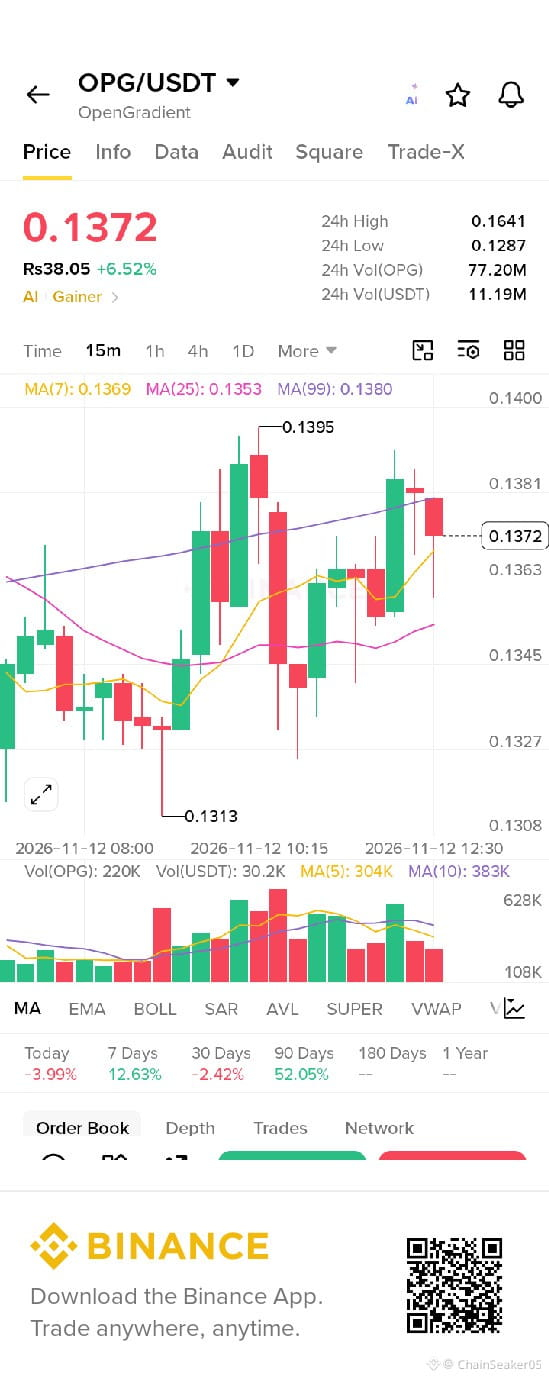
$OPG is trading around $0.1372, up approximately 6.52% in 24 hours, with trading volume reaching $11.19M.
But the price movement is only part of the story.
Looking at the 15-minute chart, OPG recently pushed toward $0.1395 before facing some selling pressure. Now the important question is whether buyers can regain control and push through the $0.1380 to $0.1400 resistance zone.
Here’s what I'm watching:
$0.1400: A breakout could bring fresh attention.
$0.1380: An important level to reclaim.
$0.1350: A level worth watching during a pullback.
What makes this interesting is the combination of rising activity and price momentum.
I'm not calling a guaranteed breakout, but definitely deserves attention right now.
Sometimes the most interesting moves begin when the market isn't paying attention.
Are we looking at the beginning of another OPG move, or will sellers take control?
$OPG
{spot}(OPGUSDT)
#OpenGradient #OPG #Crypto #BinanceSquare
$OPG IS WAKING UP! IS ANOTHER MOVE COMING?
Something interesting is happening with @OpenGradient right now.
$OPG is trading around $0.1372, up approximately 6.52% in 24 hours, with trading volume reaching $11.19M.
But the price movement is only part of the story.
Looking at the 15-minute chart, OPG recently pushed toward $0.1395 before facing some selling pressure. Now the important question is whether buyers can regain control and push through the $0.1380 to $0.1400 resistance zone.
Here’s what I'm watching:
$0.1400: A breakout could bring fresh attention.
$0.1380: An important level to reclaim.
$0.1350: A level worth watching during a pullback.
What makes this interesting is the combination of rising activity and price momentum.
I'm not calling a guaranteed breakout, but definitely deserves attention right now.
Sometimes the most interesting moves begin when the market isn't paying attention.
Are we looking at the beginning of another OPG move, or will sellers take control?
$OPG
#OpenGradient #OPG #Crypto #BinanceSquare
237

·
--
Bullish
🚀 $OPG is making a strong move!
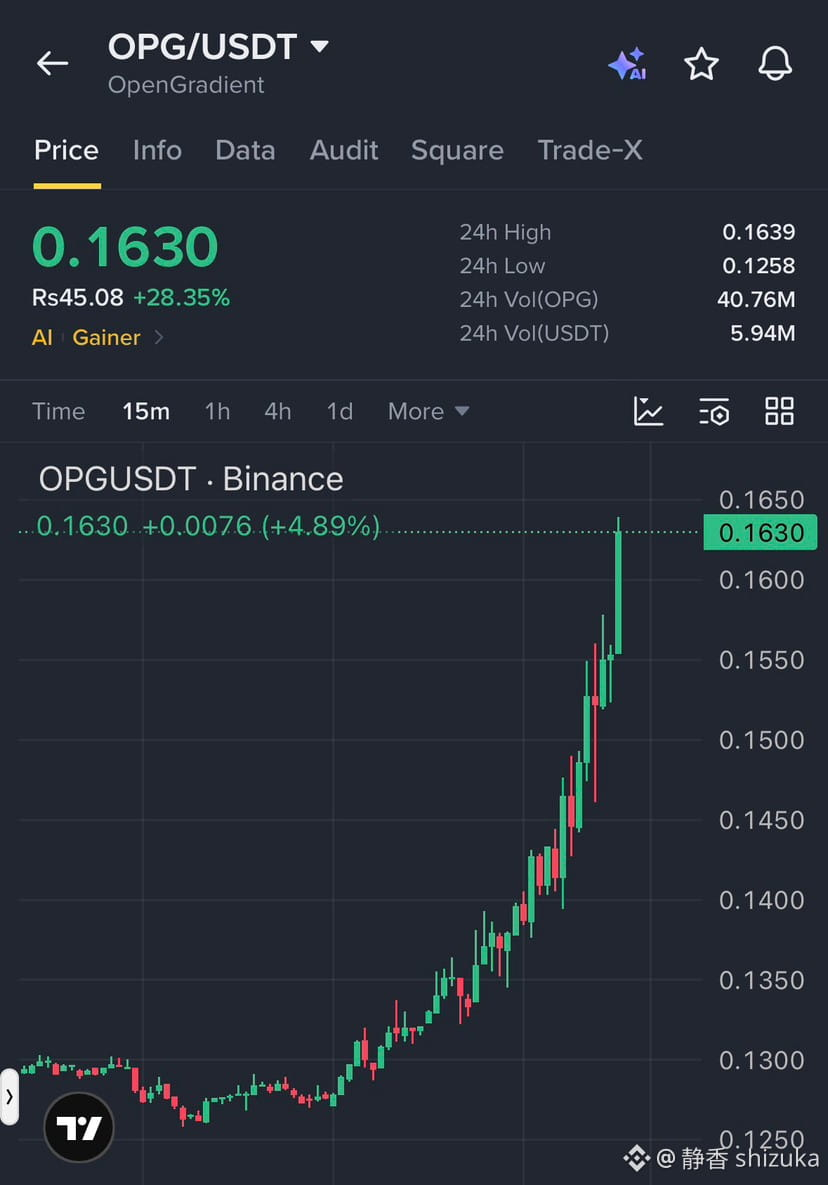
Trading at $0.1630 (+28.35%) with bullish momentum and rising volume.
Can the bulls push it even higher?
Entry: $0.1600–$0.1630 TP1: $0.1680 TP2: $0.1750 TP3: $0.1850 SL: $0.1540
Trend: Bullish momentum Strategy: Buy on pullback or confirmed breakout. Avoid chasing the pump.
Trading setup based on the shared chart, not live market confirmation. Use proper risk management.
#OpenGradient #Crypto #Altcoins
{spot}(OPGUSDT)
🚀 $OPG is making a strong move!
Trading at $0.1630 (+28.35%) with bullish momentum and rising volume.
Can the bulls push it even higher?
Entry: $0.1600–$0.1630 TP1: $0.1680 TP2: $0.1750 TP3: $0.1850 SL: $0.1540
Trend: Bullish momentum Strategy: Buy on pullback or confirmed breakout. Avoid chasing the pump.
Trading setup based on the shared chart, not live market confirmation. Use proper risk management.
#OpenGradient #Crypto #Altcoins
1
372

·
--
Bullish
Verified
🚀🔥 AI + Web3 Gem: OpenGradient ($OPG) Update! 🤖💎
$OPG is making serious waves as a decentralized infrastructure network bridging AI and blockchain for verifiable, secure AI models! 📈
💰 Current Price: ~$0.133 (+4.31% 24h)
⚡ Core Utility: Powers decentralized AI inference, model monetization, and governance with a fixed supply of 1 Billion tokens! 🌐
🔮 Market Outlook: Positioned strongly at the intersection of AI compute and blockchain infrastructure.
Are you holding $OPG in your portfolio? Drop your thoughts below! 👇💬
#OpenGradient #OPG #BinanceSquareTalks are #CryptoAirdrop #altcoins 🚀🔥
🚀🔥 AI + Web3 Gem: OpenGradient ($OPG ) Update! 🤖💎
$OPG is making serious waves as a decentralized infrastructure network bridging AI and blockchain for verifiable, secure AI models! 📈
💰 Current Price: ~$0.133 (+4.31% 24h)
⚡ Core Utility: Powers decentralized AI inference, model monetization, and governance with a fixed supply of 1 Billion tokens! 🌐
🔮 Market Outlook: Positioned strongly at the intersection of AI compute and blockchain infrastructure.
Are you holding $OPG in your portfolio? Drop your thoughts below! 👇💬
#OpenGradient #OPG #BinanceSquareTalks are #CryptoAirdrop #altcoins 🚀🔥
1
185

·
--
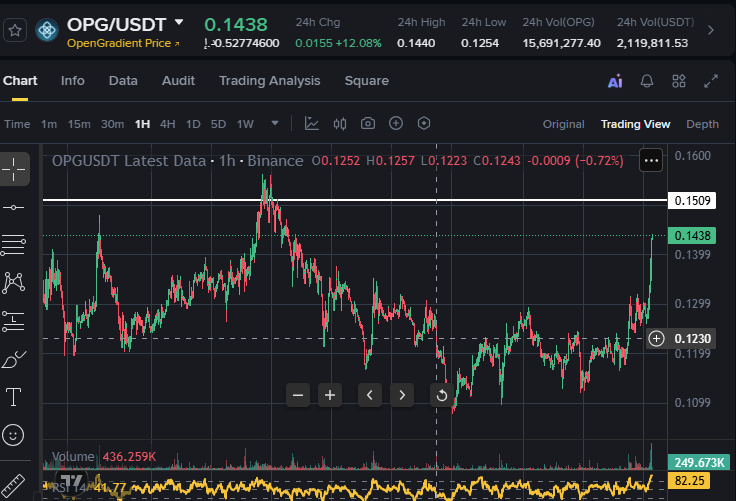
🚨 $OPG LONG SETUP ALERT 📈
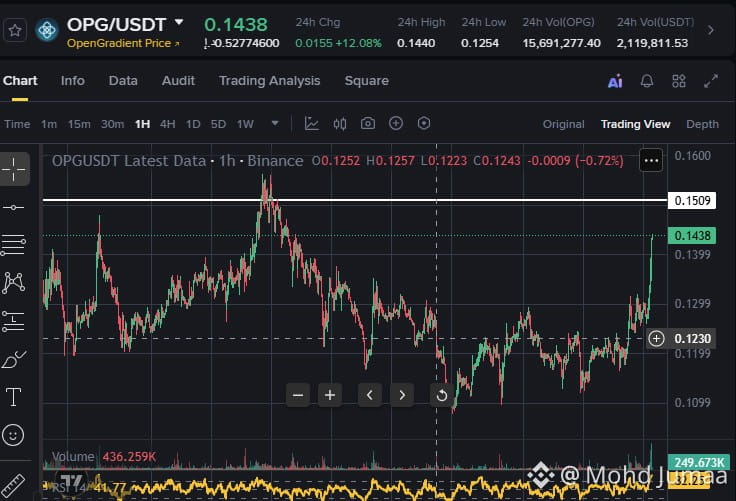
$OPG is showing strong bullish momentum after a sharp upward move, with price currently trading around 0.1438.
Buyers are stepping in, and the price is approaching a major resistance zone. Watch for a healthy pullback and bullish confirmation before entering.
🎯 Entry (DCA): 0.1390 – 0.1410
🛑 Stop Loss: Below 0.1230
💰 Take Profit Targets:
TP1: 0.1460
TP2: 0.1490
TP3: 0.1505
⚡ Key resistance: 0.1509. A strong breakout and hold above this level could open the door for further upside.
⚠️ After this sharp pump, avoid chasing green candles. Wait for a retest, confirmation, and proper entry conditions.
Manage your risk, keep leverage low, and stick to your trading plan.
👀 Are you holding $OPG ? Do you think it can break above 0.1509?
⚠️ Always do your own research (DYOR) before making any trading decisions.
👇 #OPG #opgusdt #OpenGradient #TradingSignals
thesolidoke:
Congrats on TP3. Quick maths on the setup though: entry ~0.140, stop 0.123 is -12%, while TP1 0.146 is only +4.3% and TP3 is +7.5%. Just to break even you'd need to win about 74% of trades at TP1, or 62% at TP3. What's your hit rate on past setups?
1
2
403


·
--
Bullish
$OPG long — Bullish breakout with heavy buy pressure, targeting $0.175 🚀
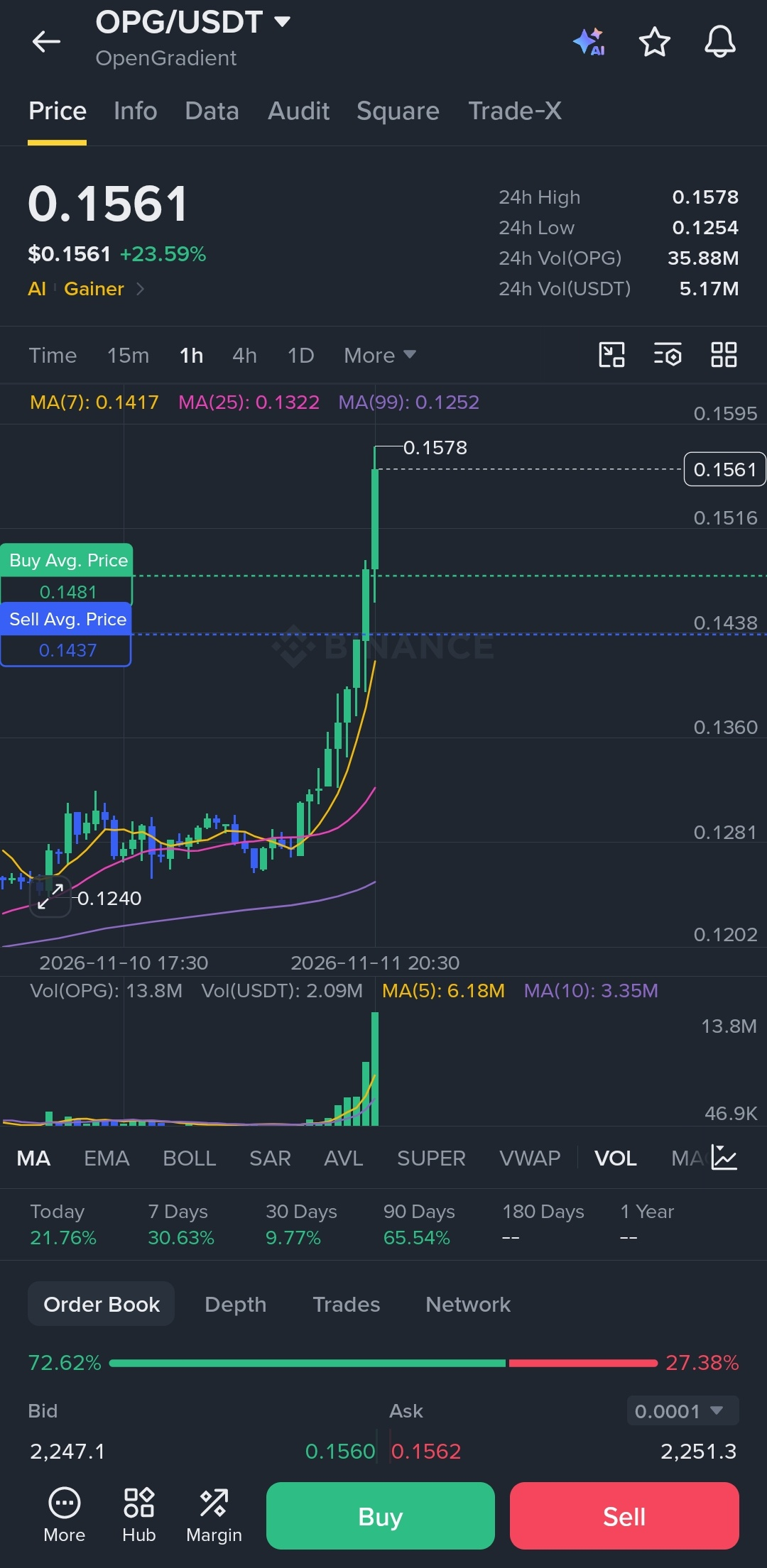
OPG is showing massive strength today, pumping +23% with huge volume spikes on the 1H chart. The order book is extremely bullish with a 72% buy wall, pushing the price to test local highs at $0.1578. A clean 1H close above the $0.1580 resistance will confirm the continuation of this uptrend.
Entry: 1H close above $0.1580
SL: Below $0.1400 (MA 7 support)
Target 1: $0.1650
Target 2: $0.1750
If $0.1400 breaks down, the setup is invalid — cut your losses.
$OPG
{future}(OPGUSDT)
DYOR. NFA. High volatility, use strict risk management.
#OPG #OpenGradient #TradeIdea
$OPG long — Bullish breakout with heavy buy pressure, targeting $0.175 🚀
OPG is showing massive strength today, pumping +23% with huge volume spikes on the 1H chart. The order book is extremely bullish with a 72% buy wall, pushing the price to test local highs at $0.1578. A clean 1H close above the $0.1580 resistance will confirm the continuation of this uptrend.
Entry: 1H close above $0.1580
SL: Below $0.1400 (MA 7 support)
Target 1: $0.1650
Target 2: $0.1750
If $0.1400 breaks down, the setup is invalid — cut your losses.
$OPG
DYOR. NFA. High volatility, use strict risk management.
#OPG #OpenGradient #TradeIdea
1
259

·
--
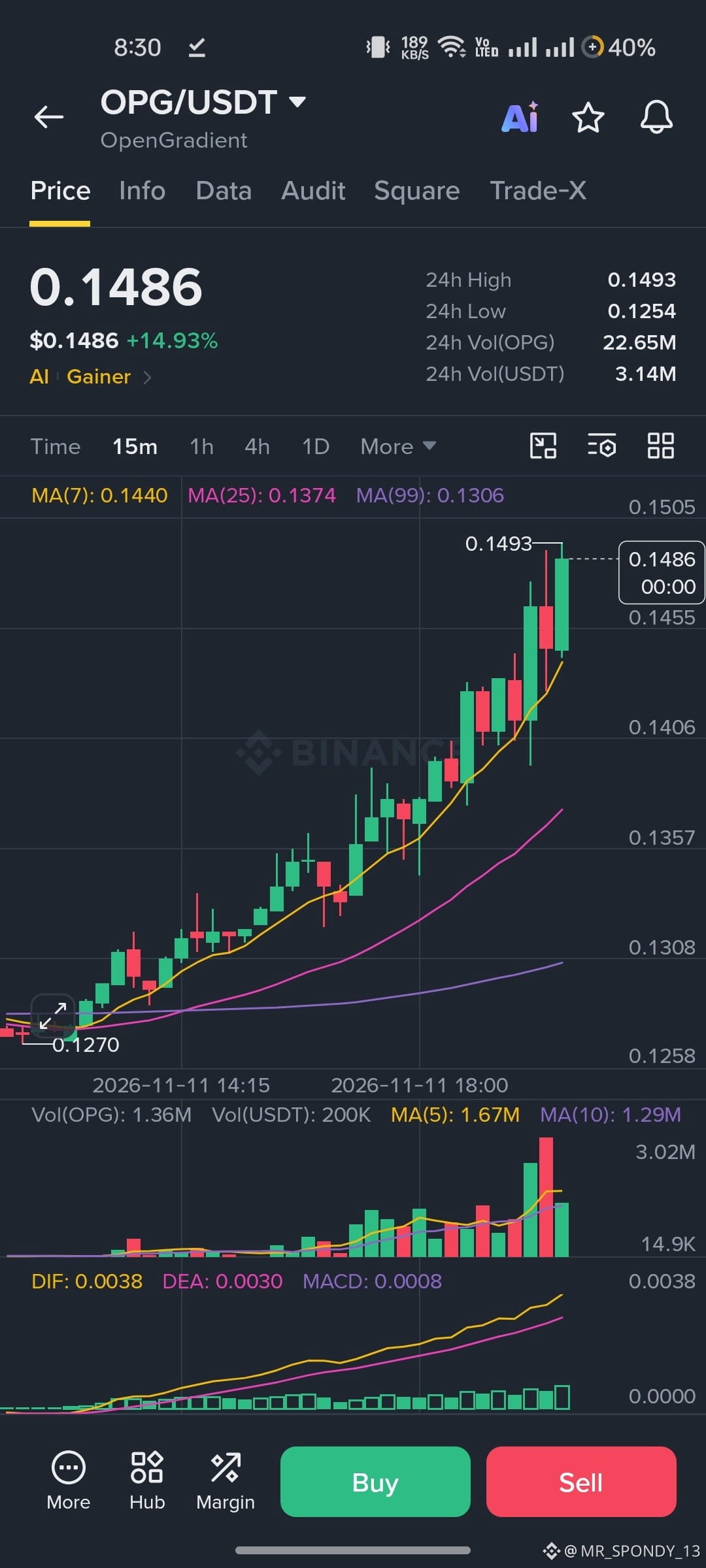
OPG/USDT – LONG 📈
* Entry: 0.1430 – 0.1450
* TP1: 0.1493
* TP2: 0.1550
* TP3: 0.1610
* Support: 0.1440 / 0.1374
* Stop Loss: 0.1365
$OPG
{future}(OPGUSDT)
$AGT
{future}(AGTUSDT)
#Mr_SPONDY_13 #Altcoin #OpenGradient
OPG/USDT – LONG 📈
* Entry: 0.1430 – 0.1450
* TP1: 0.1493
* TP2: 0.1550
* TP3: 0.1610
* Support: 0.1440 / 0.1374
* Stop Loss: 0.1365
$OPG
$AGT
#Mr_SPONDY_13 #Altcoin #OpenGradient
* Entry: 0.1430 – 0.1450
* TP1: 0.1493
* TP2: 0.1550
* TP3: 0.1610
* Support: 0.1440 / 0.1374
* Stop Loss: 0.1365
$OPG
$AGT
#Mr_SPONDY_13 #Altcoin #OpenGradient
347
·
--
🚨🔥 $OPG UPDATE — TP2 HIT 🔥🚨
WOOOOHOOOOOO 🥳🔥🔥
Another beautiful win with $OPG! TP1 and TP2 HIT 🎯🎯
I'm soooo happy for everyone who took this setup with me❤️
Your patience and trust are paying off 💰
Keep sending those profit screenshots. I LOVE seeing you guys secure those gains 🤤🔥
Let's keep the momentum going, one setup at a time
CONGRATULATIONS TO ALL WINNERS 🏆🚀
Who's still holding for TP3? 👀
#OPG #opgusdt #OpenGradient #ProfitLocked
🚨🔥 $OPG UPDATE — TP2 HIT 🔥🚨
WOOOOHOOOOOO 🥳🔥🔥
Another beautiful win with $OPG ! TP1 and TP2 HIT 🎯🎯
I'm soooo happy for everyone who took this setup with me❤️
Your patience and trust are paying off 💰
Keep sending those profit screenshots. I LOVE seeing you guys secure those gains 🤤🔥
Let's keep the momentum going, one setup at a time
CONGRATULATIONS TO ALL WINNERS 🏆🚀
Who's still holding for TP3? 👀
#OPG #opgusdt #OpenGradient #ProfitLocked
Mohd Jumaa
·
--
🚨 $OPG LONG SETUP ALERT 📈
$OPG is showing strong bullish momentum after a sharp upward move, with price currently trading around 0.1438.
Buyers are stepping in, and the price is approaching a major resistance zone. Watch for a healthy pullback and bullish confirmation before entering.
🎯 Entry (DCA): 0.1390 – 0.1410
🛑 Stop Loss: Below 0.1230
💰 Take Profit Targets:
TP1: 0.1460
TP2: 0.1490
TP3: 0.1505
⚡ Key resistance: 0.1509. A strong breakout and hold above this level could open the door for further upside.
⚠️ After this sharp pump, avoid chasing green candles. Wait for a retest, confirmation, and proper entry conditions.
Manage your risk, keep leverage low, and stick to your trading plan.
👀 Are you holding $OPG ? Do you think it can break above 0.1509?
⚠️ Always do your own research (DYOR) before making any trading decisions.
👇 #OPG #opgusdt #OpenGradient #TradingSignals
$OPG is showing strong bullish momentum after a sharp upward move, with price currently trading around 0.1438.
Buyers are stepping in, and the price is approaching a major resistance zone. Watch for a healthy pullback and bullish confirmation before entering.
🎯 Entry (DCA): 0.1390 – 0.1410
🛑 Stop Loss: Below 0.1230
💰 Take Profit Targets:
TP1: 0.1460
TP2: 0.1490
TP3: 0.1505
⚡ Key resistance: 0.1509. A strong breakout and hold above this level could open the door for further upside.
⚠️ After this sharp pump, avoid chasing green candles. Wait for a retest, confirmation, and proper entry conditions.
Manage your risk, keep leverage low, and stick to your trading plan.
👀 Are you holding $OPG ? Do you think it can break above 0.1509?
⚠️ Always do your own research (DYOR) before making any trading decisions.
👇 #OPG #opgusdt #OpenGradient #TradingSignals
111

·
--
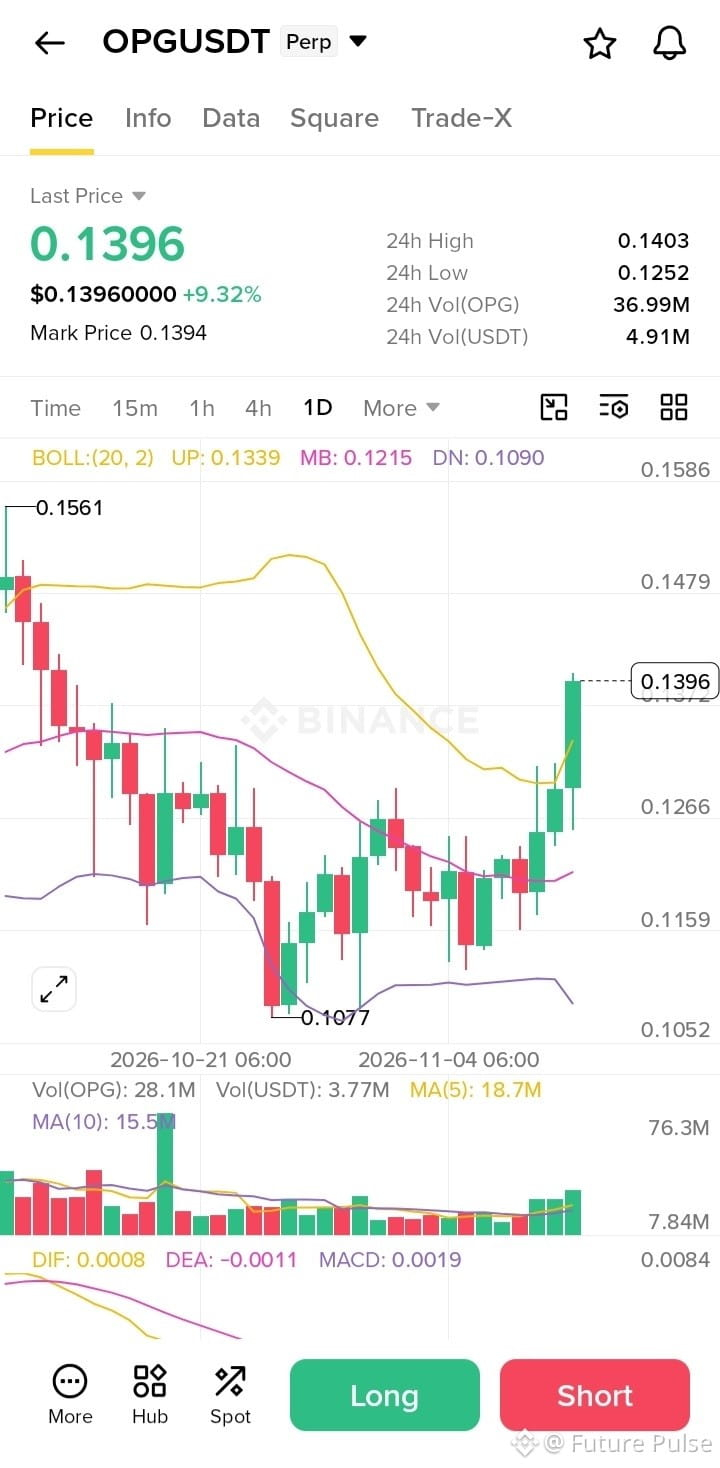
OPG is showing what a strong momentum shift looks like!
After spending time consolidating around $0.125–$0.130, buyers have stepped in aggressively, pushing the price toward $0.1403. What makes this move interesting is the combination of expanding volume, rising MACD and a clear bullish structure across the 4H and 1H charts.
However, price is now trading close to the upper Bollinger Band across multiple timeframes. That makes a short pause or pullback possible before another attempt at the highs.
🟢 Support:
$0.1370
$0.1344
$0.1307
🔴 Resistance:
$0.1403
$0.1420
$0.1450
My focus is on whether OPG can hold its breakout structure rather than simply printing another green candle. Confirmation matters! 📈
$OPG
{future}(OPGUSDT)
$XPL
{future}(XPLUSDT)
$XRP
{future}(XRPUSDT)
#OpenGradient
#HotCPIDecemberHikePriced
#AnthropicRejectsIPODelayValuationinQuestion #CanNvidiaEarningsEaseMarketConcerns?
#BitcoinFiveWeeklyLosses
OPG is showing what a strong momentum shift looks like!
After spending time consolidating around $0.125–$0.130, buyers have stepped in aggressively, pushing the price toward $0.1403. What makes this move interesting is the combination of expanding volume, rising MACD and a clear bullish structure across the 4H and 1H charts.
However, price is now trading close to the upper Bollinger Band across multiple timeframes. That makes a short pause or pullback possible before another attempt at the highs.
🟢 Support:
$0.1370
$0.1344
$0.1307
🔴 Resistance:
$0.1403
$0.1420
$0.1450
My focus is on whether OPG can hold its breakout structure rather than simply printing another green candle. Confirmation matters! 📈
$OPG
$XPL
$XRP
#OpenGradient
#HotCPIDecemberHikePriced
#AnthropicRejectsIPODelayValuationinQuestion #CanNvidiaEarningsEaseMarketConcerns?
#BitcoinFiveWeeklyLosses
1
162

·
--
📊 $OPG /USDT – LONG SIGNAL
Entry Zone: 0.1360 – 0.1390
Stop Loss (SL): 0.1310
🎯 Take Profit Targets:
TP1: 0.1430
TP2: 0.1480
TP3: 0.1550
Trade here $OPG
{future}(OPGUSDT)
Analysis:
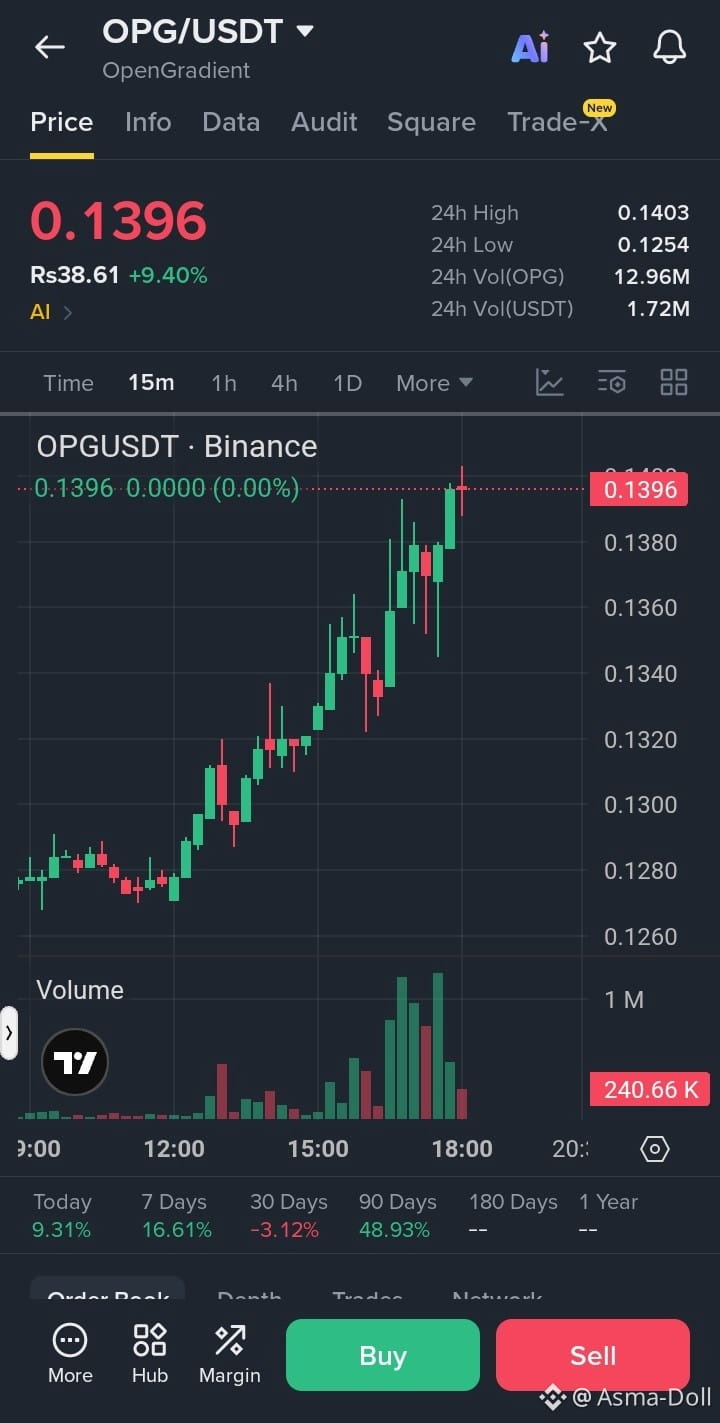
Strong bullish momentum with +9.40% daily gain.
Price approaching 24h resistance at 0.1403.
Trading volume is strong at 1.72M USDT.
Buyers currently have control.
A breakout above 0.1403 could trigger another upward move.
Avoid chasing the price near resistance.
Confirmation: A strong 15m candle close above 0.1403 with rising volume confirms bullish continuation.
Risk-to-Reward: Approximately 1:1.2 to 1:3.2 (depending on entry and target).
⚠️ Wait for breakout confirmation or a pullback before entering. Risk management is essential.
#OPG #OpenGradient #BinanceSignals #CryptoTrading #LongSignal
📊 $OPG /USDT – LONG SIGNAL
Entry Zone: 0.1360 – 0.1390
Stop Loss (SL): 0.1310
🎯 Take Profit Targets:
TP1: 0.1430
TP2: 0.1480
TP3: 0.1550
Trade here $OPG
Analysis:
Strong bullish momentum with +9.40% daily gain.
Price approaching 24h resistance at 0.1403.
Trading volume is strong at 1.72M USDT.
Buyers currently have control.
A breakout above 0.1403 could trigger another upward move.
Avoid chasing the price near resistance.
Confirmation: A strong 15m candle close above 0.1403 with rising volume confirms bullish continuation.
Risk-to-Reward: Approximately 1:1.2 to 1:3.2 (depending on entry and target).
⚠️ Wait for breakout confirmation or a pullback before entering. Risk management is essential.
#OPG #OpenGradient #BinanceSignals #CryptoTrading #LongSignal
15

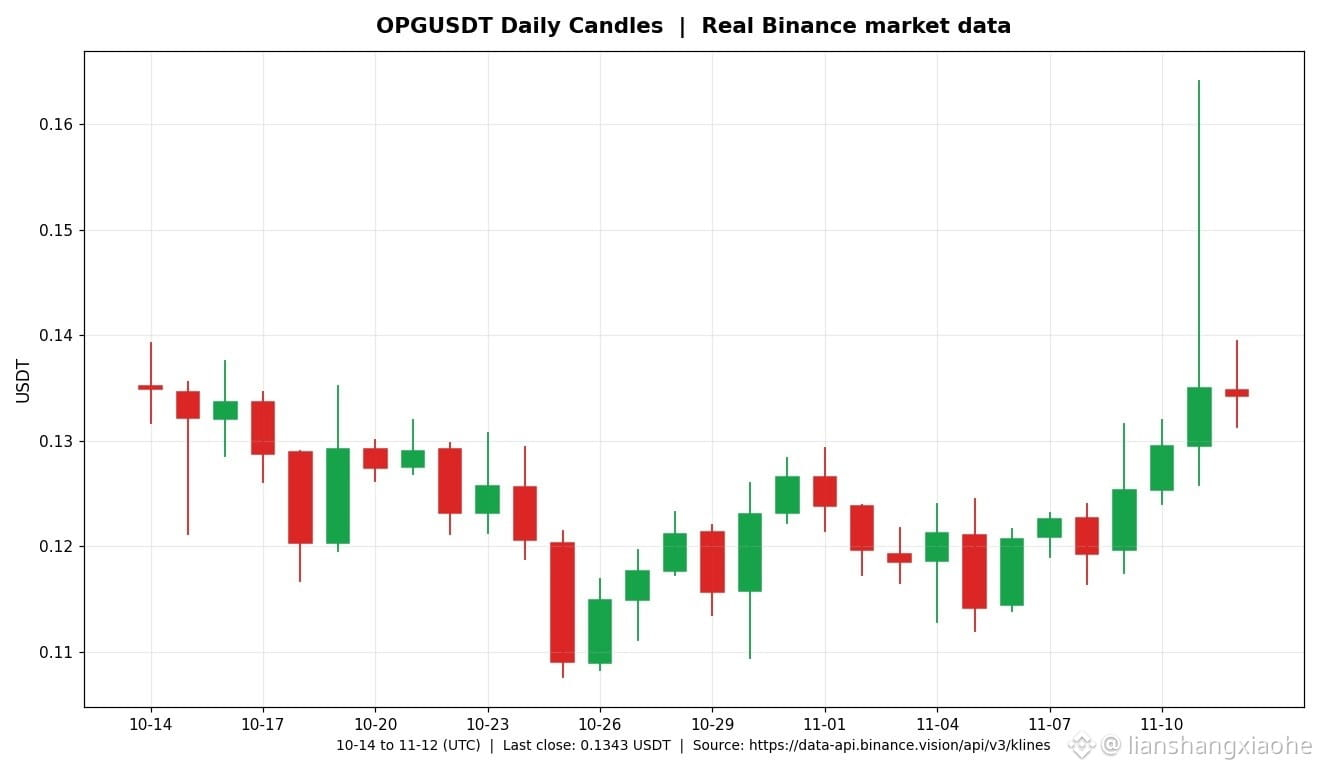
$OPG 11 November 11 was a heart-stopping ride: it opened at $0.1295 and climbed all the way to $0.1641, surging 26.7% intraday. Trading volume exploded to 69.12 million tokens that day—seven or eight times the usual amount. Unfortunately, it couldn’t hold on through the close, ending around $0.135. Let’s do the math: if you’d bought $10,000 worth at the November 10 closing price, it would’ve been worth as much as $12,672 at the intraday high, and is now worth $10,425. The AI computing-power narrative + the Base ecosystem, only 238 million tokens in circulation, a market cap of just over $31 million, and still 72% below its April high of $0.4816. With a coin like this, surging on heavy volume before pulling back, whether to chase or wait is up to you—but the volume is definitely here.#AI #OpenGradient
$OPG 11 November 11 was a heart-stopping ride: it opened at $0.1295 and climbed all the way to $0.1641, surging 26.7% intraday. Trading volume exploded to 69.12 million tokens that day—seven or eight times the usual amount. Unfortunately, it couldn’t hold on through the close, ending around $0.135. Let’s do the math: if you’d bought $10,000 worth at the November 10 closing price, it would’ve been worth as much as $12,672 at the intraday high, and is now worth $10,425. The AI computing-power narrative + the Base ecosystem, only 238 million tokens in circulation, a market cap of just over $31 million, and still 72% below its April high of $0.4816. With a coin like this, surging on heavy volume before pulling back, whether to chase or wait is up to you—but the volume is definitely here.#AI #OpenGradient
1
37

·
--
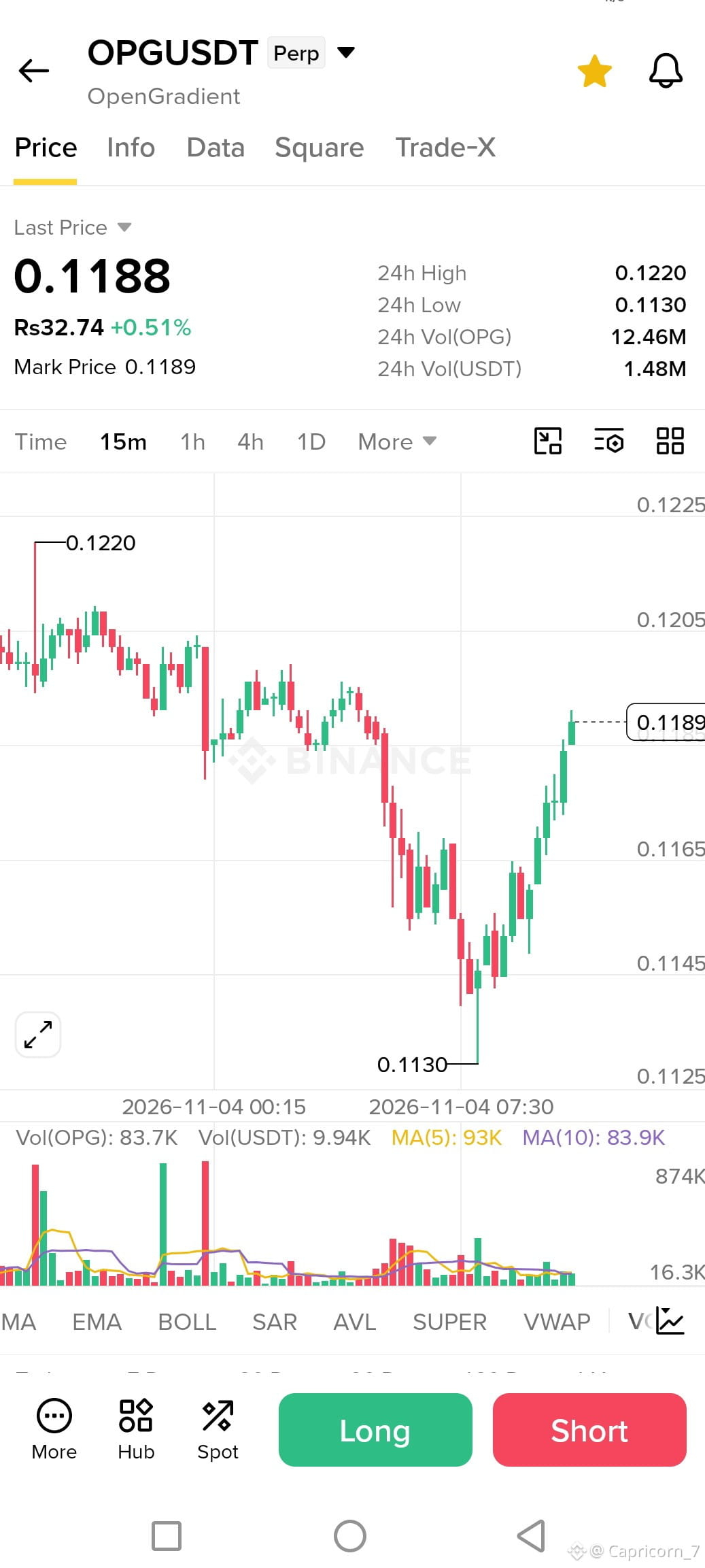
$OPG USDT - SOLID COMEBACK 💥
Last: $0.1188 (+0.51%)
24h High: 0.1220 | Low: 0.1130
Vol: 12.46M OPG / $1.48M
Drop to 0.1130 then bounce to 0.1189 🚀
+5% recovery from bottom
Green candles building - momentum returning
Resistance: 0.1220
Support: 0.1130
Break 0.1195 = 0.1220 retest
#OPG #OpenGradient #Crypto
Last: $0.1188 (+0.51%)
24h High: 0.1220 | Low: 0.1130
Vol: 12.46M OPG / $1.48M
Drop to 0.1130 then bounce to 0.1189 🚀
+5% recovery from bottom
Green candles building - momentum returning
Resistance: 0.1220
Support: 0.1130
Break 0.1195 = 0.1220 retest
#OPG #OpenGradient #Crypto
2
411

·
--
Verified

Article
OpenGradient: What If We Could Verify How AI Thinks?Most AI platforms ask us to trust their answers. But what if we could also verify how those answers were produced?
This is the problem OpenGradient is trying to address.
OpenGradient is building decentralized infrastructure for AI, with a focus on verifiable execution, secure computing and open access to AI models.
One part I find interesting is its use of Trusted Execution Environments (TEEs).
In simple terms, a TEE creates a protected environment where AI tasks can run. Hardware-based attestation can then provide evidence that the approved code was executed inside that secure environment.
Another important part is ZKML, or zero-knowledge machine learning. It can provide cryptographic proofs for certain machine learning computations. However, it is important to understand that OpenGradient uses different verification methods for different workloads. Its LLM inference currently relies on TEE verification, while ZKML is available for supported ML execution.
The project also has a decentralized Model Hub where developers can access and host models, along with MemSync, which helps AI applications maintain context across conversations.
The $OPG token has a role in the network's payment, staking and governance systems.
But I don't think technology alone will decide whether OpenGradient succeeds.
There are still important questions to consider. Can developers build useful applications on it? Will users actually demand verifiable AI? Can the network maintain strong security and privacy as adoption grows?
Also, verification does not automatically mean every AI answer is correct. It helps establish how computation was executed, which is a different but important problem.
Personally, I think verifiable AI is worth watching because trust and transparency will matter more as AI becomes part of financial services, applications and everyday decisions.
What do you think matters most for the future of AI: better models, stronger privacy, or the ability to verify how AI works?
@OpenGradient $OPG #OpenGradient #OPG #Aİ
{future}(OPGUSDT)
OpenGradient: What If We Could Verify How AI Thinks?
Most AI platforms ask us to trust their answers. But what if we could also verify how those answers were produced?
This is the problem OpenGradient is trying to address.
OpenGradient is building decentralized infrastructure for AI, with a focus on verifiable execution, secure computing and open access to AI models.
One part I find interesting is its use of Trusted Execution Environments (TEEs).
In simple terms, a TEE creates a protected environment where AI tasks can run. Hardware-based attestation can then provide evidence that the approved code was executed inside that secure environment.
Another important part is ZKML, or zero-knowledge machine learning. It can provide cryptographic proofs for certain machine learning computations. However, it is important to understand that OpenGradient uses different verification methods for different workloads. Its LLM inference currently relies on TEE verification, while ZKML is available for supported ML execution.
The project also has a decentralized Model Hub where developers can access and host models, along with MemSync, which helps AI applications maintain context across conversations.
The $OPG token has a role in the network's payment, staking and governance systems.
But I don't think technology alone will decide whether OpenGradient succeeds.
There are still important questions to consider. Can developers build useful applications on it? Will users actually demand verifiable AI? Can the network maintain strong security and privacy as adoption grows?
Also, verification does not automatically mean every AI answer is correct. It helps establish how computation was executed, which is a different but important problem.
Personally, I think verifiable AI is worth watching because trust and transparency will matter more as AI becomes part of financial services, applications and everyday decisions.
What do you think matters most for the future of AI: better models, stronger privacy, or the ability to verify how AI works?
@OpenGradient $OPG #OpenGradient #OPG #Aİ
698

·
--
#opg $OPG
#OpenGradient Chat
Make it so that everyone has an AI assistant without uncontrolled oversight.
For Web3, financial, and medical institutions, we provide compliant, reliable AI computing power as a baseline level that supports the deployment of the next generation of on-chain autonomous agents.
Built on the token $OPG , we enable payment for computing power across the entire network, node incentives, and community governance; we are building a fully open intelligent infrastructure with no barriers to access, co-created by many parties, advancing global AI into a new era of decentralization, trust, and user sovereignty.
122

·
--
Is #OpenGradient (OPG) Worth Watching?
The AI narrative in crypto is growing, but hype alone is no longer enough. Projects now need to prove real utility, and that's why @OpenGradient (OPG) stands out to me.
Instead of focusing on consumer AI, $OPG is building decentralized infrastructure for AI models. If AI adoption keeps expanding, secure model hosting, verifiable inference, and scalable infrastructure could become increasingly valuable.
That said, technology alone won't determine success. Developer adoption, ecosystem growth, and consistent execution will matter far more than short-term excitement.
I see OPG as a project worth watching rather than blindly chasing. It has an interesting long-term narrative, but like any early-stage project, it still needs to prove itself through real adoption.
What's your view? Will strong technology, developer adoption, or market sentiment have the biggest impact on OPG's future?

97
73
4.6k

·
--
We need to stop treating decentralized node placement like a basic game of Risk.
Most people look at a global map of nodes and think, "Great, we have global coverage." But a recent latency test I ran on @OpenGradient proved just how deceptive a pretty map can be.
The scheduler did exactly what it was programmed to do: it routed a request to the absolute closest inference node geographically. On paper, it was a flawless decision. In reality, it was a disaster.
The local node didn’t have the specific model ready and had to start pulling it from scratch. Meanwhile, a "warm" node slightly further away was sitting completely idle, ready to go. Because of a blind spot in routing, the shortest physical distance turned into the slowest execution time.
This is the hidden trap. Decentralized AI routing isn't a geography problem; it’s a fluid coordination problem.If you're only measuring physical distance, you're ignoring real-time GPU capacity, queue bottlenecks, live model states, and failure correlations.
Worse, visual distribution is often an illusion. You can place two nodes in entirely different cities, but if they rely on the same cloud provider, the same underlying operator, or the same regional fiber backbone, they aren't independent. They represent a shared failure point waiting to happen.
The complexity goes even deeper when you realize that full nodes shouldn't even share the same footprint as inference nodes. Their priority is optimizing proof propagation, not user ping. Then you throw data nodes into the mix, where being close to the data source matters way more than being close to the end-user.
Traditional facility-location models can map these trade-offs, but the real wildcard is how the economic incentives will drive node deployment.
The next milestone for $OPG shouldn't be about spreading nodes randomly across a map. It’s about whether new infrastructure actually plugs these invisible latency gaps and cuts down the shared dependencies that users actually experience.
#OPG #OpenGradient #DeAI #Web3Infrastructure
124

·
--
The more I research @OpenGradient ( $OPG ), the more I think the market may be overlooking what it's actually building.
Most AI projects compete to create smarter models.
OpenGradient is focused on something different: making AI outputs verifiable.
As AI becomes part of financial systems, autonomous agents, and critical infrastructure, trust becomes a real issue. Not because AI isn't useful, but because users need a way to verify results instead of simply accepting them.
That's where OPG caught my attention.
They are building the infrastructure that allows AI to perform and prove calculations, developing bridges between AI and on-chain considerations.
What I find exciting is that this is not some other "next chatbot" statement.
It's a bet on a future where AI needs accountability.
The AI race is getting crowded.
The trust layer for AI is still in its early days.
And historically, infrastructure projects solving fundamental problems have often been the ones that last the longest.
Still early, still researching, but OpenGradient is definitely one of the more interesting AI infrastructure projects on my watchlist.
#OpenGradient #OPG
#opg $OPG
{spot}(OPGUSDT)
The more I research @OpenGradient ( $OPG ), the more I think the market may be overlooking what it's actually building.
Most AI projects compete to create smarter models.
OpenGradient is focused on something different: making AI outputs verifiable.
As AI becomes part of financial systems, autonomous agents, and critical infrastructure, trust becomes a real issue. Not because AI isn't useful, but because users need a way to verify results instead of simply accepting them.
That's where OPG caught my attention.
They are building the infrastructure that allows AI to perform and prove calculations, developing bridges between AI and on-chain considerations.
What I find exciting is that this is not some other "next chatbot" statement.
It's a bet on a future where AI needs accountability.
The AI race is getting crowded.
The trust layer for AI is still in its early days.
And historically, infrastructure projects solving fundamental problems have often been the ones that last the longest.
Still early, still researching, but OpenGradient is definitely one of the more interesting AI infrastructure projects on my watchlist.
#OpenGradient #OPG
#opg $OPG
22
11
359

@OpenGradient
While reading through OpenGradient's architecture, one idea kept pulling my attention back: AI infrastructure isn't only about compute anymore. It's increasingly about coordination.
Most people focus on models, GPUs, or inference speed. But when AI workloads are distributed across different nodes, another challenge appears. How do you know the right model was used, the result wasn't altered, and the network made the best routing decision?
That's where OpenGradient's approach feels interesting. Instead of treating verification as an optional layer, it seems to be woven into the system itself through attestations, proofs, and transparent execution pathways.
The more I look into $OPG , the more I think the future AI stack may not be defined by who has the biggest models, but by who can make AI outputs trustworthy at scale.
Fast AI is valuable.
Verifiable AI could be essential.
#OPG
#OpenGradient
2
2
145

·
--
I'm tired of "revolutionary AI" projects 🤖💤
Every week: Bigger model. Bigger funding. Bigger promises.
Same problems remain.
3 companies control the AI we actually use.
They change pricing? You're stuck 💰
They limit access? You're stuck 🔒
They shut down? Your problem, not theirs 💀
We call it innovation.
I call it renting the future 🏠
That's why @OpenGradient caught my eye 👀
Not because of flashy token.
Not because of 100x hopium.
Because they're fixing the foundation 🧱
Decentralized network where AI models get hosted, run, verified...
Without one company holding the kill switch ⚡
If AI becomes everyday life, infrastructure can't belong to 5 players.
We need systems anyone can build on.
Systems we can verify, not just trust ✅
Maybe big companies win anyway 🤷
But I'd rather study projects fixing foundations
Than another AI coin with countdown timer + fancy website ⏳
Hype is old.
Infrastructure is what lasts 💪
What matters more: model size or model ownership? 👇
$OPG
{future}(OPGUSDT)
0.1581 -10.27% | $SOL 69.03 -0.6%
#OpenGradient #OPG #DePIN
I'm tired of "revolutionary AI" projects 🤖💤
Every week: Bigger model. Bigger funding. Bigger promises.
Same problems remain.
3 companies control the AI we actually use.
They change pricing? You're stuck 💰
They limit access? You're stuck 🔒
They shut down? Your problem, not theirs 💀
We call it innovation.
I call it renting the future 🏠
That's why @OpenGradient caught my eye 👀
Not because of flashy token.
Not because of 100x hopium.
Because they're fixing the foundation 🧱
Decentralized network where AI models get hosted, run, verified...
Without one company holding the kill switch ⚡
If AI becomes everyday life, infrastructure can't belong to 5 players.
We need systems anyone can build on.
Systems we can verify, not just trust ✅
Maybe big companies win anyway 🤷
But I'd rather study projects fixing foundations
Than another AI coin with countdown timer + fancy website ⏳
Hype is old.
Infrastructure is what lasts 💪
What matters more: model size or model ownership? 👇
$OPG
0.1581 -10.27% | $SOL 69.03 -0.6%
#OpenGradient #OPG #DePIN
2
48

·
--
Honestly, the more I look at AI appchains, the less I see a simple tech upgrade. It feels more like watching builders open the engine while the car is still moving.🤭
When i look at the OpenGradient Neuro Stack, I don’t really see it as some clean shortcut for putting AI on-chain. Not exactly🤷. I see it more like a separate engine room for AI appchains, because normal blockchains are not built to carry inference, model access, external data, verification, memory & settlement all at the same time. That load gets messy, pretty fast. I think the main thing here is control. A sovereign AI application may need its own execution environment, where inference routing, verification logic, agent workflows, data access & settlement rules can be tuned around one specific use case. That could matter for #DeFi intelligence chains, agent marketplaces, autonomous research networks, or enterprise AI automation chains, especially where generic smart contracts feel too stiff. But honestly what i am noticing is the trade-off sitting in the middle. #OpenGradient ‘s HACA design separates compute from verification, and that makes sense because AI execution should not dump all its weight onto base consensus. Still, another question shows up: who coordinates these layers, how fast does verification happen, and how much complexity does the developer end up carrying?
Maybe the Neuro Stack works best where builders actually need verifiable AI appchains, not just a normal AI API with a token attached. If appchain fragmentation grows, liquidity and onboarding could become real headaches. If the stack hides enough complexity while keeping proof-backed outputs useful, it may find a serious role in on-chain intelligence. But honestly, that depends on real apps proving the extra control is worth the extra machinery.
@OpenGradient $OPG #OPG
$VELVET
$BAS
What you think is the biggest real challenge for OpenGradient Neuro Stack if AI appchains start growing? Let’s see! 👍
Dev complexity 🛠️
50%
Appchain split 🧩
40%
Liquidity issues 💧
10%
UX proof 😅
0%
10 votes • Voting closed
125
63
2.1k
Log in to explore more content
Join global crypto users on Binance Square
⚡️ Get latest and useful information about crypto.
💬 Trusted by the world’s largest crypto exchange.
👍 Discover real insights from verified creators.
Email / Phone number
Trending Topics
1
#HuangRisksOusterOverReportedAffairWithSubordinate
72,870 views
979 Discussing
2
#AnthropicRejectsIPODelayValuationinQuestion
533,865 views
4,368 Discussing
3
#BitMineReports$6.3BNetLossForFiscal2026
39 views
21 Discussing
4
#CoreWeaveJumps10%On168%RevenueGrowth
101,643 views
1,149 Discussing
5
#ZcashFallsBelow$1000ForFirstTimeSinceSeptember
54,557 views
225 Discussing
6
#MSCIRemovalMayCurbStrategy’sBitcoinBuying
14,377 views
254 Discussing
7
#HKSFCSaysTokenizationMovingToCommercialUse
3,263 views
66 Discussing
8
#CanNvidiaEarningsEaseMarketConcerns?
206,656 views
2,046 Discussing
9
#SouthKoreaToLetExchangesSuspendWithdrawalsOnSuspectedHacks
367 views
16 Discussing
10
#PythAddsNYSERealTimeDataToMarketplace
7,293 views
172 Discussing