

Anya Naqvi
4.4k Публикации

Anya Naqvi
Отправить жалобу
Заблокировать пользователя
Smart work. Strong coins. Steady gains. | Holding $SOL & $PEPE with a plan, not emotion 📊
1.7K+ подписок(и/а)
29.6K+ подписчиков(а)
11.5K+ понравилось
Посты
Все
Цитирования
Видео
Активно
PINNED
·
--
Рост
#baby $BABY BTC finally does something it is not just sitting there.
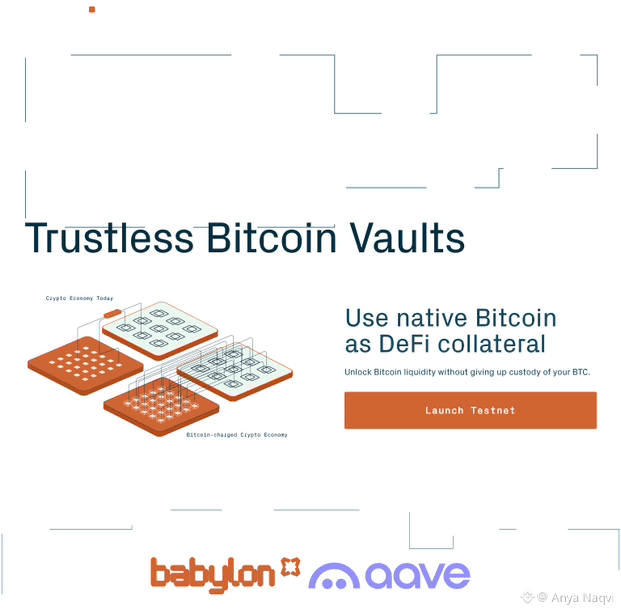
For a time people thought that Bitcoin was, like digital gold. You buy Bitcoin. You just hold onto it. If you wanted to make money from it you had to do something with it like turn it into a different kind of token or move it to a different network.That meant you had to trust a whole new group of people and computers to keep your Bitcoin safe. It seemed like that was the way it was.
Now Babylons Trustless Bitcoin Vault is changing that. Your Bitcoin is used to help keep networks safe but it stays on the Bitcoin network the whole time. You do not have to turn it into a token or move it to a different network. The Bitcoin network itself keeps your Bitcoin safe. That is the part: you are not adding a new layer of trust you are using the trust that the Bitcoin network already has.
To be honest I am still thinking about how the vault's designed. It looks good on paper. I want to see if it really works when people try to attack it.
Either way this is a way to make your Bitcoin do something if you are just holding onto it and not using it. If you have Bitcoin and you are not doing anything with it you should look into Babylons Trustless Bitcoin Vault. You should check out . #BABY
@babylonlabs_io
#baby $BABY BTC finally does something it is not just sitting there.
For a time people thought that Bitcoin was, like digital gold. You buy Bitcoin. You just hold onto it. If you wanted to make money from it you had to do something with it like turn it into a different kind of token or move it to a different network.That meant you had to trust a whole new group of people and computers to keep your Bitcoin safe. It seemed like that was the way it was.
Now Babylons Trustless Bitcoin Vault is changing that. Your Bitcoin is used to help keep networks safe but it stays on the Bitcoin network the whole time. You do not have to turn it into a token or move it to a different network. The Bitcoin network itself keeps your Bitcoin safe. That is the part: you are not adding a new layer of trust you are using the trust that the Bitcoin network already has.
To be honest I am still thinking about how the vault's designed. It looks good on paper. I want to see if it really works when people try to attack it.
Either way this is a way to make your Bitcoin do something if you are just holding onto it and not using it. If you have Bitcoin and you are not doing anything with it you should look into Babylons Trustless Bitcoin Vault. You should check out . #BABY
@BabylonLabs_io
For a time people thought that Bitcoin was, like digital gold. You buy Bitcoin. You just hold onto it. If you wanted to make money from it you had to do something with it like turn it into a different kind of token or move it to a different network.That meant you had to trust a whole new group of people and computers to keep your Bitcoin safe. It seemed like that was the way it was.
Now Babylons Trustless Bitcoin Vault is changing that. Your Bitcoin is used to help keep networks safe but it stays on the Bitcoin network the whole time. You do not have to turn it into a token or move it to a different network. The Bitcoin network itself keeps your Bitcoin safe. That is the part: you are not adding a new layer of trust you are using the trust that the Bitcoin network already has.
To be honest I am still thinking about how the vault's designed. It looks good on paper. I want to see if it really works when people try to attack it.
Either way this is a way to make your Bitcoin do something if you are just holding onto it and not using it. If you have Bitcoin and you are not doing anything with it you should look into Babylons Trustless Bitcoin Vault. You should check out . #BABY
@BabylonLabs_io
6
10
334
·
--
Version tracking isn’t just a feature—it’s the foundation of reproducible, trustworthy AI applications. 🚀
Version tracking isn’t just a feature—it’s the foundation of reproducible, trustworthy AI applications. 🚀
1
170
·
--
#opg $OPG
Your AI vendor just gave you garbage output. What are you going to do about it?
File a support ticket.
Wait 3 business days.
Get a copy paste apology and maybe a credit refund if you're lucky.That's the current state of AI service agreements. Billion-dollar APIs operating on the honor system.
Think about what an SLA actually means in traditional software.@OpenGradient
If AWS goes down for 4 hours past their uptime guarantee, you can prove it happened. There are logs, timestamps, independent monitors. The violation is real and documented.Now try proving an LLM gave you the wrong output at 2:14am on a Tuesday.
You can't. The inference happened in a black box. No receipt. No witness. No record.
This is the problem OPG is quietly solving.
On-chain proof of inference creates a cryptographic record of exactly what input went in, what model processed it, and what output came out.
It's not a log file some company controls. It's math. Publicly verifiable math.
Here's where it gets genuinely interesting.When inference is recorded on-chain, SLA violations stop being a "he said, she said" conversation between you and a vendor support team.
They become mathematically provable events.
Which means they can be written into smart contracts. Which means enforcement becomes automatic. Which means the power dynamic between AI vendors and their customers shifts for the first time ever.
We're not talking about a feature update.
We're talking about accountability infrastructure.
The kind of thing that has to exist before enterprises will ever trust AI with mission critical decisions at scale.
Right now, every company using AI APIs is flying blind on quality guarantees. OPG is building the instrument panel.
What would you pay for a guarantee that an AI API actually delivered what it promised with automatic compensation if it didn't?
That question is about to have a real answer.
#opg #OpenGradient #square $VELVET $TERMINUS
#opg $OPG
Your AI vendor just gave you garbage output. What are you going to do about it?
File a support ticket.
Wait 3 business days.
Get a copy paste apology and maybe a credit refund if you're lucky.That's the current state of AI service agreements. Billion-dollar APIs operating on the honor system.
Think about what an SLA actually means in traditional software.@OpenGradient
If AWS goes down for 4 hours past their uptime guarantee, you can prove it happened. There are logs, timestamps, independent monitors. The violation is real and documented.Now try proving an LLM gave you the wrong output at 2:14am on a Tuesday.
You can't. The inference happened in a black box. No receipt. No witness. No record.
This is the problem OPG is quietly solving.
On-chain proof of inference creates a cryptographic record of exactly what input went in, what model processed it, and what output came out.
It's not a log file some company controls. It's math. Publicly verifiable math.
Here's where it gets genuinely interesting.When inference is recorded on-chain, SLA violations stop being a "he said, she said" conversation between you and a vendor support team.
They become mathematically provable events.
Which means they can be written into smart contracts. Which means enforcement becomes automatic. Which means the power dynamic between AI vendors and their customers shifts for the first time ever.
We're not talking about a feature update.
We're talking about accountability infrastructure.
The kind of thing that has to exist before enterprises will ever trust AI with mission critical decisions at scale.
Right now, every company using AI APIs is flying blind on quality guarantees. OPG is building the instrument panel.
What would you pay for a guarantee that an AI API actually delivered what it promised with automatic compensation if it didn't?
That question is about to have a real answer.
#opg #OpenGradient #square $VELVET $TERMINUS
Your AI vendor just gave you garbage output. What are you going to do about it?
File a support ticket.
Wait 3 business days.
Get a copy paste apology and maybe a credit refund if you're lucky.That's the current state of AI service agreements. Billion-dollar APIs operating on the honor system.
Think about what an SLA actually means in traditional software.@OpenGradient
If AWS goes down for 4 hours past their uptime guarantee, you can prove it happened. There are logs, timestamps, independent monitors. The violation is real and documented.Now try proving an LLM gave you the wrong output at 2:14am on a Tuesday.
You can't. The inference happened in a black box. No receipt. No witness. No record.
This is the problem OPG is quietly solving.
On-chain proof of inference creates a cryptographic record of exactly what input went in, what model processed it, and what output came out.
It's not a log file some company controls. It's math. Publicly verifiable math.
Here's where it gets genuinely interesting.When inference is recorded on-chain, SLA violations stop being a "he said, she said" conversation between you and a vendor support team.
They become mathematically provable events.
Which means they can be written into smart contracts. Which means enforcement becomes automatic. Which means the power dynamic between AI vendors and their customers shifts for the first time ever.
We're not talking about a feature update.
We're talking about accountability infrastructure.
The kind of thing that has to exist before enterprises will ever trust AI with mission critical decisions at scale.
Right now, every company using AI APIs is flying blind on quality guarantees. OPG is building the instrument panel.
What would you pay for a guarantee that an AI API actually delivered what it promised with automatic compensation if it didn't?
That question is about to have a real answer.
#opg #OpenGradient #square $VELVET $TERMINUS
File a support ticket 🎫
75%
Switch providers 🔄
0%
Accept it & move on 😑
0%
Sue them (good luck) ⚖️
25%
4 проголосовали • Голосование закрыто
42
23
553
·
--
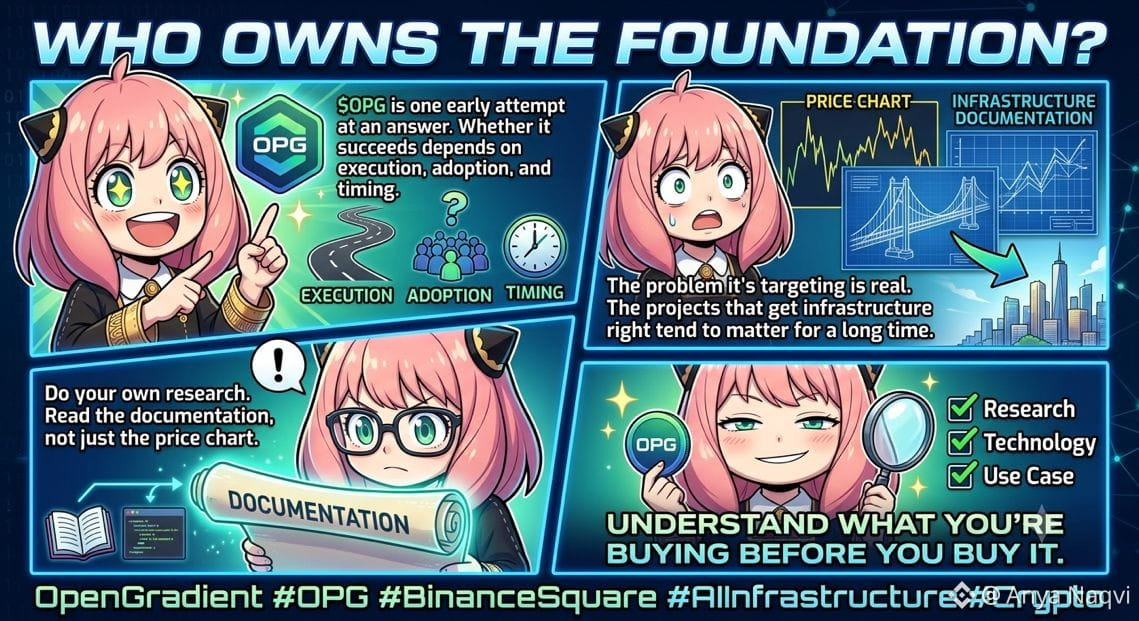
Imagine if every road in your country was privately owned.
$OPG
Not just highways. Every street, every lane, every shortcut.
You want to drive to work? Pay Company A.
You want to visit family? Pay Company B.
You want to move goods across the city? Negotiate with five different owners just to get across town.It sounds absurd.
But that's roughly how AI infrastructure operates right now.
A small number of corporations control the compute layers that power modern AI the servers, the training pipelines, the optimization systems. Everyone else, from independent researchers to growing startups, has to rent access on someone else's terms.
That creates an invisible ceiling on who gets to build serious AI, and who doesn't.#opg
Open Gradient ($OPG) is focused on one specific part of that problem.
Not the full model. Not the data. The **gradient layer** the mathematical feedback process that actually shapes how AI learns and improves over time.#OPG
It sounds technical. But think of it this way.
@OpenGradient
If the training data is what an AI reads, the gradient is what teaches it how to think. Control that layer, and you have significant influence over what AI systems actually become.
Right now, that layer is almost entirely closed. Proprietary. Invisible to outside verification.
Open Gradient wants to change that making the optimization process open, auditable, and accessible across a decentralized network rather than locked inside a corporate black box.
This isn't a weekend project. It's infrastructure level work, the kind that takes years to build and longer to become standard.
Which is exactly why most people aren't paying attention yet.
The internet didn't change overnight when open protocols arrived. But when they became the foundation, everything built on top of them shifted permanently.
The same structural question is now being asked about AI.
$TSLAB $SUI
{spot}(SUIUSDT)
{spot}(TSLABUSDT)
{spot}(OPGUSDT)
Imagine if every road in your country was privately owned.
$OPG
Not just highways. Every street, every lane, every shortcut.
You want to drive to work? Pay Company A.
You want to visit family? Pay Company B.
You want to move goods across the city? Negotiate with five different owners just to get across town.It sounds absurd.
But that's roughly how AI infrastructure operates right now.
A small number of corporations control the compute layers that power modern AI the servers, the training pipelines, the optimization systems. Everyone else, from independent researchers to growing startups, has to rent access on someone else's terms.
That creates an invisible ceiling on who gets to build serious AI, and who doesn't.#opg
Open Gradient ($OPG ) is focused on one specific part of that problem.
Not the full model. Not the data. The **gradient layer** the mathematical feedback process that actually shapes how AI learns and improves over time.#OPG
It sounds technical. But think of it this way.
@OpenGradient
If the training data is what an AI reads, the gradient is what teaches it how to think. Control that layer, and you have significant influence over what AI systems actually become.
Right now, that layer is almost entirely closed. Proprietary. Invisible to outside verification.
Open Gradient wants to change that making the optimization process open, auditable, and accessible across a decentralized network rather than locked inside a corporate black box.
This isn't a weekend project. It's infrastructure level work, the kind that takes years to build and longer to become standard.
Which is exactly why most people aren't paying attention yet.
The internet didn't change overnight when open protocols arrived. But when they became the foundation, everything built on top of them shifted permanently.
The same structural question is now being asked about AI.
$TSLAB $SUI
$OPG
Not just highways. Every street, every lane, every shortcut.
You want to drive to work? Pay Company A.
You want to visit family? Pay Company B.
You want to move goods across the city? Negotiate with five different owners just to get across town.It sounds absurd.
But that's roughly how AI infrastructure operates right now.
A small number of corporations control the compute layers that power modern AI the servers, the training pipelines, the optimization systems. Everyone else, from independent researchers to growing startups, has to rent access on someone else's terms.
That creates an invisible ceiling on who gets to build serious AI, and who doesn't.#opg
Open Gradient ($OPG ) is focused on one specific part of that problem.
Not the full model. Not the data. The **gradient layer** the mathematical feedback process that actually shapes how AI learns and improves over time.#OPG
It sounds technical. But think of it this way.
@OpenGradient
If the training data is what an AI reads, the gradient is what teaches it how to think. Control that layer, and you have significant influence over what AI systems actually become.
Right now, that layer is almost entirely closed. Proprietary. Invisible to outside verification.
Open Gradient wants to change that making the optimization process open, auditable, and accessible across a decentralized network rather than locked inside a corporate black box.
This isn't a weekend project. It's infrastructure level work, the kind that takes years to build and longer to become standard.
Which is exactly why most people aren't paying attention yet.
The internet didn't change overnight when open protocols arrived. But when they became the foundation, everything built on top of them shifted permanently.
The same structural question is now being asked about AI.
$TSLAB $SUI
54
17
279
·
--
Рост
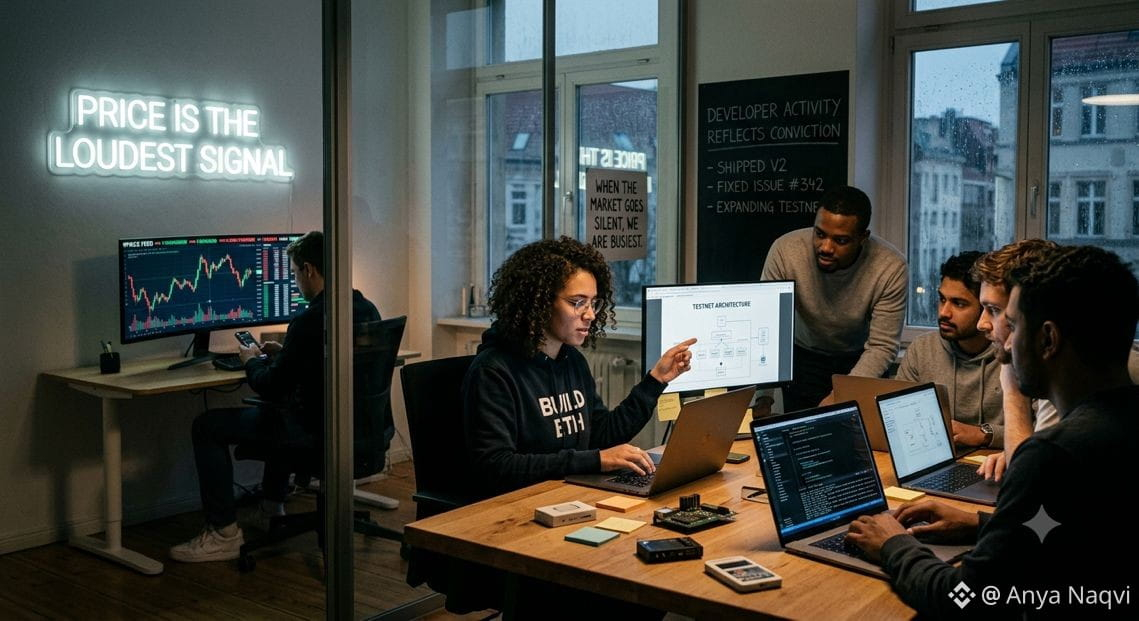
#opg $OPG Price is the loudest signal in crypto.
Builder activity is usually the quietest.
When the market goes silent, most people stop paying attention. But that is often when developers are the busiest—shipping updates, fixing issues, and expanding testnet activity.
Testnets may not create headlines, yet they reveal something charts cannot: whether a project is still attracting builders and real experimentation.
Price reflects attention.
Developer activity reflects conviction.
The next time the market looks boring, don’t just watch the candles. Look at what is being built behind the scenes. By the time the chart tells the story, the groundwork has often been in place for much longer.@OpenGradient
#USDTMarketCapHits$186BOvertakingETH #MicronRevenueJumps346%To$41.5B #SolmateSharesDropOver98% #CFTCSeeksCommentOnEventContractReportingRules
$MOG
$KO
#opg $OPG Price is the loudest signal in crypto.
Builder activity is usually the quietest.
When the market goes silent, most people stop paying attention. But that is often when developers are the busiest—shipping updates, fixing issues, and expanding testnet activity.
Testnets may not create headlines, yet they reveal something charts cannot: whether a project is still attracting builders and real experimentation.
Price reflects attention.
Developer activity reflects conviction.
The next time the market looks boring, don’t just watch the candles. Look at what is being built behind the scenes. By the time the chart tells the story, the groundwork has often been in place for much longer.@OpenGradient
#USDTMarketCapHits$186BOvertakingETH #MicronRevenueJumps346%To$41.5B #SolmateSharesDropOver98% #CFTCSeeksCommentOnEventContractReportingRules
$MOG
$KO
Builder activity is usually the quietest.
When the market goes silent, most people stop paying attention. But that is often when developers are the busiest—shipping updates, fixing issues, and expanding testnet activity.
Testnets may not create headlines, yet they reveal something charts cannot: whether a project is still attracting builders and real experimentation.
Price reflects attention.
Developer activity reflects conviction.
The next time the market looks boring, don’t just watch the candles. Look at what is being built behind the scenes. By the time the chart tells the story, the groundwork has often been in place for much longer.@OpenGradient
#USDTMarketCapHits$186BOvertakingETH #MicronRevenueJumps346%To$41.5B #SolmateSharesDropOver98% #CFTCSeeksCommentOnEventContractReportingRules
$MOG
$KO
62
18
333
·
--
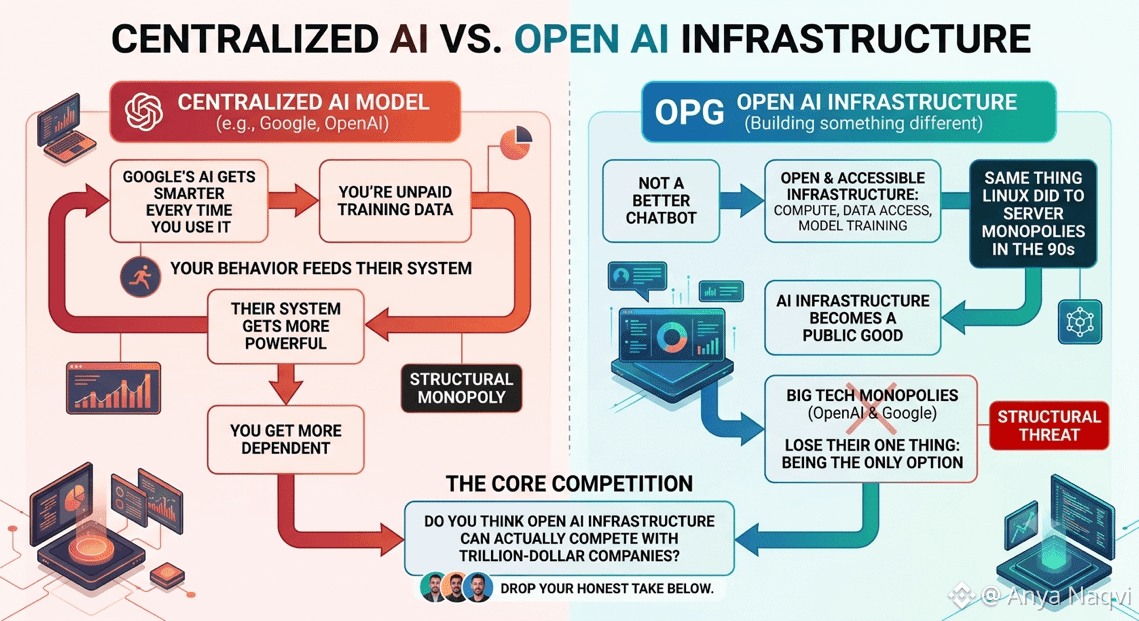
#opg $OPG
Google's AI gets smarter every time you use it.
You're not a user. You're unpaid training data.
That's the centralized AI model. Your behavior feeds their system. Their system gets more powerful. You get more dependent.
OPG is building something different.
Not a better chatbot. The infrastructure underneath — compute, data access, model training made open and accessible to anyone.
Same thing Linux did to server monopolies in the 90s.
If AI infrastructure becomes a public good, OpenAI and Google lose the one thing their entire business depends on:
Being the only option.
That's not a small disruption. That's a structural threat.
Do you think open AI infrastructure can actually compete with trillion-dollar companies?
Drop your honest take below.
#opg $OPG
Google's AI gets smarter every time you use it.
You're not a user. You're unpaid training data.
That's the centralized AI model. Your behavior feeds their system. Their system gets more powerful. You get more dependent.
OPG is building something different.
Not a better chatbot. The infrastructure underneath — compute, data access, model training made open and accessible to anyone.
Same thing Linux did to server monopolies in the 90s.
If AI infrastructure becomes a public good, OpenAI and Google lose the one thing their entire business depends on:
Being the only option.
That's not a small disruption. That's a structural threat.
Do you think open AI infrastructure can actually compete with trillion-dollar companies?
Drop your honest take below.
Google's AI gets smarter every time you use it.
You're not a user. You're unpaid training data.
That's the centralized AI model. Your behavior feeds their system. Their system gets more powerful. You get more dependent.
OPG is building something different.
Not a better chatbot. The infrastructure underneath — compute, data access, model training made open and accessible to anyone.
Same thing Linux did to server monopolies in the 90s.
If AI infrastructure becomes a public good, OpenAI and Google lose the one thing their entire business depends on:
Being the only option.
That's not a small disruption. That's a structural threat.
Do you think open AI infrastructure can actually compete with trillion-dollar companies?
Drop your honest take below.
64
24
450
·
--
Mist read
Mist read

M A L I Z-مالیز 马 利 兹
·
--
Рост🔥 $ETH BIG GIVEAWAY ALERT! Let’s grow together! 🔥
Hey everyone! Hope you’re all doing amazing.
⚡ I need your massive support on my latest posts!
👇 Here is what you need to do RIGHT NOW:
1. LIKE and COMMENT or REPOPO/REPOST on my latest posts.
2. REPOST/REPOPO this post for your friends and fans to spread the word! 🎁
Your Reward: Do this, and I will instantly return the favor (100% back) and you can claim your reward right here! Don't miss out! 🚀🚀
#repopo #repopomypopo #repopomybothpinpoposuppome #malizgiveaway $BTC $BNB DYOR GUYS
WHAT #MALIZ MADE THE WORD FOR REPOSTING?
ANSWER IN COMMENTS👇
Hey everyone! Hope you’re all doing amazing.
⚡ I need your massive support on my latest posts!
👇 Here is what you need to do RIGHT NOW:
1. LIKE and COMMENT or REPOPO/REPOST on my latest posts.
2. REPOST/REPOPO this post for your friends and fans to spread the word! 🎁
Your Reward: Do this, and I will instantly return the favor (100% back) and you can claim your reward right here! Don't miss out! 🚀🚀
#repopo #repopomypopo #repopomybothpinpoposuppome #malizgiveaway $BTC $BNB DYOR GUYS
WHAT #MALIZ MADE THE WORD FOR REPOSTING?
ANSWER IN COMMENTS👇

2
28
·
--
Рост
**What Happens When AI Becomes Composable Like Smart Contracts?**
Imagine you hired five specialists for one project.
A lawyer. A data analyst. A fraud detector. A translator. A fact checker.
Now imagine they worked together automaticallyeach one handing off to the next without you ever sending a single email.That's not a future concept.That's composable AI workflows. And it's already being built.@OpenGradient
In crypto, you know composable protocols. DeFi is built on it. You take a lending protocol, plug in a DEX, add a yield optimizer and suddenly you have something none of those three could do alone.
Composable AI works the same way.
Instead of one model doing everything, you chain specialized models together each doing what it does best in one automated sequence.
The output of each becomes the input of the next. No human in the middle. No bottleneck.
And when you mix multiple verification layers inside that chain:
— Cryptographic proofs (on-chain)
— Cross-model consensus
— Retrieval-based grounding
— Time-locked dispute windows
Each layer catches different errors. Together, they create something closer to trustless verification.
We've spent years asking: *"Can AI be trusted?"*
Composable workflows reframe that entirely.
Instead of trusting one model, you build a system where trust is *distributed* the same way DeFi distributes trust across contracts instead of banks.
The question stops being **"is this AI reliable?"**
It becomes "is this system reliable?" #OPG
That's a question crypto infrastructure already knows how to answer.
What part of this stack gets built out first verification, coordination, or cost efficiency?
Drop your take below.
$SD $SHIB
$OPG
{spot}(SHIBUSDT)
{alpha}(10x30d20208d987713f46dfd34ef128bb16c404d10f)
{spot}(OPGUSDT)
#opg
**What Happens When AI Becomes Composable Like Smart Contracts?**
Imagine you hired five specialists for one project.
A lawyer. A data analyst. A fraud detector. A translator. A fact checker.
Now imagine they worked together automaticallyeach one handing off to the next without you ever sending a single email.That's not a future concept.That's composable AI workflows. And it's already being built.@OpenGradient
In crypto, you know composable protocols. DeFi is built on it. You take a lending protocol, plug in a DEX, add a yield optimizer and suddenly you have something none of those three could do alone.
Composable AI works the same way.
Instead of one model doing everything, you chain specialized models together each doing what it does best in one automated sequence.
The output of each becomes the input of the next. No human in the middle. No bottleneck.
And when you mix multiple verification layers inside that chain:
— Cryptographic proofs (on-chain)
— Cross-model consensus
— Retrieval-based grounding
— Time-locked dispute windows
Each layer catches different errors. Together, they create something closer to trustless verification.
We've spent years asking: *"Can AI be trusted?"*
Composable workflows reframe that entirely.
Instead of trusting one model, you build a system where trust is *distributed* the same way DeFi distributes trust across contracts instead of banks.
The question stops being **"is this AI reliable?"**
It becomes "is this system reliable?" #OPG
That's a question crypto infrastructure already knows how to answer.
What part of this stack gets built out first verification, coordination, or cost efficiency?
Drop your take below.
$SD $SHIB
$OPG
#opg
Imagine you hired five specialists for one project.
A lawyer. A data analyst. A fraud detector. A translator. A fact checker.
Now imagine they worked together automaticallyeach one handing off to the next without you ever sending a single email.That's not a future concept.That's composable AI workflows. And it's already being built.@OpenGradient
In crypto, you know composable protocols. DeFi is built on it. You take a lending protocol, plug in a DEX, add a yield optimizer and suddenly you have something none of those three could do alone.
Composable AI works the same way.
Instead of one model doing everything, you chain specialized models together each doing what it does best in one automated sequence.
The output of each becomes the input of the next. No human in the middle. No bottleneck.
And when you mix multiple verification layers inside that chain:
— Cryptographic proofs (on-chain)
— Cross-model consensus
— Retrieval-based grounding
— Time-locked dispute windows
Each layer catches different errors. Together, they create something closer to trustless verification.
We've spent years asking: *"Can AI be trusted?"*
Composable workflows reframe that entirely.
Instead of trusting one model, you build a system where trust is *distributed* the same way DeFi distributes trust across contracts instead of banks.
The question stops being **"is this AI reliable?"**
It becomes "is this system reliable?" #OPG
That's a question crypto infrastructure already knows how to answer.
What part of this stack gets built out first verification, coordination, or cost efficiency?
Drop your take below.
$SD $SHIB
$OPG
#opg
Verification Layer
34%
Coordination Layer
0%
Cost Efficiency
33%
DeFi Integration
33%
3 проголосовали • Голосование закрыто
48
18
786
·
--
Рост
#opg $OPG
You don't think about the pipes when you turn on the tap.
You just want water!
That's exactly how most people use AI. They see the chatbot. They see the answer. They never think about what's running underneath or whether it can actually be trusted.
**Here's what the AI stack actually looks like:**
Users see the chatbot.
Developers see the API.
Nobody sees the infrastructure.
And that invisible layer? That's where everything either holds together or quietly falls apart.
**The trust problem nobody is solving at the surface.**
When an AI makes a decision on-chain approving a loan, flagging a transaction, generating a risk score you have no way to verify it ran correctly.
You're just trusting the output.@OpenGradient
Fine for a recipe suggestion. Not fine for financial infrastructure.
**This is what real AI infrastructure looks like:**
→ **Model versioning** the exact AI used in any decision is recorded. Can't be quietly swapped.
→ **Verifiable execution** TEE + ZKML so every inference can be checked, not just trusted.
→ **On-chain inference** smart contracts call AI and get results tied to a specific model run.
→ **Decentralized compute** no single company controls where or how the AI runs.
Each layer useful alone. Together, they give blockchains something they've never had.
A verifiable brain.
**The internet had this exact moment.**
Nobody thought about SSL certificates or DNS infrastructure
until the internet became financial infrastructure.
Then the invisible layer mattered enormously.
AI is at that same inflection point now.
The most important AI infrastructure won't trend. It won't have a flashy demo.
It'll just quietly make sure that when AI affects your money it actually did what it claimed.
That's harder than building any chatbot.
And it's the only thing that actually matters.$BTC $SUI
What’s the biggest barrier to AI being used in DeFi protocols today?
{spot}(SUIUSDT)
#opgusdt
#opg $OPG
You don't think about the pipes when you turn on the tap.
You just want water!
That's exactly how most people use AI. They see the chatbot. They see the answer. They never think about what's running underneath or whether it can actually be trusted.
**Here's what the AI stack actually looks like:**
Users see the chatbot.
Developers see the API.
Nobody sees the infrastructure.
And that invisible layer? That's where everything either holds together or quietly falls apart.
**The trust problem nobody is solving at the surface.**
When an AI makes a decision on-chain approving a loan, flagging a transaction, generating a risk score you have no way to verify it ran correctly.
You're just trusting the output.@OpenGradient
Fine for a recipe suggestion. Not fine for financial infrastructure.
**This is what real AI infrastructure looks like:**
→ **Model versioning** the exact AI used in any decision is recorded. Can't be quietly swapped.
→ **Verifiable execution** TEE + ZKML so every inference can be checked, not just trusted.
→ **On-chain inference** smart contracts call AI and get results tied to a specific model run.
→ **Decentralized compute** no single company controls where or how the AI runs.
Each layer useful alone. Together, they give blockchains something they've never had.
A verifiable brain.
**The internet had this exact moment.**
Nobody thought about SSL certificates or DNS infrastructure
until the internet became financial infrastructure.
Then the invisible layer mattered enormously.
AI is at that same inflection point now.
The most important AI infrastructure won't trend. It won't have a flashy demo.
It'll just quietly make sure that when AI affects your money it actually did what it claimed.
That's harder than building any chatbot.
And it's the only thing that actually matters.$BTC $SUI
What’s the biggest barrier to AI being used in DeFi protocols today?
#opgusdt
You don't think about the pipes when you turn on the tap.
You just want water!
That's exactly how most people use AI. They see the chatbot. They see the answer. They never think about what's running underneath or whether it can actually be trusted.
**Here's what the AI stack actually looks like:**
Users see the chatbot.
Developers see the API.
Nobody sees the infrastructure.
And that invisible layer? That's where everything either holds together or quietly falls apart.
**The trust problem nobody is solving at the surface.**
When an AI makes a decision on-chain approving a loan, flagging a transaction, generating a risk score you have no way to verify it ran correctly.
You're just trusting the output.@OpenGradient
Fine for a recipe suggestion. Not fine for financial infrastructure.
**This is what real AI infrastructure looks like:**
→ **Model versioning** the exact AI used in any decision is recorded. Can't be quietly swapped.
→ **Verifiable execution** TEE + ZKML so every inference can be checked, not just trusted.
→ **On-chain inference** smart contracts call AI and get results tied to a specific model run.
→ **Decentralized compute** no single company controls where or how the AI runs.
Each layer useful alone. Together, they give blockchains something they've never had.
A verifiable brain.
**The internet had this exact moment.**
Nobody thought about SSL certificates or DNS infrastructure
until the internet became financial infrastructure.
Then the invisible layer mattered enormously.
AI is at that same inflection point now.
The most important AI infrastructure won't trend. It won't have a flashy demo.
It'll just quietly make sure that when AI affects your money it actually did what it claimed.
That's harder than building any chatbot.
And it's the only thing that actually matters.$BTC $SUI
What’s the biggest barrier to AI being used in DeFi protocols today?
#opgusdt
Unverifiable AI outputs
0%
Too slow for on-chain use
0%
Single point of control
50%
Regulations still unclear
50%
4 проголосовали • Голосование закрыто
61
1
26
578
·
--
Рост
#opg $OPG Not every lock in your house is a vault door.
Your bathroom has a simple latch. Your front door has a deadbolt. Your safe has a combination lock.
So why are we trying to run full cryptographic proofs on every single AI computation in Web3?
“Two tools. Completely different jobs.”
“TEE”= a locked room inside a chip. The AI runs there. Nobody can see inside or tamper with it. You trust the hardware.
“ZKML”= generates a cryptographic proof that an AI ran correctly. You trust nothing. You just verify the math.
TEE is fast and cheap.
ZKML is slow and expensive but mathematically certain.
“Here's the part most people miss.”
ZKML proof generation can run 100x to 1000x slower than the inference itself.
Running it on every task is like hiring a forensic accountant to verify your grocery receipt.
“The smarter architecture looks like this:”
→ Low risk, high frequency task? “TEE”.Fast. Efficient. Good enough.
→ High stakes decision? “ZKML”.Slow. Expensive. Worth every cost.
→ Medium risk? Combine both. TEE for speed, ZKML spot checks for accountability.
“This isn't a compromise. It's threat modeling.”
Banking does it. Aviation does it. Medicine does it.
The right security, in the right place not maximum security everywhere.
Projects that figure out this balance will scale.
Projects that don't will either get exploited or grind to a halt.
“Bottom line:”
Maximum verification sounds safe. But applied blindly, it breaks systems.
The future of verifiable AI on chain isn't about proving everything. It's about knowing exactly what needs to be proven and building the intelligence to tell the difference.@OpenGradient
That's not less security. That's maturity.
Where would YOU draw the line between TEE and ZKML?
Drop your threshold below 👇
$AEUR $TNSR
#TrumpSeeks20%MiddleEastOilRevenue
{spot}(TNSRUSDT)
#opg $OPG Not every lock in your house is a vault door.
Your bathroom has a simple latch. Your front door has a deadbolt. Your safe has a combination lock.
So why are we trying to run full cryptographic proofs on every single AI computation in Web3?
“Two tools. Completely different jobs.”
“TEE”= a locked room inside a chip. The AI runs there. Nobody can see inside or tamper with it. You trust the hardware.
“ZKML”= generates a cryptographic proof that an AI ran correctly. You trust nothing. You just verify the math.
TEE is fast and cheap.
ZKML is slow and expensive but mathematically certain.
“Here's the part most people miss.”
ZKML proof generation can run 100x to 1000x slower than the inference itself.
Running it on every task is like hiring a forensic accountant to verify your grocery receipt.
“The smarter architecture looks like this:”
→ Low risk, high frequency task? “TEE”.Fast. Efficient. Good enough.
→ High stakes decision? “ZKML”.Slow. Expensive. Worth every cost.
→ Medium risk? Combine both. TEE for speed, ZKML spot checks for accountability.
“This isn't a compromise. It's threat modeling.”
Banking does it. Aviation does it. Medicine does it.
The right security, in the right place not maximum security everywhere.
Projects that figure out this balance will scale.
Projects that don't will either get exploited or grind to a halt.
“Bottom line:”
Maximum verification sounds safe. But applied blindly, it breaks systems.
The future of verifiable AI on chain isn't about proving everything. It's about knowing exactly what needs to be proven and building the intelligence to tell the difference.@OpenGradient
That's not less security. That's maturity.
Where would YOU draw the line between TEE and ZKML?
Drop your threshold below 👇
$AEUR $TNSR
#TrumpSeeks20%MiddleEastOilRevenue
Your bathroom has a simple latch. Your front door has a deadbolt. Your safe has a combination lock.
So why are we trying to run full cryptographic proofs on every single AI computation in Web3?
“Two tools. Completely different jobs.”
“TEE”= a locked room inside a chip. The AI runs there. Nobody can see inside or tamper with it. You trust the hardware.
“ZKML”= generates a cryptographic proof that an AI ran correctly. You trust nothing. You just verify the math.
TEE is fast and cheap.
ZKML is slow and expensive but mathematically certain.
“Here's the part most people miss.”
ZKML proof generation can run 100x to 1000x slower than the inference itself.
Running it on every task is like hiring a forensic accountant to verify your grocery receipt.
“The smarter architecture looks like this:”
→ Low risk, high frequency task? “TEE”.Fast. Efficient. Good enough.
→ High stakes decision? “ZKML”.Slow. Expensive. Worth every cost.
→ Medium risk? Combine both. TEE for speed, ZKML spot checks for accountability.
“This isn't a compromise. It's threat modeling.”
Banking does it. Aviation does it. Medicine does it.
The right security, in the right place not maximum security everywhere.
Projects that figure out this balance will scale.
Projects that don't will either get exploited or grind to a halt.
“Bottom line:”
Maximum verification sounds safe. But applied blindly, it breaks systems.
The future of verifiable AI on chain isn't about proving everything. It's about knowing exactly what needs to be proven and building the intelligence to tell the difference.@OpenGradient
That's not less security. That's maturity.
Where would YOU draw the line between TEE and ZKML?
Drop your threshold below 👇
$AEUR $TNSR
#TrumpSeeks20%MiddleEastOilRevenue
For transactions above $100K
56%
Any cross-chain
11%
All AI decisions
11%
TEE is good enough mostly
22%
9 проголосовали • Голосование закрыто
86
30
1.1k
·
--
#opg The SEC just fined a firm $2.3M because nobody could prove who approved a trade.
Not because the trade was illegal.
Because there was no record of the decision.
That’s the world we’re entering.
Regulators aren’t just watching what AI systems do anymore.
They increasingly want to know why the AI made a decision, who authorized it, and when exactly that decision was made.
AI audit trails are quickly becoming a core part of AI governance.
Think about it this way:
Every bank has a paper trail for human decisions.
Someone approves a loan → it’s logged.
Someone moves funds → it’s logged.
But many AI systems making high value decisions in trading, lending, and risk management still operate with limited transparency.
The EU AI Act already emphasizes traceability for high risk AI systems.
Meanwhile, regulators in other jurisdictions are also moving toward stronger AI governance.
As AI adoption grows across crypto, expectations around accountability are likely to grow too.
A strong AI audit trail includes:
→ Timestamped records of AI decisions
→ The data inputs behind those decisions
→ Clear human accountability
→ Tamper resistant logs that can be reviewed later
This isn’t just a compliance checkbox.
It changes how AI is built for financial systems.$OPG
The projects investing in explainable and auditable AI today may be better prepared for tomorrow’s regulatory landscape.
The next generation of AI infrastructure may not be defined only by speed.@OpenGradient
It may be defined by the ability to prove what happened and why.
If an AI trading bot makes a decision that causes millions in losses, who should be held accountable?$RE
{spot}(REUSDT)
$Mog
{alpha}(10xaaee1a9723aadb7afa2810263653a34ba2c21c7a)
#opg The SEC just fined a firm $2.3M because nobody could prove who approved a trade.
Not because the trade was illegal.
Because there was no record of the decision.
That’s the world we’re entering.
Regulators aren’t just watching what AI systems do anymore.
They increasingly want to know why the AI made a decision, who authorized it, and when exactly that decision was made.
AI audit trails are quickly becoming a core part of AI governance.
Think about it this way:
Every bank has a paper trail for human decisions.
Someone approves a loan → it’s logged.
Someone moves funds → it’s logged.
But many AI systems making high value decisions in trading, lending, and risk management still operate with limited transparency.
The EU AI Act already emphasizes traceability for high risk AI systems.
Meanwhile, regulators in other jurisdictions are also moving toward stronger AI governance.
As AI adoption grows across crypto, expectations around accountability are likely to grow too.
A strong AI audit trail includes:
→ Timestamped records of AI decisions
→ The data inputs behind those decisions
→ Clear human accountability
→ Tamper resistant logs that can be reviewed later
This isn’t just a compliance checkbox.
It changes how AI is built for financial systems.$OPG
The projects investing in explainable and auditable AI today may be better prepared for tomorrow’s regulatory landscape.
The next generation of AI infrastructure may not be defined only by speed.@OpenGradient
It may be defined by the ability to prove what happened and why.
If an AI trading bot makes a decision that causes millions in losses, who should be held accountable?$RE
$Mog
Not because the trade was illegal.
Because there was no record of the decision.
That’s the world we’re entering.
Regulators aren’t just watching what AI systems do anymore.
They increasingly want to know why the AI made a decision, who authorized it, and when exactly that decision was made.
AI audit trails are quickly becoming a core part of AI governance.
Think about it this way:
Every bank has a paper trail for human decisions.
Someone approves a loan → it’s logged.
Someone moves funds → it’s logged.
But many AI systems making high value decisions in trading, lending, and risk management still operate with limited transparency.
The EU AI Act already emphasizes traceability for high risk AI systems.
Meanwhile, regulators in other jurisdictions are also moving toward stronger AI governance.
As AI adoption grows across crypto, expectations around accountability are likely to grow too.
A strong AI audit trail includes:
→ Timestamped records of AI decisions
→ The data inputs behind those decisions
→ Clear human accountability
→ Tamper resistant logs that can be reviewed later
This isn’t just a compliance checkbox.
It changes how AI is built for financial systems.$OPG
The projects investing in explainable and auditable AI today may be better prepared for tomorrow’s regulatory landscape.
The next generation of AI infrastructure may not be defined only by speed.@OpenGradient
It may be defined by the ability to prove what happened and why.
If an AI trading bot makes a decision that causes millions in losses, who should be held accountable?$RE
$Mog
👨💻 The developer
69%
🪮 The company
0%
👤 The human operator
8%
🤖 No one — it’s AI
23%
13 проголосовали • Голосование закрыто
142
50
2.4k
·
--
Рост
#opg $OPG
**The AI gave you an answer. Can you prove it?**
Not "is it correct."
Can you *prove* it happened the way it happened?
I've watched teams spend months optimizing AI API costs. Caching, batching, switching models. Smart people solving the wrong problem.
Because cost isn't what breaks you in this industry.
Evidence is.@OpenGradient
Here's what actually happens when you call an AI API:
You send data. You get text back. Somewhere in between, a model you don't control, running on servers you've never seen, made decisions you can't audit.
No signature. No version lock. No proof the output wasn't different yesterday or won't be different tomorrow.
In banking, every API call leaves a traceable record. Regulators can reconstruct exactly what happened and when.
In AI right now? You have a timestamp and a prayer.
That gap gets dangerous fast when AI is touching real decisions — trading signals, risk scoring, liquidation logic, wallet screening.
Something goes wrong. Funds move. Who do you point to?
The model? Which version? The weights from when, exactly?
Nobody knows. Because nobody built the infrastructure to know.
Some teams are working on this verifiable execution layers that cryptographically bind a model, its parameters, and its output together at the moment of inference.
Not a dashboard. Not a log file you can edit.
Actual proof.
That shift from "trust the output" to "verify the execution" is what serious AI infrastructure in crypto eventually has to look like.
We're early. Most platforms aren't there yet.
But the projects that figure this out first aren't just building a feature.
They're building the foundation everything else runs on.
Drop a comment
If AI moved $100,000 from your wallet today, would you trust the model or demand proof of how it made that decision?
$O $M
{future}(MUSDT)
#opg $OPG
**The AI gave you an answer. Can you prove it?**
Not "is it correct."
Can you *prove* it happened the way it happened?
I've watched teams spend months optimizing AI API costs. Caching, batching, switching models. Smart people solving the wrong problem.
Because cost isn't what breaks you in this industry.
Evidence is.@OpenGradient
Here's what actually happens when you call an AI API:
You send data. You get text back. Somewhere in between, a model you don't control, running on servers you've never seen, made decisions you can't audit.
No signature. No version lock. No proof the output wasn't different yesterday or won't be different tomorrow.
In banking, every API call leaves a traceable record. Regulators can reconstruct exactly what happened and when.
In AI right now? You have a timestamp and a prayer.
That gap gets dangerous fast when AI is touching real decisions — trading signals, risk scoring, liquidation logic, wallet screening.
Something goes wrong. Funds move. Who do you point to?
The model? Which version? The weights from when, exactly?
Nobody knows. Because nobody built the infrastructure to know.
Some teams are working on this verifiable execution layers that cryptographically bind a model, its parameters, and its output together at the moment of inference.
Not a dashboard. Not a log file you can edit.
Actual proof.
That shift from "trust the output" to "verify the execution" is what serious AI infrastructure in crypto eventually has to look like.
We're early. Most platforms aren't there yet.
But the projects that figure this out first aren't just building a feature.
They're building the foundation everything else runs on.
Drop a comment
If AI moved $100,000 from your wallet today, would you trust the model or demand proof of how it made that decision?
$O $M
**The AI gave you an answer. Can you prove it?**
Not "is it correct."
Can you *prove* it happened the way it happened?
I've watched teams spend months optimizing AI API costs. Caching, batching, switching models. Smart people solving the wrong problem.
Because cost isn't what breaks you in this industry.
Evidence is.@OpenGradient
Here's what actually happens when you call an AI API:
You send data. You get text back. Somewhere in between, a model you don't control, running on servers you've never seen, made decisions you can't audit.
No signature. No version lock. No proof the output wasn't different yesterday or won't be different tomorrow.
In banking, every API call leaves a traceable record. Regulators can reconstruct exactly what happened and when.
In AI right now? You have a timestamp and a prayer.
That gap gets dangerous fast when AI is touching real decisions — trading signals, risk scoring, liquidation logic, wallet screening.
Something goes wrong. Funds move. Who do you point to?
The model? Which version? The weights from when, exactly?
Nobody knows. Because nobody built the infrastructure to know.
Some teams are working on this verifiable execution layers that cryptographically bind a model, its parameters, and its output together at the moment of inference.
Not a dashboard. Not a log file you can edit.
Actual proof.
That shift from "trust the output" to "verify the execution" is what serious AI infrastructure in crypto eventually has to look like.
We're early. Most platforms aren't there yet.
But the projects that figure this out first aren't just building a feature.
They're building the foundation everything else runs on.
Drop a comment
If AI moved $100,000 from your wallet today, would you trust the model or demand proof of how it made that decision?
$O $M
🤝 I’d trust the model
67%
🔍 I'd demand full proof
13%
⚠️ Depends on the platform
7%
❌ I'd never let AI do that
13%
15 проголосовали • Голосование закрыто
120
41
7.4k
·
--
Рост
#opg $OPG
A bank teller who can't explain a decision gets fired.
An AI system that can't explain its decision gets deployed to millions of users anyway.
That gap is closing fast.
**The problem**
Most AI models work like a black box. A trade executes, a loan gets denied, content gets flagged and there's no clean record of *why*. Not by choice. Building proper audit trails is genuinely hard, and until recently, nobody forced the issue.
**Why that changed**
AI agents now make real financial decisions, not just suggestions. A few high profile failures made headlines. Regulators started asking one question: "Can you prove what the AI did and why?"
Most companies couldn't answer cleanly. So now they're building it.
**Where blockchain fits**
An audit trail is just an immutable, timestamped record nobody can quietly alter. That's exactly what blockchains were built for.
Some AI agent infrastructure projects are already logging model decisions on-chain not as a marketing angle, but as a compliance necessity.@OpenGradient
**The real shift**
Once an AI's decisions are verifiable, you don't need to trust the company running it. You can check.$OPG
That's the same shift that made crypto valuable to begin with trust based to verify based. Now it's happening to AI.
**What's worth watching**
Not tokens slapping "AI + blockchain" on their pitch. Watch which infra actually solves the boring problem: logging millions of AI decisions cheaply, in a way nobody can tamper with.
Whoever solves that becomes the layer everyone else quietly builds on.
Should AI audit trails be required by law, or should the market sort out who's trustworthy? Curious where you land.$SUI
#opg $OPG
A bank teller who can't explain a decision gets fired.
An AI system that can't explain its decision gets deployed to millions of users anyway.
That gap is closing fast.
**The problem**
Most AI models work like a black box. A trade executes, a loan gets denied, content gets flagged and there's no clean record of *why*. Not by choice. Building proper audit trails is genuinely hard, and until recently, nobody forced the issue.
**Why that changed**
AI agents now make real financial decisions, not just suggestions. A few high profile failures made headlines. Regulators started asking one question: "Can you prove what the AI did and why?"
Most companies couldn't answer cleanly. So now they're building it.
**Where blockchain fits**
An audit trail is just an immutable, timestamped record nobody can quietly alter. That's exactly what blockchains were built for.
Some AI agent infrastructure projects are already logging model decisions on-chain not as a marketing angle, but as a compliance necessity.@OpenGradient
**The real shift**
Once an AI's decisions are verifiable, you don't need to trust the company running it. You can check.$OPG
That's the same shift that made crypto valuable to begin with trust based to verify based. Now it's happening to AI.
**What's worth watching**
Not tokens slapping "AI + blockchain" on their pitch. Watch which infra actually solves the boring problem: logging millions of AI decisions cheaply, in a way nobody can tamper with.
Whoever solves that becomes the layer everyone else quietly builds on.
Should AI audit trails be required by law, or should the market sort out who's trustworthy? Curious where you land.$SUI
A bank teller who can't explain a decision gets fired.
An AI system that can't explain its decision gets deployed to millions of users anyway.
That gap is closing fast.
**The problem**
Most AI models work like a black box. A trade executes, a loan gets denied, content gets flagged and there's no clean record of *why*. Not by choice. Building proper audit trails is genuinely hard, and until recently, nobody forced the issue.
**Why that changed**
AI agents now make real financial decisions, not just suggestions. A few high profile failures made headlines. Regulators started asking one question: "Can you prove what the AI did and why?"
Most companies couldn't answer cleanly. So now they're building it.
**Where blockchain fits**
An audit trail is just an immutable, timestamped record nobody can quietly alter. That's exactly what blockchains were built for.
Some AI agent infrastructure projects are already logging model decisions on-chain not as a marketing angle, but as a compliance necessity.@OpenGradient
**The real shift**
Once an AI's decisions are verifiable, you don't need to trust the company running it. You can check.$OPG
That's the same shift that made crypto valuable to begin with trust based to verify based. Now it's happening to AI.
**What's worth watching**
Not tokens slapping "AI + blockchain" on their pitch. Watch which infra actually solves the boring problem: logging millions of AI decisions cheaply, in a way nobody can tamper with.
Whoever solves that becomes the layer everyone else quietly builds on.
Should AI audit trails be required by law, or should the market sort out who's trustworthy? Curious where you land.$SUI
Required by law
87%
Market should decide
7%
Hybrid
0%
Honestly haven’t thought!
6%
15 проголосовали • Голосование закрыто
126
51
1.7k
·
--
The real innovation isn’t just decentralized AI it’s designing incentives that make people want to build it together.
The real innovation isn’t just decentralized AI it’s designing incentives that make people want to build it together.
2
115
Войдите, чтобы посмотреть больше материала
Присоединяйтесь к пользователям криптовалют по всему миру на Binance Square
⚡️ Получайте новейшую и полезную информацию о криптоактивах.
💬 Нам доверяет крупнейшая в мире криптобиржа.
👍 Получите достоверные аналитические данные от верифицированных создателей контента.
Эл. почта/номер телефона
В тренде
BinanceLaunchesBinanceIntelligence
Просмотров: 698,587
4,401 обсуждают
🧠 ¿Hacer trading como un fondo de inversión experto? ¡Ahora la IA lo hace gratis por ti! 🤖📈
Wilsontrader97
·Лайков: 10
·Просмотров: 12.2k
BTCFallsBelow$84K
Просмотров: 22,447
87 обсуждают
DubaiVARAIssuesReserveAssetAuditCircular
Просмотров: 3,957
271 обсуждают