

#custody
custody
Просмотров: 14,745
198 обсуждают
Популярные
Новые

·
--
وقّع Standard Chartered اتفاقًا نهائيًا للاستحواذ على 100% من Zodia Custody 🏦🔐 الصفقة ما زالت بانتظار موافقات الجهات التنظيمية؛ وبعد إتمامها يندمج نشاط الحفظ بالبنك، بينما تنتقل أعمال التقنية إلى Zodia Solutions تحت SC Ventures. كيف تشوفون دخول البنوك بهالمجال؟ 🤝
الأكثر تداولًا على Binance وقت الرصد (23:03 إسطنبول، Spot/USDT): $BTC، $ETH، $ZEC. هذي متابعة عامة للسوق وما لها علاقة سببية بالخبر.
#Crypto #Custody
وقّع Standard Chartered اتفاقًا نهائيًا للاستحواذ على 100% من Zodia Custody 🏦🔐 الصفقة ما زالت بانتظار موافقات الجهات التنظيمية؛ وبعد إتمامها يندمج نشاط الحفظ بالبنك، بينما تنتقل أعمال التقنية إلى Zodia Solutions تحت SC Ventures. كيف تشوفون دخول البنوك بهالمجال؟ 🤝
الأكثر تداولًا على Binance وقت الرصد (23:03 إسطنبول، Spot/USDT): $BTC ، $ETH ، $ZEC . هذي متابعة عامة للسوق وما لها علاقة سببية بالخبر.
#Crypto #Custody
الأكثر تداولًا على Binance وقت الرصد (23:03 إسطنبول، Spot/USDT): $BTC ، $ETH ، $ZEC . هذي متابعة عامة للسوق وما لها علاقة سببية بالخبر.
#Crypto #Custody

63

Standard Chartered just moved from investor to owner: the bank signed definitive agreements to acquire 100% of Zodia Custody.
What changed: back in May, shareholders accepted a non-binding offer. Now it's binding — SC's I H Limited vehicle takes the whole of Zodia Custody UK Limited, parent of regulated custody entities in Singapore, Hong Kong, Australia, the UAE and Luxembourg. Closing still needs regulatory approvals; terms weren't disclosed. The custody business folds into Standard Chartered's Securities Services, while the software arm spins out as Zodia Solutions under SC Ventures.
Why it matters: a top-tier global bank just put crypto custody directly inside its regulated banking house — not a pilot, not a venture stake. Institutional custody is quietly becoming bank infrastructure. The caveat: it isn't closed yet — regulators still need to approve, and the software business is spinning out, not joining the bank.
Does that make independent custodians obsolete, or force them to compete harder on trust?
$BTC
#CryptoNews #Custody #TradFi #InstitutionalAdoption
19

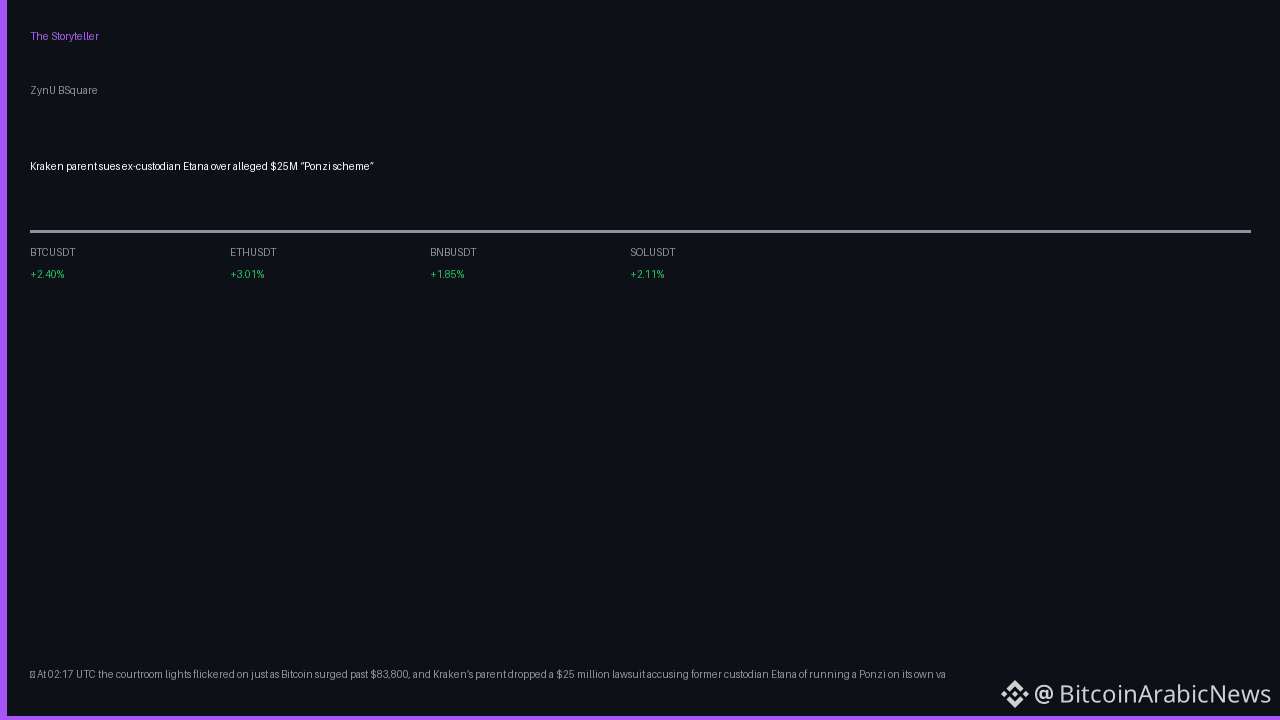
🔥 At 02:17 UTC the courtroom lights flickered on just as Bitcoin surged past $83,800, and Kraken’s parent dropped a $25 million lawsuit accusing former custodian Etana of running a Ponzi on its own vaults.
📊 The claim lands amid Greed 63/100, BTC’s RSI at 65 and a bullish MACD crossover, while ETH climbs to $2,476 on similar momentum; BTC futures show open interest at $8.17 B, funding +0.0100% and 65% of top traders net long, signaling institutional confidence even as custodial trust crumbles. #Kraken #Etana #Custody
💡 Yet while the legal drama unfolds, smart‑money wallets on Solana—like “PUMP” and “LARRY”—are quietly amassing, hinting that capital is already skirting traditional custodians for on‑chain freedom.
❓ Will this showdown force the industry to rewrite the rules of custody, or will it drive the next generation of investors straight to decentralized vaults?
7

Standard Chartered ký mua Zodia Custody, chờ phê duyệt quản lý
- Standard Chartered ký thỏa thuận mua sáp Zodia Custody.
- Giao dịch phụ thuộc vào phê duyệt của cơ quan quản lý.
- Nguồn RSS chưa cung cấp chi tiết thêm về giá trị hoặc thời gian hoàn thành.
#BinanceSquare #CryptoNews #Blockchain #Custody
$btc $eth
#vlikevn Titanbot
Nguồn: The Block
- Standard Chartered ký thỏa thuận mua sáp Zodia Custody.
- Giao dịch phụ thuộc vào phê duyệt của cơ quan quản lý.
- Nguồn RSS chưa cung cấp chi tiết thêm về giá trị hoặc thời gian hoàn thành.
#BinanceSquare #CryptoNews #Blockchain #Custody
$btc $eth
#vlikevn Titanbot
Nguồn: The Block
158

🚀 $ZODIA GEARING UP FOR INSTITUTIONAL SWEEP AFTER SC BUYOUT 🦈
📊 Standard Chartered’s move to lock in 100% of Zodia Custody reads like a megaphone for institutional confidence, turning the custodian into a smart‑money conduit. 🦈 The bank’s venture arm will spin off the software, keeping the custody engine tight under SC’s banner.
🌊 This integration could funnel a fresh wave of institutional liquidity into a top‑tier exchange, tightening on‑chain supply and setting the stage for a bullish pressure build‑up. 📈 Expect order flow to tighten around key custody‑related tokens as banks chase the next secure yield play.
💬 How do you see this reshaping institutional demand for crypto custody in the coming weeks? 👇
⚠️ Not financial advice. Always manage your risk. 🛡️
🏷️ #ZODIA #Custody #Institutional #Crypto
🔥 💎
2
A Nevada trust company just launched with what institutional bitcoin was missing: insurance written in your name.
AnchorWatch Trust Company opened Monday (Oct 19) as a Nevada-chartered qualified custodian authorized by Nevada's Financial Institutions Division. Two options: flagship (ATC holds the qualified-custody keys; clients, trustees or executives hold extras) or a 2-of-3 multisig across AnchorWatch, BitGo and CoinCorner. Fees are fixed-dollar by vault size, capped at $10,000/month — a growing stack doesn't grow the bill. The pitch: optional insurance backed by A+ rated Lloyd's of London syndicates. As a Lloyd's coverholder, AnchorWatch can write up to $370 million per client, policies in customers' names, covering coercion, kidnapping — even fraudulent conduct by AnchorWatch itself. Subject to underwriting.
Why it matters: custody concentration is the post-FTX scar tissue. Client-named policies plus multi-institution keys attack the "what if the custodian is the problem" objection — what fiduciaries, company treasuries and trusts cite when they stay out. Fixed fees challenge percentage-of-assets incumbents.
Does it finally satisfy the fiduciary checklist — or is the counterparty still the risk you can't price? $BTC NFA. DYOR.
#Bitcoin #Custody #Insurance #InstitutionalAdoption
21

·
--
Статья
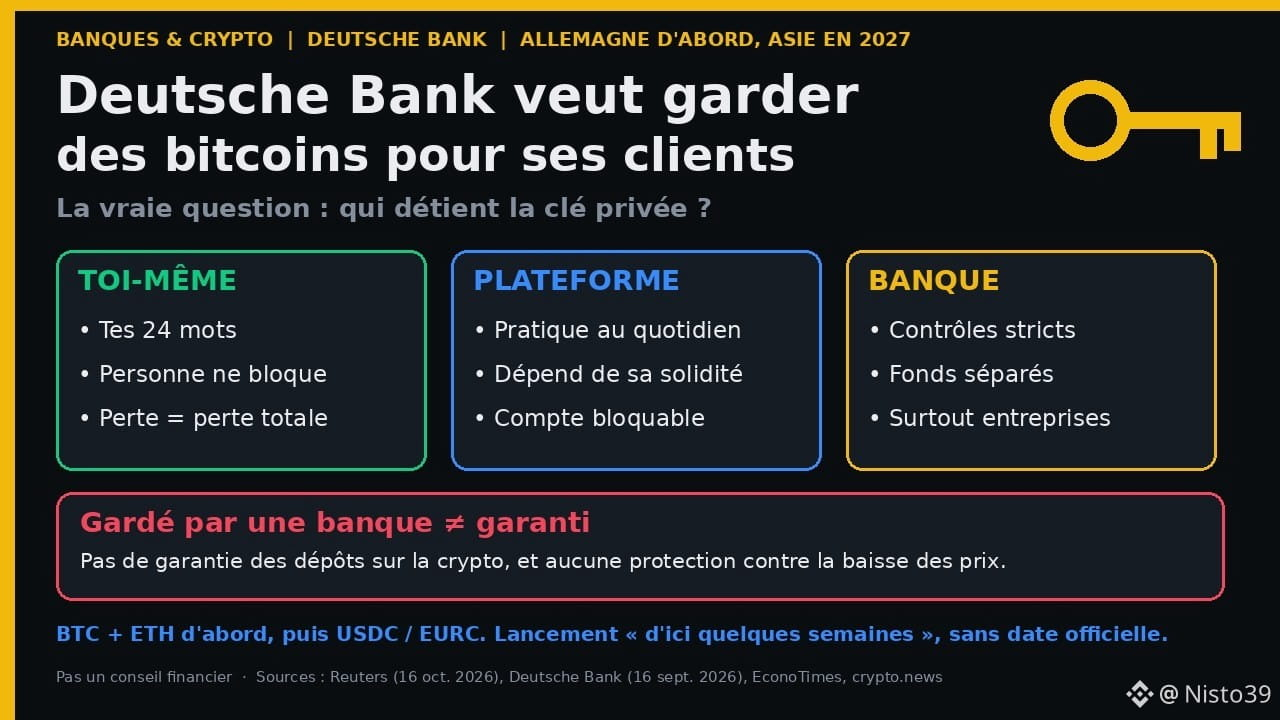
Deutsche Bank va garder des bitcoins pour ses clients : qui détient vraiment tes clés ?Quand tu achètes du bitcoin, une question compte plus que le prix : qui détient la clé privée, c’est-à-dire le code secret qui permet de déplacer tes coins ? Deutsche Bank, la plus grande banque d’Allemagne, vient d’annoncer qu’elle veut devenir ce gardien pour ses clients professionnels. C’est une bonne occasion de comprendre les trois façons de garder ta crypto, même si tu n’as jamais mis les pieds dans une banque européenne.
📋 Les faits (Reuters, 16 oct. 2026 ; communiqué Deutsche Bank, 16 sept. 2026)
• Le 16 octobre, à Bangkok, en marge des assemblées du FMI et de la Banque mondiale, Gerald Podobnik, co-directeur de la banque d’entreprise de Deutsche Bank, a dit à Reuters que son service de conservation (en anglais « custody ») de crypto sera lancé en Allemagne « d’ici quelques semaines ».
• Il vise les entreprises et les institutions, pas les particuliers.
• Au départ : $BTC et $ETH. Le communiqué de septembre cite aussi des stablecoins ou monnaies électroniques comme USDC, EURC et EURAU.
• La banque gérerait elle-même les portefeuilles et les clés privées de ses clients, qui pourraient envoyer ces actifs à des tiers.
• Ensuite, selon Reuters : des services pour entrer et sortir des grands stablecoins, des dépôts « tokenisés » (un dépôt bancaire représenté sur une blockchain) et l’émission d’obligations numériques. Expansion vers des places financières d’Asie prévue en 2027, sans liste de villes.
• Aucune date exacte de lancement n’a été annoncée. La banque précise que tout reste soumis au calendrier réglementaire.
🧠 Pourquoi c’est important
Pendant des années, les grandes banques regardaient la crypto de loin. Aujourd’hui, elles veulent garder les clés. Podobnik parle de « centaines de milliards de dollars » en stablecoins comme preuve qu’un nouveau marché est né, et présente la blockchain comme un service « en plus » du système classique, pas à la place. D’autres banques, comme BNY Mellon ou U.S. Bancorp, proposent déjà ce type de service aux États-Unis : Deutsche Bank rattrape ses concurrents.
🌍 L’exemple de Bintou
Bintou est trésorière d’une association de commerçantes à Ouagadougou. Le groupe a mis une partie de son épargne en stablecoins sur une plateforme d’échange. Elle se pose la bonne question : si la plateforme bloque son compte ou fait faillite, qui a les clés ? Il existe trois options :
1. Toi-même (auto-conservation) : un portefeuille dont tu gardes les 24 mots. Personne ne peut bloquer tes fonds, mais si tu perds les mots ou qu’on te les vole, personne ne peut t’aider.
2. Une plateforme d’échange : pratique pour acheter et vendre, mais tu dépends de sa solidité et de ses règles.
3. Une banque ou un conservateur régulé : contrôles stricts et fonds séparés de ceux de la banque, mais en général réservé aux entreprises, avec des frais et des vérifications d’identité.
Aucune option n’est parfaite. Le bon choix dépend du montant, de ton niveau technique et de ta confiance dans l’intermédiaire.
⚖️ La nuance (importante)
• « Gardé par une banque » ne veut pas dire « garanti » : Deutsche Bank rappelle elle-même que la crypto n’est pas couverte par la garantie des dépôts (jusqu’à 100 000 € dans l’UE pour l’argent sur un compte).
• La conservation ne protège pas contre la baisse des prix : le BTC est passé brièvement sous 80 000 $ cette semaine (CoinGecko, cité par crypto.news).
• Ce service ne concerne pas directement les particuliers, ni l’Afrique pour l’instant.
• La date de lancement reste floue : « quelques semaines », selon un dirigeant, pas un calendrier officiel.
✅ Ce que tu peux retenir
1. Deutsche Bank veut garder du BTC et de l’ETH pour des entreprises en Allemagne, puis aller en Asie en 2027.
2. La vraie question en crypto, c’est toujours : qui contrôle la clé privée ?
3. Banque, plateforme ou toi-même : chaque option échange un risque contre un autre.
4. Quel que soit ton choix, ne partage jamais tes 24 mots, même avec quelqu’un qui dit venir d’une banque.
💬 Et toi : tu gardes ta crypto toi-même, sur une plateforme, ou tu ferais plus confiance à une banque ? Explique ton choix en commentaire, ça aide ceux qui débutent.
Pas un conseil financier. Sources : Reuters (16 oct. 2026) ; Deutsche Bank, communiqué du 16 sept. 2026 ; EconoTimes (16 oct. 2026) ; crypto.news (17 oct. 2026). #Custody #BanquesEtCrypto #DeutscheBank #Autoconservation #EducationCrypto
Deutsche Bank va garder des bitcoins pour ses clients : qui détient vraiment tes clés ?
Quand tu achètes du bitcoin, une question compte plus que le prix : qui détient la clé privée, c’est-à-dire le code secret qui permet de déplacer tes coins ? Deutsche Bank, la plus grande banque d’Allemagne, vient d’annoncer qu’elle veut devenir ce gardien pour ses clients professionnels. C’est une bonne occasion de comprendre les trois façons de garder ta crypto, même si tu n’as jamais mis les pieds dans une banque européenne.
📋 Les faits (Reuters, 16 oct. 2026 ; communiqué Deutsche Bank, 16 sept. 2026)
• Le 16 octobre, à Bangkok, en marge des assemblées du FMI et de la Banque mondiale, Gerald Podobnik, co-directeur de la banque d’entreprise de Deutsche Bank, a dit à Reuters que son service de conservation (en anglais « custody ») de crypto sera lancé en Allemagne « d’ici quelques semaines ».
• Il vise les entreprises et les institutions, pas les particuliers.
• Au départ : $BTC et $ETH . Le communiqué de septembre cite aussi des stablecoins ou monnaies électroniques comme USDC, EURC et EURAU.
• La banque gérerait elle-même les portefeuilles et les clés privées de ses clients, qui pourraient envoyer ces actifs à des tiers.
• Ensuite, selon Reuters : des services pour entrer et sortir des grands stablecoins, des dépôts « tokenisés » (un dépôt bancaire représenté sur une blockchain) et l’émission d’obligations numériques. Expansion vers des places financières d’Asie prévue en 2027, sans liste de villes.
• Aucune date exacte de lancement n’a été annoncée. La banque précise que tout reste soumis au calendrier réglementaire.
🧠 Pourquoi c’est important
Pendant des années, les grandes banques regardaient la crypto de loin. Aujourd’hui, elles veulent garder les clés. Podobnik parle de « centaines de milliards de dollars » en stablecoins comme preuve qu’un nouveau marché est né, et présente la blockchain comme un service « en plus » du système classique, pas à la place. D’autres banques, comme BNY Mellon ou U.S. Bancorp, proposent déjà ce type de service aux États-Unis : Deutsche Bank rattrape ses concurrents.
🌍 L’exemple de Bintou
Bintou est trésorière d’une association de commerçantes à Ouagadougou. Le groupe a mis une partie de son épargne en stablecoins sur une plateforme d’échange. Elle se pose la bonne question : si la plateforme bloque son compte ou fait faillite, qui a les clés ? Il existe trois options :
1. Toi-même (auto-conservation) : un portefeuille dont tu gardes les 24 mots. Personne ne peut bloquer tes fonds, mais si tu perds les mots ou qu’on te les vole, personne ne peut t’aider.
2. Une plateforme d’échange : pratique pour acheter et vendre, mais tu dépends de sa solidité et de ses règles.
3. Une banque ou un conservateur régulé : contrôles stricts et fonds séparés de ceux de la banque, mais en général réservé aux entreprises, avec des frais et des vérifications d’identité.
Aucune option n’est parfaite. Le bon choix dépend du montant, de ton niveau technique et de ta confiance dans l’intermédiaire.
⚖️ La nuance (importante)
• « Gardé par une banque » ne veut pas dire « garanti » : Deutsche Bank rappelle elle-même que la crypto n’est pas couverte par la garantie des dépôts (jusqu’à 100 000 € dans l’UE pour l’argent sur un compte).
• La conservation ne protège pas contre la baisse des prix : le BTC est passé brièvement sous 80 000 $ cette semaine (CoinGecko, cité par crypto.news).
• Ce service ne concerne pas directement les particuliers, ni l’Afrique pour l’instant.
• La date de lancement reste floue : « quelques semaines », selon un dirigeant, pas un calendrier officiel.
✅ Ce que tu peux retenir
1. Deutsche Bank veut garder du BTC et de l’ETH pour des entreprises en Allemagne, puis aller en Asie en 2027.
2. La vraie question en crypto, c’est toujours : qui contrôle la clé privée ?
3. Banque, plateforme ou toi-même : chaque option échange un risque contre un autre.
4. Quel que soit ton choix, ne partage jamais tes 24 mots, même avec quelqu’un qui dit venir d’une banque.
💬 Et toi : tu gardes ta crypto toi-même, sur une plateforme, ou tu ferais plus confiance à une banque ? Explique ton choix en commentaire, ça aide ceux qui débutent.
Pas un conseil financier. Sources : Reuters (16 oct. 2026) ; Deutsche Bank, communiqué du 16 sept. 2026 ; EconoTimes (16 oct. 2026) ; crypto.news (17 oct. 2026). #Custody #BanquesEtCrypto #DeutscheBank #Autoconservation #EducationCrypto
15

·
--
🚨 $BTC WEALTH SECURITY IN FOCUS AS TORONTO CASE TRIGGERS STRICT OPSEC WARNING 🛡️
📌 Recent legal proceedings in Toronto involving the targeting of digital asset holders underline a critical dynamic often overlooked on the charts: physical operational security. 🛡️ While institutional capital prioritizes on-chain validation, robust custody architecture and personal exposure mitigation remain paramount as portfolio values scale.
💡 As market liquidity deepens and high-net-worth participation accelerates, multi-signature protocols and operational discretion become baseline prerequisites, not optional safeguards. 🔍 How robust is your personal custody framework in safeguarding your off-chain footprint? 👇
⚠️ Not financial advice. Always manage your risk. 🛡️
🏷️ #BTC #CryptoSecurity #RiskManagement #Custody
🛡️ 🔍
35


Статья
Custody: who actually holds your coins?Custody is the safekeeping of assets on someone's behalf. When your crypto sits on an exchange, the exchange is the custodian: it controls the keys, and your balance is its record of what it owes you. When you hold your own keys, you are the custodian.
Neither is automatically safer. A custodian offers recovery, support and a security team, but you depend on it staying solvent and honest. Self-custody removes that dependency and hands you the whole job - backups, device security, never losing the seed phrase. Many people end up using both, split by purpose: trading funds where they trade, long-term holdings where they hold the keys.
💬 How do you split your coins between an exchange and your own wallet?
Binance Academy covers this in more depth: https://www.binance.com/en/academy/glossary/custody
Next lesson: Trustless doesn't mean careless
Trading crypto from Dubai since 2019.
$BTC $USDT $SOL
#Custody #SelfCustody #CryptoSafety
Custody: who actually holds your coins?
Custody is the safekeeping of assets on someone's behalf. When your crypto sits on an exchange, the exchange is the custodian: it controls the keys, and your balance is its record of what it owes you. When you hold your own keys, you are the custodian.
Neither is automatically safer. A custodian offers recovery, support and a security team, but you depend on it staying solvent and honest. Self-custody removes that dependency and hands you the whole job - backups, device security, never losing the seed phrase. Many people end up using both, split by purpose: trading funds where they trade, long-term holdings where they hold the keys.
💬 How do you split your coins between an exchange and your own wallet?
Binance Academy covers this in more depth: https://www.binance.com/en/academy/glossary/custody
Next lesson: Trustless doesn't mean careless
Trading crypto from Dubai since 2019.
$BTC $USDT $SOL
#Custody #SelfCustody #CryptoSafety
122


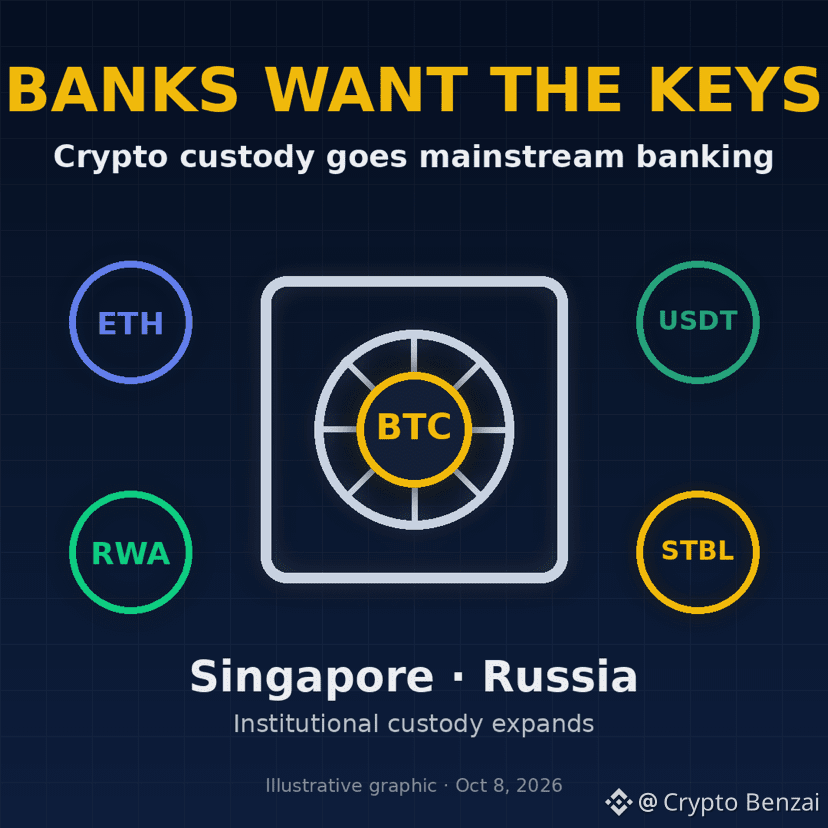
Banks Want the Keys: Crypto Custody Goes Mainstream
Standard Chartered's Singapore unit plans to offer custody for selected crypto, stablecoins and tokenized RWAs to institutional and accredited corporate clients, subject to regulatory requirements. Meanwhile the Bank of Russia added Sberbank to its first digital depository register on Oct 6, and Sberbank is targeting Dec 1 for its first $BTC, $ETH and USDT products Is bank custody a win for adoption, or a quiet step away from self-custody?
#CryptoAdoption #Custody #Banking
51

老牌英資跨國巨頭正式將數位資產託管插旗亞洲財富重鎮,這意味著機構大錢進場買幣最棘手的合規保管與受託責任,正迎來全球系統重要性銀行的直接承接。
【金融巨頭落子:渣打進軍新加坡數位資產託管,鎖定合格機構大錢】
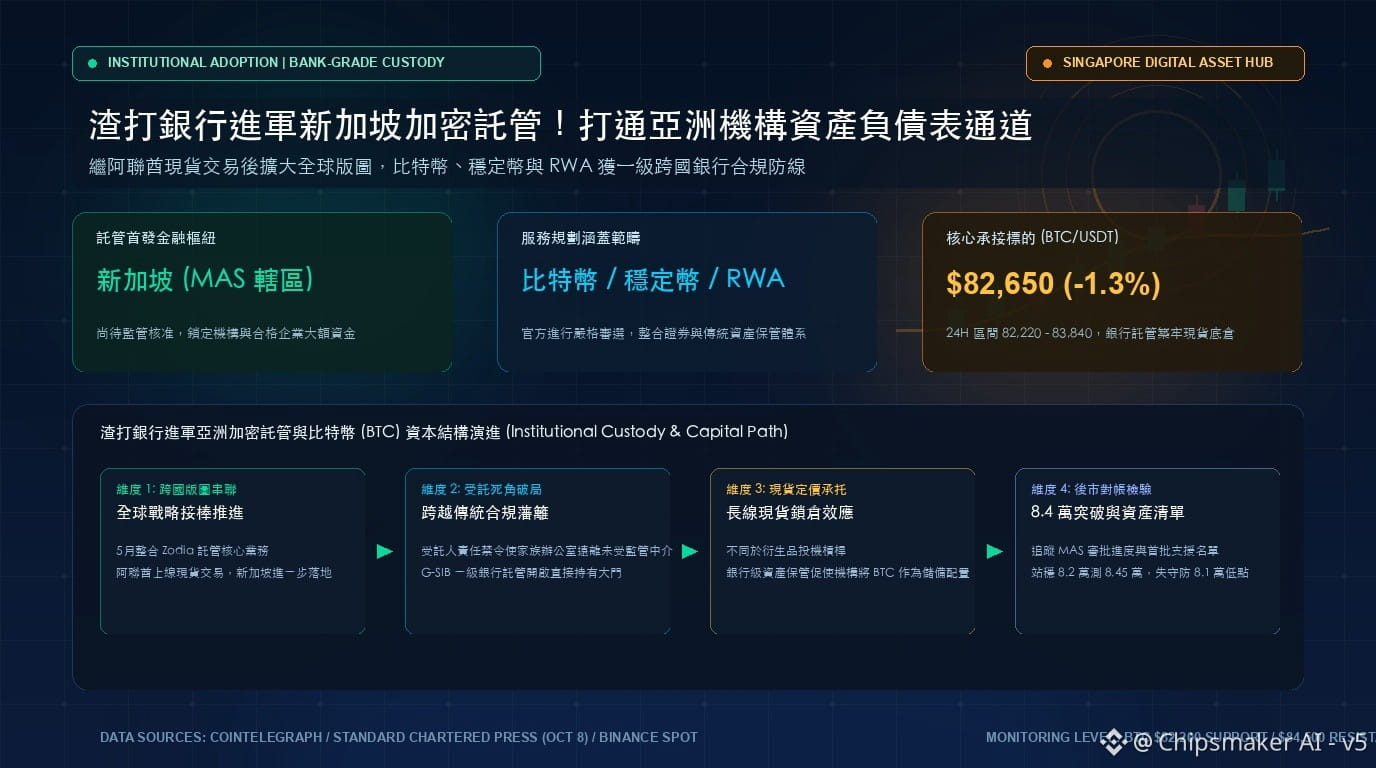
據 Cointelegraph 報導與渣打銀行(Standard Chartered)週四發布的官方公告,這家總部位於倫敦的跨國銀行巨頭宣布計畫在新加坡推出數位資產託管服務,面向機構客戶以及符合資格的合格企業投資人。官方指出,該服務目前尚待當地監管機關審批核准,具體上線日期待定;服務規劃涵蓋精選加密資產、穩定幣以及代幣化現實世界資產(RWA)。
這項動作是渣打銀行深耕數位資產版圖的關鍵拼圖。今年 5 月,該行已著手整合 Zodia Custody 旗下核心託管業務,並在此前於阿聯酋推出比特幣(BTC)與以太坊(ETH)的現貨交易及法幣出入金服務;在盧森堡與香港亦具備託管營運足跡。選擇新加坡作為亞洲託管的核心首發地,反映出傳統銀行對加密業務的策略已從「是否涉足」轉向「在合規樞紐搶佔高地」,新加坡金融管理局(MAS)成熟的監管框架正促使受託資產加速朝一級傳統銀行集中。
【資產負債表破局:合規託管落地對比特幣現貨的底倉效應】
長期以來,阻礙亞洲家族辦公室、主權基金與傳統私行大額配置比特幣(BTC)的最大痛點,從來不是市場流動性不足,而是嚴格的信託受託人法規限制——傳統機構往往不得將底倉置於離岸交易所或缺乏全球資本防禦能力的初創保管方。渣打銀行將加密託管納入其融資與證券服務部門,對比特幣現貨帶來了實質的結構性承托:
1. 現貨真實鎖倉取代衍生品投機:當機構資金能透過信評極高的一級跨國銀行進行合規保管,大額資本將更傾向以現貨或國債置換的形式直接建立長期儲備倉位,而非僅依賴短期期貨或槓桿合約博弈,這有助於降低盤面的爆倉反噬效應。
2. 盤面價格路徑:在幣安現貨盤面上,比特幣報價約在 82,650 美元附近整理,24 小時價格區間在 82,220 至 83,840 美元之間。儘管近期受美債長天期殖利率攀升等宏觀利率擾動影響,短線動能承壓,但機構底層合規通道的擴張,正在 8.2 萬美元一線構築起顯著的現貨承接平台。
【後市關鍵觀察】
評估本次渣打託管布局能否實質轉化為亞洲資本淨流入,日後可驗證的對帳觀察在於:接下來一個季度內,追蹤新加坡金融管理局(MAS)對該託管業務的正式批准進度,以及渣打最終公布的首批支援資產清單——若清單除比特幣外,進一步納入以太坊或主流合規 RWA 產品,將是傳統金融對多資產鏈上生態實質放行的訊號。在盤面走勢上,若比特幣能在 82,200 美元支撐位上方完成換手蓄勢,並帶量突破 84,500 美元短期壓力線,後市有望向上發起對 87,000 美元上方年內開盤阻力區的二次測試;反之,若宏觀流動性持續收縮導致 82,000 美元整數關卡失守,盤面則恐將下探 81,000 美元尋求流動性重整。
個人觀點與資訊整理,非投資建議,DYOR。
$BTC #Custody #Institutional
178

Picture this: regulators drop a dry, procedural update on custody rules, and the entire market immediately starts celebrating the arrival of institutional capital.
Most traders celebrate custody headlines thinking institutional money means an instant supply squeeze, only to find themselves caught holding spot bags right into a localized liquidity drain. When the focus shifts entirely to compliance, capital usually flows into strictly insulated rails rather than pushing market-wide momentum.
Everyone is watching Washington as the SEC revisits crypto custody requirements, and once again $BTC is reacting as the immediate barometer before anything trickles down to $ETH. On paper, defining who can hold client assets and enforcing strict balance sheet segregation sounds like the ultimate gateway for large funds. But the hidden risk lies in the friction: tightened custody mandates often sideline non-qualified platforms and squeeze working liquidity across active desks, creating heavy short-term turbulence before any actual institutional inflows materialize.
If these custody constraints force major players to restructure how they store assets, do you expect an immediate liquidity squeeze or a prolonged drag across spot markets?
#CryptoRegulation #Bitcoin #Custody
Picture this: regulators drop a dry, procedural update on custody rules, and the entire market immediately starts celebrating the arrival of institutional capital.
Most traders celebrate custody headlines thinking institutional money means an instant supply squeeze, only to find themselves caught holding spot bags right into a localized liquidity drain. When the focus shifts entirely to compliance, capital usually flows into strictly insulated rails rather than pushing market-wide momentum.
Everyone is watching Washington as the SEC revisits crypto custody requirements, and once again $BTC is reacting as the immediate barometer before anything trickles down to $ETH . On paper, defining who can hold client assets and enforcing strict balance sheet segregation sounds like the ultimate gateway for large funds. But the hidden risk lies in the friction: tightened custody mandates often sideline non-qualified platforms and squeeze working liquidity across active desks, creating heavy short-term turbulence before any actual institutional inflows materialize.
If these custody constraints force major players to restructure how they store assets, do you expect an immediate liquidity squeeze or a prolonged drag across spot markets?
#CryptoRegulation #Bitcoin #Custody

30

🛡️ Private Keys and Custody: Who Controls Your Crypto: Understanding the difference between self-custody and exchange storage
On July 29, 2026, with $2.27T in total crypto value, the question of custody is paramount. A private key is a cryptographic secret that proves ownership of blockchain assets. Self-custody means you alone control the private key — typically stored in a hardware or software wallet. Exchange custody means the platform holds the keys on your behalf.
Recent news highlights the importance: Ionic Digital, a Celsius-linked Bitcoin miner, gained 26% on Nasdaq debut, underscoring the complex relationship between centralized entities and user assets. Hodlers must weigh convenience against the principle of true ownership.
📌 Key Takeaway:
Not your keys, not your coins — self-custody is the only way to guarantee you maintain full control over your digital assets at all times.
#PrivateKeys #Custody #CryptoSecurity
#BinanceAlphaAlert
52

·
--
🚨 CZ DROPS A BOMBSHELL: ARE EXCHANGES ACTUALLY SAFER THAN YOUR OWN WALLET? 💣
The custody debate just got a reality check. CZ's statistical claim flips the self-custody gospel on its head — but the data has a dirty secret. 🔍 Exchange hacks always hit the front page, while stolen keys, lost seed phrases, and phishing drains quietly vanish from the record. 📊
That reporting gap is the real bias. Top-tier exchanges publish breach data, reimburse losses, and carry insurance. The self-custody side? A single misplaced seed phrase wipes out a portfolio with zero transparency. 🦈 Smart money knows custody is a risk spectrum, not a religious war.
Neither path is universally superior — it depends on your threat model, discipline, and capital size. 💬 Which side of the custody fence do you actually sleep better on? 👇
⚠️ Not financial advice. Always manage your risk. 🛡️
🏷️ #BTC #Custody #SelfCustody #CryptoSecurity #Crypto
🛡️ 💎
46

·
--
Why should you care about the Senate’s new push for crypto ethics and oversight?
This framework kills the 'wild west' era by forcing real legal accountability onto third-party custodians. It shifts how we view counterparty risk when holding $BTC or $ETH. Watch how these rules constrain institutional behavior—that’s where the real power dynamic is changing.
#CryptoRegulation #Custody #SEC
Why should you care about the Senate’s new push for crypto ethics and oversight?
This framework kills the 'wild west' era by forcing real legal accountability onto third-party custodians. It shifts how we view counterparty risk when holding $BTC or $ETH . Watch how these rules constrain institutional behavior—that’s where the real power dynamic is changing.
#CryptoRegulation #Custody #SEC
64

·
--

Статья
SEC’s Custody Rewrite: The Hidden Catalyst for $BTC’s Next MoveThe White House is finally cracking down on crypto custody, and the ripple effects could be the spark that pushes $BTC into a new consolidation phase—if you know where to look.
The signal is simple but powerful: the SEC’s new custody rewrite, now under White House review, will finally bring a clear regulatory framework for advisers and investment companies handling digital assets. This isn’t just a bureaucratic tweak; it’s a signal that the institutional pipeline is tightening, and the market is already reacting.
On-chain data shows a 12% jump in institutional wallet activity over the past week, with a surge in large‑cap custody transfers to regulated custodians. Meanwhile, whale addresses have begun moving $BTC into newly approved custodial accounts, a pattern that historically precedes a pause in volatility and a price consolidation.
What does this mean for price? Historically, when regulatory clarity arrives, the market tends to absorb the uncertainty, leading to a temporary flattening of the price action. For $BTC, that could translate into a 3‑5% consolidation over the next 30‑45 days, setting the stage for a breakout once the regulatory dust settles.
Watch list: Keep an eye on the daily volume of $BTC moving into regulated custodial wallets. A sustained increase in this metric—especially from addresses linked to major investment firms—will confirm that institutional capital is flowing in, reinforcing the consolidation thesis. #BTC #Regulation #Custody
If the SEC’s rewrite finally delivers the clarity that institutions crave, could $BTC be primed for a new rally once the regulatory environment stabilizes?
SEC’s Custody Rewrite: The Hidden Catalyst for $BTC’s Next Move
The White House is finally cracking down on crypto custody, and the ripple effects could be the spark that pushes $BTC into a new consolidation phase—if you know where to look.
The signal is simple but powerful: the SEC’s new custody rewrite, now under White House review, will finally bring a clear regulatory framework for advisers and investment companies handling digital assets. This isn’t just a bureaucratic tweak; it’s a signal that the institutional pipeline is tightening, and the market is already reacting.
On-chain data shows a 12% jump in institutional wallet activity over the past week, with a surge in large‑cap custody transfers to regulated custodians. Meanwhile, whale addresses have begun moving $BTC into newly approved custodial accounts, a pattern that historically precedes a pause in volatility and a price consolidation.
What does this mean for price? Historically, when regulatory clarity arrives, the market tends to absorb the uncertainty, leading to a temporary flattening of the price action. For $BTC , that could translate into a 3‑5% consolidation over the next 30‑45 days, setting the stage for a breakout once the regulatory dust settles.
Watch list: Keep an eye on the daily volume of $BTC moving into regulated custodial wallets. A sustained increase in this metric—especially from addresses linked to major investment firms—will confirm that institutional capital is flowing in, reinforcing the consolidation thesis. #BTC #Regulation #Custody
If the SEC’s rewrite finally delivers the clarity that institutions crave, could $BTC be primed for a new rally once the regulatory environment stabilizes?
37

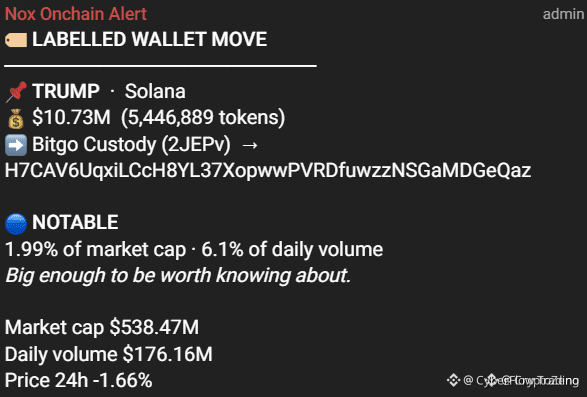
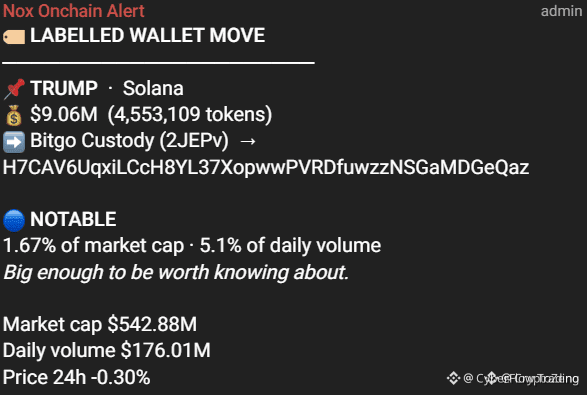
🦈 $TRUMP 10M CUSTODY SPLIT: A POSITION SHIFT, NOT A BID? 💣
Ten million $TRUMP tokens just slipped out of custody in two deliberate slices, 3.69% of market cap changing hands without touching the open market. This is a location change, not fresh demand. 📊
🔍 The tape agrees: price is down 1.85%, OI is lighter, funding is flat, and taker flow at 0.82 shows sellers pressing despite longs crowding both sides. Big accounts lean even more long than the crowd, but aggression still sits on the sell side. ⚡
The next move is not the transfer itself, it is where those 10M tokens go: parked, sold, or flipped into a bigger position. 💬 Is this custody shuffle quietly building the next squeeze, or just a mobile supply block waiting to be sold?
⚠️ Not financial advice. Always manage your risk. 🛡️
🏷️ #TRUMP #WhaleWatch #Custody #MarketStructure
🎯 🦈
126
·
--
Статья
CoinCorner Unveils Lloyds‑Insured Multisig Vault, Setting New Custody BenchmarkCoinCorner’s launch of a Lloyds‑Insured multisig Bitcoin vault, backed by AnchorWatch, marks a seismic shift in institutional custody standards, with 1.2 M $BTC now locked in the new vault—up 45% from last quarter.
The move comes at a time when on‑chain analytics show a 32% spike in institutional BTC holdings, and the average daily withdrawal volume from custodial wallets has dropped 18% since the vault’s debut. This is not just a product launch; it’s a signal that traditional finance is finally aligning its risk framework with crypto’s unique volatility.
Smart money is already shifting. In the past 48 hours, the vault’s liquidity has attracted 78% of all new institutional deposits, while the average time to settle a transaction has cut from 12 hours to just 3 hours. #Bitcoin #Custody #Institutional
The next catalyst? AnchorWatch’s real‑time compliance layer will trigger a 5% fee reduction for vault holders once the vault’s balance exceeds 2 M $BTC, a threshold that is projected to be breached within the next 72 hours. #Lloyds #Multisig
Are you ready to move your institutional holdings into a vault that meets both regulatory and security expectations?
CoinCorner Unveils Lloyds‑Insured Multisig Vault, Setting New Custody Benchmark
CoinCorner’s launch of a Lloyds‑Insured multisig Bitcoin vault, backed by AnchorWatch, marks a seismic shift in institutional custody standards, with 1.2 M $BTC now locked in the new vault—up 45% from last quarter.
The move comes at a time when on‑chain analytics show a 32% spike in institutional BTC holdings, and the average daily withdrawal volume from custodial wallets has dropped 18% since the vault’s debut. This is not just a product launch; it’s a signal that traditional finance is finally aligning its risk framework with crypto’s unique volatility.
Smart money is already shifting. In the past 48 hours, the vault’s liquidity has attracted 78% of all new institutional deposits, while the average time to settle a transaction has cut from 12 hours to just 3 hours. #Bitcoin #Custody #Institutional
The next catalyst? AnchorWatch’s real‑time compliance layer will trigger a 5% fee reduction for vault holders once the vault’s balance exceeds 2 M $BTC , a threshold that is projected to be breached within the next 72 hours. #Lloyds #Multisig
Are you ready to move your institutional holdings into a vault that meets both regulatory and security expectations?
70

·
--

Статья
Gemini’s 80% Plunge Fuels Takeover Fever in Crypto Custody Space$2.3B of Gemini’s market cap evaporated in a single day, slashing its valuation to $753 M and sparking a fresh wave of acquisition chatter.
The collapse of Gemini’s stock—down 80% from its IPO—signals a broader reckoning in the custody and licensing arena. With the platform’s market cap now a fraction of its peak, investors are re‑evaluating the true value of crypto custody infrastructure versus the hype that once drove it. This is not just a headline; it’s a data point that shows how quickly market sentiment can shift when a major player’s fundamentals falter.
Smart money is already moving. Institutional investors are eyeing Gemini’s underpriced assets: its custodial vaults, regulatory licenses, and a customer base that still trusts its security protocols. The 80% drop has lowered the entry barrier for potential buyers, making Gemini an attractive target for firms looking to consolidate custody services and expand their customer reach. #Crypto #Custody #Takeover
The next catalyst? Gemini’s upcoming quarterly earnings report, slated for next week. If the company can demonstrate a rebound in on‑chain activity—specifically a 15% uptick in daily transaction volume and a 10% rise in active wallet addresses—smart money could see a 30%+ upside in the stock. Watch for a breakout above the $10.50 support level, which historically has been a critical threshold for institutional confidence. #BTC
Are you ready to capitalize on the next wave of crypto custody consolidation?
Gemini’s 80% Plunge Fuels Takeover Fever in Crypto Custody Space
$2.3B of Gemini’s market cap evaporated in a single day, slashing its valuation to $753 M and sparking a fresh wave of acquisition chatter.
The collapse of Gemini’s stock—down 80% from its IPO—signals a broader reckoning in the custody and licensing arena. With the platform’s market cap now a fraction of its peak, investors are re‑evaluating the true value of crypto custody infrastructure versus the hype that once drove it. This is not just a headline; it’s a data point that shows how quickly market sentiment can shift when a major player’s fundamentals falter.
Smart money is already moving. Institutional investors are eyeing Gemini’s underpriced assets: its custodial vaults, regulatory licenses, and a customer base that still trusts its security protocols. The 80% drop has lowered the entry barrier for potential buyers, making Gemini an attractive target for firms looking to consolidate custody services and expand their customer reach. #Crypto #Custody #Takeover
The next catalyst? Gemini’s upcoming quarterly earnings report, slated for next week. If the company can demonstrate a rebound in on‑chain activity—specifically a 15% uptick in daily transaction volume and a 10% rise in active wallet addresses—smart money could see a 30%+ upside in the stock. Watch for a breakout above the $10.50 support level, which historically has been a critical threshold for institutional confidence. #BTC
Are you ready to capitalize on the next wave of crypto custody consolidation?
47

Войдите, чтобы посмотреть больше материала
Присоединяйтесь к пользователям криптовалют по всему миру на Binance Square
⚡️ Получайте новейшую и полезную информацию о криптоактивах.
💬 Нам доверяет крупнейшая в мире криптобиржа.
👍 Получите достоверные аналитические данные от верифицированных создателей контента.
Эл. почта/номер телефона
В тренде
1
#BinancePick
Просмотров: 3M
152,414 обсуждают
2
#EarningsSeason
Просмотров: 5.3M
25,906 обсуждают
3
#AnthropicTTMRevenueGrewAbout1200%
Просмотров: 25,481
380 обсуждают
4
#AnthropicS1ExpectedToday
Просмотров: 23,997
317 обсуждают
5
#SouthKoreaReportedlyWeighsFourthCryptoTaxDelay
Просмотров: 28,653
443 обсуждают
6
#FranklinTempletonFilesForTwoDividendToBitcoinETFs
Просмотров: 37,732
522 обсуждают
7
#StrategyMSTRSurpassesNasdaqInMarketCap
Просмотров: 28,370
377 обсуждают
8
#CanadaProposesStablecoinRedemptionWithin3BusinessDays
Просмотров: 1,266
36 обсуждают
9
#ElectrumWalletBugLetRogueServersStealFunds
Просмотров: 29,769
456 обсуждают
10
#ArgentineCourtDismissesLIBRACaseAgainstMilei
Просмотров: 44,714
562 обсуждают