

#tradinglessons
tradinglessons
Просмотров: 688,763
582 обсуждают
Популярные
Новые

·
--
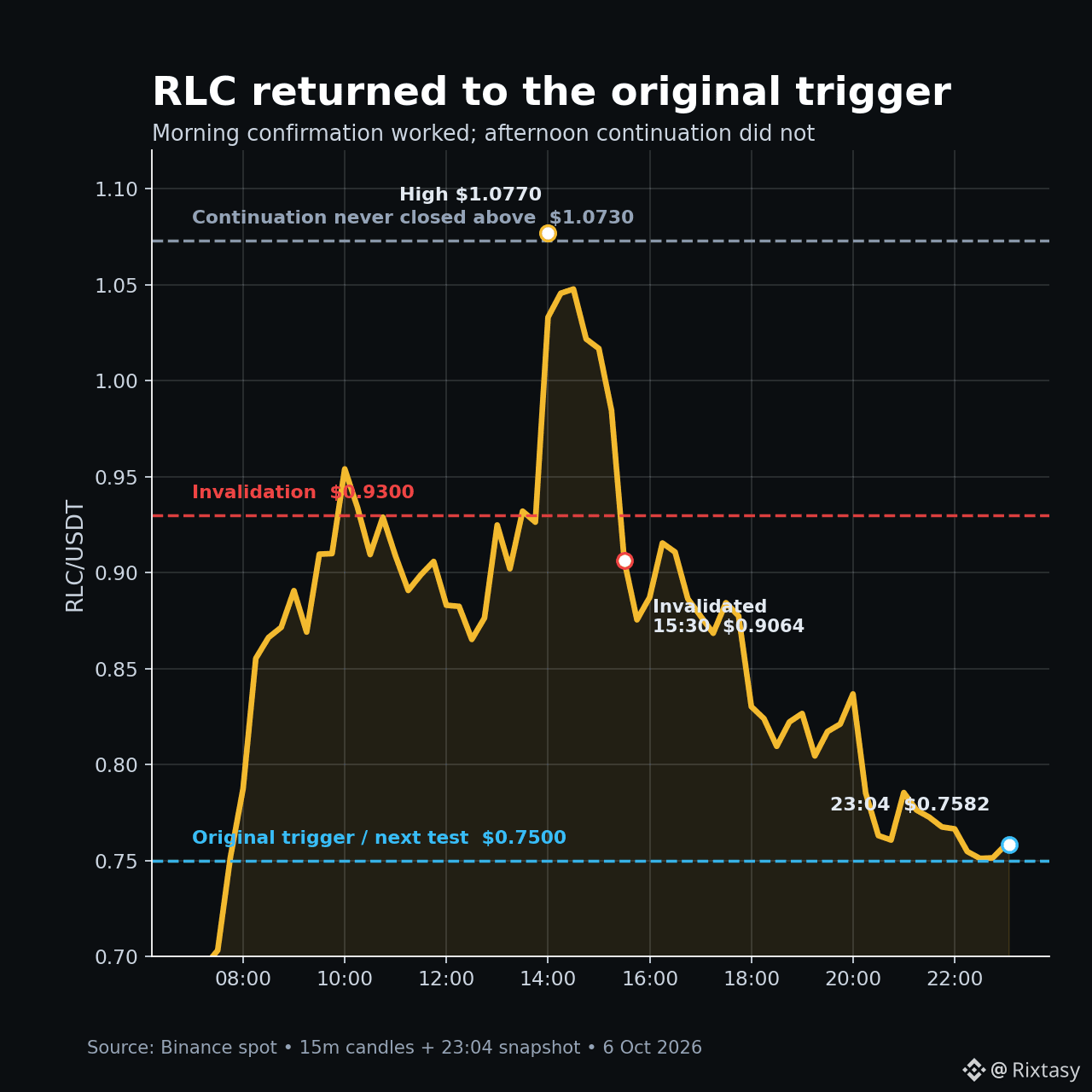
$RLC’s best lesson today is not the 43% breakout. It is how quickly an extended move can give it back.
The morning framework confirmed with consecutive 15m closes above $0.7500, then price reached $1.0770. The afternoon continuation required a completed close above $1.0730 followed by a retest holding $1.0000. That never happened: the high touched $1.0770, but the candle closed at $1.0331.
At 15:30 Beirut, a $0.9064 close invalidated the structure below $0.9300. By 23:04, price was $0.7582—29.6% below the high and only 1.1% above the original trigger.
So the record is simple: the first confirmation worked, the second setup never triggered, and the invalidation did its job. None of that implies an executed trade.
Next event: Binance’s daily close at 03:00 Beirut. Holding $0.7500 preserves the breakout base; a close beneath the $0.7470–$0.7500 zone confirms the near-full round trip.
Earlier setup: https://app.binance.com/uni-qr/cpos/374348320672036?r=AD7JH6YT&l=en
Snapshot: 6 Oct, 23:04 Beirut. Binance spot, RLC/USDT.
#TradingLessons #RiskManagement
$RLC ’s best lesson today is not the 43% breakout. It is how quickly an extended move can give it back.
The morning framework confirmed with consecutive 15m closes above $0.7500, then price reached $1.0770. The afternoon continuation required a completed close above $1.0730 followed by a retest holding $1.0000. That never happened: the high touched $1.0770, but the candle closed at $1.0331.
At 15:30 Beirut, a $0.9064 close invalidated the structure below $0.9300. By 23:04, price was $0.7582—29.6% below the high and only 1.1% above the original trigger.
So the record is simple: the first confirmation worked, the second setup never triggered, and the invalidation did its job. None of that implies an executed trade.
Next event: Binance’s daily close at 03:00 Beirut. Holding $0.7500 preserves the breakout base; a close beneath the $0.7470–$0.7500 zone confirms the near-full round trip.
Earlier setup: https://app.binance.com/uni-qr/cpos/374348320672036?r=AD7JH6YT&l=en
Snapshot: 6 Oct, 23:04 Beirut. Binance spot, RLC/USDT.
#TradingLessons #RiskManagement
The morning framework confirmed with consecutive 15m closes above $0.7500, then price reached $1.0770. The afternoon continuation required a completed close above $1.0730 followed by a retest holding $1.0000. That never happened: the high touched $1.0770, but the candle closed at $1.0331.
At 15:30 Beirut, a $0.9064 close invalidated the structure below $0.9300. By 23:04, price was $0.7582—29.6% below the high and only 1.1% above the original trigger.
So the record is simple: the first confirmation worked, the second setup never triggered, and the invalidation did its job. None of that implies an executed trade.
Next event: Binance’s daily close at 03:00 Beirut. Holding $0.7500 preserves the breakout base; a close beneath the $0.7470–$0.7500 zone confirms the near-full round trip.
Earlier setup: https://app.binance.com/uni-qr/cpos/374348320672036?r=AD7JH6YT&l=en
Snapshot: 6 Oct, 23:04 Beirut. Binance spot, RLC/USDT.
#TradingLessons #RiskManagement
296
·
--
🐻 Michael Burry: Right Early Is Still Painful
Burry spotted the subprime housing bubble years before the 2008 crash and bet against it. For a long time he lost money on paper, and his own investors pushed him to quit. He held on and was proven right.
👉 Being right and being early can feel exactly the same, so manage your risk while you wait.
💡 Have a thesis, a stop level, and patience.
Ever been right too early? 👇
⚠️ Not financial advice. DYOR.
#BinanceSquare #Trading #MichaelBurry #MarketCycles #TradingLessons
🐻 Michael Burry: Right Early Is Still Painful
Burry spotted the subprime housing bubble years before the 2008 crash and bet against it. For a long time he lost money on paper, and his own investors pushed him to quit. He held on and was proven right.
👉 Being right and being early can feel exactly the same, so manage your risk while you wait.
💡 Have a thesis, a stop level, and patience.
Ever been right too early? 👇
⚠️ Not financial advice. DYOR.
#BinanceSquare #Trading #MichaelBurry #MarketCycles #TradingLessons
Burry spotted the subprime housing bubble years before the 2008 crash and bet against it. For a long time he lost money on paper, and his own investors pushed him to quit. He held on and was proven right.
👉 Being right and being early can feel exactly the same, so manage your risk while you wait.
💡 Have a thesis, a stop level, and patience.
Ever been right too early? 👇
⚠️ Not financial advice. DYOR.
#BinanceSquare #Trading #MichaelBurry #MarketCycles #TradingLessons
54
·
--
$LSK
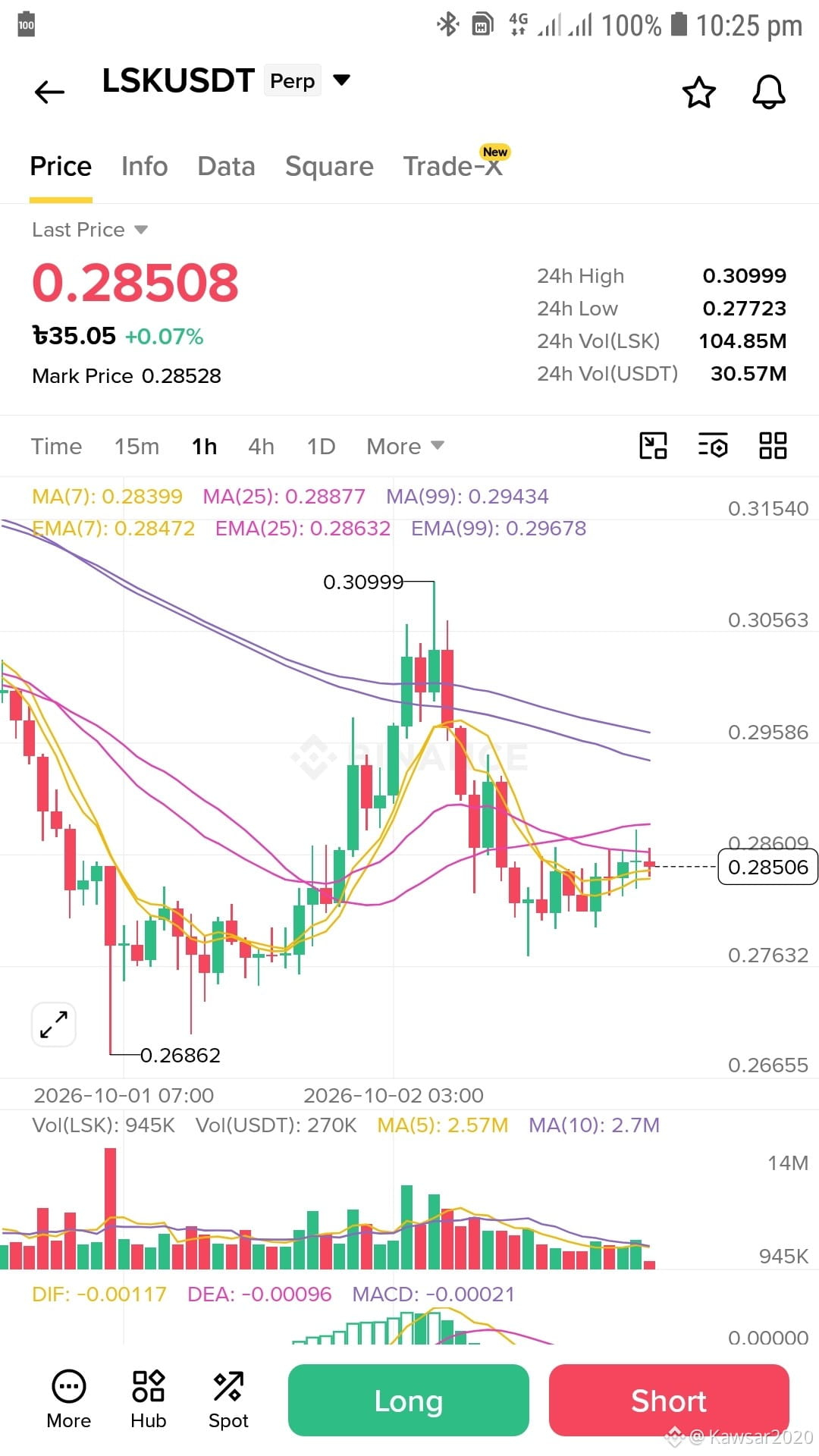
*💔 LSK taught me a big lesson today!*
I closed my 8x short at $0.4957 few hours ago - and now LSK is $0.3196 😭
Many people are losing money, but I learned:
✅ Never be greedy
✅ Close when you can, don't wait for liquidation
✅ $0.46 high was a trap
Now waiting for next opportunity. LSK can go to $0.28 support.
If you survived this dump, comment "SAFE" 👇
Let's support each other!
#LSK #Lisk #CryptoCrash #TradingLessons #BinanceSquare .
$LSK
*💔 LSK taught me a big lesson today!*
I closed my 8x short at $0.4957 few hours ago - and now LSK is $0.3196 😭
Many people are losing money, but I learned:
✅ Never be greedy
✅ Close when you can, don't wait for liquidation
✅ $0.46 high was a trap
Now waiting for next opportunity. LSK can go to $0.28 support.
If you survived this dump, comment "SAFE" 👇
Let's support each other!
#LSK #Lisk #CryptoCrash #TradingLessons #BinanceSquare .
*💔 LSK taught me a big lesson today!*
I closed my 8x short at $0.4957 few hours ago - and now LSK is $0.3196 😭
Many people are losing money, but I learned:
✅ Never be greedy
✅ Close when you can, don't wait for liquidation
✅ $0.46 high was a trap
Now waiting for next opportunity. LSK can go to $0.28 support.
If you survived this dump, comment "SAFE" 👇
Let's support each other!
#LSK #Lisk #CryptoCrash #TradingLessons #BinanceSquare .
_Gakuro:
Estou sobreviendo -429USB-T 🥲
3
2
738

·
--
Рост
🔥 $QNT TAUGHT ME A LESSON! 😹
I sold $QNT at a loss, hoping to buy lower, but guess what? Price rallied straight back into my entry zone! 🚀
Sometimes trying to catch the perfect entry makes you miss the entire move.
💎 Never underestimate the infrastructure powering traditional finance. Respect the market, stay humble, and learn from every trade!
Well played, $QNT! 🫡🔥
#QNT #Quant #Crypto #TradingLessons
$QNT
{spot}(QNTUSDT)
🔥 $QNT TAUGHT ME A LESSON! 😹
I sold $QNT at a loss, hoping to buy lower, but guess what? Price rallied straight back into my entry zone! 🚀
Sometimes trying to catch the perfect entry makes you miss the entire move.
💎 Never underestimate the infrastructure powering traditional finance. Respect the market, stay humble, and learn from every trade!
Well played, $QNT ! 🫡🔥
#QNT #Quant #Crypto #TradingLessons
$QNT
I sold $QNT at a loss, hoping to buy lower, but guess what? Price rallied straight back into my entry zone! 🚀
Sometimes trying to catch the perfect entry makes you miss the entire move.
💎 Never underestimate the infrastructure powering traditional finance. Respect the market, stay humble, and learn from every trade!
Well played, $QNT ! 🫡🔥
#QNT #Quant #Crypto #TradingLessons
$QNT
CamAnh10tu:
Same with me… yet i never learn 🤣
1
2
272

·
--
My AI agent planned a 2:1 trade. The exit button had other plans.
LINK long autopsy, real fills:
🤖 Plan (placed by my Hermes agent, 20x isolated):
• Entry limit 13.150, filled as maker
• Stop 12.950 (risk ≈ $1.90)
• Take-profit 13.550 (reward ≈ $3.80)
• Size 9.5 LINK ≈ $125 notional, ~$6.25 margin
😬 What actually happened:
• Closed at market 13.238, 56 minutes in
• Gross +$0.84, fees ≈ $0.09 → net ≈ +$0.75
• That's 0.44R on a trade built for 2R
• Fees ate ~10% of the win. Taker exit cost 3x the maker entry.
📈 The painful part:
• Stop at 12.950 never came close. Low after entry: 13.091
• Price traded through the 13.550 TP about 12 hours later
• 24h high 14.215, now ~13.98 (+13.6% on the day)
• Holding the plan = +$3.80. Taking the itch = +$0.75
🧮 The math I keep relearning:
With a 2:1 plan you only need to win >33% to break even.
Cut winners at 0.44R while losers still cost 1R, and break-even jumps to ~69%.
Same entries, same "edge", completely different system.
The agent's order logic was fine. The weak link was the human with a close button.
Rule going forward: once the bracket is set, the exit belongs to the bracket. Moving the stop to break-even is allowed. Grabbing crumbs isn't.
Do you let your stops and TPs do the work, or do you still babysit every trade?
#TradingLessons #AITrading
$LINK
My AI agent planned a 2:1 trade. The exit button had other plans.
LINK long autopsy, real fills:
🤖 Plan (placed by my Hermes agent, 20x isolated):
• Entry limit 13.150, filled as maker
• Stop 12.950 (risk ≈ $1.90)
• Take-profit 13.550 (reward ≈ $3.80)
• Size 9.5 LINK ≈ $125 notional, ~$6.25 margin
😬 What actually happened:
• Closed at market 13.238, 56 minutes in
• Gross +$0.84, fees ≈ $0.09 → net ≈ +$0.75
• That's 0.44R on a trade built for 2R
• Fees ate ~10% of the win. Taker exit cost 3x the maker entry.
📈 The painful part:
• Stop at 12.950 never came close. Low after entry: 13.091
• Price traded through the 13.550 TP about 12 hours later
• 24h high 14.215, now ~13.98 (+13.6% on the day)
• Holding the plan = +$3.80. Taking the itch = +$0.75
🧮 The math I keep relearning:
With a 2:1 plan you only need to win >33% to break even.
Cut winners at 0.44R while losers still cost 1R, and break-even jumps to ~69%.
Same entries, same "edge", completely different system.
The agent's order logic was fine. The weak link was the human with a close button.
Rule going forward: once the bracket is set, the exit belongs to the bracket. Moving the stop to break-even is allowed. Grabbing crumbs isn't.
Do you let your stops and TPs do the work, or do you still babysit every trade?
#TradingLessons #AITrading
$LINK
LINK long autopsy, real fills:
🤖 Plan (placed by my Hermes agent, 20x isolated):
• Entry limit 13.150, filled as maker
• Stop 12.950 (risk ≈ $1.90)
• Take-profit 13.550 (reward ≈ $3.80)
• Size 9.5 LINK ≈ $125 notional, ~$6.25 margin
😬 What actually happened:
• Closed at market 13.238, 56 minutes in
• Gross +$0.84, fees ≈ $0.09 → net ≈ +$0.75
• That's 0.44R on a trade built for 2R
• Fees ate ~10% of the win. Taker exit cost 3x the maker entry.
📈 The painful part:
• Stop at 12.950 never came close. Low after entry: 13.091
• Price traded through the 13.550 TP about 12 hours later
• 24h high 14.215, now ~13.98 (+13.6% on the day)
• Holding the plan = +$3.80. Taking the itch = +$0.75
🧮 The math I keep relearning:
With a 2:1 plan you only need to win >33% to break even.
Cut winners at 0.44R while losers still cost 1R, and break-even jumps to ~69%.
Same entries, same "edge", completely different system.
The agent's order logic was fine. The weak link was the human with a close button.
Rule going forward: once the bracket is set, the exit belongs to the bracket. Moving the stop to break-even is allowed. Grabbing crumbs isn't.
Do you let your stops and TPs do the work, or do you still babysit every trade?
#TradingLessons #AITrading
$LINK
2
84

·
--
Падение
How I got my account washed — because I skipped my SL 😔
Real story, not proud of it, but sharing so it doesn't happen to you.
Was trading in the evening like usual. Took a trade, put my PL (position/target), but for some reason didn't set my SL. Told myself "it won't go up, I'll be fine." Big mistake.
Left my laptop open and went out to grab some snacks and drinks. Just a quick break, that's what I thought.
Came back, sat down, but didn't recheck my trades. Honestly just forgot they were even open. Went to sleep like nothing was wrong.
Woke up early morning, and something told me to check my phone. The second I saw it, I knew. One wave hit liquidity and wiped my account. I was literally 15 minutes too late. If I had woken up just a bit earlier, I could've saved it. But I didn't.
Stood there for a second just... blank. Then got back on my feet, because that's the only option we have in this game.
So here's what I want every one of you to take from this:
SL first. PL second. Always. Doesn't matter how confident you are, how "obvious" the trade looks, or how tired you are — set your stop loss before you do anything else, and don't leave your trades unattended without one.
The market doesn't care about your plans, your snack break, or your sleep schedule. Protect your capital first, profits will come after.
Take care of yourselves, Binance family. Trade safe. 🙏
#Binance #CryptoTrading #StopLoss #RiskManagement nagement #TradingLessons ssons #LearnFromMyMistake #CryptoCommunity #BinanceFamily
How I got my account washed — because I skipped my SL 😔
Real story, not proud of it, but sharing so it doesn't happen to you.
Was trading in the evening like usual. Took a trade, put my PL (position/target), but for some reason didn't set my SL. Told myself "it won't go up, I'll be fine." Big mistake.
Left my laptop open and went out to grab some snacks and drinks. Just a quick break, that's what I thought.
Came back, sat down, but didn't recheck my trades. Honestly just forgot they were even open. Went to sleep like nothing was wrong.
Woke up early morning, and something told me to check my phone. The second I saw it, I knew. One wave hit liquidity and wiped my account. I was literally 15 minutes too late. If I had woken up just a bit earlier, I could've saved it. But I didn't.
Stood there for a second just... blank. Then got back on my feet, because that's the only option we have in this game.
So here's what I want every one of you to take from this:
SL first. PL second. Always. Doesn't matter how confident you are, how "obvious" the trade looks, or how tired you are — set your stop loss before you do anything else, and don't leave your trades unattended without one.
The market doesn't care about your plans, your snack break, or your sleep schedule. Protect your capital first, profits will come after.
Take care of yourselves, Binance family. Trade safe. 🙏
#Binance #CryptoTrading #StopLoss #RiskManagement nagement #TradingLessons ssons #LearnFromMyMistake #CryptoCommunity #BinanceFamily
Real story, not proud of it, but sharing so it doesn't happen to you.
Was trading in the evening like usual. Took a trade, put my PL (position/target), but for some reason didn't set my SL. Told myself "it won't go up, I'll be fine." Big mistake.
Left my laptop open and went out to grab some snacks and drinks. Just a quick break, that's what I thought.
Came back, sat down, but didn't recheck my trades. Honestly just forgot they were even open. Went to sleep like nothing was wrong.
Woke up early morning, and something told me to check my phone. The second I saw it, I knew. One wave hit liquidity and wiped my account. I was literally 15 minutes too late. If I had woken up just a bit earlier, I could've saved it. But I didn't.
Stood there for a second just... blank. Then got back on my feet, because that's the only option we have in this game.
So here's what I want every one of you to take from this:
SL first. PL second. Always. Doesn't matter how confident you are, how "obvious" the trade looks, or how tired you are — set your stop loss before you do anything else, and don't leave your trades unattended without one.
The market doesn't care about your plans, your snack break, or your sleep schedule. Protect your capital first, profits will come after.
Take care of yourselves, Binance family. Trade safe. 🙏
#Binance #CryptoTrading #StopLoss #RiskManagement nagement #TradingLessons ssons #LearnFromMyMistake #CryptoCommunity #BinanceFamily
31

·
--
Статья
📊 100 Trades Project — Why My Two Short Trades Failed After a PumpI’m currently running a 100-Trades Project to test my Trend Breakdown setup using:
• Market Structure
• Range Breakdown
• Liquidity
• Breakdown Confirmation
• Retest & Rejection
My first two cases gave me an important lesson.
Both short trades eventually failed because price pumped against my position and hit my predefined Stop Loss.
🔴 Case 001 — Profit First, Then Pump
Pump → Stop Loss
In Case 001, I identified a bearish setup and entered a short position expecting downside continuation.
However, the market did not continue downward as expected.
Instead, buying pressure appeared and price expanded upward until it reached my invalidation level.
Result: Stop Loss ❌
The important point is that the bearish setup was not enough to guarantee continuation.
🔴 Case 002 — Profit First, Then Pump
Case 002 was even more interesting.
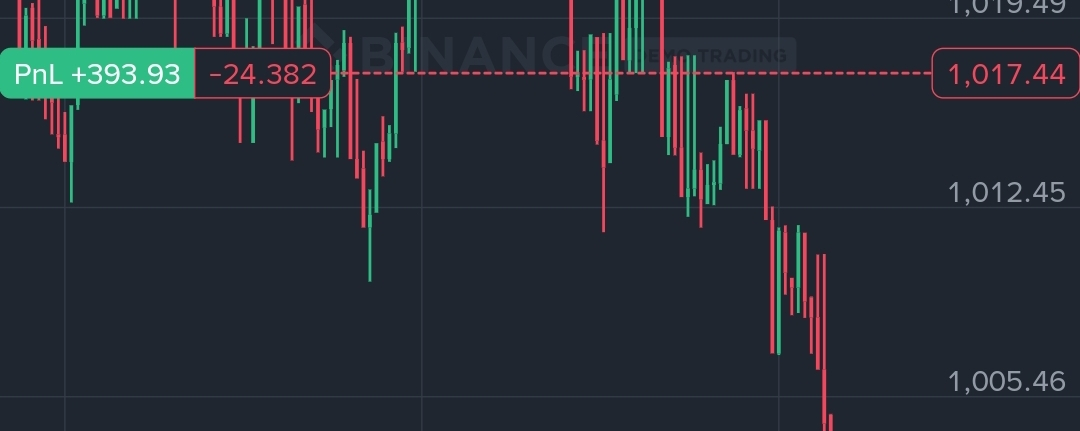
My short entry was around 1017.
After entry, price dropped toward approximately 997, giving the position significant unrealized profit.
At that moment, the bearish thesis appeared to be working.
But the market then reversed aggressively.
Price recovered, broke through my invalidation level around 1060, and eventually pumped toward approximately 1085.
Result: Stop Loss ❌
This case taught me an important lesson:
A trade being profitable temporarily does not mean the setup is valid.
Price can move in our expected direction first and still completely invalidate the trade later.
🧠 What I Learned From Case 001 & Case 002
After reviewing both trades, I realized that my setup was focusing too much on the bearish side of the market.
Before entering a short, I should not only ask:
“Where can price break down?”
I also need to ask:
“Where are the buyers and opposite-side liquidity that could fuel a reversal?”
That changes the way I look at a breakdown.
A breakdown itself is not enough.
I need to see whether the market can prove that the breakdown is genuine.
🔄 My Updated Breakdown Process
My current process is now:
HTF Structure
↓
Range Identification
↓
Liquidity Mapping
↓
Breakdown
↓
Candle Close
↓
Retest
↓
Rejection
↓
Entry
And before entering a short, I will additionally check:
🔹 Opposite-side liquidity
🔹 Potential demand zone
🔹 Possible liquidity sweep
🔹 Strength of the breakdown
🔹 Whether the retest actually rejects
🔹 Whether buyers are still capable of pushing price back into the range
🎯 The Biggest Lesson
These two losses changed one important part of my trading mindset.
I don't need to predict the breakdown.
I need to wait for the market to prove the breakdown.
Case 001:
Pump → SL
Case 002:
Pump → SL
These are not simply two losing trades.
They are data points from my 100-Trades Project.
My next objective is to test whether adding:
Stronger Confirmation + Opposite-Liquidity Filter
can reduce this type of failure in my next backtest cases.
I’m not trying to create a strategy that never loses.
I’m trying to discover why it loses, when it loses, and whether I can reduce those specific failure conditions.
📈 100 Trades. One Setup. Continuous Improvement.
#100TradesProject #cryptotrading #priceaction #TradingLessons
$MARSCOIN
$ZEC
{future}(ZECUSDT)
📊 100 Trades Project — Why My Two Short Trades Failed After a Pump
I’m currently running a 100-Trades Project to test my Trend Breakdown setup using:
• Market Structure
• Range Breakdown
• Liquidity
• Breakdown Confirmation
• Retest & Rejection
My first two cases gave me an important lesson.
Both short trades eventually failed because price pumped against my position and hit my predefined Stop Loss.
🔴 Case 001 — Profit First, Then Pump
Pump → Stop Loss
In Case 001, I identified a bearish setup and entered a short position expecting downside continuation.
However, the market did not continue downward as expected.
Instead, buying pressure appeared and price expanded upward until it reached my invalidation level.
Result: Stop Loss ❌
The important point is that the bearish setup was not enough to guarantee continuation.
🔴 Case 002 — Profit First, Then Pump
Case 002 was even more interesting.
My short entry was around 1017.
After entry, price dropped toward approximately 997, giving the position significant unrealized profit.
At that moment, the bearish thesis appeared to be working.
But the market then reversed aggressively.
Price recovered, broke through my invalidation level around 1060, and eventually pumped toward approximately 1085.
Result: Stop Loss ❌
This case taught me an important lesson:
A trade being profitable temporarily does not mean the setup is valid.
Price can move in our expected direction first and still completely invalidate the trade later.
🧠 What I Learned From Case 001 & Case 002
After reviewing both trades, I realized that my setup was focusing too much on the bearish side of the market.
Before entering a short, I should not only ask:
“Where can price break down?”
I also need to ask:
“Where are the buyers and opposite-side liquidity that could fuel a reversal?”
That changes the way I look at a breakdown.
A breakdown itself is not enough.
I need to see whether the market can prove that the breakdown is genuine.
🔄 My Updated Breakdown Process
My current process is now:
HTF Structure
↓
Range Identification
↓
Liquidity Mapping
↓
Breakdown
↓
Candle Close
↓
Retest
↓
Rejection
↓
Entry
And before entering a short, I will additionally check:
🔹 Opposite-side liquidity
🔹 Potential demand zone
🔹 Possible liquidity sweep
🔹 Strength of the breakdown
🔹 Whether the retest actually rejects
🔹 Whether buyers are still capable of pushing price back into the range
🎯 The Biggest Lesson
These two losses changed one important part of my trading mindset.
I don't need to predict the breakdown.
I need to wait for the market to prove the breakdown.
Case 001:
Pump → SL
Case 002:
Pump → SL
These are not simply two losing trades.
They are data points from my 100-Trades Project.
My next objective is to test whether adding:
Stronger Confirmation + Opposite-Liquidity Filter
can reduce this type of failure in my next backtest cases.
I’m not trying to create a strategy that never loses.
I’m trying to discover why it loses, when it loses, and whether I can reduce those specific failure conditions.
📈 100 Trades. One Setup. Continuous Improvement.
#100TradesProject #cryptotrading #priceaction #TradingLessons
$MARSCOIN
$ZEC
• Market Structure
• Range Breakdown
• Liquidity
• Breakdown Confirmation
• Retest & Rejection
My first two cases gave me an important lesson.
Both short trades eventually failed because price pumped against my position and hit my predefined Stop Loss.
🔴 Case 001 — Profit First, Then Pump
Pump → Stop Loss
In Case 001, I identified a bearish setup and entered a short position expecting downside continuation.
However, the market did not continue downward as expected.
Instead, buying pressure appeared and price expanded upward until it reached my invalidation level.
Result: Stop Loss ❌
The important point is that the bearish setup was not enough to guarantee continuation.
🔴 Case 002 — Profit First, Then Pump
Case 002 was even more interesting.
My short entry was around 1017.
After entry, price dropped toward approximately 997, giving the position significant unrealized profit.
At that moment, the bearish thesis appeared to be working.
But the market then reversed aggressively.
Price recovered, broke through my invalidation level around 1060, and eventually pumped toward approximately 1085.
Result: Stop Loss ❌
This case taught me an important lesson:
A trade being profitable temporarily does not mean the setup is valid.
Price can move in our expected direction first and still completely invalidate the trade later.
🧠 What I Learned From Case 001 & Case 002
After reviewing both trades, I realized that my setup was focusing too much on the bearish side of the market.
Before entering a short, I should not only ask:
“Where can price break down?”
I also need to ask:
“Where are the buyers and opposite-side liquidity that could fuel a reversal?”
That changes the way I look at a breakdown.
A breakdown itself is not enough.
I need to see whether the market can prove that the breakdown is genuine.
🔄 My Updated Breakdown Process
My current process is now:
HTF Structure
↓
Range Identification
↓
Liquidity Mapping
↓
Breakdown
↓
Candle Close
↓
Retest
↓
Rejection
↓
Entry
And before entering a short, I will additionally check:
🔹 Opposite-side liquidity
🔹 Potential demand zone
🔹 Possible liquidity sweep
🔹 Strength of the breakdown
🔹 Whether the retest actually rejects
🔹 Whether buyers are still capable of pushing price back into the range
🎯 The Biggest Lesson
These two losses changed one important part of my trading mindset.
I don't need to predict the breakdown.
I need to wait for the market to prove the breakdown.
Case 001:
Pump → SL
Case 002:
Pump → SL
These are not simply two losing trades.
They are data points from my 100-Trades Project.
My next objective is to test whether adding:
Stronger Confirmation + Opposite-Liquidity Filter
can reduce this type of failure in my next backtest cases.
I’m not trying to create a strategy that never loses.
I’m trying to discover why it loses, when it loses, and whether I can reduce those specific failure conditions.
📈 100 Trades. One Setup. Continuous Improvement.
#100TradesProject #cryptotrading #priceaction #TradingLessons
$MARSCOIN
$ZEC
1
257

Happy Teachers' Day! 📚✨
Crypto market mein sabse bada teacher kaun hai? The Market itself.
Har stop-loss ek lesson sikhata hai, har liquid trade risk management ka chapter padhati hai, aur har market cycle patience ka test leti hai.
Un sabhi mentors, charts aur mistakes ko salaam jo hume roz ek behtar trader banate hain! 🎓
#HappyTeachersDay #TeachersDay #TradingLessons #CryptoCommunity #BinanceSquare
Happy Teachers' Day! 📚✨
Crypto market mein sabse bada teacher kaun hai? The Market itself.
Har stop-loss ek lesson sikhata hai, har liquid trade risk management ka chapter padhati hai, aur har market cycle patience ka test leti hai.
Un sabhi mentors, charts aur mistakes ko salaam jo hume roz ek behtar trader banate hain! 🎓
#HappyTeachersDay #TeachersDay #TradingLessons #CryptoCommunity #BinanceSquare
Crypto market mein sabse bada teacher kaun hai? The Market itself.
Har stop-loss ek lesson sikhata hai, har liquid trade risk management ka chapter padhati hai, aur har market cycle patience ka test leti hai.
Un sabhi mentors, charts aur mistakes ko salaam jo hume roz ek behtar trader banate hain! 🎓
#HappyTeachersDay #TeachersDay #TradingLessons #CryptoCommunity #BinanceSquare

537
2
31
537

·
--
5 questions worth answering before you click buy — the 2nd one costs traders more money than bad analysis ever does.
1. What proves me wrong? Name the exact price or fact that invalidates the trade, before you enter. If you cannot say it in one sentence, you do not have a thesis, you have a hope.
2. What is already scheduled in my holding window? This is the one people skip. Unlocks, upgrades and macro prints are on a public calendar. This weekend alone, $ARB releases 92.65M tokens on Aug 16, and $SOL begins Agave 4.2 mainnet activations the week of Aug 17. Getting chopped by a date you could have looked up is an unforced error.
3. Can I actually get out? Size the position against the order book, not your conviction. If your exit is a meaningful share of daily volume, you do not own a position, you own a problem.
4. Am I early or late to this? If the move already happened and you are entering on the headline, you are the liquidity for whoever entered before it.
5. What would make me add? Deciding this in advance is what separates scaling into strength from averaging down into a loss while telling yourself it is the same thing.
The takeaway: four of these five are answerable before you risk anything. Analysis is the hard part of trading. Process is the cheap part, and it is the part most people skip.
Save this if it helped. Which of the five do you skip most?
Not financial advice. DYOR.
#CryptoEducation #RiskManagement #TradingProcess #TradingLessons
5 questions worth answering before you click buy — the 2nd one costs traders more money than bad analysis ever does.
1. What proves me wrong? Name the exact price or fact that invalidates the trade, before you enter. If you cannot say it in one sentence, you do not have a thesis, you have a hope.
2. What is already scheduled in my holding window? This is the one people skip. Unlocks, upgrades and macro prints are on a public calendar. This weekend alone, $ARB releases 92.65M tokens on Aug 16, and $SOL begins Agave 4.2 mainnet activations the week of Aug 17. Getting chopped by a date you could have looked up is an unforced error.
3. Can I actually get out? Size the position against the order book, not your conviction. If your exit is a meaningful share of daily volume, you do not own a position, you own a problem.
4. Am I early or late to this? If the move already happened and you are entering on the headline, you are the liquidity for whoever entered before it.
5. What would make me add? Deciding this in advance is what separates scaling into strength from averaging down into a loss while telling yourself it is the same thing.
The takeaway: four of these five are answerable before you risk anything. Analysis is the hard part of trading. Process is the cheap part, and it is the part most people skip.
Save this if it helped. Which of the five do you skip most?
Not financial advice. DYOR.
#CryptoEducation #RiskManagement #TradingProcess #TradingLessons
1. What proves me wrong? Name the exact price or fact that invalidates the trade, before you enter. If you cannot say it in one sentence, you do not have a thesis, you have a hope.
2. What is already scheduled in my holding window? This is the one people skip. Unlocks, upgrades and macro prints are on a public calendar. This weekend alone, $ARB releases 92.65M tokens on Aug 16, and $SOL begins Agave 4.2 mainnet activations the week of Aug 17. Getting chopped by a date you could have looked up is an unforced error.
3. Can I actually get out? Size the position against the order book, not your conviction. If your exit is a meaningful share of daily volume, you do not own a position, you own a problem.
4. Am I early or late to this? If the move already happened and you are entering on the headline, you are the liquidity for whoever entered before it.
5. What would make me add? Deciding this in advance is what separates scaling into strength from averaging down into a loss while telling yourself it is the same thing.
The takeaway: four of these five are answerable before you risk anything. Analysis is the hard part of trading. Process is the cheap part, and it is the part most people skip.
Save this if it helped. Which of the five do you skip most?
Not financial advice. DYOR.
#CryptoEducation #RiskManagement #TradingProcess #TradingLessons

85

·
--
{spot}(ETHUSDT)
Risk Management Is Content
Want to stand out?
Talk about losses.
Example:
"Stopped out on $ETH. Lost 1% of capital. Setup failed. Here's what I learned."
Professional traders don't hide losses.
They manage them.
Your audience respects honesty.
$ETH
#Ethereum #TradingLessons #RiskManagement
Risk Management Is Content
Want to stand out?
Talk about losses.
Example:
"Stopped out on $ETH . Lost 1% of capital. Setup failed. Here's what I learned."
Professional traders don't hide losses.
They manage them.
Your audience respects honesty.
$ETH
#Ethereum #TradingLessons #RiskManagement
Want to stand out?
Talk about losses.
Example:
"Stopped out on $ETH . Lost 1% of capital. Setup failed. Here's what I learned."
Professional traders don't hide losses.
They manage them.
Your audience respects honesty.
$ETH
#Ethereum #TradingLessons #RiskManagement
103

My NEIRO/USDT Futures Trading Experience: Lessons I Learned from Losses
Trading in the crypto market is not only about making profits. Sometimes, the biggest lessons come from losses. My experience trading NEIRO/USDT Futures on Binance taught me valuable lessons about risk management, emotions, and the importance of having a proper trading strategy.
When I first noticed NEIRO/USDT, I was attracted by the movement and volatility of the memecoin market. Like many traders, I saw opportunities to make profits from price changes. I decided to try Futures trading because it offered the ability to trade both rising and falling markets.
However, my results were not what I expected. Instead of making consistent profits, I experienced more losses than gains. Some trades were affected by my emotions, and sometimes I entered positions without enough analysis. I learned that high volatility can create opportunities, but it can also increase risks significantly.
The biggest lesson I learned was that Futures trading requires discipline. Using leverage without proper risk management can quickly turn a small mistake into a large loss. I realized that entering a trade just because of excitement or fear of missing out (FOMO) is not a good strategy.
After these experiences, I started focusing more on learning. I learned the importance of setting stop-loss levels, controlling position sizes, studying market trends, and being patient before opening a trade. Protecting capital is more important than trying to make quick profits.
My NEIRO/USDT Futures journey was not a perfect success story, but it was a valuable learning experience. The losses helped me understand my weaknesses and improve my approach to trading. In the future, I want to become a more disciplined trader who makes decisions based on analysis rather than emotions.
For beginners entering crypto trading, my advice is simple: learn first, manage risks, and never trade with emotions. Every loss can become a lesson if we are willing to learn from it.
#Binance #CryptoTrading #FuturesTrading #TradingLessons
My NEIRO/USDT Futures Trading Experience: Lessons I Learned from Losses
Trading in the crypto market is not only about making profits. Sometimes, the biggest lessons come from losses. My experience trading NEIRO/USDT Futures on Binance taught me valuable lessons about risk management, emotions, and the importance of having a proper trading strategy.
When I first noticed NEIRO/USDT, I was attracted by the movement and volatility of the memecoin market. Like many traders, I saw opportunities to make profits from price changes. I decided to try Futures trading because it offered the ability to trade both rising and falling markets.
However, my results were not what I expected. Instead of making consistent profits, I experienced more losses than gains. Some trades were affected by my emotions, and sometimes I entered positions without enough analysis. I learned that high volatility can create opportunities, but it can also increase risks significantly.
The biggest lesson I learned was that Futures trading requires discipline. Using leverage without proper risk management can quickly turn a small mistake into a large loss. I realized that entering a trade just because of excitement or fear of missing out (FOMO) is not a good strategy.
After these experiences, I started focusing more on learning. I learned the importance of setting stop-loss levels, controlling position sizes, studying market trends, and being patient before opening a trade. Protecting capital is more important than trying to make quick profits.
My NEIRO/USDT Futures journey was not a perfect success story, but it was a valuable learning experience. The losses helped me understand my weaknesses and improve my approach to trading. In the future, I want to become a more disciplined trader who makes decisions based on analysis rather than emotions.
For beginners entering crypto trading, my advice is simple: learn first, manage risks, and never trade with emotions. Every loss can become a lesson if we are willing to learn from it.
#Binance #CryptoTrading #FuturesTrading #TradingLessons
Trading in the crypto market is not only about making profits. Sometimes, the biggest lessons come from losses. My experience trading NEIRO/USDT Futures on Binance taught me valuable lessons about risk management, emotions, and the importance of having a proper trading strategy.
When I first noticed NEIRO/USDT, I was attracted by the movement and volatility of the memecoin market. Like many traders, I saw opportunities to make profits from price changes. I decided to try Futures trading because it offered the ability to trade both rising and falling markets.
However, my results were not what I expected. Instead of making consistent profits, I experienced more losses than gains. Some trades were affected by my emotions, and sometimes I entered positions without enough analysis. I learned that high volatility can create opportunities, but it can also increase risks significantly.
The biggest lesson I learned was that Futures trading requires discipline. Using leverage without proper risk management can quickly turn a small mistake into a large loss. I realized that entering a trade just because of excitement or fear of missing out (FOMO) is not a good strategy.
After these experiences, I started focusing more on learning. I learned the importance of setting stop-loss levels, controlling position sizes, studying market trends, and being patient before opening a trade. Protecting capital is more important than trying to make quick profits.
My NEIRO/USDT Futures journey was not a perfect success story, but it was a valuable learning experience. The losses helped me understand my weaknesses and improve my approach to trading. In the future, I want to become a more disciplined trader who makes decisions based on analysis rather than emotions.
For beginners entering crypto trading, my advice is simple: learn first, manage risks, and never trade with emotions. Every loss can become a lesson if we are willing to learn from it.
#Binance #CryptoTrading #FuturesTrading #TradingLessons
193
📚 Trading Lesson
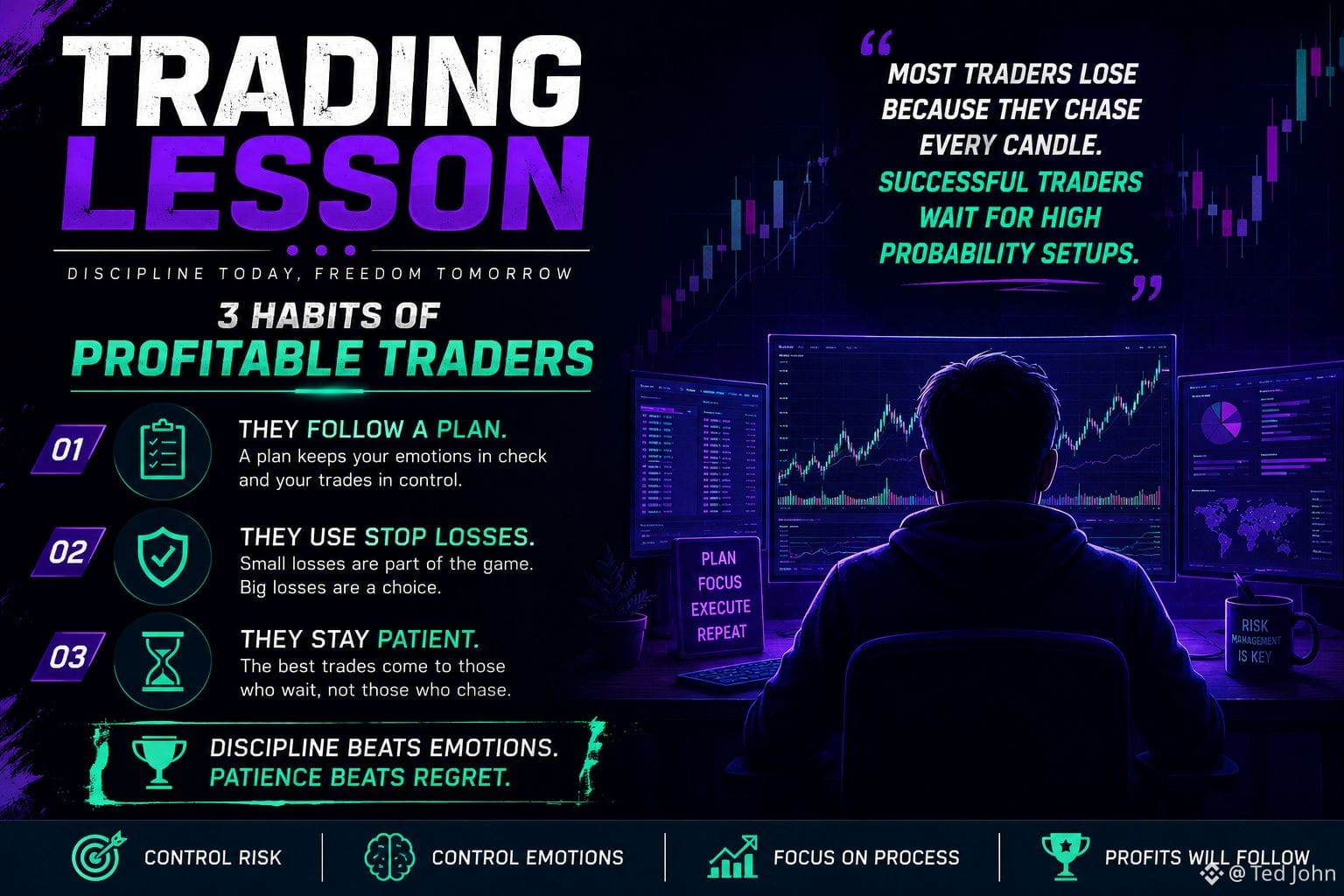
3 Habits Of Profitable Traders
✅ They follow a plan.
✅ They use stop losses.
✅ They stay patient.
Most traders lose because they chase every candle.
Successful traders wait for high-probability setups.
💡 Discipline beats emotions.
Which trading habit helped you the most?
#TradingLessons #cryptoeducation
📚 Trading Lesson
3 Habits Of Profitable Traders
✅ They follow a plan.
✅ They use stop losses.
✅ They stay patient.
Most traders lose because they chase every candle.
Successful traders wait for high-probability setups.
💡 Discipline beats emotions.
Which trading habit helped you the most?
#TradingLessons #cryptoeducation
3 Habits Of Profitable Traders
✅ They follow a plan.
✅ They use stop losses.
✅ They stay patient.
Most traders lose because they chase every candle.
Successful traders wait for high-probability setups.
💡 Discipline beats emotions.
Which trading habit helped you the most?
#TradingLessons #cryptoeducation
110
📚 Trading Lesson
Most traders fail because they focus on profits first.
Professional traders focus on:
• Risk Management
• Discipline
• Patience
Remember:
A bad trader looks for quick profits.
A good trader protects capital first.
💡 Protect your capital before chasing profits.
#TradingLessons #cryptoeducation
📚 Trading Lesson
Most traders fail because they focus on profits first.
Professional traders focus on:
• Risk Management
• Discipline
• Patience
Remember:
A bad trader looks for quick profits.
A good trader protects capital first.
💡 Protect your capital before chasing profits.
#TradingLessons #cryptoeducation
Most traders fail because they focus on profits first.
Professional traders focus on:
• Risk Management
• Discipline
• Patience
Remember:
A bad trader looks for quick profits.
A good trader protects capital first.
💡 Protect your capital before chasing profits.
#TradingLessons #cryptoeducation
123

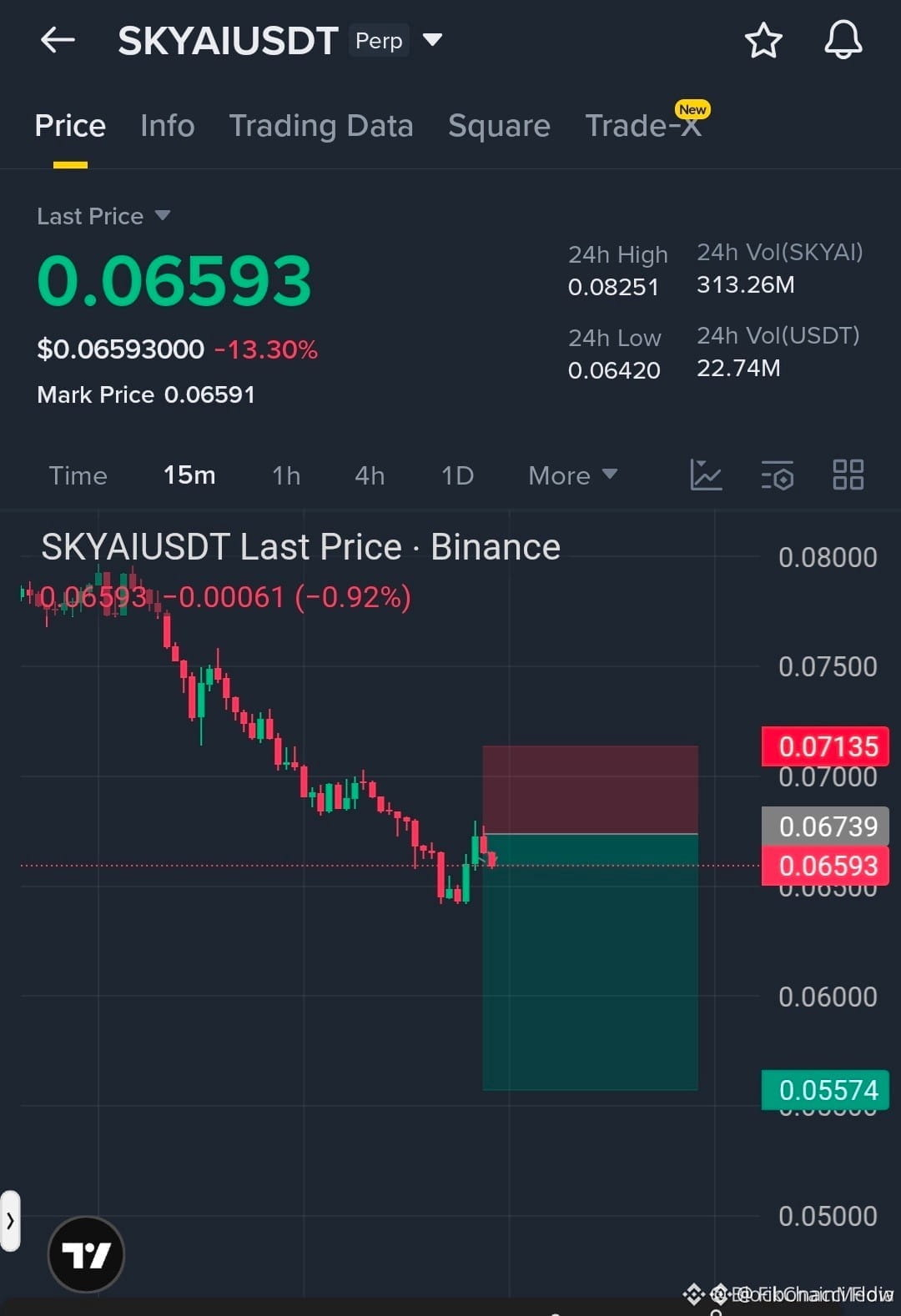
$SKYAI LONG JUST GOT REKT — HERE'S WHAT I LEARNED 💀
That "wrong direction" moment hits different when you're sizing up. This pair got flipped hard after the fakeout above resistance — classic trap for late longs.
The lesson? Never chase green candles without a proper entry plan. I waited for a retest and got caught anyway. Now I'm watching for a reclaim of the level that broke to confirm the next move.
What's your exit strategy when the market proves you wrong?
Not financial advice. Always manage your risk.
#SKYAI #TradingLessons #CryptoLosses #RiskManagement
💎
$SKYAI LONG JUST GOT REKT — HERE'S WHAT I LEARNED 💀
That "wrong direction" moment hits different when you're sizing up. This pair got flipped hard after the fakeout above resistance — classic trap for late longs.
The lesson? Never chase green candles without a proper entry plan. I waited for a retest and got caught anyway. Now I'm watching for a reclaim of the level that broke to confirm the next move.
What's your exit strategy when the market proves you wrong?
Not financial advice. Always manage your risk.
#SKYAI #TradingLessons #CryptoLosses #RiskManagement
💎
That "wrong direction" moment hits different when you're sizing up. This pair got flipped hard after the fakeout above resistance — classic trap for late longs.
The lesson? Never chase green candles without a proper entry plan. I waited for a retest and got caught anyway. Now I'm watching for a reclaim of the level that broke to confirm the next move.
What's your exit strategy when the market proves you wrong?
Not financial advice. Always manage your risk.
#SKYAI #TradingLessons #CryptoLosses #RiskManagement
💎
268
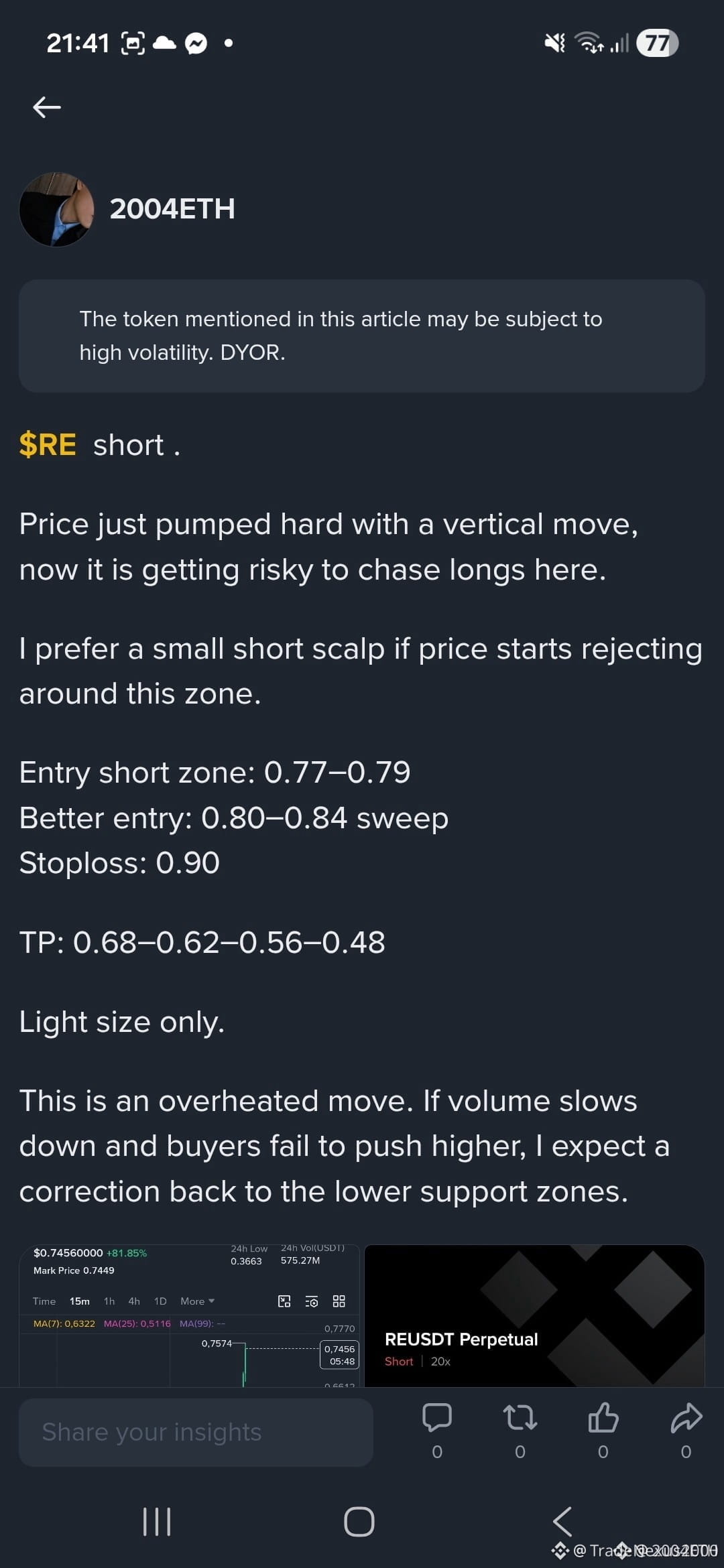
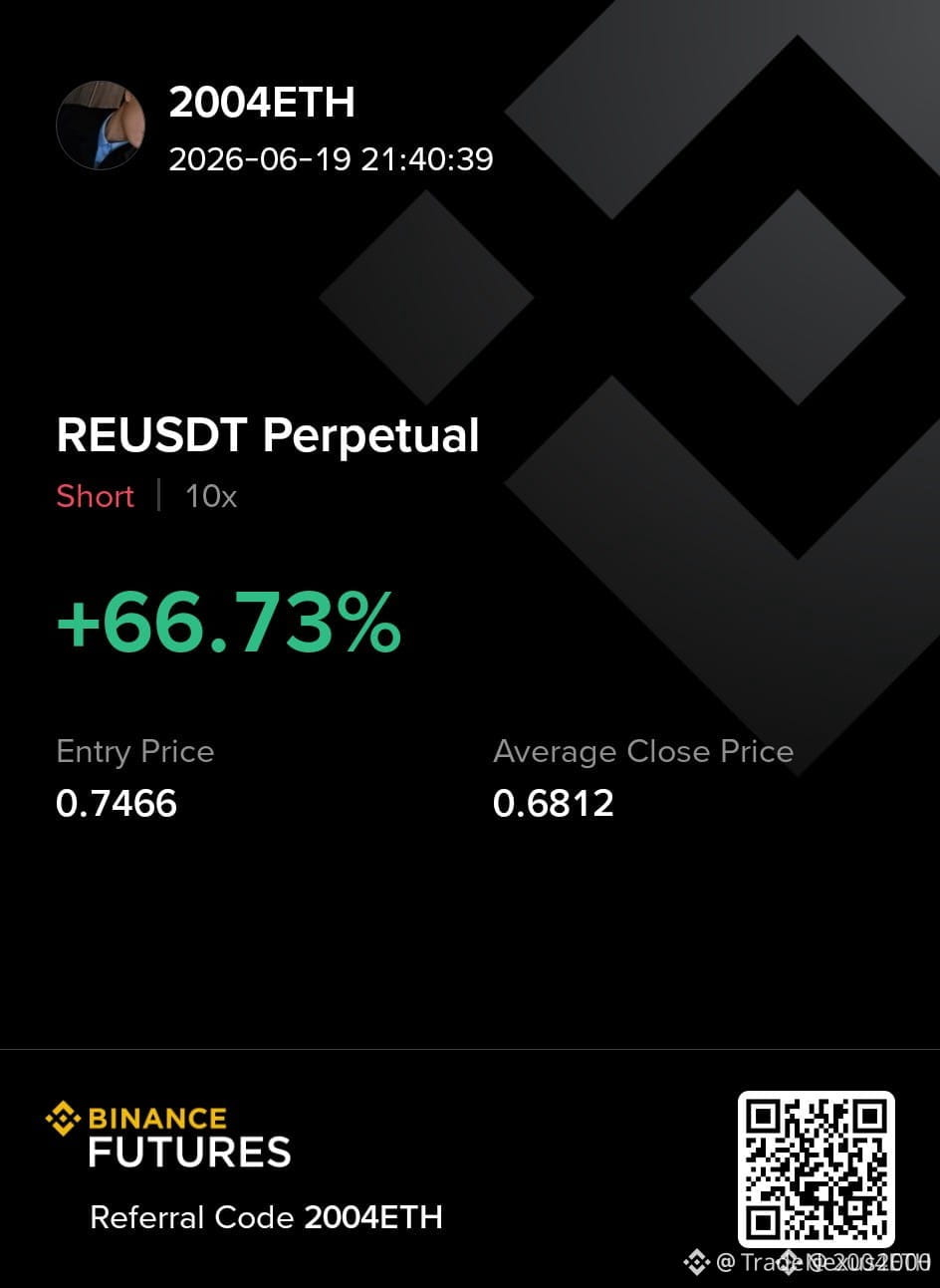
$RE short setup yields profit despite imperfect entry and hold 🚀
Entry: 0.7466
Target: 0.6812
Result was a gain of 66.73%, demonstrating that even imperfect trades can be profitable if risk is managed correctly.
The key takeaway is that trading is not about having the perfect setup, but about being on the right side of the market with controlled risk.
Not financial advice. Manage your risk.
#RE #ShortSetup #TradingLessons
👍
$RE short setup yields profit despite imperfect entry and hold 🚀
Entry: 0.7466
Target: 0.6812
Result was a gain of 66.73%, demonstrating that even imperfect trades can be profitable if risk is managed correctly.
The key takeaway is that trading is not about having the perfect setup, but about being on the right side of the market with controlled risk.
Not financial advice. Manage your risk.
#RE #ShortSetup #TradingLessons
👍
Entry: 0.7466
Target: 0.6812
Result was a gain of 66.73%, demonstrating that even imperfect trades can be profitable if risk is managed correctly.
The key takeaway is that trading is not about having the perfect setup, but about being on the right side of the market with controlled risk.
Not financial advice. Manage your risk.
#RE #ShortSetup #TradingLessons
👍
74

The fluorescent hum of my monitor was the only sound at 3 AM. SOL had just liquidated another chunk, my 50x long wiped out in minutes. I didn't even feel the usual gut punch. Just a hollow, dull ache. My finger was already hovering over DOGE, eyeing another 100x setup. "Just one more," I mumbled, trying to convince myself I saw a pattern. But then it hit me: that frantic need, the desperate chase for 'the one' that would fix everything, the adrenaline spike even as the red numbers bled. It wasn't analysis. It wasn't trading. It was the exact same feeling I had in a casino, years ago, pushing another chip onto red. That sickening clarity. I was gambling. All along.
When did that cold truth finally slap you across the face?
#CryptoGambling #LeverageLosses #TradingLessons #WakeUpCall
The fluorescent hum of my monitor was the only sound at 3 AM. SOL had just liquidated another chunk, my 50x long wiped out in minutes. I didn't even feel the usual gut punch. Just a hollow, dull ache. My finger was already hovering over DOGE, eyeing another 100x setup. "Just one more," I mumbled, trying to convince myself I saw a pattern. But then it hit me: that frantic need, the desperate chase for 'the one' that would fix everything, the adrenaline spike even as the red numbers bled. It wasn't analysis. It wasn't trading. It was the exact same feeling I had in a casino, years ago, pushing another chip onto red. That sickening clarity. I was gambling. All along.
When did that cold truth finally slap you across the face?
#CryptoGambling #LeverageLosses #TradingLessons #WakeUpCall
When did that cold truth finally slap you across the face?
#CryptoGambling #LeverageLosses #TradingLessons #WakeUpCall

46

·
--
Here's what happened when one trader from Algeria shared on Jul 23 that they had lost their savings and had to start rebuilding from zero.
Most crypto losses do not come from one bad candle. They usually come from oversized risk, no exit plan, and the belief that “I’ll recover it on the next trade.”
The post did not name a token or an amount, but the lesson is bigger than one position. When someone says they lost their savings, that usually means risk management failed before the market did. Whether you are holding $BTC, chasing $ETH volatility, or rotating into $BNB, the danger is the same: treating survival capital like trading capital.
The part most people missed is emotional risk. After a large loss, traders often try to win it back quickly, which can lead to higher leverage, worse entries, and even deeper damage. Rebuilding “step by step” sounds slow, but it is often the only way to avoid turning one painful loss into a long-term financial crisis.
What rules do you use to make sure one trade can never wipe you out?
#CryptoRisk #TradingLessons #BinanceSquare
Here's what happened when one trader from Algeria shared on Jul 23 that they had lost their savings and had to start rebuilding from zero.
Most crypto losses do not come from one bad candle. They usually come from oversized risk, no exit plan, and the belief that “I’ll recover it on the next trade.”
The post did not name a token or an amount, but the lesson is bigger than one position. When someone says they lost their savings, that usually means risk management failed before the market did. Whether you are holding $BTC , chasing $ETH volatility, or rotating into $BNB , the danger is the same: treating survival capital like trading capital.
The part most people missed is emotional risk. After a large loss, traders often try to win it back quickly, which can lead to higher leverage, worse entries, and even deeper damage. Rebuilding “step by step” sounds slow, but it is often the only way to avoid turning one painful loss into a long-term financial crisis.
What rules do you use to make sure one trade can never wipe you out?
#CryptoRisk #TradingLessons #BinanceSquare
Most crypto losses do not come from one bad candle. They usually come from oversized risk, no exit plan, and the belief that “I’ll recover it on the next trade.”
The post did not name a token or an amount, but the lesson is bigger than one position. When someone says they lost their savings, that usually means risk management failed before the market did. Whether you are holding $BTC , chasing $ETH volatility, or rotating into $BNB , the danger is the same: treating survival capital like trading capital.
The part most people missed is emotional risk. After a large loss, traders often try to win it back quickly, which can lead to higher leverage, worse entries, and even deeper damage. Rebuilding “step by step” sounds slow, but it is often the only way to avoid turning one painful loss into a long-term financial crisis.
What rules do you use to make sure one trade can never wipe you out?
#CryptoRisk #TradingLessons #BinanceSquare
35

·
--
Статья
Why Your Stop-Loss Feels Like It's "Always" Wrong (And What To Do Instead)I used to think stop-losses were the enemy. Every time I set one, the market would dip just enough to wipe me out — then rip higher exactly where I would've taken profit if I'd just held. After enough of these, I started skipping stop-losses entirely. "I'll just watch the chart and exit manually," I told myself.
That decision cost me more than any single stop-loss ever did.
Here's what I eventually understood: the problem usually isn't the stop-loss. It's where — and why — you're placing it.
The Mistake: Setting Stops on Vibes, Not Structure
Most of us place stops based on how much we're willing to lose in dollar terms. "I'll risk $50 on this trade." That number means nothing to the market. The market doesn't know your account size — it only respects levels where real buying or selling has historically shown up.
When your stop is just "a price below where I bought," it often sits exactly where short-term traders expect it to sit too. That's not a coincidence — it's why those wicks happen.
Better approach: Place your stop below (or above) a real structural level — a prior swing low, a support zone with multiple touches, a recent consolidation range. Then size your position so that distance equals the dollar risk you're comfortable with. Risk management should follow the chart, not the other way around.
The Second Mistake: No Stop on Parabolic Moves
If you've followed any of my recent posts, you've seen coins like $RE move +70-90% in a single day. On moves like this, there often isn't a "real" structural level yet — the coin hasn't traded long enough to establish one.
This is the situation where people either:
Skip the stop entirely ("I'll watch it closely")Place an arbitrary stop that gets swept by normal volatility
Neither works well. My rule on parabolic, low-history coins: reduce position size dramatically, or don't enter at all until structure forms. Missing the move costs you nothing real. A bad entry on a structureless chart can cost you a lot.
Risk Management Is Not About Being Right
This is the part that took me the longest to accept: a good stop-loss strategy will make you "wrong" — meaning stopped out before a reversal — fairly often. That's not a flaw in the strategy. That's the cost of having defined risk at all.
The alternative — no stop, "I'll just watch it" — feels safer in the moment but means a single bad trade can wipe out the gains of ten good ones. I've had that happen. It only takes one.
A Simple Framework I Actually Use Now
Before entering: identify the level that, if broken, means my original thesis was wrong. That's where the stop goes — not where I'm "comfortable" losing money.Position size second: I calculate size based on the stop distance, not the other way around. If the stop has to be wide because of volatility, my position gets smaller — not my stop tighter.No structure, no full size: on coins with limited price history (new listings, parabolic pumps), I either skip the trade or use a fraction of normal size.One rule I don't break: I never move a stop further away once it's set. Moving it closer (locking in gains) is fine. Moving it further is how small losses become account-ending ones.
The Honest Bottom Line
Stop-losses aren't there to make you feel good. They're there so that being wrong costs you a known, survivable amount — instead of an unknown, unlimited one. I wish someone had told me that plainly before I learned it the expensive way.
If you've been skipping stops because they "never work," it might not be the tool. It might be where you're putting it.
Not financial advice. This reflects personal trading lessons, not specific recommendations. Always do your own research.
#RiskManagementMastery #StopLossStrategies #cryptoeducation #TradingLessons
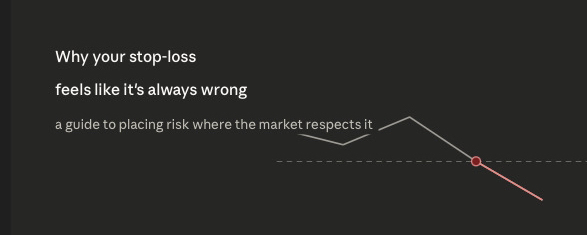
Why Your Stop-Loss Feels Like It's "Always" Wrong (And What To Do Instead)
I used to think stop-losses were the enemy. Every time I set one, the market would dip just enough to wipe me out — then rip higher exactly where I would've taken profit if I'd just held. After enough of these, I started skipping stop-losses entirely. "I'll just watch the chart and exit manually," I told myself.
That decision cost me more than any single stop-loss ever did.
Here's what I eventually understood: the problem usually isn't the stop-loss. It's where — and why — you're placing it.
The Mistake: Setting Stops on Vibes, Not Structure
Most of us place stops based on how much we're willing to lose in dollar terms. "I'll risk $50 on this trade." That number means nothing to the market. The market doesn't know your account size — it only respects levels where real buying or selling has historically shown up.
When your stop is just "a price below where I bought," it often sits exactly where short-term traders expect it to sit too. That's not a coincidence — it's why those wicks happen.
Better approach: Place your stop below (or above) a real structural level — a prior swing low, a support zone with multiple touches, a recent consolidation range. Then size your position so that distance equals the dollar risk you're comfortable with. Risk management should follow the chart, not the other way around.
The Second Mistake: No Stop on Parabolic Moves
If you've followed any of my recent posts, you've seen coins like $RE move +70-90% in a single day. On moves like this, there often isn't a "real" structural level yet — the coin hasn't traded long enough to establish one.
This is the situation where people either:
Skip the stop entirely ("I'll watch it closely")Place an arbitrary stop that gets swept by normal volatility
Neither works well. My rule on parabolic, low-history coins: reduce position size dramatically, or don't enter at all until structure forms. Missing the move costs you nothing real. A bad entry on a structureless chart can cost you a lot.
Risk Management Is Not About Being Right
This is the part that took me the longest to accept: a good stop-loss strategy will make you "wrong" — meaning stopped out before a reversal — fairly often. That's not a flaw in the strategy. That's the cost of having defined risk at all.
The alternative — no stop, "I'll just watch it" — feels safer in the moment but means a single bad trade can wipe out the gains of ten good ones. I've had that happen. It only takes one.
A Simple Framework I Actually Use Now
Before entering: identify the level that, if broken, means my original thesis was wrong. That's where the stop goes — not where I'm "comfortable" losing money.Position size second: I calculate size based on the stop distance, not the other way around. If the stop has to be wide because of volatility, my position gets smaller — not my stop tighter.No structure, no full size: on coins with limited price history (new listings, parabolic pumps), I either skip the trade or use a fraction of normal size.One rule I don't break: I never move a stop further away once it's set. Moving it closer (locking in gains) is fine. Moving it further is how small losses become account-ending ones.
The Honest Bottom Line
Stop-losses aren't there to make you feel good. They're there so that being wrong costs you a known, survivable amount — instead of an unknown, unlimited one. I wish someone had told me that plainly before I learned it the expensive way.
If you've been skipping stops because they "never work," it might not be the tool. It might be where you're putting it.
Not financial advice. This reflects personal trading lessons, not specific recommendations. Always do your own research.
#RiskManagementMastery #StopLossStrategies #cryptoeducation #TradingLessons
That decision cost me more than any single stop-loss ever did.
Here's what I eventually understood: the problem usually isn't the stop-loss. It's where — and why — you're placing it.
The Mistake: Setting Stops on Vibes, Not Structure
Most of us place stops based on how much we're willing to lose in dollar terms. "I'll risk $50 on this trade." That number means nothing to the market. The market doesn't know your account size — it only respects levels where real buying or selling has historically shown up.
When your stop is just "a price below where I bought," it often sits exactly where short-term traders expect it to sit too. That's not a coincidence — it's why those wicks happen.
Better approach: Place your stop below (or above) a real structural level — a prior swing low, a support zone with multiple touches, a recent consolidation range. Then size your position so that distance equals the dollar risk you're comfortable with. Risk management should follow the chart, not the other way around.
The Second Mistake: No Stop on Parabolic Moves
If you've followed any of my recent posts, you've seen coins like $RE move +70-90% in a single day. On moves like this, there often isn't a "real" structural level yet — the coin hasn't traded long enough to establish one.
This is the situation where people either:
Skip the stop entirely ("I'll watch it closely")Place an arbitrary stop that gets swept by normal volatility
Neither works well. My rule on parabolic, low-history coins: reduce position size dramatically, or don't enter at all until structure forms. Missing the move costs you nothing real. A bad entry on a structureless chart can cost you a lot.
Risk Management Is Not About Being Right
This is the part that took me the longest to accept: a good stop-loss strategy will make you "wrong" — meaning stopped out before a reversal — fairly often. That's not a flaw in the strategy. That's the cost of having defined risk at all.
The alternative — no stop, "I'll just watch it" — feels safer in the moment but means a single bad trade can wipe out the gains of ten good ones. I've had that happen. It only takes one.
A Simple Framework I Actually Use Now
Before entering: identify the level that, if broken, means my original thesis was wrong. That's where the stop goes — not where I'm "comfortable" losing money.Position size second: I calculate size based on the stop distance, not the other way around. If the stop has to be wide because of volatility, my position gets smaller — not my stop tighter.No structure, no full size: on coins with limited price history (new listings, parabolic pumps), I either skip the trade or use a fraction of normal size.One rule I don't break: I never move a stop further away once it's set. Moving it closer (locking in gains) is fine. Moving it further is how small losses become account-ending ones.
The Honest Bottom Line
Stop-losses aren't there to make you feel good. They're there so that being wrong costs you a known, survivable amount — instead of an unknown, unlimited one. I wish someone had told me that plainly before I learned it the expensive way.
If you've been skipping stops because they "never work," it might not be the tool. It might be where you're putting it.
Not financial advice. This reflects personal trading lessons, not specific recommendations. Always do your own research.
#RiskManagementMastery #StopLossStrategies #cryptoeducation #TradingLessons
3
1
210
$RAVE THE HARD TRUTH OF TRADING - IT'S PAIN AND LESSONS 💔
The market will test your patience and your discipline harder than anything else. I've felt the sting of being early, the frustration of being stopped out, and the silence after a big move you didn't catch. Each one of those moments taught me more than any 10 green days.
Right now the daily candle on $RAVE is printing a potential reversal wick after weeks of selling pressure. Funding rates are at levels that historically preceded sharp bounces. The question is whether your psychology is ready for the next swing.
Are you using this drawdown to study your process or just hoping for a green candle?
Not financial advice. Always manage your risk.
#RAVE #TradingLessons #Contrarian #ReversalSetup
💎
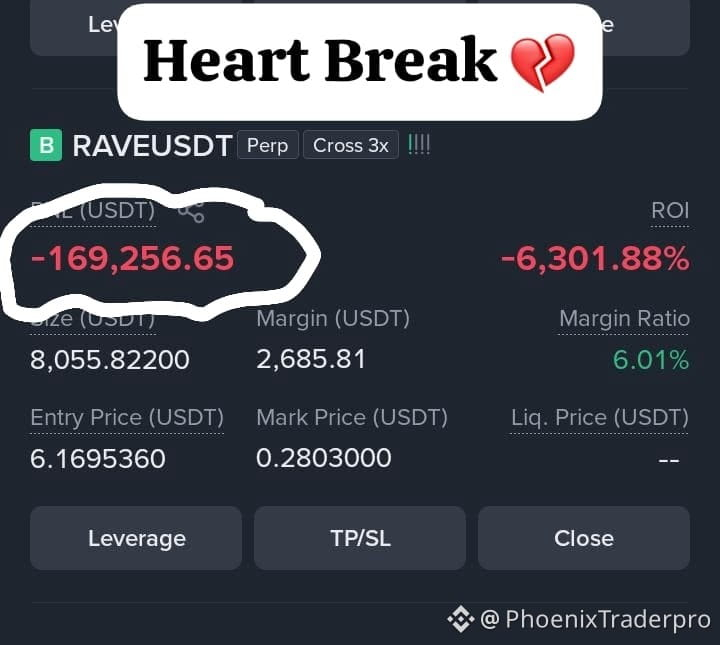
$RAVE THE HARD TRUTH OF TRADING - IT'S PAIN AND LESSONS 💔
The market will test your patience and your discipline harder than anything else. I've felt the sting of being early, the frustration of being stopped out, and the silence after a big move you didn't catch. Each one of those moments taught me more than any 10 green days.
Right now the daily candle on $RAVE is printing a potential reversal wick after weeks of selling pressure. Funding rates are at levels that historically preceded sharp bounces. The question is whether your psychology is ready for the next swing.
Are you using this drawdown to study your process or just hoping for a green candle?
Not financial advice. Always manage your risk.
#RAVE #TradingLessons #Contrarian #ReversalSetup
💎
The market will test your patience and your discipline harder than anything else. I've felt the sting of being early, the frustration of being stopped out, and the silence after a big move you didn't catch. Each one of those moments taught me more than any 10 green days.
Right now the daily candle on $RAVE is printing a potential reversal wick after weeks of selling pressure. Funding rates are at levels that historically preceded sharp bounces. The question is whether your psychology is ready for the next swing.
Are you using this drawdown to study your process or just hoping for a green candle?
Not financial advice. Always manage your risk.
#RAVE #TradingLessons #Contrarian #ReversalSetup
💎
251
Is a turnaround still on the table? My $BANK position began at 0.10, but over-allocating during high volatility resulted in a –8,000 USDT unrealized loss.
The major lesson: letting emotions dictate your dollar-cost averaging after a huge token rally is a fast track to over-exposure.
A macro recovery relies on whether $BANK can successfully defend its core support levels and reclaim trading volume. If the structure holds, a bounce is entirely viable. If the breakdown continues, protecting capital is the only priority.
Formulate a precise plan before adding single dollar. Stay grounded, avoid revenge trading, and let the market confirm the next trend.
#BankCoin #CryptoMarket #BearMarketStrategy #TradingLessons #CryptoCommunity
$BANK
{spot}(BANKUSDT)
Is a turnaround still on the table? My $BANK position began at 0.10, but over-allocating during high volatility resulted in a –8,000 USDT unrealized loss.
The major lesson: letting emotions dictate your dollar-cost averaging after a huge token rally is a fast track to over-exposure.
A macro recovery relies on whether $BANK can successfully defend its core support levels and reclaim trading volume. If the structure holds, a bounce is entirely viable. If the breakdown continues, protecting capital is the only priority.
Formulate a precise plan before adding single dollar. Stay grounded, avoid revenge trading, and let the market confirm the next trend.
#BankCoin #CryptoMarket #BearMarketStrategy #TradingLessons #CryptoCommunity
$BANK
The major lesson: letting emotions dictate your dollar-cost averaging after a huge token rally is a fast track to over-exposure.
A macro recovery relies on whether $BANK can successfully defend its core support levels and reclaim trading volume. If the structure holds, a bounce is entirely viable. If the breakdown continues, protecting capital is the only priority.
Formulate a precise plan before adding single dollar. Stay grounded, avoid revenge trading, and let the market confirm the next trend.
#BankCoin #CryptoMarket #BearMarketStrategy #TradingLessons #CryptoCommunity
$BANK
210
Войдите, чтобы посмотреть больше материала
Присоединяйтесь к пользователям криптовалют по всему миру на Binance Square
⚡️ Получайте новейшую и полезную информацию о криптоактивах.
💬 Нам доверяет крупнейшая в мире криптобиржа.
👍 Получите достоверные аналитические данные от верифицированных создателей контента.
Эл. почта/номер телефона
В тренде
1
#BinanceLaunchesBinanceIntelligence
Просмотров: 742,756
4,629 обсуждают
2
#BTCFallsBelow$84K
Просмотров: 31,942
111 обсуждают
3
#DubaiVARAIssuesReserveAssetAuditCircular
Просмотров: 8,360
367 обсуждают
4
#SECApproves3XBitcoinETF
Просмотров: 7,902
307 обсуждают
5
#WinklevossFilesSpotZcashETFApplication
Просмотров: 17,642
425 обсуждают
6
#SouthKoreaAITradeLiftsWorldcoinTo$7.41B
Просмотров: 2,116
39 обсуждают
7
#StrategyEstimates$4.1BIncomeTaxBenefit
Просмотров: 1,419
21 обсуждают
8
#IglooShutsDownAbstractBlockchain
Просмотров: 7,136
221 обсуждают
9
#StrategyMarketCapSurpassesRumble
Просмотров: 47,982
943 обсуждают
10
#StriveBuys2000BTCFor$169M
Просмотров: 18,743
163 обсуждают