
Thats-It
18 ໂພສ

Thats-It
ລາຍງານ
ບລັອກຜູ້ໃຊ້
2 ກໍາລັງຕິດຕາມ
1 ຜູ້ຕິດຕາມ
3 Liked
ໂພສ
·
--
ບົດຄວາມ
ເບິ່ງການແປ
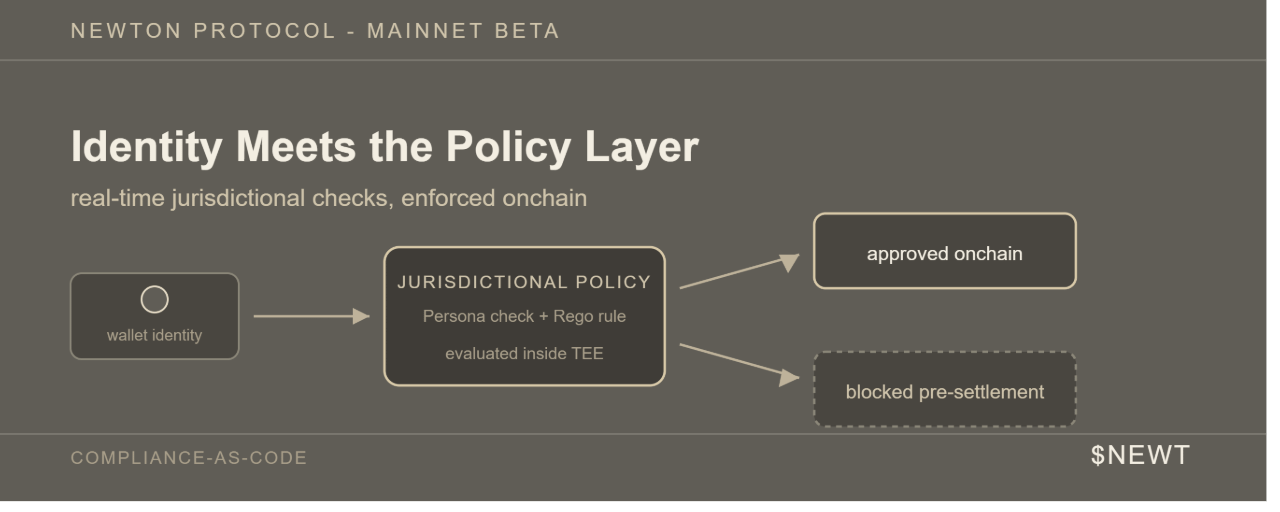
Newton Protocol Adds Identity Checks to the Authorization Layer: Why That Matters More Than It SoundMost of the conversation around @NewtonProtocol so far has centered on financial risk — price thresholds, collateral ratios, vault rules. But a policy engine that's meant to serve institutions, stablecoin issuers, and RWA platforms eventually has to answer a harder question than "is this position too risky." It has to answer "is this person even allowed to transact at all." That's the gap Newton's recent integration with Persona is built to close.
The problem is a familiar one in crypto: identity and jurisdictional compliance checks almost always happen offchain, at the UI or KYC-onboarding layer, disconnected from the actual transaction. A user can pass a one-time identity check on a frontend and then interact with the underlying smart contract directly, completely bypassing whatever compliance logic the platform thought it had in place. Regulators don't accept "we checked once at signup" as a real control, and for good reason — a wallet's ownership, jurisdiction, or sanctions status can change after onboarding, and a static one-time check can't catch that.
With Persona plugged in as a data provider, an identity or jurisdictional check becomes just another input a Newton policy can pull in live, at the exact moment a transaction is being evaluated — the same way a policy might already pull in a RedStone price feed or a Credora risk score. A builder can write a rule that says a transaction only proceeds if the wallet's associated identity clears a specific jurisdictional check right now, not whenever onboarding happened. If it fails, the transaction is blocked before it settles, and the check itself produces a verifiable receipt, auditable through the Newton Explorer.
This is a direct extension of Newton's broader "compliance-as-code" thesis: instead of compliance living in a separate offchain system that transactions can route around, it becomes an enforceable, composable piece of policy that travels with the transaction itself. For financial institutions and RWA platforms specifically, that's the difference between a control that looks good in a compliance memo and one that actually holds up on audit.
It's also a signal about where Newton is positioning itself competitively. Plenty of infrastructure projects talk about serving institutions; fewer are willing to build the unglamorous plumbing — identity providers, sanctions data, jurisdictional logic — that institutions actually require before they'll route real volume through a new authorization layer.
$NEWT remains the token securing and paying for all of this: staked by the operators running these checks inside TEEs, and used for the fees generated every time a policy — financial or identity-based — gets evaluated. As more data providers like Persona get integrated, the range of what Newton can enforce keeps expanding well past pure price and risk logic.
#Newt #BinanceSquareFamily
Newton Protocol Adds Identity Checks to the Authorization Layer: Why That Matters More Than It Sound
Most of the conversation around @NewtonProtocol so far has centered on financial risk — price thresholds, collateral ratios, vault rules. But a policy engine that's meant to serve institutions, stablecoin issuers, and RWA platforms eventually has to answer a harder question than "is this position too risky." It has to answer "is this person even allowed to transact at all." That's the gap Newton's recent integration with Persona is built to close.
The problem is a familiar one in crypto: identity and jurisdictional compliance checks almost always happen offchain, at the UI or KYC-onboarding layer, disconnected from the actual transaction. A user can pass a one-time identity check on a frontend and then interact with the underlying smart contract directly, completely bypassing whatever compliance logic the platform thought it had in place. Regulators don't accept "we checked once at signup" as a real control, and for good reason — a wallet's ownership, jurisdiction, or sanctions status can change after onboarding, and a static one-time check can't catch that.
With Persona plugged in as a data provider, an identity or jurisdictional check becomes just another input a Newton policy can pull in live, at the exact moment a transaction is being evaluated — the same way a policy might already pull in a RedStone price feed or a Credora risk score. A builder can write a rule that says a transaction only proceeds if the wallet's associated identity clears a specific jurisdictional check right now, not whenever onboarding happened. If it fails, the transaction is blocked before it settles, and the check itself produces a verifiable receipt, auditable through the Newton Explorer.
This is a direct extension of Newton's broader "compliance-as-code" thesis: instead of compliance living in a separate offchain system that transactions can route around, it becomes an enforceable, composable piece of policy that travels with the transaction itself. For financial institutions and RWA platforms specifically, that's the difference between a control that looks good in a compliance memo and one that actually holds up on audit.
It's also a signal about where Newton is positioning itself competitively. Plenty of infrastructure projects talk about serving institutions; fewer are willing to build the unglamorous plumbing — identity providers, sanctions data, jurisdictional logic — that institutions actually require before they'll route real volume through a new authorization layer.
$NEWT remains the token securing and paying for all of this: staked by the operators running these checks inside TEEs, and used for the fees generated every time a policy — financial or identity-based — gets evaluated. As more data providers like Persona get integrated, the range of what Newton can enforce keeps expanding well past pure price and risk logic.
#Newt #BinanceSquareFamily
The problem is a familiar one in crypto: identity and jurisdictional compliance checks almost always happen offchain, at the UI or KYC-onboarding layer, disconnected from the actual transaction. A user can pass a one-time identity check on a frontend and then interact with the underlying smart contract directly, completely bypassing whatever compliance logic the platform thought it had in place. Regulators don't accept "we checked once at signup" as a real control, and for good reason — a wallet's ownership, jurisdiction, or sanctions status can change after onboarding, and a static one-time check can't catch that.
With Persona plugged in as a data provider, an identity or jurisdictional check becomes just another input a Newton policy can pull in live, at the exact moment a transaction is being evaluated — the same way a policy might already pull in a RedStone price feed or a Credora risk score. A builder can write a rule that says a transaction only proceeds if the wallet's associated identity clears a specific jurisdictional check right now, not whenever onboarding happened. If it fails, the transaction is blocked before it settles, and the check itself produces a verifiable receipt, auditable through the Newton Explorer.
This is a direct extension of Newton's broader "compliance-as-code" thesis: instead of compliance living in a separate offchain system that transactions can route around, it becomes an enforceable, composable piece of policy that travels with the transaction itself. For financial institutions and RWA platforms specifically, that's the difference between a control that looks good in a compliance memo and one that actually holds up on audit.
It's also a signal about where Newton is positioning itself competitively. Plenty of infrastructure projects talk about serving institutions; fewer are willing to build the unglamorous plumbing — identity providers, sanctions data, jurisdictional logic — that institutions actually require before they'll route real volume through a new authorization layer.
$NEWT remains the token securing and paying for all of this: staked by the operators running these checks inside TEEs, and used for the fees generated every time a policy — financial or identity-based — gets evaluated. As more data providers like Persona get integrated, the range of what Newton can enforce keeps expanding well past pure price and risk logic.
#Newt #BinanceSquareFamily
77
·
--
ສັນຍານກະທິງ
ເບິ່ງການແປ
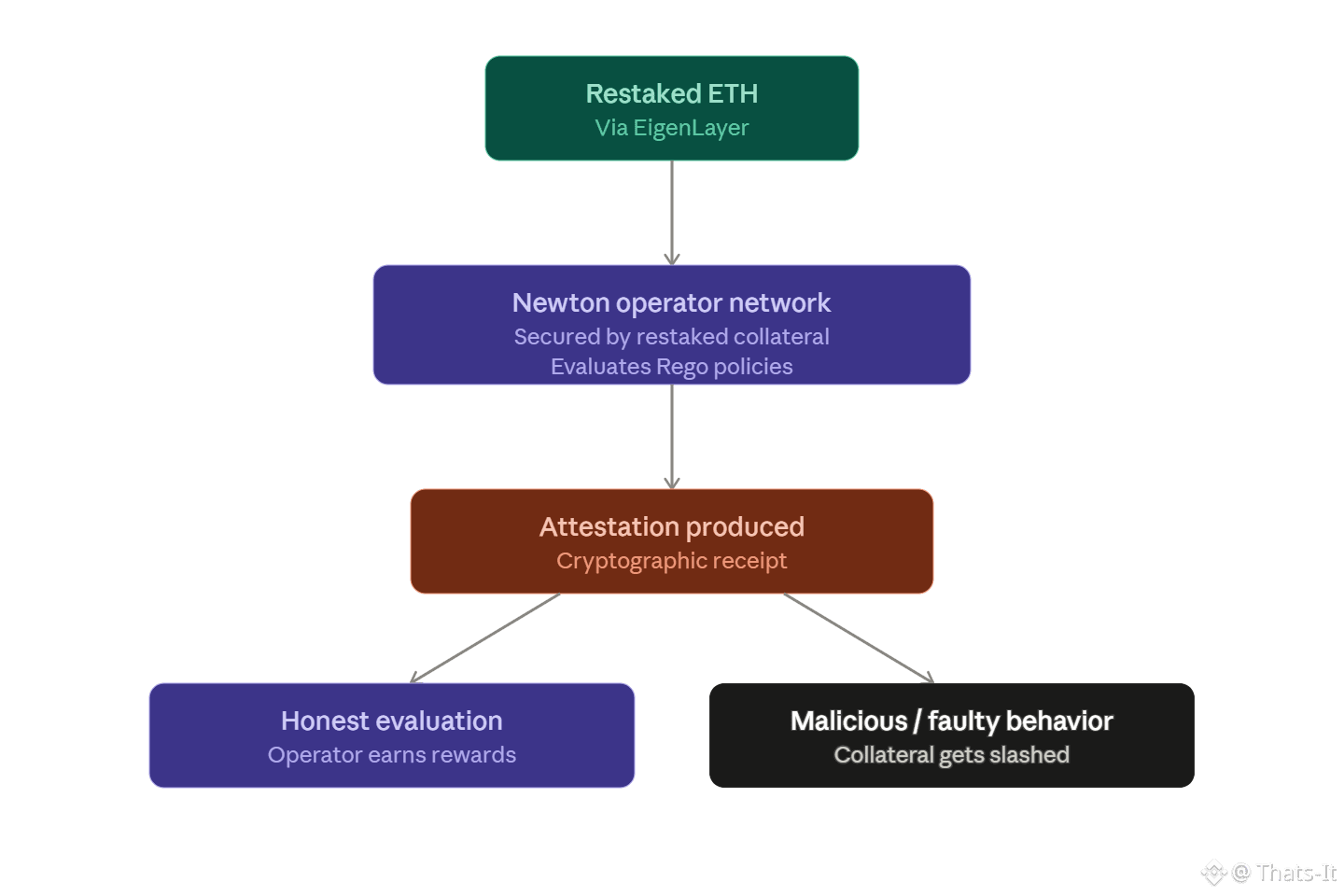
#newt $NEWT Why does it matter that Newton Protocol runs as an EigenLayer AVS instead of just spinning up its own validator set from scratch? Because bootstrapping trust from zero is expensive and slow — a new network has to convince enough independent operators to lock up capital before anyone can rely on it. Newton sidesteps that by tapping into EigenLayer's existing pool of restaked ETH, borrowing Ethereum-grade economic security instead of building it from the ground up.
Here's how that plays out in practice: operators are incentivized through restaked collateral, and their evaluations of transaction requests against Rego-based policies produce cryptographic attestations that serve as verifiable receipts. That collateral isn't a symbolic requirement — it's the mechanism that keeps operators honest. If an operator approves a transaction that shouldn't have passed, or colludes to fake an attestation, EigenLayer's slashing framework lets Newton penalize that misbehavior by burning or redistributing the operator's staked assets. The economic cost of cheating is designed to outweigh any benefit from doing so.
This is the difference between "trust us, we checked" and "here's a cryptographic proof, backed by real capital at risk, that the check happened correctly." The result is a decentralized trust model where no centralized gatekeeper decides which transactions are compliant — the operator network does, with skin in the game.
For an authorization layer meant to sit between transaction intent and execution across DeFi, that's not a minor technical detail — it's the foundation the whole compliance model rests on. @NewtonProtocol #BinanceSquareTalks
#newt $NEWT Why does it matter that Newton Protocol runs as an EigenLayer AVS instead of just spinning up its own validator set from scratch? Because bootstrapping trust from zero is expensive and slow — a new network has to convince enough independent operators to lock up capital before anyone can rely on it. Newton sidesteps that by tapping into EigenLayer's existing pool of restaked ETH, borrowing Ethereum-grade economic security instead of building it from the ground up.
Here's how that plays out in practice: operators are incentivized through restaked collateral, and their evaluations of transaction requests against Rego-based policies produce cryptographic attestations that serve as verifiable receipts. That collateral isn't a symbolic requirement — it's the mechanism that keeps operators honest. If an operator approves a transaction that shouldn't have passed, or colludes to fake an attestation, EigenLayer's slashing framework lets Newton penalize that misbehavior by burning or redistributing the operator's staked assets. The economic cost of cheating is designed to outweigh any benefit from doing so.
This is the difference between "trust us, we checked" and "here's a cryptographic proof, backed by real capital at risk, that the check happened correctly." The result is a decentralized trust model where no centralized gatekeeper decides which transactions are compliant — the operator network does, with skin in the game.
For an authorization layer meant to sit between transaction intent and execution across DeFi, that's not a minor technical detail — it's the foundation the whole compliance model rests on. @NewtonProtocol #BinanceSquareTalks
Here's how that plays out in practice: operators are incentivized through restaked collateral, and their evaluations of transaction requests against Rego-based policies produce cryptographic attestations that serve as verifiable receipts. That collateral isn't a symbolic requirement — it's the mechanism that keeps operators honest. If an operator approves a transaction that shouldn't have passed, or colludes to fake an attestation, EigenLayer's slashing framework lets Newton penalize that misbehavior by burning or redistributing the operator's staked assets. The economic cost of cheating is designed to outweigh any benefit from doing so.
This is the difference between "trust us, we checked" and "here's a cryptographic proof, backed by real capital at risk, that the check happened correctly." The result is a decentralized trust model where no centralized gatekeeper decides which transactions are compliant — the operator network does, with skin in the game.
For an authorization layer meant to sit between transaction intent and execution across DeFi, that's not a minor technical detail — it's the foundation the whole compliance model rests on. @NewtonProtocol #BinanceSquareTalks
83
·
--
ສັນຍານກະທິງ
ເບິ່ງການແປ
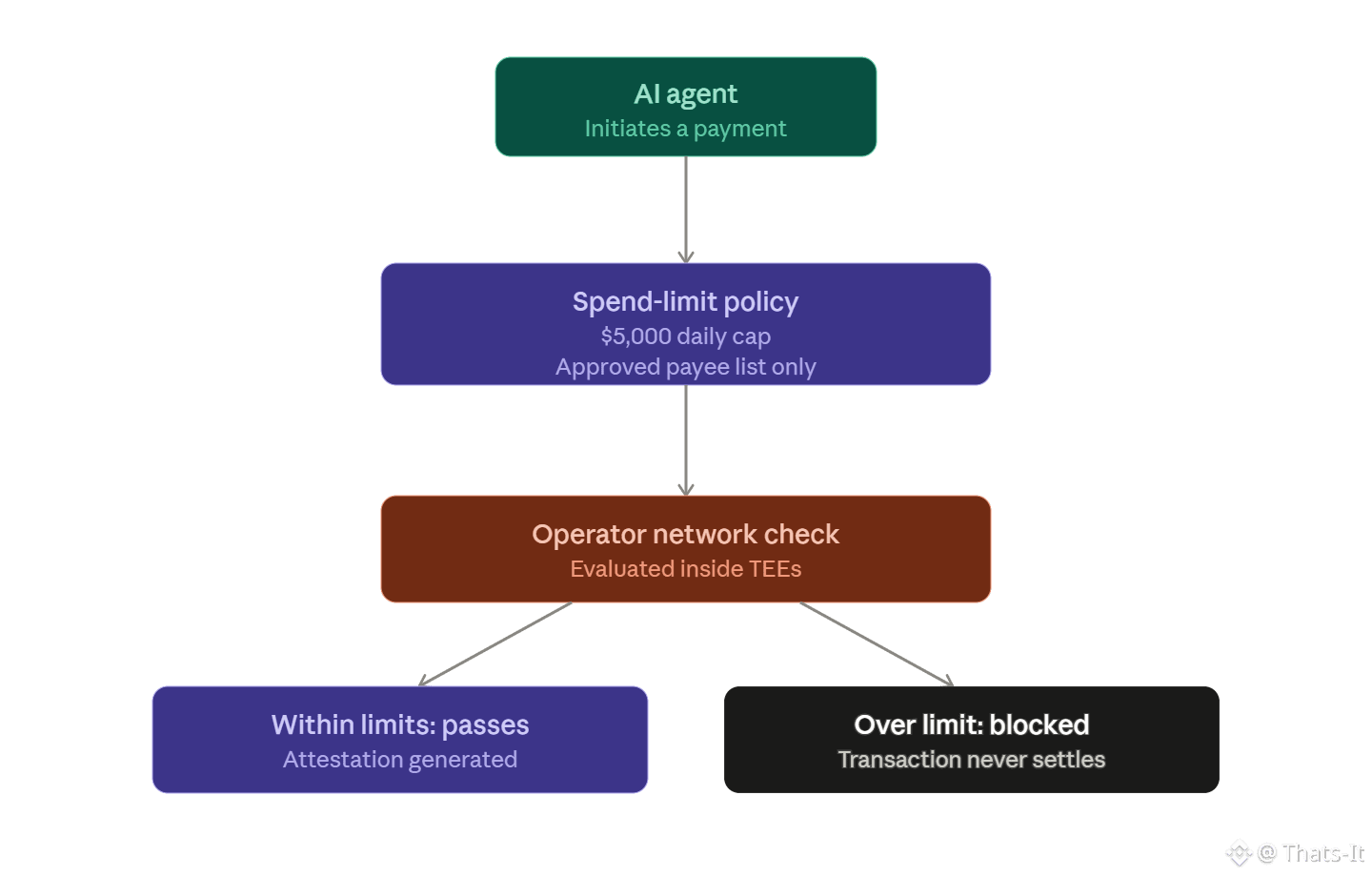
#newt $NEWT This is the gap Newton Protocol is designed to close. Rather than relying solely on an AI agent's judgment, or introducing an off-chain server as a single point of failure, Newton allows developers to define a spending policy once — for example, a $5,000 daily limit restricted to a pre-approved list of payee addresses — and enforce it directly at the smart contract level. Every transaction the agent attempts is evaluated against that policy prior to settlement, with a cryptographic attestation confirming the check took place.
This challenge extends well beyond AI agents. Stablecoin issuers face a comparable question: how can they guarantee that funds are only transferred to KYC-verified addresses, without depending on a centralized compliance server for every transaction? RWA platforms encounter the same issue when tokenizing assets that carry genuine regulatory obligations. In each case, the solution is consistent — embed the rule into the transaction path itself, so compliance is not a static policy document but enforceable code that automatically and verifiably permits or blocks execution.
That is the common thread linking agent commerce, stablecoin payments, and RWA tokenization: none of these use cases can scale safely without enforcement occurring at the point of execution. @NewtonProtocol $NEWT #BinanceSquareFamily #HotTrends
#newt $NEWT This is the gap Newton Protocol is designed to close. Rather than relying solely on an AI agent's judgment, or introducing an off-chain server as a single point of failure, Newton allows developers to define a spending policy once — for example, a $5,000 daily limit restricted to a pre-approved list of payee addresses — and enforce it directly at the smart contract level. Every transaction the agent attempts is evaluated against that policy prior to settlement, with a cryptographic attestation confirming the check took place.
This challenge extends well beyond AI agents. Stablecoin issuers face a comparable question: how can they guarantee that funds are only transferred to KYC-verified addresses, without depending on a centralized compliance server for every transaction? RWA platforms encounter the same issue when tokenizing assets that carry genuine regulatory obligations. In each case, the solution is consistent — embed the rule into the transaction path itself, so compliance is not a static policy document but enforceable code that automatically and verifiably permits or blocks execution.
That is the common thread linking agent commerce, stablecoin payments, and RWA tokenization: none of these use cases can scale safely without enforcement occurring at the point of execution. @NewtonProtocol $NEWT #BinanceSquareFamily #HotTrends
This challenge extends well beyond AI agents. Stablecoin issuers face a comparable question: how can they guarantee that funds are only transferred to KYC-verified addresses, without depending on a centralized compliance server for every transaction? RWA platforms encounter the same issue when tokenizing assets that carry genuine regulatory obligations. In each case, the solution is consistent — embed the rule into the transaction path itself, so compliance is not a static policy document but enforceable code that automatically and verifiably permits or blocks execution.
That is the common thread linking agent commerce, stablecoin payments, and RWA tokenization: none of these use cases can scale safely without enforcement occurring at the point of execution. @NewtonProtocol $NEWT #BinanceSquareFamily #HotTrends
77
·
--
ບົດຄວາມ
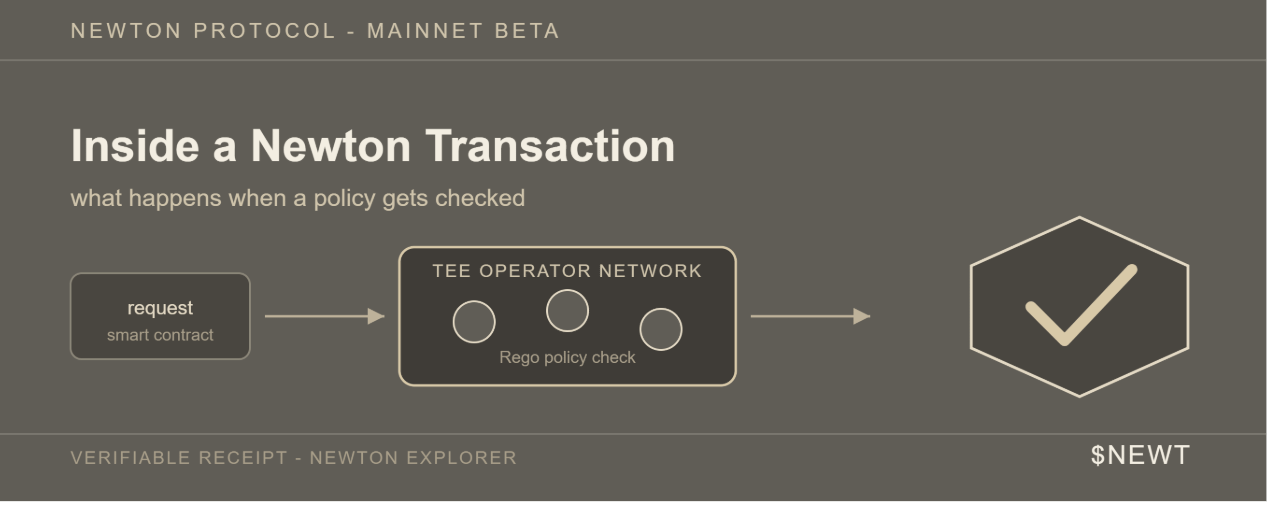
Sa Loob ng isang Newton Transaction: Ano Talaga ang Nangyayari Kapag Na-check ang isang PolicyMadaling ilarawan ang Newton Protocol sa mataas na antas — "nagche-check ng isang rule bago ang isang transaksyon ay tuluyang ma-settle" — nang hindi man lang ipinapaliwanag kung ano talaga ang hitsura ng proseso sa onchain. Dahil live na ang @NewtonProtocol 's Mainnet Beta, sulit na balikan ang mga mekanismo, dahil ang mga pagpiling disenyo dito ang siyang nagpapabuhay sa "verifiable" na bahagi ng verifiable authorization — hindi lang ito isang pang-marketing na linya.
Ang Newton ay tumatakbo bilang isang Aktibong Na-validate na Serbisyo, na nakikipag-ugnayan sa mga smart contract sa halip na palitan ang mga ito. Kapag ang isang user o isang autonomous agent ay nagpasimula ng isang onchain na aksyon, isang maliit na piraso ng code sa loob ng target na smart contract ang nagri-route ng kahilingang iyon palabas sa Newton network sa halip na hayaang itong tumakbo nang bulag. Mula doon, isang desentralisadong hanay ng mga operator ang nagsusuri sa transaksyon laban sa isang partikular na policy, na nakasulat sa Rego — isang declarative na policy language na ginawa para sa eksaktong ganitong uri ng rules-as-code evaluation, na ginagamit na sa cloud infrastructure at access control sa ibang lugar.
Sa Loob ng isang Newton Transaction: Ano Talaga ang Nangyayari Kapag Na-check ang isang Policy
Madaling ilarawan ang Newton Protocol sa mataas na antas — "nagche-check ng isang rule bago ang isang transaksyon ay tuluyang ma-settle" — nang hindi man lang ipinapaliwanag kung ano talaga ang hitsura ng proseso sa onchain. Dahil live na ang @NewtonProtocol 's Mainnet Beta, sulit na balikan ang mga mekanismo, dahil ang mga pagpiling disenyo dito ang siyang nagpapabuhay sa "verifiable" na bahagi ng verifiable authorization — hindi lang ito isang pang-marketing na linya.
Ang Newton ay tumatakbo bilang isang Aktibong Na-validate na Serbisyo, na nakikipag-ugnayan sa mga smart contract sa halip na palitan ang mga ito. Kapag ang isang user o isang autonomous agent ay nagpasimula ng isang onchain na aksyon, isang maliit na piraso ng code sa loob ng target na smart contract ang nagri-route ng kahilingang iyon palabas sa Newton network sa halip na hayaang itong tumakbo nang bulag. Mula doon, isang desentralisadong hanay ng mga operator ang nagsusuri sa transaksyon laban sa isang partikular na policy, na nakasulat sa Rego — isang declarative na policy language na ginawa para sa eksaktong ganitong uri ng rules-as-code evaluation, na ginagamit na sa cloud infrastructure at access control sa ibang lugar.
Ang Newton ay tumatakbo bilang isang Aktibong Na-validate na Serbisyo, na nakikipag-ugnayan sa mga smart contract sa halip na palitan ang mga ito. Kapag ang isang user o isang autonomous agent ay nagpasimula ng isang onchain na aksyon, isang maliit na piraso ng code sa loob ng target na smart contract ang nagri-route ng kahilingang iyon palabas sa Newton network sa halip na hayaang itong tumakbo nang bulag. Mula doon, isang desentralisadong hanay ng mga operator ang nagsusuri sa transaksyon laban sa isang partikular na policy, na nakasulat sa Rego — isang declarative na policy language na ginawa para sa eksaktong ganitong uri ng rules-as-code evaluation, na ginagamit na sa cloud infrastructure at access control sa ibang lugar.
92
·
--
ບົດຄວາມ
Newton Protocol: Imodeli Yezokuphepha Ngemuva Kwe-"Compliance-as-Code"I-Newton's Mainnet Beta isiqalile ukusebenza esikhashana esidlule, futhi iningi ukunakwa kuze kube manje liye gxila kulokho uNewton akwenzayo—hlola inqubomgomo ngaphambi kokuba kudluliswe umnikelo. Okungakhulunywa kangako ukuthi ikwenza kanjani lokho ngaphandle kokuba nje enye inhlangano ebiyelwe emaphakathi efaka i-DeFi ngaphambi kokuthi ihanjiswe. Umbuzo lowo ubalulekile, ngoba injini yenqubomgomo okufanele izilokothele izikhungo, abakhishayo be-stablecoin, kanye nama-ejenti e-AI idinga ukuba ingachemi ngokufakazekayo, hhayi nje ukuba isheshe.
<c-4/> impendulo yakhe iyinethiwekhi yokusebenza enamaqembu (decentralized operator network) evikelekile ngokwenza kabusha (restaking) nge-Ethereum nge-EigenLayer, kunokuba amaseva enkampani eyodwa enqume ukuthi yini evunyelwayo. Isheke ngalinye lenqubomgomo liqhutshelwa ngaphakathi kwe-Trusted Execution Environments, i-compute ehlukaniswe ihlomele, lapho lowo opharetha uqobo engakwazi ukubona noma ukuphazamisa idatha ehlolwayo. Umphumela uba ubufakazi be-cryptographic bokuthi umthetho othile uhloliwe kahle, unamathiselwe ekuthengisweni njengerekhodi elingaqinisekiswa noma ubani angalihlola kamuva.
Newton Protocol: Imodeli Yezokuphepha Ngemuva Kwe-"Compliance-as-Code"
I-Newton's Mainnet Beta isiqalile ukusebenza esikhashana esidlule, futhi iningi ukunakwa kuze kube manje liye gxila kulokho uNewton akwenzayo—hlola inqubomgomo ngaphambi kokuba kudluliswe umnikelo. Okungakhulunywa kangako ukuthi ikwenza kanjani lokho ngaphandle kokuba nje enye inhlangano ebiyelwe emaphakathi efaka i-DeFi ngaphambi kokuthi ihanjiswe. Umbuzo lowo ubalulekile, ngoba injini yenqubomgomo okufanele izilokothele izikhungo, abakhishayo be-stablecoin, kanye nama-ejenti e-AI idinga ukuba ingachemi ngokufakazekayo, hhayi nje ukuba isheshe.
<c-4/> impendulo yakhe iyinethiwekhi yokusebenza enamaqembu (decentralized operator network) evikelekile ngokwenza kabusha (restaking) nge-Ethereum nge-EigenLayer, kunokuba amaseva enkampani eyodwa enqume ukuthi yini evunyelwayo. Isheke ngalinye lenqubomgomo liqhutshelwa ngaphakathi kwe-Trusted Execution Environments, i-compute ehlukaniswe ihlomele, lapho lowo opharetha uqobo engakwazi ukubona noma ukuphazamisa idatha ehlolwayo. Umphumela uba ubufakazi be-cryptographic bokuthi umthetho othile uhloliwe kahle, unamathiselwe ekuthengisweni njengerekhodi elingaqinisekiswa noma ubani angalihlola kamuva.
<c-4/> impendulo yakhe iyinethiwekhi yokusebenza enamaqembu (decentralized operator network) evikelekile ngokwenza kabusha (restaking) nge-Ethereum nge-EigenLayer, kunokuba amaseva enkampani eyodwa enqume ukuthi yini evunyelwayo. Isheke ngalinye lenqubomgomo liqhutshelwa ngaphakathi kwe-Trusted Execution Environments, i-compute ehlukaniswe ihlomele, lapho lowo opharetha uqobo engakwazi ukubona noma ukuphazamisa idatha ehlolwayo. Umphumela uba ubufakazi be-cryptographic bokuthi umthetho othile uhloliwe kahle, unamathiselwe ekuthengisweni njengerekhodi elingaqinisekiswa noma ubani angalihlola kamuva.
4
87
·
--
ເບິ່ງການແປ
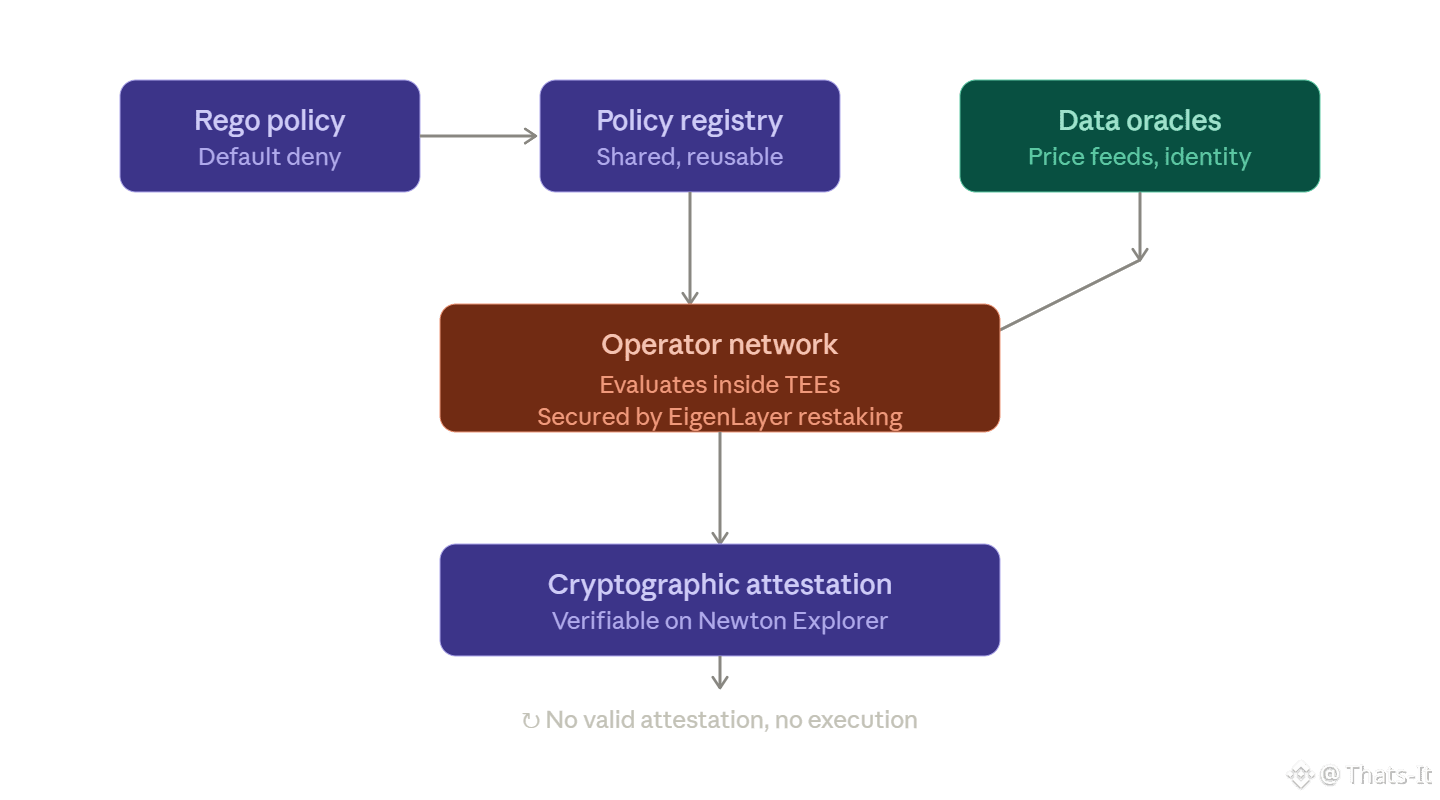
#newt $NEWT How does Newton Protocol actually decide whether a transaction goes through? It comes down to four moving parts working together.
First, policies are written in Rego, a declarative language where the default is deny and specific conditions flip that to allow — a daily spend cap, a KYC check, a sanctions screen. Developers publish these policies to a shared registry, and the same policy can be reused across different protocols, so a stablecoin issuer's "KYC-verified addresses only" rule doesn't need to be rebuilt from scratch elsewhere.
Second, when a transaction intent comes in, Newton's operator network — independent, incentivized nodes secured through EigenLayer restaking — fetches the task and runs the policy evaluation using verifiable oracles in real time.
Third, this all happens inside trusted execution environments, so sensitive inputs like identity attributes can inform the decision without ever being written to a public ledger.
Finally, every successful evaluation produces a cryptographic proof that the specific policy was satisfied at a specific time for a specific operation — an attestation anyone can check on Newton Explorer. Network consensus verifies the proofs, aggregates operator signatures, and returns an authorization receipt before the transaction settles.
No single admin key, no centralized approver — just rules, oracles, and math. #NewtonProtocol $NEWT #BinanceSquareFamily
#newt $NEWT How does Newton Protocol actually decide whether a transaction goes through? It comes down to four moving parts working together.
First, policies are written in Rego, a declarative language where the default is deny and specific conditions flip that to allow — a daily spend cap, a KYC check, a sanctions screen. Developers publish these policies to a shared registry, and the same policy can be reused across different protocols, so a stablecoin issuer's "KYC-verified addresses only" rule doesn't need to be rebuilt from scratch elsewhere.
Second, when a transaction intent comes in, Newton's operator network — independent, incentivized nodes secured through EigenLayer restaking — fetches the task and runs the policy evaluation using verifiable oracles in real time.
Third, this all happens inside trusted execution environments, so sensitive inputs like identity attributes can inform the decision without ever being written to a public ledger.
Finally, every successful evaluation produces a cryptographic proof that the specific policy was satisfied at a specific time for a specific operation — an attestation anyone can check on Newton Explorer. Network consensus verifies the proofs, aggregates operator signatures, and returns an authorization receipt before the transaction settles.
No single admin key, no centralized approver — just rules, oracles, and math. #NewtonProtocol $NEWT #BinanceSquareFamily
First, policies are written in Rego, a declarative language where the default is deny and specific conditions flip that to allow — a daily spend cap, a KYC check, a sanctions screen. Developers publish these policies to a shared registry, and the same policy can be reused across different protocols, so a stablecoin issuer's "KYC-verified addresses only" rule doesn't need to be rebuilt from scratch elsewhere.
Second, when a transaction intent comes in, Newton's operator network — independent, incentivized nodes secured through EigenLayer restaking — fetches the task and runs the policy evaluation using verifiable oracles in real time.
Third, this all happens inside trusted execution environments, so sensitive inputs like identity attributes can inform the decision without ever being written to a public ledger.
Finally, every successful evaluation produces a cryptographic proof that the specific policy was satisfied at a specific time for a specific operation — an attestation anyone can check on Newton Explorer. Network consensus verifies the proofs, aggregates operator signatures, and returns an authorization receipt before the transaction settles.
No single admin key, no centralized approver — just rules, oracles, and math. #NewtonProtocol $NEWT #BinanceSquareFamily
2
1
94
·
--
ບົດຄວາມ
ເບິ່ງການແປ
Newton Protocol's Mainnet Beta: Why "Authorization" Might Be the Missing Layer in DeFiFor years, DeFi has treated risk management as something that happens after the fact. A position gets too risky, a price moves too fast, and only then does a liquidation bot or a manual intervention step in. @NewtonProtocol is built around a different idea: check the rules before the transaction settles, not after.
That's the core of what just went live with Newton's Mainnet Beta. Rather than another lending market or yield aggregator, Newton positions itself as an authorization layer — a policy engine that sits in front of onchain transactions the way a card network authorizes a payment before it clears. A transaction routes through Newton, gets evaluated against a programmable policy, and either proceeds with a cryptographic receipt attached or gets blocked. No human in the loop, no offchain trust assumption.
The product anchoring this launch is Vaults: policy-gated structures where a curator defines the rules upfront using VaultKit, Newton's SDK for turning those rules into something actually enforceable onchain. A curator might specify that if a collateral asset's price crosses a threshold, or if a position's risk rating breaches a set level, the position gets blocked or unwound automatically — not by a discretionary call, but by a policy check baked into the transaction path itself.
What makes this workable in practice is data quality, since a policy is only as reliable as the inputs it's reading. Newton's mainnet beta launched with RedStone supplying manipulation-resistant price and market data, and Credora supplying risk intelligence ratings. Newton's role is to compose those signals into a single enforceable decision at the moment a transaction is about to execute, then produce a verifiable, auditable receipt proving the check actually happened.
This matters more than it sounds. A huge amount of "risk management" in DeFi today is really just monitoring — dashboards, alerts, bots watching for things to go wrong. Newton's bet is that pre-transaction enforcement is structurally different: it doesn't just flag a problem, it prevents the non-compliant transaction from settling at all. For curators, fund managers, and increasingly for AI agents acting onchain, that distinction between "we noticed" and "it couldn't happen" is the entire value proposition.
$NEWT sits at the center of this as the network's utility token — used for transaction/service fees on the authorization layer and for staking that secures the operator network evaluating policies. As Vaults activity and agent-driven automation scale on Newton, usage of the network is what should, in theory, drive demand for the token's core functions, separate from short-term price action or unlock-driven supply dynamics that traders are watching this cycle.
The broader thesis worth tracking: as AI agents take on more autonomous onchain activity, the question of "how do we constrain what an agent is allowed to do" becomes unavoidable. Newton's policy-as-code approach — write the rule once, have it enforced cryptographically every time — is a fairly direct answer to that problem, and the mainnet beta is the first real test of whether it works at scale beyond a single Recurring Buy agent.
Worth watching closely as more data partners and policy types get added to the network.
#BinanceSquare $NEWT
Newton Protocol's Mainnet Beta: Why "Authorization" Might Be the Missing Layer in DeFi
For years, DeFi has treated risk management as something that happens after the fact. A position gets too risky, a price moves too fast, and only then does a liquidation bot or a manual intervention step in. @NewtonProtocol is built around a different idea: check the rules before the transaction settles, not after.
That's the core of what just went live with Newton's Mainnet Beta. Rather than another lending market or yield aggregator, Newton positions itself as an authorization layer — a policy engine that sits in front of onchain transactions the way a card network authorizes a payment before it clears. A transaction routes through Newton, gets evaluated against a programmable policy, and either proceeds with a cryptographic receipt attached or gets blocked. No human in the loop, no offchain trust assumption.
The product anchoring this launch is Vaults: policy-gated structures where a curator defines the rules upfront using VaultKit, Newton's SDK for turning those rules into something actually enforceable onchain. A curator might specify that if a collateral asset's price crosses a threshold, or if a position's risk rating breaches a set level, the position gets blocked or unwound automatically — not by a discretionary call, but by a policy check baked into the transaction path itself.
What makes this workable in practice is data quality, since a policy is only as reliable as the inputs it's reading. Newton's mainnet beta launched with RedStone supplying manipulation-resistant price and market data, and Credora supplying risk intelligence ratings. Newton's role is to compose those signals into a single enforceable decision at the moment a transaction is about to execute, then produce a verifiable, auditable receipt proving the check actually happened.
This matters more than it sounds. A huge amount of "risk management" in DeFi today is really just monitoring — dashboards, alerts, bots watching for things to go wrong. Newton's bet is that pre-transaction enforcement is structurally different: it doesn't just flag a problem, it prevents the non-compliant transaction from settling at all. For curators, fund managers, and increasingly for AI agents acting onchain, that distinction between "we noticed" and "it couldn't happen" is the entire value proposition.
$NEWT sits at the center of this as the network's utility token — used for transaction/service fees on the authorization layer and for staking that secures the operator network evaluating policies. As Vaults activity and agent-driven automation scale on Newton, usage of the network is what should, in theory, drive demand for the token's core functions, separate from short-term price action or unlock-driven supply dynamics that traders are watching this cycle.
The broader thesis worth tracking: as AI agents take on more autonomous onchain activity, the question of "how do we constrain what an agent is allowed to do" becomes unavoidable. Newton's policy-as-code approach — write the rule once, have it enforced cryptographically every time — is a fairly direct answer to that problem, and the mainnet beta is the first real test of whether it works at scale beyond a single Recurring Buy agent.
Worth watching closely as more data partners and policy types get added to the network.
#BinanceSquare $NEWT
That's the core of what just went live with Newton's Mainnet Beta. Rather than another lending market or yield aggregator, Newton positions itself as an authorization layer — a policy engine that sits in front of onchain transactions the way a card network authorizes a payment before it clears. A transaction routes through Newton, gets evaluated against a programmable policy, and either proceeds with a cryptographic receipt attached or gets blocked. No human in the loop, no offchain trust assumption.
The product anchoring this launch is Vaults: policy-gated structures where a curator defines the rules upfront using VaultKit, Newton's SDK for turning those rules into something actually enforceable onchain. A curator might specify that if a collateral asset's price crosses a threshold, or if a position's risk rating breaches a set level, the position gets blocked or unwound automatically — not by a discretionary call, but by a policy check baked into the transaction path itself.
What makes this workable in practice is data quality, since a policy is only as reliable as the inputs it's reading. Newton's mainnet beta launched with RedStone supplying manipulation-resistant price and market data, and Credora supplying risk intelligence ratings. Newton's role is to compose those signals into a single enforceable decision at the moment a transaction is about to execute, then produce a verifiable, auditable receipt proving the check actually happened.
This matters more than it sounds. A huge amount of "risk management" in DeFi today is really just monitoring — dashboards, alerts, bots watching for things to go wrong. Newton's bet is that pre-transaction enforcement is structurally different: it doesn't just flag a problem, it prevents the non-compliant transaction from settling at all. For curators, fund managers, and increasingly for AI agents acting onchain, that distinction between "we noticed" and "it couldn't happen" is the entire value proposition.
$NEWT sits at the center of this as the network's utility token — used for transaction/service fees on the authorization layer and for staking that secures the operator network evaluating policies. As Vaults activity and agent-driven automation scale on Newton, usage of the network is what should, in theory, drive demand for the token's core functions, separate from short-term price action or unlock-driven supply dynamics that traders are watching this cycle.
The broader thesis worth tracking: as AI agents take on more autonomous onchain activity, the question of "how do we constrain what an agent is allowed to do" becomes unavoidable. Newton's policy-as-code approach — write the rule once, have it enforced cryptographically every time — is a fairly direct answer to that problem, and the mainnet beta is the first real test of whether it works at scale beyond a single Recurring Buy agent.
Worth watching closely as more data partners and policy types get added to the network.
#BinanceSquare $NEWT
54
·
--
ເບິ່ງການແປ
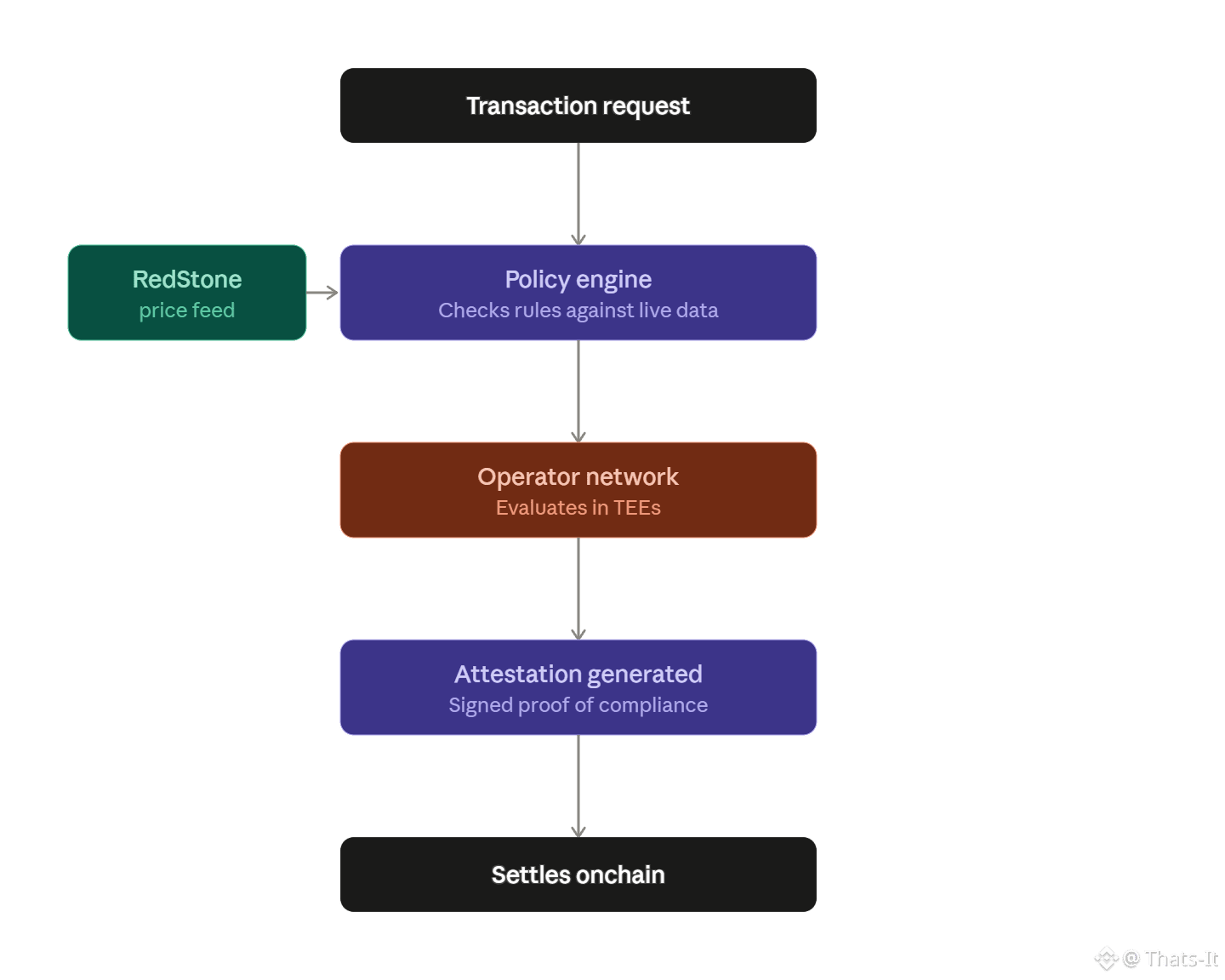
#newt $NEWT Newton Mainnet Beta is live, and it's bringing real verifiable compliance onchain. With the new VaultKit SDK, builders can now define programmable transaction policies — spend limits, collateral checks, counterparty rules — that get enforced before a transaction settles, not after. RedStone's verified price feeds now plug directly into Newton's policy enforcement layer, so risk-related conditions like collateral checks can reference live, tamper-proof market data instead of stale assumptions.
This matters because Newton's policies use both onchain and offchain data to decide whether a transaction should be approved or blocked, with a decentralized operator network evaluating each policy inside Trusted Execution Environments and generating proofs anyone can verify via the Newton Explorer. That's compliance-as-code in practice, not just in theory.
For an AVS built on EigenLayer focused on sanctions screening, fraud prevention, and risk management, having reliable price data baked into the policy layer at mainnet beta launch is a meaningful step toward production-grade compliance infrastructure for stablecoins, RWAs, and AI agents.
Watching how the operator network and VaultKit adoption evolve from here. @NewtonProtocol $NEWT #BinanceSquareTalks #dyor
#newt $NEWT Newton Mainnet Beta is live, and it's bringing real verifiable compliance onchain. With the new VaultKit SDK, builders can now define programmable transaction policies — spend limits, collateral checks, counterparty rules — that get enforced before a transaction settles, not after. RedStone's verified price feeds now plug directly into Newton's policy enforcement layer, so risk-related conditions like collateral checks can reference live, tamper-proof market data instead of stale assumptions.
This matters because Newton's policies use both onchain and offchain data to decide whether a transaction should be approved or blocked, with a decentralized operator network evaluating each policy inside Trusted Execution Environments and generating proofs anyone can verify via the Newton Explorer. That's compliance-as-code in practice, not just in theory.
For an AVS built on EigenLayer focused on sanctions screening, fraud prevention, and risk management, having reliable price data baked into the policy layer at mainnet beta launch is a meaningful step toward production-grade compliance infrastructure for stablecoins, RWAs, and AI agents.
Watching how the operator network and VaultKit adoption evolve from here. @NewtonProtocol $NEWT #BinanceSquareTalks #dyor
This matters because Newton's policies use both onchain and offchain data to decide whether a transaction should be approved or blocked, with a decentralized operator network evaluating each policy inside Trusted Execution Environments and generating proofs anyone can verify via the Newton Explorer. That's compliance-as-code in practice, not just in theory.
For an AVS built on EigenLayer focused on sanctions screening, fraud prevention, and risk management, having reliable price data baked into the policy layer at mainnet beta launch is a meaningful step toward production-grade compliance infrastructure for stablecoins, RWAs, and AI agents.
Watching how the operator network and VaultKit adoption evolve from here. @NewtonProtocol $NEWT #BinanceSquareTalks #dyor
61
·
--
ສັນຍານໝີ
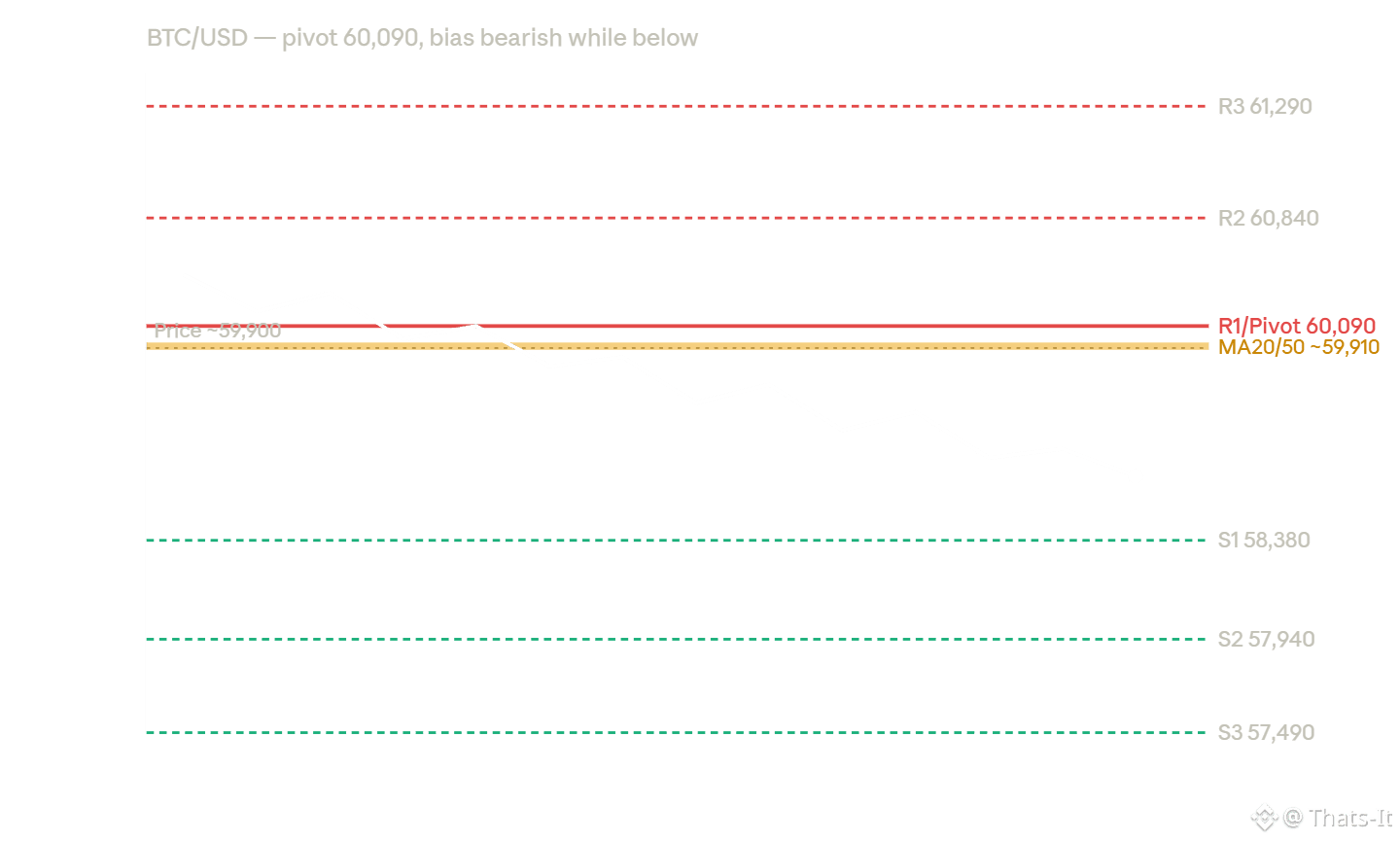
$BTC ຂໍ້ຄິດທາງດ້ານການເບິ່ງຕົວ (Technical Outlook): ຄວາມສ່ຽງດ້ານລົງສ້າງຕົວຢູ່ໃຕ້ 60,090
Bitcoin ອາດຈະຫຼຸດອີກ $500–800 ຈາກລະດັບປັດຈຸບັນ. ທ່າທີ່ເປັນຂາລົງຍັງຄົງຢູ່ຕາບໃດທີ່ 60,090 ຍັງຖືເປັນຂອບເຂດຕ້ານທານ.
Resistance
🔴 R1: 60,090
🔴 R2: 60,840
🔴 R3: 61,290
Pivot: 60,090
Support
🟢 S1: 58,380
🟢 S2: 57,940
🟢 S3: 57,490
📊 ການກໍານົດຄ່າຍັງເປັນດ້ານລົບ — ລາຄາກໍາລັງຢູ່ຕ່ຳກວ່າທັງ MA ຊ່ວງ 20 ຂອງມັນ (59,911) ແລະ MA ຊ່ວງ 50 (59,914), ຊຶ່ງຢືນຢັນແນວໂນ້ມຂາລົງໃນໄລຍະສັ້ນ.
ການປິດຢູ່ເໜືອ 60,090 ຈະເຮັດໃຫ້ຄໍາອ້າງດ້ານລົງບໍ່ເປັນຈິງ ແລະເປີດທາງໄປສູ່ 60,840 ແລະ 61,290.
⚠️ ບໍ່ແມ່ນຄໍາແນະນໍາທາງການເງິນ ໃຫ້ທ່ານເຮັດການຄົ້ນຄວ້າຂອງຕົວເອງ.— #dyor .
#BTC #bitcoin #TechnicalAnalysis #BinanceSquare
$BTC ຂໍ້ຄິດທາງດ້ານການເບິ່ງຕົວ (Technical Outlook): ຄວາມສ່ຽງດ້ານລົງສ້າງຕົວຢູ່ໃຕ້ 60,090
Bitcoin ອາດຈະຫຼຸດອີກ $500–800 ຈາກລະດັບປັດຈຸບັນ. ທ່າທີ່ເປັນຂາລົງຍັງຄົງຢູ່ຕາບໃດທີ່ 60,090 ຍັງຖືເປັນຂອບເຂດຕ້ານທານ.
Resistance
🔴 R1: 60,090
🔴 R2: 60,840
🔴 R3: 61,290
Pivot: 60,090
Support
🟢 S1: 58,380
🟢 S2: 57,940
🟢 S3: 57,490
📊 ການກໍານົດຄ່າຍັງເປັນດ້ານລົບ — ລາຄາກໍາລັງຢູ່ຕ່ຳກວ່າທັງ MA ຊ່ວງ 20 ຂອງມັນ (59,911) ແລະ MA ຊ່ວງ 50 (59,914), ຊຶ່ງຢືນຢັນແນວໂນ້ມຂາລົງໃນໄລຍະສັ້ນ.
ການປິດຢູ່ເໜືອ 60,090 ຈະເຮັດໃຫ້ຄໍາອ້າງດ້ານລົງບໍ່ເປັນຈິງ ແລະເປີດທາງໄປສູ່ 60,840 ແລະ 61,290.
⚠️ ບໍ່ແມ່ນຄໍາແນະນໍາທາງການເງິນ ໃຫ້ທ່ານເຮັດການຄົ້ນຄວ້າຂອງຕົວເອງ.— #dyor .
#BTC #bitcoin #TechnicalAnalysis #BinanceSquare
Bitcoin ອາດຈະຫຼຸດອີກ $500–800 ຈາກລະດັບປັດຈຸບັນ. ທ່າທີ່ເປັນຂາລົງຍັງຄົງຢູ່ຕາບໃດທີ່ 60,090 ຍັງຖືເປັນຂອບເຂດຕ້ານທານ.
Resistance
🔴 R1: 60,090
🔴 R2: 60,840
🔴 R3: 61,290
Pivot: 60,090
Support
🟢 S1: 58,380
🟢 S2: 57,940
🟢 S3: 57,490
📊 ການກໍານົດຄ່າຍັງເປັນດ້ານລົບ — ລາຄາກໍາລັງຢູ່ຕ່ຳກວ່າທັງ MA ຊ່ວງ 20 ຂອງມັນ (59,911) ແລະ MA ຊ່ວງ 50 (59,914), ຊຶ່ງຢືນຢັນແນວໂນ້ມຂາລົງໃນໄລຍະສັ້ນ.
ການປິດຢູ່ເໜືອ 60,090 ຈະເຮັດໃຫ້ຄໍາອ້າງດ້ານລົງບໍ່ເປັນຈິງ ແລະເປີດທາງໄປສູ່ 60,840 ແລະ 61,290.
⚠️ ບໍ່ແມ່ນຄໍາແນະນໍາທາງການເງິນ ໃຫ້ທ່ານເຮັດການຄົ້ນຄວ້າຂອງຕົວເອງ.— #dyor .
#BTC #bitcoin #TechnicalAnalysis #BinanceSquare
96
·
--
#opg $OPG ການແຂ່ງຂັນໂครงສ້າງ AI ກຳລັງເລັ່ງຄວາມเร็ว, ແຕ່ຍັງມີບັນຫາສຳຄັນຢ່າງໜຶ່ງທີ່ຍັງຄົງຢູ່: ຄວາມເຊື່ອຖື.
ການໂທຫາແບບ AI ນັບພັນລ້ານຄັ້ງສ້າງພະລັງໃຫ້ການຊື້ຂາຍ, ການເງິນ, ແລະຕົວແທນອະນຸມັດທຸກມື້, ແຕ່ສ່ວນໃຫຍ່ບໍ່ມີຫຼັກຖານວ່າໃຊ້ໂມເດວໃດ ຫຼືຜົນອອກຖືກປ່ຽນແປງຫຼືບໍ່.
ນັ້ນແຫຼະຄືບັນຫາ @OpenGradient ກຳລັງແກ້ໄຂ.
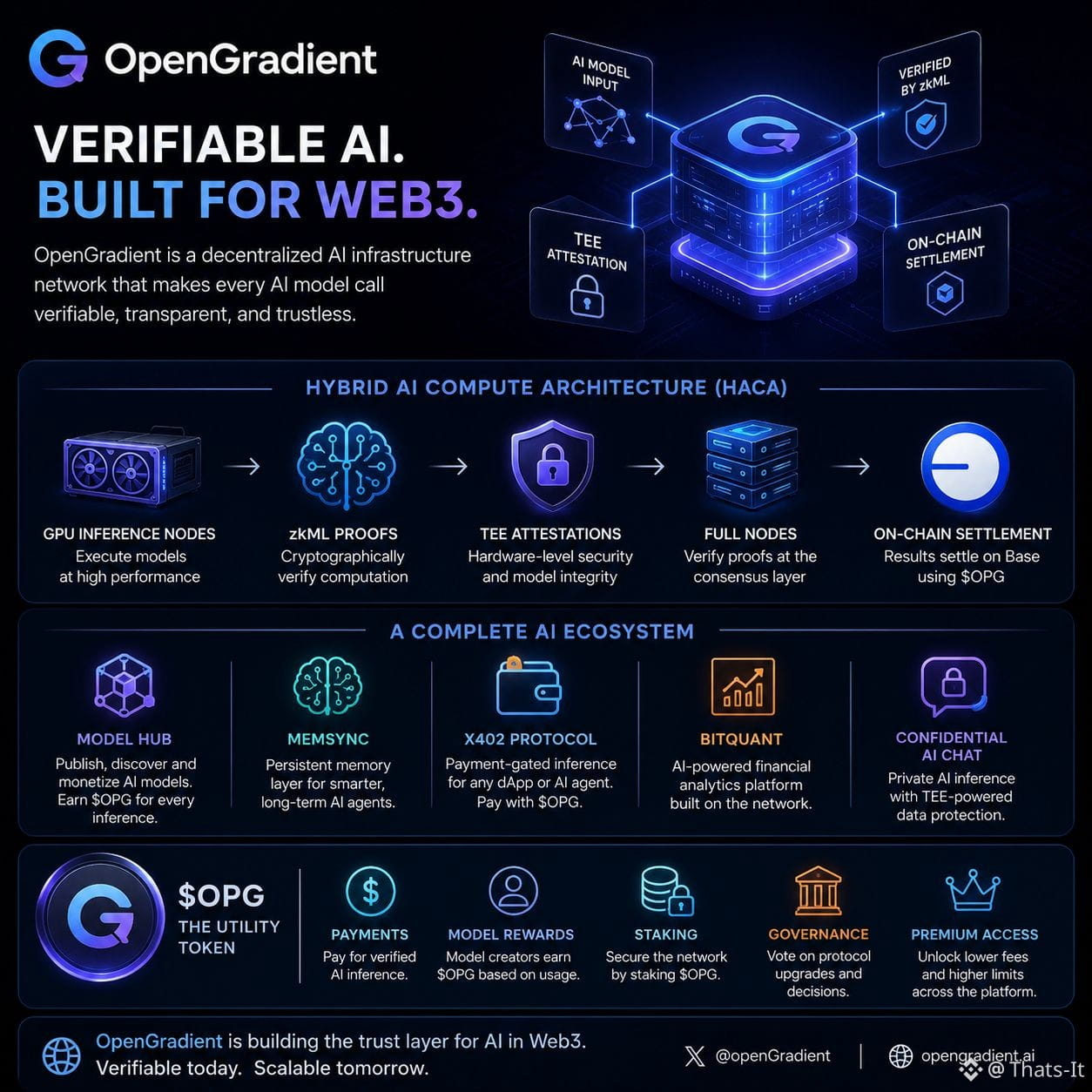
OpenGradient ແມ່ນເຄືອຂ່າຍໂຄງສ້າງ AI ແບບກະຈາຍສູນກາງ ທີ່ຊ່ວຍໃຫ້ມີການອິນເຟເຣນຂອງ AI ທີ່ສາມາດພິສູດໄດ້ດ້ວຍວິທີການທາງຄຣິບໂຕກຣາຟີ. ໂດຍໃຊ້ Hybrid AI Compute Architecture (HACA), ມັນລວມ GPU inference, ຫຼັກຖານ zkML, Trusted Execution Environments (TEEs), ແລະການຊຳລະໃນເຊນເຊິງຜ່ານ Base ເພື່ອໃຫ້ຜົນອອກຂອງ AI ແຈ້ງຊັດ ແລະພິສູດໄດ້.
ນອກເໜືອຈາກ inference, ລະບົບຍັງປະກອບມີ Model Hub, MemSync, x402 Protocol, BitQuant, ແລະ Confidential AI Chat, ສ້າງເປັນສະແຕັກຄົບຄົວສຳລັບນັກພັດທະນາທີ່ກຳລັງສ້າງແອັບພລິເຄຊັນ powered by AI.
$OPG ຊ່ວຍຂັບເຄືອຂ່າຍຜ່ານການຈ່າຍຄ່າ inference, staking, governance, ລາງວັນໂມເດວ, ແລະການເຂົ້າໃຊ້ງານ premium ຂອງແພລດຟອມ.
ເມື່ອການນຳ AI ໃຊ້ເພີ່ມຂຶ້ນ, ໂຄງສ້າງ AI ທີ່ພິສູດໄດ້ຈະມີຄວາມສຳຄັນຫຼາຍຂຶ້ນ. @OpenGradient ກຳລັງສ້າງພື້ນຖານນັ້ນ.
Always DYOR.
$OPG #AI #Web3 #blockchain #crypto
#opg $OPG ການແຂ່ງຂັນໂครงສ້າງ AI ກຳລັງເລັ່ງຄວາມเร็ว, ແຕ່ຍັງມີບັນຫາສຳຄັນຢ່າງໜຶ່ງທີ່ຍັງຄົງຢູ່: ຄວາມເຊື່ອຖື.
ການໂທຫາແບບ AI ນັບພັນລ້ານຄັ້ງສ້າງພະລັງໃຫ້ການຊື້ຂາຍ, ການເງິນ, ແລະຕົວແທນອະນຸມັດທຸກມື້, ແຕ່ສ່ວນໃຫຍ່ບໍ່ມີຫຼັກຖານວ່າໃຊ້ໂມເດວໃດ ຫຼືຜົນອອກຖືກປ່ຽນແປງຫຼືບໍ່.
ນັ້ນແຫຼະຄືບັນຫາ @OpenGradient ກຳລັງແກ້ໄຂ.
OpenGradient ແມ່ນເຄືອຂ່າຍໂຄງສ້າງ AI ແບບກະຈາຍສູນກາງ ທີ່ຊ່ວຍໃຫ້ມີການອິນເຟເຣນຂອງ AI ທີ່ສາມາດພິສູດໄດ້ດ້ວຍວິທີການທາງຄຣິບໂຕກຣາຟີ. ໂດຍໃຊ້ Hybrid AI Compute Architecture (HACA), ມັນລວມ GPU inference, ຫຼັກຖານ zkML, Trusted Execution Environments (TEEs), ແລະການຊຳລະໃນເຊນເຊິງຜ່ານ Base ເພື່ອໃຫ້ຜົນອອກຂອງ AI ແຈ້ງຊັດ ແລະພິສູດໄດ້.
ນອກເໜືອຈາກ inference, ລະບົບຍັງປະກອບມີ Model Hub, MemSync, x402 Protocol, BitQuant, ແລະ Confidential AI Chat, ສ້າງເປັນສະແຕັກຄົບຄົວສຳລັບນັກພັດທະນາທີ່ກຳລັງສ້າງແອັບພລິເຄຊັນ powered by AI.
$OPG ຊ່ວຍຂັບເຄືອຂ່າຍຜ່ານການຈ່າຍຄ່າ inference, staking, governance, ລາງວັນໂມເດວ, ແລະການເຂົ້າໃຊ້ງານ premium ຂອງແພລດຟອມ.
ເມື່ອການນຳ AI ໃຊ້ເພີ່ມຂຶ້ນ, ໂຄງສ້າງ AI ທີ່ພິສູດໄດ້ຈະມີຄວາມສຳຄັນຫຼາຍຂຶ້ນ. @OpenGradient ກຳລັງສ້າງພື້ນຖານນັ້ນ.
Always DYOR.
$OPG #AI #Web3 #blockchain #crypto
ການໂທຫາແບບ AI ນັບພັນລ້ານຄັ້ງສ້າງພະລັງໃຫ້ການຊື້ຂາຍ, ການເງິນ, ແລະຕົວແທນອະນຸມັດທຸກມື້, ແຕ່ສ່ວນໃຫຍ່ບໍ່ມີຫຼັກຖານວ່າໃຊ້ໂມເດວໃດ ຫຼືຜົນອອກຖືກປ່ຽນແປງຫຼືບໍ່.
ນັ້ນແຫຼະຄືບັນຫາ @OpenGradient ກຳລັງແກ້ໄຂ.
OpenGradient ແມ່ນເຄືອຂ່າຍໂຄງສ້າງ AI ແບບກະຈາຍສູນກາງ ທີ່ຊ່ວຍໃຫ້ມີການອິນເຟເຣນຂອງ AI ທີ່ສາມາດພິສູດໄດ້ດ້ວຍວິທີການທາງຄຣິບໂຕກຣາຟີ. ໂດຍໃຊ້ Hybrid AI Compute Architecture (HACA), ມັນລວມ GPU inference, ຫຼັກຖານ zkML, Trusted Execution Environments (TEEs), ແລະການຊຳລະໃນເຊນເຊິງຜ່ານ Base ເພື່ອໃຫ້ຜົນອອກຂອງ AI ແຈ້ງຊັດ ແລະພິສູດໄດ້.
ນອກເໜືອຈາກ inference, ລະບົບຍັງປະກອບມີ Model Hub, MemSync, x402 Protocol, BitQuant, ແລະ Confidential AI Chat, ສ້າງເປັນສະແຕັກຄົບຄົວສຳລັບນັກພັດທະນາທີ່ກຳລັງສ້າງແອັບພລິເຄຊັນ powered by AI.
$OPG ຊ່ວຍຂັບເຄືອຂ່າຍຜ່ານການຈ່າຍຄ່າ inference, staking, governance, ລາງວັນໂມເດວ, ແລະການເຂົ້າໃຊ້ງານ premium ຂອງແພລດຟອມ.
ເມື່ອການນຳ AI ໃຊ້ເພີ່ມຂຶ້ນ, ໂຄງສ້າງ AI ທີ່ພິສູດໄດ້ຈະມີຄວາມສຳຄັນຫຼາຍຂຶ້ນ. @OpenGradient ກຳລັງສ້າງພື້ນຖານນັ້ນ.
Always DYOR.
$OPG #AI #Web3 #blockchain #crypto
77
·
--
ເບິ່ງການແປ
WIN Up to 500 usdt just by completing simple task.
Go to link and complete task and try your luck.
[WIN Up to 500 usdt just by completing simple task. Go to link and complete task and try your luck.](https://www.binance.com/activity/chance/MENA-SPIN-AND-WIN?ref=513127569&utm_medium=web_share_copy)
WIN Up to 500 usdt just by completing simple task.
Go to link and complete task and try your luck.
WIN Up to 500 usdt just by completing simple task. Go to link and complete task and try your luck.
Go to link and complete task and try your luck.
WIN Up to 500 usdt just by completing simple task. Go to link and complete task and try your luck.
11
·
--
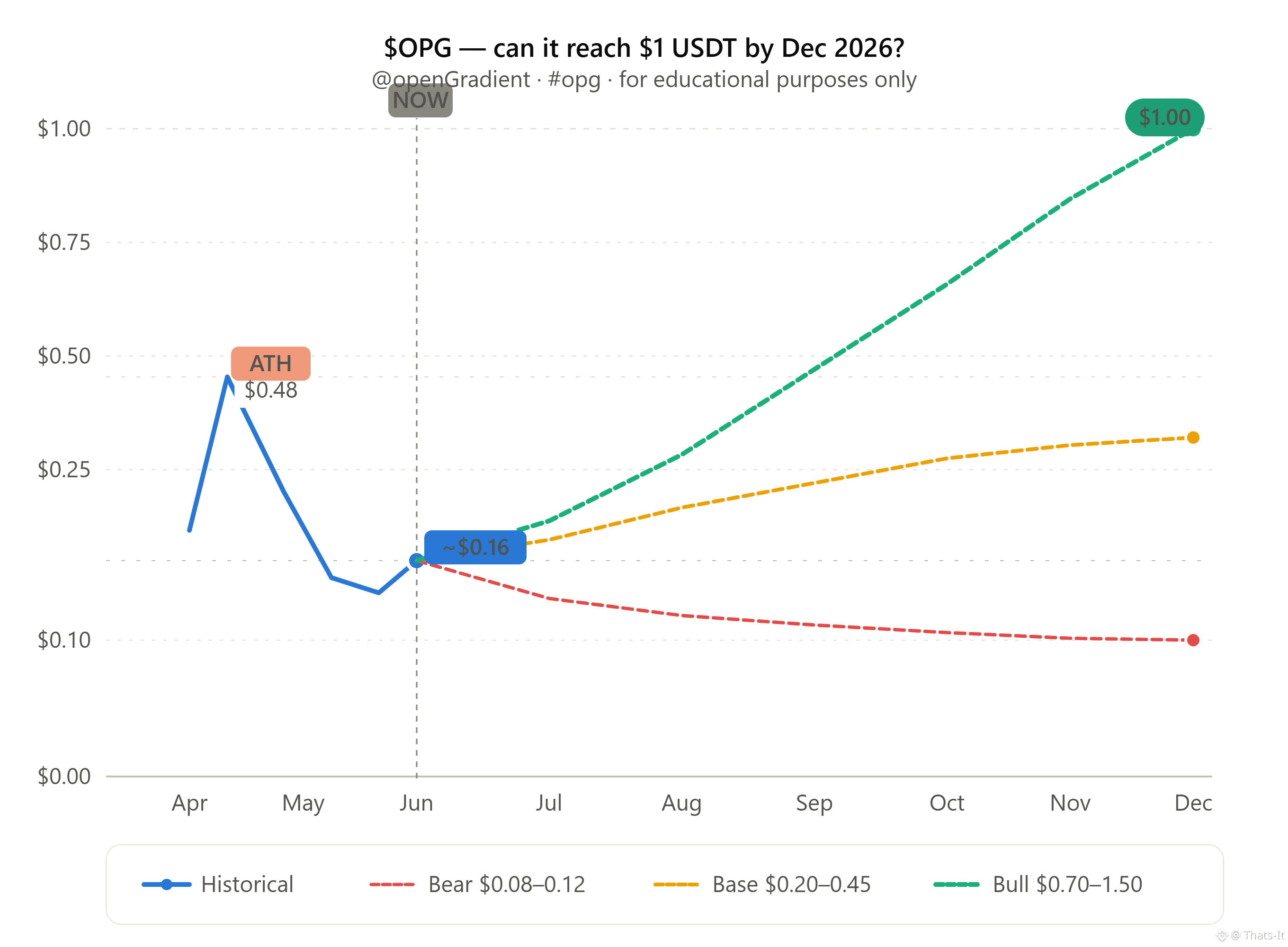
$OPG को 2026 အကုန်မှာ 1$ ကို ရောက်နိုင်မလား?
လက်ရှိစျေးနှုန်း: ~$0.15–$0.17။ 1$ ကိုရောက်ဖို့ ~530% တက်ရမည်။ ခက်ခဲပေမယ့် မဖြစ်နိုင်တာမဟုတ်ပါဘူး။
🐻 Bear (35%): airdrop ရောင်းချမှု ဆက်ဖြစ်နေပြီး၊ volume အားနည်းနေပြီး၊ အကြီးစား အခြေအနေ-ကတ်စတာ (major catalysts) မပေါ်လာဘူးဆိုရင် $0.08–$0.12။
📊 Base (45%): $0.20–$0.45။ VC token တွေက 2027 အထိ lock ဖြစ်နေပြီး၊ @openGradient က ၎င်းရဲ့ Base ecosystem ကို ကြီးထွားစေကာ၊ inference လိုအပ်ချက်က တဖြည်းဖြည်း တိုးလာနေမယ်။
🐂 Bull (20%): altseason ရောက်လာပြီး၊ Coinbase က OPG ကို စာရင်းသွင်းပြီး၊ on-chain AI inference အသုံးပြုမှုက အရှိန်မြှင့်လာမယ်ဆိုရင် $0.70– 1.50။
အဓိက metric က စျေးနှုန်းမဟုတ်ပါ—အဲဒါ inference volume ပါ။ developer တွေက OPG ကို အတိုင်းအတာကြီးကြီးနဲ့ ဆက်အသုံးပြုနေမယ်ဆိုရင် 1$ ကိစ္စက ဖြစ်နိုင်ချေရှိလာပါပြီ။ လိုင်းကွန်ယက်ကို ကြည့်ပါ—ဆူညံသံ (noise) ကို မကြည့်ပါနဲ့။
#OpenGradient #BinanceSquareFamily #dyor
$OPG को 2026 အကုန်မှာ 1$ ကို ရောက်နိုင်မလား?
လက်ရှိစျေးနှုန်း: ~$0.15–$0.17။ 1$ ကိုရောက်ဖို့ ~530% တက်ရမည်။ ခက်ခဲပေမယ့် မဖြစ်နိုင်တာမဟုတ်ပါဘူး။
🐻 Bear (35%): airdrop ရောင်းချမှု ဆက်ဖြစ်နေပြီး၊ volume အားနည်းနေပြီး၊ အကြီးစား အခြေအနေ-ကတ်စတာ (major catalysts) မပေါ်လာဘူးဆိုရင် $0.08–$0.12။
📊 Base (45%): $0.20–$0.45။ VC token တွေက 2027 အထိ lock ဖြစ်နေပြီး၊ @openGradient က ၎င်းရဲ့ Base ecosystem ကို ကြီးထွားစေကာ၊ inference လိုအပ်ချက်က တဖြည်းဖြည်း တိုးလာနေမယ်။
🐂 Bull (20%): altseason ရောက်လာပြီး၊ Coinbase က OPG ကို စာရင်းသွင်းပြီး၊ on-chain AI inference အသုံးပြုမှုက အရှိန်မြှင့်လာမယ်ဆိုရင် $0.70– 1.50။
အဓိက metric က စျေးနှုန်းမဟုတ်ပါ—အဲဒါ inference volume ပါ။ developer တွေက OPG ကို အတိုင်းအတာကြီးကြီးနဲ့ ဆက်အသုံးပြုနေမယ်ဆိုရင် 1$ ကိစ္စက ဖြစ်နိုင်ချေရှိလာပါပြီ။ လိုင်းကွန်ယက်ကို ကြည့်ပါ—ဆူညံသံ (noise) ကို မကြည့်ပါနဲ့။
#OpenGradient #BinanceSquareFamily #dyor
လက်ရှိစျေးနှုန်း: ~$0.15–$0.17။ 1$ ကိုရောက်ဖို့ ~530% တက်ရမည်။ ခက်ခဲပေမယ့် မဖြစ်နိုင်တာမဟုတ်ပါဘူး။
🐻 Bear (35%): airdrop ရောင်းချမှု ဆက်ဖြစ်နေပြီး၊ volume အားနည်းနေပြီး၊ အကြီးစား အခြေအနေ-ကတ်စတာ (major catalysts) မပေါ်လာဘူးဆိုရင် $0.08–$0.12။
📊 Base (45%): $0.20–$0.45။ VC token တွေက 2027 အထိ lock ဖြစ်နေပြီး၊ @openGradient က ၎င်းရဲ့ Base ecosystem ကို ကြီးထွားစေကာ၊ inference လိုအပ်ချက်က တဖြည်းဖြည်း တိုးလာနေမယ်။
🐂 Bull (20%): altseason ရောက်လာပြီး၊ Coinbase က OPG ကို စာရင်းသွင်းပြီး၊ on-chain AI inference အသုံးပြုမှုက အရှိန်မြှင့်လာမယ်ဆိုရင် $0.70– 1.50။
အဓိက metric က စျေးနှုန်းမဟုတ်ပါ—အဲဒါ inference volume ပါ။ developer တွေက OPG ကို အတိုင်းအတာကြီးကြီးနဲ့ ဆက်အသုံးပြုနေမယ်ဆိုရင် 1$ ကိစ္စက ဖြစ်နိုင်ချေရှိလာပါပြီ။ လိုင်းကွန်ယက်ကို ကြည့်ပါ—ဆူညံသံ (noise) ကို မကြည့်ပါနဲ့။
#OpenGradient #BinanceSquareFamily #dyor
1
75
·
--
ເບິ່ງການແປ
#opg $OPG When a16z Crypto, Coinbase Ventures, and SV Angel all back the same project — and so do Balaji Srinivasan, the co-inventor of the Transformer architecture, and Polygon's Sandeep Nailwal — you pay attention.
That's the investor lineup behind @OpenGradient — $9.5M raised to build the infrastructure layer where AI and blockchain finally converge in a trustless, verifiable way.
This isn't VC hype for a concept. The mainnet is live. Inferences are being processed. Proofs are being generated. The team has shipped.
$OPG launched on Binance in May 2026 with OPG/USDT, OPG/USDC pairs — and the market noticed.
Strong backers. Real product. Live token. #opg is worth watching.
#Crypto #BinanceSquareTalks #Web3Investing
#opg $OPG When a16z Crypto, Coinbase Ventures, and SV Angel all back the same project — and so do Balaji Srinivasan, the co-inventor of the Transformer architecture, and Polygon's Sandeep Nailwal — you pay attention.
That's the investor lineup behind @OpenGradient — $9.5M raised to build the infrastructure layer where AI and blockchain finally converge in a trustless, verifiable way.
This isn't VC hype for a concept. The mainnet is live. Inferences are being processed. Proofs are being generated. The team has shipped.
$OPG launched on Binance in May 2026 with OPG/USDT, OPG/USDC pairs — and the market noticed.
Strong backers. Real product. Live token. #opg is worth watching.
#Crypto #BinanceSquareTalks #Web3Investing
That's the investor lineup behind @OpenGradient — $9.5M raised to build the infrastructure layer where AI and blockchain finally converge in a trustless, verifiable way.
This isn't VC hype for a concept. The mainnet is live. Inferences are being processed. Proofs are being generated. The team has shipped.
$OPG launched on Binance in May 2026 with OPG/USDT, OPG/USDC pairs — and the market noticed.
Strong backers. Real product. Live token. #opg is worth watching.
#Crypto #BinanceSquareTalks #Web3Investing

102
·
--
ເບິ່ງການແປ
#opg $OPG Most "AI on blockchain" projects fail for one reason: they try to force heavy GPU computation through validators that were never built for it. Slow, expensive, broken.
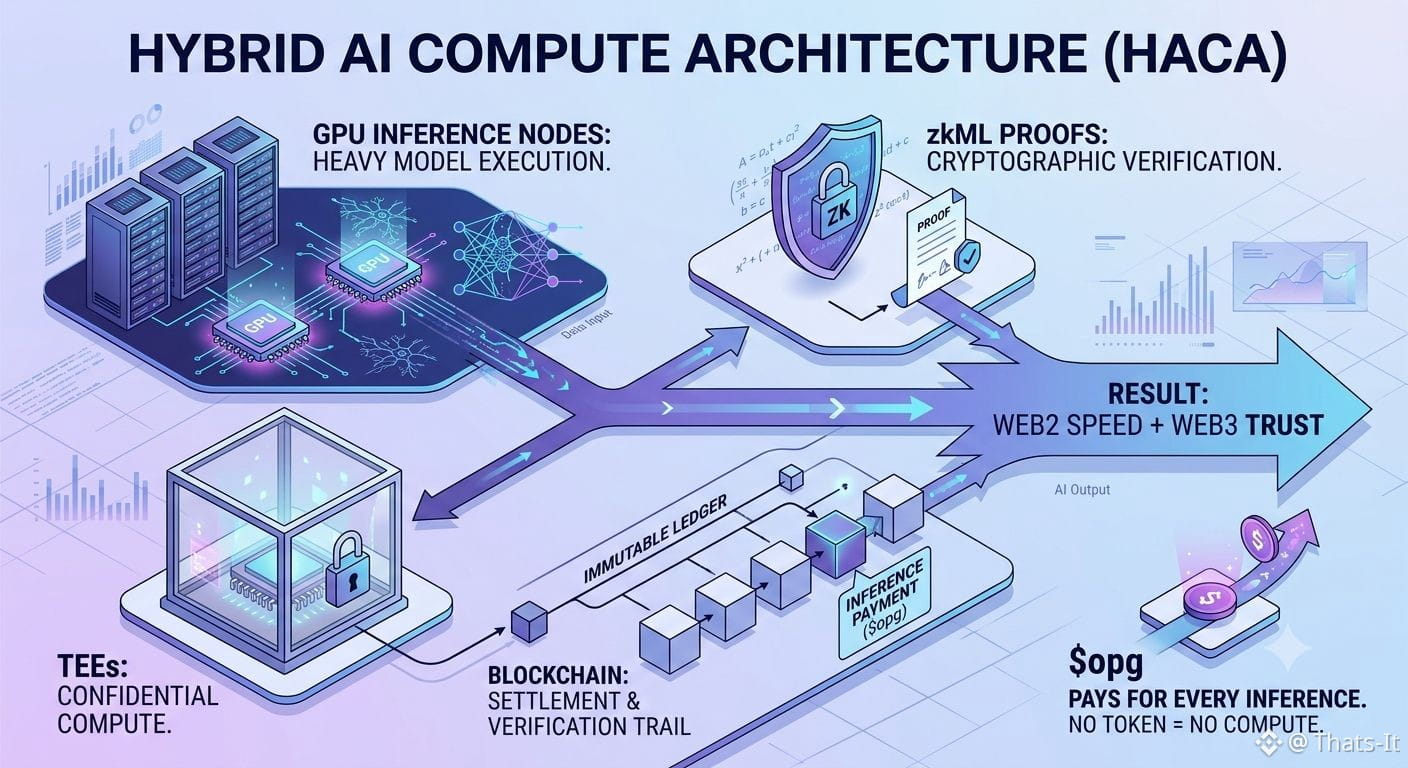
@OpenGradient designed around this problem from day one with HACA — the Hybrid AI Compute Architecture.
Here's how it works:
→ GPU Inference Nodes handle the heavy model execution
→ zkML proofs cryptographically verify the results
→ TEEs (Trusted Execution Environments) add confidential compute
→ The blockchain handles settlement, payment & verification trail
It's AI at web2-level speed with web3-level trust. That's not a small thing — that's the entire unlock.
$OPG pays for every inference. No token, no compute. Simple as that.
#opg #OpenGradient #blockchains #zkml
#opg $OPG Most "AI on blockchain" projects fail for one reason: they try to force heavy GPU computation through validators that were never built for it. Slow, expensive, broken.
@OpenGradient designed around this problem from day one with HACA — the Hybrid AI Compute Architecture.
Here's how it works:
→ GPU Inference Nodes handle the heavy model execution
→ zkML proofs cryptographically verify the results
→ TEEs (Trusted Execution Environments) add confidential compute
→ The blockchain handles settlement, payment & verification trail
It's AI at web2-level speed with web3-level trust. That's not a small thing — that's the entire unlock.
$OPG pays for every inference. No token, no compute. Simple as that.
#opg #OpenGradient #blockchains #zkml
@OpenGradient designed around this problem from day one with HACA — the Hybrid AI Compute Architecture.
Here's how it works:
→ GPU Inference Nodes handle the heavy model execution
→ zkML proofs cryptographically verify the results
→ TEEs (Trusted Execution Environments) add confidential compute
→ The blockchain handles settlement, payment & verification trail
It's AI at web2-level speed with web3-level trust. That's not a small thing — that's the entire unlock.
$OPG pays for every inference. No token, no compute. Simple as that.
#opg #OpenGradient #blockchains #zkml
105
·
--
ເບິ່ງການແປ
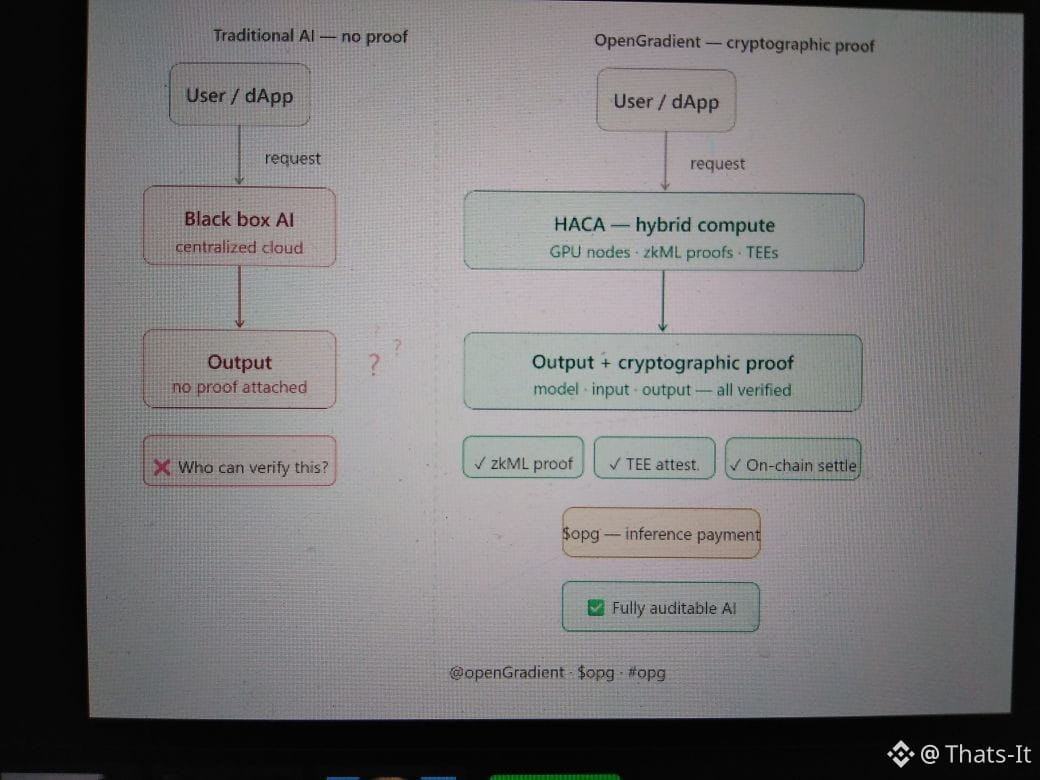
#opg $OPG Here's a question nobody in crypto asks enough: when an AI agent makes a decision onchain — executes a trade, triggers a liquidation, manages a vault — how do you prove the right model ran and the output wasn't tampered with?
You can't. Not with today's centralized AI infrastructure.
@OpenGradient is solving this at the root. Every single inference on the network comes with a cryptographic proof attached — so the model, the input, and the output are all independently verifiable. No more "trust us, the AI said so."
This is what accountable AI looks like. And $OPG is the token that makes every verified call happen.
#OpenGreadient #DEFİ #AIxCrypto #Web3
#opg $OPG Here's a question nobody in crypto asks enough: when an AI agent makes a decision onchain — executes a trade, triggers a liquidation, manages a vault — how do you prove the right model ran and the output wasn't tampered with?
You can't. Not with today's centralized AI infrastructure.
@OpenGradient is solving this at the root. Every single inference on the network comes with a cryptographic proof attached — so the model, the input, and the output are all independently verifiable. No more "trust us, the AI said so."
This is what accountable AI looks like. And $OPG is the token that makes every verified call happen.
#OpenGreadient #DEFİ #AIxCrypto #Web3
You can't. Not with today's centralized AI infrastructure.
@OpenGradient is solving this at the root. Every single inference on the network comes with a cryptographic proof attached — so the model, the input, and the output are all independently verifiable. No more "trust us, the AI said so."
This is what accountable AI looks like. And $OPG is the token that makes every verified call happen.
#OpenGreadient #DEFİ #AIxCrypto #Web3
2
1
130
·
--
#opg $OPG Uninzi lwee-AI systems ziimnyama—ufumana impendulo, kodwa awukwazi nakuzama ukungqina ukuba loluphi uhlobo lwemodeli olusetyenzisiweyo, lufumene ntoni njengegalelo, okanye nokuba imveliso yatshintshwa na. Liyingxaki enkulu xa i-AI ilawula imali, iyenza trades, okanye isebenza ii-dApps.
@OpenGradient iyayiguqula indlela. Yakhiwe ukusuka emhlabeni njenge-blockchain yokuqala eyilelwe ngokwendalo ukulinganisa (verifiable) i-AI inference, ibeka ubungqina obubhalwe nge-cryptography kuwo wonke umnxeba wemodeli—ngoko abaphuhlisi, abasebenzisi, namaziko banokuhlola izigqibo ze-AI kungekuphela nje ukuzithemba ngokungaboniyo.
Sele sele kugqitywe i-verifiable inferences engaphezu kwe-2M, iHybrid AI Compute Architecture (HACA) edibanisa ii-GPU nodes, ii-zkML proofs, nee-TEEs, kunye neemodeli ezingaphezulu kwe-2,000 ezivulelekileyo ze-source ezihostwe kwi-onchain—oku akusiyo enye “AI narrative” nje. Yeyona miqadi yokwenene.
$OPG iyayixhasa yonke: i-inference payments, i-staking, i-governance, kunye nokufikelela kwi-ecosystem—zonke zisebenza ku-TGE. Ixhaswe ngu-a16z Crypto kunye neCoinbase Ventures, isiseko siqinile.
Ixesha le-AI lifuna i-compute engenakuthembela kuyo kuphela (trustless). @OpenGradient iyakha kanye loo nto.
#opg #OpenGradient #AIxCrypto #Web3
#opg $OPG Uninzi lwee-AI systems ziimnyama—ufumana impendulo, kodwa awukwazi nakuzama ukungqina ukuba loluphi uhlobo lwemodeli olusetyenzisiweyo, lufumene ntoni njengegalelo, okanye nokuba imveliso yatshintshwa na. Liyingxaki enkulu xa i-AI ilawula imali, iyenza trades, okanye isebenza ii-dApps.
@OpenGradient iyayiguqula indlela. Yakhiwe ukusuka emhlabeni njenge-blockchain yokuqala eyilelwe ngokwendalo ukulinganisa (verifiable) i-AI inference, ibeka ubungqina obubhalwe nge-cryptography kuwo wonke umnxeba wemodeli—ngoko abaphuhlisi, abasebenzisi, namaziko banokuhlola izigqibo ze-AI kungekuphela nje ukuzithemba ngokungaboniyo.
Sele sele kugqitywe i-verifiable inferences engaphezu kwe-2M, iHybrid AI Compute Architecture (HACA) edibanisa ii-GPU nodes, ii-zkML proofs, nee-TEEs, kunye neemodeli ezingaphezulu kwe-2,000 ezivulelekileyo ze-source ezihostwe kwi-onchain—oku akusiyo enye “AI narrative” nje. Yeyona miqadi yokwenene.
$OPG iyayixhasa yonke: i-inference payments, i-staking, i-governance, kunye nokufikelela kwi-ecosystem—zonke zisebenza ku-TGE. Ixhaswe ngu-a16z Crypto kunye neCoinbase Ventures, isiseko siqinile.
Ixesha le-AI lifuna i-compute engenakuthembela kuyo kuphela (trustless). @OpenGradient iyakha kanye loo nto.
#opg #OpenGradient #AIxCrypto #Web3
@OpenGradient iyayiguqula indlela. Yakhiwe ukusuka emhlabeni njenge-blockchain yokuqala eyilelwe ngokwendalo ukulinganisa (verifiable) i-AI inference, ibeka ubungqina obubhalwe nge-cryptography kuwo wonke umnxeba wemodeli—ngoko abaphuhlisi, abasebenzisi, namaziko banokuhlola izigqibo ze-AI kungekuphela nje ukuzithemba ngokungaboniyo.
Sele sele kugqitywe i-verifiable inferences engaphezu kwe-2M, iHybrid AI Compute Architecture (HACA) edibanisa ii-GPU nodes, ii-zkML proofs, nee-TEEs, kunye neemodeli ezingaphezulu kwe-2,000 ezivulelekileyo ze-source ezihostwe kwi-onchain—oku akusiyo enye “AI narrative” nje. Yeyona miqadi yokwenene.
$OPG iyayixhasa yonke: i-inference payments, i-staking, i-governance, kunye nokufikelela kwi-ecosystem—zonke zisebenza ku-TGE. Ixhaswe ngu-a16z Crypto kunye neCoinbase Ventures, isiseko siqinile.
Ixesha le-AI lifuna i-compute engenakuthembela kuyo kuphela (trustless). @OpenGradient iyakha kanye loo nto.
#opg #OpenGradient #AIxCrypto #Web3
1
1
102
·
--
ເບິ່ງການແປ
$BTC The price continues to struggle around the 64K region. A close above 64K could lead to another attempt at 67K, but unless this level is breached, there will likely be a return to the 60K region, preventing a healthy upward trend. It offers short-term profits; a long-term close above 78K is necessary.#BinanceToOpenXLMSpotTrading #IranCutsCrudePrices
$BTC The price continues to struggle around the 64K region. A close above 64K could lead to another attempt at 67K, but unless this level is breached, there will likely be a return to the 60K region, preventing a healthy upward trend. It offers short-term profits; a long-term close above 78K is necessary.#BinanceToOpenXLMSpotTrading #IranCutsCrudePrices
93
ເຂົ້າສູ່ລະບົບເພື່ອສຳຫຼວດເນື້ອຫາເພີ່ມເຕີມ
ເຂົ້າຮ່ວມກຸ່ມຜູ້ໃຊ້ຄຣິບໂຕທົ່ວໂລກໃນ Binance Square.
⚡️ ໄດ້ຮັບຂໍ້ມູນຫຼ້າສຸດ ແລະ ທີ່ມີປະໂຫຍດກ່ຽວກັບຄຣິບໂຕ.
💬 ໄດ້ຮັບຄວາມໄວ້ວາງໃຈຈາກຕະຫຼາດແລກປ່ຽນຄຣິບໂຕທີ່ໃຫຍ່ທີ່ສຸດໃນໂລກ.
👍 ຄົ້ນຫາຂໍ້ມູນເຊີງເລິກທີ່ແທ້ຈາກນັກສ້າງທີ່ໄດ້ຮັບການຢືນຢັນ.
ອີເມວ / ເບີໂທລະສັບ
ຫົວຂໍ້ທີ່ກໍາລັງນິຍົມ
USWeighsPromotingDollarStablecoinsAbroad
1,047 views
94 ກຳລັງສົນທະນາ
#USWeighsPromotingDollarStablecoinsAbroad
🚨 ANG DOLYAR AY NAGIGING DIGITAL — AT GUSTO NG AMERIKA NA GAMITIN ITO NG MUNDO!
🇺🇸 Isinasaalang-alang ng Estados Unidos ang mga paraan para i-promote ang dollar-backed stablecoins sa ibang bansa, posibleng palawakin ang abot ng dolyar sa pamamagitan ng teknolohiyang blockchain.
💵 Mas maraming pandaigdigang pangangailangan para sa USD stablecoins
🌍 Mas mabilis na cross-border na pagbabayad
🔗 Mas malawak na pag-aampon ng blockchain-based na pananalapi
📈 Mga bagong oportunidad para sa mga stablecoin issuer at crypto platform
Ang susunod na hangganan ng dolyar ay maaaring hindi tradisyonal na pagbabangko — baka blockchain na ito.
Kung aktibong ipi-promote ng U.S. ang dollar stablecoins sa ibang bansa, maaari nitong mapabilis ang pandaigdigang pag-aampon ng digital dollars at palakasin ang impluwensiyang pinansyal ng Amerika. Para sa mga merkado ng crypto, makakatulong ito sa stablecoin infrastructure, liquidity, at payment innovation. Ngunit nananatiling mahalagang bantayan ang mga hamon sa regulasyon, kompetisyon mula sa mga lokal na pera, at mga alalahanin tungkol sa monetary sovereignty.
Ang kinabukasan ng pera ay maaaring digital — pero ang salapi pa rin ay maaaring dolyar.
Ano sa tingin mo? Magiging nangingibabaw ba ang dollar stablecoins sa mga pandaigdigang digital payments? 👇
#Stablecoins #USDT #USDC #CryptoNews #Bitcoin #Blockchain #DigitalDollar #BinanceSquare
A_K Crypto
·0 ຖືກໃຈ
·19 views
US10YTreasuryYieldHits19YearHigh
1,267 views
93 ກຳລັງສົນທະນາ
SpotBitcoinETFsInflow$2.31BInFourDays
264 views
19 ກຳລັງສົນທະນາ