

#stonfi
stonfi
315,900 ຄັ້ງທີ່ເບິ່ງ
4,186 ກຳລັງສົນທະນາ
ມາແຮງ
ຫຼ້າສຸດ
·
--
DeFi should make moving between tokens feel simple, not complicated. 🌐That’s one reason I find @ston_fi interesting.
Built on TON, STON.fi makes token swaps accessible through a decentralized exchange integrated with the TON ecosystem. Users can exchange assets while keeping control of their own wallets.
What matters to me is how infrastructure like this helps make onchain activity easier for everyday users. As more people explore TON apps, simple and reliable swap experiences become increasingly important.
The next stage of DeFi isn’t just about adding more tokens. It’s about making decentralized finance easier to understand and use.
I’m watching how @ston_fi continues to contribute to the TON ecosystem.
#STONfi #tonecoin #DeFi
DeFi should make moving between tokens feel simple, not complicated. 🌐
That’s one reason I find @ston_fi interesting.
Built on TON, STON.fi makes token swaps accessible through a decentralized exchange integrated with the TON ecosystem. Users can exchange assets while keeping control of their own wallets.
What matters to me is how infrastructure like this helps make onchain activity easier for everyday users. As more people explore TON apps, simple and reliable swap experiences become increasingly important.
The next stage of DeFi isn’t just about adding more tokens. It’s about making decentralized finance easier to understand and use.
I’m watching how @ston_fi continues to contribute to the TON ecosystem.
#STONfi #tonecoin #DeFi
Built on TON, STON.fi makes token swaps accessible through a decentralized exchange integrated with the TON ecosystem. Users can exchange assets while keeping control of their own wallets.
What matters to me is how infrastructure like this helps make onchain activity easier for everyday users. As more people explore TON apps, simple and reliable swap experiences become increasingly important.
The next stage of DeFi isn’t just about adding more tokens. It’s about making decentralized finance easier to understand and use.
I’m watching how @ston_fi continues to contribute to the TON ecosystem.
#STONfi #tonecoin #DeFi
94
·
--
Automated Market Makers: The Engine Behind DeFi SwapsDecentralized exchanges have introduced a different approach to cryptocurrency trading. Instead of relying exclusively on traditional order books that match buyers with sellers, many decentralized exchanges use automated market makers (AMMs) to facilitate token swaps. Understanding this mechanism helps explain how platforms such as STON.fi fit into the TON ecosystem.
What Is an Automated Market Maker?
An automated market maker is a system that uses smart contracts and liquidity pools to facilitate trades. Liquidity providers deposit supported tokens into pools, allowing other users to exchange assets according to the pool’s pricing mechanism.
Rather than waiting for another trader to accept a specific offer, users interact with the available liquidity. The exchange rate depends on the pool’s design, token reserves, trade size, and market conditions.
Why Liquidity Is Important
Liquidity helps determine how efficiently a swap can be completed. When a pool has sufficient liquidity relative to a transaction, the trade may experience less price impact. In contrast, a large transaction against a shallow pool can cause a more noticeable change in the execution price.
This is why examining estimated output and price impact is important before confirming a transaction.
The Role of Smart Contracts
Smart contracts execute predefined instructions on the blockchain. In decentralized exchanges, they help manage swaps and interactions with liquidity pools according to programmed rules.
However, smart contracts are not automatically risk-free. Software vulnerabilities, changing market conditions, and mistakes made by users can all create potential losses.
Understanding STON.fi Within TON DeFi
STON.fi is a decentralized exchange operating within the TON blockchain ecosystem. Exploring how its supported swapping mechanisms work can help users understand the relationship between liquidity, pricing, and blockchain transactions.
Learning the fundamentals is useful before interacting with any decentralized application. Users should research the tokens involved, review transaction details, understand applicable fees, and protect their wallet credentials.
Decentralized finance becomes easier to evaluate when users understand the technology behind each transaction instead of focusing only on potential returns.
Discussion question: Do you think automated market makers make decentralized trading easier to understand, or do they introduce new concepts that beginners must learn first?
#Stonfi
#TON
#defi
Automated Market Makers: The Engine Behind DeFi Swaps
Decentralized exchanges have introduced a different approach to cryptocurrency trading. Instead of relying exclusively on traditional order books that match buyers with sellers, many decentralized exchanges use automated market makers (AMMs) to facilitate token swaps. Understanding this mechanism helps explain how platforms such as STON.fi fit into the TON ecosystem.
What Is an Automated Market Maker?
An automated market maker is a system that uses smart contracts and liquidity pools to facilitate trades. Liquidity providers deposit supported tokens into pools, allowing other users to exchange assets according to the pool’s pricing mechanism.
Rather than waiting for another trader to accept a specific offer, users interact with the available liquidity. The exchange rate depends on the pool’s design, token reserves, trade size, and market conditions.
Why Liquidity Is Important
Liquidity helps determine how efficiently a swap can be completed. When a pool has sufficient liquidity relative to a transaction, the trade may experience less price impact. In contrast, a large transaction against a shallow pool can cause a more noticeable change in the execution price.
This is why examining estimated output and price impact is important before confirming a transaction.
The Role of Smart Contracts
Smart contracts execute predefined instructions on the blockchain. In decentralized exchanges, they help manage swaps and interactions with liquidity pools according to programmed rules.
However, smart contracts are not automatically risk-free. Software vulnerabilities, changing market conditions, and mistakes made by users can all create potential losses.
Understanding STON.fi Within TON DeFi
STON.fi is a decentralized exchange operating within the TON blockchain ecosystem. Exploring how its supported swapping mechanisms work can help users understand the relationship between liquidity, pricing, and blockchain transactions.
Learning the fundamentals is useful before interacting with any decentralized application. Users should research the tokens involved, review transaction details, understand applicable fees, and protect their wallet credentials.
Decentralized finance becomes easier to evaluate when users understand the technology behind each transaction instead of focusing only on potential returns.
Discussion question: Do you think automated market makers make decentralized trading easier to understand, or do they introduce new concepts that beginners must learn first?
#Stonfi
#TON
#defi
What Is an Automated Market Maker?
An automated market maker is a system that uses smart contracts and liquidity pools to facilitate trades. Liquidity providers deposit supported tokens into pools, allowing other users to exchange assets according to the pool’s pricing mechanism.
Rather than waiting for another trader to accept a specific offer, users interact with the available liquidity. The exchange rate depends on the pool’s design, token reserves, trade size, and market conditions.
Why Liquidity Is Important
Liquidity helps determine how efficiently a swap can be completed. When a pool has sufficient liquidity relative to a transaction, the trade may experience less price impact. In contrast, a large transaction against a shallow pool can cause a more noticeable change in the execution price.
This is why examining estimated output and price impact is important before confirming a transaction.
The Role of Smart Contracts
Smart contracts execute predefined instructions on the blockchain. In decentralized exchanges, they help manage swaps and interactions with liquidity pools according to programmed rules.
However, smart contracts are not automatically risk-free. Software vulnerabilities, changing market conditions, and mistakes made by users can all create potential losses.
Understanding STON.fi Within TON DeFi
STON.fi is a decentralized exchange operating within the TON blockchain ecosystem. Exploring how its supported swapping mechanisms work can help users understand the relationship between liquidity, pricing, and blockchain transactions.
Learning the fundamentals is useful before interacting with any decentralized application. Users should research the tokens involved, review transaction details, understand applicable fees, and protect their wallet credentials.
Decentralized finance becomes easier to evaluate when users understand the technology behind each transaction instead of focusing only on potential returns.
Discussion question: Do you think automated market makers make decentralized trading easier to understand, or do they introduce new concepts that beginners must learn first?
#Stonfi
#TON
#defi
48
·
--
Understanding Token Swaps and Liquidity on TONDecentralized finance is changing how people interact with digital assets. Instead of relying entirely on centralized platforms, users can explore blockchain-based tools that allow them to exchange tokens and participate in decentralized markets. Within the TON ecosystem, STON.fi provides an example of how decentralized exchanges can make these activities accessible.
How Do Token Swaps Work?
A token swap allows someone to exchange one cryptocurrency for another without using a traditional centralized exchange. On STON.fi, users can interact with supported tokens on the TON blockchain through a compatible wallet.
Before confirming a swap, users should carefully review the selected tokens, the estimated amount they will receive, applicable fees, and the transaction details. Blockchain transactions are generally irreversible, so checking every detail is an important habit.
Understanding Liquidity Pools
Liquidity pools are an important part of many decentralized exchanges. They contain token reserves that facilitate exchanges between users. Liquidity providers contribute supported assets to a pool and may receive a share of trading fees, depending on the pool’s rules.
However, providing liquidity is not risk-free. Token prices can change significantly, and impermanent loss may affect the value of deposited assets compared with simply holding them. Users should understand these risks before committing funds.
Why Wallet Security Matters
Self-custody gives users control over their wallet keys, but it also makes security their responsibility. Never share your recovery phrase with another person or enter it on an untrusted website. Always verify official links and confirm that a transaction matches your intentions.
The Bigger Picture
STON.fi illustrates how decentralized exchanges contribute to the development of the TON DeFi ecosystem. Beyond exchanging tokens, understanding liquidity, transaction costs, wallet security, and smart-contract risks helps users make better-informed decisions.
The most valuable way to explore decentralized finance is through education and careful research. Learning how these systems work is just as important as understanding their potential benefits.
What do you think is the biggest challenge for newcomers entering TON DeFi: wallet security, liquidity risks, or understanding token swaps?
#STONfi #TON #defi
Understanding Token Swaps and Liquidity on TON
Decentralized finance is changing how people interact with digital assets. Instead of relying entirely on centralized platforms, users can explore blockchain-based tools that allow them to exchange tokens and participate in decentralized markets. Within the TON ecosystem, STON.fi provides an example of how decentralized exchanges can make these activities accessible.
How Do Token Swaps Work?
A token swap allows someone to exchange one cryptocurrency for another without using a traditional centralized exchange. On STON.fi, users can interact with supported tokens on the TON blockchain through a compatible wallet.
Before confirming a swap, users should carefully review the selected tokens, the estimated amount they will receive, applicable fees, and the transaction details. Blockchain transactions are generally irreversible, so checking every detail is an important habit.
Understanding Liquidity Pools
Liquidity pools are an important part of many decentralized exchanges. They contain token reserves that facilitate exchanges between users. Liquidity providers contribute supported assets to a pool and may receive a share of trading fees, depending on the pool’s rules.
However, providing liquidity is not risk-free. Token prices can change significantly, and impermanent loss may affect the value of deposited assets compared with simply holding them. Users should understand these risks before committing funds.
Why Wallet Security Matters
Self-custody gives users control over their wallet keys, but it also makes security their responsibility. Never share your recovery phrase with another person or enter it on an untrusted website. Always verify official links and confirm that a transaction matches your intentions.
The Bigger Picture
STON.fi illustrates how decentralized exchanges contribute to the development of the TON DeFi ecosystem. Beyond exchanging tokens, understanding liquidity, transaction costs, wallet security, and smart-contract risks helps users make better-informed decisions.
The most valuable way to explore decentralized finance is through education and careful research. Learning how these systems work is just as important as understanding their potential benefits.
What do you think is the biggest challenge for newcomers entering TON DeFi: wallet security, liquidity risks, or understanding token swaps?
#STONfi #TON #defi
How Do Token Swaps Work?
A token swap allows someone to exchange one cryptocurrency for another without using a traditional centralized exchange. On STON.fi, users can interact with supported tokens on the TON blockchain through a compatible wallet.
Before confirming a swap, users should carefully review the selected tokens, the estimated amount they will receive, applicable fees, and the transaction details. Blockchain transactions are generally irreversible, so checking every detail is an important habit.
Understanding Liquidity Pools
Liquidity pools are an important part of many decentralized exchanges. They contain token reserves that facilitate exchanges between users. Liquidity providers contribute supported assets to a pool and may receive a share of trading fees, depending on the pool’s rules.
However, providing liquidity is not risk-free. Token prices can change significantly, and impermanent loss may affect the value of deposited assets compared with simply holding them. Users should understand these risks before committing funds.
Why Wallet Security Matters
Self-custody gives users control over their wallet keys, but it also makes security their responsibility. Never share your recovery phrase with another person or enter it on an untrusted website. Always verify official links and confirm that a transaction matches your intentions.
The Bigger Picture
STON.fi illustrates how decentralized exchanges contribute to the development of the TON DeFi ecosystem. Beyond exchanging tokens, understanding liquidity, transaction costs, wallet security, and smart-contract risks helps users make better-informed decisions.
The most valuable way to explore decentralized finance is through education and careful research. Learning how these systems work is just as important as understanding their potential benefits.
What do you think is the biggest challenge for newcomers entering TON DeFi: wallet security, liquidity risks, or understanding token swaps?
#STONfi #TON #defi
64
·
--
Understanding DeFi Through STON.fiDecentralized finance is about giving users more control over how they interact with digital assets. On the TON blockchain, STON.fi is an interesting example of how decentralized exchanges can make token swaps more accessible.
One important concept in DeFi is self-custody. Users should understand how their wallets work, verify transaction details, and remain responsible for protecting their private keys.
Another key element is liquidity. A healthy liquidity pool can help facilitate swaps, while low liquidity may lead to higher price impact. Understanding these factors is essential before interacting with any decentralized exchange.
STON.fi offers an opportunity to explore how token swaps and liquidity pools function within the TON ecosystem. However, users should always research the risks, including smart contract vulnerabilities and impermanent loss when providing liquidity.
The future of DeFi depends not only on innovation but also on transparency, security, and user education.
#STONfi #TON #defi
Understanding DeFi Through STON.fi
Decentralized finance is about giving users more control over how they interact with digital assets. On the TON blockchain, STON.fi is an interesting example of how decentralized exchanges can make token swaps more accessible.
One important concept in DeFi is self-custody. Users should understand how their wallets work, verify transaction details, and remain responsible for protecting their private keys.
Another key element is liquidity. A healthy liquidity pool can help facilitate swaps, while low liquidity may lead to higher price impact. Understanding these factors is essential before interacting with any decentralized exchange.
STON.fi offers an opportunity to explore how token swaps and liquidity pools function within the TON ecosystem. However, users should always research the risks, including smart contract vulnerabilities and impermanent loss when providing liquidity.
The future of DeFi depends not only on innovation but also on transparency, security, and user education.
#STONfi #TON #defi
One important concept in DeFi is self-custody. Users should understand how their wallets work, verify transaction details, and remain responsible for protecting their private keys.
Another key element is liquidity. A healthy liquidity pool can help facilitate swaps, while low liquidity may lead to higher price impact. Understanding these factors is essential before interacting with any decentralized exchange.
STON.fi offers an opportunity to explore how token swaps and liquidity pools function within the TON ecosystem. However, users should always research the risks, including smart contract vulnerabilities and impermanent loss when providing liquidity.
The future of DeFi depends not only on innovation but also on transparency, security, and user education.
#STONfi #TON #defi
90

·
--
ບົດຄວາມ
Reading a Swap Quote: More Than the Final NumberWhen comparing token swaps, it is tempting to focus only on the amount expected to arrive in a wallet. That number matters, but it does not tell the whole story. A useful swap quote also provides clues about price impact, liquidity, fees, and the minimum amount a transaction is allowed to deliver. Learning to read those details can help STON.fi users make better decisions.
The estimated output shows how many tokens the interface expects the user to receive under current conditions. The minimum received amount, when displayed, sets a lower boundary based on the transaction’s slippage settings. If execution would fall below that boundary, the swap may not proceed.
Price impact is another important detail. It describes how much the trade itself moves the price available through the liquidity pool. A large order in a pool with limited liquidity can have a greater price impact than a smaller order in a deeper pool. This is one reason the same token pair can produce different results for different trade sizes.
Fees should also be considered when evaluating a swap. Depending on the transaction and network, costs may include protocol-related fees and blockchain transaction fees. The exact details can vary, so users should review the information shown in the interface and wallet rather than assuming every swap has identical costs. A quote that looks attractive before fees may be less appealing after all costs are considered.
Comparing quotes responsibly means using the same input amount and checking the same token pair. Make sure the asset identifiers are correct, especially when several tokens have similar names. A better-looking estimate is not useful if it refers to a different or imitation asset. It is also worth considering whether the quoted output is reasonable given the market and available liquidity.
Before confirming a transaction on STON.fi, pause to review the input token, output token, amount, estimated result, price impact, and minimum received amount. If any detail is unclear or unexpectedly different from what you intended, do not rush ahead. Recheck the settings and token information first.
A swap quote is not simply a promise of a number. It is a compact summary of the conditions under which a trade may execute. Reading it carefully helps users understand the exchange they are making, recognize potential costs, and avoid treating convenience as a substitute for judgment.
$GRAM #defi #STONfi
Reading a Swap Quote: More Than the Final Number
When comparing token swaps, it is tempting to focus only on the amount expected to arrive in a wallet. That number matters, but it does not tell the whole story. A useful swap quote also provides clues about price impact, liquidity, fees, and the minimum amount a transaction is allowed to deliver. Learning to read those details can help STON.fi users make better decisions.
The estimated output shows how many tokens the interface expects the user to receive under current conditions. The minimum received amount, when displayed, sets a lower boundary based on the transaction’s slippage settings. If execution would fall below that boundary, the swap may not proceed.
Price impact is another important detail. It describes how much the trade itself moves the price available through the liquidity pool. A large order in a pool with limited liquidity can have a greater price impact than a smaller order in a deeper pool. This is one reason the same token pair can produce different results for different trade sizes.
Fees should also be considered when evaluating a swap. Depending on the transaction and network, costs may include protocol-related fees and blockchain transaction fees. The exact details can vary, so users should review the information shown in the interface and wallet rather than assuming every swap has identical costs. A quote that looks attractive before fees may be less appealing after all costs are considered.
Comparing quotes responsibly means using the same input amount and checking the same token pair. Make sure the asset identifiers are correct, especially when several tokens have similar names. A better-looking estimate is not useful if it refers to a different or imitation asset. It is also worth considering whether the quoted output is reasonable given the market and available liquidity.
Before confirming a transaction on STON.fi, pause to review the input token, output token, amount, estimated result, price impact, and minimum received amount. If any detail is unclear or unexpectedly different from what you intended, do not rush ahead. Recheck the settings and token information first.
A swap quote is not simply a promise of a number. It is a compact summary of the conditions under which a trade may execute. Reading it carefully helps users understand the exchange they are making, recognize potential costs, and avoid treating convenience as a substitute for judgment.
$GRAM #defi #STONfi
The estimated output shows how many tokens the interface expects the user to receive under current conditions. The minimum received amount, when displayed, sets a lower boundary based on the transaction’s slippage settings. If execution would fall below that boundary, the swap may not proceed.
Price impact is another important detail. It describes how much the trade itself moves the price available through the liquidity pool. A large order in a pool with limited liquidity can have a greater price impact than a smaller order in a deeper pool. This is one reason the same token pair can produce different results for different trade sizes.
Fees should also be considered when evaluating a swap. Depending on the transaction and network, costs may include protocol-related fees and blockchain transaction fees. The exact details can vary, so users should review the information shown in the interface and wallet rather than assuming every swap has identical costs. A quote that looks attractive before fees may be less appealing after all costs are considered.
Comparing quotes responsibly means using the same input amount and checking the same token pair. Make sure the asset identifiers are correct, especially when several tokens have similar names. A better-looking estimate is not useful if it refers to a different or imitation asset. It is also worth considering whether the quoted output is reasonable given the market and available liquidity.
Before confirming a transaction on STON.fi, pause to review the input token, output token, amount, estimated result, price impact, and minimum received amount. If any detail is unclear or unexpectedly different from what you intended, do not rush ahead. Recheck the settings and token information first.
A swap quote is not simply a promise of a number. It is a compact summary of the conditions under which a trade may execute. Reading it carefully helps users understand the exchange they are making, recognize potential costs, and avoid treating convenience as a substitute for judgment.
$GRAM #defi #STONfi
313
·
--
ບົດຄວາມ
Self Custody on TON: What Your Wallet Really MeansOne of the defining ideas behind decentralized finance is self-custody. Rather than placing assets under the control of a centralized exchange, users connect a personal wallet to applications and authorize transactions themselves. For people exploring STON.fi, understanding self-custody is just as important as learning how to swap tokens.
A wallet does not literally store coins in the way a physical wallet holds cash. Assets and transaction records exist on the blockchain, while the wallet manages the keys used to authorize actions associated with an address. Whoever controls the relevant private keys or recovery phrase may be able to control the assets. That is why protecting wallet access is a core responsibility.
When connecting a wallet to a decentralized application, users should check that they are visiting the intended website and carefully review each transaction request. Connecting a wallet and signing a transaction are different actions. A connection may let an application display address-related information, while a signature or on-chain approval may authorize a specific action. Never approve a prompt simply because it appears during a familiar workflow.
Recovery phrases should remain private and offline. Legitimate support staff should not ask for them, and no trading opportunity is worth disclosing them. Be cautious with fake support accounts, imitation websites, browser extensions from unknown sources, and links shared through unsolicited direct messages. Keeping wallet software and devices updated can also reduce exposure to known security problems.
Self-custody offers control, but it also means users carry more responsibility. If a transaction is confirmed on-chain, it may not be possible to reverse it through customer support. Sending assets to the wrong address, approving a malicious request, or losing access to recovery information can have serious consequences.
For STON.fi users, a sensible routine is to verify the site address, check the token and amount, read wallet prompts, and keep enough attention for the final confirmation. Avoid trading while distracted or under pressure. If a request seems unrelated to the action you intended, stop and investigate before signing. Pause and review every unfamiliar wallet prompt carefully.
Decentralized finance is often described in terms of permissionless access and user control. Those benefits become meaningful when users understand the responsibilities attached to them. A secure wallet routine will not remove every risk, but it can help prevent avoidable mistakes and make participation in the TON ecosystem more deliberate.
$GRAM #defi #STONfi
Self Custody on TON: What Your Wallet Really Means
One of the defining ideas behind decentralized finance is self-custody. Rather than placing assets under the control of a centralized exchange, users connect a personal wallet to applications and authorize transactions themselves. For people exploring STON.fi, understanding self-custody is just as important as learning how to swap tokens.
A wallet does not literally store coins in the way a physical wallet holds cash. Assets and transaction records exist on the blockchain, while the wallet manages the keys used to authorize actions associated with an address. Whoever controls the relevant private keys or recovery phrase may be able to control the assets. That is why protecting wallet access is a core responsibility.
When connecting a wallet to a decentralized application, users should check that they are visiting the intended website and carefully review each transaction request. Connecting a wallet and signing a transaction are different actions. A connection may let an application display address-related information, while a signature or on-chain approval may authorize a specific action. Never approve a prompt simply because it appears during a familiar workflow.
Recovery phrases should remain private and offline. Legitimate support staff should not ask for them, and no trading opportunity is worth disclosing them. Be cautious with fake support accounts, imitation websites, browser extensions from unknown sources, and links shared through unsolicited direct messages. Keeping wallet software and devices updated can also reduce exposure to known security problems.
Self-custody offers control, but it also means users carry more responsibility. If a transaction is confirmed on-chain, it may not be possible to reverse it through customer support. Sending assets to the wrong address, approving a malicious request, or losing access to recovery information can have serious consequences.
For STON.fi users, a sensible routine is to verify the site address, check the token and amount, read wallet prompts, and keep enough attention for the final confirmation. Avoid trading while distracted or under pressure. If a request seems unrelated to the action you intended, stop and investigate before signing. Pause and review every unfamiliar wallet prompt carefully.
Decentralized finance is often described in terms of permissionless access and user control. Those benefits become meaningful when users understand the responsibilities attached to them. A secure wallet routine will not remove every risk, but it can help prevent avoidable mistakes and make participation in the TON ecosystem more deliberate.
$GRAM #defi #STONfi
A wallet does not literally store coins in the way a physical wallet holds cash. Assets and transaction records exist on the blockchain, while the wallet manages the keys used to authorize actions associated with an address. Whoever controls the relevant private keys or recovery phrase may be able to control the assets. That is why protecting wallet access is a core responsibility.
When connecting a wallet to a decentralized application, users should check that they are visiting the intended website and carefully review each transaction request. Connecting a wallet and signing a transaction are different actions. A connection may let an application display address-related information, while a signature or on-chain approval may authorize a specific action. Never approve a prompt simply because it appears during a familiar workflow.
Recovery phrases should remain private and offline. Legitimate support staff should not ask for them, and no trading opportunity is worth disclosing them. Be cautious with fake support accounts, imitation websites, browser extensions from unknown sources, and links shared through unsolicited direct messages. Keeping wallet software and devices updated can also reduce exposure to known security problems.
Self-custody offers control, but it also means users carry more responsibility. If a transaction is confirmed on-chain, it may not be possible to reverse it through customer support. Sending assets to the wrong address, approving a malicious request, or losing access to recovery information can have serious consequences.
For STON.fi users, a sensible routine is to verify the site address, check the token and amount, read wallet prompts, and keep enough attention for the final confirmation. Avoid trading while distracted or under pressure. If a request seems unrelated to the action you intended, stop and investigate before signing. Pause and review every unfamiliar wallet prompt carefully.
Decentralized finance is often described in terms of permissionless access and user control. Those benefits become meaningful when users understand the responsibilities attached to them. A secure wallet routine will not remove every risk, but it can help prevent avoidable mistakes and make participation in the TON ecosystem more deliberate.
$GRAM #defi #STONfi
340
·
--
ບົດຄວາມ
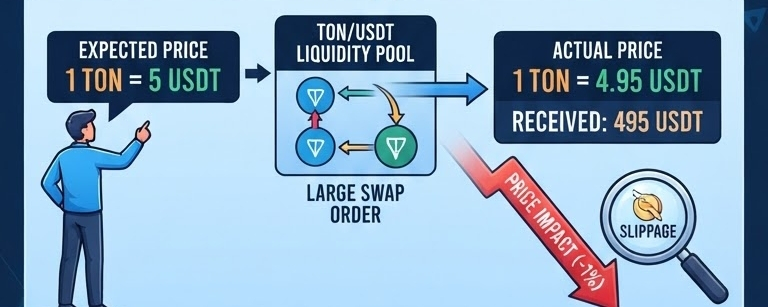
Slippage Explained: Setting Realistic Expectations for TON SwapsWhen swapping tokens on a decentralized exchange, the amount shown before confirmation may differ from the amount ultimately received. One reason is slippage: the change between the expected price of a trade and the price at which it executes. Understanding slippage can help STON.fi users choose settings thoughtfully instead of treating every difference as a technical failure.
Token prices can move while a transaction is being prepared and processed. In addition, a trade may change the balance of a liquidity pool, affecting the price available for the remaining portion of the swap. These effects can be more significant when liquidity is limited or when a transaction is large compared with the pool.
Slippage tolerance is a setting that defines how much price movement a user is willing to accept before a transaction is rejected. A very low tolerance can protect against an unexpectedly poor execution price, but it may also cause a transaction to fail when the market changes slightly. A higher tolerance can make execution more likely in changing conditions, while allowing a less favorable result than the user originally expected.
There is no single setting that is best for every token or every market situation. The right choice depends on factors such as liquidity, volatility, trade size, and the user’s own risk preferences. Increasing tolerance simply to force a transaction through is not a reliable solution. It is worth reconsidering the trade if the required setting seems unusually high.
Before confirming a swap on STON.fi, review the estimated output, minimum received amount, price impact, and any displayed slippage information. Make sure you understand what the minimum amount means: it is the threshold you are accepting, not a guarantee that the trade will be profitable. Also consider whether the token and trading pair have enough liquidity for the size of the transaction.
If a swap repeatedly fails, do not keep changing settings without understanding the reason. Check the transaction details, reassess the amount, and consider waiting for conditions to change. A smaller trade may have a different effect on a pool, though it does not remove market risk. Pause and verify the numbers.
Slippage is part of how decentralized markets operate, not automatically evidence that something is wrong. The goal is to set realistic expectations, understand the trade-offs, and confirm only when the possible outcome remains acceptable to you.
$GRAM #STONfi #DEFİ
Slippage Explained: Setting Realistic Expectations for TON Swaps
When swapping tokens on a decentralized exchange, the amount shown before confirmation may differ from the amount ultimately received. One reason is slippage: the change between the expected price of a trade and the price at which it executes. Understanding slippage can help STON.fi users choose settings thoughtfully instead of treating every difference as a technical failure.
Token prices can move while a transaction is being prepared and processed. In addition, a trade may change the balance of a liquidity pool, affecting the price available for the remaining portion of the swap. These effects can be more significant when liquidity is limited or when a transaction is large compared with the pool.
Slippage tolerance is a setting that defines how much price movement a user is willing to accept before a transaction is rejected. A very low tolerance can protect against an unexpectedly poor execution price, but it may also cause a transaction to fail when the market changes slightly. A higher tolerance can make execution more likely in changing conditions, while allowing a less favorable result than the user originally expected.
There is no single setting that is best for every token or every market situation. The right choice depends on factors such as liquidity, volatility, trade size, and the user’s own risk preferences. Increasing tolerance simply to force a transaction through is not a reliable solution. It is worth reconsidering the trade if the required setting seems unusually high.
Before confirming a swap on STON.fi, review the estimated output, minimum received amount, price impact, and any displayed slippage information. Make sure you understand what the minimum amount means: it is the threshold you are accepting, not a guarantee that the trade will be profitable. Also consider whether the token and trading pair have enough liquidity for the size of the transaction.
If a swap repeatedly fails, do not keep changing settings without understanding the reason. Check the transaction details, reassess the amount, and consider waiting for conditions to change. A smaller trade may have a different effect on a pool, though it does not remove market risk. Pause and verify the numbers.
Slippage is part of how decentralized markets operate, not automatically evidence that something is wrong. The goal is to set realistic expectations, understand the trade-offs, and confirm only when the possible outcome remains acceptable to you.
$GRAM #STONfi #DEFİ
Token prices can move while a transaction is being prepared and processed. In addition, a trade may change the balance of a liquidity pool, affecting the price available for the remaining portion of the swap. These effects can be more significant when liquidity is limited or when a transaction is large compared with the pool.
Slippage tolerance is a setting that defines how much price movement a user is willing to accept before a transaction is rejected. A very low tolerance can protect against an unexpectedly poor execution price, but it may also cause a transaction to fail when the market changes slightly. A higher tolerance can make execution more likely in changing conditions, while allowing a less favorable result than the user originally expected.
There is no single setting that is best for every token or every market situation. The right choice depends on factors such as liquidity, volatility, trade size, and the user’s own risk preferences. Increasing tolerance simply to force a transaction through is not a reliable solution. It is worth reconsidering the trade if the required setting seems unusually high.
Before confirming a swap on STON.fi, review the estimated output, minimum received amount, price impact, and any displayed slippage information. Make sure you understand what the minimum amount means: it is the threshold you are accepting, not a guarantee that the trade will be profitable. Also consider whether the token and trading pair have enough liquidity for the size of the transaction.
If a swap repeatedly fails, do not keep changing settings without understanding the reason. Check the transaction details, reassess the amount, and consider waiting for conditions to change. A smaller trade may have a different effect on a pool, though it does not remove market risk. Pause and verify the numbers.
Slippage is part of how decentralized markets operate, not automatically evidence that something is wrong. The goal is to set realistic expectations, understand the trade-offs, and confirm only when the possible outcome remains acceptable to you.
$GRAM #STONfi #DEFİ
314

·
--
ສັນຍານກະທິງ
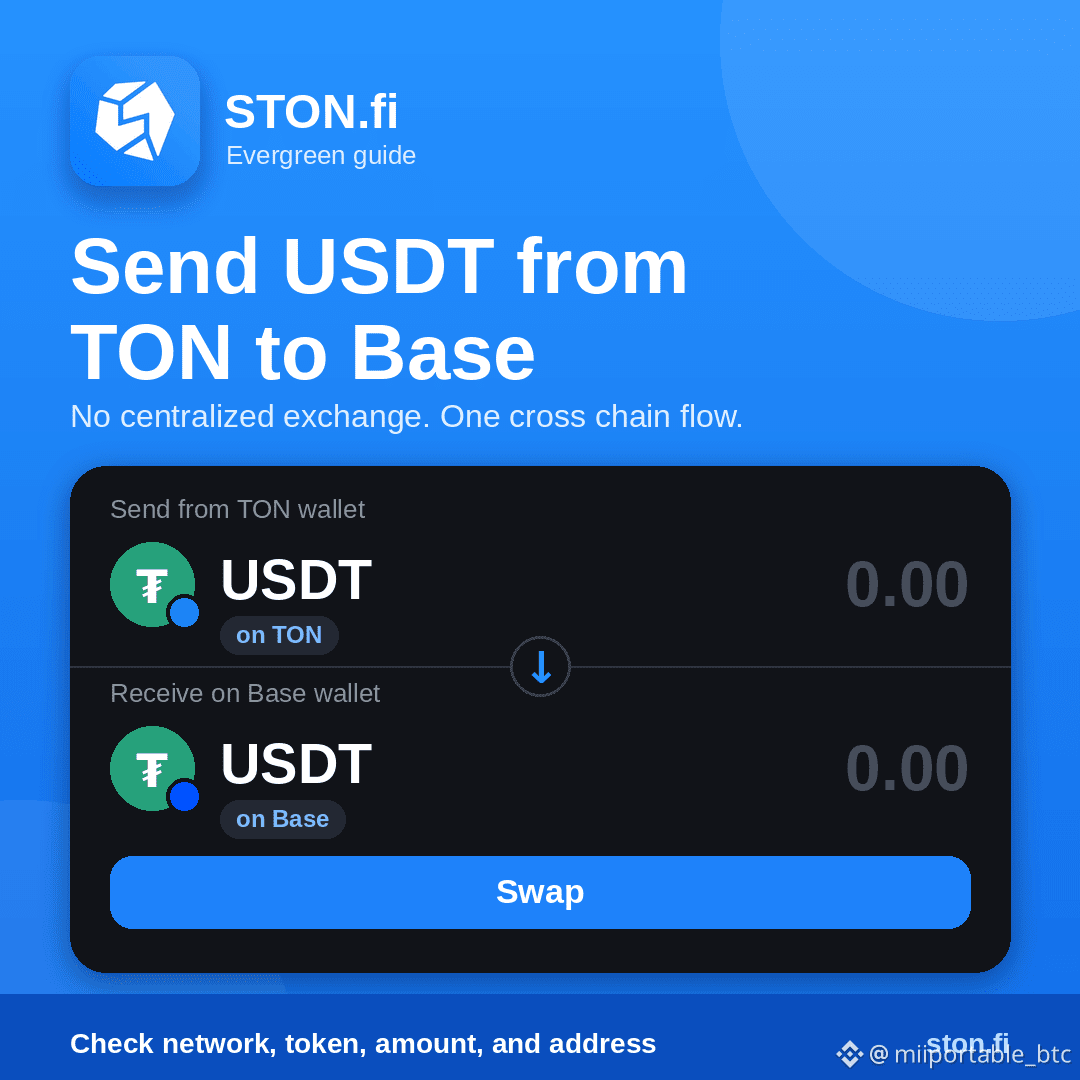
How to send USDT from TON to Base without a centralized exchange
USDT exists on many blockchains, and TON and Base are separate networks. A normal transfer only works inside one network, so moving USDT from TON to Base needs a cross chain route. You have three main options:
1. Centralized exchange: deposit from TON, then withdraw to Base. Expect account checks and withdrawal limits and fees.
2. Bridge: move assets through a bridge route. Watch for smart contract risk, extra fees, and delays.
3. STON.fi cross chain swap: one flow from TON to Base, with route availability and liquidity as the main limit.
According to the STON.fi page, the cross chain route takes roughly 10 to 30 seconds, against 1 to 30 minutes for bridges and 5 to 10 minutes for exchanges. Those are the product's own figures, so confirm what you see live.
How the STON.fi flow works:
1. Connect your TON wallet and a Base compatible wallet.
2. Choose USDT and the destination network.
3. Enter the amount and tap Swap.
4. Review the swap details and fees.
5. Confirm in your wallet.
6. Wait for execution and receive your funds on Base.
Checklist before you confirm:
1. Source network is TON.
2. Token is USDT.
3. Destination network is Base.
4. Your receiving wallet supports Base.
5. You are receiving the correct asset.
6. Exchange rate, fees, and price impact look right.
Cross chain transactions cannot be reversed, so verify the address and networks first. The final quote screen shows the exact amount you will receive, including fees and the rate. For larger amounts, send a small test transaction first.
Full guide: https://ston.fi/how-to-send-usdt-from-ton-to-base
Useful links:
1. TON: https://ton.org/
2. Base: https://www.base.org/
3. BaseScan: https://basescan.org/
4. STON.fi: https://ston.fi/
Type addresses yourself or use a trusted bookmark. $GRAM
{spot}(GRAMUSDT)
@stonfi @ton_blockchain #STONfi #USDT #TON #CrossChain #defi
Educational content only, not financial advice. Routes and fees change, so check the live quote.
How to send USDT from TON to Base without a centralized exchange
USDT exists on many blockchains, and TON and Base are separate networks. A normal transfer only works inside one network, so moving USDT from TON to Base needs a cross chain route. You have three main options:
1. Centralized exchange: deposit from TON, then withdraw to Base. Expect account checks and withdrawal limits and fees.
2. Bridge: move assets through a bridge route. Watch for smart contract risk, extra fees, and delays.
3. STON.fi cross chain swap: one flow from TON to Base, with route availability and liquidity as the main limit.
According to the STON.fi page, the cross chain route takes roughly 10 to 30 seconds, against 1 to 30 minutes for bridges and 5 to 10 minutes for exchanges. Those are the product's own figures, so confirm what you see live.
How the STON.fi flow works:
1. Connect your TON wallet and a Base compatible wallet.
2. Choose USDT and the destination network.
3. Enter the amount and tap Swap.
4. Review the swap details and fees.
5. Confirm in your wallet.
6. Wait for execution and receive your funds on Base.
Checklist before you confirm:
1. Source network is TON.
2. Token is USDT.
3. Destination network is Base.
4. Your receiving wallet supports Base.
5. You are receiving the correct asset.
6. Exchange rate, fees, and price impact look right.
Cross chain transactions cannot be reversed, so verify the address and networks first. The final quote screen shows the exact amount you will receive, including fees and the rate. For larger amounts, send a small test transaction first.
Full guide: https://ston.fi/how-to-send-usdt-from-ton-to-base
Useful links:
1. TON: https://ton.org/
2. Base: https://www.base.org/
3. BaseScan: https://basescan.org/
4. STON.fi: https://ston.fi/
Type addresses yourself or use a trusted bookmark. $GRAM
@STONfi DEX @Ton Network #STONfi #USDT #TON #CrossChain #defi
Educational content only, not financial advice. Routes and fees change, so check the live quote.
USDT exists on many blockchains, and TON and Base are separate networks. A normal transfer only works inside one network, so moving USDT from TON to Base needs a cross chain route. You have three main options:
1. Centralized exchange: deposit from TON, then withdraw to Base. Expect account checks and withdrawal limits and fees.
2. Bridge: move assets through a bridge route. Watch for smart contract risk, extra fees, and delays.
3. STON.fi cross chain swap: one flow from TON to Base, with route availability and liquidity as the main limit.
According to the STON.fi page, the cross chain route takes roughly 10 to 30 seconds, against 1 to 30 minutes for bridges and 5 to 10 minutes for exchanges. Those are the product's own figures, so confirm what you see live.
How the STON.fi flow works:
1. Connect your TON wallet and a Base compatible wallet.
2. Choose USDT and the destination network.
3. Enter the amount and tap Swap.
4. Review the swap details and fees.
5. Confirm in your wallet.
6. Wait for execution and receive your funds on Base.
Checklist before you confirm:
1. Source network is TON.
2. Token is USDT.
3. Destination network is Base.
4. Your receiving wallet supports Base.
5. You are receiving the correct asset.
6. Exchange rate, fees, and price impact look right.
Cross chain transactions cannot be reversed, so verify the address and networks first. The final quote screen shows the exact amount you will receive, including fees and the rate. For larger amounts, send a small test transaction first.
Full guide: https://ston.fi/how-to-send-usdt-from-ton-to-base
Useful links:
1. TON: https://ton.org/
2. Base: https://www.base.org/
3. BaseScan: https://basescan.org/
4. STON.fi: https://ston.fi/
Type addresses yourself or use a trusted bookmark. $GRAM
@STONfi DEX @Ton Network #STONfi #USDT #TON #CrossChain #defi
Educational content only, not financial advice. Routes and fees change, so check the live quote.
1
415
·
--

ບົດຄວາມ
What Is a Cross-Chain Swap? A Beginner-Friendly Guide to Moving Crypto Between BlockchainsWhy a swap across two blockchains is harder than a swap on one, how bridges and atomic swaps approach the problem, and how a resolver-based design like STON.fi's Omniston coordinates it.
Picture someone holding USDT in a TON wallet. They want USDC in a wallet on Base, an Ethereum layer-2 network. On a single blockchain, this would be one swap: pick two tokens, confirm, done.
Here it's different. The USDT sits on one network, and the asset they want has to appear on a completely different one. No single swap contract can touch both. Something has to coordinate what happens on each side, and it has to do so without leaving the user stranded halfway.
That coordination problem is what cross-chain swaps exist to solve.
What is a cross-chain swap?
A cross-chain swap lets you exchange an asset on one blockchain for an asset on another through a coordinated transaction flow. You start with one asset on a source chain and end with a different asset on a destination chain.
Four terms keep the picture clear:
Source chain and asset: where your funds start (TON and USDT).Destination chain and asset: where you want to end up (Base and USDC).Final settlement: the point at which the destination asset is actually in your destination wallet, not just when your first transaction is confirmed
That last point matters more than it sounds. Confirming a transaction on the source chain tells you only that one half of the journey was submitted.
Why blockchains don't share state
Think of two countries with separate banking systems. Each keeps its own ledgers, applies its own rules, and verifies its own transactions. A payment recorded in Country A doesn't automatically appear in Country B's books. Moving money between them needs agreements, intermediaries or other coordination.
Blockchains work the same way:
Independent ledgers. Each chain keeps its own record of balances and contract data, maintained by its own validators.Different rules. Chains differ in how they reach agreement, how they run smart contracts, and even how addresses look. TON addresses and Base's EVM-style addresses are different formats.No automatic updates. A transaction on TON changes TON's state only. Base has no way to know about it unless something carries the information across.
Ethereum's developer documentation describes this as blockchains existing in siloed environments, with no natural way to trade or communicate with each other. That is why cross-chain activity needs extra infrastructure. Something has to connect the isolated ledgers, and that choice shapes the risks you take on.
Same-chain swaps vs. cross-chain swaps
1. Where Assets Exist
Same-Chain: Both assets reside entirely on a single blockchain.Cross-Chain: The source asset exists on one chain, while the destination asset exists on another.
2. How Execution Happens
Same-Chain: Handled through a single transaction flow run by the native blockchain's smart contracts.Cross-Chain: Requires coordinated actions across two independent chains, linked by an intermediary mechanism.
3. Infrastructure Required
Same-Chain: Handled directly by a DEX (Decentralized Exchange) contract and its liquidity pools.Cross-Chain: Requires an additional layer such as bridges, resolver networks, relayers, or cross-chain protocols.4. User Experience & WalletsSame-Chain: Seamless — requires only one wallet and one network.Cross-Chain: More complex — often requires managing two networks and potentially two separate wallets.
5. Costs & Speed
Same-Chain: You pay only one set of network gas fees, with execution tied to a single block confirmation time.Cross-Chain: Involves transaction fees and confirmation times across multiple chains, varying widely based on the chosen route.
6. Key Risks
Same-Chain: Standard DeFi risks like slippage, smart-contract vulnerabilities, and price impact.Cross-Chain: All standard DeFi risks, plus bridge exploits, coordination failure, destination liquidity shortages, and network/address mismatch errors.
Practical Example:
Same-Chain: Swapping USDT for GRAM on TON.Cross-Chain: Sending USDT on TON and receiving USDC on Base.Every cross-chain connection introduces trade-offs between speed, cost, and counterparty security. Which bridges or cross-chain protocols do you rely on most?
The main approaches
There is no single way to do this. Ethereum.org's bridge documentation groups the common designs into three: lock-and-mint, burn-and-mint, and atomic swaps.
Bridge-based approaches
A bridge moves value between chains. STON.fi's own explainer puts the distinction this way: a bridge is mainly about moving value, while a cross-chain swap is mainly about ending with the asset you want on the destination chain.
Two classic models:
Lock-and-mint. The original asset is locked on the source chain, and a wrapped or mirrored version is created on the destination. The wrapped token is only as good as the locked collateral and the system managing it.Burn-and-mint. The asset is destroyed on the source chain and an equivalent is created on the destination. This depends on a trusted authority or system being able to mint it.
A third, liquidity-based variety releases funds already waiting on the destination side instead of minting a new token.
Bridges can be trusted, relying on an outside set of verifiers, or trustless, relying on the connected blockchains' own validators. Ethereum.org notes that trusted designs can offer connectivity and speed but add trust assumptions, and that bridges have been the target of some of the largest hacks in DeFi.
Atomic-swap approaches
An atomic swap is built on conditional execution: the exchange either completes on both sides or doesn't happen at all. It is often built with a hash time-locked contract (HTLC). The Bitcoin Wiki describes an HTLC as a payment that uses a hashlock and a timelock, so the receiver must prove receipt before a deadline or lose the ability to claim it, with the funds returning to the payer.
In plain terms:
The hashlock means a secret is needed to unlock the funds.The timelock means if the secret isn't revealed in time, the funds go back.When two linked HTLCs use the same secret, revealing it on one chain lets the other side claim as well.
When moving value across blockchains, not every cross-chain swap uses the same underlying mechanism. The two primary models—Bridge-based and Atomic-swap (HTLC)—approach trust, liquidity, and risk in fundamentally different ways.
1. Core IdeaBridge-based: Move or mirror value between chains.Atomic-swap (HTLC): Conditional exchange linked by a shared secret.2. Trust AssumptionsBridge-based: Varies; relies on trusted verifiers or the chains' own validators.Atomic-swap (HTLC): Cryptographic conditions and timelocks, plus a counterparty providing destination liquidity.3. LiquidityBridge-based: May rely on locked collateral or pools on both sides.Atomic-swap (HTLC): Needs a counterparty with assets ready on the destination chain.4. Failure ScenariosBridge-based: Smart contract exploits, wrapped-asset depegs or issues, and stuck transfers.Atomic-swap (HTLC): No counterparty available, or timeouts leading to delayed refunds.5. StrengthsBridge-based: Broad connectivity; can carry arbitrary messages or data across chains.Atomic-swap (HTLC): Native assets stay native—no synthetic or wrapped tokens are needed.6. LimitationsBridge-based: Historically a major attack surface in DeFi.Atomic-swap (HTLC): Heavily dependent on counterparty availability and immediate liquidity.Neither approach is universally superior. As Ethereum.org notes, there are no perfect solutions each brings a distinct trade-off between connectivity, security, and capital efficiency. Which model do you prefer when routing cross-chain trades?
Neither is universally safer or better. Ethereum.org puts it well: there are no perfect solutions, only trade-offs made to fulfil a purpose.
Omniston: a resolver-based architecture
With those foundations, here is a practical example. STON.fi is a decentralized exchange on TON, and Omniston is its liquidity protocol. According to STON.fi's documentation, it covers swaps on TON and cross-chain swaps through a single request-for-quote (RFQ) model.
What is a resolver?
A resolver is an independent market maker. Omniston's documentation describes it as a service that provides an exchange rate and settles trades. For cross-chain swaps, STON.fi's blog says resolvers bring their own capital, set their own quotes, and compete on price.
Quoting, execution and settlement are different things
This is the part beginners most often mix up. Four stages are easy to blur:
Routing: finding possible paths for your trade.Quoting: resolvers respond to your request with prices.Execution: the chosen resolver and the protocol carry out the trade across chains.Settlement: the final outcome, either completed delivery or a rollback.
A quote is an offer, not a finished trade. Documentation also notes that quotes have validity limits, and that once you submit, the settlement tracking, not the original quote, is the source of truth for what happened.
How the cross-chain flow is designed
According to Omniston's documentation, the flow works like this:
You send a request for quote, and resolvers respond with competing quotes.You pick one. You fund the source side, and the selected resolver provides the destination-side liquidity.Linked HTLCs on the two chains tie both legs together.
STON.fi's materials describe the intended outcome as all-or-nothing: either the destination-side leg completes and you receive the quoted asset, or the flow follows a timed refund path. The documentation calls this an intended safety property of the design. Note the scope: it describes how the HTLC settlement is meant to behave, not a promise that every transaction will be instant, free of fees, or risk-free. Smart-contract bugs, network problems and user mistakes remain possible. If no resolver offers a quote, the swap simply doesn't start, and nothing is locked.
STON.fi's blog also says Omniston is not a wrapped-token bridge: assets stay native on each side, with funds held in escrow that is refundable if the swap doesn't complete.
A hypothetical TON-to-Base journey
This walk-through is illustrative. The numbers and timings are not real.
You start with USDT on TON in a TON wallet, and you have a Base-compatible wallet ready.You choose the destination. You pick Base as the network and USDC as the asset.Quotes are gathered. Resolvers respond with prices for your request.A route is selected, and you review the final details, including rate and fees.You sign. Your funds go into escrow on the source side, the resolver commits destination-side assets, and the linked contracts coordinate.Settlement. Either your USDC arrives on Base, or the flow unwinds through the refund path.
The official guide, How to send USDT from TON to Base, walks through this exact route in the app. It covers connecting both a TON wallet and a Base-compatible wallet, choosing the token and destination network, reviewing fees, and confirming in your wallet. It also reminds you that cross-chain transactions can't be reversed, so you should check the destination network, asset, amount and address first, and consider a small test transaction. If you swap from TON, STON.fi's cross-chain guide also says to keep a small GRAM balance (GRAM is TON's native currency, formerly Toncoin) to cover network fees.
Supported pairs change over time, so check the live interface for what's currently available.
Risks and precautions
Cross-chain coordination reduces manual steps. It does not remove risk. The main ones:
Smart-contract and protocol risk. Any contract can have bugs, including audited ones.Compromised infrastructure. Bridges and relayers have been attack targets. Designs differ in how much they trust.Slippage and changing quotes. Prices can move, so review the final quote before signing.Fees and liquidity limits. Fees may apply on more than one network, and some routes may have no available liquidity.Wrong network or address. Addresses valid on one chain aren't valid on another, and a mistake can't be undone.Delays and recovery limits. Timed refunds exist in some designs, but nobody can guarantee a recovery process for every failure.
Pre-swap checklist
Confirm the source network, source asset and amount.Confirm the destination network and destination asset.Check that your receiving wallet supports that network.Verify the destination address character by character.Review the rate, fees and minimum received.Make sure you hold the asset needed to pay network fees.For larger transfers, try a small test first.Track the transaction status until it settles.
FAQ
Is a cross-chain swap the same as a bridge?
Not exactly. A bridge mainly moves value between chains, while a cross-chain swap aims to deliver a chosen asset on the destination chain. Modern products blur the line, so check how a given route works.
Do I need two wallets?
Usually, yes. You need a wallet for the source chain and one for the destination chain, such as a TON wallet and a Base-compatible wallet.
Is an atomic swap risk-free?
No. It can reduce certain risks, but contract bugs, liquidity gaps and user errors still apply.
What if no one offers a quote?
In Omniston's design, the swap doesn't initiate, and your funds aren't committed.
Can I reverse a cross-chain swap?
STON.fi's guide says cross-chain transactions can't be reversed, so verify everything before confirming.
Does the quoted rate always apply?
STON.fi's guide says the rate shown applies to that transaction, and the confirmation screen shows the exact amount you'll receive. Always read it before signing.
The bigger picture
The world isn't going to settle on one blockchain, so moving between them will stay a basic need. Better routing and execution architecture reduce friction by letting competing resolvers price a trade, binding both sides with conditions, and showing users one flow instead of a patchwork of apps.
The takeaway: a cross-chain swap is really two transactions on two ledgers, linked by a mechanism you should understand. Know your source, your destination and your route, and read the details before you sign.
Sources
Ethereum.org: BridgesBitcoin Wiki: Hash Time Locked ContractsSTON.fi docs: How Omniston WorksSTON.fi blog: Omniston explainedSTON.fi blog: Cross-chain swaps and bridging: what's the difference?STON.fi guide: How to make a cross-chain swap on STON.fiSTON.fi: How to send USDT from TON to Base
#Stonfi #Toncoin #USDT
What Is a Cross-Chain Swap? A Beginner-Friendly Guide to Moving Crypto Between Blockchains
Why a swap across two blockchains is harder than a swap on one, how bridges and atomic swaps approach the problem, and how a resolver-based design like STON.fi's Omniston coordinates it.
Picture someone holding USDT in a TON wallet. They want USDC in a wallet on Base, an Ethereum layer-2 network. On a single blockchain, this would be one swap: pick two tokens, confirm, done.
Here it's different. The USDT sits on one network, and the asset they want has to appear on a completely different one. No single swap contract can touch both. Something has to coordinate what happens on each side, and it has to do so without leaving the user stranded halfway.
That coordination problem is what cross-chain swaps exist to solve.
What is a cross-chain swap?
A cross-chain swap lets you exchange an asset on one blockchain for an asset on another through a coordinated transaction flow. You start with one asset on a source chain and end with a different asset on a destination chain.
Four terms keep the picture clear:
Source chain and asset: where your funds start (TON and USDT).Destination chain and asset: where you want to end up (Base and USDC).Final settlement: the point at which the destination asset is actually in your destination wallet, not just when your first transaction is confirmed
That last point matters more than it sounds. Confirming a transaction on the source chain tells you only that one half of the journey was submitted.
Why blockchains don't share state
Think of two countries with separate banking systems. Each keeps its own ledgers, applies its own rules, and verifies its own transactions. A payment recorded in Country A doesn't automatically appear in Country B's books. Moving money between them needs agreements, intermediaries or other coordination.
Blockchains work the same way:
Independent ledgers. Each chain keeps its own record of balances and contract data, maintained by its own validators.Different rules. Chains differ in how they reach agreement, how they run smart contracts, and even how addresses look. TON addresses and Base's EVM-style addresses are different formats.No automatic updates. A transaction on TON changes TON's state only. Base has no way to know about it unless something carries the information across.
Ethereum's developer documentation describes this as blockchains existing in siloed environments, with no natural way to trade or communicate with each other. That is why cross-chain activity needs extra infrastructure. Something has to connect the isolated ledgers, and that choice shapes the risks you take on.
Same-chain swaps vs. cross-chain swaps
1. Where Assets Exist
Same-Chain: Both assets reside entirely on a single blockchain.Cross-Chain: The source asset exists on one chain, while the destination asset exists on another.
2. How Execution Happens
Same-Chain: Handled through a single transaction flow run by the native blockchain's smart contracts.Cross-Chain: Requires coordinated actions across two independent chains, linked by an intermediary mechanism.
3. Infrastructure Required
Same-Chain: Handled directly by a DEX (Decentralized Exchange) contract and its liquidity pools.Cross-Chain: Requires an additional layer such as bridges, resolver networks, relayers, or cross-chain protocols.4. User Experience & WalletsSame-Chain: Seamless — requires only one wallet and one network.Cross-Chain: More complex — often requires managing two networks and potentially two separate wallets.
5. Costs & Speed
Same-Chain: You pay only one set of network gas fees, with execution tied to a single block confirmation time.Cross-Chain: Involves transaction fees and confirmation times across multiple chains, varying widely based on the chosen route.
6. Key Risks
Same-Chain: Standard DeFi risks like slippage, smart-contract vulnerabilities, and price impact.Cross-Chain: All standard DeFi risks, plus bridge exploits, coordination failure, destination liquidity shortages, and network/address mismatch errors.
Practical Example:
Same-Chain: Swapping USDT for GRAM on TON.Cross-Chain: Sending USDT on TON and receiving USDC on Base.Every cross-chain connection introduces trade-offs between speed, cost, and counterparty security. Which bridges or cross-chain protocols do you rely on most?
The main approaches
There is no single way to do this. Ethereum.org's bridge documentation groups the common designs into three: lock-and-mint, burn-and-mint, and atomic swaps.
Bridge-based approaches
A bridge moves value between chains. STON.fi's own explainer puts the distinction this way: a bridge is mainly about moving value, while a cross-chain swap is mainly about ending with the asset you want on the destination chain.
Two classic models:
Lock-and-mint. The original asset is locked on the source chain, and a wrapped or mirrored version is created on the destination. The wrapped token is only as good as the locked collateral and the system managing it.Burn-and-mint. The asset is destroyed on the source chain and an equivalent is created on the destination. This depends on a trusted authority or system being able to mint it.
A third, liquidity-based variety releases funds already waiting on the destination side instead of minting a new token.
Bridges can be trusted, relying on an outside set of verifiers, or trustless, relying on the connected blockchains' own validators. Ethereum.org notes that trusted designs can offer connectivity and speed but add trust assumptions, and that bridges have been the target of some of the largest hacks in DeFi.
Atomic-swap approaches
An atomic swap is built on conditional execution: the exchange either completes on both sides or doesn't happen at all. It is often built with a hash time-locked contract (HTLC). The Bitcoin Wiki describes an HTLC as a payment that uses a hashlock and a timelock, so the receiver must prove receipt before a deadline or lose the ability to claim it, with the funds returning to the payer.
In plain terms:
The hashlock means a secret is needed to unlock the funds.The timelock means if the secret isn't revealed in time, the funds go back.When two linked HTLCs use the same secret, revealing it on one chain lets the other side claim as well.
When moving value across blockchains, not every cross-chain swap uses the same underlying mechanism. The two primary models—Bridge-based and Atomic-swap (HTLC)—approach trust, liquidity, and risk in fundamentally different ways.
1. Core IdeaBridge-based: Move or mirror value between chains.Atomic-swap (HTLC): Conditional exchange linked by a shared secret.2. Trust AssumptionsBridge-based: Varies; relies on trusted verifiers or the chains' own validators.Atomic-swap (HTLC): Cryptographic conditions and timelocks, plus a counterparty providing destination liquidity.3. LiquidityBridge-based: May rely on locked collateral or pools on both sides.Atomic-swap (HTLC): Needs a counterparty with assets ready on the destination chain.4. Failure ScenariosBridge-based: Smart contract exploits, wrapped-asset depegs or issues, and stuck transfers.Atomic-swap (HTLC): No counterparty available, or timeouts leading to delayed refunds.5. StrengthsBridge-based: Broad connectivity; can carry arbitrary messages or data across chains.Atomic-swap (HTLC): Native assets stay native—no synthetic or wrapped tokens are needed.6. LimitationsBridge-based: Historically a major attack surface in DeFi.Atomic-swap (HTLC): Heavily dependent on counterparty availability and immediate liquidity.Neither approach is universally superior. As Ethereum.org notes, there are no perfect solutions each brings a distinct trade-off between connectivity, security, and capital efficiency. Which model do you prefer when routing cross-chain trades?
Neither is universally safer or better. Ethereum.org puts it well: there are no perfect solutions, only trade-offs made to fulfil a purpose.
Omniston: a resolver-based architecture
With those foundations, here is a practical example. STON.fi is a decentralized exchange on TON, and Omniston is its liquidity protocol. According to STON.fi's documentation, it covers swaps on TON and cross-chain swaps through a single request-for-quote (RFQ) model.
What is a resolver?
A resolver is an independent market maker. Omniston's documentation describes it as a service that provides an exchange rate and settles trades. For cross-chain swaps, STON.fi's blog says resolvers bring their own capital, set their own quotes, and compete on price.
Quoting, execution and settlement are different things
This is the part beginners most often mix up. Four stages are easy to blur:
Routing: finding possible paths for your trade.Quoting: resolvers respond to your request with prices.Execution: the chosen resolver and the protocol carry out the trade across chains.Settlement: the final outcome, either completed delivery or a rollback.
A quote is an offer, not a finished trade. Documentation also notes that quotes have validity limits, and that once you submit, the settlement tracking, not the original quote, is the source of truth for what happened.
How the cross-chain flow is designed
According to Omniston's documentation, the flow works like this:
You send a request for quote, and resolvers respond with competing quotes.You pick one. You fund the source side, and the selected resolver provides the destination-side liquidity.Linked HTLCs on the two chains tie both legs together.
STON.fi's materials describe the intended outcome as all-or-nothing: either the destination-side leg completes and you receive the quoted asset, or the flow follows a timed refund path. The documentation calls this an intended safety property of the design. Note the scope: it describes how the HTLC settlement is meant to behave, not a promise that every transaction will be instant, free of fees, or risk-free. Smart-contract bugs, network problems and user mistakes remain possible. If no resolver offers a quote, the swap simply doesn't start, and nothing is locked.
STON.fi's blog also says Omniston is not a wrapped-token bridge: assets stay native on each side, with funds held in escrow that is refundable if the swap doesn't complete.
A hypothetical TON-to-Base journey
This walk-through is illustrative. The numbers and timings are not real.
You start with USDT on TON in a TON wallet, and you have a Base-compatible wallet ready.You choose the destination. You pick Base as the network and USDC as the asset.Quotes are gathered. Resolvers respond with prices for your request.A route is selected, and you review the final details, including rate and fees.You sign. Your funds go into escrow on the source side, the resolver commits destination-side assets, and the linked contracts coordinate.Settlement. Either your USDC arrives on Base, or the flow unwinds through the refund path.
The official guide, How to send USDT from TON to Base, walks through this exact route in the app. It covers connecting both a TON wallet and a Base-compatible wallet, choosing the token and destination network, reviewing fees, and confirming in your wallet. It also reminds you that cross-chain transactions can't be reversed, so you should check the destination network, asset, amount and address first, and consider a small test transaction. If you swap from TON, STON.fi's cross-chain guide also says to keep a small GRAM balance (GRAM is TON's native currency, formerly Toncoin) to cover network fees.
Supported pairs change over time, so check the live interface for what's currently available.
Risks and precautions
Cross-chain coordination reduces manual steps. It does not remove risk. The main ones:
Smart-contract and protocol risk. Any contract can have bugs, including audited ones.Compromised infrastructure. Bridges and relayers have been attack targets. Designs differ in how much they trust.Slippage and changing quotes. Prices can move, so review the final quote before signing.Fees and liquidity limits. Fees may apply on more than one network, and some routes may have no available liquidity.Wrong network or address. Addresses valid on one chain aren't valid on another, and a mistake can't be undone.Delays and recovery limits. Timed refunds exist in some designs, but nobody can guarantee a recovery process for every failure.
Pre-swap checklist
Confirm the source network, source asset and amount.Confirm the destination network and destination asset.Check that your receiving wallet supports that network.Verify the destination address character by character.Review the rate, fees and minimum received.Make sure you hold the asset needed to pay network fees.For larger transfers, try a small test first.Track the transaction status until it settles.
FAQ
Is a cross-chain swap the same as a bridge?
Not exactly. A bridge mainly moves value between chains, while a cross-chain swap aims to deliver a chosen asset on the destination chain. Modern products blur the line, so check how a given route works.
Do I need two wallets?
Usually, yes. You need a wallet for the source chain and one for the destination chain, such as a TON wallet and a Base-compatible wallet.
Is an atomic swap risk-free?
No. It can reduce certain risks, but contract bugs, liquidity gaps and user errors still apply.
What if no one offers a quote?
In Omniston's design, the swap doesn't initiate, and your funds aren't committed.
Can I reverse a cross-chain swap?
STON.fi's guide says cross-chain transactions can't be reversed, so verify everything before confirming.
Does the quoted rate always apply?
STON.fi's guide says the rate shown applies to that transaction, and the confirmation screen shows the exact amount you'll receive. Always read it before signing.
The bigger picture
The world isn't going to settle on one blockchain, so moving between them will stay a basic need. Better routing and execution architecture reduce friction by letting competing resolvers price a trade, binding both sides with conditions, and showing users one flow instead of a patchwork of apps.
The takeaway: a cross-chain swap is really two transactions on two ledgers, linked by a mechanism you should understand. Know your source, your destination and your route, and read the details before you sign.
Sources
Ethereum.org: BridgesBitcoin Wiki: Hash Time Locked ContractsSTON.fi docs: How Omniston WorksSTON.fi blog: Omniston explainedSTON.fi blog: Cross-chain swaps and bridging: what's the difference?STON.fi guide: How to make a cross-chain swap on STON.fiSTON.fi: How to send USDT from TON to Base
#Stonfi #Toncoin #USDT
Picture someone holding USDT in a TON wallet. They want USDC in a wallet on Base, an Ethereum layer-2 network. On a single blockchain, this would be one swap: pick two tokens, confirm, done.
Here it's different. The USDT sits on one network, and the asset they want has to appear on a completely different one. No single swap contract can touch both. Something has to coordinate what happens on each side, and it has to do so without leaving the user stranded halfway.
That coordination problem is what cross-chain swaps exist to solve.
What is a cross-chain swap?
A cross-chain swap lets you exchange an asset on one blockchain for an asset on another through a coordinated transaction flow. You start with one asset on a source chain and end with a different asset on a destination chain.
Four terms keep the picture clear:
Source chain and asset: where your funds start (TON and USDT).Destination chain and asset: where you want to end up (Base and USDC).Final settlement: the point at which the destination asset is actually in your destination wallet, not just when your first transaction is confirmed
That last point matters more than it sounds. Confirming a transaction on the source chain tells you only that one half of the journey was submitted.
Why blockchains don't share state
Think of two countries with separate banking systems. Each keeps its own ledgers, applies its own rules, and verifies its own transactions. A payment recorded in Country A doesn't automatically appear in Country B's books. Moving money between them needs agreements, intermediaries or other coordination.
Blockchains work the same way:
Independent ledgers. Each chain keeps its own record of balances and contract data, maintained by its own validators.Different rules. Chains differ in how they reach agreement, how they run smart contracts, and even how addresses look. TON addresses and Base's EVM-style addresses are different formats.No automatic updates. A transaction on TON changes TON's state only. Base has no way to know about it unless something carries the information across.
Ethereum's developer documentation describes this as blockchains existing in siloed environments, with no natural way to trade or communicate with each other. That is why cross-chain activity needs extra infrastructure. Something has to connect the isolated ledgers, and that choice shapes the risks you take on.
Same-chain swaps vs. cross-chain swaps
1. Where Assets Exist
Same-Chain: Both assets reside entirely on a single blockchain.Cross-Chain: The source asset exists on one chain, while the destination asset exists on another.
2. How Execution Happens
Same-Chain: Handled through a single transaction flow run by the native blockchain's smart contracts.Cross-Chain: Requires coordinated actions across two independent chains, linked by an intermediary mechanism.
3. Infrastructure Required
Same-Chain: Handled directly by a DEX (Decentralized Exchange) contract and its liquidity pools.Cross-Chain: Requires an additional layer such as bridges, resolver networks, relayers, or cross-chain protocols.4. User Experience & WalletsSame-Chain: Seamless — requires only one wallet and one network.Cross-Chain: More complex — often requires managing two networks and potentially two separate wallets.
5. Costs & Speed
Same-Chain: You pay only one set of network gas fees, with execution tied to a single block confirmation time.Cross-Chain: Involves transaction fees and confirmation times across multiple chains, varying widely based on the chosen route.
6. Key Risks
Same-Chain: Standard DeFi risks like slippage, smart-contract vulnerabilities, and price impact.Cross-Chain: All standard DeFi risks, plus bridge exploits, coordination failure, destination liquidity shortages, and network/address mismatch errors.
Practical Example:
Same-Chain: Swapping USDT for GRAM on TON.Cross-Chain: Sending USDT on TON and receiving USDC on Base.Every cross-chain connection introduces trade-offs between speed, cost, and counterparty security. Which bridges or cross-chain protocols do you rely on most?
The main approaches
There is no single way to do this. Ethereum.org's bridge documentation groups the common designs into three: lock-and-mint, burn-and-mint, and atomic swaps.
Bridge-based approaches
A bridge moves value between chains. STON.fi's own explainer puts the distinction this way: a bridge is mainly about moving value, while a cross-chain swap is mainly about ending with the asset you want on the destination chain.
Two classic models:
Lock-and-mint. The original asset is locked on the source chain, and a wrapped or mirrored version is created on the destination. The wrapped token is only as good as the locked collateral and the system managing it.Burn-and-mint. The asset is destroyed on the source chain and an equivalent is created on the destination. This depends on a trusted authority or system being able to mint it.
A third, liquidity-based variety releases funds already waiting on the destination side instead of minting a new token.
Bridges can be trusted, relying on an outside set of verifiers, or trustless, relying on the connected blockchains' own validators. Ethereum.org notes that trusted designs can offer connectivity and speed but add trust assumptions, and that bridges have been the target of some of the largest hacks in DeFi.
Atomic-swap approaches
An atomic swap is built on conditional execution: the exchange either completes on both sides or doesn't happen at all. It is often built with a hash time-locked contract (HTLC). The Bitcoin Wiki describes an HTLC as a payment that uses a hashlock and a timelock, so the receiver must prove receipt before a deadline or lose the ability to claim it, with the funds returning to the payer.
In plain terms:
The hashlock means a secret is needed to unlock the funds.The timelock means if the secret isn't revealed in time, the funds go back.When two linked HTLCs use the same secret, revealing it on one chain lets the other side claim as well.
When moving value across blockchains, not every cross-chain swap uses the same underlying mechanism. The two primary models—Bridge-based and Atomic-swap (HTLC)—approach trust, liquidity, and risk in fundamentally different ways.
1. Core IdeaBridge-based: Move or mirror value between chains.Atomic-swap (HTLC): Conditional exchange linked by a shared secret.2. Trust AssumptionsBridge-based: Varies; relies on trusted verifiers or the chains' own validators.Atomic-swap (HTLC): Cryptographic conditions and timelocks, plus a counterparty providing destination liquidity.3. LiquidityBridge-based: May rely on locked collateral or pools on both sides.Atomic-swap (HTLC): Needs a counterparty with assets ready on the destination chain.4. Failure ScenariosBridge-based: Smart contract exploits, wrapped-asset depegs or issues, and stuck transfers.Atomic-swap (HTLC): No counterparty available, or timeouts leading to delayed refunds.5. StrengthsBridge-based: Broad connectivity; can carry arbitrary messages or data across chains.Atomic-swap (HTLC): Native assets stay native—no synthetic or wrapped tokens are needed.6. LimitationsBridge-based: Historically a major attack surface in DeFi.Atomic-swap (HTLC): Heavily dependent on counterparty availability and immediate liquidity.Neither approach is universally superior. As Ethereum.org notes, there are no perfect solutions each brings a distinct trade-off between connectivity, security, and capital efficiency. Which model do you prefer when routing cross-chain trades?
Neither is universally safer or better. Ethereum.org puts it well: there are no perfect solutions, only trade-offs made to fulfil a purpose.
Omniston: a resolver-based architecture
With those foundations, here is a practical example. STON.fi is a decentralized exchange on TON, and Omniston is its liquidity protocol. According to STON.fi's documentation, it covers swaps on TON and cross-chain swaps through a single request-for-quote (RFQ) model.
What is a resolver?
A resolver is an independent market maker. Omniston's documentation describes it as a service that provides an exchange rate and settles trades. For cross-chain swaps, STON.fi's blog says resolvers bring their own capital, set their own quotes, and compete on price.
Quoting, execution and settlement are different things
This is the part beginners most often mix up. Four stages are easy to blur:
Routing: finding possible paths for your trade.Quoting: resolvers respond to your request with prices.Execution: the chosen resolver and the protocol carry out the trade across chains.Settlement: the final outcome, either completed delivery or a rollback.
A quote is an offer, not a finished trade. Documentation also notes that quotes have validity limits, and that once you submit, the settlement tracking, not the original quote, is the source of truth for what happened.
How the cross-chain flow is designed
According to Omniston's documentation, the flow works like this:
You send a request for quote, and resolvers respond with competing quotes.You pick one. You fund the source side, and the selected resolver provides the destination-side liquidity.Linked HTLCs on the two chains tie both legs together.
STON.fi's materials describe the intended outcome as all-or-nothing: either the destination-side leg completes and you receive the quoted asset, or the flow follows a timed refund path. The documentation calls this an intended safety property of the design. Note the scope: it describes how the HTLC settlement is meant to behave, not a promise that every transaction will be instant, free of fees, or risk-free. Smart-contract bugs, network problems and user mistakes remain possible. If no resolver offers a quote, the swap simply doesn't start, and nothing is locked.
STON.fi's blog also says Omniston is not a wrapped-token bridge: assets stay native on each side, with funds held in escrow that is refundable if the swap doesn't complete.
A hypothetical TON-to-Base journey
This walk-through is illustrative. The numbers and timings are not real.
You start with USDT on TON in a TON wallet, and you have a Base-compatible wallet ready.You choose the destination. You pick Base as the network and USDC as the asset.Quotes are gathered. Resolvers respond with prices for your request.A route is selected, and you review the final details, including rate and fees.You sign. Your funds go into escrow on the source side, the resolver commits destination-side assets, and the linked contracts coordinate.Settlement. Either your USDC arrives on Base, or the flow unwinds through the refund path.
The official guide, How to send USDT from TON to Base, walks through this exact route in the app. It covers connecting both a TON wallet and a Base-compatible wallet, choosing the token and destination network, reviewing fees, and confirming in your wallet. It also reminds you that cross-chain transactions can't be reversed, so you should check the destination network, asset, amount and address first, and consider a small test transaction. If you swap from TON, STON.fi's cross-chain guide also says to keep a small GRAM balance (GRAM is TON's native currency, formerly Toncoin) to cover network fees.
Supported pairs change over time, so check the live interface for what's currently available.
Risks and precautions
Cross-chain coordination reduces manual steps. It does not remove risk. The main ones:
Smart-contract and protocol risk. Any contract can have bugs, including audited ones.Compromised infrastructure. Bridges and relayers have been attack targets. Designs differ in how much they trust.Slippage and changing quotes. Prices can move, so review the final quote before signing.Fees and liquidity limits. Fees may apply on more than one network, and some routes may have no available liquidity.Wrong network or address. Addresses valid on one chain aren't valid on another, and a mistake can't be undone.Delays and recovery limits. Timed refunds exist in some designs, but nobody can guarantee a recovery process for every failure.
Pre-swap checklist
Confirm the source network, source asset and amount.Confirm the destination network and destination asset.Check that your receiving wallet supports that network.Verify the destination address character by character.Review the rate, fees and minimum received.Make sure you hold the asset needed to pay network fees.For larger transfers, try a small test first.Track the transaction status until it settles.
FAQ
Is a cross-chain swap the same as a bridge?
Not exactly. A bridge mainly moves value between chains, while a cross-chain swap aims to deliver a chosen asset on the destination chain. Modern products blur the line, so check how a given route works.
Do I need two wallets?
Usually, yes. You need a wallet for the source chain and one for the destination chain, such as a TON wallet and a Base-compatible wallet.
Is an atomic swap risk-free?
No. It can reduce certain risks, but contract bugs, liquidity gaps and user errors still apply.
What if no one offers a quote?
In Omniston's design, the swap doesn't initiate, and your funds aren't committed.
Can I reverse a cross-chain swap?
STON.fi's guide says cross-chain transactions can't be reversed, so verify everything before confirming.
Does the quoted rate always apply?
STON.fi's guide says the rate shown applies to that transaction, and the confirmation screen shows the exact amount you'll receive. Always read it before signing.
The bigger picture
The world isn't going to settle on one blockchain, so moving between them will stay a basic need. Better routing and execution architecture reduce friction by letting competing resolvers price a trade, binding both sides with conditions, and showing users one flow instead of a patchwork of apps.
The takeaway: a cross-chain swap is really two transactions on two ledgers, linked by a mechanism you should understand. Know your source, your destination and your route, and read the details before you sign.
Sources
Ethereum.org: BridgesBitcoin Wiki: Hash Time Locked ContractsSTON.fi docs: How Omniston WorksSTON.fi blog: Omniston explainedSTON.fi blog: Cross-chain swaps and bridging: what's the difference?STON.fi guide: How to make a cross-chain swap on STON.fiSTON.fi: How to send USDT from TON to Base
#Stonfi #Toncoin #USDT
270

·
--
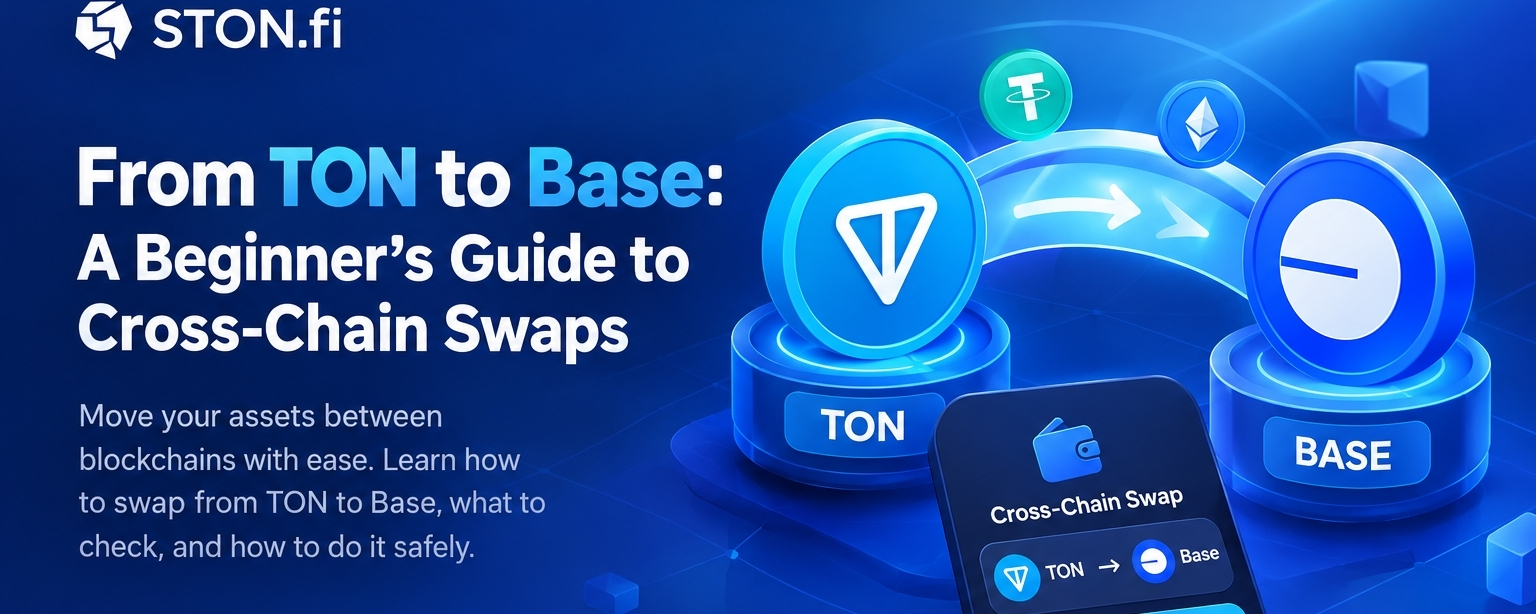
ບົດຄວາມ
From TON to Base: A Beginner’s Guide to Cross-Chain SwapsFrom TON to Base: A Beginner’s Guide to Cross-Chain Swaps
The blockchain ecosystem is expanding, but one challenge remains for many crypto users: how do you move between different networks without getting lost in the technical details?
Imagine holding crypto on The Open Network (TON) and discovering a decentralized application on Base. You want to explore that ecosystem, but your assets are on a different blockchain. What happens next?
This is where cross-chain swaps become important.
Rather than treating every blockchain as an isolated environment, cross-chain solutions aim to make it easier for users to exchange assets across supported networks.
Let’s break down how cross-chain swaps work, what beginners should understand, and how to approach a swap from TON to Base more carefully.
1. Understanding TON and Base
TON is a blockchain ecosystem designed to support decentralized applications and digital asset transfers, with close integration into the Telegram ecosystem.
Base is an Ethereum Layer 2 network designed to support onchain applications with lower transaction costs than Ethereum mainnet in many circumstances.
Both networks have their own infrastructure, transaction requirements, and supported assets.
Holding a token on TON does not automatically mean you can use that same asset on Base. Even when a token has the same name or ticker across networks, its underlying representation and contract may differ.
That distinction is essential when moving between blockchain ecosystems.
2. What Is a Cross-Chain Swap?
A cross-chain swap allows a user to exchange assets across different blockchain networks through a supported transaction route.
For example, a user may want to exchange an eligible asset on TON for a supported asset on Base.
Depending on the service and route, the process may involve transaction execution on the source network, coordination between networks, and delivery of the destination asset.
The technical implementation can vary. Some solutions use bridging infrastructure combined with swaps, while others use routing systems that coordinate liquidity across different sources.
The objective is to simplify an otherwise complicated process.
However, cross-chain swaps are not risk-free. Network compatibility, liquidity, transaction fees, execution conditions, and security all matter.
3. Why Would Someone Swap from TON to Base?
There are several reasons users may want to explore another blockchain.
Access to different applications: Each ecosystem has its own decentralized applications, protocols, and communities.
More flexibility: Moving between supported networks can give users additional options for managing their digital assets.
A simpler user experience: Cross-chain services can reduce the need to navigate several independent tools manually.
Exploring new ecosystems: Developers, researchers, and DeFi users may want to investigate opportunities on networks beyond the one they already use.
Of course, moving assets does not guarantee better returns or lower costs. The value of a cross-chain service is its ability to make supported transactions more accessible, not to eliminate the risks of DeFi.
4. How to Approach a TON-to-Base Swap
If you are new to cross-chain transactions, preparation is just as important as execution.
Step 1: Understand the route
Before starting, identify the asset you intend to exchange, the source network, and the destination network.
Confirm that the service supports your intended route and that the destination asset is the one you actually want.
Step 2: Use the official STON.fi guide
STON.fi provides a practical resource for understanding cross-chain swaps from TON to Base.
Start here:
https://ston.fi/cross-chain-swap-from-ton-to-base
Read the instructions and verify the current supported options before proceeding. Available assets, routes, and interface details may change over time.
Step 3: Connect your wallet carefully
Use a compatible wallet and check that you are interacting with the legitimate website.
Never share your recovery phrase or private keys. A legitimate transaction should not require you to disclose them.
Step 4: Review the transaction details
Before approving anything, check the selected assets, networks, estimated output, fees, and any displayed slippage or execution conditions.
If the expected amount seems unclear or the transaction details do not match your intention, stop and investigate before continuing.
Step 5: Confirm and monitor the transaction
Follow the service's instructions and keep any transaction identifiers available for reference.
Cross-chain operations may involve multiple steps, so completion times can vary. Do not assume that a transaction has failed simply because it takes longer than expected.
Check its status through the official interface and relevant network explorer when appropriate.
5. Five Things Beginners Should Check Before Swapping
Understanding these factors can help you make more informed decisions.
1. Network compatibility
Confirm that your source and destination networks are correct. Choosing the wrong network can lead to delays or complications.
2. Transaction fees
A cross-chain operation may involve fees associated with the source network, destination network, swap, or routing process. Review the costs presented before approving the transaction.
3. Slippage
Slippage is the difference between an expected exchange price and the price at which a trade executes. It can be affected by market movements and available liquidity.
4. Destination asset
Verify the exact token you expect to receive. Similar names and tickers do not necessarily identify the same asset.
5. Security
Beware of fake websites, unsolicited messages, suspicious wallet prompts, and unexpected token approvals. Use official resources and never approve a transaction you do not understand.
6. What Can Go Wrong?
Cross-chain technology makes blockchain interactions more convenient, but several issues can still arise.
A transaction may take longer than expected. Available liquidity may affect the final output. Network congestion can influence processing times and costs. A selected route may also become unavailable or change its conditions.
There are additional risks associated with smart contracts, infrastructure, and the assets involved.
For that reason, beginners should avoid rushing, review every transaction carefully, and understand the relevant risks before committing funds.
If a transaction appears delayed, check its status through official channels rather than immediately repeating it. Submitting another transaction without understanding the first one's status may create an unintended second transaction.
7. Where STON.fi Fits In
STON.fi is part of the TON DeFi ecosystem and provides tools for token swaps, including cross-chain routes where supported.
For someone exploring the relationship between TON and Base, its cross-chain guide is a useful starting point for understanding the available process.
The broader lesson is that cross-chain infrastructure should make blockchain interactions easier to navigate while giving users enough information to understand what they are authorizing.
A good user experience is not just about fewer clicks. It also involves clear transaction details, understandable fees, reliable status information, and careful security practices.
Final Thoughts
The future of DeFi will involve users interacting with more than one blockchain ecosystem.
TON and Base illustrate why interoperability matters: different networks can support different applications and communities, but their technical differences can make moving between them confusing for beginners.
Cross-chain swaps aim to reduce that friction.
By understanding the networks, checking the destination asset, reviewing fees and execution conditions, and following official instructions, users can approach cross-chain transactions with greater confidence.
You do not need to understand every technical component before learning how these tools work. But you should always understand the transaction you are about to approve.From TON to Base: A Beginner’s Guide to Cross-Chain Swaps
The blockchain ecosystem is expanding, but one challenge remains for many crypto users: how do you move between different networks without getting lost in the technical details?
Imagine holding crypto on The Open Network (TON) and discovering a decentralized application on Base. You want to explore that ecosystem, but your assets are on a different blockchain. What happens next?
This is where cross-chain swaps become important.
Rather than treating every blockchain as an isolated environment, cross-chain solutions aim to make it easier for users to exchange assets across supported networks.
Let’s break down how cross-chain swaps work, what beginners should understand, and how to approach a swap from TON to Base more carefully.
1. Understanding TON and Base
TON is a blockchain ecosystem designed to support decentralized applications and digital asset transfers, with close integration into the Telegram ecosystem.
Base is an Ethereum Layer 2 network designed to support onchain applications with lower transaction costs than Ethereum mainnet in many circumstances.
Both networks have their own infrastructure, transaction requirements, and supported assets.
Holding a token on TON does not automatically mean you can use that same asset on Base. Even when a token has the same name or ticker across networks, its underlying representation and contract may differ.
That distinction is essential when moving between blockchain ecosystems.
2. What Is a Cross-Chain Swap?
A cross-chain swap allows a user to exchange assets across different blockchain networks through a supported transaction route.
For example, a user may want to exchange an eligible asset on TON for a supported asset on Base.
Depending on the service and route, the process may involve transaction execution on the source network, coordination between networks, and delivery of the destination asset.
The technical implementation can vary. Some solutions use bridging infrastructure combined with swaps, while others use routing systems that coordinate liquidity across different sources.
The objective is to simplify an otherwise complicated process.
However, cross-chain swaps are not risk-free. Network compatibility, liquidity, transaction fees, execution conditions, and security all matter.
3. Why Would Someone Swap from TON to Base?
There are several reasons users may want to explore another blockchain.
Access to different applications: Each ecosystem has its own decentralized applications, protocols, and communities.
More flexibility: Moving between supported networks can give users additional options for managing their digital assets.
A simpler user experience: Cross-chain services can reduce the need to navigate several independent tools manually.
Exploring new ecosystems: Developers, researchers, and DeFi users may want to investigate opportunities on networks beyond the one they already use.
Of course, moving assets does not guarantee better returns or lower costs. The value of a cross-chain service is its ability to make supported transactions more accessible, not to eliminate the risks of DeFi.
4. How to Approach a TON-to-Base Swap
If you are new to cross-chain transactions, preparation is just as important as execution.
Step 1: Understand the route
Before starting, identify the asset you intend to exchange, the source network, and the destination network.
Confirm that the service supports your intended route and that the destination asset is the one you actually want.
Step 2: Use the official STON.fi guide
STON.fi provides a practical resource for understanding cross-chain swaps from TON to Base.
Start here:
https://ston.fi/cross-chain-swap-from-ton-to-base
Read the instructions and verify the current supported options before proceeding. Available assets, routes, and interface details may change over time.
Step 3: Connect your wallet carefully
Use a compatible wallet and check that you are interacting with the legitimate website.
Never share your recovery phrase or private keys. A legitimate transaction should not require you to disclose them.
Step 4: Review the transaction details
Before approving anything, check the selected assets, networks, estimated output, fees, and any displayed slippage or execution conditions.
If the expected amount seems unclear or the transaction details do not match your intention, stop and investigate before continuing.
Step 5: Confirm and monitor the transaction
Follow the service's instructions and keep any transaction identifiers available for reference.
Cross-chain operations may involve multiple steps, so completion times can vary. Do not assume that a transaction has failed simply because it takes longer than expected.
Check its status through the official interface and relevant network explorer when appropriate.
5. Five Things Beginners Should Check Before Swapping
Understanding these factors can help you make more informed decisions.
1. Network compatibility
Confirm that your source and destination networks are correct. Choosing the wrong network can lead to delays or complications.
2. Transaction fees
A cross-chain operation may involve fees associated with the source network, destination network, swap, or routing process. Review the costs presented before approving the transaction.
3. Slippage
Slippage is the difference between an expected exchange price and the price at which a trade executes. It can be affected by market movements and available liquidity.
4. Destination asset
Verify the exact token you expect to receive. Similar names and tickers do not necessarily identify the same asset.
5. Security
Beware of fake websites, unsolicited messages, suspicious wallet prompts, and unexpected token approvals. Use official resources and never approve a transaction you do not understand.
6. What Can Go Wrong?
Cross-chain technology makes blockchain interactions more convenient, but several issues can still arise.
A transaction may take longer than expected. Available liquidity may affect the final output. Network congestion can influence processing times and costs. A selected route may also become unavailable or change its conditions.
There are additional risks associated with smart contracts, infrastructure and the assets involved.
For that reason, beginners should avoid rushing, review every transaction carefully and understand the relevant risks before committing funds.
If a transaction appears delayed, check its status through official channels rather than immediately repeating it. Submitting another transaction without understanding the first one's status may create an unintended second transaction.
7. Where STON.fi Fits In
STON.fi is part of the $TON DeFi ecosystem and provides tools for token swaps, including cross-chain routes where supported.
For someone exploring the relationship between $TON and $Base, its cross-chain guide is a useful starting point for understanding the available process.
The broader lesson is that cross-chain infrastructure should make blockchain interactions easier to navigate while giving users enough information to understand what they are authorizing.
A good user experience is not just about fewer clicks. It also involves clear transaction details, understandable fees, reliable status information, and careful security practices.
Final Thoughts
The future of DeFi will involve users interacting with more than one blockchain ecosystem.
$TON and $Base illustrate why interoperability matters: different networks can support different applications and communities, but their technical differences can make moving between them confusing for beginners.
Cross-chain swaps aim to reduce that friction.
By understanding the networks, checking the destination asset, reviewing fees and execution conditions, and following official instructions, users can approach cross-chain transactions with greater confidence.
You do not need to understand every technical component before learning how these tools work. But you should always understand the transaction you are about to approve.
What do you think is the biggest obstacle to cross-chain adoption: complexity, fees, liquidity, or security?
#STONfi $TON $Base #DeFi #CrossChain
From TON to Base: A Beginner’s Guide to Cross-Chain Swaps
From TON to Base: A Beginner’s Guide to Cross-Chain Swaps
The blockchain ecosystem is expanding, but one challenge remains for many crypto users: how do you move between different networks without getting lost in the technical details?
Imagine holding crypto on The Open Network (TON) and discovering a decentralized application on Base. You want to explore that ecosystem, but your assets are on a different blockchain. What happens next?
This is where cross-chain swaps become important.
Rather than treating every blockchain as an isolated environment, cross-chain solutions aim to make it easier for users to exchange assets across supported networks.
Let’s break down how cross-chain swaps work, what beginners should understand, and how to approach a swap from TON to Base more carefully.
1. Understanding TON and Base
TON is a blockchain ecosystem designed to support decentralized applications and digital asset transfers, with close integration into the Telegram ecosystem.
Base is an Ethereum Layer 2 network designed to support onchain applications with lower transaction costs than Ethereum mainnet in many circumstances.
Both networks have their own infrastructure, transaction requirements, and supported assets.
Holding a token on TON does not automatically mean you can use that same asset on Base. Even when a token has the same name or ticker across networks, its underlying representation and contract may differ.
That distinction is essential when moving between blockchain ecosystems.
2. What Is a Cross-Chain Swap?
A cross-chain swap allows a user to exchange assets across different blockchain networks through a supported transaction route.
For example, a user may want to exchange an eligible asset on TON for a supported asset on Base.
Depending on the service and route, the process may involve transaction execution on the source network, coordination between networks, and delivery of the destination asset.
The technical implementation can vary. Some solutions use bridging infrastructure combined with swaps, while others use routing systems that coordinate liquidity across different sources.
The objective is to simplify an otherwise complicated process.
However, cross-chain swaps are not risk-free. Network compatibility, liquidity, transaction fees, execution conditions, and security all matter.
3. Why Would Someone Swap from TON to Base?
There are several reasons users may want to explore another blockchain.
Access to different applications: Each ecosystem has its own decentralized applications, protocols, and communities.
More flexibility: Moving between supported networks can give users additional options for managing their digital assets.
A simpler user experience: Cross-chain services can reduce the need to navigate several independent tools manually.
Exploring new ecosystems: Developers, researchers, and DeFi users may want to investigate opportunities on networks beyond the one they already use.
Of course, moving assets does not guarantee better returns or lower costs. The value of a cross-chain service is its ability to make supported transactions more accessible, not to eliminate the risks of DeFi.
4. How to Approach a TON-to-Base Swap
If you are new to cross-chain transactions, preparation is just as important as execution.
Step 1: Understand the route
Before starting, identify the asset you intend to exchange, the source network, and the destination network.
Confirm that the service supports your intended route and that the destination asset is the one you actually want.
Step 2: Use the official STON.fi guide
STON.fi provides a practical resource for understanding cross-chain swaps from TON to Base.
Start here:
https://ston.fi/cross-chain-swap-from-ton-to-base
Read the instructions and verify the current supported options before proceeding. Available assets, routes, and interface details may change over time.
Step 3: Connect your wallet carefully
Use a compatible wallet and check that you are interacting with the legitimate website.
Never share your recovery phrase or private keys. A legitimate transaction should not require you to disclose them.
Step 4: Review the transaction details
Before approving anything, check the selected assets, networks, estimated output, fees, and any displayed slippage or execution conditions.
If the expected amount seems unclear or the transaction details do not match your intention, stop and investigate before continuing.
Step 5: Confirm and monitor the transaction
Follow the service's instructions and keep any transaction identifiers available for reference.
Cross-chain operations may involve multiple steps, so completion times can vary. Do not assume that a transaction has failed simply because it takes longer than expected.
Check its status through the official interface and relevant network explorer when appropriate.
5. Five Things Beginners Should Check Before Swapping
Understanding these factors can help you make more informed decisions.
1. Network compatibility
Confirm that your source and destination networks are correct. Choosing the wrong network can lead to delays or complications.
2. Transaction fees
A cross-chain operation may involve fees associated with the source network, destination network, swap, or routing process. Review the costs presented before approving the transaction.
3. Slippage
Slippage is the difference between an expected exchange price and the price at which a trade executes. It can be affected by market movements and available liquidity.
4. Destination asset
Verify the exact token you expect to receive. Similar names and tickers do not necessarily identify the same asset.
5. Security
Beware of fake websites, unsolicited messages, suspicious wallet prompts, and unexpected token approvals. Use official resources and never approve a transaction you do not understand.
6. What Can Go Wrong?
Cross-chain technology makes blockchain interactions more convenient, but several issues can still arise.
A transaction may take longer than expected. Available liquidity may affect the final output. Network congestion can influence processing times and costs. A selected route may also become unavailable or change its conditions.
There are additional risks associated with smart contracts, infrastructure, and the assets involved.
For that reason, beginners should avoid rushing, review every transaction carefully, and understand the relevant risks before committing funds.
If a transaction appears delayed, check its status through official channels rather than immediately repeating it. Submitting another transaction without understanding the first one's status may create an unintended second transaction.
7. Where STON.fi Fits In
STON.fi is part of the TON DeFi ecosystem and provides tools for token swaps, including cross-chain routes where supported.
For someone exploring the relationship between TON and Base, its cross-chain guide is a useful starting point for understanding the available process.
The broader lesson is that cross-chain infrastructure should make blockchain interactions easier to navigate while giving users enough information to understand what they are authorizing.
A good user experience is not just about fewer clicks. It also involves clear transaction details, understandable fees, reliable status information, and careful security practices.
Final Thoughts
The future of DeFi will involve users interacting with more than one blockchain ecosystem.
TON and Base illustrate why interoperability matters: different networks can support different applications and communities, but their technical differences can make moving between them confusing for beginners.
Cross-chain swaps aim to reduce that friction.
By understanding the networks, checking the destination asset, reviewing fees and execution conditions, and following official instructions, users can approach cross-chain transactions with greater confidence.
You do not need to understand every technical component before learning how these tools work. But you should always understand the transaction you are about to approve.From TON to Base: A Beginner’s Guide to Cross-Chain Swaps
The blockchain ecosystem is expanding, but one challenge remains for many crypto users: how do you move between different networks without getting lost in the technical details?
Imagine holding crypto on The Open Network (TON) and discovering a decentralized application on Base. You want to explore that ecosystem, but your assets are on a different blockchain. What happens next?
This is where cross-chain swaps become important.
Rather than treating every blockchain as an isolated environment, cross-chain solutions aim to make it easier for users to exchange assets across supported networks.
Let’s break down how cross-chain swaps work, what beginners should understand, and how to approach a swap from TON to Base more carefully.
1. Understanding TON and Base
TON is a blockchain ecosystem designed to support decentralized applications and digital asset transfers, with close integration into the Telegram ecosystem.
Base is an Ethereum Layer 2 network designed to support onchain applications with lower transaction costs than Ethereum mainnet in many circumstances.
Both networks have their own infrastructure, transaction requirements, and supported assets.
Holding a token on TON does not automatically mean you can use that same asset on Base. Even when a token has the same name or ticker across networks, its underlying representation and contract may differ.
That distinction is essential when moving between blockchain ecosystems.
2. What Is a Cross-Chain Swap?
A cross-chain swap allows a user to exchange assets across different blockchain networks through a supported transaction route.
For example, a user may want to exchange an eligible asset on TON for a supported asset on Base.
Depending on the service and route, the process may involve transaction execution on the source network, coordination between networks, and delivery of the destination asset.
The technical implementation can vary. Some solutions use bridging infrastructure combined with swaps, while others use routing systems that coordinate liquidity across different sources.
The objective is to simplify an otherwise complicated process.
However, cross-chain swaps are not risk-free. Network compatibility, liquidity, transaction fees, execution conditions, and security all matter.
3. Why Would Someone Swap from TON to Base?
There are several reasons users may want to explore another blockchain.
Access to different applications: Each ecosystem has its own decentralized applications, protocols, and communities.
More flexibility: Moving between supported networks can give users additional options for managing their digital assets.
A simpler user experience: Cross-chain services can reduce the need to navigate several independent tools manually.
Exploring new ecosystems: Developers, researchers, and DeFi users may want to investigate opportunities on networks beyond the one they already use.
Of course, moving assets does not guarantee better returns or lower costs. The value of a cross-chain service is its ability to make supported transactions more accessible, not to eliminate the risks of DeFi.
4. How to Approach a TON-to-Base Swap
If you are new to cross-chain transactions, preparation is just as important as execution.
Step 1: Understand the route
Before starting, identify the asset you intend to exchange, the source network, and the destination network.
Confirm that the service supports your intended route and that the destination asset is the one you actually want.
Step 2: Use the official STON.fi guide
STON.fi provides a practical resource for understanding cross-chain swaps from TON to Base.
Start here:
https://ston.fi/cross-chain-swap-from-ton-to-base
Read the instructions and verify the current supported options before proceeding. Available assets, routes, and interface details may change over time.
Step 3: Connect your wallet carefully
Use a compatible wallet and check that you are interacting with the legitimate website.
Never share your recovery phrase or private keys. A legitimate transaction should not require you to disclose them.
Step 4: Review the transaction details
Before approving anything, check the selected assets, networks, estimated output, fees, and any displayed slippage or execution conditions.
If the expected amount seems unclear or the transaction details do not match your intention, stop and investigate before continuing.
Step 5: Confirm and monitor the transaction
Follow the service's instructions and keep any transaction identifiers available for reference.
Cross-chain operations may involve multiple steps, so completion times can vary. Do not assume that a transaction has failed simply because it takes longer than expected.
Check its status through the official interface and relevant network explorer when appropriate.
5. Five Things Beginners Should Check Before Swapping
Understanding these factors can help you make more informed decisions.
1. Network compatibility
Confirm that your source and destination networks are correct. Choosing the wrong network can lead to delays or complications.
2. Transaction fees
A cross-chain operation may involve fees associated with the source network, destination network, swap, or routing process. Review the costs presented before approving the transaction.
3. Slippage
Slippage is the difference between an expected exchange price and the price at which a trade executes. It can be affected by market movements and available liquidity.
4. Destination asset
Verify the exact token you expect to receive. Similar names and tickers do not necessarily identify the same asset.
5. Security
Beware of fake websites, unsolicited messages, suspicious wallet prompts, and unexpected token approvals. Use official resources and never approve a transaction you do not understand.
6. What Can Go Wrong?
Cross-chain technology makes blockchain interactions more convenient, but several issues can still arise.
A transaction may take longer than expected. Available liquidity may affect the final output. Network congestion can influence processing times and costs. A selected route may also become unavailable or change its conditions.
There are additional risks associated with smart contracts, infrastructure and the assets involved.
For that reason, beginners should avoid rushing, review every transaction carefully and understand the relevant risks before committing funds.
If a transaction appears delayed, check its status through official channels rather than immediately repeating it. Submitting another transaction without understanding the first one's status may create an unintended second transaction.
7. Where STON.fi Fits In
STON.fi is part of the $TON DeFi ecosystem and provides tools for token swaps, including cross-chain routes where supported.
For someone exploring the relationship between $TON and $Base, its cross-chain guide is a useful starting point for understanding the available process.
The broader lesson is that cross-chain infrastructure should make blockchain interactions easier to navigate while giving users enough information to understand what they are authorizing.
A good user experience is not just about fewer clicks. It also involves clear transaction details, understandable fees, reliable status information, and careful security practices.
Final Thoughts
The future of DeFi will involve users interacting with more than one blockchain ecosystem.
$TON and $Base illustrate why interoperability matters: different networks can support different applications and communities, but their technical differences can make moving between them confusing for beginners.
Cross-chain swaps aim to reduce that friction.
By understanding the networks, checking the destination asset, reviewing fees and execution conditions, and following official instructions, users can approach cross-chain transactions with greater confidence.
You do not need to understand every technical component before learning how these tools work. But you should always understand the transaction you are about to approve.
What do you think is the biggest obstacle to cross-chain adoption: complexity, fees, liquidity, or security?
#STONfi $TON $Base #DeFi #CrossChain
The blockchain ecosystem is expanding, but one challenge remains for many crypto users: how do you move between different networks without getting lost in the technical details?
Imagine holding crypto on The Open Network (TON) and discovering a decentralized application on Base. You want to explore that ecosystem, but your assets are on a different blockchain. What happens next?
This is where cross-chain swaps become important.
Rather than treating every blockchain as an isolated environment, cross-chain solutions aim to make it easier for users to exchange assets across supported networks.
Let’s break down how cross-chain swaps work, what beginners should understand, and how to approach a swap from TON to Base more carefully.
1. Understanding TON and Base
TON is a blockchain ecosystem designed to support decentralized applications and digital asset transfers, with close integration into the Telegram ecosystem.
Base is an Ethereum Layer 2 network designed to support onchain applications with lower transaction costs than Ethereum mainnet in many circumstances.
Both networks have their own infrastructure, transaction requirements, and supported assets.
Holding a token on TON does not automatically mean you can use that same asset on Base. Even when a token has the same name or ticker across networks, its underlying representation and contract may differ.
That distinction is essential when moving between blockchain ecosystems.
2. What Is a Cross-Chain Swap?
A cross-chain swap allows a user to exchange assets across different blockchain networks through a supported transaction route.
For example, a user may want to exchange an eligible asset on TON for a supported asset on Base.
Depending on the service and route, the process may involve transaction execution on the source network, coordination between networks, and delivery of the destination asset.
The technical implementation can vary. Some solutions use bridging infrastructure combined with swaps, while others use routing systems that coordinate liquidity across different sources.
The objective is to simplify an otherwise complicated process.
However, cross-chain swaps are not risk-free. Network compatibility, liquidity, transaction fees, execution conditions, and security all matter.
3. Why Would Someone Swap from TON to Base?
There are several reasons users may want to explore another blockchain.
Access to different applications: Each ecosystem has its own decentralized applications, protocols, and communities.
More flexibility: Moving between supported networks can give users additional options for managing their digital assets.
A simpler user experience: Cross-chain services can reduce the need to navigate several independent tools manually.
Exploring new ecosystems: Developers, researchers, and DeFi users may want to investigate opportunities on networks beyond the one they already use.
Of course, moving assets does not guarantee better returns or lower costs. The value of a cross-chain service is its ability to make supported transactions more accessible, not to eliminate the risks of DeFi.
4. How to Approach a TON-to-Base Swap
If you are new to cross-chain transactions, preparation is just as important as execution.
Step 1: Understand the route
Before starting, identify the asset you intend to exchange, the source network, and the destination network.
Confirm that the service supports your intended route and that the destination asset is the one you actually want.
Step 2: Use the official STON.fi guide
STON.fi provides a practical resource for understanding cross-chain swaps from TON to Base.
Start here:
https://ston.fi/cross-chain-swap-from-ton-to-base
Read the instructions and verify the current supported options before proceeding. Available assets, routes, and interface details may change over time.
Step 3: Connect your wallet carefully
Use a compatible wallet and check that you are interacting with the legitimate website.
Never share your recovery phrase or private keys. A legitimate transaction should not require you to disclose them.
Step 4: Review the transaction details
Before approving anything, check the selected assets, networks, estimated output, fees, and any displayed slippage or execution conditions.
If the expected amount seems unclear or the transaction details do not match your intention, stop and investigate before continuing.
Step 5: Confirm and monitor the transaction
Follow the service's instructions and keep any transaction identifiers available for reference.
Cross-chain operations may involve multiple steps, so completion times can vary. Do not assume that a transaction has failed simply because it takes longer than expected.
Check its status through the official interface and relevant network explorer when appropriate.
5. Five Things Beginners Should Check Before Swapping
Understanding these factors can help you make more informed decisions.
1. Network compatibility
Confirm that your source and destination networks are correct. Choosing the wrong network can lead to delays or complications.
2. Transaction fees
A cross-chain operation may involve fees associated with the source network, destination network, swap, or routing process. Review the costs presented before approving the transaction.
3. Slippage
Slippage is the difference between an expected exchange price and the price at which a trade executes. It can be affected by market movements and available liquidity.
4. Destination asset
Verify the exact token you expect to receive. Similar names and tickers do not necessarily identify the same asset.
5. Security
Beware of fake websites, unsolicited messages, suspicious wallet prompts, and unexpected token approvals. Use official resources and never approve a transaction you do not understand.
6. What Can Go Wrong?
Cross-chain technology makes blockchain interactions more convenient, but several issues can still arise.
A transaction may take longer than expected. Available liquidity may affect the final output. Network congestion can influence processing times and costs. A selected route may also become unavailable or change its conditions.
There are additional risks associated with smart contracts, infrastructure, and the assets involved.
For that reason, beginners should avoid rushing, review every transaction carefully, and understand the relevant risks before committing funds.
If a transaction appears delayed, check its status through official channels rather than immediately repeating it. Submitting another transaction without understanding the first one's status may create an unintended second transaction.
7. Where STON.fi Fits In
STON.fi is part of the TON DeFi ecosystem and provides tools for token swaps, including cross-chain routes where supported.
For someone exploring the relationship between TON and Base, its cross-chain guide is a useful starting point for understanding the available process.
The broader lesson is that cross-chain infrastructure should make blockchain interactions easier to navigate while giving users enough information to understand what they are authorizing.
A good user experience is not just about fewer clicks. It also involves clear transaction details, understandable fees, reliable status information, and careful security practices.
Final Thoughts
The future of DeFi will involve users interacting with more than one blockchain ecosystem.
TON and Base illustrate why interoperability matters: different networks can support different applications and communities, but their technical differences can make moving between them confusing for beginners.
Cross-chain swaps aim to reduce that friction.
By understanding the networks, checking the destination asset, reviewing fees and execution conditions, and following official instructions, users can approach cross-chain transactions with greater confidence.
You do not need to understand every technical component before learning how these tools work. But you should always understand the transaction you are about to approve.From TON to Base: A Beginner’s Guide to Cross-Chain Swaps
The blockchain ecosystem is expanding, but one challenge remains for many crypto users: how do you move between different networks without getting lost in the technical details?
Imagine holding crypto on The Open Network (TON) and discovering a decentralized application on Base. You want to explore that ecosystem, but your assets are on a different blockchain. What happens next?
This is where cross-chain swaps become important.
Rather than treating every blockchain as an isolated environment, cross-chain solutions aim to make it easier for users to exchange assets across supported networks.
Let’s break down how cross-chain swaps work, what beginners should understand, and how to approach a swap from TON to Base more carefully.
1. Understanding TON and Base
TON is a blockchain ecosystem designed to support decentralized applications and digital asset transfers, with close integration into the Telegram ecosystem.
Base is an Ethereum Layer 2 network designed to support onchain applications with lower transaction costs than Ethereum mainnet in many circumstances.
Both networks have their own infrastructure, transaction requirements, and supported assets.
Holding a token on TON does not automatically mean you can use that same asset on Base. Even when a token has the same name or ticker across networks, its underlying representation and contract may differ.
That distinction is essential when moving between blockchain ecosystems.
2. What Is a Cross-Chain Swap?
A cross-chain swap allows a user to exchange assets across different blockchain networks through a supported transaction route.
For example, a user may want to exchange an eligible asset on TON for a supported asset on Base.
Depending on the service and route, the process may involve transaction execution on the source network, coordination between networks, and delivery of the destination asset.
The technical implementation can vary. Some solutions use bridging infrastructure combined with swaps, while others use routing systems that coordinate liquidity across different sources.
The objective is to simplify an otherwise complicated process.
However, cross-chain swaps are not risk-free. Network compatibility, liquidity, transaction fees, execution conditions, and security all matter.
3. Why Would Someone Swap from TON to Base?
There are several reasons users may want to explore another blockchain.
Access to different applications: Each ecosystem has its own decentralized applications, protocols, and communities.
More flexibility: Moving between supported networks can give users additional options for managing their digital assets.
A simpler user experience: Cross-chain services can reduce the need to navigate several independent tools manually.
Exploring new ecosystems: Developers, researchers, and DeFi users may want to investigate opportunities on networks beyond the one they already use.
Of course, moving assets does not guarantee better returns or lower costs. The value of a cross-chain service is its ability to make supported transactions more accessible, not to eliminate the risks of DeFi.
4. How to Approach a TON-to-Base Swap
If you are new to cross-chain transactions, preparation is just as important as execution.
Step 1: Understand the route
Before starting, identify the asset you intend to exchange, the source network, and the destination network.
Confirm that the service supports your intended route and that the destination asset is the one you actually want.
Step 2: Use the official STON.fi guide
STON.fi provides a practical resource for understanding cross-chain swaps from TON to Base.
Start here:
https://ston.fi/cross-chain-swap-from-ton-to-base
Read the instructions and verify the current supported options before proceeding. Available assets, routes, and interface details may change over time.
Step 3: Connect your wallet carefully
Use a compatible wallet and check that you are interacting with the legitimate website.
Never share your recovery phrase or private keys. A legitimate transaction should not require you to disclose them.
Step 4: Review the transaction details
Before approving anything, check the selected assets, networks, estimated output, fees, and any displayed slippage or execution conditions.
If the expected amount seems unclear or the transaction details do not match your intention, stop and investigate before continuing.
Step 5: Confirm and monitor the transaction
Follow the service's instructions and keep any transaction identifiers available for reference.
Cross-chain operations may involve multiple steps, so completion times can vary. Do not assume that a transaction has failed simply because it takes longer than expected.
Check its status through the official interface and relevant network explorer when appropriate.
5. Five Things Beginners Should Check Before Swapping
Understanding these factors can help you make more informed decisions.
1. Network compatibility
Confirm that your source and destination networks are correct. Choosing the wrong network can lead to delays or complications.
2. Transaction fees
A cross-chain operation may involve fees associated with the source network, destination network, swap, or routing process. Review the costs presented before approving the transaction.
3. Slippage
Slippage is the difference between an expected exchange price and the price at which a trade executes. It can be affected by market movements and available liquidity.
4. Destination asset
Verify the exact token you expect to receive. Similar names and tickers do not necessarily identify the same asset.
5. Security
Beware of fake websites, unsolicited messages, suspicious wallet prompts, and unexpected token approvals. Use official resources and never approve a transaction you do not understand.
6. What Can Go Wrong?
Cross-chain technology makes blockchain interactions more convenient, but several issues can still arise.
A transaction may take longer than expected. Available liquidity may affect the final output. Network congestion can influence processing times and costs. A selected route may also become unavailable or change its conditions.
There are additional risks associated with smart contracts, infrastructure and the assets involved.
For that reason, beginners should avoid rushing, review every transaction carefully and understand the relevant risks before committing funds.
If a transaction appears delayed, check its status through official channels rather than immediately repeating it. Submitting another transaction without understanding the first one's status may create an unintended second transaction.
7. Where STON.fi Fits In
STON.fi is part of the $TON DeFi ecosystem and provides tools for token swaps, including cross-chain routes where supported.
For someone exploring the relationship between $TON and $Base, its cross-chain guide is a useful starting point for understanding the available process.
The broader lesson is that cross-chain infrastructure should make blockchain interactions easier to navigate while giving users enough information to understand what they are authorizing.
A good user experience is not just about fewer clicks. It also involves clear transaction details, understandable fees, reliable status information, and careful security practices.
Final Thoughts
The future of DeFi will involve users interacting with more than one blockchain ecosystem.
$TON and $Base illustrate why interoperability matters: different networks can support different applications and communities, but their technical differences can make moving between them confusing for beginners.
Cross-chain swaps aim to reduce that friction.
By understanding the networks, checking the destination asset, reviewing fees and execution conditions, and following official instructions, users can approach cross-chain transactions with greater confidence.
You do not need to understand every technical component before learning how these tools work. But you should always understand the transaction you are about to approve.
What do you think is the biggest obstacle to cross-chain adoption: complexity, fees, liquidity, or security?
#STONfi $TON $Base #DeFi #CrossChain
69
·
--
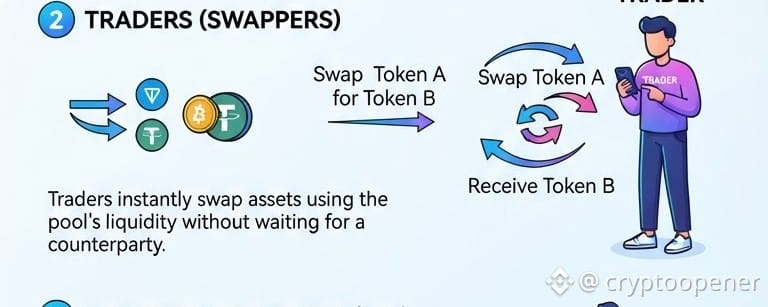
ບົດຄວາມ
Understanding Liquidity Pools Before You Trade on STON.fiDecentralized trading works differently from the familiar model of buying and selling through a centralized exchange. Instead of relying on a company to hold users’ funds and match every order, many decentralized exchanges use liquidity pools. Understanding this mechanism can help TON users make more informed decisions when exploring STON.fi.
A liquidity pool is a collection of tokens supplied by users so that other participants can swap between them. These users are called liquidity providers. When someone trades through a pool, the pool’s token balances change according to the exchange’s pricing mechanism. The price therefore reflects the relationship between the assets available in the pool, rather than a traditional order book filled with individual buy and sell orders.
Liquidity matters because it affects how smoothly a swap can be completed. A pool with deeper liquidity can generally handle larger trades with less price impact than a shallow pool, all else being equal. Price impact is the difference between the market price before a trade and the effective price resulting from that trade. It can become more noticeable when a trade is large relative to the pool’s available assets.
For anyone using STON.fi, checking the estimated output before confirming a swap is a useful habit. The displayed amount is an estimate, not a promise that market conditions cannot change. Network conditions, pool balances, and the size of the transaction can influence the final result. Reviewing the details helps users decide whether the trade meets their expectations.
Liquidity providers should also understand that supplying tokens is not the same as simply holding them in a wallet. Pool positions can change in value as token prices move, and providers may experience impermanent loss compared with holding the same assets separately. Trading fees may offset some of that difference, but there is no guaranteed outcome.
The important lesson is to understand the role each participant plays. Traders use available liquidity to exchange assets, while liquidity providers make those exchanges possible by depositing tokens under a pool’s rules. Both activities involve risks that deserve attention. This distinction matters when evaluating pool depth.
Before using any decentralized finance product, learn how the relevant pool works, verify token details, and avoid committing funds you cannot afford to lose. A clear understanding of liquidity turns a swap from a simple button press into a more informed decision.
$GRAM
#defi
#STONfi
Understanding Liquidity Pools Before You Trade on STON.fi
Decentralized trading works differently from the familiar model of buying and selling through a centralized exchange. Instead of relying on a company to hold users’ funds and match every order, many decentralized exchanges use liquidity pools. Understanding this mechanism can help TON users make more informed decisions when exploring STON.fi.
A liquidity pool is a collection of tokens supplied by users so that other participants can swap between them. These users are called liquidity providers. When someone trades through a pool, the pool’s token balances change according to the exchange’s pricing mechanism. The price therefore reflects the relationship between the assets available in the pool, rather than a traditional order book filled with individual buy and sell orders.
Liquidity matters because it affects how smoothly a swap can be completed. A pool with deeper liquidity can generally handle larger trades with less price impact than a shallow pool, all else being equal. Price impact is the difference between the market price before a trade and the effective price resulting from that trade. It can become more noticeable when a trade is large relative to the pool’s available assets.
For anyone using STON.fi, checking the estimated output before confirming a swap is a useful habit. The displayed amount is an estimate, not a promise that market conditions cannot change. Network conditions, pool balances, and the size of the transaction can influence the final result. Reviewing the details helps users decide whether the trade meets their expectations.
Liquidity providers should also understand that supplying tokens is not the same as simply holding them in a wallet. Pool positions can change in value as token prices move, and providers may experience impermanent loss compared with holding the same assets separately. Trading fees may offset some of that difference, but there is no guaranteed outcome.
The important lesson is to understand the role each participant plays. Traders use available liquidity to exchange assets, while liquidity providers make those exchanges possible by depositing tokens under a pool’s rules. Both activities involve risks that deserve attention. This distinction matters when evaluating pool depth.
Before using any decentralized finance product, learn how the relevant pool works, verify token details, and avoid committing funds you cannot afford to lose. A clear understanding of liquidity turns a swap from a simple button press into a more informed decision.
$GRAM
#defi
#STONfi
A liquidity pool is a collection of tokens supplied by users so that other participants can swap between them. These users are called liquidity providers. When someone trades through a pool, the pool’s token balances change according to the exchange’s pricing mechanism. The price therefore reflects the relationship between the assets available in the pool, rather than a traditional order book filled with individual buy and sell orders.
Liquidity matters because it affects how smoothly a swap can be completed. A pool with deeper liquidity can generally handle larger trades with less price impact than a shallow pool, all else being equal. Price impact is the difference between the market price before a trade and the effective price resulting from that trade. It can become more noticeable when a trade is large relative to the pool’s available assets.
For anyone using STON.fi, checking the estimated output before confirming a swap is a useful habit. The displayed amount is an estimate, not a promise that market conditions cannot change. Network conditions, pool balances, and the size of the transaction can influence the final result. Reviewing the details helps users decide whether the trade meets their expectations.
Liquidity providers should also understand that supplying tokens is not the same as simply holding them in a wallet. Pool positions can change in value as token prices move, and providers may experience impermanent loss compared with holding the same assets separately. Trading fees may offset some of that difference, but there is no guaranteed outcome.
The important lesson is to understand the role each participant plays. Traders use available liquidity to exchange assets, while liquidity providers make those exchanges possible by depositing tokens under a pool’s rules. Both activities involve risks that deserve attention. This distinction matters when evaluating pool depth.
Before using any decentralized finance product, learn how the relevant pool works, verify token details, and avoid committing funds you cannot afford to lose. A clear understanding of liquidity turns a swap from a simple button press into a more informed decision.
$GRAM
#defi
#STONfi
328

Liquidity and Slippage: Two DeFi Concepts You Should Understand
Liquidity determines how easily an asset can be traded. Slippage is the difference between an expected trade price and the actual execution price.
Why should you care?
Low liquidity and large trades can cause greater price impact, meaning you may receive less than expected.
STON.fi brings token swaps and liquidity pools to the TON ecosystem, making it a useful platform to explore these DeFi concepts in practice.
New to decentralized exchanges? Learn the basics here: https://whatisdex.com/
Before swapping on STON.fi, review the estimated output, understand applicable fees, and check transaction details carefully.
@stonfi #STONfi #TON #defi #cryptoeducation
Liquidity and Slippage: Two DeFi Concepts You Should Understand
Liquidity determines how easily an asset can be traded. Slippage is the difference between an expected trade price and the actual execution price.
Why should you care?
Low liquidity and large trades can cause greater price impact, meaning you may receive less than expected.
STON.fi brings token swaps and liquidity pools to the TON ecosystem, making it a useful platform to explore these DeFi concepts in practice.
New to decentralized exchanges? Learn the basics here: https://whatisdex.com/
Before swapping on STON.fi, review the estimated output, understand applicable fees, and check transaction details carefully.
@STONfi DEX #STONfi #TON #defi #cryptoeducation
Liquidity determines how easily an asset can be traded. Slippage is the difference between an expected trade price and the actual execution price.
Why should you care?
Low liquidity and large trades can cause greater price impact, meaning you may receive less than expected.
STON.fi brings token swaps and liquidity pools to the TON ecosystem, making it a useful platform to explore these DeFi concepts in practice.
New to decentralized exchanges? Learn the basics here: https://whatisdex.com/
Before swapping on STON.fi, review the estimated output, understand applicable fees, and check transaction details carefully.
@STONfi DEX #STONfi #TON #defi #cryptoeducation
1
31
Want to Move USDT From TON to Base?
Different blockchains offer different applications, but moving assets between them requires a compatible cross-chain route.
Before making a transfer, remember to:
✅ Confirm your source token and network. ✅ Check the destination network.
✅ Review estimated output and fees.
✅ Verify every transaction before signing.
STON.fi provides a dedicated guide to help users understand the TON-to-Base swap process.
Explore it here: https://ston.fi/cross-chain-swap-from-ton-to-base
Cross-chain access can expand your DeFi opportunities, but always check the supported route and transaction details before proceeding.
@stonfi #STONfi #TON
Want to Move USDT From TON to Base?
Different blockchains offer different applications, but moving assets between them requires a compatible cross-chain route.
Before making a transfer, remember to:
✅ Confirm your source token and network. ✅ Check the destination network.
✅ Review estimated output and fees.
✅ Verify every transaction before signing.
STON.fi provides a dedicated guide to help users understand the TON-to-Base swap process.
Explore it here: https://ston.fi/cross-chain-swap-from-ton-to-base
Cross-chain access can expand your DeFi opportunities, but always check the supported route and transaction details before proceeding.
@STONfi DEX #STONfi #TON
Different blockchains offer different applications, but moving assets between them requires a compatible cross-chain route.
Before making a transfer, remember to:
✅ Confirm your source token and network. ✅ Check the destination network.
✅ Review estimated output and fees.
✅ Verify every transaction before signing.
STON.fi provides a dedicated guide to help users understand the TON-to-Base swap process.
Explore it here: https://ston.fi/cross-chain-swap-from-ton-to-base
Cross-chain access can expand your DeFi opportunities, but always check the supported route and transaction details before proceeding.
@STONfi DEX #STONfi #TON
1
75

·
--
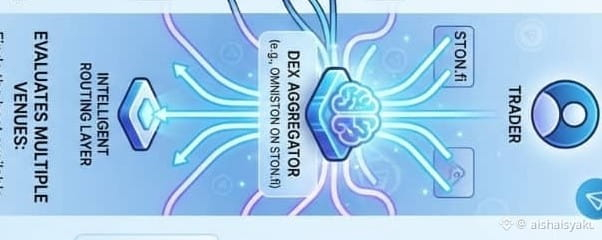
ບົດຄວາມ
What Is a DEX Aggregator and Why Does It Matter on TON?Decentralized trading gives users more control, but finding the right swap route can be harder than it looks.
On TON, liquidity is spread across different decentralized exchanges and liquidity pools. This is where a DEX aggregator becomes useful.
Step 1: Understand the problem
A decentralized exchange (DEX) lets users swap tokens through blockchain-based systems rather than relying on a centralized intermediary.
However, different pools can offer different exchange rates for the same token pair. Liquidity depth, pool balances, and trade size can all affect the amount a trader receives.
Checking every venue manually takes time and makes comparisons harder.
Step 2: Understand what an aggregator does
A DEX aggregator acts as a routing layer. Instead of relying on one liquidity source, it checks connected venues and evaluates available routes.
Some swaps may also use multiple pools to reach the desired result.
The goal is to identify a competitive route among the sources the aggregator can access, not to guarantee the best price across every venue.
Step 3: Explore Omniston on STON.fi
STON.fi uses Omniston to aggregate TON liquidity and route swaps across connected sources. These include STON.fi, DeDust, Tonco, and swap.coffee pools, according to STON.fi's documentation.
This means users can access aggregated routing through the STON.fi interface without manually checking every connected DEX.
Step 4: Check your swap before confirming
Here is a simple workflow:
1. Connect your compatible TON wallet to STON.fi.
2. Select the token you want to swap and the token you want to receive.
3. Enter your intended amount.
4. Review the quoted output, price impact, minimum received, and blockchain fee.
5. Confirm only when the details match your expectations.
Remember that an aggregator cannot eliminate liquidity risks or guarantee a favorable outcome.
Final thoughts
A DEX aggregator makes fragmented liquidity easier to navigate by reducing manual comparisons.
On TON, Omniston brings this routing approach into STON.fi, helping users evaluate available swap routes through one interface.
The important question is simple: how much will your chosen route actually deliver?
Always verify current connected liquidity sources and interface details before publishing a tutorial
$GRAM
#STONfi
#DEFİ
What Is a DEX Aggregator and Why Does It Matter on TON?
Decentralized trading gives users more control, but finding the right swap route can be harder than it looks.
On TON, liquidity is spread across different decentralized exchanges and liquidity pools. This is where a DEX aggregator becomes useful.
Step 1: Understand the problem
A decentralized exchange (DEX) lets users swap tokens through blockchain-based systems rather than relying on a centralized intermediary.
However, different pools can offer different exchange rates for the same token pair. Liquidity depth, pool balances, and trade size can all affect the amount a trader receives.
Checking every venue manually takes time and makes comparisons harder.
Step 2: Understand what an aggregator does
A DEX aggregator acts as a routing layer. Instead of relying on one liquidity source, it checks connected venues and evaluates available routes.
Some swaps may also use multiple pools to reach the desired result.
The goal is to identify a competitive route among the sources the aggregator can access, not to guarantee the best price across every venue.
Step 3: Explore Omniston on STON.fi
STON.fi uses Omniston to aggregate TON liquidity and route swaps across connected sources. These include STON.fi, DeDust, Tonco, and swap.coffee pools, according to STON.fi's documentation.
This means users can access aggregated routing through the STON.fi interface without manually checking every connected DEX.
Step 4: Check your swap before confirming
Here is a simple workflow:
1. Connect your compatible TON wallet to STON.fi.
2. Select the token you want to swap and the token you want to receive.
3. Enter your intended amount.
4. Review the quoted output, price impact, minimum received, and blockchain fee.
5. Confirm only when the details match your expectations.
Remember that an aggregator cannot eliminate liquidity risks or guarantee a favorable outcome.
Final thoughts
A DEX aggregator makes fragmented liquidity easier to navigate by reducing manual comparisons.
On TON, Omniston brings this routing approach into STON.fi, helping users evaluate available swap routes through one interface.
The important question is simple: how much will your chosen route actually deliver?
Always verify current connected liquidity sources and interface details before publishing a tutorial
$GRAM
#STONfi
#DEFİ
On TON, liquidity is spread across different decentralized exchanges and liquidity pools. This is where a DEX aggregator becomes useful.
Step 1: Understand the problem
A decentralized exchange (DEX) lets users swap tokens through blockchain-based systems rather than relying on a centralized intermediary.
However, different pools can offer different exchange rates for the same token pair. Liquidity depth, pool balances, and trade size can all affect the amount a trader receives.
Checking every venue manually takes time and makes comparisons harder.
Step 2: Understand what an aggregator does
A DEX aggregator acts as a routing layer. Instead of relying on one liquidity source, it checks connected venues and evaluates available routes.
Some swaps may also use multiple pools to reach the desired result.
The goal is to identify a competitive route among the sources the aggregator can access, not to guarantee the best price across every venue.
Step 3: Explore Omniston on STON.fi
STON.fi uses Omniston to aggregate TON liquidity and route swaps across connected sources. These include STON.fi, DeDust, Tonco, and swap.coffee pools, according to STON.fi's documentation.
This means users can access aggregated routing through the STON.fi interface without manually checking every connected DEX.
Step 4: Check your swap before confirming
Here is a simple workflow:
1. Connect your compatible TON wallet to STON.fi.
2. Select the token you want to swap and the token you want to receive.
3. Enter your intended amount.
4. Review the quoted output, price impact, minimum received, and blockchain fee.
5. Confirm only when the details match your expectations.
Remember that an aggregator cannot eliminate liquidity risks or guarantee a favorable outcome.
Final thoughts
A DEX aggregator makes fragmented liquidity easier to navigate by reducing manual comparisons.
On TON, Omniston brings this routing approach into STON.fi, helping users evaluate available swap routes through one interface.
The important question is simple: how much will your chosen route actually deliver?
Always verify current connected liquidity sources and interface details before publishing a tutorial
$GRAM
#STONfi
#DEFİ
367
·
--
Understanding DEX Trading on TON: The Role of STON.fiDecentralized exchanges are an important part of the TON ecosystem because they allow users to exchange digital assets without relying on a traditional centralized intermediary. STON.fi is one platform contributing to this growing DeFi landscape.
One important aspect of decentralized trading is accessibility. Users need a straightforward way to interact with blockchain assets while maintaining control over their wallets. However, convenience should not replace careful research and security awareness.
STON.fi provides a decentralized exchange experience on TON, allowing users to swap supported tokens through blockchain-based transactions. Like other DeFi platforms, its usefulness depends on factors such as liquidity, transaction costs, network activity, and the availability of supported assets.
Liquidity is particularly important because it can influence how efficiently a swap is completed and how much price impact a transaction experiences. Understanding these factors helps users make better-informed decisions rather than focusing only on short-term market movements.
As the TON ecosystem develops, decentralized applications will continue to be evaluated by their usability, reliability, and ability to meet real user needs. Cross-chain interoperability is another area worth watching because it may create additional ways for assets and blockchain communities to connect.
Ultimately, understanding how a DEX works is just as important as knowing how to use one. Users should review transaction details, verify token addresses, and understand the risks associated with smart contracts before interacting with any decentralized finance application.
#STONfi
#TON
#defi
Understanding DEX Trading on TON: The Role of STON.fi
Decentralized exchanges are an important part of the TON ecosystem because they allow users to exchange digital assets without relying on a traditional centralized intermediary. STON.fi is one platform contributing to this growing DeFi landscape.
One important aspect of decentralized trading is accessibility. Users need a straightforward way to interact with blockchain assets while maintaining control over their wallets. However, convenience should not replace careful research and security awareness.
STON.fi provides a decentralized exchange experience on TON, allowing users to swap supported tokens through blockchain-based transactions. Like other DeFi platforms, its usefulness depends on factors such as liquidity, transaction costs, network activity, and the availability of supported assets.
Liquidity is particularly important because it can influence how efficiently a swap is completed and how much price impact a transaction experiences. Understanding these factors helps users make better-informed decisions rather than focusing only on short-term market movements.
As the TON ecosystem develops, decentralized applications will continue to be evaluated by their usability, reliability, and ability to meet real user needs. Cross-chain interoperability is another area worth watching because it may create additional ways for assets and blockchain communities to connect.
Ultimately, understanding how a DEX works is just as important as knowing how to use one. Users should review transaction details, verify token addresses, and understand the risks associated with smart contracts before interacting with any decentralized finance application.
#STONfi
#TON
#defi
One important aspect of decentralized trading is accessibility. Users need a straightforward way to interact with blockchain assets while maintaining control over their wallets. However, convenience should not replace careful research and security awareness.
STON.fi provides a decentralized exchange experience on TON, allowing users to swap supported tokens through blockchain-based transactions. Like other DeFi platforms, its usefulness depends on factors such as liquidity, transaction costs, network activity, and the availability of supported assets.
Liquidity is particularly important because it can influence how efficiently a swap is completed and how much price impact a transaction experiences. Understanding these factors helps users make better-informed decisions rather than focusing only on short-term market movements.
As the TON ecosystem develops, decentralized applications will continue to be evaluated by their usability, reliability, and ability to meet real user needs. Cross-chain interoperability is another area worth watching because it may create additional ways for assets and blockchain communities to connect.
Ultimately, understanding how a DEX works is just as important as knowing how to use one. Users should review transaction details, verify token addresses, and understand the risks associated with smart contracts before interacting with any decentralized finance application.
#STONfi
#TON
#defi
1
89

·
--
Different blockchains. Different assets. One big question: how do you move between them?
Welcome to cross-chain swaps.
Crypto operates across multiple networks, but assets on one blockchain don’t automatically work on another.
That’s where cross-chain infrastructure becomes important.
Before exploring cross-chain swaps with @STON_fi, understand three things:
1. Network matters.
Always confirm which blockchain your assets are on before making a transaction.
2. Compatibility matters.
A token with the same name on two networks may not represent the same asset.
3. Security comes first.
Use official interfaces, check supported networks, and understand the fees and risks before transferring funds.
The goal isn't simply to move tokens. It's to make different blockchain ecosystems easier to navigate without compromising security.
Explore the STON.fi ecosystem and verify its current supported features before swapping.
In Web3, interoperability creates possibilities, but understanding the route protects your assets.
#STONFI #TON #DEFİ #CrossChain #Web3
Different blockchains. Different assets. One big question: how do you move between them?
Welcome to cross-chain swaps.
Crypto operates across multiple networks, but assets on one blockchain don’t automatically work on another.
That’s where cross-chain infrastructure becomes important.
Before exploring cross-chain swaps with @STON_fi, understand three things:
1. Network matters.
Always confirm which blockchain your assets are on before making a transaction.
2. Compatibility matters.
A token with the same name on two networks may not represent the same asset.
3. Security comes first.
Use official interfaces, check supported networks, and understand the fees and risks before transferring funds.
The goal isn't simply to move tokens. It's to make different blockchain ecosystems easier to navigate without compromising security.
Explore the STON.fi ecosystem and verify its current supported features before swapping.
In Web3, interoperability creates possibilities, but understanding the route protects your assets.
#STONFI #TON #DEFİ #CrossChain #Web3
Welcome to cross-chain swaps.
Crypto operates across multiple networks, but assets on one blockchain don’t automatically work on another.
That’s where cross-chain infrastructure becomes important.
Before exploring cross-chain swaps with @STON_fi, understand three things:
1. Network matters.
Always confirm which blockchain your assets are on before making a transaction.
2. Compatibility matters.
A token with the same name on two networks may not represent the same asset.
3. Security comes first.
Use official interfaces, check supported networks, and understand the fees and risks before transferring funds.
The goal isn't simply to move tokens. It's to make different blockchain ecosystems easier to navigate without compromising security.
Explore the STON.fi ecosystem and verify its current supported features before swapping.
In Web3, interoperability creates possibilities, but understanding the route protects your assets.
#STONFI #TON #DEFİ #CrossChain #Web3
54
·
--
ບົດຄວາມ
Why USDT Alone Can't Pay Gas on TON: GRAM Reserves and STON.fi Swaps ExplainedImagine a wallet holding 200 USDT. The owner opens a swap screen, picks the amount, and taps confirm. Instead of a quote, they get a warning that the wallet doesn't have enough of something else.
It feels wrong. The balance is there, so why won't the transaction go through? The answer is that two different things are involved in every swap: the asset you want to move, and the asset the network accepts as payment for processing the move. This article explains how those two fit together on TON, and how STON.fi handles the second one.
A quick note on names
Until mid-2026, TON's native currency was called Toncoin, with the ticker TON. After a community vote, it was renamed Gram (GRAM). TON's documentation describes this as the official native currency today. The blockchain itself is still called TON, and the asset is the same one, with the same balances and addresses. Older guides, wallets and some pages still say "Toncoin" or "TON" for what is now GRAM. Nothing needs to be migrated or exchanged. Anyone offering to "convert your Toncoin to GRAM" is not describing a real step.
What gas actually is
When you use a blockchain, the network's validators do real work: running smart-contract code, passing messages between contracts, and storing the results. That work has a cost, and gas is the unit used to measure the computing part of it.
A courier analogy helps. If you send a package worth $200, the courier still charges a delivery fee. The fee isn't deducted from the package's value, and it doesn't depend on how valuable the contents are. It pays for the handling. Gas works the same way: the value being moved and the cost of moving it are separate things.
This isn't identical on every chain. Some networks use one fee market for everything, while others split costs differently. So the specifics below are about TON.
How TON charges for transactions
TON's documentation breaks a transaction's cost into several parts that line up with the stages of processing:
Compute fees pay for code execution, measured in gas units.
Forward and action fees pay for sending messages onward.
Storage fees pay for keeping contract data on-chain.
Import fees apply to inbound external messages.
The total is the sum of these. The documentation also explains that validators set the prices through network configuration, and users can't override them. All of these costs are denominated in the native currency, which is now GRAM.
For an internal message, the GRAM attached to the message sets how much gas the receiving contract can use. So the native currency is what actually pays for the work.
Why USDT can't pay its own way
On TON, USDT is a jetton, which is TON's standard for fungible tokens (similar in purpose to ERC-20 tokens elsewhere). Jettons aren't stored in a single ledger. The jetton contract tracks supply and metadata, and each holder has their own small jetton-wallet contract that tracks their balance and handles transfers.
Moving a jetton therefore means sending messages between contracts, and each contract that runs needs gas. The jetton itself has no way to pay that bill, since the network prices computation in GRAM. That's why a wallet full of USDT can still be stuck.
Here's a hypothetical. Alice holds enough USDT for a swap, but her wallet's GRAM balance is too low to cover the transaction costs. Depending on the app, the swap may be blocked before she signs, or it may fail after submission. Either way, the fix is to add a small amount of GRAM, not more USDT. Requirements differ between operations and routes, so don't assume every swap needs the same buffer.
Reserved gas vs. spent gas
Now to a practical example. A swap on a decentralized exchange isn't a single step. Your wallet's message passes through a jetton wallet, a router and a liquidity pool, and the result is sent back to you. Nobody can know the exact cost in advance, because it depends on the route and pool.
STON.fi's Help Center explains its approach. The interface reserves slightly more GRAM than the final fee is expected to be, so the transaction doesn't fail midway for lack of gas. After execution, the unused portion is sent back automatically. Their own analogy is a card hold at a gas station: a larger hold first, then a final charge for what you actually used. The Help Center also says reserved GRAM is returned if a transaction fails.
The main lesson is that the reserve is a ceiling, not a bill. If you see a larger amount requested than you expected, that doesn't mean that's what the swap will cost.
Three other points keep this clear:
A reserve isn't the only cost. A swap can also carry a pool trading fee, which is set per pool and is separate from network gas. Slippage and price impact are different again. They describe how the price moves, not what the network charges.
Complex routes change the picture. More messages and more contracts can mean a different required buffer.
Numbers drift. STON.fi's Help Center currently lists a reservation cap and a typical spent range for swaps, but these have changed over time. For current values, check the Help Center and the confirmation screen rather than any article, including this one.
A practical example: sending USDT from TON to Base
STON.fi's guide to sending USDT from TON to Base walks through a cross-chain route. According to the guide, you connect a TON wallet and a Base-compatible wallet, choose the token and destination network, enter the amount, review the swap details and fees, confirm in your wallet, and wait for execution. It notes that fees may include TON network fees plus cross-chain execution fees, and that the confirmation screen shows the amount you'd receive on Base including fees.
Cross-chain adds preparation that a simple swap doesn't. You're working with two networks and two wallets, and the guide itself warns that cross-chain transactions can't be reversed. It also suggests a small test transaction before sending a large amount.
With the concepts above, the guide becomes easier to read:
Your USDT is the asset being moved.
The network fee line is where the cost of processing on TON shows up.
The final quote is what you should trust, not a rough guess made beforehand.
One caution: the guide doesn't spell out how reserves or refunds work for cross-chain routes specifically. Don't assume the swap behavior described above carries over. Check what the interface shows for your route.
Pre-swap checklist
Confirm your wallet is connected to the right network.Check that your USDT (or other jetton) balance covers the amount you intend to swap.Check which asset the interface needs for network costs. On TON, expect that to be GRAM.Read the displayed reserve and fee details, and don't treat the reserve as the final fee.Look up the current fee information in STON.fi's Help Center if anything is unclearConfirm the destination network, asset and address before signing.Never share your seed phrase or private key with anyone offering help.
FAQ
Why can I have USDT but still be unable to swap?
Because the network's processing costs are paid in its native currency (GRAM), not in the token you're swapping. If your GRAM balance is too low, the operation can be blocked or fail.
Is the gas reserve the same as the final transaction fee?
No. STON.fi describes the reserve as a cap set above the expected cost. The actual network fee is what's consumed, and STON.fi's Help Center says the unused portion is returned for swaps.
Can transaction costs change?
Yes. TON's fee levels are set through network configuration, and STON.fi's reserve and route behavior can also change. Treat any specific figure as a snapshot.
Why might a cross-chain operation require more preparation than a simple transfer?
It involves two networks, usually two wallets, extra execution steps, and a transaction that can't be reversed once confirmed. A single mistake in the address or network can be costly.
Where should I check current fee and reserve requirements?
In the live STON.fi swap interface, on its confirmation screen, and in STON.fi's Help Center. TON's own documentation covers how fees are structured.
The takeaway
The thing you want to swap and the thing that pays for the swap are separate. Keep a small GRAM buffer next to your USDT, read the reserve as a ceiling rather than a price, and check the confirmation screen before you sign. That habit prevents most of the avoidable failures on TON.
Sources
TON docs, whitepapers overview, transaction fees, gas, jetton standard
STON.fi, Help Center: Blockchain and DEX fees
STON.fi, How to send USDT from TON to Base
#EarningsSeason #Stonfi #DEX #TON
Why USDT Alone Can't Pay Gas on TON: GRAM Reserves and STON.fi Swaps Explained
Imagine a wallet holding 200 USDT. The owner opens a swap screen, picks the amount, and taps confirm. Instead of a quote, they get a warning that the wallet doesn't have enough of something else.
It feels wrong. The balance is there, so why won't the transaction go through? The answer is that two different things are involved in every swap: the asset you want to move, and the asset the network accepts as payment for processing the move. This article explains how those two fit together on TON, and how STON.fi handles the second one.
A quick note on names
Until mid-2026, TON's native currency was called Toncoin, with the ticker TON. After a community vote, it was renamed Gram (GRAM). TON's documentation describes this as the official native currency today. The blockchain itself is still called TON, and the asset is the same one, with the same balances and addresses. Older guides, wallets and some pages still say "Toncoin" or "TON" for what is now GRAM. Nothing needs to be migrated or exchanged. Anyone offering to "convert your Toncoin to GRAM" is not describing a real step.
What gas actually is
When you use a blockchain, the network's validators do real work: running smart-contract code, passing messages between contracts, and storing the results. That work has a cost, and gas is the unit used to measure the computing part of it.
A courier analogy helps. If you send a package worth $200, the courier still charges a delivery fee. The fee isn't deducted from the package's value, and it doesn't depend on how valuable the contents are. It pays for the handling. Gas works the same way: the value being moved and the cost of moving it are separate things.
This isn't identical on every chain. Some networks use one fee market for everything, while others split costs differently. So the specifics below are about TON.
How TON charges for transactions
TON's documentation breaks a transaction's cost into several parts that line up with the stages of processing:
Compute fees pay for code execution, measured in gas units.
Forward and action fees pay for sending messages onward.
Storage fees pay for keeping contract data on-chain.
Import fees apply to inbound external messages.
The total is the sum of these. The documentation also explains that validators set the prices through network configuration, and users can't override them. All of these costs are denominated in the native currency, which is now GRAM.
For an internal message, the GRAM attached to the message sets how much gas the receiving contract can use. So the native currency is what actually pays for the work.
Why USDT can't pay its own way
On TON, USDT is a jetton, which is TON's standard for fungible tokens (similar in purpose to ERC-20 tokens elsewhere). Jettons aren't stored in a single ledger. The jetton contract tracks supply and metadata, and each holder has their own small jetton-wallet contract that tracks their balance and handles transfers.
Moving a jetton therefore means sending messages between contracts, and each contract that runs needs gas. The jetton itself has no way to pay that bill, since the network prices computation in GRAM. That's why a wallet full of USDT can still be stuck.
Here's a hypothetical. Alice holds enough USDT for a swap, but her wallet's GRAM balance is too low to cover the transaction costs. Depending on the app, the swap may be blocked before she signs, or it may fail after submission. Either way, the fix is to add a small amount of GRAM, not more USDT. Requirements differ between operations and routes, so don't assume every swap needs the same buffer.
Reserved gas vs. spent gas
Now to a practical example. A swap on a decentralized exchange isn't a single step. Your wallet's message passes through a jetton wallet, a router and a liquidity pool, and the result is sent back to you. Nobody can know the exact cost in advance, because it depends on the route and pool.
STON.fi's Help Center explains its approach. The interface reserves slightly more GRAM than the final fee is expected to be, so the transaction doesn't fail midway for lack of gas. After execution, the unused portion is sent back automatically. Their own analogy is a card hold at a gas station: a larger hold first, then a final charge for what you actually used. The Help Center also says reserved GRAM is returned if a transaction fails.
The main lesson is that the reserve is a ceiling, not a bill. If you see a larger amount requested than you expected, that doesn't mean that's what the swap will cost.
Three other points keep this clear:
A reserve isn't the only cost. A swap can also carry a pool trading fee, which is set per pool and is separate from network gas. Slippage and price impact are different again. They describe how the price moves, not what the network charges.
Complex routes change the picture. More messages and more contracts can mean a different required buffer.
Numbers drift. STON.fi's Help Center currently lists a reservation cap and a typical spent range for swaps, but these have changed over time. For current values, check the Help Center and the confirmation screen rather than any article, including this one.
A practical example: sending USDT from TON to Base
STON.fi's guide to sending USDT from TON to Base walks through a cross-chain route. According to the guide, you connect a TON wallet and a Base-compatible wallet, choose the token and destination network, enter the amount, review the swap details and fees, confirm in your wallet, and wait for execution. It notes that fees may include TON network fees plus cross-chain execution fees, and that the confirmation screen shows the amount you'd receive on Base including fees.
Cross-chain adds preparation that a simple swap doesn't. You're working with two networks and two wallets, and the guide itself warns that cross-chain transactions can't be reversed. It also suggests a small test transaction before sending a large amount.
With the concepts above, the guide becomes easier to read:
Your USDT is the asset being moved.
The network fee line is where the cost of processing on TON shows up.
The final quote is what you should trust, not a rough guess made beforehand.
One caution: the guide doesn't spell out how reserves or refunds work for cross-chain routes specifically. Don't assume the swap behavior described above carries over. Check what the interface shows for your route.
Pre-swap checklist
Confirm your wallet is connected to the right network.Check that your USDT (or other jetton) balance covers the amount you intend to swap.Check which asset the interface needs for network costs. On TON, expect that to be GRAM.Read the displayed reserve and fee details, and don't treat the reserve as the final fee.Look up the current fee information in STON.fi's Help Center if anything is unclearConfirm the destination network, asset and address before signing.Never share your seed phrase or private key with anyone offering help.
FAQ
Why can I have USDT but still be unable to swap?
Because the network's processing costs are paid in its native currency (GRAM), not in the token you're swapping. If your GRAM balance is too low, the operation can be blocked or fail.
Is the gas reserve the same as the final transaction fee?
No. STON.fi describes the reserve as a cap set above the expected cost. The actual network fee is what's consumed, and STON.fi's Help Center says the unused portion is returned for swaps.
Can transaction costs change?
Yes. TON's fee levels are set through network configuration, and STON.fi's reserve and route behavior can also change. Treat any specific figure as a snapshot.
Why might a cross-chain operation require more preparation than a simple transfer?
It involves two networks, usually two wallets, extra execution steps, and a transaction that can't be reversed once confirmed. A single mistake in the address or network can be costly.
Where should I check current fee and reserve requirements?
In the live STON.fi swap interface, on its confirmation screen, and in STON.fi's Help Center. TON's own documentation covers how fees are structured.
The takeaway
The thing you want to swap and the thing that pays for the swap are separate. Keep a small GRAM buffer next to your USDT, read the reserve as a ceiling rather than a price, and check the confirmation screen before you sign. That habit prevents most of the avoidable failures on TON.
Sources
TON docs, whitepapers overview, transaction fees, gas, jetton standard
STON.fi, Help Center: Blockchain and DEX fees
STON.fi, How to send USDT from TON to Base
#EarningsSeason #Stonfi #DEX #TON
It feels wrong. The balance is there, so why won't the transaction go through? The answer is that two different things are involved in every swap: the asset you want to move, and the asset the network accepts as payment for processing the move. This article explains how those two fit together on TON, and how STON.fi handles the second one.
A quick note on names
Until mid-2026, TON's native currency was called Toncoin, with the ticker TON. After a community vote, it was renamed Gram (GRAM). TON's documentation describes this as the official native currency today. The blockchain itself is still called TON, and the asset is the same one, with the same balances and addresses. Older guides, wallets and some pages still say "Toncoin" or "TON" for what is now GRAM. Nothing needs to be migrated or exchanged. Anyone offering to "convert your Toncoin to GRAM" is not describing a real step.
What gas actually is
When you use a blockchain, the network's validators do real work: running smart-contract code, passing messages between contracts, and storing the results. That work has a cost, and gas is the unit used to measure the computing part of it.
A courier analogy helps. If you send a package worth $200, the courier still charges a delivery fee. The fee isn't deducted from the package's value, and it doesn't depend on how valuable the contents are. It pays for the handling. Gas works the same way: the value being moved and the cost of moving it are separate things.
This isn't identical on every chain. Some networks use one fee market for everything, while others split costs differently. So the specifics below are about TON.
How TON charges for transactions
TON's documentation breaks a transaction's cost into several parts that line up with the stages of processing:
Compute fees pay for code execution, measured in gas units.
Forward and action fees pay for sending messages onward.
Storage fees pay for keeping contract data on-chain.
Import fees apply to inbound external messages.
The total is the sum of these. The documentation also explains that validators set the prices through network configuration, and users can't override them. All of these costs are denominated in the native currency, which is now GRAM.
For an internal message, the GRAM attached to the message sets how much gas the receiving contract can use. So the native currency is what actually pays for the work.
Why USDT can't pay its own way
On TON, USDT is a jetton, which is TON's standard for fungible tokens (similar in purpose to ERC-20 tokens elsewhere). Jettons aren't stored in a single ledger. The jetton contract tracks supply and metadata, and each holder has their own small jetton-wallet contract that tracks their balance and handles transfers.
Moving a jetton therefore means sending messages between contracts, and each contract that runs needs gas. The jetton itself has no way to pay that bill, since the network prices computation in GRAM. That's why a wallet full of USDT can still be stuck.
Here's a hypothetical. Alice holds enough USDT for a swap, but her wallet's GRAM balance is too low to cover the transaction costs. Depending on the app, the swap may be blocked before she signs, or it may fail after submission. Either way, the fix is to add a small amount of GRAM, not more USDT. Requirements differ between operations and routes, so don't assume every swap needs the same buffer.
Reserved gas vs. spent gas
Now to a practical example. A swap on a decentralized exchange isn't a single step. Your wallet's message passes through a jetton wallet, a router and a liquidity pool, and the result is sent back to you. Nobody can know the exact cost in advance, because it depends on the route and pool.
STON.fi's Help Center explains its approach. The interface reserves slightly more GRAM than the final fee is expected to be, so the transaction doesn't fail midway for lack of gas. After execution, the unused portion is sent back automatically. Their own analogy is a card hold at a gas station: a larger hold first, then a final charge for what you actually used. The Help Center also says reserved GRAM is returned if a transaction fails.
The main lesson is that the reserve is a ceiling, not a bill. If you see a larger amount requested than you expected, that doesn't mean that's what the swap will cost.
Three other points keep this clear:
A reserve isn't the only cost. A swap can also carry a pool trading fee, which is set per pool and is separate from network gas. Slippage and price impact are different again. They describe how the price moves, not what the network charges.
Complex routes change the picture. More messages and more contracts can mean a different required buffer.
Numbers drift. STON.fi's Help Center currently lists a reservation cap and a typical spent range for swaps, but these have changed over time. For current values, check the Help Center and the confirmation screen rather than any article, including this one.
A practical example: sending USDT from TON to Base
STON.fi's guide to sending USDT from TON to Base walks through a cross-chain route. According to the guide, you connect a TON wallet and a Base-compatible wallet, choose the token and destination network, enter the amount, review the swap details and fees, confirm in your wallet, and wait for execution. It notes that fees may include TON network fees plus cross-chain execution fees, and that the confirmation screen shows the amount you'd receive on Base including fees.
Cross-chain adds preparation that a simple swap doesn't. You're working with two networks and two wallets, and the guide itself warns that cross-chain transactions can't be reversed. It also suggests a small test transaction before sending a large amount.
With the concepts above, the guide becomes easier to read:
Your USDT is the asset being moved.
The network fee line is where the cost of processing on TON shows up.
The final quote is what you should trust, not a rough guess made beforehand.
One caution: the guide doesn't spell out how reserves or refunds work for cross-chain routes specifically. Don't assume the swap behavior described above carries over. Check what the interface shows for your route.
Pre-swap checklist
Confirm your wallet is connected to the right network.Check that your USDT (or other jetton) balance covers the amount you intend to swap.Check which asset the interface needs for network costs. On TON, expect that to be GRAM.Read the displayed reserve and fee details, and don't treat the reserve as the final fee.Look up the current fee information in STON.fi's Help Center if anything is unclearConfirm the destination network, asset and address before signing.Never share your seed phrase or private key with anyone offering help.
FAQ
Why can I have USDT but still be unable to swap?
Because the network's processing costs are paid in its native currency (GRAM), not in the token you're swapping. If your GRAM balance is too low, the operation can be blocked or fail.
Is the gas reserve the same as the final transaction fee?
No. STON.fi describes the reserve as a cap set above the expected cost. The actual network fee is what's consumed, and STON.fi's Help Center says the unused portion is returned for swaps.
Can transaction costs change?
Yes. TON's fee levels are set through network configuration, and STON.fi's reserve and route behavior can also change. Treat any specific figure as a snapshot.
Why might a cross-chain operation require more preparation than a simple transfer?
It involves two networks, usually two wallets, extra execution steps, and a transaction that can't be reversed once confirmed. A single mistake in the address or network can be costly.
Where should I check current fee and reserve requirements?
In the live STON.fi swap interface, on its confirmation screen, and in STON.fi's Help Center. TON's own documentation covers how fees are structured.
The takeaway
The thing you want to swap and the thing that pays for the swap are separate. Keep a small GRAM buffer next to your USDT, read the reserve as a ceiling rather than a price, and check the confirmation screen before you sign. That habit prevents most of the avoidable failures on TON.
Sources
TON docs, whitepapers overview, transaction fees, gas, jetton standard
STON.fi, Help Center: Blockchain and DEX fees
STON.fi, How to send USDT from TON to Base
#EarningsSeason #Stonfi #DEX #TON
1
483

·
--
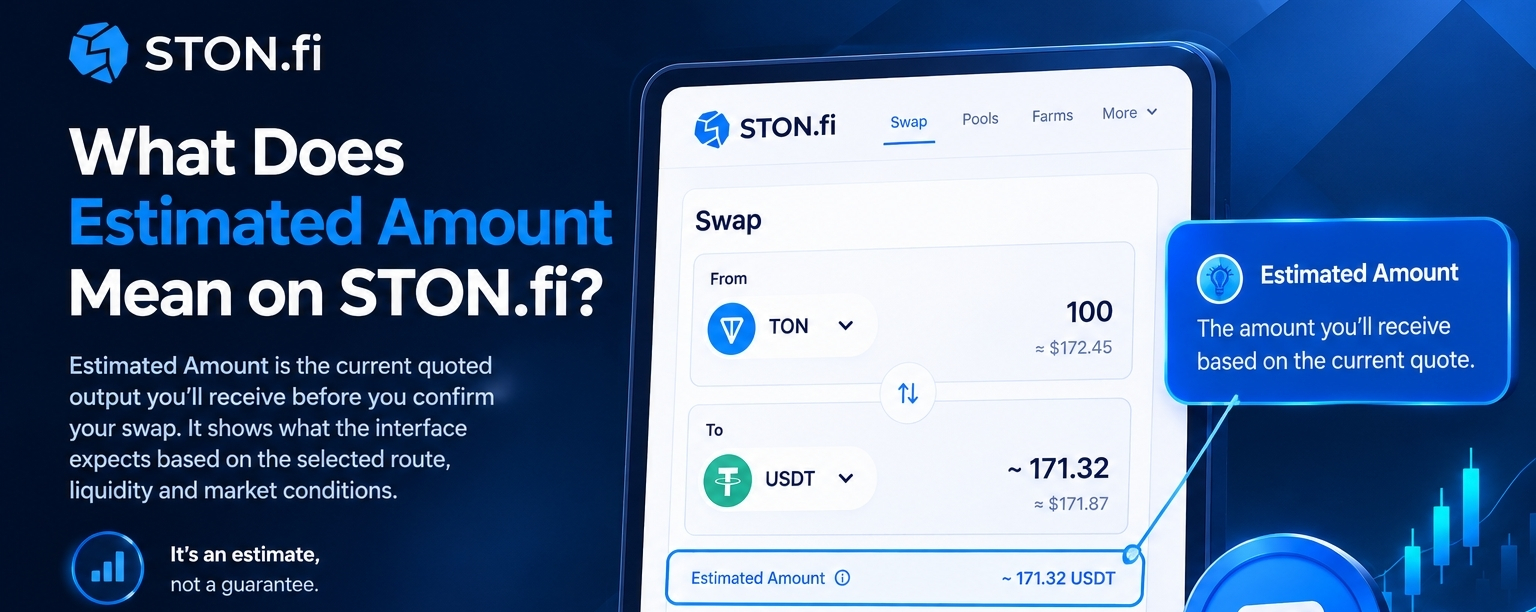
ບົດຄວາມ
What does Estimated amount mean on STON.fi?When swapping tokens, one of the first things you want to know is how much you will receive in return.
On STON.fi, the swap preview helps you understand the expected output before you confirm a transaction. One important detail to understand is the difference between the Estimated Amount and the Minimum Received.
They may look similar, but they serve different purposes.
What Is Estimated Amount?
Estimated Amount is the amount of the destination token the swap quote currently indicates you should receive if you proceed with the transaction.
For example, imagine you want to swap 100 TON for another token. Before confirming, STON.fi displays an estimated output based on the available swap route and the conditions used to calculate the quote.
That figure helps you evaluate the proposed trade before committing your funds.
However, it is an estimate, not a guaranteed final amount. The actual result can differ because of changes in market prices, liquidity, or execution conditions between receiving the quote and completing the swap.
What Determines the Estimated Amount?
The estimated output depends on several factors.
1. The swap route
The route used to exchange your tokens affects the quoted output. Different available routes may offer different rates and execution conditions.
2. Available liquidity
Liquidity affects how much of one token can be exchanged for another at a given price. A trade that is large relative to the available liquidity can produce a less favourable rate.
3. Market conditions
Token prices and pool balances can change. If the conditions change before your transaction executes, the final amount may differ from the original estimate.
4. Trade size and price impact
Larger swaps can move the pool price more significantly, especially in pools with limited liquidity. This can reduce the amount you receive compared with a smaller trade at otherwise similar conditions.
The important point is that Estimated Amount reflects the current quote, not a promise that the same amount will arrive regardless of what happens before execution.
Estimated Amount vs. Minimum Received
These two values answer different questions.
- Estimated Amount: How much does the current quote indicate I should receive?
- Minimum Received: What is the lowest output allowed under the transaction's configured slippage tolerance?
For example, suppose your swap preview shows an Estimated Amount of 500 tokens. If the applicable slippage tolerance is 1%, the Minimum Received may be approximately 495 tokens, assuming that calculation applies directly to the quoted output and no other protocol-specific conditions change it.
The actual displayed Minimum Received depends on the transaction details and interface calculation.
Minimum Received is not another prediction of the most likely outcome. It is the lower limit used for the swap under the configured conditions. If the transaction cannot satisfy the applicable requirements, it may fail rather than complete at an unacceptable rate.
STON.fi explains these transaction details in its Help Center article: "What do price impact, swap rate, blockchain fee, and minimum received mean?" (https://help.ston.fi/hc/en-us/articles/28370505198876-What-do-price-impact-swap-rate-blockchain-fee-and-minimum-received-mean)
Where Can You Find Estimated Amount on STON.fi?
You can review the expected output in the swap preview before confirming your transaction.
Here is the basic process:
1. Open the "STON.fi Swap interface" (https://app.ston.fi/swap).
2. Connect your wallet.
3. Select the token you want to send and the token you want to receive.
4. Enter the amount you want to swap.
5. Review the displayed output estimate and the other available swap details.
6. Check the price impact, swap rate, network fee, and Minimum Received where shown.
7. Confirm only after you are comfortable with the quoted conditions.
The interface calculates the expected output after you choose the tokens and enter the amount. Labels and displayed details may vary with the swap flow, so use the actual preview presented for your transaction.
STON.fi Help Center: "Your first swap on STON.fi" (https://help.ston.fi/hc/en-us/articles/28370513724828-Your-first-swap-on-STON-fi)
High vs. Low Price Impact: Why the Estimate Matters
Consider two hypothetical swaps using the same token pair.
Example A: Low price impact
You swap a relatively small amount into a pool with sufficient liquidity. The trade has limited effect on the pool's price, so the quoted output is relatively close to the prevailing rate.
Example B: High price impact
You swap a much larger amount into a pool with limited liquidity. Your trade moves the pool price more significantly, resulting in a less favourable exchange rate and a lower estimated output than you might expect from the headline token price.
These examples illustrate why the Estimated Amount should always be considered alongside Price Impact. A token's market price alone does not tell you how much you will receive for a particular trade.
What Should You Check Before Confirming?
Before completing a swap on STON.fi, take a moment to review the following:
- Estimated Amount: Is the expected output acceptable?
- Price Impact: Is your trade significantly moving the pool price?
- Minimum Received: Is the lower output limit acceptable?
- Swap Rate: Does the quoted exchange rate make sense for the pair?
- Blockchain Fee: Do you have enough funds to cover the network cost?
If the estimated output is lower than expected or the price impact is unusually high, pause and review the quote. You may want to compare available routes or reconsider the trade size.
Remember that splitting a trade into smaller swaps does not automatically improve the total outcome, because fees and changing market conditions can offset any benefit.
Final Thoughts
Estimated Amount gives you a useful preview of what a swap may deliver. It helps you evaluate the trade before confirming, but it should not be treated as a guaranteed result.
Minimum Received serves a different purpose by setting the lower output limit under the transaction's applicable slippage settings.
When using STON.fi, check both values alongside Price Impact and the swap rate. Understanding these details makes it easier to judge whether the quoted trade meets your expectations before you approve it.
Explore the "STON.fi Help Center" for more practical guidance on swapping tokens and understanding transaction parameters.
https://ston.fi/cross-chain-swap-from-ton-to-base
#STONfi #TON #DeFi #CryptoEducation
$MRNAB $PLTRB $BNB
What does Estimated amount mean on STON.fi?
When swapping tokens, one of the first things you want to know is how much you will receive in return.
On STON.fi, the swap preview helps you understand the expected output before you confirm a transaction. One important detail to understand is the difference between the Estimated Amount and the Minimum Received.
They may look similar, but they serve different purposes.
What Is Estimated Amount?
Estimated Amount is the amount of the destination token the swap quote currently indicates you should receive if you proceed with the transaction.
For example, imagine you want to swap 100 TON for another token. Before confirming, STON.fi displays an estimated output based on the available swap route and the conditions used to calculate the quote.
That figure helps you evaluate the proposed trade before committing your funds.
However, it is an estimate, not a guaranteed final amount. The actual result can differ because of changes in market prices, liquidity, or execution conditions between receiving the quote and completing the swap.
What Determines the Estimated Amount?
The estimated output depends on several factors.
1. The swap route
The route used to exchange your tokens affects the quoted output. Different available routes may offer different rates and execution conditions.
2. Available liquidity
Liquidity affects how much of one token can be exchanged for another at a given price. A trade that is large relative to the available liquidity can produce a less favourable rate.
3. Market conditions
Token prices and pool balances can change. If the conditions change before your transaction executes, the final amount may differ from the original estimate.
4. Trade size and price impact
Larger swaps can move the pool price more significantly, especially in pools with limited liquidity. This can reduce the amount you receive compared with a smaller trade at otherwise similar conditions.
The important point is that Estimated Amount reflects the current quote, not a promise that the same amount will arrive regardless of what happens before execution.
Estimated Amount vs. Minimum Received
These two values answer different questions.
- Estimated Amount: How much does the current quote indicate I should receive?
- Minimum Received: What is the lowest output allowed under the transaction's configured slippage tolerance?
For example, suppose your swap preview shows an Estimated Amount of 500 tokens. If the applicable slippage tolerance is 1%, the Minimum Received may be approximately 495 tokens, assuming that calculation applies directly to the quoted output and no other protocol-specific conditions change it.
The actual displayed Minimum Received depends on the transaction details and interface calculation.
Minimum Received is not another prediction of the most likely outcome. It is the lower limit used for the swap under the configured conditions. If the transaction cannot satisfy the applicable requirements, it may fail rather than complete at an unacceptable rate.
STON.fi explains these transaction details in its Help Center article: "What do price impact, swap rate, blockchain fee, and minimum received mean?" (https://help.ston.fi/hc/en-us/articles/28370505198876-What-do-price-impact-swap-rate-blockchain-fee-and-minimum-received-mean)
Where Can You Find Estimated Amount on STON.fi?
You can review the expected output in the swap preview before confirming your transaction.
Here is the basic process:
1. Open the "STON.fi Swap interface" (https://app.ston.fi/swap).
2. Connect your wallet.
3. Select the token you want to send and the token you want to receive.
4. Enter the amount you want to swap.
5. Review the displayed output estimate and the other available swap details.
6. Check the price impact, swap rate, network fee, and Minimum Received where shown.
7. Confirm only after you are comfortable with the quoted conditions.
The interface calculates the expected output after you choose the tokens and enter the amount. Labels and displayed details may vary with the swap flow, so use the actual preview presented for your transaction.
STON.fi Help Center: "Your first swap on STON.fi" (https://help.ston.fi/hc/en-us/articles/28370513724828-Your-first-swap-on-STON-fi)
High vs. Low Price Impact: Why the Estimate Matters
Consider two hypothetical swaps using the same token pair.
Example A: Low price impact
You swap a relatively small amount into a pool with sufficient liquidity. The trade has limited effect on the pool's price, so the quoted output is relatively close to the prevailing rate.
Example B: High price impact
You swap a much larger amount into a pool with limited liquidity. Your trade moves the pool price more significantly, resulting in a less favourable exchange rate and a lower estimated output than you might expect from the headline token price.
These examples illustrate why the Estimated Amount should always be considered alongside Price Impact. A token's market price alone does not tell you how much you will receive for a particular trade.
What Should You Check Before Confirming?
Before completing a swap on STON.fi, take a moment to review the following:
- Estimated Amount: Is the expected output acceptable?
- Price Impact: Is your trade significantly moving the pool price?
- Minimum Received: Is the lower output limit acceptable?
- Swap Rate: Does the quoted exchange rate make sense for the pair?
- Blockchain Fee: Do you have enough funds to cover the network cost?
If the estimated output is lower than expected or the price impact is unusually high, pause and review the quote. You may want to compare available routes or reconsider the trade size.
Remember that splitting a trade into smaller swaps does not automatically improve the total outcome, because fees and changing market conditions can offset any benefit.
Final Thoughts
Estimated Amount gives you a useful preview of what a swap may deliver. It helps you evaluate the trade before confirming, but it should not be treated as a guaranteed result.
Minimum Received serves a different purpose by setting the lower output limit under the transaction's applicable slippage settings.
When using STON.fi, check both values alongside Price Impact and the swap rate. Understanding these details makes it easier to judge whether the quoted trade meets your expectations before you approve it.
Explore the "STON.fi Help Center" for more practical guidance on swapping tokens and understanding transaction parameters.
https://ston.fi/cross-chain-swap-from-ton-to-base
#STONfi #TON #DeFi #CryptoEducation
$MRNAB $PLTRB $BNB
On STON.fi, the swap preview helps you understand the expected output before you confirm a transaction. One important detail to understand is the difference between the Estimated Amount and the Minimum Received.
They may look similar, but they serve different purposes.
What Is Estimated Amount?
Estimated Amount is the amount of the destination token the swap quote currently indicates you should receive if you proceed with the transaction.
For example, imagine you want to swap 100 TON for another token. Before confirming, STON.fi displays an estimated output based on the available swap route and the conditions used to calculate the quote.
That figure helps you evaluate the proposed trade before committing your funds.
However, it is an estimate, not a guaranteed final amount. The actual result can differ because of changes in market prices, liquidity, or execution conditions between receiving the quote and completing the swap.
What Determines the Estimated Amount?
The estimated output depends on several factors.
1. The swap route
The route used to exchange your tokens affects the quoted output. Different available routes may offer different rates and execution conditions.
2. Available liquidity
Liquidity affects how much of one token can be exchanged for another at a given price. A trade that is large relative to the available liquidity can produce a less favourable rate.
3. Market conditions
Token prices and pool balances can change. If the conditions change before your transaction executes, the final amount may differ from the original estimate.
4. Trade size and price impact
Larger swaps can move the pool price more significantly, especially in pools with limited liquidity. This can reduce the amount you receive compared with a smaller trade at otherwise similar conditions.
The important point is that Estimated Amount reflects the current quote, not a promise that the same amount will arrive regardless of what happens before execution.
Estimated Amount vs. Minimum Received
These two values answer different questions.
- Estimated Amount: How much does the current quote indicate I should receive?
- Minimum Received: What is the lowest output allowed under the transaction's configured slippage tolerance?
For example, suppose your swap preview shows an Estimated Amount of 500 tokens. If the applicable slippage tolerance is 1%, the Minimum Received may be approximately 495 tokens, assuming that calculation applies directly to the quoted output and no other protocol-specific conditions change it.
The actual displayed Minimum Received depends on the transaction details and interface calculation.
Minimum Received is not another prediction of the most likely outcome. It is the lower limit used for the swap under the configured conditions. If the transaction cannot satisfy the applicable requirements, it may fail rather than complete at an unacceptable rate.
STON.fi explains these transaction details in its Help Center article: "What do price impact, swap rate, blockchain fee, and minimum received mean?" (https://help.ston.fi/hc/en-us/articles/28370505198876-What-do-price-impact-swap-rate-blockchain-fee-and-minimum-received-mean)
Where Can You Find Estimated Amount on STON.fi?
You can review the expected output in the swap preview before confirming your transaction.
Here is the basic process:
1. Open the "STON.fi Swap interface" (https://app.ston.fi/swap).
2. Connect your wallet.
3. Select the token you want to send and the token you want to receive.
4. Enter the amount you want to swap.
5. Review the displayed output estimate and the other available swap details.
6. Check the price impact, swap rate, network fee, and Minimum Received where shown.
7. Confirm only after you are comfortable with the quoted conditions.
The interface calculates the expected output after you choose the tokens and enter the amount. Labels and displayed details may vary with the swap flow, so use the actual preview presented for your transaction.
STON.fi Help Center: "Your first swap on STON.fi" (https://help.ston.fi/hc/en-us/articles/28370513724828-Your-first-swap-on-STON-fi)
High vs. Low Price Impact: Why the Estimate Matters
Consider two hypothetical swaps using the same token pair.
Example A: Low price impact
You swap a relatively small amount into a pool with sufficient liquidity. The trade has limited effect on the pool's price, so the quoted output is relatively close to the prevailing rate.
Example B: High price impact
You swap a much larger amount into a pool with limited liquidity. Your trade moves the pool price more significantly, resulting in a less favourable exchange rate and a lower estimated output than you might expect from the headline token price.
These examples illustrate why the Estimated Amount should always be considered alongside Price Impact. A token's market price alone does not tell you how much you will receive for a particular trade.
What Should You Check Before Confirming?
Before completing a swap on STON.fi, take a moment to review the following:
- Estimated Amount: Is the expected output acceptable?
- Price Impact: Is your trade significantly moving the pool price?
- Minimum Received: Is the lower output limit acceptable?
- Swap Rate: Does the quoted exchange rate make sense for the pair?
- Blockchain Fee: Do you have enough funds to cover the network cost?
If the estimated output is lower than expected or the price impact is unusually high, pause and review the quote. You may want to compare available routes or reconsider the trade size.
Remember that splitting a trade into smaller swaps does not automatically improve the total outcome, because fees and changing market conditions can offset any benefit.
Final Thoughts
Estimated Amount gives you a useful preview of what a swap may deliver. It helps you evaluate the trade before confirming, but it should not be treated as a guaranteed result.
Minimum Received serves a different purpose by setting the lower output limit under the transaction's applicable slippage settings.
When using STON.fi, check both values alongside Price Impact and the swap rate. Understanding these details makes it easier to judge whether the quoted trade meets your expectations before you approve it.
Explore the "STON.fi Help Center" for more practical guidance on swapping tokens and understanding transaction parameters.
https://ston.fi/cross-chain-swap-from-ton-to-base
#STONfi #TON #DeFi #CryptoEducation
$MRNAB $PLTRB $BNB
406

·
--
ບົດຄວາມ
How to Verify a Cross-Chain Swap on STON.fi Destination Network, Quote, Fees and WalletCross-chain swaps allow users to exchange assets across different blockchain networks. However a successful transaction involves more than selecting a token and clicking the swap button.
Users need to understand where their assets are going how much they can expect to receive what the transaction costs and which wallet is involved.
Consider the route from USDT on The Open Network (TON) to USDG on Robinhood Chain through STON.fi.
Before initiating this swap users should verify four critical elements the destination network, the transaction quote, the applicable fees and the wallet details.
Understanding these checks can help users make informed decisions and reduce avoidable transaction errors.
1. Verify the Destination Network and Asset
The first step is confirming that the destination network and receiving asset are correct for this route the source asset is USDT on TON while the intended destination is USDG on Robinhood Chain.
These are two separate components of the transaction. The network determines where the asset will be received while the token identifies what the user intends to receive.
Before proceeding verify that:
- USDT is selected on TON as the source asset.Robinhood Chain is selected as the destination network.USDG is selected as the receiving asset.
This distinction matters because the same token ticker may appear across different networks without representing the same underlying token contract or issuance.
Users should never assume that an asset is supported simply because it exists on a particular blockchain.
The live STON.fi interface should confirm whether the specific USDT-to-USDG route is currently available.
2. Review the Exact Transaction Quote
The transaction quote helps users understand the expected result before authorizing a swap.
When reviewing the quote pay attention to the amount of USDT being exchanged and the estimated amount of USDG to be received.
Depending on the interface additional information may include the estimated exchange rate, price impact, slippage tolerance and minimum receiving amount.
Each detail provides a different piece of information.
The source amount shows how much the user intends to exchange. The estimated receiving amount indicates the expected output.
Price impact and slippage information can help users understand how execution conditions might affect the result.
However a displayed quote should not automatically be treated as a guaranteed final amount Market conditions, liquidity, route execution and other transaction parameters may affect the final outcome for this reason, users should review the latest quote immediately before confirming the transaction.
Best practice: Record the actual quote displayed by STON.fi when preparing a tutorial or competition entry.
Never invent an exchange rate or publish an estimated amount as a verified result.
3. Understand the Transaction Fees
Transaction costs are another important consideration.
Depending on the route and its implementation a cross-chain swap may involve source-network gas fees, swap or routing fees and other network-related costs.
These charges may not all be presented in the same way.
Users should therefore determine which costs are included in the displayed quote and whether any additional charges apply.
For example a route that appears attractive based on its estimated exchange rate may deliver a less favorable result once all applicable costs are considered.
Understanding the total transaction cost helps users evaluate whether the swap makes sense for their intended purpose.
Before confirming check the fees displayed by the interface and ensure that the connected wallet has sufficient funds to cover any required network charges.
Do not assume that every route has the same fee structure or that all costs are included in the quoted amount.
4. Verify the Connected Wallet
Wallet verification is essential because the transaction depends on the correct source account and destination details.
First confirm that the wallet connected to STON.fi is the one holding the USDT you intend to exchange.
Next verify that the wallet can authorize the required source-network transaction.
For the destination confirm that the receiving wallet or address is appropriate for Robinhood Chain and the intended USDG asset.
If the interface handles destination details automatically review the information it provides rather than assuming that every setting is correct.
Users should also examine the transaction approval request before signing. Understand what is being authorized and avoid approving unexpected or suspicious requests.
Never disclose your wallet's recovery phrase or private keys to complete a swap.
A legitimate transaction workflow should not require you to share these credentials with another person or website.
5. Understand the Risks Before Confirming
Even when the network, quote, fees and wallet appear correct, cross-chain swaps carry risks.
Route availability
A route may become unavailable or change as liquidity, network conditions or integrations change.
Confirm availability in the live interface rather than relying solely on an older tutorial.
Execution and slippage
The final amount may differ from the estimate because of execution conditions or changes in the transaction quote.
Review the applicable slippage settings and minimum receiving amount where available.
Network delays
Cross-chain transactions can involve multiple operations. Congestion or technical issues may delay completion.
Do not assume that a transaction is complete simply because the initial wallet approval succeeded.
Smart-contract and protocol risks
Cross-chain infrastructure depends on technical components that may contain vulnerabilities or experience unexpected failures. These risks can result in financial losses.
Stablecoin risks
USDG is designed to maintain a value close to one US dollar but its peg is not guaranteed under every market condition. Stablecoins can carry issuer, reserve, regulatory and operational risks.
Incorrect transaction details
Selecting the wrong network, token or destination can cause delays or difficulties accessing funds.
Careful verification reduces avoidable mistakes but it cannot eliminate every technical or financial risk.
6. A Practical Pre-Swap Checklist
Before swapping USDT on TON for USDG on Robinhood Chain through STON.fi review the following checklist.
Destination network
Is Robinhood Chain selected?Is USDG the intended receiving asset?Is the route currently available?
Transaction quote
Is the source amount correct?Have you reviewed the estimated USDG output?Do you understand the displayed exchange rate and slippage information?Is the minimum receiving amount acceptable if provided?
Transaction fees
Have you checked the applicable fees?Do you understand which costs are included in the quote?Does your wallet have enough funds for the required network charges?
Wallet verification
Is the correct source wallet connected?Are the destination details correct?Do you understand the transaction approval request?Have you avoided sharing your recovery phrase or private keys?
If any critical detail is missing or unclear pause before authorizing the transaction.
Verifying the destination network transaction quote, fees and wallet is a fundamental part of using cross-chain infrastructure responsibly.
For a swap from USDT on TON to USDG on Robinhood Chain each check serves a specific purpose.
The destination network confirms where the transaction is intended to end. The quote explains the expected output. The fee review helps users understand the cost. Wallet verification helps ensure that the transaction is authorized through the correct accounts and destination details.
Together these checks help users approach cross-chain swaps with greater understanding and fewer avoidable mistakes.
The objective is not simply to complete a transaction. It is to understand what you are authorizing, what it costs and what risks remain.
Before every swap follow four principles:
Verify the destination.
Review the quote.
Understand the fees.
Confirm the wallet.
Explore the "STON.fi swap interface" https://ston.fi/cross-chain-swap-from-ton-to-base to inspect the currently available route and transaction details.
$GRAM $XRP
#STONfi #TON #RobinhoodChain #USDG #CrossChain
How to Verify a Cross-Chain Swap on STON.fi Destination Network, Quote, Fees and Wallet
Cross-chain swaps allow users to exchange assets across different blockchain networks. However a successful transaction involves more than selecting a token and clicking the swap button.
Users need to understand where their assets are going how much they can expect to receive what the transaction costs and which wallet is involved.
Consider the route from USDT on The Open Network (TON) to USDG on Robinhood Chain through STON.fi.
Before initiating this swap users should verify four critical elements the destination network, the transaction quote, the applicable fees and the wallet details.
Understanding these checks can help users make informed decisions and reduce avoidable transaction errors.
1. Verify the Destination Network and Asset
The first step is confirming that the destination network and receiving asset are correct for this route the source asset is USDT on TON while the intended destination is USDG on Robinhood Chain.
These are two separate components of the transaction. The network determines where the asset will be received while the token identifies what the user intends to receive.
Before proceeding verify that:
- USDT is selected on TON as the source asset.Robinhood Chain is selected as the destination network.USDG is selected as the receiving asset.
This distinction matters because the same token ticker may appear across different networks without representing the same underlying token contract or issuance.
Users should never assume that an asset is supported simply because it exists on a particular blockchain.
The live STON.fi interface should confirm whether the specific USDT-to-USDG route is currently available.
2. Review the Exact Transaction Quote
The transaction quote helps users understand the expected result before authorizing a swap.
When reviewing the quote pay attention to the amount of USDT being exchanged and the estimated amount of USDG to be received.
Depending on the interface additional information may include the estimated exchange rate, price impact, slippage tolerance and minimum receiving amount.
Each detail provides a different piece of information.
The source amount shows how much the user intends to exchange. The estimated receiving amount indicates the expected output.
Price impact and slippage information can help users understand how execution conditions might affect the result.
However a displayed quote should not automatically be treated as a guaranteed final amount Market conditions, liquidity, route execution and other transaction parameters may affect the final outcome for this reason, users should review the latest quote immediately before confirming the transaction.
Best practice: Record the actual quote displayed by STON.fi when preparing a tutorial or competition entry.
Never invent an exchange rate or publish an estimated amount as a verified result.
3. Understand the Transaction Fees
Transaction costs are another important consideration.
Depending on the route and its implementation a cross-chain swap may involve source-network gas fees, swap or routing fees and other network-related costs.
These charges may not all be presented in the same way.
Users should therefore determine which costs are included in the displayed quote and whether any additional charges apply.
For example a route that appears attractive based on its estimated exchange rate may deliver a less favorable result once all applicable costs are considered.
Understanding the total transaction cost helps users evaluate whether the swap makes sense for their intended purpose.
Before confirming check the fees displayed by the interface and ensure that the connected wallet has sufficient funds to cover any required network charges.
Do not assume that every route has the same fee structure or that all costs are included in the quoted amount.
4. Verify the Connected Wallet
Wallet verification is essential because the transaction depends on the correct source account and destination details.
First confirm that the wallet connected to STON.fi is the one holding the USDT you intend to exchange.
Next verify that the wallet can authorize the required source-network transaction.
For the destination confirm that the receiving wallet or address is appropriate for Robinhood Chain and the intended USDG asset.
If the interface handles destination details automatically review the information it provides rather than assuming that every setting is correct.
Users should also examine the transaction approval request before signing. Understand what is being authorized and avoid approving unexpected or suspicious requests.
Never disclose your wallet's recovery phrase or private keys to complete a swap.
A legitimate transaction workflow should not require you to share these credentials with another person or website.
5. Understand the Risks Before Confirming
Even when the network, quote, fees and wallet appear correct, cross-chain swaps carry risks.
Route availability
A route may become unavailable or change as liquidity, network conditions or integrations change.
Confirm availability in the live interface rather than relying solely on an older tutorial.
Execution and slippage
The final amount may differ from the estimate because of execution conditions or changes in the transaction quote.
Review the applicable slippage settings and minimum receiving amount where available.
Network delays
Cross-chain transactions can involve multiple operations. Congestion or technical issues may delay completion.
Do not assume that a transaction is complete simply because the initial wallet approval succeeded.
Smart-contract and protocol risks
Cross-chain infrastructure depends on technical components that may contain vulnerabilities or experience unexpected failures. These risks can result in financial losses.
Stablecoin risks
USDG is designed to maintain a value close to one US dollar but its peg is not guaranteed under every market condition. Stablecoins can carry issuer, reserve, regulatory and operational risks.
Incorrect transaction details
Selecting the wrong network, token or destination can cause delays or difficulties accessing funds.
Careful verification reduces avoidable mistakes but it cannot eliminate every technical or financial risk.
6. A Practical Pre-Swap Checklist
Before swapping USDT on TON for USDG on Robinhood Chain through STON.fi review the following checklist.
Destination network
Is Robinhood Chain selected?Is USDG the intended receiving asset?Is the route currently available?
Transaction quote
Is the source amount correct?Have you reviewed the estimated USDG output?Do you understand the displayed exchange rate and slippage information?Is the minimum receiving amount acceptable if provided?
Transaction fees
Have you checked the applicable fees?Do you understand which costs are included in the quote?Does your wallet have enough funds for the required network charges?
Wallet verification
Is the correct source wallet connected?Are the destination details correct?Do you understand the transaction approval request?Have you avoided sharing your recovery phrase or private keys?
If any critical detail is missing or unclear pause before authorizing the transaction.
Verifying the destination network transaction quote, fees and wallet is a fundamental part of using cross-chain infrastructure responsibly.
For a swap from USDT on TON to USDG on Robinhood Chain each check serves a specific purpose.
The destination network confirms where the transaction is intended to end. The quote explains the expected output. The fee review helps users understand the cost. Wallet verification helps ensure that the transaction is authorized through the correct accounts and destination details.
Together these checks help users approach cross-chain swaps with greater understanding and fewer avoidable mistakes.
The objective is not simply to complete a transaction. It is to understand what you are authorizing, what it costs and what risks remain.
Before every swap follow four principles:
Verify the destination.
Review the quote.
Understand the fees.
Confirm the wallet.
Explore the "STON.fi swap interface" https://ston.fi/cross-chain-swap-from-ton-to-base to inspect the currently available route and transaction details.
$GRAM $XRP
#STONfi #TON #RobinhoodChain #USDG #CrossChain
Users need to understand where their assets are going how much they can expect to receive what the transaction costs and which wallet is involved.
Consider the route from USDT on The Open Network (TON) to USDG on Robinhood Chain through STON.fi.
Before initiating this swap users should verify four critical elements the destination network, the transaction quote, the applicable fees and the wallet details.
Understanding these checks can help users make informed decisions and reduce avoidable transaction errors.
1. Verify the Destination Network and Asset
The first step is confirming that the destination network and receiving asset are correct for this route the source asset is USDT on TON while the intended destination is USDG on Robinhood Chain.
These are two separate components of the transaction. The network determines where the asset will be received while the token identifies what the user intends to receive.
Before proceeding verify that:
- USDT is selected on TON as the source asset.Robinhood Chain is selected as the destination network.USDG is selected as the receiving asset.
This distinction matters because the same token ticker may appear across different networks without representing the same underlying token contract or issuance.
Users should never assume that an asset is supported simply because it exists on a particular blockchain.
The live STON.fi interface should confirm whether the specific USDT-to-USDG route is currently available.
2. Review the Exact Transaction Quote
The transaction quote helps users understand the expected result before authorizing a swap.
When reviewing the quote pay attention to the amount of USDT being exchanged and the estimated amount of USDG to be received.
Depending on the interface additional information may include the estimated exchange rate, price impact, slippage tolerance and minimum receiving amount.
Each detail provides a different piece of information.
The source amount shows how much the user intends to exchange. The estimated receiving amount indicates the expected output.
Price impact and slippage information can help users understand how execution conditions might affect the result.
However a displayed quote should not automatically be treated as a guaranteed final amount Market conditions, liquidity, route execution and other transaction parameters may affect the final outcome for this reason, users should review the latest quote immediately before confirming the transaction.
Best practice: Record the actual quote displayed by STON.fi when preparing a tutorial or competition entry.
Never invent an exchange rate or publish an estimated amount as a verified result.
3. Understand the Transaction Fees
Transaction costs are another important consideration.
Depending on the route and its implementation a cross-chain swap may involve source-network gas fees, swap or routing fees and other network-related costs.
These charges may not all be presented in the same way.
Users should therefore determine which costs are included in the displayed quote and whether any additional charges apply.
For example a route that appears attractive based on its estimated exchange rate may deliver a less favorable result once all applicable costs are considered.
Understanding the total transaction cost helps users evaluate whether the swap makes sense for their intended purpose.
Before confirming check the fees displayed by the interface and ensure that the connected wallet has sufficient funds to cover any required network charges.
Do not assume that every route has the same fee structure or that all costs are included in the quoted amount.
4. Verify the Connected Wallet
Wallet verification is essential because the transaction depends on the correct source account and destination details.
First confirm that the wallet connected to STON.fi is the one holding the USDT you intend to exchange.
Next verify that the wallet can authorize the required source-network transaction.
For the destination confirm that the receiving wallet or address is appropriate for Robinhood Chain and the intended USDG asset.
If the interface handles destination details automatically review the information it provides rather than assuming that every setting is correct.
Users should also examine the transaction approval request before signing. Understand what is being authorized and avoid approving unexpected or suspicious requests.
Never disclose your wallet's recovery phrase or private keys to complete a swap.
A legitimate transaction workflow should not require you to share these credentials with another person or website.
5. Understand the Risks Before Confirming
Even when the network, quote, fees and wallet appear correct, cross-chain swaps carry risks.
Route availability
A route may become unavailable or change as liquidity, network conditions or integrations change.
Confirm availability in the live interface rather than relying solely on an older tutorial.
Execution and slippage
The final amount may differ from the estimate because of execution conditions or changes in the transaction quote.
Review the applicable slippage settings and minimum receiving amount where available.
Network delays
Cross-chain transactions can involve multiple operations. Congestion or technical issues may delay completion.
Do not assume that a transaction is complete simply because the initial wallet approval succeeded.
Smart-contract and protocol risks
Cross-chain infrastructure depends on technical components that may contain vulnerabilities or experience unexpected failures. These risks can result in financial losses.
Stablecoin risks
USDG is designed to maintain a value close to one US dollar but its peg is not guaranteed under every market condition. Stablecoins can carry issuer, reserve, regulatory and operational risks.
Incorrect transaction details
Selecting the wrong network, token or destination can cause delays or difficulties accessing funds.
Careful verification reduces avoidable mistakes but it cannot eliminate every technical or financial risk.
6. A Practical Pre-Swap Checklist
Before swapping USDT on TON for USDG on Robinhood Chain through STON.fi review the following checklist.
Destination network
Is Robinhood Chain selected?Is USDG the intended receiving asset?Is the route currently available?
Transaction quote
Is the source amount correct?Have you reviewed the estimated USDG output?Do you understand the displayed exchange rate and slippage information?Is the minimum receiving amount acceptable if provided?
Transaction fees
Have you checked the applicable fees?Do you understand which costs are included in the quote?Does your wallet have enough funds for the required network charges?
Wallet verification
Is the correct source wallet connected?Are the destination details correct?Do you understand the transaction approval request?Have you avoided sharing your recovery phrase or private keys?
If any critical detail is missing or unclear pause before authorizing the transaction.
Verifying the destination network transaction quote, fees and wallet is a fundamental part of using cross-chain infrastructure responsibly.
For a swap from USDT on TON to USDG on Robinhood Chain each check serves a specific purpose.
The destination network confirms where the transaction is intended to end. The quote explains the expected output. The fee review helps users understand the cost. Wallet verification helps ensure that the transaction is authorized through the correct accounts and destination details.
Together these checks help users approach cross-chain swaps with greater understanding and fewer avoidable mistakes.
The objective is not simply to complete a transaction. It is to understand what you are authorizing, what it costs and what risks remain.
Before every swap follow four principles:
Verify the destination.
Review the quote.
Understand the fees.
Confirm the wallet.
Explore the "STON.fi swap interface" https://ston.fi/cross-chain-swap-from-ton-to-base to inspect the currently available route and transaction details.
$GRAM $XRP
#STONfi #TON #RobinhoodChain #USDG #CrossChain
165

·
--
ສັນຍານກະທິງ
What Happens When a Cross Chain Swap Fails?
Moving crypto between blockchains raises an important question: what happens to your funds if the swap does not complete?
STON.fi addresses this through Omniston, a cross chain execution protocol that uses linked Hashed Timelock Contracts, also known as HTLCs.
Here is how the process works.
When a cross chain swap begins, the user's source asset can be locked in a smart contract. A resolver locks the corresponding destination asset in another contract. Both contracts are linked through a shared cryptographic condition.
If the required condition is fulfilled within the time limit, the swap can settle on both sides.
If the swap cannot complete and the required secret is not revealed before the timelock expires, the locked assets become refundable to their original owners.
This is the idea behind atomic settlement: the process is designed to prevent one side from completing while the other side remains permanently unsettled.
However, pending does not automatically mean failed, and refunds should not be assumed to happen instantly. Always check your transaction status before taking further action.
Before making a cross chain swap:
1. Confirm the source and destination networks.
2. Check the token, receiving address and expected amount.
3. Review the quoted rate and fees.
4. Keep your transaction hash.
5. Verify the transaction status if processing takes longer than expected.
Want to understand how a cross chain route works in practice?
Read STON.fi's guide to sending USDT from TON to Base:
https://ston.fi/how-to-send-usdt-from-ton-to-base
Understanding how a swap settles is just as important as understanding its price.
#STONfi #DeFi #CrossChain $BNB $BTC $ETH
What Happens When a Cross Chain Swap Fails?
Moving crypto between blockchains raises an important question: what happens to your funds if the swap does not complete?
STON.fi addresses this through Omniston, a cross chain execution protocol that uses linked Hashed Timelock Contracts, also known as HTLCs.
Here is how the process works.
When a cross chain swap begins, the user's source asset can be locked in a smart contract. A resolver locks the corresponding destination asset in another contract. Both contracts are linked through a shared cryptographic condition.
If the required condition is fulfilled within the time limit, the swap can settle on both sides.
If the swap cannot complete and the required secret is not revealed before the timelock expires, the locked assets become refundable to their original owners.
This is the idea behind atomic settlement: the process is designed to prevent one side from completing while the other side remains permanently unsettled.
However, pending does not automatically mean failed, and refunds should not be assumed to happen instantly. Always check your transaction status before taking further action.
Before making a cross chain swap:
1. Confirm the source and destination networks.
2. Check the token, receiving address and expected amount.
3. Review the quoted rate and fees.
4. Keep your transaction hash.
5. Verify the transaction status if processing takes longer than expected.
Want to understand how a cross chain route works in practice?
Read STON.fi's guide to sending USDT from TON to Base:
https://ston.fi/how-to-send-usdt-from-ton-to-base
Understanding how a swap settles is just as important as understanding its price.
#STONfi #DeFi #CrossChain $BNB $BTC $ETH
Moving crypto between blockchains raises an important question: what happens to your funds if the swap does not complete?
STON.fi addresses this through Omniston, a cross chain execution protocol that uses linked Hashed Timelock Contracts, also known as HTLCs.
Here is how the process works.
When a cross chain swap begins, the user's source asset can be locked in a smart contract. A resolver locks the corresponding destination asset in another contract. Both contracts are linked through a shared cryptographic condition.
If the required condition is fulfilled within the time limit, the swap can settle on both sides.
If the swap cannot complete and the required secret is not revealed before the timelock expires, the locked assets become refundable to their original owners.
This is the idea behind atomic settlement: the process is designed to prevent one side from completing while the other side remains permanently unsettled.
However, pending does not automatically mean failed, and refunds should not be assumed to happen instantly. Always check your transaction status before taking further action.
Before making a cross chain swap:
1. Confirm the source and destination networks.
2. Check the token, receiving address and expected amount.
3. Review the quoted rate and fees.
4. Keep your transaction hash.
5. Verify the transaction status if processing takes longer than expected.
Want to understand how a cross chain route works in practice?
Read STON.fi's guide to sending USDT from TON to Base:
https://ston.fi/how-to-send-usdt-from-ton-to-base
Understanding how a swap settles is just as important as understanding its price.
#STONfi #DeFi #CrossChain $BNB $BTC $ETH
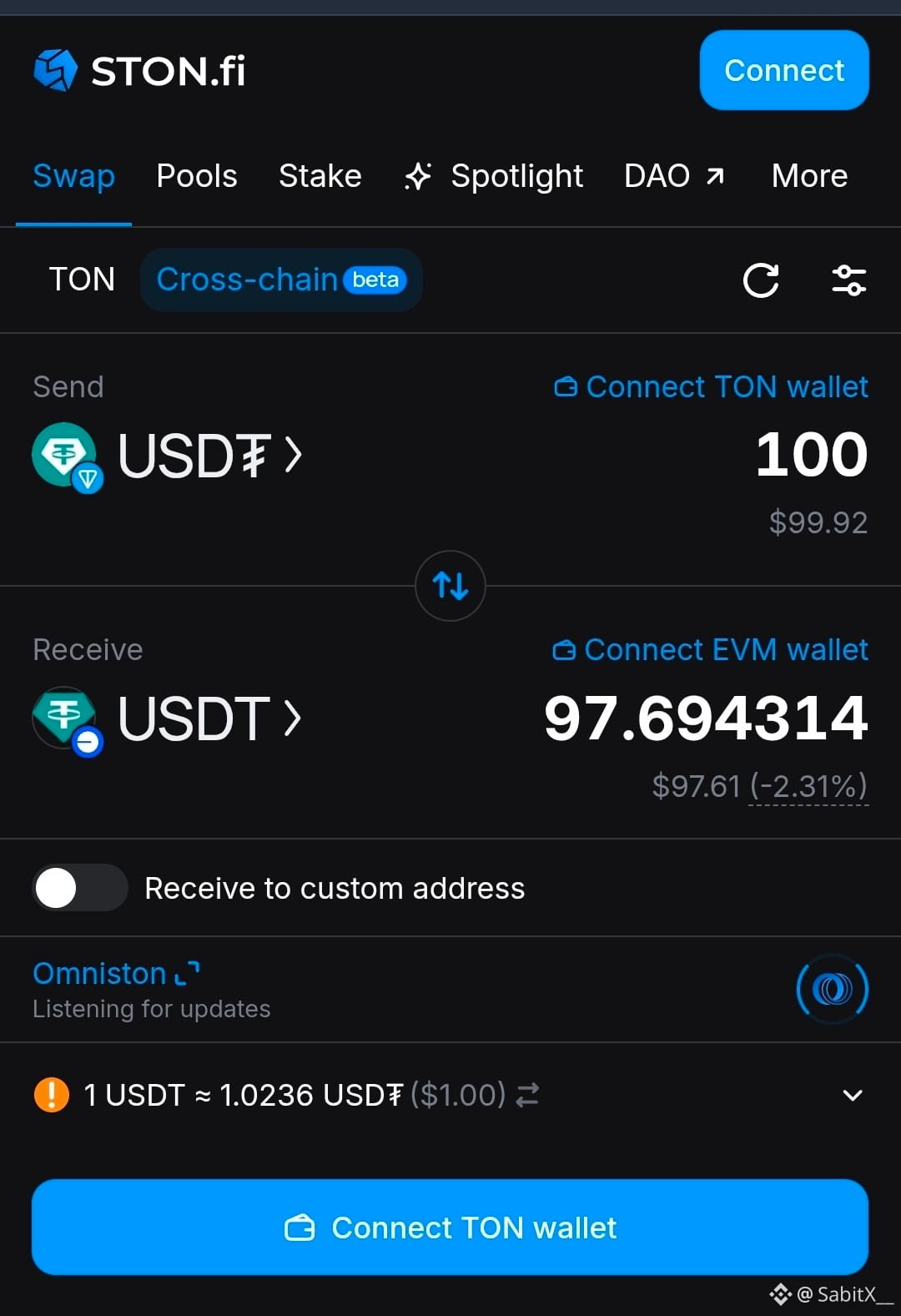
109
ເຂົ້າສູ່ລະບົບເພື່ອສຳຫຼວດເນື້ອຫາເພີ່ມເຕີມ
ເຂົ້າຮ່ວມກຸ່ມຜູ້ໃຊ້ຄຣິບໂຕທົ່ວໂລກໃນ Binance Square.
⚡️ ໄດ້ຮັບຂໍ້ມູນຫຼ້າສຸດ ແລະ ທີ່ມີປະໂຫຍດກ່ຽວກັບຄຣິບໂຕ.
💬 ໄດ້ຮັບຄວາມໄວ້ວາງໃຈຈາກຕະຫຼາດແລກປ່ຽນຄຣິບໂຕທີ່ໃຫຍ່ທີ່ສຸດໃນໂລກ.
👍 ຄົ້ນຫາຂໍ້ມູນເຊີງເລິກທີ່ແທ້ຈາກນັກສ້າງທີ່ໄດ້ຮັບການຢືນຢັນ.
ອີເມວ / ເບີໂທລະສັບ
ຫົວຂໍ້ທີ່ກໍາລັງນິຍົມ
1
#BinancePick
2.6M ຄັ້ງທີ່ເບິ່ງ
141,426 ກຳລັງສົນທະນາ
2
#EarningsSeason
5M ຄັ້ງທີ່ເບິ່ງ
24,334 ກຳລັງສົນທະນາ
3
#FranklinTempletonFilesForTwoDividendToBitcoinETFs
1,564 ຄັ້ງທີ່ເບິ່ງ
88 ກຳລັງສົນທະນາ
4
#StrategyMSTRSurpassesNasdaqInMarketCap
1,877 ຄັ້ງທີ່ເບິ່ງ
90 ກຳລັງສົນທະນາ
5
#CanadaProposesStablecoinRedemptionWithin3BusinessDays
97 ຄັ້ງທີ່ເບິ່ງ
12 ກຳລັງສົນທະນາ
6
#ElectrumWalletBugLetRogueServersStealFunds
8,475 ຄັ້ງທີ່ເບິ່ງ
231 ກຳລັງສົນທະນາ
7
#ArgentineCourtDismissesLIBRACaseAgainstMilei
18,618 ຄັ້ງທີ່ເບິ່ງ
313 ກຳລັງສົນທະນາ
8
#SKHynixReportedlyPlansSpecialDividendFromKioxiaStakeSale
3,122 ຄັ້ງທີ່ເບິ່ງ
48 ກຳລັງສົນທະນາ
9
#KeystoneWebsiteBreachExposesBuyersShippingAddresses
1,669 ຄັ້ງທີ່ເບິ່ງ
40 ກຳລັງສົນທະນາ
10
#USQ3GDPAndSeptemberPCEDueNextWeek
95,872 ຄັ້ງທີ່ເບິ່ງ
1,129 ກຳລັງສົນທະນາ