

#daos
daos
32,774 ຄັ້ງທີ່ເບິ່ງ
141 ກຳລັງສົນທະນາ
ມາແຮງ
ຫຼ້າສຸດ

·
--
ສັນຍານກະທິງ
ຢືນຢັນແລ້ວ
DeXe Protocol ($DEXE ) Market Update: Strong Product Upgrades Drive Interest ⚙️
DeXe ($DEXE ) has drawn positive market attention following key upgrades to its decentralized governance and DAO management platform.
Key Takeaways:
Product-Driven Growth: Upgrades integrating AI-driven tools into DAO treasury management have strengthened the token's real-world utility narrative.
Network & Wallet Expansion: Live mainnet demonstrations and new wallet integrations (like NOW Wallet) have improved accessibility and user adoption.
Market Outlook: Technical indicators show neutral-to-bullish momentum, with buyers watching key resistance levels for a sustained breakout while monitoring short-term broader market volatility.
Summary: Strong fundamentals and active product rollouts are keeping traders engaged, though watching key support zones remains vital during volatile periods.
#dexe #dexe #DeFi #DAOs #Altcoins👀🚀
{spot}(DEXEUSDT)
DeXe Protocol ($DEXE ) Market Update: Strong Product Upgrades Drive Interest ⚙️
DeXe ($DEXE ) has drawn positive market attention following key upgrades to its decentralized governance and DAO management platform.
Key Takeaways:
Product-Driven Growth: Upgrades integrating AI-driven tools into DAO treasury management have strengthened the token's real-world utility narrative.
Network & Wallet Expansion: Live mainnet demonstrations and new wallet integrations (like NOW Wallet) have improved accessibility and user adoption.
Market Outlook: Technical indicators show neutral-to-bullish momentum, with buyers watching key resistance levels for a sustained breakout while monitoring short-term broader market volatility.
Summary: Strong fundamentals and active product rollouts are keeping traders engaged, though watching key support zones remains vital during volatile periods.
#dexe #dexe #DeFi #DAOs #Altcoins👀🚀
DeXe ($DEXE ) has drawn positive market attention following key upgrades to its decentralized governance and DAO management platform.
Key Takeaways:
Product-Driven Growth: Upgrades integrating AI-driven tools into DAO treasury management have strengthened the token's real-world utility narrative.
Network & Wallet Expansion: Live mainnet demonstrations and new wallet integrations (like NOW Wallet) have improved accessibility and user adoption.
Market Outlook: Technical indicators show neutral-to-bullish momentum, with buyers watching key resistance levels for a sustained breakout while monitoring short-term broader market volatility.
Summary: Strong fundamentals and active product rollouts are keeping traders engaged, though watching key support zones remains vital during volatile periods.
#dexe #dexe #DeFi #DAOs #Altcoins👀🚀
1
336

·
--
🚨 Forget the Boardroom: How DAOs Are Putting YOU in Control of the Future! 🚀
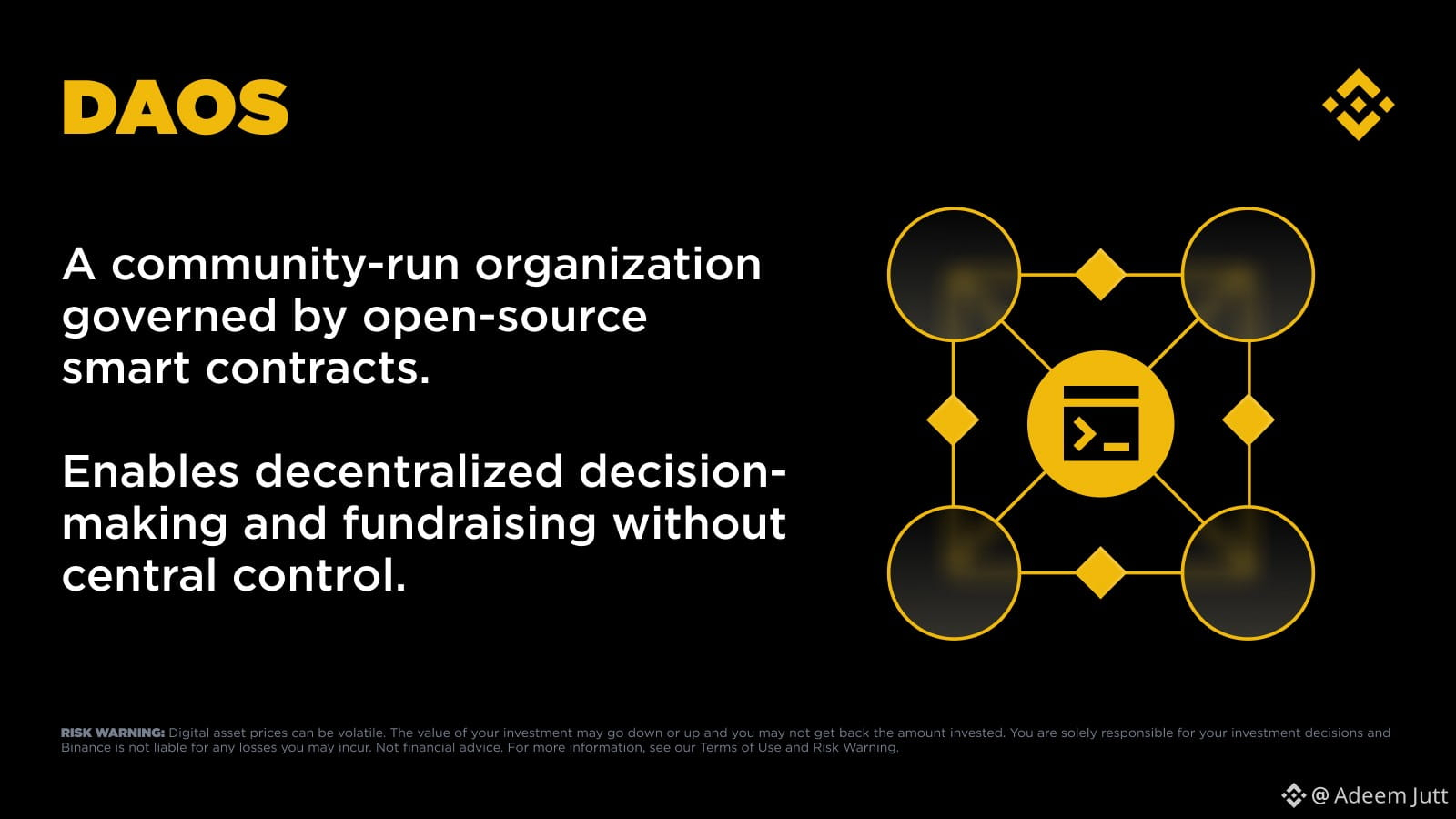
The days of closed-door meetings and centralized control are over. Web3 has flipped the script, and the ultimate game-changer is here: The DAO (Decentralized Autonomous Organization).
@Binance_Square_Official
Think of a DAO as a digital co-op on steroids. Instead of taking orders from a CEO, the power belongs entirely to the community. It’s a borderless ecosystem where you don't just hold tokens—you hold actual influence.
Here is why DAOs are revolutionizing the space:
Total Transparency: Every move, every vote, and every dollar spent is hardcoded into immutable blockchain smart contracts. No hidden agendas.
True Democracy: You get a direct say in the protocol's future. If you hold the governance token, your vote shapes the roadmap.
Community-Managed Treasuries: Millions of dollars are managed safely and collectively by the very people who build and support the network.
We aren't just trusting the process anymore; we are verifying it on-chain. This is what true financial democratization looks like! 🌐💸$FIDA $GIGGLE $ALLO
{spot}(ALLOUSDT)
{spot}(FIDAUSDT)
{spot}(GIGGLEUSDT)
#DAOs #Web3 #Binance
🚨 Forget the Boardroom: How DAOs Are Putting YOU in Control of the Future! 🚀
The days of closed-door meetings and centralized control are over. Web3 has flipped the script, and the ultimate game-changer is here: The DAO (Decentralized Autonomous Organization).
@Binance Square Official
Think of a DAO as a digital co-op on steroids. Instead of taking orders from a CEO, the power belongs entirely to the community. It’s a borderless ecosystem where you don't just hold tokens—you hold actual influence.
Here is why DAOs are revolutionizing the space:
Total Transparency: Every move, every vote, and every dollar spent is hardcoded into immutable blockchain smart contracts. No hidden agendas.
True Democracy: You get a direct say in the protocol's future. If you hold the governance token, your vote shapes the roadmap.
Community-Managed Treasuries: Millions of dollars are managed safely and collectively by the very people who build and support the network.
We aren't just trusting the process anymore; we are verifying it on-chain. This is what true financial democratization looks like! 🌐💸$FIDA $GIGGLE $ALLO
#DAOs #Web3 #Binance
The days of closed-door meetings and centralized control are over. Web3 has flipped the script, and the ultimate game-changer is here: The DAO (Decentralized Autonomous Organization).
@Binance Square Official
Think of a DAO as a digital co-op on steroids. Instead of taking orders from a CEO, the power belongs entirely to the community. It’s a borderless ecosystem where you don't just hold tokens—you hold actual influence.
Here is why DAOs are revolutionizing the space:
Total Transparency: Every move, every vote, and every dollar spent is hardcoded into immutable blockchain smart contracts. No hidden agendas.
True Democracy: You get a direct say in the protocol's future. If you hold the governance token, your vote shapes the roadmap.
Community-Managed Treasuries: Millions of dollars are managed safely and collectively by the very people who build and support the network.
We aren't just trusting the process anymore; we are verifying it on-chain. This is what true financial democratization looks like! 🌐💸$FIDA $GIGGLE $ALLO
#DAOs #Web3 #Binance
1
2
285

·
--
Cripto : Malta quiere imponer reglas a las DAO en la era MiCA
Malta quiere regular las DAO y ciertos protocolos de finanzas descentralizadas en la era MiCA. El regulador busca sobre todo distinguir los verdaderos proyectos cripto descentralizados de las organizaciones que mantienen un control humano detrás de sus smart contracts.
En resumen
Malta quiere crear un estatus jurídico para las DAO y ciertos proyectos cripto.
Malta quiere crear un estatus jurídico para las DAO y ciertos proyectos cripto.
La consulta pública permanecerá abierta hasta el 10 de julio de 2026.
Cripto: Malta quiere identificar a los responsables de las DAO
La Malta Financial Services Authority propone crear una categoría jurídica para las «organizaciones basadas en software». Podría cubrir las DAO, ciertos protocolos DeFi y otras estructuras cripto cuyo funcionamiento depende en gran medida de smart contracts.
Esta iniciativa busca resolver una cuestión que se ha vuelto central en la industria: ¿quién asume la responsabilidad cuando un protocolo sufre una falla, bloquea fondos o toma una decisión controvertida? El tem
ya se une al debate sobre el estatus de las DAO, aún poco claro en muchas jurisdicciones.
Malta quiere separar la organización de su software. Por un lado están los miembros, desarrolladores y tenedores de tokens de gobernanza. Por otro, el protocolo ejecutado en la blockchain. Esta distinción podría ayudar al regulador a saber quién controla realmente una infraestructura cripto.
$DASH
{spot}(DASHUSDT)
$MIA
{alpha}(560x7cea5b9548a4b48cf9551813ef9e73de916e41e0)
$DEXE
{spot}(DEXEUSDT)
#DAOs
Cripto : Malta quiere imponer reglas a las DAO en la era MiCA
Malta quiere regular las DAO y ciertos protocolos de finanzas descentralizadas en la era MiCA. El regulador busca sobre todo distinguir los verdaderos proyectos cripto descentralizados de las organizaciones que mantienen un control humano detrás de sus smart contracts.
En resumen
Malta quiere crear un estatus jurídico para las DAO y ciertos proyectos cripto.
Malta quiere crear un estatus jurídico para las DAO y ciertos proyectos cripto.
La consulta pública permanecerá abierta hasta el 10 de julio de 2026.
Cripto: Malta quiere identificar a los responsables de las DAO
La Malta Financial Services Authority propone crear una categoría jurídica para las «organizaciones basadas en software». Podría cubrir las DAO, ciertos protocolos DeFi y otras estructuras cripto cuyo funcionamiento depende en gran medida de smart contracts.
Esta iniciativa busca resolver una cuestión que se ha vuelto central en la industria: ¿quién asume la responsabilidad cuando un protocolo sufre una falla, bloquea fondos o toma una decisión controvertida? El tem
ya se une al debate sobre el estatus de las DAO, aún poco claro en muchas jurisdicciones.
Malta quiere separar la organización de su software. Por un lado están los miembros, desarrolladores y tenedores de tokens de gobernanza. Por otro, el protocolo ejecutado en la blockchain. Esta distinción podría ayudar al regulador a saber quién controla realmente una infraestructura cripto.
$DASH
$MIA
$DEXE
#DAOs
Malta quiere regular las DAO y ciertos protocolos de finanzas descentralizadas en la era MiCA. El regulador busca sobre todo distinguir los verdaderos proyectos cripto descentralizados de las organizaciones que mantienen un control humano detrás de sus smart contracts.
En resumen
Malta quiere crear un estatus jurídico para las DAO y ciertos proyectos cripto.
Malta quiere crear un estatus jurídico para las DAO y ciertos proyectos cripto.
La consulta pública permanecerá abierta hasta el 10 de julio de 2026.
Cripto: Malta quiere identificar a los responsables de las DAO
La Malta Financial Services Authority propone crear una categoría jurídica para las «organizaciones basadas en software». Podría cubrir las DAO, ciertos protocolos DeFi y otras estructuras cripto cuyo funcionamiento depende en gran medida de smart contracts.
Esta iniciativa busca resolver una cuestión que se ha vuelto central en la industria: ¿quién asume la responsabilidad cuando un protocolo sufre una falla, bloquea fondos o toma una decisión controvertida? El tem
ya se une al debate sobre el estatus de las DAO, aún poco claro en muchas jurisdicciones.
Malta quiere separar la organización de su software. Por un lado están los miembros, desarrolladores y tenedores de tokens de gobernanza. Por otro, el protocolo ejecutado en la blockchain. Esta distinción podría ayudar al regulador a saber quién controla realmente una infraestructura cripto.
$DASH
$MIA
$DEXE
#DAOs

191

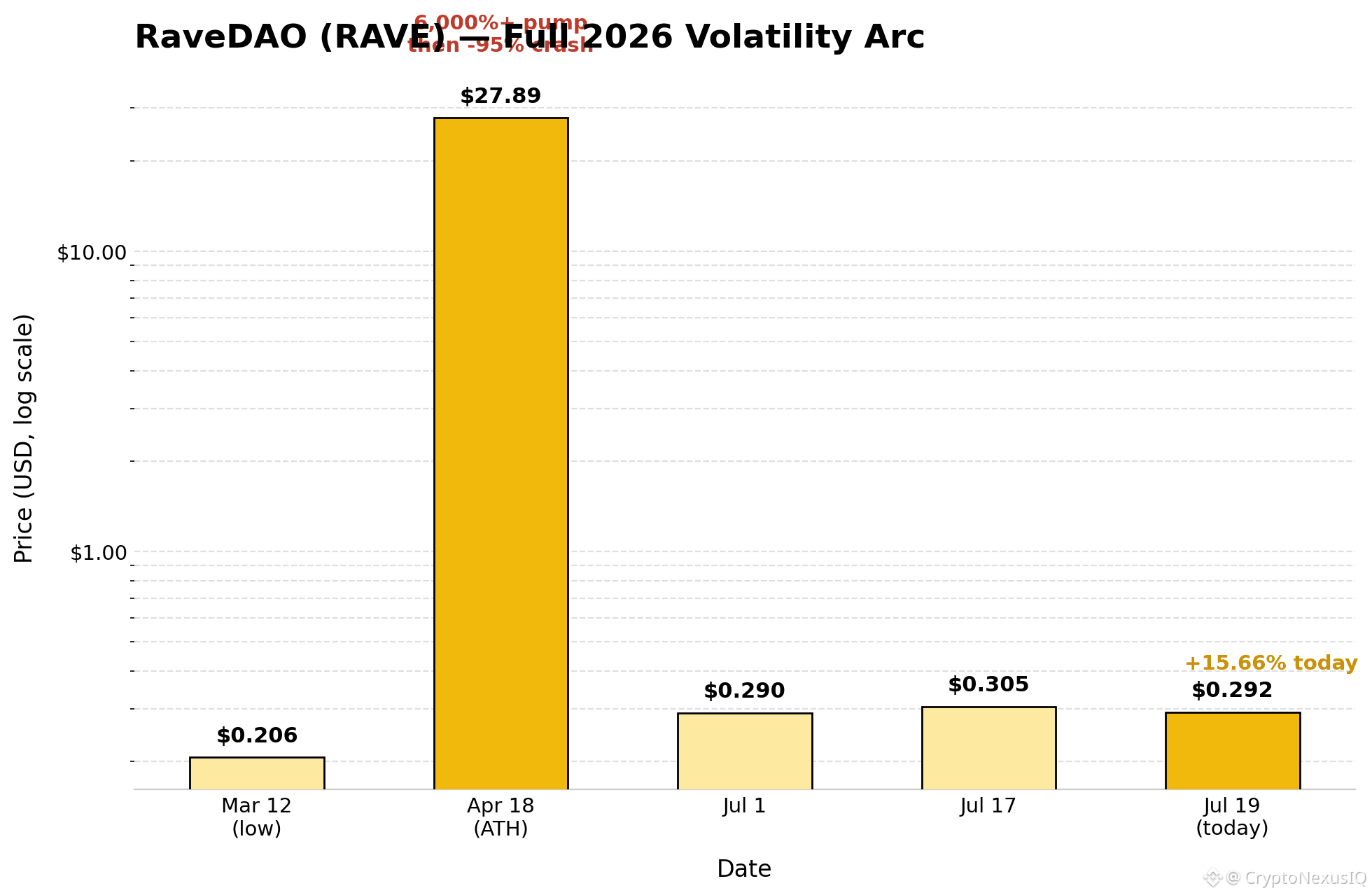
RaveDAO is having a moment — up +15.66% today.
$RAVE is quietly building steam, with $22.3M in 24h volume behind a $73.7M market cap. Worth watching if you're tracking DAO-driven community tokens — moves like this often signal renewed attention rather than just a one-day blip.
📊 Key level: watch for a hold above recent support to see if momentum continues, or a pullback if volume fades.This token had an extraordinary run earlier this year — up roughly 6,000% in about five weeks (from $0.21 to $19.54), then crashed 95%, wiping out $6.3B in market cap. On-chain researchers flagged that insider-linked wallets moved ~18.6M RAVE ($8M) to an exchange just hours before that rally began, and current estimates suggest insiders may control the large majority of the 1B token supply, with only ~23-25% actually circulating. Both Binance and Bitget have opened internal reviews into RAVE's trading activity over these manipulation concerns — outcomes could range from delisting to a cleared reputation, and that's a genuinely open question right now.
The balanced read:
The real-world event business is legitimate and the revenue is verifiable — that's more than most tokens at this stage can say. But the scale of the earlier price move relative to that underlying business, combined with the concentration numbers and active exchange scrutiny, means this is a highly speculative, high-risk asset right now, not a stable growth story.
📊 Current context: trading around $0.30-0.60 depending on the exact snapshot, well off its $27.89 all-time high, in a period of continued high volatility.
#RaveDAO #DAOs #BinanceSquareTalks
RaveDAO is having a moment — up +15.66% today.
$RAVE is quietly building steam, with $22.3M in 24h volume behind a $73.7M market cap. Worth watching if you're tracking DAO-driven community tokens — moves like this often signal renewed attention rather than just a one-day blip.
📊 Key level: watch for a hold above recent support to see if momentum continues, or a pullback if volume fades.This token had an extraordinary run earlier this year — up roughly 6,000% in about five weeks (from $0.21 to $19.54), then crashed 95%, wiping out $6.3B in market cap. On-chain researchers flagged that insider-linked wallets moved ~18.6M RAVE ($8M) to an exchange just hours before that rally began, and current estimates suggest insiders may control the large majority of the 1B token supply, with only ~23-25% actually circulating. Both Binance and Bitget have opened internal reviews into RAVE's trading activity over these manipulation concerns — outcomes could range from delisting to a cleared reputation, and that's a genuinely open question right now.
The balanced read:
The real-world event business is legitimate and the revenue is verifiable — that's more than most tokens at this stage can say. But the scale of the earlier price move relative to that underlying business, combined with the concentration numbers and active exchange scrutiny, means this is a highly speculative, high-risk asset right now, not a stable growth story.
📊 Current context: trading around $0.30-0.60 depending on the exact snapshot, well off its $27.89 all-time high, in a period of continued high volatility.
#RaveDAO #DAOs #BinanceSquareTalks
$RAVE is quietly building steam, with $22.3M in 24h volume behind a $73.7M market cap. Worth watching if you're tracking DAO-driven community tokens — moves like this often signal renewed attention rather than just a one-day blip.
📊 Key level: watch for a hold above recent support to see if momentum continues, or a pullback if volume fades.This token had an extraordinary run earlier this year — up roughly 6,000% in about five weeks (from $0.21 to $19.54), then crashed 95%, wiping out $6.3B in market cap. On-chain researchers flagged that insider-linked wallets moved ~18.6M RAVE ($8M) to an exchange just hours before that rally began, and current estimates suggest insiders may control the large majority of the 1B token supply, with only ~23-25% actually circulating. Both Binance and Bitget have opened internal reviews into RAVE's trading activity over these manipulation concerns — outcomes could range from delisting to a cleared reputation, and that's a genuinely open question right now.
The balanced read:
The real-world event business is legitimate and the revenue is verifiable — that's more than most tokens at this stage can say. But the scale of the earlier price move relative to that underlying business, combined with the concentration numbers and active exchange scrutiny, means this is a highly speculative, high-risk asset right now, not a stable growth story.
📊 Current context: trading around $0.30-0.60 depending on the exact snapshot, well off its $27.89 all-time high, in a period of continued high volatility.
#RaveDAO #DAOs #BinanceSquareTalks
250

·
--
Governance tokens have a design flaw most projects quietly ignore: the participation paradox.
Here is how it plays out. A protocol launches a governance token. Token holders can vote on proposals — fee adjustments, treasury allocation, protocol upgrades. Sounds democratic. Sounds decentralized. But the incentive math works against participation.
Voting costs you time and attention. Abstaining costs you nothing. Every rational holder free-rides on the assumption that *someone else* will do the due diligence. The result? Turnout below 5% is standard across almost every major DAO. Millions of tokens eligible to vote, and a handful of wallets actually decide protocol direction.
This is a textbook prisoner's dilemma played at governance scale. The individually rational choice (abstain) leads to a collectively poor outcome — protocol captured by a small active minority, often insiders or large funds whose interests may not match the broader community.
The more interesting architectures are attacking this directly:
- Conviction voting (larger time-lock = more voting weight) rewards patience over apathy
- Liquid democracy (delegate your vote to a trusted expert) lowers the knowledge barrier
- Quadratic voting reduces plutocratic outcomes by diminishing marginal influence per token
- On-chain reputation and participation rewards align incentives without bribery
Protocols that solve governance participation build durable communities. Those that ignore it get captured.
$DOT $ETH $BNB
#DeFi #CryptoGovernance #DAOs #OnChain #Web3
Governance tokens have a design flaw most projects quietly ignore: the participation paradox.
Here is how it plays out. A protocol launches a governance token. Token holders can vote on proposals — fee adjustments, treasury allocation, protocol upgrades. Sounds democratic. Sounds decentralized. But the incentive math works against participation.
Voting costs you time and attention. Abstaining costs you nothing. Every rational holder free-rides on the assumption that *someone else* will do the due diligence. The result? Turnout below 5% is standard across almost every major DAO. Millions of tokens eligible to vote, and a handful of wallets actually decide protocol direction.
This is a textbook prisoner's dilemma played at governance scale. The individually rational choice (abstain) leads to a collectively poor outcome — protocol captured by a small active minority, often insiders or large funds whose interests may not match the broader community.
The more interesting architectures are attacking this directly:
- Conviction voting (larger time-lock = more voting weight) rewards patience over apathy
- Liquid democracy (delegate your vote to a trusted expert) lowers the knowledge barrier
- Quadratic voting reduces plutocratic outcomes by diminishing marginal influence per token
- On-chain reputation and participation rewards align incentives without bribery
Protocols that solve governance participation build durable communities. Those that ignore it get captured.
$DOT $ETH $BNB
#DeFi #CryptoGovernance #DAOs #OnChain #Web3
Here is how it plays out. A protocol launches a governance token. Token holders can vote on proposals — fee adjustments, treasury allocation, protocol upgrades. Sounds democratic. Sounds decentralized. But the incentive math works against participation.
Voting costs you time and attention. Abstaining costs you nothing. Every rational holder free-rides on the assumption that *someone else* will do the due diligence. The result? Turnout below 5% is standard across almost every major DAO. Millions of tokens eligible to vote, and a handful of wallets actually decide protocol direction.
This is a textbook prisoner's dilemma played at governance scale. The individually rational choice (abstain) leads to a collectively poor outcome — protocol captured by a small active minority, often insiders or large funds whose interests may not match the broader community.
The more interesting architectures are attacking this directly:
- Conviction voting (larger time-lock = more voting weight) rewards patience over apathy
- Liquid democracy (delegate your vote to a trusted expert) lowers the knowledge barrier
- Quadratic voting reduces plutocratic outcomes by diminishing marginal influence per token
- On-chain reputation and participation rewards align incentives without bribery
Protocols that solve governance participation build durable communities. Those that ignore it get captured.
$DOT $ETH $BNB
#DeFi #CryptoGovernance #DAOs #OnChain #Web3
44

·
--
GM ☀️
Market is cooling down but opportunities are everywhere.
👀 Watching:
$BONK $USELESS $LLM $GAI $PUMP $SAVE $GRASS
AI 🤖 + DePIN 🌱 + Solana ⚡ remain key narratives.
The next winners are usually found before the crowd arrives.
DYOR. Stay active. Keep building. 🚀
#Crypto #Solana #BONK #AI #GRASS #DAOS #TinFed #TrumpRejectsIranHormuzReopening
GM ☀️
Market is cooling down but opportunities are everywhere.
👀 Watching:
$BONK $USELESS $LLM $GAI $PUMP $SAVE $GRASS
AI 🤖 + DePIN 🌱 + Solana ⚡ remain key narratives.
The next winners are usually found before the crowd arrives.
DYOR. Stay active. Keep building. 🚀
#Crypto #Solana #BONK #AI #GRASS #DAOS #TinFed #TrumpRejectsIranHormuzReopening
Market is cooling down but opportunities are everywhere.
👀 Watching:
$BONK $USELESS $LLM $GAI $PUMP $SAVE $GRASS
AI 🤖 + DePIN 🌱 + Solana ⚡ remain key narratives.
The next winners are usually found before the crowd arrives.
DYOR. Stay active. Keep building. 🚀
#Crypto #Solana #BONK #AI #GRASS #DAOS #TinFed #TrumpRejectsIranHormuzReopening
519

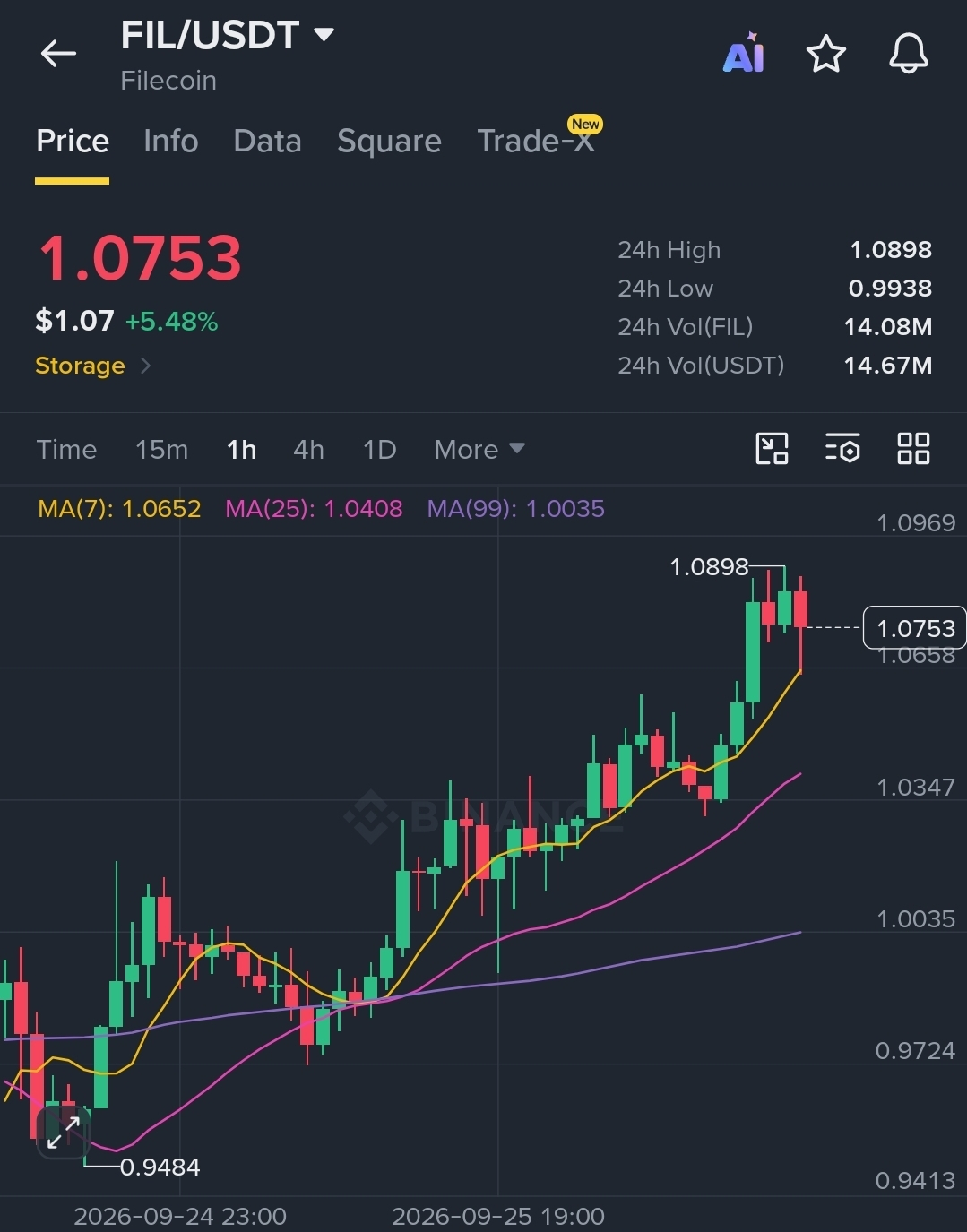
$FIL /USDT — 🟢 LONG · Conf 85%
📍 Entry: 1.0721 – 1.0785
🛑 SL: 0.9938
🎯 TP1: 1.1291
✅ TP2: 1.1721
🏆 TP3: 1.2366
Price is holding above all three MAs in a clean bull stack (MA7: 1.0652 > MA25: 1.0408 > MA99: 1.0035) with each pullback defended by rising MA7 — tightest risk profile in this batch at sub-1% from entry to SL.
$FIL : Filecoin is a decentralized storage network where FIL is used to pay for data storage and retrieval — its FVM upgrade enabled smart contracts, expanding use cases into DeFi and data DAOs, but utilization of paid storage versus subsidized storage remains a key metric the market watches skeptically.
What percentage of Filecoin's active storage deals are economically self-sustaining at market rates vs. subsidized by ecosystem grants — and does that ratio actually matter to price at this stage?
#FIL #Filecoin #DeFi #DAOs #Storage
{future}(FILUSDT)
$FIL /USDT — 🟢 LONG · Conf 85%
📍 Entry: 1.0721 – 1.0785
🛑 SL: 0.9938
🎯 TP1: 1.1291
✅ TP2: 1.1721
🏆 TP3: 1.2366
Price is holding above all three MAs in a clean bull stack (MA7: 1.0652 > MA25: 1.0408 > MA99: 1.0035) with each pullback defended by rising MA7 — tightest risk profile in this batch at sub-1% from entry to SL.
$FIL : Filecoin is a decentralized storage network where FIL is used to pay for data storage and retrieval — its FVM upgrade enabled smart contracts, expanding use cases into DeFi and data DAOs, but utilization of paid storage versus subsidized storage remains a key metric the market watches skeptically.
What percentage of Filecoin's active storage deals are economically self-sustaining at market rates vs. subsidized by ecosystem grants — and does that ratio actually matter to price at this stage?
#FIL #Filecoin #DeFi #DAOs #Storage
📍 Entry: 1.0721 – 1.0785
🛑 SL: 0.9938
🎯 TP1: 1.1291
✅ TP2: 1.1721
🏆 TP3: 1.2366
Price is holding above all three MAs in a clean bull stack (MA7: 1.0652 > MA25: 1.0408 > MA99: 1.0035) with each pullback defended by rising MA7 — tightest risk profile in this batch at sub-1% from entry to SL.
$FIL : Filecoin is a decentralized storage network where FIL is used to pay for data storage and retrieval — its FVM upgrade enabled smart contracts, expanding use cases into DeFi and data DAOs, but utilization of paid storage versus subsidized storage remains a key metric the market watches skeptically.
What percentage of Filecoin's active storage deals are economically self-sustaining at market rates vs. subsidized by ecosystem grants — and does that ratio actually matter to price at this stage?
#FIL #Filecoin #DeFi #DAOs #Storage

1
127
·
--
🚀 Crypto Daily | 25 Sep 2026
Market vẫn giữ trạng thái tích cực khi #BTC duy trì vùng cao sau đợt phục hồi mạnh trong tháng 9. Dòng tiền đang tiếp tục luân chuyển sang các hệ sinh thái có câu chuyện tăng trưởng rõ ràng như #Solana, #BONK và AI sectors. (MarketWatch)
📈 Những điểm đáng chú ý:
• BTC tiếp tục giao dịch quanh vùng đỉnh 8 tháng.
• ETH đang cho tín hiệu breakout sau giai đoạn tích lũy. (Reuters)
• Ngày hôm nay là thời điểm đáo hạn lượng lớn quyền chọn BTC & ETH, biến động có thể gia tăng trong ngắn hạn. (CryptoRank)
• Solana ecosystem vẫn là điểm đến yêu thích của dòng tiền đầu cơ và meme coin. (TradingView)
🔥 Theo dõi:
$BONK
$USELESS
$ANI
$HOSICO
$MOMO
$LLM
$GAIX
$PUMP
💡 Alpha không nằm ở việc bắt mọi con sóng.
Alpha nằm ở việc ở đúng hệ sinh thái khi dòng tiền quay trở lại.
#DAOs $NVDAB
Stay patient.
Stay building.
The next leg up often starts when most people stop paying attention.
#Crypto #Bitcoin #Ethereum #Solana #BONK #AI #Memecoin #DAOS
🚀 Crypto Daily | 25 Sep 2026
Market vẫn giữ trạng thái tích cực khi #BTC duy trì vùng cao sau đợt phục hồi mạnh trong tháng 9. Dòng tiền đang tiếp tục luân chuyển sang các hệ sinh thái có câu chuyện tăng trưởng rõ ràng như #Solana, #BONK và AI sectors. (MarketWatch)
📈 Những điểm đáng chú ý:
• BTC tiếp tục giao dịch quanh vùng đỉnh 8 tháng.
• ETH đang cho tín hiệu breakout sau giai đoạn tích lũy. (Reuters)
• Ngày hôm nay là thời điểm đáo hạn lượng lớn quyền chọn BTC & ETH, biến động có thể gia tăng trong ngắn hạn. (CryptoRank)
• Solana ecosystem vẫn là điểm đến yêu thích của dòng tiền đầu cơ và meme coin. (TradingView)
🔥 Theo dõi:
$BONK
$USELESS
$ANI
$HOSICO
$MOMO
$LLM
$GAIX
$PUMP
💡 Alpha không nằm ở việc bắt mọi con sóng.
Alpha nằm ở việc ở đúng hệ sinh thái khi dòng tiền quay trở lại.
#DAOs $NVDAB
Stay patient.
Stay building.
The next leg up often starts when most people stop paying attention.
#Crypto #Bitcoin #Ethereum #Solana #BONK #AI #Memecoin #DAOS
Market vẫn giữ trạng thái tích cực khi #BTC duy trì vùng cao sau đợt phục hồi mạnh trong tháng 9. Dòng tiền đang tiếp tục luân chuyển sang các hệ sinh thái có câu chuyện tăng trưởng rõ ràng như #Solana, #BONK và AI sectors. (MarketWatch)
📈 Những điểm đáng chú ý:
• BTC tiếp tục giao dịch quanh vùng đỉnh 8 tháng.
• ETH đang cho tín hiệu breakout sau giai đoạn tích lũy. (Reuters)
• Ngày hôm nay là thời điểm đáo hạn lượng lớn quyền chọn BTC & ETH, biến động có thể gia tăng trong ngắn hạn. (CryptoRank)
• Solana ecosystem vẫn là điểm đến yêu thích của dòng tiền đầu cơ và meme coin. (TradingView)
🔥 Theo dõi:
$BONK
$USELESS
$ANI
$HOSICO
$MOMO
$LLM
$GAIX
$PUMP
💡 Alpha không nằm ở việc bắt mọi con sóng.
Alpha nằm ở việc ở đúng hệ sinh thái khi dòng tiền quay trở lại.
#DAOs $NVDAB
Stay patient.
Stay building.
The next leg up often starts when most people stop paying attention.
#Crypto #Bitcoin #Ethereum #Solana #BONK #AI #Memecoin #DAOS
365

·
--
ສັນຍານກະທິງ
DEXE Reclaims Key Moving Averages Near $25! Is a Technical Trend Continuation Re-Igniting? 🏛️
The Analysis: DeXe Protocol ($DEXE
{spot}(DEXEUSDT)
) is showing a highly resilient neutral-to-bullish long-term market structure. While secondary altcoins handle extreme volatility, DEXE’s position above its primary long-term moving averages reflects strong, patient capital accumulation.
The Alpha: On the daily timeframe, DEXE is actively maintaining its structural foundation above its rising 200-day moving average, a critical boundary distinguishing macro bull and bear regimes. Lower-timeframe momentum gauges indicate that short-term selling is completely depleted. If current buying velocity pushes price past immediate overhead resistance, it will rapidly clear the runway to target higher extension targets.
The Trade: Professional execution strongly favors bidding localized retests of the converted moving average support floors. Manage your downside exposure tightly with a defensive stop parameter placed directly under the recent local swing low.
With DAO governance and decentralized asset management scaling behind the scenes, DEXE's order book is looking incredibly solid. What's your target? 👇
#dexe #DeXeProtocol #DAOs #Web3Governance #TechnicalAnalysis
DEXE Reclaims Key Moving Averages Near $25! Is a Technical Trend Continuation Re-Igniting? 🏛️
The Analysis: DeXe Protocol ($DEXE
) is showing a highly resilient neutral-to-bullish long-term market structure. While secondary altcoins handle extreme volatility, DEXE’s position above its primary long-term moving averages reflects strong, patient capital accumulation.
The Alpha: On the daily timeframe, DEXE is actively maintaining its structural foundation above its rising 200-day moving average, a critical boundary distinguishing macro bull and bear regimes. Lower-timeframe momentum gauges indicate that short-term selling is completely depleted. If current buying velocity pushes price past immediate overhead resistance, it will rapidly clear the runway to target higher extension targets.
The Trade: Professional execution strongly favors bidding localized retests of the converted moving average support floors. Manage your downside exposure tightly with a defensive stop parameter placed directly under the recent local swing low.
With DAO governance and decentralized asset management scaling behind the scenes, DEXE's order book is looking incredibly solid. What's your target? 👇
#dexe #DeXeProtocol #DAOs #Web3Governance #TechnicalAnalysis
The Analysis: DeXe Protocol ($DEXE
) is showing a highly resilient neutral-to-bullish long-term market structure. While secondary altcoins handle extreme volatility, DEXE’s position above its primary long-term moving averages reflects strong, patient capital accumulation.
The Alpha: On the daily timeframe, DEXE is actively maintaining its structural foundation above its rising 200-day moving average, a critical boundary distinguishing macro bull and bear regimes. Lower-timeframe momentum gauges indicate that short-term selling is completely depleted. If current buying velocity pushes price past immediate overhead resistance, it will rapidly clear the runway to target higher extension targets.
The Trade: Professional execution strongly favors bidding localized retests of the converted moving average support floors. Manage your downside exposure tightly with a defensive stop parameter placed directly under the recent local swing low.
With DAO governance and decentralized asset management scaling behind the scenes, DEXE's order book is looking incredibly solid. What's your target? 👇
#dexe #DeXeProtocol #DAOs #Web3Governance #TechnicalAnalysis
1
165

🔥 KELP DAO: A GOVERNANCE WAKE-UP CALL
⚡ Recent discussions around Kelp DAO have highlighted not a technical exploit, but a critical challenge to decentralized governance itself. 🛡️
A contentious proposal to significantly alter fee structures passed with notably low voter participation.
This raises serious questions about the true decentralization and resilience of DAO mechanisms.
Such events underscore how a small, concentrated voting bloc can drive impactful changes, even against broader community sentiment.
The core issue isn't malicious code, but the fragility stemming from voter apathy and structural loopholes.
It exposes a fundamental tension within DeFi: truly decentralized decision-making versus concentrated influence.
For liquid restaking tokens (LRTs) and the wider restaking ecosystem, this carries significant implications.
It erodes investor confidence and elevates perceived governance risk for protocols relying on token-based voting. 📉
Capital flows into these innovative yet complex systems could be affected as trust becomes a premium.
This incident serves as a stark reminder: decentralization is not just about technology, but active participation.
Protocols must rethink incentive models to encourage broad engagement in critical governance votes. 💡
Otherwise, the promise of transparent, community-led finance risks being undermined by its own design.
🧠 How can we fortify DAO governance against the silent "attack" of disengaged stakeholders?
#DeFiGovernance #KelpDAO #Restaking #DAOs #CryptoRisk
🔥 KELP DAO: A GOVERNANCE WAKE-UP CALL
⚡ Recent discussions around Kelp DAO have highlighted not a technical exploit, but a critical challenge to decentralized governance itself. 🛡️
A contentious proposal to significantly alter fee structures passed with notably low voter participation.
This raises serious questions about the true decentralization and resilience of DAO mechanisms.
Such events underscore how a small, concentrated voting bloc can drive impactful changes, even against broader community sentiment.
The core issue isn't malicious code, but the fragility stemming from voter apathy and structural loopholes.
It exposes a fundamental tension within DeFi: truly decentralized decision-making versus concentrated influence.
For liquid restaking tokens (LRTs) and the wider restaking ecosystem, this carries significant implications.
It erodes investor confidence and elevates perceived governance risk for protocols relying on token-based voting. 📉
Capital flows into these innovative yet complex systems could be affected as trust becomes a premium.
This incident serves as a stark reminder: decentralization is not just about technology, but active participation.
Protocols must rethink incentive models to encourage broad engagement in critical governance votes. 💡
Otherwise, the promise of transparent, community-led finance risks being undermined by its own design.
🧠 How can we fortify DAO governance against the silent "attack" of disengaged stakeholders?
#DeFiGovernance #KelpDAO #Restaking #DAOs #CryptoRisk
⚡ Recent discussions around Kelp DAO have highlighted not a technical exploit, but a critical challenge to decentralized governance itself. 🛡️
A contentious proposal to significantly alter fee structures passed with notably low voter participation.
This raises serious questions about the true decentralization and resilience of DAO mechanisms.
Such events underscore how a small, concentrated voting bloc can drive impactful changes, even against broader community sentiment.
The core issue isn't malicious code, but the fragility stemming from voter apathy and structural loopholes.
It exposes a fundamental tension within DeFi: truly decentralized decision-making versus concentrated influence.
For liquid restaking tokens (LRTs) and the wider restaking ecosystem, this carries significant implications.
It erodes investor confidence and elevates perceived governance risk for protocols relying on token-based voting. 📉
Capital flows into these innovative yet complex systems could be affected as trust becomes a premium.
This incident serves as a stark reminder: decentralization is not just about technology, but active participation.
Protocols must rethink incentive models to encourage broad engagement in critical governance votes. 💡
Otherwise, the promise of transparent, community-led finance risks being undermined by its own design.
🧠 How can we fortify DAO governance against the silent "attack" of disengaged stakeholders?
#DeFiGovernance #KelpDAO #Restaking #DAOs #CryptoRisk

10
31
226
·
--
ສັນຍານກະທິງ
DEXE Hits Record $39.78 as Whale Activity Spikes! Is the DAO Governance Supercycle Real? 🚀
The Analysis: DeXe Protocol ($DEXE
{spot}(DEXEUSDT)
) has completely decoupled from standard market consolidation, printing an explosive rally to a record high of $39.78. Unlike highly speculative meme cycles driven exclusively by retail hype, DEXE's aggressive macro trend continuation is firmly backed by severe on-chain utility demands and institutional accumulation templates.
The Alpha: Hard blockchain data demonstrates that network growth recently hit its fourth-largest day on record, expanding alongside major whale transactions exceeding $100,000. With decentralized autonomous organizations (DAOs) scaling aggressively behind the scenes, DEXE's native governance structure has turned into a vital institutional settlement layer. On the technical layout, the asset is trading safely above its primary moving averages, turning previous resistance blocks into ironclad support floors.
The Trade: Do not chase market orders straight into the vertical discovery ceiling. High-probability execution heavily favors layering spot orders or deploying conservative long configurations within the newly formed $34.50–$36.80 demand cluster. Maintain strict portfolio protection by setting an invalidation stop parameter tightly beneath the local breakout anchor low.
Whales are continuously vacuuming up the DEXE order book while secondary altcoins handle extreme chop. What is your long-term price target? 👇
#dexe #DeXeProtocol #DAOs #Web3Governance #Write2Earn
DEXE Hits Record $39.78 as Whale Activity Spikes! Is the DAO Governance Supercycle Real? 🚀
The Analysis: DeXe Protocol ($DEXE
) has completely decoupled from standard market consolidation, printing an explosive rally to a record high of $39.78. Unlike highly speculative meme cycles driven exclusively by retail hype, DEXE's aggressive macro trend continuation is firmly backed by severe on-chain utility demands and institutional accumulation templates.
The Alpha: Hard blockchain data demonstrates that network growth recently hit its fourth-largest day on record, expanding alongside major whale transactions exceeding $100,000. With decentralized autonomous organizations (DAOs) scaling aggressively behind the scenes, DEXE's native governance structure has turned into a vital institutional settlement layer. On the technical layout, the asset is trading safely above its primary moving averages, turning previous resistance blocks into ironclad support floors.
The Trade: Do not chase market orders straight into the vertical discovery ceiling. High-probability execution heavily favors layering spot orders or deploying conservative long configurations within the newly formed $34.50–$36.80 demand cluster. Maintain strict portfolio protection by setting an invalidation stop parameter tightly beneath the local breakout anchor low.
Whales are continuously vacuuming up the DEXE order book while secondary altcoins handle extreme chop. What is your long-term price target? 👇
#dexe #DeXeProtocol #DAOs #Web3Governance #Write2Earn
The Analysis: DeXe Protocol ($DEXE
) has completely decoupled from standard market consolidation, printing an explosive rally to a record high of $39.78. Unlike highly speculative meme cycles driven exclusively by retail hype, DEXE's aggressive macro trend continuation is firmly backed by severe on-chain utility demands and institutional accumulation templates.
The Alpha: Hard blockchain data demonstrates that network growth recently hit its fourth-largest day on record, expanding alongside major whale transactions exceeding $100,000. With decentralized autonomous organizations (DAOs) scaling aggressively behind the scenes, DEXE's native governance structure has turned into a vital institutional settlement layer. On the technical layout, the asset is trading safely above its primary moving averages, turning previous resistance blocks into ironclad support floors.
The Trade: Do not chase market orders straight into the vertical discovery ceiling. High-probability execution heavily favors layering spot orders or deploying conservative long configurations within the newly formed $34.50–$36.80 demand cluster. Maintain strict portfolio protection by setting an invalidation stop parameter tightly beneath the local breakout anchor low.
Whales are continuously vacuuming up the DEXE order book while secondary altcoins handle extreme chop. What is your long-term price target? 👇
#dexe #DeXeProtocol #DAOs #Web3Governance #Write2Earn
1
278

·
--

ບົດຄວາມ
Blockchain Isn’t About Crypto Anymore, It’s About PowerI used to think decentralization was mostly an argument about money. Then at some point it clicked that it was really an argument about coordination. That was the first thing that shifted for me, and it changed how I looked at Web3 entirely.
When I first looked at blockchain years ago, I made the same mistake many people make. I treated it as a faster database or an internet-native payments rail. Useful, maybe disruptive in some narrow sense, but still just infrastructure. What struck me later was quieter than that. The real insight was that blockchains were trying to answer a much older question: how do strangers coordinate without needing a trusted center to referee every interaction.
That sounds abstract until you sit with it.
Banks are one example, but the idea runs much deeper. Exchanges, marketplaces, even social platforms rely on middle layers that hold the rules, settle disputes, and control access. We usually accept that as normal because, for centuries, coordination at scale depended on institutions. Blockchain introduced another possibility. Coordination through code.
That phrase can sound too neat until you unpack it. On the surface, it means rules encoded in smart contracts execute automatically. Underneath, it means trust shifts from organizations to open systems people can verify. And what that enables is not simply moving money differently, but organizing economic activity with fewer gatekeepers.
That was my own Web3 aha moment.
The reason it feels profound is because dependence often hides in systems that work well enough. You do not notice the middleman until the middleman fails, extracts too much value, or changes the rules.
Look at cross-border payments. Traditional remittances can still cost around 6 percent globally according to World Bank estimates, and in some corridors much more. That number matters because it is not just friction. It is money lost by people sending wages home. Stablecoin settlement on some chains reduces that cost dramatically. The point is not that banks disappear. The point is that a layer of coordination can exist with less toll-taking.
That momentum creates another effect. Once people see coordination itself can be open, they begin applying the idea everywhere.
Decentralized finance made this obvious. At its peak, DeFi locked over $170 billion in assets in 2021. That number was not meaningful because of speculation alone. It showed people were willing to place significant capital into systems governed by transparent code rather than traditional financial intermediaries. Even after the drawdown, tens of billions remain in DeFi. That persistence says something was learned.
And yet the deeper story is not lending pools or token swaps.
It is composability. A technical word, but the plain meaning is simple. One protocol can plug into another like financial building blocks. A lending market can connect to a decentralized exchange, which can connect to onchain identity, all without negotiating private partnerships behind closed doors.
That changes the texture of innovation.
In traditional finance, adding a new layer often requires permission. Here, builders can stack systems in public. Sometimes recklessly, yes. But sometimes with surprising elegance.
There is a reason even large institutions are paying attention. BlackRock’s tokenized treasury fund crossing the billion-dollar mark was not interesting because it proved institutions suddenly became crypto natives. It mattered because it hinted even legacy finance sees value in programmable coordination. Quietly, underneath the noise, that matters.
Meanwhile the markets have been reminding people of both promise and danger.
Bitcoin trading above levels many once thought unreachable has pulled fresh attention into crypto. Ethereum’s scaling activity keeps growing, with some Layer 2 networks processing millions of transactions monthly. Those numbers matter because they suggest experimentation is moving beyond theory.
But understanding that helps explain why skepticism remains earned too.
Code coordinates, but code also fails.
We have seen smart contract exploits drain billions over the years. Governance can become concentrated. Token incentives can distort behavior. If a protocol claims to remove middlemen but simply replaces them with whales and opaque insiders, the decentralization thesis weakens.
That counterargument deserves respect.
Some critics say people do not want fewer intermediaries. They want better ones. There is truth in that. Most users care less about ideological purity than whether systems are cheap, reliable, and safe.
I think the stronger reading is not that decentralization replaces institutions, but that it pressures them.
That matters more.
Because even partial reductions in dependence change power dynamics. If users can exit more easily, custody assets directly, or verify rules independently, institutions behave differently. Optionality itself has value.
And this is where many discussions about Web3 miss something subtle. They focus on ownership, tokens, speculation. They miss coordination as the foundation.
Take DAOs. Much of the commentary swings between utopian hopes and jokes about governance chaos. Both miss the experiment underneath. DAOs are trying to answer whether communities can coordinate resources at scale with transparent incentives. Early attempts are messy. Many may fail. But so were early corporations.
Early signs suggest the experiment is larger than its current forms.
Even outside finance, this logic keeps resurfacing. Decentralized physical infrastructure networks. Onchain identity. Prediction markets. They look unrelated until you realize each asks the same question. Can networks coordinate valuable activity with less reliance on central operators.
That question has staying power.
What fascinates me now is how this reframes the old debate about whether crypto is anti-bank. That framing feels too small.
It was never really about being anti-bank.
It was about whether trust must always be rented.
That is a different discussion.
And maybe that explains why so many first Web3 aha moments feel philosophical before they feel technical. Some people encounter self-custody and realize ownership can be direct. Others see open-source protocols and realize financial rails can be public goods. Others watch a smart contract settle exactly as coded and recognize institutions are, in part, just rule systems humans maintain.
The insight arrives differently, but it often points to the same place.
Coordination is becoming programmable.
If this holds, the long-term implication may be less about replacing today’s systems and more about adding a parallel foundation underneath them. A steadier one in some cases. A riskier one in others. But a new layer all the same.
And that may be where current markets are still underestimating the story.
Bull cycles usually magnify narratives around price. Yet underneath price, infrastructure keeps maturing in quieter ways. That is where durable shifts often begin.
My own aha moment was realizing decentralization was not rebellion for its own sake. It was an attempt to make trust more portable.
That idea has risks. It may evolve in directions nobody expects.
But once you see blockchain as coordination through code, it is hard to unsee.
And maybe that is the sharpest observation I can leave with.
Money was only the first use case.
The deeper bet was always about who gets to write the rules.
#Web3 #decentralization #blockchain #defi #DAOs
Blockchain Isn’t About Crypto Anymore, It’s About Power
I used to think decentralization was mostly an argument about money. Then at some point it clicked that it was really an argument about coordination. That was the first thing that shifted for me, and it changed how I looked at Web3 entirely.
When I first looked at blockchain years ago, I made the same mistake many people make. I treated it as a faster database or an internet-native payments rail. Useful, maybe disruptive in some narrow sense, but still just infrastructure. What struck me later was quieter than that. The real insight was that blockchains were trying to answer a much older question: how do strangers coordinate without needing a trusted center to referee every interaction.
That sounds abstract until you sit with it.
Banks are one example, but the idea runs much deeper. Exchanges, marketplaces, even social platforms rely on middle layers that hold the rules, settle disputes, and control access. We usually accept that as normal because, for centuries, coordination at scale depended on institutions. Blockchain introduced another possibility. Coordination through code.
That phrase can sound too neat until you unpack it. On the surface, it means rules encoded in smart contracts execute automatically. Underneath, it means trust shifts from organizations to open systems people can verify. And what that enables is not simply moving money differently, but organizing economic activity with fewer gatekeepers.
That was my own Web3 aha moment.
The reason it feels profound is because dependence often hides in systems that work well enough. You do not notice the middleman until the middleman fails, extracts too much value, or changes the rules.
Look at cross-border payments. Traditional remittances can still cost around 6 percent globally according to World Bank estimates, and in some corridors much more. That number matters because it is not just friction. It is money lost by people sending wages home. Stablecoin settlement on some chains reduces that cost dramatically. The point is not that banks disappear. The point is that a layer of coordination can exist with less toll-taking.
That momentum creates another effect. Once people see coordination itself can be open, they begin applying the idea everywhere.
Decentralized finance made this obvious. At its peak, DeFi locked over $170 billion in assets in 2021. That number was not meaningful because of speculation alone. It showed people were willing to place significant capital into systems governed by transparent code rather than traditional financial intermediaries. Even after the drawdown, tens of billions remain in DeFi. That persistence says something was learned.
And yet the deeper story is not lending pools or token swaps.
It is composability. A technical word, but the plain meaning is simple. One protocol can plug into another like financial building blocks. A lending market can connect to a decentralized exchange, which can connect to onchain identity, all without negotiating private partnerships behind closed doors.
That changes the texture of innovation.
In traditional finance, adding a new layer often requires permission. Here, builders can stack systems in public. Sometimes recklessly, yes. But sometimes with surprising elegance.
There is a reason even large institutions are paying attention. BlackRock’s tokenized treasury fund crossing the billion-dollar mark was not interesting because it proved institutions suddenly became crypto natives. It mattered because it hinted even legacy finance sees value in programmable coordination. Quietly, underneath the noise, that matters.
Meanwhile the markets have been reminding people of both promise and danger.
Bitcoin trading above levels many once thought unreachable has pulled fresh attention into crypto. Ethereum’s scaling activity keeps growing, with some Layer 2 networks processing millions of transactions monthly. Those numbers matter because they suggest experimentation is moving beyond theory.
But understanding that helps explain why skepticism remains earned too.
Code coordinates, but code also fails.
We have seen smart contract exploits drain billions over the years. Governance can become concentrated. Token incentives can distort behavior. If a protocol claims to remove middlemen but simply replaces them with whales and opaque insiders, the decentralization thesis weakens.
That counterargument deserves respect.
Some critics say people do not want fewer intermediaries. They want better ones. There is truth in that. Most users care less about ideological purity than whether systems are cheap, reliable, and safe.
I think the stronger reading is not that decentralization replaces institutions, but that it pressures them.
That matters more.
Because even partial reductions in dependence change power dynamics. If users can exit more easily, custody assets directly, or verify rules independently, institutions behave differently. Optionality itself has value.
And this is where many discussions about Web3 miss something subtle. They focus on ownership, tokens, speculation. They miss coordination as the foundation.
Take DAOs. Much of the commentary swings between utopian hopes and jokes about governance chaos. Both miss the experiment underneath. DAOs are trying to answer whether communities can coordinate resources at scale with transparent incentives. Early attempts are messy. Many may fail. But so were early corporations.
Early signs suggest the experiment is larger than its current forms.
Even outside finance, this logic keeps resurfacing. Decentralized physical infrastructure networks. Onchain identity. Prediction markets. They look unrelated until you realize each asks the same question. Can networks coordinate valuable activity with less reliance on central operators.
That question has staying power.
What fascinates me now is how this reframes the old debate about whether crypto is anti-bank. That framing feels too small.
It was never really about being anti-bank.
It was about whether trust must always be rented.
That is a different discussion.
And maybe that explains why so many first Web3 aha moments feel philosophical before they feel technical. Some people encounter self-custody and realize ownership can be direct. Others see open-source protocols and realize financial rails can be public goods. Others watch a smart contract settle exactly as coded and recognize institutions are, in part, just rule systems humans maintain.
The insight arrives differently, but it often points to the same place.
Coordination is becoming programmable.
If this holds, the long-term implication may be less about replacing today’s systems and more about adding a parallel foundation underneath them. A steadier one in some cases. A riskier one in others. But a new layer all the same.
And that may be where current markets are still underestimating the story.
Bull cycles usually magnify narratives around price. Yet underneath price, infrastructure keeps maturing in quieter ways. That is where durable shifts often begin.
My own aha moment was realizing decentralization was not rebellion for its own sake. It was an attempt to make trust more portable.
That idea has risks. It may evolve in directions nobody expects.
But once you see blockchain as coordination through code, it is hard to unsee.
And maybe that is the sharpest observation I can leave with.
Money was only the first use case.
The deeper bet was always about who gets to write the rules.
#Web3 #decentralization #blockchain #defi #DAOs
When I first looked at blockchain years ago, I made the same mistake many people make. I treated it as a faster database or an internet-native payments rail. Useful, maybe disruptive in some narrow sense, but still just infrastructure. What struck me later was quieter than that. The real insight was that blockchains were trying to answer a much older question: how do strangers coordinate without needing a trusted center to referee every interaction.
That sounds abstract until you sit with it.
Banks are one example, but the idea runs much deeper. Exchanges, marketplaces, even social platforms rely on middle layers that hold the rules, settle disputes, and control access. We usually accept that as normal because, for centuries, coordination at scale depended on institutions. Blockchain introduced another possibility. Coordination through code.
That phrase can sound too neat until you unpack it. On the surface, it means rules encoded in smart contracts execute automatically. Underneath, it means trust shifts from organizations to open systems people can verify. And what that enables is not simply moving money differently, but organizing economic activity with fewer gatekeepers.
That was my own Web3 aha moment.
The reason it feels profound is because dependence often hides in systems that work well enough. You do not notice the middleman until the middleman fails, extracts too much value, or changes the rules.
Look at cross-border payments. Traditional remittances can still cost around 6 percent globally according to World Bank estimates, and in some corridors much more. That number matters because it is not just friction. It is money lost by people sending wages home. Stablecoin settlement on some chains reduces that cost dramatically. The point is not that banks disappear. The point is that a layer of coordination can exist with less toll-taking.
That momentum creates another effect. Once people see coordination itself can be open, they begin applying the idea everywhere.
Decentralized finance made this obvious. At its peak, DeFi locked over $170 billion in assets in 2021. That number was not meaningful because of speculation alone. It showed people were willing to place significant capital into systems governed by transparent code rather than traditional financial intermediaries. Even after the drawdown, tens of billions remain in DeFi. That persistence says something was learned.
And yet the deeper story is not lending pools or token swaps.
It is composability. A technical word, but the plain meaning is simple. One protocol can plug into another like financial building blocks. A lending market can connect to a decentralized exchange, which can connect to onchain identity, all without negotiating private partnerships behind closed doors.
That changes the texture of innovation.
In traditional finance, adding a new layer often requires permission. Here, builders can stack systems in public. Sometimes recklessly, yes. But sometimes with surprising elegance.
There is a reason even large institutions are paying attention. BlackRock’s tokenized treasury fund crossing the billion-dollar mark was not interesting because it proved institutions suddenly became crypto natives. It mattered because it hinted even legacy finance sees value in programmable coordination. Quietly, underneath the noise, that matters.
Meanwhile the markets have been reminding people of both promise and danger.
Bitcoin trading above levels many once thought unreachable has pulled fresh attention into crypto. Ethereum’s scaling activity keeps growing, with some Layer 2 networks processing millions of transactions monthly. Those numbers matter because they suggest experimentation is moving beyond theory.
But understanding that helps explain why skepticism remains earned too.
Code coordinates, but code also fails.
We have seen smart contract exploits drain billions over the years. Governance can become concentrated. Token incentives can distort behavior. If a protocol claims to remove middlemen but simply replaces them with whales and opaque insiders, the decentralization thesis weakens.
That counterargument deserves respect.
Some critics say people do not want fewer intermediaries. They want better ones. There is truth in that. Most users care less about ideological purity than whether systems are cheap, reliable, and safe.
I think the stronger reading is not that decentralization replaces institutions, but that it pressures them.
That matters more.
Because even partial reductions in dependence change power dynamics. If users can exit more easily, custody assets directly, or verify rules independently, institutions behave differently. Optionality itself has value.
And this is where many discussions about Web3 miss something subtle. They focus on ownership, tokens, speculation. They miss coordination as the foundation.
Take DAOs. Much of the commentary swings between utopian hopes and jokes about governance chaos. Both miss the experiment underneath. DAOs are trying to answer whether communities can coordinate resources at scale with transparent incentives. Early attempts are messy. Many may fail. But so were early corporations.
Early signs suggest the experiment is larger than its current forms.
Even outside finance, this logic keeps resurfacing. Decentralized physical infrastructure networks. Onchain identity. Prediction markets. They look unrelated until you realize each asks the same question. Can networks coordinate valuable activity with less reliance on central operators.
That question has staying power.
What fascinates me now is how this reframes the old debate about whether crypto is anti-bank. That framing feels too small.
It was never really about being anti-bank.
It was about whether trust must always be rented.
That is a different discussion.
And maybe that explains why so many first Web3 aha moments feel philosophical before they feel technical. Some people encounter self-custody and realize ownership can be direct. Others see open-source protocols and realize financial rails can be public goods. Others watch a smart contract settle exactly as coded and recognize institutions are, in part, just rule systems humans maintain.
The insight arrives differently, but it often points to the same place.
Coordination is becoming programmable.
If this holds, the long-term implication may be less about replacing today’s systems and more about adding a parallel foundation underneath them. A steadier one in some cases. A riskier one in others. But a new layer all the same.
And that may be where current markets are still underestimating the story.
Bull cycles usually magnify narratives around price. Yet underneath price, infrastructure keeps maturing in quieter ways. That is where durable shifts often begin.
My own aha moment was realizing decentralization was not rebellion for its own sake. It was an attempt to make trust more portable.
That idea has risks. It may evolve in directions nobody expects.
But once you see blockchain as coordination through code, it is hard to unsee.
And maybe that is the sharpest observation I can leave with.
Money was only the first use case.
The deeper bet was always about who gets to write the rules.
#Web3 #decentralization #blockchain #defi #DAOs
4
355

·
--
ສັນຍານກະທິງ
ເປັນຄວາມຈິງບາງສ່ວນ
$DEXE 👇
*DeXe (DEXE): The DAO Infrastructure Powering Decentralized Fund Management*
DeXe is building the future of decentralized asset management. As a DAO-as-a-Service protocol, DeXe lets anyone create and manage a treasury, launch a fund, or copy-trade top traders — all on-chain and without middlemen.
The DEXE token is the heart of the ecosystem. It’s used for governance, staking, fee-sharing, and boosting trader reputation inside DeXe Social Trading. With full supply already unlocked, there’s no future unlock pressure, but holder concentration remains something to watch.
In 2026, DEXE has been extremely volatile. After hitting an ATH near $48 in July, it corrected hard and is now trading around $2.20. The volatility comes from short squeezes, technical levels, and risk-off sentiment in crypto.
Despite the price swings, the thesis is clear: if DAOs and copy-trading grow, DeXe has first-mover infra. Key levels to watch are $2.00 support and $2.50 resistance.
well iam still holding ...
i believe its will up.....
iam waiting .....
keeping patience ...
$DEXE
#Dexe_Traders
#DeXeProtocol
#CryptocurrencyWealth
#DEXE.智能策略库🥇🥇
#DAOs
$DEXE 👇
*DeXe (DEXE): The DAO Infrastructure Powering Decentralized Fund Management*
DeXe is building the future of decentralized asset management. As a DAO-as-a-Service protocol, DeXe lets anyone create and manage a treasury, launch a fund, or copy-trade top traders — all on-chain and without middlemen.
The DEXE token is the heart of the ecosystem. It’s used for governance, staking, fee-sharing, and boosting trader reputation inside DeXe Social Trading. With full supply already unlocked, there’s no future unlock pressure, but holder concentration remains something to watch.
In 2026, DEXE has been extremely volatile. After hitting an ATH near $48 in July, it corrected hard and is now trading around $2.20. The volatility comes from short squeezes, technical levels, and risk-off sentiment in crypto.
Despite the price swings, the thesis is clear: if DAOs and copy-trading grow, DeXe has first-mover infra. Key levels to watch are $2.00 support and $2.50 resistance.
well iam still holding ...
i believe its will up.....
iam waiting .....
keeping patience ...
$DEXE
#Dexe_Traders
#DeXeProtocol
#CryptocurrencyWealth
#DEXE.智能策略库🥇🥇
#DAOs
*DeXe (DEXE): The DAO Infrastructure Powering Decentralized Fund Management*
DeXe is building the future of decentralized asset management. As a DAO-as-a-Service protocol, DeXe lets anyone create and manage a treasury, launch a fund, or copy-trade top traders — all on-chain and without middlemen.
The DEXE token is the heart of the ecosystem. It’s used for governance, staking, fee-sharing, and boosting trader reputation inside DeXe Social Trading. With full supply already unlocked, there’s no future unlock pressure, but holder concentration remains something to watch.
In 2026, DEXE has been extremely volatile. After hitting an ATH near $48 in July, it corrected hard and is now trading around $2.20. The volatility comes from short squeezes, technical levels, and risk-off sentiment in crypto.
Despite the price swings, the thesis is clear: if DAOs and copy-trading grow, DeXe has first-mover infra. Key levels to watch are $2.00 support and $2.50 resistance.
well iam still holding ...
i believe its will up.....
iam waiting .....
keeping patience ...
$DEXE
#Dexe_Traders
#DeXeProtocol
#CryptocurrencyWealth
#DEXE.智能策略库🥇🥇
#DAOs
1
1
3
1.2k
ເຂົ້າສູ່ລະບົບເພື່ອສຳຫຼວດເນື້ອຫາເພີ່ມເຕີມ
ເຂົ້າຮ່ວມກຸ່ມຜູ້ໃຊ້ຄຣິບໂຕທົ່ວໂລກໃນ Binance Square.
⚡️ ໄດ້ຮັບຂໍ້ມູນຫຼ້າສຸດ ແລະ ທີ່ມີປະໂຫຍດກ່ຽວກັບຄຣິບໂຕ.
💬 ໄດ້ຮັບຄວາມໄວ້ວາງໃຈຈາກຕະຫຼາດແລກປ່ຽນຄຣິບໂຕທີ່ໃຫຍ່ທີ່ສຸດໃນໂລກ.
👍 ຄົ້ນຫາຂໍ້ມູນເຊີງເລິກທີ່ແທ້ຈາກນັກສ້າງທີ່ໄດ້ຮັບການຢືນຢັນ.
ອີເມວ / ເບີໂທລະສັບ
ຫົວຂໍ້ທີ່ກໍາລັງນິຍົມ
1
#BinancePick
2.7M ຄັ້ງທີ່ເບິ່ງ
144,727 ກຳລັງສົນທະນາ
2
#EarningsSeason
5M ຄັ້ງທີ່ເບິ່ງ
24,804 ກຳລັງສົນທະນາ
3
#SouthKoreaReportedlyWeighsFourthCryptoTaxDelay
4,592 ຄັ້ງທີ່ເບິ່ງ
172 ກຳລັງສົນທະນາ
4
#FranklinTempletonFilesForTwoDividendToBitcoinETFs
10,107 ຄັ້ງທີ່ເບິ່ງ
291 ກຳລັງສົນທະນາ
5
#StrategyMSTRSurpassesNasdaqInMarketCap
8,845 ຄັ້ງທີ່ເບິ່ງ
243 ກຳລັງສົນທະນາ
6
#CanadaProposesStablecoinRedemptionWithin3BusinessDays
295 ຄັ້ງທີ່ເບິ່ງ
25 ກຳລັງສົນທະນາ
7
#ElectrumWalletBugLetRogueServersStealFunds
14,201 ຄັ້ງທີ່ເບິ່ງ
364 ກຳລັງສົນທະນາ
8
#ArgentineCourtDismissesLIBRACaseAgainstMilei
23,973 ຄັ້ງທີ່ເບິ່ງ
428 ກຳລັງສົນທະນາ
9
#SKHynixReportedlyPlansSpecialDividendFromKioxiaStakeSale
3,638 ຄັ້ງທີ່ເບິ່ງ
52 ກຳລັງສົນທະນາ
10
#KeystoneWebsiteBreachExposesBuyersShippingAddresses
1,913 ຄັ້ງທີ່ເບິ່ງ
45 ກຳລັງສົນທະນາ