
#socialfi
socialfi
287,479 рет көрілді
1,234 адам талқылап жатыр
Қызу саудада
Ең соңғы
·
--

Мақала
¿Por qué todas las plataformas digitales terminan empeorando?El ciclo inevitable de las redes sociales.
En los primeros días de cualquier gran plataforma digital, la experiencia del usuario suele parecer mágica. Los servicios son rápidos, gratuitos, no hay exceso de anuncios y las funciones están diseñadas genuinamente para conectar a las personas. Sin embargo, con el paso de los años, esa misma plataforma que tanto nos gustaba empieza a llenarse de publicidad invasiva, suscripciones de pago para funciones básicas y algoritmos que priorizan el contenido patrocinado sobre lo que realmente queremos ver.
Este fenómeno no es casualidad ni un error de diseño; tiene un nombre científico popularizado por el escritor Cory Doctorow: "Enshittification" (o el deterioro progresivo de las plataformas).
El ciclo de vida de casi cualquier gigante de la Web2 sigue un patrón predecible de tres etapas:
Atraer a los usuarios: Al principio, la plataforma invierte todo su capital en ofrecer la mejor experiencia posible, operando incluso a pérdida para conseguir millones de usuarios activos.Atraer a las empresas y creadores: Una vez que los usuarios están atrapados porque toda su red social está allí, la plataforma cambia las reglas para beneficiar a los anunciantes y creadores de contenido, dándoles alcance y herramientas para monetizar.Monetizar agresivamente para los accionistas: Cuando la plataforma ya monopoliza el mercado, le quita el valor tanto a los usuarios como a los creadores para transferir todo el beneficio económico a la propia corporación y sus inversores.
El gran problema detrás de este ciclo es el "efecto de red" y los costos de salida. Los usuarios se quedan en aplicaciones que ya no disfrutan simplemente porque allí están sus contactos, sus seguidores y sus datos acumulados durante años. Moverse a una red social nueva significa empezar desde cero, y las grandes empresas tecnológicas lo saben.
Es aquí donde el modelo Web3 plantea una solución estructural a través de la propiedad de los datos y los protocolos abiertos. En un ecosistema descentralizado, la red social no es un servidor privado de una empresa, sino un protocolo compartido.
Si una aplicación Web3 decide empeorar la experiencia del usuario o aumentar de forma desmedida sus tarifas, la comunidad puede realizar un "fork" o migrar su perfil digital, sus seguidores y su contenido a una interfaz alternativa sin perder absolutamente nada. La inmutabilidad de la blockchain y la portabilidad de la identidad digital obligan a los desarrolladores a competir constantemente por ofrecer el mejor servicio, eliminando el incentivo de arruinar la plataforma para atrapar al usuario.
Entender el deterioro inevitable de las plataformas centralizadas es el primer paso para valorar alternativas donde los usuarios no sean el producto, sino los verdaderos dueños de su presencia digital.
¿Qué opinas al respecto? ¿Has notado cómo tus plataformas o redes sociales favoritas han ido empeorando con el tiempo? Te leo
$ENS $ETH $BNB
#Web3 #Technology #SocialFi #educational #web
¿Por qué todas las plataformas digitales terminan empeorando?
El ciclo inevitable de las redes sociales.
En los primeros días de cualquier gran plataforma digital, la experiencia del usuario suele parecer mágica. Los servicios son rápidos, gratuitos, no hay exceso de anuncios y las funciones están diseñadas genuinamente para conectar a las personas. Sin embargo, con el paso de los años, esa misma plataforma que tanto nos gustaba empieza a llenarse de publicidad invasiva, suscripciones de pago para funciones básicas y algoritmos que priorizan el contenido patrocinado sobre lo que realmente queremos ver.
Este fenómeno no es casualidad ni un error de diseño; tiene un nombre científico popularizado por el escritor Cory Doctorow: "Enshittification" (o el deterioro progresivo de las plataformas).
El ciclo de vida de casi cualquier gigante de la Web2 sigue un patrón predecible de tres etapas:
Atraer a los usuarios: Al principio, la plataforma invierte todo su capital en ofrecer la mejor experiencia posible, operando incluso a pérdida para conseguir millones de usuarios activos.Atraer a las empresas y creadores: Una vez que los usuarios están atrapados porque toda su red social está allí, la plataforma cambia las reglas para beneficiar a los anunciantes y creadores de contenido, dándoles alcance y herramientas para monetizar.Monetizar agresivamente para los accionistas: Cuando la plataforma ya monopoliza el mercado, le quita el valor tanto a los usuarios como a los creadores para transferir todo el beneficio económico a la propia corporación y sus inversores.
El gran problema detrás de este ciclo es el "efecto de red" y los costos de salida. Los usuarios se quedan en aplicaciones que ya no disfrutan simplemente porque allí están sus contactos, sus seguidores y sus datos acumulados durante años. Moverse a una red social nueva significa empezar desde cero, y las grandes empresas tecnológicas lo saben.
Es aquí donde el modelo Web3 plantea una solución estructural a través de la propiedad de los datos y los protocolos abiertos. En un ecosistema descentralizado, la red social no es un servidor privado de una empresa, sino un protocolo compartido.
Si una aplicación Web3 decide empeorar la experiencia del usuario o aumentar de forma desmedida sus tarifas, la comunidad puede realizar un "fork" o migrar su perfil digital, sus seguidores y su contenido a una interfaz alternativa sin perder absolutamente nada. La inmutabilidad de la blockchain y la portabilidad de la identidad digital obligan a los desarrolladores a competir constantemente por ofrecer el mejor servicio, eliminando el incentivo de arruinar la plataforma para atrapar al usuario.
Entender el deterioro inevitable de las plataformas centralizadas es el primer paso para valorar alternativas donde los usuarios no sean el producto, sino los verdaderos dueños de su presencia digital.
¿Qué opinas al respecto? ¿Has notado cómo tus plataformas o redes sociales favoritas han ido empeorando con el tiempo? Te leo
$ENS $ETH $BNB
#Web3 #Technology #SocialFi #educational #web
En los primeros días de cualquier gran plataforma digital, la experiencia del usuario suele parecer mágica. Los servicios son rápidos, gratuitos, no hay exceso de anuncios y las funciones están diseñadas genuinamente para conectar a las personas. Sin embargo, con el paso de los años, esa misma plataforma que tanto nos gustaba empieza a llenarse de publicidad invasiva, suscripciones de pago para funciones básicas y algoritmos que priorizan el contenido patrocinado sobre lo que realmente queremos ver.
Este fenómeno no es casualidad ni un error de diseño; tiene un nombre científico popularizado por el escritor Cory Doctorow: "Enshittification" (o el deterioro progresivo de las plataformas).
El ciclo de vida de casi cualquier gigante de la Web2 sigue un patrón predecible de tres etapas:
Atraer a los usuarios: Al principio, la plataforma invierte todo su capital en ofrecer la mejor experiencia posible, operando incluso a pérdida para conseguir millones de usuarios activos.Atraer a las empresas y creadores: Una vez que los usuarios están atrapados porque toda su red social está allí, la plataforma cambia las reglas para beneficiar a los anunciantes y creadores de contenido, dándoles alcance y herramientas para monetizar.Monetizar agresivamente para los accionistas: Cuando la plataforma ya monopoliza el mercado, le quita el valor tanto a los usuarios como a los creadores para transferir todo el beneficio económico a la propia corporación y sus inversores.
El gran problema detrás de este ciclo es el "efecto de red" y los costos de salida. Los usuarios se quedan en aplicaciones que ya no disfrutan simplemente porque allí están sus contactos, sus seguidores y sus datos acumulados durante años. Moverse a una red social nueva significa empezar desde cero, y las grandes empresas tecnológicas lo saben.
Es aquí donde el modelo Web3 plantea una solución estructural a través de la propiedad de los datos y los protocolos abiertos. En un ecosistema descentralizado, la red social no es un servidor privado de una empresa, sino un protocolo compartido.
Si una aplicación Web3 decide empeorar la experiencia del usuario o aumentar de forma desmedida sus tarifas, la comunidad puede realizar un "fork" o migrar su perfil digital, sus seguidores y su contenido a una interfaz alternativa sin perder absolutamente nada. La inmutabilidad de la blockchain y la portabilidad de la identidad digital obligan a los desarrolladores a competir constantemente por ofrecer el mejor servicio, eliminando el incentivo de arruinar la plataforma para atrapar al usuario.
Entender el deterioro inevitable de las plataformas centralizadas es el primer paso para valorar alternativas donde los usuarios no sean el producto, sino los verdaderos dueños de su presencia digital.
¿Qué opinas al respecto? ¿Has notado cómo tus plataformas o redes sociales favoritas han ido empeorando con el tiempo? Te leo
$ENS $ETH $BNB
#Web3 #Technology #SocialFi #educational #web
2
2
180
·
--
¿Sientes que todas las redes sociales muestran exactamente lo mismo? 🔄
Abre Instagram, TikTok o X y notarás el mismo patrón: los mismos audios en tendencia, los mismos formatos de video y los mismos temas repetidos una y otra vez.
Esto no es una coincidencia, es fatiga algorítmica.
Las plataformas tradicionales usan algoritmos cerrados que priorizan la retención rápida sobre la variedad, obligando a los creadores a copiar lo que ya funciona para no ser invisibles.
La Web3 propone una alternativa: redes descentralizadas donde tú eres dueño de tu gráfica social y donde puedes elegir el algoritmo que ordena tu contenido, en lugar de estar atrapado en el feed de una corporación.
Si te interesa leer más sobre este tema, y saber cómo proyecto como CyberConnect ($CYBER ) o Galxe ($GAL ) están cambiando las reglas, [Click aqui](https://app.binance.com/uni-qr/cart/367452428051058?r=TMI8PO7V&l=es-LA&uco=mMjWmUoqJMsdFz3IkxN6OQ&uc=app_square_share_link&us=copylink) 👈
#SocialFi #Web3 #EducationalPost #RedesSociales #IA
¿Sientes que todas las redes sociales muestran exactamente lo mismo? 🔄
Abre Instagram, TikTok o X y notarás el mismo patrón: los mismos audios en tendencia, los mismos formatos de video y los mismos temas repetidos una y otra vez.
Esto no es una coincidencia, es fatiga algorítmica.
Las plataformas tradicionales usan algoritmos cerrados que priorizan la retención rápida sobre la variedad, obligando a los creadores a copiar lo que ya funciona para no ser invisibles.
La Web3 propone una alternativa: redes descentralizadas donde tú eres dueño de tu gráfica social y donde puedes elegir el algoritmo que ordena tu contenido, en lugar de estar atrapado en el feed de una corporación.
Si te interesa leer más sobre este tema, y saber cómo proyecto como CyberConnect ($CYBER ) o Galxe ($GAL ) están cambiando las reglas, Click aqui 👈
#SocialFi #Web3 #EducationalPost #RedesSociales #IA
Abre Instagram, TikTok o X y notarás el mismo patrón: los mismos audios en tendencia, los mismos formatos de video y los mismos temas repetidos una y otra vez.
Esto no es una coincidencia, es fatiga algorítmica.
Las plataformas tradicionales usan algoritmos cerrados que priorizan la retención rápida sobre la variedad, obligando a los creadores a copiar lo que ya funciona para no ser invisibles.
La Web3 propone una alternativa: redes descentralizadas donde tú eres dueño de tu gráfica social y donde puedes elegir el algoritmo que ordena tu contenido, en lugar de estar atrapado en el feed de una corporación.
Si te interesa leer más sobre este tema, y saber cómo proyecto como CyberConnect ($CYBER ) o Galxe ($GAL ) están cambiando las reglas, Click aqui 👈
#SocialFi #Web3 #EducationalPost #RedesSociales #IA
1
2
90
·
--

Мақала
La paradoja del algoritmo: Por qué todas las redes sociales empiezan a sentirse igualesMuchos usuarios se han quejado de algo en los últimos años; la experiencia de navegar por internet ha cambiado de forma drástica. Lo que antes solía ser un espacio de exploración donde descubríamos contenido diverso, opiniones variadas y creadores independientes, se ha transformado en un flujo homogéneo de videos cortos, audios en tendencia y publicaciones diseñadas bajo la misma plantilla. Cada vez más personas experimentan una clara "fatiga algorítmica", la sensación de que, sin importar la plataforma que abramos, estamos viendo exactamente lo mismo una y otra vez.
Las redes sociales de la era Web2 basan su modelo de negocio en maximizar el tiempo de atención del usuario para vender publicidad. Para lograrlo, los algoritmos de recomendación optimizan el contenido mostrando únicamente aquello que genera una reacción inmediata o retención rápida. El resultado directo de este sistema es la creación de "burbujas de eco" y la homogenización cultural. Los creadores de contenido, obligados a adaptarse a las métricas del algoritmo para no volverse invisibles, terminan replicando las mismas fórmulas exitosas, sacrificando la originalidad y la diversidad en el camino.
El problema de fondo no es la recomendación en sí, sino la falta de control sobre las reglas del juego. En el modelo tradicional, el usuario no es dueño de su feed ni de sus datos; es un espectador pasivo dentro de un algoritmo cerrado y opaco diseñado por una corporación.
Es aquí donde el ecosistema Web3 y las redes sociales descentralizadas proponen un cambio de paradigma. A través de protocolos abiertos como CyberConnect ($CYBER ) o Galxe ($GAL ), el perfil digital, el gráfico social (tus conexiones y seguidores) y el historial de interacciones pertenecen al usuario y no a la plataforma.
Esto abre la puerta a dos innovaciones fundamentales:
Algoritmos elegibles: La posibilidad de elegir qué tipo de algoritmo quieres que ordene tu feed (uno enfocado en aprendizaje, uno en arte o uno estrictamente cronológico de tus amigos) en lugar de estar sometido a un único algoritmo corporativo.
Portabilidad de la red: Si una plataforma cambia sus políticas o arruina la experiencia del usuario, este puede llevarse sus seguidores y su contenido a una aplicación distinta sin tener que empezar desde cero.
Devolverle el control del contenido al usuario y a los creadores es el primer paso para salir del bucle de la repetición masiva. La tecnología para construir una web más diversa e indivisible ya está en marcha, y su éxito dependerá de cuánto valoremos nuestra propia libertad de elección digital.
¿Qué opinas? ¿Sientes que el algoritmo de tus redes actuales te muestra contenido cada vez más repetitivo o sigues encontrando valor en él? Te leo
#SocialFi #Web3 #CryptoNews #educational_post #RedesSociales
La paradoja del algoritmo: Por qué todas las redes sociales empiezan a sentirse iguales
Muchos usuarios se han quejado de algo en los últimos años; la experiencia de navegar por internet ha cambiado de forma drástica. Lo que antes solía ser un espacio de exploración donde descubríamos contenido diverso, opiniones variadas y creadores independientes, se ha transformado en un flujo homogéneo de videos cortos, audios en tendencia y publicaciones diseñadas bajo la misma plantilla. Cada vez más personas experimentan una clara "fatiga algorítmica", la sensación de que, sin importar la plataforma que abramos, estamos viendo exactamente lo mismo una y otra vez.
Las redes sociales de la era Web2 basan su modelo de negocio en maximizar el tiempo de atención del usuario para vender publicidad. Para lograrlo, los algoritmos de recomendación optimizan el contenido mostrando únicamente aquello que genera una reacción inmediata o retención rápida. El resultado directo de este sistema es la creación de "burbujas de eco" y la homogenización cultural. Los creadores de contenido, obligados a adaptarse a las métricas del algoritmo para no volverse invisibles, terminan replicando las mismas fórmulas exitosas, sacrificando la originalidad y la diversidad en el camino.
El problema de fondo no es la recomendación en sí, sino la falta de control sobre las reglas del juego. En el modelo tradicional, el usuario no es dueño de su feed ni de sus datos; es un espectador pasivo dentro de un algoritmo cerrado y opaco diseñado por una corporación.
Es aquí donde el ecosistema Web3 y las redes sociales descentralizadas proponen un cambio de paradigma. A través de protocolos abiertos como CyberConnect ($CYBER ) o Galxe ($GAL ), el perfil digital, el gráfico social (tus conexiones y seguidores) y el historial de interacciones pertenecen al usuario y no a la plataforma.
Esto abre la puerta a dos innovaciones fundamentales:
Algoritmos elegibles: La posibilidad de elegir qué tipo de algoritmo quieres que ordene tu feed (uno enfocado en aprendizaje, uno en arte o uno estrictamente cronológico de tus amigos) en lugar de estar sometido a un único algoritmo corporativo.
Portabilidad de la red: Si una plataforma cambia sus políticas o arruina la experiencia del usuario, este puede llevarse sus seguidores y su contenido a una aplicación distinta sin tener que empezar desde cero.
Devolverle el control del contenido al usuario y a los creadores es el primer paso para salir del bucle de la repetición masiva. La tecnología para construir una web más diversa e indivisible ya está en marcha, y su éxito dependerá de cuánto valoremos nuestra propia libertad de elección digital.
¿Qué opinas? ¿Sientes que el algoritmo de tus redes actuales te muestra contenido cada vez más repetitivo o sigues encontrando valor en él? Te leo
#SocialFi #Web3 #CryptoNews #educational_post #RedesSociales
Las redes sociales de la era Web2 basan su modelo de negocio en maximizar el tiempo de atención del usuario para vender publicidad. Para lograrlo, los algoritmos de recomendación optimizan el contenido mostrando únicamente aquello que genera una reacción inmediata o retención rápida. El resultado directo de este sistema es la creación de "burbujas de eco" y la homogenización cultural. Los creadores de contenido, obligados a adaptarse a las métricas del algoritmo para no volverse invisibles, terminan replicando las mismas fórmulas exitosas, sacrificando la originalidad y la diversidad en el camino.
El problema de fondo no es la recomendación en sí, sino la falta de control sobre las reglas del juego. En el modelo tradicional, el usuario no es dueño de su feed ni de sus datos; es un espectador pasivo dentro de un algoritmo cerrado y opaco diseñado por una corporación.
Es aquí donde el ecosistema Web3 y las redes sociales descentralizadas proponen un cambio de paradigma. A través de protocolos abiertos como CyberConnect ($CYBER ) o Galxe ($GAL ), el perfil digital, el gráfico social (tus conexiones y seguidores) y el historial de interacciones pertenecen al usuario y no a la plataforma.
Esto abre la puerta a dos innovaciones fundamentales:
Algoritmos elegibles: La posibilidad de elegir qué tipo de algoritmo quieres que ordene tu feed (uno enfocado en aprendizaje, uno en arte o uno estrictamente cronológico de tus amigos) en lugar de estar sometido a un único algoritmo corporativo.
Portabilidad de la red: Si una plataforma cambia sus políticas o arruina la experiencia del usuario, este puede llevarse sus seguidores y su contenido a una aplicación distinta sin tener que empezar desde cero.
Devolverle el control del contenido al usuario y a los creadores es el primer paso para salir del bucle de la repetición masiva. La tecnología para construir una web más diversa e indivisible ya está en marcha, y su éxito dependerá de cuánto valoremos nuestra propia libertad de elección digital.
¿Qué opinas? ¿Sientes que el algoritmo de tus redes actuales te muestra contenido cada vez más repetitivo o sigues encontrando valor en él? Te leo
#SocialFi #Web3 #CryptoNews #educational_post #RedesSociales
2
2
87
·
--
🎯 STEEM is up +29.2% on INSANE volume — $20.5M traded, that's 7.11x its average. This is the highest volume spike on my entire watchlist today.
At $0.0622, this social media token is having a serious run. Let me break down what I see:
📊 Chart Analysis:
• 4H RSI: 63.9 — NOT overbought! Room to push higher
• Daily RSI: 82.4 — bullish but approaching extreme
• MACD bullish on both timeframes
• Price above SMA7 ($0.0641) on 4H — wait, price JUST dipped below the 4H SMA7. This could be the pullback entry.
• Daily structure: price well above SMA7 ($0.0484), SMA25 ($0.0452), and SMA99 ($0.0412)
The key here: 4H RSI at 63.9 while daily RSI is 82.4. This divergence means the 4H has room to run even as the daily gets stretched.
🎯 Trade Plan (LONG on dip):
→ Entry: $0.0578 – $0.0665 (the full 4H range)
→ Stop Loss: $0.0447 (below daily SMA25 — if we lose this, trend is broken)
→ TP1: $0.0685 | TP2: $0.0671 | TP3: $0.0696
Risk/reward: 0.4:1 but the 7x volume surge suggests conviction behind this move.
💡 The volume ratio of 7.11x is the real signal. When volume explodes like this, it often marks the beginning of a multi-day move, not just a one-candle spike.
🤔 Social tokens are having a moment. Is STEEM leading the charge?
#STEEM #SocialFi #DYOR
⚠️ Not financial advice. Social tokens are volatile. DYOR.
🎯 STEEM is up +29.2% on INSANE volume — $20.5M traded, that's 7.11x its average. This is the highest volume spike on my entire watchlist today.
At $0.0622, this social media token is having a serious run. Let me break down what I see:
📊 Chart Analysis:
• 4H RSI: 63.9 — NOT overbought! Room to push higher
• Daily RSI: 82.4 — bullish but approaching extreme
• MACD bullish on both timeframes
• Price above SMA7 ($0.0641) on 4H — wait, price JUST dipped below the 4H SMA7. This could be the pullback entry.
• Daily structure: price well above SMA7 ($0.0484), SMA25 ($0.0452), and SMA99 ($0.0412)
The key here: 4H RSI at 63.9 while daily RSI is 82.4. This divergence means the 4H has room to run even as the daily gets stretched.
🎯 Trade Plan (LONG on dip):
→ Entry: $0.0578 – $0.0665 (the full 4H range)
→ Stop Loss: $0.0447 (below daily SMA25 — if we lose this, trend is broken)
→ TP1: $0.0685 | TP2: $0.0671 | TP3: $0.0696
Risk/reward: 0.4:1 but the 7x volume surge suggests conviction behind this move.
💡 The volume ratio of 7.11x is the real signal. When volume explodes like this, it often marks the beginning of a multi-day move, not just a one-candle spike.
🤔 Social tokens are having a moment. Is STEEM leading the charge?
#STEEM #SocialFi #DYOR
⚠️ Not financial advice. Social tokens are volatile. DYOR.
At $0.0622, this social media token is having a serious run. Let me break down what I see:
📊 Chart Analysis:
• 4H RSI: 63.9 — NOT overbought! Room to push higher
• Daily RSI: 82.4 — bullish but approaching extreme
• MACD bullish on both timeframes
• Price above SMA7 ($0.0641) on 4H — wait, price JUST dipped below the 4H SMA7. This could be the pullback entry.
• Daily structure: price well above SMA7 ($0.0484), SMA25 ($0.0452), and SMA99 ($0.0412)
The key here: 4H RSI at 63.9 while daily RSI is 82.4. This divergence means the 4H has room to run even as the daily gets stretched.
🎯 Trade Plan (LONG on dip):
→ Entry: $0.0578 – $0.0665 (the full 4H range)
→ Stop Loss: $0.0447 (below daily SMA25 — if we lose this, trend is broken)
→ TP1: $0.0685 | TP2: $0.0671 | TP3: $0.0696
Risk/reward: 0.4:1 but the 7x volume surge suggests conviction behind this move.
💡 The volume ratio of 7.11x is the real signal. When volume explodes like this, it often marks the beginning of a multi-day move, not just a one-candle spike.
🤔 Social tokens are having a moment. Is STEEM leading the charge?
#STEEM #SocialFi #DYOR
⚠️ Not financial advice. Social tokens are volatile. DYOR.
25

突发消息!「麻吉大哥」黄立成刚刚发推确认,原本计划对friend.tech的收购已经被风投机构Paradigm阻止,目前已经正式撤回收购计划。
黄立成在推文中表示,这次收购计划终止是因为Paradigm从中作梗,导致最终无法推进。不过他同时表态,如果friend.tech创始人Racer选择在Robinhood Chain上重新推出friend.tech,他将会给予支持。
friend.tech作为Base链上曾经爆火的SocialFi项目,一度创造了日活和交易量的神话,但后续热度逐渐下滑,此次收购风波无疑再次将这个项目推向了聚光灯下。Paradigm作为加密领域顶尖风投,此前已经投资了多个头部项目,这次出面阻止收购也引发了社区不少讨论。
接下来我们持续关注后续进展,看看friend.tech未来将何去何从。
#加密新闻 #SocialFi #FriendTech
突发消息!「麻吉大哥」黄立成刚刚发推确认,原本计划对friend.tech的收购已经被风投机构Paradigm阻止,目前已经正式撤回收购计划。
黄立成在推文中表示,这次收购计划终止是因为Paradigm从中作梗,导致最终无法推进。不过他同时表态,如果friend.tech创始人Racer选择在Robinhood Chain上重新推出friend.tech,他将会给予支持。
friend.tech作为Base链上曾经爆火的SocialFi项目,一度创造了日活和交易量的神话,但后续热度逐渐下滑,此次收购风波无疑再次将这个项目推向了聚光灯下。Paradigm作为加密领域顶尖风投,此前已经投资了多个头部项目,这次出面阻止收购也引发了社区不少讨论。
接下来我们持续关注后续进展,看看friend.tech未来将何去何从。
#加密新闻 #SocialFi #FriendTech
黄立成在推文中表示,这次收购计划终止是因为Paradigm从中作梗,导致最终无法推进。不过他同时表态,如果friend.tech创始人Racer选择在Robinhood Chain上重新推出friend.tech,他将会给予支持。
friend.tech作为Base链上曾经爆火的SocialFi项目,一度创造了日活和交易量的神话,但后续热度逐渐下滑,此次收购风波无疑再次将这个项目推向了聚光灯下。Paradigm作为加密领域顶尖风投,此前已经投资了多个头部项目,这次出面阻止收购也引发了社区不少讨论。
接下来我们持续关注后续进展,看看friend.tech未来将何去何从。
#加密新闻 #SocialFi #FriendTech
66

·
--
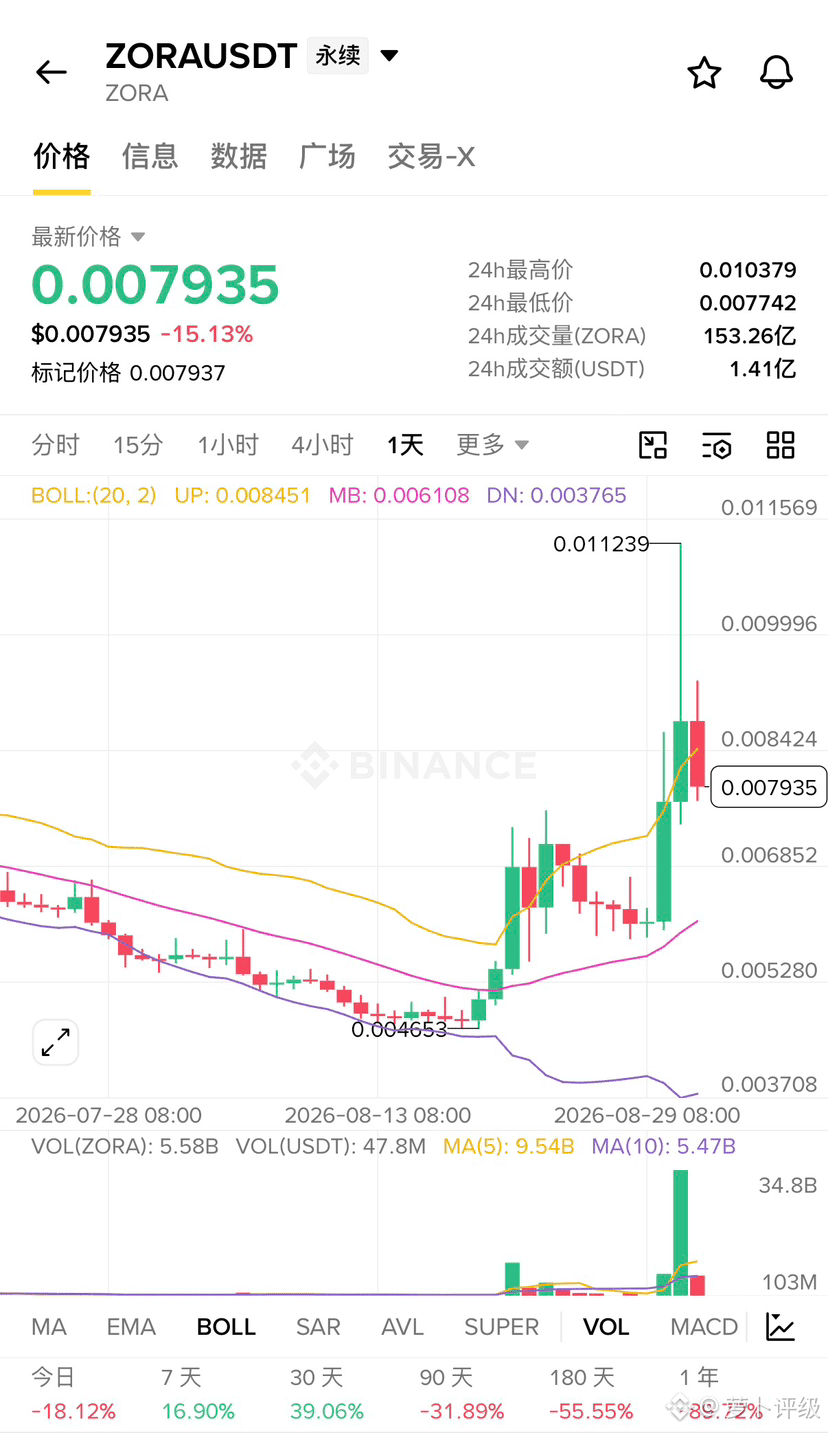
$ZORA 24h -15.13%,但就在这24小时里它曾一度暴涨65%——这轮过山车,或许比你看到的更复杂。Zora 是 Base 链上的创作者社交与代币化平台,把社交行为变成可交易资产,用户和 AI 代理都能拥有个人资料、钱包并发行代币。最近一周,它新增超2000个自定义配对,Solana 配对创建免费,还可交易来自 Pump.fun 等外部 launchpad 的代币,并挤进官方周度热门榜第5。
与此同时,社区里的热度更像一场杠杆博弈:约106万美元空头被清算,未平仓合约暴增312%,资金费率深度为负,还有鲸鱼从Bybit提走3158万枚$ZORA ,被视为潜在积累信号。技术面上,0.0094是短期支撑,上方0.011–0.013是流动性区,但距历史高点仍回撤约93%,波动风险不小。接下来看0.01关口能不能站稳。
#Base #SocialFi
{future}(ZORAUSDT)
$ZORA 24h -15.13%,但就在这24小时里它曾一度暴涨65%——这轮过山车,或许比你看到的更复杂。Zora 是 Base 链上的创作者社交与代币化平台,把社交行为变成可交易资产,用户和 AI 代理都能拥有个人资料、钱包并发行代币。最近一周,它新增超2000个自定义配对,Solana 配对创建免费,还可交易来自 Pump.fun 等外部 launchpad 的代币,并挤进官方周度热门榜第5。
与此同时,社区里的热度更像一场杠杆博弈:约106万美元空头被清算,未平仓合约暴增312%,资金费率深度为负,还有鲸鱼从Bybit提走3158万枚$ZORA ,被视为潜在积累信号。技术面上,0.0094是短期支撑,上方0.011–0.013是流动性区,但距历史高点仍回撤约93%,波动风险不小。接下来看0.01关口能不能站稳。
#Base #SocialFi
与此同时,社区里的热度更像一场杠杆博弈:约106万美元空头被清算,未平仓合约暴增312%,资金费率深度为负,还有鲸鱼从Bybit提走3158万枚$ZORA ,被视为潜在积累信号。技术面上,0.0094是短期支撑,上方0.011–0.013是流动性区,但距历史高点仍回撤约93%,波动风险不小。接下来看0.01关口能不能站稳。
#Base #SocialFi
45

·
--
🚨 SOCIAL TRADING APPS CROSS $1.3B VOLUME AS INSTITUTIONAL LIQUIDITY SHIFTS ON-CHAIN $CRYPTO ! ⚡
Social trading platforms are rapidly expanding their structural footprint, pushing weekly volume toward $1.3 billion as execution and on-chain intelligence converge. 📊 Daily active metrics on leading social execution interfaces have hit 60,000 to 100,000 users, rivaling major decentralized venues and concentrating retail order flow.
This structural shift is creating high-conviction liquidity hubs where top-tier leaderboard capital actively moves markets. 💡 As transparent on-chain data fuels individual nine-figure trading profiles, order flow distribution is permanently altering market participation dynamics. 💬 Are you tracking on-chain social volume to spot structural shifts early, or strictly sticking to raw chart setups? 👇
⚠️ Not financial advice. Always manage your risk. 🛡️
🏷️ #CRYPTO #SocialFi #OnChain #MarketStructure #DeFi
🦈 ⚡
🚨 SOCIAL TRADING APPS CROSS $1.3B VOLUME AS INSTITUTIONAL LIQUIDITY SHIFTS ON-CHAIN $CRYPTO ! ⚡
Social trading platforms are rapidly expanding their structural footprint, pushing weekly volume toward $1.3 billion as execution and on-chain intelligence converge. 📊 Daily active metrics on leading social execution interfaces have hit 60,000 to 100,000 users, rivaling major decentralized venues and concentrating retail order flow.
This structural shift is creating high-conviction liquidity hubs where top-tier leaderboard capital actively moves markets. 💡 As transparent on-chain data fuels individual nine-figure trading profiles, order flow distribution is permanently altering market participation dynamics. 💬 Are you tracking on-chain social volume to spot structural shifts early, or strictly sticking to raw chart setups? 👇
⚠️ Not financial advice. Always manage your risk. 🛡️
🏷️ #CRYPTO #SocialFi #OnChain #MarketStructure #DeFi
🦈 ⚡
Social trading platforms are rapidly expanding their structural footprint, pushing weekly volume toward $1.3 billion as execution and on-chain intelligence converge. 📊 Daily active metrics on leading social execution interfaces have hit 60,000 to 100,000 users, rivaling major decentralized venues and concentrating retail order flow.
This structural shift is creating high-conviction liquidity hubs where top-tier leaderboard capital actively moves markets. 💡 As transparent on-chain data fuels individual nine-figure trading profiles, order flow distribution is permanently altering market participation dynamics. 💬 Are you tracking on-chain social volume to spot structural shifts early, or strictly sticking to raw chart setups? 👇
⚠️ Not financial advice. Always manage your risk. 🛡️
🏷️ #CRYPTO #SocialFi #OnChain #MarketStructure #DeFi
🦈 ⚡
15
有消息称Friend.tech即将被收购,这一传闻直接让$FRIEND在短短几小时内股价暴涨十倍!
其实Friend.tech从去年爆火之后就一直争议不断,一边是早期参与者赚得盆满钵满,一边是后来者被套在高位吐槽割韭菜。这次收购传闻能掀起这么大波澜,也侧面说明市场对这个项目还保有不少关注度,毕竟背靠Base生态,又曾经是SocialFi赛道的领头羊,一旦真的被巨头接盘,说不定能带来一波新的叙事。
不过还是要提醒大家,这种靠传闻拉涨的行情波动极大,追高需谨慎,一定要控制好仓位,别被短期的涨幅冲昏了头脑。
#Friendtech #memecoin #SocialFi
有消息称Friend.tech即将被收购,这一传闻直接让$FRIEND在短短几小时内股价暴涨十倍!
其实Friend.tech从去年爆火之后就一直争议不断,一边是早期参与者赚得盆满钵满,一边是后来者被套在高位吐槽割韭菜。这次收购传闻能掀起这么大波澜,也侧面说明市场对这个项目还保有不少关注度,毕竟背靠Base生态,又曾经是SocialFi赛道的领头羊,一旦真的被巨头接盘,说不定能带来一波新的叙事。
不过还是要提醒大家,这种靠传闻拉涨的行情波动极大,追高需谨慎,一定要控制好仓位,别被短期的涨幅冲昏了头脑。
#Friendtech #memecoin #SocialFi
其实Friend.tech从去年爆火之后就一直争议不断,一边是早期参与者赚得盆满钵满,一边是后来者被套在高位吐槽割韭菜。这次收购传闻能掀起这么大波澜,也侧面说明市场对这个项目还保有不少关注度,毕竟背靠Base生态,又曾经是SocialFi赛道的领头羊,一旦真的被巨头接盘,说不定能带来一波新的叙事。
不过还是要提醒大家,这种靠传闻拉涨的行情波动极大,追高需谨慎,一定要控制好仓位,别被短期的涨幅冲昏了头脑。
#Friendtech #memecoin #SocialFi
8

·
--
Ішінара рас
KAITO 正式上线全新社交层,这一消息在加密圈引发巨大关注。🔥
作为一个 DeFi 聚合器平台,KAITO 这次的升级不仅仅是功能层面的迭代,更是将数据协作与社交互动深度融合的尝试。数据显示,相关消息释放后,市场情绪出现剧烈波动,价格曲线应声震荡,投资者情绪明显升温。📈
社交层的推出意味着 KAITO 正在构建"数据 + 社区 + 交易"三位一体的生态闭环。在信息碎片化的今天,谁能把数据流和社交网络打通,谁就能掌握下一个阶段的流量入口。
不过值得注意的是,消息面带来的价格剧烈波动也提醒我们——加密市场永远不缺故事,但能否兑现才是关键。KAITO 这次的社交层是否真能带来实质性价值增长?我们继续观察。👀
#DeFi #SocialFi
KAITO 正式上线全新社交层,这一消息在加密圈引发巨大关注。🔥
作为一个 DeFi 聚合器平台,KAITO 这次的升级不仅仅是功能层面的迭代,更是将数据协作与社交互动深度融合的尝试。数据显示,相关消息释放后,市场情绪出现剧烈波动,价格曲线应声震荡,投资者情绪明显升温。📈
社交层的推出意味着 KAITO 正在构建"数据 + 社区 + 交易"三位一体的生态闭环。在信息碎片化的今天,谁能把数据流和社交网络打通,谁就能掌握下一个阶段的流量入口。
不过值得注意的是,消息面带来的价格剧烈波动也提醒我们——加密市场永远不缺故事,但能否兑现才是关键。KAITO 这次的社交层是否真能带来实质性价值增长?我们继续观察。👀
#DeFi #SocialFi
作为一个 DeFi 聚合器平台,KAITO 这次的升级不仅仅是功能层面的迭代,更是将数据协作与社交互动深度融合的尝试。数据显示,相关消息释放后,市场情绪出现剧烈波动,价格曲线应声震荡,投资者情绪明显升温。📈
社交层的推出意味着 KAITO 正在构建"数据 + 社区 + 交易"三位一体的生态闭环。在信息碎片化的今天,谁能把数据流和社交网络打通,谁就能掌握下一个阶段的流量入口。
不过值得注意的是,消息面带来的价格剧烈波动也提醒我们——加密市场永远不缺故事,但能否兑现才是关键。KAITO 这次的社交层是否真能带来实质性价值增长?我们继续观察。👀
#DeFi #SocialFi
226

·
--
Мақала
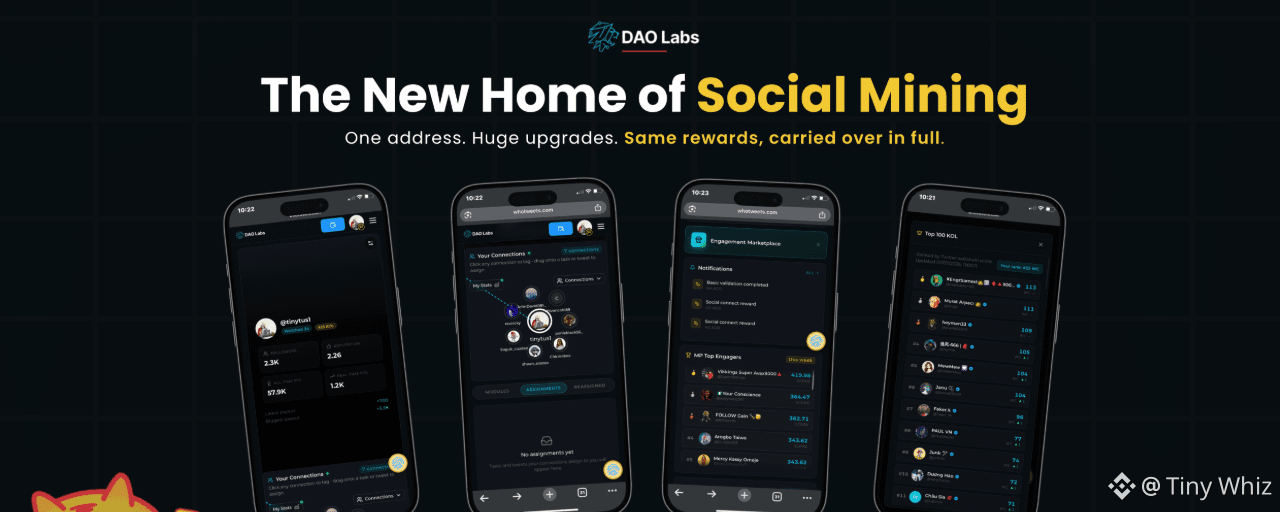
The Address Behind the Activity: What DAO Labs' Move to a New Domain Actually Signals$BNB has spent the past few weeks reminding the market why chain-level activity data matters more than headline price action, and that same logic applies to the infrastructure sitting on top of it. Most platforms live or die on trust in their data pipeline, since every point, rank, and reward traces back to activity the platform has to verify and store correctly. That is the lens worth applying to @DAOLabs ' decision to retire its old ilo.dao-labs.com address and relaunch #SocialMining under a new domain, because a migration like this either proves a team can handle continuity under pressure or it exposes exactly where the cracks are.
Why the old address had to go
The ILO-branded URL made sense in an earlier phase, when DAO Labs was still introducing the concept of an initial liquidity offering tied to contributor activity. That framing was useful for onboarding but limiting once the platform matured past explaining itself and into actually operating at scale. The new address does not lean on a financial acronym. It names the behavior the platform exists to measure, which is genuine activity and influence on X, not a label borrowed from token launch mechanics. For a project trying to position social mining as durable infrastructure rather than a temporary incentive campaign, that distinction in naming is not cosmetic. It is a signal of what DAO Labs wants the market to associate the platform with going forward.
What actually changed under the hood
Five changes came with the move, and each addresses a different weak point that SocialFi platforms tend to accumulate as they scale. The dashboard was rebuilt from the ground up, cutting load times and consolidating what used to require multiple tabs into a single view of rank, points, and active tasks. Scoring logic was reworked so verification status, account age, and consistency of engagement now apply as multipliers, meaning an account with real history and steady activity outweighs one posting in bursts to farm volume. A Top 100 KOL delegation layer was introduced, letting established contributors assign tasks to trusted collaborators with profit sharing built directly into the split, which turns individual mining into something closer to a coordinated unit than a solo grind. Engagement safety limits were added on daily retweet and quote activity, a direct response to the kind of spam behavior that erodes scoring integrity across every #SocialFi platform eventually. And a Meet & Match layer was rolled into the dashboard, connecting miners working in similar niches so coordination happens inside the platform instead of scattered across group chats.
Why this matters for anyone already mining, or thinking about starting
None of this works if the migration broke continuity, and that is the detail worth stating plainly. Every point earned under the old address carried over. Rank standing carried over. Work logs carried over. Nothing resets, which matters because the single fastest way to lose contributor trust in any token-adjacent system is to force people to rebuild a track record after a technical change they had no control over. DAO Labs treating data preservation as non-negotiable during a full domain and brand migration is a stronger signal of operational discipline than the new features themselves, even though the features are the part getting the attention.
The part worth sitting with
The interesting question is not whether the new dashboard looks better, since most platform redesigns do. It is whether verification-weighted scoring and delegation tooling represent DAO Labs building toward something closer to a reputation layer for on-chain community work, the kind of primitive that could eventually matter beyond this single platform.
Social mining has mostly been discussed as a task-and-reward loop up to this point. Multiplier-based scoring tied to real account history starts to look more like an early attempt at portable contributor reputation, which is a different and more durable idea than points for posting.
If a platform can migrate its entire domain and brand without losing a single point of contributor history, what does that tell you about how it will handle the next decision that actually puts token incentives on the line?
The Address Behind the Activity: What DAO Labs' Move to a New Domain Actually Signals
$BNB has spent the past few weeks reminding the market why chain-level activity data matters more than headline price action, and that same logic applies to the infrastructure sitting on top of it. Most platforms live or die on trust in their data pipeline, since every point, rank, and reward traces back to activity the platform has to verify and store correctly. That is the lens worth applying to @DAO Labs ' decision to retire its old ilo.dao-labs.com address and relaunch #SocialMining under a new domain, because a migration like this either proves a team can handle continuity under pressure or it exposes exactly where the cracks are.
Why the old address had to go
The ILO-branded URL made sense in an earlier phase, when DAO Labs was still introducing the concept of an initial liquidity offering tied to contributor activity. That framing was useful for onboarding but limiting once the platform matured past explaining itself and into actually operating at scale. The new address does not lean on a financial acronym. It names the behavior the platform exists to measure, which is genuine activity and influence on X, not a label borrowed from token launch mechanics. For a project trying to position social mining as durable infrastructure rather than a temporary incentive campaign, that distinction in naming is not cosmetic. It is a signal of what DAO Labs wants the market to associate the platform with going forward.
What actually changed under the hood
Five changes came with the move, and each addresses a different weak point that SocialFi platforms tend to accumulate as they scale. The dashboard was rebuilt from the ground up, cutting load times and consolidating what used to require multiple tabs into a single view of rank, points, and active tasks. Scoring logic was reworked so verification status, account age, and consistency of engagement now apply as multipliers, meaning an account with real history and steady activity outweighs one posting in bursts to farm volume. A Top 100 KOL delegation layer was introduced, letting established contributors assign tasks to trusted collaborators with profit sharing built directly into the split, which turns individual mining into something closer to a coordinated unit than a solo grind. Engagement safety limits were added on daily retweet and quote activity, a direct response to the kind of spam behavior that erodes scoring integrity across every #SocialFi platform eventually. And a Meet & Match layer was rolled into the dashboard, connecting miners working in similar niches so coordination happens inside the platform instead of scattered across group chats.
Why this matters for anyone already mining, or thinking about starting
None of this works if the migration broke continuity, and that is the detail worth stating plainly. Every point earned under the old address carried over. Rank standing carried over. Work logs carried over. Nothing resets, which matters because the single fastest way to lose contributor trust in any token-adjacent system is to force people to rebuild a track record after a technical change they had no control over. DAO Labs treating data preservation as non-negotiable during a full domain and brand migration is a stronger signal of operational discipline than the new features themselves, even though the features are the part getting the attention.
The part worth sitting with
The interesting question is not whether the new dashboard looks better, since most platform redesigns do. It is whether verification-weighted scoring and delegation tooling represent DAO Labs building toward something closer to a reputation layer for on-chain community work, the kind of primitive that could eventually matter beyond this single platform.
Social mining has mostly been discussed as a task-and-reward loop up to this point. Multiplier-based scoring tied to real account history starts to look more like an early attempt at portable contributor reputation, which is a different and more durable idea than points for posting.
If a platform can migrate its entire domain and brand without losing a single point of contributor history, what does that tell you about how it will handle the next decision that actually puts token incentives on the line?
Why the old address had to go
The ILO-branded URL made sense in an earlier phase, when DAO Labs was still introducing the concept of an initial liquidity offering tied to contributor activity. That framing was useful for onboarding but limiting once the platform matured past explaining itself and into actually operating at scale. The new address does not lean on a financial acronym. It names the behavior the platform exists to measure, which is genuine activity and influence on X, not a label borrowed from token launch mechanics. For a project trying to position social mining as durable infrastructure rather than a temporary incentive campaign, that distinction in naming is not cosmetic. It is a signal of what DAO Labs wants the market to associate the platform with going forward.
What actually changed under the hood
Five changes came with the move, and each addresses a different weak point that SocialFi platforms tend to accumulate as they scale. The dashboard was rebuilt from the ground up, cutting load times and consolidating what used to require multiple tabs into a single view of rank, points, and active tasks. Scoring logic was reworked so verification status, account age, and consistency of engagement now apply as multipliers, meaning an account with real history and steady activity outweighs one posting in bursts to farm volume. A Top 100 KOL delegation layer was introduced, letting established contributors assign tasks to trusted collaborators with profit sharing built directly into the split, which turns individual mining into something closer to a coordinated unit than a solo grind. Engagement safety limits were added on daily retweet and quote activity, a direct response to the kind of spam behavior that erodes scoring integrity across every #SocialFi platform eventually. And a Meet & Match layer was rolled into the dashboard, connecting miners working in similar niches so coordination happens inside the platform instead of scattered across group chats.
Why this matters for anyone already mining, or thinking about starting
None of this works if the migration broke continuity, and that is the detail worth stating plainly. Every point earned under the old address carried over. Rank standing carried over. Work logs carried over. Nothing resets, which matters because the single fastest way to lose contributor trust in any token-adjacent system is to force people to rebuild a track record after a technical change they had no control over. DAO Labs treating data preservation as non-negotiable during a full domain and brand migration is a stronger signal of operational discipline than the new features themselves, even though the features are the part getting the attention.
The part worth sitting with
The interesting question is not whether the new dashboard looks better, since most platform redesigns do. It is whether verification-weighted scoring and delegation tooling represent DAO Labs building toward something closer to a reputation layer for on-chain community work, the kind of primitive that could eventually matter beyond this single platform.
Social mining has mostly been discussed as a task-and-reward loop up to this point. Multiplier-based scoring tied to real account history starts to look more like an early attempt at portable contributor reputation, which is a different and more durable idea than points for posting.
If a platform can migrate its entire domain and brand without losing a single point of contributor history, what does that tell you about how it will handle the next decision that actually puts token incentives on the line?
1
49

·
--
Жоғары (өспелі)
I recently read "Proof of Work and Retainability in SocialFi: What Real Validation Looks Like (Part 1) by DAO Labs, and it completely changed how I think about contribution in SocialFi.
My biggest takeaway is that being active is not the same as creating value. Many people can complete daily tasks, like posts, comments, or shares, but genuine contribution goes much deeper than simply checking off activities.
The article clearly explains the difference between proof of activity and proof of work. Proof of activity measures what you do, while proof of work measures the actual value and impact of what you contribute. That distinction is incredibly important because real communities grow through meaningful contributions, not inflated activity numbers.
As someone participating in Social Mining, I've realized that the most rewarding moments aren't just completing another task. They're when my content educates someone, sparks discussion, receives genuine engagement, or helps others understand a project better. Those interactions show that my work created real value rather than simply adding more content to the timeline.
One concept I especially appreciated was DAO Labs' three-stage validation framework. It reminds us that contribution should be evaluated based on quality, originality, and measurable impact instead of raw activity alone. This creates a healthier ecosystem where creators are encouraged to think, research, and contribute authentically instead of chasing numbers.
I believe this is the future of SocialFi. Validation protects communities from spam, rewards genuine contributors, and builds trust between projects and their supporters. When quality becomes the standard, everyone benefits—the platform, the community, and the creators themselves.
SocialFi shouldn't reward who clicks the most. It should reward who contributes the most meaningful value.
Thank you, @DAOLabs, for sharing this perspective.
#SocialMining #SocialFi #DAOLabs
Article: https://dao-labs.com/posts/proof-of-work-and-retainability-in-socialfi-what-real-validation-looks-like-part-1
I recently read "Proof of Work and Retainability in SocialFi: What Real Validation Looks Like (Part 1) by DAO Labs, and it completely changed how I think about contribution in SocialFi.
My biggest takeaway is that being active is not the same as creating value. Many people can complete daily tasks, like posts, comments, or shares, but genuine contribution goes much deeper than simply checking off activities.
The article clearly explains the difference between proof of activity and proof of work. Proof of activity measures what you do, while proof of work measures the actual value and impact of what you contribute. That distinction is incredibly important because real communities grow through meaningful contributions, not inflated activity numbers.
As someone participating in Social Mining, I've realized that the most rewarding moments aren't just completing another task. They're when my content educates someone, sparks discussion, receives genuine engagement, or helps others understand a project better. Those interactions show that my work created real value rather than simply adding more content to the timeline.
One concept I especially appreciated was DAO Labs' three-stage validation framework. It reminds us that contribution should be evaluated based on quality, originality, and measurable impact instead of raw activity alone. This creates a healthier ecosystem where creators are encouraged to think, research, and contribute authentically instead of chasing numbers.
I believe this is the future of SocialFi. Validation protects communities from spam, rewards genuine contributors, and builds trust between projects and their supporters. When quality becomes the standard, everyone benefits—the platform, the community, and the creators themselves.
SocialFi shouldn't reward who clicks the most. It should reward who contributes the most meaningful value.
Thank you, @DAOLabs, for sharing this perspective.
#SocialMining #SocialFi #DAOLabs
Article: https://dao-labs.com/posts/proof-of-work-and-retainability-in-socialfi-what-real-validation-looks-like-part-1
My biggest takeaway is that being active is not the same as creating value. Many people can complete daily tasks, like posts, comments, or shares, but genuine contribution goes much deeper than simply checking off activities.
The article clearly explains the difference between proof of activity and proof of work. Proof of activity measures what you do, while proof of work measures the actual value and impact of what you contribute. That distinction is incredibly important because real communities grow through meaningful contributions, not inflated activity numbers.
As someone participating in Social Mining, I've realized that the most rewarding moments aren't just completing another task. They're when my content educates someone, sparks discussion, receives genuine engagement, or helps others understand a project better. Those interactions show that my work created real value rather than simply adding more content to the timeline.
One concept I especially appreciated was DAO Labs' three-stage validation framework. It reminds us that contribution should be evaluated based on quality, originality, and measurable impact instead of raw activity alone. This creates a healthier ecosystem where creators are encouraged to think, research, and contribute authentically instead of chasing numbers.
I believe this is the future of SocialFi. Validation protects communities from spam, rewards genuine contributors, and builds trust between projects and their supporters. When quality becomes the standard, everyone benefits—the platform, the community, and the creators themselves.
SocialFi shouldn't reward who clicks the most. It should reward who contributes the most meaningful value.
Thank you, @DAOLabs, for sharing this perspective.
#SocialMining #SocialFi #DAOLabs
Article: https://dao-labs.com/posts/proof-of-work-and-retainability-in-socialfi-what-real-validation-looks-like-part-1
1
1
94

·
--
Web3 gaming and SocialFi must shift from hype to utility. Sustainable projects need fun-first gameplay, rewarding creators over speculators, fair token emissions, strong anti-bot systems, and real ownership of digital assets. Long-term success depends on active communities, continuous updates, transparent governance, and token demand driven by genuine in-platform use not speculation alone. #SocialFi
$SPA
$WLFI
$LAB
Web3 gaming and SocialFi must shift from hype to utility. Sustainable projects need fun-first gameplay, rewarding creators over speculators, fair token emissions, strong anti-bot systems, and real ownership of digital assets. Long-term success depends on active communities, continuous updates, transparent governance, and token demand driven by genuine in-platform use not speculation alone. #SocialFi
$SPA
$WLFI
$LAB
$SPA
$WLFI
$LAB
1
364
DECENTRALIZED SOCIAL TRADING IS PIVOTING TOWARD TRANSACTIONAL NETWORKS OVER CONTENT 📈
The market is shifting away from content-based social platforms toward models centered on trading relationships. Apps like FOMO and ANTFUN are successfully monetizing social interactions by turning verified trade execution and position management into the primary social feed.
This transition marks a departure from previous experiments that failed to gain traction because they simply replicated traditional social media on-chain. By prioritizing trading behavior as the core social object, these platforms create a direct revenue loop through fee generation and customer acquisition.
Do you believe trade-centric social networks are the missing link for mass adoption?
Not financial advice. Always manage your risk.
#SocialFi #CryptoTrends #Trading #Blockchain
⚡
DECENTRALIZED SOCIAL TRADING IS PIVOTING TOWARD TRANSACTIONAL NETWORKS OVER CONTENT 📈
The market is shifting away from content-based social platforms toward models centered on trading relationships. Apps like FOMO and ANTFUN are successfully monetizing social interactions by turning verified trade execution and position management into the primary social feed.
This transition marks a departure from previous experiments that failed to gain traction because they simply replicated traditional social media on-chain. By prioritizing trading behavior as the core social object, these platforms create a direct revenue loop through fee generation and customer acquisition.
Do you believe trade-centric social networks are the missing link for mass adoption?
Not financial advice. Always manage your risk.
#SocialFi #CryptoTrends #Trading #Blockchain
⚡
The market is shifting away from content-based social platforms toward models centered on trading relationships. Apps like FOMO and ANTFUN are successfully monetizing social interactions by turning verified trade execution and position management into the primary social feed.
This transition marks a departure from previous experiments that failed to gain traction because they simply replicated traditional social media on-chain. By prioritizing trading behavior as the core social object, these platforms create a direct revenue loop through fee generation and customer acquisition.
Do you believe trade-centric social networks are the missing link for mass adoption?
Not financial advice. Always manage your risk.
#SocialFi #CryptoTrends #Trading #Blockchain
⚡
25

·
--
$PHAROS $BEAT $ZEST 今天盯盘记录
开盘到现在:
$PHAROS +3%
$BEAT +40%
$ZEST +25%
感觉 $PHAROS 走得最强,你们觉得呢?
---
刚发现一个金狗机会:xsignal.org
XSignal - 一个围绕X文化、信号发现的SocialFi Meme
目前Genesis轮,价格才 0.005u
下一阶段直接涨到 0.007u,相当于直接送40%
项目亮点:
- 围绕X原生讨论文化
- 把"早期讨论"转化为社区共识
- 从meme到持久社区的发展路线
我已经小仓位进了第一批
反正也是玩meme,不如找有叙事、有社区、有热度的
有兴趣的自己去看,DYOR
#XSIG #XSignal #SocialFi
$PHAROS $BEAT $ZEST 今天盯盘记录
开盘到现在:
$PHAROS +3%
$BEAT +40%
$ZEST +25%
感觉 $PHAROS 走得最强,你们觉得呢?
---
刚发现一个金狗机会:xsignal.org
XSignal - 一个围绕X文化、信号发现的SocialFi Meme
目前Genesis轮,价格才 0.005u
下一阶段直接涨到 0.007u,相当于直接送40%
项目亮点:
- 围绕X原生讨论文化
- 把"早期讨论"转化为社区共识
- 从meme到持久社区的发展路线
我已经小仓位进了第一批
反正也是玩meme,不如找有叙事、有社区、有热度的
有兴趣的自己去看,DYOR
#XSIG #XSignal #SocialFi
开盘到现在:
$PHAROS +3%
$BEAT +40%
$ZEST +25%
感觉 $PHAROS 走得最强,你们觉得呢?
---
刚发现一个金狗机会:xsignal.org
XSignal - 一个围绕X文化、信号发现的SocialFi Meme
目前Genesis轮,价格才 0.005u
下一阶段直接涨到 0.007u,相当于直接送40%
项目亮点:
- 围绕X原生讨论文化
- 把"早期讨论"转化为社区共识
- 从meme到持久社区的发展路线
我已经小仓位进了第一批
反正也是玩meme,不如找有叙事、有社区、有热度的
有兴趣的自己去看,DYOR
#XSIG #XSignal #SocialFi
442
·
--
$BEAT $msUSD $quq 有没有人跟我一样在蹲
Our NATO allies need to be with us this week, as the demands from Iran are deman
感觉 $BEAT 憋大招,你们觉得呢?
---
刚发现一个金狗机会:xsignal.org
XSignal - 一个围绕X文化、信号发现的SocialFi Meme
目前Genesis轮,价格才 0.005u
下一阶段直接涨到 0.007u,相当于直接送40%
项目亮点:
- 围绕X原生讨论文化
- 把"早期讨论"转化为社区共识
- 从meme到持久社区的发展路线
我已经小仓位进了第一批
反正也是玩meme,不如找有叙事、有社区、有热度的
有兴趣的自己去看,DYOR
#XSIG #XSignal #SocialFi
$BEAT $msUSD $quq 有没有人跟我一样在蹲
Our NATO allies need to be with us this week, as the demands from Iran are deman
感觉 $BEAT 憋大招,你们觉得呢?
---
刚发现一个金狗机会:xsignal.org
XSignal - 一个围绕X文化、信号发现的SocialFi Meme
目前Genesis轮,价格才 0.005u
下一阶段直接涨到 0.007u,相当于直接送40%
项目亮点:
- 围绕X原生讨论文化
- 把"早期讨论"转化为社区共识
- 从meme到持久社区的发展路线
我已经小仓位进了第一批
反正也是玩meme,不如找有叙事、有社区、有热度的
有兴趣的自己去看,DYOR
#XSIG #XSignal #SocialFi
Our NATO allies need to be with us this week, as the demands from Iran are deman
感觉 $BEAT 憋大招,你们觉得呢?
---
刚发现一个金狗机会:xsignal.org
XSignal - 一个围绕X文化、信号发现的SocialFi Meme
目前Genesis轮,价格才 0.005u
下一阶段直接涨到 0.007u,相当于直接送40%
项目亮点:
- 围绕X原生讨论文化
- 把"早期讨论"转化为社区共识
- 从meme到持久社区的发展路线
我已经小仓位进了第一批
反正也是玩meme,不如找有叙事、有社区、有热度的
有兴趣的自己去看,DYOR
#XSIG #XSignal #SocialFi
17
【Web3 社交新选手 🐸】
对标 Instagram 的 Solana 链上图文短视频应用 Memebook 宣布完成 100 万美元种子轮融资,TOF. Ventures 独家参投。
几个值得关注的点:
1️⃣ Solana 钱包原生登录,Web2 用户的迁移门槛被压到最低
2️⃣ 链上资讯聚合 + 社交激励双轮驱动,把"刷推"和"看链上数据"合并到同一界面
3️⃣ 深度适配 Solana Mobile(Seeker),押注移动端 Web3 入口
在大家都卷 DePIN、L2、DeFi 的时候,把"内容社交"搬到 Solana 上做原生体验,算是一条比较小众但差异化的路线。能不能跑出来,关键还是看真实创作者能否冷启动。
#Web3 #Solana #SocialFi
【Web3 社交新选手 🐸】
对标 Instagram 的 Solana 链上图文短视频应用 Memebook 宣布完成 100 万美元种子轮融资,TOF. Ventures 独家参投。
几个值得关注的点:
1️⃣ Solana 钱包原生登录,Web2 用户的迁移门槛被压到最低
2️⃣ 链上资讯聚合 + 社交激励双轮驱动,把"刷推"和"看链上数据"合并到同一界面
3️⃣ 深度适配 Solana Mobile(Seeker),押注移动端 Web3 入口
在大家都卷 DePIN、L2、DeFi 的时候,把"内容社交"搬到 Solana 上做原生体验,算是一条比较小众但差异化的路线。能不能跑出来,关键还是看真实创作者能否冷启动。
#Web3 #Solana #SocialFi
对标 Instagram 的 Solana 链上图文短视频应用 Memebook 宣布完成 100 万美元种子轮融资,TOF. Ventures 独家参投。
几个值得关注的点:
1️⃣ Solana 钱包原生登录,Web2 用户的迁移门槛被压到最低
2️⃣ 链上资讯聚合 + 社交激励双轮驱动,把"刷推"和"看链上数据"合并到同一界面
3️⃣ 深度适配 Solana Mobile(Seeker),押注移动端 Web3 入口
在大家都卷 DePIN、L2、DeFi 的时候,把"内容社交"搬到 Solana 上做原生体验,算是一条比较小众但差异化的路线。能不能跑出来,关键还是看真实创作者能否冷启动。
#Web3 #Solana #SocialFi
80


·
--
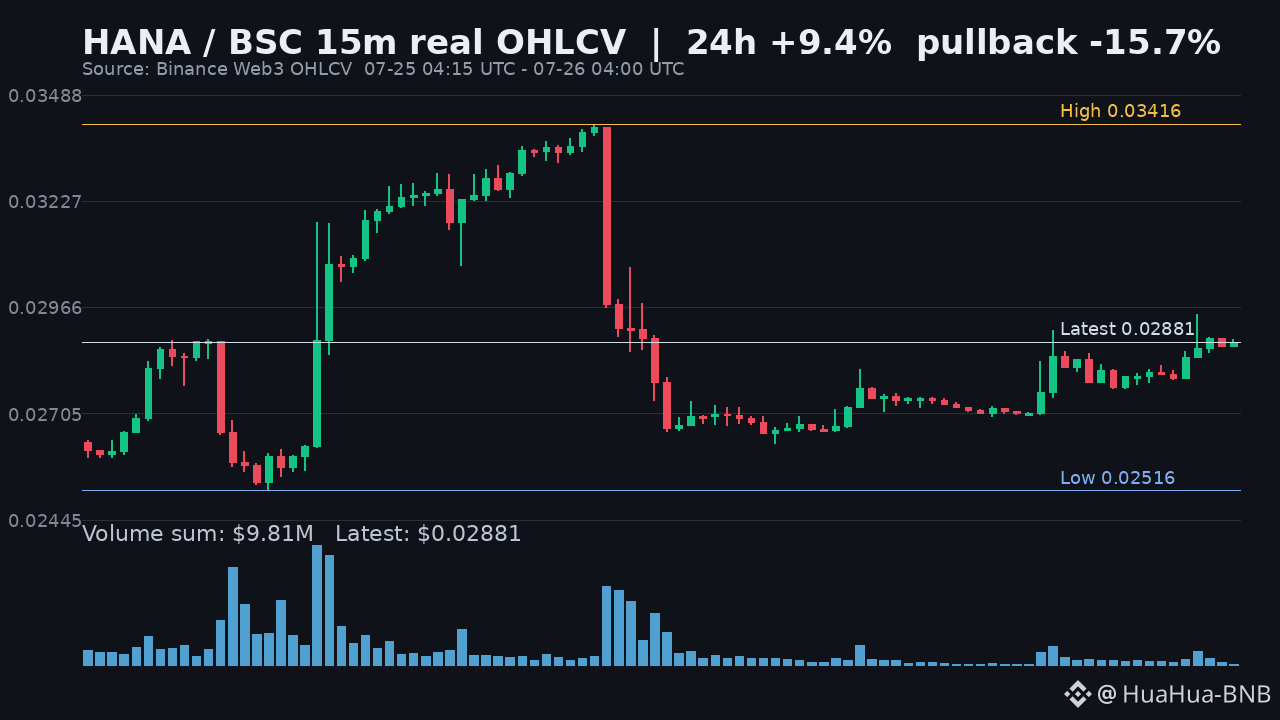
$HANA 这波有点像“昨天被砸懵,今天又有人捞起来”。
Binance Alpha 里看了一眼:24h 成交接近 985万U,15m真实K线窗口大概 +9%,但离高点还有一截,最高位下来约 -15.7%。
SocialFi 叙事这东西很吃情绪,热的时候像全场在刷屏,冷的时候也是真的冷。现在比较尴尬:量还在,价格也修了一段,但不是那种无脑直线冲。
我会盯,但不急着上头。山寨一旦情绪反转,追高很容易从“我懂了”变成“我服了”。
$BNB #BinanceAlpha #SocialFi
$HANA 这波有点像“昨天被砸懵,今天又有人捞起来”。
Binance Alpha 里看了一眼:24h 成交接近 985万U,15m真实K线窗口大概 +9%,但离高点还有一截,最高位下来约 -15.7%。
SocialFi 叙事这东西很吃情绪,热的时候像全场在刷屏,冷的时候也是真的冷。现在比较尴尬:量还在,价格也修了一段,但不是那种无脑直线冲。
我会盯,但不急着上头。山寨一旦情绪反转,追高很容易从“我懂了”变成“我服了”。
$BNB #BinanceAlpha #SocialFi
Binance Alpha 里看了一眼:24h 成交接近 985万U,15m真实K线窗口大概 +9%,但离高点还有一截,最高位下来约 -15.7%。
SocialFi 叙事这东西很吃情绪,热的时候像全场在刷屏,冷的时候也是真的冷。现在比较尴尬:量还在,价格也修了一段,但不是那种无脑直线冲。
我会盯,但不急着上头。山寨一旦情绪反转,追高很容易从“我懂了”变成“我服了”。
$BNB #BinanceAlpha #SocialFi
1
273
·
--
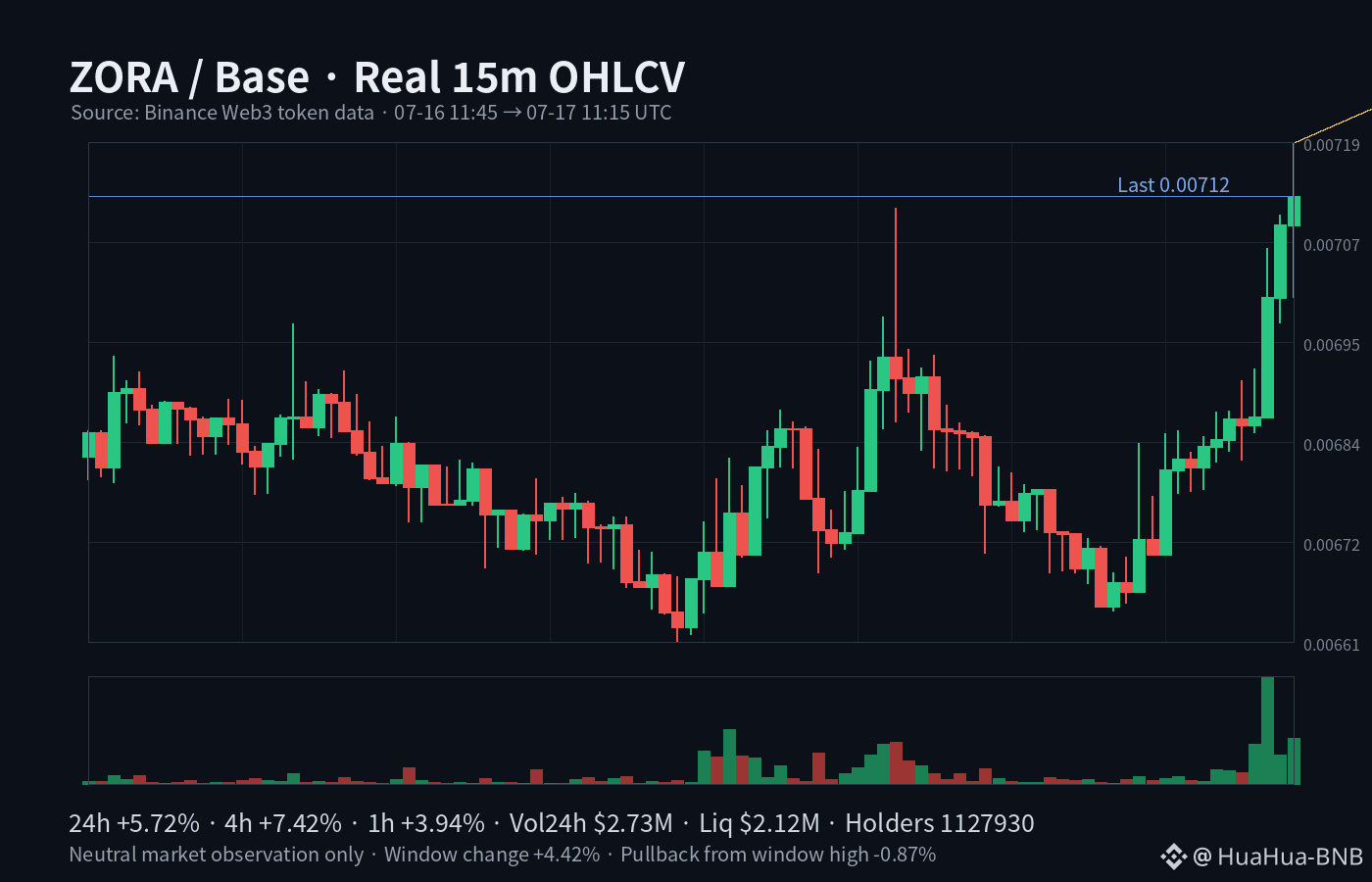
$ZORA 这波有点像“社交币又被人想起来了”。
Base Alpha 榜里,$ZORA 24h 约 +5.7%,4h 约 +7.4%,1h 也还有 +3.9%;成交不算夸张,但 24h 约 273 万U,最近 1h 就有 61 万U 左右,热度是有点往短线集中。
我比较关注的是这个叙事:Zora 本来就不是纯土狗逻辑,它更像 SocialFi / 内容代币化那条线——市场一旦又开始炒“每个帖子都能变成资产”,这类名字就容易被拿出来看一眼。
但别上头。这个位置更像热度回暖,不是确定性剧本;Alpha/山寨波动很快,追一根阳线进去,最容易被下一根教育。
你们觉得 SocialFi 这条线这次能续多久?
#BinanceAlpha #Base #SocialFi
$ZORA 这波有点像“社交币又被人想起来了”。
Base Alpha 榜里,$ZORA 24h 约 +5.7%,4h 约 +7.4%,1h 也还有 +3.9%;成交不算夸张,但 24h 约 273 万U,最近 1h 就有 61 万U 左右,热度是有点往短线集中。
我比较关注的是这个叙事:Zora 本来就不是纯土狗逻辑,它更像 SocialFi / 内容代币化那条线——市场一旦又开始炒“每个帖子都能变成资产”,这类名字就容易被拿出来看一眼。
但别上头。这个位置更像热度回暖,不是确定性剧本;Alpha/山寨波动很快,追一根阳线进去,最容易被下一根教育。
你们觉得 SocialFi 这条线这次能续多久?
#BinanceAlpha #Base #SocialFi
Base Alpha 榜里,$ZORA 24h 约 +5.7%,4h 约 +7.4%,1h 也还有 +3.9%;成交不算夸张,但 24h 约 273 万U,最近 1h 就有 61 万U 左右,热度是有点往短线集中。
我比较关注的是这个叙事:Zora 本来就不是纯土狗逻辑,它更像 SocialFi / 内容代币化那条线——市场一旦又开始炒“每个帖子都能变成资产”,这类名字就容易被拿出来看一眼。
但别上头。这个位置更像热度回暖,不是确定性剧本;Alpha/山寨波动很快,追一根阳线进去,最容易被下一根教育。
你们觉得 SocialFi 这条线这次能续多久?
#BinanceAlpha #Base #SocialFi
75
·
--
$ZEST $msUSD $NEX 这几个可以看看
Our NATO allies need to be with us this week, as the demands from Iran are deman
$ZEST -7%
$msUSD -0%
$NEX +12%
我小仓位试了点,你们呢?
---
刚发现一个金狗机会:xsignal.org
XSignal - 一个围绕X文化、信号发现的SocialFi Meme
目前Genesis轮,价格才 0.005u
下一阶段直接涨到 0.007u,相当于直接送40%
项目亮点:
- 围绕X原生讨论文化
- 把"早期讨论"转化为社区共识
- 从meme到持久社区的发展路线
我已经小仓位进了第一批
反正也是玩meme,不如找有叙事、有社区、有热度的
有兴趣的自己去看,DYOR
#XSIG #XSignal #SocialFi
$ZEST $msUSD $NEX 这几个可以看看
Our NATO allies need to be with us this week, as the demands from Iran are deman
$ZEST -7%
$msUSD -0%
$NEX +12%
我小仓位试了点,你们呢?
---
刚发现一个金狗机会:xsignal.org
XSignal - 一个围绕X文化、信号发现的SocialFi Meme
目前Genesis轮,价格才 0.005u
下一阶段直接涨到 0.007u,相当于直接送40%
项目亮点:
- 围绕X原生讨论文化
- 把"早期讨论"转化为社区共识
- 从meme到持久社区的发展路线
我已经小仓位进了第一批
反正也是玩meme,不如找有叙事、有社区、有热度的
有兴趣的自己去看,DYOR
#XSIG #XSignal #SocialFi
Our NATO allies need to be with us this week, as the demands from Iran are deman
$ZEST -7%
$msUSD -0%
$NEX +12%
我小仓位试了点,你们呢?
---
刚发现一个金狗机会:xsignal.org
XSignal - 一个围绕X文化、信号发现的SocialFi Meme
目前Genesis轮,价格才 0.005u
下一阶段直接涨到 0.007u,相当于直接送40%
项目亮点:
- 围绕X原生讨论文化
- 把"早期讨论"转化为社区共识
- 从meme到持久社区的发展路线
我已经小仓位进了第一批
反正也是玩meme,不如找有叙事、有社区、有热度的
有兴趣的自己去看,DYOR
#XSIG #XSignal #SocialFi
27
Көбірек контент көру үшін кіріңіз
Binance Square платформасында әлемдік криптоқоғамдастыққа қосылыңыз
⚡️ Криптовалюта туралы ең соңғы және пайдалы ақпаратты алыңыз.
💬 Әлемдегі ең ірі криптобиржаның сеніміне ие.
👍 Расталған авторлардың нақты пікірлерін табыңыз.
Электрондық пошта/телефон нөмірі
Трендтегі тақырыптар
1
#BOJRaisesRatesTo31YearHigh
26,586 рет көрілді
683 адам талқылап жатыр
2
#BuffettStepsDownAsBerkshireChairman
7,938 рет көрілді
272 адам талқылап жатыр
3
#XRPExchangeReservesHitSevenYearLow
11,960 рет көрілді
295 адам талқылап жатыр
4
#HKCompletesFirstHKDStablecoinUseCase
41,378 рет көрілді
819 адам талқылап жатыр
5
#VietnamPlansFirstCryptoLicensesIn2026
30,378 рет көрілді
573 адам талқылап жатыр
6
#BTCBreaks80K
290,769 рет көрілді
4,131 адам талқылап жатыр
7
#比特币突破8万
145,015 рет көрілді
451 адам талқылап жатыр
8
#BitcoinMarketCapTopsTesla
48,645 рет көрілді
879 адам талқылап жатыр
9
#SOLJumpsAbout10%
60,250 рет көрілді
891 адам талқылап жатыр
10
#EthereumReclaims$2600
5,335 рет көрілді
101 адам талқылап жатыр