

talha-110
522 投稿

talha-110
報告
ユーザーをブロック
高頻度トレーダー
2.4年
84 フォロー
91 フォロワー
288 いいね
投稿
すべて
引用
PINNED
·
--
ブリッシュ
一部該当
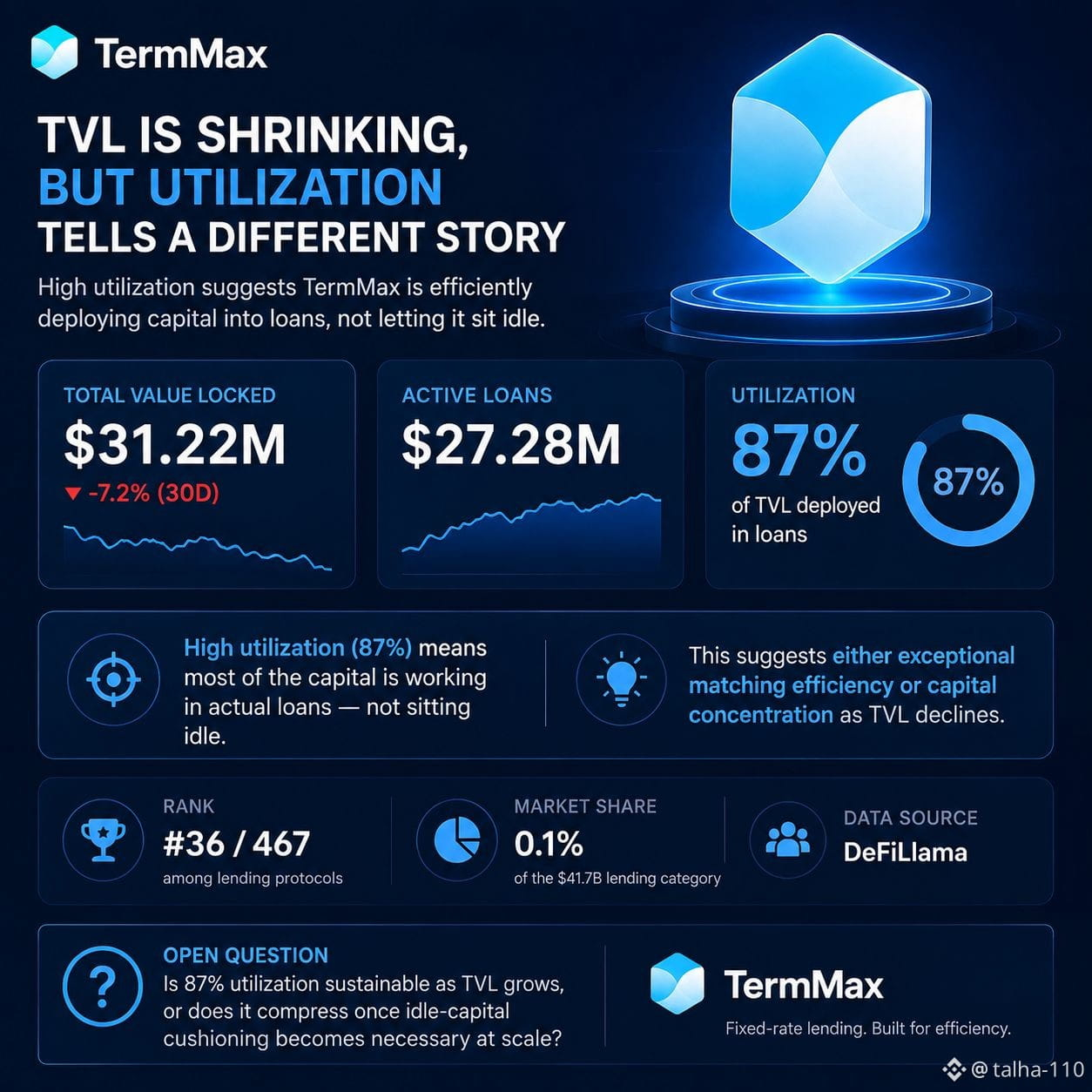
TermMax:TVLは縮小しているが、利用状況は別の物語を語る
TermMaxのTVLは現在3,122万ドルで、過去30日で7.2%減少しています。単体で見ると、これはプロトコルが勢いを失っているようにも読めます。
しかし、実際の貸付残高(2,728万ドル)と組み合わせると話が変わります。これは現在ロックされた資本の約87%が、アイドル状態のまま待機しているのではなく、実際のローンとして運用されていることを意味します。
固定金利のレンディング・プロトコルとしては、異例の高い利用率です。多くのレンディング・プラットフォームには、供給と需要がその時点で完全に一致することはほとんどないため、重要なアイドル資本が生じがちです。87%という利用率は、次のどちらかを示唆します。TermMaxのレンジオーダーとキュレーター・システムが、貸し手と借り手のマッチングに本当に効率的であるか、あるいはTVLの減少そのものが、すでに稼働している市場に残る資本を集中させていることで、分母が分子より速く縮んでいるかです。
また、文脈も重要です。TermMaxはDefiLlamaが追跡するレンディング・プロトコル467件のうち第36位で、レンディング部門(417億ドル)の0.1%にとどまります。絶対規模は小さいものの、その利用率という効率指標は、TVLに比例して拡大する種類のものではありません。プロトコルの規模に関係なく、構造的に健全かどうかが本質的に問われます。
未解決の問い:TVLが成長するにつれて、利用率87%は持続可能なのか。それとも、規模に応じてアイドル資本のクッションが必要になったとき、圧縮されてしまうのか? #termmax @termmax
TermMax:TVLは縮小しているが、利用状況は別の物語を語る
TermMaxのTVLは現在3,122万ドルで、過去30日で7.2%減少しています。単体で見ると、これはプロトコルが勢いを失っているようにも読めます。
しかし、実際の貸付残高(2,728万ドル)と組み合わせると話が変わります。これは現在ロックされた資本の約87%が、アイドル状態のまま待機しているのではなく、実際のローンとして運用されていることを意味します。
固定金利のレンディング・プロトコルとしては、異例の高い利用率です。多くのレンディング・プラットフォームには、供給と需要がその時点で完全に一致することはほとんどないため、重要なアイドル資本が生じがちです。87%という利用率は、次のどちらかを示唆します。TermMaxのレンジオーダーとキュレーター・システムが、貸し手と借り手のマッチングに本当に効率的であるか、あるいはTVLの減少そのものが、すでに稼働している市場に残る資本を集中させていることで、分母が分子より速く縮んでいるかです。
また、文脈も重要です。TermMaxはDefiLlamaが追跡するレンディング・プロトコル467件のうち第36位で、レンディング部門(417億ドル)の0.1%にとどまります。絶対規模は小さいものの、その利用率という効率指標は、TVLに比例して拡大する種類のものではありません。プロトコルの規模に関係なく、構造的に健全かどうかが本質的に問われます。
未解決の問い:TVLが成長するにつれて、利用率87%は持続可能なのか。それとも、規模に応じてアイドル資本のクッションが必要になったとき、圧縮されてしまうのか? #termmax @TermMax
TermMaxのTVLは現在3,122万ドルで、過去30日で7.2%減少しています。単体で見ると、これはプロトコルが勢いを失っているようにも読めます。
しかし、実際の貸付残高(2,728万ドル)と組み合わせると話が変わります。これは現在ロックされた資本の約87%が、アイドル状態のまま待機しているのではなく、実際のローンとして運用されていることを意味します。
固定金利のレンディング・プロトコルとしては、異例の高い利用率です。多くのレンディング・プラットフォームには、供給と需要がその時点で完全に一致することはほとんどないため、重要なアイドル資本が生じがちです。87%という利用率は、次のどちらかを示唆します。TermMaxのレンジオーダーとキュレーター・システムが、貸し手と借り手のマッチングに本当に効率的であるか、あるいはTVLの減少そのものが、すでに稼働している市場に残る資本を集中させていることで、分母が分子より速く縮んでいるかです。
また、文脈も重要です。TermMaxはDefiLlamaが追跡するレンディング・プロトコル467件のうち第36位で、レンディング部門(417億ドル)の0.1%にとどまります。絶対規模は小さいものの、その利用率という効率指標は、TVLに比例して拡大する種類のものではありません。プロトコルの規模に関係なく、構造的に健全かどうかが本質的に問われます。
未解決の問い:TVLが成長するにつれて、利用率87%は持続可能なのか。それとも、規模に応じてアイドル資本のクッションが必要になったとき、圧縮されてしまうのか? #termmax @TermMax
39
3
32
234
·
--
ブリッシュ
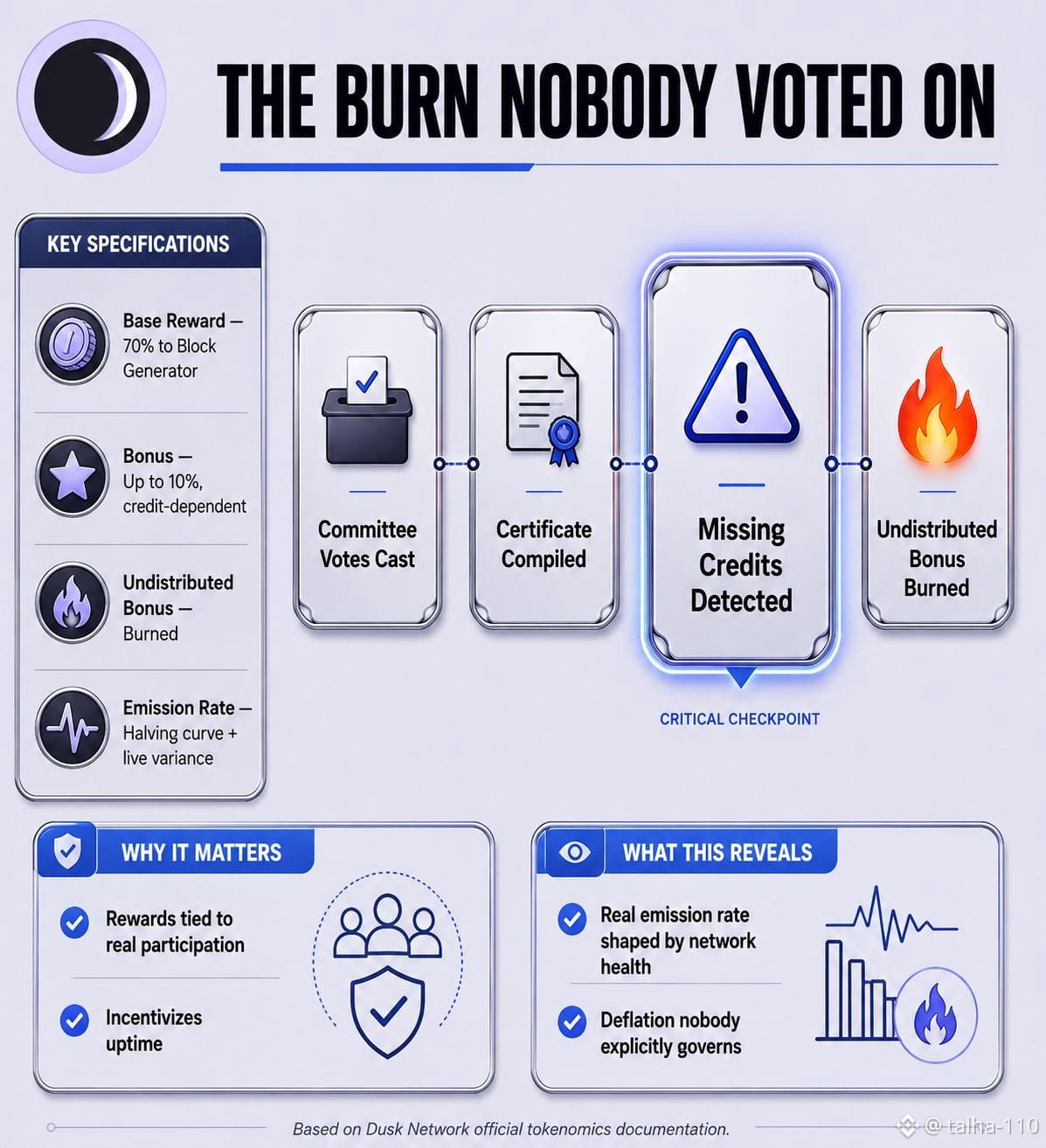
Duskのブロックジェネレーターは、Dusk上のすべてのブロックごとに保証された70%の取り分に加え、最大で追加の10%ボーナスを得ます——ただしそのボーナスは固定ではありません。実際に前のブロックを確認する証明書(certificate)に含まれた委員会クレジット(投票)の数に応じてスケールします。もしそれらの投票の一部が欠けている場合——たとえばプロビジョナーがオフラインだったり、応答が遅かったりすると——そのボーナスの未配分分は誰かに繰り越されません。未配分分はそのまま焼却されます。
つまり静かに意味するのは、Duskの実際の循環発行量は、皆が参照している半減スケジュールだけの関数ではないということです。さらに、ブロックごとに、そのネットワークが自分自身のコンセンサスにどれだけ完全に参加しているかにも依存します。稼働率が高く、素早く同期されたプロビジョナーを持つネットワークは、より少なく焼却し、より多く支払います。一方で、反応が鈍い、または一部がオフラインの委員会(コミッティ)を抱えるネットワークは、配布すらされないDUSKを静かに燃やしてしまっています。半減曲線は上限を示します。その上限の下での実際の発行レートは、特定のブロックにおけるコンセンサス参加の健全性によってリアルタイムに形作られています——誰も投票しなかったデフレ効果のレバーが、すべてのブロックの裏でひっそりと動いているのです。
$DUSK #dusk @Dusk_Foundation
Duskのブロックジェネレーターは、Dusk上のすべてのブロックごとに保証された70%の取り分に加え、最大で追加の10%ボーナスを得ます——ただしそのボーナスは固定ではありません。実際に前のブロックを確認する証明書(certificate)に含まれた委員会クレジット(投票)の数に応じてスケールします。もしそれらの投票の一部が欠けている場合——たとえばプロビジョナーがオフラインだったり、応答が遅かったりすると——そのボーナスの未配分分は誰かに繰り越されません。未配分分はそのまま焼却されます。
つまり静かに意味するのは、Duskの実際の循環発行量は、皆が参照している半減スケジュールだけの関数ではないということです。さらに、ブロックごとに、そのネットワークが自分自身のコンセンサスにどれだけ完全に参加しているかにも依存します。稼働率が高く、素早く同期されたプロビジョナーを持つネットワークは、より少なく焼却し、より多く支払います。一方で、反応が鈍い、または一部がオフラインの委員会(コミッティ)を抱えるネットワークは、配布すらされないDUSKを静かに燃やしてしまっています。半減曲線は上限を示します。その上限の下での実際の発行レートは、特定のブロックにおけるコンセンサス参加の健全性によってリアルタイムに形作られています——誰も投票しなかったデフレ効果のレバーが、すべてのブロックの裏でひっそりと動いているのです。
$DUSK #dusk @Dusk
つまり静かに意味するのは、Duskの実際の循環発行量は、皆が参照している半減スケジュールだけの関数ではないということです。さらに、ブロックごとに、そのネットワークが自分自身のコンセンサスにどれだけ完全に参加しているかにも依存します。稼働率が高く、素早く同期されたプロビジョナーを持つネットワークは、より少なく焼却し、より多く支払います。一方で、反応が鈍い、または一部がオフラインの委員会(コミッティ)を抱えるネットワークは、配布すらされないDUSKを静かに燃やしてしまっています。半減曲線は上限を示します。その上限の下での実際の発行レートは、特定のブロックにおけるコンセンサス参加の健全性によってリアルタイムに形作られています——誰も投票しなかったデフレ効果のレバーが、すべてのブロックの裏でひっそりと動いているのです。
$DUSK #dusk @Dusk
1
432
·
--
ブリッシュ
翻訳参照
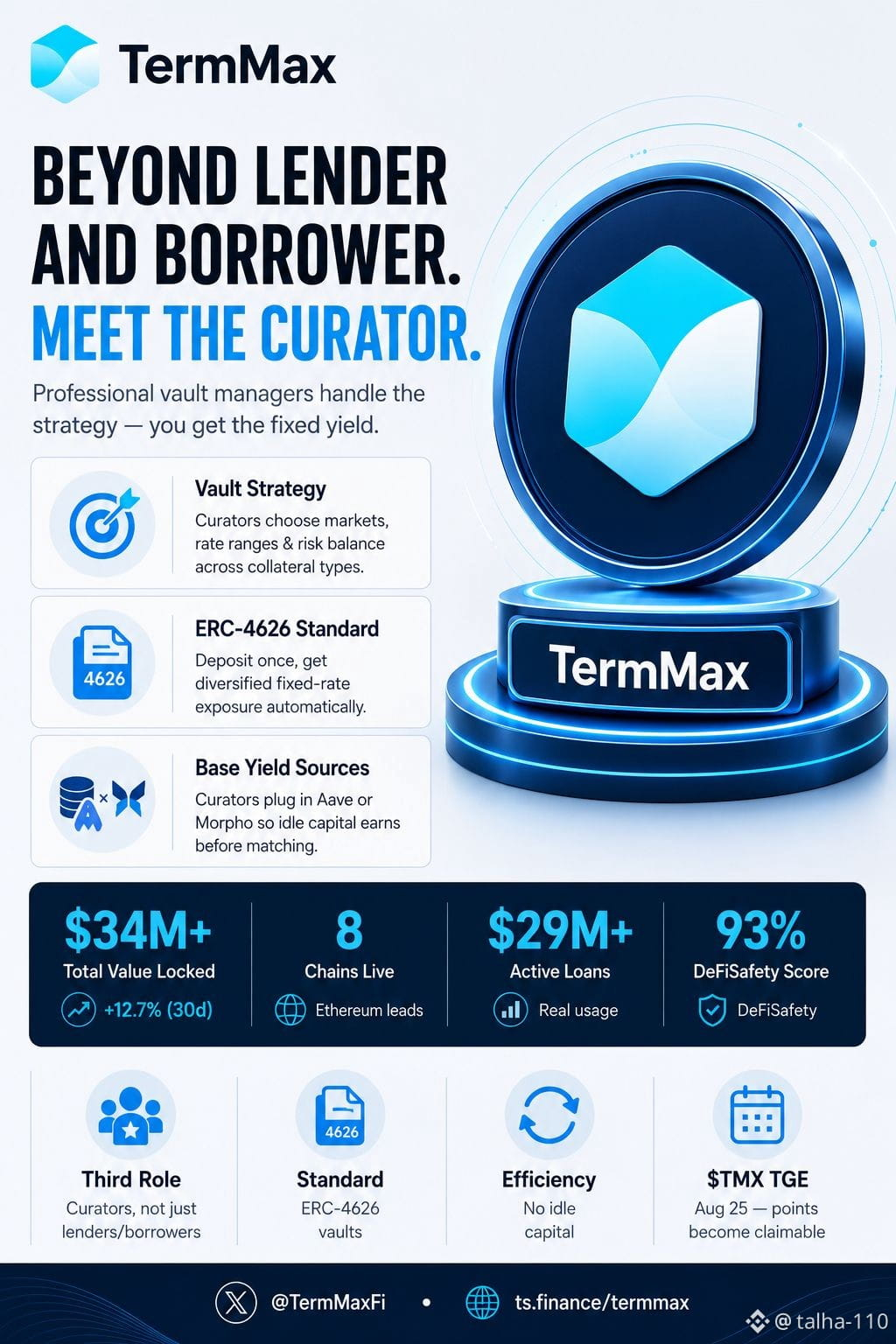
Most people who interact with TermMax show up as either lenders or borrowers. There's a third role I hadn't really paid attention to until recently: Curators.
Curators are the professional managers running the vaults on the protocol. They're the ones deciding which markets get capital, what rate ranges to offer, and how to balance risk across different collateral types. Instead of every user manually managing their own range orders, curators take on that strategy and optimization work.
For depositors, this makes things a lot simpler. You put capital into a vault, and the curator spreads it across multiple fixed-rate markets for you. You still get fixed-yield exposure — you just don't have to sit there setting, adjusting, and monitoring individual orders yourself.
Here's the part I found genuinely clever: TermMax vaults follow the ERC-4626 standard, and curators can plug in external protocols like Aave or Morpho as a base yield source. So even before your capital gets matched into a fixed-rate position, it's not just sitting idle — it's earning in the background the whole time.
It sits in this useful middle ground — more hands-on than pure passive lending, but way less work than running your own range orders. The curator absorbs the complexity, and depositors get an easier way into the fixed-rate side of things.
It's not the flashiest part of TermMax, but it's one of those structural pieces that lets the protocol actually scale beyond individual users placing their own orders one by one.
#termmax @termmax
Most people who interact with TermMax show up as either lenders or borrowers. There's a third role I hadn't really paid attention to until recently: Curators.
Curators are the professional managers running the vaults on the protocol. They're the ones deciding which markets get capital, what rate ranges to offer, and how to balance risk across different collateral types. Instead of every user manually managing their own range orders, curators take on that strategy and optimization work.
For depositors, this makes things a lot simpler. You put capital into a vault, and the curator spreads it across multiple fixed-rate markets for you. You still get fixed-yield exposure — you just don't have to sit there setting, adjusting, and monitoring individual orders yourself.
Here's the part I found genuinely clever: TermMax vaults follow the ERC-4626 standard, and curators can plug in external protocols like Aave or Morpho as a base yield source. So even before your capital gets matched into a fixed-rate position, it's not just sitting idle — it's earning in the background the whole time.
It sits in this useful middle ground — more hands-on than pure passive lending, but way less work than running your own range orders. The curator absorbs the complexity, and depositors get an easier way into the fixed-rate side of things.
It's not the flashiest part of TermMax, but it's one of those structural pieces that lets the protocol actually scale beyond individual users placing their own orders one by one.
#termmax @TermMax
Curators are the professional managers running the vaults on the protocol. They're the ones deciding which markets get capital, what rate ranges to offer, and how to balance risk across different collateral types. Instead of every user manually managing their own range orders, curators take on that strategy and optimization work.
For depositors, this makes things a lot simpler. You put capital into a vault, and the curator spreads it across multiple fixed-rate markets for you. You still get fixed-yield exposure — you just don't have to sit there setting, adjusting, and monitoring individual orders yourself.
Here's the part I found genuinely clever: TermMax vaults follow the ERC-4626 standard, and curators can plug in external protocols like Aave or Morpho as a base yield source. So even before your capital gets matched into a fixed-rate position, it's not just sitting idle — it's earning in the background the whole time.
It sits in this useful middle ground — more hands-on than pure passive lending, but way less work than running your own range orders. The curator absorbs the complexity, and depositors get an easier way into the fixed-rate side of things.
It's not the flashiest part of TermMax, but it's one of those structural pieces that lets the protocol actually scale beyond individual users placing their own orders one by one.
#termmax @TermMax
10
6
134
·
--
ブリッシュ
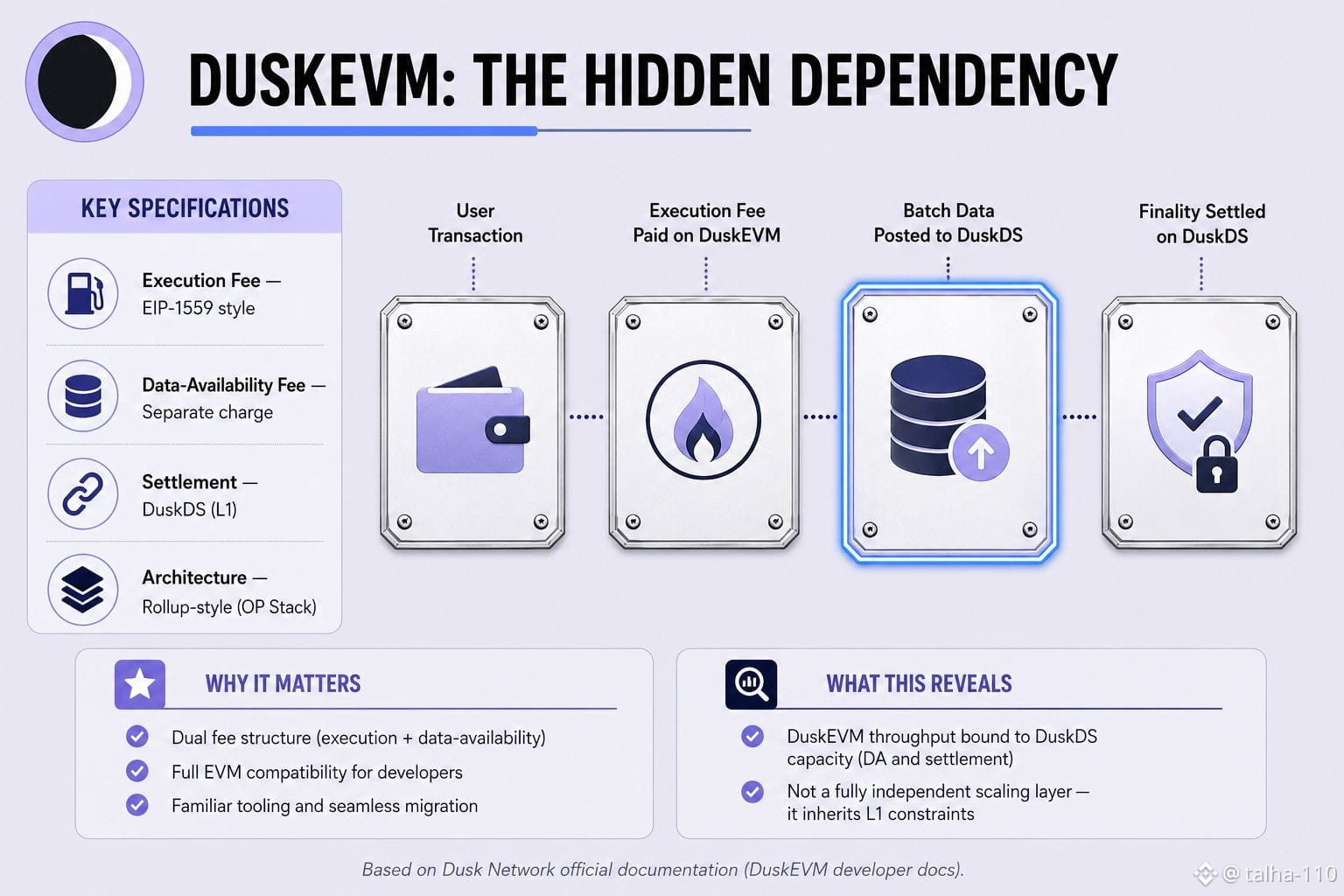
DuskEVMは、各トランザクションごとに異なる手数料を探します——標準のEIP-1559スタイルの実行手数料と、バッチデータをDuskDSに投稿するために課される別個のデータ可用性手数料です。この2層の手数料モデルはウォレット/SDKで自動的に見積もられるため、ほとんどのユーザーは、ガスの実際の支払いがこれら2つの別要素の合計コストになっていることにさえ気づきません。興味深いのは、DuskEVMが「EVM互換のスケーリングレイヤー」として売り出されている一方で、データ可用性への依存が明らかになっている点です。つまりDuskEVMは実際には独立しておらず、各トランザクションの最終性とデータの保管は依然としてDuskDSで決済されます。要するにDuskEVMは独自のスループット容量を持つのではなく、ベースレイヤー(DuskDS)の容量に直接制約されます。これは、ロールアップのアーキテクチャと同様に、L2は「より速く」見えても、そのセキュリティとデータ保証はなおL1に依存しているのと同じです。そのため、DuskDSの負荷が高くなると、たとえDuskEVMが別の実行レイヤーであったとしても、DuskEVMのコストとスピードの両方が自動的に影響を受ける可能性があります。
$DUSK #dusk @Dusk_Foundation
DuskEVMは、各トランザクションごとに異なる手数料を探します——標準のEIP-1559スタイルの実行手数料と、バッチデータをDuskDSに投稿するために課される別個のデータ可用性手数料です。この2層の手数料モデルはウォレット/SDKで自動的に見積もられるため、ほとんどのユーザーは、ガスの実際の支払いがこれら2つの別要素の合計コストになっていることにさえ気づきません。興味深いのは、DuskEVMが「EVM互換のスケーリングレイヤー」として売り出されている一方で、データ可用性への依存が明らかになっている点です。つまりDuskEVMは実際には独立しておらず、各トランザクションの最終性とデータの保管は依然としてDuskDSで決済されます。要するにDuskEVMは独自のスループット容量を持つのではなく、ベースレイヤー(DuskDS)の容量に直接制約されます。これは、ロールアップのアーキテクチャと同様に、L2は「より速く」見えても、そのセキュリティとデータ保証はなおL1に依存しているのと同じです。そのため、DuskDSの負荷が高くなると、たとえDuskEVMが別の実行レイヤーであったとしても、DuskEVMのコストとスピードの両方が自動的に影響を受ける可能性があります。
$DUSK #dusk @Dusk
$DUSK #dusk @Dusk
2
59
·
--
ブリッシュ
本人確認中
翻訳参照
One thing that doesn’t get talked about enough in fixed-rate lending is the waiting time.
You pick a rate, deposit your capital, and then you wait for a borrower to match you. Until that match happens, the money is often just sitting there doing nothing. That gap can quietly reduce your overall returns, especially if the market is slow.
TermMax handles this differently.
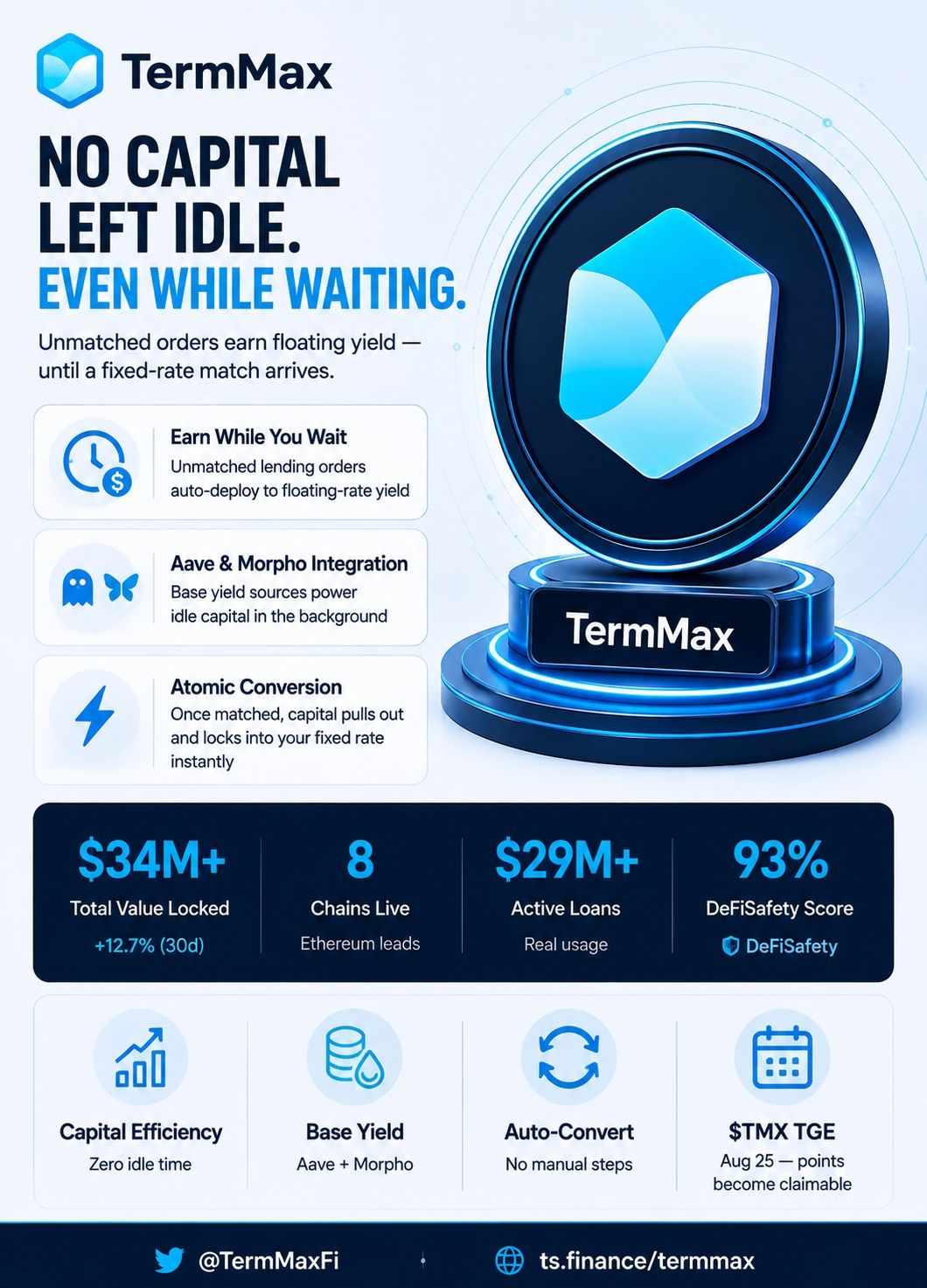
If your lending order hasn’t been fully matched yet, the unmatched portion doesn’t stay idle. It can be automatically put to work in the background on floating-rate protocols like Aave and Morpho. So even while you’re waiting for someone to take your fixed rate, the capital is still generating some yield.
Once a borrower matches the rate you offered, the position switches over to the normal fixed-rate setup. The capital is pulled automatically — no manual steps required.
Most discussions around TermMax focus on the fixed rates or the isolated market structure. This part — what happens to capital during the unmatched window — usually gets overlooked. But it’s a practical design choice that improves capital efficiency without changing the core fixed-rate promise.
Small detail, but it makes a real difference.
#termmax @termmax
One thing that doesn’t get talked about enough in fixed-rate lending is the waiting time.
You pick a rate, deposit your capital, and then you wait for a borrower to match you. Until that match happens, the money is often just sitting there doing nothing. That gap can quietly reduce your overall returns, especially if the market is slow.
TermMax handles this differently.
If your lending order hasn’t been fully matched yet, the unmatched portion doesn’t stay idle. It can be automatically put to work in the background on floating-rate protocols like Aave and Morpho. So even while you’re waiting for someone to take your fixed rate, the capital is still generating some yield.
Once a borrower matches the rate you offered, the position switches over to the normal fixed-rate setup. The capital is pulled automatically — no manual steps required.
Most discussions around TermMax focus on the fixed rates or the isolated market structure. This part — what happens to capital during the unmatched window — usually gets overlooked. But it’s a practical design choice that improves capital efficiency without changing the core fixed-rate promise.
Small detail, but it makes a real difference.
#termmax @TermMax
You pick a rate, deposit your capital, and then you wait for a borrower to match you. Until that match happens, the money is often just sitting there doing nothing. That gap can quietly reduce your overall returns, especially if the market is slow.
TermMax handles this differently.
If your lending order hasn’t been fully matched yet, the unmatched portion doesn’t stay idle. It can be automatically put to work in the background on floating-rate protocols like Aave and Morpho. So even while you’re waiting for someone to take your fixed rate, the capital is still generating some yield.
Once a borrower matches the rate you offered, the position switches over to the normal fixed-rate setup. The capital is pulled automatically — no manual steps required.
Most discussions around TermMax focus on the fixed rates or the isolated market structure. This part — what happens to capital during the unmatched window — usually gets overlooked. But it’s a practical design choice that improves capital efficiency without changing the core fixed-rate promise.
Small detail, but it makes a real difference.
#termmax @TermMax
18
6
122
·
--
ブリッシュ
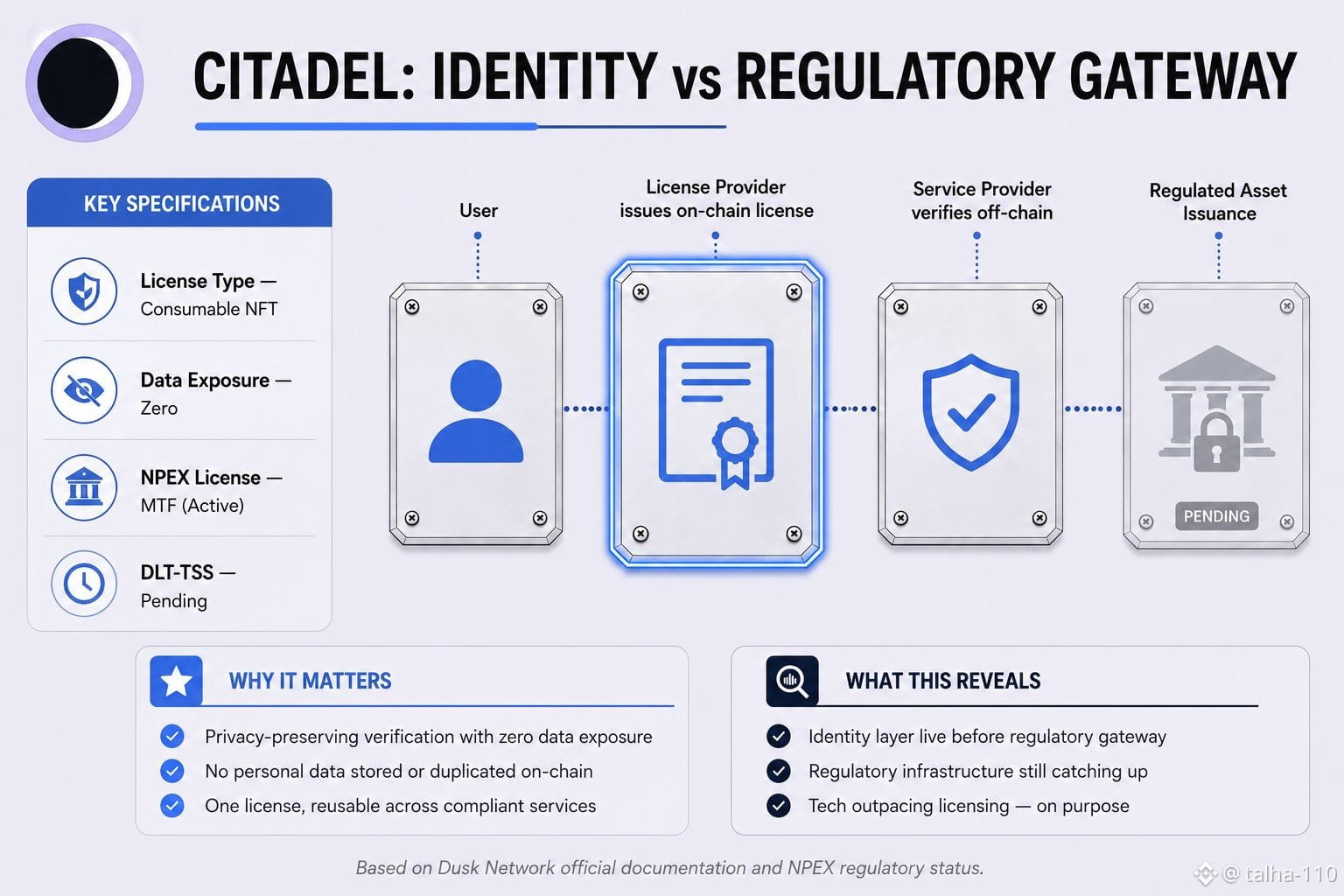
DuskのシタデルKYCシステムはNFTベースの「ライセンス」を発行 — ユーザーは(年齢や居住などの)何かについて1度だけ検証され、ライセンス・プロバイダーがオンチェーンで消費型のライセンスを発行し、その後サービス・プロバイダーは、基となる個人データを一切見ることなくオフチェーンでそのライセンスを検証できます。アイデンティティのレイヤー全体はすでに稼働していて機能しています。ですが、このコンプライアンス基盤が実際に何のために作られたのかを調べてみると、Duskの規制パートナーであるNPEXは現在、MTF(Multilateral Trading Facility)ライセンスしか保有していないようです。DLT-TSSライセンスは、規制対象の資産をオンチェーン上でネイティブに発行・トークン化するために必要なものですが、こちらはまだ「進行中」です。つまり、プライバシー保護型のアイデンティティ・レイヤーは完全に準備が整っている一方で、このシステムが支えることを設計された、規制対象資産の発行に向けた実際の法的なゲートウェイは、承認待ちの状態です。
アイデンティティ基盤が、資産発行レイヤーより先に成熟したとすると、RWAパイプラインを実際に滞らせているのは何でしょうか — 技術なのか、それとも規制なのか?
@Dusk_Foundation $DUSK #dusk
$GPS
$ACE
{spot}(GPSUSDT)
{spot}(ACEUSDT)
{spot}(DUSKUSDT)
DuskのシタデルKYCシステムはNFTベースの「ライセンス」を発行 — ユーザーは(年齢や居住などの)何かについて1度だけ検証され、ライセンス・プロバイダーがオンチェーンで消費型のライセンスを発行し、その後サービス・プロバイダーは、基となる個人データを一切見ることなくオフチェーンでそのライセンスを検証できます。アイデンティティのレイヤー全体はすでに稼働していて機能しています。ですが、このコンプライアンス基盤が実際に何のために作られたのかを調べてみると、Duskの規制パートナーであるNPEXは現在、MTF(Multilateral Trading Facility)ライセンスしか保有していないようです。DLT-TSSライセンスは、規制対象の資産をオンチェーン上でネイティブに発行・トークン化するために必要なものですが、こちらはまだ「進行中」です。つまり、プライバシー保護型のアイデンティティ・レイヤーは完全に準備が整っている一方で、このシステムが支えることを設計された、規制対象資産の発行に向けた実際の法的なゲートウェイは、承認待ちの状態です。
アイデンティティ基盤が、資産発行レイヤーより先に成熟したとすると、RWAパイプラインを実際に滞らせているのは何でしょうか — 技術なのか、それとも規制なのか?
@Dusk $DUSK #dusk
$GPS
$ACE
アイデンティティ基盤が、資産発行レイヤーより先に成熟したとすると、RWAパイプラインを実際に滞らせているのは何でしょうか — 技術なのか、それとも規制なのか?
@Dusk $DUSK #dusk
$GPS
$ACE
3
3
249
·
--
ブリッシュ
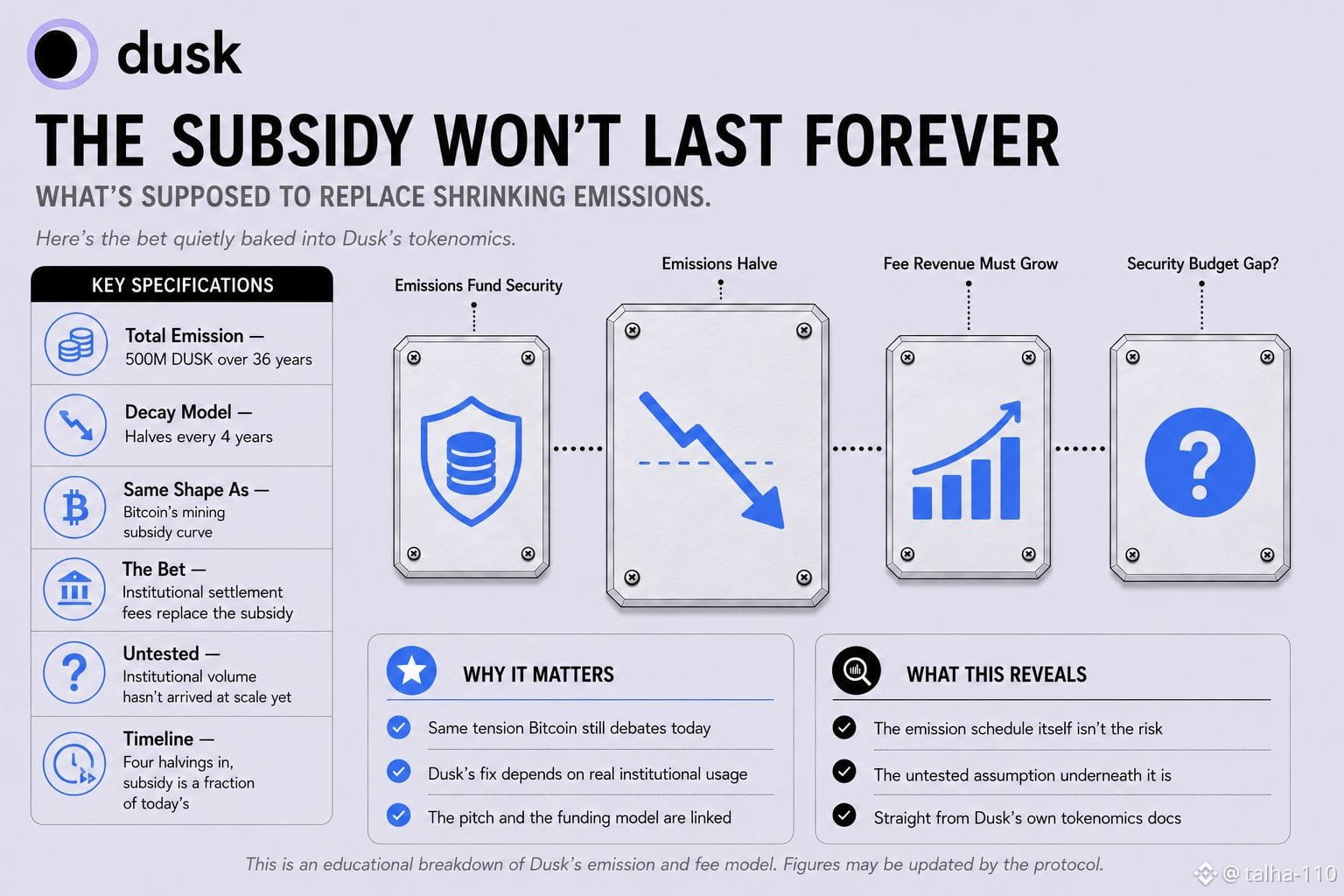
黄昏(Dusk)のステーキング報酬は、幾何学的減衰のカーブに沿って運用されており、4年ごとにエミッションが半減します。これは、ビットコインのマイニング報酬が従うのと同じ半減の形で、さらに、メインネット以前にすでに存在していた5億DUSKの上に、36年間にわたって固定の5億DUSK分を放出する設計です。この点だけなら、排出(エミッション)を緩やかに絞っていくネットワークは少なくありませんから、さほど驚くことではありません。注目して腰を据えて考えるべきなのは、その資金が十分に縮んだ後に何がそれを置き換えるのか、という部分です。ビットコインのこの“まさに同じ問題”は、ずっと議論され続けています。マイナーは最終的に、ブロック報酬(ブロック・サブシディ)を完全に置き換えるには取引手数料が必要になるのですが、手数料収入だけで十分なセキュリティを支えられるかどうかは、数十年単位で見てもいまだに決着がついていません。Duskも構造的に似た立場に向かっています。ただし、その提案(ピッチ)の中身は、規制された金融決済のためのインフラになり、トークン化された有価証券や、機関投資家(インスティテューション)が関わるRWA(現実資産)フローのような、まさに“実際の金融活動”として発生する利用が本当のフィー収益(手数料収入)を生み出すはずだ、という性質の利用に依存しています。投機的な取引ではなく、本物の金融活動です。つまり、トークノミクスには暗黙の賭けが組み込まれています。初期は、ネットワークを確保するためのプロビジョナ(提供者)への支払いの大部分をエミッションが担います。4回の半減を経て、さらに16年後には、そのサブシディは開始時点のごく一部になります。そして、実際の決済活動から生まれるガス代(手数料)が、その差を埋めるほどに成長しているはずだ、とされています。機関投資家向けの“実質的な取引量”が、その規模感で本当に手数料収入につながるのかは、まだ誰にも分かりません。なぜなら、このネットワークが想定している機関投資家は、まだ取引量として十分に姿を見せていないからです。リスクはエミッションスケジュールそのものではありません。静かにその下に仕込まれた前提――現実世界の資産決済が、縮んでいくサブシディを置き換えるに足る十分な手数料収入を、最終的に生み出すはずだ――その部分こそ、実際に検証されていないのです。
$DUSK #dusk @Dusk_Foundation
$HEMI
$CYS
{future}(COWUSDT)
{spot}(HEMIUSDT)
{alpha}(560x0c69199c1562233640e0db5ce2c399a88eb507c7)
黄昏(Dusk)のステーキング報酬は、幾何学的減衰のカーブに沿って運用されており、4年ごとにエミッションが半減します。これは、ビットコインのマイニング報酬が従うのと同じ半減の形で、さらに、メインネット以前にすでに存在していた5億DUSKの上に、36年間にわたって固定の5億DUSK分を放出する設計です。この点だけなら、排出(エミッション)を緩やかに絞っていくネットワークは少なくありませんから、さほど驚くことではありません。注目して腰を据えて考えるべきなのは、その資金が十分に縮んだ後に何がそれを置き換えるのか、という部分です。ビットコインのこの“まさに同じ問題”は、ずっと議論され続けています。マイナーは最終的に、ブロック報酬(ブロック・サブシディ)を完全に置き換えるには取引手数料が必要になるのですが、手数料収入だけで十分なセキュリティを支えられるかどうかは、数十年単位で見てもいまだに決着がついていません。Duskも構造的に似た立場に向かっています。ただし、その提案(ピッチ)の中身は、規制された金融決済のためのインフラになり、トークン化された有価証券や、機関投資家(インスティテューション)が関わるRWA(現実資産)フローのような、まさに“実際の金融活動”として発生する利用が本当のフィー収益(手数料収入)を生み出すはずだ、という性質の利用に依存しています。投機的な取引ではなく、本物の金融活動です。つまり、トークノミクスには暗黙の賭けが組み込まれています。初期は、ネットワークを確保するためのプロビジョナ(提供者)への支払いの大部分をエミッションが担います。4回の半減を経て、さらに16年後には、そのサブシディは開始時点のごく一部になります。そして、実際の決済活動から生まれるガス代(手数料)が、その差を埋めるほどに成長しているはずだ、とされています。機関投資家向けの“実質的な取引量”が、その規模感で本当に手数料収入につながるのかは、まだ誰にも分かりません。なぜなら、このネットワークが想定している機関投資家は、まだ取引量として十分に姿を見せていないからです。リスクはエミッションスケジュールそのものではありません。静かにその下に仕込まれた前提――現実世界の資産決済が、縮んでいくサブシディを置き換えるに足る十分な手数料収入を、最終的に生み出すはずだ――その部分こそ、実際に検証されていないのです。
$DUSK #dusk @Dusk
$HEMI
$CYS
$DUSK #dusk @Dusk
$HEMI
$CYS
2
5
446
·
--
ブリッシュ
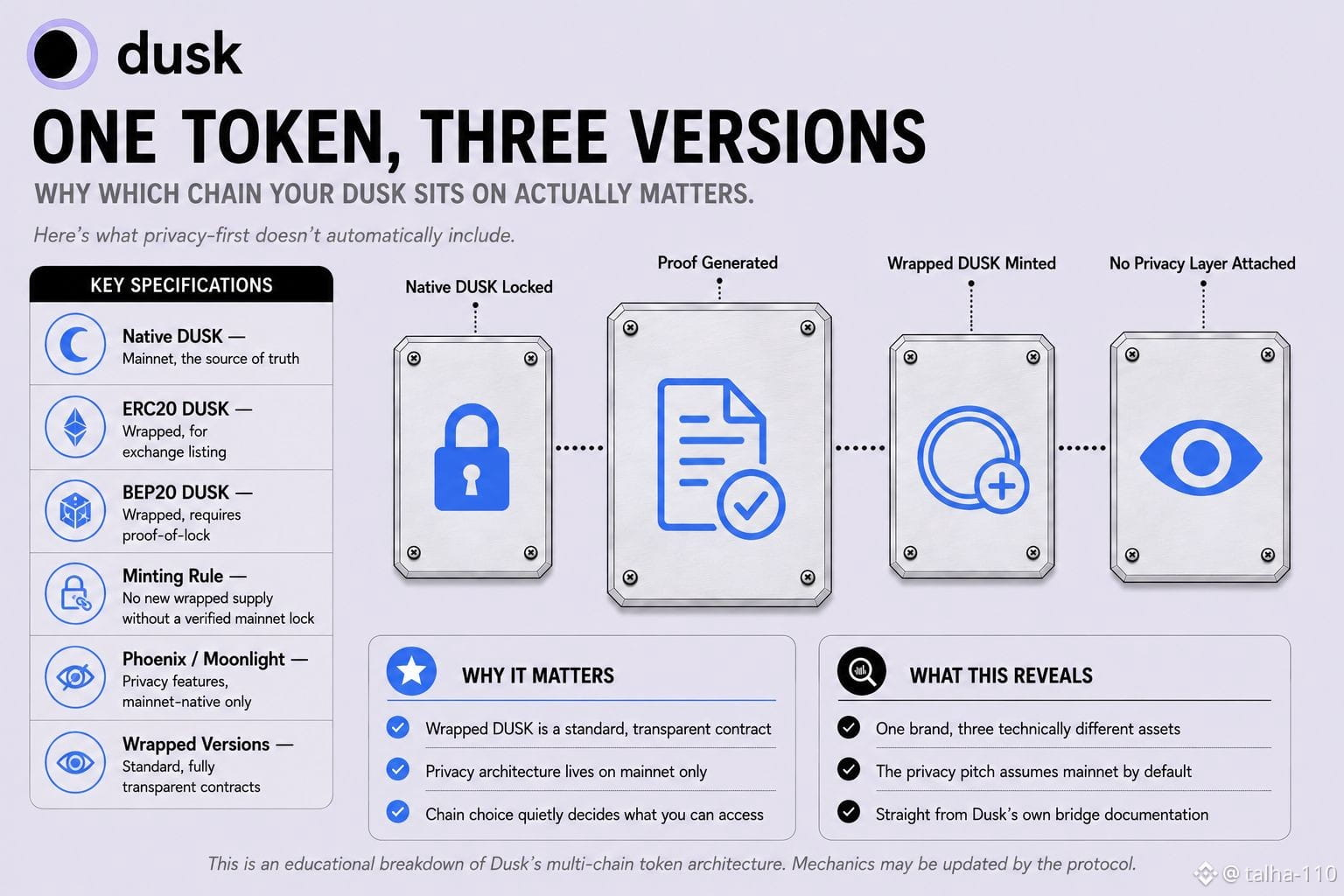
最初は、DUSKとはただのDUSKで、1トークン、1台帳のようにどこに持っていても同じものだと思い込んでいました。しかし、Dusk自身のブリッジに関するドキュメントを読むと、その前提は、ネットワークが実際にマルチチェーン上で存在をどう構成しているかを見た瞬間に崩れます。DUSKは現時点で3つの別々のアセットとして存在しています。Duskメインネット上のネイティブDUSKに加えて、取引所での上場や移行のために、EthereumとBSC上ではERC20およびBEP20版があります。それらをつなぐブリッジは対称ではありません。BEP20のDUSKは明確にラップされたアセットとして扱われており、新たなBEP20供給のミントは、まずメインネット側で同等量がロックされたことを示す暗号学的な証明があって初めて許可されます。Duskのチーム自身は、ネイティブのメインネットDUSKこそが正しい根拠(唯一の真実)だと、このまさに理由から説明しています。他のものはすべて派生物であり、どこかで本物がロックされたからこそ存在する、というわけです。これは一般的なブリッジ設計で、こういう形にしているネットワークはたくさんあります。ですが、見落とされやすい形で、その仕組みがプライバシーの売り文句と衝突しています。実際に設計上、プライバシーまたは公開の透明性を提供している2つのトランザクションモデルであるPhoenixとMoonlightは、いずれもメインネットネイティブな概念です。ERC20およびBEP20のDUSKは、単にEthereumとBSC上に置かれた標準的なトークンコントラクトであり、定義上完全に透明です。そこにはDusk自身のプライバシー・アーキテクチャが一切付随していません。つまり、誰かが実際に保持しているDUSKが、ネイティブのメインネットなのか、あるいはラップされたブリッジ・アセットなのかによって、プライバシー機能にアクセスできるかどうかがまったく変わってきます。「privacy-first(プライバシー最優先)」という枠組みでは、この点はあまり表に出ていません。ブランドはプライバシー最優先です。ですが、ある保有者のDUSKがそのプライバシー層に触れられるかどうかは、それがどのチェーン上に置かれているかに全面的に依存します。
$DUSK #dusk @Dusk_Foundation
$HEMI
$APR
{spot}(HEMIUSDT)
{alpha}(560x299ad4299da5b2b93fba4c96967b040c7f611099)
{spot}(DUSKUSDT)
最初は、DUSKとはただのDUSKで、1トークン、1台帳のようにどこに持っていても同じものだと思い込んでいました。しかし、Dusk自身のブリッジに関するドキュメントを読むと、その前提は、ネットワークが実際にマルチチェーン上で存在をどう構成しているかを見た瞬間に崩れます。DUSKは現時点で3つの別々のアセットとして存在しています。Duskメインネット上のネイティブDUSKに加えて、取引所での上場や移行のために、EthereumとBSC上ではERC20およびBEP20版があります。それらをつなぐブリッジは対称ではありません。BEP20のDUSKは明確にラップされたアセットとして扱われており、新たなBEP20供給のミントは、まずメインネット側で同等量がロックされたことを示す暗号学的な証明があって初めて許可されます。Duskのチーム自身は、ネイティブのメインネットDUSKこそが正しい根拠(唯一の真実)だと、このまさに理由から説明しています。他のものはすべて派生物であり、どこかで本物がロックされたからこそ存在する、というわけです。これは一般的なブリッジ設計で、こういう形にしているネットワークはたくさんあります。ですが、見落とされやすい形で、その仕組みがプライバシーの売り文句と衝突しています。実際に設計上、プライバシーまたは公開の透明性を提供している2つのトランザクションモデルであるPhoenixとMoonlightは、いずれもメインネットネイティブな概念です。ERC20およびBEP20のDUSKは、単にEthereumとBSC上に置かれた標準的なトークンコントラクトであり、定義上完全に透明です。そこにはDusk自身のプライバシー・アーキテクチャが一切付随していません。つまり、誰かが実際に保持しているDUSKが、ネイティブのメインネットなのか、あるいはラップされたブリッジ・アセットなのかによって、プライバシー機能にアクセスできるかどうかがまったく変わってきます。「privacy-first(プライバシー最優先)」という枠組みでは、この点はあまり表に出ていません。ブランドはプライバシー最優先です。ですが、ある保有者のDUSKがそのプライバシー層に触れられるかどうかは、それがどのチェーン上に置かれているかに全面的に依存します。
$DUSK #dusk @Dusk
$HEMI
$APR
$DUSK #dusk @Dusk
$HEMI
$APR
2
1
273
·
--
ブリッシュ
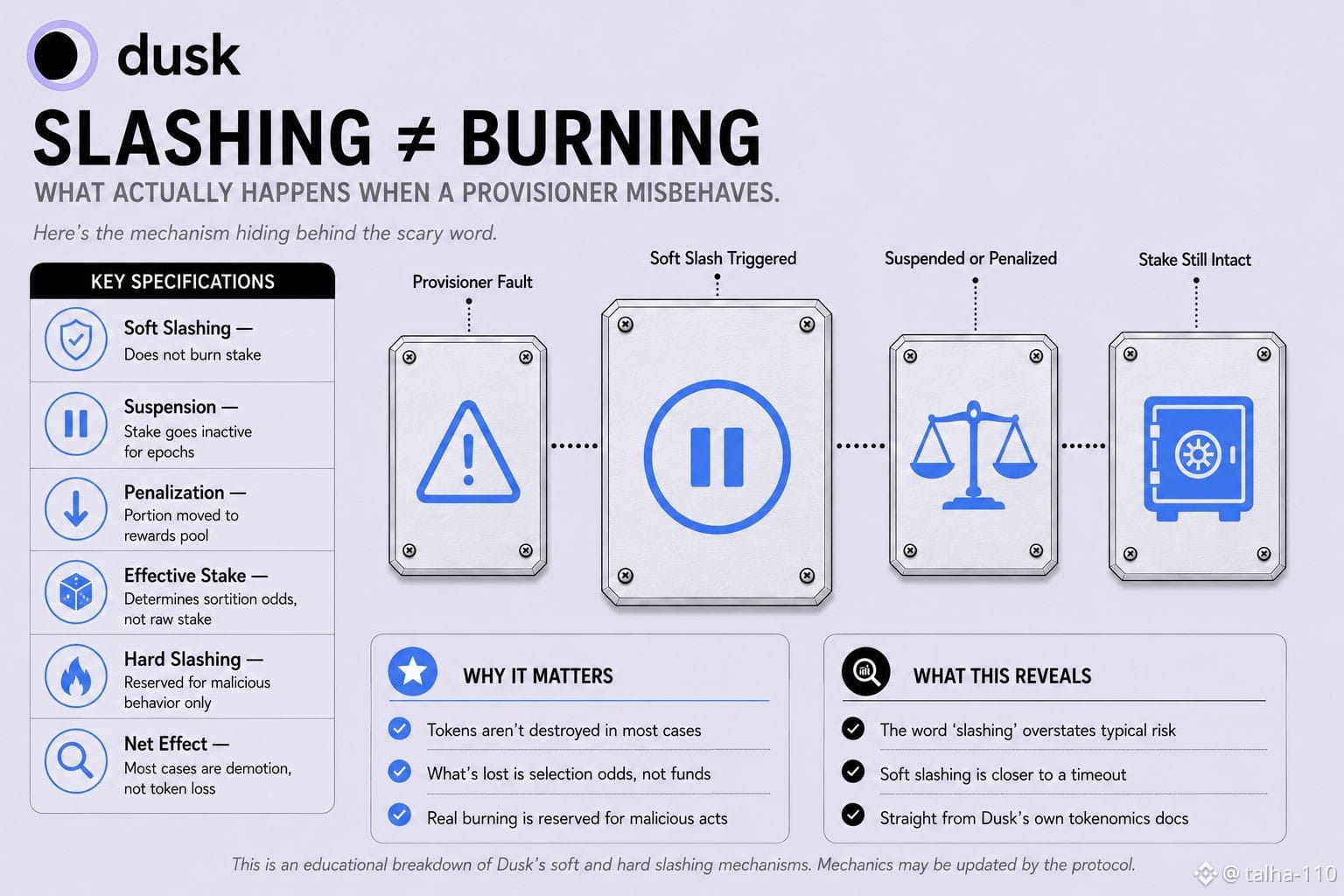
最初は「切断(slashing)」が、ほとんどどこでもそうであるように、Duskでも同じ仕組みだと思い込んでいました。つまり不正行為があると、ステークの一部が破壊されて消えてしまい、二度と戻らない—それが抑止力の全てです。しかしDusk自身のトークノミクスのドキュメントを読むと、その前提は、現実の大半のケースでは誤りです。Duskは主要な仕組みとしてソフト・スラッシングを採用しており、ソフト・スラッシングは明確に、ステークを一切燃やしません。代わりに次の2通りで機能します。1つ目はサスペンションで、ふるまいが悪いプロビジョナーの全ステークが、1つ以上のエポックの間、選出の対象にならず、報酬も得られず、罰せられもしない状態になります。2つ目はペナルティで、ステークの一部が、請求可能な報酬プールに移されます。これにより、トークンを実際には破壊することなく、ソート(sortition)に使われる実効ステークが減ります。つまりDUSKは消えません。消えるのは「影響力」であり、投票者やブロック生成者として選ばれる能力です。なぜなら、ソートの当たりやすさは生のステークではなく実効ステークに比例するからです。選ばれたときにブロックを生成しそこねたプロビジョナーは、多くの人が思い描くような「スラッシングによる損失」つまり金銭的な痛みを被るわけではありません。代わりに地位(standing)を失い、一定期間(複数エポック)の間、再び選ばれる可能性が縮みます。実際にステークを燃やすハード・スラッシングも存在しますが、それは本当に悪意のある行為にのみ予約されていて、ソフト・スラッシングが想定している日常的なダウンタイムや義務の見落としには用いられません。この違いは、プロビジョナーを運用する、あるいは委任することのリスクをどう考えるべきかに関わってきます。怖い言葉は「slashing」です。実際の仕組みは、ほとんどの場合、トークンを失わせるペナルティというより、いったん一時的に降格することに近いのです。
$DUSK #dusk @Dusk_Foundation
最初は「切断(slashing)」が、ほとんどどこでもそうであるように、Duskでも同じ仕組みだと思い込んでいました。つまり不正行為があると、ステークの一部が破壊されて消えてしまい、二度と戻らない—それが抑止力の全てです。しかしDusk自身のトークノミクスのドキュメントを読むと、その前提は、現実の大半のケースでは誤りです。Duskは主要な仕組みとしてソフト・スラッシングを採用しており、ソフト・スラッシングは明確に、ステークを一切燃やしません。代わりに次の2通りで機能します。1つ目はサスペンションで、ふるまいが悪いプロビジョナーの全ステークが、1つ以上のエポックの間、選出の対象にならず、報酬も得られず、罰せられもしない状態になります。2つ目はペナルティで、ステークの一部が、請求可能な報酬プールに移されます。これにより、トークンを実際には破壊することなく、ソート(sortition)に使われる実効ステークが減ります。つまりDUSKは消えません。消えるのは「影響力」であり、投票者やブロック生成者として選ばれる能力です。なぜなら、ソートの当たりやすさは生のステークではなく実効ステークに比例するからです。選ばれたときにブロックを生成しそこねたプロビジョナーは、多くの人が思い描くような「スラッシングによる損失」つまり金銭的な痛みを被るわけではありません。代わりに地位(standing)を失い、一定期間(複数エポック)の間、再び選ばれる可能性が縮みます。実際にステークを燃やすハード・スラッシングも存在しますが、それは本当に悪意のある行為にのみ予約されていて、ソフト・スラッシングが想定している日常的なダウンタイムや義務の見落としには用いられません。この違いは、プロビジョナーを運用する、あるいは委任することのリスクをどう考えるべきかに関わってきます。怖い言葉は「slashing」です。実際の仕組みは、ほとんどの場合、トークンを失わせるペナルティというより、いったん一時的に降格することに近いのです。
$DUSK #dusk @Dusk
$DUSK #dusk @Dusk
4
2
78
·
--
ブリッシュ
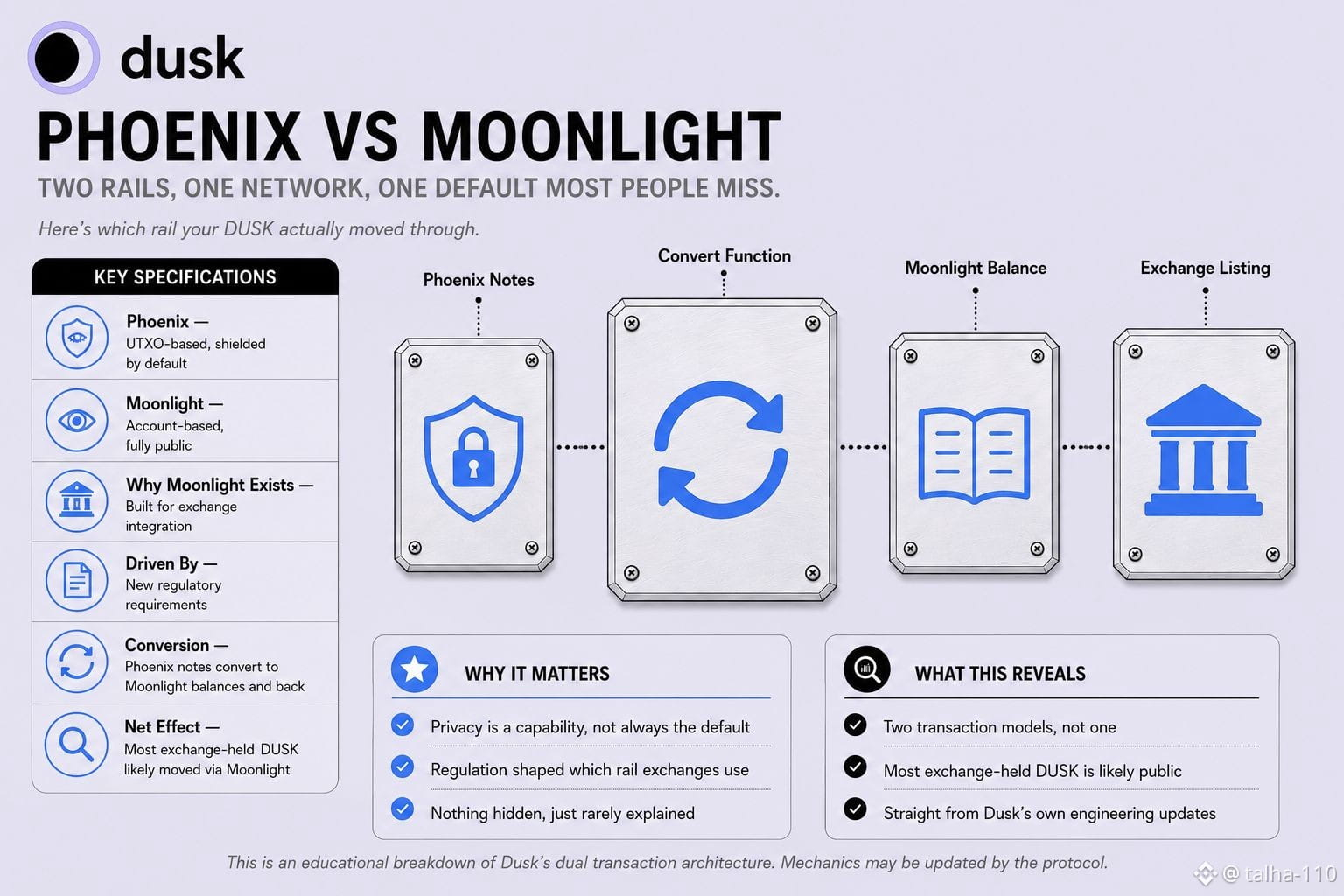
最初、Dusk の「プライバシーブロックチェーン」という言葉から、すべての DUSK 取引がデフォルトで同じ秘匿されたレール(シールドレール)を通って行われるのだと思い込みました。Phoenix、ゼロ知識証明、隠された残高——それがネットワークの仕組みだと。ところが、Dusk 自身のエンジニアリング更新を読むと、それは全体像の半分にすぎません。Dusk は実際に、別々の 2 つの取引モデルを並行して運用しています。Phoenix は UTXO ベースで秘匿されています。世間がブランドとして結び付けているのは、こちらのプライベートな方です。一方 Moonlight は口座ベースで完全に透明で、アドレスと残高が公開され、ほぼ通常の Ethereum のアカウントの動作に近いものです。注目すべきは、そもそもなぜ Moonlight が存在するのかです。Dusk のチームは、メインネットを取引所と統合するために、特にそれが必要だったと直接述べています。新しい規制により、その種の上場およびコンプライアンス業務には、透明で監査しやすいレールが求められたからです。つまり、完全に公開された取引モデルは、あとから思いついて無理に付け足された妥協ではなく、そもそも DUSK を取引所に載せるための要件だったのです。そうなると、現時点で多くの人の取引所残高として存在している DUSK は、おそらく Moonlight——透明な側——を通って移動した可能性が高く、ブランドの基盤となっている Phoenix——プライベートな側——を通ったとは限りません。この 2 つのモデルは相互に変換でき、Phoenix のノートは Moonlight の残高になり、その逆も可能なので、ここで何かが壊れたり隠されたりしているわけではありません。しかし、それは「プライバシー重視」がプロトコルの能力を表す一方で、DUSK が中央集権的な取引所に触れた後に実際にたどる(デフォルトの)経路まで必ずしも指しているとは限らない、ということでもあります。この点は、一般に売り込まれているものと意味の上で大きく異なる主張です。
$DUSK #dusk @Dusk_Foundation
最初、Dusk の「プライバシーブロックチェーン」という言葉から、すべての DUSK 取引がデフォルトで同じ秘匿されたレール(シールドレール)を通って行われるのだと思い込みました。Phoenix、ゼロ知識証明、隠された残高——それがネットワークの仕組みだと。ところが、Dusk 自身のエンジニアリング更新を読むと、それは全体像の半分にすぎません。Dusk は実際に、別々の 2 つの取引モデルを並行して運用しています。Phoenix は UTXO ベースで秘匿されています。世間がブランドとして結び付けているのは、こちらのプライベートな方です。一方 Moonlight は口座ベースで完全に透明で、アドレスと残高が公開され、ほぼ通常の Ethereum のアカウントの動作に近いものです。注目すべきは、そもそもなぜ Moonlight が存在するのかです。Dusk のチームは、メインネットを取引所と統合するために、特にそれが必要だったと直接述べています。新しい規制により、その種の上場およびコンプライアンス業務には、透明で監査しやすいレールが求められたからです。つまり、完全に公開された取引モデルは、あとから思いついて無理に付け足された妥協ではなく、そもそも DUSK を取引所に載せるための要件だったのです。そうなると、現時点で多くの人の取引所残高として存在している DUSK は、おそらく Moonlight——透明な側——を通って移動した可能性が高く、ブランドの基盤となっている Phoenix——プライベートな側——を通ったとは限りません。この 2 つのモデルは相互に変換でき、Phoenix のノートは Moonlight の残高になり、その逆も可能なので、ここで何かが壊れたり隠されたりしているわけではありません。しかし、それは「プライバシー重視」がプロトコルの能力を表す一方で、DUSK が中央集権的な取引所に触れた後に実際にたどる(デフォルトの)経路まで必ずしも指しているとは限らない、ということでもあります。この点は、一般に売り込まれているものと意味の上で大きく異なる主張です。
$DUSK #dusk @Dusk
$DUSK #dusk @Dusk
1
1
82
·
--
弱気相場
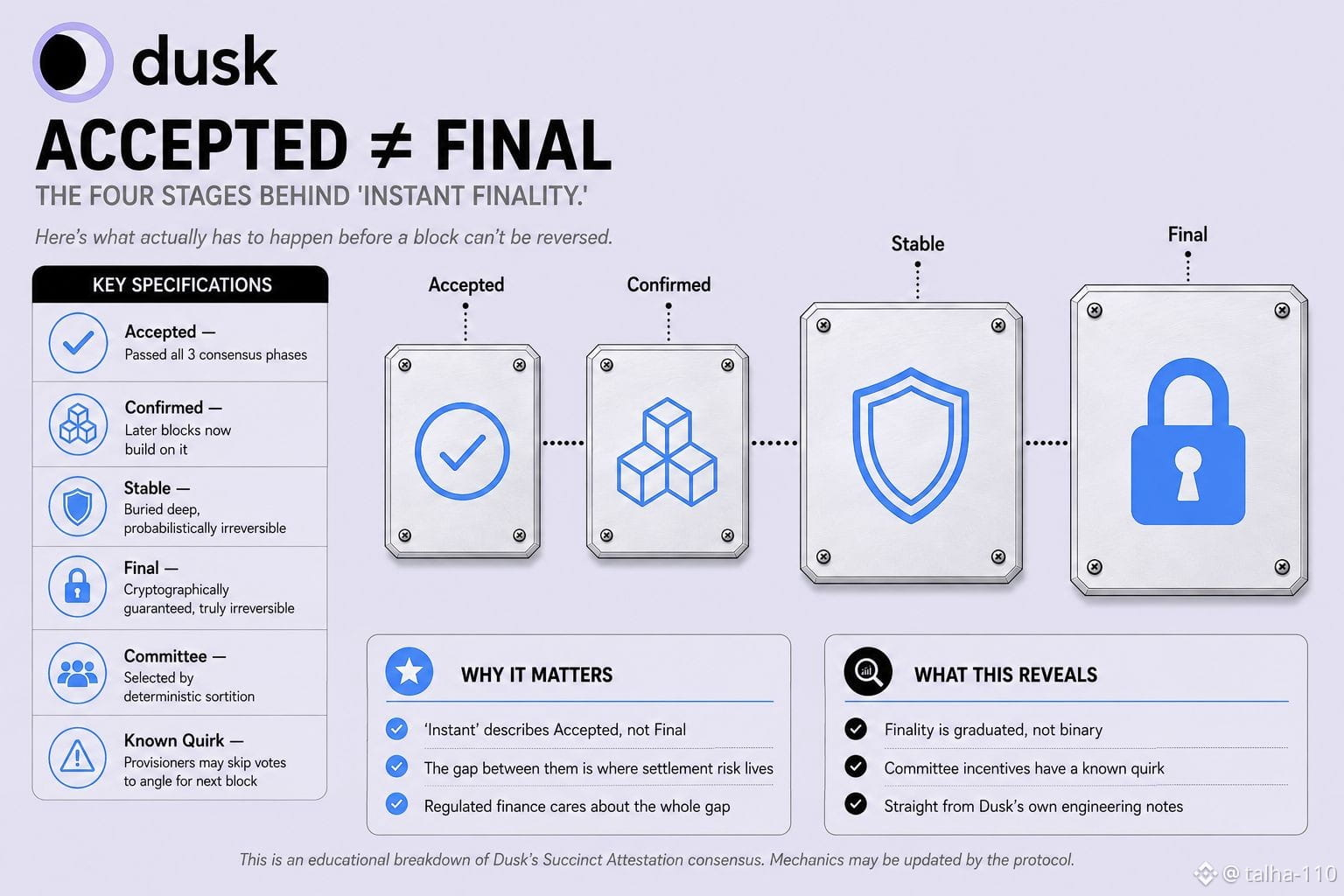
最初、私はDuskの「決定論的な最終性」という提案が、ブロックは作られた瞬間にただ最終かどうか、二値的に決まることを意味しているのだと思い込みました。しかしネットワーク自身の最終性状態を読むと、その捉え方は実際に起きていることを単純化しすぎています。Dusk上のブロックは、本当にロックされるまでに4つの明確な段階を経ます。現在ラウンドの3つのコンセンサス段階を通過するとき、Accepted(受理)され、その後のブロックがその上に積み重なるとき、Confirmed(確認)され、十分に深く埋め込まれて確率的に取り返しがつかない状態になるとき、Stable(安定)になり、そしてようやくFinal(最終)になります。Finalとは、単に「起こりにくい」というレベルではなく、暗号的に復元(巻き戻し)が不可能になることが保証される地点です。つまり「instant finality(瞬間的な最終性)」という言葉は、その中で大きな役割を果たしています。この提案どおり、ブロックはAcceptedまでの到達が速く、確かに速い。ですが、AcceptedとFinalは同じ保証ではありません。そして両者のギャップこそが、規制された金融決済が最も気にする部分です。さらに、この点には多くの人が見落としがちな第二の層もあります。コンセンサスは決定論的なソート(deterministic sortition)によって選ばれた委員会で進行します。もしあるプロビジョナーが、あるラウンドでは投票委員会に選ばれつつ、次のラウンドのブロック生成者でもある場合、次に提案者(proposer)として選ばれることを期待して、自分の投票をスキップするインセンティブが生じます。Dusk自身の設計書ではこれを、仮説ではなく「予想される振る舞いのパターン」として扱っており、対策はそのようなケースが起きた場合に当該委員会から除外することです。つまり、決定論的かつ即時だとマーケティングされている決済レイヤーは、実際には、委員会選定に組み込まれた既知のインセンティブの癖を含む「段階的なプロセス」なのです。どちらも本当で、そして、一行の売り文句よりも静かに、より複雑なのです。
$DUSK #dusk @Dusk_Foundation
最初、私はDuskの「決定論的な最終性」という提案が、ブロックは作られた瞬間にただ最終かどうか、二値的に決まることを意味しているのだと思い込みました。しかしネットワーク自身の最終性状態を読むと、その捉え方は実際に起きていることを単純化しすぎています。Dusk上のブロックは、本当にロックされるまでに4つの明確な段階を経ます。現在ラウンドの3つのコンセンサス段階を通過するとき、Accepted(受理)され、その後のブロックがその上に積み重なるとき、Confirmed(確認)され、十分に深く埋め込まれて確率的に取り返しがつかない状態になるとき、Stable(安定)になり、そしてようやくFinal(最終)になります。Finalとは、単に「起こりにくい」というレベルではなく、暗号的に復元(巻き戻し)が不可能になることが保証される地点です。つまり「instant finality(瞬間的な最終性)」という言葉は、その中で大きな役割を果たしています。この提案どおり、ブロックはAcceptedまでの到達が速く、確かに速い。ですが、AcceptedとFinalは同じ保証ではありません。そして両者のギャップこそが、規制された金融決済が最も気にする部分です。さらに、この点には多くの人が見落としがちな第二の層もあります。コンセンサスは決定論的なソート(deterministic sortition)によって選ばれた委員会で進行します。もしあるプロビジョナーが、あるラウンドでは投票委員会に選ばれつつ、次のラウンドのブロック生成者でもある場合、次に提案者(proposer)として選ばれることを期待して、自分の投票をスキップするインセンティブが生じます。Dusk自身の設計書ではこれを、仮説ではなく「予想される振る舞いのパターン」として扱っており、対策はそのようなケースが起きた場合に当該委員会から除外することです。つまり、決定論的かつ即時だとマーケティングされている決済レイヤーは、実際には、委員会選定に組み込まれた既知のインセンティブの癖を含む「段階的なプロセス」なのです。どちらも本当で、そして、一行の売り文句よりも静かに、より複雑なのです。
$DUSK #dusk @Dusk
$DUSK #dusk @Dusk
1
1
83
·
--
ブリッシュ
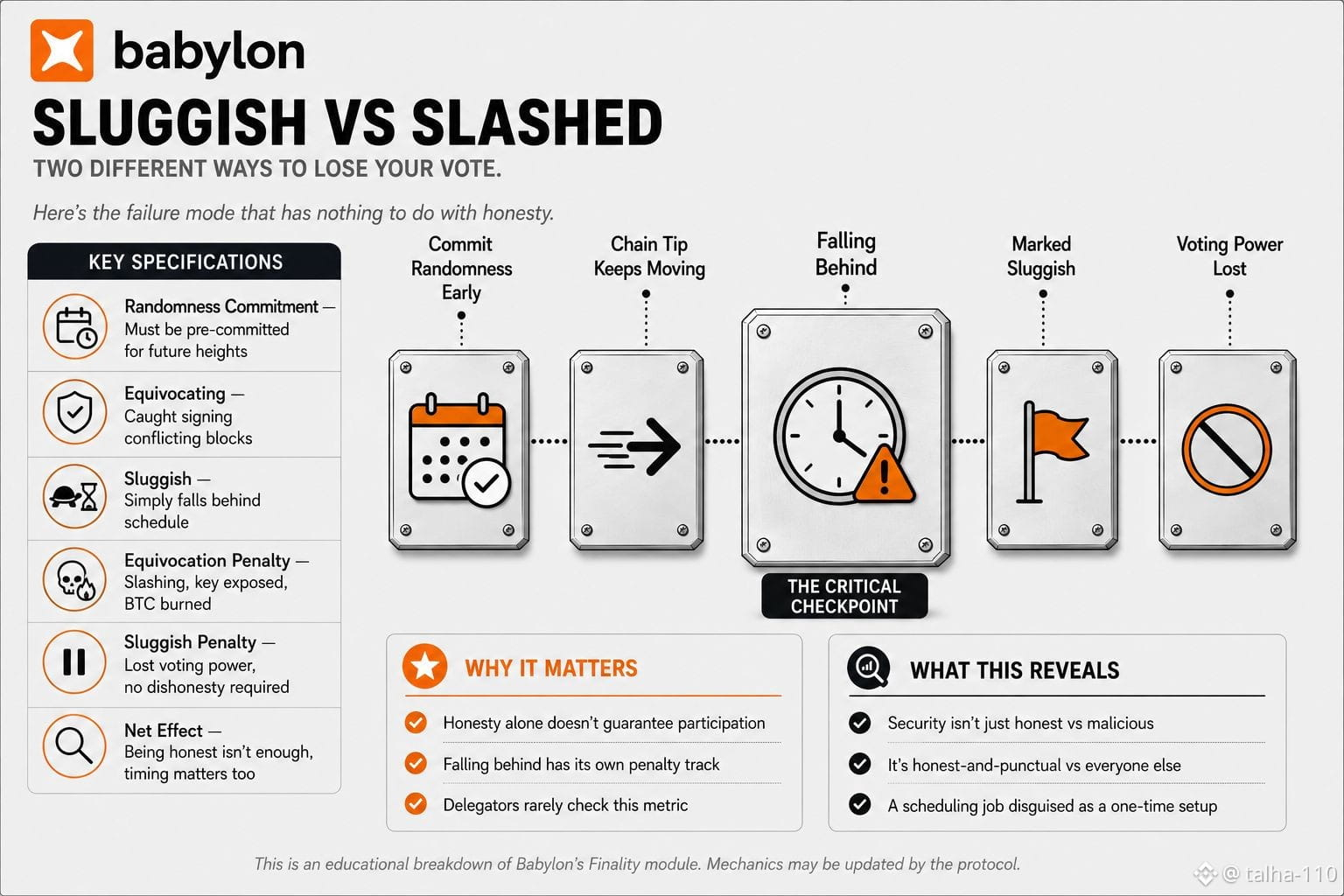
最初、ファイナリティ・プロバイダーの立場を損ね得るのは、明確に悪意ある行動――2つの相反するブロックに署名する、見つかる、スラッシュされる――いわゆる「誠実か不誠実か」の二択だけだと思っていました。Babylon自身のファイナリティ・モジュールのドキュメントを読むと、そこには「誠実さ」とはまったく関係のない、より静かな別の失敗経路があります。ファイナリティ・プロバイダーがブロックに投票する前に、特定の将来の高さ(height)について、そのブロックがそもそも提案される前に前もってEOTSの公開ランダムネスを積極的にコミットしておく必要があります。Babylonのシステムは別々に、問題のあるプロバイダーを2つのカテゴリに分類して追跡します。相反するメッセージに署名して捕まる、いわゆるエキビコーティングするプロバイダーと、単に間に合うように姿を見せられないスロッギッシュなプロバイダーです。遅いことは、不誠実であることと同じ違反ではありませんが、それでもそれ自体が別カテゴリとして追跡され、罰せられます。つまり実務上の意味は、プロバイダーは完全に誠実で、何ら相反するものにも署名せず、何か敵対的なことを試みることも決してなくても、その高さについての投票権を、ただランダムネスのコミットがチェーンのチップ(先端)に追いつかなかったという理由だけで失うことがあり得るということです。ランダムネスのコミットは一度きりの準備作業ではなく、進み続けるチェーンの動きに対して、あなたが準備できているかどうかに関係なく、先回りして予測し続ける継続的な仕事です。したがって、説明されている実際のセキュリティモデルは、「誠実か/悪意あるか」だけではありません。「誠実で、かつ時間どおりであるか」対それ以外――スケジューリング要件に遅れてしまっただけの、誠実なプロバイダーも含めて――という構図です。ほとんどの人は、自分がステークしている相手がその要件を満たせているか、たぶんチェックしようとさえしないでしょう。
@babylonlabs_io #baby $BABY
最初、ファイナリティ・プロバイダーの立場を損ね得るのは、明確に悪意ある行動――2つの相反するブロックに署名する、見つかる、スラッシュされる――いわゆる「誠実か不誠実か」の二択だけだと思っていました。Babylon自身のファイナリティ・モジュールのドキュメントを読むと、そこには「誠実さ」とはまったく関係のない、より静かな別の失敗経路があります。ファイナリティ・プロバイダーがブロックに投票する前に、特定の将来の高さ(height)について、そのブロックがそもそも提案される前に前もってEOTSの公開ランダムネスを積極的にコミットしておく必要があります。Babylonのシステムは別々に、問題のあるプロバイダーを2つのカテゴリに分類して追跡します。相反するメッセージに署名して捕まる、いわゆるエキビコーティングするプロバイダーと、単に間に合うように姿を見せられないスロッギッシュなプロバイダーです。遅いことは、不誠実であることと同じ違反ではありませんが、それでもそれ自体が別カテゴリとして追跡され、罰せられます。つまり実務上の意味は、プロバイダーは完全に誠実で、何ら相反するものにも署名せず、何か敵対的なことを試みることも決してなくても、その高さについての投票権を、ただランダムネスのコミットがチェーンのチップ(先端)に追いつかなかったという理由だけで失うことがあり得るということです。ランダムネスのコミットは一度きりの準備作業ではなく、進み続けるチェーンの動きに対して、あなたが準備できているかどうかに関係なく、先回りして予測し続ける継続的な仕事です。したがって、説明されている実際のセキュリティモデルは、「誠実か/悪意あるか」だけではありません。「誠実で、かつ時間どおりであるか」対それ以外――スケジューリング要件に遅れてしまっただけの、誠実なプロバイダーも含めて――という構図です。ほとんどの人は、自分がステークしている相手がその要件を満たせているか、たぶんチェックしようとさえしないでしょう。
@BabylonLabs_io #baby $BABY
@BabylonLabs_io #baby $BABY
2
2
77
·
--
ブリッシュ
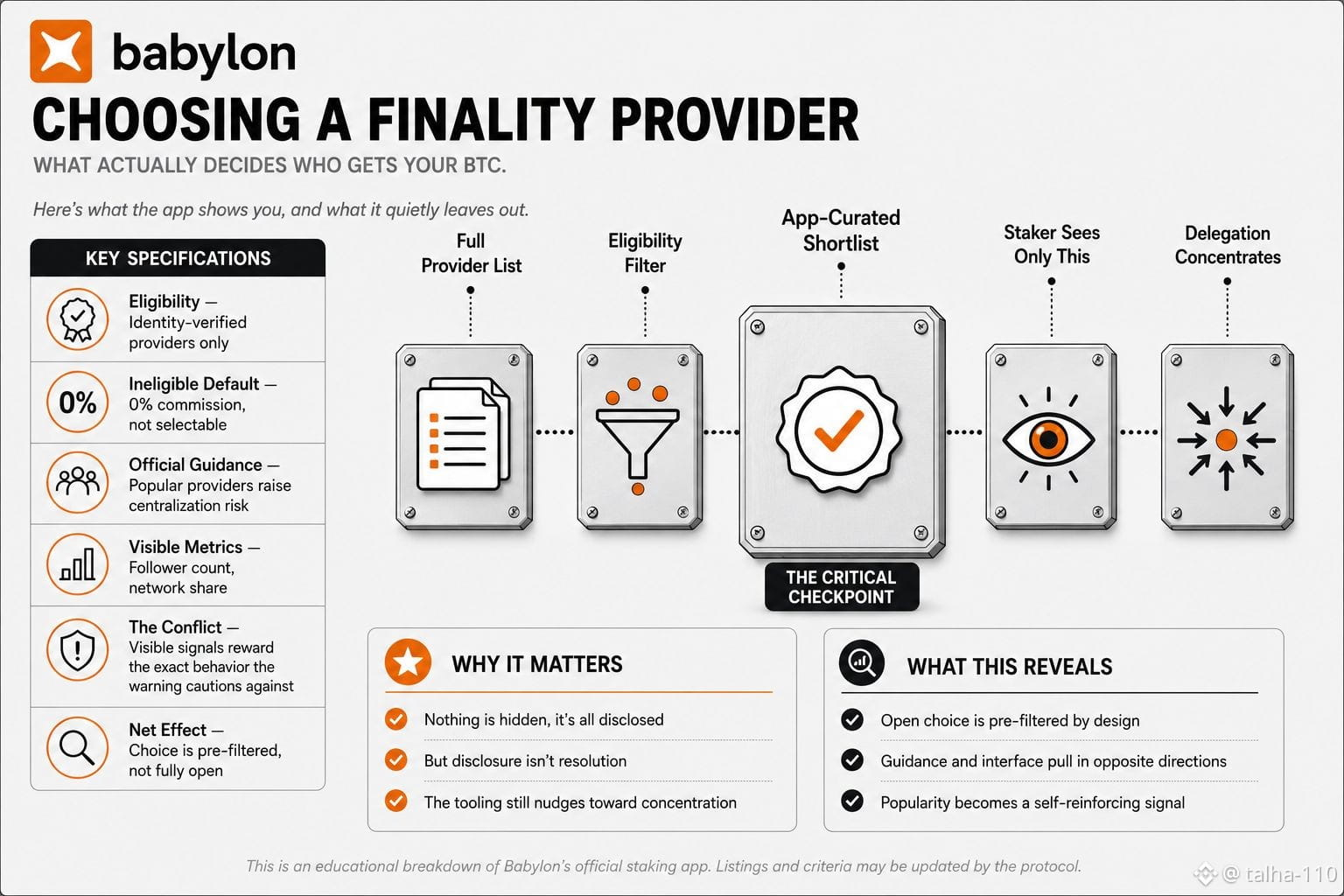
最初は、Finality Provider の選択は、他の Cosmos バリデータを選ぶのと同じように、オープンな一覧から好きなところを選べばよく、人々が好みに応じてステークを分散させていくため、ネットワークは自然に分散したままになると考えていました。しかし、公式ステーキングアプリに関する Babylon 自身の適格性ルールを読むと、その前提が見落としている形で、プロセスが集中へと押しやることがわかります。厳格な本人確認と登録基準を満たした Finality Provider だけが、アプリ上にコミッション率、Webサイト、そして目に見えるチェックマーク付きで掲載されます。基準を満たさないプロバイダでも、アプリの外で誰かが直接そのプロバイダに委任すれば、技術的には BTC の委任を受け取れますが、デフォルトではコミッション 0% に上限が設定されており、アプリは通常のステーカーが選択肢としてそれを選べないようにもしてあります。つまり「オープンな選択肢」は、実際には事前にフィルタされた、公式にキュレーションされた短いリストの範囲でのみオープンであり、そのリストの外にいるプロバイダは、標準的な手順を使う人にとって機能的に見えないのです。Babylon 自身のステーキングガイドはさらにもう一段の層を加えており、最も人気のあるプロバイダに委任することは中央集権化リスクを高めると明確に警告しています。そのうえで、プロバイダを評価する主なシグナルとしてフォロワー数とネットワークシェアを挙げています。これら2つの助言は、逆方向に働きます。アプリが表示する“見えるシグナル”は、人気のプロバイダをより信頼できそうに見せるまさにそのものです。そして同じドキュメントが、まさにその行動に注意すべきだと言っているのです。ここに隠し事や不誠実さはありません。すべて開示されています。しかし、緊張関係を開示することは、それを解決することとは別です。現時点では、ツールがそのガイダンスが警告している集中を、ひそかに報いる設計になっています。
@babylonlabs_io $BABY #baby $BTC
最初は、Finality Provider の選択は、他の Cosmos バリデータを選ぶのと同じように、オープンな一覧から好きなところを選べばよく、人々が好みに応じてステークを分散させていくため、ネットワークは自然に分散したままになると考えていました。しかし、公式ステーキングアプリに関する Babylon 自身の適格性ルールを読むと、その前提が見落としている形で、プロセスが集中へと押しやることがわかります。厳格な本人確認と登録基準を満たした Finality Provider だけが、アプリ上にコミッション率、Webサイト、そして目に見えるチェックマーク付きで掲載されます。基準を満たさないプロバイダでも、アプリの外で誰かが直接そのプロバイダに委任すれば、技術的には BTC の委任を受け取れますが、デフォルトではコミッション 0% に上限が設定されており、アプリは通常のステーカーが選択肢としてそれを選べないようにもしてあります。つまり「オープンな選択肢」は、実際には事前にフィルタされた、公式にキュレーションされた短いリストの範囲でのみオープンであり、そのリストの外にいるプロバイダは、標準的な手順を使う人にとって機能的に見えないのです。Babylon 自身のステーキングガイドはさらにもう一段の層を加えており、最も人気のあるプロバイダに委任することは中央集権化リスクを高めると明確に警告しています。そのうえで、プロバイダを評価する主なシグナルとしてフォロワー数とネットワークシェアを挙げています。これら2つの助言は、逆方向に働きます。アプリが表示する“見えるシグナル”は、人気のプロバイダをより信頼できそうに見せるまさにそのものです。そして同じドキュメントが、まさにその行動に注意すべきだと言っているのです。ここに隠し事や不誠実さはありません。すべて開示されています。しかし、緊張関係を開示することは、それを解決することとは別です。現時点では、ツールがそのガイダンスが警告している集中を、ひそかに報いる設計になっています。
@BabylonLabs_io $BABY #baby $BTC
@BabylonLabs_io $BABY #baby $BTC
2
97
·
--
ブリッシュ
翻訳参照
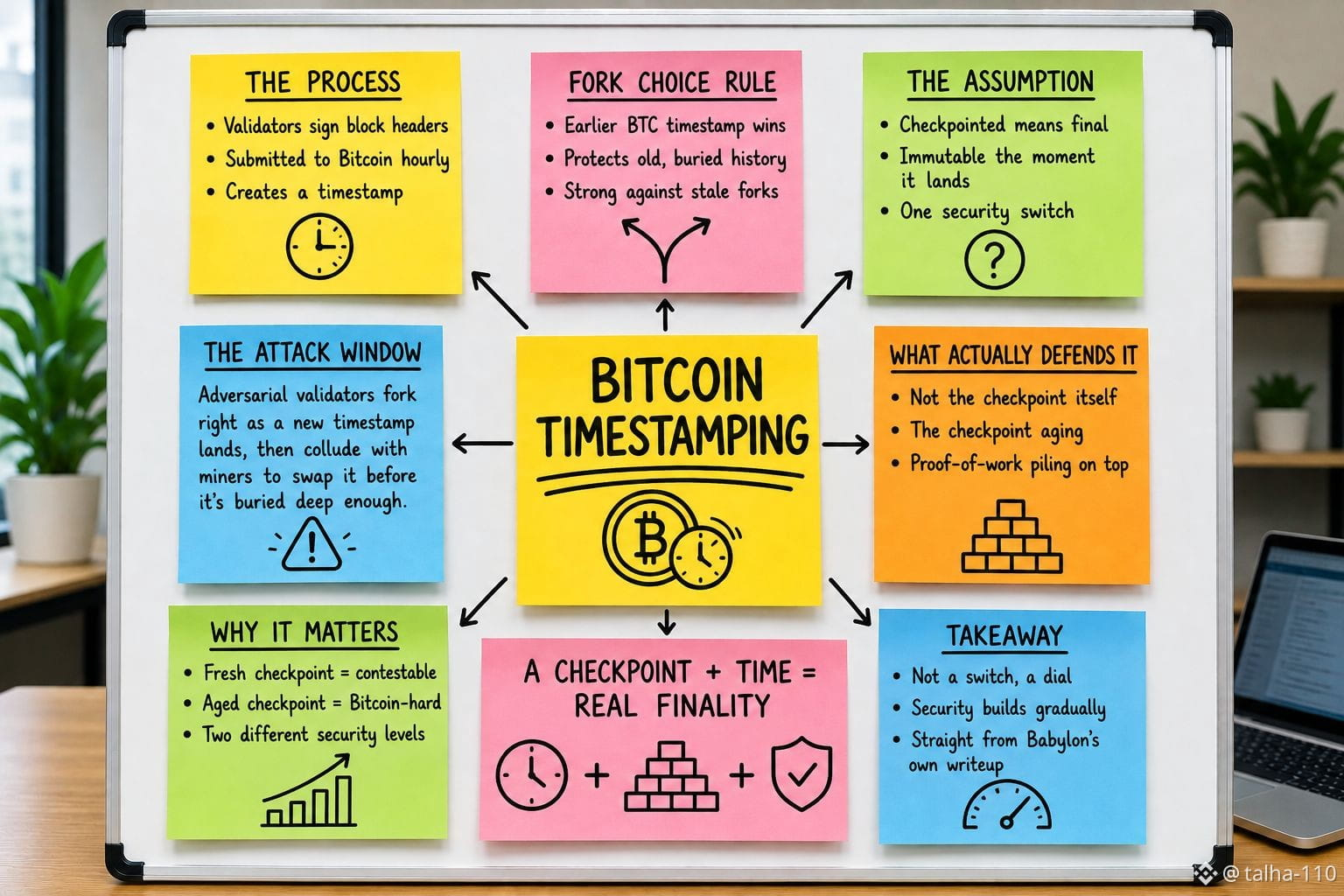
At first I assumed "checkpointed to Bitcoin" meant a Babylon block becomes essentially Bitcoin-final the moment it's timestamped, immutable the second it lands on chain. Reading Babylon's own writeup on fast unbonding, the actual security model has a narrower window than that framing suggests. Validators sign headers of Genesis blocks and submit them to Bitcoin roughly once every hour, and the fork-choice rule says whichever fork has the earlier Bitcoin timestamp wins. That's genuinely strong protection against attacks that start from old, already-buried history. But Babylon's own documentation walks through a more specific scenario: if adversarial validators wait until their withdrawal requests clear, then fork the chain right as their blocks get a fresh timestamp, and then collude with Bitcoin miners to replace that specific timestamp with a later one before it's buried deep enough to be economically irreversible, the attack can still work. The defense against that isn't the checkpoint existing, it's the checkpoint aging, accumulating enough proof-of-work on top of it that rewriting it becomes too expensive to bother. So there are really two different security levels being described under one phrase. A checkpoint that just landed is honest-majority-dependent and theoretically contestable. A checkpoint that's been sitting for a while is Bitcoin-hard and effectively final. The pitch talks about Bitcoin security like it's a single switch that flips on at each hourly commit. The actual guarantee is closer to a dial that only fully locks in after enough time has passed for Bitcoin's own proof-of-work to make reversal not worth attempting.
@babylonlabs_io $BABY #baby
At first I assumed "checkpointed to Bitcoin" meant a Babylon block becomes essentially Bitcoin-final the moment it's timestamped, immutable the second it lands on chain. Reading Babylon's own writeup on fast unbonding, the actual security model has a narrower window than that framing suggests. Validators sign headers of Genesis blocks and submit them to Bitcoin roughly once every hour, and the fork-choice rule says whichever fork has the earlier Bitcoin timestamp wins. That's genuinely strong protection against attacks that start from old, already-buried history. But Babylon's own documentation walks through a more specific scenario: if adversarial validators wait until their withdrawal requests clear, then fork the chain right as their blocks get a fresh timestamp, and then collude with Bitcoin miners to replace that specific timestamp with a later one before it's buried deep enough to be economically irreversible, the attack can still work. The defense against that isn't the checkpoint existing, it's the checkpoint aging, accumulating enough proof-of-work on top of it that rewriting it becomes too expensive to bother. So there are really two different security levels being described under one phrase. A checkpoint that just landed is honest-majority-dependent and theoretically contestable. A checkpoint that's been sitting for a while is Bitcoin-hard and effectively final. The pitch talks about Bitcoin security like it's a single switch that flips on at each hourly commit. The actual guarantee is closer to a dial that only fully locks in after enough time has passed for Bitcoin's own proof-of-work to make reversal not worth attempting.
@BabylonLabs_io $BABY #baby
@BabylonLabs_io $BABY #baby
3
3
107
·
--
ブリッシュ
本人確認中
翻訳参照
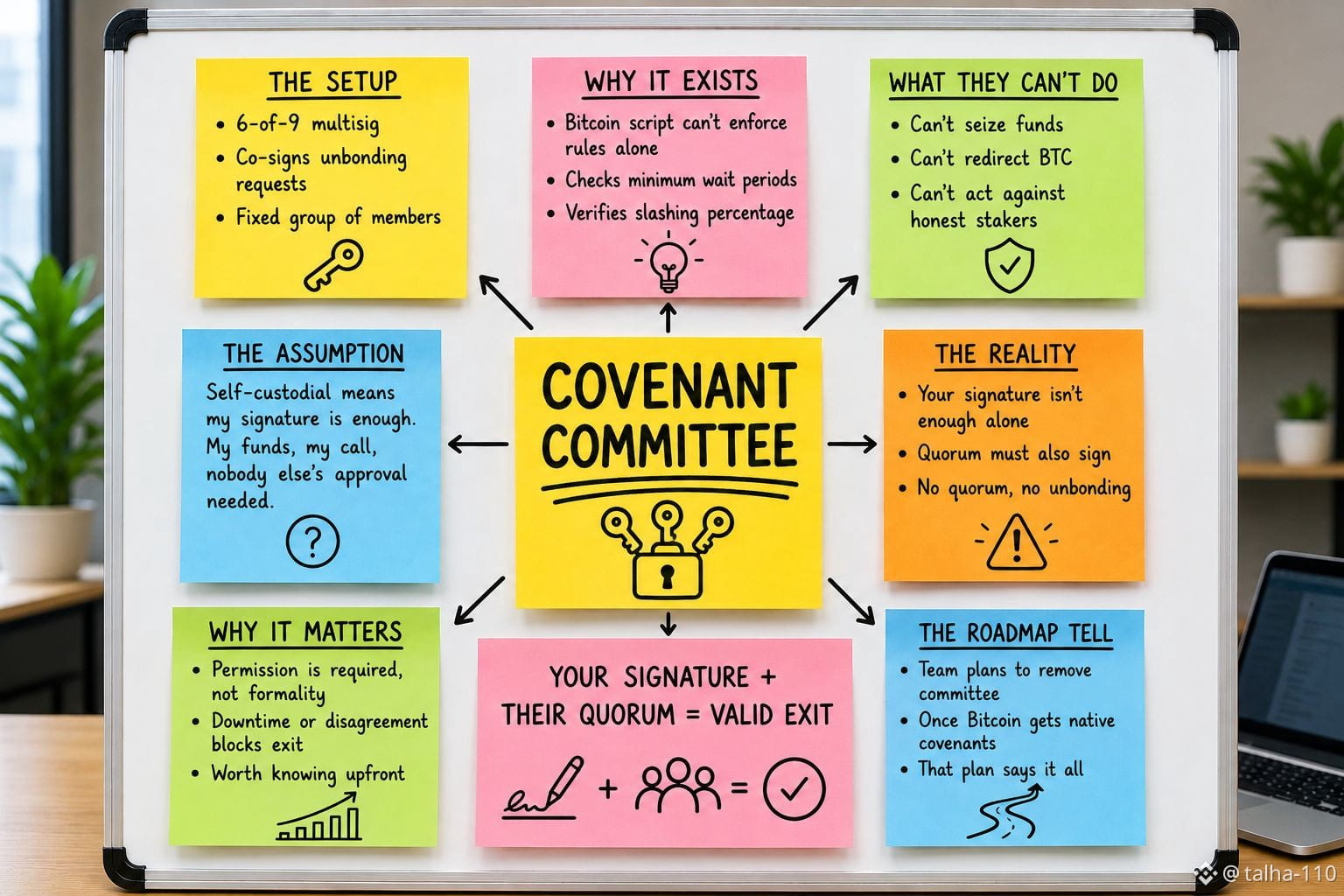
At first I assumed self-custodial meant exactly what it sounds like, my signature, my funds, nobody else's approval required to move them. Reading the actual Bitcoin staking script Babylon uses, that's only partly true. Every staking position is locked using a script that requires the staker's signature, yes, but unbonding before the timelock expires also requires signatures from a quorum of something called the covenant committee, a fixed group operating on a 6-of-9 multi-signature setup. Bitcoin's scripting language isn't expressive enough to enforce unbonding rules like minimum wait periods or correct slashing percentages on its own, so this committee exists specifically to check every request and co-sign it if it's protocol-compliant. Which means unbonding your own Bitcoin isn't just you signing a transaction. It's you signing, and then waiting for enough of nine specific people to also sign before that transaction is valid at all. The docs are upfront that this committee can't act against honest stakers, they can't seize funds or redirect them anywhere outside the rules. But their permission is still a required ingredient, not a formality. If the quorum can't be reached, for whatever reason, downtime, disagreement, unavailability, the unbonding path doesn't execute, full stop. Babylon's own team has said they intend to move away from this committee once Bitcoin gets native covenant support. That roadmap detail alone tells you something, if self-custody were already complete as described, there'd be nothing left to move away from.
@babylonlabs_io #baby
$BABY
$KOMA
$AKE
At first I assumed self-custodial meant exactly what it sounds like, my signature, my funds, nobody else's approval required to move them. Reading the actual Bitcoin staking script Babylon uses, that's only partly true. Every staking position is locked using a script that requires the staker's signature, yes, but unbonding before the timelock expires also requires signatures from a quorum of something called the covenant committee, a fixed group operating on a 6-of-9 multi-signature setup. Bitcoin's scripting language isn't expressive enough to enforce unbonding rules like minimum wait periods or correct slashing percentages on its own, so this committee exists specifically to check every request and co-sign it if it's protocol-compliant. Which means unbonding your own Bitcoin isn't just you signing a transaction. It's you signing, and then waiting for enough of nine specific people to also sign before that transaction is valid at all. The docs are upfront that this committee can't act against honest stakers, they can't seize funds or redirect them anywhere outside the rules. But their permission is still a required ingredient, not a formality. If the quorum can't be reached, for whatever reason, downtime, disagreement, unavailability, the unbonding path doesn't execute, full stop. Babylon's own team has said they intend to move away from this committee once Bitcoin gets native covenant support. That roadmap detail alone tells you something, if self-custody were already complete as described, there'd be nothing left to move away from.
@BabylonLabs_io #baby
$BABY
$KOMA
$AKE
@BabylonLabs_io #baby
$BABY
$KOMA
$AKE
16
6
679
·
--
ブリッシュ
翻訳参照
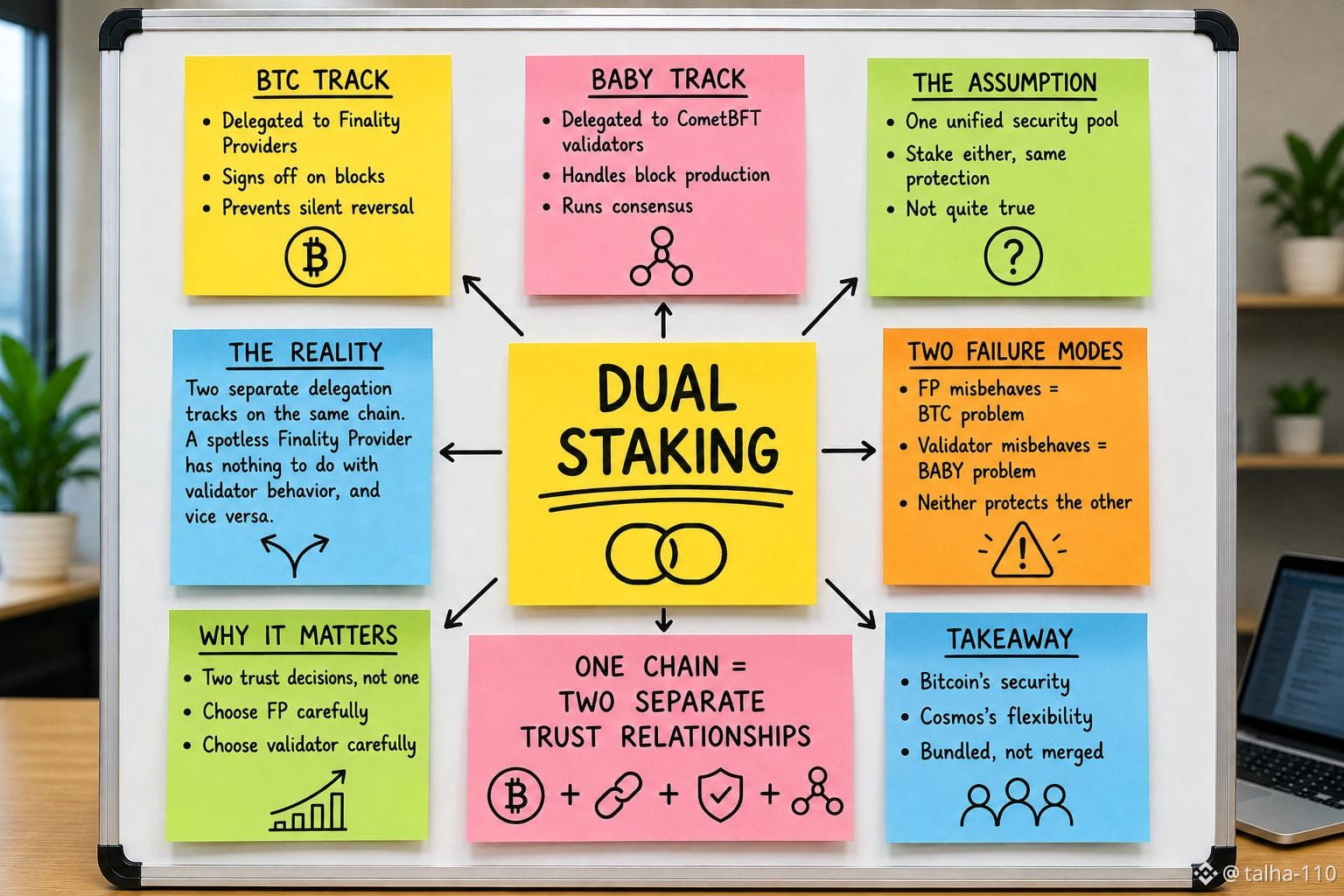
At first I assumed Babylon Genesis had one unified staking system, stake either asset and you're contributing to the same pool of security either way. Reading how the dual staking model is actually structured, that assumption doesn't hold. BTC and BABY don't feed into one shared mechanism, they run through two entirely separate delegation tracks that happen to sit on the same chain. BTC gets delegated to Finality Providers, whose job is signing off on blocks so finality can't quietly be reversed. BABY gets delegated to CometBFT validators, who handle actual block production and consensus. Different roles, different responsibilities, different sets of people you're trusting when you delegate to either one. What that means in practice is that someone could run a Finality Provider with a spotless signing record and still have nothing to do with whether blocks get produced correctly, and a validator could be excellent at block production while having zero exposure to the Bitcoin-backed slashing conditions on the other track. The pitch is "Bitcoin's security plus Cosmos's flexibility," which sounds like one reinforced system. What it actually is is two separate trust relationships running in parallel, each with its own failure mode, bundled under one chain name. If a Finality Provider misbehaves, that's a BTC delegation problem. If a validator misbehaves, that's a BABY delegation problem. Neither one automatically protects you from the other, which means picking who to delegate BTC to and picking who to delegate BABY to are two separate decisions people are quietly treating as one.
@babylonlabs_io #baby $BABY
$GRVT $TRX
At first I assumed Babylon Genesis had one unified staking system, stake either asset and you're contributing to the same pool of security either way. Reading how the dual staking model is actually structured, that assumption doesn't hold. BTC and BABY don't feed into one shared mechanism, they run through two entirely separate delegation tracks that happen to sit on the same chain. BTC gets delegated to Finality Providers, whose job is signing off on blocks so finality can't quietly be reversed. BABY gets delegated to CometBFT validators, who handle actual block production and consensus. Different roles, different responsibilities, different sets of people you're trusting when you delegate to either one. What that means in practice is that someone could run a Finality Provider with a spotless signing record and still have nothing to do with whether blocks get produced correctly, and a validator could be excellent at block production while having zero exposure to the Bitcoin-backed slashing conditions on the other track. The pitch is "Bitcoin's security plus Cosmos's flexibility," which sounds like one reinforced system. What it actually is is two separate trust relationships running in parallel, each with its own failure mode, bundled under one chain name. If a Finality Provider misbehaves, that's a BTC delegation problem. If a validator misbehaves, that's a BABY delegation problem. Neither one automatically protects you from the other, which means picking who to delegate BTC to and picking who to delegate BABY to are two separate decisions people are quietly treating as one.
@BabylonLabs_io #baby $BABY
$GRVT $TRX
@BabylonLabs_io #baby $BABY
$GRVT $TRX
12
4
292
·
--
ブリッシュ
本人確認中
翻訳参照
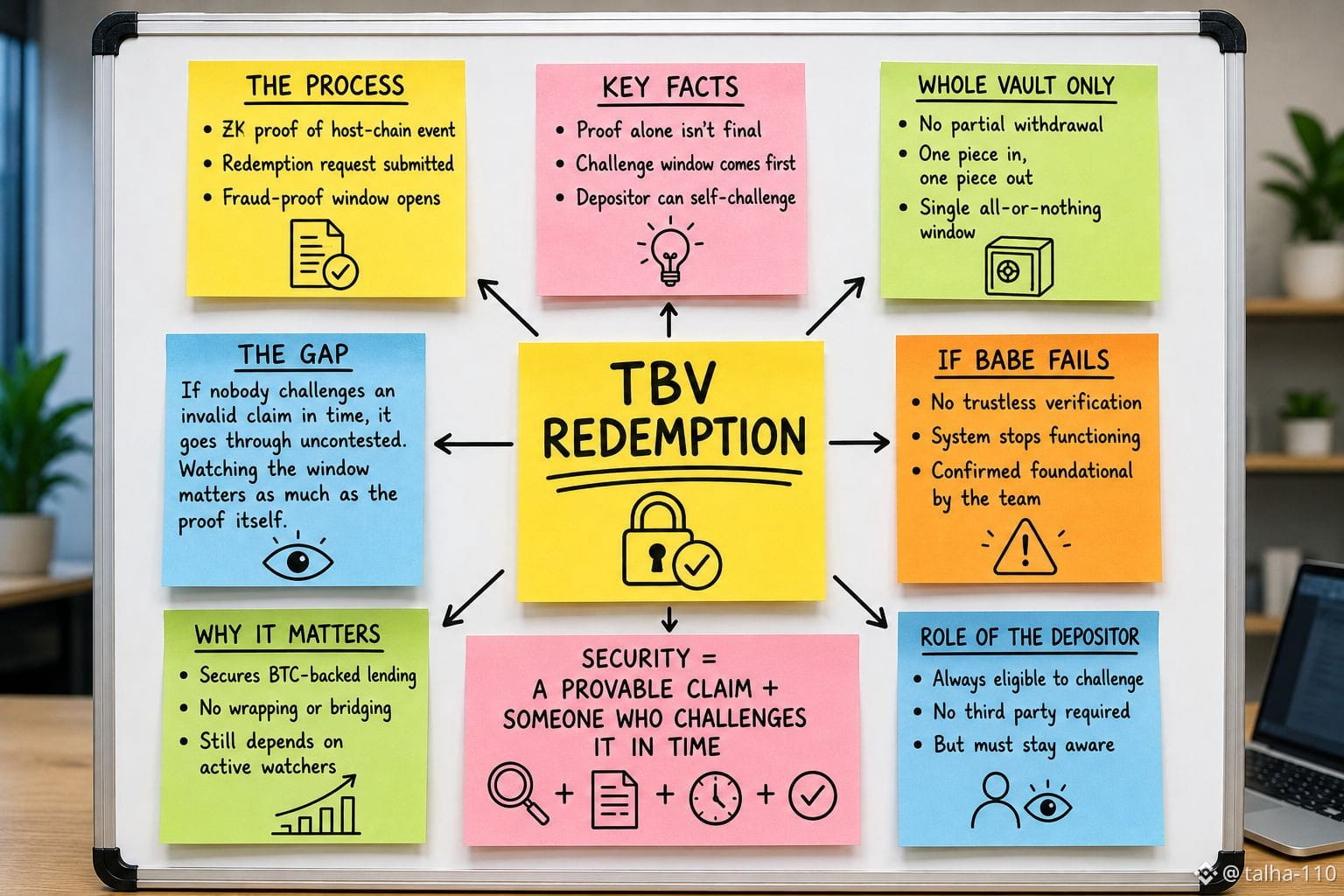
At first I assumed the zero-knowledge proof in Babylon's Trustless Bitcoin Vaults was the whole security story, valid proof means valid redemption, end of discussion. Reading deeper into how TBV actually processes a withdrawal, the proof is only half of it. When someone submits a redemption request, backed by a ZK proof that some event happened on the host chain like Ethereum, that claim doesn't execute instantly. It opens a fraud-proof window first, a period where anyone eligible can challenge the claim if something's wrong. The depositor themselves is always allowed to act as their own challenger, which sounds reassuring until you realize what that actually requires: you personally staying aware enough to catch a bad claim before that window closes. If you're not watching, and nobody else happens to be either, an invalid redemption has a real chance of just going through uncontested. There's also a detail that surprised me more than it should have. Redemption isn't partial. It's whole-vault only, one piece in, one piece out, so there's no gradual unwind, just a single window where the entire position either gets correctly challenged or doesn't. And underneath all of this sits BABE, the proof verification layer making any of this cryptographically checkable in the first place. The team has said plainly that without BABE, there's no trustless verification at all, the whole system just stops functioning. So the honest description isn't "math secures your Bitcoin." It's "math makes a false claim provable, provided someone is actually positioned to prove it in time. @babylonlabs_io #baby
$BABY
$COTI
At first I assumed the zero-knowledge proof in Babylon's Trustless Bitcoin Vaults was the whole security story, valid proof means valid redemption, end of discussion. Reading deeper into how TBV actually processes a withdrawal, the proof is only half of it. When someone submits a redemption request, backed by a ZK proof that some event happened on the host chain like Ethereum, that claim doesn't execute instantly. It opens a fraud-proof window first, a period where anyone eligible can challenge the claim if something's wrong. The depositor themselves is always allowed to act as their own challenger, which sounds reassuring until you realize what that actually requires: you personally staying aware enough to catch a bad claim before that window closes. If you're not watching, and nobody else happens to be either, an invalid redemption has a real chance of just going through uncontested. There's also a detail that surprised me more than it should have. Redemption isn't partial. It's whole-vault only, one piece in, one piece out, so there's no gradual unwind, just a single window where the entire position either gets correctly challenged or doesn't. And underneath all of this sits BABE, the proof verification layer making any of this cryptographically checkable in the first place. The team has said plainly that without BABE, there's no trustless verification at all, the whole system just stops functioning. So the honest description isn't "math secures your Bitcoin." It's "math makes a false claim provable, provided someone is actually positioned to prove it in time. @BabylonLabs_io #baby
$BABY
$COTI
$BABY
$COTI
19
3
205
·
--
ブリッシュ
翻訳参照
At first I assumed slashing in Babylon happened automatically the moment a finality provider double-signed, like some invisible tripwire just catches it. It doesn't. There's a separate role called a vigilante, and its entire job is to watch, because nothing executes without one. When a finality provider signs two conflicting blocks, the double-signature alone slashes nothing. Someone has to actually notice it, extract the exposed private key from the two signatures, and submit the slashing transaction to Bitcoin themselves. That someone is a vigilante, an operator running monitoring software with zero official reward guarantee baked into the base protocol for doing it. The EOTS mechanism makes the key mathematically extractable the instant double-signing happens, but an extractable key sitting unused doesn't punish anyone. It just sits there as dead potential until a person or bot decides it's worth the effort to act on it. So the entire security of the system quietly depends on at least one vigilante being awake, honest, and motivated enough to bother, at the exact second misbehavior happens. Babylon's own documentation admits at least one honest operator needs to exist for each monitoring role, almost as a footnote. That's not a small detail buried in the fine print. That's the whole enforcement layer resting on whether someone else felt like paying attention that day.
@babylonlabs_io #baby $BABY
At first I assumed slashing in Babylon happened automatically the moment a finality provider double-signed, like some invisible tripwire just catches it. It doesn't. There's a separate role called a vigilante, and its entire job is to watch, because nothing executes without one. When a finality provider signs two conflicting blocks, the double-signature alone slashes nothing. Someone has to actually notice it, extract the exposed private key from the two signatures, and submit the slashing transaction to Bitcoin themselves. That someone is a vigilante, an operator running monitoring software with zero official reward guarantee baked into the base protocol for doing it. The EOTS mechanism makes the key mathematically extractable the instant double-signing happens, but an extractable key sitting unused doesn't punish anyone. It just sits there as dead potential until a person or bot decides it's worth the effort to act on it. So the entire security of the system quietly depends on at least one vigilante being awake, honest, and motivated enough to bother, at the exact second misbehavior happens. Babylon's own documentation admits at least one honest operator needs to exist for each monitoring role, almost as a footnote. That's not a small detail buried in the fine print. That's the whole enforcement layer resting on whether someone else felt like paying attention that day.
@BabylonLabs_io #baby $BABY
@BabylonLabs_io #baby $BABY

19
4
92
·
--
ブリッシュ
翻訳参照
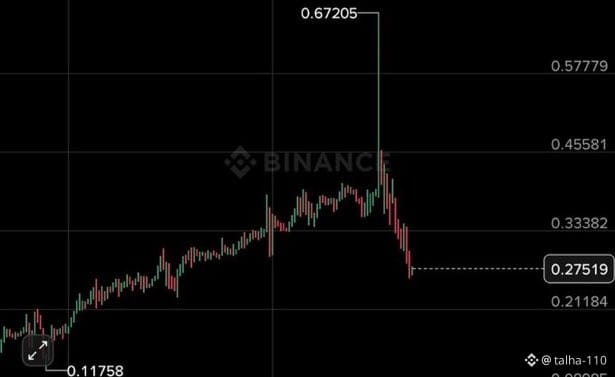
Everybody said $BANK was dead! But let me tell you something the game isn’t over yet. 😉
#bank #memecoin🚀🚀🚀 #USStorageStocksExtendLosses
{spot}(BANKUSDT)
Everybody said $BANK was dead! But let me tell you something the game isn’t over yet. 😉
#bank #memecoin🚀🚀🚀 #USStorageStocksExtendLosses
#bank #memecoin🚀🚀🚀 #USStorageStocksExtendLosses
38
·
--
ブリッシュ
本人確認中
翻訳参照
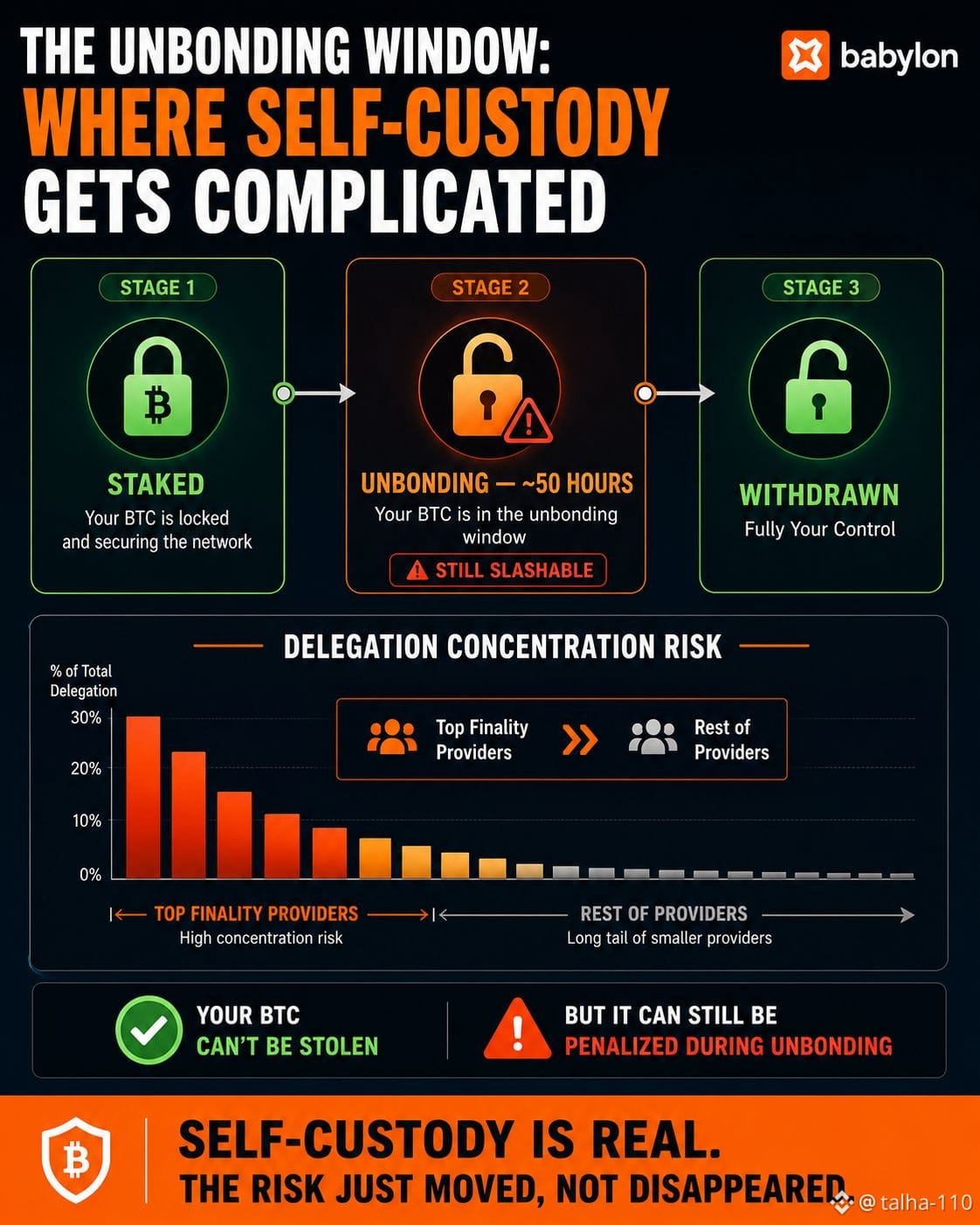
@babylonlabs_io Something in Babylon's own site made me stop and re-read it twice. It's a single line about the unbonding period, easy to miss if you're skimming: your BTC can still be partially slashed even after you've requested to unbond.
That sat wrong with me for a second. The whole pitch of self-custodial staking is that your Bitcoin is yours, full stop. But "yours" and "exposed to zero penalty" turn out to be two different things once you look at the mechanics instead of the marketing.
Here's how it actually works. Once you hit unbond, your BTC doesn't unlock instantly — it sits for roughly 301 blocks, close to 50 hours. During that window, if the finality provider you delegated to gets caught double-signing, you can still eat a partial slashing penalty, 0.1% of your stake, on funds you already tried to pull out. You didn't do anything wrong. Your validator did. You're just the one holding the bag if the timing lines up badly.$BABY
This doesn't mean Babylon is broken. Self-custody here is real — your BTC never leaves your own wallet, and nobody can move it without you. No wrapping, no bridging, no handing control to a third party. That part of the pitch holds up.
But "your coins can't be stolen" and "your coins can't be penalized" are two different promises. The first one is true by design. The second one depends entirely on which finality provider you delegated to, and how fast you got out before something went wrong on their end.#baby
Babylon's own docs are upfront about this — it's not a hidden risk, it's stated plainly if you actually read past the headline pitch. Choosing carefully and diversifying across providers helps, but most people don't think about it until after they've already delegated. 🧐
$BABY @babylonlabs_io
#baby
$BANK
{spot}(BANKUSDT)
@BabylonLabs_io Something in Babylon's own site made me stop and re-read it twice. It's a single line about the unbonding period, easy to miss if you're skimming: your BTC can still be partially slashed even after you've requested to unbond.
That sat wrong with me for a second. The whole pitch of self-custodial staking is that your Bitcoin is yours, full stop. But "yours" and "exposed to zero penalty" turn out to be two different things once you look at the mechanics instead of the marketing.
Here's how it actually works. Once you hit unbond, your BTC doesn't unlock instantly — it sits for roughly 301 blocks, close to 50 hours. During that window, if the finality provider you delegated to gets caught double-signing, you can still eat a partial slashing penalty, 0.1% of your stake, on funds you already tried to pull out. You didn't do anything wrong. Your validator did. You're just the one holding the bag if the timing lines up badly.$BABY
This doesn't mean Babylon is broken. Self-custody here is real — your BTC never leaves your own wallet, and nobody can move it without you. No wrapping, no bridging, no handing control to a third party. That part of the pitch holds up.
But "your coins can't be stolen" and "your coins can't be penalized" are two different promises. The first one is true by design. The second one depends entirely on which finality provider you delegated to, and how fast you got out before something went wrong on their end.#baby
Babylon's own docs are upfront about this — it's not a hidden risk, it's stated plainly if you actually read past the headline pitch. Choosing carefully and diversifying across providers helps, but most people don't think about it until after they've already delegated. 🧐
$BABY @BabylonLabs_io
#baby
$BANK
That sat wrong with me for a second. The whole pitch of self-custodial staking is that your Bitcoin is yours, full stop. But "yours" and "exposed to zero penalty" turn out to be two different things once you look at the mechanics instead of the marketing.
Here's how it actually works. Once you hit unbond, your BTC doesn't unlock instantly — it sits for roughly 301 blocks, close to 50 hours. During that window, if the finality provider you delegated to gets caught double-signing, you can still eat a partial slashing penalty, 0.1% of your stake, on funds you already tried to pull out. You didn't do anything wrong. Your validator did. You're just the one holding the bag if the timing lines up badly.$BABY
This doesn't mean Babylon is broken. Self-custody here is real — your BTC never leaves your own wallet, and nobody can move it without you. No wrapping, no bridging, no handing control to a third party. That part of the pitch holds up.
But "your coins can't be stolen" and "your coins can't be penalized" are two different promises. The first one is true by design. The second one depends entirely on which finality provider you delegated to, and how fast you got out before something went wrong on their end.#baby
Babylon's own docs are upfront about this — it's not a hidden risk, it's stated plainly if you actually read past the headline pitch. Choosing carefully and diversifying across providers helps, but most people don't think about it until after they've already delegated. 🧐
$BABY @BabylonLabs_io
#baby
$BANK
7
5
538
ログインして、さらにコンテンツを読む
厳選トピックで世界の暗号資産トレーダーの仲間入り
⚡️ 暗号資産に関する最新かつ有益な情報が見つかります。
💬 世界最大の暗号資産取引所から信頼されています。
👍 認証を受けたクリエイターから、有益なインサイトを得られます。
メール / 電話番号