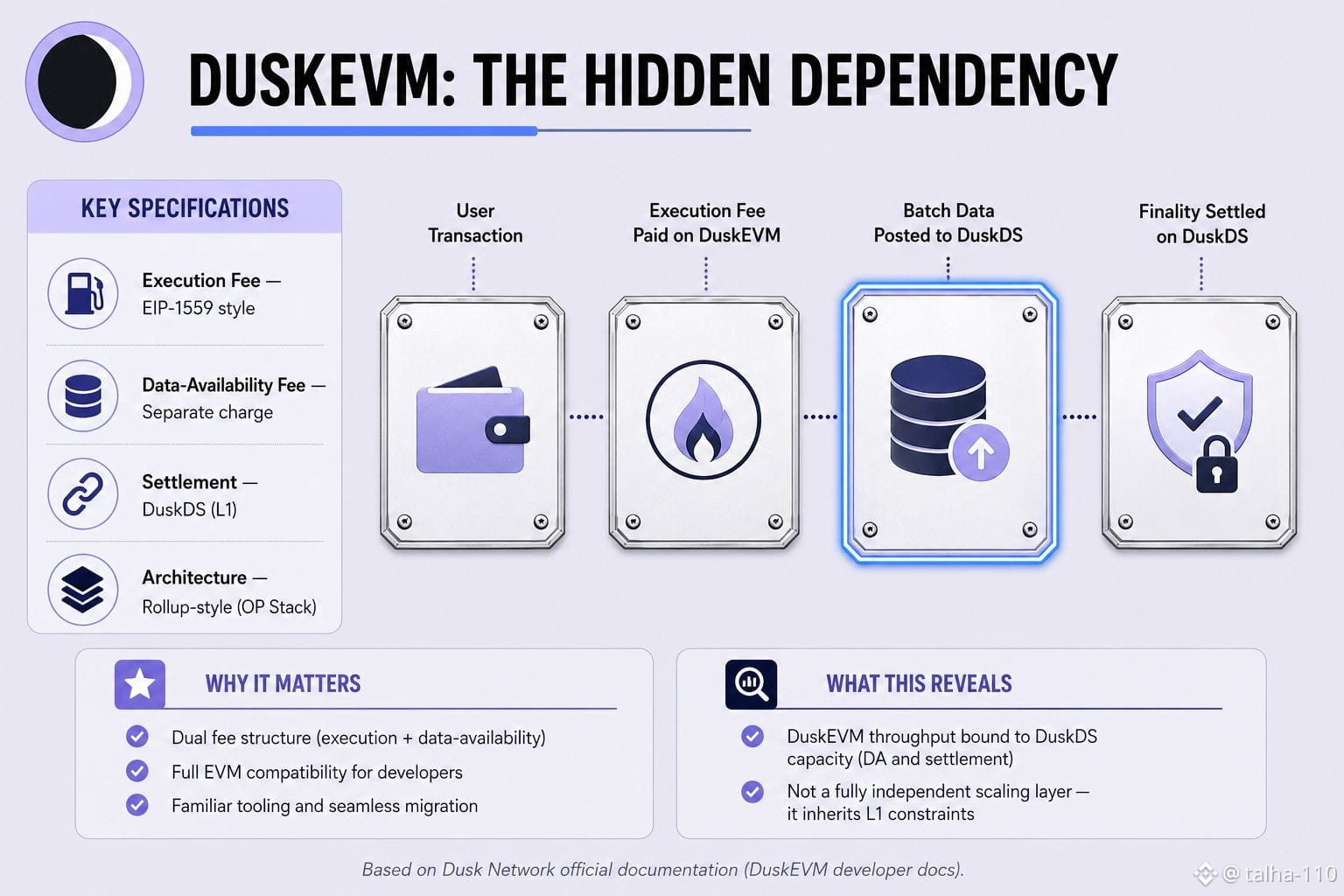
DuskEVM par har transaction do alag fees leta hai — ek standard EIP-1559-style execution fee, aur ek separate data-availability fee jo batch data ko DuskDS par post karne ke liye charge hoti hai. Ye do-tier fee model wallets/SDKs mein automatically estimate hoti hai, isliye zyadatar users ko pata bhi nahi chalta ke unka gas actually do alag cheezon ka combined cost hai. Jo interesting hai wo ye hai ke DuskEVM ko "EVM-compatible scaling layer" ke tor par pitch kiya jata hai, lekin ye data-availability dependency reveal karti hai ke DuskEVM actually independent nahi hai — har transaction ka finality aur data storage still DuskDS par settle hoti hai. Matlab DuskEVM apni khud ki throughput capacity nahi rakhta, balke base layer (DuskDS) ki capacity se directly bound hai, bilkul rollup architecture ki tarah jahan L2 "faster" lagta hai lekin uski security aur data guarantees still L1 pe depend karti hain. Isliye jab DuskDS load mein hogi, DuskEVM ki cost aur speed dono automatically affect ho sakti hain — chahe DuskEVM apna alag execution layer kyun na ho.
$DUSK #dusk @Dusk
$DUSK #dusk @Dusk