

tudzok
32 投稿

tudzok
報告
ユーザーをブロック
5 フォロー
10 フォロワー
19 いいね
投稿
·
--
P2Pで最も高くつくミスは、必ずしも「間違った相手に送金してしまうこと」ではありません。
時には、単に暗号資産を早すぎるタイミングでリリースしてしまうだけです。
たとえば、こんなメッセージを受け取ったと想像してください。
「送金しました。リリースしてください。」
あなたはチャットを開きます。
スクリーンショットが表示されます。
すべてがもっともらしく見える。
でも、足りないものが1つあります。
あなた自身の確認です。
だから、私にとって「このルール」だけは譲れません。
私は、自分の口座に入金されたことを、独自に確認できるまで暗号資産をリリースしません。
技術的なポイント:Binance P2Pでは注文の際にエスクロー(担保)メカニズムが使われますが、売り手はそれでも暗号資産をリリースする前に、実際の支払いを確認する必要があります。プラットフォームの保護は、取引が公式の注文フロー内にとどまっているときに最も効果を発揮します。
つまり:
当てずっぽうはしない。
最終的な証拠としてスクリーンショットだけを使わない。
リリースのタイミングを焦って決めない。
確認だけを行う。
自己批評:私は以前、「危険なのは取引が始まったときだ」と思っていました。
でも今は、「最後のクリック」が同じくらい重要だと思っています。
なぜなら、一度暗号資産をリリースしてしまうと、その判断を単純に戻せないからです。
数秒の確認は、数秒のスピードよりもはるかに価値があることがあります。
質問:リリースを決めるきっかけは何にすべきでしょうか?
#binancep2pantoan @Binance Vietnam
P2Pで最も高くつくミスは、必ずしも「間違った相手に送金してしまうこと」ではありません。
時には、単に暗号資産を早すぎるタイミングでリリースしてしまうだけです。
たとえば、こんなメッセージを受け取ったと想像してください。
「送金しました。リリースしてください。」
あなたはチャットを開きます。
スクリーンショットが表示されます。
すべてがもっともらしく見える。
でも、足りないものが1つあります。
あなた自身の確認です。
だから、私にとって「このルール」だけは譲れません。
私は、自分の口座に入金されたことを、独自に確認できるまで暗号資産をリリースしません。
技術的なポイント:Binance P2Pでは注文の際にエスクロー(担保)メカニズムが使われますが、売り手はそれでも暗号資産をリリースする前に、実際の支払いを確認する必要があります。プラットフォームの保護は、取引が公式の注文フロー内にとどまっているときに最も効果を発揮します。
つまり:
当てずっぽうはしない。
最終的な証拠としてスクリーンショットだけを使わない。
リリースのタイミングを焦って決めない。
確認だけを行う。
自己批評:私は以前、「危険なのは取引が始まったときだ」と思っていました。
でも今は、「最後のクリック」が同じくらい重要だと思っています。
なぜなら、一度暗号資産をリリースしてしまうと、その判断を単純に戻せないからです。
数秒の確認は、数秒のスピードよりもはるかに価値があることがあります。
質問:リリースを決めるきっかけは何にすべきでしょうか?
#binancep2pantoan @Binance Vietnam
時には、単に暗号資産を早すぎるタイミングでリリースしてしまうだけです。
たとえば、こんなメッセージを受け取ったと想像してください。
「送金しました。リリースしてください。」
あなたはチャットを開きます。
スクリーンショットが表示されます。
すべてがもっともらしく見える。
でも、足りないものが1つあります。
あなた自身の確認です。
だから、私にとって「このルール」だけは譲れません。
私は、自分の口座に入金されたことを、独自に確認できるまで暗号資産をリリースしません。
技術的なポイント:Binance P2Pでは注文の際にエスクロー(担保)メカニズムが使われますが、売り手はそれでも暗号資産をリリースする前に、実際の支払いを確認する必要があります。プラットフォームの保護は、取引が公式の注文フロー内にとどまっているときに最も効果を発揮します。
つまり:
当てずっぽうはしない。
最終的な証拠としてスクリーンショットだけを使わない。
リリースのタイミングを焦って決めない。
確認だけを行う。
自己批評:私は以前、「危険なのは取引が始まったときだ」と思っていました。
でも今は、「最後のクリック」が同じくらい重要だと思っています。
なぜなら、一度暗号資産をリリースしてしまうと、その判断を単純に戻せないからです。
数秒の確認は、数秒のスピードよりもはるかに価値があることがあります。
質問:リリースを決めるきっかけは何にすべきでしょうか?
#binancep2pantoan @Binance Vietnam
📸 Screenshot received
100%
🏦 Funds confirmed
0%
💬 Buyer insists
0%
1 投票 • 投票は終了しました
1
94
·
--
Binance P2Pから学んだことのひとつは、信頼と検証はまったく別のものだということです。
取引相手を信じることはできます。
相手が何百件もの注文を完了させていることを信じることもできます。
会話も至って普通にできます。
でも、私はそれでも確認します。
技術的なポイント:トレーダーのプロフィール、完了率、支払い情報、取引履歴は、オファーを評価するのに役立ちます。ですが、それらは実際の支払いを確認し、注文の公式な手順に従うことの代わりにはなりません。
その違いは小さく聞こえるかもしれません。
でも、私のP2Pの考え方を変えました。
私は「誰かが不誠実だ」と思い込んで確認するわけではありません。
確認するのは、推測は確認とは同じではないからです。
支払いについても同じです。
「支払い済み」はメッセージです。
実際に私の口座にお金が反映されることが、確認(確証)です。
自己批評:以前は、検証とは「誰かを信じていないときに行うもの」だと思っていました。
でも今は、捉え方が変わりました。
検証は不信のためではありません。
取引から推測を取り除くためです。
そしておそらく、良いP2P習慣を一番シンプルに定義したもののひとつがこれです:
必要なときは相手を信じる。
重要なものはすべて検証する。
質問:信頼を超えるものは何でしょう?
#binancep2pantoan @Binance Vietnam
Binance P2Pから学んだことのひとつは、信頼と検証はまったく別のものだということです。
取引相手を信じることはできます。
相手が何百件もの注文を完了させていることを信じることもできます。
会話も至って普通にできます。
でも、私はそれでも確認します。
技術的なポイント:トレーダーのプロフィール、完了率、支払い情報、取引履歴は、オファーを評価するのに役立ちます。ですが、それらは実際の支払いを確認し、注文の公式な手順に従うことの代わりにはなりません。
その違いは小さく聞こえるかもしれません。
でも、私のP2Pの考え方を変えました。
私は「誰かが不誠実だ」と思い込んで確認するわけではありません。
確認するのは、推測は確認とは同じではないからです。
支払いについても同じです。
「支払い済み」はメッセージです。
実際に私の口座にお金が反映されることが、確認(確証)です。
自己批評:以前は、検証とは「誰かを信じていないときに行うもの」だと思っていました。
でも今は、捉え方が変わりました。
検証は不信のためではありません。
取引から推測を取り除くためです。
そしておそらく、良いP2P習慣を一番シンプルに定義したもののひとつがこれです:
必要なときは相手を信じる。
重要なものはすべて検証する。
質問:信頼を超えるものは何でしょう?
#binancep2pantoan @Binance Vietnam
取引相手を信じることはできます。
相手が何百件もの注文を完了させていることを信じることもできます。
会話も至って普通にできます。
でも、私はそれでも確認します。
技術的なポイント:トレーダーのプロフィール、完了率、支払い情報、取引履歴は、オファーを評価するのに役立ちます。ですが、それらは実際の支払いを確認し、注文の公式な手順に従うことの代わりにはなりません。
その違いは小さく聞こえるかもしれません。
でも、私のP2Pの考え方を変えました。
私は「誰かが不誠実だ」と思い込んで確認するわけではありません。
確認するのは、推測は確認とは同じではないからです。
支払いについても同じです。
「支払い済み」はメッセージです。
実際に私の口座にお金が反映されることが、確認(確証)です。
自己批評:以前は、検証とは「誰かを信じていないときに行うもの」だと思っていました。
でも今は、捉え方が変わりました。
検証は不信のためではありません。
取引から推測を取り除くためです。
そしておそらく、良いP2P習慣を一番シンプルに定義したもののひとつがこれです:
必要なときは相手を信じる。
重要なものはすべて検証する。
質問:信頼を超えるものは何でしょう?
#binancep2pantoan @Binance Vietnam
💬 More messages
0%
🔍 Verification
0%
⭐ Reputation
0%
0 投票 • 投票は終了しました
85
·
--
P2Pの取引って、前は早すぎる段階でジャッジしてしまっていたと思います。
すべてが順調に進んだなら、それは良い取引だと考えられました。
でも、話はその半分だけです。
より重要なのは、こういうことです:
計画通りにいかないとき、どうなるのか?
そこで私は、Binanceのアピール(異議申し立て)プロセスにより注意を払うようになりました。
技術的なポイント:P2Pの取引に問題が起きた場合、Binance上での注文を保持しておくことが重要です。注文の詳細、インオーダーチャット、支払い記録、その他の取引情報は、公式プロセスで助けを求める際の有益な文脈になり得ます。
それで、私の考え方が1つ変わりました。
私はサポートを「ミスをしてから使うもの」だと考えるのをやめました。
サポートは、取引プロセスの一部にすぎません。
何かおかしいと感じたら、相手との間で抱え込んで、全部をプライベートに解決しようとしません。
一旦止まる。
記録を残す。
そして公式の窓口を使う。
自己批評:以前は、慎重なトレーダーでいることは、起こり得るあらゆる問題を避けることだと思っていました。
それは現実的ではありません。
ときには、想定外のことが起きます。
その瞬間に備えていることが重要です。
安全なプロセスとは、何もトラブルが起きないことではありません。
何かが起きたときに、どうするかを知っていることです。
質問:物事がうまくいかなくなったときに重要なのは何でしょうか?
#binancep2pantoan @Binance Vietnam
P2Pの取引って、前は早すぎる段階でジャッジしてしまっていたと思います。
すべてが順調に進んだなら、それは良い取引だと考えられました。
でも、話はその半分だけです。
より重要なのは、こういうことです:
計画通りにいかないとき、どうなるのか?
そこで私は、Binanceのアピール(異議申し立て)プロセスにより注意を払うようになりました。
技術的なポイント:P2Pの取引に問題が起きた場合、Binance上での注文を保持しておくことが重要です。注文の詳細、インオーダーチャット、支払い記録、その他の取引情報は、公式プロセスで助けを求める際の有益な文脈になり得ます。
それで、私の考え方が1つ変わりました。
私はサポートを「ミスをしてから使うもの」だと考えるのをやめました。
サポートは、取引プロセスの一部にすぎません。
何かおかしいと感じたら、相手との間で抱え込んで、全部をプライベートに解決しようとしません。
一旦止まる。
記録を残す。
そして公式の窓口を使う。
自己批評:以前は、慎重なトレーダーでいることは、起こり得るあらゆる問題を避けることだと思っていました。
それは現実的ではありません。
ときには、想定外のことが起きます。
その瞬間に備えていることが重要です。
安全なプロセスとは、何もトラブルが起きないことではありません。
何かが起きたときに、どうするかを知っていることです。
質問:物事がうまくいかなくなったときに重要なのは何でしょうか?
#binancep2pantoan @Binance Vietnam
すべてが順調に進んだなら、それは良い取引だと考えられました。
でも、話はその半分だけです。
より重要なのは、こういうことです:
計画通りにいかないとき、どうなるのか?
そこで私は、Binanceのアピール(異議申し立て)プロセスにより注意を払うようになりました。
技術的なポイント:P2Pの取引に問題が起きた場合、Binance上での注文を保持しておくことが重要です。注文の詳細、インオーダーチャット、支払い記録、その他の取引情報は、公式プロセスで助けを求める際の有益な文脈になり得ます。
それで、私の考え方が1つ変わりました。
私はサポートを「ミスをしてから使うもの」だと考えるのをやめました。
サポートは、取引プロセスの一部にすぎません。
何かおかしいと感じたら、相手との間で抱え込んで、全部をプライベートに解決しようとしません。
一旦止まる。
記録を残す。
そして公式の窓口を使う。
自己批評:以前は、慎重なトレーダーでいることは、起こり得るあらゆる問題を避けることだと思っていました。
それは現実的ではありません。
ときには、想定外のことが起きます。
その瞬間に備えていることが重要です。
安全なプロセスとは、何もトラブルが起きないことではありません。
何かが起きたときに、どうするかを知っていることです。
質問:物事がうまくいかなくなったときに重要なのは何でしょうか?
#binancep2pantoan @Binance Vietnam
📝 Good records
100%
🆘 Official support
0%
🔗 Both matter
0%
1 投票 • 投票は終了しました
1
995
·
--
はじめたばかりの頃、BinanceのP2Pについて「何かおかしい」と思ったことがあったのですが、最初はよく理解できていませんでした。
私はほとんど注意を価格にばかり向けていました。
そして、見ている数字が間違っていることに気づきました。
少しだけ良い価格なら、少しお金を節約できます。
しかし、確認を1つ見落とすだけで、それ以上に大きな損失につながり得ます。
技術的なポイント:P2Pの取引は単に為替レートの話ではありません。取引相手のプロフィール、支払いの詳細、取引中のやりとり、エスクロー、そして異議申し立て(Appeal)プロセスなど、取引の体験の一部すべてが関わってきます。
そこで考え方が変わりました。
私は、できるだけ安くなるようにすべての取引を成立させようとするのをやめました。
代わりに、すべての取引を明確にしたいと思うようになりました。
誰と取引しているの?
支払いはどこに送っているの?
お金は実際に到着した?
すべてが、まだ注文の中で進行している?
たった4つのシンプルな質問です。
でもそれが、P2Pを見る方法を完全に変えてくれました。
自己批評:以前は「良い取引」を、どれだけ早く完了できたか、そして価格がどれだけ良かったかで測っていました。
今は、別の基準で測るようになりました。
良い取引とは、決めつけや推測を一切する必要がなかった取引のことです。
時には、最高のP2P判断は「完璧なオファーを見つけること」ではありません。
自分が何に同意しているのかを、はっきり理解していることです。
質問:取引をより良くするものは何でしょうか?
#binancep2pantoan @Binance Vietnam
はじめたばかりの頃、BinanceのP2Pについて「何かおかしい」と思ったことがあったのですが、最初はよく理解できていませんでした。
私はほとんど注意を価格にばかり向けていました。
そして、見ている数字が間違っていることに気づきました。
少しだけ良い価格なら、少しお金を節約できます。
しかし、確認を1つ見落とすだけで、それ以上に大きな損失につながり得ます。
技術的なポイント:P2Pの取引は単に為替レートの話ではありません。取引相手のプロフィール、支払いの詳細、取引中のやりとり、エスクロー、そして異議申し立て(Appeal)プロセスなど、取引の体験の一部すべてが関わってきます。
そこで考え方が変わりました。
私は、できるだけ安くなるようにすべての取引を成立させようとするのをやめました。
代わりに、すべての取引を明確にしたいと思うようになりました。
誰と取引しているの?
支払いはどこに送っているの?
お金は実際に到着した?
すべてが、まだ注文の中で進行している?
たった4つのシンプルな質問です。
でもそれが、P2Pを見る方法を完全に変えてくれました。
自己批評:以前は「良い取引」を、どれだけ早く完了できたか、そして価格がどれだけ良かったかで測っていました。
今は、別の基準で測るようになりました。
良い取引とは、決めつけや推測を一切する必要がなかった取引のことです。
時には、最高のP2P判断は「完璧なオファーを見つけること」ではありません。
自分が何に同意しているのかを、はっきり理解していることです。
質問:取引をより良くするものは何でしょうか?
#binancep2pantoan @Binance Vietnam
私はほとんど注意を価格にばかり向けていました。
そして、見ている数字が間違っていることに気づきました。
少しだけ良い価格なら、少しお金を節約できます。
しかし、確認を1つ見落とすだけで、それ以上に大きな損失につながり得ます。
技術的なポイント:P2Pの取引は単に為替レートの話ではありません。取引相手のプロフィール、支払いの詳細、取引中のやりとり、エスクロー、そして異議申し立て(Appeal)プロセスなど、取引の体験の一部すべてが関わってきます。
そこで考え方が変わりました。
私は、できるだけ安くなるようにすべての取引を成立させようとするのをやめました。
代わりに、すべての取引を明確にしたいと思うようになりました。
誰と取引しているの?
支払いはどこに送っているの?
お金は実際に到着した?
すべてが、まだ注文の中で進行している?
たった4つのシンプルな質問です。
でもそれが、P2Pを見る方法を完全に変えてくれました。
自己批評:以前は「良い取引」を、どれだけ早く完了できたか、そして価格がどれだけ良かったかで測っていました。
今は、別の基準で測るようになりました。
良い取引とは、決めつけや推測を一切する必要がなかった取引のことです。
時には、最高のP2P判断は「完璧なオファーを見つけること」ではありません。
自分が何に同意しているのかを、はっきり理解していることです。
質問:取引をより良くするものは何でしょうか?
#binancep2pantoan @Binance Vietnam
💰 Better price
50%
🔍 Clear process
50%
⚡ Faster execution
0%
2 投票 • 投票は終了しました
1
476
·
--
BinanceのP2Pで気づいたことの一つは、支払いを完了させても、それで取引が必ず終わるとは限らないという点です。
まだ最後の判断が残っています。
仮想通貨をリリースするの?
それは当然に聞こえるでしょう。
でもまさにここで、人はつい安心しすぎてしまう可能性があると私は考えています。
技術的なポイント:あなたが出品者なら、「購入者が支払ったと言っているかどうか」が重要なのではなく、暗号資産をリリースする前に、資金が実際にあなたの口座に入金されたことをあなた自身で独立して確認することが重要です。
この違いは大きい。
メッセージにはこう書けます:
「支払った」
スクリーンショットにはこう書けます:
「完了」
でも、お金が本当にそこにあるかどうかを教えてくれるのは、あなた自身の口座だけです。
だから私は、リリース手順をこれまでと違う扱いにし始めました。
注文を終えるためのボタンとしてではなく。
最終確認として。
自己批評:以前は、リリースボタンが取引の最後のステップだと思っていました。
しかし今は、それが「最も確実でなければならない瞬間」だと見ています。
取引で最も安全なのは、単に決めつけないことだときもあります。
質問:最終確認とは何?
#binancep2pantoan @Binance Vietnam
BinanceのP2Pで気づいたことの一つは、支払いを完了させても、それで取引が必ず終わるとは限らないという点です。
まだ最後の判断が残っています。
仮想通貨をリリースするの?
それは当然に聞こえるでしょう。
でもまさにここで、人はつい安心しすぎてしまう可能性があると私は考えています。
技術的なポイント:あなたが出品者なら、「購入者が支払ったと言っているかどうか」が重要なのではなく、暗号資産をリリースする前に、資金が実際にあなたの口座に入金されたことをあなた自身で独立して確認することが重要です。
この違いは大きい。
メッセージにはこう書けます:
「支払った」
スクリーンショットにはこう書けます:
「完了」
でも、お金が本当にそこにあるかどうかを教えてくれるのは、あなた自身の口座だけです。
だから私は、リリース手順をこれまでと違う扱いにし始めました。
注文を終えるためのボタンとしてではなく。
最終確認として。
自己批評:以前は、リリースボタンが取引の最後のステップだと思っていました。
しかし今は、それが「最も確実でなければならない瞬間」だと見ています。
取引で最も安全なのは、単に決めつけないことだときもあります。
質問:最終確認とは何?
#binancep2pantoan @Binance Vietnam
まだ最後の判断が残っています。
仮想通貨をリリースするの?
それは当然に聞こえるでしょう。
でもまさにここで、人はつい安心しすぎてしまう可能性があると私は考えています。
技術的なポイント:あなたが出品者なら、「購入者が支払ったと言っているかどうか」が重要なのではなく、暗号資産をリリースする前に、資金が実際にあなたの口座に入金されたことをあなた自身で独立して確認することが重要です。
この違いは大きい。
メッセージにはこう書けます:
「支払った」
スクリーンショットにはこう書けます:
「完了」
でも、お金が本当にそこにあるかどうかを教えてくれるのは、あなた自身の口座だけです。
だから私は、リリース手順をこれまでと違う扱いにし始めました。
注文を終えるためのボタンとしてではなく。
最終確認として。
自己批評:以前は、リリースボタンが取引の最後のステップだと思っていました。
しかし今は、それが「最も確実でなければならない瞬間」だと見ています。
取引で最も安全なのは、単に決めつけないことだときもあります。
質問:最終確認とは何?
#binancep2pantoan @Binance Vietnam
📸 Payment screenshot
0%
🏦 Actual balance
0%
💬 Buyer confirmation
0%
0 投票 • 投票は終了しました
62
·
--
P2Pの支払いを一度確認したとき、まず金額を見たのを覚えています。
数字は正しかった。
次に口座名を見ました。
そこは、ほぼ見落とすところでした。
金額にばかり意識が向くと、その周りの細部を忘れやすいことに気づかされました。
技術的なポイント:BinanceのP2Pでは、取引を完了する前に、注文と照らし合わせて支払い情報を慎重に確認する必要があります。金額だけでは不十分です。
そこで、自分の頭のチェックリストが少し変わりました:
金額。
口座。
注文。
この3つ。
ほんの数秒追加するだけ。
思い込みの余地がずっと減ります。
自己批評:以前は、慎重な取引とは明らかにおかしいものを探すことだと思っていました。
でも今は、まったく普通に見えることを確認することも同じくらい大事だと思っています。
チェックしなかった細部ほど、あとで考えることになりがちだからです。
質問:金額以外に何が重要ですか?
#binancep2pantoan @Binance Vietnam
P2Pの支払いを一度確認したとき、まず金額を見たのを覚えています。
数字は正しかった。
次に口座名を見ました。
そこは、ほぼ見落とすところでした。
金額にばかり意識が向くと、その周りの細部を忘れやすいことに気づかされました。
技術的なポイント:BinanceのP2Pでは、取引を完了する前に、注文と照らし合わせて支払い情報を慎重に確認する必要があります。金額だけでは不十分です。
そこで、自分の頭のチェックリストが少し変わりました:
金額。
口座。
注文。
この3つ。
ほんの数秒追加するだけ。
思い込みの余地がずっと減ります。
自己批評:以前は、慎重な取引とは明らかにおかしいものを探すことだと思っていました。
でも今は、まったく普通に見えることを確認することも同じくらい大事だと思っています。
チェックしなかった細部ほど、あとで考えることになりがちだからです。
質問:金額以外に何が重要ですか?
#binancep2pantoan @Binance Vietnam
数字は正しかった。
次に口座名を見ました。
そこは、ほぼ見落とすところでした。
金額にばかり意識が向くと、その周りの細部を忘れやすいことに気づかされました。
技術的なポイント:BinanceのP2Pでは、取引を完了する前に、注文と照らし合わせて支払い情報を慎重に確認する必要があります。金額だけでは不十分です。
そこで、自分の頭のチェックリストが少し変わりました:
金額。
口座。
注文。
この3つ。
ほんの数秒追加するだけ。
思い込みの余地がずっと減ります。
自己批評:以前は、慎重な取引とは明らかにおかしいものを探すことだと思っていました。
でも今は、まったく普通に見えることを確認することも同じくらい大事だと思っています。
チェックしなかった細部ほど、あとで考えることになりがちだからです。
質問:金額以外に何が重要ですか?
#binancep2pantoan @Binance Vietnam
👤 Account name
0%
📋 Order details
0%
🔎 Both matter
0%
0 投票 • 投票は終了しました
87
·
--
数日前、私はBinanceのP2P注文を見ていたのですが、普段ならあまり気に留めないようなことに気づきました。
相手のトレーダーは、私に早く終わらせるよう何度も求めてきました。
明らかにおかしい点はありませんでした。
けれど、その注文はまだBinance上に残っていました。
支払いの詳細も表示されていました。
それでも、繰り返される圧力で私は動きを遅くしました。
技術的ポイント:P2P取引では、切迫感が確認行為に取って代わってはいけません。相手の情報を確認し、注文の詳細を見直し、支払いは自分で確実に確認し、会話は必ずBinanceの注文の中で行いましょう。
だから私は待ちました。
もう一度、すべてを確認しました。
そして、すべてが一致したときだけ次に進みました。
自己批評:以前は、速いことは効率的であることだと思っていました。
でも今は、速いことと急いでいることには違いがあると考えています。
速いとは、きちんと整った取引を効率よく完了させること。
急いでいるとは、誰かがあなたに急かしているからという理由で確認を省くことです。
この区別は、P2Pでは意外と非常に重要です。
時には、最も安全な行動は何かをすることではありません。
する前に、さらに30秒待つことです。
質問:何を決して急いではいけませんか?
#binancep2pantoan @Binance Vietnam
数日前、私はBinanceのP2P注文を見ていたのですが、普段ならあまり気に留めないようなことに気づきました。
相手のトレーダーは、私に早く終わらせるよう何度も求めてきました。
明らかにおかしい点はありませんでした。
けれど、その注文はまだBinance上に残っていました。
支払いの詳細も表示されていました。
それでも、繰り返される圧力で私は動きを遅くしました。
技術的ポイント:P2P取引では、切迫感が確認行為に取って代わってはいけません。相手の情報を確認し、注文の詳細を見直し、支払いは自分で確実に確認し、会話は必ずBinanceの注文の中で行いましょう。
だから私は待ちました。
もう一度、すべてを確認しました。
そして、すべてが一致したときだけ次に進みました。
自己批評:以前は、速いことは効率的であることだと思っていました。
でも今は、速いことと急いでいることには違いがあると考えています。
速いとは、きちんと整った取引を効率よく完了させること。
急いでいるとは、誰かがあなたに急かしているからという理由で確認を省くことです。
この区別は、P2Pでは意外と非常に重要です。
時には、最も安全な行動は何かをすることではありません。
する前に、さらに30秒待つことです。
質問:何を決して急いではいけませんか?
#binancep2pantoan @Binance Vietnam
相手のトレーダーは、私に早く終わらせるよう何度も求めてきました。
明らかにおかしい点はありませんでした。
けれど、その注文はまだBinance上に残っていました。
支払いの詳細も表示されていました。
それでも、繰り返される圧力で私は動きを遅くしました。
技術的ポイント:P2P取引では、切迫感が確認行為に取って代わってはいけません。相手の情報を確認し、注文の詳細を見直し、支払いは自分で確実に確認し、会話は必ずBinanceの注文の中で行いましょう。
だから私は待ちました。
もう一度、すべてを確認しました。
そして、すべてが一致したときだけ次に進みました。
自己批評:以前は、速いことは効率的であることだと思っていました。
でも今は、速いことと急いでいることには違いがあると考えています。
速いとは、きちんと整った取引を効率よく完了させること。
急いでいるとは、誰かがあなたに急かしているからという理由で確認を省くことです。
この区別は、P2Pでは意外と非常に重要です。
時には、最も安全な行動は何かをすることではありません。
する前に、さらに30秒待つことです。
質問:何を決して急いではいけませんか?
#binancep2pantoan @Binance Vietnam
🔍 Verification
100%
💰 Payment
0%
📝 Order details
0%
2 投票 • 投票は終了しました
1
89
·
--
数日前、バイナンスのP2P注文を完了させようとしていたとき、小さな違和感に気づきました。
支払いの詳細が、私の想像していた通りに見えなかったのです。
大ごとではありません。
明らかな危険信号もありません。
ただ、ひとつだけ立ち止まらせる要素がありました。
それで、すぐには続行しませんでした。
もう一度、注文を確認しました。
次に、支払い情報を確認しました。
技術的なポイント:P2P取引では、細部が重要です。資金を送ったり解放したりする前に、支払い情報が注文と一致しているか、そして公式のバイナンスP2Pのフローを通じて取引を完了しているかを確認する価値があります。
その追加チェックには、おそらく1分もかかりませんでした。
でも、ここが大事だと思います。
良いセキュリティ習慣は、難しく感じるべきではありません。
自動化されるべきです。
自己批評:以前は、取引を止めることは何かがすでに問題になっていたことを意味すると考えていました。
でも今は見方が違います。
30秒止まるだけで、何かがうまくいかなくなるのを防げることがあります。
その取引が危険だと知っている必要はありません。
何かが不自然なら、単に一時停止して確認すればいいのです。
質問:何をもう一度チェックする価値があるでしょうか?
#binancep2pantoan @Binance Vietnam
数日前、バイナンスのP2P注文を完了させようとしていたとき、小さな違和感に気づきました。
支払いの詳細が、私の想像していた通りに見えなかったのです。
大ごとではありません。
明らかな危険信号もありません。
ただ、ひとつだけ立ち止まらせる要素がありました。
それで、すぐには続行しませんでした。
もう一度、注文を確認しました。
次に、支払い情報を確認しました。
技術的なポイント:P2P取引では、細部が重要です。資金を送ったり解放したりする前に、支払い情報が注文と一致しているか、そして公式のバイナンスP2Pのフローを通じて取引を完了しているかを確認する価値があります。
その追加チェックには、おそらく1分もかかりませんでした。
でも、ここが大事だと思います。
良いセキュリティ習慣は、難しく感じるべきではありません。
自動化されるべきです。
自己批評:以前は、取引を止めることは何かがすでに問題になっていたことを意味すると考えていました。
でも今は見方が違います。
30秒止まるだけで、何かがうまくいかなくなるのを防げることがあります。
その取引が危険だと知っている必要はありません。
何かが不自然なら、単に一時停止して確認すればいいのです。
質問:何をもう一度チェックする価値があるでしょうか?
#binancep2pantoan @Binance Vietnam
支払いの詳細が、私の想像していた通りに見えなかったのです。
大ごとではありません。
明らかな危険信号もありません。
ただ、ひとつだけ立ち止まらせる要素がありました。
それで、すぐには続行しませんでした。
もう一度、注文を確認しました。
次に、支払い情報を確認しました。
技術的なポイント:P2P取引では、細部が重要です。資金を送ったり解放したりする前に、支払い情報が注文と一致しているか、そして公式のバイナンスP2Pのフローを通じて取引を完了しているかを確認する価値があります。
その追加チェックには、おそらく1分もかかりませんでした。
でも、ここが大事だと思います。
良いセキュリティ習慣は、難しく感じるべきではありません。
自動化されるべきです。
自己批評:以前は、取引を止めることは何かがすでに問題になっていたことを意味すると考えていました。
でも今は見方が違います。
30秒止まるだけで、何かがうまくいかなくなるのを防げることがあります。
その取引が危険だと知っている必要はありません。
何かが不自然なら、単に一時停止して確認すればいいのです。
質問:何をもう一度チェックする価値があるでしょうか?
#binancep2pantoan @Binance Vietnam
💳 Payment details
63%
👤 Trader profile
21%
🔍 Order details
16%
19 投票 • 投票は終了しました
2
3
4.4k
·
--
数日前、私は [500 USDT] の Binance P2P 取引を行いました。
難しいことはありません。
相手のトレーダーのプロフィールを確認して、注文を開き、注文に表示されている口座へ入金しました。
面白いのは、その後でした。
私はすぐに「完了」にしなかったのです。
銀行のアプリを開いて、実際の取引内容をもう一度確認しました。
技術的なポイント:P2P では、単に支払いの確認が見えることが重要なのではありません。暗号資産をリリースする前に、お金が正しい口座に実際に着金しているかどうかが本当の確認です。
その追加の確認は、1分もかかりませんでした。
でも、金額が身近に感じると、どれだけ私たちがすぐに急いでしまえるのかを考えさせられました。
[500 USDT] は、大きな取引に感じないかもしれません。
しかし、同じ癖は 取引が $50 でも $5,000 でも同じように重要です。
自己批評:以前は、慎重な取引とは、注文を開始する前にすべてを確認することだと思っていました。
今は、最終ステップでいつ立ち止まって減速すべきかを知ることも含まれると考えています。
誰かが「支払った」と言っただけでは、取引は終わりではありません。
自分で確認できて初めて終わりです。
質問:二度確認する価値があるのは何でしょうか?
#binancep2pantoan @Binance_Vietnam
数日前、私は [500 USDT] の Binance P2P 取引を行いました。
難しいことはありません。
相手のトレーダーのプロフィールを確認して、注文を開き、注文に表示されている口座へ入金しました。
面白いのは、その後でした。
私はすぐに「完了」にしなかったのです。
銀行のアプリを開いて、実際の取引内容をもう一度確認しました。
技術的なポイント:P2P では、単に支払いの確認が見えることが重要なのではありません。暗号資産をリリースする前に、お金が正しい口座に実際に着金しているかどうかが本当の確認です。
その追加の確認は、1分もかかりませんでした。
でも、金額が身近に感じると、どれだけ私たちがすぐに急いでしまえるのかを考えさせられました。
[500 USDT] は、大きな取引に感じないかもしれません。
しかし、同じ癖は 取引が $50 でも $5,000 でも同じように重要です。
自己批評:以前は、慎重な取引とは、注文を開始する前にすべてを確認することだと思っていました。
今は、最終ステップでいつ立ち止まって減速すべきかを知ることも含まれると考えています。
誰かが「支払った」と言っただけでは、取引は終わりではありません。
自分で確認できて初めて終わりです。
質問:二度確認する価値があるのは何でしょうか?
#binancep2pantoan @Binance Vietnam
難しいことはありません。
相手のトレーダーのプロフィールを確認して、注文を開き、注文に表示されている口座へ入金しました。
面白いのは、その後でした。
私はすぐに「完了」にしなかったのです。
銀行のアプリを開いて、実際の取引内容をもう一度確認しました。
技術的なポイント:P2P では、単に支払いの確認が見えることが重要なのではありません。暗号資産をリリースする前に、お金が正しい口座に実際に着金しているかどうかが本当の確認です。
その追加の確認は、1分もかかりませんでした。
でも、金額が身近に感じると、どれだけ私たちがすぐに急いでしまえるのかを考えさせられました。
[500 USDT] は、大きな取引に感じないかもしれません。
しかし、同じ癖は 取引が $50 でも $5,000 でも同じように重要です。
自己批評:以前は、慎重な取引とは、注文を開始する前にすべてを確認することだと思っていました。
今は、最終ステップでいつ立ち止まって減速すべきかを知ることも含まれると考えています。
誰かが「支払った」と言っただけでは、取引は終わりではありません。
自分で確認できて初めて終わりです。
質問:二度確認する価値があるのは何でしょうか?
#binancep2pantoan @Binance Vietnam
💳 Payment details
100%
🏦 Money received
0%
👤 Trader profile
0%
1 投票 • 投票は終了しました
1
86
·
--
私は取引が終わった瞬間に、P2Pの注文を閉じてしまっていました。
入金を確認。
暗号資産をリリース。
完了。
その後はほとんど注文を振り返ることはありませんでした。
でも、あることに気づいたのです。
完了した取引でも、記録として残しておく価値がある場合があります。
技術的なポイント:BinanceのP2P注文ID、支払いの領収(受領)証、そして取引内チャットなどの詳細を保持しておくと、もし問題が起きて後で見直す必要があるときに、何が起きたのかを説明するのがずっと簡単になります。
私はすべてを永遠に保存しません。
重要な情報があるかだけを確認します。
注文ID。
支払い記録。
チャット履歴。
かかるのは1分もありません。
ですが、その1分がくれるのは、価値のあるものです:
状況の文脈。
自己批評:私は、記録は何か問題が起きたときにだけ役立つものだと思っていました。
でも今は、見方が変わりました。
良い記録は、問題を起こすことを想定しているサインではありません。
単に、記憶だけでは足りないときのバックアップにすぎません。
準備しておくというのは、たぶん一生使うことがないかもしれないことをしておくことでもあります。
質問:何を残すべきでしょうか?
#binancep2pantoan @Binance_Vietnam
私は取引が終わった瞬間に、P2Pの注文を閉じてしまっていました。
入金を確認。
暗号資産をリリース。
完了。
その後はほとんど注文を振り返ることはありませんでした。
でも、あることに気づいたのです。
完了した取引でも、記録として残しておく価値がある場合があります。
技術的なポイント:BinanceのP2P注文ID、支払いの領収(受領)証、そして取引内チャットなどの詳細を保持しておくと、もし問題が起きて後で見直す必要があるときに、何が起きたのかを説明するのがずっと簡単になります。
私はすべてを永遠に保存しません。
重要な情報があるかだけを確認します。
注文ID。
支払い記録。
チャット履歴。
かかるのは1分もありません。
ですが、その1分がくれるのは、価値のあるものです:
状況の文脈。
自己批評:私は、記録は何か問題が起きたときにだけ役立つものだと思っていました。
でも今は、見方が変わりました。
良い記録は、問題を起こすことを想定しているサインではありません。
単に、記憶だけでは足りないときのバックアップにすぎません。
準備しておくというのは、たぶん一生使うことがないかもしれないことをしておくことでもあります。
質問:何を残すべきでしょうか?
#binancep2pantoan @Binance Vietnam
入金を確認。
暗号資産をリリース。
完了。
その後はほとんど注文を振り返ることはありませんでした。
でも、あることに気づいたのです。
完了した取引でも、記録として残しておく価値がある場合があります。
技術的なポイント:BinanceのP2P注文ID、支払いの領収(受領)証、そして取引内チャットなどの詳細を保持しておくと、もし問題が起きて後で見直す必要があるときに、何が起きたのかを説明するのがずっと簡単になります。
私はすべてを永遠に保存しません。
重要な情報があるかだけを確認します。
注文ID。
支払い記録。
チャット履歴。
かかるのは1分もありません。
ですが、その1分がくれるのは、価値のあるものです:
状況の文脈。
自己批評:私は、記録は何か問題が起きたときにだけ役立つものだと思っていました。
でも今は、見方が変わりました。
良い記録は、問題を起こすことを想定しているサインではありません。
単に、記憶だけでは足りないときのバックアップにすぎません。
準備しておくというのは、たぶん一生使うことがないかもしれないことをしておくことでもあります。
質問:何を残すべきでしょうか?
#binancep2pantoan @Binance Vietnam
🧾 Order ID
100%
💬 Chat history
0%
📁 Both records
0%
1 投票 • 投票は終了しました
92
·
--
P2P取引の前に、トレーダーのプロフィールを確認していました。
完了率は良好。
注文数も多い。
すべて問題なさそうに見えました。
でも、ひとつ小さな点が欠けていたんです。
支払い名です。
相手が誰かを確認するだけでは不十分だと気づきました。
さらに、支払いアカウントが注文に表示されている情報と一致しているかも確認する必要がありました。
技術的なポイント:BinanceのP2P取引を完了する前に、支払いの詳細を注意深く確認し、暗号資産を解放する前に資金が実際にあなたの口座に到着していることを確認することが重要です。
それは当然のことに聞こえます。
でも、取引を成立させることに集中していると、小さなディテールほど見落としがちです。
今の私のルーティンはシンプルです。
トレーダーを確認。
支払いの詳細を確認。
実際の入金を確認。
そして解放します。
自己批評:以前は、慎重であることは大きな部分を確認することだと思っていました。
今は、本当の注意とは、小さな点に気づき、それが大きな問題になる前に防ぐことだと考えています。
時には、追加でもう一回確認するだけで十分です。
質問:最初に何を確認しますか?
#binancep2pantoan @Binance_Vietnam
P2P取引の前に、トレーダーのプロフィールを確認していました。
完了率は良好。
注文数も多い。
すべて問題なさそうに見えました。
でも、ひとつ小さな点が欠けていたんです。
支払い名です。
相手が誰かを確認するだけでは不十分だと気づきました。
さらに、支払いアカウントが注文に表示されている情報と一致しているかも確認する必要がありました。
技術的なポイント:BinanceのP2P取引を完了する前に、支払いの詳細を注意深く確認し、暗号資産を解放する前に資金が実際にあなたの口座に到着していることを確認することが重要です。
それは当然のことに聞こえます。
でも、取引を成立させることに集中していると、小さなディテールほど見落としがちです。
今の私のルーティンはシンプルです。
トレーダーを確認。
支払いの詳細を確認。
実際の入金を確認。
そして解放します。
自己批評:以前は、慎重であることは大きな部分を確認することだと思っていました。
今は、本当の注意とは、小さな点に気づき、それが大きな問題になる前に防ぐことだと考えています。
時には、追加でもう一回確認するだけで十分です。
質問:最初に何を確認しますか?
#binancep2pantoan @Binance Vietnam
完了率は良好。
注文数も多い。
すべて問題なさそうに見えました。
でも、ひとつ小さな点が欠けていたんです。
支払い名です。
相手が誰かを確認するだけでは不十分だと気づきました。
さらに、支払いアカウントが注文に表示されている情報と一致しているかも確認する必要がありました。
技術的なポイント:BinanceのP2P取引を完了する前に、支払いの詳細を注意深く確認し、暗号資産を解放する前に資金が実際にあなたの口座に到着していることを確認することが重要です。
それは当然のことに聞こえます。
でも、取引を成立させることに集中していると、小さなディテールほど見落としがちです。
今の私のルーティンはシンプルです。
トレーダーを確認。
支払いの詳細を確認。
実際の入金を確認。
そして解放します。
自己批評:以前は、慎重であることは大きな部分を確認することだと思っていました。
今は、本当の注意とは、小さな点に気づき、それが大きな問題になる前に防ぐことだと考えています。
時には、追加でもう一回確認するだけで十分です。
質問:最初に何を確認しますか?
#binancep2pantoan @Binance Vietnam
👤 Trader profile
47%
🏦 Payment details ✅
35%
💰 Best price
18%
17 投票 • 投票は終了しました
3
3.6k
·
--
P2Pの取引がうまく進んでいるのかと思いかけました。相手がずっと、
「大丈夫、ただリリースして。」
と言い続けていたからです。
見たところ、明らかにおかしい点はありませんでした。
価格も普通でした。
注文はすでに開かれていました。
でもその後、別の場所で会話を続けるように言われたんです。
そこで私は止めました。
技術的なポイント:Binance P2Pでは、注文、エスクロー、決済順のチャット、アピール手続きなど、取引における重要な部分がプラットフォーム内に保持されます。取引をプラットフォーム外に移すということは、その保護されたプロセスから離れることを意味します。
それで私は「圧」を別の見方で捉えるようになりました。
「たぶん、相手は時間を節約したいだけなのかも」
そう考える代わりに、
「なぜ相手は、私にBinanceから離れさせたいの?」
と考えるようになりました。
答えが何であれ、重要ではありません。
もし予期せず状況が変わったなら、私は単に一度止めて、続行する前にすべてを確認できます。
自己批評:以前は、危険信号は明らかに怪しく見える必要があると思っていました。
でも今は、より危険なのは「ほとんど普通に見えるもの」だと思っています。
普通の価格。
普通の会話。
ただ一つ、いつもと違う依頼。
ときには、何かが詐欺かどうかを知る必要はありません。
ただ、いつ止めるべきかを知るだけでいいんです。
質問:何があればあなたは立ち止まりますか?
#binancep2pantoan @Binance_Vietnam
P2Pの取引がうまく進んでいるのかと思いかけました。相手がずっと、
「大丈夫、ただリリースして。」
と言い続けていたからです。
見たところ、明らかにおかしい点はありませんでした。
価格も普通でした。
注文はすでに開かれていました。
でもその後、別の場所で会話を続けるように言われたんです。
そこで私は止めました。
技術的なポイント:Binance P2Pでは、注文、エスクロー、決済順のチャット、アピール手続きなど、取引における重要な部分がプラットフォーム内に保持されます。取引をプラットフォーム外に移すということは、その保護されたプロセスから離れることを意味します。
それで私は「圧」を別の見方で捉えるようになりました。
「たぶん、相手は時間を節約したいだけなのかも」
そう考える代わりに、
「なぜ相手は、私にBinanceから離れさせたいの?」
と考えるようになりました。
答えが何であれ、重要ではありません。
もし予期せず状況が変わったなら、私は単に一度止めて、続行する前にすべてを確認できます。
自己批評:以前は、危険信号は明らかに怪しく見える必要があると思っていました。
でも今は、より危険なのは「ほとんど普通に見えるもの」だと思っています。
普通の価格。
普通の会話。
ただ一つ、いつもと違う依頼。
ときには、何かが詐欺かどうかを知る必要はありません。
ただ、いつ止めるべきかを知るだけでいいんです。
質問:何があればあなたは立ち止まりますか?
#binancep2pantoan @Binance Vietnam
「大丈夫、ただリリースして。」
と言い続けていたからです。
見たところ、明らかにおかしい点はありませんでした。
価格も普通でした。
注文はすでに開かれていました。
でもその後、別の場所で会話を続けるように言われたんです。
そこで私は止めました。
技術的なポイント:Binance P2Pでは、注文、エスクロー、決済順のチャット、アピール手続きなど、取引における重要な部分がプラットフォーム内に保持されます。取引をプラットフォーム外に移すということは、その保護されたプロセスから離れることを意味します。
それで私は「圧」を別の見方で捉えるようになりました。
「たぶん、相手は時間を節約したいだけなのかも」
そう考える代わりに、
「なぜ相手は、私にBinanceから離れさせたいの?」
と考えるようになりました。
答えが何であれ、重要ではありません。
もし予期せず状況が変わったなら、私は単に一度止めて、続行する前にすべてを確認できます。
自己批評:以前は、危険信号は明らかに怪しく見える必要があると思っていました。
でも今は、より危険なのは「ほとんど普通に見えるもの」だと思っています。
普通の価格。
普通の会話。
ただ一つ、いつもと違う依頼。
ときには、何かが詐欺かどうかを知る必要はありません。
ただ、いつ止めるべきかを知るだけでいいんです。
質問:何があればあなたは立ち止まりますか?
#binancep2pantoan @Binance Vietnam
🚩 Outside platform
43%
💰 Low price
38%
💬 Quick reply
19%
21 投票 • 投票は終了しました
2
2
6k
·
--
ある友人が、まったく普通に見えるP2P取引の話をしてくれました。
購入者は、支払いが完了したことを示すスクリーンショットを送ってきました。
売り手はそのスクリーンショットを見て、それを信じて暗号資産をリリースしました。
数分後、彼らは銀行口座を確認しました。
お金はそこにありませんでした。
その話は、私が決して無視しないルールを一つ変えました。
技術的なポイント:BinanceのP2Pでは、支払いスクリーンショットは、資金が実際に到着した証拠として決して扱ってはいけません。売り手は、直接自分の銀行または決済アプリにログインして、暗号資産をリリースする前に取引を確認すべきです。
当たり前に聞こえます。
でも誰かが、
「もう支払ったので、今すぐリリースして」
と言ってきたとき、
プレッシャーを感じやすいんです。
まさにそのとき、私は立ち止まってゆっくり確認します。
「証拠を送ってきた?」
と聞く代わりに、
「お金を受け取った?」
と聞きます。
それはまったく別の質問です。
自己批評:以前は、スクリーンショットを確認するだけで十分慎重だと思っていました。けれど今では、本当の検証とは、相手が送ってきたものを信じることではなく、実際の口座を確認することだと分かっています。
あと1分確認するだけで、簡単に取り消せないミスを防げます。
ときには、プレッシャーに対する最も安全な返答は、ただこうすることです:
待つ。確認する。それからリリース。
質問:支払いの「証拠」とは何を指しますか?
#binancep2pantoan @Binance_Vietnam
ある友人が、まったく普通に見えるP2P取引の話をしてくれました。
購入者は、支払いが完了したことを示すスクリーンショットを送ってきました。
売り手はそのスクリーンショットを見て、それを信じて暗号資産をリリースしました。
数分後、彼らは銀行口座を確認しました。
お金はそこにありませんでした。
その話は、私が決して無視しないルールを一つ変えました。
技術的なポイント:BinanceのP2Pでは、支払いスクリーンショットは、資金が実際に到着した証拠として決して扱ってはいけません。売り手は、直接自分の銀行または決済アプリにログインして、暗号資産をリリースする前に取引を確認すべきです。
当たり前に聞こえます。
でも誰かが、
「もう支払ったので、今すぐリリースして」
と言ってきたとき、
プレッシャーを感じやすいんです。
まさにそのとき、私は立ち止まってゆっくり確認します。
「証拠を送ってきた?」
と聞く代わりに、
「お金を受け取った?」
と聞きます。
それはまったく別の質問です。
自己批評:以前は、スクリーンショットを確認するだけで十分慎重だと思っていました。けれど今では、本当の検証とは、相手が送ってきたものを信じることではなく、実際の口座を確認することだと分かっています。
あと1分確認するだけで、簡単に取り消せないミスを防げます。
ときには、プレッシャーに対する最も安全な返答は、ただこうすることです:
待つ。確認する。それからリリース。
質問:支払いの「証拠」とは何を指しますか?
#binancep2pantoan @Binance Vietnam
購入者は、支払いが完了したことを示すスクリーンショットを送ってきました。
売り手はそのスクリーンショットを見て、それを信じて暗号資産をリリースしました。
数分後、彼らは銀行口座を確認しました。
お金はそこにありませんでした。
その話は、私が決して無視しないルールを一つ変えました。
技術的なポイント:BinanceのP2Pでは、支払いスクリーンショットは、資金が実際に到着した証拠として決して扱ってはいけません。売り手は、直接自分の銀行または決済アプリにログインして、暗号資産をリリースする前に取引を確認すべきです。
当たり前に聞こえます。
でも誰かが、
「もう支払ったので、今すぐリリースして」
と言ってきたとき、
プレッシャーを感じやすいんです。
まさにそのとき、私は立ち止まってゆっくり確認します。
「証拠を送ってきた?」
と聞く代わりに、
「お金を受け取った?」
と聞きます。
それはまったく別の質問です。
自己批評:以前は、スクリーンショットを確認するだけで十分慎重だと思っていました。けれど今では、本当の検証とは、相手が送ってきたものを信じることではなく、実際の口座を確認することだと分かっています。
あと1分確認するだけで、簡単に取り消せないミスを防げます。
ときには、プレッシャーに対する最も安全な返答は、ただこうすることです:
待つ。確認する。それからリリース。
質問:支払いの「証拠」とは何を指しますか?
#binancep2pantoan @Binance Vietnam
📸 Screenshot only
0%
🏦 Account balance ✅
100%
💬 Seller message
0%
1 投票 • 投票は終了しました
69
·
--
以前は、トレーダーのプロフィールを確認するのは単なる追加の手順だと思っていました。
価格が良さそうなら、他のこともすべて問題ないだろうと考えていました。
でもその思い込みは……経験豊富なP2Pユーザーに注目し始めるまで続きました。
技術的ポイント:バイナンスのP2P取引を行う前に、トレーダーの完了率、取引履歴、注文画面で表示される支払い情報などの情報を確認できます。これらはそれぞれ単独では結果を保証しませんが、一緒に見ることで、より情報に基づいた判断をしやすくなります。
これによって、自分の習慣が一つ変わりました。
「
この中で一番安いオファーですか?
」という代わりに、
「
信頼できるトレーダーですか?
」と聞くようになりました。
取引を開く前に、プロフィールを確認するために数秒余分に使うようになっています。
それで時間が遅くなるわけではありません。
ただ、より自信を持って取引できるようになります。
自己批評:昔は、経験はより多くの取引を完了することで得られると考えていました。振り返ってみると、経験とは、取引が始まる前に何を確認すべきかを知ることでもあるのです。
最善の判断が、最初にクリックすることとは限りません。
最初に確認することです。
質問:あなたが最初に確認するのは何ですか?
#binancep2pantoan @Binance Vietnam
以前は、トレーダーのプロフィールを確認するのは単なる追加の手順だと思っていました。
価格が良さそうなら、他のこともすべて問題ないだろうと考えていました。
でもその思い込みは……経験豊富なP2Pユーザーに注目し始めるまで続きました。
技術的ポイント:バイナンスのP2P取引を行う前に、トレーダーの完了率、取引履歴、注文画面で表示される支払い情報などの情報を確認できます。これらはそれぞれ単独では結果を保証しませんが、一緒に見ることで、より情報に基づいた判断をしやすくなります。
これによって、自分の習慣が一つ変わりました。
「
この中で一番安いオファーですか?
」という代わりに、
「
信頼できるトレーダーですか?
」と聞くようになりました。
取引を開く前に、プロフィールを確認するために数秒余分に使うようになっています。
それで時間が遅くなるわけではありません。
ただ、より自信を持って取引できるようになります。
自己批評:昔は、経験はより多くの取引を完了することで得られると考えていました。振り返ってみると、経験とは、取引が始まる前に何を確認すべきかを知ることでもあるのです。
最善の判断が、最初にクリックすることとは限りません。
最初に確認することです。
質問:あなたが最初に確認するのは何ですか?
#binancep2pantoan @Binance Vietnam
価格が良さそうなら、他のこともすべて問題ないだろうと考えていました。
でもその思い込みは……経験豊富なP2Pユーザーに注目し始めるまで続きました。
技術的ポイント:バイナンスのP2P取引を行う前に、トレーダーの完了率、取引履歴、注文画面で表示される支払い情報などの情報を確認できます。これらはそれぞれ単独では結果を保証しませんが、一緒に見ることで、より情報に基づいた判断をしやすくなります。
これによって、自分の習慣が一つ変わりました。
「
この中で一番安いオファーですか?
」という代わりに、
「
信頼できるトレーダーですか?
」と聞くようになりました。
取引を開く前に、プロフィールを確認するために数秒余分に使うようになっています。
それで時間が遅くなるわけではありません。
ただ、より自信を持って取引できるようになります。
自己批評:昔は、経験はより多くの取引を完了することで得られると考えていました。振り返ってみると、経験とは、取引が始まる前に何を確認すべきかを知ることでもあるのです。
最善の判断が、最初にクリックすることとは限りません。
最初に確認することです。
質問:あなたが最初に確認するのは何ですか?
#binancep2pantoan @Binance Vietnam
💵 Low price
0%
👤 Trader profile ✅
100%
⚡ Fast reply
0%
1 投票 • 投票は終了しました
73
·
--
私が初めてBinance P2Pを使ったときは、最良の価格を手に入れることがすべてだと思っていました。
そこで、オファーを比較して、ページを数回更新し、いちばん安いものを選びました。
でも、そのやり方はうまくいきました……価格よりも、取引を守ってくれる部分が別にあると気づくまでは。
技術的ポイント:Binance P2Pには、エスクロー、順序立てられたチャット、そしてアピール(異議申立て)プロセスなどの機能が含まれています。これらのツールは双方を守るために設計されていますが、取引の全過程がプラットフォーム上にとどまっている場合に限られます。
それ以来、私のトレードのやり方は変わりました。
「誰が一番安いオファーを出しているのか?」
ではなく、
「自分は手順を正しく守れているだろうか?」
と考えるようになりました。
そして、ある習慣は今も変わらず続いています。
私は、支払いが実際に自分の銀行口座に到達したことを確認するまで、仮想通貨をリリースしません。スクリーンショットは数秒で共有できますが、実際の残高を確認するだけなら一瞬で済みます。
自己ツッコミ:以前は、安全のためのプロセスがなぜ存在するのかを理解するより、もっと良い価格を見つけることに意識が向いていました。振り返ると、安心感をくれるのは、プロセスそのものです。
ときには、最大の強みは値段の安さではありません。
ミスを減らすことです。
質問:仮想通貨をリリースする前に、いちばん大切なのは何でしょう?
#binancep2pantoan @Binance Vietnam
私が初めてBinance P2Pを使ったときは、最良の価格を手に入れることがすべてだと思っていました。
そこで、オファーを比較して、ページを数回更新し、いちばん安いものを選びました。
でも、そのやり方はうまくいきました……価格よりも、取引を守ってくれる部分が別にあると気づくまでは。
技術的ポイント:Binance P2Pには、エスクロー、順序立てられたチャット、そしてアピール(異議申立て)プロセスなどの機能が含まれています。これらのツールは双方を守るために設計されていますが、取引の全過程がプラットフォーム上にとどまっている場合に限られます。
それ以来、私のトレードのやり方は変わりました。
「誰が一番安いオファーを出しているのか?」
ではなく、
「自分は手順を正しく守れているだろうか?」
と考えるようになりました。
そして、ある習慣は今も変わらず続いています。
私は、支払いが実際に自分の銀行口座に到達したことを確認するまで、仮想通貨をリリースしません。スクリーンショットは数秒で共有できますが、実際の残高を確認するだけなら一瞬で済みます。
自己ツッコミ:以前は、安全のためのプロセスがなぜ存在するのかを理解するより、もっと良い価格を見つけることに意識が向いていました。振り返ると、安心感をくれるのは、プロセスそのものです。
ときには、最大の強みは値段の安さではありません。
ミスを減らすことです。
質問:仮想通貨をリリースする前に、いちばん大切なのは何でしょう?
#binancep2pantoan @Binance Vietnam
そこで、オファーを比較して、ページを数回更新し、いちばん安いものを選びました。
でも、そのやり方はうまくいきました……価格よりも、取引を守ってくれる部分が別にあると気づくまでは。
技術的ポイント:Binance P2Pには、エスクロー、順序立てられたチャット、そしてアピール(異議申立て)プロセスなどの機能が含まれています。これらのツールは双方を守るために設計されていますが、取引の全過程がプラットフォーム上にとどまっている場合に限られます。
それ以来、私のトレードのやり方は変わりました。
「誰が一番安いオファーを出しているのか?」
ではなく、
「自分は手順を正しく守れているだろうか?」
と考えるようになりました。
そして、ある習慣は今も変わらず続いています。
私は、支払いが実際に自分の銀行口座に到達したことを確認するまで、仮想通貨をリリースしません。スクリーンショットは数秒で共有できますが、実際の残高を確認するだけなら一瞬で済みます。
自己ツッコミ:以前は、安全のためのプロセスがなぜ存在するのかを理解するより、もっと良い価格を見つけることに意識が向いていました。振り返ると、安心感をくれるのは、プロセスそのものです。
ときには、最大の強みは値段の安さではありません。
ミスを減らすことです。
質問:仮想通貨をリリースする前に、いちばん大切なのは何でしょう?
#binancep2pantoan @Binance Vietnam
💰 Best price
0%
🏦 Payment confirmed ✅
100%
⏱️ Fast transfer
0%
1 投票 • 投票は終了しました
83
·
--
バビロンのドキュメントを、まったく別の読み方をしていることに気づきました。
新しい用語を見るたびに、次のページへ進む前に、それを単体で理解しようとしていました。
そのやり方はうまくいっていました……が、うまくいかなくなりました。
技術的なポイント:バビロンの主要な概念の多くは、それらが互いにどうやって相互作用するかを見て初めて理解できます。たとえば、Finality Provider(最終性プロバイダー)の役割は、ビットコインのカストディ(保管)からあえて意図的に分離されている理由を理解すると、ずっと理解しやすくなります。
それが、ドキュメントへの向き合い方を変えました。
「このコンポーネントは何をするのか?」ではなく
「このコンポーネントが、他のものと並んで存在しているのはなぜか?」を問い始めました。
自己批評:これはドキュメントの限界ではありません。ただ、私がそれを読むときに選んだ方法がそうだっただけです。
欠けているピースが、別のページであるとは限らない。
すでに読んだページ同士のつながりです。
**質問:見落としやすいのはどちらでしょう?**
#baby $BABY $BTC @BabylonLabs_io
バビロンのドキュメントを、まったく別の読み方をしていることに気づきました。
新しい用語を見るたびに、次のページへ進む前に、それを単体で理解しようとしていました。
そのやり方はうまくいっていました……が、うまくいかなくなりました。
技術的なポイント:バビロンの主要な概念の多くは、それらが互いにどうやって相互作用するかを見て初めて理解できます。たとえば、Finality Provider(最終性プロバイダー)の役割は、ビットコインのカストディ(保管)からあえて意図的に分離されている理由を理解すると、ずっと理解しやすくなります。
それが、ドキュメントへの向き合い方を変えました。
「このコンポーネントは何をするのか?」ではなく
「このコンポーネントが、他のものと並んで存在しているのはなぜか?」を問い始めました。
自己批評:これはドキュメントの限界ではありません。ただ、私がそれを読むときに選んだ方法がそうだっただけです。
欠けているピースが、別のページであるとは限らない。
すでに読んだページ同士のつながりです。
**質問:見落としやすいのはどちらでしょう?**
#baby $BABY $BTC @BabylonLabs_io
新しい用語を見るたびに、次のページへ進む前に、それを単体で理解しようとしていました。
そのやり方はうまくいっていました……が、うまくいかなくなりました。
技術的なポイント:バビロンの主要な概念の多くは、それらが互いにどうやって相互作用するかを見て初めて理解できます。たとえば、Finality Provider(最終性プロバイダー)の役割は、ビットコインのカストディ(保管)からあえて意図的に分離されている理由を理解すると、ずっと理解しやすくなります。
それが、ドキュメントへの向き合い方を変えました。
「このコンポーネントは何をするのか?」ではなく
「このコンポーネントが、他のものと並んで存在しているのはなぜか?」を問い始めました。
自己批評:これはドキュメントの限界ではありません。ただ、私がそれを読むときに選んだ方法がそうだっただけです。
欠けているピースが、別のページであるとは限らない。
すでに読んだページ同士のつながりです。
**質問:見落としやすいのはどちらでしょう?**
#baby $BABY $BTC @BabylonLabs_io
📄 **Definitions**
0%
🔗 **Connections** ✅
0%
🖥️ **Interface**
0%
0 投票 • 投票は終了しました
3
25
·
--
しばらくの間、「トラストレス(trustless)」は、誰も信じるべきではないという意味だと思っていました。
ほとんどそんなふうに聞こえるんですよね。
でも、バビロンについてさらに調べているうちに、その用語が実際には何を指しているのか、誤解していたことに気づきました。
技術的なポイント:トラストレスは、人と人の間の信頼をなくすものではありません。プロトコルのルール、暗号による検証、そして経済的なインセンティブに頼ることで、個々の参加者を信頼する必要性を減らします。
この違いによって、その言葉の読み方が完全に変わりました。
以前は、「トラストレス」は信頼を取り除くことだと思っていました。
今は、それは、特定の人物が正直に振る舞うことに依存する必要を取り除くことだと考えています。
振り返ると、その誤解は、その言葉をシステムの背景まで考えずに、文字通りに捉えすぎたことから来ていました。
質問:トラストレスとは…
#baby $BABY $BTC @BabylonLabs_io
しばらくの間、「トラストレス(trustless)」は、誰も信じるべきではないという意味だと思っていました。
ほとんどそんなふうに聞こえるんですよね。
でも、バビロンについてさらに調べているうちに、その用語が実際には何を指しているのか、誤解していたことに気づきました。
技術的なポイント:トラストレスは、人と人の間の信頼をなくすものではありません。プロトコルのルール、暗号による検証、そして経済的なインセンティブに頼ることで、個々の参加者を信頼する必要性を減らします。
この違いによって、その言葉の読み方が完全に変わりました。
以前は、「トラストレス」は信頼を取り除くことだと思っていました。
今は、それは、特定の人物が正直に振る舞うことに依存する必要を取り除くことだと考えています。
振り返ると、その誤解は、その言葉をシステムの背景まで考えずに、文字通りに捉えすぎたことから来ていました。
質問:トラストレスとは…
#baby $BABY $BTC @BabylonLabs_io
ほとんどそんなふうに聞こえるんですよね。
でも、バビロンについてさらに調べているうちに、その用語が実際には何を指しているのか、誤解していたことに気づきました。
技術的なポイント:トラストレスは、人と人の間の信頼をなくすものではありません。プロトコルのルール、暗号による検証、そして経済的なインセンティブに頼ることで、個々の参加者を信頼する必要性を減らします。
この違いによって、その言葉の読み方が完全に変わりました。
以前は、「トラストレス」は信頼を取り除くことだと思っていました。
今は、それは、特定の人物が正直に振る舞うことに依存する必要を取り除くことだと考えています。
振り返ると、その誤解は、その言葉をシステムの背景まで考えずに、文字通りに捉えすぎたことから来ていました。
質問:トラストレスとは…
#baby $BABY $BTC @BabylonLabs_io
👤 Trust Nobody
50%
⚙️ Less Trust Required ✅
50%
🔓 No Security
0%
2 投票 • 投票は終了しました
1
86
·
--
翻訳参照
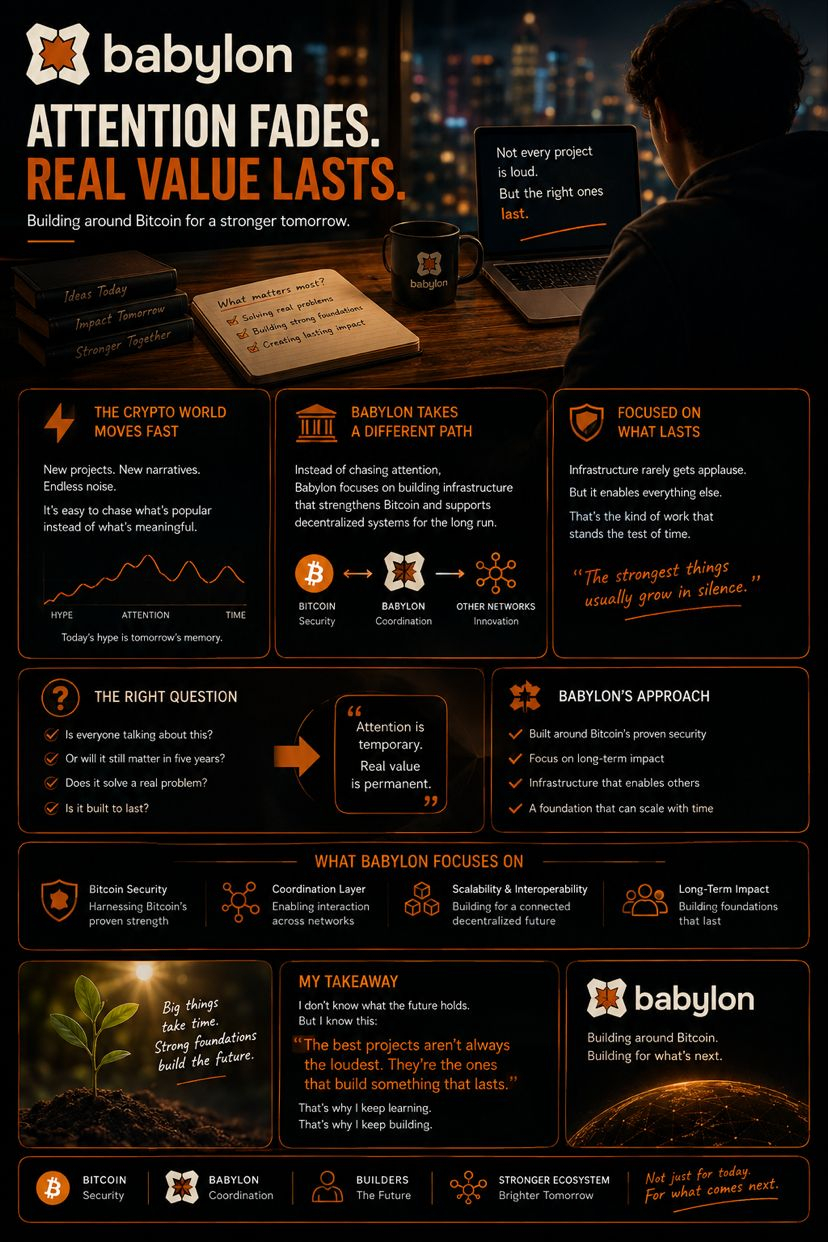
I remember joining crypto during a period when every day felt exciting.
A new project would appear, everyone on my timeline would be talking about it, and for a moment it felt like if I didn’t pay attention, I’d miss the next big opportunity.
But something interesting happened.
A few months later, I could barely remember the names of most of those projects.
That experience changed the way I look at this industry. Attention comes and goes so quickly that it’s easy to mistake popularity for long-term value.
While reading Babylon’s documentation over the past few days, I found myself slowing down instead of rushing to form an opinion. Rather than asking, “Is everyone talking about this?” I started asking, “Will this still matter if nobody is talking about it for a while?”
I think that’s a healthier question.
The more I learn, the more I appreciate projects that spend time solving difficult problems instead of chasing the next narrative. Those efforts aren’t always visible, and they rarely create instant excitement, but they often become the reason an ecosystem is stronger years later.
I’m not saying every quiet project will succeed, and I’m not saying every popular project will fail.
But I’ve learned that attention is temporary. Real value has to survive long after the excitement disappears.
That’s probably the biggest lesson Babylon has reminded me of—not just about blockchain, but about how I evaluate ideas in general.
#baby $BABY @babylonlabs_io
{spot}(BABYUSDT)
I remember joining crypto during a period when every day felt exciting.
A new project would appear, everyone on my timeline would be talking about it, and for a moment it felt like if I didn’t pay attention, I’d miss the next big opportunity.
But something interesting happened.
A few months later, I could barely remember the names of most of those projects.
That experience changed the way I look at this industry. Attention comes and goes so quickly that it’s easy to mistake popularity for long-term value.
While reading Babylon’s documentation over the past few days, I found myself slowing down instead of rushing to form an opinion. Rather than asking, “Is everyone talking about this?” I started asking, “Will this still matter if nobody is talking about it for a while?”
I think that’s a healthier question.
The more I learn, the more I appreciate projects that spend time solving difficult problems instead of chasing the next narrative. Those efforts aren’t always visible, and they rarely create instant excitement, but they often become the reason an ecosystem is stronger years later.
I’m not saying every quiet project will succeed, and I’m not saying every popular project will fail.
But I’ve learned that attention is temporary. Real value has to survive long after the excitement disappears.
That’s probably the biggest lesson Babylon has reminded me of—not just about blockchain, but about how I evaluate ideas in general.
#baby $BABY @BabylonLabs_io
A new project would appear, everyone on my timeline would be talking about it, and for a moment it felt like if I didn’t pay attention, I’d miss the next big opportunity.
But something interesting happened.
A few months later, I could barely remember the names of most of those projects.
That experience changed the way I look at this industry. Attention comes and goes so quickly that it’s easy to mistake popularity for long-term value.
While reading Babylon’s documentation over the past few days, I found myself slowing down instead of rushing to form an opinion. Rather than asking, “Is everyone talking about this?” I started asking, “Will this still matter if nobody is talking about it for a while?”
I think that’s a healthier question.
The more I learn, the more I appreciate projects that spend time solving difficult problems instead of chasing the next narrative. Those efforts aren’t always visible, and they rarely create instant excitement, but they often become the reason an ecosystem is stronger years later.
I’m not saying every quiet project will succeed, and I’m not saying every popular project will fail.
But I’ve learned that attention is temporary. Real value has to survive long after the excitement disappears.
That’s probably the biggest lesson Babylon has reminded me of—not just about blockchain, but about how I evaluate ideas in general.
#baby $BABY @BabylonLabs_io
1
89
·
--
私が学校にいた頃、「賢い」とは正しい答えを持っていることだと思っていました。
ある日、先生が宿題を見て微笑みながら、私が今でも忘れられないことを言いました:
「時には、一番良い答えは、もっと良い質問をすることから生まれる。」
当時、私は彼女が何を言いたいのかよく理解できませんでした。
何年も後、さまざまなブロックチェーン・プロジェクトを読み進めているうちに、私がバビロンを調べていたとき、その言葉がふと思い出されました。
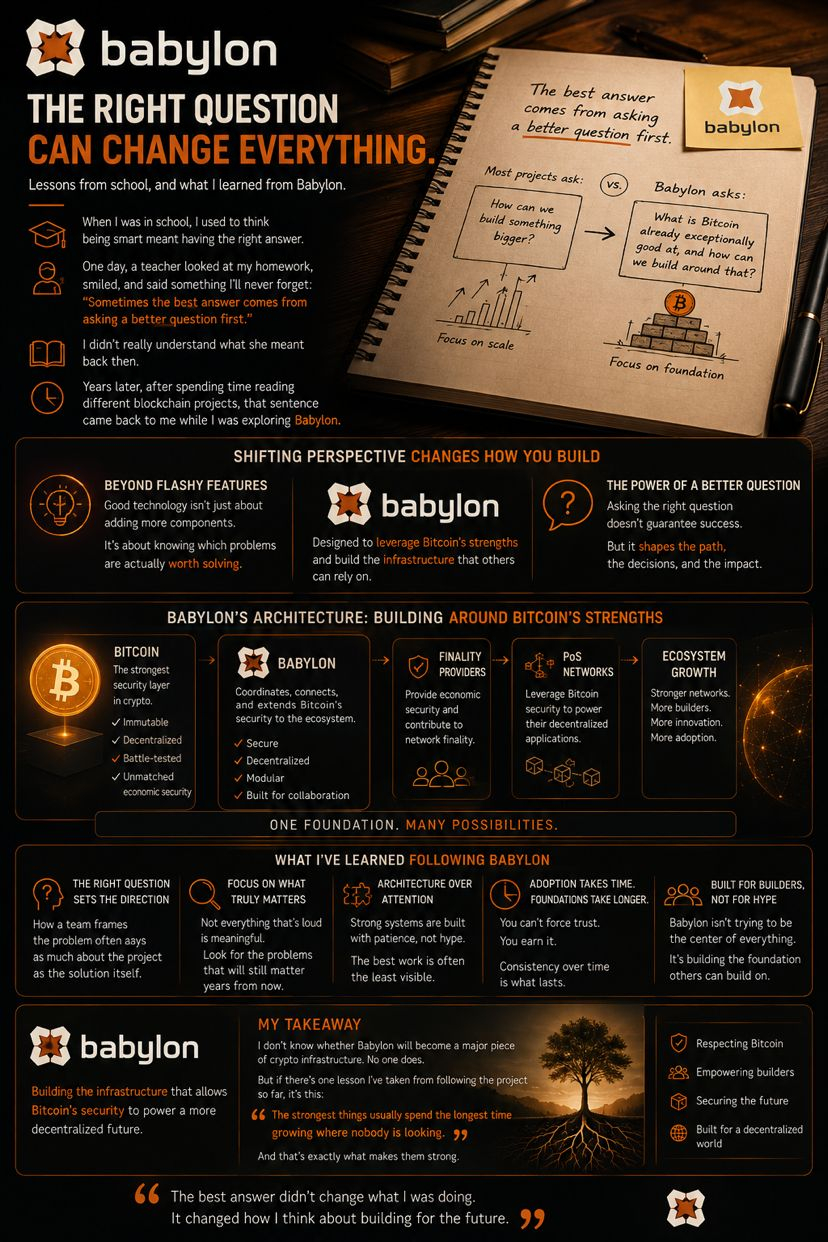
多くのプロジェクトは「どうすればもっと大きなものを作れるか?」という問いから始まっているように見えます。私がバビロンで面白いと感じるのは、その設計が別の問いから始まっているように感じられることです。「ビットコインはすでに際立って得意なことは何で、それを土台にどう構築できるのか?」
この考え方の転換によって、ドキュメントの読み方が変わりました。派手な機能を探すのではなく、アーキテクチャの背後にある理由に注目するようになったのです。良い技術とは、単に部品を増やすことではなく、実際に解く価値のある問題を見極めることだと思います。
ただ、正しい問いを立てれば成功が保証されるとは思っていません。どのプロジェクトも、導入(採用)と実行によって自らを証明し続ける必要があります。
でも、チームが問題をどう組み立てるかは、解決策そのものと同じくらいプロジェクトの性格を表しているのだと私は考えるようになりました。
だからこそ、私はバビロンのことを学ぶのが楽しかったのかもしれません。それは単にブロックチェーンに関する新しい情報をくれただけでなく、そもそも意味のあるシステムがどう設計されるのかを、別の角度から考えさせてくれたのです。
#baby $BABY @babylonlabs_io
{spot}(BABYUSDT)
私が学校にいた頃、「賢い」とは正しい答えを持っていることだと思っていました。
ある日、先生が宿題を見て微笑みながら、私が今でも忘れられないことを言いました:
「時には、一番良い答えは、もっと良い質問をすることから生まれる。」
当時、私は彼女が何を言いたいのかよく理解できませんでした。
何年も後、さまざまなブロックチェーン・プロジェクトを読み進めているうちに、私がバビロンを調べていたとき、その言葉がふと思い出されました。
多くのプロジェクトは「どうすればもっと大きなものを作れるか?」という問いから始まっているように見えます。私がバビロンで面白いと感じるのは、その設計が別の問いから始まっているように感じられることです。「ビットコインはすでに際立って得意なことは何で、それを土台にどう構築できるのか?」
この考え方の転換によって、ドキュメントの読み方が変わりました。派手な機能を探すのではなく、アーキテクチャの背後にある理由に注目するようになったのです。良い技術とは、単に部品を増やすことではなく、実際に解く価値のある問題を見極めることだと思います。
ただ、正しい問いを立てれば成功が保証されるとは思っていません。どのプロジェクトも、導入(採用)と実行によって自らを証明し続ける必要があります。
でも、チームが問題をどう組み立てるかは、解決策そのものと同じくらいプロジェクトの性格を表しているのだと私は考えるようになりました。
だからこそ、私はバビロンのことを学ぶのが楽しかったのかもしれません。それは単にブロックチェーンに関する新しい情報をくれただけでなく、そもそも意味のあるシステムがどう設計されるのかを、別の角度から考えさせてくれたのです。
#baby $BABY @BabylonLabs_io
ある日、先生が宿題を見て微笑みながら、私が今でも忘れられないことを言いました:
「時には、一番良い答えは、もっと良い質問をすることから生まれる。」
当時、私は彼女が何を言いたいのかよく理解できませんでした。
何年も後、さまざまなブロックチェーン・プロジェクトを読み進めているうちに、私がバビロンを調べていたとき、その言葉がふと思い出されました。
多くのプロジェクトは「どうすればもっと大きなものを作れるか?」という問いから始まっているように見えます。私がバビロンで面白いと感じるのは、その設計が別の問いから始まっているように感じられることです。「ビットコインはすでに際立って得意なことは何で、それを土台にどう構築できるのか?」
この考え方の転換によって、ドキュメントの読み方が変わりました。派手な機能を探すのではなく、アーキテクチャの背後にある理由に注目するようになったのです。良い技術とは、単に部品を増やすことではなく、実際に解く価値のある問題を見極めることだと思います。
ただ、正しい問いを立てれば成功が保証されるとは思っていません。どのプロジェクトも、導入(採用)と実行によって自らを証明し続ける必要があります。
でも、チームが問題をどう組み立てるかは、解決策そのものと同じくらいプロジェクトの性格を表しているのだと私は考えるようになりました。
だからこそ、私はバビロンのことを学ぶのが楽しかったのかもしれません。それは単にブロックチェーンに関する新しい情報をくれただけでなく、そもそも意味のあるシステムがどう設計されるのかを、別の角度から考えさせてくれたのです。
#baby $BABY @BabylonLabs_io
3
74
·
--
数か月前、家の前に小さな木を植えました。
最初の数週間は、特に何も起きていないように見えました。毎朝まったく同じに見えて、私が何か間違ったことをしたのではないかとも思ったんです。でも祖父はにこやかに言いました。「見えないところのほうが、先に育っているんだよ。」
私はバビロンについて学ぶようになってから、その会話のことを考えるようになりました。
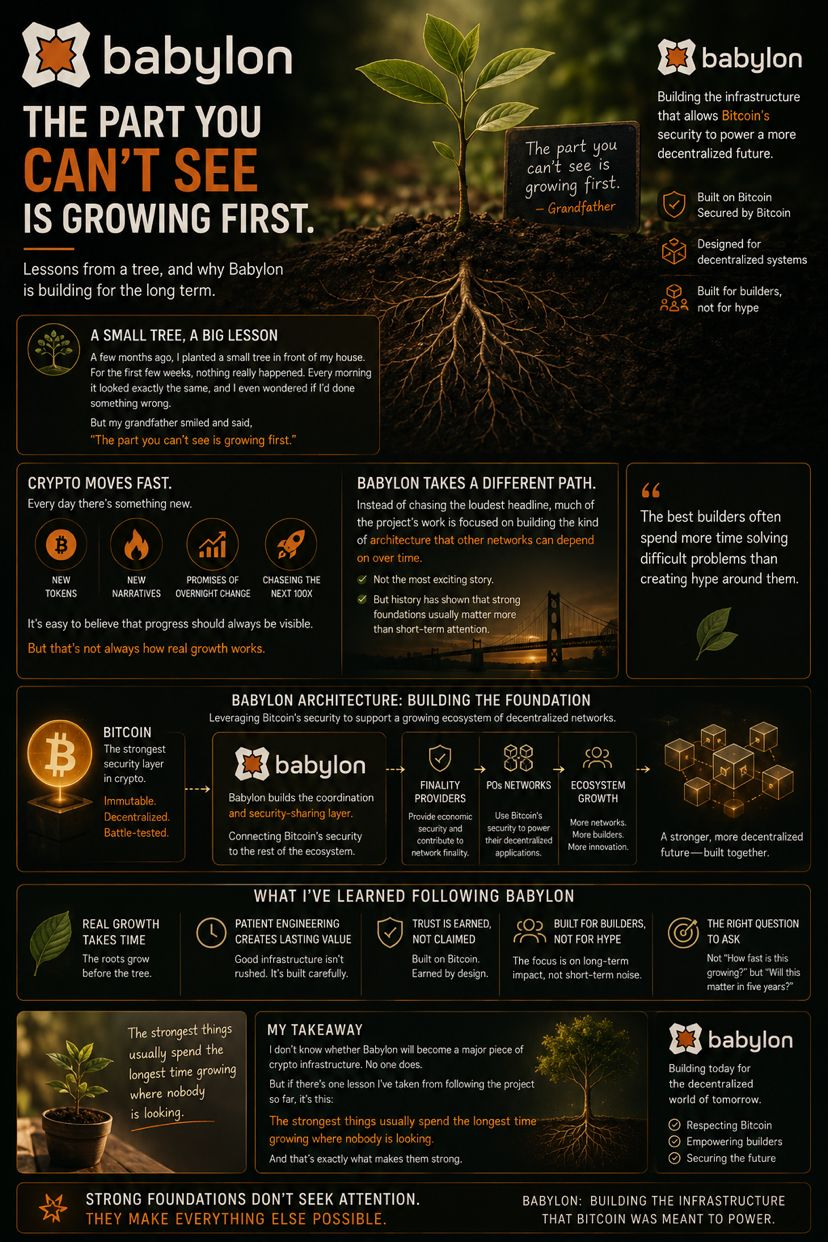
暗号資産の世界は信じられないほど動きが速いです。毎日新しいトークンが生まれ、新しい物語が語られ、あるいは一夜で世界を変えると約束する別のプロジェクトが現れます。進歩は常に目に見える形であるべきだ、と信じたくなるのも簡単です。
しかし、バビロンのドキュメントを読んでいると、別の感覚がありました。
最も騒がしい見出しを追うのではなく、多くのプロジェクトの取り組みは、他のネットワークが長い時間をかけて頼りにできるような種類のアーキテクチャを構築することに重点が置かれています。それがいつも最もワクワクする話とは限りませんが、歴史は、強い土台は短期的な注目よりも重要であることを示してきました。
そして、思い出しました。優れたビルダーは、注目を集めるための誇大宣伝を作るよりも、難しい問題を解く時間を多く費やすことが多いのだと。
だから私は、このプロジェクトに何度も戻ってきているのかもしれません。即座の結果を期待しているからではなく、スピードよりも実質を評価しがちな、忍耐強いエンジニアリングの価値を、この世界であらためて大切だと感じさせてくれるからです。
バビロンが暗号資産インフラの大きな柱になるかどうかは、時間が答えを出すでしょう。
ですが、これまでプロジェクトを追ってきて得た唯一の教訓があるとすれば、こうです。最も強いものほど、誰も見ていないところで、いちばん長い時間をかけて育つのが普通なのだと。
#baby $BABY @babylonlabs_io
{spot}(BABYUSDT)
数か月前、家の前に小さな木を植えました。
最初の数週間は、特に何も起きていないように見えました。毎朝まったく同じに見えて、私が何か間違ったことをしたのではないかとも思ったんです。でも祖父はにこやかに言いました。「見えないところのほうが、先に育っているんだよ。」
私はバビロンについて学ぶようになってから、その会話のことを考えるようになりました。
暗号資産の世界は信じられないほど動きが速いです。毎日新しいトークンが生まれ、新しい物語が語られ、あるいは一夜で世界を変えると約束する別のプロジェクトが現れます。進歩は常に目に見える形であるべきだ、と信じたくなるのも簡単です。
しかし、バビロンのドキュメントを読んでいると、別の感覚がありました。
最も騒がしい見出しを追うのではなく、多くのプロジェクトの取り組みは、他のネットワークが長い時間をかけて頼りにできるような種類のアーキテクチャを構築することに重点が置かれています。それがいつも最もワクワクする話とは限りませんが、歴史は、強い土台は短期的な注目よりも重要であることを示してきました。
そして、思い出しました。優れたビルダーは、注目を集めるための誇大宣伝を作るよりも、難しい問題を解く時間を多く費やすことが多いのだと。
だから私は、このプロジェクトに何度も戻ってきているのかもしれません。即座の結果を期待しているからではなく、スピードよりも実質を評価しがちな、忍耐強いエンジニアリングの価値を、この世界であらためて大切だと感じさせてくれるからです。
バビロンが暗号資産インフラの大きな柱になるかどうかは、時間が答えを出すでしょう。
ですが、これまでプロジェクトを追ってきて得た唯一の教訓があるとすれば、こうです。最も強いものほど、誰も見ていないところで、いちばん長い時間をかけて育つのが普通なのだと。
#baby $BABY @BabylonLabs_io
最初の数週間は、特に何も起きていないように見えました。毎朝まったく同じに見えて、私が何か間違ったことをしたのではないかとも思ったんです。でも祖父はにこやかに言いました。「見えないところのほうが、先に育っているんだよ。」
私はバビロンについて学ぶようになってから、その会話のことを考えるようになりました。
暗号資産の世界は信じられないほど動きが速いです。毎日新しいトークンが生まれ、新しい物語が語られ、あるいは一夜で世界を変えると約束する別のプロジェクトが現れます。進歩は常に目に見える形であるべきだ、と信じたくなるのも簡単です。
しかし、バビロンのドキュメントを読んでいると、別の感覚がありました。
最も騒がしい見出しを追うのではなく、多くのプロジェクトの取り組みは、他のネットワークが長い時間をかけて頼りにできるような種類のアーキテクチャを構築することに重点が置かれています。それがいつも最もワクワクする話とは限りませんが、歴史は、強い土台は短期的な注目よりも重要であることを示してきました。
そして、思い出しました。優れたビルダーは、注目を集めるための誇大宣伝を作るよりも、難しい問題を解く時間を多く費やすことが多いのだと。
だから私は、このプロジェクトに何度も戻ってきているのかもしれません。即座の結果を期待しているからではなく、スピードよりも実質を評価しがちな、忍耐強いエンジニアリングの価値を、この世界であらためて大切だと感じさせてくれるからです。
バビロンが暗号資産インフラの大きな柱になるかどうかは、時間が答えを出すでしょう。
ですが、これまでプロジェクトを追ってきて得た唯一の教訓があるとすれば、こうです。最も強いものほど、誰も見ていないところで、いちばん長い時間をかけて育つのが普通なのだと。
#baby $BABY @BabylonLabs_io
1
1
108
ログインして、さらにコンテンツを読む
厳選トピックで世界の暗号資産トレーダーの仲間入り
⚡️ 暗号資産に関する最新かつ有益な情報が見つかります。
💬 世界最大の暗号資産取引所から信頼されています。
👍 認証を受けたクリエイターから、有益なインサイトを得られます。
メール / 電話番号
トレンドトピック
PolymarketBankFailureBetsDrawFDICConcern
閲覧回数 64
26人が討論中
🚨 ポリマーケットの銀行破綻「ベット」引き分け、FDICが懸念
米国の銀行破綻の可能性に賭けるポリマーケットの契約が、金融の安定に対する潜在的なリスクを懸念するFDIC当局者の精査を受けている。
👀 予測市場が新たな規制の焦点に入っている。
#Polymarket #Banking #FDIC $BTC
#polymarketbankfailurebetsdrawfdicconcern
The07
·いいね:0件
·閲覧回数 38
BlackRockBuildsTokenizedPortfoliosForOndo
閲覧回数 44
12人が討論中
BitwiseFilesToListNEARETFOnNYSEArca
閲覧回数 656
45人が討論中