
PolinaK13
44 投稿

PolinaK13
報告
ユーザーをブロック
10 フォロー
29 フォロワー
44 いいね
投稿
すべて
引用
·
--
翻訳参照
Не кожна можливість на ринку — це угода. Чому?
На графіку може з’явитися ситуація, яка виглядає дуже привабливо:
ціна сильно рухається → є потенціал заробити → хочеться зайти в позицію.
Але сама можливість ще не означає, що угоду варто відкривати.
Наприклад, ти очікуєш рух акції на 5%, але для цього доведеться відкрити занадто велику позицію.
Або потенційний прибуток виглядає привабливо, але можливий збиток у разі помилки значно більший.
Ще один сценарій — ти бачиш хороший рівень для входу, але ліквідність низька, тому виконання великої позиції може відбутися за менш вигідною ціною.
Тому перед угодою варто дивитися не тільки на:
«Скільки я можу заробити?»
а й на:
скільки можу втратити;
який розмір позиції потрібен;
наскільки ліквідний ринок;
чи відповідає ця угода моєму рівню ризику.
Іноді найкраще рішення — побачити можливість, але не перетворювати її на позицію.
Бо можливість на графіку — це ще не готова угода.
#Trading #RiskManagement
Не кожна можливість на ринку — це угода. Чому?
На графіку може з’явитися ситуація, яка виглядає дуже привабливо:
ціна сильно рухається → є потенціал заробити → хочеться зайти в позицію.
Але сама можливість ще не означає, що угоду варто відкривати.
Наприклад, ти очікуєш рух акції на 5%, але для цього доведеться відкрити занадто велику позицію.
Або потенційний прибуток виглядає привабливо, але можливий збиток у разі помилки значно більший.
Ще один сценарій — ти бачиш хороший рівень для входу, але ліквідність низька, тому виконання великої позиції може відбутися за менш вигідною ціною.
Тому перед угодою варто дивитися не тільки на:
«Скільки я можу заробити?»
а й на:
скільки можу втратити;
який розмір позиції потрібен;
наскільки ліквідний ринок;
чи відповідає ця угода моєму рівню ризику.
Іноді найкраще рішення — побачити можливість, але не перетворювати її на позицію.
Бо можливість на графіку — це ще не готова угода.
#Trading #RiskManagement
На графіку може з’явитися ситуація, яка виглядає дуже привабливо:
ціна сильно рухається → є потенціал заробити → хочеться зайти в позицію.
Але сама можливість ще не означає, що угоду варто відкривати.
Наприклад, ти очікуєш рух акції на 5%, але для цього доведеться відкрити занадто велику позицію.
Або потенційний прибуток виглядає привабливо, але можливий збиток у разі помилки значно більший.
Ще один сценарій — ти бачиш хороший рівень для входу, але ліквідність низька, тому виконання великої позиції може відбутися за менш вигідною ціною.
Тому перед угодою варто дивитися не тільки на:
«Скільки я можу заробити?»
а й на:
скільки можу втратити;
який розмір позиції потрібен;
наскільки ліквідний ринок;
чи відповідає ця угода моєму рівню ризику.
Іноді найкраще рішення — побачити можливість, але не перетворювати її на позицію.
Бо можливість на графіку — це ще не готова угода.
#Trading #RiskManagement

164
·
--
翻訳参照
Позиція маленька. Чому ризик все одно може бути великим?
На перший погляд:
«Я відкрив позицію лише на $100. Це ж небагато».
Але сама сума позиції ще не показує реальний ризик.
Уявімо два рахунки:
$100 позиція на рахунку $10 000
→ це лише 1% капіталу.
$100 позиція на рахунку $200
→ це вже 50% капіталу.
Однакова позиція — але зовсім різний вплив на рахунок.
Є ще один нюанс — плече.
Позиція на $100 може бути відкритою з використанням $20 власного капіталу та плеча. Тоді навіть відносно невеликий рух ціни матиме набагато більший вплив саме на використану маржу.
Тому питання:
«Наскільки велика моя позиція?»
не завжди достатнє.
Важливіше дивитися на:
розмір позиції відносно всього капіталу;
рівень плеча;
скільки можна втратити при русі ціни проти тебе;
умови самого інструменту.
Маленька позиція в доларах не завжди означає маленький ризик для твого рахунку.
Ризик потрібно оцінювати відносно капіталу, а не просто дивитися на цифру позиції.
#Trading #RiskManagement
Позиція маленька. Чому ризик все одно може бути великим?
На перший погляд:
«Я відкрив позицію лише на $100. Це ж небагато».
Але сама сума позиції ще не показує реальний ризик.
Уявімо два рахунки:
$100 позиція на рахунку $10 000
→ це лише 1% капіталу.
$100 позиція на рахунку $200
→ це вже 50% капіталу.
Однакова позиція — але зовсім різний вплив на рахунок.
Є ще один нюанс — плече.
Позиція на $100 може бути відкритою з використанням $20 власного капіталу та плеча. Тоді навіть відносно невеликий рух ціни матиме набагато більший вплив саме на використану маржу.
Тому питання:
«Наскільки велика моя позиція?»
не завжди достатнє.
Важливіше дивитися на:
розмір позиції відносно всього капіталу;
рівень плеча;
скільки можна втратити при русі ціни проти тебе;
умови самого інструменту.
Маленька позиція в доларах не завжди означає маленький ризик для твого рахунку.
Ризик потрібно оцінювати відносно капіталу, а не просто дивитися на цифру позиції.
#Trading #RiskManagement
На перший погляд:
«Я відкрив позицію лише на $100. Це ж небагато».
Але сама сума позиції ще не показує реальний ризик.
Уявімо два рахунки:
$100 позиція на рахунку $10 000
→ це лише 1% капіталу.
$100 позиція на рахунку $200
→ це вже 50% капіталу.
Однакова позиція — але зовсім різний вплив на рахунок.
Є ще один нюанс — плече.
Позиція на $100 може бути відкритою з використанням $20 власного капіталу та плеча. Тоді навіть відносно невеликий рух ціни матиме набагато більший вплив саме на використану маржу.
Тому питання:
«Наскільки велика моя позиція?»
не завжди достатнє.
Важливіше дивитися на:
розмір позиції відносно всього капіталу;
рівень плеча;
скільки можна втратити при русі ціни проти тебе;
умови самого інструменту.
Маленька позиція в доларах не завжди означає маленький ризик для твого рахунку.
Ризик потрібно оцінювати відносно капіталу, а не просто дивитися на цифру позиції.
#Trading #RiskManagement

358
·
--
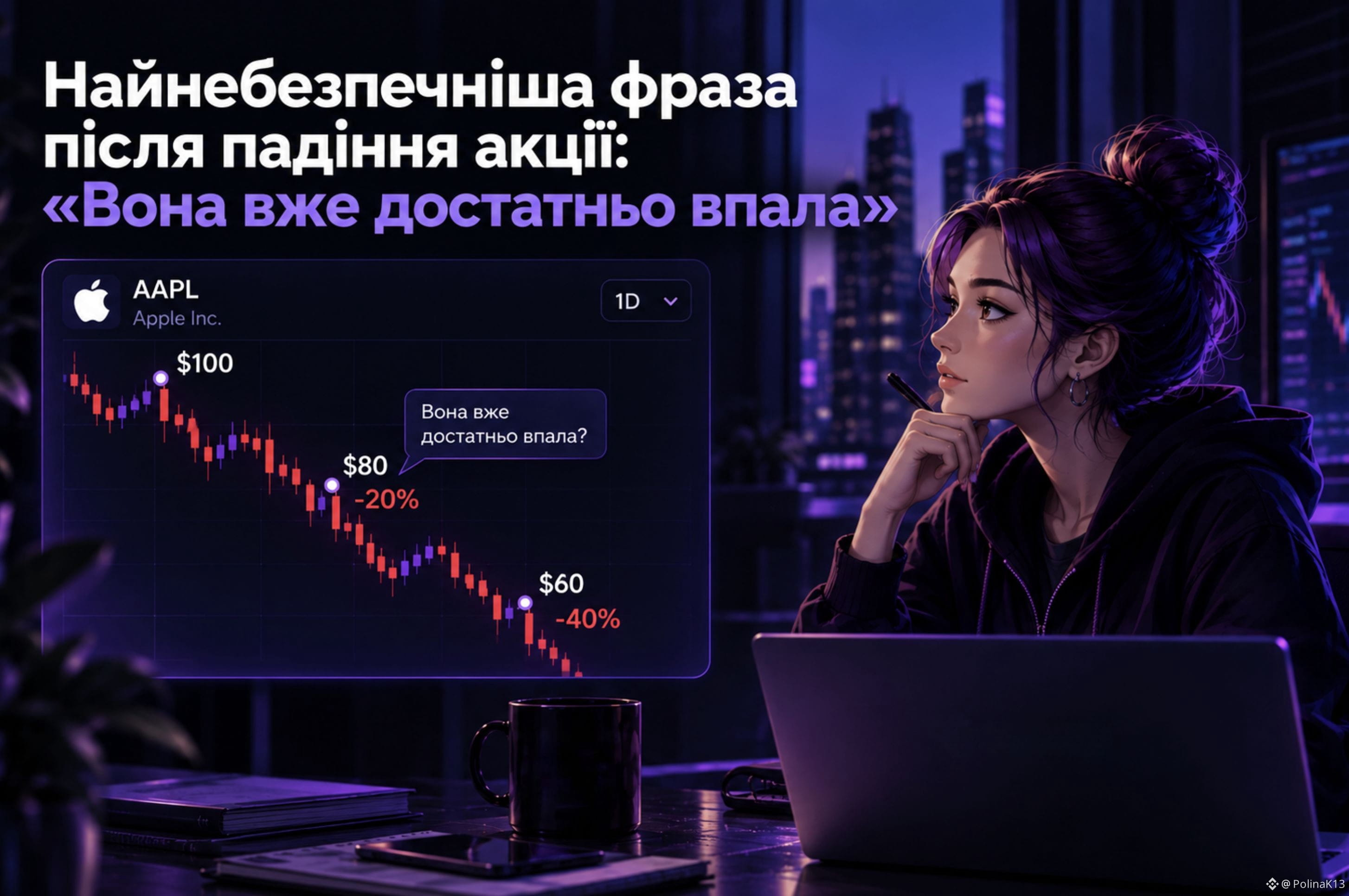
最も危険な下落後の一言:「もう十分下がった」
株価は20%下落しました。
最初の考え:
「もうこれ以上、どこまで下がるんだ?」
しかし市場は、あなたにとっての「十分低い場所」がどこかを知りません。
株価はさらに10%、20%、あるいは50%下がる可能性があります。
例えば:
$100 → $80 → $60
$80の時点では、もう株が安いように見えるかもしれません。
でも$60まで下落した後に、次の疑問が生まれます:
なぜ$80がそもそも底だと思えたのか?
だからこそ、次の代わりに:
❌「もうどれくらい下がったのか?」
より良い質問は:
✅「なぜ下がっているのか?」
会社の見通しは変わりましたか?
市場の反応ですか?
回復を期待できる理由はありますか?
下落そのものが、資産を安くするわけではありません。
そしてTradFi Perpetualでは、これはさらに重要です:
ショートポジションを開けることは、どんな下落でも自動的に「稼ぐチャンス」になるという意味ではありません。
「もう十分下がった」は分析ではありません。
それは単に、これから先は良くなるだろうという推測にすぎません。
#TradFi
最も危険な下落後の一言:「もう十分下がった」
株価は20%下落しました。
最初の考え:
「もうこれ以上、どこまで下がるんだ?」
しかし市場は、あなたにとっての「十分低い場所」がどこかを知りません。
株価はさらに10%、20%、あるいは50%下がる可能性があります。
例えば:
$100 → $80 → $60
$80の時点では、もう株が安いように見えるかもしれません。
でも$60まで下落した後に、次の疑問が生まれます:
なぜ$80がそもそも底だと思えたのか?
だからこそ、次の代わりに:
❌「もうどれくらい下がったのか?」
より良い質問は:
✅「なぜ下がっているのか?」
会社の見通しは変わりましたか?
市場の反応ですか?
回復を期待できる理由はありますか?
下落そのものが、資産を安くするわけではありません。
そしてTradFi Perpetualでは、これはさらに重要です:
ショートポジションを開けることは、どんな下落でも自動的に「稼ぐチャンス」になるという意味ではありません。
「もう十分下がった」は分析ではありません。
それは単に、これから先は良くなるだろうという推測にすぎません。
#TradFi
株価は20%下落しました。
最初の考え:
「もうこれ以上、どこまで下がるんだ?」
しかし市場は、あなたにとっての「十分低い場所」がどこかを知りません。
株価はさらに10%、20%、あるいは50%下がる可能性があります。
例えば:
$100 → $80 → $60
$80の時点では、もう株が安いように見えるかもしれません。
でも$60まで下落した後に、次の疑問が生まれます:
なぜ$80がそもそも底だと思えたのか?
だからこそ、次の代わりに:
❌「もうどれくらい下がったのか?」
より良い質問は:
✅「なぜ下がっているのか?」
会社の見通しは変わりましたか?
市場の反応ですか?
回復を期待できる理由はありますか?
下落そのものが、資産を安くするわけではありません。
そしてTradFi Perpetualでは、これはさらに重要です:
ショートポジションを開けることは、どんな下落でも自動的に「稼ぐチャンス」になるという意味ではありません。
「もう十分下がった」は分析ではありません。
それは単に、これから先は良くなるだろうという推測にすぎません。
#TradFi
615
·
--
翻訳参照
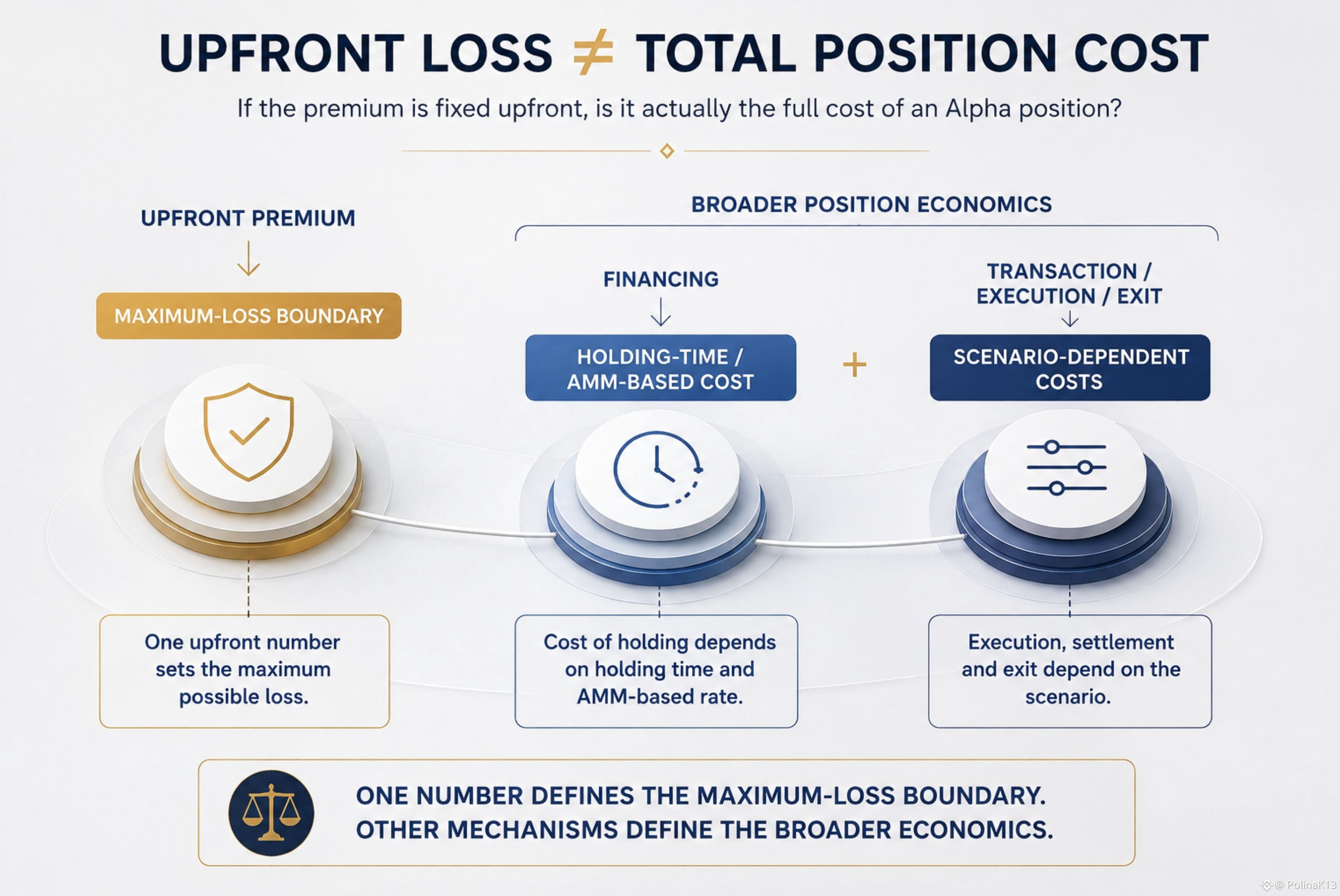
If the premium is fixed upfront, is it actually the full cost of an Alpha position?
It’s easy to treat the upfront premium as the cost of the position.
After all, TermMax defines Max Cost as the upfront premium — and as the maximum possible loss of the Alpha position.
But that answers one question:
How large can the position’s loss be?
It doesn’t necessarily answer another:
What are the broader economics of holding or executing the position?
TermMax separately documents option financing.
That financing is calculated using the option’s notional value, the AMM rate and the time the position is held. The AMM-based annual rate can also adjust dynamically.
And financing isn’t the only separate mechanism. TermMax also documents transaction, execution and exit-related costs that can apply depending on the scenario.
The important distinction is not:
premium + fees = a bigger maximum loss.
That would contradict what Max Cost is designed to represent.
The distinction is:
maximum-loss boundary
vs.
broader economic cost structure
So knowing the maximum loss upfront does not mean every economic cost associated with holding or executing the position is fixed upfront.
The useful distinction isn't cheap vs. expensive.
It’s understanding what the upfront number actually tells you — and what it doesn't.
UPFRONT LOSS ≠ TOTAL POSITION COST
#termmax @termmax
If the premium is fixed upfront, is it actually the full cost of an Alpha position?
It’s easy to treat the upfront premium as the cost of the position.
After all, TermMax defines Max Cost as the upfront premium — and as the maximum possible loss of the Alpha position.
But that answers one question:
How large can the position’s loss be?
It doesn’t necessarily answer another:
What are the broader economics of holding or executing the position?
TermMax separately documents option financing.
That financing is calculated using the option’s notional value, the AMM rate and the time the position is held. The AMM-based annual rate can also adjust dynamically.
And financing isn’t the only separate mechanism. TermMax also documents transaction, execution and exit-related costs that can apply depending on the scenario.
The important distinction is not:
premium + fees = a bigger maximum loss.
That would contradict what Max Cost is designed to represent.
The distinction is:
maximum-loss boundary
vs.
broader economic cost structure
So knowing the maximum loss upfront does not mean every economic cost associated with holding or executing the position is fixed upfront.
The useful distinction isn't cheap vs. expensive.
It’s understanding what the upfront number actually tells you — and what it doesn't.
UPFRONT LOSS ≠ TOTAL POSITION COST
#termmax @TermMax
It’s easy to treat the upfront premium as the cost of the position.
After all, TermMax defines Max Cost as the upfront premium — and as the maximum possible loss of the Alpha position.
But that answers one question:
How large can the position’s loss be?
It doesn’t necessarily answer another:
What are the broader economics of holding or executing the position?
TermMax separately documents option financing.
That financing is calculated using the option’s notional value, the AMM rate and the time the position is held. The AMM-based annual rate can also adjust dynamically.
And financing isn’t the only separate mechanism. TermMax also documents transaction, execution and exit-related costs that can apply depending on the scenario.
The important distinction is not:
premium + fees = a bigger maximum loss.
That would contradict what Max Cost is designed to represent.
The distinction is:
maximum-loss boundary
vs.
broader economic cost structure
So knowing the maximum loss upfront does not mean every economic cost associated with holding or executing the position is fixed upfront.
The useful distinction isn't cheap vs. expensive.
It’s understanding what the upfront number actually tells you — and what it doesn't.
UPFRONT LOSS ≠ TOTAL POSITION COST
#termmax @TermMax
82
·
--
翻訳参照
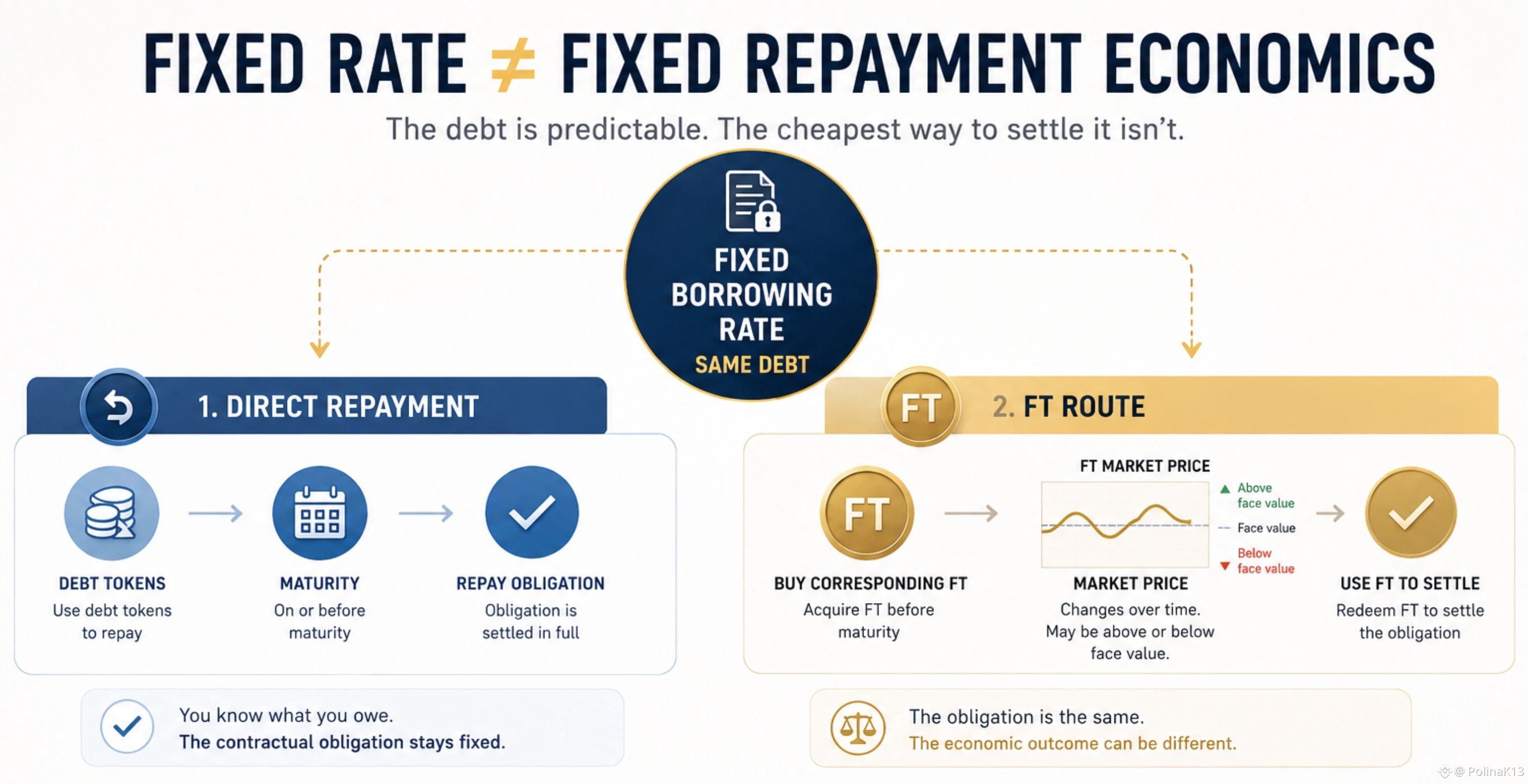
A fixed borrowing rate can make the debt predictable. The interesting question is whether the cheapest way to settle it stays predictable too.
In TermMax, a borrower has two repayment routes:
→ repay the debt directly with debt tokens
→ or buy the corresponding FT before maturity and use it to settle the debt.
That second route is where the economics get more interesting.
Before maturity, an FT can trade below its face value. And the relationship between the current market rate and the borrower's locked rate can affect whether that discount exists and how attractive the FT route becomes.
If market rates move above the rate the borrower originally locked, TermMax's documentation notes that the corresponding FT may be available at a discount, potentially making settlement cheaper.
But “potentially” matters.
The debt obligation itself hasn't changed. And a discount doesn't automatically mean the borrower saves money. The FT still has to be available at a sufficient discount for that repayment route to be economically preferable.
So fixed-rate borrowing gives you certainty about the rate.
It doesn't necessarily give you certainty about which way of settling that same obligation will be cheapest.
That distinction makes the repayment economics more interesting than the fixed rate alone.
#termmax @termmax
A fixed borrowing rate can make the debt predictable. The interesting question is whether the cheapest way to settle it stays predictable too.
In TermMax, a borrower has two repayment routes:
→ repay the debt directly with debt tokens
→ or buy the corresponding FT before maturity and use it to settle the debt.
That second route is where the economics get more interesting.
Before maturity, an FT can trade below its face value. And the relationship between the current market rate and the borrower's locked rate can affect whether that discount exists and how attractive the FT route becomes.
If market rates move above the rate the borrower originally locked, TermMax's documentation notes that the corresponding FT may be available at a discount, potentially making settlement cheaper.
But “potentially” matters.
The debt obligation itself hasn't changed. And a discount doesn't automatically mean the borrower saves money. The FT still has to be available at a sufficient discount for that repayment route to be economically preferable.
So fixed-rate borrowing gives you certainty about the rate.
It doesn't necessarily give you certainty about which way of settling that same obligation will be cheapest.
That distinction makes the repayment economics more interesting than the fixed rate alone.
#termmax @TermMax
In TermMax, a borrower has two repayment routes:
→ repay the debt directly with debt tokens
→ or buy the corresponding FT before maturity and use it to settle the debt.
That second route is where the economics get more interesting.
Before maturity, an FT can trade below its face value. And the relationship between the current market rate and the borrower's locked rate can affect whether that discount exists and how attractive the FT route becomes.
If market rates move above the rate the borrower originally locked, TermMax's documentation notes that the corresponding FT may be available at a discount, potentially making settlement cheaper.
But “potentially” matters.
The debt obligation itself hasn't changed. And a discount doesn't automatically mean the borrower saves money. The FT still has to be available at a sufficient discount for that repayment route to be economically preferable.
So fixed-rate borrowing gives you certainty about the rate.
It doesn't necessarily give you certainty about which way of settling that same obligation will be cheapest.
That distinction makes the repayment economics more interesting than the fixed rate alone.
#termmax @TermMax
83
·
--
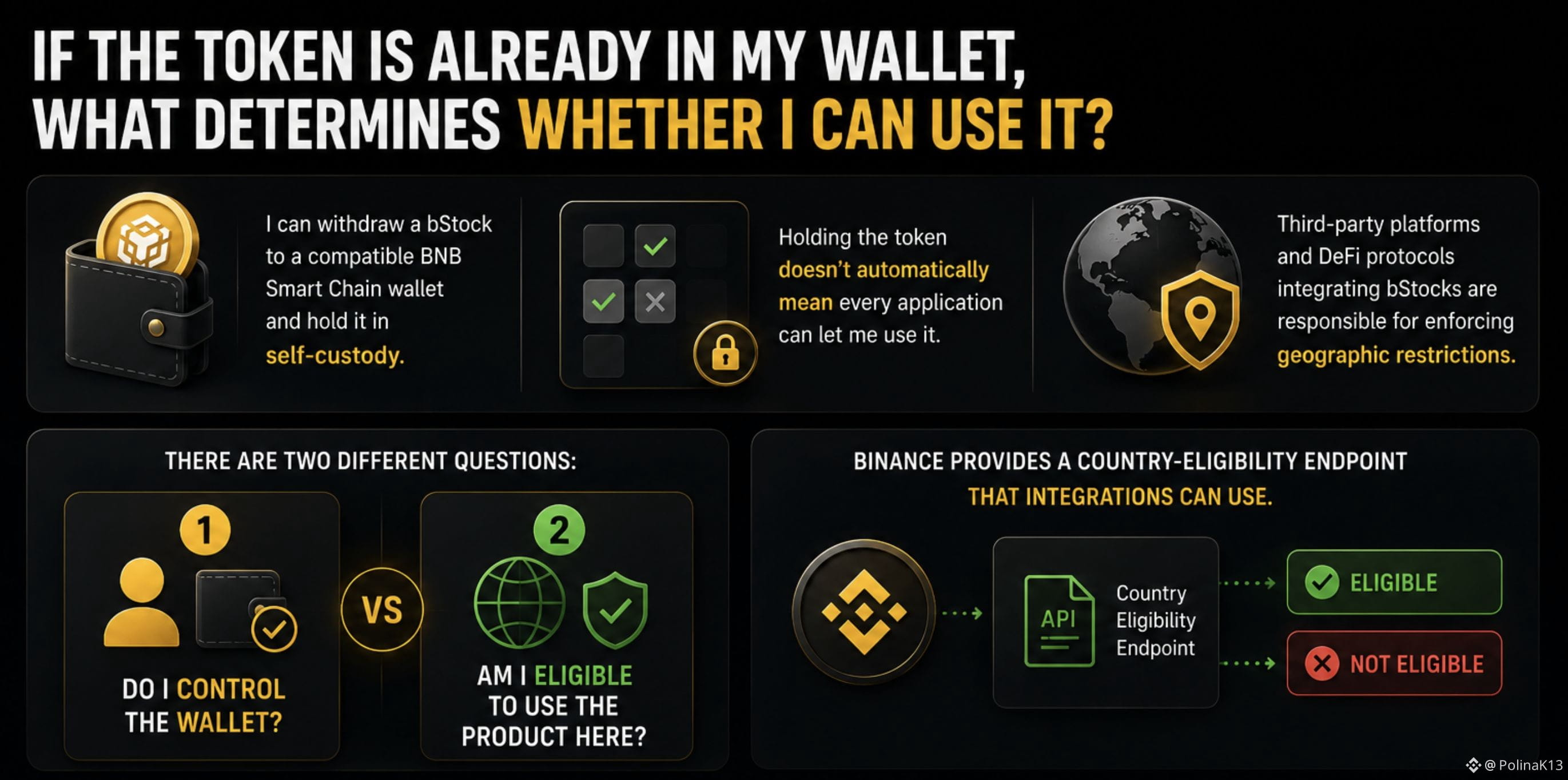
トークンがすでに自分のウォレットにある場合、私がそれを利用できるかどうかを決めるのは何ですか?
以前は、資産がウォレットに入ってさえいれば、主な論点は単に自分がそれをコントロールしているかどうかだと思っていました。
しかし bStocks は、2つのことを分けて考えさせてくれました。
bStock は、対応している BNB Smart Chain のウォレットに出金して、自分で管理(自己保管)することができます。
ですが、トークンを保有していることは、すべてのアプリケーションが自分にそれを使わせてくれるという意味ではありません。
bStocks を統合しているサードパーティのプラットフォームや DeFi プロトコルが、地理的制限の適用を担っています。
さらに Binance は、統合側が特定の管轄地域でユーザーが利用資格を満たしているかどうかを確認するために使える「国の適格性(eligibility)」エンドポイントも提供しています。
つまり、質問は2つあります。
ウォレットをコントロールしているかどうか。
そして
ここでその製品を利用する資格があるかどうか。
私は、この違いが興味深いと思っています。
自己保管によって、資産を保有する場所は変わります。
しかし、製品を利用できる場所が自動的に変わるわけではありません。
そこで、次のように「トークンが自分のウォレットにあるか」だけを問うのではなく:
「トークンを実際に利用できるかどうかを決めるのは何か?」
もあわせて問うべきだと考えています。
私にとっては:
ウォレットのコントロール ≠ 製品の利用資格。
#bstockscis @BinanceCIS
トークンがすでに自分のウォレットにある場合、私がそれを利用できるかどうかを決めるのは何ですか?
以前は、資産がウォレットに入ってさえいれば、主な論点は単に自分がそれをコントロールしているかどうかだと思っていました。
しかし bStocks は、2つのことを分けて考えさせてくれました。
bStock は、対応している BNB Smart Chain のウォレットに出金して、自分で管理(自己保管)することができます。
ですが、トークンを保有していることは、すべてのアプリケーションが自分にそれを使わせてくれるという意味ではありません。
bStocks を統合しているサードパーティのプラットフォームや DeFi プロトコルが、地理的制限の適用を担っています。
さらに Binance は、統合側が特定の管轄地域でユーザーが利用資格を満たしているかどうかを確認するために使える「国の適格性(eligibility)」エンドポイントも提供しています。
つまり、質問は2つあります。
ウォレットをコントロールしているかどうか。
そして
ここでその製品を利用する資格があるかどうか。
私は、この違いが興味深いと思っています。
自己保管によって、資産を保有する場所は変わります。
しかし、製品を利用できる場所が自動的に変わるわけではありません。
そこで、次のように「トークンが自分のウォレットにあるか」だけを問うのではなく:
「トークンを実際に利用できるかどうかを決めるのは何か?」
もあわせて問うべきだと考えています。
私にとっては:
ウォレットのコントロール ≠ 製品の利用資格。
#bstockscis @BinanceCIS
以前は、資産がウォレットに入ってさえいれば、主な論点は単に自分がそれをコントロールしているかどうかだと思っていました。
しかし bStocks は、2つのことを分けて考えさせてくれました。
bStock は、対応している BNB Smart Chain のウォレットに出金して、自分で管理(自己保管)することができます。
ですが、トークンを保有していることは、すべてのアプリケーションが自分にそれを使わせてくれるという意味ではありません。
bStocks を統合しているサードパーティのプラットフォームや DeFi プロトコルが、地理的制限の適用を担っています。
さらに Binance は、統合側が特定の管轄地域でユーザーが利用資格を満たしているかどうかを確認するために使える「国の適格性(eligibility)」エンドポイントも提供しています。
つまり、質問は2つあります。
ウォレットをコントロールしているかどうか。
そして
ここでその製品を利用する資格があるかどうか。
私は、この違いが興味深いと思っています。
自己保管によって、資産を保有する場所は変わります。
しかし、製品を利用できる場所が自動的に変わるわけではありません。
そこで、次のように「トークンが自分のウォレットにあるか」だけを問うのではなく:
「トークンを実際に利用できるかどうかを決めるのは何か?」
もあわせて問うべきだと考えています。
私にとっては:
ウォレットのコントロール ≠ 製品の利用資格。
#bstockscis @BinanceCIS
2
1
73
·
--
翻訳参照
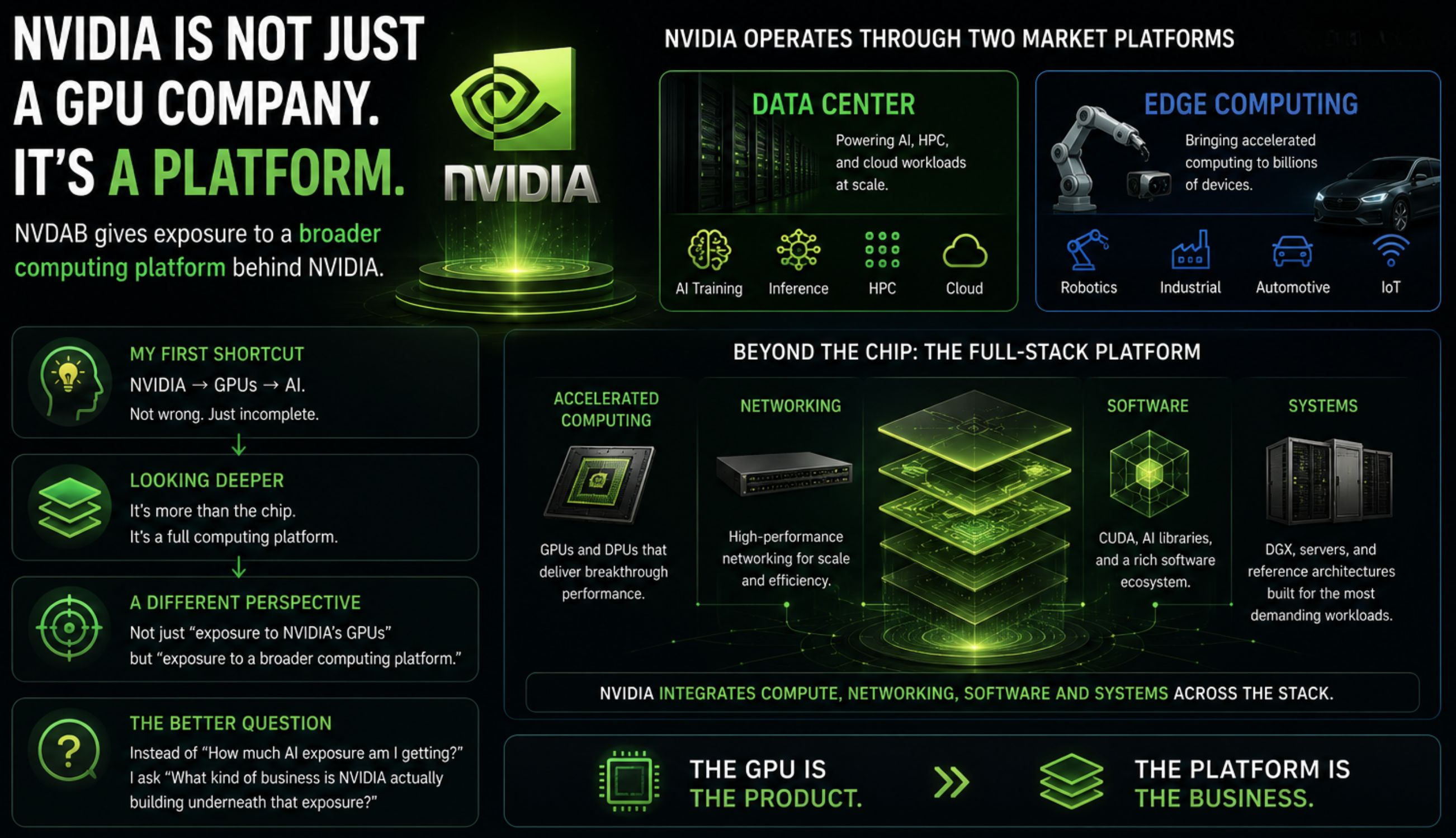
NVIDIA looks like a GPU company. But the business underneath is a platform.
When I first looked at NVDAB, my mental shortcut was simple:
NVIDIA → GPUs → AI.
That shortcut isn't wrong.
It just leaves out a layer I find more interesting.
NVIDIA now describes its business through two market platforms:
Data Center
and
Edge Computing.
And the platform goes beyond the chip itself.
NVIDIA combines accelerated computing, networking, software and systems across the stack.
So I started looking at NVDAB differently.
Not simply as:
“exposure to NVIDIA's GPUs”
but as:
“exposure to a broader computing platform.”
That changes the question for me.
Instead of asking:
“How much AI exposure am I getting?”
I'd ask:
“What kind of business is NVIDIA actually building underneath that exposure?”
For me:
The GPU is the product.
The platform is the business.
#bstockscis @BinanceCIS
NVIDIA looks like a GPU company. But the business underneath is a platform.
When I first looked at NVDAB, my mental shortcut was simple:
NVIDIA → GPUs → AI.
That shortcut isn't wrong.
It just leaves out a layer I find more interesting.
NVIDIA now describes its business through two market platforms:
Data Center
and
Edge Computing.
And the platform goes beyond the chip itself.
NVIDIA combines accelerated computing, networking, software and systems across the stack.
So I started looking at NVDAB differently.
Not simply as:
“exposure to NVIDIA's GPUs”
but as:
“exposure to a broader computing platform.”
That changes the question for me.
Instead of asking:
“How much AI exposure am I getting?”
I'd ask:
“What kind of business is NVIDIA actually building underneath that exposure?”
For me:
The GPU is the product.
The platform is the business.
#bstockscis @BinanceCIS
When I first looked at NVDAB, my mental shortcut was simple:
NVIDIA → GPUs → AI.
That shortcut isn't wrong.
It just leaves out a layer I find more interesting.
NVIDIA now describes its business through two market platforms:
Data Center
and
Edge Computing.
And the platform goes beyond the chip itself.
NVIDIA combines accelerated computing, networking, software and systems across the stack.
So I started looking at NVDAB differently.
Not simply as:
“exposure to NVIDIA's GPUs”
but as:
“exposure to a broader computing platform.”
That changes the question for me.
Instead of asking:
“How much AI exposure am I getting?”
I'd ask:
“What kind of business is NVIDIA actually building underneath that exposure?”
For me:
The GPU is the product.
The platform is the business.
#bstockscis @BinanceCIS
52
·
--
翻訳参照
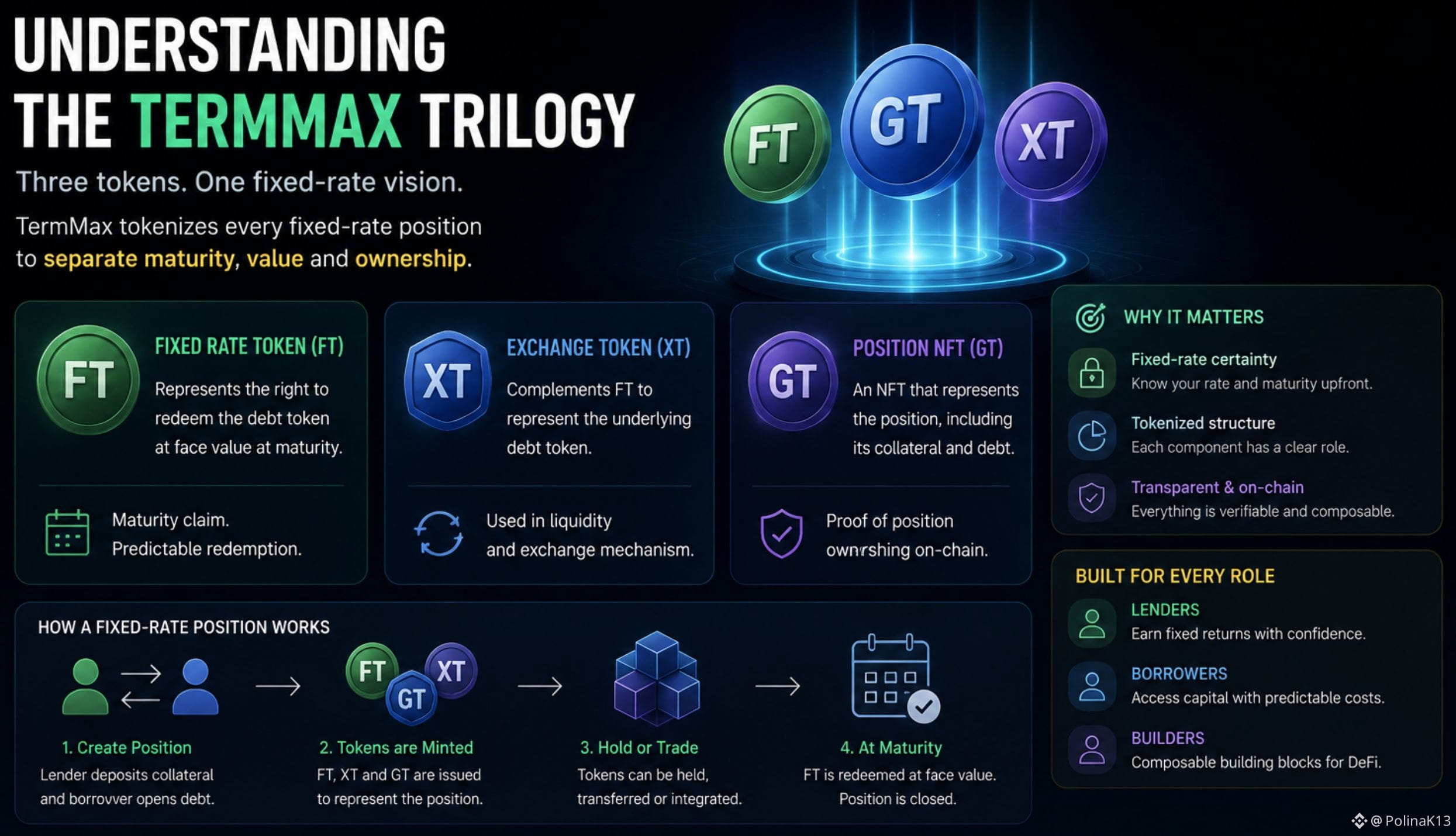
I wanted to understand what actually happens inside a TermMax fixed-rate position.
The architecture is built around three main tokens:
FT → represents the right to redeem the debt token at face value at maturity.
XT → complements FT to represent the underlying debt token and plays a role in the liquidity mechanism.
GT → an NFT representing the position, including its collateral and debt.
So TermMax isn’t simply saying “here is a fixed rate.”
It tokenizes different parts of the position and separates the maturity claim from the underlying economics.
For lenders, this creates a fixed-return position.
For borrowers, it creates financing with a defined maturity and rate structure.
That token architecture is probably one of the most interesting things to understand before judging TermMax as just another lending protocol.
#termmax @termmax
I wanted to understand what actually happens inside a TermMax fixed-rate position.
The architecture is built around three main tokens:
FT → represents the right to redeem the debt token at face value at maturity.
XT → complements FT to represent the underlying debt token and plays a role in the liquidity mechanism.
GT → an NFT representing the position, including its collateral and debt.
So TermMax isn’t simply saying “here is a fixed rate.”
It tokenizes different parts of the position and separates the maturity claim from the underlying economics.
For lenders, this creates a fixed-return position.
For borrowers, it creates financing with a defined maturity and rate structure.
That token architecture is probably one of the most interesting things to understand before judging TermMax as just another lending protocol.
#termmax @TermMax
The architecture is built around three main tokens:
FT → represents the right to redeem the debt token at face value at maturity.
XT → complements FT to represent the underlying debt token and plays a role in the liquidity mechanism.
GT → an NFT representing the position, including its collateral and debt.
So TermMax isn’t simply saying “here is a fixed rate.”
It tokenizes different parts of the position and separates the maturity claim from the underlying economics.
For lenders, this creates a fixed-return position.
For borrowers, it creates financing with a defined maturity and rate structure.
That token architecture is probably one of the most interesting things to understand before judging TermMax as just another lending protocol.
#termmax @TermMax
71
·
--
米国のUSDCが増えても、それがCircleの準備金収益(reserve income)を比例して増やすとは限りません。
CRCLBは、私の注目を引いたbStocksの一つです。理由はラベルが単純で分かりやすいから:
Circle=USDC。
つまり、USDCの流通量が増えるなら、最初はCircleの準備金収益もほぼ同じペースで増えるはずだと考えます。
しかし、最新の数字を見ると、その前提はあまりにも単純すぎるように見えました。
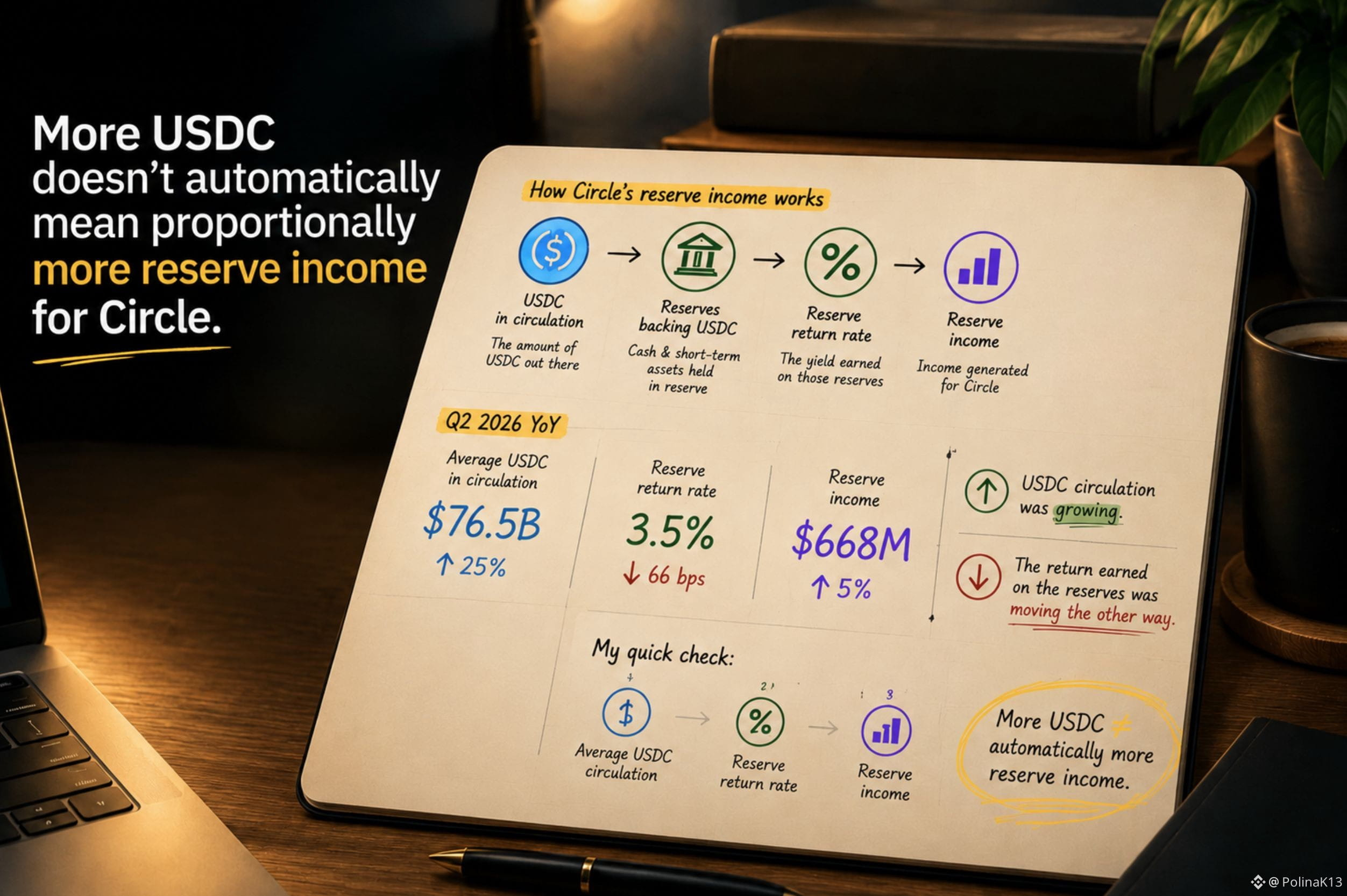
第2四半期では、流通しているUSDCの平均は約$76.5Bで、前年比+25%でした。
一方で、準備金収益は約$668Mで、前年比+5%にとどまっています。
なぜギャップがあるのでしょう?
準備金収益は、「流通しているUSDCの量」と、それを裏付ける準備金に対して得られる「利回り(return)」の両方に依存するからです。
そして、流通が伸びている一方で、準備金のリターン率は約3.5%まで低下し、前年比で66bps下がりました。
USDCの流通は伸びていました。しかし、準備金が生むリターンは逆方向に動いていました。
それによって、私はCRCLBの見方を変えました。
私は次のところで止まりたくありません:
「USDCの採用(adoption)は伸びている。」
代わりに問いとしてはこうです:
「その成長は、実際にCircleの経済性(economics)に何をしているのか?」
私の簡単な確認手順はこうです:
1. 流通USDCの平均
2. 準備金のリターン率
3. 準備金収益
なぜなら:
USDCが増えても、準備金収益が自動的に(=必ず)増えるとは限らないからです。
#bstockscis @BinanceCIS
米国のUSDCが増えても、それがCircleの準備金収益(reserve income)を比例して増やすとは限りません。
CRCLBは、私の注目を引いたbStocksの一つです。理由はラベルが単純で分かりやすいから:
Circle=USDC。
つまり、USDCの流通量が増えるなら、最初はCircleの準備金収益もほぼ同じペースで増えるはずだと考えます。
しかし、最新の数字を見ると、その前提はあまりにも単純すぎるように見えました。
第2四半期では、流通しているUSDCの平均は約$76.5Bで、前年比+25%でした。
一方で、準備金収益は約$668Mで、前年比+5%にとどまっています。
なぜギャップがあるのでしょう?
準備金収益は、「流通しているUSDCの量」と、それを裏付ける準備金に対して得られる「利回り(return)」の両方に依存するからです。
そして、流通が伸びている一方で、準備金のリターン率は約3.5%まで低下し、前年比で66bps下がりました。
USDCの流通は伸びていました。しかし、準備金が生むリターンは逆方向に動いていました。
それによって、私はCRCLBの見方を変えました。
私は次のところで止まりたくありません:
「USDCの採用(adoption)は伸びている。」
代わりに問いとしてはこうです:
「その成長は、実際にCircleの経済性(economics)に何をしているのか?」
私の簡単な確認手順はこうです:
1. 流通USDCの平均
2. 準備金のリターン率
3. 準備金収益
なぜなら:
USDCが増えても、準備金収益が自動的に(=必ず)増えるとは限らないからです。
#bstockscis @BinanceCIS
CRCLBは、私の注目を引いたbStocksの一つです。理由はラベルが単純で分かりやすいから:
Circle=USDC。
つまり、USDCの流通量が増えるなら、最初はCircleの準備金収益もほぼ同じペースで増えるはずだと考えます。
しかし、最新の数字を見ると、その前提はあまりにも単純すぎるように見えました。
第2四半期では、流通しているUSDCの平均は約$76.5Bで、前年比+25%でした。
一方で、準備金収益は約$668Mで、前年比+5%にとどまっています。
なぜギャップがあるのでしょう?
準備金収益は、「流通しているUSDCの量」と、それを裏付ける準備金に対して得られる「利回り(return)」の両方に依存するからです。
そして、流通が伸びている一方で、準備金のリターン率は約3.5%まで低下し、前年比で66bps下がりました。
USDCの流通は伸びていました。しかし、準備金が生むリターンは逆方向に動いていました。
それによって、私はCRCLBの見方を変えました。
私は次のところで止まりたくありません:
「USDCの採用(adoption)は伸びている。」
代わりに問いとしてはこうです:
「その成長は、実際にCircleの経済性(economics)に何をしているのか?」
私の簡単な確認手順はこうです:
1. 流通USDCの平均
2. 準備金のリターン率
3. 準備金収益
なぜなら:
USDCが増えても、準備金収益が自動的に(=必ず)増えるとは限らないからです。
#bstockscis @BinanceCIS
2
1
212
·
--
Intel Foundryの売上は$5.8B。だが、そのうち実際に外部需要はどれくらいなのだろうか?
INTCBは、Intelへのエクスポージャーを得るために使えるbStocksの1つだ。
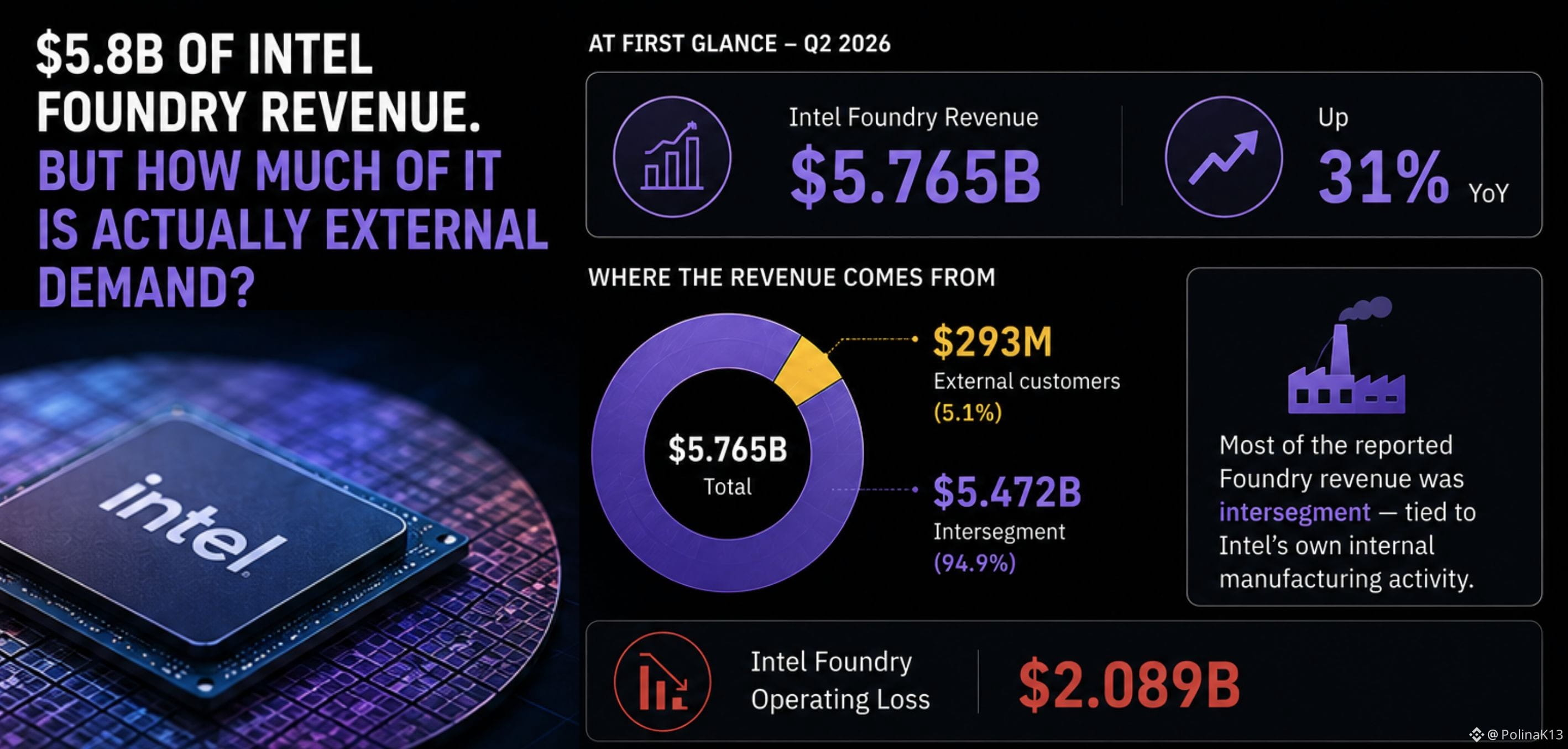
まずは見た目からすると、Intel Foundryの第2四半期の売上は大きなファウンドリ事業に見える。
$5.765Bで、前年同期比+31%。
しかし、その次に1層深掘りしてみた。
外部顧客からの取り分は、$293Mにすぎなかった。
報告されたFoundryの売上の大半はセグメント間—つまりIntel自身の社内製造活動に紐づくものだった。さらにIntelは、このセグメントで$2.089Bの営業損失も報告している。
それによって、私は見出しの数字の読み方を変えた。
ファウンドリ売上≠外部のファウンドリ需要。
外部の顧客ビジネスが小さくても、セグメント自体が大きく見えることはある。
だから私はINTCBを見るとき、ただ次のことを知りたいわけではない。
「Intel Foundryはどれくらいの規模なのか?」
私は、次のことを知りたい。
「その事業のうち、実際に外部の顧客が買っているのはどれくらいなのか?」
私にとって、それこそがファウンドリのストーリーを読むうえで、ずっと有益な方法だ。
#bstockscis @BinanceCIS
Intel Foundryの売上は$5.8B。だが、そのうち実際に外部需要はどれくらいなのだろうか?
INTCBは、Intelへのエクスポージャーを得るために使えるbStocksの1つだ。
まずは見た目からすると、Intel Foundryの第2四半期の売上は大きなファウンドリ事業に見える。
$5.765Bで、前年同期比+31%。
しかし、その次に1層深掘りしてみた。
外部顧客からの取り分は、$293Mにすぎなかった。
報告されたFoundryの売上の大半はセグメント間—つまりIntel自身の社内製造活動に紐づくものだった。さらにIntelは、このセグメントで$2.089Bの営業損失も報告している。
それによって、私は見出しの数字の読み方を変えた。
ファウンドリ売上≠外部のファウンドリ需要。
外部の顧客ビジネスが小さくても、セグメント自体が大きく見えることはある。
だから私はINTCBを見るとき、ただ次のことを知りたいわけではない。
「Intel Foundryはどれくらいの規模なのか?」
私は、次のことを知りたい。
「その事業のうち、実際に外部の顧客が買っているのはどれくらいなのか?」
私にとって、それこそがファウンドリのストーリーを読むうえで、ずっと有益な方法だ。
#bstockscis @BinanceCIS
INTCBは、Intelへのエクスポージャーを得るために使えるbStocksの1つだ。
まずは見た目からすると、Intel Foundryの第2四半期の売上は大きなファウンドリ事業に見える。
$5.765Bで、前年同期比+31%。
しかし、その次に1層深掘りしてみた。
外部顧客からの取り分は、$293Mにすぎなかった。
報告されたFoundryの売上の大半はセグメント間—つまりIntel自身の社内製造活動に紐づくものだった。さらにIntelは、このセグメントで$2.089Bの営業損失も報告している。
それによって、私は見出しの数字の読み方を変えた。
ファウンドリ売上≠外部のファウンドリ需要。
外部の顧客ビジネスが小さくても、セグメント自体が大きく見えることはある。
だから私はINTCBを見るとき、ただ次のことを知りたいわけではない。
「Intel Foundryはどれくらいの規模なのか?」
私は、次のことを知りたい。
「その事業のうち、実際に外部の顧客が買っているのはどれくらいなのか?」
私にとって、それこそがファウンドリのストーリーを読むうえで、ずっと有益な方法だ。
#bstockscis @BinanceCIS
4
2
91
·
--
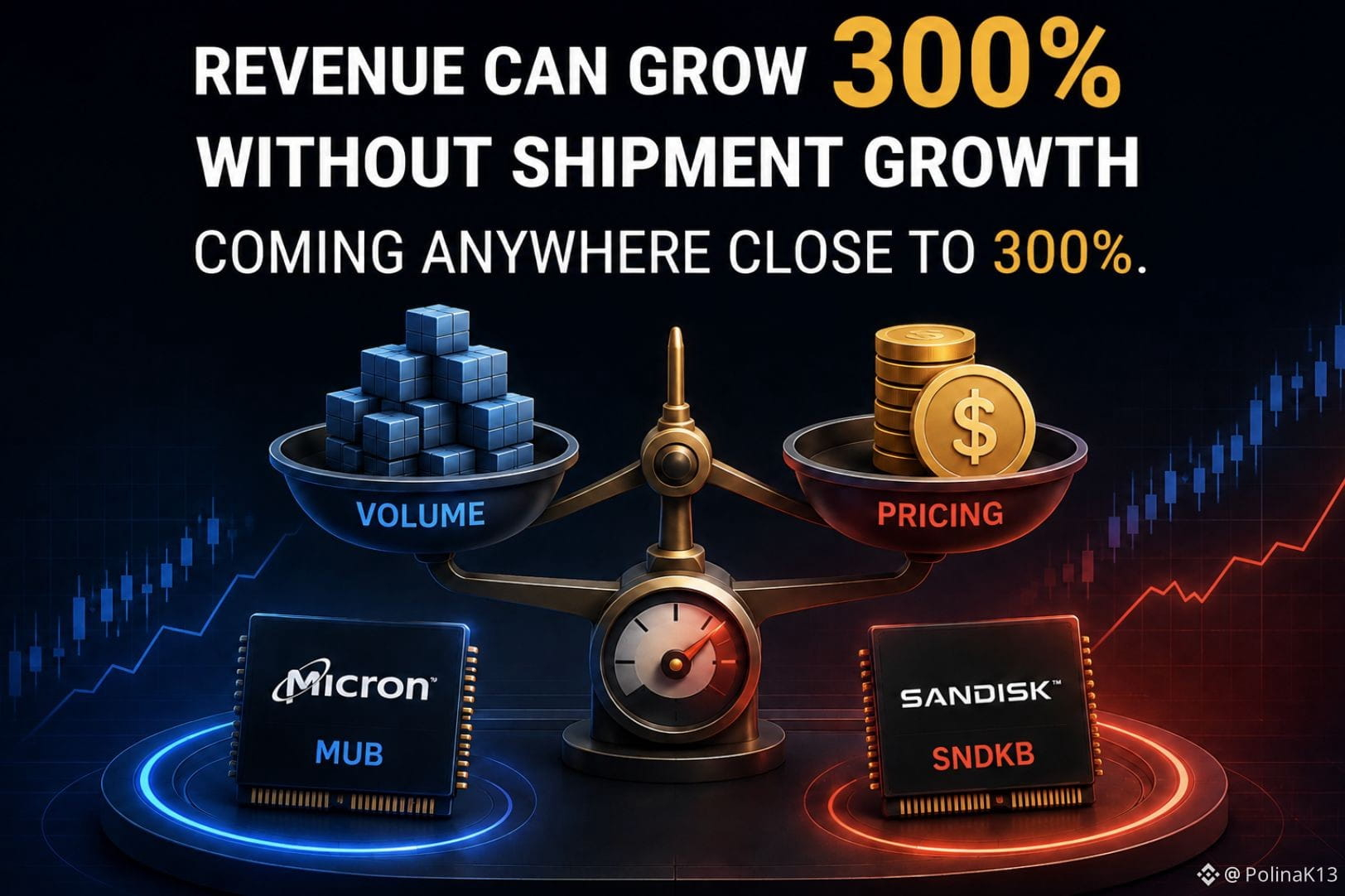
出荷がほぼ300%どころか増えていないのに、売上は300%+成長し得る。
MUBとSNDKBはいずれもbStocksとして提供されており、より広い半導体/メモリの領域の中に位置している。
だから一見すると、両者を同じ“半導体成長”の物語の中にまとめるのは簡単だ。
しかし、実際に数字を動かしているものを見てみよう。
Micronでは、DRAMの売上が2023年度Q3に$31.3Bに達し、前年比343%増、売上全体の76%を占めた。
それでも、DRAMビットの出荷は前年比で伸びが20%台前半にとどまった一方で、DRAMのASP(平均販売価格)は前年比で260%台前半の伸びだった。
つまり、DRAMの売上成長は単に“はるかに多くのビットを売った”ことだけが理由ではない。
SanDiskの直近四半期も、別の角度から同様の話を示している。
同社の2024年度Q4の売上は$8.97Bで、前四半期比51%増。内訳として、順次増加のうち約3分の1が販売数量の増加によるもので、残りの3分の2が価格の上昇によるものだった。
そこで、bStocksを見るときの「成長」の読み方を改めて考えることになった。
ティッカーは、私がどの企業へのエクスポージャーを得ているかを教えてくれる。
しかし見出しの“成長率”の数値は、そのエクスポージャーを何が押し上げているのかを自動的には教えてくれない。
同じような広いカテゴリに属する2つのbStocksでも、企業の財務結果を動かす要因はまったく違うことがある。
成長率を比較する前に、その成長の土台に何があるのかを問いかけよう。
#bstockscis @BinanceCIS
出荷がほぼ300%どころか増えていないのに、売上は300%+成長し得る。
MUBとSNDKBはいずれもbStocksとして提供されており、より広い半導体/メモリの領域の中に位置している。
だから一見すると、両者を同じ“半導体成長”の物語の中にまとめるのは簡単だ。
しかし、実際に数字を動かしているものを見てみよう。
Micronでは、DRAMの売上が2023年度Q3に$31.3Bに達し、前年比343%増、売上全体の76%を占めた。
それでも、DRAMビットの出荷は前年比で伸びが20%台前半にとどまった一方で、DRAMのASP(平均販売価格)は前年比で260%台前半の伸びだった。
つまり、DRAMの売上成長は単に“はるかに多くのビットを売った”ことだけが理由ではない。
SanDiskの直近四半期も、別の角度から同様の話を示している。
同社の2024年度Q4の売上は$8.97Bで、前四半期比51%増。内訳として、順次増加のうち約3分の1が販売数量の増加によるもので、残りの3分の2が価格の上昇によるものだった。
そこで、bStocksを見るときの「成長」の読み方を改めて考えることになった。
ティッカーは、私がどの企業へのエクスポージャーを得ているかを教えてくれる。
しかし見出しの“成長率”の数値は、そのエクスポージャーを何が押し上げているのかを自動的には教えてくれない。
同じような広いカテゴリに属する2つのbStocksでも、企業の財務結果を動かす要因はまったく違うことがある。
成長率を比較する前に、その成長の土台に何があるのかを問いかけよう。
#bstockscis @BinanceCIS
MUBとSNDKBはいずれもbStocksとして提供されており、より広い半導体/メモリの領域の中に位置している。
だから一見すると、両者を同じ“半導体成長”の物語の中にまとめるのは簡単だ。
しかし、実際に数字を動かしているものを見てみよう。
Micronでは、DRAMの売上が2023年度Q3に$31.3Bに達し、前年比343%増、売上全体の76%を占めた。
それでも、DRAMビットの出荷は前年比で伸びが20%台前半にとどまった一方で、DRAMのASP(平均販売価格)は前年比で260%台前半の伸びだった。
つまり、DRAMの売上成長は単に“はるかに多くのビットを売った”ことだけが理由ではない。
SanDiskの直近四半期も、別の角度から同様の話を示している。
同社の2024年度Q4の売上は$8.97Bで、前四半期比51%増。内訳として、順次増加のうち約3分の1が販売数量の増加によるもので、残りの3分の2が価格の上昇によるものだった。
そこで、bStocksを見るときの「成長」の読み方を改めて考えることになった。
ティッカーは、私がどの企業へのエクスポージャーを得ているかを教えてくれる。
しかし見出しの“成長率”の数値は、そのエクスポージャーを何が押し上げているのかを自動的には教えてくれない。
同じような広いカテゴリに属する2つのbStocksでも、企業の財務結果を動かす要因はまったく違うことがある。
成長率を比較する前に、その成長の土台に何があるのかを問いかけよう。
#bstockscis @BinanceCIS
2
1
130
·
--
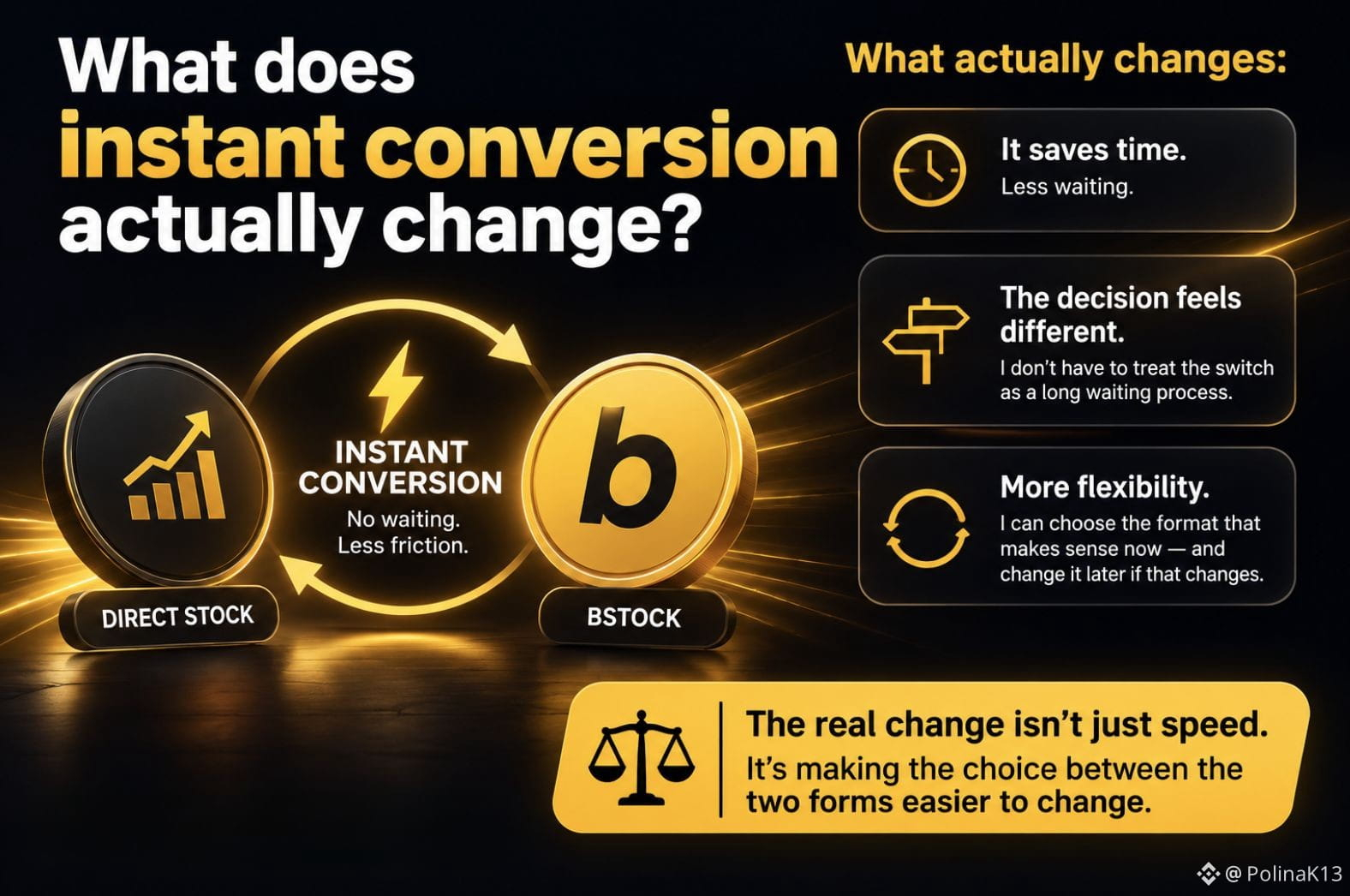
インスタント変換では実際に何が変わるのでしょうか?
対象となる株式をbStocksに即時に変換できると知ったとき、主なメリットは明らかだと思いました:
時間を節約できる。
しかし、考えれば考えるほど、それが物語の全てだとは思えなくなってきました。
通常の変換プロセスで待つ必要がないなら、直接株式とbStockの間を移動すること自体が、意思決定の感じ方を変えてくるように思えます。
切り替えを、長い待ち時間を伴う決断として扱わなくてよくなります。
いまやりたいことに合う形式を選び、状況が変われば後で変更できます。
そこで私は、「インスタント」という言葉を別の見方で捉えるようになりました。
変換がどれだけ速く行われるかだけの話ではありません。
意思決定を切り替えるときに、どれほどの摩擦があるかの問題です。
そこで疑問に思いました:
インスタント変換は単に時間を節約するだけなのでしょうか?それとも、2つの形態のエクスポージャーを切り替えることを、別種の意思決定に変えてくれるのでしょうか?
私にとっては、それがより興味深い部分です。
価値は、一方から他方へより速く移ることだけではありません。
その選択を、より変えやすくすることにあります。
#bstockscis @BinanceCIS
インスタント変換では実際に何が変わるのでしょうか?
対象となる株式をbStocksに即時に変換できると知ったとき、主なメリットは明らかだと思いました:
時間を節約できる。
しかし、考えれば考えるほど、それが物語の全てだとは思えなくなってきました。
通常の変換プロセスで待つ必要がないなら、直接株式とbStockの間を移動すること自体が、意思決定の感じ方を変えてくるように思えます。
切り替えを、長い待ち時間を伴う決断として扱わなくてよくなります。
いまやりたいことに合う形式を選び、状況が変われば後で変更できます。
そこで私は、「インスタント」という言葉を別の見方で捉えるようになりました。
変換がどれだけ速く行われるかだけの話ではありません。
意思決定を切り替えるときに、どれほどの摩擦があるかの問題です。
そこで疑問に思いました:
インスタント変換は単に時間を節約するだけなのでしょうか?それとも、2つの形態のエクスポージャーを切り替えることを、別種の意思決定に変えてくれるのでしょうか?
私にとっては、それがより興味深い部分です。
価値は、一方から他方へより速く移ることだけではありません。
その選択を、より変えやすくすることにあります。
#bstockscis @BinanceCIS
対象となる株式をbStocksに即時に変換できると知ったとき、主なメリットは明らかだと思いました:
時間を節約できる。
しかし、考えれば考えるほど、それが物語の全てだとは思えなくなってきました。
通常の変換プロセスで待つ必要がないなら、直接株式とbStockの間を移動すること自体が、意思決定の感じ方を変えてくるように思えます。
切り替えを、長い待ち時間を伴う決断として扱わなくてよくなります。
いまやりたいことに合う形式を選び、状況が変われば後で変更できます。
そこで私は、「インスタント」という言葉を別の見方で捉えるようになりました。
変換がどれだけ速く行われるかだけの話ではありません。
意思決定を切り替えるときに、どれほどの摩擦があるかの問題です。
そこで疑問に思いました:
インスタント変換は単に時間を節約するだけなのでしょうか?それとも、2つの形態のエクスポージャーを切り替えることを、別種の意思決定に変えてくれるのでしょうか?
私にとっては、それがより興味深い部分です。
価値は、一方から他方へより速く移ることだけではありません。
その選択を、より変えやすくすることにあります。
#bstockscis @BinanceCIS
85
·
--
翻訳参照
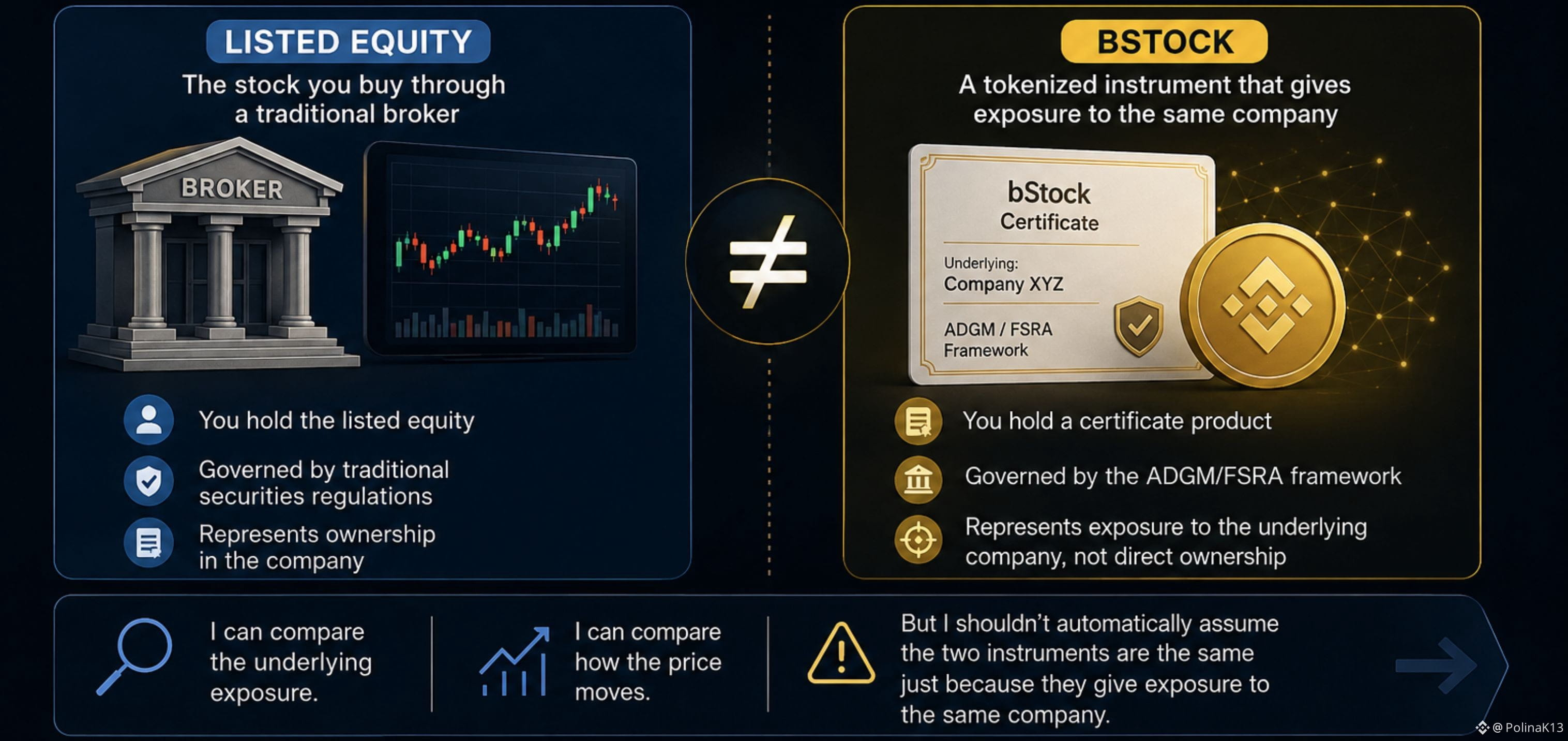
If a bStock tracks a listed stock, is it the same financial product?
When I first looked at bStocks, I naturally made a simple connection.
If a bStock gives me exposure to a listed company, I assumed the product itself should be pretty similar to the stock I would buy through a traditional broker.
But that's where I realized I was mixing two different things.
A bStock can give me exposure to the same underlying company without being the listed equity itself.
It is a certificate product under the ADGM/FSRA framework, rather than the listed equity.
And that distinction matters.
Two products can give me exposure to the same company without being the same financial product.
That made me change the question I ask when looking at a bStock.
Not only:
“Which company am I getting exposure to?”
But also:
“What kind of financial product am I actually holding?”
I can compare the underlying exposure.
I can compare how the price moves.
But I shouldn't automatically assume that the two instruments are the same just because they give me exposure to the same company.
For me, that's one of the important distinctions to understand with tokenized assets.
Same underlying company doesn't necessarily mean the same financial product.
#bstockscis @BinanceCIS
If a bStock tracks a listed stock, is it the same financial product?
When I first looked at bStocks, I naturally made a simple connection.
If a bStock gives me exposure to a listed company, I assumed the product itself should be pretty similar to the stock I would buy through a traditional broker.
But that's where I realized I was mixing two different things.
A bStock can give me exposure to the same underlying company without being the listed equity itself.
It is a certificate product under the ADGM/FSRA framework, rather than the listed equity.
And that distinction matters.
Two products can give me exposure to the same company without being the same financial product.
That made me change the question I ask when looking at a bStock.
Not only:
“Which company am I getting exposure to?”
But also:
“What kind of financial product am I actually holding?”
I can compare the underlying exposure.
I can compare how the price moves.
But I shouldn't automatically assume that the two instruments are the same just because they give me exposure to the same company.
For me, that's one of the important distinctions to understand with tokenized assets.
Same underlying company doesn't necessarily mean the same financial product.
#bstockscis @BinanceCIS
When I first looked at bStocks, I naturally made a simple connection.
If a bStock gives me exposure to a listed company, I assumed the product itself should be pretty similar to the stock I would buy through a traditional broker.
But that's where I realized I was mixing two different things.
A bStock can give me exposure to the same underlying company without being the listed equity itself.
It is a certificate product under the ADGM/FSRA framework, rather than the listed equity.
And that distinction matters.
Two products can give me exposure to the same company without being the same financial product.
That made me change the question I ask when looking at a bStock.
Not only:
“Which company am I getting exposure to?”
But also:
“What kind of financial product am I actually holding?”
I can compare the underlying exposure.
I can compare how the price moves.
But I shouldn't automatically assume that the two instruments are the same just because they give me exposure to the same company.
For me, that's one of the important distinctions to understand with tokenized assets.
Same underlying company doesn't necessarily mean the same financial product.
#bstockscis @BinanceCIS
73
·
--
翻訳参照
Why can the same bStock have completely different starting points?
When I first looked at bStocks, I mostly thought about the token itself.
Then I started thinking about the person holding it.
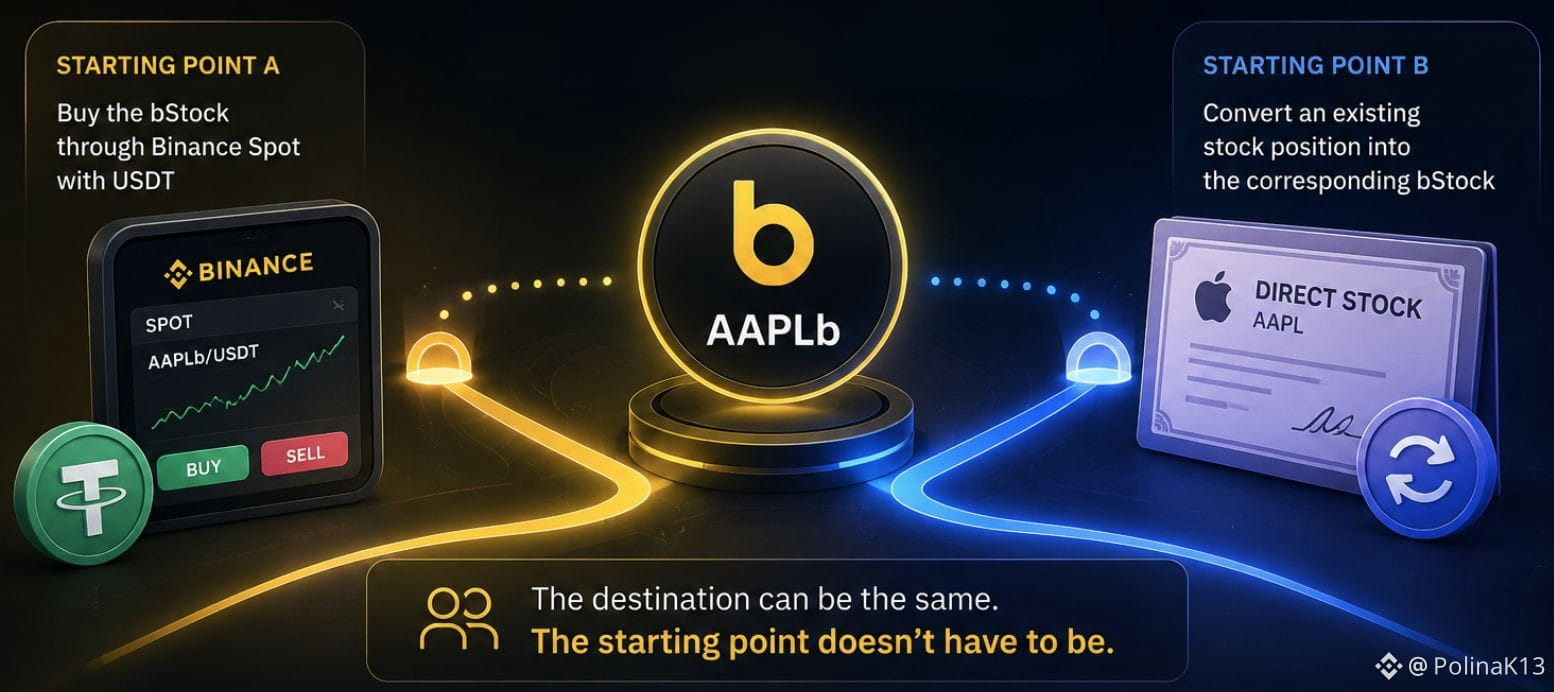
Two people can end up with the same bStock while coming from completely different places.
One might already hold USDT and buy the bStock through Binance Spot.
Someone else might already have exposure to the underlying stock and enter the same bStock through the conversion route.
Same token.
Different starting point.
And I think that's more interesting than it first sounds.
Tokenization doesn't necessarily have to be a completely new path for someone entering the market.
It can also become another format for someone who already has exposure to the underlying asset.
That's why I started looking at bStocks less as a single way to access stocks and more as a bridge between different starting points.
The question isn't only:
“How do I get this bStock?”
It's:
“Where am I starting from before I get there?”
For me, that's one of the more interesting things about tokenized assets.
The destination can be the same.
The starting point doesn't have to be.
#bstockscis @BinanceCIS
Why can the same bStock have completely different starting points?
When I first looked at bStocks, I mostly thought about the token itself.
Then I started thinking about the person holding it.
Two people can end up with the same bStock while coming from completely different places.
One might already hold USDT and buy the bStock through Binance Spot.
Someone else might already have exposure to the underlying stock and enter the same bStock through the conversion route.
Same token.
Different starting point.
And I think that's more interesting than it first sounds.
Tokenization doesn't necessarily have to be a completely new path for someone entering the market.
It can also become another format for someone who already has exposure to the underlying asset.
That's why I started looking at bStocks less as a single way to access stocks and more as a bridge between different starting points.
The question isn't only:
“How do I get this bStock?”
It's:
“Where am I starting from before I get there?”
For me, that's one of the more interesting things about tokenized assets.
The destination can be the same.
The starting point doesn't have to be.
#bstockscis @BinanceCIS
When I first looked at bStocks, I mostly thought about the token itself.
Then I started thinking about the person holding it.
Two people can end up with the same bStock while coming from completely different places.
One might already hold USDT and buy the bStock through Binance Spot.
Someone else might already have exposure to the underlying stock and enter the same bStock through the conversion route.
Same token.
Different starting point.
And I think that's more interesting than it first sounds.
Tokenization doesn't necessarily have to be a completely new path for someone entering the market.
It can also become another format for someone who already has exposure to the underlying asset.
That's why I started looking at bStocks less as a single way to access stocks and more as a bridge between different starting points.
The question isn't only:
“How do I get this bStock?”
It's:
“Where am I starting from before I get there?”
For me, that's one of the more interesting things about tokenized assets.
The destination can be the same.
The starting point doesn't have to be.
#bstockscis @BinanceCIS
3
1
95
·
--
翻訳参照
What changes when the asset behind a bStock isn't a company?
I realized I had been looking at bStocks with one assumption:
there's a company behind every token.
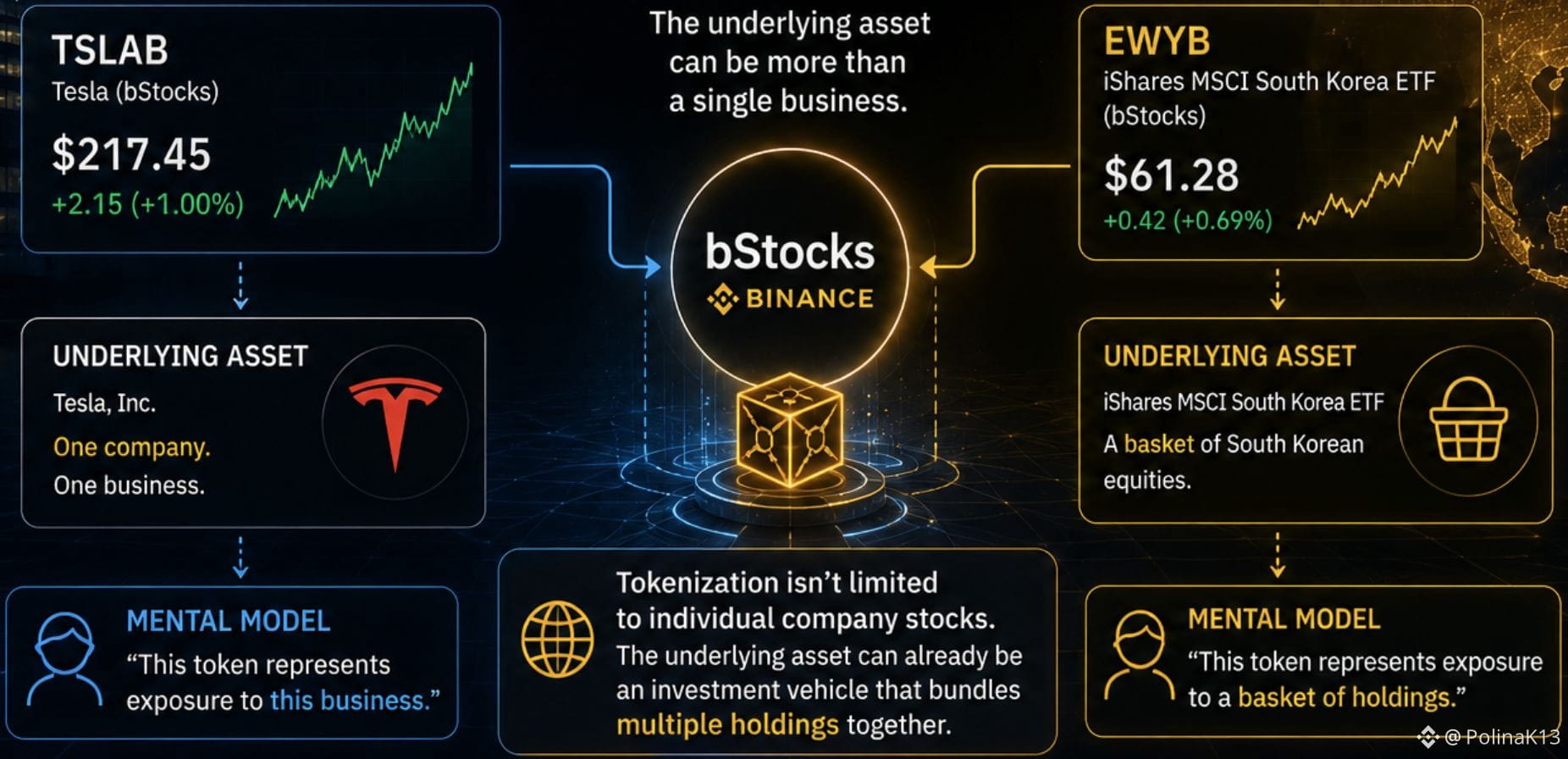
Then I came across EWYB.
EWYB gives tokenized exposure to the iShares MSCI South Korea ETF.
And that made me look at bStocks a little differently.
An ETF isn't a single company.
It's already a packaged investment exposure to a basket of South Korean equities.
So what exactly happens when you tokenize something that is already a basket?
With a company stock, the mental model is simple:
“This token represents exposure to this business.”
But with EWYB, there isn't one business behind the asset.
The underlying exposure is already spread across multiple holdings.
That's what I find interesting here.
It suggests that tokenization isn't limited to individual company stocks.
The underlying asset can already be an investment vehicle that bundles multiple holdings together.
So now, when I see a new bStock, I'm asking a slightly different question.
Not just:
“Which company is behind this token?”
But:
“What exactly is the underlying asset?”
Because sometimes the answer isn't a company.
Sometimes it's an ETF.
And that makes the bStocks universe a little more interesting than I initially thought.
#bstockscis @BinanceCIS
What changes when the asset behind a bStock isn't a company?
I realized I had been looking at bStocks with one assumption:
there's a company behind every token.
Then I came across EWYB.
EWYB gives tokenized exposure to the iShares MSCI South Korea ETF.
And that made me look at bStocks a little differently.
An ETF isn't a single company.
It's already a packaged investment exposure to a basket of South Korean equities.
So what exactly happens when you tokenize something that is already a basket?
With a company stock, the mental model is simple:
“This token represents exposure to this business.”
But with EWYB, there isn't one business behind the asset.
The underlying exposure is already spread across multiple holdings.
That's what I find interesting here.
It suggests that tokenization isn't limited to individual company stocks.
The underlying asset can already be an investment vehicle that bundles multiple holdings together.
So now, when I see a new bStock, I'm asking a slightly different question.
Not just:
“Which company is behind this token?”
But:
“What exactly is the underlying asset?”
Because sometimes the answer isn't a company.
Sometimes it's an ETF.
And that makes the bStocks universe a little more interesting than I initially thought.
#bstockscis @BinanceCIS
I realized I had been looking at bStocks with one assumption:
there's a company behind every token.
Then I came across EWYB.
EWYB gives tokenized exposure to the iShares MSCI South Korea ETF.
And that made me look at bStocks a little differently.
An ETF isn't a single company.
It's already a packaged investment exposure to a basket of South Korean equities.
So what exactly happens when you tokenize something that is already a basket?
With a company stock, the mental model is simple:
“This token represents exposure to this business.”
But with EWYB, there isn't one business behind the asset.
The underlying exposure is already spread across multiple holdings.
That's what I find interesting here.
It suggests that tokenization isn't limited to individual company stocks.
The underlying asset can already be an investment vehicle that bundles multiple holdings together.
So now, when I see a new bStock, I'm asking a slightly different question.
Not just:
“Which company is behind this token?”
But:
“What exactly is the underlying asset?”
Because sometimes the answer isn't a company.
Sometimes it's an ETF.
And that makes the bStocks universe a little more interesting than I initially thought.
#bstockscis @BinanceCIS
79
·
--
株式がDeFiと連携できるなら、トークン化によってその資産の役割は変わりますか?
以前は、トークン化された株式とは主に株を売買するための別の方法だと考えていました。
しかし、その株式がトークンとして存在するようになったら、何が変わるのか考え始めました。
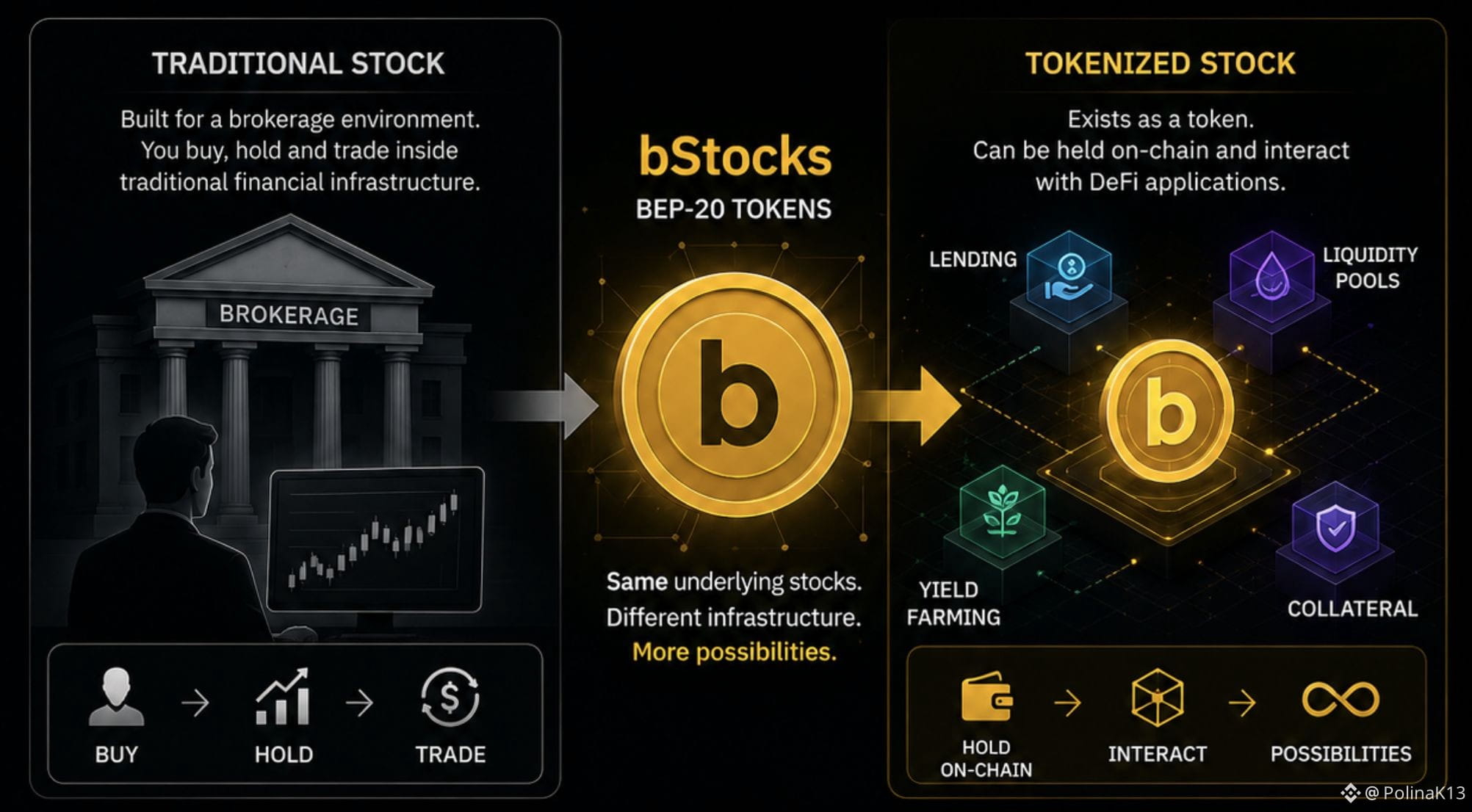
b株式はBEP-20トークンであり、公式資料では、対応するDeFiアプリケーションで利用できると記載されています。
そこで私はこう問いかけました。
トークン化で変わるのは、資産へのアクセス方法だけなのか、それとも、それを使ってできることも変わるのか?
従来の株式は、証券会社(ブローカレッジ)の環境を前提に構築されています。
それを購入し、保有し、その金融インフラを通じて売買する——という形です。
一方、トークンは別の環境に存在し得ます。
オンチェーンで保有でき、対応していれば、他のブロックチェーンベースのアプリケーションと連携できます。
そして、この点は重要な違いだと思います。
トークン化の面白さは、必ずしも「株式がより取引しやすくなる」ことにあるわけではありません。
むしろ、その資産が別の種類のインフラを使い始めることです。
だから、次のように問いかけるだけではなく:
「どうやってこの株を買うのか?」
私は次のようにも問いかけます。
「この資産は、トークンとして存在したら、何と連携できるのか?」
私にとってトークン化が、単に株をブロックチェーン上に載せるだけよりも面白くなるのは、まさにそこです。
資産のフォーマットが変わることで、その周りの可能性も変わります。
#bstockscis @BinanceCIS
株式がDeFiと連携できるなら、トークン化によってその資産の役割は変わりますか?
以前は、トークン化された株式とは主に株を売買するための別の方法だと考えていました。
しかし、その株式がトークンとして存在するようになったら、何が変わるのか考え始めました。
b株式はBEP-20トークンであり、公式資料では、対応するDeFiアプリケーションで利用できると記載されています。
そこで私はこう問いかけました。
トークン化で変わるのは、資産へのアクセス方法だけなのか、それとも、それを使ってできることも変わるのか?
従来の株式は、証券会社(ブローカレッジ)の環境を前提に構築されています。
それを購入し、保有し、その金融インフラを通じて売買する——という形です。
一方、トークンは別の環境に存在し得ます。
オンチェーンで保有でき、対応していれば、他のブロックチェーンベースのアプリケーションと連携できます。
そして、この点は重要な違いだと思います。
トークン化の面白さは、必ずしも「株式がより取引しやすくなる」ことにあるわけではありません。
むしろ、その資産が別の種類のインフラを使い始めることです。
だから、次のように問いかけるだけではなく:
「どうやってこの株を買うのか?」
私は次のようにも問いかけます。
「この資産は、トークンとして存在したら、何と連携できるのか?」
私にとってトークン化が、単に株をブロックチェーン上に載せるだけよりも面白くなるのは、まさにそこです。
資産のフォーマットが変わることで、その周りの可能性も変わります。
#bstockscis @BinanceCIS
以前は、トークン化された株式とは主に株を売買するための別の方法だと考えていました。
しかし、その株式がトークンとして存在するようになったら、何が変わるのか考え始めました。
b株式はBEP-20トークンであり、公式資料では、対応するDeFiアプリケーションで利用できると記載されています。
そこで私はこう問いかけました。
トークン化で変わるのは、資産へのアクセス方法だけなのか、それとも、それを使ってできることも変わるのか?
従来の株式は、証券会社(ブローカレッジ)の環境を前提に構築されています。
それを購入し、保有し、その金融インフラを通じて売買する——という形です。
一方、トークンは別の環境に存在し得ます。
オンチェーンで保有でき、対応していれば、他のブロックチェーンベースのアプリケーションと連携できます。
そして、この点は重要な違いだと思います。
トークン化の面白さは、必ずしも「株式がより取引しやすくなる」ことにあるわけではありません。
むしろ、その資産が別の種類のインフラを使い始めることです。
だから、次のように問いかけるだけではなく:
「どうやってこの株を買うのか?」
私は次のようにも問いかけます。
「この資産は、トークンとして存在したら、何と連携できるのか?」
私にとってトークン化が、単に株をブロックチェーン上に載せるだけよりも面白くなるのは、まさにそこです。
資産のフォーマットが変わることで、その周りの可能性も変わります。
#bstockscis @BinanceCIS
91
·
--
以前は、定期購入は主に利便性のためだと思っていました。スケジュールを決めて、金額を選び、買うタイミングのことを心配しなくて済むようにする。ですが仕組みを見てみると、解決しているのは少し別の問題だと気づきました。
定期購入は、相場のタイミングを消し去るわけではありません。変わるのは、あなたが下す意思決定です。「今日は買うのに正しい日なのか?」ではなく、「次に何が起きても、継続して投資するなら私はいくらまでなら投資できるのか?」を決めることになります。
この違いは、私が最初に思っていた以上に重要です。価格が上昇しているときは、定期プランだと毎回の購入が前回より高くなる可能性があり、不快に感じることがあります。逆に価格が下落しているときは、同じプランなら固定された金額でより多くの資産を買えるようになります。
つまり、真のメリットは、定期購入がどこかでより良いエントリー価格を見つけてくれるということではありません。毎回、新たにタイミングを判断する必要をなくすことです。
bStocksの場合、特に面白いと思います。なぜなら、分割所有(フラクショナル)によって、基礎となる株が高価でも、このアプローチを適用しやすくなるからです。満額の1株を買えるまで待つ必要はありません。時間をかけて少額ずつ積み上げていけます。
私にとっては、問いが「いつ買うべきか?」から「私は実際にどんな投資ルールなら無理なく続けられるのか?」へと変わります。
あなたは、相場のタイミングを取らないために定期購入を使いますか?それとも、エントリーのたびに自分で選ぶほうがまだ好みですか?
#bstockscis @BinanceCIS
以前は、定期購入は主に利便性のためだと思っていました。スケジュールを決めて、金額を選び、買うタイミングのことを心配しなくて済むようにする。ですが仕組みを見てみると、解決しているのは少し別の問題だと気づきました。
定期購入は、相場のタイミングを消し去るわけではありません。変わるのは、あなたが下す意思決定です。「今日は買うのに正しい日なのか?」ではなく、「次に何が起きても、継続して投資するなら私はいくらまでなら投資できるのか?」を決めることになります。
この違いは、私が最初に思っていた以上に重要です。価格が上昇しているときは、定期プランだと毎回の購入が前回より高くなる可能性があり、不快に感じることがあります。逆に価格が下落しているときは、同じプランなら固定された金額でより多くの資産を買えるようになります。
つまり、真のメリットは、定期購入がどこかでより良いエントリー価格を見つけてくれるということではありません。毎回、新たにタイミングを判断する必要をなくすことです。
bStocksの場合、特に面白いと思います。なぜなら、分割所有(フラクショナル)によって、基礎となる株が高価でも、このアプローチを適用しやすくなるからです。満額の1株を買えるまで待つ必要はありません。時間をかけて少額ずつ積み上げていけます。
私にとっては、問いが「いつ買うべきか?」から「私は実際にどんな投資ルールなら無理なく続けられるのか?」へと変わります。
あなたは、相場のタイミングを取らないために定期購入を使いますか?それとも、エントリーのたびに自分で選ぶほうがまだ好みですか?
#bstockscis @BinanceCIS
定期購入は、相場のタイミングを消し去るわけではありません。変わるのは、あなたが下す意思決定です。「今日は買うのに正しい日なのか?」ではなく、「次に何が起きても、継続して投資するなら私はいくらまでなら投資できるのか?」を決めることになります。
この違いは、私が最初に思っていた以上に重要です。価格が上昇しているときは、定期プランだと毎回の購入が前回より高くなる可能性があり、不快に感じることがあります。逆に価格が下落しているときは、同じプランなら固定された金額でより多くの資産を買えるようになります。
つまり、真のメリットは、定期購入がどこかでより良いエントリー価格を見つけてくれるということではありません。毎回、新たにタイミングを判断する必要をなくすことです。
bStocksの場合、特に面白いと思います。なぜなら、分割所有(フラクショナル)によって、基礎となる株が高価でも、このアプローチを適用しやすくなるからです。満額の1株を買えるまで待つ必要はありません。時間をかけて少額ずつ積み上げていけます。
私にとっては、問いが「いつ買うべきか?」から「私は実際にどんな投資ルールなら無理なく続けられるのか?」へと変わります。
あなたは、相場のタイミングを取らないために定期購入を使いますか?それとも、エントリーのたびに自分で選ぶほうがまだ好みですか?
#bstockscis @BinanceCIS

111
·
--
翻訳参照
I think the biggest mistake I made when learning about bStocks was expecting them to answer the wrong questions.
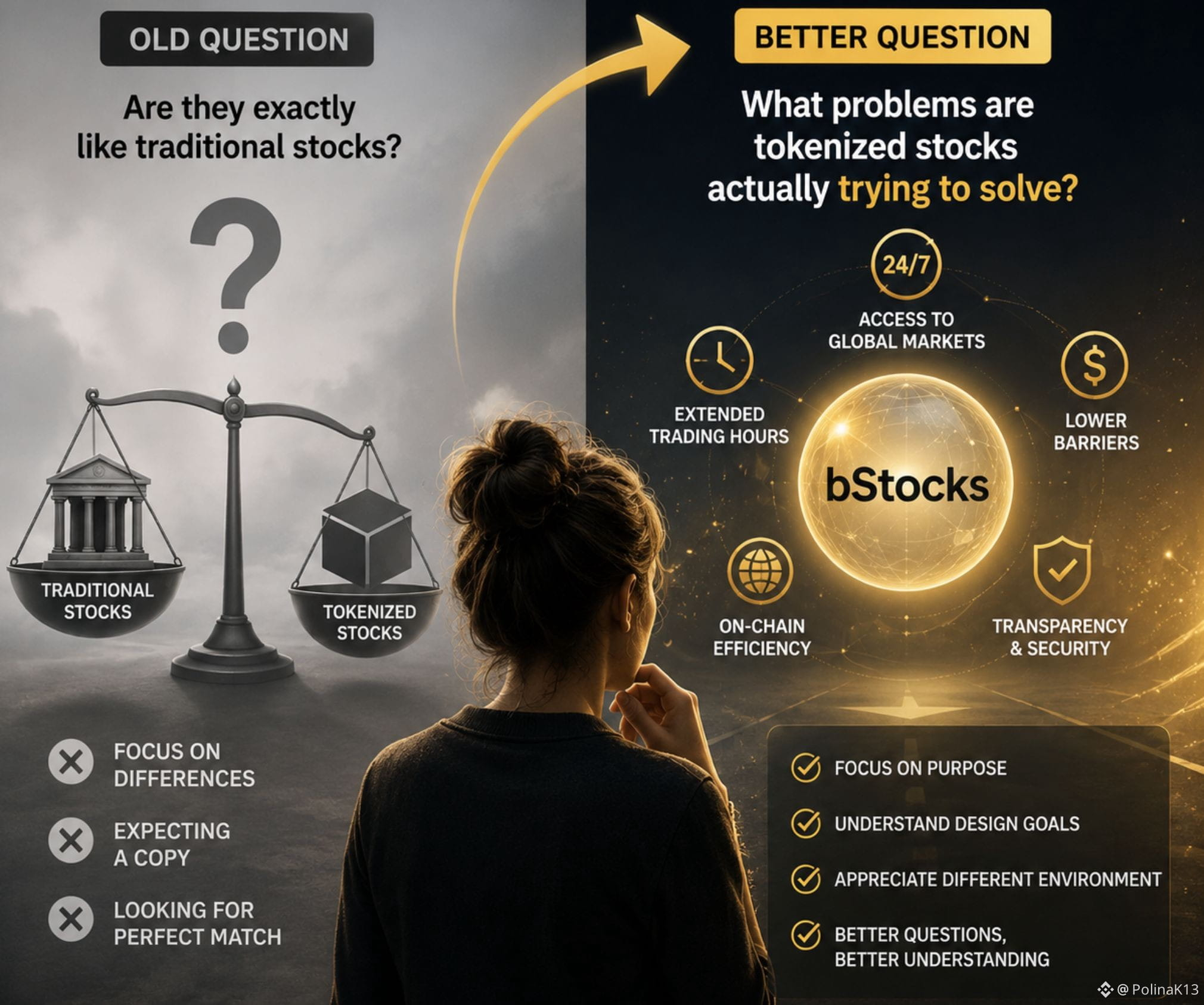
At first, I kept asking:
Are they exactly like traditional stocks?
The more I learned, the more I realized that wasn't the right comparison.
A better question was:
What problems are tokenized stocks actually trying to solve?
That completely changed how I looked at the product.
Instead of focusing on every difference, I started paying attention to the purpose behind those differences.
Some features exist because tokenized assets operate in a different environment.
Some limitations exist for the same reason.
Once I stopped expecting bStocks to be a perfect copy of traditional stocks, the product became much easier to understand.
Now, whenever I explore a new financial product, I try to understand its design goals before comparing it to something else.
Ironically, asking better questions taught me more than looking for better answers.
Did learning about bStocks change the questions you ask when evaluating a financial product?
#bstockscis @BinanceCIS
I think the biggest mistake I made when learning about bStocks was expecting them to answer the wrong questions.
At first, I kept asking:
Are they exactly like traditional stocks?
The more I learned, the more I realized that wasn't the right comparison.
A better question was:
What problems are tokenized stocks actually trying to solve?
That completely changed how I looked at the product.
Instead of focusing on every difference, I started paying attention to the purpose behind those differences.
Some features exist because tokenized assets operate in a different environment.
Some limitations exist for the same reason.
Once I stopped expecting bStocks to be a perfect copy of traditional stocks, the product became much easier to understand.
Now, whenever I explore a new financial product, I try to understand its design goals before comparing it to something else.
Ironically, asking better questions taught me more than looking for better answers.
Did learning about bStocks change the questions you ask when evaluating a financial product?
#bstockscis @BinanceCIS
At first, I kept asking:
Are they exactly like traditional stocks?
The more I learned, the more I realized that wasn't the right comparison.
A better question was:
What problems are tokenized stocks actually trying to solve?
That completely changed how I looked at the product.
Instead of focusing on every difference, I started paying attention to the purpose behind those differences.
Some features exist because tokenized assets operate in a different environment.
Some limitations exist for the same reason.
Once I stopped expecting bStocks to be a perfect copy of traditional stocks, the product became much easier to understand.
Now, whenever I explore a new financial product, I try to understand its design goals before comparing it to something else.
Ironically, asking better questions taught me more than looking for better answers.
Did learning about bStocks change the questions you ask when evaluating a financial product?
#bstockscis @BinanceCIS
2
2
79
·
--
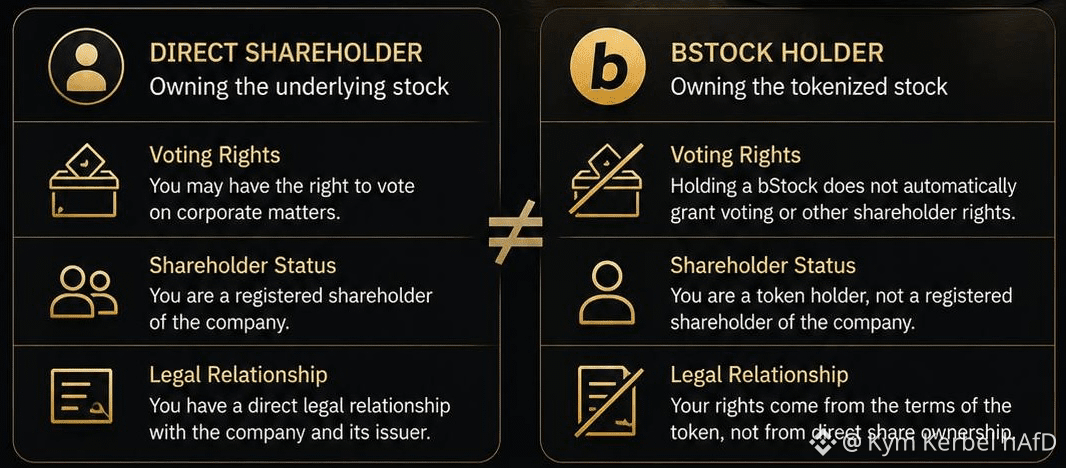
bStocks の中で「stock」という言葉を見たとき、ひとつ非常に簡単な誤解が生まれ得ると思います。つまり、bStock を保有しているからといって、それだけで基礎となる会社の直接の株主になれるわけではない、という点です。
トークン化された有価証券がどのように構成されているか調べた後、この区別の重要性が以前よりずっと大きく感じられるようになりました。
bStock は、基礎となる証券に連動した経済的エクスポージャーを提供するよう設計されています。しかし、トークンを保有していることは、あなたの名義で基礎となる株式が直接登録されていることと同じ法的な関係ではありません。
その実務上の結果のひとつが、議決権です。
伝統的な株式では、特定の会社事項に関して投票するなどの株主としての権利が付随している場合があります。対応する bStock を保有していても、その同じ直接的な株主権がトークン保有者に移転するとは限りません。
最初は、それは私にとって小さな法的な論点に聞こえました。
ですが今では、それは理解しておくべき最初のポイントのひとつだと思っています。
なぜなら、価格へのエクスポージャーと、株主としての地位は、まったく別の質問に答えるものだからです。
「私はどのような経済的資産にエクスポージャーを持っているのか?」
そして
「私は実際にどのような法的権利を保有しているのか?」
トークン化は、前者を結び付けられても、後者を自動的に同じ形で再現するとは限りません。
この区別は、ティッカーだけでは到底分からない以上に、私が実際に何を保有しているのかを教えてくれます。
トークン化された株式を評価するとき、そこに付随する権利を見ますか?それとも主に価格へのエクスポージャーを見ますか?
@BinanceCIS #bStocksCIS
bStocks の中で「stock」という言葉を見たとき、ひとつ非常に簡単な誤解が生まれ得ると思います。つまり、bStock を保有しているからといって、それだけで基礎となる会社の直接の株主になれるわけではない、という点です。
トークン化された有価証券がどのように構成されているか調べた後、この区別の重要性が以前よりずっと大きく感じられるようになりました。
bStock は、基礎となる証券に連動した経済的エクスポージャーを提供するよう設計されています。しかし、トークンを保有していることは、あなたの名義で基礎となる株式が直接登録されていることと同じ法的な関係ではありません。
その実務上の結果のひとつが、議決権です。
伝統的な株式では、特定の会社事項に関して投票するなどの株主としての権利が付随している場合があります。対応する bStock を保有していても、その同じ直接的な株主権がトークン保有者に移転するとは限りません。
最初は、それは私にとって小さな法的な論点に聞こえました。
ですが今では、それは理解しておくべき最初のポイントのひとつだと思っています。
なぜなら、価格へのエクスポージャーと、株主としての地位は、まったく別の質問に答えるものだからです。
「私はどのような経済的資産にエクスポージャーを持っているのか?」
そして
「私は実際にどのような法的権利を保有しているのか?」
トークン化は、前者を結び付けられても、後者を自動的に同じ形で再現するとは限りません。
この区別は、ティッカーだけでは到底分からない以上に、私が実際に何を保有しているのかを教えてくれます。
トークン化された株式を評価するとき、そこに付随する権利を見ますか?それとも主に価格へのエクスポージャーを見ますか?
@BinanceCIS #bStocksCIS
トークン化された有価証券がどのように構成されているか調べた後、この区別の重要性が以前よりずっと大きく感じられるようになりました。
bStock は、基礎となる証券に連動した経済的エクスポージャーを提供するよう設計されています。しかし、トークンを保有していることは、あなたの名義で基礎となる株式が直接登録されていることと同じ法的な関係ではありません。
その実務上の結果のひとつが、議決権です。
伝統的な株式では、特定の会社事項に関して投票するなどの株主としての権利が付随している場合があります。対応する bStock を保有していても、その同じ直接的な株主権がトークン保有者に移転するとは限りません。
最初は、それは私にとって小さな法的な論点に聞こえました。
ですが今では、それは理解しておくべき最初のポイントのひとつだと思っています。
なぜなら、価格へのエクスポージャーと、株主としての地位は、まったく別の質問に答えるものだからです。
「私はどのような経済的資産にエクスポージャーを持っているのか?」
そして
「私は実際にどのような法的権利を保有しているのか?」
トークン化は、前者を結び付けられても、後者を自動的に同じ形で再現するとは限りません。
この区別は、ティッカーだけでは到底分からない以上に、私が実際に何を保有しているのかを教えてくれます。
トークン化された株式を評価するとき、そこに付随する権利を見ますか?それとも主に価格へのエクスポージャーを見ますか?
@BinanceCIS #bStocksCIS
118
·
--
金融商品について学べば学ぶほど、最初の印象への信頼が薄れていきます。
あるパターンに気づきました。
何かが聞き覚えのあるものだと、それをもう理解していると思ってしまうのです。
技術的に聞こえると、複雑すぎると思ってしまうのです。
bStocksについて読んで、どちらの思い込みも間違っている可能性があると気づきました。
ほとんどの誤解は、複雑な商品から生まれるのではなく、詳細を読む前に下してしまうシンプルな結論から生まれるのだと分かりました。
それが、最近の私にとって一番大きな学びだったのかもしれません。
それ以来、新しいものを見つけるたびに、最初の意見を最初の問いで置き換えるようにしています。
それによって、学び方がまったく変わります。
最後に「理解できた」と思った金融トピックは何ですか――少し深掘りするまで?
$SPCXB
{spot}(SPCXBUSDT)
@BinanceCIS #bStocksCIS
金融商品について学べば学ぶほど、最初の印象への信頼が薄れていきます。
あるパターンに気づきました。
何かが聞き覚えのあるものだと、それをもう理解していると思ってしまうのです。
技術的に聞こえると、複雑すぎると思ってしまうのです。
bStocksについて読んで、どちらの思い込みも間違っている可能性があると気づきました。
ほとんどの誤解は、複雑な商品から生まれるのではなく、詳細を読む前に下してしまうシンプルな結論から生まれるのだと分かりました。
それが、最近の私にとって一番大きな学びだったのかもしれません。
それ以来、新しいものを見つけるたびに、最初の意見を最初の問いで置き換えるようにしています。
それによって、学び方がまったく変わります。
最後に「理解できた」と思った金融トピックは何ですか――少し深掘りするまで?
$SPCXB
@BinanceCIS #bStocksCIS
あるパターンに気づきました。
何かが聞き覚えのあるものだと、それをもう理解していると思ってしまうのです。
技術的に聞こえると、複雑すぎると思ってしまうのです。
bStocksについて読んで、どちらの思い込みも間違っている可能性があると気づきました。
ほとんどの誤解は、複雑な商品から生まれるのではなく、詳細を読む前に下してしまうシンプルな結論から生まれるのだと分かりました。
それが、最近の私にとって一番大きな学びだったのかもしれません。
それ以来、新しいものを見つけるたびに、最初の意見を最初の問いで置き換えるようにしています。
それによって、学び方がまったく変わります。
最後に「理解できた」と思った金融トピックは何ですか――少し深掘りするまで?
$SPCXB
@BinanceCIS #bStocksCIS

102
ログインして、さらにコンテンツを読む
厳選トピックで世界の暗号資産トレーダーの仲間入り
⚡️ 暗号資産に関する最新かつ有益な情報が見つかります。
💬 世界最大の暗号資産取引所から信頼されています。
👍 認証を受けたクリエイターから、有益なインサイトを得られます。
メール / 電話番号
トレンドトピック
AIStocksWhatNext
閲覧回数 13,038
26人が討論中
注目ハッシュタグキャンペーンでトラフィック報酬を「シェア&ウィン」しよう
✨トピック:AI株が上昇し続ける中、ほかにどんな投資チャンスが残っている?
👉参加方法:
ハッシュタグ #AIStocksWhatNext を付けて短い投稿または記事を公開する
強気か弱気かを共有し、AI株の保有または取引を投稿してください—取引ウィジェットを使うと資格を得やすくなる可能性があります。
データやチャートを共有し、AI生成画像を避けることで、投稿をさらに強化できます。
✍️以下の切り口を参考にコンテンツを作成してください:
- Nvidiaは来年のチップ販売が倍増すると述べ、主要なAI企業は記録的な売上を更新し続けています。これを支える計算コストはそれだけでも驚異的です。本当にAI需要は伸びているのか? そして、それはどれくらい続くのでしょうか?AI株は全体的に上昇中。これは本物のブレイクアウトなのか、それとも短期的な戻りなのか?
- 産業のリーダーたちはAI開発のペースを落とすよう求めています。一方でトランプは「AIフォース」を構築する計画で、AIが将来的に米国のGDPの25%を占める可能性があると主張しています。あなたはどちら側ですか? AI株に対する州レベルの後押しは長期的な勝利になりますか?
- あなたはAI株を買っていますか? 取引/保有を、取引シェアリングウィジェットで共有してください。
⏰キャンペーン期間:
- 2026-09-22 7:00 - 2026-09-24 4:00(UTC)
🎁報酬:
- 上記のガイドラインを満たし、100語を超える適格投稿は審査され、ランダムなトラフィックブースト(500〜3,000ビュー)が付与される場合があります。投稿が選ばれた場合は、フィード担当者から通知が届きます。
- Binance Square Officialに記事が掲載されるチャンス
投稿のアイデアが必要ですか? トピックページ #AIStocksWhatNext または Square Guide on How to Post for Better Reach をご覧ください。
Binance Square Official
·いいね:76件
·閲覧回数 80.3k
StrategyAdds950Bitcoin
閲覧回数 0
0人が討論中
CardanoAddedToX402KitForADAPayments
閲覧回数 3,878
172人が討論中