
Malcolm_Great
13 投稿

Malcolm_Great
報告
ユーザーをブロック
Trader, Content creator, X: https://x.com/Malcolm_Great1 BP-CC5B3ACCEA13
取引を発注
低高頻度トレーダー
2.3年
10 フォロー
24 フォロワー
16 いいね
投稿
ポートフォリオ
すべて
引用
記事
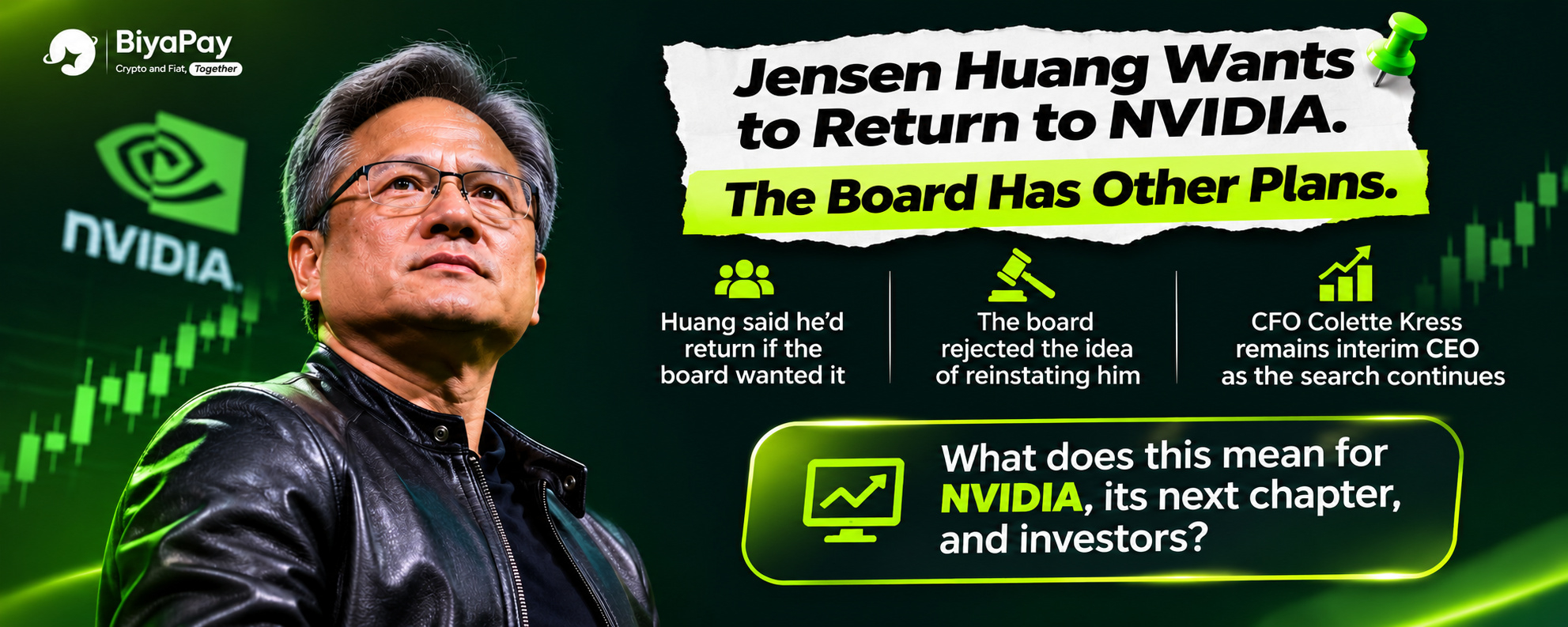
ジェンスン・フアンはNVIDIAへの復帰を望んでいる。だが取締役会には別の考えがある。NVIDIAは今、歴史の中でも異例の局面を迎えている。
ジェンスン・フアンがCEOを退任すると、多くの投資家や従業員、業界関係者が復帰を求める声を上げ始めた。フアンはやがてそうした声に応え、取締役会が会社にとって最善だと判断するなら、復帰できることを光栄に思うと述べた。
この発言をきっかけに、すぐさま新たな疑問が浮上した。NVIDIAをAI業界で最も影響力のある企業の一つへと築き上げたリーダーを、同社は呼び戻すことができるのだろうか?
今のところ、取締役会の答えは「ノー」だ。
ジェンスン・フアンはNVIDIAへの復帰を望んでいる。だが取締役会には別の考えがある。
NVIDIAは今、歴史の中でも異例の局面を迎えている。
ジェンスン・フアンがCEOを退任すると、多くの投資家や従業員、業界関係者が復帰を求める声を上げ始めた。フアンはやがてそうした声に応え、取締役会が会社にとって最善だと判断するなら、復帰できることを光栄に思うと述べた。
この発言をきっかけに、すぐさま新たな疑問が浮上した。NVIDIAをAI業界で最も影響力のある企業の一つへと築き上げたリーダーを、同社は呼び戻すことができるのだろうか?
今のところ、取締役会の答えは「ノー」だ。
ジェンスン・フアンがCEOを退任すると、多くの投資家や従業員、業界関係者が復帰を求める声を上げ始めた。フアンはやがてそうした声に応え、取締役会が会社にとって最善だと判断するなら、復帰できることを光栄に思うと述べた。
この発言をきっかけに、すぐさま新たな疑問が浮上した。NVIDIAをAI業界で最も影響力のある企業の一つへと築き上げたリーダーを、同社は呼び戻すことができるのだろうか?
今のところ、取締役会の答えは「ノー」だ。
89

記事
翻訳参照
Buying the Dip: A Smarter Approach to Fractional SharesEvery time the stock market experiences a significant pullback, the same conversation starts again.
Investors begin looking for opportunities. Social media fills with predictions about which stocks will recover first, while others encourage people to buy before prices move higher.
But there's one question I think deserves more attention:
Do you actually have a plan for buying the dip, or are you simply reacting to falling prices?
A declining stock price can create an opportunity, but it can also signal deeper problems with a company. Understanding that difference is an important part of investing.
And sometimes, the biggest challenge isn't identifying a good company. It's deciding how much of your money to commit to it.
Why Buying Every Dip Can Become a Problem
Imagine you've been following NVIDIA or Apple for months. You believe in the company's long-term prospects, but its share price suddenly drops.
Your first reaction might be to buy more.
Then the price drops again.
You buy again, hoping you've found the bottom. A few days later, the market moves lower.
This is where an investment plan can easily turn into an emotional decision.
The problem is that falling prices alone don't tell you whether a stock is undervalued.
A company might experience a temporary decline because of broader market sentiment. Another might be facing weaker earnings, increased competition or changing business conditions.
These situations require different levels of consideration.
Before buying a dip, it's worth asking:
- What caused the price decline?
- Has anything changed about the company's fundamentals?
- Does the stock still fit my investment objectives?
- Can I afford to take additional exposure if the price falls further?
Having answers to these questions can help you avoid making decisions simply because everyone else is buying.
The Often-Overlooked Part of Investing: Position Sizing
Many conversations about investing focus on which stock to buy and when to enter.
Position sizing receives much less attention.
Yet, it can have a significant influence on how an investor manages risk.
Position sizing refers to deciding how much capital to allocate to a particular investment.
For example, imagine you want exposure to three technology companies. Instead of putting most of your available capital into one stock, you could determine how much you're comfortable allocating to each position.
This approach helps you think about your overall exposure rather than focusing entirely on the potential return of one investment.
It also gives you room to adjust your strategy as market conditions change.
There's no universally correct allocation. Your financial goals, risk tolerance, available capital and investment timeframe should guide that decision.
Fractional Shares: Starting Without Buying a Full Share
Here's where fractional shares become interesting.
Some well-known U.S. companies have share prices that can make purchasing a full share difficult for investors working with smaller budgets.
Think about companies like Apple, NVIDIA, Microsoft and Amazon.
An investor may want exposure to these businesses but may not want to commit enough capital to purchase a whole share.
Fractional shares provide another option.
They allow eligible investors to purchase a portion of a share rather than having to buy a complete unit.
This can make it easier to:
- Start investing with a smaller amount.
- Build a position gradually.
- Allocate capital across different companies.
- Adjust investment amounts according to a personal budget.
For example, instead of waiting until you have enough money to purchase a full share of a company, you may be able to start with a smaller position, subject to the platform's minimum investment requirements and stock eligibility.
However, fractional shares don't eliminate market risk. If the underlying stock loses value, your fractional investment can also decline.
The benefit is flexibility in how you build your position.
How BiyaPay Fits Into This Approach
For investors interested in U.S. stocks, access and funding are also important considerations.
BiyaPay offers eligible users access to supported U.S. stock investments, including a fractional-share feature.
This means investors who meet the applicable requirements can explore building smaller positions instead of committing to full shares.
For people who already hold digital assets, BiyaPay also provides supported funding options, including a USDT-to-USD conversion process for accessing eligible stock investment services.
The general process involves:
1. Creating and completing verification on a BiyaPay account.
2. Depositing USDT through a supported network.
3. Converting the USDT into USD.
4. Transferring available USD into the relevant stock trading account.
5. Selecting an eligible stock and placing an order.
BiyaPay also advertises zero commission on eligible U.S. stock trades. Investors should still review applicable conversion, transfer and other charges before funding their accounts.
The interesting part is how this creates another funding route for people who already participate in digital asset markets but are also interested in traditional investments.
Of course, access to a stock doesn't automatically make it a good investment. Research and risk management remain important.
A Better Way to Think About Market Pullbacks
I don't think investors need to predict every market bottom to build a meaningful portfolio.
Trying to get the perfect entry can sometimes create unnecessary pressure.
A more practical approach is to establish an investment plan, decide how much capital you're comfortable allocating and understand the companies you're investing in.
Fractional shares can support that process by giving eligible investors more flexibility over position sizes.
And when the market becomes volatile, having a plan can make it easier to avoid impulsive decisions.
Final Thoughts
The next time you see a stock falling, take a moment before joining the conversation about buying the dip.
Look beyond the price movement. Understand what's happening with the company, review your available capital and decide whether the investment still fits your strategy.
You don't have to buy everything at once, and you don't have to own a full share to begin building exposure where fractional investing is supported.
For those exploring U.S. stocks, BiyaPay offers fractional-share access for eligible users alongside funding options that connect digital assets with traditional investing.
Sometimes, better investing starts with making smaller, more deliberate decisions.
Explore BiyaPay: https://www.biyapay.com/
Disclaimer: This article is for educational and informational purposes only and does not constitute financial, investment, legal or tax advice. Investing in stocks involves risks, including the possible loss of capital. Fractional-share availability, eligible securities, fees and account access may vary by jurisdiction. Always conduct your own research and consider your financial circumstances before investing.
#crypto #Web3 #CryptoCommunity #Web3 #Blockchain #DeFi
Buying the Dip: A Smarter Approach to Fractional Shares
Every time the stock market experiences a significant pullback, the same conversation starts again.
Investors begin looking for opportunities. Social media fills with predictions about which stocks will recover first, while others encourage people to buy before prices move higher.
But there's one question I think deserves more attention:
Do you actually have a plan for buying the dip, or are you simply reacting to falling prices?
A declining stock price can create an opportunity, but it can also signal deeper problems with a company. Understanding that difference is an important part of investing.
And sometimes, the biggest challenge isn't identifying a good company. It's deciding how much of your money to commit to it.
Why Buying Every Dip Can Become a Problem
Imagine you've been following NVIDIA or Apple for months. You believe in the company's long-term prospects, but its share price suddenly drops.
Your first reaction might be to buy more.
Then the price drops again.
You buy again, hoping you've found the bottom. A few days later, the market moves lower.
This is where an investment plan can easily turn into an emotional decision.
The problem is that falling prices alone don't tell you whether a stock is undervalued.
A company might experience a temporary decline because of broader market sentiment. Another might be facing weaker earnings, increased competition or changing business conditions.
These situations require different levels of consideration.
Before buying a dip, it's worth asking:
- What caused the price decline?
- Has anything changed about the company's fundamentals?
- Does the stock still fit my investment objectives?
- Can I afford to take additional exposure if the price falls further?
Having answers to these questions can help you avoid making decisions simply because everyone else is buying.
The Often-Overlooked Part of Investing: Position Sizing
Many conversations about investing focus on which stock to buy and when to enter.
Position sizing receives much less attention.
Yet, it can have a significant influence on how an investor manages risk.
Position sizing refers to deciding how much capital to allocate to a particular investment.
For example, imagine you want exposure to three technology companies. Instead of putting most of your available capital into one stock, you could determine how much you're comfortable allocating to each position.
This approach helps you think about your overall exposure rather than focusing entirely on the potential return of one investment.
It also gives you room to adjust your strategy as market conditions change.
There's no universally correct allocation. Your financial goals, risk tolerance, available capital and investment timeframe should guide that decision.
Fractional Shares: Starting Without Buying a Full Share
Here's where fractional shares become interesting.
Some well-known U.S. companies have share prices that can make purchasing a full share difficult for investors working with smaller budgets.
Think about companies like Apple, NVIDIA, Microsoft and Amazon.
An investor may want exposure to these businesses but may not want to commit enough capital to purchase a whole share.
Fractional shares provide another option.
They allow eligible investors to purchase a portion of a share rather than having to buy a complete unit.
This can make it easier to:
- Start investing with a smaller amount.
- Build a position gradually.
- Allocate capital across different companies.
- Adjust investment amounts according to a personal budget.
For example, instead of waiting until you have enough money to purchase a full share of a company, you may be able to start with a smaller position, subject to the platform's minimum investment requirements and stock eligibility.
However, fractional shares don't eliminate market risk. If the underlying stock loses value, your fractional investment can also decline.
The benefit is flexibility in how you build your position.
How BiyaPay Fits Into This Approach
For investors interested in U.S. stocks, access and funding are also important considerations.
BiyaPay offers eligible users access to supported U.S. stock investments, including a fractional-share feature.
This means investors who meet the applicable requirements can explore building smaller positions instead of committing to full shares.
For people who already hold digital assets, BiyaPay also provides supported funding options, including a USDT-to-USD conversion process for accessing eligible stock investment services.
The general process involves:
1. Creating and completing verification on a BiyaPay account.
2. Depositing USDT through a supported network.
3. Converting the USDT into USD.
4. Transferring available USD into the relevant stock trading account.
5. Selecting an eligible stock and placing an order.
BiyaPay also advertises zero commission on eligible U.S. stock trades. Investors should still review applicable conversion, transfer and other charges before funding their accounts.
The interesting part is how this creates another funding route for people who already participate in digital asset markets but are also interested in traditional investments.
Of course, access to a stock doesn't automatically make it a good investment. Research and risk management remain important.
A Better Way to Think About Market Pullbacks
I don't think investors need to predict every market bottom to build a meaningful portfolio.
Trying to get the perfect entry can sometimes create unnecessary pressure.
A more practical approach is to establish an investment plan, decide how much capital you're comfortable allocating and understand the companies you're investing in.
Fractional shares can support that process by giving eligible investors more flexibility over position sizes.
And when the market becomes volatile, having a plan can make it easier to avoid impulsive decisions.
Final Thoughts
The next time you see a stock falling, take a moment before joining the conversation about buying the dip.
Look beyond the price movement. Understand what's happening with the company, review your available capital and decide whether the investment still fits your strategy.
You don't have to buy everything at once, and you don't have to own a full share to begin building exposure where fractional investing is supported.
For those exploring U.S. stocks, BiyaPay offers fractional-share access for eligible users alongside funding options that connect digital assets with traditional investing.
Sometimes, better investing starts with making smaller, more deliberate decisions.
Explore BiyaPay: https://www.biyapay.com/
Disclaimer: This article is for educational and informational purposes only and does not constitute financial, investment, legal or tax advice. Investing in stocks involves risks, including the possible loss of capital. Fractional-share availability, eligible securities, fees and account access may vary by jurisdiction. Always conduct your own research and consider your financial circumstances before investing.
#crypto #Web3 #CryptoCommunity #Web3 #Blockchain #DeFi
Investors begin looking for opportunities. Social media fills with predictions about which stocks will recover first, while others encourage people to buy before prices move higher.
But there's one question I think deserves more attention:
Do you actually have a plan for buying the dip, or are you simply reacting to falling prices?
A declining stock price can create an opportunity, but it can also signal deeper problems with a company. Understanding that difference is an important part of investing.
And sometimes, the biggest challenge isn't identifying a good company. It's deciding how much of your money to commit to it.
Why Buying Every Dip Can Become a Problem
Imagine you've been following NVIDIA or Apple for months. You believe in the company's long-term prospects, but its share price suddenly drops.
Your first reaction might be to buy more.
Then the price drops again.
You buy again, hoping you've found the bottom. A few days later, the market moves lower.
This is where an investment plan can easily turn into an emotional decision.
The problem is that falling prices alone don't tell you whether a stock is undervalued.
A company might experience a temporary decline because of broader market sentiment. Another might be facing weaker earnings, increased competition or changing business conditions.
These situations require different levels of consideration.
Before buying a dip, it's worth asking:
- What caused the price decline?
- Has anything changed about the company's fundamentals?
- Does the stock still fit my investment objectives?
- Can I afford to take additional exposure if the price falls further?
Having answers to these questions can help you avoid making decisions simply because everyone else is buying.
The Often-Overlooked Part of Investing: Position Sizing
Many conversations about investing focus on which stock to buy and when to enter.
Position sizing receives much less attention.
Yet, it can have a significant influence on how an investor manages risk.
Position sizing refers to deciding how much capital to allocate to a particular investment.
For example, imagine you want exposure to three technology companies. Instead of putting most of your available capital into one stock, you could determine how much you're comfortable allocating to each position.
This approach helps you think about your overall exposure rather than focusing entirely on the potential return of one investment.
It also gives you room to adjust your strategy as market conditions change.
There's no universally correct allocation. Your financial goals, risk tolerance, available capital and investment timeframe should guide that decision.
Fractional Shares: Starting Without Buying a Full Share
Here's where fractional shares become interesting.
Some well-known U.S. companies have share prices that can make purchasing a full share difficult for investors working with smaller budgets.
Think about companies like Apple, NVIDIA, Microsoft and Amazon.
An investor may want exposure to these businesses but may not want to commit enough capital to purchase a whole share.
Fractional shares provide another option.
They allow eligible investors to purchase a portion of a share rather than having to buy a complete unit.
This can make it easier to:
- Start investing with a smaller amount.
- Build a position gradually.
- Allocate capital across different companies.
- Adjust investment amounts according to a personal budget.
For example, instead of waiting until you have enough money to purchase a full share of a company, you may be able to start with a smaller position, subject to the platform's minimum investment requirements and stock eligibility.
However, fractional shares don't eliminate market risk. If the underlying stock loses value, your fractional investment can also decline.
The benefit is flexibility in how you build your position.
How BiyaPay Fits Into This Approach
For investors interested in U.S. stocks, access and funding are also important considerations.
BiyaPay offers eligible users access to supported U.S. stock investments, including a fractional-share feature.
This means investors who meet the applicable requirements can explore building smaller positions instead of committing to full shares.
For people who already hold digital assets, BiyaPay also provides supported funding options, including a USDT-to-USD conversion process for accessing eligible stock investment services.
The general process involves:
1. Creating and completing verification on a BiyaPay account.
2. Depositing USDT through a supported network.
3. Converting the USDT into USD.
4. Transferring available USD into the relevant stock trading account.
5. Selecting an eligible stock and placing an order.
BiyaPay also advertises zero commission on eligible U.S. stock trades. Investors should still review applicable conversion, transfer and other charges before funding their accounts.
The interesting part is how this creates another funding route for people who already participate in digital asset markets but are also interested in traditional investments.
Of course, access to a stock doesn't automatically make it a good investment. Research and risk management remain important.
A Better Way to Think About Market Pullbacks
I don't think investors need to predict every market bottom to build a meaningful portfolio.
Trying to get the perfect entry can sometimes create unnecessary pressure.
A more practical approach is to establish an investment plan, decide how much capital you're comfortable allocating and understand the companies you're investing in.
Fractional shares can support that process by giving eligible investors more flexibility over position sizes.
And when the market becomes volatile, having a plan can make it easier to avoid impulsive decisions.
Final Thoughts
The next time you see a stock falling, take a moment before joining the conversation about buying the dip.
Look beyond the price movement. Understand what's happening with the company, review your available capital and decide whether the investment still fits your strategy.
You don't have to buy everything at once, and you don't have to own a full share to begin building exposure where fractional investing is supported.
For those exploring U.S. stocks, BiyaPay offers fractional-share access for eligible users alongside funding options that connect digital assets with traditional investing.
Sometimes, better investing starts with making smaller, more deliberate decisions.
Explore BiyaPay: https://www.biyapay.com/
Disclaimer: This article is for educational and informational purposes only and does not constitute financial, investment, legal or tax advice. Investing in stocks involves risks, including the possible loss of capital. Fractional-share availability, eligible securities, fees and account access may vary by jurisdiction. Always conduct your own research and consider your financial circumstances before investing.
#crypto #Web3 #CryptoCommunity #Web3 #Blockchain #DeFi
272
記事
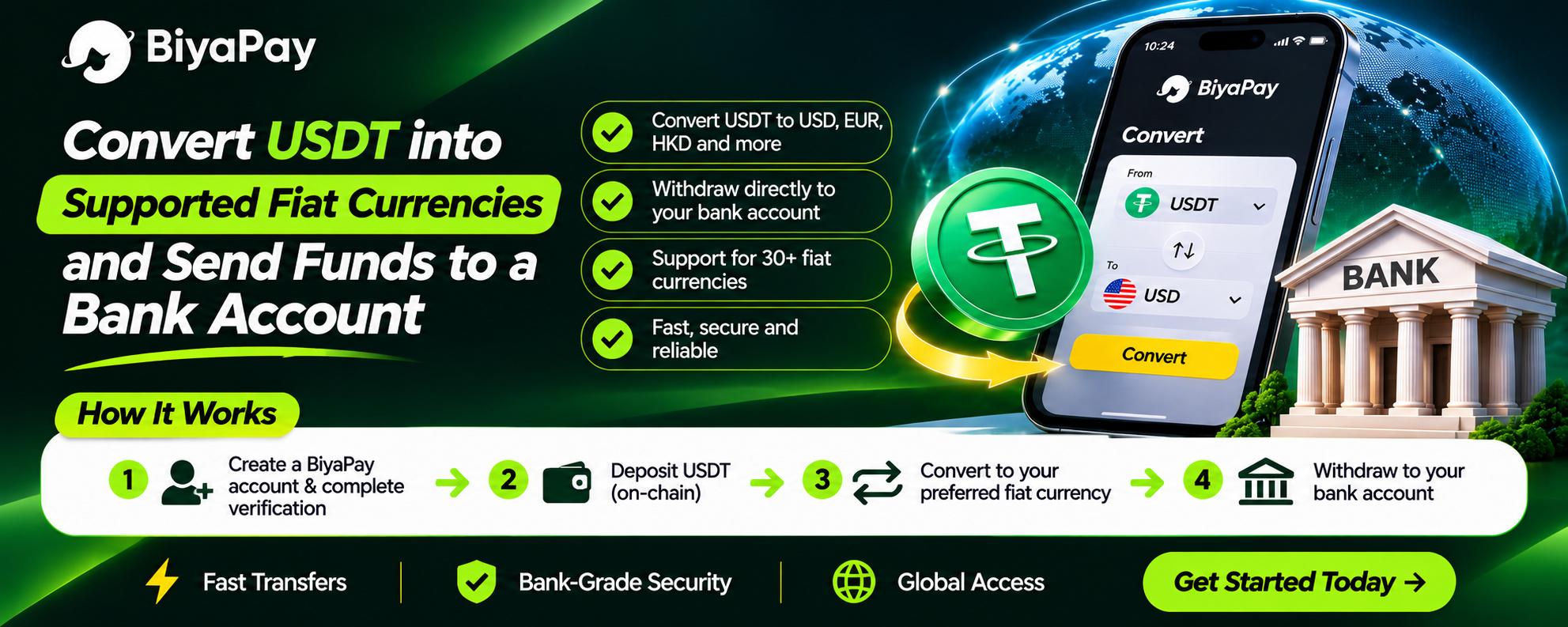
USDTを法定通貨に換金して銀行口座に出金する方法デジタル資産を扱う際にUSDTを保有していると便利ですが、通常の銀行口座にお金が必要になることもあります。
学費の支払い、家族への仕送り、日々の生活費の支払い、個人的な取引のための資金移動などがあるかもしれません。そうした場合、暗号資産ウォレットにお金を保管しているだけでは不十分なことがあります。デジタル資産を対応する法定通貨に換金し、銀行口座に送金する方法が必要です。
ここで、暗号資産から法定通貨への換金や海外送金サービスが役立ちます。
USDTを法定通貨に換金して銀行口座に出金する方法
デジタル資産を扱う際にUSDTを保有していると便利ですが、通常の銀行口座にお金が必要になることもあります。
学費の支払い、家族への仕送り、日々の生活費の支払い、個人的な取引のための資金移動などがあるかもしれません。そうした場合、暗号資産ウォレットにお金を保管しているだけでは不十分なことがあります。デジタル資産を対応する法定通貨に換金し、銀行口座に送金する方法が必要です。
ここで、暗号資産から法定通貨への換金や海外送金サービスが役立ちます。
学費の支払い、家族への仕送り、日々の生活費の支払い、個人的な取引のための資金移動などがあるかもしれません。そうした場合、暗号資産ウォレットにお金を保管しているだけでは不十分なことがあります。デジタル資産を対応する法定通貨に換金し、銀行口座に送金する方法が必要です。
ここで、暗号資産から法定通貨への換金や海外送金サービスが役立ちます。
141
記事
翻訳参照
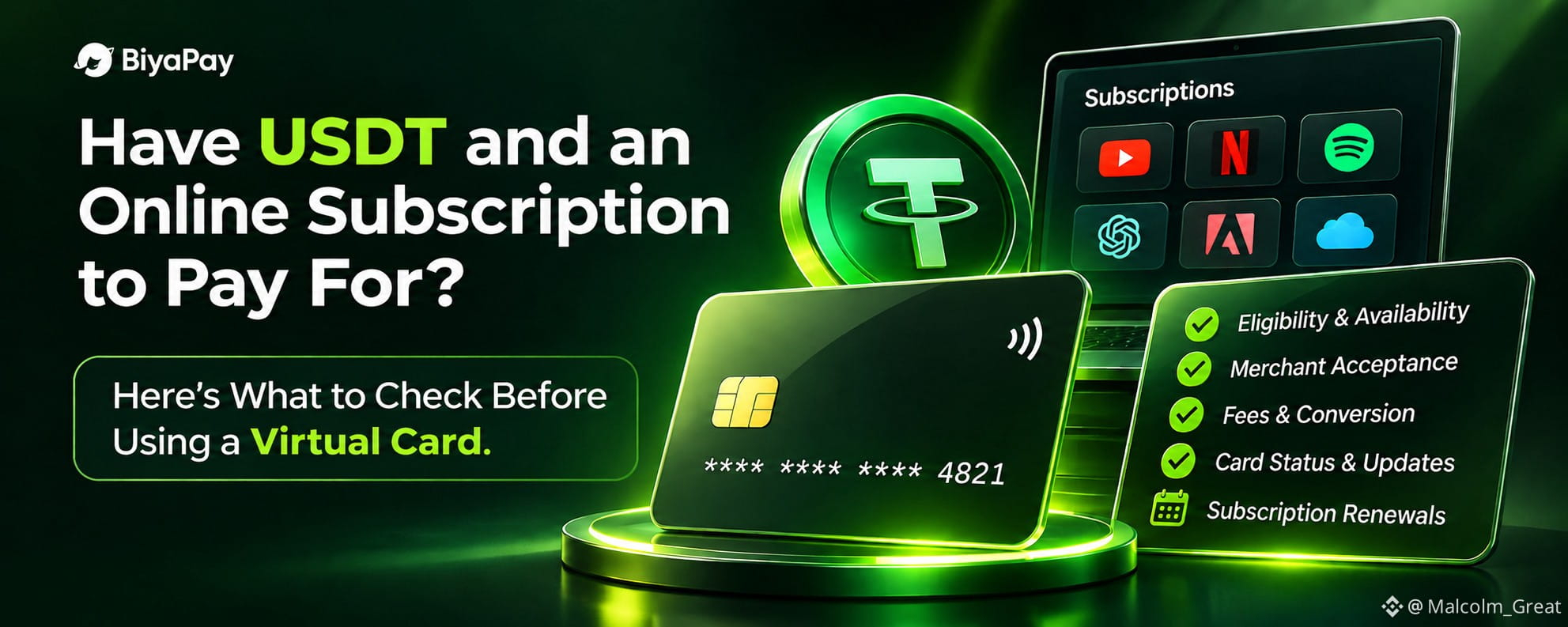
Have USDT and an Online Subscription to Pay For? Here’s What to Check Before Using a Virtual CardPaying for an online subscription can become frustrating when the service requires an international payment card.
Maybe you need a tool for work, an AI subscription for content creation, cloud storage for your files, or a streaming service you use every month. You have USDT available, but the payment page asks for card details.
That leaves you with a practical question: how can you use the digital assets you already hold to pay for an online service?
Virtual payment cards are one option worth understanding. However, before funding one, there are a few things you should check. A card that works for one online purchase may not necessarily work for every subscription.
Start with the actual payment problem
Online subscriptions often require more than having enough money in your account.
The merchant may check the card type, billing country, currency, payment address and other details before approving a transaction. Some services also have restrictions on which cards they accept.
This can create a problem for people who hold USDT but don't have a conventional card that works with the subscription they want.
Using a virtual card funded through a digital asset platform may offer another payment route. But it's important to understand how the card works before relying on it for recurring payments.
Understand how a USDT-funded virtual card works
A virtual payment card provides card details that can be entered on websites and supported online payment platforms. It doesn't require a physical card to make an online payment.
With a USDT-funded card, the general idea is that you use your digital asset balance to fund the card or its associated payment balance. The platform handles the conversion into the currency used for spending, according to its current payment process.
BiyaPay's official EasyCard announcement describes a virtual payment instrument that supports the conversion of digital currencies, including USDT, into fiat currency for payments.
The announcement also identifies subscription services, international shopping and game payments among its intended use cases.
Its Help Center lists examples of services and platforms in areas such as streaming, software, AI tools and online shopping.
That gives users an idea of the intended use cases, but it should not be interpreted as a guarantee that every merchant will accept the card.
What should you check before applying?
This is where I would slow down and pay attention. Before moving any USDT, consider the following.
1. Check whether the card is available to you
Don't assume that a payment card is available in every country simply because the provider describes it as a global payment product.
Check the application page and the current card terms for your country or region. Confirm that you can complete the required identity verification and that the card range currently offered to your account is available for use.
For users in Nigeria, this is particularly important. Check the current eligibility information in your own account and make sure your intended use complies with applicable local requirements.
If the application page does not clearly confirm your eligibility, contact the provider before funding anything.
2. Confirm that your subscription accepts the card
Make a distinction between a platform being listed as a supported use case and your particular subscription payment being approved.
For example, a virtual card may be intended for online software or AI subscriptions, but the merchant can still apply its own payment rules.
Check the payment methods accepted by the subscription provider. Pay attention to its billing-country requirements, currency and any restrictions on prepaid or virtual cards.
If you're unsure, ask the merchant or card provider for clarification before relying on the card for an important subscription.
3. Understand all the fees
The amount you spend on a subscription may not be the only cost involved.
Depending on the provider's current terms, you may need to account for card issuance, funding, currency conversion or transaction charges.
For example, imagine a subscription costs $20 per month. You should check how much USDT is required to fund the card with enough USD to cover that payment, including any applicable charges.
Don't calculate the cost using an assumed one-to-one USDT-to-USD conversion. Review the actual conversion quote and fee information displayed before confirming.
Also check whether a failed payment or refund could involve additional charges.
4. Check the card's current status and terms
Card availability and card number ranges can change when a provider's upstream payment arrangements change.
This is worth checking rather than relying on old tutorials, screenshots or recommendations from other users.
BiyaPay published an announcement on October 23, 2026, stating that EasyCards beginning with 400, 436 and 472 had been discontinued following upstream bank adjustments. The announcement said affected balances and corresponding top-up fees had been refunded to users' Funding Accounts.
This is a useful reminder to check the current card options displayed in your account before applying. An older card tutorial may no longer describe the available options.
5. Plan for automatic subscription renewals
Subscriptions often renew automatically.
If your card balance is insufficient when the next billing date arrives, the payment may fail. Depending on the merchant's policy, your subscription could be interrupted or you may need to update your payment method.
Keep track of renewal dates and maintain enough available balance for the upcoming charge, including any applicable fees.
If you no longer need a subscription, review the merchant's cancellation process. Removing a card from a payment page may not automatically cancel the subscription itself.
6. Protect your card details
A virtual card still contains sensitive payment information.
Avoid sharing your full card number, expiry date, security code or account credentials in public posts, screenshots or private messages with strangers.
Only access the provider through its verified official website or application. Be cautious of people offering to activate cards, process payments or solve account problems in exchange for your login details.
If you notice an unfamiliar transaction, contact the provider through its official support channels.
Where does BiyaPay EasyCard fit into this?
For someone who already holds USDT and needs to pay for eligible online services, BiyaPay's EasyCard is one option to investigate.
BiyaPay describes it as a virtual payment card designed for online payments, with digital assets such as USDT used as part of its funding and conversion process.
Its official materials mention subscription-related use cases, including services in streaming, software and AI tools.
The important part is to check the current application instructions, available card range, fees and merchant compatibility before making a decision.
You can find examples of its stated use cases in the official virtual card Help Center. Those examples explain the intended payment scenarios; they don't guarantee approval by every merchant.
My take
If you already hold USDT and regularly pay for online subscriptions, understanding how a virtual card works could help you assess another way to manage those payments.
But I wouldn't move a large amount of USDT into any card before checking the details.
Start by confirming eligibility, reviewing the full cost, checking whether your intended merchant accepts the card and understanding how recurring payments work. If everything checks out, you can decide whether the option makes sense for your needs.
The goal is to make an informed payment decision and avoid unexpected charges or interrupted subscriptions.
Disclaimer: This article is for educational and informational purposes only. It is not financial, legal or payment advice. Card availability, eligibility, supported merchants, fees and payment conditions may change. A listed merchant or use case does not guarantee successful payment. Always review the provider's current terms, confirm local eligibility and check the subscription merchant's payment requirements before funding a card.
#BiyaPay #EasyCard #USDT #VirtualCard #OnlineSubscriptions #CryptoPayments #DigitalPayments #CryptoEducation
Have USDT and an Online Subscription to Pay For? Here’s What to Check Before Using a Virtual Card
Paying for an online subscription can become frustrating when the service requires an international payment card.
Maybe you need a tool for work, an AI subscription for content creation, cloud storage for your files, or a streaming service you use every month. You have USDT available, but the payment page asks for card details.
That leaves you with a practical question: how can you use the digital assets you already hold to pay for an online service?
Virtual payment cards are one option worth understanding. However, before funding one, there are a few things you should check. A card that works for one online purchase may not necessarily work for every subscription.
Start with the actual payment problem
Online subscriptions often require more than having enough money in your account.
The merchant may check the card type, billing country, currency, payment address and other details before approving a transaction. Some services also have restrictions on which cards they accept.
This can create a problem for people who hold USDT but don't have a conventional card that works with the subscription they want.
Using a virtual card funded through a digital asset platform may offer another payment route. But it's important to understand how the card works before relying on it for recurring payments.
Understand how a USDT-funded virtual card works
A virtual payment card provides card details that can be entered on websites and supported online payment platforms. It doesn't require a physical card to make an online payment.
With a USDT-funded card, the general idea is that you use your digital asset balance to fund the card or its associated payment balance. The platform handles the conversion into the currency used for spending, according to its current payment process.
BiyaPay's official EasyCard announcement describes a virtual payment instrument that supports the conversion of digital currencies, including USDT, into fiat currency for payments.
The announcement also identifies subscription services, international shopping and game payments among its intended use cases.
Its Help Center lists examples of services and platforms in areas such as streaming, software, AI tools and online shopping.
That gives users an idea of the intended use cases, but it should not be interpreted as a guarantee that every merchant will accept the card.
What should you check before applying?
This is where I would slow down and pay attention. Before moving any USDT, consider the following.
1. Check whether the card is available to you
Don't assume that a payment card is available in every country simply because the provider describes it as a global payment product.
Check the application page and the current card terms for your country or region. Confirm that you can complete the required identity verification and that the card range currently offered to your account is available for use.
For users in Nigeria, this is particularly important. Check the current eligibility information in your own account and make sure your intended use complies with applicable local requirements.
If the application page does not clearly confirm your eligibility, contact the provider before funding anything.
2. Confirm that your subscription accepts the card
Make a distinction between a platform being listed as a supported use case and your particular subscription payment being approved.
For example, a virtual card may be intended for online software or AI subscriptions, but the merchant can still apply its own payment rules.
Check the payment methods accepted by the subscription provider. Pay attention to its billing-country requirements, currency and any restrictions on prepaid or virtual cards.
If you're unsure, ask the merchant or card provider for clarification before relying on the card for an important subscription.
3. Understand all the fees
The amount you spend on a subscription may not be the only cost involved.
Depending on the provider's current terms, you may need to account for card issuance, funding, currency conversion or transaction charges.
For example, imagine a subscription costs $20 per month. You should check how much USDT is required to fund the card with enough USD to cover that payment, including any applicable charges.
Don't calculate the cost using an assumed one-to-one USDT-to-USD conversion. Review the actual conversion quote and fee information displayed before confirming.
Also check whether a failed payment or refund could involve additional charges.
4. Check the card's current status and terms
Card availability and card number ranges can change when a provider's upstream payment arrangements change.
This is worth checking rather than relying on old tutorials, screenshots or recommendations from other users.
BiyaPay published an announcement on October 23, 2026, stating that EasyCards beginning with 400, 436 and 472 had been discontinued following upstream bank adjustments. The announcement said affected balances and corresponding top-up fees had been refunded to users' Funding Accounts.
This is a useful reminder to check the current card options displayed in your account before applying. An older card tutorial may no longer describe the available options.
5. Plan for automatic subscription renewals
Subscriptions often renew automatically.
If your card balance is insufficient when the next billing date arrives, the payment may fail. Depending on the merchant's policy, your subscription could be interrupted or you may need to update your payment method.
Keep track of renewal dates and maintain enough available balance for the upcoming charge, including any applicable fees.
If you no longer need a subscription, review the merchant's cancellation process. Removing a card from a payment page may not automatically cancel the subscription itself.
6. Protect your card details
A virtual card still contains sensitive payment information.
Avoid sharing your full card number, expiry date, security code or account credentials in public posts, screenshots or private messages with strangers.
Only access the provider through its verified official website or application. Be cautious of people offering to activate cards, process payments or solve account problems in exchange for your login details.
If you notice an unfamiliar transaction, contact the provider through its official support channels.
Where does BiyaPay EasyCard fit into this?
For someone who already holds USDT and needs to pay for eligible online services, BiyaPay's EasyCard is one option to investigate.
BiyaPay describes it as a virtual payment card designed for online payments, with digital assets such as USDT used as part of its funding and conversion process.
Its official materials mention subscription-related use cases, including services in streaming, software and AI tools.
The important part is to check the current application instructions, available card range, fees and merchant compatibility before making a decision.
You can find examples of its stated use cases in the official virtual card Help Center. Those examples explain the intended payment scenarios; they don't guarantee approval by every merchant.
My take
If you already hold USDT and regularly pay for online subscriptions, understanding how a virtual card works could help you assess another way to manage those payments.
But I wouldn't move a large amount of USDT into any card before checking the details.
Start by confirming eligibility, reviewing the full cost, checking whether your intended merchant accepts the card and understanding how recurring payments work. If everything checks out, you can decide whether the option makes sense for your needs.
The goal is to make an informed payment decision and avoid unexpected charges or interrupted subscriptions.
Disclaimer: This article is for educational and informational purposes only. It is not financial, legal or payment advice. Card availability, eligibility, supported merchants, fees and payment conditions may change. A listed merchant or use case does not guarantee successful payment. Always review the provider's current terms, confirm local eligibility and check the subscription merchant's payment requirements before funding a card.
#BiyaPay #EasyCard #USDT #VirtualCard #OnlineSubscriptions #CryptoPayments #DigitalPayments #CryptoEducation
Maybe you need a tool for work, an AI subscription for content creation, cloud storage for your files, or a streaming service you use every month. You have USDT available, but the payment page asks for card details.
That leaves you with a practical question: how can you use the digital assets you already hold to pay for an online service?
Virtual payment cards are one option worth understanding. However, before funding one, there are a few things you should check. A card that works for one online purchase may not necessarily work for every subscription.
Start with the actual payment problem
Online subscriptions often require more than having enough money in your account.
The merchant may check the card type, billing country, currency, payment address and other details before approving a transaction. Some services also have restrictions on which cards they accept.
This can create a problem for people who hold USDT but don't have a conventional card that works with the subscription they want.
Using a virtual card funded through a digital asset platform may offer another payment route. But it's important to understand how the card works before relying on it for recurring payments.
Understand how a USDT-funded virtual card works
A virtual payment card provides card details that can be entered on websites and supported online payment platforms. It doesn't require a physical card to make an online payment.
With a USDT-funded card, the general idea is that you use your digital asset balance to fund the card or its associated payment balance. The platform handles the conversion into the currency used for spending, according to its current payment process.
BiyaPay's official EasyCard announcement describes a virtual payment instrument that supports the conversion of digital currencies, including USDT, into fiat currency for payments.
The announcement also identifies subscription services, international shopping and game payments among its intended use cases.
Its Help Center lists examples of services and platforms in areas such as streaming, software, AI tools and online shopping.
That gives users an idea of the intended use cases, but it should not be interpreted as a guarantee that every merchant will accept the card.
What should you check before applying?
This is where I would slow down and pay attention. Before moving any USDT, consider the following.
1. Check whether the card is available to you
Don't assume that a payment card is available in every country simply because the provider describes it as a global payment product.
Check the application page and the current card terms for your country or region. Confirm that you can complete the required identity verification and that the card range currently offered to your account is available for use.
For users in Nigeria, this is particularly important. Check the current eligibility information in your own account and make sure your intended use complies with applicable local requirements.
If the application page does not clearly confirm your eligibility, contact the provider before funding anything.
2. Confirm that your subscription accepts the card
Make a distinction between a platform being listed as a supported use case and your particular subscription payment being approved.
For example, a virtual card may be intended for online software or AI subscriptions, but the merchant can still apply its own payment rules.
Check the payment methods accepted by the subscription provider. Pay attention to its billing-country requirements, currency and any restrictions on prepaid or virtual cards.
If you're unsure, ask the merchant or card provider for clarification before relying on the card for an important subscription.
3. Understand all the fees
The amount you spend on a subscription may not be the only cost involved.
Depending on the provider's current terms, you may need to account for card issuance, funding, currency conversion or transaction charges.
For example, imagine a subscription costs $20 per month. You should check how much USDT is required to fund the card with enough USD to cover that payment, including any applicable charges.
Don't calculate the cost using an assumed one-to-one USDT-to-USD conversion. Review the actual conversion quote and fee information displayed before confirming.
Also check whether a failed payment or refund could involve additional charges.
4. Check the card's current status and terms
Card availability and card number ranges can change when a provider's upstream payment arrangements change.
This is worth checking rather than relying on old tutorials, screenshots or recommendations from other users.
BiyaPay published an announcement on October 23, 2026, stating that EasyCards beginning with 400, 436 and 472 had been discontinued following upstream bank adjustments. The announcement said affected balances and corresponding top-up fees had been refunded to users' Funding Accounts.
This is a useful reminder to check the current card options displayed in your account before applying. An older card tutorial may no longer describe the available options.
5. Plan for automatic subscription renewals
Subscriptions often renew automatically.
If your card balance is insufficient when the next billing date arrives, the payment may fail. Depending on the merchant's policy, your subscription could be interrupted or you may need to update your payment method.
Keep track of renewal dates and maintain enough available balance for the upcoming charge, including any applicable fees.
If you no longer need a subscription, review the merchant's cancellation process. Removing a card from a payment page may not automatically cancel the subscription itself.
6. Protect your card details
A virtual card still contains sensitive payment information.
Avoid sharing your full card number, expiry date, security code or account credentials in public posts, screenshots or private messages with strangers.
Only access the provider through its verified official website or application. Be cautious of people offering to activate cards, process payments or solve account problems in exchange for your login details.
If you notice an unfamiliar transaction, contact the provider through its official support channels.
Where does BiyaPay EasyCard fit into this?
For someone who already holds USDT and needs to pay for eligible online services, BiyaPay's EasyCard is one option to investigate.
BiyaPay describes it as a virtual payment card designed for online payments, with digital assets such as USDT used as part of its funding and conversion process.
Its official materials mention subscription-related use cases, including services in streaming, software and AI tools.
The important part is to check the current application instructions, available card range, fees and merchant compatibility before making a decision.
You can find examples of its stated use cases in the official virtual card Help Center. Those examples explain the intended payment scenarios; they don't guarantee approval by every merchant.
My take
If you already hold USDT and regularly pay for online subscriptions, understanding how a virtual card works could help you assess another way to manage those payments.
But I wouldn't move a large amount of USDT into any card before checking the details.
Start by confirming eligibility, reviewing the full cost, checking whether your intended merchant accepts the card and understanding how recurring payments work. If everything checks out, you can decide whether the option makes sense for your needs.
The goal is to make an informed payment decision and avoid unexpected charges or interrupted subscriptions.
Disclaimer: This article is for educational and informational purposes only. It is not financial, legal or payment advice. Card availability, eligibility, supported merchants, fees and payment conditions may change. A listed merchant or use case does not guarantee successful payment. Always review the provider's current terms, confirm local eligibility and check the subscription merchant's payment requirements before funding a card.
#BiyaPay #EasyCard #USDT #VirtualCard #OnlineSubscriptions #CryptoPayments #DigitalPayments #CryptoEducation
85
記事
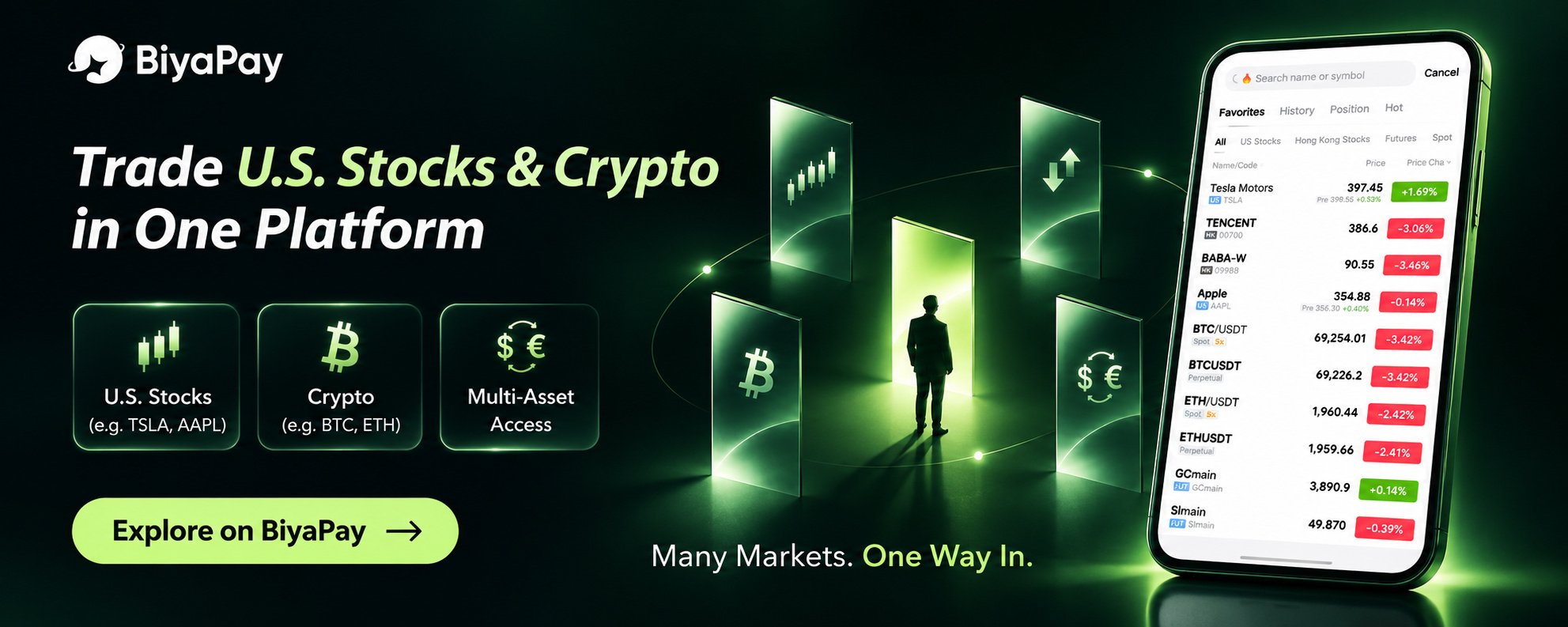
USDTを保有していて、米国株に興味がありますか?入金プロセスをご紹介します
すでにすでにUSDTを保有している場合、それを使って米国株市場にアクセスできるのか気になるかもしれません。
Apple、Microsoft、Amazon、Nvidiaなどの企業を知り、その株式をポートフォリオに加えたいと考えたことがあるかもしれません。しかし、株式の注文を出す前に、実務上確認しておきたいことがあります。
すでに保有しているUSDTを、株式取引に使える資金に移すにはどうすればよいのでしょうか?
ここで、資金の入金プロセスを理解することが重要になります。
BiyaPayでは、複数の口座を経由して資金を移動します。まず、USDTが資金口座に入金されます。次にUSDに交換され、交換後のドル残高が株式口座に振り替えられます。
USDTを保有していて、米国株に興味がありますか?入金プロセスをご紹介します すでに
すでにUSDTを保有している場合、それを使って米国株市場にアクセスできるのか気になるかもしれません。
Apple、Microsoft、Amazon、Nvidiaなどの企業を知り、その株式をポートフォリオに加えたいと考えたことがあるかもしれません。しかし、株式の注文を出す前に、実務上確認しておきたいことがあります。
すでに保有しているUSDTを、株式取引に使える資金に移すにはどうすればよいのでしょうか?
ここで、資金の入金プロセスを理解することが重要になります。
BiyaPayでは、複数の口座を経由して資金を移動します。まず、USDTが資金口座に入金されます。次にUSDに交換され、交換後のドル残高が株式口座に振り替えられます。
Apple、Microsoft、Amazon、Nvidiaなどの企業を知り、その株式をポートフォリオに加えたいと考えたことがあるかもしれません。しかし、株式の注文を出す前に、実務上確認しておきたいことがあります。
すでに保有しているUSDTを、株式取引に使える資金に移すにはどうすればよいのでしょうか?
ここで、資金の入金プロセスを理解することが重要になります。
BiyaPayでは、複数の口座を経由して資金を移動します。まず、USDTが資金口座に入金されます。次にUSDに交換され、交換後のドル残高が株式口座に振り替えられます。
148
記事
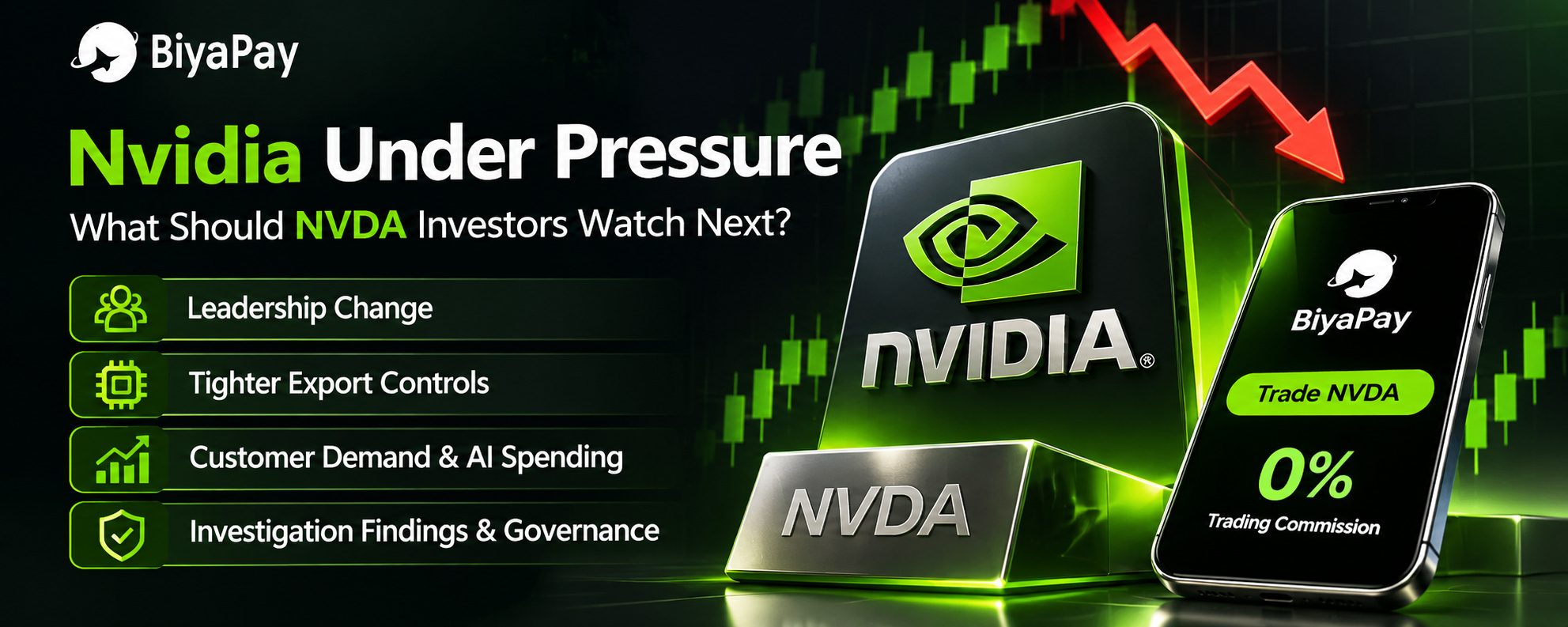
ジェンスン・フアン氏をめぐる論争でNvidiaの経営体制に圧力:NVDA投資家が注目すべき点長年にわたり、ジェンスン・フアン氏は投資家がNvidiaに注目してきた最大の理由の一つだった。
同氏は1993年に同社を共同創業し、グラフィックスチップメーカーから人工知能業界で最も影響力のある企業の一つへと変貌を遂げる過程で、中心的な役割を担い続けてきた。
同氏のリーダーシップ、技術的なビジョン、そしてAI市場でNvidiaを有利な立場に導く能力は、同社の成功と強く結び付けられてきた。
しかし、黄氏をめぐる最近の動向により、これまでとは異なる不確実性が生じている。
ジェンスン・フアン氏をめぐる論争でNvidiaの経営体制に圧力:NVDA投資家が注目すべき点
長年にわたり、ジェンスン・フアン氏は投資家がNvidiaに注目してきた最大の理由の一つだった。
同氏は1993年に同社を共同創業し、グラフィックスチップメーカーから人工知能業界で最も影響力のある企業の一つへと変貌を遂げる過程で、中心的な役割を担い続けてきた。
同氏のリーダーシップ、技術的なビジョン、そしてAI市場でNvidiaを有利な立場に導く能力は、同社の成功と強く結び付けられてきた。
しかし、黄氏をめぐる最近の動向により、これまでとは異なる不確実性が生じている。
同氏は1993年に同社を共同創業し、グラフィックスチップメーカーから人工知能業界で最も影響力のある企業の一つへと変貌を遂げる過程で、中心的な役割を担い続けてきた。
同氏のリーダーシップ、技術的なビジョン、そしてAI市場でNvidiaを有利な立場に導く能力は、同社の成功と強く結び付けられてきた。
しかし、黄氏をめぐる最近の動向により、これまでとは異なる不確実性が生じている。
269
記事
翻訳参照
Nvidia's Jensen Huang Controversy: Should Investors Be Worried About NVDA Stock or Focus on Its FundNvidia has become one of the most important companies in the artificial intelligence industry. Its chips power data centres, support AI development and sit at the centre of a global technology race.
But recently, the company found itself facing an unusual challenge.
Its founder and CEO, Jensen Huang, acknowledged having an affair in a message to employees dated November 8, 2026. He apologised to his family and colleagues and accepted responsibility for his actions.
Around the same time, Nvidia's board announced an independent investigation following reports that Huang had been targeted by a foreign intelligence effort. The board said it had no reason to believe that national security or Nvidia's confidential information had been compromised, but confirmed that it would examine the available information.
These developments have put Nvidia under a different kind of spotlight, and investors are asking an important question:
Does this controversy change the investment case for Nvidia, or is the market reacting to uncertainty surrounding its leadership?
What Happened and Why Does It Matter?
There are two separate issues investors need to understand.
First, Huang publicly acknowledged his personal conduct and apologised. This is a confirmed statement from the CEO himself.
Second, reports raised concerns about whether he had been targeted by a foreign intelligence operation. Nvidia's board responded by establishing an independent investigation led by independent directors with assistance from outside legal counsel.
The underlying intelligence allegations remain subject to investigation. They should not be presented as established facts.
Why does this matter to investors?
Nvidia is a company with significant exposure to the global semiconductor industry, where business relationships, technology security and international trade policies carry considerable importance.
Any development that raises questions about leadership, corporate governance or national security can influence how investors assess the company's risks.
However, the existence of an investigation does not automatically mean that Nvidia's business operations have been compromised.
Is Nvidia's Business Actually Changing?
This is where I think investors need to look beyond the headlines.
Nvidia's investment case has largely been built around demand for AI computing infrastructure.
Companies are investing heavily in data centres, advanced processors and the computing resources needed to develop and operate AI systems.
Nvidia has positioned itself as a major supplier in this market through its GPUs, networking technology and software ecosystem.
The important question is whether the recent controversy changes these business fundamentals.
For now, the public information does not establish that Nvidia's AI-chip demand has weakened because of Huang's personal controversy.
Investors should continue monitoring the factors that directly influence the company's financial performance:
AI infrastructure demand: Are cloud providers and other major customers continuing to invest in Nvidia's computing products?
Revenue and earnings: Is Nvidia maintaining its growth trajectory, and are its margins holding up?
Export restrictions: Could additional restrictions affect the company's ability to sell advanced chips into important international markets?
Customer confidence: Are major business partners maintaining their relationships and purchasing commitments?
These factors provide a more useful picture of Nvidia's long-term prospects than headlines alone.
Why NVDA Investors Are Watching Leadership Risk
Although business fundamentals remain important, leadership cannot be ignored.
Jensen Huang has been closely associated with Nvidia's growth and strategic direction. His public presence and leadership have played a major role in shaping the company's identity.
That creates a question about leadership continuity.
If the investigation produces findings that affect Huang's position, investors may have to consider how a leadership transition would influence the company.
There are several possible developments worth watching:
- The findings and recommendations of the independent investigation.
- Whether Huang continues leading the company without changes to his responsibilities.
- Whether Nvidia's board strengthens its governance and oversight arrangements.
- Whether the situation creates additional regulatory or national security scrutiny.
At this stage, there is no confirmed announcement that Huang is stepping down.
Investors should avoid pricing in a leadership departure as though it has already happened.
What Does the Market Reaction Tell Us?
The market's initial response showed that investors were paying attention.
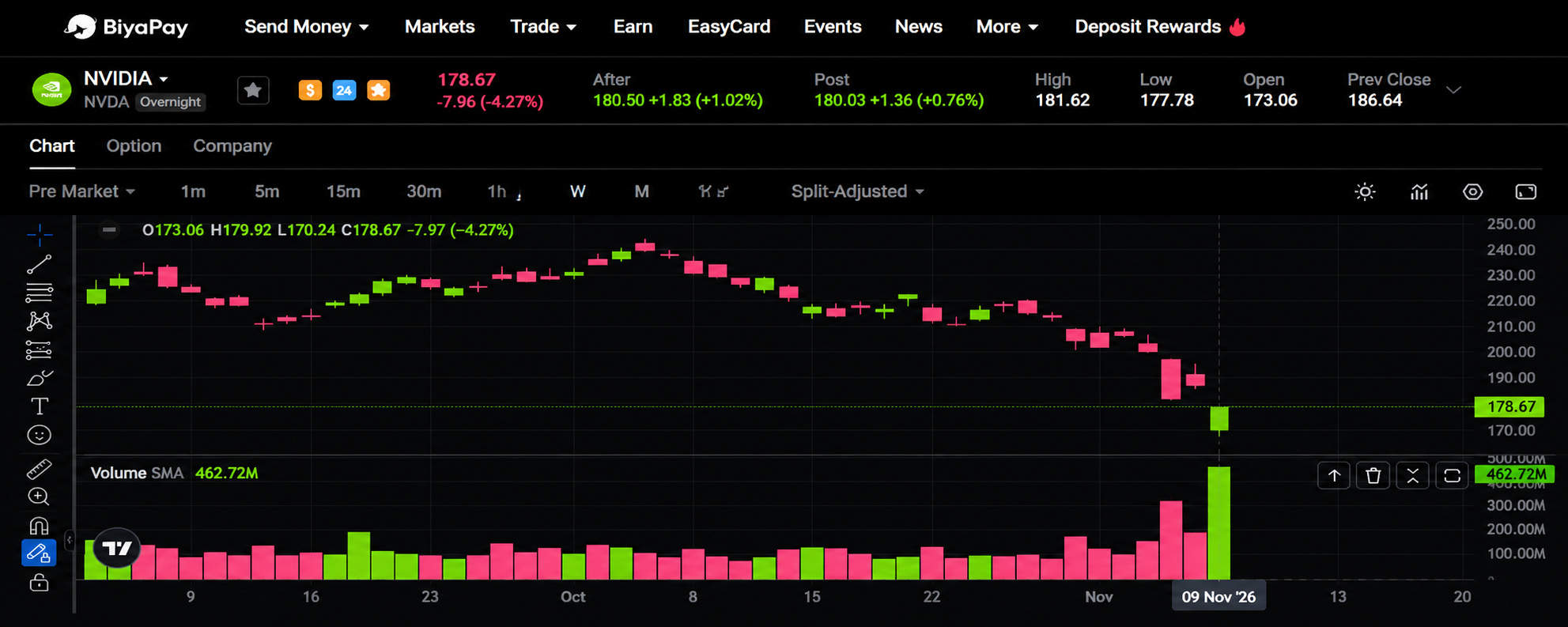
At 5:15 a.m. ET on November 9, 2026, NVDA was reported down 4.4% in premarket trading.
That figure represents a specific premarket observation, not Nvidia's closing performance for the day.
The decline suggests that uncertainty surrounding the CEO and the investigation had become an immediate concern for market participants.
However, a short-term stock decline does not establish that the company's long-term earnings outlook has deteriorated.
There is an important difference between a change in a company's financial prospects and a change in the price investors are willing to pay for those prospects.
For example, if Nvidia continues reporting strong revenue growth but investors become less comfortable with its leadership risk, its valuation could come under pressure even without an immediate deterioration in earnings.
That distinction is worth remembering when evaluating NVDA.
How Can Investors Access Nvidia Exposure Through BiyaPay?
For investors following Nvidia, monitoring its stock performance is only one part of the equation. Having access to different ways of getting market exposure is another consideration.
This is where BiyaPay becomes relevant.
BiyaPay provides access to US and Hong Kong stocks, including Nvidia (NVDA). Its official platform advertises real stock ownership, dividends and zero stock-trading commission.
This gives eligible users another way to access Nvidia shares through its stock-trading service.
BiyaPay also lists NVDAUSDT perpetual futures.
These are different financial products, and investors should understand the distinction before choosing between them.
Buying NVDA shares: This provides exposure to the actual stock, with the associated ownership rights applicable to the shares purchased.
Trading NVDAUSDT perpetuals: This provides derivative exposure to Nvidia's price movements using USDT as the settlement asset. It does not give the trader ownership of Nvidia shares or shareholder voting rights.
BiyaPay's NVDAUSDT product page displays up to 10x leverage and a zero-fee trading offer. Users should check the live contract specifications, funding arrangements, margin requirements and applicable promotional conditions before opening a position.
Zero trading commission also does not mean that every possible trading cost is eliminated.
For someone following Nvidia's developments, these products offer different ways to approach the stock depending on their investment objectives and understanding of the risks.
So, Should You Hold, Reduce or Wait?
I wouldn't make that decision based on the controversy alone.
An existing NVDA shareholder may reasonably choose to hold while monitoring the investigation and the company's financial performance.
Another investor may decide to reduce exposure because the additional governance and geopolitical uncertainty no longer fits their risk tolerance.
Someone considering an initial investment may prefer to wait for more information before committing capital.
All three approaches can be reasonable depending on individual circumstances.
Personally, I would pay closer attention to Nvidia's next earnings results, customer demand, export-related developments and the findings of the independent investigation.
Those developments will provide a clearer basis for evaluating whether the controversy has lasting consequences for the company.
Final Thoughts
Nvidia's current situation is a reminder that investing in a company involves looking beyond its products and market position.
Leadership, corporate governance and geopolitical exposure can all influence how investors value a business.
But separating confirmed information from speculation is equally important.
Jensen Huang has acknowledged his personal conduct. Nvidia's board has confirmed an independent investigation into reported foreign intelligence concerns. What the investigation will ultimately establish remains to be seen.
For now, Nvidia's AI business and financial performance deserve the same attention as the headlines surrounding its CEO.
If you hold NVDA today, would you maintain your position, reduce your exposure or wait until the investigation produces clearer answers?
Disclaimer: 𝗧𝗵𝗶𝘀 𝗮𝗿𝘁𝗶𝗰𝗹𝗲 𝗶𝘀 𝗳𝗼𝗿 𝗶𝗻𝗳𝗼𝗿𝗺𝗮𝘁𝗶𝗼𝗻𝗮𝗹 𝗮𝗻𝗱 𝗲𝗱𝘂𝗰𝗮𝘁𝗶𝗼𝗻𝗮𝗹 𝗽𝘂𝗿𝗽𝗼𝘀𝗲𝘀 𝗼𝗻𝗹𝘆 𝗮𝗻𝗱 𝘀𝗵𝗼𝘂𝗹𝗱 𝗻𝗼𝘁 𝗯𝗲 𝗰𝗼𝗻𝘀𝗶𝗱𝗲𝗿𝗲𝗱 𝗳𝗶𝗻𝗮𝗻𝗰𝗶𝗮𝗹 𝗼𝗿 𝗶𝗻𝘃𝗲𝘀𝘁𝗺𝗲𝗻𝘁 𝗮𝗱𝘃𝗶𝗰𝗲. 𝗦𝘁𝗼𝗰𝗸 𝗽𝗿𝗶𝗰𝗲𝘀 𝗮𝗻𝗱 𝗺𝗮𝗿𝗸𝗲𝘁 𝗰𝗼𝗻𝗱𝗶𝘁𝗶𝗼𝗻𝘀 𝗰𝗮𝗻 𝗰𝗵𝗮𝗻𝗴𝗲 𝗿𝗮𝗽𝗶𝗱𝗹𝘆. 𝗜𝗻𝘃𝗲𝘀𝘁𝗶𝗻𝗴 𝗶𝗻 𝗡𝗩𝗗𝗔 𝗮𝗻𝗱 𝘁𝗿𝗮𝗱𝗶𝗻𝗴 𝗡𝗩𝗗𝗔𝗨𝗦𝗗𝗧 𝗽𝗲𝗿𝗽𝗲𝘁𝘂𝗮𝗹 𝗰𝗼𝗻𝘁𝗿𝗮𝗰𝘁𝘀 𝗶𝗻𝘃𝗼𝗹𝘃𝗲 𝗿𝗶𝘀𝗸𝘀, 𝗶𝗻𝗰𝗹𝘂𝗱𝗶𝗻𝗴 𝗽𝗼𝘁𝗲𝗻𝘁𝗶𝗮𝗹 𝗹𝗼𝘀𝘀 𝗼𝗳 𝗰𝗮𝗽𝗶𝘁𝗮𝗹. 𝗟𝗲𝘃𝗲𝗿𝗮𝗴𝗲𝗱 𝘁𝗿𝗮𝗱𝗶𝗻𝗴 𝗰𝗮𝗿𝗿𝗶𝗲𝘀 𝗮𝗱𝗱𝗶𝘁𝗶𝗼𝗻𝗮𝗹 𝗿𝗶𝘀𝗸𝘀. 𝗔𝗹𝘄𝗮𝘆𝘀 𝗰𝗼𝗻𝗱𝘂𝗰𝘁 𝘆𝗼𝘂𝗿 𝗼𝘄𝗻 𝗿𝗲𝘀𝗲𝗮𝗿𝗰𝗵 𝗮𝗻𝗱 𝗮𝘀𝘀𝗲𝘀𝘀 𝘆𝗼𝘂𝗿 𝗿𝗶𝘀𝗸 𝘁𝗼𝗹𝗲𝗿𝗮𝗻𝗰𝗲 𝗯𝗲𝗳𝗼𝗿𝗲 𝗺𝗮𝗸𝗶𝗻𝗴 𝗳𝗶𝗻𝗮𝗻𝗰𝗶𝗮𝗹 𝗱𝗲𝗰𝗶𝘀𝗶𝗼𝗻𝘀. 𝗩𝗲𝗿𝗶𝗳𝘆 𝗕𝗶𝘆𝗮𝗣𝗮𝘆'𝘀 𝗹𝗮𝘁𝗲𝘀𝘁 𝘁𝗿𝗮𝗱𝗶𝗻𝗴 𝗳𝗲𝗲𝘀, 𝗽𝗿𝗼𝗱𝘂𝗰𝘁 𝗮𝘃𝗮𝗶𝗹𝗮𝗯𝗶𝗹𝗶𝘁𝘆 𝗮𝗻𝗱 𝘁𝗲𝗿𝗺𝘀 𝗯𝗲𝗳𝗼𝗿𝗲 𝘂𝘀𝗶𝗻𝗴 𝗶𝘁𝘀 𝘀𝗲𝗿𝘃𝗶𝗰𝗲𝘀.
#BiyaPay #NVIDIA #NVDA #StockMarket #AIInvesting #USStocks
Nvidia's Jensen Huang Controversy: Should Investors Be Worried About NVDA Stock or Focus on Its Fund
Nvidia has become one of the most important companies in the artificial intelligence industry. Its chips power data centres, support AI development and sit at the centre of a global technology race.
But recently, the company found itself facing an unusual challenge.
Its founder and CEO, Jensen Huang, acknowledged having an affair in a message to employees dated November 8, 2026. He apologised to his family and colleagues and accepted responsibility for his actions.
Around the same time, Nvidia's board announced an independent investigation following reports that Huang had been targeted by a foreign intelligence effort. The board said it had no reason to believe that national security or Nvidia's confidential information had been compromised, but confirmed that it would examine the available information.
These developments have put Nvidia under a different kind of spotlight, and investors are asking an important question:
Does this controversy change the investment case for Nvidia, or is the market reacting to uncertainty surrounding its leadership?
What Happened and Why Does It Matter?
There are two separate issues investors need to understand.
First, Huang publicly acknowledged his personal conduct and apologised. This is a confirmed statement from the CEO himself.
Second, reports raised concerns about whether he had been targeted by a foreign intelligence operation. Nvidia's board responded by establishing an independent investigation led by independent directors with assistance from outside legal counsel.
The underlying intelligence allegations remain subject to investigation. They should not be presented as established facts.
Why does this matter to investors?
Nvidia is a company with significant exposure to the global semiconductor industry, where business relationships, technology security and international trade policies carry considerable importance.
Any development that raises questions about leadership, corporate governance or national security can influence how investors assess the company's risks.
However, the existence of an investigation does not automatically mean that Nvidia's business operations have been compromised.
Is Nvidia's Business Actually Changing?
This is where I think investors need to look beyond the headlines.
Nvidia's investment case has largely been built around demand for AI computing infrastructure.
Companies are investing heavily in data centres, advanced processors and the computing resources needed to develop and operate AI systems.
Nvidia has positioned itself as a major supplier in this market through its GPUs, networking technology and software ecosystem.
The important question is whether the recent controversy changes these business fundamentals.
For now, the public information does not establish that Nvidia's AI-chip demand has weakened because of Huang's personal controversy.
Investors should continue monitoring the factors that directly influence the company's financial performance:
AI infrastructure demand: Are cloud providers and other major customers continuing to invest in Nvidia's computing products?
Revenue and earnings: Is Nvidia maintaining its growth trajectory, and are its margins holding up?
Export restrictions: Could additional restrictions affect the company's ability to sell advanced chips into important international markets?
Customer confidence: Are major business partners maintaining their relationships and purchasing commitments?
These factors provide a more useful picture of Nvidia's long-term prospects than headlines alone.
Why NVDA Investors Are Watching Leadership Risk
Although business fundamentals remain important, leadership cannot be ignored.
Jensen Huang has been closely associated with Nvidia's growth and strategic direction. His public presence and leadership have played a major role in shaping the company's identity.
That creates a question about leadership continuity.
If the investigation produces findings that affect Huang's position, investors may have to consider how a leadership transition would influence the company.
There are several possible developments worth watching:
- The findings and recommendations of the independent investigation.
- Whether Huang continues leading the company without changes to his responsibilities.
- Whether Nvidia's board strengthens its governance and oversight arrangements.
- Whether the situation creates additional regulatory or national security scrutiny.
At this stage, there is no confirmed announcement that Huang is stepping down.
Investors should avoid pricing in a leadership departure as though it has already happened.
What Does the Market Reaction Tell Us?
The market's initial response showed that investors were paying attention.
At 5:15 a.m. ET on November 9, 2026, NVDA was reported down 4.4% in premarket trading.
That figure represents a specific premarket observation, not Nvidia's closing performance for the day.
The decline suggests that uncertainty surrounding the CEO and the investigation had become an immediate concern for market participants.
However, a short-term stock decline does not establish that the company's long-term earnings outlook has deteriorated.
There is an important difference between a change in a company's financial prospects and a change in the price investors are willing to pay for those prospects.
For example, if Nvidia continues reporting strong revenue growth but investors become less comfortable with its leadership risk, its valuation could come under pressure even without an immediate deterioration in earnings.
That distinction is worth remembering when evaluating NVDA.
How Can Investors Access Nvidia Exposure Through BiyaPay?
For investors following Nvidia, monitoring its stock performance is only one part of the equation. Having access to different ways of getting market exposure is another consideration.
This is where BiyaPay becomes relevant.
BiyaPay provides access to US and Hong Kong stocks, including Nvidia (NVDA). Its official platform advertises real stock ownership, dividends and zero stock-trading commission.
This gives eligible users another way to access Nvidia shares through its stock-trading service.
BiyaPay also lists NVDAUSDT perpetual futures.
These are different financial products, and investors should understand the distinction before choosing between them.
Buying NVDA shares: This provides exposure to the actual stock, with the associated ownership rights applicable to the shares purchased.
Trading NVDAUSDT perpetuals: This provides derivative exposure to Nvidia's price movements using USDT as the settlement asset. It does not give the trader ownership of Nvidia shares or shareholder voting rights.
BiyaPay's NVDAUSDT product page displays up to 10x leverage and a zero-fee trading offer. Users should check the live contract specifications, funding arrangements, margin requirements and applicable promotional conditions before opening a position.
Zero trading commission also does not mean that every possible trading cost is eliminated.
For someone following Nvidia's developments, these products offer different ways to approach the stock depending on their investment objectives and understanding of the risks.
So, Should You Hold, Reduce or Wait?
I wouldn't make that decision based on the controversy alone.
An existing NVDA shareholder may reasonably choose to hold while monitoring the investigation and the company's financial performance.
Another investor may decide to reduce exposure because the additional governance and geopolitical uncertainty no longer fits their risk tolerance.
Someone considering an initial investment may prefer to wait for more information before committing capital.
All three approaches can be reasonable depending on individual circumstances.
Personally, I would pay closer attention to Nvidia's next earnings results, customer demand, export-related developments and the findings of the independent investigation.
Those developments will provide a clearer basis for evaluating whether the controversy has lasting consequences for the company.
Final Thoughts
Nvidia's current situation is a reminder that investing in a company involves looking beyond its products and market position.
Leadership, corporate governance and geopolitical exposure can all influence how investors value a business.
But separating confirmed information from speculation is equally important.
Jensen Huang has acknowledged his personal conduct. Nvidia's board has confirmed an independent investigation into reported foreign intelligence concerns. What the investigation will ultimately establish remains to be seen.
For now, Nvidia's AI business and financial performance deserve the same attention as the headlines surrounding its CEO.
If you hold NVDA today, would you maintain your position, reduce your exposure or wait until the investigation produces clearer answers?
Disclaimer: 𝗧𝗵𝗶𝘀 𝗮𝗿𝘁𝗶𝗰𝗹𝗲 𝗶𝘀 𝗳𝗼𝗿 𝗶𝗻𝗳𝗼𝗿𝗺𝗮𝘁𝗶𝗼𝗻𝗮𝗹 𝗮𝗻𝗱 𝗲𝗱𝘂𝗰𝗮𝘁𝗶𝗼𝗻𝗮𝗹 𝗽𝘂𝗿𝗽𝗼𝘀𝗲𝘀 𝗼𝗻𝗹𝘆 𝗮𝗻𝗱 𝘀𝗵𝗼𝘂𝗹𝗱 𝗻𝗼𝘁 𝗯𝗲 𝗰𝗼𝗻𝘀𝗶𝗱𝗲𝗿𝗲𝗱 𝗳𝗶𝗻𝗮𝗻𝗰𝗶𝗮𝗹 𝗼𝗿 𝗶𝗻𝘃𝗲𝘀𝘁𝗺𝗲𝗻𝘁 𝗮𝗱𝘃𝗶𝗰𝗲. 𝗦𝘁𝗼𝗰𝗸 𝗽𝗿𝗶𝗰𝗲𝘀 𝗮𝗻𝗱 𝗺𝗮𝗿𝗸𝗲𝘁 𝗰𝗼𝗻𝗱𝗶𝘁𝗶𝗼𝗻𝘀 𝗰𝗮𝗻 𝗰𝗵𝗮𝗻𝗴𝗲 𝗿𝗮𝗽𝗶𝗱𝗹𝘆. 𝗜𝗻𝘃𝗲𝘀𝘁𝗶𝗻𝗴 𝗶𝗻 𝗡𝗩𝗗𝗔 𝗮𝗻𝗱 𝘁𝗿𝗮𝗱𝗶𝗻𝗴 𝗡𝗩𝗗𝗔𝗨𝗦𝗗𝗧 𝗽𝗲𝗿𝗽𝗲𝘁𝘂𝗮𝗹 𝗰𝗼𝗻𝘁𝗿𝗮𝗰𝘁𝘀 𝗶𝗻𝘃𝗼𝗹𝘃𝗲 𝗿𝗶𝘀𝗸𝘀, 𝗶𝗻𝗰𝗹𝘂𝗱𝗶𝗻𝗴 𝗽𝗼𝘁𝗲𝗻𝘁𝗶𝗮𝗹 𝗹𝗼𝘀𝘀 𝗼𝗳 𝗰𝗮𝗽𝗶𝘁𝗮𝗹. 𝗟𝗲𝘃𝗲𝗿𝗮𝗴𝗲𝗱 𝘁𝗿𝗮𝗱𝗶𝗻𝗴 𝗰𝗮𝗿𝗿𝗶𝗲𝘀 𝗮𝗱𝗱𝗶𝘁𝗶𝗼𝗻𝗮𝗹 𝗿𝗶𝘀𝗸𝘀. 𝗔𝗹𝘄𝗮𝘆𝘀 𝗰𝗼𝗻𝗱𝘂𝗰𝘁 𝘆𝗼𝘂𝗿 𝗼𝘄𝗻 𝗿𝗲𝘀𝗲𝗮𝗿𝗰𝗵 𝗮𝗻𝗱 𝗮𝘀𝘀𝗲𝘀𝘀 𝘆𝗼𝘂𝗿 𝗿𝗶𝘀𝗸 𝘁𝗼𝗹𝗲𝗿𝗮𝗻𝗰𝗲 𝗯𝗲𝗳𝗼𝗿𝗲 𝗺𝗮𝗸𝗶𝗻𝗴 𝗳𝗶𝗻𝗮𝗻𝗰𝗶𝗮𝗹 𝗱𝗲𝗰𝗶𝘀𝗶𝗼𝗻𝘀. 𝗩𝗲𝗿𝗶𝗳𝘆 𝗕𝗶𝘆𝗮𝗣𝗮𝘆'𝘀 𝗹𝗮𝘁𝗲𝘀𝘁 𝘁𝗿𝗮𝗱𝗶𝗻𝗴 𝗳𝗲𝗲𝘀, 𝗽𝗿𝗼𝗱𝘂𝗰𝘁 𝗮𝘃𝗮𝗶𝗹𝗮𝗯𝗶𝗹𝗶𝘁𝘆 𝗮𝗻𝗱 𝘁𝗲𝗿𝗺𝘀 𝗯𝗲𝗳𝗼𝗿𝗲 𝘂𝘀𝗶𝗻𝗴 𝗶𝘁𝘀 𝘀𝗲𝗿𝘃𝗶𝗰𝗲𝘀.
#BiyaPay #NVIDIA #NVDA #StockMarket #AIInvesting #USStocks
But recently, the company found itself facing an unusual challenge.
Its founder and CEO, Jensen Huang, acknowledged having an affair in a message to employees dated November 8, 2026. He apologised to his family and colleagues and accepted responsibility for his actions.
Around the same time, Nvidia's board announced an independent investigation following reports that Huang had been targeted by a foreign intelligence effort. The board said it had no reason to believe that national security or Nvidia's confidential information had been compromised, but confirmed that it would examine the available information.
These developments have put Nvidia under a different kind of spotlight, and investors are asking an important question:
Does this controversy change the investment case for Nvidia, or is the market reacting to uncertainty surrounding its leadership?
What Happened and Why Does It Matter?
There are two separate issues investors need to understand.
First, Huang publicly acknowledged his personal conduct and apologised. This is a confirmed statement from the CEO himself.
Second, reports raised concerns about whether he had been targeted by a foreign intelligence operation. Nvidia's board responded by establishing an independent investigation led by independent directors with assistance from outside legal counsel.
The underlying intelligence allegations remain subject to investigation. They should not be presented as established facts.
Why does this matter to investors?
Nvidia is a company with significant exposure to the global semiconductor industry, where business relationships, technology security and international trade policies carry considerable importance.
Any development that raises questions about leadership, corporate governance or national security can influence how investors assess the company's risks.
However, the existence of an investigation does not automatically mean that Nvidia's business operations have been compromised.
Is Nvidia's Business Actually Changing?
This is where I think investors need to look beyond the headlines.
Nvidia's investment case has largely been built around demand for AI computing infrastructure.
Companies are investing heavily in data centres, advanced processors and the computing resources needed to develop and operate AI systems.
Nvidia has positioned itself as a major supplier in this market through its GPUs, networking technology and software ecosystem.
The important question is whether the recent controversy changes these business fundamentals.
For now, the public information does not establish that Nvidia's AI-chip demand has weakened because of Huang's personal controversy.
Investors should continue monitoring the factors that directly influence the company's financial performance:
AI infrastructure demand: Are cloud providers and other major customers continuing to invest in Nvidia's computing products?
Revenue and earnings: Is Nvidia maintaining its growth trajectory, and are its margins holding up?
Export restrictions: Could additional restrictions affect the company's ability to sell advanced chips into important international markets?
Customer confidence: Are major business partners maintaining their relationships and purchasing commitments?
These factors provide a more useful picture of Nvidia's long-term prospects than headlines alone.
Why NVDA Investors Are Watching Leadership Risk
Although business fundamentals remain important, leadership cannot be ignored.
Jensen Huang has been closely associated with Nvidia's growth and strategic direction. His public presence and leadership have played a major role in shaping the company's identity.
That creates a question about leadership continuity.
If the investigation produces findings that affect Huang's position, investors may have to consider how a leadership transition would influence the company.
There are several possible developments worth watching:
- The findings and recommendations of the independent investigation.
- Whether Huang continues leading the company without changes to his responsibilities.
- Whether Nvidia's board strengthens its governance and oversight arrangements.
- Whether the situation creates additional regulatory or national security scrutiny.
At this stage, there is no confirmed announcement that Huang is stepping down.
Investors should avoid pricing in a leadership departure as though it has already happened.
What Does the Market Reaction Tell Us?
The market's initial response showed that investors were paying attention.
At 5:15 a.m. ET on November 9, 2026, NVDA was reported down 4.4% in premarket trading.
That figure represents a specific premarket observation, not Nvidia's closing performance for the day.
The decline suggests that uncertainty surrounding the CEO and the investigation had become an immediate concern for market participants.
However, a short-term stock decline does not establish that the company's long-term earnings outlook has deteriorated.
There is an important difference between a change in a company's financial prospects and a change in the price investors are willing to pay for those prospects.
For example, if Nvidia continues reporting strong revenue growth but investors become less comfortable with its leadership risk, its valuation could come under pressure even without an immediate deterioration in earnings.
That distinction is worth remembering when evaluating NVDA.
How Can Investors Access Nvidia Exposure Through BiyaPay?
For investors following Nvidia, monitoring its stock performance is only one part of the equation. Having access to different ways of getting market exposure is another consideration.
This is where BiyaPay becomes relevant.
BiyaPay provides access to US and Hong Kong stocks, including Nvidia (NVDA). Its official platform advertises real stock ownership, dividends and zero stock-trading commission.
This gives eligible users another way to access Nvidia shares through its stock-trading service.
BiyaPay also lists NVDAUSDT perpetual futures.
These are different financial products, and investors should understand the distinction before choosing between them.
Buying NVDA shares: This provides exposure to the actual stock, with the associated ownership rights applicable to the shares purchased.
Trading NVDAUSDT perpetuals: This provides derivative exposure to Nvidia's price movements using USDT as the settlement asset. It does not give the trader ownership of Nvidia shares or shareholder voting rights.
BiyaPay's NVDAUSDT product page displays up to 10x leverage and a zero-fee trading offer. Users should check the live contract specifications, funding arrangements, margin requirements and applicable promotional conditions before opening a position.
Zero trading commission also does not mean that every possible trading cost is eliminated.
For someone following Nvidia's developments, these products offer different ways to approach the stock depending on their investment objectives and understanding of the risks.
So, Should You Hold, Reduce or Wait?
I wouldn't make that decision based on the controversy alone.
An existing NVDA shareholder may reasonably choose to hold while monitoring the investigation and the company's financial performance.
Another investor may decide to reduce exposure because the additional governance and geopolitical uncertainty no longer fits their risk tolerance.
Someone considering an initial investment may prefer to wait for more information before committing capital.
All three approaches can be reasonable depending on individual circumstances.
Personally, I would pay closer attention to Nvidia's next earnings results, customer demand, export-related developments and the findings of the independent investigation.
Those developments will provide a clearer basis for evaluating whether the controversy has lasting consequences for the company.
Final Thoughts
Nvidia's current situation is a reminder that investing in a company involves looking beyond its products and market position.
Leadership, corporate governance and geopolitical exposure can all influence how investors value a business.
But separating confirmed information from speculation is equally important.
Jensen Huang has acknowledged his personal conduct. Nvidia's board has confirmed an independent investigation into reported foreign intelligence concerns. What the investigation will ultimately establish remains to be seen.
For now, Nvidia's AI business and financial performance deserve the same attention as the headlines surrounding its CEO.
If you hold NVDA today, would you maintain your position, reduce your exposure or wait until the investigation produces clearer answers?
Disclaimer: 𝗧𝗵𝗶𝘀 𝗮𝗿𝘁𝗶𝗰𝗹𝗲 𝗶𝘀 𝗳𝗼𝗿 𝗶𝗻𝗳𝗼𝗿𝗺𝗮𝘁𝗶𝗼𝗻𝗮𝗹 𝗮𝗻𝗱 𝗲𝗱𝘂𝗰𝗮𝘁𝗶𝗼𝗻𝗮𝗹 𝗽𝘂𝗿𝗽𝗼𝘀𝗲𝘀 𝗼𝗻𝗹𝘆 𝗮𝗻𝗱 𝘀𝗵𝗼𝘂𝗹𝗱 𝗻𝗼𝘁 𝗯𝗲 𝗰𝗼𝗻𝘀𝗶𝗱𝗲𝗿𝗲𝗱 𝗳𝗶𝗻𝗮𝗻𝗰𝗶𝗮𝗹 𝗼𝗿 𝗶𝗻𝘃𝗲𝘀𝘁𝗺𝗲𝗻𝘁 𝗮𝗱𝘃𝗶𝗰𝗲. 𝗦𝘁𝗼𝗰𝗸 𝗽𝗿𝗶𝗰𝗲𝘀 𝗮𝗻𝗱 𝗺𝗮𝗿𝗸𝗲𝘁 𝗰𝗼𝗻𝗱𝗶𝘁𝗶𝗼𝗻𝘀 𝗰𝗮𝗻 𝗰𝗵𝗮𝗻𝗴𝗲 𝗿𝗮𝗽𝗶𝗱𝗹𝘆. 𝗜𝗻𝘃𝗲𝘀𝘁𝗶𝗻𝗴 𝗶𝗻 𝗡𝗩𝗗𝗔 𝗮𝗻𝗱 𝘁𝗿𝗮𝗱𝗶𝗻𝗴 𝗡𝗩𝗗𝗔𝗨𝗦𝗗𝗧 𝗽𝗲𝗿𝗽𝗲𝘁𝘂𝗮𝗹 𝗰𝗼𝗻𝘁𝗿𝗮𝗰𝘁𝘀 𝗶𝗻𝘃𝗼𝗹𝘃𝗲 𝗿𝗶𝘀𝗸𝘀, 𝗶𝗻𝗰𝗹𝘂𝗱𝗶𝗻𝗴 𝗽𝗼𝘁𝗲𝗻𝘁𝗶𝗮𝗹 𝗹𝗼𝘀𝘀 𝗼𝗳 𝗰𝗮𝗽𝗶𝘁𝗮𝗹. 𝗟𝗲𝘃𝗲𝗿𝗮𝗴𝗲𝗱 𝘁𝗿𝗮𝗱𝗶𝗻𝗴 𝗰𝗮𝗿𝗿𝗶𝗲𝘀 𝗮𝗱𝗱𝗶𝘁𝗶𝗼𝗻𝗮𝗹 𝗿𝗶𝘀𝗸𝘀. 𝗔𝗹𝘄𝗮𝘆𝘀 𝗰𝗼𝗻𝗱𝘂𝗰𝘁 𝘆𝗼𝘂𝗿 𝗼𝘄𝗻 𝗿𝗲𝘀𝗲𝗮𝗿𝗰𝗵 𝗮𝗻𝗱 𝗮𝘀𝘀𝗲𝘀𝘀 𝘆𝗼𝘂𝗿 𝗿𝗶𝘀𝗸 𝘁𝗼𝗹𝗲𝗿𝗮𝗻𝗰𝗲 𝗯𝗲𝗳𝗼𝗿𝗲 𝗺𝗮𝗸𝗶𝗻𝗴 𝗳𝗶𝗻𝗮𝗻𝗰𝗶𝗮𝗹 𝗱𝗲𝗰𝗶𝘀𝗶𝗼𝗻𝘀. 𝗩𝗲𝗿𝗶𝗳𝘆 𝗕𝗶𝘆𝗮𝗣𝗮𝘆'𝘀 𝗹𝗮𝘁𝗲𝘀𝘁 𝘁𝗿𝗮𝗱𝗶𝗻𝗴 𝗳𝗲𝗲𝘀, 𝗽𝗿𝗼𝗱𝘂𝗰𝘁 𝗮𝘃𝗮𝗶𝗹𝗮𝗯𝗶𝗹𝗶𝘁𝘆 𝗮𝗻𝗱 𝘁𝗲𝗿𝗺𝘀 𝗯𝗲𝗳𝗼𝗿𝗲 𝘂𝘀𝗶𝗻𝗴 𝗶𝘁𝘀 𝘀𝗲𝗿𝘃𝗶𝗰𝗲𝘀.
#BiyaPay #NVIDIA #NVDA #StockMarket #AIInvesting #USStocks
198
記事
翻訳参照
Cross-Border Payments: How Crypto Is Changing the Way People Send Money Internationally.Sending money to another country should be a straightforward financial activity. Yet, for many people, international payments can become a frustrating experience.
Imagine you're a freelancer receiving payments from an overseas client, a business owner paying an international supplier, or someone supporting family members living in another country.
You need to move money, but the process can involve several steps before the recipient gets what they're expecting.
There may be bank processing times, currency conversion costs, transfer restrictions and additional verification requirements. Depending on the countries and financial institutions involved, even a simple transaction can take longer than expected.
This raises an important question: Can digital assets make international money transfers more accessible?
Platforms combining cryptocurrency and traditional financial services are exploring ways to address this problem. One example is BiyaPay.
📍Why International Money Transfers Can Be Complicated
Traditional international transfers usually involve multiple financial institutions.
When money moves between countries, the transaction may pass through intermediary banks before reaching the recipient's account. Each institution can have its own processing procedures, requirements and charges.
Currency conversion adds another consideration.
For example, someone sending US dollars to a recipient who needs euros will have to consider the applicable exchange rate and any conversion charges.
Other challenges include:
- Processing delays: Some international bank transfers take several business days, depending on the destination and payment route.
- Transfer fees: Charges can come from the sending bank, intermediary institutions or receiving bank.
- Currency conversion: Exchange rate differences can affect the final amount received.
- Verification requirements: Financial institutions may request additional documents or transaction information.
- Transfer restrictions: Available payment methods and sending limits can differ between countries.
These challenges can be particularly inconvenient for people who regularly deal with international payments.
Where BiyaPay Fits Into the Picture
BiyaPay brings cryptocurrency services and traditional financial transactions together in one platform.
Its services include cryptocurrency deposits, fiat currency conversion, international remittances and other financial products.
One feature worth examining is its support for USDT.
USDT is a stablecoin designed to maintain a value close to the US dollar. People who already hold USDT can use supported BiyaPay services to convert their digital assets into fiat currencies for eligible international transfers.
This creates another way to manage funds across borders without relying entirely on conventional currency deposit methods.
BiyaPay also supports the conversion of more than 30 fiat currencies, with international transfer coverage advertised across more than 100 countries and regions.
However, supported currencies, deposit methods and transfer routes depend on the particular transaction and destination.
𝗛𝗼𝘄 𝘁𝗼 𝗦𝗲𝗻𝗱 𝗠𝗼𝗻𝗲𝘆 𝗨𝘀𝗶𝗻𝗴 𝗨𝗦𝗗𝗧 𝗼𝗻 𝗕𝗶𝘆𝗮𝗣𝗮𝘆
For someone who already holds USDT, the process involves a few important stages.
1. Create an account and complete verification
Start by registering a BiyaPay account.
Complete the required identity verification before accessing the relevant financial services. Depending on the transaction, you may also need to provide additional personal or banking information.
2. Deposit your USDT
Open the deposit section and select the on-chain deposit option.
Choose USDT and the supported blockchain network. Carefully confirm that the network selected matches the network used by your sending wallet.
Sending assets through an unsupported network or to an incorrect address can result in lost funds.
3. Convert your assets
After the deposit is credited, use the conversion feature to exchange your available assets into the required fiat currency.
BiyaPay supports cryptocurrency-to-fiat and fiat-to-fiat conversion, although available currency pairs may vary.
4. Set up the recipient's details
Add the recipient's bank account or select an existing recipient where supported.
Make sure the banking information is correct before proceeding.
5. Review and confirm the transfer
Check the exchange rate, applicable fees, recipient details and estimated arrival time.
If everything is correct, complete the required security verification and submit the transaction.
The transfer can then be processed through the available payment route.
Understanding BiyaPay's Transfer Fees
Fees are an important part of international payments, and this is something users should examine before confirming a transaction.
BiyaPay publishes different remittance fee tiers for certain USD withdrawals.
For example, its published USD remittance schedule includes:
Transaction amount| Published withdrawal fee
$200–below $2,000| $20
$2,000–below $50,000| 1%
$50,000–below $100,000| 0.90%
$100,000–below $500,000| 0.80%
$500,000–below $1 million| 0.70%
$1 million–below $2 million| 0.60%
$2 million and above| 0.50%
These figures come from BiyaPay's published fee information for USD remittances and withdrawals. They should not be treated as a universal fee schedule for every currency or destination.
The platform also indicates that users can check the applicable remittance fee when linking their bank account on the remittance page.
My advice is simple: always compare the final amount the recipient will receive rather than looking at the advertised transfer fee alone.
What Should You Know Before Using It?
While combining crypto and fiat services can offer more flexibility, there are still some things worth considering.
First, identity verification is required. Users should expect to provide the necessary information before accessing relevant services.
Second, USDT deposits are not necessarily available for every sending and receiving route. For example, BiyaPay's published Philippines-to-US transfer information indicates that USDT deposits are not supported for that particular route.
Third, transfer times depend on the destination, payment channel and transaction requirements. Although BiyaPay advertises eligible transfers arriving in as little as five minutes, that should not be interpreted as a guarantee that every transaction will settle within that period.
Finally, users should check the applicable fees, exchange rates, withdrawal requirements and recipient eligibility before sending funds.
Understanding these details can help prevent unnecessary complications.
Is This a Useful Development for Global Payments?
I think the interesting part of this development is the additional flexibility it gives people who already interact with both cryptocurrency and traditional financial systems.
Freelancers can explore alternative ways of managing international earnings. Businesses can examine digital asset conversion for eligible cross-border payments. Individuals can also explore supported routes for sending money to family members abroad.
Of course, the best payment option still depends on the country, amount, fees and the recipient's banking arrangements.
BiyaPay is one platform working in this space by bringing crypto deposits, currency conversion and international remittance services into a single financial application.
The bigger conversation is about making international money movement easier to understand and manage.
As financial services continue to evolve, having more payment options gives people greater flexibility in how they handle their money.
For anyone interested in exploring crypto-supported international transfers, BiyaPay is worth researching. Just make sure you understand the available services and transaction costs before committing your funds.
Disclaimer: This article is for educational and informational purposes only and does not constitute financial or investment advice. Stock investments and perpetual contracts involve risk. Zero trading commission does not mean all transaction costs are eliminated. Always review platform fees, funding charges, leverage and liquidation conditions before trading.
#BiyaPay #CryptoPayments #CrossBorderPayments #USDT #DigitalFinance
Cross-Border Payments: How Crypto Is Changing the Way People Send Money Internationally.
Sending money to another country should be a straightforward financial activity. Yet, for many people, international payments can become a frustrating experience.
Imagine you're a freelancer receiving payments from an overseas client, a business owner paying an international supplier, or someone supporting family members living in another country.
You need to move money, but the process can involve several steps before the recipient gets what they're expecting.
There may be bank processing times, currency conversion costs, transfer restrictions and additional verification requirements. Depending on the countries and financial institutions involved, even a simple transaction can take longer than expected.
This raises an important question: Can digital assets make international money transfers more accessible?
Platforms combining cryptocurrency and traditional financial services are exploring ways to address this problem. One example is BiyaPay.
📍Why International Money Transfers Can Be Complicated
Traditional international transfers usually involve multiple financial institutions.
When money moves between countries, the transaction may pass through intermediary banks before reaching the recipient's account. Each institution can have its own processing procedures, requirements and charges.
Currency conversion adds another consideration.
For example, someone sending US dollars to a recipient who needs euros will have to consider the applicable exchange rate and any conversion charges.
Other challenges include:
- Processing delays: Some international bank transfers take several business days, depending on the destination and payment route.
- Transfer fees: Charges can come from the sending bank, intermediary institutions or receiving bank.
- Currency conversion: Exchange rate differences can affect the final amount received.
- Verification requirements: Financial institutions may request additional documents or transaction information.
- Transfer restrictions: Available payment methods and sending limits can differ between countries.
These challenges can be particularly inconvenient for people who regularly deal with international payments.
Where BiyaPay Fits Into the Picture
BiyaPay brings cryptocurrency services and traditional financial transactions together in one platform.
Its services include cryptocurrency deposits, fiat currency conversion, international remittances and other financial products.
One feature worth examining is its support for USDT.
USDT is a stablecoin designed to maintain a value close to the US dollar. People who already hold USDT can use supported BiyaPay services to convert their digital assets into fiat currencies for eligible international transfers.
This creates another way to manage funds across borders without relying entirely on conventional currency deposit methods.
BiyaPay also supports the conversion of more than 30 fiat currencies, with international transfer coverage advertised across more than 100 countries and regions.
However, supported currencies, deposit methods and transfer routes depend on the particular transaction and destination.
𝗛𝗼𝘄 𝘁𝗼 𝗦𝗲𝗻𝗱 𝗠𝗼𝗻𝗲𝘆 𝗨𝘀𝗶𝗻𝗴 𝗨𝗦𝗗𝗧 𝗼𝗻 𝗕𝗶𝘆𝗮𝗣𝗮𝘆
For someone who already holds USDT, the process involves a few important stages.
1. Create an account and complete verification
Start by registering a BiyaPay account.
Complete the required identity verification before accessing the relevant financial services. Depending on the transaction, you may also need to provide additional personal or banking information.
2. Deposit your USDT
Open the deposit section and select the on-chain deposit option.
Choose USDT and the supported blockchain network. Carefully confirm that the network selected matches the network used by your sending wallet.
Sending assets through an unsupported network or to an incorrect address can result in lost funds.
3. Convert your assets
After the deposit is credited, use the conversion feature to exchange your available assets into the required fiat currency.
BiyaPay supports cryptocurrency-to-fiat and fiat-to-fiat conversion, although available currency pairs may vary.
4. Set up the recipient's details
Add the recipient's bank account or select an existing recipient where supported.
Make sure the banking information is correct before proceeding.
5. Review and confirm the transfer
Check the exchange rate, applicable fees, recipient details and estimated arrival time.
If everything is correct, complete the required security verification and submit the transaction.
The transfer can then be processed through the available payment route.
Understanding BiyaPay's Transfer Fees
Fees are an important part of international payments, and this is something users should examine before confirming a transaction.
BiyaPay publishes different remittance fee tiers for certain USD withdrawals.
For example, its published USD remittance schedule includes:
Transaction amount| Published withdrawal fee
$200–below $2,000| $20
$2,000–below $50,000| 1%
$50,000–below $100,000| 0.90%
$100,000–below $500,000| 0.80%
$500,000–below $1 million| 0.70%
$1 million–below $2 million| 0.60%
$2 million and above| 0.50%
These figures come from BiyaPay's published fee information for USD remittances and withdrawals. They should not be treated as a universal fee schedule for every currency or destination.
The platform also indicates that users can check the applicable remittance fee when linking their bank account on the remittance page.
My advice is simple: always compare the final amount the recipient will receive rather than looking at the advertised transfer fee alone.
What Should You Know Before Using It?
While combining crypto and fiat services can offer more flexibility, there are still some things worth considering.
First, identity verification is required. Users should expect to provide the necessary information before accessing relevant services.
Second, USDT deposits are not necessarily available for every sending and receiving route. For example, BiyaPay's published Philippines-to-US transfer information indicates that USDT deposits are not supported for that particular route.
Third, transfer times depend on the destination, payment channel and transaction requirements. Although BiyaPay advertises eligible transfers arriving in as little as five minutes, that should not be interpreted as a guarantee that every transaction will settle within that period.
Finally, users should check the applicable fees, exchange rates, withdrawal requirements and recipient eligibility before sending funds.
Understanding these details can help prevent unnecessary complications.
Is This a Useful Development for Global Payments?
I think the interesting part of this development is the additional flexibility it gives people who already interact with both cryptocurrency and traditional financial systems.
Freelancers can explore alternative ways of managing international earnings. Businesses can examine digital asset conversion for eligible cross-border payments. Individuals can also explore supported routes for sending money to family members abroad.
Of course, the best payment option still depends on the country, amount, fees and the recipient's banking arrangements.
BiyaPay is one platform working in this space by bringing crypto deposits, currency conversion and international remittance services into a single financial application.
The bigger conversation is about making international money movement easier to understand and manage.
As financial services continue to evolve, having more payment options gives people greater flexibility in how they handle their money.
For anyone interested in exploring crypto-supported international transfers, BiyaPay is worth researching. Just make sure you understand the available services and transaction costs before committing your funds.
Disclaimer: This article is for educational and informational purposes only and does not constitute financial or investment advice. Stock investments and perpetual contracts involve risk. Zero trading commission does not mean all transaction costs are eliminated. Always review platform fees, funding charges, leverage and liquidation conditions before trading.
#BiyaPay #CryptoPayments #CrossBorderPayments #USDT #DigitalFinance
Imagine you're a freelancer receiving payments from an overseas client, a business owner paying an international supplier, or someone supporting family members living in another country.
You need to move money, but the process can involve several steps before the recipient gets what they're expecting.
There may be bank processing times, currency conversion costs, transfer restrictions and additional verification requirements. Depending on the countries and financial institutions involved, even a simple transaction can take longer than expected.
This raises an important question: Can digital assets make international money transfers more accessible?
Platforms combining cryptocurrency and traditional financial services are exploring ways to address this problem. One example is BiyaPay.
📍Why International Money Transfers Can Be Complicated
Traditional international transfers usually involve multiple financial institutions.
When money moves between countries, the transaction may pass through intermediary banks before reaching the recipient's account. Each institution can have its own processing procedures, requirements and charges.
Currency conversion adds another consideration.
For example, someone sending US dollars to a recipient who needs euros will have to consider the applicable exchange rate and any conversion charges.
Other challenges include:
- Processing delays: Some international bank transfers take several business days, depending on the destination and payment route.
- Transfer fees: Charges can come from the sending bank, intermediary institutions or receiving bank.
- Currency conversion: Exchange rate differences can affect the final amount received.
- Verification requirements: Financial institutions may request additional documents or transaction information.
- Transfer restrictions: Available payment methods and sending limits can differ between countries.
These challenges can be particularly inconvenient for people who regularly deal with international payments.
Where BiyaPay Fits Into the Picture
BiyaPay brings cryptocurrency services and traditional financial transactions together in one platform.
Its services include cryptocurrency deposits, fiat currency conversion, international remittances and other financial products.
One feature worth examining is its support for USDT.
USDT is a stablecoin designed to maintain a value close to the US dollar. People who already hold USDT can use supported BiyaPay services to convert their digital assets into fiat currencies for eligible international transfers.
This creates another way to manage funds across borders without relying entirely on conventional currency deposit methods.
BiyaPay also supports the conversion of more than 30 fiat currencies, with international transfer coverage advertised across more than 100 countries and regions.
However, supported currencies, deposit methods and transfer routes depend on the particular transaction and destination.
𝗛𝗼𝘄 𝘁𝗼 𝗦𝗲𝗻𝗱 𝗠𝗼𝗻𝗲𝘆 𝗨𝘀𝗶𝗻𝗴 𝗨𝗦𝗗𝗧 𝗼𝗻 𝗕𝗶𝘆𝗮𝗣𝗮𝘆
For someone who already holds USDT, the process involves a few important stages.
1. Create an account and complete verification
Start by registering a BiyaPay account.
Complete the required identity verification before accessing the relevant financial services. Depending on the transaction, you may also need to provide additional personal or banking information.
2. Deposit your USDT
Open the deposit section and select the on-chain deposit option.
Choose USDT and the supported blockchain network. Carefully confirm that the network selected matches the network used by your sending wallet.
Sending assets through an unsupported network or to an incorrect address can result in lost funds.
3. Convert your assets
After the deposit is credited, use the conversion feature to exchange your available assets into the required fiat currency.
BiyaPay supports cryptocurrency-to-fiat and fiat-to-fiat conversion, although available currency pairs may vary.
4. Set up the recipient's details
Add the recipient's bank account or select an existing recipient where supported.
Make sure the banking information is correct before proceeding.
5. Review and confirm the transfer
Check the exchange rate, applicable fees, recipient details and estimated arrival time.
If everything is correct, complete the required security verification and submit the transaction.
The transfer can then be processed through the available payment route.
Understanding BiyaPay's Transfer Fees
Fees are an important part of international payments, and this is something users should examine before confirming a transaction.
BiyaPay publishes different remittance fee tiers for certain USD withdrawals.
For example, its published USD remittance schedule includes:
Transaction amount| Published withdrawal fee
$200–below $2,000| $20
$2,000–below $50,000| 1%
$50,000–below $100,000| 0.90%
$100,000–below $500,000| 0.80%
$500,000–below $1 million| 0.70%
$1 million–below $2 million| 0.60%
$2 million and above| 0.50%
These figures come from BiyaPay's published fee information for USD remittances and withdrawals. They should not be treated as a universal fee schedule for every currency or destination.
The platform also indicates that users can check the applicable remittance fee when linking their bank account on the remittance page.
My advice is simple: always compare the final amount the recipient will receive rather than looking at the advertised transfer fee alone.
What Should You Know Before Using It?
While combining crypto and fiat services can offer more flexibility, there are still some things worth considering.
First, identity verification is required. Users should expect to provide the necessary information before accessing relevant services.
Second, USDT deposits are not necessarily available for every sending and receiving route. For example, BiyaPay's published Philippines-to-US transfer information indicates that USDT deposits are not supported for that particular route.
Third, transfer times depend on the destination, payment channel and transaction requirements. Although BiyaPay advertises eligible transfers arriving in as little as five minutes, that should not be interpreted as a guarantee that every transaction will settle within that period.
Finally, users should check the applicable fees, exchange rates, withdrawal requirements and recipient eligibility before sending funds.
Understanding these details can help prevent unnecessary complications.
Is This a Useful Development for Global Payments?
I think the interesting part of this development is the additional flexibility it gives people who already interact with both cryptocurrency and traditional financial systems.
Freelancers can explore alternative ways of managing international earnings. Businesses can examine digital asset conversion for eligible cross-border payments. Individuals can also explore supported routes for sending money to family members abroad.
Of course, the best payment option still depends on the country, amount, fees and the recipient's banking arrangements.
BiyaPay is one platform working in this space by bringing crypto deposits, currency conversion and international remittance services into a single financial application.
The bigger conversation is about making international money movement easier to understand and manage.
As financial services continue to evolve, having more payment options gives people greater flexibility in how they handle their money.
For anyone interested in exploring crypto-supported international transfers, BiyaPay is worth researching. Just make sure you understand the available services and transaction costs before committing your funds.
Disclaimer: This article is for educational and informational purposes only and does not constitute financial or investment advice. Stock investments and perpetual contracts involve risk. Zero trading commission does not mean all transaction costs are eliminated. Always review platform fees, funding charges, leverage and liquidation conditions before trading.
#BiyaPay #CryptoPayments #CrossBorderPayments #USDT #DigitalFinance
99
翻訳参照
While other tokens are fighting to pop up on Dexscreener to be noticed, take the advantage of Orbitt BNB Volume Bot.
orbitt is very easy to use on BNB. Use it straight through Telegram without the need for spreadsheets or complex setup.
1. Open https: https://t.me/OrbittMM_1_bot?start=CGRKC9
2. Tap Volume Booster.
3. Select Boost Volume.
4. Pick your strategy, Quick Boost or Custom Setup.
5. Pay
6. Enter your contract address.
7. Sit back and watch your chart come alive.
The Orbitt BNB Volume Bot is designed for quick, effortless operation.
#BNB_Market_Update #SOLANA $BNB
While other tokens are fighting to pop up on Dexscreener to be noticed, take the advantage of Orbitt BNB Volume Bot.
orbitt is very easy to use on BNB. Use it straight through Telegram without the need for spreadsheets or complex setup.
1. Open https: https://t.me/OrbittMM_1_bot?start=CGRKC9
2. Tap Volume Booster.
3. Select Boost Volume.
4. Pick your strategy, Quick Boost or Custom Setup.
5. Pay
6. Enter your contract address.
7. Sit back and watch your chart come alive.
The Orbitt BNB Volume Bot is designed for quick, effortless operation.
#BNB_Market_Update #SOLANA $BNB
orbitt is very easy to use on BNB. Use it straight through Telegram without the need for spreadsheets or complex setup.
1. Open https: https://t.me/OrbittMM_1_bot?start=CGRKC9
2. Tap Volume Booster.
3. Select Boost Volume.
4. Pick your strategy, Quick Boost or Custom Setup.
5. Pay
6. Enter your contract address.
7. Sit back and watch your chart come alive.
The Orbitt BNB Volume Bot is designed for quick, effortless operation.
#BNB_Market_Update #SOLANA $BNB
12
12
翻訳参照
Orbitt is flipping the script.
Orbitt is flipping the script.

Laurel Dan
·
--
ブリッシュ他の人たちがボリュームを偽る中、Orbittは自然に見せるために存在し、ボットですらステルスモードに値する。
それからカジュアルに隔週のスペースに切り替え、「ああ、今は月ごとは早すぎる。」
BNBは火がついていて、ステーキングが再び回転しようとしていて、私はただ誇らしげな親のようにチャートを更新している。
実際、10月21日のOrbittスペースの準備をしているところで、もう一つの大きなニュースが迫っているかもしれない。
私たちはこのBNBシーズンで勝たなければならない!
それからカジュアルに隔週のスペースに切り替え、「ああ、今は月ごとは早すぎる。」
BNBは火がついていて、ステーキングが再び回転しようとしていて、私はただ誇らしげな親のようにチャートを更新している。
実際、10月21日のOrbittスペースの準備をしているところで、もう一つの大きなニュースが迫っているかもしれない。
私たちはこのBNBシーズンで勝たなければならない!
4
4
ログインして、さらにコンテンツを読む
厳選トピックで世界の暗号資産トレーダーの仲間入り
⚡️ 暗号資産に関する最新かつ有益な情報が見つかります。
💬 世界最大の暗号資産取引所から信頼されています。
👍 認証を受けたクリエイターから、有益なインサイトを得られます。
メール / 電話番号