
LucasReed
52 投稿

LucasReed
報告
ユーザーをブロック
取引を発注
2.3年
33 フォロー
40 フォロワー
44 いいね
投稿
ポートフォリオ
すべて
引用
動画
·
--
ブリッシュ
翻訳参照
A swap can change your token.
A cross-chain swap changes where that token lives too.
That's the difference I noticed when looking at:
Base / USDC → Ethereum / USDT
A normal DEX on Base can swap my USDC, but it can't magically deliver USDT to my Ethereum wallet.
I'd normally have to:
1. Swap USDC → USDT on Base
2. Bridge USDT to Ethereum
3. Wait for the bridge
4. Pay the related costs
5. Make sure the right asset arrives on Ethereum
STON.fi takes a different approach with its EVM-to-EVM cross-chain flow.
I can select USDC on Base as the source and USDT on Ethereum as the destination, then review the cross-chain quote before confirming.
Behind the scenes, Omniston coordinates the execution through its resolver network and linked settlement mechanism.
But I still check the important stuff before signing:
→ Exact USDT amount
→ Fees
→ Source + destination networks
→ Receiving wallet
→ Quote conditions
And I wouldn't automatically assume this is cheaper than doing everything manually.
A bridge + second swap could sometimes make more sense depending on the live fees, liquidity and route.
The real advantage is having the two-chain job presented as one flow instead of manually stitching the pieces together.
Base USDC in.
Ethereum USDT out.
That's the kind of cross-chain UX I want to see more of.
🌐 STON.fi: app.ston.fi
📝 STON.fi Blog: blog.ston.fi
#STONfi #USDC #USDT #CrossChain
A swap can change your token.
A cross-chain swap changes where that token lives too.
That's the difference I noticed when looking at:
Base / USDC → Ethereum / USDT
A normal DEX on Base can swap my USDC, but it can't magically deliver USDT to my Ethereum wallet.
I'd normally have to:
1. Swap USDC → USDT on Base
2. Bridge USDT to Ethereum
3. Wait for the bridge
4. Pay the related costs
5. Make sure the right asset arrives on Ethereum
STON.fi takes a different approach with its EVM-to-EVM cross-chain flow.
I can select USDC on Base as the source and USDT on Ethereum as the destination, then review the cross-chain quote before confirming.
Behind the scenes, Omniston coordinates the execution through its resolver network and linked settlement mechanism.
But I still check the important stuff before signing:
→ Exact USDT amount
→ Fees
→ Source + destination networks
→ Receiving wallet
→ Quote conditions
And I wouldn't automatically assume this is cheaper than doing everything manually.
A bridge + second swap could sometimes make more sense depending on the live fees, liquidity and route.
The real advantage is having the two-chain job presented as one flow instead of manually stitching the pieces together.
Base USDC in.
Ethereum USDT out.
That's the kind of cross-chain UX I want to see more of.
🌐 STON.fi: app.ston.fi
📝 STON.fi Blog: blog.ston.fi
#STONfi #USDC #USDT #CrossChain
A cross-chain swap changes where that token lives too.
That's the difference I noticed when looking at:
Base / USDC → Ethereum / USDT
A normal DEX on Base can swap my USDC, but it can't magically deliver USDT to my Ethereum wallet.
I'd normally have to:
1. Swap USDC → USDT on Base
2. Bridge USDT to Ethereum
3. Wait for the bridge
4. Pay the related costs
5. Make sure the right asset arrives on Ethereum
STON.fi takes a different approach with its EVM-to-EVM cross-chain flow.
I can select USDC on Base as the source and USDT on Ethereum as the destination, then review the cross-chain quote before confirming.
Behind the scenes, Omniston coordinates the execution through its resolver network and linked settlement mechanism.
But I still check the important stuff before signing:
→ Exact USDT amount
→ Fees
→ Source + destination networks
→ Receiving wallet
→ Quote conditions
And I wouldn't automatically assume this is cheaper than doing everything manually.
A bridge + second swap could sometimes make more sense depending on the live fees, liquidity and route.
The real advantage is having the two-chain job presented as one flow instead of manually stitching the pieces together.
Base USDC in.
Ethereum USDT out.
That's the kind of cross-chain UX I want to see more of.
🌐 STON.fi: app.ston.fi
📝 STON.fi Blog: blog.ston.fi
#STONfi #USDC #USDT #CrossChain
54
·
--
記事
翻訳参照
How to Swap USDT on TON to USDG on Robinhood ChainMoving USDT from TON to another network usually sounds more complicated than it needs to be.
You have to think about the source chain, destination chain, asset, wallet and execution route. When the destination is a newer network like Robinhood Chain, there is another question I want to answer first:
What asset will I actually receive there?
For the current STON.fi cross-chain flow into Robinhood Chain, that destination asset is USDG on Robinhood Chain.
So the route we're looking at is:
TON / USDT → Robinhood Chain / USDG
I checked the dedicated STON.fi guide for Robinhood Chain, and this is how I would approach the swap.
First, what is Robinhood Chain?
Robinhood Chain is an Ethereum-compatible Layer 2 designed around onchain financial infrastructure.
It is built to support things like tokenized financial products, crypto and broader onchain finance. Because it is EVM-compatible, it uses familiar Ethereum-style infrastructure, while ETH serves as its native gas token.
For a TON user, the interesting part is access.
Instead of already holding assets on Robinhood Chain, STON.fi provides a cross-chain route from supported networks into the network.
And for this particular flow, USDG is the destination stablecoin currently supported on Robinhood Chain through STON.fi's cross-chain interface.
That distinction matters.
I'm not treating this as general support for every Robinhood Chain asset. The route I'm looking at is specifically:
USDT on TON → USDG on Robinhood Chain.
Step 1: Choose the source and destination
Open the STON.fi app and set the swap up as:
From: USDT
Network: TON
To: USDG
Network: Robinhood Chain
This is different from a normal swap where both assets exist on the same network.
Here, I'm changing both the network and the stablecoin.
I'm starting with USDT on TON and ending with USDG on Robinhood Chain.
That means the destination details deserve just as much attention as the amount I'm sending.
Step 2: Review the live quote
Before signing anything, I would stop and inspect the quote shown by the STON.fi interface.
The important numbers are:
- Amount of USDT I'm sending
- Amount of USDG I'm expected to receive
- Destination network
- Fees
- Price impact
- Transaction details
- Wallet receiving the USDG
I wouldn't rely on an estimated number from an article or screenshot because cross-chain quotes can change.
The live quote in the STON.fi interface is the number that matters when I'm actually making the swap.
STON.fi's Robinhood Chain guide also advises users to check the source network, destination network, token, final amount, fees, price impact and transaction limit before confirming.
At the current initial stage, STON.fi states that cross-chain swap volume is temporarily limited to $1,000 per transaction.
Step 3: Check the wallet carefully
This is one of the easiest things to overlook.
I'm not just checking that the wallet address looks familiar.
I'm checking that:
The destination wallet is the wallet where I actually want to receive USDG on Robinhood Chain.
A cross-chain transaction has two important sides:
Source: TON / USDT
Destination: Robinhood Chain / USDG
Before confirming, I want those details to match exactly.
Especially when interacting with a newer network or asset, I don't want to assume that selecting the right token name automatically means everything else is correct.
Step 4: What Omniston does behind the scenes
This is where the process becomes interesting.
The cross-chain execution is powered by Omniston by STON.fi.
Instead of asking me to manually bridge USDT, switch networks, find the correct destination asset and coordinate multiple transactions myself, Omniston coordinates the cross-chain execution as one swap flow.
The basic user experience is:
I provide USDT on TON → STON.fi shows the expected USDG outcome → I confirm → Omniston coordinates the execution across the networks.
STON.fi describes Omniston as the execution layer behind its cross-chain swaps. The system coordinates the process so the user can focus on the asset they want to send and the asset they expect to receive rather than manually managing every step of the route.
STON.fi also says that, with its cross-chain flow, users receive the exact amount shown in the interface; otherwise, the swap does not execute and the funds are returned in full.
That gives the process an important condition:
Don't just look at the route. Look at the agreed outcome.
Why this route is useful
Imagine I already hold USDT on TON.
My goal isn't necessarily to acquire another TON token.
I want value on Robinhood Chain, specifically as USDG.
The traditional approach could involve figuring out how to move assets between networks, understanding the destination ecosystem and making sure I end up holding the correct asset.
The STON.fi approach puts the desired outcome at the center:
USDT on TON → USDG on Robinhood Chain
I don't have to manually construct every step of the cross-chain journey.
The infrastructure handles the coordination while I review the transaction before signing.
One important distinction
I wouldn't describe this as:
“USDT on TON is being bridged into Robinhood Chain.”
That can give the wrong impression about what arrives at the destination.
The destination here is USDG on Robinhood Chain.
That's the asset I should verify in the interface before confirming.
This is especially important because moving value across chains isn't simply about changing the network. The destination asset matters too.
My checklist for newer networks and assets
Whenever I'm interacting with a newer network or an asset I haven't used before, I keep the checklist simple:
1. Source asset
Am I actually sending USDT on TON?
2. Destination network
Does the interface clearly show Robinhood Chain?
3. Destination asset
Am I receiving USDG on Robinhood Chain?
4. Live quote
How much USDG will I actually receive?
5. Fees
What will the complete transaction cost?
6. Price impact
Is the quoted execution reasonable?
7. Wallet
Is the destination wallet correct?
8. Transaction limit
Does the amount I'm sending fall within the current limit?
Only after checking these details would I sign the transaction.
The bigger picture
What interests me about this flow isn't simply that another chain has been added to a swap interface.
It's the reduction in cross-chain friction.
I can start with an asset I already hold on TON and target a specific stablecoin on another network without manually piecing together every stage of the journey.
The important part is still doing the checks.
Cross-chain doesn't mean “click and forget.”
It means I should understand:
What am I sending?
Where is it going?
What am I receiving?
How much will I receive?
For this specific STON.fi route, the answer is straightforward:
TON / USDT → Robinhood Chain / USDG.
That's the flow I'd verify in the live interface before signing.
🌐 STON.fi App
#STONfi #Omniston #TON
$NVDAB
{spot}(NVDABUSDT)
How to Swap USDT on TON to USDG on Robinhood Chain
Moving USDT from TON to another network usually sounds more complicated than it needs to be.
You have to think about the source chain, destination chain, asset, wallet and execution route. When the destination is a newer network like Robinhood Chain, there is another question I want to answer first:
What asset will I actually receive there?
For the current STON.fi cross-chain flow into Robinhood Chain, that destination asset is USDG on Robinhood Chain.
So the route we're looking at is:
TON / USDT → Robinhood Chain / USDG
I checked the dedicated STON.fi guide for Robinhood Chain, and this is how I would approach the swap.
First, what is Robinhood Chain?
Robinhood Chain is an Ethereum-compatible Layer 2 designed around onchain financial infrastructure.
It is built to support things like tokenized financial products, crypto and broader onchain finance. Because it is EVM-compatible, it uses familiar Ethereum-style infrastructure, while ETH serves as its native gas token.
For a TON user, the interesting part is access.
Instead of already holding assets on Robinhood Chain, STON.fi provides a cross-chain route from supported networks into the network.
And for this particular flow, USDG is the destination stablecoin currently supported on Robinhood Chain through STON.fi's cross-chain interface.
That distinction matters.
I'm not treating this as general support for every Robinhood Chain asset. The route I'm looking at is specifically:
USDT on TON → USDG on Robinhood Chain.
Step 1: Choose the source and destination
Open the STON.fi app and set the swap up as:
From: USDT
Network: TON
To: USDG
Network: Robinhood Chain
This is different from a normal swap where both assets exist on the same network.
Here, I'm changing both the network and the stablecoin.
I'm starting with USDT on TON and ending with USDG on Robinhood Chain.
That means the destination details deserve just as much attention as the amount I'm sending.
Step 2: Review the live quote
Before signing anything, I would stop and inspect the quote shown by the STON.fi interface.
The important numbers are:
- Amount of USDT I'm sending
- Amount of USDG I'm expected to receive
- Destination network
- Fees
- Price impact
- Transaction details
- Wallet receiving the USDG
I wouldn't rely on an estimated number from an article or screenshot because cross-chain quotes can change.
The live quote in the STON.fi interface is the number that matters when I'm actually making the swap.
STON.fi's Robinhood Chain guide also advises users to check the source network, destination network, token, final amount, fees, price impact and transaction limit before confirming.
At the current initial stage, STON.fi states that cross-chain swap volume is temporarily limited to $1,000 per transaction.
Step 3: Check the wallet carefully
This is one of the easiest things to overlook.
I'm not just checking that the wallet address looks familiar.
I'm checking that:
The destination wallet is the wallet where I actually want to receive USDG on Robinhood Chain.
A cross-chain transaction has two important sides:
Source: TON / USDT
Destination: Robinhood Chain / USDG
Before confirming, I want those details to match exactly.
Especially when interacting with a newer network or asset, I don't want to assume that selecting the right token name automatically means everything else is correct.
Step 4: What Omniston does behind the scenes
This is where the process becomes interesting.
The cross-chain execution is powered by Omniston by STON.fi.
Instead of asking me to manually bridge USDT, switch networks, find the correct destination asset and coordinate multiple transactions myself, Omniston coordinates the cross-chain execution as one swap flow.
The basic user experience is:
I provide USDT on TON → STON.fi shows the expected USDG outcome → I confirm → Omniston coordinates the execution across the networks.
STON.fi describes Omniston as the execution layer behind its cross-chain swaps. The system coordinates the process so the user can focus on the asset they want to send and the asset they expect to receive rather than manually managing every step of the route.
STON.fi also says that, with its cross-chain flow, users receive the exact amount shown in the interface; otherwise, the swap does not execute and the funds are returned in full.
That gives the process an important condition:
Don't just look at the route. Look at the agreed outcome.
Why this route is useful
Imagine I already hold USDT on TON.
My goal isn't necessarily to acquire another TON token.
I want value on Robinhood Chain, specifically as USDG.
The traditional approach could involve figuring out how to move assets between networks, understanding the destination ecosystem and making sure I end up holding the correct asset.
The STON.fi approach puts the desired outcome at the center:
USDT on TON → USDG on Robinhood Chain
I don't have to manually construct every step of the cross-chain journey.
The infrastructure handles the coordination while I review the transaction before signing.
One important distinction
I wouldn't describe this as:
“USDT on TON is being bridged into Robinhood Chain.”
That can give the wrong impression about what arrives at the destination.
The destination here is USDG on Robinhood Chain.
That's the asset I should verify in the interface before confirming.
This is especially important because moving value across chains isn't simply about changing the network. The destination asset matters too.
My checklist for newer networks and assets
Whenever I'm interacting with a newer network or an asset I haven't used before, I keep the checklist simple:
1. Source asset
Am I actually sending USDT on TON?
2. Destination network
Does the interface clearly show Robinhood Chain?
3. Destination asset
Am I receiving USDG on Robinhood Chain?
4. Live quote
How much USDG will I actually receive?
5. Fees
What will the complete transaction cost?
6. Price impact
Is the quoted execution reasonable?
7. Wallet
Is the destination wallet correct?
8. Transaction limit
Does the amount I'm sending fall within the current limit?
Only after checking these details would I sign the transaction.
The bigger picture
What interests me about this flow isn't simply that another chain has been added to a swap interface.
It's the reduction in cross-chain friction.
I can start with an asset I already hold on TON and target a specific stablecoin on another network without manually piecing together every stage of the journey.
The important part is still doing the checks.
Cross-chain doesn't mean “click and forget.”
It means I should understand:
What am I sending?
Where is it going?
What am I receiving?
How much will I receive?
For this specific STON.fi route, the answer is straightforward:
TON / USDT → Robinhood Chain / USDG.
That's the flow I'd verify in the live interface before signing.
🌐 STON.fi App
#STONfi #Omniston #TON
$NVDAB
You have to think about the source chain, destination chain, asset, wallet and execution route. When the destination is a newer network like Robinhood Chain, there is another question I want to answer first:
What asset will I actually receive there?
For the current STON.fi cross-chain flow into Robinhood Chain, that destination asset is USDG on Robinhood Chain.
So the route we're looking at is:
TON / USDT → Robinhood Chain / USDG
I checked the dedicated STON.fi guide for Robinhood Chain, and this is how I would approach the swap.
First, what is Robinhood Chain?
Robinhood Chain is an Ethereum-compatible Layer 2 designed around onchain financial infrastructure.
It is built to support things like tokenized financial products, crypto and broader onchain finance. Because it is EVM-compatible, it uses familiar Ethereum-style infrastructure, while ETH serves as its native gas token.
For a TON user, the interesting part is access.
Instead of already holding assets on Robinhood Chain, STON.fi provides a cross-chain route from supported networks into the network.
And for this particular flow, USDG is the destination stablecoin currently supported on Robinhood Chain through STON.fi's cross-chain interface.
That distinction matters.
I'm not treating this as general support for every Robinhood Chain asset. The route I'm looking at is specifically:
USDT on TON → USDG on Robinhood Chain.
Step 1: Choose the source and destination
Open the STON.fi app and set the swap up as:
From: USDT
Network: TON
To: USDG
Network: Robinhood Chain
This is different from a normal swap where both assets exist on the same network.
Here, I'm changing both the network and the stablecoin.
I'm starting with USDT on TON and ending with USDG on Robinhood Chain.
That means the destination details deserve just as much attention as the amount I'm sending.
Step 2: Review the live quote
Before signing anything, I would stop and inspect the quote shown by the STON.fi interface.
The important numbers are:
- Amount of USDT I'm sending
- Amount of USDG I'm expected to receive
- Destination network
- Fees
- Price impact
- Transaction details
- Wallet receiving the USDG
I wouldn't rely on an estimated number from an article or screenshot because cross-chain quotes can change.
The live quote in the STON.fi interface is the number that matters when I'm actually making the swap.
STON.fi's Robinhood Chain guide also advises users to check the source network, destination network, token, final amount, fees, price impact and transaction limit before confirming.
At the current initial stage, STON.fi states that cross-chain swap volume is temporarily limited to $1,000 per transaction.
Step 3: Check the wallet carefully
This is one of the easiest things to overlook.
I'm not just checking that the wallet address looks familiar.
I'm checking that:
The destination wallet is the wallet where I actually want to receive USDG on Robinhood Chain.
A cross-chain transaction has two important sides:
Source: TON / USDT
Destination: Robinhood Chain / USDG
Before confirming, I want those details to match exactly.
Especially when interacting with a newer network or asset, I don't want to assume that selecting the right token name automatically means everything else is correct.
Step 4: What Omniston does behind the scenes
This is where the process becomes interesting.
The cross-chain execution is powered by Omniston by STON.fi.
Instead of asking me to manually bridge USDT, switch networks, find the correct destination asset and coordinate multiple transactions myself, Omniston coordinates the cross-chain execution as one swap flow.
The basic user experience is:
I provide USDT on TON → STON.fi shows the expected USDG outcome → I confirm → Omniston coordinates the execution across the networks.
STON.fi describes Omniston as the execution layer behind its cross-chain swaps. The system coordinates the process so the user can focus on the asset they want to send and the asset they expect to receive rather than manually managing every step of the route.
STON.fi also says that, with its cross-chain flow, users receive the exact amount shown in the interface; otherwise, the swap does not execute and the funds are returned in full.
That gives the process an important condition:
Don't just look at the route. Look at the agreed outcome.
Why this route is useful
Imagine I already hold USDT on TON.
My goal isn't necessarily to acquire another TON token.
I want value on Robinhood Chain, specifically as USDG.
The traditional approach could involve figuring out how to move assets between networks, understanding the destination ecosystem and making sure I end up holding the correct asset.
The STON.fi approach puts the desired outcome at the center:
USDT on TON → USDG on Robinhood Chain
I don't have to manually construct every step of the cross-chain journey.
The infrastructure handles the coordination while I review the transaction before signing.
One important distinction
I wouldn't describe this as:
“USDT on TON is being bridged into Robinhood Chain.”
That can give the wrong impression about what arrives at the destination.
The destination here is USDG on Robinhood Chain.
That's the asset I should verify in the interface before confirming.
This is especially important because moving value across chains isn't simply about changing the network. The destination asset matters too.
My checklist for newer networks and assets
Whenever I'm interacting with a newer network or an asset I haven't used before, I keep the checklist simple:
1. Source asset
Am I actually sending USDT on TON?
2. Destination network
Does the interface clearly show Robinhood Chain?
3. Destination asset
Am I receiving USDG on Robinhood Chain?
4. Live quote
How much USDG will I actually receive?
5. Fees
What will the complete transaction cost?
6. Price impact
Is the quoted execution reasonable?
7. Wallet
Is the destination wallet correct?
8. Transaction limit
Does the amount I'm sending fall within the current limit?
Only after checking these details would I sign the transaction.
The bigger picture
What interests me about this flow isn't simply that another chain has been added to a swap interface.
It's the reduction in cross-chain friction.
I can start with an asset I already hold on TON and target a specific stablecoin on another network without manually piecing together every stage of the journey.
The important part is still doing the checks.
Cross-chain doesn't mean “click and forget.”
It means I should understand:
What am I sending?
Where is it going?
What am I receiving?
How much will I receive?
For this specific STON.fi route, the answer is straightforward:
TON / USDT → Robinhood Chain / USDG.
That's the flow I'd verify in the live interface before signing.
🌐 STON.fi App
#STONfi #Omniston #TON
$NVDAB
61
·
--

記事
Ethereum上のUSDCをTON上のUSDTにスワップする方法EthereumからTONへUSDCを移したいと思っていましたが、今回は追加の条件がありました:反対側ではUSDCを受け取りたくなかったのです。
TONでUSDTが必要でした。
そこで私が探していたルートは次のようなものでした:
Ethereum / USDC → TON / USDT
つまり、1回のクロスチェーン取引でネットワークとステーブルコインの両方を切り替えることになります。
その結果、ルートは、2つのネットワーク間で同じアセットを単に移動するだけとは少し違ったものになります。
実際の課題
すでにEthereumにUSDCがあり、TONでUSDTが必要なら、従来のやり方は例えば次のように見えるかもしれません:
Ethereum上のUSDCをTON上のUSDTにスワップする方法
EthereumからTONへUSDCを移したいと思っていましたが、今回は追加の条件がありました:反対側ではUSDCを受け取りたくなかったのです。
TONでUSDTが必要でした。
そこで私が探していたルートは次のようなものでした:
Ethereum / USDC → TON / USDT
つまり、1回のクロスチェーン取引でネットワークとステーブルコインの両方を切り替えることになります。
その結果、ルートは、2つのネットワーク間で同じアセットを単に移動するだけとは少し違ったものになります。
実際の課題
すでにEthereumにUSDCがあり、TONでUSDTが必要なら、従来のやり方は例えば次のように見えるかもしれません:
TONでUSDTが必要でした。
そこで私が探していたルートは次のようなものでした:
Ethereum / USDC → TON / USDT
つまり、1回のクロスチェーン取引でネットワークとステーブルコインの両方を切り替えることになります。
その結果、ルートは、2つのネットワーク間で同じアセットを単に移動するだけとは少し違ったものになります。
実際の課題
すでにEthereumにUSDCがあり、TONでUSDTが必要なら、従来のやり方は例えば次のように見えるかもしれません:
137
·
--

記事
STON.fiでUSDT TRC20をTON上のUSDTにスワップする方法ブリッジを使わず、別の取引所を経由せず、複数のウォレット画面を行き来することなく、TRONからTONへUSDTを移すと実際にはどんな感覚なのかを試したかったんです。
そこで、シンプルなルートを選びました。
TRON / USDT → TON / USDT
一見すると、左右どちらも資産名がUSDTなので簡単に見えます。ですが重要な違いがあります。つまり、TRON上のUSDTとTON上のUSDTは、オンチェーン上で別々の資産です。
TRC20とは、TRONネットワーク上でUSDTに使われるトークンの標準(規格)のことです。TON上のUSDTは「The Open Network(TON)」上に存在します。どちらも同じステーブルコインのブランドですが、ブロックチェーンが異なります。
STON.fiでUSDT TRC20をTON上のUSDTにスワップする方法
ブリッジを使わず、別の取引所を経由せず、複数のウォレット画面を行き来することなく、TRONからTONへUSDTを移すと実際にはどんな感覚なのかを試したかったんです。
そこで、シンプルなルートを選びました。
TRON / USDT → TON / USDT
一見すると、左右どちらも資産名がUSDTなので簡単に見えます。ですが重要な違いがあります。つまり、TRON上のUSDTとTON上のUSDTは、オンチェーン上で別々の資産です。
TRC20とは、TRONネットワーク上でUSDTに使われるトークンの標準(規格)のことです。TON上のUSDTは「The Open Network(TON)」上に存在します。どちらも同じステーブルコインのブランドですが、ブロックチェーンが異なります。
そこで、シンプルなルートを選びました。
TRON / USDT → TON / USDT
一見すると、左右どちらも資産名がUSDTなので簡単に見えます。ですが重要な違いがあります。つまり、TRON上のUSDTとTON上のUSDTは、オンチェーン上で別々の資産です。
TRC20とは、TRONネットワーク上でUSDTに使われるトークンの標準(規格)のことです。TON上のUSDTは「The Open Network(TON)」上に存在します。どちらも同じステーブルコインのブランドですが、ブロックチェーンが異なります。
75
·
--
記事
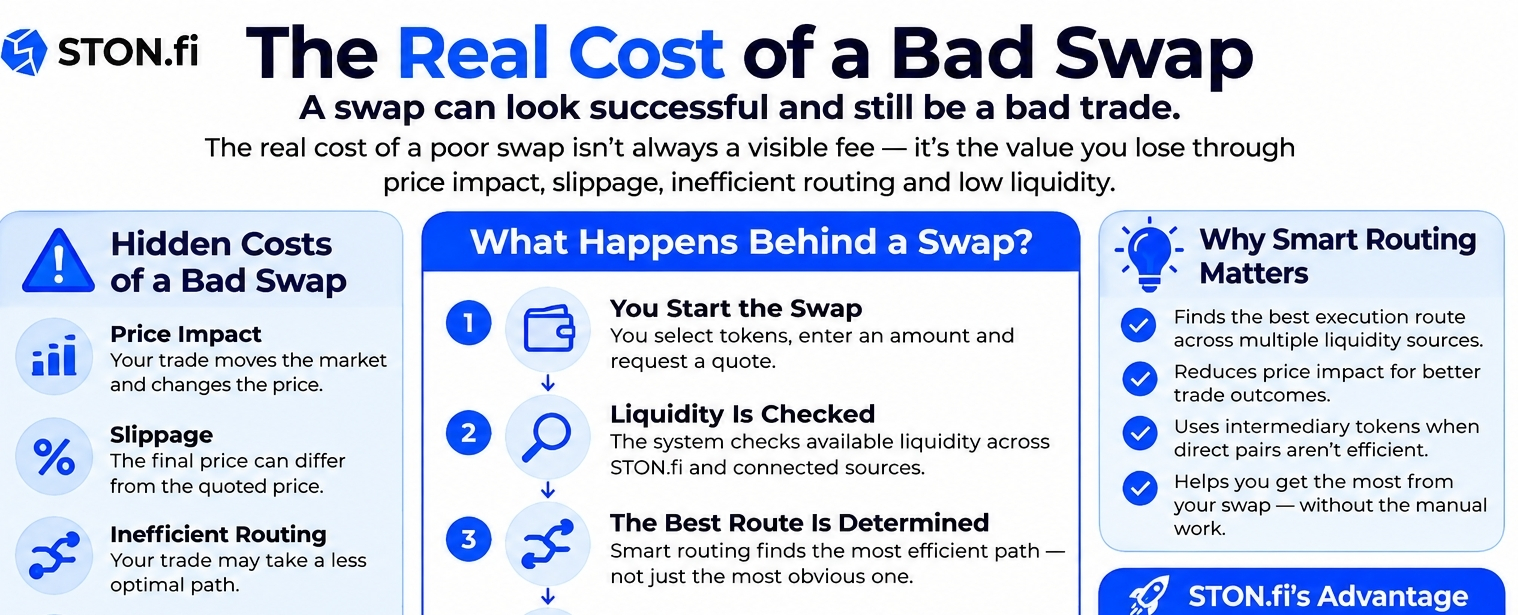
STON.fiでの悪いスワップがもたらす本当のコストスワップが画面上では成功して見えても、実際には悪い取引であり得ます。
それが、DeFiを探っていく中で私が学んだ最大の教訓の一つです。
あなたはトークンを選び、金額を入力し、見積もりを確認して、スワップを押します。
数秒後、トークンが到着します。
取引完了。
でも、それは実際に良いスワップだったのでしょうか?
それは別の問いです。
悪いスワップの本当のコストは、必ずしも目立つ手数料として現れるとは限りません。コストが価格への影響、スリッページ、非効率なルーティング、流動性の低さ、あるいは必要以上に不利な執行を受け入れることに“隠れている”場合があります。
STON.fiでの悪いスワップがもたらす本当のコスト
スワップが画面上では成功して見えても、実際には悪い取引であり得ます。
それが、DeFiを探っていく中で私が学んだ最大の教訓の一つです。
あなたはトークンを選び、金額を入力し、見積もりを確認して、スワップを押します。
数秒後、トークンが到着します。
取引完了。
でも、それは実際に良いスワップだったのでしょうか?
それは別の問いです。
悪いスワップの本当のコストは、必ずしも目立つ手数料として現れるとは限りません。コストが価格への影響、スリッページ、非効率なルーティング、流動性の低さ、あるいは必要以上に不利な執行を受け入れることに“隠れている”場合があります。
それが、DeFiを探っていく中で私が学んだ最大の教訓の一つです。
あなたはトークンを選び、金額を入力し、見積もりを確認して、スワップを押します。
数秒後、トークンが到着します。
取引完了。
でも、それは実際に良いスワップだったのでしょうか?
それは別の問いです。
悪いスワップの本当のコストは、必ずしも目立つ手数料として現れるとは限りません。コストが価格への影響、スリッページ、非効率なルーティング、流動性の低さ、あるいは必要以上に不利な執行を受け入れることに“隠れている”場合があります。
116
·
--
STONトークンはSTON.fiエコシステムにとってなぜ重要なのか?私が最初にSTON.fiを探り始めたとき、主に関心があったのは「トークンのスワップ」ひとつでした。
DEXがどのように機能しているのか、流動性がどう扱われているのか、そしてなぜTONエコシステムの中でこれほど多くの人がSTON.fiについて語っていたのかを理解したかったのです。
しかし、さらに深く調べていくほど、スワップ画面は全体像のほんの一部にすぎないのだと分かってきました。
もうひとつ、ユーザーをエコシステムにつなぐ重要な要素があり、それがSTONトークンです。
そして、現在の役割を見てみた結果、STONは「取引できるトークン」である以上のことを行っているのだと理解する価値があると思いました。
STONトークンはSTON.fiエコシステムにとってなぜ重要なのか?
私が最初にSTON.fiを探り始めたとき、主に関心があったのは「トークンのスワップ」ひとつでした。
DEXがどのように機能しているのか、流動性がどう扱われているのか、そしてなぜTONエコシステムの中でこれほど多くの人がSTON.fiについて語っていたのかを理解したかったのです。
しかし、さらに深く調べていくほど、スワップ画面は全体像のほんの一部にすぎないのだと分かってきました。
もうひとつ、ユーザーをエコシステムにつなぐ重要な要素があり、それがSTONトークンです。
そして、現在の役割を見てみた結果、STONは「取引できるトークン」である以上のことを行っているのだと理解する価値があると思いました。
DEXがどのように機能しているのか、流動性がどう扱われているのか、そしてなぜTONエコシステムの中でこれほど多くの人がSTON.fiについて語っていたのかを理解したかったのです。
しかし、さらに深く調べていくほど、スワップ画面は全体像のほんの一部にすぎないのだと分かってきました。
もうひとつ、ユーザーをエコシステムにつなぐ重要な要素があり、それがSTONトークンです。
そして、現在の役割を見てみた結果、STONは「取引できるトークン」である以上のことを行っているのだと理解する価値があると思いました。
168
·
--
記事
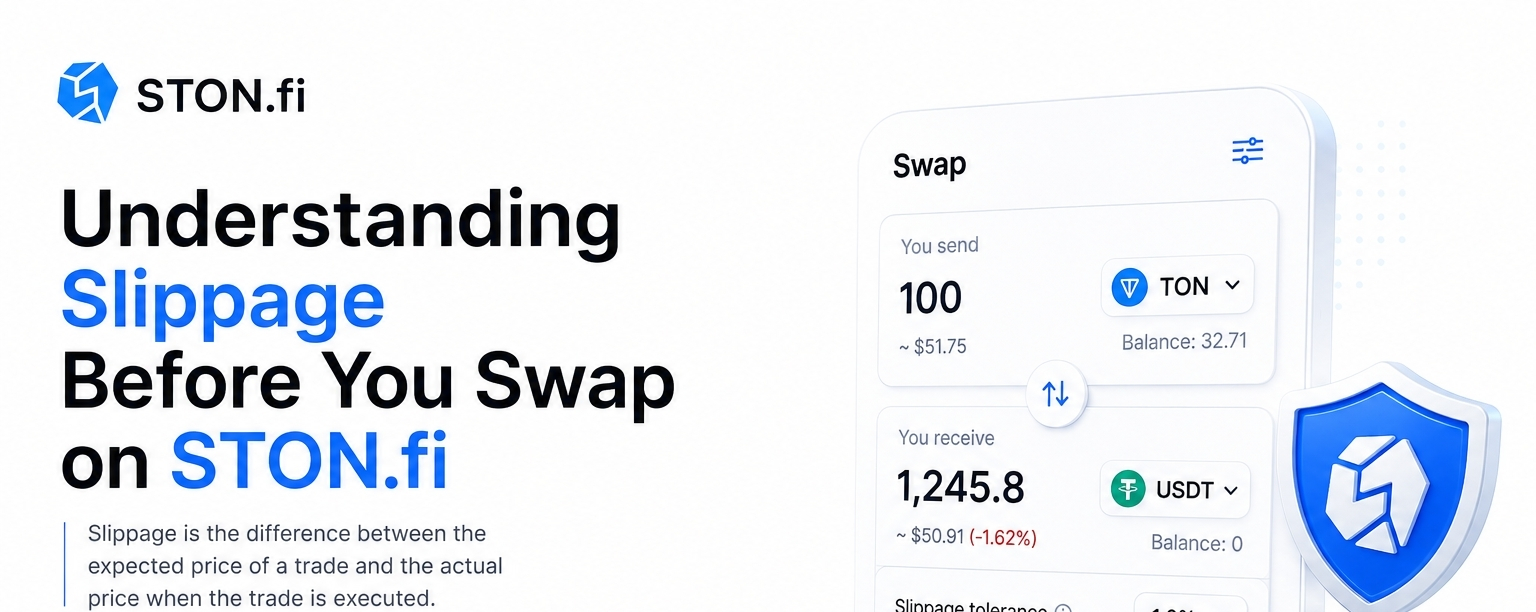
STON.fiでスワップする前にスリッページを理解しようSTON.fiでトークンスワップを確認していたとき、以前はまったく見落としていたあることに気づきました。取引が確定する前に表示される金額は、あなたが実際に受け取る正確な金額とは限らないのです。
それで、スリッページについてさらに深く調べることになりました。
DeFiに初めて触れる人にとっては、スリッページは別の難しそうな暗号資産用語に聞こえるかもしれません。ですが、その意味がわかると、スワップを確定する前に、より情報に基づいた判断をしやすくなります。
スリッページとは?
簡単に言うと、スリッページとは、取引を始めるときに想定していた価格と、実際に取引が実行された価格の差のことです。
STON.fiでスワップする前にスリッページを理解しよう
STON.fiでトークンスワップを確認していたとき、以前はまったく見落としていたあることに気づきました。取引が確定する前に表示される金額は、あなたが実際に受け取る正確な金額とは限らないのです。
それで、スリッページについてさらに深く調べることになりました。
DeFiに初めて触れる人にとっては、スリッページは別の難しそうな暗号資産用語に聞こえるかもしれません。ですが、その意味がわかると、スワップを確定する前に、より情報に基づいた判断をしやすくなります。
スリッページとは?
簡単に言うと、スリッページとは、取引を始めるときに想定していた価格と、実際に取引が実行された価格の差のことです。
それで、スリッページについてさらに深く調べることになりました。
DeFiに初めて触れる人にとっては、スリッページは別の難しそうな暗号資産用語に聞こえるかもしれません。ですが、その意味がわかると、スワップを確定する前に、より情報に基づいた判断をしやすくなります。
スリッページとは?
簡単に言うと、スリッページとは、取引を始めるときに想定していた価格と、実際に取引が実行された価格の差のことです。
431
·
--
記事
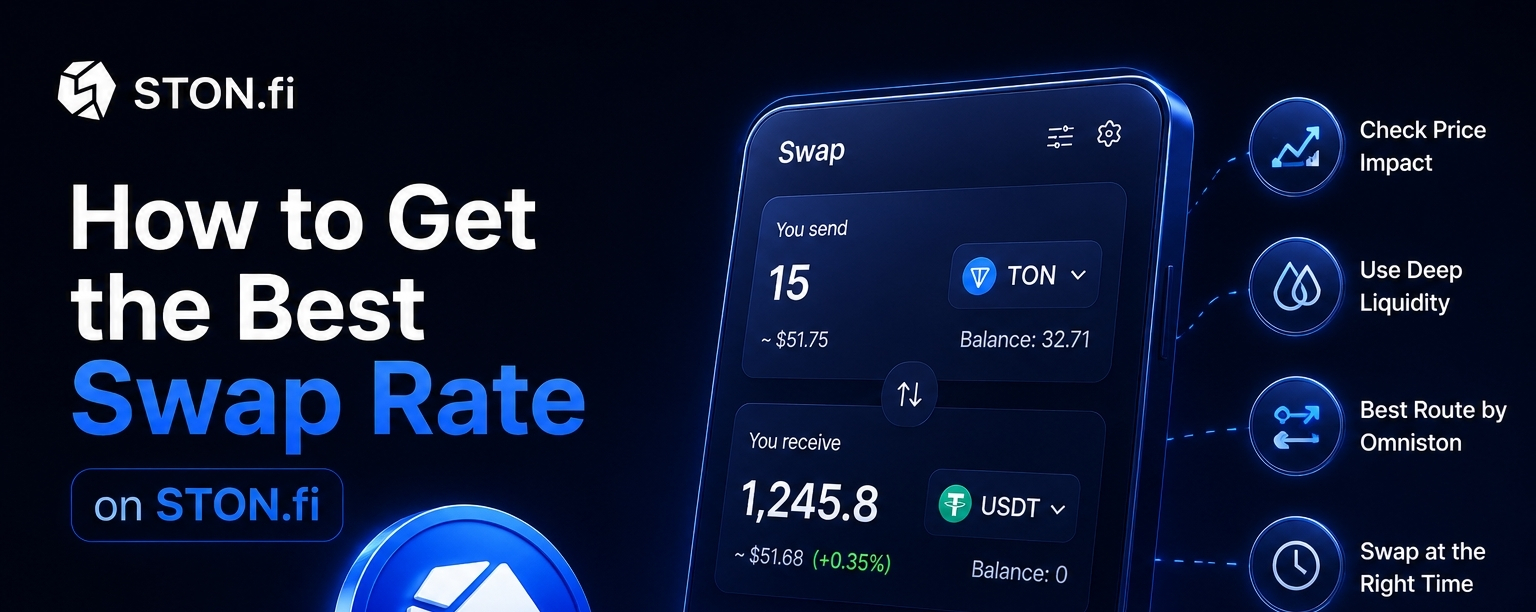
STON.fiで最高のスワップレートを得る方法最近STON.fiをチェックしていたとき、トークンをスワップするときに以前は見落としていたある点に、より注意を払うようになりました。実際に受け取るレートは、スワップそのものと同じくらい重要だということです。
DEXは開くのが簡単で、2つのトークンを選び、金額を入力してすぐに「スワップ」をクリックするだけです。しかし流動性、価格への影響(価格インパクト)、スリッページ、利用可能な実行ルートを確認していないと、期待していたよりも少ない価値しか受け取れないことがあります。
それがきっかけで、STON.fiがトークンのスワップにどう取り組んでいるのか、そしてユーザーがより良い実行(エクセキューション)を得るためにできることをさらに深掘りしてみました。
STON.fiで最高のスワップレートを得る方法
最近STON.fiをチェックしていたとき、トークンをスワップするときに以前は見落としていたある点に、より注意を払うようになりました。実際に受け取るレートは、スワップそのものと同じくらい重要だということです。
DEXは開くのが簡単で、2つのトークンを選び、金額を入力してすぐに「スワップ」をクリックするだけです。しかし流動性、価格への影響(価格インパクト)、スリッページ、利用可能な実行ルートを確認していないと、期待していたよりも少ない価値しか受け取れないことがあります。
それがきっかけで、STON.fiがトークンのスワップにどう取り組んでいるのか、そしてユーザーがより良い実行(エクセキューション)を得るためにできることをさらに深掘りしてみました。
DEXは開くのが簡単で、2つのトークンを選び、金額を入力してすぐに「スワップ」をクリックするだけです。しかし流動性、価格への影響(価格インパクト)、スリッページ、利用可能な実行ルートを確認していないと、期待していたよりも少ない価値しか受け取れないことがあります。
それがきっかけで、STON.fiがトークンのスワップにどう取り組んでいるのか、そしてユーザーがより良い実行(エクセキューション)を得るためにできることをさらに深掘りしてみました。
59
·
--
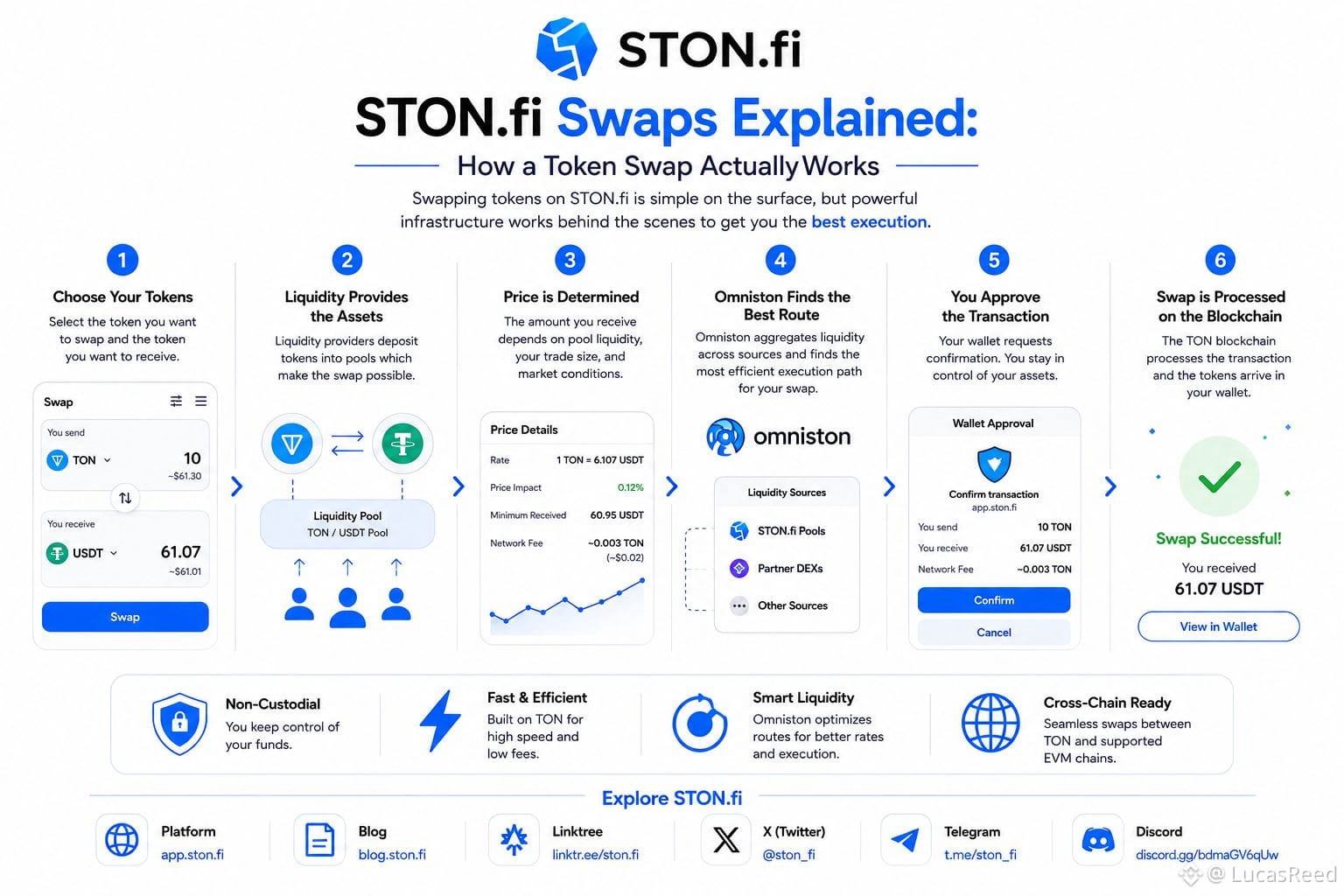
私は STON.fi のスワップの裏側で実際に何が起きているのか、さらに深く調べてみました。そして際立つのは、フロントエンドのシンプルさの裏には、幕の内側で本格的なインフラが動いているという点です。
あなたはスワップしたいトークンを選び、数量を入力し、見積もり(クオート)を確認して、確定します。しかしそのシンプルな体験の裏では、流動性ソース、価格、ルーティング、そしてブロックチェーン上での実行がすべて連携して動く必要があります。
そこで Omniston が面白くなります。流動性の集約と実行レイヤーとして機能することで、流動性をつなぎ、ユーザー自身がその複雑さを管理しなくても済む形で、スワップの実行方法を最適化するのに役立ちます。
私にとって、これは「良い DeFi インフラ」がどうあるべきかを示しています。複雑な技術が静かに働き、その間ユーザーにはシンプルな体験が届く——それが理想です。
そして TON がさらに拡大していくにつれて、そのようなインフラの重要性はますます高まっていくかもしれません。
STON.fi を探検してみてください 👇
🌐 https://app.ston.fi/
📝 https://blog.ston.fi/
🐦 https://twitter.com/ston_fi
💬 https://t.me/ston_fi
🎮 https://discord.gg/bdmaGV6qUw
🌳 https://linktr.ee/ston.fi/
#STONfi #TON #Omniston #DeFi #DEX
$MIRA $GRAM $BTC
{spot}(BTCUSDT)
{spot}(GRAMUSDT)
{spot}(MIRAUSDT)
私は STON.fi のスワップの裏側で実際に何が起きているのか、さらに深く調べてみました。そして際立つのは、フロントエンドのシンプルさの裏には、幕の内側で本格的なインフラが動いているという点です。
あなたはスワップしたいトークンを選び、数量を入力し、見積もり(クオート)を確認して、確定します。しかしそのシンプルな体験の裏では、流動性ソース、価格、ルーティング、そしてブロックチェーン上での実行がすべて連携して動く必要があります。
そこで Omniston が面白くなります。流動性の集約と実行レイヤーとして機能することで、流動性をつなぎ、ユーザー自身がその複雑さを管理しなくても済む形で、スワップの実行方法を最適化するのに役立ちます。
私にとって、これは「良い DeFi インフラ」がどうあるべきかを示しています。複雑な技術が静かに働き、その間ユーザーにはシンプルな体験が届く——それが理想です。
そして TON がさらに拡大していくにつれて、そのようなインフラの重要性はますます高まっていくかもしれません。
STON.fi を探検してみてください 👇
🌐 https://app.ston.fi/
📝 https://blog.ston.fi/
🐦 https://twitter.com/ston_fi
💬 https://t.me/ston_fi
🎮 https://discord.gg/bdmaGV6qUw
🌳 https://linktr.ee/ston.fi/
#STONfi #TON #Omniston #DeFi #DEX
$MIRA $GRAM $BTC
あなたはスワップしたいトークンを選び、数量を入力し、見積もり(クオート)を確認して、確定します。しかしそのシンプルな体験の裏では、流動性ソース、価格、ルーティング、そしてブロックチェーン上での実行がすべて連携して動く必要があります。
そこで Omniston が面白くなります。流動性の集約と実行レイヤーとして機能することで、流動性をつなぎ、ユーザー自身がその複雑さを管理しなくても済む形で、スワップの実行方法を最適化するのに役立ちます。
私にとって、これは「良い DeFi インフラ」がどうあるべきかを示しています。複雑な技術が静かに働き、その間ユーザーにはシンプルな体験が届く——それが理想です。
そして TON がさらに拡大していくにつれて、そのようなインフラの重要性はますます高まっていくかもしれません。
STON.fi を探検してみてください 👇
🌐 https://app.ston.fi/
📝 https://blog.ston.fi/
🐦 https://twitter.com/ston_fi
💬 https://t.me/ston_fi
🎮 https://discord.gg/bdmaGV6qUw
🌳 https://linktr.ee/ston.fi/
#STONfi #TON #Omniston #DeFi #DEX
$MIRA $GRAM $BTC
358
·
--
記事
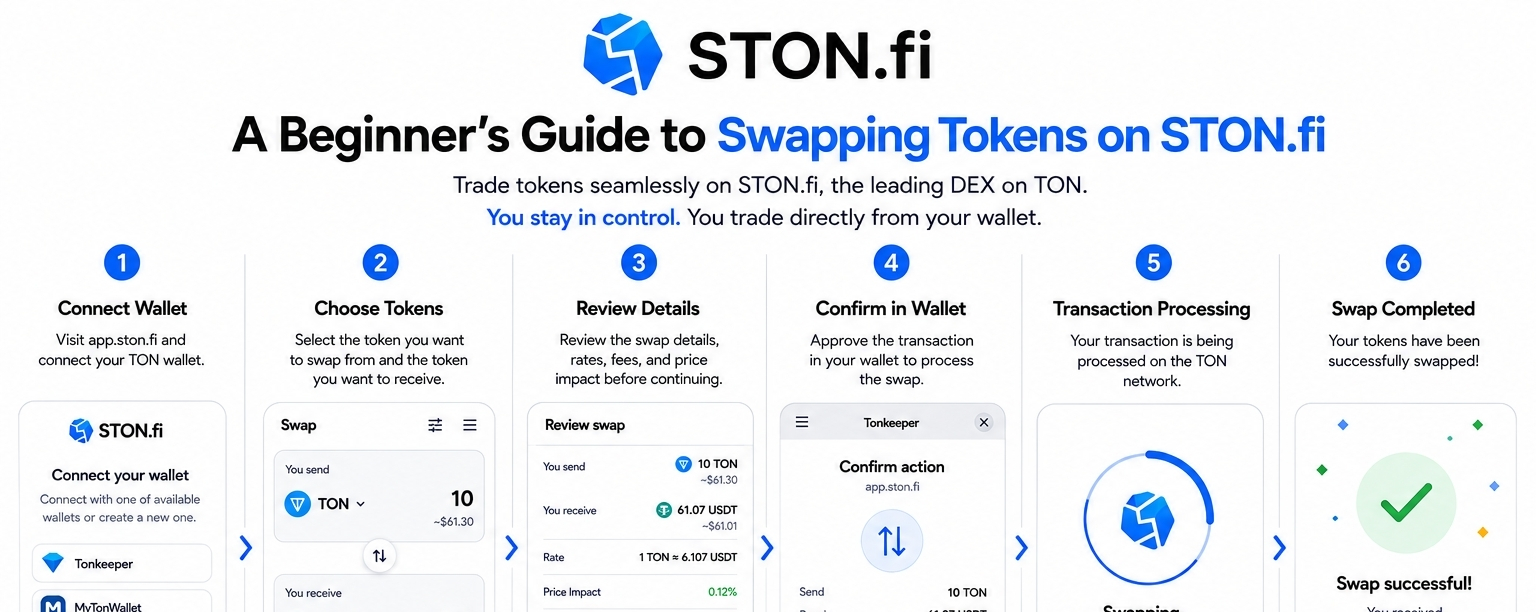
STON.fiでトークンをスワップするための初心者ガイド分散型取引所を調べ始めたとき、私が最初に抱いた大きな疑問の1つは次のことでした。中央集権型の取引所に頼らずに、どうやってトークンをスワップするの?
最初は圧倒されるように感じました。接続するウォレット、選ぶトークン、理解すべきネットワーク手数料、そしてセキュリティ面での不安がありました。
TONエコシステムを調査していたときにSTON.fiを見つけ、トークンのスワップは複雑である必要がないとすぐに気づきました。このプラットフォームは、分散型取引をシンプルにしつつ、ユーザーが資産を完全にコントロールし続けられるように設計されています。
STON.fiでトークンをスワップするための初心者ガイド
分散型取引所を調べ始めたとき、私が最初に抱いた大きな疑問の1つは次のことでした。中央集権型の取引所に頼らずに、どうやってトークンをスワップするの?
最初は圧倒されるように感じました。接続するウォレット、選ぶトークン、理解すべきネットワーク手数料、そしてセキュリティ面での不安がありました。
TONエコシステムを調査していたときにSTON.fiを見つけ、トークンのスワップは複雑である必要がないとすぐに気づきました。このプラットフォームは、分散型取引をシンプルにしつつ、ユーザーが資産を完全にコントロールし続けられるように設計されています。
最初は圧倒されるように感じました。接続するウォレット、選ぶトークン、理解すべきネットワーク手数料、そしてセキュリティ面での不安がありました。
TONエコシステムを調査していたときにSTON.fiを見つけ、トークンのスワップは複雑である必要がないとすぐに気づきました。このプラットフォームは、分散型取引をシンプルにしつつ、ユーザーが資産を完全にコントロールし続けられるように設計されています。
1
314
·
--
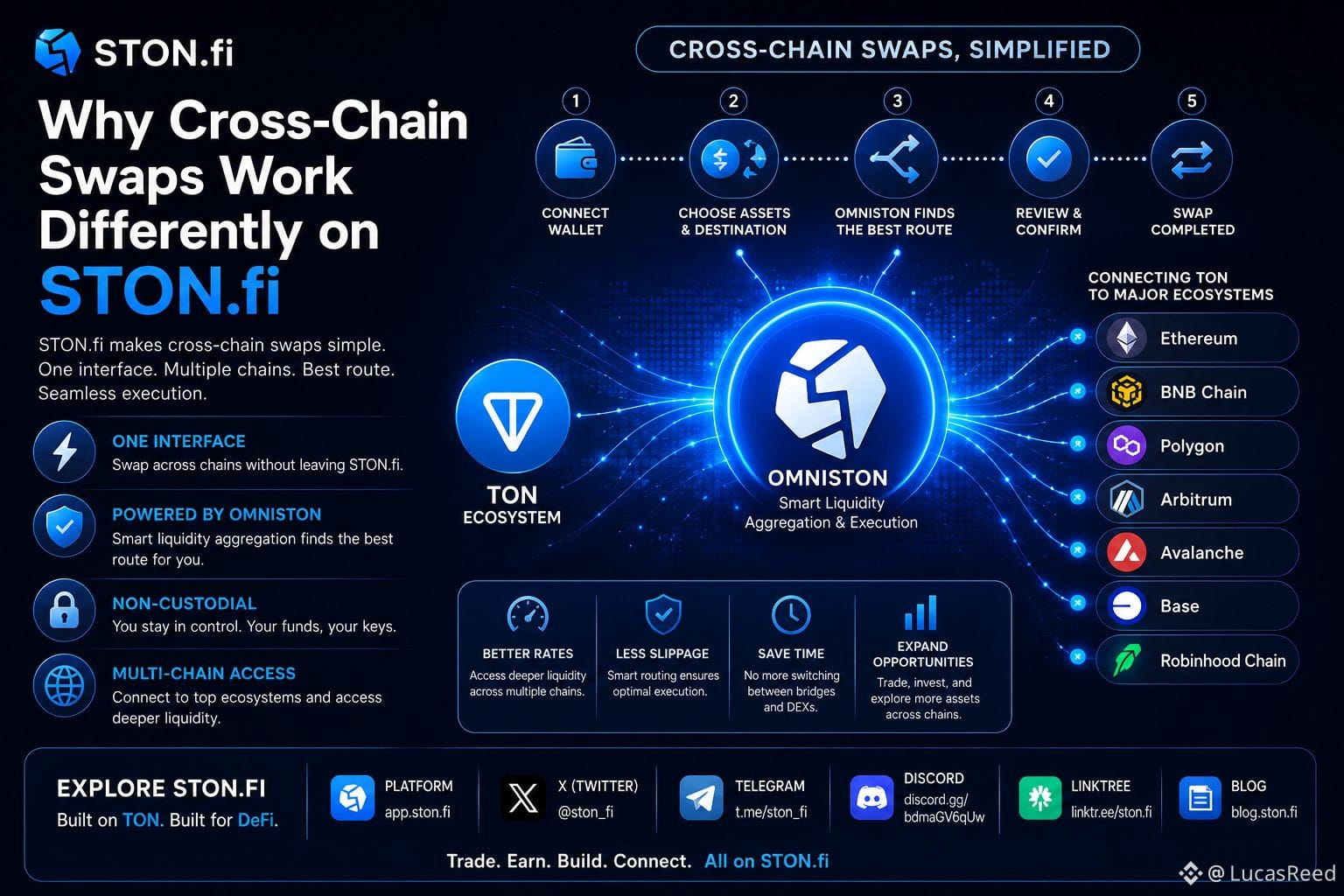
以前は、クロスチェーンスワップとは、あるブロックチェーンから別のブロックチェーンへ資産を移すことだと思っていました。STON.fiを詳しく調べるほど、それらは実際にはDeFi体験全体の摩擦を取り除くことが本質だと気づきました。
特に印象的なのは、STON.fiがユーザーに対して複雑なルーティングや複数の流動性ソースを意識させないことです。裏側ではOmnistonが動いているため、スワップがどのように行われるかという仕組みから意識が外れ、効率よく完了させること、そして資産は自分のウォレットに保持したまま進められることに集中できます。
TONが進化し続ける中で、複雑さを単純化しつつ分散化を損なわないプラットフォームこそが大きなインパクトを持つと私は考えています。STON.fiがその方向性を目指していることは、とてもワクワクします。
1つのインターフェース。複数のエコシステム。よりスマートな実行。
STON.fiを探る👇
🌐 Platform: https://app.ston.fi/
📝 Official Blog: https://blog.ston.fi/
🌳 Linktree: https://linktr.ee/ston.fi/
🐦 X: https://twitter.com/ston_fi
💬 Telegram: https://t.me/ston_fi
🎮 Discord: https://discord.gg/bdmaGV6qUw
#STONfi #TON #Omniston #CrossChain #DeFi
$AKE $BTC $AAPLB
{spot}(AAPLBUSDT)
以前は、クロスチェーンスワップとは、あるブロックチェーンから別のブロックチェーンへ資産を移すことだと思っていました。STON.fiを詳しく調べるほど、それらは実際にはDeFi体験全体の摩擦を取り除くことが本質だと気づきました。
特に印象的なのは、STON.fiがユーザーに対して複雑なルーティングや複数の流動性ソースを意識させないことです。裏側ではOmnistonが動いているため、スワップがどのように行われるかという仕組みから意識が外れ、効率よく完了させること、そして資産は自分のウォレットに保持したまま進められることに集中できます。
TONが進化し続ける中で、複雑さを単純化しつつ分散化を損なわないプラットフォームこそが大きなインパクトを持つと私は考えています。STON.fiがその方向性を目指していることは、とてもワクワクします。
1つのインターフェース。複数のエコシステム。よりスマートな実行。
STON.fiを探る👇
🌐 Platform: https://app.ston.fi/
📝 Official Blog: https://blog.ston.fi/
🌳 Linktree: https://linktr.ee/ston.fi/
🐦 X: https://twitter.com/ston_fi
💬 Telegram: https://t.me/ston_fi
🎮 Discord: https://discord.gg/bdmaGV6qUw
#STONfi #TON #Omniston #CrossChain #DeFi
$AKE $BTC $AAPLB
特に印象的なのは、STON.fiがユーザーに対して複雑なルーティングや複数の流動性ソースを意識させないことです。裏側ではOmnistonが動いているため、スワップがどのように行われるかという仕組みから意識が外れ、効率よく完了させること、そして資産は自分のウォレットに保持したまま進められることに集中できます。
TONが進化し続ける中で、複雑さを単純化しつつ分散化を損なわないプラットフォームこそが大きなインパクトを持つと私は考えています。STON.fiがその方向性を目指していることは、とてもワクワクします。
1つのインターフェース。複数のエコシステム。よりスマートな実行。
STON.fiを探る👇
🌐 Platform: https://app.ston.fi/
📝 Official Blog: https://blog.ston.fi/
🌳 Linktree: https://linktr.ee/ston.fi/
🐦 X: https://twitter.com/ston_fi
💬 Telegram: https://t.me/ston_fi
🎮 Discord: https://discord.gg/bdmaGV6qUw
#STONfi #TON #Omniston #CrossChain #DeFi
$AKE $BTC $AAPLB
198
·
--
ブリッシュ
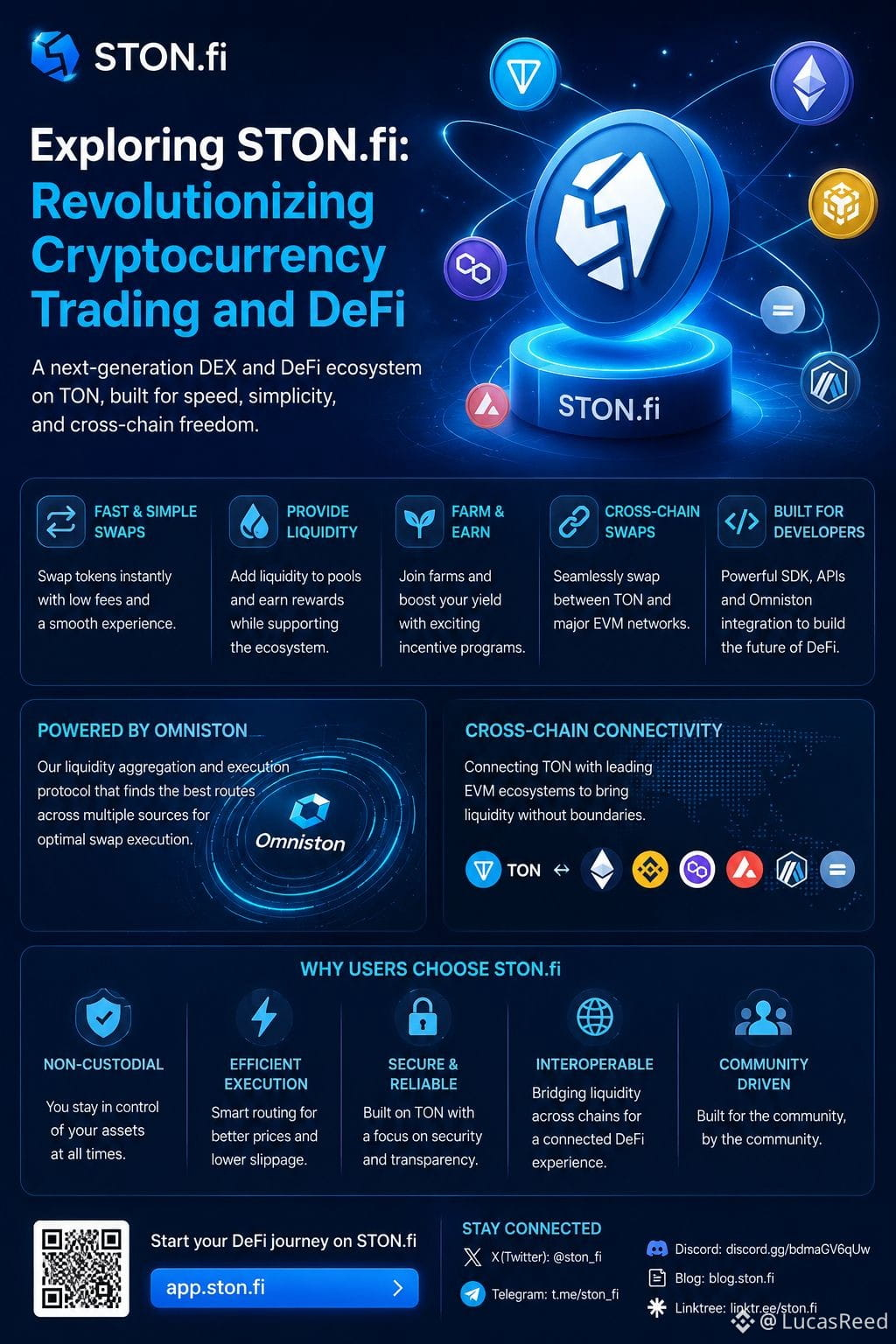
新しい月が来るたびに、何か新しいことを探求する理由が生まれます。2024年8月も例外ではなく、私はSTON.fiをより深く掘り下げてみることになりました。
プラットフォームを調べるほど、「TON上のただのDEXではない」ことが分かってきました。DeFiをよりシンプルに、賢く、そしてよりつながりのあるものに感じさせるためのインフラを構築しているのです。
特に感銘を受けたのは、Omnistonが裏側でどのように動いているかです。流動性をインテリジェントに集約して、スワップの実行を最適化するよう働きかけています。多くのユーザーが目にするのは最終結果とスムーズなスワップだけですが、それを成立させる強力な実行レイヤーがその背後に存在します。
さらに、カストディ不要のトレーディング、TONと主要なEVMエコシステム間のクロスチェーン接続、流動性ファーミング、そして成長している開発者エコシステムを組み合わせることで、STON.fiが「今日のDeFi」にとどまらない発想で取り組んでいることが明らかです。
8月は、単なるノイズを作るのではなく、実際の課題を解決するプロジェクトを見つける月です。STON.fiは、間違いなく今後も注目して追いかけることにします。
STON.fiを探索 👇
🌐 Platform: https://app.ston.fi/
📝 Blog: https://blog.ston.fi/
🌳 Linktree: https://linktr.ee/ston.fi/
🐦 X: https://twitter.com/ston_fi
💬 Telegram: https://t.me/ston_fi
🎮 Discord: https://discord.gg/bdmaGV6qUw
#STONfi #TON #Omniston #August
$BTC #GRAM $AKE $ETH
{alpha}(560x2c3a8ee94ddd97244a93bc48298f97d2c412f7db)
{spot}(BTCUSDT)
{spot}(GRAMUSDT)
新しい月が来るたびに、何か新しいことを探求する理由が生まれます。2024年8月も例外ではなく、私はSTON.fiをより深く掘り下げてみることになりました。
プラットフォームを調べるほど、「TON上のただのDEXではない」ことが分かってきました。DeFiをよりシンプルに、賢く、そしてよりつながりのあるものに感じさせるためのインフラを構築しているのです。
特に感銘を受けたのは、Omnistonが裏側でどのように動いているかです。流動性をインテリジェントに集約して、スワップの実行を最適化するよう働きかけています。多くのユーザーが目にするのは最終結果とスムーズなスワップだけですが、それを成立させる強力な実行レイヤーがその背後に存在します。
さらに、カストディ不要のトレーディング、TONと主要なEVMエコシステム間のクロスチェーン接続、流動性ファーミング、そして成長している開発者エコシステムを組み合わせることで、STON.fiが「今日のDeFi」にとどまらない発想で取り組んでいることが明らかです。
8月は、単なるノイズを作るのではなく、実際の課題を解決するプロジェクトを見つける月です。STON.fiは、間違いなく今後も注目して追いかけることにします。
STON.fiを探索 👇
🌐 Platform: https://app.ston.fi/
📝 Blog: https://blog.ston.fi/
🌳 Linktree: https://linktr.ee/ston.fi/
🐦 X: https://twitter.com/ston_fi
💬 Telegram: https://t.me/ston_fi
🎮 Discord: https://discord.gg/bdmaGV6qUw
#STONfi #TON #Omniston #August
$BTC #GRAM $AKE $ETH
プラットフォームを調べるほど、「TON上のただのDEXではない」ことが分かってきました。DeFiをよりシンプルに、賢く、そしてよりつながりのあるものに感じさせるためのインフラを構築しているのです。
特に感銘を受けたのは、Omnistonが裏側でどのように動いているかです。流動性をインテリジェントに集約して、スワップの実行を最適化するよう働きかけています。多くのユーザーが目にするのは最終結果とスムーズなスワップだけですが、それを成立させる強力な実行レイヤーがその背後に存在します。
さらに、カストディ不要のトレーディング、TONと主要なEVMエコシステム間のクロスチェーン接続、流動性ファーミング、そして成長している開発者エコシステムを組み合わせることで、STON.fiが「今日のDeFi」にとどまらない発想で取り組んでいることが明らかです。
8月は、単なるノイズを作るのではなく、実際の課題を解決するプロジェクトを見つける月です。STON.fiは、間違いなく今後も注目して追いかけることにします。
STON.fiを探索 👇
🌐 Platform: https://app.ston.fi/
📝 Blog: https://blog.ston.fi/
🌳 Linktree: https://linktr.ee/ston.fi/
🐦 X: https://twitter.com/ston_fi
💬 Telegram: https://t.me/ston_fi
🎮 Discord: https://discord.gg/bdmaGV6qUw
#STONfi #TON #Omniston #August
$BTC #GRAM $AKE $ETH
247
·
--
記事
私はすべてのDeFiトレンドを追うのをやめた。読書がすべてを変えた。DeFiに初めて足を踏み入れたとき、成功はとにかく最速であることだと思っていました。
新しいプロトコルを最も早く見つけること。
新しいトークンに最も早く飛びつくこと。
最高のAPYを得るために最も早くファームすること。
多くの人と同じように、私は実際に使っているプロジェクトの裏にある技術を理解するよりも、ソーシャルメディアをスクロールする時間のほうが長くなっていました。
やがて、私はあることに気づきました。
最善の判断をしていた人たちは、必ずしも最も多くのコンテンツを消費している人たちではなく、必要な(正しい)コンテンツを消費している人たちでした。
その気づきは、分散型金融への取り組み方を完全に変えました。
私はすべてのDeFiトレンドを追うのをやめた。読書がすべてを変えた。
DeFiに初めて足を踏み入れたとき、成功はとにかく最速であることだと思っていました。
新しいプロトコルを最も早く見つけること。
新しいトークンに最も早く飛びつくこと。
最高のAPYを得るために最も早くファームすること。
多くの人と同じように、私は実際に使っているプロジェクトの裏にある技術を理解するよりも、ソーシャルメディアをスクロールする時間のほうが長くなっていました。
やがて、私はあることに気づきました。
最善の判断をしていた人たちは、必ずしも最も多くのコンテンツを消費している人たちではなく、必要な(正しい)コンテンツを消費している人たちでした。
その気づきは、分散型金融への取り組み方を完全に変えました。
新しいプロトコルを最も早く見つけること。
新しいトークンに最も早く飛びつくこと。
最高のAPYを得るために最も早くファームすること。
多くの人と同じように、私は実際に使っているプロジェクトの裏にある技術を理解するよりも、ソーシャルメディアをスクロールする時間のほうが長くなっていました。
やがて、私はあることに気づきました。
最善の判断をしていた人たちは、必ずしも最も多くのコンテンツを消費している人たちではなく、必要な(正しい)コンテンツを消費している人たちでした。
その気づきは、分散型金融への取り組み方を完全に変えました。
415
·
--
> 多くの人はDEXがトレーダーによって動かされていると思っています。実際には、流動性プロバイダーによって支えられています。
STON.fiでのスムーズなスワップ、競争力のある価格、低スリッページの取引はすべて、誰かがプールに流動性を供給することから始まります。彼らはエコシステムの土台です。
流動性が強いほど、取引体験も強くなります。だからこそ、流動性は重要なだけではなく、TON上のDeFiの成長に不可欠なのです。
#STONfi #TON #DeFi #Liquidity #Crypto
$BTC $GRAM $AKE
> 多くの人はDEXがトレーダーによって動かされていると思っています。実際には、流動性プロバイダーによって支えられています。
STON.fiでのスムーズなスワップ、競争力のある価格、低スリッページの取引はすべて、誰かがプールに流動性を供給することから始まります。彼らはエコシステムの土台です。
流動性が強いほど、取引体験も強くなります。だからこそ、流動性は重要なだけではなく、TON上のDeFiの成長に不可欠なのです。
#STONfi #TON #DeFi #Liquidity #Crypto
$BTC $GRAM $AKE
STON.fiでのスムーズなスワップ、競争力のある価格、低スリッページの取引はすべて、誰かがプールに流動性を供給することから始まります。彼らはエコシステムの土台です。
流動性が強いほど、取引体験も強くなります。だからこそ、流動性は重要なだけではなく、TON上のDeFiの成長に不可欠なのです。
#STONfi #TON #DeFi #Liquidity #Crypto
$BTC $GRAM $AKE
1
3
1k
·
--
みなさんこんにちは。
@stonfi について、ちょっとしたチュートリアルを作りました。
@stonfi がOTHERS DEXと本当に何が違うのかを学ぼう。
ぜひご意見も共有してください。
$AKE $BTC $GRAM
みなさんこんにちは。
@STONfi DEX について、ちょっとしたチュートリアルを作りました。
@STONfi DEX がOTHERS DEXと本当に何が違うのかを学ぼう。
ぜひご意見も共有してください。
$AKE $BTC $GRAM
@STONfi DEX について、ちょっとしたチュートリアルを作りました。
@STONfi DEX がOTHERS DEXと本当に何が違うのかを学ぼう。
ぜひご意見も共有してください。
$AKE $BTC $GRAM
8
3k
·
--
記事
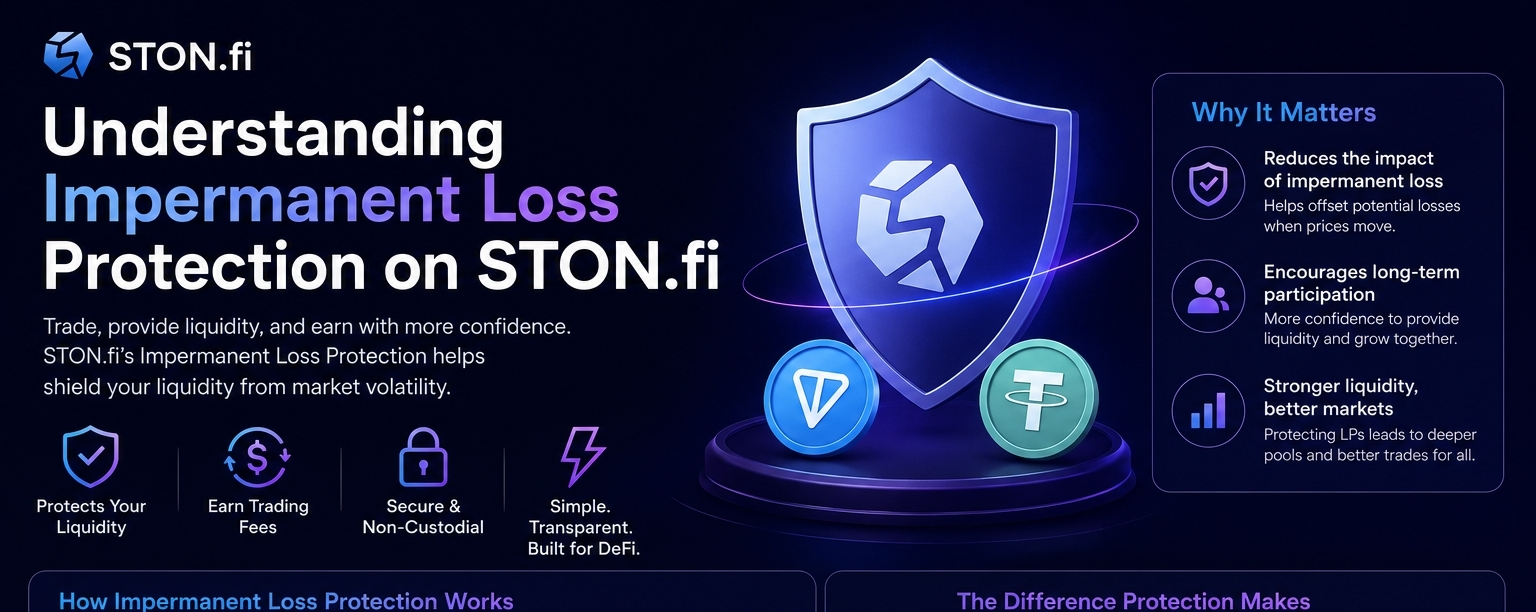
一時的損失のせいで流動性提供を避けていました一時的損失のせいで流動性提供を避けていましたが、保護が方程式をどう変えるのかを理解するまでそうしていました
DeFiを初めて探り始めた頃、流動性提供は受動的な収入を得るための最も賢い方法の一つのように思えました。取引手数料、インセンティブ、そして利回りの機会は、少なくとも紙の上ではすべて魅力的に見えました
そして私は、一時的損失について学びました
多くの初心者と同じように、流動性提供者が報酬を得ながら、預けた資産の価値は同じトークンを保有するよりも劣っていくのを同時に見ているという話を目にしました。利回りを得ることは、受け取る報酬だけの話ではなく、あなたが引き受けるリスクでもあることがすぐに明らかになりました
一時的損失のせいで流動性提供を避けていました
一時的損失のせいで流動性提供を避けていましたが、保護が方程式をどう変えるのかを理解するまでそうしていました
DeFiを初めて探り始めた頃、流動性提供は受動的な収入を得るための最も賢い方法の一つのように思えました。取引手数料、インセンティブ、そして利回りの機会は、少なくとも紙の上ではすべて魅力的に見えました
そして私は、一時的損失について学びました
多くの初心者と同じように、流動性提供者が報酬を得ながら、預けた資産の価値は同じトークンを保有するよりも劣っていくのを同時に見ているという話を目にしました。利回りを得ることは、受け取る報酬だけの話ではなく、あなたが引き受けるリスクでもあることがすぐに明らかになりました
DeFiを初めて探り始めた頃、流動性提供は受動的な収入を得るための最も賢い方法の一つのように思えました。取引手数料、インセンティブ、そして利回りの機会は、少なくとも紙の上ではすべて魅力的に見えました
そして私は、一時的損失について学びました
多くの初心者と同じように、流動性提供者が報酬を得ながら、預けた資産の価値は同じトークンを保有するよりも劣っていくのを同時に見ているという話を目にしました。利回りを得ることは、受け取る報酬だけの話ではなく、あなたが引き受けるリスクでもあることがすぐに明らかになりました
221
·
--
記事
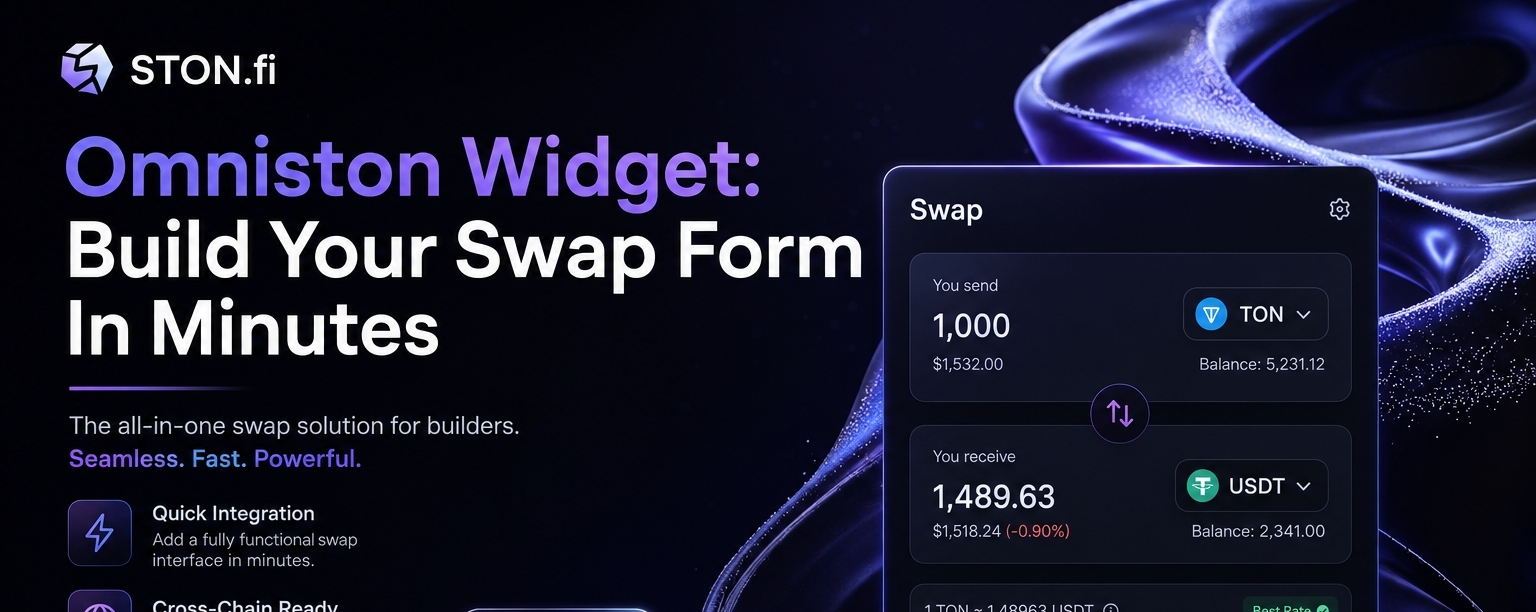
学んだ教訓:優れたDeFiプロダクトは、より多くのコードを書くことで作られるわけではないかつて私は、すべての機能をゼロから作り込むことこそが、優れた開発者の証だと信じていました。
もし自分のアプリにスワップ用のインターフェースが必要なら、コードを書き始める前に、流動性のルーティング、ウォレット連携、トークン承認、スリッページの計算、トランザクションの確認、レスポンシブデザイン、そして数十ものエッジケースについて考えるでしょう。私は、あらゆる独自実装を競争上の強みだと見なしていました。
ブロックチェーンのプロダクトに取り組み、Web3エコシステムが成熟していくのを見て、私の視点は変わりました。
学んだ教訓:優れたDeFiプロダクトは、より多くのコードを書くことで作られるわけではない
かつて私は、すべての機能をゼロから作り込むことこそが、優れた開発者の証だと信じていました。
もし自分のアプリにスワップ用のインターフェースが必要なら、コードを書き始める前に、流動性のルーティング、ウォレット連携、トークン承認、スリッページの計算、トランザクションの確認、レスポンシブデザイン、そして数十ものエッジケースについて考えるでしょう。私は、あらゆる独自実装を競争上の強みだと見なしていました。
ブロックチェーンのプロダクトに取り組み、Web3エコシステムが成熟していくのを見て、私の視点は変わりました。
もし自分のアプリにスワップ用のインターフェースが必要なら、コードを書き始める前に、流動性のルーティング、ウォレット連携、トークン承認、スリッページの計算、トランザクションの確認、レスポンシブデザイン、そして数十ものエッジケースについて考えるでしょう。私は、あらゆる独自実装を競争上の強みだと見なしていました。
ブロックチェーンのプロダクトに取り組み、Web3エコシステムが成熟していくのを見て、私の視点は変わりました。
149
·
--
記事
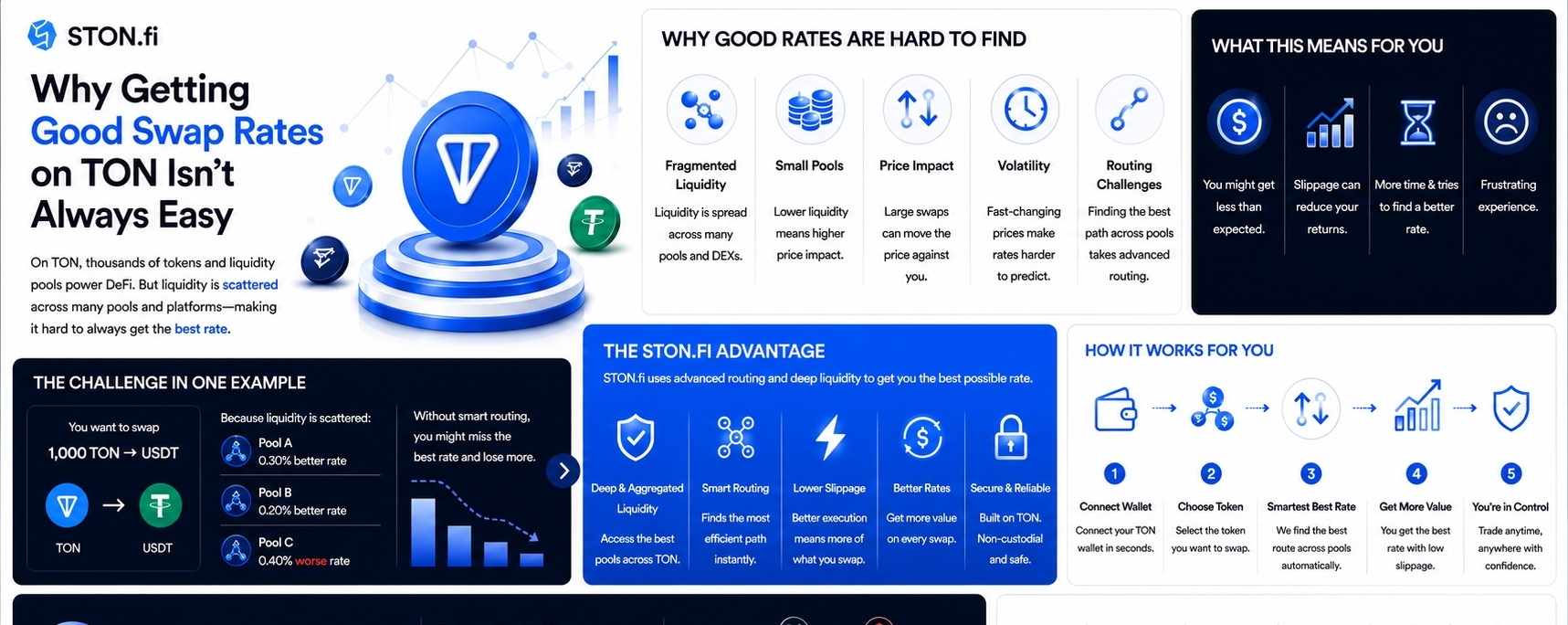
最良のスワップレートが、必ずしも最初に目にするものとは限らない理由TONで分散型取引所を最初に調べ始めたとき、すべてのプラットフォームがだいたい同じスワップ価格を提供しているのだと思っていました。トークンはトークンですよね?
STON.fiをしばらく調べてみると、それはまったく違うと分かりました。
すべてのスワップの裏には、流動性プール、ルーティングのアルゴリズム、実行戦略が関わる複雑なプロセスがあります。あなたが受け取る価格は、市場だけで決まるのではなく、あなたの取引がどのように実行されるかにも影響されます。
流動性は、多くのユーザーが考えているよりも分散しています
最良のスワップレートが、必ずしも最初に目にするものとは限らない理由
TONで分散型取引所を最初に調べ始めたとき、すべてのプラットフォームがだいたい同じスワップ価格を提供しているのだと思っていました。トークンはトークンですよね?
STON.fiをしばらく調べてみると、それはまったく違うと分かりました。
すべてのスワップの裏には、流動性プール、ルーティングのアルゴリズム、実行戦略が関わる複雑なプロセスがあります。あなたが受け取る価格は、市場だけで決まるのではなく、あなたの取引がどのように実行されるかにも影響されます。
流動性は、多くのユーザーが考えているよりも分散しています
STON.fiをしばらく調べてみると、それはまったく違うと分かりました。
すべてのスワップの裏には、流動性プール、ルーティングのアルゴリズム、実行戦略が関わる複雑なプロセスがあります。あなたが受け取る価格は、市場だけで決まるのではなく、あなたの取引がどのように実行されるかにも影響されます。
流動性は、多くのユーザーが考えているよりも分散しています
276
ログインして、さらにコンテンツを読む
厳選トピックで世界の暗号資産トレーダーの仲間入り
⚡️ 暗号資産に関する最新かつ有益な情報が見つかります。
💬 世界最大の暗号資産取引所から信頼されています。
👍 認証を受けたクリエイターから、有益なインサイトを得られます。
メール / 電話番号
トレンドトピック
BitcoinReboundsTo$79K
閲覧回数 494
33人が討論中
🚨 $BTC はさらに上昇しようとしています。
ビットコインは約 $78,804 で取引されており、先ほど $78K の水準を回復したことでおよそ 1.9% 上昇しています。次に注目すべきは、日中の高値である約 $78,905 です。
その水準を明確に上抜けると、$79K〜$80K へ向かう道が開ける可能性があります。もしBTCが跳ね返される場合、サポートは $78,300 あたりにあり、その次は $77,975 です。
強気筋には勢いがありますが、BTC は $78K を上回って維持する必要があります。
#Bitcoin #BTC #CryptoTrading #CryptoMarket #CryptoAnalysis
PulseON
·いいね:3件
·閲覧回数 991
FedHikeOddsRiseTo89%
閲覧回数 46,584
822人が討論中
RLUSDSupplyHitsRecord$2.442B
閲覧回数 2,029
40人が討論中