
Los Pollos Hermanos_
951 投稿

Los Pollos Hermanos_
取引を発注

BNBホルダー
超高頻度トレーダー
1.4年
179 フォロー
7.0K+ フォロワー
398 いいね
投稿
ポートフォリオ
PINNED
翻訳参照
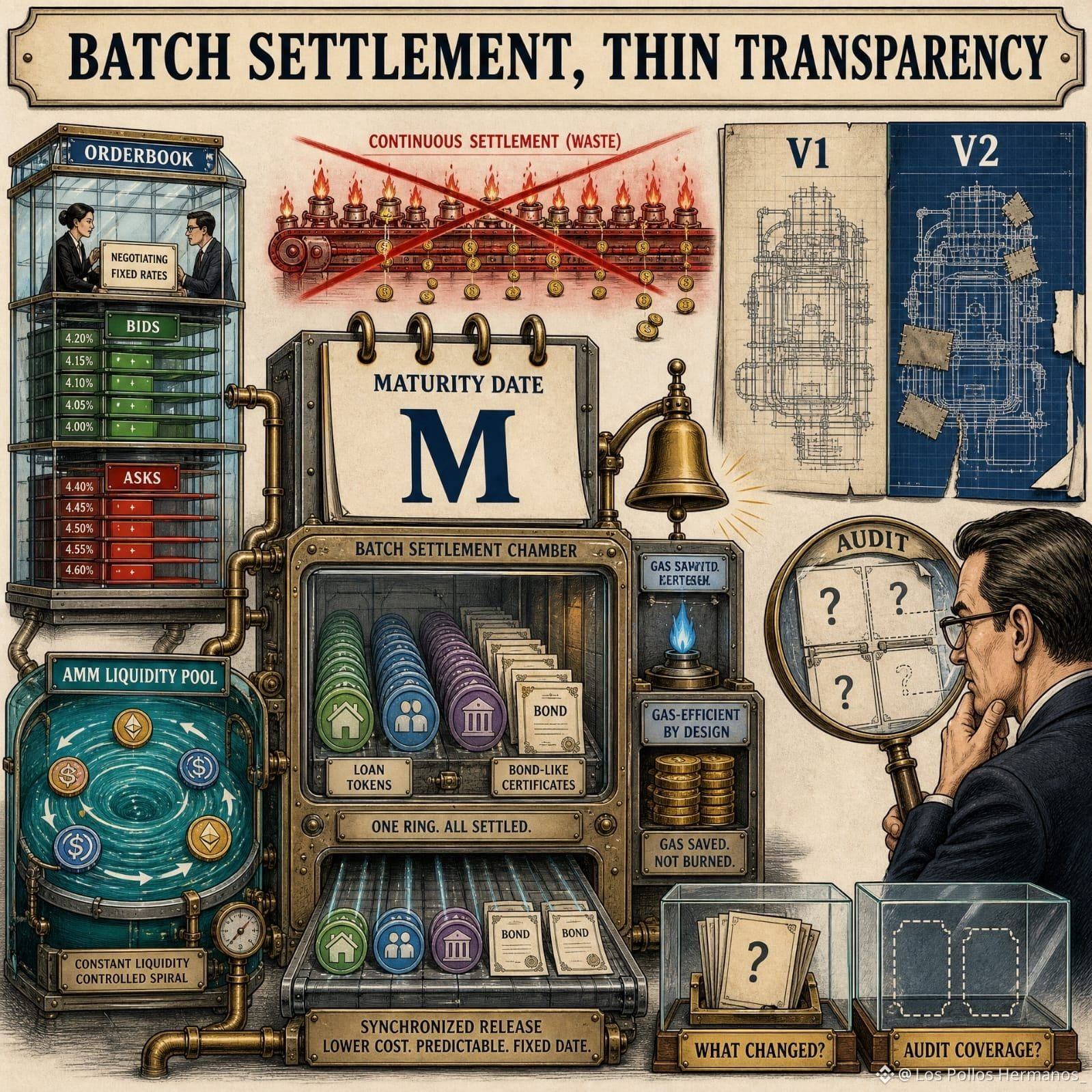
I went looking for TermMax V2 architecture documentation expecting to find gas optimization specs laid out clearly. What I found was thinner than I hoped.
The protocol runs on-chain fixed income settlement through a hybrid orderbook and AMM structure. Gas efficiency comes from how settlement gets batched at maturity rather than processed continuously. That design choice makes sense. Continuous settlement burns gas constantly.
Batch settlement at a fixed date is cheaper and more predictable. My hesitation is around the V2 label specifically. Version numbers in DeFi often mean less than they imply.
What changed from V1, what got patched, and what the audit coverage looks like for the new architecture are questions the documentation doesn't answer cleanly. The settlement logic looks sound. The versioning transparency needs work.
#termmax @TermMax
The protocol runs on-chain fixed income settlement through a hybrid orderbook and AMM structure. Gas efficiency comes from how settlement gets batched at maturity rather than processed continuously. That design choice makes sense. Continuous settlement burns gas constantly.
Batch settlement at a fixed date is cheaper and more predictable. My hesitation is around the V2 label specifically. Version numbers in DeFi often mean less than they imply.
What changed from V1, what got patched, and what the audit coverage looks like for the new architecture are questions the documentation doesn't answer cleanly. The settlement logic looks sound. The versioning transparency needs work.
#termmax @TermMax
翻訳参照
IBC support on a security-focused chain is one of those additions that requires thinking carefully about what you're gaining versus what you're opening up.
Inter-Blockchain Communication is mature infrastructure. The Cosmos ecosystem has been running IBC in production long enough to have a meaningful track record. Adding native IBC to Babylon's Genesis chain means BSNs built in the Cosmos ecosystem can connect to Babylon's security layer without custom bridging solutions.
That's a genuine interoperability improvement that expands the addressable market for Bitcoin secured finality.
What IBC also does is add connection points. Every channel is a potential failure surface. Every connected chain's security assumptions become partially relevant to Babylon's.
Interoperability and security isolation pull in opposite directions. Babylon is choosing interoperability. That's probably the right call for adoption. It's worth knowing what comes with it.
#baby $BABY @BabylonLabs_io
Inter-Blockchain Communication is mature infrastructure. The Cosmos ecosystem has been running IBC in production long enough to have a meaningful track record. Adding native IBC to Babylon's Genesis chain means BSNs built in the Cosmos ecosystem can connect to Babylon's security layer without custom bridging solutions.
That's a genuine interoperability improvement that expands the addressable market for Bitcoin secured finality.
What IBC also does is add connection points. Every channel is a potential failure surface. Every connected chain's security assumptions become partially relevant to Babylon's.
Interoperability and security isolation pull in opposite directions. Babylon is choosing interoperability. That's probably the right call for adoption. It's worth knowing what comes with it.
#baby $BABY @BabylonLabs_io

翻訳参照
Unbonding periods exist for a reason. They're the mechanism that prevents stakers from exiting before a slashing event is detected and processed. Remove the delay and you remove the accountability.
Babylon's fast unbonding claim caught my attention for exactly that reason. If Bitcoin stakers can exit quickly, the slashing mechanism that makes the whole security model work needs to be fast enough to catch misbehavior before the exit window closes.
That's an engineering constraint with real consequences. Either the slashing detection is genuinely fast enough to make rapid unbonding safe, or fast unbonding creates an escape route that sophisticated actors can exploit during exactly the moments when accountability matters most.
Capital efficiency is a real benefit worth optimizing for. It's also a real attack surface worth examining.
I'd want the detection latency numbers before getting comfortable with the unbonding speed.
#baby $BABY @BabylonLabs_io
Babylon's fast unbonding claim caught my attention for exactly that reason. If Bitcoin stakers can exit quickly, the slashing mechanism that makes the whole security model work needs to be fast enough to catch misbehavior before the exit window closes.
That's an engineering constraint with real consequences. Either the slashing detection is genuinely fast enough to make rapid unbonding safe, or fast unbonding creates an escape route that sophisticated actors can exploit during exactly the moments when accountability matters most.
Capital efficiency is a real benefit worth optimizing for. It's also a real attack surface worth examining.
I'd want the detection latency numbers before getting comfortable with the unbonding speed.
#baby $BABY @BabylonLabs_io

Bitcoin Secured Networks(ビットコイン・セキュアド・ネットワークス)とは、バビロンのマーケティングで多くの役割を担っているフレーズですが、受け入れる前にそれを分解してみたかったのです。
ビットコインのセキュリティは、累積されたプルーフ・オブ・ワーク(PoW)から生まれます。これは暗号資産の中で最も高価な攻撃対象(アタック・サーフェス)です。では、BSNsに対してバビロンが拡張しているのはそれではありません。バビロンが提供しているのは、PoSのチェックポイントをビットコインのチェーンにタイムスタンプすることで作られる最終性(ファイナリティ)の保証です。そして、その裏付けとなるのが、不正行為があればスラッシュ(没収)されうるビットコイン・ステーカーの担保(コラテラル)です。
それは重要なセキュリティです。これはビットコインのプルーフ・オブ・ワークのセキュリティと同じものではありません。そして、BSNが実際に継承するものと、名前だけ借りているにすぎないものの違いを評価するときに、その区別は重要になります。
この点を調整しているのがジェネシス・チェーンです。セキュリティを持ち運べるものにする層(レイヤー)こそがこれです。
可搬(ポータブル)なセキュリティがネイティブなセキュリティと同等なのかどうか。それが、BSNの導入者が前提として構築する前に答えるべき問いです。
#baby $BABY @BabylonLabs_io
ビットコインのセキュリティは、累積されたプルーフ・オブ・ワーク(PoW)から生まれます。これは暗号資産の中で最も高価な攻撃対象(アタック・サーフェス)です。では、BSNsに対してバビロンが拡張しているのはそれではありません。バビロンが提供しているのは、PoSのチェックポイントをビットコインのチェーンにタイムスタンプすることで作られる最終性(ファイナリティ)の保証です。そして、その裏付けとなるのが、不正行為があればスラッシュ(没収)されうるビットコイン・ステーカーの担保(コラテラル)です。
それは重要なセキュリティです。これはビットコインのプルーフ・オブ・ワークのセキュリティと同じものではありません。そして、BSNが実際に継承するものと、名前だけ借りているにすぎないものの違いを評価するときに、その区別は重要になります。
この点を調整しているのがジェネシス・チェーンです。セキュリティを持ち運べるものにする層(レイヤー)こそがこれです。
可搬(ポータブル)なセキュリティがネイティブなセキュリティと同等なのかどうか。それが、BSNの導入者が前提として構築する前に答えるべき問いです。
#baby $BABY @BabylonLabs_io

私はwBTCを使ったことがあります。また、BitGoのカストディ(保管)に関する契約書も注意深く読み込み、ビットコインを代表すると主張するラップド・アセットを保有するときに、どれだけの信頼を相手に委ねることになるのかを正確に理解しました。
そのラッパーは、基礎となる原資産を保管するカストディ人(管理者)の出来に左右されます。カストディ人に問題が起きれば、ラッパーにも問題が起きます。これは机上の話ではありません。実際に起きています。
Babylonのアーキテクチャでは、ビットコインが決して移動しないため、ラッピングは不要です。ステーキングの仕組みは、ビットコイン本体のチェーン上のビットコイン・スクリプトに存在します。ブリッジはありません。カストディ人もいません。誰か別の主体が制御するような「ビットコインの代理(表現)」もありません。
これは、wBTCが提供するものとは根本的に異なるリスク特性です。
私がストレステストで見ておきたいのは、スクリプトの複雑性です。ビットコイン・スクリプトは意図的に制限されています。その制約の中で、巧妙なスラッシング(没収)条件を構築するのは工学的な課題であり、エッジケースが非常に重要になります。
このコンセプトはカストディ・リスクを取り除きます。一方で実装はスクリプト・リスクを導入します。
#baby $BABY @BabylonLabs_io
そのラッパーは、基礎となる原資産を保管するカストディ人(管理者)の出来に左右されます。カストディ人に問題が起きれば、ラッパーにも問題が起きます。これは机上の話ではありません。実際に起きています。
Babylonのアーキテクチャでは、ビットコインが決して移動しないため、ラッピングは不要です。ステーキングの仕組みは、ビットコイン本体のチェーン上のビットコイン・スクリプトに存在します。ブリッジはありません。カストディ人もいません。誰か別の主体が制御するような「ビットコインの代理(表現)」もありません。
これは、wBTCが提供するものとは根本的に異なるリスク特性です。
私がストレステストで見ておきたいのは、スクリプトの複雑性です。ビットコイン・スクリプトは意図的に制限されています。その制約の中で、巧妙なスラッシング(没収)条件を構築するのは工学的な課題であり、エッジケースが非常に重要になります。
このコンセプトはカストディ・リスクを取り除きます。一方で実装はスクリプト・リスクを導入します。
#baby $BABY @BabylonLabs_io

翻訳参照
Emerging blockchains have a security bootstrapping problem that doesn't get talked about enough.
A new PoS chain needs validators. Validators need incentives. Incentives require a token with value. Token value requires user confidence. User confidence requires security. Security requires validators. The circle doesn't break itself.
Babylon's crypto-economic security model offers a way in. Bitcoin stakers providing finality guarantees to an emerging chain give it credibility it couldn't generate independently. The chain inherits Bitcoin's security reputation without holding Bitcoin directly.
That's a meaningful head start for chains that would otherwise spend years establishing validator trust organically.
What I want to understand is the cost structure. Babylon's finality providers don't work for free. The yield they require to secure an emerging chain adds an ongoing economic burden that small chains need to model carefully before committing.
Security borrowed still has a price.
#baby $BABY @BabylonLabs_io
A new PoS chain needs validators. Validators need incentives. Incentives require a token with value. Token value requires user confidence. User confidence requires security. Security requires validators. The circle doesn't break itself.
Babylon's crypto-economic security model offers a way in. Bitcoin stakers providing finality guarantees to an emerging chain give it credibility it couldn't generate independently. The chain inherits Bitcoin's security reputation without holding Bitcoin directly.
That's a meaningful head start for chains that would otherwise spend years establishing validator trust organically.
What I want to understand is the cost structure. Babylon's finality providers don't work for free. The yield they require to secure an emerging chain adds an ongoing economic burden that small chains need to model carefully before committing.
Security borrowed still has a price.
#baby $BABY @BabylonLabs_io

翻訳参照
Removing third-party custodians sounds like pure upside until you ask what replaces them.
Custodians exist because someone needs to hold the asset, enforce the rules, and be accountable when something goes wrong. Babylon's model replaces the custodian with cryptographic slashing conditions encoded in Bitcoin script. Your Bitcoin stays in your wallet. Misbehavior gets punished through protocol mechanics rather than through a company's compliance team.
That's a real shift in the trust model. I'm not dismissing it.
What I'm examining is accountability when the cryptographic mechanism itself fails or produces an unintended outcome. With a custodian you have legal recourse. With a smart contract you have the code.
The code is more predictable. It's also less forgiving.
Knowing which one you actually want requires understanding exactly what can go wrong
#baby $BABY @BabylonLabs_io
Custodians exist because someone needs to hold the asset, enforce the rules, and be accountable when something goes wrong. Babylon's model replaces the custodian with cryptographic slashing conditions encoded in Bitcoin script. Your Bitcoin stays in your wallet. Misbehavior gets punished through protocol mechanics rather than through a company's compliance team.
That's a real shift in the trust model. I'm not dismissing it.
What I'm examining is accountability when the cryptographic mechanism itself fails or produces an unintended outcome. With a custodian you have legal recourse. With a smart contract you have the code.
The code is more predictable. It's also less forgiving.
Knowing which one you actually want requires understanding exactly what can go wrong
#baby $BABY @BabylonLabs_io

翻訳参照
Three phase rollouts are how ambitious protocols buy themselves time to figure out the hard parts.
I don't say that dismissively. Phased launches are often genuinely the right approach for infrastructure that needs to prove security at each stage before expanding scope. Babylon's phases move from Bitcoin staking mainnet, to PoS chain integrations, to full finality provider decentralization. The sequencing makes technical sense.
What I examine in any phased roadmap is the transition conditions. What specific criteria trigger the move from phase one to phase two. Is it a date, a metric, a governance vote, or a judgment call by the team.
Judgment calls dressed as roadmaps are common in crypto. Measurable triggers are rarer and more trustworthy.
I'm looking for the triggers. Haven't found them stated precisely enough yet.
#baby $BABY @BabylonLabs_io
I don't say that dismissively. Phased launches are often genuinely the right approach for infrastructure that needs to prove security at each stage before expanding scope. Babylon's phases move from Bitcoin staking mainnet, to PoS chain integrations, to full finality provider decentralization. The sequencing makes technical sense.
What I examine in any phased roadmap is the transition conditions. What specific criteria trigger the move from phase one to phase two. Is it a date, a metric, a governance vote, or a judgment call by the team.
Judgment calls dressed as roadmaps are common in crypto. Measurable triggers are rarer and more trustworthy.
I'm looking for the triggers. Haven't found them stated precisely enough yet.
#baby $BABY @BabylonLabs_io


翻訳参照
I started with a simple question when I encountered Babylon's dual staking model. Why two tokens when one usually causes enough problems.
The answer is more considered than I expected. BABY handles governance and network security for the Babylon chain itself. BTC handles the finality guarantees extended to external PoS chains.
They're doing different jobs in different layers of the system. Combining them into one token would mean either making Bitcoin holders do governance or making governance token holders responsible for Bitcoin-level security guarantees. Neither makes sense.
The design logic is sound. What I watch carefully with dual token systems is whether the economic relationship between the two tokens stays stable under stress.
When one token moves sharply, what happens to the incentives in the other. That interaction is where dual systems tend to reveal their fragility.
#baby $BABY @BabylonLabs_io
The answer is more considered than I expected. BABY handles governance and network security for the Babylon chain itself. BTC handles the finality guarantees extended to external PoS chains.
They're doing different jobs in different layers of the system. Combining them into one token would mean either making Bitcoin holders do governance or making governance token holders responsible for Bitcoin-level security guarantees. Neither makes sense.
The design logic is sound. What I watch carefully with dual token systems is whether the economic relationship between the two tokens stays stable under stress.
When one token moves sharply, what happens to the incentives in the other. That interaction is where dual systems tend to reveal their fragility.
#baby $BABY @BabylonLabs_io


翻訳参照
I've given up custody of assets to staking protocols before and learned something each time about the gap between what the documentation promises and what the smart contract actually controls.
Babylon's self-custody staking model is the claim I examined most carefully. Bitcoin never leaves your wallet. You're not wrapping it, bridging it, or depositing it into a protocol contract. The staking mechanics use Bitcoin's native script capabilities to create slashing conditions that enforce honest behavior without requiring custody transfer.
That's a genuinely different model from most staking systems I've seen. The security guarantee comes from cryptographic punishment rather than collateral held by a third party.
What I want to understand is the slashing mechanism specifically. Who triggers it. Under what conditions. And whether it's ever been tested against a real misbehavior event.
#baby $BABY @BabylonLabs_io
Babylon's self-custody staking model is the claim I examined most carefully. Bitcoin never leaves your wallet. You're not wrapping it, bridging it, or depositing it into a protocol contract. The staking mechanics use Bitcoin's native script capabilities to create slashing conditions that enforce honest behavior without requiring custody transfer.
That's a genuinely different model from most staking systems I've seen. The security guarantee comes from cryptographic punishment rather than collateral held by a third party.
What I want to understand is the slashing mechanism specifically. Who triggers it. Under what conditions. And whether it's ever been tested against a real misbehavior event.
#baby $BABY @BabylonLabs_io
ブロックチェーンのセキュリティを革命すると謳うプロジェクトが十分に多すぎるので、「興奮する理由」ではなく「もっと注意して読むための合図」としてその言葉を扱うべきだと感じています。
Babylon の提案は、ビットコインのプルーフ・オブ・ワークによるセキュリティを、各チェーンがビットコインを直接保持していなくても、プルーフ・オブ・ステークのチェーンへ拡張できるというものです。PoS のチェックポイントをビットコインのタイムチェーンにタイムスタンプすることで、PoS チェーン自身のバリデータセットが単独で巻き戻せないという確実性(ファイナリティ)の保証が生まれます。
これは本物のセキュリティ特性です。PoS チェーンに対するロングレンジ攻撃は現実の脆弱性であり、ビットコインのタイムスタンピングは、ブリッジやマルチシグを信頼する必要なく、それに対処しています。
ただ、私の疑問は「採用」です。誰も組み込まないセキュリティレイヤーは、何も守れません。
アーキテクチャは筋が通っています。あとはネットワーク効果が得られるかどうか、実際に勝ち取る必要があります。
#baby $BABY @BabylonLabs_io
Babylon の提案は、ビットコインのプルーフ・オブ・ワークによるセキュリティを、各チェーンがビットコインを直接保持していなくても、プルーフ・オブ・ステークのチェーンへ拡張できるというものです。PoS のチェックポイントをビットコインのタイムチェーンにタイムスタンプすることで、PoS チェーン自身のバリデータセットが単独で巻き戻せないという確実性(ファイナリティ)の保証が生まれます。
これは本物のセキュリティ特性です。PoS チェーンに対するロングレンジ攻撃は現実の脆弱性であり、ビットコインのタイムスタンピングは、ブリッジやマルチシグを信頼する必要なく、それに対処しています。
ただ、私の疑問は「採用」です。誰も組み込まないセキュリティレイヤーは、何も守れません。
アーキテクチャは筋が通っています。あとはネットワーク効果が得られるかどうか、実際に勝ち取る必要があります。
#baby $BABY @BabylonLabs_io

翻訳参照
⚽ The real challenge begins before the match even starts.
I'm making my picks in Binance Pick & Win and trusting my football instincts to choose the winners. Every kickoff brings a new opportunity, and every result keeps the excitement going!
Which team gets your prediction today? 🏆
#BinancePickAndWin
I'm making my picks in Binance Pick & Win and trusting my football instincts to choose the winners. Every kickoff brings a new opportunity, and every result keeps the excitement going!
Which team gets your prediction today? 🏆
#BinancePickAndWin
翻訳参照
⚽ Every football weekend brings fresh opportunities to predict, compete, and celebrate the beautiful game.
I'm joining Binance Pick & Win, making my selections before kickoff, and seeing if my match reads are as sharp as I think. Here's to great football and even better predictions!
Who's your pick for today's biggest match? 🏆
#BinancePickAndWin
I'm joining Binance Pick & Win, making my selections before kickoff, and seeing if my match reads are as sharp as I think. Here's to great football and even better predictions!
Who's your pick for today's biggest match? 🏆
#BinancePickAndWin
翻訳参照
⚽ Some matches look predictable until the final whistle proves everyone wrong.
That's why I'm joining Binance Pick & Win and locking in my predictions before kickoff. Every result is a chance to test my football instincts and enjoy the game even more.
Who are you betting your prediction on today? 🏆
#BinancePickAndWin
That's why I'm joining Binance Pick & Win and locking in my predictions before kickoff. Every result is a chance to test my football instincts and enjoy the game even more.
Who are you betting your prediction on today? 🏆
#BinancePickAndWin
⚽ どの試合にも新しい可能性があり、予想を重ねるたびにワクワクが増していきます。
私はBinance Pick & Winに参加し、キックオフ前に培ったサッカー知識を信じて、途中で決まるすべてのゴールに声援を送ります。今日のピックがどうなるのか楽しみです!
勝利をかけて応援するのは誰ですか? 🏆
#BinancePickAndWin
私はBinance Pick & Winに参加し、キックオフ前に培ったサッカー知識を信じて、途中で決まるすべてのゴールに声援を送ります。今日のピックがどうなるのか楽しみです!
勝利をかけて応援するのは誰ですか? 🏆
#BinancePickAndWin
翻訳参照
⚽ Football is full of surprises, but that's what makes every prediction worth making.
I'm joining the Binance Pick & Win event, locking in my match picks before kickoff, and enjoying every moment of the competition. Here's to smart predictions and great football!
Who's your favorite to win today? 🏆
#BinancePickAndWin
I'm joining the Binance Pick & Win event, locking in my match picks before kickoff, and enjoying every moment of the competition. Here's to smart predictions and great football!
Who's your favorite to win today? 🏆
#BinancePickAndWin
翻訳参照
Something I keep thinking about when tracing asset flows in DeFi the verification gap. Assets move, policies get assumed rather than checked, and exposure accumulates quietly until something breaks.
Newton Network's verification layer sits exactly at that gap. Before a transaction settles, policy conditions get evaluated inside TEEs, cryptographic proof gets generated, result gets recorded. Not logged after the fact. Verified before the move happens.
NEWT is sitting at $0.049 today, down about 4% in 24 hours, market cap just over $10.6M. Worth noting there's a 17.37M token unlock hitting July 24 small percentage but worth watching against current volume.
What actually interests me about asset flow protection specifically is the composability. Any dapp, stablecoin, or AI wallet can plug Newton's policy client in and get pre-transaction verification without rebuilding the compliance layer from scratch.
The oracle freshness question still sits with me though. Verified computation against stale data is still stale.
Right architecture. Data latency is the remaining pressure point.
@NewtonProtocol $NEWT #Newt
$BSB
$SXT
What do you think about NEWT Today?
Newton Network's verification layer sits exactly at that gap. Before a transaction settles, policy conditions get evaluated inside TEEs, cryptographic proof gets generated, result gets recorded. Not logged after the fact. Verified before the move happens.
NEWT is sitting at $0.049 today, down about 4% in 24 hours, market cap just over $10.6M. Worth noting there's a 17.37M token unlock hitting July 24 small percentage but worth watching against current volume.
What actually interests me about asset flow protection specifically is the composability. Any dapp, stablecoin, or AI wallet can plug Newton's policy client in and get pre-transaction verification without rebuilding the compliance layer from scratch.
The oracle freshness question still sits with me though. Verified computation against stale data is still stale.
Right architecture. Data latency is the remaining pressure point.
@NewtonProtocol $NEWT #Newt
$BSB
$SXT
What do you think about NEWT Today?
Bullish
71%
Bearish
29%
Neutral
0%
7 投票 • 投票は終了しました

9年前にBinanceはシンプルなアイデアから始まり、今日では何百万人ものグローバル・コミュニティになりました。
最初の取引からWeb3の構築まで、この道のりは驚きの連続でした。
信頼、学び、そして思い出をありがとう。
次の章を一緒に進めていきましょう 🚀
#BinanceTurns9
最初の取引からWeb3の構築まで、この道のりは驚きの連続でした。
信頼、学び、そして思い出をありがとう。
次の章を一緒に進めていきましょう 🚀
#BinanceTurns9
今週、@NewtonProtocol のイールド自動化ピッチをいじり続けていて、引き戻してくる原因になっていたのは、エージェントのアーキテクチャでもポリシー施行レイヤーでもありませんでした。
もっと単純な問いでした。ニュートンのエージェントが私のイールド・ポジションを自律的に管理しているとき、戦略が期待以下の成績だった場合、責任を負うのは誰なのか。
$NEWT は$0.049、なおも過去最低の$0.04507に寄り添ったまま。出来高もまた$5.4Mで減少しています。市場は、これを完成したイールド・インフラ製品というより、初期段階の流動性ストーリーとして値付けしている。
ニュートンは実行を自動化します。実行が正しく行われたことは検証します。しかし、その戦略が実行する価値のあるものだったかまでは検証しません。
自動化された悪いイールド戦略は、やはり悪いイールド戦略です。ただ、より速く動くにすぎない。
インフラに弱気というわけではありません。期待と現実のギャップに弱気なんです。
#Newt
$XEC
$DODO
AIを活用したイールド自動化で最も重要なのは何ですか?
もっと単純な問いでした。ニュートンのエージェントが私のイールド・ポジションを自律的に管理しているとき、戦略が期待以下の成績だった場合、責任を負うのは誰なのか。
$NEWT は$0.049、なおも過去最低の$0.04507に寄り添ったまま。出来高もまた$5.4Mで減少しています。市場は、これを完成したイールド・インフラ製品というより、初期段階の流動性ストーリーとして値付けしている。
ニュートンは実行を自動化します。実行が正しく行われたことは検証します。しかし、その戦略が実行する価値のあるものだったかまでは検証しません。
自動化された悪いイールド戦略は、やはり悪いイールド戦略です。ただ、より速く動くにすぎない。
インフラに弱気というわけではありません。期待と現実のギャップに弱気なんです。
#Newt
$XEC
$DODO
AIを活用したイールド自動化で最も重要なのは何ですか?
Strategy quality
100%
Verifiable execution
0%
Risk management
0%
Consistent returns
0%
1 投票 • 投票は終了しました
ログインして、さらにコンテンツを読む