


Faizan_378148
Crypto insights, airdrops & Binance updates 📊🚀 | Stay ahead with smart market signals.
取引を発注
高頻度トレーダー
3.1年
22 フォロー
8.2K+ フォロワー
4.9K+ いいね
投稿
ポートフォリオ
すべて
引用
動画
翻訳参照
Faizan_378148
·
--
$6.3 BILLION BINANCE SECURITY INCIDENT: WHAT REALLY HAPPENED, AND IS YOUR CRYPTO SAFE?
$6.3 BILLION BINANCE SECURITY INCIDENT: WHAT REALLY HAPPENED, AND IS YOUR CRYPTO SAFE?
Imagine one of the world's largest crypto exchanges facing a security incident involving billions of dollars.
On October 29, 2026, Binance reported a major security incident. Blockchain investigators traced approximately $6.36 billion in transfers across ten blockchains.
But what actually happened? Who was behind it? And how much money has been recovered?
Let's break it down.
1. How Did the Attack Happen?
Binance's initial investigation suggests that an employee's compromised DevOps laptop may have allowed an attacker to access an internal service container and submit unauthorized withdrawal transactions.
Binance says it has found no evidence that wallet private keys were leaked.
Blockchain intelligence firm TRM Labs identified a possible technical mechanism involving Ethereum's EIP-7702 authorization system, which allowed an attacker to execute malicious smart-contract instructions through a Binance hot wallet.
This appears to have been an infrastructure and transaction-authorization failure, rather than a simple password hack.
2. Who Was Behind It?
TRM Labs attributes the attack with high confidence to TraderTraitor, a North Korean-linked hacking group.
The same group was identified by the FBI in connection with the $1.5 billion Bybit hack in February 2025.
However, Binance says it is still working with law enforcement to confirm the identities of those responsible.
3. Where Did the $6.3 Billion Go?
TRM Labs traced approximately $6.36 billion in transfers from Binance-linked wallets across ten blockchains.
Here is the important breakdown:
- Estimated affected transfers: $6.36 billion.- Assets frozen: Around $2.7 billion in TRM's detailed investigation.- Binance's October 30 update: Around $3 billion frozen.- Remaining assets: TRM estimated approximately $2.4 billion remained under the attacker's control at its earlier reporting snapshot.
These figures represent different reporting snapshots.
One important distinction: frozen funds are not automatically recovered funds. The return of those assets requires further coordination and investigation.
4. Has This Happened Before?
Yes. Binance experienced another major security breach in May 2019.
Incident| Reported amount
Binance, 2019| $40 million
Bybit, 2025| $1.5 billion
Binance, 2026| $6.3 billion
In 2019, hackers stole 7,000 BTC after obtaining user API keys and two-factor authentication information.
In 2025, Bybit lost approximately $1.5 billion through a manipulated transaction approval process.
Both incidents exposed different weaknesses in crypto security.
5. What Happened to the Market?
The news increased uncertainty across crypto markets.
Reuters reported that Bitcoin and Ethereum reached multi-week lows, while BNB fell more than 8% in a 24-hour market snapshot.
However, wider market conditions also contributed to the decline. It would be inaccurate to blame every price movement on this incident.
6. What Is Binance Doing Now?
Binance has announced several measures:
- Temporarily suspended deposits and withdrawals for security checks.- Revoked the affected wallet authorization.- Started working with blockchain intelligence firms and law enforcement.- Began tracing affected assets.- Promised to cover all losses through SAFU and company resources.- Committed to publishing an updated Proof of Reserves after remediation.
Binance reported that approximately $3 billion had been frozen.
The exact amount successfully returned to Binance has not yet been independently established. A confirmed full-recovery date has also not been announced.
7. What Should Ordinary Crypto Users Do?
This incident is a reminder that personal account security matters.
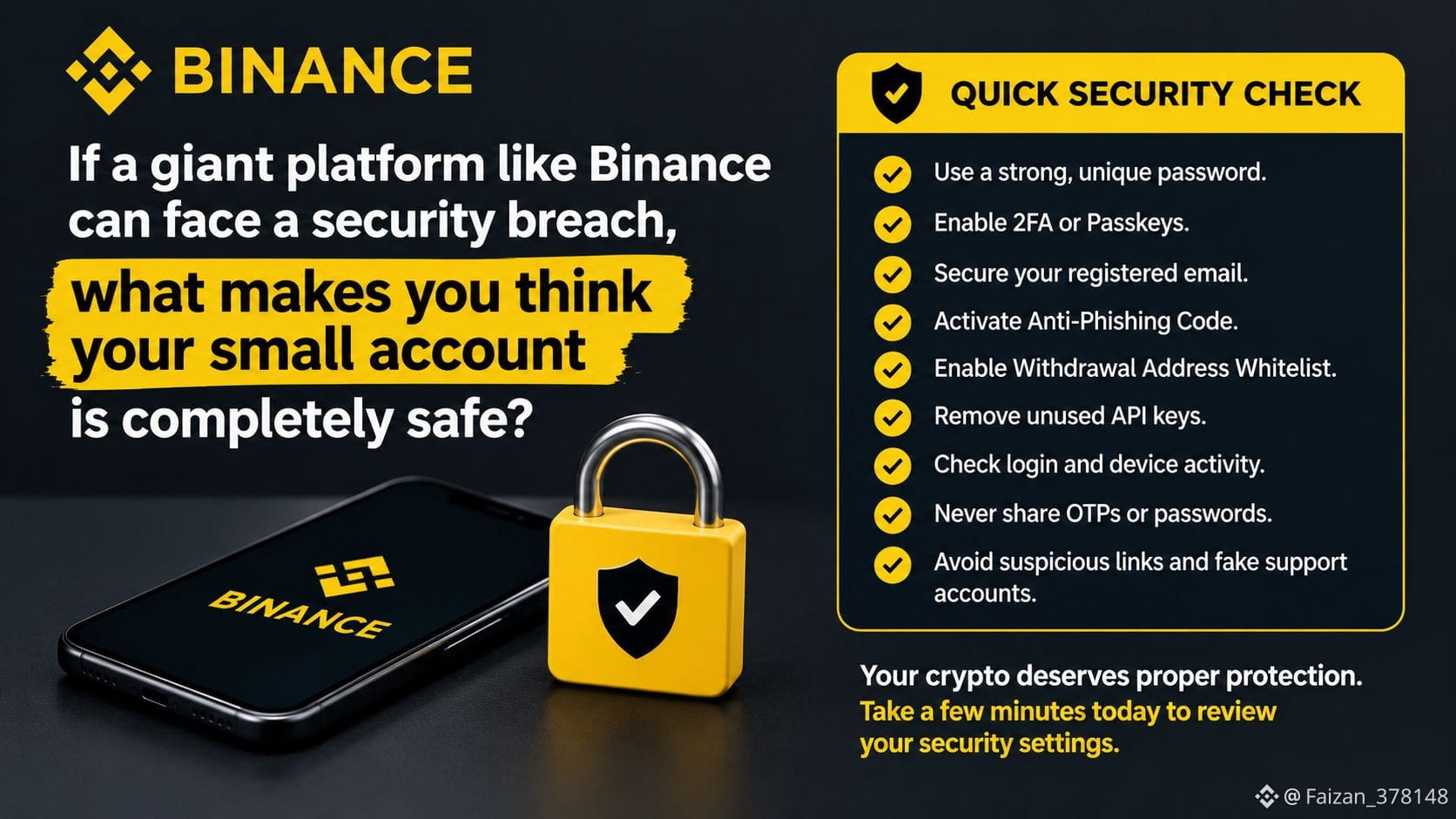
Follow these essential steps:
1. Use a strong, unique password.
2. Enable Passkeys or authenticator-based 2FA.
3. Secure your registered email account.
4. Activate Binance Anti-Phishing Code.
5. Enable Withdrawal Address Whitelist.
6. Delete unnecessary API keys.
7. Check your login history regularly.
8. Never share OTPs or private keys.
9. Keep long-term holdings in a properly secured hardware wallet if you understand self-custody.
10. Avoid fake Binance support accounts and recovery scams.
Remember, securing your personal account protects you against account takeovers. It cannot eliminate risks arising from an exchange's internal infrastructure.
Final Question: What Should Change?
A $6.3 billion security incident raises an important question for the entire crypto industry.
Exchanges need stronger transaction controls, independent security audits, better employee-device protection and transparent reserve reporting.
Users also need to understand where their assets are held and how they can protect them.
Binance says customer funds are safe and has promised to cover the losses. The next important steps are a transparent technical investigation and verified recovery updates.
What do you think is more important now: stronger exchange security or greater adoption of self-custody?
#Binance #CryptoSecurity #Bitcoin #blockchain #SAFU
翻訳参照








morning 🌞
0%
afternoon ✨
100%
evening 🌆
0%
night 🌉
0%
1 投票 • 投票は終了しました





ログインして、さらにコンテンツを読む