

Crypto Breaking
20.1k Posting

Crypto Breaking
 Square Terverifikasi+
Laporkan
Blokir Pengguna
Get real-time cryptocurrency news, blockchain updates, market analysis, and expert insights. Explore the latest trends in Bitcoin, Ethereum, DeFi, and Web3.
6 Mengikuti
32.8K+ Pengikut
31.6K+ Disukai
Posting
Semua
Kuotasi
Artikel
Lihat terjemahan
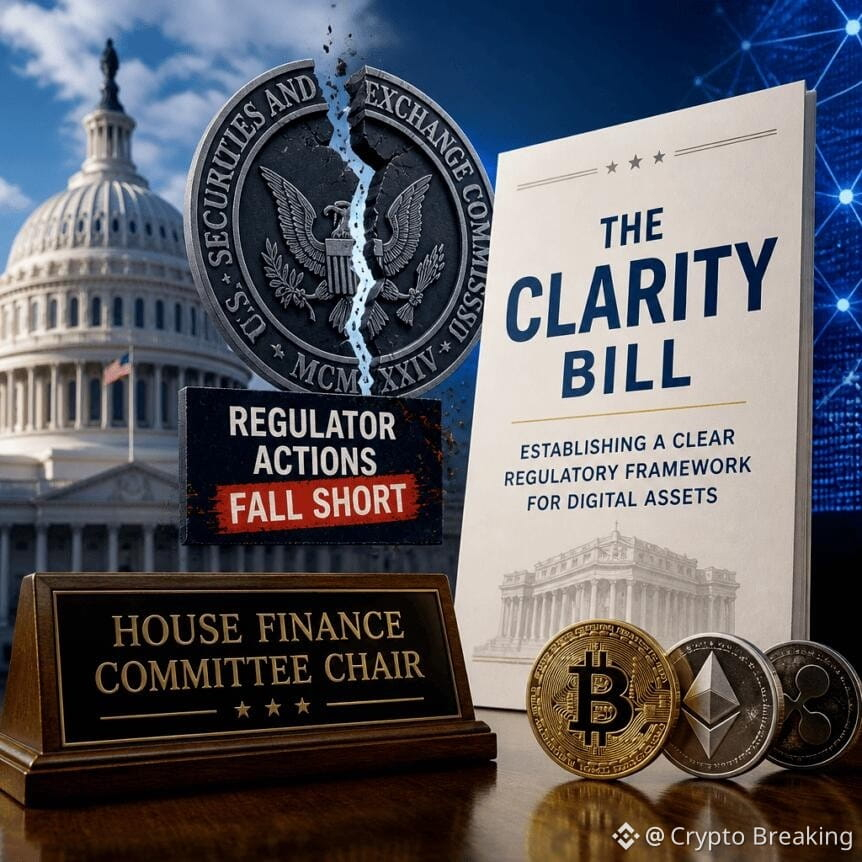
House Finance Chair Says Crypto Regulator Actions Fall Short of CLARITY BillRep. French Hill, chair of the U.S. House Financial Services Committee, says regulators are taking steps to address crypto oversight—but he argues their approach will not deliver the long-term certainty Congress could provide through legislation.
Speaking on Wednesday in a Fox Business interview, the Arkansas Republican pointed to the U.S. Securities and Exchange Commission (SEC) and the Commodity Futures Trading Commission (CFTC) as agencies that have begun rulemaking work following the failure of the Digital Asset Market Clarity (CLARITY) Act in the Senate last month. Hill said those regulatory efforts have “fallen short” of what permanent statutory change could achieve, adding that he remains hopeful the bill can still pass during the current “lame duck” period in Congress.
Key takeaways
French Hill argues the SEC and CFTC can propose and refine rules, but still lack the stability of a congressionally enacted framework for digital assets.
Hill links the agencies’ renewed activity to the Senate’s failure to pass the CLARITY Act last month.
He said he is pushing for CLARITY to move during the lame duck session, where election outcomes could influence votes.
Regulatory capacity may be constrained: there are reportedly seven leadership-level vacancies across the SEC and CFTC.
Hill frames regulatory rulemaking as a stopgap
Hill told Fox Business that, after the Senate did not pass the CLARITY Act, both the SEC and the CFTC moved to address crypto regulation through proposed rulemaking covering different parts of their respective oversight mandates. According to earlier coverage from Cointelegraph, the CFTC has advanced proposals aimed at developing a crypto regulatory framework, but the broader legislative effort stalled when the CLARITY Act failed to get approval in the Senate.
In Hill’s view, that kind of regulatory process is inherently less durable than legislation. He emphasized that while the agencies are “moving forward” on digital asset issues, Congress still needs to provide “permanent” legal changes to set stable ground rules for the industry and the U.S.’s competitive position.
Hill also suggested that Congress could still act quickly. He said he hopes CLARITY can be passed in the lame duck session, which would extend legislative momentum rather than leaving the sector dependent on evolving agency guidance and rulemaking cycles.
Why the lame duck window may matter politically
Hill pointed to the practical timing of congressional action. He noted that the Senate would have only 22 days in session between the November midterm elections and the arrival of the next cohort of lawmakers in 2027.
That compressed schedule creates a scenario where lawmakers’ views may shift based on whether they expect to return to Congress—or whether their terms will end in January. In Hill’s framing, the lame duck period could become a decisive moment for CLARITY, because members will have clarity on their own electoral futures and the likelihood of their continued influence.
At the same time, the political calculus underscores a key uncertainty for crypto market participants: even if agencies continue to move, the absence of a comprehensive legislative package could keep regulatory boundaries dependent on agency interpretation and court challenges.
SEC and CFTC leadership vacancies add strain
Hill’s remarks arrive as both regulators face leadership staffing gaps. As of Wednesday, Cointelegraph reported that there are seven empty vacancies across the SEC and CFTC at the leadership level.
That staffing picture includes a recent change at the SEC: Commissioner Hester Peirce announced her resignation last week, leaving Chair Paul Atkins and Commissioner Mark Uyeda at the SEC. On the CFTC side, Michael Selig serves as chair and the sole commissioner, concentrating decision-making authority more narrowly than in a fuller commission structure.
For investors and industry builders, this matters because staffing and commission composition can affect how quickly rulemaking advances, how enforcement priorities are shaped, and how much institutional “continuity” exists while major crypto oversight proposals are developed and reviewed.
Regulatory direction under a new executive push
The backdrop to Hill’s comments is the leadership-level push toward clearer crypto regulation. The heads of the SEC and CFTC—Paul Atkins and Michael Selig, respectively—announced plans to move forward with crypto regulation at the direction of U.S. President Donald Trump.
That executive impetus, combined with the agencies’ own proposed rulemaking efforts, suggests regulators are attempting to fill the gap left by Congress. However, Hill’s central argument is that without a legislative framework, the industry may face a patchwork of rules and interpretations that can evolve as administrations change and as proposed agency models move through additional procedural steps.
Hill’s insistence that CLARITY is still worth pursuing during the lame duck period can be read as a signal that he views the current approach as insufficiently “permanent” for an industry that depends on consistent expectations—especially for token issuers, exchanges, and other market participants subject to changing regulatory standards.
For now, market participants should watch two things closely: whether CLARITY gains traction in the limited lame duck window, and how the SEC and CFTC proceed given the reported leadership vacancies. The next steps from both agencies could shape compliance expectations even if a congressional fix does not arrive in time.
This article was originally published as House Finance Chair Says Crypto Regulator Actions Fall Short of CLARITY Bill on Crypto Breaking News – your trusted source for crypto news, Bitcoin news, and blockchain updates.
House Finance Chair Says Crypto Regulator Actions Fall Short of CLARITY Bill
Rep. French Hill, chair of the U.S. House Financial Services Committee, says regulators are taking steps to address crypto oversight—but he argues their approach will not deliver the long-term certainty Congress could provide through legislation.
Speaking on Wednesday in a Fox Business interview, the Arkansas Republican pointed to the U.S. Securities and Exchange Commission (SEC) and the Commodity Futures Trading Commission (CFTC) as agencies that have begun rulemaking work following the failure of the Digital Asset Market Clarity (CLARITY) Act in the Senate last month. Hill said those regulatory efforts have “fallen short” of what permanent statutory change could achieve, adding that he remains hopeful the bill can still pass during the current “lame duck” period in Congress.
Key takeaways
French Hill argues the SEC and CFTC can propose and refine rules, but still lack the stability of a congressionally enacted framework for digital assets.
Hill links the agencies’ renewed activity to the Senate’s failure to pass the CLARITY Act last month.
He said he is pushing for CLARITY to move during the lame duck session, where election outcomes could influence votes.
Regulatory capacity may be constrained: there are reportedly seven leadership-level vacancies across the SEC and CFTC.
Hill frames regulatory rulemaking as a stopgap
Hill told Fox Business that, after the Senate did not pass the CLARITY Act, both the SEC and the CFTC moved to address crypto regulation through proposed rulemaking covering different parts of their respective oversight mandates. According to earlier coverage from Cointelegraph, the CFTC has advanced proposals aimed at developing a crypto regulatory framework, but the broader legislative effort stalled when the CLARITY Act failed to get approval in the Senate.
In Hill’s view, that kind of regulatory process is inherently less durable than legislation. He emphasized that while the agencies are “moving forward” on digital asset issues, Congress still needs to provide “permanent” legal changes to set stable ground rules for the industry and the U.S.’s competitive position.
Hill also suggested that Congress could still act quickly. He said he hopes CLARITY can be passed in the lame duck session, which would extend legislative momentum rather than leaving the sector dependent on evolving agency guidance and rulemaking cycles.
Why the lame duck window may matter politically
Hill pointed to the practical timing of congressional action. He noted that the Senate would have only 22 days in session between the November midterm elections and the arrival of the next cohort of lawmakers in 2027.
That compressed schedule creates a scenario where lawmakers’ views may shift based on whether they expect to return to Congress—or whether their terms will end in January. In Hill’s framing, the lame duck period could become a decisive moment for CLARITY, because members will have clarity on their own electoral futures and the likelihood of their continued influence.
At the same time, the political calculus underscores a key uncertainty for crypto market participants: even if agencies continue to move, the absence of a comprehensive legislative package could keep regulatory boundaries dependent on agency interpretation and court challenges.
SEC and CFTC leadership vacancies add strain
Hill’s remarks arrive as both regulators face leadership staffing gaps. As of Wednesday, Cointelegraph reported that there are seven empty vacancies across the SEC and CFTC at the leadership level.
That staffing picture includes a recent change at the SEC: Commissioner Hester Peirce announced her resignation last week, leaving Chair Paul Atkins and Commissioner Mark Uyeda at the SEC. On the CFTC side, Michael Selig serves as chair and the sole commissioner, concentrating decision-making authority more narrowly than in a fuller commission structure.
For investors and industry builders, this matters because staffing and commission composition can affect how quickly rulemaking advances, how enforcement priorities are shaped, and how much institutional “continuity” exists while major crypto oversight proposals are developed and reviewed.
Regulatory direction under a new executive push
The backdrop to Hill’s comments is the leadership-level push toward clearer crypto regulation. The heads of the SEC and CFTC—Paul Atkins and Michael Selig, respectively—announced plans to move forward with crypto regulation at the direction of U.S. President Donald Trump.
That executive impetus, combined with the agencies’ own proposed rulemaking efforts, suggests regulators are attempting to fill the gap left by Congress. However, Hill’s central argument is that without a legislative framework, the industry may face a patchwork of rules and interpretations that can evolve as administrations change and as proposed agency models move through additional procedural steps.
Hill’s insistence that CLARITY is still worth pursuing during the lame duck period can be read as a signal that he views the current approach as insufficiently “permanent” for an industry that depends on consistent expectations—especially for token issuers, exchanges, and other market participants subject to changing regulatory standards.
For now, market participants should watch two things closely: whether CLARITY gains traction in the limited lame duck window, and how the SEC and CFTC proceed given the reported leadership vacancies. The next steps from both agencies could shape compliance expectations even if a congressional fix does not arrive in time.
This article was originally published as House Finance Chair Says Crypto Regulator Actions Fall Short of CLARITY Bill on Crypto Breaking News – your trusted source for crypto news, Bitcoin news, and blockchain updates.
Speaking on Wednesday in a Fox Business interview, the Arkansas Republican pointed to the U.S. Securities and Exchange Commission (SEC) and the Commodity Futures Trading Commission (CFTC) as agencies that have begun rulemaking work following the failure of the Digital Asset Market Clarity (CLARITY) Act in the Senate last month. Hill said those regulatory efforts have “fallen short” of what permanent statutory change could achieve, adding that he remains hopeful the bill can still pass during the current “lame duck” period in Congress.
Key takeaways
French Hill argues the SEC and CFTC can propose and refine rules, but still lack the stability of a congressionally enacted framework for digital assets.
Hill links the agencies’ renewed activity to the Senate’s failure to pass the CLARITY Act last month.
He said he is pushing for CLARITY to move during the lame duck session, where election outcomes could influence votes.
Regulatory capacity may be constrained: there are reportedly seven leadership-level vacancies across the SEC and CFTC.
Hill frames regulatory rulemaking as a stopgap
Hill told Fox Business that, after the Senate did not pass the CLARITY Act, both the SEC and the CFTC moved to address crypto regulation through proposed rulemaking covering different parts of their respective oversight mandates. According to earlier coverage from Cointelegraph, the CFTC has advanced proposals aimed at developing a crypto regulatory framework, but the broader legislative effort stalled when the CLARITY Act failed to get approval in the Senate.
In Hill’s view, that kind of regulatory process is inherently less durable than legislation. He emphasized that while the agencies are “moving forward” on digital asset issues, Congress still needs to provide “permanent” legal changes to set stable ground rules for the industry and the U.S.’s competitive position.
Hill also suggested that Congress could still act quickly. He said he hopes CLARITY can be passed in the lame duck session, which would extend legislative momentum rather than leaving the sector dependent on evolving agency guidance and rulemaking cycles.
Why the lame duck window may matter politically
Hill pointed to the practical timing of congressional action. He noted that the Senate would have only 22 days in session between the November midterm elections and the arrival of the next cohort of lawmakers in 2027.
That compressed schedule creates a scenario where lawmakers’ views may shift based on whether they expect to return to Congress—or whether their terms will end in January. In Hill’s framing, the lame duck period could become a decisive moment for CLARITY, because members will have clarity on their own electoral futures and the likelihood of their continued influence.
At the same time, the political calculus underscores a key uncertainty for crypto market participants: even if agencies continue to move, the absence of a comprehensive legislative package could keep regulatory boundaries dependent on agency interpretation and court challenges.
SEC and CFTC leadership vacancies add strain
Hill’s remarks arrive as both regulators face leadership staffing gaps. As of Wednesday, Cointelegraph reported that there are seven empty vacancies across the SEC and CFTC at the leadership level.
That staffing picture includes a recent change at the SEC: Commissioner Hester Peirce announced her resignation last week, leaving Chair Paul Atkins and Commissioner Mark Uyeda at the SEC. On the CFTC side, Michael Selig serves as chair and the sole commissioner, concentrating decision-making authority more narrowly than in a fuller commission structure.
For investors and industry builders, this matters because staffing and commission composition can affect how quickly rulemaking advances, how enforcement priorities are shaped, and how much institutional “continuity” exists while major crypto oversight proposals are developed and reviewed.
Regulatory direction under a new executive push
The backdrop to Hill’s comments is the leadership-level push toward clearer crypto regulation. The heads of the SEC and CFTC—Paul Atkins and Michael Selig, respectively—announced plans to move forward with crypto regulation at the direction of U.S. President Donald Trump.
That executive impetus, combined with the agencies’ own proposed rulemaking efforts, suggests regulators are attempting to fill the gap left by Congress. However, Hill’s central argument is that without a legislative framework, the industry may face a patchwork of rules and interpretations that can evolve as administrations change and as proposed agency models move through additional procedural steps.
Hill’s insistence that CLARITY is still worth pursuing during the lame duck period can be read as a signal that he views the current approach as insufficiently “permanent” for an industry that depends on consistent expectations—especially for token issuers, exchanges, and other market participants subject to changing regulatory standards.
For now, market participants should watch two things closely: whether CLARITY gains traction in the limited lame duck window, and how the SEC and CFTC proceed given the reported leadership vacancies. The next steps from both agencies could shape compliance expectations even if a congressional fix does not arrive in time.
This article was originally published as House Finance Chair Says Crypto Regulator Actions Fall Short of CLARITY Bill on Crypto Breaking News – your trusted source for crypto news, Bitcoin news, and blockchain updates.
1
Artikel
Lihat terjemahan
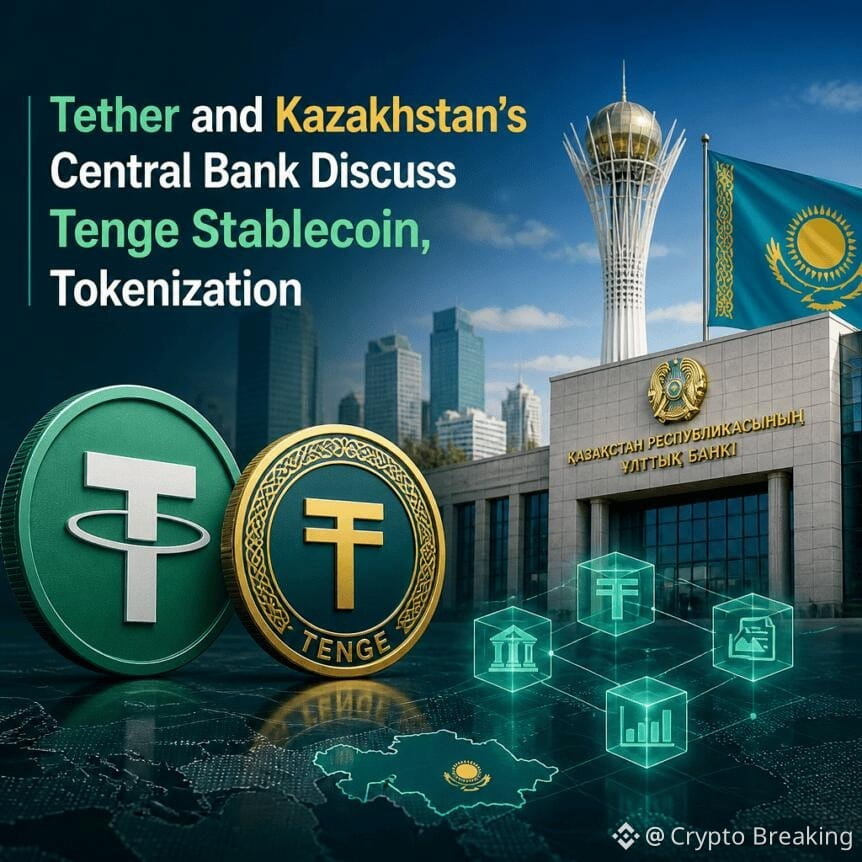
Tether and Kazakhstan’s Central Bank Discuss Tenge Stablecoin, TokenizationTether has signed a memorandum of understanding with Kazakhstan’s National Bank and the Alatau City Authority to explore a tenge-pegged stablecoin, as well as broader plans to tokenize real-world assets. The agreement centers on research into how stablecoins could fit into Kazakhstan’s financial system while aligning with public priorities such as transparency and investor protection.
According to Tether, the parties will study international stablecoin issuance models, map out potential use cases, and develop a proposal for a tenge-backed stablecoin pilot. The memorandum also points to work on an asset tokenization framework—first by identifying candidate assets for tokenization, then by planning a pilot project in Alatau that could use Tether’s Hadron platform.
Key takeaways
Tether is partnering with Kazakhstan’s central bank and Alatau officials to examine a tenge-pegged stablecoin and real-world asset tokenization.
The memorandum includes developing a tokenization framework and launching a pilot project in Alatau that may leverage Tether’s Hadron.
Kazakhstan is expanding its digital-asset agenda through government-led plans covering tokenization, payments, settlements, and mining.
Central bank sandbox testing and a stated strategic crypto reserve suggest regulators are already building infrastructure to evaluate digital-asset activity.
What Kazakhstan and Tether agreed to study
Tether’s announcement frames the memorandum as a structured exploration rather than an immediate rollout. Under the terms described by Tether, the National Bank of Kazakhstan and the Alatau City Authority will jointly examine issuance approaches that exist globally, with the goal of designing a pilot for a tenge-backed stablecoin.
In addition to stablecoin issuance research, the agreement calls for the creation of an asset tokenization framework. That work includes selecting potential assets that could be tokenized and planning a pilot project in Alatau. Tether also indicates that the pilot could use its Hadron platform, which is presented in the company’s communication as a toolset for building tokenization-related applications.
The parties will also run workshops and training programs. Tether says the sessions will cover stablecoin issuance, reserve management, and real-world asset tokenization—topics that often determine whether a stablecoin model can meet regulatory expectations around redemption, disclosures, and risk controls.
Regulatory focus: transparency, stability, and investor protection
Kazakhstan’s National Bank Deputy Governor Binur Zhalenov emphasized that the central bank plans to study international approaches to stablecoin issuance and tokenization while placing financial stability first. In the remarks cited by Tether, she also highlighted transaction transparency and investor protection as priorities.
For market participants, that framing matters because it signals how regulators may evaluate the pilot’s design: not just whether a tenge-pegged product can work operationally, but whether it can be structured to preserve stability and provide clearer visibility for users. The workshop-and-training component suggests the initiative is also intended to build internal knowledge around issuance mechanics, reserve handling, and the compliance implications of tokenizing non-crypto assets.
Still, the memorandum does not, in Tether’s description, specify timelines for a launch or spell out the exact reserve and governance model that a pilot would use. The near-term question for observers is therefore what concrete outputs the study phase will produce—such as a formal pilot proposal, technical architecture choices, and regulatory requirements for custody, auditing, and disclosures.
Kazakhstan’s broader digital-asset momentum
This initiative sits within a wider push by Kazakhstan to expand its digital-asset footprint. Tether’s announcement mentions that Kazakhstan accelerated its digital asset efforts this year, including stablecoins, tokenization, crypto payments, and mining. The country’s government has also moved to formalize parts of that strategy through a multi-measure plan approved in September.
According to a government announcement referenced in the article, Kazakhstan approved a 65-measure plan across 10 areas aimed at developing the digital assets industry. The plan includes steps to expand real-world asset tokenization, digital payments, international settlements, and crypto mining. It also instructs relevant ministries to develop a mechanism for supplying mining centers using gas- and coal-fired power generation.
On mining and infrastructure, Kazakhstan has been ranked among the world’s top 10 Bitcoin-producing countries for 2025 by the government, as cited in the referenced reporting.
Meanwhile, Kazakhstan’s central bank activity indicates an ongoing regulatory testing posture. The National Strategic Crypto Reserve is described as reaching $700 million, and the central bank’s regulatory sandbox reportedly completed testing with 34 digital asset projects, based on the government’s announcement referenced in the article.
State holdings and what to watch next
Alongside policy measures and sandbox testing, Kazakhstan’s crypto holdings are also increasingly tracked. BitcoinTreasuries.net is cited as ranking Kazakhstan seventh among governments in its Bitcoin database, with an estimated 3,544 BTC valued at about $294 million.
Taken together, the tenge-stablecoin and tokenization memorandum adds a potentially important building block to Kazakhstan’s strategy: moving from broad experimentation into pilots tied to a domestic currency peg and to real-world asset markets. If the central bank and local authorities move forward, the next steps investors and builders are likely to watch include how the pilot defines reserve and redemption rules, what asset classes are selected for tokenization, and what compliance requirements apply to issuers and intermediaries.
More broadly, the agreement reflects a shift toward regulated experimentation in a jurisdiction that is actively developing its digital-asset framework. Until details of the pilot proposal are made public, the most reliable takeaway is that Kazakhstan is trying to shape stablecoin and tokenization outcomes through structured study—balancing innovation with stability, transparency, and investor protection.
This article was originally published as Tether and Kazakhstan’s Central Bank Discuss Tenge Stablecoin, Tokenization on Crypto Breaking News – your trusted source for crypto news, Bitcoin news, and blockchain updates.
Tether and Kazakhstan’s Central Bank Discuss Tenge Stablecoin, Tokenization
Tether has signed a memorandum of understanding with Kazakhstan’s National Bank and the Alatau City Authority to explore a tenge-pegged stablecoin, as well as broader plans to tokenize real-world assets. The agreement centers on research into how stablecoins could fit into Kazakhstan’s financial system while aligning with public priorities such as transparency and investor protection.
According to Tether, the parties will study international stablecoin issuance models, map out potential use cases, and develop a proposal for a tenge-backed stablecoin pilot. The memorandum also points to work on an asset tokenization framework—first by identifying candidate assets for tokenization, then by planning a pilot project in Alatau that could use Tether’s Hadron platform.
Key takeaways
Tether is partnering with Kazakhstan’s central bank and Alatau officials to examine a tenge-pegged stablecoin and real-world asset tokenization.
The memorandum includes developing a tokenization framework and launching a pilot project in Alatau that may leverage Tether’s Hadron.
Kazakhstan is expanding its digital-asset agenda through government-led plans covering tokenization, payments, settlements, and mining.
Central bank sandbox testing and a stated strategic crypto reserve suggest regulators are already building infrastructure to evaluate digital-asset activity.
What Kazakhstan and Tether agreed to study
Tether’s announcement frames the memorandum as a structured exploration rather than an immediate rollout. Under the terms described by Tether, the National Bank of Kazakhstan and the Alatau City Authority will jointly examine issuance approaches that exist globally, with the goal of designing a pilot for a tenge-backed stablecoin.
In addition to stablecoin issuance research, the agreement calls for the creation of an asset tokenization framework. That work includes selecting potential assets that could be tokenized and planning a pilot project in Alatau. Tether also indicates that the pilot could use its Hadron platform, which is presented in the company’s communication as a toolset for building tokenization-related applications.
The parties will also run workshops and training programs. Tether says the sessions will cover stablecoin issuance, reserve management, and real-world asset tokenization—topics that often determine whether a stablecoin model can meet regulatory expectations around redemption, disclosures, and risk controls.
Regulatory focus: transparency, stability, and investor protection
Kazakhstan’s National Bank Deputy Governor Binur Zhalenov emphasized that the central bank plans to study international approaches to stablecoin issuance and tokenization while placing financial stability first. In the remarks cited by Tether, she also highlighted transaction transparency and investor protection as priorities.
For market participants, that framing matters because it signals how regulators may evaluate the pilot’s design: not just whether a tenge-pegged product can work operationally, but whether it can be structured to preserve stability and provide clearer visibility for users. The workshop-and-training component suggests the initiative is also intended to build internal knowledge around issuance mechanics, reserve handling, and the compliance implications of tokenizing non-crypto assets.
Still, the memorandum does not, in Tether’s description, specify timelines for a launch or spell out the exact reserve and governance model that a pilot would use. The near-term question for observers is therefore what concrete outputs the study phase will produce—such as a formal pilot proposal, technical architecture choices, and regulatory requirements for custody, auditing, and disclosures.
Kazakhstan’s broader digital-asset momentum
This initiative sits within a wider push by Kazakhstan to expand its digital-asset footprint. Tether’s announcement mentions that Kazakhstan accelerated its digital asset efforts this year, including stablecoins, tokenization, crypto payments, and mining. The country’s government has also moved to formalize parts of that strategy through a multi-measure plan approved in September.
According to a government announcement referenced in the article, Kazakhstan approved a 65-measure plan across 10 areas aimed at developing the digital assets industry. The plan includes steps to expand real-world asset tokenization, digital payments, international settlements, and crypto mining. It also instructs relevant ministries to develop a mechanism for supplying mining centers using gas- and coal-fired power generation.
On mining and infrastructure, Kazakhstan has been ranked among the world’s top 10 Bitcoin-producing countries for 2025 by the government, as cited in the referenced reporting.
Meanwhile, Kazakhstan’s central bank activity indicates an ongoing regulatory testing posture. The National Strategic Crypto Reserve is described as reaching $700 million, and the central bank’s regulatory sandbox reportedly completed testing with 34 digital asset projects, based on the government’s announcement referenced in the article.
State holdings and what to watch next
Alongside policy measures and sandbox testing, Kazakhstan’s crypto holdings are also increasingly tracked. BitcoinTreasuries.net is cited as ranking Kazakhstan seventh among governments in its Bitcoin database, with an estimated 3,544 BTC valued at about $294 million.
Taken together, the tenge-stablecoin and tokenization memorandum adds a potentially important building block to Kazakhstan’s strategy: moving from broad experimentation into pilots tied to a domestic currency peg and to real-world asset markets. If the central bank and local authorities move forward, the next steps investors and builders are likely to watch include how the pilot defines reserve and redemption rules, what asset classes are selected for tokenization, and what compliance requirements apply to issuers and intermediaries.
More broadly, the agreement reflects a shift toward regulated experimentation in a jurisdiction that is actively developing its digital-asset framework. Until details of the pilot proposal are made public, the most reliable takeaway is that Kazakhstan is trying to shape stablecoin and tokenization outcomes through structured study—balancing innovation with stability, transparency, and investor protection.
This article was originally published as Tether and Kazakhstan’s Central Bank Discuss Tenge Stablecoin, Tokenization on Crypto Breaking News – your trusted source for crypto news, Bitcoin news, and blockchain updates.
According to Tether, the parties will study international stablecoin issuance models, map out potential use cases, and develop a proposal for a tenge-backed stablecoin pilot. The memorandum also points to work on an asset tokenization framework—first by identifying candidate assets for tokenization, then by planning a pilot project in Alatau that could use Tether’s Hadron platform.
Key takeaways
Tether is partnering with Kazakhstan’s central bank and Alatau officials to examine a tenge-pegged stablecoin and real-world asset tokenization.
The memorandum includes developing a tokenization framework and launching a pilot project in Alatau that may leverage Tether’s Hadron.
Kazakhstan is expanding its digital-asset agenda through government-led plans covering tokenization, payments, settlements, and mining.
Central bank sandbox testing and a stated strategic crypto reserve suggest regulators are already building infrastructure to evaluate digital-asset activity.
What Kazakhstan and Tether agreed to study
Tether’s announcement frames the memorandum as a structured exploration rather than an immediate rollout. Under the terms described by Tether, the National Bank of Kazakhstan and the Alatau City Authority will jointly examine issuance approaches that exist globally, with the goal of designing a pilot for a tenge-backed stablecoin.
In addition to stablecoin issuance research, the agreement calls for the creation of an asset tokenization framework. That work includes selecting potential assets that could be tokenized and planning a pilot project in Alatau. Tether also indicates that the pilot could use its Hadron platform, which is presented in the company’s communication as a toolset for building tokenization-related applications.
The parties will also run workshops and training programs. Tether says the sessions will cover stablecoin issuance, reserve management, and real-world asset tokenization—topics that often determine whether a stablecoin model can meet regulatory expectations around redemption, disclosures, and risk controls.
Regulatory focus: transparency, stability, and investor protection
Kazakhstan’s National Bank Deputy Governor Binur Zhalenov emphasized that the central bank plans to study international approaches to stablecoin issuance and tokenization while placing financial stability first. In the remarks cited by Tether, she also highlighted transaction transparency and investor protection as priorities.
For market participants, that framing matters because it signals how regulators may evaluate the pilot’s design: not just whether a tenge-pegged product can work operationally, but whether it can be structured to preserve stability and provide clearer visibility for users. The workshop-and-training component suggests the initiative is also intended to build internal knowledge around issuance mechanics, reserve handling, and the compliance implications of tokenizing non-crypto assets.
Still, the memorandum does not, in Tether’s description, specify timelines for a launch or spell out the exact reserve and governance model that a pilot would use. The near-term question for observers is therefore what concrete outputs the study phase will produce—such as a formal pilot proposal, technical architecture choices, and regulatory requirements for custody, auditing, and disclosures.
Kazakhstan’s broader digital-asset momentum
This initiative sits within a wider push by Kazakhstan to expand its digital-asset footprint. Tether’s announcement mentions that Kazakhstan accelerated its digital asset efforts this year, including stablecoins, tokenization, crypto payments, and mining. The country’s government has also moved to formalize parts of that strategy through a multi-measure plan approved in September.
According to a government announcement referenced in the article, Kazakhstan approved a 65-measure plan across 10 areas aimed at developing the digital assets industry. The plan includes steps to expand real-world asset tokenization, digital payments, international settlements, and crypto mining. It also instructs relevant ministries to develop a mechanism for supplying mining centers using gas- and coal-fired power generation.
On mining and infrastructure, Kazakhstan has been ranked among the world’s top 10 Bitcoin-producing countries for 2025 by the government, as cited in the referenced reporting.
Meanwhile, Kazakhstan’s central bank activity indicates an ongoing regulatory testing posture. The National Strategic Crypto Reserve is described as reaching $700 million, and the central bank’s regulatory sandbox reportedly completed testing with 34 digital asset projects, based on the government’s announcement referenced in the article.
State holdings and what to watch next
Alongside policy measures and sandbox testing, Kazakhstan’s crypto holdings are also increasingly tracked. BitcoinTreasuries.net is cited as ranking Kazakhstan seventh among governments in its Bitcoin database, with an estimated 3,544 BTC valued at about $294 million.
Taken together, the tenge-stablecoin and tokenization memorandum adds a potentially important building block to Kazakhstan’s strategy: moving from broad experimentation into pilots tied to a domestic currency peg and to real-world asset markets. If the central bank and local authorities move forward, the next steps investors and builders are likely to watch include how the pilot defines reserve and redemption rules, what asset classes are selected for tokenization, and what compliance requirements apply to issuers and intermediaries.
More broadly, the agreement reflects a shift toward regulated experimentation in a jurisdiction that is actively developing its digital-asset framework. Until details of the pilot proposal are made public, the most reliable takeaway is that Kazakhstan is trying to shape stablecoin and tokenization outcomes through structured study—balancing innovation with stability, transparency, and investor protection.
This article was originally published as Tether and Kazakhstan’s Central Bank Discuss Tenge Stablecoin, Tokenization on Crypto Breaking News – your trusted source for crypto news, Bitcoin news, and blockchain updates.
4
Artikel
Lihat terjemahan
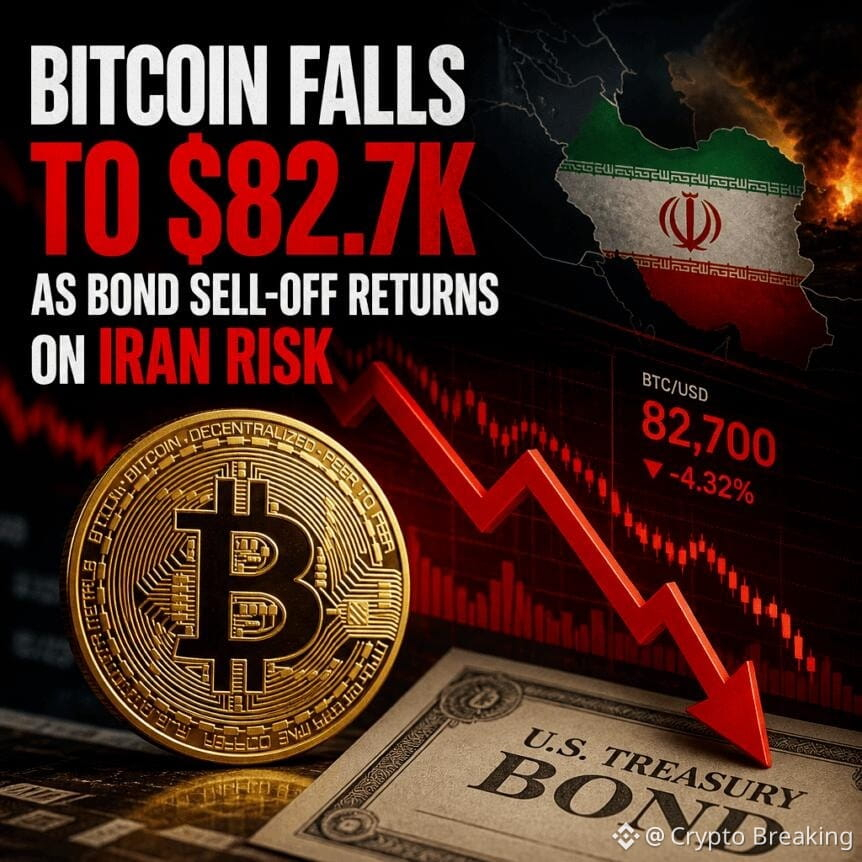
Bitcoin Falls to $82.7K as Bond Sell-Off Returns on Iran RiskBitcoin slid further in early U.S. trading on Wednesday, extending its decline as fresh geopolitical oil headlines pushed crude higher and U.S. equities cooled from record levels. The move came alongside a jump in Treasury yields to fresh multi-decade highs—conditions that tend to tighten global liquidity and raise discount rates for risk assets, including cryptocurrencies.
On Bitstamp, BTC fell to $82,734, its lowest level traded so far in October, as investors digested renewed concerns around shipping through the Strait of Hormuz. Brent crude climbed to $102 per barrel and WTI crude moved to $91 following statements attributed to an adviser to Iran’s Revolutionary Guards’ Commander, according to Reuters.
Key takeaways
Bitcoin dropped to $82,734 on Bitstamp, marking the lowest traded price so far in October.
Brent crude ($102) and WTI ($91) rose after Reuters reported Iran warning it may block what it deems “illegal” routes through the Strait of Hormuz.
U.S. bond yields surged to new 24-year highs (10-year: 5.36%; 30-year: 5.73%), pressuring broader risk sentiment.
CryptoQuant reported open interest fell nearly 10% since late September, suggesting fading demand on both spot and derivatives.
BTC’s earlier support near the 21-day SMA around $83,850 was described as invalidated as price slipped below $83,000.
Oil and rates collide with crypto risk appetite
Reuters reported that an adviser to Iran’s Revolutionary Guards’ Commander said the Strait of Hormuz would be effectively “closed” for traffic Iran considers illegal, adding that the situation would continue until Iran’s “legitimate demands” are met. The headline risk is straightforward: disruptions to a key global shipping corridor typically raise expectations for higher energy prices and can intensify fears of inflation persistence.
As oil moved higher, investors also leaned into the rate implications. TradingView data cited in the coverage showed U.S. Treasury yields turning higher again, with the 10-year yield reaching 5.36% and the 30-year yield rising to 5.73%. These levels were described as the highest on record in roughly 24 years, reflecting how strongly markets are linking energy shocks to longer-term inflation and funding costs.
Equities joined the downdraft after a strong start to the week. Earlier coverage linked the risk move to the fact that U.S. stocks had touched new all-time highs on Tuesday, with the S&P 500 trading about 0.6% lower to 7,773 points in the session discussed.
At the same time, Goldman Sachs material referenced in the article cautioned that higher energy prices could keep longer-term rates under pressure. The broader takeaway for crypto is not that Bitcoin trades “because oil went up,” but that the combination of higher yields and risk-off equity sentiment can reduce appetite for speculative positioning across markets.
Spot and derivatives demand both look weaker
Beyond macro drivers, the internal structure of Bitcoin’s order flow appeared to deteriorate. The article noted that Bitcoin was still unable to break above the $87,000 area linked to overhead ask liquidity, and added that this hesitation aligned with weakening participation signals on derivatives.
According to CryptoQuant, since September 22, Bitcoin had remained in a similar price range while open interest fell by nearly 10%—from roughly $28.8B to around $26.0B. CryptoQuant interpreted this pattern as evidence that, with spot demand subdued, futures traders showed limited interest in taking on additional risk.
In practical terms, declining open interest during a period of stalled price action can mean fewer traders are willing to lean into new longs (or short exposure). For market participants, that can translate into thinner momentum: even modest selling pressure may have an outsized effect if leverage is not building to absorb it.
Technical levels lose their hold as BTC dips below $83,000
The decline also carried technical consequences. Trading in the discussed session pushed BTC below the $83,000 area, described as setting month-to-date lows on the intraday timeframe.
The article further stated that a previously cited support tied to the 21-day simple moving average (SMA) near $83,850 had been invalidated by the move. When key moving-average support breaks in this way, traders often reassess the range they consider “fair” and look for the next widely watched reference levels.
CryptoQuant highlighted another area to monitor on higher time frames: $69,500, framed as the average cost basis for Bitcoin short-term holders—entities that hold their coins without selling for up to roughly six months.
What to watch next: whether the rate shock fades
Bitcoin’s next direction may hinge less on crypto-specific catalysts and more on whether the macro impulse—rising yields alongside energy-price pressure—continues or cools. Investors watching liquidity-sensitive indicators should pay close attention to developments that affect Treasury yields and oil expectations, as well as whether open interest stabilizes or continues to fall while price finds support—or fails to.
This article was originally published as Bitcoin Falls to $82.7K as Bond Sell-Off Returns on Iran Risk on Crypto Breaking News – your trusted source for crypto news, Bitcoin news, and blockchain updates.
Bitcoin Falls to $82.7K as Bond Sell-Off Returns on Iran Risk
Bitcoin slid further in early U.S. trading on Wednesday, extending its decline as fresh geopolitical oil headlines pushed crude higher and U.S. equities cooled from record levels. The move came alongside a jump in Treasury yields to fresh multi-decade highs—conditions that tend to tighten global liquidity and raise discount rates for risk assets, including cryptocurrencies.
On Bitstamp, BTC fell to $82,734, its lowest level traded so far in October, as investors digested renewed concerns around shipping through the Strait of Hormuz. Brent crude climbed to $102 per barrel and WTI crude moved to $91 following statements attributed to an adviser to Iran’s Revolutionary Guards’ Commander, according to Reuters.
Key takeaways
Bitcoin dropped to $82,734 on Bitstamp, marking the lowest traded price so far in October.
Brent crude ($102) and WTI ($91) rose after Reuters reported Iran warning it may block what it deems “illegal” routes through the Strait of Hormuz.
U.S. bond yields surged to new 24-year highs (10-year: 5.36%; 30-year: 5.73%), pressuring broader risk sentiment.
CryptoQuant reported open interest fell nearly 10% since late September, suggesting fading demand on both spot and derivatives.
BTC’s earlier support near the 21-day SMA around $83,850 was described as invalidated as price slipped below $83,000.
Oil and rates collide with crypto risk appetite
Reuters reported that an adviser to Iran’s Revolutionary Guards’ Commander said the Strait of Hormuz would be effectively “closed” for traffic Iran considers illegal, adding that the situation would continue until Iran’s “legitimate demands” are met. The headline risk is straightforward: disruptions to a key global shipping corridor typically raise expectations for higher energy prices and can intensify fears of inflation persistence.
As oil moved higher, investors also leaned into the rate implications. TradingView data cited in the coverage showed U.S. Treasury yields turning higher again, with the 10-year yield reaching 5.36% and the 30-year yield rising to 5.73%. These levels were described as the highest on record in roughly 24 years, reflecting how strongly markets are linking energy shocks to longer-term inflation and funding costs.
Equities joined the downdraft after a strong start to the week. Earlier coverage linked the risk move to the fact that U.S. stocks had touched new all-time highs on Tuesday, with the S&P 500 trading about 0.6% lower to 7,773 points in the session discussed.
At the same time, Goldman Sachs material referenced in the article cautioned that higher energy prices could keep longer-term rates under pressure. The broader takeaway for crypto is not that Bitcoin trades “because oil went up,” but that the combination of higher yields and risk-off equity sentiment can reduce appetite for speculative positioning across markets.
Spot and derivatives demand both look weaker
Beyond macro drivers, the internal structure of Bitcoin’s order flow appeared to deteriorate. The article noted that Bitcoin was still unable to break above the $87,000 area linked to overhead ask liquidity, and added that this hesitation aligned with weakening participation signals on derivatives.
According to CryptoQuant, since September 22, Bitcoin had remained in a similar price range while open interest fell by nearly 10%—from roughly $28.8B to around $26.0B. CryptoQuant interpreted this pattern as evidence that, with spot demand subdued, futures traders showed limited interest in taking on additional risk.
In practical terms, declining open interest during a period of stalled price action can mean fewer traders are willing to lean into new longs (or short exposure). For market participants, that can translate into thinner momentum: even modest selling pressure may have an outsized effect if leverage is not building to absorb it.
Technical levels lose their hold as BTC dips below $83,000
The decline also carried technical consequences. Trading in the discussed session pushed BTC below the $83,000 area, described as setting month-to-date lows on the intraday timeframe.
The article further stated that a previously cited support tied to the 21-day simple moving average (SMA) near $83,850 had been invalidated by the move. When key moving-average support breaks in this way, traders often reassess the range they consider “fair” and look for the next widely watched reference levels.
CryptoQuant highlighted another area to monitor on higher time frames: $69,500, framed as the average cost basis for Bitcoin short-term holders—entities that hold their coins without selling for up to roughly six months.
What to watch next: whether the rate shock fades
Bitcoin’s next direction may hinge less on crypto-specific catalysts and more on whether the macro impulse—rising yields alongside energy-price pressure—continues or cools. Investors watching liquidity-sensitive indicators should pay close attention to developments that affect Treasury yields and oil expectations, as well as whether open interest stabilizes or continues to fall while price finds support—or fails to.
This article was originally published as Bitcoin Falls to $82.7K as Bond Sell-Off Returns on Iran Risk on Crypto Breaking News – your trusted source for crypto news, Bitcoin news, and blockchain updates.
On Bitstamp, BTC fell to $82,734, its lowest level traded so far in October, as investors digested renewed concerns around shipping through the Strait of Hormuz. Brent crude climbed to $102 per barrel and WTI crude moved to $91 following statements attributed to an adviser to Iran’s Revolutionary Guards’ Commander, according to Reuters.
Key takeaways
Bitcoin dropped to $82,734 on Bitstamp, marking the lowest traded price so far in October.
Brent crude ($102) and WTI ($91) rose after Reuters reported Iran warning it may block what it deems “illegal” routes through the Strait of Hormuz.
U.S. bond yields surged to new 24-year highs (10-year: 5.36%; 30-year: 5.73%), pressuring broader risk sentiment.
CryptoQuant reported open interest fell nearly 10% since late September, suggesting fading demand on both spot and derivatives.
BTC’s earlier support near the 21-day SMA around $83,850 was described as invalidated as price slipped below $83,000.
Oil and rates collide with crypto risk appetite
Reuters reported that an adviser to Iran’s Revolutionary Guards’ Commander said the Strait of Hormuz would be effectively “closed” for traffic Iran considers illegal, adding that the situation would continue until Iran’s “legitimate demands” are met. The headline risk is straightforward: disruptions to a key global shipping corridor typically raise expectations for higher energy prices and can intensify fears of inflation persistence.
As oil moved higher, investors also leaned into the rate implications. TradingView data cited in the coverage showed U.S. Treasury yields turning higher again, with the 10-year yield reaching 5.36% and the 30-year yield rising to 5.73%. These levels were described as the highest on record in roughly 24 years, reflecting how strongly markets are linking energy shocks to longer-term inflation and funding costs.
Equities joined the downdraft after a strong start to the week. Earlier coverage linked the risk move to the fact that U.S. stocks had touched new all-time highs on Tuesday, with the S&P 500 trading about 0.6% lower to 7,773 points in the session discussed.
At the same time, Goldman Sachs material referenced in the article cautioned that higher energy prices could keep longer-term rates under pressure. The broader takeaway for crypto is not that Bitcoin trades “because oil went up,” but that the combination of higher yields and risk-off equity sentiment can reduce appetite for speculative positioning across markets.
Spot and derivatives demand both look weaker
Beyond macro drivers, the internal structure of Bitcoin’s order flow appeared to deteriorate. The article noted that Bitcoin was still unable to break above the $87,000 area linked to overhead ask liquidity, and added that this hesitation aligned with weakening participation signals on derivatives.
According to CryptoQuant, since September 22, Bitcoin had remained in a similar price range while open interest fell by nearly 10%—from roughly $28.8B to around $26.0B. CryptoQuant interpreted this pattern as evidence that, with spot demand subdued, futures traders showed limited interest in taking on additional risk.
In practical terms, declining open interest during a period of stalled price action can mean fewer traders are willing to lean into new longs (or short exposure). For market participants, that can translate into thinner momentum: even modest selling pressure may have an outsized effect if leverage is not building to absorb it.
Technical levels lose their hold as BTC dips below $83,000
The decline also carried technical consequences. Trading in the discussed session pushed BTC below the $83,000 area, described as setting month-to-date lows on the intraday timeframe.
The article further stated that a previously cited support tied to the 21-day simple moving average (SMA) near $83,850 had been invalidated by the move. When key moving-average support breaks in this way, traders often reassess the range they consider “fair” and look for the next widely watched reference levels.
CryptoQuant highlighted another area to monitor on higher time frames: $69,500, framed as the average cost basis for Bitcoin short-term holders—entities that hold their coins without selling for up to roughly six months.
What to watch next: whether the rate shock fades
Bitcoin’s next direction may hinge less on crypto-specific catalysts and more on whether the macro impulse—rising yields alongside energy-price pressure—continues or cools. Investors watching liquidity-sensitive indicators should pay close attention to developments that affect Treasury yields and oil expectations, as well as whether open interest stabilizes or continues to fall while price finds support—or fails to.
This article was originally published as Bitcoin Falls to $82.7K as Bond Sell-Off Returns on Iran Risk on Crypto Breaking News – your trusted source for crypto news, Bitcoin news, and blockchain updates.
28
Artikel
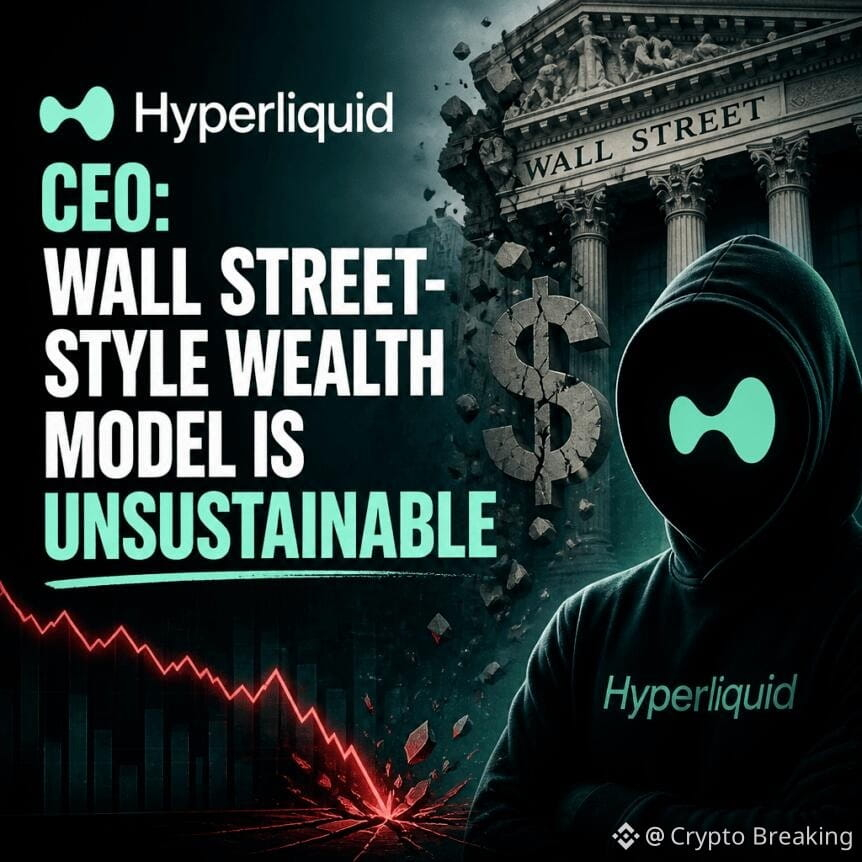
CEO Hyperliquid: Model penciptaan kekayaan ala Wall Street tidak berkelanjutanMomen penciptaan kekayaan paling menguntungkan di Wall Street biasanya terjadi sebelum saham diperdagangkan di pasar publik—saat perusahaan masih tertutup dan keuntungan terutama dinikmati oleh orang dalam. CEO sekaligus salah satu pendiri Hyperliquid, Jeff Yan, berpendapat bahwa model “pra-pencatatan” ini membuat investor ritel tidak bisa menikmati potensi keuntungan sejak awal, dan ia mengatakan sistem saat ini pada akhirnya tidak berkelanjutan.
Berbicara dalam diskusi santai di Token2049 Singapura pada Selasa, Yan menggambarkan daya tarik kontrak perpetual on-chain dan perdagangan terdesentralisasi sebagai jalan menuju akses yang lebih luas terhadap penciptaan kekayaan berbasis blockchain, bukan sebagai strategi untuk memaksimalkan pendapatan protokol dalam jangka pendek.
CEO Hyperliquid: Model penciptaan kekayaan ala Wall Street tidak berkelanjutan
Momen penciptaan kekayaan paling menguntungkan di Wall Street biasanya terjadi sebelum saham diperdagangkan di pasar publik—saat perusahaan masih tertutup dan keuntungan terutama dinikmati oleh orang dalam. CEO sekaligus salah satu pendiri Hyperliquid, Jeff Yan, berpendapat bahwa model “pra-pencatatan” ini membuat investor ritel tidak bisa menikmati potensi keuntungan sejak awal, dan ia mengatakan sistem saat ini pada akhirnya tidak berkelanjutan.
Berbicara dalam diskusi santai di Token2049 Singapura pada Selasa, Yan menggambarkan daya tarik kontrak perpetual on-chain dan perdagangan terdesentralisasi sebagai jalan menuju akses yang lebih luas terhadap penciptaan kekayaan berbasis blockchain, bukan sebagai strategi untuk memaksimalkan pendapatan protokol dalam jangka pendek.
Berbicara dalam diskusi santai di Token2049 Singapura pada Selasa, Yan menggambarkan daya tarik kontrak perpetual on-chain dan perdagangan terdesentralisasi sebagai jalan menuju akses yang lebih luas terhadap penciptaan kekayaan berbasis blockchain, bukan sebagai strategi untuk memaksimalkan pendapatan protokol dalam jangka pendek.
97

Artikel
Lihat terjemahan
Polymarket CEO Warns Against “100x” Token ManiaPrediction markets are drawing growing attention from crypto traders who are increasingly skeptical of the “next 100x token” chase. Speaking at Token2049 Singapore this week, Shayne Coplan, CEO of Polymarket, warned that much of cryptocurrency trading still resembles a cycle of optimism driven by psychology and short-term incentives rather than durable fundamentals.
Coplan characterized parts of the trading culture as a “game of irrational exuberance” and likened rallies to a “hot potato” dynamic: prices can rise quickly, but they eventually unwind. In that environment, he argued, traders often focus on exit timing rather than long-term value—especially when the upside narrative depends on finding the next breakout asset.
Key takeaways
Polymarket’s CEO says crypto trading can become a “hot potato” where traders try to sell before assets fall back toward zero.
Coplan argues that traders are increasingly seeking opportunities with more grounded odds instead of exponential upside in crypto assets.
DefiLlama data cited by Coplan shows Polymarket generated $1.21 billion in prediction volume over the past seven days, behind Kalshi’s $2.3 billion.
Prediction markets face mounting regulatory pressure in the US and in other jurisdictions, affecting banking access and user access.
Why “100x” culture can distort decision-making
Coplan’s remarks tied the current trading environment to classic behavioral patterns described in economics. Referencing economist Robert J. Shiller’s work on “irrational exuberance,” Coplan suggested that optimism can spread rapidly through feedback loops—social, psychological, and market-driven—until the momentum cools.
In practice, that means some participants are not truly trying to understand an asset’s real-world usefulness; they are buying because the story offers a chance at outsized gains. Coplan framed it plainly: traders may view certain tokens as essentially “worthless,” yet still purchase them if they believe the price trajectory can deliver a dramatic return. The expectation, he said, is often to sell before sentiment flips.
This approach can create winners, but Coplan emphasized that the broader market outcome is unstable: if enthusiasm fuels price increases, the unwind can be just as fast.
Prediction markets offer different incentives
Coplan argued that Polymarket’s traction reflects a shift in what some traders want. Rather than hunting for the next digital asset with potential “exponential upside,” he said participants are increasingly interested in markets where odds are more directly tied to future events and information.
“On Polymarket, if you’re trading these markets, there’s no exponential upside,” Coplan explained. Instead, the game is closer to assessing probabilities—using available information to take positions on outcomes that can be evaluated once the event occurs.
This framing matters because it changes what skill looks like. In a “100x token” race, the dominant advantage may be early access to narratives and liquidity momentum. In event-based markets, performance can depend more on the ability to interpret data, calibrate expectations, and manage positions as new information changes perceived likelihood.
Polymarket growth vs. the wider prediction market landscape
Polymarket’s position in the prediction market category underscores that this alternative style of trading is gaining traction. According to DefiLlama data cited during the event, Polymarket is currently the second-largest prediction market by volume, recording $1.21 billion in prediction volume over the past seven days. Kalshi, the largest platform in this comparison, logged $2.3 billion in the same period.
While these figures show strong activity, they also highlight a competitive reality: prediction markets are not operating in a vacuum. Traders seeking “predictable odds” are still consolidating their attention on venues with liquidity and market depth—features that can determine whether an information edge is actually tradable.
Coplan’s comments also echo broader industry analysis about who benefits from these structures. A December report from 10x Research, as summarized in earlier coverage, argued that prediction markets are becoming a new battleground within crypto—where data-driven traders can profit from information asymmetry and where less-informed retail participants may be more likely to chase quick gains.
Regulatory pressure escalates as prediction markets expand
Even as prediction markets attract traders, regulatory scrutiny is intensifying. Coplan’s remarks came against a backdrop of high-profile constraints and compliance challenges affecting platforms operating in the US and elsewhere.
In the US, JPMorgan Chase reportedly ended a banking relationship with Polymarket on Aug. 14 due to regulatory concerns, while indicating it remained interested in an underwriting role if Polymarket were to pursue going public. That episode illustrates a recurring pattern in crypto-adjacent markets: regulatory uncertainty doesn’t just shape legal outcomes—it can also constrain traditional financial connectivity.
Legal action is also spreading. As noted in earlier reporting, more than a dozen US states have taken steps against Polymarket, Kalshi, or both over sports event contract issues. Separately, some countries have blocked or restricted user access to Polymarket, with Singapore cited in prior coverage as one example of access being curtailed over gambling-related concerns.
These developments matter for everyday participants because they can affect where users can participate, how easily institutions can connect, and whether platforms must redesign their market structures to reduce legal exposure.
What traders and builders should watch next
Coplan’s message boils down to a practical question for the market: when the chase for outsized token returns becomes dominated by speculation, more participants may gravitate toward trading formats that reward probability assessment instead of narrative timing. The next signals to watch are whether prediction markets can sustain growth as regulation tightens—and whether access restrictions, banking decisions, and legal outcomes change the liquidity and participation that make these markets attractive in the first place.
This article was originally published as Polymarket CEO Warns Against “100x” Token Mania on Crypto Breaking News – your trusted source for crypto news, Bitcoin news, and blockchain updates.
Polymarket CEO Warns Against “100x” Token Mania
Prediction markets are drawing growing attention from crypto traders who are increasingly skeptical of the “next 100x token” chase. Speaking at Token2049 Singapore this week, Shayne Coplan, CEO of Polymarket, warned that much of cryptocurrency trading still resembles a cycle of optimism driven by psychology and short-term incentives rather than durable fundamentals.
Coplan characterized parts of the trading culture as a “game of irrational exuberance” and likened rallies to a “hot potato” dynamic: prices can rise quickly, but they eventually unwind. In that environment, he argued, traders often focus on exit timing rather than long-term value—especially when the upside narrative depends on finding the next breakout asset.
Key takeaways
Polymarket’s CEO says crypto trading can become a “hot potato” where traders try to sell before assets fall back toward zero.
Coplan argues that traders are increasingly seeking opportunities with more grounded odds instead of exponential upside in crypto assets.
DefiLlama data cited by Coplan shows Polymarket generated $1.21 billion in prediction volume over the past seven days, behind Kalshi’s $2.3 billion.
Prediction markets face mounting regulatory pressure in the US and in other jurisdictions, affecting banking access and user access.
Why “100x” culture can distort decision-making
Coplan’s remarks tied the current trading environment to classic behavioral patterns described in economics. Referencing economist Robert J. Shiller’s work on “irrational exuberance,” Coplan suggested that optimism can spread rapidly through feedback loops—social, psychological, and market-driven—until the momentum cools.
In practice, that means some participants are not truly trying to understand an asset’s real-world usefulness; they are buying because the story offers a chance at outsized gains. Coplan framed it plainly: traders may view certain tokens as essentially “worthless,” yet still purchase them if they believe the price trajectory can deliver a dramatic return. The expectation, he said, is often to sell before sentiment flips.
This approach can create winners, but Coplan emphasized that the broader market outcome is unstable: if enthusiasm fuels price increases, the unwind can be just as fast.
Prediction markets offer different incentives
Coplan argued that Polymarket’s traction reflects a shift in what some traders want. Rather than hunting for the next digital asset with potential “exponential upside,” he said participants are increasingly interested in markets where odds are more directly tied to future events and information.
“On Polymarket, if you’re trading these markets, there’s no exponential upside,” Coplan explained. Instead, the game is closer to assessing probabilities—using available information to take positions on outcomes that can be evaluated once the event occurs.
This framing matters because it changes what skill looks like. In a “100x token” race, the dominant advantage may be early access to narratives and liquidity momentum. In event-based markets, performance can depend more on the ability to interpret data, calibrate expectations, and manage positions as new information changes perceived likelihood.
Polymarket growth vs. the wider prediction market landscape
Polymarket’s position in the prediction market category underscores that this alternative style of trading is gaining traction. According to DefiLlama data cited during the event, Polymarket is currently the second-largest prediction market by volume, recording $1.21 billion in prediction volume over the past seven days. Kalshi, the largest platform in this comparison, logged $2.3 billion in the same period.
While these figures show strong activity, they also highlight a competitive reality: prediction markets are not operating in a vacuum. Traders seeking “predictable odds” are still consolidating their attention on venues with liquidity and market depth—features that can determine whether an information edge is actually tradable.
Coplan’s comments also echo broader industry analysis about who benefits from these structures. A December report from 10x Research, as summarized in earlier coverage, argued that prediction markets are becoming a new battleground within crypto—where data-driven traders can profit from information asymmetry and where less-informed retail participants may be more likely to chase quick gains.
Regulatory pressure escalates as prediction markets expand
Even as prediction markets attract traders, regulatory scrutiny is intensifying. Coplan’s remarks came against a backdrop of high-profile constraints and compliance challenges affecting platforms operating in the US and elsewhere.
In the US, JPMorgan Chase reportedly ended a banking relationship with Polymarket on Aug. 14 due to regulatory concerns, while indicating it remained interested in an underwriting role if Polymarket were to pursue going public. That episode illustrates a recurring pattern in crypto-adjacent markets: regulatory uncertainty doesn’t just shape legal outcomes—it can also constrain traditional financial connectivity.
Legal action is also spreading. As noted in earlier reporting, more than a dozen US states have taken steps against Polymarket, Kalshi, or both over sports event contract issues. Separately, some countries have blocked or restricted user access to Polymarket, with Singapore cited in prior coverage as one example of access being curtailed over gambling-related concerns.
These developments matter for everyday participants because they can affect where users can participate, how easily institutions can connect, and whether platforms must redesign their market structures to reduce legal exposure.
What traders and builders should watch next
Coplan’s message boils down to a practical question for the market: when the chase for outsized token returns becomes dominated by speculation, more participants may gravitate toward trading formats that reward probability assessment instead of narrative timing. The next signals to watch are whether prediction markets can sustain growth as regulation tightens—and whether access restrictions, banking decisions, and legal outcomes change the liquidity and participation that make these markets attractive in the first place.
This article was originally published as Polymarket CEO Warns Against “100x” Token Mania on Crypto Breaking News – your trusted source for crypto news, Bitcoin news, and blockchain updates.
Coplan characterized parts of the trading culture as a “game of irrational exuberance” and likened rallies to a “hot potato” dynamic: prices can rise quickly, but they eventually unwind. In that environment, he argued, traders often focus on exit timing rather than long-term value—especially when the upside narrative depends on finding the next breakout asset.
Key takeaways
Polymarket’s CEO says crypto trading can become a “hot potato” where traders try to sell before assets fall back toward zero.
Coplan argues that traders are increasingly seeking opportunities with more grounded odds instead of exponential upside in crypto assets.
DefiLlama data cited by Coplan shows Polymarket generated $1.21 billion in prediction volume over the past seven days, behind Kalshi’s $2.3 billion.
Prediction markets face mounting regulatory pressure in the US and in other jurisdictions, affecting banking access and user access.
Why “100x” culture can distort decision-making
Coplan’s remarks tied the current trading environment to classic behavioral patterns described in economics. Referencing economist Robert J. Shiller’s work on “irrational exuberance,” Coplan suggested that optimism can spread rapidly through feedback loops—social, psychological, and market-driven—until the momentum cools.
In practice, that means some participants are not truly trying to understand an asset’s real-world usefulness; they are buying because the story offers a chance at outsized gains. Coplan framed it plainly: traders may view certain tokens as essentially “worthless,” yet still purchase them if they believe the price trajectory can deliver a dramatic return. The expectation, he said, is often to sell before sentiment flips.
This approach can create winners, but Coplan emphasized that the broader market outcome is unstable: if enthusiasm fuels price increases, the unwind can be just as fast.
Prediction markets offer different incentives
Coplan argued that Polymarket’s traction reflects a shift in what some traders want. Rather than hunting for the next digital asset with potential “exponential upside,” he said participants are increasingly interested in markets where odds are more directly tied to future events and information.
“On Polymarket, if you’re trading these markets, there’s no exponential upside,” Coplan explained. Instead, the game is closer to assessing probabilities—using available information to take positions on outcomes that can be evaluated once the event occurs.
This framing matters because it changes what skill looks like. In a “100x token” race, the dominant advantage may be early access to narratives and liquidity momentum. In event-based markets, performance can depend more on the ability to interpret data, calibrate expectations, and manage positions as new information changes perceived likelihood.
Polymarket growth vs. the wider prediction market landscape
Polymarket’s position in the prediction market category underscores that this alternative style of trading is gaining traction. According to DefiLlama data cited during the event, Polymarket is currently the second-largest prediction market by volume, recording $1.21 billion in prediction volume over the past seven days. Kalshi, the largest platform in this comparison, logged $2.3 billion in the same period.
While these figures show strong activity, they also highlight a competitive reality: prediction markets are not operating in a vacuum. Traders seeking “predictable odds” are still consolidating their attention on venues with liquidity and market depth—features that can determine whether an information edge is actually tradable.
Coplan’s comments also echo broader industry analysis about who benefits from these structures. A December report from 10x Research, as summarized in earlier coverage, argued that prediction markets are becoming a new battleground within crypto—where data-driven traders can profit from information asymmetry and where less-informed retail participants may be more likely to chase quick gains.
Regulatory pressure escalates as prediction markets expand
Even as prediction markets attract traders, regulatory scrutiny is intensifying. Coplan’s remarks came against a backdrop of high-profile constraints and compliance challenges affecting platforms operating in the US and elsewhere.
In the US, JPMorgan Chase reportedly ended a banking relationship with Polymarket on Aug. 14 due to regulatory concerns, while indicating it remained interested in an underwriting role if Polymarket were to pursue going public. That episode illustrates a recurring pattern in crypto-adjacent markets: regulatory uncertainty doesn’t just shape legal outcomes—it can also constrain traditional financial connectivity.
Legal action is also spreading. As noted in earlier reporting, more than a dozen US states have taken steps against Polymarket, Kalshi, or both over sports event contract issues. Separately, some countries have blocked or restricted user access to Polymarket, with Singapore cited in prior coverage as one example of access being curtailed over gambling-related concerns.
These developments matter for everyday participants because they can affect where users can participate, how easily institutions can connect, and whether platforms must redesign their market structures to reduce legal exposure.
What traders and builders should watch next
Coplan’s message boils down to a practical question for the market: when the chase for outsized token returns becomes dominated by speculation, more participants may gravitate toward trading formats that reward probability assessment instead of narrative timing. The next signals to watch are whether prediction markets can sustain growth as regulation tightens—and whether access restrictions, banking decisions, and legal outcomes change the liquidity and participation that make these markets attractive in the first place.
This article was originally published as Polymarket CEO Warns Against “100x” Token Mania on Crypto Breaking News – your trusted source for crypto news, Bitcoin news, and blockchain updates.
30
Artikel
Tangem Sebut Pasokan Kartu Kripto Tertinggal dari Permintaan Pengguna GlobalPenyedia dompet kustodi mandiri asal Swiss, Tangem, mengatakan bahwa permintaan konsumen terhadap pembayaran yang terhubung dengan kripto sudah terkonsentrasi di wilayah tertentu—terutama Amerika Latin—namun peluncuran kartu fisik terkendala oleh serangkaian persyaratan lain yang lebih sulit dipetakan terkait regulasi, perbankan, dan kepatuhan penerbitan kartu.
Dalam wawancara dengan Cointelegraph, Andrey Ilinskiy, kepala Tangem Pay, berpendapat bahwa memperluas “wilayah tempat orang menginginkan kartu kripto” hanyalah sebagian dari tantangannya; bagian lainnya adalah apakah “peta-peta itu” beririsan dengan lokasi yang memiliki infrastruktur dan kondisi hukum yang diperlukan.
Tangem Sebut Pasokan Kartu Kripto Tertinggal dari Permintaan Pengguna Global
Penyedia dompet kustodi mandiri asal Swiss, Tangem, mengatakan bahwa permintaan konsumen terhadap pembayaran yang terhubung dengan kripto sudah terkonsentrasi di wilayah tertentu—terutama Amerika Latin—namun peluncuran kartu fisik terkendala oleh serangkaian persyaratan lain yang lebih sulit dipetakan terkait regulasi, perbankan, dan kepatuhan penerbitan kartu.
Dalam wawancara dengan Cointelegraph, Andrey Ilinskiy, kepala Tangem Pay, berpendapat bahwa memperluas “wilayah tempat orang menginginkan kartu kripto” hanyalah sebagian dari tantangannya; bagian lainnya adalah apakah “peta-peta itu” beririsan dengan lokasi yang memiliki infrastruktur dan kondisi hukum yang diperlukan.
Dalam wawancara dengan Cointelegraph, Andrey Ilinskiy, kepala Tangem Pay, berpendapat bahwa memperluas “wilayah tempat orang menginginkan kartu kripto” hanyalah sebagian dari tantangannya; bagian lainnya adalah apakah “peta-peta itu” beririsan dengan lokasi yang memiliki infrastruktur dan kondisi hukum yang diperlukan.
33
Artikel
WLFI yang Didukung Trump Akan Meluncurkan Pembayaran USD1 untuk Pedagang OnlinePara eksekutif World Liberty Financial (WLFI) memaparkan rencana baru untuk stablecoin USD1 dalam sebuah panel di Token2049 di Singapura. Mereka mengatakan bahwa token tersebut akan digunakan lebih luas, tidak hanya di aplikasi WLFI, tetapi juga untuk pembayaran di perusahaan daring yang lebih besar.
Dalam diskusi hari Rabu, CEO WLFI Zach Witkoff dan salah satu pendirinya, Zak Folkman, menyoroti kemitraan dengan Mesh—yang diperkenalkan oleh CEO sekaligus salah satu pendiri Mesh, Bam Azizi—yang dirancang agar pemegang USD1 dapat membelanjakan stablecoin tersebut melalui infrastruktur pembayaran pedagang milik Mesh. WLFI mengatakan peluncurannya direncanakan pada kuartal ini.
WLFI yang Didukung Trump Akan Meluncurkan Pembayaran USD1 untuk Pedagang Online
Para eksekutif World Liberty Financial (WLFI) memaparkan rencana baru untuk stablecoin USD1 dalam sebuah panel di Token2049 di Singapura. Mereka mengatakan bahwa token tersebut akan digunakan lebih luas, tidak hanya di aplikasi WLFI, tetapi juga untuk pembayaran di perusahaan daring yang lebih besar.
Dalam diskusi hari Rabu, CEO WLFI Zach Witkoff dan salah satu pendirinya, Zak Folkman, menyoroti kemitraan dengan Mesh—yang diperkenalkan oleh CEO sekaligus salah satu pendiri Mesh, Bam Azizi—yang dirancang agar pemegang USD1 dapat membelanjakan stablecoin tersebut melalui infrastruktur pembayaran pedagang milik Mesh. WLFI mengatakan peluncurannya direncanakan pada kuartal ini.
Dalam diskusi hari Rabu, CEO WLFI Zach Witkoff dan salah satu pendirinya, Zak Folkman, menyoroti kemitraan dengan Mesh—yang diperkenalkan oleh CEO sekaligus salah satu pendiri Mesh, Bam Azizi—yang dirancang agar pemegang USD1 dapat membelanjakan stablecoin tersebut melalui infrastruktur pembayaran pedagang milik Mesh. WLFI mengatakan peluncurannya direncanakan pada kuartal ini.
159

Artikel
Eksekutif BingX: Investor “Uang Lama” Lebih Gigih Memegang BitcoinReputasi Bitcoin yang kian berkembang sebagai diversifikasi portofolio menarik perhatian para investor kaya—banyak di antaranya, menurut Chief Strategy Officer BingX Kevin Lee, berinvestasi pada aset ini dengan horizon waktu lebih panjang daripada pedagang kripto pada umumnya.
Dalam obrolan santai di Token2049 bersama Kepala Multimedia Cointelegraph Ciaran Lyons, Lee mengatakan bahwa ia kerap bertemu investor “uang lama” yang aktif mencari alokasi alternatif, alih-alih mengharapkan keuntungan besar dalam waktu dekat.
Poin-poin penting
Eksekutif BingX: Investor “Uang Lama” Lebih Gigih Memegang Bitcoin
Reputasi Bitcoin yang kian berkembang sebagai diversifikasi portofolio menarik perhatian para investor kaya—banyak di antaranya, menurut Chief Strategy Officer BingX Kevin Lee, berinvestasi pada aset ini dengan horizon waktu lebih panjang daripada pedagang kripto pada umumnya.
Dalam obrolan santai di Token2049 bersama Kepala Multimedia Cointelegraph Ciaran Lyons, Lee mengatakan bahwa ia kerap bertemu investor “uang lama” yang aktif mencari alokasi alternatif, alih-alih mengharapkan keuntungan besar dalam waktu dekat.
Poin-poin penting
Dalam obrolan santai di Token2049 bersama Kepala Multimedia Cointelegraph Ciaran Lyons, Lee mengatakan bahwa ia kerap bertemu investor “uang lama” yang aktif mencari alokasi alternatif, alih-alih mengharapkan keuntungan besar dalam waktu dekat.
Poin-poin penting
15
Artikel
DOJ mengutip putusan Bitcoin Fog untuk menentang permohonan pembebasan Roman StormJaksa federal menggunakan putusan terbaru pengadilan banding dalam kasus Bitcoin Fog untuk memperkuat penolakan mereka terhadap permohonan pembebasan Roman Storm, pengembang Tornado Cash. Mereka berargumen bahwa putusan tersebut mendukung teori pemerintah bahwa aktivitas pencampuran kripto dapat menjadi dasar penetapan yurisdiksi pengadilan yang tepat untuk dakwaan terkait.
Dalam dokumen yang diajukan pada Senin dalam kasus Storm, Departemen Kehakiman AS mengutip putusan tanggal 25 September dari Pengadilan Banding Sirkuit D.C. yang menguatkan vonis dan hukuman terhadap operator Bitcoin Fog, Roman Sterlingov. Jaksa mengatakan bahwa analisis pengadilan banding mengenai yurisdiksi tempat persidangan “secara langsung mendukung” posisi mereka bahwa aktivitas Tornado Cash yang terkait dengan Manhattan cukup menjadi dasar untuk mengadili perkara konspirasi pencucian uang dan pengiriman uang tanpa izin terhadap Storm di Distrik Selatan New York.
DOJ mengutip putusan Bitcoin Fog untuk menentang permohonan pembebasan Roman Storm
Jaksa federal menggunakan putusan terbaru pengadilan banding dalam kasus Bitcoin Fog untuk memperkuat penolakan mereka terhadap permohonan pembebasan Roman Storm, pengembang Tornado Cash. Mereka berargumen bahwa putusan tersebut mendukung teori pemerintah bahwa aktivitas pencampuran kripto dapat menjadi dasar penetapan yurisdiksi pengadilan yang tepat untuk dakwaan terkait.
Dalam dokumen yang diajukan pada Senin dalam kasus Storm, Departemen Kehakiman AS mengutip putusan tanggal 25 September dari Pengadilan Banding Sirkuit D.C. yang menguatkan vonis dan hukuman terhadap operator Bitcoin Fog, Roman Sterlingov. Jaksa mengatakan bahwa analisis pengadilan banding mengenai yurisdiksi tempat persidangan “secara langsung mendukung” posisi mereka bahwa aktivitas Tornado Cash yang terkait dengan Manhattan cukup menjadi dasar untuk mengadili perkara konspirasi pencucian uang dan pengiriman uang tanpa izin terhadap Storm di Distrik Selatan New York.
Dalam dokumen yang diajukan pada Senin dalam kasus Storm, Departemen Kehakiman AS mengutip putusan tanggal 25 September dari Pengadilan Banding Sirkuit D.C. yang menguatkan vonis dan hukuman terhadap operator Bitcoin Fog, Roman Sterlingov. Jaksa mengatakan bahwa analisis pengadilan banding mengenai yurisdiksi tempat persidangan “secara langsung mendukung” posisi mereka bahwa aktivitas Tornado Cash yang terkait dengan Manhattan cukup menjadi dasar untuk mengadili perkara konspirasi pencucian uang dan pengiriman uang tanpa izin terhadap Storm di Distrik Selatan New York.
30
Artikel
DOJ mengutip putusan Bitcoin Fog saat peluang Roman Storm untuk bebas menyempitJaksa federal mengutip keputusan pengadilan banding terkait layanan pencampur mata uang kripto Bitcoin Fog dalam penolakan terbaru mereka terhadap permohonan pembebasan Roman Storm, pengembang Tornado Cash. Dokumen yang diajukan pada Senin itu meminta pengadilan menganggap putusan Bitcoin Fog “secara langsung” mendukung argumen pemerintah mengenai lokasi dugaan tindakan Storm.
Permohonan tersebut merujuk pada putusan 25 September dari Pengadilan Banding AS untuk Sirkuit D.C. yang menguatkan vonis dan hukuman terhadap operator Bitcoin Fog, Roman Sterlingov. Jaksa mengatakan, logika yang digunakan pengadilan banding untuk mengukuhkan yurisdiksi tempat perkara di Washington, D.C., juga berlaku dalam kasus Storm di Distrik Selatan New York.
DOJ mengutip putusan Bitcoin Fog saat peluang Roman Storm untuk bebas menyempit
Jaksa federal mengutip keputusan pengadilan banding terkait layanan pencampur mata uang kripto Bitcoin Fog dalam penolakan terbaru mereka terhadap permohonan pembebasan Roman Storm, pengembang Tornado Cash. Dokumen yang diajukan pada Senin itu meminta pengadilan menganggap putusan Bitcoin Fog “secara langsung” mendukung argumen pemerintah mengenai lokasi dugaan tindakan Storm.
Permohonan tersebut merujuk pada putusan 25 September dari Pengadilan Banding AS untuk Sirkuit D.C. yang menguatkan vonis dan hukuman terhadap operator Bitcoin Fog, Roman Sterlingov. Jaksa mengatakan, logika yang digunakan pengadilan banding untuk mengukuhkan yurisdiksi tempat perkara di Washington, D.C., juga berlaku dalam kasus Storm di Distrik Selatan New York.
Permohonan tersebut merujuk pada putusan 25 September dari Pengadilan Banding AS untuk Sirkuit D.C. yang menguatkan vonis dan hukuman terhadap operator Bitcoin Fog, Roman Sterlingov. Jaksa mengatakan, logika yang digunakan pengadilan banding untuk mengukuhkan yurisdiksi tempat perkara di Washington, D.C., juga berlaku dalam kasus Storm di Distrik Selatan New York.
31
Artikel
Volume Kontrak Berjangka Emas 15 Menit Kalshi Lampaui Ether dalam Hitungan MingguPasar “non-olahraga” berdurasi pendek di Kalshi terbukti menjadi pendorong pendapatan platform yang menguntungkan. Kontrak emas 15 menitnya menghasilkan estimasi biaya sekitar dua kali lipat dibandingkan pasar Ether sebanding, hanya beberapa minggu setelah diluncurkan. Angka-angka ini menunjukkan betapa cepat perdagangan dalam interval mikro mulai diminati di platform prediksi tersebut.
Menurut data yang dihimpun Predict Charts, pasar emas 15 menit di Kalshi menghasilkan estimasi biaya sekitar $5 juta selama September—dibandingkan dengan $2,6 juta dari kontrak Ether pada periode yang sama. Bitcoin tetap menjadi pasar tunggal terbesar berdasarkan biaya, dengan estimasi pendapatan sebesar $60,4 juta.
Volume Kontrak Berjangka Emas 15 Menit Kalshi Lampaui Ether dalam Hitungan Minggu
Pasar “non-olahraga” berdurasi pendek di Kalshi terbukti menjadi pendorong pendapatan platform yang menguntungkan. Kontrak emas 15 menitnya menghasilkan estimasi biaya sekitar dua kali lipat dibandingkan pasar Ether sebanding, hanya beberapa minggu setelah diluncurkan. Angka-angka ini menunjukkan betapa cepat perdagangan dalam interval mikro mulai diminati di platform prediksi tersebut.
Menurut data yang dihimpun Predict Charts, pasar emas 15 menit di Kalshi menghasilkan estimasi biaya sekitar $5 juta selama September—dibandingkan dengan $2,6 juta dari kontrak Ether pada periode yang sama. Bitcoin tetap menjadi pasar tunggal terbesar berdasarkan biaya, dengan estimasi pendapatan sebesar $60,4 juta.
Menurut data yang dihimpun Predict Charts, pasar emas 15 menit di Kalshi menghasilkan estimasi biaya sekitar $5 juta selama September—dibandingkan dengan $2,6 juta dari kontrak Ether pada periode yang sama. Bitcoin tetap menjadi pasar tunggal terbesar berdasarkan biaya, dengan estimasi pendapatan sebesar $60,4 juta.
75
Artikel
Kontrak Berjangka Emas 15 Menit Kalshi Lampaui Ether dalam Volume PerdaganganPasar “15 menit” berjangka pendek Kalshi terbukti menjadi pendorong utama aktivitas non-olahraga. Kontrak emasnya menghasilkan estimasi biaya sekitar dua kali lipat dibandingkan produk Ether serupa, hanya beberapa pekan setelah perdagangan emas mulai tersedia.
Menurut data Predict Charts yang dikutip dalam analisis terbaru, pasar emas 15 menit Kalshi menghasilkan estimasi biaya sekitar $5 juta pada bulan September. Kontrak Ether 15 menit menghasilkan sekitar $2,6 juta selama periode yang sama, sementara Bitcoin tetap menjadi kontributor terbesar di antara produk non-olahraga di platform tersebut, dengan estimasi biaya sebesar $60,4 juta.
Kontrak Berjangka Emas 15 Menit Kalshi Lampaui Ether dalam Volume Perdagangan
Pasar “15 menit” berjangka pendek Kalshi terbukti menjadi pendorong utama aktivitas non-olahraga. Kontrak emasnya menghasilkan estimasi biaya sekitar dua kali lipat dibandingkan produk Ether serupa, hanya beberapa pekan setelah perdagangan emas mulai tersedia.
Menurut data Predict Charts yang dikutip dalam analisis terbaru, pasar emas 15 menit Kalshi menghasilkan estimasi biaya sekitar $5 juta pada bulan September. Kontrak Ether 15 menit menghasilkan sekitar $2,6 juta selama periode yang sama, sementara Bitcoin tetap menjadi kontributor terbesar di antara produk non-olahraga di platform tersebut, dengan estimasi biaya sebesar $60,4 juta.
Menurut data Predict Charts yang dikutip dalam analisis terbaru, pasar emas 15 menit Kalshi menghasilkan estimasi biaya sekitar $5 juta pada bulan September. Kontrak Ether 15 menit menghasilkan sekitar $2,6 juta selama periode yang sama, sementara Bitcoin tetap menjadi kontributor terbesar di antara produk non-olahraga di platform tersebut, dengan estimasi biaya sebesar $60,4 juta.
209

Artikel
Lihat terjemahan
UK selects 6 banks to arrange first digitally native sovereign bondThe UK government has selected six large financial institutions to help deliver its first digitally native sovereign bond, a pilot project branded the Digital Gilt Instrument (DIGIT). The rollout is expected to run in the first quarter of 2027, with the process intended to test distributed ledger technology (DLT) across the bond’s issuance and lifecycle.
According to the UK government announcement made by Economic Secretary to the Treasury Lucy Rigby, the joint lead managers for DIGIT are Barclays, HSBC, Lloyds, Morgan Stanley, NatWest and RBC Capital Markets. Rigby made the appointments during a keynote at UK Digital Assets Week, describing DIGIT as a “practical test” of new market infrastructure.
Key takeaways
The UK has named six banks as joint lead managers for DIGIT, its first digitally native government bond pilot.
The pilot targets a launch in the first quarter of 2027, with underwriting, investor engagement, and distribution support.
DIGIT will run on a platform inside the UK’s Digital Securities Sandbox, testing DLT from issuance through settlement.
The government aims to validate how onchain settlement can integrate with existing cash, custody, and settlement systems.
Earlier steps include HSBC’s February appointment as the DLT supplier and a July agreement involving HSBC and the London Stock Exchange Group.
Why the UK’s digital gilt pilot matters
Sovereign debt issuance is one of the toughest environments in which to introduce new market technology, because it relies on mature settlement, legal frameworks, custody arrangements, and operational controls. For that reason, the DIGIT pilot is being positioned not just as a proof-of-concept for tokenized bonds, but as a real stress test of end-to-end workflows.
The government’s stated objective is to explore the use of DLT in sovereign debt markets while supporting development of the UK’s broader digital financial infrastructure. Put differently: if the pilot can operate smoothly alongside existing institutions and systems, it could reduce friction for future tokenized securities projects and make digital issuance more practical beyond the pilot stage.
How DIGIT will work, and what’s being tested
Under the pilot design described by the UK government, DIGIT will be issued on a platform that operates within the UK’s Digital Securities Sandbox. The program is intended to test DLT across the bond’s lifecycle, including onchain settlement.
That matters because tokenization efforts often stall at the boundaries between new blockchain-based settlement rails and the rest of the financial system. The government is effectively pushing the project to address those boundaries early rather than leaving them for later integration work.
In the project timeline so far, the work has already moved beyond the earliest planning stages. The pilot’s DLT supplier, HSBC, was appointed in February, and in July HSBC agreed with the London Stock Exchange Group to develop a digital securities depository link. These steps suggest the pilot is building the connectivity needed to place tokenized assets into existing custody and settlement ecosystems.
The integration challenge: connecting onchain rails to “real world” infrastructure
While tokenized securities can offer benefits such as automation and potentially faster settlement, the pilot’s success hinges on practical interoperability. Richard Baker, CEO and founder of Tokenovate and a member of HM Treasury’s Wholesale Digital Markets Industry Taskforce, told Cointelegraph that the program must solve how digital securities interface with established financial infrastructure.
On-chain settlement will need to connect with cash, custody and existing settlement infrastructure, with common standards and legal certainty keeping lifecycle events consistent across systems.
Baker’s emphasis is that tokenization cannot be assessed purely within a blockchain environment. For investors and participants, lifecycle events—such as settlement instructions and other operational updates—must remain consistent across systems that may still be partially offchain.
He also argued that addressing that connectivity from the outset can help determine whether tokenization improves liquidity and market efficiency without creating new fragmented “silos” of markets and participants.
Beyond government issuance: how regulated rails could reshape distribution
The pilot’s implications may extend beyond how quickly the government can borrow. Marius Jurgilas, CEO of Axiology and a former central banker, suggested that a working, regulated infrastructure connecting issuance, distribution, trading and settlement could broaden access to the market.
Connecting issuance, distribution, trading and settlement through regulated infrastructure could broaden their investor base and create more funding options. Government support for that development can help establish the foundations for a market in which capital moves more easily between countries and reaches a wider range of issuers.
That viewpoint reflects a key tension in the tokenization debate: pilots can demonstrate technical feasibility, but scaling typically requires distribution channels, regulated workflows, and the ability for capital to move efficiently across borders and issuer types.
By focusing on sovereign issuance—supported by major banks and designed to integrate with regulated infrastructure—the DIGIT effort may aim to build confidence that tokenized securities can be managed in institutional settings rather than remaining confined to experimentation.
What to watch next
The next phase will be less about announcements and more about execution: whether DIGIT’s DLT-based issuance and onchain settlement can interoperate smoothly with existing custody and settlement systems inside the Digital Securities Sandbox. Investors and market participants should watch for clarity on the standards used, the operational handoffs across systems, and how the pilot translates into lessons for broader digital bond issuance after the 2027 target window.
This article was originally published as UK selects 6 banks to arrange first digitally native sovereign bond on Crypto Breaking News – your trusted source for crypto news, Bitcoin news, and blockchain updates.
UK selects 6 banks to arrange first digitally native sovereign bond
The UK government has selected six large financial institutions to help deliver its first digitally native sovereign bond, a pilot project branded the Digital Gilt Instrument (DIGIT). The rollout is expected to run in the first quarter of 2027, with the process intended to test distributed ledger technology (DLT) across the bond’s issuance and lifecycle.
According to the UK government announcement made by Economic Secretary to the Treasury Lucy Rigby, the joint lead managers for DIGIT are Barclays, HSBC, Lloyds, Morgan Stanley, NatWest and RBC Capital Markets. Rigby made the appointments during a keynote at UK Digital Assets Week, describing DIGIT as a “practical test” of new market infrastructure.
Key takeaways
The UK has named six banks as joint lead managers for DIGIT, its first digitally native government bond pilot.
The pilot targets a launch in the first quarter of 2027, with underwriting, investor engagement, and distribution support.
DIGIT will run on a platform inside the UK’s Digital Securities Sandbox, testing DLT from issuance through settlement.
The government aims to validate how onchain settlement can integrate with existing cash, custody, and settlement systems.
Earlier steps include HSBC’s February appointment as the DLT supplier and a July agreement involving HSBC and the London Stock Exchange Group.
Why the UK’s digital gilt pilot matters
Sovereign debt issuance is one of the toughest environments in which to introduce new market technology, because it relies on mature settlement, legal frameworks, custody arrangements, and operational controls. For that reason, the DIGIT pilot is being positioned not just as a proof-of-concept for tokenized bonds, but as a real stress test of end-to-end workflows.
The government’s stated objective is to explore the use of DLT in sovereign debt markets while supporting development of the UK’s broader digital financial infrastructure. Put differently: if the pilot can operate smoothly alongside existing institutions and systems, it could reduce friction for future tokenized securities projects and make digital issuance more practical beyond the pilot stage.
How DIGIT will work, and what’s being tested
Under the pilot design described by the UK government, DIGIT will be issued on a platform that operates within the UK’s Digital Securities Sandbox. The program is intended to test DLT across the bond’s lifecycle, including onchain settlement.
That matters because tokenization efforts often stall at the boundaries between new blockchain-based settlement rails and the rest of the financial system. The government is effectively pushing the project to address those boundaries early rather than leaving them for later integration work.
In the project timeline so far, the work has already moved beyond the earliest planning stages. The pilot’s DLT supplier, HSBC, was appointed in February, and in July HSBC agreed with the London Stock Exchange Group to develop a digital securities depository link. These steps suggest the pilot is building the connectivity needed to place tokenized assets into existing custody and settlement ecosystems.
The integration challenge: connecting onchain rails to “real world” infrastructure
While tokenized securities can offer benefits such as automation and potentially faster settlement, the pilot’s success hinges on practical interoperability. Richard Baker, CEO and founder of Tokenovate and a member of HM Treasury’s Wholesale Digital Markets Industry Taskforce, told Cointelegraph that the program must solve how digital securities interface with established financial infrastructure.
On-chain settlement will need to connect with cash, custody and existing settlement infrastructure, with common standards and legal certainty keeping lifecycle events consistent across systems.
Baker’s emphasis is that tokenization cannot be assessed purely within a blockchain environment. For investors and participants, lifecycle events—such as settlement instructions and other operational updates—must remain consistent across systems that may still be partially offchain.
He also argued that addressing that connectivity from the outset can help determine whether tokenization improves liquidity and market efficiency without creating new fragmented “silos” of markets and participants.
Beyond government issuance: how regulated rails could reshape distribution
The pilot’s implications may extend beyond how quickly the government can borrow. Marius Jurgilas, CEO of Axiology and a former central banker, suggested that a working, regulated infrastructure connecting issuance, distribution, trading and settlement could broaden access to the market.
Connecting issuance, distribution, trading and settlement through regulated infrastructure could broaden their investor base and create more funding options. Government support for that development can help establish the foundations for a market in which capital moves more easily between countries and reaches a wider range of issuers.
That viewpoint reflects a key tension in the tokenization debate: pilots can demonstrate technical feasibility, but scaling typically requires distribution channels, regulated workflows, and the ability for capital to move efficiently across borders and issuer types.
By focusing on sovereign issuance—supported by major banks and designed to integrate with regulated infrastructure—the DIGIT effort may aim to build confidence that tokenized securities can be managed in institutional settings rather than remaining confined to experimentation.
What to watch next
The next phase will be less about announcements and more about execution: whether DIGIT’s DLT-based issuance and onchain settlement can interoperate smoothly with existing custody and settlement systems inside the Digital Securities Sandbox. Investors and market participants should watch for clarity on the standards used, the operational handoffs across systems, and how the pilot translates into lessons for broader digital bond issuance after the 2027 target window.
This article was originally published as UK selects 6 banks to arrange first digitally native sovereign bond on Crypto Breaking News – your trusted source for crypto news, Bitcoin news, and blockchain updates.
According to the UK government announcement made by Economic Secretary to the Treasury Lucy Rigby, the joint lead managers for DIGIT are Barclays, HSBC, Lloyds, Morgan Stanley, NatWest and RBC Capital Markets. Rigby made the appointments during a keynote at UK Digital Assets Week, describing DIGIT as a “practical test” of new market infrastructure.
Key takeaways
The UK has named six banks as joint lead managers for DIGIT, its first digitally native government bond pilot.
The pilot targets a launch in the first quarter of 2027, with underwriting, investor engagement, and distribution support.
DIGIT will run on a platform inside the UK’s Digital Securities Sandbox, testing DLT from issuance through settlement.
The government aims to validate how onchain settlement can integrate with existing cash, custody, and settlement systems.
Earlier steps include HSBC’s February appointment as the DLT supplier and a July agreement involving HSBC and the London Stock Exchange Group.
Why the UK’s digital gilt pilot matters
Sovereign debt issuance is one of the toughest environments in which to introduce new market technology, because it relies on mature settlement, legal frameworks, custody arrangements, and operational controls. For that reason, the DIGIT pilot is being positioned not just as a proof-of-concept for tokenized bonds, but as a real stress test of end-to-end workflows.
The government’s stated objective is to explore the use of DLT in sovereign debt markets while supporting development of the UK’s broader digital financial infrastructure. Put differently: if the pilot can operate smoothly alongside existing institutions and systems, it could reduce friction for future tokenized securities projects and make digital issuance more practical beyond the pilot stage.
How DIGIT will work, and what’s being tested
Under the pilot design described by the UK government, DIGIT will be issued on a platform that operates within the UK’s Digital Securities Sandbox. The program is intended to test DLT across the bond’s lifecycle, including onchain settlement.
That matters because tokenization efforts often stall at the boundaries between new blockchain-based settlement rails and the rest of the financial system. The government is effectively pushing the project to address those boundaries early rather than leaving them for later integration work.
In the project timeline so far, the work has already moved beyond the earliest planning stages. The pilot’s DLT supplier, HSBC, was appointed in February, and in July HSBC agreed with the London Stock Exchange Group to develop a digital securities depository link. These steps suggest the pilot is building the connectivity needed to place tokenized assets into existing custody and settlement ecosystems.
The integration challenge: connecting onchain rails to “real world” infrastructure
While tokenized securities can offer benefits such as automation and potentially faster settlement, the pilot’s success hinges on practical interoperability. Richard Baker, CEO and founder of Tokenovate and a member of HM Treasury’s Wholesale Digital Markets Industry Taskforce, told Cointelegraph that the program must solve how digital securities interface with established financial infrastructure.
On-chain settlement will need to connect with cash, custody and existing settlement infrastructure, with common standards and legal certainty keeping lifecycle events consistent across systems.
Baker’s emphasis is that tokenization cannot be assessed purely within a blockchain environment. For investors and participants, lifecycle events—such as settlement instructions and other operational updates—must remain consistent across systems that may still be partially offchain.
He also argued that addressing that connectivity from the outset can help determine whether tokenization improves liquidity and market efficiency without creating new fragmented “silos” of markets and participants.
Beyond government issuance: how regulated rails could reshape distribution
The pilot’s implications may extend beyond how quickly the government can borrow. Marius Jurgilas, CEO of Axiology and a former central banker, suggested that a working, regulated infrastructure connecting issuance, distribution, trading and settlement could broaden access to the market.
Connecting issuance, distribution, trading and settlement through regulated infrastructure could broaden their investor base and create more funding options. Government support for that development can help establish the foundations for a market in which capital moves more easily between countries and reaches a wider range of issuers.
That viewpoint reflects a key tension in the tokenization debate: pilots can demonstrate technical feasibility, but scaling typically requires distribution channels, regulated workflows, and the ability for capital to move efficiently across borders and issuer types.
By focusing on sovereign issuance—supported by major banks and designed to integrate with regulated infrastructure—the DIGIT effort may aim to build confidence that tokenized securities can be managed in institutional settings rather than remaining confined to experimentation.
What to watch next
The next phase will be less about announcements and more about execution: whether DIGIT’s DLT-based issuance and onchain settlement can interoperate smoothly with existing custody and settlement systems inside the Digital Securities Sandbox. Investors and market participants should watch for clarity on the standards used, the operational handoffs across systems, and how the pilot translates into lessons for broader digital bond issuance after the 2027 target window.
This article was originally published as UK selects 6 banks to arrange first digitally native sovereign bond on Crypto Breaking News – your trusted source for crypto news, Bitcoin news, and blockchain updates.
79
Artikel
Perdagangan Bitcoin.de Tetap Ditangguhkan setelah Regulator Jerman Menolak Permohonan MiCABitcoin Group SE mengatakan bahwa pihaknya sedang menyiapkan cara berbeda untuk mengoperasikan platform bitcoin.de setelah regulator keuangan Jerman, BaFin, menolak permohonan anak perusahaan perbankannya, futurum bank AG, untuk bertindak sebagai penyedia layanan aset kripto berdasarkan Peraturan Pasar Aset Kripto Uni Eropa (MiCA).
Dalam pengumuman pada 6 Oktober, perusahaan menyebut penolakan tersebut sebagai kemunduran, tetapi mengatakan bahwa pihaknya telah mengantisipasi kemungkinan itu. Bitcoin Group SE menyatakan bahwa kini pihaknya sedang meninjau keputusan BaFin dan dapat mengajukan keberatan atau mengajukan permohonan baru di kemudian hari. Grup tersebut juga mengatakan bahwa mereka sedang berupaya memulai kembali perdagangan melalui mitra yang teregulasi “sesegera mungkin.”
Perdagangan Bitcoin.de Tetap Ditangguhkan setelah Regulator Jerman Menolak Permohonan MiCA
Bitcoin Group SE mengatakan bahwa pihaknya sedang menyiapkan cara berbeda untuk mengoperasikan platform bitcoin.de setelah regulator keuangan Jerman, BaFin, menolak permohonan anak perusahaan perbankannya, futurum bank AG, untuk bertindak sebagai penyedia layanan aset kripto berdasarkan Peraturan Pasar Aset Kripto Uni Eropa (MiCA).
Dalam pengumuman pada 6 Oktober, perusahaan menyebut penolakan tersebut sebagai kemunduran, tetapi mengatakan bahwa pihaknya telah mengantisipasi kemungkinan itu. Bitcoin Group SE menyatakan bahwa kini pihaknya sedang meninjau keputusan BaFin dan dapat mengajukan keberatan atau mengajukan permohonan baru di kemudian hari. Grup tersebut juga mengatakan bahwa mereka sedang berupaya memulai kembali perdagangan melalui mitra yang teregulasi “sesegera mungkin.”
Dalam pengumuman pada 6 Oktober, perusahaan menyebut penolakan tersebut sebagai kemunduran, tetapi mengatakan bahwa pihaknya telah mengantisipasi kemungkinan itu. Bitcoin Group SE menyatakan bahwa kini pihaknya sedang meninjau keputusan BaFin dan dapat mengajukan keberatan atau mengajukan permohonan baru di kemudian hari. Grup tersebut juga mengatakan bahwa mereka sedang berupaya memulai kembali perdagangan melalui mitra yang teregulasi “sesegera mungkin.”
36

Artikel
Perdagangan Bitcoin.de Masih Dibekukan setelah Jerman Menolak Permohonan MiCABitcoin Group SE mengatakan bahwa perusahaan sedang menyiapkan skema operasional alternatif untuk platform bitcoin.de setelah regulator keuangan Jerman, BaFin, menolak permohonan otorisasi yang diajukan anak perusahaan perbankannya, futurum bank AG, untuk beroperasi sebagai penyedia layanan aset kripto berdasarkan Regulasi Pasar Aset Kripto Uni Eropa (MiCA).
Dalam pengumuman pada 6 Oktober, perusahaan menyebut keputusan BaFin sebagai kemunduran, tetapi mengatakan bahwa mereka telah mengantisipasi kemungkinan penolakan. Bitcoin Group SE menambahkan bahwa mereka sedang meninjau keputusan tersebut dan dapat mengajukan keberatan atau mengajukan permohonan baru di kemudian hari. Secara paralel, grup tersebut mengatakan bahwa mereka sedang menjajaki cara untuk memulai kembali perdagangan melalui mitra yang teregulasi “sesegera mungkin.”
Perdagangan Bitcoin.de Masih Dibekukan setelah Jerman Menolak Permohonan MiCA
Bitcoin Group SE mengatakan bahwa perusahaan sedang menyiapkan skema operasional alternatif untuk platform bitcoin.de setelah regulator keuangan Jerman, BaFin, menolak permohonan otorisasi yang diajukan anak perusahaan perbankannya, futurum bank AG, untuk beroperasi sebagai penyedia layanan aset kripto berdasarkan Regulasi Pasar Aset Kripto Uni Eropa (MiCA).
Dalam pengumuman pada 6 Oktober, perusahaan menyebut keputusan BaFin sebagai kemunduran, tetapi mengatakan bahwa mereka telah mengantisipasi kemungkinan penolakan. Bitcoin Group SE menambahkan bahwa mereka sedang meninjau keputusan tersebut dan dapat mengajukan keberatan atau mengajukan permohonan baru di kemudian hari. Secara paralel, grup tersebut mengatakan bahwa mereka sedang menjajaki cara untuk memulai kembali perdagangan melalui mitra yang teregulasi “sesegera mungkin.”
Dalam pengumuman pada 6 Oktober, perusahaan menyebut keputusan BaFin sebagai kemunduran, tetapi mengatakan bahwa mereka telah mengantisipasi kemungkinan penolakan. Bitcoin Group SE menambahkan bahwa mereka sedang meninjau keputusan tersebut dan dapat mengajukan keberatan atau mengajukan permohonan baru di kemudian hari. Secara paralel, grup tersebut mengatakan bahwa mereka sedang menjajaki cara untuk memulai kembali perdagangan melalui mitra yang teregulasi “sesegera mungkin.”
37
Artikel
Abstract Tutup Setelah Kerugian Besar, Didukung Pudgy PenguinsJaringan layer-2 Ethereum yang berfokus pada konsumen, Abstract, menyatakan akan ditutup tahun ini karena tidak menemukan kecocokan produk-pasar dan menghadapi tantangan untuk berkembang melampaui konsep hiburan arus utamanya. Proyek ini meluncurkan mainnet pada Januari 2025 dengan tujuan membuat penggunaan blockchain terasa lebih sederhana bagi pengguna sehari-hari—namun, dalam pembaruan publik, tim mengakui bahwa strategi tersebut tidak menghasilkan bisnis yang berkelanjutan.
Pengumuman Abstract juga menetapkan tenggat tegas bagi pengguna. Komponen on-chain jaringan tersebut akan dihentikan pada 15 Desember 2026, setelah itu sisa dana di jaringan tidak akan bisa diakses. Abstract menyarankan pengguna untuk memindahkan aset keluar dari jaringan melalui alat yang disediakan sebelum tanggal tersebut.
Abstract Tutup Setelah Kerugian Besar, Didukung Pudgy Penguins
Jaringan layer-2 Ethereum yang berfokus pada konsumen, Abstract, menyatakan akan ditutup tahun ini karena tidak menemukan kecocokan produk-pasar dan menghadapi tantangan untuk berkembang melampaui konsep hiburan arus utamanya. Proyek ini meluncurkan mainnet pada Januari 2025 dengan tujuan membuat penggunaan blockchain terasa lebih sederhana bagi pengguna sehari-hari—namun, dalam pembaruan publik, tim mengakui bahwa strategi tersebut tidak menghasilkan bisnis yang berkelanjutan.
Pengumuman Abstract juga menetapkan tenggat tegas bagi pengguna. Komponen on-chain jaringan tersebut akan dihentikan pada 15 Desember 2026, setelah itu sisa dana di jaringan tidak akan bisa diakses. Abstract menyarankan pengguna untuk memindahkan aset keluar dari jaringan melalui alat yang disediakan sebelum tanggal tersebut.
Pengumuman Abstract juga menetapkan tenggat tegas bagi pengguna. Komponen on-chain jaringan tersebut akan dihentikan pada 15 Desember 2026, setelah itu sisa dana di jaringan tidak akan bisa diakses. Abstract menyarankan pengguna untuk memindahkan aset keluar dari jaringan melalui alat yang disediakan sebelum tanggal tersebut.
147

Artikel
Abstract, yang Didukung Pudgy Penguins, Akan Menghentikan Operasi Setelah Merugi ‘Puluhan Juta’Abstract, blockchain layer-2 Ethereum yang berfokus pada konsumen, didukung oleh Igloo Inc. dan dibangun di sekitar ekosistem Pudgy Penguins, mengatakan pada Selasa bahwa mereka akan menghentikan operasinya akhir tahun ini. Dalam sebuah unggahan di X, proyek tersebut menyebut keputusan ini diambil karena tidak mampu mencapai kecocokan produk-pasar setelah menjalankan strategi “kripto konsumen” yang kini mereka anggap tidak berkelanjutan.
Abstract meluncurkan mainnet-nya pada Januari 2025 dengan tujuan menarik audiens hiburan arus utama ke dunia kripto—dengan memosisikan jaringannya sebagai pilihan yang lebih sederhana daripada blockchain tradisional. Menurut Abstract dan CEO Igloo, Luca Netz, meski telah mengerahkan upaya besar dari komunitas dan menjalin kemitraan dengan berbagai merek, model bisnisnya gagal mendorong pertumbuhan pengguna dan pengembang yang berkelanjutan.
Abstract, yang Didukung Pudgy Penguins, Akan Menghentikan Operasi Setelah Merugi ‘Puluhan Juta’
Abstract, blockchain layer-2 Ethereum yang berfokus pada konsumen, didukung oleh Igloo Inc. dan dibangun di sekitar ekosistem Pudgy Penguins, mengatakan pada Selasa bahwa mereka akan menghentikan operasinya akhir tahun ini. Dalam sebuah unggahan di X, proyek tersebut menyebut keputusan ini diambil karena tidak mampu mencapai kecocokan produk-pasar setelah menjalankan strategi “kripto konsumen” yang kini mereka anggap tidak berkelanjutan.
Abstract meluncurkan mainnet-nya pada Januari 2025 dengan tujuan menarik audiens hiburan arus utama ke dunia kripto—dengan memosisikan jaringannya sebagai pilihan yang lebih sederhana daripada blockchain tradisional. Menurut Abstract dan CEO Igloo, Luca Netz, meski telah mengerahkan upaya besar dari komunitas dan menjalin kemitraan dengan berbagai merek, model bisnisnya gagal mendorong pertumbuhan pengguna dan pengembang yang berkelanjutan.
Abstract meluncurkan mainnet-nya pada Januari 2025 dengan tujuan menarik audiens hiburan arus utama ke dunia kripto—dengan memosisikan jaringannya sebagai pilihan yang lebih sederhana daripada blockchain tradisional. Menurut Abstract dan CEO Igloo, Luca Netz, meski telah mengerahkan upaya besar dari komunitas dan menjalin kemitraan dengan berbagai merek, model bisnisnya gagal mendorong pertumbuhan pengguna dan pengembang yang berkelanjutan.
99
Artikel
Regulasi Kripto AS Harus Bertahan Melewati Siklus Pemilu BerikutnyaAmerika Serikat masih belum memiliki kerangka legislatif terpadu untuk mengatur aset digital, dan sebuah artikel opini oleh mantan Gubernur New York Andrew M. Cuomo berpendapat bahwa ketidakpastian kebijakan membebani para pengembang, investor, dan konsumen sehari-hari. Cuomo menunjuk usulan CLARITY Act—yang disahkan DPR pada 2025 tetapi belum dikirimkan kepada presiden—sebagai upaya untuk memperjelas bagaimana lembaga seperti SEC dan CFTC akan mengawasi pasar.
Karena Kongres gagal meloloskan rancangan undang-undang tersebut, Cuomo mengatakan bahwa lembaga-lembaga federal justru telah menetapkan aturan baru dengan menggunakan kewenangan yang sudah ada. Ia menggambarkan pendekatan ini sebagai sesuatu yang berpotensi membantu dalam jangka pendek, tetapi pada akhirnya rentan karena tidak memiliki daya tahan seperti undang-undang yang disahkan melalui Kongres.
Regulasi Kripto AS Harus Bertahan Melewati Siklus Pemilu Berikutnya
Amerika Serikat masih belum memiliki kerangka legislatif terpadu untuk mengatur aset digital, dan sebuah artikel opini oleh mantan Gubernur New York Andrew M. Cuomo berpendapat bahwa ketidakpastian kebijakan membebani para pengembang, investor, dan konsumen sehari-hari. Cuomo menunjuk usulan CLARITY Act—yang disahkan DPR pada 2025 tetapi belum dikirimkan kepada presiden—sebagai upaya untuk memperjelas bagaimana lembaga seperti SEC dan CFTC akan mengawasi pasar.
Karena Kongres gagal meloloskan rancangan undang-undang tersebut, Cuomo mengatakan bahwa lembaga-lembaga federal justru telah menetapkan aturan baru dengan menggunakan kewenangan yang sudah ada. Ia menggambarkan pendekatan ini sebagai sesuatu yang berpotensi membantu dalam jangka pendek, tetapi pada akhirnya rentan karena tidak memiliki daya tahan seperti undang-undang yang disahkan melalui Kongres.
Karena Kongres gagal meloloskan rancangan undang-undang tersebut, Cuomo mengatakan bahwa lembaga-lembaga federal justru telah menetapkan aturan baru dengan menggunakan kewenangan yang sudah ada. Ia menggambarkan pendekatan ini sebagai sesuatu yang berpotensi membantu dalam jangka pendek, tetapi pada akhirnya rentan karena tidak memiliki daya tahan seperti undang-undang yang disahkan melalui Kongres.
153
Artikel
Raoul Pal Sebut Modal Beralih Kembali dari AI ke KriptoPendiri Real Vision, Raoul Pal, mengatakan bahwa kenaikan kripto berikutnya mungkin bergantung pada pergeseran makro—terutama pelemahan dolar AS dan pelonggaran kondisi keuangan yang dapat membantu likuiditas kembali mengalir ke aset berisiko. Dalam episode terbaru “Trade Secrets” dari Cointelegraph, Pal berpendapat bahwa imbal hasil obligasi yang tinggi dan dolar yang kuat saat ini menghambat arus modal yang bebas ke sektor ini.
Meski tidak sampai menyatakan bahwa seluruh pasar sudah mendapat “lampu hijau”, Pal mengaitkan prospeknya dengan gagasan bahwa upaya melemahkan dolar akan memperbaiki kondisi bagi kripto—tanpa melebih-lebihkan seberapa cepat perubahan itu mungkin terjadi.
Raoul Pal Sebut Modal Beralih Kembali dari AI ke Kripto
Pendiri Real Vision, Raoul Pal, mengatakan bahwa kenaikan kripto berikutnya mungkin bergantung pada pergeseran makro—terutama pelemahan dolar AS dan pelonggaran kondisi keuangan yang dapat membantu likuiditas kembali mengalir ke aset berisiko. Dalam episode terbaru “Trade Secrets” dari Cointelegraph, Pal berpendapat bahwa imbal hasil obligasi yang tinggi dan dolar yang kuat saat ini menghambat arus modal yang bebas ke sektor ini.
Meski tidak sampai menyatakan bahwa seluruh pasar sudah mendapat “lampu hijau”, Pal mengaitkan prospeknya dengan gagasan bahwa upaya melemahkan dolar akan memperbaiki kondisi bagi kripto—tanpa melebih-lebihkan seberapa cepat perubahan itu mungkin terjadi.
Meski tidak sampai menyatakan bahwa seluruh pasar sudah mendapat “lampu hijau”, Pal mengaitkan prospeknya dengan gagasan bahwa upaya melemahkan dolar akan memperbaiki kondisi bagi kripto—tanpa melebih-lebihkan seberapa cepat perubahan itu mungkin terjadi.
1
41
Artikel
Pejabat ECB Peringatkan Fragmentasi Zona Euro Tanpa Euro DigitalSeorang pejabat senior Bank Sentral Eropa (ECB) memperingatkan bahwa proyek euro digital dapat tergerus jika penyedia pembayaran lain membangun infrastruktur pembayaran berbasis token yang bersaing sebelum bank sentral meluncurkan solusi pan-Eropa miliknya sendiri. Dalam pernyataan yang disampaikan di MNI Connect Webcast, anggota Dewan Eksekutif ECB Piero Cipollone berpendapat bahwa ketiadaan euro digital yang dapat dioperasikan secara luas berisiko memperparah fragmentasi di berbagai platform tokenisasi—yang berpotensi melemahkan “ketahanan dan kedaulatan moneter” Eropa.
Pejabat ECB Peringatkan Fragmentasi Zona Euro Tanpa Euro Digital
Seorang pejabat senior Bank Sentral Eropa (ECB) memperingatkan bahwa proyek euro digital dapat tergerus jika penyedia pembayaran lain membangun infrastruktur pembayaran berbasis token yang bersaing sebelum bank sentral meluncurkan solusi pan-Eropa miliknya sendiri. Dalam pernyataan yang disampaikan di MNI Connect Webcast, anggota Dewan Eksekutif ECB Piero Cipollone berpendapat bahwa ketiadaan euro digital yang dapat dioperasikan secara luas berisiko memperparah fragmentasi di berbagai platform tokenisasi—yang berpotensi melemahkan “ketahanan dan kedaulatan moneter” Eropa.
47
Masuk untuk menjelajahi konten lainnya
Bergabunglah dengan pengguna kripto global di Binance Square
⚡️ Dapatkan informasi terbaru dan berguna tentang kripto.
💬 Dipercayai oleh bursa kripto terbesar di dunia.
👍 Temukan wawasan nyata dari kreator terverifikasi.
Email/Nomor Ponsel
Topik Sedang Tren
FedMinutesFocusOnOctoberPause
58,789 penayangan
814 Berdiskusi
PANTAU TERUS
$BTC $ETH $SOL
The Fed kembali memberi pasar petunjuk penting soal arah suku bunga berikutnya. 👀
Risalah FOMC September jadi perhatian utama malam ini. Pertanyaannya sederhana:
Oktober bakal hike lagi atau PAUSE?
Saat ini, peluang Fed menahan suku bunga di Oktober sudah mencapai sekitar 79,3%, sementara peluang kenaikan 25 bps hanya sekitar 20,7%.
Menariknya, setelah Fed menaikkan suku bunga ke 3,75%–4,00% pada September, data tenaga kerja terbaru justru menunjukkan pelemahan.
Kalau minutes malam ini menunjukkan Fed mulai lebih berhati-hati, PAUSE Oktober bisa semakin kuat.
Dan ini penting buat crypto. 👀
Jeda kenaikan suku bunga bisa memberi sedikit ruang bagi aset berisiko seperti BTC untuk bernapas.
Tapi kalau minutes justru terdengar hawkish…
BTC bisa kembali kena tekanan. 📉
Malam ini bakal menarik. 👀🔥
#FedMinutesFocusOnOctoberPause
erlandd
·Disukai 1 Kali
·135 penayangan
BinanceLaunchesBinanceIntelligence
1M penayangan
6,090 Berdiskusi
EvernorthDelaysNasdaqDebutToOct12
2,509 penayangan
131 Berdiskusi