

#zeroknowledgeproofs
zeroknowledgeproofs
14,693 vues
154 mentions
Populaire
Récents
·
--
Haussier
🚀 Mise à jour technique majeure pour le projet Dusk et son impact direct sur le token $DUSK
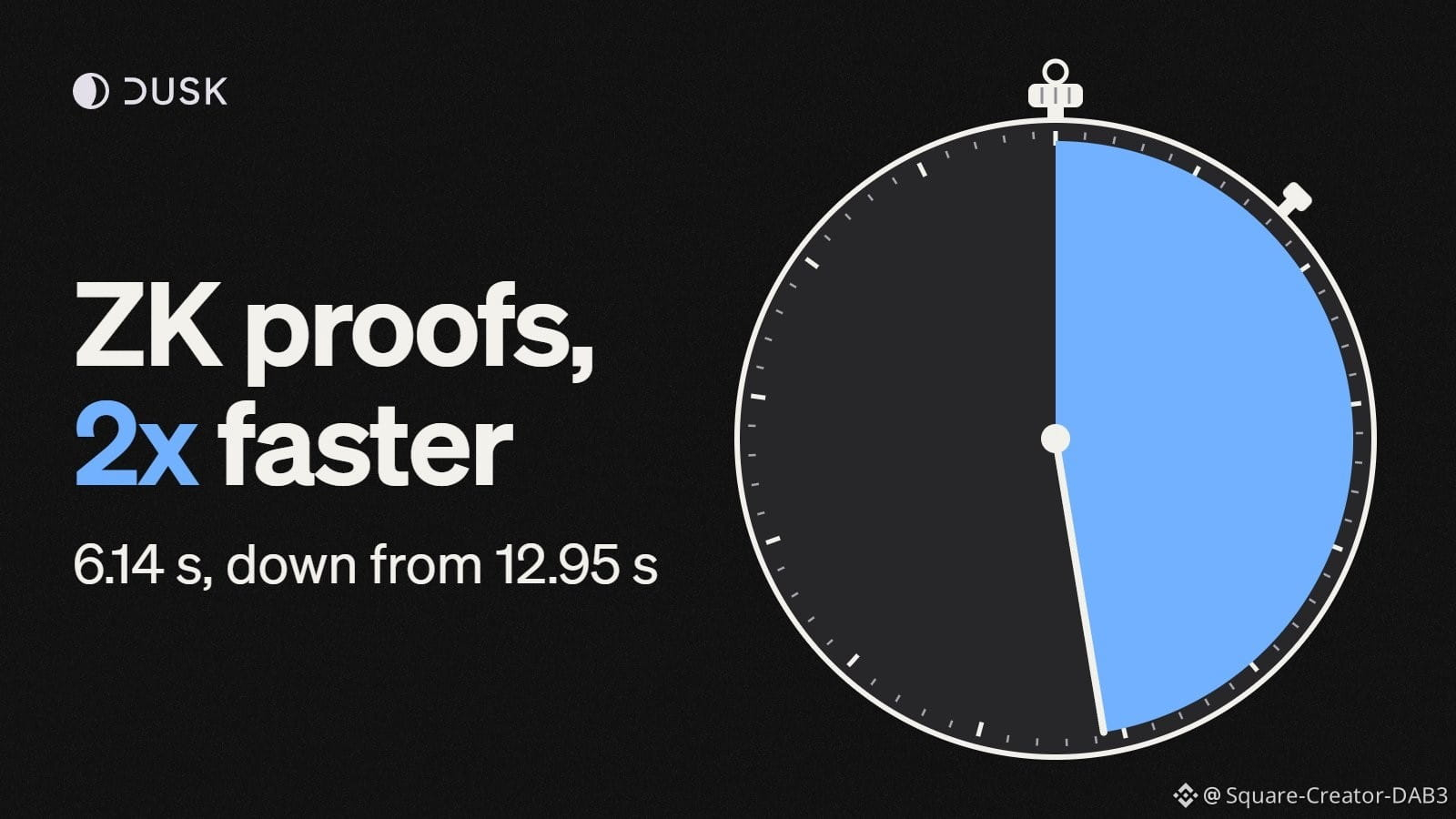
La Fondation Dusk a annoncé une avancée majeure de son infrastructure : les moteurs de preuves à divulgation nulle de connaissance (Zero-Knowledge Proofs) sont désormais deux fois plus rapides (de 12,95 secondes à 6,14 secondes), après le lancement de 10 mises à jour des bibliothèques cryptographiques fondamentales.
Cette étape prépare le terrain à une mise à niveau du réseau, qui sera l’une des plus importantes des 8 années d’histoire du projet.
📈 Impact attendu sur le token $DUSK :
Amélioration de l’efficacité du réseau : le doublement de la vitesse accroît la capacité du réseau à traiter plus efficacement les transactions financières et les applications d’actifs du monde réel (RWA).
Facteur positif (catalyseur haussier) : la mise à niveau majeure à venir renforce l’intérêt pour le token et incite les investisseurs à suivre de près les avancées techniques du projet.
Adoption accrue : l’accélération des preuves à divulgation nulle de connaissance attire davantage de développeurs et d’institutions, qui peuvent tirer parti des technologies de confidentialité et de sécurité.
📌 Pensez-vous que cette mise à niveau technique fera grimper le cours de $DUSK dans les prochains temps ? Donnez-nous votre avis !
#DUSK #BinanceSquare #bullish #ZeroKnowledgeProofs $DUSK
{spot}(DUSKUSDT)
🚀 Mise à jour technique majeure pour le projet Dusk et son impact direct sur le token $DUSK
La Fondation Dusk a annoncé une avancée majeure de son infrastructure : les moteurs de preuves à divulgation nulle de connaissance (Zero-Knowledge Proofs) sont désormais deux fois plus rapides (de 12,95 secondes à 6,14 secondes), après le lancement de 10 mises à jour des bibliothèques cryptographiques fondamentales.
Cette étape prépare le terrain à une mise à niveau du réseau, qui sera l’une des plus importantes des 8 années d’histoire du projet.
📈 Impact attendu sur le token $DUSK :
Amélioration de l’efficacité du réseau : le doublement de la vitesse accroît la capacité du réseau à traiter plus efficacement les transactions financières et les applications d’actifs du monde réel (RWA).
Facteur positif (catalyseur haussier) : la mise à niveau majeure à venir renforce l’intérêt pour le token et incite les investisseurs à suivre de près les avancées techniques du projet.
Adoption accrue : l’accélération des preuves à divulgation nulle de connaissance attire davantage de développeurs et d’institutions, qui peuvent tirer parti des technologies de confidentialité et de sécurité.
📌 Pensez-vous que cette mise à niveau technique fera grimper le cours de $DUSK dans les prochains temps ? Donnez-nous votre avis !
#DUSK #BinanceSquare #bullish #ZeroKnowledgeProofs $DUSK
1
1
69
·
--
Des chercheurs proposent une solution de transfert privé de Bitcoin de style Zcash, sans nécessiter de soft fork ! En utilisant des preuves à divulgation nulle de connaissance et des notes chiffrées pour masquer les détails des transactions sans modifier le mécanisme de consensus de Bitcoin. Cependant, des experts s’inquiètent de son anonymat et de sa résistance aux attaques quantiques. De nouvelles avancées pour la confidentialité des transactions Bitcoin !
#BitcoinPrivacy #ZeroKnowledgeProofs $BTC $ZEC
#BitcoinPrivacy #ZeroKnowledgeProofs $BTC $ZEC
78

·
--
EXPLOSION.
Juste au moment où vous pensiez que l’IA ne pouvait pas devenir plus incontrôlable, CoinDesk vient de faire l’effet d’une bombe : Brian Trunzo, directeur de la croissance chez Succinct Labs, affirme que les agents d’IA autonomes DÉTRUISENT Internet #ZeroKnowledgeProofs #AIRevolution #Cryptocurrency
La preuve est dans le pudding : selon CoinDesk, les preuves à connaissance nulle sont l’unique espoir des mathématiques pour suivre la cadence de l’IA autonome #blockchainsecurity
Les enjeux sont énormes : si nous n’exploitons pas la puissance des preuves à connaissance nulle, qui sait quels dégâts l’IA autonome pourrait provoquer sur nos vies numériques ? Êtes-vous prêt à protéger votre fortune et à sécuriser votre avenir numérique ?
46

·
--
Haussier
Partiellement vrai
La course dans le zk proving ne consiste plus seulement à aller plus vite
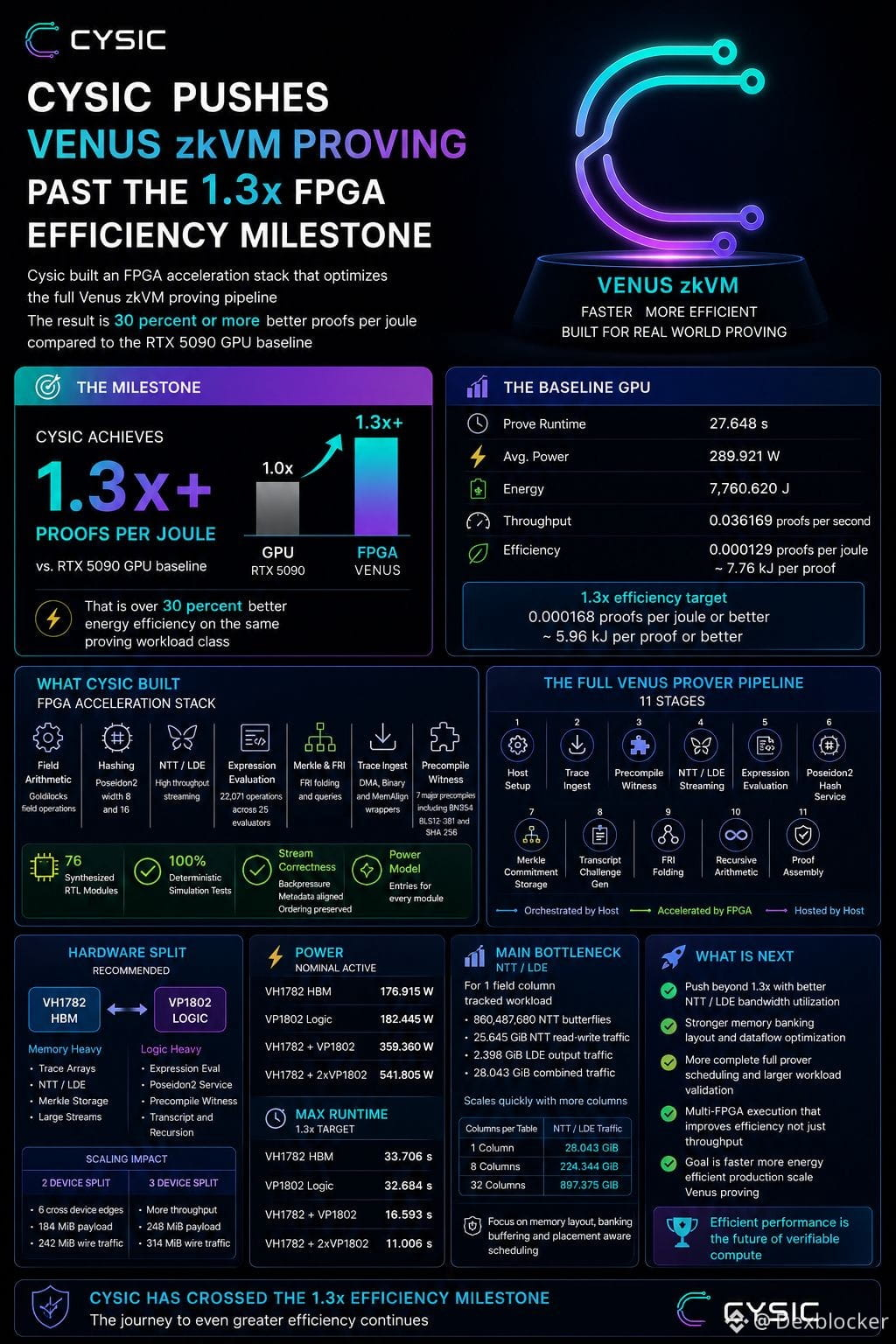
🚀 Cysic $CYS a propulsé Venus zkVM au-delà du cap des 1,3× d’efficacité FPGA, en offrant des preuves par joule plus de 30% meilleures que la référence RTX 5090.
Mais voici ce qui ressort vraiment 👇
Au lieu d’accélérer un seul kernel, Cysic optimise l’ensemble du pipeline de génération de preuves :
⚡ Construction de trace
⚡ NTT & LDE
⚡ Hachage Poseidon2
⚡ Engagements Merkle
⚡ FRI
⚡ Preuve récursive
⚡ Assemblage des preuves
Les zkVM efficaces ne sont pas conçus en rendant un seul composant plus rapide : ils sont construits en éliminant les goulots d’étranglement dans tout le système.
Cette étape renforce l’approche full-stack de Cysic, en combinant matériel, logiciel et architecture système pour rendre la génération de preuves ZK en temps réel, à l’échelle de la production, plus accessible.
Et avec les efforts continus sur la bande passante mémoire, l’ordonnancement multi-FPGA et l’optimisation complète du pipeline, ce n’est que le début.
L’avenir du calcul vérifiable ne sera pas alimenté uniquement par la performance brute : il sera alimenté par une performance efficace.
#ZeroKnowledgeProofs
291

📱 Lancement de l’outil open source ProveKit pour renforcer la confidentialité de l’identité numérique
La société World a annoncé le lancement de ProveKit comme solution open source d’identité numérique basée sur la technologie des preuves à divulgation nulle de connaissance (Zero-Knowledge Proofs), spécialement conçue pour les appareils mobiles. Ce lancement vise à offrir une méthode plus sûre et plus respectueuse de la vie privée pour vérifier l’identité en ligne, ce qui pourrait contribuer à l’évolution des normes de confidentialité dans ce domaine.
━━━━━━━━━━━━━━
📊 Impact : 📈 Élevé
🏷️ DEFI
#ZeroKnowledgeProofs #DigitalIdentity #Privacy #OpenSource #Web3
📰 Source : cryptobriefing.com
53

·
--
La mise à niveau Zcash Ironwood approche alors que les développeurs travaillent à
Les développeurs annoncent que la mise à niveau Ironwood est sur le point d’être activée sur le testnet pour la principale cryptomonnaie axée sur la confidentialité. Des audits de sécurité n’ont révélé aucune nouvelle vulnérabilité critique à la suite de la volatilité récente du marché. La mise à niveau vise à rétablir la confiance des investisseurs dans la feuille de route de développement technique du protocole.
La mise à niveau Ironwood introduit des cadres de test améliorés et des mécanismes améliorés de détection des bugs. Les équipes de développement ont mené d’amples revues de sécurité pour s’assurer que le protocole conserve des garanties de confidentialité solides. Cette approche méthodique répond aux inquiétudes soulevées après la forte chute du prix plus tôt dans la semaine.
Les cryptomonnaies axées sur la confidentialité font l’objet d’un examen accru, les régulateurs du monde entier analysant les technologies de preuve à connaissance nulle. La communauté souligne que les améliorations techniques restent distinctes des dynamiques de marché à court terme. L’intérêt institutionnel pour les protocoles de confidentialité continue de se renforcer malgré les fluctuations récentes des prix.
La mise à niveau Ironwood va-t-elle rétablir la confiance des traders ? Partagez votre avis ci-dessous. 👇
#ZcashUpgrade #PrivacyCoinTech #ZeroKnowledgeProofs
140
·
--
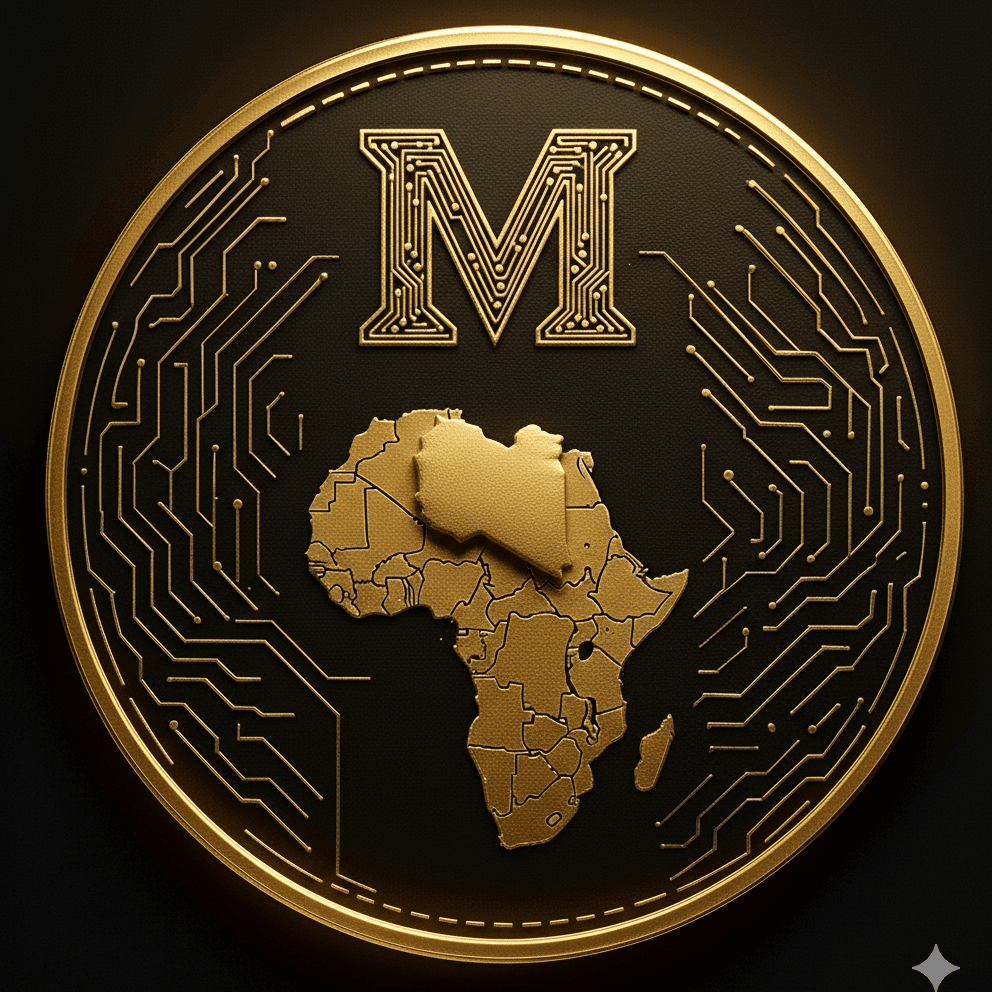
Pendant que le marché se laisse distraire par les memecoins, Zcash
$ZEC émerge en tête en pilotant le récit de la « résistance quantique ».
En brisant une tendance baissière historique de long terme sur les graphiques journaliers. Le volume et l’intérêt ouvert confirment que les baleines accumulent.
Vient de lancer des portefeuilles récupérables quantiquement. Avec une cryptographie Zero-Knowledge avancée, Zcash se positionne comme l’abri ultime face aux futures vulnérabilités technologiques mondiales.
Penses-tu que la résistance quantique propulsera Zcash au sommet du marché ?
{spot}(ZECUSDT)
#zcash #zec #ZeroKnowledgeProofs #Privacy
Pendant que le marché se laisse distraire par les memecoins, Zcash
$ZEC émerge en tête en pilotant le récit de la « résistance quantique ».
En brisant une tendance baissière historique de long terme sur les graphiques journaliers. Le volume et l’intérêt ouvert confirment que les baleines accumulent.
Vient de lancer des portefeuilles récupérables quantiquement. Avec une cryptographie Zero-Knowledge avancée, Zcash se positionne comme l’abri ultime face aux futures vulnérabilités technologiques mondiales.
Penses-tu que la résistance quantique propulsera Zcash au sommet du marché ?
#zcash #zec #ZeroKnowledgeProofs #Privacy
1
149
·
--
Article
Voir la traduction
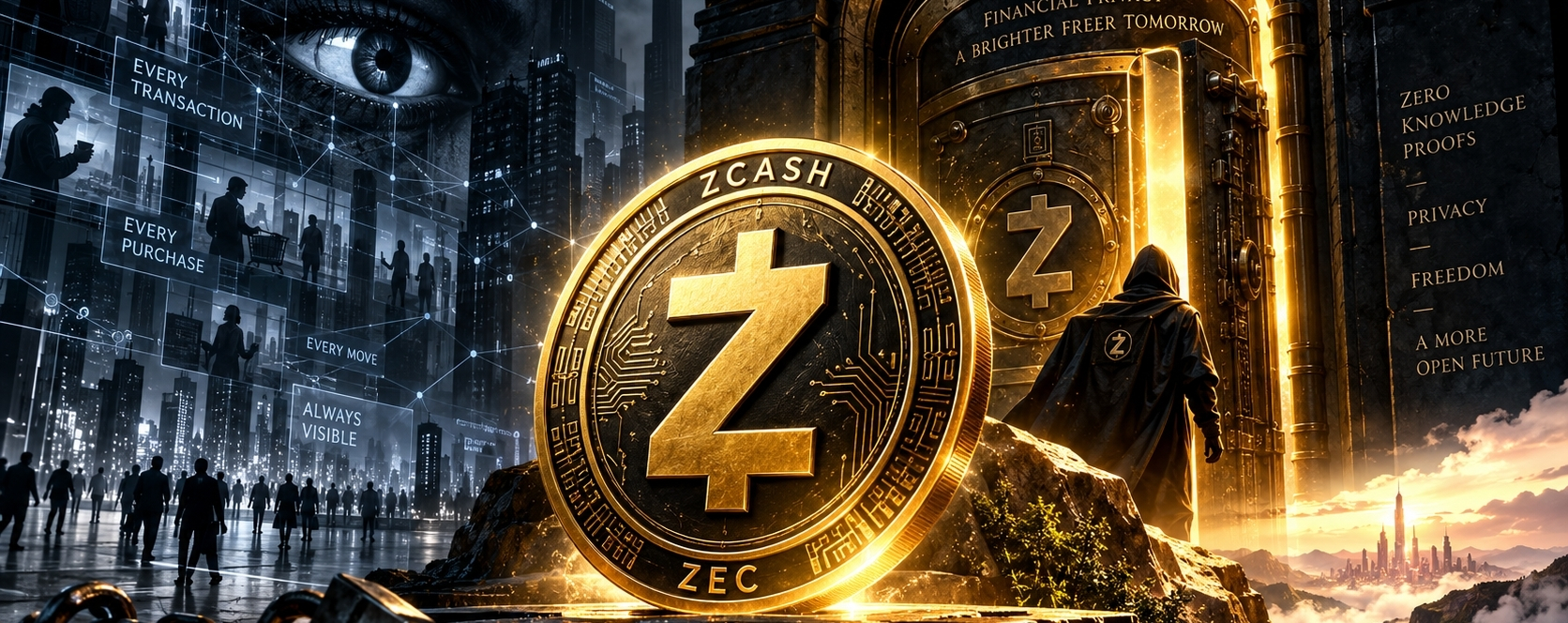
THE COIN THAT REFUSED TO BE WATCHED 🕶️The Untold Story of $ZEC — A Battle for Financial Privacy
Imagine waking up tomorrow in a world where every dollar you spend becomes public knowledge.
Your salary. Your savings. The coffee you bought this morning. Every payment you make.
Now imagine that strangers can follow your financial footsteps forever.
Sounds like a dystopian movie, right?
But here's the uncomfortable truth: much of the cryptocurrency world already operates on publicly visible ledgers.
And nearly ten years ago, a group of brilliant minds decided to challenge that reality.
This is the story of Zcash ($ZEC).
And it begins with a question that could change how you think about money.
CHAPTER I — THE GLASS KINGDOM 👁️
The year was 2009.
Bitcoin had arrived.
For the first time, people could transfer digital value without depending on a traditional bank.
It was revolutionary.
But every revolution leaves behind an unanswered question.
Bitcoin's blockchain was transparent. Transactions could be inspected, balances traced, and addresses analyzed.
The system didn't automatically reveal everyone's real identity, but financial activity could become connected to real people.
Some saw transparency as freedom.
Others saw a world made of glass.
And somewhere among the researchers studying cryptography, an idea began to take shape:
What if money could be verified without exposing its owner's financial life?
CHAPTER II — THE SECRET THAT MATHEMATICS COULD PROVE 🔐
In 2013, researchers introduced Zerocoin, a proposal designed to improve privacy in Bitcoin.
The idea evolved.
Rather than simply modifying Bitcoin, the researchers and developers eventually pursued a separate cryptocurrency.
Their weapon wasn't a secret computer.
It wasn't an invisible network.
It was mathematics.
A technology known as zero-knowledge proofs.
Imagine standing before a locked door.
A guardian demands proof that you know the correct password.
But you refuse to reveal the password itself.
What if you could mathematically prove that you know it, without telling the guardian what it is?
That is the remarkable principle behind zero-knowledge proofs.
And it would become central to Zcash.
CHAPTER III — OCTOBER 28, 2016 ⚡
The day finally arrived.
October 28, 2016.
Zcash officially launched.
Its native currency was called ZEC.
Its maximum supply?
21 million coins.
The same numerical limit associated with Bitcoin.
But Zcash offered something fundamentally different.
It introduced shielded transactions, using advanced cryptography to protect sensitive financial details.
The world could still verify that the network followed its rules.
Yet appropriately shielded transaction details could remain confidential.
It was a bold experiment.
A blockchain that could offer both verifiability and privacy.
CHAPTER IV — THE POWER OF THE INVISIBLE 🛡️
Picture two people transferring $ZEC.
In a fully shielded transaction, outsiders cannot publicly inspect the sender's shielded address, the receiver's shielded address, or the transferred amount.
Yet the network can still verify the transaction's validity.
No magic.
No disappearing coins.
Just sophisticated cryptography.
But there's an important detail.
Not every Zcash transaction is private.
Zcash also supports transparent transactions, and privacy depends on the addresses, transaction type, and tools used.
That distinction matters.
Because real technology is more interesting than exaggerated promises.
CHAPTER V — THE PRICE OF FREEDOM ⚖️
Every powerful invention creates difficult questions.
Financial privacy can protect ordinary people from surveillance, unwanted exposure, and financial profiling.
But privacy technologies also face regulatory scrutiny, compliance challenges, and questions about potential misuse.
Zcash has never existed outside those debates.
Its ecosystem has experienced technological upgrades, competition, market volatility, and changing attitudes toward privacy coins.
And owning $ZEC does not guarantee profits.
Its price can fall dramatically, just like other cryptocurrencies.
But the idea behind the project remains worth examining.
Should financial privacy be a privilege, or a fundamental feature of digital money?
CHAPTER VI — THE UNFINISHED STORY 🌌
October 28, 2026.
Ten years after Zcash's launch, the question that inspired its creation still matters.
As artificial intelligence grows more powerful, blockchain analytics advance, and digital payments become increasingly common, financial information can become extraordinarily revealing.
Zcash represents one attempt to answer a difficult question:
Can we build financial systems that are verifiable without making every personal transaction an open book?
The answer is still being written.
And perhaps the most fascinating part of the $ZEC story isn't its market price.
It's the idea that inspired its creation.
In a world obsessed with seeing everything, privacy itself can become revolutionary.
---
💬 Now I want to hear your opinion:
If you had to choose between a completely transparent financial system and one that protects your personal transactions, which would you trust more?
And do you believe privacy-focused cryptocurrencies like ZEC$will become more important over the next decade?
Share your thoughts below. 👇
This article uses fictionalized storytelling to explain documented historical events and technology. It is educational content, not financial advice.
#ZEC #Zcash #CryptoHistory #Blockchain #ZeroKnowledgeProofs fs
THE COIN THAT REFUSED TO BE WATCHED 🕶️
The Untold Story of $ZEC — A Battle for Financial Privacy
Imagine waking up tomorrow in a world where every dollar you spend becomes public knowledge.
Your salary. Your savings. The coffee you bought this morning. Every payment you make.
Now imagine that strangers can follow your financial footsteps forever.
Sounds like a dystopian movie, right?
But here's the uncomfortable truth: much of the cryptocurrency world already operates on publicly visible ledgers.
And nearly ten years ago, a group of brilliant minds decided to challenge that reality.
This is the story of Zcash ($ZEC ).
And it begins with a question that could change how you think about money.
CHAPTER I — THE GLASS KINGDOM 👁️
The year was 2009.
Bitcoin had arrived.
For the first time, people could transfer digital value without depending on a traditional bank.
It was revolutionary.
But every revolution leaves behind an unanswered question.
Bitcoin's blockchain was transparent. Transactions could be inspected, balances traced, and addresses analyzed.
The system didn't automatically reveal everyone's real identity, but financial activity could become connected to real people.
Some saw transparency as freedom.
Others saw a world made of glass.
And somewhere among the researchers studying cryptography, an idea began to take shape:
What if money could be verified without exposing its owner's financial life?
CHAPTER II — THE SECRET THAT MATHEMATICS COULD PROVE 🔐
In 2013, researchers introduced Zerocoin, a proposal designed to improve privacy in Bitcoin.
The idea evolved.
Rather than simply modifying Bitcoin, the researchers and developers eventually pursued a separate cryptocurrency.
Their weapon wasn't a secret computer.
It wasn't an invisible network.
It was mathematics.
A technology known as zero-knowledge proofs.
Imagine standing before a locked door.
A guardian demands proof that you know the correct password.
But you refuse to reveal the password itself.
What if you could mathematically prove that you know it, without telling the guardian what it is?
That is the remarkable principle behind zero-knowledge proofs.
And it would become central to Zcash.
CHAPTER III — OCTOBER 28, 2016 ⚡
The day finally arrived.
October 28, 2016.
Zcash officially launched.
Its native currency was called ZEC.
Its maximum supply?
21 million coins.
The same numerical limit associated with Bitcoin.
But Zcash offered something fundamentally different.
It introduced shielded transactions, using advanced cryptography to protect sensitive financial details.
The world could still verify that the network followed its rules.
Yet appropriately shielded transaction details could remain confidential.
It was a bold experiment.
A blockchain that could offer both verifiability and privacy.
CHAPTER IV — THE POWER OF THE INVISIBLE 🛡️
Picture two people transferring $ZEC .
In a fully shielded transaction, outsiders cannot publicly inspect the sender's shielded address, the receiver's shielded address, or the transferred amount.
Yet the network can still verify the transaction's validity.
No magic.
No disappearing coins.
Just sophisticated cryptography.
But there's an important detail.
Not every Zcash transaction is private.
Zcash also supports transparent transactions, and privacy depends on the addresses, transaction type, and tools used.
That distinction matters.
Because real technology is more interesting than exaggerated promises.
CHAPTER V — THE PRICE OF FREEDOM ⚖️
Every powerful invention creates difficult questions.
Financial privacy can protect ordinary people from surveillance, unwanted exposure, and financial profiling.
But privacy technologies also face regulatory scrutiny, compliance challenges, and questions about potential misuse.
Zcash has never existed outside those debates.
Its ecosystem has experienced technological upgrades, competition, market volatility, and changing attitudes toward privacy coins.
And owning $ZEC does not guarantee profits.
Its price can fall dramatically, just like other cryptocurrencies.
But the idea behind the project remains worth examining.
Should financial privacy be a privilege, or a fundamental feature of digital money?
CHAPTER VI — THE UNFINISHED STORY 🌌
October 28, 2026.
Ten years after Zcash's launch, the question that inspired its creation still matters.
As artificial intelligence grows more powerful, blockchain analytics advance, and digital payments become increasingly common, financial information can become extraordinarily revealing.
Zcash represents one attempt to answer a difficult question:
Can we build financial systems that are verifiable without making every personal transaction an open book?
The answer is still being written.
And perhaps the most fascinating part of the $ZEC story isn't its market price.
It's the idea that inspired its creation.
In a world obsessed with seeing everything, privacy itself can become revolutionary.
---
💬 Now I want to hear your opinion:
If you had to choose between a completely transparent financial system and one that protects your personal transactions, which would you trust more?
And do you believe privacy-focused cryptocurrencies like ZEC$will become more important over the next decade?
Share your thoughts below. 👇
This article uses fictionalized storytelling to explain documented historical events and technology. It is educational content, not financial advice.
#ZEC #Zcash #CryptoHistory #Blockchain #ZeroKnowledgeProofs fs
46

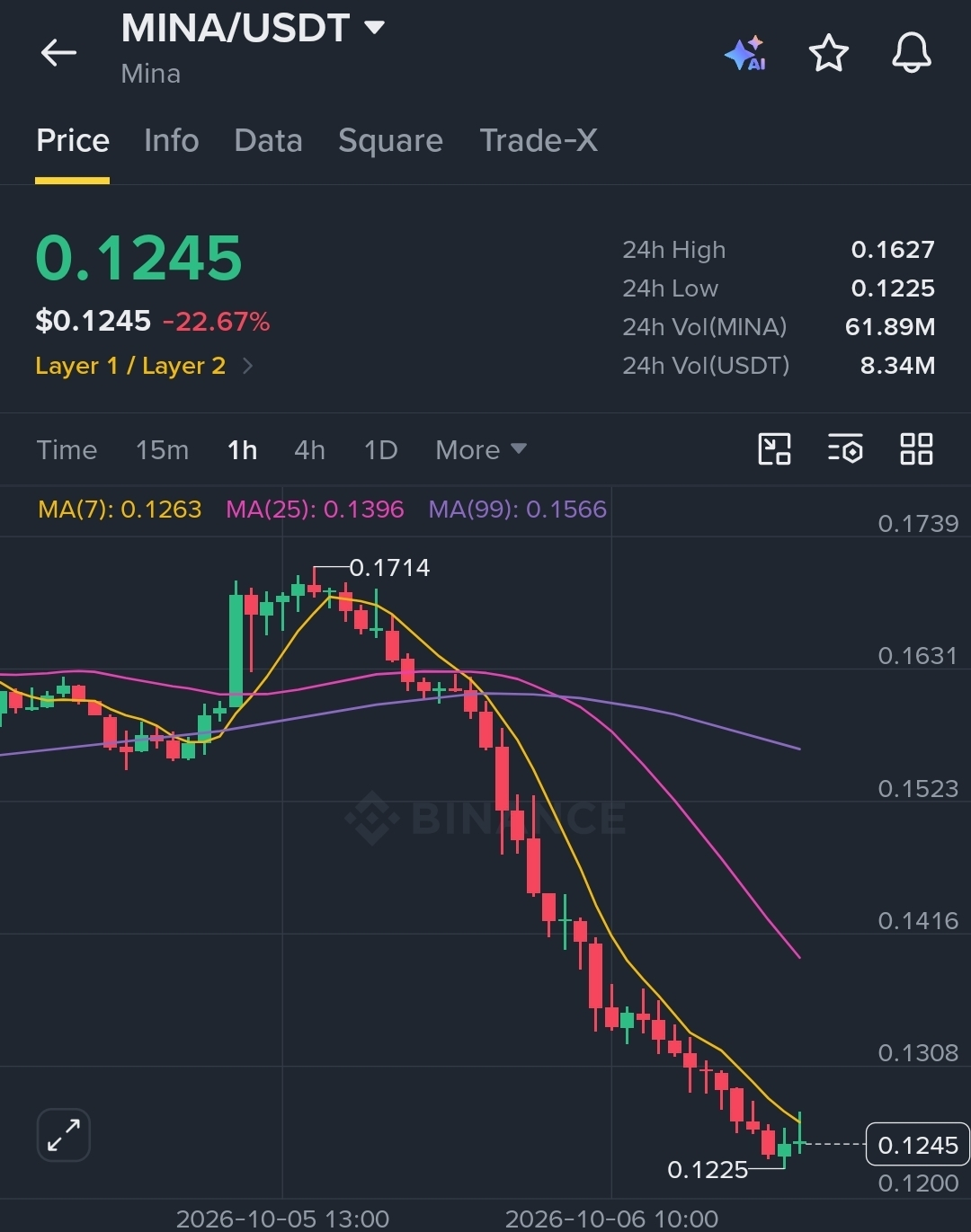
🪶 $MINA /USDT — 🔴 VENTE À DÉCOUVERT · Confiance 89%
━━━━━━━━━━━━━━
📍 Entrée : 0.1241 – 0.1249
🛑 SL : 0.1358
🎯 TP1 : 0.1183
✅ TP2 : 0.1133
🏆 TP3 : 0.1058
━━━━━━━━━━━━━━
🔎 La MA7 (0.1263) a plafonné chaque rebond depuis le sommet à 0.1714.
🧠 $MINA : Succinct est une blockchain concise qui utilise des preuves zk récursives pour maintenir la chaîne autour de 22 Ko ; le volume est faible, à 8.34M USDT en 24 h.
💬 Une petite blockchain reste-t-elle un avantage alors que la technologie zk est partout ?
#MINA #Succinct #zkProofs #ZeroKnowledgeProofs #Layer1
{future}(MINAUSDT)
🪶 $MINA /USDT — 🔴 VENTE À DÉCOUVERT · Confiance 89%
━━━━━━━━━━━━━━
📍 Entrée : 0.1241 – 0.1249
🛑 SL : 0.1358
🎯 TP1 : 0.1183
✅ TP2 : 0.1133
🏆 TP3 : 0.1058
━━━━━━━━━━━━━━
🔎 La MA7 (0.1263) a plafonné chaque rebond depuis le sommet à 0.1714.
🧠 $MINA : Succinct est une blockchain concise qui utilise des preuves zk récursives pour maintenir la chaîne autour de 22 Ko ; le volume est faible, à 8.34M USDT en 24 h.
💬 Une petite blockchain reste-t-elle un avantage alors que la technologie zk est partout ?
#MINA #Succinct #zkProofs #ZeroKnowledgeProofs #Layer1
━━━━━━━━━━━━━━
📍 Entrée : 0.1241 – 0.1249
🛑 SL : 0.1358
🎯 TP1 : 0.1183
✅ TP2 : 0.1133
🏆 TP3 : 0.1058
━━━━━━━━━━━━━━
🔎 La MA7 (0.1263) a plafonné chaque rebond depuis le sommet à 0.1714.
🧠 $MINA : Succinct est une blockchain concise qui utilise des preuves zk récursives pour maintenir la chaîne autour de 22 Ko ; le volume est faible, à 8.34M USDT en 24 h.
💬 Une petite blockchain reste-t-elle un avantage alors que la technologie zk est partout ?
#MINA #Succinct #zkProofs #ZeroKnowledgeProofs #Layer1

1
358

·
--
La recherche de la Fondation Ethereum explore l’architecture permettant d’intégrer des agents d’IA aux contrats intelligents sur le réseau principal. Ce travail se concentre sur la conception des couches de vérification nécessaires, telles que les preuves à divulgation nulle de connaissance (zero-knowledge proofs), afin de garantir que les actions autonomes des IA soient auditables et transparentes. Cette initiative montre que les chercheurs d’$Ethereum réfléchissent au-delà d’une simple exécution des transactions, en améliorant le règlement, la vérification et la scalabilité de l’avenir. S’il ne s’agit pas d’un tournant immédiat pour le marché, ce développement constitue un signal crucial à long terme sur la direction que prennent le capital, les utilisateurs et la réglementation dans le secteur crypto, soulignant l’innovation continue malgré les fluctuations du marché à court terme.
#Ethereum #AIagents #SmartContracts #ZeroKnowledgeProofs #CryptoResearch
#Ethereum #AIagents #SmartContracts #ZeroKnowledgeProofs #CryptoResearch
29
🤖 Vitalik Buterin crée un panneau publicitaire anonyme grâce à la technologie des preuves de connaissance zéro sur Aztec !
Vitalik Buterin, fondateur d’Ethereum, a développé un prototype de panneau publicitaire entièrement anonyme en utilisant le réseau Aztec et la technologie des preuves de connaissance zéro (ZKP). Ce système, qui repose sur des dépôts Ethereum et l’intelligence artificielle pour la supervision, permet de faire de la publicité sans révéler l’identité de l’annonceur, ouvrant de nouvelles perspectives pour la confidentialité dans Web3.
━━━━━━━━━━━━━━
📊 Impact : 📈 élevé
🏷️ DEFI
#VitalikButerin #AztecNetwork #ZeroKnowledgeProofs #Ethereum #Privacy
🔗 Source : https://cryptobriefing.com/vitalik-buterin-vibe-codes-aztec-anonymous-billboard/
37

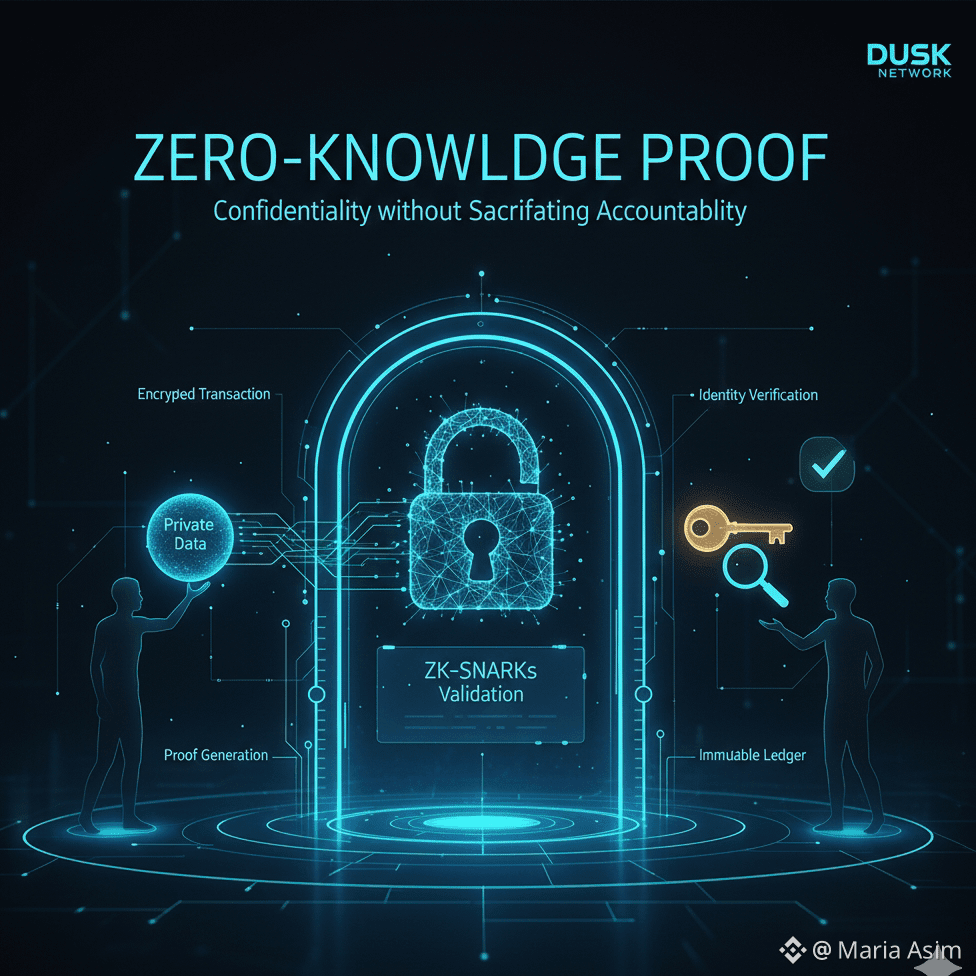
#dusk $DUSK n'essaie pas d'être la voix la plus forte dans la crypto — il se concentre sur le fait de devenir l'infrastructure la plus fiable.
Alors que de nombreux projets se disputent le battage médiatique à court terme, Dusk est en train d'ingénier une blockchain conçue pour un usage financier sérieux. Sa force principale réside dans le mélange de la confidentialité avec la sensibilisation réglementaire, créant un système où les transactions peuvent rester confidentielles sans sacrifier la responsabilité. Cet équilibre est crucial pour les institutions qui nécessitent à la fois protection et transparence pour fonctionner à grande échelle.
Au lieu de poursuivre les tendances, Dusk développe les fondations pour des actifs tokenisés et une finance décentralisée conforme. Cette vision à long terme privilégie la résilience par rapport à la vitesse et la structure par rapport au spectacle. Chaque couche du réseau est conçue pour soutenir des règlements sécurisés et une exécution de confiance, qui sont essentielles pour l'adoption dans le monde réel.@Dusk_Foundation #DuskNetwork #blockchain #ZeroKnowledgeProofs $DUSK
{spot}(DUSKUSDT)
#dusk $DUSK n'essaie pas d'être la voix la plus forte dans la crypto — il se concentre sur le fait de devenir l'infrastructure la plus fiable.
Alors que de nombreux projets se disputent le battage médiatique à court terme, Dusk est en train d'ingénier une blockchain conçue pour un usage financier sérieux. Sa force principale réside dans le mélange de la confidentialité avec la sensibilisation réglementaire, créant un système où les transactions peuvent rester confidentielles sans sacrifier la responsabilité. Cet équilibre est crucial pour les institutions qui nécessitent à la fois protection et transparence pour fonctionner à grande échelle.
Au lieu de poursuivre les tendances, Dusk développe les fondations pour des actifs tokenisés et une finance décentralisée conforme. Cette vision à long terme privilégie la résilience par rapport à la vitesse et la structure par rapport au spectacle. Chaque couche du réseau est conçue pour soutenir des règlements sécurisés et une exécution de confiance, qui sont essentielles pour l'adoption dans le monde réel.@Dusk #DuskNetwork #blockchain #ZeroKnowledgeProofs $DUSK
4
100

·
--
Haussier
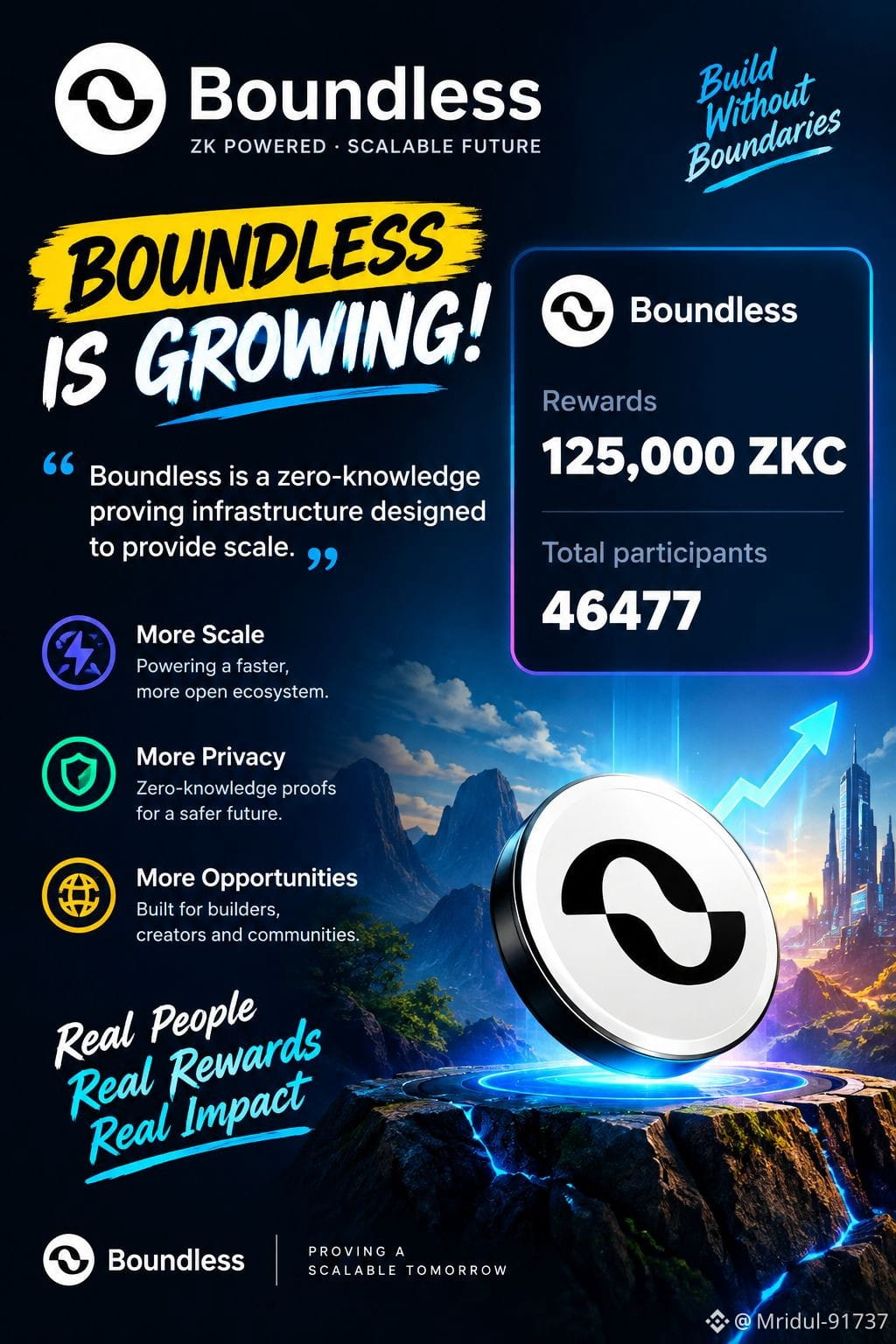
🚀 BOUNDLESS CONSTRUIT L’AVENIR DE LA PREUVE À ZÉRO-CONNAISSANCE
Boundless avance avec une infrastructure de preuve à zéro-connaissance conçue pour apporter une technologie évolutive et axée sur la confidentialité à la prochaine génération de Web3.
🔥 125 000 ZKC en récompenses
👥 46 477 participants au total
Ce qui rend cela intéressant, c’est la combinaison de l’évolutivité, de la confidentialité et de la participation de la communauté. La technologie à connaissance nulle a le potentiel d’aider les systèmes blockchain à traiter plus efficacement tout en protégeant les informations sensibles.
Les chiffres montrent une participation solide à l’écosystème Boundless, tandis que l’attention croissante portée à la technologie ZK continue de créer de nouvelles opportunités pour les développeurs et les communautés.
🌐 Construire sans frontières.
⚡ Mettre à l’échelle l’avenir.
🔐 Propulser la prochaine génération de Web3.
Note : Les chiffres des récompenses et de la participation peuvent évoluer avec le temps. Vérifiez toujours l’éligibilité à la campagne, les conditions et les annonces officielles avant d’y participer. Ceci ne constitue pas un conseil financier.
#Boundless #ZKC #ZeroKnowledgeProofs #Web3 #crypto
Action suivante disponible : �Créer un fichier DOCX téléchargeable ici dans cette conversation contenant le texte modifiable ci-dessus
1
325

·
--

Article
Robots, Sécurité ZK et 139 millions de tokens débloqués : la vérité sur le Newton Protocol ($NEWT)Salut tout le monde ! Aujourd’hui, je vous apporte une mise à jour extrêmement importante sur l’un des projets qui a le plus attiré mon attention dans l’écosystème de la Finance Décentralisée (DeFi) : le @NewtonProtocol (NEWT). Si vous pensiez que la sécurité dans le monde crypto se résumait uniquement à protéger votre clé privée, les nouveautés que je vais détailler maintenant montrent comment l’argent institutionnel et l’automatisation vont évoluer sur la blockchain à l’avenir.
Le lancement de la Mainnet Beta : la règle avant l’action
La grande nouvelle, c’est que le 23 juin 2026, la Fondation Newton a officiellement lancé sa Mainnet Beta. Je suis leur architecture de près et ce qui m’impressionne le plus, c’est l’idée d’agir comme une "couche d’autorisation pour la finance onchain".
Robots, Sécurité ZK et 139 millions de tokens débloqués : la vérité sur le Newton Protocol ($NEWT)
Salut tout le monde ! Aujourd’hui, je vous apporte une mise à jour extrêmement importante sur l’un des projets qui a le plus attiré mon attention dans l’écosystème de la Finance Décentralisée (DeFi) : le @NewtonProtocol (NEWT). Si vous pensiez que la sécurité dans le monde crypto se résumait uniquement à protéger votre clé privée, les nouveautés que je vais détailler maintenant montrent comment l’argent institutionnel et l’automatisation vont évoluer sur la blockchain à l’avenir.
Le lancement de la Mainnet Beta : la règle avant l’action
La grande nouvelle, c’est que le 23 juin 2026, la Fondation Newton a officiellement lancé sa Mainnet Beta. Je suis leur architecture de près et ce qui m’impressionne le plus, c’est l’idée d’agir comme une "couche d’autorisation pour la finance onchain".
101

·
--
"@SuccinctLabs repousse les limites de la technologie ZK ! 🔒💻 Révolutionnant la scalabilité & la sécurité de la blockchain avec des solutions innovantes. 🚀💡 Comment voyez-vous les ZKPs transformer l'avenir du Web3 ? Partagez vos idées ! 💬 #SuccinctLabs😊 #ZeroKnowledgeProofs #Web3Future $PROVE
"@SuccinctLabs repousse les limites de la technologie ZK ! 🔒💻 Révolutionnant la scalabilité & la sécurité de la blockchain avec des solutions innovantes. 🚀💡 Comment voyez-vous les ZKPs transformer l'avenir du Web3 ? Partagez vos idées ! 💬 #SuccinctLabs😊 #ZeroKnowledgeProofs #Web3Future $PROVE
20
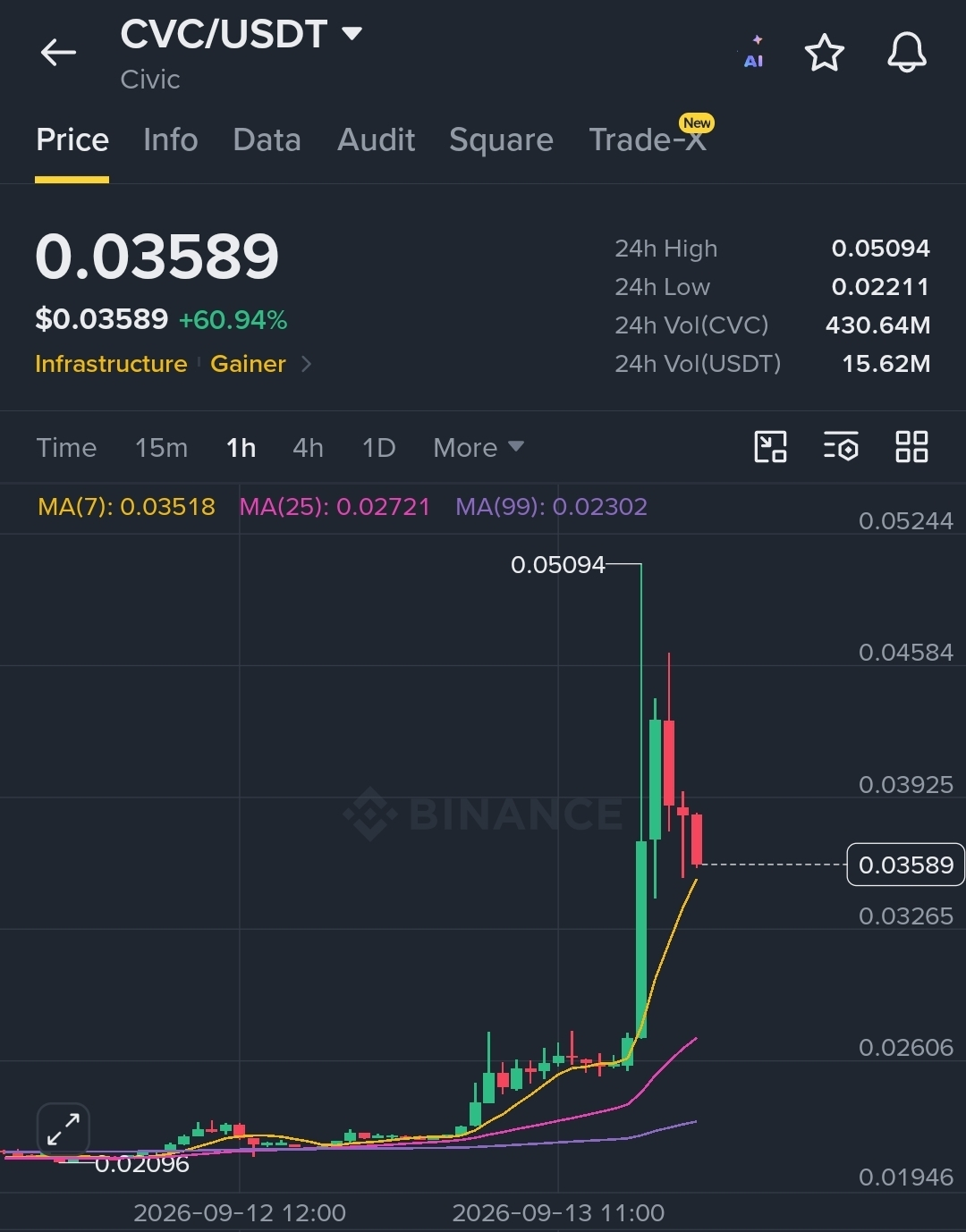
$CVC /USDT — 🔴 COURT · Conf 70%
📍 Entrée : 0.03571 – 0.03589 (note de biais : post-spike, traiter comme un short en retour à la moyenne)
🛑 SL : 0.04287
🎯 TP1 : 0.03409
✅ TP2 : 0.03266
🏆 TP3 : 0.03051
Le CVC a fortement “spiké” de +60,94% à 0.0509 et commence déjà à fortement se reprendre — le prix est désormais sous la MA7 (0.03518) avec une MA25 (0.02721) toujours très en dessous, ce qui suggère un retracement après un sommet en mode “blow-off”, avec 0.02700 comme cible de retour à la moyenne.
$CVC : Civic est un protocole de vérification d’identité décentralisée utilisant des attestations KYC ancrées sur la blockchain — le mécanisme clé est le système Civic Pass pour le filtrage d’identité au niveau des dApps ; le risque est la pression de commoditisation face à WorldID et à d’autres concurrents d’identité à preuve à connaissance nulle (zero-knowledge) qui grignotent son marché.
L’impulsion de Civic de +60% sans catalyseur annoncé suggère que cela a été davantage porté par la liquidité que par des fondamentaux — un protocole d’identité “legacy” comme CVC a-t-il encore une marge de protection crédible face aux solutions d’identité nativement ZK en 2026 ?
#CVC #Civic #Crypto #KYC #ZeroKnowledgeProofs
{future}(CVCUSDT)
$CVC /USDT — 🔴 COURT · Conf 70%
📍 Entrée : 0.03571 – 0.03589 (note de biais : post-spike, traiter comme un short en retour à la moyenne)
🛑 SL : 0.04287
🎯 TP1 : 0.03409
✅ TP2 : 0.03266
🏆 TP3 : 0.03051
Le CVC a fortement “spiké” de +60,94% à 0.0509 et commence déjà à fortement se reprendre — le prix est désormais sous la MA7 (0.03518) avec une MA25 (0.02721) toujours très en dessous, ce qui suggère un retracement après un sommet en mode “blow-off”, avec 0.02700 comme cible de retour à la moyenne.
$CVC : Civic est un protocole de vérification d’identité décentralisée utilisant des attestations KYC ancrées sur la blockchain — le mécanisme clé est le système Civic Pass pour le filtrage d’identité au niveau des dApps ; le risque est la pression de commoditisation face à WorldID et à d’autres concurrents d’identité à preuve à connaissance nulle (zero-knowledge) qui grignotent son marché.
L’impulsion de Civic de +60% sans catalyseur annoncé suggère que cela a été davantage porté par la liquidité que par des fondamentaux — un protocole d’identité “legacy” comme CVC a-t-il encore une marge de protection crédible face aux solutions d’identité nativement ZK en 2026 ?
#CVC #Civic #Crypto #KYC #ZeroKnowledgeProofs

1
322

·
--
Baissier
SXT Se Maintient Solidement Au-dessus du Support Critique ! Les Données Entièrement Natives de l’IA Exigeront-elles le Prochain Mouvement à la Hausse ? 🌐
L’Analyse : Space and Time ($SXT
{spot}(SXTUSDT)
) continue de démontrer une résilience structurelle nette, en se stabilisant de manière robuste près du niveau de 0,0073 $ au sein d’une bande définie d’accumulation de valeur. En tant qu’entrepôt de données décentralisé natif de l’IA utilisant des preuves à connaissance nulle (ZK) pour relier des données infalsifiables directement à des contrats intelligents, SXT se situe à l’intersection technique la plus valorisée.
L’Alpha : Sur le graphique journalier, SXT a enregistré des mouvements quotidiens positifs constants (+4,98 %), montrant une accumulation active sous une résistance locale descendante. Des desks dérivés soulignent un reset complet des métriques de financement, indiquant que la base horizontale actuelle est entièrement exempte de mousse spéculative du retail. Une impulsion décisive de la vélocité des transactions au comptant au-dessus du bloc de résistance locale immédiat dégagera facilement la voie vers des cibles historiques plus élevées.
Le Trade : Le positionnement paraît très asymétrique lors de la construction d’une exposition dans la zone de demande 0,0068–0,0072 $. Fixez des objectifs de profit principaux proches des nœuds de liquidité au-dessus du prix actuel, et gérez le risque en capital en aval avec un stop de clôture d’invalidation automatisé directement sous le plancher du swing local à 0,0063 $.
L’infrastructure de données s’accumule discrètement grâce aux détenteurs de long terme, tandis que le retail attend une expansion des prix. Empilez-vous des sacs de SXT ici ? 👇
#SXT #SpaceandTimen #ZeroKnowledgeProofs #Web3Data #cryptosignals
SXT Se Maintient Solidement Au-dessus du Support Critique ! Les Données Entièrement Natives de l’IA Exigeront-elles le Prochain Mouvement à la Hausse ? 🌐
L’Analyse : Space and Time ($SXT
) continue de démontrer une résilience structurelle nette, en se stabilisant de manière robuste près du niveau de 0,0073 $ au sein d’une bande définie d’accumulation de valeur. En tant qu’entrepôt de données décentralisé natif de l’IA utilisant des preuves à connaissance nulle (ZK) pour relier des données infalsifiables directement à des contrats intelligents, SXT se situe à l’intersection technique la plus valorisée.
L’Alpha : Sur le graphique journalier, SXT a enregistré des mouvements quotidiens positifs constants (+4,98 %), montrant une accumulation active sous une résistance locale descendante. Des desks dérivés soulignent un reset complet des métriques de financement, indiquant que la base horizontale actuelle est entièrement exempte de mousse spéculative du retail. Une impulsion décisive de la vélocité des transactions au comptant au-dessus du bloc de résistance locale immédiat dégagera facilement la voie vers des cibles historiques plus élevées.
Le Trade : Le positionnement paraît très asymétrique lors de la construction d’une exposition dans la zone de demande 0,0068–0,0072 $. Fixez des objectifs de profit principaux proches des nœuds de liquidité au-dessus du prix actuel, et gérez le risque en capital en aval avec un stop de clôture d’invalidation automatisé directement sous le plancher du swing local à 0,0063 $.
L’infrastructure de données s’accumule discrètement grâce aux détenteurs de long terme, tandis que le retail attend une expansion des prix. Empilez-vous des sacs de SXT ici ? 👇
#SXT #SpaceandTimen #ZeroKnowledgeProofs #Web3Data #cryptosignals
1
184

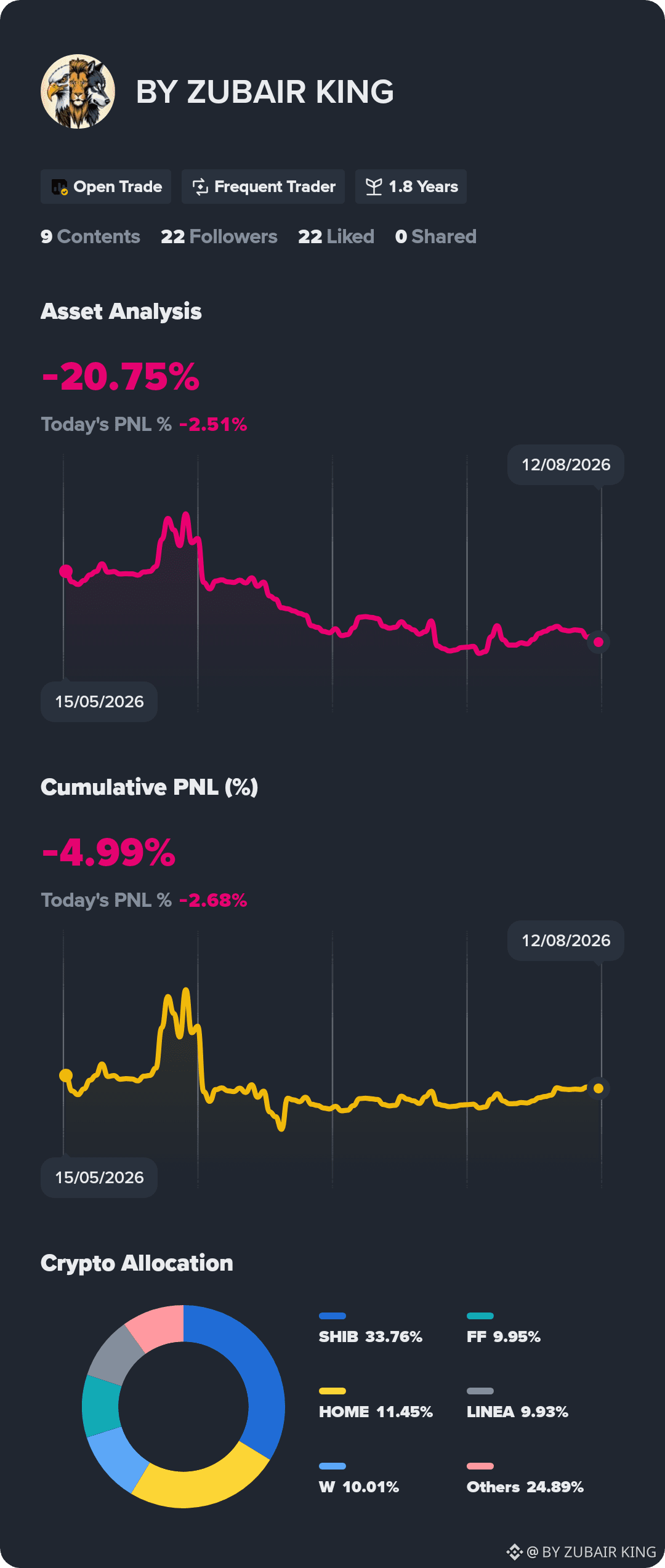
Voir mes retours et la répartition de mon portefeuille. Suivez pour des conseils d’investissementMaine Socha tha koi 10 PKR profit mein chalta hoon lekin mera to sare ka sara loss mein ja raha hai mujhe 10 to kya bhi Nahin profit ho raha spot trading future zero knowledge#ZeroKnowledgeProofs #Binance #viralpost
Voir mes retours et la répartition de mon portefeuille. Suivez pour des conseils d’investissementMaine Socha tha koi 10 PKR profit mein chalta hoon lekin mera to sare ka sara loss mein ja raha hai mujhe 10 to kya bhi Nahin profit ho raha spot trading future zero knowledge#ZeroKnowledgeProofs #Binance #viralpost
78
·
--
"Les ZKPs sont révolutionnaires ! 🔒💻 @SuccinctLabs est à la pointe, permettant aux développeurs de créer des solutions blockchain évolutives et sécurisées. 🚀💡 Comment voyez-vous les ZKPs façonner l'avenir de la crypto ? Partagez vos réflexions ! 💬 #SuccinctLabs😊 #ZeroKnowledgeProofs $PROVE
"Les ZKPs sont révolutionnaires ! 🔒💻 @SuccinctLabs est à la pointe, permettant aux développeurs de créer des solutions blockchain évolutives et sécurisées. 🚀💡 Comment voyez-vous les ZKPs façonner l'avenir de la crypto ? Partagez vos réflexions ! 💬 #SuccinctLabs😊 #ZeroKnowledgeProofs $PROVE
1
20


Article
La Fondation Ethereum a publié une feuille de route sur la confidentialité pour renforcer le réseau EthereumPour maintenir son statut de blockchain de contrat intelligent de couche 1, la Fondation Ethereum a dévoilé une nouvelle feuille de route pour intégrer des capacités de confidentialité des points de terminaison au réseau Ethereum. Désormais appelé Gardiens de la Confidentialité d'Ethereum (PSE en abrégé), l'ancienne Exploration de la Confidentialité et de l'Évolutivité vise à renforcer la confidentialité des utilisateurs en ce qui concerne le protocole, l'infrastructure, le réseau, l'application et les couches de portefeuille. Ces initiatives visent à améliorer la protection des données des utilisateurs et à renforcer l'éthique cypherpunk fondamentale du réseau à un moment où les monnaies numériques sont de plus en plus soumises à un examen réglementaire pour positionner Ethereum en tant qu'acteur clé dans le commerce numérique transfrontalier, l'identité et la collaboration.
La Fondation Ethereum a publié une feuille de route sur la confidentialité pour renforcer le réseau Ethereum
Pour maintenir son statut de blockchain de contrat intelligent de couche 1, la Fondation Ethereum a dévoilé une nouvelle feuille de route pour intégrer des capacités de confidentialité des points de terminaison au réseau Ethereum. Désormais appelé Gardiens de la Confidentialité d'Ethereum (PSE en abrégé), l'ancienne Exploration de la Confidentialité et de l'Évolutivité vise à renforcer la confidentialité des utilisateurs en ce qui concerne le protocole, l'infrastructure, le réseau, l'application et les couches de portefeuille. Ces initiatives visent à améliorer la protection des données des utilisateurs et à renforcer l'éthique cypherpunk fondamentale du réseau à un moment où les monnaies numériques sont de plus en plus soumises à un examen réglementaire pour positionner Ethereum en tant qu'acteur clé dans le commerce numérique transfrontalier, l'identité et la collaboration.
2
265
Connectez-vous pour découvrir plus de contenu
Rejoignez la communauté mondiale des adeptes de cryptomonnaies sur Binance Square
⚡️ Suviez les dernières informations importantes sur les cryptomonnaies.
💬 Jugé digne de confiance par la plus grande plateforme d’échange de cryptomonnaies au monde.
👍 Découvrez les connaissances que partagent les créateurs vérifiés.
Adresse e-mail/Nº de téléphone
Sujets d’actualité
1
#CanMicrosoftDeliverOnAI
173,111 vues
1,377 mentions
2
#CanGoogleDefindItsCore
87,599 vues
990 mentions
3
#FOMCWatch
9.2M vues
28,641 mentions
4
#USGovSellsFTXLinkedAnthropicSharesFor$627M
150 vues
13 mentions
5
#SKHynixUnveils$45BShareholderReturns
465 vues
16 mentions
6
#OSMOPlansToBurn100MTokensFromCommunityPool
6,659 vues
205 mentions
7
#EthereumDropsBelow$2300
12,874 vues
167 mentions
8
#BitcoinSlipsBelow$80KAgain
36,748 vues
138 mentions
9
#ThailandLaunchesWORPTStablecoinToQRPaymentApp
83,770 vues
1,002 mentions
10
#StrategySkipsBitcoinPurchasesSpends$205MOnSTRCBuybacks
14,828 vues
103 mentions