
#web3education
web3education
57,447 vues
851 mentions
Populaire
Récents
·
--

Article
Journal web3 d’un ojol - Partie 11 : Comment un camp de base d’ojol explique les redevances du domaine Web3 ?Prologue : Le Café, le Pangkalan (camp de base) et la franchise de l’identité
Chaque jour, avant le début de l’heure de pointe du matin à la régence de Kendal, mes collègues chauffeurs et moi nous retrouvons à notre abri habituel au bord de la route—que nous appelions généralement pangkalan (camp de base) dans la langue locale (comme vous pouvez le voir sur ma photo prise au bord de la route ci-dessous). Nous nous asseyons sur des bancs en bois, buvons un café noir bon marché, vérifions les écrans de nos téléphones, et attendons que l’algorithme de l’application nous propose des commandes.
Dans le monde physique, un Pangkalan (camp de base) est notre territoire, notre identité et notre point de départ · Mais saviez-vous qu’en pleine nature numérique de Web3, vous pouvez en fait construire, posséder et monétiser votre propre pangkalan (camp de base) virtuel ?
Journal web3 d’un ojol - Partie 11 : Comment un camp de base d’ojol explique les redevances du domaine Web3 ?
Prologue : Le Café, le Pangkalan (camp de base) et la franchise de l’identité
Chaque jour, avant le début de l’heure de pointe du matin à la régence de Kendal, mes collègues chauffeurs et moi nous retrouvons à notre abri habituel au bord de la route—que nous appelions généralement pangkalan (camp de base) dans la langue locale (comme vous pouvez le voir sur ma photo prise au bord de la route ci-dessous). Nous nous asseyons sur des bancs en bois, buvons un café noir bon marché, vérifions les écrans de nos téléphones, et attendons que l’algorithme de l’application nous propose des commandes.
Dans le monde physique, un Pangkalan (camp de base) est notre territoire, notre identité et notre point de départ · Mais saviez-vous qu’en pleine nature numérique de Web3, vous pouvez en fait construire, posséder et monétiser votre propre pangkalan (camp de base) virtuel ?
Chaque jour, avant le début de l’heure de pointe du matin à la régence de Kendal, mes collègues chauffeurs et moi nous retrouvons à notre abri habituel au bord de la route—que nous appelions généralement pangkalan (camp de base) dans la langue locale (comme vous pouvez le voir sur ma photo prise au bord de la route ci-dessous). Nous nous asseyons sur des bancs en bois, buvons un café noir bon marché, vérifions les écrans de nos téléphones, et attendons que l’algorithme de l’application nous propose des commandes.
Dans le monde physique, un Pangkalan (camp de base) est notre territoire, notre identité et notre point de départ · Mais saviez-vous qu’en pleine nature numérique de Web3, vous pouvez en fait construire, posséder et monétiser votre propre pangkalan (camp de base) virtuel ?
116


·
--
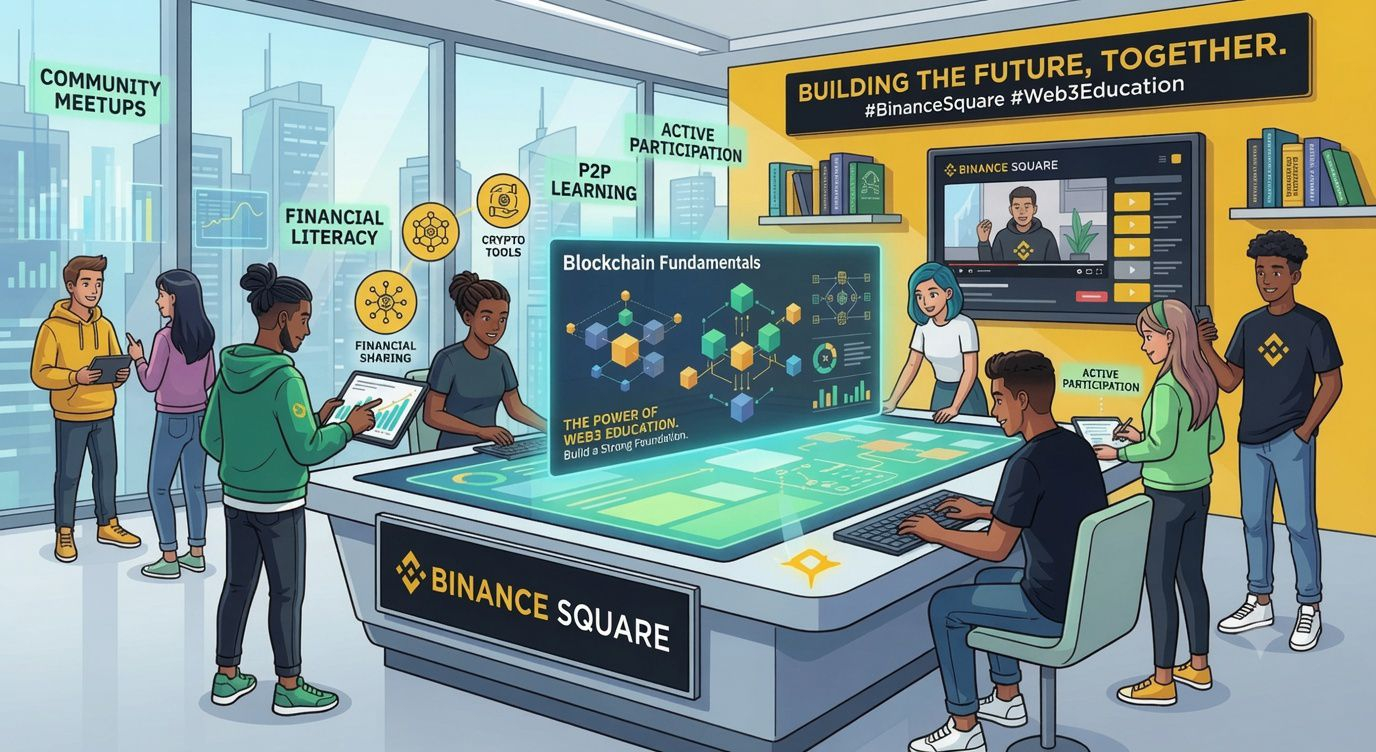
Pourquoi l’éducation dans le Web3 est le changement de jeu ultime ! 📚🚀
En écoutant le panel de la communauté Binance TG d’aujourd’hui, le sujet n’aurait pas pu être plus essentiel : Pourquoi apprendre avant d’investir est plus important que jamais aujourd’hui ?
Dans un marché qui évolue à une vitesse fulgurante, poursuivre l’engouement sans fondations solides est un risque majeur. Le vrai succès dans l’univers Web3 ne consiste pas à courir après la prochaine bougie verte ; il s’agit de comprendre la technologie et de gérer correctement les risques.
Mes meilleurs conseils pour quiconque construit ses bases :
1️⃣ La tech plutôt que le prix : concentrez-vous sur l’apprentissage du fonctionnement de la blockchain et des réseaux décentralisés, pas seulement sur le fait de regarder les graphiques de prix 📊
2️⃣ Exploitez les ressources gratuites : des plateformes comme #BinanceAcademy proposent des supports éducatifs incroyables et gratuits, utilisez-les 💡🔥
3️⃣ La gestion des risques d’abord : investissez uniquement ce que vous pouvez vous permettre de perdre tant que vous êtes encore dans votre phase d’apprentissage, même les pros respectent cette règle ⚠️👀
Passons d’un simple trading à une participation active et éclairée à l’économie numérique mondiale ! 🌐✨
Quel est le meilleur conseil unique que vous ayez reçu en crypto ? 🤔😁 Pour moi, c’est de ne jamais faire de revenge trade après une perte 😁
#DYOR
#BinanceTGCommunity #TGTalks
#Web3Education @BinanceTG
Pourquoi l’éducation dans le Web3 est le changement de jeu ultime ! 📚🚀
En écoutant le panel de la communauté Binance TG d’aujourd’hui, le sujet n’aurait pas pu être plus essentiel : Pourquoi apprendre avant d’investir est plus important que jamais aujourd’hui ?
Dans un marché qui évolue à une vitesse fulgurante, poursuivre l’engouement sans fondations solides est un risque majeur. Le vrai succès dans l’univers Web3 ne consiste pas à courir après la prochaine bougie verte ; il s’agit de comprendre la technologie et de gérer correctement les risques.
Mes meilleurs conseils pour quiconque construit ses bases :
1️⃣ La tech plutôt que le prix : concentrez-vous sur l’apprentissage du fonctionnement de la blockchain et des réseaux décentralisés, pas seulement sur le fait de regarder les graphiques de prix 📊
2️⃣ Exploitez les ressources gratuites : des plateformes comme #BinanceAcademy proposent des supports éducatifs incroyables et gratuits, utilisez-les 💡🔥
3️⃣ La gestion des risques d’abord : investissez uniquement ce que vous pouvez vous permettre de perdre tant que vous êtes encore dans votre phase d’apprentissage, même les pros respectent cette règle ⚠️👀
Passons d’un simple trading à une participation active et éclairée à l’économie numérique mondiale ! 🌐✨
Quel est le meilleur conseil unique que vous ayez reçu en crypto ? 🤔😁 Pour moi, c’est de ne jamais faire de revenge trade après une perte 😁
#DYOR
#BinanceTGCommunity #TGTalks
#Web3Education @Binance TG Community
En écoutant le panel de la communauté Binance TG d’aujourd’hui, le sujet n’aurait pas pu être plus essentiel : Pourquoi apprendre avant d’investir est plus important que jamais aujourd’hui ?
Dans un marché qui évolue à une vitesse fulgurante, poursuivre l’engouement sans fondations solides est un risque majeur. Le vrai succès dans l’univers Web3 ne consiste pas à courir après la prochaine bougie verte ; il s’agit de comprendre la technologie et de gérer correctement les risques.
Mes meilleurs conseils pour quiconque construit ses bases :
1️⃣ La tech plutôt que le prix : concentrez-vous sur l’apprentissage du fonctionnement de la blockchain et des réseaux décentralisés, pas seulement sur le fait de regarder les graphiques de prix 📊
2️⃣ Exploitez les ressources gratuites : des plateformes comme #BinanceAcademy proposent des supports éducatifs incroyables et gratuits, utilisez-les 💡🔥
3️⃣ La gestion des risques d’abord : investissez uniquement ce que vous pouvez vous permettre de perdre tant que vous êtes encore dans votre phase d’apprentissage, même les pros respectent cette règle ⚠️👀
Passons d’un simple trading à une participation active et éclairée à l’économie numérique mondiale ! 🌐✨
Quel est le meilleur conseil unique que vous ayez reçu en crypto ? 🤔😁 Pour moi, c’est de ne jamais faire de revenge trade après une perte 😁
#DYOR
#BinanceTGCommunity #TGTalks
#Web3Education @Binance TG Community

279

·
--
Le savoir est l’une des formes de capital les plus sous-estimées dans Web3.
Alors que la finance décentralisée continue d’évoluer, naviguer dans l’écosystème nécessite plus que l’accès aux protocoles : il faut une solide compréhension de l’infrastructure, des dynamiques de marché et des mécanismes qui alimentent la finance on-chain.@ston_fi
Le blog STON.fi sert de plateforme éducative conçue pour aider les utilisateurs à bâtir cette base grâce à des analyses concrètes, des explications techniques et une étude de l’écosystème.
📖 Explorer le blog : blog.ston.fi
Le contenu clé inclut :
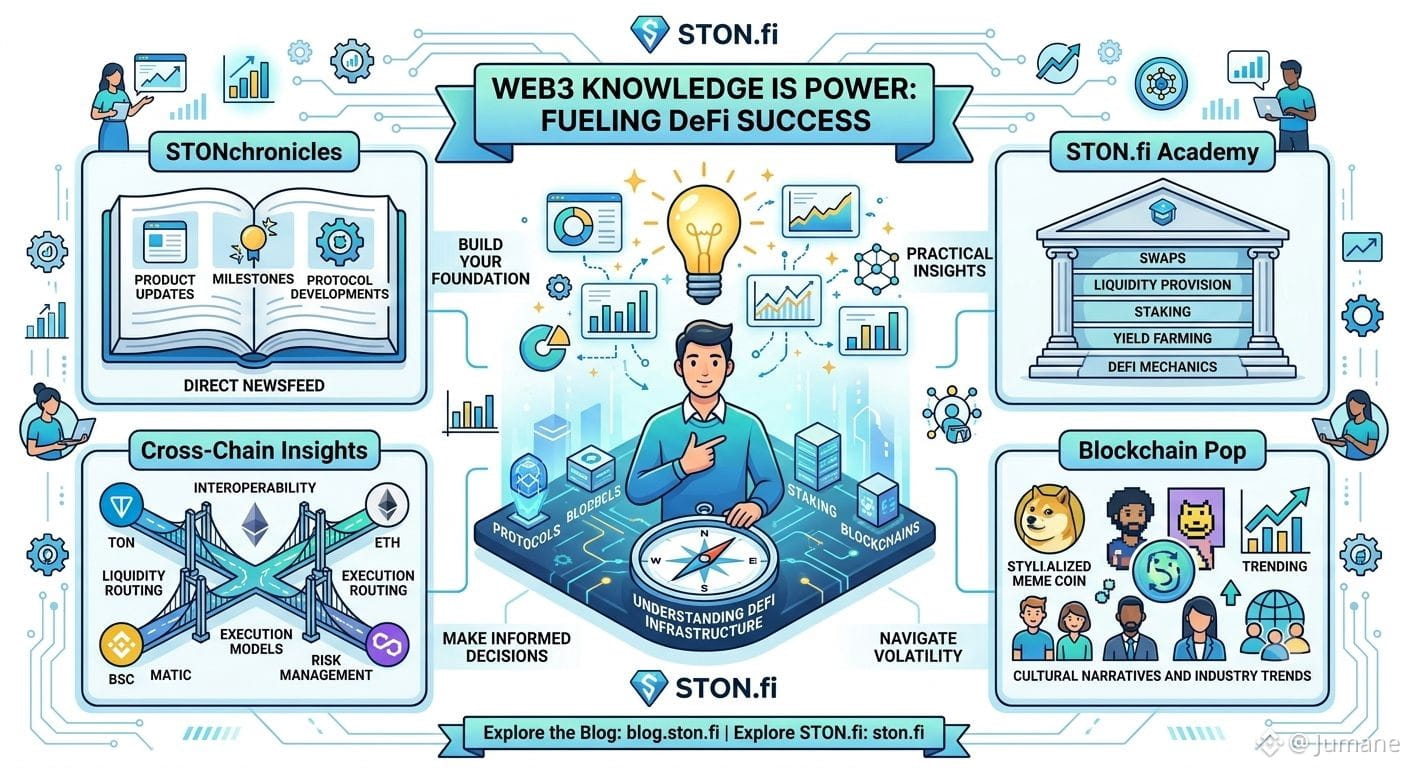
🔹 STONchronicles — Mises à jour officielles du produit, étapes marquantes de l’écosystème et développements des protocoles directement fournis par l’équipe STON.fi.
🔹 STON.fi Academy — Contenu éducatif structuré couvrant les échanges (swaps), la fourniture de liquidité, le staking, le yield farming et les mécanismes fondamentaux de la DeFi, présenté de façon claire et accessible.
🔹 Analyses Inter-chaînes — Études approfondies sur l’interopérabilité, l’acheminement de liquidité, les modèles d’exécution et la gestion des risques à travers plusieurs écosystèmes blockchain.
🔹 Blockchain Pop — Points de vue sur l’évolution culturelle de Web3, en explorant les récits et les tendances qui façonnent l’industrie plus large des actifs numériques.
💡 Explorer STON.fi : ston.fi
À mesure que l’infrastructure blockchain devient de plus en plus sophistiquée, l’éducation reste un moteur essentiel de l’adoption. Les utilisateurs qui comprennent la conception des protocoles, les dynamiques de liquidité et l’architecture inter-chaînes sont mieux placés pour traverser la volatilité du marché et prendre des décisions éclairées.
La prochaine génération de participants à Web3 n’utilisera pas seulement la DeFi : elle comprendra comment cela fonctionne.
#Web3 #DeFi #STONfi #TON #BlockchainEducation #CrossChain #OnChainFinance #CryptoResearch #Blockchain #Web3Education
Le savoir est l’une des formes de capital les plus sous-estimées dans Web3.
Alors que la finance décentralisée continue d’évoluer, naviguer dans l’écosystème nécessite plus que l’accès aux protocoles : il faut une solide compréhension de l’infrastructure, des dynamiques de marché et des mécanismes qui alimentent la finance on-chain.@ston_fi
Le blog STON.fi sert de plateforme éducative conçue pour aider les utilisateurs à bâtir cette base grâce à des analyses concrètes, des explications techniques et une étude de l’écosystème.
📖 Explorer le blog : blog.ston.fi
Le contenu clé inclut :
🔹 STONchronicles — Mises à jour officielles du produit, étapes marquantes de l’écosystème et développements des protocoles directement fournis par l’équipe STON.fi.
🔹 STON.fi Academy — Contenu éducatif structuré couvrant les échanges (swaps), la fourniture de liquidité, le staking, le yield farming et les mécanismes fondamentaux de la DeFi, présenté de façon claire et accessible.
🔹 Analyses Inter-chaînes — Études approfondies sur l’interopérabilité, l’acheminement de liquidité, les modèles d’exécution et la gestion des risques à travers plusieurs écosystèmes blockchain.
🔹 Blockchain Pop — Points de vue sur l’évolution culturelle de Web3, en explorant les récits et les tendances qui façonnent l’industrie plus large des actifs numériques.
💡 Explorer STON.fi : ston.fi
À mesure que l’infrastructure blockchain devient de plus en plus sophistiquée, l’éducation reste un moteur essentiel de l’adoption. Les utilisateurs qui comprennent la conception des protocoles, les dynamiques de liquidité et l’architecture inter-chaînes sont mieux placés pour traverser la volatilité du marché et prendre des décisions éclairées.
La prochaine génération de participants à Web3 n’utilisera pas seulement la DeFi : elle comprendra comment cela fonctionne.
#Web3 #DeFi #STONfi #TON #BlockchainEducation #CrossChain #OnChainFinance #CryptoResearch #Blockchain #Web3Education
Alors que la finance décentralisée continue d’évoluer, naviguer dans l’écosystème nécessite plus que l’accès aux protocoles : il faut une solide compréhension de l’infrastructure, des dynamiques de marché et des mécanismes qui alimentent la finance on-chain.@ston_fi
Le blog STON.fi sert de plateforme éducative conçue pour aider les utilisateurs à bâtir cette base grâce à des analyses concrètes, des explications techniques et une étude de l’écosystème.
📖 Explorer le blog : blog.ston.fi
Le contenu clé inclut :
🔹 STONchronicles — Mises à jour officielles du produit, étapes marquantes de l’écosystème et développements des protocoles directement fournis par l’équipe STON.fi.
🔹 STON.fi Academy — Contenu éducatif structuré couvrant les échanges (swaps), la fourniture de liquidité, le staking, le yield farming et les mécanismes fondamentaux de la DeFi, présenté de façon claire et accessible.
🔹 Analyses Inter-chaînes — Études approfondies sur l’interopérabilité, l’acheminement de liquidité, les modèles d’exécution et la gestion des risques à travers plusieurs écosystèmes blockchain.
🔹 Blockchain Pop — Points de vue sur l’évolution culturelle de Web3, en explorant les récits et les tendances qui façonnent l’industrie plus large des actifs numériques.
💡 Explorer STON.fi : ston.fi
À mesure que l’infrastructure blockchain devient de plus en plus sophistiquée, l’éducation reste un moteur essentiel de l’adoption. Les utilisateurs qui comprennent la conception des protocoles, les dynamiques de liquidité et l’architecture inter-chaînes sont mieux placés pour traverser la volatilité du marché et prendre des décisions éclairées.
La prochaine génération de participants à Web3 n’utilisera pas seulement la DeFi : elle comprendra comment cela fonctionne.
#Web3 #DeFi #STONfi #TON #BlockchainEducation #CrossChain #OnChainFinance #CryptoResearch #Blockchain #Web3Education
1
84

·
--
#genius $GENIUS
🧠 Le savoir tokenisé entre dans une nouvelle ère avec @GeniusOfficial
Là où la plupart des projets se contentent de promesses, Genius construit un véritable pont entre l'éducation décentralisée et la création de valeur. Avec l'IA et la blockchain, Genius démocratise l'accès à des connaissances premium tout en récompensant activement les apprenants et les contributeurs.
L'écosystème repose sur le token $GENIUS : staking, accès aux cours exclusifs, gouvernance et récompenses pour la création de contenu éducatif. Contrairement aux simples "learn-to-earn" éphémères, Genius mise sur la qualité et la pérennité des savoirs.
L'équipe travaille actuellement sur un module de vérification des compétences via NFT, permettant à chaque utilisateur de certifier ses apprentissages sur la blockchain. Une avancée majeure pour l'employabilité Web3.
Ne sous-estimez pas le potentiel de ce projet. L'éducation est le véritable carburant de l'adoption massive. Et Genius est en train de poser les rails.
🔐 Staker, apprendre, contribuer, grandir – tout devient plus intelligent avec $GENIUS
#genius #Web3Education
#genius $GENIUS
🧠 Le savoir tokenisé entre dans une nouvelle ère avec @GeniusOfficial
Là où la plupart des projets se contentent de promesses, Genius construit un véritable pont entre l'éducation décentralisée et la création de valeur. Avec l'IA et la blockchain, Genius démocratise l'accès à des connaissances premium tout en récompensant activement les apprenants et les contributeurs.
L'écosystème repose sur le token $GENIUS : staking, accès aux cours exclusifs, gouvernance et récompenses pour la création de contenu éducatif. Contrairement aux simples "learn-to-earn" éphémères, Genius mise sur la qualité et la pérennité des savoirs.
L'équipe travaille actuellement sur un module de vérification des compétences via NFT, permettant à chaque utilisateur de certifier ses apprentissages sur la blockchain. Une avancée majeure pour l'employabilité Web3.
Ne sous-estimez pas le potentiel de ce projet. L'éducation est le véritable carburant de l'adoption massive. Et Genius est en train de poser les rails.
🔐 Staker, apprendre, contribuer, grandir – tout devient plus intelligent avec $GENIUS
#genius #Web3Education
🧠 Le savoir tokenisé entre dans une nouvelle ère avec @GeniusOfficial
Là où la plupart des projets se contentent de promesses, Genius construit un véritable pont entre l'éducation décentralisée et la création de valeur. Avec l'IA et la blockchain, Genius démocratise l'accès à des connaissances premium tout en récompensant activement les apprenants et les contributeurs.
L'écosystème repose sur le token $GENIUS : staking, accès aux cours exclusifs, gouvernance et récompenses pour la création de contenu éducatif. Contrairement aux simples "learn-to-earn" éphémères, Genius mise sur la qualité et la pérennité des savoirs.
L'équipe travaille actuellement sur un module de vérification des compétences via NFT, permettant à chaque utilisateur de certifier ses apprentissages sur la blockchain. Une avancée majeure pour l'employabilité Web3.
Ne sous-estimez pas le potentiel de ce projet. L'éducation est le véritable carburant de l'adoption massive. Et Genius est en train de poser les rails.
🔐 Staker, apprendre, contribuer, grandir – tout devient plus intelligent avec $GENIUS
#genius #Web3Education
1
181

·
--
Opn (EDU) – L’avenir de l’éducation Web3 ?
Open Campus (EDU) fait sensation en comblant le fossé entre l’éducation traditionnelle et l’écosystème Web3. Voici pourquoi tout le monde s’y intéresse :
✅ Permettre aux éducateurs de monétiser leur contenu grâce à la Web3.
✅ Une plateforme éducative véritablement décentralisée.
✅ Un potentiel énorme à mesure que la technologie éducative (EdTech) et la blockchain continuent de converger.
Quelle est, selon vous, la position actuelle du marché pour $EDU ? Vous le considérez comme un investissement à long terme ? Parlons-en dans les commentaires !
#BinanceSquare #EDU #Web3Education #CryptoAnalysis" $EDU
Opn (EDU) – L’avenir de l’éducation Web3 ?
Open Campus (EDU) fait sensation en comblant le fossé entre l’éducation traditionnelle et l’écosystème Web3. Voici pourquoi tout le monde s’y intéresse :
✅ Permettre aux éducateurs de monétiser leur contenu grâce à la Web3.
✅ Une plateforme éducative véritablement décentralisée.
✅ Un potentiel énorme à mesure que la technologie éducative (EdTech) et la blockchain continuent de converger.
Quelle est, selon vous, la position actuelle du marché pour $EDU ? Vous le considérez comme un investissement à long terme ? Parlons-en dans les commentaires !
#BinanceSquare #EDU #Web3Education #CryptoAnalysis" $EDU
Open Campus (EDU) fait sensation en comblant le fossé entre l’éducation traditionnelle et l’écosystème Web3. Voici pourquoi tout le monde s’y intéresse :
✅ Permettre aux éducateurs de monétiser leur contenu grâce à la Web3.
✅ Une plateforme éducative véritablement décentralisée.
✅ Un potentiel énorme à mesure que la technologie éducative (EdTech) et la blockchain continuent de converger.
Quelle est, selon vous, la position actuelle du marché pour $EDU ? Vous le considérez comme un investissement à long terme ? Parlons-en dans les commentaires !
#BinanceSquare #EDU #Web3Education #CryptoAnalysis" $EDU
196

·
--
🪂 Certaines personnes ont gagné plus avec les airdrops qu'avec le trading
Lorsque la plupart des gens entendent parler de profits en crypto, ils pensent à acheter bas et vendre haut.
Mais certaines des plus grandes récompenses en crypto proviennent de quelque chose de complètement différent :
Les airdrops.$BTC
Un airdrop, c'est quand un projet blockchain récompense les premiers utilisateurs avec des tokens gratuits pour avoir participé à son écosystème.
Au fil des ans, plusieurs projets majeurs ont distribué des tokens d'une valeur de centaines — et parfois de milliers — de dollars à des utilisateurs éligibles.
Pourquoi les projets font-ils cela ?
✅ Récompenser les premiers supporters
✅ Développer leurs communautés
✅ Encourager l'adoption de l'écosystème
✅ Augmenter l'activité réseau
Cependant, il est important de comprendre que tous les projets ne lanceront pas un token précieux, et il n'y a aucune garantie de récompenses.
Les participants les plus malins se concentrent sur l'apprentissage, l'exploration de nouveaux écosystèmes et l'utilisation de produits qu'ils trouvent vraiment intéressants.
En crypto, parfois être en avance peut être tout aussi précieux qu'avoir raison.$BNB
💬 Question :
Avez-vous déjà reçu un airdrop crypto ?
🔹 Oui, plusieurs fois
🔹 Une seule fois
🔹 Pas encore
Faites-le nous savoir ci-dessous ! 👇
#Airdrop #Crypto #Bitcoin #Blockchain #Web3 #BinanceSquare #DeFi #Investissement #CryptoCommunity #Web3Education
🪂 Certaines personnes ont gagné plus avec les airdrops qu'avec le trading
Lorsque la plupart des gens entendent parler de profits en crypto, ils pensent à acheter bas et vendre haut.
Mais certaines des plus grandes récompenses en crypto proviennent de quelque chose de complètement différent :
Les airdrops.$BTC
Un airdrop, c'est quand un projet blockchain récompense les premiers utilisateurs avec des tokens gratuits pour avoir participé à son écosystème.
Au fil des ans, plusieurs projets majeurs ont distribué des tokens d'une valeur de centaines — et parfois de milliers — de dollars à des utilisateurs éligibles.
Pourquoi les projets font-ils cela ?
✅ Récompenser les premiers supporters
✅ Développer leurs communautés
✅ Encourager l'adoption de l'écosystème
✅ Augmenter l'activité réseau
Cependant, il est important de comprendre que tous les projets ne lanceront pas un token précieux, et il n'y a aucune garantie de récompenses.
Les participants les plus malins se concentrent sur l'apprentissage, l'exploration de nouveaux écosystèmes et l'utilisation de produits qu'ils trouvent vraiment intéressants.
En crypto, parfois être en avance peut être tout aussi précieux qu'avoir raison.$BNB
💬 Question :
Avez-vous déjà reçu un airdrop crypto ?
🔹 Oui, plusieurs fois
🔹 Une seule fois
🔹 Pas encore
Faites-le nous savoir ci-dessous ! 👇
#Airdrop #Crypto #Bitcoin #Blockchain #Web3 #BinanceSquare #DeFi #Investissement #CryptoCommunity #Web3Education
Lorsque la plupart des gens entendent parler de profits en crypto, ils pensent à acheter bas et vendre haut.
Mais certaines des plus grandes récompenses en crypto proviennent de quelque chose de complètement différent :
Les airdrops.$BTC
Un airdrop, c'est quand un projet blockchain récompense les premiers utilisateurs avec des tokens gratuits pour avoir participé à son écosystème.
Au fil des ans, plusieurs projets majeurs ont distribué des tokens d'une valeur de centaines — et parfois de milliers — de dollars à des utilisateurs éligibles.
Pourquoi les projets font-ils cela ?
✅ Récompenser les premiers supporters
✅ Développer leurs communautés
✅ Encourager l'adoption de l'écosystème
✅ Augmenter l'activité réseau
Cependant, il est important de comprendre que tous les projets ne lanceront pas un token précieux, et il n'y a aucune garantie de récompenses.
Les participants les plus malins se concentrent sur l'apprentissage, l'exploration de nouveaux écosystèmes et l'utilisation de produits qu'ils trouvent vraiment intéressants.
En crypto, parfois être en avance peut être tout aussi précieux qu'avoir raison.$BNB
💬 Question :
Avez-vous déjà reçu un airdrop crypto ?
🔹 Oui, plusieurs fois
🔹 Une seule fois
🔹 Pas encore
Faites-le nous savoir ci-dessous ! 👇
#Airdrop #Crypto #Bitcoin #Blockchain #Web3 #BinanceSquare #DeFi #Investissement #CryptoCommunity #Web3Education

69

·
--

Article
Tutorial (TUT) à 0,044 $ : une hausse de 15 % – Est-ce un nouveau départ ?Les chiffres tout de suite :
Prix : 0,044 $
Variation sur 24 h : +15,3 %
ATH : 0,242 $
Plus haut sur 24 h : 0,0596 $
Plus bas sur 24 h : 0,0347 $
Capitalisation boursière : 36,6 M $
Volume sur 24 h : 208,7 M $
Offre en circulation : 832,2 M (83,22 % du maximum)
Ratio acheteurs/vendeurs : 55,1 % Acheteurs / 44,9 % Vendeurs
Qu’est-ce qu’un tutoriel ?
Tutorial est un projet qui, comme beaucoup de nouveaux tokens, est encore en train de trouver sa place au sein de l’écosystème crypto. Il fait partie d’une catégorie en pleine croissance de plateformes axées sur l’éducation et l’onboarding pour le Web3.
L’idée est simple : rendre la crypto plus facile à comprendre.
À mesure que l’industrie se développe, le besoin d’une éducation de qualité augmente. Tutorial vise à combler le fossé entre la technologie complexe de la blockchain et les utilisateurs du quotidien.
Tutorial (TUT) à 0,044 $ : une hausse de 15 % – Est-ce un nouveau départ ?
Les chiffres tout de suite :
Prix : 0,044 $
Variation sur 24 h : +15,3 %
ATH : 0,242 $
Plus haut sur 24 h : 0,0596 $
Plus bas sur 24 h : 0,0347 $
Capitalisation boursière : 36,6 M $
Volume sur 24 h : 208,7 M $
Offre en circulation : 832,2 M (83,22 % du maximum)
Ratio acheteurs/vendeurs : 55,1 % Acheteurs / 44,9 % Vendeurs
Qu’est-ce qu’un tutoriel ?
Tutorial est un projet qui, comme beaucoup de nouveaux tokens, est encore en train de trouver sa place au sein de l’écosystème crypto. Il fait partie d’une catégorie en pleine croissance de plateformes axées sur l’éducation et l’onboarding pour le Web3.
L’idée est simple : rendre la crypto plus facile à comprendre.
À mesure que l’industrie se développe, le besoin d’une éducation de qualité augmente. Tutorial vise à combler le fossé entre la technologie complexe de la blockchain et les utilisateurs du quotidien.
Prix : 0,044 $
Variation sur 24 h : +15,3 %
ATH : 0,242 $
Plus haut sur 24 h : 0,0596 $
Plus bas sur 24 h : 0,0347 $
Capitalisation boursière : 36,6 M $
Volume sur 24 h : 208,7 M $
Offre en circulation : 832,2 M (83,22 % du maximum)
Ratio acheteurs/vendeurs : 55,1 % Acheteurs / 44,9 % Vendeurs
Qu’est-ce qu’un tutoriel ?
Tutorial est un projet qui, comme beaucoup de nouveaux tokens, est encore en train de trouver sa place au sein de l’écosystème crypto. Il fait partie d’une catégorie en pleine croissance de plateformes axées sur l’éducation et l’onboarding pour le Web3.
L’idée est simple : rendre la crypto plus facile à comprendre.
À mesure que l’industrie se développe, le besoin d’une éducation de qualité augmente. Tutorial vise à combler le fossé entre la technologie complexe de la blockchain et les utilisateurs du quotidien.
78

·
--
Haussier
🎓 EDU/USDT : Approche d'un niveau de support majeur pour un potentiel double creux
EDU se négocie à 0,04609 $, avec un léger recul de -3,44 % au cours des 6 dernières heures. En tant qu'acteur majeur du secteur de l'éducation décentralisée, EDU se comporte souvent comme une altcoin à faible liquidité qui subit des changements brusques de momentum en fonction des annonces de l'écosystème et des plateformes de lancement éducatives.
Techniquement, EDU est piégé dans une tendance baissière persistante sur les périodes de temps inférieures, mais elle s'approche rapidement d'un niveau de support historique significatif à 0,04200 $. Le RSI sur 4 heures est à 38, flottant près du seuil de survente. Le MACD montre un croisement baissier qui perd de son intensité à la baisse, suggérant une phase potentielle d'épuisement des vendeurs. Le volume de trading a chuté de manière significative pendant cette légère correction, ce qui est un indicateur classique que les vendeurs manquent d'énergie et que le mouvement à la baisse manque de soutien institutionnel. Les acheteurs agressifs chercheront des signes de formation d'une structure en double creux autour de la zone 0,04300 $ avant d'engager un capital lourd.
Une défense réussie de ce niveau pourrait préparer un rallye de soulagement explosif vers la plage de distribution locale.
$EDU
{future}(EDUUSDT)
📊 SIGNAL DE TRADING EXACT
Direction : LONG (Configuration de rebond sur le support)
Zone d'entrée : 0,04350 $ – 0,04610 $
Objectifs de prise de profit :
TP1 : 0,05200 $ (Résistance EMA immédiate)
TP2 : 0,05800 $ (Point de rupture précédent)
TP3 : 0,06500 $ (Haute liquidité de la plage)
Stop Loss : 0,04100 $ (Sous le support historique clé)
Leverage : 2x – 3x (Isolé)
#OpenCampus #EDU #educational_post Tech #Web3Education #BinanceSquare
🎓 EDU/USDT : Approche d'un niveau de support majeur pour un potentiel double creux
EDU se négocie à 0,04609 $, avec un léger recul de -3,44 % au cours des 6 dernières heures. En tant qu'acteur majeur du secteur de l'éducation décentralisée, EDU se comporte souvent comme une altcoin à faible liquidité qui subit des changements brusques de momentum en fonction des annonces de l'écosystème et des plateformes de lancement éducatives.
Techniquement, EDU est piégé dans une tendance baissière persistante sur les périodes de temps inférieures, mais elle s'approche rapidement d'un niveau de support historique significatif à 0,04200 $. Le RSI sur 4 heures est à 38, flottant près du seuil de survente. Le MACD montre un croisement baissier qui perd de son intensité à la baisse, suggérant une phase potentielle d'épuisement des vendeurs. Le volume de trading a chuté de manière significative pendant cette légère correction, ce qui est un indicateur classique que les vendeurs manquent d'énergie et que le mouvement à la baisse manque de soutien institutionnel. Les acheteurs agressifs chercheront des signes de formation d'une structure en double creux autour de la zone 0,04300 $ avant d'engager un capital lourd.
Une défense réussie de ce niveau pourrait préparer un rallye de soulagement explosif vers la plage de distribution locale.
$EDU
📊 SIGNAL DE TRADING EXACT
Direction : LONG (Configuration de rebond sur le support)
Zone d'entrée : 0,04350 $ – 0,04610 $
Objectifs de prise de profit :
TP1 : 0,05200 $ (Résistance EMA immédiate)
TP2 : 0,05800 $ (Point de rupture précédent)
TP3 : 0,06500 $ (Haute liquidité de la plage)
Stop Loss : 0,04100 $ (Sous le support historique clé)
Leverage : 2x – 3x (Isolé)
#OpenCampus #EDU #educational_post Tech #Web3Education #BinanceSquare
EDU se négocie à 0,04609 $, avec un léger recul de -3,44 % au cours des 6 dernières heures. En tant qu'acteur majeur du secteur de l'éducation décentralisée, EDU se comporte souvent comme une altcoin à faible liquidité qui subit des changements brusques de momentum en fonction des annonces de l'écosystème et des plateformes de lancement éducatives.
Techniquement, EDU est piégé dans une tendance baissière persistante sur les périodes de temps inférieures, mais elle s'approche rapidement d'un niveau de support historique significatif à 0,04200 $. Le RSI sur 4 heures est à 38, flottant près du seuil de survente. Le MACD montre un croisement baissier qui perd de son intensité à la baisse, suggérant une phase potentielle d'épuisement des vendeurs. Le volume de trading a chuté de manière significative pendant cette légère correction, ce qui est un indicateur classique que les vendeurs manquent d'énergie et que le mouvement à la baisse manque de soutien institutionnel. Les acheteurs agressifs chercheront des signes de formation d'une structure en double creux autour de la zone 0,04300 $ avant d'engager un capital lourd.
Une défense réussie de ce niveau pourrait préparer un rallye de soulagement explosif vers la plage de distribution locale.
$EDU
📊 SIGNAL DE TRADING EXACT
Direction : LONG (Configuration de rebond sur le support)
Zone d'entrée : 0,04350 $ – 0,04610 $
Objectifs de prise de profit :
TP1 : 0,05200 $ (Résistance EMA immédiate)
TP2 : 0,05800 $ (Point de rupture précédent)
TP3 : 0,06500 $ (Haute liquidité de la plage)
Stop Loss : 0,04100 $ (Sous le support historique clé)
Leverage : 2x – 3x (Isolé)
#OpenCampus #EDU #educational_post Tech #Web3Education #BinanceSquare
2
245

·
--
EDU (Open Campus)
$EDU Rockets Higher: L'avenir de l'éducation décentralisée !
Open Campus ($EDU) montre une forte dynamique à la hausse, stimulée par une attention accrue du capital envers les protocoles éducatifs Web3. En tant que protocole dirigé par la communauté, son objectif de décentraliser l'éducation et de récompenser les créateurs prend de l'ampleur parmi les investisseurs à long terme. Les récentes actions de prix suggèrent une rupture après une longue phase de consolidation, alimentée par des entrées marginales et un rallye plus large sur le marché des altcoins. Avec sa position unique dans le secteur crypto "EdTech", EDU offre une rare opportunité pour les traders à la recherche de projets ayant un impact social concret. Gardez un œil attentif sur le volume—ce pourrait être juste le début !
Question : Les protocoles éducatifs Web3 comme $EDU remplaceront-ils les modèles d'apprentissage traditionnels ?❓❓❓❓❓❓
👉👉👉Trade Hare👇👇👇
#OpenCampus #Web3Education #AltcoinSeason #TradingSignals💹💬
{spot}(EDUUSDT)
EDU (Open Campus)
$EDU Rockets Higher: L'avenir de l'éducation décentralisée !
Open Campus ($EDU ) montre une forte dynamique à la hausse, stimulée par une attention accrue du capital envers les protocoles éducatifs Web3. En tant que protocole dirigé par la communauté, son objectif de décentraliser l'éducation et de récompenser les créateurs prend de l'ampleur parmi les investisseurs à long terme. Les récentes actions de prix suggèrent une rupture après une longue phase de consolidation, alimentée par des entrées marginales et un rallye plus large sur le marché des altcoins. Avec sa position unique dans le secteur crypto "EdTech", EDU offre une rare opportunité pour les traders à la recherche de projets ayant un impact social concret. Gardez un œil attentif sur le volume—ce pourrait être juste le début !
Question : Les protocoles éducatifs Web3 comme $EDU remplaceront-ils les modèles d'apprentissage traditionnels ?❓❓❓❓❓❓
👉👉👉Trade Hare👇👇👇
#OpenCampus #Web3Education #AltcoinSeason #TradingSignals💹💬
$EDU Rockets Higher: L'avenir de l'éducation décentralisée !
Open Campus ($EDU ) montre une forte dynamique à la hausse, stimulée par une attention accrue du capital envers les protocoles éducatifs Web3. En tant que protocole dirigé par la communauté, son objectif de décentraliser l'éducation et de récompenser les créateurs prend de l'ampleur parmi les investisseurs à long terme. Les récentes actions de prix suggèrent une rupture après une longue phase de consolidation, alimentée par des entrées marginales et un rallye plus large sur le marché des altcoins. Avec sa position unique dans le secteur crypto "EdTech", EDU offre une rare opportunité pour les traders à la recherche de projets ayant un impact social concret. Gardez un œil attentif sur le volume—ce pourrait être juste le début !
Question : Les protocoles éducatifs Web3 comme $EDU remplaceront-ils les modèles d'apprentissage traditionnels ?❓❓❓❓❓❓
👉👉👉Trade Hare👇👇👇
#OpenCampus #Web3Education #AltcoinSeason #TradingSignals💹💬

158

·
--
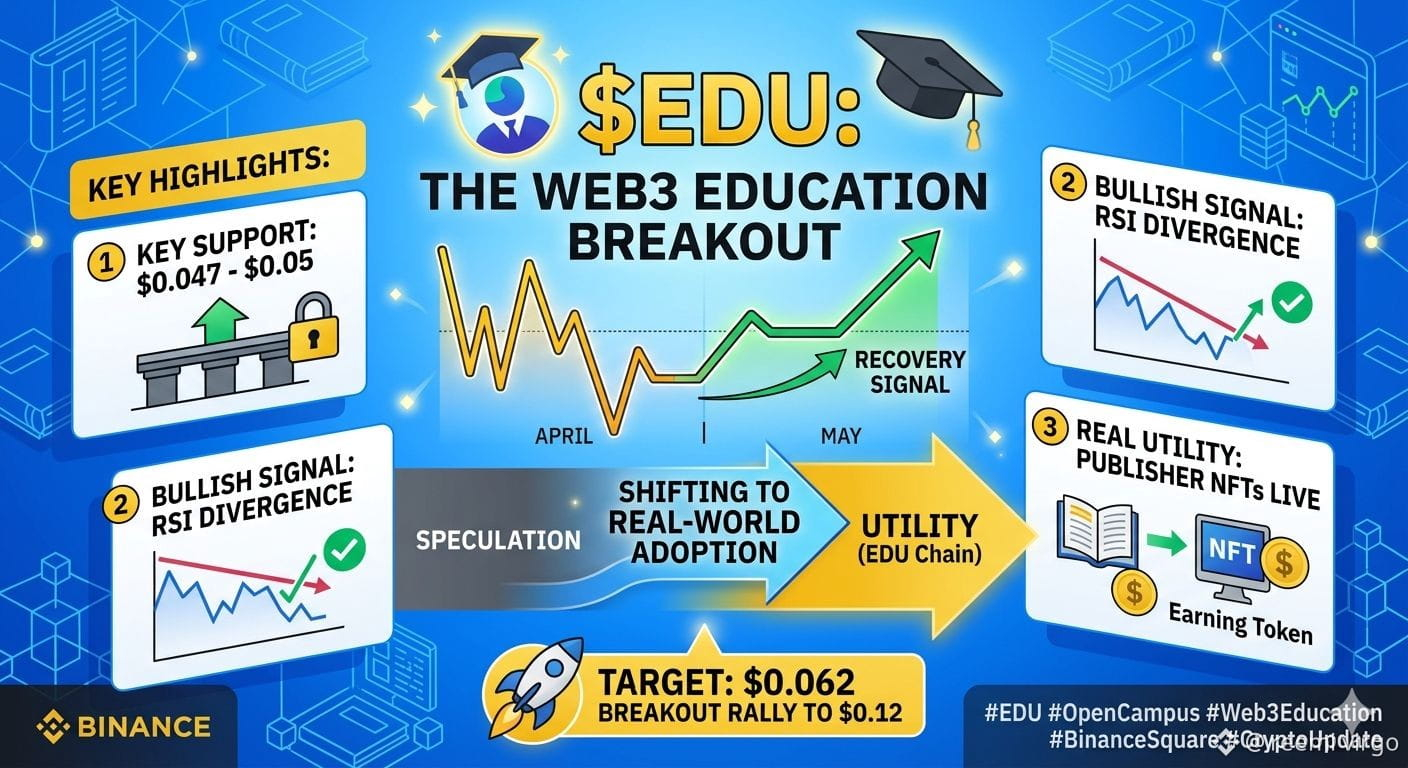
$EDU : La percée de l'éducation Web3**
En **mai 2026**, **Open Campus ($EDU)** montre de forts signes de récupération. Après un avril volatile, le token se stabilise et attire de "l'argent intelligent" intéressé par l'avenir de l'éducation décentralisée.
### **Points Forts:**
* **Support Clé:** Reste solide entre **$0.047 – $0.05**.
* **Signal Haussier:** Le RSI montre une **divergence haussière**, suggérant qu'un retournement de prix est proche.
* **Utilité Réelle:** Avec les **NFTs Éditeurs** maintenant en ligne, les éducateurs gagnent directement sur la chaîne EDU, faisant passer le projet de la spéculation à l'adoption réelle.
**Le Mouvement:** Si $EDU dépasse **$0.062**, nous pourrions voir un rallye rapide vers **$0.12**. Pour les détenteurs à long terme, l'objectif de décentraliser le marché de l'éducation de **$5 trillions** reste le gros coup.
#EDU #OpenCampus #Web3Education #BinanceSquareFamily #CryptoUpdate
{future}(EDUUSDT)
$EDU : La percée de l'éducation Web3**
En **mai 2026**, **Open Campus ($EDU )** montre de forts signes de récupération. Après un avril volatile, le token se stabilise et attire de "l'argent intelligent" intéressé par l'avenir de l'éducation décentralisée.
### **Points Forts:**
* **Support Clé:** Reste solide entre **$0.047 – $0.05**.
* **Signal Haussier:** Le RSI montre une **divergence haussière**, suggérant qu'un retournement de prix est proche.
* **Utilité Réelle:** Avec les **NFTs Éditeurs** maintenant en ligne, les éducateurs gagnent directement sur la chaîne EDU, faisant passer le projet de la spéculation à l'adoption réelle.
**Le Mouvement:** Si $EDU dépasse **$0.062**, nous pourrions voir un rallye rapide vers **$0.12**. Pour les détenteurs à long terme, l'objectif de décentraliser le marché de l'éducation de **$5 trillions** reste le gros coup.
#EDU #OpenCampus #Web3Education #BinanceSquareFamily #CryptoUpdate
En **mai 2026**, **Open Campus ($EDU )** montre de forts signes de récupération. Après un avril volatile, le token se stabilise et attire de "l'argent intelligent" intéressé par l'avenir de l'éducation décentralisée.
### **Points Forts:**
* **Support Clé:** Reste solide entre **$0.047 – $0.05**.
* **Signal Haussier:** Le RSI montre une **divergence haussière**, suggérant qu'un retournement de prix est proche.
* **Utilité Réelle:** Avec les **NFTs Éditeurs** maintenant en ligne, les éducateurs gagnent directement sur la chaîne EDU, faisant passer le projet de la spéculation à l'adoption réelle.
**Le Mouvement:** Si $EDU dépasse **$0.062**, nous pourrions voir un rallye rapide vers **$0.12**. Pour les détenteurs à long terme, l'objectif de décentraliser le marché de l'éducation de **$5 trillions** reste le gros coup.
#EDU #OpenCampus #Web3Education #BinanceSquareFamily #CryptoUpdate
1
250

·
--
Haussier
Au-delà du trading : notre engagement en matière de responsabilité sociale des entreprises
Chez Binance, nous croyons au pouvoir de la blockchain pour construire un avenir meilleur. Il ne s’agit pas seulement d’innovation financière ; il s’agit de créer un impact positif et durable sur le monde. Nos initiatives de Responsabilité Sociale des Entreprises (RSE) sont au cœur de notre mission, et nous sommes fiers des progrès réalisés grâce à nos quatre piliers clés :
🌱 Initiative Binance Green : Protéger notre planète pour les générations futures est une priorité absolue. Nous avons planté avec succès plus d’un million d’arbres, contribuant à des efforts essentiels de reforestation à travers le monde. Ensemble, nous pouvons construire un demain plus vert.
🎓 Binance Charity : L’éducation ouvre des opportunités. Nos actions caritatives ont permis de récolter plus de 10 millions de dollars, dédiés à l’amélioration de l’accès à une éducation de qualité à l’échelle mondiale. Nous nous engageons à donner aux individus et aux communautés les moyens d’avancer grâce à l’apprentissage.
🤝 Soutien à la communauté : Nous croyons en la force du lien. Nous avons organisé plus de 50+ ateliers mondiaux, en échange direct avec nos utilisateurs et nos partenaires, afin de comprendre leurs besoins et de leur apporter notre soutien. Nous sommes déterminés à favoriser une communauté solide et inclusive.
🚀 Binance Lab 2.0 : L’innovation stimule le progrès. Notre programme Binance Lab 2.0 offre un mentorat essentiel aux startups Web3.0, dotant la prochaine génération d’entrepreneurs des outils et des connaissances nécessaires pour réussir.
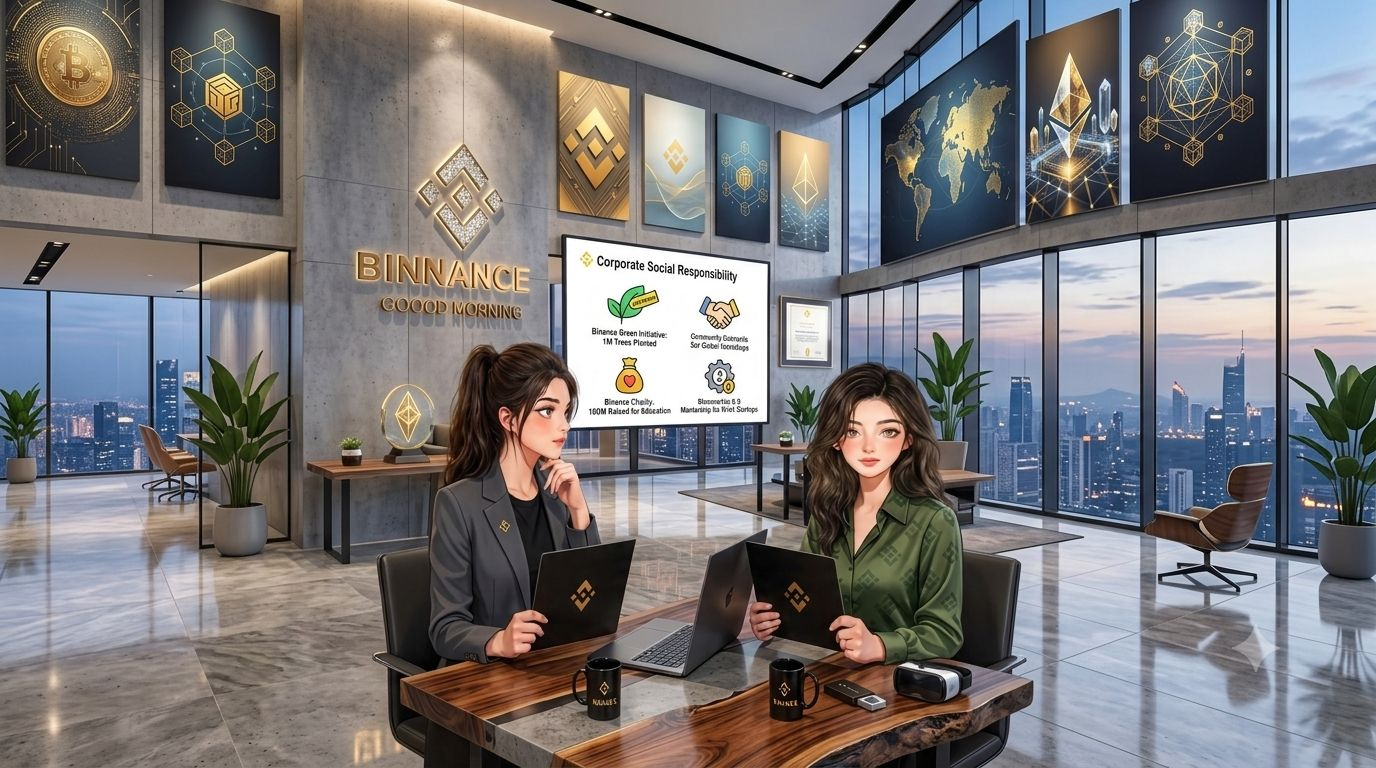
Cette image, avec son cadre professionnel et moderne, reflète notre approche tournée vers l’avenir. Les œuvres murales présentant une carte du monde et des concepts liés à la blockchain symbolisent notre portée mondiale et notre innovation technologique, qui soutiennent l’ensemble de nos efforts en matière de RSE.
Merci à notre incroyable communauté mondiale pour votre soutien continu ! Ensemble, nous ne faisons pas seulement avancer l’avenir de la finance : nous créons aussi un monde plus durable et plus équitable.
#BinanceCSR #Sustainability #CryptoForGood #Web3Education #InnovationWithPurpose
{future}(BTCUSDT)
{future}(BNBUSDT)
{future}(ETHUSDT)
Au-delà du trading : notre engagement en matière de responsabilité sociale des entreprises
Chez Binance, nous croyons au pouvoir de la blockchain pour construire un avenir meilleur. Il ne s’agit pas seulement d’innovation financière ; il s’agit de créer un impact positif et durable sur le monde. Nos initiatives de Responsabilité Sociale des Entreprises (RSE) sont au cœur de notre mission, et nous sommes fiers des progrès réalisés grâce à nos quatre piliers clés :
🌱 Initiative Binance Green : Protéger notre planète pour les générations futures est une priorité absolue. Nous avons planté avec succès plus d’un million d’arbres, contribuant à des efforts essentiels de reforestation à travers le monde. Ensemble, nous pouvons construire un demain plus vert.
🎓 Binance Charity : L’éducation ouvre des opportunités. Nos actions caritatives ont permis de récolter plus de 10 millions de dollars, dédiés à l’amélioration de l’accès à une éducation de qualité à l’échelle mondiale. Nous nous engageons à donner aux individus et aux communautés les moyens d’avancer grâce à l’apprentissage.
🤝 Soutien à la communauté : Nous croyons en la force du lien. Nous avons organisé plus de 50+ ateliers mondiaux, en échange direct avec nos utilisateurs et nos partenaires, afin de comprendre leurs besoins et de leur apporter notre soutien. Nous sommes déterminés à favoriser une communauté solide et inclusive.
🚀 Binance Lab 2.0 : L’innovation stimule le progrès. Notre programme Binance Lab 2.0 offre un mentorat essentiel aux startups Web3.0, dotant la prochaine génération d’entrepreneurs des outils et des connaissances nécessaires pour réussir.
Cette image, avec son cadre professionnel et moderne, reflète notre approche tournée vers l’avenir. Les œuvres murales présentant une carte du monde et des concepts liés à la blockchain symbolisent notre portée mondiale et notre innovation technologique, qui soutiennent l’ensemble de nos efforts en matière de RSE.
Merci à notre incroyable communauté mondiale pour votre soutien continu ! Ensemble, nous ne faisons pas seulement avancer l’avenir de la finance : nous créons aussi un monde plus durable et plus équitable.
#BinanceCSR #Sustainability #CryptoForGood #Web3Education #InnovationWithPurpose
Chez Binance, nous croyons au pouvoir de la blockchain pour construire un avenir meilleur. Il ne s’agit pas seulement d’innovation financière ; il s’agit de créer un impact positif et durable sur le monde. Nos initiatives de Responsabilité Sociale des Entreprises (RSE) sont au cœur de notre mission, et nous sommes fiers des progrès réalisés grâce à nos quatre piliers clés :
🌱 Initiative Binance Green : Protéger notre planète pour les générations futures est une priorité absolue. Nous avons planté avec succès plus d’un million d’arbres, contribuant à des efforts essentiels de reforestation à travers le monde. Ensemble, nous pouvons construire un demain plus vert.
🎓 Binance Charity : L’éducation ouvre des opportunités. Nos actions caritatives ont permis de récolter plus de 10 millions de dollars, dédiés à l’amélioration de l’accès à une éducation de qualité à l’échelle mondiale. Nous nous engageons à donner aux individus et aux communautés les moyens d’avancer grâce à l’apprentissage.
🤝 Soutien à la communauté : Nous croyons en la force du lien. Nous avons organisé plus de 50+ ateliers mondiaux, en échange direct avec nos utilisateurs et nos partenaires, afin de comprendre leurs besoins et de leur apporter notre soutien. Nous sommes déterminés à favoriser une communauté solide et inclusive.
🚀 Binance Lab 2.0 : L’innovation stimule le progrès. Notre programme Binance Lab 2.0 offre un mentorat essentiel aux startups Web3.0, dotant la prochaine génération d’entrepreneurs des outils et des connaissances nécessaires pour réussir.
Cette image, avec son cadre professionnel et moderne, reflète notre approche tournée vers l’avenir. Les œuvres murales présentant une carte du monde et des concepts liés à la blockchain symbolisent notre portée mondiale et notre innovation technologique, qui soutiennent l’ensemble de nos efforts en matière de RSE.
Merci à notre incroyable communauté mondiale pour votre soutien continu ! Ensemble, nous ne faisons pas seulement avancer l’avenir de la finance : nous créons aussi un monde plus durable et plus équitable.
#BinanceCSR #Sustainability #CryptoForGood #Web3Education #InnovationWithPurpose
8
512

·
--
Article
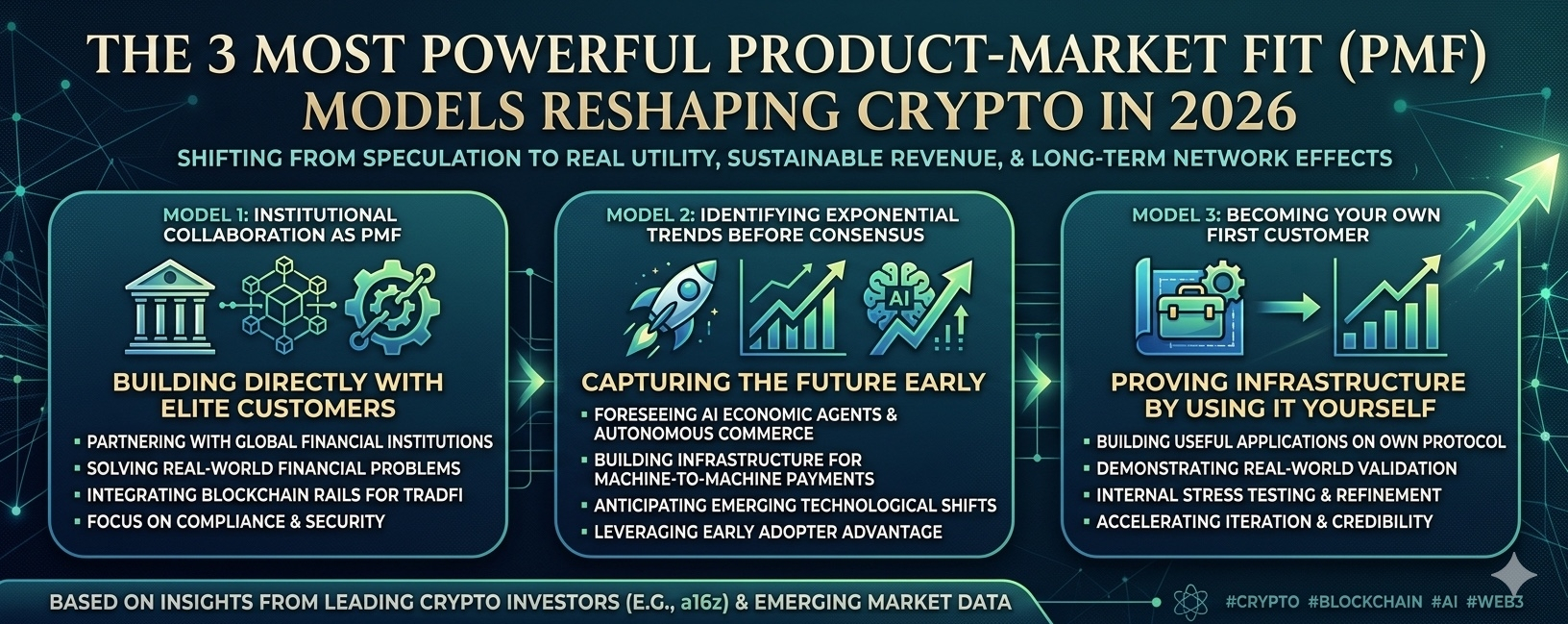
Les 3 Modèles de Product-Market Fit (PMF) les Plus Puissants Redéfinissant la Crypto en 2026Le Product-Market Fit (PMF) a toujours été le facteur déterminant entre les projets crypto qui survivent et ceux qui disparaissent. Lors des cycles précédents, de nombreuses startups masquaient temporairement des fondamentaux faibles grâce à des incitations agressives sur les tokens, des airdrops, un Total Value Locked (TVL) gonflé et une hype spéculative. Mais le marché crypto de 2026 est différent.
Le capital seul n’est plus suffisant.
Le marché d’aujourd’hui récompense de plus en plus les projets qui résolvent de vrais problèmes, attirent la demande institutionnelle et construisent des écosystèmes durables. Selon les insights partagés par Andreessen Horowitz (a16z), trois modèles de Product-Market Fit (PMF) émergent actuellement comme les plus solides et crédibles dans l’industrie crypto.
Les 3 Modèles de Product-Market Fit (PMF) les Plus Puissants Redéfinissant la Crypto en 2026
Le Product-Market Fit (PMF) a toujours été le facteur déterminant entre les projets crypto qui survivent et ceux qui disparaissent. Lors des cycles précédents, de nombreuses startups masquaient temporairement des fondamentaux faibles grâce à des incitations agressives sur les tokens, des airdrops, un Total Value Locked (TVL) gonflé et une hype spéculative. Mais le marché crypto de 2026 est différent.
Le capital seul n’est plus suffisant.
Le marché d’aujourd’hui récompense de plus en plus les projets qui résolvent de vrais problèmes, attirent la demande institutionnelle et construisent des écosystèmes durables. Selon les insights partagés par Andreessen Horowitz (a16z), trois modèles de Product-Market Fit (PMF) émergent actuellement comme les plus solides et crédibles dans l’industrie crypto.
Le capital seul n’est plus suffisant.
Le marché d’aujourd’hui récompense de plus en plus les projets qui résolvent de vrais problèmes, attirent la demande institutionnelle et construisent des écosystèmes durables. Selon les insights partagés par Andreessen Horowitz (a16z), trois modèles de Product-Market Fit (PMF) émergent actuellement comme les plus solides et crédibles dans l’industrie crypto.
123

·
--
Haussier
Il n'est pas toujours nécessaire d'avoir de l'argent pour commencer dans la crypto.
Parfois, apprendre devient votre premier investissement.
C'est le meilleur départ.
Vrai ?
#CryptoLearning #CryptoEducation #SmartInvestment #CryptoBeginner #Web3Education
Il n'est pas toujours nécessaire d'avoir de l'argent pour commencer dans la crypto.
Parfois, apprendre devient votre premier investissement.
C'est le meilleur départ.
Vrai ?
#CryptoLearning #CryptoEducation #SmartInvestment #CryptoBeginner #Web3Education
Parfois, apprendre devient votre premier investissement.
C'est le meilleur départ.
Vrai ?
#CryptoLearning #CryptoEducation #SmartInvestment #CryptoBeginner #Web3Education

1
89
·
--
Haussier
Je pensais que la crypto, c'était seulement du trading.
Puis j'ai découvert des façons plus intelligentes d'apprendre et de grandir.
Quelle a été ta première leçon sur la crypto ?
#CryptoJourney
#Web3Education
#BeyondTrading
#BlockchainInnovation
#CryptoCommunity
Je pensais que la crypto, c'était seulement du trading.
Puis j'ai découvert des façons plus intelligentes d'apprendre et de grandir.
Quelle a été ta première leçon sur la crypto ?
#CryptoJourney
#Web3Education
#BeyondTrading
#BlockchainInnovation
#CryptoCommunity
Puis j'ai découvert des façons plus intelligentes d'apprendre et de grandir.
Quelle a été ta première leçon sur la crypto ?
#CryptoJourney
#Web3Education
#BeyondTrading
#BlockchainInnovation
#CryptoCommunity

132

#OCT Arrêtez de courir après les “green candles” : 3 indicateurs à vérifier AVANT votre prochain trade crypto 🚨
Quand le marché s’emballe, la FOMO donne envie de foncer à l’aveugle. Un trading réussi, ce n’est pas de deviner. C’est de gérer le risque.Avant d’appuyer sur “acheter” pour un token aujourd’hui, vérifiez ces 3 indicateurs essentiels :
1. Volume Profile vs. action des prix : si le prix monte mais que le volume de trading baisse, le mouvement manque de solidité. Méfiez-vous d’un piège potentiel. Cherchez un volume qui confirme la cassure.
2. Taux de financement (pour les traders sur futures) : les taux de financement sont-ils très positifs ? Les positions longues rémunèrent les positions courtes. Cela signifie que le marché est surchargé d’acheteurs. Une purge soudaine par effet de levier pourrait arriver.
3. Données d’entrées/sorties : les baleines déplacent-elles des tokens vers les exchanges ? De fortes entrées sur les exchanges indiquent souvent une intention de vendre. Surveillez les données on-chain avant d’engager du capital.
Quel indicateur utilisez-vous le plus avant d’entrer dans une transaction ? Dites-le-moi en commentaire 👇
#cryptotrading #TechnicalAnalysis #Web3Education $BTC ETH BNB
Avertissement : ce contenu est fourni à titre éducatif uniquement et ne constitue pas un conseil financier. Faites toujours vos propres recherches (DYOR).
#OCT Arrêtez de courir après les “green candles” : 3 indicateurs à vérifier AVANT votre prochain trade crypto 🚨
Quand le marché s’emballe, la FOMO donne envie de foncer à l’aveugle. Un trading réussi, ce n’est pas de deviner. C’est de gérer le risque.Avant d’appuyer sur “acheter” pour un token aujourd’hui, vérifiez ces 3 indicateurs essentiels :
1. Volume Profile vs. action des prix : si le prix monte mais que le volume de trading baisse, le mouvement manque de solidité. Méfiez-vous d’un piège potentiel. Cherchez un volume qui confirme la cassure.
2. Taux de financement (pour les traders sur futures) : les taux de financement sont-ils très positifs ? Les positions longues rémunèrent les positions courtes. Cela signifie que le marché est surchargé d’acheteurs. Une purge soudaine par effet de levier pourrait arriver.
3. Données d’entrées/sorties : les baleines déplacent-elles des tokens vers les exchanges ? De fortes entrées sur les exchanges indiquent souvent une intention de vendre. Surveillez les données on-chain avant d’engager du capital.
Quel indicateur utilisez-vous le plus avant d’entrer dans une transaction ? Dites-le-moi en commentaire 👇
#cryptotrading #TechnicalAnalysis #Web3Education $BTC ETH BNB
Avertissement : ce contenu est fourni à titre éducatif uniquement et ne constitue pas un conseil financier. Faites toujours vos propres recherches (DYOR).
Quand le marché s’emballe, la FOMO donne envie de foncer à l’aveugle. Un trading réussi, ce n’est pas de deviner. C’est de gérer le risque.Avant d’appuyer sur “acheter” pour un token aujourd’hui, vérifiez ces 3 indicateurs essentiels :
1. Volume Profile vs. action des prix : si le prix monte mais que le volume de trading baisse, le mouvement manque de solidité. Méfiez-vous d’un piège potentiel. Cherchez un volume qui confirme la cassure.
2. Taux de financement (pour les traders sur futures) : les taux de financement sont-ils très positifs ? Les positions longues rémunèrent les positions courtes. Cela signifie que le marché est surchargé d’acheteurs. Une purge soudaine par effet de levier pourrait arriver.
3. Données d’entrées/sorties : les baleines déplacent-elles des tokens vers les exchanges ? De fortes entrées sur les exchanges indiquent souvent une intention de vendre. Surveillez les données on-chain avant d’engager du capital.
Quel indicateur utilisez-vous le plus avant d’entrer dans une transaction ? Dites-le-moi en commentaire 👇
#cryptotrading #TechnicalAnalysis #Web3Education $BTC ETH BNB
Avertissement : ce contenu est fourni à titre éducatif uniquement et ne constitue pas un conseil financier. Faites toujours vos propres recherches (DYOR).
130


Article
Qu’est-ce que la blockchain ? Guide pour débutants sur son fonctionnementIntroduction
La blockchain est l’une des idées les plus importantes dans la crypto, mais on la décrit souvent d’une manière qui donne l’impression qu’elle est plus compliquée qu’elle ne l’est en réalité. À la base, une blockchain est simplement un système de registre numérique partagé qui conserve des données sur de nombreux ordinateurs, plutôt que sur un seul serveur central.
Si vous comprenez la blockchain, il vous sera beaucoup plus facile de comprendre $BTC $ETH les portefeuilles, les contrats intelligents et bien d’autres sujets liés à la crypto. Ce guide explique le concept avec un langage simple, avec des exemples pratiques et une structure adaptée aux débutants.
Qu’est-ce que la blockchain ? Guide pour débutants sur son fonctionnement
Introduction
La blockchain est l’une des idées les plus importantes dans la crypto, mais on la décrit souvent d’une manière qui donne l’impression qu’elle est plus compliquée qu’elle ne l’est en réalité. À la base, une blockchain est simplement un système de registre numérique partagé qui conserve des données sur de nombreux ordinateurs, plutôt que sur un seul serveur central.
Si vous comprenez la blockchain, il vous sera beaucoup plus facile de comprendre $BTC $ETH les portefeuilles, les contrats intelligents et bien d’autres sujets liés à la crypto. Ce guide explique le concept avec un langage simple, avec des exemples pratiques et une structure adaptée aux débutants.
La blockchain est l’une des idées les plus importantes dans la crypto, mais on la décrit souvent d’une manière qui donne l’impression qu’elle est plus compliquée qu’elle ne l’est en réalité. À la base, une blockchain est simplement un système de registre numérique partagé qui conserve des données sur de nombreux ordinateurs, plutôt que sur un seul serveur central.
Si vous comprenez la blockchain, il vous sera beaucoup plus facile de comprendre $BTC $ETH les portefeuilles, les contrats intelligents et bien d’autres sujets liés à la crypto. Ce guide explique le concept avec un langage simple, avec des exemples pratiques et une structure adaptée aux débutants.
112

·
--
Le Secret pour Rester dans le Jeu 🛡️
Pourquoi 90% des Traders Échouent (Et Comment Vous Pouvez Être le 1%)
La plupart des gens entrent sur le marché crypto en cherchant des "richesses instantanées", mais les vrais gagnants sont ceux qui maîtrisent la Gestion des Risques. Avant de vous soucier de combien vous pouvez gagner, concentrez-vous sur combien vous pouvez vous permettre de perdre. Ne mettez jamais tous vos œufs dans le même panier!
Mes 3 Règles Principales:
N'investissez que ce que vous pouvez vous permettre de perdre.
Utilisez toujours un Stop-Loss.
Ne laissez pas le FOMO (Peur de Manquer) influencer vos décisions.
Êtes-vous un trader discipliné ou un trader émotionnel? Soyons honnêtes dans les commentaires! 👇
#CryptoConseils #GestionDesRisques #Vincekhayyam #StratégieDeTrading #Web3Education
Le Secret pour Rester dans le Jeu 🛡️
Pourquoi 90% des Traders Échouent (Et Comment Vous Pouvez Être le 1%)
La plupart des gens entrent sur le marché crypto en cherchant des "richesses instantanées", mais les vrais gagnants sont ceux qui maîtrisent la Gestion des Risques. Avant de vous soucier de combien vous pouvez gagner, concentrez-vous sur combien vous pouvez vous permettre de perdre. Ne mettez jamais tous vos œufs dans le même panier!
Mes 3 Règles Principales:
N'investissez que ce que vous pouvez vous permettre de perdre.
Utilisez toujours un Stop-Loss.
Ne laissez pas le FOMO (Peur de Manquer) influencer vos décisions.
Êtes-vous un trader discipliné ou un trader émotionnel? Soyons honnêtes dans les commentaires! 👇
#CryptoConseils #GestionDesRisques #Vincekhayyam #StratégieDeTrading #Web3Education
Pourquoi 90% des Traders Échouent (Et Comment Vous Pouvez Être le 1%)
La plupart des gens entrent sur le marché crypto en cherchant des "richesses instantanées", mais les vrais gagnants sont ceux qui maîtrisent la Gestion des Risques. Avant de vous soucier de combien vous pouvez gagner, concentrez-vous sur combien vous pouvez vous permettre de perdre. Ne mettez jamais tous vos œufs dans le même panier!
Mes 3 Règles Principales:
N'investissez que ce que vous pouvez vous permettre de perdre.
Utilisez toujours un Stop-Loss.
Ne laissez pas le FOMO (Peur de Manquer) influencer vos décisions.
Êtes-vous un trader discipliné ou un trader émotionnel? Soyons honnêtes dans les commentaires! 👇
#CryptoConseils #GestionDesRisques #Vincekhayyam #StratégieDeTrading #Web3Education

9
137

·
--
👊 Déboulonnons un mythe commun : votre $BTC n'est pas réellement "dans" votre portefeuille matériel ou logiciel. Beaucoup de débutants pensent que la crypto est stockée comme de l'argent liquide dans un portefeuille physique, mais la réalité est différente. Vos $ETH et autres actifs vivent sur la blockchain. Votre portefeuille stocke simplement les clés privées qui prouvent que vous possédez ces adresses. Si vous perdez votre appareil mais que vous avez votre phrase de récupération, vos fonds restent en sécurité.
La sécurité concerne la protection de l'accès, pas un objet physique.
Comprendre cela vous aide à gérer votre $BNB et d'autres avoirs de manière plus sécurisée.
{spot}(BTCUSDT)
{spot}(ETHUSDT)
{spot}(BNBUSDT)
Comment préférez-vous sauvegarder vos phrases de récupération : papier physique ou stockage numérique encrypté ?
#CryptoSecurity #BlockchainBasics101 #SelfCustody #Web3Education
👊 Déboulonnons un mythe commun : votre $BTC n'est pas réellement "dans" votre portefeuille matériel ou logiciel. Beaucoup de débutants pensent que la crypto est stockée comme de l'argent liquide dans un portefeuille physique, mais la réalité est différente. Vos $ETH et autres actifs vivent sur la blockchain. Votre portefeuille stocke simplement les clés privées qui prouvent que vous possédez ces adresses. Si vous perdez votre appareil mais que vous avez votre phrase de récupération, vos fonds restent en sécurité.
La sécurité concerne la protection de l'accès, pas un objet physique.
Comprendre cela vous aide à gérer votre $BNB et d'autres avoirs de manière plus sécurisée.
Comment préférez-vous sauvegarder vos phrases de récupération : papier physique ou stockage numérique encrypté ?
#CryptoSecurity #BlockchainBasics101 #SelfCustody #Web3Education
La sécurité concerne la protection de l'accès, pas un objet physique.
Comprendre cela vous aide à gérer votre $BNB et d'autres avoirs de manière plus sécurisée.
Comment préférez-vous sauvegarder vos phrases de récupération : papier physique ou stockage numérique encrypté ?
#CryptoSecurity #BlockchainBasics101 #SelfCustody #Web3Education
11
192

Article
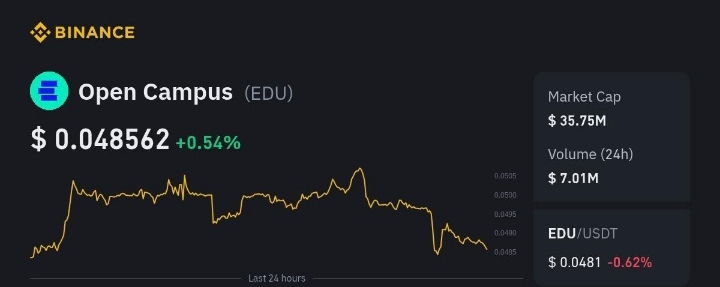
Analyse d'EDU Coin & Dernières Mises à JourAnalyse d'EDU Coin & Dernières Mises à Jour (Guide 2026)
$EDU
Le marché crypto évolue rapidement, et les projets blockchain axés sur l'éducation attirent une attention considérable. Un de ces projets est EDU Coin, qui transforme la manière dont les systèmes d'apprentissage fonctionnent grâce à la technologie blockchain.
Dans cette analyse détaillée d'EDU Coin, nous aborderons l'analyse des prix d'EDU Coin, la prévision d'EDU Coin, l'analyse future d'EDU Coin, l'analyse technique d'EDU Coin et l'analyse d'investissement d'EDU Coin pour vous aider à comprendre son potentiel en 2026.
Analyse d'EDU Coin & Dernières Mises à Jour
Analyse d'EDU Coin & Dernières Mises à Jour (Guide 2026)
$EDU
Le marché crypto évolue rapidement, et les projets blockchain axés sur l'éducation attirent une attention considérable. Un de ces projets est EDU Coin, qui transforme la manière dont les systèmes d'apprentissage fonctionnent grâce à la technologie blockchain.
Dans cette analyse détaillée d'EDU Coin, nous aborderons l'analyse des prix d'EDU Coin, la prévision d'EDU Coin, l'analyse future d'EDU Coin, l'analyse technique d'EDU Coin et l'analyse d'investissement d'EDU Coin pour vous aider à comprendre son potentiel en 2026.
$EDU
Le marché crypto évolue rapidement, et les projets blockchain axés sur l'éducation attirent une attention considérable. Un de ces projets est EDU Coin, qui transforme la manière dont les systèmes d'apprentissage fonctionnent grâce à la technologie blockchain.
Dans cette analyse détaillée d'EDU Coin, nous aborderons l'analyse des prix d'EDU Coin, la prévision d'EDU Coin, l'analyse future d'EDU Coin, l'analyse technique d'EDU Coin et l'analyse d'investissement d'EDU Coin pour vous aider à comprendre son potentiel en 2026.
268

·
--
Article
Binance Junior & sign#BinanceJunior transforme l'éducation financière au Moyen-Orient en intégrant l'infrastructure d'attestation du protocole $SIGN pour garantir la souveraineté numérique des étudiants.
Grâce à la technologie blockchain,
chaque réussite académique devient un micro-credential vérifiable, immuable et portable.
Ce système élimine la fragmentation des qualifications traditionnelles, permettant aux jeunes talents de prouver instantanément leurs compétences aux universités et aux entreprises du monde entier sans avoir besoin d'intermédiaires.
Au sein de l'écosystème alimenté par @SignOfficial cette architecture de données vérifiables sert d'infrastructure essentielle pour une croissance économique durable et fondée sur le mérite dans toute la région.
Binance Junior & sign
#BinanceJunior transforme l'éducation financière au Moyen-Orient en intégrant l'infrastructure d'attestation du protocole $SIGN pour garantir la souveraineté numérique des étudiants.
Grâce à la technologie blockchain,
chaque réussite académique devient un micro-credential vérifiable, immuable et portable.
Ce système élimine la fragmentation des qualifications traditionnelles, permettant aux jeunes talents de prouver instantanément leurs compétences aux universités et aux entreprises du monde entier sans avoir besoin d'intermédiaires.
Au sein de l'écosystème alimenté par @SignOfficial cette architecture de données vérifiables sert d'infrastructure essentielle pour une croissance économique durable et fondée sur le mérite dans toute la région.
Grâce à la technologie blockchain,
chaque réussite académique devient un micro-credential vérifiable, immuable et portable.
Ce système élimine la fragmentation des qualifications traditionnelles, permettant aux jeunes talents de prouver instantanément leurs compétences aux universités et aux entreprises du monde entier sans avoir besoin d'intermédiaires.
Au sein de l'écosystème alimenté par @SignOfficial cette architecture de données vérifiables sert d'infrastructure essentielle pour une croissance économique durable et fondée sur le mérite dans toute la région.
52
Connectez-vous pour découvrir plus de contenu
Rejoignez la communauté mondiale des adeptes de cryptomonnaies sur Binance Square
⚡️ Suviez les dernières informations importantes sur les cryptomonnaies.
💬 Jugé digne de confiance par la plus grande plateforme d’échange de cryptomonnaies au monde.
👍 Découvrez les connaissances que partagent les créateurs vérifiés.
Adresse e-mail/Nº de téléphone
Sujets d’actualité
1
#SECReceivesGrayscaleLitecoinTrustETFFiling
11,813 vues
265 mentions
2
#ClarityActFacesProceduralVoteSept15
106,880 vues
1,240 mentions
3
#US10YearTreasuryYieldNears5%
36,853 vues
637 mentions
4
#CryptoLiquidations$674MIn24H
9,040 vues
104 mentions
5
#TokenizedStockHoldersUp619.1%
38,498 vues
591 mentions
6
#RevolutConfirmsFakeGovEmailDataBreach
64,541 vues
864 mentions
7
#CanadaOSFISaysTokenizedDepositsEqualTraditionalDeposits
3,687 vues
79 mentions
8
#USBankCompletesCrossBorderPaymentPilotOnStellar
58,739 vues
974 mentions
9
#NvidiaInTalksToInvestUpTo$10BInAnthropicIPO
4,344 vues
76 mentions
10
#EtherRalliesAsBearishBetsLiquidate
84,385 vues
1,210 mentions