

RonyZ
806 Publications

RonyZ
 Binance Square Vérifié
Signaler
Bloquer l’utilisateur
Crypto KOL || Community Director || KOC || Degen || Web3.0, #BTC #BNB || X: @RonyZ1320

#BinanceTurns7 task 2

#BinanceTurns7
Ouvert au trading
Trade occasionnellement
3.7 an(s)
89 Suivis
46.9K+ Abonnés
9.0K+ J’aime
2 Badges
Publications
Portefeuille
Tous
Citations
Vidéos
Direct
PINNED
·
--

Article
Yes, I'm Binanced & BlessedFrom Newbie to Crypto Enthusiast
My journey into the world of cryptocurrency began with a spark of curiosity and a touch of skepticism. I was drawn to the idea of decentralized finance, but the complexity and volatility of the market were daunting. That's when I discovered Binance, a user-friendly platform that made it easy to navigate the crypto landscape.
Learning and Growing with Binance
Binance's comprehensive platform, coupled with a plethora of educational resources, was instrumental in my crypto education. I spent countless hours exploring Binance Academy, immersing myself in the intricacies of blockchain technology, cryptocurrencies, and trading strategies. As my understanding deepened, I felt inspired to share my knowledge with others.
Sharing My Passion on Binance Square
Binance Square provided the perfect platform to connect with a vibrant community of crypto enthusiasts. I started by sharing simple tips and tricks, gradually progressing to more in-depth analyses and tutorials. The supportive community on Binance Square encouraged me to continue learning and growing.
The Thrill of Trading and the Power of Community
The thrill of trading on Binance is unparalleled. The ability to buy, sell, and trade a wide range of cryptocurrencies at your fingertips is truly empowering. But what truly sets Binance apart is its strong and supportive community. I've had the privilege of interacting with fellow crypto enthusiasts, learning from their experiences, and collaborating on exciting projects.
A Bright Future Ahead
As I continue my crypto journey, I'm excited to see what the future holds. Binance, with its constant innovation and commitment to user experience, is undoubtedly at the forefront of the crypto revolution. I'm proud to be a part of this thriving community and look forward to many more exciting adventures on Binance.
#HaveYouBinanced #BinanceSquareFamily
Yes, I'm Binanced & Blessed
From Newbie to Crypto Enthusiast
My journey into the world of cryptocurrency began with a spark of curiosity and a touch of skepticism. I was drawn to the idea of decentralized finance, but the complexity and volatility of the market were daunting. That's when I discovered Binance, a user-friendly platform that made it easy to navigate the crypto landscape.
Learning and Growing with Binance
Binance's comprehensive platform, coupled with a plethora of educational resources, was instrumental in my crypto education. I spent countless hours exploring Binance Academy, immersing myself in the intricacies of blockchain technology, cryptocurrencies, and trading strategies. As my understanding deepened, I felt inspired to share my knowledge with others.
Sharing My Passion on Binance Square
Binance Square provided the perfect platform to connect with a vibrant community of crypto enthusiasts. I started by sharing simple tips and tricks, gradually progressing to more in-depth analyses and tutorials. The supportive community on Binance Square encouraged me to continue learning and growing.
The Thrill of Trading and the Power of Community
The thrill of trading on Binance is unparalleled. The ability to buy, sell, and trade a wide range of cryptocurrencies at your fingertips is truly empowering. But what truly sets Binance apart is its strong and supportive community. I've had the privilege of interacting with fellow crypto enthusiasts, learning from their experiences, and collaborating on exciting projects.
A Bright Future Ahead
As I continue my crypto journey, I'm excited to see what the future holds. Binance, with its constant innovation and commitment to user experience, is undoubtedly at the forefront of the crypto revolution. I'm proud to be a part of this thriving community and look forward to many more exciting adventures on Binance.
#HaveYouBinanced #BinanceSquareFamily
My journey into the world of cryptocurrency began with a spark of curiosity and a touch of skepticism. I was drawn to the idea of decentralized finance, but the complexity and volatility of the market were daunting. That's when I discovered Binance, a user-friendly platform that made it easy to navigate the crypto landscape.
Learning and Growing with Binance
Binance's comprehensive platform, coupled with a plethora of educational resources, was instrumental in my crypto education. I spent countless hours exploring Binance Academy, immersing myself in the intricacies of blockchain technology, cryptocurrencies, and trading strategies. As my understanding deepened, I felt inspired to share my knowledge with others.
Sharing My Passion on Binance Square
Binance Square provided the perfect platform to connect with a vibrant community of crypto enthusiasts. I started by sharing simple tips and tricks, gradually progressing to more in-depth analyses and tutorials. The supportive community on Binance Square encouraged me to continue learning and growing.
The Thrill of Trading and the Power of Community
The thrill of trading on Binance is unparalleled. The ability to buy, sell, and trade a wide range of cryptocurrencies at your fingertips is truly empowering. But what truly sets Binance apart is its strong and supportive community. I've had the privilege of interacting with fellow crypto enthusiasts, learning from their experiences, and collaborating on exciting projects.
A Bright Future Ahead
As I continue my crypto journey, I'm excited to see what the future holds. Binance, with its constant innovation and commitment to user experience, is undoubtedly at the forefront of the crypto revolution. I'm proud to be a part of this thriving community and look forward to many more exciting adventures on Binance.
#HaveYouBinanced #BinanceSquareFamily
30
13
87
16.8k
·
--
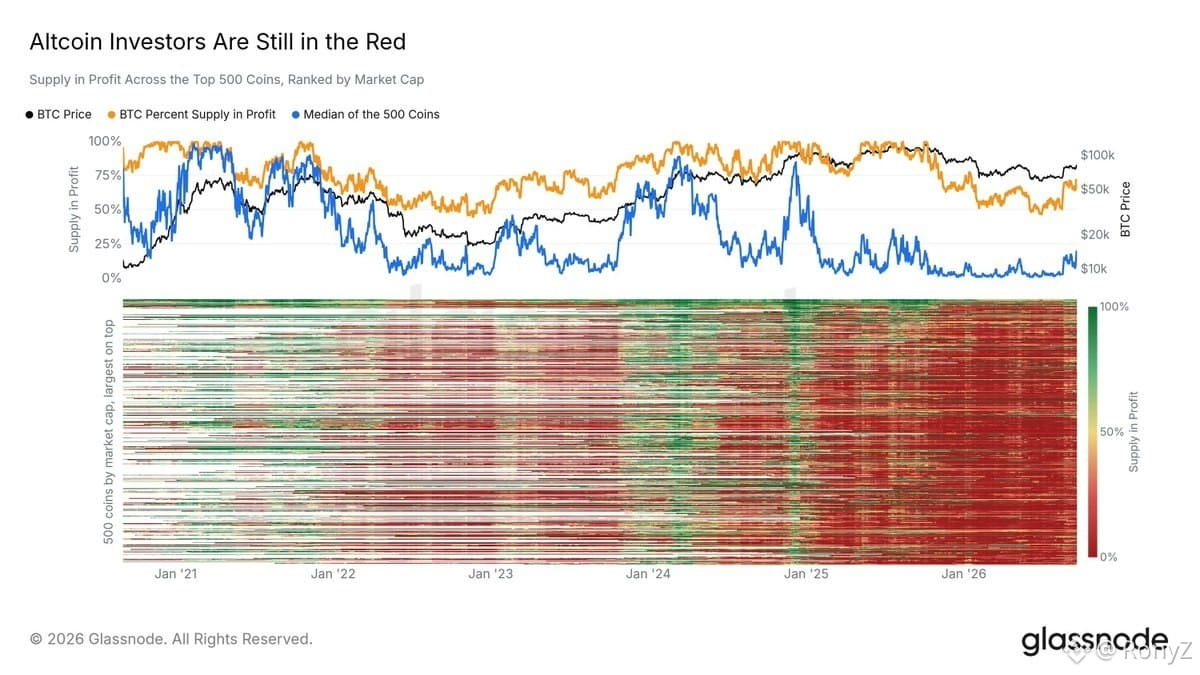
ALTCOIN HOLDERS ARE STILL UNDERWATER
Glassnode data shows the median altcoin currently has less than 25% of its supply in profit.
That’s a striking signal.
In previous market tops, a much larger share of altcoin supply typically sits in profit as speculative demand spreads across the market.
Right now, the opposite is happening.
📉 Most altcoins have yet to see broad-based holder profitability
💰 Capital remains concentrated in fewer assets
🧊 Speculative euphoria appears far from widespread
This doesn’t automatically mean the market must move higher.
But it does suggest the altcoin market may not yet resemble the historical conditions seen during late-cycle peaks.
The real question is:
Are we still early in the broader altcoin cycle, or is the market structure fundamentally different this time?
Watch the percentage of supply in profit closely. It could become one of the clearest signals for whether altseason is actually broadening.
#Altcoins #Stablecoins #Glasanode_Data #BinanceSquareFamily
ALTCOIN HOLDERS ARE STILL UNDERWATER
Glassnode data shows the median altcoin currently has less than 25% of its supply in profit.
That’s a striking signal.
In previous market tops, a much larger share of altcoin supply typically sits in profit as speculative demand spreads across the market.
Right now, the opposite is happening.
📉 Most altcoins have yet to see broad-based holder profitability
💰 Capital remains concentrated in fewer assets
🧊 Speculative euphoria appears far from widespread
This doesn’t automatically mean the market must move higher.
But it does suggest the altcoin market may not yet resemble the historical conditions seen during late-cycle peaks.
The real question is:
Are we still early in the broader altcoin cycle, or is the market structure fundamentally different this time?
Watch the percentage of supply in profit closely. It could become one of the clearest signals for whether altseason is actually broadening.
#Altcoins #Stablecoins #Glasanode_Data #BinanceSquareFamily
Glassnode data shows the median altcoin currently has less than 25% of its supply in profit.
That’s a striking signal.
In previous market tops, a much larger share of altcoin supply typically sits in profit as speculative demand spreads across the market.
Right now, the opposite is happening.
📉 Most altcoins have yet to see broad-based holder profitability
💰 Capital remains concentrated in fewer assets
🧊 Speculative euphoria appears far from widespread
This doesn’t automatically mean the market must move higher.
But it does suggest the altcoin market may not yet resemble the historical conditions seen during late-cycle peaks.
The real question is:
Are we still early in the broader altcoin cycle, or is the market structure fundamentally different this time?
Watch the percentage of supply in profit closely. It could become one of the clearest signals for whether altseason is actually broadening.
#Altcoins #Stablecoins #Glasanode_Data #BinanceSquareFamily
1
583
·
--
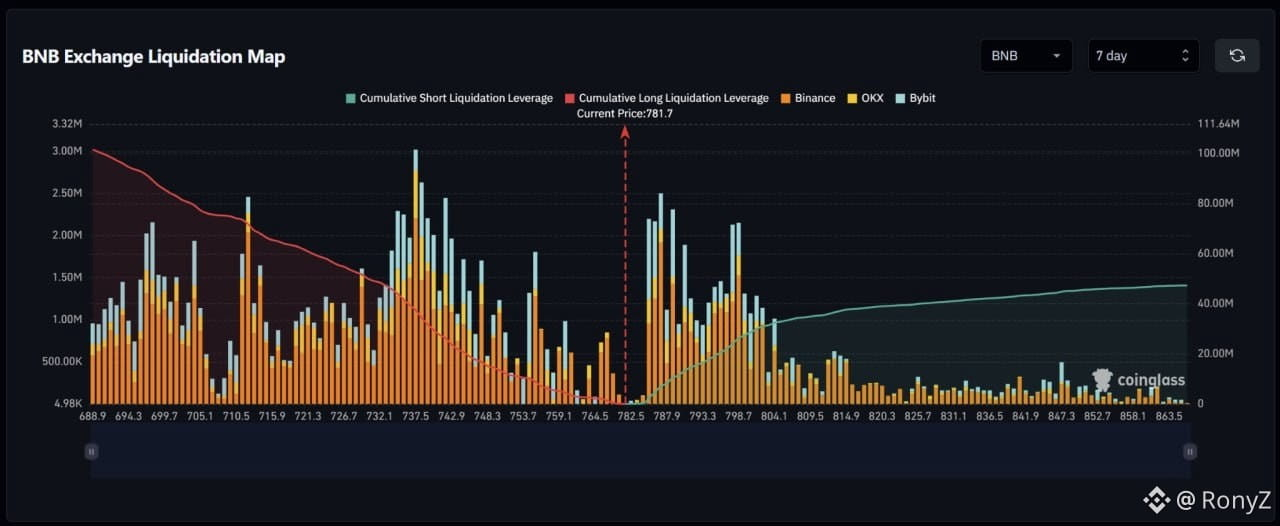
$BNB LIQUIDATION MAP IS HEAVILY LOADED BELOW
BNB is trading near $781.7, but the real story is sitting underneath.
Around $100M in long liquidations are stacked below price vs. roughly $40–45M in shorts above.
That creates a clear liquidity imbalance.
🔻 Below:
$765 → $759–754 → $743–737
$710–715 → $697–705
The $736–743 zone stands out as the biggest nearby liquidity pocket.
🔺 Above:
$786–789 → $796–800 → $805+
The interesting part?
Liquidity between $765 and current price is relatively thin. A clean break below $765 could accelerate the move as positions begin getting flushed into the deeper clusters.
On the other hand, reclaiming $786–789 could trigger a short squeeze toward $800.
$765 and $786 are the levels to watch.
One side gets squeezed. The map tells us where the liquidity is waiting. 👀
#bnb #BOJRaisesRatesTo31YearHigh #BuffettStepsDownAsBerkshireChairman
$BNB LIQUIDATION MAP IS HEAVILY LOADED BELOW
BNB is trading near $781.7, but the real story is sitting underneath.
Around $100M in long liquidations are stacked below price vs. roughly $40–45M in shorts above.
That creates a clear liquidity imbalance.
🔻 Below:
$765 → $759–754 → $743–737
$710–715 → $697–705
The $736–743 zone stands out as the biggest nearby liquidity pocket.
🔺 Above:
$786–789 → $796–800 → $805+
The interesting part?
Liquidity between $765 and current price is relatively thin. A clean break below $765 could accelerate the move as positions begin getting flushed into the deeper clusters.
On the other hand, reclaiming $786–789 could trigger a short squeeze toward $800.
$765 and $786 are the levels to watch.
One side gets squeezed. The map tells us where the liquidity is waiting. 👀
#bnb #BOJRaisesRatesTo31YearHigh #BuffettStepsDownAsBerkshireChairman
BNB is trading near $781.7, but the real story is sitting underneath.
Around $100M in long liquidations are stacked below price vs. roughly $40–45M in shorts above.
That creates a clear liquidity imbalance.
🔻 Below:
$765 → $759–754 → $743–737
$710–715 → $697–705
The $736–743 zone stands out as the biggest nearby liquidity pocket.
🔺 Above:
$786–789 → $796–800 → $805+
The interesting part?
Liquidity between $765 and current price is relatively thin. A clean break below $765 could accelerate the move as positions begin getting flushed into the deeper clusters.
On the other hand, reclaiming $786–789 could trigger a short squeeze toward $800.
$765 and $786 are the levels to watch.
One side gets squeezed. The map tells us where the liquidity is waiting. 👀
#bnb #BOJRaisesRatesTo31YearHigh #BuffettStepsDownAsBerkshireChairman
1
403
·
--
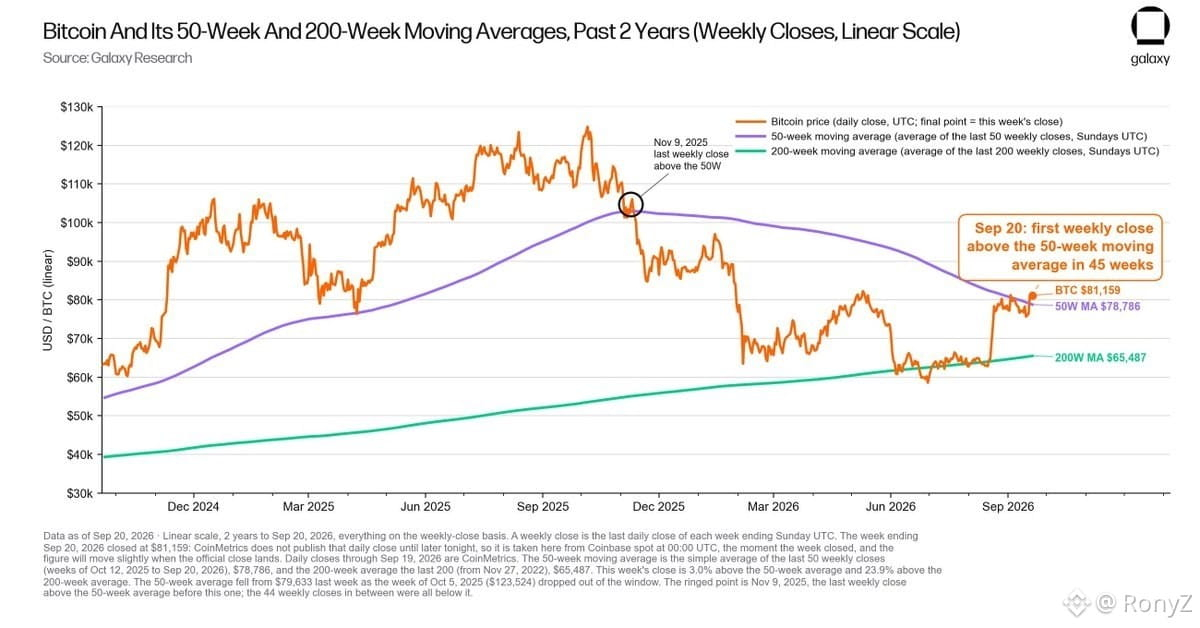
$BTC JUST FLIPPED A KEY MACRO LEVEL
Bitcoin has closed a weekly candle above its 50-week moving average for the first time in 45 weeks.
That matters.
According to Galaxy’s Alex Thorn, previous instances of BTC reclaiming this level after prolonged weakness have historically aligned with the late stages of major bear-market bottoms.
The important part isn’t simply the reclaim.
It’s the duration of the breakdown and the strength of the recovery.
BTC spent 45 weeks without a weekly close above the 50W MA. Now it has finally taken the level back.
If BTC can continue holding above it, the 50W MA could shift from resistance → support, giving the market a much stronger technical foundation.
No signal guarantees what comes next.
But after nearly a year below one of Bitcoin’s most watched long-term trend indicators, this is a weekly close worth paying attention to.
The trend may be changing. Follow-through is the confirmation. 👀
#BTCBreaks80K #SaylorHintsStrategyBitcoinBuy #BitcoinMarketCapTopsTesla
$BTC JUST FLIPPED A KEY MACRO LEVEL
Bitcoin has closed a weekly candle above its 50-week moving average for the first time in 45 weeks.
That matters.
According to Galaxy’s Alex Thorn, previous instances of BTC reclaiming this level after prolonged weakness have historically aligned with the late stages of major bear-market bottoms.
The important part isn’t simply the reclaim.
It’s the duration of the breakdown and the strength of the recovery.
BTC spent 45 weeks without a weekly close above the 50W MA. Now it has finally taken the level back.
If BTC can continue holding above it, the 50W MA could shift from resistance → support, giving the market a much stronger technical foundation.
No signal guarantees what comes next.
But after nearly a year below one of Bitcoin’s most watched long-term trend indicators, this is a weekly close worth paying attention to.
The trend may be changing. Follow-through is the confirmation. 👀
#BTCBreaks80K #SaylorHintsStrategyBitcoinBuy #BitcoinMarketCapTopsTesla
Bitcoin has closed a weekly candle above its 50-week moving average for the first time in 45 weeks.
That matters.
According to Galaxy’s Alex Thorn, previous instances of BTC reclaiming this level after prolonged weakness have historically aligned with the late stages of major bear-market bottoms.
The important part isn’t simply the reclaim.
It’s the duration of the breakdown and the strength of the recovery.
BTC spent 45 weeks without a weekly close above the 50W MA. Now it has finally taken the level back.
If BTC can continue holding above it, the 50W MA could shift from resistance → support, giving the market a much stronger technical foundation.
No signal guarantees what comes next.
But after nearly a year below one of Bitcoin’s most watched long-term trend indicators, this is a weekly close worth paying attention to.
The trend may be changing. Follow-through is the confirmation. 👀
#BTCBreaks80K #SaylorHintsStrategyBitcoinBuy #BitcoinMarketCapTopsTesla
1
310
·
--
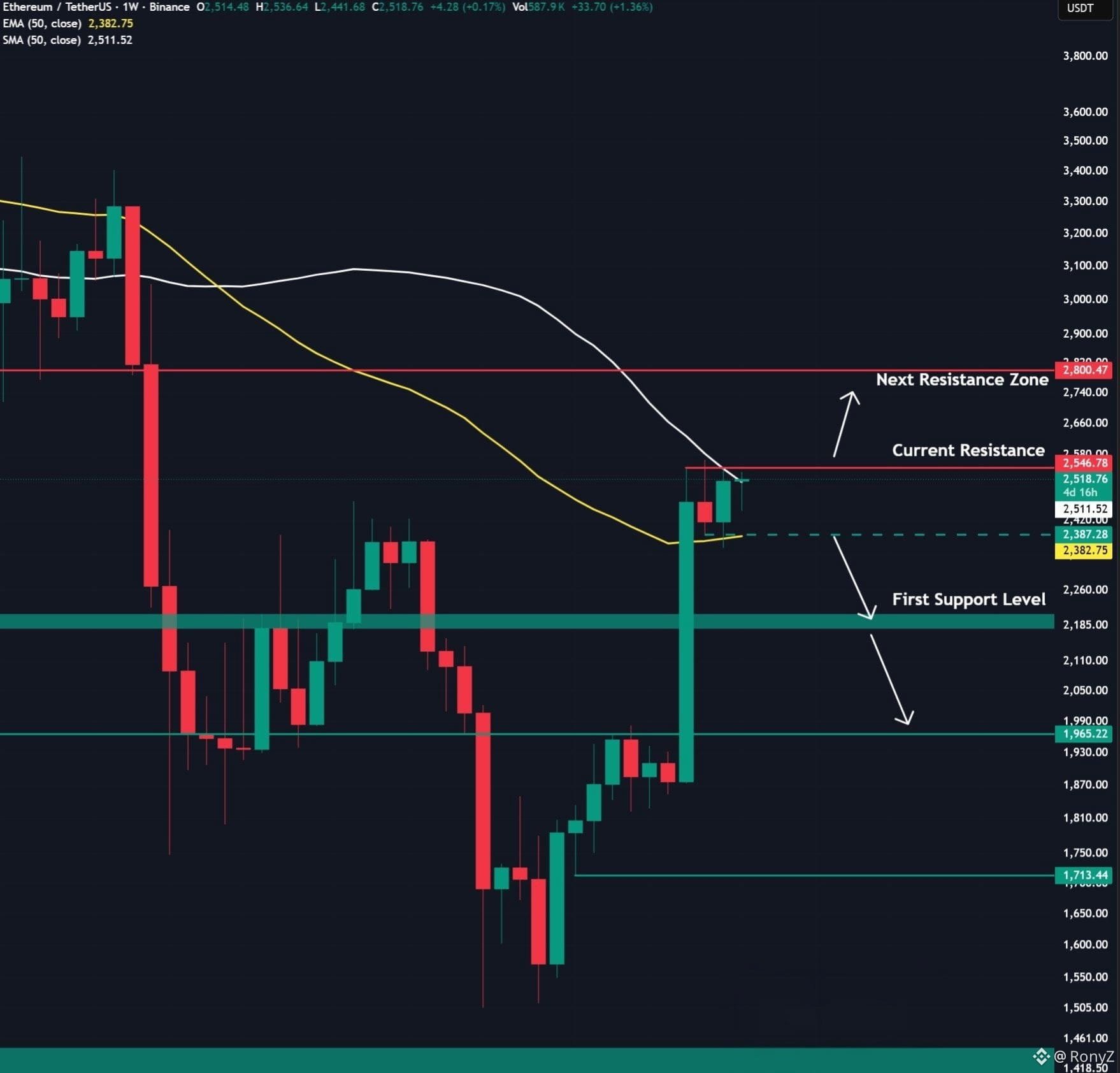
$ETH is back at the $2,550 wall, and this test feels different.
Buyers keep defending the higher-low structure, but the breakout still needs proof.
A strong weekly close above $2,550 would flip the level into support and put $2,800-$3,000 back in focus.
Until then, I’m watching, not chasing.
ETH either breaks the ceiling or gets rejected again. The weekly close decides it.
{spot}(ETHUSDT)
#ETH #Ethereum #BinanceSquareFamily #CryptoTrading
$ETH is back at the $2,550 wall, and this test feels different.
Buyers keep defending the higher-low structure, but the breakout still needs proof.
A strong weekly close above $2,550 would flip the level into support and put $2,800-$3,000 back in focus.
Until then, I’m watching, not chasing.
ETH either breaks the ceiling or gets rejected again. The weekly close decides it.
#ETH #Ethereum #BinanceSquareFamily #CryptoTrading
Buyers keep defending the higher-low structure, but the breakout still needs proof.
A strong weekly close above $2,550 would flip the level into support and put $2,800-$3,000 back in focus.
Until then, I’m watching, not chasing.
ETH either breaks the ceiling or gets rejected again. The weekly close decides it.
#ETH #Ethereum #BinanceSquareFamily #CryptoTrading
3
455
·
--
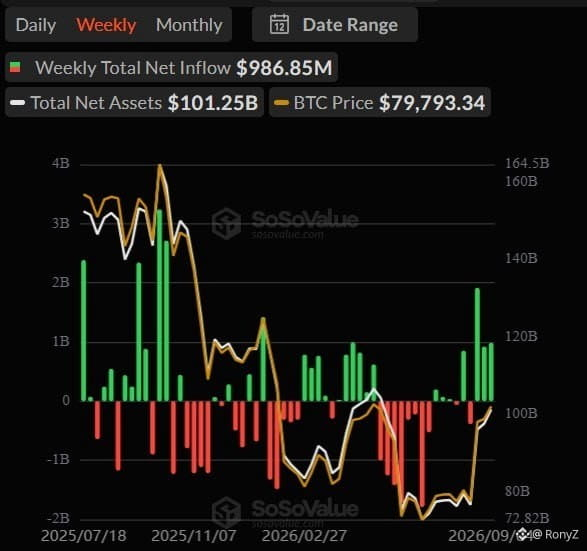
STOP SCROLLING. THE CAPITAL FLOW IS LOUD.
$BTC ETFs have now recorded 3 straight weeks of net inflows.
Three weeks of investors adding exposure.
The headlines can debate Bitcoin.
The money is already voting. ₿
#BitcoinETFsBiggestDailyInflowSinceJanuary #BitcoinEthereumHitMultiMonthHighs #USWeeklyInitialJoblessClaimsRiseTo206000 #BinanceSquareFamily
STOP SCROLLING. THE CAPITAL FLOW IS LOUD.
$BTC ETFs have now recorded 3 straight weeks of net inflows.
Three weeks of investors adding exposure.
The headlines can debate Bitcoin.
The money is already voting. ₿
#BitcoinETFsBiggestDailyInflowSinceJanuary #BitcoinEthereumHitMultiMonthHighs #USWeeklyInitialJoblessClaimsRiseTo206000 #BinanceSquareFamily
$BTC ETFs have now recorded 3 straight weeks of net inflows.
Three weeks of investors adding exposure.
The headlines can debate Bitcoin.
The money is already voting. ₿
#BitcoinETFsBiggestDailyInflowSinceJanuary #BitcoinEthereumHitMultiMonthHighs #USWeeklyInitialJoblessClaimsRiseTo206000 #BinanceSquareFamily
2
467
·
--
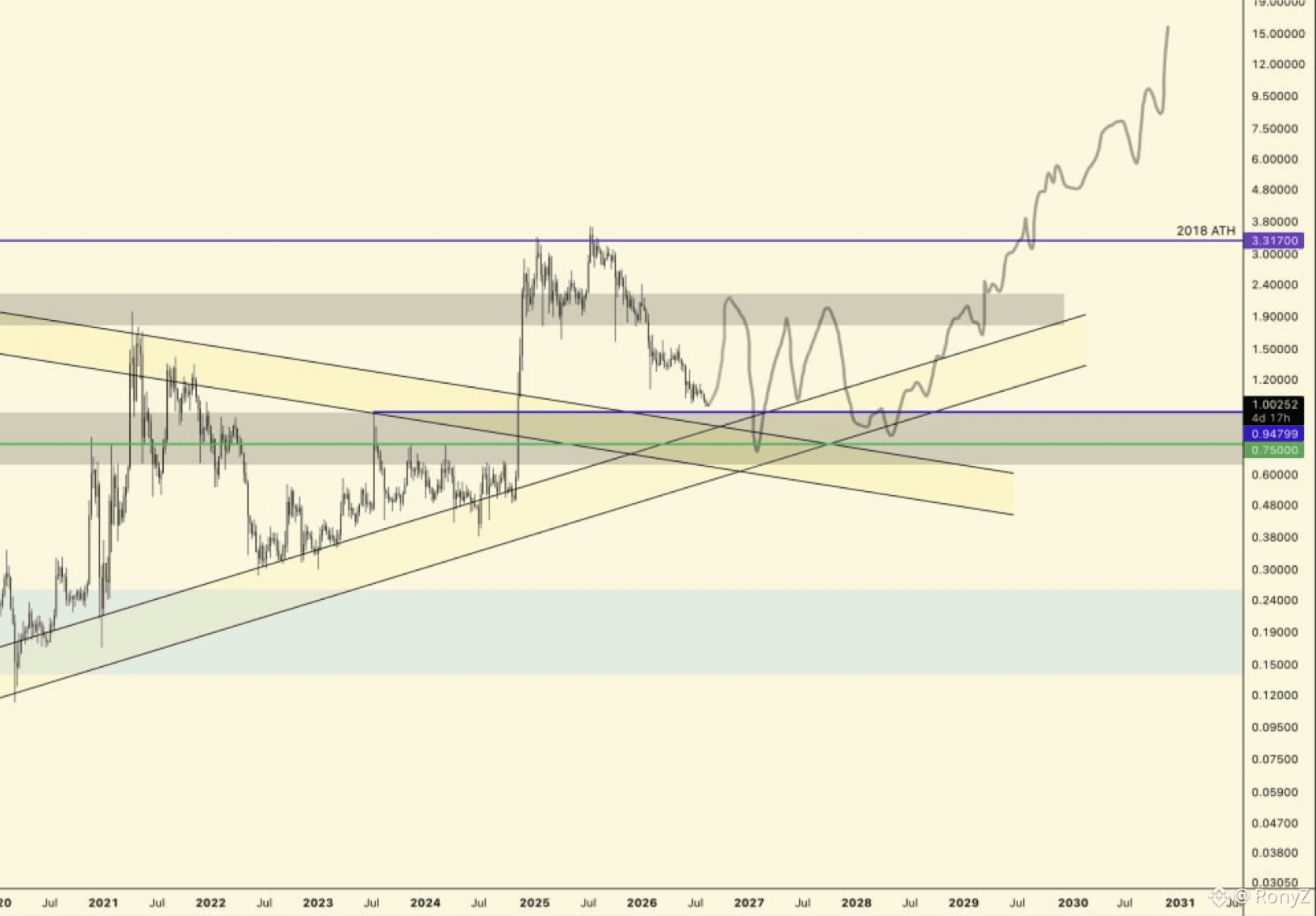
The XRP chart I’m watching
$XRP may be approaching the most important part of its multi-year structure.
The setup is simple:
→ $0.75–$0.95: major accumulation / decision zone
→ $1.00: key breakout confirmation
→ $1.90–$2.40: major resistance + expansion zone
→ $3.31: 2018 ATH — the level I really want to see reclaimed
A sustained break above $3.31 could completely change the higher-timeframe picture.
And if the projected structure continues to unfold, the upside becomes significantly larger than the levels most traders are watching today.
I’m not chasing candles.
I’m watching the structure.
XRP doesn’t need to move tomorrow. I’m interested in what happens if this multi-year setup finally resolves.
NFA. Do your own research.
#Xrp🔥🔥 #XRPPredictions #BinanceSquareFamily
The XRP chart I’m watching
$XRP may be approaching the most important part of its multi-year structure.
The setup is simple:
→ $0.75–$0.95: major accumulation / decision zone
→ $1.00: key breakout confirmation
→ $1.90–$2.40: major resistance + expansion zone
→ $3.31: 2018 ATH — the level I really want to see reclaimed
A sustained break above $3.31 could completely change the higher-timeframe picture.
And if the projected structure continues to unfold, the upside becomes significantly larger than the levels most traders are watching today.
I’m not chasing candles.
I’m watching the structure.
XRP doesn’t need to move tomorrow. I’m interested in what happens if this multi-year setup finally resolves.
NFA. Do your own research.
#Xrp🔥🔥 #XRPPredictions #BinanceSquareFamily
$XRP may be approaching the most important part of its multi-year structure.
The setup is simple:
→ $0.75–$0.95: major accumulation / decision zone
→ $1.00: key breakout confirmation
→ $1.90–$2.40: major resistance + expansion zone
→ $3.31: 2018 ATH — the level I really want to see reclaimed
A sustained break above $3.31 could completely change the higher-timeframe picture.
And if the projected structure continues to unfold, the upside becomes significantly larger than the levels most traders are watching today.
I’m not chasing candles.
I’m watching the structure.
XRP doesn’t need to move tomorrow. I’m interested in what happens if this multi-year setup finally resolves.
NFA. Do your own research.
#Xrp🔥🔥 #XRPPredictions #BinanceSquareFamily
3
546
·
--
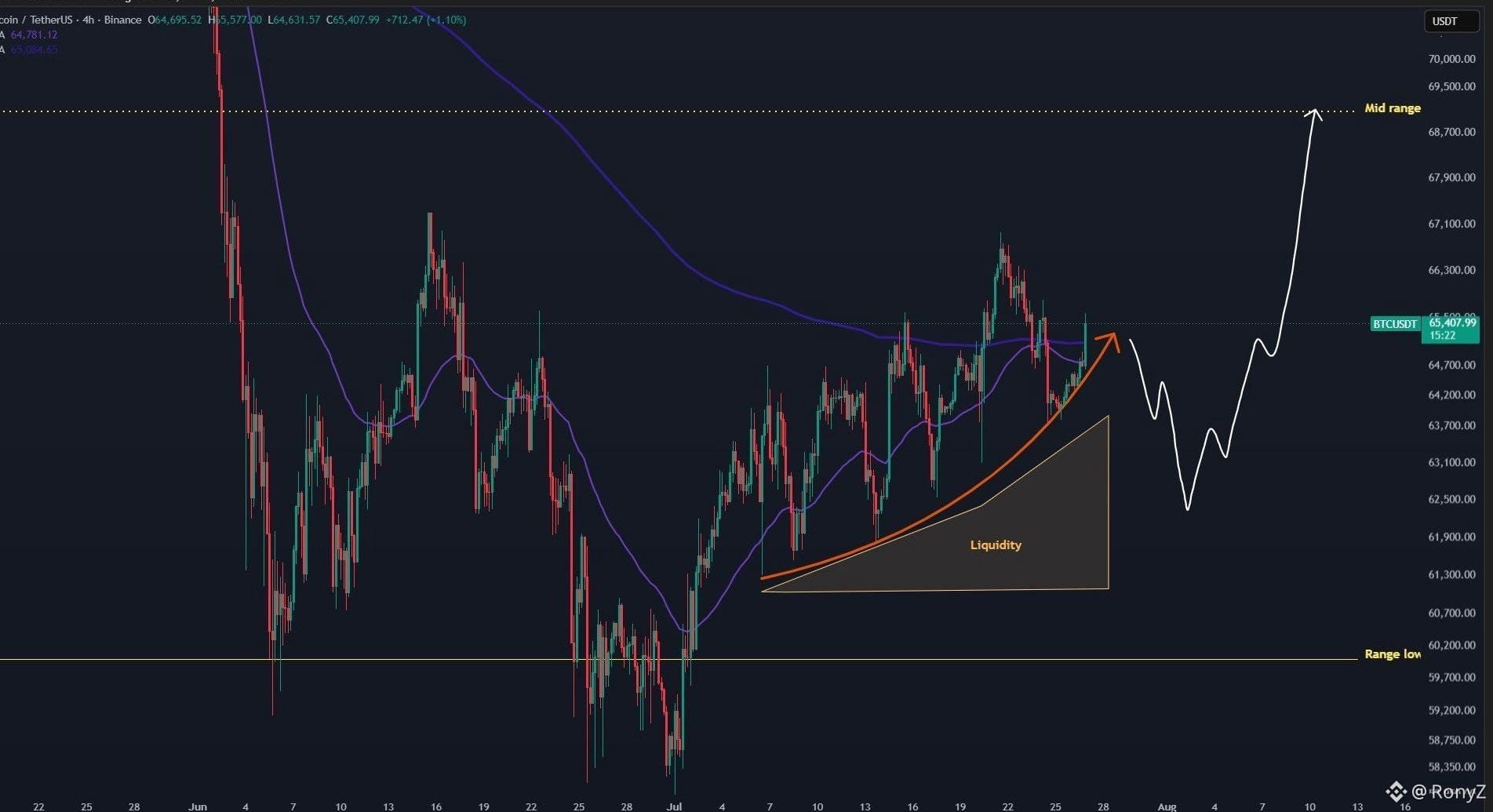
$BTC Sunday update
Bitcoin is still following the roadmap from two weeks ago, and the next move could be decided around $65.8K.
There’s a narrow ~$50 liquidity gap around this local high, with two failed attempts to break above it.
Bullish case: BTC breaks $65.8K and finds acceptance above it → the path toward the mid-range opens up with very little resistance in between.
Risk: BTC sweeps the liquidity above the high, fails to hold, and reverses.
If that happens, the local double bottom becomes important. A sweep below it could trigger liquidations and potentially create a new entry opportunity after reclaim.
$65.8K is the level to watch. Let price confirm.
#BTC #BTCPayServerExploitDrainsLightningNodes #MarketSentimentToday #bitcoin #BinanceSquareFamily
$BTC Sunday update
Bitcoin is still following the roadmap from two weeks ago, and the next move could be decided around $65.8K.
There’s a narrow ~$50 liquidity gap around this local high, with two failed attempts to break above it.
Bullish case: BTC breaks $65.8K and finds acceptance above it → the path toward the mid-range opens up with very little resistance in between.
Risk: BTC sweeps the liquidity above the high, fails to hold, and reverses.
If that happens, the local double bottom becomes important. A sweep below it could trigger liquidations and potentially create a new entry opportunity after reclaim.
$65.8K is the level to watch. Let price confirm.
#BTC #BTCPayServerExploitDrainsLightningNodes #MarketSentimentToday #bitcoin #BinanceSquareFamily
Bitcoin is still following the roadmap from two weeks ago, and the next move could be decided around $65.8K.
There’s a narrow ~$50 liquidity gap around this local high, with two failed attempts to break above it.
Bullish case: BTC breaks $65.8K and finds acceptance above it → the path toward the mid-range opens up with very little resistance in between.
Risk: BTC sweeps the liquidity above the high, fails to hold, and reverses.
If that happens, the local double bottom becomes important. A sweep below it could trigger liquidations and potentially create a new entry opportunity after reclaim.
$65.8K is the level to watch. Let price confirm.
#BTC #BTCPayServerExploitDrainsLightningNodes #MarketSentimentToday #bitcoin #BinanceSquareFamily
1
286
·
--
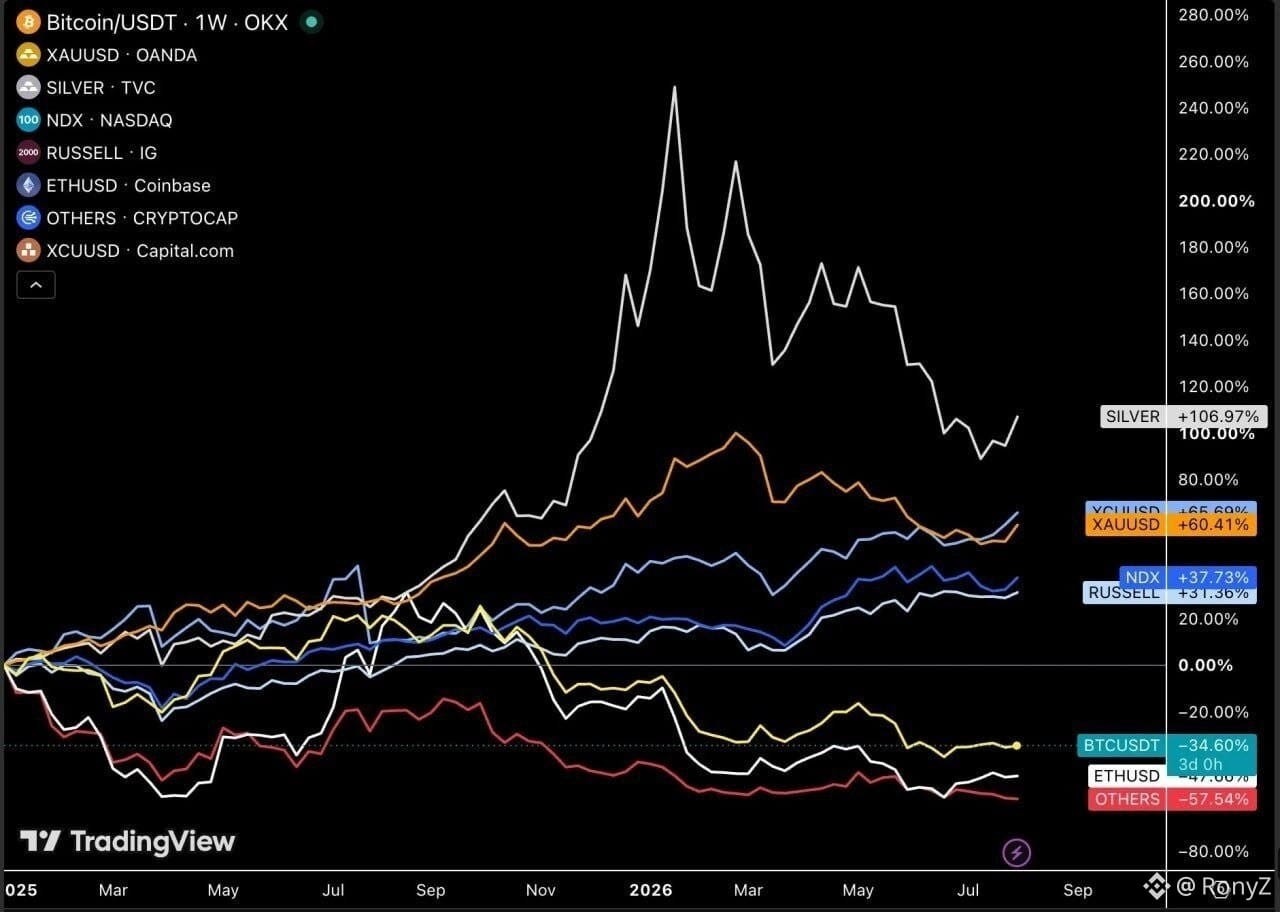
Crypto is the worst-performing major asset class of 2026 so far.
While gold, silver, the Nasdaq and even the Russell 2000 have held up better, crypto has lagged.
That doesn’t automatically mean the cycle is over.
But it does tell us something important:
Capital is currently rewarding other assets more than crypto.
Don’t just ask where $BTC is going.
Ask where the money is flowing.
#BTC #CryptoPatience #GOLD #Silver #BinanceSquareFamily
Crypto is the worst-performing major asset class of 2026 so far.
While gold, silver, the Nasdaq and even the Russell 2000 have held up better, crypto has lagged.
That doesn’t automatically mean the cycle is over.
But it does tell us something important:
Capital is currently rewarding other assets more than crypto.
Don’t just ask where $BTC is going.
Ask where the money is flowing.
#BTC #CryptoPatience #GOLD #Silver #BinanceSquareFamily
While gold, silver, the Nasdaq and even the Russell 2000 have held up better, crypto has lagged.
That doesn’t automatically mean the cycle is over.
But it does tell us something important:
Capital is currently rewarding other assets more than crypto.
Don’t just ask where $BTC is going.
Ask where the money is flowing.
#BTC #CryptoPatience #GOLD #Silver #BinanceSquareFamily
1
290
·
--
Markets reward those who understand liquidity, not those who chase candles.
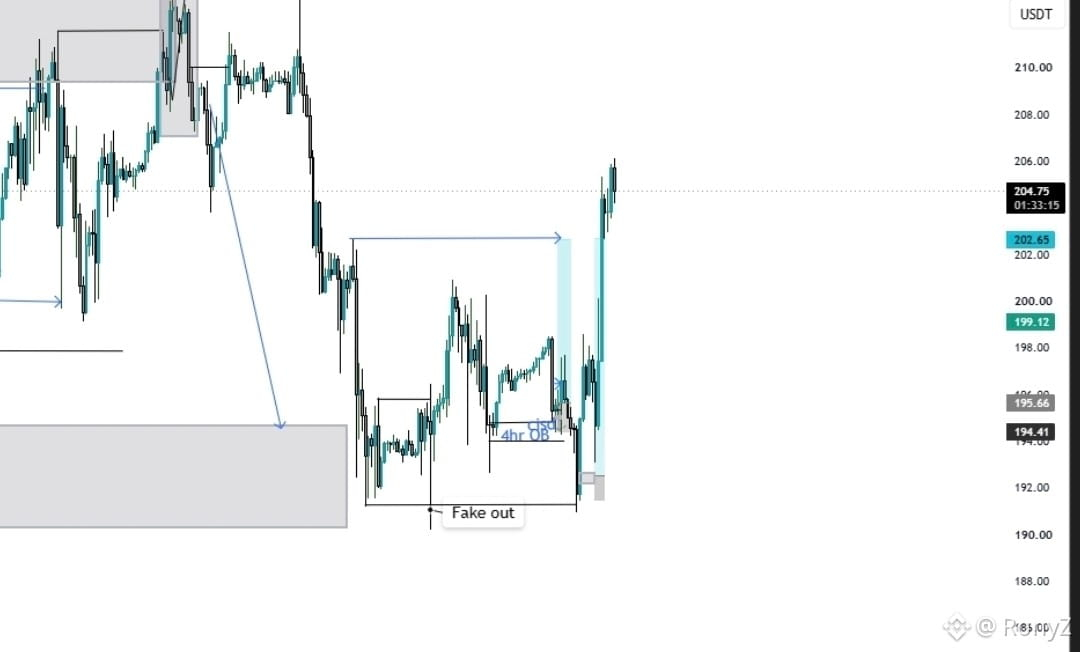
My short-term bullish thesis on $NVDA never changed because the structure stayed intact. Price came from premium, redistributed within a range, engineered a fake breakdown to sweep sell-side liquidity, then expanded into the next buy-side liquidity pool.
With macro volatility likely to remain elevated, I'm focused on names showing strong institutional demand and clean higher-timeframe structure.
Watching: $NVDA $AMD $TSLA $META $AMZN $PLTR $SPCX $XOM $CVX $OXY
Remember: Where did price come from? What is it doing? Where is liquidity next? Answer those three questions, and price action starts making sense.
{future}(NVDAUSDT)
#USStocksSlipAfterFedRateDecision
#SonyGetsOCCApprovalForStablecoinTrust #NVDA #NVIDIA #BinanceSquareFamily
Markets reward those who understand liquidity, not those who chase candles.
My short-term bullish thesis on $NVDA never changed because the structure stayed intact. Price came from premium, redistributed within a range, engineered a fake breakdown to sweep sell-side liquidity, then expanded into the next buy-side liquidity pool.
With macro volatility likely to remain elevated, I'm focused on names showing strong institutional demand and clean higher-timeframe structure.
Watching: $NVDA $AMD $TSLA $META $AMZN $PLTR $SPCX $XOM $CVX $OXY
Remember: Where did price come from? What is it doing? Where is liquidity next? Answer those three questions, and price action starts making sense.
#USStocksSlipAfterFedRateDecision
#SonyGetsOCCApprovalForStablecoinTrust #NVDA #NVIDIA #BinanceSquareFamily
My short-term bullish thesis on $NVDA never changed because the structure stayed intact. Price came from premium, redistributed within a range, engineered a fake breakdown to sweep sell-side liquidity, then expanded into the next buy-side liquidity pool.
With macro volatility likely to remain elevated, I'm focused on names showing strong institutional demand and clean higher-timeframe structure.
Watching: $NVDA $AMD $TSLA $META $AMZN $PLTR $SPCX $XOM $CVX $OXY
Remember: Where did price come from? What is it doing? Where is liquidity next? Answer those three questions, and price action starts making sense.
#USStocksSlipAfterFedRateDecision
#SonyGetsOCCApprovalForStablecoinTrust #NVDA #NVIDIA #BinanceSquareFamily
3
310
·
--
The future of on-chain trading is agentic.
$BNB Chain is building a next-gen Layer 1 designed for AI-powered trading, targeting sub-50ms transaction preconfirmation to enable autonomous agents to execute, adapt, and settle trades at unprecedented speed.
This is the foundation for the AI-native financial economy.
Bullish on what's coming. 🔶
#BNBChain #AgenticAI #bnb #BinanceSquareFamily #AITrading
The future of on-chain trading is agentic.
$BNB Chain is building a next-gen Layer 1 designed for AI-powered trading, targeting sub-50ms transaction preconfirmation to enable autonomous agents to execute, adapt, and settle trades at unprecedented speed.
This is the foundation for the AI-native financial economy.
Bullish on what's coming. 🔶
#BNBChain #AgenticAI #bnb #BinanceSquareFamily #AITrading
$BNB Chain is building a next-gen Layer 1 designed for AI-powered trading, targeting sub-50ms transaction preconfirmation to enable autonomous agents to execute, adapt, and settle trades at unprecedented speed.
This is the foundation for the AI-native financial economy.
Bullish on what's coming. 🔶
#BNBChain #AgenticAI #bnb #BinanceSquareFamily #AITrading
3
341
·
--
Vérifié
One of the biggest lessons I've learned on Binance is that every market cycle creates new opportunities.
Now that US Stocks & ETFs are available, here's the question I'm genuinely curious about:
When researching a company, what matters more to you: strong fundamentals and earnings growth, or the long-term narrative and future potential?
In crypto, narratives often drive early adoption and explosive growth. In stocks, investors seem to focus much more on financial metrics.
How do successful investors combine both perspectives when making long-term decisions?
Would love to learn from those who have experience navigating both crypto and traditional markets.
#MyStocksQuestion
One of the biggest lessons I've learned on Binance is that every market cycle creates new opportunities.
Now that US Stocks & ETFs are available, here's the question I'm genuinely curious about:
When researching a company, what matters more to you: strong fundamentals and earnings growth, or the long-term narrative and future potential?
In crypto, narratives often drive early adoption and explosive growth. In stocks, investors seem to focus much more on financial metrics.
How do successful investors combine both perspectives when making long-term decisions?
Would love to learn from those who have experience navigating both crypto and traditional markets.
#MyStocksQuestion
Now that US Stocks & ETFs are available, here's the question I'm genuinely curious about:
When researching a company, what matters more to you: strong fundamentals and earnings growth, or the long-term narrative and future potential?
In crypto, narratives often drive early adoption and explosive growth. In stocks, investors seem to focus much more on financial metrics.
How do successful investors combine both perspectives when making long-term decisions?
Would love to learn from those who have experience navigating both crypto and traditional markets.
#MyStocksQuestion
2
482
·
--
Big move for Pakistan's digital future. 🇵🇰
Binance × Telenor Pakistan joining forces to explore blockchain education and digital innovation is more than a partnership, it's an investment in the next generation of builders, developers, and entrepreneurs.
Education first. Innovation follows. 🚀
#BinanceSquareFamily #telenorpakistan #blockchain #Pakistan #Web3Pakistan
Big move for Pakistan's digital future. 🇵🇰
Binance × Telenor Pakistan joining forces to explore blockchain education and digital innovation is more than a partnership, it's an investment in the next generation of builders, developers, and entrepreneurs.
Education first. Innovation follows. 🚀
#BinanceSquareFamily #telenorpakistan #blockchain #Pakistan #Web3Pakistan
Binance × Telenor Pakistan joining forces to explore blockchain education and digital innovation is more than a partnership, it's an investment in the next generation of builders, developers, and entrepreneurs.
Education first. Innovation follows. 🚀
#BinanceSquareFamily #telenorpakistan #blockchain #Pakistan #Web3Pakistan


1
4
280
·
--
A useful market lesson:
Price doesn't always react to the size of an event. It often reacts to what the event implies.
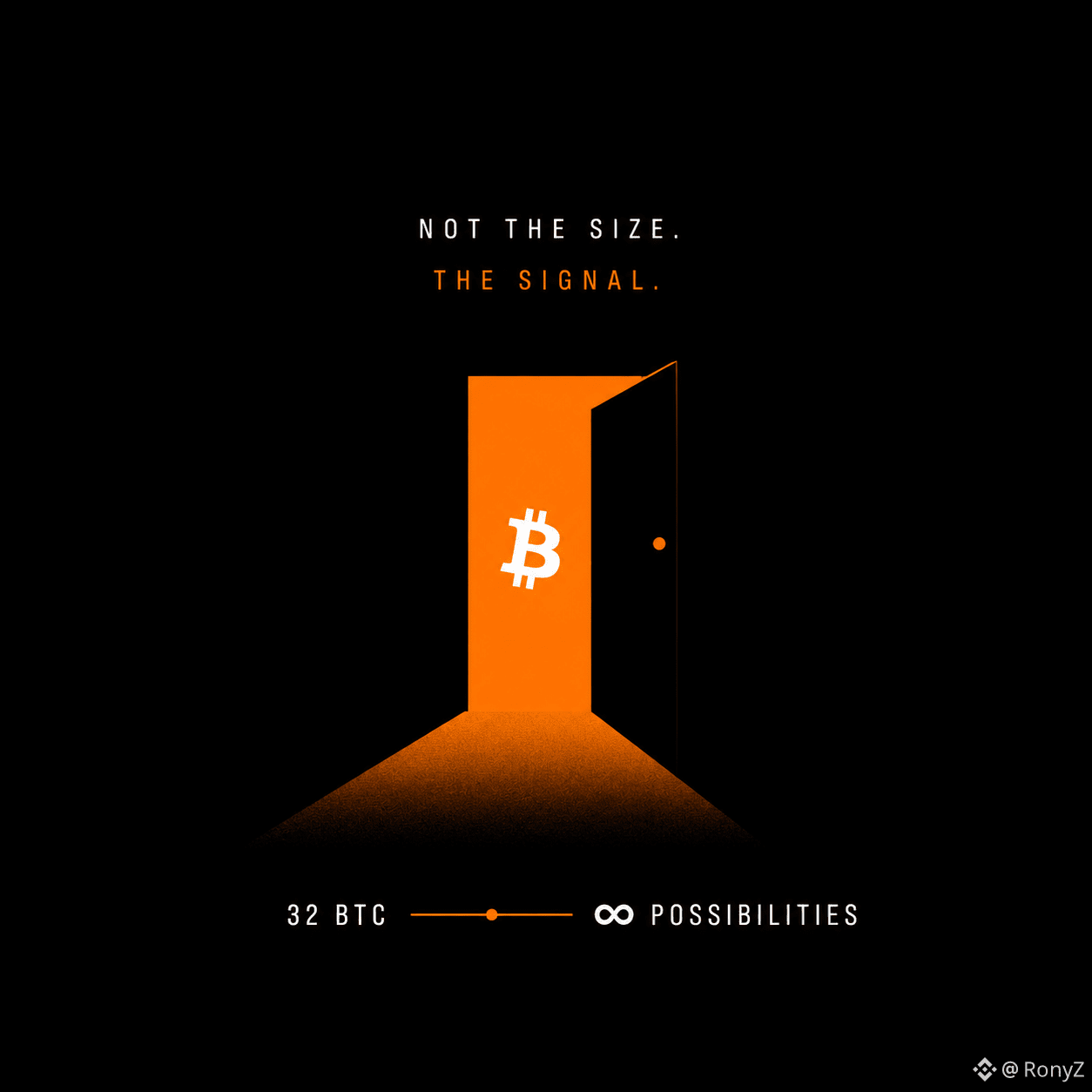
Strategy sold 32 $BTC out of 843,706 $BTC (0.0038%).
The amount was tiny.
But the signal was powerful because it challenged a long-standing assumption that Strategy would never sell Bitcoin.
In markets, expectations matter more than numbers.
When a widely held belief changes, participants re-evaluate future possibilities, risk, and valuation.
That's why small actions can create outsized reactions.
The sale was small.
The narrative shift wasn't.
{spot}(BTCUSDT)
#Saylor #StrategySellBTC #MichaelSaylorBTC #SaylorSTRCBestCreditInstrument #BTC
A useful market lesson:
Price doesn't always react to the size of an event. It often reacts to what the event implies.
Strategy sold 32 $BTC out of 843,706 $BTC (0.0038%).
The amount was tiny.
But the signal was powerful because it challenged a long-standing assumption that Strategy would never sell Bitcoin.
In markets, expectations matter more than numbers.
When a widely held belief changes, participants re-evaluate future possibilities, risk, and valuation.
That's why small actions can create outsized reactions.
The sale was small.
The narrative shift wasn't.
#Saylor #StrategySellBTC #MichaelSaylorBTC #SaylorSTRCBestCreditInstrument #BTC
Price doesn't always react to the size of an event. It often reacts to what the event implies.
Strategy sold 32 $BTC out of 843,706 $BTC (0.0038%).
The amount was tiny.
But the signal was powerful because it challenged a long-standing assumption that Strategy would never sell Bitcoin.
In markets, expectations matter more than numbers.
When a widely held belief changes, participants re-evaluate future possibilities, risk, and valuation.
That's why small actions can create outsized reactions.
The sale was small.
The narrative shift wasn't.
#Saylor #StrategySellBTC #MichaelSaylorBTC #SaylorSTRCBestCreditInstrument #BTC
1
3
318
·
--
The Back Story of $RAVE
With just $75K, 10.5K wallets were engineered, each holding <$10. On paper: “distributed ownership.”
In reality: a coordinated Sybil structure designed to game listing heuristics.
That was enough to pass filters on top exchanges.
No real users. No real demand. Just synthetic decentralization.
Then came the illusion phase: FDV inflated to $27B.
Narrative kicked in.
Liquidity followed attention.
And finally the unwind: Insiders exit into retail liquidity.
Price collapses.
A 335,000% ROI extracted from structure, not substance.
This isn’t a one-off. It’s a repeatable exploit.
Because the current listing model rewards optics over integrity:
• Wallet count is treated as distribution
• Volume is treated as validation
• Listings are treated as endorsement
But none of these guarantee legitimacy.
The fixes are obvious but require discipline:
→ Filter wallets by economic weight, not count
→ Enforce concentration caps pre- and post-listing
→ Track distribution drift in real time, not just at snapshot
→ Penalize abnormal clustering and synchronized behavior
Exchanges aren’t blind to this. The data is visible.
But when short-term listing revenue competes with long-term trust, the system bends.
And that’s the deeper issue:
Crypto doesn’t have a discovery problem.
It has a filtering problem.
Until due diligence evolves beyond surface-level metrics, capital will keep flowing into engineered narratives instead of real innovation.
$RAVE isn’t the last.
It’s a template.
The question isn’t “will it happen again?”
It’s “who’s next and will you recognize it before the exit liquidity phase?”
#rave #RAVEWildMoves #AltcoinRecoverySignals? #Kalshi’sDisputewithNevada #BinanceSquareFamily
{future}(RAVEUSDT)
The Back Story of $RAVE
With just $75K, 10.5K wallets were engineered, each holding <$10. On paper: “distributed ownership.”
In reality: a coordinated Sybil structure designed to game listing heuristics.
That was enough to pass filters on top exchanges.
No real users. No real demand. Just synthetic decentralization.
Then came the illusion phase: FDV inflated to $27B.
Narrative kicked in.
Liquidity followed attention.
And finally the unwind: Insiders exit into retail liquidity.
Price collapses.
A 335,000% ROI extracted from structure, not substance.
This isn’t a one-off. It’s a repeatable exploit.
Because the current listing model rewards optics over integrity:
• Wallet count is treated as distribution
• Volume is treated as validation
• Listings are treated as endorsement
But none of these guarantee legitimacy.
The fixes are obvious but require discipline:
→ Filter wallets by economic weight, not count
→ Enforce concentration caps pre- and post-listing
→ Track distribution drift in real time, not just at snapshot
→ Penalize abnormal clustering and synchronized behavior
Exchanges aren’t blind to this. The data is visible.
But when short-term listing revenue competes with long-term trust, the system bends.
And that’s the deeper issue:
Crypto doesn’t have a discovery problem.
It has a filtering problem.
Until due diligence evolves beyond surface-level metrics, capital will keep flowing into engineered narratives instead of real innovation.
$RAVE isn’t the last.
It’s a template.
The question isn’t “will it happen again?”
It’s “who’s next and will you recognize it before the exit liquidity phase?”
#rave #RAVEWildMoves #AltcoinRecoverySignals? #Kalshi’sDisputewithNevada #BinanceSquareFamily
With just $75K, 10.5K wallets were engineered, each holding <$10. On paper: “distributed ownership.”
In reality: a coordinated Sybil structure designed to game listing heuristics.
That was enough to pass filters on top exchanges.
No real users. No real demand. Just synthetic decentralization.
Then came the illusion phase: FDV inflated to $27B.
Narrative kicked in.
Liquidity followed attention.
And finally the unwind: Insiders exit into retail liquidity.
Price collapses.
A 335,000% ROI extracted from structure, not substance.
This isn’t a one-off. It’s a repeatable exploit.
Because the current listing model rewards optics over integrity:
• Wallet count is treated as distribution
• Volume is treated as validation
• Listings are treated as endorsement
But none of these guarantee legitimacy.
The fixes are obvious but require discipline:
→ Filter wallets by economic weight, not count
→ Enforce concentration caps pre- and post-listing
→ Track distribution drift in real time, not just at snapshot
→ Penalize abnormal clustering and synchronized behavior
Exchanges aren’t blind to this. The data is visible.
But when short-term listing revenue competes with long-term trust, the system bends.
And that’s the deeper issue:
Crypto doesn’t have a discovery problem.
It has a filtering problem.
Until due diligence evolves beyond surface-level metrics, capital will keep flowing into engineered narratives instead of real innovation.
$RAVE isn’t the last.
It’s a template.
The question isn’t “will it happen again?”
It’s “who’s next and will you recognize it before the exit liquidity phase?”
#rave #RAVEWildMoves #AltcoinRecoverySignals? #Kalshi’sDisputewithNevada #BinanceSquareFamily
5
782
·
--
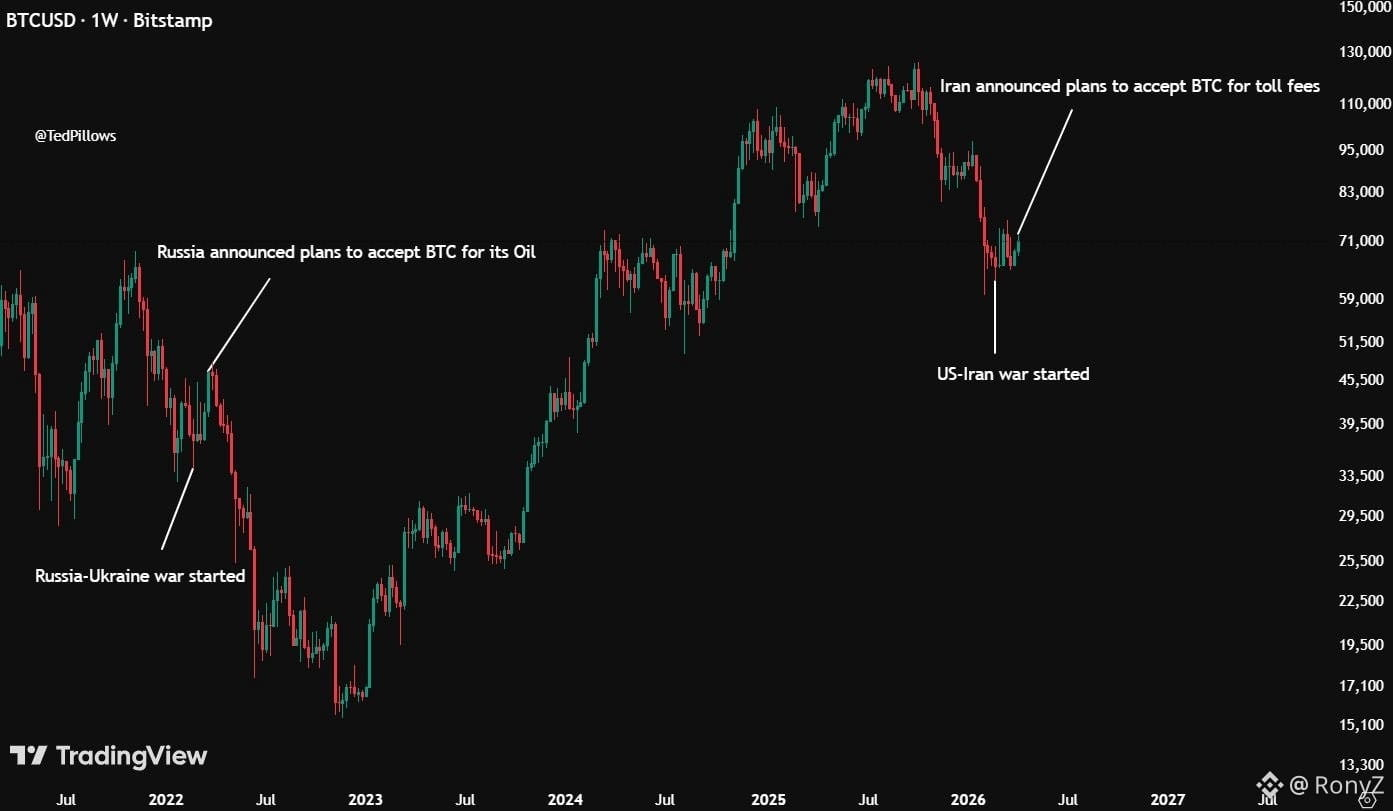
Feb 2022 vs Feb 2026 — same script, different cast.
War → panic
Bitcoin bottoms → bounce
Narrative drops → “$BTC adoption”
Euphoria builds → price pumps
Then? Liquidity exits → sharp dump.
We’re likely in the narrative/euphoria phase now.
Upside is short-term. Risk is exponential.
Don’t chase the story. Trade the cycle.
#US&IranAgreedToATwo-weekCeasefire #MarketRebound #TrumpDeadlineOnIran #BTC☀ #BinanceSquareFamily
Feb 2022 vs Feb 2026 — same script, different cast.
War → panic
Bitcoin bottoms → bounce
Narrative drops → “$BTC adoption”
Euphoria builds → price pumps
Then? Liquidity exits → sharp dump.
We’re likely in the narrative/euphoria phase now.
Upside is short-term. Risk is exponential.
Don’t chase the story. Trade the cycle.
#US&IranAgreedToATwo-weekCeasefire #MarketRebound #TrumpDeadlineOnIran #BTC☀ #BinanceSquareFamily
War → panic
Bitcoin bottoms → bounce
Narrative drops → “$BTC adoption”
Euphoria builds → price pumps
Then? Liquidity exits → sharp dump.
We’re likely in the narrative/euphoria phase now.
Upside is short-term. Risk is exponential.
Don’t chase the story. Trade the cycle.
#US&IranAgreedToATwo-weekCeasefire #MarketRebound #TrumpDeadlineOnIran #BTC☀ #BinanceSquareFamily
4
303
·
--
US 🇺🇸 & Iran 🇮🇷 agree to a 2-week ceasefire.
• Strait of Hormuz reopening
• Military operations paused
• Diplomatic talks back on the table
~20% of global oil flows through this route, meaning this move doesn’t just de-escalate war…
It stabilizes the world economy.
Watch oil.
Watch crypto.
Watch everything.
#US&IranAgreedToATwo-weekCeasefire #MarketRebound #TrumpDeadlineOnIran #oil #BinanceSquareFamily
US 🇺🇸 & Iran 🇮🇷 agree to a 2-week ceasefire.
• Strait of Hormuz reopening
• Military operations paused
• Diplomatic talks back on the table
~20% of global oil flows through this route, meaning this move doesn’t just de-escalate war…
It stabilizes the world economy.
Watch oil.
Watch crypto.
Watch everything.
#US&IranAgreedToATwo-weekCeasefire #MarketRebound #TrumpDeadlineOnIran #oil #BinanceSquareFamily
• Strait of Hormuz reopening
• Military operations paused
• Diplomatic talks back on the table
~20% of global oil flows through this route, meaning this move doesn’t just de-escalate war…
It stabilizes the world economy.
Watch oil.
Watch crypto.
Watch everything.
#US&IranAgreedToATwo-weekCeasefire #MarketRebound #TrumpDeadlineOnIran #oil #BinanceSquareFamily

4
405
·
--
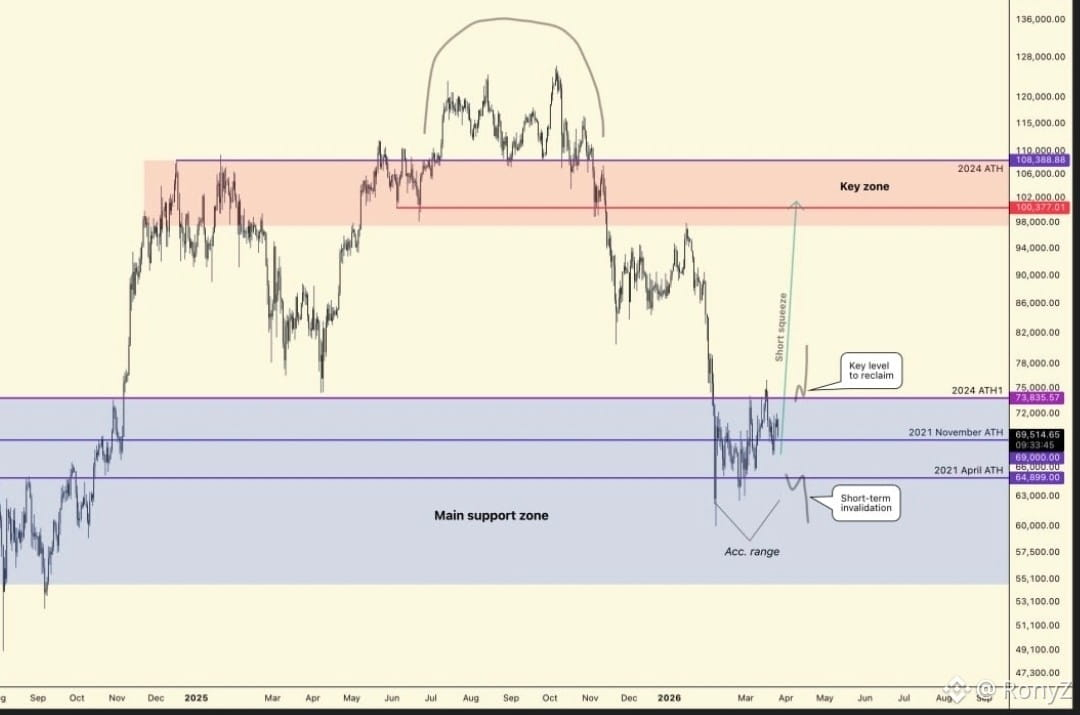
$BTC is coiling at a critical inflection point, range-bound, but not for long.
$65K = structural support (buyers defending aggressively)
$75K = breakout trigger (supply absorption zone)
Reclaim + hold above $75K → market shifts from compression to expansion
Next magnet: $80K–$90K (liquidity + trapped shorts)
Lose $65K → range lows get swept before any meaningful reversal
Right now: volatility is suppressed, positioning is crowded
That’s the exact recipe for a violent move.
Don’t chase, anticipate.
#TrumpSeeksQuickEndToIranWar #OilPricesDrop #BTC #BTC☀ #BinanceSquareFamily
{spot}(BTCUSDT)
$BTC is coiling at a critical inflection point, range-bound, but not for long.
$65K = structural support (buyers defending aggressively)
$75K = breakout trigger (supply absorption zone)
Reclaim + hold above $75K → market shifts from compression to expansion
Next magnet: $80K–$90K (liquidity + trapped shorts)
Lose $65K → range lows get swept before any meaningful reversal
Right now: volatility is suppressed, positioning is crowded
That’s the exact recipe for a violent move.
Don’t chase, anticipate.
#TrumpSeeksQuickEndToIranWar #OilPricesDrop #BTC #BTC☀ #BinanceSquareFamily
$65K = structural support (buyers defending aggressively)
$75K = breakout trigger (supply absorption zone)
Reclaim + hold above $75K → market shifts from compression to expansion
Next magnet: $80K–$90K (liquidity + trapped shorts)
Lose $65K → range lows get swept before any meaningful reversal
Right now: volatility is suppressed, positioning is crowded
That’s the exact recipe for a violent move.
Don’t chase, anticipate.
#TrumpSeeksQuickEndToIranWar #OilPricesDrop #BTC #BTC☀ #BinanceSquareFamily
4
302
·
--
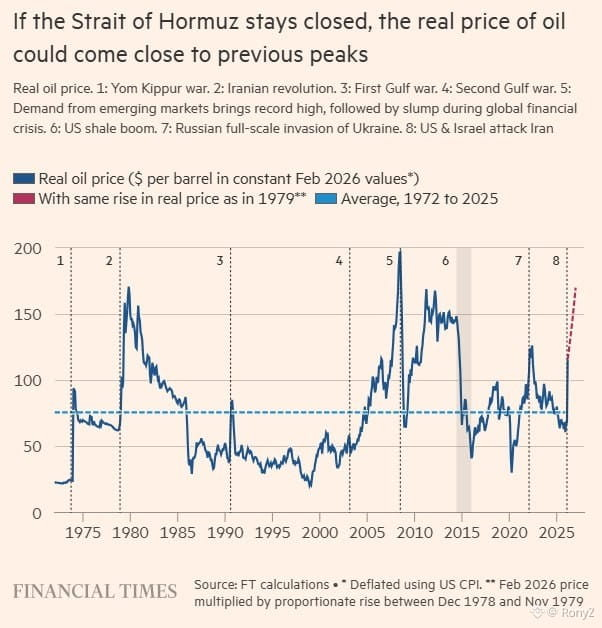
If the Strait of Hormuz stays closed, oil doesn’t just rally, it enters a structural shock regime.
History shows every major spike, from the Yom Kippur War to the Iranian Revolution, was supply-driven. This setup looks closer to those than any recent cycle.
A move toward $150–$175 isn’t extreme. It’s consistent with past crisis repricing in real terms.
What makes this different:
• A key chokepoint for ~20% of global oil flows disrupted
• Years of underinvestment in spare capacity
• Fragile macro backdrop with elevated debt + sticky inflation
• Markets still anchored to “temporary disruption” narratives
If this persists, the playbook shifts:
→ Oil becomes the macro driver, not a lagging indicator
→ Inflation expectations de-anchor again
→ Central banks face a credibility trap
→ Global growth reprices lower, fast
This isn’t just an oil story.
It’s a liquidity event in slow motion, until it isn’t.
#IranIsraelConflict #OilMarket #SECClarifiesCryptoClassification #astermainnet #BinanceSquareFamily
If the Strait of Hormuz stays closed, oil doesn’t just rally, it enters a structural shock regime.
History shows every major spike, from the Yom Kippur War to the Iranian Revolution, was supply-driven. This setup looks closer to those than any recent cycle.
A move toward $150–$175 isn’t extreme. It’s consistent with past crisis repricing in real terms.
What makes this different:
• A key chokepoint for ~20% of global oil flows disrupted
• Years of underinvestment in spare capacity
• Fragile macro backdrop with elevated debt + sticky inflation
• Markets still anchored to “temporary disruption” narratives
If this persists, the playbook shifts:
→ Oil becomes the macro driver, not a lagging indicator
→ Inflation expectations de-anchor again
→ Central banks face a credibility trap
→ Global growth reprices lower, fast
This isn’t just an oil story.
It’s a liquidity event in slow motion, until it isn’t.
#IranIsraelConflict #OilMarket #SECClarifiesCryptoClassification #astermainnet #BinanceSquareFamily
History shows every major spike, from the Yom Kippur War to the Iranian Revolution, was supply-driven. This setup looks closer to those than any recent cycle.
A move toward $150–$175 isn’t extreme. It’s consistent with past crisis repricing in real terms.
What makes this different:
• A key chokepoint for ~20% of global oil flows disrupted
• Years of underinvestment in spare capacity
• Fragile macro backdrop with elevated debt + sticky inflation
• Markets still anchored to “temporary disruption” narratives
If this persists, the playbook shifts:
→ Oil becomes the macro driver, not a lagging indicator
→ Inflation expectations de-anchor again
→ Central banks face a credibility trap
→ Global growth reprices lower, fast
This isn’t just an oil story.
It’s a liquidity event in slow motion, until it isn’t.
#IranIsraelConflict #OilMarket #SECClarifiesCryptoClassification #astermainnet #BinanceSquareFamily
2
11
668
·
--
GM ☀️
$BTC $75K secured, now the market decides how badly it wants higher.
A reaction here is expected. This isn’t just any level, it’s a psychological and liquidity-heavy zone where profit-taking meets fresh shorts. That friction creates pullbacks, not reversals.
Focus isn’t the exact higher low ($74K–$72K range).
Focus is structure:
• Are buyers stepping in?
• Is supply getting absorbed?
• Are dips getting bought aggressively?
If yes, trend remains intact.
This is how strong trends behave:
pause → compress → expand.
Once this consolidation resolves, continuation toward $80K+ becomes the path of least resistance. Above that, we enter thinner liquidity and faster moves.
Positioning > prediction.
Stay sharp.
{spot}(BTCUSDT)
#BTCReclaims70k #UseAIforCryptoTrading #PCEMarketWatch #YZiLabsInvestsInRoboForce #BinanceSquareFamily
GM ☀️
$BTC $75K secured, now the market decides how badly it wants higher.
A reaction here is expected. This isn’t just any level, it’s a psychological and liquidity-heavy zone where profit-taking meets fresh shorts. That friction creates pullbacks, not reversals.
Focus isn’t the exact higher low ($74K–$72K range).
Focus is structure:
• Are buyers stepping in?
• Is supply getting absorbed?
• Are dips getting bought aggressively?
If yes, trend remains intact.
This is how strong trends behave:
pause → compress → expand.
Once this consolidation resolves, continuation toward $80K+ becomes the path of least resistance. Above that, we enter thinner liquidity and faster moves.
Positioning > prediction.
Stay sharp.
#BTCReclaims70k #UseAIforCryptoTrading #PCEMarketWatch #YZiLabsInvestsInRoboForce #BinanceSquareFamily
$BTC $75K secured, now the market decides how badly it wants higher.
A reaction here is expected. This isn’t just any level, it’s a psychological and liquidity-heavy zone where profit-taking meets fresh shorts. That friction creates pullbacks, not reversals.
Focus isn’t the exact higher low ($74K–$72K range).
Focus is structure:
• Are buyers stepping in?
• Is supply getting absorbed?
• Are dips getting bought aggressively?
If yes, trend remains intact.
This is how strong trends behave:
pause → compress → expand.
Once this consolidation resolves, continuation toward $80K+ becomes the path of least resistance. Above that, we enter thinner liquidity and faster moves.
Positioning > prediction.
Stay sharp.
#BTCReclaims70k #UseAIforCryptoTrading #PCEMarketWatch #YZiLabsInvestsInRoboForce #BinanceSquareFamily
4
205
Connectez-vous pour découvrir plus de contenu
Rejoignez la communauté mondiale des adeptes de cryptomonnaies sur Binance Square
⚡️ Suviez les dernières informations importantes sur les cryptomonnaies.
💬 Jugé digne de confiance par la plus grande plateforme d’échange de cryptomonnaies au monde.
👍 Découvrez les connaissances que partagent les créateurs vérifiés.
Adresse e-mail/Nº de téléphone
Sujets d’actualité
BNBSurpasses$790
809 vues
34 mentions
$BNB is holding strong. After the sharp push from the $765 area, price is consolidating near $789 with buyers still in control.
A clean break above $795 could send BNB toward $800–$805.
Entry: $786–790
SL: $781
Eliza Ross
·1 mentions J’aime
·96 vues
ZamaRises15.99%ToIntradayHigh$0.09
663 vues
39 mentions
BitcoinSpotETFsDraw$6.34BInflowsInQ3
1,595 vues
34 mentions