
#secsaysbuybacksupgradesdontmaketokensecurity
secsaysbuybacksupgradesdontmaketokensecurity
125,469 views
742 Discussing
Hot
Latest

📊 Buybacks ≠ Automatically Securities
The SEC has clarified that an issuer's buyback announcement for a functional crypto system would not itself constitute a promise of essential managerial efforts. The analysis can differ when a network isn't functional and buybacks are promoted as generating returns.
$ETH $SOL $XRP
#secsaysbuybacksupgradesdontmaketokensecurity
107

·
--
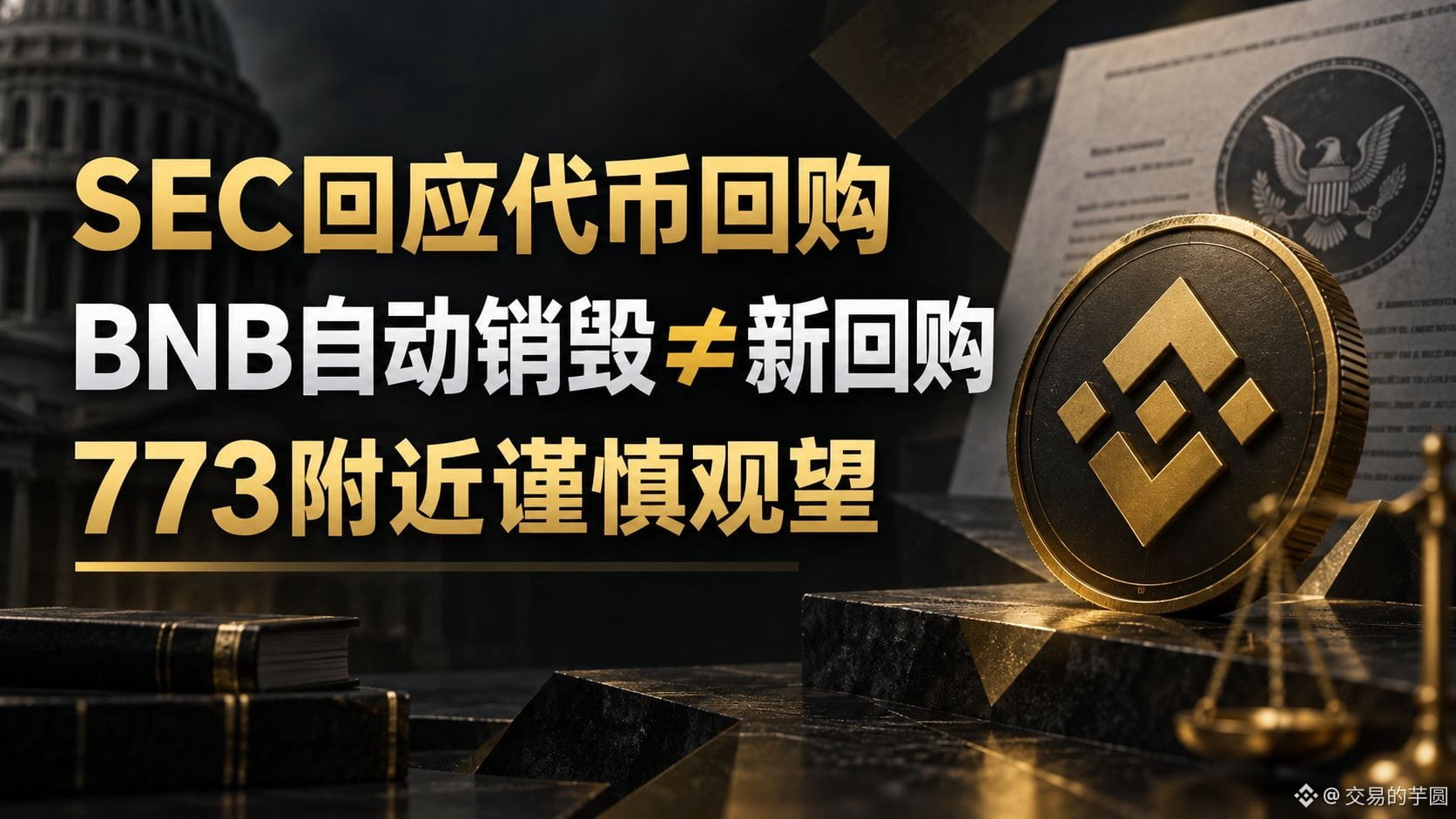
SEC responds to the token buyback topic heating up|BNB’s automatic burn isn’t the same as a new buyback commitment|I won’t chase the headline around 773
My stance is rather cautious: this regulators’ Q&A is worth reading in the original, but it’s not enough for me to chase the price just because of the four words “BNB is a positive.” On Binance Square, people are discussing #SECSaysBuybacksUpgradesDontMakeTokenSecurity. The topic compresses buybacks and network upgrades into one line, making it easy to miss the conditions. In the SEC’s Company Finance Division FAQ dated September 25, what’s written is the staff’s viewpoint, not a new rule from the commission, and it does not provide a step-by-step determination of whether BNB is a security. In Q&A 2.5, it says that for crypto systems that already have functionality, an issuer of a non-security crypto asset announcing a buyback plan by itself does not constitute a commitment to take necessary management efforts. For systems that do not yet have functionality, if buyback promotions are presented as a source of holder returns, the conclusion could be different. The specific facts, how the promotion is made, and other legal requirements still need to be evaluated separately.
BNB can’t simply be fitted with the narrative of “buybacks get the green light.” BNB Chain’s official materials divide existing mechanisms into two types: quarterly Auto-Burn and real-time burning tied to on-chain gas fees. The quarterly amounts are calculated based on BNB price and the number of blocks produced on BSC; the official says it is independent of the Binance Centralized Exchange’s revenue. Real-time burning varies with network activity. Both are existing mechanisms—they’re not extra market buying that started after the publication of this FAQ. Burning reduces the circulating supply, which could affect long-term supply-demand dynamics, but it does not guarantee token-holder returns, and it doesn’t mean how many dollars of inflow into BNB happened today. You also can’t infer from one staff FAQ that “the SEC formally approved BNB’s burn” or “BNB has been determined not to be a security.” I’ll look at subsequent official documents, actual burn data, and on-chain usage, rather than treating the regulatory boundary as an intraday pricing trigger.
How has the market reacted? At the time of writing, Kraken’s BNB/USD is about $772.96; over the past 24 hours it reached a high of $785.07 and a low of $768.81, with the 24-hour opening at $777.14 (below that reference). At least in this snapshot, the buzz hasn’t pushed the price above the upper end. My observation levels are: support around 768.8, a recovery zone around 777 to 779, and resistance near 785. If the rebound can’t get back above 779 consistently, it indicates the topic’s heat hasn’t yet translated into buying pressure. If it breaks below 768.8 and weakness persists, the short-term cautious bullish assumption fails. If the official regulatory explanation changes, or if there are material changes to the official burn mechanism announcements, the assessment must be redone.
If I were trading it myself, I wouldn’t participate. I’d only consider a small spot position after confirmation, and I wouldn’t use high leverage. The entry trigger would be two complete 15-minute candlesticks closing above 779; then on the pullback, hold 777 to 779. At most, use 0.25% of total capital. The first target is 785—if hit, take half off. For the remaining position, look at 792 to 795; if hit, close everything. After the trade, if the 15-minute candle closes back below 775 before the full move, cut half; if it breaks below 771, stop out completely. If before triggering the plan it first loses 768.8, cancel the plan. If official documents appear that contradict the current facts, even if price hasn’t reached the stop-loss, I’d close first to verify. If the trigger never happens, I continue to stay in cash—don’t treat observations as execution.
Source: SEC Company Finance Division FAQ dated September 25, BNB Chain auto-burn mechanism, and Kraken’s publicly available quotes.#SECSaysBuybacksUpgradesDontMakeTokenSecurity #BNB
The above is only my personal market observation and does not constitute investment advice.
41

·
--
Article
SEC Crypto Guidance: Token Buybacks and Network Upgrades Don’t Automatically Make Tokens Securities#secsaysbuybacksupgradesdontmaketokensecurity
SEC Guidance Gives Crypto Builders More Room to Operate
The SEC just gave crypto builders an important signal.
Token buybacks, network upgrades, and product improvements don’t automatically turn a token into a security, according to the agency’s latest guidance.
That distinction matters for protocols that are already functional and continue to evolve.
One question hanging over crypto for years has been whether changing token economics, buying back tokens, or continuing development could create new securities concerns.
The answer from the SEC is not necessarily.
Buybacks, for example, don’t automatically create a securities transaction simply because a protocol is purchasing its own tokens. The context still matters, including whether those activities are being promoted as a way for token holders to profit from the managerial efforts of others.
The same idea applies to ongoing network development.
For established protocols, that could provide more room to upgrade infrastructure, improve products, and manage token economics without assuming that every change creates a securities issue.
For traders, the bigger takeaway is regulatory clarity.
This doesn’t mean crypto tokens are suddenly outside securities laws. It means certain activities around functional networks aren’t automatically enough on their own to determine securities treatment.
That distinction could become increasingly important as protocols move beyond simple token launches and start operating more like evolving financial networks.
My take: the biggest value here isn’t one specific buyback or upgrade. It’s the possibility that developers can keep building without every change to a token’s economics immediately becoming a regulatory question.
More breathing room for crypto builders could ultimately mean more room for protocols to evolve.
#SEC #Crypto #Regulation #Blockchain #DeFi #Tokenomics
SEC Crypto Guidance: Token Buybacks and Network Upgrades Don’t Automatically Make Tokens Securities
#secsaysbuybacksupgradesdontmaketokensecurity
SEC Guidance Gives Crypto Builders More Room to Operate
The SEC just gave crypto builders an important signal.
Token buybacks, network upgrades, and product improvements don’t automatically turn a token into a security, according to the agency’s latest guidance.
That distinction matters for protocols that are already functional and continue to evolve.
One question hanging over crypto for years has been whether changing token economics, buying back tokens, or continuing development could create new securities concerns.
The answer from the SEC is not necessarily.
Buybacks, for example, don’t automatically create a securities transaction simply because a protocol is purchasing its own tokens. The context still matters, including whether those activities are being promoted as a way for token holders to profit from the managerial efforts of others.
The same idea applies to ongoing network development.
For established protocols, that could provide more room to upgrade infrastructure, improve products, and manage token economics without assuming that every change creates a securities issue.
For traders, the bigger takeaway is regulatory clarity.
This doesn’t mean crypto tokens are suddenly outside securities laws. It means certain activities around functional networks aren’t automatically enough on their own to determine securities treatment.
That distinction could become increasingly important as protocols move beyond simple token launches and start operating more like evolving financial networks.
My take: the biggest value here isn’t one specific buyback or upgrade. It’s the possibility that developers can keep building without every change to a token’s economics immediately becoming a regulatory question.
More breathing room for crypto builders could ultimately mean more room for protocols to evolve.
#SEC #Crypto #Regulation #Blockchain #DeFi #Tokenomics
116

·
--
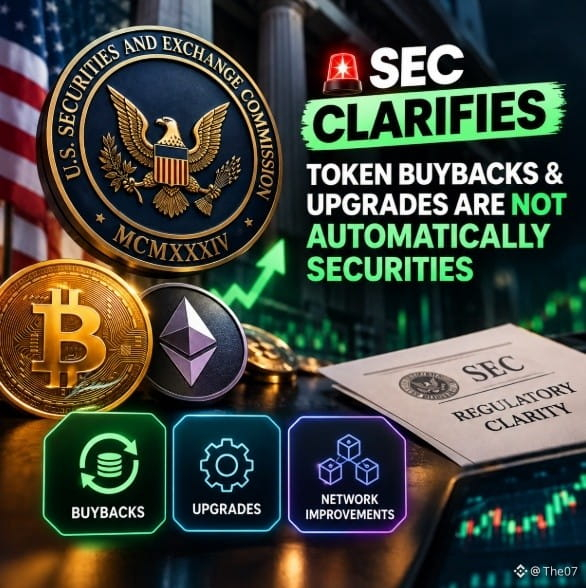
🚨 SEC JUST CLARIFIED A BIG QUESTION FOR CRYPTO 👀
The SEC says token buybacks and network upgrades do NOT automatically make a crypto token a security. 🧩
For a functioning network, a buyback program by itself generally does not mean holders are relying on the team’s managerial efforts to generate profits.
The same idea applies to things like security improvements, maintenance and upgrades. These activities can continue after launch without automatically changing the regulatory status of the token.
⚠️ But there’s an important detail:
It still depends on how the project operates and what it tells buyers to expect. If a token is being promoted around future profits or returns generated by the team’s efforts, the analysis can be different.
This could give crypto projects more clarity around buybacks, development and token marketing.
👀 Do you think this will bring more confidence into the crypto market?
#crypto #SEC
#secsaysbuybacksupgradesdontmaketokensecurity $BTC $ETH
{spot}(ETHUSDT)
{spot}(BTCUSDT)
🚨 SEC JUST CLARIFIED A BIG QUESTION FOR CRYPTO 👀
The SEC says token buybacks and network upgrades do NOT automatically make a crypto token a security. 🧩
For a functioning network, a buyback program by itself generally does not mean holders are relying on the team’s managerial efforts to generate profits.
The same idea applies to things like security improvements, maintenance and upgrades. These activities can continue after launch without automatically changing the regulatory status of the token.
⚠️ But there’s an important detail:
It still depends on how the project operates and what it tells buyers to expect. If a token is being promoted around future profits or returns generated by the team’s efforts, the analysis can be different.
This could give crypto projects more clarity around buybacks, development and token marketing.
👀 Do you think this will bring more confidence into the crypto market?
#crypto #SEC
#secsaysbuybacksupgradesdontmaketokensecurity $BTC $ETH
97

·
--
#secsaysbuybacksupgradesdontmaketokensecurity
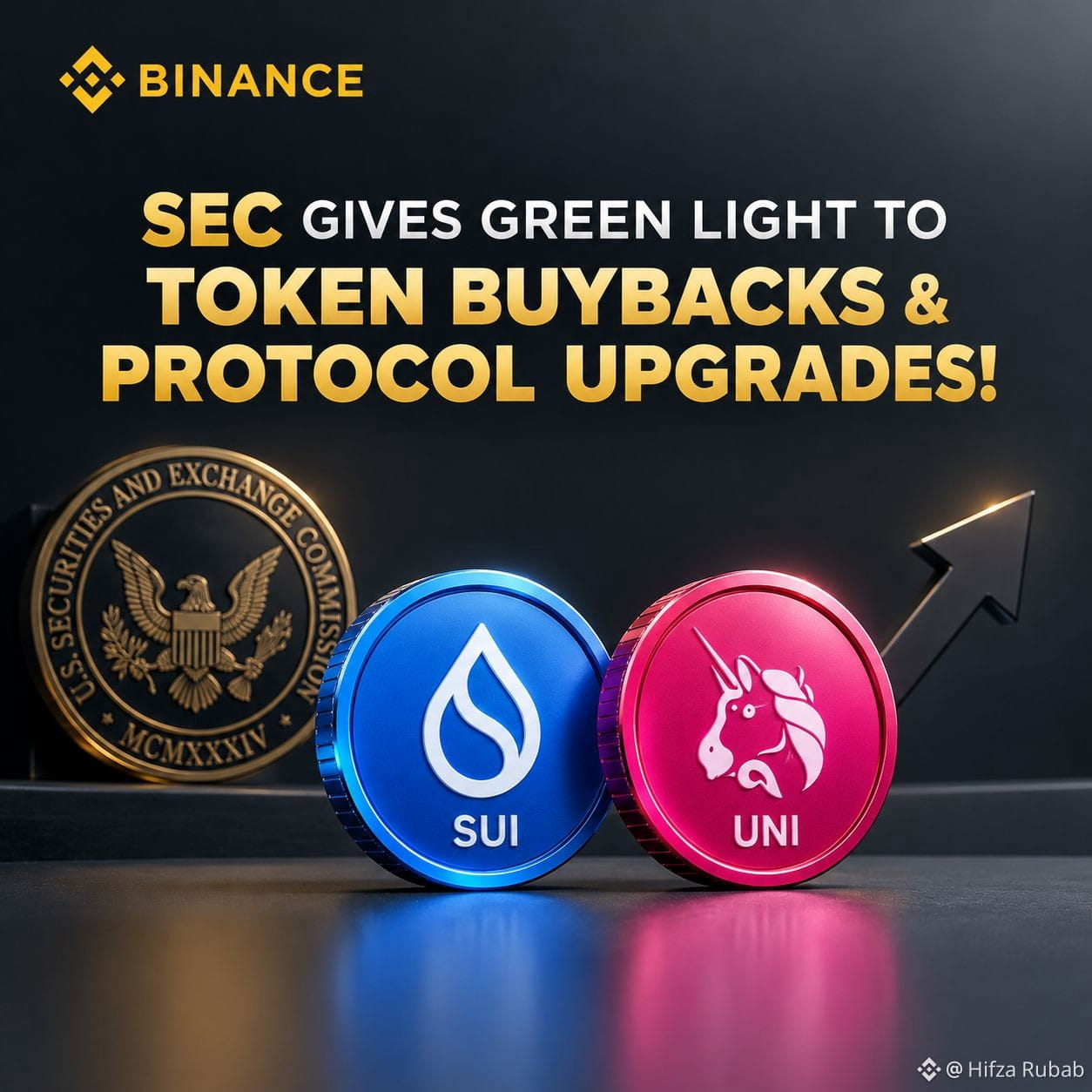
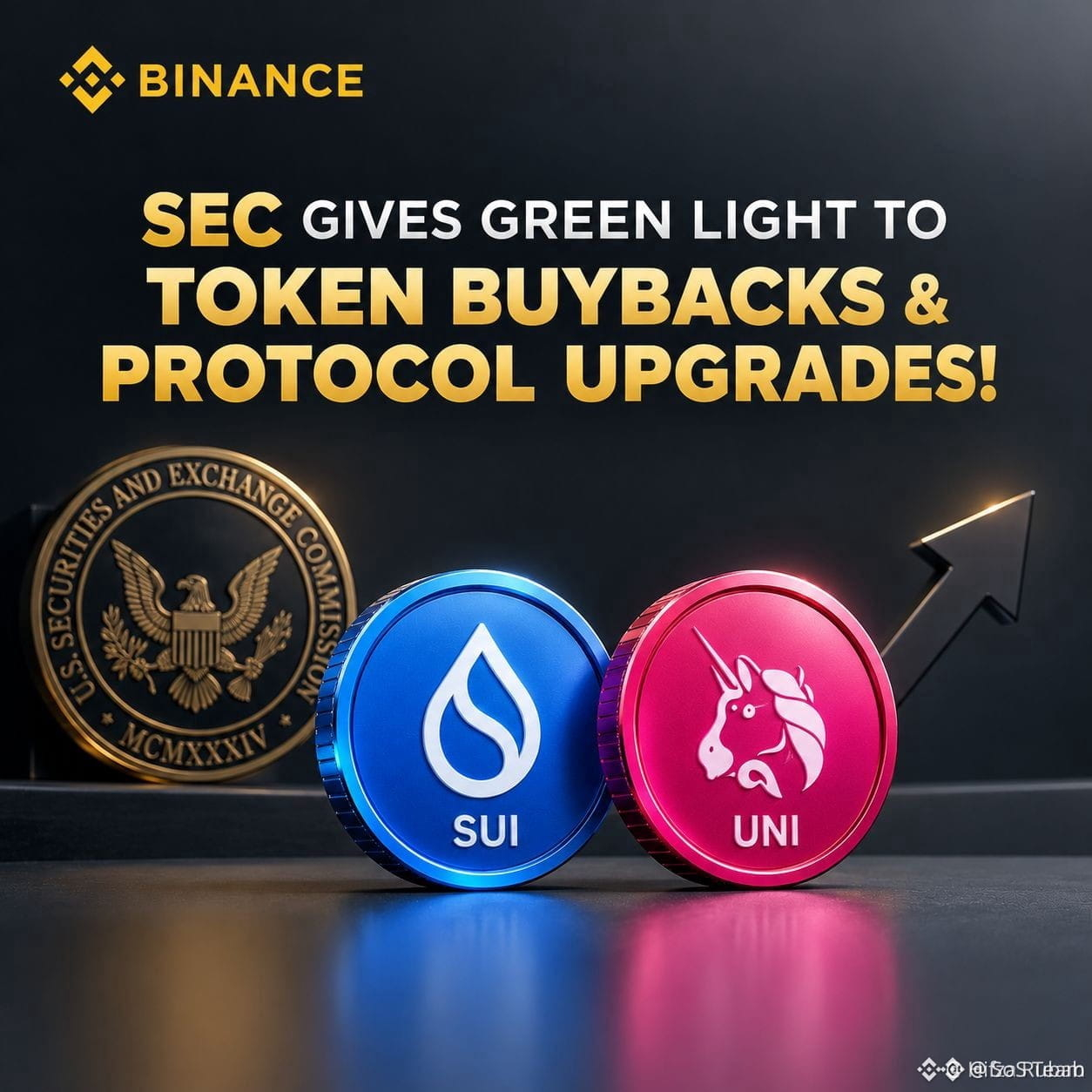
🚨 SEC GIVES GREEN LIGHT TO TOKEN BUYBACKS & PROTOCOL UPGRADES! 🟢⚡
The SEC just provided a major clarity shift: Network upgrades, product improvements, and token buybacks do NOT automatically make a token a security! 🏛️✨
💡 Why This Is Huge for Crypto:
🔹 Upgrade Without Fear: Active protocol development on functional networks no longer carries automatic regulatory risk! 🛠️
🔹 Tokenomics Freedom: Projects can manage token buybacks and supply mechanics without being labeled as profit promises! 📈💎
🎯 2 Key Coins to Watch:
💧 $SUI — A high-performance Layer-1 protocol continuously shipping major and institutional ecosystem upgrades! 🚀⚡
🦄 $UNI — The leading DEX protocol that stands to benefit massively from clear guidelines on revenue share and fee-switch mechanics! 🦄📊
Crypto protocols finally have room to innovate and scale freely! 💥 Are you bullish on revenue-generating protocols now? Drop your thoughts below! 👇✨
#SECSaysBuybacksUpgradesDontMakeTokenSecurity
#BlackRockBuildsTokenizedPortfoliosForOndo
#CircleTetherFreezeBitgetHackerWallet
#PolymarketBankFailureBetsDrawFDICConcern
{spot}(UNIUSDT)
{spot}(SUIUSDT)
#secsaysbuybacksupgradesdontmaketokensecurity
🚨 SEC GIVES GREEN LIGHT TO TOKEN BUYBACKS & PROTOCOL UPGRADES! 🟢⚡
The SEC just provided a major clarity shift: Network upgrades, product improvements, and token buybacks do NOT automatically make a token a security! 🏛️✨
💡 Why This Is Huge for Crypto:
🔹 Upgrade Without Fear: Active protocol development on functional networks no longer carries automatic regulatory risk! 🛠️
🔹 Tokenomics Freedom: Projects can manage token buybacks and supply mechanics without being labeled as profit promises! 📈💎
🎯 2 Key Coins to Watch:
💧 $SUI — A high-performance Layer-1 protocol continuously shipping major and institutional ecosystem upgrades! 🚀⚡
🦄 $UNI — The leading DEX protocol that stands to benefit massively from clear guidelines on revenue share and fee-switch mechanics! 🦄📊
Crypto protocols finally have room to innovate and scale freely! 💥 Are you bullish on revenue-generating protocols now? Drop your thoughts below! 👇✨
#SECSaysBuybacksUpgradesDontMakeTokenSecurity
#BlackRockBuildsTokenizedPortfoliosForOndo
#CircleTetherFreezeBitgetHackerWallet
#PolymarketBankFailureBetsDrawFDICConcern
5
4
2.7k
·
--
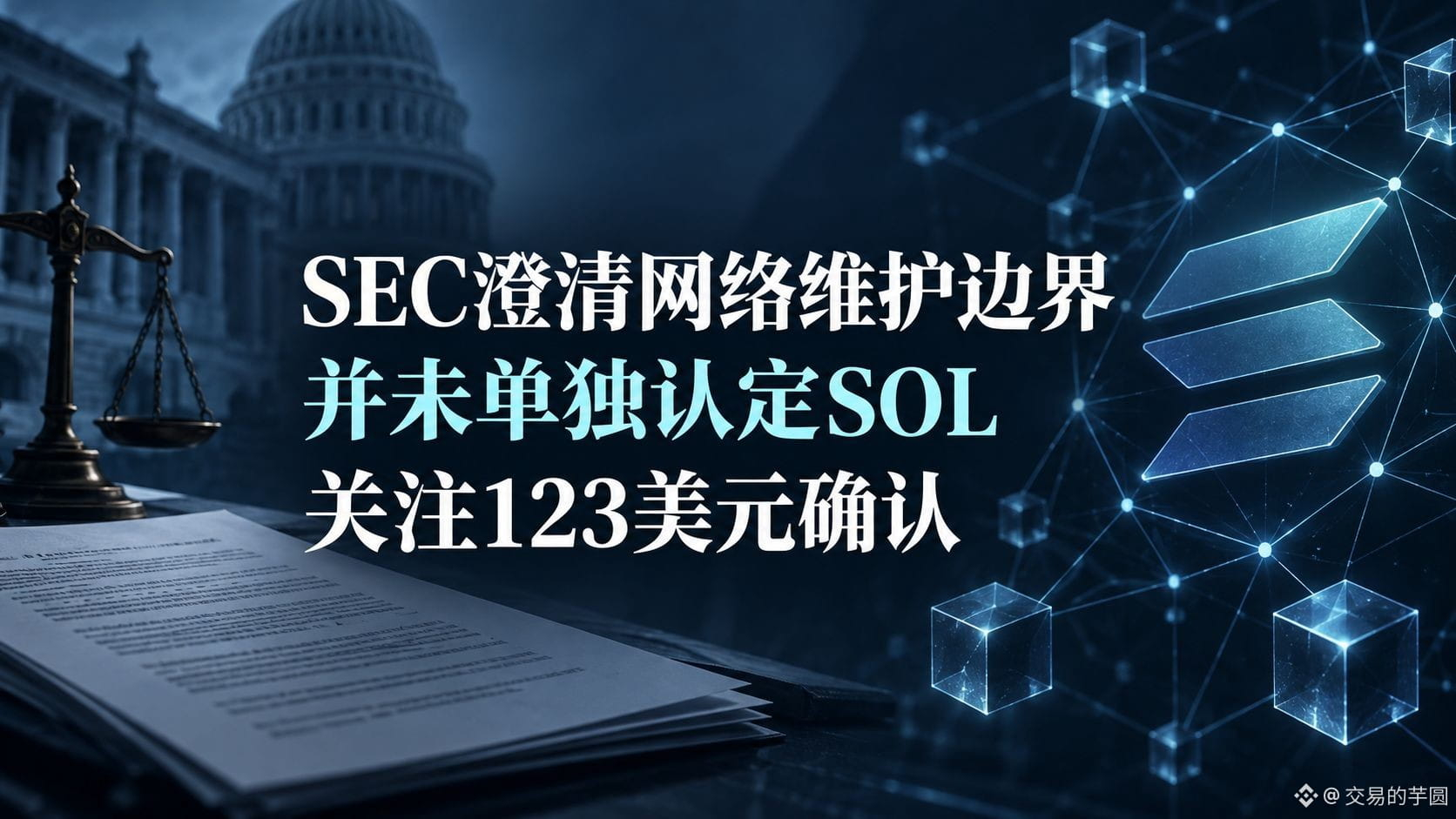
SEC response: network maintenance and buyback boundaries|not separately recognizing SOL|around 120, I won’t chase regulatory headlines
My stance is neutral to cautiously optimistic: the regulator’s explanation is worth reading, but you can’t turn a generic Q&A into a conclusion that SOL was approved. If the topic on Binance Square is rising—#SECSaysBuybacksUpgradesDontMakeTokenSecurity—the source is a set of Crypto Asset Common Questions published by the U.S. SEC’s Division of Corporation Finance on September 25. The original text first makes clear: this is only staff views, not new rules or an official position by the Commission, and it has no independent legal effect. For crypto systems that already have the relevant functionality, subsequent security maintenance, improvements, upgrades, and efforts to promote network effects generally do not amount to “essential managerial efforts.” For such systems, an issuer’s announcement of a non-security crypto asset buyback is not automatically a promise of profits generated through managerial efforts. Conversely, if the system does not yet truly have functionality, and the buyback is packaged as a commitment to create returns for holders, the conclusion could be different.
What this affects is the market mechanism: helping projects, trading platforms, and capital providers assess the legal boundaries of promotional and development activities, reducing a rough interpretation of “an upgrade automatically means it’s treated as a security.” It is not a get-out-of-jail-free card. The Q&A stresses that you should look at the specific facts, and it does not single out SOL, any ecosystem token, or any new project for a securities-attribute ruling point by point. I especially will not treat it as evidence that an ETF was approved, that net subscriptions happened today, or that institutions have already bought SOL. Whether Solana itself can benefit from clearer expectations remains to be seen—watch developer activity and real user engagement, application revenue, and progress on compliant products. Only if the narrative heats up while usage stays flat will the value transmission be weak.
The market price also hasn’t given confirmation to the regulatory headline. When checking Kraken’s SOL/USD around $120.72, the 24-hour open was $122.12, with a high of $122.91 and a low of $115.85; the current price is below both the open and the day’s high, suggesting traders have not formed a sustained “chase” move. Of course, short-term up/down moves are also affected by the broader market and risk appetite, so you can’t simply attribute them to the SEC Q&A. The $122.1–$122.9 zone is the area that needs to be regained from above. $119 and $115.85 are the near-term observation level and the 24-hour low, respectively. If afterward the price continues to lose the low, or if the project team interprets the Q&A as “any buyback is legal,” I will clearly deny the overly bullish narrative.
If it were my own trade, I wouldn’t participate right now and would keep cash. I would only pre-set a long position under SOL spot conditions, using at most 2% of investable funds. The entry trigger is two complete fifteen-minute candlesticks closing above 123; then a pullback to 122.5–123 that still holds, and confirmation that the trading platform’s deposits/withdrawals are functioning normally. If the trigger is not hit, there’s no trade. If triggered, first look at 125 and take off half if reached; then look at 127 and close the remaining position if reached. After entry, if the price is reclaimed above/below and falls back below 121, cut half; if it drops to 119, stop out and fully clear. If it breaks below 115.85 first, the original plan is voided immediately—I won’t add and average down just because a hot search headline says so. Regulatory details determine the risk boundary, not the short-term win rate.
Source: the SEC Division of Corporation Finance original Q&A from September 25 and the March explanation document; Binance Square’s accurate trending list; Kraken SOL/USD spot quotes.#SECSaysBuybacksUpgradesDontMakeTokenSecurity #SOL
The above is only my personal market observation and does not constitute investment advice.
89
·
--
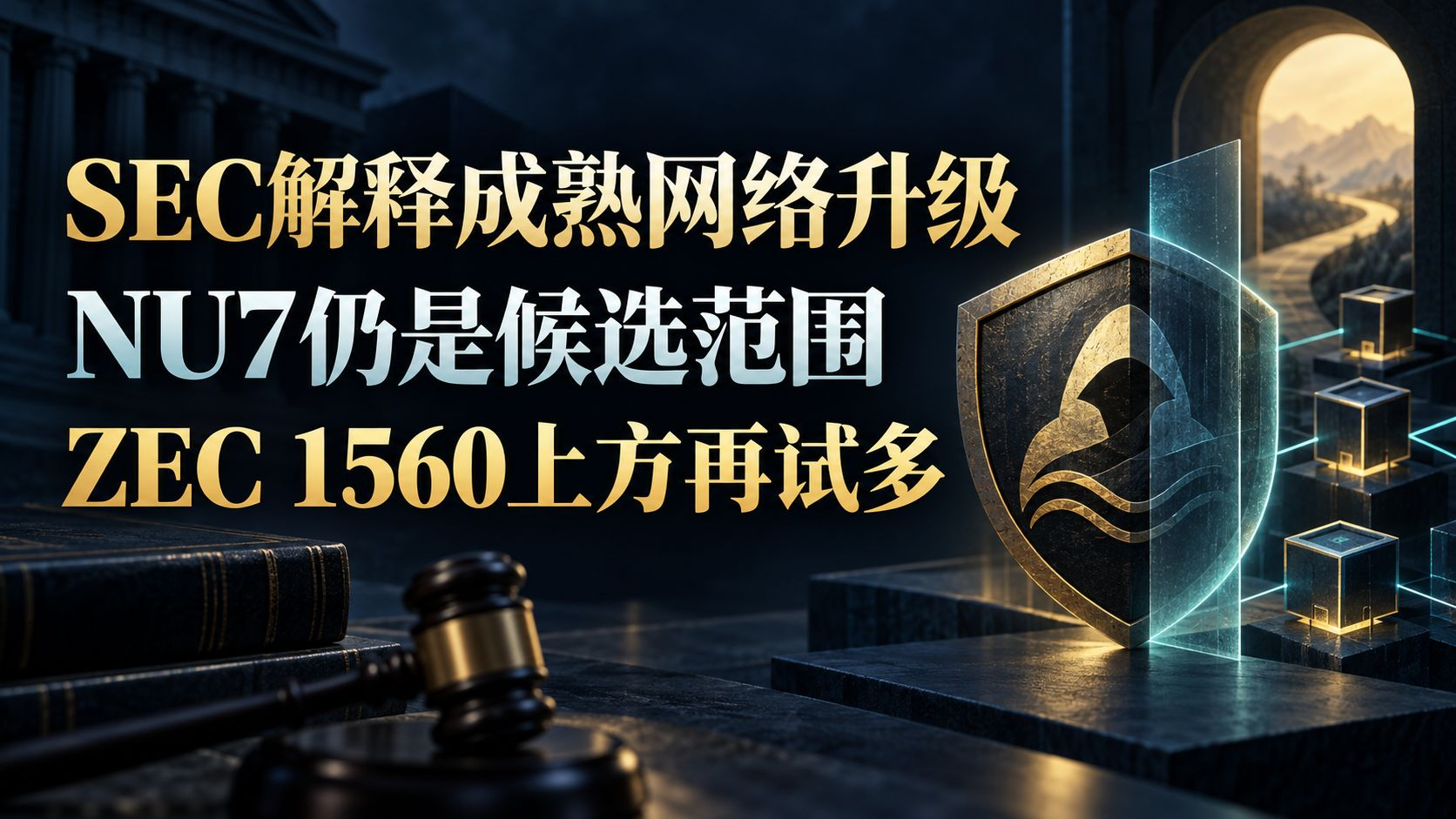
SEC talks functional network upgrades next|Not the equivalent of issuing a compliance pass for NU7|ZEC at 1537—I'm not chasing
My stance is to fully read the regulatory text first, then decide whether to price the upgrade narrative. On Binance Square’s current trending list, there’s #SECSaysBuybacksUpgradesDontMakeTokenSecurity, which can easily get compressed into “upgrades mean it’s not a security.” I checked the SEC’s Office of the Chief Financial Officer Q&A from September 25: Question 2.3 is about an encrypted system that already has functionality, where services such as security maintenance, improvements, enhancements, and promoting network effects are typically not the “essential managerial efforts” referred to in the Howey test. But the very beginning of the same page is also crystal clear: this is the view of staff in the department, not an official new SEC rule, and it has no independent legal effect; the conclusion is still constrained by specific facts such as the network’s status and the manner of issuance and promotion.
Putting this news into ZEC context, what’s truly worth asking isn’t “Has the SEC suddenly certified ZEC?”—the answer is obviously no. The real question is whether the market is treating the NU7 candidate upgrade currently being discussed as already-realized positive news. The official Zcash ZIP repository lists NU7 candidates with items like a 25-second block time target, transaction formats, fees, and sustainable mechanisms; it also explicitly states that the list is a set of options, and no decision has been made yet on whether each item will be included. Code maintenance and protocol governance will indeed affect user experience, node compatibility, and long-term usability—but they don’t automatically qualify ZEC, nor do they guarantee that any given candidate proposal will ultimately be activated. General regulatory explanations and project engineering progress are two separate chains of evidence; they can’t be conflated.
The transmission to the crypto market is indirect: if regulatory meaning becomes clearer, projects’ R&D might involve less uncertainty about “keep maintaining and you’ll run into trouble,” and capital may reassess mature networks. But if the project team uses future upgrade commitments to promise returns, the Q&A itself does not provide any exemption. For ZEC specifically, I would first look at the formally selected ZIP(s), testnet results, client releases, and the activation height on mainnet—then check exchange support for deposits/withdrawals. Short-term traffic generated by hot tags is not enough to replace these evidence.
Where has the market responded? At the time of writing, Kraken’s ZEC/USD is around $1537; 24-hour high $1624, low $1513, opening around $1556. The current price is below the open and far from the high; you can’t say the FAQ has brought a sustained breakout. Above, I’m watching whether it can reclaim 1560, then the 1624 overhead pressure. Below, 1513 is the current low; a break below it and failure to reclaim would invalidate my short-term repair judgment. If price doesn’t cooperate, policy tailwinds may remain only at the topic level.
If I were trading it myself: currently I have zero position. I won’t chase prices in the 1530—1560 range. I’ll only consider going long with a small allocation spot position—at most 0.25% of total funds, and no leverage. Entry requires two complete 15-minute candlesticks closing above 1560; then a pullback and hold 1550—1560. Also, there must be no new official materials negating the upgrade expectation. After triggering, I’d cut half at 1585, then flatten the remainder at 1615—1620. If after entry the 15-minute candle closes back below 1540, I cut half first; if it touches 1510, I close the entire position. Before entry, if 1513 breaks, I cancel the whole plan. If the official scope is ultimately reduced, I exit first and then reevaluate—without treating the candidate list as a settled fact.
#SECSaysBuybacksUpgradesDontMakeTokenSecurity #ZEC
The above is only my personal market observations and does not constitute investment advice.
70

·
--
🚨 Big signal from the SEC for crypto builders!
The latest SEC guidance suggests that token buybacks, network upgrades, and product improvements don’t automatically make a token a security—especially when the network is already functional.
That could give established crypto projects more flexibility to improve their networks and manage token economics.
👀 A notable step toward clearer crypto regulation.
DYOR.
$XAU
{future}(XAUUSDT)
$BTC
{future}(BTCUSDT)
#CircleMints500MUSDCOnSolana #PolymarketBankFailureBetsDrawFDICConcern #BitwiseFilesToListNEARETFOnNYSEArca #SECSaysBuybacksUpgradesDontMakeTokenSecurity #BitwiseFilesToListNEARETFOnNYSEArca
🚨 Big signal from the SEC for crypto builders!
The latest SEC guidance suggests that token buybacks, network upgrades, and product improvements don’t automatically make a token a security—especially when the network is already functional.
That could give established crypto projects more flexibility to improve their networks and manage token economics.
👀 A notable step toward clearer crypto regulation.
DYOR.
$XAU
$BTC
#CircleMints500MUSDCOnSolana #PolymarketBankFailureBetsDrawFDICConcern #BitwiseFilesToListNEARETFOnNYSEArca #SECSaysBuybacksUpgradesDontMakeTokenSecurity #BitwiseFilesToListNEARETFOnNYSEArca
1
148
·
--
#secsaysbuybacksupgradesdontmaketokensecurity
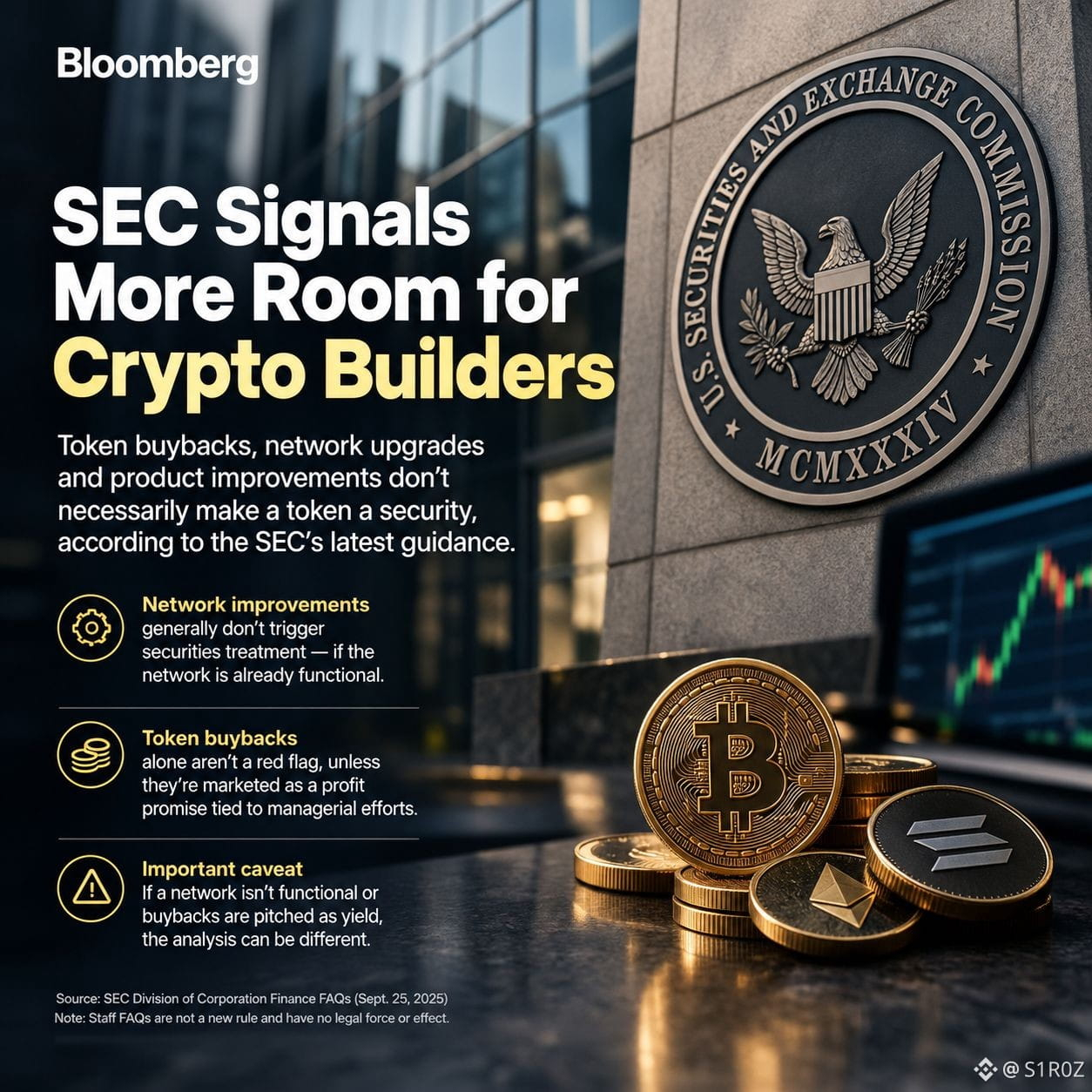
🚨 The SEC just gave crypto builders an important signal.
The agency says token buybacks, network upgrades, and product improvements don’t automatically make a token a security.
That matters for protocols that are already functional. The question has long been whether continued development or changes to token economics could create securities concerns.
The SEC’s guidance says not necessarily. Even buybacks alone may not trigger securities treatment unless they’re marketed as a profit promise tied to managerial efforts.
For established protocols, that could mean more room to keep upgrading and managing token economics without automatically crossing into securities territory.
A little more regulatory breathing room for crypto. 👀
$XAU
{future}(XAUUSDT)
$SUI
{spot}(SUIUSDT)
$OPENAI
{future}(OPENAIUSDT)
#SEC #crypto #Regulation #blockchain
#secsaysbuybacksupgradesdontmaketokensecurity
🚨 The SEC just gave crypto builders an important signal.
The agency says token buybacks, network upgrades, and product improvements don’t automatically make a token a security.
That matters for protocols that are already functional. The question has long been whether continued development or changes to token economics could create securities concerns.
The SEC’s guidance says not necessarily. Even buybacks alone may not trigger securities treatment unless they’re marketed as a profit promise tied to managerial efforts.
For established protocols, that could mean more room to keep upgrading and managing token economics without automatically crossing into securities territory.
A little more regulatory breathing room for crypto. 👀
$XAU
$SUI
$OPENAI
#SEC #crypto #Regulation #blockchain
1
221

·
--
everyone thinks buying tokens with aggressive burn mechanics makes them bulletproof, but actually most degens are walking straight into a trap.
watching your portfolio bleed out while waiting for a protocol upgrade to save your bags is pure pain, especially when you FOMO’d at the local top thinking buybacks equal guaranteed upward price discovery.
take a look at how markets react every time regulatory clarity hits the tape. the recent sec stance clarifying that buybacks and routine technical upgrades don’t inherently make a token a security should be a massive tailwind for legit builders. we saw projects like $NEAR and $ORDI get heavily debated over structural utility, yet traders kept dumping because they confused tokenomics with true market demand.
ngl ser, fundamental mechanics only matter if people actually use the network. a buyback program on zero organic revenue is just slow-motion dilution, and holding bags purely because devs promised code changes won't fix bad risk management.
are you still bidding tokens based purely on burn mechanisms, or has your strategy shifted to real fee generation?
#SECSaysBuybacksUpgradesDontMakeTokenSecurity #BitwiseFilesToListNEARETFOnNYSEArca #SECCommissionerPeirceToLeaveOct2
167

·
--
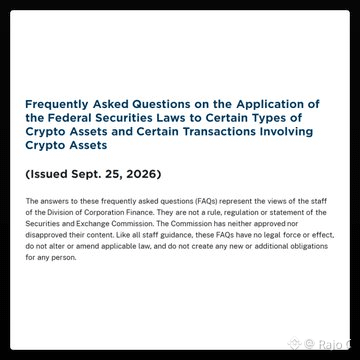
#secsaysbuybacksupgradesdontmaketokensecurity THE BLOCK: The SEC’s new crypto FAQ says token buybacks on functioning networks generally don’t create an investment contract, and routine upgrades don’t either.
It also says promoting a token’s utility alone likely isn’t a promise of profits.$DASH $GRIFFAIN $EIGEN
It also says promoting a token’s utility alone likely isn’t a promise of profits.$DASH $GRIFFAIN $EIGEN
329
·
--
#secsaysbuybacksupgradesdontmaketokensecurity The SEC
just published a guide explaining how to build a crypto project that its own securities laws do not reach
Here are the key points:
Buying back your own
token
on a working network is fine
Maintaining the system funding development and growing the network do not count as essential managerial efforts once it's fully functional
Liquid staking receipt tokens can be treated as digital commodities rather than securities
Marketing what your token does is fine as long as you do not tell people it will make them money
We didn't get the Clarity Act but the SEC is making sure the US has pro crypto regulations$TLM $AVNT $WAXP
1
6
8.2k

·
--
Regulatory authorities have made it clear that the company’s buyback and upgrading actions do not directly improve the token’s security. This means that crypto projects need to focus more on code quality and community governance. So, how do you think the project team should truly enhance the token’s value?#SECSaysBuybacksUpgradesDontMakeTokenSecurity $ETH
#ETH
#ETH
102

·
--
Yes — this hashtag refers to a recent SEC crypto clarification.
In simple terms: token buybacks, network upgrades, or development activity do not automatically make a crypto token a “security.” The SEC says the classification depends on the specific facts and circumstances, including whether purchasers have an expectation of profits from the essential managerial efforts of others. �
The Block +1
So:
Buyback ≠ automatically a security
Network upgrade ≠ automatically a security
Utility/development ≠ automatically a security
But a token can still be subject to securities laws depending on how it is offered and the rights/expectations involved. �
SEC
The hashtag #SECSaysBuybacksUpgradesDontMakeTokenSecurity is therefore a shorthand for this regulatory clarification, not a statement that all tokens with buybacks or upgrades are non-securities.#SECSaysBuybacksUpgradesDontMakeTokenSecurity
1
70

·
--
#secsaysbuybacksupgradesdontmaketokensecurity
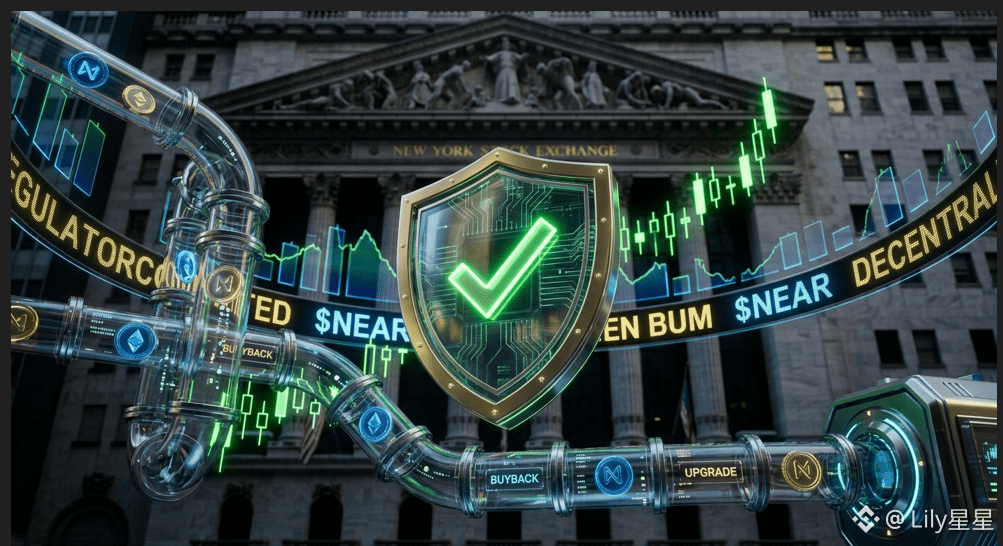
🚨 Game-Changer for Altcoins: SEC Clarifies Token Buybacks & Upgrades Don't Automatically Classify Tokens as Securities! 🟢
🌐 What Happened?
The U.S. Securities and Exchange Commission (SEC) Division of Corporation Finance published an updated Crypto FAQ guidance document, providing regulatory clarity for developers and Web3 projects.
The SEC clarified that token buyback programs, ongoing network maintenance, and routine protocol upgrades on functional blockchains do not automatically turn a crypto asset into an investment contract (security) under the Howey test.
🔑 Key Takeaways & Regulatory Details
Token Buybacks Cleared for Live Networks: Announcing or conducting a buyback program for an already operational, decentralized network will not by itself trigger security status. (Note: The SEC cautioned that buybacks presented as profit returns on unlaunched networks could still be scrutinized).
Howey Test Exemption for Protocol Maintenance: Ongoing services to secure, maintain, patch, or improve a functional network—as well as efforts to expand network effects—do not count as "essential managerial efforts" under Howey criteria.
Marketing & Future Features: Promoting existing network utility or announcing upcoming technological roadmap updates won't create an "expectation of profit," provided marketing materials don't explicitly pitch speculation or guaranteed financial returns.
Regulatory Context: This FAQ update builds upon earlier SEC interpretive releases and offers guidance following legislative impasses on federal crypto bills in Congress.
💡 Why It Matters for Traders & Developers
Green Light for Value Accrual: Projects can implement fee-switch mechanics, token burns, and buyback programs without immediate fear of SEC enforcement.
Altcoin Relief: Reduces regulatory risk premiums on established, revenue-generating protocols ($UNI,$MKR, $AAVE,$BNB).
#SECCommissionerPeirceToLeaveOct2 #CryptoRegulation #SEC #BinanceSquare
4
2.2k

·
--
⚖️ The SEC just answered a question sitting underneath one of crypto's newest tokenomics trends...
#secsaysbuybacksupgradesdontmaketokensecurity
In new staff FAQs, the SEC says that on a functional crypto system, announcing a buyback of a non-security token does not, by itself, amount to a promise to perform the managerial efforts relevant to an investment-contract analysis.
That's not a blanket “buybacks are legal” ruling.
It's staff guidance — not a rule, not Commission-approved, and not legally binding.
But look at $ENA.
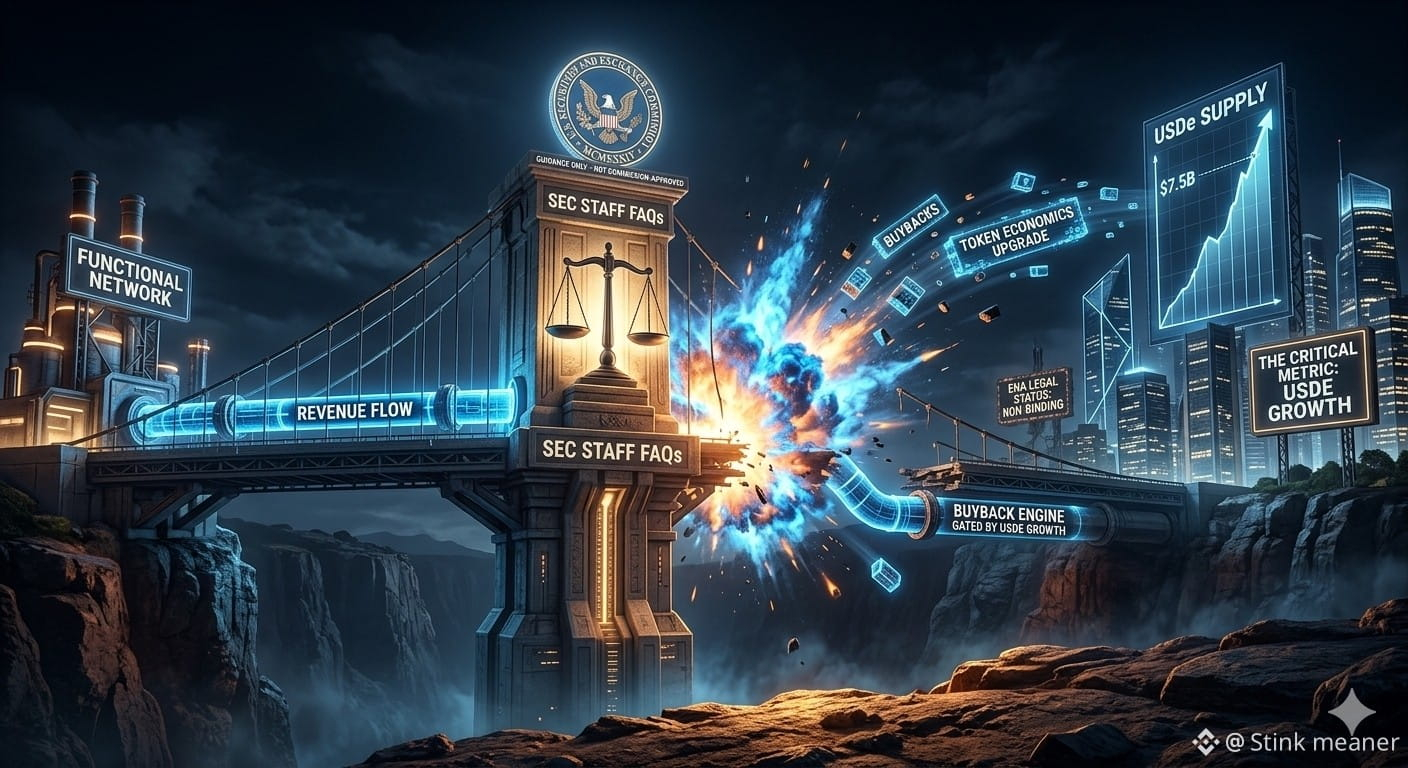
Ethena governance has already approved a fee-switch framework linking ENA buybacks to USDe growth. At the first $7.5B supply milestone, the design takes 5% of qualifying revenue and directs 95% of that captured amount toward ENA buybacks.
That creates an interesting bridge:
functional network → revenue → buybacks → token economics
But here's the catch:
The buyback engine doesn't simply switch on because ENA is popular.
It is gated by the growth of the underlying dollar business.
So the metric I'd watch isn't the next ENA candle.
It's USDe growth + actual protocol revenue.
DYOR. SEC staff FAQs are nonbinding guidance and do not determine ENA's legal status.
$ENA $PHA $ARK
{future}(ARKUSDT)
{future}(PHAUSDT)
{future}(ENAUSDT)
#ENA #ethena #CryptoRegulation #SECCommissionerPeirceToLeaveOct2
⚖️ The SEC just answered a question sitting underneath one of crypto's newest tokenomics trends...
#secsaysbuybacksupgradesdontmaketokensecurity
In new staff FAQs, the SEC says that on a functional crypto system, announcing a buyback of a non-security token does not, by itself, amount to a promise to perform the managerial efforts relevant to an investment-contract analysis.
That's not a blanket “buybacks are legal” ruling.
It's staff guidance — not a rule, not Commission-approved, and not legally binding.
But look at $ENA .
Ethena governance has already approved a fee-switch framework linking ENA buybacks to USDe growth. At the first $7.5B supply milestone, the design takes 5% of qualifying revenue and directs 95% of that captured amount toward ENA buybacks.
That creates an interesting bridge:
functional network → revenue → buybacks → token economics
But here's the catch:
The buyback engine doesn't simply switch on because ENA is popular.
It is gated by the growth of the underlying dollar business.
So the metric I'd watch isn't the next ENA candle.
It's USDe growth + actual protocol revenue.
DYOR. SEC staff FAQs are nonbinding guidance and do not determine ENA's legal status.
$ENA $PHA $ARK
#ENA #ethena #CryptoRegulation #SECCommissionerPeirceToLeaveOct2
3
6k

·
--
THE SEC JUST GAVE CRYPTO BUILDERS A HUGE SIGNAL. 🚨
The SEC says token buybacks, network upgrades, and product improvements do NOT automatically turn a token into a security.
That matters because one of crypto’s biggest fears has always been:
“If the team keeps improving the network… does that make the token a security?”
The SEC’s latest guidance says not necessarily — especially once the network is already functional.
Even token buybacks alone may not trigger securities treatment, unless they’re being marketed as a profit promise tied to managerial efforts.
That’s a big shift in tone.
It gives established protocols more room to upgrade, improve, and manage token economics without automatically stepping into securities territory.
Crypto just got a little more regulatory breathing room. 👀
{future}(XAUUSDT)
{future}(SUIUSDT)
{future}(OPENAIUSDT)
$XAU $SUI $OPENAI
#secsaysbuybacksupgradesdontmaketokensecurity #PolymarketBankFailureBetsDrawFDICConcern #BlackRockBuildsTokenizedPortfoliosForOndo #BitwiseFilesToListNEARETFOnNYSEArca #SECCommissionerPeirceToLeaveOct2
THE SEC JUST GAVE CRYPTO BUILDERS A HUGE SIGNAL. 🚨
The SEC says token buybacks, network upgrades, and product improvements do NOT automatically turn a token into a security.
That matters because one of crypto’s biggest fears has always been:
“If the team keeps improving the network… does that make the token a security?”
The SEC’s latest guidance says not necessarily — especially once the network is already functional.
Even token buybacks alone may not trigger securities treatment, unless they’re being marketed as a profit promise tied to managerial efforts.
That’s a big shift in tone.
It gives established protocols more room to upgrade, improve, and manage token economics without automatically stepping into securities territory.
Crypto just got a little more regulatory breathing room. 👀
$XAU $SUI $OPENAI
#secsaysbuybacksupgradesdontmaketokensecurity #PolymarketBankFailureBetsDrawFDICConcern #BlackRockBuildsTokenizedPortfoliosForOndo #BitwiseFilesToListNEARETFOnNYSEArca #SECCommissionerPeirceToLeaveOct2
14
4
49
54.6k

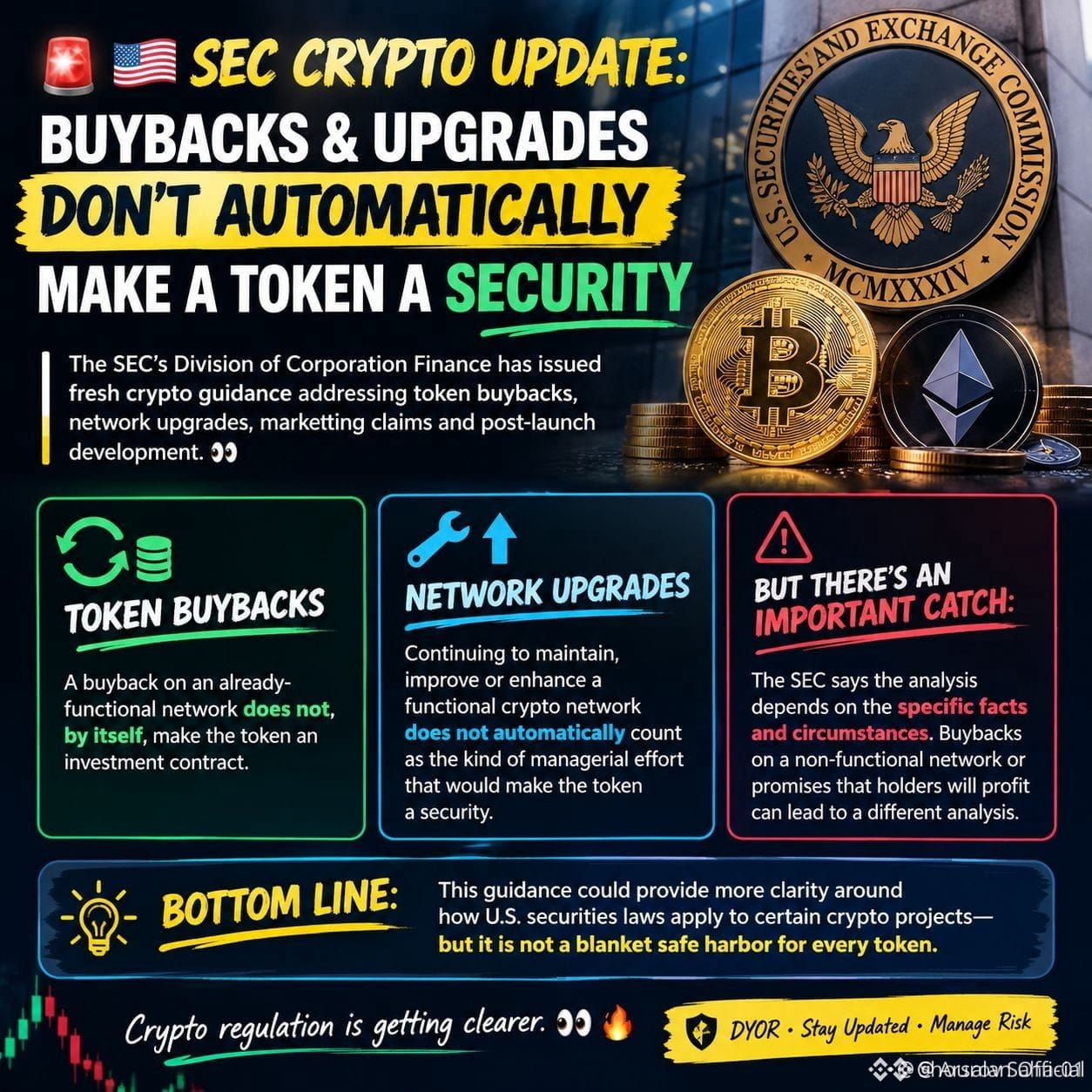
#SECSaysBuybacksUpgradesDontMakeTokenSecurity The SEC says token buybacks, network upgrades and certain marketing claims do not automatically make a crypto token a security. For functioning networks, ongoing efforts to maintain or improve the network generally would not constitute the managerial efforts required under the Howey analysis.
However, the SEC emphasized that the specific facts and circumstances still matter, particularly when a project is not yet functional or promotes buybacks as a source of investor returns.
#SEC #Crypto #CryptoRegulation #DigitalAssets $SECT.ETF
{etf_us}(SECT.ETF)
$BTC
{spot}(BTCUSDT)
$ETH
{spot}(ETHUSDT)
#SECSaysBuybacksUpgradesDontMakeTokenSecurity The SEC says token buybacks, network upgrades and certain marketing claims do not automatically make a crypto token a security. For functioning networks, ongoing efforts to maintain or improve the network generally would not constitute the managerial efforts required under the Howey analysis.
However, the SEC emphasized that the specific facts and circumstances still matter, particularly when a project is not yet functional or promotes buybacks as a source of investor returns.
#SEC #Crypto #CryptoRegulation #DigitalAssets $SECT.ETF
$BTC
$ETH
However, the SEC emphasized that the specific facts and circumstances still matter, particularly when a project is not yet functional or promotes buybacks as a source of investor returns.
#SEC #Crypto #CryptoRegulation #DigitalAssets $SECT.ETF
$BTC
$ETH
1
33
🔥 New SEC Crypto Guidance
Token buybacks alone don't automatically change a token's regulatory status, according to the SEC's latest FAQ.
For functional networks, continued development and upgrades can also fall outside the managerial-efforts analysis described by the agency.
$BTC $BNB $LINK
#secsaysbuybacksupgradesdontmaketokensecurity
59

·
--
Bullish
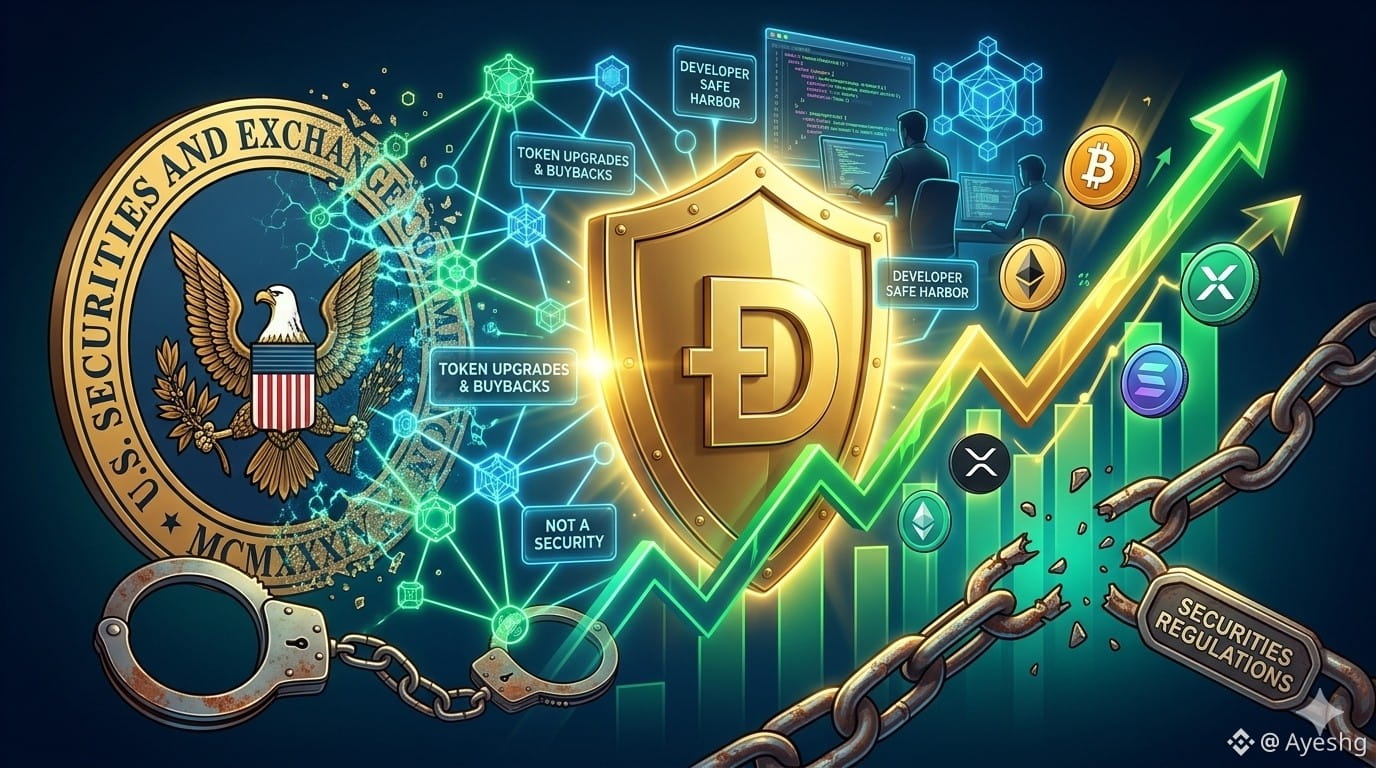
#secsaysbuybacksupgradesdontmaketokensecurity 🚨 SEC JUST GAVE CRYPTO BUILDERS MORE REGULATORY CLARITY
The U.S. SEC has released new crypto FAQs addressing network upgrades, token buybacks and functional crypto systems.
According to the SEC staff guidance, once a crypto system is functional, activities to secure, maintain, improve or enhance the network generally would not constitute the “essential managerial efforts” required for an investment-contract analysis under the Howey framework.
The guidance also addresses token buybacks.
For a functional crypto system, announcing a buyback program would not, by itself, constitute a promise to provide essential managerial efforts. However, the analysis can be different when a network is not functional and the buyback is presented as creating yield or returns for token holders.
⚠️ Important: This is SEC Division of Corporation Finance staff guidance, not a new SEC rule. The SEC specifically states that these FAQs do not have legal force or effect and do not create new obligations.
For crypto developers, the distinction between a functional network and promises of investment returns remains important.
🔎 Crypto assets to watch:
$BTC • $ETH • $SOL L
The bigger takeaway: U.S. regulators are providing more detailed guidance on how existing securities laws may apply to different crypto activities.
#SEC #CryptoRegulation #Bitcoin #Ethereum #Solana #CryptoNews #Tokenization
1
324
Log in to explore more content
Join global crypto users on Binance Square
⚡️ Get latest and useful information about crypto.
💬 Trusted by the world’s largest crypto exchange.
👍 Discover real insights from verified creators.
Email / Phone number
Trending Topics
1
#CPITestsDecemberRateOutlook
762,478 views
3,783 Discussing
2
#AnthropicRejectsIPODelayValuationinQuestion
89,988 views
840 Discussing
3
#NvidiaInvestigatesAfterHuang’sAffairApology
316,676 views
2,386 Discussing
4
#CanNvidiaEarningsEaseMarketConcerns?
1,600 views
62 Discussing
5
#US-IranTalksFuelStrongStockMarketRebound
29,832 views
299 Discussing
6
#BitcoinFiveWeeklyLosses
339,043 views
2,720 Discussing
7
#AIChipSlumpNasdaq
192,820 views
1,620 Discussing
8
#BitcoinSpotETFsPost$201MNetOutflowForThirdStraightDay
587 views
9 Discussing
9
#CryptoLiquidationsReach$1.16BIn24Hours
36,951 views
65 Discussing
10
#TradFiForBeginners
401,600 views
2,742 Discussing