
宝哥财经
2.9k Posts

宝哥财经
Report
Block User
446 Following
810 Followers
1.5K+ Liked
Posts
All
Videos
·
--
Under the AI video frenzy, are these four companies the real revolution? #finance #stocks #stockholders #wealthmanagement #listedcompany @+assistant
Under the AI video frenzy, are these four companies the real revolution? #finance #stocks #stockholders #wealthmanagement #listedcompany @+assistant
327
·
--
Dissecting Garden Biotech 26H2 Potential Analysis #GardenBiotech #Finance #Stocks #WealthManagement #Investors @+Assistant
Dissecting Garden Biotech 26H2 Potential Analysis #GardenBiotech #Finance #Stocks #WealthManagement #Investors @+Assistant
438
·
--
Were Guangzhou-Shenzhen and Yantian unfairly blamed, or is there more to the story? #GuangzhouShenzhenRailway #YantianPort #Finance #Investing #StockInvestors @+Assistant
Were Guangzhou-Shenzhen and Yantian unfairly blamed, or is there more to the story? #GuangzhouShenzhenRailway #YantianPort #Finance #Investing #StockInvestors @+Assistant
392
·
--
AI sparks a cross-border ‘cash magnet’ boom! Citi: Korea firms’ global equity and debt financing in 2026 to hit a record highCiti Group expects that Korean companies will achieve a record level of financing in global bond and equity markets in 2026. As businesses seek international investors to fund growth, Korean firms’ capital market issuance activities are expected to rise significantly, with SK hynix (SKHY.US)’s landmark $26.5 billion U.S. listed transaction serving as an important driver.
As one of the underwriters for SK hynix’s listing on the Korean stock exchange, Citi has helped Korean clients raise about $60 billion in global bond and equity markets so far this year. The bank expects M&A activity across multiple sectors, including technology, consumer and healthcare, to further increase—among them acquisitions by Korean companies abroad and by foreign companies in Korea. In addition, Citi has ranked fourth in Korea’s equity capital markets underwriting this year and third in Korea’s international bond underwriting.
AI sparks a cross-border ‘cash magnet’ boom! Citi: Korea firms’ global equity and debt financing in 2026 to hit a record high
Citi Group expects that Korean companies will achieve a record level of financing in global bond and equity markets in 2026. As businesses seek international investors to fund growth, Korean firms’ capital market issuance activities are expected to rise significantly, with SK hynix (SKHY.US)’s landmark $26.5 billion U.S. listed transaction serving as an important driver.
As one of the underwriters for SK hynix’s listing on the Korean stock exchange, Citi has helped Korean clients raise about $60 billion in global bond and equity markets so far this year. The bank expects M&A activity across multiple sectors, including technology, consumer and healthcare, to further increase—among them acquisitions by Korean companies abroad and by foreign companies in Korea. In addition, Citi has ranked fourth in Korea’s equity capital markets underwriting this year and third in Korea’s international bond underwriting.
As one of the underwriters for SK hynix’s listing on the Korean stock exchange, Citi has helped Korean clients raise about $60 billion in global bond and equity markets so far this year. The bank expects M&A activity across multiple sectors, including technology, consumer and healthcare, to further increase—among them acquisitions by Korean companies abroad and by foreign companies in Korea. In addition, Citi has ranked fourth in Korea’s equity capital markets underwriting this year and third in Korea’s international bond underwriting.
SAMSUNG+0.27%
SKHYUS+7.78%
72
·
--
Xi’an Yicai Releases 2026 Semi-Annual Report: Monthly Sales Surpass One Million Wafer Units, with Domestic Leading Production ScaleSource: Xinhua Finance
On August 25, 2026, Xi’an Yikesiwei Materials Technology Co., Ltd. (hereinafter referred to as “Xi’an Yicai,” 688783.SH), a leading domestic silicon wafer company, released its 2026 semi-annual report. In the first half of this year, the company recorded operating revenue of 1.589 billion yuan, up 22.00% year over year. Net cash flow from operating activities was 324 million yuan, remaining positive for many consecutive years. Net profit attributable to shareholders was -289 million yuan, representing a narrowed loss of 14.98% compared with the same period last year.
Xi’an Yicai said that in the second quarter of 2026, downstream market demand gradually picked up, driving the spot prices of 12-inch silicon wafers to start rising in the second half of 2026. Due to the long-term order locked pricing mechanism, the company’s order prices for the first half of the year were already locked at the end of 2025. In addition, the second factory is in a capacity ramp-up phase, and fixed costs such as depreciation have not yet been fully spread. These factors collectively resulted in the price-increase benefits not being fully reflected in the report. With the acceleration of capacity expansion by wafer fabs both at home and abroad, demand growth momentum for 12-inch silicon wafers is expected to further strengthen, and the price-hike trend is expected to continue. The company’s operating performance is expected to further improve.
Xi’an Yicai Releases 2026 Semi-Annual Report: Monthly Sales Surpass One Million Wafer Units, with Domestic Leading Production Scale
Source: Xinhua Finance
On August 25, 2026, Xi’an Yikesiwei Materials Technology Co., Ltd. (hereinafter referred to as “Xi’an Yicai,” 688783.SH), a leading domestic silicon wafer company, released its 2026 semi-annual report. In the first half of this year, the company recorded operating revenue of 1.589 billion yuan, up 22.00% year over year. Net cash flow from operating activities was 324 million yuan, remaining positive for many consecutive years. Net profit attributable to shareholders was -289 million yuan, representing a narrowed loss of 14.98% compared with the same period last year.
Xi’an Yicai said that in the second quarter of 2026, downstream market demand gradually picked up, driving the spot prices of 12-inch silicon wafers to start rising in the second half of 2026. Due to the long-term order locked pricing mechanism, the company’s order prices for the first half of the year were already locked at the end of 2025. In addition, the second factory is in a capacity ramp-up phase, and fixed costs such as depreciation have not yet been fully spread. These factors collectively resulted in the price-increase benefits not being fully reflected in the report. With the acceleration of capacity expansion by wafer fabs both at home and abroad, demand growth momentum for 12-inch silicon wafers is expected to further strengthen, and the price-hike trend is expected to continue. The company’s operating performance is expected to further improve.
On August 25, 2026, Xi’an Yikesiwei Materials Technology Co., Ltd. (hereinafter referred to as “Xi’an Yicai,” 688783.SH), a leading domestic silicon wafer company, released its 2026 semi-annual report. In the first half of this year, the company recorded operating revenue of 1.589 billion yuan, up 22.00% year over year. Net cash flow from operating activities was 324 million yuan, remaining positive for many consecutive years. Net profit attributable to shareholders was -289 million yuan, representing a narrowed loss of 14.98% compared with the same period last year.
Xi’an Yicai said that in the second quarter of 2026, downstream market demand gradually picked up, driving the spot prices of 12-inch silicon wafers to start rising in the second half of 2026. Due to the long-term order locked pricing mechanism, the company’s order prices for the first half of the year were already locked at the end of 2025. In addition, the second factory is in a capacity ramp-up phase, and fixed costs such as depreciation have not yet been fully spread. These factors collectively resulted in the price-increase benefits not being fully reflected in the report. With the acceleration of capacity expansion by wafer fabs both at home and abroad, demand growth momentum for 12-inch silicon wafers is expected to further strengthen, and the price-hike trend is expected to continue. The company’s operating performance is expected to further improve.
50
·
--
NVIDIA + SK Hynix double catalysts! One image to understand the core leaders in the CPO concept ??CPO moves from concept to mass production
??One image to understand the core leaders in the industrial chain
?ChiNext AI ETF Huabao #159363
??Focus on key optical module CPO leaders
??Invest in industry leaders · Choose Huabao
?The market is risky—invest with caution
NVIDIA + SK Hynix double catalysts! One image to understand the core leaders in the CPO concept
??CPO moves from concept to mass production
??One image to understand the core leaders in the industrial chain
?ChiNext AI ETF Huabao #159363
??Focus on key optical module CPO leaders
??Invest in industry leaders · Choose Huabao
?The market is risky—invest with caution
??One image to understand the core leaders in the industrial chain
?ChiNext AI ETF Huabao #159363
??Focus on key optical module CPO leaders
??Invest in industry leaders · Choose Huabao
?The market is risky—invest with caution
32
·
--
Article
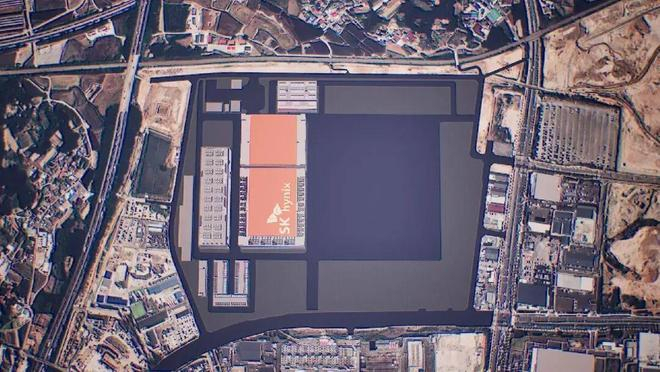
SK Hynix Resumes Dalian Factory—U.S. Equipment License Expires at Year’s End#SK Hynix Resumes Dalian Factory# [A timeline that’s easy to overlook, revealing the game currently unfolding in the global semiconductor industry] "The U.S. pressures it to build a factory, but SK Hynix resumes its Dalian operations first."
The equipment permit the U.S. issued to SK Hynix’s China plant covers only through the end of this year. According to reports from Korean media, the Dalian NAND plant’s operations, which have been suspended for four years, will—at the earliest—move production equipment in by November. Ten days after this news appeared, SK Hynix also reportedly said it is preparing to build a large memory chip factory in Miyagi Prefecture, Japan, with a potential investment amounting to tens of trillions of South Korean won.
SK Hynix Resumes Dalian Factory—U.S. Equipment License Expires at Year’s End
#SK Hynix Resumes Dalian Factory# [A timeline that’s easy to overlook, revealing the game currently unfolding in the global semiconductor industry] "The U.S. pressures it to build a factory, but SK Hynix resumes its Dalian operations first."
The equipment permit the U.S. issued to SK Hynix’s China plant covers only through the end of this year. According to reports from Korean media, the Dalian NAND plant’s operations, which have been suspended for four years, will—at the earliest—move production equipment in by November. Ten days after this news appeared, SK Hynix also reportedly said it is preparing to build a large memory chip factory in Miyagi Prefecture, Japan, with a potential investment amounting to tens of trillions of South Korean won.
The equipment permit the U.S. issued to SK Hynix’s China plant covers only through the end of this year. According to reports from Korean media, the Dalian NAND plant’s operations, which have been suspended for four years, will—at the earliest—move production equipment in by November. Ten days after this news appeared, SK Hynix also reportedly said it is preparing to build a large memory chip factory in Miyagi Prefecture, Japan, with a potential investment amounting to tens of trillions of South Korean won.
21
·
--
More than revenue and EPS! Four key variables to watch in Nvidia’s earnings report are yet to be resolved; the gross margin signals are moving Samsung and SK Hynix’s memory sector(Source: Financial News)
JPMorgan Chase指出,英伟达财报需要关注四大变量。国内H200芯片获批出货有望上调营收指引。市场更关注毛利率指引以及成本转嫁信号。
On August 26, according to overseas financial news, Nvidia will announce its second-quarter (for July 5–7) results on the 26th local time. Compared with the financial report data itself, the market is paying even more attention to the signals conveyed during the earnings conference call.
Data from prediction platform Polymarket shows that, as of the 25th, the probability that Nvidia’s adjusted earnings per share (EPS) for the second quarter exceeded expectations is 96%; the probability that the gross margin falls in the 74%–76% range is 93%; and the probability that revenue for the data center segment surpasses $80 billion (approximately 111 trillion KRW) is as high as 95%.
More than revenue and EPS! Four key variables to watch in Nvidia’s earnings report are yet to be resolved; the gross margin signals are moving Samsung and SK Hynix’s memory sector
(Source: Financial News)
JPMorgan Chase指出,英伟达财报需要关注四大变量。国内H200芯片获批出货有望上调营收指引。市场更关注毛利率指引以及成本转嫁信号。
On August 26, according to overseas financial news, Nvidia will announce its second-quarter (for July 5–7) results on the 26th local time. Compared with the financial report data itself, the market is paying even more attention to the signals conveyed during the earnings conference call.
Data from prediction platform Polymarket shows that, as of the 25th, the probability that Nvidia’s adjusted earnings per share (EPS) for the second quarter exceeded expectations is 96%; the probability that the gross margin falls in the 74%–76% range is 93%; and the probability that revenue for the data center segment surpasses $80 billion (approximately 111 trillion KRW) is as high as 95%.
JPMorgan Chase指出,英伟达财报需要关注四大变量。国内H200芯片获批出货有望上调营收指引。市场更关注毛利率指引以及成本转嫁信号。
On August 26, according to overseas financial news, Nvidia will announce its second-quarter (for July 5–7) results on the 26th local time. Compared with the financial report data itself, the market is paying even more attention to the signals conveyed during the earnings conference call.
Data from prediction platform Polymarket shows that, as of the 25th, the probability that Nvidia’s adjusted earnings per share (EPS) for the second quarter exceeded expectations is 96%; the probability that the gross margin falls in the 74%–76% range is 93%; and the probability that revenue for the data center segment surpasses $80 billion (approximately 111 trillion KRW) is as high as 95%.
73
·
--
Article
Korean giant suddenly shuts down its China flagship storeWhat should consumers who previously purchased products do?
According to a report by The Paper, on August 24, some consumers found that the homepage of the “SKhynix flagship store” had already published a notice of termination of operations, planning to terminate its operations independently on September 9, 2026. All products in the store have currently been taken down.
As of August 25, the Taobao platform can no longer directly search for this store.
Public information shows that this store previously mainly sold consumer-grade solid-state drives under the SK Hynix brand. The operating entity listed is Tianjin Hailis Technology Co., Ltd. According to Tianyancha, the company was registered in July 2020 with a registered capital of RMB 1 million. Its business scope includes technical services, sales of electronic products, and more. Public industrial and commercial information currently does not show that it has any equity, control, or direct affiliation relationship with SK Hynix’s headquarters or the China division.
Korean giant suddenly shuts down its China flagship store
What should consumers who previously purchased products do?
According to a report by The Paper, on August 24, some consumers found that the homepage of the “SKhynix flagship store” had already published a notice of termination of operations, planning to terminate its operations independently on September 9, 2026. All products in the store have currently been taken down.
As of August 25, the Taobao platform can no longer directly search for this store.
Public information shows that this store previously mainly sold consumer-grade solid-state drives under the SK Hynix brand. The operating entity listed is Tianjin Hailis Technology Co., Ltd. According to Tianyancha, the company was registered in July 2020 with a registered capital of RMB 1 million. Its business scope includes technical services, sales of electronic products, and more. Public industrial and commercial information currently does not show that it has any equity, control, or direct affiliation relationship with SK Hynix’s headquarters or the China division.
According to a report by The Paper, on August 24, some consumers found that the homepage of the “SKhynix flagship store” had already published a notice of termination of operations, planning to terminate its operations independently on September 9, 2026. All products in the store have currently been taken down.
As of August 25, the Taobao platform can no longer directly search for this store.
Public information shows that this store previously mainly sold consumer-grade solid-state drives under the SK Hynix brand. The operating entity listed is Tianjin Hailis Technology Co., Ltd. According to Tianyancha, the company was registered in July 2020 with a registered capital of RMB 1 million. Its business scope includes technical services, sales of electronic products, and more. Public industrial and commercial information currently does not show that it has any equity, control, or direct affiliation relationship with SK Hynix’s headquarters or the China division.
68
·
--
Partly True
Short Selling Balances at Samsung and SK hynix Soar, While Securities Lending Falls—Market Speculates Short Sellers Are Covering When trading stocks, rely on Golden Qilin analysts’ research reports—authoritative, professional, timely, and comprehensive—helping you uncover potential theme opportunities!
(Source: Caixin Finance)
As of late August, short selling balances at Samsung Electronics and SK hynix have surged, but the securities lending balance—an early indicator—has declined. Brokers speculate that short sellers are covering and buying back.
On August 26, according to overseas information reported by Caixin Finance, based on data from the Korea Exchange and the Korea Financial Investment Association, using the 21st as the reference date: Samsung Electronics’ short selling outstanding balance reached KRW 2.1215 trillion, up 90.7% from July 31; SK hynix’s short selling balance jumped from KRW 72 billion to KRW 829 billion, expanding 11 times.
Short Selling Balances at Samsung and SK hynix Soar, While Securities Lending Falls—Market Speculates Short Sellers Are Covering
When trading stocks, rely on Golden Qilin analysts’ research reports—authoritative, professional, timely, and comprehensive—helping you uncover potential theme opportunities!
(Source: Caixin Finance)
As of late August, short selling balances at Samsung Electronics and SK hynix have surged, but the securities lending balance—an early indicator—has declined. Brokers speculate that short sellers are covering and buying back.
On August 26, according to overseas information reported by Caixin Finance, based on data from the Korea Exchange and the Korea Financial Investment Association, using the 21st as the reference date: Samsung Electronics’ short selling outstanding balance reached KRW 2.1215 trillion, up 90.7% from July 31; SK hynix’s short selling balance jumped from KRW 72 billion to KRW 829 billion, expanding 11 times.
(Source: Caixin Finance)
As of late August, short selling balances at Samsung Electronics and SK hynix have surged, but the securities lending balance—an early indicator—has declined. Brokers speculate that short sellers are covering and buying back.
On August 26, according to overseas information reported by Caixin Finance, based on data from the Korea Exchange and the Korea Financial Investment Association, using the 21st as the reference date: Samsung Electronics’ short selling outstanding balance reached KRW 2.1215 trillion, up 90.7% from July 31; SK hynix’s short selling balance jumped from KRW 72 billion to KRW 829 billion, expanding 11 times.
1
816
·
--
Article
Japanese and Korean stock markets both open lower!【Guide】Equity markets in Japan and South Korea opened broadly lower. Korean stocks subsequently rebounded, with the KOSPI index briefly rising by more than 1%.
China Fund News reporter Li Zhi
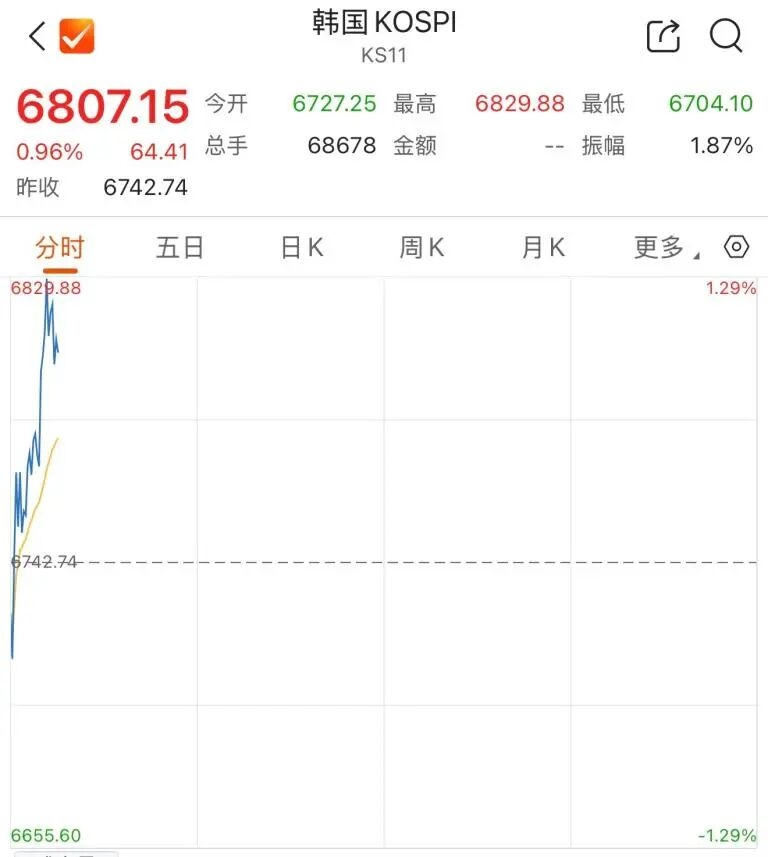
On August 26, stock markets in Japan and South Korea opened collectively lower. The Korean KOSPI index opened down 0.2%, then saw choppy trading and a rebound, briefly rising by more than 1%, and the latest reading was 6,807.15 points. On individual stocks, Samsung Electronics was up more than 2%, and SK Hynix was up nearly 2%.
On the labor front, members of the SK Hynix union voted to reject a preliminary wage agreement reached after two months of negotiations, with more than 50% of voters casting votes against it. Many employees opposed awarding more than half of the bonus in the form of stock because they were concerned about fluctuations in the share price of SK Hynix. Management and the union at SK Hynix are expected to resume negotiations, and the focus of subsequent discussions is likely to center on the performance-bonus payment scheme, which is precisely the key point of contention between labor and management.
Japanese and Korean stock markets both open lower!
【Guide】Equity markets in Japan and South Korea opened broadly lower. Korean stocks subsequently rebounded, with the KOSPI index briefly rising by more than 1%.
China Fund News reporter Li Zhi
On August 26, stock markets in Japan and South Korea opened collectively lower. The Korean KOSPI index opened down 0.2%, then saw choppy trading and a rebound, briefly rising by more than 1%, and the latest reading was 6,807.15 points. On individual stocks, Samsung Electronics was up more than 2%, and SK Hynix was up nearly 2%.
On the labor front, members of the SK Hynix union voted to reject a preliminary wage agreement reached after two months of negotiations, with more than 50% of voters casting votes against it. Many employees opposed awarding more than half of the bonus in the form of stock because they were concerned about fluctuations in the share price of SK Hynix. Management and the union at SK Hynix are expected to resume negotiations, and the focus of subsequent discussions is likely to center on the performance-bonus payment scheme, which is precisely the key point of contention between labor and management.
China Fund News reporter Li Zhi
On August 26, stock markets in Japan and South Korea opened collectively lower. The Korean KOSPI index opened down 0.2%, then saw choppy trading and a rebound, briefly rising by more than 1%, and the latest reading was 6,807.15 points. On individual stocks, Samsung Electronics was up more than 2%, and SK Hynix was up nearly 2%.
On the labor front, members of the SK Hynix union voted to reject a preliminary wage agreement reached after two months of negotiations, with more than 50% of voters casting votes against it. Many employees opposed awarding more than half of the bonus in the form of stock because they were concerned about fluctuations in the share price of SK Hynix. Management and the union at SK Hynix are expected to resume negotiations, and the focus of subsequent discussions is likely to center on the performance-bonus payment scheme, which is precisely the key point of contention between labor and management.
274
·
--
Article
Do the synchronized capacity expansions by the three memory giants signal that retail investors should pull out?Original: Wu 00000 Kong Qin Shuo Moments
The three giants race to expand production capacity
Recently, Samsung Electronics, SK hynix, and Micron Technology have all announced large-scale capacity expansion plans, with investment focused on HBM, server DRAM, and enterprise-class NAND flash.
The three giants repeatedly emphasized that most of the new capacity is locked in for cloud providers’ long-term orders, and that the capacity buildout cycle is relatively long. From civil construction, to moving in and installing equipment, and then ramping up yields, wafer fabs need two to three years, or even four to five years. Meanwhile, AI storage demand is surging, so the near-term situation of supply falling short will not change.
On August 13, when SK Group chairman Choi Tae-won was interviewed by CNBC, he even put forward the concept of “a storage shortage.” He predicted that the gap would be most pronounced in 2027, and that the tight situation may continue until 2030. He expressed regret over the sharp surge in storage prices, but also said it was unavoidable— the supply shortage is simply too severe.
Do the synchronized capacity expansions by the three memory giants signal that retail investors should pull out?
Original: Wu 00000 Kong Qin Shuo Moments
The three giants race to expand production capacity
Recently, Samsung Electronics, SK hynix, and Micron Technology have all announced large-scale capacity expansion plans, with investment focused on HBM, server DRAM, and enterprise-class NAND flash.
The three giants repeatedly emphasized that most of the new capacity is locked in for cloud providers’ long-term orders, and that the capacity buildout cycle is relatively long. From civil construction, to moving in and installing equipment, and then ramping up yields, wafer fabs need two to three years, or even four to five years. Meanwhile, AI storage demand is surging, so the near-term situation of supply falling short will not change.
On August 13, when SK Group chairman Choi Tae-won was interviewed by CNBC, he even put forward the concept of “a storage shortage.” He predicted that the gap would be most pronounced in 2027, and that the tight situation may continue until 2030. He expressed regret over the sharp surge in storage prices, but also said it was unavoidable— the supply shortage is simply too severe.
The three giants race to expand production capacity
Recently, Samsung Electronics, SK hynix, and Micron Technology have all announced large-scale capacity expansion plans, with investment focused on HBM, server DRAM, and enterprise-class NAND flash.
The three giants repeatedly emphasized that most of the new capacity is locked in for cloud providers’ long-term orders, and that the capacity buildout cycle is relatively long. From civil construction, to moving in and installing equipment, and then ramping up yields, wafer fabs need two to three years, or even four to five years. Meanwhile, AI storage demand is surging, so the near-term situation of supply falling short will not change.
On August 13, when SK Group chairman Choi Tae-won was interviewed by CNBC, he even put forward the concept of “a storage shortage.” He predicted that the gap would be most pronounced in 2027, and that the tight situation may continue until 2030. He expressed regret over the sharp surge in storage prices, but also said it was unavoidable— the supply shortage is simply too severe.
98
·
--
Institutions are bullish! The semiconductor sector rebounds, and storage giants surge together(Source: China Financial News)
On August 26, the Korean KOSPI index rose 1% to 6,810.62 points. As for individual stocks, SK Hynix and Samsung Electronics edged up slightly.
Overnight U.S. stocks, all three major indexes closed higher, with technology stocks becoming the main driver of the rebound. Most of the optical communications and storage sectors rose. By the close, the Dow Jones Industrial Average rose 0.30%, the S&P 500 rose 0.32%, and the Nasdaq Composite rose 0.66%.
Meanwhile, Nvidia rose 2.19%, ending a streak of multiple consecutive trading days of declines. The semiconductor sector warmed up. The Philadelphia Semiconductor Index rose 1.44%. Among them, AMD rose 4.91%. Most of the optical communications and storage segments rose; optical-communications leader Lumentum jumped by more than 6%, and Coherent rose by more than 4%. Seagate Technology and Western Digital both rose by more than 3%; SK Hynix and Micron Technology rose by more than 2%. The semiconductor sector warmed up again. The Philadelphia Semiconductor Index rose 1.44%. Among them, AMD rose 4.91%.
Institutions are bullish! The semiconductor sector rebounds, and storage giants surge together
(Source: China Financial News)
On August 26, the Korean KOSPI index rose 1% to 6,810.62 points. As for individual stocks, SK Hynix and Samsung Electronics edged up slightly.
Overnight U.S. stocks, all three major indexes closed higher, with technology stocks becoming the main driver of the rebound. Most of the optical communications and storage sectors rose. By the close, the Dow Jones Industrial Average rose 0.30%, the S&P 500 rose 0.32%, and the Nasdaq Composite rose 0.66%.
Meanwhile, Nvidia rose 2.19%, ending a streak of multiple consecutive trading days of declines. The semiconductor sector warmed up. The Philadelphia Semiconductor Index rose 1.44%. Among them, AMD rose 4.91%. Most of the optical communications and storage segments rose; optical-communications leader Lumentum jumped by more than 6%, and Coherent rose by more than 4%. Seagate Technology and Western Digital both rose by more than 3%; SK Hynix and Micron Technology rose by more than 2%. The semiconductor sector warmed up again. The Philadelphia Semiconductor Index rose 1.44%. Among them, AMD rose 4.91%.
On August 26, the Korean KOSPI index rose 1% to 6,810.62 points. As for individual stocks, SK Hynix and Samsung Electronics edged up slightly.
Overnight U.S. stocks, all three major indexes closed higher, with technology stocks becoming the main driver of the rebound. Most of the optical communications and storage sectors rose. By the close, the Dow Jones Industrial Average rose 0.30%, the S&P 500 rose 0.32%, and the Nasdaq Composite rose 0.66%.
Meanwhile, Nvidia rose 2.19%, ending a streak of multiple consecutive trading days of declines. The semiconductor sector warmed up. The Philadelphia Semiconductor Index rose 1.44%. Among them, AMD rose 4.91%. Most of the optical communications and storage segments rose; optical-communications leader Lumentum jumped by more than 6%, and Coherent rose by more than 4%. Seagate Technology and Western Digital both rose by more than 3%; SK Hynix and Micron Technology rose by more than 2%. The semiconductor sector warmed up again. The Philadelphia Semiconductor Index rose 1.44%. Among them, AMD rose 4.91%.
339
·
--
Verified
A long-cycle signal for semiconductor sector momentum! U.S. stocks in storage and optical communications gain strength; DRAM supply may remain tight through 2028(Source: Caixin Finance)
OpenAI said that its new Jalapeno chip performed better in testing than NVIDIA's current product lineup, highlighting the company's progress in developing its own AI processors.
Most U.S. stocks in the optical communications and storage sectors rose. Lumentum jumped more than 6%, Applied Optoelectronics rose more than 5%, Seagate Technology (STX.US) climbed 3.40%, Western Digital (WDC.US) rose 3.53%, SK hynix (SKHY.US) increased 2.68%, and Micron Technology (MU.US) gained 2.48%.
In terms of news flow, OpenAI said that its new Jalapeno chip performed better in testing than the current product lineup of NVIDIA (NVDA.US), highlighting the company's progress in developing its own AI processors.
A long-cycle signal for semiconductor sector momentum! U.S. stocks in storage and optical communications gain strength; DRAM supply may remain tight through 2028
(Source: Caixin Finance)
OpenAI said that its new Jalapeno chip performed better in testing than NVIDIA's current product lineup, highlighting the company's progress in developing its own AI processors.
Most U.S. stocks in the optical communications and storage sectors rose. Lumentum jumped more than 6%, Applied Optoelectronics rose more than 5%, Seagate Technology (STX.US) climbed 3.40%, Western Digital (WDC.US) rose 3.53%, SK hynix (SKHY.US) increased 2.68%, and Micron Technology (MU.US) gained 2.48%.
In terms of news flow, OpenAI said that its new Jalapeno chip performed better in testing than the current product lineup of NVIDIA (NVDA.US), highlighting the company's progress in developing its own AI processors.
OpenAI said that its new Jalapeno chip performed better in testing than NVIDIA's current product lineup, highlighting the company's progress in developing its own AI processors.
Most U.S. stocks in the optical communications and storage sectors rose. Lumentum jumped more than 6%, Applied Optoelectronics rose more than 5%, Seagate Technology (STX.US) climbed 3.40%, Western Digital (WDC.US) rose 3.53%, SK hynix (SKHY.US) increased 2.68%, and Micron Technology (MU.US) gained 2.48%.
In terms of news flow, OpenAI said that its new Jalapeno chip performed better in testing than the current product lineup of NVIDIA (NVDA.US), highlighting the company's progress in developing its own AI processors.
MSFTUS-1.98%
NVDAUS+0.63%
TSMUS+2.82%
2
1k
·
--
U.S. Stock Market Opens: All Three Major Indexes Rise at the Open; Storage Chip Stocks Are Broadly Higher, with SK hynix, Western Digital, and SanDisk Up More Than 2% China News Network, via Jingwei, Aug 25 (Beijing time). Late on the evening of Aug 25, the three major U.S. stock indexes opened higher collectively. The S&P 500 rose 0.36%, the Dow Jones rose 0.36%, and the Nasdaq rose 0.67%. In large-cap tech stocks, AMD rose 2.90%, SpaceX rose 1.63%, Meta rose 1.15%, and Nvidia rose 1.05%. Among Chinese concept stocks, NetEase rose 4.33%, Trip.com fell 1.35%, and Li Auto fell 2.24%.
Storage chip stocks rose broadly, with SK hynix, Western Digital, and SanDisk up more than 2%.
In commodities, international oil prices fell, with both Brent and WTI down more than 3%. Precious metals were weak as well; spot gold fell nearly 1% to $4,610 per ounce, while spot silver fell more than 2%.
U.S. Stock Market Opens: All Three Major Indexes Rise at the Open; Storage Chip Stocks Are Broadly Higher, with SK hynix, Western Digital, and SanDisk Up More Than 2%
China News Network, via Jingwei, Aug 25 (Beijing time). Late on the evening of Aug 25, the three major U.S. stock indexes opened higher collectively. The S&P 500 rose 0.36%, the Dow Jones rose 0.36%, and the Nasdaq rose 0.67%. In large-cap tech stocks, AMD rose 2.90%, SpaceX rose 1.63%, Meta rose 1.15%, and Nvidia rose 1.05%. Among Chinese concept stocks, NetEase rose 4.33%, Trip.com fell 1.35%, and Li Auto fell 2.24%.
Storage chip stocks rose broadly, with SK hynix, Western Digital, and SanDisk up more than 2%.
In commodities, international oil prices fell, with both Brent and WTI down more than 3%. Precious metals were weak as well; spot gold fell nearly 1% to $4,610 per ounce, while spot silver fell more than 2%.
Storage chip stocks rose broadly, with SK hynix, Western Digital, and SanDisk up more than 2%.
In commodities, international oil prices fell, with both Brent and WTI down more than 3%. Precious metals were weak as well; spot gold fell nearly 1% to $4,610 per ounce, while spot silver fell more than 2%.
2
461
·
--
Article
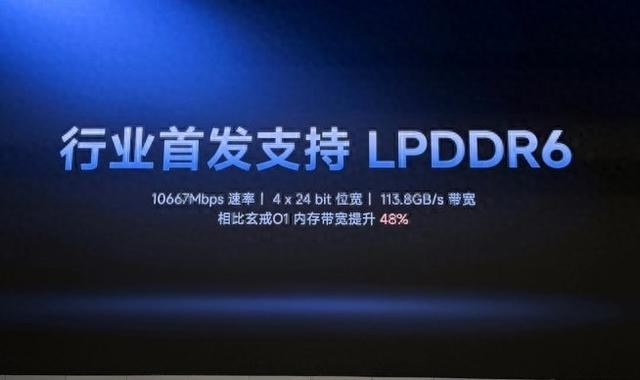
Xiaomi launches 3nm flagship SoC in partnership with CXMT LPDDR6On August 24, Xiaomi released the Xuanjie O3 chip. Built on a 3-nanometer process, Xiaomi describes it as an “AI flagship SoC.”
More notably, Xuanjie O3 is the world’s first SoC to support LPDDR6 memory chips, while China’s storage leader CXMT (Changxin Memory) is said to be a key core partner for Xuanjie O3’s LPDDR6 memory.
Reportedly, the upcoming Xiaomi 18 Fold and Xiaomi Pad 9 Pro Max, set to be released in September, will both be equipped with Xuanjie O3.
Xiaomi says that the Xuanjie O3 NPU is optimized for large language models, with AI compute power reaching 200 TOPS. But memory isn’t only for AI. Applications running, game rendering, and image processing all require the CPU, GPU, ISP, and NPU to continuously read data.
Xiaomi launches 3nm flagship SoC in partnership with CXMT LPDDR6
On August 24, Xiaomi released the Xuanjie O3 chip. Built on a 3-nanometer process, Xiaomi describes it as an “AI flagship SoC.”
More notably, Xuanjie O3 is the world’s first SoC to support LPDDR6 memory chips, while China’s storage leader CXMT (Changxin Memory) is said to be a key core partner for Xuanjie O3’s LPDDR6 memory.
Reportedly, the upcoming Xiaomi 18 Fold and Xiaomi Pad 9 Pro Max, set to be released in September, will both be equipped with Xuanjie O3.
Xiaomi says that the Xuanjie O3 NPU is optimized for large language models, with AI compute power reaching 200 TOPS. But memory isn’t only for AI. Applications running, game rendering, and image processing all require the CPU, GPU, ISP, and NPU to continuously read data.
More notably, Xuanjie O3 is the world’s first SoC to support LPDDR6 memory chips, while China’s storage leader CXMT (Changxin Memory) is said to be a key core partner for Xuanjie O3’s LPDDR6 memory.
Reportedly, the upcoming Xiaomi 18 Fold and Xiaomi Pad 9 Pro Max, set to be released in September, will both be equipped with Xuanjie O3.
Xiaomi says that the Xuanjie O3 NPU is optimized for large language models, with AI compute power reaching 200 TOPS. But memory isn’t only for AI. Applications running, game rendering, and image processing all require the CPU, GPU, ISP, and NPU to continuously read data.
85
·
--
Article
The U.S. is pushing for new plants, while SK Hynix first restarts DalianA timeline that’s easy to overlook reveals the power struggle currently unfolding in the global semiconductor industry.
The equipment license the U.S. issued to SK Hynix China’s plant covers only until the end of this year. South Korean media reports that the Dalian NAND fab, which has been shut down for four years, will move production equipment in as early as November. Ten days after this news broke, SK Hynix again reported plans to build a large memory chip plant in Miyagi, Japan, with potential investment of as much as tens of trillions of won.
While restarting the Dalian production line ahead of the expiration of the annual license, SK Hynix is also assessing whether to place its next factory in Japan. SK Hynix appears to be expanding globally, but behind the scenes, two forces are directly colliding. China has facilities, workers, and supply chains that can go into production immediately—an operating base SK Hynix can’t bypass if it wants to keep expanding into global markets. Meanwhile, the U.S. is trying to use equipment licensing to control SK Hynix, aiming to keep future advanced capacity within the allied ecosystem, preferably on U.S. soil.
The U.S. is pushing for new plants, while SK Hynix first restarts Dalian
A timeline that’s easy to overlook reveals the power struggle currently unfolding in the global semiconductor industry.
The equipment license the U.S. issued to SK Hynix China’s plant covers only until the end of this year. South Korean media reports that the Dalian NAND fab, which has been shut down for four years, will move production equipment in as early as November. Ten days after this news broke, SK Hynix again reported plans to build a large memory chip plant in Miyagi, Japan, with potential investment of as much as tens of trillions of won.
While restarting the Dalian production line ahead of the expiration of the annual license, SK Hynix is also assessing whether to place its next factory in Japan. SK Hynix appears to be expanding globally, but behind the scenes, two forces are directly colliding. China has facilities, workers, and supply chains that can go into production immediately—an operating base SK Hynix can’t bypass if it wants to keep expanding into global markets. Meanwhile, the U.S. is trying to use equipment licensing to control SK Hynix, aiming to keep future advanced capacity within the allied ecosystem, preferably on U.S. soil.
The equipment license the U.S. issued to SK Hynix China’s plant covers only until the end of this year. South Korean media reports that the Dalian NAND fab, which has been shut down for four years, will move production equipment in as early as November. Ten days after this news broke, SK Hynix again reported plans to build a large memory chip plant in Miyagi, Japan, with potential investment of as much as tens of trillions of won.
While restarting the Dalian production line ahead of the expiration of the annual license, SK Hynix is also assessing whether to place its next factory in Japan. SK Hynix appears to be expanding globally, but behind the scenes, two forces are directly colliding. China has facilities, workers, and supply chains that can go into production immediately—an operating base SK Hynix can’t bypass if it wants to keep expanding into global markets. Meanwhile, the U.S. is trying to use equipment licensing to control SK Hynix, aiming to keep future advanced capacity within the allied ecosystem, preferably on U.S. soil.
128
·
--
Article
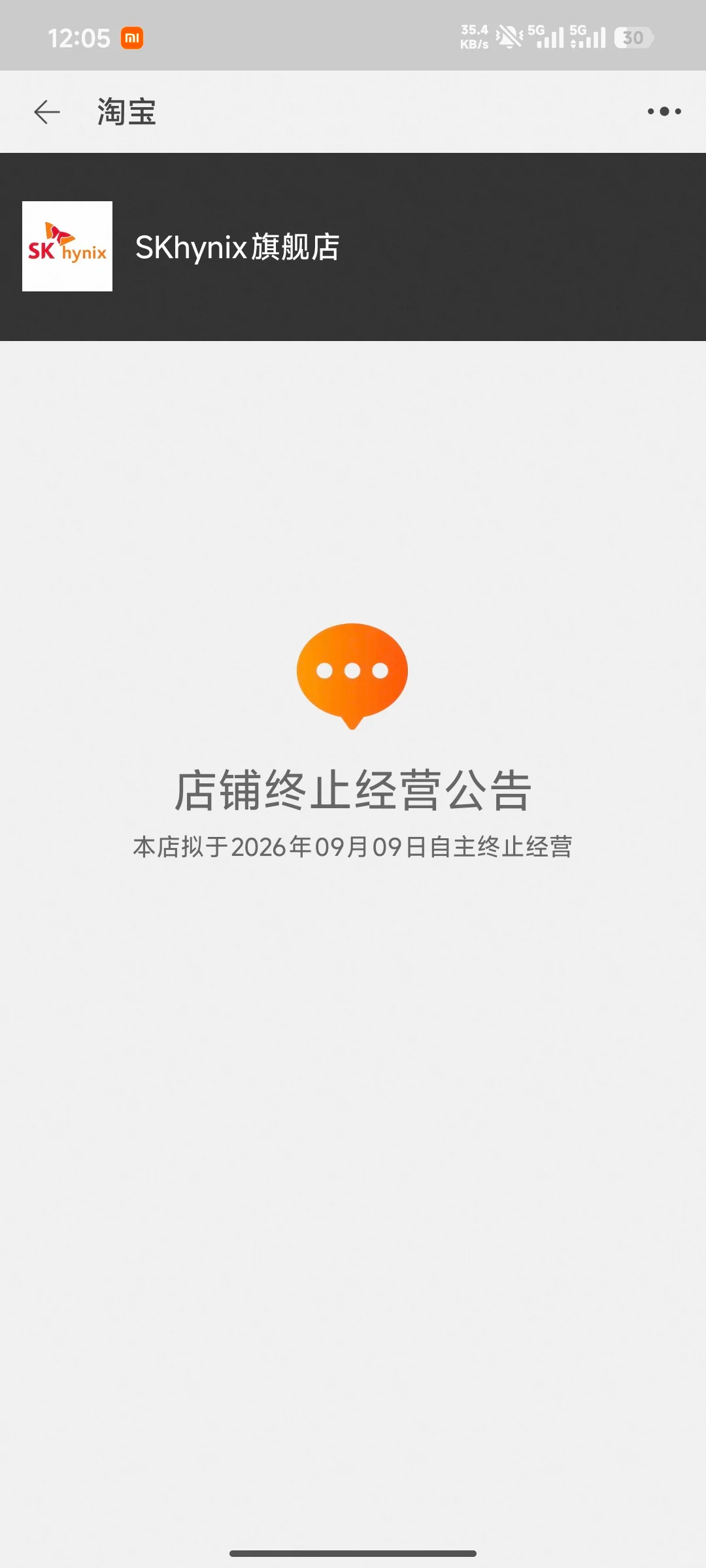
Urgent! SK Hynix’s Taobao store fully shuts downToday, many tech enthusiasts and consumers discovered that the “SKhynix flagship store” they had frequently visited is suddenly nowhere to be found. When they clicked on the saved store link from earlier, the homepage only showed a prominent announcement: the store plans to independently terminate operations on September 9, 2026. At present, all products in the store have already been removed.
This message quickly spread throughout digital communities. Previously, many users had purchased hardware products from this store, such as SK Hynix memory modules, SSD solid-state drives, and storage modules. These types of digital hardware generally come with an unusually long warranty period of 3–5 years, and many devices are still within the official warranty period. The store’s sudden shutdown has left everyone worried: who will handle after-sales service for the products in hand? Can the promised maintenance and repair services still be fulfilled?
Urgent! SK Hynix’s Taobao store fully shuts down
Today, many tech enthusiasts and consumers discovered that the “SKhynix flagship store” they had frequently visited is suddenly nowhere to be found. When they clicked on the saved store link from earlier, the homepage only showed a prominent announcement: the store plans to independently terminate operations on September 9, 2026. At present, all products in the store have already been removed.
This message quickly spread throughout digital communities. Previously, many users had purchased hardware products from this store, such as SK Hynix memory modules, SSD solid-state drives, and storage modules. These types of digital hardware generally come with an unusually long warranty period of 3–5 years, and many devices are still within the official warranty period. The store’s sudden shutdown has left everyone worried: who will handle after-sales service for the products in hand? Can the promised maintenance and repair services still be fulfilled?
This message quickly spread throughout digital communities. Previously, many users had purchased hardware products from this store, such as SK Hynix memory modules, SSD solid-state drives, and storage modules. These types of digital hardware generally come with an unusually long warranty period of 3–5 years, and many devices are still within the official warranty period. The store’s sudden shutdown has left everyone worried: who will handle after-sales service for the products in hand? Can the promised maintenance and repair services still be fulfilled?
102
·
--
Will Micron’s Taobao flagship store terminate operations? An insider: Not an official flagship store; it is a normal shutdown after the brand’s authorization period expiredReprinted from: The Paper
Will Micron’s Taobao flagship store terminate operations? An insider: Not an official flagship store; it is a normal shutdown after the brand’s authorization period expired
Reporter: Wu Yuxin
On August 25, regarding the matter that the Taobao platform’s “SKhynix Flagship Store” suddenly announced it was terminating operations and had removed all products from listing, a reporter from The Paper learned from an insider that the store was not an official Micron (SKhynix) flagship store, but an authorized one. After the authorization expired and the brand did not renew, it shut down normally. Other stores that are still selling are selling inventory products.
According to a previous report by The Paper, a consumer posted that SKhynix’s flagship store on Taobao would be shutting down, raising concerns that the purchased memory modules would not be covered by after-sales warranty. Reporters contacted multiple SKhynix storage device dealers on platforms such as Taobao and JD.com to ask about their after-sales warranty coverage. The responses they received said that stores are not related to each other, and that after-sales service is handled independently by each store. Some stores have introduced after-sales policies such as “five-year warranty—replace only, no repairs.”
Will Micron’s Taobao flagship store terminate operations? An insider: Not an official flagship store; it is a normal shutdown after the brand’s authorization period expired
Reprinted from: The Paper
Will Micron’s Taobao flagship store terminate operations? An insider: Not an official flagship store; it is a normal shutdown after the brand’s authorization period expired
Reporter: Wu Yuxin
On August 25, regarding the matter that the Taobao platform’s “SKhynix Flagship Store” suddenly announced it was terminating operations and had removed all products from listing, a reporter from The Paper learned from an insider that the store was not an official Micron (SKhynix) flagship store, but an authorized one. After the authorization expired and the brand did not renew, it shut down normally. Other stores that are still selling are selling inventory products.
According to a previous report by The Paper, a consumer posted that SKhynix’s flagship store on Taobao would be shutting down, raising concerns that the purchased memory modules would not be covered by after-sales warranty. Reporters contacted multiple SKhynix storage device dealers on platforms such as Taobao and JD.com to ask about their after-sales warranty coverage. The responses they received said that stores are not related to each other, and that after-sales service is handled independently by each store. Some stores have introduced after-sales policies such as “five-year warranty—replace only, no repairs.”
Will Micron’s Taobao flagship store terminate operations? An insider: Not an official flagship store; it is a normal shutdown after the brand’s authorization period expired
Reporter: Wu Yuxin
On August 25, regarding the matter that the Taobao platform’s “SKhynix Flagship Store” suddenly announced it was terminating operations and had removed all products from listing, a reporter from The Paper learned from an insider that the store was not an official Micron (SKhynix) flagship store, but an authorized one. After the authorization expired and the brand did not renew, it shut down normally. Other stores that are still selling are selling inventory products.
According to a previous report by The Paper, a consumer posted that SKhynix’s flagship store on Taobao would be shutting down, raising concerns that the purchased memory modules would not be covered by after-sales warranty. Reporters contacted multiple SKhynix storage device dealers on platforms such as Taobao and JD.com to ask about their after-sales warranty coverage. The responses they received said that stores are not related to each other, and that after-sales service is handled independently by each store. Some stores have introduced after-sales policies such as “five-year warranty—replace only, no repairs.”
25
·
--
Article
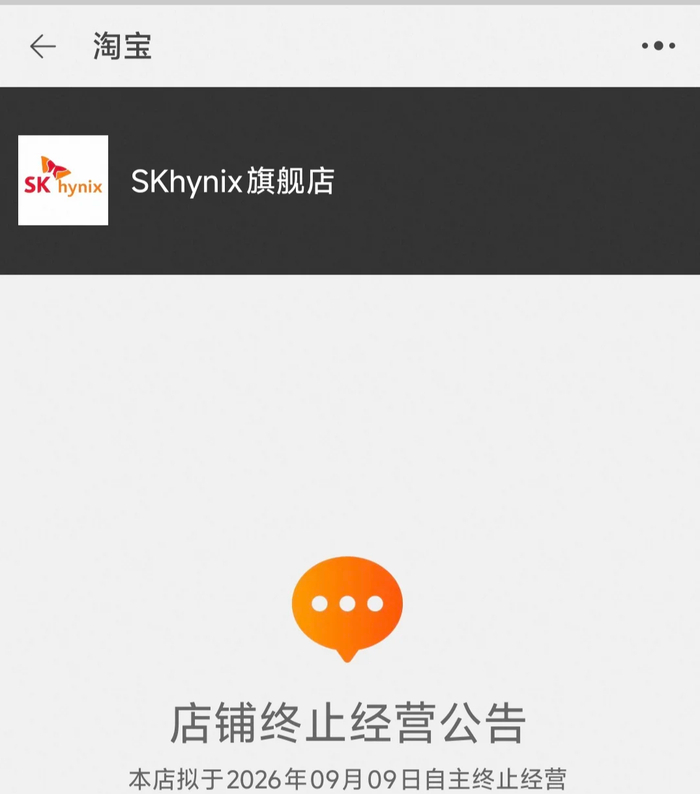
A Taobao SK Hynix flagship store will terminate its operations; earlier, its sister brand’s JD.com flagship store had already shut downRed Star News Capital Bureau, August 25: On the 24th, a consumer posted that “the Taobao SK hynix flagship store has run away.” The store removed all products and popped up a notice stating the business would be terminated, saying it planned to terminate operations on its own on September 9. Consumers were concerned that “the newly bought Hynix P41 SSD would have no warranty directly.”
On August 25, the Red Star News Capital Bureau could no longer find the store on Taobao. Regarding product after-sales service concerns raised by consumers, Taobao Tmall’s official customer service replied to the Red Star News Capital Bureau that for products purchased earlier, if there are after-sales issues, customers can apply for after-sales service in the original order interface. If the merchant fails to resolve the issue, customers can call the Taobao consumer hotline, and Taobao’s official team will, depending on the situation, handle it using the guarantee deposit the store previously paid.
A Taobao SK Hynix flagship store will terminate its operations; earlier, its sister brand’s JD.com flagship store had already shut down
Red Star News Capital Bureau, August 25: On the 24th, a consumer posted that “the Taobao SK hynix flagship store has run away.” The store removed all products and popped up a notice stating the business would be terminated, saying it planned to terminate operations on its own on September 9. Consumers were concerned that “the newly bought Hynix P41 SSD would have no warranty directly.”
On August 25, the Red Star News Capital Bureau could no longer find the store on Taobao. Regarding product after-sales service concerns raised by consumers, Taobao Tmall’s official customer service replied to the Red Star News Capital Bureau that for products purchased earlier, if there are after-sales issues, customers can apply for after-sales service in the original order interface. If the merchant fails to resolve the issue, customers can call the Taobao consumer hotline, and Taobao’s official team will, depending on the situation, handle it using the guarantee deposit the store previously paid.
On August 25, the Red Star News Capital Bureau could no longer find the store on Taobao. Regarding product after-sales service concerns raised by consumers, Taobao Tmall’s official customer service replied to the Red Star News Capital Bureau that for products purchased earlier, if there are after-sales issues, customers can apply for after-sales service in the original order interface. If the merchant fails to resolve the issue, customers can call the Taobao consumer hotline, and Taobao’s official team will, depending on the situation, handle it using the guarantee deposit the store previously paid.
26
Log in to explore more content
Join global crypto users on Binance Square
⚡️ Get latest and useful information about crypto.
💬 Trusted by the world’s largest crypto exchange.
👍 Discover real insights from verified creators.
Email / Phone number
Trending Topics
IMFSaysElSalvadorBTCNoPublicFunds
0 views
10 Discussing
#imfsayselsalvadorbtcnopublicfunds
🇸🇻 El Salvador has NOT used government money to buy new $BTC
since June 27, 2025.
The
IMF says the #bitcoin added since then was documented as coming from private donations, not public funds
✅
🇸🇻 El Salvador can still hold its existing Bitcoin
$DOOD
$XAN
Crypto Futrures Afridi
·0 Likes
·6 views
IranSaysItHit3USShips3Tankers
0 views
6 Discussing
SideSwapSuspendsLiquidServices
1,034 views
47 Discussing