

Benson M Crypto e Trading
266 Posts
Benson M Crypto e Trading
Report
Block User
🚀 Transformo notícias em oportunidades.📊 Trading | Cripto | Investimentos🔥 Conteúdo diário no Binance Square…
Frequent Trader
1.1 Years
5 Following
12 Followers
35 Liked
Posts
·
--
Bullish
💰 We are living in the century in which more millionaires are being created.
Never in history have there been so many opportunities to build wealth. Technology, financial markets, entrepreneurship, and even cryptocurrencies have opened doors that were unimaginable 20 years ago.
The difference is that today information is within everyone’s reach, but not everyone chooses to learn and take advantage of these opportunities. Success doesn’t happen by chance: it requires discipline, patience, and a willingness to evolve.
Whoever starts early by investing in knowledge and thinking long-term may be planting the seeds for a more solid financial future.
💬 In your opinion, what is the biggest opportunity to get rich this decade: businesses, the stock market, or cryptocurrencies?
#Investimentos #Sucesso #Bitcoin #Criptomoedas #EducaçãoFinanceira
💰 We are living in the century in which more millionaires are being created.
Never in history have there been so many opportunities to build wealth. Technology, financial markets, entrepreneurship, and even cryptocurrencies have opened doors that were unimaginable 20 years ago.
The difference is that today information is within everyone’s reach, but not everyone chooses to learn and take advantage of these opportunities. Success doesn’t happen by chance: it requires discipline, patience, and a willingness to evolve.
Whoever starts early by investing in knowledge and thinking long-term may be planting the seeds for a more solid financial future.
💬 In your opinion, what is the biggest opportunity to get rich this decade: businesses, the stock market, or cryptocurrencies?
#Investimentos #Sucesso #Bitcoin #Criptomoedas #EducaçãoFinanceira
Never in history have there been so many opportunities to build wealth. Technology, financial markets, entrepreneurship, and even cryptocurrencies have opened doors that were unimaginable 20 years ago.
The difference is that today information is within everyone’s reach, but not everyone chooses to learn and take advantage of these opportunities. Success doesn’t happen by chance: it requires discipline, patience, and a willingness to evolve.
Whoever starts early by investing in knowledge and thinking long-term may be planting the seeds for a more solid financial future.
💬 In your opinion, what is the biggest opportunity to get rich this decade: businesses, the stock market, or cryptocurrencies?
#Investimentos #Sucesso #Bitcoin #Criptomoedas #EducaçãoFinanceira

119
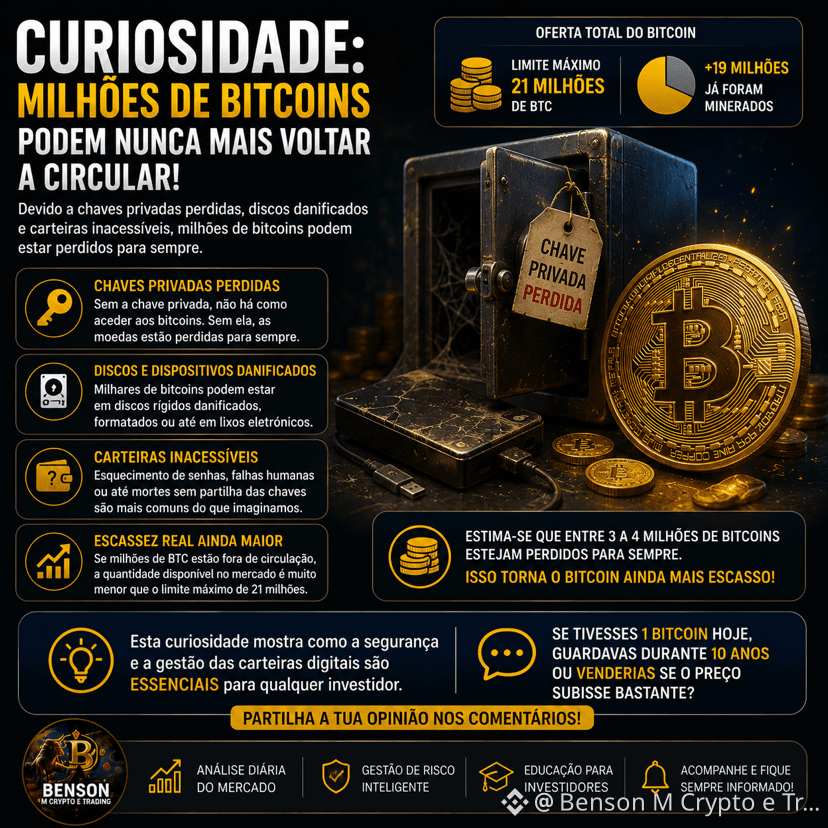
🔥💬 If you had 1 Bitcoin today, would you hold it for 10 years or would you sell if the price rose a lot?
#Bitcoin #Curiosidade #Crypto #Blockchain
🔥💬 If you had 1 Bitcoin today, would you hold it for 10 years or would you sell if the price rose a lot?
#Bitcoin #Curiosidade #Crypto #Blockchain
#Bitcoin #Curiosidade #Crypto #Blockchain
174
🌍 Blockchain continues to expand beyond cryptocurrencies
One of the biggest advantages of blockchain is enabling information to be recorded in a decentralized way, making unauthorized changes harder and increasing trust among the parties involved. It is precisely this feature that has sparked the interest of major companies around the world.
As the technology evolves, many experts believe blockchain could become an important part of the global digital infrastructure, regardless of the individual success of each cryptocurrency.
💬 What do you think will be the sector most transformed by blockchain technology in the coming years?
#Blockchain #Tecnologia #Crypto #Inovação
🌍 Blockchain continues to expand beyond cryptocurrencies
One of the biggest advantages of blockchain is enabling information to be recorded in a decentralized way, making unauthorized changes harder and increasing trust among the parties involved. It is precisely this feature that has sparked the interest of major companies around the world.
As the technology evolves, many experts believe blockchain could become an important part of the global digital infrastructure, regardless of the individual success of each cryptocurrency.
💬 What do you think will be the sector most transformed by blockchain technology in the coming years?
#Blockchain #Tecnologia #Crypto #Inovação
One of the biggest advantages of blockchain is enabling information to be recorded in a decentralized way, making unauthorized changes harder and increasing trust among the parties involved. It is precisely this feature that has sparked the interest of major companies around the world.
As the technology evolves, many experts believe blockchain could become an important part of the global digital infrastructure, regardless of the individual success of each cryptocurrency.
💬 What do you think will be the sector most transformed by blockchain technology in the coming years?
#Blockchain #Tecnologia #Crypto #Inovação

117
⚖️ Cryptocurrency regulation remains in the spotlight
Cryptocurrency market regulation continues to be one of the most important topics for investors, companies, and governments. In the United States, several regulatory bodies are advocating for clearer rules for the sector, arguing that this could increase investor protection and reduce fraudulent practices.
The balance between security and innovation will likely be one of the biggest challenges in the coming years. No matter which path is chosen, it is clear that the cryptocurrency market is becoming increasingly present in economic and political discussions worldwide.
💬 In your opinion, will clearer regulation strengthen the cryptocurrency market or limit its growth?
#Crypto #Blockchain #Bitcoin #Regulamentação
⚖️ Cryptocurrency regulation remains in the spotlight
Cryptocurrency market regulation continues to be one of the most important topics for investors, companies, and governments. In the United States, several regulatory bodies are advocating for clearer rules for the sector, arguing that this could increase investor protection and reduce fraudulent practices.
The balance between security and innovation will likely be one of the biggest challenges in the coming years. No matter which path is chosen, it is clear that the cryptocurrency market is becoming increasingly present in economic and political discussions worldwide.
💬 In your opinion, will clearer regulation strengthen the cryptocurrency market or limit its growth?
#Crypto #Blockchain #Bitcoin #Regulamentação
Cryptocurrency market regulation continues to be one of the most important topics for investors, companies, and governments. In the United States, several regulatory bodies are advocating for clearer rules for the sector, arguing that this could increase investor protection and reduce fraudulent practices.
The balance between security and innovation will likely be one of the biggest challenges in the coming years. No matter which path is chosen, it is clear that the cryptocurrency market is becoming increasingly present in economic and political discussions worldwide.
💬 In your opinion, will clearer regulation strengthen the cryptocurrency market or limit its growth?
#Crypto #Blockchain #Bitcoin #Regulamentação

104
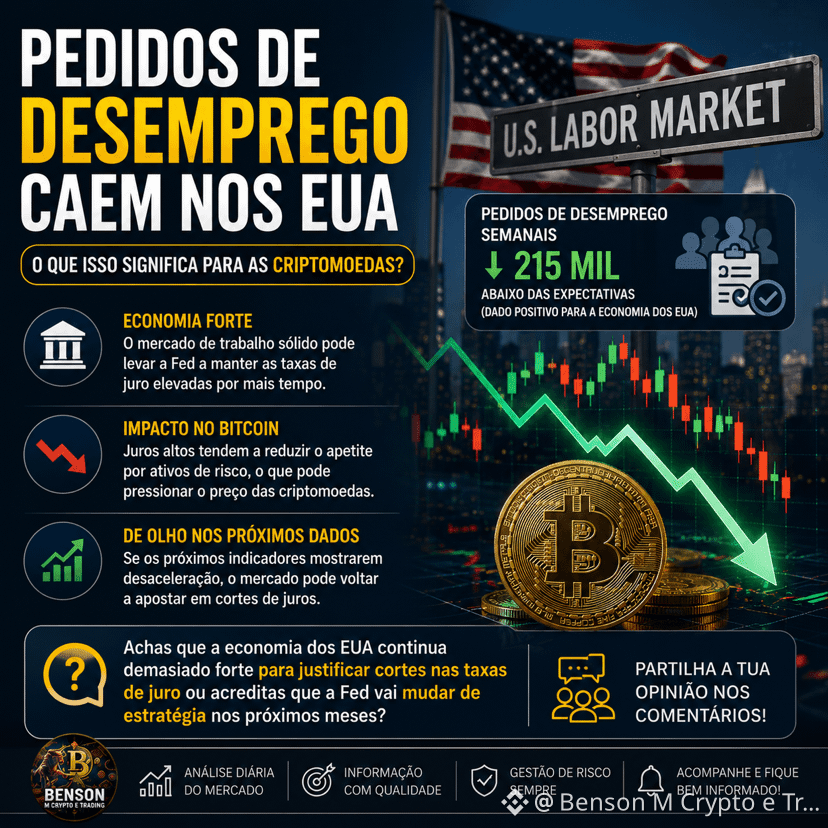
🇺🇸 US jobless claims surprise the market. What does it mean for cryptocurrencies?
Weekly unemployment benefit claims in the United States came in below expectations, indicating that the labor market remains relatively solid. While this is positive news for the North American economy, investors are also analyzing the impact these figures may have on monetary policy from the Federal Reserve.
That’s why US economic data continues to be closely watched by investors around the world, including those who trade exclusively in the cryptocurrency market.
💬 Do you think the US economy is still too strong to justify rate cuts, or do you believe the Fed will change strategy in the coming months?
#Economia #Bitcoin #Crypto #Fed #MercadosFinanceiros
🇺🇸 US jobless claims surprise the market. What does it mean for cryptocurrencies?
Weekly unemployment benefit claims in the United States came in below expectations, indicating that the labor market remains relatively solid. While this is positive news for the North American economy, investors are also analyzing the impact these figures may have on monetary policy from the Federal Reserve.
That’s why US economic data continues to be closely watched by investors around the world, including those who trade exclusively in the cryptocurrency market.
💬 Do you think the US economy is still too strong to justify rate cuts, or do you believe the Fed will change strategy in the coming months?
#Economia #Bitcoin #Crypto #Fed #MercadosFinanceiros
Weekly unemployment benefit claims in the United States came in below expectations, indicating that the labor market remains relatively solid. While this is positive news for the North American economy, investors are also analyzing the impact these figures may have on monetary policy from the Federal Reserve.
That’s why US economic data continues to be closely watched by investors around the world, including those who trade exclusively in the cryptocurrency market.
💬 Do you think the US economy is still too strong to justify rate cuts, or do you believe the Fed will change strategy in the coming months?
#Economia #Bitcoin #Crypto #Fed #MercadosFinanceiros
1
196
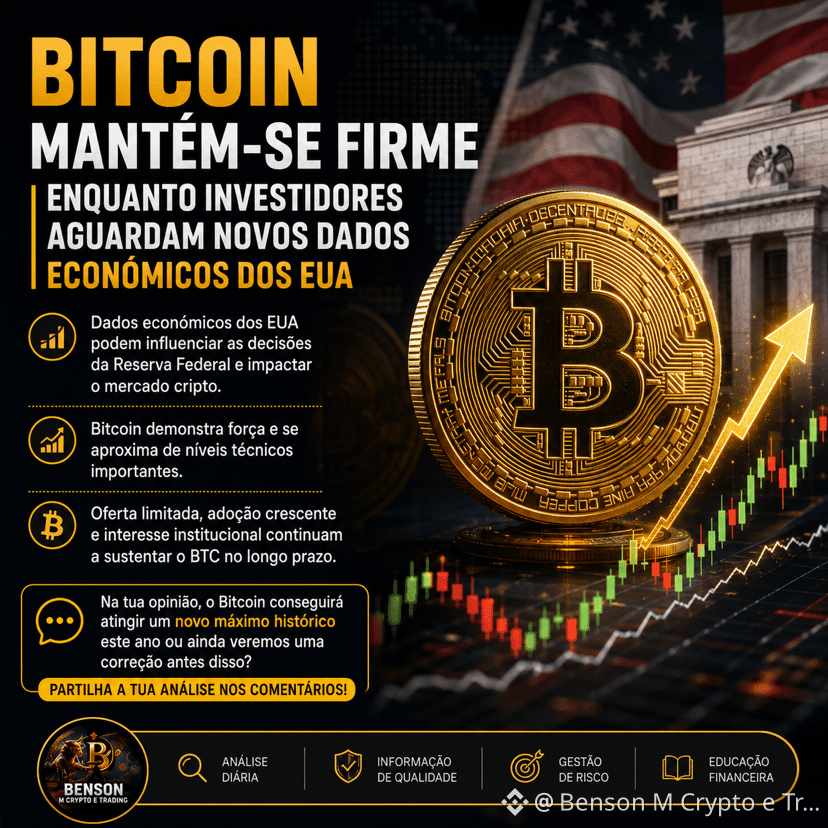
🚨 Bitcoin stays firm as investors await fresh US economic data
Bitcoin remains one of the most closely watched assets by investors worldwide. In recent days, the market has shown a mix of optimism and caution, as participants await new economic indicators from the United States that could influence the monetary policy of the Federal Reserve (Fed).
Whenever data related to inflation, employment, or economic growth is released, the market reacts quickly. If the economy shows signs of slowing down, many analysts believe the likelihood of interest-rate cuts increases, which often benefits assets considered higher risk, such as cryptocurrencies. On the other hand, very strong data can reinforce expectations of a more restrictive monetary policy.
Despite the volatility, many investors continue to view Bitcoin as a long-term asset, highlighting its limited supply and the growing adoption by companies and financial institutions. Still, it’s important to remember that the crypto market can experience significant swings in short periods of time.
💬 In your opinion, will Bitcoin reach a new all-time high this year, or will we still see a major correction before that?
#Bitcoin $BTC #Crypto #Mercados #Investimento
{future}(BTCUSDT)
🚨 Bitcoin stays firm as investors await fresh US economic data
Bitcoin remains one of the most closely watched assets by investors worldwide. In recent days, the market has shown a mix of optimism and caution, as participants await new economic indicators from the United States that could influence the monetary policy of the Federal Reserve (Fed).
Whenever data related to inflation, employment, or economic growth is released, the market reacts quickly. If the economy shows signs of slowing down, many analysts believe the likelihood of interest-rate cuts increases, which often benefits assets considered higher risk, such as cryptocurrencies. On the other hand, very strong data can reinforce expectations of a more restrictive monetary policy.
Despite the volatility, many investors continue to view Bitcoin as a long-term asset, highlighting its limited supply and the growing adoption by companies and financial institutions. Still, it’s important to remember that the crypto market can experience significant swings in short periods of time.
💬 In your opinion, will Bitcoin reach a new all-time high this year, or will we still see a major correction before that?
#Bitcoin $BTC #Crypto #Mercados #Investimento
Bitcoin remains one of the most closely watched assets by investors worldwide. In recent days, the market has shown a mix of optimism and caution, as participants await new economic indicators from the United States that could influence the monetary policy of the Federal Reserve (Fed).
Whenever data related to inflation, employment, or economic growth is released, the market reacts quickly. If the economy shows signs of slowing down, many analysts believe the likelihood of interest-rate cuts increases, which often benefits assets considered higher risk, such as cryptocurrencies. On the other hand, very strong data can reinforce expectations of a more restrictive monetary policy.
Despite the volatility, many investors continue to view Bitcoin as a long-term asset, highlighting its limited supply and the growing adoption by companies and financial institutions. Still, it’s important to remember that the crypto market can experience significant swings in short periods of time.
💬 In your opinion, will Bitcoin reach a new all-time high this year, or will we still see a major correction before that?
#Bitcoin $BTC #Crypto #Mercados #Investimento
116
💡 Did you know that more than 19 million Bitcoins have already been mined?
This means that less than 2 million remain to be created until the 21 million limit.
Scarcity is one of Bitcoin’s main characteristics.
#Bitcoin #Crypto #Blockchain $BTC
{future}(BTCUSDT)
💡 Did you know that more than 19 million Bitcoins have already been mined?
This means that less than 2 million remain to be created until the 21 million limit.
Scarcity is one of Bitcoin’s main characteristics.
#Bitcoin #Crypto #Blockchain $BTC
This means that less than 2 million remain to be created until the 21 million limit.
Scarcity is one of Bitcoin’s main characteristics.
#Bitcoin #Crypto #Blockchain $BTC
207
·
--
Bullish
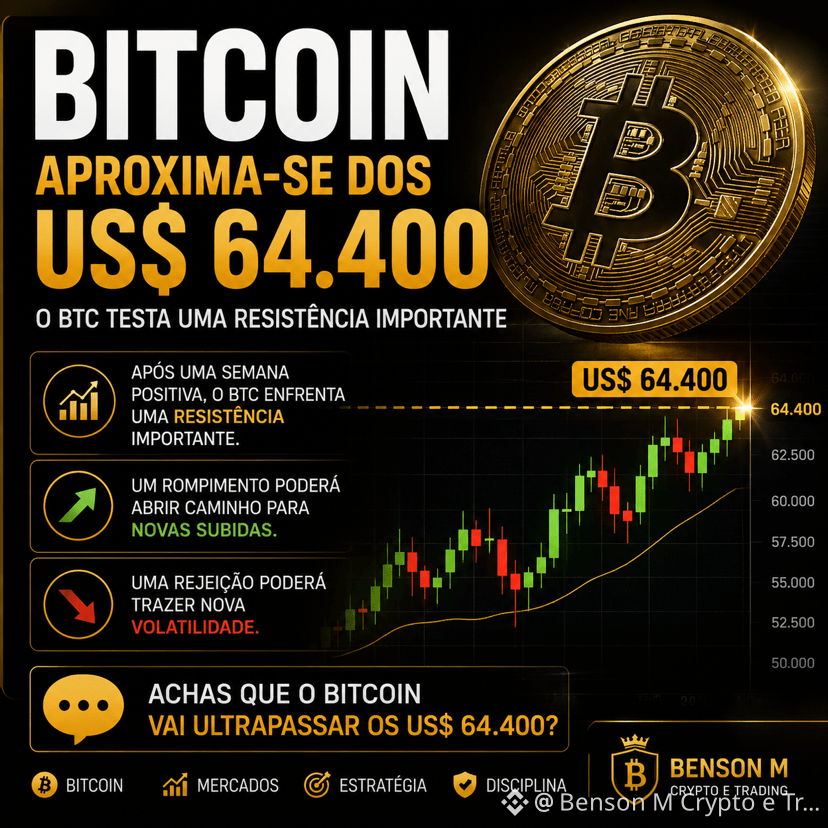
🚨 #Bitcoin testa again the US$ 64.400 zone.
After a positive week, BTC is facing an important resistance that could determine the next move.
📊 A breakout could pave the way for further gains, while a rejection could bring renewed volatility.
💬 Do you think Bitcoin will break above US$ 64.400?
#Bitcoin $BTC #Crypto #Trading #Markets #Investing
{future}(BTCUSDT)
🚨 #Bitcoin testa again the US$ 64.400 zone.
After a positive week, BTC is facing an important resistance that could determine the next move.
📊 A breakout could pave the way for further gains, while a rejection could bring renewed volatility.
💬 Do you think Bitcoin will break above US$ 64.400?
#Bitcoin $BTC #Crypto #Trading #Markets #Investing
After a positive week, BTC is facing an important resistance that could determine the next move.
📊 A breakout could pave the way for further gains, while a rejection could bring renewed volatility.
💬 Do you think Bitcoin will break above US$ 64.400?
#Bitcoin $BTC #Crypto #Trading #Markets #Investing
1
260
#BTCSharpeRatioFallsToLowestSince2022 📉 BTC Sharpe Ratio at its Lowest Since 2022… Opportunity or Warning?
The Bitcoin Sharpe Ratio has fallen to its lowest level since 2022, meaning recent risk-adjusted returns have weakened.
But history reminds us of something interesting:
🔹 Periods of low sentiment often appear before major market recoveries.
🔹 Smart investors focus on long-term fundamentals, not just short-term metrics.
🔹 Risk management remains essential in every market cycle.
📊 A low Sharpe Ratio doesn’t automatically mean Bitcoin is weak—it means volatility has outweighed recent returns.
💬 What’s your view?
🟢 A buying opportunity?
🔴 A warning sign?
🟡 Still waiting for confirmation?
#BTCSharpeRatioFallsToLowestSince2022 #Bitcoin #BTC #Crypto #Trading
#BTCSharpeRatioFallsToLowestSince2022 📉 BTC Sharpe Ratio at its Lowest Since 2022… Opportunity or Warning?
The Bitcoin Sharpe Ratio has fallen to its lowest level since 2022, meaning recent risk-adjusted returns have weakened.
But history reminds us of something interesting:
🔹 Periods of low sentiment often appear before major market recoveries.
🔹 Smart investors focus on long-term fundamentals, not just short-term metrics.
🔹 Risk management remains essential in every market cycle.
📊 A low Sharpe Ratio doesn’t automatically mean Bitcoin is weak—it means volatility has outweighed recent returns.
💬 What’s your view?
🟢 A buying opportunity?
🔴 A warning sign?
🟡 Still waiting for confirmation?
#BTCSharpeRatioFallsToLowestSince2022 #Bitcoin #BTC #Crypto #Trading
The Bitcoin Sharpe Ratio has fallen to its lowest level since 2022, meaning recent risk-adjusted returns have weakened.
But history reminds us of something interesting:
🔹 Periods of low sentiment often appear before major market recoveries.
🔹 Smart investors focus on long-term fundamentals, not just short-term metrics.
🔹 Risk management remains essential in every market cycle.
📊 A low Sharpe Ratio doesn’t automatically mean Bitcoin is weak—it means volatility has outweighed recent returns.
💬 What’s your view?
🟢 A buying opportunity?
🔴 A warning sign?
🟡 Still waiting for confirmation?
#BTCSharpeRatioFallsToLowestSince2022 #Bitcoin #BTC #Crypto #Trading
102
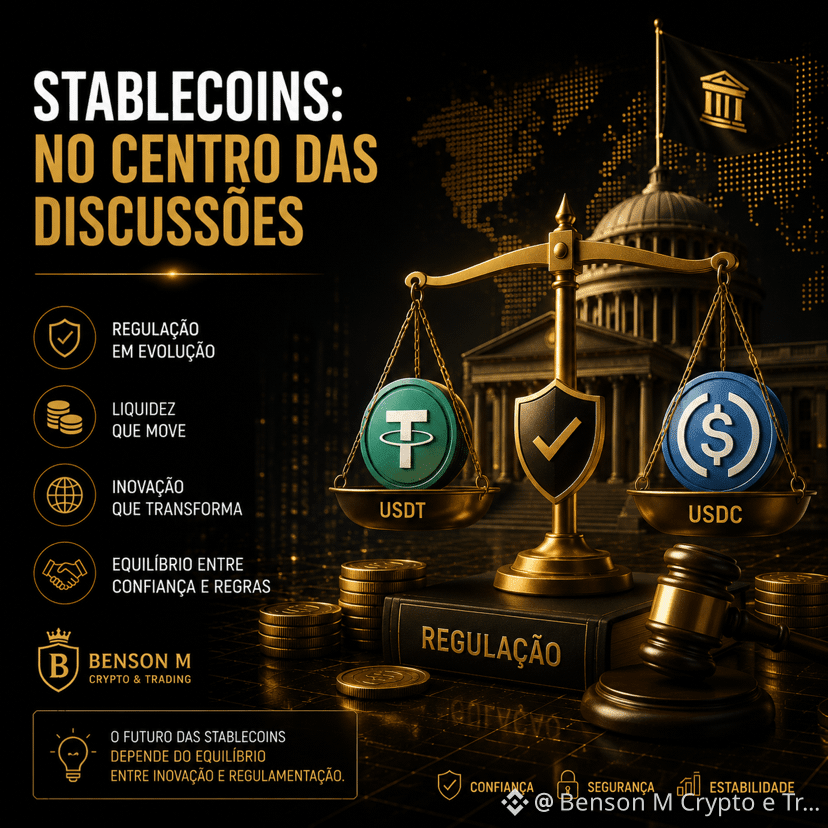
🪙⚖️ Stablecoins are back at the center of global discussions.
Governments and central banks continue to debate new rules for the digital asset market.
Despite regulatory changes, stablecoins remain essential for liquidity, payments, and cryptocurrency trading.
The balance between innovation and regulation will be decisive for the future of the sector.
#Stablecoins $USDT $USDC #Crypto #Markets #Regulation
{future}(USDCUSDT)
🪙⚖️ Stablecoins are back at the center of global discussions.
Governments and central banks continue to debate new rules for the digital asset market.
Despite regulatory changes, stablecoins remain essential for liquidity, payments, and cryptocurrency trading.
The balance between innovation and regulation will be decisive for the future of the sector.
#Stablecoins $USDT $USDC #Crypto #Markets #Regulation
Governments and central banks continue to debate new rules for the digital asset market.
Despite regulatory changes, stablecoins remain essential for liquidity, payments, and cryptocurrency trading.
The balance between innovation and regulation will be decisive for the future of the sector.
#Stablecoins $USDT $USDC #Crypto #Markets #Regulation
30
·
--
Bullish
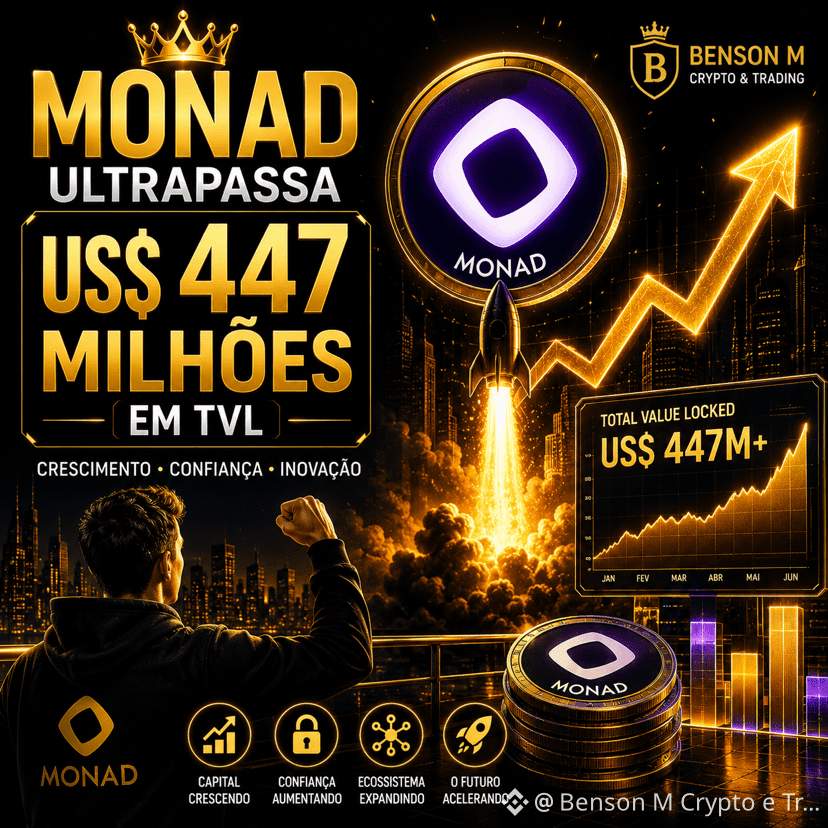
🚀💰 #Monad continues to attract capital.
The Total Value Locked (TVL) of the network has surpassed US$ 447 million, showing growing interest in DeFi applications.
The more capital that is locked, the greater the investors' confidence in the ecosystem tends to be.
Can Monad become one of the leading blockchains in the market?
$MON #DeFi #Crypto #Blockchain #Markets #Investing
{future}(MONUSDT)
🚀💰 #Monad continues to attract capital.
The Total Value Locked (TVL) of the network has surpassed US$ 447 million, showing growing interest in DeFi applications.
The more capital that is locked, the greater the investors' confidence in the ecosystem tends to be.
Can Monad become one of the leading blockchains in the market?
$MON #DeFi #Crypto #Blockchain #Markets #Investing
The Total Value Locked (TVL) of the network has surpassed US$ 447 million, showing growing interest in DeFi applications.
The more capital that is locked, the greater the investors' confidence in the ecosystem tends to be.
Can Monad become one of the leading blockchains in the market?
$MON #DeFi #Crypto #Blockchain #Markets #Investing
81
🔒🚨 #Hackers ethical identify a vulnerability in the Aptos blockchain.
The flaw was discovered by researchers before causing harm to users.
This type of audit strengthens the security of the ecosystem and highlights the importance of collaboration between developers and cybersecurity specialists.
Security continues to be one of the pillars of modern blockchains.
#Aptos #Blockchain #Crypto #CyberSecurity #Markets
🔒🚨 #Hackers ethical identify a vulnerability in the Aptos blockchain.
The flaw was discovered by researchers before causing harm to users.
This type of audit strengthens the security of the ecosystem and highlights the importance of collaboration between developers and cybersecurity specialists.
Security continues to be one of the pillars of modern blockchains.
#Aptos #Blockchain #Crypto #CyberSecurity #Markets
The flaw was discovered by researchers before causing harm to users.
This type of audit strengthens the security of the ecosystem and highlights the importance of collaboration between developers and cybersecurity specialists.
Security continues to be one of the pillars of modern blockchains.
#Aptos #Blockchain #Crypto #CyberSecurity #Markets

131
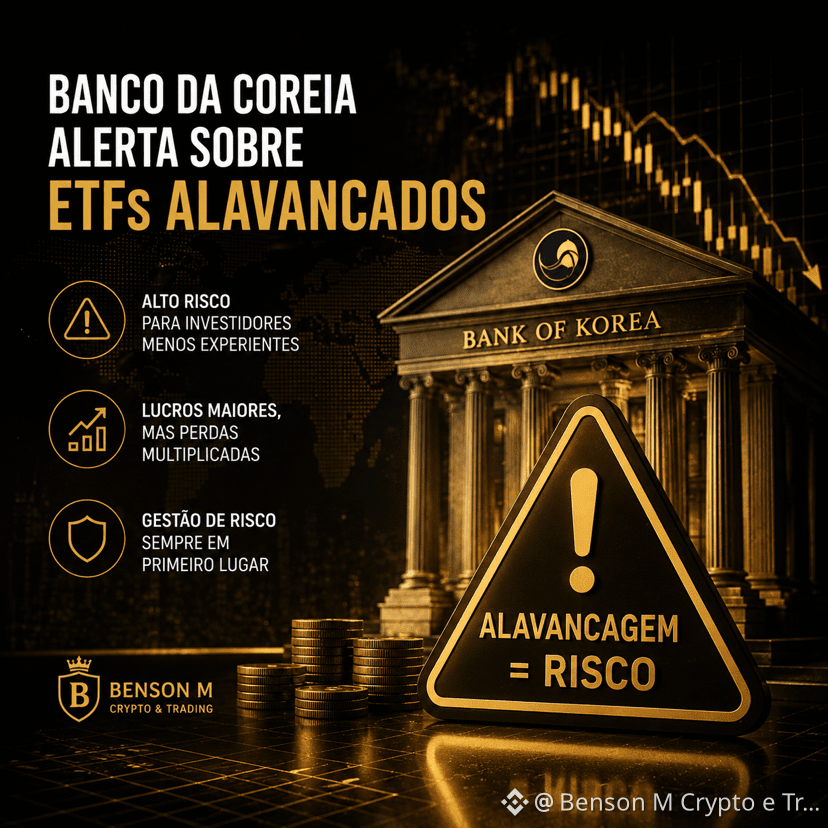
🏦⚠️ Bank of Korea issues alert about #ETFs leveraged positions.
The regulator showed concern about the risks of high-leverage products, especially for less experienced investors.
These instruments can increase profits, but they also multiply losses during rapid market moves.
📊 Risk management continues to be more important than chasing quick gains.
#Markets #ETF #Investing #Trading #RiskManagement #Finance
🏦⚠️ Bank of Korea issues alert about #ETFs leveraged positions.
The regulator showed concern about the risks of high-leverage products, especially for less experienced investors.
These instruments can increase profits, but they also multiply losses during rapid market moves.
📊 Risk management continues to be more important than chasing quick gains.
#Markets #ETF #Investing #Trading #RiskManagement #Finance
The regulator showed concern about the risks of high-leverage products, especially for less experienced investors.
These instruments can increase profits, but they also multiply losses during rapid market moves.
📊 Risk management continues to be more important than chasing quick gains.
#Markets #ETF #Investing #Trading #RiskManagement #Finance
1
139
💡🔥 Vitalik Buterin presents a new roadmap for the #Ethereum !
The Ethereum co-founder revealed a strategy to make the network simpler, more efficient, and more scalable.
The goal is to reduce protocol complexity, improve security, and make future upgrades easier, while keeping Ethereum competitive in the long run.
Anyone investing in ETH should keep an eye on these changes, as they may affect network adoption and market sentiment.
📈 Innovation continues to be one of the biggest drivers in the crypto sector.
#Ethereum $ETH #Blockchain #Crypto #Markets #Investing #Altcoins
{future}(ETHUSDT)
💡🔥 Vitalik Buterin presents a new roadmap for the #Ethereum !
The Ethereum co-founder revealed a strategy to make the network simpler, more efficient, and more scalable.
The goal is to reduce protocol complexity, improve security, and make future upgrades easier, while keeping Ethereum competitive in the long run.
Anyone investing in ETH should keep an eye on these changes, as they may affect network adoption and market sentiment.
📈 Innovation continues to be one of the biggest drivers in the crypto sector.
#Ethereum $ETH #Blockchain #Crypto #Markets #Investing #Altcoins
The Ethereum co-founder revealed a strategy to make the network simpler, more efficient, and more scalable.
The goal is to reduce protocol complexity, improve security, and make future upgrades easier, while keeping Ethereum competitive in the long run.
Anyone investing in ETH should keep an eye on these changes, as they may affect network adoption and market sentiment.
📈 Innovation continues to be one of the biggest drivers in the crypto sector.
#Ethereum $ETH #Blockchain #Crypto #Markets #Investing #Altcoins

111
💡💡🔥Risk management⚠️
📈 A good trader doesn’t try to get every move right.
The secret is protecting capital, controlling risk, and staying disciplined.
Consistent profits come from management, not luck.
#Bitcoin #BTC #Crypto #Trading #Investing #Markets
💡💡🔥Risk management⚠️
📈 A good trader doesn’t try to get every move right.
The secret is protecting capital, controlling risk, and staying disciplined.
Consistent profits come from management, not luck.
#Bitcoin #BTC #Crypto #Trading #Investing #Markets
📈 A good trader doesn’t try to get every move right.
The secret is protecting capital, controlling risk, and staying disciplined.
Consistent profits come from management, not luck.
#Bitcoin #BTC #Crypto #Trading #Investing #Markets
1
173
🧠 Did you know that #Bitcoin has never needed a central bank to work?
Since 2009, millions of users validate transactions through a decentralized network spread across the world.
It’s precisely this independence that makes Bitcoin unique.
#Bitcoin $BTC #Crypto #Trading #Investing #Markets
🧠 Did you know that #Bitcoin has never needed a central bank to work?
Since 2009, millions of users validate transactions through a decentralized network spread across the world.
It’s precisely this independence that makes Bitcoin unique.
#Bitcoin $BTC #Crypto #Trading #Investing #Markets
Since 2009, millions of users validate transactions through a decentralized network spread across the world.
It’s precisely this independence that makes Bitcoin unique.
#Bitcoin $BTC #Crypto #Trading #Investing #Markets
95
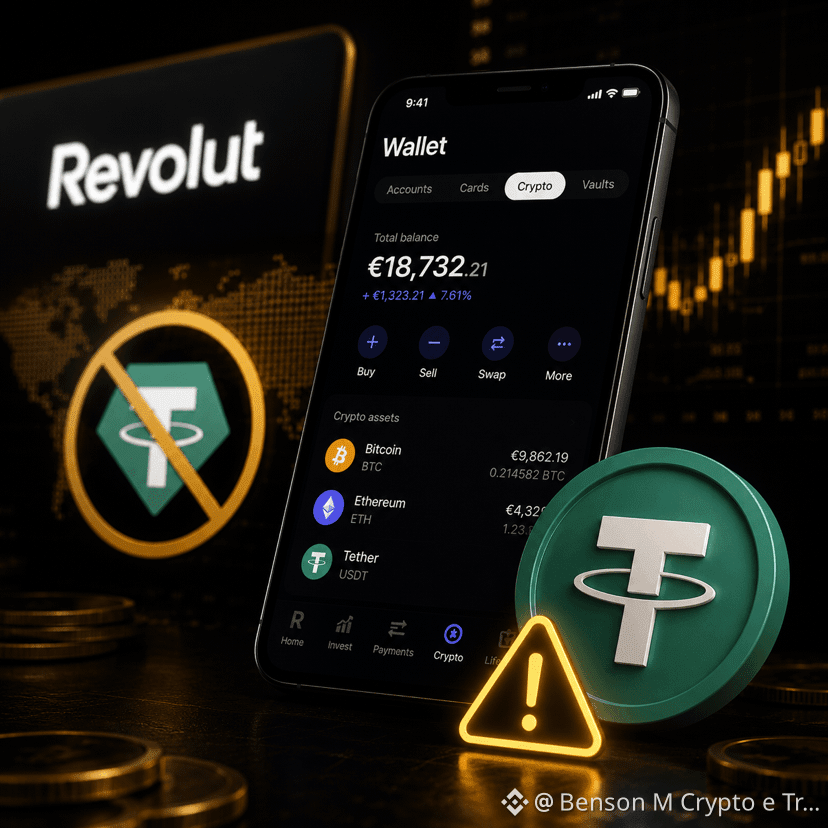
🔥⚠️🔥💲Revolut removes $USDT
💳 Revolut’s decision to remove USDT in some markets drew the attention of the community.
It’s important to remember that platform decisions don’t necessarily mean there are issues with the market as a whole, but they reinforce the importance of knowing where and how we store our assets.
What do you think about this decision?
#Bitcoin #BTC #Crypto #Trading #Investing #Markets
🔥⚠️🔥💲Revolut removes $USDT
💳 Revolut’s decision to remove USDT in some markets drew the attention of the community.
It’s important to remember that platform decisions don’t necessarily mean there are issues with the market as a whole, but they reinforce the importance of knowing where and how we store our assets.
What do you think about this decision?
#Bitcoin #BTC #Crypto #Trading #Investing #Markets
💳 Revolut’s decision to remove USDT in some markets drew the attention of the community.
It’s important to remember that platform decisions don’t necessarily mean there are issues with the market as a whole, but they reinforce the importance of knowing where and how we store our assets.
What do you think about this decision?
#Bitcoin #BTC #Crypto #Trading #Investing #Markets
152

Log in to explore more content
Join global crypto users on Binance Square
⚡️ Get latest and useful information about crypto.
💬 Trusted by the world’s largest crypto exchange.
👍 Discover real insights from verified creators.
Email / Phone number
Trending Topics
CircleMints500MUSDCOnSolana
51,561 views
1,293 Discussing
💵 Solana just received another $500M of USDC. But don't make the mistake everyone else is making...
#circlemints500musdconsolana
Circle's USDC Treasury recorded two 250M USDC mints on Solana, creating $500M of fresh supply through its authorized infrastructure.
Circle now reports $75.2B USDC in circulation globally.
But:
A mint is not the same as $500M of fresh market demand.
It tells us Circle created the inventory.
It does not tell us that $500M has already entered Solana DeFi, exchanges, payments or trading.
That's where the interesting signal begins.
Solana's stablecoin economy is already operating at enormous scale, with recent reporting putting network stablecoin volume above $5T in 2026.
So this isn't really a “USDC mint = SOL bullish” story.
It's an inventory → deployment story.
Watch the wallets.
Where does that $500M move next?
If it gets deployed into exchanges, lending, payments or liquidity pools, the market has something much more meaningful than a treasury print.
The mint confirms creation of USDC, not the eventual destination or economic use of the funds.
$SOL $RARE $USDC
#CircleMints500MUSDCOnSolana #solana #BlackRockBuildsTokenizedPortfoliosForOndo #defi
Stink meaner
·8 Likes
·5k views
PolymarketBankFailureBetsDrawFDICConcern
65,139 views
1,346 Discussing
BlackRockBuildsTokenizedPortfoliosForOndo
51,482 views
939 Discussing