

Anas Sheikh Crypto Educator
108 Posts

Anas Sheikh Crypto Educator
Report
Block User
Helping you learn Crypto, Bitcoin & DeFi 🚀 Learn • Grow • Earn | Simple guides, market updates & tips | Follow me for more Helpful Contant @Anassheikh128
3 Months
10 Following
3 Followers
1 Liked
Posts
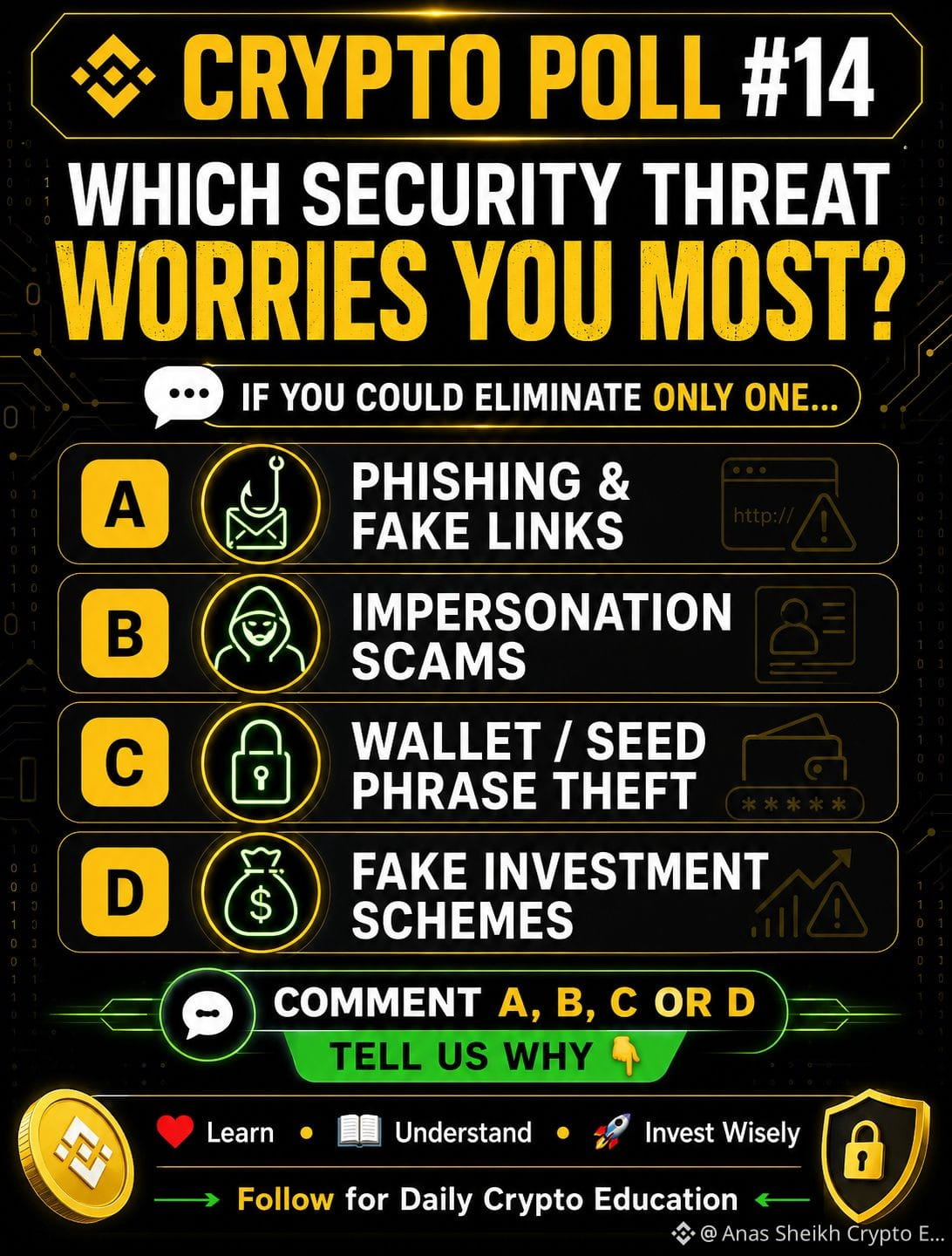
$BTC 🗳️ CRYPTO POLL #14 WHICH SECURITY THREAT WORRIES YOU MOST?
Crypto security isn't just about protecting your password.
If you could choose ONE threat to eliminate, which would you choose?
🅰️ 🎣 Phishing & Fake Links
🅱️ 👤 Impersonation Scams
🅲 🔐 Wallet / Seed Phrase Theft
🅳 💰 Fake Investment Schemes
👇 Comment A, B, C, or D and tell us WHY
Let's see what the crypto community is most concerned about 👀
💡 Remember: Staying calm, verifying information, and never sharing your recovery phrase are basic but powerful security habits
📌 Follow for daily crypto education and security tips
#CryptoPoll #CryptoSecurity #CryptoScams #CryptoEducation #Bitcoin #Web3Security #BinanceSquare #LearnCrypto
{spot}(BTCUSDT)
$BTC 🗳️ CRYPTO POLL #14 WHICH SECURITY THREAT WORRIES YOU MOST?
Crypto security isn't just about protecting your password.
If you could choose ONE threat to eliminate, which would you choose?
🅰️ 🎣 Phishing & Fake Links
🅱️ 👤 Impersonation Scams
🅲 🔐 Wallet / Seed Phrase Theft
🅳 💰 Fake Investment Schemes
👇 Comment A, B, C, or D and tell us WHY
Let's see what the crypto community is most concerned about 👀
💡 Remember: Staying calm, verifying information, and never sharing your recovery phrase are basic but powerful security habits
📌 Follow for daily crypto education and security tips
#CryptoPoll #CryptoSecurity #CryptoScams #CryptoEducation #Bitcoin #Web3Security #BinanceSquare #LearnCrypto
59
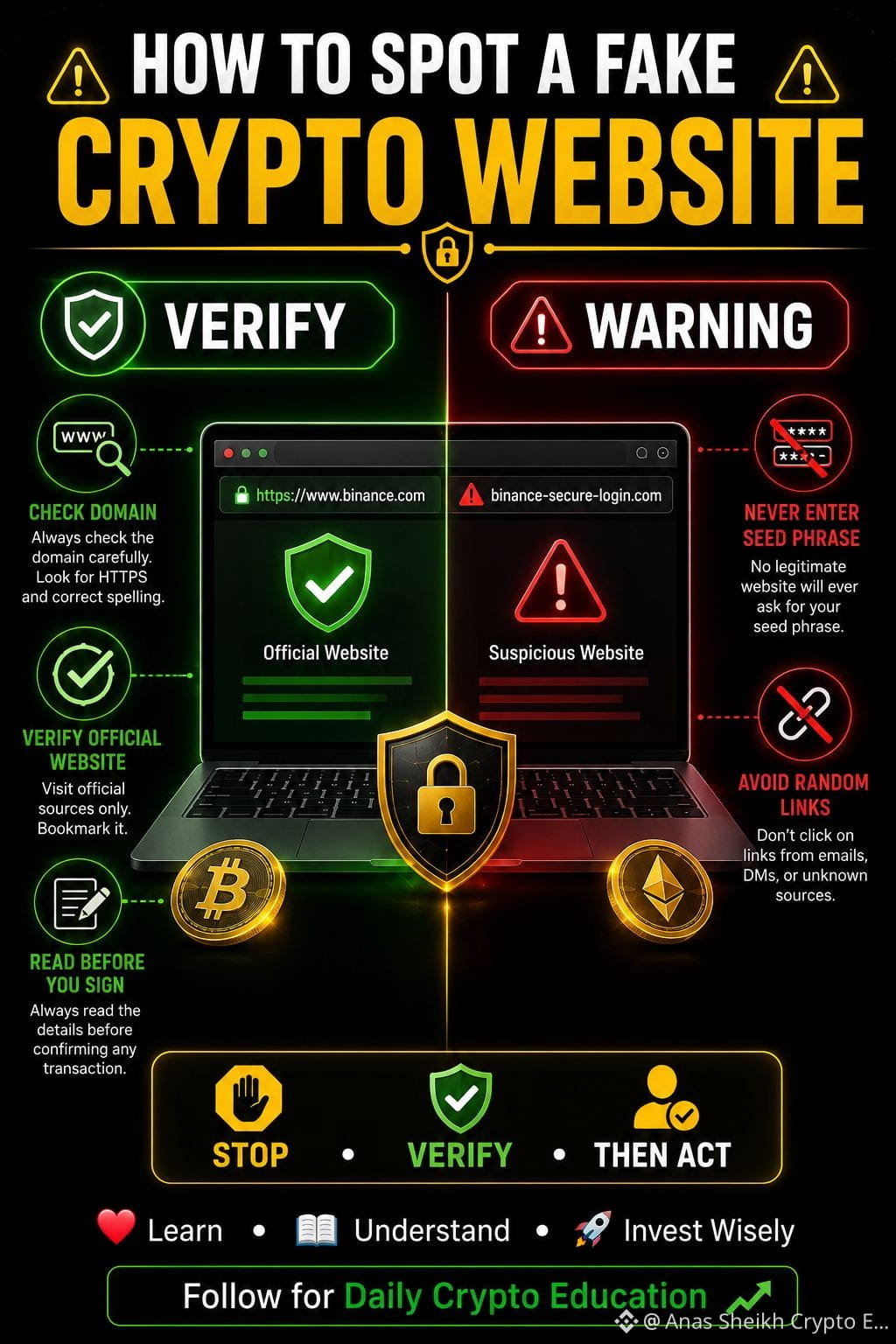
$BTC 🔎 HOW TO SPOT A FAKE CRYPTO WEBSITE
🚨 Could You Spot a Fake Crypto Website?
Scammers often create websites that look almost identical to legitimate exchanges, wallets, and crypto projects
Before entering information or connecting your wallet, check these 5 things:
🔎 1. Check the Domain
Look carefully at the website address. Fake sites may use misspellings, extra characters, or unusual domains
🔐 2. Don't Enter Your Seed Phrase
A legitimate wallet website should never need your seed phrase to "verify" your wallet
🚨 If a website asks for it, stop immediately.
🔗 3. Don't Trust Random Links
Avoid clicking crypto links from unexpected DMs, emails, comments, or messages
👀 4. Check Before You Connect
Verify that you're on the official website before connecting your wallet or signing a transaction
✍️ 5. Read Before You Sign
Don't blindly approve wallet transactions or token permissions. Understand what you're authorizing first
🛡️ REMEMBER
A professional-looking website does NOT automatically mean it's legitimate
STOP → VERIFY → THEN ACT
What do you check FIRST when visiting a crypto website?
A) Website address
B) Logo/design
C) Number of followers
D) Comments
Comment your answer below👇
📌 Follow for daily crypto security and education
#CryptoSecurity #CryptoScams #Web3Security #CryptoEducation #Bitcoin #CryptoTips #BinanceSquare #LearnCrypto
{spot}(BTCUSDT)
$BTC 🔎 HOW TO SPOT A FAKE CRYPTO WEBSITE
🚨 Could You Spot a Fake Crypto Website?
Scammers often create websites that look almost identical to legitimate exchanges, wallets, and crypto projects
Before entering information or connecting your wallet, check these 5 things:
🔎 1. Check the Domain
Look carefully at the website address. Fake sites may use misspellings, extra characters, or unusual domains
🔐 2. Don't Enter Your Seed Phrase
A legitimate wallet website should never need your seed phrase to "verify" your wallet
🚨 If a website asks for it, stop immediately.
🔗 3. Don't Trust Random Links
Avoid clicking crypto links from unexpected DMs, emails, comments, or messages
👀 4. Check Before You Connect
Verify that you're on the official website before connecting your wallet or signing a transaction
✍️ 5. Read Before You Sign
Don't blindly approve wallet transactions or token permissions. Understand what you're authorizing first
🛡️ REMEMBER
A professional-looking website does NOT automatically mean it's legitimate
STOP → VERIFY → THEN ACT
What do you check FIRST when visiting a crypto website?
A) Website address
B) Logo/design
C) Number of followers
D) Comments
Comment your answer below👇
📌 Follow for daily crypto security and education
#CryptoSecurity #CryptoScams #Web3Security #CryptoEducation #Bitcoin #CryptoTips #BinanceSquare #LearnCrypto
62
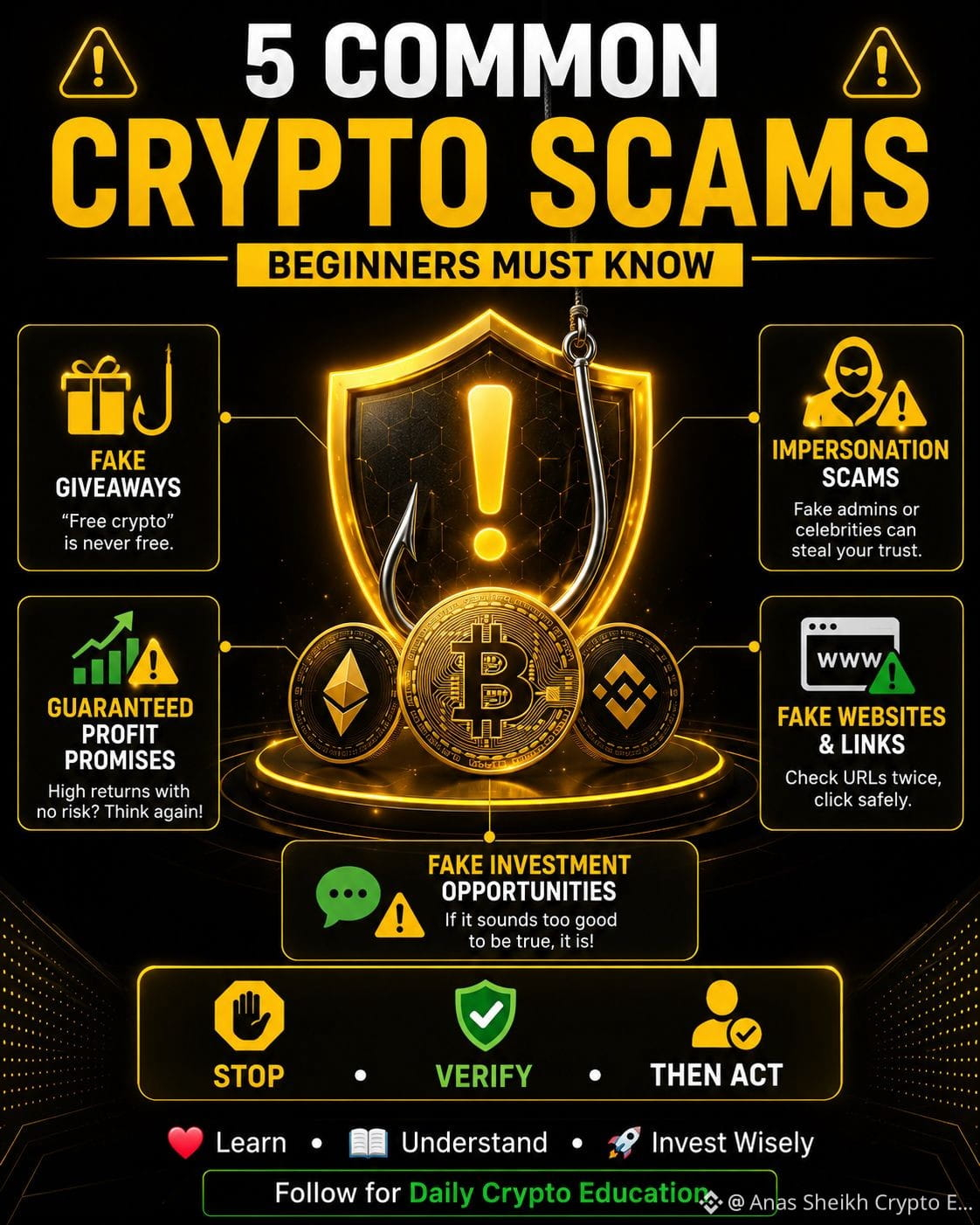
$BTC 5 COMMON CRYPTO SCAMS BEGINNERS MUST KNOW
🚨 5 Crypto Scams Every Beginner Should Know
Crypto scams don't always look like scams. They often use urgency, fake promises, or impersonation to make you act before you think.
🎣 1. Fake Giveaways
"Send 1 BTC and receive 2 BTC back!"
Legitimate projects don't need your crypto to "double" it.
👤 2. Impersonation Scams
Scammers may pretend to be exchanges, influencers, support agents, or project teams.
📈 3. Guaranteed Profit Promises
"100% guaranteed returns" is a major red flag.
🔗 4. Fake Websites & Links
A website can look almost identical to a legitimate platform while secretly trying to steal your login information or wallet access.
💬 5. Fake Investment Opportunities
Be extremely cautious when someone contacts you privately promising exclusive crypto investments or guaranteed profits.
🛡️ Golden Rule:
STOP → VERIFY → THEN ACT
Never rush because someone says "limited time", "act now", or "guaranteed profit
👇 Which scam should beginners be most careful about?
Comment 1–5 below
📌 Follow for daily crypto education and security tips
#CryptoScams #CryptoSecurity #CryptoEducation #Bitcoin #CryptoTips #Web3Security #BinanceSquare #LearnCrypto
{spot}(BTCUSDT)
$BTC 5 COMMON CRYPTO SCAMS BEGINNERS MUST KNOW
🚨 5 Crypto Scams Every Beginner Should Know
Crypto scams don't always look like scams. They often use urgency, fake promises, or impersonation to make you act before you think.
🎣 1. Fake Giveaways
"Send 1 BTC and receive 2 BTC back!"
Legitimate projects don't need your crypto to "double" it.
👤 2. Impersonation Scams
Scammers may pretend to be exchanges, influencers, support agents, or project teams.
📈 3. Guaranteed Profit Promises
"100% guaranteed returns" is a major red flag.
🔗 4. Fake Websites & Links
A website can look almost identical to a legitimate platform while secretly trying to steal your login information or wallet access.
💬 5. Fake Investment Opportunities
Be extremely cautious when someone contacts you privately promising exclusive crypto investments or guaranteed profits.
🛡️ Golden Rule:
STOP → VERIFY → THEN ACT
Never rush because someone says "limited time", "act now", or "guaranteed profit
👇 Which scam should beginners be most careful about?
Comment 1–5 below
📌 Follow for daily crypto education and security tips
#CryptoScams #CryptoSecurity #CryptoEducation #Bitcoin #CryptoTips #Web3Security #BinanceSquare #LearnCrypto
53
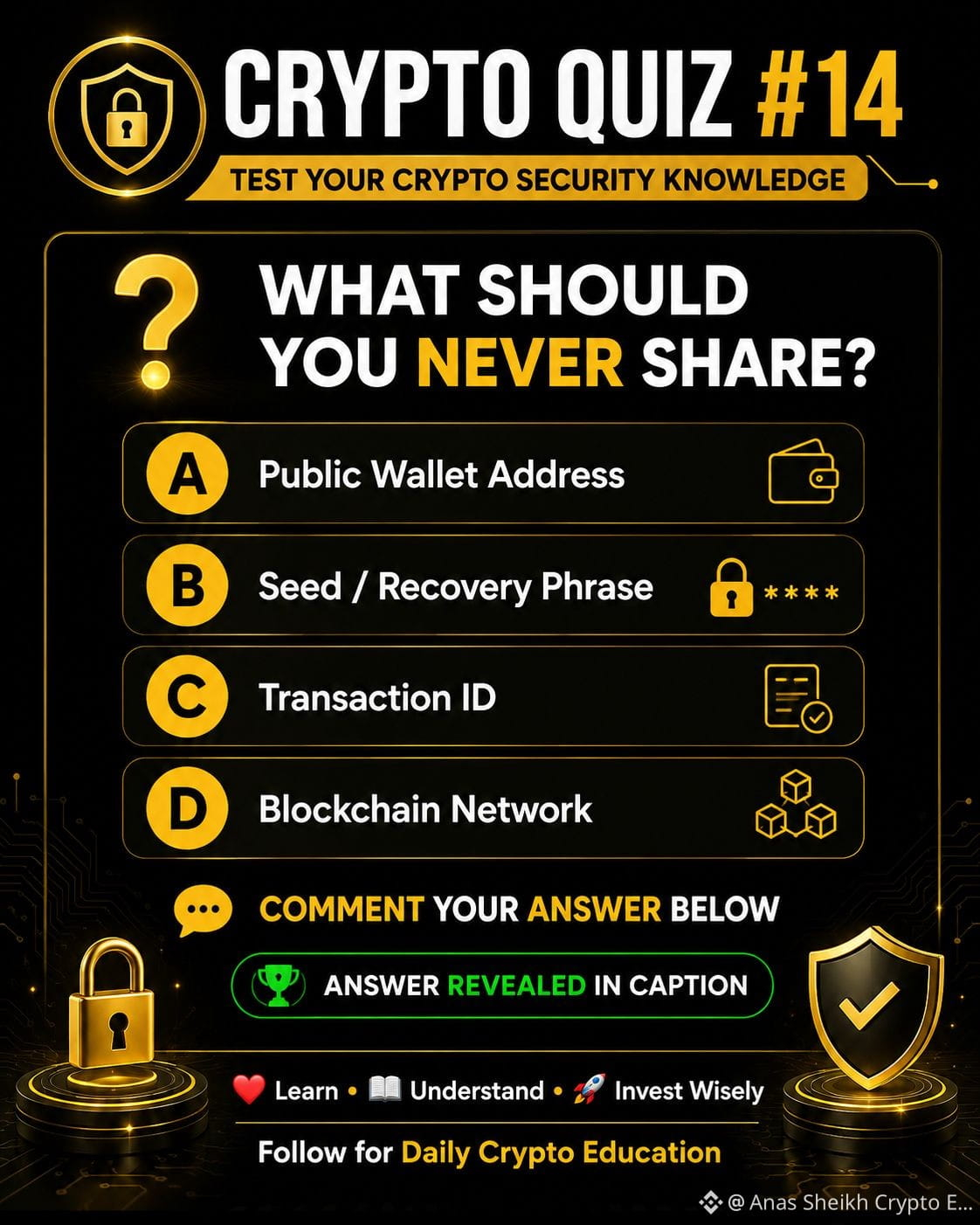
$BTC 🧠 CRYPTO QUIZ #14 — TEST YOUR SECURITY KNOWLEDGE
What should you NEVER share with another person?
🅰️ Your Public Wallet Address
🅱️ Your Seed/Recovery Phrase
🅲 Your Transaction ID
🅳 Your Blockchain Network
👇 Comment A, B, C, or D before checking the answer!
💡 Important: Your public wallet address is generally shareable when you want someone to send you crypto, but your recovery phrase and private keys must remain secret
🚨 If someone asks for your seed phrase, stop and verify before doing anything
👇 Did you get it right?
Comment B ✅ if you knew the answer
📌 Follow for daily crypto education
#CryptoQuiz #CryptoSecurity #CryptoEducation #Bitcoin #Web3Security #CryptoScams #BinanceSquare #LearnCrypto
{spot}(BTCUSDT)
$BTC 🧠 CRYPTO QUIZ #14 — TEST YOUR SECURITY KNOWLEDGE
What should you NEVER share with another person?
🅰️ Your Public Wallet Address
🅱️ Your Seed/Recovery Phrase
🅲 Your Transaction ID
🅳 Your Blockchain Network
👇 Comment A, B, C, or D before checking the answer!
💡 Important: Your public wallet address is generally shareable when you want someone to send you crypto, but your recovery phrase and private keys must remain secret
🚨 If someone asks for your seed phrase, stop and verify before doing anything
👇 Did you get it right?
Comment B ✅ if you knew the answer
📌 Follow for daily crypto education
#CryptoQuiz #CryptoSecurity #CryptoEducation #Bitcoin #Web3Security #CryptoScams #BinanceSquare #LearnCrypto
74
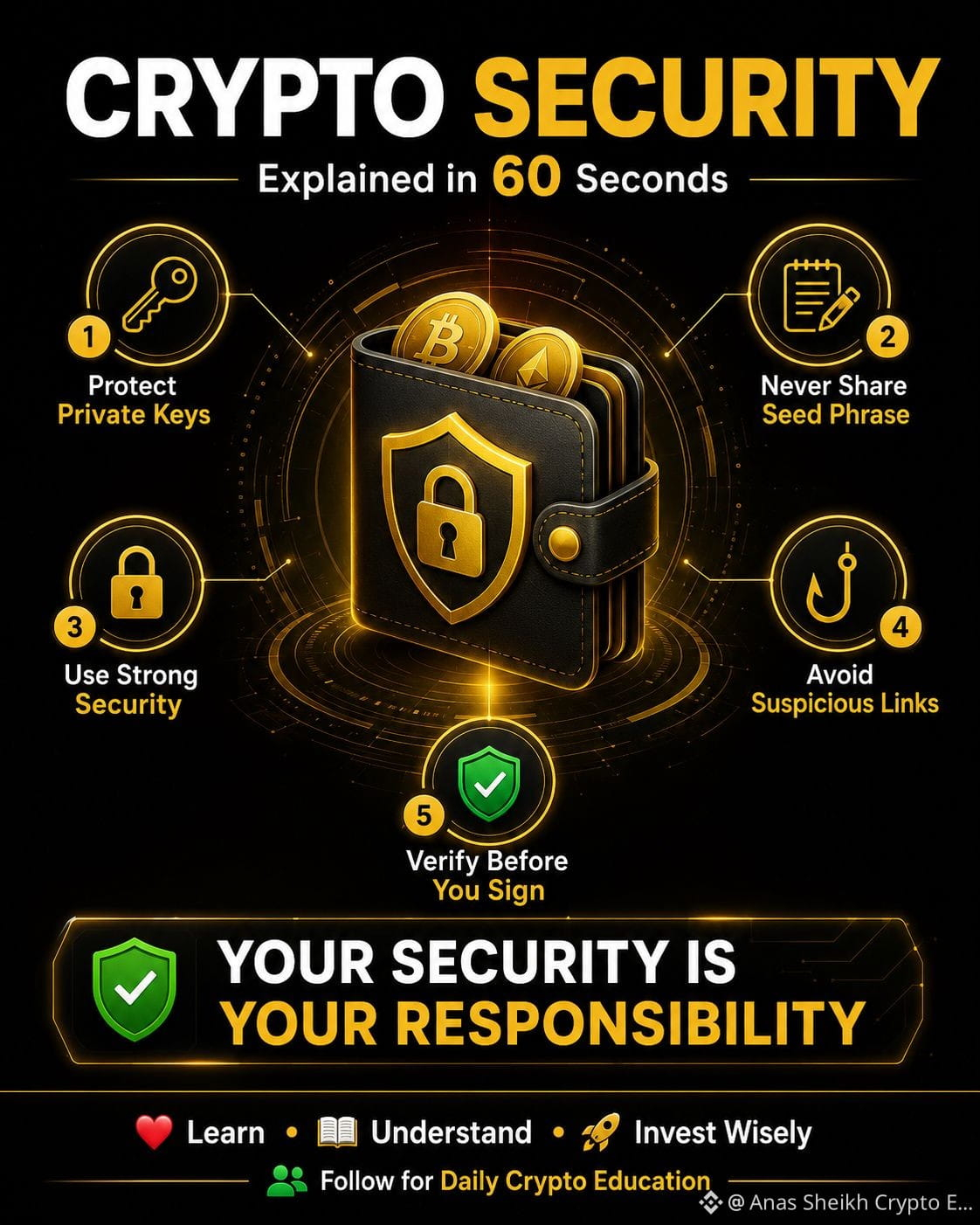
$BTC 🔐 CRYPTO SECURITY EXPLAINED IN 60 SECONDS
🔐 Your Crypto Security Starts With You
Unlike a traditional bank account, crypto wallets give you direct
control over your assets but that also means you need to protect your access carefully
🛡️ 5 Basic Security Rules
🔑 1. Protect Your Private Keys
Never share your private keys with anyone.
📝 2. Never Share Your Seed Phrase
Your recovery phrase can give someone access to your wallet. Keep it private and offline.
🔒 3. Use Strong Security
Use strong, unique passwords and enable 2FA where available.
🎣 4. Avoid Suspicious Links
Don't connect your wallet to websites you don't recognize or trust.
✅ 5. Verify Before You Sign
Check the website, network, transaction details, and wallet request before approving anything
💡 Remember:
If someone asks for your seed phrase, treat it as a major red flag. 🚨
👇 Which security rule did you learn today?
Comment 1–5 below
📌 Follow for daily crypto education
#CryptoSecurity #CryptoEducation #Bitcoin #CryptoScams #Web3Security #Blockchain #BinanceSquare #LearnCrypto
{spot}(BTCUSDT)
$BTC 🔐 CRYPTO SECURITY EXPLAINED IN 60 SECONDS
🔐 Your Crypto Security Starts With You
Unlike a traditional bank account, crypto wallets give you direct
control over your assets but that also means you need to protect your access carefully
🛡️ 5 Basic Security Rules
🔑 1. Protect Your Private Keys
Never share your private keys with anyone.
📝 2. Never Share Your Seed Phrase
Your recovery phrase can give someone access to your wallet. Keep it private and offline.
🔒 3. Use Strong Security
Use strong, unique passwords and enable 2FA where available.
🎣 4. Avoid Suspicious Links
Don't connect your wallet to websites you don't recognize or trust.
✅ 5. Verify Before You Sign
Check the website, network, transaction details, and wallet request before approving anything
💡 Remember:
If someone asks for your seed phrase, treat it as a major red flag. 🚨
👇 Which security rule did you learn today?
Comment 1–5 below
📌 Follow for daily crypto education
#CryptoSecurity #CryptoEducation #Bitcoin #CryptoScams #Web3Security #Blockchain #BinanceSquare #LearnCrypto
98
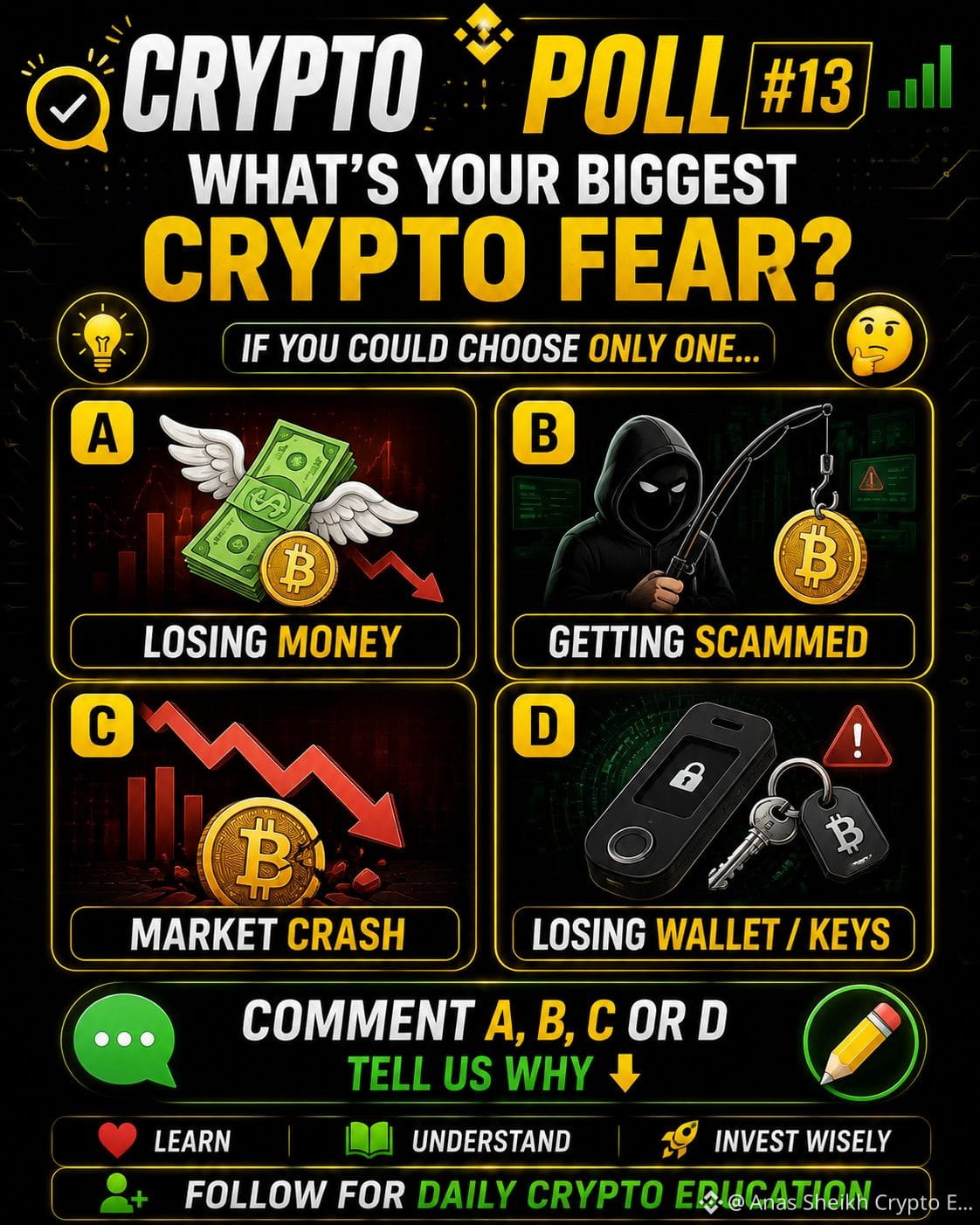
$BTC 🗳️What's Your Biggest Crypto Fear?
Everyone has a different fear when it comes to crypto.
If you had to choose ONE, what's yours?
🅰️ Losing Money 💸
🅱️ Getting Scammed 🎣
🅲 Market Crash 📉
🅳 Losing My Wallet/Keys 🔐
👇 Comment A, B, C, or D and tell us WHY
There is no wrong answer. Let's see what the community thinks. 👀
📌 Follow for daily crypto education
#CryptoPoll #CryptoEducation #Bitcoin #CryptoSecurity #RiskManagement #CryptoBeginners #BinanceSquare #LearnCrypto
{spot}(BTCUSDT)
$BTC 🗳️What's Your Biggest Crypto Fear?
Everyone has a different fear when it comes to crypto.
If you had to choose ONE, what's yours?
🅰️ Losing Money 💸
🅱️ Getting Scammed 🎣
🅲 Market Crash 📉
🅳 Losing My Wallet/Keys 🔐
👇 Comment A, B, C, or D and tell us WHY
There is no wrong answer. Let's see what the community thinks. 👀
📌 Follow for daily crypto education
#CryptoPoll #CryptoEducation #Bitcoin #CryptoSecurity #RiskManagement #CryptoBeginners #BinanceSquare #LearnCrypto
64
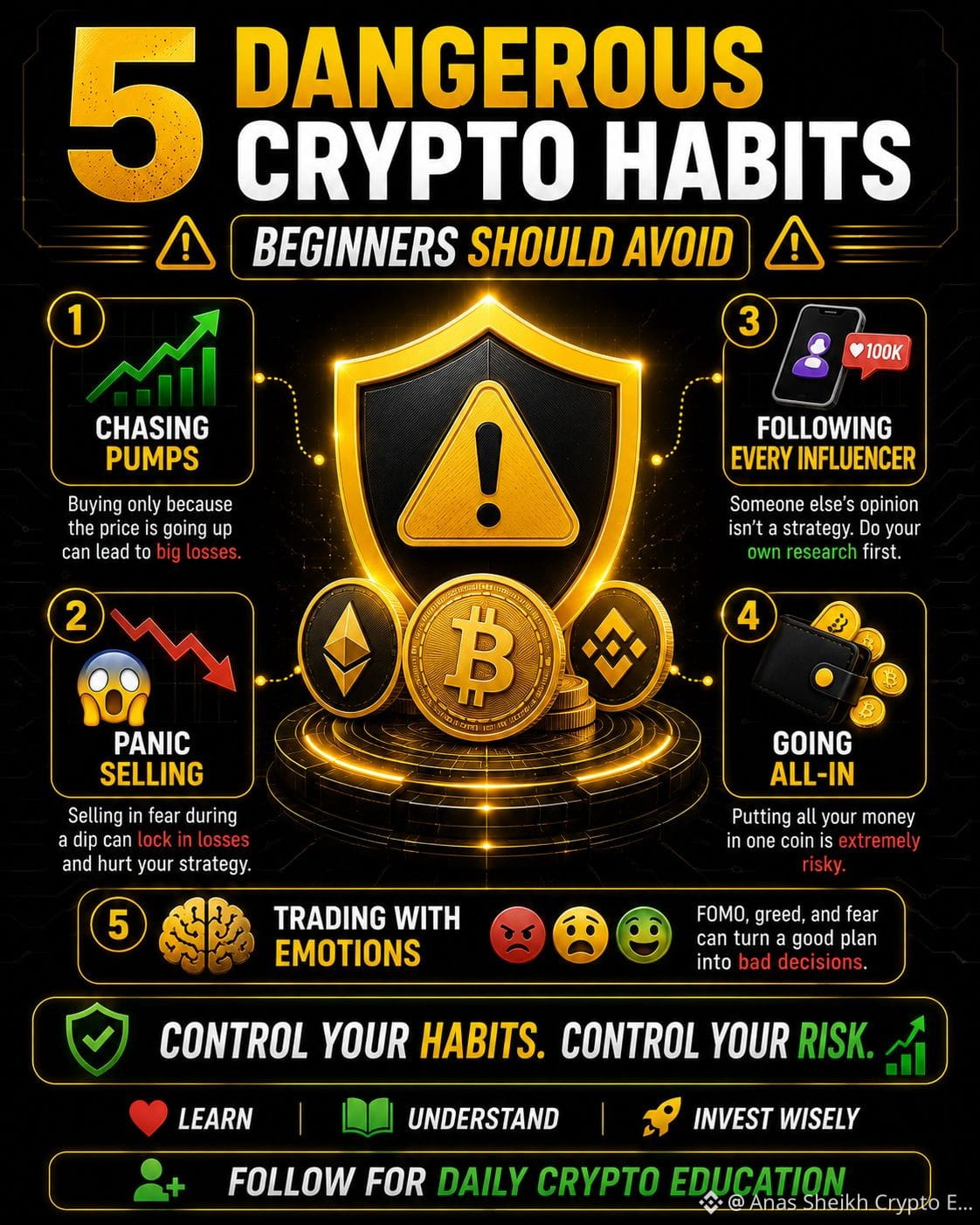
$BTC 🚨 5 Dangerous Crypto Habits Beginners Should Avoid
🚨 5 Crypto Habits That Can Hurt Beginners
Crypto isn't only about finding the next big coin. Your behavior can have a huge impact on your results
❌ 1. Chasing Pumps
Buying simply because an asset is rapidly rising can lead to emotional decisions.
😱 2. Panic Selling
A sudden price drop doesn't automatically mean you should make an impulsive decision.
📱 3. Following Every Influencer
Someone having a large following doesn't mean their crypto advice is correct.
💰 4. Going All-In
Concentrating all your available money in one asset creates unnecessary exposure.
🔥 5. Trading With Emotions
FOMO, greed, and fear can turn a plan into impulsive decisions.
💡 Remember:
A good strategy means nothing if you can't control your behavior.
👇 Which habit is the hardest for beginners to avoid?
1️⃣ Chasing Pumps
2️⃣ Panic Selling
3️⃣ Following Influencers
4️⃣ Going All-In
5️⃣ Emotional Trading
Comment your number below👇
📌 Follow for daily crypto education
#CryptoEducation #CryptoTips #RiskManagement #CryptoBeginners #Bitcoin #CryptoPsychology #BinanceSquare #LearnCrypto
{spot}(BTCUSDT)
$BTC 🚨 5 Dangerous Crypto Habits Beginners Should Avoid
🚨 5 Crypto Habits That Can Hurt Beginners
Crypto isn't only about finding the next big coin. Your behavior can have a huge impact on your results
❌ 1. Chasing Pumps
Buying simply because an asset is rapidly rising can lead to emotional decisions.
😱 2. Panic Selling
A sudden price drop doesn't automatically mean you should make an impulsive decision.
📱 3. Following Every Influencer
Someone having a large following doesn't mean their crypto advice is correct.
💰 4. Going All-In
Concentrating all your available money in one asset creates unnecessary exposure.
🔥 5. Trading With Emotions
FOMO, greed, and fear can turn a plan into impulsive decisions.
💡 Remember:
A good strategy means nothing if you can't control your behavior.
👇 Which habit is the hardest for beginners to avoid?
1️⃣ Chasing Pumps
2️⃣ Panic Selling
3️⃣ Following Influencers
4️⃣ Going All-In
5️⃣ Emotional Trading
Comment your number below👇
📌 Follow for daily crypto education
#CryptoEducation #CryptoTips #RiskManagement #CryptoBeginners #Bitcoin #CryptoPsychology #BinanceSquare #LearnCrypto
48
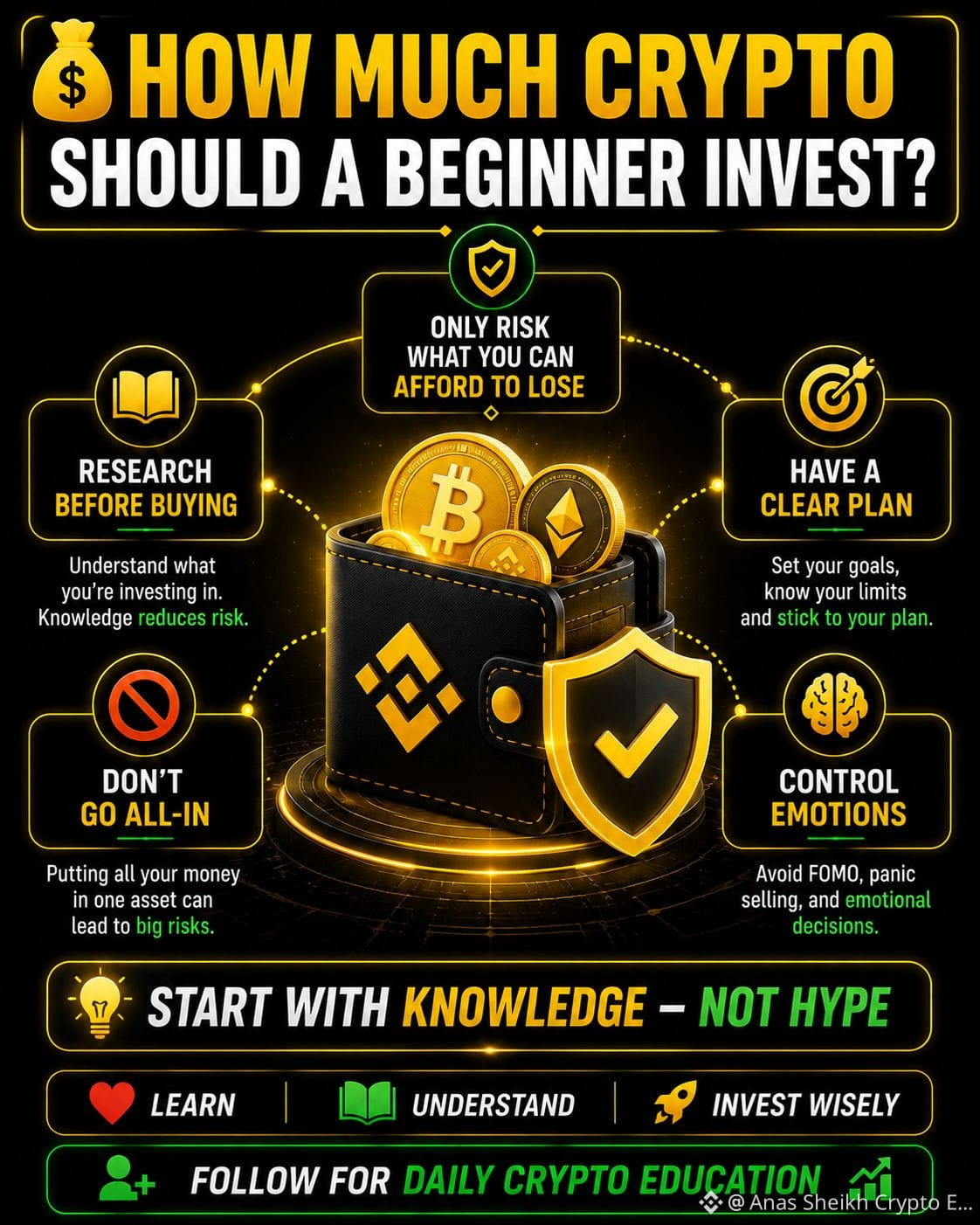
$BTC 💰 How Much Crypto Should a Beginner Invest?
💰 How Much Crypto Should a Beginner Invest?
There is no universal amount that is right for everyone
Before buying crypto, ask yourself:
1️⃣ Can I afford to lose it?
Never use money needed for rent, food, bills, debt payments, or emergencies
2️⃣ Do I understand what I'm buying?
Don't invest simply because someone on social media says a coin will "moon" 📈
3️⃣ Do I have a plan?
Decide beforehand:
• How much you're willing to invest
• What your goals are
• How much risk you're comfortable taking
• When you'll review your strategy
4️⃣ Avoid going all-in
Putting your entire available capital into one cryptocurrency can expose you to significant risk
5️⃣ Start with education, not hype
You don't need to rush
Learn → Research → Plan → Manage Risk
💡 Golden Rule:
Never invest money you cannot afford to lose.
👇 Question:
What should a beginner do FIRST?
A) Buy immediately
B) Research first
C) Follow influencers
D) Go all-in
Comment your answer below. 👇
📌 Follow for daily crypto education
#CryptoEducation #CryptoTips #RiskManagement #Bitcoin #CryptoBeginner #InvestSmart #BinanceSquare #LearnCrypto
{spot}(BTCUSDT)
$BTC 💰 How Much Crypto Should a Beginner Invest?
💰 How Much Crypto Should a Beginner Invest?
There is no universal amount that is right for everyone
Before buying crypto, ask yourself:
1️⃣ Can I afford to lose it?
Never use money needed for rent, food, bills, debt payments, or emergencies
2️⃣ Do I understand what I'm buying?
Don't invest simply because someone on social media says a coin will "moon" 📈
3️⃣ Do I have a plan?
Decide beforehand:
• How much you're willing to invest
• What your goals are
• How much risk you're comfortable taking
• When you'll review your strategy
4️⃣ Avoid going all-in
Putting your entire available capital into one cryptocurrency can expose you to significant risk
5️⃣ Start with education, not hype
You don't need to rush
Learn → Research → Plan → Manage Risk
💡 Golden Rule:
Never invest money you cannot afford to lose.
👇 Question:
What should a beginner do FIRST?
A) Buy immediately
B) Research first
C) Follow influencers
D) Go all-in
Comment your answer below. 👇
📌 Follow for daily crypto education
#CryptoEducation #CryptoTips #RiskManagement #Bitcoin #CryptoBeginner #InvestSmart #BinanceSquare #LearnCrypto
50
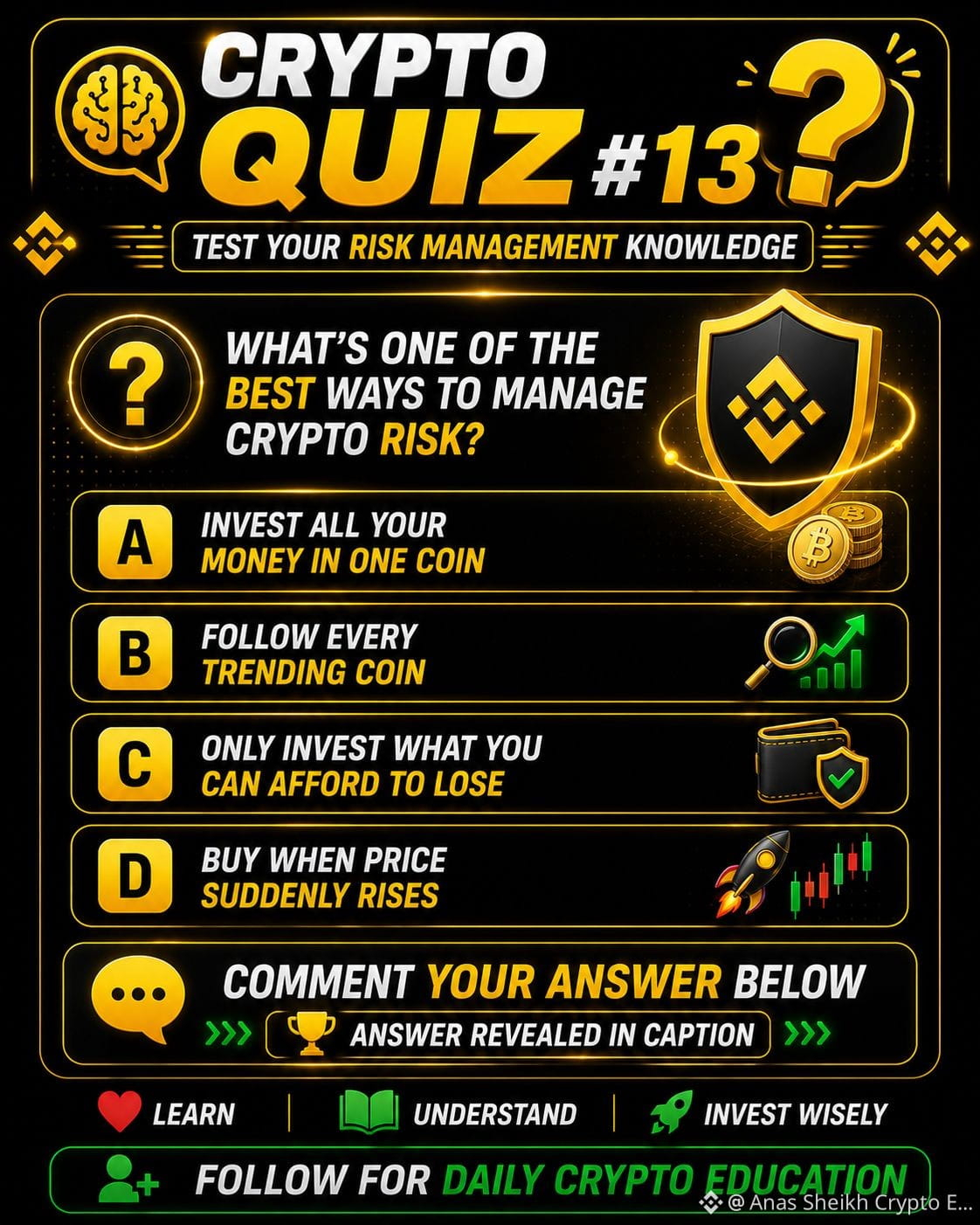
$BTC 🧠 Crypto Quiz #13: Test Your Risk Management Knowledge
What is one of the BEST ways to manage risk when investing in crypto?
A) Invest all your money in one coin
B) Follow every trending coin
C) Only invest what you can afford to lose
D) Buy whenever the price suddenly rises
👇 Comment your answer: A, B, C, or D
Don't check the answer first! 😏
Crypto markets can be highly volatile, so having a clear budget and avoiding excessive exposure can help you manage potential losses.
💡 Remember:
Protecting your capital is more important than chasing quick profits.
🎯 Did you get it right?
Comment “RIGHT ✅” if you chose C
📌 Follow for daily crypto education
#CryptoQuiz #CryptoEducation #RiskManagement #Bitcoin #CryptoTips #BinanceSquare #LearnCrypto #InvestSmart
83
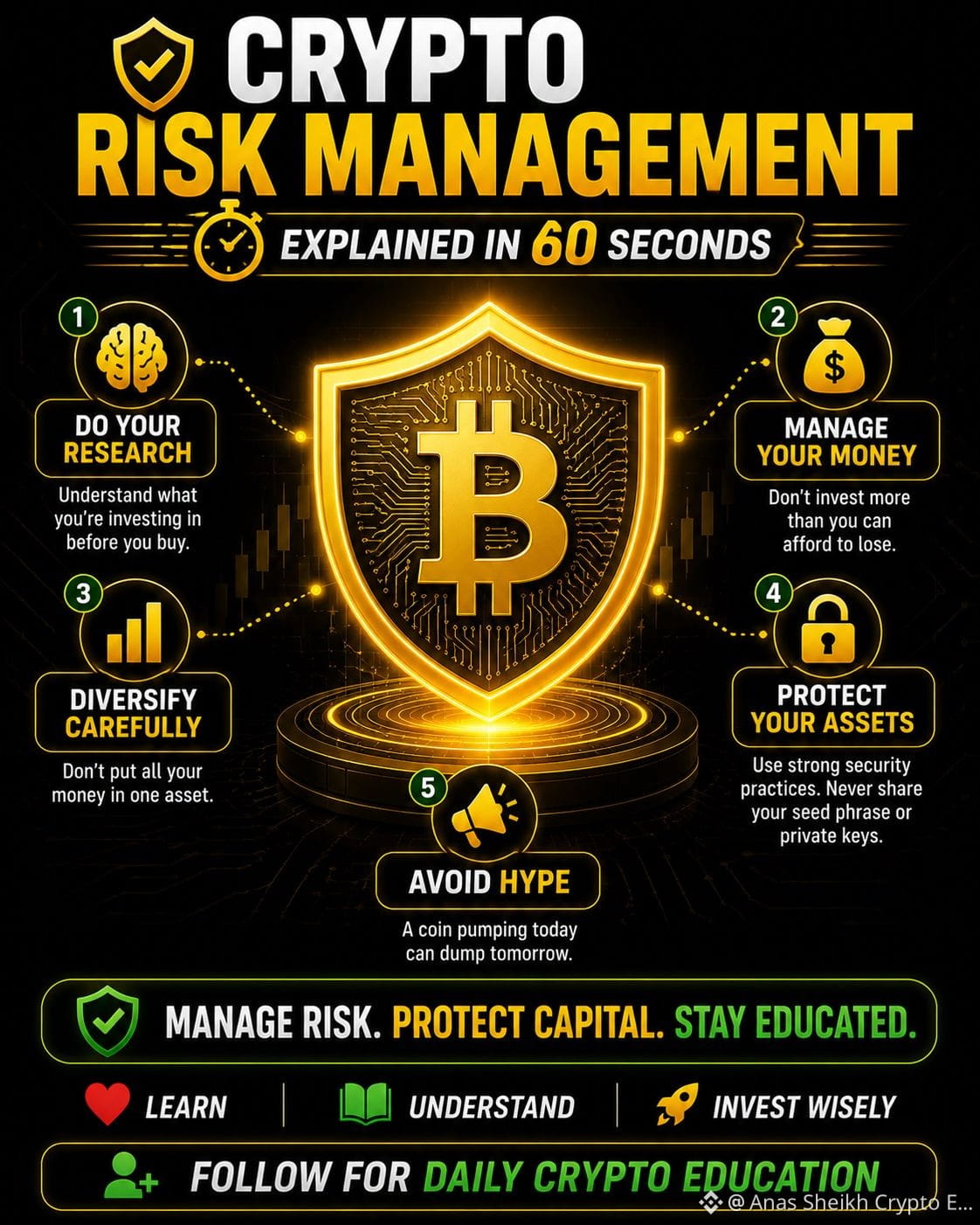
$BTC 🛡️ Crypto Risk Management Explained in 60 Seconds
🛡️ What Is Crypto Risk Management?
Crypto can offer opportunities, but it also comes with significant risk.
Risk management means having a plan to protect your capital before you enter a trade or investment
5 Simple Rules:
🧠 1. Do Your Research
Understand what you're buying before putting money into it.
💰 2. Don't Invest More Than You Can Afford to Lose
Crypto prices can move sharply in either direction.
📊 3. Diversify Carefully
Avoid putting your entire portfolio into one asset.
🔐 4. Protect Your Assets
Use strong security practices and never share your seed phrase or private keys.
🚫 5. Don't Chase Hype
A coin going up quickly doesn't mean it will continue going up.
💡 Remember:
The goal isn't to eliminate risk. The goal is to manage it.
👇 What's the #1 crypto risk beginners should learn about?
Comment below.
📌 Follow for daily crypto education
#CryptoEducation #RiskManagement #Bitcoin #CryptoTips #Blockchain #BinanceSquare #LearnCrypto #InvestSmart
{spot}(BTCUSDT)
$BTC 🛡️ Crypto Risk Management Explained in 60 Seconds
🛡️ What Is Crypto Risk Management?
Crypto can offer opportunities, but it also comes with significant risk.
Risk management means having a plan to protect your capital before you enter a trade or investment
5 Simple Rules:
🧠 1. Do Your Research
Understand what you're buying before putting money into it.
💰 2. Don't Invest More Than You Can Afford to Lose
Crypto prices can move sharply in either direction.
📊 3. Diversify Carefully
Avoid putting your entire portfolio into one asset.
🔐 4. Protect Your Assets
Use strong security practices and never share your seed phrase or private keys.
🚫 5. Don't Chase Hype
A coin going up quickly doesn't mean it will continue going up.
💡 Remember:
The goal isn't to eliminate risk. The goal is to manage it.
👇 What's the #1 crypto risk beginners should learn about?
Comment below.
📌 Follow for daily crypto education
#CryptoEducation #RiskManagement #Bitcoin #CryptoTips #Blockchain #BinanceSquare #LearnCrypto #InvestSmart
77
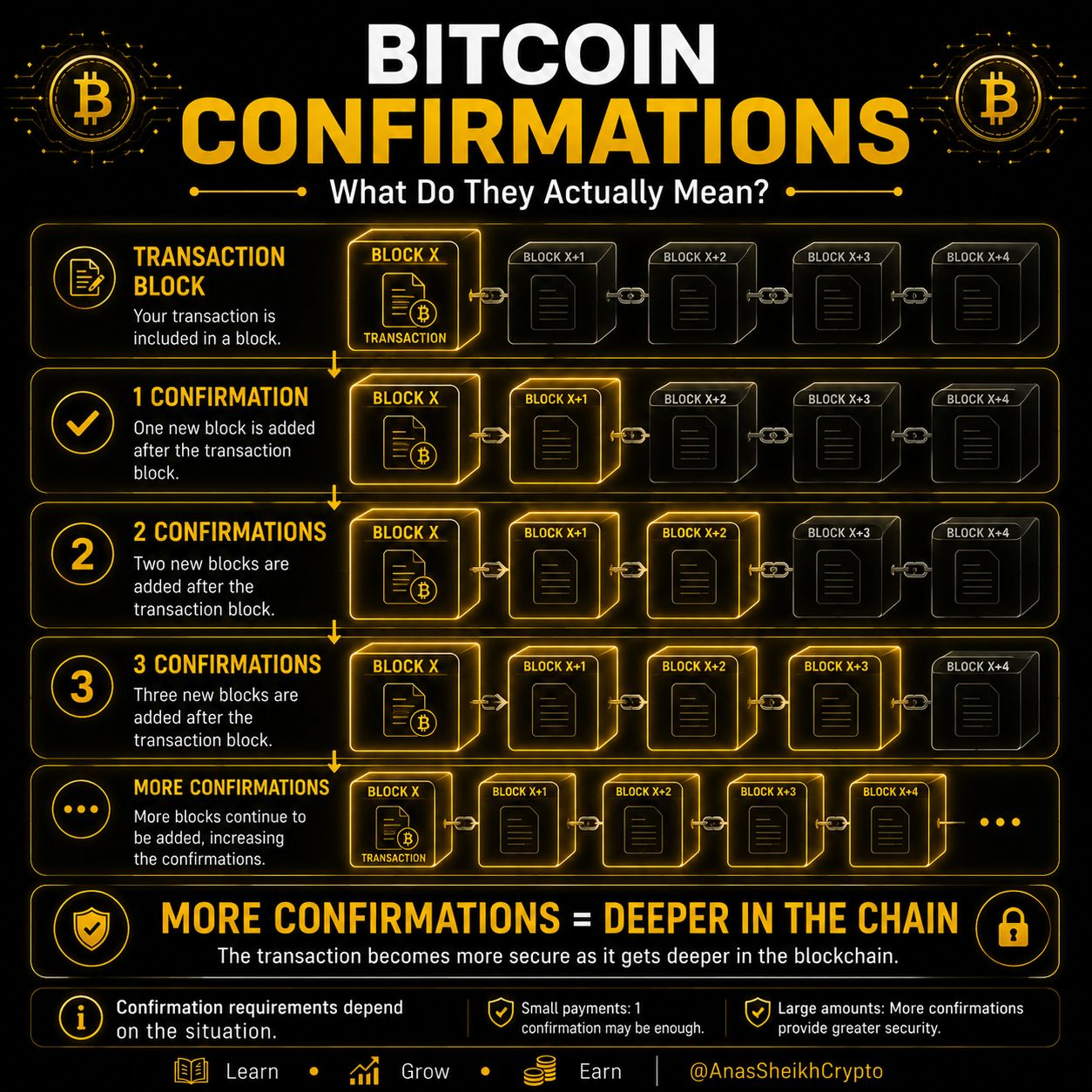
$BTC What Does "Bitcoin Confirmations" Actually Mean?
You've probably seen:
"1 confirmation"
"3 confirmations"
"6 confirmations"
But what does that actually mean?
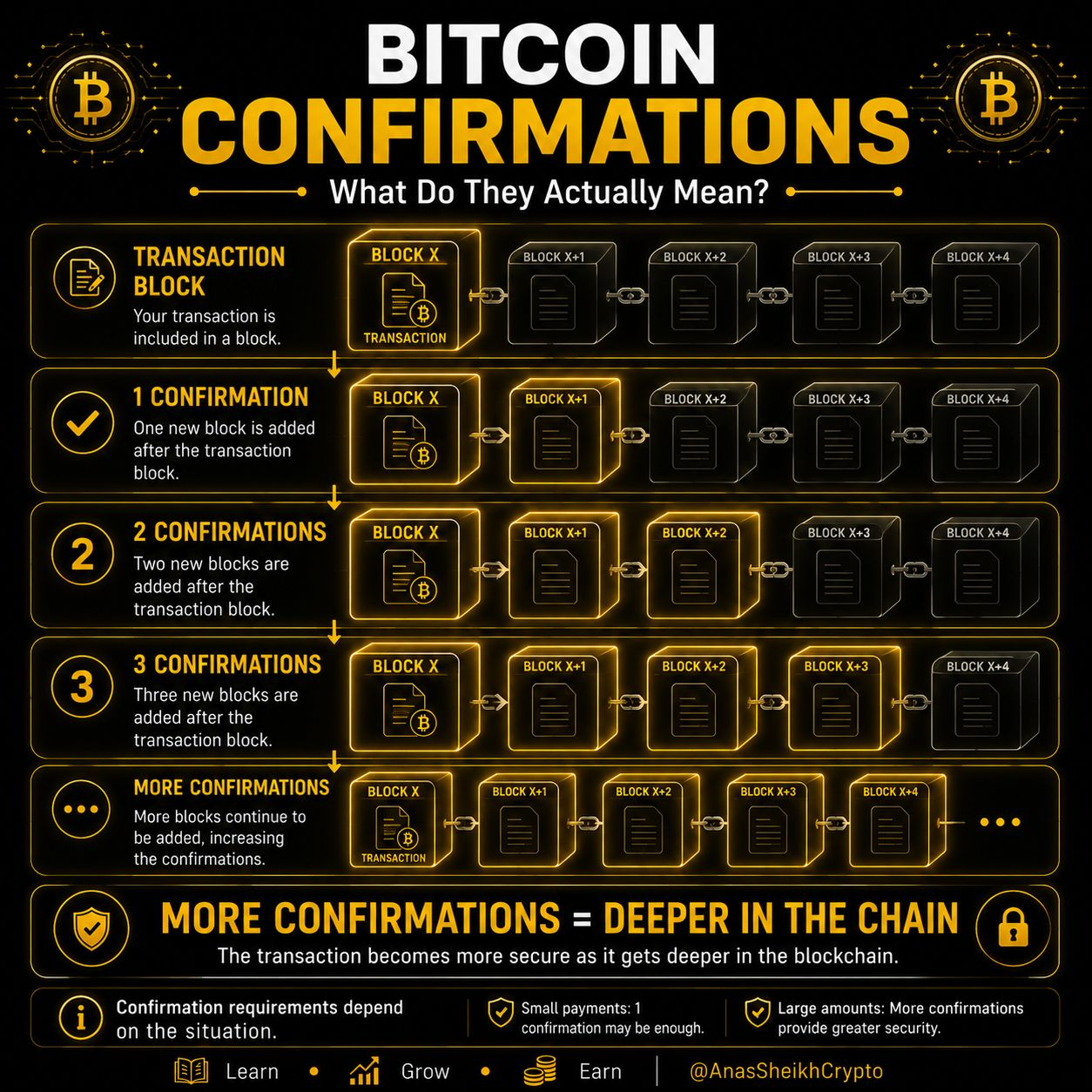
When a Bitcoin transaction is included in a block, it receives its first confirmation.
As additional blocks are added after that block, the number of confirmations increases
Example:
Transaction included in Block X
➡️ 1 confirmation
Next block added
➡️ 2 confirmations
Another block added
➡️ 3 confirmations
And so on
Why does this matter?
More confirmations generally mean the transaction is deeper in the blockchain's history
But the appropriate number of confirmations depends on the situation and risk tolerance
Remember:
Confirmation ≠ instant finality
Bitcoin's security model builds confidence progressively as the chain grows
#Bitcoin #BitcoinConfirmations #BTC #Blockchain #CryptoEducation #LearnBitcoin #BitcoinTransactions
{spot}(BTCUSDT)
$BTC What Does "Bitcoin Confirmations" Actually Mean?
You've probably seen:
"1 confirmation"
"3 confirmations"
"6 confirmations"
But what does that actually mean?
When a Bitcoin transaction is included in a block, it receives its first confirmation.
As additional blocks are added after that block, the number of confirmations increases
Example:
Transaction included in Block X
➡️ 1 confirmation
Next block added
➡️ 2 confirmations
Another block added
➡️ 3 confirmations
And so on
Why does this matter?
More confirmations generally mean the transaction is deeper in the blockchain's history
But the appropriate number of confirmations depends on the situation and risk tolerance
Remember:
Confirmation ≠ instant finality
Bitcoin's security model builds confidence progressively as the chain grows
#Bitcoin #BitcoinConfirmations #BTC #Blockchain #CryptoEducation #LearnBitcoin #BitcoinTransactions
52
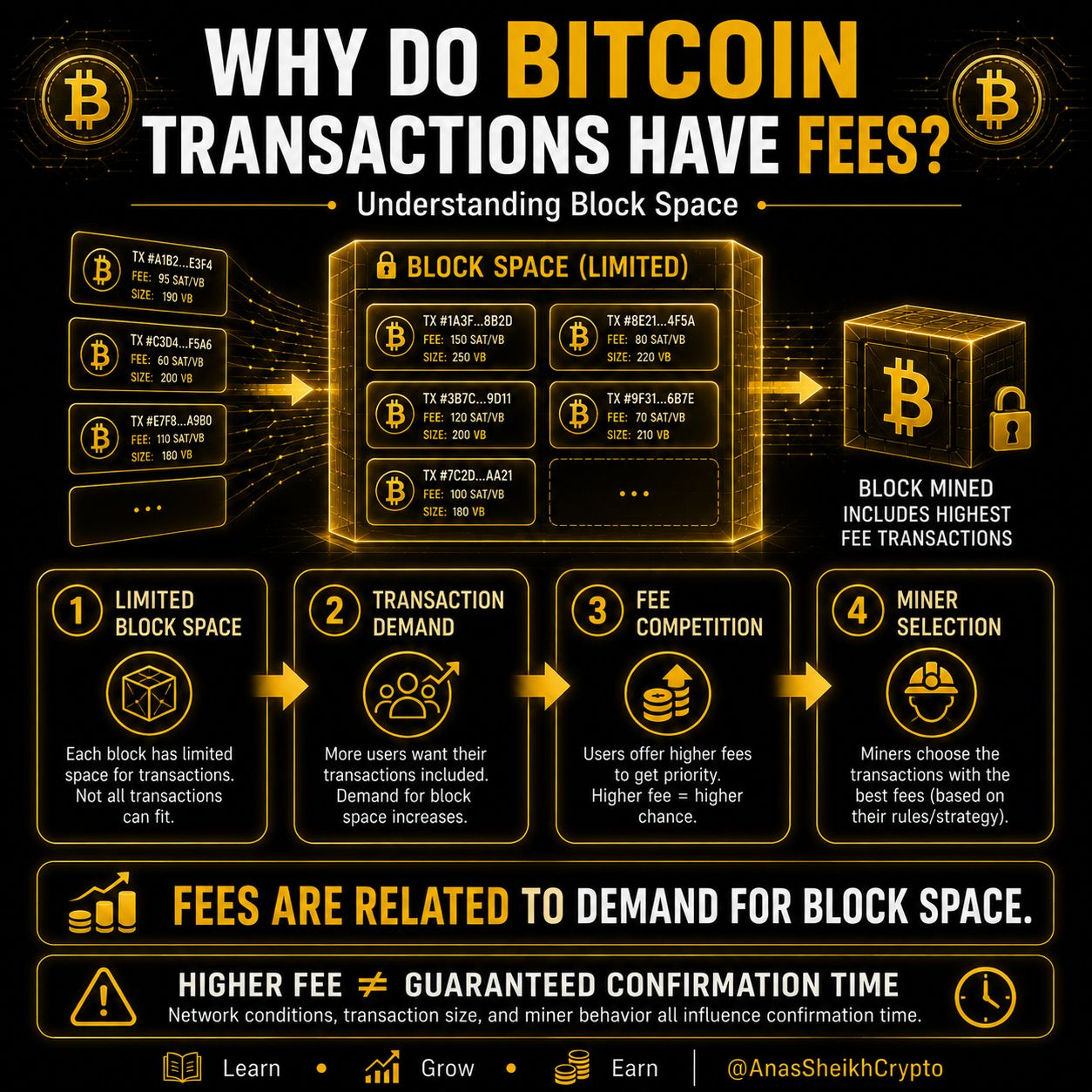
$BTC Why Do Bitcoin Transactions Have Fees? 💰
A common beginner question:
"Why should I pay a fee to send Bitcoin?"
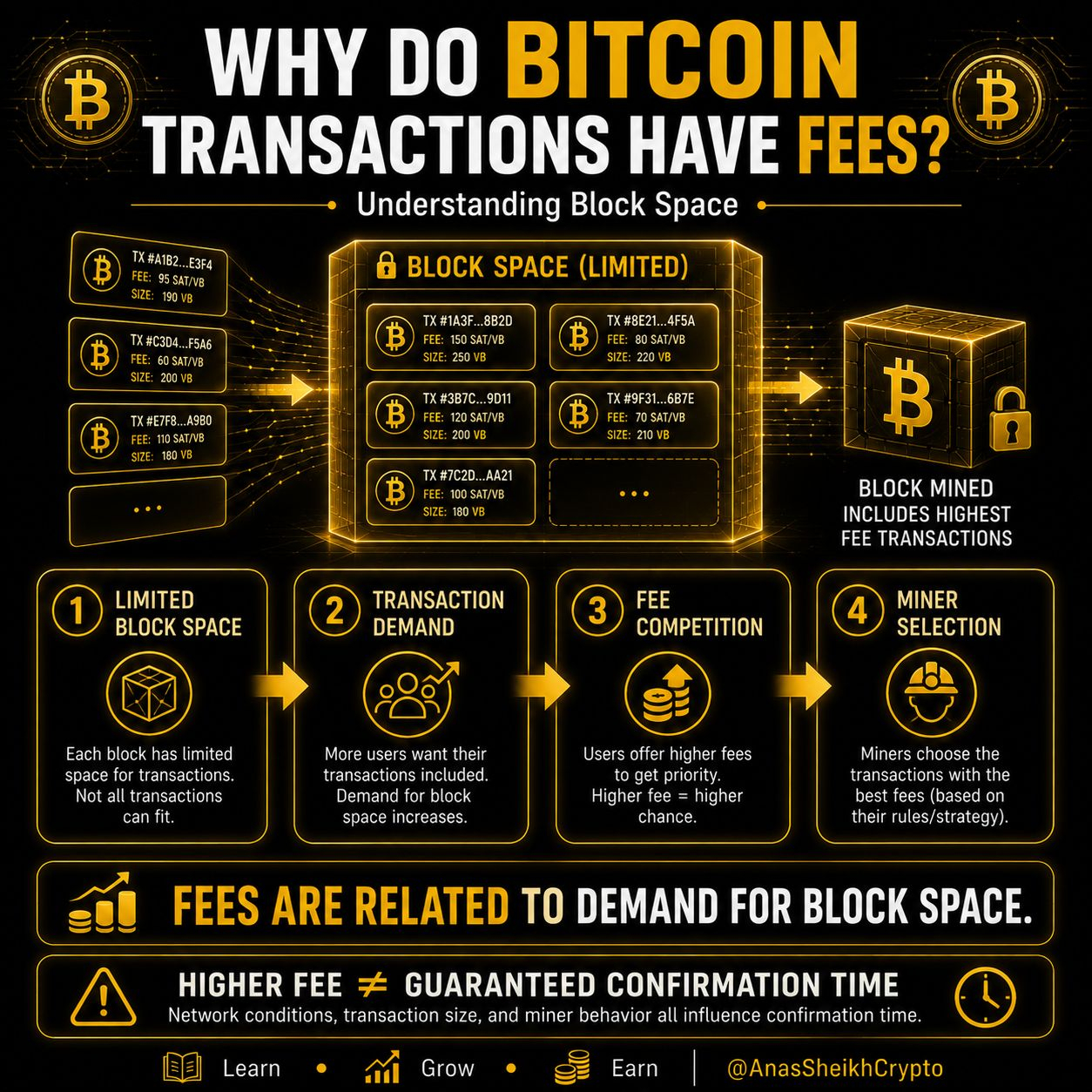
Bitcoin transaction fees help incentivize miners to include transactions in blocks
Think of it this way:
You have a limited amount of block space.
When demand for that space increases, users may compete by offering higher fees to encourage faster inclusion
Simple concept:
More demand for block space → Greater fee competition
But remember:
⚠️ A higher fee does not guarantee an exact confirmation time.
Fees depend on network conditions, transaction characteristics and miner selection
The key lesson:
Bitcoin fees are related to demand for limited block space
They are not simply a random "bank charge"
{spot}(BTCUSDT)
$BTC Why Do Bitcoin Transactions Have Fees? 💰
A common beginner question:
"Why should I pay a fee to send Bitcoin?"
Bitcoin transaction fees help incentivize miners to include transactions in blocks
Think of it this way:
You have a limited amount of block space.
When demand for that space increases, users may compete by offering higher fees to encourage faster inclusion
Simple concept:
More demand for block space → Greater fee competition
But remember:
⚠️ A higher fee does not guarantee an exact confirmation time.
Fees depend on network conditions, transaction characteristics and miner selection
The key lesson:
Bitcoin fees are related to demand for limited block space
They are not simply a random "bank charge"
48
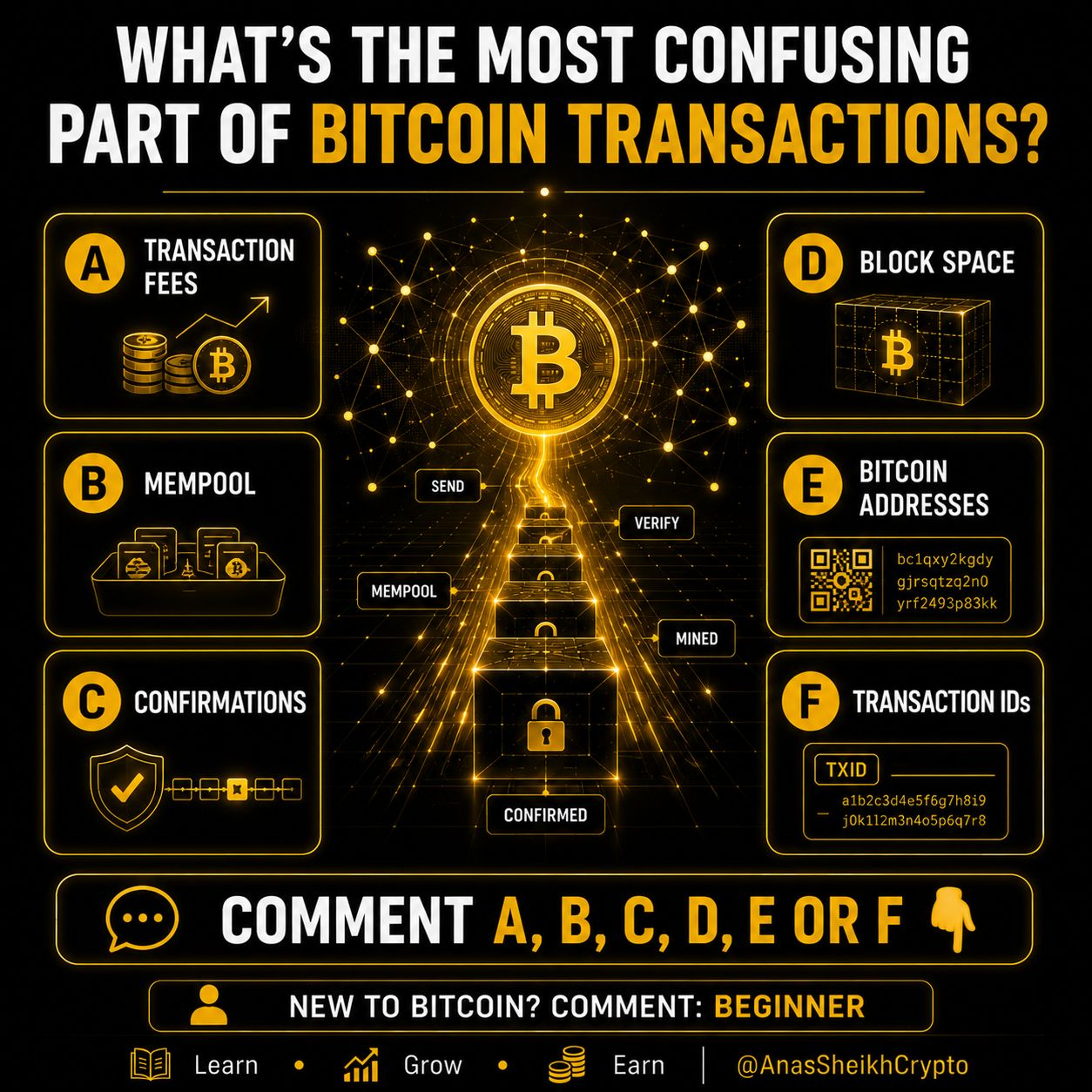
$BTC What's the Most Confusing Part of Bitcoin Transactions? 🧠
Let's see what the community actually struggles with
Which topic should I explain next?
A️⃣ Transaction Fees
B️⃣ Mempool
C️⃣ Confirmations
D️⃣ Block Space
E️⃣ Bitcoin Addresses
F️⃣ Transaction IDs
👇 Comment A, B, C, D, E or F.
And if you are completely new:
Comment "BEGINNER"
I'll use the community's answers to decide the next deep-dive topic
#Bitcoin #BTC #CryptoCommunity #BitcoinEducation #CryptoEducation #LearnBitcoin #CryptoBeginners
{spot}(BTCUSDT)
$BTC What's the Most Confusing Part of Bitcoin Transactions? 🧠
Let's see what the community actually struggles with
Which topic should I explain next?
A️⃣ Transaction Fees
B️⃣ Mempool
C️⃣ Confirmations
D️⃣ Block Space
E️⃣ Bitcoin Addresses
F️⃣ Transaction IDs
👇 Comment A, B, C, D, E or F.
And if you are completely new:
Comment "BEGINNER"
I'll use the community's answers to decide the next deep-dive topic
#Bitcoin #BTC #CryptoCommunity #BitcoinEducation #CryptoEducation #LearnBitcoin #CryptoBeginners
66
$BTC Bitcoin Transactions Explained in 60 Seconds ₿
What actually happens when you send Bitcoin?
It's not as simple as:
"I press Send → Bitcoin arrives."
A Bitcoin transaction goes through several steps:
1️⃣ You create and sign the transaction
2️⃣ The transaction is broadcast to the Bitcoin network
3️⃣ Nodes verify whether it follows the protocol rules
4️⃣ The transaction can enter the mempool
5️⃣ A miner may include it in a block
6️⃣ The transaction receives confirmations as additional blocks are added
Simple flow:
SEND → VERIFY → MEMPOOL → BLOCK → CONFIRMATIONS
That's the basic journey of a Bitcoin transaction
Understanding this makes Bitcoin much easier to understand
#Bitcoin #BitcoinTransactions #BTC #Blockchain #CryptoEducation #LearnBitcoin #CryptoForBeginners
{spot}(BTCUSDT)
$BTC Bitcoin Transactions Explained in 60 Seconds ₿
What actually happens when you send Bitcoin?
It's not as simple as:
"I press Send → Bitcoin arrives."
A Bitcoin transaction goes through several steps:
1️⃣ You create and sign the transaction
2️⃣ The transaction is broadcast to the Bitcoin network
3️⃣ Nodes verify whether it follows the protocol rules
4️⃣ The transaction can enter the mempool
5️⃣ A miner may include it in a block
6️⃣ The transaction receives confirmations as additional blocks are added
Simple flow:
SEND → VERIFY → MEMPOOL → BLOCK → CONFIRMATIONS
That's the basic journey of a Bitcoin transaction
Understanding this makes Bitcoin much easier to understand
#Bitcoin #BitcoinTransactions #BTC #Blockchain #CryptoEducation #LearnBitcoin #CryptoForBeginners
83
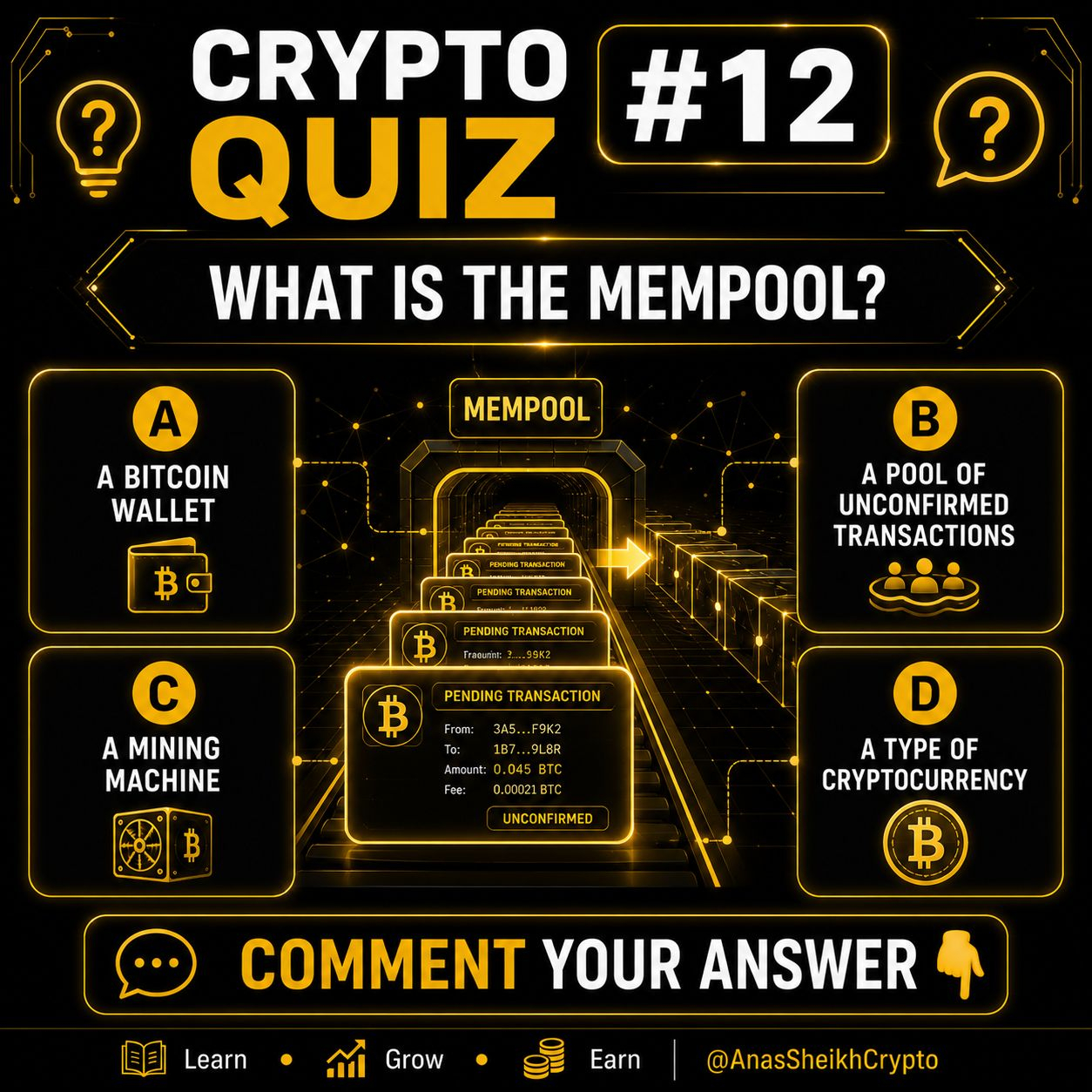
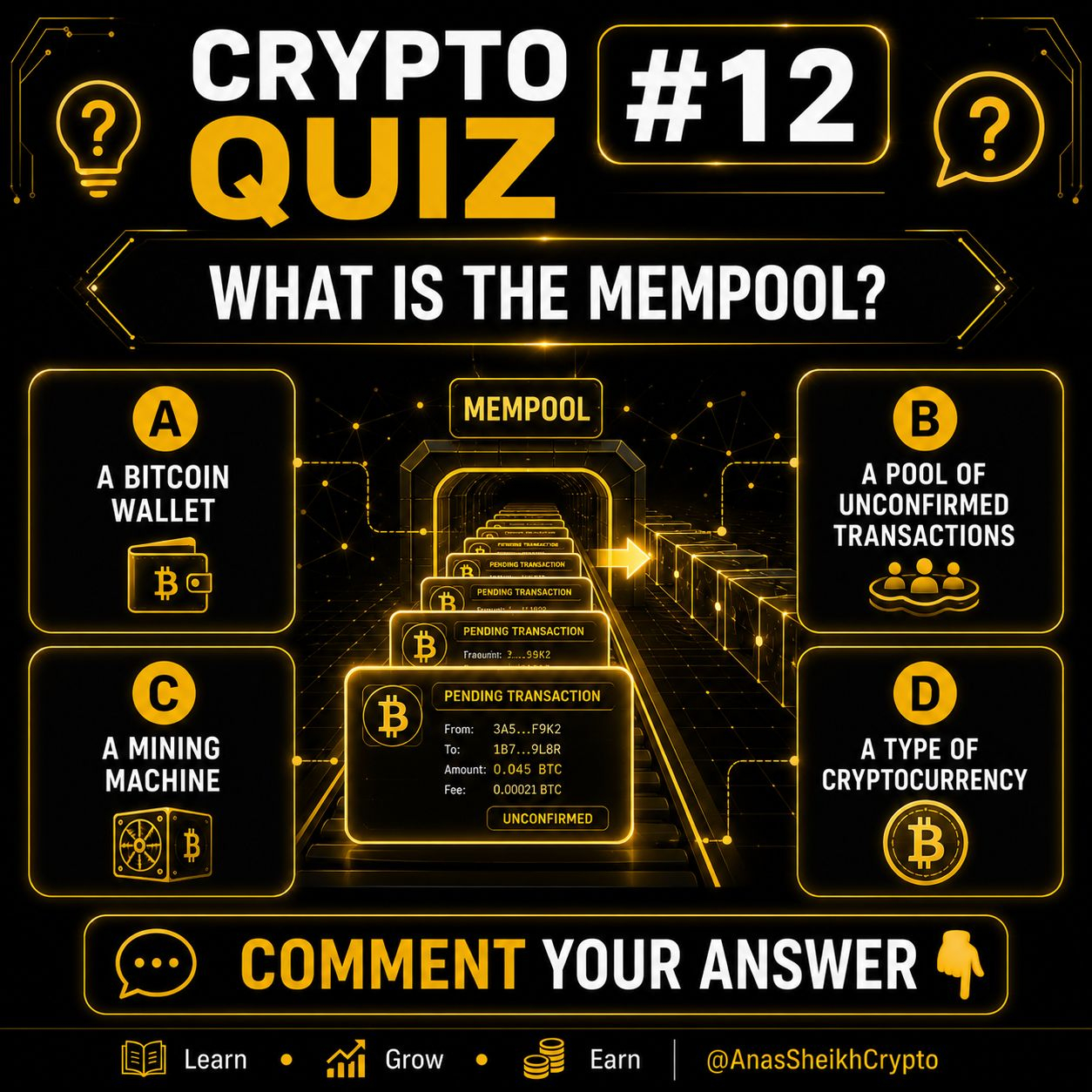
$BTC 🧠 CRYPTO QUIZ #12 Where Do Unconfirmed Transactions Wait?
What is the mempool?
🅰️ A Bitcoin wallet
🅱️ A pool of unconfirmed transactions waiting to be processed
🅲 A mining machine
🅳 A type of cryptocurrency
You've learned about Bitcoin transactions
Now let's test your understanding👀
Before a transaction is confirmed in a block, it may wait in the network's mempool
But do you know what that means?
👇 Comment:
A / B / C / D
#CryptoQuiz #BitcoinQuiz #Bitcoin #Mempool #BTC #CryptoEducation #learncrypto
{spot}(BTCUSDT)
$BTC 🧠 CRYPTO QUIZ #12 Where Do Unconfirmed Transactions Wait?
What is the mempool?
🅰️ A Bitcoin wallet
🅱️ A pool of unconfirmed transactions waiting to be processed
🅲 A mining machine
🅳 A type of cryptocurrency
You've learned about Bitcoin transactions
Now let's test your understanding👀
Before a transaction is confirmed in a block, it may wait in the network's mempool
But do you know what that means?
👇 Comment:
A / B / C / D
#CryptoQuiz #BitcoinQuiz #Bitcoin #Mempool #BTC #CryptoEducation #learncrypto
75
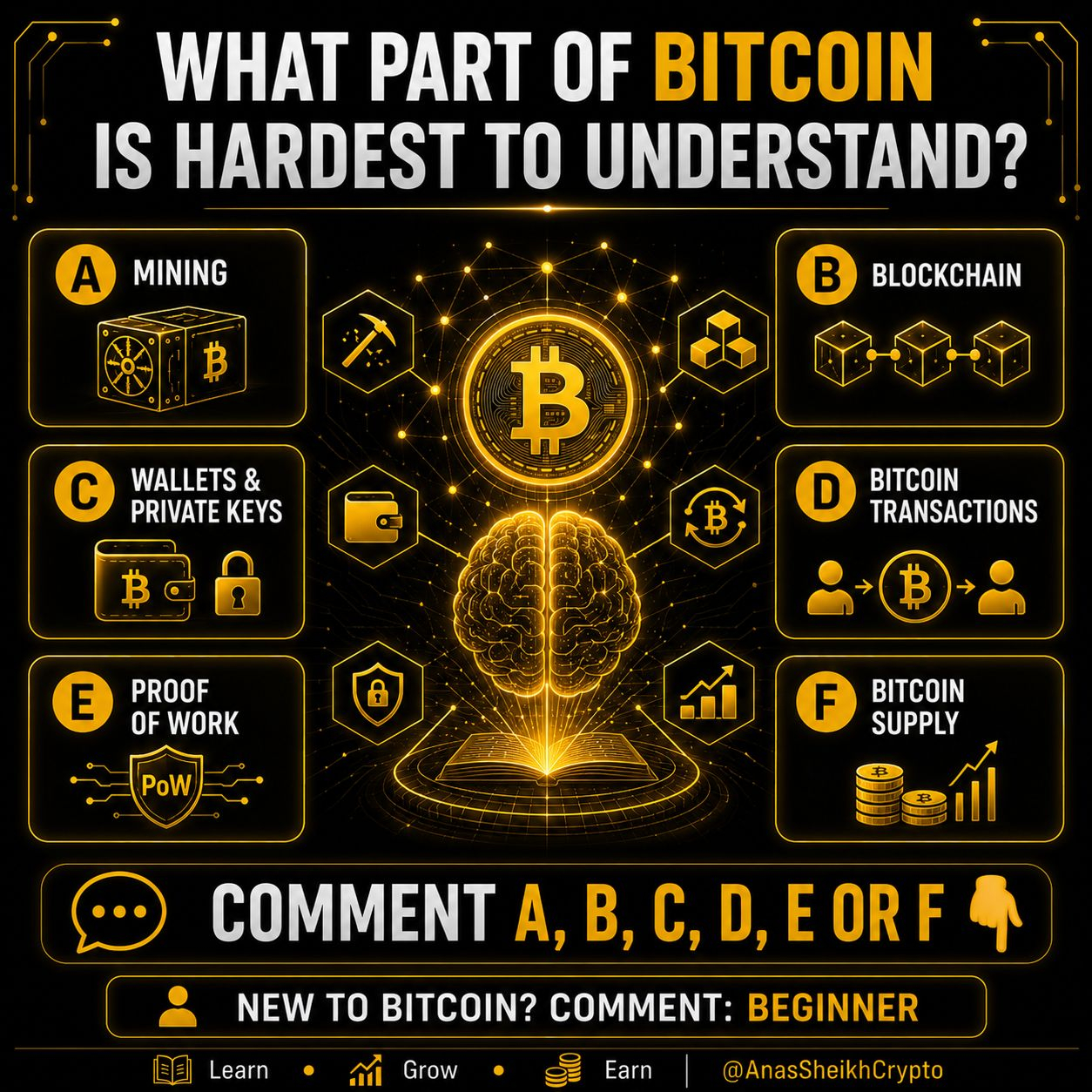
$BTC What Part of Bitcoin Is Hardest to Understand? 🧠
Bitcoin can feel complicated when you're starting out
Which topic is the hardest for you?
A️⃣ Mining
B️⃣ Blockchain
C️⃣ Wallets & Private Keys
D️⃣ Bitcoin Transactions
E️⃣ Proof of Work
F️⃣ Bitcoin Supply
👇 Comment A, B, C, D, E, or F.
If you're completely new:
Comment "BEGINNER"
I'll use the answers to decide which concept needs a simple step-by-step breakdown next
#Bitcoin #BTC #CryptoCommunity #BitcoinEducation #CryptoEducation #LearnBitcoin #CryptoBeginners
{spot}(BTCUSDT)
$BTC What Part of Bitcoin Is Hardest to Understand? 🧠
Bitcoin can feel complicated when you're starting out
Which topic is the hardest for you?
A️⃣ Mining
B️⃣ Blockchain
C️⃣ Wallets & Private Keys
D️⃣ Bitcoin Transactions
E️⃣ Proof of Work
F️⃣ Bitcoin Supply
👇 Comment A, B, C, D, E, or F.
If you're completely new:
Comment "BEGINNER"
I'll use the answers to decide which concept needs a simple step-by-step breakdown next
#Bitcoin #BTC #CryptoCommunity #BitcoinEducation #CryptoEducation #LearnBitcoin #CryptoBeginners
56
$BTC Proof of Work vs Proof of Stake ⚔️
Two of the most discussed blockchain consensus mechanisms are:
⛏️ Proof of Work (PoW)
and
💰 Proof of Stake (PoS)
But what's the basic difference?
⛏️ PROOF OF WORK
Participants use computational resources to compete for block production.
Bitcoin uses PoW
Key concept:
Computational Work
💰 PROOF OF STAKE
Validators participate by committing/staking assets according to the network's rules.
Key concept:
Economic Stake
Simple way to remember:
PoW → Work
PoS → Stake
Neither concept should be judged only by a single metric
They involve different trade-offs around:
🔹 Security
🔹 Energy use
🔹 Economics
🔹 Participation
🔹 Decentralization
Question:
Which mechanism do you understand better PoW or PoS?
#ProofOfWork #ProofOfStake #Bitcoin #Ethereum #Blockchain #CryptoEducation #Web3
{spot}(BTCUSDT)
$BTC Proof of Work vs Proof of Stake ⚔️
Two of the most discussed blockchain consensus mechanisms are:
⛏️ Proof of Work (PoW)
and
💰 Proof of Stake (PoS)
But what's the basic difference?
⛏️ PROOF OF WORK
Participants use computational resources to compete for block production.
Bitcoin uses PoW
Key concept:
Computational Work
💰 PROOF OF STAKE
Validators participate by committing/staking assets according to the network's rules.
Key concept:
Economic Stake
Simple way to remember:
PoW → Work
PoS → Stake
Neither concept should be judged only by a single metric
They involve different trade-offs around:
🔹 Security
🔹 Energy use
🔹 Economics
🔹 Participation
🔹 Decentralization
Question:
Which mechanism do you understand better PoW or PoS?
#ProofOfWork #ProofOfStake #Bitcoin #Ethereum #Blockchain #CryptoEducation #Web3
47
$BTC Why Can't Someone Just Add Fake Bitcoin Transactions?
A common beginner question:
"If Bitcoin is digital, what's stopping someone from changing the blockchain?"
The answer involves several layers of Bitcoin's design
🛡️ 1. Cryptography
Transactions use cryptographic signatures to prove authorization
⛓️ 2. Blockchain
Transactions are organized into blocks that are linked together
⛏️ 3. Proof of Work
Miners perform computational work to add blocks to the chain
🌐 4. Network Verification
Bitcoin nodes independently verify whether transactions and blocks follow the protocol rules
So Bitcoin doesn't rely on:
"Trust me"
It relies on cryptography + consensus + distributed verification
Important:
This does not mean Bitcoin is impossible to attack
Security comes from the combined design of the protocol and the economic and computational costs involved
#BitcoinSecurity #Bitcoin #Blockchain #ProofOfWork #CryptoEducation #BTC #learnbitcoin
{spot}(BTCUSDT)
$BTC Why Can't Someone Just Add Fake Bitcoin Transactions?
A common beginner question:
"If Bitcoin is digital, what's stopping someone from changing the blockchain?"
The answer involves several layers of Bitcoin's design
🛡️ 1. Cryptography
Transactions use cryptographic signatures to prove authorization
⛓️ 2. Blockchain
Transactions are organized into blocks that are linked together
⛏️ 3. Proof of Work
Miners perform computational work to add blocks to the chain
🌐 4. Network Verification
Bitcoin nodes independently verify whether transactions and blocks follow the protocol rules
So Bitcoin doesn't rely on:
"Trust me"
It relies on cryptography + consensus + distributed verification
Important:
This does not mean Bitcoin is impossible to attack
Security comes from the combined design of the protocol and the economic and computational costs involved
#BitcoinSecurity #Bitcoin #Blockchain #ProofOfWork #CryptoEducation #BTC #learnbitcoin
78
$BTC 🧠 CRYPTO QUIZ #11 What Powers Bitcoin Mining?
Which mechanism does Bitcoin use to secure its network through computational work?
🅰️ Proof of Stake
🅱️ Proof of Work
🅲 Proof of Authority
🅳 Proof of History
Description
Time to test your Bitcoin knowledge. 👀
Bitcoin uses a consensus mechanism based on computational work
But can you remember its name?
👇 Comment:
A / B / C / D
Don't Google it
#CryptoQuiz #BitcoinQuiz #Bitcoin #BTC #ProofOfWork #CryptoEducation #learncrypto
{spot}(BTCUSDT)
$BTC 🧠 CRYPTO QUIZ #11 What Powers Bitcoin Mining?
Which mechanism does Bitcoin use to secure its network through computational work?
🅰️ Proof of Stake
🅱️ Proof of Work
🅲 Proof of Authority
🅳 Proof of History
Description
Time to test your Bitcoin knowledge. 👀
Bitcoin uses a consensus mechanism based on computational work
But can you remember its name?
👇 Comment:
A / B / C / D
Don't Google it
#CryptoQuiz #BitcoinQuiz #Bitcoin #BTC #ProofOfWork #CryptoEducation #learncrypto
90
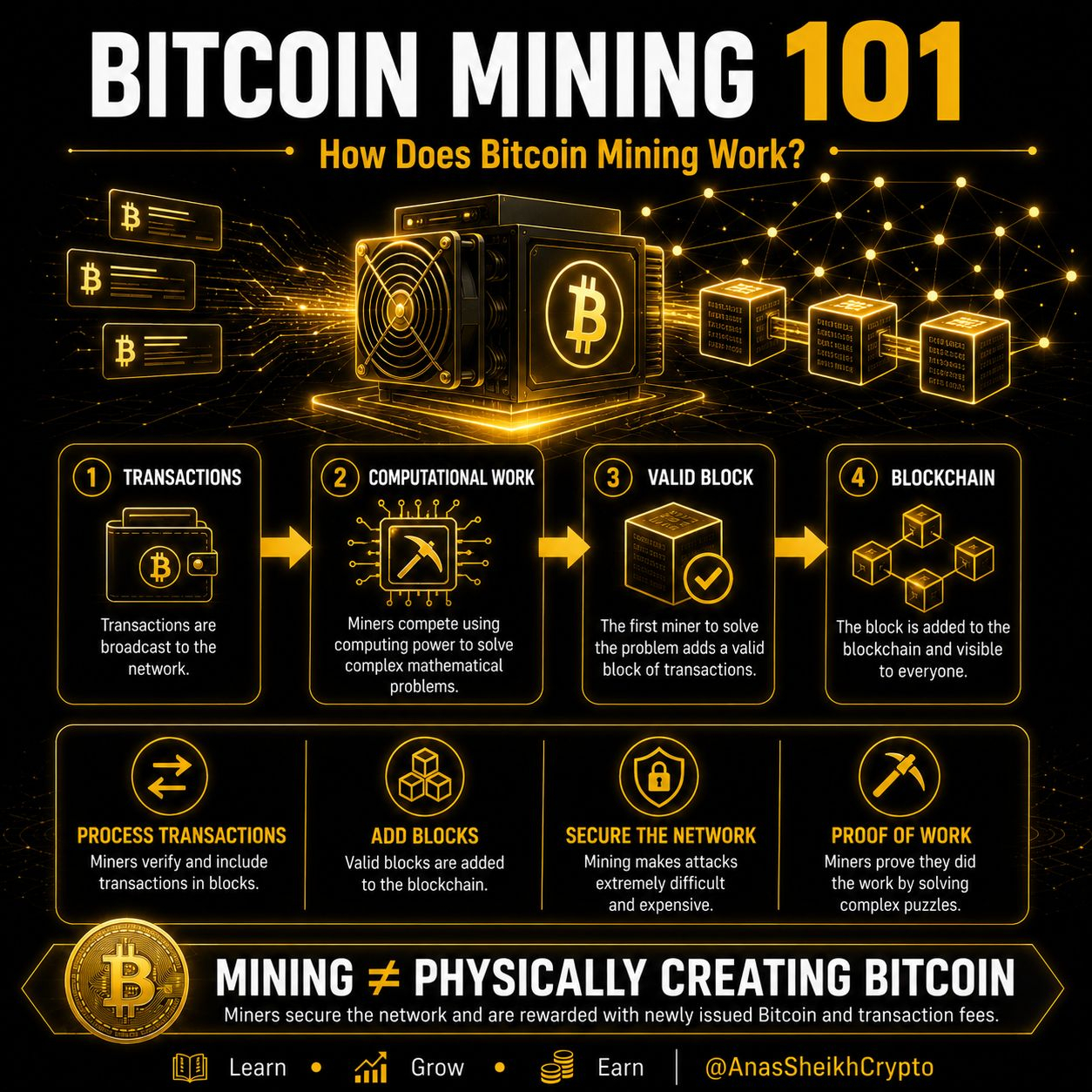
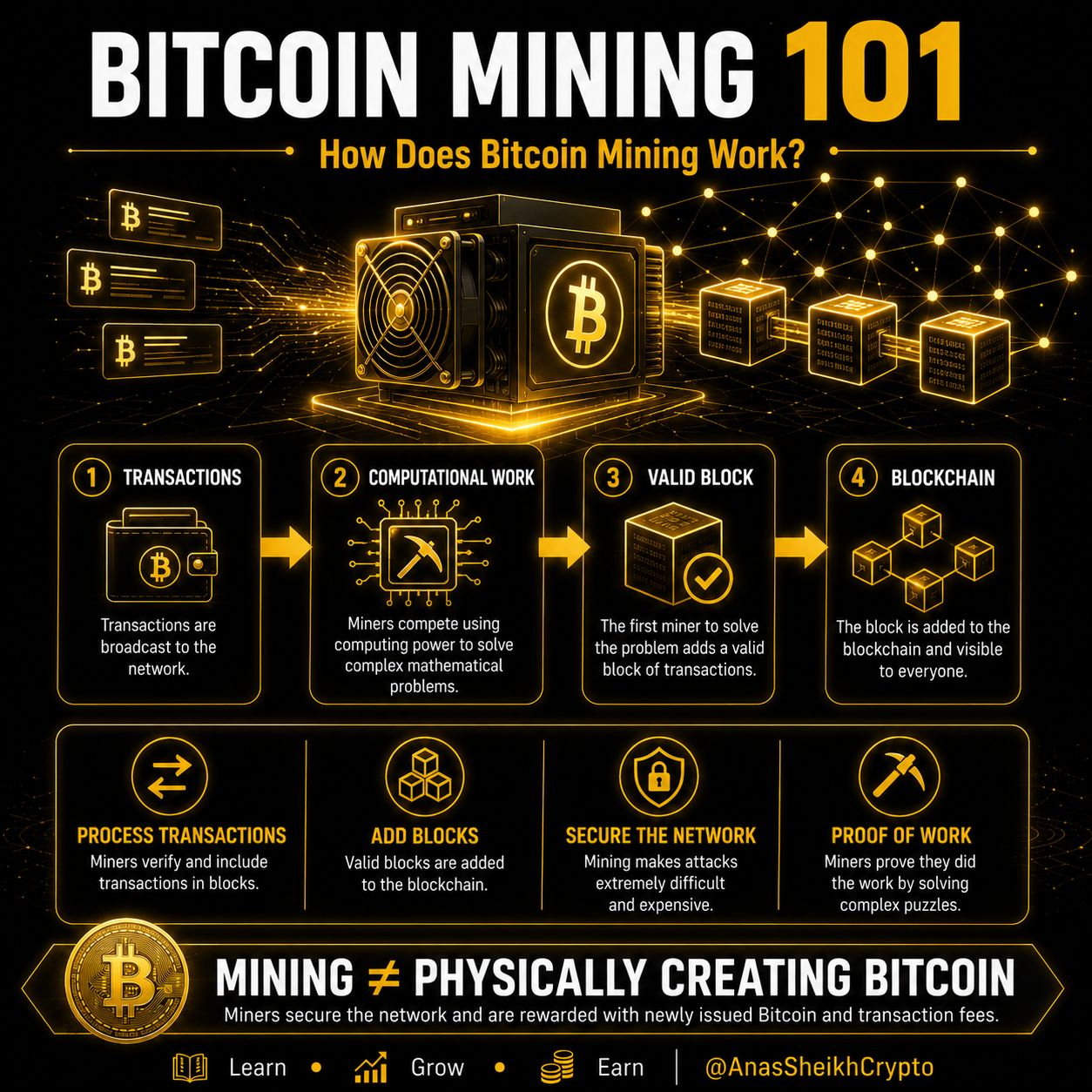
$BTC Bitcoin Mining Explained in 60 Seconds ⛏️
You may have heard:
"Bitcoin is mined."
But what does that actually mean?
Bitcoin mining is the process where specialized computers compete to perform the computational work required by Bitcoin's Proof-of-Work system.
Miners help:
⛏️ Process transactions
🔗 Add new blocks to the blockchain
🛡️ Secure the network
⚡ Compete through computational work
When a valid block is added, the successful miner can receive a block reward and transaction fees, subject to Bitcoin's protocol rules.
The simple idea:
Transactions → Mining → Valid Block → Blockchain
Bitcoin mining isn't about physically creating coins
It's about using computational work to help maintain and secure the Bitcoin network.
Understand the system before understanding the price
Follow @AnasSheikhCrypto for structured crypto education
#BitcoinMining #Bitcoin #BTC #ProofOfWork #Blockchain #CryptoEducation #learnbitcoin
{spot}(BTCUSDT)
$BTC Bitcoin Mining Explained in 60 Seconds ⛏️
You may have heard:
"Bitcoin is mined."
But what does that actually mean?
Bitcoin mining is the process where specialized computers compete to perform the computational work required by Bitcoin's Proof-of-Work system.
Miners help:
⛏️ Process transactions
🔗 Add new blocks to the blockchain
🛡️ Secure the network
⚡ Compete through computational work
When a valid block is added, the successful miner can receive a block reward and transaction fees, subject to Bitcoin's protocol rules.
The simple idea:
Transactions → Mining → Valid Block → Blockchain
Bitcoin mining isn't about physically creating coins
It's about using computational work to help maintain and secure the Bitcoin network.
Understand the system before understanding the price
Follow @AnasSheikhCrypto for structured crypto education
#BitcoinMining #Bitcoin #BTC #ProofOfWork #Blockchain #CryptoEducation #learnbitcoin
94
Log in to explore more content
Join global crypto users on Binance Square
⚡️ Get latest and useful information about crypto.
💬 Trusted by the world’s largest crypto exchange.
👍 Discover real insights from verified creators.
Email / Phone number