
Ledger Bull
18.8k Posts

Ledger Bull
 Square Verified+
I'm Crypto Lover. Expert in Trading & Project Advertising.KOL.DM 24/7. X. @LedgerBull1_9

Traders League Badge Expert
15 Following
50.8K+ Followers
96.7K+ Liked
1 Badges
Posts
All
Live
PINNED
I’m Ledger Bull.
I didn’t become a trader overnight.
I learned with real money, real pressure, and real lessons.
Here are my own rules — written from experience:
Capital is your lifeline
Your first job is to stay alive in the market. Protect what you have.
If a trade didn’t come from analysis, it’s not a trade
It’s a gamble. I don’t gamble.
I always know my entry, targets, and exit before I enter
Planning is not extra — it’s survival.
A small loss is not failure
It’s the cost of doing business. I respect it and move forward.
When I feel emotional, I step away
A clear mind sees what the chart is saying.
I only risk what I can emotionally handle losing
If I’m stressed in a trade — it means I sized wrong.
Patience makes more money than prediction
I wait for my setup. Not the market’s noise.
I don’t chase pumps
If it moved without me — good. Let it go. I’m not here to beg the market.
Every loss teaches something
I don’t hide from losses. I study them. They shape me.
Consistency is my identity
Not one big trade — but thousands of disciplined decisions.
I’ve seen Bears roar and Bulls charge.
But only the patient, disciplined trader survives both.
I’m here for the long game. 🐂🔥
I didn’t become a trader overnight.
I learned with real money, real pressure, and real lessons.
Here are my own rules — written from experience:
Capital is your lifeline
Your first job is to stay alive in the market. Protect what you have.
If a trade didn’t come from analysis, it’s not a trade
It’s a gamble. I don’t gamble.
I always know my entry, targets, and exit before I enter
Planning is not extra — it’s survival.
A small loss is not failure
It’s the cost of doing business. I respect it and move forward.
When I feel emotional, I step away
A clear mind sees what the chart is saying.
I only risk what I can emotionally handle losing
If I’m stressed in a trade — it means I sized wrong.
Patience makes more money than prediction
I wait for my setup. Not the market’s noise.
I don’t chase pumps
If it moved without me — good. Let it go. I’m not here to beg the market.
Every loss teaches something
I don’t hide from losses. I study them. They shape me.
Consistency is my identity
Not one big trade — but thousands of disciplined decisions.
I’ve seen Bears roar and Bulls charge.
But only the patient, disciplined trader survives both.
I’m here for the long game. 🐂🔥

THIS IS INSANE
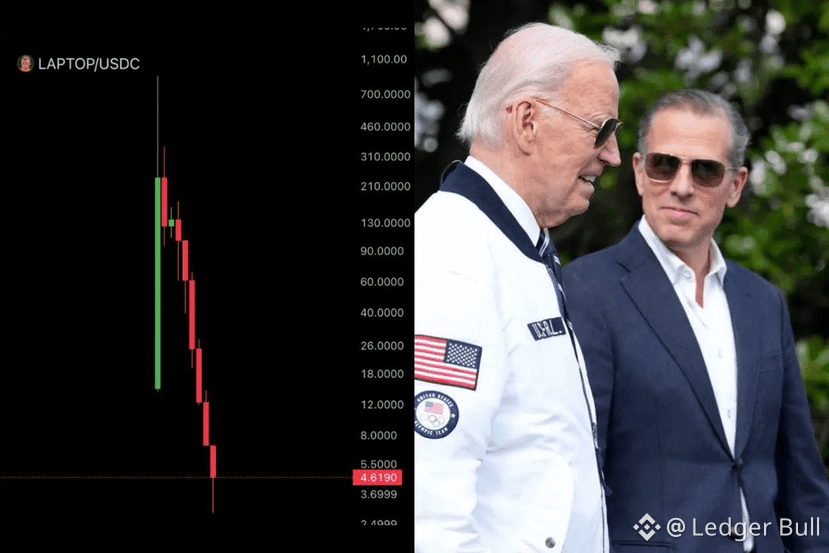
Hunter Biden’s $LAPTOP memecoin reportedly crashed roughly 98% within its first hour, plunging from around $190–$200 to near $4.
The wild part? $LAPTOP was partly designed to airdrop tokens to wallets that lost money on $TRUMP .
A memecoin aimed at $TRUMP losers just delivered another brutal lesson in launch-day liquidity.
Hunter Biden’s $LAPTOP memecoin reportedly crashed roughly 98% within its first hour, plunging from around $190–$200 to near $4.
The wild part? $LAPTOP was partly designed to airdrop tokens to wallets that lost money on $TRUMP .
A memecoin aimed at $TRUMP losers just delivered another brutal lesson in launch-day liquidity.
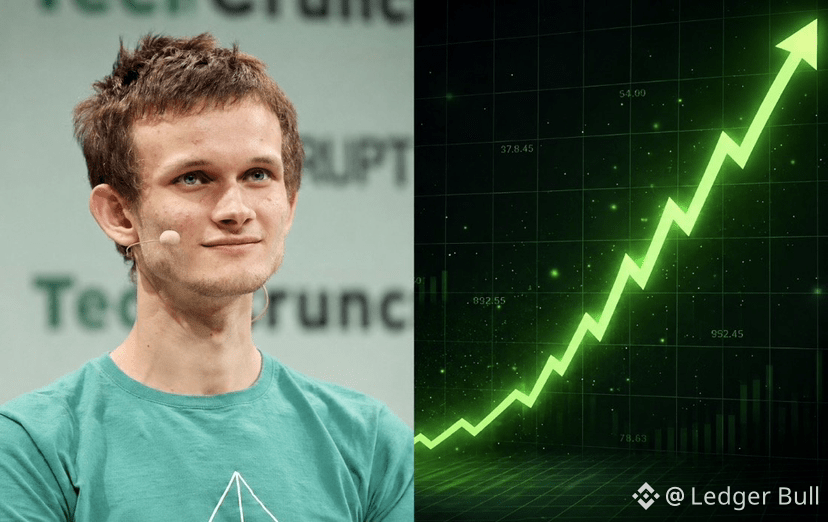
BREAKING: Ethereum is preparing for the quantum era.
The Ethereum Foundation is targeting December 2029 for Ethereum L1 to become quantum-resistant across execution, consensus, and data layers.
This is bigger than a normal upgrade. Ethereum is preparing its cryptography before powerful quantum computers become a serious threat, with post-quantum keys, signatures, consensus protection, and multiple protocol upgrades on the roadmap.
The goal is simple: protect Ethereum not just for the next cycle, but for decades ahead.
For $ETH this is giga bullish long term — security is being built before the threat arrives.
The Ethereum Foundation is targeting December 2029 for Ethereum L1 to become quantum-resistant across execution, consensus, and data layers.
This is bigger than a normal upgrade. Ethereum is preparing its cryptography before powerful quantum computers become a serious threat, with post-quantum keys, signatures, consensus protection, and multiple protocol upgrades on the roadmap.
The goal is simple: protect Ethereum not just for the next cycle, but for decades ahead.
For $ETH this is giga bullish long term — security is being built before the threat arrives.
Verified
Pyth Network goes upstream while most market data stays downstream.
$PYTH powers the Pyth ecosystem, connecting first-party institutional pricing with internet-native finance.
Pyth Pro crossed $6M ARR, subscription ARR jumped 109% QoQ, while 710+ businesses use Pyth data across 114+ blockchains.
$UMA connects with prediction markets, $ONDO targets RWAs, and $HYPE represents perpetual markets. Pyth brings institutional market data across all three themes.
With 125+ publishers and $3.25T+ cumulative volume secured, Pyth keeps expanding its role in 24/7 markets.
Not financial advice, just information post
#PYTH #PythNetwork #DeFi #RWA #MarketData
$PYTH powers the Pyth ecosystem, connecting first-party institutional pricing with internet-native finance.
Pyth Pro crossed $6M ARR, subscription ARR jumped 109% QoQ, while 710+ businesses use Pyth data across 114+ blockchains.
$UMA connects with prediction markets, $ONDO targets RWAs, and $HYPE represents perpetual markets. Pyth brings institutional market data across all three themes.
With 125+ publishers and $3.25T+ cumulative volume secured, Pyth keeps expanding its role in 24/7 markets.
Not financial advice, just information post
#PYTH #PythNetwork #DeFi #RWA #MarketData
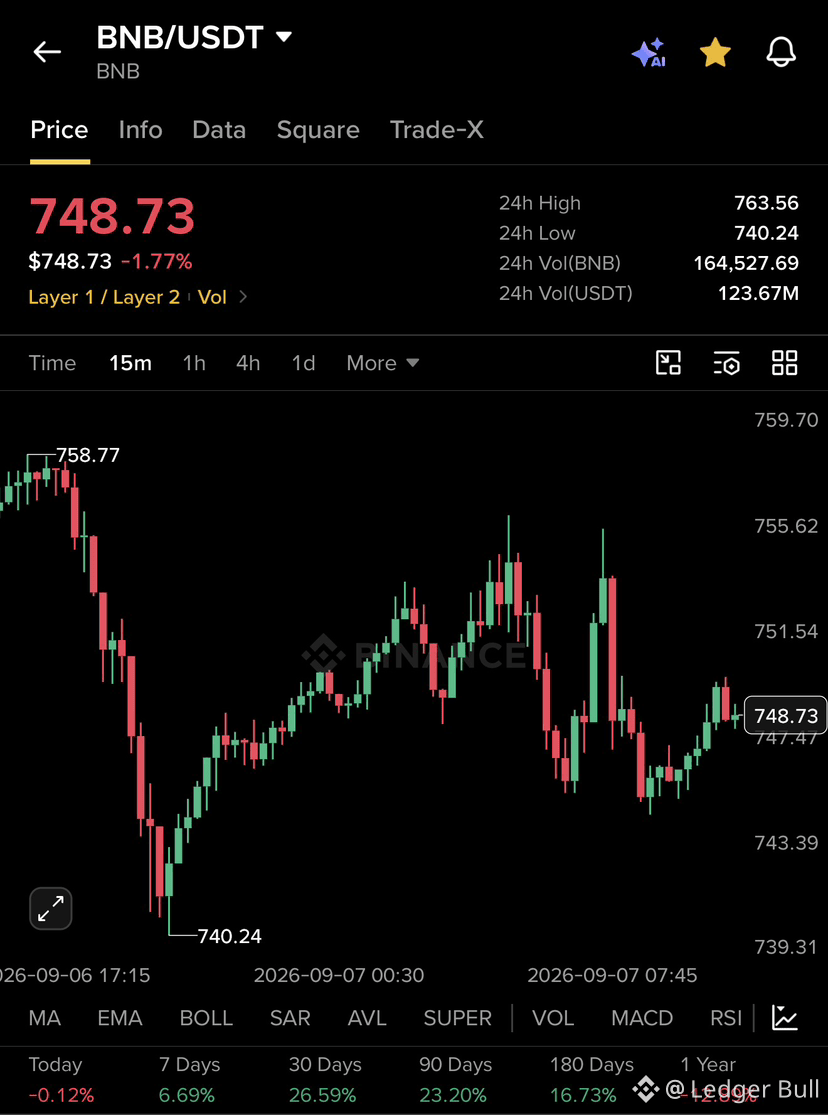
$BNB trades at $748.73 after rebounding from the $740.24 24H low.
Buyers are recovering, but $751.54 remains the immediate hurdle. A breakout could reopen $755.62–$763.56, while losing $740.24 would put sellers back in control.
Buyers are recovering, but $751.54 remains the immediate hurdle. A breakout could reopen $755.62–$763.56, while losing $740.24 would put sellers back in control.
Prediction markets are becoming one of the most interesting edges in crypto.
Instead of only watching narratives unfold, traders can actually take positions on how real-world events may play out.
That’s where Polymarket stands out.
From politics and crypto to AI, economics, sports, and global events, there’s a market for almost every major narrative gaining attention.
What I like most is the simplicity of the idea: research the event, understand the probabilities, and trade based on your own conviction.
Compared with prediction-market ecosystems connected to $GNO , $UMA , and $SX, Polymarket has built impressive attention around real-time information markets without changing the core idea of prediction trading.
For experienced traders, that creates another type of opportunity.
Sometimes the edge isn’t finding the next token early—it’s understanding an outcome better than the crowd.
Prediction markets are starting to feel less like a niche and more like a serious part of crypto trading.
Not financial advice , just information post
#Polymarket #PredictionMarkets #CryptoTrading #Web3 #Crypto
Instead of only watching narratives unfold, traders can actually take positions on how real-world events may play out.
That’s where Polymarket stands out.
From politics and crypto to AI, economics, sports, and global events, there’s a market for almost every major narrative gaining attention.
What I like most is the simplicity of the idea: research the event, understand the probabilities, and trade based on your own conviction.
Compared with prediction-market ecosystems connected to $GNO , $UMA , and $SX, Polymarket has built impressive attention around real-time information markets without changing the core idea of prediction trading.
For experienced traders, that creates another type of opportunity.
Sometimes the edge isn’t finding the next token early—it’s understanding an outcome better than the crowd.
Prediction markets are starting to feel less like a niche and more like a serious part of crypto trading.
Not financial advice , just information post
#Polymarket #PredictionMarkets #CryptoTrading #Web3 #Crypto

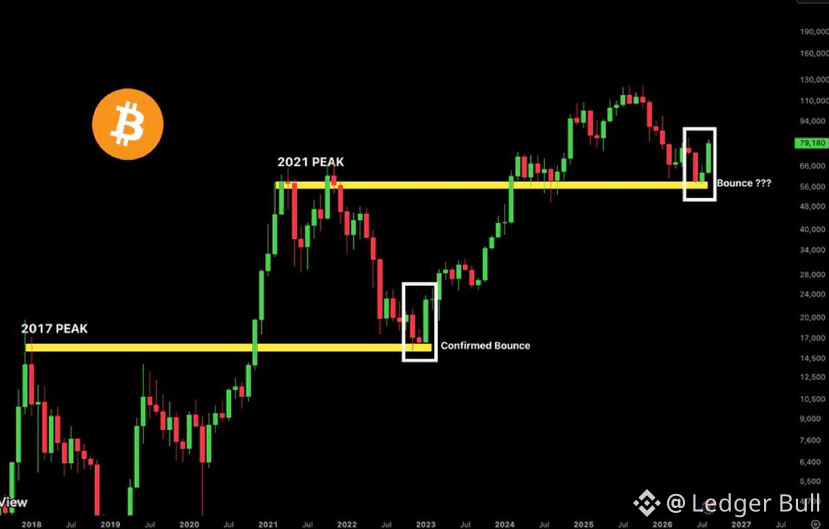
BITCOIN’S OLD CYCLE PATTERN IS SHOWING UP AGAIN.
The 2022 bear market bottomed around $15.5K, temporarily below the 2017 peak near $20K, before BTC reclaimed that old cycle-high zone and eventually pushed to new highs.
Now the market is showing another cycle setup worth watching: a major drawdown, a rebound from the lows, and the previous cycle peak becoming the critical reference zone.
History doesn’t have to repeat—but when old resistance starts behaving like a floor, the next move can become decisive.
The setup is here. The confirmation is what matters next.
The 2022 bear market bottomed around $15.5K, temporarily below the 2017 peak near $20K, before BTC reclaimed that old cycle-high zone and eventually pushed to new highs.
Now the market is showing another cycle setup worth watching: a major drawdown, a rebound from the lows, and the previous cycle peak becoming the critical reference zone.
History doesn’t have to repeat—but when old resistance starts behaving like a floor, the next move can become decisive.
The setup is here. The confirmation is what matters next.
Verified
Something interesting has changed around Aevo.
$AEVO is the token powering Aevo, and its supply structure now looks very different from the usual emission-heavy model.
74M AEVO has already been burned.
Scheduled unlocks are finished, while monthly buybacks use trading fees to buy AEVO and permanently remove it from supply.
The 1M AEVO distributed weekly to traders comes from the fixed 1B supply. It is not new issuance.
Compared with $AAVE , $AVAX and $DYDX, each follows its own token model, but AEVO's link between real trading activity and supply reduction stands out to me.
More volume means more fees available for buybacks.
That's the part I'm watching. How much does this mechanism matter as activity grows?
Not financial advice , just information post
#AEVO #Crypto #DeFi #Tokenomics #Derivatives
$AEVO is the token powering Aevo, and its supply structure now looks very different from the usual emission-heavy model.
74M AEVO has already been burned.
Scheduled unlocks are finished, while monthly buybacks use trading fees to buy AEVO and permanently remove it from supply.
The 1M AEVO distributed weekly to traders comes from the fixed 1B supply. It is not new issuance.
Compared with $AAVE , $AVAX and $DYDX, each follows its own token model, but AEVO's link between real trading activity and supply reduction stands out to me.
More volume means more fees available for buybacks.
That's the part I'm watching. How much does this mechanism matter as activity grows?
Not financial advice , just information post
#AEVO #Crypto #DeFi #Tokenomics #Derivatives

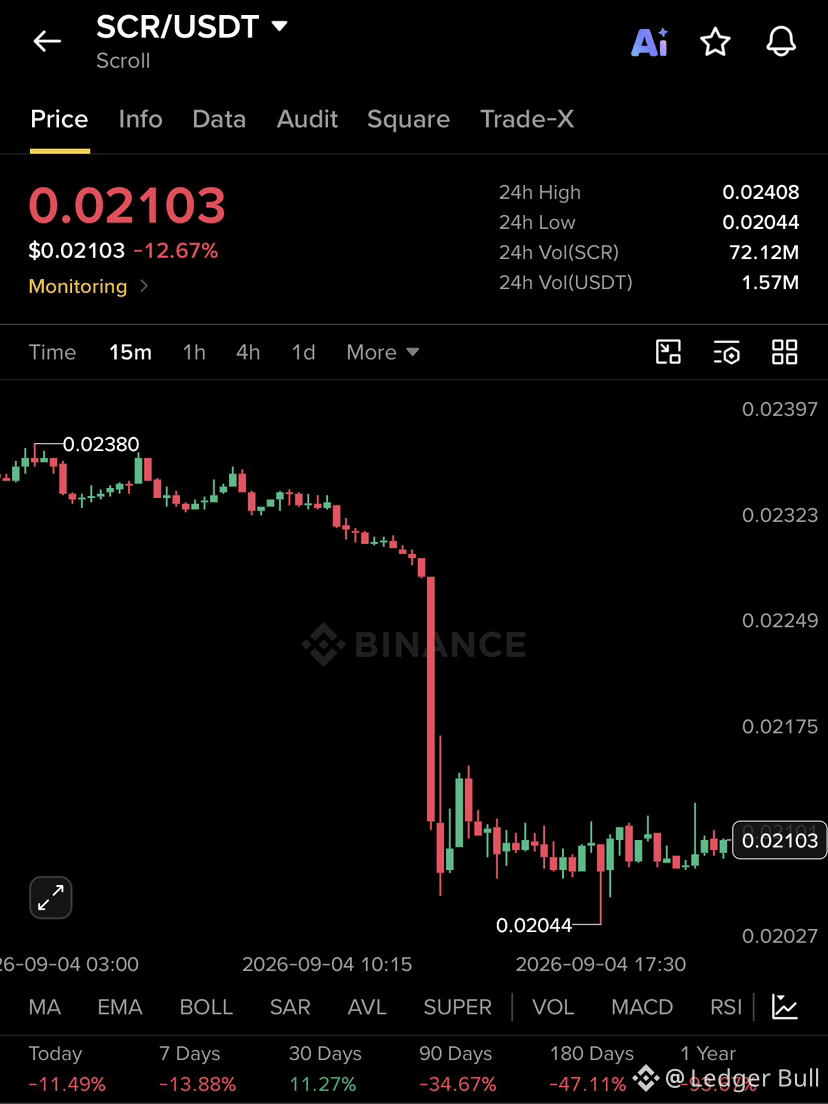
$SCR is showing a stabilization reaction from the $0.02044 low.
Buyers are reacting, but the short-term structure remains under pressure below $0.02175.
EP
$0.02044–$0.02103
TP
TP1 $0.02175
TP2 $0.02249
TP3 $0.02323
SL
$0.02027
Liquidity was swept near $0.02044 after the sharp selloff and triggered a reaction, but buyers need to reclaim $0.02175 to strengthen the recovery structure.
Let’s go $SCR
Buyers are reacting, but the short-term structure remains under pressure below $0.02175.
EP
$0.02044–$0.02103
TP
TP1 $0.02175
TP2 $0.02249
TP3 $0.02323
SL
$0.02027
Liquidity was swept near $0.02044 after the sharp selloff and triggered a reaction, but buyers need to reclaim $0.02175 to strengthen the recovery structure.
Let’s go $SCR
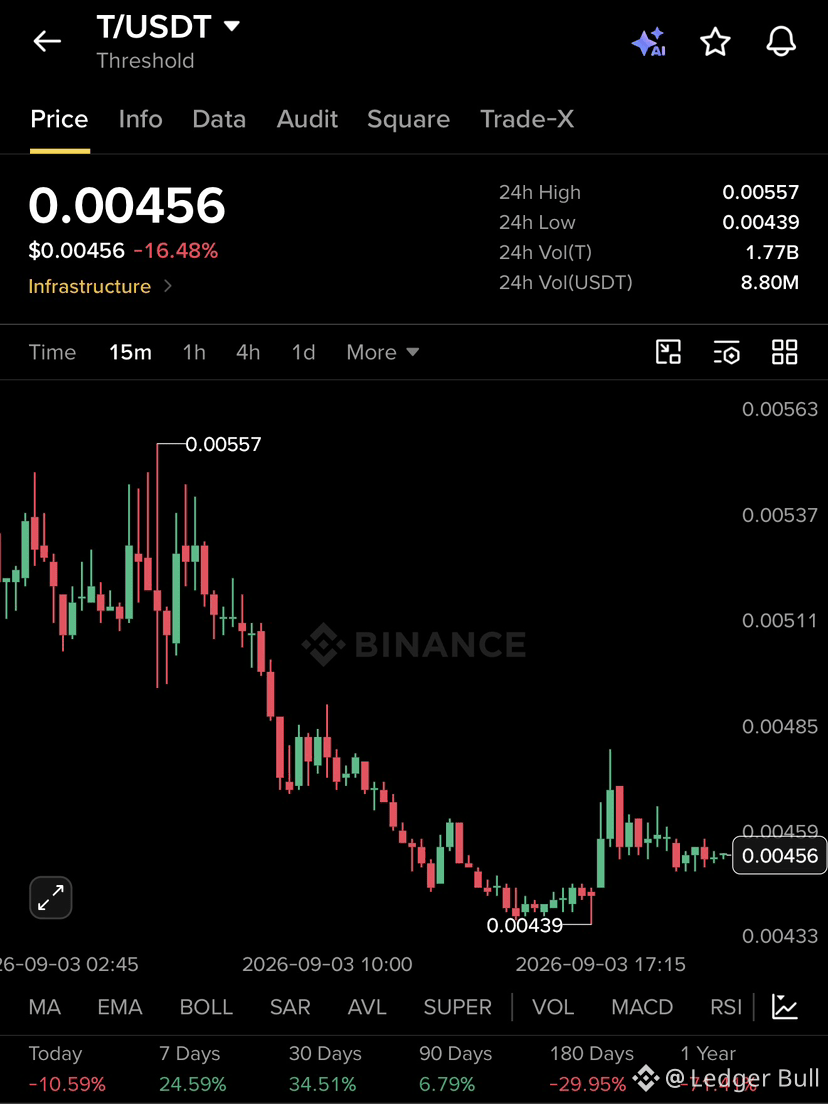
$T is showing a rebound reaction from the $0.00439 low.
Buyers are reacting, but the short-term structure remains under pressure below $0.00459.
EP
$0.00456–$0.00459
TP
TP1 $0.00485
TP2 $0.00511
TP3 $0.00537
SL
$0.00439
Liquidity was swept near $0.00439 and triggered a recovery reaction, but buyers need to reclaim $0.00459 to strengthen the short-term structure.
Let’s go $T
Buyers are reacting, but the short-term structure remains under pressure below $0.00459.
EP
$0.00456–$0.00459
TP
TP1 $0.00485
TP2 $0.00511
TP3 $0.00537
SL
$0.00439
Liquidity was swept near $0.00439 and triggered a recovery reaction, but buyers need to reclaim $0.00459 to strengthen the short-term structure.
Let’s go $T
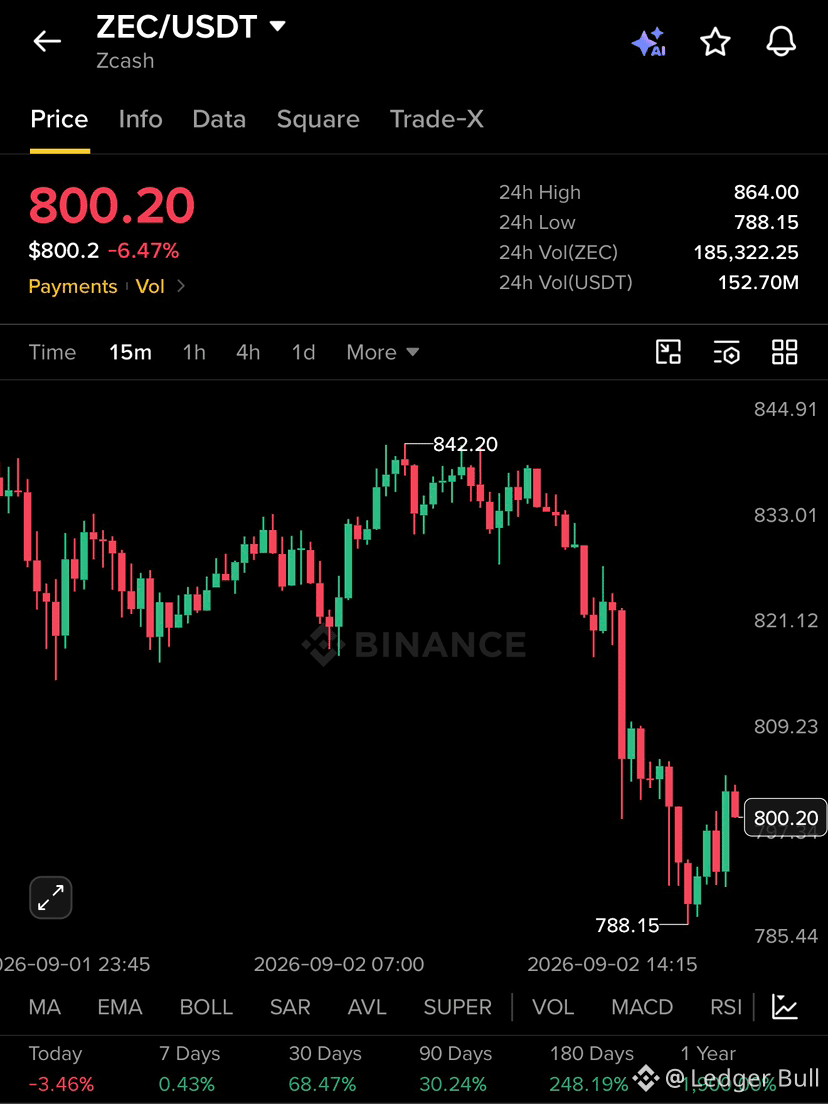
$ZEC is showing strong rebound momentum from the $788.15 low.
Buyers are reacting, but the short-term structure remains under pressure below $809.23.
EP
$797.34–$800.20
TP
TP1 $809.23
TP2 $821.12
TP3 $833.01
SL
$788.15
Liquidity was swept near $788.15 and triggered a sharp reaction, but buyers need to reclaim $809.23 to strengthen the recovery structure.
Let’s go $ZEC
Buyers are reacting, but the short-term structure remains under pressure below $809.23.
EP
$797.34–$800.20
TP
TP1 $809.23
TP2 $821.12
TP3 $833.01
SL
$788.15
Liquidity was swept near $788.15 and triggered a sharp reaction, but buyers need to reclaim $809.23 to strengthen the recovery structure.
Let’s go $ZEC
Partly True
Something big is brewing in prediction markets.
The momentum is getting harder to ignore, and Polymarket is right at the center of it.
Now the anticipated $POLY token could bring another wave of attention, with speculation building around potential utility and user rewards.
The numbers already stand out:
250K–500K monthly active traders.
$18B projected 2025 trading volume.
17M+ monthly visits.
I’m watching $POLY alongside $PENGU , $DOOD and $IP.
Different tokens. Different narratives. But each shows how quickly a strong crypto theme can capture attention.
$POLY is becoming one to keep firmly on the radar.
Not financial advice, just information post.
#POLY #Polymarket #Crypto #Web3 #PredictionMarkets
The momentum is getting harder to ignore, and Polymarket is right at the center of it.
Now the anticipated $POLY token could bring another wave of attention, with speculation building around potential utility and user rewards.
The numbers already stand out:
250K–500K monthly active traders.
$18B projected 2025 trading volume.
17M+ monthly visits.
I’m watching $POLY alongside $PENGU , $DOOD and $IP.
Different tokens. Different narratives. But each shows how quickly a strong crypto theme can capture attention.
$POLY is becoming one to keep firmly on the radar.
Not financial advice, just information post.
#POLY #Polymarket #Crypto #Web3 #PredictionMarkets

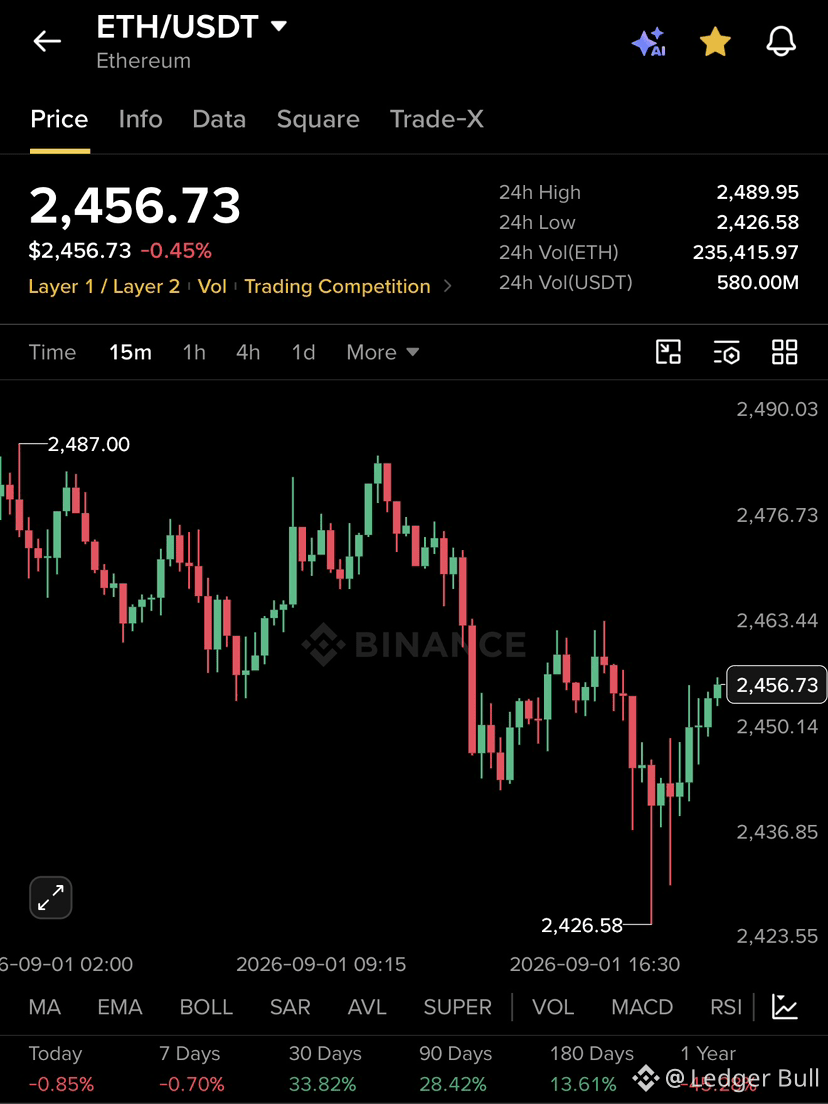
$ETH is showing a strong reaction from the 2,426.58 support.
Buyers are rebuilding control above 2,450.14 as short-term structure improves.
EP
2,450.14–2,456.73
TP
2,463.44
2,476.73
2,487.00
SL
2,426.58
Liquidity was swept near 2,426.58 and the reaction remains constructive, with buyers reclaiming 2,450.14 as price pushes back toward resistance.
Let’s go $ETH
Buyers are rebuilding control above 2,450.14 as short-term structure improves.
EP
2,450.14–2,456.73
TP
2,463.44
2,476.73
2,487.00
SL
2,426.58
Liquidity was swept near 2,426.58 and the reaction remains constructive, with buyers reclaiming 2,450.14 as price pushes back toward resistance.
Let’s go $ETH
Verified
$NIGHT is built around a different idea of onchain privacy.
Not hiding everything. Not exposing everything.
Midnight is a standalone Layer 1 built around selective disclosure. Prove what needs to be true without revealing the underlying data.
That approach is already attracting serious institutions.
Google Cloud, MoneyGram, Pairpoint by Vodafone and eToro are among the enterprise validators and partners.
Monument Bank, a Bank of England regulated institution, is tokenizing up to £250M of customer deposits on Midnight.
NIGHT is distinct from $ADA Midnight is its own network, not a Cardano L2 or subchain.
As real-world finance moves onchain, privacy that can prove compliance could become an important piece of the infrastructure.
Informational content only. Not financial advice.
#NIGHT #MidnightNetwork
Not hiding everything. Not exposing everything.
Midnight is a standalone Layer 1 built around selective disclosure. Prove what needs to be true without revealing the underlying data.
That approach is already attracting serious institutions.
Google Cloud, MoneyGram, Pairpoint by Vodafone and eToro are among the enterprise validators and partners.
Monument Bank, a Bank of England regulated institution, is tokenizing up to £250M of customer deposits on Midnight.
NIGHT is distinct from $ADA Midnight is its own network, not a Cardano L2 or subchain.
As real-world finance moves onchain, privacy that can prove compliance could become an important piece of the infrastructure.
Informational content only. Not financial advice.
#NIGHT #MidnightNetwork
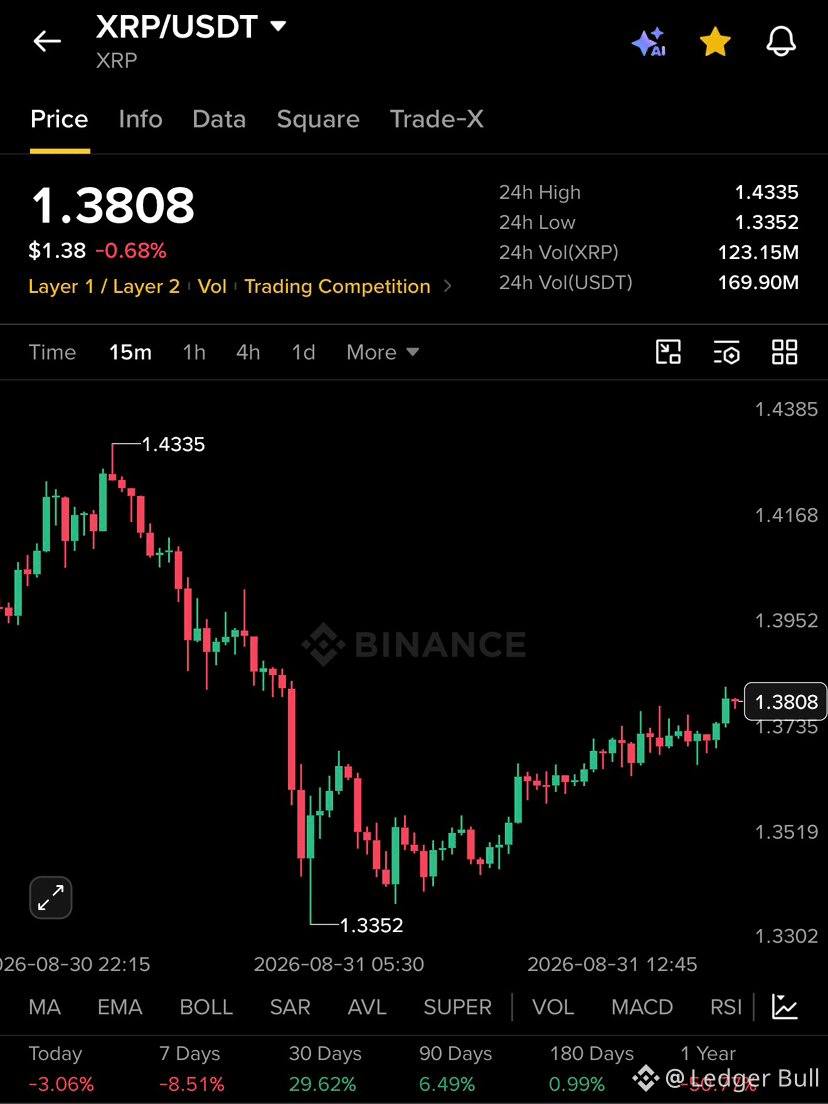
$XRP is showing a strong recovery from the 1.3352 support.
Buyers are rebuilding control above 1.3735 as short-term structure improves.
EP
1.3735–1.3808
TP
1.3952
1.4168
1.4335
SL
1.3352
Liquidity was swept near 1.3352 and the reaction remains constructive, with higher lows forming as buyers push back into resistance.
Let’s go $XRP
Buyers are rebuilding control above 1.3735 as short-term structure improves.
EP
1.3735–1.3808
TP
1.3952
1.4168
1.4335
SL
1.3352
Liquidity was swept near 1.3352 and the reaction remains constructive, with higher lows forming as buyers push back into resistance.
Let’s go $XRP
Verified
The real edge in financial data starts at the source.
That’s the model Pyth Network is building around $PYTH
Instead of pulling prices from downstream sources, Pyth gets data directly from 125+ institutional publishers.
The scale is already significant.
710+ businesses.
114+ blockchains.
$3.25T+ in cumulative volume secured.
$LINK , $ONDO and $HYPE each tackle different parts of onchain financial infrastructure.
Pyth Network is focused on getting first-party market data into internet-native markets.
Pyth Pro crossing $6M in ARR within months of launch shows that this infrastructure is finding commercial demand.
Informational content only. Not financial advice.
#PYTH #PythNetwork #MarketData #RWA #DeFi
That’s the model Pyth Network is building around $PYTH
Instead of pulling prices from downstream sources, Pyth gets data directly from 125+ institutional publishers.
The scale is already significant.
710+ businesses.
114+ blockchains.
$3.25T+ in cumulative volume secured.
$LINK , $ONDO and $HYPE each tackle different parts of onchain financial infrastructure.
Pyth Network is focused on getting first-party market data into internet-native markets.
Pyth Pro crossing $6M in ARR within months of launch shows that this infrastructure is finding commercial demand.
Informational content only. Not financial advice.
#PYTH #PythNetwork #MarketData #RWA #DeFi
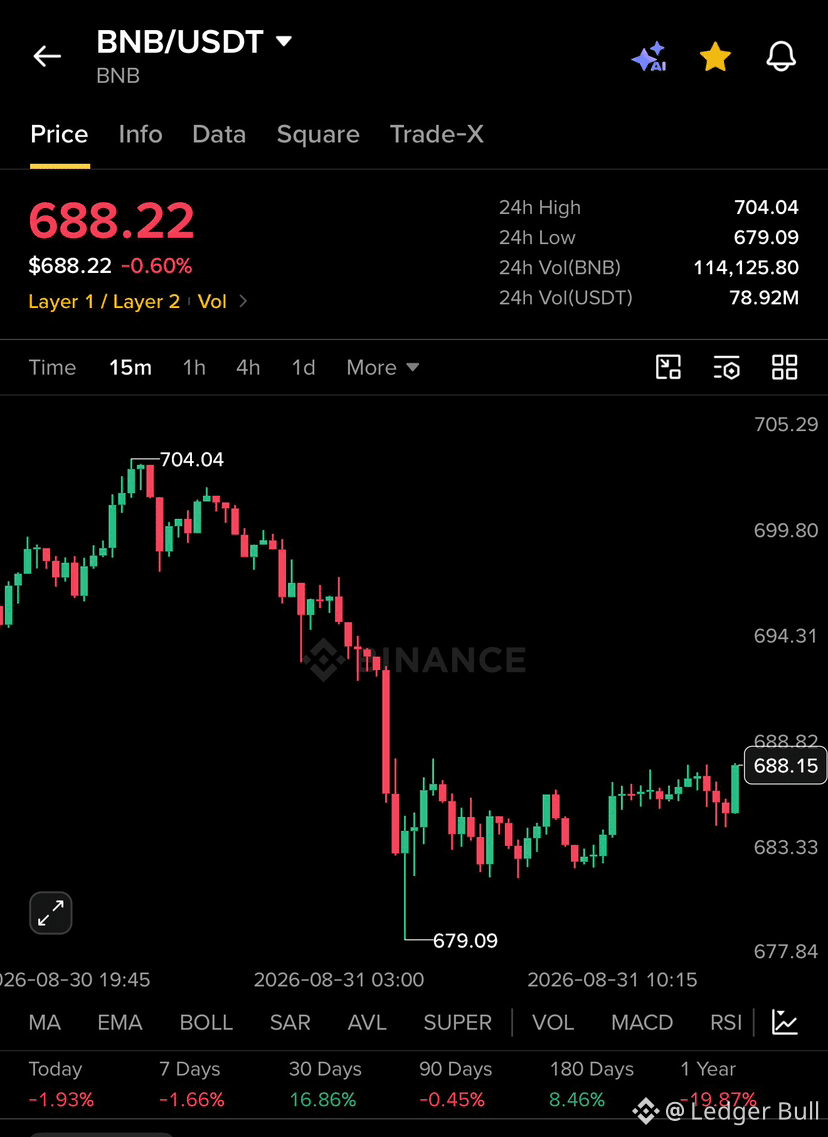
$BNB is showing a solid reaction from the 679.09 support.
Buyers need to reclaim 688.82 to confirm short-term control.
EP
683.33–688.82
TP
694.31
699.80
704.04
SL
679.09
Liquidity was swept near 679.09 and the reaction is holding, but structure needs a clean reclaim of 688.82 to strengthen the recovery.
Let’s go $BNB
Buyers need to reclaim 688.82 to confirm short-term control.
EP
683.33–688.82
TP
694.31
699.80
704.04
SL
679.09
Liquidity was swept near 679.09 and the reaction is holding, but structure needs a clean reclaim of 688.82 to strengthen the recovery.
Let’s go $BNB
Verified
$AEVO has quietly rebuilt its token mechanics.
AEVO is the token behind Aevo.
74M AEVO has already been burned.
Monthly buybacks funded by trading fees continue to remove tokens from the supply.
That structure is what catches my attention.
$AAVE , $AVAX , and $DYDX all take different approaches to connecting their tokens with protocol activity.
AEVO has its own model: platform activity funds buybacks, and those tokens are permanently removed.
Even the 1M AEVO distributed weekly to traders comes from the fixed 1B supply, not new issuance.
Token mechanics tied to actual platform usage are becoming increasingly important in crypto.
Not financial advice, just information post.
#AEVO #Crypto #Tokenomics #Web3
AEVO is the token behind Aevo.
74M AEVO has already been burned.
Monthly buybacks funded by trading fees continue to remove tokens from the supply.
That structure is what catches my attention.
$AAVE , $AVAX , and $DYDX all take different approaches to connecting their tokens with protocol activity.
AEVO has its own model: platform activity funds buybacks, and those tokens are permanently removed.
Even the 1M AEVO distributed weekly to traders comes from the fixed 1B supply, not new issuance.
Token mechanics tied to actual platform usage are becoming increasingly important in crypto.
Not financial advice, just information post.
#AEVO #Crypto #Tokenomics #Web3
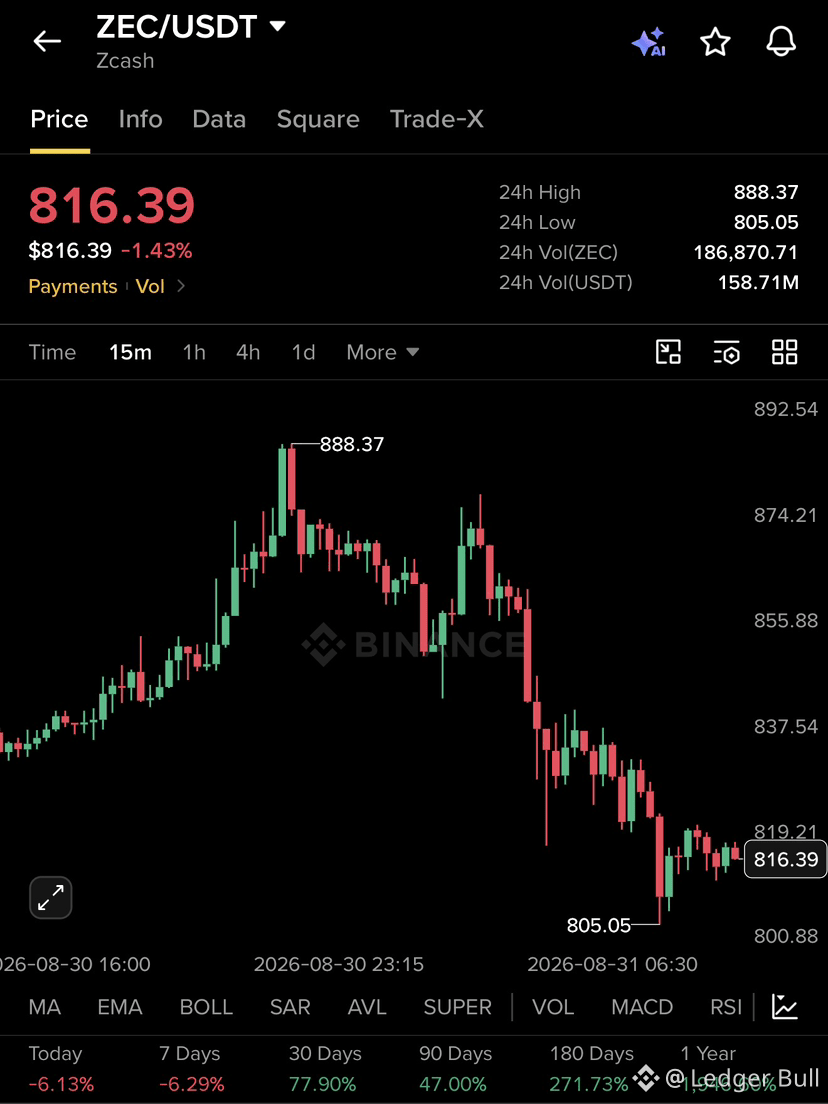
$ZEC is showing a strong reaction from the 805.05 support.
Buyers need to reclaim 819.21 to confirm short-term control.
EP
805.05–819.21
TP
837.54
855.88
874.21
SL
800.88
Liquidity was swept near 805.05 and the reaction is holding, but structure needs a clean reclaim of 819.21 to strengthen the recovery.
Let’s go $ZEC
Buyers need to reclaim 819.21 to confirm short-term control.
EP
805.05–819.21
TP
837.54
855.88
874.21
SL
800.88
Liquidity was swept near 805.05 and the reaction is holding, but structure needs a clean reclaim of 819.21 to strengthen the recovery.
Let’s go $ZEC
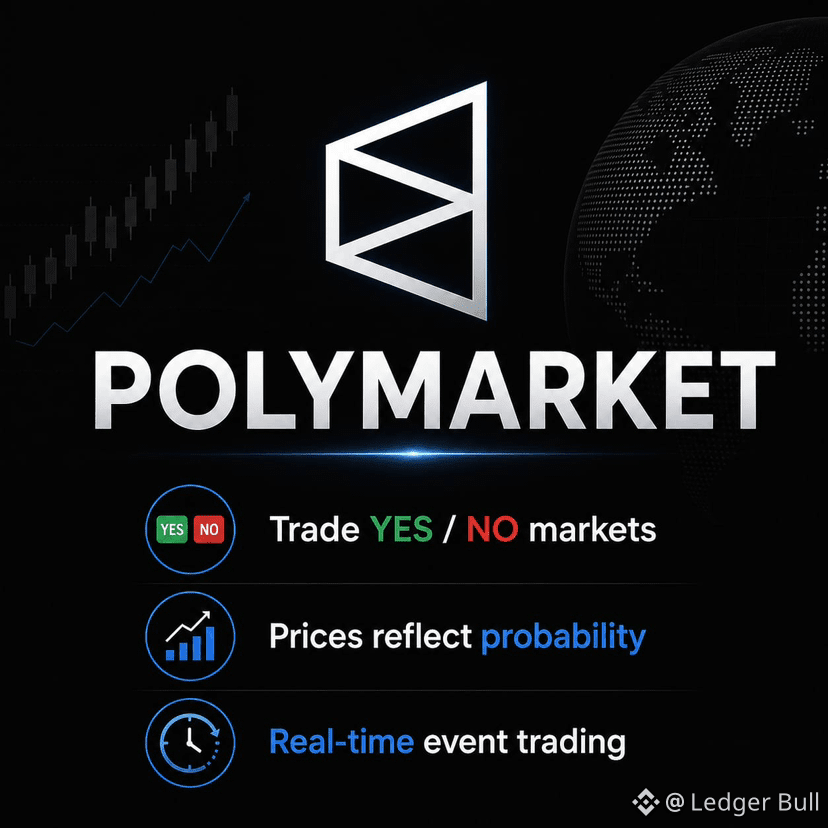
Polymarket one of the cleanest ways to trade conviction on real-world events.
$POLY is the anticipated token symbol tied to the Polymarket ecosystem, but the bigger story is the product and how traders use real-world events as markets.
Every market turns an outcome into a probability.
Traders can take YES or NO positions, react to new information, and manage positions as sentiment shifts.
In the wider event-driven and speculative crypto space, $CHZ , $RLB, and $FUN take different approaches to user participation and market activity.
The interesting development is how prediction markets are starting to feel less like simple bets and more like real-time information markets.
Not financial advice , just information post.
#Polymarket
$POLY is the anticipated token symbol tied to the Polymarket ecosystem, but the bigger story is the product and how traders use real-world events as markets.
Every market turns an outcome into a probability.
Traders can take YES or NO positions, react to new information, and manage positions as sentiment shifts.
In the wider event-driven and speculative crypto space, $CHZ , $RLB, and $FUN take different approaches to user participation and market activity.
The interesting development is how prediction markets are starting to feel less like simple bets and more like real-time information markets.
Not financial advice , just information post.
#Polymarket
Log in to explore more content