
#zkproofs
zkproofs
210,270 views
1,618 Discussing
Hot
Latest

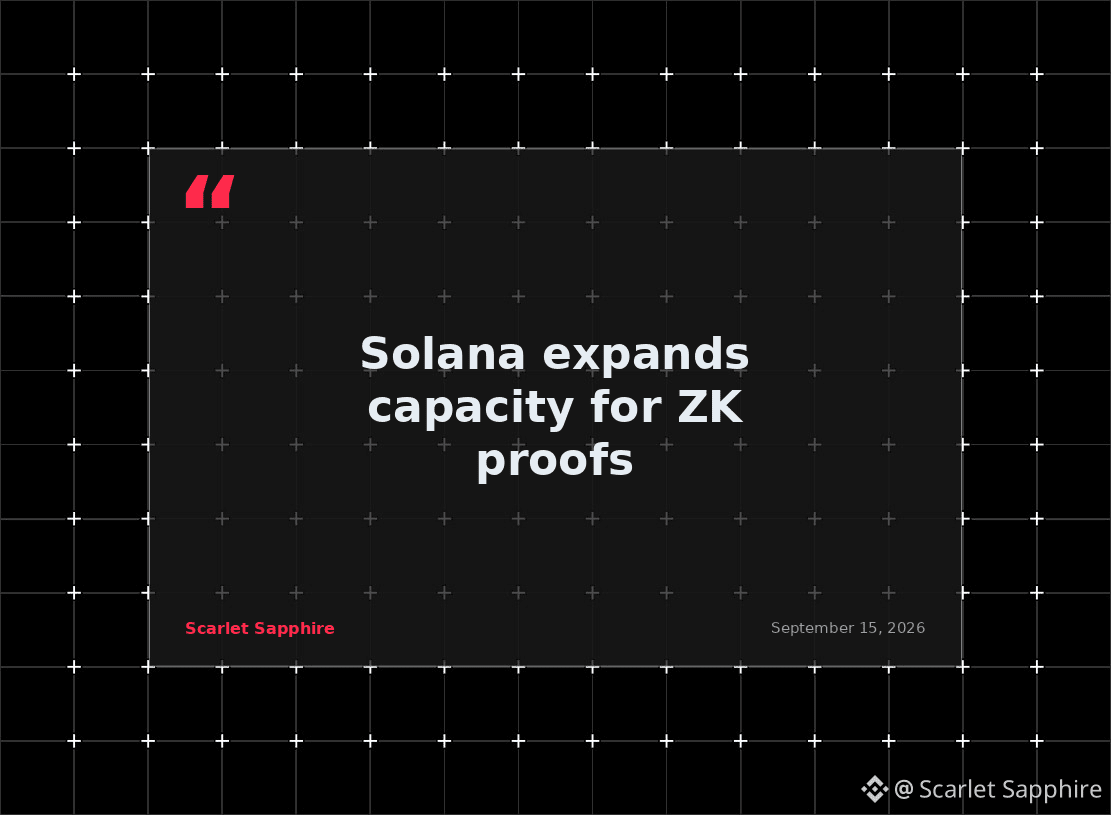
Solana expands capacity for ZK proofs
Solana has increased its transaction size limit to 4096 bytes via a mainnet upgrade. This expansion enables developers to integrate zero knowledge proofs and more complex multi signature transactions.
#SolanaUpgrade #ZKProofs
Solana expands capacity for ZK proofs
Solana has increased its transaction size limit to 4096 bytes via a mainnet upgrade. This expansion enables developers to integrate zero knowledge proofs and more complex multi signature transactions.
#SolanaUpgrade #ZKProofs
Solana has increased its transaction size limit to 4096 bytes via a mainnet upgrade. This expansion enables developers to integrate zero knowledge proofs and more complex multi signature transactions.
#SolanaUpgrade #ZKProofs
16

·
--
Everyone thinks just storing your coins in a hot wallet is enough protection, but actually that's like leaving your house key under the doormat.
You've seen it happen. High gas fees eat into every trade and one phishing link later your funds are gone because there was no extra lock on the door.
ZK proofs let you confirm things without spilling all your info, kind of like proving you're over 21 without showing your full ID. Multisigs add that extra approval step so no single person can move everything.
Batching groups transactions together to cut costs the same way you combine errands to save on fuel. Better cryptographic operations simply mean the math behind it all is tighter and harder to break.
Chains offering stronger support here are making life easier for everyday users on $ETH and $BNB. $SOL is starting to catch the same wave too.
Where do you think this goes from here?
#ZKProofs #CryptoSecurity #Blockchain
Everyone thinks just storing your coins in a hot wallet is enough protection, but actually that's like leaving your house key under the doormat.
You've seen it happen. High gas fees eat into every trade and one phishing link later your funds are gone because there was no extra lock on the door.
ZK proofs let you confirm things without spilling all your info, kind of like proving you're over 21 without showing your full ID. Multisigs add that extra approval step so no single person can move everything.
Batching groups transactions together to cut costs the same way you combine errands to save on fuel. Better cryptographic operations simply mean the math behind it all is tighter and harder to break.
Chains offering stronger support here are making life easier for everyday users on $ETH and $BNB . $SOL is starting to catch the same wave too.
Where do you think this goes from here?
#ZKProofs #CryptoSecurity #Blockchain
You've seen it happen. High gas fees eat into every trade and one phishing link later your funds are gone because there was no extra lock on the door.
ZK proofs let you confirm things without spilling all your info, kind of like proving you're over 21 without showing your full ID. Multisigs add that extra approval step so no single person can move everything.
Batching groups transactions together to cut costs the same way you combine errands to save on fuel. Better cryptographic operations simply mean the math behind it all is tighter and harder to break.
Chains offering stronger support here are making life easier for everyday users on $ETH and $BNB . $SOL is starting to catch the same wave too.
Where do you think this goes from here?
#ZKProofs #CryptoSecurity #Blockchain
18
The biggest leap in blockchain scaling this decade has nothing to do with faster chips and everything to do with cryptography most people still ignore.
You have paid ruinous gas fees and watched a single compromised key wipe out a protocol you believed in. That fear of getting rugged or priced out is just pattern recognition from the last two cycles.
ZK proofs let a network confirm a computation is correct without replaying every step. Combined with batching, thousands of trades settle as one cheap transaction. A $ETH swap that cost fifty dollars in 2021 now costs cents on a rollup, and the same approach is landing on $BTC layers and $SOL.
Multisigs take that discipline into custody so no single seed phrase and no single person can sink the ship. Every collapse we still talk about, from Mt. Gox onward, started with a cryptographic operation that was treated as optional.
Where do you think this goes once every serious protocol actually ships it?
#ZKProofs #CryptoSecurity #Ethereum
The biggest leap in blockchain scaling this decade has nothing to do with faster chips and everything to do with cryptography most people still ignore.
You have paid ruinous gas fees and watched a single compromised key wipe out a protocol you believed in. That fear of getting rugged or priced out is just pattern recognition from the last two cycles.
ZK proofs let a network confirm a computation is correct without replaying every step. Combined with batching, thousands of trades settle as one cheap transaction. A $ETH swap that cost fifty dollars in 2021 now costs cents on a rollup, and the same approach is landing on $BTC layers and $SOL .
Multisigs take that discipline into custody so no single seed phrase and no single person can sink the ship. Every collapse we still talk about, from Mt. Gox onward, started with a cryptographic operation that was treated as optional.
Where do you think this goes once every serious protocol actually ships it?
#ZKProofs #CryptoSecurity #Ethereum
You have paid ruinous gas fees and watched a single compromised key wipe out a protocol you believed in. That fear of getting rugged or priced out is just pattern recognition from the last two cycles.
ZK proofs let a network confirm a computation is correct without replaying every step. Combined with batching, thousands of trades settle as one cheap transaction. A $ETH swap that cost fifty dollars in 2021 now costs cents on a rollup, and the same approach is landing on $BTC layers and $SOL .
Multisigs take that discipline into custody so no single seed phrase and no single person can sink the ship. Every collapse we still talk about, from Mt. Gox onward, started with a cryptographic operation that was treated as optional.
Where do you think this goes once every serious protocol actually ships it?
#ZKProofs #CryptoSecurity #Ethereum
19

Have you noticed that the Ethereum upgrades actually worth paying attention to never make the trending list?
Traders still get wrecked the same way every cycle. High fees lock you out of entries, stuck transactions kill exits, and clunky multisig setups leave funds exposed right when volatility hits.
The real work is happening in better support for ZK proofs, multisigs, batching and cryptographic operations on $ETH. ZK verification is getting cheaper and faster, which is exactly what L2s on $ARB and $OP needed to stop overpromising on costs. This is the quiet case study of the chain fixing its own bottlenecks instead of chasing headlines.
Multisigs used to add extra gas and delay that punished anyone trying to be careful. Batching now packs multiple operations into single transactions, the kind of efficiency that would have saved serious money during the last fee spike. Optimized cryptographic ops cut waste and shrink the attack surface at the same time.
Where do you think this actually leaves $ETH once the next wave of volume shows up?
#Ethereum #ZKProofs #DeFi
Have you noticed that the Ethereum upgrades actually worth paying attention to never make the trending list?
Traders still get wrecked the same way every cycle. High fees lock you out of entries, stuck transactions kill exits, and clunky multisig setups leave funds exposed right when volatility hits.
The real work is happening in better support for ZK proofs, multisigs, batching and cryptographic operations on $ETH . ZK verification is getting cheaper and faster, which is exactly what L2s on $ARB and $OP needed to stop overpromising on costs. This is the quiet case study of the chain fixing its own bottlenecks instead of chasing headlines.
Multisigs used to add extra gas and delay that punished anyone trying to be careful. Batching now packs multiple operations into single transactions, the kind of efficiency that would have saved serious money during the last fee spike. Optimized cryptographic ops cut waste and shrink the attack surface at the same time.
Where do you think this actually leaves $ETH once the next wave of volume shows up?
#Ethereum #ZKProofs #DeFi
Traders still get wrecked the same way every cycle. High fees lock you out of entries, stuck transactions kill exits, and clunky multisig setups leave funds exposed right when volatility hits.
The real work is happening in better support for ZK proofs, multisigs, batching and cryptographic operations on $ETH . ZK verification is getting cheaper and faster, which is exactly what L2s on $ARB and $OP needed to stop overpromising on costs. This is the quiet case study of the chain fixing its own bottlenecks instead of chasing headlines.
Multisigs used to add extra gas and delay that punished anyone trying to be careful. Batching now packs multiple operations into single transactions, the kind of efficiency that would have saved serious money during the last fee spike. Optimized cryptographic ops cut waste and shrink the attack surface at the same time.
Where do you think this actually leaves $ETH once the next wave of volume shows up?
#Ethereum #ZKProofs #DeFi
212

·
--
Is Midnight (NIGHT) the Future of Privacy Blockchains? 🌐
Hey everyone! Today let's talk about Midnight Network and its native token, NIGHT. Built by the team behind Cardano (IOG), this Layer-1 project is gaining a lot of attention in the market for its unique approach to "Rational Privacy."
Unlike traditional privacy coins that hide everything and face regulatory bans, Midnight uses Zero-Knowledge (ZK) proofs to balance user confidentiality with compliance.
What makes it super interesting is its dual-token model. By holding the unshielded NIGHT token, you generate DUST, which acts as renewable fuel for network transactions.
Are you holding or watching NIGHT in your portfolio? What is your long-term prediction for this project? Let's discuss below! 👇
#MidnightNetwork2026 #NİGHT #Cardano #zkProofs #CryptoInsights🚀💰📉
Is Midnight (NIGHT) the Future of Privacy Blockchains? 🌐
Hey everyone! Today let's talk about Midnight Network and its native token, NIGHT. Built by the team behind Cardano (IOG), this Layer-1 project is gaining a lot of attention in the market for its unique approach to "Rational Privacy."
Unlike traditional privacy coins that hide everything and face regulatory bans, Midnight uses Zero-Knowledge (ZK) proofs to balance user confidentiality with compliance.
What makes it super interesting is its dual-token model. By holding the unshielded NIGHT token, you generate DUST, which acts as renewable fuel for network transactions.
Are you holding or watching NIGHT in your portfolio? What is your long-term prediction for this project? Let's discuss below! 👇
#MidnightNetwork2026 #NİGHT #Cardano #zkProofs #CryptoInsights🚀💰📉
Hey everyone! Today let's talk about Midnight Network and its native token, NIGHT. Built by the team behind Cardano (IOG), this Layer-1 project is gaining a lot of attention in the market for its unique approach to "Rational Privacy."
Unlike traditional privacy coins that hide everything and face regulatory bans, Midnight uses Zero-Knowledge (ZK) proofs to balance user confidentiality with compliance.
What makes it super interesting is its dual-token model. By holding the unshielded NIGHT token, you generate DUST, which acts as renewable fuel for network transactions.
Are you holding or watching NIGHT in your portfolio? What is your long-term prediction for this project? Let's discuss below! 👇
#MidnightNetwork2026 #NİGHT #Cardano #zkProofs #CryptoInsights🚀💰📉
Feed-Creator-90e2aae2b:
看好他
1
198

·
--
Bullish
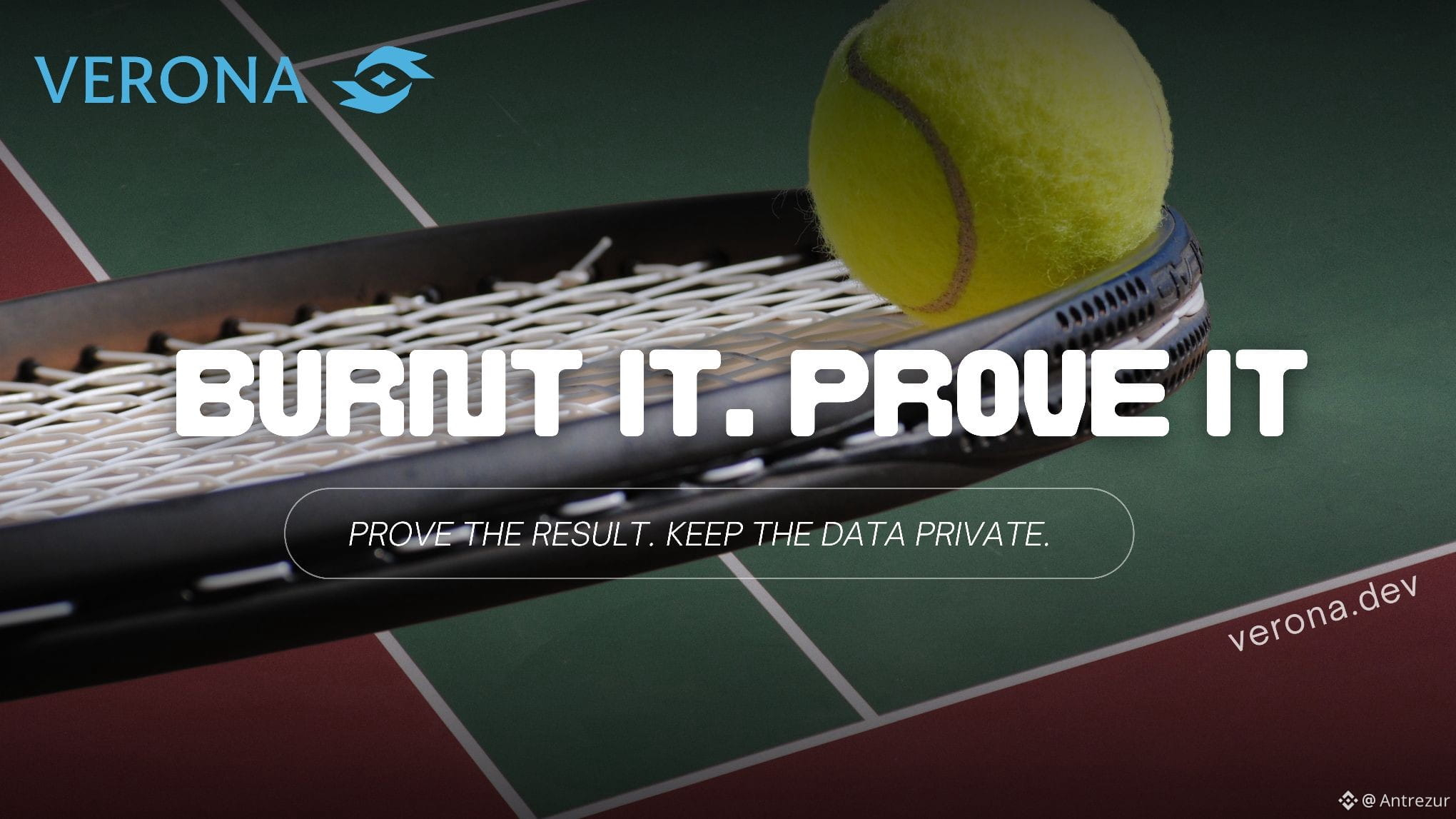
Two tickets to the US Open men’s semifinals are up for grabs in Verona’s latest campaign. Participants simply create a Verona account, connect their WHOOP, play tennis, and start stacking calories.
But the most interesting part is not just the prize. Participants do not have to prove their activity with screenshots that can be manipulated or hand over their entire workout history to the organizer.
Through zkTLS, $Verona retrieves tennis activity directly from WHOOP and calculates the total calories burned over the past 30 days. The leaderboard displays only the verified number, while the raw workout data and access tokens are destroyed once the total has been generated.
The ten participants with the highest calorie counts will advance to the final stage. One winner will then be selected at random on-chain using a public seed, allowing anyone to verify the process.
This campaign offers a simple example of how Verona works, turning real-world activity into trusted proof without exposing the personal data behind it.
Prove the result, not expose the data.
https://campaignos.builtonverona.com/
#zkProofs
Two tickets to the US Open men’s semifinals are up for grabs in Verona’s latest campaign. Participants simply create a Verona account, connect their WHOOP, play tennis, and start stacking calories.
But the most interesting part is not just the prize. Participants do not have to prove their activity with screenshots that can be manipulated or hand over their entire workout history to the organizer.
Through zkTLS, $Verona retrieves tennis activity directly from WHOOP and calculates the total calories burned over the past 30 days. The leaderboard displays only the verified number, while the raw workout data and access tokens are destroyed once the total has been generated.
The ten participants with the highest calorie counts will advance to the final stage. One winner will then be selected at random on-chain using a public seed, allowing anyone to verify the process.
This campaign offers a simple example of how Verona works, turning real-world activity into trusted proof without exposing the personal data behind it.
Prove the result, not expose the data.
https://campaignos.builtonverona.com/
#zkProofs
But the most interesting part is not just the prize. Participants do not have to prove their activity with screenshots that can be manipulated or hand over their entire workout history to the organizer.
Through zkTLS, $Verona retrieves tennis activity directly from WHOOP and calculates the total calories burned over the past 30 days. The leaderboard displays only the verified number, while the raw workout data and access tokens are destroyed once the total has been generated.
The ten participants with the highest calorie counts will advance to the final stage. One winner will then be selected at random on-chain using a public seed, allowing anyone to verify the process.
This campaign offers a simple example of how Verona works, turning real-world activity into trusted proof without exposing the personal data behind it.
Prove the result, not expose the data.
https://campaignos.builtonverona.com/
#zkProofs
100
·
--
Verified
Zero-knowledge proofs are becoming more relevant for Bitcoin, but there is a practical question that often gets overlooked:
How cheaply can Bitcoin verify those proofs?
That is where Babylon’s BABE becomes interesting.
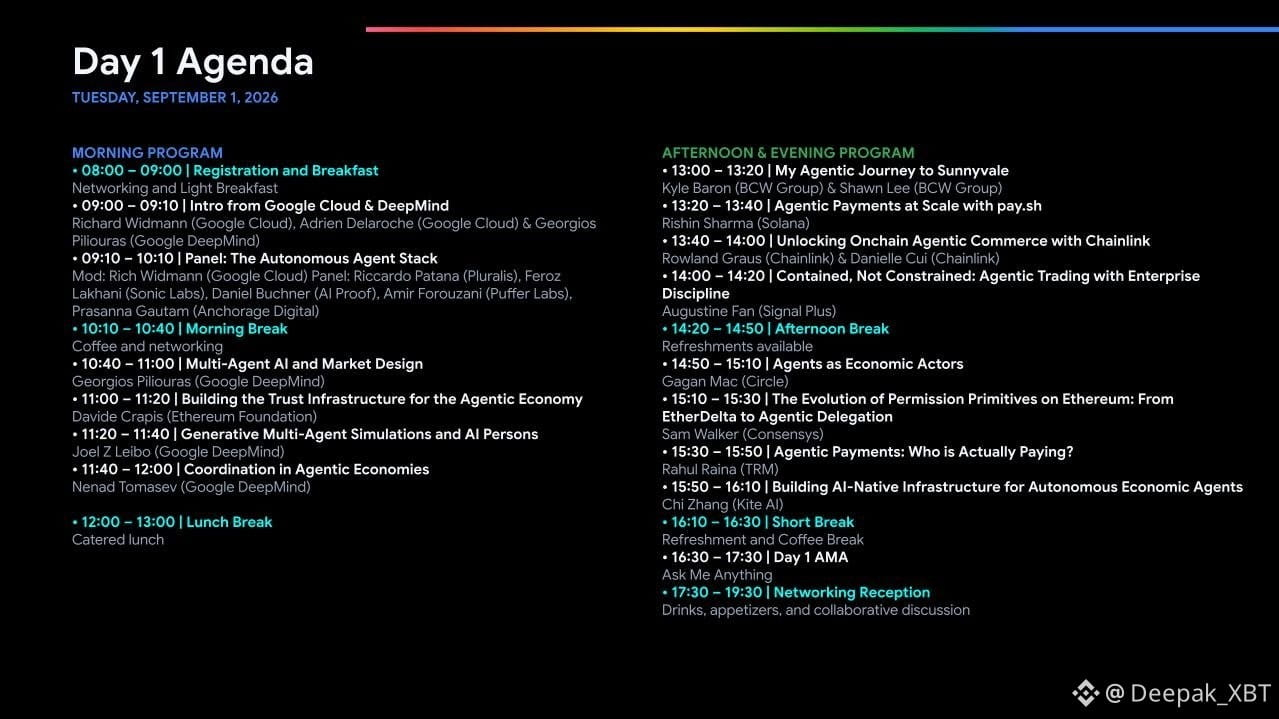
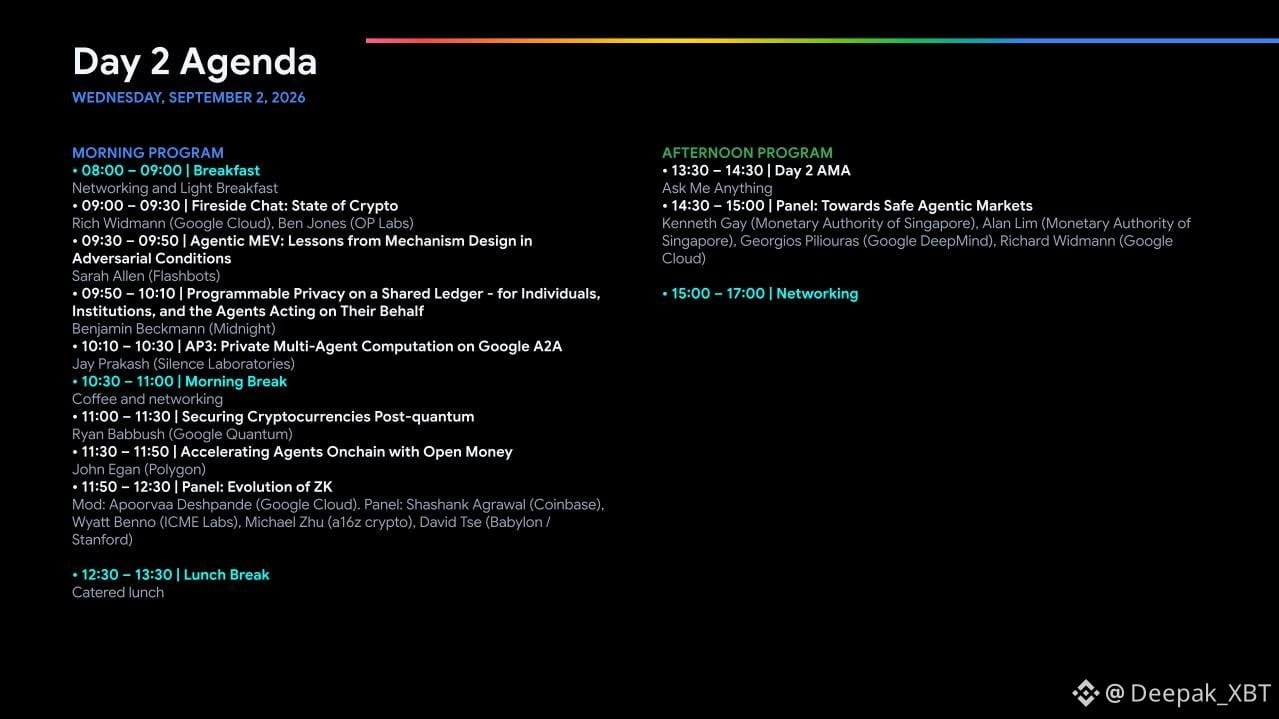
Today at the Google Web3 x AI Summit 2026, Babylon co-founder David Tse is joining a panel with Michael Zhu from a16z, Wyatt Benno from ICME Labs, and Shashank Agrawal from Coinbase to discuss the evolution of ZK proofs.
David is expected to explain how BABE can make ZK proof verification on Bitcoin 1,000x cheaper. The underlying research describes BABE as a protocol for verifying Groth16 proofs on Bitcoin while significantly reducing the associated costs.
What interests me here is not simply the 1,000x number.
If verification becomes cheap enough, ZK proofs could become much more practical for Bitcoin-based applications where Bitcoin itself needs to verify activity or state from another system.
That could matter for things like trustless Bitcoin vaults, where withdrawals can be tied to verification of a specific smart-contract state on Bitcoin.
For me, BABE is interesting because it addresses the less visible bottleneck: making cryptographic verification economically practical on Bitcoin.
Curious to hear David’s explanation today.
@babylonlabs_io $BABY
{future}(BABYUSDT)
#Babylon #bitcoin.” #zkProofs #Web3
Zero-knowledge proofs are becoming more relevant for Bitcoin, but there is a practical question that often gets overlooked:
How cheaply can Bitcoin verify those proofs?
That is where Babylon’s BABE becomes interesting.
Today at the Google Web3 x AI Summit 2026, Babylon co-founder David Tse is joining a panel with Michael Zhu from a16z, Wyatt Benno from ICME Labs, and Shashank Agrawal from Coinbase to discuss the evolution of ZK proofs.
David is expected to explain how BABE can make ZK proof verification on Bitcoin 1,000x cheaper. The underlying research describes BABE as a protocol for verifying Groth16 proofs on Bitcoin while significantly reducing the associated costs.
What interests me here is not simply the 1,000x number.
If verification becomes cheap enough, ZK proofs could become much more practical for Bitcoin-based applications where Bitcoin itself needs to verify activity or state from another system.
That could matter for things like trustless Bitcoin vaults, where withdrawals can be tied to verification of a specific smart-contract state on Bitcoin.
For me, BABE is interesting because it addresses the less visible bottleneck: making cryptographic verification economically practical on Bitcoin.
Curious to hear David’s explanation today.
@BabylonLabs_io $BABY
#Babylon #bitcoin.” #zkProofs #Web3
How cheaply can Bitcoin verify those proofs?
That is where Babylon’s BABE becomes interesting.
Today at the Google Web3 x AI Summit 2026, Babylon co-founder David Tse is joining a panel with Michael Zhu from a16z, Wyatt Benno from ICME Labs, and Shashank Agrawal from Coinbase to discuss the evolution of ZK proofs.
David is expected to explain how BABE can make ZK proof verification on Bitcoin 1,000x cheaper. The underlying research describes BABE as a protocol for verifying Groth16 proofs on Bitcoin while significantly reducing the associated costs.
What interests me here is not simply the 1,000x number.
If verification becomes cheap enough, ZK proofs could become much more practical for Bitcoin-based applications where Bitcoin itself needs to verify activity or state from another system.
That could matter for things like trustless Bitcoin vaults, where withdrawals can be tied to verification of a specific smart-contract state on Bitcoin.
For me, BABE is interesting because it addresses the less visible bottleneck: making cryptographic verification economically practical on Bitcoin.
Curious to hear David’s explanation today.
@BabylonLabs_io $BABY
#Babylon #bitcoin.” #zkProofs #Web3
193
·
--
Bullish
30D trade $DUSK 16.2K USDT
@Dusk_Foundation $DUSK
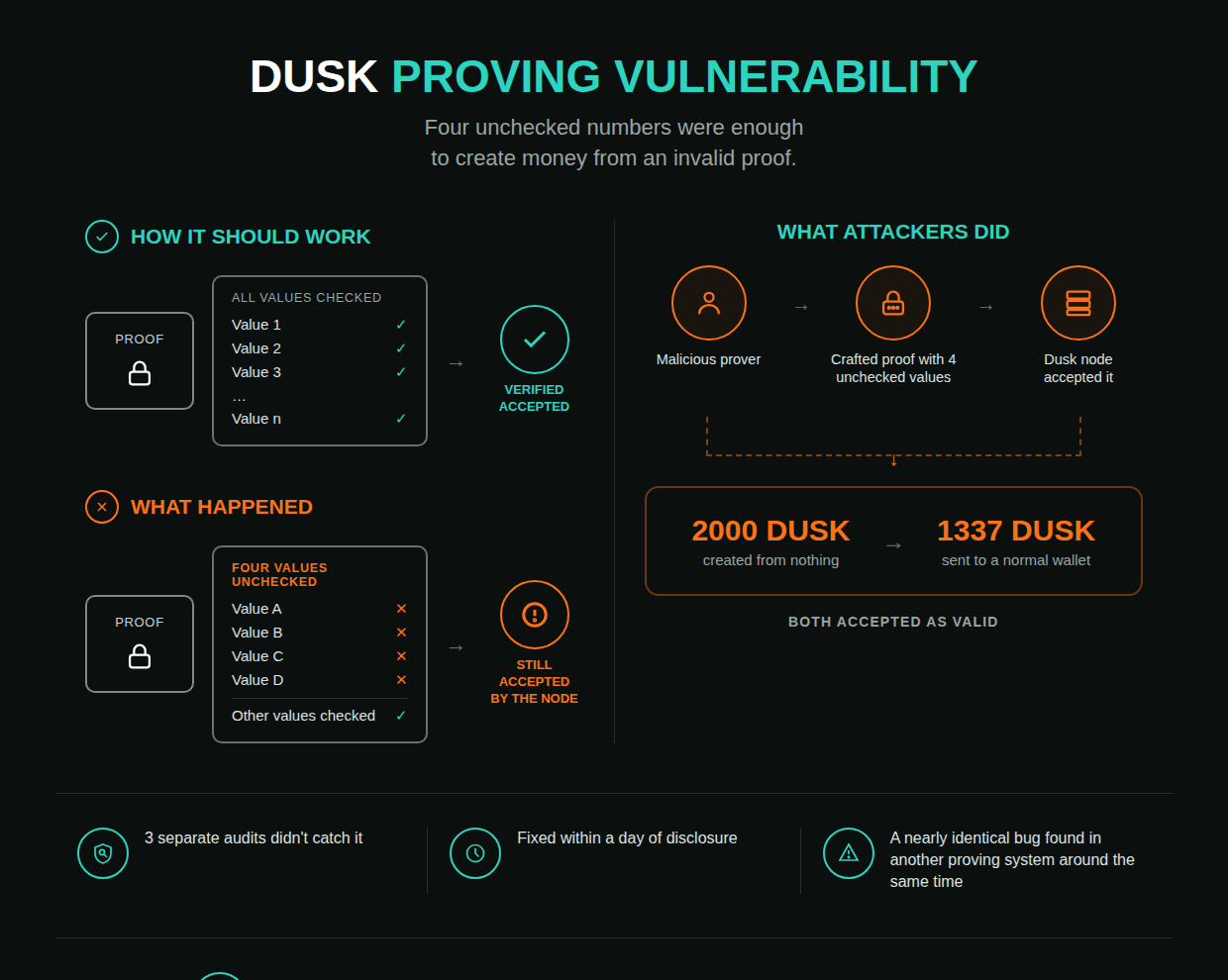
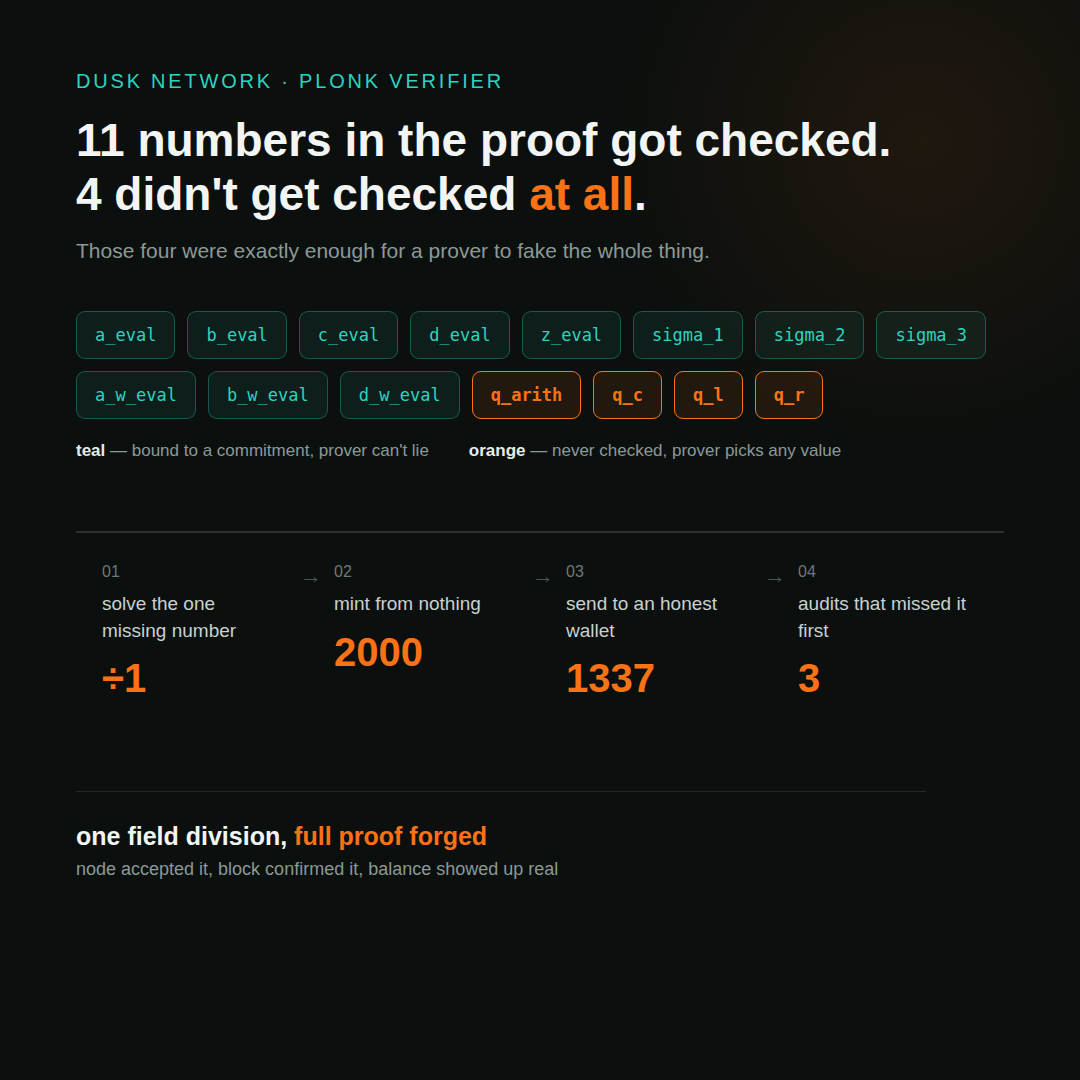
I assumed a zero knowledge proof either checks everything or it doesn't verify at all. no partial trust. turns out dusk's own proving code left four numbers completely unchecked, and that was enough to create money from an invalid proof.
when i first looked at this, i literally thought a forged proof would require breaking actual cryptography. the real gap was way simpler than that.
here's why. every shielded dusk transaction carries a proof, and that proof has to convince the network of things like ownership, correct balances, and valid inputs. almost every number inside that proof gets locked down, tied back to a trusted commitment so the prover can't simply lie about it. but four specific numbers, tied to how the transaction's logic gets checked, were never constrained that way. they existed in the proof, got used in the final math, but nobody ever verified them against the values they were supposed to represent.
so a malicious prover could solve for the missing values directly. one division. that's it. security researchers demonstrated the issue against a dusk node, creating 2000 DUSK out of nothing and sending 1337 of it to a normal wallet through an ordinary transaction. the node accepted both as valid.
what made this land harder for me is that dusk's code had already gone through three separate audits before this was found.
the same design that makes zero knowledge proofs powerful, trusting one final verdict instead of re-checking every claim yourself, is exactly what let four unconstrained numbers hide in plain sight for that long.
dusk fixed the issue within a day of being notified, but a nearly identical bug was independently discovered in another team's proving system around the same time. if two unrelated implementations shipped the same blind spot, i don't know how many others are still sitting there unfound.
#dusk $TUT $ZRO
#zkProofs
@Dusk $DUSK
I assumed a zero knowledge proof either checks everything or it doesn't verify at all. no partial trust. turns out dusk's own proving code left four numbers completely unchecked, and that was enough to create money from an invalid proof.
when i first looked at this, i literally thought a forged proof would require breaking actual cryptography. the real gap was way simpler than that.
here's why. every shielded dusk transaction carries a proof, and that proof has to convince the network of things like ownership, correct balances, and valid inputs. almost every number inside that proof gets locked down, tied back to a trusted commitment so the prover can't simply lie about it. but four specific numbers, tied to how the transaction's logic gets checked, were never constrained that way. they existed in the proof, got used in the final math, but nobody ever verified them against the values they were supposed to represent.
so a malicious prover could solve for the missing values directly. one division. that's it. security researchers demonstrated the issue against a dusk node, creating 2000 DUSK out of nothing and sending 1337 of it to a normal wallet through an ordinary transaction. the node accepted both as valid.
what made this land harder for me is that dusk's code had already gone through three separate audits before this was found.
the same design that makes zero knowledge proofs powerful, trusting one final verdict instead of re-checking every claim yourself, is exactly what let four unconstrained numbers hide in plain sight for that long.
dusk fixed the issue within a day of being notified, but a nearly identical bug was independently discovered in another team's proving system around the same time. if two unrelated implementations shipped the same blind spot, i don't know how many others are still sitting there unfound.
#dusk $TUT $ZRO
#zkProofs
I assumed a zero knowledge proof either checks everything or it doesn't verify at all. no partial trust. turns out dusk's own proving code left four numbers completely unchecked, and that was enough to create money from an invalid proof.
when i first looked at this, i literally thought a forged proof would require breaking actual cryptography. the real gap was way simpler than that.
here's why. every shielded dusk transaction carries a proof, and that proof has to convince the network of things like ownership, correct balances, and valid inputs. almost every number inside that proof gets locked down, tied back to a trusted commitment so the prover can't simply lie about it. but four specific numbers, tied to how the transaction's logic gets checked, were never constrained that way. they existed in the proof, got used in the final math, but nobody ever verified them against the values they were supposed to represent.
so a malicious prover could solve for the missing values directly. one division. that's it. security researchers demonstrated the issue against a dusk node, creating 2000 DUSK out of nothing and sending 1337 of it to a normal wallet through an ordinary transaction. the node accepted both as valid.
what made this land harder for me is that dusk's code had already gone through three separate audits before this was found.
the same design that makes zero knowledge proofs powerful, trusting one final verdict instead of re-checking every claim yourself, is exactly what let four unconstrained numbers hide in plain sight for that long.
dusk fixed the issue within a day of being notified, but a nearly identical bug was independently discovered in another team's proving system around the same time. if two unrelated implementations shipped the same blind spot, i don't know how many others are still sitting there unfound.
#dusk $TUT $ZRO
#zkProofs
7
8
196

·
--
From Dusk to Dawn: Bridging Private Markets & On-Chain Settlement 🌉
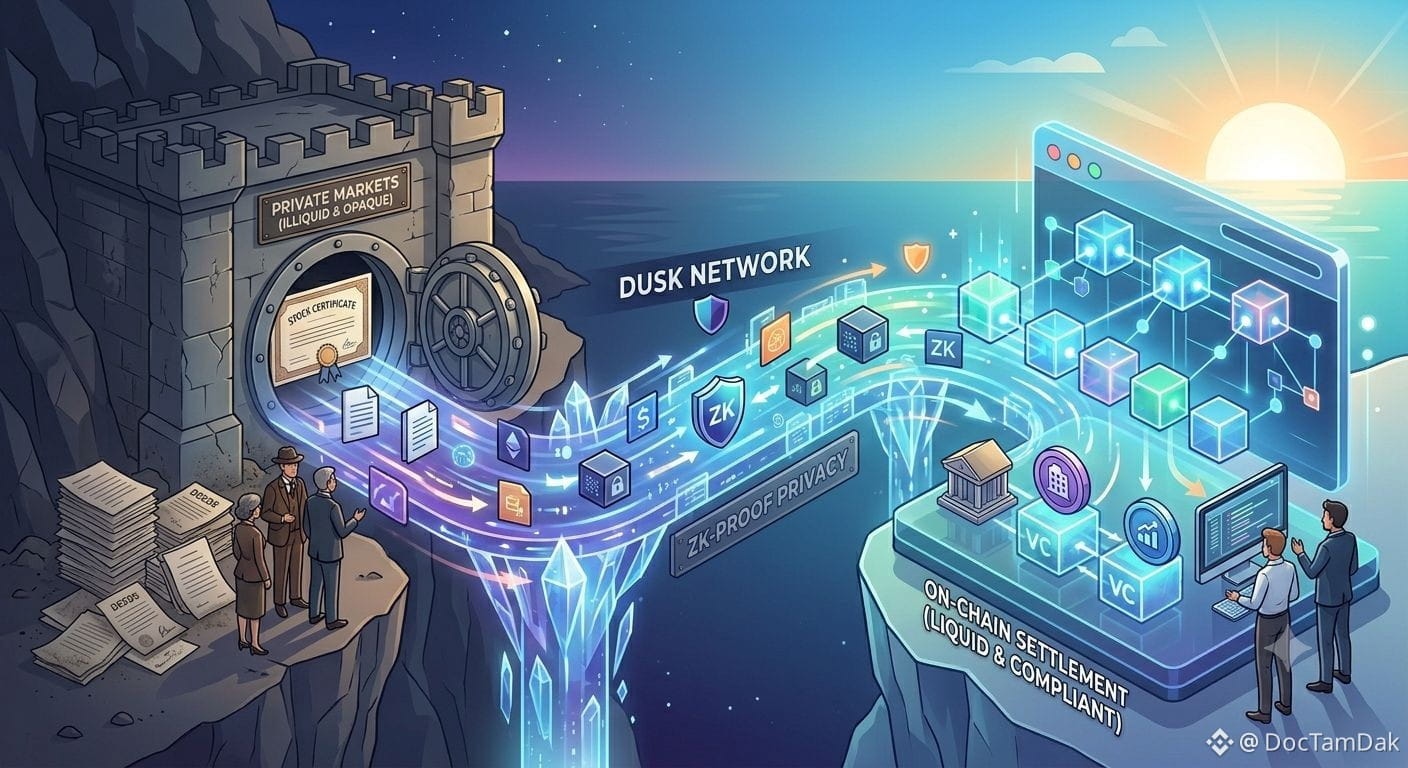
Trillions in private markets (real estate, private equity, etc.) are trapped in slow, illiquid, and manual processes. Moving them on-chain unlocks global liquidity—but institutions can't trade multi-million dollar assets on fully transparent public ledgers. They need absolute privacy.
Enter @Dusk_Foundation Network. It acts as the ultimate bridge for Real-World Assets (RWA) by combining Zero-Knowledge (ZK) Proofs with programmable compliance.
🚀 Why $DUSK Changes the Game:
🔒 True Privacy: Hides sensitive transaction data (who, what, how much) while still proving validity.
✅ Automated Compliance: Regulatory rules are baked directly into the smart contracts.
⚡ Instant Settlement: Zero counterparty risk with near-instant on-chain finality.
Moving from opaque private markets to compliant, automated on-chain settlement is the catalyst for the next multi-trillion dollar RWA boom.
💬 Will ZK-privacy be the ultimate key to mass institutional adoption? Drop your thoughts below! 👇
#dusk #RWA #zkProofs #CryptoInnovation #BinanceSquare
{future}(DUSKUSDT)
From Dusk to Dawn: Bridging Private Markets & On-Chain Settlement 🌉
Trillions in private markets (real estate, private equity, etc.) are trapped in slow, illiquid, and manual processes. Moving them on-chain unlocks global liquidity—but institutions can't trade multi-million dollar assets on fully transparent public ledgers. They need absolute privacy.
Enter @Dusk Network. It acts as the ultimate bridge for Real-World Assets (RWA) by combining Zero-Knowledge (ZK) Proofs with programmable compliance.
🚀 Why $DUSK Changes the Game:
🔒 True Privacy: Hides sensitive transaction data (who, what, how much) while still proving validity.
✅ Automated Compliance: Regulatory rules are baked directly into the smart contracts.
⚡ Instant Settlement: Zero counterparty risk with near-instant on-chain finality.
Moving from opaque private markets to compliant, automated on-chain settlement is the catalyst for the next multi-trillion dollar RWA boom.
💬 Will ZK-privacy be the ultimate key to mass institutional adoption? Drop your thoughts below! 👇
#dusk #RWA #zkProofs #CryptoInnovation #BinanceSquare
Trillions in private markets (real estate, private equity, etc.) are trapped in slow, illiquid, and manual processes. Moving them on-chain unlocks global liquidity—but institutions can't trade multi-million dollar assets on fully transparent public ledgers. They need absolute privacy.
Enter @Dusk Network. It acts as the ultimate bridge for Real-World Assets (RWA) by combining Zero-Knowledge (ZK) Proofs with programmable compliance.
🚀 Why $DUSK Changes the Game:
🔒 True Privacy: Hides sensitive transaction data (who, what, how much) while still proving validity.
✅ Automated Compliance: Regulatory rules are baked directly into the smart contracts.
⚡ Instant Settlement: Zero counterparty risk with near-instant on-chain finality.
Moving from opaque private markets to compliant, automated on-chain settlement is the catalyst for the next multi-trillion dollar RWA boom.
💬 Will ZK-privacy be the ultimate key to mass institutional adoption? Drop your thoughts below! 👇
#dusk #RWA #zkProofs #CryptoInnovation #BinanceSquare
2
66

·
--
Mina Protocol official announcement: Mesa Devnet upgrade scheduled for August 19. As an important technical milestone in the Mina ecosystem, the Devnet upgrade often lays the groundwork for subsequent mainnet deployments. It's worth paying attention to developer-focused adaptation progress and ecosystem reactions.
For the zero-knowledge proof track, Mina has long positioned itself with lightweight on-chain verification as a differentiating selling point. Every Devnet iteration determines whether zk applications can run on more robust infrastructure. We recommend keeping an eye on the official technical blog to learn about the compatibility aspects involved in this upgrade, any API changes, and node migration requirements.
#MinaProtocol #Devnet #zkProofs
Mina Protocol official announcement: Mesa Devnet upgrade scheduled for August 19. As an important technical milestone in the Mina ecosystem, the Devnet upgrade often lays the groundwork for subsequent mainnet deployments. It's worth paying attention to developer-focused adaptation progress and ecosystem reactions.
For the zero-knowledge proof track, Mina has long positioned itself with lightweight on-chain verification as a differentiating selling point. Every Devnet iteration determines whether zk applications can run on more robust infrastructure. We recommend keeping an eye on the official technical blog to learn about the compatibility aspects involved in this upgrade, any API changes, and node migration requirements.
#MinaProtocol #Devnet #zkProofs
For the zero-knowledge proof track, Mina has long positioned itself with lightweight on-chain verification as a differentiating selling point. Every Devnet iteration determines whether zk applications can run on more robust infrastructure. We recommend keeping an eye on the official technical blog to learn about the compatibility aspects involved in this upgrade, any API changes, and node migration requirements.
#MinaProtocol #Devnet #zkProofs
112


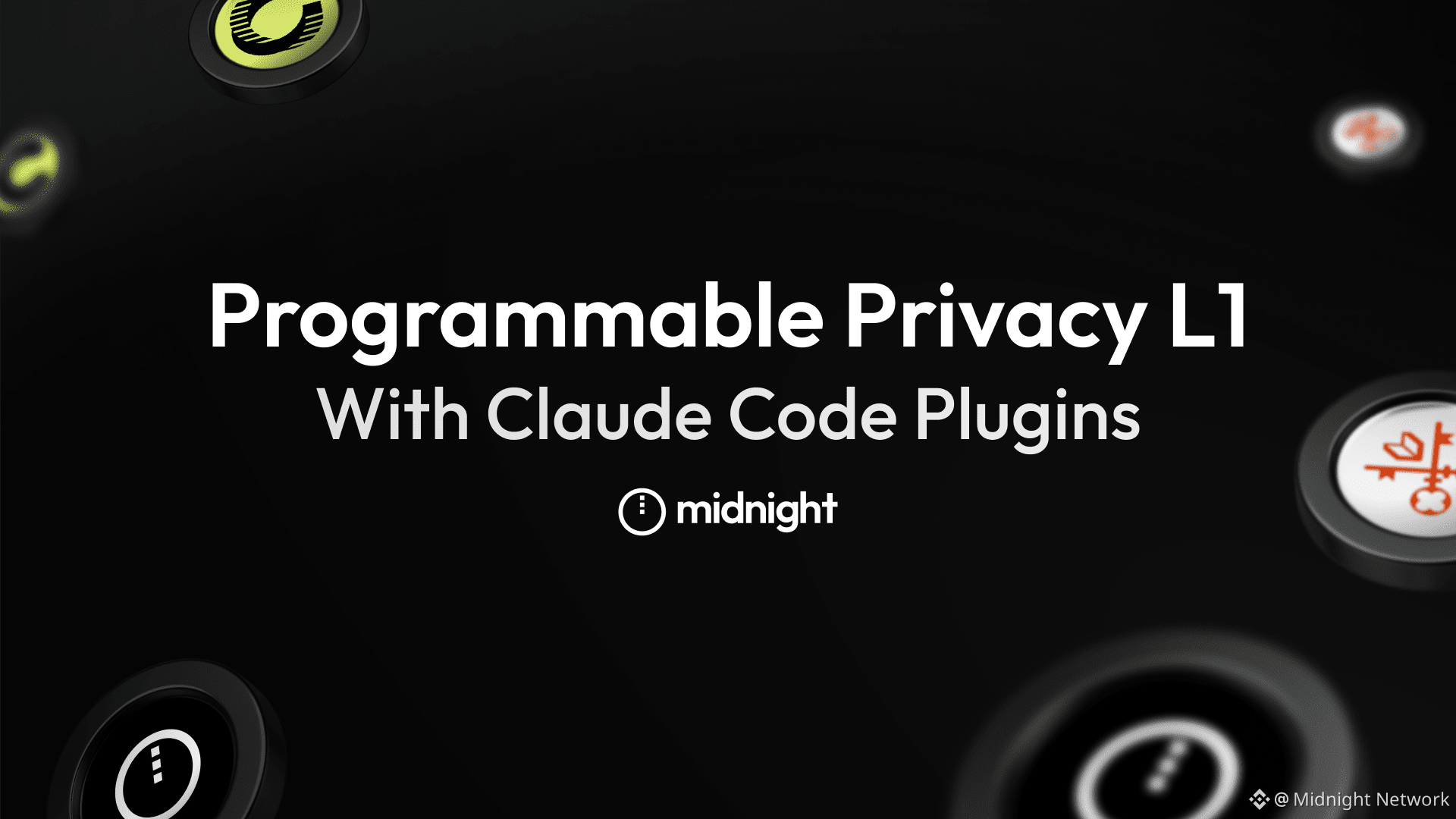
Claude Code Can Now Build Private Apps On Midnight 🌙
$VVV routes prompts through a proxy that strips identifying metadata before they reach the GPUs running the model, and chat history stays in the user's own browser instead of on a server.
On-chain, that control has sat with the user at the transaction level.
$ZEC lets a holder pick which transfers get shielded and which stay transparent, one payment at a time.
That choice stops at the payment.
Midnight moves that choice into the application layer. With Compact developers can define what stays private and what gets disclosed, while zero-knowledge proofs verify the required information.
Compact barely appears in the training data behind today's models, which is why an AI asked to write it tends to invent syntax that does not compile.
Midnight closed that with sixteen open-source plugins that hand Claude Code its own developer stack. They cover:
• Compact contract development and examples
• Code verification against the real toolchain
• Wallet and node development
• Error handling
That means a front-end team can build a Compact contract without hiring a cryptographer, opening private application development to far more teams.
#zkProofs #AI
Claude Code Can Now Build Private Apps On Midnight 🌙
$VVV routes prompts through a proxy that strips identifying metadata before they reach the GPUs running the model, and chat history stays in the user's own browser instead of on a server.
On-chain, that control has sat with the user at the transaction level.
$ZEC lets a holder pick which transfers get shielded and which stay transparent, one payment at a time.
That choice stops at the payment.
Midnight moves that choice into the application layer. With Compact developers can define what stays private and what gets disclosed, while zero-knowledge proofs verify the required information.
Compact barely appears in the training data behind today's models, which is why an AI asked to write it tends to invent syntax that does not compile.
Midnight closed that with sixteen open-source plugins that hand Claude Code its own developer stack. They cover:
• Compact contract development and examples
• Code verification against the real toolchain
• Wallet and node development
• Error handling
That means a front-end team can build a Compact contract without hiring a cryptographer, opening private application development to far more teams.
#zkProofs #AI
$VVV routes prompts through a proxy that strips identifying metadata before they reach the GPUs running the model, and chat history stays in the user's own browser instead of on a server.
On-chain, that control has sat with the user at the transaction level.
$ZEC lets a holder pick which transfers get shielded and which stay transparent, one payment at a time.
That choice stops at the payment.
Midnight moves that choice into the application layer. With Compact developers can define what stays private and what gets disclosed, while zero-knowledge proofs verify the required information.
Compact barely appears in the training data behind today's models, which is why an AI asked to write it tends to invent syntax that does not compile.
Midnight closed that with sixteen open-source plugins that hand Claude Code its own developer stack. They cover:
• Compact contract development and examples
• Code verification against the real toolchain
• Wallet and node development
• Error handling
That means a front-end team can build a Compact contract without hiring a cryptographer, opening private application development to far more teams.
#zkProofs #AI
5
397
·
--
#dusk $DUSK @Dusk_Foundation
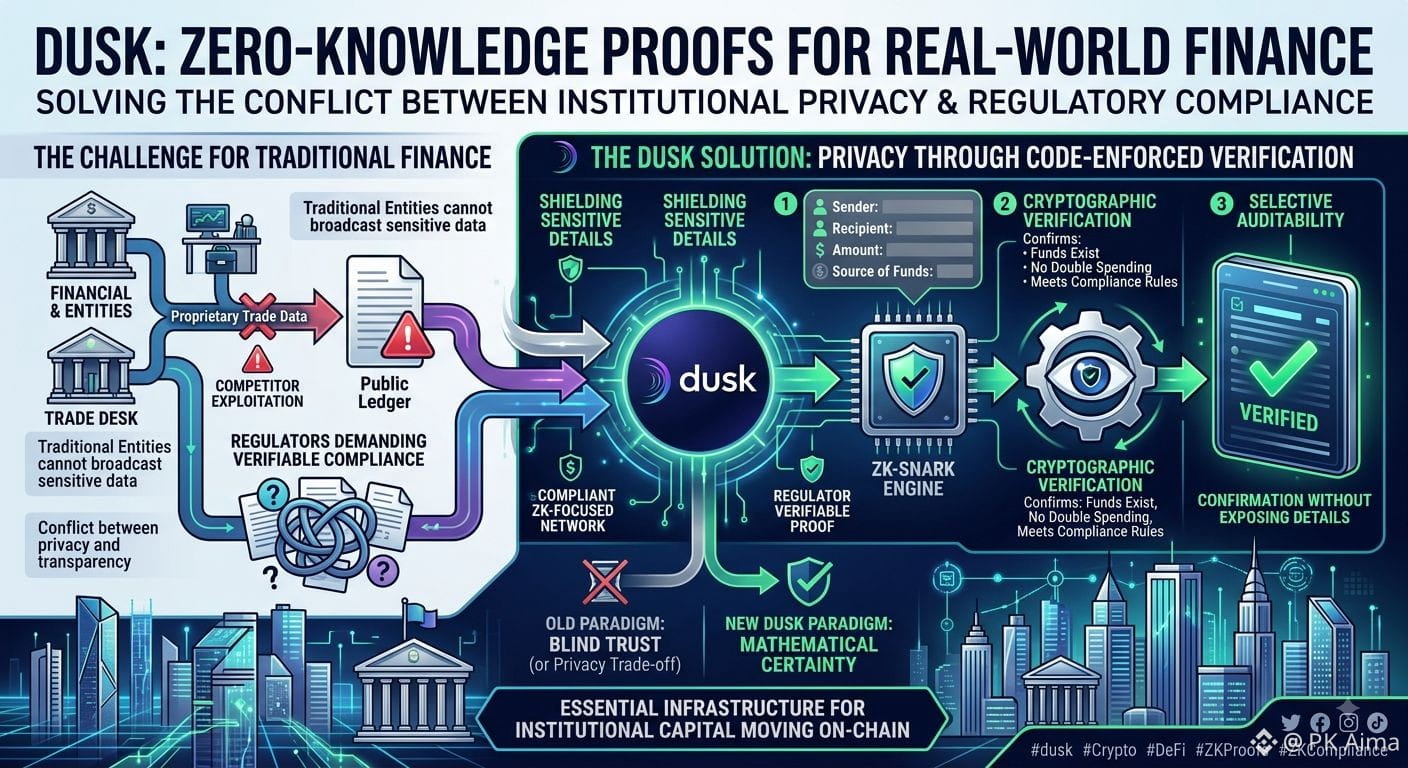
Zero knowledge proofs are one of the most compelling technologies reshaping crypto and Dusk executes them in a way that actually makes sense for real world finance. Dusk uses ZK SNARKs to cryptographically verify transactions confirming funds exist and preventing double spending without exposing transaction amounts or counterparty identities.
You aren’t hiding that an action occurred, you are shielding sensitive details while letting the network verify validity.
This distinction is critical for institutional adoption.
Traditional financial entities cannot broadcast proprietary trade data on public ledgers for competitors to exploit, yet regulators still require verifiable proof of compliance.
Dusk solves this conflict by replacing blind trust with mathematical certainty and selective auditability. Privacy and trust no longer represent a trade off but rather privacy through code enforced verification. As institutional capital moves on chain, compliant ZK focused networks like $DUSK remain essential infrastructure to watch.
What are your thoughts on ZK compliance VS public ledgers?
#dusk #Crypto #DeFi: #ZKProofs
#dusk $DUSK @Dusk
Zero knowledge proofs are one of the most compelling technologies reshaping crypto and Dusk executes them in a way that actually makes sense for real world finance. Dusk uses ZK SNARKs to cryptographically verify transactions confirming funds exist and preventing double spending without exposing transaction amounts or counterparty identities.
You aren’t hiding that an action occurred, you are shielding sensitive details while letting the network verify validity.
This distinction is critical for institutional adoption.
Traditional financial entities cannot broadcast proprietary trade data on public ledgers for competitors to exploit, yet regulators still require verifiable proof of compliance.
Dusk solves this conflict by replacing blind trust with mathematical certainty and selective auditability. Privacy and trust no longer represent a trade off but rather privacy through code enforced verification. As institutional capital moves on chain, compliant ZK focused networks like $DUSK remain essential infrastructure to watch.
What are your thoughts on ZK compliance VS public ledgers?
#dusk #Crypto #DeFi: #ZKProofs
Zero knowledge proofs are one of the most compelling technologies reshaping crypto and Dusk executes them in a way that actually makes sense for real world finance. Dusk uses ZK SNARKs to cryptographically verify transactions confirming funds exist and preventing double spending without exposing transaction amounts or counterparty identities.
You aren’t hiding that an action occurred, you are shielding sensitive details while letting the network verify validity.
This distinction is critical for institutional adoption.
Traditional financial entities cannot broadcast proprietary trade data on public ledgers for competitors to exploit, yet regulators still require verifiable proof of compliance.
Dusk solves this conflict by replacing blind trust with mathematical certainty and selective auditability. Privacy and trust no longer represent a trade off but rather privacy through code enforced verification. As institutional capital moves on chain, compliant ZK focused networks like $DUSK remain essential infrastructure to watch.
What are your thoughts on ZK compliance VS public ledgers?
#dusk #Crypto #DeFi: #ZKProofs
22
1
11
303
@Dusk_Foundation caught my attention for a reason I didn't expect: its privacy model isn't about hiding everything, but controlling what gets revealed.
I was debating with a friend about whether regulated finance really needs blockchain privacy.
I initially thought selective disclosure sounded more like a compliance feature than a real adoption driver. Then I looked closer at Dusk's Zero-Knowledge Compliance approach.
The interesting part is the behavior it can create.
Instead of putting balances, transfers, and sensitive financial activity in the open, users can prove they satisfy required rules without exposing the underlying details.
Regulators can still get authorized visibility when needed.
That changes the incentive structure. Privacy isn't just protecting users; it can remove the reason institutions might avoid public settlement in the first place.
I added a small $DUSK position to keep skin in the game, but I'm still treating it as a test rather than a conviction bet.
My uncertainty is whether this architecture can attract enough real financial activity and liquidity to make the privacy layer economically meaningful.
I've changed my view, though: the hardest part of institutional adoption may not be convincing institutions that blockchain works. It may be giving them a reason to stop fearing what everyone else can see.
$HEMI $COW #DUSK #Privacy #Web3 #zkProofs
{spot}(COWUSDT)
{spot}(HEMIUSDT)
{spot}(DUSKUSDT)
What do you think is Dusk’s biggest advantage?
@Dusk caught my attention for a reason I didn't expect: its privacy model isn't about hiding everything, but controlling what gets revealed.
I was debating with a friend about whether regulated finance really needs blockchain privacy.
I initially thought selective disclosure sounded more like a compliance feature than a real adoption driver. Then I looked closer at Dusk's Zero-Knowledge Compliance approach.
The interesting part is the behavior it can create.
Instead of putting balances, transfers, and sensitive financial activity in the open, users can prove they satisfy required rules without exposing the underlying details.
Regulators can still get authorized visibility when needed.
That changes the incentive structure. Privacy isn't just protecting users; it can remove the reason institutions might avoid public settlement in the first place.
I added a small $DUSK position to keep skin in the game, but I'm still treating it as a test rather than a conviction bet.
My uncertainty is whether this architecture can attract enough real financial activity and liquidity to make the privacy layer economically meaningful.
I've changed my view, though: the hardest part of institutional adoption may not be convincing institutions that blockchain works. It may be giving them a reason to stop fearing what everyone else can see.
$HEMI $COW #DUSK #Privacy #Web3 #zkProofs
What do you think is Dusk’s biggest advantage?
I was debating with a friend about whether regulated finance really needs blockchain privacy.
I initially thought selective disclosure sounded more like a compliance feature than a real adoption driver. Then I looked closer at Dusk's Zero-Knowledge Compliance approach.
The interesting part is the behavior it can create.
Instead of putting balances, transfers, and sensitive financial activity in the open, users can prove they satisfy required rules without exposing the underlying details.
Regulators can still get authorized visibility when needed.
That changes the incentive structure. Privacy isn't just protecting users; it can remove the reason institutions might avoid public settlement in the first place.
I added a small $DUSK position to keep skin in the game, but I'm still treating it as a test rather than a conviction bet.
My uncertainty is whether this architecture can attract enough real financial activity and liquidity to make the privacy layer economically meaningful.
I've changed my view, though: the hardest part of institutional adoption may not be convincing institutions that blockchain works. It may be giving them a reason to stop fearing what everyone else can see.
$HEMI $COW #DUSK #Privacy #Web3 #zkProofs
What do you think is Dusk’s biggest advantage?
🔐 Privacy First
50%
🧾 Selective Disclosure
20%
🏦 Institutional Fit
30%
⚙️ Settlement
0%
10 votes • Voting closed
97
35
2.7k

🛡️ ZK PROOFS SHIELD KYC DATA — BUT TRUST COORDINATION IS THE REAL PINCH POINT 🔍
Moving authentication upstream with zero-knowledge proofs is elegant — your identity telemetry never leaves your control. 📊 Yet the entire stack stalls the moment multiple issuers must align on a single verification layer. The cryptographic math is solved. The coordination problem isn't.
💡 This is the quiet bottleneck every infrastructure architect is staring at right now. 🔍 Each institution runs its own trust graph, its own revocation rules, its own level of attestation confidence. Bridging those islands without leaking data — that's the unfinished protocol. Whoever nails the multi-issuer coordination layer owns the entire identity stack. 💬 Which anchor should settle that trust — regulated entities, existing KYC providers, or a neutral decentralized network? 👇
⚠️ Not financial advice. Always manage your risk. 🛡️
🏷️ #ZKProofs #Web3Identity #Crypto #KYC #Blockchain
🔍 💡
🛡️ ZK PROOFS SHIELD KYC DATA — BUT TRUST COORDINATION IS THE REAL PINCH POINT 🔍
Moving authentication upstream with zero-knowledge proofs is elegant — your identity telemetry never leaves your control. 📊 Yet the entire stack stalls the moment multiple issuers must align on a single verification layer. The cryptographic math is solved. The coordination problem isn't.
💡 This is the quiet bottleneck every infrastructure architect is staring at right now. 🔍 Each institution runs its own trust graph, its own revocation rules, its own level of attestation confidence. Bridging those islands without leaking data — that's the unfinished protocol. Whoever nails the multi-issuer coordination layer owns the entire identity stack. 💬 Which anchor should settle that trust — regulated entities, existing KYC providers, or a neutral decentralized network? 👇
⚠️ Not financial advice. Always manage your risk. 🛡️
🏷️ #ZKProofs #Web3Identity #Crypto #KYC #Blockchain
🔍 💡
Moving authentication upstream with zero-knowledge proofs is elegant — your identity telemetry never leaves your control. 📊 Yet the entire stack stalls the moment multiple issuers must align on a single verification layer. The cryptographic math is solved. The coordination problem isn't.
💡 This is the quiet bottleneck every infrastructure architect is staring at right now. 🔍 Each institution runs its own trust graph, its own revocation rules, its own level of attestation confidence. Bridging those islands without leaking data — that's the unfinished protocol. Whoever nails the multi-issuer coordination layer owns the entire identity stack. 💬 Which anchor should settle that trust — regulated entities, existing KYC providers, or a neutral decentralized network? 👇
⚠️ Not financial advice. Always manage your risk. 🛡️
🏷️ #ZKProofs #Web3Identity #Crypto #KYC #Blockchain
🔍 💡
21

·
--
ZK Proofs Are Becoming the Trust Layer for AI — And Crypto Builds It First
Artificial intelligence has a trust problem. You cannot verify whether an AI model ran correctly, whether its training data was clean, or whether the output was manipulated. You just have to believe the provider.
Zero-knowledge proofs change that — and crypto already has the infrastructure.
ZK circuits can prove a computation ran correctly without revealing the underlying data. Applied to AI, this means verifiable inference: you can cryptographically confirm that a model produced a specific output given a specific input, without exposing the model weights or private data.
This matters enormously. Medical AI diagnostics that need privacy. Financial models that must be audited without disclosing strategy. Autonomous agents that execute on-chain where every step needs to be trustlessly verified.
Blockchains are the natural settlement layer for this. Smart contracts can receive ZK proofs, verify them on-chain, and trigger actions — creating AI pipelines where trust is enforced by math, not promises.
$ETH already hosts the most mature ZK rollup ecosystem. $SOL is building fast with high-throughput verifier programs. $AVAX subnets are being purpose-built for ZK-AI workloads.
The convergence of ZK cryptography and AI is not a future narrative — it is being built now. The projects that nail verifiable compute will define the next infrastructure cycle.
#ZKProofs #AIxCrypto #Web3Infrastructure #CryptoTrends #Blockchain
ZK Proofs Are Becoming the Trust Layer for AI — And Crypto Builds It First
Artificial intelligence has a trust problem. You cannot verify whether an AI model ran correctly, whether its training data was clean, or whether the output was manipulated. You just have to believe the provider.
Zero-knowledge proofs change that — and crypto already has the infrastructure.
ZK circuits can prove a computation ran correctly without revealing the underlying data. Applied to AI, this means verifiable inference: you can cryptographically confirm that a model produced a specific output given a specific input, without exposing the model weights or private data.
This matters enormously. Medical AI diagnostics that need privacy. Financial models that must be audited without disclosing strategy. Autonomous agents that execute on-chain where every step needs to be trustlessly verified.
Blockchains are the natural settlement layer for this. Smart contracts can receive ZK proofs, verify them on-chain, and trigger actions — creating AI pipelines where trust is enforced by math, not promises.
$ETH already hosts the most mature ZK rollup ecosystem. $SOL is building fast with high-throughput verifier programs. $AVAX subnets are being purpose-built for ZK-AI workloads.
The convergence of ZK cryptography and AI is not a future narrative — it is being built now. The projects that nail verifiable compute will define the next infrastructure cycle.
#ZKProofs #AIxCrypto #Web3Infrastructure #CryptoTrends #Blockchain
Artificial intelligence has a trust problem. You cannot verify whether an AI model ran correctly, whether its training data was clean, or whether the output was manipulated. You just have to believe the provider.
Zero-knowledge proofs change that — and crypto already has the infrastructure.
ZK circuits can prove a computation ran correctly without revealing the underlying data. Applied to AI, this means verifiable inference: you can cryptographically confirm that a model produced a specific output given a specific input, without exposing the model weights or private data.
This matters enormously. Medical AI diagnostics that need privacy. Financial models that must be audited without disclosing strategy. Autonomous agents that execute on-chain where every step needs to be trustlessly verified.
Blockchains are the natural settlement layer for this. Smart contracts can receive ZK proofs, verify them on-chain, and trigger actions — creating AI pipelines where trust is enforced by math, not promises.
$ETH already hosts the most mature ZK rollup ecosystem. $SOL is building fast with high-throughput verifier programs. $AVAX subnets are being purpose-built for ZK-AI workloads.
The convergence of ZK cryptography and AI is not a future narrative — it is being built now. The projects that nail verifiable compute will define the next infrastructure cycle.
#ZKProofs #AIxCrypto #Web3Infrastructure #CryptoTrends #Blockchain
1
117

·
--
Bullish
Partly True
#opg @OpenGradient
Let's be real: Web3 has a major onboarding problem and it usually boils down to user experience. If we want decentralized apps to actually compete with traditional tech we need massive scalability upgrades. Right now, forcing a regular user to pay $15 in network fees and wait several minutes just to confirm a basic transaction is a total non starter. They will just leave.
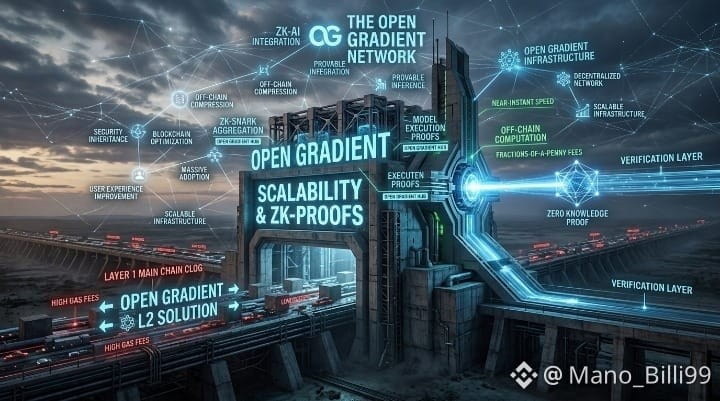
That is exactly why the industry is shifting hard toward ZK-Rollups. Instead of shoving every single interaction directly onto the main blockchain and clogging up the network ZK-Rollups bundle thousands of transactions together process them somewhere fast and cheap and then send a single undeniable cryptographic proof back to the main chain to show everything was done right.
It completely removes the traditional bottleneck. You get the near-instant speed and fractions of a penny costs of a fast private database, but without giving up any of the security or decentralization of the main blockchain. It is basically the ultimate cheat code for scaling Web3 without cutting corners.
Token Rate: [+2.72 ]
$OPG
{future}(OPGUSDT)
#zkProofs #OpenGradient #Scalability
#opg @OpenGradient
Let's be real: Web3 has a major onboarding problem and it usually boils down to user experience. If we want decentralized apps to actually compete with traditional tech we need massive scalability upgrades. Right now, forcing a regular user to pay $15 in network fees and wait several minutes just to confirm a basic transaction is a total non starter. They will just leave.
That is exactly why the industry is shifting hard toward ZK-Rollups. Instead of shoving every single interaction directly onto the main blockchain and clogging up the network ZK-Rollups bundle thousands of transactions together process them somewhere fast and cheap and then send a single undeniable cryptographic proof back to the main chain to show everything was done right.
It completely removes the traditional bottleneck. You get the near-instant speed and fractions of a penny costs of a fast private database, but without giving up any of the security or decentralization of the main blockchain. It is basically the ultimate cheat code for scaling Web3 without cutting corners.
Token Rate: [+2.72 ]
$OPG
#zkProofs #OpenGradient #Scalability
Let's be real: Web3 has a major onboarding problem and it usually boils down to user experience. If we want decentralized apps to actually compete with traditional tech we need massive scalability upgrades. Right now, forcing a regular user to pay $15 in network fees and wait several minutes just to confirm a basic transaction is a total non starter. They will just leave.
That is exactly why the industry is shifting hard toward ZK-Rollups. Instead of shoving every single interaction directly onto the main blockchain and clogging up the network ZK-Rollups bundle thousands of transactions together process them somewhere fast and cheap and then send a single undeniable cryptographic proof back to the main chain to show everything was done right.
It completely removes the traditional bottleneck. You get the near-instant speed and fractions of a penny costs of a fast private database, but without giving up any of the security or decentralization of the main blockchain. It is basically the ultimate cheat code for scaling Web3 without cutting corners.
Token Rate: [+2.72 ]
$OPG
#zkProofs #OpenGradient #Scalability
39
1
9
136
·
--
Zero-Knowledge Proofs (ZKP) Utility
Zero-Knowledge tech is moving out of the academic phase and into core production. Beyond privacy, ZKPs are essential for scaling blockchains by allowing complex transactions to be verified instantly without heavy computation.
This shift will radically lower gas costs and increase execution speeds.
#ZKProofs #Cryptography #Web3Dev
Zero-Knowledge Proofs (ZKP) Utility
Zero-Knowledge tech is moving out of the academic phase and into core production. Beyond privacy, ZKPs are essential for scaling blockchains by allowing complex transactions to be verified instantly without heavy computation.
This shift will radically lower gas costs and increase execution speeds.
#ZKProofs #Cryptography #Web3Dev
Zero-Knowledge tech is moving out of the academic phase and into core production. Beyond privacy, ZKPs are essential for scaling blockchains by allowing complex transactions to be verified instantly without heavy computation.
This shift will radically lower gas costs and increase execution speeds.
#ZKProofs #Cryptography #Web3Dev
1
319

TRON'S ZERO-KNOWLEDGE PROOF ROADMAP: PRIVACY AND SCALABILITY 🔐
Zero-knowledge proofs represent the next frontier for TRON. Our roadmap includes ZK-SNARK integration for enhanced privacy and scalability.
ZKPs allow users to prove transactions are valid without revealing details.
For scalability, ZK-rollups can process thousands of transactions off-chain.
As ZK technology matures, TRON will be at the forefront of privacy-preserving, scalable blockchain technology.
@TRON DAO
#TRONEcoStar #ZKProofs #Privacy
TRON'S ZERO-KNOWLEDGE PROOF ROADMAP: PRIVACY AND SCALABILITY 🔐
Zero-knowledge proofs represent the next frontier for TRON. Our roadmap includes ZK-SNARK integration for enhanced privacy and scalability.
ZKPs allow users to prove transactions are valid without revealing details.
For scalability, ZK-rollups can process thousands of transactions off-chain.
As ZK technology matures, TRON will be at the forefront of privacy-preserving, scalable blockchain technology.
@TRON DAO
#TRONEcoStar #ZKProofs #Privacy
Zero-knowledge proofs represent the next frontier for TRON. Our roadmap includes ZK-SNARK integration for enhanced privacy and scalability.
ZKPs allow users to prove transactions are valid without revealing details.
For scalability, ZK-rollups can process thousands of transactions off-chain.
As ZK technology matures, TRON will be at the forefront of privacy-preserving, scalable blockchain technology.
@TRON DAO
#TRONEcoStar #ZKProofs #Privacy
10
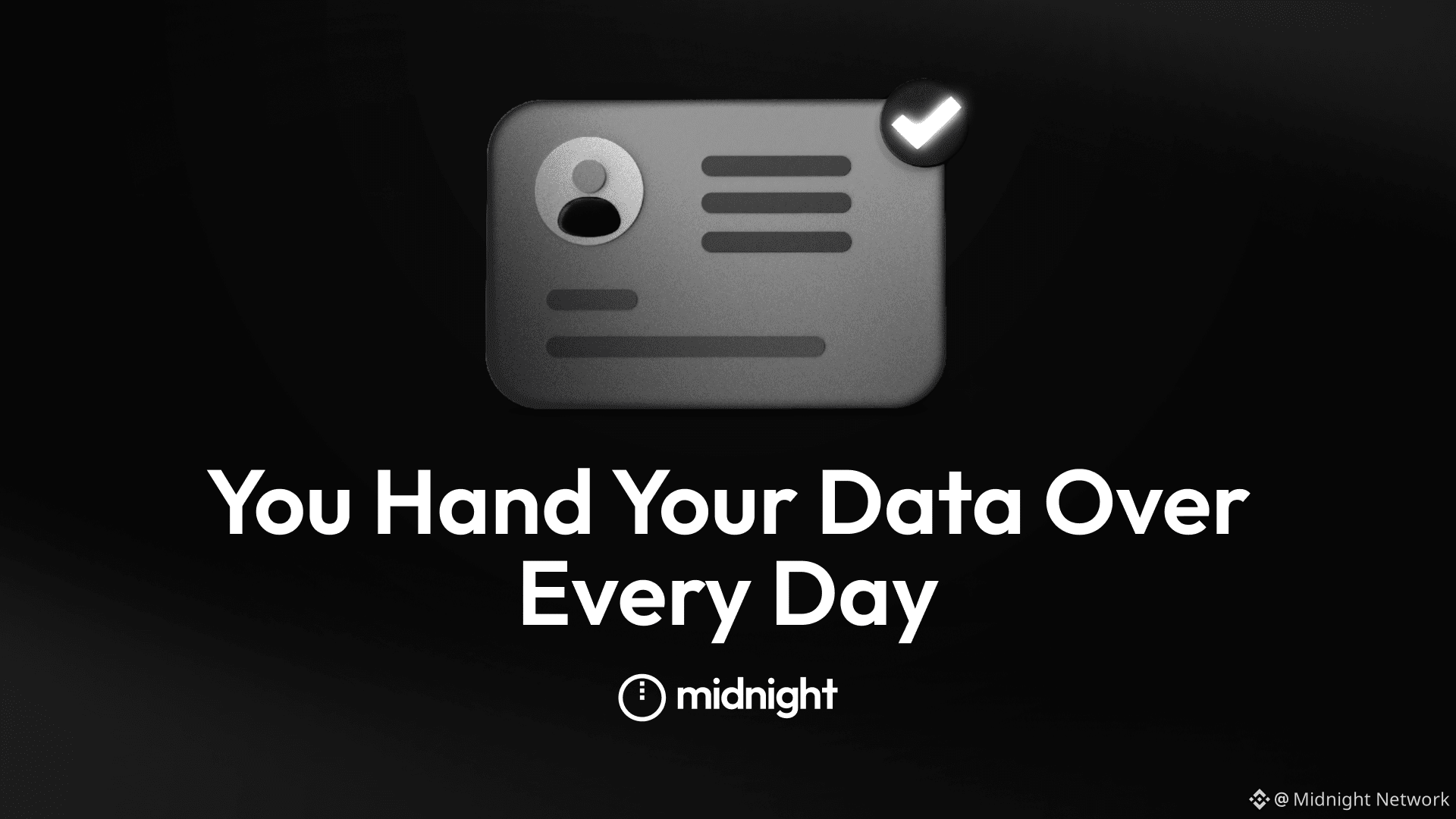
You Hand Your Data Over Every Day 🪪
Signing up, checking out, and verifying your age, every step asks for more personal information than the task actually needs.
Most blockchains, including Cardano ( $ADA ), default to transparency, making transaction data publicly visible by design.
That's why privacy-focused networks like $XMR remain relevant for users who want greater financial privacy.
Midnight addresses this through selective disclosure, using zero-knowledge proofs so you can prove a single fact, like being over 18, while every other detail stays private.
Privacy as the default for everyday data is the gap Midnight is built to close, turning oversharing into proof of only what is needed.
#Privacy #zkProofs
You Hand Your Data Over Every Day 🪪
Signing up, checking out, and verifying your age, every step asks for more personal information than the task actually needs.
Most blockchains, including Cardano ( $ADA ), default to transparency, making transaction data publicly visible by design.
That's why privacy-focused networks like $XMR remain relevant for users who want greater financial privacy.
Midnight addresses this through selective disclosure, using zero-knowledge proofs so you can prove a single fact, like being over 18, while every other detail stays private.
Privacy as the default for everyday data is the gap Midnight is built to close, turning oversharing into proof of only what is needed.
#Privacy #zkProofs
Signing up, checking out, and verifying your age, every step asks for more personal information than the task actually needs.
Most blockchains, including Cardano ( $ADA ), default to transparency, making transaction data publicly visible by design.
That's why privacy-focused networks like $XMR remain relevant for users who want greater financial privacy.
Midnight addresses this through selective disclosure, using zero-knowledge proofs so you can prove a single fact, like being over 18, while every other detail stays private.
Privacy as the default for everyday data is the gap Midnight is built to close, turning oversharing into proof of only what is needed.
#Privacy #zkProofs
2
195
·
--
Double-Checking Rollup Security with Multi-Provers 🕵️♂️🛡️
Relying on a single type of ZK or Optimistic prover can lead to system bugs. Multi-prover setups require different independent proving mechanisms to agree before settling.
#BlockchainSecurity #Rollups #ZKProofs #Web3Tech .
Double-Checking Rollup Security with Multi-Provers 🕵️♂️🛡️
Relying on a single type of ZK or Optimistic prover can lead to system bugs. Multi-prover setups require different independent proving mechanisms to agree before settling.
#BlockchainSecurity #Rollups #ZKProofs #Web3Tech .
Relying on a single type of ZK or Optimistic prover can lead to system bugs. Multi-prover setups require different independent proving mechanisms to agree before settling.
#BlockchainSecurity #Rollups #ZKProofs #Web3Tech .
1
70
Log in to explore more content
Join global crypto users on Binance Square
⚡️ Get latest and useful information about crypto.
💬 Trusted by the world’s largest crypto exchange.
👍 Discover real insights from verified creators.
Email / Phone number
Trending Topics
1
#FedRateWatch
105,613 views
653 Discussing
2
#BitcoinReboundsTo$79K
39,954 views
317 Discussing
3
#StrategyMarketCapPassesFord
0 views
2 Discussing
4
#ClarityActOddsHalveOnPolymarket
0 views
2 Discussing
5
#US30YTreasuryYieldTops5.40%
309 views
45 Discussing
6
#BessentEndorsesFinalClarityActDraft
10,569 views
277 Discussing
7
#ZamaOpens16ConfidentialMorphoVaults
5,079 views
148 Discussing
8
#USDCOnChainVolumeTops$100Trillion
823 views
31 Discussing
9
#BitcoinSpotETFsNetInflow$160M
1,752 views
81 Discussing
10
#SouthKoreaCryptoTaxDelayPetitionTops50000
33,024 views
845 Discussing