

#usa
usa
7.1M views
11,384 Discussing
Hot
Latest

·
--
🔥 A POWERFUL ENDORSEMENT! 🇺🇸
President DONALD J. TRUMP has given Anthony Constantino his COMPLETE AND TOTAL ENDORSEMENT to become the next U.S. Representative for New York’s 21st Congressional District!
💥 Trump’s message is clear: “HE WILL NEVER LET YOU DOWN!”
🇺🇸 A major political statement that puts Anthony Constantino in the spotlight!
#DonaldTrump #AnthonyConstantino #NY21 #usa

1
888

·
--
Bullish
🇺🇸⚖️ TRUMP ADMINISTRATION ISSUES NEW SUBPOENAS IN CALIFORNIA NONCITIZEN VOTING INVESTIGATION
The U.S. Department of Justice has intensified its investigation into alleged noncitizen voter registration in California, issuing federal grand jury subpoenas to local election officials just days before the November 3 midterm elections.
According to reports by Reuters, Associated Press and ABC News, the subpoenas seek voter-registration records, internal communications and information about procedures used to prevent ineligible individuals from voting.
🔍 Key Developments:
- Federal investigators are examining allegations involving potentially thousands of noncitizens on California's voter rolls.
- Los Angeles County election officials received subpoenas requiring testimony on November 4.
- The Trump administration previously claimed that more than 20,000 potentially ineligible individuals were registered to vote.
- California election officials have challenged the federal government's approach and raised concerns about voter protections.
- A federal judge recently rejected the administration's request to separate approximately 20,000 ballots associated with suspected noncitizens.
⚖️ Why It Matters:
The investigation has intensified the legal and political dispute between the Trump administration and California authorities over federal oversight, state election powers and voter eligibility.
While noncitizens are generally prohibited from voting in federal elections, allegations involving individual voters must be verified through proper legal procedures. Being listed as a potential noncitizen does not automatically establish unlawful registration or voting.
Sources: Reuters | Associated Press | ABC News | U.S. Department of Justice
#USA #California #Trump #MidtermElections
$SOPH $ALPINE $PARTI
{future}(PARTIUSDT)
🇺🇸⚖️ TRUMP ADMINISTRATION ISSUES NEW SUBPOENAS IN CALIFORNIA NONCITIZEN VOTING INVESTIGATION
The U.S. Department of Justice has intensified its investigation into alleged noncitizen voter registration in California, issuing federal grand jury subpoenas to local election officials just days before the November 3 midterm elections.
According to reports by Reuters, Associated Press and ABC News, the subpoenas seek voter-registration records, internal communications and information about procedures used to prevent ineligible individuals from voting.
🔍 Key Developments:
- Federal investigators are examining allegations involving potentially thousands of noncitizens on California's voter rolls.
- Los Angeles County election officials received subpoenas requiring testimony on November 4.
- The Trump administration previously claimed that more than 20,000 potentially ineligible individuals were registered to vote.
- California election officials have challenged the federal government's approach and raised concerns about voter protections.
- A federal judge recently rejected the administration's request to separate approximately 20,000 ballots associated with suspected noncitizens.
⚖️ Why It Matters:
The investigation has intensified the legal and political dispute between the Trump administration and California authorities over federal oversight, state election powers and voter eligibility.
While noncitizens are generally prohibited from voting in federal elections, allegations involving individual voters must be verified through proper legal procedures. Being listed as a potential noncitizen does not automatically establish unlawful registration or voting.
Sources: Reuters | Associated Press | ABC News | U.S. Department of Justice
#USA #California #Trump #MidtermElections
$SOPH $ALPINE $PARTI
61

·
--
Article
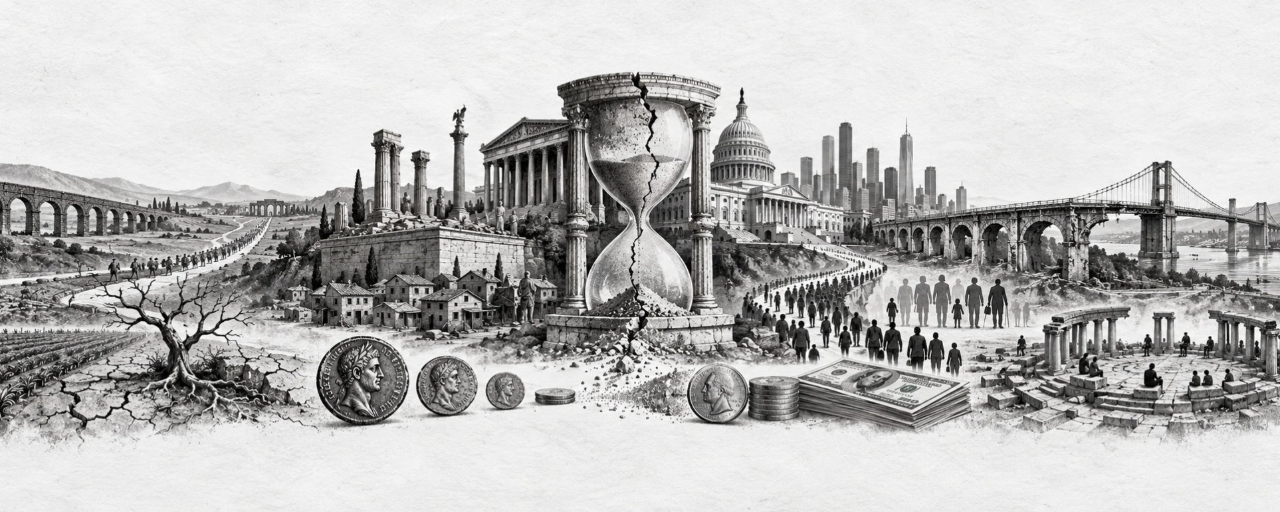
8 Parallels Between the Roman Empire and the United States of AmericaThe Roman Empire and the United States are history's most influential powers. Though separated by time and geography, there are some striking parallels between their rise, development, and potential decline. In this blog post, we'll dive into the similarities and differences between these two mighty civilizations, focusing on the past 40 years of the United States.
1. Political Instability and Corruption
The Roman Empire
The Roman Empire faced significant political instability, especially during its later years. The empire saw a rapid turnover of emperors, many of whom were corrupt, ineffective, or simply not up to the task of ruling such a vast and diverse realm. Corruption was widespread, with officials often using their positions for personal gain rather than the public good.
The United States
The United States, too, has seen a decline in the stability and effectiveness of its political system. Polarization has grown over the past four decades, and trust in institutions has waned. Corruption, though not as pervasive as in Rome, remains a concern in various government sectors.
2. Economic Inequality and Struggles
The Roman Empire
In Rome, wealth was heavily concentrated in the hands of a few elites. Most of the population lived in poverty, leading to social unrest and resentment. This inequality was exacerbated by Rome's tax system, which disproportionately burdened the lower classes.
The United States
Income inequality in the United States has been rising for the past four decades, with the rich getting richer and the poor getting poorer. This has led to social tensions and concerns about the long-term stability of the nation's economic system.
3. Monetary Policy and Inflation
The Roman Empire
The Roman Empire struggled with inflation, particularly in its later years. This was mainly due to the empire's debasement of its currency, reducing the precious-metal content of coins to finance wars and other expenses. This, in turn, led to a loss of confidence in the currency and economic troubles.
The decline in purchasing power resulted from several factors, including inflation, currency debasement, and economic instability. As the Roman Empire expanded, it faced rising costs for its military, administration, and infrastructure. To fund these expenses, the Roman government often resorted to debasing the denarius by reducing its silver content.
Initially, the denarius was made of nearly pure silver, but over time, the silver content was progressively reduced. By mixing silver with base metals like copper, the Roman government could mint more silver coins from the same amount of silver, effectively increasing the money supply. However, this currency debasement led to inflation, as the coins' actual value was less than their face value. The increased money supply diminished the purchasing power of the denarius.
Inflation was further exacerbated by other economic factors, such as wage and price controls, which were implemented to curb rising costs but often led to shortages and black markets. The Roman government also struggled to collect taxes effectively, leading to further financial strain and increasing reliance on currency debasement.
As the denarius became less valuable, people began to lose confidence in the currency. This led to a general decline in trade and economic activity. People began hoarding more valuable commodities such as gold and silver bullion, and merchants became reluctant to accept the debased currency. As the purchasing power of the denarius continued to decline, it contributed to the overall economic instability and eventual decline of the Roman Empire.
The United States
The United States has experienced the same currency debasement as Rome. The passage of the Gold Reserve Act of 1934 meant that the American people could no longer hold gold except in the form of jewelry and collectors' coins.
Silver certificates were introduced in the United States as a form of currency in 1878. These certificates represented a specific amount of silver bullion and could be redeemed for physical silver. The use of silver certificates as currency continued until the 1960s. The issuance of new silver certificates ceased in 1964, and they were discontinued as legal tender after the Coinage Act of 1965, which removed the requirement that U.S. currency be backed by precious metals. Silver certificates that had already been issued remained legal tender and could be used as currency. Also, coinage was no longer made from 90% silver in 1964 and was phased out by 1969, with dollars, half dollars, and dimes made from nickel-plated copper. This is the debasement of coinage, such as the Roman Denarius.
The United States stopped allowing other central banks to convert U.S. dollars into gold on August 15, 1971. This was when President Richard Nixon announced the "Nixon Shock," which effectively ended the Bretton Woods system of fixed exchange rates and took the U.S. off the gold standard. This meant foreign governments could no longer exchange U.S. dollars for gold. The U.S. dollar became a fiat currency, and inflation increased in the 1970s.
The limitation on gold ownership in the United States was repealed after President Gerald Ford signed a bill legalizing private ownership of gold coins, bars, and certificates, codified in Pub. L. 93–373, which went into effect on December 31, 1974.
Inflation has persisted, especially after the 2008 financial crisis and the recent pandemic. The Federal Reserve's monetary policies, which have focused on low interest rates and quantitative easing, have fueled inflation and the risk of long-term economic instability.
4. Military Overreach and Resource Allocation
The Roman Empire
Rome's military was stretched thin across its vast empire. Constant warfare and the need to defend its borders drained resources that could have been used for other purposes, such as infrastructure or social programs. Eventually, Rome's overextended military contributed to its decline.
The United States
The United States has maintained a significant global military presence since World War II. However, in recent decades, critics have argued that the nation's military commitments have become overextended and costly, diverting resources from critical domestic needs.
5. Demographic Shifts and Immigration
The Roman Empire
The Roman Empire experienced a population decline and demographic changes due to migration, disease, and other factors. These shifts impacted Rome's economy and social fabric as new populations and cultures mingled with the traditional Roman way of life.
The United States
Demographic changes in the United States over the past 40 years have included an aging population, slowing birth rates, and increased immigration. These changes have led to debates over immigration policy, cultural assimilation, and the future of American identity.
6. Infrastructure Challenges
The Roman Empire
Maintaining Rome's vast infrastructure, including roads, aqueducts, and public buildings, became increasingly difficult as resources were stretched thin. The empire struggled to keep up with the demands of its aging infrastructure, ultimately contributing to its decline.
The United States
The United States faces similar challenges with its aging infrastructure. Bridges, roads, and public transportation systems have been in decline for decades, and the nation has struggled to allocate the necessary resources for their maintenance and improvement. This has led to concerns about the long-term economic and social impact.
7. The Decline in Civic Values
The Roman Empire
Rome experienced a decline in traditional civic values and social cohesion as its empire expanded. This decline was further exacerbated by political corruption, economic struggles, and the influx of new cultural influences.
The United States
In recent decades, concerns have been raised about the erosion of shared values and social fragmentation in the United States. Political polarization, declining civic engagement, and the influence of social media have contributed to a growing sense of disunity and mistrust among Americans.
8. Agricultural Degradation and Resource Depletion
The Roman Empire
Rome faced challenges with resource depletion and environmental issues, including soil erosion, deforestation, and desertification. These factors contributed to food shortages, economic strain, and social unrest.
The United States
The United States is grappling with the impacts of mining, pollution, and resource depletion. Flooding, extreme weather events, and biodiversity loss threaten the nation's economy, environment, and public health.
Conclusion
While there are many parallels between the Roman Empire and the United States, it's essential to remember that the two civilizations are fundamentally different, and the U.S. faces unique challenges. However, by examining the shared struggles and lessons from Rome's decline, politicians can better understand the potential pitfalls facing the United States and work to address them proactively. In doing so, they can help ensure the nation's continued stability and prosperity for future generations.
“Those that fail to learn from history are doomed to repeat it.” - Winston Churchill.
#usa #WashingtonUpdate #FedWatch #EarningsSeason #USMidtermElections
8 Parallels Between the Roman Empire and the United States of America
The Roman Empire and the United States are history's most influential powers. Though separated by time and geography, there are some striking parallels between their rise, development, and potential decline. In this blog post, we'll dive into the similarities and differences between these two mighty civilizations, focusing on the past 40 years of the United States.
1. Political Instability and Corruption
The Roman Empire
The Roman Empire faced significant political instability, especially during its later years. The empire saw a rapid turnover of emperors, many of whom were corrupt, ineffective, or simply not up to the task of ruling such a vast and diverse realm. Corruption was widespread, with officials often using their positions for personal gain rather than the public good.
The United States
The United States, too, has seen a decline in the stability and effectiveness of its political system. Polarization has grown over the past four decades, and trust in institutions has waned. Corruption, though not as pervasive as in Rome, remains a concern in various government sectors.
2. Economic Inequality and Struggles
The Roman Empire
In Rome, wealth was heavily concentrated in the hands of a few elites. Most of the population lived in poverty, leading to social unrest and resentment. This inequality was exacerbated by Rome's tax system, which disproportionately burdened the lower classes.
The United States
Income inequality in the United States has been rising for the past four decades, with the rich getting richer and the poor getting poorer. This has led to social tensions and concerns about the long-term stability of the nation's economic system.
3. Monetary Policy and Inflation
The Roman Empire
The Roman Empire struggled with inflation, particularly in its later years. This was mainly due to the empire's debasement of its currency, reducing the precious-metal content of coins to finance wars and other expenses. This, in turn, led to a loss of confidence in the currency and economic troubles.
The decline in purchasing power resulted from several factors, including inflation, currency debasement, and economic instability. As the Roman Empire expanded, it faced rising costs for its military, administration, and infrastructure. To fund these expenses, the Roman government often resorted to debasing the denarius by reducing its silver content.
Initially, the denarius was made of nearly pure silver, but over time, the silver content was progressively reduced. By mixing silver with base metals like copper, the Roman government could mint more silver coins from the same amount of silver, effectively increasing the money supply. However, this currency debasement led to inflation, as the coins' actual value was less than their face value. The increased money supply diminished the purchasing power of the denarius.
Inflation was further exacerbated by other economic factors, such as wage and price controls, which were implemented to curb rising costs but often led to shortages and black markets. The Roman government also struggled to collect taxes effectively, leading to further financial strain and increasing reliance on currency debasement.
As the denarius became less valuable, people began to lose confidence in the currency. This led to a general decline in trade and economic activity. People began hoarding more valuable commodities such as gold and silver bullion, and merchants became reluctant to accept the debased currency. As the purchasing power of the denarius continued to decline, it contributed to the overall economic instability and eventual decline of the Roman Empire.
The United States
The United States has experienced the same currency debasement as Rome. The passage of the Gold Reserve Act of 1934 meant that the American people could no longer hold gold except in the form of jewelry and collectors' coins.
Silver certificates were introduced in the United States as a form of currency in 1878. These certificates represented a specific amount of silver bullion and could be redeemed for physical silver. The use of silver certificates as currency continued until the 1960s. The issuance of new silver certificates ceased in 1964, and they were discontinued as legal tender after the Coinage Act of 1965, which removed the requirement that U.S. currency be backed by precious metals. Silver certificates that had already been issued remained legal tender and could be used as currency. Also, coinage was no longer made from 90% silver in 1964 and was phased out by 1969, with dollars, half dollars, and dimes made from nickel-plated copper. This is the debasement of coinage, such as the Roman Denarius.
The United States stopped allowing other central banks to convert U.S. dollars into gold on August 15, 1971. This was when President Richard Nixon announced the "Nixon Shock," which effectively ended the Bretton Woods system of fixed exchange rates and took the U.S. off the gold standard. This meant foreign governments could no longer exchange U.S. dollars for gold. The U.S. dollar became a fiat currency, and inflation increased in the 1970s.
The limitation on gold ownership in the United States was repealed after President Gerald Ford signed a bill legalizing private ownership of gold coins, bars, and certificates, codified in Pub. L. 93–373, which went into effect on December 31, 1974.
Inflation has persisted, especially after the 2008 financial crisis and the recent pandemic. The Federal Reserve's monetary policies, which have focused on low interest rates and quantitative easing, have fueled inflation and the risk of long-term economic instability.
4. Military Overreach and Resource Allocation
The Roman Empire
Rome's military was stretched thin across its vast empire. Constant warfare and the need to defend its borders drained resources that could have been used for other purposes, such as infrastructure or social programs. Eventually, Rome's overextended military contributed to its decline.
The United States
The United States has maintained a significant global military presence since World War II. However, in recent decades, critics have argued that the nation's military commitments have become overextended and costly, diverting resources from critical domestic needs.
5. Demographic Shifts and Immigration
The Roman Empire
The Roman Empire experienced a population decline and demographic changes due to migration, disease, and other factors. These shifts impacted Rome's economy and social fabric as new populations and cultures mingled with the traditional Roman way of life.
The United States
Demographic changes in the United States over the past 40 years have included an aging population, slowing birth rates, and increased immigration. These changes have led to debates over immigration policy, cultural assimilation, and the future of American identity.
6. Infrastructure Challenges
The Roman Empire
Maintaining Rome's vast infrastructure, including roads, aqueducts, and public buildings, became increasingly difficult as resources were stretched thin. The empire struggled to keep up with the demands of its aging infrastructure, ultimately contributing to its decline.
The United States
The United States faces similar challenges with its aging infrastructure. Bridges, roads, and public transportation systems have been in decline for decades, and the nation has struggled to allocate the necessary resources for their maintenance and improvement. This has led to concerns about the long-term economic and social impact.
7. The Decline in Civic Values
The Roman Empire
Rome experienced a decline in traditional civic values and social cohesion as its empire expanded. This decline was further exacerbated by political corruption, economic struggles, and the influx of new cultural influences.
The United States
In recent decades, concerns have been raised about the erosion of shared values and social fragmentation in the United States. Political polarization, declining civic engagement, and the influence of social media have contributed to a growing sense of disunity and mistrust among Americans.
8. Agricultural Degradation and Resource Depletion
The Roman Empire
Rome faced challenges with resource depletion and environmental issues, including soil erosion, deforestation, and desertification. These factors contributed to food shortages, economic strain, and social unrest.
The United States
The United States is grappling with the impacts of mining, pollution, and resource depletion. Flooding, extreme weather events, and biodiversity loss threaten the nation's economy, environment, and public health.
Conclusion
While there are many parallels between the Roman Empire and the United States, it's essential to remember that the two civilizations are fundamentally different, and the U.S. faces unique challenges. However, by examining the shared struggles and lessons from Rome's decline, politicians can better understand the potential pitfalls facing the United States and work to address them proactively. In doing so, they can help ensure the nation's continued stability and prosperity for future generations.
“Those that fail to learn from history are doomed to repeat it.” - Winston Churchill.
#usa #WashingtonUpdate #FedWatch #EarningsSeason #USMidtermElections
1
34

·
--
🚨 🇺🇸 BREAKING: U.S. ELECTION SYSTEM TARGETED! $EVAA
⚠️ Hackers targeted the U.S. Federal Election Commission (FEC), disrupting campaign finance disclosures just ONE WEEK before the midterms, according to Reuters. $XAN
💥 The incident raises fresh concerns about cybersecurity and the availability of election-related information. $BLESS
👀 Who was behind the attack? And how long will the disruption last?
#BreakingNews #CyberSecurity #USA

1
355


·
--
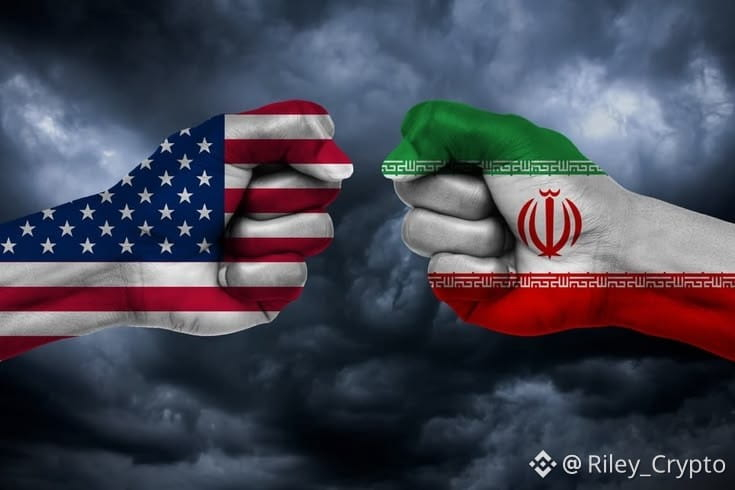
🚨 BREAKING: IRAN–US TENSIONS — WHAT HAPPENS NEXT? 🇺🇸🇮🇷
🌍 Tensions between the United States and Iran remain a major concern for global markets. Diplomatic efforts continue, but disagreements over security and the Strait of Hormuz remain important challenges.
🛢️ WHY IT MATTERS • Oil prices could rise if tensions disrupt regional supplies. • Higher energy costs may increase inflation concerns. • Bitcoin and other cryptocurrencies could face volatility as investors react to geopolitical developments.
📊 MARKET ANALYSIS The next major market move may depend on diplomatic progress or further escalation. Traders should watch oil prices, official statements, and Bitcoin’s price action rather than react to rumors
⚠️ Geopolitical uncertainty does not guarantee that oil or crypto prices will move in a specific direction.
💬 YOUR OPINION: Will the US and Iran reach a diplomatic agreement, or could tensions rise further and shake global markets?
$TRUMP $SUI $SHIB
{spot}(SHIBUSDT)
#Iran #USA #Bitcoin #OilPrices #CryptoMarket
🚨 BREAKING: IRAN–US TENSIONS — WHAT HAPPENS NEXT? 🇺🇸🇮🇷
🌍 Tensions between the United States and Iran remain a major concern for global markets. Diplomatic efforts continue, but disagreements over security and the Strait of Hormuz remain important challenges.
🛢️ WHY IT MATTERS • Oil prices could rise if tensions disrupt regional supplies. • Higher energy costs may increase inflation concerns. • Bitcoin and other cryptocurrencies could face volatility as investors react to geopolitical developments.
📊 MARKET ANALYSIS The next major market move may depend on diplomatic progress or further escalation. Traders should watch oil prices, official statements, and Bitcoin’s price action rather than react to rumors
⚠️ Geopolitical uncertainty does not guarantee that oil or crypto prices will move in a specific direction.
💬 YOUR OPINION: Will the US and Iran reach a diplomatic agreement, or could tensions rise further and shake global markets?
$TRUMP $SUI $SHIB
#Iran #USA #Bitcoin #OilPrices #CryptoMarket

397
·
--
Bullish
🚨 BREAKING: Three Russian Diesel Tankers Head to North America Under Trump–Putin Deal
Three tankers carrying Russian diesel are reportedly heading toward North America following a new energy agreement between U.S. President Donald Trump and Russian President Vladimir Putin.
🇺🇸 🇷🇺 The shipments mark a major shift in U.S. energy policy, with the first cargo expected to reach New York on November 7, 2026. The agreement aims to ease rising fuel prices, but has drawn criticism over sanctions relief and its potential benefits to Moscow.
📌 Reference: Reuters, October 23–24, 2026; Associated Press. <Link url="https://apnews.com/article/f2c733604fd4fbd82e7b668c94fad978" title="Read the AP report"/> | <Link url="https://www.reuters.com/" title="Reuters"/>
#DonaldTrump #VladimirPutin #Russia #USA #Diesel #EnergyMarkets
$TEAM.US $CLANKER $MSFTB

194

·
--
Chinese citizen extradited to U.S. over $36.9 million cryptocurrency fraud scheme
Zheng Zhao, a 44-year-old Chinese citizen, appeared before a federal court in California after being extradited from the Netherlands. He is accused of money laundering linked to an alleged cryptocurrency fraud scheme involving more than $36.9 million.
Investigators identified 174 U.S. victims whose funds were allegedly transferred through foreign bank accounts and digital wallets. The case represents a cross-border law enforcement effort involving U.S. authorities and Dutch law enforcement to bring the suspect before a U.S. court.
Cryptocurrency fraud cases involving international extraditions have become more frequent as U.S. prosecutors expand cooperation with foreign jurisdictions to pursue suspects operating across borders.
#china #EEUU #usa
CcCcCcCcCcCcCcCcCc:
Zhao? ese nombre lo reconozco. estuvo tras las rejas quizás?
2
2
979


Article
US Treasury proposes limiting tech investments in China and Russia — The HillThe U.S. Department of the Treasury has proposed new rules to restrict American investments in high-tech sectors within China, the Russian Federation (an aggressor state), North Korea, and other countries of concern. The initiative covers areas including artificial intelligence, reports The Hill.
Technologies covered by the rules:
The proposal expands restrictions under the Outbound Investment Security Program (OISP). These will apply to hypersonic systems, quantum information technologies, high-performance computing and supercomputers, as well as AI. U.S. Secretary of the Treasury Scott Bessent has also added biotechnology to the list.
According to the report, the proposed requirements will apply to investments exceeding $50,000. However, they will not extend to certain financial holdings, such as the purchase of stocks. The Treasury Department stated that the rules are intended to implement provisions of the Comprehensive National Security Outbound Investment Act, passed by Congress in 2025.
Public comment period prior to a final decision Bessent stated that the proposed regulation is designed to strengthen the existing program, preventing American investments from being used to develop critical technologies that could threaten U.S. national security. He also noted that the initiative aims to provide greater certainty for both American and foreign investors. The Joe Biden administration initiated a program to restrict foreign investments in 2023 via an executive order targeting capital flows into Chinese sectors related to semiconductors and quantum computing. Public comments on the proposal may be submitted before the final rule is adopted.
Amidst technological rivalry with Beijing, the U.S. Department of Homeland Security has also ordered the removal of products from the Chinese startup DeepSeek from the IT systems of federal agencies, citing several potential threat vectors. The Chinese Foreign Ministry stated that Beijing opposes the overbroad interpretation of "national security" and the politicization of technology and trade issues.
#USA #china #Russian
US Treasury proposes limiting tech investments in China and Russia — The Hill
The U.S. Department of the Treasury has proposed new rules to restrict American investments in high-tech sectors within China, the Russian Federation (an aggressor state), North Korea, and other countries of concern. The initiative covers areas including artificial intelligence, reports The Hill.
Technologies covered by the rules:
The proposal expands restrictions under the Outbound Investment Security Program (OISP). These will apply to hypersonic systems, quantum information technologies, high-performance computing and supercomputers, as well as AI. U.S. Secretary of the Treasury Scott Bessent has also added biotechnology to the list.
According to the report, the proposed requirements will apply to investments exceeding $50,000. However, they will not extend to certain financial holdings, such as the purchase of stocks. The Treasury Department stated that the rules are intended to implement provisions of the Comprehensive National Security Outbound Investment Act, passed by Congress in 2025.
Public comment period prior to a final decision Bessent stated that the proposed regulation is designed to strengthen the existing program, preventing American investments from being used to develop critical technologies that could threaten U.S. national security. He also noted that the initiative aims to provide greater certainty for both American and foreign investors. The Joe Biden administration initiated a program to restrict foreign investments in 2023 via an executive order targeting capital flows into Chinese sectors related to semiconductors and quantum computing. Public comments on the proposal may be submitted before the final rule is adopted.
Amidst technological rivalry with Beijing, the U.S. Department of Homeland Security has also ordered the removal of products from the Chinese startup DeepSeek from the IT systems of federal agencies, citing several potential threat vectors. The Chinese Foreign Ministry stated that Beijing opposes the overbroad interpretation of "national security" and the politicization of technology and trade issues.
#USA #china #Russian
1
40
·
--
Bearish
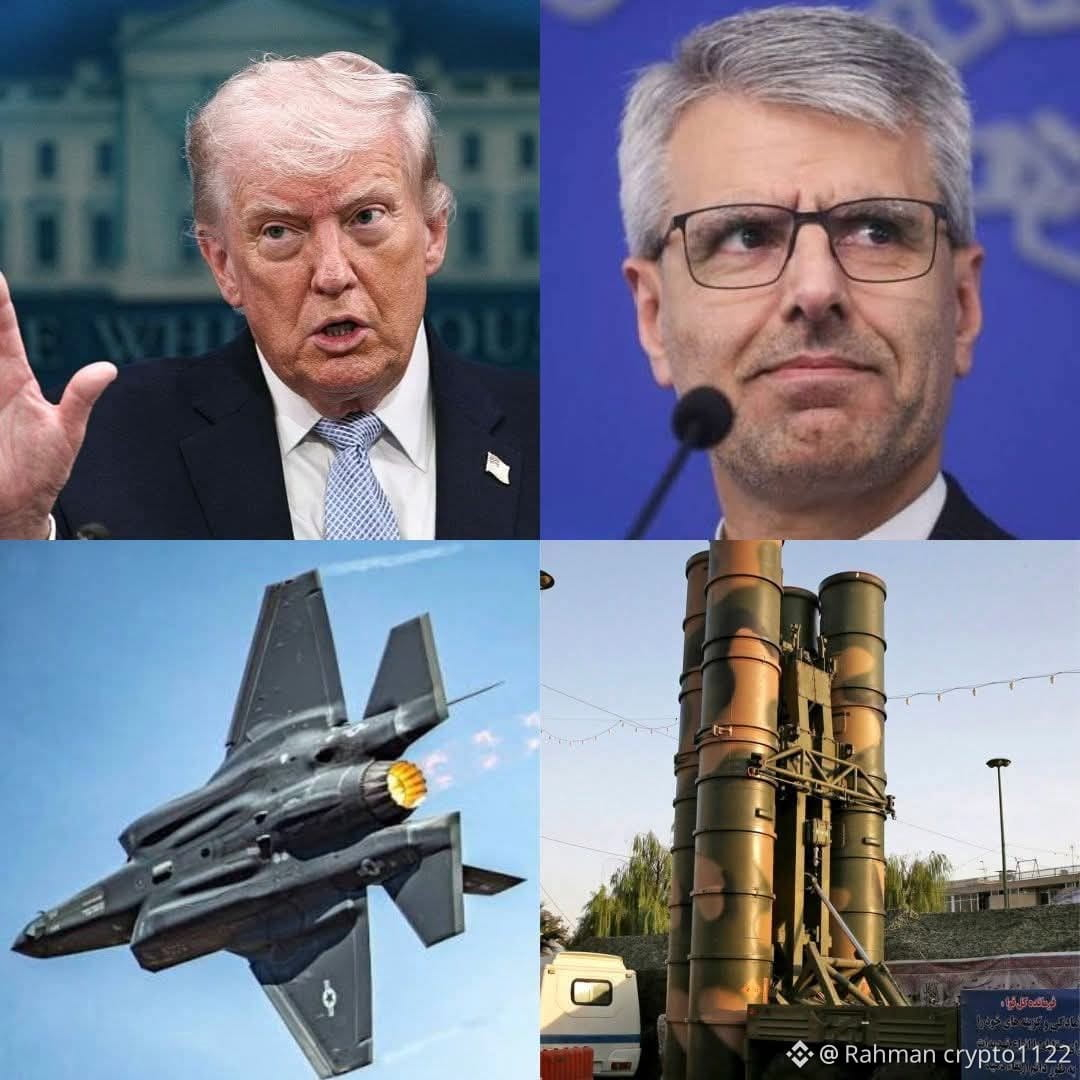
🚨🇺🇸🇮🇷 U.S. F-35 MAKES EMERGENCY LANDING AFTER IRAN MISSION
A U.S. F-35 stealth fighter reportedly sustained damage during a combat mission over Iran on March 19, 2026, forcing an emergency landing at a regional U.S. airbase. 🇮🇷
U.S. Central Command (CENTCOM) confirmed that the aircraft landed safely and the pilot was in stable condition. Reports about infrared missile targeting and the alleged transmission of emergency code 7600 have not been independently verified.
📌 Reference: "CNN via KESQ" (https://kesq.com/news/national-politics/cnn-us-politics/2026/03/19/us-f-35-damaged-by-suspected-iranian-fire-makes-emergency-landing-sources-say/) | "Air & Space Forces Magazine" (https://www.airandspaceforces.com/f-35a-lands-after-taking-fire-over-iran-pilot-stable/)
#USA #Iran #F35 #MilitaryNews
$XAG $XAU $NOKB
520

·
--
Article
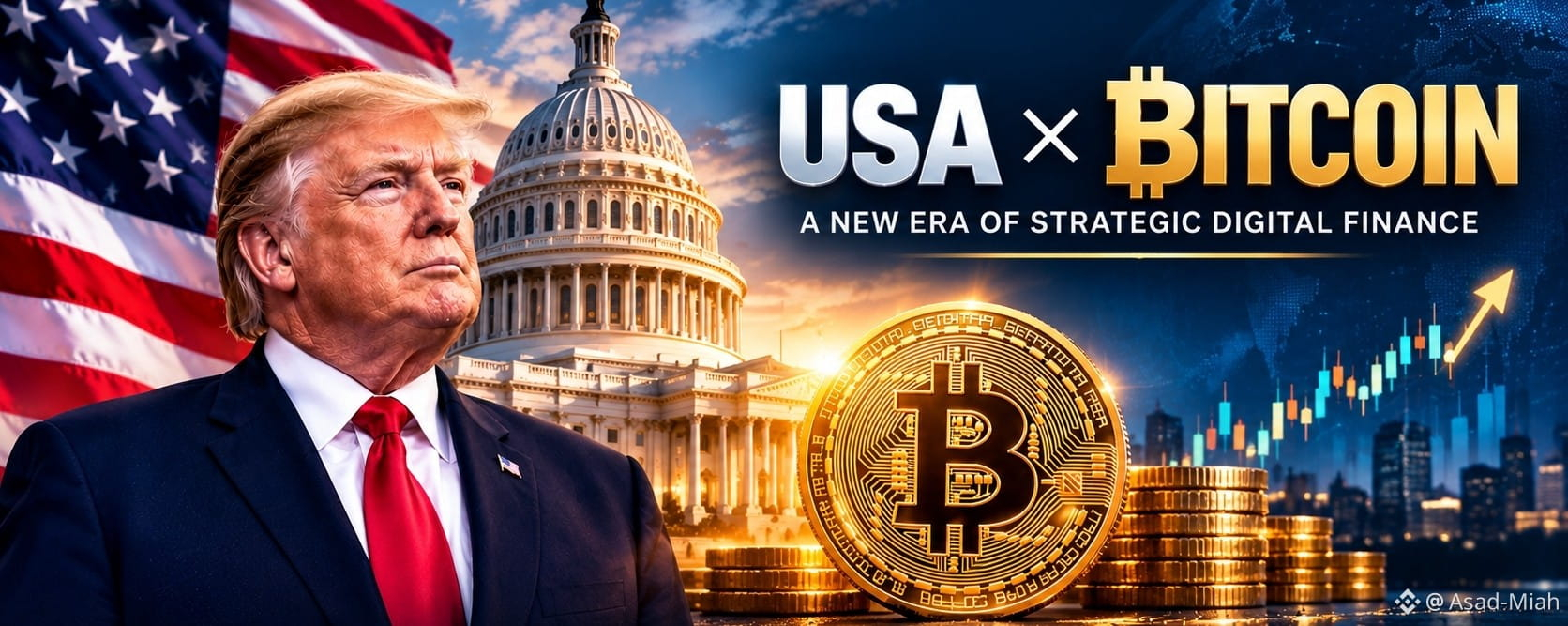
🇺🇸 USA × BITCOIN ₿ | A NEW FINANCIAL ERA! 🚀The United States is positioning Bitcoin as a strategic digital asset through its Strategic Bitcoin Reserve, while expanding crypto market regulation and institutional investment. 🌍📈
💎 Bitcoin is becoming an increasingly important part of the global financial conversation.
#Bitcoin #CryptoNews #USA
🇺🇸 USA × BITCOIN ₿ | A NEW FINANCIAL ERA! 🚀
The United States is positioning Bitcoin as a strategic digital asset through its Strategic Bitcoin Reserve, while expanding crypto market regulation and institutional investment. 🌍📈
💎 Bitcoin is becoming an increasingly important part of the global financial conversation.
#Bitcoin #CryptoNews #USA
💎 Bitcoin is becoming an increasingly important part of the global financial conversation.
#Bitcoin #CryptoNews #USA
1
29

·
--
#blockchainassociationsubmitsgeniusactcomments
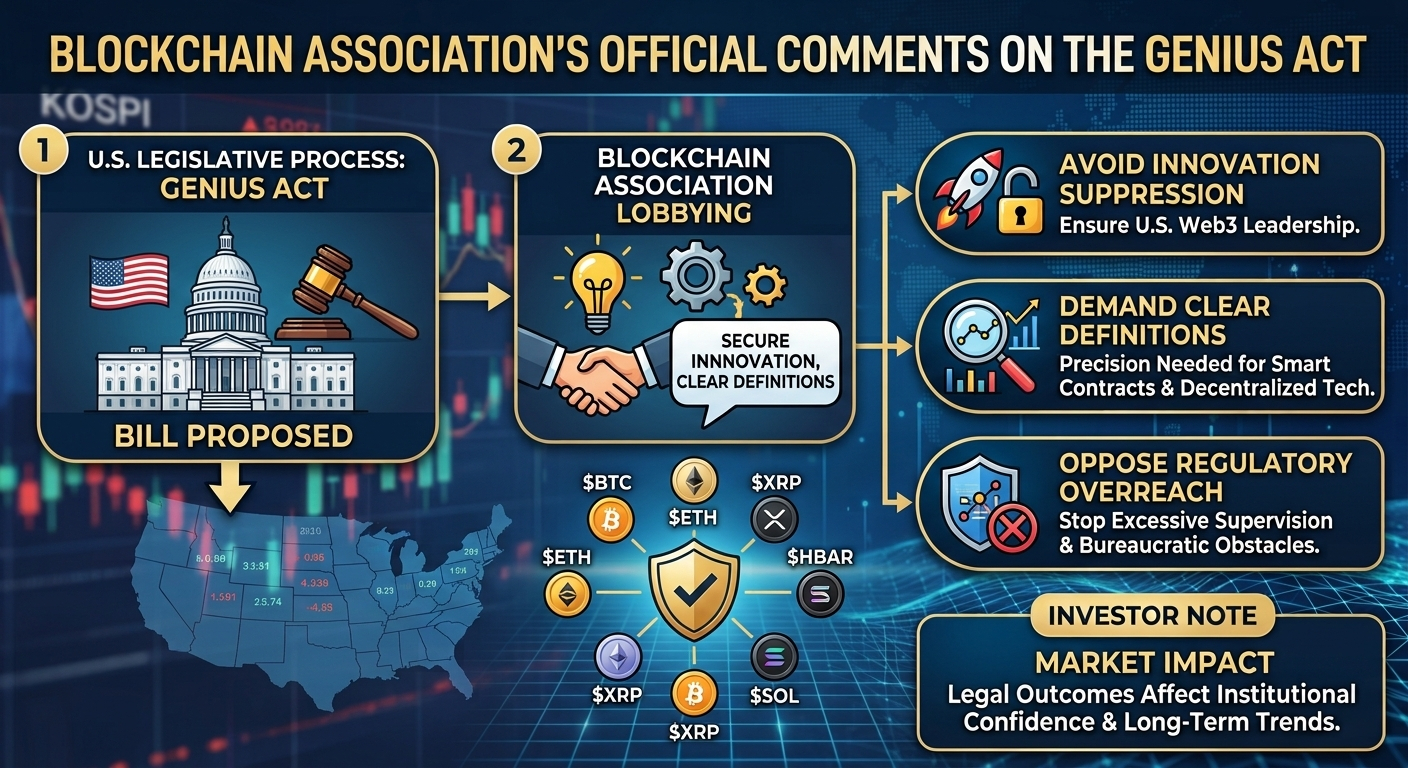
🚨 Blockchain Association Shares Key Views on the GENIUS Act! ⚖️
Blockchain Association, one of the crypto industry’s strongest advocates in the United States, has submitted its official assessment and comments on the bill known as the GENIUS Act to the relevant authorities! 📝💡 This legislative step, which could directly affect the future of the crypto ecosystem and innovation, has moved to the top of the regulatory agenda. 📈🔥
Here are the key points from Blockchain Association’s submission:
Innovation Must Be Unimpeded! 🚀 The Association argues that the bill should not stifle digital asset innovation or blockchain technologies. It calls for a flexible, constructive legal framework to prevent the industry from moving outside the United States. 🇺🇸❌The Need for Clear and Precise Definitions! 📊🔍 The submission emphasizes that technical terms, smart contracts, and decentralized structures within the crypto ecosystem must be defined accurately. It warns that incorrect or overly broad definitions could harm well-intentioned developers. 🛡️💻A Stand Against Excessive Oversight! 🙅♂️🛑 Blockchain Association says that bureaucratic barriers and overly aggressive oversight mechanisms would harm the ecosystem, and has urged regulators to find common ground with industry representatives through a balanced approach. 🤝⚖️
Takeaway for Crypto Investors: Legislative developments and lobbying efforts in the United States directly shape institutional confidence in the market. The final versions of bills like the GENIUS Act could trigger long-term bull or bear trends! 🐻 or 🐂? It’s important to stay tuned. 🛡️💰
#CryptoRegulations #Blockchain #USA
$SOL $STX $HBAR
{future}(HBARUSDT)
{future}(STXUSDT)
{future}(SOLUSDT)
#blockchainassociationsubmitsgeniusactcomments
🚨 Blockchain Association Shares Key Views on the GENIUS Act! ⚖️
Blockchain Association, one of the crypto industry’s strongest advocates in the United States, has submitted its official assessment and comments on the bill known as the GENIUS Act to the relevant authorities! 📝💡 This legislative step, which could directly affect the future of the crypto ecosystem and innovation, has moved to the top of the regulatory agenda. 📈🔥
Here are the key points from Blockchain Association’s submission:
Innovation Must Be Unimpeded! 🚀 The Association argues that the bill should not stifle digital asset innovation or blockchain technologies. It calls for a flexible, constructive legal framework to prevent the industry from moving outside the United States. 🇺🇸❌The Need for Clear and Precise Definitions! 📊🔍 The submission emphasizes that technical terms, smart contracts, and decentralized structures within the crypto ecosystem must be defined accurately. It warns that incorrect or overly broad definitions could harm well-intentioned developers. 🛡️💻A Stand Against Excessive Oversight! 🙅♂️🛑 Blockchain Association says that bureaucratic barriers and overly aggressive oversight mechanisms would harm the ecosystem, and has urged regulators to find common ground with industry representatives through a balanced approach. 🤝⚖️
Takeaway for Crypto Investors: Legislative developments and lobbying efforts in the United States directly shape institutional confidence in the market. The final versions of bills like the GENIUS Act could trigger long-term bull or bear trends! 🐻 or 🐂? It’s important to stay tuned. 🛡️💰
#CryptoRegulations #Blockchain #USA
$SOL $STX $HBAR
1
1.1k


Verified
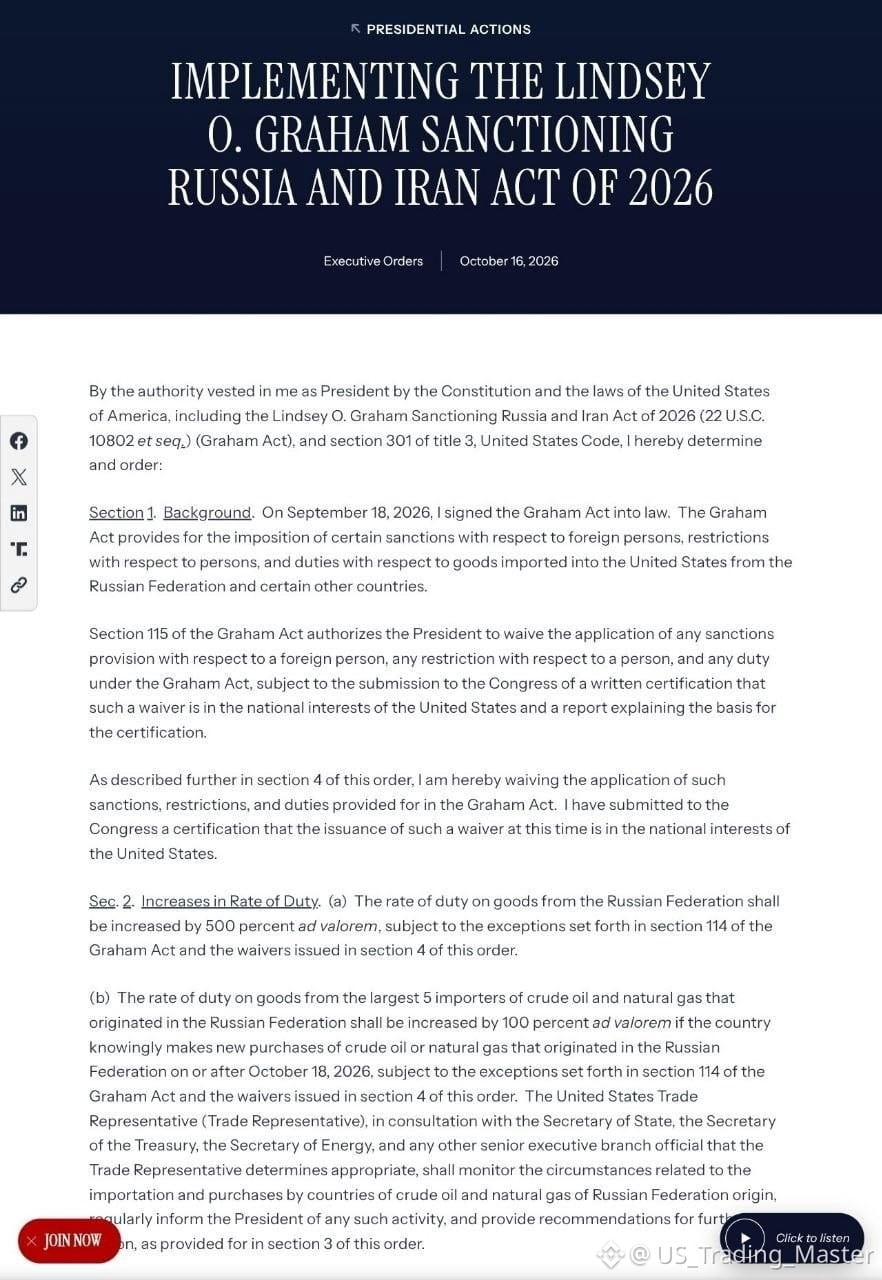
🚨 BREAKING: US WAIVES 100% TARIFF THREAT ON INDIA! 🇺🇸🇮🇳
The US has temporarily waived tariffs linked to India’s purchases of Russian oil, easing the immediate trade pressure.
⚠️ The waiver is not necessarily permanent, and future action remains possible.
#usa #India #russia #GlobalMarkets #TradeNews
The US has temporarily waived tariffs linked to India’s purchases of Russian oil, easing the immediate trade pressure.
⚠️ The waiver is not necessarily permanent, and future action remains possible.
#usa #India #russia #GlobalMarkets #TradeNews
2
2
3.4k

⚠️🇺🇸#trump #elections #usa
Experts say the worst news for Trump ahead of the midterm elections couldn't be worse.
- Inflation is accelerating
- Fuel prices are rising
- Interest rates are rising
- Escalation with Iran is escalating
⚠️🇺🇸#trump #elections #usa
Experts say the worst news for Trump ahead of the midterm elections couldn't be worse.
- Inflation is accelerating
- Fuel prices are rising
- Interest rates are rising
- Escalation with Iran is escalating
Experts say the worst news for Trump ahead of the midterm elections couldn't be worse.
- Inflation is accelerating
- Fuel prices are rising
- Interest rates are rising
- Escalation with Iran is escalating
2
464


·
--
🚨BREAKING🚨
* ⚖️ The U.S. Supreme Court is facing growing pressure to review the legal status of prediction markets, particularly sports-related contracts.
* 🇺🇸 39 states, the District of Columbia, 145 tribal nations, the NFL, and other parties have urged the Court to address the dispute over regulatory authority.
* 🏛️ Two federal appeals courts have favored state-level gambling regulation, while another has supported federal oversight by the CFTC.
* 📜 The CFTC has introduced new regulatory measures seeking to clarify how prediction markets covering sports, politics, culture, and weather fall under federal derivatives rules.
* 🔥 The outcome could reshape regulation for prediction market platforms such as Kalshi and Polymarket.
* ⚠️ Market impact: No direct Bitcoin or altcoin price impact was reported. The decision could influence the regulatory landscape for crypto-related prediction markets.
#U.S. #usa
$BTC $ETH
1
184

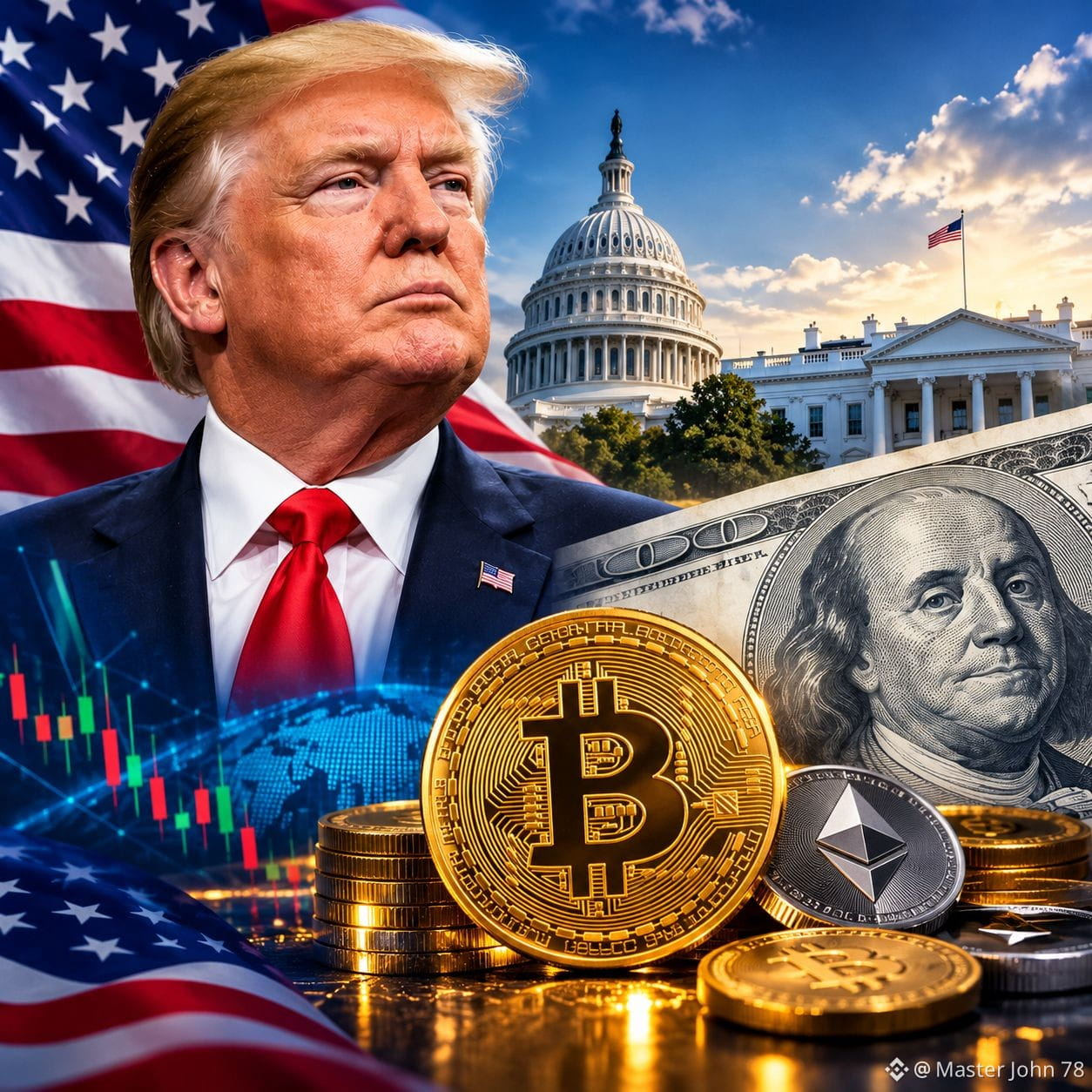
🇺🇸 TRUMP, US DOLLAR & CRYPTO MARKET UPDATE 🇺🇸
💵 Trump’s Policies Could Shake the Dollar and Crypto Markets! ₿ $TRUMP
US President Donald Trump’s economic policies, trade tariffs, and statements on interest rates can influence the strength of the US dollar and overall market sentiment. A stronger dollar may put pressure on Bitcoin and other cryptocurrencies, while a weaker dollar and expectations of easier monetary policy may support crypto prices.
📊 What Crypto Traders Should Watch:
- 💵 US Dollar (DXY): Dollar strength or weakness.
- ₿ Bitcoin (BTC): Key support and resistance levels.
- 🇺🇸 Trump’s Policies: Trade decisions and economic announcements.
- 📈 Market Sentiment: Investor reaction to US economic data and Federal Reserve decisions.
⚠️ Important: Crypto markets are highly volatile. Always confirm the latest news and manage your trading risk before entering a position.
#Trump #USD #Bitcoin #CryptoNews #CryptoMarket #USA
960

Verified
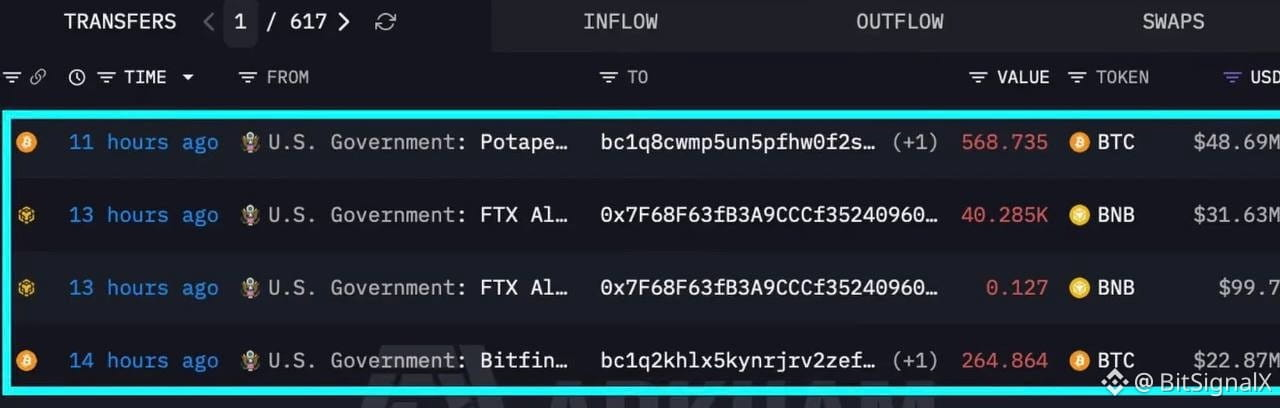
🇺🇸 The U.S. government transfers $1.01 billion from Bitcoin
Arkham data showed that a wallet linked to the U.S. government moved 12,267 Bitcoins worth approximately $1.01 billion to unknown addresses—without confirming any sale. These coins are believed to be linked to raids connected to the 2016 Bitfinex hack. Additional transfers worth $770 million to Coinbase Prime were also observed over two days, bringing the total government-linked transfers to $1.87 billion in three days. These transfers coincided with $485 million leaving spot Bitcoin ETFs on October 7, marking the largest daily outflow since June.
#btc #usa $BTC
1
78

·
--
#🇺🇸 The US is moving #BTC
The US government transferred BTC and BNB worth a total of around $100 million to another address.
📊 There is no confirmation yet that this was done to sell. However, the market traditionally views such a large transfer negatively — participants start pricing in the possibility of additional coins becoming available for sale, which increases pressure.
⚙️ This gives the market another reason to continue its pullback and strengthens the bearish scenario.
🔥 Support the channel!
Like, leave a comment, and subscribe so you don't miss the latest insights on BTC and the moves of major players.
#BTC☀️ #usa #crypto $BTC
{spot}(BTCUSDT)
$ETH
{spot}(ETHUSDT)
$BNB
{spot}(BNBUSDT)
BitSignal
#🇺🇸 The US is moving #BTC
The US government transferred BTC and BNB worth a total of around $100 million to another address.
📊 There is no confirmation yet that this was done to sell. However, the market traditionally views such a large transfer negatively — participants start pricing in the possibility of additional coins becoming available for sale, which increases pressure.
⚙️ This gives the market another reason to continue its pullback and strengthens the bearish scenario.
🔥 Support the channel!
Like, leave a comment, and subscribe so you don't miss the latest insights on BTC and the moves of major players.
#BTC☀️ #usa #crypto $BTC
$ETH
$BNB
BitSignal
1
1
314

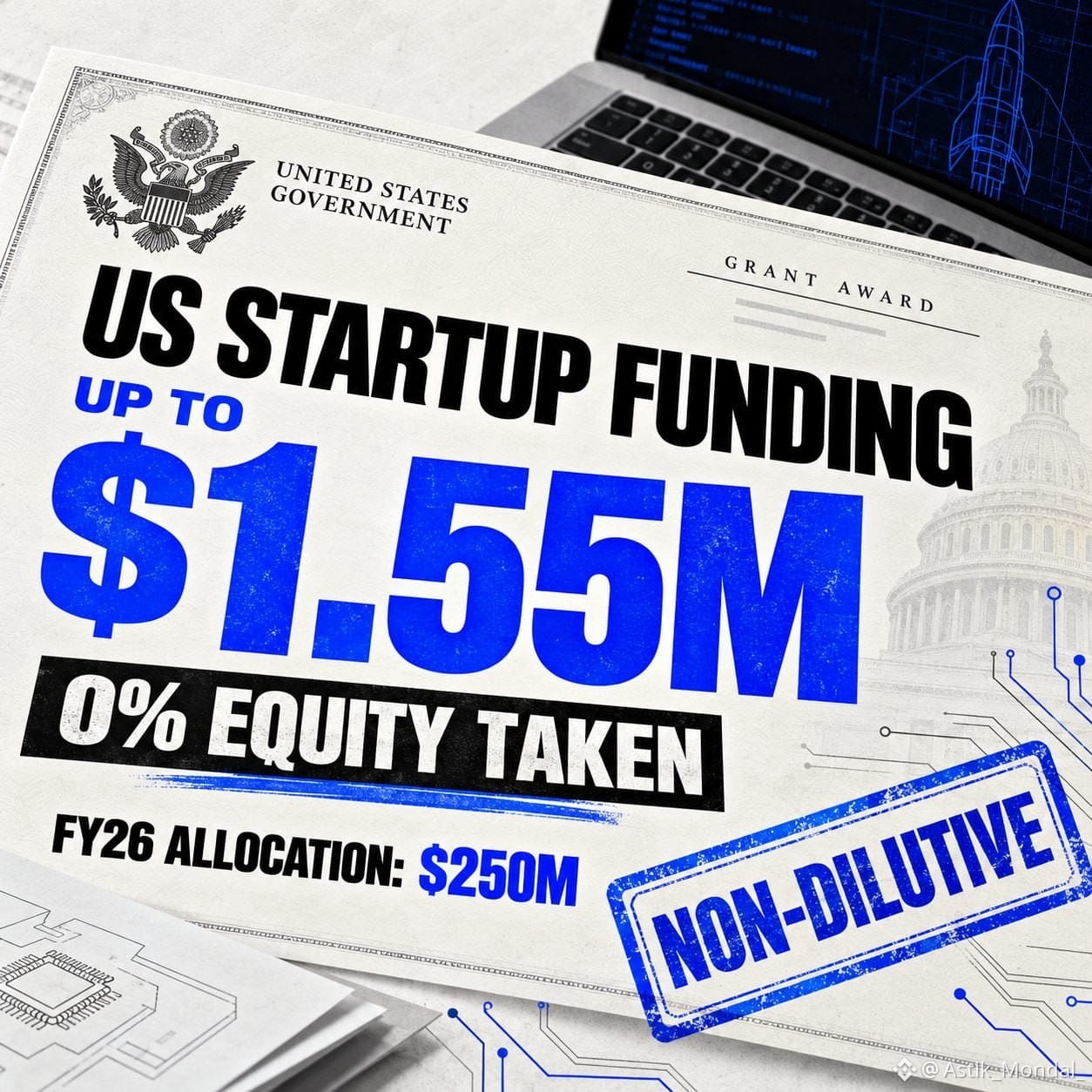
🚨 JUST IN: The U.S. government is offering startups up to $1.55 MILLION in funding with 0% equity taken.
And there’s a $250 MILLION grant pool behind it. 🇺🇸
NSF’s America’s Seed Fund is back after Congress reauthorized the program through 2031.
The biggest opportunity:
$305K to prove feasibility.
$1.25M to build toward market.
Or up to $1.55M through Fast-Track by combining both phases.
But there’s a catch.
This isn’t free money for basic apps, marketing or simple software projects.
NSF is targeting high-risk R&D and defensible deep tech that could become major U.S. technologies.
Eligible startups generally need to be U.S.-based small businesses with fewer than 500 employees, majority U.S. citizen or permanent-resident ownership, and U.S.-based work.
The process starts with a short Project Pitch.
If invited, founders submit a full proposal.
And the best part?
Founders keep ownership of their company AND intellectual property.
FY2026 allocation: $250 MILLION.
If you’re building serious deep tech in the U.S., this could be one of the biggest non-dilutive funding opportunities on the table.
Forward this to a founder who needs to see it.
#Startups #Entrepreneurship #DeepTech #Innovation #USA
1
72
Log in to explore more content
Join global crypto users on Binance Square
⚡️ Get latest and useful information about crypto.
💬 Trusted by the world’s largest crypto exchange.
👍 Discover real insights from verified creators.
Email / Phone number
Trending Topics
1
#BinanceReports80%Recoveryof$6.3BillioninLossesfromHackIncident
23,988 views
214 Discussing
2
#HeYiSaysWithdrawalsExpectedtoResumeWithin42Hours
47,639 views
876 Discussing
3
#CZSaysCompensationIsinPlaceUsersAreProtected
53,304 views
730 Discussing
4
#RichardTengSaysBinanceWillCoverAllHackedLosseswithCompanyFunds
8,481 views
52 Discussing
5
#IntelHasItsWorstDaySince1974
10,107 views
288 Discussing
6
#TRMCambodianCasinosReceived$1.07BInCrypto
1,959 views
52 Discussing
7
#USDCCirculationFallsAbout800MInSevenDays
29,178 views
463 Discussing
8
#SuspectedNorthKoreaAttacksAccountForNearly89%OfCryptoHackLosses
9,223 views
77 Discussing
9
#OpenAICutsFundraisingTargetBy$10B
2,055 views
61 Discussing
10
#ASICHasReceivedNoPredictionMarketApplications
41,160 views
884 Discussing