

#czsayscompensationisinplaceusersareprotected
czsayscompensationisinplaceusersareprotected
Hot
Latest


·
--
Article
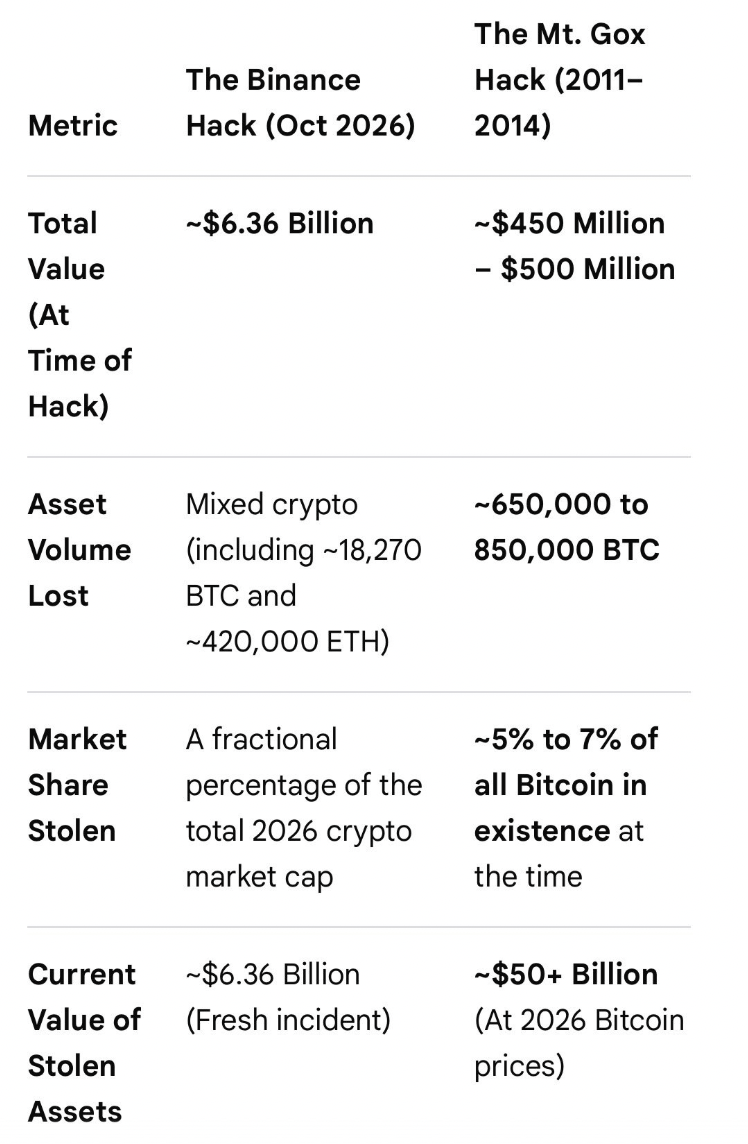
Binance News Update | CZ Says Binance Incident Is the Largest in Dollar Terms but Far Smaller Than Mt. Gox in Bitcoin, and Users Are Fully CoveredBinance founder Changpeng Zhao (CZ) said the impact of an exchange hack should not be judged by its dollar size alone, arguing that the key question is whether the platform can cover the losses in full. In posts on X on Friday, October 30, he said the Binance incident is the largest in US dollar terms but not in bitcoin terms, and shared a comparison with the Mt. Gox hack.Binance vs. Mt. GoxAccording to CZ’s comparison, the Binance incident involved about $6.36 billion in mixed crypto assets, including about 18,270 BTC and 420,000 ETH. Mt. Gox lost 650,000 to 850,000 BTC between 2011 and 2014, worth $450 million to $500 million at the time but more than $50 billion at today’s prices.MetricBinance (Oct 2026)Mt. Gox (2011–2014)Value at the time~$6.36 billion~$450–500 millionAssets lostMixed crypto, incl. ~18,270 BTC and ~420,000 ETH~650,000–850,000 BTCShare of marketA fraction of the crypto market~5%–7% of all bitcoinValue today~$6.36 billion$50+ billion Market Impact and Who Bears the LossCZ said a better measure of market impact is the share of bitcoin’s supply involved, where Mt. Gox’s loss equaled 5% to 7% of all bitcoin at the time. He also pointed to how many users were affected: at Mt. Gox, then the largest exchange, and at FTX, nearly all users and their assets were hit.The most important question, CZ said, is who bears the loss and whether the platform covers it in full. In Binance’s case, he said, the platform is the only victim. Binance has reserved more than $6.34 billion of company funds to cover all losses.CZ acknowledged the incident is “still a major disaster for the industry, Binance (and me).” “It hurts, but we survive,” he wrote. “Most importantly, we protect our users.”
Binance News Update | CZ Says Binance Incident Is the Largest in Dollar Terms but Far Smaller Than Mt. Gox in Bitcoin, and Users Are Fully Covered
Binance founder Changpeng Zhao (CZ) said the impact of an exchange hack should not be judged by its dollar size alone, arguing that the key question is whether the platform can cover the losses in full. In posts on X on Friday, October 30, he said the Binance incident is the largest in US dollar terms but not in bitcoin terms, and shared a comparison with the Mt. Gox hack.Binance vs. Mt. GoxAccording to CZ’s comparison, the Binance incident involved about $6.36 billion in mixed crypto assets, including about 18,270 BTC and 420,000 ETH. Mt. Gox lost 650,000 to 850,000 BTC between 2011 and 2014, worth $450 million to $500 million at the time but more than $50 billion at today’s prices.MetricBinance (Oct 2026)Mt. Gox (2011–2014)Value at the time~$6.36 billion~$450–500 millionAssets lostMixed crypto, incl. ~18,270 BTC and ~420,000 ETH~650,000–850,000 BTCShare of marketA fraction of the crypto market~5%–7% of all bitcoinValue today~$6.36 billion$50+ billion Market Impact and Who Bears the LossCZ said a better measure of market impact is the share of bitcoin’s supply involved, where Mt. Gox’s loss equaled 5% to 7% of all bitcoin at the time. He also pointed to how many users were affected: at Mt. Gox, then the largest exchange, and at FTX, nearly all users and their assets were hit.The most important question, CZ said, is who bears the loss and whether the platform covers it in full. In Binance’s case, he said, the platform is the only victim. Binance has reserved more than $6.34 billion of company funds to cover all losses.CZ acknowledged the incident is “still a major disaster for the industry, Binance (and me).” “It hurts, but we survive,” he wrote. “Most importantly, we protect our users.”
User-a0c6836f:
Não consigo depositar valores na minha conta ?
16
7
89
104.3k

·
--
Current Market & Infrastructure Pivot: $CELO
{spot}(CELOUSDT)
has fully transitioned from an independent Layer-1 blockchain into an Ethereum Layer-2 rollup built on the OP Stack. This shift addresses liquidity fragmentation by integrating Celo directly into the broader Ethereum rollup ecosystem while drastically lowering gas fees for users. It maintains its core mission as a mobile-first, real-world payments network focused heavily on stable coins and financial inclusion in emerging markets.
Key Future Developments:
Isthmus Hard fork & Super chain Alignment: Further aligns Celo’s L2 stack with Ethereum execution upgrades (Pectra), improving cross-chain interoperability, transactional throughput, and block derivation efficiency.
EigenDA Integration & Reduced Data Costs: Integration with off-chain data availability layers (such as EigenDA v2 / Blazar) significantly cuts transaction costs, making micro-payments on mobile devices even cheaper.
OP Succinct & Zero-Knowledge Proofs: Incorporating ZK-based fault proof resolution to drastically shorten withdrawal dispute windows and allow fast cross-chain settlements.
Multi-Token Gas & Native Stable coin Utility: Retaining Celo’s signature feature—allowing gas fees to be paid directly in native stable coins (e.g., cUSD, cEUR)—improving user experience for non-technical retail users.#BinanceReports80%Recoveryof$6.3BillioninLossesfromHackIncident #HeYiSaysWithdrawalsExpectedtoResumeWithin42Hours #CZSaysCompensationIsinPlaceUsersAreProtected #celestia
Current Market & Infrastructure Pivot: $CELO
has fully transitioned from an independent Layer-1 blockchain into an Ethereum Layer-2 rollup built on the OP Stack. This shift addresses liquidity fragmentation by integrating Celo directly into the broader Ethereum rollup ecosystem while drastically lowering gas fees for users. It maintains its core mission as a mobile-first, real-world payments network focused heavily on stable coins and financial inclusion in emerging markets.
Key Future Developments:
Isthmus Hard fork & Super chain Alignment: Further aligns Celo’s L2 stack with Ethereum execution upgrades (Pectra), improving cross-chain interoperability, transactional throughput, and block derivation efficiency.
EigenDA Integration & Reduced Data Costs: Integration with off-chain data availability layers (such as EigenDA v2 / Blazar) significantly cuts transaction costs, making micro-payments on mobile devices even cheaper.
OP Succinct & Zero-Knowledge Proofs: Incorporating ZK-based fault proof resolution to drastically shorten withdrawal dispute windows and allow fast cross-chain settlements.
Multi-Token Gas & Native Stable coin Utility: Retaining Celo’s signature feature—allowing gas fees to be paid directly in native stable coins (e.g., cUSD, cEUR)—improving user experience for non-technical retail users.#BinanceReports80%Recoveryof$6.3BillioninLossesfromHackIncident #HeYiSaysWithdrawalsExpectedtoResumeWithin42Hours #CZSaysCompensationIsinPlaceUsersAreProtected #celestia

15

·
--
Bearish
#heyisayswithdrawalsexpectedtoresumewithin42hours
🚨 HE YI UPDATE: WITHDRAWALS TO RESUME WITHIN 42 HOURS! ⏰⚡
Timeline Set: Binance co-founder He Yi confirms that deposits are operating normally and withdrawals are scheduled to resume within 42 hours as security scans hit 87% completion.
The Numbers: Total affected volume stands at approximately $6.3B, with $3B successfully frozen on-chain through rapid industry collaboration.
$LINK
{future}(LINKUSDT)
SAFU Commitment: Binance reiterates that user funds remain fully protected under the SAFU fund and that the platform will cover all losses, emphasizing: "We will resume only when 100% secure."
Market Outlook: With security checks nearing the finish line and recovery efforts in full swing, is this the turning point for market confidence?
💬 YOUR TURN: Are you feeling bullish on BNB as operations get back on track, or are you waiting for the full security post-mortem?
👇 Drop your thoughts below!
"CLICK ON THE BELOW YELLOW COIN TAG TO GO TO DESIRED TRADING PAGE TO GET BENEFIT TRADE" $BTC
{future}(BTCUSDT)
$XAUT
{future}(XAUTUSDT)
#BinanceReports80%Recoveryof$6.3BillioninLossesfromHackIncident #CZSaysCompensationIsinPlaceUsersAreProtected #USDCCirculationFallsAbout800MInSevenDays #heyi
#heyisayswithdrawalsexpectedtoresumewithin42hours
🚨 HE YI UPDATE: WITHDRAWALS TO RESUME WITHIN 42 HOURS! ⏰⚡
Timeline Set: Binance co-founder He Yi confirms that deposits are operating normally and withdrawals are scheduled to resume within 42 hours as security scans hit 87% completion.
The Numbers: Total affected volume stands at approximately $6.3B, with $3B successfully frozen on-chain through rapid industry collaboration.
$LINK
SAFU Commitment: Binance reiterates that user funds remain fully protected under the SAFU fund and that the platform will cover all losses, emphasizing: "We will resume only when 100% secure."
Market Outlook: With security checks nearing the finish line and recovery efforts in full swing, is this the turning point for market confidence?
💬 YOUR TURN: Are you feeling bullish on BNB as operations get back on track, or are you waiting for the full security post-mortem?
👇 Drop your thoughts below!
"CLICK ON THE BELOW YELLOW COIN TAG TO GO TO DESIRED TRADING PAGE TO GET BENEFIT TRADE" $BTC
$XAUT
#BinanceReports80%Recoveryof$6.3BillioninLossesfromHackIncident #CZSaysCompensationIsinPlaceUsersAreProtected #USDCCirculationFallsAbout800MInSevenDays #heyi

1
52
·
--
$NEAR
{spot}(NEARUSDT)
Protocol continues to carve out a singular niche within the fiercely competitive Layer-1 blockchain sector, pivoting hard towards Chain Abstraction and AI-Native Infrastructure as its core value drivers. This strategy aims to resolve Web3’s biggest bottlenecks: fragmented user experience and developer complexity.
Current Market Standing
As of late 2026, NEAR is navigating the broader market cycle, showing resilience due to strong fundamental adoption rather than pure speculation. While experiencing typical technical pullbacks, the token’s utility has expanded significantly. It is now cemented as a "gas token" for a thriving cross-chain "Intents" ecosystem, which allows users to interact with any blockchain without managing multiple wallets or networks. This Intent layer has recently generated multi-million dollar fees, fueling a sustainable token buyback mechanism.
#BinanceReports80%Recoveryof$6.3BillioninLossesfromHackIncident #HeYiSaysWithdrawalsExpectedtoResumeWithin42Hours #CZSaysCompensationIsinPlaceUsersAreProtected #NEAR🚀🚀🚀
$NEAR
Protocol continues to carve out a singular niche within the fiercely competitive Layer-1 blockchain sector, pivoting hard towards Chain Abstraction and AI-Native Infrastructure as its core value drivers. This strategy aims to resolve Web3’s biggest bottlenecks: fragmented user experience and developer complexity.
Current Market Standing
As of late 2026, NEAR is navigating the broader market cycle, showing resilience due to strong fundamental adoption rather than pure speculation. While experiencing typical technical pullbacks, the token’s utility has expanded significantly. It is now cemented as a "gas token" for a thriving cross-chain "Intents" ecosystem, which allows users to interact with any blockchain without managing multiple wallets or networks. This Intent layer has recently generated multi-million dollar fees, fueling a sustainable token buyback mechanism.
#BinanceReports80%Recoveryof$6.3BillioninLossesfromHackIncident #HeYiSaysWithdrawalsExpectedtoResumeWithin42Hours #CZSaysCompensationIsinPlaceUsersAreProtected #NEAR🚀🚀🚀

24

·
--
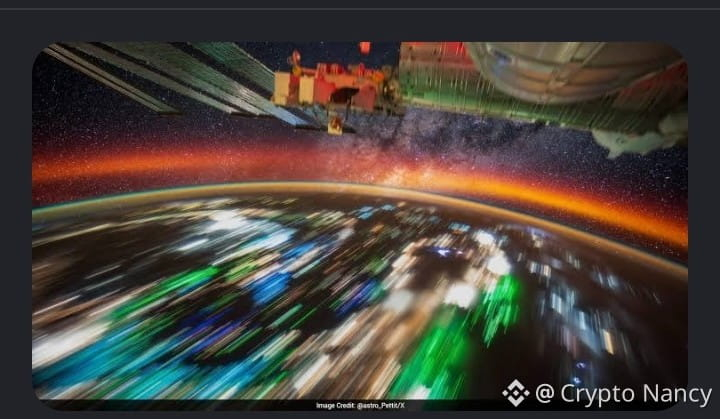
$THE e world looks different from above, but its future is being shaped right here on Earth. Technology, innovation, and human ambition are moving faster than ever. The next big breakthrough could change everything.
#Technology #Innovation #Future
Target: Global Vision
#HeYiSaysWithdrawalsExpectedtoResumeWithin42Hours #CZSaysCompensationIsinPlaceUsersAreProtected #USDCCirculationFallsAbout800MInSevenDays
#Technology #Innovation #Future
Target: Global Vision
#HeYiSaysWithdrawalsExpectedtoResumeWithin42Hours #CZSaysCompensationIsinPlaceUsersAreProtected #USDCCirculationFallsAbout800MInSevenDays
1
11

·
--
Article
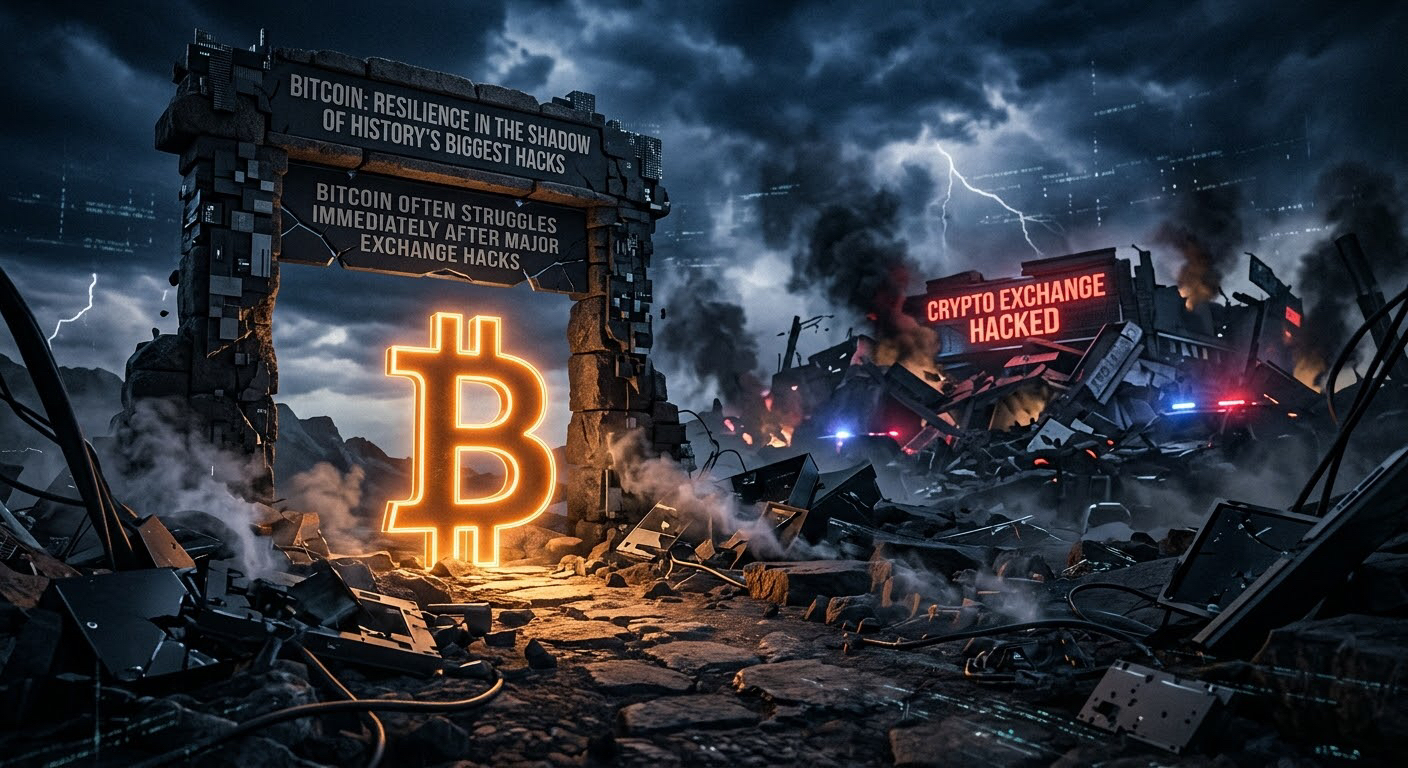
The Shadow of the Past: Bitcoin’s Resilience in the Wake of History’s Biggest Crypto HacksWhen the digital asset ecosystem is shaken by catastrophic security breaches and monumental exchange hacks, the immediate ripple effect across the markets is almost always a wave of acute panic. For years, the intersection of cryptocurrency and high-profile security failures has tested the psychological endurance of investors, developers, and institutional players alike.
A retrospective look at market history reveals a consistent, unmistakable pattern: Bitcoin often struggles immediately after major exchange hacks.
Anatomy of a Crisis: Why Hacks Trigger Immediate Market Distress
When a major platform is compromised, the shockwaves extend far beyond the immediate loss of funds. Several critical market mechanisms drive Bitcoin and the broader crypto market downward in the short term:
The Liquidation Fear: Investors frequently panic at the thought of stolen coins being abruptly dumped onto the open market by malicious actors seeking to cash out, creating artificial downward pressure.
Erosion of Confidence: Major security breaches severely dent retail and institutional confidence, prompting capital flight to safety (fiat or stablecoins) while market participants reassess counterparty risk.
Regulatory Scrutiny: High-profile hacks inevitably draw immediate, aggressive attention from global regulators, introducing a cloud of uncertainty regarding future compliance, restrictions, and policy tightening.
Psychological Cascades: Cryptocurrencies are heavily sentiment-driven. The psychological weight of a historic exploit can trigger automated stop-losses and cascading liquidations across leveraged trading desks.
The Silver Lining: The Pattern of Recovery and Maturation
Despite the initial carnage, history also tells a secondary, much more hopeful story. While Bitcoin frequently takes a heavy hit in the days and weeks following a historic exploit, these crises have historically acted as violent catalysts for industry-wide evolution.
Upgraded Infrastructure: Every major hack forces custodians, exchanges, and wallet providers to aggressively overhaul their security protocols, leading to multi-sig technology, cold-storage standards, and robust proof-of-reserves audits.
Decentralization Imperative: These events continually remind the community of the core ethos of cryptocurrency: not your keys, not your coins. Consequently, they drive wider adoption of self-custody solutions and hardware wallets.
Market Antifragility: Over time, Bitcoin has repeatedly demonstrated an uncanny ability to absorb these shocks, wash out weak hands, and emerge fundamentally stronger, proving that its core network consensus remains entirely uncompromised by exchange-level failures.
Looking Ahead
Ultimately, while the immediate aftermath of a historic crypto hack is fraught with volatility, fear, and sharp corrections, it serves as a crucial reminder of the market's ongoing maturation process. Bitcoin has weathered countless storms, exchange collapses, and security breaches throughout its lifespan—each time adapting, hardening its defenses, and continuing its march forward.
What are your thoughts on how the market handles security crises today compared to the early days of crypto?
#BinanceReports80%Recoveryof$6.3BillioninLossesfromHackIncident #cryptohacks #btc #CZSaysCompensationIsinPlaceUsersAreProtected #Write2Earrn
$BTC
{spot}(BTCUSDT)
$ETH
{spot}(ETHUSDT)
$BNB
{spot}(BNBUSDT)
The Shadow of the Past: Bitcoin’s Resilience in the Wake of History’s Biggest Crypto Hacks
When the digital asset ecosystem is shaken by catastrophic security breaches and monumental exchange hacks, the immediate ripple effect across the markets is almost always a wave of acute panic. For years, the intersection of cryptocurrency and high-profile security failures has tested the psychological endurance of investors, developers, and institutional players alike.
A retrospective look at market history reveals a consistent, unmistakable pattern: Bitcoin often struggles immediately after major exchange hacks.
Anatomy of a Crisis: Why Hacks Trigger Immediate Market Distress
When a major platform is compromised, the shockwaves extend far beyond the immediate loss of funds. Several critical market mechanisms drive Bitcoin and the broader crypto market downward in the short term:
The Liquidation Fear: Investors frequently panic at the thought of stolen coins being abruptly dumped onto the open market by malicious actors seeking to cash out, creating artificial downward pressure.
Erosion of Confidence: Major security breaches severely dent retail and institutional confidence, prompting capital flight to safety (fiat or stablecoins) while market participants reassess counterparty risk.
Regulatory Scrutiny: High-profile hacks inevitably draw immediate, aggressive attention from global regulators, introducing a cloud of uncertainty regarding future compliance, restrictions, and policy tightening.
Psychological Cascades: Cryptocurrencies are heavily sentiment-driven. The psychological weight of a historic exploit can trigger automated stop-losses and cascading liquidations across leveraged trading desks.
The Silver Lining: The Pattern of Recovery and Maturation
Despite the initial carnage, history also tells a secondary, much more hopeful story. While Bitcoin frequently takes a heavy hit in the days and weeks following a historic exploit, these crises have historically acted as violent catalysts for industry-wide evolution.
Upgraded Infrastructure: Every major hack forces custodians, exchanges, and wallet providers to aggressively overhaul their security protocols, leading to multi-sig technology, cold-storage standards, and robust proof-of-reserves audits.
Decentralization Imperative: These events continually remind the community of the core ethos of cryptocurrency: not your keys, not your coins. Consequently, they drive wider adoption of self-custody solutions and hardware wallets.
Market Antifragility: Over time, Bitcoin has repeatedly demonstrated an uncanny ability to absorb these shocks, wash out weak hands, and emerge fundamentally stronger, proving that its core network consensus remains entirely uncompromised by exchange-level failures.
Looking Ahead
Ultimately, while the immediate aftermath of a historic crypto hack is fraught with volatility, fear, and sharp corrections, it serves as a crucial reminder of the market's ongoing maturation process. Bitcoin has weathered countless storms, exchange collapses, and security breaches throughout its lifespan—each time adapting, hardening its defenses, and continuing its march forward.
What are your thoughts on how the market handles security crises today compared to the early days of crypto?
#BinanceReports80%Recoveryof$6.3BillioninLossesfromHackIncident #cryptohacks #btc #CZSaysCompensationIsinPlaceUsersAreProtected #Write2Earrn
$BTC
$ETH
$BNB
158
·
--
$GLOB.US al politics is entering a defining moment. Every nation wants influence, power, and a stronger position in the world. The next major decisions could reshape global markets and the future economy.
#GlobalPolitics #WorldEconomy #Geopolitics
Target: Global Influence
#HeYiSaysWithdrawalsExpectedtoResumeWithin42Hours #CZSaysCompensationIsinPlaceUsersAreProtected #USDCCirculationFallsAbout800MInSevenDays
#GlobalPolitics #WorldEconomy #Geopolitics
Target: Global Influence
#HeYiSaysWithdrawalsExpectedtoResumeWithin42Hours #CZSaysCompensationIsinPlaceUsersAreProtected #USDCCirculationFallsAbout800MInSevenDays

GLOBUS+4.51%
1
8


·
--
Bullish
$SIREN
{future}(SIRENUSDT)
All my friends trade in open long now and more trade and hold for more profitable and more earn #CZSaysCompensationIsinPlaceUsersAreProtected #USDCCirculationFallsAbout800MInSevenDays
$SIREN
All my friends trade in open long now and more trade and hold for more profitable and more earn #CZSaysCompensationIsinPlaceUsersAreProtected #USDCCirculationFallsAbout800MInSevenDays
All my friends trade in open long now and more trade and hold for more profitable and more earn #CZSaysCompensationIsinPlaceUsersAreProtected #USDCCirculationFallsAbout800MInSevenDays
41
·
--
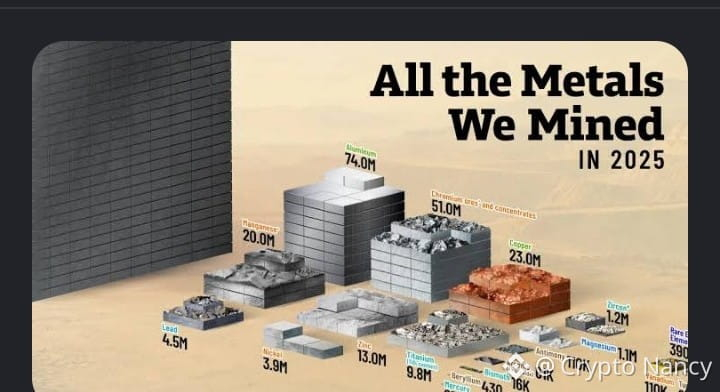
$THE e world is mining billions in metals, but the real story is what comes next. Copper, lithium, aluminum, and nickel are becoming essential to the future of technology, energy, and crypto infrastructure. Demand could reshape global markets.
#Metals #Mining #Crypto
Target: Future Growth
#HeYiSaysWithdrawalsExpectedtoResumeWithin42Hours #CZSaysCompensationIsinPlaceUsersAreProtected #ASICHasReceivedNoPredictionMarketApplications
#Metals #Mining #Crypto
Target: Future Growth
#HeYiSaysWithdrawalsExpectedtoResumeWithin42Hours #CZSaysCompensationIsinPlaceUsersAreProtected #ASICHasReceivedNoPredictionMarketApplications
1
13
Log in to explore more content
Join global crypto users on Binance Square
⚡️ Get latest and useful information about crypto.
💬 Trusted by the world’s largest crypto exchange.
👍 Discover real insights from verified creators.
Email / Phone number
Trending Topics
1
#BinanceReports80%Recoveryof$6.3BillioninLossesfromHackIncident
321 views
31 Discussing
2
#HeYiSaysWithdrawalsExpectedtoResumeWithin42Hours
50 views
35 Discussing
3
#CZSaysCompensationIsinPlaceUsersAreProtected
2 views
18 Discussing
4
#TRMCambodianCasinosReceived$1.07BInCrypto
207 views
23 Discussing
5
#USDCCirculationFallsAbout800MInSevenDays
230 views
44 Discussing
6
#SuspectedNorthKoreaAttacksAccountForNearly89%OfCryptoHackLosses
4,659 views
59 Discussing
7
#OpenAICutsFundraisingTargetBy$10B
929 views
50 Discussing
8
#ASICHasReceivedNoPredictionMarketApplications
15,205 views
447 Discussing
9
#RecallAnnouncesLiquidationPlansToBurn35.86%OfSupply
512 views
22 Discussing
10
#TetherReports$191.5BInQ3Reserves
185 views
19 Discussing