
TheMarketFile
366 Posts

TheMarketFile
Report
Block User
The Market File | Global Markets
Crypto • TradFi • Technology • Geopolitics
News and analysis on global markets and the economy.
X: @GastonCanda
Open Trade
Frequent Trader
3.1 Years
45 Following
2.8K+ Followers
697 Liked
Posts
Portfolio
All
Quotes
Live
PINNED
·
--
Bullish
30D trade $BTC 8.1K USDT
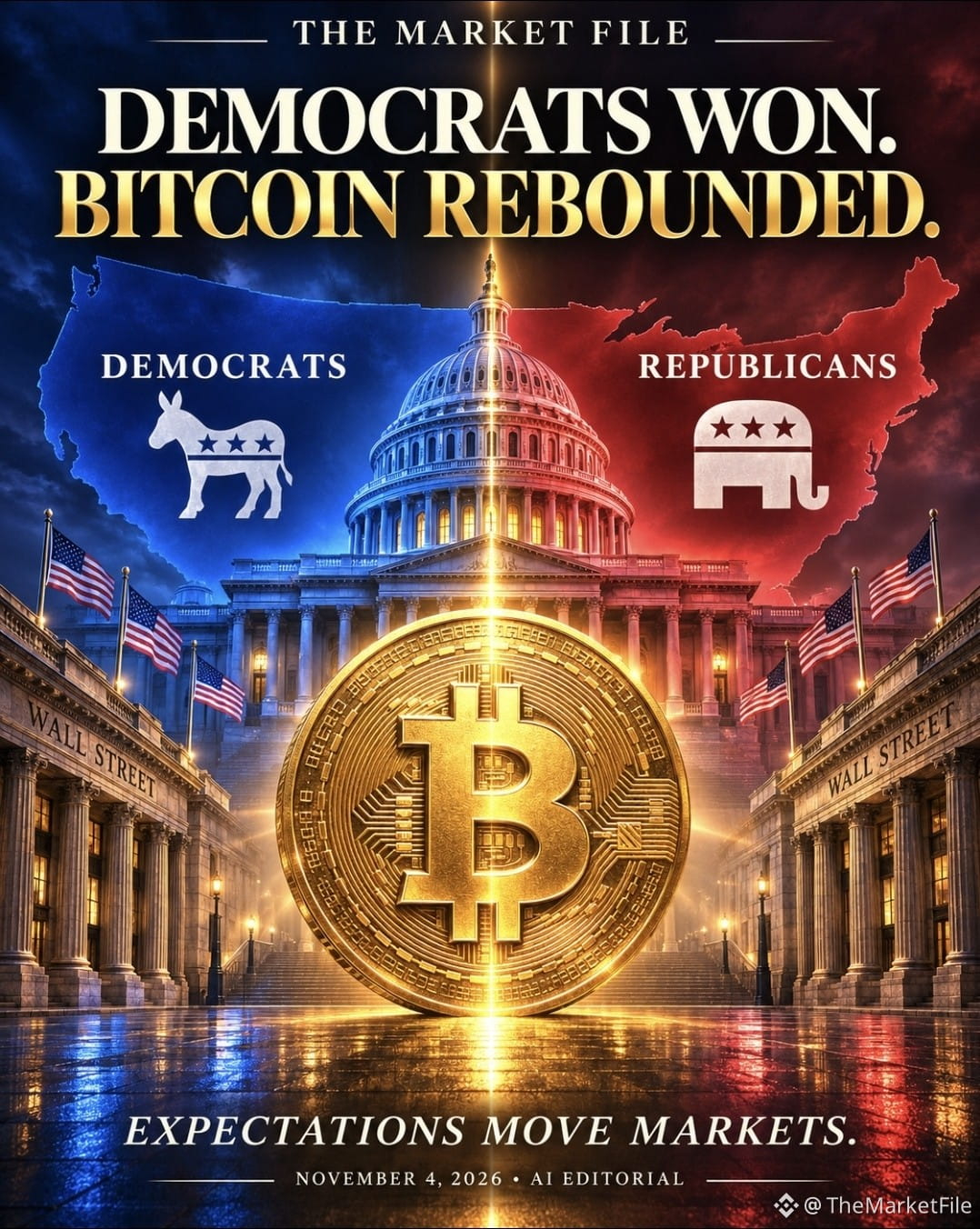
🚨 Democrats won. Bitcoin reclaimed $80,000.
Why did it rise when so many expected a drop?
THE MARKET FILE — PRICING IN EXPECTATIONS
November 4, 2026
My bet was that Republicans would retain Congress and boost markets. The outcome was different: Democrats won, and BTC recovered after falling overnight.
Time to reassess.
🧠 MARKETS MOVE BEFORE THE HEADLINES
Many kept repeating:
“Democrats = crash.”
“Republicans = bull run.”
But prices also reflect what investors expect to happen.
If a Republican defeat was already anticipated, some selling and hedging could have happened before the results arrived.
📊 WHAT CHANGED WITH CONFIRMATION?
My interpretation is that a major source of uncertainty cleared.
Investors went from wondering who would win to assessing a concrete outcome. Trump accepted the results, and Wall Street also reversed its initial losses.
That helps explain the rebound: an outcome considered negative can bring relief when it was already anticipated.
And when traders betting against prices close their shorts, they buy to exit. That can accelerate the recovery.
₿ SO, ARE DEMOCRATS BULLISH?
One green session isn't enough to draw that conclusion.
From January, crypto regulation, budgets and economic priorities will face fresh negotiations. That discussion remains open.
📖 MY TAKE
I remain bullish on Bitcoin. Today's lesson is to consider how much of a scenario was already reflected in prices.
I see signs of recovery. Now I want BTC to hold $80,000 and demand to continue beyond the initial relief.
💬 Did you expect this reaction, or were you convinced a Democratic victory would send Bitcoin lower?
$BTC
{future}(BTCUSDT)
#BTCRebounds80K #bitcoin #CryptoMarket
🚨 Democrats won. Bitcoin reclaimed $80,000.
Why did it rise when so many expected a drop?
THE MARKET FILE — PRICING IN EXPECTATIONS
November 4, 2026
My bet was that Republicans would retain Congress and boost markets. The outcome was different: Democrats won, and BTC recovered after falling overnight.
Time to reassess.
🧠 MARKETS MOVE BEFORE THE HEADLINES
Many kept repeating:
“Democrats = crash.”
“Republicans = bull run.”
But prices also reflect what investors expect to happen.
If a Republican defeat was already anticipated, some selling and hedging could have happened before the results arrived.
📊 WHAT CHANGED WITH CONFIRMATION?
My interpretation is that a major source of uncertainty cleared.
Investors went from wondering who would win to assessing a concrete outcome. Trump accepted the results, and Wall Street also reversed its initial losses.
That helps explain the rebound: an outcome considered negative can bring relief when it was already anticipated.
And when traders betting against prices close their shorts, they buy to exit. That can accelerate the recovery.
₿ SO, ARE DEMOCRATS BULLISH?
One green session isn't enough to draw that conclusion.
From January, crypto regulation, budgets and economic priorities will face fresh negotiations. That discussion remains open.
📖 MY TAKE
I remain bullish on Bitcoin. Today's lesson is to consider how much of a scenario was already reflected in prices.
I see signs of recovery. Now I want BTC to hold $80,000 and demand to continue beyond the initial relief.
💬 Did you expect this reaction, or were you convinced a Democratic victory would send Bitcoin lower?
$BTC
#BTCRebounds80K #bitcoin #CryptoMarket
21
2
38
45.1k
PINNED
·
--
Bullish
Verified
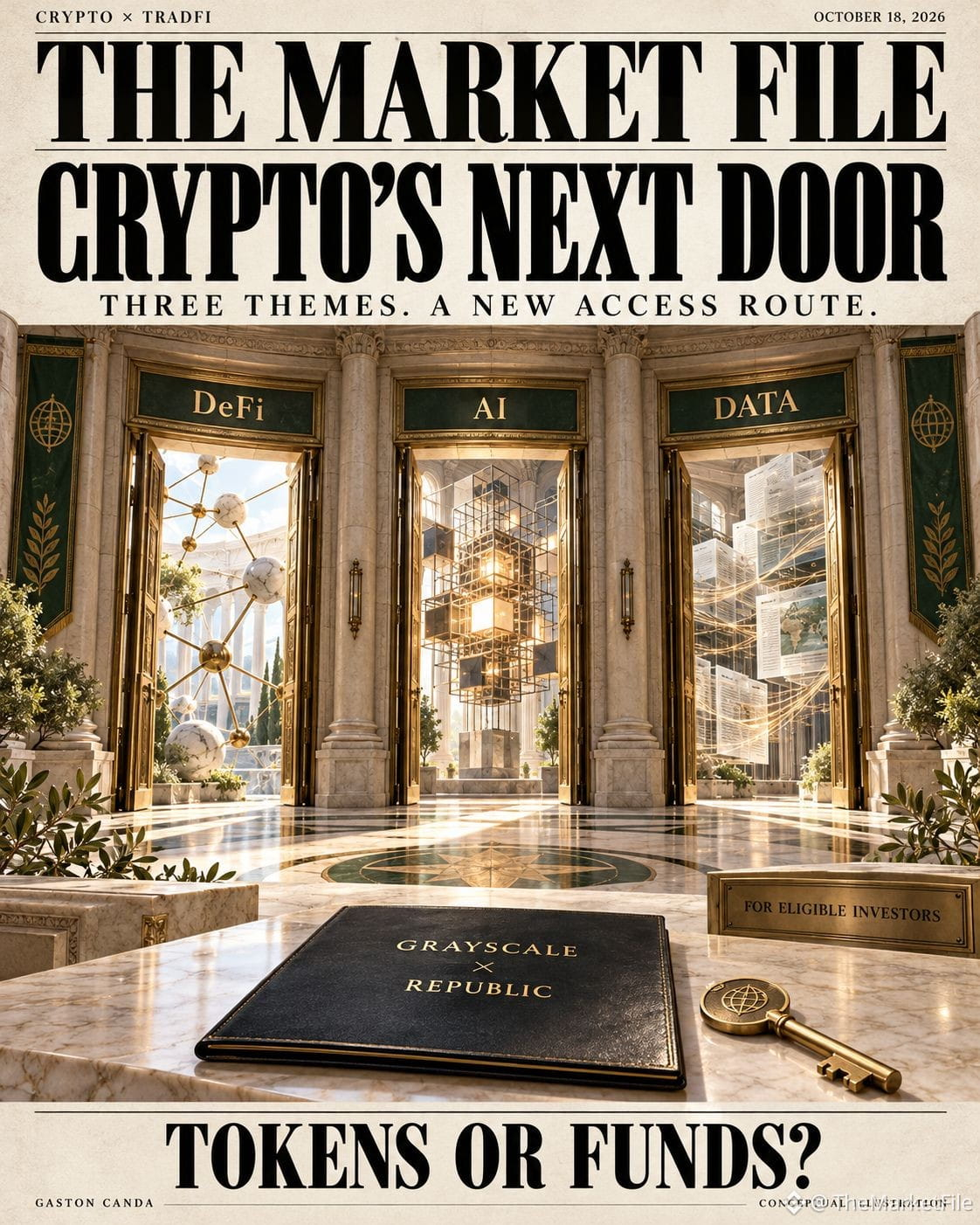
🧠 The next investor in an altcoin may never open a crypto wallet.
Grayscale and Republic are expanding a route that makes that possible.
THE MARKET FILE — CRYPTO × TRADFI
October 18, 2026
Their October 15 announcement brings three Grayscale products to eligible investors through Republic:
🏦 Grayscale DeFi Fund
Exposure to decentralized finance protocols supporting lending, trading and asset management.
🤖 Grayscale Decentralized AI Fund
Exposure to blockchain-based AI infrastructure and services. Republic lists holdings including $NEAR and $TAO.
📚 Grayscale Data Network Trust
Exposure to a network designed to source, verify and license data used to train AI models.
💵 The advertised minimum starts at $2,500.
But the entry ticket isn’t the only requirement: U.S. participation requires verified accredited-investor status. These are private offerings with liquidity restrictions.
📖 MY READ:
Crypto is increasingly being packaged into investment themes: finance, AI and data infrastructure.
That could appeal to investors who want exposure without buying and safeguarding individual tokens themselves.
The trade-off deserves attention: fund fees, investment decisions made by a manager and different liquidity conditions.
For NEAR and TAO, inclusion gives investors another way to gain exposure. Whether that becomes sustained demand depends on actual subscriptions.
👀 A distribution announcement tells us where money CAN enter. Fund flows will tell us whether it DOES.
💬 Would you rather own the tokens directly or access the sector through a managed fund? What would decide it for you?
Follow THE MARKET FILE. We’ll track adoption beyond the announcement.
#grayscaleandrepubliclaunchthreecryptofunds
#defi #AI
$NEAR $TAO
{future}(TAOUSDT)
{future}(NEARUSDT)
🧠 The next investor in an altcoin may never open a crypto wallet.
Grayscale and Republic are expanding a route that makes that possible.
THE MARKET FILE — CRYPTO × TRADFI
October 18, 2026
Their October 15 announcement brings three Grayscale products to eligible investors through Republic:
🏦 Grayscale DeFi Fund
Exposure to decentralized finance protocols supporting lending, trading and asset management.
🤖 Grayscale Decentralized AI Fund
Exposure to blockchain-based AI infrastructure and services. Republic lists holdings including $NEAR and $TAO .
📚 Grayscale Data Network Trust
Exposure to a network designed to source, verify and license data used to train AI models.
💵 The advertised minimum starts at $2,500.
But the entry ticket isn’t the only requirement: U.S. participation requires verified accredited-investor status. These are private offerings with liquidity restrictions.
📖 MY READ:
Crypto is increasingly being packaged into investment themes: finance, AI and data infrastructure.
That could appeal to investors who want exposure without buying and safeguarding individual tokens themselves.
The trade-off deserves attention: fund fees, investment decisions made by a manager and different liquidity conditions.
For NEAR and TAO, inclusion gives investors another way to gain exposure. Whether that becomes sustained demand depends on actual subscriptions.
👀 A distribution announcement tells us where money CAN enter. Fund flows will tell us whether it DOES.
💬 Would you rather own the tokens directly or access the sector through a managed fund? What would decide it for you?
Follow THE MARKET FILE. We’ll track adoption beyond the announcement.
#grayscaleandrepubliclaunchthreecryptofunds
#defi #AI
$NEAR $TAO
13
1
40
63k
·
--
Bullish
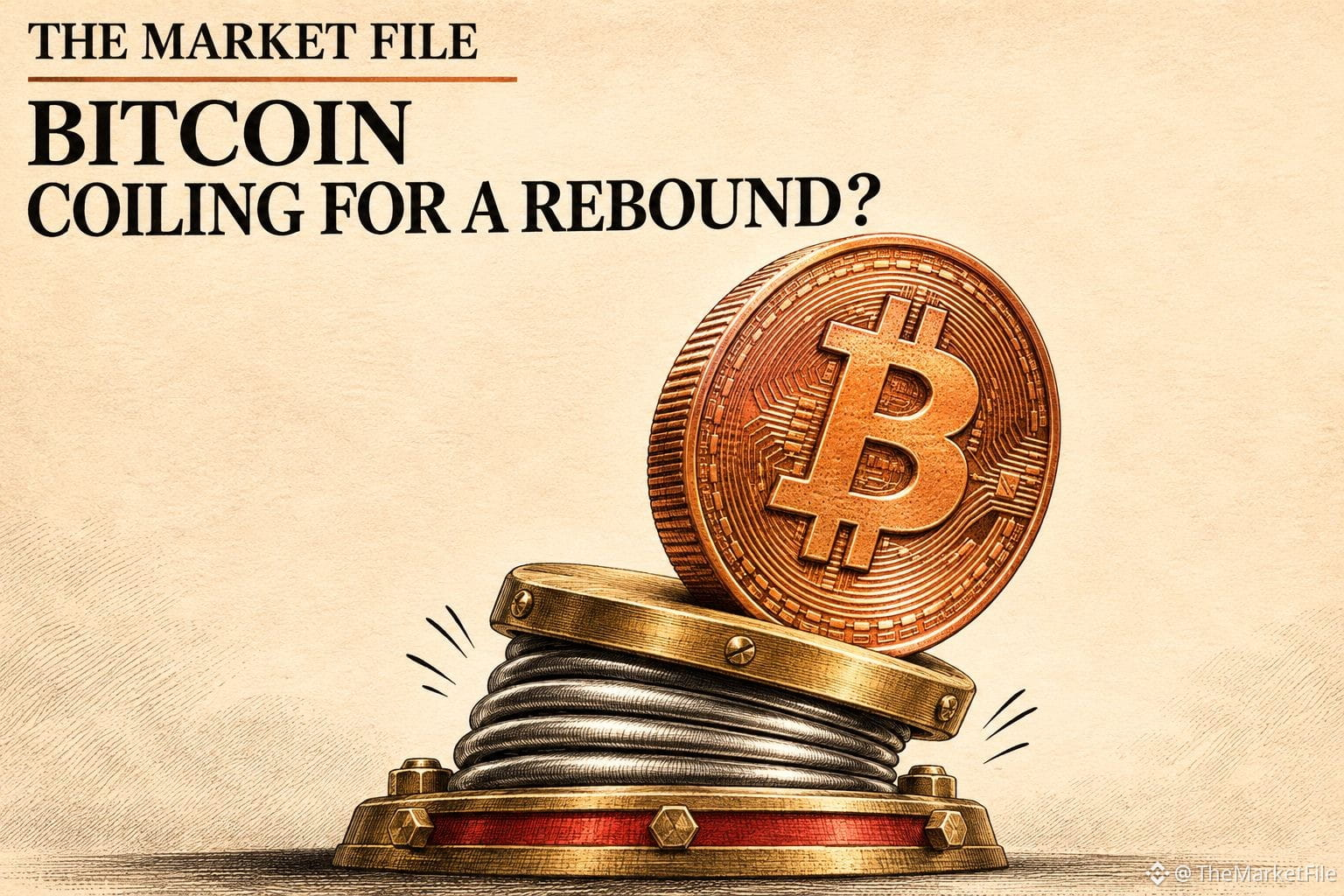
Bitcoin below $62,000, with daily RSI near 20. I’m watching for early accumulation.
THE MARKET FILE — COULD BTC SURPRISE TO THE UPSIDE?
I believe Bitcoin may be entering an accumulation zone. A sharp rebound over the coming days is a scenario I’m taking seriously.
Here’s what supports that view.
On Binance Spot BTC/USDT, the daily RSI(14), calculated using Wilder’s smoothing and completed UTC candles, stood at approximately 20.4 at the November 19 close. That’s well below the traditional oversold threshold of 30.
There has also been buying during the selloff. In its November 17 report, Glassnode found that the supply held by recent buyers with cost bases between $62,000 and $66,000 grew by roughly 66,000 BTC during the two days of heaviest selling.
CryptoQuant separately reported a 19% five-day decline in open interest, alongside substantial long liquidations. That suggests part of the selling involved leveraged positions being unwound.
My interpretation is that these conditions could help create the foundation for a rebound if spot demand strengthens.
The next test matters. BTC has since slipped below that $62,000 area, putting those buyers under pressure. RSI can also stay oversold while price keeps falling.
I want to see $62,000 reclaimed and held, followed by a higher low and stronger buying volume. A recovery toward $65,000 would add weight to my thesis. Continued lower lows would weaken it.
What price would BTC need to reclaim for you to take a bullish reversal seriously?
$BTC
#BTCBelow$62KAmidHikeFearsAndShiftToAnthropic
#BTCPriceAction #BitcoinAccumulation
{future}(BTCUSDT)
Bitcoin below $62,000, with daily RSI near 20. I’m watching for early accumulation.
THE MARKET FILE — COULD BTC SURPRISE TO THE UPSIDE?
I believe Bitcoin may be entering an accumulation zone. A sharp rebound over the coming days is a scenario I’m taking seriously.
Here’s what supports that view.
On Binance Spot BTC/USDT, the daily RSI(14), calculated using Wilder’s smoothing and completed UTC candles, stood at approximately 20.4 at the November 19 close. That’s well below the traditional oversold threshold of 30.
There has also been buying during the selloff. In its November 17 report, Glassnode found that the supply held by recent buyers with cost bases between $62,000 and $66,000 grew by roughly 66,000 BTC during the two days of heaviest selling.
CryptoQuant separately reported a 19% five-day decline in open interest, alongside substantial long liquidations. That suggests part of the selling involved leveraged positions being unwound.
My interpretation is that these conditions could help create the foundation for a rebound if spot demand strengthens.
The next test matters. BTC has since slipped below that $62,000 area, putting those buyers under pressure. RSI can also stay oversold while price keeps falling.
I want to see $62,000 reclaimed and held, followed by a higher low and stronger buying volume. A recovery toward $65,000 would add weight to my thesis. Continued lower lows would weaken it.
What price would BTC need to reclaim for you to take a bullish reversal seriously?
$BTC
#BTCBelow$62KAmidHikeFearsAndShiftToAnthropic
#BTCPriceAction #BitcoinAccumulation
2
259
·
--
Bullish
Verified
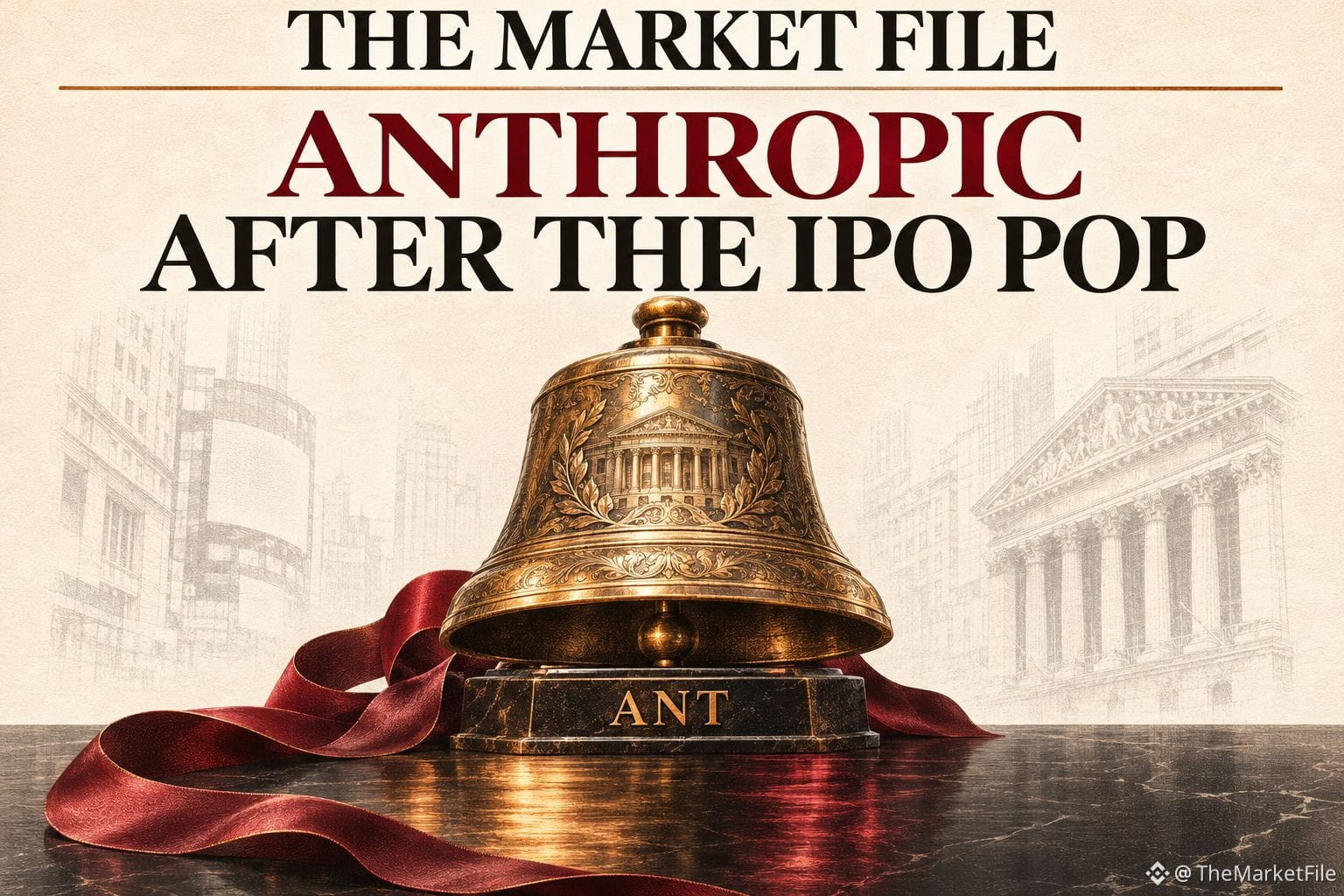
Anthropic closed its debut up 17%. Someone buying at the opening price finished nearly 13% underwater.
THE MARKET FILE — AFTER THE IPO POP
Three prices tell the story of November 19.
IPO allocation — $83.00
First Nasdaq trade — $111.50
Regular-session close — $97.17
An investor allocated shares at $83 finished the session up approximately 17.1%.
Someone buying at $111.50 and holding through the close finished down approximately 12.9%, before fees.
Before the debut, my test was where ANT would close relative to its first Nasdaq trade. Today, it closed $14.33 below that opening price.
My read is that the opening surge attracted buyers willing to pay a substantial premium, but demand weakened as the session progressed. I’ll be watching whether those buyers return.
For the valuation debate, I want to see how revenue growth translates into cash after the cost of delivering AI services. The price investors pay determines how much future success is already built into their position.
Next session, I’m watching whether ANT holds above its $97.17 closing reference and starts recovering toward $111.50. A move back toward $83 would put the IPO pricing level in focus.
Would you consider Anthropic below $100, or wait for its first earnings report as a public company?
#IsAnthropic’s$1.5TMarketCapJustified?
#IPO #IA
$ANTHROPIC
26
3
44
149.3k
Verified
Who pays if the AI boom takes longer to turn into cash?
THE MARKET FILE — WHO FUNDS THE AI BOOM?
The Fed’s October meeting minutes, released November 18, put AI financing under scrutiny.
Most participants noted that AI-related debt had grown rapidly, often through complex and opaque structures. Fed staff highlighted lease commitments outside company balance sheets and circular financing arrangements that could amplify losses if investment returns disappoint.
Staff also judged the financial system resilient, with strong bank and household balance sheets providing a buffer.
My read is that investors now have another test to apply alongside revenue growth.
Can the businesses financing this expansion generate enough cash to meet their debt payments and long-term commitments?
For $NVDA
{future}(NVDAUSDT)
, I’m watching the customers behind future orders. Their ability to fund new capacity matters to the durability of chip demand.
If customers increasingly cover investment with cash generated by their operations, I’d gain confidence in the expansion. If borrowing keeps growing while cash generation falls behind, I’d become more cautious about how long the spending pace can last.
That’s what I’ll be looking for in upcoming earnings reports, alongside margins and new orders.
What would make you question the AI investment cycle first, weaker revenue growth or rising debt without stronger cash generation?
#AIInfrastructure
#CreditMarkets
#fomcminuteshighlightaidebtrisks
Who pays if the AI boom takes longer to turn into cash?
THE MARKET FILE — WHO FUNDS THE AI BOOM?
The Fed’s October meeting minutes, released November 18, put AI financing under scrutiny.
Most participants noted that AI-related debt had grown rapidly, often through complex and opaque structures. Fed staff highlighted lease commitments outside company balance sheets and circular financing arrangements that could amplify losses if investment returns disappoint.
Staff also judged the financial system resilient, with strong bank and household balance sheets providing a buffer.
My read is that investors now have another test to apply alongside revenue growth.
Can the businesses financing this expansion generate enough cash to meet their debt payments and long-term commitments?
For $NVDA
, I’m watching the customers behind future orders. Their ability to fund new capacity matters to the durability of chip demand.
If customers increasingly cover investment with cash generated by their operations, I’d gain confidence in the expansion. If borrowing keeps growing while cash generation falls behind, I’d become more cautious about how long the spending pace can last.
That’s what I’ll be looking for in upcoming earnings reports, alongside margins and new orders.
What would make you question the AI investment cycle first, weaker revenue growth or rising debt without stronger cash generation?
#AIInfrastructure
#CreditMarkets
#fomcminuteshighlightaidebtrisks
2
1k
Verified
30D trade $BTC 2.7K USDT
Bitcoin is near $63,000 tonight. What would convince you that buyers are regaining control?
THE MARKET FILE — BTC’S NEXT TEST
At 7:37 p.m. ET on November 18, Binance Spot BTC/USDT traded near $63,108, down 2.67% over 24 hours. The session’s rolling low was approximately $62,063.
Buyers have pushed it off that low. Now I want to see how much ground they can reclaim.
Today’s Fed minutes showed that almost all participants considered further rate increases likely appropriate under their baseline outlooks. A couple also left room for a move larger than 25 basis points at the next meeting if inflation data proved unfavorable.
My read is that this backdrop raises the bar for a sustained recovery in risk assets. A bounce needs follow-through before I become more confident.
I’m watching two thresholds.
$62,000 — a sustained break below it would weaken the near-term stabilization case and put the $60,000 area back on my radar.
$65,000 — a recovery above it, followed by a successful retest, would give me more confidence that buyers are rebuilding momentum.
These are the conditions I’ll use to reassess the next move. Tonight’s rebound has given buyers another chance to prove themselves.
What matters more to you here, defending $62,000 or reclaiming $65,000?
$BTC
#BTCPriceAction #SupportAndResistance
#BTCRemainsUnderPressureAfterHawkishFOMCMinutes
7
5
4.5k
·
--
Bullish
#cannvidia’sdatacentergrowthcontinue?
Nvidia’s data centers generated $107.6 billion in one quarter. Now comes the test for its new leadership.
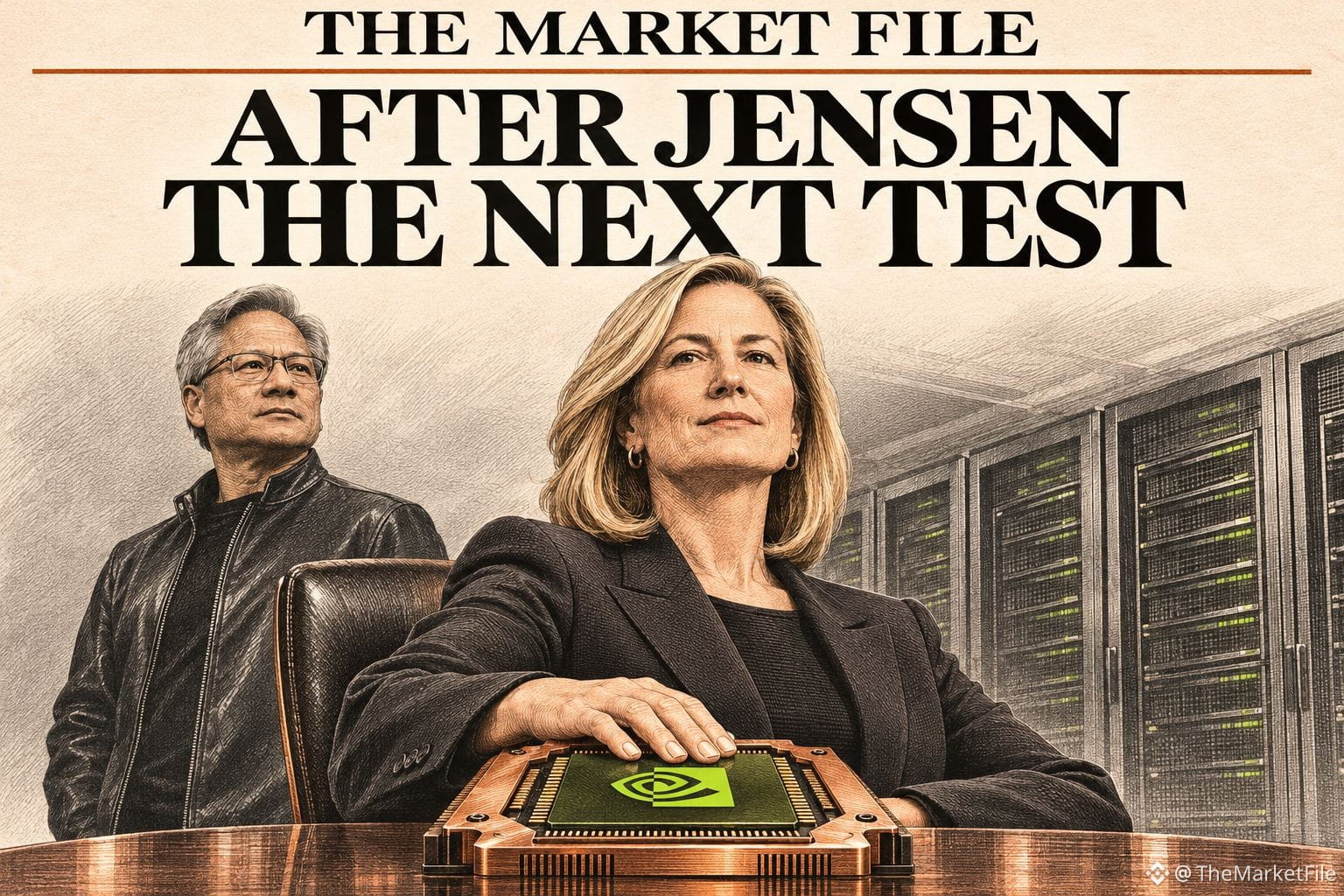
THE MARKET FILE — HUANG’S LEGACY AND THE CHALLENGE AHEAD
Nvidia reported quarterly revenue of $115.8 billion, up 103% from a year earlier. Data Center revenue climbed 110% to $107.6 billion, accounting for roughly 93% of total sales.
My read is that these results reflect years of work by Jensen Huang and the team he built. The quarter ended before his departure as CEO.
Now the new leadership, headed by interim CEO Colette Kress, faces the challenge of sustaining that legacy and taking the business even further.
Management expects $130 billion in revenue next quarter, plus or minus 3%. That forecast includes an extra week and assumes zero Data Center compute revenue from China.
There’s one detail I’m watching.
Adjusted gross margin reached 74.9% this quarter. For next quarter, Nvidia projects 71%–72%, even as it expects revenue to rise.
Demand remains strong. I’ll be watching the cost of sustaining that growth and whether the company can recover margins as production of its new hardware ramps up.
I believe this is Nvidia’s next major test, with implications for the broader AI sector. The coming quarters will show how the new leadership executes on the foundation it inherited.
What would you need to see to trust this next chapter for $NVDA
{future}(NVDAUSDT)
#AIInfrastructure #Semiconductors #NVDA
#cannvidia’sdatacentergrowthcontinue?
Nvidia’s data centers generated $107.6 billion in one quarter. Now comes the test for its new leadership.
THE MARKET FILE — HUANG’S LEGACY AND THE CHALLENGE AHEAD
Nvidia reported quarterly revenue of $115.8 billion, up 103% from a year earlier. Data Center revenue climbed 110% to $107.6 billion, accounting for roughly 93% of total sales.
My read is that these results reflect years of work by Jensen Huang and the team he built. The quarter ended before his departure as CEO.
Now the new leadership, headed by interim CEO Colette Kress, faces the challenge of sustaining that legacy and taking the business even further.
Management expects $130 billion in revenue next quarter, plus or minus 3%. That forecast includes an extra week and assumes zero Data Center compute revenue from China.
There’s one detail I’m watching.
Adjusted gross margin reached 74.9% this quarter. For next quarter, Nvidia projects 71%–72%, even as it expects revenue to rise.
Demand remains strong. I’ll be watching the cost of sustaining that growth and whether the company can recover margins as production of its new hardware ramps up.
I believe this is Nvidia’s next major test, with implications for the broader AI sector. The coming quarters will show how the new leadership executes on the foundation it inherited.
What would you need to see to trust this next chapter for $NVDA
#AIInfrastructure #Semiconductors #NVDA
4
1.3k
#A Packed Week of Earnings and Data Tests Markets
THE MARKET FILE | ONE VENDOR, 178 ORGANIZATIONS
On Nov. 16, researchers at Report URI found malicious code on websites run by 178 organizations, including HSBC, Zoom and Ledger. The code came through Optimizely, a tool companies use to test changes to their websites. It could replace a crypto wallet address with one controlled by the attacker.
The timing drew attention. Days earlier, a communications failure prompted a nationwide FAA ground stop. On Tuesday, CNN reported an outage on the NSA’s classified internal network. The cause of the NSA outage is still unclear, and the incidents have no confirmed link.
With tech earnings in focus this week, here’s what I’d ask management teams to explain. If a vendor is compromised, how quickly can you cut off its access while keeping your own service running?
For anyone sending crypto, I’d verify the full destination address against a trusted source after pasting it, then check it again on the signing screen before approving.
What’s the last thing you check before you hit send?
#CryptoSecurity
HSBCUS-3,62%
4
978
Verified
Anthropic hasn’t opened on Nasdaq yet, and Binance has already changed the math behind its price.
THE MARKET FILE — ANTHROPIC’S TWO PRICE TESTS
On Tuesday, Binance Futures switched its Anthropic pre-IPO perp from ANTHROPICUSDT to ANTUSDT. It resized the contract after revising its estimated share count from 1 billion to 13.1 billion. If you’re comparing quotes across the switch, that change in scale matters. Binance also canceled open orders during the adjustment, including take-profit and stop-loss orders.
On Wall Street, the company behind Claude has proposed an IPO range of $70 to $78 a share. Final pricing is expected Wednesday evening, with Nasdaq trading under ANT expected Thursday.
I’m watching where ANT closes relative to its first Nasdaq trade. A stock can finish well above its IPO price and still leave buyers who came in at the opening trade underwater. That’s the test I care about for demand once the stock is trading publicly.
Where do you see ANT closing on day one, above or below its first Nasdaq trade?
$ANTHROPIC $BTC
#AnthropicIPOTestsInvestorAppetiteForAI

1
708
·
--
Bullish
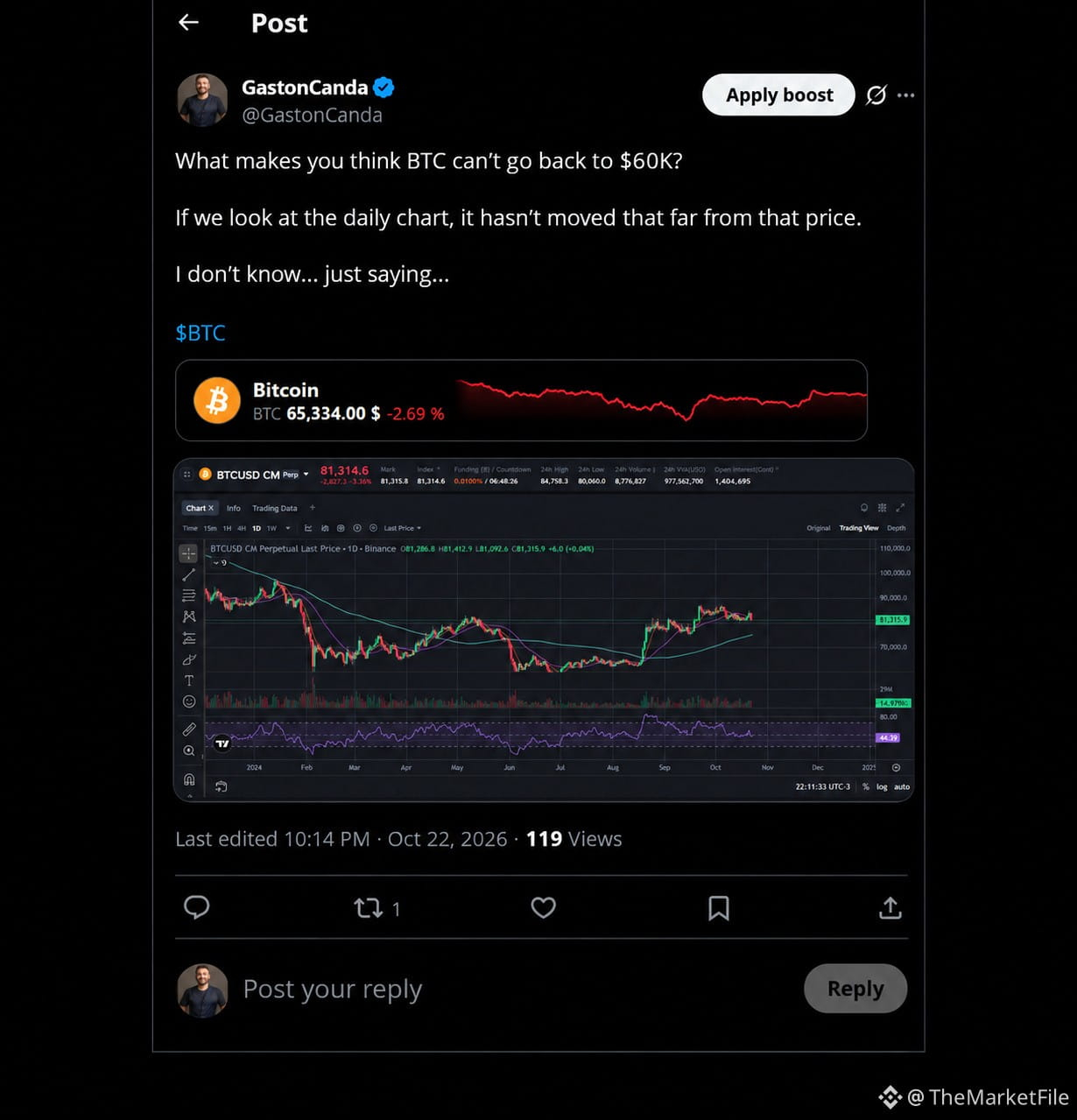
🚨 When Bitcoin was at $81,300, I asked on X what made people think it couldn’t go back to $60,000. Twenty-four days later, BTC hit 62,006 USDT on Binance.
THE MARKET FILE — FROM $81K TO $62K. NOW WHAT?
On October 22, before the U.S. midterms, I shared Bitcoin’s daily chart on X. The $60,000 area looked closer than market sentiment suggested. The chart attached to that post shows BTC trading around $81,300 at the time.
BTC has since bounced toward $65,400. The question I care about now is how much ground buyers can reclaim.
👀 What I’m watching this Sunday
I expect BTC to make a run at $68,000. Tonight’s Asian session is the first test. If BTC reclaims that level and finds buyers on a retest, I’ll be watching Monday’s Wall Street open to see if it gives Bitcoin enough momentum to challenge $70,000.
If BTC gets rejected between $66,500 and $68,000, I’ll watch how buyers respond around $62,000.
💬 At $81,300, I asked what was stopping BTC from going back to $60,000. Today, I’ll flip the question. What would Bitcoin have to show you before you’d believe in a move back to $70,000?
$BTC
#WhatWillDriveCryptoandStocks’NextRebound?
#BTCPriceAction
#SupportAndResistance
{future}(BTCUSDT)
🚨 When Bitcoin was at $81,300, I asked on X what made people think it couldn’t go back to $60,000. Twenty-four days later, BTC hit 62,006 USDT on Binance.
THE MARKET FILE — FROM $81K TO $62K. NOW WHAT?
On October 22, before the U.S. midterms, I shared Bitcoin’s daily chart on X. The $60,000 area looked closer than market sentiment suggested. The chart attached to that post shows BTC trading around $81,300 at the time.
BTC has since bounced toward $65,400. The question I care about now is how much ground buyers can reclaim.
👀 What I’m watching this Sunday
I expect BTC to make a run at $68,000. Tonight’s Asian session is the first test. If BTC reclaims that level and finds buyers on a retest, I’ll be watching Monday’s Wall Street open to see if it gives Bitcoin enough momentum to challenge $70,000.
If BTC gets rejected between $66,500 and $68,000, I’ll watch how buyers respond around $62,000.
💬 At $81,300, I asked what was stopping BTC from going back to $60,000. Today, I’ll flip the question. What would Bitcoin have to show you before you’d believe in a move back to $70,000?
$BTC
#WhatWillDriveCryptoandStocks’NextRebound?
#BTCPriceAction
#SupportAndResistance
4
1.1k
·
--
Bearish
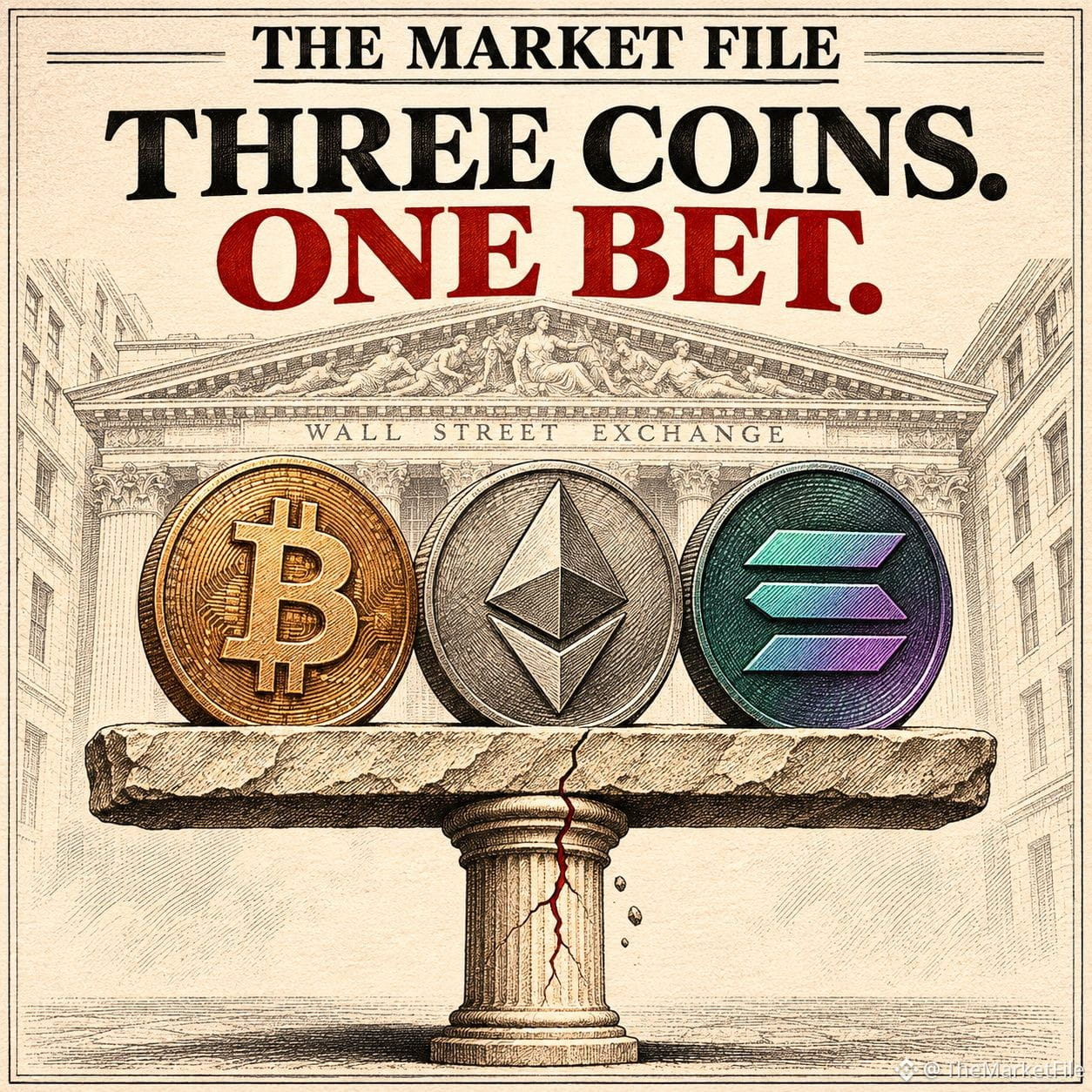
🚨 You hold BTC, ETH, and SOL. Now tell me which one you expect to cushion the next sell-off.
THE MARKET FILE — THE PORTFOLIO TEST
You can hold three different projects and still be making the same bet. You’re counting on investors to take on more risk.
Say BTC drops 10% and your altcoins drop 20%. If you were counting on those alts to cushion a Bitcoin sell-off, what were you expecting them to do differently?
I ask myself one uncomfortable question when I look at my portfolio. What job does each position do when the market moves against me? Some positions are there for growth. Others can give me room to wait or buy without having to sell into a drawdown.
If you’re concentrated in crypto because you have conviction, own it. It gets interesting when you call that same portfolio diversified.
💬 If BTC drops another 10% tomorrow, what do you reassess first? Your thesis, your position size, or how much cash you have on hand? Pick one and defend it.
$BTC
{future}(BTCUSDT)
$ETH
{future}(ETHUSDT)
$SOL
{future}(SOLUSDT)
#tradfiforbeginners
🚨 You hold BTC, ETH, and SOL. Now tell me which one you expect to cushion the next sell-off.
THE MARKET FILE — THE PORTFOLIO TEST
You can hold three different projects and still be making the same bet. You’re counting on investors to take on more risk.
Say BTC drops 10% and your altcoins drop 20%. If you were counting on those alts to cushion a Bitcoin sell-off, what were you expecting them to do differently?
I ask myself one uncomfortable question when I look at my portfolio. What job does each position do when the market moves against me? Some positions are there for growth. Others can give me room to wait or buy without having to sell into a drawdown.
If you’re concentrated in crypto because you have conviction, own it. It gets interesting when you call that same portfolio diversified.
💬 If BTC drops another 10% tomorrow, what do you reassess first? Your thesis, your position size, or how much cash you have on hand? Pick one and defend it.
$BTC
$ETH
$SOL
#tradfiforbeginners
253
30D trade $BTC 2.5K USDT
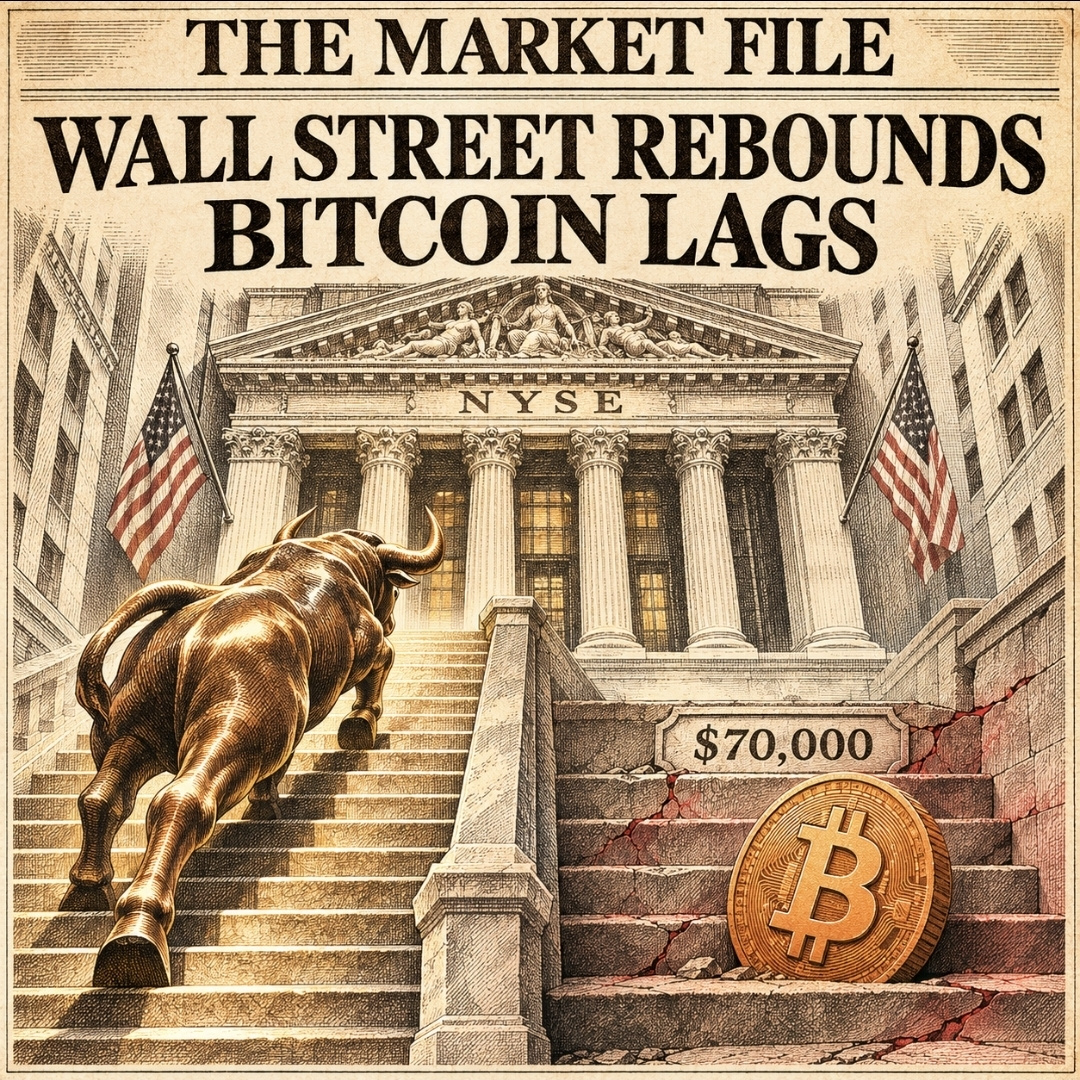
🚨 The S&P 500 gained 2.5% this week. Bitcoin fell below $70,000. Why did Wall Street’s rebound leave BTC behind?
THE MARKET FILE — THE REBOUND BITCOIN HAS YET TO CONFIRM
On Friday, BTC broke below $68,000, around its 200-week moving average. U.S. producer prices rose 0.3% month over month, below the 0.4% forecast, while annual wholesale inflation accelerated from 6.3% to 6.5%.
That’s why I see the softer monthly reading as a bit of relief. Annual inflation is still climbing, and the U.S. Dollar Index pushed above 103.
👀 My weekend test
I want to see BTC reclaim $70,000 and hold it on a retest. If it touches that level and slips again, I’ll watch on Monday to see whether the dollar stays strong while Bitcoin looks for buyers.
💬 If BTC reclaims $70,000 while the dollar index is still above 103, do you trust the bounce? What would change your mind?
$BTC
#WhatWillDriveCryptoandStocks’NextRebound?
4
2
2.9k
#USCryptoETFsLose$1.48BInFiveDays
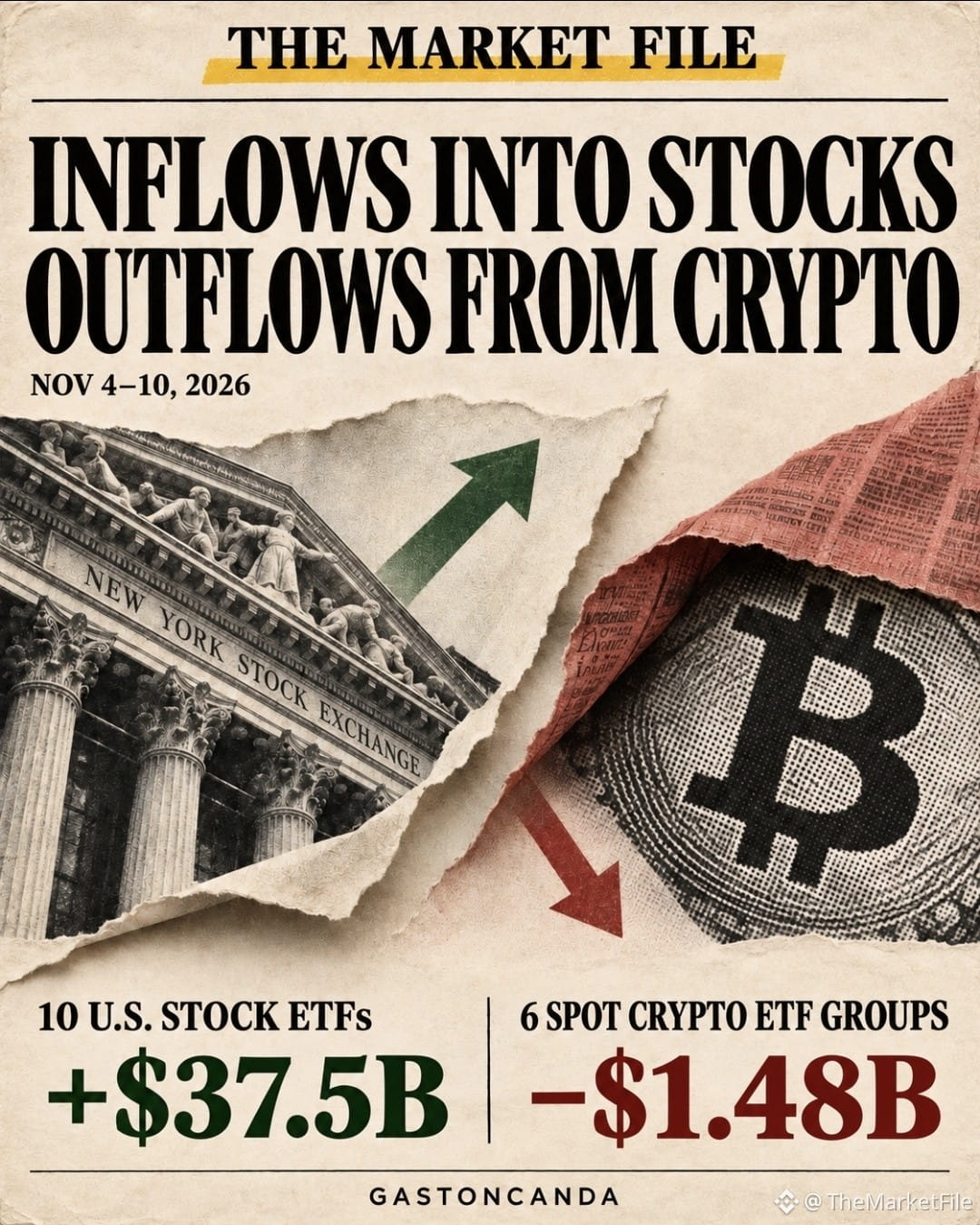
🚨 Investors bought the dip in stocks. Money kept flowing out of crypto ETFs.
From Nov. 4 to 10, ten major U.S. stock ETFs took in $37.5 billion in net inflows. Over the same five trading sessions, U.S. spot ETFs tracking six major cryptocurrencies saw $1.48 billion in net outflows.
Bitcoin ETFs accounted for most of those withdrawals, with $1.06 billion in net outflows. Ethereum ETFs saw another $326 million leave.
What I’m watching next is whether a Bitcoin bounce comes with several sessions of net inflows into its spot ETFs. That would be a sign that demand from ETF investors is coming back.
If $BTC bounces while ETF outflows continue, are you buying the dip or waiting for confirmation?
1
231
30D trade $BTC 3.1K USDT
🚨 U.S. jobless claims rose. The 2-year Treasury yield hit 4.80%. And Bitcoin fell below $72,000.
Why didn’t a softer jobs report give BTC some breathing room?
THE MARKET FILE — THE FED IS STILL WATCHING INFLATION
Initial jobless claims rose from 191,000 to 200,000, above the 195,000 economists expected. The four-week average held steady at 195,250. The surprise was in the weekly number.
Meanwhile, October inflation rose 0.4% month over month, and markets are still pricing in a December rate hike.
👀 My read
With jobless claims still low by historical standards, the Fed has room to stay focused on inflation. On the next BTC bounce, I’ll watch whether the 2-year Treasury yield comes down too. That would suggest traders are starting to expect less pressure from the Fed.
💬 If Bitcoin reclaims $72,000 while the 2-year yield stays at 4.80%, do you trust the bounce?
$BTC
#USJoblessClaimsRise

BTC-6,79%
IEFETF+0,67%
194
·
--
Bearish
Verified
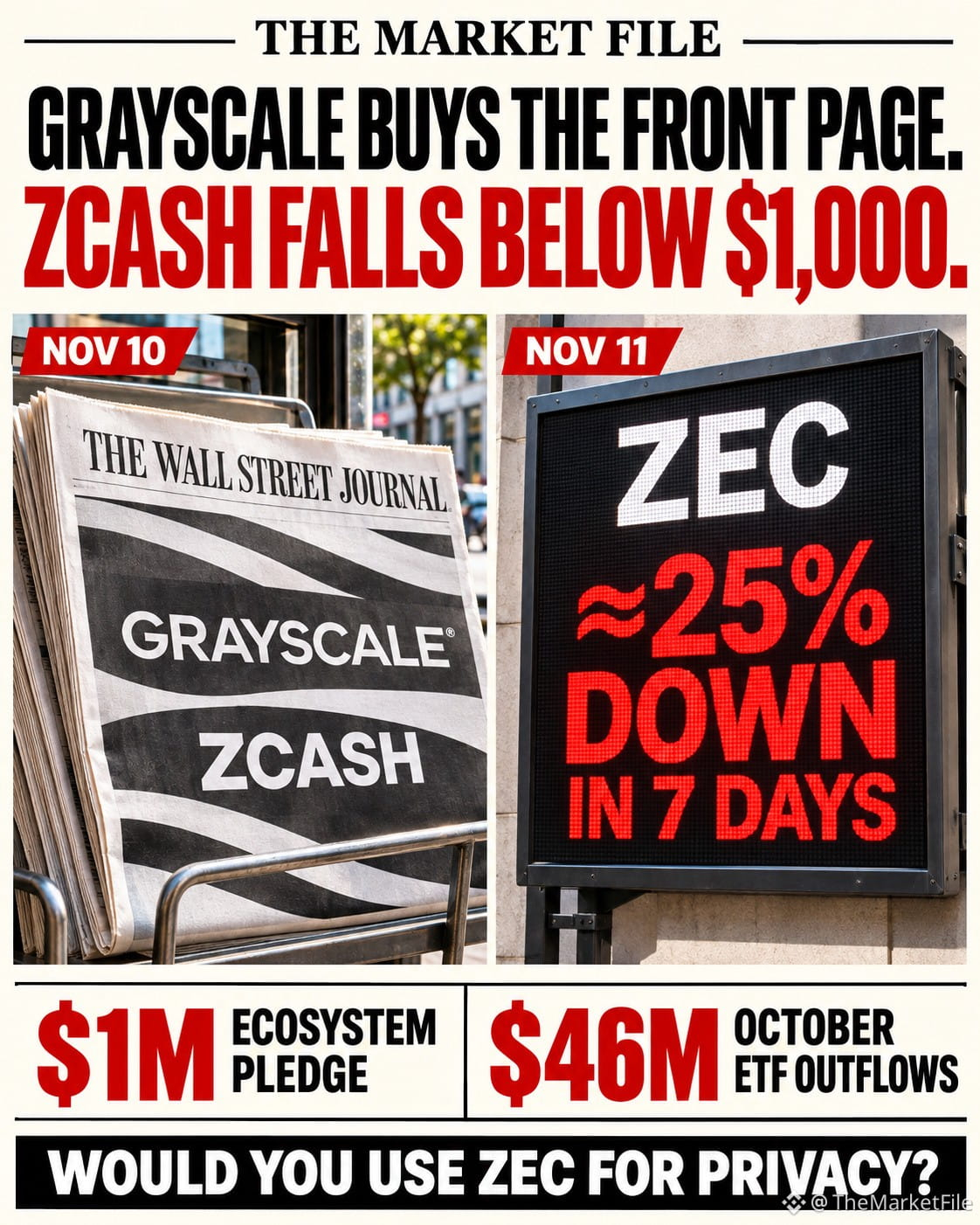
🚨 Grayscale paid to put Zcash on the front page of The Wall Street Journal. The next day, $ZEC fell below $1,000.
THE MARKET FILE — WHAT IS PRIVACY WORTH?
Zcash lost nearly 25% in seven days. That same week, the network cut its target block time from 75 to 25 seconds, and Grayscale committed $1 million to projects in the Zcash ecosystem.
Meanwhile, Grayscale’s Zcash ETF saw about $46 million in net outflows in October, and the money kept flowing out in November.
Grayscale is putting money into getting more people to learn about Zcash and build on it. For me, the test is whether more people start using it for what it promises: making payments without publicly revealing who sent them, who received them, or how much was sent.
If ZEC gets back above $1,000, I’ll watch whether private payments pick up too. That’s what my thesis hinges on.
💬 If ZEC stayed at $1,000 for a year, would you still use it for the privacy? What would you use it for?
$ZEC
{future}(ZECUSDT)
#ZcashFallsBelow$1000ForFirstTimeSinceSeptember
🚨 Grayscale paid to put Zcash on the front page of The Wall Street Journal. The next day, $ZEC fell below $1,000.
THE MARKET FILE — WHAT IS PRIVACY WORTH?
Zcash lost nearly 25% in seven days. That same week, the network cut its target block time from 75 to 25 seconds, and Grayscale committed $1 million to projects in the Zcash ecosystem.
Meanwhile, Grayscale’s Zcash ETF saw about $46 million in net outflows in October, and the money kept flowing out in November.
Grayscale is putting money into getting more people to learn about Zcash and build on it. For me, the test is whether more people start using it for what it promises: making payments without publicly revealing who sent them, who received them, or how much was sent.
If ZEC gets back above $1,000, I’ll watch whether private payments pick up too. That’s what my thesis hinges on.
💬 If ZEC stayed at $1,000 for a year, would you still use it for the privacy? What would you use it for?
$ZEC
#ZcashFallsBelow$1000ForFirstTimeSinceSeptember
2
1.9k
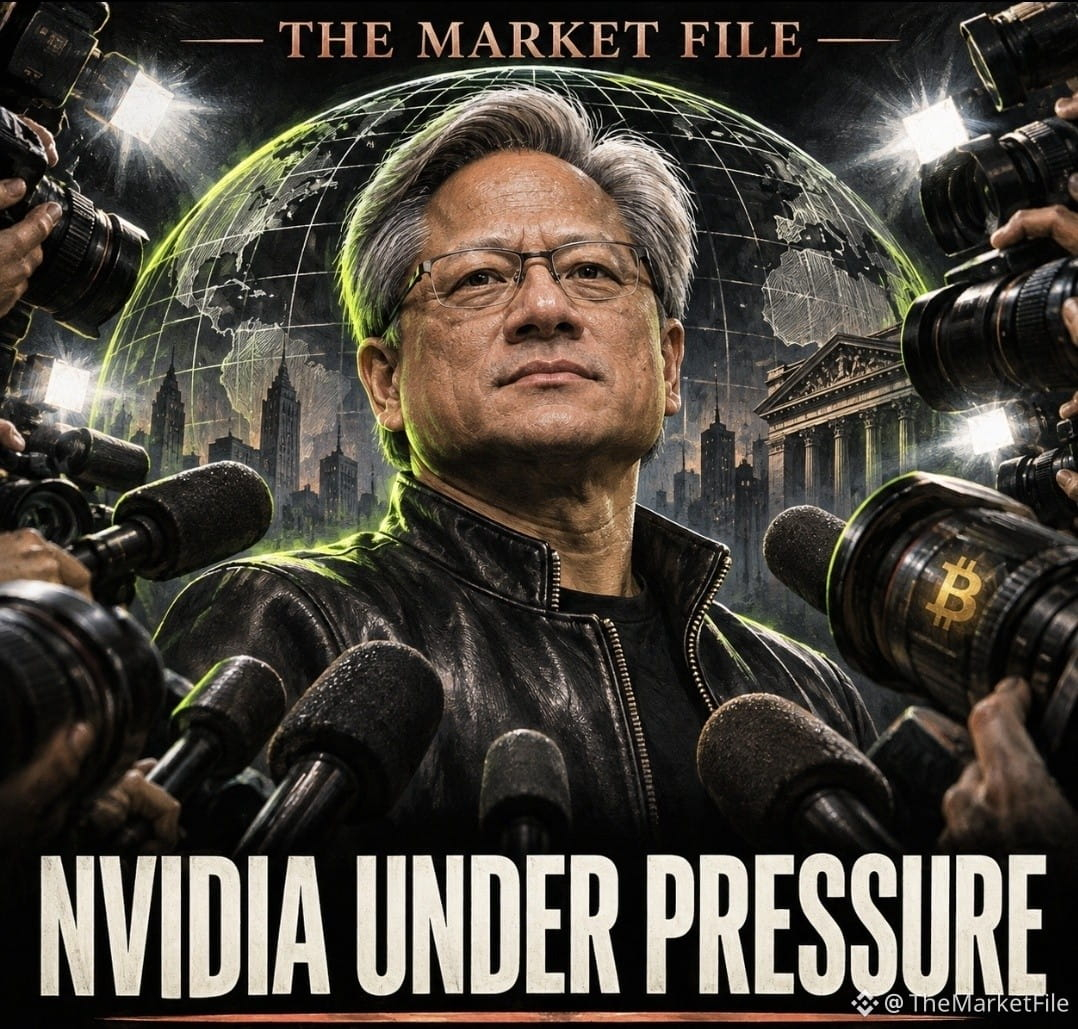
🚨 Nvidia could beat earnings expectations and still sell off. That’s the reaction I’m watching most closely for Bitcoin.
THE MARKET FILE — THE NVIDIA TEST
Nvidia reports on November 17. Back in August, the company projected $108 billion in revenue for this quarter. Now Wall Street wants to know how much growth Nvidia sees ahead.
🟢 If Nvidia issues stronger-than-expected guidance and the Nasdaq holds its rebound, BTC could catch a bid. My first signal would be Bitcoin holding those gains after Wednesday’s U.S. market open.
🔴 If Nvidia beats estimates and the Nasdaq sells off anyway, I’d pay closer attention. If investors use a strong report to sell tech stocks, Bitcoin’s rebound could lose steam.
📖 My read
The number I care most about is Nvidia’s revenue forecast for next quarter. How the Nasdaq trades the next day will tell me whether that outlook was enough to restore confidence.
💬 Nvidia beats estimates. The Nasdaq drops anyway. Do you buy the BTC dip or wait? What signal would make you pull the trigger?
$BTC $NVDAB
#CanNvidiaEarningsEaseMarketConcerns?
2
247
·
--
Bullish
🚨 Five red weeks. Bitcoin lost 13.5%.
Those waiting for a dip to buy… what are you waiting for now?
THE MARKET FILE — A BETTER PRICE OR MORE CERTAINTY?
November 10, 2026
BTC closed five consecutive losing weeks on Binance.
The latest weekly close was $74,851, below its 50-week moving average, then near $75,535.
🏦 DEMAND STILL NEEDS TO SHOW UP
U.S. spot Bitcoin ETFs recorded $1.282 billion in net outflows from November 2–6.
Another $201 million left on Monday, November 9.
That pressure explains why I want buying strong enough to sustain rebounds.
🐻 A QUESTION FOR THE BEARS
When BTC rises, they wait for a correction.
When it corrects, they wait for another drop.
When it starts recovering, they go back to waiting for a correction.
If every lower price makes you lower your entry again, do you have a buying plan, or are you chasing a bottom you'll only recognize afterward?
The price that looked attractive during the rally often feels frightening when it finally arrives.
📖 MY TAKE
I remain bullish long term. Losing the 50-week moving average weakened my case for an immediate recovery, and I'm watching that signal.
But I also expect demand to return. If a strong bullish candle appears, some of those asking for lower prices today could end up chasing higher prices.
That's why I want to define in advance what I'd buy, under what conditions and over what horizon.
👀 WHAT I WANT TO SEE
A reclaim of the 50-week moving average, pullbacks finding buyers at higher levels and sustained ETF inflows.
💬 If you were waiting for Bitcoin to drop before buying, what specific condition are you still waiting for today?
$BTC
{future}(BTCUSDT)
#bitcoin #BTCanalysis
#bitcoinfiveweeklylosses
🚨 Five red weeks. Bitcoin lost 13.5%.
Those waiting for a dip to buy… what are you waiting for now?
THE MARKET FILE — A BETTER PRICE OR MORE CERTAINTY?
November 10, 2026
BTC closed five consecutive losing weeks on Binance.
The latest weekly close was $74,851, below its 50-week moving average, then near $75,535.
🏦 DEMAND STILL NEEDS TO SHOW UP
U.S. spot Bitcoin ETFs recorded $1.282 billion in net outflows from November 2–6.
Another $201 million left on Monday, November 9.
That pressure explains why I want buying strong enough to sustain rebounds.
🐻 A QUESTION FOR THE BEARS
When BTC rises, they wait for a correction.
When it corrects, they wait for another drop.
When it starts recovering, they go back to waiting for a correction.
If every lower price makes you lower your entry again, do you have a buying plan, or are you chasing a bottom you'll only recognize afterward?
The price that looked attractive during the rally often feels frightening when it finally arrives.
📖 MY TAKE
I remain bullish long term. Losing the 50-week moving average weakened my case for an immediate recovery, and I'm watching that signal.
But I also expect demand to return. If a strong bullish candle appears, some of those asking for lower prices today could end up chasing higher prices.
That's why I want to define in advance what I'd buy, under what conditions and over what horizon.
👀 WHAT I WANT TO SEE
A reclaim of the 50-week moving average, pullbacks finding buyers at higher levels and sustained ETF inflows.
💬 If you were waiting for Bitcoin to drop before buying, what specific condition are you still waiting for today?
$BTC
#bitcoin #BTCanalysis
#bitcoinfiveweeklylosses

37
1
16
18.9k
·
--
Bullish
Verified
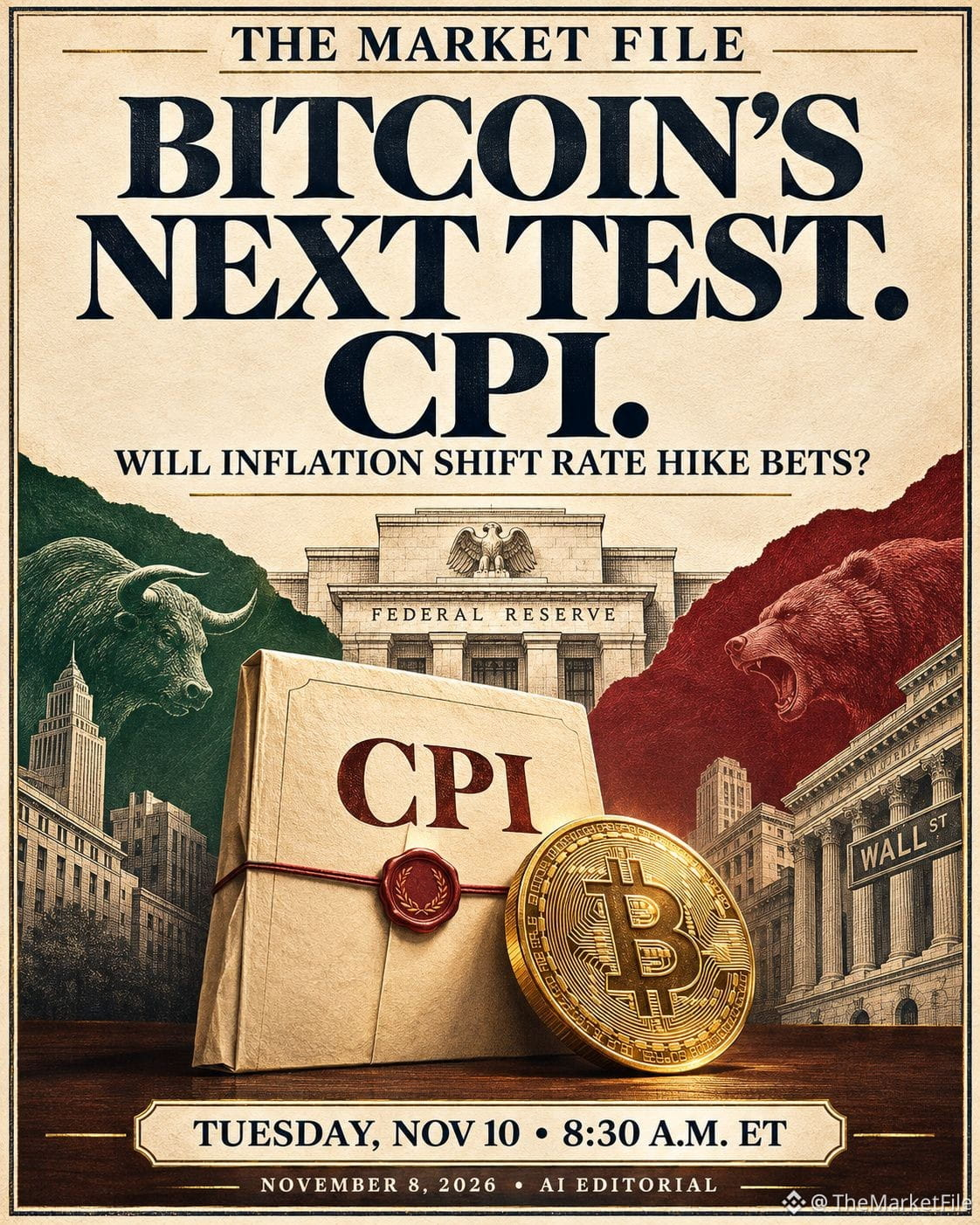
🚨 Bitcoin has a date this Tuesday at 8:30 a.m. ET.
The inflation report could shift expectations for the next rate hike.
THE MARKET FILE — THE CPI TEST
November 8, 2026
U.S. October inflation data arrives on November 10.
Markets head into the release after stronger-than-expected hiring. That gives the Fed room to keep policy restrictive as it assesses inflation.
₿ WHAT DOES BITCOIN NEED TO SEE?
🟢 INFLATION BELOW EXPECTATIONS
Could ease bets on a December rate hike. If Treasury yields and the dollar also fall, BTC would face a more favorable backdrop.
🔴 INFLATION ABOVE EXPECTATIONS
Would strengthen the case for higher rates. A stronger dollar and more attractive bond yields could complicate crypto's recovery.
📊 WHAT I'M WATCHING
The monthly change in core CPI, which excludes food and energy, alongside headline inflation.
The comparison with consensus matters. Falling inflation can still disappoint if markets expected a bigger slowdown.
📖 MY TAKE
I remain bullish long term. In the short term, I want to see how BTC responds after the release.
If the report pushes the dollar and yields higher but Bitcoin holds its ground, that resilience would get my attention.
If inflation surprises to the downside and BTC struggles to advance, I'll reassess what's holding demand back.
I'll be watching whether the move holds beyond the initial reaction.
💬 What do you expect on Tuesday: inflation relief for Bitcoin or more pressure on the Fed to raise rates?
$BTC
{future}(BTCUSDT)
#bitcoin #Fed
#cpitestsdecemberrateoutlook
🚨 Bitcoin has a date this Tuesday at 8:30 a.m. ET.
The inflation report could shift expectations for the next rate hike.
THE MARKET FILE — THE CPI TEST
November 8, 2026
U.S. October inflation data arrives on November 10.
Markets head into the release after stronger-than-expected hiring. That gives the Fed room to keep policy restrictive as it assesses inflation.
₿ WHAT DOES BITCOIN NEED TO SEE?
🟢 INFLATION BELOW EXPECTATIONS
Could ease bets on a December rate hike. If Treasury yields and the dollar also fall, BTC would face a more favorable backdrop.
🔴 INFLATION ABOVE EXPECTATIONS
Would strengthen the case for higher rates. A stronger dollar and more attractive bond yields could complicate crypto's recovery.
📊 WHAT I'M WATCHING
The monthly change in core CPI, which excludes food and energy, alongside headline inflation.
The comparison with consensus matters. Falling inflation can still disappoint if markets expected a bigger slowdown.
📖 MY TAKE
I remain bullish long term. In the short term, I want to see how BTC responds after the release.
If the report pushes the dollar and yields higher but Bitcoin holds its ground, that resilience would get my attention.
If inflation surprises to the downside and BTC struggles to advance, I'll reassess what's holding demand back.
I'll be watching whether the move holds beyond the initial reaction.
💬 What do you expect on Tuesday: inflation relief for Bitcoin or more pressure on the Fed to raise rates?
$BTC
#bitcoin #Fed
#cpitestsdecemberrateoutlook
16
17
25.2k
·
--
Bullish
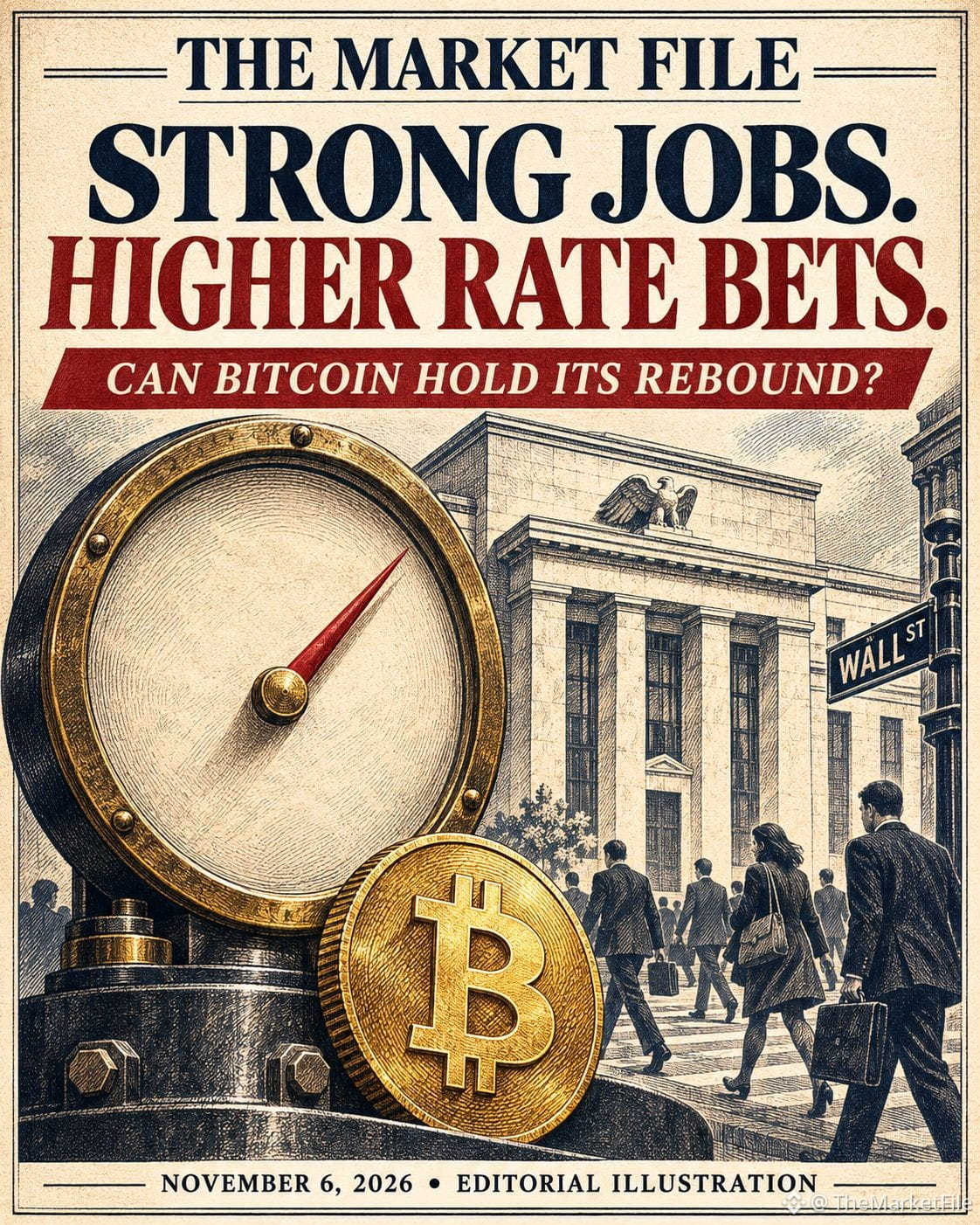
🚨 The U.S. added 100,000 more jobs than expected. Why could that complicate Bitcoin’s rebound?
THE MARKET FILE — STRONG JOBS, RATE HIKE BETS
November 6, 2026
The U.S. added 165,000 jobs in October, versus the 65,000 Wall Street expected. Unemployment came in at 4.1%, and hourly earnings rose 0.4% for the month.
After the report, the market-implied odds of a December rate hike rose from 70% to 78%, according to Reuters.
🏦 WHY DID RATE HIKE BETS RISE?
A resilient labor market gives the Fed less reason to cut rates to support the economy. If inflation stays elevated, it also gives the Fed more room to raise them.
Hiring and wage growth can support consumer spending. If supply can’t keep up, stronger demand can make inflation harder to bring down.
₿ HOW DOES THAT AFFECT BITCOIN?
Markets can react before the Fed makes a decision. Expectations of higher rates can push Treasury yields up and strengthen the dollar. Higher yields make bonds more attractive relative to assets like BTC, and higher borrowing costs can make leveraged trades more expensive.
📖 MY TAKE
Strong hiring eases recession fears. For Bitcoin, the question is whether that relief outweighs the prospect of higher rates.
I’m watching the two-year Treasury yield and the dollar. If both keep climbing and BTC still holds its rebound, that would tell me something about the strength of demand.
💬 What matters more for BTC right now: an economy that’s holding up or a Fed with more room to raise rates?
$BTC
{future}(BTCUSDT)
#Bitcoin #Fed
#jobsreportraiseshikeodds
🚨 The U.S. added 100,000 more jobs than expected. Why could that complicate Bitcoin’s rebound?
THE MARKET FILE — STRONG JOBS, RATE HIKE BETS
November 6, 2026
The U.S. added 165,000 jobs in October, versus the 65,000 Wall Street expected. Unemployment came in at 4.1%, and hourly earnings rose 0.4% for the month.
After the report, the market-implied odds of a December rate hike rose from 70% to 78%, according to Reuters.
🏦 WHY DID RATE HIKE BETS RISE?
A resilient labor market gives the Fed less reason to cut rates to support the economy. If inflation stays elevated, it also gives the Fed more room to raise them.
Hiring and wage growth can support consumer spending. If supply can’t keep up, stronger demand can make inflation harder to bring down.
₿ HOW DOES THAT AFFECT BITCOIN?
Markets can react before the Fed makes a decision. Expectations of higher rates can push Treasury yields up and strengthen the dollar. Higher yields make bonds more attractive relative to assets like BTC, and higher borrowing costs can make leveraged trades more expensive.
📖 MY TAKE
Strong hiring eases recession fears. For Bitcoin, the question is whether that relief outweighs the prospect of higher rates.
I’m watching the two-year Treasury yield and the dollar. If both keep climbing and BTC still holds its rebound, that would tell me something about the strength of demand.
💬 What matters more for BTC right now: an economy that’s holding up or a Fed with more room to raise rates?
$BTC
#Bitcoin #Fed
#jobsreportraiseshikeodds
3
7.5k
Verified
30D trade $BTC 8.1K USDT
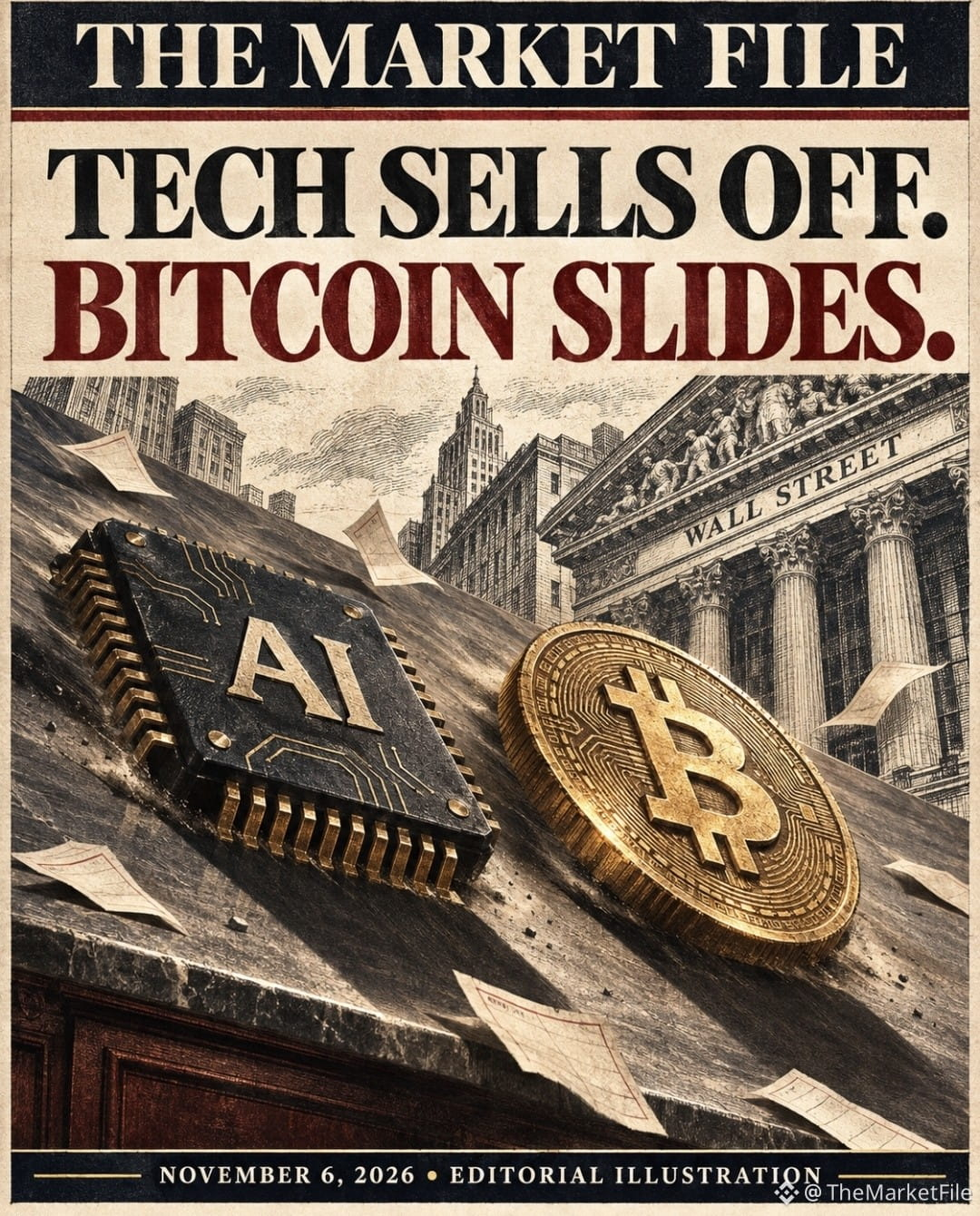
🚨 The Nasdaq 100 lost $2.5 trillion in market value in one session. Bitcoin fell too.
THE MARKET FILE — WHEN WALL STREET CUTS RISK
November 6, 2026
On Thursday, the Nasdaq 100 dropped 6.4%. On Binance, BTC went from a Wednesday close near $80,500 to $76,088 on Thursday, down 5.5% based on UTC daily closes.
Why does a selloff in AI stocks matter for crypto?
🏦 When funds crowd into the same tech stocks, a sharp drop can send several of them to the exits at once. Some cut positions to limit losses. Others reduce leverage.
When that pullback in risk-taking spreads, it can reach Bitcoin too. In crypto, forced liquidations of leveraged positions can make the drop steeper.
₿ Yesterday, I said I wanted to see whether BTC could hold $80,000. It lost that level and hit $75,208 on Binance. That weakens my case for a near-term recovery.
I’m still bullish long term. If sellers test $75,200 again, I’ll watch whether buyers step in. A defense of that area followed by a move back above $80,000 would strengthen the recovery case. A break below Thursday’s low would make me rethink whether a bottom is forming.
💬 If Wall Street keeps selling tech, what would convince you Bitcoin can hold up on its own?
$BTC
#Bitcoin #Nasdaq100 #TradFi
#2TWipedOutHedgeFundsFaceLiquidation
4
223
Log in to explore more content
Join global crypto users on Binance Square
⚡️ Get latest and useful information about crypto.
💬 Trusted by the world’s largest crypto exchange.
👍 Discover real insights from verified creators.
Email / Phone number
Trending Topics
CanBTCReboundAfterFallingBelow60K?
312,988 views
1,332 Discussing
Bitcoin News | Bitcoin Falls Below $60,000 for the First Time Since July as IBIT Posts Record $541 Million Outflow
Binance News
·49 Likes
·95.1k views
GlobalStocksFaceLongestLosingStreakSince2023
102,662 views
958 Discussing
BlackRockIBITPostsRecord$541MSingleDayOutflow
4 views
2 Discussing