
#defi
defi
56.1M views
290,089 Discussing
Hot
Latest

Alert 🚨. Market is going to be crazy. Eigen ( $EIGEN ) is carving out new order blocks as its staking layer gains traction, while ZK ( $ZK ) showcases bullish momentum 📈 from rising liquidity pools. Mina ( $MINA ) continues to expand its ecosystem, drawing increased trading activity and investor sentiment 💹. Together they signal a vibrant innovation wave across DeFi. #Crypto #DeFi #EigenLayer #zkSync #MinaProtocol
Crypto mind_batool:
🚨 Definitely an interesting trio to watch! $EIGEN, $ZK and $MINA are showing how quickly innovation and momentum can shift across the crypto market. 👀📈🔥


💰 AAVE V4 JUST PULLED IN $600M. DEFI IS BACK? 💀
🏦 Ethereum Deposits: ~$602M
💵 Ethereum Active Debt: ~$228M
🏔️ Avalanche Deposits: ~$20.21M
📊 Avalanche Loans: ~$5M
Aave V4 on Ethereum has already attracted roughly $602M in deposits, while active borrowing has reached around $228M.
👀 Avalanche is starting much smaller, with approximately $20.21M deposited and $5M in loans.
🔥 The interesting part isn't simply the $600M headline.
V4 is already being market-tested with hundreds of millions of dollars in real capital, giving users a new lending infrastructure to supply liquidity and access leverage.
💀 $600M in deposits. Now let's see what people actually do with the leverage.
If borrowing activity continues catching up with deposits, that could be a stronger signal that capital is moving back into productive DeFi activity, rather than simply sitting idle.
💭 Is Aave V4 kicking off a real DeFi comeback — or is everyone just looking for somewhere to park their capital?
#AAVE #defi #Ethereum #writetoearn
$AAVE
🏦 Ethereum Deposits: ~$602M
💵 Ethereum Active Debt: ~$228M
🏔️ Avalanche Deposits: ~$20.21M
📊 Avalanche Loans: ~$5M
Aave V4 on Ethereum has already attracted roughly $602M in deposits, while active borrowing has reached around $228M.
👀 Avalanche is starting much smaller, with approximately $20.21M deposited and $5M in loans.
🔥 The interesting part isn't simply the $600M headline.
V4 is already being market-tested with hundreds of millions of dollars in real capital, giving users a new lending infrastructure to supply liquidity and access leverage.
💀 $600M in deposits. Now let's see what people actually do with the leverage.
If borrowing activity continues catching up with deposits, that could be a stronger signal that capital is moving back into productive DeFi activity, rather than simply sitting idle.
💭 Is Aave V4 kicking off a real DeFi comeback — or is everyone just looking for somewhere to park their capital?
#AAVE #defi #Ethereum #writetoearn
$AAVE

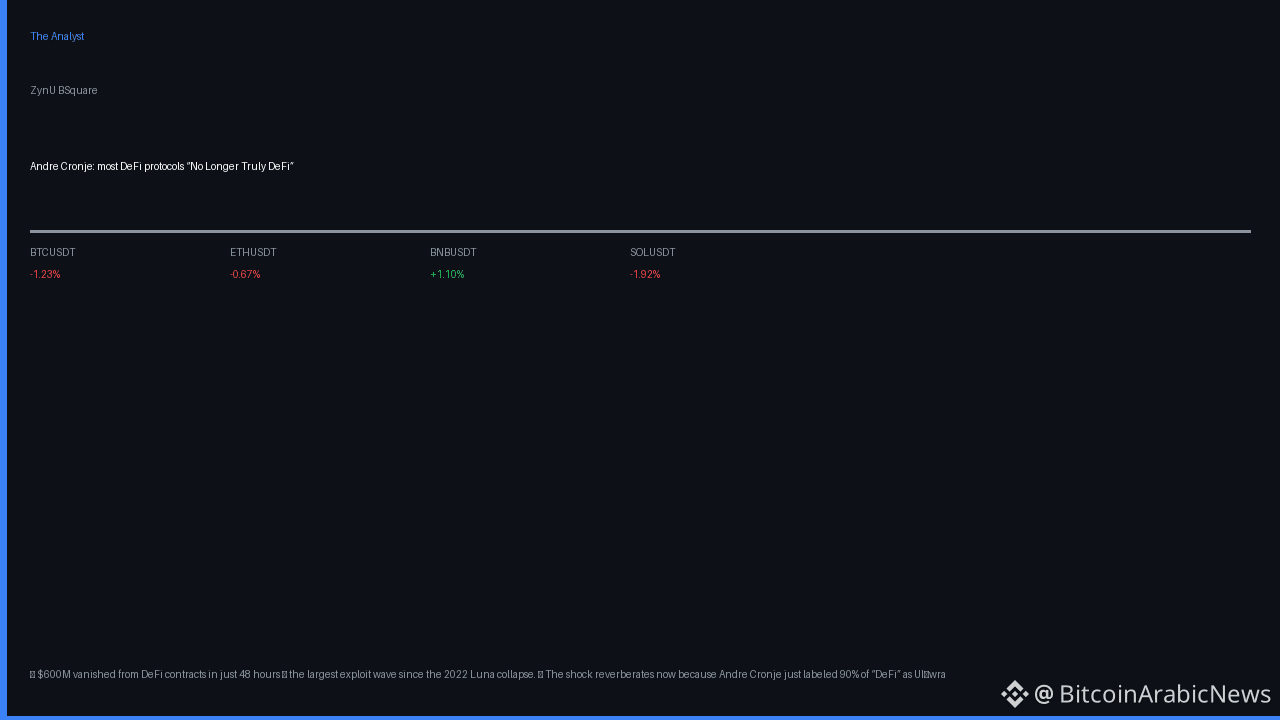
🔥 $600M vanished from DeFi contracts in just 48 hours — the largest exploit wave since the 2022 Luna collapse.
📊 The shock reverberates now because Andre Cronje just labeled 90% of “DeFi” as UI‑wrapped CeFi, warning that safety nets betray true decentralization.
💡 Smart money is already reallocating: on Binance Smart Chain, 4Stock surged +39,592% in on‑chain inflow while SOL smart wallets like haMSTR logged a 1,274% jump, signaling a hunt for truly permissionless yields. #DeFi #Cronje #SmartMoney #Funding sees BTC futures funding at +0.0099% and a 55.7% long bias, suggesting institutions brace for a pull‑back in risk assets.
🚀 Watch the $78,400 BTC support zone — a break below could trigger a cascade into ETH’s $2,460 pivot, while the $600M loss benchmark fuels a “no‑circuit‑breaker” narrative across emerging protocols. #RiskManagement
❓ If the next wave strips away the last UI crutches, will you double‑down on raw protocol tokens or seek refuge in legacy assets?
📊 The shock reverberates now because Andre Cronje just labeled 90% of “DeFi” as UI‑wrapped CeFi, warning that safety nets betray true decentralization.
💡 Smart money is already reallocating: on Binance Smart Chain, 4Stock surged +39,592% in on‑chain inflow while SOL smart wallets like haMSTR logged a 1,274% jump, signaling a hunt for truly permissionless yields. #DeFi #Cronje #SmartMoney #Funding sees BTC futures funding at +0.0099% and a 55.7% long bias, suggesting institutions brace for a pull‑back in risk assets.
🚀 Watch the $78,400 BTC support zone — a break below could trigger a cascade into ETH’s $2,460 pivot, while the $600M loss benchmark fuels a “no‑circuit‑breaker” narrative across emerging protocols. #RiskManagement
❓ If the next wave strips away the last UI crutches, will you double‑down on raw protocol tokens or seek refuge in legacy assets?

DeFi is getting an interesting fundamental catalyst through $UNI .
The reported increase in UNI’s annualized burn pace has brought token economics back into the conversation.
For long-term traders, price action is only one part of the story.
Supply dynamics, protocol activity and actual usage can matter just as much.
This is one DeFi development I’m keeping on the radar. 👀
#UNI #DeFi #Uniswap #Crypto
The reported increase in UNI’s annualized burn pace has brought token economics back into the conversation.
For long-term traders, price action is only one part of the story.
Supply dynamics, protocol activity and actual usage can matter just as much.
This is one DeFi development I’m keeping on the radar. 👀
#UNI #DeFi #Uniswap #Crypto

Jupiter Is One of Solana’s Strongest DeFi Bets
Solana needs more than speed.
It needs liquidity, routing, trading tools, lending, perps, portfolio management, and products that users open every day.
That is where Jupiter becomes interesting.
Jupiter describes itself as an exchange for #solana where users can swap tokens, lend, borrow, trade perps, and manage #defi positions in one place.
$JUP sits inside that activity layer.
The thesis is simple.
If Solana keeps attracting traders, builders, memecoins, DeFi apps, and retail liquidity, infrastructure like Jupiter becomes harder to ignore.
Of course, risks remain. Competition is strong, liquidity moves fast, and Solana activity can be cyclical.
But the direction is clear.
Crypto needs products people actually use.
And #jupiter is one of the names standing close to Solana’s daily DeFi flow.
Solana needs more than speed.
It needs liquidity, routing, trading tools, lending, perps, portfolio management, and products that users open every day.
That is where Jupiter becomes interesting.
Jupiter describes itself as an exchange for #solana where users can swap tokens, lend, borrow, trade perps, and manage #defi positions in one place.
$JUP sits inside that activity layer.
The thesis is simple.
If Solana keeps attracting traders, builders, memecoins, DeFi apps, and retail liquidity, infrastructure like Jupiter becomes harder to ignore.
Of course, risks remain. Competition is strong, liquidity moves fast, and Solana activity can be cyclical.
But the direction is clear.
Crypto needs products people actually use.
And #jupiter is one of the names standing close to Solana’s daily DeFi flow.


Is the swap button hiding more complexity than we realize?
Most users see a swap as a simple process:
Select → enter amount → confirm.
But the infrastructure behind that button can be considerably more complicated.
On-chain liquidity is often fragmented across different protocols and pools. That means the same swap may have multiple possible routes, with differences in liquidity and pricing affecting the final execution.
This is where liquidity aggregation becomes important.
STON.fi's Omniston is designed to search across supported liquidity sources and find competitive routes.
Its latest update adds DeDust v2 and Tonco v2 pools to the sources it scans on TON.
At first glance, this might look like a small infrastructure update.
I think the bigger idea is more important.
As DeFi grows, liquidity naturally becomes more distributed.
More protocols create more markets, but they also make liquidity harder for users to navigate manually.
A good routing layer helps solve that problem by doing the searching underneath the interface.
The user doesn't need to know which pool provided the liquidity.
They need a clear transaction, competitive execution, and enough information to make an informed decision.
That's the direction I want to see more of in DeFi:
More liquidity sources, but less unnecessary complexity for the user.
And as always, users should still check the quoted output, slippage, fees and transaction details before confirming.
#STONfi #defi $GRAM
Most users see a swap as a simple process:
Select → enter amount → confirm.
But the infrastructure behind that button can be considerably more complicated.
On-chain liquidity is often fragmented across different protocols and pools. That means the same swap may have multiple possible routes, with differences in liquidity and pricing affecting the final execution.
This is where liquidity aggregation becomes important.
STON.fi's Omniston is designed to search across supported liquidity sources and find competitive routes.
Its latest update adds DeDust v2 and Tonco v2 pools to the sources it scans on TON.
At first glance, this might look like a small infrastructure update.
I think the bigger idea is more important.
As DeFi grows, liquidity naturally becomes more distributed.
More protocols create more markets, but they also make liquidity harder for users to navigate manually.
A good routing layer helps solve that problem by doing the searching underneath the interface.
The user doesn't need to know which pool provided the liquidity.
They need a clear transaction, competitive execution, and enough information to make an informed decision.
That's the direction I want to see more of in DeFi:
More liquidity sources, but less unnecessary complexity for the user.
And as always, users should still check the quoted output, slippage, fees and transaction details before confirming.
#STONfi #defi $GRAM


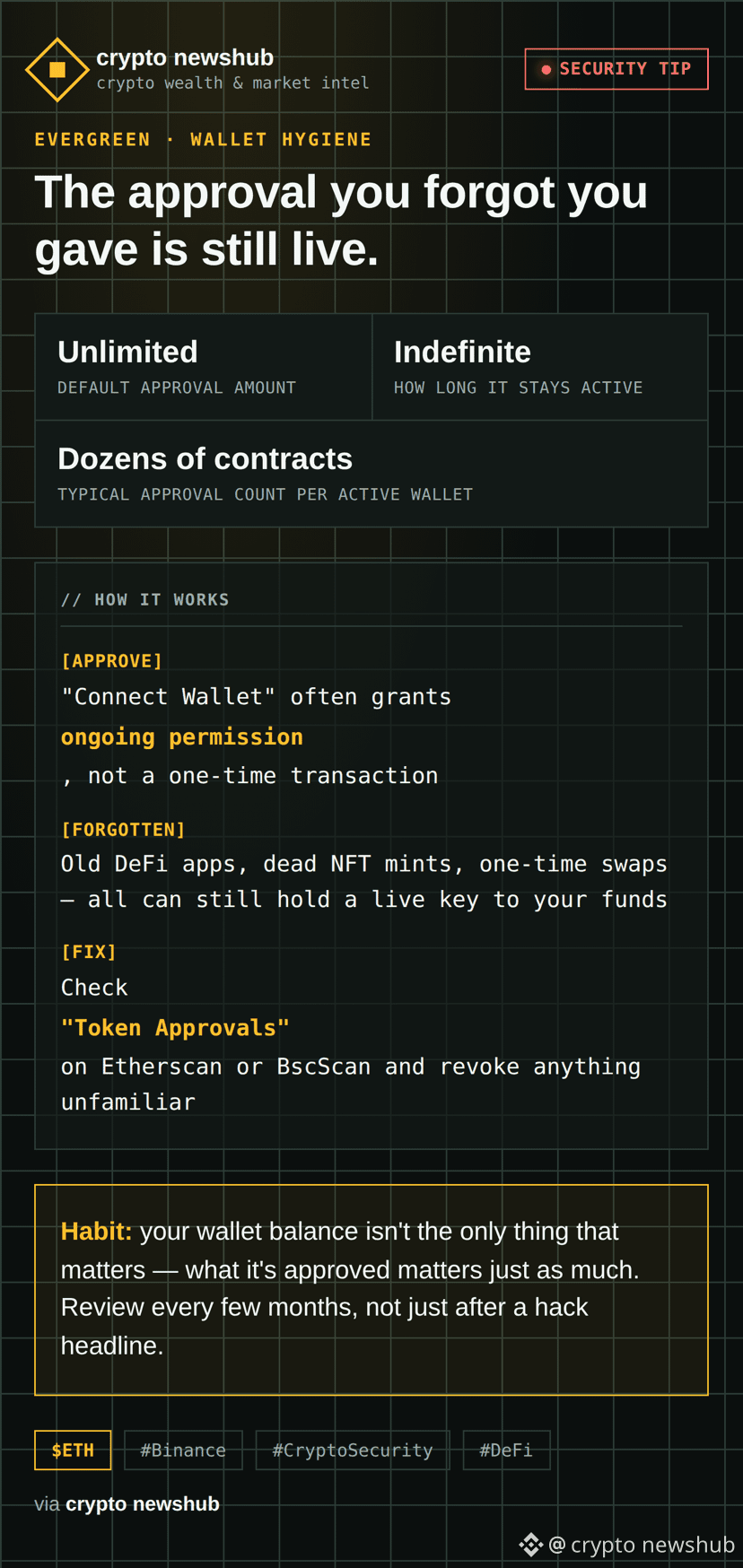
🧩 The Approval You Forgot You Gave Is Still Live
Every time you “Connect Wallet” and approve a token, you’re not just allowing one transaction — you’re often granting a smart contract ongoing permission to move that token whenever it wants.
Most people approve dozens of contracts over time and never revoke a single one. Old DeFi apps, dead NFT mints, projects you tried once — all still holding a key to your wallet.
✅ Check your active approvals on a block explorer (Etherscan, BscScan) under “Token Approvals”
✅ Revoke anything you don’t recognize or no longer use
✅ Do this every few months — not just after a hack headline
Your wallet balance isn’t the only thing that matters. What it’s approved matters just as much.
crypto newshub 🔐
$ETH #Binance #CryptoSecurity #DeFi
Every time you “Connect Wallet” and approve a token, you’re not just allowing one transaction — you’re often granting a smart contract ongoing permission to move that token whenever it wants.
Most people approve dozens of contracts over time and never revoke a single one. Old DeFi apps, dead NFT mints, projects you tried once — all still holding a key to your wallet.
✅ Check your active approvals on a block explorer (Etherscan, BscScan) under “Token Approvals”
✅ Revoke anything you don’t recognize or no longer use
✅ Do this every few months — not just after a hack headline
Your wallet balance isn’t the only thing that matters. What it’s approved matters just as much.
crypto newshub 🔐
$ETH #Binance #CryptoSecurity #DeFi
Analyzing dYdX ( $DYDX ), Velodrome ( $VELODROME ), and Broccoli 714 ( $BROCCOLI714 ), I see SMC order blocks aligning with bullish momentum. Volume surges across each ecosystem signal growing adoption and liquidity injection. Investor sentiment turns optimistic as innovation fuels new trading strategies. Alert 🚨. Market is going to be crazy. 🚀 #CryptoAnalysis #DeFi #Trading

$PENDLE — Pendle remains one of the major DeFi yield-trading protocols. Renewed DeFi activity could bring stronger attention to PENDLE.
$ENA — Ethena remains a major synthetic-dollar ecosystem token. Traders are watching protocol activity and overall DeFi sentiment.
$ONDO — Ondo remains one of the most closely watched RWA tokens. Continued interest in tokenized real-world assets could support trading activity.
#PENDLE #ENA #ONDO #DeFi #RWA
$ENA — Ethena remains a major synthetic-dollar ecosystem token. Traders are watching protocol activity and overall DeFi sentiment.
$ONDO — Ondo remains one of the most closely watched RWA tokens. Continued interest in tokenized real-world assets could support trading activity.
#PENDLE #ENA #ONDO #DeFi #RWA

$MKR — Maker remains a major DeFi governance asset. Traders are watching its reaction to broader DeFi activity and Ethereum momentum.
$CRV — Curve remains an important decentralized-liquidity token. Stronger DeFi volume could provide the catalyst traders are waiting for.
$LDO — Lido remains a major liquid-staking name. Ethereum's direction continues to be an important factor for LDO traders.
#MKR #CRV #LDO #DeFi #Crypto
$CRV — Curve remains an important decentralized-liquidity token. Stronger DeFi volume could provide the catalyst traders are waiting for.
$LDO — Lido remains a major liquid-staking name. Ethereum's direction continues to be an important factor for LDO traders.
#MKR #CRV #LDO #DeFi #Crypto


Verified
UNI has been holding back the answer for 5 years—these past two weeks it finally comes out.
DEX trading volume leader, but the token price has consistently lagged. This awkward situation—Uniswap has carried it for a full 5 years.
The reason is simple: all the fees go to LPs. They have nothing to do with UNI holders.
This week, things changed. The “UNIfication” proposal activated the fee-switch—fees are now used to buy back and burn UNI directly. Over 100 million UNI have already been burned, worth about $250 million, covering 7 chains.
More directly: the protocol’s daily revenue went from $110,000 to $325,000, with more than half coming from the Robinhood Chain. Annualized, it can reach $119 million.
This is the core logic behind UNI rising from $3.2 to $7—the governance token finally links to real cash flows for the first time.
In the short term, the RSI has already started moving down from the overbought zone. Chasing is something to be cautious about. But once this “fee buyback and burn” model works, chances are other DEXs will copy the playbook.
What do you think about this upgrade to tokenomics? Let’s discuss in the comments.
#Uniswap #UNI #DeFi
DEX trading volume leader, but the token price has consistently lagged. This awkward situation—Uniswap has carried it for a full 5 years.
The reason is simple: all the fees go to LPs. They have nothing to do with UNI holders.
This week, things changed. The “UNIfication” proposal activated the fee-switch—fees are now used to buy back and burn UNI directly. Over 100 million UNI have already been burned, worth about $250 million, covering 7 chains.
More directly: the protocol’s daily revenue went from $110,000 to $325,000, with more than half coming from the Robinhood Chain. Annualized, it can reach $119 million.
This is the core logic behind UNI rising from $3.2 to $7—the governance token finally links to real cash flows for the first time.
In the short term, the RSI has already started moving down from the overbought zone. Chasing is something to be cautious about. But once this “fee buyback and burn” model works, chances are other DEXs will copy the playbook.
What do you think about this upgrade to tokenomics? Let’s discuss in the comments.
#Uniswap #UNI #DeFi

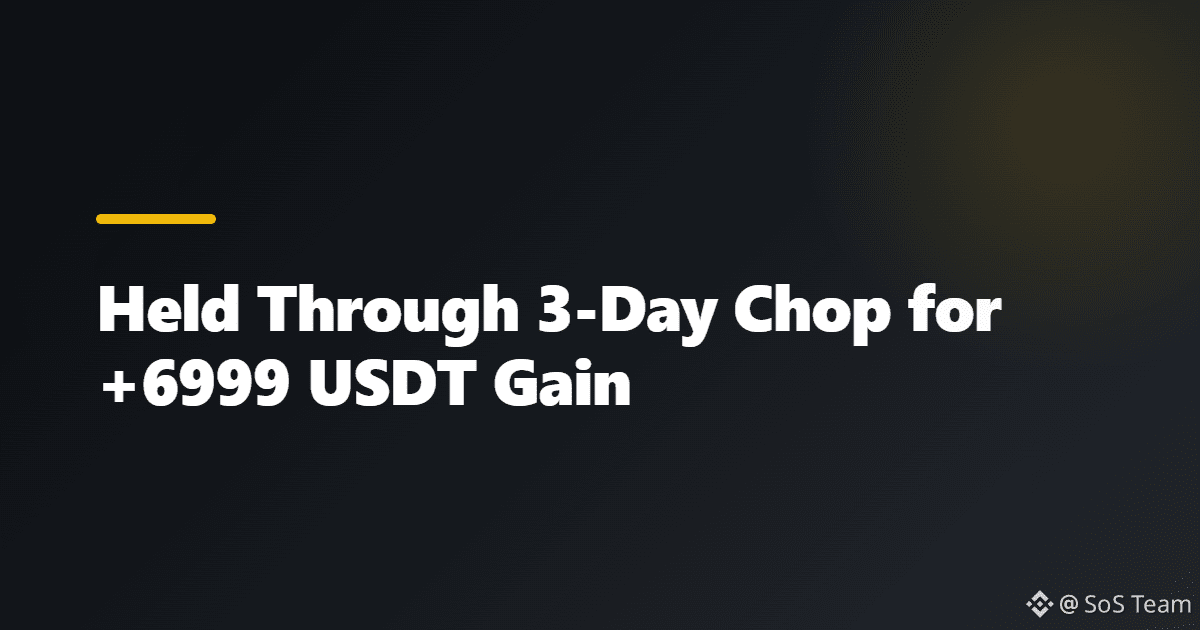
Picture this: a trader sits on a position for three straight days watching chop, only to pull off a clean +6,999.25 USDT gain right as the market resets.
Most traders get chopped to pieces during these multi-day consolidations, either dumping their bags out of boredom or getting caught off-guard by midnight volatility.
Looking at how $UNI has been grinding right around the 7-dollar range despite a -5.27% dip, we are seeing the classic accumulation playbook unfold. Weak hands got flushed out, inventory quietly shifted to stronger hands, and the setup is eyeing that clean move toward 8 dollars. It feels very similar to how $AAVE and $SUSHI compressed right before their previous structural breakouts, where price action looked completely dead on the surface while liquidity was being swept in the background.
When a major DeFi asset grinds at key support like this while absorbing sell pressure, smart money usually prefers making their move when retail is asleep.
Where do you think $UNI heads once this range breaks?
#CryptoTrading #DeFi #Altcoins
Most traders get chopped to pieces during these multi-day consolidations, either dumping their bags out of boredom or getting caught off-guard by midnight volatility.
Looking at how $UNI has been grinding right around the 7-dollar range despite a -5.27% dip, we are seeing the classic accumulation playbook unfold. Weak hands got flushed out, inventory quietly shifted to stronger hands, and the setup is eyeing that clean move toward 8 dollars. It feels very similar to how $AAVE and $SUSHI compressed right before their previous structural breakouts, where price action looked completely dead on the surface while liquidity was being swept in the background.
When a major DeFi asset grinds at key support like this while absorbing sell pressure, smart money usually prefers making their move when retail is asleep.
Where do you think $UNI heads once this range breaks?
#CryptoTrading #DeFi #Altcoins

Tokenized real-world assets have crossed $18 billion in on-chain value, but the bigger shift is how assets move in the next cycle.
• The next wave is interoperable collateral. Tokenized Treasuries let DAOs earn yield while keeping their treasury stable. Add credit and private equity tokens, and DeFi lending becomes capital efficient beyond speculation.
• DePIN networks now pay out roughly $9 million per day in protocol rewards. These flows create actual demand for low-latency stablecoin rails and verifiable device identities that legacy systems cannot serve.
• AI agents need machine-speed money. One autonomous agent can send thousands of micro-payments per second for data, compute or logistics. Legacy payment networks cannot handle that. Crypto gives agents a shared ledger with provable identity and execution.
• User-owned data markets are forming as AI companies need clean, consent-based training data. Zero-knowledge proofs let individuals prove provenance and get paid directly for what they create.
Infrastructure follows real usage. The next
Are you buying, selling, or holding?
#CryptoTips #TradingTips #HODL #DeFi #Blockchain
📱 Follow @PoorCryptoMan
• The next wave is interoperable collateral. Tokenized Treasuries let DAOs earn yield while keeping their treasury stable. Add credit and private equity tokens, and DeFi lending becomes capital efficient beyond speculation.
• DePIN networks now pay out roughly $9 million per day in protocol rewards. These flows create actual demand for low-latency stablecoin rails and verifiable device identities that legacy systems cannot serve.
• AI agents need machine-speed money. One autonomous agent can send thousands of micro-payments per second for data, compute or logistics. Legacy payment networks cannot handle that. Crypto gives agents a shared ledger with provable identity and execution.
• User-owned data markets are forming as AI companies need clean, consent-based training data. Zero-knowledge proofs let individuals prove provenance and get paid directly for what they create.
Infrastructure follows real usage. The next
Are you buying, selling, or holding?
#CryptoTips #TradingTips #HODL #DeFi #Blockchain
📱 Follow @PoorCryptoMan

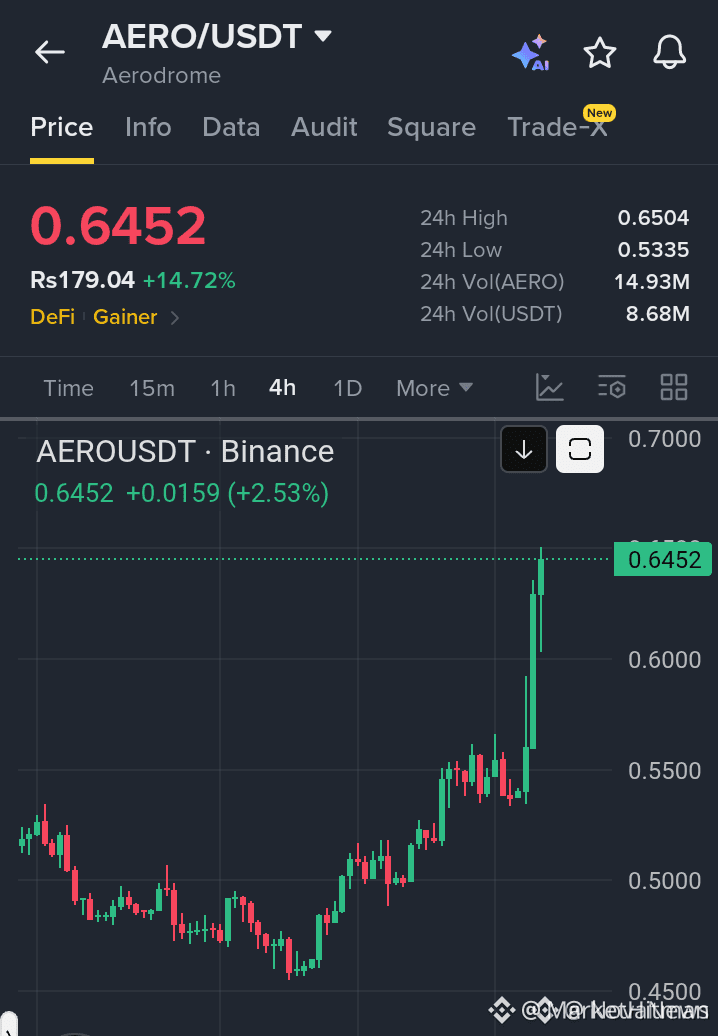
🚀 $AERO RACES TOWARD LIQUIDITY BREAKOUT! 📈
Target: 0.720 🚀
DeFi volume on the network has spiked into overdrive, flooding $AERO with fresh liquidity that the smart‑money is gobbling up. 🦈 The order block at the current price is now a magnet for aggressive buying, and the on‑chain metrics show a clear acceleration in inflow. 📊
With the price eyeing the 0.720 breakout zone, the chart is carving a clean bullish wedge and the recent fair‑value gap is primed for a rapid fill. ⚡ This setup offers a compelling upside bias while keeping downside exposure tight. 📈
💬 Do you see the next liquidity sweep confirming the breakout? 👇
⚠️ Not financial advice. Always manage your risk. 🛡️
🏷️ #AERO #Bullish #DeFi #Breakout
🚀 ⚡
Target: 0.720 🚀
DeFi volume on the network has spiked into overdrive, flooding $AERO with fresh liquidity that the smart‑money is gobbling up. 🦈 The order block at the current price is now a magnet for aggressive buying, and the on‑chain metrics show a clear acceleration in inflow. 📊
With the price eyeing the 0.720 breakout zone, the chart is carving a clean bullish wedge and the recent fair‑value gap is primed for a rapid fill. ⚡ This setup offers a compelling upside bias while keeping downside exposure tight. 📈
💬 Do you see the next liquidity sweep confirming the breakout? 👇
⚠️ Not financial advice. Always manage your risk. 🛡️
🏷️ #AERO #Bullish #DeFi #Breakout
🚀 ⚡



The more i learn about DeFi, the more i appreciate one simple idea:
You shouldn’t have to give up control of your assets just to access better financial tools.
That’s one thing that stands out to me about non-custodial options.
Options can give you more ways to manage positions, hedge risk or take a view on the market.
But if using them means handing your assets over to someone else, there’s still a trade-off.
This is where Ithaca gets interesting to me.
It’s built as a non-custodial, composable options protocol.
Your assets stay under your control while you interact with options onchain.
Simple idea, but an important one.
More financial tools shouldn’t have to mean less ownership.
That’s the kind of DeFi direction i want to understand better.
#Ithaca #defi #Web3 #Options
You shouldn’t have to give up control of your assets just to access better financial tools.
That’s one thing that stands out to me about non-custodial options.
Options can give you more ways to manage positions, hedge risk or take a view on the market.
But if using them means handing your assets over to someone else, there’s still a trade-off.
This is where Ithaca gets interesting to me.
It’s built as a non-custodial, composable options protocol.
Your assets stay under your control while you interact with options onchain.
Simple idea, but an important one.
More financial tools shouldn’t have to mean less ownership.
That’s the kind of DeFi direction i want to understand better.
#Ithaca #defi #Web3 #Options


While major assets like $BTC and $BNB trade in tight ranges, a silent capital migration is shaking up the on-chain landscape. Traders aren't leaving the market; they are fleeing high Ethereum gas fees for hyper-efficient Layer-2 DEXs. Ecosystems like Arbitrum and Base are seeing unprecedented liquidity depth, driven by yield hunters seeking sustainable double-digit returns on stablecoins rather than relying on inflationary token rewards. This shift marks a dramatic evolution in DeFi: execution speed and slippage reduction now dictate where TVL flows, leaving legacy mainnet pools in the dust. As L2 volume threatens to permanently overtake mainnet liquidity, the battle for yield supremacy is shifting away from pure speculation toward real utility.
Are you moving your active capital to L2 pools, or holding steady in spot?
#DeFi #Web3
Are you moving your active capital to L2 pools, or holding steady in spot?
#DeFi #Web3

Stablecoin Ecosystem — DeFi Capital in Focus
$USUAL | $SKY | $ENA
USUAL, SKY, and ENA remain positioned around the evolving stablecoin and DeFi infrastructure narrative.
Stablecoins continue to play a central role in on-chain liquidity, while protocols compete to build efficient financial infrastructure.
As DeFi activity expands, stablecoin-focused ecosystems could receive renewed attention.
Key Takeaway: Stablecoin liquidity remains one of the most important indicators for DeFi growth.
#USUAL #SKY #ENA #Stablecoins #DeFi
$USUAL | $SKY | $ENA
USUAL, SKY, and ENA remain positioned around the evolving stablecoin and DeFi infrastructure narrative.
Stablecoins continue to play a central role in on-chain liquidity, while protocols compete to build efficient financial infrastructure.
As DeFi activity expands, stablecoin-focused ecosystems could receive renewed attention.
Key Takeaway: Stablecoin liquidity remains one of the most important indicators for DeFi growth.
#USUAL #SKY #ENA #Stablecoins #DeFi

TVL Is a Vanity Metric. Liquidity Velocity Is What Actually Matters in DeFi
Everyone benchmarks DeFi health by Total Value Locked. But TVL is a snapshot - it tells you how much capital is parked, not how hard that capital is working.
The metric that separates healthy protocols from zombie chains is liquidity velocity: the ratio of trading volume to TVL over a rolling window. A protocol with 500M TVL and 800M daily volume is doing something fundamentally different from one with 2B TVL and 50M volume. The first is a productive engine. The second is a parking lot.
Why does this matter now? As global rates stabilize, the opportunity cost of idle on-chain capital rises. Mercenary liquidity that chased emissions is rotating out. What remains is either deeply sticky or productively deployed. Protocols winning in this environment have high capital efficiency - LPs earn fees proportional to actual risk, not inflationary token rewards propping up fake APY.
$ETH -based protocols pioneered this shift post-Merge. $BNB Chain ecosystems improved velocity ratios as quarterly burns reduce circulating float. $SOL throughput advantages show up directly in volume-to-TVL ratios most L1s cannot match.
Next time you evaluate a DeFi protocol, skip the TVL headline. Ask: how many times does this liquidity turn over per day? That is where real yield lives.
#DeFi #CryptoInvesting #BinanceSquare #Web3 #OnChainAlpha
Everyone benchmarks DeFi health by Total Value Locked. But TVL is a snapshot - it tells you how much capital is parked, not how hard that capital is working.
The metric that separates healthy protocols from zombie chains is liquidity velocity: the ratio of trading volume to TVL over a rolling window. A protocol with 500M TVL and 800M daily volume is doing something fundamentally different from one with 2B TVL and 50M volume. The first is a productive engine. The second is a parking lot.
Why does this matter now? As global rates stabilize, the opportunity cost of idle on-chain capital rises. Mercenary liquidity that chased emissions is rotating out. What remains is either deeply sticky or productively deployed. Protocols winning in this environment have high capital efficiency - LPs earn fees proportional to actual risk, not inflationary token rewards propping up fake APY.
$ETH -based protocols pioneered this shift post-Merge. $BNB Chain ecosystems improved velocity ratios as quarterly burns reduce circulating float. $SOL throughput advantages show up directly in volume-to-TVL ratios most L1s cannot match.
Next time you evaluate a DeFi protocol, skip the TVL headline. Ask: how many times does this liquidity turn over per day? That is where real yield lives.
#DeFi #CryptoInvesting #BinanceSquare #Web3 #OnChainAlpha
Log in to explore more content