Binance Square
#bitcoin

bitcoin

336.8M views
743,599 Discussing
TuilaNamKy
·
--
#ussenateblocksclarityact 🚨 The CLARITY Act Just Hit a 49–50 Wall. But Crypto Regulation Isn’t Dead. The U.S. Senate just blocked the CLARITY Act from advancing. 49–50. The bill needed 60 votes to move forward. And that’s where the story gets interesting. 👀 This was a cloture vote — not a final vote on the bill itself. So the headline isn't: ❌ “The Senate killed crypto regulation.” It’s: The Senate couldn't get enough votes to move the market-structure bill forward. And more than 100 changes had already been made to address Democratic concerns. Still not enough. 🧨 THE REAL BATTLE Three issues became major fault lines: → Ethics: Democrats wanted tighter restrictions around political officials profiting from crypto. → Stablecoins: Banks opposed provisions they viewed as allowing stablecoin rewards to compete with bank deposits. → DeFi: Developers wanted clearer protection from criminal liability for non-custodial software. So this wasn't simply: Crypto vs politicians. It was a fight over who carries the risks of crypto — banks, developers, consumers, or policymakers. 👀 THE MARKET TWIST Bitcoin fell toward $76K after the vote, while crypto-related stocks also came under pressure. But blaming the entire move on CLARITY would be too simple. The vote happened just one day before the Fed decision, while oil and Treasury yields were also surging. And here's the bigger point: No CLARITY ≠ no crypto regulation. The SEC and CFTC still have regulatory authority. What failed was the attempt to create a broader congressional framework through this bill. 🧠 Square Insight CLARITY didn't fail because crypto disappeared. It failed because lawmakers couldn't agree on who should bear the risks of crypto. The bigger question now: Does this delay clearer rules — or push U.S. crypto regulation back toward agency-by-agency rules? $BTC {future}(BTCUSDT) #CLARITYAct #CryptoRegulation #Bitcoin Market commentary only. Not financial advice.
#ussenateblocksclarityact
🚨 The CLARITY Act Just Hit a 49–50 Wall. But Crypto Regulation Isn’t Dead.
The U.S. Senate just blocked the CLARITY Act from advancing.
49–50.
The bill needed 60 votes to move forward.
And that’s where the story gets interesting. 👀
This was a cloture vote — not a final vote on the bill itself.
So the headline isn't:
❌ “The Senate killed crypto regulation.”
It’s:
The Senate couldn't get enough votes to move the market-structure bill forward.
And more than 100 changes had already been made to address Democratic concerns.
Still not enough.
🧨 THE REAL BATTLE
Three issues became major fault lines:
→ Ethics: Democrats wanted tighter restrictions around political officials profiting from crypto.
→ Stablecoins: Banks opposed provisions they viewed as allowing stablecoin rewards to compete with bank deposits.
→ DeFi: Developers wanted clearer protection from criminal liability for non-custodial software.
So this wasn't simply:
Crypto vs politicians.
It was a fight over who carries the risks of crypto — banks, developers, consumers, or policymakers.
👀 THE MARKET TWIST
Bitcoin fell toward $76K after the vote, while crypto-related stocks also came under pressure.
But blaming the entire move on CLARITY would be too simple.
The vote happened just one day before the Fed decision, while oil and Treasury yields were also surging.
And here's the bigger point:
No CLARITY ≠ no crypto regulation.
The SEC and CFTC still have regulatory authority.
What failed was the attempt to create a broader congressional framework through this bill.
🧠 Square Insight
CLARITY didn't fail because crypto disappeared. It failed because lawmakers couldn't agree on who should bear the risks of crypto.
The bigger question now:
Does this delay clearer rules — or push U.S. crypto regulation back toward agency-by-agency rules?
$BTC
#CLARITYAct #CryptoRegulation #Bitcoin
Market commentary only. Not financial advice.
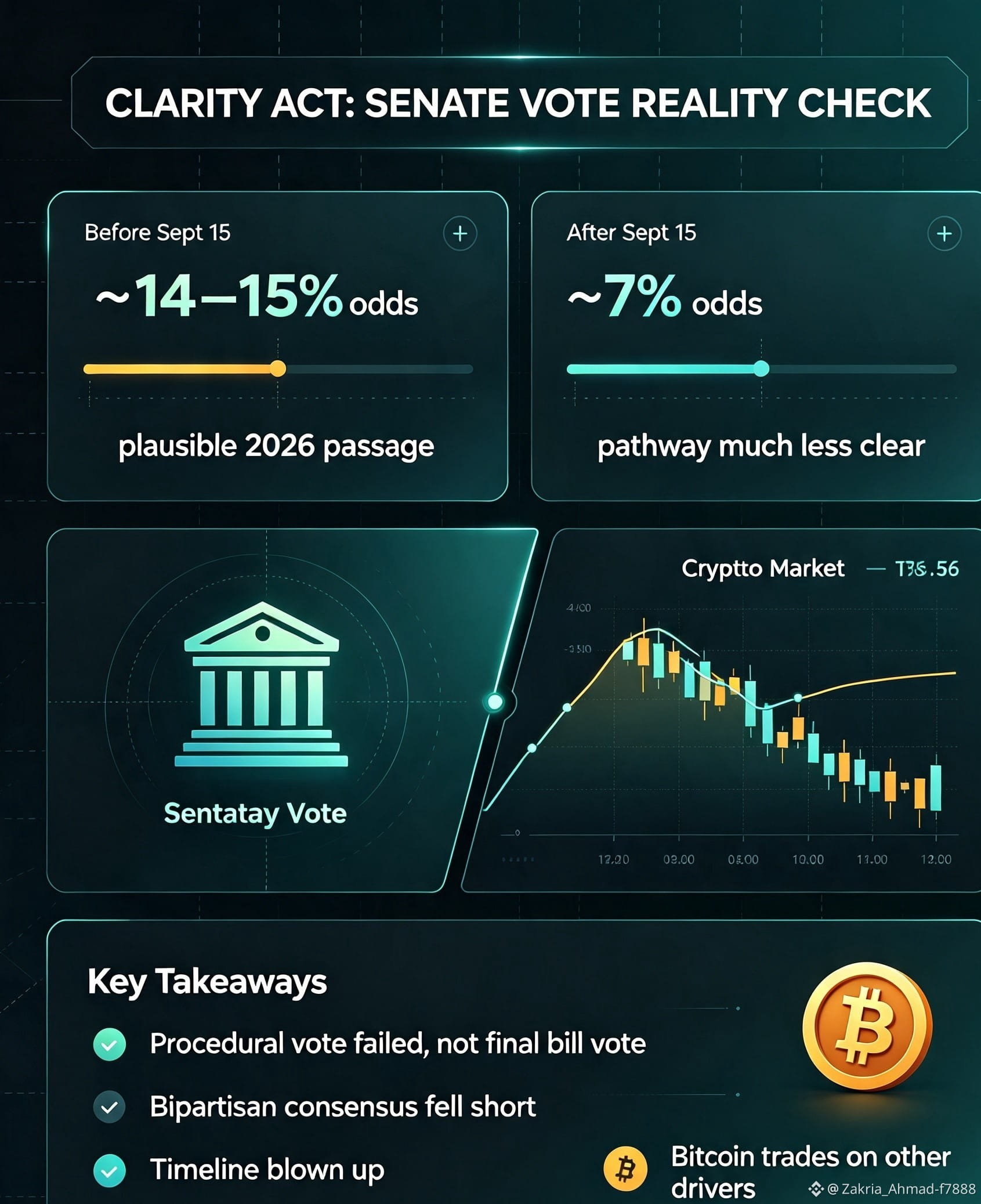
#clarityactoddshalveonpolymarket I’ve been watching the CLARITY Act story closely, especially after the latest Senate vote. The Senate failed to advance the bill on September 15, with the procedural vote falling short of the 60 votes needed. At the same time, Polymarket’s market for the CLARITY Act becoming law in 2026 has moved sharply lower; Polymarket currently shows about 7%. What interests me is how quickly expectations changed. This doesn’t mean crypto regulation is finished. It means the timeline and path forward are now much less clear. I’m watching how Bitcoin and other crypto assets react, but I’m also watching what lawmakers do next. No hype. No assumptions. Just watching the facts and the market reaction. #ClarityActOddsHalveOnPolymarket #bitcoin #crypto #CLARITYActPassesSenateCommittee #CryptoRegulation #BinanceSquare
#clarityactoddshalveonpolymarket
I’ve been watching the CLARITY Act story closely, especially after the latest Senate vote.
The Senate failed to advance the bill on September 15, with the procedural vote falling short of the 60 votes needed. At the same time, Polymarket’s market for the CLARITY Act becoming law in 2026 has moved sharply lower; Polymarket currently shows about 7%.
What interests me is how quickly expectations changed.
This doesn’t mean crypto regulation is finished. It means the timeline and path forward are now much less clear.
I’m watching how Bitcoin and other crypto assets react, but I’m also watching what lawmakers do next.
No hype. No assumptions. Just watching the facts and the market reaction.
#ClarityActOddsHalveOnPolymarket #bitcoin #crypto #CLARITYActPassesSenateCommittee #CryptoRegulation #BinanceSquare
Sharie Wareheim vK9Lرابحه ان شاءالله:
ok
#bitcoinfalls4% 🚨 Bitcoin Fell 4%. But CLARITY Was Only Half the Story. BTC dropped from around $79.5K to as low as $74.9K. The easy explanation? The CLARITY Act failed to advance in the Senate. But Bitcoin didn't fall into just one shock. It walked into a 3-part macro pressure stack. 👀 🏛️ 1. Regulatory shock The Senate vote ended 49–50, below the 60 votes needed to advance CLARITY. That removed a near-term catalyst for clearer U.S. crypto market rules. 📈 2. The 5% yield problem The U.S. 10-year Treasury yield briefly hit 5.04%, its highest level since 2007. That changes the opportunity-cost equation for assets that don't generate a native yield. And it happened just before the Fed decision. 🛢️ 3. The oil shock most crypto posts are missing Saudi Arabia's East-West pipeline was shut after drone attacks. The pipeline can move up to roughly 7M barrels/day and was an important route for bypassing the Strait of Hormuz. Saudi then cut some oil shipments to Europe, while Brent climbed above $108 and some physical cargo prices topped $120. And here's the twist: Oil → inflation pressure → higher yields → tighter financial conditions → risk assets. That's a much bigger transmission channel than crypto regulation alone. Then leverage amplified the move. Hundreds of millions of dollars in crypto positions were liquidated as BTC broke lower. 🧠 Square Insight Bitcoin didn't just lose a crypto catalyst. It walked into a macro pressure stack: regulation, 5% yields and an oil-supply shock. Now the real test isn't simply whether BTC can bounce. It's whether oil stays elevated, Treasury yields stay near 5%, and BTC can reclaim the levels it just lost. Which risk matters more from here: Fed policy, oil, or crypto regulation? $BTC {future}(BTCUSDT) #Bitcoin #Oil #Fed Market commentary only. Not financial advice.
#bitcoinfalls4%
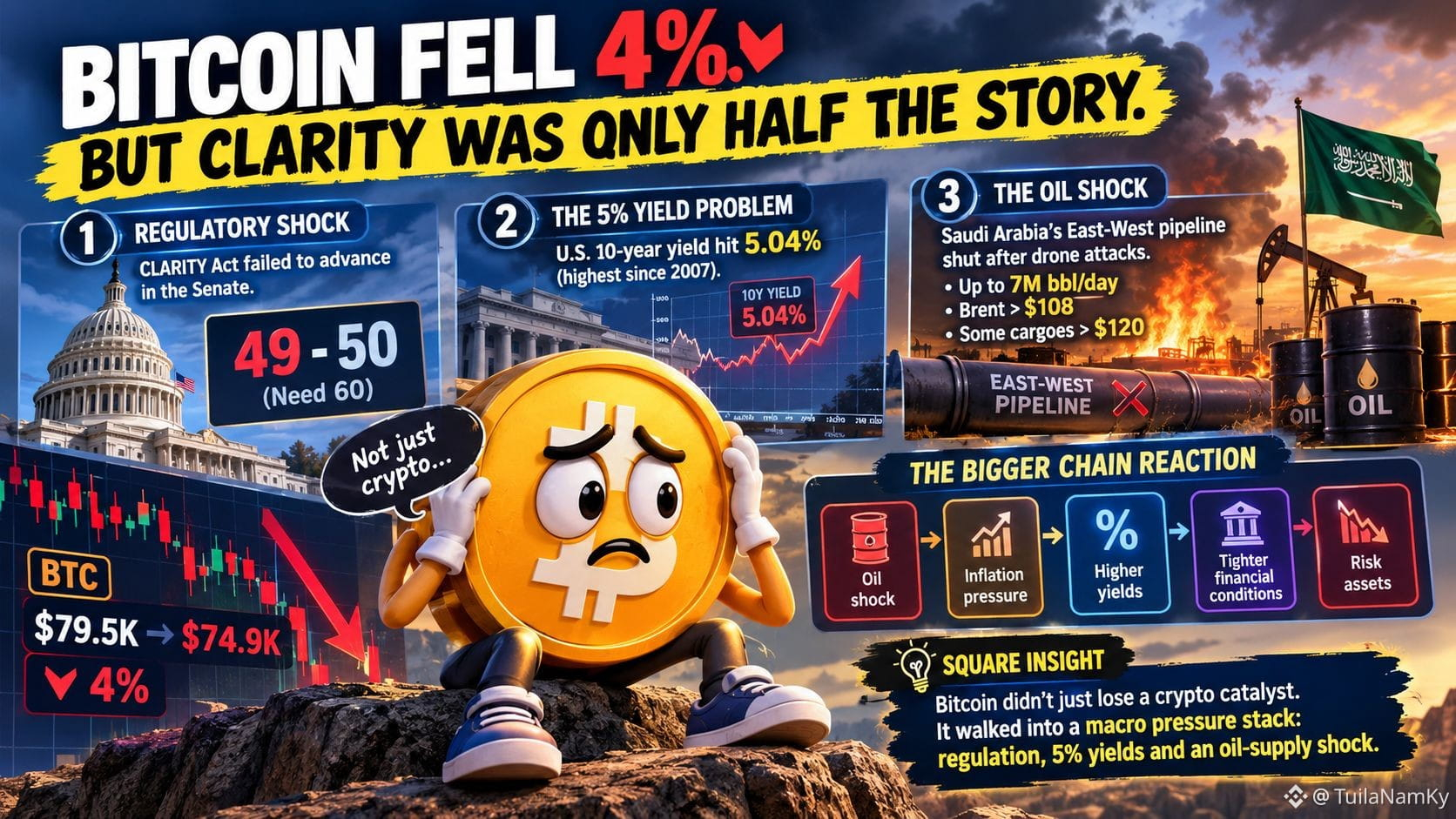
🚨 Bitcoin Fell 4%. But CLARITY Was Only Half the Story.
BTC dropped from around $79.5K to as low as $74.9K.
The easy explanation?
The CLARITY Act failed to advance in the Senate.
But Bitcoin didn't fall into just one shock.
It walked into a 3-part macro pressure stack. 👀
🏛️ 1. Regulatory shock
The Senate vote ended 49–50, below the 60 votes needed to advance CLARITY.
That removed a near-term catalyst for clearer U.S. crypto market rules.
📈 2. The 5% yield problem
The U.S. 10-year Treasury yield briefly hit 5.04%, its highest level since 2007.
That changes the opportunity-cost equation for assets that don't generate a native yield.
And it happened just before the Fed decision.
🛢️ 3. The oil shock most crypto posts are missing
Saudi Arabia's East-West pipeline was shut after drone attacks.
The pipeline can move up to roughly 7M barrels/day and was an important route for bypassing the Strait of Hormuz.
Saudi then cut some oil shipments to Europe, while Brent climbed above $108 and some physical cargo prices topped $120.
And here's the twist:
Oil → inflation pressure → higher yields → tighter financial conditions → risk assets.
That's a much bigger transmission channel than crypto regulation alone.
Then leverage amplified the move.
Hundreds of millions of dollars in crypto positions were liquidated as BTC broke lower.
🧠 Square Insight
Bitcoin didn't just lose a crypto catalyst. It walked into a macro pressure stack: regulation, 5% yields and an oil-supply shock.
Now the real test isn't simply whether BTC can bounce.
It's whether oil stays elevated, Treasury yields stay near 5%, and BTC can reclaim the levels it just lost.
Which risk matters more from here: Fed policy, oil, or crypto regulation?
$BTC
#Bitcoin #Oil #Fed
Market commentary only. Not financial advice.
·
--
Bearish
#bitcoinfalls4% 🚨 BITCOIN DROPS 4% AFTER CLARITY ACT FAILS Bitcoin just took a sharp hit after the U.S. Senate failed to advance the CLARITY Act, sending fresh fear through the crypto market. $BTC dropped roughly 4%, briefly falling below $75,000, while Ethereum and other major altcoins also came under heavy selling pressure. The Senate vote ended 49–50, falling short of the 60 votes needed to move the bill forward. The CLARITY Act was closely watched because it aimed to establish clearer U.S. rules for digital assets and define the roles of the SEC and CFTC. 📉 Regulatory uncertainty is back — and traders are reacting fast. The big question now: Can Bitcoin recover the $76K–$77K zone, or does this sell-off have more room to run? #Bitcoin #crypto #CLARITYAct
#bitcoinfalls4%
🚨 BITCOIN DROPS 4% AFTER CLARITY ACT FAILS
Bitcoin just took a sharp hit after the U.S. Senate failed to advance the CLARITY Act, sending fresh fear through the crypto market.
$BTC dropped roughly 4%, briefly falling below $75,000, while Ethereum and other major altcoins also came under heavy selling pressure.
The Senate vote ended 49–50, falling short of the 60 votes needed to move the bill forward.
The CLARITY Act was closely watched because it aimed to establish clearer U.S. rules for digital assets and define the roles of the SEC and CFTC.
📉 Regulatory uncertainty is back — and traders are reacting fast.
The big question now: Can Bitcoin recover the $76K–$77K zone, or does this sell-off have more room to run?
#Bitcoin #crypto #CLARITYAct
·
--
1,309 Bitcoin For One Dollar. That Was The First Price Anyone Ever Set For It.1,309 Bitcoin for one dollar. That was the first price anyone ever set for it. In October 2009, a site called New Liberty Standard published an exchange rate for Bitcoin. 1 USD equaled 1,309.03 BTC. Nobody was actually trading at that number. There was no order book and no buyers lined up against sellers. The rate came from something far simpler: how much electricity it cost to mine a coin on an average computer at the time. Sit with that for a second. The first price tag ever put on Bitcoin came out of a spreadsheet, not a market. Someone added up a power bill and divided by how many coins came out the other end. Compare that to how price gets set today. $75,652 moves because millions of people, funds, and algorithms are pricing in halvings, ETF flows, rate decisions, and whatever headline just hit. Back in 2009 there was no crowd to price any of that in, because there was barely anyone around to trade with. That cost based era did not last long. Seven months later, in May 2010, someone paid 10,000 BTC for two pizzas. Two people agreed a real world good was worth a certain number of coins, with no electricity math involved at all. That trade, not the New Liberty Standard number, is closer to where real price discovery started. Mt. Gox opened in July 2010 and gave Bitcoin its first proper order book. From that point the price stopped getting calculated and started getting fought over, which is what a market actually does. Here's the part most people skip when they tell this story. Miners pricing Bitcoin in 2009 were not early because they saw a global asset coming. They were early mainly because almost nobody else wanted the coins at all. Cost based pricing tends to show up exactly when demand is close to zero. The moment real buyers show up, cost stops mattering and belief takes over. That pattern didn't end with Bitcoin. Every token that later launched near nothing went through some version of the same phase, priced off what it cost to produce or farm rather than what anyone actually wanted to pay. The switch from cost to belief is usually where the biggest moves in a cycle start, and it's also where most people aren't paying attention yet. You can see the same story play out today with newer tokens like Aster. Early liquidity is thin, wild price swings happen on small trades, and the first quoted price rarely reflects what the asset is actually worth once real volume shows up. The cost based phase just looks different now, it's farming rewards and incentive programs instead of electricity bills, but the underlying dynamic hasn't changed much. So 1,309 BTC per dollar is less about a cheap price and more about a market that didn't exist yet, priced by the only method available at the time: arithmetic, not a crowd of buyers and sellers. Bitcoin went from being priced by an electricity calculation to being priced by the entire planet in about fifteen years. Every asset that's ever mattered made some version of that same jump, from cost based pricing to open market pricing, somewhere in its history. Which coins are you watching right now that still feel priced off cost or effort rather than real demand? Personal view, not advice. Do your own research. #Bitcoin #BTC

1,309 Bitcoin For One Dollar. That Was The First Price Anyone Ever Set For It.

1,309 Bitcoin for one dollar. That was the first price anyone ever set for it.
In October 2009, a site called New Liberty Standard published an exchange rate for Bitcoin. 1 USD equaled 1,309.03 BTC. Nobody was actually trading at that number. There was no order book and no buyers lined up against sellers. The rate came from something far simpler: how much electricity it cost to mine a coin on an average computer at the time.
Sit with that for a second. The first price tag ever put on Bitcoin came out of a spreadsheet, not a market. Someone added up a power bill and divided by how many coins came out the other end.
Compare that to how price gets set today. $75,652 moves because millions of people, funds, and algorithms are pricing in halvings, ETF flows, rate decisions, and whatever headline just hit. Back in 2009 there was no crowd to price any of that in, because there was barely anyone around to trade with.
That cost based era did not last long. Seven months later, in May 2010, someone paid 10,000 BTC for two pizzas. Two people agreed a real world good was worth a certain number of coins, with no electricity math involved at all. That trade, not the New Liberty Standard number, is closer to where real price discovery started.
Mt. Gox opened in July 2010 and gave Bitcoin its first proper order book. From that point the price stopped getting calculated and started getting fought over, which is what a market actually does.
Here's the part most people skip when they tell this story. Miners pricing Bitcoin in 2009 were not early because they saw a global asset coming. They were early mainly because almost nobody else wanted the coins at all. Cost based pricing tends to show up exactly when demand is close to zero. The moment real buyers show up, cost stops mattering and belief takes over.
That pattern didn't end with Bitcoin. Every token that later launched near nothing went through some version of the same phase, priced off what it cost to produce or farm rather than what anyone actually wanted to pay. The switch from cost to belief is usually where the biggest moves in a cycle start, and it's also where most people aren't paying attention yet.
You can see the same story play out today with newer tokens like Aster. Early liquidity is thin, wild price swings happen on small trades, and the first quoted price rarely reflects what the asset is actually worth once real volume shows up. The cost based phase just looks different now, it's farming rewards and incentive programs instead of electricity bills, but the underlying dynamic hasn't changed much.
So 1,309 BTC per dollar is less about a cheap price and more about a market that didn't exist yet, priced by the only method available at the time: arithmetic, not a crowd of buyers and sellers.
Bitcoin went from being priced by an electricity calculation to being priced by the entire planet in about fifteen years. Every asset that's ever mattered made some version of that same jump, from cost based pricing to open market pricing, somewhere in its history.
Which coins are you watching right now that still feel priced off cost or effort rather than real demand?
Personal view, not advice. Do your own research.
#Bitcoin #BTC
·
--
Bearish
Bitcoin 24 days of ranging. Then one candle changed everything. 🐻 $BTC broke down below 76k with a clear HTF confirmation — the 76k–81k range that held for over three weeks is done. Nearest BTC OB: 65k–62k. About 15% lower from here. That kind of distance usually takes two weeks or more to fill. This isn't a full downtrend call — swing trading isn't the current priority. But the early sign is clear: BTCUSDT trend has shifted bearish. #bitcoin #BTC #signalsfutures #TradingSignals
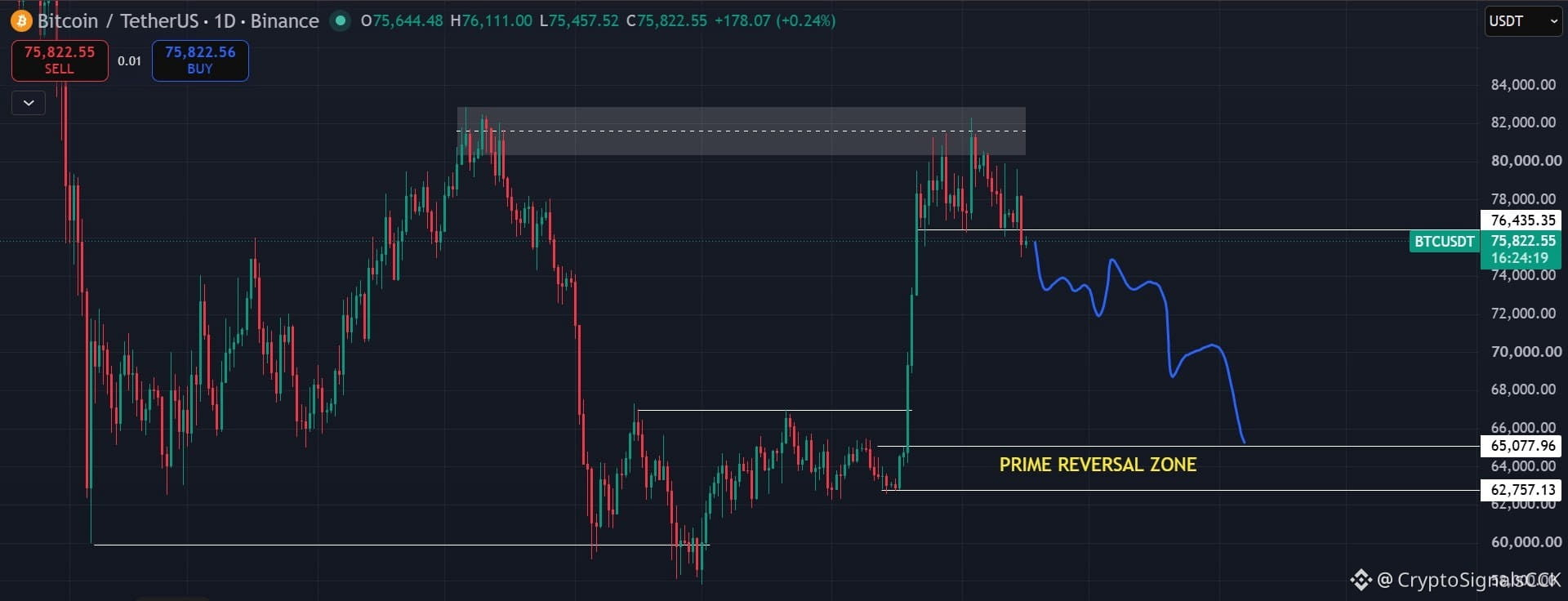
Bitcoin 24 days of ranging. Then one candle changed everything. 🐻

$BTC broke down below 76k with a clear HTF confirmation — the 76k–81k range that held for over three weeks is done.

Nearest BTC OB: 65k–62k. About 15% lower from here. That kind of distance usually takes two weeks or more to fill.

This isn't a full downtrend call — swing trading isn't the current priority. But the early sign is clear: BTCUSDT trend has shifted bearish.

#bitcoin #BTC #signalsfutures #TradingSignals
·
--
Bearish
$BTC Bitcoin is showing weakness, trading near a four week low as the failed clarity vote adds more uncertainty ahead of the Fed decision. 📉 If the Fed delivers a hawkish message or signals that rates may stay higher for longer, risk assets like Bitcoin could face more selling pressure. BTC is already struggling to recover, so a break below the current support could open the door to another downside move. Traders should stay cautious because Fed news can bring sharp volatility in both directions. 🐻⚠️ #USSenateBlocksClarityAct $BNB #Bitcoin #FedRateWatch #Crypto $ETH
$BTC Bitcoin is showing weakness, trading near a four week low as the failed clarity vote adds more uncertainty ahead of the Fed decision. 📉 If the Fed delivers a hawkish message or signals that rates may stay higher for longer, risk assets like Bitcoin could face more selling pressure. BTC is already struggling to recover, so a break below the current support could open the door to another downside move. Traders should stay cautious because Fed news can bring sharp volatility in both directions. 🐻⚠️

#USSenateBlocksClarityAct $BNB

#Bitcoin #FedRateWatch #Crypto $ETH
​#strategymarketcappassesford A tech firm holding Bitcoin just flipped a 120-year-old automotive giant. 🤯 ​MicroStrategy ($MSTR ) has officially surpassed Ford in market cap, crossing the $51B mark to become one of the 200 largest U.S. public companies. ​Let the math sink in: Ford generated roughly $188B in trailing-twelve-month revenue. MicroStrategy brings in a fraction of that, yet its aggressive Bitcoin treasury strategy catapulted its valuation past an industrial icon. ​This is a massive structural shift. The market is increasingly assigning a heavy premium to digital scarcity and balance sheet innovation over traditional manufacturing volume. ​Is corporate treasury the new ultimate growth hack? $BTC {future}(MSTRUSDT) {future}(BTCUSDT) $SAGA {future}(SAGAUSDT) #Bitcoin #MSTR
#strategymarketcappassesford
A tech firm holding Bitcoin just flipped a 120-year-old automotive giant. 🤯

​MicroStrategy ($MSTR ) has officially surpassed Ford in market cap, crossing the $51B mark to become one of the 200 largest U.S. public companies.

​Let the math sink in: Ford generated roughly $188B in trailing-twelve-month revenue. MicroStrategy brings in a fraction of that, yet its aggressive Bitcoin treasury strategy catapulted its valuation past an industrial icon.

​This is a massive structural shift. The market is increasingly assigning a heavy premium to digital scarcity and balance sheet innovation over traditional manufacturing volume.

​Is corporate treasury the new ultimate growth hack?
$BTC
$SAGA

#Bitcoin #MSTR
📊 Live Market Chart Update Bitcoin ($BTC) is testing the $75,500 support level ahead of the key Fed rate decision. Key Levels to Watch: • Immediate Support: $75,000 • Resistance Zone: $77,500 • Market Sentiment: Neutral to Cautious Manage your risk carefully and avoid high#FedRateWatch leverage during high-volatility sessions! #CryptoRadar24 #Bitcoin #CryptoMarket #BinanceSquare #BitcoinFalls4% #FedRateWatch $NVDAB $AAPLB $
📊 Live Market Chart Update

Bitcoin ($BTC) is testing the $75,500 support level ahead of the key Fed rate decision.

Key Levels to Watch:
• Immediate Support: $75,000
• Resistance Zone: $77,500
• Market Sentiment: Neutral to Cautious

Manage your risk carefully and avoid high#FedRateWatch leverage during high-volatility sessions!

#CryptoRadar24 #Bitcoin #CryptoMarket #BinanceSquare #BitcoinFalls4% #FedRateWatch $NVDAB $AAPLB $
Only 3.8 million $BTC existed when one person printed nearly 8,800 times the entire 21 million that will ever be created. Most traders still get wrecked the same way every cycle. They FOMO into coins with no real cap, watch dilution eat their bags, and never know when to exit because they never learned what actual scarcity feels like. I have seen this play out since 2013. Infinite minting always looks like easy money until the next winter hits and those tokens go to zero. Bitcoin’s hard cap is why it recovers while everything else fades. $ETH changed its issuance over time and $BNB uses burns, but nothing matches that original limit. The printing event made the difference obvious if you were paying attention. Where do you think the scarcity premium goes from here? #Bitcoin #Tokenomics #CryptoCycles
Only 3.8 million $BTC existed when one person printed nearly 8,800 times the entire 21 million that will ever be created.
Most traders still get wrecked the same way every cycle. They FOMO into coins with no real cap, watch dilution eat their bags, and never know when to exit because they never learned what actual scarcity feels like.
I have seen this play out since 2013. Infinite minting always looks like easy money until the next winter hits and those tokens go to zero. Bitcoin’s hard cap is why it recovers while everything else fades. $ETH changed its issuance over time and $BNB uses burns, but nothing matches that original limit. The printing event made the difference obvious if you were paying attention.
Where do you think the scarcity premium goes from here?
#Bitcoin #Tokenomics #CryptoCycles
·
--
Bullish
Bitcoin's long-term momentum isn't built on a single bill. Whether the CLARITY Act passes or not, the broader trend remains the same: increasing adoption, institutional interest, and Bitcoin's fixed supply continue to strengthen the bullish case. Some believe these forces are now so powerful that even large whales or institutions cannot stop the long-term direction of the market—they may create short-term volatility, but they can't change the bigger trend. Will BTC reach $100,000 by year-end? No one can know for certain, but if demand continues to outpace supply, the possibility remains on the table. What do you think—does Bitcoin have enough momentum to reach six figures this year? #Bitcoin #BTC #crypto #BinanceSquare Trade here: $BTC {spot}(BTCUSDT)
Bitcoin's long-term momentum isn't built on a single bill.
Whether the CLARITY Act passes or not, the broader trend remains the same: increasing adoption, institutional interest, and Bitcoin's fixed supply continue to strengthen the bullish case.
Some believe these forces are now so powerful that even large whales or institutions cannot stop the long-term direction of the market—they may create short-term volatility, but they can't change the bigger trend.
Will BTC reach $100,000 by year-end? No one can know for certain, but if demand continues to outpace supply, the possibility remains on the table.
What do you think—does Bitcoin have enough momentum to reach six figures this year?
#Bitcoin #BTC #crypto #BinanceSquare
Trade here:
$BTC
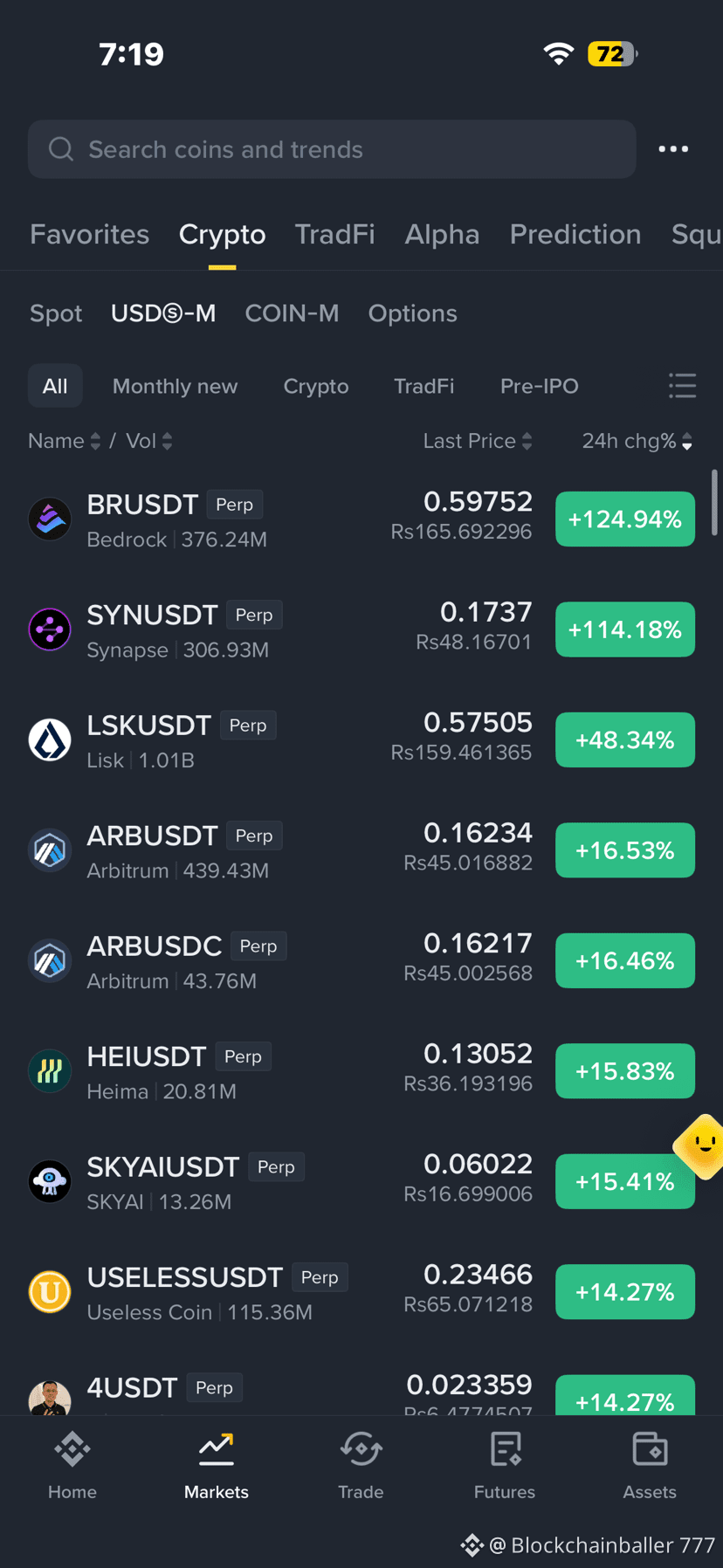
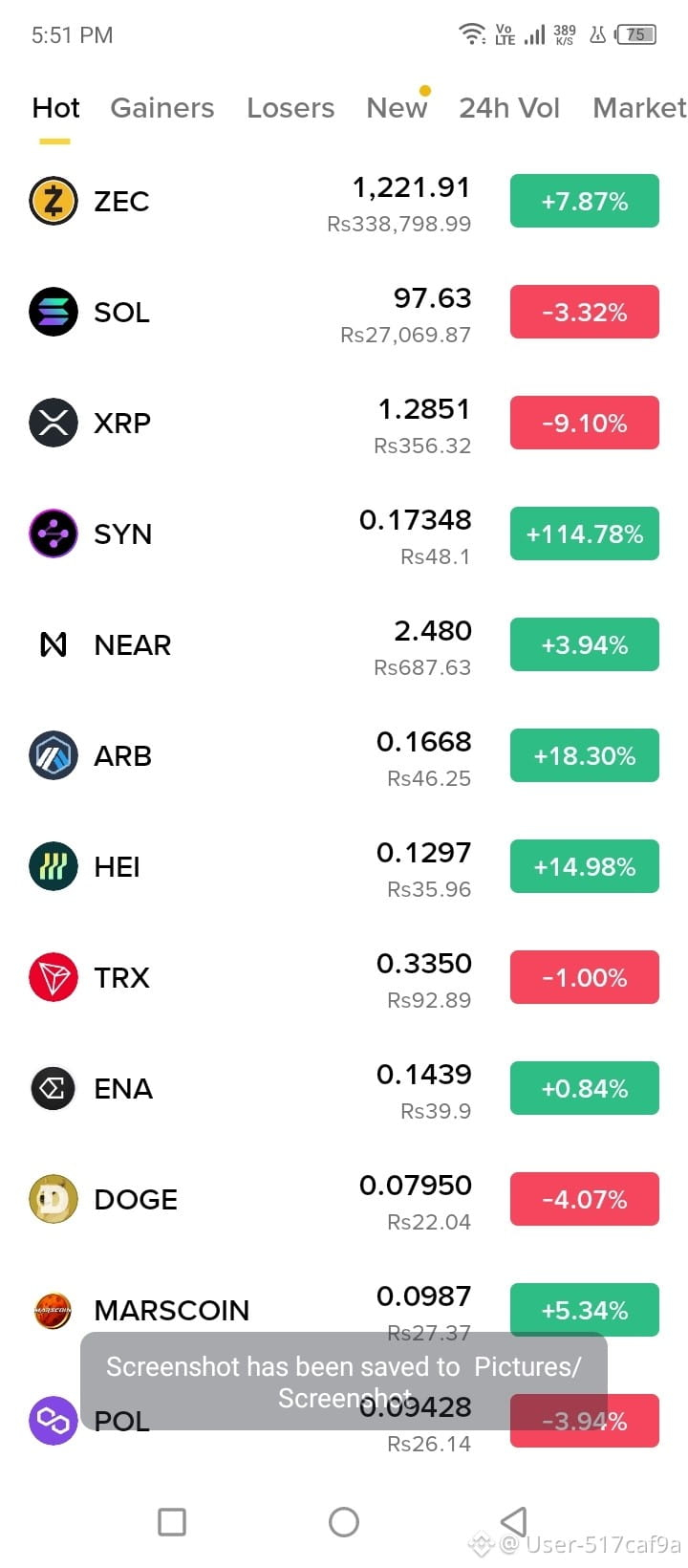
🚨 ALTCOIN MARKET IS MOVING! 🚨 Some serious green candles showing up on the market 👀📈 🔥 Top movers in the screenshot: • $BR USDT +124.94% • $SYN USDT +114.18% • $LSK USDT +48.34% • $ARBUSDT +16.53% • $ARBUSDC +16.46% • $HEIUSDT +15.83% • $SKYAIUSDT +15.41% • $USELESSUSDT +14.27% • $4USDT +14.27% The market is clearly seeing some major volatility and momentum today. ⚡ 📊 Trade smart. Manage risk. Don’t chase green candles. #Crypto #CryptoMarket #Altcoins #Bitcoin {future}(LSKUSDT) {future}(SYNUSDT) {future}(BRUSDT)
🚨 ALTCOIN MARKET IS MOVING! 🚨
Some serious green candles showing up on the market 👀📈

🔥 Top movers in the screenshot:
$BR USDT +124.94%
$SYN USDT +114.18%
$LSK USDT +48.34%
• $ARBUSDT +16.53%
• $ARBUSDC +16.46%
• $HEIUSDT +15.83%
• $SKYAIUSDT +15.41%
• $USELESSUSDT +14.27%
• $4USDT +14.27%

The market is clearly seeing some major volatility and momentum today. ⚡

📊 Trade smart. Manage risk. Don’t chase green candles.

#Crypto #CryptoMarket #Altcoins #Bitcoin
Q_Cx:
good Short 👍👍👍
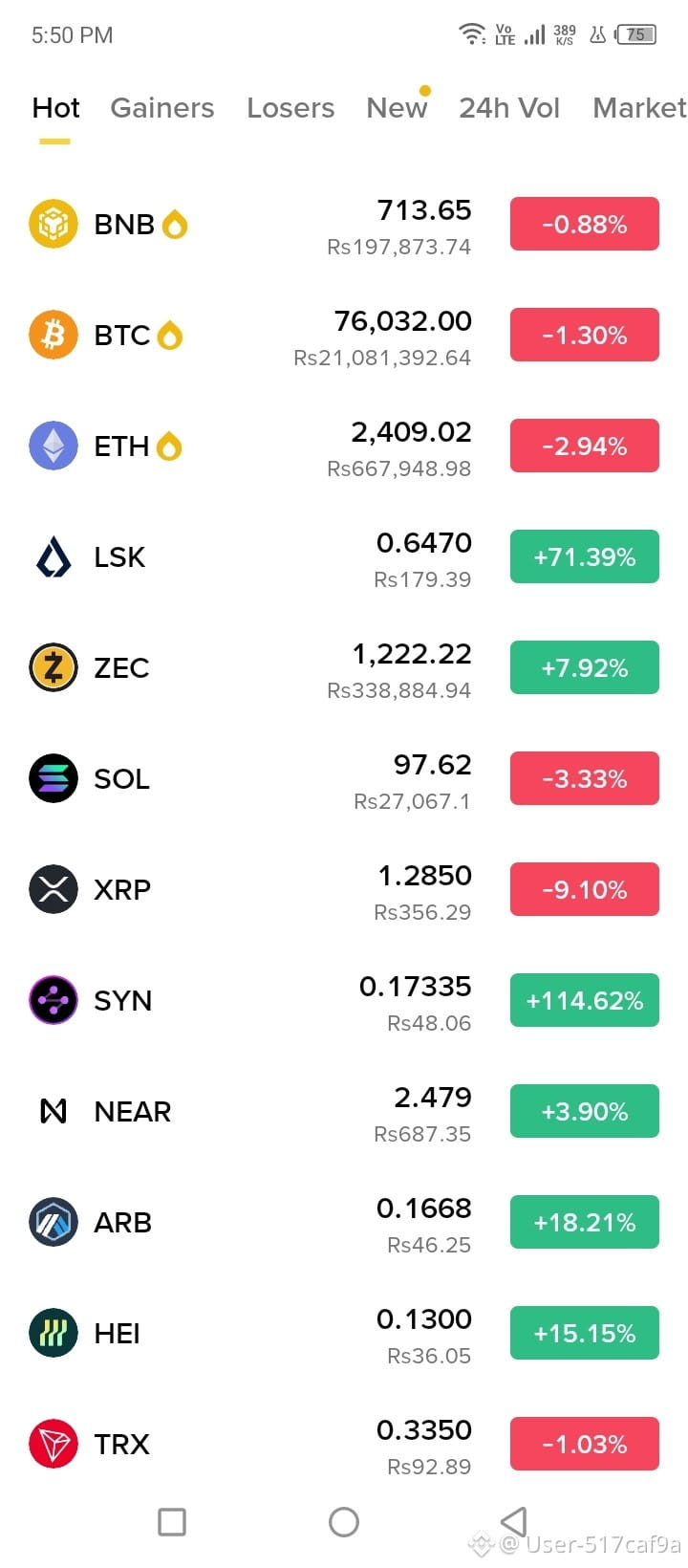
🚀 When the Market Pumps: Catching the Triple-Digit Gainers! ​Hello everyone! 👋 ​While the broader market is experiencing a tight consolidation phase today, with major assets like Bitcoin ($BTC at $76,032, -1.30%) and Ethereum ($ETH at $2,409, -2.94%) pulling back slightly, some altcoins are defying the trend and showing explosive momentum! 🔥 ​🔥 Standout Performers Today: ​SYN ($SYN) is leading the charge with a massive +114.62% surge! ​LSK ($LSK) is continuing its incredible rally, up by +71.39%! ​ARB ($ARB) is holding strong bullish momentum at +18.21%! ​Movements like this remind us how fast market dynamics can shift and why keeping an eye on top gainers is so crucial. Are you catching these pumps or waiting for a deeper dip? ​👇 Let’s discuss in the comments! ​#CryptoUpdate #Bitcoin #Altcoins #BinanceSquare
🚀 When the Market Pumps: Catching the Triple-Digit Gainers!

​Hello everyone! 👋

​While the broader market is experiencing a tight consolidation phase today, with major assets like Bitcoin ($BTC at $76,032, -1.30%) and Ethereum ($ETH at $2,409, -2.94%) pulling back slightly, some altcoins are defying the trend and showing explosive momentum! 🔥

​🔥 Standout Performers Today:

​SYN ($SYN) is leading the charge with a massive +114.62% surge!

​LSK ($LSK) is continuing its incredible rally, up by +71.39%!

​ARB ($ARB) is holding strong bullish momentum at +18.21%!

​Movements like this remind us how fast market dynamics can shift and why keeping an eye on top gainers is so crucial. Are you catching these pumps or waiting for a deeper dip?

​👇 Let’s discuss in the comments!

#CryptoUpdate #Bitcoin #Altcoins #BinanceSquare
#FedRateWatch — FOMC September: What’s the Fed’s Next Move? The September FOMC meeting has markets focused on whether the Fed delivers a 25-basis-point hike after August CPI showed inflation remains above the 2% target. Markets were pricing 90% odds of a hike, making statement and guidance crucial. A hike could pressure BTC and technology stocks through higher yields and tighter liquidity, while gold may face mixed reactions depending on real yields and the dollar. The bigger question is whether this becomes a longer tightening cycle or a one-off move. My approach is to avoid chasing volatility, keep positions controlled, and wait for confirmation before trading BTC, stocks, or gold. #FedRateWatch #FOMC #bitcoin #BTC #GOLD #stocks #Crypto #Trading

#FedRateWatch — FOMC September: What’s the Fed’s Next Move?
The September FOMC meeting has markets focused on whether the Fed delivers a 25-basis-point hike after August CPI showed inflation remains above the 2% target. Markets were pricing 90% odds of a hike, making statement and guidance crucial. A hike could pressure BTC and technology stocks through higher yields and tighter liquidity, while gold may face mixed reactions depending on real yields and the dollar. The bigger question is whether this becomes a longer tightening cycle or a one-off move. My approach is to avoid chasing volatility, keep positions controlled, and wait for confirmation before trading BTC, stocks, or gold.

#FedRateWatch #FOMC #bitcoin #BTC #GOLD #stocks #Crypto #Trading

·
--
Bearish
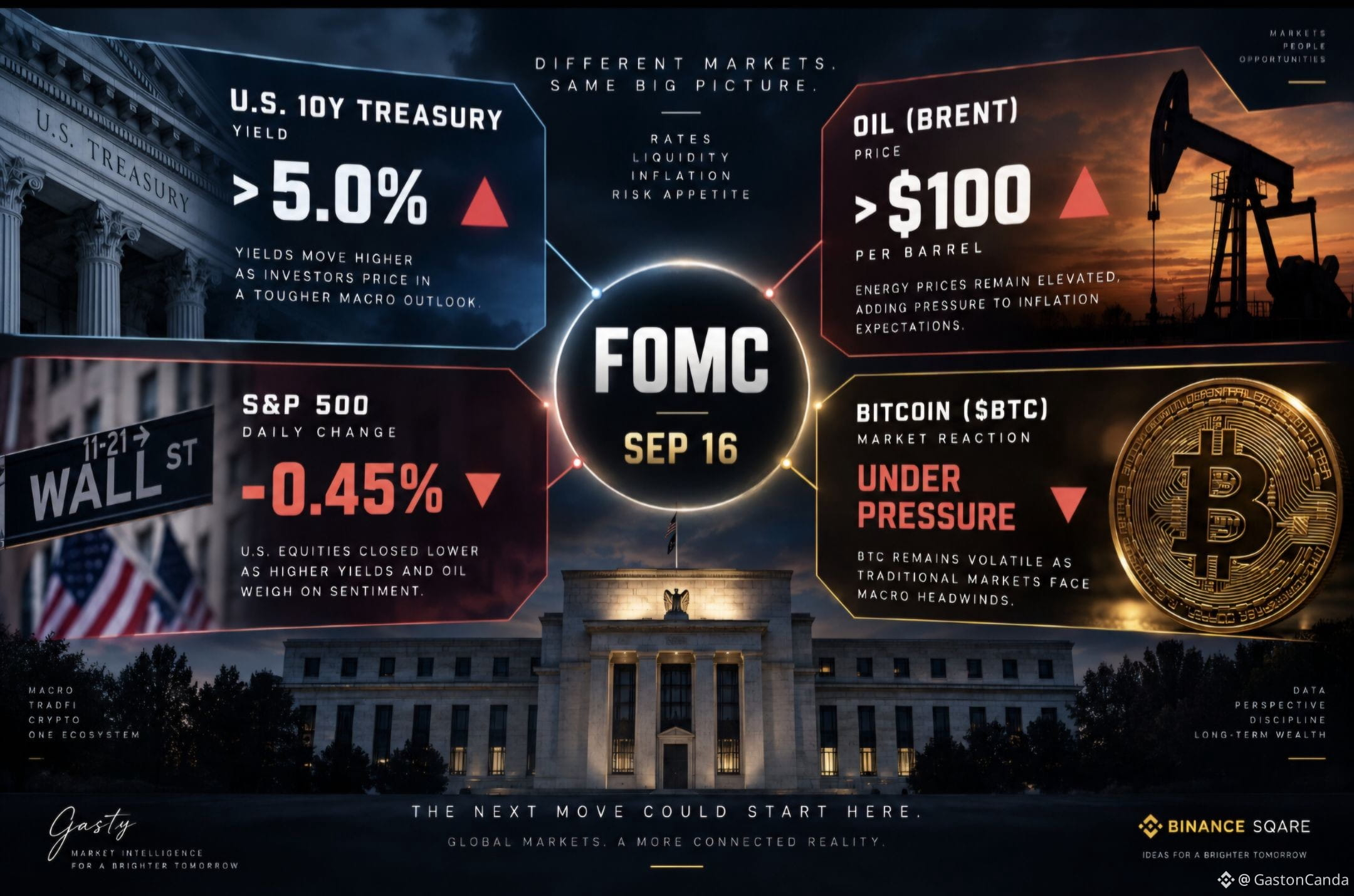
🚨 Tonight, crypto is not trading in isolation. Wall Street closed lower as investors faced a difficult macro combination: rising Treasury yields, higher oil prices and another major Fed decision just hours away. What happened? • S&P 500: -0.45% • Nasdaq: -0.78% • Dow: -0.63% • U.S. 10Y Treasury yield moved above 5% • Oil remains above $100/barrel At the same time, $BTC remains under pressure after another volatile session. Why it matters Higher yields increase the opportunity cost of holding risk assets. Expensive energy can keep inflation pressure elevated. And when both happen simultaneously, liquidity conditions become increasingly important for equities AND crypto. What I’m watching next Tomorrow’s Fed decision. Not just the rate decision itself, but the message around inflation, growth and the path of monetary policy. My takeaway: Right now, I’m watching Treasuries → equities → crypto as one interconnected liquidity system, not three separate markets. The next major move may start outside crypto. Are you watching the Fed or $BTC price action more closely tomorrow? #Bitcoin #CryptoMacro #MarketUpdate #TradFi
🚨 Tonight, crypto is not trading in isolation.

Wall Street closed lower as investors faced a difficult macro combination: rising Treasury yields, higher oil prices and another major Fed decision just hours away.

What happened?

• S&P 500: -0.45%
• Nasdaq: -0.78%
• Dow: -0.63%
• U.S. 10Y Treasury yield moved above 5%
• Oil remains above $100/barrel

At the same time, $BTC remains under pressure after another volatile session.

Why it matters

Higher yields increase the opportunity cost of holding risk assets.

Expensive energy can keep inflation pressure elevated.

And when both happen simultaneously, liquidity conditions become increasingly important for equities AND crypto.

What I’m watching next

Tomorrow’s Fed decision.

Not just the rate decision itself, but the message around inflation, growth and the path of monetary policy.

My takeaway:

Right now, I’m watching Treasuries → equities → crypto as one interconnected liquidity system, not three separate markets.

The next major move may start outside crypto.

Are you watching the Fed or $BTC price action more closely tomorrow?

#Bitcoin #CryptoMacro #MarketUpdate #TradFi
#strategymarketcappassesford 🚨 Strategy Just Passed Ford in Market Cap. But These Two Companies Couldn’t Be More Different. Strategy’s market cap has now moved above Ford’s — putting a Bitcoin treasury company alongside one of America’s biggest automakers. Sounds like a corporate flip. It’s actually a valuation paradox. 👀 Strategy holds roughly 845,050 BTC, worth more than $63B around current prices. That means its market value is heavily influenced by one variable: Bitcoin. Ford, meanwhile, generates hundreds of billions of dollars in annual revenue from an operating business that manufactures and sells vehicles. So: Same neighborhood in market cap. Completely different economic engine. And here’s where it gets interesting. Strategy increasingly trades like a leveraged Bitcoin exposure vehicle. When BTC rallies, the value of its holdings can rise sharply — while MSTR can amplify the move through investor demand for the stock. But the reverse works too. BTC falls → treasury value falls → MSTR can reprice rapidly. 👀 THE PART MOST PEOPLE MISS The Ford comparison can disappear almost as quickly as it appeared. The gap between the two companies’ market caps is relatively small, while MSTR has historically shown much greater sensitivity to Bitcoin. So this isn't necessarily a permanent change in corporate rankings. It may simply be a snapshot of how aggressively markets are pricing Bitcoin exposure through a public company. There’s also an accounting wrinkle: Strategy’s Bitcoin is subject to fair-value accounting, meaning reported earnings can move dramatically with BTC prices. That isn't the same thing as generating operating profit from selling cars. 🧠 Square Insight Market cap tells you what investors are willing to pay — not what a company actually produces. So what is the market really pricing into Strategy today: a company, or a financial vehicle for Bitcoin exposure? $MSTR {future}(MSTRUSDT) $BTC {future}(BTCUSDT) #MSTR #Bitcoin #BitcoinTreasury Market commentary only. Not financial advice.
#strategymarketcappassesford
🚨 Strategy Just Passed Ford in Market Cap. But These Two Companies Couldn’t Be More Different.
Strategy’s market cap has now moved above Ford’s — putting a Bitcoin treasury company alongside one of America’s biggest automakers.
Sounds like a corporate flip.
It’s actually a valuation paradox. 👀
Strategy holds roughly 845,050 BTC, worth more than $63B around current prices.
That means its market value is heavily influenced by one variable:
Bitcoin.
Ford, meanwhile, generates hundreds of billions of dollars in annual revenue from an operating business that manufactures and sells vehicles.
So:
Same neighborhood in market cap.
Completely different economic engine.
And here’s where it gets interesting.
Strategy increasingly trades like a leveraged Bitcoin exposure vehicle.
When BTC rallies, the value of its holdings can rise sharply — while MSTR can amplify the move through investor demand for the stock.
But the reverse works too.
BTC falls → treasury value falls → MSTR can reprice rapidly.
👀 THE PART MOST PEOPLE MISS
The Ford comparison can disappear almost as quickly as it appeared.
The gap between the two companies’ market caps is relatively small, while MSTR has historically shown much greater sensitivity to Bitcoin.
So this isn't necessarily a permanent change in corporate rankings.
It may simply be a snapshot of how aggressively markets are pricing Bitcoin exposure through a public company.
There’s also an accounting wrinkle:
Strategy’s Bitcoin is subject to fair-value accounting, meaning reported earnings can move dramatically with BTC prices.
That isn't the same thing as generating operating profit from selling cars.
🧠 Square Insight
Market cap tells you what investors are willing to pay — not what a company actually produces.
So what is the market really pricing into Strategy today: a company, or a financial vehicle for Bitcoin exposure?
$MSTR
$BTC
#MSTR #Bitcoin #BitcoinTreasury
Market commentary only. Not financial advice.
Picture this: you wake up to a sudden red candle just hours before Jerome Powell takes the podium. Most retail traders get caught completely off guard by macro decisions, watching hard-earned gains vanish in minutes. It feels exhausting trying to time entries when interest rate anxiety dominates every single chart. Right now, interest rate markets are pricing in an 87% chance of a 25bp rate hike at the upcoming meeting. That level of overwhelming conviction suggests tighter monetary policy is already baked into current valuations, yet traders still treat each announcement like an unpredictable shock. We saw a similar story play out throughout the 2022 tightening cycle. Back then, every quarter-point increase drained risk-on liquidity and sent $BTC tumbling alongside traditional equities. While crypto has developed deeper institutional support since then, assets like $BTC and $ETH remain heavily sensitive to central bank policy shifts whenever borrowing costs stay elevated. Do you think the market has truly priced this in, or are we heading into another volatility trap? #Bitcoin #CryptoTrading #MacroEconomics
Picture this: you wake up to a sudden red candle just hours before Jerome Powell takes the podium.

Most retail traders get caught completely off guard by macro decisions, watching hard-earned gains vanish in minutes. It feels exhausting trying to time entries when interest rate anxiety dominates every single chart.

Right now, interest rate markets are pricing in an 87% chance of a 25bp rate hike at the upcoming meeting. That level of overwhelming conviction suggests tighter monetary policy is already baked into current valuations, yet traders still treat each announcement like an unpredictable shock.

We saw a similar story play out throughout the 2022 tightening cycle. Back then, every quarter-point increase drained risk-on liquidity and sent $BTC tumbling alongside traditional equities. While crypto has developed deeper institutional support since then, assets like $BTC and $ETH remain heavily sensitive to central bank policy shifts whenever borrowing costs stay elevated.

Do you think the market has truly priced this in, or are we heading into another volatility trap?

#Bitcoin #CryptoTrading #MacroEconomics
In the fast-paced world of institutional crypto adoption, a massive launch balance can be a dangerous mirage. With $BTC currently trading at $75,755.13 (-1.53% in 24h), investors are scrutinizing the quality of inflows into new digital asset products. A recent analysis highlights that a 100 million opening balance often reflects sponsor-funded seed capital rather than genuine retail or institutional conviction. This distinction is critical for traders who rely on ETF flows as a leading indicator for price action. • Seed capital can artificially inflate opening assets before real market activity begins. • True investor interest is revealed only after creations, redemptions, and persistent capital flow stabilize. • A high launch number does not guarantee long-term holding patterns or price support. This nuance is vital for understanding the current market sentiment. While the headline numbers may look impressive, the underlying mechanics of how those assets were acquired matter more for sustained growth. If the initial 100M is just a placeholder from the sponsor, the ETF could face redemption pressure once the seed capital is withdrawn, potentially creating sell-side pressure on the underlying asset. Traders must look beyond the press releases and monitor the actual creation/redemption data to gauge true market appetite. Is a 100M launch balance a sign of strength or a trap? Do you trust ETF inflows as a reliable signal for $BTC's next move? Drop your thoughts below! 👇 $BTC #BinanceSquare #CryptoNews #Bitcoin
In the fast-paced world of institutional crypto adoption, a massive launch balance can be a dangerous mirage. With $BTC currently trading at $75,755.13 (-1.53% in 24h), investors are scrutinizing the quality of inflows into new digital asset products. A recent analysis highlights that a 100 million opening balance often reflects sponsor-funded seed capital rather than genuine retail or institutional conviction. This distinction is critical for traders who rely on ETF flows as a leading indicator for price action.

• Seed capital can artificially inflate opening assets before real market activity begins.
• True investor interest is revealed only after creations, redemptions, and persistent capital flow stabilize.
• A high launch number does not guarantee long-term holding patterns or price support.

This nuance is vital for understanding the current market sentiment. While the headline numbers may look impressive, the underlying mechanics of how those assets were acquired matter more for sustained growth. If the initial 100M is just a placeholder from the sponsor, the ETF could face redemption pressure once the seed capital is withdrawn, potentially creating sell-side pressure on the underlying asset. Traders must look beyond the press releases and monitor the actual creation/redemption data to gauge true market appetite.

Is a 100M launch balance a sign of strength or a trap? Do you trust ETF inflows as a reliable signal for $BTC 's next move? Drop your thoughts below! 👇

$BTC

#BinanceSquare #CryptoNews #Bitcoin
$BTC IS AT A CRITICAL MONTHLY LEVEL Bitcoin is trading around $75,842, and the monthly chart shows a sharp correction after the massive move toward the $120K area. The key zone to watch now is $60K–$75K. If BTC can reclaim and hold above $80K, momentum could strengthen toward $100K. But losing the $60K area would signal further weakness and could bring lower support zones into focus. Key Levels Resistance: $80K → $100K → $120K Support: $75K → $60K → $40K Current price: ~$75.8K The bigger question is: Is this a healthy correction, or the beginning of a deeper trend reversal? #BTC #Bitcoin #FedRateWatch
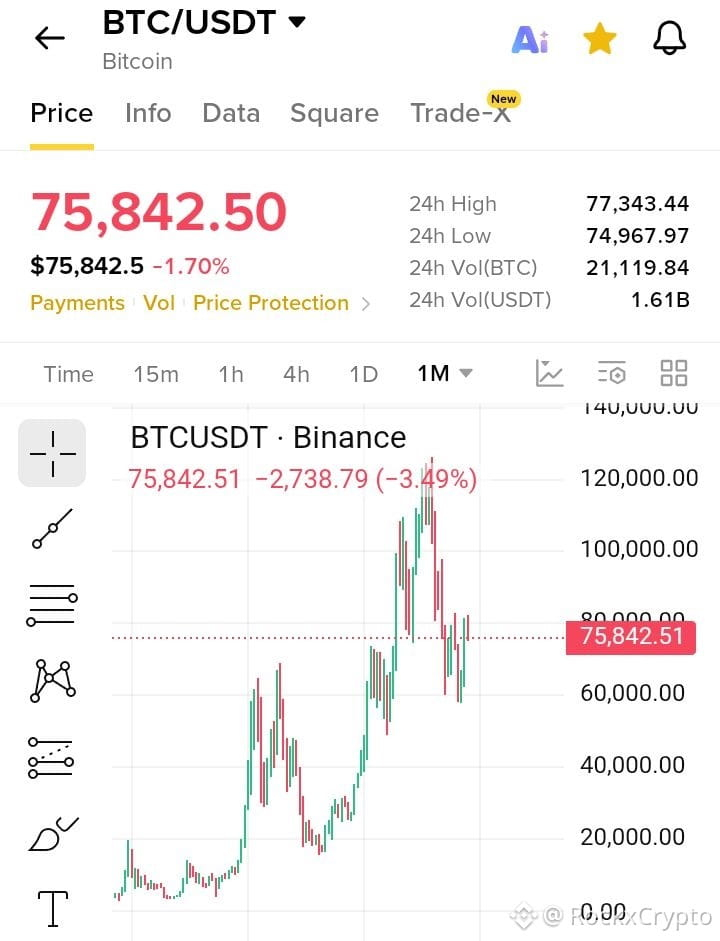
$BTC IS AT A CRITICAL MONTHLY LEVEL

Bitcoin is trading around $75,842, and the monthly chart shows a sharp correction after the massive move toward the $120K area.

The key zone to watch now is $60K–$75K. If BTC can reclaim and hold above $80K, momentum could strengthen toward $100K. But losing the $60K area would signal further weakness and could bring lower support zones into focus.

Key Levels

Resistance: $80K → $100K → $120K

Support: $75K → $60K → $40K

Current price: ~$75.8K

The bigger question is: Is this a healthy correction, or the beginning of a deeper trend reversal?

#BTC #Bitcoin #FedRateWatch

Will BTC hit $70,000 or $90,000 first?

Will BTC hit $70,000 or $90,000 first?

63%$70k36%$90k
Volume $100.39
Log in to explore more content
Join global crypto users on Binance Square
⚡️ Get latest and useful information about crypto.
💬 Trusted by the world’s largest crypto exchange.
👍 Discover real insights from verified creators.
Email / Phone number