
#cryptosecurity
cryptosecurity
8.4M views
10,781 Discussing
Hot
Latest

·
--
See translation
Everyone thinks blockchain code is completely infallible, but history shows that even core ledger rules can break under the right conditions.
Many investors assume holding blue-chip assets protects them from total technical failure until an unnoticed software flaw puts their entire portfolio at risk.
Think of early software like a digital odometer that rolls over to an impossible number once it hits its limit. Back in August 2010, an integer overflow glitch let a single transaction mint 184,467,440,737 $BTC out of nothing, temporarily destroying the fundamental promise of absolute digital scarcity.
Early developers quickly coordinated a chain reorganization to wipe out those bogus coins and patch the vulnerability within five hours. While modern networks like $ETH have evolved significantly, this event reminds us that ledger code and execution environments are only as resilient as the audits protecting them.
How do you think the market would react if a bug of this scale happened on a major network today?
#Bitcoin #CryptoSecurity #Blockchain
Everyone thinks blockchain code is completely infallible, but history shows that even core ledger rules can break under the right conditions.
Many investors assume holding blue-chip assets protects them from total technical failure until an unnoticed software flaw puts their entire portfolio at risk.
Think of early software like a digital odometer that rolls over to an impossible number once it hits its limit. Back in August 2010, an integer overflow glitch let a single transaction mint 184,467,440,737 $BTC out of nothing, temporarily destroying the fundamental promise of absolute digital scarcity.
Early developers quickly coordinated a chain reorganization to wipe out those bogus coins and patch the vulnerability within five hours. While modern networks like $ETH have evolved significantly, this event reminds us that ledger code and execution environments are only as resilient as the audits protecting them.
How do you think the market would react if a bug of this scale happened on a major network today?
#Bitcoin #CryptoSecurity #Blockchain
Many investors assume holding blue-chip assets protects them from total technical failure until an unnoticed software flaw puts their entire portfolio at risk.
Think of early software like a digital odometer that rolls over to an impossible number once it hits its limit. Back in August 2010, an integer overflow glitch let a single transaction mint 184,467,440,737 $BTC out of nothing, temporarily destroying the fundamental promise of absolute digital scarcity.
Early developers quickly coordinated a chain reorganization to wipe out those bogus coins and patch the vulnerability within five hours. While modern networks like $ETH have evolved significantly, this event reminds us that ledger code and execution environments are only as resilient as the audits protecting them.
How do you think the market would react if a bug of this scale happened on a major network today?
#Bitcoin #CryptoSecurity #Blockchain
·
--
See translation
Why is nobody talking about the day $BTC almost died over a single integer overflow?
Most investors panic over standard 20% pullbacks, yet they completely ignore the structural code vulnerabilities that actually threaten their entire portfolio. In August 2010, developer Jeff Garzik flagged block 74638, where a bizarre bug silently created 184 billion Bitcoin out of thin air.
Satoshi and the core team patched it within hours, rolling back the chain to save the network before most holders even noticed. Modern Layer 1 chains like $ETH or $SOL face similar systemic risks today, and if you are not auditing protocol history and node consensus rules before parking heavy capital, you are flying blind.
True risk management means evaluating developer response times, chain immutability, and code resilience rather than just staring at candlestick charts.
Do you evaluate core network architecture before taking a long-term position, or do you purely trade price action?
#Bitcoin #CryptoSecurity #BlockchainHistory
Why is nobody talking about the day $BTC almost died over a single integer overflow?
Most investors panic over standard 20% pullbacks, yet they completely ignore the structural code vulnerabilities that actually threaten their entire portfolio. In August 2010, developer Jeff Garzik flagged block 74638, where a bizarre bug silently created 184 billion Bitcoin out of thin air.
Satoshi and the core team patched it within hours, rolling back the chain to save the network before most holders even noticed. Modern Layer 1 chains like $ETH or $SOL face similar systemic risks today, and if you are not auditing protocol history and node consensus rules before parking heavy capital, you are flying blind.
True risk management means evaluating developer response times, chain immutability, and code resilience rather than just staring at candlestick charts.
Do you evaluate core network architecture before taking a long-term position, or do you purely trade price action?
#Bitcoin #CryptoSecurity #BlockchainHistory
Most investors panic over standard 20% pullbacks, yet they completely ignore the structural code vulnerabilities that actually threaten their entire portfolio. In August 2010, developer Jeff Garzik flagged block 74638, where a bizarre bug silently created 184 billion Bitcoin out of thin air.
Satoshi and the core team patched it within hours, rolling back the chain to save the network before most holders even noticed. Modern Layer 1 chains like $ETH or $SOL face similar systemic risks today, and if you are not auditing protocol history and node consensus rules before parking heavy capital, you are flying blind.
True risk management means evaluating developer response times, chain immutability, and code resilience rather than just staring at candlestick charts.
Do you evaluate core network architecture before taking a long-term position, or do you purely trade price action?
#Bitcoin #CryptoSecurity #BlockchainHistory
11

·
--
See translation
Everyone thinks blockchain code is completely immune to catastrophic failure, but actually, even the most secure networks were one hidden glitch away from total collapse.
Too many investors blindly trust protocol code without realizing that a single calculation error can drain liquidity and render an entire portfolio worthless overnight.
Think of it like an old digital scoreboard rolling past its maximum number and displaying an impossible score. Back in 2010, developer Jeff Garzik noticed block 74638 on $BTC, where an integer overflow bug silently generated over 184 billion coins out of thin air. Satoshi and core developers had to hard-fork the chain within five hours to erase the bogus transaction and restore balance.
Modern decentralized protocols and smart contracts on $ETH face the exact same arithmetic and logic vulnerabilities today. When a protocol miscalculates token balances or debt ceilings, automated bots exploit it in seconds, proving that code requires constant vigilance and disciplined auditing.
Where do you think the crypto market would be today if that glitch had gone unnoticed for another week?
#Bitcoin #CryptoSecurity #Blockchain
Everyone thinks blockchain code is completely immune to catastrophic failure, but actually, even the most secure networks were one hidden glitch away from total collapse.
Too many investors blindly trust protocol code without realizing that a single calculation error can drain liquidity and render an entire portfolio worthless overnight.
Think of it like an old digital scoreboard rolling past its maximum number and displaying an impossible score. Back in 2010, developer Jeff Garzik noticed block 74638 on $BTC , where an integer overflow bug silently generated over 184 billion coins out of thin air. Satoshi and core developers had to hard-fork the chain within five hours to erase the bogus transaction and restore balance.
Modern decentralized protocols and smart contracts on $ETH face the exact same arithmetic and logic vulnerabilities today. When a protocol miscalculates token balances or debt ceilings, automated bots exploit it in seconds, proving that code requires constant vigilance and disciplined auditing.
Where do you think the crypto market would be today if that glitch had gone unnoticed for another week?
#Bitcoin #CryptoSecurity #Blockchain
Too many investors blindly trust protocol code without realizing that a single calculation error can drain liquidity and render an entire portfolio worthless overnight.
Think of it like an old digital scoreboard rolling past its maximum number and displaying an impossible score. Back in 2010, developer Jeff Garzik noticed block 74638 on $BTC , where an integer overflow bug silently generated over 184 billion coins out of thin air. Satoshi and core developers had to hard-fork the chain within five hours to erase the bogus transaction and restore balance.
Modern decentralized protocols and smart contracts on $ETH face the exact same arithmetic and logic vulnerabilities today. When a protocol miscalculates token balances or debt ceilings, automated bots exploit it in seconds, proving that code requires constant vigilance and disciplined auditing.
Where do you think the crypto market would be today if that glitch had gone unnoticed for another week?
#Bitcoin #CryptoSecurity #Blockchain

·
--
See translation
Picture this: it is August 2010, and a silent integer overflow bug quietly creates billions of coins out of thin air while the entire market sleeps.
Most investors assume protocol-level vulnerabilities only threaten experimental DeFi protocols, leaving foundational holdings completely immune. In reality, structural code flaws can jeopardize the core economic design of an asset in seconds, wiping out years of assumed security without warning.
At block 74638, a single transaction exploited an arithmetic overflow to generate 184.46 billion $BTC across two addresses. The supply cap was shattered instantly, forcing Satoshi Nakamoto and early developers to deploy an emergency client update within hours to soft fork the chain and purge the invalid transaction.
While that patch held, it revealed a sobering reality for modern networks like $ETH and newer layer one ecosystems. Mathematical edge cases and consensus logic errors do not announce themselves until they are triggered, and in today's multi-billion dollar markets, an undetected protocol flaw would drain liquidity pools long before developers could organize a coordinated fix.
How much protocol risk do you think is currently priced into major assets?
#Bitcoin #CryptoSecurity #Blockchain
Picture this: it is August 2010, and a silent integer overflow bug quietly creates billions of coins out of thin air while the entire market sleeps.
Most investors assume protocol-level vulnerabilities only threaten experimental DeFi protocols, leaving foundational holdings completely immune. In reality, structural code flaws can jeopardize the core economic design of an asset in seconds, wiping out years of assumed security without warning.
At block 74638, a single transaction exploited an arithmetic overflow to generate 184.46 billion $BTC across two addresses. The supply cap was shattered instantly, forcing Satoshi Nakamoto and early developers to deploy an emergency client update within hours to soft fork the chain and purge the invalid transaction.
While that patch held, it revealed a sobering reality for modern networks like $ETH and newer layer one ecosystems. Mathematical edge cases and consensus logic errors do not announce themselves until they are triggered, and in today's multi-billion dollar markets, an undetected protocol flaw would drain liquidity pools long before developers could organize a coordinated fix.
How much protocol risk do you think is currently priced into major assets?
#Bitcoin #CryptoSecurity #Blockchain
Most investors assume protocol-level vulnerabilities only threaten experimental DeFi protocols, leaving foundational holdings completely immune. In reality, structural code flaws can jeopardize the core economic design of an asset in seconds, wiping out years of assumed security without warning.
At block 74638, a single transaction exploited an arithmetic overflow to generate 184.46 billion $BTC across two addresses. The supply cap was shattered instantly, forcing Satoshi Nakamoto and early developers to deploy an emergency client update within hours to soft fork the chain and purge the invalid transaction.
While that patch held, it revealed a sobering reality for modern networks like $ETH and newer layer one ecosystems. Mathematical edge cases and consensus logic errors do not announce themselves until they are triggered, and in today's multi-billion dollar markets, an undetected protocol flaw would drain liquidity pools long before developers could organize a coordinated fix.
How much protocol risk do you think is currently priced into major assets?
#Bitcoin #CryptoSecurity #Blockchain
8

·
--
See translation
Why is nobody talking about the day the hardest money in human history printed 184 billion coins out of thin air?
Most investors blindly allocate capital into $BTC assuming code is immutable law, only to get blindsided when software vulnerabilities threaten their net worth. Treating any protocol as completely immune to failure is the fastest way to get caught off guard.
Back in August 2010 at block 74,638, a simple integer overflow bug allowed an unknown entity to generate 184,467,440,737 coins in a single transaction. Satoshi Nakamoto and early developers had to scramble within five hours to push an emergency soft fork and roll back the invalid chain. The fix worked, but it proved that blind faith in software without active risk management is a dangerous illusion.
To protect your capital, treat protocol risk as an active variable rather than a solved problem. Diversify core holdings across battle-tested assets like $ETH, monitor major node upgrades before locking fresh liquidity, and always account for systemic black swans. Building a robust portfolio requires preparing for edge cases before the market forces a patch.
Do you think modern crypto infrastructure could survive a bug of that magnitude today?
#Bitcoin #CryptoSecurity #Blockchain
Why is nobody talking about the day the hardest money in human history printed 184 billion coins out of thin air?
Most investors blindly allocate capital into $BTC assuming code is immutable law, only to get blindsided when software vulnerabilities threaten their net worth. Treating any protocol as completely immune to failure is the fastest way to get caught off guard.
Back in August 2010 at block 74,638, a simple integer overflow bug allowed an unknown entity to generate 184,467,440,737 coins in a single transaction. Satoshi Nakamoto and early developers had to scramble within five hours to push an emergency soft fork and roll back the invalid chain. The fix worked, but it proved that blind faith in software without active risk management is a dangerous illusion.
To protect your capital, treat protocol risk as an active variable rather than a solved problem. Diversify core holdings across battle-tested assets like $ETH , monitor major node upgrades before locking fresh liquidity, and always account for systemic black swans. Building a robust portfolio requires preparing for edge cases before the market forces a patch.
Do you think modern crypto infrastructure could survive a bug of that magnitude today?
#Bitcoin #CryptoSecurity #Blockchain
Most investors blindly allocate capital into $BTC assuming code is immutable law, only to get blindsided when software vulnerabilities threaten their net worth. Treating any protocol as completely immune to failure is the fastest way to get caught off guard.
Back in August 2010 at block 74,638, a simple integer overflow bug allowed an unknown entity to generate 184,467,440,737 coins in a single transaction. Satoshi Nakamoto and early developers had to scramble within five hours to push an emergency soft fork and roll back the invalid chain. The fix worked, but it proved that blind faith in software without active risk management is a dangerous illusion.
To protect your capital, treat protocol risk as an active variable rather than a solved problem. Diversify core holdings across battle-tested assets like $ETH , monitor major node upgrades before locking fresh liquidity, and always account for systemic black swans. Building a robust portfolio requires preparing for edge cases before the market forces a patch.
Do you think modern crypto infrastructure could survive a bug of that magnitude today?
#Bitcoin #CryptoSecurity #Blockchain
9

See translation
Everyone thinks blockchain code is completely infallible, but history shows that even the most secure networks have faced catastrophic bugs.
Assuming any protocol is completely immune to errors often leads investors to let their guard down, risking severe capital loss when unexpected exploits occur.
Back on August 15, 2010, an integer overflow bug in block 74638 created over 184 billion $BTC out of thin air. Think of it like a bank ATM glitching and suddenly crediting trillions of dollars to a single account, threatening to destroy the value of all circulating currency in seconds.
Satoshi Nakamoto and developers patched the code and reset the chain within five hours. If a supply bug of that magnitude hit $ETH or modern DeFi infrastructure today, billions in liquidity would unravel across interconnected protocols before most traders even realized what happened.
Smart contracts and layer one code are still built by humans, which means protocol risk is always present. Managing risk means respecting the software layer rather than assuming code is absolute truth.
Do you think modern crypto markets could survive a critical supply bug as smoothly as early Bitcoin did?
#Bitcoin #CryptoSecurity #Blockchain
Everyone thinks blockchain code is completely infallible, but history shows that even the most secure networks have faced catastrophic bugs.
Assuming any protocol is completely immune to errors often leads investors to let their guard down, risking severe capital loss when unexpected exploits occur.
Back on August 15, 2010, an integer overflow bug in block 74638 created over 184 billion $BTC out of thin air. Think of it like a bank ATM glitching and suddenly crediting trillions of dollars to a single account, threatening to destroy the value of all circulating currency in seconds.
Satoshi Nakamoto and developers patched the code and reset the chain within five hours. If a supply bug of that magnitude hit $ETH or modern DeFi infrastructure today, billions in liquidity would unravel across interconnected protocols before most traders even realized what happened.
Smart contracts and layer one code are still built by humans, which means protocol risk is always present. Managing risk means respecting the software layer rather than assuming code is absolute truth.
Do you think modern crypto markets could survive a critical supply bug as smoothly as early Bitcoin did?
#Bitcoin #CryptoSecurity #Blockchain
Assuming any protocol is completely immune to errors often leads investors to let their guard down, risking severe capital loss when unexpected exploits occur.
Back on August 15, 2010, an integer overflow bug in block 74638 created over 184 billion $BTC out of thin air. Think of it like a bank ATM glitching and suddenly crediting trillions of dollars to a single account, threatening to destroy the value of all circulating currency in seconds.
Satoshi Nakamoto and developers patched the code and reset the chain within five hours. If a supply bug of that magnitude hit $ETH or modern DeFi infrastructure today, billions in liquidity would unravel across interconnected protocols before most traders even realized what happened.
Smart contracts and layer one code are still built by humans, which means protocol risk is always present. Managing risk means respecting the software layer rather than assuming code is absolute truth.
Do you think modern crypto markets could survive a critical supply bug as smoothly as early Bitcoin did?
#Bitcoin #CryptoSecurity #Blockchain
8
·
--
See translation
Why is nobody talking about how on-chain identity systems are quietly solving the two biggest friction points in crypto?
We have all sent $ETH or $BNB with our hearts pounding, triple-checking random hexadecimal strings hoping we did not just lose our capital into the void. On top of that, public wallet inboxes get flooded with malicious drainer spam the second an address shows any meaningful balance.
The fix is straightforward. Mapping complex 0x addresses to clean, human-readable handles like those on $ENS removes transfer anxiety and makes daily transactions intuitive. If you are still manually copying raw hashes for every single interaction, you are taking unnecessary operational risks.
The real breakthrough lies in the economic filter. Requiring unsolicited senders to pay a direct toll before a message can be read or answered makes mass phishing campaigns mathematically unprofitable. Genuine contacts can pay the micro-toll without friction, while bot farms get priced out immediately.
Where do you think this goes once identity handles and messaging tolls become the standard across all networks?
#Web3 #CryptoSecurity #Blockchain
Why is nobody talking about how on-chain identity systems are quietly solving the two biggest friction points in crypto?
We have all sent $ETH or $BNB with our hearts pounding, triple-checking random hexadecimal strings hoping we did not just lose our capital into the void. On top of that, public wallet inboxes get flooded with malicious drainer spam the second an address shows any meaningful balance.
The fix is straightforward. Mapping complex 0x addresses to clean, human-readable handles like those on $ENS removes transfer anxiety and makes daily transactions intuitive. If you are still manually copying raw hashes for every single interaction, you are taking unnecessary operational risks.
The real breakthrough lies in the economic filter. Requiring unsolicited senders to pay a direct toll before a message can be read or answered makes mass phishing campaigns mathematically unprofitable. Genuine contacts can pay the micro-toll without friction, while bot farms get priced out immediately.
Where do you think this goes once identity handles and messaging tolls become the standard across all networks?
#Web3 #CryptoSecurity #Blockchain
We have all sent $ETH or $BNB with our hearts pounding, triple-checking random hexadecimal strings hoping we did not just lose our capital into the void. On top of that, public wallet inboxes get flooded with malicious drainer spam the second an address shows any meaningful balance.
The fix is straightforward. Mapping complex 0x addresses to clean, human-readable handles like those on $ENS removes transfer anxiety and makes daily transactions intuitive. If you are still manually copying raw hashes for every single interaction, you are taking unnecessary operational risks.
The real breakthrough lies in the economic filter. Requiring unsolicited senders to pay a direct toll before a message can be read or answered makes mass phishing campaigns mathematically unprofitable. Genuine contacts can pay the micro-toll without friction, while bot farms get priced out immediately.
Where do you think this goes once identity handles and messaging tolls become the standard across all networks?
#Web3 #CryptoSecurity #Blockchain

36
·
--
See translation
Nearly 90% of on-chain messaging and wallet interaction still suffers from identity spoofing and relentless bot spam.
We have all felt that cold sweat copying a 42-character 0x address, wondering if one wrong character will send hard-earned funds into the void. Back in the 2017 cycle, simple transfer mistakes burned millions, yet we are still dealing with messy hexadecimal strings and cluttered inboxes.
Replacing those long 0x strings with human-readable handles fundamentally changes how we navigate decentralized ecosystems. When you move assets or reach out, you interact with a verified identity rather than an arbitrary string of characters. Whether routing funds in $ETH or managing everyday transfers with $BNB, clear naming strips away the friction of blind copy-pasting.
The real mechanism shift lies in the economic toll on incoming communication. Forcing unsolicited senders to pay a direct fee just to have their message opened flips the economics of mass marketing on its head. It turns user attention into a scarce asset, making the endless scam blasts we saw during previous $SOL liquidity runs financially unsustainable.
Do you think putting a financial toll on direct messages is the right way to protect our inboxes, or will it slow down genuine networking?
#Web3 #CryptoSecurity #Blockchain
Nearly 90% of on-chain messaging and wallet interaction still suffers from identity spoofing and relentless bot spam.
We have all felt that cold sweat copying a 42-character 0x address, wondering if one wrong character will send hard-earned funds into the void. Back in the 2017 cycle, simple transfer mistakes burned millions, yet we are still dealing with messy hexadecimal strings and cluttered inboxes.
Replacing those long 0x strings with human-readable handles fundamentally changes how we navigate decentralized ecosystems. When you move assets or reach out, you interact with a verified identity rather than an arbitrary string of characters. Whether routing funds in $ETH or managing everyday transfers with $BNB , clear naming strips away the friction of blind copy-pasting.
The real mechanism shift lies in the economic toll on incoming communication. Forcing unsolicited senders to pay a direct fee just to have their message opened flips the economics of mass marketing on its head. It turns user attention into a scarce asset, making the endless scam blasts we saw during previous $SOL liquidity runs financially unsustainable.
Do you think putting a financial toll on direct messages is the right way to protect our inboxes, or will it slow down genuine networking?
#Web3 #CryptoSecurity #Blockchain
We have all felt that cold sweat copying a 42-character 0x address, wondering if one wrong character will send hard-earned funds into the void. Back in the 2017 cycle, simple transfer mistakes burned millions, yet we are still dealing with messy hexadecimal strings and cluttered inboxes.
Replacing those long 0x strings with human-readable handles fundamentally changes how we navigate decentralized ecosystems. When you move assets or reach out, you interact with a verified identity rather than an arbitrary string of characters. Whether routing funds in $ETH or managing everyday transfers with $BNB , clear naming strips away the friction of blind copy-pasting.
The real mechanism shift lies in the economic toll on incoming communication. Forcing unsolicited senders to pay a direct fee just to have their message opened flips the economics of mass marketing on its head. It turns user attention into a scarce asset, making the endless scam blasts we saw during previous $SOL liquidity runs financially unsustainable.
Do you think putting a financial toll on direct messages is the right way to protect our inboxes, or will it slow down genuine networking?
#Web3 #CryptoSecurity #Blockchain

36

See translation
Everyone thinks current blockchain encryption will protect their assets forever, but actually quantum computing could break legacy security standards sooner than most realize.
Most investors ignore underlying architecture until network congestion triggers insane transaction fees, leaving trades stuck during peak volatility or exposed to long-term cryptographic vulnerabilities.
Think of standard layer networks like $BTC as a single-lane highway where adding more cars simply creates a massive traffic jam. Liberdus addresses this structural bottleneck by integrating with Shardus, utilizing blockless dynamic sharding so transaction capacity scales linearly as new validator nodes join.
Beyond scalable throughput, it embeds quantum-resistant architecture and end-to-end encrypted messaging to neutralize emerging privacy threats before they materialize. This setup keeps speeds high and execution costs negligible without compromising its open-source foundation, setting a different benchmark for networks like $ETH and newer high-throughput chains.
Do you think quantum resistance will become a mandatory requirement for top networks before this decade ends?
#CryptoSecurity #Blockchain #Web3
Everyone thinks current blockchain encryption will protect their assets forever, but actually quantum computing could break legacy security standards sooner than most realize.
Most investors ignore underlying architecture until network congestion triggers insane transaction fees, leaving trades stuck during peak volatility or exposed to long-term cryptographic vulnerabilities.
Think of standard layer networks like $BTC as a single-lane highway where adding more cars simply creates a massive traffic jam. Liberdus addresses this structural bottleneck by integrating with Shardus, utilizing blockless dynamic sharding so transaction capacity scales linearly as new validator nodes join.
Beyond scalable throughput, it embeds quantum-resistant architecture and end-to-end encrypted messaging to neutralize emerging privacy threats before they materialize. This setup keeps speeds high and execution costs negligible without compromising its open-source foundation, setting a different benchmark for networks like $ETH and newer high-throughput chains.
Do you think quantum resistance will become a mandatory requirement for top networks before this decade ends?
#CryptoSecurity #Blockchain #Web3
Most investors ignore underlying architecture until network congestion triggers insane transaction fees, leaving trades stuck during peak volatility or exposed to long-term cryptographic vulnerabilities.
Think of standard layer networks like $BTC as a single-lane highway where adding more cars simply creates a massive traffic jam. Liberdus addresses this structural bottleneck by integrating with Shardus, utilizing blockless dynamic sharding so transaction capacity scales linearly as new validator nodes join.
Beyond scalable throughput, it embeds quantum-resistant architecture and end-to-end encrypted messaging to neutralize emerging privacy threats before they materialize. This setup keeps speeds high and execution costs negligible without compromising its open-source foundation, setting a different benchmark for networks like $ETH and newer high-throughput chains.
Do you think quantum resistance will become a mandatory requirement for top networks before this decade ends?
#CryptoSecurity #Blockchain #Web3
16

·
--
See translation
SafePal Alternatives by NeedThe most useful SafePal comparison starts with the signing workflow you want to change.
SafePal can remain the sensible choice when its camera-and-QR transaction path, supported applications, compact screen and recovery process already match how you use a hardware wallet. Replacing a working device without a defined objective creates migration work and additional opportunities for error.
Keystone is the closest first comparison when you want to keep a QR-oriented workflow but prefer a larger touchscreen and another third-party-wallet integration model.
Ledger is a stronger candidate when frequent desktop or mobile signing and direct application integration matter more than maintaining a QR-only transaction path. The experience still varies by device and application.
Trezor is worth comparing when an open-source-oriented software and firmware philosophy, a USB-first workflow and user-controlled recovery are higher priorities.
Connectivity is only one part of the decision. QR, USB and Bluetooth move signing data differently, but none can make an unclear transaction safe. Check what the hardware displays, whether the wallet decodes the request, and whether your exact chain, multisig, staking interface, DApp and signature type are supported.
Do not enter one recovery phrase into several devices merely to test them. If the old seed may have been exposed, generating a new wallet on the replacement device and moving assets after verification is usually the cleaner migration path.
The comparison separates documented capabilities from workflow questions that still require direct testing:
https://tokentoolhub.com/safepal-alternatives-hardware-wallets/
#bitcoin #Ethereum #crypto #Web3 #CryptoSecurity
SafePal Alternatives by Need
The most useful SafePal comparison starts with the signing workflow you want to change.
SafePal can remain the sensible choice when its camera-and-QR transaction path, supported applications, compact screen and recovery process already match how you use a hardware wallet. Replacing a working device without a defined objective creates migration work and additional opportunities for error.
Keystone is the closest first comparison when you want to keep a QR-oriented workflow but prefer a larger touchscreen and another third-party-wallet integration model.
Ledger is a stronger candidate when frequent desktop or mobile signing and direct application integration matter more than maintaining a QR-only transaction path. The experience still varies by device and application.
Trezor is worth comparing when an open-source-oriented software and firmware philosophy, a USB-first workflow and user-controlled recovery are higher priorities.
Connectivity is only one part of the decision. QR, USB and Bluetooth move signing data differently, but none can make an unclear transaction safe. Check what the hardware displays, whether the wallet decodes the request, and whether your exact chain, multisig, staking interface, DApp and signature type are supported.
Do not enter one recovery phrase into several devices merely to test them. If the old seed may have been exposed, generating a new wallet on the replacement device and moving assets after verification is usually the cleaner migration path.
The comparison separates documented capabilities from workflow questions that still require direct testing:
https://tokentoolhub.com/safepal-alternatives-hardware-wallets/
#bitcoin #Ethereum #crypto #Web3 #CryptoSecurity
SafePal can remain the sensible choice when its camera-and-QR transaction path, supported applications, compact screen and recovery process already match how you use a hardware wallet. Replacing a working device without a defined objective creates migration work and additional opportunities for error.
Keystone is the closest first comparison when you want to keep a QR-oriented workflow but prefer a larger touchscreen and another third-party-wallet integration model.
Ledger is a stronger candidate when frequent desktop or mobile signing and direct application integration matter more than maintaining a QR-only transaction path. The experience still varies by device and application.
Trezor is worth comparing when an open-source-oriented software and firmware philosophy, a USB-first workflow and user-controlled recovery are higher priorities.
Connectivity is only one part of the decision. QR, USB and Bluetooth move signing data differently, but none can make an unclear transaction safe. Check what the hardware displays, whether the wallet decodes the request, and whether your exact chain, multisig, staking interface, DApp and signature type are supported.
Do not enter one recovery phrase into several devices merely to test them. If the old seed may have been exposed, generating a new wallet on the replacement device and moving assets after verification is usually the cleaner migration path.
The comparison separates documented capabilities from workflow questions that still require direct testing:
https://tokentoolhub.com/safepal-alternatives-hardware-wallets/
#bitcoin #Ethereum #crypto #Web3 #CryptoSecurity
32

Article
See translation
🚨 $7.8M Ethereum Wallet Exploit: What Happened?A Gnosis Safe wallet on Ethereum was exploited, putting approximately $7.73 million worth of rsETH at risk. The incident happened on September 15, 2026.
Here’s where the story gets interesting.
The attacker did not break Gnosis Safe’s core security or steal the wallet’s private keys.
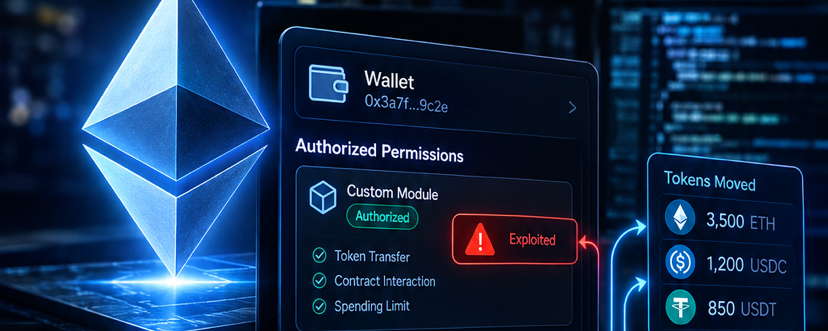
Instead, security researchers traced the exploit to a custom module that the wallet had already authorized. The module contained a weakness in its permission checks, allowing an outside caller to execute actions through the wallet’s authorized execution path.
Around 2,900 rsETH was drained.
But then another player entered the story.
An MEV bot known as “Yoink” detected the attack transaction in Ethereum’s public mempool and front-ran the original attacker, capturing the stolen tokens itself.
Reports say approximately 2,882 rsETH, worth around $7.8 million, ended up at another address.
Kelp DAO, the issuer of rsETH, said its core contracts remained secure and rsETH remained fully backed. As a precaution, the receiving address was temporarily paused for 24 hours while the incident was investigated.
The Bigger Lesson
This incident shows something many crypto users overlook:
Your wallet can have strong core security, but the contracts, modules, and permissions you authorize can still introduce serious risk.
Before approving a smart contract or wallet module, understand what permissions you’re giving it and what it can execute on your behalf.
In DeFi, “I didn’t share my private key” doesn’t always mean “I’m completely safe.”
Stay alert.‼️
#CryptoSecurity #Ethereum #ETH #Web3 #CryptoNews
🚨 $7.8M Ethereum Wallet Exploit: What Happened?
A Gnosis Safe wallet on Ethereum was exploited, putting approximately $7.73 million worth of rsETH at risk. The incident happened on September 15, 2026.
Here’s where the story gets interesting.
The attacker did not break Gnosis Safe’s core security or steal the wallet’s private keys.
Instead, security researchers traced the exploit to a custom module that the wallet had already authorized. The module contained a weakness in its permission checks, allowing an outside caller to execute actions through the wallet’s authorized execution path.
Around 2,900 rsETH was drained.
But then another player entered the story.
An MEV bot known as “Yoink” detected the attack transaction in Ethereum’s public mempool and front-ran the original attacker, capturing the stolen tokens itself.
Reports say approximately 2,882 rsETH, worth around $7.8 million, ended up at another address.
Kelp DAO, the issuer of rsETH, said its core contracts remained secure and rsETH remained fully backed. As a precaution, the receiving address was temporarily paused for 24 hours while the incident was investigated.
The Bigger Lesson
This incident shows something many crypto users overlook:
Your wallet can have strong core security, but the contracts, modules, and permissions you authorize can still introduce serious risk.
Before approving a smart contract or wallet module, understand what permissions you’re giving it and what it can execute on your behalf.
In DeFi, “I didn’t share my private key” doesn’t always mean “I’m completely safe.”
Stay alert.‼️
#CryptoSecurity #Ethereum #ETH #Web3 #CryptoNews
Here’s where the story gets interesting.
The attacker did not break Gnosis Safe’s core security or steal the wallet’s private keys.
Instead, security researchers traced the exploit to a custom module that the wallet had already authorized. The module contained a weakness in its permission checks, allowing an outside caller to execute actions through the wallet’s authorized execution path.
Around 2,900 rsETH was drained.
But then another player entered the story.
An MEV bot known as “Yoink” detected the attack transaction in Ethereum’s public mempool and front-ran the original attacker, capturing the stolen tokens itself.
Reports say approximately 2,882 rsETH, worth around $7.8 million, ended up at another address.
Kelp DAO, the issuer of rsETH, said its core contracts remained secure and rsETH remained fully backed. As a precaution, the receiving address was temporarily paused for 24 hours while the incident was investigated.
The Bigger Lesson
This incident shows something many crypto users overlook:
Your wallet can have strong core security, but the contracts, modules, and permissions you authorize can still introduce serious risk.
Before approving a smart contract or wallet module, understand what permissions you’re giving it and what it can execute on your behalf.
In DeFi, “I didn’t share my private key” doesn’t always mean “I’m completely safe.”
Stay alert.‼️
#CryptoSecurity #Ethereum #ETH #Web3 #CryptoNews
1
86
·
--
See translation
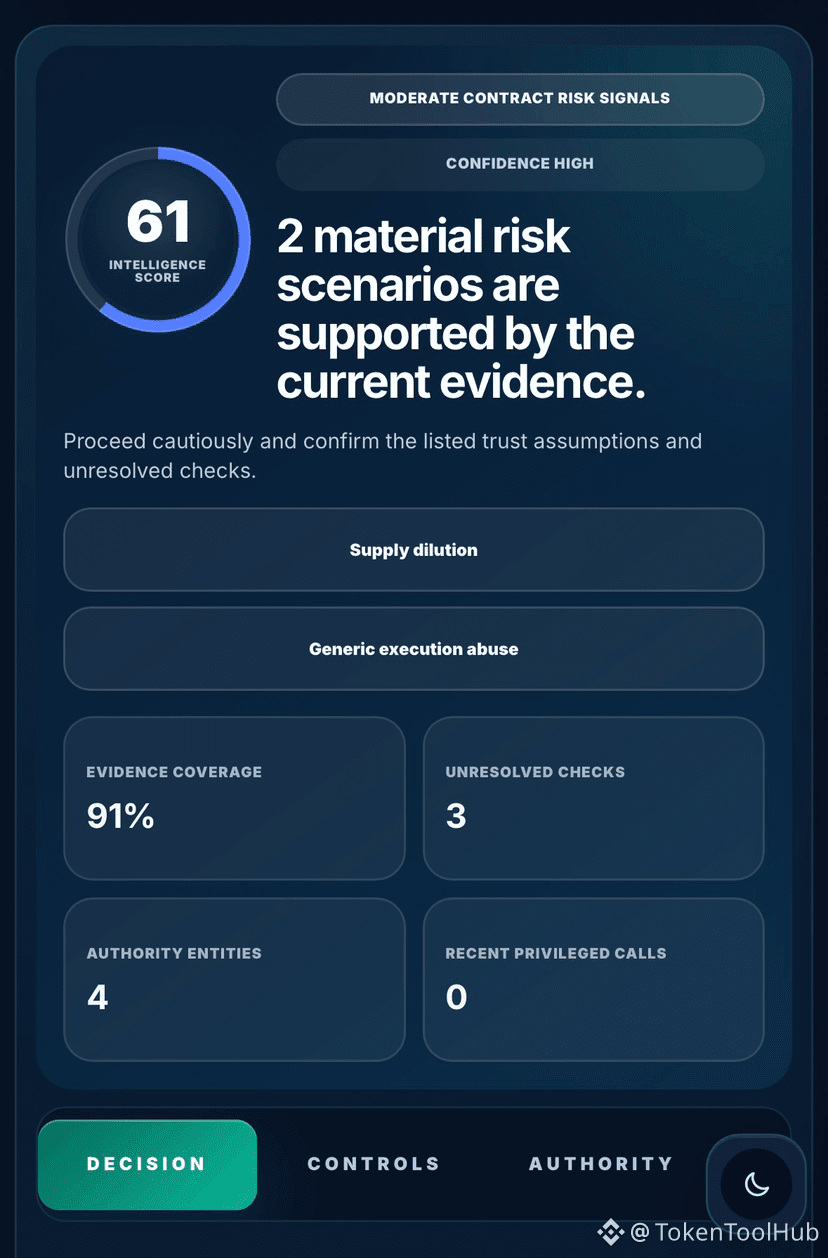
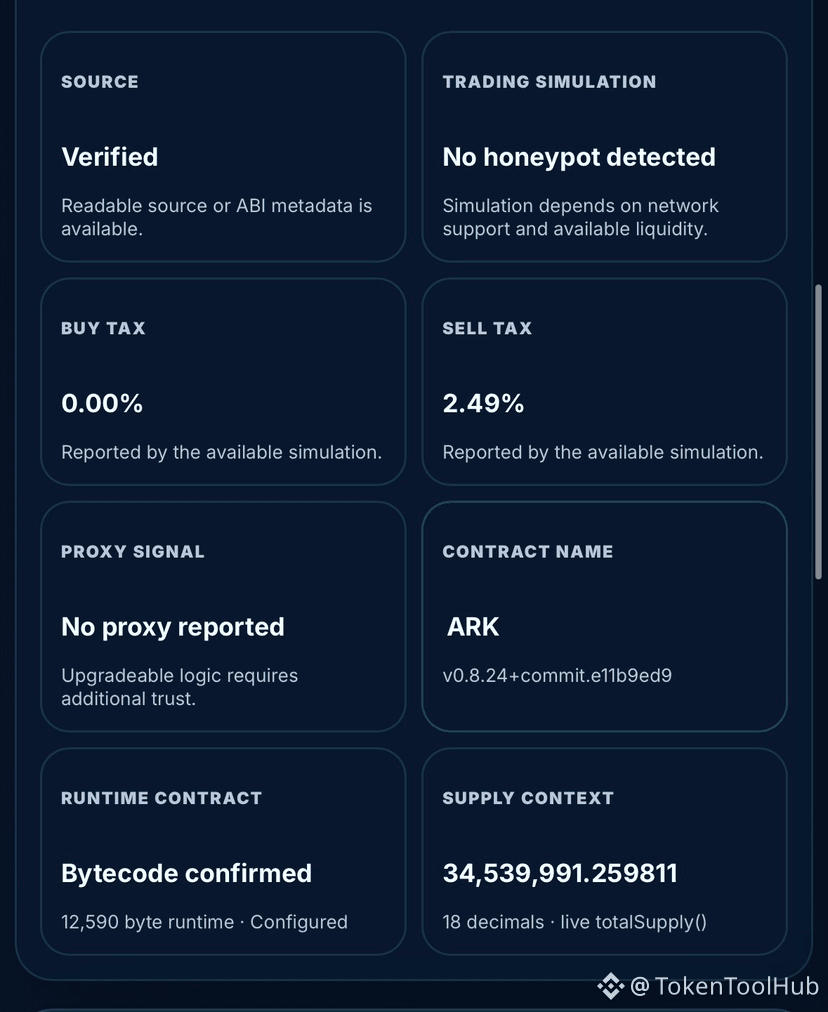
$ARK scored 100/100 on the quick public-risk scan.
Deeper TokenToolHub contract intelligence returned 61/100.
Contract:
0xCae117ca6Bc8A341D2E7207F30E180f0e5618B9D
Network: BNB Smart Chain
Key findings:
• Source verified
• Honeypot: Not detected
• Buy tax: 0%
• Sell tax: 2.49%
• Proxy: Not detected
• Current supply: ~34.54M $ARK
• Supply expansion: Present
• Role management: Present
• Wallet exemptions: Present
• Generic external execution: Present
• Supply reduction: Present
• Mutable fees: Not detected
• Trading switches: Not detected
• Wallet restrictions: Not detected
• Emergency pause: Not detected
• Upgrade authority: Not detected
Two material risk scenarios were identified:
• Possible supply dilution
• Possible generic execution abuse
The supply-expansion path is explicit:
mint(address,uint256)
The contract also uses role-based authority.
Detected roles include:
• MY_ROLE
• DEFAULT_ADMIN_ROLE
• previousAdminRole
The addresses controlling those roles were not resolved.
That matters because role administrators may potentially grant or revoke operational permissions, including permissions connected to minting.
The deeper scan also detected generic external execution.
Generic call or delegate-call capability can expand what privileged code may execute, depending on authorization and target restrictions.
That does not prove malicious execution is occurring. It means the authorization boundaries and callable targets need to be understood.
No proxy or upgrade path was detected.
The contract also did not expose mutable fee-setting, trading-switch, wallet-restriction or emergency-pause controls in the available analysis.
Recent contract activity, token-transfer activity and creation context were unavailable.
100/100 on the quick layer.
61/100 once the authority and execution model is examined.
Full $ARK scan:
https://tokentoolhub.com/token-safety-checker/?net=bsc&address=0xCae117ca6Bc8A341D2E7207F30E180f0e5618B9D
#BNBChain #crypto #Web3 #blockchain #CryptoSecurity
$ARK scored 100/100 on the quick public-risk scan.
Deeper TokenToolHub contract intelligence returned 61/100.
Contract:
0xCae117ca6Bc8A341D2E7207F30E180f0e5618B9D
Network: BNB Smart Chain
Key findings:
• Source verified
• Honeypot: Not detected
• Buy tax: 0%
• Sell tax: 2.49%
• Proxy: Not detected
• Current supply: ~34.54M $ARK
• Supply expansion: Present
• Role management: Present
• Wallet exemptions: Present
• Generic external execution: Present
• Supply reduction: Present
• Mutable fees: Not detected
• Trading switches: Not detected
• Wallet restrictions: Not detected
• Emergency pause: Not detected
• Upgrade authority: Not detected
Two material risk scenarios were identified:
• Possible supply dilution
• Possible generic execution abuse
The supply-expansion path is explicit:
mint(address,uint256)
The contract also uses role-based authority.
Detected roles include:
• MY_ROLE
• DEFAULT_ADMIN_ROLE
• previousAdminRole
The addresses controlling those roles were not resolved.
That matters because role administrators may potentially grant or revoke operational permissions, including permissions connected to minting.
The deeper scan also detected generic external execution.
Generic call or delegate-call capability can expand what privileged code may execute, depending on authorization and target restrictions.
That does not prove malicious execution is occurring. It means the authorization boundaries and callable targets need to be understood.
No proxy or upgrade path was detected.
The contract also did not expose mutable fee-setting, trading-switch, wallet-restriction or emergency-pause controls in the available analysis.
Recent contract activity, token-transfer activity and creation context were unavailable.
100/100 on the quick layer.
61/100 once the authority and execution model is examined.
Full $ARK scan:
https://tokentoolhub.com/token-safety-checker/?net=bsc&address=0xCae117ca6Bc8A341D2E7207F30E180f0e5618B9D
#BNBChain #crypto #Web3 #blockchain #CryptoSecurity
Deeper TokenToolHub contract intelligence returned 61/100.
Contract:
0xCae117ca6Bc8A341D2E7207F30E180f0e5618B9D
Network: BNB Smart Chain
Key findings:
• Source verified
• Honeypot: Not detected
• Buy tax: 0%
• Sell tax: 2.49%
• Proxy: Not detected
• Current supply: ~34.54M $ARK
• Supply expansion: Present
• Role management: Present
• Wallet exemptions: Present
• Generic external execution: Present
• Supply reduction: Present
• Mutable fees: Not detected
• Trading switches: Not detected
• Wallet restrictions: Not detected
• Emergency pause: Not detected
• Upgrade authority: Not detected
Two material risk scenarios were identified:
• Possible supply dilution
• Possible generic execution abuse
The supply-expansion path is explicit:
mint(address,uint256)
The contract also uses role-based authority.
Detected roles include:
• MY_ROLE
• DEFAULT_ADMIN_ROLE
• previousAdminRole
The addresses controlling those roles were not resolved.
That matters because role administrators may potentially grant or revoke operational permissions, including permissions connected to minting.
The deeper scan also detected generic external execution.
Generic call or delegate-call capability can expand what privileged code may execute, depending on authorization and target restrictions.
That does not prove malicious execution is occurring. It means the authorization boundaries and callable targets need to be understood.
No proxy or upgrade path was detected.
The contract also did not expose mutable fee-setting, trading-switch, wallet-restriction or emergency-pause controls in the available analysis.
Recent contract activity, token-transfer activity and creation context were unavailable.
100/100 on the quick layer.
61/100 once the authority and execution model is examined.
Full $ARK scan:
https://tokentoolhub.com/token-safety-checker/?net=bsc&address=0xCae117ca6Bc8A341D2E7207F30E180f0e5618B9D
#BNBChain #crypto #Web3 #blockchain #CryptoSecurity
74

·
--
See translation
We need to count words. Let's aim for ~170 words.
Write in warning tone, serious but not panic. Provide 3 actionable steps (like: 1. Create a dedicated wallet, 2. Limit permissions, 3. Regularly audit contracts). Provide steps clearly.
End with required line exactly.
Add final line with hashtags separated by spaces? The spec: "Final line: #DeFi #NFT #CryptoSecurity #StaySafe". Probably exactly that line with spaces between hashtags. We'll put that as final line.
Make sure total words count includes everything. Let's draft and count.
Draft:
"Warning: Every DeFi interaction carries risk. Using your main wallet for lending, swapping, or minting NFTs exposes your entire portfolio to a single malicious contract or phishing link. A compromised approval can drain funds instantly, and recovery is rarely possible.
Step 1 – Create a dedicated wallet solely for DeFi activity. Keep it funded only with the amount you are willing to risk.
Step 2 – Approve tokens and contracts only on that wallet. Revoke unused allowances regularly using a trusted revocation tool.
Step 3 – Before confirming any transaction, verify the contract address on a block explorer and read community audits. Never sign blind.
Treat this wallet like a sandbox: isolate, monitor, and limit exposure. Your primary holdings stay safe while you explore new protocols.
Share this
We need to count words. Let's aim for ~170 words.
Write in warning tone, serious but not panic. Provide 3 actionable steps (like: 1. Create a dedicated wallet, 2. Limit permissions, 3. Regularly audit contracts). Provide steps clearly.
End with required line exactly.
Add final line with hashtags separated by spaces? The spec: "Final line: #DeFi #NFT #CryptoSecurity #StaySafe". Probably exactly that line with spaces between hashtags. We'll put that as final line.
Make sure total words count includes everything. Let's draft and count.
Draft:
"Warning: Every DeFi interaction carries risk. Using your main wallet for lending, swapping, or minting NFTs exposes your entire portfolio to a single malicious contract or phishing link. A compromised approval can drain funds instantly, and recovery is rarely possible.
Step 1 – Create a dedicated wallet solely for DeFi activity. Keep it funded only with the amount you are willing to risk.
Step 2 – Approve tokens and contracts only on that wallet. Revoke unused allowances regularly using a trusted revocation tool.
Step 3 – Before confirming any transaction, verify the contract address on a block explorer and read community audits. Never sign blind.
Treat this wallet like a sandbox: isolate, monitor, and limit exposure. Your primary holdings stay safe while you explore new protocols.
Share this
Write in warning tone, serious but not panic. Provide 3 actionable steps (like: 1. Create a dedicated wallet, 2. Limit permissions, 3. Regularly audit contracts). Provide steps clearly.
End with required line exactly.
Add final line with hashtags separated by spaces? The spec: "Final line: #DeFi #NFT #CryptoSecurity #StaySafe". Probably exactly that line with spaces between hashtags. We'll put that as final line.
Make sure total words count includes everything. Let's draft and count.
Draft:
"Warning: Every DeFi interaction carries risk. Using your main wallet for lending, swapping, or minting NFTs exposes your entire portfolio to a single malicious contract or phishing link. A compromised approval can drain funds instantly, and recovery is rarely possible.
Step 1 – Create a dedicated wallet solely for DeFi activity. Keep it funded only with the amount you are willing to risk.
Step 2 – Approve tokens and contracts only on that wallet. Revoke unused allowances regularly using a trusted revocation tool.
Step 3 – Before confirming any transaction, verify the contract address on a block explorer and read community audits. Never sign blind.
Treat this wallet like a sandbox: isolate, monitor, and limit exposure. Your primary holdings stay safe while you explore new protocols.
Share this
24

·
--
See translation
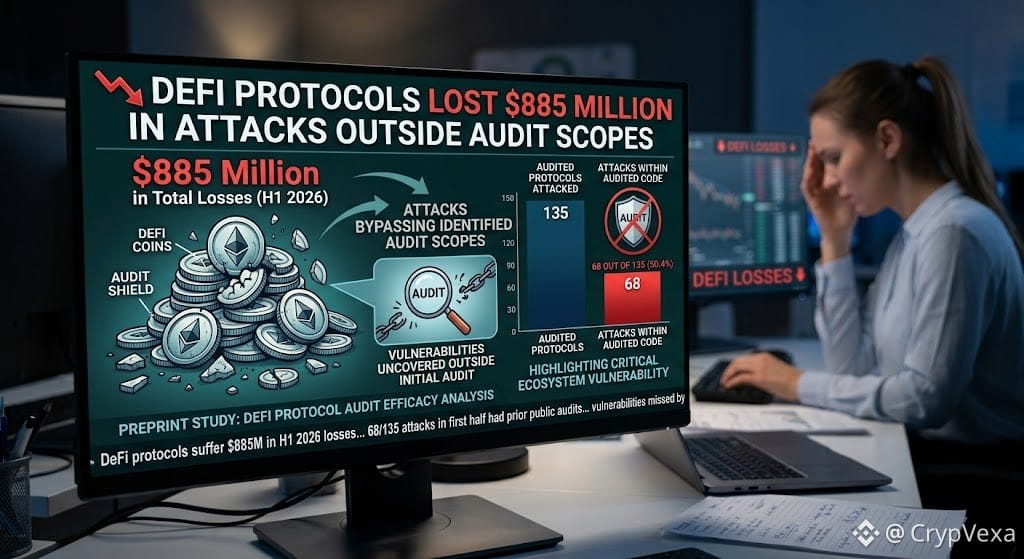
🚨 DeFi Attacks Expose $885M Security Gap
📉 A recent preprint study found that DeFi protocols lost around $885M in attacks during the first half of 2026 that occurred outside identified audit scopes.
🔍 Researchers reviewed 135 reported incidents, with 68 protocols having undergone public audits before the attacks.
⚠️ The findings highlight an important issue: being audited does not automatically mean a DeFi protocol is fully protected. Vulnerabilities can exist in areas that audits did not cover.
🛡️ Stronger audit coverage, continuous monitoring, testing, and better security practices could be critical as DeFi grows.
👀 Is the DeFi industry relying too heavily on audits instead of continuous security?
#DeFi #CryptoSecurity #Blockchain #CryptoNews
🚨 DeFi Attacks Expose $885M Security Gap
📉 A recent preprint study found that DeFi protocols lost around $885M in attacks during the first half of 2026 that occurred outside identified audit scopes.
🔍 Researchers reviewed 135 reported incidents, with 68 protocols having undergone public audits before the attacks.
⚠️ The findings highlight an important issue: being audited does not automatically mean a DeFi protocol is fully protected. Vulnerabilities can exist in areas that audits did not cover.
🛡️ Stronger audit coverage, continuous monitoring, testing, and better security practices could be critical as DeFi grows.
👀 Is the DeFi industry relying too heavily on audits instead of continuous security?
#DeFi #CryptoSecurity #Blockchain #CryptoNews
📉 A recent preprint study found that DeFi protocols lost around $885M in attacks during the first half of 2026 that occurred outside identified audit scopes.
🔍 Researchers reviewed 135 reported incidents, with 68 protocols having undergone public audits before the attacks.
⚠️ The findings highlight an important issue: being audited does not automatically mean a DeFi protocol is fully protected. Vulnerabilities can exist in areas that audits did not cover.
🛡️ Stronger audit coverage, continuous monitoring, testing, and better security practices could be critical as DeFi grows.
👀 Is the DeFi industry relying too heavily on audits instead of continuous security?
#DeFi #CryptoSecurity #Blockchain #CryptoNews
1
46

See translation
Just completed Day 1 of Binance Summer Camp! 🔐
Learned about phishing scams, withdrawal whitelist, anti-phishing code & how to verify real Binance channels with Binance Verify.
Staying SAFU is the first rule in crypto!
#BinanceSummerCamp #Binance #CryptoSecurity #SAFU
Just completed Day 1 of Binance Summer Camp! 🔐
Learned about phishing scams, withdrawal whitelist, anti-phishing code & how to verify real Binance channels with Binance Verify.
Staying SAFU is the first rule in crypto!
#BinanceSummerCamp #Binance #CryptoSecurity #SAFU
Learned about phishing scams, withdrawal whitelist, anti-phishing code & how to verify real Binance channels with Binance Verify.
Staying SAFU is the first rule in crypto!
#BinanceSummerCamp #Binance #CryptoSecurity #SAFU

72
·
--
See translation
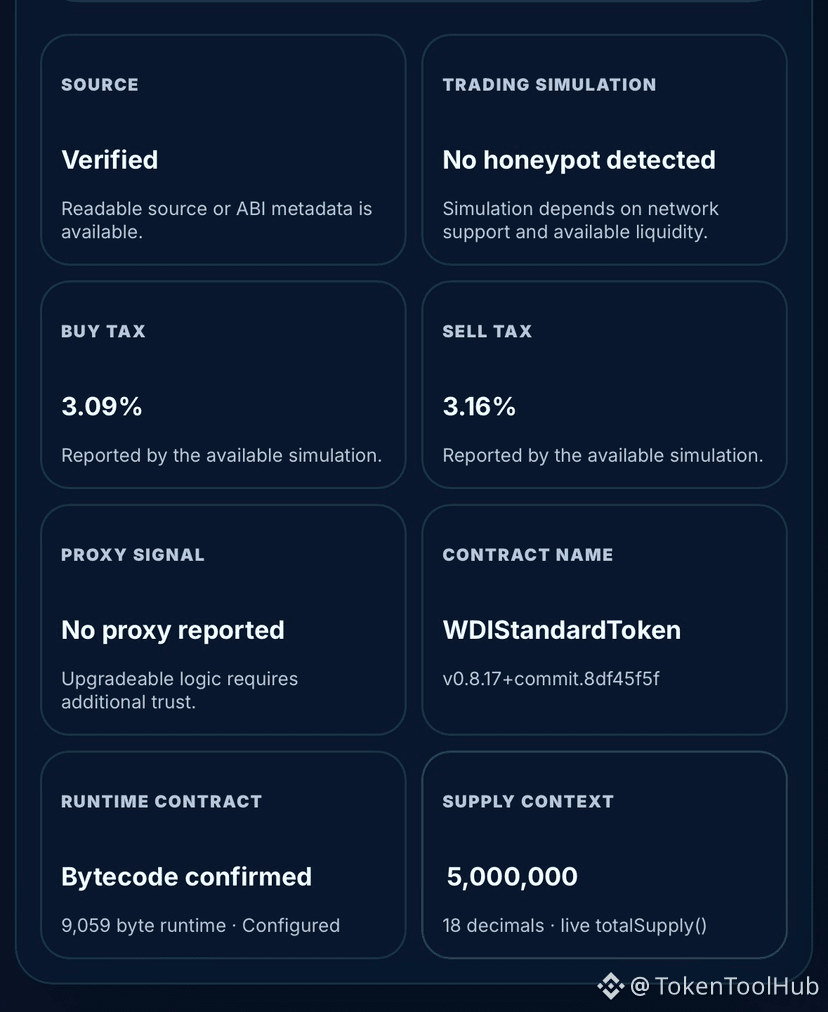
$NOI scored 100/100 on the quick public-risk scan.
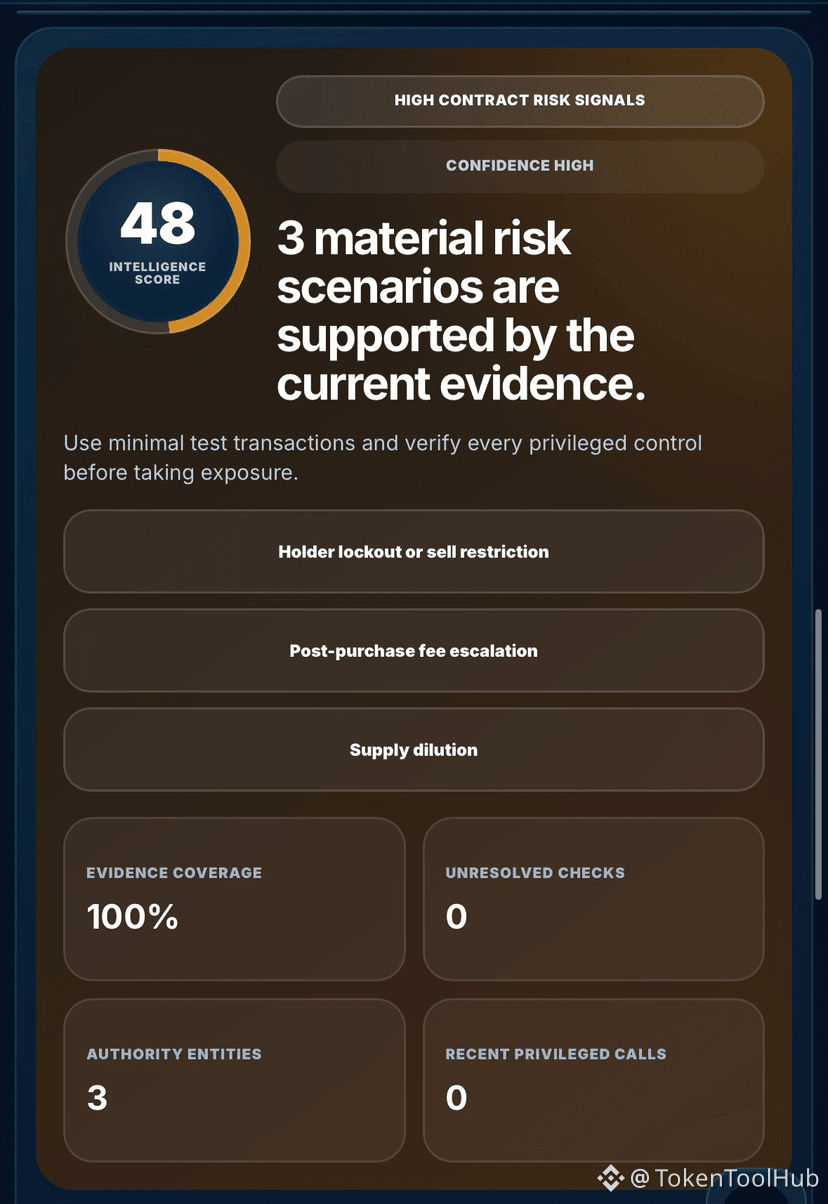
Deeper TokenToolHub contract intelligence returned 48/100.
Contract:
0x397f1551Aa7b22e382FED9f4c8E60F8F4968cf0F
Network: Ethereum
Key findings:
• Source verified
• Honeypot: Not detected
• Buy tax: 3.09%
• Sell tax: 3.16%
• Proxy: Not detected
• Total supply: 5M $NOI
• Transaction/wallet limits: Present
• Supply expansion: Present
• Supply reduction: Present
• Mutable fees/taxes: Present
• Ownership/admin control: Present
• Trading switches: Not detected
• Wallet restrictions: Not detected
• Emergency pause: Not detected
• Upgrade authority: Not detected
• Generic external execution: Not detected
Three material risk scenarios were identified:
• Possible holder lockout or sell restriction
• Possible supply dilution
• Possible post-purchase fee escalation
The current owner is:
0x7ddb29159db0964ae67fd7204b1038b4d254db69
That same address is also the contract deployer.
This matters because the ownership surface is still active while the verified code exposes mutable fees, transaction/wallet limits and supply-expansion capability.
The scan did not detect a separate blacklist, trading switch, emergency pause or upgrade path.
Recent activity showed:
• 24 contract transactions
• 14 unique callers
• 60 token transfers
• 0 failed transactions
• 0 recognized privileged calls
• 0 recent mint events
• 0 recent burn events
So the issue is not that malicious behavior was confirmed in the bounded activity window.
The issue is that material control capabilities remain available while an active owner is still resolved.
That is why a 100/100 quick score should not end the investigation.
Full $NOI scan:
https://tokentoolhub.com/token-safety-checker/?net=eth&address=0x397f1551Aa7b22e382FED9f4c8E60F8F4968cf0F
#Ethereum #crypto #Web3 #blockchain #CryptoSecurity
$NOI scored 100/100 on the quick public-risk scan.
Deeper TokenToolHub contract intelligence returned 48/100.
Contract:
0x397f1551Aa7b22e382FED9f4c8E60F8F4968cf0F
Network: Ethereum
Key findings:
• Source verified
• Honeypot: Not detected
• Buy tax: 3.09%
• Sell tax: 3.16%
• Proxy: Not detected
• Total supply: 5M $NOI
• Transaction/wallet limits: Present
• Supply expansion: Present
• Supply reduction: Present
• Mutable fees/taxes: Present
• Ownership/admin control: Present
• Trading switches: Not detected
• Wallet restrictions: Not detected
• Emergency pause: Not detected
• Upgrade authority: Not detected
• Generic external execution: Not detected
Three material risk scenarios were identified:
• Possible holder lockout or sell restriction
• Possible supply dilution
• Possible post-purchase fee escalation
The current owner is:
0x7ddb29159db0964ae67fd7204b1038b4d254db69
That same address is also the contract deployer.
This matters because the ownership surface is still active while the verified code exposes mutable fees, transaction/wallet limits and supply-expansion capability.
The scan did not detect a separate blacklist, trading switch, emergency pause or upgrade path.
Recent activity showed:
• 24 contract transactions
• 14 unique callers
• 60 token transfers
• 0 failed transactions
• 0 recognized privileged calls
• 0 recent mint events
• 0 recent burn events
So the issue is not that malicious behavior was confirmed in the bounded activity window.
The issue is that material control capabilities remain available while an active owner is still resolved.
That is why a 100/100 quick score should not end the investigation.
Full $NOI scan:
https://tokentoolhub.com/token-safety-checker/?net=eth&address=0x397f1551Aa7b22e382FED9f4c8E60F8F4968cf0F
#Ethereum #crypto #Web3 #blockchain #CryptoSecurity
Deeper TokenToolHub contract intelligence returned 48/100.
Contract:
0x397f1551Aa7b22e382FED9f4c8E60F8F4968cf0F
Network: Ethereum
Key findings:
• Source verified
• Honeypot: Not detected
• Buy tax: 3.09%
• Sell tax: 3.16%
• Proxy: Not detected
• Total supply: 5M $NOI
• Transaction/wallet limits: Present
• Supply expansion: Present
• Supply reduction: Present
• Mutable fees/taxes: Present
• Ownership/admin control: Present
• Trading switches: Not detected
• Wallet restrictions: Not detected
• Emergency pause: Not detected
• Upgrade authority: Not detected
• Generic external execution: Not detected
Three material risk scenarios were identified:
• Possible holder lockout or sell restriction
• Possible supply dilution
• Possible post-purchase fee escalation
The current owner is:
0x7ddb29159db0964ae67fd7204b1038b4d254db69
That same address is also the contract deployer.
This matters because the ownership surface is still active while the verified code exposes mutable fees, transaction/wallet limits and supply-expansion capability.
The scan did not detect a separate blacklist, trading switch, emergency pause or upgrade path.
Recent activity showed:
• 24 contract transactions
• 14 unique callers
• 60 token transfers
• 0 failed transactions
• 0 recognized privileged calls
• 0 recent mint events
• 0 recent burn events
So the issue is not that malicious behavior was confirmed in the bounded activity window.
The issue is that material control capabilities remain available while an active owner is still resolved.
That is why a 100/100 quick score should not end the investigation.
Full $NOI scan:
https://tokentoolhub.com/token-safety-checker/?net=eth&address=0x397f1551Aa7b22e382FED9f4c8E60F8F4968cf0F
#Ethereum #crypto #Web3 #blockchain #CryptoSecurity
2

·
--
See translation
🌞 Binance Summer Camp is on! 🏕️
Today’s lessons were a great reminder that security comes first in crypto 🔐
Always verify links, use 2FA, watch out for phishing, and never send crypto to “get more back” scams.
Learning + staying safe = a better crypto journey 🚀
#Binance #BinanceSummerCamp #CryptoSecurity #safu #BinanceSummerCamp
🌞 Binance Summer Camp is on! 🏕️
Today’s lessons were a great reminder that security comes first in crypto 🔐
Always verify links, use 2FA, watch out for phishing, and never send crypto to “get more back” scams.
Learning + staying safe = a better crypto journey 🚀
#Binance #BinanceSummerCamp #CryptoSecurity #safu #BinanceSummerCamp
Today’s lessons were a great reminder that security comes first in crypto 🔐
Always verify links, use 2FA, watch out for phishing, and never send crypto to “get more back” scams.
Learning + staying safe = a better crypto journey 🚀
#Binance #BinanceSummerCamp #CryptoSecurity #safu #BinanceSummerCamp

2
133

See translation
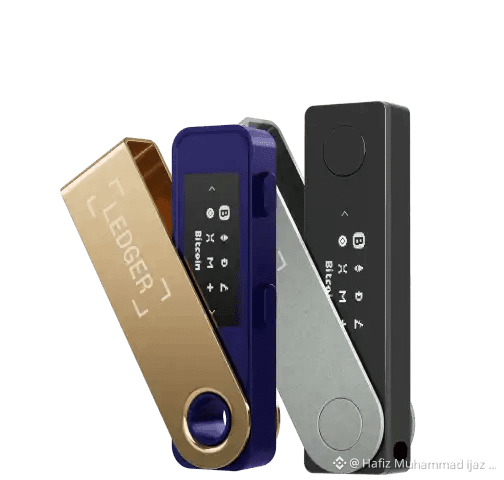
Ledger just hired a new security chief right as crypto hacks crossed $1.4 billion this year alone. Hardware wallets were supposed to be the "safe" option, but the attack surface keeps shifting from smart contracts to supply chains, phishing, and social engineering instead. Even the companies built to protect your keys are having to level up their own defenses.
#Ledger #CryptoSecurity #Web3
Ledger just hired a new security chief right as crypto hacks crossed $1.4 billion this year alone. Hardware wallets were supposed to be the "safe" option, but the attack surface keeps shifting from smart contracts to supply chains, phishing, and social engineering instead. Even the companies built to protect your keys are having to level up their own defenses.
#Ledger #CryptoSecurity #Web3
#Ledger #CryptoSecurity #Web3
35
·
--
See translation
Bots account for more than 60% of volume on $SOL and a massive share on $ETH, which means most organic-looking pumps you chase aren't coming from real traders at all.
That's the trap. You FOMO into a move thinking other people are buying, get rugged by an automated dump, and lose money because you never spotted the machines on the other side.
Platforms force those security checks before you continue for a reason. They verify you are not a bot so your account stays protected from spam, unauthorized trades, and automated attacks that drain funds. Skip the step or rush it and you hand bots an opening to take over, flood you with fake signals, or worse.
I've watched it play out too many times. Someone ignores a simple verification, clicks through, and suddenly their $BTC is gone to an exploit that never would have landed if they had just completed the check. On-chain the same bots sandwich your swaps and extract value before the transaction even confirms.
The risk only grows when you treat every candle as human emotion instead of code running at full speed.
Where do you think this goes from here with bots running more of the show?
#CryptoSecurity #OnChain #TradingRisks
Bots account for more than 60% of volume on $SOL and a massive share on $ETH , which means most organic-looking pumps you chase aren't coming from real traders at all.
That's the trap. You FOMO into a move thinking other people are buying, get rugged by an automated dump, and lose money because you never spotted the machines on the other side.
Platforms force those security checks before you continue for a reason. They verify you are not a bot so your account stays protected from spam, unauthorized trades, and automated attacks that drain funds. Skip the step or rush it and you hand bots an opening to take over, flood you with fake signals, or worse.
I've watched it play out too many times. Someone ignores a simple verification, clicks through, and suddenly their $BTC is gone to an exploit that never would have landed if they had just completed the check. On-chain the same bots sandwich your swaps and extract value before the transaction even confirms.
The risk only grows when you treat every candle as human emotion instead of code running at full speed.
Where do you think this goes from here with bots running more of the show?
#CryptoSecurity #OnChain #TradingRisks
That's the trap. You FOMO into a move thinking other people are buying, get rugged by an automated dump, and lose money because you never spotted the machines on the other side.
Platforms force those security checks before you continue for a reason. They verify you are not a bot so your account stays protected from spam, unauthorized trades, and automated attacks that drain funds. Skip the step or rush it and you hand bots an opening to take over, flood you with fake signals, or worse.
I've watched it play out too many times. Someone ignores a simple verification, clicks through, and suddenly their $BTC is gone to an exploit that never would have landed if they had just completed the check. On-chain the same bots sandwich your swaps and extract value before the transaction even confirms.
The risk only grows when you treat every candle as human emotion instead of code running at full speed.
Where do you think this goes from here with bots running more of the show?
#CryptoSecurity #OnChain #TradingRisks

9

See translation
Joined the Binance Summer Camp today! ⛺️ Essential lessons on account security, 2FA, and staying safe from phishing scams.
Always keep your funds secure before trading! 🔒🚀
#BinanceSummerCamp #Binance #CryptoSecurity
Joined the Binance Summer Camp today! ⛺️ Essential lessons on account security, 2FA, and staying safe from phishing scams.
Always keep your funds secure before trading! 🔒🚀
#BinanceSummerCamp #Binance #CryptoSecurity
Always keep your funds secure before trading! 🔒🚀
#BinanceSummerCamp #Binance #CryptoSecurity

1
75
Log in to explore more content
Join global crypto users on Binance Square
⚡️ Get latest and useful information about crypto.
💬 Trusted by the world’s largest crypto exchange.
👍 Discover real insights from verified creators.
Email / Phone number
Trending Topics
1
#FedRateWatch
686,918 views
3,251 Discussing
2
#EthereumFallsBelow$2400
976 views
34 Discussing
3
#USSenateBlocksClarityAct
4,563 views
163 Discussing
4
#BitcoinSlidesTo$76000
29,671 views
140 Discussing
5
#BitcoinReboundsTo$79K
64,806 views
416 Discussing
6
#StrategyMarketCapPassesFord
50,356 views
790 Discussing
7
#ClarityActOddsHalveOnPolymarket
83,023 views
696 Discussing
8
#US30YTreasuryYieldTops5.40%
43,183 views
448 Discussing
9
#BessentEndorsesFinalClarityActDraft
65,525 views
831 Discussing
10
#ZamaOpens16ConfidentialMorphoVaults
22,866 views
399 Discussing