
#securityalert
securityalert
518,174 views
1,264 Discussing
Hot
Latest

·
--
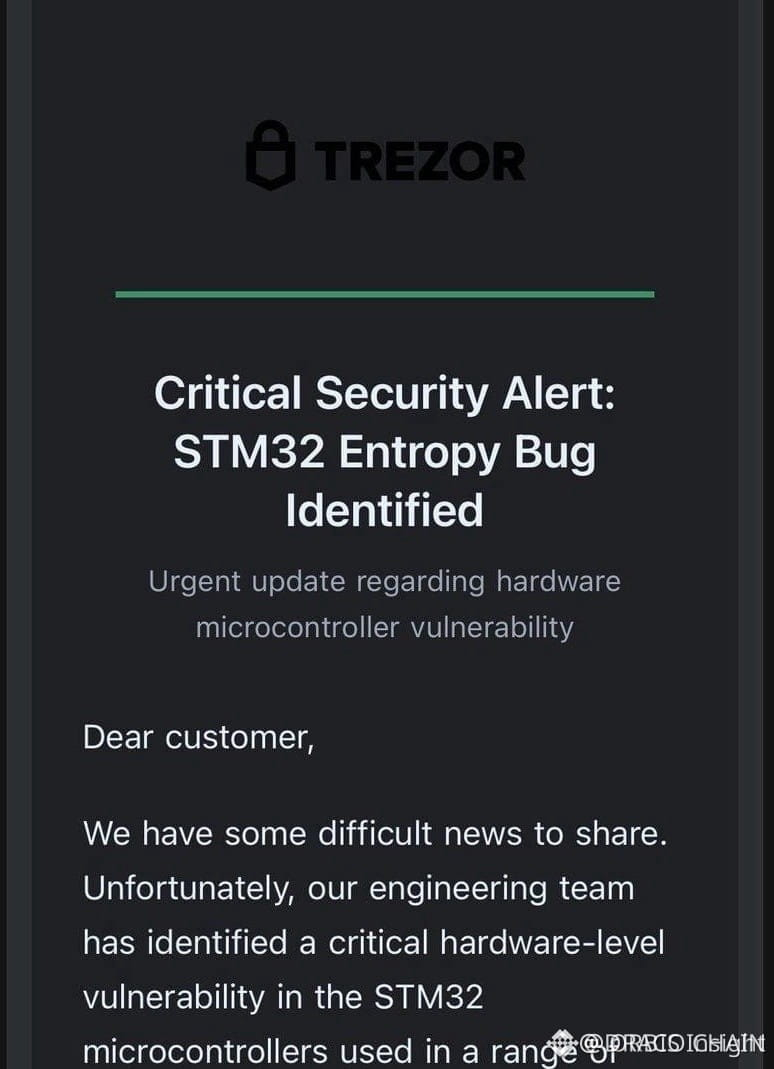
🔴 $VTHO ALERT: HACKERS SPREAD PHISHING EMAILS – SECURE YOUR WALLET NOW! 🚨
🦈 Smart money operators are already flagging a breach on Trezor’s email gateway; hackers are flooding inboxes with a “Critical Security Alert” lure. 📊 The phishing wave targets holders of $VTHO and $IOST , exploiting the recent soft‑sell sentiment to harvest assets in a single click.
💡 Immediate mitigation: abort any link or attachment from the alleged Trezor mail, revoke all unknown dApp connections, and rotate your device seed. 📌 A clean inbox is your first line of defense against the liquidity hunt that could otherwise turn your portfolio into a shark‑fed pool.
💬 Have you secured your hardware wallet and audited your dApp permissions? 👇
⚠️ Not financial advice. Always manage your risk. 🛡️
🏷️ #VTHO #SecurityAlert #Phishing #CryptoSafety
🛡️ 🔥
🔴 $VTHO ALERT: HACKERS SPREAD PHISHING EMAILS – SECURE YOUR WALLET NOW! 🚨
🦈 Smart money operators are already flagging a breach on Trezor’s email gateway; hackers are flooding inboxes with a “Critical Security Alert” lure. 📊 The phishing wave targets holders of $VTHO and $IOST , exploiting the recent soft‑sell sentiment to harvest assets in a single click.
💡 Immediate mitigation: abort any link or attachment from the alleged Trezor mail, revoke all unknown dApp connections, and rotate your device seed. 📌 A clean inbox is your first line of defense against the liquidity hunt that could otherwise turn your portfolio into a shark‑fed pool.
💬 Have you secured your hardware wallet and audited your dApp permissions? 👇
⚠️ Not financial advice. Always manage your risk. 🛡️
🏷️ #VTHO #SecurityAlert #Phishing #CryptoSafety
🛡️ 🔥
🦈 Smart money operators are already flagging a breach on Trezor’s email gateway; hackers are flooding inboxes with a “Critical Security Alert” lure. 📊 The phishing wave targets holders of $VTHO and $IOST , exploiting the recent soft‑sell sentiment to harvest assets in a single click.
💡 Immediate mitigation: abort any link or attachment from the alleged Trezor mail, revoke all unknown dApp connections, and rotate your device seed. 📌 A clean inbox is your first line of defense against the liquidity hunt that could otherwise turn your portfolio into a shark‑fed pool.
💬 Have you secured your hardware wallet and audited your dApp permissions? 👇
⚠️ Not financial advice. Always manage your risk. 🛡️
🏷️ #VTHO #SecurityAlert #Phishing #CryptoSafety
🛡️ 🔥
246

·
--
Article
Two-Factor Authentication Setup Guide (Part 1) 1. Why Two-Factor Authentication
Matters on Binance
If you hold crypto on Binance, your password is not
enough to keep your account safe. Data breaches,
phishing emails, and SIM-swap attacks happen every
day, and a password alone can be stolen, guessed, or
leaked. Two-factor authentication (2FA) adds a
second layer of verification, so even if someone gets
your password, they still can't log in or move your
funds without the second code.
Binance requires 2FA for withdrawals above certain
thresholds and strongly recommends it for every account. In this guide, you'll learn the different 2FA
methods Binance supports, how to set up each one,
and which option gives you the strongest protection.
2.Types of 2FA Available on Binance
Binance supports several authentication methods,
and you can enable more than one for layered
protection:
Google Authenticator (App-Based 2FA) —
generates a rotating 6-digit code every 30
seconds, considered one of the more secure and
widely used options
SMS Verification — sends a code to your
registered phone number
Email Verification — sends a code to your
registered email address
Passkey / Security Key (FIDO2) — hardware-based
authentication using a physical key or biometric
passkey
Binance/Google Authenticator combined with
anti-phishing codes — an added layer covered in a
separate guide
Security experts generally rank app-based or
hardware-based 2FA above SMS, since SMS can be
intercepted through SIM-swapping attacks. Where possible, use Google Authenticator or a passkey as
your primary method.
#SecurityAlert #Binance #TwoFactorAuthentication
Two-Factor Authentication Setup Guide (Part 1)
1. Why Two-Factor Authentication
Matters on Binance
If you hold crypto on Binance, your password is not
enough to keep your account safe. Data breaches,
phishing emails, and SIM-swap attacks happen every
day, and a password alone can be stolen, guessed, or
leaked. Two-factor authentication (2FA) adds a
second layer of verification, so even if someone gets
your password, they still can't log in or move your
funds without the second code.
Binance requires 2FA for withdrawals above certain
thresholds and strongly recommends it for every account. In this guide, you'll learn the different 2FA
methods Binance supports, how to set up each one,
and which option gives you the strongest protection.
2.Types of 2FA Available on Binance
Binance supports several authentication methods,
and you can enable more than one for layered
protection:
Google Authenticator (App-Based 2FA) —
generates a rotating 6-digit code every 30
seconds, considered one of the more secure and
widely used options
SMS Verification — sends a code to your
registered phone number
Email Verification — sends a code to your
registered email address
Passkey / Security Key (FIDO2) — hardware-based
authentication using a physical key or biometric
passkey
Binance/Google Authenticator combined with
anti-phishing codes — an added layer covered in a
separate guide
Security experts generally rank app-based or
hardware-based 2FA above SMS, since SMS can be
intercepted through SIM-swapping attacks. Where possible, use Google Authenticator or a passkey as
your primary method.
#SecurityAlert #Binance #TwoFactorAuthentication
Matters on Binance
If you hold crypto on Binance, your password is not
enough to keep your account safe. Data breaches,
phishing emails, and SIM-swap attacks happen every
day, and a password alone can be stolen, guessed, or
leaked. Two-factor authentication (2FA) adds a
second layer of verification, so even if someone gets
your password, they still can't log in or move your
funds without the second code.
Binance requires 2FA for withdrawals above certain
thresholds and strongly recommends it for every account. In this guide, you'll learn the different 2FA
methods Binance supports, how to set up each one,
and which option gives you the strongest protection.
2.Types of 2FA Available on Binance
Binance supports several authentication methods,
and you can enable more than one for layered
protection:
Google Authenticator (App-Based 2FA) —
generates a rotating 6-digit code every 30
seconds, considered one of the more secure and
widely used options
SMS Verification — sends a code to your
registered phone number
Email Verification — sends a code to your
registered email address
Passkey / Security Key (FIDO2) — hardware-based
authentication using a physical key or biometric
passkey
Binance/Google Authenticator combined with
anti-phishing codes — an added layer covered in a
separate guide
Security experts generally rank app-based or
hardware-based 2FA above SMS, since SMS can be
intercepted through SIM-swapping attacks. Where possible, use Google Authenticator or a passkey as
your primary method.
#SecurityAlert #Binance #TwoFactorAuthentication
107

·
--
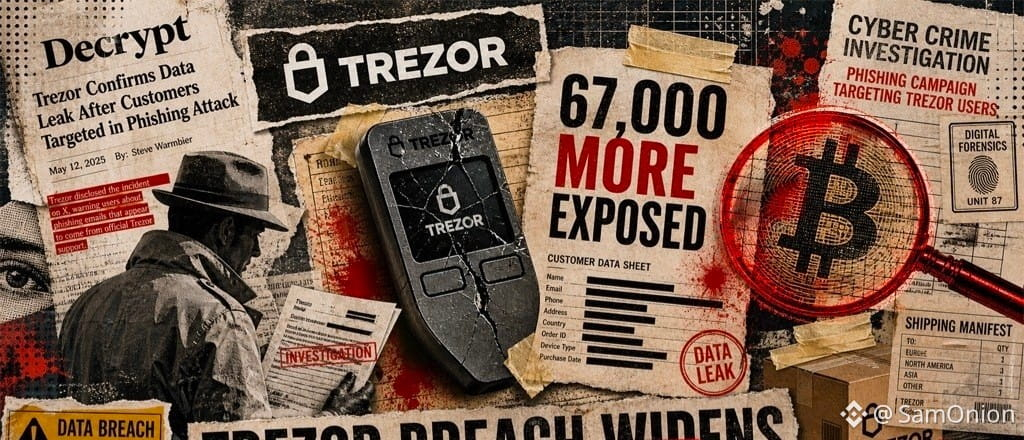
🚨 The disaster widens: Data for an additional 67,000 #Trezor customers exposed in a new deepening breach! 🔐 🚫 🔴
⚠️ Shipping and phone data in the dark web auction... and the company warns of an exceptional wave of phishing #scams ! ✅ 🔍 ⚖️ 😱
#BitcoinEthereumHitMultiMonthHighs
#SecurityAlert
$BTC
{spot}(BTCUSDT)
#zec
$ZEC
{spot}(ZECUSDT)
🚨 The disaster widens: Data for an additional 67,000 #Trezor customers exposed in a new deepening breach! 🔐 🚫 🔴
⚠️ Shipping and phone data in the dark web auction... and the company warns of an exceptional wave of phishing #scams ! ✅ 🔍 ⚖️ 😱
#BitcoinEthereumHitMultiMonthHighs
#SecurityAlert
$BTC
#zec
$ZEC
⚠️ Shipping and phone data in the dark web auction... and the company warns of an exceptional wave of phishing #scams ! ✅ 🔍 ⚖️ 😱
#BitcoinEthereumHitMultiMonthHighs
#SecurityAlert
$BTC
#zec
$ZEC

Good luck 🍀
From SamOnion
1
176

·
--
🚨 A layer-1 blockchain halted for 4 hours to stop a $4.9M exploit, patching binary-options settlement. Researchers link ~1,980 ETH to the incident address. While the team calls it an upgrade, the freeze suggests urgent security intervention. ETH holders should watch for on-chain movement from flagged wallets. Could this erode trust in the chain’s resilience?
#SecurityAlert
$ETH #TradingSignal #CryptoAnalysis
🚨 A layer-1 blockchain halted for 4 hours to stop a $4.9M exploit, patching binary-options settlement. Researchers link ~1,980 ETH to the incident address. While the team calls it an upgrade, the freeze suggests urgent security intervention. ETH holders should watch for on-chain movement from flagged wallets. Could this erode trust in the chain’s resilience?
#SecurityAlert
$ETH #TradingSignal #CryptoAnalysis
#SecurityAlert
$ETH #TradingSignal #CryptoAnalysis

4

·
--
Awesome, guys, there’s some hot news we need to analyze!
---
🔥 **SHOCKING MOVE: The U.S. government and partners “sweep clean” CRYPTO-STEALING MALWARE!** 🔥
Have you heard this? U.S. authorities have just taken a strong action, showing their determination to protect our crypto space!
Here are the key points you need to know:
* **Coordinated action:** The U.S. federal government, along with partners from the private sector, carried out an important campaign to disable a type of malware designed to steal cryptocurrency.
* **Damage has been contained:** The malware is believed to have redirected and seized around $150,000 USD in crypto over the past 8 years.
* **Important signal:** This activity once again confirms the strengthening cooperation between government and the private sector in the fight against cybercrime, especially in the digital asset space.
---
📈 **PERSONAL TAKE:**
Even though the $150,000 USD figure may seem small compared to the massive crypto market, this cooperation move by the U.S. government and private partners is extremely notable. It’s a clear sign that authorities are increasingly “upgrading” the fight against cybercrime in the crypto world.
In the long run, this could help build trust and improve the market’s legitimacy. However, investors, don’t ever forget: **Securing your personal wallet is the MOST IMPORTANT SHIELD!** Stay vigilant, double-check every transaction and information source to protect your assets. Campaigns like this are welcome, but each investor’s independence and caution are the key factors.
---
What do you think about this news? Is this the start of a bigger wave of malware crackdowns? Leave a comment, and don’t forget to hit **THE FOLLOW BUTTON** on my channel so you don’t miss the hottest updates and analyses about the crypto market!
#CryptoNews #TrendingNews #SecurityAlert #Bitcoin #ETH
Awesome, guys, there’s some hot news we need to analyze!
---
🔥 **SHOCKING MOVE: The U.S. government and partners “sweep clean” CRYPTO-STEALING MALWARE!** 🔥
Have you heard this? U.S. authorities have just taken a strong action, showing their determination to protect our crypto space!
Here are the key points you need to know:
* **Coordinated action:** The U.S. federal government, along with partners from the private sector, carried out an important campaign to disable a type of malware designed to steal cryptocurrency.
* **Damage has been contained:** The malware is believed to have redirected and seized around $150,000 USD in crypto over the past 8 years.
* **Important signal:** This activity once again confirms the strengthening cooperation between government and the private sector in the fight against cybercrime, especially in the digital asset space.
---
📈 **PERSONAL TAKE:**
Even though the $150,000 USD figure may seem small compared to the massive crypto market, this cooperation move by the U.S. government and private partners is extremely notable. It’s a clear sign that authorities are increasingly “upgrading” the fight against cybercrime in the crypto world.
In the long run, this could help build trust and improve the market’s legitimacy. However, investors, don’t ever forget: **Securing your personal wallet is the MOST IMPORTANT SHIELD!** Stay vigilant, double-check every transaction and information source to protect your assets. Campaigns like this are welcome, but each investor’s independence and caution are the key factors.
---
What do you think about this news? Is this the start of a bigger wave of malware crackdowns? Leave a comment, and don’t forget to hit **THE FOLLOW BUTTON** on my channel so you don’t miss the hottest updates and analyses about the crypto market!
#CryptoNews #TrendingNews #SecurityAlert #Bitcoin #ETH
---
🔥 **SHOCKING MOVE: The U.S. government and partners “sweep clean” CRYPTO-STEALING MALWARE!** 🔥
Have you heard this? U.S. authorities have just taken a strong action, showing their determination to protect our crypto space!
Here are the key points you need to know:
* **Coordinated action:** The U.S. federal government, along with partners from the private sector, carried out an important campaign to disable a type of malware designed to steal cryptocurrency.
* **Damage has been contained:** The malware is believed to have redirected and seized around $150,000 USD in crypto over the past 8 years.
* **Important signal:** This activity once again confirms the strengthening cooperation between government and the private sector in the fight against cybercrime, especially in the digital asset space.
---
📈 **PERSONAL TAKE:**
Even though the $150,000 USD figure may seem small compared to the massive crypto market, this cooperation move by the U.S. government and private partners is extremely notable. It’s a clear sign that authorities are increasingly “upgrading” the fight against cybercrime in the crypto world.
In the long run, this could help build trust and improve the market’s legitimacy. However, investors, don’t ever forget: **Securing your personal wallet is the MOST IMPORTANT SHIELD!** Stay vigilant, double-check every transaction and information source to protect your assets. Campaigns like this are welcome, but each investor’s independence and caution are the key factors.
---
What do you think about this news? Is this the start of a bigger wave of malware crackdowns? Leave a comment, and don’t forget to hit **THE FOLLOW BUTTON** on my channel so you don’t miss the hottest updates and analyses about the crypto market!
#CryptoNews #TrendingNews #SecurityAlert #Bitcoin #ETH
9

🚨 MASSIVE UNAPPROVED PASSWORD RESET WAVE TARGETS CRYPTO X ACCOUNTS $BTC 🛡️
A sudden wave of unauthorized password reset emails is hitting high-profile crypto accounts and industry insiders. 🚨 While it looks like bad actors are simply spamming public usernames to trigger reset flows, this probing often precedes targeted phishing attempts. 🛡️
No platform breach is confirmed, but smart money knows front-running risk is everything. 💡 Lock down your security now by enabling Password Reset Protect on X and double-checking your 2FA before the next volatility spike hits the market. 📌
💬 Have you already tightened your security settings today, or are you leaving your account exposed to phishing vectors? 👇
⚠️ Not financial advice. Always manage your risk. 🛡️
🏷️ #BTC #CryptoSecurity #SecurityAlert #Web3
🚨 🛡️
🚨 MASSIVE UNAPPROVED PASSWORD RESET WAVE TARGETS CRYPTO X ACCOUNTS $BTC 🛡️
A sudden wave of unauthorized password reset emails is hitting high-profile crypto accounts and industry insiders. 🚨 While it looks like bad actors are simply spamming public usernames to trigger reset flows, this probing often precedes targeted phishing attempts. 🛡️
No platform breach is confirmed, but smart money knows front-running risk is everything. 💡 Lock down your security now by enabling Password Reset Protect on X and double-checking your 2FA before the next volatility spike hits the market. 📌
💬 Have you already tightened your security settings today, or are you leaving your account exposed to phishing vectors? 👇
⚠️ Not financial advice. Always manage your risk. 🛡️
🏷️ #BTC #CryptoSecurity #SecurityAlert #Web3
🚨 🛡️
A sudden wave of unauthorized password reset emails is hitting high-profile crypto accounts and industry insiders. 🚨 While it looks like bad actors are simply spamming public usernames to trigger reset flows, this probing often precedes targeted phishing attempts. 🛡️
No platform breach is confirmed, but smart money knows front-running risk is everything. 💡 Lock down your security now by enabling Password Reset Protect on X and double-checking your 2FA before the next volatility spike hits the market. 📌
💬 Have you already tightened your security settings today, or are you leaving your account exposed to phishing vectors? 👇
⚠️ Not financial advice. Always manage your risk. 🛡️
🏷️ #BTC #CryptoSecurity #SecurityAlert #Web3
🚨 🛡️
18
·
--
🚨 MASSIVE SECURITY SURGE TARGETS TOP CRYPTO ACCOUNTS ON X — SAFEGUARD YOUR $BTC ! ⚡
Institutional operators and prominent industry voices are facing a sudden wave of automated password reset requests across social platforms. 🔍 While initial security analysis suggests automated username scraping rather than a protocol breach, targeted social engineering remains a primary vector for market disruption.
🛡️ Protecting operational security is just as crucial as managing liquidation thresholds when navigating high-volatility regimes. 💡 Smart capital must immediately toggle security protection settings and strengthen two-factor verification to neutralize potential access vectors before any market execution impact unfolds. 💬 Have you verified your account protection parameters today, or are you leaving your security to chance? 👇
⚠️ Not financial advice. Always manage your risk. 🛡️
🏷️ #BTC #SecurityAlert #Crypto #RiskManagement
🛡️ 🔒
🚨 MASSIVE SECURITY SURGE TARGETS TOP CRYPTO ACCOUNTS ON X — SAFEGUARD YOUR $BTC ! ⚡
Institutional operators and prominent industry voices are facing a sudden wave of automated password reset requests across social platforms. 🔍 While initial security analysis suggests automated username scraping rather than a protocol breach, targeted social engineering remains a primary vector for market disruption.
🛡️ Protecting operational security is just as crucial as managing liquidation thresholds when navigating high-volatility regimes. 💡 Smart capital must immediately toggle security protection settings and strengthen two-factor verification to neutralize potential access vectors before any market execution impact unfolds. 💬 Have you verified your account protection parameters today, or are you leaving your security to chance? 👇
⚠️ Not financial advice. Always manage your risk. 🛡️
🏷️ #BTC #SecurityAlert #Crypto #RiskManagement
🛡️ 🔒
Institutional operators and prominent industry voices are facing a sudden wave of automated password reset requests across social platforms. 🔍 While initial security analysis suggests automated username scraping rather than a protocol breach, targeted social engineering remains a primary vector for market disruption.
🛡️ Protecting operational security is just as crucial as managing liquidation thresholds when navigating high-volatility regimes. 💡 Smart capital must immediately toggle security protection settings and strengthen two-factor verification to neutralize potential access vectors before any market execution impact unfolds. 💬 Have you verified your account protection parameters today, or are you leaving your security to chance? 👇
⚠️ Not financial advice. Always manage your risk. 🛡️
🏷️ #BTC #SecurityAlert #Crypto #RiskManagement
🛡️ 🔒
1
20
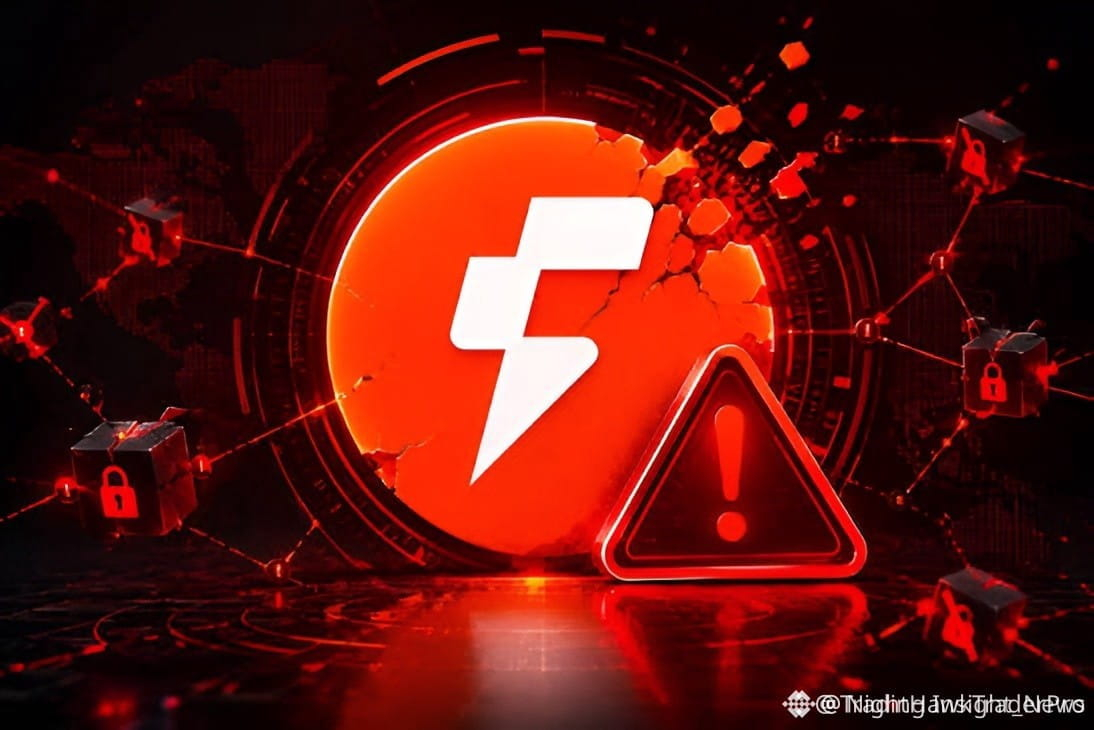
🚨 $FOGO MAINNET FROZEN FOR 46 HOURS AFTER MASSIVE 400M TOKEN EXPLOIT! 🩸
The $FOGO network remains completely deadlocked after attackers drained 10.3% of the circulating supply in a brutal exploit. 🚨 TVL sits frozen at $98.7 million while the core seven-validator council pulled the emergency plug to blacklist addresses, sparking intense debate around centralized control versus network security.
⚠️ With fake compensation traps flooding social feeds and mainnet restart times still completely unconfirmed, extreme caution is mandatory. 📊 Centralized circuit breakers protected remaining funds, but the trade-off is total chain stagnation. 🤔 Does a centralized validator kill switch ruin the core ethos of crypto, or is emergency control necessary? 👇
⚠️ Not financial advice. Always manage your risk. 🛡️
🏷️ #FOGO #CryptoNews #SecurityAlert #DeFi
🚨 📉
🚨 $FOGO MAINNET FROZEN FOR 46 HOURS AFTER MASSIVE 400M TOKEN EXPLOIT! 🩸
The $FOGO network remains completely deadlocked after attackers drained 10.3% of the circulating supply in a brutal exploit. 🚨 TVL sits frozen at $98.7 million while the core seven-validator council pulled the emergency plug to blacklist addresses, sparking intense debate around centralized control versus network security.
⚠️ With fake compensation traps flooding social feeds and mainnet restart times still completely unconfirmed, extreme caution is mandatory. 📊 Centralized circuit breakers protected remaining funds, but the trade-off is total chain stagnation. 🤔 Does a centralized validator kill switch ruin the core ethos of crypto, or is emergency control necessary? 👇
⚠️ Not financial advice. Always manage your risk. 🛡️
🏷️ #FOGO #CryptoNews #SecurityAlert #DeFi
🚨 📉
The $FOGO network remains completely deadlocked after attackers drained 10.3% of the circulating supply in a brutal exploit. 🚨 TVL sits frozen at $98.7 million while the core seven-validator council pulled the emergency plug to blacklist addresses, sparking intense debate around centralized control versus network security.
⚠️ With fake compensation traps flooding social feeds and mainnet restart times still completely unconfirmed, extreme caution is mandatory. 📊 Centralized circuit breakers protected remaining funds, but the trade-off is total chain stagnation. 🤔 Does a centralized validator kill switch ruin the core ethos of crypto, or is emergency control necessary? 👇
⚠️ Not financial advice. Always manage your risk. 🛡️
🏷️ #FOGO #CryptoNews #SecurityAlert #DeFi
🚨 📉
157

·
--
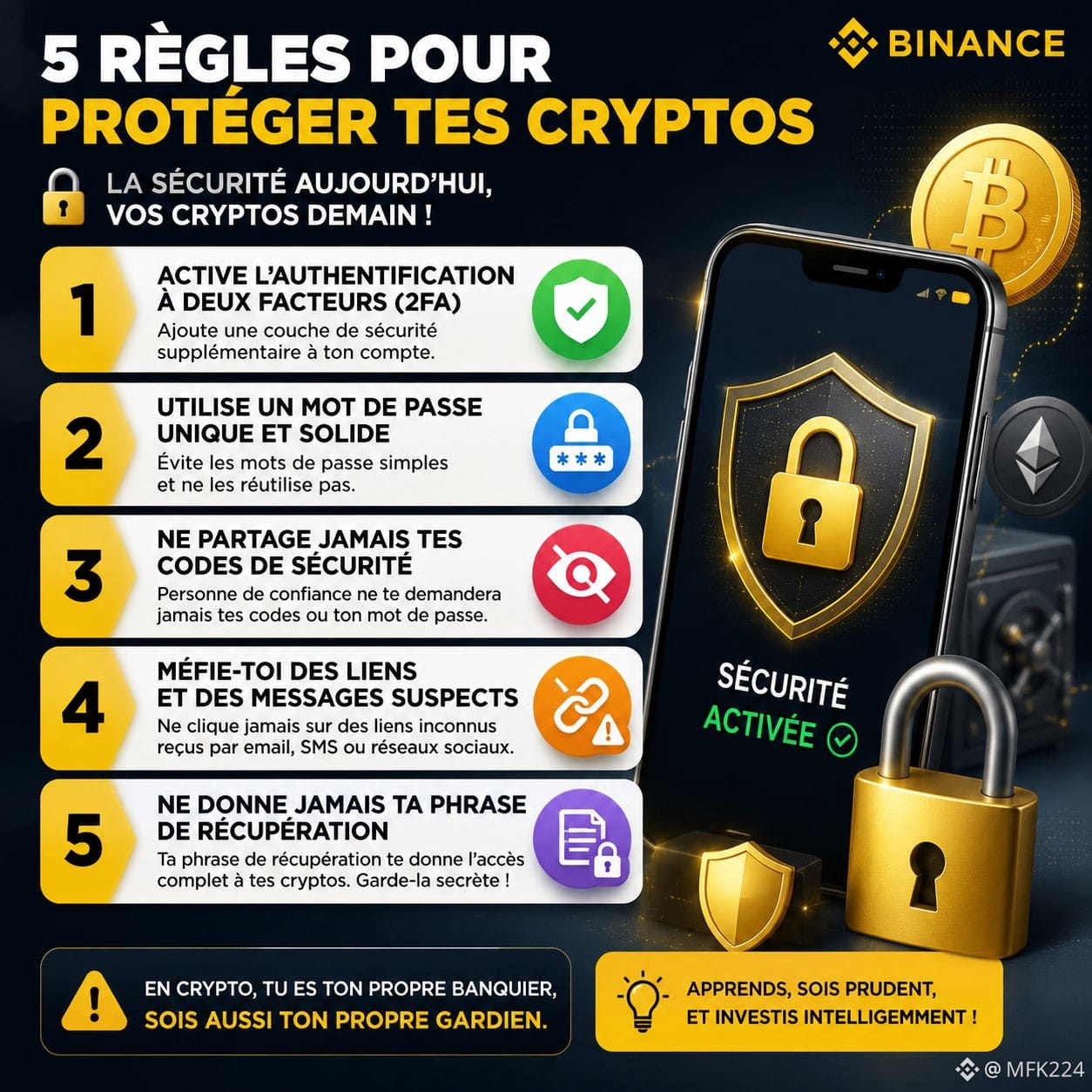
🚨 5 RULES TO PROTECT YOUR CRYPTOS
You can make money in crypto and lose everything if your account is poorly secured.
Here are 5 simple rules :
1️⃣ Enable two-factor authentication.
2️⃣ Use a unique, strong password.
3️⃣ Never share your security codes.
4️⃣ Be careful with links you receive via private message.
5️⃣ Never give your recovery phrase to anyone.
💡 In crypto, security should come before the search for returns.
👉 Which rule would you add to this list?
#CryptoSecurity #Binance #cryptoeducation #SecurityAlert #cryptouniverseofficial
🚨 5 RULES TO PROTECT YOUR CRYPTOS
You can make money in crypto and lose everything if your account is poorly secured.
Here are 5 simple rules :
1️⃣ Enable two-factor authentication.
2️⃣ Use a unique, strong password.
3️⃣ Never share your security codes.
4️⃣ Be careful with links you receive via private message.
5️⃣ Never give your recovery phrase to anyone.
💡 In crypto, security should come before the search for returns.
👉 Which rule would you add to this list?
#CryptoSecurity #Binance #cryptoeducation #SecurityAlert #cryptouniverseofficial
You can make money in crypto and lose everything if your account is poorly secured.
Here are 5 simple rules :
1️⃣ Enable two-factor authentication.
2️⃣ Use a unique, strong password.
3️⃣ Never share your security codes.
4️⃣ Be careful with links you receive via private message.
5️⃣ Never give your recovery phrase to anyone.
💡 In crypto, security should come before the search for returns.
👉 Which rule would you add to this list?
#CryptoSecurity #Binance #cryptoeducation #SecurityAlert #cryptouniverseofficial
1
1
164
🚨 400 MILLION $FOGO TOKENS SIPHONED IN FOUNDATION BREACH AS ATTACKERS STRIKE! 💣
The Fogo Foundation just suffered a security breach, with attackers illicitly transferring roughly 400 million $FOGO tokens to an unknown address. 🚨 While the SVM Layer 1 network itself remains fully operational and uncompromised, market participants should prepare for potential sell pressure if these stolen funds hit secondary liquidity. 📊
Top-tier exchanges have been alerted and forensic investigators are on the case, but key order books could face turbulence in the short term. 🔍 Traders watching momentum should track on-chain movements carefully before stepping into any relief bid. 🤔 How are you positioning around $FOGO while the foundation works to contain the fallout? 👇
⚠️ Not financial advice. Always manage your risk. 🛡️
🏷️ #FOGO #SecurityAlert #Layer1 #Crypto
📉 ⚠️
🚨 400 MILLION $FOGO TOKENS SIPHONED IN FOUNDATION BREACH AS ATTACKERS STRIKE! 💣
The Fogo Foundation just suffered a security breach, with attackers illicitly transferring roughly 400 million $FOGO tokens to an unknown address. 🚨 While the SVM Layer 1 network itself remains fully operational and uncompromised, market participants should prepare for potential sell pressure if these stolen funds hit secondary liquidity. 📊
Top-tier exchanges have been alerted and forensic investigators are on the case, but key order books could face turbulence in the short term. 🔍 Traders watching momentum should track on-chain movements carefully before stepping into any relief bid. 🤔 How are you positioning around $FOGO while the foundation works to contain the fallout? 👇
⚠️ Not financial advice. Always manage your risk. 🛡️
🏷️ #FOGO #SecurityAlert #Layer1 #Crypto
📉 ⚠️
The Fogo Foundation just suffered a security breach, with attackers illicitly transferring roughly 400 million $FOGO tokens to an unknown address. 🚨 While the SVM Layer 1 network itself remains fully operational and uncompromised, market participants should prepare for potential sell pressure if these stolen funds hit secondary liquidity. 📊
Top-tier exchanges have been alerted and forensic investigators are on the case, but key order books could face turbulence in the short term. 🔍 Traders watching momentum should track on-chain movements carefully before stepping into any relief bid. 🤔 How are you positioning around $FOGO while the foundation works to contain the fallout? 👇
⚠️ Not financial advice. Always manage your risk. 🛡️
🏷️ #FOGO #SecurityAlert #Layer1 #Crypto
📉 ⚠️
85
·
--
Bullish
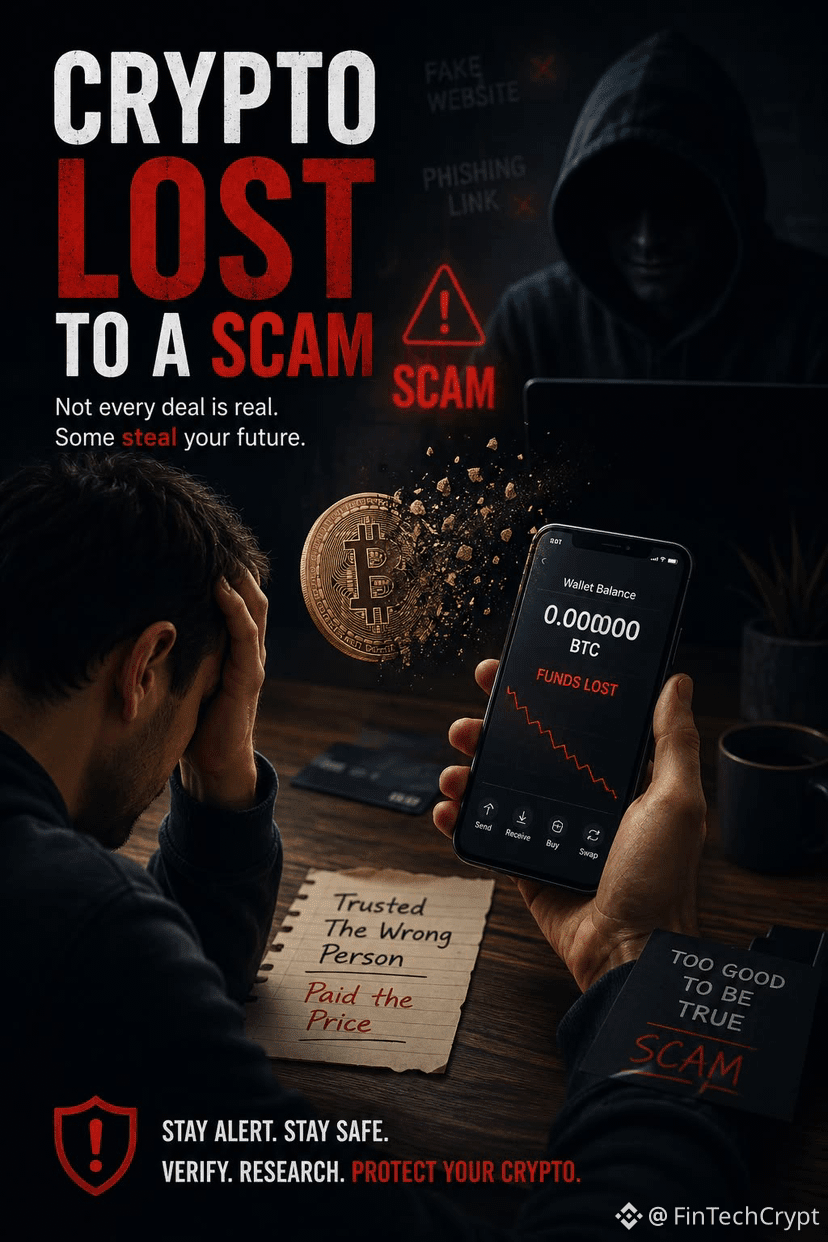
🚨 CRYPTO SCAMS: THE TRAP ISN’T ALWAYS OBVIOUS
“Your Binance account is at risk. Click here immediately.”
The message looks official.
The website looks like Binance.
And yet… it could be a scam.
Scammers aren't always trying to hack their way into your account. Sometimes, they're trying to convince you to give them access yourself.
🎣 Phishing. Fake support agents. Fake airdrops. Deepfakes.
With AI making scams more convincing than ever, staying alert has never been more important.
🛡️ Before taking any action, remember these 4 rules:
🔹 Never act under pressure. Urgency is one of a scammer's favorite weapons.
🔹 Always check the URL before logging in. One letter can make all the difference.
🔹 Never share your password, private key, or seed phrase.
🔹 Enable 2FA and use all available security features on your account.
⚠️ Golden rule: If someone asks you to send crypto to receive more crypto in return, take a step back.
In crypto, confirmed transactions are generally irreversible. Your first line of defense is you.
🔐 Stay alert. Stay #SAFU🙏 #2FA $NVDA.US $AAPLB #SecurityAlert
*This content is for educational and informational purposes only and does not constitute financial advice.*
🚨 CRYPTO SCAMS: THE TRAP ISN’T ALWAYS OBVIOUS
“Your Binance account is at risk. Click here immediately.”
The message looks official.
The website looks like Binance.
And yet… it could be a scam.
Scammers aren't always trying to hack their way into your account. Sometimes, they're trying to convince you to give them access yourself.
🎣 Phishing. Fake support agents. Fake airdrops. Deepfakes.
With AI making scams more convincing than ever, staying alert has never been more important.
🛡️ Before taking any action, remember these 4 rules:
🔹 Never act under pressure. Urgency is one of a scammer's favorite weapons.
🔹 Always check the URL before logging in. One letter can make all the difference.
🔹 Never share your password, private key, or seed phrase.
🔹 Enable 2FA and use all available security features on your account.
⚠️ Golden rule: If someone asks you to send crypto to receive more crypto in return, take a step back.
In crypto, confirmed transactions are generally irreversible. Your first line of defense is you.
🔐 Stay alert. Stay #SAFU🙏 #2FA $NVDA.US $AAPLB #SecurityAlert
*This content is for educational and informational purposes only and does not constitute financial advice.*
“Your Binance account is at risk. Click here immediately.”
The message looks official.
The website looks like Binance.
And yet… it could be a scam.
Scammers aren't always trying to hack their way into your account. Sometimes, they're trying to convince you to give them access yourself.
🎣 Phishing. Fake support agents. Fake airdrops. Deepfakes.
With AI making scams more convincing than ever, staying alert has never been more important.
🛡️ Before taking any action, remember these 4 rules:
🔹 Never act under pressure. Urgency is one of a scammer's favorite weapons.
🔹 Always check the URL before logging in. One letter can make all the difference.
🔹 Never share your password, private key, or seed phrase.
🔹 Enable 2FA and use all available security features on your account.
⚠️ Golden rule: If someone asks you to send crypto to receive more crypto in return, take a step back.
In crypto, confirmed transactions are generally irreversible. Your first line of defense is you.
🔐 Stay alert. Stay #SAFU🙏 #2FA $NVDA.US $AAPLB #SecurityAlert
*This content is for educational and informational purposes only and does not constitute financial advice.*
131

·
--
🚨 CRITICAL SECURITY THREAT TARGETS $BTC AND WEB3 WALLETS VIA MALICIOUS EXTENSIONS! ⚠️
Institutional capital protection begins with absolute operational security across your interface layer. 🔍 Cyber forensics firm Socket has uncovered a broad breach campaign involving 77 compromised Firefox extensions impersonating primary Web3 wallet providers like Rabby and TronLink to capture private seeds.
Attackers disguised malicious payloads inside harmless utility tools, deploying trojan updates to intercept critical seed phrases. 💡 Uninstalling the extension does not revoke compromised credentials, rendering old addresses permanently unsafe and requiring immediate asset migration to clean storage.
💬 Have you audited your operational setup and extension permissions to protect your portfolio? 👇
⚠️ Not financial advice. Always manage your risk. 🛡️
🏷️ #BTC #Web3Security #Crypto #SecurityAlert
🛡️ 🔍
🚨 CRITICAL SECURITY THREAT TARGETS $BTC AND WEB3 WALLETS VIA MALICIOUS EXTENSIONS! ⚠️
Institutional capital protection begins with absolute operational security across your interface layer. 🔍 Cyber forensics firm Socket has uncovered a broad breach campaign involving 77 compromised Firefox extensions impersonating primary Web3 wallet providers like Rabby and TronLink to capture private seeds.
Attackers disguised malicious payloads inside harmless utility tools, deploying trojan updates to intercept critical seed phrases. 💡 Uninstalling the extension does not revoke compromised credentials, rendering old addresses permanently unsafe and requiring immediate asset migration to clean storage.
💬 Have you audited your operational setup and extension permissions to protect your portfolio? 👇
⚠️ Not financial advice. Always manage your risk. 🛡️
🏷️ #BTC #Web3Security #Crypto #SecurityAlert
🛡️ 🔍
Institutional capital protection begins with absolute operational security across your interface layer. 🔍 Cyber forensics firm Socket has uncovered a broad breach campaign involving 77 compromised Firefox extensions impersonating primary Web3 wallet providers like Rabby and TronLink to capture private seeds.
Attackers disguised malicious payloads inside harmless utility tools, deploying trojan updates to intercept critical seed phrases. 💡 Uninstalling the extension does not revoke compromised credentials, rendering old addresses permanently unsafe and requiring immediate asset migration to clean storage.
💬 Have you audited your operational setup and extension permissions to protect your portfolio? 👇
⚠️ Not financial advice. Always manage your risk. 🛡️
🏷️ #BTC #Web3Security #Crypto #SecurityAlert
🛡️ 🔍
28
🚨 CRITICAL SECURITY ALERT ISSUED FOR $ATOM EVM ECOSYSTEM AS VALIDATORS PAUSE CHAINS! 🔴
Cosmos Labs has confirmed an active security breach compromising their EVM module, prompting an urgent directive for partner validators to halt chain operations immediately. 🔍 Engineering teams are deep in the trenches managing containment while the broader network braces for the fallout. 🚨
When infrastructure faces a live vector attack, capital preservation takes precedence over speculative plays until the post-incident postmortem is live. 💡 Smart capital is stepping back to let the order flow stabilize before touching this sector. 💬 Are you holding positions on affected EVM chains or shifting collateral to cold storage until resolution? 👇
⚠️ Not financial advice. Always manage your risk. 🛡️
🏷️ #ATOM #Cosmos #SecurityAlert #CryptoNews
⚠️ 🛡️
🚨 CRITICAL SECURITY ALERT ISSUED FOR $ATOM EVM ECOSYSTEM AS VALIDATORS PAUSE CHAINS! 🔴
Cosmos Labs has confirmed an active security breach compromising their EVM module, prompting an urgent directive for partner validators to halt chain operations immediately. 🔍 Engineering teams are deep in the trenches managing containment while the broader network braces for the fallout. 🚨
When infrastructure faces a live vector attack, capital preservation takes precedence over speculative plays until the post-incident postmortem is live. 💡 Smart capital is stepping back to let the order flow stabilize before touching this sector. 💬 Are you holding positions on affected EVM chains or shifting collateral to cold storage until resolution? 👇
⚠️ Not financial advice. Always manage your risk. 🛡️
🏷️ #ATOM #Cosmos #SecurityAlert #CryptoNews
⚠️ 🛡️
Cosmos Labs has confirmed an active security breach compromising their EVM module, prompting an urgent directive for partner validators to halt chain operations immediately. 🔍 Engineering teams are deep in the trenches managing containment while the broader network braces for the fallout. 🚨
When infrastructure faces a live vector attack, capital preservation takes precedence over speculative plays until the post-incident postmortem is live. 💡 Smart capital is stepping back to let the order flow stabilize before touching this sector. 💬 Are you holding positions on affected EVM chains or shifting collateral to cold storage until resolution? 👇
⚠️ Not financial advice. Always manage your risk. 🛡️
🏷️ #ATOM #Cosmos #SecurityAlert #CryptoNews
⚠️ 🛡️
68

·
--
🚨 SAFEPAL VENDOR BREACH EXPOSES 40K CUSTOMERS WHILE $SFP FUNDS REMAIN SAFE! 🛡️
A third-party supply chain flaw just leaked personal shipping details for 39,798 hardware wallet buyers. While private keys and seed phrases remain untouched in cold storage, physical delivery data is now floating in bad actors' hands. 🔍
This highlights the classic supply chain blind spot where e-commerce logistics expose offline holders to targeted phishing and social engineering. Smart money stays alert when fake brand communications inevitably start flooding inboxes. 💡
💬 Are you scrubbing your digital footprint when ordering hardware security, or do you rely entirely on cold storage silicon? 👇
⚠️ Not financial advice. Always manage your risk. 🛡️
🏷️ #SFP #SecurityAlert #CryptoSecurity #SafePal
🎯 🛡️
🚨 SAFEPAL VENDOR BREACH EXPOSES 40K CUSTOMERS WHILE $SFP FUNDS REMAIN SAFE! 🛡️
A third-party supply chain flaw just leaked personal shipping details for 39,798 hardware wallet buyers. While private keys and seed phrases remain untouched in cold storage, physical delivery data is now floating in bad actors' hands. 🔍
This highlights the classic supply chain blind spot where e-commerce logistics expose offline holders to targeted phishing and social engineering. Smart money stays alert when fake brand communications inevitably start flooding inboxes. 💡
💬 Are you scrubbing your digital footprint when ordering hardware security, or do you rely entirely on cold storage silicon? 👇
⚠️ Not financial advice. Always manage your risk. 🛡️
🏷️ #SFP #SecurityAlert #CryptoSecurity #SafePal
🎯 🛡️
A third-party supply chain flaw just leaked personal shipping details for 39,798 hardware wallet buyers. While private keys and seed phrases remain untouched in cold storage, physical delivery data is now floating in bad actors' hands. 🔍
This highlights the classic supply chain blind spot where e-commerce logistics expose offline holders to targeted phishing and social engineering. Smart money stays alert when fake brand communications inevitably start flooding inboxes. 💡
💬 Are you scrubbing your digital footprint when ordering hardware security, or do you rely entirely on cold storage silicon? 👇
⚠️ Not financial advice. Always manage your risk. 🛡️
🏷️ #SFP #SecurityAlert #CryptoSecurity #SafePal
🎯 🛡️
38

🚨 $BMX SOCIAL MEDIA COMPROMISED AFTER MAJOR REGIONAL ACCOUNT BREACH ALERT! ⚠️
A major regional official account of a top-tier exchange was confirmed hacked today, with unauthorized posts going live from outside former or current staff hands. 🚨 Founders stepped in quickly to clarify that recent announcements from that channel are completely compromised.
When social vectors get hijacked, malicious links and fake token promos usually flood the feed to trap unsuspecting traders. 🛡️ Always double-check contract addresses, verify news through primary channels, and keep your risk exposure tight whenever high-profile accounts print rogue updates.
🔍 Security stays the ultimate edge in these markets—protect your capital before chasing the next candle. 💬 How do you double-check announcements before taking action on unexpected market headlines? 👇
⚠️ Not financial advice. Always manage your risk. 🛡️
🏷️ #BMX #SecurityAlert #CryptoNews #RiskManagement
⚡ 🛡️
🚨 $BMX SOCIAL MEDIA COMPROMISED AFTER MAJOR REGIONAL ACCOUNT BREACH ALERT! ⚠️
A major regional official account of a top-tier exchange was confirmed hacked today, with unauthorized posts going live from outside former or current staff hands. 🚨 Founders stepped in quickly to clarify that recent announcements from that channel are completely compromised.
When social vectors get hijacked, malicious links and fake token promos usually flood the feed to trap unsuspecting traders. 🛡️ Always double-check contract addresses, verify news through primary channels, and keep your risk exposure tight whenever high-profile accounts print rogue updates.
🔍 Security stays the ultimate edge in these markets—protect your capital before chasing the next candle. 💬 How do you double-check announcements before taking action on unexpected market headlines? 👇
⚠️ Not financial advice. Always manage your risk. 🛡️
🏷️ #BMX #SecurityAlert #CryptoNews #RiskManagement
⚡ 🛡️
A major regional official account of a top-tier exchange was confirmed hacked today, with unauthorized posts going live from outside former or current staff hands. 🚨 Founders stepped in quickly to clarify that recent announcements from that channel are completely compromised.
When social vectors get hijacked, malicious links and fake token promos usually flood the feed to trap unsuspecting traders. 🛡️ Always double-check contract addresses, verify news through primary channels, and keep your risk exposure tight whenever high-profile accounts print rogue updates.
🔍 Security stays the ultimate edge in these markets—protect your capital before chasing the next candle. 💬 How do you double-check announcements before taking action on unexpected market headlines? 👇
⚠️ Not financial advice. Always manage your risk. 🛡️
🏷️ #BMX #SecurityAlert #CryptoNews #RiskManagement
⚡ 🛡️
18

🚨 SECURITY ALERT AS TOP-TIER EXCHANGE SOCIAL ACCOUNT COMPROMISED $BTC ⚠️
Official confirmation reveals that a regional communication channel for a top-tier exchange suffered an unauthorized breach, publishing compromised content. 🚨 Institutional operators understand that phishing vectors often peak during high-volatility windows, targeting unvetted liquidity.
🔍 Smart money prioritizes verification over reaction during external security anomalies to prevent emotional order execution. 💡 Maintaining strict operational security remains essential while market structure absorbs potential sentiment noise. 💬 How do you verify official updates before managing your active positions? 👇
⚠️ Not financial advice. Always manage your risk. 🛡️
🏷️ #BTC #SecurityAlert #CryptoNews #RiskManagement
🛡️ 🔍
🚨 SECURITY ALERT AS TOP-TIER EXCHANGE SOCIAL ACCOUNT COMPROMISED $BTC ⚠️
Official confirmation reveals that a regional communication channel for a top-tier exchange suffered an unauthorized breach, publishing compromised content. 🚨 Institutional operators understand that phishing vectors often peak during high-volatility windows, targeting unvetted liquidity.
🔍 Smart money prioritizes verification over reaction during external security anomalies to prevent emotional order execution. 💡 Maintaining strict operational security remains essential while market structure absorbs potential sentiment noise. 💬 How do you verify official updates before managing your active positions? 👇
⚠️ Not financial advice. Always manage your risk. 🛡️
🏷️ #BTC #SecurityAlert #CryptoNews #RiskManagement
🛡️ 🔍
Official confirmation reveals that a regional communication channel for a top-tier exchange suffered an unauthorized breach, publishing compromised content. 🚨 Institutional operators understand that phishing vectors often peak during high-volatility windows, targeting unvetted liquidity.
🔍 Smart money prioritizes verification over reaction during external security anomalies to prevent emotional order execution. 💡 Maintaining strict operational security remains essential while market structure absorbs potential sentiment noise. 💬 How do you verify official updates before managing your active positions? 👇
⚠️ Not financial advice. Always manage your risk. 🛡️
🏷️ #BTC #SecurityAlert #CryptoNews #RiskManagement
🛡️ 🔍
15

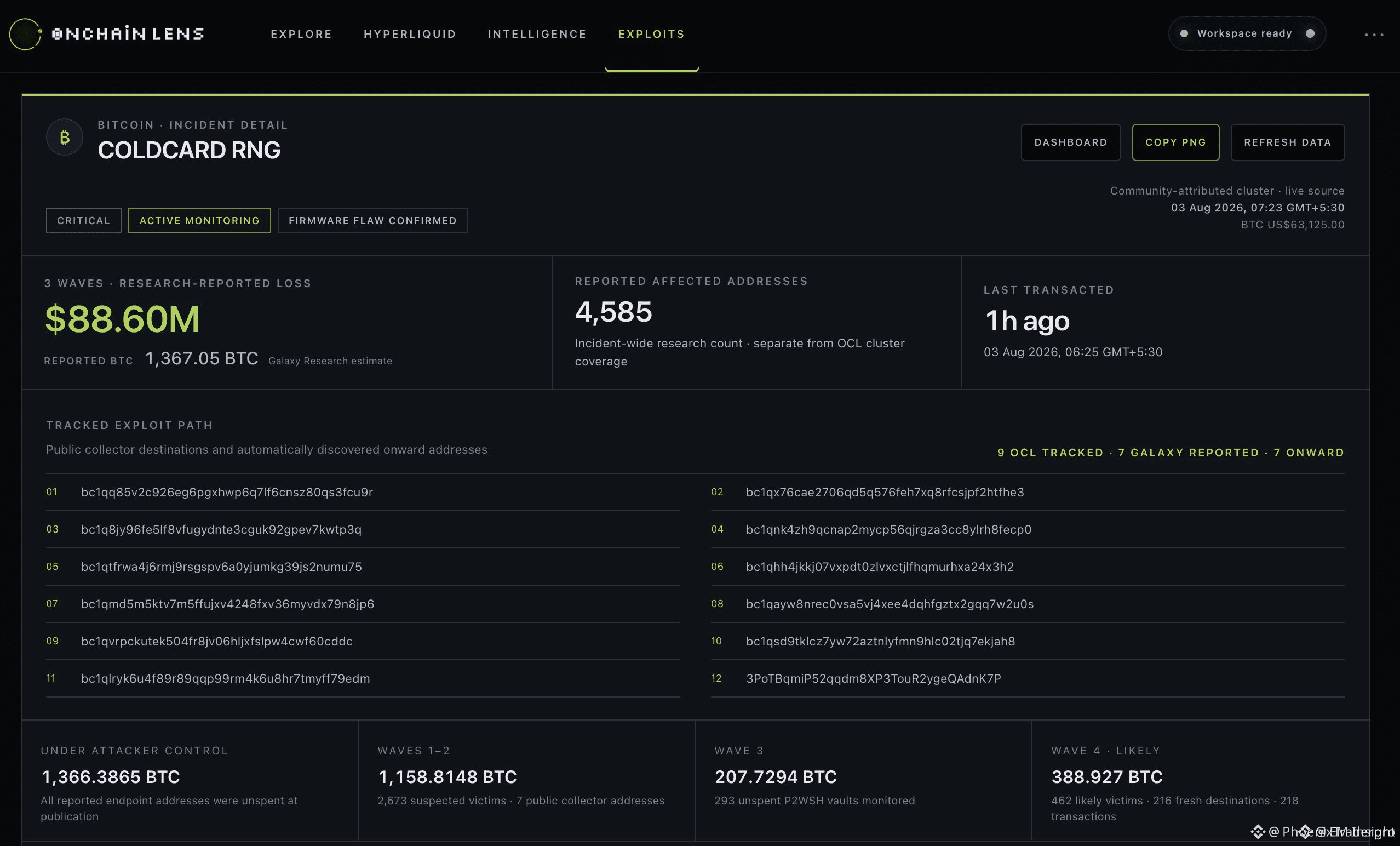
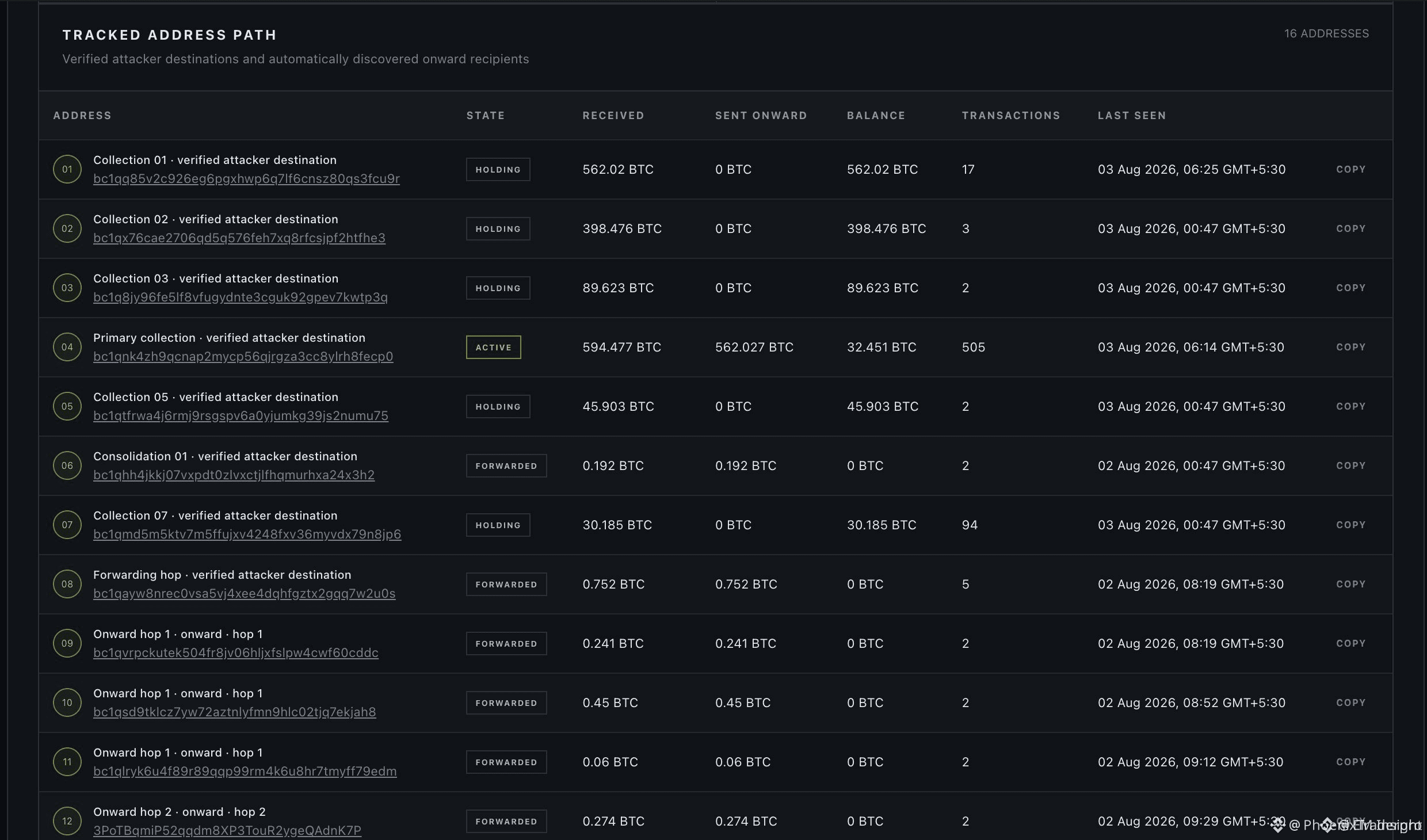
⚠️ $BTC COLD STORAGE'S DIRTY SECRET IS HERE — 114 MILLION AT RISK! 🔻
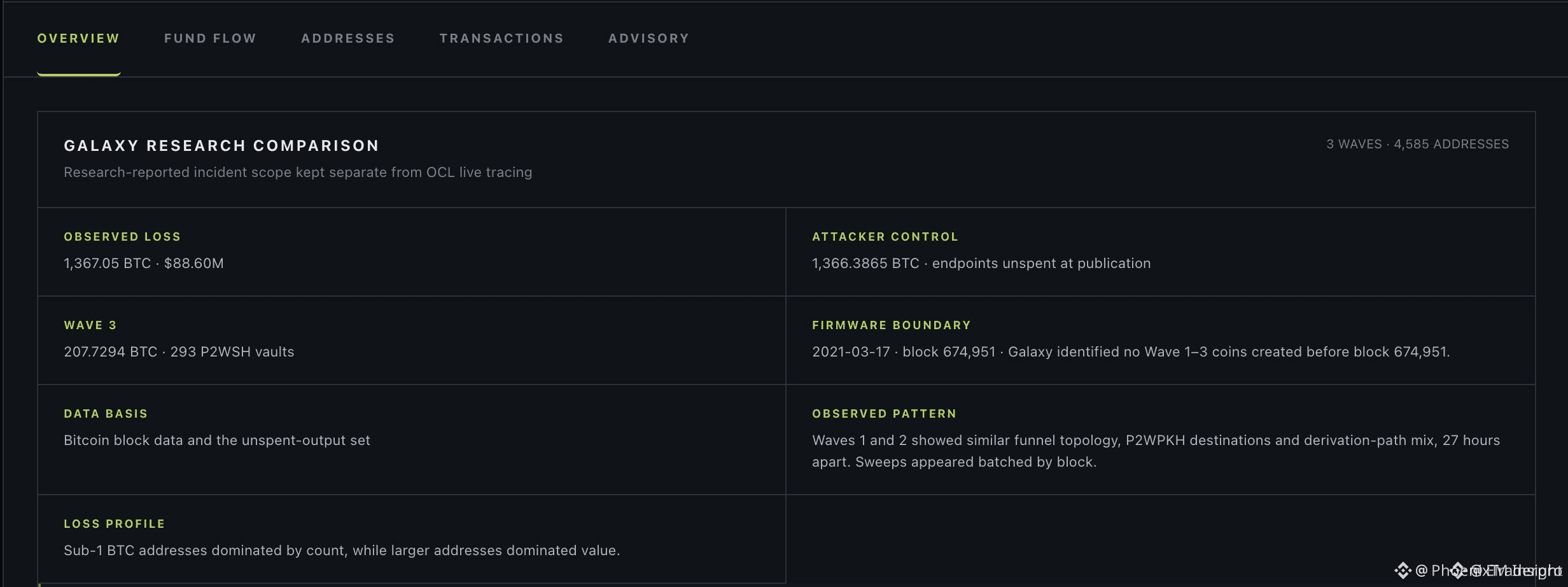
💥 The self-custody narrative just took a body shot. Multiple waves of attacks have already swept roughly 1,367 BTC from hardware wallets, and a suspected fourth wave could push total damages toward a staggering 1,816 BTC. 🦈 This isn't a hack of an exchange or a hot wallet leak.
🔍 The flaw lives in the wallet creation process itself. A faulty random number generator integration allowed some versions to rely on predictable software data instead of true hardware entropy. That means seed phrases can be reconstructed from thin air. A vault sitting unplugged in a safe, untouched by the internet, is still a juggernaut of weakness waiting to be drained. 📉
🛡️ Firmware patches exist, but they can't fix compromised seeds. Anyone in the affected cohort must forge a fresh seed on secure firmware and migrate assets aggressively. 💬 Are we entering an era where we must audit the factory, not just the vault? 👇
⚠️ Not financial advice. Always manage your risk. 🛡️
🏷️ #BTC #SecurityAlert #SelfCustody #CryptoNews
⚠️ $BTC COLD STORAGE'S DIRTY SECRET IS HERE — 114 MILLION AT RISK! 🔻
💥 The self-custody narrative just took a body shot. Multiple waves of attacks have already swept roughly 1,367 BTC from hardware wallets, and a suspected fourth wave could push total damages toward a staggering 1,816 BTC. 🦈 This isn't a hack of an exchange or a hot wallet leak.
🔍 The flaw lives in the wallet creation process itself. A faulty random number generator integration allowed some versions to rely on predictable software data instead of true hardware entropy. That means seed phrases can be reconstructed from thin air. A vault sitting unplugged in a safe, untouched by the internet, is still a juggernaut of weakness waiting to be drained. 📉
🛡️ Firmware patches exist, but they can't fix compromised seeds. Anyone in the affected cohort must forge a fresh seed on secure firmware and migrate assets aggressively. 💬 Are we entering an era where we must audit the factory, not just the vault? 👇
⚠️ Not financial advice. Always manage your risk. 🛡️
🏷️ #BTC #SecurityAlert #SelfCustody #CryptoNews
💥 The self-custody narrative just took a body shot. Multiple waves of attacks have already swept roughly 1,367 BTC from hardware wallets, and a suspected fourth wave could push total damages toward a staggering 1,816 BTC. 🦈 This isn't a hack of an exchange or a hot wallet leak.
🔍 The flaw lives in the wallet creation process itself. A faulty random number generator integration allowed some versions to rely on predictable software data instead of true hardware entropy. That means seed phrases can be reconstructed from thin air. A vault sitting unplugged in a safe, untouched by the internet, is still a juggernaut of weakness waiting to be drained. 📉
🛡️ Firmware patches exist, but they can't fix compromised seeds. Anyone in the affected cohort must forge a fresh seed on secure firmware and migrate assets aggressively. 💬 Are we entering an era where we must audit the factory, not just the vault? 👇
⚠️ Not financial advice. Always manage your risk. 🛡️
🏷️ #BTC #SecurityAlert #SelfCustody #CryptoNews
26
·
--
🚨 $SFP BREACH EXPOSES 40K USERS — TRUST LINES CRACKING? 🛑
🛡️ SafePal just disclosed a data breach leaking names, home addresses, and phone numbers of nearly 40,000 customers. The flaw sat in an order tracking plugin for over a year, granting unauthorized access to sensitive order details. 🔍 With 30+ phishing sites tied to the stolen data, this isn't a small leak — it's a targeted harvest of wallet-holder identity.
📉 For the token, sentiment is the real casualty here. Hardware wallet brands sell on one thing: impenetrable custody. When that narrative cracks, capital flows shift fast, and $SFP will likely feel the friction long after the headlines fade. ⚠️ This raises a sharper question about third-party plugins in the custody stack — where does your trust actually live?
💬 Are you re-auditing your security setup after this, or does a breach like this change nothing about your hardware wallet conviction? 👇
⚠️ Not financial advice. Always manage your risk. 🛡️
🏷️ #SFP #DataBreach #SecurityAlert #CryptoRisk
🛡️ ⚠️
🚨 $SFP BREACH EXPOSES 40K USERS — TRUST LINES CRACKING? 🛑
🛡️ SafePal just disclosed a data breach leaking names, home addresses, and phone numbers of nearly 40,000 customers. The flaw sat in an order tracking plugin for over a year, granting unauthorized access to sensitive order details. 🔍 With 30+ phishing sites tied to the stolen data, this isn't a small leak — it's a targeted harvest of wallet-holder identity.
📉 For the token, sentiment is the real casualty here. Hardware wallet brands sell on one thing: impenetrable custody. When that narrative cracks, capital flows shift fast, and $SFP will likely feel the friction long after the headlines fade. ⚠️ This raises a sharper question about third-party plugins in the custody stack — where does your trust actually live?
💬 Are you re-auditing your security setup after this, or does a breach like this change nothing about your hardware wallet conviction? 👇
⚠️ Not financial advice. Always manage your risk. 🛡️
🏷️ #SFP #DataBreach #SecurityAlert #CryptoRisk
🛡️ ⚠️
🛡️ SafePal just disclosed a data breach leaking names, home addresses, and phone numbers of nearly 40,000 customers. The flaw sat in an order tracking plugin for over a year, granting unauthorized access to sensitive order details. 🔍 With 30+ phishing sites tied to the stolen data, this isn't a small leak — it's a targeted harvest of wallet-holder identity.
📉 For the token, sentiment is the real casualty here. Hardware wallet brands sell on one thing: impenetrable custody. When that narrative cracks, capital flows shift fast, and $SFP will likely feel the friction long after the headlines fade. ⚠️ This raises a sharper question about third-party plugins in the custody stack — where does your trust actually live?
💬 Are you re-auditing your security setup after this, or does a breach like this change nothing about your hardware wallet conviction? 👇
⚠️ Not financial advice. Always manage your risk. 🛡️
🏷️ #SFP #DataBreach #SecurityAlert #CryptoRisk
🛡️ ⚠️


71
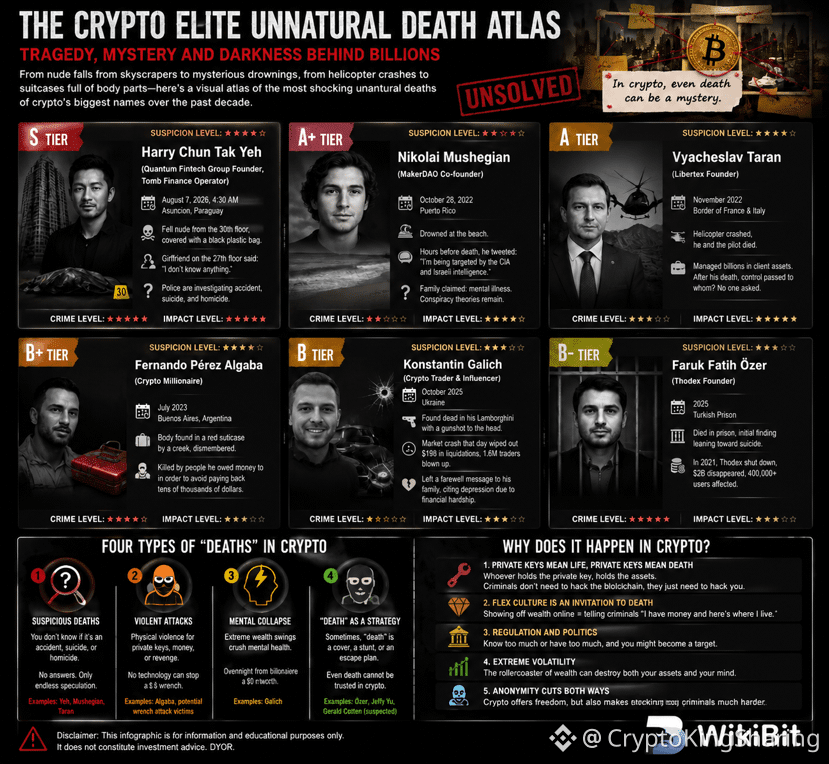
Crypto creates millionaires. It also creates targets. Behind every billion-dollar wallet is a person.
This atlas documents some of the most shocking and mysterious deaths connected to crypto’s elite — from suspicious incidents to violent attacks.
Wealth. Privacy. Security.
In crypto, protecting your assets is only half the battle.
Wealth. Privacy. Security.
In crypto, protecting your assets is only half the battle.
Stay safe. Stay anonymous. DYOR.
#crypto #SecurityAlert #scamriskwarning #WikiBit
Crypto creates millionaires. It also creates targets. Behind every billion-dollar wallet is a person.
This atlas documents some of the most shocking and mysterious deaths connected to crypto’s elite — from suspicious incidents to violent attacks.
Wealth. Privacy. Security.
In crypto, protecting your assets is only half the battle.
Wealth. Privacy. Security.
In crypto, protecting your assets is only half the battle.
Stay safe. Stay anonymous. DYOR.
#crypto #SecurityAlert #scamriskwarning #WikiBit
This atlas documents some of the most shocking and mysterious deaths connected to crypto’s elite — from suspicious incidents to violent attacks.
Wealth. Privacy. Security.
In crypto, protecting your assets is only half the battle.
Wealth. Privacy. Security.
In crypto, protecting your assets is only half the battle.
Stay safe. Stay anonymous. DYOR.
#crypto #SecurityAlert #scamriskwarning #WikiBit
1
1
65

·
--
Your recovery phrase is more valuable than your password. Keep it offline, keep it private, and never share it with anyone.
$BTC $ETH
#security #SecurityAlert #blockchain
Your recovery phrase is more valuable than your password. Keep it offline, keep it private, and never share it with anyone.
$BTC $ETH
#security #SecurityAlert #blockchain
$BTC $ETH
#security #SecurityAlert #blockchain
2
93
Log in to explore more content
Join global crypto users on Binance Square
⚡️ Get latest and useful information about crypto.
💬 Trusted by the world’s largest crypto exchange.
👍 Discover real insights from verified creators.
Email / Phone number
Trending Topics
1
#AppleDebutsFoldablePhone
48,227 views
954 Discussing
2
#TSMCAugustRevenueUp53.3%YoY
11,259 views
317 Discussing
3
#IranSaysReadyToEscalateWarWithUS
14,201 views
334 Discussing
4
#EUExtendsCentralContactPointToCASPs
14,179 views
367 Discussing
5
#US10YTreasuryYieldHitsHighestSinceNov2023
37,539 views
593 Discussing
6
#USTreasuryToBuyBackUpTo$6BLongDatedDebt
21,427 views
181 Discussing
7
#BitcoinSurpasses$79K
75,285 views
295 Discussing
8
#BrentCrudeTops$100
134,075 views
423 Discussing
9
#USADPWeeklyEmploymentRises12000
125,565 views
1,515 Discussing
10
#BankOfAmericaGroupPilotsUSBDCStablecoin
93,124 views
1,190 Discussing