
#paymentinfrastructure
paymentinfrastructure
1,995 views
17 Discussing
Hot
Latest

·
--
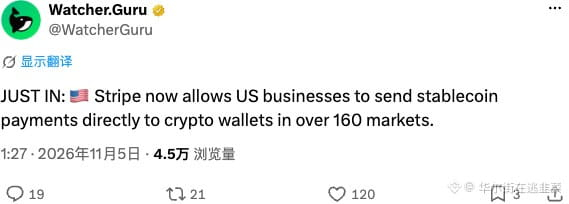
Stripe has finally brought stablecoins to the table. U.S. businesses can now receive payments directly into wallets across 160 markets worldwide. This is massive news—a game-changing boost for the payments sector. The dollar’s DeFi channel is now fully open, and the valuation calculus has changed dramatically.
$USDC $STX #CryptoPayments #PaymentInfrastructure
$USDC $STX #CryptoPayments #PaymentInfrastructure
3

See translation
Avalanche is making waves with its new payments collective, a 28-member strong alliance that includes top institutions like Franklin Templeton and Kraken, all working together to build payment infrastructure on the $AVAX network 💡
Entry: 18.50
The Avalanche Payments Collective is set to integrate various areas such as settlement, stablecoins, and global payments, which could have a significant impact on the $AVAX ecosystem.
Not financial advice. Manage your risk.
#AVAX #PaymentInfrastructure #CryptoAdoption
⚡️
Entry: 18.50
The Avalanche Payments Collective is set to integrate various areas such as settlement, stablecoins, and global payments, which could have a significant impact on the $AVAX ecosystem.
Not financial advice. Manage your risk.
#AVAX #PaymentInfrastructure #CryptoAdoption
⚡️
25

·
--
See translation
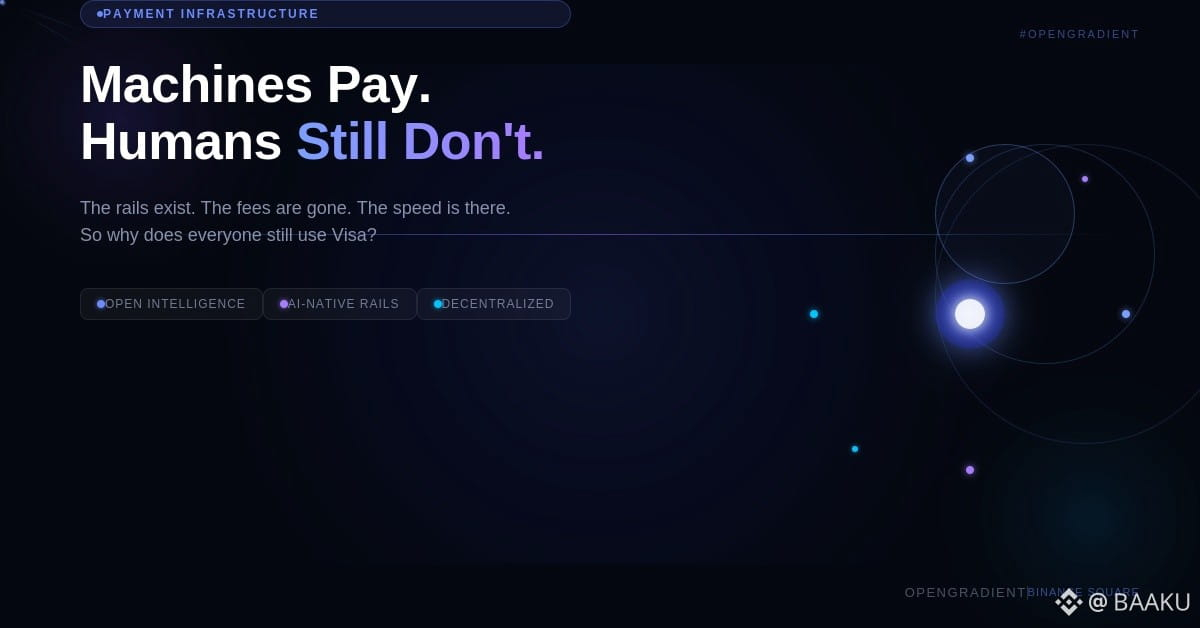
Everyone says crypto will replace payment rails.
But quietly… the same people saying that still can't split a dinner bill in crypto without it being a whole event.
That's the gap nobody wants to talk about.
The narrative around crypto payments has always been cleaner than the reality. We've been promised frictionless, borderless, instant value transfer for over a decade. And technically? It exists. The infrastructure is there. Multiple chains. Sub-cent fees. Sub-second finality.
So why isn't anyone actually using it to pay for things?
Because payments aren't a technology problem. They're a trust and coordination problem. People don't switch payment systems because a new one is faster. They switch when the cost of staying becomes unbearable. Visa isn't dominant because it's good. It's dominant because it's already everywhere and switching is painful.
Crypto payments keep solving the wrong version of the problem.
Most projects optimize for speed and cost — metrics that already work fine with existing rails for most people in most countries. The real friction is UX, liability, reversibility, and the quiet comfort of knowing someone to blame when things go wrong. Crypto removes the middleman. The problem is… most people want the middleman. They just don't want to pay him so much.
Now there's a new wave of infrastructure — AI-native, verifiable computation layers, decentralized inference networks getting woven into payment settlement logic. The pitch is that autonomous AI agents will be the primary users of these rails. Not humans. Machines paying machines, at scale, without intermediaries who need quarterly bonuses.
That's actually interesting. Because machines don't care about UX. They don't need a help desk. They don't want reversibility.
But here's the skeptical edge: we don't know yet if the AI agent economy is real at scale, or if it's just a cleaner story to tell while the human adoption problem stays unsolved.
#PaymentInfrastructure #OpenGradient #DeFi #opg $OPG @OpenGradient
3
2
108

·
--
See translation
🚨 $BTC PAYMENT ECOSYSTEM EVOLVES: FROM ON‑CHAIN FEE HIKES TO LIGHTNING SPEED 🦈
📊 The dual‑fee model—miner fee plus network‑cost surcharge—has silently eroded margins on micro‑transactions, forcing merchants to recalibrate minimum invoice sizes. 📌 Platforms that logged these adjustments a decade ago now expose the hidden cost curve that price charts never reveal.
⚡ Lightning integration, first seen on a major exchange in 2022, offers a liquidity‑efficient shortcut, yet compliance layers like Travel Rule checks re‑introduce frictions at the account‑release stage. 🌊 Smart money is now balancing fee arbitrage with regulatory clearance to preserve settlement speed.
💬 How are you adapting your BTC payment strategy to balance fee efficiency and compliance? 👇
⚠️ Not financial advice. Always manage your risk. 🛡️
🏷️ #BTC #PaymentInfrastructure #Lightning #Stablecoins #Crypto
🚀 ⚡
1

·
--
See translation
$MATIC IS TRADING A STRATEGIC PIVOT THAT COULD REDEFINE ITS UTILITY 🎯
No specific entry levels provided in the input. Only structural analysis available.
Polygon just announced its second layoff round in 2026, this time to streamline ahead of the Coinme acquisition closure. The company has spent over $250 million buying Coinme and Sequence, building toward the Polygon Open Money Stack — a licensed stablecoin payment infrastructure play in the U.S.
This is a fundamental shift from blockchain foundation to payment rails. Instead of fighting Visa, Polygon is positioning to integrate with them. The market is now pricing in execution risk on this pivot. Are you watching how the chain's TVL and transaction volumes respond to this new direction?
Not financial advice. Always manage your risk.
#MATIC #Restructuring #Stablecoins #Blockchain #PaymentInfrastructure
🎯

47

See translation
🚨 $XAGENT OPEN-SOURCES XPENSE: THE MISSING CONTROL PLANE FOR AI AGENT ECONOMICS ⚡
🦈 This infrastructure fills the critical gap between AI intent and autonomous machine payment — turning large models into auditable, budget-constrained economic agents rather than black-box spenders. 💰 The dual-state machine design isolates settlement from delivery, solving the duplicate charge and non-delivery risk that has stalled institutional adoption.
📌 With OKX Agentic Wallet’s TEE key isolation and x402 Gasless USDC, xpense creates a hardware-secured pipeline for real-time procurement, compute, and data access. Every financial action is logged into an immutable chain of events — intent, decision, attempt, receipt, delivery. 💬 Are you tracking how this transforms AI from a cost center into an autonomous revenue generator? 👇
⚠️ Not financial advice. Always manage your risk. 🛡️
🏷️ #XAGENT #AI #Web3 #PaymentInfrastructure #Crypto
🦈 🔗
9
Log in to explore more content
Join global crypto users on Binance Square
⚡️ Get latest and useful information about crypto.
💬 Trusted by the world’s largest crypto exchange.
👍 Discover real insights from verified creators.
Email / Phone number
Trending Topics
1
#BinanceReopensWithdrawalsForMoreAssets
739,411 views
3,894 Discussing
2
#Binance98PercentReplenished
122,970 views
1,365 Discussing
3
#ADPUSPrivateEmployersAdd86000JobsInOctober
22,265 views
377 Discussing
4
#BTCRebounds80K
235,574 views
2,038 Discussing
5
#KazakhstanReportedlyInvests$100MInCryptoFunds
657 views
29 Discussing
6
#StrategySTRCResumesIssuanceAfterOver170Days
7,843 views
192 Discussing
7
#SouthKoreaSeeksCryptoTaxDelayUntil2029
13,444 views
135 Discussing
8
#USMidterms-WhatAreMarketsExpecting?
542,946 views
2,664 Discussing
9
#US10YearTreasuryYieldFallsTo4.845%
13,682 views
108 Discussing
10
#ZcashExpectsNU7ToMake$16MSproutZECInaccessible
892 views
15 Discussing