

#defi
defi
57M views
299,054 Discussing
Hot
Latest

·
--
Bullish
Verified
See translation
CAKE Is Quietly Becoming Much More Than a #DEX Token
PancakeSwap started with simple token swaps.
Today, the ecosystem looks completely different.
Swaps across 11 chains. Liquidity. Perpetuals. Crosschain trading. Prediction markets. And even 500+ tokenized stocks, ETFs, bonds, gold and other real-world assets.
$CAKE sits at the center of that ecosystem.
And the scale is already serious.
PancakeSwap reported over $4.2 trillion in cumulative trading volume and 190 million+ all-time users by mid-2026. It also kept CAKE deflationary for 34 consecutive months.
The thesis is simple.
#defi winners may not be the protocols offering one product.
They may be the platforms where users can do almost everything onchain.
And PancakeSwap is increasingly moving in that direction.
CAKE Is Quietly Becoming Much More Than a #DEX Token
PancakeSwap started with simple token swaps.
Today, the ecosystem looks completely different.
Swaps across 11 chains. Liquidity. Perpetuals. Crosschain trading. Prediction markets. And even 500+ tokenized stocks, ETFs, bonds, gold and other real-world assets.
$CAKE sits at the center of that ecosystem.
And the scale is already serious.
PancakeSwap reported over $4.2 trillion in cumulative trading volume and 190 million+ all-time users by mid-2026. It also kept CAKE deflationary for 34 consecutive months.
The thesis is simple.
#defi winners may not be the protocols offering one product.
They may be the platforms where users can do almost everything onchain.
And PancakeSwap is increasingly moving in that direction.
PancakeSwap started with simple token swaps.
Today, the ecosystem looks completely different.
Swaps across 11 chains. Liquidity. Perpetuals. Crosschain trading. Prediction markets. And even 500+ tokenized stocks, ETFs, bonds, gold and other real-world assets.
$CAKE sits at the center of that ecosystem.
And the scale is already serious.
PancakeSwap reported over $4.2 trillion in cumulative trading volume and 190 million+ all-time users by mid-2026. It also kept CAKE deflationary for 34 consecutive months.
The thesis is simple.
#defi winners may not be the protocols offering one product.
They may be the platforms where users can do almost everything onchain.
And PancakeSwap is increasingly moving in that direction.

2
1.8k


Verified
Article
See translation
Concrete Crypto: The DeFi Yield Infrastructure Behind $1.2B+ in TVLMost people enter DeFi and immediately face the same problem:
Which protocol should I use?
Which strategy is safer?
Where should I move my capital?
What happens if the yield disappears?
Concrete is trying to solve a different part of this problem.
Instead of asking every user to build their own DeFi strategy, Concrete packages on-chain strategies into automated vault products.
Think of it like this:
You provide eligible assets → Concrete’s vault allocates capital → underlying DeFi strategies generate yield → returns flow back according to the vault strategy.
That makes Concrete less like a traditional lending market and more like an on-chain capital allocator.
And the scale is already significant.
DeFiLlama currently shows around $1.27 billion in Concrete TVL, with roughly 93.7% concentrated on Ethereum. It tracks 34 yield pools across six networks. (DefiLlama)
So what exactly is Concrete?
Concrete describes itself as full-stack infrastructure for on-chain finance.
Its products include automated vaults and infrastructure designed around yield, risk management, quantitative analysis and cross-chain deployment.
The important distinction:
A lending protocol generally lets users lend and borrow.
Concrete focuses on packaging capital into strategies.
That difference could become increasingly important as DeFi moves toward more structured products and institutional participation.
How does a Concrete vault work?
Deposit
Users deposit eligible assets into a vault.
Allocation
The vault deploys capital into selected on-chain opportunities.
Yield generation
Those underlying positions attempt to generate returns.
Risk management
The strategy uses predefined infrastructure and risk controls.
Return
The resulting performance is reflected through the vault according to its specific strategy.
But there is one important detail many people miss:
The yield is NOT guaranteed.
Different vaults can have completely different strategies, risks and returns.
Concrete’s current numbers also show why the project is attracting attention.
DeFiLlama currently places Concrete among the largest protocols in its “Onchain Capital Allocator” category, with about $1.27B TVL. (DefiLlama)
Then came CT.
Concrete launched its native CT token through its September 30, 2026 TGE.
CT has a maximum supply of 1 billion tokens with no inflation mechanism.
The published allocation is:
35% — Ecosystem
15% — Foundation
22% — Team
28% — Investors
Team and investor allocations are subject to long-term vesting. (TokenPost)
CT is designed around governance and protocol configuration.
Eligible holders can lock CT to participate in decisions involving areas such as supported strategies, collateral classifications and fee frameworks. ([Binance](https://www.binance.com/en/square/post/372165471848176?utm_source=chatgpt.com))
The launch also brought CT to major trading venues.
KuCoin opened CT/USDT spot trading on September 30 at 10:00 UTC, with Ethereum ERC-20 deposits. Bitget announced the same trading time, while other venues also launched CT markets around the TGE. (KuCoin)
But here is where the story gets interesting.
Concrete already had substantial capital before CT existed.
That means the CT narrative is not simply:
“New token + new protocol.”
It is:
“Existing DeFi infrastructure + more than $1B in TVL + a newly launched governance/configuration token.”
That distinction matters.
However, TVL alone does NOT prove that CT is undervalued.
It also does not mean every vault is safe.
Concrete still inherits risks from smart contracts, underlying DeFi protocols, liquidity conditions, strategy performance and the broader market.
And CT itself is a newly launched token, meaning price discovery and liquidity can be extremely volatile.
The bigger question is therefore not:
“Will CT pump?”
The better question is:
Can Concrete turn its existing vault infrastructure and capital base into a sustainable on-chain financial platform?
If DeFi continues moving from simple token farming toward automated, structured and institution-friendly products, Concrete is positioned in an interesting part of that transition.
$1.2B+ TVL is the headline.
But the real story may be what Concrete is building underneath it.
Would you classify Concrete as a DeFi protocol, a yield platform, or the infrastructure layer for the next generation of on-chain finance?
#Concrete #DeFiLama $CT #DeFi #cryptouniverseofficial
{future}(CTUSDT)
Concrete Crypto: The DeFi Yield Infrastructure Behind $1.2B+ in TVL
Most people enter DeFi and immediately face the same problem:
Which protocol should I use?
Which strategy is safer?
Where should I move my capital?
What happens if the yield disappears?
Concrete is trying to solve a different part of this problem.
Instead of asking every user to build their own DeFi strategy, Concrete packages on-chain strategies into automated vault products.
Think of it like this:
You provide eligible assets → Concrete’s vault allocates capital → underlying DeFi strategies generate yield → returns flow back according to the vault strategy.
That makes Concrete less like a traditional lending market and more like an on-chain capital allocator.
And the scale is already significant.
DeFiLlama currently shows around $1.27 billion in Concrete TVL, with roughly 93.7% concentrated on Ethereum. It tracks 34 yield pools across six networks. (DefiLlama)
So what exactly is Concrete?
Concrete describes itself as full-stack infrastructure for on-chain finance.
Its products include automated vaults and infrastructure designed around yield, risk management, quantitative analysis and cross-chain deployment.
The important distinction:
A lending protocol generally lets users lend and borrow.
Concrete focuses on packaging capital into strategies.
That difference could become increasingly important as DeFi moves toward more structured products and institutional participation.
How does a Concrete vault work?
Deposit
Users deposit eligible assets into a vault.
Allocation
The vault deploys capital into selected on-chain opportunities.
Yield generation
Those underlying positions attempt to generate returns.
Risk management
The strategy uses predefined infrastructure and risk controls.
Return
The resulting performance is reflected through the vault according to its specific strategy.
But there is one important detail many people miss:
The yield is NOT guaranteed.
Different vaults can have completely different strategies, risks and returns.
Concrete’s current numbers also show why the project is attracting attention.
DeFiLlama currently places Concrete among the largest protocols in its “Onchain Capital Allocator” category, with about $1.27B TVL. (DefiLlama)
Then came CT.
Concrete launched its native CT token through its September 30, 2026 TGE.
CT has a maximum supply of 1 billion tokens with no inflation mechanism.
The published allocation is:
35% — Ecosystem
15% — Foundation
22% — Team
28% — Investors
Team and investor allocations are subject to long-term vesting. (TokenPost)
CT is designed around governance and protocol configuration.
Eligible holders can lock CT to participate in decisions involving areas such as supported strategies, collateral classifications and fee frameworks. (Binance)
The launch also brought CT to major trading venues.
KuCoin opened CT/USDT spot trading on September 30 at 10:00 UTC, with Ethereum ERC-20 deposits. Bitget announced the same trading time, while other venues also launched CT markets around the TGE. (KuCoin)
But here is where the story gets interesting.
Concrete already had substantial capital before CT existed.
That means the CT narrative is not simply:
“New token + new protocol.”
It is:
“Existing DeFi infrastructure + more than $1B in TVL + a newly launched governance/configuration token.”
That distinction matters.
However, TVL alone does NOT prove that CT is undervalued.
It also does not mean every vault is safe.
Concrete still inherits risks from smart contracts, underlying DeFi protocols, liquidity conditions, strategy performance and the broader market.
And CT itself is a newly launched token, meaning price discovery and liquidity can be extremely volatile.
The bigger question is therefore not:
“Will CT pump?”
The better question is:
Can Concrete turn its existing vault infrastructure and capital base into a sustainable on-chain financial platform?
If DeFi continues moving from simple token farming toward automated, structured and institution-friendly products, Concrete is positioned in an interesting part of that transition.
$1.2B+ TVL is the headline.
But the real story may be what Concrete is building underneath it.
Would you classify Concrete as a DeFi protocol, a yield platform, or the infrastructure layer for the next generation of on-chain finance?
#Concrete #DeFiLama $CT #DeFi #cryptouniverseofficial
Which protocol should I use?
Which strategy is safer?
Where should I move my capital?
What happens if the yield disappears?
Concrete is trying to solve a different part of this problem.
Instead of asking every user to build their own DeFi strategy, Concrete packages on-chain strategies into automated vault products.
Think of it like this:
You provide eligible assets → Concrete’s vault allocates capital → underlying DeFi strategies generate yield → returns flow back according to the vault strategy.
That makes Concrete less like a traditional lending market and more like an on-chain capital allocator.
And the scale is already significant.
DeFiLlama currently shows around $1.27 billion in Concrete TVL, with roughly 93.7% concentrated on Ethereum. It tracks 34 yield pools across six networks. (DefiLlama)
So what exactly is Concrete?
Concrete describes itself as full-stack infrastructure for on-chain finance.
Its products include automated vaults and infrastructure designed around yield, risk management, quantitative analysis and cross-chain deployment.
The important distinction:
A lending protocol generally lets users lend and borrow.
Concrete focuses on packaging capital into strategies.
That difference could become increasingly important as DeFi moves toward more structured products and institutional participation.
How does a Concrete vault work?
Deposit
Users deposit eligible assets into a vault.
Allocation
The vault deploys capital into selected on-chain opportunities.
Yield generation
Those underlying positions attempt to generate returns.
Risk management
The strategy uses predefined infrastructure and risk controls.
Return
The resulting performance is reflected through the vault according to its specific strategy.
But there is one important detail many people miss:
The yield is NOT guaranteed.
Different vaults can have completely different strategies, risks and returns.
Concrete’s current numbers also show why the project is attracting attention.
DeFiLlama currently places Concrete among the largest protocols in its “Onchain Capital Allocator” category, with about $1.27B TVL. (DefiLlama)
Then came CT.
Concrete launched its native CT token through its September 30, 2026 TGE.
CT has a maximum supply of 1 billion tokens with no inflation mechanism.
The published allocation is:
35% — Ecosystem
15% — Foundation
22% — Team
28% — Investors
Team and investor allocations are subject to long-term vesting. (TokenPost)
CT is designed around governance and protocol configuration.
Eligible holders can lock CT to participate in decisions involving areas such as supported strategies, collateral classifications and fee frameworks. (Binance)
The launch also brought CT to major trading venues.
KuCoin opened CT/USDT spot trading on September 30 at 10:00 UTC, with Ethereum ERC-20 deposits. Bitget announced the same trading time, while other venues also launched CT markets around the TGE. (KuCoin)
But here is where the story gets interesting.
Concrete already had substantial capital before CT existed.
That means the CT narrative is not simply:
“New token + new protocol.”
It is:
“Existing DeFi infrastructure + more than $1B in TVL + a newly launched governance/configuration token.”
That distinction matters.
However, TVL alone does NOT prove that CT is undervalued.
It also does not mean every vault is safe.
Concrete still inherits risks from smart contracts, underlying DeFi protocols, liquidity conditions, strategy performance and the broader market.
And CT itself is a newly launched token, meaning price discovery and liquidity can be extremely volatile.
The bigger question is therefore not:
“Will CT pump?”
The better question is:
Can Concrete turn its existing vault infrastructure and capital base into a sustainable on-chain financial platform?
If DeFi continues moving from simple token farming toward automated, structured and institution-friendly products, Concrete is positioned in an interesting part of that transition.
$1.2B+ TVL is the headline.
But the real story may be what Concrete is building underneath it.
Would you classify Concrete as a DeFi protocol, a yield platform, or the infrastructure layer for the next generation of on-chain finance?
#Concrete #DeFiLama $CT #DeFi #cryptouniverseofficial
1
576

·
--
See translation
🚨 UNISWAP IS BUILDING A REAL DEFI GATEWAY FOR JAPAN
Uniswap has announced that SMBC Nikko, one of Japan’s major securities firms, and Nethermind are building a new DeFi Gateway on Uniswap v4.
The project is designed for Japanese investors and will use custom liquidity pools with regulatory features such as AML/CFT checks and investor protections. It is planned to support stablecoins, tokenized real-world assets and other digital assets, with completion targeted for mid-2027.
This is still a development project, not a live Japanese trading gateway yet.
At the same time, Uniswap’s latest router update now enables bridge providers to complete a bridge-and-swap in a single transaction, potentially removing the need for another destination-chain approval or signature.
That’s a meaningful infrastructure story for UNI — not just another price narrative.
$UNI
{future}(UNIUSDT)
.
.
.
#Uniswap #DeFi #Write2Earn
Not financial advice. DYOR.
🚨 UNISWAP IS BUILDING A REAL DEFI GATEWAY FOR JAPAN
Uniswap has announced that SMBC Nikko, one of Japan’s major securities firms, and Nethermind are building a new DeFi Gateway on Uniswap v4.
The project is designed for Japanese investors and will use custom liquidity pools with regulatory features such as AML/CFT checks and investor protections. It is planned to support stablecoins, tokenized real-world assets and other digital assets, with completion targeted for mid-2027.
This is still a development project, not a live Japanese trading gateway yet.
At the same time, Uniswap’s latest router update now enables bridge providers to complete a bridge-and-swap in a single transaction, potentially removing the need for another destination-chain approval or signature.
That’s a meaningful infrastructure story for UNI — not just another price narrative.
$UNI
.
.
.
#Uniswap #DeFi #Write2Earn
Not financial advice. DYOR.
Uniswap has announced that SMBC Nikko, one of Japan’s major securities firms, and Nethermind are building a new DeFi Gateway on Uniswap v4.
The project is designed for Japanese investors and will use custom liquidity pools with regulatory features such as AML/CFT checks and investor protections. It is planned to support stablecoins, tokenized real-world assets and other digital assets, with completion targeted for mid-2027.
This is still a development project, not a live Japanese trading gateway yet.
At the same time, Uniswap’s latest router update now enables bridge providers to complete a bridge-and-swap in a single transaction, potentially removing the need for another destination-chain approval or signature.
That’s a meaningful infrastructure story for UNI — not just another price narrative.
$UNI
.
.
.
#Uniswap #DeFi #Write2Earn
Not financial advice. DYOR.

133
·
--
See translation
🚨 UNISWAP JUST OPENED A BIGGER DOOR FOR JAPAN
Uniswap has confirmed that SMBC Nikko Securities and Nethermind are building a DeFi Gateway for Japan on Uniswap v4.
The planned venue is designed around Japanese regulatory requirements, with liquidity for stablecoins, RWAs and other digital assets. Uniswap Labs, Base and Nyx Foundation are supporting the development, with completion targeted for mid-2027.
And there’s more.
The project plans to use v4 hooks for AML/CFT checks and investor protections, while also exploring AI-powered vaults and interfaces for onboarding investors.
This is still a development project, not a live Japanese market.
But if Uniswap v4 becomes part of regulated onchain finance in Japan, that could be a much bigger story than another routine protocol update.
Click the $UNI widget below and check the latest verified developments.
$UNI
{future}(UNIUSDT)
.
.
.
#uniswap #DeFi #Write2Earn
Not financial advice. DYOR.
🚨 UNISWAP JUST OPENED A BIGGER DOOR FOR JAPAN
Uniswap has confirmed that SMBC Nikko Securities and Nethermind are building a DeFi Gateway for Japan on Uniswap v4.
The planned venue is designed around Japanese regulatory requirements, with liquidity for stablecoins, RWAs and other digital assets. Uniswap Labs, Base and Nyx Foundation are supporting the development, with completion targeted for mid-2027.
And there’s more.
The project plans to use v4 hooks for AML/CFT checks and investor protections, while also exploring AI-powered vaults and interfaces for onboarding investors.
This is still a development project, not a live Japanese market.
But if Uniswap v4 becomes part of regulated onchain finance in Japan, that could be a much bigger story than another routine protocol update.
Click the $UNI widget below and check the latest verified developments.
$UNI
.
.
.
#uniswap #DeFi #Write2Earn
Not financial advice. DYOR.
Uniswap has confirmed that SMBC Nikko Securities and Nethermind are building a DeFi Gateway for Japan on Uniswap v4.
The planned venue is designed around Japanese regulatory requirements, with liquidity for stablecoins, RWAs and other digital assets. Uniswap Labs, Base and Nyx Foundation are supporting the development, with completion targeted for mid-2027.
And there’s more.
The project plans to use v4 hooks for AML/CFT checks and investor protections, while also exploring AI-powered vaults and interfaces for onboarding investors.
This is still a development project, not a live Japanese market.
But if Uniswap v4 becomes part of regulated onchain finance in Japan, that could be a much bigger story than another routine protocol update.
Click the $UNI widget below and check the latest verified developments.
$UNI
.
.
.
#uniswap #DeFi #Write2Earn
Not financial advice. DYOR.

299

See translation
everyone thinks seeing an 18,851% spike in tvl means a new ecosystem is about to explode, but actually you are probably just exit liquidity for a ghost chain.
we have all been there chasing green percentage prints on defillama only to realize our $ETH or $SOL is locked in a pool with zero real volume and paper-thin liquidity.
take alllayer as a classic case study, ser. their tvl shot up 18,851% over the past seven days, but ngl that kind of vertical pump almost always points to a tiny starting base rather than actual organic adoption. it is easy to print insane growth percentages when you are going from practically zero dollars to a couple hundred grand.
meanwhile something like $SHIB on shibarium posting a modest 165% jump tells a much healthier story because it is built on an actual user base with sticky capital. huge percentage multiples look amazing on a timeline chart, but without sticky volume you are just walking into a trap.
are you guys still tracking raw tvl growth percentages or have you switched to looking at active daily volume instead?
#CryptoTrading #DeFi #Altcoins
everyone thinks seeing an 18,851% spike in tvl means a new ecosystem is about to explode, but actually you are probably just exit liquidity for a ghost chain.
we have all been there chasing green percentage prints on defillama only to realize our $ETH or $SOL is locked in a pool with zero real volume and paper-thin liquidity.
take alllayer as a classic case study, ser. their tvl shot up 18,851% over the past seven days, but ngl that kind of vertical pump almost always points to a tiny starting base rather than actual organic adoption. it is easy to print insane growth percentages when you are going from practically zero dollars to a couple hundred grand.
meanwhile something like $SHIB on shibarium posting a modest 165% jump tells a much healthier story because it is built on an actual user base with sticky capital. huge percentage multiples look amazing on a timeline chart, but without sticky volume you are just walking into a trap.
are you guys still tracking raw tvl growth percentages or have you switched to looking at active daily volume instead?
#CryptoTrading #DeFi #Altcoins
we have all been there chasing green percentage prints on defillama only to realize our $ETH or $SOL is locked in a pool with zero real volume and paper-thin liquidity.
take alllayer as a classic case study, ser. their tvl shot up 18,851% over the past seven days, but ngl that kind of vertical pump almost always points to a tiny starting base rather than actual organic adoption. it is easy to print insane growth percentages when you are going from practically zero dollars to a couple hundred grand.
meanwhile something like $SHIB on shibarium posting a modest 165% jump tells a much healthier story because it is built on an actual user base with sticky capital. huge percentage multiples look amazing on a timeline chart, but without sticky volume you are just walking into a trap.
are you guys still tracking raw tvl growth percentages or have you switched to looking at active daily volume instead?
#CryptoTrading #DeFi #Altcoins

17

See translation
Aave is making a decisive move to fix its native stablecoin ecosystem by hiking GHO borrow rates to 4.50%. This aggressive adjustment aims to rebalance depleted liquidity pools and stabilize reserve inflows. While higher rates might slow down short-term borrowing demand, it is a necessary step to protect protocol health and maintain the stablecoins peg. DeFi protocols are increasingly prioritizing sustainable yields over reckless growth, proving the sector is maturing rapidly. $AAVE #Aave #DeFi #Stablecoins
Aave is making a decisive move to fix its native stablecoin ecosystem by hiking GHO borrow rates to 4.50%. This aggressive adjustment aims to rebalance depleted liquidity pools and stabilize reserve inflows. While higher rates might slow down short-term borrowing demand, it is a necessary step to protect protocol health and maintain the stablecoins peg. DeFi protocols are increasingly prioritizing sustainable yields over reckless growth, proving the sector is maturing rapidly. $AAVE #Aave #DeFi #Stablecoins
21

See translation
NEAR, UNI & ENA: Selective Strength Across Layer-1 and DeFi
NEAR is trading around $5.203, up roughly +4.7% over the latest 24-hour session after reaching a high near $5.237. The move reflects solid buyer participation, with NEAR holding close to its session peak and showing stronger short-term momentum than many large-cap altcoins.
UNI is changing hands near $9.157, up approximately +1.2%. The token has remained constructive after trading between $8.841 and $9.244, suggesting steady demand rather than an aggressive breakout. As a leading DeFi governance asset, UNI’s momentum remains closely tied to broader on-chain activity and risk appetite.
ENA is trading near $0.2519, up about +5.2% over the session. It has seen notable volatility between $0.2365 and $0.2627, alongside strong trading activity. ENA is currently showing the sharpest percentage move of the three, but its wider intraday range also highlights elevated volatility.
Overall, NEAR and ENA are leading on short-term performance, while UNI is advancing more gradually. The next phase for all three will depend on whether current volume can sustain momentum as broader crypto-market conditions evolve.
#NEARProtocol #Uniswap #Ethena #DeFi #CryptoMarket
$NEAR
{future}(NEARUSDT)
$ENA
{spot}(ENAUSDT)
$UNI
{future}(UNIUSDT)
NEAR, UNI & ENA: Selective Strength Across Layer-1 and DeFi
NEAR is trading around $5.203, up roughly +4.7% over the latest 24-hour session after reaching a high near $5.237. The move reflects solid buyer participation, with NEAR holding close to its session peak and showing stronger short-term momentum than many large-cap altcoins.
UNI is changing hands near $9.157, up approximately +1.2%. The token has remained constructive after trading between $8.841 and $9.244, suggesting steady demand rather than an aggressive breakout. As a leading DeFi governance asset, UNI’s momentum remains closely tied to broader on-chain activity and risk appetite.
ENA is trading near $0.2519, up about +5.2% over the session. It has seen notable volatility between $0.2365 and $0.2627, alongside strong trading activity. ENA is currently showing the sharpest percentage move of the three, but its wider intraday range also highlights elevated volatility.
Overall, NEAR and ENA are leading on short-term performance, while UNI is advancing more gradually. The next phase for all three will depend on whether current volume can sustain momentum as broader crypto-market conditions evolve.
#NEARProtocol #Uniswap #Ethena #DeFi #CryptoMarket
$NEAR
$ENA
$UNI
NEAR is trading around $5.203, up roughly +4.7% over the latest 24-hour session after reaching a high near $5.237. The move reflects solid buyer participation, with NEAR holding close to its session peak and showing stronger short-term momentum than many large-cap altcoins.
UNI is changing hands near $9.157, up approximately +1.2%. The token has remained constructive after trading between $8.841 and $9.244, suggesting steady demand rather than an aggressive breakout. As a leading DeFi governance asset, UNI’s momentum remains closely tied to broader on-chain activity and risk appetite.
ENA is trading near $0.2519, up about +5.2% over the session. It has seen notable volatility between $0.2365 and $0.2627, alongside strong trading activity. ENA is currently showing the sharpest percentage move of the three, but its wider intraday range also highlights elevated volatility.
Overall, NEAR and ENA are leading on short-term performance, while UNI is advancing more gradually. The next phase for all three will depend on whether current volume can sustain momentum as broader crypto-market conditions evolve.
#NEARProtocol #Uniswap #Ethena #DeFi #CryptoMarket
$NEAR
$ENA
$UNI
56
See translation
Traditional finance and crypto are blurring lines faster than ever. Bringing giants like Nvidia and Tesla onchain via 24/7 stablecoin liquidity pools changes how global capital moves. No closing bells, no middlemen—just pure decentralized efficiency. This shift proves tokenization isn't just a trend anymore; it's the inevitable upgrade for modern financial markets. Are you ready for continuous trading? $NVDA $TSLA #RWA #Tokenization #DeFi
Traditional finance and crypto are blurring lines faster than ever. Bringing giants like Nvidia and Tesla onchain via 24/7 stablecoin liquidity pools changes how global capital moves. No closing bells, no middlemen—just pure decentralized efficiency. This shift proves tokenization isn't just a trend anymore; it's the inevitable upgrade for modern financial markets. Are you ready for continuous trading? $NVDA $TSLA #RWA #Tokenization #DeFi
175

Verified
See translation
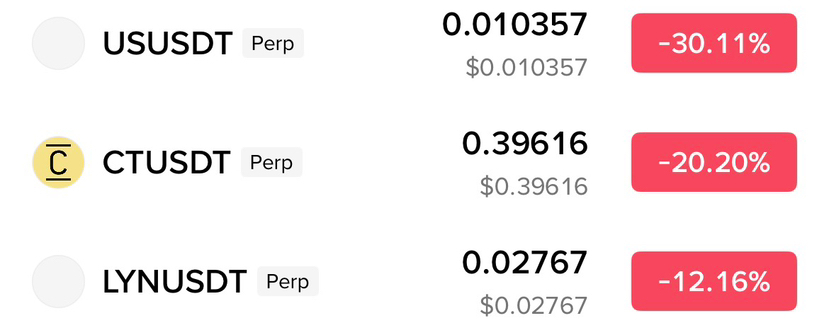
$🚀 CTUSDT — Concrete | A New DeFi Coin to Watch 👀
CT (Concrete) is a new DeFi / on-chain finance project focused on making crypto yield and asset management more accessible through automated vault strategies.
📌 Ticker: CT
💱 Trading Pair: CT/USDT
⛓️ Chains: Ethereum + BNB Chain
💰 Current Price: Around $0.40
📊 Market Cap: Around $75M
🔥 Max Supply: 1 Billion CT
🏦 Binance Futures: CTUSDT Perpetual — up to 20x leverage
CT is still a very new coin, so volatility is extremely high. It reached around $0.64 ATH earlier this month before pulling back.
💡 Why I'm watching CT: • New DeFi narrative
• Strong early trading volume
• Binance Futures exposure
• Governance & utility within the Concrete ecosystem
• Potential upside if adoption and TVL continue to grow
⚠️ Risk: New coins can move very fast in both directions. Don't enter only because of hype. Always DYOR and manage your risk.
🔥 CTUSDT — Watchlist or Opportunity? What do you think?
#CT #CTUSDT #Concrete #DeFi #EthStakingExitQueueHits2026High
$🚀 CTUSDT — Concrete | A New DeFi Coin to Watch 👀
CT (Concrete) is a new DeFi / on-chain finance project focused on making crypto yield and asset management more accessible through automated vault strategies.
📌 Ticker: CT
💱 Trading Pair: CT/USDT
⛓️ Chains: Ethereum + BNB Chain
💰 Current Price: Around $0.40
📊 Market Cap: Around $75M
🔥 Max Supply: 1 Billion CT
🏦 Binance Futures: CTUSDT Perpetual — up to 20x leverage
CT is still a very new coin, so volatility is extremely high. It reached around $0.64 ATH earlier this month before pulling back.
💡 Why I'm watching CT: • New DeFi narrative
• Strong early trading volume
• Binance Futures exposure
• Governance & utility within the Concrete ecosystem
• Potential upside if adoption and TVL continue to grow
⚠️ Risk: New coins can move very fast in both directions. Don't enter only because of hype. Always DYOR and manage your risk.
🔥 CTUSDT — Watchlist or Opportunity? What do you think?
#CT #CTUSDT #Concrete #DeFi #EthStakingExitQueueHits2026High
CT (Concrete) is a new DeFi / on-chain finance project focused on making crypto yield and asset management more accessible through automated vault strategies.
📌 Ticker: CT
💱 Trading Pair: CT/USDT
⛓️ Chains: Ethereum + BNB Chain
💰 Current Price: Around $0.40
📊 Market Cap: Around $75M
🔥 Max Supply: 1 Billion CT
🏦 Binance Futures: CTUSDT Perpetual — up to 20x leverage
CT is still a very new coin, so volatility is extremely high. It reached around $0.64 ATH earlier this month before pulling back.
💡 Why I'm watching CT: • New DeFi narrative
• Strong early trading volume
• Binance Futures exposure
• Governance & utility within the Concrete ecosystem
• Potential upside if adoption and TVL continue to grow
⚠️ Risk: New coins can move very fast in both directions. Don't enter only because of hype. Always DYOR and manage your risk.
🔥 CTUSDT — Watchlist or Opportunity? What do you think?
#CT #CTUSDT #Concrete #DeFi #EthStakingExitQueueHits2026High



637

·
--
See translation
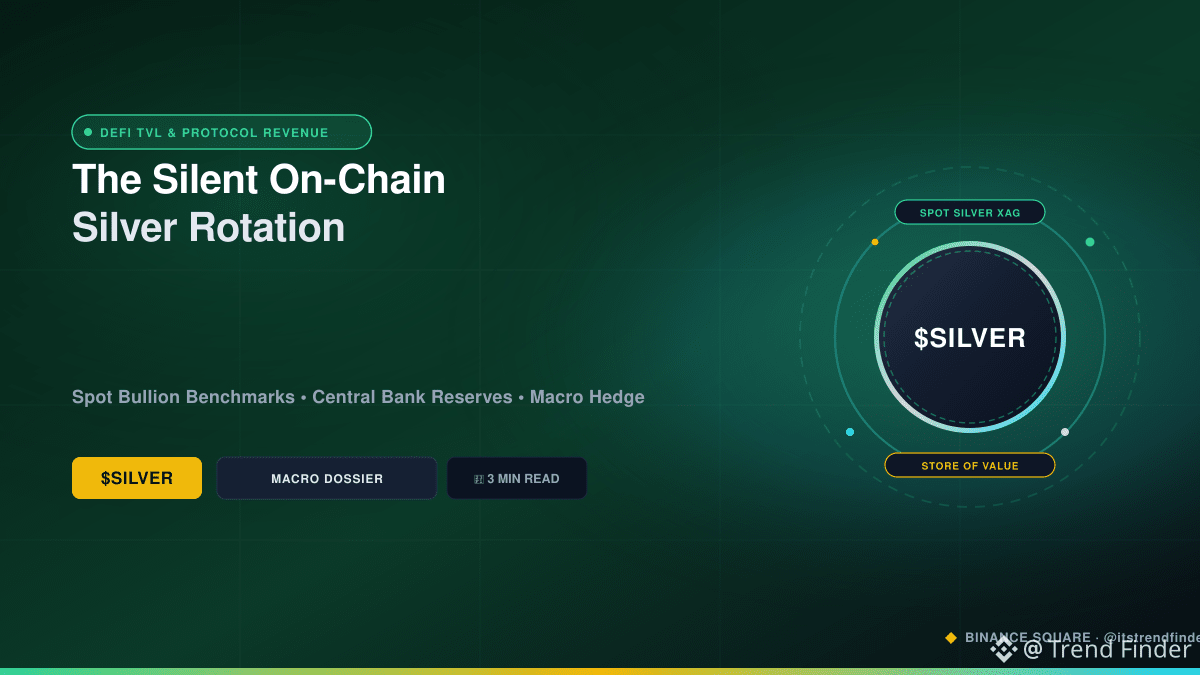
The Silent On-Chain Silver Rotation
While everyone is fixated on the shiny record highs of gold at 4140 per ounce, a massive structural shift is quietly unfolding in the silver markets. The Gold to Silver Ratio is currently hovering around 68.5, which is historically tight, but the real story is how this physical demand is migrating into the RWA sector. We are seeing tokenized silver evolve from a simple store of value into a high-utility DeFi primitive.
The numbers for $SILVER are starting to tell a compelling story. This specific market segment expanded its footprint from roughly 45 million in early 2025 to over 280 million by March 2026. Unlike many speculative tokens, these assets are 1:1 backed by audited physical bullion, which is crucial as the DXY shows signs of inverse correlation weakness. Leading the pack, Kinesis Silver maintains a market cap around 112 million, while Matrixdock Silver tracks the LBMA price closely at 63.17.
What is really interesting is the liquidity depth. DEX volume for silver tokens recently hit 647.91K, a modest figure compared to BTC but a massive leap for a commodity asset on-chain. As the total DeFi TVL climbed 38 percent in Q3 2026 to reach 95 billion, the focus has shifted toward using silver as collateral. We are entering an era where you can hold physical silver and simultaneously deploy it into liquid staking or lending protocols to capture yield without selling your metal.
The transparency of Proof of Reserves is finally giving institutional players the confidence to bridge into precious metals via PAXG and silver alternatives. The 24/7 liquidity and fractional ownership are dismantling the old barriers of high premiums and storage costs.
With silver playing such a critical role in industrial and tech sectors, do you think tokenized silver will eventually flip the growth rate of tokenized gold in the next twelve months?
#DeFi #TVL
The Silent On-Chain Silver Rotation
While everyone is fixated on the shiny record highs of gold at 4140 per ounce, a massive structural shift is quietly unfolding in the silver markets. The Gold to Silver Ratio is currently hovering around 68.5, which is historically tight, but the real story is how this physical demand is migrating into the RWA sector. We are seeing tokenized silver evolve from a simple store of value into a high-utility DeFi primitive.
The numbers for $SILVER are starting to tell a compelling story. This specific market segment expanded its footprint from roughly 45 million in early 2025 to over 280 million by March 2026. Unlike many speculative tokens, these assets are 1:1 backed by audited physical bullion, which is crucial as the DXY shows signs of inverse correlation weakness. Leading the pack, Kinesis Silver maintains a market cap around 112 million, while Matrixdock Silver tracks the LBMA price closely at 63.17.
What is really interesting is the liquidity depth. DEX volume for silver tokens recently hit 647.91K, a modest figure compared to BTC but a massive leap for a commodity asset on-chain. As the total DeFi TVL climbed 38 percent in Q3 2026 to reach 95 billion, the focus has shifted toward using silver as collateral. We are entering an era where you can hold physical silver and simultaneously deploy it into liquid staking or lending protocols to capture yield without selling your metal.
The transparency of Proof of Reserves is finally giving institutional players the confidence to bridge into precious metals via PAXG and silver alternatives. The 24/7 liquidity and fractional ownership are dismantling the old barriers of high premiums and storage costs.
With silver playing such a critical role in industrial and tech sectors, do you think tokenized silver will eventually flip the growth rate of tokenized gold in the next twelve months?
#DeFi #TVL
While everyone is fixated on the shiny record highs of gold at 4140 per ounce, a massive structural shift is quietly unfolding in the silver markets. The Gold to Silver Ratio is currently hovering around 68.5, which is historically tight, but the real story is how this physical demand is migrating into the RWA sector. We are seeing tokenized silver evolve from a simple store of value into a high-utility DeFi primitive.
The numbers for $SILVER are starting to tell a compelling story. This specific market segment expanded its footprint from roughly 45 million in early 2025 to over 280 million by March 2026. Unlike many speculative tokens, these assets are 1:1 backed by audited physical bullion, which is crucial as the DXY shows signs of inverse correlation weakness. Leading the pack, Kinesis Silver maintains a market cap around 112 million, while Matrixdock Silver tracks the LBMA price closely at 63.17.
What is really interesting is the liquidity depth. DEX volume for silver tokens recently hit 647.91K, a modest figure compared to BTC but a massive leap for a commodity asset on-chain. As the total DeFi TVL climbed 38 percent in Q3 2026 to reach 95 billion, the focus has shifted toward using silver as collateral. We are entering an era where you can hold physical silver and simultaneously deploy it into liquid staking or lending protocols to capture yield without selling your metal.
The transparency of Proof of Reserves is finally giving institutional players the confidence to bridge into precious metals via PAXG and silver alternatives. The 24/7 liquidity and fractional ownership are dismantling the old barriers of high premiums and storage costs.
With silver playing such a critical role in industrial and tech sectors, do you think tokenized silver will eventually flip the growth rate of tokenized gold in the next twelve months?
#DeFi #TVL
16

·
--
See translation
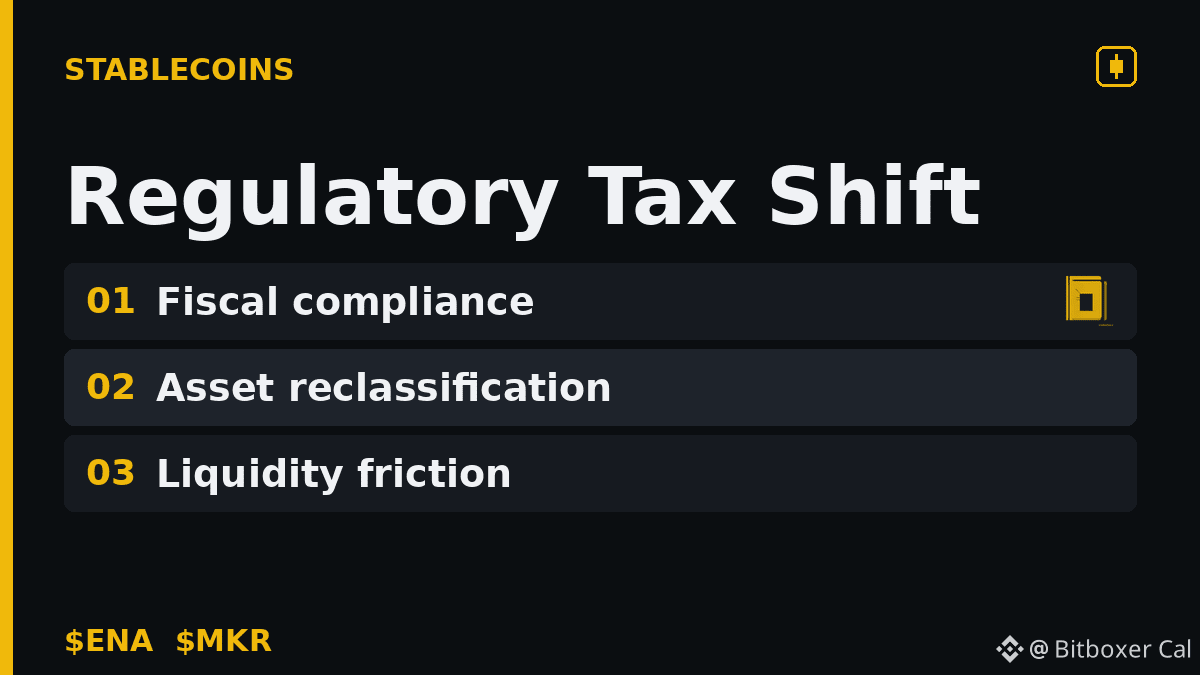
Why are global regulators suddenly treating $ENA and $MKR as taxable assets instead of digital experiments?
This shift forces stablecoins from neutral mediums into rigid financial tools. Protocols must now build tax compliance directly into their core code. Watch the liquidity impact; that is the real variable to track.
$ENA $MKR #Stablecoins #CryptoRegulation #DeFi
Why are global regulators suddenly treating $ENA and $MKR as taxable assets instead of digital experiments?
This shift forces stablecoins from neutral mediums into rigid financial tools. Protocols must now build tax compliance directly into their core code. Watch the liquidity impact; that is the real variable to track.
$ENA $MKR #Stablecoins #CryptoRegulation #DeFi
This shift forces stablecoins from neutral mediums into rigid financial tools. Protocols must now build tax compliance directly into their core code. Watch the liquidity impact; that is the real variable to track.
$ENA $MKR #Stablecoins #CryptoRegulation #DeFi
191

·
--
See translation
Protocol-Owned Liquidity changed DeFi’s power structure in ways most investors still underestimate.
Traditional liquidity mining rents liquidity. Protocols hand out token emissions to attract LPs, who stay only as long as rewards exceed opportunity cost. The moment emissions slow, they leave — taking depth with them. It’s expensive, temporary, and structurally extractive.
Protocol-owned liquidity flips that model. Instead of renting, protocols buy and own their LP positions permanently. The treasury becomes the market maker. Depth doesn’t leave when incentives stop — it compounds.
This shift has three underappreciated effects:
🔹 Revenue recycling — trading fees flow back to the protocol treasury rather than to mercenary LPs. Sustainable revenue replaces endless dilution.
🔹 Price stability — protocol-owned positions create a persistent, predictable bid. Thin-book volatility shrinks. Slippage compresses.
🔹 Governance alignment — the protocol’s treasury growth is directly tied to volume and fee generation. Teams become economically incentivized to drive usage, not token price.
The broader lesson: sustainable DeFi protocols look less like token-printing machines and more like businesses that own their infrastructure. That’s a durability signal worth tracking.
Watch treasury-owned LP percentage and fee-revenue reinvestment rate — not just TVL.
$ETH $BNB $SOL
#DeFi #ProtocolOwnedLiquidity #CryptoMarkets #Tokenomics #BinanceSquare
Protocol-Owned Liquidity changed DeFi’s power structure in ways most investors still underestimate.
Traditional liquidity mining rents liquidity. Protocols hand out token emissions to attract LPs, who stay only as long as rewards exceed opportunity cost. The moment emissions slow, they leave — taking depth with them. It’s expensive, temporary, and structurally extractive.
Protocol-owned liquidity flips that model. Instead of renting, protocols buy and own their LP positions permanently. The treasury becomes the market maker. Depth doesn’t leave when incentives stop — it compounds.
This shift has three underappreciated effects:
🔹 Revenue recycling — trading fees flow back to the protocol treasury rather than to mercenary LPs. Sustainable revenue replaces endless dilution.
🔹 Price stability — protocol-owned positions create a persistent, predictable bid. Thin-book volatility shrinks. Slippage compresses.
🔹 Governance alignment — the protocol’s treasury growth is directly tied to volume and fee generation. Teams become economically incentivized to drive usage, not token price.
The broader lesson: sustainable DeFi protocols look less like token-printing machines and more like businesses that own their infrastructure. That’s a durability signal worth tracking.
Watch treasury-owned LP percentage and fee-revenue reinvestment rate — not just TVL.
$ETH $BNB $SOL
#DeFi #ProtocolOwnedLiquidity #CryptoMarkets #Tokenomics #BinanceSquare
Traditional liquidity mining rents liquidity. Protocols hand out token emissions to attract LPs, who stay only as long as rewards exceed opportunity cost. The moment emissions slow, they leave — taking depth with them. It’s expensive, temporary, and structurally extractive.
Protocol-owned liquidity flips that model. Instead of renting, protocols buy and own their LP positions permanently. The treasury becomes the market maker. Depth doesn’t leave when incentives stop — it compounds.
This shift has three underappreciated effects:
🔹 Revenue recycling — trading fees flow back to the protocol treasury rather than to mercenary LPs. Sustainable revenue replaces endless dilution.
🔹 Price stability — protocol-owned positions create a persistent, predictable bid. Thin-book volatility shrinks. Slippage compresses.
🔹 Governance alignment — the protocol’s treasury growth is directly tied to volume and fee generation. Teams become economically incentivized to drive usage, not token price.
The broader lesson: sustainable DeFi protocols look less like token-printing machines and more like businesses that own their infrastructure. That’s a durability signal worth tracking.
Watch treasury-owned LP percentage and fee-revenue reinvestment rate — not just TVL.
$ETH $BNB $SOL
#DeFi #ProtocolOwnedLiquidity #CryptoMarkets #Tokenomics #BinanceSquare
50

·
--
Bullish
See translation
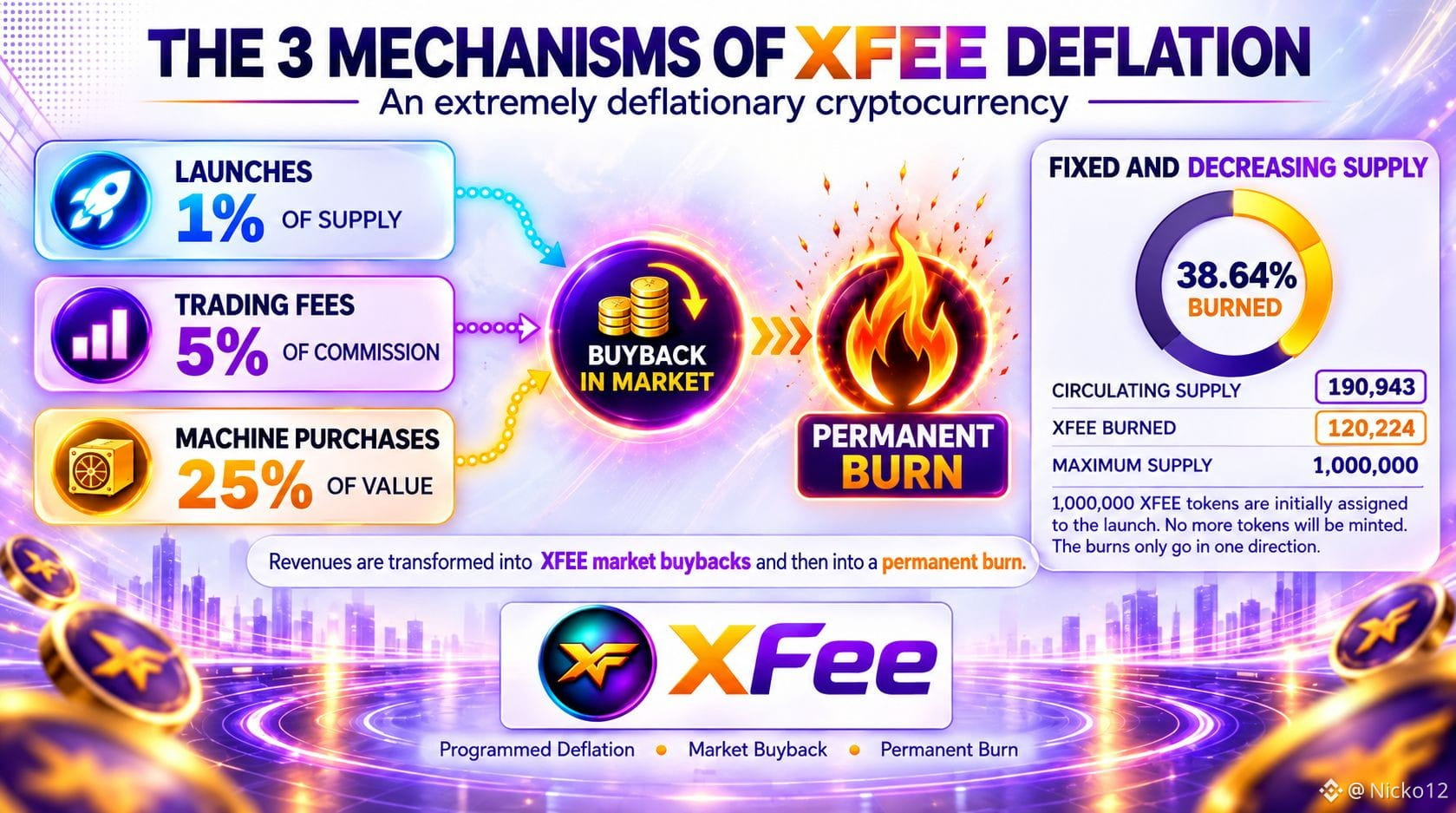
🔥 XFEE: THE DEFLATION ENGINE OF THE XTRENDS ECOSYSTEM
XFEE is designed to connect ecosystem activity with buyback and permanent burn mechanisms.
🚀 Launches → 1%
📊 Trading → 5%
⛏️ Mining Machines → 25%
These mechanisms generate XFEE buybacks that are then permanently burned, reducing the available supply.
Less supply. More scarcity. More utility within the ecosystem. 🔥💎$SOL
#XFEE #XTRENDS #crypto #Web3 #defi
🔥 XFEE: THE DEFLATION ENGINE OF THE XTRENDS ECOSYSTEM
XFEE is designed to connect ecosystem activity with buyback and permanent burn mechanisms.
🚀 Launches → 1%
📊 Trading → 5%
⛏️ Mining Machines → 25%
These mechanisms generate XFEE buybacks that are then permanently burned, reducing the available supply.
Less supply. More scarcity. More utility within the ecosystem. 🔥💎$SOL
#XFEE #XTRENDS #crypto #Web3 #defi
XFEE is designed to connect ecosystem activity with buyback and permanent burn mechanisms.
🚀 Launches → 1%
📊 Trading → 5%
⛏️ Mining Machines → 25%
These mechanisms generate XFEE buybacks that are then permanently burned, reducing the available supply.
Less supply. More scarcity. More utility within the ecosystem. 🔥💎$SOL
#XFEE #XTRENDS #crypto #Web3 #defi
1
165

·
--
See translation
Stripe to expand stablecoin cards to over 100 countries by the end of the year
📌 The Rundown:
• Stripe plans to launch its stablecoin card in over 100 countries by year‑end, signaling a massive push into global fiat‑to‑crypto frictionless payments.
• The company is testing tokenized deposits and DeFi integrations, hinting at a future where crypto balances can be directly leveraged for lending, staking, or yield farming within the Stripe ecosystem.
🎯 Strategic Outlook:
Stripe’s expansion will accelerate mainstream adoption of stablecoins, positioning them as a universal payment layer. As tokenized deposits and DeFi hooks mature, the ecosystem could see a rapid shift from isolated crypto wallets to integrated, programmable financial services.
🚀 Top 24H Futures Outperformers:
• $PUMPBTC (+305.8%) — Price: 0.0371
• $GTC (+68.0%) — Price: 0.2109
• $RLC (+52.3%) — Price: 0.5510
#TrendingTopic #Write2Earn #DeFi
Stripe to expand stablecoin cards to over 100 countries by the end of the year
📌 The Rundown:
• Stripe plans to launch its stablecoin card in over 100 countries by year‑end, signaling a massive push into global fiat‑to‑crypto frictionless payments.
• The company is testing tokenized deposits and DeFi integrations, hinting at a future where crypto balances can be directly leveraged for lending, staking, or yield farming within the Stripe ecosystem.
🎯 Strategic Outlook:
Stripe’s expansion will accelerate mainstream adoption of stablecoins, positioning them as a universal payment layer. As tokenized deposits and DeFi hooks mature, the ecosystem could see a rapid shift from isolated crypto wallets to integrated, programmable financial services.
🚀 Top 24H Futures Outperformers:
• $PUMPBTC (+305.8%) — Price: 0.0371
• $GTC (+68.0%) — Price: 0.2109
• $RLC (+52.3%) — Price: 0.5510
#TrendingTopic #Write2Earn #DeFi
📌 The Rundown:
• Stripe plans to launch its stablecoin card in over 100 countries by year‑end, signaling a massive push into global fiat‑to‑crypto frictionless payments.
• The company is testing tokenized deposits and DeFi integrations, hinting at a future where crypto balances can be directly leveraged for lending, staking, or yield farming within the Stripe ecosystem.
🎯 Strategic Outlook:
Stripe’s expansion will accelerate mainstream adoption of stablecoins, positioning them as a universal payment layer. As tokenized deposits and DeFi hooks mature, the ecosystem could see a rapid shift from isolated crypto wallets to integrated, programmable financial services.
🚀 Top 24H Futures Outperformers:
• $PUMPBTC (+305.8%) — Price: 0.0371
• $GTC (+68.0%) — Price: 0.2109
• $RLC (+52.3%) — Price: 0.5510
#TrendingTopic #Write2Earn #DeFi

462

·
--
See translation
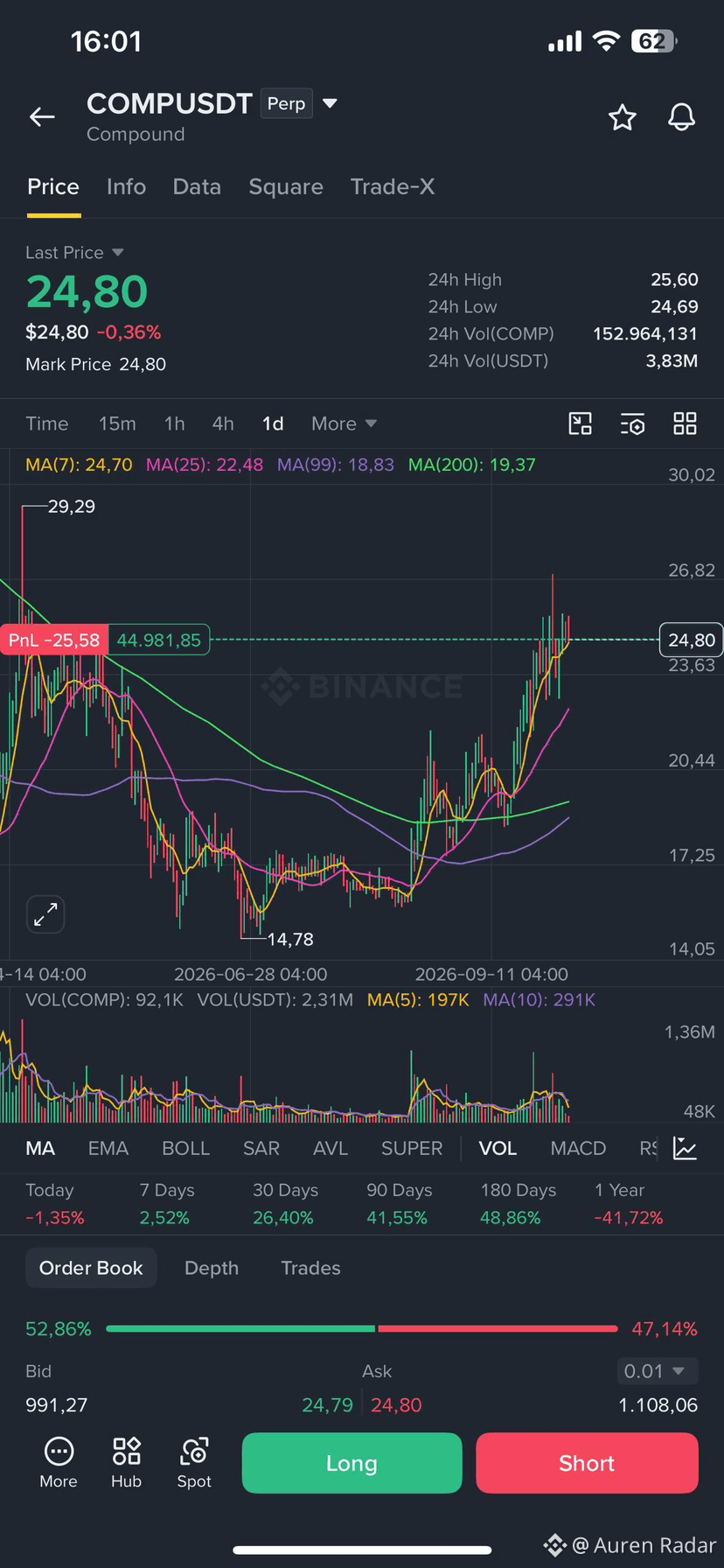
📡 $COMP | Lending/DeFi
Lending trend making a comeback, $COMP chart structure looking clean with MA support holding strong on daily.
Similar tier to $AAVE and $SKY, positioned to catch the sector momentum as lending narrative rebuilds👀
✅ TP: 27 / 31 / 35
❌ STL: 22.5
📌 Personal opinion, not financial advice. DYOR.
#COMP #Compound #Lending #DeFi $COMP
{future}(COMPUSDT)
📡 $COMP | Lending/DeFi
Lending trend making a comeback, $COMP chart structure looking clean with MA support holding strong on daily.
Similar tier to $AAVE and $SKY, positioned to catch the sector momentum as lending narrative rebuilds👀
✅ TP: 27 / 31 / 35
❌ STL: 22.5
📌 Personal opinion, not financial advice. DYOR.
#COMP #Compound #Lending #DeFi $COMP
Lending trend making a comeback, $COMP chart structure looking clean with MA support holding strong on daily.
Similar tier to $AAVE and $SKY, positioned to catch the sector momentum as lending narrative rebuilds👀
✅ TP: 27 / 31 / 35
❌ STL: 22.5
📌 Personal opinion, not financial advice. DYOR.
#COMP #Compound #Lending #DeFi $COMP
1
294
·
--
See translation
Concentrated Liquidity AMMs Are Rewriting the Rules of DeFi
Traditional AMMs like Uniswap v2 spread liquidity uniformly across every possible price — from zero to infinity. That sounds prudent, but in practice, 99% of that capital sits idle while all actual trading happens in a narrow price band. Capital efficiency? Near zero.
Concentrated liquidity AMMs (CLMMs) changed this. LPs now choose the exact price range where their capital is deployed. Liquidity is stacked precisely where markets trade — making $1 of CLMM liquidity equivalent to $50–200 in a traditional pool, depending on the range.
The tradeoff is active management. Tight ranges earn maximum fees — but when price escapes your range, you stop earning and face full impermanent loss on one side. Smart LPs treat tick-range selection like an options position: define your market outlook, pick your range, monitor rebalancing costs.
What this means for $ETH, $SOL, and $BNB ecosystem DeFi:
→ Capital efficiency gains attract deeper liquidity with less TVL
→ Fee revenue concentrates with sophisticated LPs — amateurs get picked off
→ CLMMs are effectively on-chain market-making desks
→ Protocol TVL becomes a less reliable health metric; volume-to-TVL ratio matters more
DeFi is maturing from passive yield farming into professional market structure. The LPs who understand this will capture outsized fee income. Those who do not will slowly donate to arbitrageurs.
#DeFi #LiquidityPools #CryptoAlpha #AMM #Web3
Concentrated Liquidity AMMs Are Rewriting the Rules of DeFi
Traditional AMMs like Uniswap v2 spread liquidity uniformly across every possible price — from zero to infinity. That sounds prudent, but in practice, 99% of that capital sits idle while all actual trading happens in a narrow price band. Capital efficiency? Near zero.
Concentrated liquidity AMMs (CLMMs) changed this. LPs now choose the exact price range where their capital is deployed. Liquidity is stacked precisely where markets trade — making $1 of CLMM liquidity equivalent to $50–200 in a traditional pool, depending on the range.
The tradeoff is active management. Tight ranges earn maximum fees — but when price escapes your range, you stop earning and face full impermanent loss on one side. Smart LPs treat tick-range selection like an options position: define your market outlook, pick your range, monitor rebalancing costs.
What this means for $ETH , $SOL , and $BNB ecosystem DeFi:
→ Capital efficiency gains attract deeper liquidity with less TVL
→ Fee revenue concentrates with sophisticated LPs — amateurs get picked off
→ CLMMs are effectively on-chain market-making desks
→ Protocol TVL becomes a less reliable health metric; volume-to-TVL ratio matters more
DeFi is maturing from passive yield farming into professional market structure. The LPs who understand this will capture outsized fee income. Those who do not will slowly donate to arbitrageurs.
#DeFi #LiquidityPools #CryptoAlpha #AMM #Web3
Traditional AMMs like Uniswap v2 spread liquidity uniformly across every possible price — from zero to infinity. That sounds prudent, but in practice, 99% of that capital sits idle while all actual trading happens in a narrow price band. Capital efficiency? Near zero.
Concentrated liquidity AMMs (CLMMs) changed this. LPs now choose the exact price range where their capital is deployed. Liquidity is stacked precisely where markets trade — making $1 of CLMM liquidity equivalent to $50–200 in a traditional pool, depending on the range.
The tradeoff is active management. Tight ranges earn maximum fees — but when price escapes your range, you stop earning and face full impermanent loss on one side. Smart LPs treat tick-range selection like an options position: define your market outlook, pick your range, monitor rebalancing costs.
What this means for $ETH , $SOL , and $BNB ecosystem DeFi:
→ Capital efficiency gains attract deeper liquidity with less TVL
→ Fee revenue concentrates with sophisticated LPs — amateurs get picked off
→ CLMMs are effectively on-chain market-making desks
→ Protocol TVL becomes a less reliable health metric; volume-to-TVL ratio matters more
DeFi is maturing from passive yield farming into professional market structure. The LPs who understand this will capture outsized fee income. Those who do not will slowly donate to arbitrageurs.
#DeFi #LiquidityPools #CryptoAlpha #AMM #Web3
37

·
--
Bearish
See translation
$DRIFT Hack Victims Can Now Begin Claims
Victims of the April 1, 2026 Drift Protocol exploit can now claim DFX recovery tokens as part of the protocol’s recovery process.
According to Drift Foundation, eligible users receive 1 DFX for every 1 USDT of verified loss. The claims and redemptions opened on October 1, 2026.
But there’s an important detail: the initial Recovery Pool contains roughly $3.1 million, while verified losses were around $295 million. That means the initial redemption value is only about $0.0104 per DFX, or roughly 1% of the verified loss.
Users have several options:
🔹 Claim their allocated DFX
🔹 Redeem DFX for USDT
🔹 Sell the DFX
🔹 Hold the tokens while the Recovery Pool potentially grows
The Recovery Pool is expected to receive funding from protocol revenue, Tether support, partner contributions and recovered stolen assets.
⚠️ Important: Redeeming DFX burns the tokens, meaning the holder gives up future recovery distributions tied to those tokens.
The current claim window is scheduled to remain open until January 1, 2028, after which unclaimed DFX will be burned.
This is a significant test of how DeFi protocols handle large-scale user losses — and whether victims can ultimately recover a meaningful portion of their funds.
#CryptoNews #BinanceSquare #defi #DRIFT #drifthackvictimsbeginclaims
{future}(DRIFTUSDT)
$DRIFT Hack Victims Can Now Begin Claims
Victims of the April 1, 2026 Drift Protocol exploit can now claim DFX recovery tokens as part of the protocol’s recovery process.
According to Drift Foundation, eligible users receive 1 DFX for every 1 USDT of verified loss. The claims and redemptions opened on October 1, 2026.
But there’s an important detail: the initial Recovery Pool contains roughly $3.1 million, while verified losses were around $295 million. That means the initial redemption value is only about $0.0104 per DFX, or roughly 1% of the verified loss.
Users have several options:
🔹 Claim their allocated DFX
🔹 Redeem DFX for USDT
🔹 Sell the DFX
🔹 Hold the tokens while the Recovery Pool potentially grows
The Recovery Pool is expected to receive funding from protocol revenue, Tether support, partner contributions and recovered stolen assets.
⚠️ Important: Redeeming DFX burns the tokens, meaning the holder gives up future recovery distributions tied to those tokens.
The current claim window is scheduled to remain open until January 1, 2028, after which unclaimed DFX will be burned.
This is a significant test of how DeFi protocols handle large-scale user losses — and whether victims can ultimately recover a meaningful portion of their funds.
#CryptoNews #BinanceSquare #defi #DRIFT #drifthackvictimsbeginclaims
Victims of the April 1, 2026 Drift Protocol exploit can now claim DFX recovery tokens as part of the protocol’s recovery process.
According to Drift Foundation, eligible users receive 1 DFX for every 1 USDT of verified loss. The claims and redemptions opened on October 1, 2026.
But there’s an important detail: the initial Recovery Pool contains roughly $3.1 million, while verified losses were around $295 million. That means the initial redemption value is only about $0.0104 per DFX, or roughly 1% of the verified loss.
Users have several options:
🔹 Claim their allocated DFX
🔹 Redeem DFX for USDT
🔹 Sell the DFX
🔹 Hold the tokens while the Recovery Pool potentially grows
The Recovery Pool is expected to receive funding from protocol revenue, Tether support, partner contributions and recovered stolen assets.
⚠️ Important: Redeeming DFX burns the tokens, meaning the holder gives up future recovery distributions tied to those tokens.
The current claim window is scheduled to remain open until January 1, 2028, after which unclaimed DFX will be burned.
This is a significant test of how DeFi protocols handle large-scale user losses — and whether victims can ultimately recover a meaningful portion of their funds.
#CryptoNews #BinanceSquare #defi #DRIFT #drifthackvictimsbeginclaims

73

·
--
See translation
The hardest lesson DeFi teaches you isn't how to take profit, but how to handle the aftermath of an exploit.
Watching funds vanish is painful enough, but the real agony comes when the recovery portal finally goes live and forces you to gamble on the timeline of your own restitution. That gut-wrenching dilemma is playing out right now across the $SOL ecosystem as the claims process opens for affected users.
Victims holding DFX now face a brutal mathematical trade-off. You can choose to redeem immediately or sell your allocation on the open market, but redeeming permanently burns those claim tokens, cutting you off from any additional recovery funds that might flow into the pool later. On the flip side, holding out means banking on future distributions that may take months or years to materialize.
I have seen this exact playbook in previous cycles with protocol insolvency and hack resolutions. Rushing to cash out often locks in heavy haircuts at the worst possible valuation, yet waiting tied up in illiquid claims exposes you to brutal opportunity cost while assets like $DRIFT continue to trade.
If you were caught in this position, would you take the immediate exit liquidity or hold out for full recovery?
#DeFi #Solana #CryptoRisk
The hardest lesson DeFi teaches you isn't how to take profit, but how to handle the aftermath of an exploit.
Watching funds vanish is painful enough, but the real agony comes when the recovery portal finally goes live and forces you to gamble on the timeline of your own restitution. That gut-wrenching dilemma is playing out right now across the $SOL ecosystem as the claims process opens for affected users.
Victims holding DFX now face a brutal mathematical trade-off. You can choose to redeem immediately or sell your allocation on the open market, but redeeming permanently burns those claim tokens, cutting you off from any additional recovery funds that might flow into the pool later. On the flip side, holding out means banking on future distributions that may take months or years to materialize.
I have seen this exact playbook in previous cycles with protocol insolvency and hack resolutions. Rushing to cash out often locks in heavy haircuts at the worst possible valuation, yet waiting tied up in illiquid claims exposes you to brutal opportunity cost while assets like $DRIFT continue to trade.
If you were caught in this position, would you take the immediate exit liquidity or hold out for full recovery?
#DeFi #Solana #CryptoRisk
Watching funds vanish is painful enough, but the real agony comes when the recovery portal finally goes live and forces you to gamble on the timeline of your own restitution. That gut-wrenching dilemma is playing out right now across the $SOL ecosystem as the claims process opens for affected users.
Victims holding DFX now face a brutal mathematical trade-off. You can choose to redeem immediately or sell your allocation on the open market, but redeeming permanently burns those claim tokens, cutting you off from any additional recovery funds that might flow into the pool later. On the flip side, holding out means banking on future distributions that may take months or years to materialize.
I have seen this exact playbook in previous cycles with protocol insolvency and hack resolutions. Rushing to cash out often locks in heavy haircuts at the worst possible valuation, yet waiting tied up in illiquid claims exposes you to brutal opportunity cost while assets like $DRIFT continue to trade.
If you were caught in this position, would you take the immediate exit liquidity or hold out for full recovery?
#DeFi #Solana #CryptoRisk

14

See translation
Study this...
DeFi does in seconds what banks do in days. With no permission required.
→ DEX volume rivaling centralized exchanges
🔸 Flash loans: $0 to $500M in one transaction
→ Uniswap processes more than most stock exchanges
Banks had 400 years. DeFi had 5. Look at the scoreboard.
Drop your favorite coin below
#CryptoTips #CryptoBasics #DeFi #BullRun #CryptoMarket
📱 Follow @PoorCryptoMan
Study this...
DeFi does in seconds what banks do in days. With no permission required.
→ DEX volume rivaling centralized exchanges
🔸 Flash loans: $0 to $500M in one transaction
→ Uniswap processes more than most stock exchanges
Banks had 400 years. DeFi had 5. Look at the scoreboard.
Drop your favorite coin below
#CryptoTips #CryptoBasics #DeFi #BullRun #CryptoMarket
📱 Follow @PoorCryptoMan
DeFi does in seconds what banks do in days. With no permission required.
→ DEX volume rivaling centralized exchanges
🔸 Flash loans: $0 to $500M in one transaction
→ Uniswap processes more than most stock exchanges
Banks had 400 years. DeFi had 5. Look at the scoreboard.
Drop your favorite coin below
#CryptoTips #CryptoBasics #DeFi #BullRun #CryptoMarket
📱 Follow @PoorCryptoMan
3


Log in to explore more content
Join global crypto users on Binance Square
⚡️ Get latest and useful information about crypto.
💬 Trusted by the world’s largest crypto exchange.
👍 Discover real insights from verified creators.
Email / Phone number
Trending Topics
1
#ADAGains10%Above$0.27
14,754 views
176 Discussing
2
#ETHUp70%InQ3ButLiquidityFalls
160,061 views
1,049 Discussing
3
#EthStakingExitQueueHits2026High
55,431 views
754 Discussing
4
#FedOctoberHoldOdds82.3%
56,815 views
706 Discussing
5
#Nikkei225Jumps2.5%ToThreeMonthHigh
80,226 views
1,076 Discussing
6
#CircleMints$2.75BUSDCOnSolanaIn7Days
2,108 views
47 Discussing
7
#DriftHackVictimsBeginClaims
175,295 views
1,724 Discussing
8
#SolanaTokenizedStockVolumeTops$4.4BInSeptember
13,528 views
132 Discussing
9
#BitcoinSpotETFsDraw$6.34BInflowsInQ3
54,432 views
263 Discussing
10
#EthereumValidatorExitQueueJumps392%
308,216 views
2,578 Discussing