

#interoperability
interoperability
231,472 views
2,089 Discussing
Hot
Latest

·
--
Cross-chain interoperability is the infrastructure layer crypto still hasn't fully solved — and it may be the most important bottleneck of this cycle.
Right now, most capital and users are siloed. A $DOT holder on the relay chain, a $BNB holder bridging to DeFi, and an $ETH user navigating a fragmented L2 ecosystem — they're all working with incompatible trust models and disconnected liquidity pools. That friction isn't just inconvenient. It actively suppresses the total addressable market for every protocol and every payment rail.
The chains that solve this cleanly will absorb the most value long-term. Polkadot's XCM messaging protocol is the most sophisticated attempt at trustless cross-chain communication at a relay-chain level. BNB Chain's multi-layer architecture and opBNB are quietly becoming a high-throughput settlement hub. And Ethereum's rollup-centric roadmap is betting on shared sequencing as the interoperability glue.
The key metric to watch isn't bridge TVL — it's bridge security. Most of the largest hacks in crypto history targeted cross-chain bridges. The protocols that solve interoperability without reintroducing custodial risk will earn a durable structural premium.
Interoperability isn't a feature. It's the endgame.
$DOT $BNB $ETH
#Interoperability #CrossChain #DeFi #Web3Infrastructure #CryptoInsights
Cross-chain interoperability is the infrastructure layer crypto still hasn't fully solved — and it may be the most important bottleneck of this cycle.
Right now, most capital and users are siloed. A $DOT holder on the relay chain, a $BNB holder bridging to DeFi, and an $ETH user navigating a fragmented L2 ecosystem — they're all working with incompatible trust models and disconnected liquidity pools. That friction isn't just inconvenient. It actively suppresses the total addressable market for every protocol and every payment rail.
The chains that solve this cleanly will absorb the most value long-term. Polkadot's XCM messaging protocol is the most sophisticated attempt at trustless cross-chain communication at a relay-chain level. BNB Chain's multi-layer architecture and opBNB are quietly becoming a high-throughput settlement hub. And Ethereum's rollup-centric roadmap is betting on shared sequencing as the interoperability glue.
The key metric to watch isn't bridge TVL — it's bridge security. Most of the largest hacks in crypto history targeted cross-chain bridges. The protocols that solve interoperability without reintroducing custodial risk will earn a durable structural premium.
Interoperability isn't a feature. It's the endgame.
$DOT $BNB $ETH
#Interoperability #CrossChain #DeFi #Web3Infrastructure #CryptoInsights
Right now, most capital and users are siloed. A $DOT holder on the relay chain, a $BNB holder bridging to DeFi, and an $ETH user navigating a fragmented L2 ecosystem — they're all working with incompatible trust models and disconnected liquidity pools. That friction isn't just inconvenient. It actively suppresses the total addressable market for every protocol and every payment rail.
The chains that solve this cleanly will absorb the most value long-term. Polkadot's XCM messaging protocol is the most sophisticated attempt at trustless cross-chain communication at a relay-chain level. BNB Chain's multi-layer architecture and opBNB are quietly becoming a high-throughput settlement hub. And Ethereum's rollup-centric roadmap is betting on shared sequencing as the interoperability glue.
The key metric to watch isn't bridge TVL — it's bridge security. Most of the largest hacks in crypto history targeted cross-chain bridges. The protocols that solve interoperability without reintroducing custodial risk will earn a durable structural premium.
Interoperability isn't a feature. It's the endgame.
$DOT $BNB $ETH
#Interoperability #CrossChain #DeFi #Web3Infrastructure #CryptoInsights
48

·
--
$GLMR 🌙 Moonbeam is building a connected, interoperable future for Web3.
With Ethereum-compatible smart contracts and cross-chain capabilities, Moonbeam makes it easier for developers to bring dApps and assets into a multichain ecosystem.
🔗 Interoperability
⚡ EVM compatibility
🌐 Multichain development
🛠️ Developer-focused infrastructure
The future of Web3 is multichain — Moonbeam is helping make it possible.
#Moonbeam #GLMR #Web3 #Blockchain #Ethereum #DeFi #interoperability
$GLMR 🌙 Moonbeam is building a connected, interoperable future for Web3.
With Ethereum-compatible smart contracts and cross-chain capabilities, Moonbeam makes it easier for developers to bring dApps and assets into a multichain ecosystem.
🔗 Interoperability
⚡ EVM compatibility
🌐 Multichain development
🛠️ Developer-focused infrastructure
The future of Web3 is multichain — Moonbeam is helping make it possible.
#Moonbeam #GLMR #Web3 #Blockchain #Ethereum #DeFi #interoperability
With Ethereum-compatible smart contracts and cross-chain capabilities, Moonbeam makes it easier for developers to bring dApps and assets into a multichain ecosystem.
🔗 Interoperability
⚡ EVM compatibility
🌐 Multichain development
🛠️ Developer-focused infrastructure
The future of Web3 is multichain — Moonbeam is helping make it possible.
#Moonbeam #GLMR #Web3 #Blockchain #Ethereum #DeFi #interoperability
140
·
--
Cross-chain interoperability is becoming the TCP/IP layer of crypto — and most people are still underestimating it.
Three years ago, bridges were an afterthought. Then a string of nine-figure exploits forced the entire ecosystem to rethink how assets and messages move between chains. That reckoning quietly produced the most important infrastructure upgrade in crypto: secure, battle-hardened messaging protocols.
Here is what has changed:
→ Canonical bridges (backed by L1 validators) now anchor trust for high-value transfers, reducing reliance on third-party multi-sigs.
→ General message passing enables cross-chain smart contract calls, unlocking unified liquidity across ETH L2s, Solana, Avalanche, and Polkadot ecosystems.
→ Light client verification and optimistic fraud proofs are pushing bridge security closer to the underlying chain's own security model.
→ Interoperability is compressing the user experience gap. A DeFi position on one chain can now be collateralized, hedged, or exited from a completely different chain without manual bridging steps.
The fragmented multi-chain world is not the end state — it is the construction zone. Capital naturally pools where it can move freely and safely.
Protocols that control the messaging layer between chains may end up capturing outsized value over the next cycle.
$BNB $ETH $AVAX
#Interoperability #CrossChain #DeFi #CryptoInfrastructure #Web3
Cross-chain interoperability is becoming the TCP/IP layer of crypto — and most people are still underestimating it.
Three years ago, bridges were an afterthought. Then a string of nine-figure exploits forced the entire ecosystem to rethink how assets and messages move between chains. That reckoning quietly produced the most important infrastructure upgrade in crypto: secure, battle-hardened messaging protocols.
Here is what has changed:
→ Canonical bridges (backed by L1 validators) now anchor trust for high-value transfers, reducing reliance on third-party multi-sigs.
→ General message passing enables cross-chain smart contract calls, unlocking unified liquidity across ETH L2s, Solana, Avalanche, and Polkadot ecosystems.
→ Light client verification and optimistic fraud proofs are pushing bridge security closer to the underlying chain's own security model.
→ Interoperability is compressing the user experience gap. A DeFi position on one chain can now be collateralized, hedged, or exited from a completely different chain without manual bridging steps.
The fragmented multi-chain world is not the end state — it is the construction zone. Capital naturally pools where it can move freely and safely.
Protocols that control the messaging layer between chains may end up capturing outsized value over the next cycle.
$BNB $ETH $AVAX
#Interoperability #CrossChain #DeFi #CryptoInfrastructure #Web3
Three years ago, bridges were an afterthought. Then a string of nine-figure exploits forced the entire ecosystem to rethink how assets and messages move between chains. That reckoning quietly produced the most important infrastructure upgrade in crypto: secure, battle-hardened messaging protocols.
Here is what has changed:
→ Canonical bridges (backed by L1 validators) now anchor trust for high-value transfers, reducing reliance on third-party multi-sigs.
→ General message passing enables cross-chain smart contract calls, unlocking unified liquidity across ETH L2s, Solana, Avalanche, and Polkadot ecosystems.
→ Light client verification and optimistic fraud proofs are pushing bridge security closer to the underlying chain's own security model.
→ Interoperability is compressing the user experience gap. A DeFi position on one chain can now be collateralized, hedged, or exited from a completely different chain without manual bridging steps.
The fragmented multi-chain world is not the end state — it is the construction zone. Capital naturally pools where it can move freely and safely.
Protocols that control the messaging layer between chains may end up capturing outsized value over the next cycle.
$BNB $ETH $AVAX
#Interoperability #CrossChain #DeFi #CryptoInfrastructure #Web3
71
·
--
Cross-Chain Interoperability Is the Infrastructure Layer Nobody Prices In
Crypto is no longer a single-chain world. $ETH anchors DeFi and smart contracts. $SOL dominates high-frequency use cases. $AVAX powers institutional subnets. The question isn't which chain wins — it's who builds the rails that connect them all.
Interoperability protocols — IBC, LayerZero, Wormhole, CCIP — are quietly becoming the TCP/IP of crypto. Without cross-chain messaging, every ecosystem is an island. Assets stay siloed. Liquidity fragments. Developer gravity gets diluted across disconnected environments.
Here's the underappreciated dynamic: value doesn't just flow to the best chain — it flows to the best-connected chain. The network effects of bridges and messaging protocols compound over time. Once a chain is deeply integrated into cross-chain liquidity flows, dislodging it requires massive coordination costs.
The maturation signal to watch: when cross-chain volume becomes boring infrastructure — like DNS routing traffic without fanfare — that's when blockchain has crossed into systemic adoption.
Risk? Bridge exploits remain the single largest DeFi attack vector. Security of cross-chain messaging is unsolved. Smart money is watching audit quality, validator set size, and proof system design before capital commits at scale.
The chains that invest in interoperability-first architecture today are quietly positioning for the multi-chain endgame. Connectivity compounds.
#Crypto #Interoperability #CrossChain #DeFi #Blockchain
Cross-Chain Interoperability Is the Infrastructure Layer Nobody Prices In
Crypto is no longer a single-chain world. $ETH anchors DeFi and smart contracts. $SOL dominates high-frequency use cases. $AVAX powers institutional subnets. The question isn't which chain wins — it's who builds the rails that connect them all.
Interoperability protocols — IBC, LayerZero, Wormhole, CCIP — are quietly becoming the TCP/IP of crypto. Without cross-chain messaging, every ecosystem is an island. Assets stay siloed. Liquidity fragments. Developer gravity gets diluted across disconnected environments.
Here's the underappreciated dynamic: value doesn't just flow to the best chain — it flows to the best-connected chain. The network effects of bridges and messaging protocols compound over time. Once a chain is deeply integrated into cross-chain liquidity flows, dislodging it requires massive coordination costs.
The maturation signal to watch: when cross-chain volume becomes boring infrastructure — like DNS routing traffic without fanfare — that's when blockchain has crossed into systemic adoption.
Risk? Bridge exploits remain the single largest DeFi attack vector. Security of cross-chain messaging is unsolved. Smart money is watching audit quality, validator set size, and proof system design before capital commits at scale.
The chains that invest in interoperability-first architecture today are quietly positioning for the multi-chain endgame. Connectivity compounds.
#Crypto #Interoperability #CrossChain #DeFi #Blockchain
Crypto is no longer a single-chain world. $ETH anchors DeFi and smart contracts. $SOL dominates high-frequency use cases. $AVAX powers institutional subnets. The question isn't which chain wins — it's who builds the rails that connect them all.
Interoperability protocols — IBC, LayerZero, Wormhole, CCIP — are quietly becoming the TCP/IP of crypto. Without cross-chain messaging, every ecosystem is an island. Assets stay siloed. Liquidity fragments. Developer gravity gets diluted across disconnected environments.
Here's the underappreciated dynamic: value doesn't just flow to the best chain — it flows to the best-connected chain. The network effects of bridges and messaging protocols compound over time. Once a chain is deeply integrated into cross-chain liquidity flows, dislodging it requires massive coordination costs.
The maturation signal to watch: when cross-chain volume becomes boring infrastructure — like DNS routing traffic without fanfare — that's when blockchain has crossed into systemic adoption.
Risk? Bridge exploits remain the single largest DeFi attack vector. Security of cross-chain messaging is unsolved. Smart money is watching audit quality, validator set size, and proof system design before capital commits at scale.
The chains that invest in interoperability-first architecture today are quietly positioning for the multi-chain endgame. Connectivity compounds.
#Crypto #Interoperability #CrossChain #DeFi #Blockchain
67

Article
Bilkul 👍 My best title for the Binance article:
🔥 QNT: Is Quant Ready for Its Next Big Move? 🚀🚀 Quant (QNT): Interoperability Could Be the Next Big Narrative
Quant (QNT) is one of the crypto projects focused on solving a major challenge in blockchain: interoperability — allowing different blockchain networks and traditional financial systems to communicate with each other.
🔗 Why Quant is interesting?
Quant’s technology aims to connect multiple networks through its Overledger platform, potentially making it easier for institutions and businesses to work across different blockchain ecosystems.
Bilkul 👍 My best title for the Binance article: 🔥 QNT: Is Quant Ready for Its Next Big Move? 🚀
🚀 Quant (QNT): Interoperability Could Be the Next Big Narrative
Quant (QNT) is one of the crypto projects focused on solving a major challenge in blockchain: interoperability — allowing different blockchain networks and traditional financial systems to communicate with each other.
🔗 Why Quant is interesting?
Quant’s technology aims to connect multiple networks through its Overledger platform, potentially making it easier for institutions and businesses to work across different blockchain ecosystems.
Quant (QNT) is one of the crypto projects focused on solving a major challenge in blockchain: interoperability — allowing different blockchain networks and traditional financial systems to communicate with each other.
🔗 Why Quant is interesting?
Quant’s technology aims to connect multiple networks through its Overledger platform, potentially making it easier for institutions and businesses to work across different blockchain ecosystems.
42

·
--
ZRO is up about 15.4% today—but understanding the move starts with knowing what LayerZero actually does.
LayerZero is not one giant bridge holding everyone’s assets. It is cross-chain messaging infrastructure. An application sends a message through an immutable Endpoint; the app’s chosen Decentralized Verifier Networks verify it; then an Executor delivers the verified call to the destination application. This lets developers choose their own security configuration instead of relying on one fixed validator set.
Where $ZRO fits: the protocol supports paying messaging fees in ZRO, and holders participate in governance such as the protocol fee-switch referenda. The token is connected to the network’s economics, but a 24-hour rally alone does not prove usage growth.
The useful metric to watch next is adoption: applications, message activity and the security configurations teams choose—not price in isolation.
Market snapshot: ZRO/USDT $2.006 at 10:59 Beirut, 4 Oct 2026. Sources: Binance spot; LayerZero V2 docs.
#ZRO #Interoperability
ZRO is up about 15.4% today—but understanding the move starts with knowing what LayerZero actually does.
LayerZero is not one giant bridge holding everyone’s assets. It is cross-chain messaging infrastructure. An application sends a message through an immutable Endpoint; the app’s chosen Decentralized Verifier Networks verify it; then an Executor delivers the verified call to the destination application. This lets developers choose their own security configuration instead of relying on one fixed validator set.
Where $ZRO fits: the protocol supports paying messaging fees in ZRO, and holders participate in governance such as the protocol fee-switch referenda. The token is connected to the network’s economics, but a 24-hour rally alone does not prove usage growth.
The useful metric to watch next is adoption: applications, message activity and the security configurations teams choose—not price in isolation.
Market snapshot: ZRO/USDT $2.006 at 10:59 Beirut, 4 Oct 2026. Sources: Binance spot; LayerZero V2 docs.
#ZRO #Interoperability
LayerZero is not one giant bridge holding everyone’s assets. It is cross-chain messaging infrastructure. An application sends a message through an immutable Endpoint; the app’s chosen Decentralized Verifier Networks verify it; then an Executor delivers the verified call to the destination application. This lets developers choose their own security configuration instead of relying on one fixed validator set.
Where $ZRO fits: the protocol supports paying messaging fees in ZRO, and holders participate in governance such as the protocol fee-switch referenda. The token is connected to the network’s economics, but a 24-hour rally alone does not prove usage growth.
The useful metric to watch next is adoption: applications, message activity and the security configurations teams choose—not price in isolation.
Market snapshot: ZRO/USDT $2.006 at 10:59 Beirut, 4 Oct 2026. Sources: Binance spot; LayerZero V2 docs.
#ZRO #Interoperability
172

·
--
Cross-Chain Intents Need ChecksCross-chain intents can make a fragmented multi-chain experience feel much simpler. Instead of manually choosing every bridge, router, swap and destination action, a user describes the desired outcome. Solvers then compete to execute it.
That improved interface is useful, but it does not remove cross-chain risk. It changes where the risk lives.
The Open Intents Framework provides modular infrastructure for expressing, discovering, solving, validating and settling cross-chain intents. A typical order can define the input asset and chain, the desired output and destination, the recipient, a deadline and economic limits.
The solver evaluates the order, prices execution and may provide the destination asset from its own inventory. That can make fulfillment feel faster than waiting for a canonical bridge withdrawal. The solver later claims payment and rebalances liquidity across chains.
Users should understand the distinction between fulfillment and rebalancing. The user may receive the requested asset quickly while the solver’s inventory and underlying settlement path are still being restored. A fast front end does not reveal the entire trust model.
Several components need separate review:
● The wallet must encode the correct order and show material details before signing.
● The aggregator may control which solvers receive order flow and which quote is shown.
● The solver needs enough liquidity, reliable infrastructure and safe key management.
● The validation layer must prove that the destination requirements were satisfied.
● The settlement contracts must release payment only when valid evidence is available.
● Rebalancing routes introduce their own bridge, messaging and liquidity assumptions.
The user’s most important checks remain concrete: origin chain, input token, destination chain, output token, recipient, maximum spend or minimum receipt, expiry and the exact typed data or transaction being authorized.
Intent systems can reduce manual routing while preserving competition between execution providers. They should not be treated as magic abstraction. Simpler UX is safest when users can still inspect the conditions that constrain the solver.
TokenToolHub’s guide explains OIF architecture, solver economics, quote aggregation, settlement, validation, rebalancing and user-side checks.
Read the complete guide on TokenToolHub: https://tokentoolhub.com/open-intents-framework-cross-chain-solvers/
#crypto #blockchain #Ethereum #interoperability #Web3
Cross-Chain Intents Need Checks
Cross-chain intents can make a fragmented multi-chain experience feel much simpler. Instead of manually choosing every bridge, router, swap and destination action, a user describes the desired outcome. Solvers then compete to execute it.
That improved interface is useful, but it does not remove cross-chain risk. It changes where the risk lives.
The Open Intents Framework provides modular infrastructure for expressing, discovering, solving, validating and settling cross-chain intents. A typical order can define the input asset and chain, the desired output and destination, the recipient, a deadline and economic limits.
The solver evaluates the order, prices execution and may provide the destination asset from its own inventory. That can make fulfillment feel faster than waiting for a canonical bridge withdrawal. The solver later claims payment and rebalances liquidity across chains.
Users should understand the distinction between fulfillment and rebalancing. The user may receive the requested asset quickly while the solver’s inventory and underlying settlement path are still being restored. A fast front end does not reveal the entire trust model.
Several components need separate review:
● The wallet must encode the correct order and show material details before signing.
● The aggregator may control which solvers receive order flow and which quote is shown.
● The solver needs enough liquidity, reliable infrastructure and safe key management.
● The validation layer must prove that the destination requirements were satisfied.
● The settlement contracts must release payment only when valid evidence is available.
● Rebalancing routes introduce their own bridge, messaging and liquidity assumptions.
The user’s most important checks remain concrete: origin chain, input token, destination chain, output token, recipient, maximum spend or minimum receipt, expiry and the exact typed data or transaction being authorized.
Intent systems can reduce manual routing while preserving competition between execution providers. They should not be treated as magic abstraction. Simpler UX is safest when users can still inspect the conditions that constrain the solver.
TokenToolHub’s guide explains OIF architecture, solver economics, quote aggregation, settlement, validation, rebalancing and user-side checks.
Read the complete guide on TokenToolHub: https://tokentoolhub.com/open-intents-framework-cross-chain-solvers/
#crypto #blockchain #Ethereum #interoperability #Web3
That improved interface is useful, but it does not remove cross-chain risk. It changes where the risk lives.
The Open Intents Framework provides modular infrastructure for expressing, discovering, solving, validating and settling cross-chain intents. A typical order can define the input asset and chain, the desired output and destination, the recipient, a deadline and economic limits.
The solver evaluates the order, prices execution and may provide the destination asset from its own inventory. That can make fulfillment feel faster than waiting for a canonical bridge withdrawal. The solver later claims payment and rebalances liquidity across chains.
Users should understand the distinction between fulfillment and rebalancing. The user may receive the requested asset quickly while the solver’s inventory and underlying settlement path are still being restored. A fast front end does not reveal the entire trust model.
Several components need separate review:
● The wallet must encode the correct order and show material details before signing.
● The aggregator may control which solvers receive order flow and which quote is shown.
● The solver needs enough liquidity, reliable infrastructure and safe key management.
● The validation layer must prove that the destination requirements were satisfied.
● The settlement contracts must release payment only when valid evidence is available.
● Rebalancing routes introduce their own bridge, messaging and liquidity assumptions.
The user’s most important checks remain concrete: origin chain, input token, destination chain, output token, recipient, maximum spend or minimum receipt, expiry and the exact typed data or transaction being authorized.
Intent systems can reduce manual routing while preserving competition between execution providers. They should not be treated as magic abstraction. Simpler UX is safest when users can still inspect the conditions that constrain the solver.
TokenToolHub’s guide explains OIF architecture, solver economics, quote aggregation, settlement, validation, rebalancing and user-side checks.
Read the complete guide on TokenToolHub: https://tokentoolhub.com/open-intents-framework-cross-chain-solvers/
#crypto #blockchain #Ethereum #interoperability #Web3
65

#crosschain
🌉 CROSS-CHAIN NARRATIVE: LIQUIDITY NEEDS BRIDGES!
As blockchain ecosystems become increasingly fragmented, cross-chain infrastructure remains essential for moving assets and data between networks.
💡 WHAT THIS MEANS FOR TRADERS:
Interoperability tokens can benefit when multiple ecosystems experience simultaneous growth.
🔍 3 COINS TO WATCH:
🌉 $ATOM — Cosmos remains a major interoperability-focused blockchain ecosystem.
{spot}(ATOMUSDT)
🔗 $AXL — Axelar provides cross-chain communication infrastructure.
{spot}(AXLUSDT)
⚡ $WOD — WOD remains a major cross-chain messaging ecosystem.
{alpha}(560xb994882a1b9bd98a71dd6ea5f61577c42848b0e8)
Will interoperability become a bigger Q4 narrative?
#ATOM #AXL #CrossChain #Interoperability
#crosschain
🌉 CROSS-CHAIN NARRATIVE: LIQUIDITY NEEDS BRIDGES!
As blockchain ecosystems become increasingly fragmented, cross-chain infrastructure remains essential for moving assets and data between networks.
💡 WHAT THIS MEANS FOR TRADERS:
Interoperability tokens can benefit when multiple ecosystems experience simultaneous growth.
🔍 3 COINS TO WATCH:
🌉 $ATOM — Cosmos remains a major interoperability-focused blockchain ecosystem.
🔗 $AXL — Axelar provides cross-chain communication infrastructure.
⚡ $WOD — WOD remains a major cross-chain messaging ecosystem.
Will interoperability become a bigger Q4 narrative?
#ATOM #AXL #CrossChain #Interoperability
🌉 CROSS-CHAIN NARRATIVE: LIQUIDITY NEEDS BRIDGES!
As blockchain ecosystems become increasingly fragmented, cross-chain infrastructure remains essential for moving assets and data between networks.
💡 WHAT THIS MEANS FOR TRADERS:
Interoperability tokens can benefit when multiple ecosystems experience simultaneous growth.
🔍 3 COINS TO WATCH:
🌉 $ATOM — Cosmos remains a major interoperability-focused blockchain ecosystem.
🔗 $AXL — Axelar provides cross-chain communication infrastructure.
⚡ $WOD — WOD remains a major cross-chain messaging ecosystem.
Will interoperability become a bigger Q4 narrative?
#ATOM #AXL #CrossChain #Interoperability
2
525
·
--
Cross-chain interoperability is the invisible infrastructure layer that will define the next phase of crypto growth — and most investors are barely paying attention to it.
The narrative around blockchains has shifted from "which L1 wins" to "how do they connect." Cosmos IBC has quietly processed billions in cross-chain transactions, routing assets between dozens of sovereign chains without a traditional bridge hack vector. That matters enormously in a landscape littered with $2B+ in bridge exploits.
The key insight: interoperability is not just a technical feature — it is a liquidity aggregation thesis. When $DOT parachains communicate natively via XCM, when $AVAX subnets share security, when $ETH L2s settle back to a common root — liquidity concentrates at the interoperability layer itself. The chain that becomes the routing hub captures fee flow and TVL gravity regardless of which application chains are trending.
This creates a multi-chain portfolio framework: hold base-layer assets, but weight toward the connectivity protocols. Native composability reduces slippage, lowers bridging risk, and compresses transaction friction. As institutional on-chain activity grows, the premium on trust-minimized cross-chain settlement compounds.
The chains building interoperability-first are laying pipe. Everyone else is hoping the pipe reaches them.
$DOT $AVAX $ETH
#Interoperability #CrossChain #DeFi #Web3Infrastructure #CryptoInsights
Cross-chain interoperability is the invisible infrastructure layer that will define the next phase of crypto growth — and most investors are barely paying attention to it.
The narrative around blockchains has shifted from "which L1 wins" to "how do they connect." Cosmos IBC has quietly processed billions in cross-chain transactions, routing assets between dozens of sovereign chains without a traditional bridge hack vector. That matters enormously in a landscape littered with $2B+ in bridge exploits.
The key insight: interoperability is not just a technical feature — it is a liquidity aggregation thesis. When $DOT parachains communicate natively via XCM, when $AVAX subnets share security, when $ETH L2s settle back to a common root — liquidity concentrates at the interoperability layer itself. The chain that becomes the routing hub captures fee flow and TVL gravity regardless of which application chains are trending.
This creates a multi-chain portfolio framework: hold base-layer assets, but weight toward the connectivity protocols. Native composability reduces slippage, lowers bridging risk, and compresses transaction friction. As institutional on-chain activity grows, the premium on trust-minimized cross-chain settlement compounds.
The chains building interoperability-first are laying pipe. Everyone else is hoping the pipe reaches them.
$DOT $AVAX $ETH
#Interoperability #CrossChain #DeFi #Web3Infrastructure #CryptoInsights
The narrative around blockchains has shifted from "which L1 wins" to "how do they connect." Cosmos IBC has quietly processed billions in cross-chain transactions, routing assets between dozens of sovereign chains without a traditional bridge hack vector. That matters enormously in a landscape littered with $2B+ in bridge exploits.
The key insight: interoperability is not just a technical feature — it is a liquidity aggregation thesis. When $DOT parachains communicate natively via XCM, when $AVAX subnets share security, when $ETH L2s settle back to a common root — liquidity concentrates at the interoperability layer itself. The chain that becomes the routing hub captures fee flow and TVL gravity regardless of which application chains are trending.
This creates a multi-chain portfolio framework: hold base-layer assets, but weight toward the connectivity protocols. Native composability reduces slippage, lowers bridging risk, and compresses transaction friction. As institutional on-chain activity grows, the premium on trust-minimized cross-chain settlement compounds.
The chains building interoperability-first are laying pipe. Everyone else is hoping the pipe reaches them.
$DOT $AVAX $ETH
#Interoperability #CrossChain #DeFi #Web3Infrastructure #CryptoInsights
202
·
--
Cross-chain interoperability is no longer a nice-to-have — it is the infrastructure layer that determines where capital flows next.
For years, blockchain ecosystems operated as walled gardens. Liquidity on $ETH stayed on $ETH. Assets on $DOT stayed within its parachains. Users paid a premium in complexity, fees, and slippage every time they crossed a boundary. That friction was a tax on the entire space.
The architecture is shifting. Polkadot's XCM messaging standard allows parachains to communicate and transfer assets natively without trust assumptions. Avalanche subnets share validator sets while maintaining independent execution environments. Ethereum's L2 ecosystem is converging on interoperability standards that could make rollups feel like a single unified chain to end users.
$AVAX and $DOT are taking meaningfully different bets on how this plays out — one optimizes for customizable execution environments, the other for shared security and native cross-chain messaging. Both theses are coherent.
The real signal to watch: when a developer can deploy once and reach liquidity across five chains without rewriting logic, capital efficiency compounds. Protocols that achieve this first attract the deepest TVL, the strongest developer communities, and ultimately the most durable token value.
Interoperability is not a feature. It is the moat.
$ETH $DOT $AVAX
#Interoperability #CrossChain #DeFi #Web3 #Crypto
Cross-chain interoperability is no longer a nice-to-have — it is the infrastructure layer that determines where capital flows next.
For years, blockchain ecosystems operated as walled gardens. Liquidity on $ETH stayed on $ETH . Assets on $DOT stayed within its parachains. Users paid a premium in complexity, fees, and slippage every time they crossed a boundary. That friction was a tax on the entire space.
The architecture is shifting. Polkadot's XCM messaging standard allows parachains to communicate and transfer assets natively without trust assumptions. Avalanche subnets share validator sets while maintaining independent execution environments. Ethereum's L2 ecosystem is converging on interoperability standards that could make rollups feel like a single unified chain to end users.
$AVAX and $DOT are taking meaningfully different bets on how this plays out — one optimizes for customizable execution environments, the other for shared security and native cross-chain messaging. Both theses are coherent.
The real signal to watch: when a developer can deploy once and reach liquidity across five chains without rewriting logic, capital efficiency compounds. Protocols that achieve this first attract the deepest TVL, the strongest developer communities, and ultimately the most durable token value.
Interoperability is not a feature. It is the moat.
$ETH $DOT $AVAX
#Interoperability #CrossChain #DeFi #Web3 #Crypto
For years, blockchain ecosystems operated as walled gardens. Liquidity on $ETH stayed on $ETH . Assets on $DOT stayed within its parachains. Users paid a premium in complexity, fees, and slippage every time they crossed a boundary. That friction was a tax on the entire space.
The architecture is shifting. Polkadot's XCM messaging standard allows parachains to communicate and transfer assets natively without trust assumptions. Avalanche subnets share validator sets while maintaining independent execution environments. Ethereum's L2 ecosystem is converging on interoperability standards that could make rollups feel like a single unified chain to end users.
$AVAX and $DOT are taking meaningfully different bets on how this plays out — one optimizes for customizable execution environments, the other for shared security and native cross-chain messaging. Both theses are coherent.
The real signal to watch: when a developer can deploy once and reach liquidity across five chains without rewriting logic, capital efficiency compounds. Protocols that achieve this first attract the deepest TVL, the strongest developer communities, and ultimately the most durable token value.
Interoperability is not a feature. It is the moat.
$ETH $DOT $AVAX
#Interoperability #CrossChain #DeFi #Web3 #Crypto
229

🌐 Why $QNT Remains the Enterprise Powerhouse to Watch 🚀
While retail market hype shifts from trend to trend, Quant Network ($QNT) keeps quietly building where the biggest capital lives: Enterprise & Institutional Infrastructure.
Here is why $QNT continues to stand out in the interoperability space:
🔑 3 Pillars Driving the QNT Thesis
Overledger OS Power: Unlike traditional cross-chain bridges that introduce security vulnerabilities, Quant’s Overledger acts as an API-driven operating system connecting public and private blockchains directly to legacy financial systems.
Institutional & CBDC Alignment: Built specifically to satisfy enterprise compliance, banking standards, and cross-border digital currency (CBDC) frameworks.
Ultra-Scarce Tokenomics: With a hard-capped max supply of just 14.88 million QNT, any enterprise demand for licensing and gateway access interacts directly with a strictly limited supply.
💬 Community Check-In:
Are you holding $QNT as a long-term enterprise play, or watching technical levels for the next impulse move?
👇 Drop your QNT target for this cycle in the comments below!
#QNT #QuantumCrypto #interoperability #crypto #BinanceSquare #Web3
{spot}(QNTUSDT)
🌐 Why $QNT Remains the Enterprise Powerhouse to Watch 🚀
While retail market hype shifts from trend to trend, Quant Network ($QNT ) keeps quietly building where the biggest capital lives: Enterprise & Institutional Infrastructure.
Here is why $QNT continues to stand out in the interoperability space:
🔑 3 Pillars Driving the QNT Thesis
Overledger OS Power: Unlike traditional cross-chain bridges that introduce security vulnerabilities, Quant’s Overledger acts as an API-driven operating system connecting public and private blockchains directly to legacy financial systems.
Institutional & CBDC Alignment: Built specifically to satisfy enterprise compliance, banking standards, and cross-border digital currency (CBDC) frameworks.
Ultra-Scarce Tokenomics: With a hard-capped max supply of just 14.88 million QNT, any enterprise demand for licensing and gateway access interacts directly with a strictly limited supply.
💬 Community Check-In:
Are you holding $QNT as a long-term enterprise play, or watching technical levels for the next impulse move?
👇 Drop your QNT target for this cycle in the comments below!
#QNT #QuantumCrypto #interoperability #crypto #BinanceSquare #Web3
While retail market hype shifts from trend to trend, Quant Network ($QNT ) keeps quietly building where the biggest capital lives: Enterprise & Institutional Infrastructure.
Here is why $QNT continues to stand out in the interoperability space:
🔑 3 Pillars Driving the QNT Thesis
Overledger OS Power: Unlike traditional cross-chain bridges that introduce security vulnerabilities, Quant’s Overledger acts as an API-driven operating system connecting public and private blockchains directly to legacy financial systems.
Institutional & CBDC Alignment: Built specifically to satisfy enterprise compliance, banking standards, and cross-border digital currency (CBDC) frameworks.
Ultra-Scarce Tokenomics: With a hard-capped max supply of just 14.88 million QNT, any enterprise demand for licensing and gateway access interacts directly with a strictly limited supply.
💬 Community Check-In:
Are you holding $QNT as a long-term enterprise play, or watching technical levels for the next impulse move?
👇 Drop your QNT target for this cycle in the comments below!
#QNT #QuantumCrypto #interoperability #crypto #BinanceSquare #Web3
223

Interoperability Watch — Infrastructure Before Expansion
$ZRO | $STG | $DOT
ZRO, STG, and DOT represent different parts of the cross-chain and interoperability landscape. As blockchain ecosystems become increasingly connected, infrastructure narratives can regain market attention.
Key Takeaway: Infrastructure trends often develop before price momentum becomes obvious.
#ZRO #STG #DOT #Interoperability #Crypto
{future}(ZROUSDT)
{spot}(STGUSDT)
{future}(DOTUSDT)
Interoperability Watch — Infrastructure Before Expansion
$ZRO | $STG | $DOT
ZRO, STG, and DOT represent different parts of the cross-chain and interoperability landscape. As blockchain ecosystems become increasingly connected, infrastructure narratives can regain market attention.
Key Takeaway: Infrastructure trends often develop before price momentum becomes obvious.
#ZRO #STG #DOT #Interoperability #Crypto
$ZRO | $STG | $DOT
ZRO, STG, and DOT represent different parts of the cross-chain and interoperability landscape. As blockchain ecosystems become increasingly connected, infrastructure narratives can regain market attention.
Key Takeaway: Infrastructure trends often develop before price momentum becomes obvious.
#ZRO #STG #DOT #Interoperability #Crypto
1
14
Interoperability Watch — Building the Base
$ZRO | $STG | $DOT
ZRO, STG, and DOT are connected to interoperability and cross-chain infrastructure narratives. As blockchain ecosystems become increasingly interconnected, these sectors remain important areas to monitor.
Key Takeaway: Infrastructure strength often develops before market acceleration.
#ZRO #STG #DOT #Interoperability #Crypto
{future}(ZROUSDT)
{future}(DOTUSDT)
Interoperability Watch — Building the Base
$ZRO | $STG | $DOT
ZRO, STG, and DOT are connected to interoperability and cross-chain infrastructure narratives. As blockchain ecosystems become increasingly interconnected, these sectors remain important areas to monitor.
Key Takeaway: Infrastructure strength often develops before market acceleration.
#ZRO #STG #DOT #Interoperability #Crypto
$ZRO | $STG | $DOT
ZRO, STG, and DOT are connected to interoperability and cross-chain infrastructure narratives. As blockchain ecosystems become increasingly interconnected, these sectors remain important areas to monitor.
Key Takeaway: Infrastructure strength often develops before market acceleration.
#ZRO #STG #DOT #Interoperability #Crypto
1
298
Cross-Chain Infrastructure in Focus
$ZRO | $STG | $RUNE
ZRO, STG, and RUNE remain connected to cross-chain and interoperability-focused narratives. As blockchain ecosystems become increasingly interconnected, infrastructure supporting asset movement remains an important area of market attention.
Price structure will determine whether renewed momentum develops.
Key Takeaway: Infrastructure narratives deserve attention when liquidity starts moving across ecosystems.
#ZRO #STG #RUNE #Interoperability #Crypto
{future}(ZROUSDT)
{spot}(STGUSDT)
{future}(RUNEUSDT)
Cross-Chain Infrastructure in Focus
$ZRO | $STG | $RUNE
ZRO, STG, and RUNE remain connected to cross-chain and interoperability-focused narratives. As blockchain ecosystems become increasingly interconnected, infrastructure supporting asset movement remains an important area of market attention.
Price structure will determine whether renewed momentum develops.
Key Takeaway: Infrastructure narratives deserve attention when liquidity starts moving across ecosystems.
#ZRO #STG #RUNE #Interoperability #Crypto
$ZRO | $STG | $RUNE
ZRO, STG, and RUNE remain connected to cross-chain and interoperability-focused narratives. As blockchain ecosystems become increasingly interconnected, infrastructure supporting asset movement remains an important area of market attention.
Price structure will determine whether renewed momentum develops.
Key Takeaway: Infrastructure narratives deserve attention when liquidity starts moving across ecosystems.
#ZRO #STG #RUNE #Interoperability #Crypto
1
325
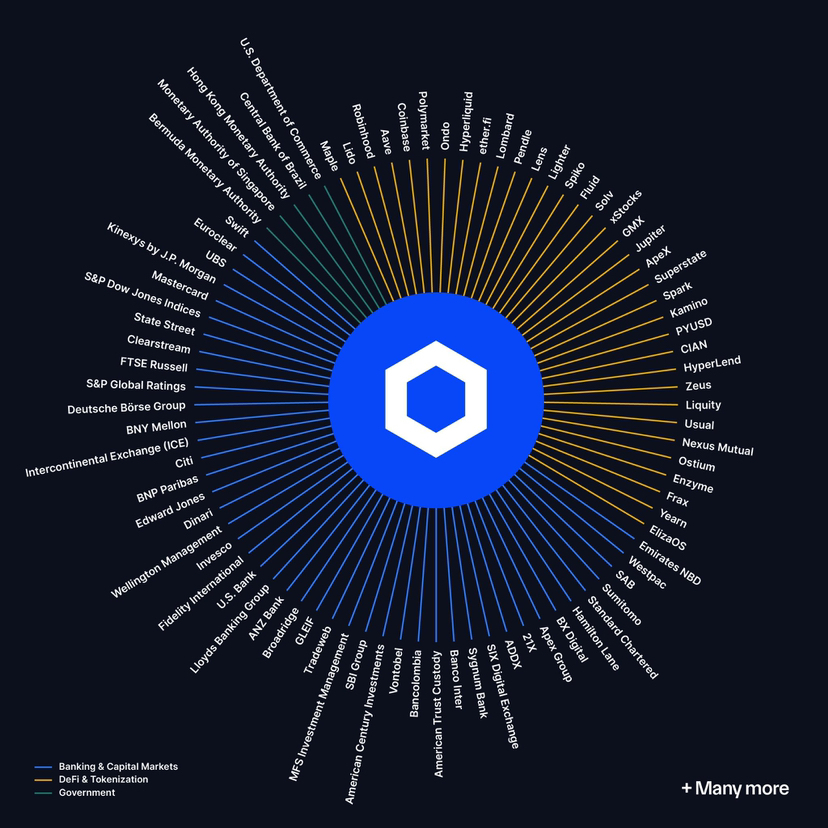
𝗪𝗶𝘁𝗵 𝘁𝗵𝗲 𝗹𝗮𝘂𝗻𝗰𝗵 𝗼𝗳 𝗖𝗖𝗜𝗣 𝟮.𝟬, 𝟮𝟭𝗫 𝗶𝘀 𝗱𝗲𝗹𝗶𝗴𝗵𝘁𝗲𝗱 𝘁𝗼 𝗯𝗲 𝗮 𝘀𝘁𝗿𝗮𝘁𝗲𝗴𝗶𝗰 𝗽𝗮𝗿𝘁𝗻𝗲𝗿 𝗼𝗳 𝗖𝗵𝗮𝗶𝗻𝗹𝗶𝗻𝗸 𝗟𝗮𝗯𝘀.
Onchain capital markets only work if data and liquidity can move seamlessly across chains. Our work with @chainlink brought key market data onchain to enhance the utility and transparency of tokenized securities trading on @tradeon21x , the first EU-regulated onchain exchange.
Now, with the launch of CCIP 2.0, regulated financial institutions like ours have access to institutional-grade cross-chain infrastructure, unlocking global distribution of tokenized assets.
$NEAR
#CCIP #tokenizedassets #interoperability
𝗪𝗶𝘁𝗵 𝘁𝗵𝗲 𝗹𝗮𝘂𝗻𝗰𝗵 𝗼𝗳 𝗖𝗖𝗜𝗣 𝟮.𝟬, 𝟮𝟭𝗫 𝗶𝘀 𝗱𝗲𝗹𝗶𝗴𝗵𝘁𝗲𝗱 𝘁𝗼 𝗯𝗲 𝗮 𝘀𝘁𝗿𝗮𝘁𝗲𝗴𝗶𝗰 𝗽𝗮𝗿𝘁𝗻𝗲𝗿 𝗼𝗳 𝗖𝗵𝗮𝗶𝗻𝗹𝗶𝗻𝗸 𝗟𝗮𝗯𝘀.
Onchain capital markets only work if data and liquidity can move seamlessly across chains. Our work with @chainlink brought key market data onchain to enhance the utility and transparency of tokenized securities trading on @tradeon21x , the first EU-regulated onchain exchange.
Now, with the launch of CCIP 2.0, regulated financial institutions like ours have access to institutional-grade cross-chain infrastructure, unlocking global distribution of tokenized assets.
$NEAR
#CCIP #tokenizedassets #interoperability
Onchain capital markets only work if data and liquidity can move seamlessly across chains. Our work with @chainlink brought key market data onchain to enhance the utility and transparency of tokenized securities trading on @tradeon21x , the first EU-regulated onchain exchange.
Now, with the launch of CCIP 2.0, regulated financial institutions like ours have access to institutional-grade cross-chain infrastructure, unlocking global distribution of tokenized assets.
$NEAR
#CCIP #tokenizedassets #interoperability
1
178

·
--
Quant just dropped over 8% today — but the tech behind it is built for the long game. 📉🛠️
Think of Quant (QNT) as the universal translator for blockchains. Most networks like Ethereum or Solana cant talk to each other easily. Quants Overledger acts as an operating system sitting on top, letting apps run across multiple chains at once. No need to pick a single winner; developers can build multi-chain apps (mApps) that move data and value freely between networks.
The QNT token fuels this ecosystem. Developers and enterprises need to hold QNT to license the Overledger platform and pay for read/write operations across chains. With a $3.6B market cap and heavy enterprise focus (think banking, supply chain, CBDCs), its infrastructure you dont see but definitely need.
Price dips happen, but interoperability is the future backbone of Web3.
#Quant #Interoperability
Do you think cross-chain tech like Overledger will become standard infrastructure for big institutions?
Quant just dropped over 8% today — but the tech behind it is built for the long game. 📉🛠️
Think of Quant (QNT) as the universal translator for blockchains. Most networks like Ethereum or Solana cant talk to each other easily. Quants Overledger acts as an operating system sitting on top, letting apps run across multiple chains at once. No need to pick a single winner; developers can build multi-chain apps (mApps) that move data and value freely between networks.
The QNT token fuels this ecosystem. Developers and enterprises need to hold QNT to license the Overledger platform and pay for read/write operations across chains. With a $3.6B market cap and heavy enterprise focus (think banking, supply chain, CBDCs), its infrastructure you dont see but definitely need.
Price dips happen, but interoperability is the future backbone of Web3.
#Quant #Interoperability
Do you think cross-chain tech like Overledger will become standard infrastructure for big institutions?
Think of Quant (QNT) as the universal translator for blockchains. Most networks like Ethereum or Solana cant talk to each other easily. Quants Overledger acts as an operating system sitting on top, letting apps run across multiple chains at once. No need to pick a single winner; developers can build multi-chain apps (mApps) that move data and value freely between networks.
The QNT token fuels this ecosystem. Developers and enterprises need to hold QNT to license the Overledger platform and pay for read/write operations across chains. With a $3.6B market cap and heavy enterprise focus (think banking, supply chain, CBDCs), its infrastructure you dont see but definitely need.
Price dips happen, but interoperability is the future backbone of Web3.
#Quant #Interoperability
Do you think cross-chain tech like Overledger will become standard infrastructure for big institutions?
202
·
--
Bullish
$QNT is one of those projects I’m keeping a close eye on.
The bigger thesis isn’t just short-term price action — it’s the potential for Quant’s infrastructure to play a role in connecting different blockchains and financial networks as tokenization and interoperability continue to develop.
If institutional adoption of digital assets keeps expanding, interoperability could become increasingly important.
That’s why $QNT remains interesting to me.
No guarantees. No “100x tomorrow” nonsense.
Just a long-term thesis worth watching. 👀
$QNT #Quant #Crypto #Blockchain #Interoperability
$QNT is one of those projects I’m keeping a close eye on.
The bigger thesis isn’t just short-term price action — it’s the potential for Quant’s infrastructure to play a role in connecting different blockchains and financial networks as tokenization and interoperability continue to develop.
If institutional adoption of digital assets keeps expanding, interoperability could become increasingly important.
That’s why $QNT remains interesting to me.
No guarantees. No “100x tomorrow” nonsense.
Just a long-term thesis worth watching. 👀
$QNT #Quant #Crypto #Blockchain #Interoperability
The bigger thesis isn’t just short-term price action — it’s the potential for Quant’s infrastructure to play a role in connecting different blockchains and financial networks as tokenization and interoperability continue to develop.
If institutional adoption of digital assets keeps expanding, interoperability could become increasingly important.
That’s why $QNT remains interesting to me.
No guarantees. No “100x tomorrow” nonsense.
Just a long-term thesis worth watching. 👀
$QNT #Quant #Crypto #Blockchain #Interoperability
1
331

·
--
Bullish
Verified
$HBAR Today, HBAR has surged against the trend, but what’s truly worth studying isn’t the size of the rally—it’s the market’s imagination of a “bridge-less” bookkeeping system.
On the evening of September 28, HBAR was roughly $0.115, up about 21.1% over the past 24 hours, with a range of $0.0931–$0.1176 and trading volume of about $578 million. In the same period, BTC, ETH, and SOL fell by approximately 2.25%, 1.71%, and 4.41% respectively, making HBAR’s relative strength very clear.
One of the narratives drawing attention is Hedera’s move on September 24 to contribute CLPR to the Linux Foundation Decentralized Trust. CLPR attempts to use proof of state so that different ledgers can directly verify each other, reducing reliance on cross-chain bridges, wrapped assets, and intermediaries. In the early adoption phase, the planned focus is on cross-border payments, cross-ledger settlement, and moving collateral.
However, it’s essential to keep things straight: making a technical contribution into an open-source lab doesn’t automatically mean HBAR will directly capture fees, execute buybacks, or create new demand. The official side has not yet published any corresponding token value-capture mechanism.
Next, watch for:
* A breakout on increased volume and holding around $0.118—only then does it indicate that there’s still fresh bid support at the high.
* If it breaks below $0.11 and rebounds without reclaiming, be cautious: the narrative-driven momentum may start to cool off.
* If it falls back below $0.10 again, it could retest the intraday low around $0.093.
* For fundamental confirmation, look at CLPR test participants, the timeline for official rollout, and whether it generates actual usage related to Hedera/HBAR.
Open-source and cross-ledger interoperability are long-term themes, but a 20% gain in a single day also suggests that many expectations may already be priced in.
Do you think this is HBAR’s ecosystem being repriced again, or a short-term acceleration after the narrative started to ferment?
#hbar #interoperability #RWA
$HBAR
{future}(HBARUSDT)
$HBAR Today, HBAR has surged against the trend, but what’s truly worth studying isn’t the size of the rally—it’s the market’s imagination of a “bridge-less” bookkeeping system.
On the evening of September 28, HBAR was roughly $0.115, up about 21.1% over the past 24 hours, with a range of $0.0931–$0.1176 and trading volume of about $578 million. In the same period, BTC, ETH, and SOL fell by approximately 2.25%, 1.71%, and 4.41% respectively, making HBAR’s relative strength very clear.
One of the narratives drawing attention is Hedera’s move on September 24 to contribute CLPR to the Linux Foundation Decentralized Trust. CLPR attempts to use proof of state so that different ledgers can directly verify each other, reducing reliance on cross-chain bridges, wrapped assets, and intermediaries. In the early adoption phase, the planned focus is on cross-border payments, cross-ledger settlement, and moving collateral.
However, it’s essential to keep things straight: making a technical contribution into an open-source lab doesn’t automatically mean HBAR will directly capture fees, execute buybacks, or create new demand. The official side has not yet published any corresponding token value-capture mechanism.
Next, watch for:
* A breakout on increased volume and holding around $0.118—only then does it indicate that there’s still fresh bid support at the high.
* If it breaks below $0.11 and rebounds without reclaiming, be cautious: the narrative-driven momentum may start to cool off.
* If it falls back below $0.10 again, it could retest the intraday low around $0.093.
* For fundamental confirmation, look at CLPR test participants, the timeline for official rollout, and whether it generates actual usage related to Hedera/HBAR.
Open-source and cross-ledger interoperability are long-term themes, but a 20% gain in a single day also suggests that many expectations may already be priced in.
Do you think this is HBAR’s ecosystem being repriced again, or a short-term acceleration after the narrative started to ferment?
#hbar #interoperability #RWA
$HBAR
On the evening of September 28, HBAR was roughly $0.115, up about 21.1% over the past 24 hours, with a range of $0.0931–$0.1176 and trading volume of about $578 million. In the same period, BTC, ETH, and SOL fell by approximately 2.25%, 1.71%, and 4.41% respectively, making HBAR’s relative strength very clear.
One of the narratives drawing attention is Hedera’s move on September 24 to contribute CLPR to the Linux Foundation Decentralized Trust. CLPR attempts to use proof of state so that different ledgers can directly verify each other, reducing reliance on cross-chain bridges, wrapped assets, and intermediaries. In the early adoption phase, the planned focus is on cross-border payments, cross-ledger settlement, and moving collateral.
However, it’s essential to keep things straight: making a technical contribution into an open-source lab doesn’t automatically mean HBAR will directly capture fees, execute buybacks, or create new demand. The official side has not yet published any corresponding token value-capture mechanism.
Next, watch for:
* A breakout on increased volume and holding around $0.118—only then does it indicate that there’s still fresh bid support at the high.
* If it breaks below $0.11 and rebounds without reclaiming, be cautious: the narrative-driven momentum may start to cool off.
* If it falls back below $0.10 again, it could retest the intraday low around $0.093.
* For fundamental confirmation, look at CLPR test participants, the timeline for official rollout, and whether it generates actual usage related to Hedera/HBAR.
Open-source and cross-ledger interoperability are long-term themes, but a 20% gain in a single day also suggests that many expectations may already be priced in.
Do you think this is HBAR’s ecosystem being repriced again, or a short-term acceleration after the narrative started to ferment?
#hbar #interoperability #RWA
$HBAR
1
570
·
--
Quant just pumped over 50% in 24 hours — here is why everyone is talking about it. 🚀
Quant (QNT) isn't just another token; it powers Overledger, a blockchain operating system built to connect different networks together. Think of it like a universal translator allowing Bitcoin, Ethereum, and enterprise chains to talk to each other seamlessly. The recent price explosion pushed QNT above $266, with trading volume hitting $1.4 billion, signaling massive fresh interest.
For beginners, the key takeaway is interoperability. Most blockchains are isolated islands. Quant builds the bridges. Developers use QNT to pay for licenses and run multi-chain apps (mApps) on Overledger. As institutions explore tokenized assets and CBDCs, the need for neutral connective tissue grows.
This surge puts Quant back in the top 35 by market cap. Is the market finally pricing in the "Internet of Value" narrative?
#Quant #Interoperability
What real-world use case do you think needs cross-chain connectivity the most right now?
Quant just pumped over 50% in 24 hours — here is why everyone is talking about it. 🚀
Quant (QNT) isn't just another token; it powers Overledger, a blockchain operating system built to connect different networks together. Think of it like a universal translator allowing Bitcoin, Ethereum, and enterprise chains to talk to each other seamlessly. The recent price explosion pushed QNT above $266, with trading volume hitting $1.4 billion, signaling massive fresh interest.
For beginners, the key takeaway is interoperability. Most blockchains are isolated islands. Quant builds the bridges. Developers use QNT to pay for licenses and run multi-chain apps (mApps) on Overledger. As institutions explore tokenized assets and CBDCs, the need for neutral connective tissue grows.
This surge puts Quant back in the top 35 by market cap. Is the market finally pricing in the "Internet of Value" narrative?
#Quant #Interoperability
What real-world use case do you think needs cross-chain connectivity the most right now?
Quant (QNT) isn't just another token; it powers Overledger, a blockchain operating system built to connect different networks together. Think of it like a universal translator allowing Bitcoin, Ethereum, and enterprise chains to talk to each other seamlessly. The recent price explosion pushed QNT above $266, with trading volume hitting $1.4 billion, signaling massive fresh interest.
For beginners, the key takeaway is interoperability. Most blockchains are isolated islands. Quant builds the bridges. Developers use QNT to pay for licenses and run multi-chain apps (mApps) on Overledger. As institutions explore tokenized assets and CBDCs, the need for neutral connective tissue grows.
This surge puts Quant back in the top 35 by market cap. Is the market finally pricing in the "Internet of Value" narrative?
#Quant #Interoperability
What real-world use case do you think needs cross-chain connectivity the most right now?
68

Everyone thinks blockchain interoperability just means using those hack-prone bridges, but actually Quant built an operating system that lets chains and old financial systems talk like apps on your phone.
Crypto traders keep losing money to bridge exploits and FOMO into tokens that promise connections but never deliver anything institutions can actually use. The result is missed entries on the real plays and bags left behind after the next rug.
Quant's $QNT token powers an enterprise-focused project that works as both an OS and an API gateway. It links different blockchains such as $ETH and $BTC to legacy financial networks without the wrapping tricks most people rely on. Think of it as the missing software layer that lets every piece of hardware communicate instead of sitting in isolated silos.
Most of crypto still runs without that layer, which is exactly why so many connections fail and funds disappear. This setup gives banks a way in that avoids the usual DeFi headaches.
Where do you think enterprise adoption of this kind of connection takes $QNT from here?
#QNT #Interoperability #Blockchain
Everyone thinks blockchain interoperability just means using those hack-prone bridges, but actually Quant built an operating system that lets chains and old financial systems talk like apps on your phone.
Crypto traders keep losing money to bridge exploits and FOMO into tokens that promise connections but never deliver anything institutions can actually use. The result is missed entries on the real plays and bags left behind after the next rug.
Quant's $QNT token powers an enterprise-focused project that works as both an OS and an API gateway. It links different blockchains such as $ETH and $BTC to legacy financial networks without the wrapping tricks most people rely on. Think of it as the missing software layer that lets every piece of hardware communicate instead of sitting in isolated silos.
Most of crypto still runs without that layer, which is exactly why so many connections fail and funds disappear. This setup gives banks a way in that avoids the usual DeFi headaches.
Where do you think enterprise adoption of this kind of connection takes $QNT from here?
#QNT #Interoperability #Blockchain
Crypto traders keep losing money to bridge exploits and FOMO into tokens that promise connections but never deliver anything institutions can actually use. The result is missed entries on the real plays and bags left behind after the next rug.
Quant's $QNT token powers an enterprise-focused project that works as both an OS and an API gateway. It links different blockchains such as $ETH and $BTC to legacy financial networks without the wrapping tricks most people rely on. Think of it as the missing software layer that lets every piece of hardware communicate instead of sitting in isolated silos.
Most of crypto still runs without that layer, which is exactly why so many connections fail and funds disappear. This setup gives banks a way in that avoids the usual DeFi headaches.
Where do you think enterprise adoption of this kind of connection takes $QNT from here?
#QNT #Interoperability #Blockchain
8
Log in to explore more content
Join global crypto users on Binance Square
⚡️ Get latest and useful information about crypto.
💬 Trusted by the world’s largest crypto exchange.
👍 Discover real insights from verified creators.
Email / Phone number
Trending Topics
1
#BitcoinReboundsTo$83K
29,058 views
184 Discussing
2
#EthereumLiquidationsHit$356M
26,498 views
117 Discussing
3
#BitcoinETFsSee$244MNetOutflows
5,682 views
82 Discussing
4
#ZcashTargetsJanuaryForQuantumResistantPayments
18,902 views
486 Discussing
5
#EthereumSurpasses$2500
17,101 views
142 Discussing
6
#SolanaPlansToCutBlockTimesTo200ms
117,681 views
1,515 Discussing
7
#ReusedBitcoinAddressesHold4.33MBTC
102,350 views
1,426 Discussing
8
#BitcoinDipsBelow$81K
105,323 views
200 Discussing
9
#SenBlumenthalProbesCantorFitzgeraldTetherTies
44,185 views
1,118 Discussing
10
#SecuritizeSharesRiseOver10%AfterTokenizedStocksLaunch
3,333 views
54 Discussing