

#cryptosafety
cryptosafety
7.9M views
4,998 Discussing
Hot
Latest

·
--
My Crypto Safety Roadmap (Part 11): How I Neutralize Blockchain Dusting Attacks and Scam Tokens 🎈🎈
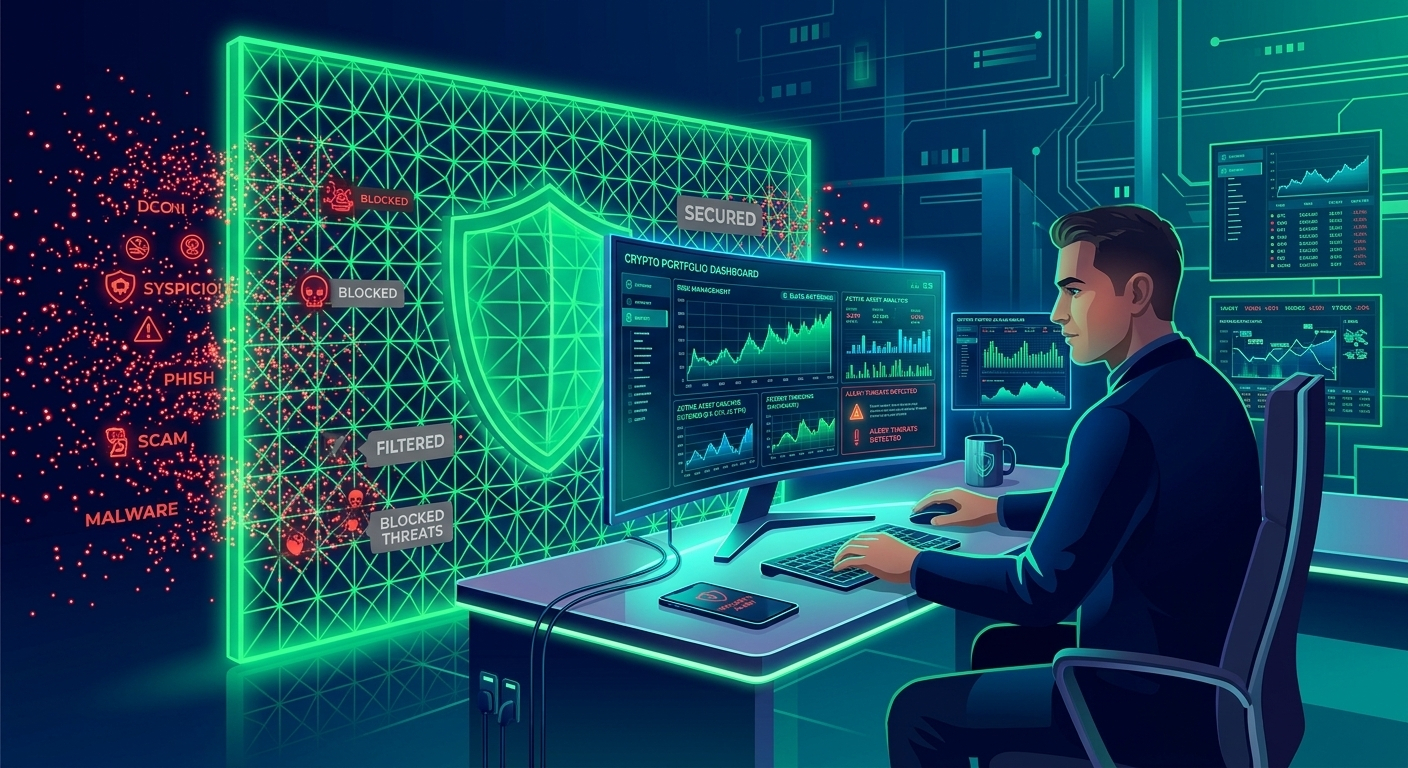
🔴Monitoring my blockchain address repository requires a strong awareness of passive tracking mechanics. In my crypto journey, I frequently noticed microscopic amounts of random tokens or unexpected custom airdrops appearing in my public wallet. I quickly realized that these are often malicious dusting attacks designed to map out my transaction patterns and destroy my operational privacy, or scam tokens engineered to drain my wallet via malicious smart contract interactions. To secure my portfolio, I implemented a strict policy regarding unsolicited assets.🚀
🔴Today, I never interact with, trade, or attempt to swap any unexpected token that suddenly appears in my address balance. I treat these mysterious distributions as radioactive material, leaving them completely untouched and hidden within my interface to ensure my security boundaries remain intact. By breaking the chain of curiosity and ignoring these digital tracking baits, I maintain absolute operational sovereignty and keep my treasury completely uncompromised.🚀
#CryptoSafety #DustingAttack #BlockchainSecurity #PrivacyFirst #MyJourney $BTC $BNB $XAU
💥Not Financial Advice
{future}(XAUUSDT)
My Crypto Safety Roadmap (Part 11): How I Neutralize Blockchain Dusting Attacks and Scam Tokens 🎈🎈
🔴Monitoring my blockchain address repository requires a strong awareness of passive tracking mechanics. In my crypto journey, I frequently noticed microscopic amounts of random tokens or unexpected custom airdrops appearing in my public wallet. I quickly realized that these are often malicious dusting attacks designed to map out my transaction patterns and destroy my operational privacy, or scam tokens engineered to drain my wallet via malicious smart contract interactions. To secure my portfolio, I implemented a strict policy regarding unsolicited assets.🚀
🔴Today, I never interact with, trade, or attempt to swap any unexpected token that suddenly appears in my address balance. I treat these mysterious distributions as radioactive material, leaving them completely untouched and hidden within my interface to ensure my security boundaries remain intact. By breaking the chain of curiosity and ignoring these digital tracking baits, I maintain absolute operational sovereignty and keep my treasury completely uncompromised.🚀
#CryptoSafety #DustingAttack #BlockchainSecurity #PrivacyFirst #MyJourney $BTC $BNB $XAU
💥Not Financial Advice
🔴Monitoring my blockchain address repository requires a strong awareness of passive tracking mechanics. In my crypto journey, I frequently noticed microscopic amounts of random tokens or unexpected custom airdrops appearing in my public wallet. I quickly realized that these are often malicious dusting attacks designed to map out my transaction patterns and destroy my operational privacy, or scam tokens engineered to drain my wallet via malicious smart contract interactions. To secure my portfolio, I implemented a strict policy regarding unsolicited assets.🚀
🔴Today, I never interact with, trade, or attempt to swap any unexpected token that suddenly appears in my address balance. I treat these mysterious distributions as radioactive material, leaving them completely untouched and hidden within my interface to ensure my security boundaries remain intact. By breaking the chain of curiosity and ignoring these digital tracking baits, I maintain absolute operational sovereignty and keep my treasury completely uncompromised.🚀
#CryptoSafety #DustingAttack #BlockchainSecurity #PrivacyFirst #MyJourney $BTC $BNB $XAU
💥Not Financial Advice
1
201

🚨 $BTC ONLINE SCAM ALERT: PHISHING LINKS DRAINING VICTIMS! 🛑
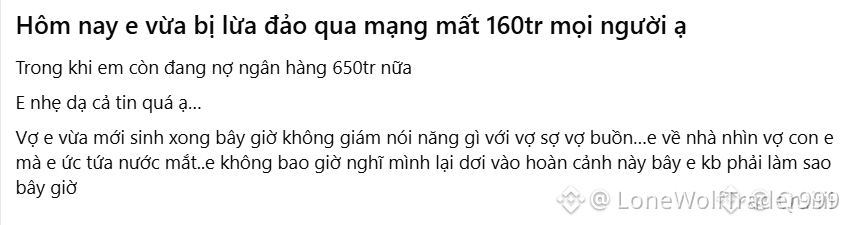
A wave of fake URLs has already siphoned 160 million VND from unsuspecting traders, leaving them with a 650 million VND bank debt. 🦈 Smart money is watching the bait, but the average user is getting front‑run by scammers.
Stay sharp: verify every link, avoid click‑throughs from unknown sources, and keep your wallet credentials offline. 📊 The next sweep could hit anyone who slips, so lock down your entry points now. 💡 💬 Have you spotted a suspicious link today? 👇
⚠️ Not financial advice. Always manage your risk. 🛡️
🏷️ #BTC #ScamAlert #CryptoSafety #RiskManagement
🛡️ 🔥
🚨 $BTC ONLINE SCAM ALERT: PHISHING LINKS DRAINING VICTIMS! 🛑
A wave of fake URLs has already siphoned 160 million VND from unsuspecting traders, leaving them with a 650 million VND bank debt. 🦈 Smart money is watching the bait, but the average user is getting front‑run by scammers.
Stay sharp: verify every link, avoid click‑throughs from unknown sources, and keep your wallet credentials offline. 📊 The next sweep could hit anyone who slips, so lock down your entry points now. 💡 💬 Have you spotted a suspicious link today? 👇
⚠️ Not financial advice. Always manage your risk. 🛡️
🏷️ #BTC #ScamAlert #CryptoSafety #RiskManagement
🛡️ 🔥
A wave of fake URLs has already siphoned 160 million VND from unsuspecting traders, leaving them with a 650 million VND bank debt. 🦈 Smart money is watching the bait, but the average user is getting front‑run by scammers.
Stay sharp: verify every link, avoid click‑throughs from unknown sources, and keep your wallet credentials offline. 📊 The next sweep could hit anyone who slips, so lock down your entry points now. 💡 💬 Have you spotted a suspicious link today? 👇
⚠️ Not financial advice. Always manage your risk. 🛡️
🏷️ #BTC #ScamAlert #CryptoSafety #RiskManagement
🛡️ 🔥
6

·
--
🔐 What is a private key, and why is it so important?
In the Web3 world, a private key is more than just a string of characters—it’s a critical credential that controls the associated digital assets.
Remember these three concepts:
🔹 Wallet address: Usually used to receive assets and can be shared publicly.
🔹 Private key: Used to generate digital signatures and must be kept strictly confidential.
🔹 Recovery phrase: Used to back up and restore a wallet and must never be disclosed.
Never enter your recovery phrase or private key on unfamiliar websites, or send them via chat apps to anyone claiming to be official customer support.
Protecting your digital assets starts with protecting the keys that control them.
#ONEANetwork #Web3Security #CryptoSafety
🔐 What is a private key, and why is it so important?
In the Web3 world, a private key is more than just a string of characters—it’s a critical credential that controls the associated digital assets.
Remember these three concepts:
🔹 Wallet address: Usually used to receive assets and can be shared publicly.
🔹 Private key: Used to generate digital signatures and must be kept strictly confidential.
🔹 Recovery phrase: Used to back up and restore a wallet and must never be disclosed.
Never enter your recovery phrase or private key on unfamiliar websites, or send them via chat apps to anyone claiming to be official customer support.
Protecting your digital assets starts with protecting the keys that control them.
#ONEANetwork #Web3Security #CryptoSafety
In the Web3 world, a private key is more than just a string of characters—it’s a critical credential that controls the associated digital assets.
Remember these three concepts:
🔹 Wallet address: Usually used to receive assets and can be shared publicly.
🔹 Private key: Used to generate digital signatures and must be kept strictly confidential.
🔹 Recovery phrase: Used to back up and restore a wallet and must never be disclosed.
Never enter your recovery phrase or private key on unfamiliar websites, or send them via chat apps to anyone claiming to be official customer support.
Protecting your digital assets starts with protecting the keys that control them.
#ONEANetwork #Web3Security #CryptoSafety
1
4

·
--
🚨 $BNB SCAM ALERT: 160M VND LOST TO ONLINE FRAUD! 🛡️
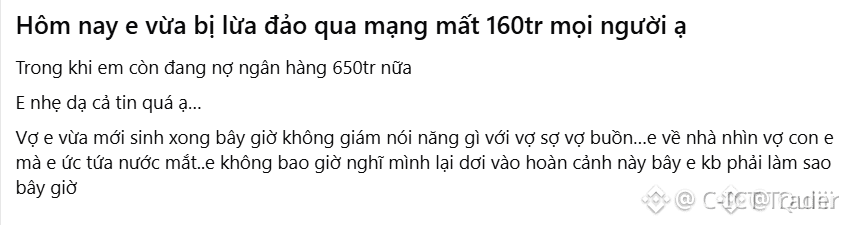
📊 Institutional‑grade vigilance demands we treat any unsolicited link as a liquidity trap. Recent reports show fraudsters siphoned 160 million VND from unsuspecting traders, leaving a 650 million VND bank debt hanging over victims. 🦈
🔍 Smart money never clicks unknown URLs; they verify the source on a top‑tier exchange dashboard. The pattern mirrors classic phishing sweeps that aim to harvest credentials before a price swing, draining capital before the market can reclaim the gap. 💬 Are you double‑checking every link before you trade? 👇
⚠️ Not financial advice. Always manage your risk. 🛡️
🏷️ #BNB #ScamAlert #CryptoSafety #RiskManagement
🚀 🦈
🚨 $BNB SCAM ALERT: 160M VND LOST TO ONLINE FRAUD! 🛡️
📊 Institutional‑grade vigilance demands we treat any unsolicited link as a liquidity trap. Recent reports show fraudsters siphoned 160 million VND from unsuspecting traders, leaving a 650 million VND bank debt hanging over victims. 🦈
🔍 Smart money never clicks unknown URLs; they verify the source on a top‑tier exchange dashboard. The pattern mirrors classic phishing sweeps that aim to harvest credentials before a price swing, draining capital before the market can reclaim the gap. 💬 Are you double‑checking every link before you trade? 👇
⚠️ Not financial advice. Always manage your risk. 🛡️
🏷️ #BNB #ScamAlert #CryptoSafety #RiskManagement
🚀 🦈
📊 Institutional‑grade vigilance demands we treat any unsolicited link as a liquidity trap. Recent reports show fraudsters siphoned 160 million VND from unsuspecting traders, leaving a 650 million VND bank debt hanging over victims. 🦈
🔍 Smart money never clicks unknown URLs; they verify the source on a top‑tier exchange dashboard. The pattern mirrors classic phishing sweeps that aim to harvest credentials before a price swing, draining capital before the market can reclaim the gap. 💬 Are you double‑checking every link before you trade? 👇
⚠️ Not financial advice. Always manage your risk. 🛡️
🏷️ #BNB #ScamAlert #CryptoSafety #RiskManagement
🚀 🦈
10
·
--
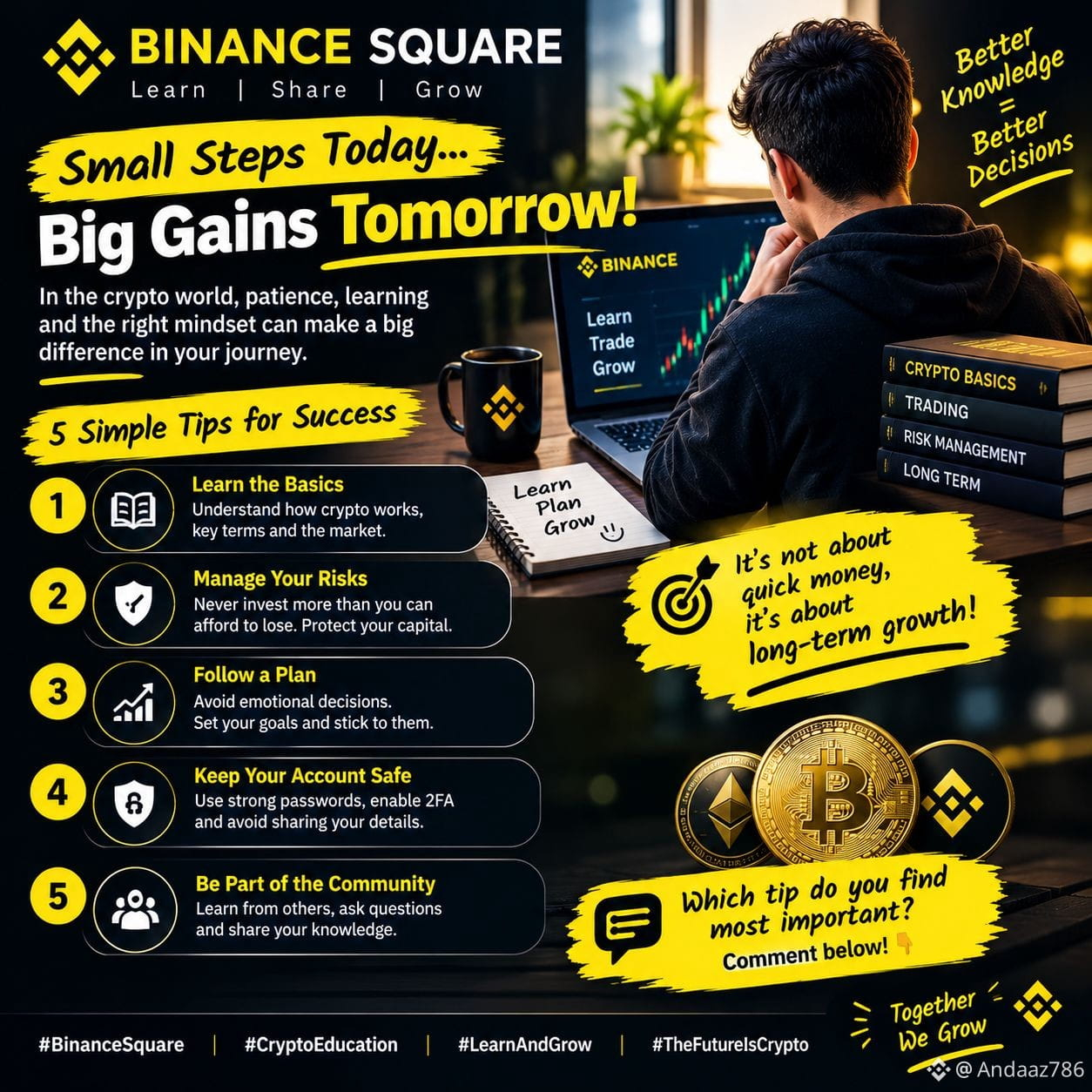
📚 5 Smart Habits for Every Crypto Beginner! 🚀
Success in crypto starts with learning, not luck!
✅ 1. Learn the Basics — Understand crypto before making decisions.
✅ 2. Manage Risk — Never invest money you cannot afford to lose.
✅ 3. Avoid FOMO — Don't buy just because everyone else is buying.
✅ 4. Protect Your Account — Use a strong password and enable 2FA.
✅ 5. Stay Patient — Focus on knowledge instead of chasing quick profits.
💡 Remember: Better knowledge helps you make better decisions, but no strategy guarantees profit.
👇 Question of the Day:
What is the biggest challenge for a crypto beginner?
A) Understanding the market
B) Managing risk
C) Avoiding scams
D) Controlling emotions
Share your answer below! 👇
#BinanceSquareFamily #CryptoEducationCryptoGuid #CryptoSafety #LearnAndGrow
📚 5 Smart Habits for Every Crypto Beginner! 🚀
Success in crypto starts with learning, not luck!
✅ 1. Learn the Basics — Understand crypto before making decisions.
✅ 2. Manage Risk — Never invest money you cannot afford to lose.
✅ 3. Avoid FOMO — Don't buy just because everyone else is buying.
✅ 4. Protect Your Account — Use a strong password and enable 2FA.
✅ 5. Stay Patient — Focus on knowledge instead of chasing quick profits.
💡 Remember: Better knowledge helps you make better decisions, but no strategy guarantees profit.
👇 Question of the Day:
What is the biggest challenge for a crypto beginner?
A) Understanding the market
B) Managing risk
C) Avoiding scams
D) Controlling emotions
Share your answer below! 👇
#BinanceSquareFamily #CryptoEducationCryptoGuid #CryptoSafety #LearnAndGrow
Success in crypto starts with learning, not luck!
✅ 1. Learn the Basics — Understand crypto before making decisions.
✅ 2. Manage Risk — Never invest money you cannot afford to lose.
✅ 3. Avoid FOMO — Don't buy just because everyone else is buying.
✅ 4. Protect Your Account — Use a strong password and enable 2FA.
✅ 5. Stay Patient — Focus on knowledge instead of chasing quick profits.
💡 Remember: Better knowledge helps you make better decisions, but no strategy guarantees profit.
👇 Question of the Day:
What is the biggest challenge for a crypto beginner?
A) Understanding the market
B) Managing risk
C) Avoiding scams
D) Controlling emotions
Share your answer below! 👇
#BinanceSquareFamily #CryptoEducationCryptoGuid #CryptoSafety #LearnAndGrow
47
·
--
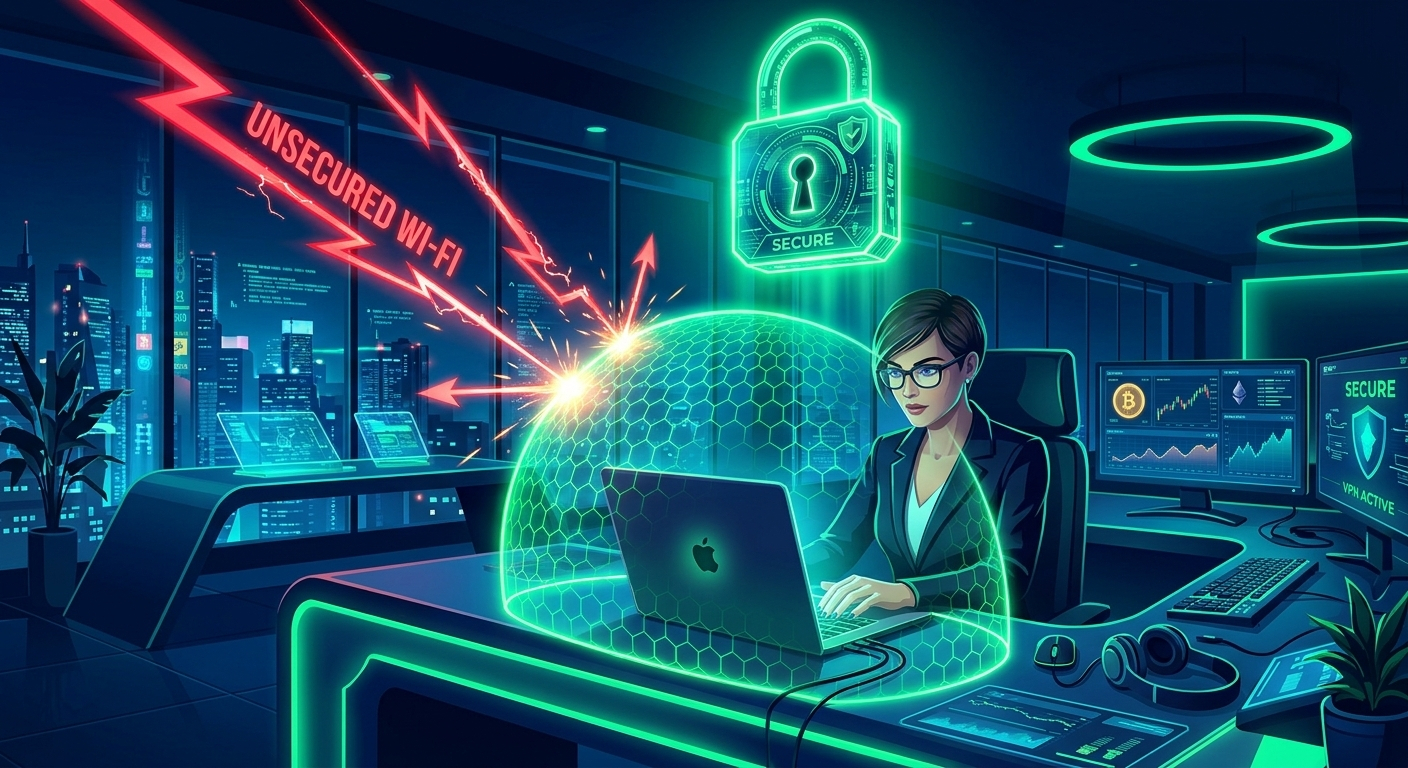
My Crypto Safety Roadmap (Part 10): How I Secure My Network Against Public Wi-Fi Exploits🎈🎈
🔴Executing cryptocurrency transactions over unverified networks introduces a critical threat vector to personal digital assets. In my operational journey, I quickly learned that public Wi-Fi networks in hotels, cafes, and airports are prime targets for malicious actors executing man-in-the-middle attacks to intercept clipboard data and login credentials. To protect my portfolio from network-level surveillance, I established an absolute ban on open network dependencies.🚀
🔴Today, my crypto infrastructure never connects to an unencrypted public access point. When accessing my accounts on the move, I rely exclusively on dedicated mobile data hotspots paired with enterprise-grade Virtual Private Networks (VPNs) utilizing military-grade encryption protocols. Furthermore, my hardware configurations utilize hardcoded DNS routing and custom firewall rules to block unauthorized data packets. Shielding my internet traffic ensures my execution pipeline remains hidden from hostile entities.🚀
#CryptoSafety #NetworkSecurity #MyJourney $BTC $BNB
💥Not Financial Advice
{future}(XAUTUSDT)
My Crypto Safety Roadmap (Part 10): How I Secure My Network Against Public Wi-Fi Exploits🎈🎈
🔴Executing cryptocurrency transactions over unverified networks introduces a critical threat vector to personal digital assets. In my operational journey, I quickly learned that public Wi-Fi networks in hotels, cafes, and airports are prime targets for malicious actors executing man-in-the-middle attacks to intercept clipboard data and login credentials. To protect my portfolio from network-level surveillance, I established an absolute ban on open network dependencies.🚀
🔴Today, my crypto infrastructure never connects to an unencrypted public access point. When accessing my accounts on the move, I rely exclusively on dedicated mobile data hotspots paired with enterprise-grade Virtual Private Networks (VPNs) utilizing military-grade encryption protocols. Furthermore, my hardware configurations utilize hardcoded DNS routing and custom firewall rules to block unauthorized data packets. Shielding my internet traffic ensures my execution pipeline remains hidden from hostile entities.🚀
#CryptoSafety #NetworkSecurity #MyJourney $BTC $BNB
💥Not Financial Advice
🔴Executing cryptocurrency transactions over unverified networks introduces a critical threat vector to personal digital assets. In my operational journey, I quickly learned that public Wi-Fi networks in hotels, cafes, and airports are prime targets for malicious actors executing man-in-the-middle attacks to intercept clipboard data and login credentials. To protect my portfolio from network-level surveillance, I established an absolute ban on open network dependencies.🚀
🔴Today, my crypto infrastructure never connects to an unencrypted public access point. When accessing my accounts on the move, I rely exclusively on dedicated mobile data hotspots paired with enterprise-grade Virtual Private Networks (VPNs) utilizing military-grade encryption protocols. Furthermore, my hardware configurations utilize hardcoded DNS routing and custom firewall rules to block unauthorized data packets. Shielding my internet traffic ensures my execution pipeline remains hidden from hostile entities.🚀
#CryptoSafety #NetworkSecurity #MyJourney $BTC $BNB
💥Not Financial Advice
1
181
HOW SAFE IS YOUR $USDT OFF-RAMP WHEN MERCHANT STATS ARE NOT ENOUGH? 🔍 ⚠️
Navigating peer-to-peer liquidity requires more than just skimming completion rates and account age. Everyday traders face an invisible wall when trying to verify the true origin of incoming fiat capital. 🏦
High completion metrics and thousands of executed orders offer solid confidence, yet tainted capital can still slip through the cracks. 🛡️ Relying solely on merchant history leaves every seller exposed to potential banking friction. 🔍
Are you strictly filtering verified merchants or relying on multi-bank diversification to protect your fiat liquidity? 👇
⚠️ Not financial advice. Always manage your risk. 🛡️
🏷️ #USDT #P2PTrading #CryptoSafety #RiskManagement
🎯 🛡️
HOW SAFE IS YOUR $USDT OFF-RAMP WHEN MERCHANT STATS ARE NOT ENOUGH? 🔍 ⚠️
Navigating peer-to-peer liquidity requires more than just skimming completion rates and account age. Everyday traders face an invisible wall when trying to verify the true origin of incoming fiat capital. 🏦
High completion metrics and thousands of executed orders offer solid confidence, yet tainted capital can still slip through the cracks. 🛡️ Relying solely on merchant history leaves every seller exposed to potential banking friction. 🔍
Are you strictly filtering verified merchants or relying on multi-bank diversification to protect your fiat liquidity? 👇
⚠️ Not financial advice. Always manage your risk. 🛡️
🏷️ #USDT #P2PTrading #CryptoSafety #RiskManagement
🎯 🛡️
Navigating peer-to-peer liquidity requires more than just skimming completion rates and account age. Everyday traders face an invisible wall when trying to verify the true origin of incoming fiat capital. 🏦
High completion metrics and thousands of executed orders offer solid confidence, yet tainted capital can still slip through the cracks. 🛡️ Relying solely on merchant history leaves every seller exposed to potential banking friction. 🔍
Are you strictly filtering verified merchants or relying on multi-bank diversification to protect your fiat liquidity? 👇
⚠️ Not financial advice. Always manage your risk. 🛡️
🏷️ #USDT #P2PTrading #CryptoSafety #RiskManagement
🎯 🛡️
8
·
--
3 GOLDEN RULES FOR CRYPTO BEGINNERS 🧠💰
1️⃣ Never invest money you can't afford to lose.
2️⃣ Always do your own research (DYOR).
3️⃣ Never share your wallet's seed phrase or private keys.
Protect your money before chasing profits! 🛡️
What advice would YOU give a beginner? 👇
#CryptoEducation #Binance #CryptoSafety
3 GOLDEN RULES FOR CRYPTO BEGINNERS 🧠💰
1️⃣ Never invest money you can't afford to lose.
2️⃣ Always do your own research (DYOR).
3️⃣ Never share your wallet's seed phrase or private keys.
Protect your money before chasing profits! 🛡️
What advice would YOU give a beginner? 👇
#CryptoEducation #Binance #CryptoSafety
1️⃣ Never invest money you can't afford to lose.
2️⃣ Always do your own research (DYOR).
3️⃣ Never share your wallet's seed phrase or private keys.
Protect your money before chasing profits! 🛡️
What advice would YOU give a beginner? 👇
#CryptoEducation #Binance #CryptoSafety
62
·
--
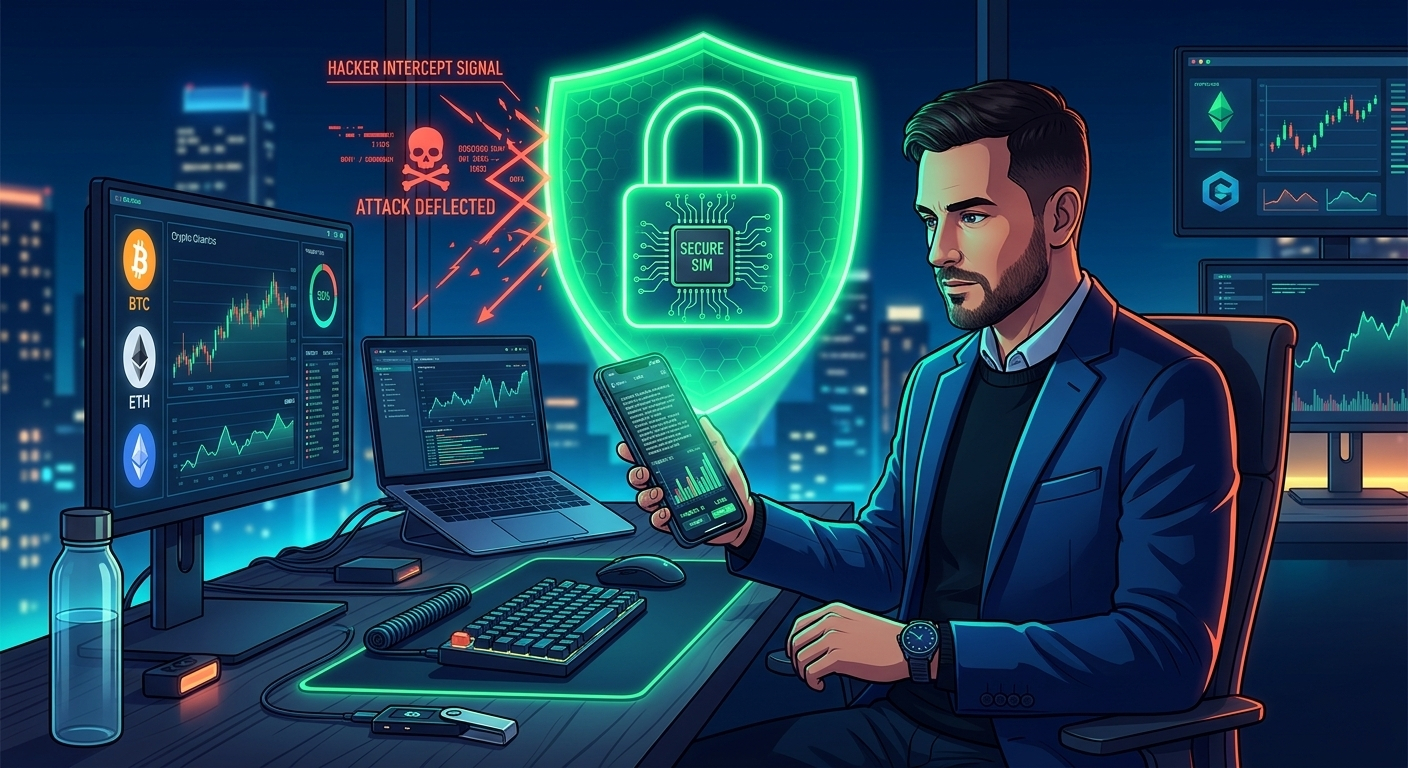
My Crypto Safety Roadmap (Part 9): How I Secure My Mobile Network Against SIM Swap Attacks🎈🎈
🔴Relying on standard mobile networks to safeguard my cryptocurrency accounts presents a significant security blind spot if left unmanaged. In my security journey, I recognized the immense danger of SIM swap fraud, where hackers manipulate telecom operators to hijack a phone number and intercept two-factor authentication codes. To achieve absolute resilience against identity theft, I overhauled my entire mobile configuration strategy.
🔴Today, my phone number is completely decoupled from my primary exchange accounts and Web3 recovery systems. I replaced vulnerable SMS-based verification with encrypted app authenticators and physical security keys that operate entirely independent of cellular networks. Furthermore, I locked my carrier profile with strict verbal passcodes and biometric verification requirements to stop unauthorized SIM duplication attempts. Shielding my communication network ensures my digital fortress remains impenetrable.
#CryptoSafety #MobileSecurity #simswap #Web3Security #MyJourney $BTC $BNB $XAU
💥Not Financial Advice
{future}(XAUUSDT)
My Crypto Safety Roadmap (Part 9): How I Secure My Mobile Network Against SIM Swap Attacks🎈🎈
🔴Relying on standard mobile networks to safeguard my cryptocurrency accounts presents a significant security blind spot if left unmanaged. In my security journey, I recognized the immense danger of SIM swap fraud, where hackers manipulate telecom operators to hijack a phone number and intercept two-factor authentication codes. To achieve absolute resilience against identity theft, I overhauled my entire mobile configuration strategy.
🔴Today, my phone number is completely decoupled from my primary exchange accounts and Web3 recovery systems. I replaced vulnerable SMS-based verification with encrypted app authenticators and physical security keys that operate entirely independent of cellular networks. Furthermore, I locked my carrier profile with strict verbal passcodes and biometric verification requirements to stop unauthorized SIM duplication attempts. Shielding my communication network ensures my digital fortress remains impenetrable.
#CryptoSafety #MobileSecurity #simswap #Web3Security #MyJourney $BTC $BNB $XAU
💥Not Financial Advice
🔴Relying on standard mobile networks to safeguard my cryptocurrency accounts presents a significant security blind spot if left unmanaged. In my security journey, I recognized the immense danger of SIM swap fraud, where hackers manipulate telecom operators to hijack a phone number and intercept two-factor authentication codes. To achieve absolute resilience against identity theft, I overhauled my entire mobile configuration strategy.
🔴Today, my phone number is completely decoupled from my primary exchange accounts and Web3 recovery systems. I replaced vulnerable SMS-based verification with encrypted app authenticators and physical security keys that operate entirely independent of cellular networks. Furthermore, I locked my carrier profile with strict verbal passcodes and biometric verification requirements to stop unauthorized SIM duplication attempts. Shielding my communication network ensures my digital fortress remains impenetrable.
#CryptoSafety #MobileSecurity #simswap #Web3Security #MyJourney $BTC $BNB $XAU
💥Not Financial Advice
1
322

·
--
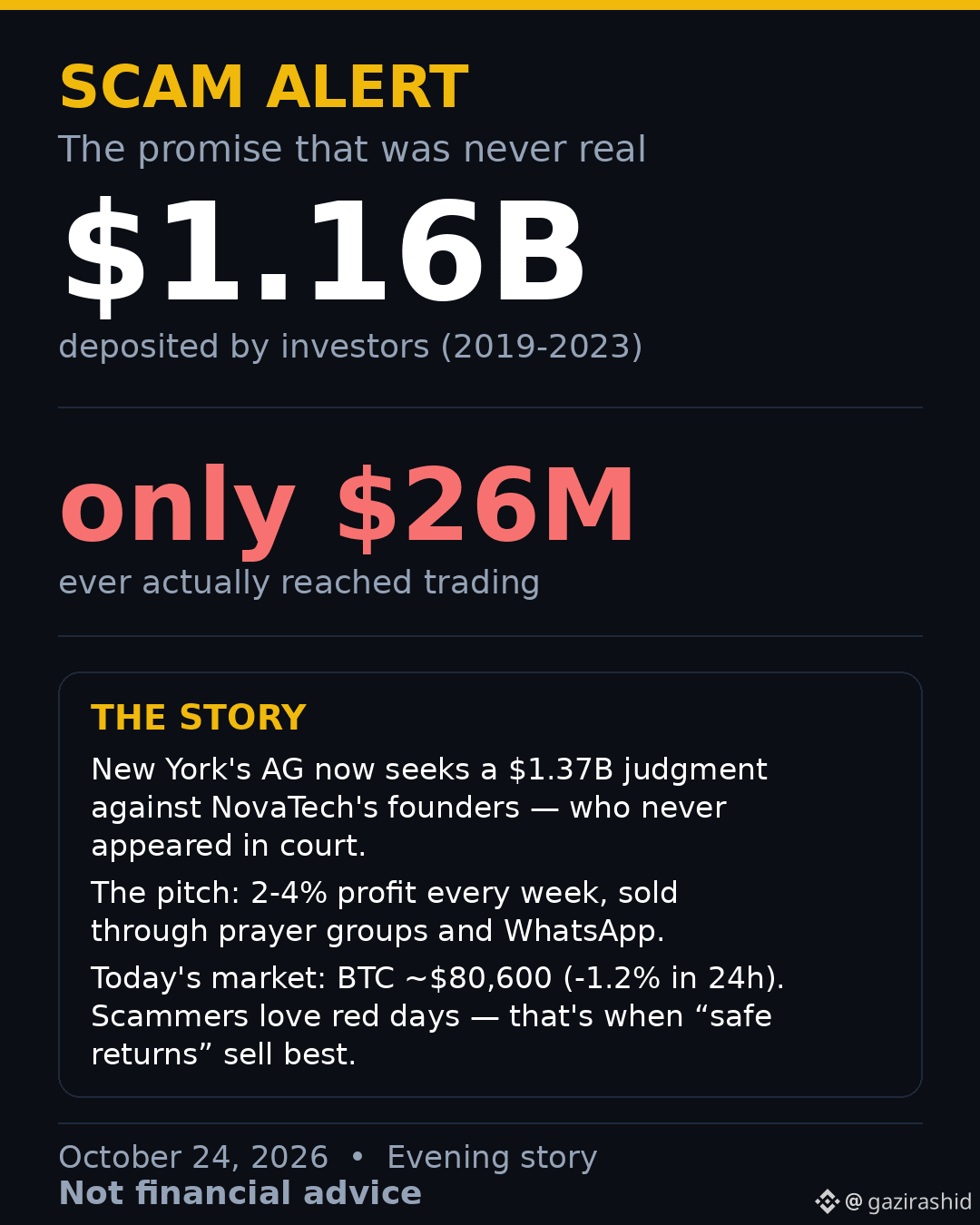
They promised 2–4% EVERY week. Then vanished with $1.16 billion. 💸
This week, New York's Attorney General asked a court for a $1.37 BILLION judgment against the founders of NovaTech — a crypto "investment" scheme that ran from 2019 to 2023.
Here's what actually happened:
• Over $1.16B was deposited by everyday people — many recruited through prayer groups and WhatsApp chats.
• Only ~$26M ever reached actual trading. The rest? Gone.
• The founders fled. They never even showed up in court. The scheme collapsed in 2023.
🚩 3 red flags to tattoo on your brain:
1. "Guaranteed" weekly returns — real markets never guarantee anything.
2. Recruitment through trusted circles — scammers borrow YOUR trust.
3. Pressure to bring friends in — that's the pyramid, not the product.
Today's market was red too: $BTC slipped to ~$80,600 (-1.2%), below its 50-day average for the first time in 66 days, and liquidations hit ~$440M. Red days make "guaranteed return" pitches even more tempting — and even more dangerous.
If a "guaranteed 3% a week" offer lands in YOUR WhatsApp today, what do you do? 👇
#CryptoSafety #bitcoin #ScamAlert
Not financial advice — just my market notes.
They promised 2–4% EVERY week. Then vanished with $1.16 billion. 💸
This week, New York's Attorney General asked a court for a $1.37 BILLION judgment against the founders of NovaTech — a crypto "investment" scheme that ran from 2019 to 2023.
Here's what actually happened:
• Over $1.16B was deposited by everyday people — many recruited through prayer groups and WhatsApp chats.
• Only ~$26M ever reached actual trading. The rest? Gone.
• The founders fled. They never even showed up in court. The scheme collapsed in 2023.
🚩 3 red flags to tattoo on your brain:
1. "Guaranteed" weekly returns — real markets never guarantee anything.
2. Recruitment through trusted circles — scammers borrow YOUR trust.
3. Pressure to bring friends in — that's the pyramid, not the product.
Today's market was red too: $BTC slipped to ~$80,600 (-1.2%), below its 50-day average for the first time in 66 days, and liquidations hit ~$440M. Red days make "guaranteed return" pitches even more tempting — and even more dangerous.
If a "guaranteed 3% a week" offer lands in YOUR WhatsApp today, what do you do? 👇
#CryptoSafety #bitcoin #ScamAlert
Not financial advice — just my market notes.
This week, New York's Attorney General asked a court for a $1.37 BILLION judgment against the founders of NovaTech — a crypto "investment" scheme that ran from 2019 to 2023.
Here's what actually happened:
• Over $1.16B was deposited by everyday people — many recruited through prayer groups and WhatsApp chats.
• Only ~$26M ever reached actual trading. The rest? Gone.
• The founders fled. They never even showed up in court. The scheme collapsed in 2023.
🚩 3 red flags to tattoo on your brain:
1. "Guaranteed" weekly returns — real markets never guarantee anything.
2. Recruitment through trusted circles — scammers borrow YOUR trust.
3. Pressure to bring friends in — that's the pyramid, not the product.
Today's market was red too: $BTC slipped to ~$80,600 (-1.2%), below its 50-day average for the first time in 66 days, and liquidations hit ~$440M. Red days make "guaranteed return" pitches even more tempting — and even more dangerous.
If a "guaranteed 3% a week" offer lands in YOUR WhatsApp today, what do you do? 👇
#CryptoSafety #bitcoin #ScamAlert
Not financial advice — just my market notes.
65
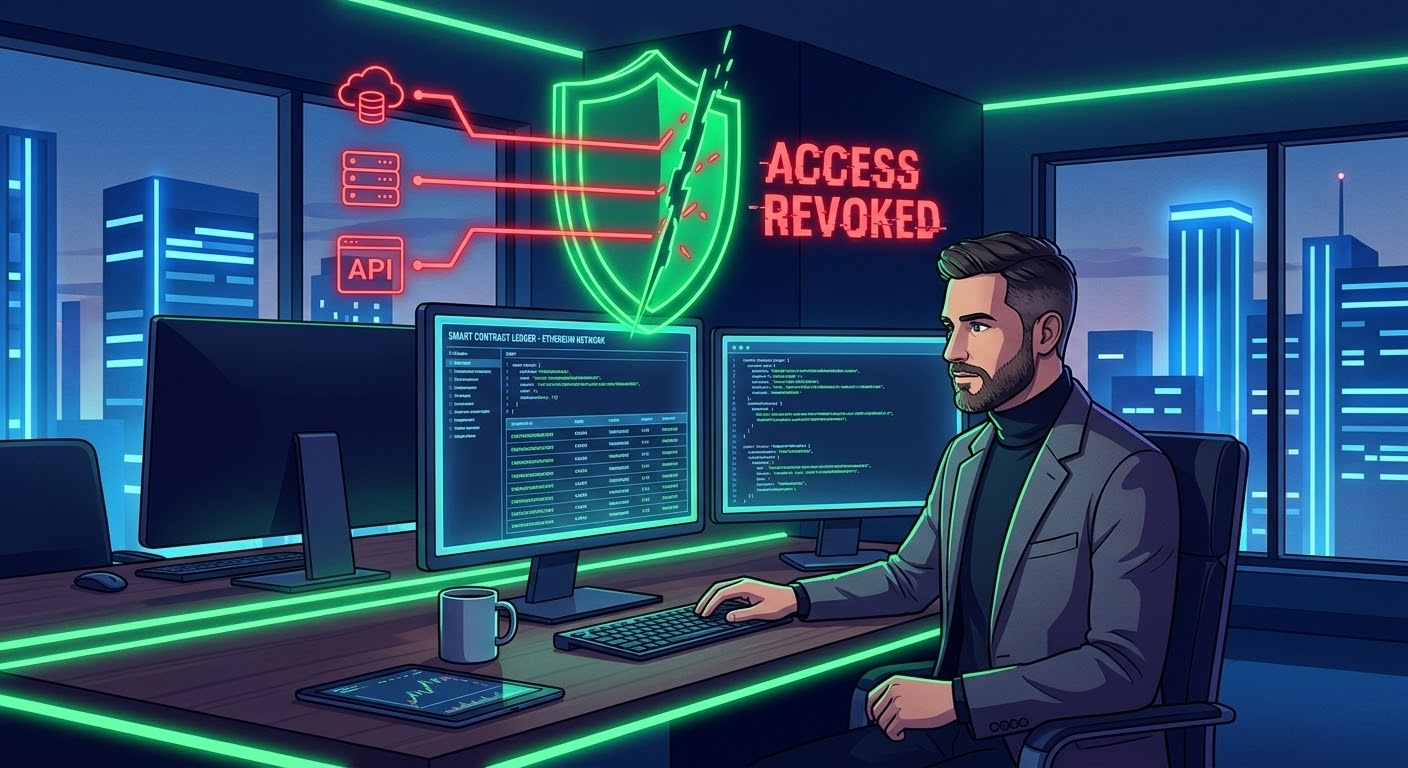
Security Alert: Clean Up Your Smart Contract Approvals! 🛡️
Content:
When was the last time you revoked smart contract permissions on your wallet? 🔒
Every time you approve a dApp or decentralized exchange, you might be leaving unlimited token allowances open. If that protocol ever gets exploited, your wallet could be drained!
Do this today:
🔹 Use tools like Revoke.cash or BscScan Token Approval Checker.
🔹 Revoke old or unused dApp permissions immediately.
Stay safe out there! 🤝
#Web3Security #CryptoSafety #Binance
Security Alert: Clean Up Your Smart Contract Approvals! 🛡️
Content:
When was the last time you revoked smart contract permissions on your wallet? 🔒
Every time you approve a dApp or decentralized exchange, you might be leaving unlimited token allowances open. If that protocol ever gets exploited, your wallet could be drained!
Do this today:
🔹 Use tools like Revoke.cash or BscScan Token Approval Checker.
🔹 Revoke old or unused dApp permissions immediately.
Stay safe out there! 🤝
#Web3Security #CryptoSafety #Binance
Content:
When was the last time you revoked smart contract permissions on your wallet? 🔒
Every time you approve a dApp or decentralized exchange, you might be leaving unlimited token allowances open. If that protocol ever gets exploited, your wallet could be drained!
Do this today:
🔹 Use tools like Revoke.cash or BscScan Token Approval Checker.
🔹 Revoke old or unused dApp permissions immediately.
Stay safe out there! 🤝
#Web3Security #CryptoSafety #Binance
8
·
--
My Crypto Safety Roadmap (Part 8): How I Manage and Revoke Risky Smart Contract Permissions🎈🎈
🔴Interacting with Decentralized Applications (DApps) and DeFi platforms is a major part of my crypto execution, but it introduces a hidden risk that many overlook. In my journey, I discovered that granting "unlimited token approval" to a platform allows its smart contracts to access my assets at any time. If that protocol gets exploited or turns out to be a scam, my connected wallet can be drained instantly. To secure my treasury, I established a strict inspection and cleanup routine.🚀
🔴Today, I never leave permanent or unlimited spending permissions active on my Web3 wallets. I routinely use blockchain scanners and revocation tools like Revoke.cash to audit every single smart contract connection I have made. Whenever I finish a transaction or interact with a new platform, I immediately revoke or minimize the allowed token allowance. Controlling exactly who and what can interact with my digital assets is my ultimate shield against smart contract exploits.🚀
#CryptoSafety #SmartContracts #Web3Security #DeFiSecurity $XAUT $BTC $BNB
💥Not Financial Advice
{spot}(XAUTUSDT)
My Crypto Safety Roadmap (Part 8): How I Manage and Revoke Risky Smart Contract Permissions🎈🎈
🔴Interacting with Decentralized Applications (DApps) and DeFi platforms is a major part of my crypto execution, but it introduces a hidden risk that many overlook. In my journey, I discovered that granting "unlimited token approval" to a platform allows its smart contracts to access my assets at any time. If that protocol gets exploited or turns out to be a scam, my connected wallet can be drained instantly. To secure my treasury, I established a strict inspection and cleanup routine.🚀
🔴Today, I never leave permanent or unlimited spending permissions active on my Web3 wallets. I routinely use blockchain scanners and revocation tools like Revoke.cash to audit every single smart contract connection I have made. Whenever I finish a transaction or interact with a new platform, I immediately revoke or minimize the allowed token allowance. Controlling exactly who and what can interact with my digital assets is my ultimate shield against smart contract exploits.🚀
#CryptoSafety #SmartContracts #Web3Security #DeFiSecurity $XAUT $BTC $BNB
💥Not Financial Advice
🔴Interacting with Decentralized Applications (DApps) and DeFi platforms is a major part of my crypto execution, but it introduces a hidden risk that many overlook. In my journey, I discovered that granting "unlimited token approval" to a platform allows its smart contracts to access my assets at any time. If that protocol gets exploited or turns out to be a scam, my connected wallet can be drained instantly. To secure my treasury, I established a strict inspection and cleanup routine.🚀
🔴Today, I never leave permanent or unlimited spending permissions active on my Web3 wallets. I routinely use blockchain scanners and revocation tools like Revoke.cash to audit every single smart contract connection I have made. Whenever I finish a transaction or interact with a new platform, I immediately revoke or minimize the allowed token allowance. Controlling exactly who and what can interact with my digital assets is my ultimate shield against smart contract exploits.🚀
#CryptoSafety #SmartContracts #Web3Security #DeFiSecurity $XAUT $BTC $BNB
💥Not Financial Advice
232
·
--
🛡️ Stay Safe in Crypto Trading!
Trading crypto and traditional assets carries volatility. Always remember:
Set up 2-Factor Authentication (2FA) on your exchange accounts.
Adjust margin leverage to suit your risk appetite.
Verify all announcements directly on official exchange portals.
Trade smart, stay updated, and manage your risk! 📊
#CryptoSafety #RiskManagement #BinanceSecurity
🛡️ Stay Safe in Crypto Trading!
Trading crypto and traditional assets carries volatility. Always remember:
Set up 2-Factor Authentication (2FA) on your exchange accounts.
Adjust margin leverage to suit your risk appetite.
Verify all announcements directly on official exchange portals.
Trade smart, stay updated, and manage your risk! 📊
#CryptoSafety #RiskManagement #BinanceSecurity
Trading crypto and traditional assets carries volatility. Always remember:
Set up 2-Factor Authentication (2FA) on your exchange accounts.
Adjust margin leverage to suit your risk appetite.
Verify all announcements directly on official exchange portals.
Trade smart, stay updated, and manage your risk! 📊
#CryptoSafety #RiskManagement #BinanceSecurity
31
·
--
My Crypto Safety Roadmap (Part 7): How I Migrated My Capital to a 100% Offline Cold Wallet📌️📌️
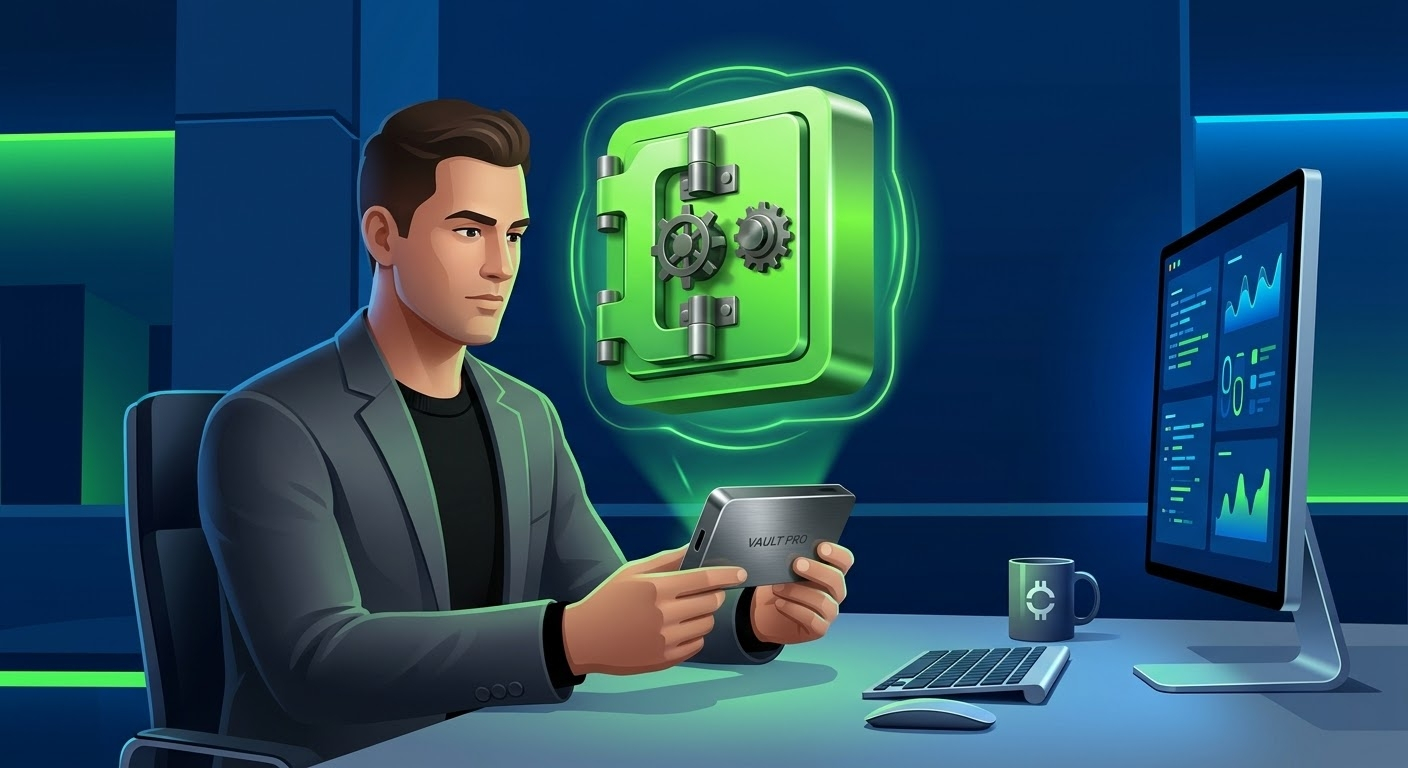
🔴As my cryptocurrency portfolio expanded, relying solely on internet-connected software wallets or centralized exchanges introduced an uncomfortably high risk profile. In my wealth-building journey, I realized that true asset ownership means having complete, isolated custody over my private keys. To eliminate any possibility of online exploitation, I executed a complete migration of my long-term capital to a dedicated physical hardware wallet like Ledger and Trezor.
🔴Today, my core assets sit entirely disconnected from the digital world. During the setup of my Trezor and Ledger devices, I generated my recovery configuration completely offline, ensuring no computer or smartphone network ever caught a glimpse of my master key. Transactions now require my deliberate, physical button confirmation on a secure device that remains immune to remote malware or network intrusions. Taking my keys out of cyberspace and locking them in solid cold storage is my definitive move for absolute peace of mind.
#CryptoSafety #ColdStorage #HardwareWallets #Ledger #Trezor
💥Not Financial Advice
{spot}(XAUTUSDT)
My Crypto Safety Roadmap (Part 7): How I Migrated My Capital to a 100% Offline Cold Wallet📌️📌️
🔴As my cryptocurrency portfolio expanded, relying solely on internet-connected software wallets or centralized exchanges introduced an uncomfortably high risk profile. In my wealth-building journey, I realized that true asset ownership means having complete, isolated custody over my private keys. To eliminate any possibility of online exploitation, I executed a complete migration of my long-term capital to a dedicated physical hardware wallet like Ledger and Trezor.
🔴Today, my core assets sit entirely disconnected from the digital world. During the setup of my Trezor and Ledger devices, I generated my recovery configuration completely offline, ensuring no computer or smartphone network ever caught a glimpse of my master key. Transactions now require my deliberate, physical button confirmation on a secure device that remains immune to remote malware or network intrusions. Taking my keys out of cyberspace and locking them in solid cold storage is my definitive move for absolute peace of mind.
#CryptoSafety #ColdStorage #HardwareWallets #Ledger #Trezor
💥Not Financial Advice
🔴As my cryptocurrency portfolio expanded, relying solely on internet-connected software wallets or centralized exchanges introduced an uncomfortably high risk profile. In my wealth-building journey, I realized that true asset ownership means having complete, isolated custody over my private keys. To eliminate any possibility of online exploitation, I executed a complete migration of my long-term capital to a dedicated physical hardware wallet like Ledger and Trezor.
🔴Today, my core assets sit entirely disconnected from the digital world. During the setup of my Trezor and Ledger devices, I generated my recovery configuration completely offline, ensuring no computer or smartphone network ever caught a glimpse of my master key. Transactions now require my deliberate, physical button confirmation on a secure device that remains immune to remote malware or network intrusions. Taking my keys out of cyberspace and locking them in solid cold storage is my definitive move for absolute peace of mind.
#CryptoSafety #ColdStorage #HardwareWallets #Ledger #Trezor
💥Not Financial Advice
215

·
--
⚠️ 3 mistakes any crypto beginner could make!
❌ Mistake #1: Buying a coin just because its price has risen quickly.
❌ Mistake #2: Believing any post that promises to double your money or guarantees you a profit.
❌ Mistake #3: Neglecting account security, or sharing your password or private wallet key with anyone.
✅ What should you do instead? Learn before you decide, verify your sources, and never risk money you can’t afford to lose.
💬 Which of these mistakes do you think is most common among beginners? Do you have any additional advice?
$BTC
{spot}(BTCUSDT)
#CryptoSafety #EarningsSeason
⚠️ 3 mistakes any crypto beginner could make!
❌ Mistake #1: Buying a coin just because its price has risen quickly.
❌ Mistake #2: Believing any post that promises to double your money or guarantees you a profit.
❌ Mistake #3: Neglecting account security, or sharing your password or private wallet key with anyone.
✅ What should you do instead? Learn before you decide, verify your sources, and never risk money you can’t afford to lose.
💬 Which of these mistakes do you think is most common among beginners? Do you have any additional advice?
$BTC
#CryptoSafety #EarningsSeason
❌ Mistake #1: Buying a coin just because its price has risen quickly.
❌ Mistake #2: Believing any post that promises to double your money or guarantees you a profit.
❌ Mistake #3: Neglecting account security, or sharing your password or private wallet key with anyone.
✅ What should you do instead? Learn before you decide, verify your sources, and never risk money you can’t afford to lose.
💬 Which of these mistakes do you think is most common among beginners? Do you have any additional advice?
$BTC
#CryptoSafety #EarningsSeason
40

🛡️ 5 BINANCE SECURITY HABITS EVERY BEGINNER SHOULD KNOW
Creating an account is only the first step. Protecting it matters just as much.
Here are five things worth reviewing in your account's Security settings:
1️⃣ Use a unique password. Don't reuse the password you use for social media or email.
2️⃣ Enable two-factor authentication (2FA). Use an available authentication method that suits your security needs.
3️⃣ Set an anti-phishing code. This can help you recognize certain genuine Binance communications.
4️⃣ Review withdrawal protections. Understand the available withdrawal address whitelist and confirmation settings before transferring funds.
5️⃣ Check your account activity. Investigate unfamiliar devices, sessions, or security notifications through official channels.
Important: menu names and available security features may vary. Navigate through the official Binance app or website and verify the current instructions before changing settings.
No single setting makes an account invulnerable, but several layers of protection are better than relying on a password alone.
When did you last review your account security?
#BinanceTutorial #CryptoSafety #AccountSecurity
🛡️ 5 BINANCE SECURITY HABITS EVERY BEGINNER SHOULD KNOW
Creating an account is only the first step. Protecting it matters just as much.
Here are five things worth reviewing in your account's Security settings:
1️⃣ Use a unique password. Don't reuse the password you use for social media or email.
2️⃣ Enable two-factor authentication (2FA). Use an available authentication method that suits your security needs.
3️⃣ Set an anti-phishing code. This can help you recognize certain genuine Binance communications.
4️⃣ Review withdrawal protections. Understand the available withdrawal address whitelist and confirmation settings before transferring funds.
5️⃣ Check your account activity. Investigate unfamiliar devices, sessions, or security notifications through official channels.
Important: menu names and available security features may vary. Navigate through the official Binance app or website and verify the current instructions before changing settings.
No single setting makes an account invulnerable, but several layers of protection are better than relying on a password alone.
When did you last review your account security?
#BinanceTutorial #CryptoSafety #AccountSecurity
Creating an account is only the first step. Protecting it matters just as much.
Here are five things worth reviewing in your account's Security settings:
1️⃣ Use a unique password. Don't reuse the password you use for social media or email.
2️⃣ Enable two-factor authentication (2FA). Use an available authentication method that suits your security needs.
3️⃣ Set an anti-phishing code. This can help you recognize certain genuine Binance communications.
4️⃣ Review withdrawal protections. Understand the available withdrawal address whitelist and confirmation settings before transferring funds.
5️⃣ Check your account activity. Investigate unfamiliar devices, sessions, or security notifications through official channels.
Important: menu names and available security features may vary. Navigate through the official Binance app or website and verify the current instructions before changing settings.
No single setting makes an account invulnerable, but several layers of protection are better than relying on a password alone.
When did you last review your account security?
#BinanceTutorial #CryptoSafety #AccountSecurity
1
43

💡 Crypto Tip of the Day: Never underestimate the power of risk management! 🛡️
Before entering any trade, always ask yourself:
✅ Is my Stop Loss set?
✅ Am I using proper leverage?
✅ Am I trading with money I can afford to risk?
Stay smart, stay safe, and trade responsibly! 📊📈
#Binance #CryptoTips #RiskManagement #cryptoeducation #CryptoSafety
💡 Crypto Tip of the Day: Never underestimate the power of risk management! 🛡️
Before entering any trade, always ask yourself:
✅ Is my Stop Loss set?
✅ Am I using proper leverage?
✅ Am I trading with money I can afford to risk?
Stay smart, stay safe, and trade responsibly! 📊📈
#Binance #CryptoTips #RiskManagement #cryptoeducation #CryptoSafety
Before entering any trade, always ask yourself:
✅ Is my Stop Loss set?
✅ Am I using proper leverage?
✅ Am I trading with money I can afford to risk?
Stay smart, stay safe, and trade responsibly! 📊📈
#Binance #CryptoTips #RiskManagement #cryptoeducation #CryptoSafety
118


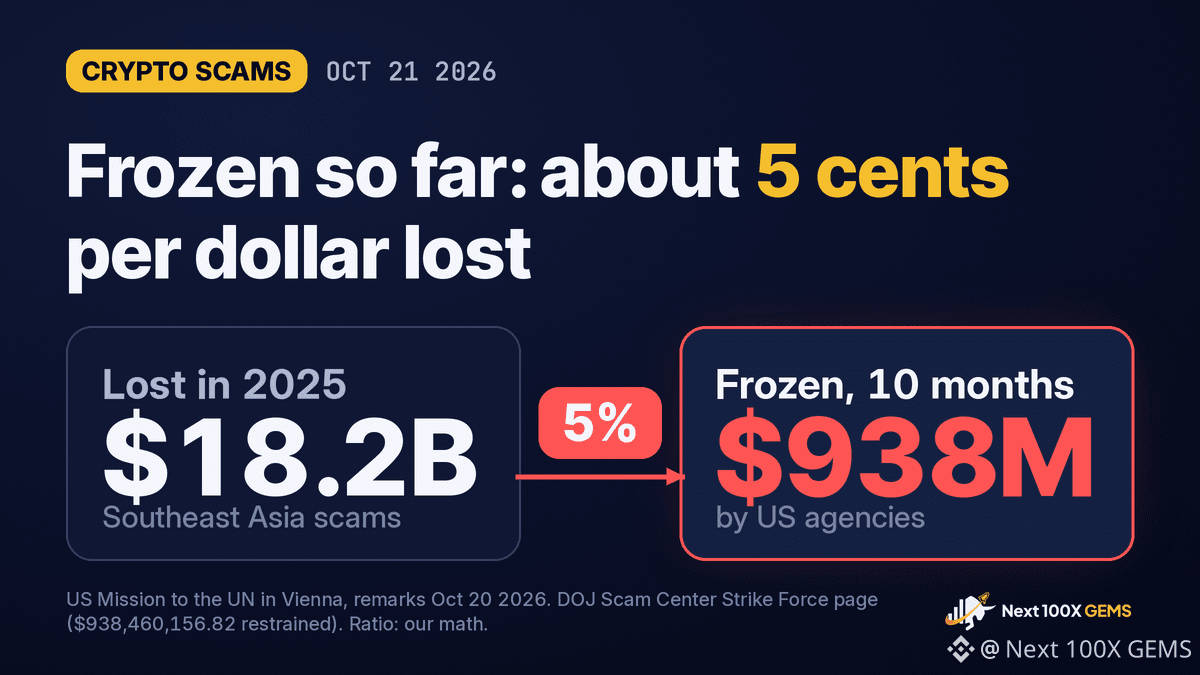
US agencies have frozen $938 million in scam-linked crypto over the last 10 months. Americans lost at least $18.2 billion to Southeast Asia-based scams in 2025 alone.
Both figures come from US remarks at a UN fraud meeting in Vienna on Tuesday. The Justice Department's Scam Center Strike Force puts the exact amount restrained at $938,460,156.82. The same remarks say 503 fake websites were seized and about 9,000 Americans were warned in real time. President Trump is set to talk up the crackdown at a White House cybercrime event today.
By our math, $938 million is about 5% of one year's losses, roughly 5 cents for every dollar taken. The two periods don't line up exactly, but the gap is wide either way. Restrained also means frozen, not yet back with victims.
If a platform wants a fee or a "tax" before it lets you withdraw, stop sending money.
#CryptoScams #CryptoSafety
NFA. DYOR.
US agencies have frozen $938 million in scam-linked crypto over the last 10 months. Americans lost at least $18.2 billion to Southeast Asia-based scams in 2025 alone.
Both figures come from US remarks at a UN fraud meeting in Vienna on Tuesday. The Justice Department's Scam Center Strike Force puts the exact amount restrained at $938,460,156.82. The same remarks say 503 fake websites were seized and about 9,000 Americans were warned in real time. President Trump is set to talk up the crackdown at a White House cybercrime event today.
By our math, $938 million is about 5% of one year's losses, roughly 5 cents for every dollar taken. The two periods don't line up exactly, but the gap is wide either way. Restrained also means frozen, not yet back with victims.
If a platform wants a fee or a "tax" before it lets you withdraw, stop sending money.
#CryptoScams #CryptoSafety
NFA. DYOR.
Both figures come from US remarks at a UN fraud meeting in Vienna on Tuesday. The Justice Department's Scam Center Strike Force puts the exact amount restrained at $938,460,156.82. The same remarks say 503 fake websites were seized and about 9,000 Americans were warned in real time. President Trump is set to talk up the crackdown at a White House cybercrime event today.
By our math, $938 million is about 5% of one year's losses, roughly 5 cents for every dollar taken. The two periods don't line up exactly, but the gap is wide either way. Restrained also means frozen, not yet back with victims.
If a platform wants a fee or a "tax" before it lets you withdraw, stop sending money.
#CryptoScams #CryptoSafety
NFA. DYOR.
352

·
--
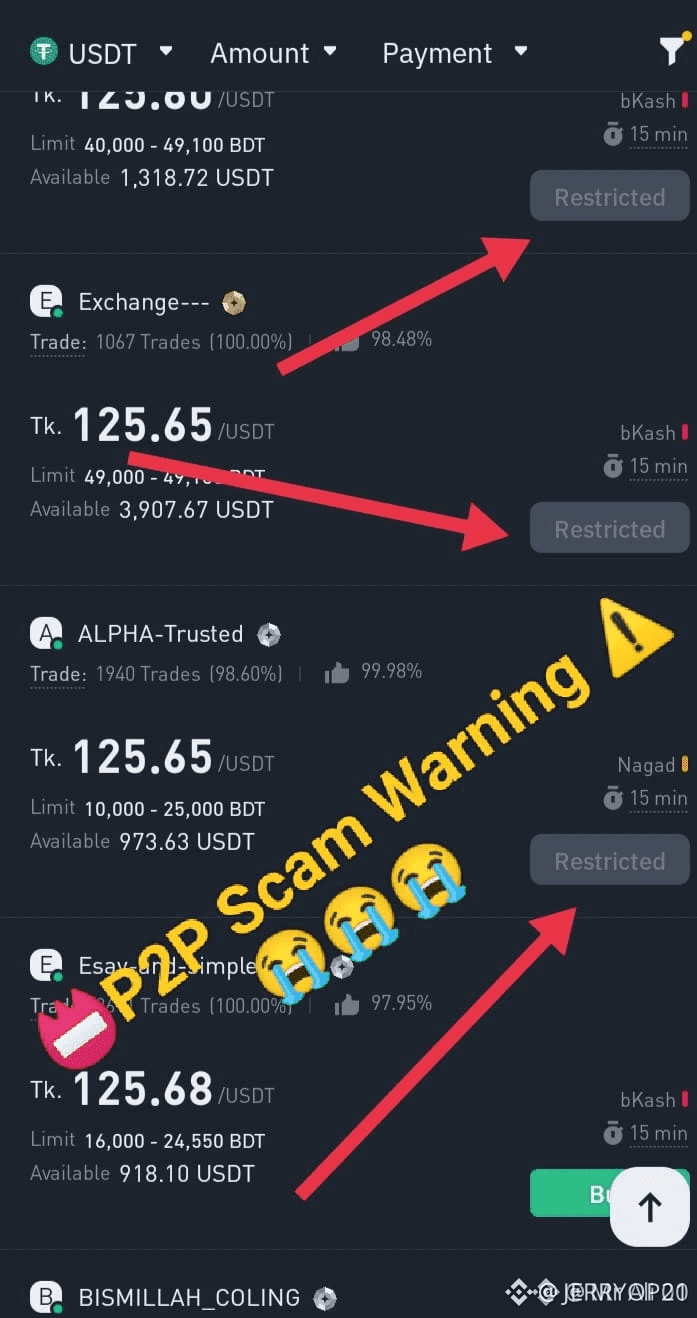
🚨 P2P SCAM ALERT — BINANCE USERS, STAY SAFE! 🚫
Trading $USDT or $USDC through P2P? ⚠️ Read this before your next transaction!
🔴 BUY-SIDE SCAM
You send money to the seller, but they refuse to release your crypto.
✅ What to do: Keep all communication and payments within Binance P2P, save your proof of payment, and open an appeal if the crypto isn't released. Follow Binance's appeal process and provide valid evidence. A refund is not guaranteed.
🟠 SELL-SIDE SCAM
The buyer sends you a fake payment screenshot or SMS notification to convince you they've paid.
✅ What to do: NEVER release your crypto based on a screenshot or SMS. Open your banking app and confirm the funds have actually arrived before releasing anything.
🛡️ 5 GOLDEN RULES FOR SAFE P2P TRADING
🔹 Never trust screenshots as proof of payment.
🔹 Verify payments directly in your bank account.
🔹 Never release crypto before receiving payment.
🔹 Don't accept third-party payments; follow Binance's payment-name requirements.
🔹 Keep all transactions and dispute evidence within the official Binance P2P process.
💡 Remember: A little caution today can save you from a big loss tomorrow!
⭐ Want to learn more about safe P2P trading? Comment “P2P” below!
⚠️ Stay alert. Trade smart. Protect your funds.
#Binance
{spot}(BTCUSDT)
#P2P #CryptoScams #USDT #USDC #CryptoSafety #BinanceSquare
🚨 P2P SCAM ALERT — BINANCE USERS, STAY SAFE! 🚫
Trading $USDT or $USDC through P2P? ⚠️ Read this before your next transaction!
🔴 BUY-SIDE SCAM
You send money to the seller, but they refuse to release your crypto.
✅ What to do: Keep all communication and payments within Binance P2P, save your proof of payment, and open an appeal if the crypto isn't released. Follow Binance's appeal process and provide valid evidence. A refund is not guaranteed.
🟠 SELL-SIDE SCAM
The buyer sends you a fake payment screenshot or SMS notification to convince you they've paid.
✅ What to do: NEVER release your crypto based on a screenshot or SMS. Open your banking app and confirm the funds have actually arrived before releasing anything.
🛡️ 5 GOLDEN RULES FOR SAFE P2P TRADING
🔹 Never trust screenshots as proof of payment.
🔹 Verify payments directly in your bank account.
🔹 Never release crypto before receiving payment.
🔹 Don't accept third-party payments; follow Binance's payment-name requirements.
🔹 Keep all transactions and dispute evidence within the official Binance P2P process.
💡 Remember: A little caution today can save you from a big loss tomorrow!
⭐ Want to learn more about safe P2P trading? Comment “P2P” below!
⚠️ Stay alert. Trade smart. Protect your funds.
#Binance
#P2P #CryptoScams #USDT #USDC #CryptoSafety #BinanceSquare
Trading $USDT or $USDC through P2P? ⚠️ Read this before your next transaction!
🔴 BUY-SIDE SCAM
You send money to the seller, but they refuse to release your crypto.
✅ What to do: Keep all communication and payments within Binance P2P, save your proof of payment, and open an appeal if the crypto isn't released. Follow Binance's appeal process and provide valid evidence. A refund is not guaranteed.
🟠 SELL-SIDE SCAM
The buyer sends you a fake payment screenshot or SMS notification to convince you they've paid.
✅ What to do: NEVER release your crypto based on a screenshot or SMS. Open your banking app and confirm the funds have actually arrived before releasing anything.
🛡️ 5 GOLDEN RULES FOR SAFE P2P TRADING
🔹 Never trust screenshots as proof of payment.
🔹 Verify payments directly in your bank account.
🔹 Never release crypto before receiving payment.
🔹 Don't accept third-party payments; follow Binance's payment-name requirements.
🔹 Keep all transactions and dispute evidence within the official Binance P2P process.
💡 Remember: A little caution today can save you from a big loss tomorrow!
⭐ Want to learn more about safe P2P trading? Comment “P2P” below!
⚠️ Stay alert. Trade smart. Protect your funds.
#Binance
#P2P #CryptoScams #USDT #USDC #CryptoSafety #BinanceSquare
1
47
·
--
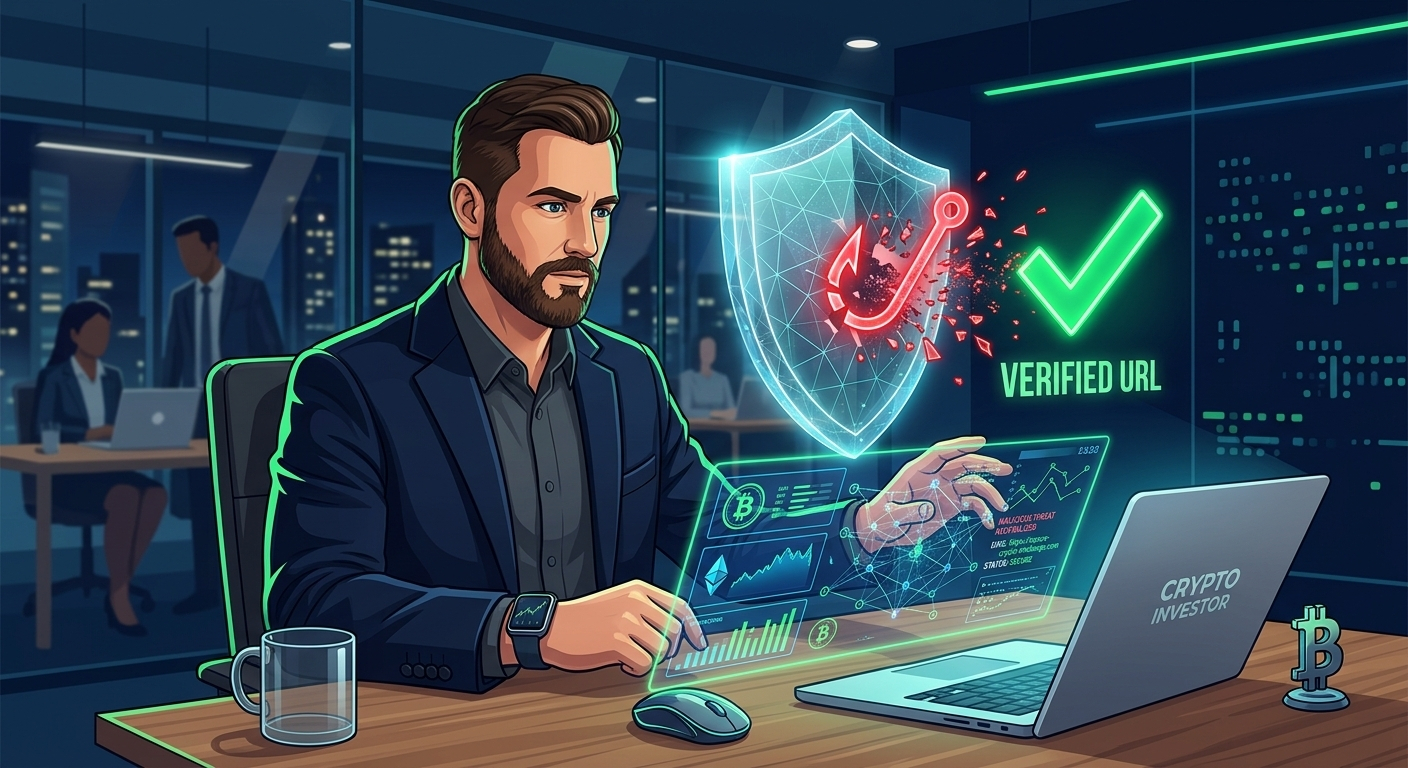
My Crypto Safety Roadmap (Part 6): How I Recognize and Avoid Sophisticated Phishing Scams🎈🎈
🔴Navigating the crypto landscape requires extreme vigilance against malicious links and fraudulent communication channels. In my early days, I realized that even the most robust exchange security can be bypassed if I accidentally surrender my credentials to a cloned website or a fake support group. To ensure complete immunity from phishing traps, I built a rigid protocol for verifying every digital interaction.🚀
🔴Today, I never click on direct links provided in emails, private messages, or search engine advertisements. Instead, I interact exclusively through officially bookmarked domains and verified platform applications. Before entering any sensitive information, I perform a thorough, multi-step validation of the URL structure to spot hidden character alterations. Eliminating reliance on external links is my ultimate shield against social engineering and digital deception.🚀
#CryptoSafety #PhishingAwareness #Web3Security101 #AssetProtection #MyJourney $XAUT $BNB $BTC
💥Not Financial Advice
{spot}(XAUTUSDT)
My Crypto Safety Roadmap (Part 6): How I Recognize and Avoid Sophisticated Phishing Scams🎈🎈
🔴Navigating the crypto landscape requires extreme vigilance against malicious links and fraudulent communication channels. In my early days, I realized that even the most robust exchange security can be bypassed if I accidentally surrender my credentials to a cloned website or a fake support group. To ensure complete immunity from phishing traps, I built a rigid protocol for verifying every digital interaction.🚀
🔴Today, I never click on direct links provided in emails, private messages, or search engine advertisements. Instead, I interact exclusively through officially bookmarked domains and verified platform applications. Before entering any sensitive information, I perform a thorough, multi-step validation of the URL structure to spot hidden character alterations. Eliminating reliance on external links is my ultimate shield against social engineering and digital deception.🚀
#CryptoSafety #PhishingAwareness #Web3Security101 #AssetProtection #MyJourney $XAUT $BNB $BTC
💥Not Financial Advice
🔴Navigating the crypto landscape requires extreme vigilance against malicious links and fraudulent communication channels. In my early days, I realized that even the most robust exchange security can be bypassed if I accidentally surrender my credentials to a cloned website or a fake support group. To ensure complete immunity from phishing traps, I built a rigid protocol for verifying every digital interaction.🚀
🔴Today, I never click on direct links provided in emails, private messages, or search engine advertisements. Instead, I interact exclusively through officially bookmarked domains and verified platform applications. Before entering any sensitive information, I perform a thorough, multi-step validation of the URL structure to spot hidden character alterations. Eliminating reliance on external links is my ultimate shield against social engineering and digital deception.🚀
#CryptoSafety #PhishingAwareness #Web3Security101 #AssetProtection #MyJourney $XAUT $BNB $BTC
💥Not Financial Advice
152
Log in to explore more content
Join global crypto users on Binance Square
⚡️ Get latest and useful information about crypto.
💬 Trusted by the world’s largest crypto exchange.
👍 Discover real insights from verified creators.
Email / Phone number
Trending Topics
1
#BinancePick
3.2M views
158,390 Discussing
2
#EarningsSeason
5.4M views
26,317 Discussing
3
#BitmineAdds10452ETH
259 views
26 Discussing
4
#SouthKoreaConsidersEducationTaxOnCryptoExchanges
589 views
44 Discussing
5
#OCCUrgesCommunityBanksToEnterStablecoinPayments
322 views
34 Discussing
6
#RippleWinsFullApprovalAsNationalTrustBank
335 views
32 Discussing
7
#AkashSelectsSolanaAsMigrationTarget
109 views
6 Discussing
8
#OndoToOpenSubscriptionsForOpenAIPreIPOTokenizedNotes
28 views
3 Discussing
9
#AnthropicTTMRevenueGrewAbout1200%
44,812 views
513 Discussing
10
#AnthropicS1ExpectedToday
36,547 views
402 Discussing