

#initia
initia
850,811 views
1,144 Discussing
Hot
Latest

·
--
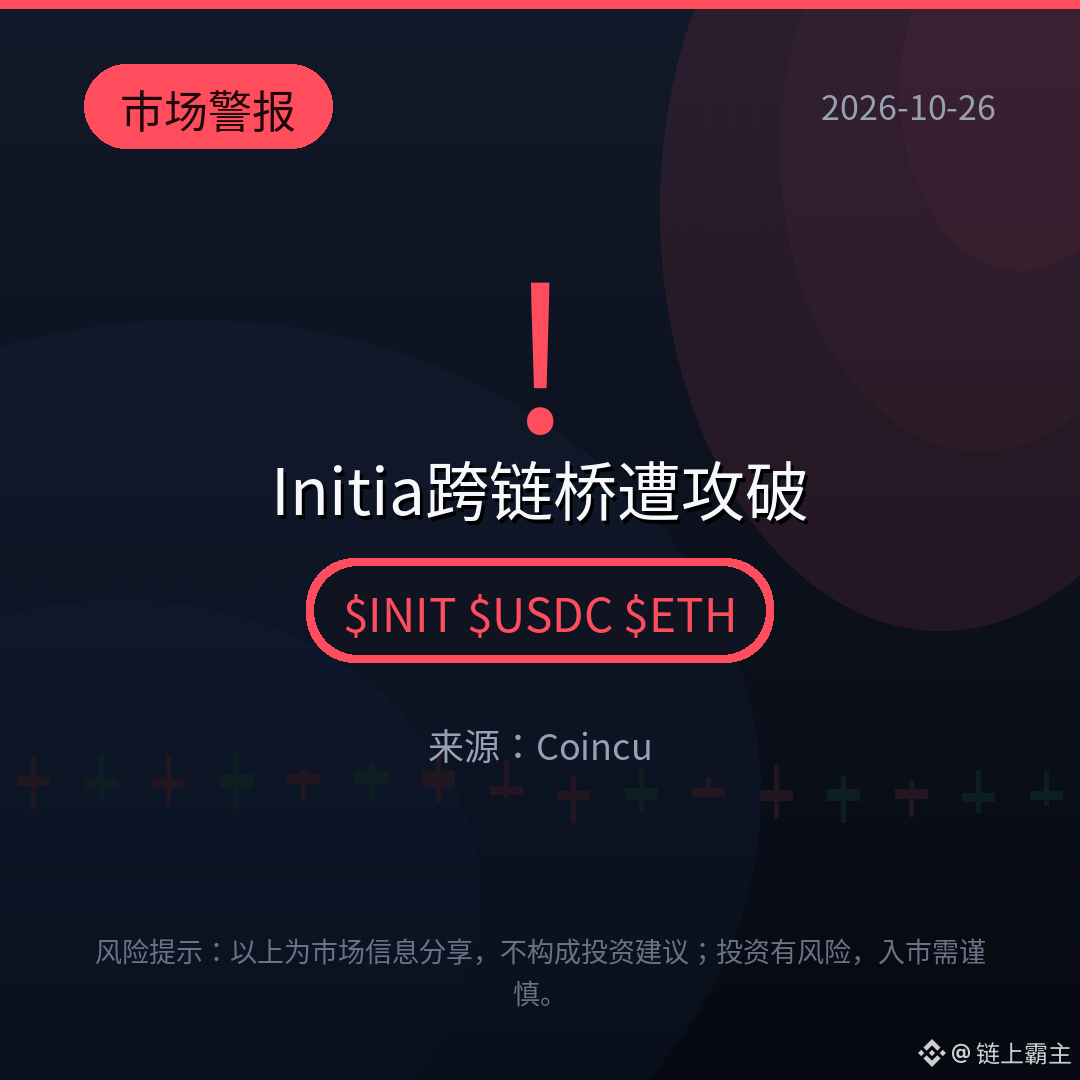
【Market Flash】The Initia cross-chain bridge was attacked on October 23, leaving just $63 in USDC reserves at one point.
Bitquery data shows that 55 regular withdrawals failed, making withdrawals impossible to settle. This was a concentrated drain, not a gradual redemption.
The $63 figure reflects the balance at the time of the attack, not the total final losses. The attack method and any compensation have not been confirmed; an official post-mortem is still pending.
What’s the biggest risk for cross-chain bridges: code vulnerabilities or concentrated reserves? Share your thoughts in the comments.
$INIT $USDC $ETH
#跨链桥 #Initia #USDC
(Source: Coincu)
⚠️Risk warning: The above is shared for market information purposes only and does not constitute investment advice. Investing involves risk; please exercise caution.
287


·
--
A chain can stop at the flick of a switch: reviewing how unlimited minting on Initia led to $2.7 million being drained
Last Friday afternoon, a public blockchain hit the pause button. Initia announced on its official account that, due to a security incident, its mainnet and the Rollups built on it had all halted as of 15:41:30 UTC on October 23. The chain stopped at block 23365925, with no new blocks produced afterward. Even those who weren’t robbed were affected: deposits, swaps, and transfers between Rollups were frozen, leaving tokens on the books immovable. The amount lost is only part of the story; the chain grinding to a halt was itself an incident.
The attack was not especially complicated. Security researcher Spreek was the first to sound the alarm publicly, saying that someone had created tokens out of thin air and already converted nearly $2.6 million into other assets. Initia co-founder Ezaan Mangalji then offered an initial assessment: a Day 0 flaw, present in the MoveVM execution environment since launch, allowed the attacker to bypass minting limits and issue additional tokens directly on the mainnet. On-chain tracking by D2 Finance filled in what happened next: the attacker created around 2 million AUSD-like tokens with no genuine collateral backing, moved them across a bridge to Ethereum, and consolidated the proceeds in one wallet—about 1,135.5 ETH, worth roughly $2.73 million at the time. The transaction used just 135,888 units of gas and directly called a Move function. The bridge’s security checks were not breached; the vulnerability was in the minting step.
Three points need to be kept distinct. First, the $2.7 million figure is an initial estimate from the co-founder, combined with D2 Finance’s on-chain tally. The project has not yet announced a final confirmed loss total or a restart time, so treating that preliminary figure as definitive would be premature. Second, the co-founder explicitly said this flaw did not affect the native INIT token. The stolen value came from assets obtained by swapping the newly minted tokens. Seeing the name INIT and claiming that the native token was inflated is simply a case of mistaken identity. Third, Agora, the issuer behind AUSD, specifically clarified that it had not deployed any contracts on Initia. AUSD on other chains continued to operate normally and remained fully collateralized. So saying that the AUSD issuer’s contract was compromised is also wrong.
Exchanges moved quickly. Upbit suspended INIT deposits and withdrawals at 15:57 on October 23, while trading on the platform continued as usual. Only 16 minutes passed between the chain halting and a major exchange suspending deposits. News spread far faster than anyone could react manually. INIT first fell by about 14% that day. The market’s initial reaction was fear, but what often determines whether you lose money is whether you can move your assets at that moment.
This incident offers retail investors three practical takeaways. A chain halt is a risk in its own right: tokens not being stolen does not mean you can move them. Keeping some funds in a wallet you control is more reassuring than putting everything into the ecosystem of a single chain. Minting limits and collateral backing are two of the most important questions to ask about a project: Can more tokens be created out of thin air, and is there anything real backing what gets minted? If a project cannot clearly answer those questions, even a smooth bridge may simply help turn freshly minted tokens into cash faster. And treat any supposed recovery or refund announcements on the day of an incident with skepticism by default. Initia itself warned users in its announcement to beware of unofficial links. During an outage, shortcuts that suddenly appear are very often aimed at people in a hurry.
My view is straightforward: the lesson here is not how large the $2.7 million figure is, but that a flaw in one part of the minting process can take a chain from normal operation to a network-wide freeze in 16 minutes. Retail investors cannot defend against a Day 0 flaw, but they can avoid putting their entire net worth in one place, and they can avoid clicking random links during an outage. When evaluating a project, ask one more question: can this token be minted in unlimited quantities? Asking it before an incident costs the least.
Have you ever experienced a chain going down, an exchange suspending deposits, or tokens that were clearly in your account but couldn’t be withdrawn? How did you handle it?
#Initia #链上安全 #被黑复盘 #跨链桥 #WalletSecurity
—— Web3 Investor Kai
This post is solely an incident review and personal opinion, and is not investment advice. The amounts mentioned are based on public reporting and the project team’s preliminary statements; the final loss will depend on the official confirmed findings.

249

Let these numbers speak for themselves: Initia’s MoveVM had a Day 0 bug, and an attacker minted 2 million AUSD out of thin air. 42 minutes later, the entire L1 and all its rollups ground to a halt at 15:41 UTC on October 23. About $2.7 million was bridged out—105 WETH, 1.4 million AUSD, and 1.08 million USDC—and ultimately swapped for 1,135.52 $ETH. The official line is that no extra native $INIT was minted and the total supply is unaffected; the fix and audit will take a few more days. The wildest part is the price: $INIT first fell 14%, then climbed back up by more than 14% that same day. A $2.7 million exploit, but the cost is taking the whole network offline for days. Was the shutdown really worth it? Pick a side in the comments: A. The shutdown was the right call—stop the bleeding first. / B. If they’re willing to launch with a Day 0 bug, the chain itself can’t be trusted.
$INIT $ETH
#Initia #黑客 #chainshutdown
Let these numbers speak for themselves: Initia’s MoveVM had a Day 0 bug, and an attacker minted 2 million AUSD out of thin air. 42 minutes later, the entire L1 and all its rollups ground to a halt at 15:41 UTC on October 23. About $2.7 million was bridged out—105 WETH, 1.4 million AUSD, and 1.08 million USDC—and ultimately swapped for 1,135.52 $ETH . The official line is that no extra native $INIT was minted and the total supply is unaffected; the fix and audit will take a few more days. The wildest part is the price: $INIT first fell 14%, then climbed back up by more than 14% that same day. A $2.7 million exploit, but the cost is taking the whole network offline for days. Was the shutdown really worth it? Pick a side in the comments: A. The shutdown was the right call—stop the bleeding first. / B. If they’re willing to launch with a Day 0 bug, the chain itself can’t be trusted.
$INIT $ETH
#Initia #黑客 #chainshutdown
$INIT $ETH
#Initia #黑客 #chainshutdown
5

·
--
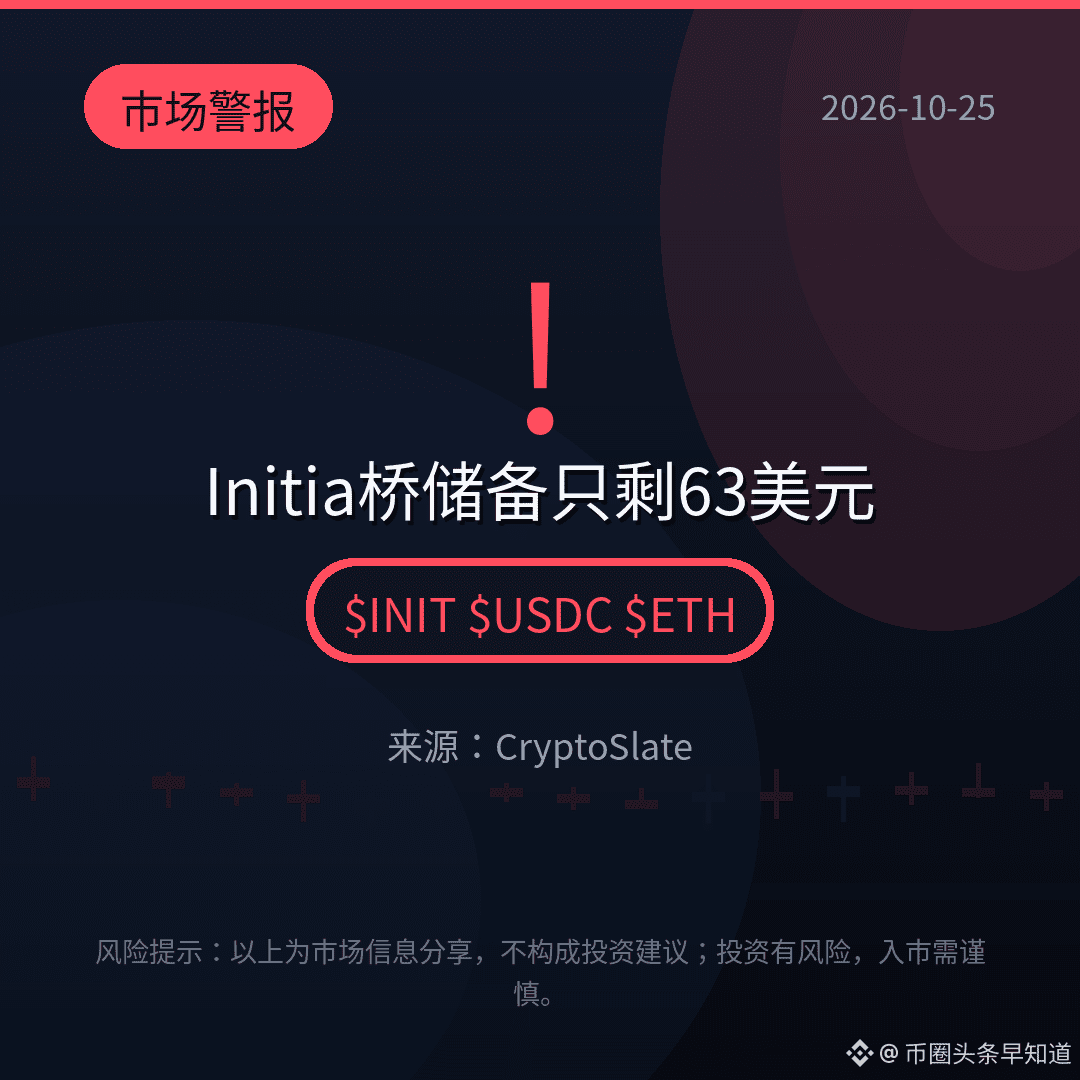
【Market Flash】New developments in the Initia incident: USDC bridge reserves were drained to just $63.
Bitquery’s postmortem: On October 23, an attacker exploited a MoveVM vulnerability to mint tokens and cash out. Reserves fell from around $1 million to $63; 55 withdrawal attempts failed, around $3 million was actually paid out, and the unauthorized face value was approximately $7.48 million.
There were tokens on the books, but only $63 backing them. Would you still trust your money to a cross-chain bridge?
$INIT $USDC $ETH
#Initia #黑客 #跨链
(Source: CryptoSlate)
⚠️Risk warning: The above is shared for market information purposes only and does not constitute investment advice. Investing involves risks; proceed with caution.
394


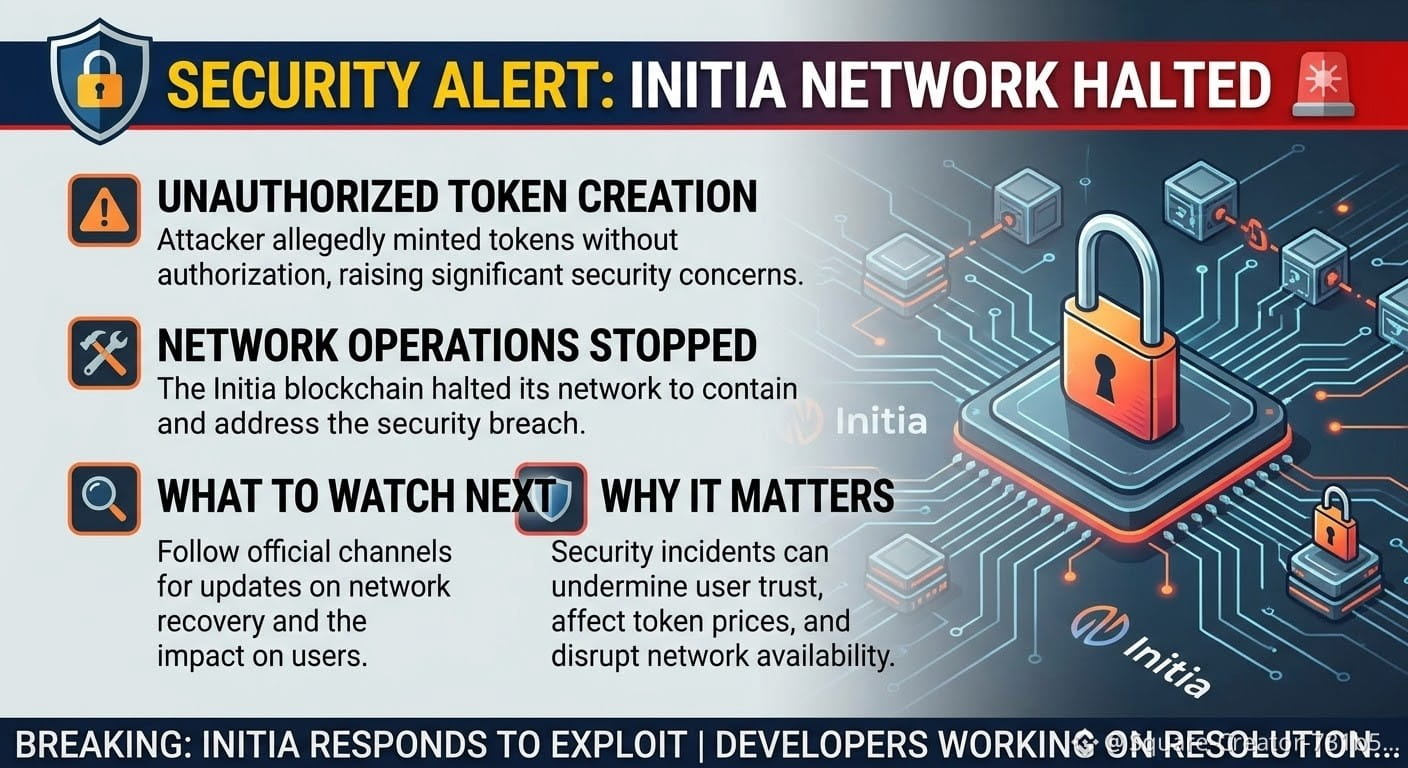
🔐 Initia Halts Network After Security Incident 🚨
The Initia blockchain reportedly halted its network following a security incident in which an attacker allegedly created unauthorized tokens.
⚠️ Security concern: Unauthorized token creation was reported.
🛠️ Response: Network operations were halted while the incident was addressed.
🔎 What to watch: Official updates on recovery and the impact on users.
🛡️ Why it matters: Blockchain security incidents can affect user confidence, token prices, and network availability.
#Initia 🔐 #InitiaNetwork 🚨 #CryptoSecurity 🛡️ #BlockchainSecurity 🔒#CyberSecurity 💻 #CryptoAlert ⚠️
1
240

·
--
🚨 Initia bridge exploit depleted USDC reserves to $63, triggering withdrawal failures. The team is patching the exploit and working on recovery, but trust in the bridge remains shaky.
💡 Market Implication: Users should avoid Initia until full reserves are restored. Monitor for broader bridge risk sentiment.
💬 Will Initia regain user trust post-recovery? #Initia
$USDC #TradingSignal #CryptoAnalysis
💡 Market Implication: Users should avoid Initia until full reserves are restored. Monitor for broader bridge risk sentiment.
💬 Will Initia regain user trust post-recovery? #Initia
$USDC #TradingSignal #CryptoAnalysis


·
--
Initia’s entire network has been down for a third day: MoveVM cache vulnerability exploited, approximately $2.7 million bridged out
📌 Initia’s official X post on 10/24: Attackers exploited a MoveVM script cache vulnerability to bypass security checks and forge on-chain state, crediting unbacked WETH, iUSD, and USDC out of thin air; native INIT was not minted, and its total supply remains unchanged
📌 Outflows (official figures/D2 Finance via Unchained): Approximately 105 WETH + 1.4 million AUSD0 moved via LayerZero, and approximately 1.08 million USDC via Noble/CCTP; they were converted into 1135.52 ETH, now sitting at an Ethereum address. It took only about 7 minutes from minting to arrival on Ethereum
📌 The L1 and all Rollups have been halted since 10/23 15:41 UTC. Officials say patching and auditing will take several days; there is no restart date or full postmortem yet. Upbit and Bithumb have suspended INIT deposits and withdrawals
📌 Price: INIT fell about 14% when the news first broke, then rebounded. CoinGecko shows a 24-hour range of approximately $0.114–$0.156 (CryptoNinjas)
【Commentary】
This wasn’t INIT itself being inflated; it was “the other side of the bridge being unable to verify whether the burned tokens are genuinely backed”—D2’s exact wording was that the OFT adapter could not validate them. The cross-chain token-locking contracts were the real weak point: approximately 71% of the AUSD adapter and 96% of the ETH adapter were drained. The price rebound suggests the market is betting the losses are manageable, but with the network halted, all ecosystem assets are frozen, and liquidity risk is being underestimated.
【Opportunities/Risks】
1️⃣ Watch for the restart announcement and postmortem: If the patch audit goes smoothly, a “sell-the-news is over” rally may follow; if the restart is delayed again or more affected assets are found, the rebound could easily fade
2️⃣ Keep an eye on the address holding those 1135 ETH: If the funds enter a mixer, the chances of recovery drop sharply; a freeze or negotiated return would be positive
3️⃣ While the network is halted, INIT can only be traded on exchanges, and Korean exchanges have suspended deposits and withdrawals. Spreads and volatility may widen, so avoid high leverage
4️⃣ Broader implications: Similar Move/Cosmos chains and cross-chain assets using LayerZero locking adapters may face renewed scrutiny over their security premium
Do you think the network will be back up within “a few days”? After it restarts, would you withdraw your assets first or keep holding? Share your thoughts in the comments.
#Initia #跨链安全 #加密安全 #DeFi
$INIT $ETH
For informational purposes only; not investment advice

408

Initia has really ground to a halt this time: at 11:41:30 a.m. Eastern Time on October 23, the L1 and all rollups were emergency-halted, and no restart time had been announced as of late that evening. The cause was a Day 0 vulnerability in MoveVM on Cosmos SDK. An attacker minted tokens out of thin air and, in just 7 minutes and 21 seconds, bridged about $2.7 million in AUSD, ETH, and USDC to Ethereum, swapped them for 1,135.5 ETH, and made off with the funds. The good news is that the native $INIT token was not inflated. After the news broke, INIT first fell 14%, then recovered. But as long as the chain stays offline, assets on it remain inaccessible—which is why you should never treat money in a cross-chain bridge as your own. #Initia #SecurityIncident
Initia has really ground to a halt this time: at 11:41:30 a.m. Eastern Time on October 23, the L1 and all rollups were emergency-halted, and no restart time had been announced as of late that evening. The cause was a Day 0 vulnerability in MoveVM on Cosmos SDK. An attacker minted tokens out of thin air and, in just 7 minutes and 21 seconds, bridged about $2.7 million in AUSD, ETH, and USDC to Ethereum, swapped them for 1,135.5 ETH, and made off with the funds. The good news is that the native $INIT token was not inflated. After the news broke, INIT first fell 14%, then recovered. But as long as the chain stays offline, assets on it remain inaccessible—which is why you should never treat money in a cross-chain bridge as your own. #Initia #SecurityIncident

281

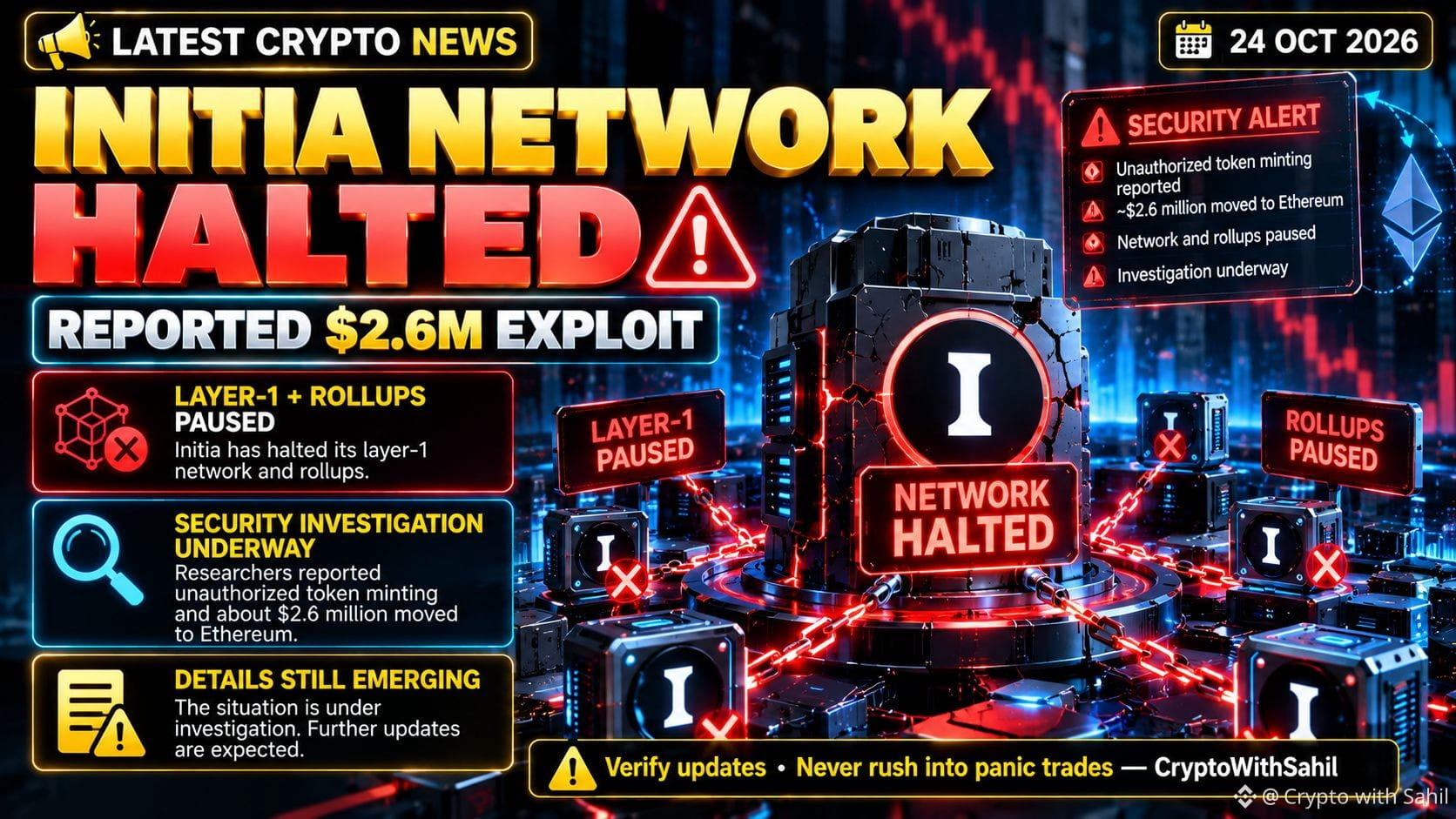
🚨 BREAKING: INITIA NETWORK HALTED AFTER REPORTED $2.6M EXPLOIT! 🔐
A security incident has reportedly forced Initia to halt its Layer-1 blockchain and rollups after researchers flagged unauthorized token minting and roughly $2.6 million moving to Ethereum. The investigation is ongoing.
🔎 Why it matters: 🛑 Network pauses can help limit further damage while teams investigate. 🔐 Security incidents highlight the importance of audits and transparent updates. ⚠️ Users should verify official announcements before moving funds or interacting with affected contracts.
💬 Your take: When a blockchain faces a possible exploit, should the team halt the network immediately or keep it running while investigating?
🔔 Follow CryptoWithSahil for daily crypto news, market insights, and blockchain updates!
#Initia #CryptoSecurity #blockchain #CryptoNews #Web3
168

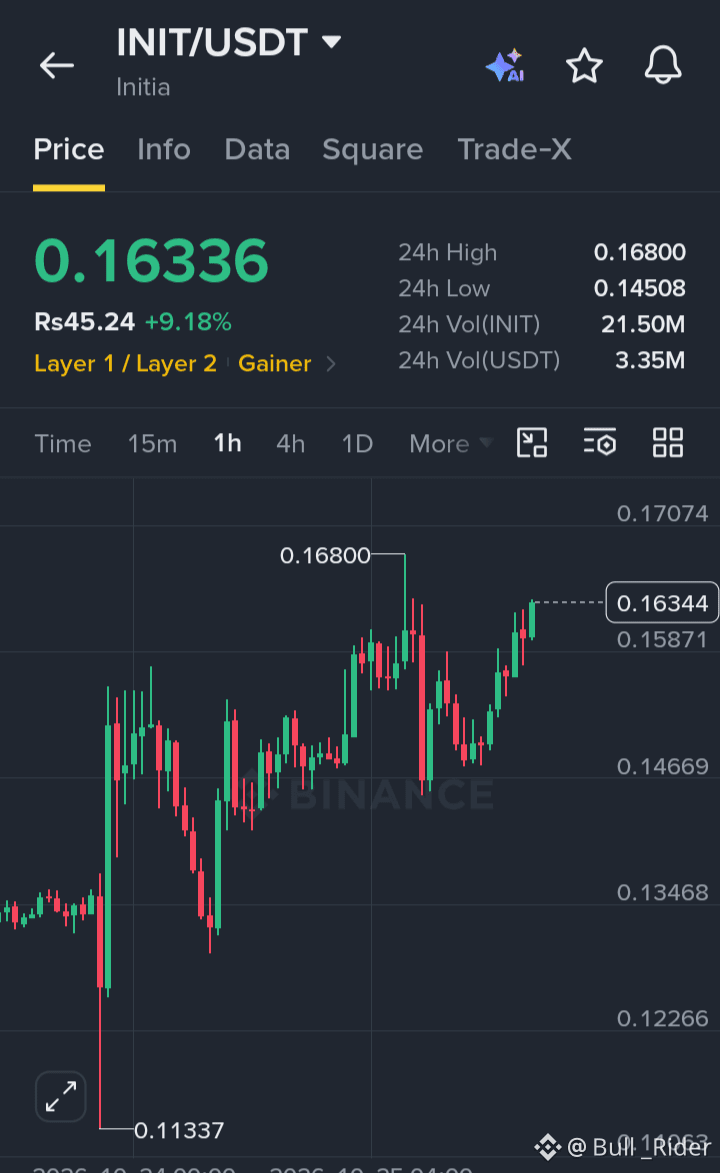
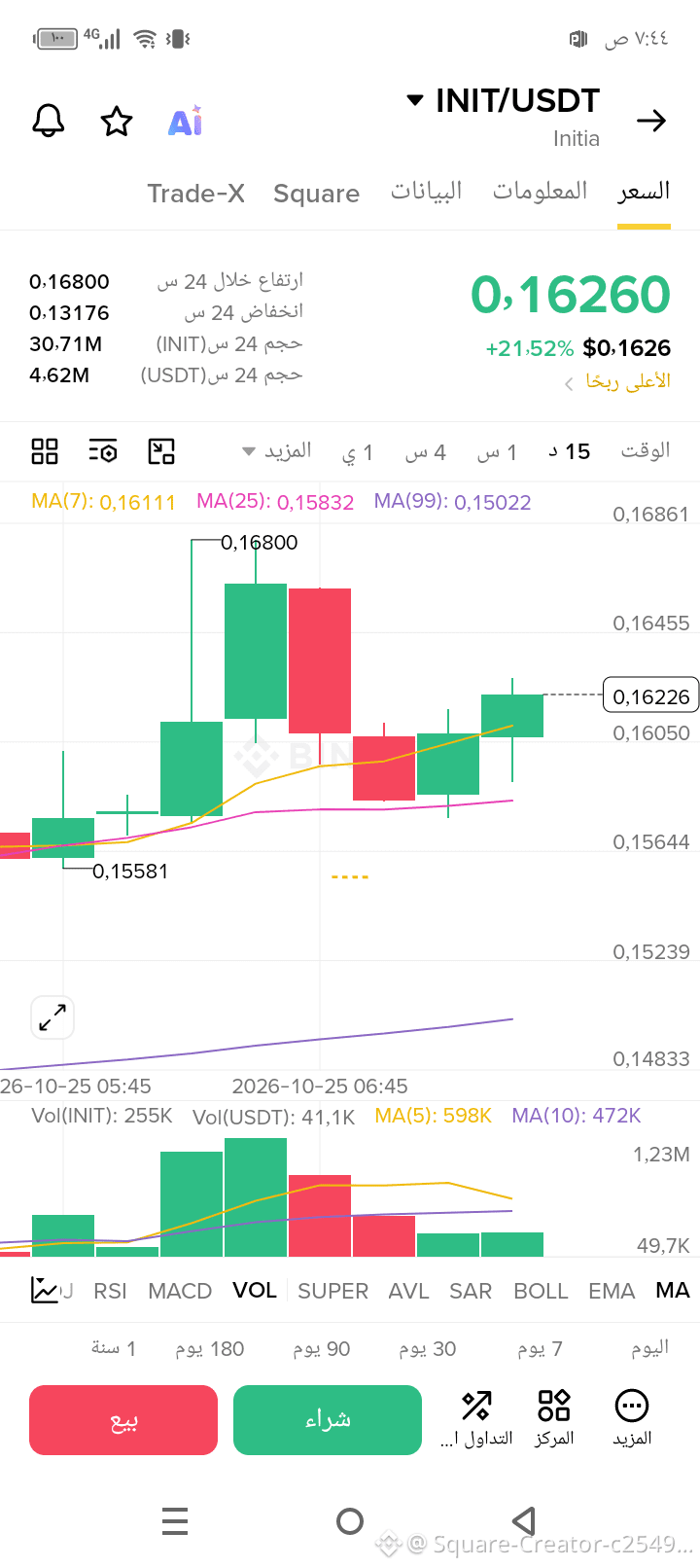
🔥 Strong surge in coin $INIT , up +21.52%!
The coin has entered this morning’s top gainers list with notable upward momentum. Here are your key levels on the 15-minute timeframe:
• Current price: $0.16260
• Nearby resistance: $0.16800 (a breakout could open the door to new record levels)
• First support (MA7): $0.16111
• Strong support (MA25): $0.15832
Trading volume is steady at 4.62 million USDT, and liquidity is excellent. Watch the price action at resistance levels closely!
What’s your next move with coin $INIT after this surge?
🟢 Enter now (ride the breakout and soar)
🔴 Wait for a correction and buy at the MA7 support line
👀 Just watch to avoid weekend volatility
{future}(INITUSDT)
#Initia #CryptoTrading #BinanceSquare
🔥 Strong surge in coin $INIT , up +21.52%!
The coin has entered this morning’s top gainers list with notable upward momentum. Here are your key levels on the 15-minute timeframe:
• Current price: $0.16260
• Nearby resistance: $0.16800 (a breakout could open the door to new record levels)
• First support (MA7): $0.16111
• Strong support (MA25): $0.15832
Trading volume is steady at 4.62 million USDT, and liquidity is excellent. Watch the price action at resistance levels closely!
What’s your next move with coin $INIT after this surge?
🟢 Enter now (ride the breakout and soar)
🔴 Wait for a correction and buy at the MA7 support line
👀 Just watch to avoid weekend volatility
#Initia #CryptoTrading #BinanceSquare
1
1
55

·
--
Initia: what the team confirmed after the October 23 incident
In its October 24 update (08:46 UTC), Initia attributed the attack to a bug in its MoveVM script cache. According to the team, the attacker credited themselves with unbacked balances of WETH (wrapped ETH), iUSD, and USDC.
The reported estimate was around USD 2.7 million transferred via bridges before the pause. This is the estimated amount transferred, not a final audited loss figure. Initia said that no additional native INIT was issued.
In that statement, the mainnet and its rollups were still paused. The patch, audit, and full technical report were pending. The current operational status could not be verified here.
Context: the fact that no additional INIT was issued does not eliminate the risk to other assets or to the availability of funds. It is also wise to be wary of purported recovery forms and unofficial links.
Market snapshot: as of 25/10, 02:58 UTC, Binance spot showed INIT at 0.15941 USDT, up 15.657% over 24 hours. That rebound does not certify that the issue has been fixed: price and operational security are separate matters.
Sources: Initia (24/10) and Binance public data (25/10).
$INIT $ETH $USDC
Educational content. Not financial advice.
#Initia #SeguridadBlockchain #DeFi #Crypto

122
The more you dig into the Initia incident, the crazier it gets: the hacker minted the tokens in just 7 minutes, but the chain wasn’t halted until 42 minutes later—and by then, the funds had already been bridged out.
As of today, October 24, the chain still hasn’t restarted, there’s still no official postmortem, and assets on the bridge remain stuck. The team has only said one thing: the vulnerability wasn’t in native INIT itself; the tokens minted were cross-chain AUSD, ETH, and USDC.
Yesterday’s exploit alone amounted to $2.7 million. Upbit, Bithumb, and Coinone immediately suspended INIT deposits and withdrawals.
Bottom line: halting the chain protects the money that’s left, not the money that’s already gone. Don’t leave much money on bridges for young blockchains.
#Initia #Hacker
梅干菜披萨:
哈哈哈
2
5.1k

·
--
The Initia network is currently paused.
A serious issue was detected in its layer 1 and its rollups.
It turns out someone found a way to mint tokens without permission.
The result was a drain of more than $2.6 million to Ethereum.
The network was halted to stop unauthorized transfers.
It's a quick reminder of how fragile new code can be.
What do you think about these kinds of failures in such young networks?
$BTC #Initia #Security
37

·
--
🚨 Another chain has been breached: Initia urgently halted the chain overnight after stablecoins minted out of thin air were swapped for $2.6 million!
📌 What happened (Source: Cointelegraph)
• Friday at 15:41 UTC, Initia announced a pause to its L1 and Rollup
• Security researcher Spreek was first to discover that the attacker had minted tokens without authorization
• D2 Finance said a vulnerability in a Move function allowed 2 million AUSD to be minted out of thin air without sufficient collateral
• Bridged to Ethereum: around 1.4 million AUSD + 105 ETH + 1.08 million USDC
• Funds were consolidated in one wallet, totaling around 1,135.5 $ETH (about $2.73 million)
🧐 My take
1️⃣ The vulnerability was at the contract level, not a leaked private key—“uncollateralized minting” is one of the most dangerous types
2️⃣ Halting the chain can stop the bleeding, but funds that have already been bridged to Ethereum are hard to recover
3️⃣ INIT briefly fell to 0.115, then rebounded to around 0.15 (CoinGecko), suggesting the market cares more about the chain being halted to limit losses
4️⃣ With the Bitget hack and Initia incidents happening one after another this week, security events weigh even more on sentiment in a weak market ($BTC is still fluctuating around 80,000)
⚠️ Stay safe: Don’t put too much into cross-chain bridges for small-cap coins or assets on new chains; revoke permissions when you’re done using them.
What do you think about vulnerabilities in new chains like this—should we wait for the official post-mortem before getting involved, or buy the dip if an opportunity appears? Let’s discuss in the comments 👇
#链上安全 #Initia #CryptoMarket
Personal opinion only; not investment advice
15

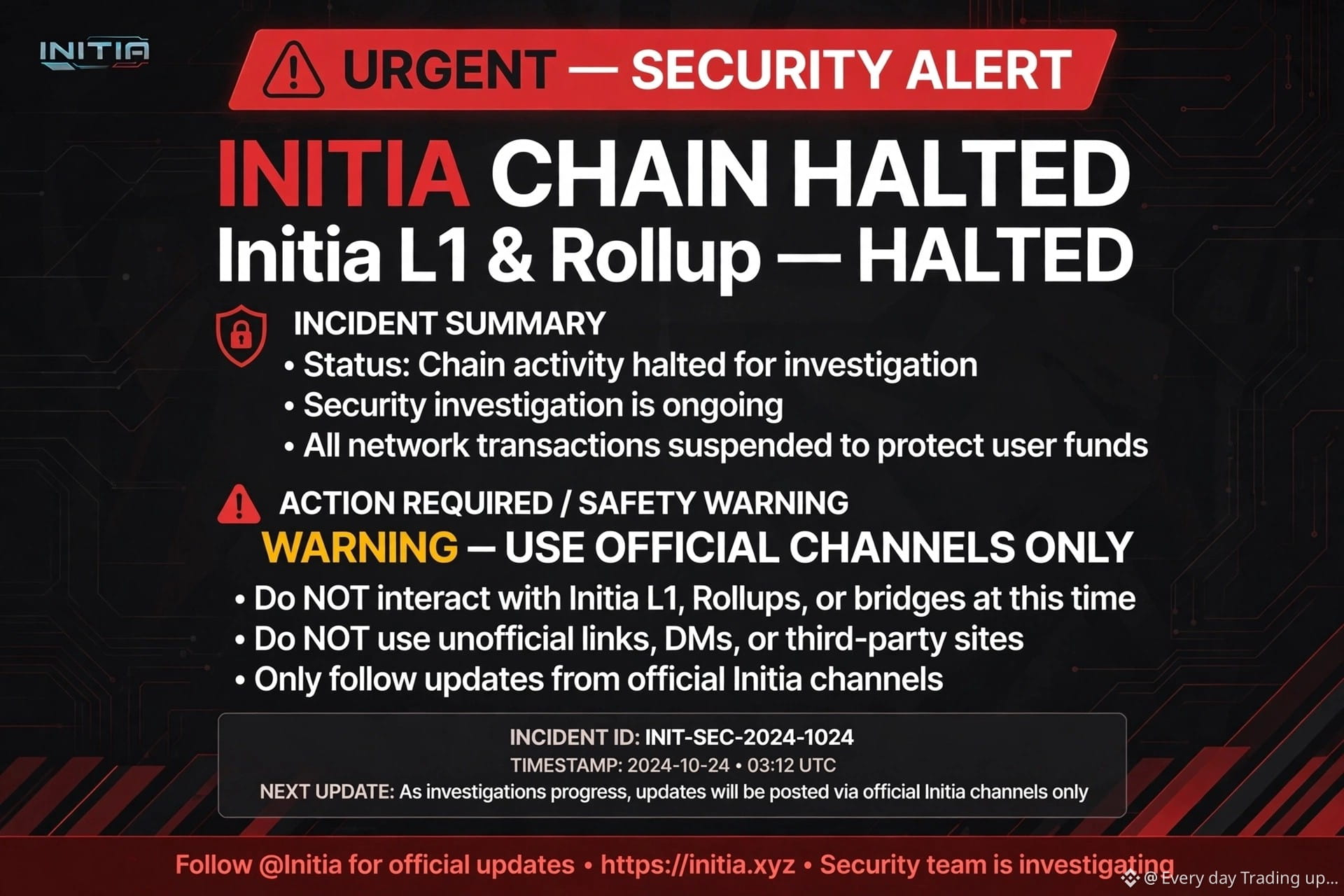
⚠️ URGENT: Initia Chain HALTED
Initia L1 + Rollups suspended due to security incident.
Team investigating with validators & exchanges.
🚫 DO NOT use unofficial links/DMs
✅ Only follow @Initia official
Stay safe! Check your exposure.
#Initia #SecurityAlert #crptonews
⚠️ URGENT: Initia Chain HALTED
Initia L1 + Rollups suspended due to security incident.
Team investigating with validators & exchanges.
🚫 DO NOT use unofficial links/DMs
✅ Only follow @Initia official
Stay safe! Check your exposure.
#Initia #SecurityAlert #crptonews
Initia L1 + Rollups suspended due to security incident.
Team investigating with validators & exchanges.
🚫 DO NOT use unofficial links/DMs
✅ Only follow @Initia official
Stay safe! Check your exposure.
#Initia #SecurityAlert #crptonews
79

·
--
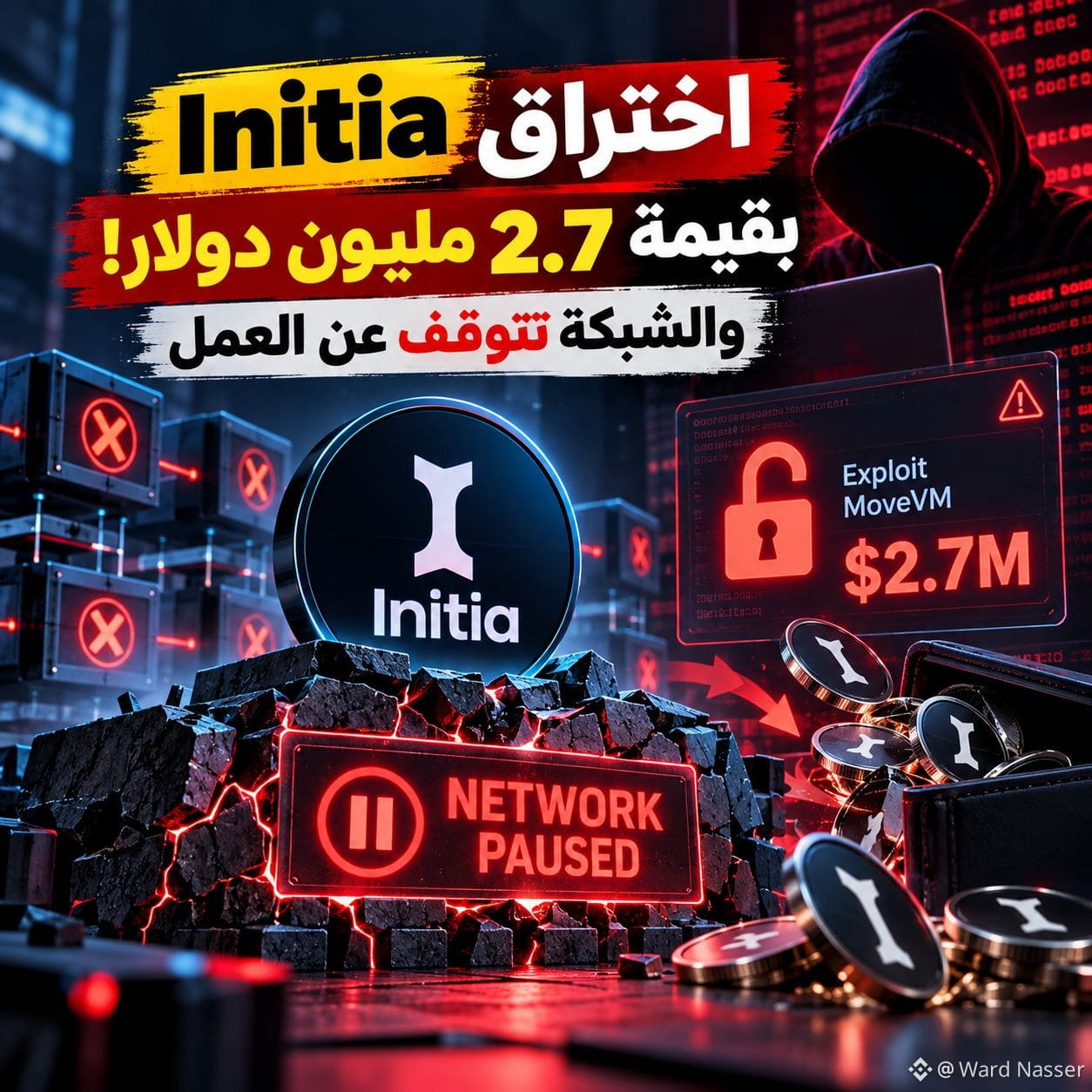
🚨 Imagine an entire bank shutting its doors because someone discovered a vulnerability in its system!
That’s almost what happened with the Initia network!
💥 The network was hacked in an attack targeting the MoveVM smart contract execution environment, with reports of losses estimated at around $2.7 million.
But the surprise isn’t just the amount stolen...
The network was forced to halt operations!
And that raises an important question:
If blockchains are designed to operate continuously, how can an entire network be stopped?
The answer is that some networks have emergency mechanisms that allow validators to coordinate and halt block production when a serious threat is detected.
🛡️ This presents us with an intriguing dilemma:
Is it better for the network to keep running no matter what, or to pause temporarily to prevent greater losses?
Decentralization isn’t just about distributing power. It also means considering who has the authority to stop the network, when they can do so, and under what circumstances.
🎯 In your opinion, does halting a blockchain after a hack demonstrate the strength of its security system, or is it a weakness in decentralization?
#Initia #INIT #CryptoSecurity #Blockchain
3
144

·
--
Initia is experiencing a classic “security incident + liquidity run.”
At the heart of the issue is an exploit of a MoveVM script caching vulnerability: attackers minted around $2.7 million in stablecoins out of thin air and cashed out across chains, ultimately forcing the L1 and Rollup to pause operations. Exchanges in several countries subsequently issued risk alerts and suspended related deposits and withdrawals, causing market confidence to deteriorate rapidly.
$INIT is currently trading at around $0.1325, with 24-hour trading volume of about $6.58 million and a market cap of only around $27.92 million. For an asset of this size, selling pressure from a security incident is often amplified, while pausing on-chain activity can prevent panic from being quickly resolved.
The key questions now go beyond fixing the vulnerability: how will affected assets be verified, can cross-chain transfers be replayed, and will the team provide a clear recovery and compensation plan? Until deposits and withdrawals resume, block production stabilizes, and the results of an independent audit are available, any rebound should not be mistaken for a reversal.
#Initia #公链安全 #INIT
4

Initia’s sharp drop this time wasn’t a routine correction. It was a shock to confidence triggered by the exploitation of a MoveVM script cache vulnerability. The attacker minted approximately $2.7 million in stablecoins out of thin air and cashed out across chains. The L1 and Rollup halted operations, while several exchanges suspended deposits and withdrawals and issued risk warnings.
For $INIT , short-term pressure mainly comes from three factors: on-chain activity grinding to a halt, doubts about the security of cross-chain assets, and potential panic selling once services resume. The current price is approximately $0.13246, with 24-hour trading volume of around $6.58 million and a market cap of about $27.92 million. Its small market cap and low liquidity could further amplify volatility.
Going forward, it’s more important to watch the progress of the vulnerability fix, official compensation and security audits, and when cross-chain bridges and exchanges resume deposits and withdrawals—not to judge that it’s “cheap” based solely on the size of the drop. Halting the chain in time is risk management; safely restarting and rebuilding trust is the real test.
#Initia #安全事件 #PublicBlockchain
3
Log in to explore more content
Join global crypto users on Binance Square
⚡️ Get latest and useful information about crypto.
💬 Trusted by the world’s largest crypto exchange.
👍 Discover real insights from verified creators.
Email / Phone number
Trending Topics
1
#BinancePick
3.1M views
153,018 Discussing
2
#EarningsSeason
5.3M views
26,027 Discussing
3
#AnthropicTTMRevenueGrewAbout1200%
32,027 views
436 Discussing
4
#AnthropicS1ExpectedToday
27,347 views
353 Discussing
5
#SouthKoreaReportedlyWeighsFourthCryptoTaxDelay
31,540 views
481 Discussing
6
#FranklinTempletonFilesForTwoDividendToBitcoinETFs
41,633 views
549 Discussing
7
#StrategyMSTRSurpassesNasdaqInMarketCap
31,786 views
391 Discussing
8
#CanadaProposesStablecoinRedemptionWithin3BusinessDays
1,363 views
36 Discussing
9
#ElectrumWalletBugLetRogueServersStealFunds
31,897 views
471 Discussing
10
#ArgentineCourtDismissesLIBRACaseAgainstMilei
47,629 views
590 Discussing