
Queen_DoLL
11.4k Posts

Queen_DoLL
Report
Block User
Crypto Trader | Market Analyst Spot & Futures Trading Sharing signals | Write to earn and Compaign expert
947 Following
10.1K+ Followers
7.0K+ Liked
Posts
All
Quotes
Videos
Live
PINNED
·
--
Bullish
🚨 $SUI BOUNCE SETUP IS LIVE 🚨
SUI is defending the support zone nicely, and buyers are starting to step back in. 👀
📍 Entry: $0.7950 – $0.7986
🎯 TP1: $0.8058
🎯 TP2: $0.8130
🎯 TP3: $0.8250
🛑 SL: $0.7842
The key here is how SUI reacts around this support. If buyers push through the nearby resistance, I’m expecting a move toward the targets above.
Trade smart, manage your risk, and don’t over-leverage. ⚠️
#SUI #SUIUSDT #CryptoTrading #Binance #altcoins
🚨 $SUI BOUNCE SETUP IS LIVE 🚨
SUI is defending the support zone nicely, and buyers are starting to step back in. 👀
📍 Entry: $0.7950 – $0.7986
🎯 TP1: $0.8058
🎯 TP2: $0.8130
🎯 TP3: $0.8250
🛑 SL: $0.7842
The key here is how SUI reacts around this support. If buyers push through the nearby resistance, I’m expecting a move toward the targets above.
Trade smart, manage your risk, and don’t over-leverage. ⚠️
#SUI #SUIUSDT #CryptoTrading #Binance #altcoins
SUI is defending the support zone nicely, and buyers are starting to step back in. 👀
📍 Entry: $0.7950 – $0.7986
🎯 TP1: $0.8058
🎯 TP2: $0.8130
🎯 TP3: $0.8250
🛑 SL: $0.7842
The key here is how SUI reacts around this support. If buyers push through the nearby resistance, I’m expecting a move toward the targets above.
Trade smart, manage your risk, and don’t over-leverage. ⚠️
#SUI #SUIUSDT #CryptoTrading #Binance #altcoins
25
6
46
28.5k
·
--
ETF FLOWS ARE GETTING INTERESTING
I’m keeping an eye on the latest U.S. spot ETF flows because the money is still moving into crypto across multiple assets.
BTC led the board with $714.75M in net inflows, followed by ETH at $162.31M.
Other notable inflows:
• ZEC — $32.81M
• SOL — $28.87M
• XRP — $20.02M
• LINK — $1.89M
• DOGE — $1.17M
• AVAX — $1.15M
Even the smaller flows in HBAR and LTC are worth watching.
My take: when capital starts spreading beyond BTC and ETH, I pay more attention to whether this is the beginning of broader market participation or just short-term rotation.
For me, ETF flows are not a buy signal by themselves, but they’re definitely something I want on my radar.
#crypto #Bitcoin #ETF #Altcoins #Binance
ETF FLOWS ARE GETTING INTERESTING
I’m keeping an eye on the latest U.S. spot ETF flows because the money is still moving into crypto across multiple assets.
BTC led the board with $714.75M in net inflows, followed by ETH at $162.31M.
Other notable inflows:
• ZEC — $32.81M
• SOL — $28.87M
• XRP — $20.02M
• LINK — $1.89M
• DOGE — $1.17M
• AVAX — $1.15M
Even the smaller flows in HBAR and LTC are worth watching.
My take: when capital starts spreading beyond BTC and ETH, I pay more attention to whether this is the beginning of broader market participation or just short-term rotation.
For me, ETF flows are not a buy signal by themselves, but they’re definitely something I want on my radar.
#crypto #Bitcoin #ETF #Altcoins #Binance
I’m keeping an eye on the latest U.S. spot ETF flows because the money is still moving into crypto across multiple assets.
BTC led the board with $714.75M in net inflows, followed by ETH at $162.31M.
Other notable inflows:
• ZEC — $32.81M
• SOL — $28.87M
• XRP — $20.02M
• LINK — $1.89M
• DOGE — $1.17M
• AVAX — $1.15M
Even the smaller flows in HBAR and LTC are worth watching.
My take: when capital starts spreading beyond BTC and ETH, I pay more attention to whether this is the beginning of broader market participation or just short-term rotation.
For me, ETF flows are not a buy signal by themselves, but they’re definitely something I want on my radar.
#crypto #Bitcoin #ETF #Altcoins #Binance
97
·
--
Bearish
$B2 SETUP
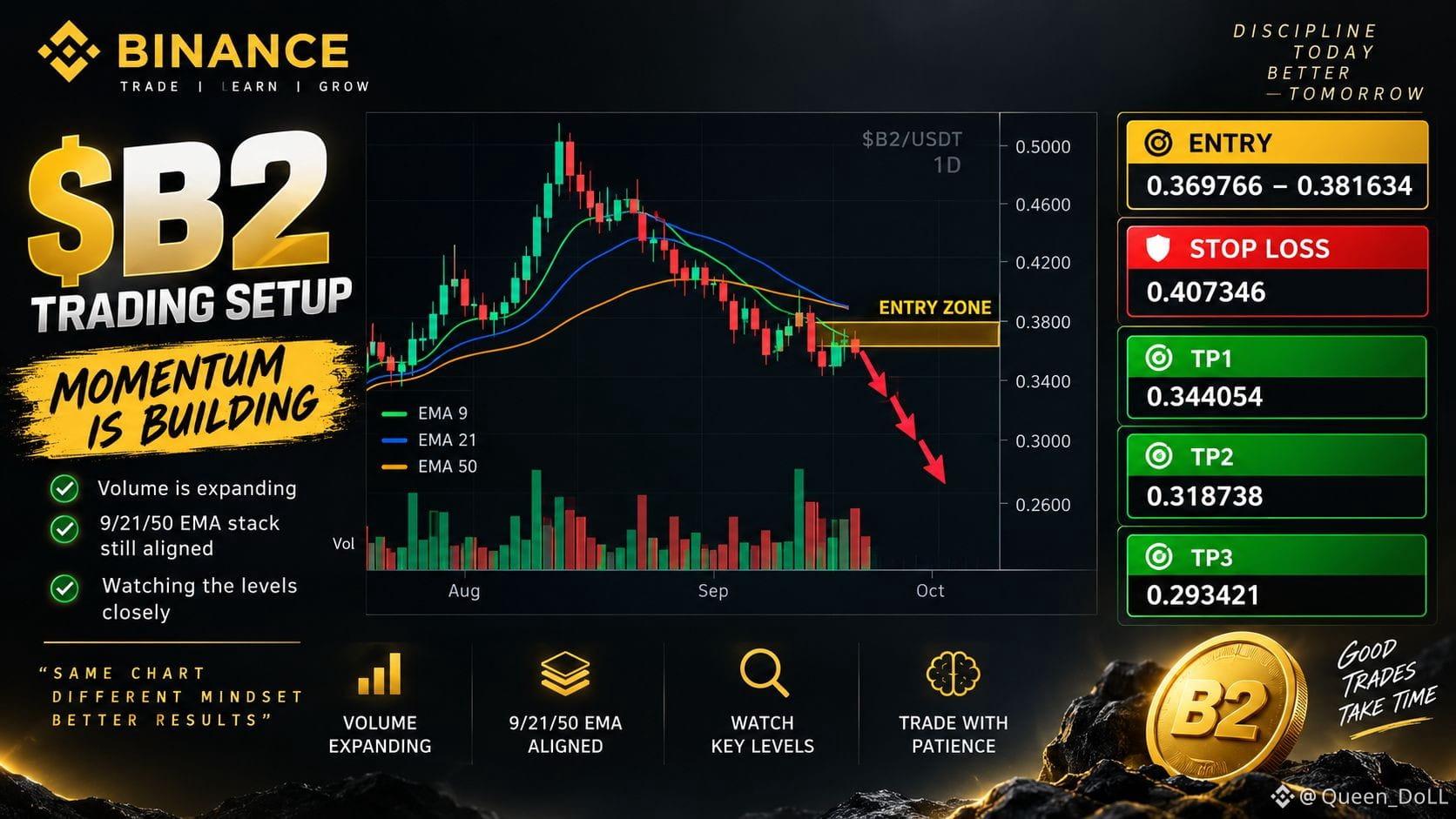
I’m watching $B2 closely here. Volume is starting to pick up, while the 9/21/50 EMA structure is still holding its alignment.
Entry: 0.369766 – 0.381634
Stop: 0.407346
TP1: 0.344054
TP2: 0.318738
TP3: 0.293421
For me, the key is how price reacts around the entry zone. If volume continues to expand and the structure stays intact, these levels could come into play.
I’ll be watching the chart closely and waiting for confirmation rather than chasing the move.
{future}(B2USDT)
#B2 #cryptotrading #Altcoins #TradingSetup #Binance
$B2 SETUP
I’m watching $B2 closely here. Volume is starting to pick up, while the 9/21/50 EMA structure is still holding its alignment.
Entry: 0.369766 – 0.381634
Stop: 0.407346
TP1: 0.344054
TP2: 0.318738
TP3: 0.293421
For me, the key is how price reacts around the entry zone. If volume continues to expand and the structure stays intact, these levels could come into play.
I’ll be watching the chart closely and waiting for confirmation rather than chasing the move.
#B2 #cryptotrading #Altcoins #TradingSetup #Binance
I’m watching $B2 closely here. Volume is starting to pick up, while the 9/21/50 EMA structure is still holding its alignment.
Entry: 0.369766 – 0.381634
Stop: 0.407346
TP1: 0.344054
TP2: 0.318738
TP3: 0.293421
For me, the key is how price reacts around the entry zone. If volume continues to expand and the structure stays intact, these levels could come into play.
I’ll be watching the chart closely and waiting for confirmation rather than chasing the move.
#B2 #cryptotrading #Altcoins #TradingSetup #Binance
357
·
--
Bullish
$ETH USDT — LONG
TIMEFRAME: 1H
ENTRY: 2,705 – 2,725
TP1: 2,748
TP2: 2,780
TP3: 2,820
TP4: 2,860
SL: 2,675
Analysis:
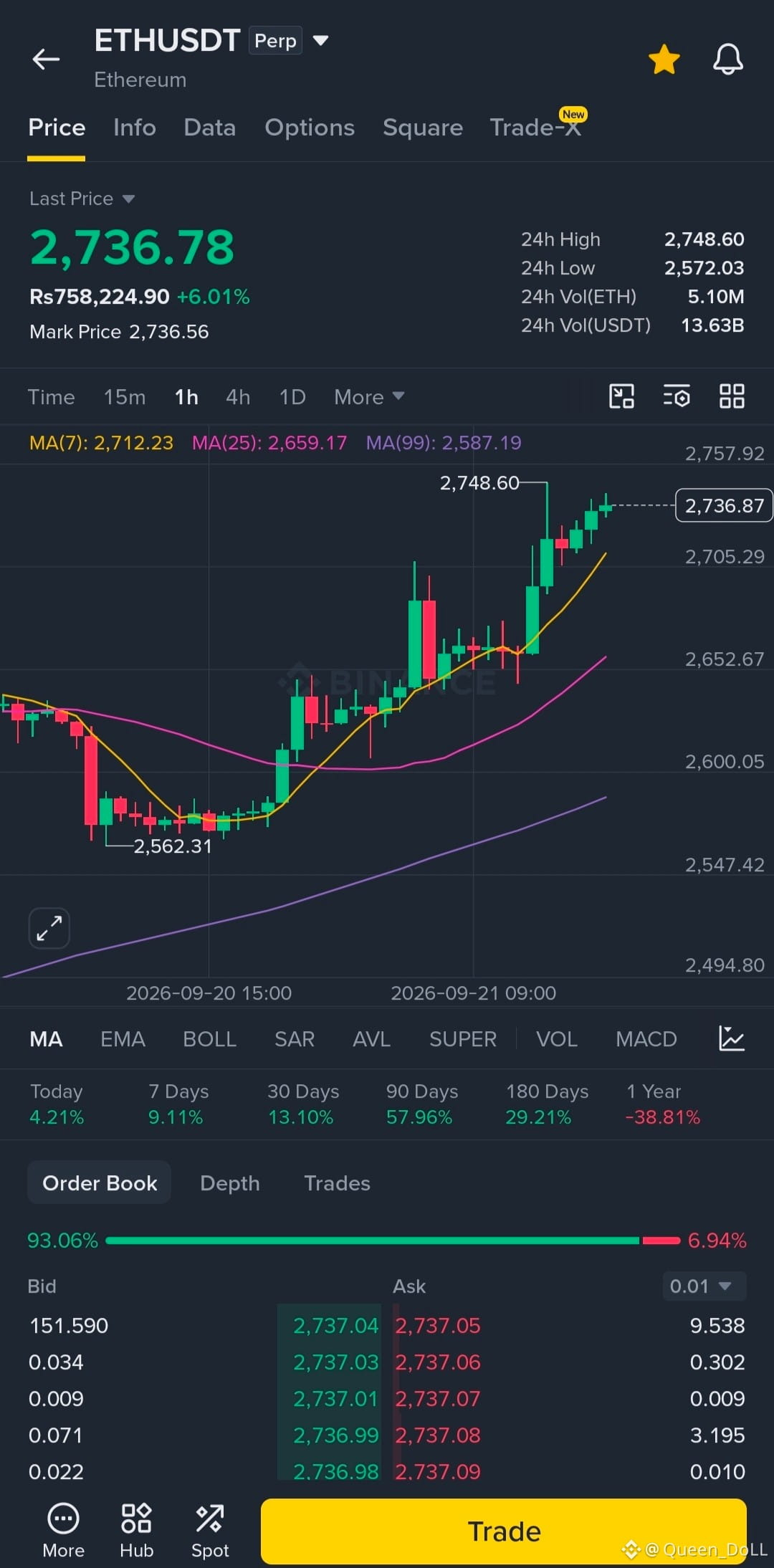
ETH is showing a strong bullish structure on the 1H chart. Price is trading above the MA(7), MA(25), and MA(99), while the recent candles continue to form higher highs and higher lows.
The key resistance is around 2,748–2,750. A clean 1H breakout above this zone could open the way toward the higher targets.
I would avoid chasing the move at the current high. A pullback toward 2,705–2,725 could provide a cleaner entry. If ETH loses 2,675, the bullish setup becomes weaker.
My observation: ETH momentum looks strong, but after this sharp move, a short consolidation or pullback would be normal. Patience is important here.
{future}(ETHUSDT)
#Ethereum #ETH #CryptoTrading #Binance #ETHUSDT
$ETH USDT — LONG
TIMEFRAME: 1H
ENTRY: 2,705 – 2,725
TP1: 2,748
TP2: 2,780
TP3: 2,820
TP4: 2,860
SL: 2,675
Analysis:
ETH is showing a strong bullish structure on the 1H chart. Price is trading above the MA(7), MA(25), and MA(99), while the recent candles continue to form higher highs and higher lows.
The key resistance is around 2,748–2,750. A clean 1H breakout above this zone could open the way toward the higher targets.
I would avoid chasing the move at the current high. A pullback toward 2,705–2,725 could provide a cleaner entry. If ETH loses 2,675, the bullish setup becomes weaker.
My observation: ETH momentum looks strong, but after this sharp move, a short consolidation or pullback would be normal. Patience is important here.
#Ethereum #ETH #CryptoTrading #Binance #ETHUSDT
TIMEFRAME: 1H
ENTRY: 2,705 – 2,725
TP1: 2,748
TP2: 2,780
TP3: 2,820
TP4: 2,860
SL: 2,675
Analysis:
ETH is showing a strong bullish structure on the 1H chart. Price is trading above the MA(7), MA(25), and MA(99), while the recent candles continue to form higher highs and higher lows.
The key resistance is around 2,748–2,750. A clean 1H breakout above this zone could open the way toward the higher targets.
I would avoid chasing the move at the current high. A pullback toward 2,705–2,725 could provide a cleaner entry. If ETH loses 2,675, the bullish setup becomes weaker.
My observation: ETH momentum looks strong, but after this sharp move, a short consolidation or pullback would be normal. Patience is important here.
#Ethereum #ETH #CryptoTrading #Binance #ETHUSDT
88
·
--
Bullish
$BTC USDT — LONG
TIMEFRAME: 1H
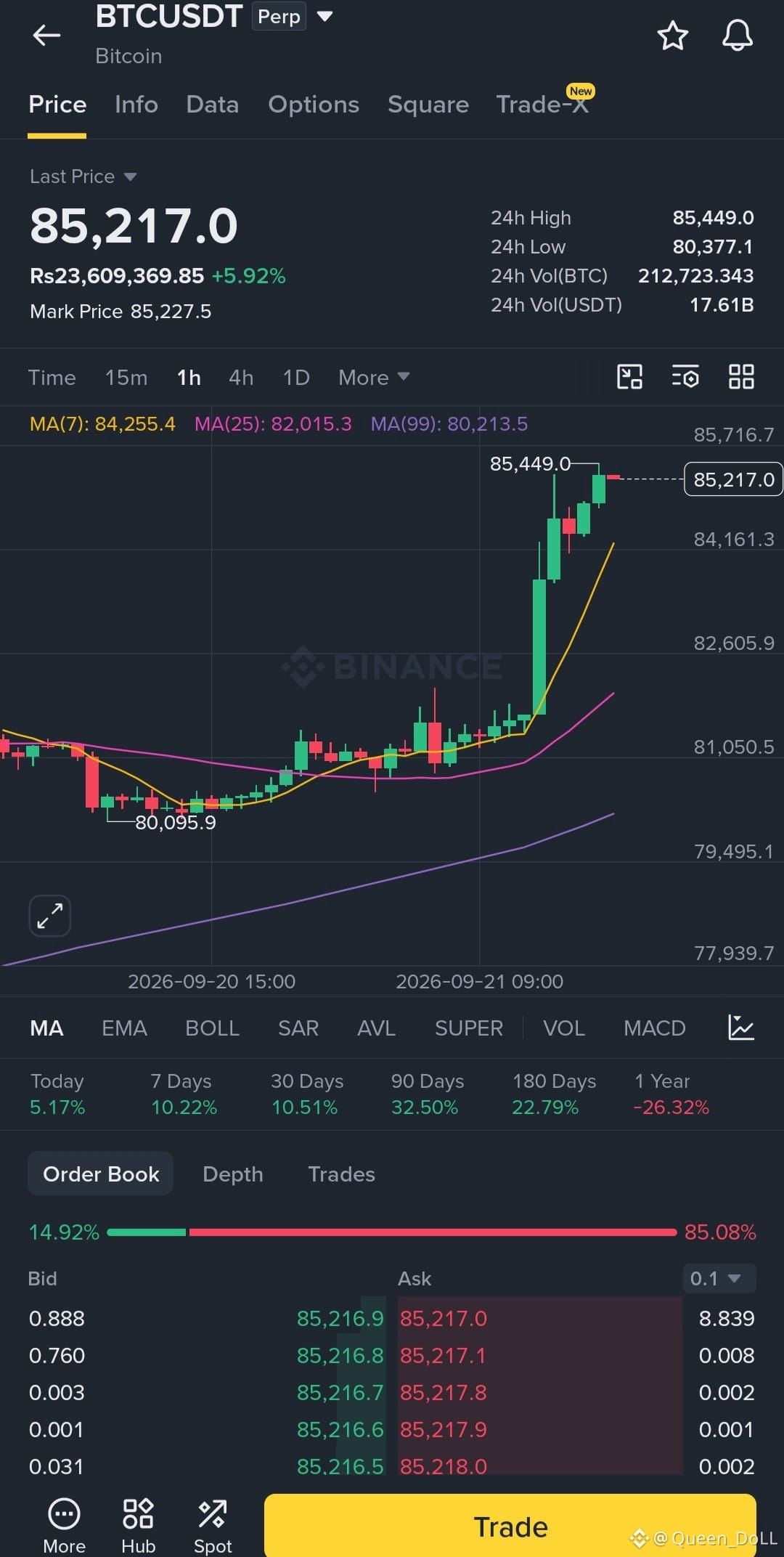
ENTRY: 84,800 – 85,050
TP1: 85,450
TP2: 86,000
TP3: 86,600
TP4: 87,200
SL: 84,150
BTC is showing strong bullish momentum on the 1H chart after breaking above the 84K area. Price is holding above the MA(7), MA(25), and MA(99), keeping the short-term structure bullish.
The immediate resistance is around 85,450, the recent high. A clean 1H close above this level could support another move toward the higher targets.
I would avoid chasing the current green candles. A pullback into 84.8K–85.05K would offer a cleaner entry. If BTC loses 84.15K on a 1H close, this setup needs to be reconsidered.
My observation: Momentum is strong, but after such a sharp move, a healthy pullback is possible. Patience matters more than chasing the candle.
{future}(BTCUSDT)
#Bitcoin #BTC☀ #CryptoTrading #Binance #BTCUSDT
$BTC USDT — LONG
TIMEFRAME: 1H
ENTRY: 84,800 – 85,050
TP1: 85,450
TP2: 86,000
TP3: 86,600
TP4: 87,200
SL: 84,150
BTC is showing strong bullish momentum on the 1H chart after breaking above the 84K area. Price is holding above the MA(7), MA(25), and MA(99), keeping the short-term structure bullish.
The immediate resistance is around 85,450, the recent high. A clean 1H close above this level could support another move toward the higher targets.
I would avoid chasing the current green candles. A pullback into 84.8K–85.05K would offer a cleaner entry. If BTC loses 84.15K on a 1H close, this setup needs to be reconsidered.
My observation: Momentum is strong, but after such a sharp move, a healthy pullback is possible. Patience matters more than chasing the candle.
#Bitcoin #BTC☀ #CryptoTrading #Binance #BTCUSDT
TIMEFRAME: 1H
ENTRY: 84,800 – 85,050
TP1: 85,450
TP2: 86,000
TP3: 86,600
TP4: 87,200
SL: 84,150
BTC is showing strong bullish momentum on the 1H chart after breaking above the 84K area. Price is holding above the MA(7), MA(25), and MA(99), keeping the short-term structure bullish.
The immediate resistance is around 85,450, the recent high. A clean 1H close above this level could support another move toward the higher targets.
I would avoid chasing the current green candles. A pullback into 84.8K–85.05K would offer a cleaner entry. If BTC loses 84.15K on a 1H close, this setup needs to be reconsidered.
My observation: Momentum is strong, but after such a sharp move, a healthy pullback is possible. Patience matters more than chasing the candle.
#Bitcoin #BTC☀ #CryptoTrading #Binance #BTCUSDT
2
120
·
--


PINDI BOY PK²⁵
·
--
🔴🔴🔴 $BR /USDT 🔴🔴🔴
🔴 SHORT SIGNAL
TIMEFRAME: 15M
ENTRY: 1.20-1.18 – 1.16
TP1: 1.13
TP2: 1.10
TP3: 0.95
TP4: 0.85
TP5: 0.55
TP6: 0.25
TP7: 0.10
TP8: 0.075
TP9: 0.05
SL: 1.52
📉 Analysis
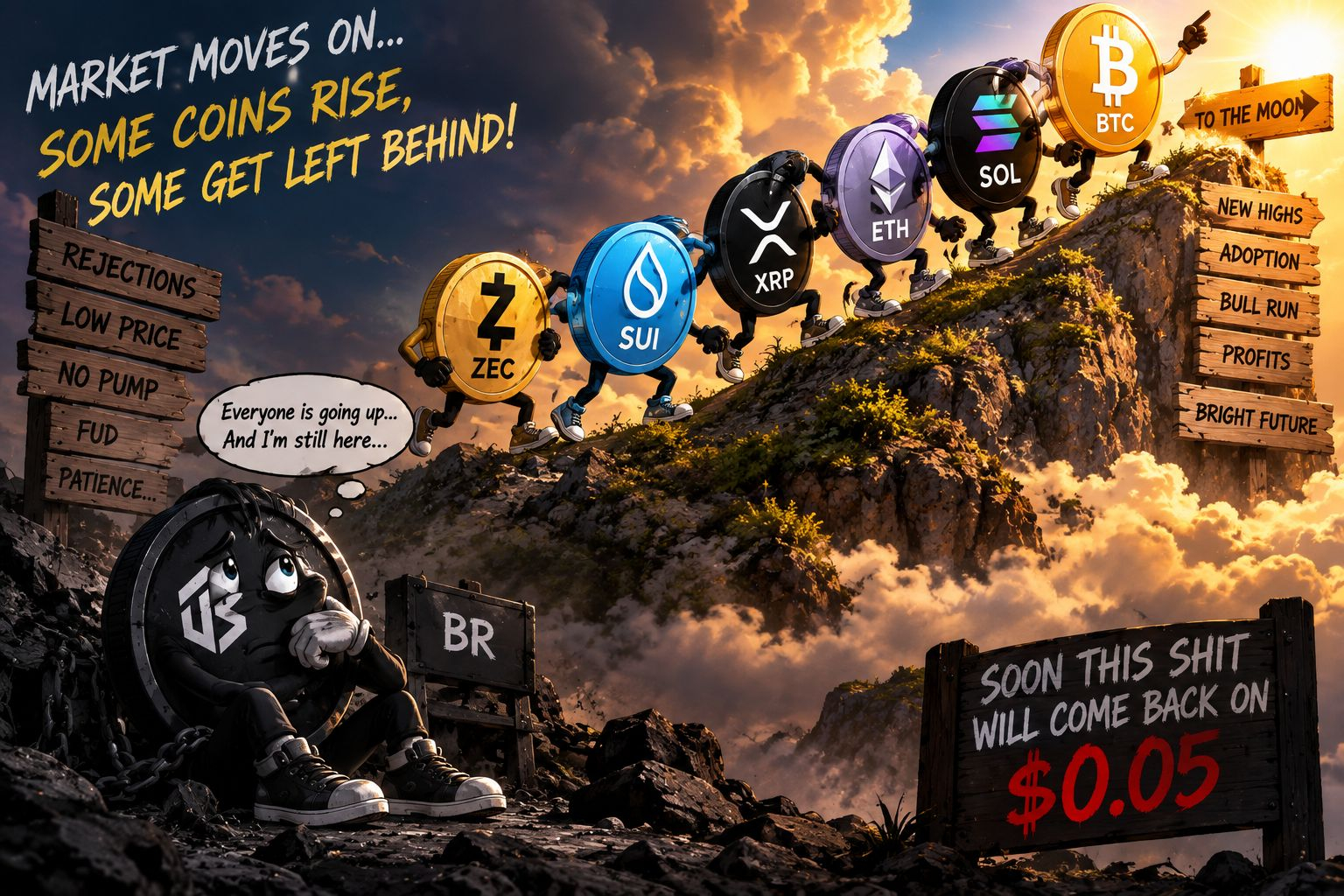
BR showed a strong rejection after the sharp spike toward 1.40, followed by a pullback toward the 1.16–1.18 area. This zone can act as a potential short-entry region if price continues to face selling pressure.
The 1.13 level is the first important downside target. If sellers manage to break and hold below 1.13, the next levels come into focus at 1.10 and 0.95.
A sustained bearish move could then open the way toward 0.85, 0.55 and 0.25. The deeper targets at 0.10, 0.075 and 0.05 would require a much larger breakdown and should be treated as extended targets rather than immediate expectations.
For confirmation, watch how the 15M candles react around 1.16–1.18 and whether volume increases during downside moves. A strong 15M close above 1.27 would invalidate this short setup.
Risk management: This is a high-volatility setup. Consider taking partial profits at each target rather than waiting for the final target, and keep leverage controlled.
$BR $PTB
🔴 SHORT SIGNAL
TIMEFRAME: 15M
ENTRY: 1.20-1.18 – 1.16
TP1: 1.13
TP2: 1.10
TP3: 0.95
TP4: 0.85
TP5: 0.55
TP6: 0.25
TP7: 0.10
TP8: 0.075
TP9: 0.05
SL: 1.52
📉 Analysis
BR showed a strong rejection after the sharp spike toward 1.40, followed by a pullback toward the 1.16–1.18 area. This zone can act as a potential short-entry region if price continues to face selling pressure.
The 1.13 level is the first important downside target. If sellers manage to break and hold below 1.13, the next levels come into focus at 1.10 and 0.95.
A sustained bearish move could then open the way toward 0.85, 0.55 and 0.25. The deeper targets at 0.10, 0.075 and 0.05 would require a much larger breakdown and should be treated as extended targets rather than immediate expectations.
For confirmation, watch how the 15M candles react around 1.16–1.18 and whether volume increases during downside moves. A strong 15M close above 1.27 would invalidate this short setup.
Risk management: This is a high-volatility setup. Consider taking partial profits at each target rather than waiting for the final target, and keep leverage controlled.
$BR $PTB
2
42
·
--
Bullish
🟢 $CTSI /USDT — LONG SIGNAL
ENTRY: 0.0314–0.0317
TP1: 0.0338
TP2: 0.0355
TP3: 0.0365
SL: 0.0292
Leverage: 3x–5x
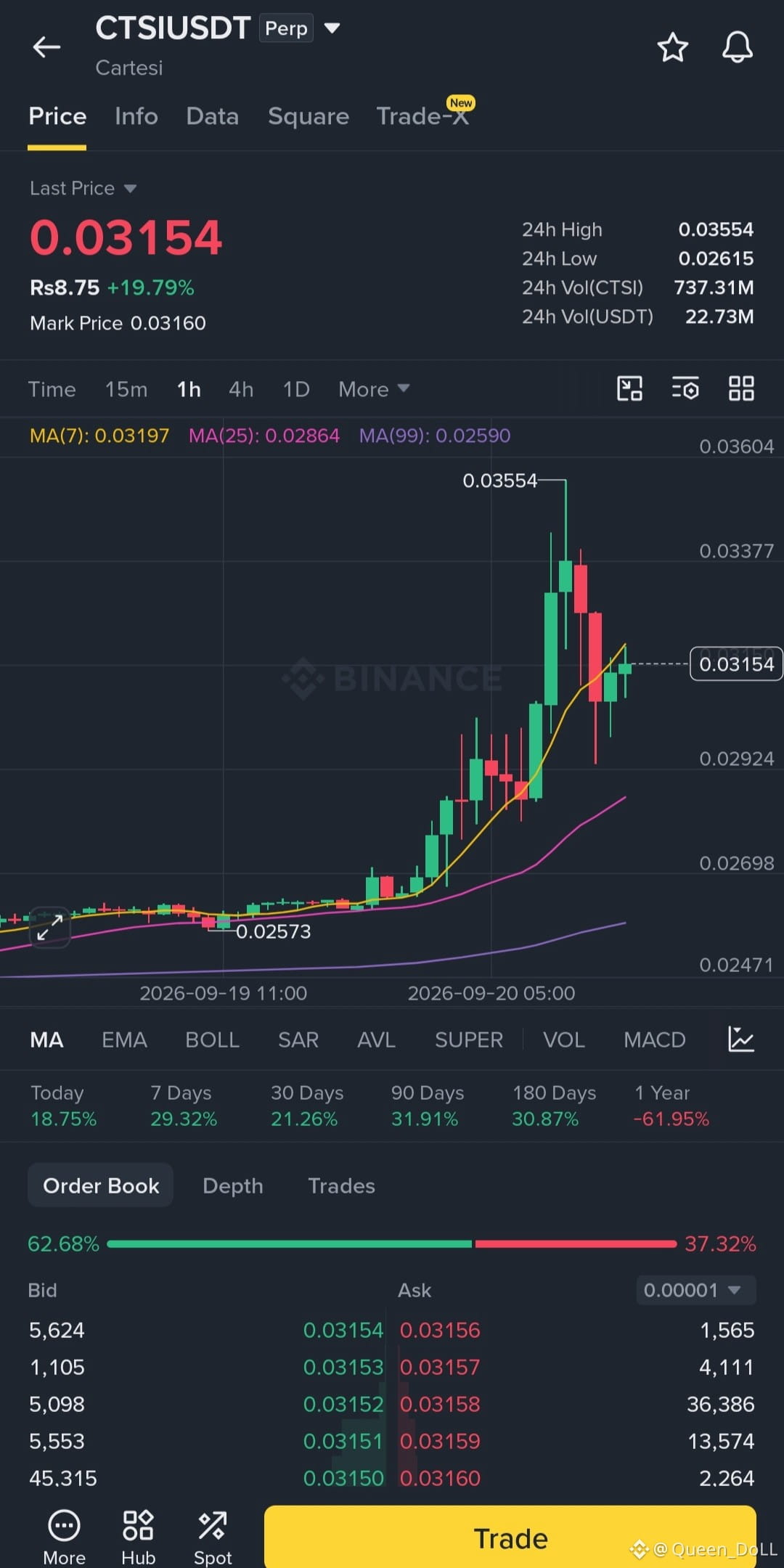
CTSI is holding above MA(7) and MA(25) with a bullish 1H structure. Buying pressure is stronger in the shown order book, and a break above 0.0338 could retest 0.0355. Below 0.0292, the setup is invalid.
$CTSI $GUN
{future}(CTSIUSDT)
{future}(GUNUSDT)
#CTSI #CryptoTrading #Altcoins #Binance #TradingSignals
🟢 $CTSI /USDT — LONG SIGNAL
ENTRY: 0.0314–0.0317
TP1: 0.0338
TP2: 0.0355
TP3: 0.0365
SL: 0.0292
Leverage: 3x–5x
CTSI is holding above MA(7) and MA(25) with a bullish 1H structure. Buying pressure is stronger in the shown order book, and a break above 0.0338 could retest 0.0355. Below 0.0292, the setup is invalid.
$CTSI $GUN
#CTSI #CryptoTrading #Altcoins #Binance #TradingSignals
ENTRY: 0.0314–0.0317
TP1: 0.0338
TP2: 0.0355
TP3: 0.0365
SL: 0.0292
Leverage: 3x–5x
CTSI is holding above MA(7) and MA(25) with a bullish 1H structure. Buying pressure is stronger in the shown order book, and a break above 0.0338 could retest 0.0355. Below 0.0292, the setup is invalid.
$CTSI $GUN
#CTSI #CryptoTrading #Altcoins #Binance #TradingSignals
3
302
·
--
Bearish
🔴 $GUN /USDT — SHORT SIGNAL
ENTRY: 0.00343–0.00350
TP1: 0.00318
TP2: 0.00299
TP3: 0.00284
SL: 0.00360
Leverage: 3x–5x
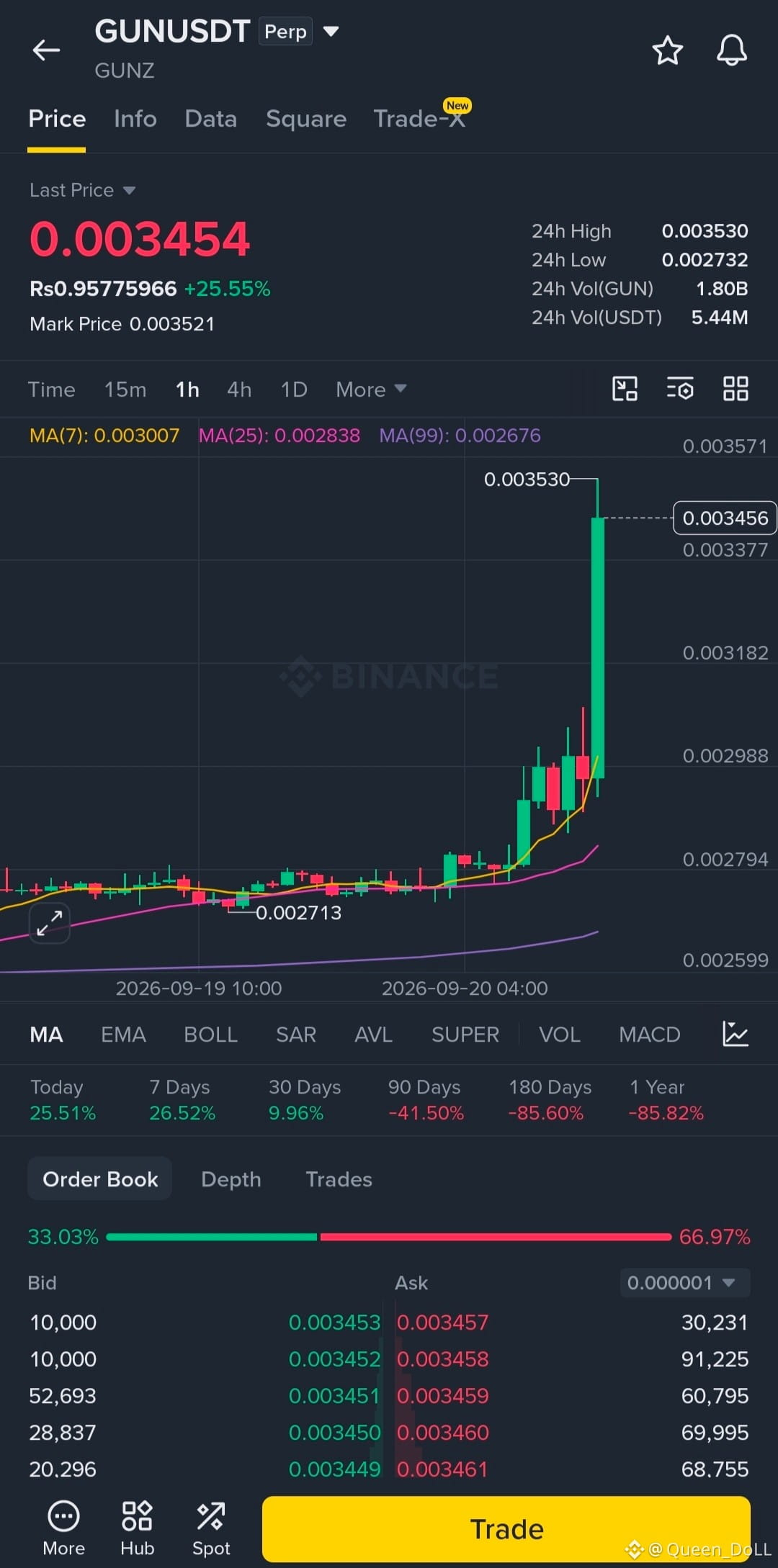
GUN has surged over 25% today and is testing the 0.00353 resistance after a sharp 1H breakout. The heavy sell-side pressure suggests a possible pullback. Wait for rejection confirmation before entering. A break above 0.00360 invalidates the short setup.
{future}(GUNUSDT)
{future}(ONEUSDT)
#GUN #CryptoTrading #Altcoins #BİNANCE #TradingSignal
🔴 $GUN /USDT — SHORT SIGNAL
ENTRY: 0.00343–0.00350
TP1: 0.00318
TP2: 0.00299
TP3: 0.00284
SL: 0.00360
Leverage: 3x–5x
GUN has surged over 25% today and is testing the 0.00353 resistance after a sharp 1H breakout. The heavy sell-side pressure suggests a possible pullback. Wait for rejection confirmation before entering. A break above 0.00360 invalidates the short setup.
#GUN #CryptoTrading #Altcoins #BİNANCE #TradingSignal
ENTRY: 0.00343–0.00350
TP1: 0.00318
TP2: 0.00299
TP3: 0.00284
SL: 0.00360
Leverage: 3x–5x
GUN has surged over 25% today and is testing the 0.00353 resistance after a sharp 1H breakout. The heavy sell-side pressure suggests a possible pullback. Wait for rejection confirmation before entering. A break above 0.00360 invalidates the short setup.
#GUN #CryptoTrading #Altcoins #BİNANCE #TradingSignal
2
208
·
--
Bullish
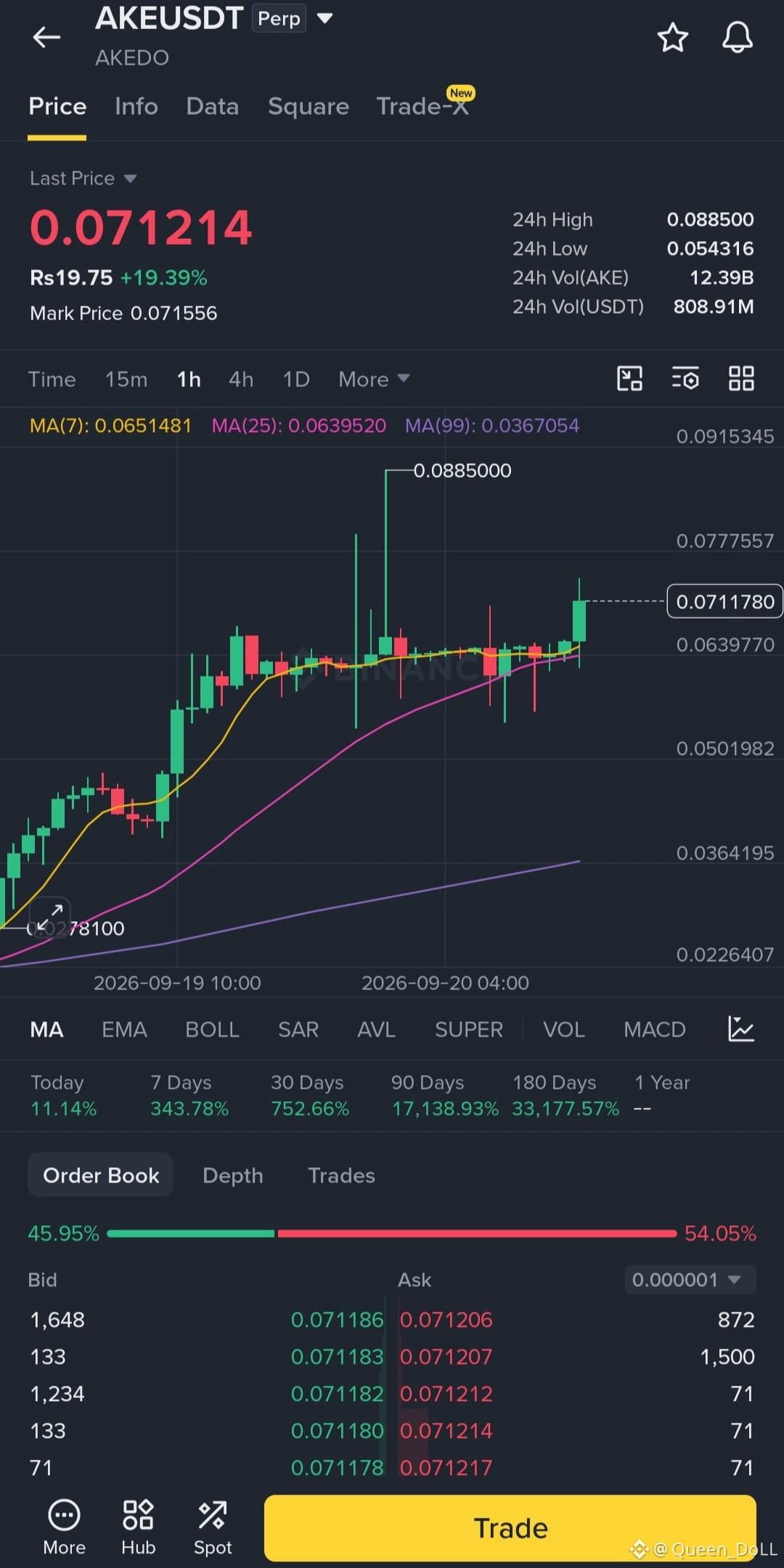
🟢 $AKE /USDT — LONG SIGNAL
ENTRY: 0.0705–0.0715
TP1: 0.0750
TP2: 0.0800
TP3: 0.0885
SL: 0.0660
Leverage: 3x–5x
AKE is holding above MA(7) and MA(25), with the 1H structure still bullish. A breakout above 0.0720 could open the way toward 0.0750–0.0800 and potentially the recent high at 0.0885. If price loses 0.0660, the setup is invalid.
$AKE $BR
{future}(AKEUSDT)
{future}(BRUSDT)
#AKE #CryptoTrading #Altcoins #Binance #cryptosignals
🟢 $AKE /USDT — LONG SIGNAL
ENTRY: 0.0705–0.0715
TP1: 0.0750
TP2: 0.0800
TP3: 0.0885
SL: 0.0660
Leverage: 3x–5x
AKE is holding above MA(7) and MA(25), with the 1H structure still bullish. A breakout above 0.0720 could open the way toward 0.0750–0.0800 and potentially the recent high at 0.0885. If price loses 0.0660, the setup is invalid.
$AKE $BR
#AKE #CryptoTrading #Altcoins #Binance #cryptosignals
ENTRY: 0.0705–0.0715
TP1: 0.0750
TP2: 0.0800
TP3: 0.0885
SL: 0.0660
Leverage: 3x–5x
AKE is holding above MA(7) and MA(25), with the 1H structure still bullish. A breakout above 0.0720 could open the way toward 0.0750–0.0800 and potentially the recent high at 0.0885. If price loses 0.0660, the setup is invalid.
$AKE $BR
#AKE #CryptoTrading #Altcoins #Binance #cryptosignals
3
424
·
--
Bearish
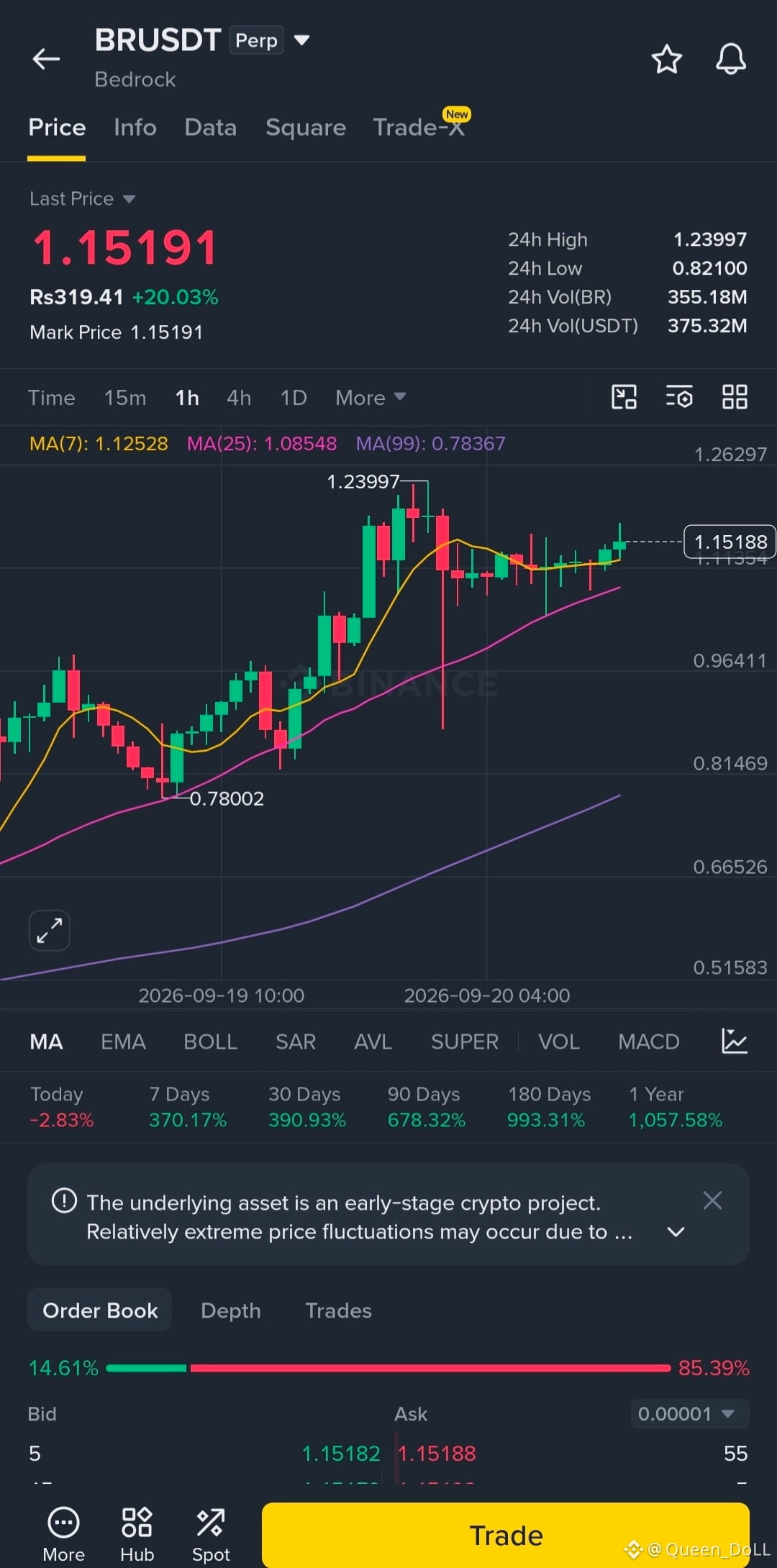
🔴 $BR /USDT — SHORT SIGNAL
ENTRY: 1.15–1.17
TP1: 1.11
TP2: 1.08
TP3: 1.02
SL: 1.20
Leverage: 3x–5x
BR is consolidating below the 1.2399 high after a strong rally. The 1H chart shows resistance near 1.15–1.17, while the order book has heavy sell-side pressure. A rejection from this zone could trigger a pullback toward the targets. Above 1.20, the short setup is invalid.
$BR
{future}(BRUSDT)
{future}(CELRUSDT)
#BR #CryptoTrading #altcoins #Binance #TradingSignals
🔴 $BR /USDT — SHORT SIGNAL
ENTRY: 1.15–1.17
TP1: 1.11
TP2: 1.08
TP3: 1.02
SL: 1.20
Leverage: 3x–5x
BR is consolidating below the 1.2399 high after a strong rally. The 1H chart shows resistance near 1.15–1.17, while the order book has heavy sell-side pressure. A rejection from this zone could trigger a pullback toward the targets. Above 1.20, the short setup is invalid.
$BR
#BR #CryptoTrading #altcoins #Binance #TradingSignals
ENTRY: 1.15–1.17
TP1: 1.11
TP2: 1.08
TP3: 1.02
SL: 1.20
Leverage: 3x–5x
BR is consolidating below the 1.2399 high after a strong rally. The 1H chart shows resistance near 1.15–1.17, while the order book has heavy sell-side pressure. A rejection from this zone could trigger a pullback toward the targets. Above 1.20, the short setup is invalid.
$BR
#BR #CryptoTrading #altcoins #Binance #TradingSignals
1
267
·
--
Bullish
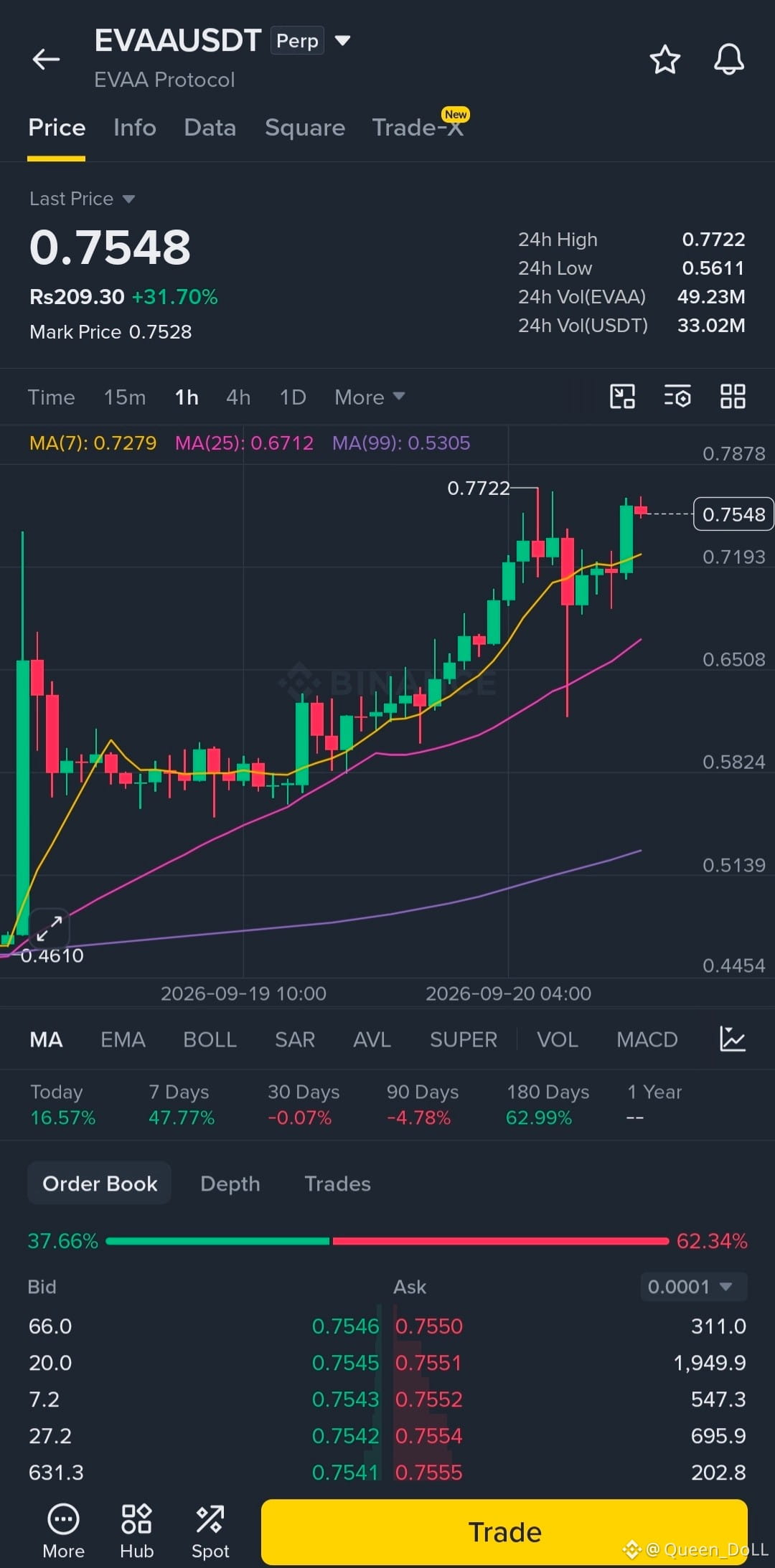
🟢 $EVAA /USDT — LONG SIGNAL
ENTRY: 0.750–0.755
TP1: 0.772
TP2: 0.790
TP3: 0.820
SL: 0.718
Leverage: 3x–5x
EVAA is holding above all major MAs with a clear 1H uptrend and higher highs. A break above 0.7722 can open the way toward the next targets. Prefer entry on a small pullback rather than chasing the pump. Below 0.718, the setup is invalid.
$EVAA $ZIL
{future}(EVAAUSDT)
{future}(ZILUSDT)
#EVAA #CryptoTrading #Altcoins #Binance #TradingSignals
🟢 $EVAA /USDT — LONG SIGNAL
ENTRY: 0.750–0.755
TP1: 0.772
TP2: 0.790
TP3: 0.820
SL: 0.718
Leverage: 3x–5x
EVAA is holding above all major MAs with a clear 1H uptrend and higher highs. A break above 0.7722 can open the way toward the next targets. Prefer entry on a small pullback rather than chasing the pump. Below 0.718, the setup is invalid.
$EVAA $ZIL
#EVAA #CryptoTrading #Altcoins #Binance #TradingSignals
ENTRY: 0.750–0.755
TP1: 0.772
TP2: 0.790
TP3: 0.820
SL: 0.718
Leverage: 3x–5x
EVAA is holding above all major MAs with a clear 1H uptrend and higher highs. A break above 0.7722 can open the way toward the next targets. Prefer entry on a small pullback rather than chasing the pump. Below 0.718, the setup is invalid.
$EVAA $ZIL
#EVAA #CryptoTrading #Altcoins #Binance #TradingSignals
2
210
·
--
Bullish
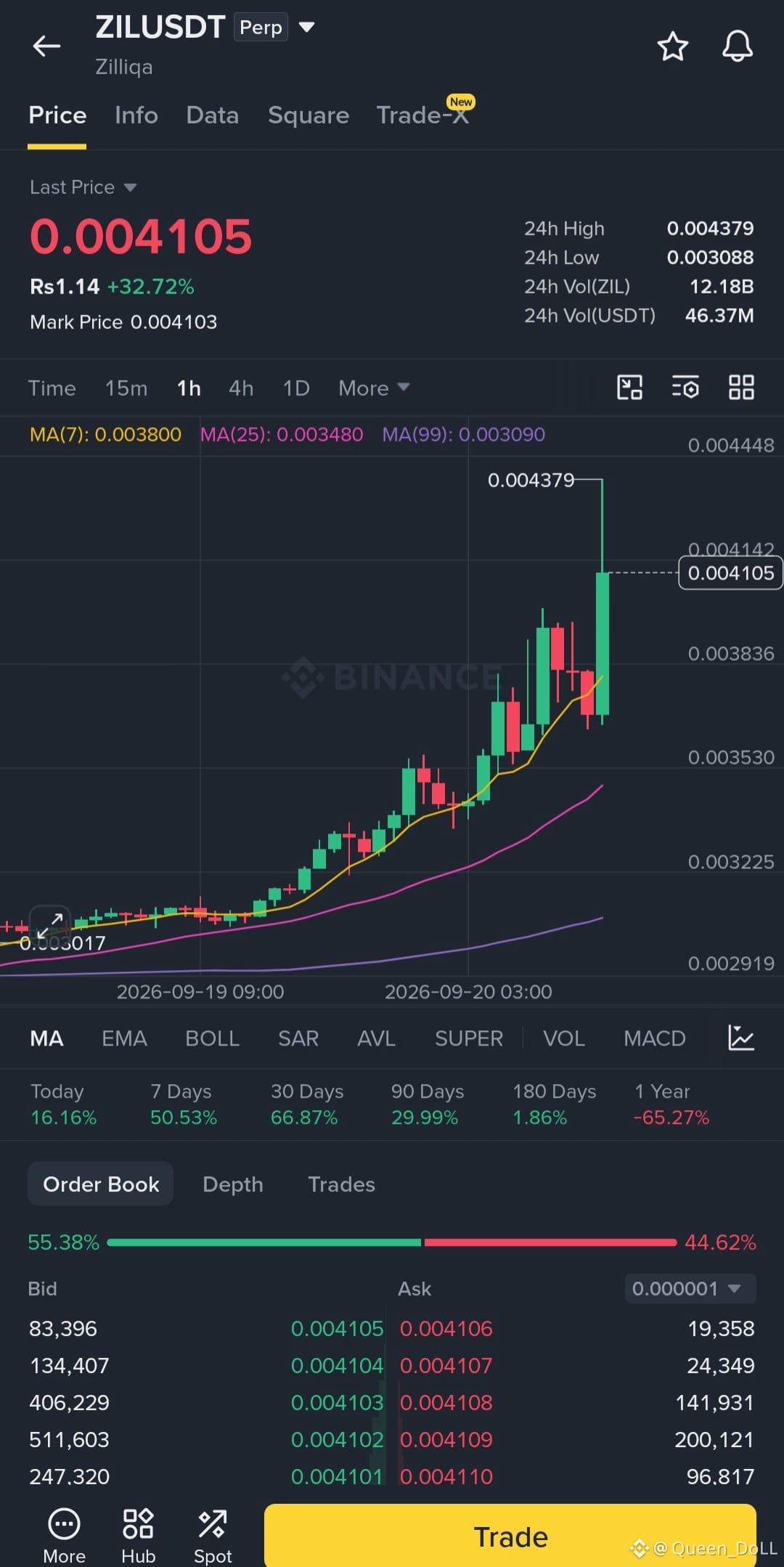
🟢 $ZIL /USDT — LONG SIGNAL
ENTRY: 0.00405–0.00412
TP1: 0.00425
TP2: 0.00438
TP3: 0.00455
SL: 0.00380
Leverage: 3x–5x
ZIL is showing strong bullish momentum, trading above MA(7), MA(25) and MA(99). The 1H chart is making higher highs, while the order book shows slightly stronger buying pressure. A sustained move above 0.00414 could support continuation toward the targets. If price falls below 0.00380, the setup is invalid.
$ONE $ZIL
{future}(ZILUSDT)
{future}(ONEUSDT)
#ZIL #CryptoTrading #altcoins #Binance #TradingSignal
🟢 $ZIL /USDT — LONG SIGNAL
ENTRY: 0.00405–0.00412
TP1: 0.00425
TP2: 0.00438
TP3: 0.00455
SL: 0.00380
Leverage: 3x–5x
ZIL is showing strong bullish momentum, trading above MA(7), MA(25) and MA(99). The 1H chart is making higher highs, while the order book shows slightly stronger buying pressure. A sustained move above 0.00414 could support continuation toward the targets. If price falls below 0.00380, the setup is invalid.
$ONE $ZIL
#ZIL #CryptoTrading #altcoins #Binance #TradingSignal
ENTRY: 0.00405–0.00412
TP1: 0.00425
TP2: 0.00438
TP3: 0.00455
SL: 0.00380
Leverage: 3x–5x
ZIL is showing strong bullish momentum, trading above MA(7), MA(25) and MA(99). The 1H chart is making higher highs, while the order book shows slightly stronger buying pressure. A sustained move above 0.00414 could support continuation toward the targets. If price falls below 0.00380, the setup is invalid.
$ONE $ZIL
#ZIL #CryptoTrading #altcoins #Binance #TradingSignal
2
240
·
--
Bearish
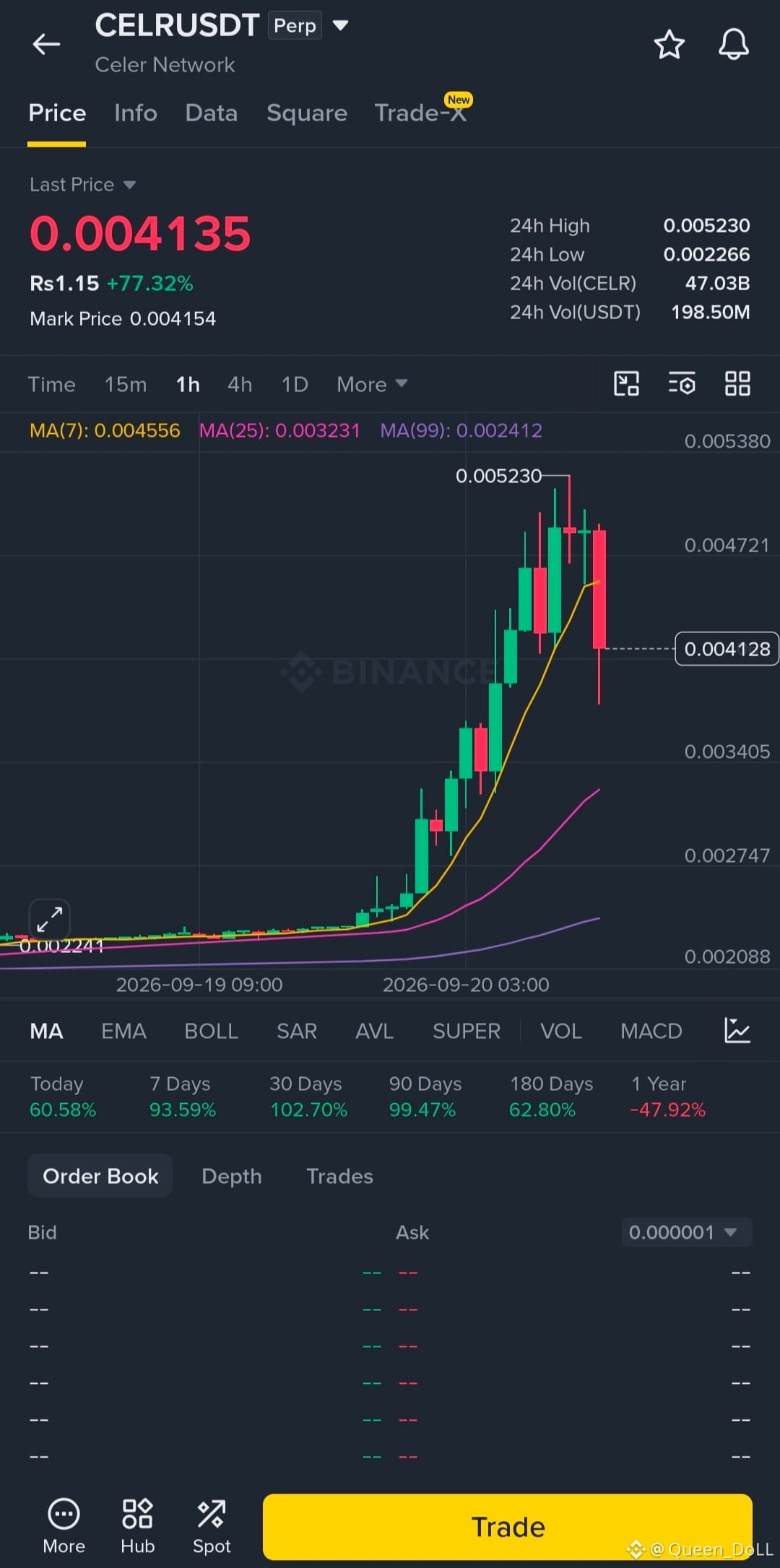
🔴 $CELR /USDT — SHORT SIGNAL
ENTRY: 0.00410–0.00425
TP1: 0.00365
TP2: 0.00340
TP3: 0.00325
SL: 0.00485
Leverage: 3x–5x
CELR is up over 77% in 24H and has rejected from 0.00523. The latest 1H candle shows strong selling pressure, while price is below MA(7). A break below 0.00400 could accelerate the pullback toward the targets. If price reclaims 0.00485, the short setup is invalid.
$CELR $ZIL
{future}(CELRUSDT)
{future}(ZILUSDT)
#CELR #CryptoTrading #Altcoins #Binance #TradingSignal
🔴 $CELR /USDT — SHORT SIGNAL
ENTRY: 0.00410–0.00425
TP1: 0.00365
TP2: 0.00340
TP3: 0.00325
SL: 0.00485
Leverage: 3x–5x
CELR is up over 77% in 24H and has rejected from 0.00523. The latest 1H candle shows strong selling pressure, while price is below MA(7). A break below 0.00400 could accelerate the pullback toward the targets. If price reclaims 0.00485, the short setup is invalid.
$CELR $ZIL
#CELR #CryptoTrading #Altcoins #Binance #TradingSignal
ENTRY: 0.00410–0.00425
TP1: 0.00365
TP2: 0.00340
TP3: 0.00325
SL: 0.00485
Leverage: 3x–5x
CELR is up over 77% in 24H and has rejected from 0.00523. The latest 1H candle shows strong selling pressure, while price is below MA(7). A break below 0.00400 could accelerate the pullback toward the targets. If price reclaims 0.00485, the short setup is invalid.
$CELR $ZIL
#CELR #CryptoTrading #Altcoins #Binance #TradingSignal
2
231
·
--
Bearish
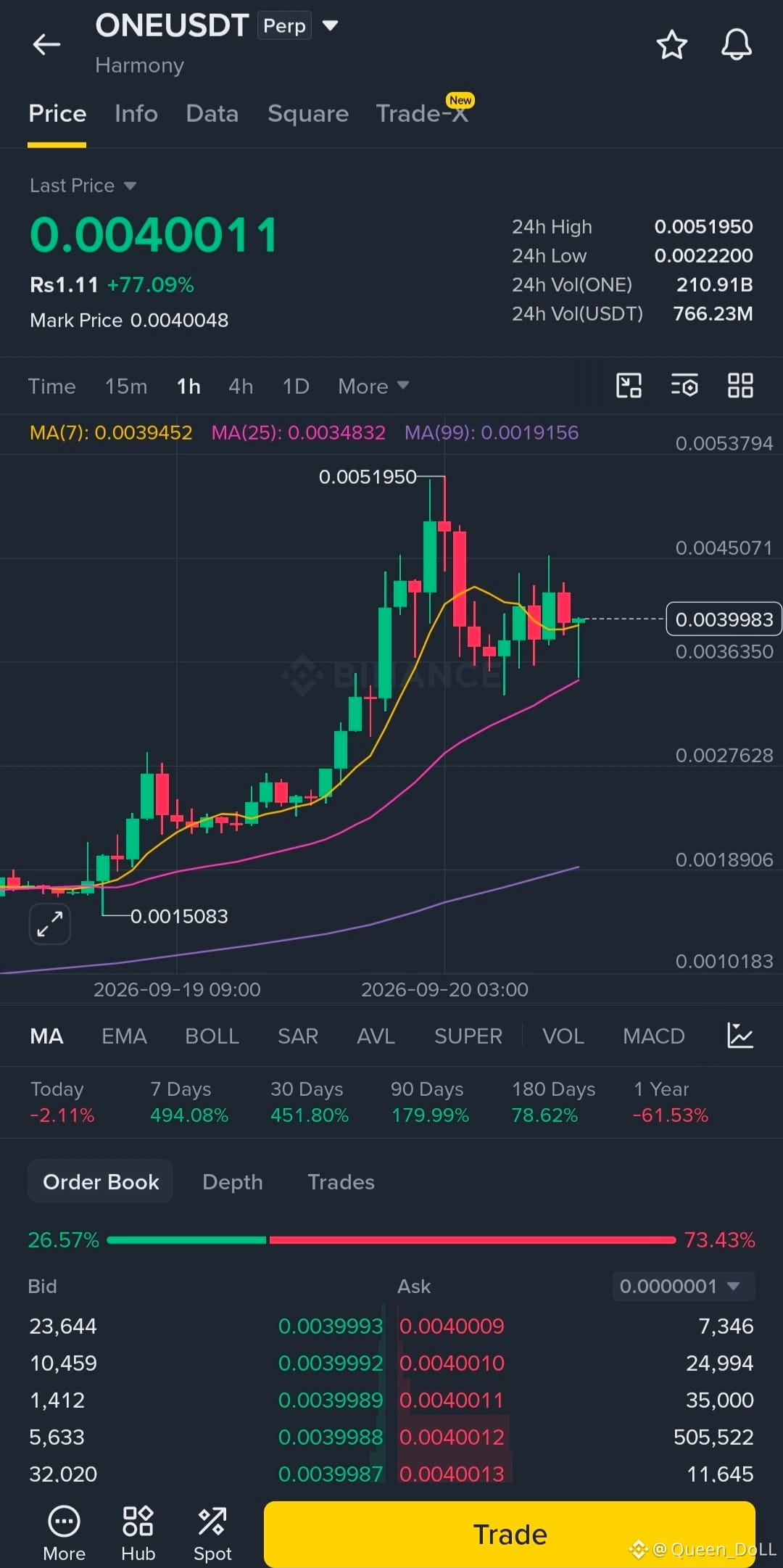
🔴 $ONE /USDT — SHORT SIGNAL
ENTRY: 0.00400–0.00410
TP1: 0.00365
TP2: 0.00348
TP3: 0.00315
SL: 0.00455
Leverage: 3x–5x
ONE has seen a massive 24H pump and is now consolidating below 0.005195. A rejection around 0.00400–0.00410 could trigger a pullback toward the listed targets. If price holds above 0.00455, the short setup is invalid.
$ONE $ZIL
{future}(ONEUSDT)
{future}(ZILUSDT)
#ONE #CryptoTrading #Altcoins #Binance #TradingSignal
🔴 $ONE /USDT — SHORT SIGNAL
ENTRY: 0.00400–0.00410
TP1: 0.00365
TP2: 0.00348
TP3: 0.00315
SL: 0.00455
Leverage: 3x–5x
ONE has seen a massive 24H pump and is now consolidating below 0.005195. A rejection around 0.00400–0.00410 could trigger a pullback toward the listed targets. If price holds above 0.00455, the short setup is invalid.
$ONE $ZIL
#ONE #CryptoTrading #Altcoins #Binance #TradingSignal
ENTRY: 0.00400–0.00410
TP1: 0.00365
TP2: 0.00348
TP3: 0.00315
SL: 0.00455
Leverage: 3x–5x
ONE has seen a massive 24H pump and is now consolidating below 0.005195. A rejection around 0.00400–0.00410 could trigger a pullback toward the listed targets. If price holds above 0.00455, the short setup is invalid.
$ONE $ZIL
#ONE #CryptoTrading #Altcoins #Binance #TradingSignal
3
311
·
--
🚨 THIS COULD MOVE MARKETS
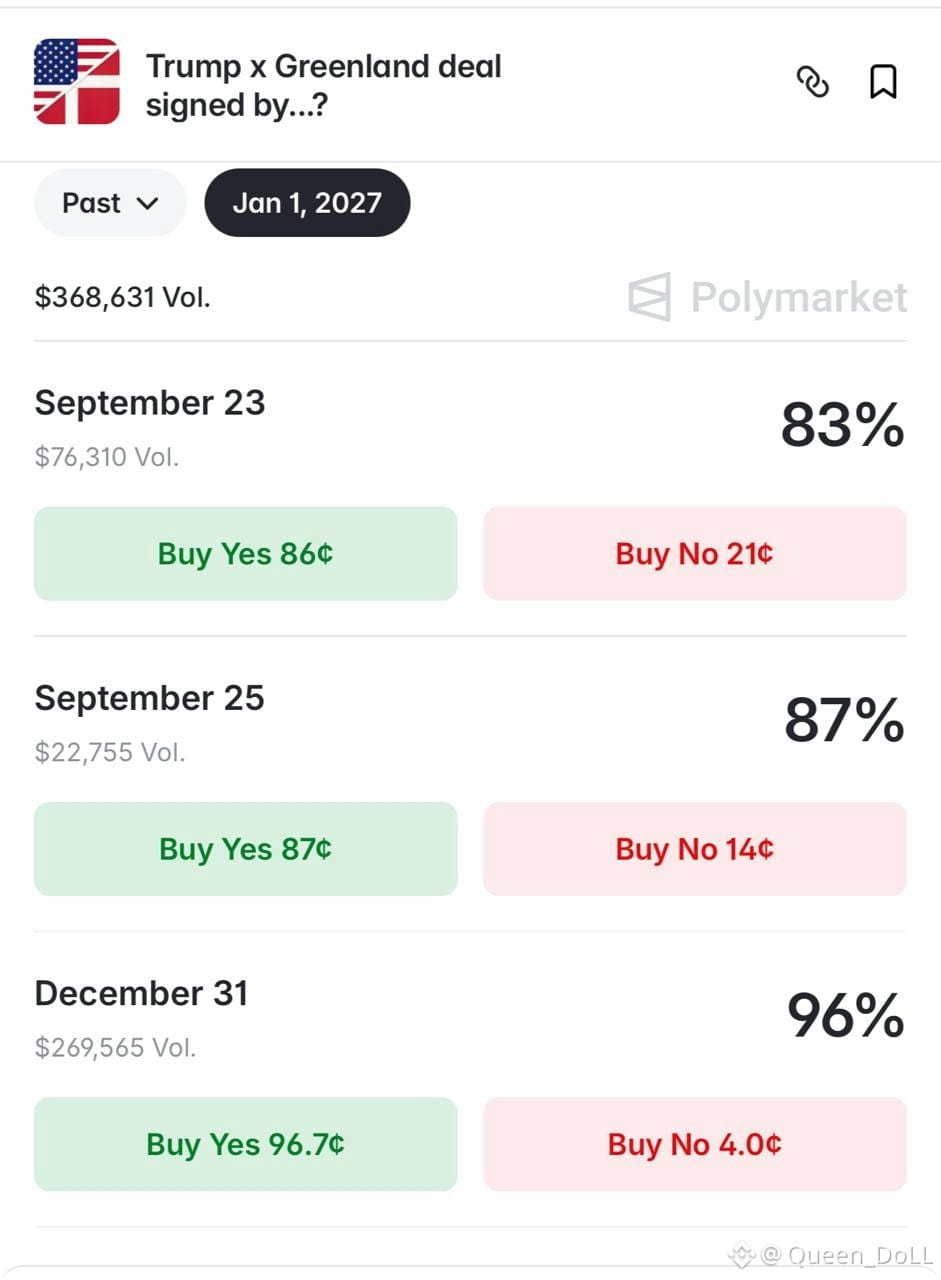
Polymarket traders are giving the Trump–Greenland deal an 83% probability of being signed by September 23.
That makes the next few days interesting for traders.
Geopolitical developments can quickly shift risk sentiment, especially when the U.S. is involved. If the deal moves forward as expected, markets may react to the reduced uncertainty — but any delay or breakdown could bring volatility back.
For crypto, I’m watching BTC and overall risk appetite closely around this deadline.
September 23 is now a date worth keeping on the radar.
#Bitcoin #Crypto #Markets #Geopolitics #Polymarket
🚨 THIS COULD MOVE MARKETS
Polymarket traders are giving the Trump–Greenland deal an 83% probability of being signed by September 23.
That makes the next few days interesting for traders.
Geopolitical developments can quickly shift risk sentiment, especially when the U.S. is involved. If the deal moves forward as expected, markets may react to the reduced uncertainty — but any delay or breakdown could bring volatility back.
For crypto, I’m watching BTC and overall risk appetite closely around this deadline.
September 23 is now a date worth keeping on the radar.
#Bitcoin #Crypto #Markets #Geopolitics #Polymarket
Polymarket traders are giving the Trump–Greenland deal an 83% probability of being signed by September 23.
That makes the next few days interesting for traders.
Geopolitical developments can quickly shift risk sentiment, especially when the U.S. is involved. If the deal moves forward as expected, markets may react to the reduced uncertainty — but any delay or breakdown could bring volatility back.
For crypto, I’m watching BTC and overall risk appetite closely around this deadline.
September 23 is now a date worth keeping on the radar.
#Bitcoin #Crypto #Markets #Geopolitics #Polymarket
4
165
·
--
🇬🇧 The UK is drawing a clearer line around offshore crypto platforms.
The FCA says crypto firms based outside the UK could still fall under UK authorization rules if they provide services to British consumers.
From October 25, 2027, exchanges, custodians and staking providers may need FCA approval depending on how UK users access their services.
This is bigger than just another regulation update. It shows regulators are increasingly focusing on where the customer is, not only where the company is registered.
For crypto platforms, global access may increasingly come with local compliance requirements.
#Crypto #Bitcoin #Regulation #Blockchain #BTC☀️
🇬🇧 The UK is drawing a clearer line around offshore crypto platforms.
The FCA says crypto firms based outside the UK could still fall under UK authorization rules if they provide services to British consumers.
From October 25, 2027, exchanges, custodians and staking providers may need FCA approval depending on how UK users access their services.
This is bigger than just another regulation update. It shows regulators are increasingly focusing on where the customer is, not only where the company is registered.
For crypto platforms, global access may increasingly come with local compliance requirements.
#Crypto #Bitcoin #Regulation #Blockchain #BTC☀️
The FCA says crypto firms based outside the UK could still fall under UK authorization rules if they provide services to British consumers.
From October 25, 2027, exchanges, custodians and staking providers may need FCA approval depending on how UK users access their services.
This is bigger than just another regulation update. It shows regulators are increasingly focusing on where the customer is, not only where the company is registered.
For crypto platforms, global access may increasingly come with local compliance requirements.
#Crypto #Bitcoin #Regulation #Blockchain #BTC☀️

1
132
·
--
🚨 Goldman Sachs is warning about a potential “earnings bubble.”
The concern isn’t that corporate profits will suddenly collapse. It’s that expectations may have moved too far ahead while earnings growth starts to slow.
That matters for risk assets, including crypto. When equity valuations become sensitive to weaker profit growth, investors can become more selective and liquidity can tighten across markets.
For $BTC and the broader crypto market, I’m watching whether this turns into a real risk-off signal or simply a period of healthier valuation reset.
The key question isn’t “Will earnings collapse?” — it’s whether expectations are still too high.
#Bitcoin #Crypto #Markets #Trading #BTC
🚨 Goldman Sachs is warning about a potential “earnings bubble.”
The concern isn’t that corporate profits will suddenly collapse. It’s that expectations may have moved too far ahead while earnings growth starts to slow.
That matters for risk assets, including crypto. When equity valuations become sensitive to weaker profit growth, investors can become more selective and liquidity can tighten across markets.
For $BTC and the broader crypto market, I’m watching whether this turns into a real risk-off signal or simply a period of healthier valuation reset.
The key question isn’t “Will earnings collapse?” — it’s whether expectations are still too high.
#Bitcoin #Crypto #Markets #Trading #BTC
The concern isn’t that corporate profits will suddenly collapse. It’s that expectations may have moved too far ahead while earnings growth starts to slow.
That matters for risk assets, including crypto. When equity valuations become sensitive to weaker profit growth, investors can become more selective and liquidity can tighten across markets.
For $BTC and the broader crypto market, I’m watching whether this turns into a real risk-off signal or simply a period of healthier valuation reset.
The key question isn’t “Will earnings collapse?” — it’s whether expectations are still too high.
#Bitcoin #Crypto #Markets #Trading #BTC

2
247
·
--
🔥 $HYPE is back in the spotlight.
Hyperliquid’s token has pushed back toward its record zone after a strong recovery, with recent market data showing renewed momentum and heavy trading activity.
What catches my attention is not just the price — it’s how quickly HYPE is reclaiming levels after the recent pullback.
When an asset gets this close to its ATH, volatility usually matters just as much as momentum.
Watching the breakout attempt closely.
#HYPE #Hyperliquid #crypto #defi #altcoins
🔥 $HYPE is back in the spotlight.
Hyperliquid’s token has pushed back toward its record zone after a strong recovery, with recent market data showing renewed momentum and heavy trading activity.
What catches my attention is not just the price — it’s how quickly HYPE is reclaiming levels after the recent pullback.
When an asset gets this close to its ATH, volatility usually matters just as much as momentum.
Watching the breakout attempt closely.
#HYPE #Hyperliquid #crypto #defi #altcoins
Hyperliquid’s token has pushed back toward its record zone after a strong recovery, with recent market data showing renewed momentum and heavy trading activity.
What catches my attention is not just the price — it’s how quickly HYPE is reclaiming levels after the recent pullback.
When an asset gets this close to its ATH, volatility usually matters just as much as momentum.
Watching the breakout attempt closely.
#HYPE #Hyperliquid #crypto #defi #altcoins

3
207
·
--
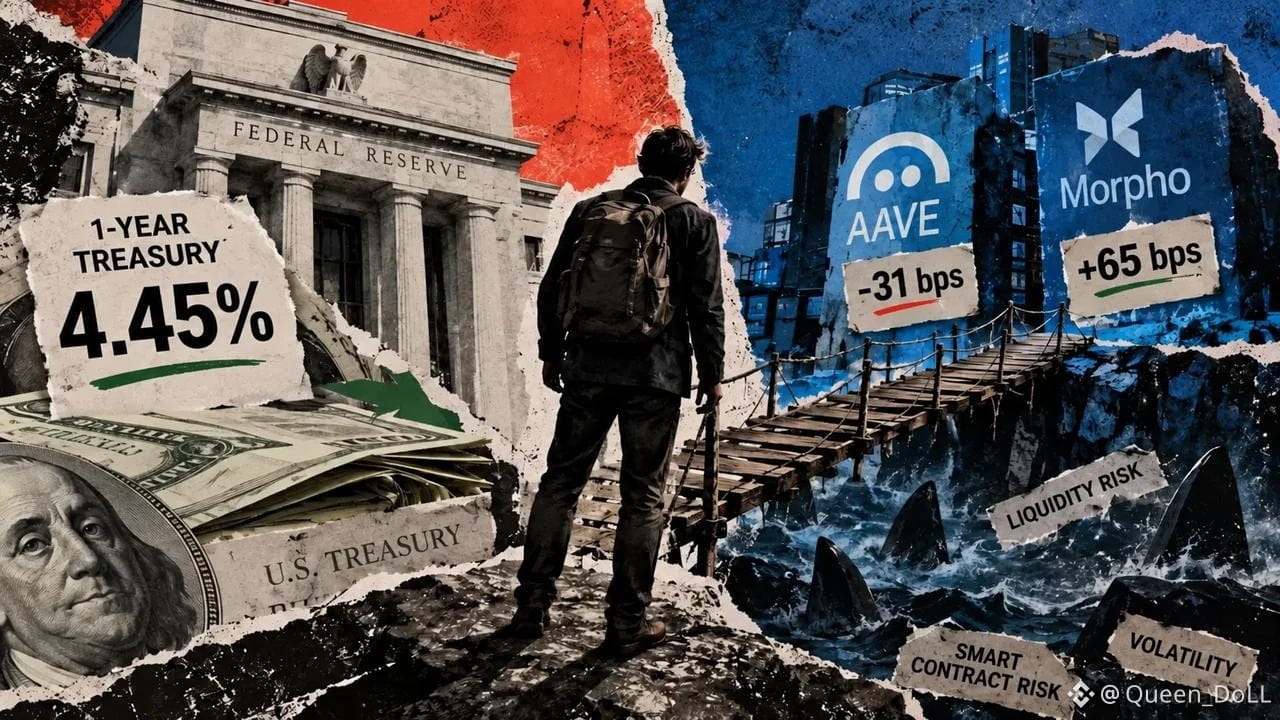
The yield gap between TradFi and DeFi is getting harder to ignore.
A 1-year US Treasury is offering around 4.45%, while Coin Metrics found Aave USDC lending yields averaged 31 bps below that level and underperformed in 78% of measured intervals.
For me, this raises a bigger question: if DeFi is taking on smart-contract, liquidity and protocol risk, shouldn’t the yield premium be meaningful?
Higher APY alone isn’t enough. In this market, the real trade is yield vs. risk-adjusted return.
DeFi still has its advantages, but the risk premium needs to justify the extra complexity.
#Crypto #DeFi #Aave #USDC #bitcoin
The yield gap between TradFi and DeFi is getting harder to ignore.
A 1-year US Treasury is offering around 4.45%, while Coin Metrics found Aave USDC lending yields averaged 31 bps below that level and underperformed in 78% of measured intervals.
For me, this raises a bigger question: if DeFi is taking on smart-contract, liquidity and protocol risk, shouldn’t the yield premium be meaningful?
Higher APY alone isn’t enough. In this market, the real trade is yield vs. risk-adjusted return.
DeFi still has its advantages, but the risk premium needs to justify the extra complexity.
#Crypto #DeFi #Aave #USDC #bitcoin
A 1-year US Treasury is offering around 4.45%, while Coin Metrics found Aave USDC lending yields averaged 31 bps below that level and underperformed in 78% of measured intervals.
For me, this raises a bigger question: if DeFi is taking on smart-contract, liquidity and protocol risk, shouldn’t the yield premium be meaningful?
Higher APY alone isn’t enough. In this market, the real trade is yield vs. risk-adjusted return.
DeFi still has its advantages, but the risk premium needs to justify the extra complexity.
#Crypto #DeFi #Aave #USDC #bitcoin
1
88
·
--
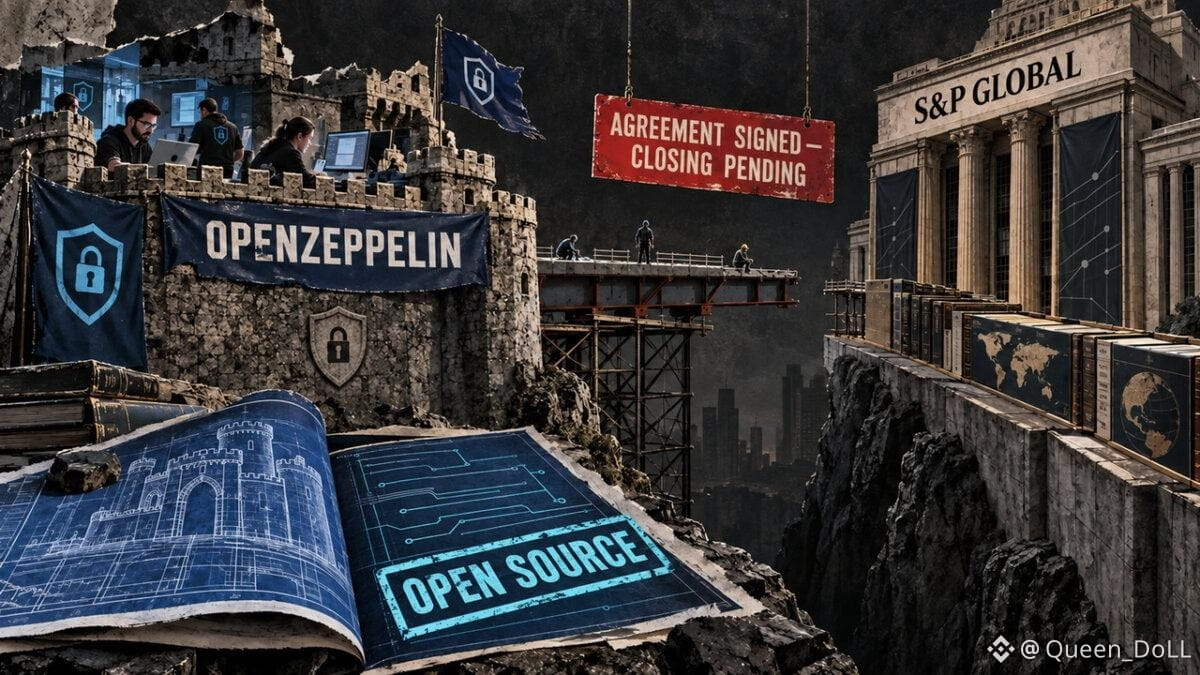
S&P Global is moving deeper into crypto infrastructure.
The company has agreed to acquire OpenZeppelin, one of the most recognized names in smart-contract security. What caught my attention is that OpenZeppelin says its code will remain open source, while the team, brand and existing security work continue after the deal closes.
For me, this is bigger than just an acquisition.
It shows that traditional financial infrastructure is starting to take Web3 security seriously as core infrastructure, not just a niche crypto service.
Smart-contract security is becoming part of the institutional conversation — and that shift matters.
#Crypto #Web3 #OpenZeppelin #blockchain #S&PGlobal
S&P Global is moving deeper into crypto infrastructure.
The company has agreed to acquire OpenZeppelin, one of the most recognized names in smart-contract security. What caught my attention is that OpenZeppelin says its code will remain open source, while the team, brand and existing security work continue after the deal closes.
For me, this is bigger than just an acquisition.
It shows that traditional financial infrastructure is starting to take Web3 security seriously as core infrastructure, not just a niche crypto service.
Smart-contract security is becoming part of the institutional conversation — and that shift matters.
#Crypto #Web3 #OpenZeppelin #blockchain #S&PGlobal
The company has agreed to acquire OpenZeppelin, one of the most recognized names in smart-contract security. What caught my attention is that OpenZeppelin says its code will remain open source, while the team, brand and existing security work continue after the deal closes.
For me, this is bigger than just an acquisition.
It shows that traditional financial infrastructure is starting to take Web3 security seriously as core infrastructure, not just a niche crypto service.
Smart-contract security is becoming part of the institutional conversation — and that shift matters.
#Crypto #Web3 #OpenZeppelin #blockchain #S&PGlobal
2
317
Log in to explore more content
Join global crypto users on Binance Square
⚡️ Get latest and useful information about crypto.
💬 Trusted by the world’s largest crypto exchange.
👍 Discover real insights from verified creators.
Email / Phone number
Trending Topics
AIStocksWhatNext
642,350 views
4,790 Discussing
Share & Win Traffic Reward in our Trending Hashtag Campaign
✨Topic: What Other Investment Opportunities Remain as AI Stocks Keep Rising?
👉How to Join:
Publish a short post or article with hashtag #AIStocksWhatNext
Share whether you’re bullish or bearish, and post your AI stock holdings or trade — using the trade widget may improve your eligibility.
You can also strengthen your post by sharing data or charts, and avoiding AI-generated images.
✍️Create content based on the below angles:
- Nvidia says chip sales will double next year, and top AI companies keep hitting record revenue, the compute spend behind it is just as staggering. Is AI demand really taking off? And how long can it last? AI stocks are up across the board. Is this a real breakout, or just a short-term bounce?
- Industry leaders are calling to slow down AI development, while Trump plans to build an “AI Force”, claiming AI could account for 25% of U.S. GDP in the future. Whose side are you on? Will state-level backing be a long-term win for AI stocks?
- Are you buying AI stocks? Share your AI-related trade/holdings with our trade sharing widget.
⏰Campaign Period:
- 2026-09-22 7:00 - 2026-09-24 4:00 UTC
🎁Reward:
- Qualified posts that comply with the above guidelines and contain more than 100 words will be reviewed and may receive a random traffic boost of 500 to 3,000 views. You will receive a notification from your feed secretary if your post is selected.
- Get a chance to have your article featured on Binance Square Official
Need ideas for your post? Visit the topic page #AIStocksWhatNext or the Square Guide on How to Post for Better Reach.
Binance Square Official
·480 Likes
·1.3M views
21SharesLaunchesEuropesFirstZcashETP
10,167 views
371 Discussing
CardanoJoinsX402PaymentStandard
7,111 views
291 Discussing