

#dex
dex
18.3M views
111,648 Discussing
Hot
Latest

·
--
⛓️ Blockchain & DEX Fees What You Should Know
When you swap tokens on a DEX, you may pay different types of fees.
🔹 Network fee (gas): paid to process your transaction on the blockchain.
🔹 DEX fee: a fee charged by the decentralized exchange or liquidity pool for facilitating the swap.
🔹 Price impact: the difference between the expected price and the actual execution price, especially when liquidity is low.
Before confirming a swap, always check the total cost, slippage, and the amount you’ll receive.
Understanding fees helps you make smarter DeFi transactions. 🌿
#DeFi #DEX #Blockchain #STON.fi #TON
⛓️ Blockchain & DEX Fees What You Should Know
When you swap tokens on a DEX, you may pay different types of fees.
🔹 Network fee (gas): paid to process your transaction on the blockchain.
🔹 DEX fee: a fee charged by the decentralized exchange or liquidity pool for facilitating the swap.
🔹 Price impact: the difference between the expected price and the actual execution price, especially when liquidity is low.
Before confirming a swap, always check the total cost, slippage, and the amount you’ll receive.
Understanding fees helps you make smarter DeFi transactions. 🌿
#DeFi #DEX #Blockchain #STON.fi #TON
When you swap tokens on a DEX, you may pay different types of fees.
🔹 Network fee (gas): paid to process your transaction on the blockchain.
🔹 DEX fee: a fee charged by the decentralized exchange or liquidity pool for facilitating the swap.
🔹 Price impact: the difference between the expected price and the actual execution price, especially when liquidity is low.
Before confirming a swap, always check the total cost, slippage, and the amount you’ll receive.
Understanding fees helps you make smarter DeFi transactions. 🌿
#DeFi #DEX #Blockchain #STON.fi #TON
84

·
--
Modern & Engaging (Enthusiast & Trader Friendly)
📊 TOP DEXES BY VOLUME IN Q3 2026 🚀
DeFi market momentum is shifting fast! Here is the official Q3 ranking of Decentralized Exchanges by trading volume:
1️⃣ $UNI (Uniswap) — $171.50B
2️⃣ $CAKE (PancakeSwap) — $77.40B
3️⃣ PumpSwap — $38.40B
4️⃣ Aerodrome — $34.20B
5️⃣ Orca — $18.60B
6️⃣ Meteora — $17.50B
7️⃣ $RAY (Raydium) — $13.90B
8️⃣ Hyperliquid — $13.80B
9️⃣ Fluid — $9.20B
🔟 $CRV (Curve) — $8.50B
💡 Key Takeaways:
Uniswap maintains a massive lead in liquidity & volume.
Solana Ecosystem DEXes (PumpSwap, Orca, Meteora, Raydium) show strong retail & meme trading activity.
Aerodrome dominates on Base L2!
👇 Which DEX do you use the most for trading? Let us know in the comments!
#DeFi #DEX #Uniswap #Solana
Modern & Engaging (Enthusiast & Trader Friendly)
📊 TOP DEXES BY VOLUME IN Q3 2026 🚀
DeFi market momentum is shifting fast! Here is the official Q3 ranking of Decentralized Exchanges by trading volume:
1️⃣ $UNI (Uniswap) — $171.50B
2️⃣ $CAKE (PancakeSwap) — $77.40B
3️⃣ PumpSwap — $38.40B
4️⃣ Aerodrome — $34.20B
5️⃣ Orca — $18.60B
6️⃣ Meteora — $17.50B
7️⃣ $RAY (Raydium) — $13.90B
8️⃣ Hyperliquid — $13.80B
9️⃣ Fluid — $9.20B
🔟 $CRV (Curve) — $8.50B
💡 Key Takeaways:
Uniswap maintains a massive lead in liquidity & volume.
Solana Ecosystem DEXes (PumpSwap, Orca, Meteora, Raydium) show strong retail & meme trading activity.
Aerodrome dominates on Base L2!
👇 Which DEX do you use the most for trading? Let us know in the comments!
#DeFi #DEX #Uniswap #Solana
📊 TOP DEXES BY VOLUME IN Q3 2026 🚀
DeFi market momentum is shifting fast! Here is the official Q3 ranking of Decentralized Exchanges by trading volume:
1️⃣ $UNI (Uniswap) — $171.50B
2️⃣ $CAKE (PancakeSwap) — $77.40B
3️⃣ PumpSwap — $38.40B
4️⃣ Aerodrome — $34.20B
5️⃣ Orca — $18.60B
6️⃣ Meteora — $17.50B
7️⃣ $RAY (Raydium) — $13.90B
8️⃣ Hyperliquid — $13.80B
9️⃣ Fluid — $9.20B
🔟 $CRV (Curve) — $8.50B
💡 Key Takeaways:
Uniswap maintains a massive lead in liquidity & volume.
Solana Ecosystem DEXes (PumpSwap, Orca, Meteora, Raydium) show strong retail & meme trading activity.
Aerodrome dominates on Base L2!
👇 Which DEX do you use the most for trading? Let us know in the comments!
#DeFi #DEX #Uniswap #Solana
Kato Crypto:
the part that always makes these tables tricky is that a DEX does not really choose its own volume 🙌 most swaps now arrive through an aggregator that splits one order across whichever pools quote best, so the number lands wherever inventory happened to be deepest at that second rather than wherever the trader meant to go 👀 that is also why the top of a list like this tends to sit still while the bottom half reshuffles every quarter, depth is sticky and routing is not 🫶
1
476

·
--
$UNI has dropped to the mean by 14%. The rebound has no volume—I don’t believe it.
First, the chart. It fell from 10.199 to 8.444, dropping 17% over five days. Yesterday it rebounded to 9.196, and today it has pulled back again. Current price is 8.968, stuck between support at 8.71 and resistance at 9.196. Up or down—nothing.
The bearish candlestick is just starting; the direction hasn’t been chosen yet.
Market sentiment is cautious. In the past 24 hours, it’s down 1.98%, with trading volume of $328 million—this isn’t low. But on the 4-hour timeframe, volume is shrinking. The latest 4h candle only has $9.6 million in volume, which is 0.14 times. What does that mean? Previously, the average of the last 20 4h candles was about $60–$70 million each; this one is under $10 million. Bulls don’t dare to chase, and bears aren’t in a hurry to dump. Everyone is waiting.
Watch the large-holder flows via the funding rate. +0.0081%/8h—positive. That means longs are still paying shorts. The rate isn’t high, suggesting long positions aren’t heavy and it hasn’t become crowded. But it also suggests nobody is rushing to go long. Smart money is waiting. If the funding rate turns negative, that would be a signal that shorts are starting to add positions—I’ll be more cautious then.
Volume-price structure is the key. The candles from the drop starting at 10.199 show increasing volume candle by candle—94M, 87M, 104M, 117M. That’s typical panic sell-off. What about the rebound? From 8.444, the next few candles have volume—70M, 105M, 98M—not small either—but volume starts to shrink once the rebound reaches around 9.2. Then 41M, 31M, 39M, 21M—decreasing down to the current 9.6M. Rebound volume is drying up. I’ve seen this structure many times: high-volume sell-off, low-volume bounce that can’t carry through—most likely a continuation of the downtrend. Unless later there’s a breakout above 9.196 with increased volume, this rebound is only a breath, not a turnaround.
On candlestick details: the 4h candle at 12:00 on September 30 is interesting. Open 8.899, high 9.196, low 8.748, close 9.013. Big range and it closed slightly above the middle. At the time it looked like a stabilization signal. But the next three 4h candles were consecutive small real bodies—8.832, 8.876, 8.79—mostly doji and small red/green candles. After the spike, there was no follow-through; bulls lacked stamina. The latest one opened at 9.058 and closed at 8.966—a small bearish candle—with a volume ratio of 0.14. It probed up to around 9.08 and then retreated. The resistance at 9.196 is working.
UNI is Uniswap’s governance token, one of the oldest DEX projects in the DeFi sector. It’s a flagship entry-level on-chain spot trading product for decentralized exchanges. But the token itself has no dividend mechanism, so its governance value is limited; the price mostly depends on sector sentiment and speculation. Recently the DeFi sector hasn’t had much of a trend, and UNI has been moving with the sector—no independent logic.
My view is bearish.
Reason is simple: the sell-off with rising volume is finished, and the bounce with shrinking volume can’t lift it. A volume ratio of 0.14 suggests the market is basically lying flat. In the range between 8.71 and 9.196, if we choose a direction, I bet there’s a higher chance of breaking down below 8.71. Once it breaks, we look to 8.444—that’s the previous low. If that previous low can’t be defended either, then it’s the start of a new round of decline.
Nini’s plan: Don’t touch it if 8.71 doesn’t break. If it breaks, wait and see around 8.444 for signs of stabilization with volume. If there is, take a small long position; set the stop-loss at 8.3. Don’t chase the rebound. If it’s above 9.196, we’ll talk again. At this level right now, I’m staying put.
If you need a customized strategy, you can find Nini.
#UNI #DeFi #DEX
$UNI has dropped to the mean by 14%. The rebound has no volume—I don’t believe it.
First, the chart. It fell from 10.199 to 8.444, dropping 17% over five days. Yesterday it rebounded to 9.196, and today it has pulled back again. Current price is 8.968, stuck between support at 8.71 and resistance at 9.196. Up or down—nothing.
The bearish candlestick is just starting; the direction hasn’t been chosen yet.
Market sentiment is cautious. In the past 24 hours, it’s down 1.98%, with trading volume of $328 million—this isn’t low. But on the 4-hour timeframe, volume is shrinking. The latest 4h candle only has $9.6 million in volume, which is 0.14 times. What does that mean? Previously, the average of the last 20 4h candles was about $60–$70 million each; this one is under $10 million. Bulls don’t dare to chase, and bears aren’t in a hurry to dump. Everyone is waiting.
Watch the large-holder flows via the funding rate. +0.0081%/8h—positive. That means longs are still paying shorts. The rate isn’t high, suggesting long positions aren’t heavy and it hasn’t become crowded. But it also suggests nobody is rushing to go long. Smart money is waiting. If the funding rate turns negative, that would be a signal that shorts are starting to add positions—I’ll be more cautious then.
Volume-price structure is the key. The candles from the drop starting at 10.199 show increasing volume candle by candle—94M, 87M, 104M, 117M. That’s typical panic sell-off. What about the rebound? From 8.444, the next few candles have volume—70M, 105M, 98M—not small either—but volume starts to shrink once the rebound reaches around 9.2. Then 41M, 31M, 39M, 21M—decreasing down to the current 9.6M. Rebound volume is drying up. I’ve seen this structure many times: high-volume sell-off, low-volume bounce that can’t carry through—most likely a continuation of the downtrend. Unless later there’s a breakout above 9.196 with increased volume, this rebound is only a breath, not a turnaround.
On candlestick details: the 4h candle at 12:00 on September 30 is interesting. Open 8.899, high 9.196, low 8.748, close 9.013. Big range and it closed slightly above the middle. At the time it looked like a stabilization signal. But the next three 4h candles were consecutive small real bodies—8.832, 8.876, 8.79—mostly doji and small red/green candles. After the spike, there was no follow-through; bulls lacked stamina. The latest one opened at 9.058 and closed at 8.966—a small bearish candle—with a volume ratio of 0.14. It probed up to around 9.08 and then retreated. The resistance at 9.196 is working.
UNI is Uniswap’s governance token, one of the oldest DEX projects in the DeFi sector. It’s a flagship entry-level on-chain spot trading product for decentralized exchanges. But the token itself has no dividend mechanism, so its governance value is limited; the price mostly depends on sector sentiment and speculation. Recently the DeFi sector hasn’t had much of a trend, and UNI has been moving with the sector—no independent logic.
My view is bearish.
Reason is simple: the sell-off with rising volume is finished, and the bounce with shrinking volume can’t lift it. A volume ratio of 0.14 suggests the market is basically lying flat. In the range between 8.71 and 9.196, if we choose a direction, I bet there’s a higher chance of breaking down below 8.71. Once it breaks, we look to 8.444—that’s the previous low. If that previous low can’t be defended either, then it’s the start of a new round of decline.
Nini’s plan: Don’t touch it if 8.71 doesn’t break. If it breaks, wait and see around 8.444 for signs of stabilization with volume. If there is, take a small long position; set the stop-loss at 8.3. Don’t chase the rebound. If it’s above 9.196, we’ll talk again. At this level right now, I’m staying put.
If you need a customized strategy, you can find Nini.
#UNI #DeFi #DEX
First, the chart. It fell from 10.199 to 8.444, dropping 17% over five days. Yesterday it rebounded to 9.196, and today it has pulled back again. Current price is 8.968, stuck between support at 8.71 and resistance at 9.196. Up or down—nothing.
The bearish candlestick is just starting; the direction hasn’t been chosen yet.
Market sentiment is cautious. In the past 24 hours, it’s down 1.98%, with trading volume of $328 million—this isn’t low. But on the 4-hour timeframe, volume is shrinking. The latest 4h candle only has $9.6 million in volume, which is 0.14 times. What does that mean? Previously, the average of the last 20 4h candles was about $60–$70 million each; this one is under $10 million. Bulls don’t dare to chase, and bears aren’t in a hurry to dump. Everyone is waiting.
Watch the large-holder flows via the funding rate. +0.0081%/8h—positive. That means longs are still paying shorts. The rate isn’t high, suggesting long positions aren’t heavy and it hasn’t become crowded. But it also suggests nobody is rushing to go long. Smart money is waiting. If the funding rate turns negative, that would be a signal that shorts are starting to add positions—I’ll be more cautious then.
Volume-price structure is the key. The candles from the drop starting at 10.199 show increasing volume candle by candle—94M, 87M, 104M, 117M. That’s typical panic sell-off. What about the rebound? From 8.444, the next few candles have volume—70M, 105M, 98M—not small either—but volume starts to shrink once the rebound reaches around 9.2. Then 41M, 31M, 39M, 21M—decreasing down to the current 9.6M. Rebound volume is drying up. I’ve seen this structure many times: high-volume sell-off, low-volume bounce that can’t carry through—most likely a continuation of the downtrend. Unless later there’s a breakout above 9.196 with increased volume, this rebound is only a breath, not a turnaround.
On candlestick details: the 4h candle at 12:00 on September 30 is interesting. Open 8.899, high 9.196, low 8.748, close 9.013. Big range and it closed slightly above the middle. At the time it looked like a stabilization signal. But the next three 4h candles were consecutive small real bodies—8.832, 8.876, 8.79—mostly doji and small red/green candles. After the spike, there was no follow-through; bulls lacked stamina. The latest one opened at 9.058 and closed at 8.966—a small bearish candle—with a volume ratio of 0.14. It probed up to around 9.08 and then retreated. The resistance at 9.196 is working.
UNI is Uniswap’s governance token, one of the oldest DEX projects in the DeFi sector. It’s a flagship entry-level on-chain spot trading product for decentralized exchanges. But the token itself has no dividend mechanism, so its governance value is limited; the price mostly depends on sector sentiment and speculation. Recently the DeFi sector hasn’t had much of a trend, and UNI has been moving with the sector—no independent logic.
My view is bearish.
Reason is simple: the sell-off with rising volume is finished, and the bounce with shrinking volume can’t lift it. A volume ratio of 0.14 suggests the market is basically lying flat. In the range between 8.71 and 9.196, if we choose a direction, I bet there’s a higher chance of breaking down below 8.71. Once it breaks, we look to 8.444—that’s the previous low. If that previous low can’t be defended either, then it’s the start of a new round of decline.
Nini’s plan: Don’t touch it if 8.71 doesn’t break. If it breaks, wait and see around 8.444 for signs of stabilization with volume. If there is, take a small long position; set the stop-loss at 8.3. Don’t chase the rebound. If it’s above 9.196, we’ll talk again. At this level right now, I’m staying put.
If you need a customized strategy, you can find Nini.
#UNI #DeFi #DEX
71

·
--
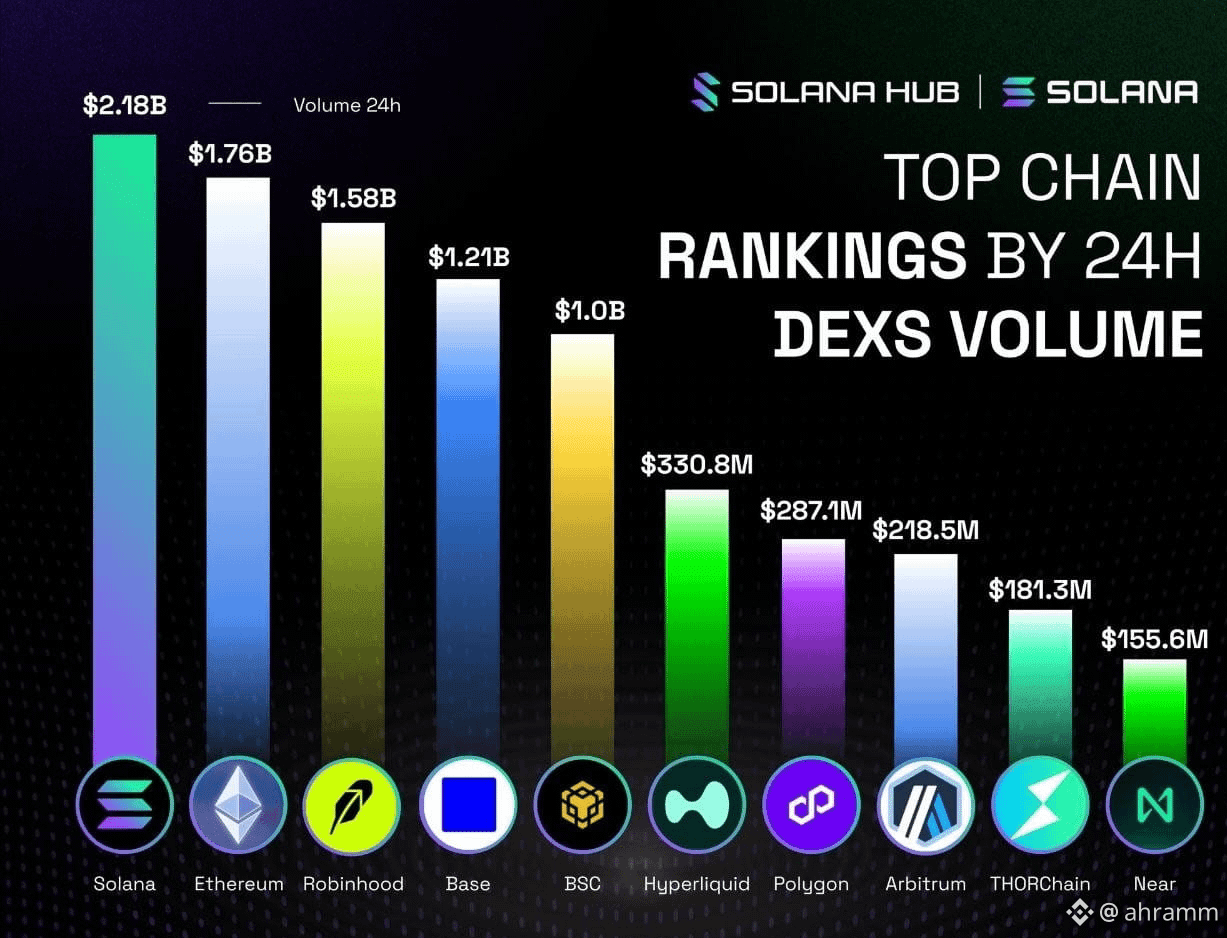
Solana still leads DEX volume in 24H 👀
In this data, Solana records volume of about $2.18B, followed by Ethereum $1.76B and Robinhood $1.58B.
These figures show that DEX activity on Solana remains fairly high compared to other chains during that 24-hour period.
It’s interesting to monitor whether this volume continues to hold or starts shifting to other chains. 📊
{spot}(SOLUSDT)
#solana #Crypto #defi #DEX #BinanceSquare
$HYPE $SOL
Solana still leads DEX volume in 24H 👀
In this data, Solana records volume of about $2.18B, followed by Ethereum $1.76B and Robinhood $1.58B.
These figures show that DEX activity on Solana remains fairly high compared to other chains during that 24-hour period.
It’s interesting to monitor whether this volume continues to hold or starts shifting to other chains. 📊
#solana #Crypto #defi #DEX #BinanceSquare
$HYPE $SOL
In this data, Solana records volume of about $2.18B, followed by Ethereum $1.76B and Robinhood $1.58B.
These figures show that DEX activity on Solana remains fairly high compared to other chains during that 24-hour period.
It’s interesting to monitor whether this volume continues to hold or starts shifting to other chains. 📊
#solana #Crypto #defi #DEX #BinanceSquare
$HYPE $SOL

Semoga Beruntung!
From ahramm
1
264

·
--
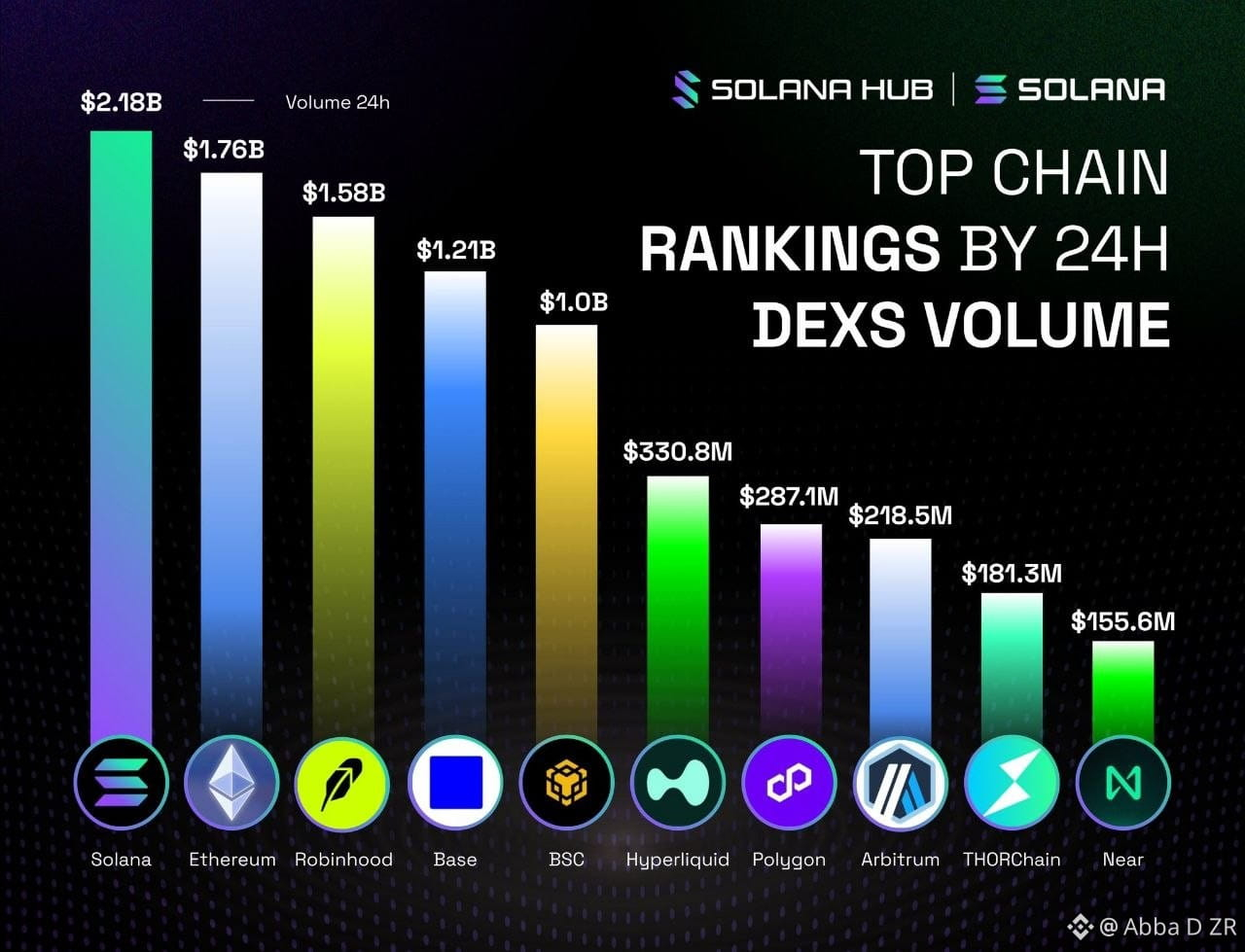
Top networks by 24-hour DEX trading volume:
1️⃣ Solana
2️⃣ Ethereum
3️⃣ Robinhood
4️⃣ Base
5️⃣ BNB
6️⃣ Hyperliquid
7️⃣ Polygon
8️⃣ Arbitrum
9️⃣ THORChain
🔟 NEAR
#DEX $SOL $BTC $ETH
Top networks by 24-hour DEX trading volume:
1️⃣ Solana
2️⃣ Ethereum
3️⃣ Robinhood
4️⃣ Base
5️⃣ BNB
6️⃣ Hyperliquid
7️⃣ Polygon
8️⃣ Arbitrum
9️⃣ THORChain
🔟 NEAR
#DEX $SOL $BTC $ETH
1️⃣ Solana
2️⃣ Ethereum
3️⃣ Robinhood
4️⃣ Base
5️⃣ BNB
6️⃣ Hyperliquid
7️⃣ Polygon
8️⃣ Arbitrum
9️⃣ THORChain
🔟 NEAR
#DEX $SOL $BTC $ETH
2
234

·
--
Bullish
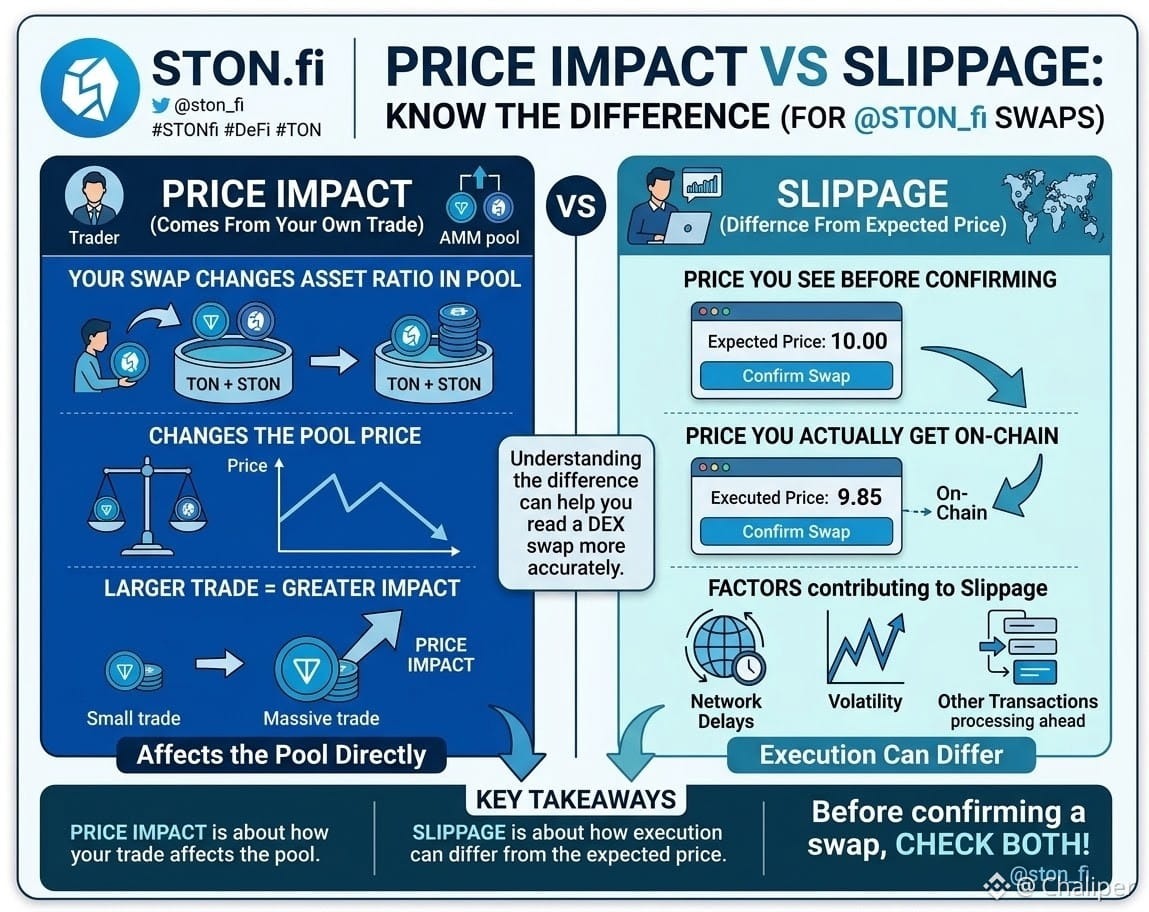
Price Impact and Slippage are often confused, but they describe different parts of a DEX swap.
Price Impact comes from your own trade changing the balance of a liquidity pool.
When the trade is large relative to the available liquidity, the pool price can move more significantly.
Slippage is different.
It refers to the difference between the expected price before confirmation and the actual execution price on chain.
So the simple distinction is:
Price Impact = the effect your trade has on the pool.
Slippage = the difference between expected and actual execution.
Both are important when reviewing a swap.
Do not look only at the token price. Check the execution details before confirming.
#DeFi #DEX #TON #STONfi
Price Impact and Slippage are often confused, but they describe different parts of a DEX swap.
Price Impact comes from your own trade changing the balance of a liquidity pool.
When the trade is large relative to the available liquidity, the pool price can move more significantly.
Slippage is different.
It refers to the difference between the expected price before confirmation and the actual execution price on chain.
So the simple distinction is:
Price Impact = the effect your trade has on the pool.
Slippage = the difference between expected and actual execution.
Both are important when reviewing a swap.
Do not look only at the token price. Check the execution details before confirming.
#DeFi #DEX #TON #STONfi
Price Impact comes from your own trade changing the balance of a liquidity pool.
When the trade is large relative to the available liquidity, the pool price can move more significantly.
Slippage is different.
It refers to the difference between the expected price before confirmation and the actual execution price on chain.
So the simple distinction is:
Price Impact = the effect your trade has on the pool.
Slippage = the difference between expected and actual execution.
Both are important when reviewing a swap.
Do not look only at the token price. Check the execution details before confirming.
#DeFi #DEX #TON #STONfi
1
77

·
--
You deposit 2 tokens into a liquidity pool.But you shouldn’t think of your LP position as “those same 2 tokens sitting there.”
This is one of the easiest parts of DeFi to misunderstand.
When you provide liquidity to a STON.fi pool, your position represents a share of the pool.
And that pool keeps changing.
Traders swap.
Token balances change.
Fees accumulate.
The value and composition of your position can change.
Think about your LP position in 3 layers:
SHARE
Your percentage of the pool.
INVENTORY
The assets currently represented by your share.
VALUE
What that position is worth right now.
Share ≠ Inventory ≠ Value
That distinction matters.
When you withdraw liquidity, you aren't necessarily getting back the exact token amounts you deposited.
You're receiving the assets represented by your current share of the pool.
So LPing isn't simply:
“I deposit these tokens and get the same tokens back.”
It's:
“I own a share of a pool that changes as people trade.”
That changing pool is also why LPs need to understand fees, price movements, and impermanent loss before judging their returns.
So don't only ask:
“What am I depositing?”
Ask:
“What does my share represent as the pool changes?”
Once you understand that, LP tokens stop looking like a receipt.
They start looking like what they really are: a representation of your share in a changing pool.
What part of LPing was most confusing when you first started?
$GRAM
#DeFi #Liquidity #STONfi #DEX
You deposit 2 tokens into a liquidity pool.
But you shouldn’t think of your LP position as “those same 2 tokens sitting there.”
This is one of the easiest parts of DeFi to misunderstand.
When you provide liquidity to a STON.fi pool, your position represents a share of the pool.
And that pool keeps changing.
Traders swap.
Token balances change.
Fees accumulate.
The value and composition of your position can change.
Think about your LP position in 3 layers:
SHARE
Your percentage of the pool.
INVENTORY
The assets currently represented by your share.
VALUE
What that position is worth right now.
Share ≠ Inventory ≠ Value
That distinction matters.
When you withdraw liquidity, you aren't necessarily getting back the exact token amounts you deposited.
You're receiving the assets represented by your current share of the pool.
So LPing isn't simply:
“I deposit these tokens and get the same tokens back.”
It's:
“I own a share of a pool that changes as people trade.”
That changing pool is also why LPs need to understand fees, price movements, and impermanent loss before judging their returns.
So don't only ask:
“What am I depositing?”
Ask:
“What does my share represent as the pool changes?”
Once you understand that, LP tokens stop looking like a receipt.
They start looking like what they really are: a representation of your share in a changing pool.
What part of LPing was most confusing when you first started?
$GRAM
#DeFi #Liquidity #STONfi #DEX
This is one of the easiest parts of DeFi to misunderstand.
When you provide liquidity to a STON.fi pool, your position represents a share of the pool.
And that pool keeps changing.
Traders swap.
Token balances change.
Fees accumulate.
The value and composition of your position can change.
Think about your LP position in 3 layers:
SHARE
Your percentage of the pool.
INVENTORY
The assets currently represented by your share.
VALUE
What that position is worth right now.
Share ≠ Inventory ≠ Value
That distinction matters.
When you withdraw liquidity, you aren't necessarily getting back the exact token amounts you deposited.
You're receiving the assets represented by your current share of the pool.
So LPing isn't simply:
“I deposit these tokens and get the same tokens back.”
It's:
“I own a share of a pool that changes as people trade.”
That changing pool is also why LPs need to understand fees, price movements, and impermanent loss before judging their returns.
So don't only ask:
“What am I depositing?”
Ask:
“What does my share represent as the pool changes?”
Once you understand that, LP tokens stop looking like a receipt.
They start looking like what they really are: a representation of your share in a changing pool.
What part of LPing was most confusing when you first started?
$GRAM
#DeFi #Liquidity #STONfi #DEX
235
·
--
Bullish
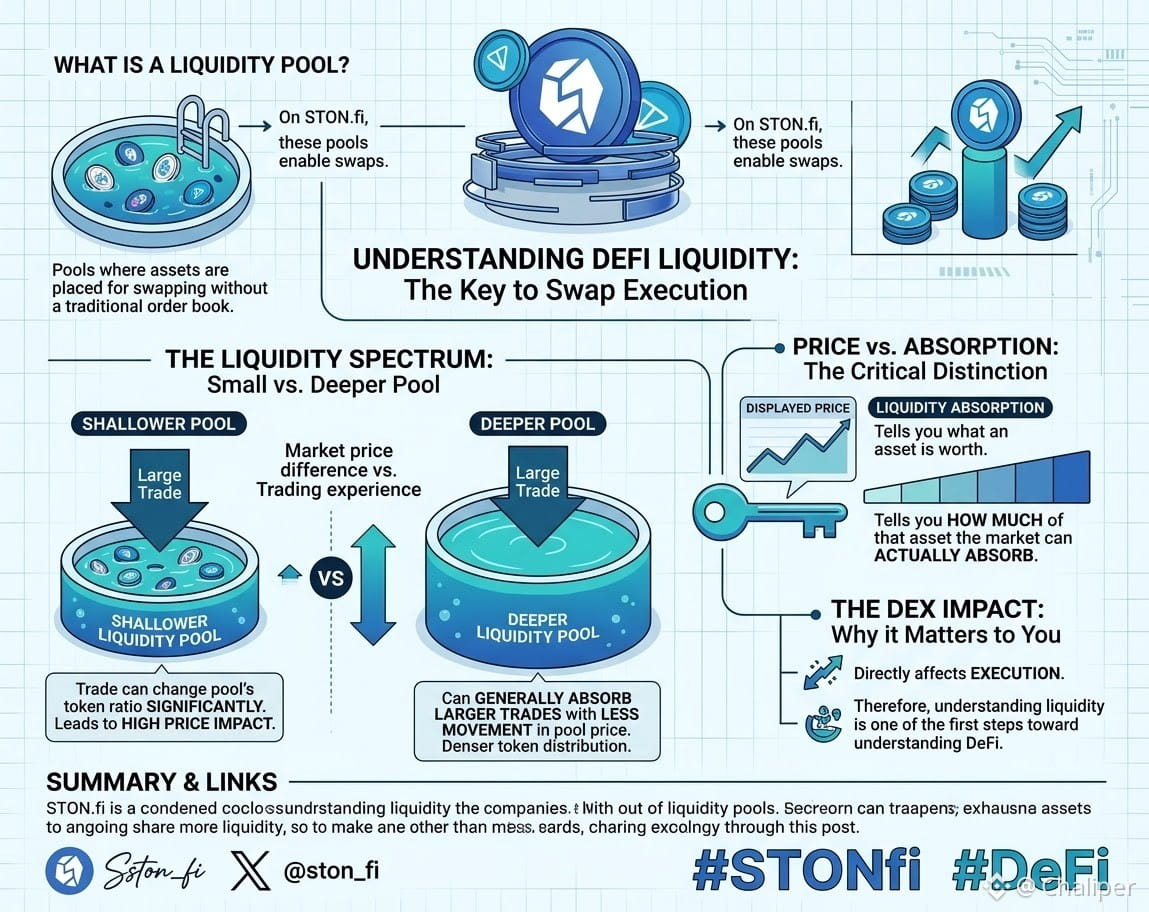
Why can a swap move the price so much?
The answer often starts with liquidity.
On an AMM, trades interact with liquidity pools instead of a traditional order book.
The deeper the pool, the more trading activity it can generally absorb before the pool price moves significantly.
When liquidity is low, even a relatively small trade can change the asset ratio inside the pool. That can create higher price impact.
This is why checking the token price alone is not enough.
Before making a swap, it is useful to understand the liquidity behind that market and how your trade could affect execution.
Liquidity is not just a number.
It is part of the market structure that determines how a DEX trade behaves.
@stonfi
#DeFi #DEX #TON #STONfi
Why can a swap move the price so much?
The answer often starts with liquidity.
On an AMM, trades interact with liquidity pools instead of a traditional order book.
The deeper the pool, the more trading activity it can generally absorb before the pool price moves significantly.
When liquidity is low, even a relatively small trade can change the asset ratio inside the pool. That can create higher price impact.
This is why checking the token price alone is not enough.
Before making a swap, it is useful to understand the liquidity behind that market and how your trade could affect execution.
Liquidity is not just a number.
It is part of the market structure that determines how a DEX trade behaves.
@STONfi DEX
#DeFi #DEX #TON #STONfi
The answer often starts with liquidity.
On an AMM, trades interact with liquidity pools instead of a traditional order book.
The deeper the pool, the more trading activity it can generally absorb before the pool price moves significantly.
When liquidity is low, even a relatively small trade can change the asset ratio inside the pool. That can create higher price impact.
This is why checking the token price alone is not enough.
Before making a swap, it is useful to understand the liquidity behind that market and how your trade could affect execution.
Liquidity is not just a number.
It is part of the market structure that determines how a DEX trade behaves.
@STONfi DEX
#DeFi #DEX #TON #STONfi
1
53

·
--
Bullish
The Uniswap V4 platform dominates trading volume among decentralized trading platforms amid the growth of tokenized stocks and regulatory clarity. Uniswap V4 captures 50% of trading volume on decentralized exchanges on the Ethereum network, driven by tokenized stocks and a Robinhood series. Positive guidance from the U.S. Securities and Exchange Commission regarding stock buybacks and the adoption of PROOF for the V4 issuance points to strong ecosystem growth.
#uniswap #UNI #DEX #ALPHA
$UNI
{future}(UNIUSDT)
The Uniswap V4 platform dominates trading volume among decentralized trading platforms amid the growth of tokenized stocks and regulatory clarity. Uniswap V4 captures 50% of trading volume on decentralized exchanges on the Ethereum network, driven by tokenized stocks and a Robinhood series. Positive guidance from the U.S. Securities and Exchange Commission regarding stock buybacks and the adoption of PROOF for the V4 issuance points to strong ecosystem growth.
#uniswap #UNI #DEX #ALPHA
$UNI
#uniswap #UNI #DEX #ALPHA
$UNI
1
80

·
--
#DEX today saw on X (Twitter) a whole bunch of KOLs pushing arcus registration.
Claiming it’s Robinhood’s first DeXperp, with a background in dYdX, and urging everyone to farm the air drop.
Does the market really need so many DEXs right now?
{future}(HYPEUSDT)
{future}(LITUSDT)
{future}(GRVTUSDT)
#DEX today saw on X (Twitter) a whole bunch of KOLs pushing arcus registration.
Claiming it’s Robinhood’s first DeXperp, with a background in dYdX, and urging everyone to farm the air drop.
Does the market really need so many DEXs right now?
Claiming it’s Robinhood’s first DeXperp, with a background in dYdX, and urging everyone to farm the air drop.
Does the market really need so many DEXs right now?
需要
50%
不需要
50%
6 votes • Voting closed
631

·
--
Bullish
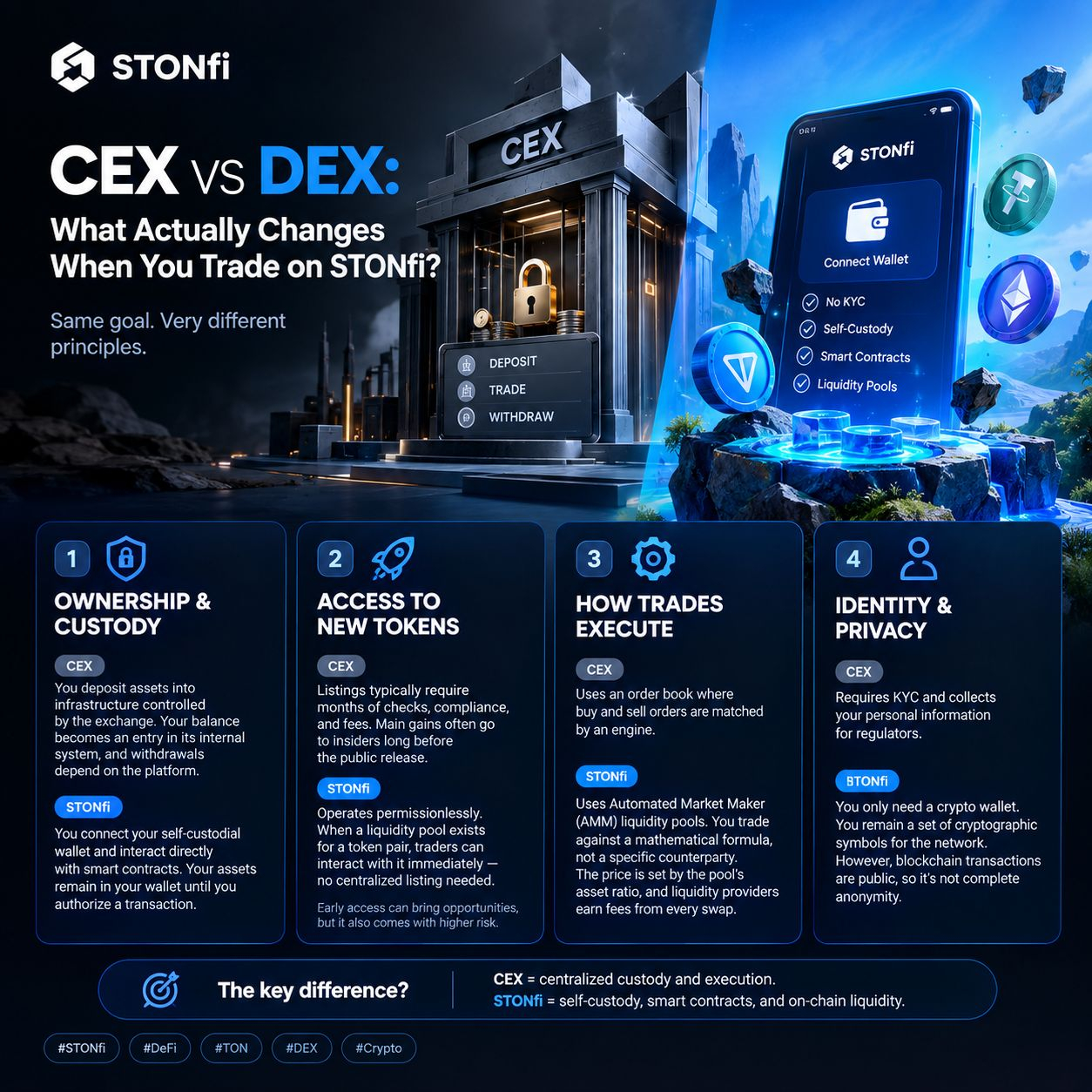
CEX vs DEX: What Really Changes When You Trade on STONfi?
At a glance, both platforms let you swap tokens.
The difference shows up in what happens behind the interface. 👇
🔐 1. OWNERSHIP & CUSTODY
On a CEX, you deposit assets with the exchange, which then tracks them through its own internal systems.
With STONfi, you connect a self-custodial wallet and interact directly with smart contracts.
Your tokens stay in your wallet until you approve a transaction. That part feels pretty different.
🌐 2. ACCESS TO NEW TOKENS
CEX listings typically depend on centralized reviews and listing decisions.
STONfi works permissionlessly at the protocol level.
Once a liquidity pool is available, traders can use it without waiting for a centralized exchange to approve and list the token.
That earlier access can be useful, but honestly, it can also bring more risk.
⚙️ 3. HOW TRADES EXECUTE
CEXs generally rely on order books, matching buyers with sellers.
STONfi uses an Automated Market Maker (AMM).
Rather than trading with one specific counterparty, your swap uses a liquidity pool and follows the protocol's pricing mechanism.
Liquidity providers may earn fees from eligible swaps.
🛡️ 4. IDENTITY & PRIVACY
CEXs commonly require KYC and collect information about their users.
A self-custodial DEX interaction begins with a crypto wallet, not an exchange account.
Still, wallet-based trading does not mean complete anonymity. Blockchain transactions remain publicly visible.
The core distinction is simple:
CEX → centralized custody and trade execution
STONfi → self-custody, smart contracts, and on-chain liquidity
That difference matters because it shows what you're actually placing your trust in when you trade. Honestly, it feels like a small detail until you look at who controls the funds and how each trade is processed.
{spot}(BTCUSDT)
#STONfi #DeFi #TON #DEX #crypto
$BTC $GRAM
CEX vs DEX: What Really Changes When You Trade on STONfi?
At a glance, both platforms let you swap tokens.
The difference shows up in what happens behind the interface. 👇
🔐 1. OWNERSHIP & CUSTODY
On a CEX, you deposit assets with the exchange, which then tracks them through its own internal systems.
With STONfi, you connect a self-custodial wallet and interact directly with smart contracts.
Your tokens stay in your wallet until you approve a transaction. That part feels pretty different.
🌐 2. ACCESS TO NEW TOKENS
CEX listings typically depend on centralized reviews and listing decisions.
STONfi works permissionlessly at the protocol level.
Once a liquidity pool is available, traders can use it without waiting for a centralized exchange to approve and list the token.
That earlier access can be useful, but honestly, it can also bring more risk.
⚙️ 3. HOW TRADES EXECUTE
CEXs generally rely on order books, matching buyers with sellers.
STONfi uses an Automated Market Maker (AMM).
Rather than trading with one specific counterparty, your swap uses a liquidity pool and follows the protocol's pricing mechanism.
Liquidity providers may earn fees from eligible swaps.
🛡️ 4. IDENTITY & PRIVACY
CEXs commonly require KYC and collect information about their users.
A self-custodial DEX interaction begins with a crypto wallet, not an exchange account.
Still, wallet-based trading does not mean complete anonymity. Blockchain transactions remain publicly visible.
The core distinction is simple:
CEX → centralized custody and trade execution
STONfi → self-custody, smart contracts, and on-chain liquidity
That difference matters because it shows what you're actually placing your trust in when you trade. Honestly, it feels like a small detail until you look at who controls the funds and how each trade is processed.
#STONfi #DeFi #TON #DEX #crypto
$BTC $GRAM
At a glance, both platforms let you swap tokens.
The difference shows up in what happens behind the interface. 👇
🔐 1. OWNERSHIP & CUSTODY
On a CEX, you deposit assets with the exchange, which then tracks them through its own internal systems.
With STONfi, you connect a self-custodial wallet and interact directly with smart contracts.
Your tokens stay in your wallet until you approve a transaction. That part feels pretty different.
🌐 2. ACCESS TO NEW TOKENS
CEX listings typically depend on centralized reviews and listing decisions.
STONfi works permissionlessly at the protocol level.
Once a liquidity pool is available, traders can use it without waiting for a centralized exchange to approve and list the token.
That earlier access can be useful, but honestly, it can also bring more risk.
⚙️ 3. HOW TRADES EXECUTE
CEXs generally rely on order books, matching buyers with sellers.
STONfi uses an Automated Market Maker (AMM).
Rather than trading with one specific counterparty, your swap uses a liquidity pool and follows the protocol's pricing mechanism.
Liquidity providers may earn fees from eligible swaps.
🛡️ 4. IDENTITY & PRIVACY
CEXs commonly require KYC and collect information about their users.
A self-custodial DEX interaction begins with a crypto wallet, not an exchange account.
Still, wallet-based trading does not mean complete anonymity. Blockchain transactions remain publicly visible.
The core distinction is simple:
CEX → centralized custody and trade execution
STONfi → self-custody, smart contracts, and on-chain liquidity
That difference matters because it shows what you're actually placing your trust in when you trade. Honestly, it feels like a small detail until you look at who controls the funds and how each trade is processed.
#STONfi #DeFi #TON #DEX #crypto
$BTC $GRAM
2
499

·
--
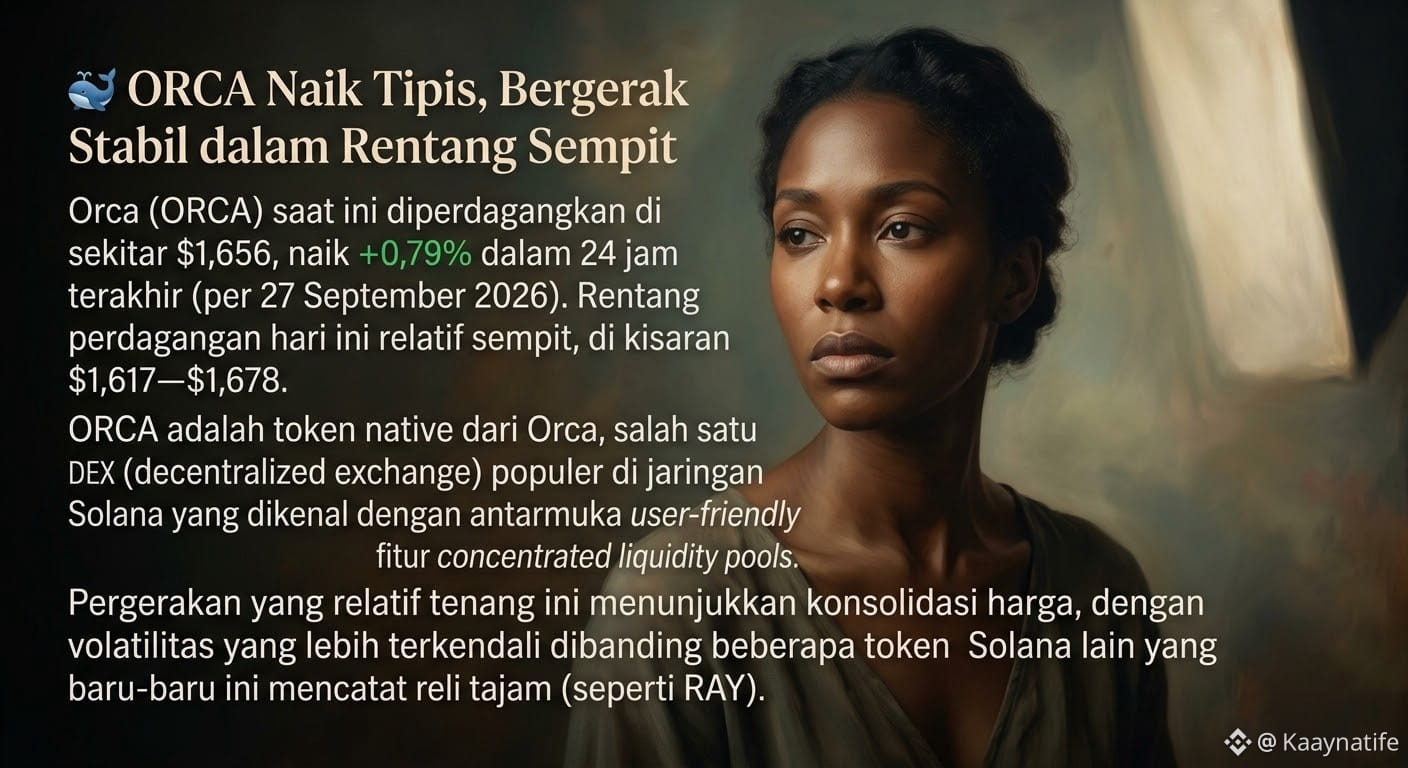
🐋 ORCA Thin Rise, Moves Steadily in a Narrow Range
Orca (ORCA) is currently trading around $1,656, up +0.79% over the last 24 hours (as of 27 September 2026). Today’s trading range is relatively narrow, in the $1,617–$1,678 area.
ORCA is the native token of Orca, one of the popular DEX (decentralized exchange) on the Solana network, known for its user-friendly interface and concentrated liquidity pool features.
This relatively calm movement suggests price consolidation, with volatility that’s more controlled than some other Solana tokens that have recently recorded sharp rallies (such as RAY).
$ORCA
{spot}(ORCAUSDT)
$RAY
{spot}(RAYUSDT)
$$SOL
{spot}(SOLUSDT)
#ORCA #PolymarketBankFailureBetsDrawFDICConcern #DEX
🐋 ORCA Thin Rise, Moves Steadily in a Narrow Range
Orca (ORCA) is currently trading around $1,656, up +0.79% over the last 24 hours (as of 27 September 2026). Today’s trading range is relatively narrow, in the $1,617–$1,678 area.
ORCA is the native token of Orca, one of the popular DEX (decentralized exchange) on the Solana network, known for its user-friendly interface and concentrated liquidity pool features.
This relatively calm movement suggests price consolidation, with volatility that’s more controlled than some other Solana tokens that have recently recorded sharp rallies (such as RAY).
$ORCA
$RAY
$$SOL
#ORCA #PolymarketBankFailureBetsDrawFDICConcern #DEX
Orca (ORCA) is currently trading around $1,656, up +0.79% over the last 24 hours (as of 27 September 2026). Today’s trading range is relatively narrow, in the $1,617–$1,678 area.
ORCA is the native token of Orca, one of the popular DEX (decentralized exchange) on the Solana network, known for its user-friendly interface and concentrated liquidity pool features.
This relatively calm movement suggests price consolidation, with volatility that’s more controlled than some other Solana tokens that have recently recorded sharp rallies (such as RAY).
$ORCA
$RAY
$$SOL
#ORCA #PolymarketBankFailureBetsDrawFDICConcern #DEX
271

·
--
Optimized for direct publication:
CZ’s latest statement: I don’t oppose Hyperliquid. I welcome more DEXs to participate in the competition.
The more intense the competition among decentralized exchanges, the better it is for users and the industry.
#CZ #Hyperliquid #DEX #DeFi
Optimized for direct publication:
CZ’s latest statement: I don’t oppose Hyperliquid. I welcome more DEXs to participate in the competition.
The more intense the competition among decentralized exchanges, the better it is for users and the industry.
#CZ #Hyperliquid #DEX #DeFi
CZ’s latest statement: I don’t oppose Hyperliquid. I welcome more DEXs to participate in the competition.
The more intense the competition among decentralized exchanges, the better it is for users and the industry.
#CZ #Hyperliquid #DEX #DeFi
95

·
--
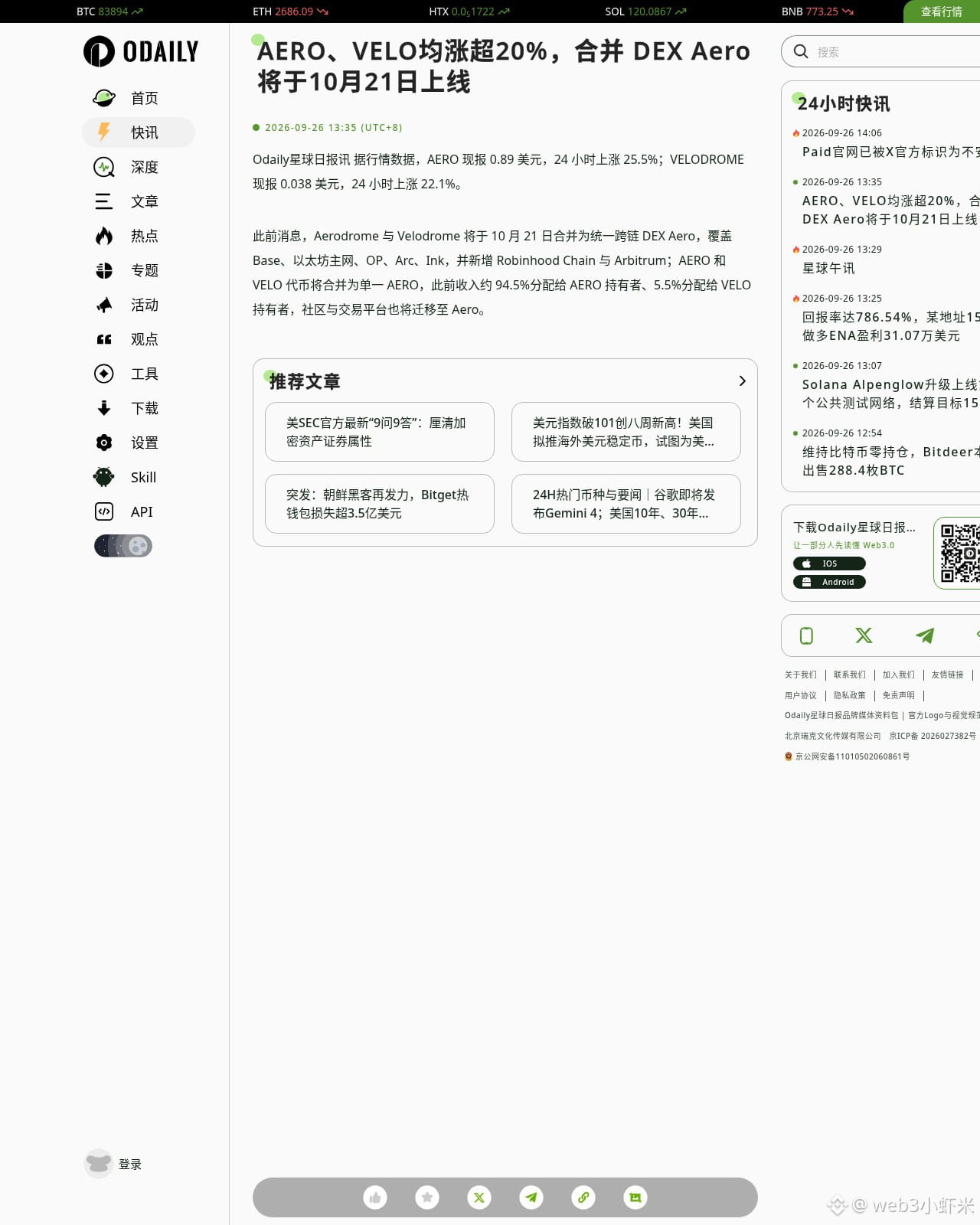
Found Odaily: Aerodrome and Velodrome are merging—Aero, a unified cross-chain DEX, will launch on October 21. After the news broke, both AERO and VELO jumped more than 20%.
AERO is currently around $0.89 (24h +25.5%), while VELODROME is about $0.038 (+22.1%). After the merger, it will cover Base, the Ethereum mainnet, OP, Arc, and Ink, and will also add Robinhood Chain and Arbitrum. AERO and VELO will become a single AERO. Previously, about 94.5% of revenue went to AERO holders and 5.5% to VELO holders; the community and trading entry points will also move to Aero.
A top cross-chain DEX merger in the Base ecosystem—basically tightening the liquidity narrative into one. The date is set quite specifically, so it isn’t strange that the market got a lift first.
$AERO $VELO #DEX #Base
Found Odaily: Aerodrome and Velodrome are merging—Aero, a unified cross-chain DEX, will launch on October 21. After the news broke, both AERO and VELO jumped more than 20%.
AERO is currently around $0.89 (24h +25.5%), while VELODROME is about $0.038 (+22.1%). After the merger, it will cover Base, the Ethereum mainnet, OP, Arc, and Ink, and will also add Robinhood Chain and Arbitrum. AERO and VELO will become a single AERO. Previously, about 94.5% of revenue went to AERO holders and 5.5% to VELO holders; the community and trading entry points will also move to Aero.
A top cross-chain DEX merger in the Base ecosystem—basically tightening the liquidity narrative into one. The date is set quite specifically, so it isn’t strange that the market got a lift first.
$AERO $VELO #DEX #Base
AERO is currently around $0.89 (24h +25.5%), while VELODROME is about $0.038 (+22.1%). After the merger, it will cover Base, the Ethereum mainnet, OP, Arc, and Ink, and will also add Robinhood Chain and Arbitrum. AERO and VELO will become a single AERO. Previously, about 94.5% of revenue went to AERO holders and 5.5% to VELO holders; the community and trading entry points will also move to Aero.
A top cross-chain DEX merger in the Base ecosystem—basically tightening the liquidity narrative into one. The date is set quite specifically, so it isn’t strange that the market got a lift first.
$AERO $VELO #DEX #Base
14

·
--
🎯 Base chain DEX leader AERO has surged to the top of the trending list
📰 Aerodrome is up 21% in a day and 68% in 30 days; market cap reaches $840 million to take the top spot; BTC is hovering around 83.7K and bleeding slowly—no one cares
💬 Funds haven’t left the market; they’re just switching arenas. The overall market lacks volume—hot money has been pooling into Base-based pools like this one with an ecosystem story. It has high upside potential, but when it falls, it drops hard too
🏷️ #AERO #Base #DEX #altcoin turbulence
🎯 Base chain DEX leader AERO has surged to the top of the trending list
📰 Aerodrome is up 21% in a day and 68% in 30 days; market cap reaches $840 million to take the top spot; BTC is hovering around 83.7K and bleeding slowly—no one cares
💬 Funds haven’t left the market; they’re just switching arenas. The overall market lacks volume—hot money has been pooling into Base-based pools like this one with an ecosystem story. It has high upside potential, but when it falls, it drops hard too
🏷️ #AERO #Base #DEX #altcoin turbulence
📰 Aerodrome is up 21% in a day and 68% in 30 days; market cap reaches $840 million to take the top spot; BTC is hovering around 83.7K and bleeding slowly—no one cares
💬 Funds haven’t left the market; they’re just switching arenas. The overall market lacks volume—hot money has been pooling into Base-based pools like this one with an ecosystem story. It has high upside potential, but when it falls, it drops hard too
🏷️ #AERO #Base #DEX #altcoin turbulence
132

·
--
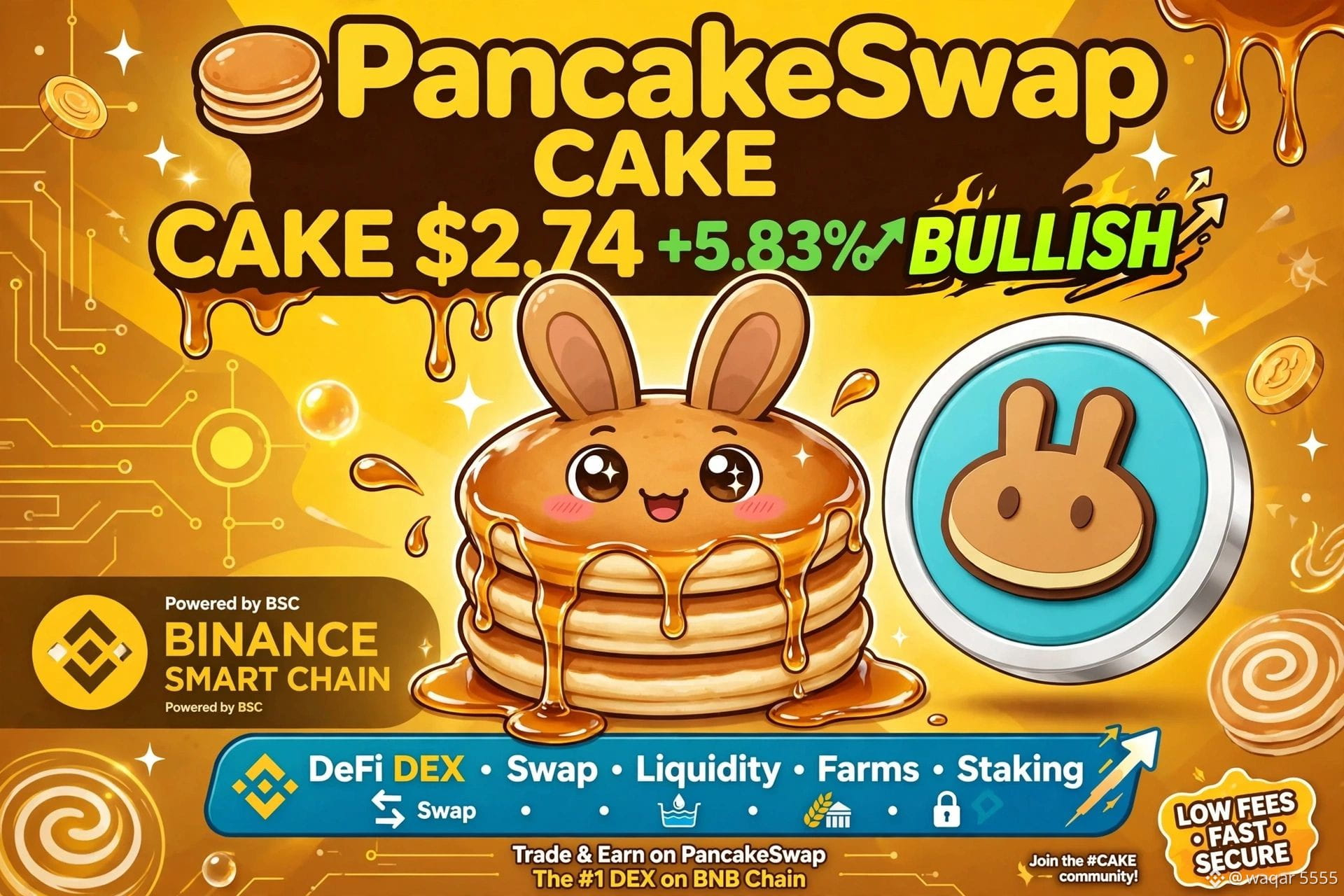
🥞 PancakeSwap $CAKE $2.74 +5.83% BULLISH! 🚀
CAKE is cooking! 🔥
PancakeSwap is the #1 DEX on BNB Chain:
✅ Swap - Low fees
✅ Liquidity Farms
✅ Staking Rewards
✅ Lottery & NFTs
Price pumping +5.83% in 24h! Next target $3.00? 🎯
Hold CAKE or flip it? 👇
$CAKE #PancakeSwap #CAKE #BNB #defi #DEX #Binance
🥞 PancakeSwap $CAKE $2.74 +5.83% BULLISH! 🚀
CAKE is cooking! 🔥
PancakeSwap is the #1 DEX on BNB Chain:
✅ Swap - Low fees
✅ Liquidity Farms
✅ Staking Rewards
✅ Lottery & NFTs
Price pumping +5.83% in 24h! Next target $3.00? 🎯
Hold CAKE or flip it? 👇
$CAKE #PancakeSwap #CAKE #BNB #defi #DEX #Binance
CAKE is cooking! 🔥
PancakeSwap is the #1 DEX on BNB Chain:
✅ Swap - Low fees
✅ Liquidity Farms
✅ Staking Rewards
✅ Lottery & NFTs
Price pumping +5.83% in 24h! Next target $3.00? 🎯
Hold CAKE or flip it? 👇
$CAKE #PancakeSwap #CAKE #BNB #defi #DEX #Binance
2
326

·
--
Chinese version:
Behind the massive spike in Solana's DEX trading volume lies some shady business! Investigations show that large numbers of bots are carrying out circular trades—buying and selling to themselves—to artificially inflate trading data. It's just like fake sales numbers: it looks lively, but the actual depth is nowhere near enough. #DEX #VolumeManipulation $SOL $DEX
English:
Solana's DEX volume spike is hiding dirty laundry! Bots are running circular trades, buying and selling to themselves to artificially inflate volume numbers. It's like fake sales data - looks impressive on paper but doesn't reflect real market depth. #DEX #VolumeManipulation $SOL $DEX
Chinese version:
Behind the massive spike in Solana's DEX trading volume lies some shady business! Investigations show that large numbers of bots are carrying out circular trades—buying and selling to themselves—to artificially inflate trading data. It's just like fake sales numbers: it looks lively, but the actual depth is nowhere near enough. #DEX #VolumeManipulation $SOL $DEX
English:
Solana's DEX volume spike is hiding dirty laundry! Bots are running circular trades, buying and selling to themselves to artificially inflate volume numbers. It's like fake sales data - looks impressive on paper but doesn't reflect real market depth. #DEX #VolumeManipulation $SOL $DEX
Behind the massive spike in Solana's DEX trading volume lies some shady business! Investigations show that large numbers of bots are carrying out circular trades—buying and selling to themselves—to artificially inflate trading data. It's just like fake sales numbers: it looks lively, but the actual depth is nowhere near enough. #DEX #VolumeManipulation $SOL $DEX
English:
Solana's DEX volume spike is hiding dirty laundry! Bots are running circular trades, buying and selling to themselves to artificially inflate volume numbers. It's like fake sales data - looks impressive on paper but doesn't reflect real market depth. #DEX #VolumeManipulation $SOL $DEX
175

·
--
Decentralized Exchanges (DEX) vs. CEX Centralized exchanges provide unmatched execution speed and deep order-book liquidity, while DEXs offer permissionless access and non-custodial asset control. A mature crypto strategy uses both: CEX for high-frequency execution and fiat on-ramps; DEX for direct smart contract interactions and early liquidity pools. Where do you execute the majority of your trades? 🌐 #DEX #DeFi #CEX #CryptoInfrastructure
Decentralized Exchanges (DEX) vs. CEX Centralized exchanges provide unmatched execution speed and deep order-book liquidity, while DEXs offer permissionless access and non-custodial asset control. A mature crypto strategy uses both: CEX for high-frequency execution and fiat on-ramps; DEX for direct smart contract interactions and early liquidity pools. Where do you execute the majority of your trades? 🌐 #DEX #DeFi #CEX #CryptoInfrastructure

71

·
--
UNI once stood above $10 for a night; the shorts were wiped out for $3.81 million, and the Binance Square instantly went viral—everyone was shouting, "DeFi blue-chip awakening." But has the protocol really started distributing profits?
Let’s look at the numbers first: discussion volume surged to 122,500 entries, 2.26 times the 5-day average; spot trading volume hit $590 million; total liquidation volume was 5.59 million, with shorts accounting for $3.81 million—nearly 70%.
This move was price-led. $10 is a clean psychological level—once the shorts were forced to cover, buy orders followed through. Fee-switch narratives, Arc stablecoin expansion, v4 dynamic fee rates—those storylines were already on the table, and nobody cared. When the price rose, all the old stories were suddenly dug up and used as reasons for why it "should have gone up."
Flip it around: if the protocol truly had begun charging for real money and sharing revenues, then this rally would deserve the label "valuation reappraisal." But what about now? The fee switch hasn’t truly been turned on. Whether UNI can actually capture the protocol’s cash flow is still just talk.
I’m not buying into the bullish case here—this $10 move propped up by shorts getting squeezed is one thing, and the protocol distributing real cash is another. If you want me to change my mind, there’s only one possibility: $10 holds on increasing volume, not propped up by short-covering. That’s when it would mean real money is actually flowing in—not just short-term sentiment.
$UNI #DeFi #Uniswap #DEX
UNI once stood above $10 for a night; the shorts were wiped out for $3.81 million, and the Binance Square instantly went viral—everyone was shouting, "DeFi blue-chip awakening." But has the protocol really started distributing profits?
Let’s look at the numbers first: discussion volume surged to 122,500 entries, 2.26 times the 5-day average; spot trading volume hit $590 million; total liquidation volume was 5.59 million, with shorts accounting for $3.81 million—nearly 70%.
This move was price-led. $10 is a clean psychological level—once the shorts were forced to cover, buy orders followed through. Fee-switch narratives, Arc stablecoin expansion, v4 dynamic fee rates—those storylines were already on the table, and nobody cared. When the price rose, all the old stories were suddenly dug up and used as reasons for why it "should have gone up."
Flip it around: if the protocol truly had begun charging for real money and sharing revenues, then this rally would deserve the label "valuation reappraisal." But what about now? The fee switch hasn’t truly been turned on. Whether UNI can actually capture the protocol’s cash flow is still just talk.
I’m not buying into the bullish case here—this $10 move propped up by shorts getting squeezed is one thing, and the protocol distributing real cash is another. If you want me to change my mind, there’s only one possibility: $10 holds on increasing volume, not propped up by short-covering. That’s when it would mean real money is actually flowing in—not just short-term sentiment.
$UNI #DeFi #Uniswap #DEX
Let’s look at the numbers first: discussion volume surged to 122,500 entries, 2.26 times the 5-day average; spot trading volume hit $590 million; total liquidation volume was 5.59 million, with shorts accounting for $3.81 million—nearly 70%.
This move was price-led. $10 is a clean psychological level—once the shorts were forced to cover, buy orders followed through. Fee-switch narratives, Arc stablecoin expansion, v4 dynamic fee rates—those storylines were already on the table, and nobody cared. When the price rose, all the old stories were suddenly dug up and used as reasons for why it "should have gone up."
Flip it around: if the protocol truly had begun charging for real money and sharing revenues, then this rally would deserve the label "valuation reappraisal." But what about now? The fee switch hasn’t truly been turned on. Whether UNI can actually capture the protocol’s cash flow is still just talk.
I’m not buying into the bullish case here—this $10 move propped up by shorts getting squeezed is one thing, and the protocol distributing real cash is another. If you want me to change my mind, there’s only one possibility: $10 holds on increasing volume, not propped up by short-covering. That’s when it would mean real money is actually flowing in—not just short-term sentiment.
$UNI #DeFi #Uniswap #DEX
238

·
--
Article
What Is a DEX? A Beginner’s Guide to Decentralized ExchangesIf you are learning about DeFi, one term you will come across repeatedly is DEX.
DEX stands for Decentralized Exchange.
But what makes an exchange decentralized, and how is it different from a traditional centralized exchange?
Let’s break it down.
What Is a DEX?
A decentralized exchange is a blockchain-based platform that allows users to trade crypto assets directly through smart contracts.
Instead of depositing your assets into an exchange-controlled account, you generally connect your own crypto wallet and interact with the DEX through a blockchain transaction.
This introduces a different model of trading:
Wallet → Smart Contract → Blockchain
The exchange logic is handled by blockchain-based smart contracts rather than relying entirely on a centralized company to execute and custody trades.
DEX vs CEX
The easiest way to understand a DEX is to compare it with a centralized exchange, or CEX.
A centralized exchange typically operates through a company that manages the trading platform and, depending on the service, may hold users’ assets.
DEX is designed around smart contracts and self-custody.
With a DEX, the user generally keeps control of their wallet and authorizes transactions themselves.
This difference is important because custody and execution work differently in the two models.
How Does a DEX Work?
Most modern DEXs use smart contracts to facilitate trading.
A simplified process looks like this:
1. Connect Your Wallet
You connect a compatible crypto wallet to the DEX.
Your assets remain in your wallet until you approve a transaction.
2. Choose Your Trading Pair
You select the asset you want to trade and the asset you want to receive.
For example:
Token A → Token B
3. Check the Trade
Before confirming, the interface may show information such as:
- Exchange rate
- Network fee
- Price impact
- Slippage
- Minimum amount received
4. Approve the Transaction
You authorize the transaction from your wallet.
The blockchain then processes the interaction with the DEX's smart contract.
5. Receive the Asset
If the transaction executes successfully, the swapped asset arrives in your wallet.
The entire process can happen without creating a traditional exchange account.
Where Does the Liquidity Come From?
This is one of the most important concepts in DeFi.
Many DEXs use liquidity pools.
A liquidity pool contains crypto assets supplied by users known as liquidity providers.
For example, a pool could contain two assets that traders can swap between.
When someone makes a trade, the smart contract interacts with the available liquidity in the pool.
Liquidity providers may receive a portion of trading fees according to the rules of the protocol.
This creates an ecosystem where:
Traders use liquidity → Liquidity providers supply liquidity → The protocol facilitates the swap
We will explore liquidity pools and liquidity providers in more detail later in this series.
What Is an AMM?
Many DEXs use a mechanism called an Automated Market Maker, or AMM.
An AMM uses mathematical rules and liquidity pools to determine how trades are executed instead of relying on a traditional order book.
This is one of the major innovations behind modern decentralized trading.
Rather than waiting for a specific buyer and seller to match, users can trade against available liquidity.
But AMMs also introduce concepts such as price impact, slippage, and impermanent loss.
These are important topics for anyone using DeFi.
Advantages of DEXs
DEXs can provide several important features.
Self-Custody
Users can generally maintain control of their assets through their own wallets.
On-Chain Transparency
Transactions and smart-contract activity can often be verified on the blockchain.
Open Access
Depending on the blockchain and protocol, users may be able to interact with a DEX without opening a traditional exchange account.
DeFi Integration
DEXs can interact with other decentralized applications and smart contracts, making them an important part of the broader DeFi ecosystem.
What Are the Risks?
Decentralized does not mean risk-free.
Users should understand several risks before trading on a DEX.
Smart Contract Risk
A vulnerability in a smart contract can potentially lead to loss of funds.
Slippage
The final execution price may differ from the expected price, especially when liquidity is limited or markets move quickly.
Price Impact
Large trades can move the price within a liquidity pool.
Network Fees
Every blockchain transaction may require a network fee.
Irreversible Transactions
Blockchain transactions are generally difficult or impossible to reverse once confirmed.
Fake Tokens and Malicious Contracts
Users must verify token addresses and interact with legitimate protocols. A DEX does not automatically make every token or contract safe.
Why DEXs Matter
DEXs represent a major shift in how digital assets can be exchanged.
Instead of relying entirely on a centralized intermediary, decentralized exchanges use:
Wallets + Smart Contracts + Blockchain + Liquidity
This model is one of the foundations of decentralized finance.
But understanding what a DEX is only gives us the starting point.
The next question is even more important:
How does a DEX actually determine the price of a token and execute a swap?
That takes us to the next topic in this series:
What Is an AMM? — Understanding Automated Market Makers
Stay tuned as we continue breaking down DeFi, one concept at a time.
#CryptoEducation #DeFi #DEX #Blockchain
What Is a DEX? A Beginner’s Guide to Decentralized Exchanges
If you are learning about DeFi, one term you will come across repeatedly is DEX.
DEX stands for Decentralized Exchange.
But what makes an exchange decentralized, and how is it different from a traditional centralized exchange?
Let’s break it down.
What Is a DEX?
A decentralized exchange is a blockchain-based platform that allows users to trade crypto assets directly through smart contracts.
Instead of depositing your assets into an exchange-controlled account, you generally connect your own crypto wallet and interact with the DEX through a blockchain transaction.
This introduces a different model of trading:
Wallet → Smart Contract → Blockchain
The exchange logic is handled by blockchain-based smart contracts rather than relying entirely on a centralized company to execute and custody trades.
DEX vs CEX
The easiest way to understand a DEX is to compare it with a centralized exchange, or CEX.
A centralized exchange typically operates through a company that manages the trading platform and, depending on the service, may hold users’ assets.
DEX is designed around smart contracts and self-custody.
With a DEX, the user generally keeps control of their wallet and authorizes transactions themselves.
This difference is important because custody and execution work differently in the two models.
How Does a DEX Work?
Most modern DEXs use smart contracts to facilitate trading.
A simplified process looks like this:
1. Connect Your Wallet
You connect a compatible crypto wallet to the DEX.
Your assets remain in your wallet until you approve a transaction.
2. Choose Your Trading Pair
You select the asset you want to trade and the asset you want to receive.
For example:
Token A → Token B
3. Check the Trade
Before confirming, the interface may show information such as:
- Exchange rate
- Network fee
- Price impact
- Slippage
- Minimum amount received
4. Approve the Transaction
You authorize the transaction from your wallet.
The blockchain then processes the interaction with the DEX's smart contract.
5. Receive the Asset
If the transaction executes successfully, the swapped asset arrives in your wallet.
The entire process can happen without creating a traditional exchange account.
Where Does the Liquidity Come From?
This is one of the most important concepts in DeFi.
Many DEXs use liquidity pools.
A liquidity pool contains crypto assets supplied by users known as liquidity providers.
For example, a pool could contain two assets that traders can swap between.
When someone makes a trade, the smart contract interacts with the available liquidity in the pool.
Liquidity providers may receive a portion of trading fees according to the rules of the protocol.
This creates an ecosystem where:
Traders use liquidity → Liquidity providers supply liquidity → The protocol facilitates the swap
We will explore liquidity pools and liquidity providers in more detail later in this series.
What Is an AMM?
Many DEXs use a mechanism called an Automated Market Maker, or AMM.
An AMM uses mathematical rules and liquidity pools to determine how trades are executed instead of relying on a traditional order book.
This is one of the major innovations behind modern decentralized trading.
Rather than waiting for a specific buyer and seller to match, users can trade against available liquidity.
But AMMs also introduce concepts such as price impact, slippage, and impermanent loss.
These are important topics for anyone using DeFi.
Advantages of DEXs
DEXs can provide several important features.
Self-Custody
Users can generally maintain control of their assets through their own wallets.
On-Chain Transparency
Transactions and smart-contract activity can often be verified on the blockchain.
Open Access
Depending on the blockchain and protocol, users may be able to interact with a DEX without opening a traditional exchange account.
DeFi Integration
DEXs can interact with other decentralized applications and smart contracts, making them an important part of the broader DeFi ecosystem.
What Are the Risks?
Decentralized does not mean risk-free.
Users should understand several risks before trading on a DEX.
Smart Contract Risk
A vulnerability in a smart contract can potentially lead to loss of funds.
Slippage
The final execution price may differ from the expected price, especially when liquidity is limited or markets move quickly.
Price Impact
Large trades can move the price within a liquidity pool.
Network Fees
Every blockchain transaction may require a network fee.
Irreversible Transactions
Blockchain transactions are generally difficult or impossible to reverse once confirmed.
Fake Tokens and Malicious Contracts
Users must verify token addresses and interact with legitimate protocols. A DEX does not automatically make every token or contract safe.
Why DEXs Matter
DEXs represent a major shift in how digital assets can be exchanged.
Instead of relying entirely on a centralized intermediary, decentralized exchanges use:
Wallets + Smart Contracts + Blockchain + Liquidity
This model is one of the foundations of decentralized finance.
But understanding what a DEX is only gives us the starting point.
The next question is even more important:
How does a DEX actually determine the price of a token and execute a swap?
That takes us to the next topic in this series:
What Is an AMM? — Understanding Automated Market Makers
Stay tuned as we continue breaking down DeFi, one concept at a time.
#CryptoEducation #DeFi #DEX #Blockchain
DEX stands for Decentralized Exchange.
But what makes an exchange decentralized, and how is it different from a traditional centralized exchange?
Let’s break it down.
What Is a DEX?
A decentralized exchange is a blockchain-based platform that allows users to trade crypto assets directly through smart contracts.
Instead of depositing your assets into an exchange-controlled account, you generally connect your own crypto wallet and interact with the DEX through a blockchain transaction.
This introduces a different model of trading:
Wallet → Smart Contract → Blockchain
The exchange logic is handled by blockchain-based smart contracts rather than relying entirely on a centralized company to execute and custody trades.
DEX vs CEX
The easiest way to understand a DEX is to compare it with a centralized exchange, or CEX.
A centralized exchange typically operates through a company that manages the trading platform and, depending on the service, may hold users’ assets.
DEX is designed around smart contracts and self-custody.
With a DEX, the user generally keeps control of their wallet and authorizes transactions themselves.
This difference is important because custody and execution work differently in the two models.
How Does a DEX Work?
Most modern DEXs use smart contracts to facilitate trading.
A simplified process looks like this:
1. Connect Your Wallet
You connect a compatible crypto wallet to the DEX.
Your assets remain in your wallet until you approve a transaction.
2. Choose Your Trading Pair
You select the asset you want to trade and the asset you want to receive.
For example:
Token A → Token B
3. Check the Trade
Before confirming, the interface may show information such as:
- Exchange rate
- Network fee
- Price impact
- Slippage
- Minimum amount received
4. Approve the Transaction
You authorize the transaction from your wallet.
The blockchain then processes the interaction with the DEX's smart contract.
5. Receive the Asset
If the transaction executes successfully, the swapped asset arrives in your wallet.
The entire process can happen without creating a traditional exchange account.
Where Does the Liquidity Come From?
This is one of the most important concepts in DeFi.
Many DEXs use liquidity pools.
A liquidity pool contains crypto assets supplied by users known as liquidity providers.
For example, a pool could contain two assets that traders can swap between.
When someone makes a trade, the smart contract interacts with the available liquidity in the pool.
Liquidity providers may receive a portion of trading fees according to the rules of the protocol.
This creates an ecosystem where:
Traders use liquidity → Liquidity providers supply liquidity → The protocol facilitates the swap
We will explore liquidity pools and liquidity providers in more detail later in this series.
What Is an AMM?
Many DEXs use a mechanism called an Automated Market Maker, or AMM.
An AMM uses mathematical rules and liquidity pools to determine how trades are executed instead of relying on a traditional order book.
This is one of the major innovations behind modern decentralized trading.
Rather than waiting for a specific buyer and seller to match, users can trade against available liquidity.
But AMMs also introduce concepts such as price impact, slippage, and impermanent loss.
These are important topics for anyone using DeFi.
Advantages of DEXs
DEXs can provide several important features.
Self-Custody
Users can generally maintain control of their assets through their own wallets.
On-Chain Transparency
Transactions and smart-contract activity can often be verified on the blockchain.
Open Access
Depending on the blockchain and protocol, users may be able to interact with a DEX without opening a traditional exchange account.
DeFi Integration
DEXs can interact with other decentralized applications and smart contracts, making them an important part of the broader DeFi ecosystem.
What Are the Risks?
Decentralized does not mean risk-free.
Users should understand several risks before trading on a DEX.
Smart Contract Risk
A vulnerability in a smart contract can potentially lead to loss of funds.
Slippage
The final execution price may differ from the expected price, especially when liquidity is limited or markets move quickly.
Price Impact
Large trades can move the price within a liquidity pool.
Network Fees
Every blockchain transaction may require a network fee.
Irreversible Transactions
Blockchain transactions are generally difficult or impossible to reverse once confirmed.
Fake Tokens and Malicious Contracts
Users must verify token addresses and interact with legitimate protocols. A DEX does not automatically make every token or contract safe.
Why DEXs Matter
DEXs represent a major shift in how digital assets can be exchanged.
Instead of relying entirely on a centralized intermediary, decentralized exchanges use:
Wallets + Smart Contracts + Blockchain + Liquidity
This model is one of the foundations of decentralized finance.
But understanding what a DEX is only gives us the starting point.
The next question is even more important:
How does a DEX actually determine the price of a token and execute a swap?
That takes us to the next topic in this series:
What Is an AMM? — Understanding Automated Market Makers
Stay tuned as we continue breaking down DeFi, one concept at a time.
#CryptoEducation #DeFi #DEX #Blockchain
2
98
Log in to explore more content
Join global crypto users on Binance Square
⚡️ Get latest and useful information about crypto.
💬 Trusted by the world’s largest crypto exchange.
👍 Discover real insights from verified creators.
Email / Phone number
Trending Topics
1
#EtherGains70.9%InQ3
64,947 views
734 Discussing
2
#TreasuryLetsStatesFileStablecoinCertificationsEarly
3,132 views
35 Discussing
3
#US10YearYieldNears5.3%
99,472 views
873 Discussing
4
#DollarIndexHitsHighestSinceMay2025
20,360 views
451 Discussing
5
#USWeeklyJoblessClaimsFallTo197000
21,290 views
389 Discussing
6
#BitcoinETFsTake$6.34BillionInQ3
7,021 views
57 Discussing
7
#KoreaProposesTokenizingStocksAndBonds
54,053 views
717 Discussing
8
#MetaMaskExitsLidoValidatorsAfterSecurityIncident
149,958 views
1,428 Discussing
9
#MicronBeatsEarningsLiftsGuidance
74,928 views
1,030 Discussing
10
#CFTCSubmitsTwoEventContractRulesToWhiteHouse
51,049 views
776 Discussing