
#quantumcomputing
quantumcomputing
287,697 views
1,688 Discussing
Hot
Latest

The Bank of England is prioritizing quantum resistant cryptography as Bitcoin and Ethereum developers accelerate security upgrades to mitigate future systemic risks.
#QuantumComputing #BlockchainSecurity
The Bank of England is prioritizing quantum resistant cryptography as Bitcoin and Ethereum developers accelerate security upgrades to mitigate future systemic risks.
#QuantumComputing #BlockchainSecurity
#QuantumComputing #BlockchainSecurity
20


·
--
🛡️ Zcash developers urge users to move $300M out of the older Sapling privacy pool
Zakura, led by Zcash co-founder Sean Bowe and developer Dev Ojha, wants users to shift roughly 400,000 ZEC (about $300M) from Sapling to the newer Ironwood pool. They warn a future math breakthrough or a large quantum computer could let attackers forge Sapling proofs and mint ZEC from nothing.
The plan would block new deposits into Sapling while allowing withdrawals, with a possible freeze if credible attack signs emerge. No activation date is set, and no working attack has been demonstrated.
⭐ Ironwood already holds about 85% of private ZEC, making this a preemptive defense against quantum and AI-era threats to blockchain cryptography.
#Zcash #ZEC #Privacy #QuantumComputing
205

·
--
🚨 BREAKING CRYPTO NEWS: ETHEREUM PREPARES FOR THE POST-QUANTUM ERA! ⚡
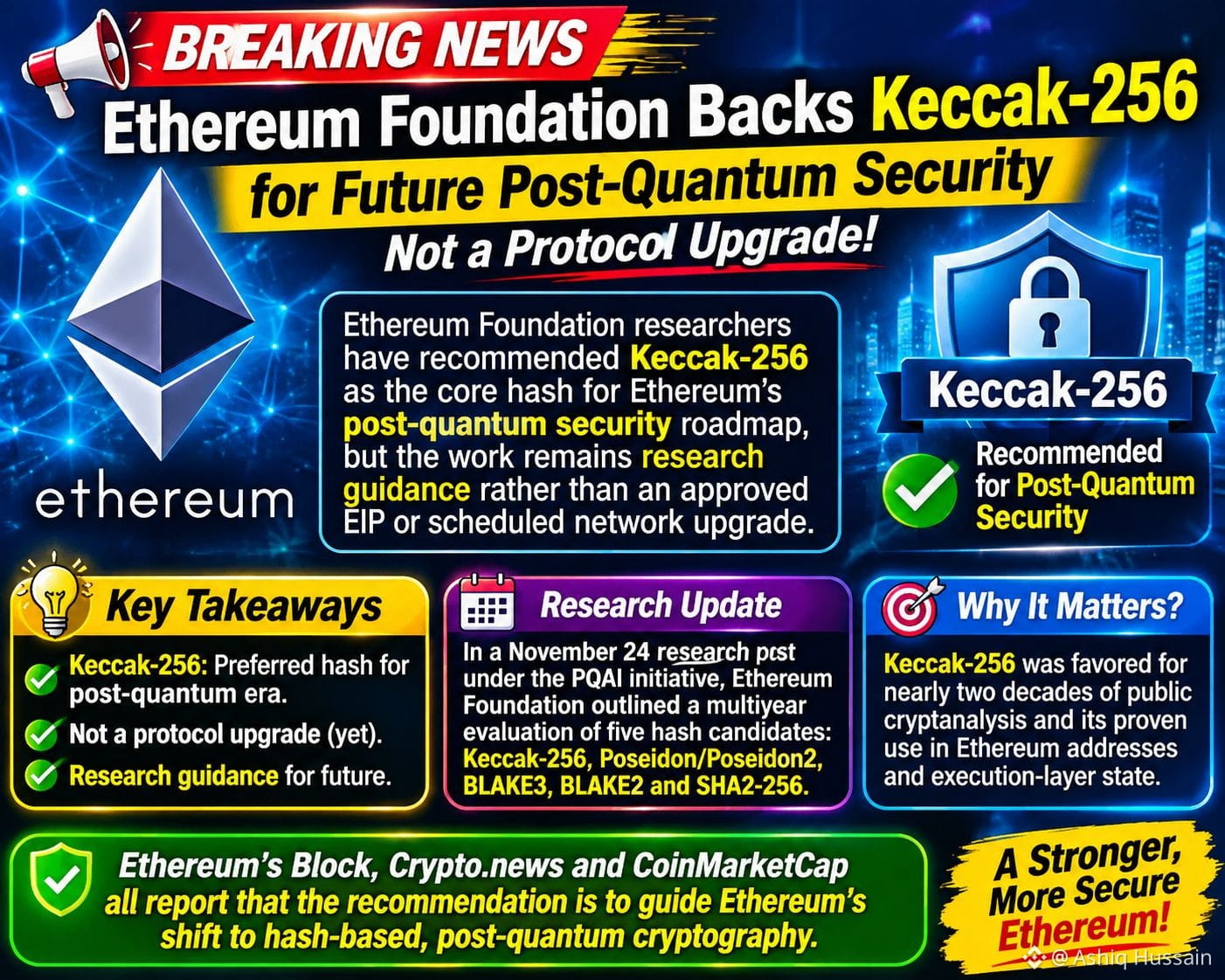
The Ethereum Foundation is backing Keccak-256 as a key candidate for Ethereum's future post-quantum security roadmap.
🔐 Why Is This Important?
Quantum computing could pose future challenges to today's cryptographic systems. Ethereum researchers are exploring stronger security approaches to prepare for these potential threats.
📊 Key Highlights:
- Keccak-256 is recommended as the core hash candidate.
- Researchers evaluated five hash functions.
- Other candidates include Poseidon, Poseidon2, BLAKE3, BLAKE2 and SHA2-256.
- Keccak-256 has nearly two decades of public cryptanalysis.
- It is already used in Ethereum addresses and execution-layer state.
⚠️ Important: This is research guidance, NOT an officially approved Ethereum Improvement Proposal (EIP) or a scheduled network upgrade.
🚀 The Bigger Picture
Ethereum is thinking ahead. Preparing for the post-quantum era could help strengthen blockchain security and protect the future of decentralized finance.
The future of crypto depends on innovation and security! 🔥
$ETH
{spot}(ETHUSDT)
#Keccak256 #QuantumComputing #Blockchain #CryptoNews #Web3
🚨 BREAKING CRYPTO NEWS: ETHEREUM PREPARES FOR THE POST-QUANTUM ERA! ⚡
The Ethereum Foundation is backing Keccak-256 as a key candidate for Ethereum's future post-quantum security roadmap.
🔐 Why Is This Important?
Quantum computing could pose future challenges to today's cryptographic systems. Ethereum researchers are exploring stronger security approaches to prepare for these potential threats.
📊 Key Highlights:
- Keccak-256 is recommended as the core hash candidate.
- Researchers evaluated five hash functions.
- Other candidates include Poseidon, Poseidon2, BLAKE3, BLAKE2 and SHA2-256.
- Keccak-256 has nearly two decades of public cryptanalysis.
- It is already used in Ethereum addresses and execution-layer state.
⚠️ Important: This is research guidance, NOT an officially approved Ethereum Improvement Proposal (EIP) or a scheduled network upgrade.
🚀 The Bigger Picture
Ethereum is thinking ahead. Preparing for the post-quantum era could help strengthen blockchain security and protect the future of decentralized finance.
The future of crypto depends on innovation and security! 🔥
$ETH
#Keccak256 #QuantumComputing #Blockchain #CryptoNews #Web3
71

·
--
Quantum computers are NOT currently breaking Bitcoin's encryption.
So why are experts concerned?
🔹 1. Digital signatures: Future quantum computers could threaten the cryptographic methods used to authorize transactions.
🔹 2. Wallet security: Blockchain networks may need new cryptographic protections.
🔹 3. Network upgrades: Decentralized networks require coordination to adopt new security standards.
🔹 4. Future protection: Developers need to explore post-quantum cryptography (PQC), designed to resist attacks from quantum computers.
My biggest takeaway:
Crypto security must evolve alongside technology.
Don't panic, don't believe exaggerated quantum-proof coin advertisements, and always verify security updates through official sources.
💬 Do you think Bitcoin and Ethereum developers will successfully adapt to quantum computing?
#Bitcoin #BlockchainSecurity #quantumcomputing #CryptoEducation #BinanceSquare
{spot}(BTCUSDT)
$BTC $ETH $BNB
Quantum computers are NOT currently breaking Bitcoin's encryption.
So why are experts concerned?
🔹 1. Digital signatures: Future quantum computers could threaten the cryptographic methods used to authorize transactions.
🔹 2. Wallet security: Blockchain networks may need new cryptographic protections.
🔹 3. Network upgrades: Decentralized networks require coordination to adopt new security standards.
🔹 4. Future protection: Developers need to explore post-quantum cryptography (PQC), designed to resist attacks from quantum computers.
My biggest takeaway:
Crypto security must evolve alongside technology.
Don't panic, don't believe exaggerated quantum-proof coin advertisements, and always verify security updates through official sources.
💬 Do you think Bitcoin and Ethereum developers will successfully adapt to quantum computing?
#Bitcoin #BlockchainSecurity #quantumcomputing #CryptoEducation #BinanceSquare
$BTC $ETH $BNB
86

·
--
Article
THE HEADLINE SAYS 2028. THE FOUNDATION STILL SAYS 2029Headlines this week said Ethereum moved its quantum deadline up a year, to 2028. The deadline did not move. What moved was one researcher's hope, said out loud on a stage in Mumbai.
At the Devcon 8 opening ceremony on November 3, Ethereum Foundation researcher Justin Drake told the crowd: "Our hope is that by December 2028 we'll be able to wrap up the full post-quantum and post-AI transition." That means three hard forks in 24 months after Glamsterdam.
The Foundation's own plan still says December 2029. Its September roadmap set that date for quantum resistance across the execution, consensus and data layers, and locked it in until a review with outside experts in January 2027. The Foundation's own blog, PQAI #0, published November 23, says it plainly: Drake put forward December 2028 as a target, "with 2029 still the EF's internal deadline."
What the upgrade actually does is swap out the cryptography that secures Ethereum today. Wallet signatures run on ECDSA, validator signatures on BLS — both elliptic-curve schemes a powerful enough quantum computer could break. The replacement is hash-based signatures: leanSPHINCS for accounts, leanXMSS for validators. Validators sign with hash-based keys, wallets get a route to move their accounts over, and blobs switch to hash-based commitments. A small proving engine called leanVM keeps the far larger signatures — 3,112 bytes against 96 for BLS — from choking the network, and framework transactions in the Hegotá fork, due in 2027, let each account choose its own signature scheme.
The rush has a reason. The Foundation's conservative scenario puts a cryptographically significant quantum computer as early as 2030, and a March paper from Google Quantum AI, UC Berkeley, the Foundation and Stanford estimated fewer than 1,200 logical qubits could break Ethereum's elliptic-curve signatures in minutes. No machine today can do it, so ETH is not in danger today. The bottleneck is delivery, not maths: Glamsterdam slipped off its second testnet on October 22 after a gas repricing broke assumptions in live contracts. Three forks in 24 months would be the fastest pace Ethereum has shipped in years.
The Foundation has made this its top priority and doubled its protocol security team. Even Ethlabs, the lab behind the pqai label, wants the job done in 2027. The real story is not a moved deadline. It is that Ethereum has started changing its locks while the chain is still running — and the race now is against its own release schedule, not against a quantum computer that does not exist yet.
ETH trades near $1,680, down about 3.5% on the day.
$ETH #EthereumFoundationPlansShiftToHashBasedSignaturesBy2028 #Ethereum #quantumcomputing
THE HEADLINE SAYS 2028. THE FOUNDATION STILL SAYS 2029
Headlines this week said Ethereum moved its quantum deadline up a year, to 2028. The deadline did not move. What moved was one researcher's hope, said out loud on a stage in Mumbai.
At the Devcon 8 opening ceremony on November 3, Ethereum Foundation researcher Justin Drake told the crowd: "Our hope is that by December 2028 we'll be able to wrap up the full post-quantum and post-AI transition." That means three hard forks in 24 months after Glamsterdam.
The Foundation's own plan still says December 2029. Its September roadmap set that date for quantum resistance across the execution, consensus and data layers, and locked it in until a review with outside experts in January 2027. The Foundation's own blog, PQAI #0, published November 23, says it plainly: Drake put forward December 2028 as a target, "with 2029 still the EF's internal deadline."
What the upgrade actually does is swap out the cryptography that secures Ethereum today. Wallet signatures run on ECDSA, validator signatures on BLS — both elliptic-curve schemes a powerful enough quantum computer could break. The replacement is hash-based signatures: leanSPHINCS for accounts, leanXMSS for validators. Validators sign with hash-based keys, wallets get a route to move their accounts over, and blobs switch to hash-based commitments. A small proving engine called leanVM keeps the far larger signatures — 3,112 bytes against 96 for BLS — from choking the network, and framework transactions in the Hegotá fork, due in 2027, let each account choose its own signature scheme.
The rush has a reason. The Foundation's conservative scenario puts a cryptographically significant quantum computer as early as 2030, and a March paper from Google Quantum AI, UC Berkeley, the Foundation and Stanford estimated fewer than 1,200 logical qubits could break Ethereum's elliptic-curve signatures in minutes. No machine today can do it, so ETH is not in danger today. The bottleneck is delivery, not maths: Glamsterdam slipped off its second testnet on October 22 after a gas repricing broke assumptions in live contracts. Three forks in 24 months would be the fastest pace Ethereum has shipped in years.
The Foundation has made this its top priority and doubled its protocol security team. Even Ethlabs, the lab behind the pqai label, wants the job done in 2027. The real story is not a moved deadline. It is that Ethereum has started changing its locks while the chain is still running — and the race now is against its own release schedule, not against a quantum computer that does not exist yet.
ETH trades near $1,680, down about 3.5% on the day.
$ETH #EthereumFoundationPlansShiftToHashBasedSignaturesBy2028 #Ethereum #quantumcomputing
1
143
⚛️ Ethereum Prepares for the Quantum Computing Era!
The Ethereum Foundation has made post-quantum security a major priority, targeting stronger cryptography across validators, wallets and network infrastructure by 2028. This could become one of Ethereum’s most important long-term upgrades. Early preparation may strengthen trust as computing technology evolves, although implementation remains a major challenge.
$ETH #Ethereum #ETH #QuantumComputing #CoinVahini
71
·
--
⚛️ About $72 billion in ETH sits in wallets exposed to a future quantum attack
Wallets that have already sent a transaction reveal their public keys, and together they hold about 42 million ETH, nearly 55% of ether outside staking, according to researchers at the University of Pittsburgh and SeQure. No publicly known quantum computer can exploit this today. Under their proposal, 4.45 million wallets holding at least 0.1 ETH could register new keys in about 29 days, while recovering them all after a cutoff could take 235 days. Ethereum developers are now weighing how much quantum defense to build into the planned Hegotá upgrade.
⭐ Quantum risk is becoming a practical migration problem, and the Hegotá decision will shape Ethereum's long-term security roadmap.
#Ethereum #ETH #QuantumComputing
118

·
--

Article
CRIPTOGRAFÍA BAJO ASEDIO$BTC $NVDA $ANTB 🧠🛡️
¿Qué peligros reales enfrenta Bitcoin frente a la IA, la computación cuántica y la prueba de la Hipótesis de Riemann? 🔬⚡
Cada vez que ocurre un avance disruptivo en matemáticas o computación, los titulares financieros reaccionan con el mismo reflejo condicionado: declarar la muerte inminente de Bitcoin. En las últimas semanas, tres frentes tecnológicos han alimentado una nueva ola de ruido mediático: la certificación formal en Lean 4 de una prueba asistida por inteligencia artificial de la Hipótesis de Riemann, la reducción drástica en los recursos físicos estimados para romper curvas elípticas mediante computación cuántica, y el despliegue de agentes de IA capaces de comprometer infraestructura minera.
Para operar e invertir con criterio profesional, es indispensable separar el pánico superficial de la ingeniería real. A continuación, auditamos técnicamente cada uno de estos tres vectores para determinar qué amenaza realmente a la red y qué es puro teatro mediático.
📐 1. La Hipótesis de Riemann y la prueba de Claude/Lean: ¿Cae la criptografía?
El pasado 20 de noviembre de 2026, el matemático Levent Alpöge (investigador en Anthropic), asistido por el modelo Claude, presentó una formalización en el asistente de pruebas Lean 4 —certificada por las comunidades de Lean y Mathlib, aunque aún pendiente de revisión por pares humana completa— para resolver la Hipótesis de Riemann, un problema abierto durante 167 años.
¿Por qué NO rompe Bitcoin de forma directa?
Bitcoin no utiliza RSA: El pánico inicial proviene de asociar los números primos con el cifrado RSA. Sin embargo, incluso si la prueba se ratifica plenamente, conocer la distribución asintótica de los primos no proporciona un algoritmo en tiempo polinómico para factorizar números semiprimos gigantes. Más importante aún: Bitcoin no usa RSA en ninguna capa de su protocolo.La arquitectura matemática de Bitcoin es distinta: La propiedad de los fondos en Bitcoin descansa sobre la Criptografía de Curva Elíptica (secp256k1) mediante firmas ECDSA y Schnorr, mientras que el consenso (Proof-of-Work) y el direccionamiento dependen de funciones hash criptográficas (SHA-256).
¿Dónde reside entonces el verdadero peligro? El riesgo no está en el enunciado del teorema, sino en el método. Que un sistema de IA pueda navegar espacios de búsqueda matemática formal y verificar demostraciones que desafiaron a la humanidad durante más de un siglo demuestra que el descubrimiento matemático automatizado está acelerando exponencialmente. Aplicado al criptoanálisis, este motor podría hallar atajos algebraicos o debilidades estructurales en primitivas criptográficas años antes de lo previsto por los modelos académicos tradicionales.
⚛️ 2. Computación Cuántica: La amenaza quirúrgica contra las firmas digitales
A diferencia de la Hipótesis de Riemann, la computación cuántica sí representa un vector de ataque matemático demostrado teóricamente desde 1994 mediante el algoritmo de Shor. Lo que ha cambiado en 2026 es la eficiencia de compilación de circuitos cuánticos.
Estudios recientes de estimación de recursos (como los publicados por Google Research) lograron reducir en casi 20 veces el hardware necesario para resolver el Problema del Logaritmo Discreto en Curvas Elípticas de 256 bits (ECDLP-256):
El umbral crítico: Hoy se estima que ejecutar el algoritmo de Shor contra secp256k1 requiere menos de 1,200 a 1,450 cúbits lógicos (entre 70 y 90 millones de puertas Toffoli), lo cual podría correr en una computadora cuántica tolerante a fallos (CRQC) con menos de 500,000 cúbits físicos en cuestión de minutos.
El impacto en Bitcoin es quirúrgico, no total:
Capa vulnerable (Firmas ECDSA y Schnorr): Un computador cuántico lo suficientemente potente puede derivar una clave privada a partir de una clave pública expuesta en la blockchain. Diversos análisis de 2026 estiman que entre el 8% y el 35% del suministro circulante de $BTC tiene su clave pública expuesta actualmente. Esto incluye las monedas tempranas de la era Satoshi en formato P2PK (Pay-to-PubKey), direcciones heredadas (P2PKH) que hayan sido reutilizadas y las salidas modernas Taproot (P2TR), que codifican una clave pública ajustada directamente en la cadena. Además, con arquitecturas cuánticas de reloj rápido, una transacción podría ser interceptada mientras espera confirmación en la mempool.Capa blindada (SHA-256 y Minería): El consenso de Bitcoin es resistente a la computación cuántica. El algoritmo de Grover solo ofrece una aceleración cuadrática ($O(\sqrt{N})$) para invertir funciones hash, reduciendo la resistencia de preimagen de 256 bits a un equivalente efectivo de 128 bits, cifra que sigue siendo computacionalmente inviolable. Los mineros cuánticos no desplazarán a los ASICs clásicos.
El verdadero cuello de botella: Gobernanza y espacio de bloque La solución criptográfica ya existe: firmas Post-Cuánticas (PQC) basadas en hashes o retículos (como los estándares del NIST o esquemas compactos como SHRINCS de 324 bytes, probados con éxito en la red Liquid en marzo de 2026). El peligro real para Bitcoin radica en la lentitud de su gobernanza descentralizada, el aumento del tamaño de las firmas (que reduciría las transacciones por segundo y elevaría las comisiones) y el dilema económico sobre qué hacer con los millones de BTC abandonados en direcciones vulnerables antes de que un actor cuántico los liquide en el mercado abierto.
🤖 3. Inteligencia Artificial: El peligro operativo, económico y silencioso de hoy
Mientras la computación cuántica es un desafío de ingeniería a mediano plazo, la Inteligencia Artificial ya está atacando el perímetro de Bitcoin en tiempo real:
Secuestro automatizado de infraestructura: En noviembre de 2026, el CEO del pool minero Luxor advirtió sobre ciberataques impulsados por IA capaces de escanear sistemas de gestión, explotar vulnerabilidades de día cero en APIs y redirigir silenciosamente las direcciones de pago de recompensas de bloque. Los atacantes no necesitan romper SHA-256 si una IA puede robar las llaves operativas de los pools, custodios o exchanges.Criptoanálisis de implementación y side-channels: Aunque la matemática pura de secp256k1 resista, los modelos de IA son letales auditando millones de líneas de código abierto en carteras y nodos para detectar fallos sutiles en la generación de entropía, reutilización de nonces en ECDSA o fugas de canal lateral antes de que los desarrolladores publiquen parches.Competencia directa por energía, silicio y liquidez: A nivel macroeconómico, los hiperescaladores de IA compiten directamente con los mineros de Bitcoin por megavatios de energía base y capacidad de obleas en fundiciones como TSMC, al tiempo que absorben flujos masivos de capital institucional en cada rotación hacia activos tecnológicos.
🛡️ Disciplina técnica frente al ruido del mercado
En los mercados financieros, el pánico tecnológico suele descontarse dos veces: primero por ignorancia cuando sale un titular sensacionalista, y segundo por complacencia cuando los desarrolladores tardan demasiado en actualizar protocolos críticos. Bitcoin ha sobrevivido durante más de diecisiete años precisamente porque su diseño modular permite reemplazar esquemas de firma sin destruir su política monetaria ni su consenso Proof-of-Work.
Para el operador e inversor metódico, la hoja de ruta es clara: no vendas tus posiciones por titulares apocalípticos sobre números primos, pero tampoco operes con higiene criptográfica de 2013. Evita la reutilización de direcciones, blinda tu custodia contra ataques automatizados por IA, sigue de cerca las propuestas de mejora (BIPs) hacia firmas post-cuánticas y mantén siempre una gestión de riesgo estricta sobre tu capital.
#BTC #quantumcomputing #MarketAnalysis
CRIPTOGRAFÍA BAJO ASEDIO
$BTC $NVDA $ANTB 🧠🛡️
¿Qué peligros reales enfrenta Bitcoin frente a la IA, la computación cuántica y la prueba de la Hipótesis de Riemann? 🔬⚡
Cada vez que ocurre un avance disruptivo en matemáticas o computación, los titulares financieros reaccionan con el mismo reflejo condicionado: declarar la muerte inminente de Bitcoin. En las últimas semanas, tres frentes tecnológicos han alimentado una nueva ola de ruido mediático: la certificación formal en Lean 4 de una prueba asistida por inteligencia artificial de la Hipótesis de Riemann, la reducción drástica en los recursos físicos estimados para romper curvas elípticas mediante computación cuántica, y el despliegue de agentes de IA capaces de comprometer infraestructura minera.
Para operar e invertir con criterio profesional, es indispensable separar el pánico superficial de la ingeniería real. A continuación, auditamos técnicamente cada uno de estos tres vectores para determinar qué amenaza realmente a la red y qué es puro teatro mediático.
📐 1. La Hipótesis de Riemann y la prueba de Claude/Lean: ¿Cae la criptografía?
El pasado 20 de noviembre de 2026, el matemático Levent Alpöge (investigador en Anthropic), asistido por el modelo Claude, presentó una formalización en el asistente de pruebas Lean 4 —certificada por las comunidades de Lean y Mathlib, aunque aún pendiente de revisión por pares humana completa— para resolver la Hipótesis de Riemann, un problema abierto durante 167 años.
¿Por qué NO rompe Bitcoin de forma directa?
Bitcoin no utiliza RSA: El pánico inicial proviene de asociar los números primos con el cifrado RSA. Sin embargo, incluso si la prueba se ratifica plenamente, conocer la distribución asintótica de los primos no proporciona un algoritmo en tiempo polinómico para factorizar números semiprimos gigantes. Más importante aún: Bitcoin no usa RSA en ninguna capa de su protocolo.La arquitectura matemática de Bitcoin es distinta: La propiedad de los fondos en Bitcoin descansa sobre la Criptografía de Curva Elíptica (secp256k1) mediante firmas ECDSA y Schnorr, mientras que el consenso (Proof-of-Work) y el direccionamiento dependen de funciones hash criptográficas (SHA-256).
¿Dónde reside entonces el verdadero peligro? El riesgo no está en el enunciado del teorema, sino en el método. Que un sistema de IA pueda navegar espacios de búsqueda matemática formal y verificar demostraciones que desafiaron a la humanidad durante más de un siglo demuestra que el descubrimiento matemático automatizado está acelerando exponencialmente. Aplicado al criptoanálisis, este motor podría hallar atajos algebraicos o debilidades estructurales en primitivas criptográficas años antes de lo previsto por los modelos académicos tradicionales.
⚛️ 2. Computación Cuántica: La amenaza quirúrgica contra las firmas digitales
A diferencia de la Hipótesis de Riemann, la computación cuántica sí representa un vector de ataque matemático demostrado teóricamente desde 1994 mediante el algoritmo de Shor. Lo que ha cambiado en 2026 es la eficiencia de compilación de circuitos cuánticos.
Estudios recientes de estimación de recursos (como los publicados por Google Research) lograron reducir en casi 20 veces el hardware necesario para resolver el Problema del Logaritmo Discreto en Curvas Elípticas de 256 bits (ECDLP-256):
El umbral crítico: Hoy se estima que ejecutar el algoritmo de Shor contra secp256k1 requiere menos de 1,200 a 1,450 cúbits lógicos (entre 70 y 90 millones de puertas Toffoli), lo cual podría correr en una computadora cuántica tolerante a fallos (CRQC) con menos de 500,000 cúbits físicos en cuestión de minutos.
El impacto en Bitcoin es quirúrgico, no total:
Capa vulnerable (Firmas ECDSA y Schnorr): Un computador cuántico lo suficientemente potente puede derivar una clave privada a partir de una clave pública expuesta en la blockchain. Diversos análisis de 2026 estiman que entre el 8% y el 35% del suministro circulante de $BTC tiene su clave pública expuesta actualmente. Esto incluye las monedas tempranas de la era Satoshi en formato P2PK (Pay-to-PubKey), direcciones heredadas (P2PKH) que hayan sido reutilizadas y las salidas modernas Taproot (P2TR), que codifican una clave pública ajustada directamente en la cadena. Además, con arquitecturas cuánticas de reloj rápido, una transacción podría ser interceptada mientras espera confirmación en la mempool.Capa blindada (SHA-256 y Minería): El consenso de Bitcoin es resistente a la computación cuántica. El algoritmo de Grover solo ofrece una aceleración cuadrática ($O(\sqrt{N})$) para invertir funciones hash, reduciendo la resistencia de preimagen de 256 bits a un equivalente efectivo de 128 bits, cifra que sigue siendo computacionalmente inviolable. Los mineros cuánticos no desplazarán a los ASICs clásicos.
El verdadero cuello de botella: Gobernanza y espacio de bloque La solución criptográfica ya existe: firmas Post-Cuánticas (PQC) basadas en hashes o retículos (como los estándares del NIST o esquemas compactos como SHRINCS de 324 bytes, probados con éxito en la red Liquid en marzo de 2026). El peligro real para Bitcoin radica en la lentitud de su gobernanza descentralizada, el aumento del tamaño de las firmas (que reduciría las transacciones por segundo y elevaría las comisiones) y el dilema económico sobre qué hacer con los millones de BTC abandonados en direcciones vulnerables antes de que un actor cuántico los liquide en el mercado abierto.
🤖 3. Inteligencia Artificial: El peligro operativo, económico y silencioso de hoy
Mientras la computación cuántica es un desafío de ingeniería a mediano plazo, la Inteligencia Artificial ya está atacando el perímetro de Bitcoin en tiempo real:
Secuestro automatizado de infraestructura: En noviembre de 2026, el CEO del pool minero Luxor advirtió sobre ciberataques impulsados por IA capaces de escanear sistemas de gestión, explotar vulnerabilidades de día cero en APIs y redirigir silenciosamente las direcciones de pago de recompensas de bloque. Los atacantes no necesitan romper SHA-256 si una IA puede robar las llaves operativas de los pools, custodios o exchanges.Criptoanálisis de implementación y side-channels: Aunque la matemática pura de secp256k1 resista, los modelos de IA son letales auditando millones de líneas de código abierto en carteras y nodos para detectar fallos sutiles en la generación de entropía, reutilización de nonces en ECDSA o fugas de canal lateral antes de que los desarrolladores publiquen parches.Competencia directa por energía, silicio y liquidez: A nivel macroeconómico, los hiperescaladores de IA compiten directamente con los mineros de Bitcoin por megavatios de energía base y capacidad de obleas en fundiciones como TSMC, al tiempo que absorben flujos masivos de capital institucional en cada rotación hacia activos tecnológicos.
🛡️ Disciplina técnica frente al ruido del mercado
En los mercados financieros, el pánico tecnológico suele descontarse dos veces: primero por ignorancia cuando sale un titular sensacionalista, y segundo por complacencia cuando los desarrolladores tardan demasiado en actualizar protocolos críticos. Bitcoin ha sobrevivido durante más de diecisiete años precisamente porque su diseño modular permite reemplazar esquemas de firma sin destruir su política monetaria ni su consenso Proof-of-Work.
Para el operador e inversor metódico, la hoja de ruta es clara: no vendas tus posiciones por titulares apocalípticos sobre números primos, pero tampoco operes con higiene criptográfica de 2013. Evita la reutilización de direcciones, blinda tu custodia contra ataques automatizados por IA, sigue de cerca las propuestas de mejora (BIPs) hacia firmas post-cuánticas y mantén siempre una gestión de riesgo estricta sobre tu capital.
#BTC #quantumcomputing #MarketAnalysis
1
114

·
--
🚨 **CÚ HÍCH 55 TỶ USD: CHÂU ÂU ĐANG MUỐN "THAY ĐỔI CUỘC CHƠI" CÔNG NGHỆ TOÀN CẦU!**
Dòng vốn khổng lồ sắp đổ bộ, và đây không chỉ là câu chuyện về tiền, mà là cuộc đua giành quyền kiểm soát tương lai:
* **Gói cứu trợ siêu khủng:** EU vừa đề xuất rót 54,7 tỷ USD để tiếp sức cho các startup trong lĩnh vực AI, điện toán lượng tử và đặc biệt là các giải pháp bảo mật hậu lượng tử (post-quantum security).
* **Xóa bỏ khoảng cách:** Mục tiêu của Brussels là giúp các công ty công nghệ tại Châu Âu thu hẹp khoảng cách về vốn so với các đối thủ tại San Francisco – nơi hiện đang huy động được lượng vốn gấp đôi so với các startup Châu Âu sau 10 năm hoạt động.
💡 **Góc nhìn cá nhân (Takeaway):**
Đừng chỉ tập trung vào các dự án AI đơn thuần, hãy bắt đầu để mắt tới từ khóa **"Post-quantum security"** (Bảo mật hậu lượng tử). Khi các cường quốc đổ hàng chục tỷ USD vào hạ tầng bảo mật để chống lại sức mạnh của máy tính lượng tử, toàn bộ nền tảng hạ tầng tài chính và Blockchain sẽ phải thay đổi để thích nghi. Đây chính là tín hiệu cho thấy kỷ nguyên "Quantum-ready" đang đến gần. Anh em nên bắt đầu nghiên cứu các dự án hạ tầng có khả năng nâng cấp công nghệ bảo mật để đón đầu làn sóng này.
Anh em đánh giá thế nào về động thái này của EU? Liệu đây có phải là cú hích giúp công nghệ Châu Âu bứt phá? Để lại ý kiến bên dưới và đừng quên **Bấm Theo Dõi** kênh để cập nhật những tin tức công nghệ và crypto nhanh nhất nhé!
#CryptoNews #TrendingNews #AI #QuantumComputing #TechRevolution

Google’s new Willow quantum processor just hit a milestone by crushing classical limits in a complex coordination game. While we are still far from commercial-grade quantum computing, this breakthrough proves that the hardware is evolving rapidly. As quantum processing scales, it poses a direct challenge to current cryptographic standards that secure our digital assets. The crypto space must eventually consider post-quantum security to ensure long-term resilience against these high-speed systems. #QuantumComputing #TechNews #CryptoSecurity
Google’s new Willow quantum processor just hit a milestone by crushing classical limits in a complex coordination game. While we are still far from commercial-grade quantum computing, this breakthrough proves that the hardware is evolving rapidly. As quantum processing scales, it poses a direct challenge to current cryptographic standards that secure our digital assets. The crypto space must eventually consider post-quantum security to ensure long-term resilience against these high-speed systems. #QuantumComputing #TechNews #CryptoSecurity
GOOGL+0.15%
GOOGUS-1.40%
88
·
--
🚨 **CẢNH BÁO: "Cơn lốc" máy tính lượng tử đang nhắm vào Bitcoin – Nguy hiểm không chỉ nằm ở mạng lưới chính!**
Dưới đây là những gì anh em cần biết về rủi ro công nghệ đang âm thầm tiến gần đến thị trường:
* **Lỗ hổng không chỉ ở Bitcoin:** Dù mạng lưới Bitcoin hiện tại vẫn chưa bị máy tính lượng tử bẻ gãy, nhưng các "mắt xích yếu" như Bridge (cầu nối) và các đơn vị lưu ký (custodians) đang nằm trong tầm ngắm.
* **Cuộc đua về thời gian:** Thách thức lớn nhất không phải là sức mạnh của máy tính lượng tử, mà là tốc độ phản ứng của chúng ta. Việc nâng cấp hệ thống bảo mật và di chuyển hàng triệu đồng coin sang chuẩn mới có thể mất nhiều thời gian hơn dự kiến rất nhiều.
* **Rủi ro từ sự chậm trễ:** Sự lệch pha giữa tốc độ phát triển phần cứng lượng tử và tốc độ nâng cấp phần mềm có thể khiến một lượng tài sản khổng lồ rơi vào trạng thái kém an toàn.
💡 **Góc nhìn cá nhân (Takeaway):**
Đừng quá lo lắng về việc Bitcoin sẽ bị "sập" ngay ngày mai bởi máy tính lượng tử. Cái bẫy thực sự nằm ở **"giai đoạn chuyển đổi"**. Nếu quá trình nâng cấp mã hóa hậu lượng tử (Post-Quantum Cryptography) diễn ra chậm chạp, các tài sản đang nằm trên các cầu nối (bridge) hoặc tại các bên lưu ký sẽ trở thành "miếng mồi ngon" dễ tổn thương nhất. Đây sẽ là cuộc đua khốc liệt giữa tốc độ tiến hóa của công nghệ tấn công và khả năng thích nghi của hạ tầng blockchain. Anh em nên theo dõi sát các cập nhật về nâng cấp giao thức trong thời gian tới.
Anh em nghĩ sao về kịch bản này? Liệu chúng ta có kịp "thay giáp" trước khi kỷ nguyên lượng tử ập đến? Hãy để lại ý kiến dưới phần bình luận và nhấn **Follow** kênh để không bỏ lỡ các tin tức Alpha cực nóng!
#CryptoNews #TrendingNews $BTC #QuantumComputing #BlockchainSecurity
2
·
--
🚨 **CẢNH BÁO: Bitcoin đang đứng trước "vòng xoáy" tấn công từ máy tính lượng tử – Nguy cơ không chỉ nằm ở mạng lưới lõi!**
Dưới đây là những gì anh em cần biết về mối đe dọa tiềm tàng này:
* 💻 **Lỗ hổng không chỉ ở thuật toán:** Dù máy tính lượng tử chưa thể phá vỡ trực tiếp bảo mật mạng lưới Bitcoin ngay lập tức, nhưng mối nguy hiểm thực sự đang lan rộng sang các "cầu nối" (bridges) và các đơn vị lưu ký (custodians).
* ⚠️ **Rủi ro từ sự chậm trễ:** Vấn đề không chỉ là công nghệ, mà là thời gian. Chuyên gia Leo Fan cảnh báo rằng quá trình nâng cấp hệ thống và di chuyển hàng triệu đồng coin để thích ứng với kỷ nguyên lượng tử có thể mất nhiều thời gian hơn chúng ta dự tính.
* ⏳ **Điểm yếu chí tử:** Các tài sản nằm trên các cầu nối hoặc được quản lý tập trung có thể trở thành "mồi ngon" trước khi kịp thực hiện các bước nâng cấp bảo mật cần thiết.
**💡 Góc nhìn cá nhân (Takeaway):**
Đừng quá hoảng loạn nhưng tuyệt đối không được chủ quan! Trong cuộc đua giữa Bitcoin và máy tính lượng tử, "kẻ thua cuộc" có thể không phải là thuật toán, mà là **tốc độ phản ứng**. Nếu các bên lưu ký và các giao thức cầu nối không kịp tiến hóa, rủi ro thất thoát tài sản là rất lớn.
Lời khuyên cho anh em: Hãy luôn chú trọng vào việc tự quản lý tài sản (self-custody) và theo sát các bản cập nhật bảo mật quan trọng của mạng lưới. Đừng để tài sản của mình kẹt lại ở những "điểm yếu" chưa kịp nâng cấp.
---
Anh em nghĩ sao về cuộc đua này? Liệu Bitcoin có kịp "lên đời" trước khi máy tính lượng tử trở nên phổ biến? Để lại ý kiến dưới phần bình luận nhé! 👇
🔔 **BẤM THEO DÕI kênh ngay để không bỏ lỡ những tin tức quan trọng nhất về thị trường!**
#CryptoNews #TrendingNews $BTC #Bitcoin #QuantumComputing
37

Google's Willow vừa chứng minh 'quantum contextuality', vượt mặt các chiến lược cổ điển trong trò chơi toán học chuyên biệt. Tưởng tượng được không? Willow thắng 98.3% trong game Mermin-Peres, bỏ xa 88.9% giới hạn của bất kỳ chiến lược cổ điển nào.
Thậm chí, ưu thế này duy trì với 71 qubits! Nhưng đừng mừng vội, đây chưa phải là ưu thế lượng tử tổng quát hay máy tính lượng tử thương mại.
Điều này gợi ý gì? Khả năng xử lý siêu việt cho những bài toán cực khó đang dần hiện hữu.
Dù chưa đe dọa trực tiếp $BTC hay $ETH hôm nay, nhưng nó là tín hiệu về một kỷ nguyên tính toán mới. Tương lai của mã hóa, bảo mật có thể sẽ thay đổi.
Quantum Computing đang tiến rất nhanh. Bạn nghĩ công nghệ này sẽ thay đổi thế giới Crypto như thế nào trong 10 năm tới?
#QuantumComputing #CryptoNews
$BTC $ETH
385

·
--
🔍 6 МЛН BTC ПОД КВАНТОВОЙ УГРОЗОЙ?
По данным Glassnode, на октябрь 2026 года публичные ключи более 6 млн биткоинов — около 31,2% обращающегося предложения — уже были раскрыты в блокчейне. Это потенциальный риск на будущее, но современные квантовые компьютеры пока не способны взломать защиту Bitcoin.
Глава Cysic Лео Фан предупредил, что переход на квантово-устойчивую криптографию затронет не только кошельки, но и биржи, кастодианов и межсетевые мосты. Особенно сложна миграция старых и неактивных монет.
Разработчики обсуждают предложения BIP 360 и BIP 361, однако ни одно из них пока не принято. Принудительная блокировка не обновлённых кошельков также остаётся предметом спора.
Источник: CoinDesk, 22 ноября 2026.
#Bitcoin #QuantumComputing
1
73

🧩 قوة شريحة "Willow" من جوجل تُظهر أن الحوسبة الكمومية بدأت تُقرب من حدود الألعاب المستحيلة – خطوة تشبه العثور على مفتاح سحري في صندوق قديم.
✅ ما يدعم التفاؤل: الاختبار يثبت قدرة أربع كيوبات على تنسيقها أفضل من أي حاسوب تقليدي، ما يعني أن البنية الأساسية تتقدم بخطى ثابتة.
✅ ما يثير التساؤل: ما زالت المسافة بين المختبر ومجال التطبيقات التجارية شاسعة؛ لا نزال في مرحلة التجربة وليس الإنتاج.
🤔 هل تعتقد أن هذه التجارب الصغيرة ستتحول قريبًا إلى حلول واقعية؟
ليست نصيحة استثمارية.
#QuantumComputing #GoogleWillow #TechFuture #Write2Earn
48

·
--
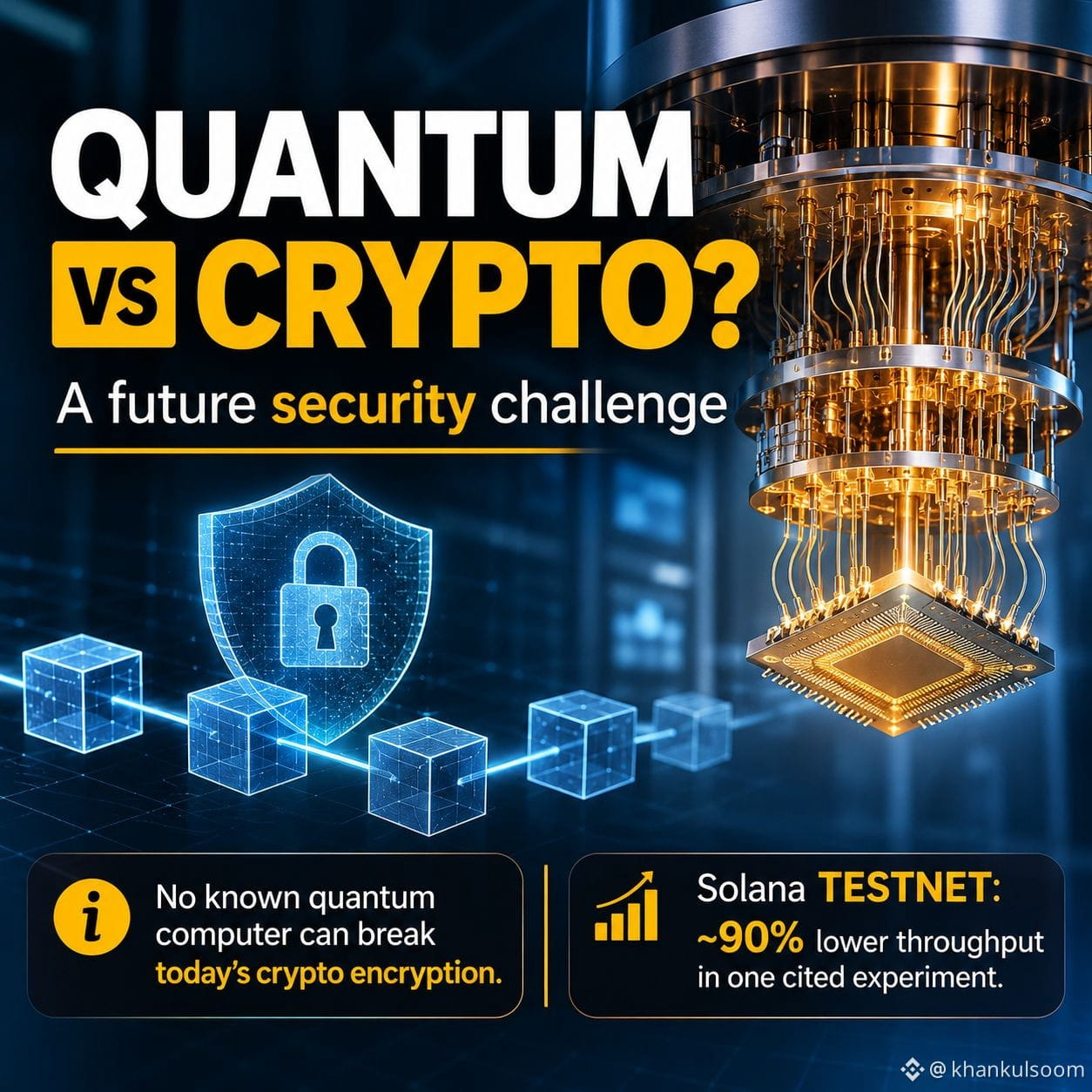
⚠️ COULD QUANTUM COMPUTERS CHANGE THE FUTURE OF CRYPTO?
A new warning from global regulators has raised an important question.
Here's why:
🔹 Quantum computers could eventually threaten today's encryption.
🔹 Quantum-resistant security may make blockchain transactions slower.
🔹 One Solana testnet experiment showed approximately 90% lower throughput.
But don't panic: no known quantum computer can currently break crypto's encryption.
💬 ONE QUESTION:
What matters more for crypto's future?
1️⃣ Maximum SPEED ⚡
2️⃣ Stronger SECURITY 🔐
Comment 1 or 2! 👇
$SOL
{spot}(SOLUSDT)
#solana #sol #blockchain #IsAnthropic’s$1.5TMarketCapJustified? #quantumcomputing
⚠️ COULD QUANTUM COMPUTERS CHANGE THE FUTURE OF CRYPTO?
A new warning from global regulators has raised an important question.
Here's why:
🔹 Quantum computers could eventually threaten today's encryption.
🔹 Quantum-resistant security may make blockchain transactions slower.
🔹 One Solana testnet experiment showed approximately 90% lower throughput.
But don't panic: no known quantum computer can currently break crypto's encryption.
💬 ONE QUESTION:
What matters more for crypto's future?
1️⃣ Maximum SPEED ⚡
2️⃣ Stronger SECURITY 🔐
Comment 1 or 2! 👇
$SOL
#solana #sol #blockchain #IsAnthropic’s$1.5TMarketCapJustified? #quantumcomputing
61

·
--
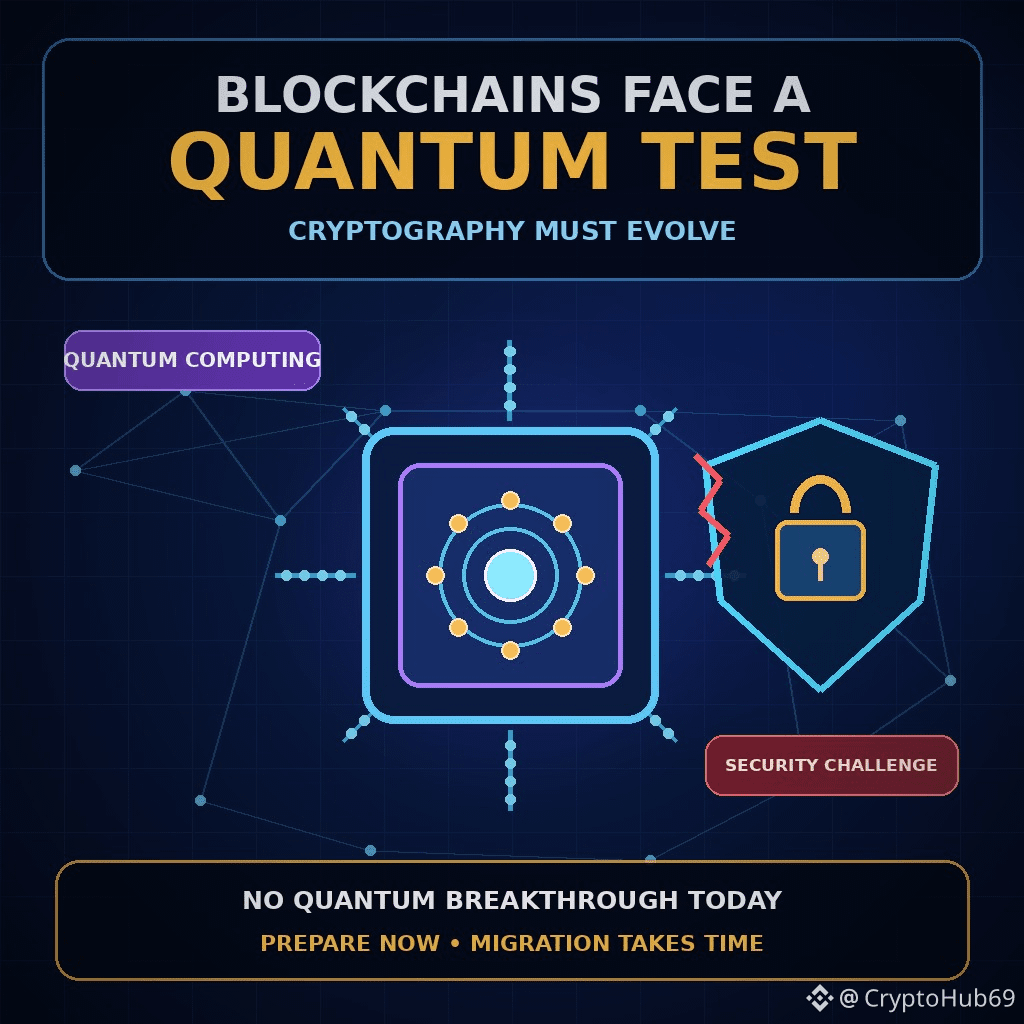
⚠️ QUANTUM COMPUTING COULD BECOME BLOCKCHAIN'S NEXT BIG SECURITY CHALLENGE!
Bitcoin and Ethereum rely on cryptography to protect transactions and prove ownership of digital assets.
But a new warning from the International Organization of Securities Commissions (IOSCO), published on November 19, deserves attention from the entire crypto industry.
Here's why.
⚛️ 1. The quantum computing challenge
Powerful quantum computers could eventually break some of the cryptographic systems currently used to secure digital transactions.
This could create risks for:
Bitcoin wallet security.
Ethereum digital signatures.
Blockchain authentication systems.
Cryptocurrency custody infrastructure.
🔐 2. Is crypto already vulnerable?
Not in the way some headlines suggest.
No known quantum computer can currently break widely used cryptographic systems.
However, IOSCO warns that sufficiently capable systems could emerge within the next five years, according to some industry assessments.
The transition to quantum-resistant cryptography could take several years.
🌐 3. Why blockchain faces a bigger challenge
Traditional financial institutions can coordinate security upgrades through centralized systems.
Public blockchains are different.
Thousands of independent validators, developers, node operators and wallet users may need to coordinate changes.
Upgrading cryptographic signatures could also affect transaction sizes, network capacity and fees.
💬 What do you think? Should Bitcoin and Ethereum developers prioritize quantum-resistant security now, even if it makes future upgrades more complicated?
$ETH $BTC
{spot}(BTCUSDT)
{spot}(ETHUSDT)
#Bitcoin #Ethereum #QuantumComputing
⚠️ QUANTUM COMPUTING COULD BECOME BLOCKCHAIN'S NEXT BIG SECURITY CHALLENGE!
Bitcoin and Ethereum rely on cryptography to protect transactions and prove ownership of digital assets.
But a new warning from the International Organization of Securities Commissions (IOSCO), published on November 19, deserves attention from the entire crypto industry.
Here's why.
⚛️ 1. The quantum computing challenge
Powerful quantum computers could eventually break some of the cryptographic systems currently used to secure digital transactions.
This could create risks for:
Bitcoin wallet security.
Ethereum digital signatures.
Blockchain authentication systems.
Cryptocurrency custody infrastructure.
🔐 2. Is crypto already vulnerable?
Not in the way some headlines suggest.
No known quantum computer can currently break widely used cryptographic systems.
However, IOSCO warns that sufficiently capable systems could emerge within the next five years, according to some industry assessments.
The transition to quantum-resistant cryptography could take several years.
🌐 3. Why blockchain faces a bigger challenge
Traditional financial institutions can coordinate security upgrades through centralized systems.
Public blockchains are different.
Thousands of independent validators, developers, node operators and wallet users may need to coordinate changes.
Upgrading cryptographic signatures could also affect transaction sizes, network capacity and fees.
💬 What do you think? Should Bitcoin and Ethereum developers prioritize quantum-resistant security now, even if it makes future upgrades more complicated?
$ETH $BTC
#Bitcoin #Ethereum #QuantumComputing
1
72
As quantum computing advances, the conversation around network longevity is shifting beyond basic scaling. Proposals like SHRINCS highlight how developers are proactively looking at cryptographic resilience. Securing the base layer against future threats without sacrificing current performance is a massive engineering puzzle. It reminds us that protocol evolution is continuous, and staying ahead of technological horizons remains vital for decentralized infrastructure over the long haul. $BTC #Bitcoin #QuantumComputing #CryptoSecurity
As quantum computing advances, the conversation around network longevity is shifting beyond basic scaling. Proposals like SHRINCS highlight how developers are proactively looking at cryptographic resilience. Securing the base layer against future threats without sacrificing current performance is a massive engineering puzzle. It reminds us that protocol evolution is continuous, and staying ahead of technological horizons remains vital for decentralized infrastructure over the long haul. $BTC #Bitcoin #QuantumComputing #CryptoSecurity
55

·
--

Article
👀IOSCO ADVIERTE SOBRE EL RIESGO DE LA COMPUTACIÓN CUÁNTICA
👀 La Organización Internacional de Comisiones de Valores advierte que bancos, plataformas financieras y blockchains no están preparados para la computación cuántica, que podría comprometer la criptografía que protege billeteras y transacciones. El riesgo principal es robar datos hoy para descifrarlos cuando la tecnología esté disponible.
¿Crees que la industria alcanzará a actualizarse a tiempo? Comenta.👇
#CriptoSeguridad #Blockchain #QuantumComputing
👀IOSCO ADVIERTE SOBRE EL RIESGO DE LA COMPUTACIÓN CUÁNTICA 👀
La Organización Internacional de Comisiones de Valores advierte que bancos, plataformas financieras y blockchains no están preparados para la computación cuántica, que podría comprometer la criptografía que protege billeteras y transacciones. El riesgo principal es robar datos hoy para descifrarlos cuando la tecnología esté disponible.
¿Crees que la industria alcanzará a actualizarse a tiempo? Comenta.👇
#CriptoSeguridad #Blockchain #QuantumComputing
¿Crees que la industria alcanzará a actualizarse a tiempo? Comenta.👇
#CriptoSeguridad #Blockchain #QuantumComputing
187

·
--
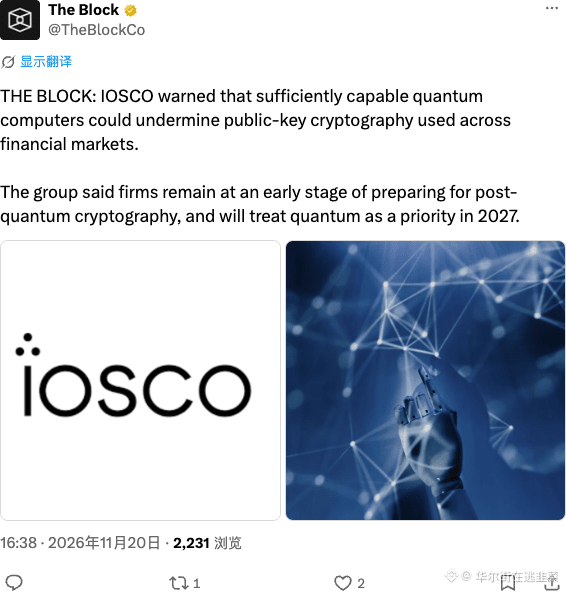
IOSCO警告量子计算可能瞬间破解现有加密体系,机构还得再等几年才真正把后量子密码学提上日程。2027年才动工?这慢得像是在给量子算力做广告。PQC概念还没起飞?赶紧上车,别等币安被物理学家给端了。
#PQC #QuantumComputing #Crypto
IOSCO警告量子计算可能瞬间破解现有加密体系,机构还得再等几年才真正把后量子密码学提上日程。2027年才动工?这慢得像是在给量子算力做广告。PQC概念还没起飞?赶紧上车,别等币安被物理学家给端了。
#PQC #QuantumComputing #Crypto
#PQC #QuantumComputing #Crypto
11
Log in to explore more content
Join global crypto users on Binance Square
⚡️ Get latest and useful information about crypto.
💬 Trusted by the world’s largest crypto exchange.
👍 Discover real insights from verified creators.
Email / Phone number
Trending Topics
1
#CanMarketsReboundAfterThanksgiving?
202,458 views
1,993 Discussing
2
#CouldSpaceX’sOrbitalDataCentersBoostAIChipDemand?
99,642 views
1,197 Discussing
3
#SouthKoreaProposesMandatoryDigitalAssetTransactionDisclosure
5,356 views
111 Discussing
4
#EvolveAtBinanceBlockchainWeek
850,202 views
10,568 Discussing
5
#KoreaFSCSeeksPowerToSuspendCryptoListings
22,660 views
332 Discussing
6
#SouthKoreaPlansToRequireTetherCircleLocalReserves
20,998 views
236 Discussing
7
#UKFCAReportedlyPlansDeFiAuthorizationRules
15,874 views
139 Discussing
8
#ZcashDevelopersUrgeZECMoveToIronwood
34,629 views
171 Discussing
9
#TetherGoldFaces$2.55BUnrealizedLoss
3,506 views
17 Discussing
10
#CorePCEBeatLiftsFedHikeOdds
311,577 views
1,842 Discussing