
#layer2
layer2
4.5M views
25,784 Discussing
Hot
Latest

·
--
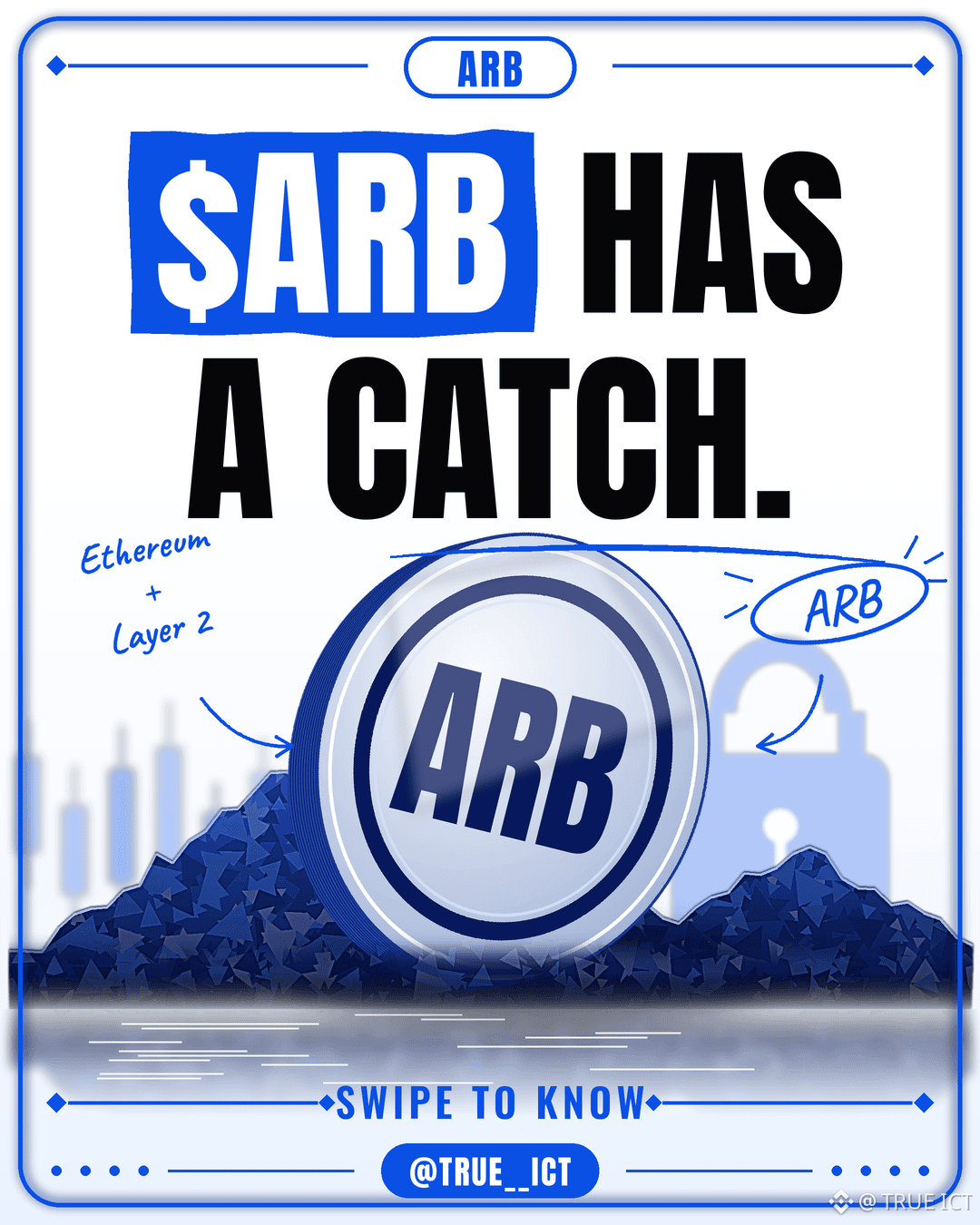
🔷 Will you need to buy $ARB or not?
🔹 Arbitrum is a leading Ethereum Layer 2 using optimistic rollups; ARB governs it.
📊 It is one of the largest Ethereum Layer 2s by activity and locked value.
🚀 Growing stablecoin and DeFi activity on Arbitrum supports its ecosystem.
⚠️ L2s are consolidating, some have already shut down, and a good part of ARB supply is still locked.
Buy: $ARB
#Arbitrum #ARB #Layer2
1
177

🦈 $CELO SHIFTS TO ETHEREUM L2 INFRASTRUCTURE TO CAPTURE REAL SETTLEMENT DEMAND 📊
Infrastructure upgrades mean little without sustained order flow and genuine economic throughput. As $CELO integrates into the OP Stack, the real test lies in whether MiniPay can secure organic payment adoption beyond speculative cycles. 💡
Institutional footprints and tokenomics depend entirely on whether network revenue matches circulating supply pressure when macro liquidity contracts. 🌊
💬 Are you measuring adoption by weekly active users or just headline transaction counts? 👇
⚠️ Not financial advice. Always manage your risk. 🛡️
🏷️ #CELO #Layer2 #SmartMoney #Adoption
🦈 ⚖️
8

🚀 $CELO IS QUIETLY REWIRING GLOBAL MOBILE PAYMENTS WITH MILLIONS OF ACTIVE USERS! 💥
Real-world adoption is where true momentum begins, and $CELO is bridging digital dollars to everyday retail shopping across emerging markets. 🌊 The network transitioned into an Ethereum layer-two powerhouse, fueling massive transaction volume through mobile-first applications like MiniPay. 📊
Beyond fast settlements and fee abstraction, utility drives sustainable network demand through active governance and staking mechanics. 💡 With a major exchange hosting a dedicated trading festival right now, liquidity and community focus are locking onto the ecosystem. 💬 Are you positioning for this mobile payment shift early or waiting for the crowd? 👇
⚠️ Not financial advice. Always manage your risk. 🛡️
🏷️ #CELO #Crypto #Layer2 #Altcoins
🔥 💎
6

·
--
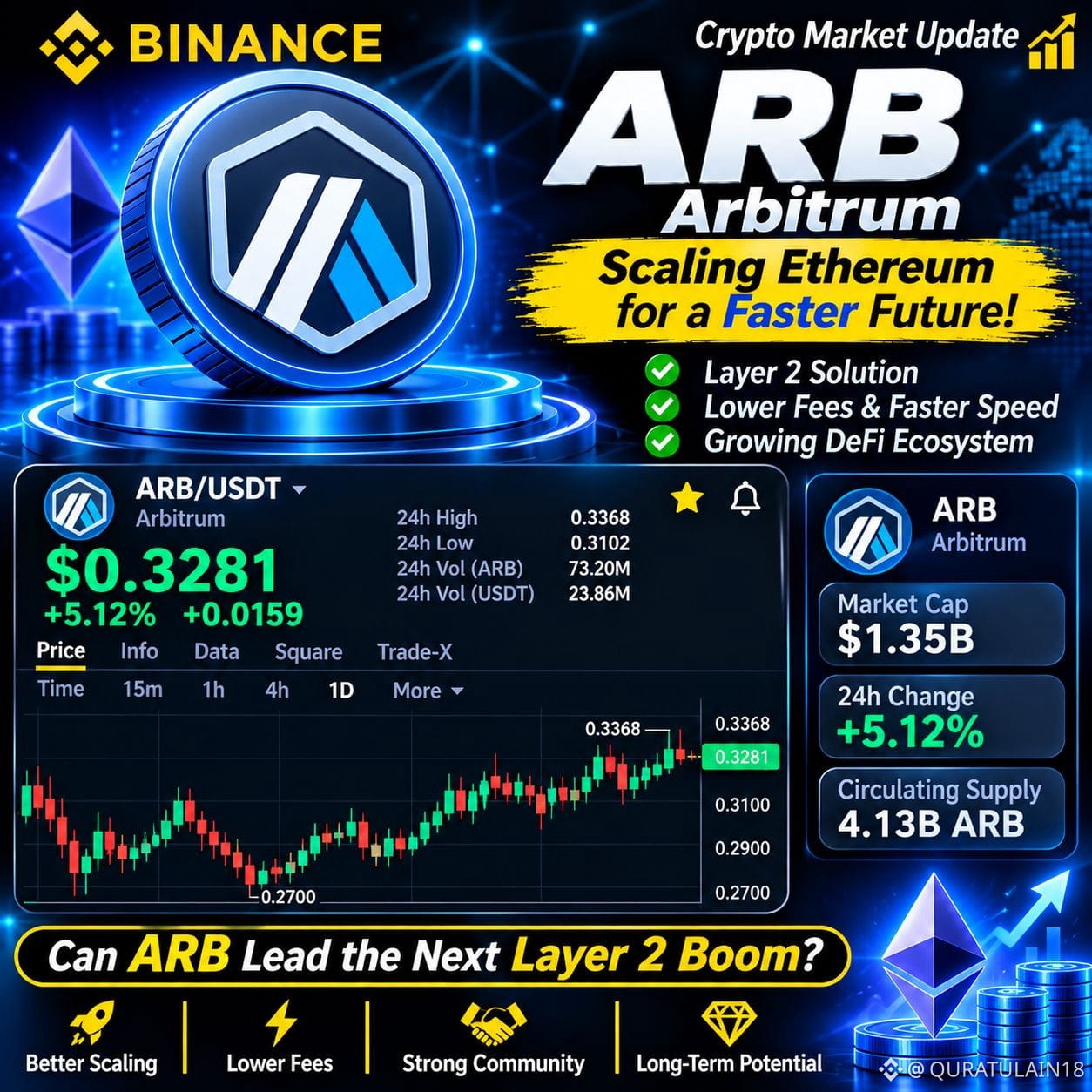
🚀 ARBITRUM (ARB): Can It Lead the Next Layer 2 Revolution?
$ARB
{spot}(ARBUSDT)
Arbitrum aims to make Ethereum transactions faster and more affordable. Its Layer 2 technology supports DeFi applications and a growing blockchain ecosystem.
Can $ARB become one of the leading Layer 2 projects?
#ARB #Arbitrum #Layer2 #Ethereum #CryptoMarket
Educational content only. Not financial advice. Always DYOR.
🚀 ARBITRUM (ARB): Can It Lead the Next Layer 2 Revolution?
$ARB
Arbitrum aims to make Ethereum transactions faster and more affordable. Its Layer 2 technology supports DeFi applications and a growing blockchain ecosystem.
Can $ARB become one of the leading Layer 2 projects?
#ARB #Arbitrum #Layer2 #Ethereum #CryptoMarket
Educational content only. Not financial advice. Always DYOR.
404

·
--
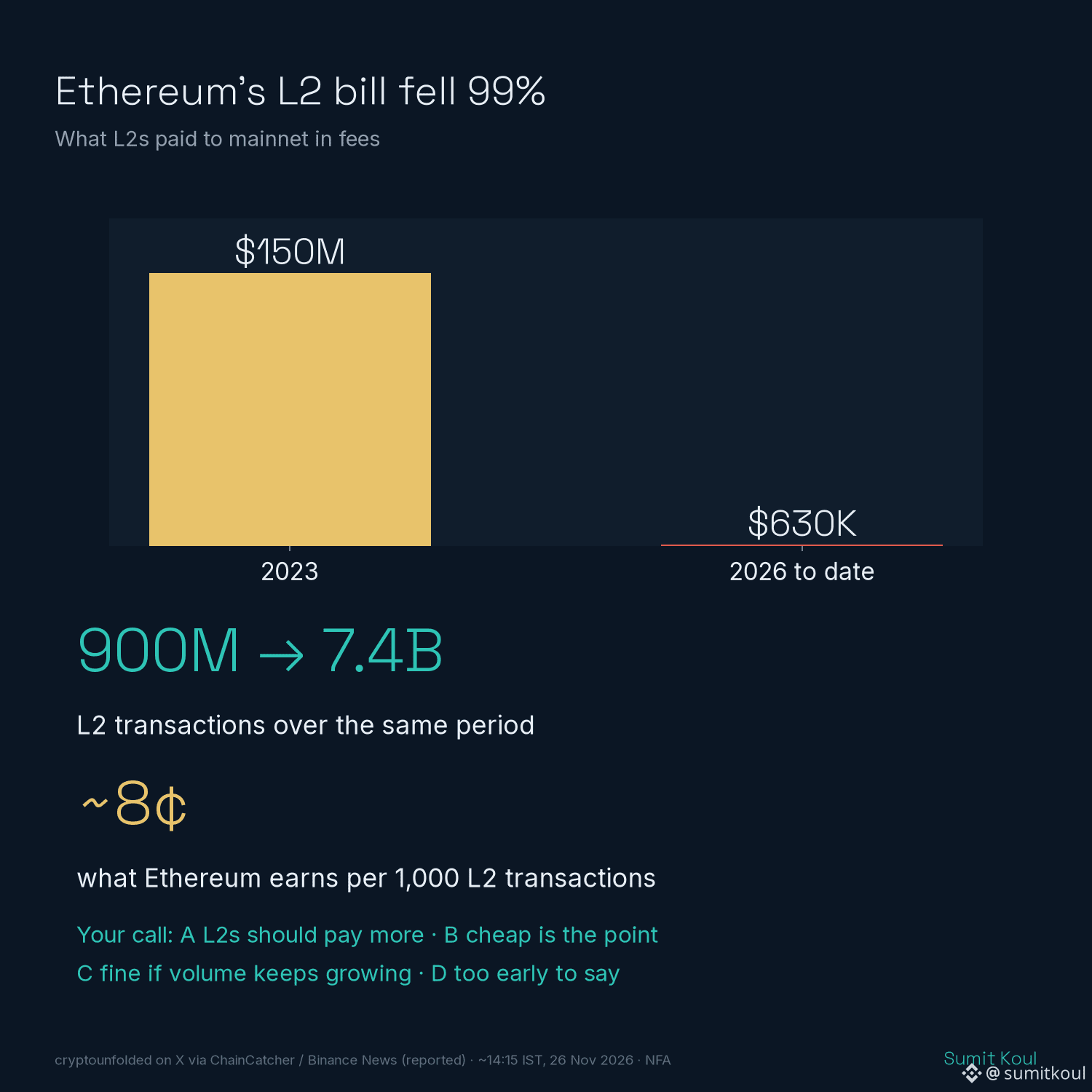
Your call 🗳️ Ethereum L2s paid mainnet $150M in fees in 2023. In 2026 so far: $630,000.
As reported by ChainCatcher, citing X account cryptounfolded:
• L2 fees paid to mainnet: −99% since 2023
• L2 transactions: 900M → 7.4B over the same period
• Ethereum earns ~8 cents per 1,000 L2 transactions
• Reason: blobs pushed rollup costs close to zero
$ETH is ~1,690 today.
So is this a problem for ETH holders?
A) Yes, L2s should pay mainnet more
B) No, cheap transactions are the whole point
C) Fine, as long as volume keeps growing
D) Too early to say
Reply with A, B, C or D and one line on why. I'll pull the best arguments into a follow-up.
Follow for daily Ethereum data that cuts through the noise.
#Ethereum #Layer2 #ETH
Not financial advice.
2


·
--
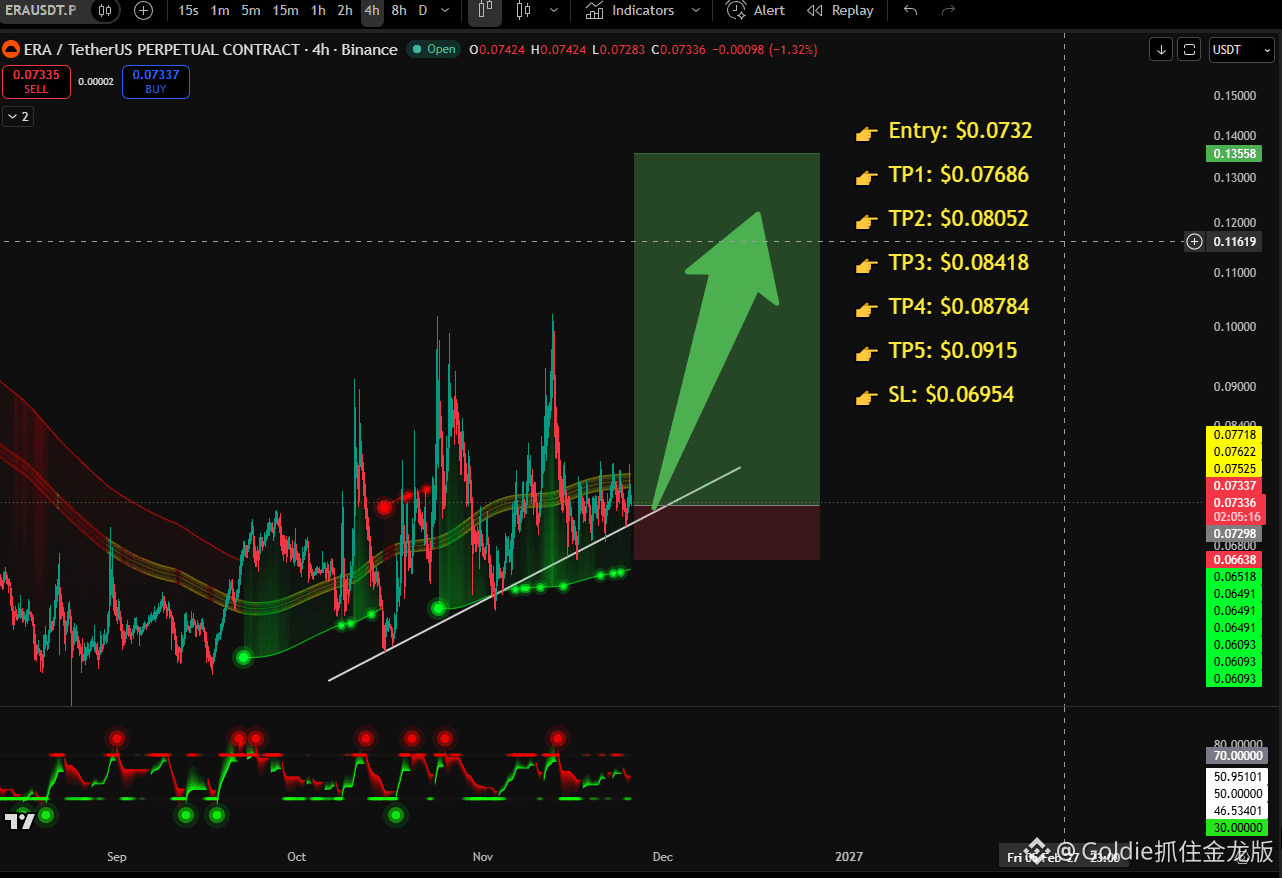
🐉 $ERA (Caldera) is building the Internet of Rollups, and the chart just gave a clean setup.
👉 Caldera lets any team launch a dedicated rollup in minutes, with its Metalayer connecting them into one network
👉 $ERA
powers gas, staking and governance across that rollup ecosystem
👉 Price is holding right at entry after bouncing in the last 24h, still about 96% below its July 2025 high of $1.88, so the upside room is wide if the bounce holds
👉 Entry: $0.0732
👉 TP1: $0.07686
👉 TP2: $0.08052
👉 TP3: $0.08418
👉 TP4: $0.08784
👉 TP5: $0.0915
👉 SL: $0.06954
{future}(ERAUSDT)
#BinanceSquare #Layer2 #seed
🐉 $ERA (Caldera) is building the Internet of Rollups, and the chart just gave a clean setup.
👉 Caldera lets any team launch a dedicated rollup in minutes, with its Metalayer connecting them into one network
👉 $ERA
powers gas, staking and governance across that rollup ecosystem
👉 Price is holding right at entry after bouncing in the last 24h, still about 96% below its July 2025 high of $1.88, so the upside room is wide if the bounce holds
👉 Entry: $0.0732
👉 TP1: $0.07686
👉 TP2: $0.08052
👉 TP3: $0.08418
👉 TP4: $0.08784
👉 TP5: $0.0915
👉 SL: $0.06954
#BinanceSquare #Layer2 #seed
600

Article
Everyone Panicked at $55K. Mantle Just Did Something Interesting.Everyone panicked when $BTC wicked to $55.1K on Saturday. But while the market was busy bleeding, one L2 quietly refused to follow it down.
$MNT is sitting at ~$0.397 right now — up about 7% on the week while Bitcoin is still nursing its wounds and the Fear & Greed Index is pinned at 11, Extreme Fear. That's not a moonshot. But in a week like this, green is a statement.
So what's actually happening on Mantle?
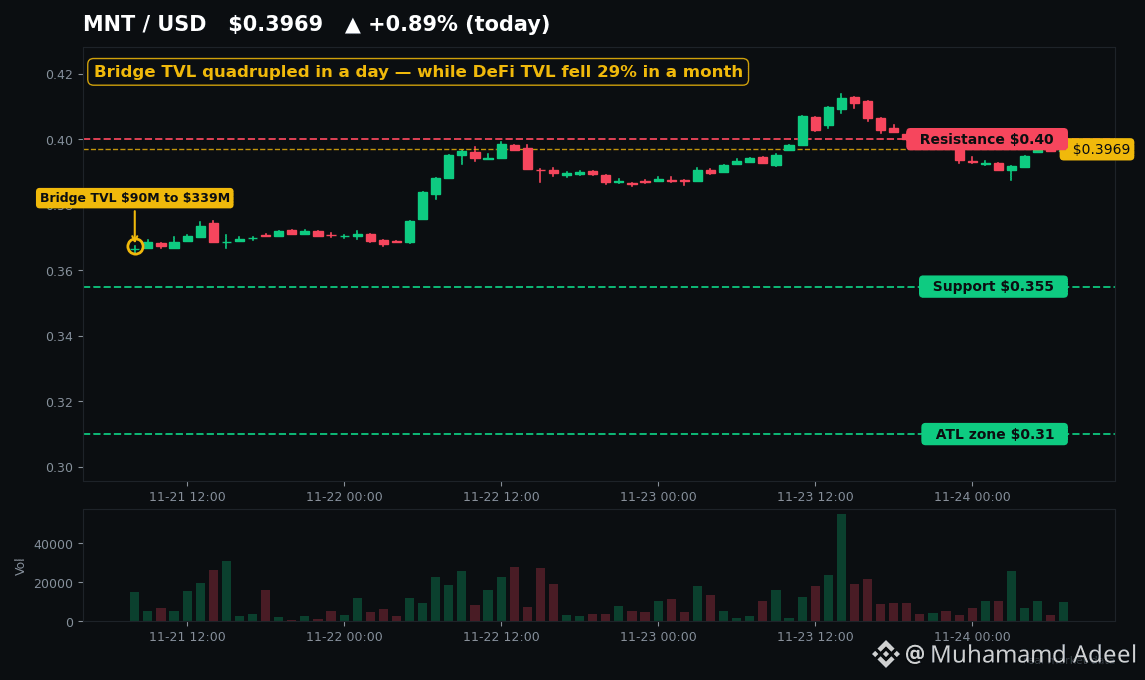
Here's the number that stopped me scrolling. On 18 November, Mantle's bridge TVL went from $90M to $339M in a single day. It nearly quadrupled overnight — and it's still sitting around $324M. Capital moved onto the chain fast. But it's mostly parked: DeFi TVL is just $79M, down 29% in a month, while $1.18B sits bridged. Money at the door, almost nobody home yet.
And today, Mantle's governance did something interesting. MIP-29 passed with 213M votes to just 1.8K against — a $30M capital call from the treasury into the Mantle EcoFund. Real money, voted on-chain, deploying while everyone else is hiding. The vote on MIP-36, a strategic partnership with Halo Prime, stays open until 26 November.
Mantle just listed on GMO Coin — its first regulated Japanese exchange. It tokenized Anthropic stock around the Nasdaq debut, its fourth tokenized IPO this year after SpaceX, Bending Spoons and Jersey Mike's. Tokenized assets on Mantle now number 1,500+, up from 71 at the start of 2026. The RWA machine is real. The chain itself? One researcher sampled 2,880 blocks and called it "cheap and mostly empty." That's the tension in one sentence.
Now the levels. $MNT is parked right under $0.40, a ceiling it has now tested four times. A daily close above $0.40 opens the path toward $0.45, the level that would start to break the month-long downtrend. Lose $0.355 and the door opens to $0.31, the all-time-low zone from October 2023. The chart will tell you first — check the $MNT chart and watch that $0.40 line.
History says be careful. The last time MNT sat here, in June-July, it bounced 50% in a month — then gave it all back in October. The $2.86 all-time high from October 2025, built on the same RWA story, has faded 86% since.
The honest risk: nearly half of all MNT — about 2.9 billion tokens — still sits in the treasury, releasable by governance vote at any time. The token captures no share of network fees, and Mantle's DeFi TVL is a rounding error next to Base and Arbitrum. If $BTC loses $55.1K, L2s bleed first.
But here's the take. $ETH L2s are supposed to be where the action is — and right now Mantle is the one L2 where capital is arriving, governance is deploying cash, and the token is holding green in Extreme Fear. The $0.40 level decides whether the market believes it.
Watch the bridge flows, watch the MIP-36 vote on 26 November, and watch $0.40. That's where this story gets decided.
#Mantle #Layer2
Not financial advice. DYOR.
Everyone Panicked at $55K. Mantle Just Did Something Interesting.
Everyone panicked when $BTC wicked to $55.1K on Saturday. But while the market was busy bleeding, one L2 quietly refused to follow it down.
$MNT is sitting at ~$0.397 right now — up about 7% on the week while Bitcoin is still nursing its wounds and the Fear & Greed Index is pinned at 11, Extreme Fear. That's not a moonshot. But in a week like this, green is a statement.
So what's actually happening on Mantle?
Here's the number that stopped me scrolling. On 18 November, Mantle's bridge TVL went from $90M to $339M in a single day. It nearly quadrupled overnight — and it's still sitting around $324M. Capital moved onto the chain fast. But it's mostly parked: DeFi TVL is just $79M, down 29% in a month, while $1.18B sits bridged. Money at the door, almost nobody home yet.
And today, Mantle's governance did something interesting. MIP-29 passed with 213M votes to just 1.8K against — a $30M capital call from the treasury into the Mantle EcoFund. Real money, voted on-chain, deploying while everyone else is hiding. The vote on MIP-36, a strategic partnership with Halo Prime, stays open until 26 November.
Mantle just listed on GMO Coin — its first regulated Japanese exchange. It tokenized Anthropic stock around the Nasdaq debut, its fourth tokenized IPO this year after SpaceX, Bending Spoons and Jersey Mike's. Tokenized assets on Mantle now number 1,500+, up from 71 at the start of 2026. The RWA machine is real. The chain itself? One researcher sampled 2,880 blocks and called it "cheap and mostly empty." That's the tension in one sentence.
Now the levels. $MNT is parked right under $0.40, a ceiling it has now tested four times. A daily close above $0.40 opens the path toward $0.45, the level that would start to break the month-long downtrend. Lose $0.355 and the door opens to $0.31, the all-time-low zone from October 2023. The chart will tell you first — check the $MNT chart and watch that $0.40 line.
History says be careful. The last time MNT sat here, in June-July, it bounced 50% in a month — then gave it all back in October. The $2.86 all-time high from October 2025, built on the same RWA story, has faded 86% since.
The honest risk: nearly half of all MNT — about 2.9 billion tokens — still sits in the treasury, releasable by governance vote at any time. The token captures no share of network fees, and Mantle's DeFi TVL is a rounding error next to Base and Arbitrum. If $BTC loses $55.1K, L2s bleed first.
But here's the take. $ETH L2s are supposed to be where the action is — and right now Mantle is the one L2 where capital is arriving, governance is deploying cash, and the token is holding green in Extreme Fear. The $0.40 level decides whether the market believes it.
Watch the bridge flows, watch the MIP-36 vote on 26 November, and watch $0.40. That's where this story gets decided.
#Mantle #Layer2
Not financial advice. DYOR.
3

·
--
Actividad récord en Layer-2 impulsa a Ethereum
Las soluciones de escalado de segunda capa sobre Ethereum alcanzaron un volumen diario récord de transacciones. La compresión de datos y la reducción de tarifas operativas hicieron que migrar operaciones fuera de la cadena principal sea más atractivo para usuarios y desarrolladores.
Este aumento de uso en redes secundarias alivia la congestión de la red base y mejora la experiencia de pago, fortaleciendo la utilidad del ecosistema sin depender de actualizaciones inmediatas en la capa principal.
Menores costos de transacción incentivan más operaciones en cadena, aumentando la demanda de la moneda nativa para pagar gas en las soluciones de segunda capa, lo que puede generar presión compradora inmediata en el precio spot.
$ETH
· Dirección estimada: Alcista
· Nivel de incertidumbre: Moderado
· Probabilidad de reacción: Se espera un movimiento ascendente en las próximas sesiones a medida que el mercado descuenta mayor uso de la red y menor fricción en los costos de operación.
#Ethereum #Layer2 #Cripto BinanceSquare Escalabilidad
12

·
--
Article
¿Dónde quedan los datos de un rollup cuando Ethereum deja de servirlos?Un explorador de capa 2 puede mostrar un pago confirmado mientras un nodo de Ethereum muestra «datos no disponibles» al consultar el lote. Entender qué guarda cada uno ayuda a saber dónde buscar el recibo y dónde recuperar los datos.
Qué publica el rollup
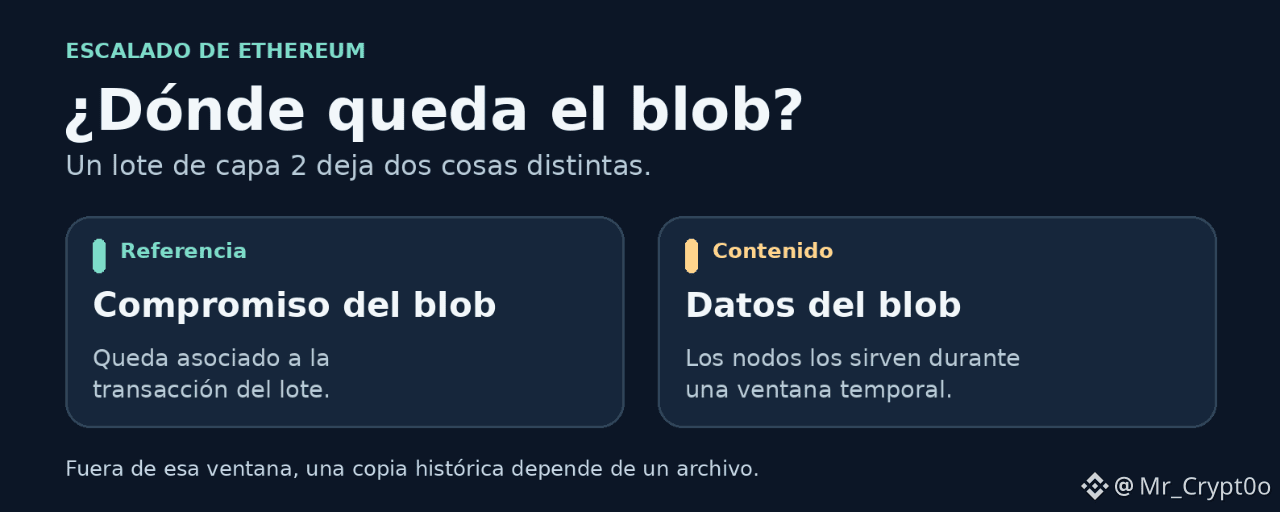
Un rollup ejecuta operaciones en su propia red y agrupa sus datos para publicarlos. Cuando usa blobs de Ethereum, la transacción del lote lleva una referencia verificable y el contenido comprimido se pone a disposición por separado. Las tarifas por publicar esos datos se pagan en $ETH en la red principal.
El contenido del blob permite a terceros comprobar las operaciones publicadas según el diseño del rollup. La referencia sirve para contrastar que una copia corresponde al compromiso original. Reconstruir el lote requiere recuperar los datos completos.
Cuánto tiempo se pueden consultar
La documentación de Ethereum describe una ventana de disponibilidad de unos 18 días. Durante ese plazo, el protocolo ayuda a que los participantes consigan los datos para verificarlos. Vencida la ventana, los nodos pueden dejar de servir los datos del blob. Los archivos que conservan copias permiten consultas posteriores.
Un pago ficticio, seis semanas después
Ana paga una entrada digital en una capa 2. Seis semanas más tarde, el explorador de esa red todavía muestra su recibo. El nodo de Ethereum que consulta ya dejó de servir los datos del blob de ese lote. Si necesita reconstruir qué operaciones se agruparon con la suya, necesitará una copia guardada por el rollup u otro archivo compatible. Puede contrastar esa copia con la referencia de la transacción en Ethereum.
Qué mirar en el explorador
Hay tres datos que responden a preguntas distintas. El recibo de capa 2 muestra el resultado que la red registró para el pago. La transacción de publicación indica qué referencia quedó en Ethereum. La descarga del blob permite examinar los datos del lote. Cuando falla la última consulta, conviene identificar el nodo consultado y si el rollup conserva un archivo histórico.
[Binance Academy](https://www.binance.com/en/academy/glossary/eip-4844) y documentación de Ethereum («Disponibilidad de datos», EIP-4844).
Información recopilada con ayuda de IA.
El autor puede recibir recompensas de Binance.
#Ethereum #Layer2
¿Dónde quedan los datos de un rollup cuando Ethereum deja de servirlos?
Un explorador de capa 2 puede mostrar un pago confirmado mientras un nodo de Ethereum muestra «datos no disponibles» al consultar el lote. Entender qué guarda cada uno ayuda a saber dónde buscar el recibo y dónde recuperar los datos.
Qué publica el rollup
Un rollup ejecuta operaciones en su propia red y agrupa sus datos para publicarlos. Cuando usa blobs de Ethereum, la transacción del lote lleva una referencia verificable y el contenido comprimido se pone a disposición por separado. Las tarifas por publicar esos datos se pagan en $ETH en la red principal.
El contenido del blob permite a terceros comprobar las operaciones publicadas según el diseño del rollup. La referencia sirve para contrastar que una copia corresponde al compromiso original. Reconstruir el lote requiere recuperar los datos completos.
Cuánto tiempo se pueden consultar
La documentación de Ethereum describe una ventana de disponibilidad de unos 18 días. Durante ese plazo, el protocolo ayuda a que los participantes consigan los datos para verificarlos. Vencida la ventana, los nodos pueden dejar de servir los datos del blob. Los archivos que conservan copias permiten consultas posteriores.
Un pago ficticio, seis semanas después
Ana paga una entrada digital en una capa 2. Seis semanas más tarde, el explorador de esa red todavía muestra su recibo. El nodo de Ethereum que consulta ya dejó de servir los datos del blob de ese lote. Si necesita reconstruir qué operaciones se agruparon con la suya, necesitará una copia guardada por el rollup u otro archivo compatible. Puede contrastar esa copia con la referencia de la transacción en Ethereum.
Qué mirar en el explorador
Hay tres datos que responden a preguntas distintas. El recibo de capa 2 muestra el resultado que la red registró para el pago. La transacción de publicación indica qué referencia quedó en Ethereum. La descarga del blob permite examinar los datos del lote. Cuando falla la última consulta, conviene identificar el nodo consultado y si el rollup conserva un archivo histórico.
Binance Academy y documentación de Ethereum («Disponibilidad de datos», EIP-4844).
Información recopilada con ayuda de IA.
El autor puede recibir recompensas de Binance.
#Ethereum #Layer2
96

L2 洗牌比想象中更残酷。
曾经主打娱乐与消费级应用的 ZKsync 生态 Layer 2「Sophon」确认将于 11 月 30 日永久关停主网,并将 11 月 25 日设为建议最后提款期限。
还在上面有跨链资产或交互余额的,务必立刻检查撤离——叙事退潮后,连链本身都会成为历史。
$ETH #Layer2 #ZKsync
L2 洗牌比想象中更残酷。
曾经主打娱乐与消费级应用的 ZKsync 生态 Layer 2「Sophon」确认将于 11 月 30 日永久关停主网,并将 11 月 25 日设为建议最后提款期限。
还在上面有跨链资产或交互余额的,务必立刻检查撤离——叙事退潮后,连链本身都会成为历史。
$ETH #Layer2 #ZKsync
曾经主打娱乐与消费级应用的 ZKsync 生态 Layer 2「Sophon」确认将于 11 月 30 日永久关停主网,并将 11 月 25 日设为建议最后提款期限。
还在上面有跨链资产或交互余额的,务必立刻检查撤离——叙事退潮后,连链本身都会成为历史。
$ETH #Layer2 #ZKsync
219

·
--
74亿笔交易,只给以太坊交了63万美元“房租”。
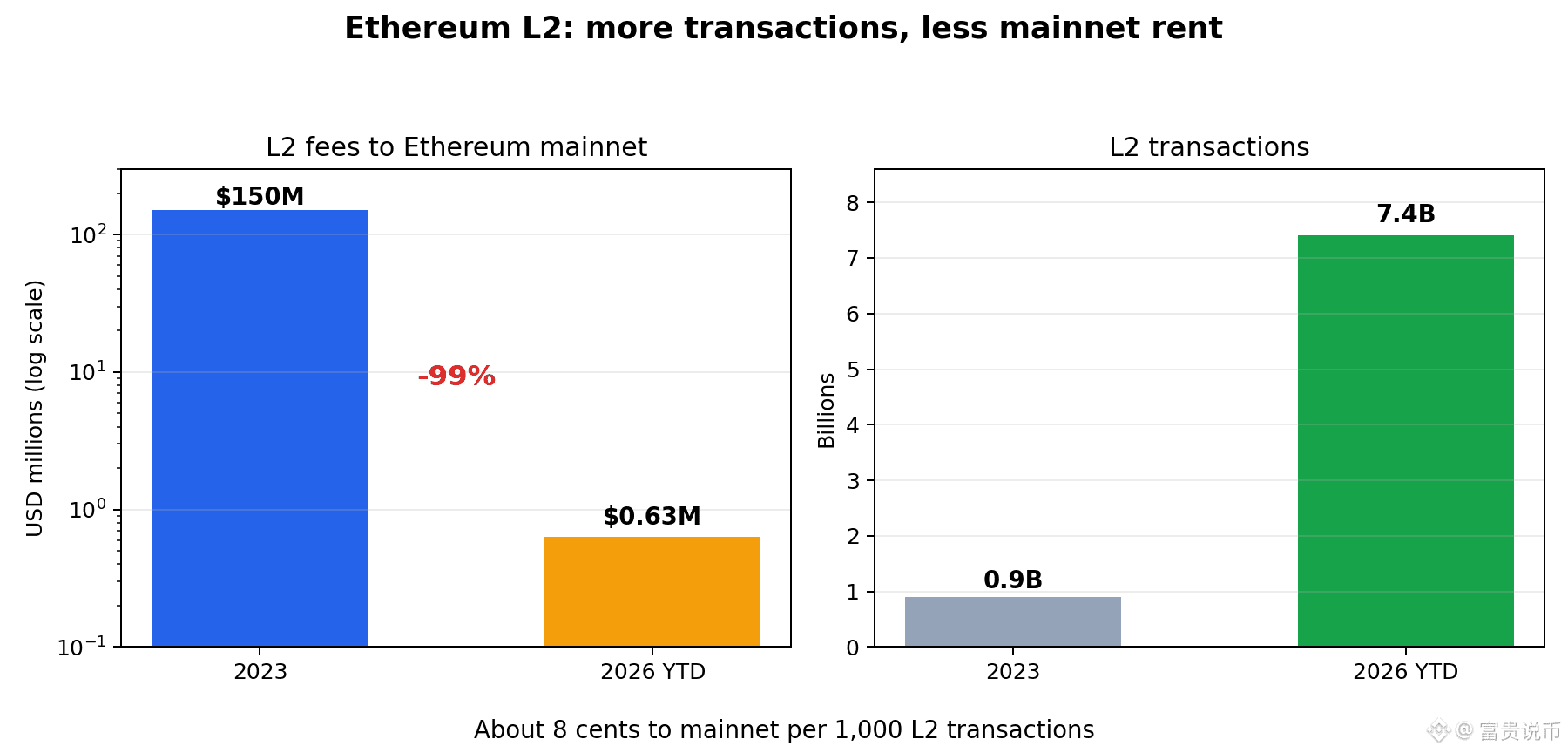
这组数比ETH今天涨没涨更扎心:L2交易量从9亿笔涨到74亿笔,主网费用却从2023年的1.5亿美元降到今年迄今63万美元,降幅约99%,平均每1000笔L2交易只给主网带来约8美分。
我的看法是,Blob把Rollup成本压到接近零,短期确实削弱了“L2增长必然利好ETH”的旧叙事。用户便宜了,应用活跃了,但价值更多停在L2排序器和应用层,ETH想重新吃到这块蛋糕,要看Blob费用市场、基于排序和收益回流机制能不能落地。只看交易量,不看每笔交易给ETH留下多少钱,很容易高估基本面。
你觉得L2繁荣最后会反哺ETH,还是会把价值截留在二层?关注我,每天看盘前先看这里。
$ETH #以太坊 #Layer2
内容仅供参考,不构成投资建议。
31

·
--
【B17|Layer 2为什么值得研究?】
以太坊扩容并不是简单地把主网所有参数调大。
部分Layer 2方案会在主网之外执行交易,再通过不同机制向以太坊提交数据或证明,以获得一定的主网安全保障。
这有机会降低用户的平均交易成本,但不同方案在安全性、退出机制和去中心化程度上存在差异。
研究$ETH生态时,不能只看哪个网络手续费便宜。
你选择Layer 2最在意成本还是安全性?
#ETH #Layer2
【B17|Layer 2为什么值得研究?】
以太坊扩容并不是简单地把主网所有参数调大。
部分Layer 2方案会在主网之外执行交易,再通过不同机制向以太坊提交数据或证明,以获得一定的主网安全保障。
这有机会降低用户的平均交易成本,但不同方案在安全性、退出机制和去中心化程度上存在差异。
研究$ETH 生态时,不能只看哪个网络手续费便宜。
你选择Layer 2最在意成本还是安全性?
#ETH #Layer2
以太坊扩容并不是简单地把主网所有参数调大。
部分Layer 2方案会在主网之外执行交易,再通过不同机制向以太坊提交数据或证明,以获得一定的主网安全保障。
这有机会降低用户的平均交易成本,但不同方案在安全性、退出机制和去中心化程度上存在差异。
研究$ETH 生态时,不能只看哪个网络手续费便宜。
你选择Layer 2最在意成本还是安全性?
#ETH #Layer2
57

·
--
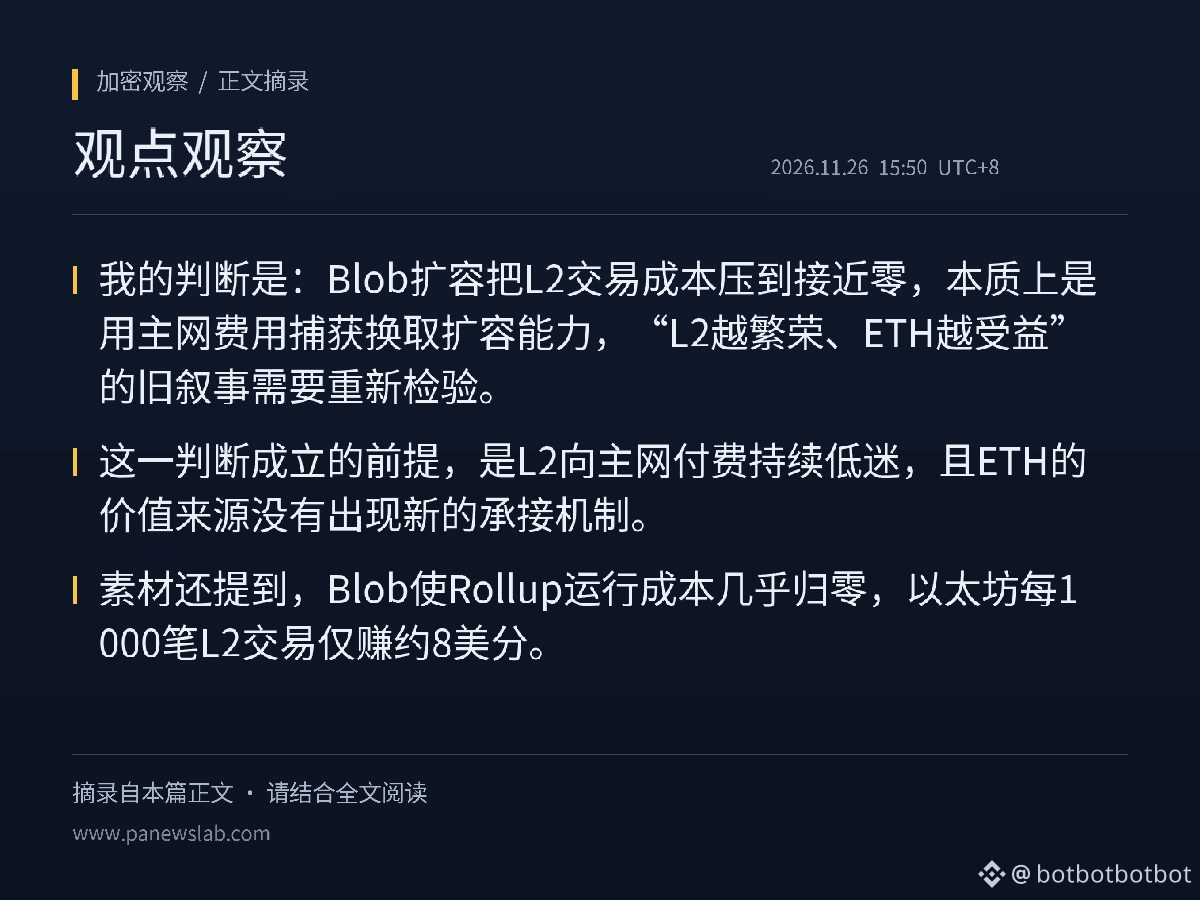
我的判断是:Blob扩容把L2交易成本压到接近零,本质上是用主网费用捕获换取扩容能力,“L2越繁荣、ETH越受益”的旧叙事需要重新检验。这一判断成立的前提,是L2向主网付费持续低迷,且ETH的价值来源没有出现新的承接机制。
据PANews 11月26日援引unfolded的数据,以太坊L2在2026年至今仅向主网支付63万美元费用,较2023年的1.5亿美元下降99%;同期L2交易量从9亿笔增至74亿笔。素材还提到,Blob使Rollup运行成本几乎归零,以太坊每1000笔L2交易仅赚约8美分。这组对比说明:交易量增长与主网收入之间已经脱钩,费用下降并非需求萎缩,而是产品机制主动压低的结果。
据此推断,L2的扩张目前更像“免费高速公路”:车流越多,不等于收费站收入越高。ETH持有者关心的价值捕获,可能要从L2付费转向结算安全需求、质押与燃烧机制等路径。但本次摘要未提供这些路径的量化数据,因此只能列为待验证方向。
情景上,如果L2费用长期低迷,而主网结算需求或ETH销毁量没有同步上升,那么“L2增长利好ETH”的推论会继续弱化;反之,若出现L2向主网付费回升、blob费用需求增加或燃烧量抬升,判断就需要修正。
值得跟踪的指标是:L2向主网付费额、blob费用、ETH销毁量,观察窗口可放在后续季度数据更新时。本文仅为机制分析,不构成投资建议。
$ETH
#ETH #Layer2
资料来源:
PANews(原发布 11-26 15:28 北京时间)
https://www.panewslab.com/zh/articles/01a216c1-cb37-7509-af1f-2ca22d1c072c
138

·
--
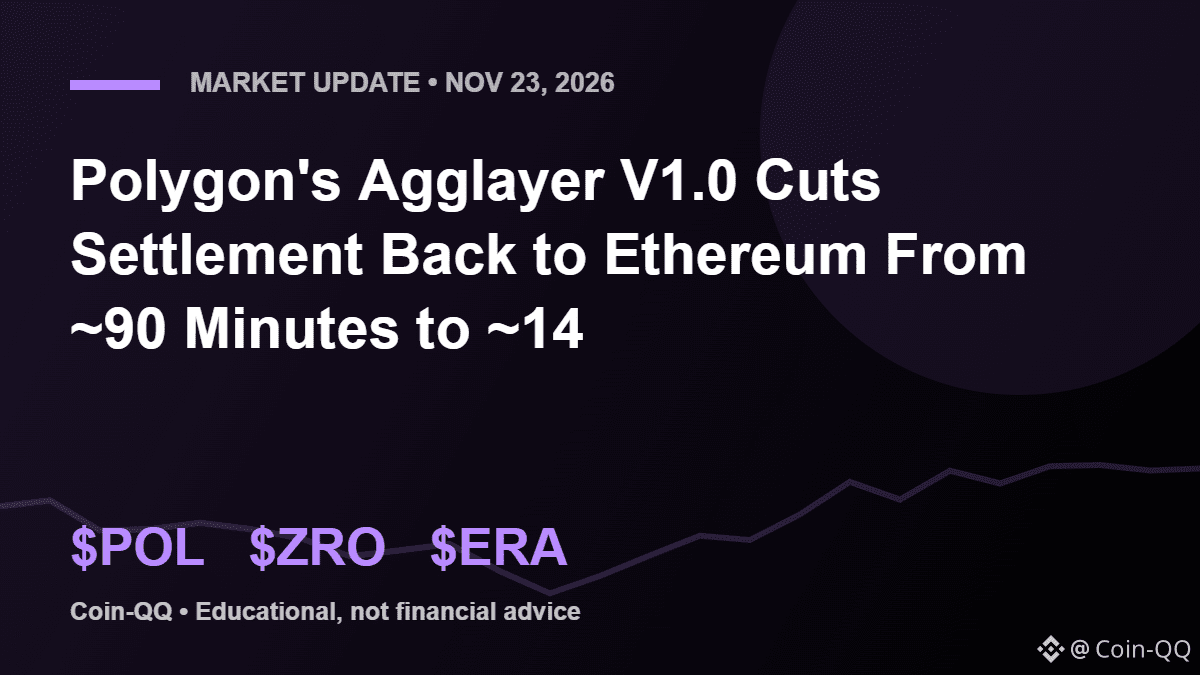
🔗 Polygon's Agglayer V1.0 Cuts Settlement Back to Ethereum From ~90 Minutes to ~14
Polygon launched Agglayer V1.0. In tests, moving assets back to Ethereum dropped from roughly 90 minutes to about 14 minutes, backed by zero-knowledge proofs.
Why it's important 👇
🔹 Faster exits = better UX for users and institutions
🔹 Interoperability is one of the strongest infrastructure narratives
🔹 $POL held up better than most majors over the last 30 days
Related interoperability plays:
$ZRO (LayerZero messaging) and $ERA (Caldera, a network of connected rollups) both bet on a multi-chain future where moving between chains feels invisible.
📌 What to watch:
✅ Real volume settling through Agglayer
✅ Institutional deployments planned for 2027
✅ Whether users actually notice the speed difference
💬 Will users ever stop caring which chain they're on? 👇
⚠️ Educational content only, not financial advice. DYOR.
#Polygon #Interoperability #Layer2 #BinanceSquare
2
309

🚀 WHAT IF CRYPTO'S NEXT BIG BREAKTHROUGH ISN'T A NEW COIN — BUT MAKING BLOCKCHAINS EASIER TO USE?
Ethereum is powerful, but high network demand can make transactions expensive.
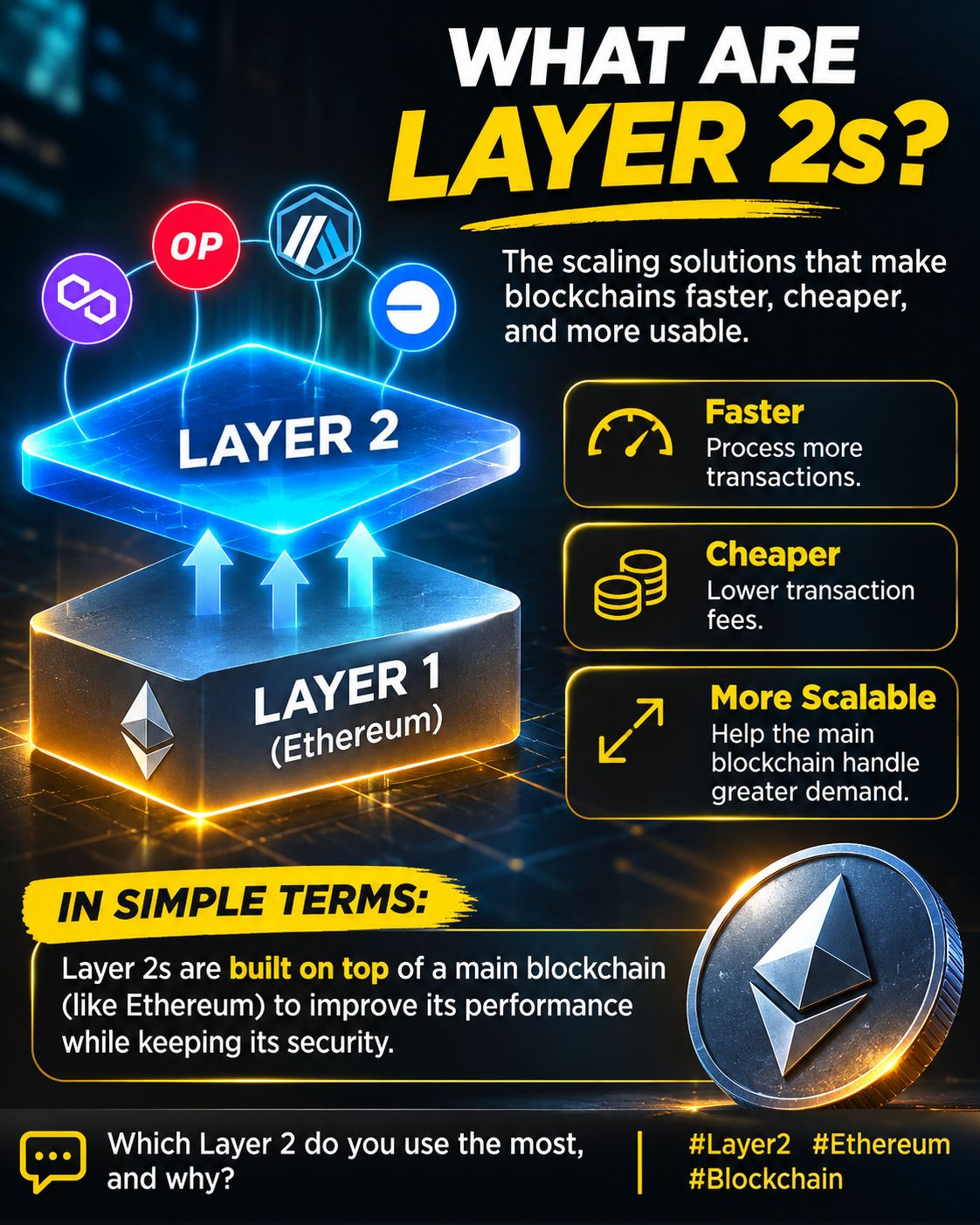
That's where Layer 2 (L2) networks come in. ⚡
Think of Ethereum as a busy highway. Layer 2s help handle traffic more efficiently without requiring every transaction to be executed directly on the main network.
🔍 WHY LAYER 2 MATTERS:
⚡ Speed: Many L2s can process transactions faster.
💰 Lower fees: Moving activity off the main execution layer can make transfers and applications more affordable.
🌐 Scalability: More users can interact with DeFi, gaming, payments and other blockchain applications.
Some notable Ethereum scaling networks include Arbitrum, Optimism, Base and zkSync.
But there's a catch. 👇
⚠️ Not all Layer 2 networks have identical security assumptions. Sequencer design, withdrawal mechanisms, upgrade controls and decentralization still matter.
🧠 MY TAKE:
Crypto adoption won't depend on price charts alone.
It also depends on whether ordinary people can use blockchain applications without worrying about complicated transactions and unpredictable fees.
Better infrastructure could be just as important as the next major token launch.
💬 Which Ethereum scaling network do you find most useful — Arbitrum, Optimism, Base, or another one?
#Layer2 #Ethereum #blockchain #cryptoeducation
1
659


BTC跌3.19%就喊熊了,$ETH家的L2跌得更难看:今早SoSoValue数据,L2板块24小时跌5.69%,Mantle跌9.55%,ZK跌7.81%,Starknet跌7.02%,差不多是BTC的两三倍。反差来了:跌最狠的,往往是消息落地后弹最快的,今晚21:30 PCE就是裁判哨。扣1先抄L2,扣2 BTC没站稳6万别碰小币。
$ZK $STRK #Layer2 #以太坊
BTC跌3.19%就喊熊了,$ETH 家的L2跌得更难看:今早SoSoValue数据,L2板块24小时跌5.69%,Mantle跌9.55%,ZK跌7.81%,Starknet跌7.02%,差不多是BTC的两三倍。反差来了:跌最狠的,往往是消息落地后弹最快的,今晚21:30 PCE就是裁判哨。扣1先抄L2,扣2 BTC没站稳6万别碰小币。
$ZK $STRK #Layer2 #以太坊
$ZK $STRK #Layer2 #以太坊

13

·
--
🔵 Base is now the number 2 chain by DeFi TVL.
DefiLlama data shows about 5.14 billion dollars locked on the Ethereum layer-2, behind only Ethereum at about 36.4 billion dollars, and ahead of Solana (about 4.7 billion), Tron (about 4.4 billion) and BNB Chain (about 4.3 billion).
Layer-2s keep pulling liquidity in a tough market. Which chain do you use most for DeFi?
#Base #DeFi #Ethereum #Layer2
25
Article
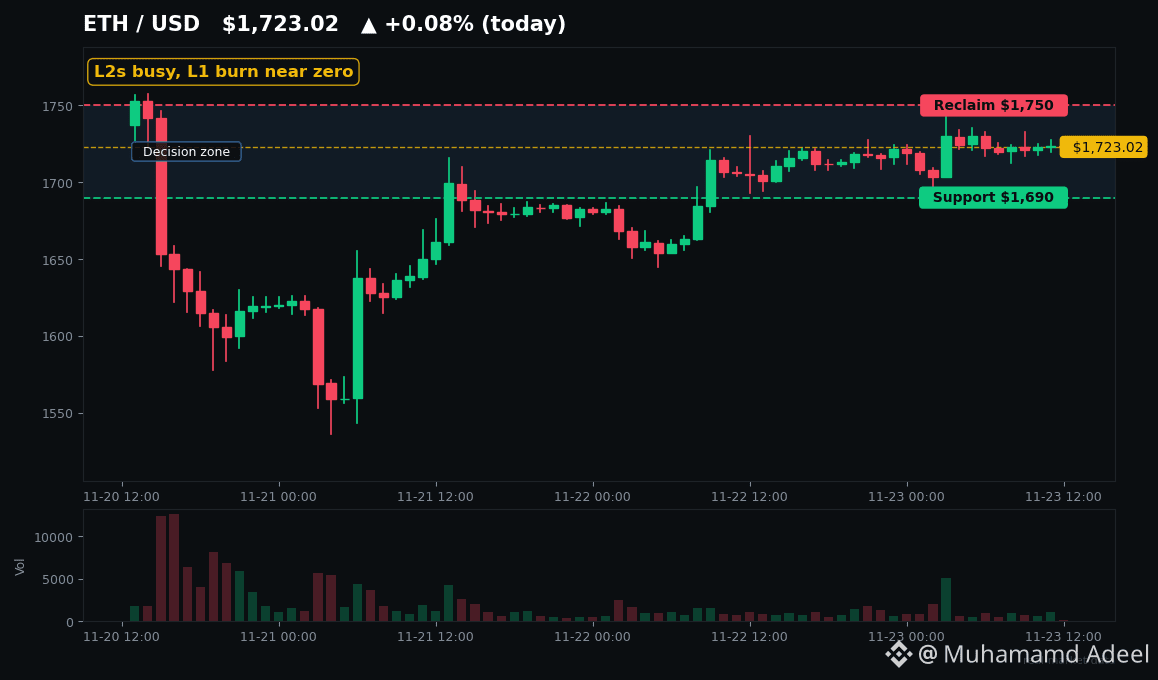
$ETH L2s Are Busy. L1 Gets Paid Almost Nothing.ETH wicked to $1,536 on Saturday — then clawed back above $1,700 on Monday, trading around $1,720.
But here's the part nobody's talking about: while price was crashing, Ethereum's Layer 2s never slowed down.
**The activity is real. The payment isn't.**
Today Base processed 8.42M transactions, Arbitrum One 955.7K and OP Mainnet 2.30M (growthepie, Nov 23). Tap $ARB and $OP to see how their charts are reacting to that usage.
Now look at what mainnet earned from all that activity: DeFiLlama shows only about $47K of ETH burned in 24 hours, roughly $6.7M of chain revenue in 30 days.
That split is now an open fight. Arca's Jeff Dorman called Vitalik Buterin's Nov 8 store-of-value pitch "really misguided," arguing L2 success starved L1 fees. BitMine's Tom Lee says the opposite: the sell-off is external liquidity (Nvidia margin selling, cash raised ahead of the Anthropic IPO), not broken fundamentals. Lee chairs BitMine, which held 6,077,745 ETH as of Nov 15 — so he's talking his book, but he's also putting money behind it.
**Institutions are still building on ETH**
HSBC just opened its tokenised Hong Kong dollar money market fund to retail on Ethereum — reported Nov 22, fund size about $2.4B at end-October, entry from HK$100 via its app. Ethereum was the sole public chain at launch. Honest caveat: the fund itself holds no ETH. It's infrastructure adoption, not a buy order.
Stakers are voting the same way. On Nov 23 the staking entry queue sat at 731.5K ETH versus only 95.6K ETH in the exit queue (Castle Labs), with 44.6M ETH staked in total — 36.5% of supply (Nov 21). Holders are locking up, not fleeing.
**The levels that decide this week**
Tap $ETH and check the chart yourself: support sits at $1,690–$1,700, and trader Ted Pillows flagged $1,750 on Nov 22 — reclaim it, or risk a new low. Below $1,700, Saturday's $1,536 wick is back in play.
The risk is real: US spot ETH ETFs lost $97.3M on Nov 20 (Farside), $305.8M on the week and about $1.07B in November — eight straight outflow weeks. Fear & Greed is 11, Extreme Fear (alternative.me), and Monday's bounce leaned on short covering, not fresh spot demand. Glamsterdam still has no confirmed mainnet date.
So which story wins — busy L2s and locked staking, or an L1 that barely gets paid? Tell me below.
#Ethereum #Layer2
Not financial advice. DYOR.
$ETH L2s Are Busy. L1 Gets Paid Almost Nothing.
ETH wicked to $1,536 on Saturday — then clawed back above $1,700 on Monday, trading around $1,720.
But here's the part nobody's talking about: while price was crashing, Ethereum's Layer 2s never slowed down.
**The activity is real. The payment isn't.**
Today Base processed 8.42M transactions, Arbitrum One 955.7K and OP Mainnet 2.30M (growthepie, Nov 23). Tap $ARB and $OP to see how their charts are reacting to that usage.
Now look at what mainnet earned from all that activity: DeFiLlama shows only about $47K of ETH burned in 24 hours, roughly $6.7M of chain revenue in 30 days.
That split is now an open fight. Arca's Jeff Dorman called Vitalik Buterin's Nov 8 store-of-value pitch "really misguided," arguing L2 success starved L1 fees. BitMine's Tom Lee says the opposite: the sell-off is external liquidity (Nvidia margin selling, cash raised ahead of the Anthropic IPO), not broken fundamentals. Lee chairs BitMine, which held 6,077,745 ETH as of Nov 15 — so he's talking his book, but he's also putting money behind it.
**Institutions are still building on ETH**
HSBC just opened its tokenised Hong Kong dollar money market fund to retail on Ethereum — reported Nov 22, fund size about $2.4B at end-October, entry from HK$100 via its app. Ethereum was the sole public chain at launch. Honest caveat: the fund itself holds no ETH. It's infrastructure adoption, not a buy order.
Stakers are voting the same way. On Nov 23 the staking entry queue sat at 731.5K ETH versus only 95.6K ETH in the exit queue (Castle Labs), with 44.6M ETH staked in total — 36.5% of supply (Nov 21). Holders are locking up, not fleeing.
**The levels that decide this week**
Tap $ETH and check the chart yourself: support sits at $1,690–$1,700, and trader Ted Pillows flagged $1,750 on Nov 22 — reclaim it, or risk a new low. Below $1,700, Saturday's $1,536 wick is back in play.
The risk is real: US spot ETH ETFs lost $97.3M on Nov 20 (Farside), $305.8M on the week and about $1.07B in November — eight straight outflow weeks. Fear & Greed is 11, Extreme Fear (alternative.me), and Monday's bounce leaned on short covering, not fresh spot demand. Glamsterdam still has no confirmed mainnet date.
So which story wins — busy L2s and locked staking, or an L1 that barely gets paid? Tell me below.
#Ethereum #Layer2
Not financial advice. DYOR.
11
Log in to explore more content
Join global crypto users on Binance Square
⚡️ Get latest and useful information about crypto.
💬 Trusted by the world’s largest crypto exchange.
👍 Discover real insights from verified creators.
Email / Phone number
Trending Topics
1
#EvolveAtBinanceBlockchainWeek
959,904 views
11,928 Discussing
2
#CanMarketsReboundAfterThanksgiving?
287,148 views
2,463 Discussing
3
#Nasdaq100FiveDayAvgIntradayVolatilityHits3.8%
16,054 views
225 Discussing
4
#CorePCEBeatLiftsFedHikeOdds
357,170 views
1,918 Discussing
5
#ZcashDevelopersUrgeZECMoveToIronwood
62,988 views
324 Discussing
6
#CouldSpaceX’sOrbitalDataCentersBoostAIChipDemand?
132,879 views
1,448 Discussing
7
#StellarAdds$80.4MTokenizedFundsInOneDay
5,960 views
21 Discussing
8
#ASEANPlus3ToFormCrossBorderPaymentsCryptoWorkingGroup
4,416 views
9 Discussing
9
#XRPLedgerVaultGets29Votes
745 views
14 Discussing
10
#TudorInvestmentRaisesIBITHoldings98%
8,705 views
58 Discussing