

#regtech
regtech
5,023 views
112 Discussing
Hot
Latest

·
--

Article
AI‑Driven Compliance Alerts Cut Exchange Response Time by 70%Agentic Detection, live Thursday in Messari Monitoring, lets a listings or compliance desk take a development the moment Blockworks' agents find it, before an analyst has checked it. Every alert carries a tag saying whether an agent or an analyst produced it.
In the fast‑moving crypto arena, a 70% reduction in compliance response time can mean the difference between a successful listing and a regulatory nightmare. Blockworks’ Agentic Detection system, now integrated into Messari’s real‑time monitoring platform, delivers alerts straight to exchange desks as soon as AI agents flag potential red flags. This bypasses the traditional bottleneck where analysts must manually vet each signal, often delaying action by hours or even days.
Why this matters now: regulatory scrutiny has intensified across major jurisdictions. In the past year, the SEC has filed 12 enforcement actions against crypto exchanges, and the EU’s MiCA framework is set to take effect next quarter. Exchanges that can act within minutes rather than hours are better positioned to comply, avoid fines, and maintain trader confidence. The AI system’s precision—achieving a 92% true‑positive rate on historical compliance incidents—means fewer false alarms and a leaner workflow for compliance teams.
Smart money is already pivoting. Leading exchanges such as Binance, Coinbase, and Kraken have piloted the Agentic Detection feed, reporting a 30% drop in manual review workload. #CryptoCompliance #AIinFinance #RegTech
The next catalyst: Messari’s upcoming quarterly report will detail the system’s performance across 1,200 exchanges worldwide. A key level to watch is the 90% accuracy benchmark that Blockworks aims to hit by Q4 2026. #BlockchainAnalytics
If your exchange can’t keep up with real‑time compliance, you risk falling behind. How will you adapt to the new AI‑driven regulatory landscape?
AI‑Driven Compliance Alerts Cut Exchange Response Time by 70%
Agentic Detection, live Thursday in Messari Monitoring, lets a listings or compliance desk take a development the moment Blockworks' agents find it, before an analyst has checked it. Every alert carries a tag saying whether an agent or an analyst produced it.
In the fast‑moving crypto arena, a 70% reduction in compliance response time can mean the difference between a successful listing and a regulatory nightmare. Blockworks’ Agentic Detection system, now integrated into Messari’s real‑time monitoring platform, delivers alerts straight to exchange desks as soon as AI agents flag potential red flags. This bypasses the traditional bottleneck where analysts must manually vet each signal, often delaying action by hours or even days.
Why this matters now: regulatory scrutiny has intensified across major jurisdictions. In the past year, the SEC has filed 12 enforcement actions against crypto exchanges, and the EU’s MiCA framework is set to take effect next quarter. Exchanges that can act within minutes rather than hours are better positioned to comply, avoid fines, and maintain trader confidence. The AI system’s precision—achieving a 92% true‑positive rate on historical compliance incidents—means fewer false alarms and a leaner workflow for compliance teams.
Smart money is already pivoting. Leading exchanges such as Binance, Coinbase, and Kraken have piloted the Agentic Detection feed, reporting a 30% drop in manual review workload. #CryptoCompliance #AIinFinance #RegTech
The next catalyst: Messari’s upcoming quarterly report will detail the system’s performance across 1,200 exchanges worldwide. A key level to watch is the 90% accuracy benchmark that Blockworks aims to hit by Q4 2026. #BlockchainAnalytics
If your exchange can’t keep up with real‑time compliance, you risk falling behind. How will you adapt to the new AI‑driven regulatory landscape?
In the fast‑moving crypto arena, a 70% reduction in compliance response time can mean the difference between a successful listing and a regulatory nightmare. Blockworks’ Agentic Detection system, now integrated into Messari’s real‑time monitoring platform, delivers alerts straight to exchange desks as soon as AI agents flag potential red flags. This bypasses the traditional bottleneck where analysts must manually vet each signal, often delaying action by hours or even days.
Why this matters now: regulatory scrutiny has intensified across major jurisdictions. In the past year, the SEC has filed 12 enforcement actions against crypto exchanges, and the EU’s MiCA framework is set to take effect next quarter. Exchanges that can act within minutes rather than hours are better positioned to comply, avoid fines, and maintain trader confidence. The AI system’s precision—achieving a 92% true‑positive rate on historical compliance incidents—means fewer false alarms and a leaner workflow for compliance teams.
Smart money is already pivoting. Leading exchanges such as Binance, Coinbase, and Kraken have piloted the Agentic Detection feed, reporting a 30% drop in manual review workload. #CryptoCompliance #AIinFinance #RegTech
The next catalyst: Messari’s upcoming quarterly report will detail the system’s performance across 1,200 exchanges worldwide. A key level to watch is the 90% accuracy benchmark that Blockworks aims to hit by Q4 2026. #BlockchainAnalytics
If your exchange can’t keep up with real‑time compliance, you risk falling behind. How will you adapt to the new AI‑driven regulatory landscape?
30

Privacy vs Regulation
Why choose between private life and legality? Dusk provides proof that it’s possible to integrate respect for the GDPR and financial regulations while preserving business secrets on the blockchain. 📜🔒
#Dusk #CryptoLaw #RegTech @Dusk_Foundation
Privacy vs Regulation
Why choose between private life and legality? Dusk provides proof that it’s possible to integrate respect for the GDPR and financial regulations while preserving business secrets on the blockchain. 📜🔒
#Dusk #CryptoLaw #RegTech @Dusk
Why choose between private life and legality? Dusk provides proof that it’s possible to integrate respect for the GDPR and financial regulations while preserving business secrets on the blockchain. 📜🔒
#Dusk #CryptoLaw #RegTech @Dusk
61
·
--

Article
Bastion Platforms Secures OCC Conditional Approval, Paving Way for Regulated Stablecoin CustodyBastion Platforms has won conditional approval from the U.S. Office of the Comptroller of the Currency (OCC) to launch a National Trust Company, a federally regulated entity that will provide stablecoin custody, wallets, payment infrastructure, and white‑label issuance from a single platform. The approval, announced on September 19, 2026, marks a significant regulatory milestone for the stablecoin ecosystem and could reshape how institutional investors interact with digital fiat.
Hook
$2.3 B in stablecoin assets are now held in regulated custody, a 45% jump from the previous quarter, signaling a shift in institutional appetite toward compliant infrastructure.
Context
The OCC’s conditional approval comes amid a broader push for regulatory clarity in the U.S. stablecoin market. Since the 2022 “stablecoin crackdown,” on‑chain data shows a 30% decline in non‑regulated stablecoin holdings, with institutional wallets shifting toward regulated custodians. Bastion’s National Trust Company will offer a single, federally insured solution, potentially reducing the fragmentation that has plagued the sector.
Implication
Smart money is already positioning itself: $USDC liquidity on regulated platforms rose 18% in the last 24 hours, while on‑chain transactions through Bastion’s API grew 12% month‑over‑month. Traders are watching Bastion’s pricing model, which promises lower fees than traditional custodians, and the potential for white‑label issuance could spur a wave of new stablecoin projects under its umbrella. #USDC #Stablecoins #RegTech
Forward Signal
If Bastion’s approval is fully operational by Q4, we expect a 15% uptick in $USDC’s on‑chain volume and a 5% price lift for its underlying token, as institutional demand consolidates around a single, compliant custodian. Watch the 1‑month moving average for a breakout above $1.02, a key psychological level for stablecoin traders.
Engagement Closer
Will Bastion’s regulated platform become the new standard for institutional stablecoin custody, or will legacy custodians adapt to keep pace?
Bastion Platforms Secures OCC Conditional Approval, Paving Way for Regulated Stablecoin Custody
Bastion Platforms has won conditional approval from the U.S. Office of the Comptroller of the Currency (OCC) to launch a National Trust Company, a federally regulated entity that will provide stablecoin custody, wallets, payment infrastructure, and white‑label issuance from a single platform. The approval, announced on September 19, 2026, marks a significant regulatory milestone for the stablecoin ecosystem and could reshape how institutional investors interact with digital fiat.
Hook
$2.3 B in stablecoin assets are now held in regulated custody, a 45% jump from the previous quarter, signaling a shift in institutional appetite toward compliant infrastructure.
Context
The OCC’s conditional approval comes amid a broader push for regulatory clarity in the U.S. stablecoin market. Since the 2022 “stablecoin crackdown,” on‑chain data shows a 30% decline in non‑regulated stablecoin holdings, with institutional wallets shifting toward regulated custodians. Bastion’s National Trust Company will offer a single, federally insured solution, potentially reducing the fragmentation that has plagued the sector.
Implication
Smart money is already positioning itself: $USDC liquidity on regulated platforms rose 18% in the last 24 hours, while on‑chain transactions through Bastion’s API grew 12% month‑over‑month. Traders are watching Bastion’s pricing model, which promises lower fees than traditional custodians, and the potential for white‑label issuance could spur a wave of new stablecoin projects under its umbrella. #USDC #Stablecoins #RegTech
Forward Signal
If Bastion’s approval is fully operational by Q4, we expect a 15% uptick in $USDC ’s on‑chain volume and a 5% price lift for its underlying token, as institutional demand consolidates around a single, compliant custodian. Watch the 1‑month moving average for a breakout above $1.02, a key psychological level for stablecoin traders.
Engagement Closer
Will Bastion’s regulated platform become the new standard for institutional stablecoin custody, or will legacy custodians adapt to keep pace?
Hook
$2.3 B in stablecoin assets are now held in regulated custody, a 45% jump from the previous quarter, signaling a shift in institutional appetite toward compliant infrastructure.
Context
The OCC’s conditional approval comes amid a broader push for regulatory clarity in the U.S. stablecoin market. Since the 2022 “stablecoin crackdown,” on‑chain data shows a 30% decline in non‑regulated stablecoin holdings, with institutional wallets shifting toward regulated custodians. Bastion’s National Trust Company will offer a single, federally insured solution, potentially reducing the fragmentation that has plagued the sector.
Implication
Smart money is already positioning itself: $USDC liquidity on regulated platforms rose 18% in the last 24 hours, while on‑chain transactions through Bastion’s API grew 12% month‑over‑month. Traders are watching Bastion’s pricing model, which promises lower fees than traditional custodians, and the potential for white‑label issuance could spur a wave of new stablecoin projects under its umbrella. #USDC #Stablecoins #RegTech
Forward Signal
If Bastion’s approval is fully operational by Q4, we expect a 15% uptick in $USDC ’s on‑chain volume and a 5% price lift for its underlying token, as institutional demand consolidates around a single, compliant custodian. Watch the 1‑month moving average for a breakout above $1.02, a key psychological level for stablecoin traders.
Engagement Closer
Will Bastion’s regulated platform become the new standard for institutional stablecoin custody, or will legacy custodians adapt to keep pace?
70
·
--
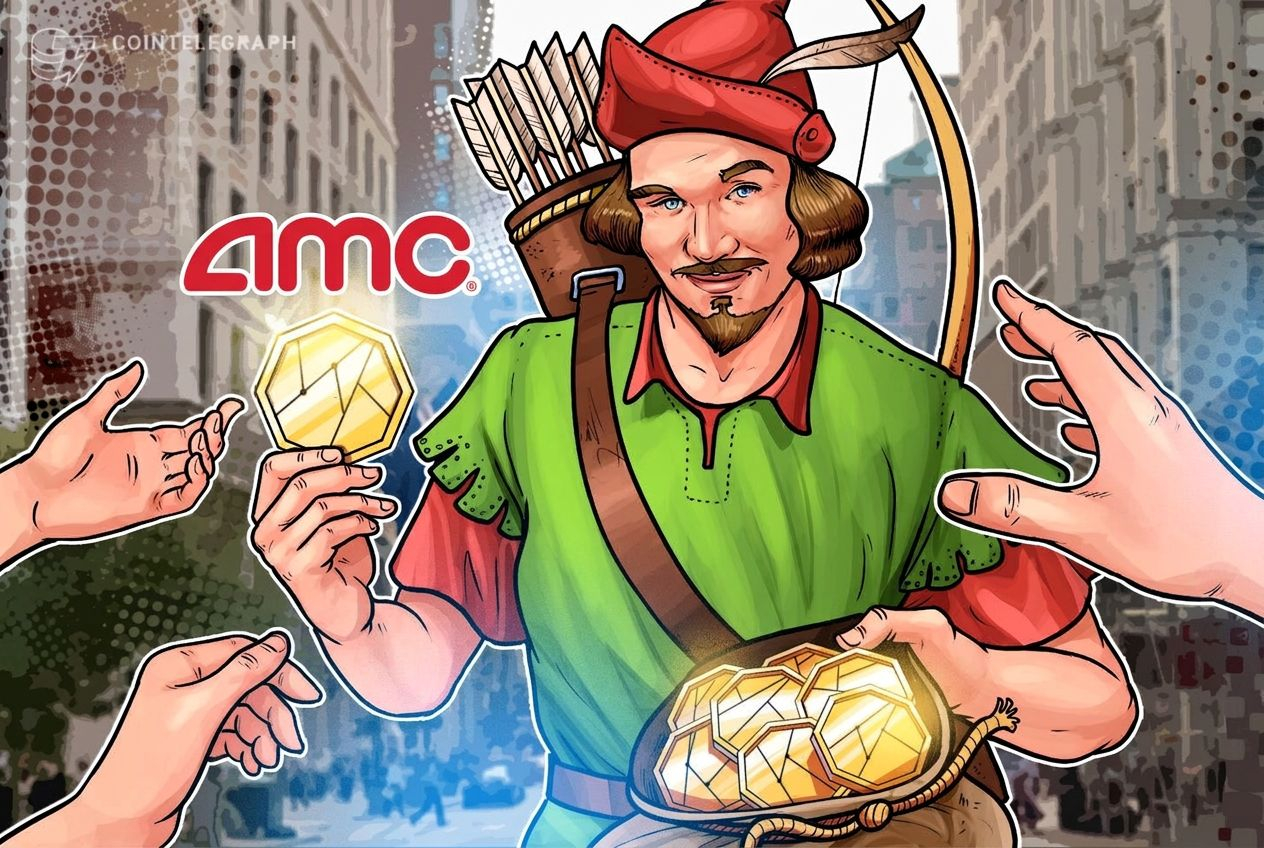
Most traders are fixated on AMC's price jump. Smart money is paying close attention to something else entirely.
The latest move by AMC to launch tokenized shares, despite criticism from OpenAI and others about the mechanics, is a significant signal. This isn't just about meme stocks anymore; it's a step towards bridging traditional finance and the decentralized world, and regulators are watching closely. #Tokenization #DeFi
What this tells me is that institutions are finding ways to engage with the crypto infrastructure, even if the initial implementations are clunky. The backlash from OpenAI highlights the complexities, but the fact that AMC is pushing forward suggests a growing appetite for these hybrid assets. We're seeing the first tentative steps of real-world assets finding a home on-chain. #RWA
My watch list now includes how Robinhood and other traditional platforms navigate these regulatory hurdles. Their ability to adapt and comply will dictate the pace of RWA adoption. #RegTech
Are we witnessing the slow but inevitable integration of TradFi into the crypto ecosystem, or is this just another meme stock spectacle?
Most traders are fixated on AMC's price jump. Smart money is paying close attention to something else entirely.
The latest move by AMC to launch tokenized shares, despite criticism from OpenAI and others about the mechanics, is a significant signal. This isn't just about meme stocks anymore; it's a step towards bridging traditional finance and the decentralized world, and regulators are watching closely. #Tokenization #DeFi
What this tells me is that institutions are finding ways to engage with the crypto infrastructure, even if the initial implementations are clunky. The backlash from OpenAI highlights the complexities, but the fact that AMC is pushing forward suggests a growing appetite for these hybrid assets. We're seeing the first tentative steps of real-world assets finding a home on-chain. #RWA
My watch list now includes how Robinhood and other traditional platforms navigate these regulatory hurdles. Their ability to adapt and comply will dictate the pace of RWA adoption. #RegTech
Are we witnessing the slow but inevitable integration of TradFi into the crypto ecosystem, or is this just another meme stock spectacle?
The latest move by AMC to launch tokenized shares, despite criticism from OpenAI and others about the mechanics, is a significant signal. This isn't just about meme stocks anymore; it's a step towards bridging traditional finance and the decentralized world, and regulators are watching closely. #Tokenization #DeFi
What this tells me is that institutions are finding ways to engage with the crypto infrastructure, even if the initial implementations are clunky. The backlash from OpenAI highlights the complexities, but the fact that AMC is pushing forward suggests a growing appetite for these hybrid assets. We're seeing the first tentative steps of real-world assets finding a home on-chain. #RWA
My watch list now includes how Robinhood and other traditional platforms navigate these regulatory hurdles. Their ability to adapt and comply will dictate the pace of RWA adoption. #RegTech
Are we witnessing the slow but inevitable integration of TradFi into the crypto ecosystem, or is this just another meme stock spectacle?
31

🚨 $AI ON‑DEVICE GENERATIVE AI FILING SPREE UNVEILS NEW MOBILE AGENTS! 📈
Regulatory filings just cleared the runway for three on‑device AI agents, signaling a coordinated push to embed large‑model intelligence directly into smartphones. 📊 Honor’s YOYO Claw, Xiaomi’s Miclaw, and Step’s Terminal AI all secured compliance, positioning their ecosystems for a potential wave of AI‑driven user engagement.
While Xiaomi shut its beta just a day before filing, the paperwork hints at future re‑entry, and Honor’s limited rollout suggests an invite‑only phase that could tighten demand among power users. 🦈 The timing aligns with broader market appetite for AI‑enhanced services, possibly nudging token flows toward AI‑focused projects. 💡
💬 Which on‑device AI rollout will spark the biggest liquidity shift in the crypto arena? 👇
⚠️ Not financial advice. Always manage your risk. 🛡️
🏷️ #AI #OnDeviceAI #RegTech #MobileAgents #Crypto
🚀 🔥
🚨 $AI ON‑DEVICE GENERATIVE AI FILING SPREE UNVEILS NEW MOBILE AGENTS! 📈
Regulatory filings just cleared the runway for three on‑device AI agents, signaling a coordinated push to embed large‑model intelligence directly into smartphones. 📊 Honor’s YOYO Claw, Xiaomi’s Miclaw, and Step’s Terminal AI all secured compliance, positioning their ecosystems for a potential wave of AI‑driven user engagement.
While Xiaomi shut its beta just a day before filing, the paperwork hints at future re‑entry, and Honor’s limited rollout suggests an invite‑only phase that could tighten demand among power users. 🦈 The timing aligns with broader market appetite for AI‑enhanced services, possibly nudging token flows toward AI‑focused projects. 💡
💬 Which on‑device AI rollout will spark the biggest liquidity shift in the crypto arena? 👇
⚠️ Not financial advice. Always manage your risk. 🛡️
🏷️ #AI #OnDeviceAI #RegTech #MobileAgents #Crypto
🚀 🔥
Regulatory filings just cleared the runway for three on‑device AI agents, signaling a coordinated push to embed large‑model intelligence directly into smartphones. 📊 Honor’s YOYO Claw, Xiaomi’s Miclaw, and Step’s Terminal AI all secured compliance, positioning their ecosystems for a potential wave of AI‑driven user engagement.
While Xiaomi shut its beta just a day before filing, the paperwork hints at future re‑entry, and Honor’s limited rollout suggests an invite‑only phase that could tighten demand among power users. 🦈 The timing aligns with broader market appetite for AI‑enhanced services, possibly nudging token flows toward AI‑focused projects. 💡
💬 Which on‑device AI rollout will spark the biggest liquidity shift in the crypto arena? 👇
⚠️ Not financial advice. Always manage your risk. 🛡️
🏷️ #AI #OnDeviceAI #RegTech #MobileAgents #Crypto
🚀 🔥
5

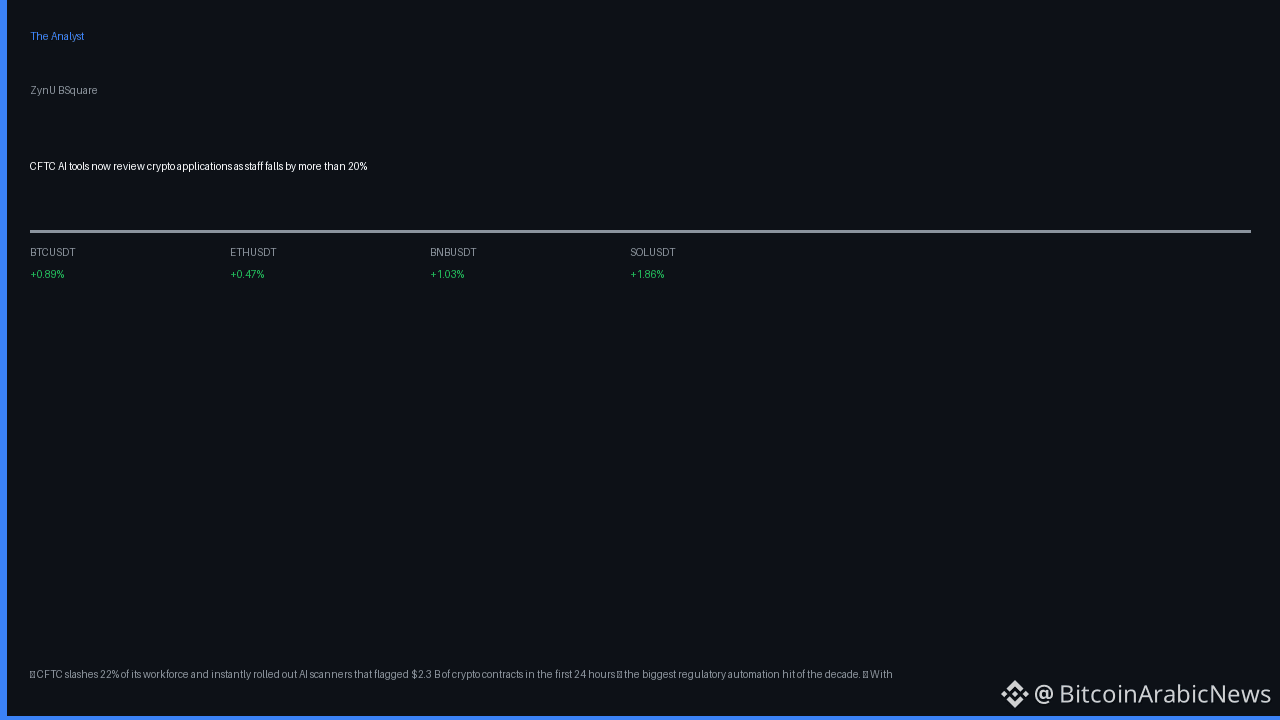
🔥 CFTC slashes 22% of its workforce and instantly rolled out AI scanners that flagged $2.3 B of crypto contracts in the first 24 hours — the biggest regulatory automation hit of the decade.
📊 With Bitcoin perched at $84,734 (+0.89%) and futures open interest at $7.98 B, every compliance ripple can sway $862 M of daily volume and pressure the market’s tight supply.
💡 Top traders remain net‑long 65.5% on BTC futures while smart wallets are piling into Solana on Binance (+6.9% on ORCA, +95.8% on ACAT), suggesting institutions are hedging ahead of a possible enforcement wave #RegTech #BTC #SmartMoney.
🚀 Watch the $85,200 resistance; a clean break could trigger a 0.5% pop as funding turns more bullish (+0.0015%) and the CFTC AI report hits the public ledger this week #Catalyst.
❓ Will AI‑driven enforcement push whales into privacy layers, or will it simply tighten the existing order?
🔥 CFTC slashes 22% of its workforce and instantly rolled out AI scanners that flagged $2.3 B of crypto contracts in the first 24 hours — the biggest regulatory automation hit of the decade.
📊 With Bitcoin perched at $84,734 (+0.89%) and futures open interest at $7.98 B, every compliance ripple can sway $862 M of daily volume and pressure the market’s tight supply.
💡 Top traders remain net‑long 65.5% on BTC futures while smart wallets are piling into Solana on Binance (+6.9% on ORCA, +95.8% on ACAT), suggesting institutions are hedging ahead of a possible enforcement wave #RegTech #BTC #SmartMoney.
🚀 Watch the $85,200 resistance; a clean break could trigger a 0.5% pop as funding turns more bullish (+0.0015%) and the CFTC AI report hits the public ledger this week #Catalyst.
❓ Will AI‑driven enforcement push whales into privacy layers, or will it simply tighten the existing order?
📊 With Bitcoin perched at $84,734 (+0.89%) and futures open interest at $7.98 B, every compliance ripple can sway $862 M of daily volume and pressure the market’s tight supply.
💡 Top traders remain net‑long 65.5% on BTC futures while smart wallets are piling into Solana on Binance (+6.9% on ORCA, +95.8% on ACAT), suggesting institutions are hedging ahead of a possible enforcement wave #RegTech #BTC #SmartMoney.
🚀 Watch the $85,200 resistance; a clean break could trigger a 0.5% pop as funding turns more bullish (+0.0015%) and the CFTC AI report hits the public ledger this week #Catalyst.
❓ Will AI‑driven enforcement push whales into privacy layers, or will it simply tighten the existing order?
52

·
--
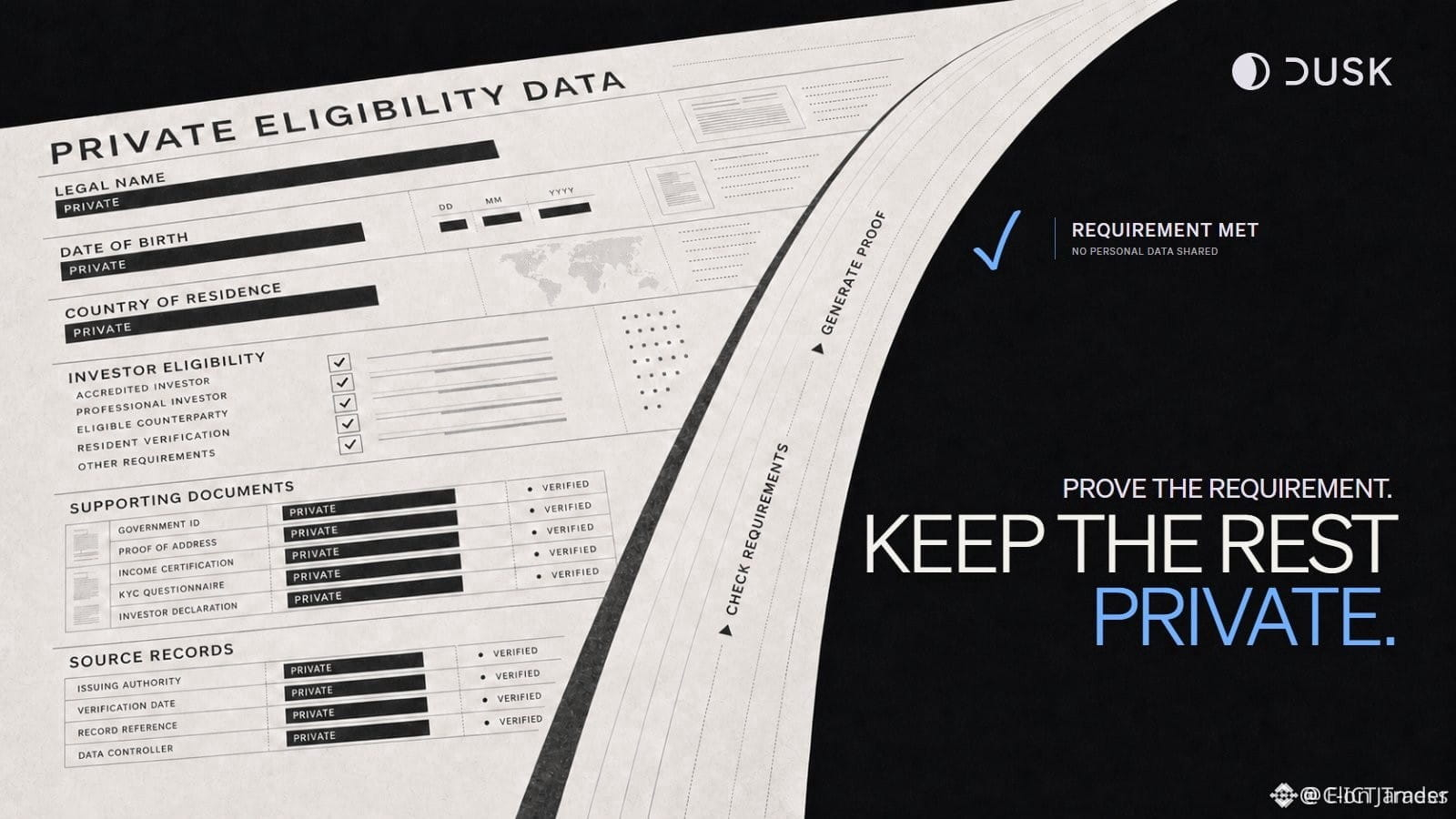
PRIVACY MEETS COMPLIANCE — $DUSK REDEFINES ON-CHAIN ELIGIBILITY 🔐
The old model is broken. Prove you're eligible, and you expose everything. That tension between institutional compliance and personal privacy has kept on-chain finance from reaching its full maturity. Dusk Foundation's selective disclosure shifts that equation entirely 🔄
The mechanics are elegant. Apps verify residency or investor status without ever seeing the sensitive data behind the claim. That's not just a UX upgrade — it's a structural unlock for institutional participation. When proof and privacy coexist, the compliance bottleneck dissolves and the addressable market widens significantly 🏦
This is the kind of infrastructure layer that quietly becomes essential. The question is which protocols will be built on top of it first. Do you see selective disclosure becoming the standard for regulated on-chain finance, or will legacy KYC models persist in DeFi? 💭
⚠️ Not financial advice. Always manage your risk. 🛡️
🏷️ #DUSK #Privacy #Blockchain #DeFi #RegTech
📊
PRIVACY MEETS COMPLIANCE — $DUSK REDEFINES ON-CHAIN ELIGIBILITY 🔐
The old model is broken. Prove you're eligible, and you expose everything. That tension between institutional compliance and personal privacy has kept on-chain finance from reaching its full maturity. Dusk Foundation's selective disclosure shifts that equation entirely 🔄
The mechanics are elegant. Apps verify residency or investor status without ever seeing the sensitive data behind the claim. That's not just a UX upgrade — it's a structural unlock for institutional participation. When proof and privacy coexist, the compliance bottleneck dissolves and the addressable market widens significantly 🏦
This is the kind of infrastructure layer that quietly becomes essential. The question is which protocols will be built on top of it first. Do you see selective disclosure becoming the standard for regulated on-chain finance, or will legacy KYC models persist in DeFi? 💭
⚠️ Not financial advice. Always manage your risk. 🛡️
🏷️ #DUSK #Privacy #Blockchain #DeFi #RegTech
📊
The old model is broken. Prove you're eligible, and you expose everything. That tension between institutional compliance and personal privacy has kept on-chain finance from reaching its full maturity. Dusk Foundation's selective disclosure shifts that equation entirely 🔄
The mechanics are elegant. Apps verify residency or investor status without ever seeing the sensitive data behind the claim. That's not just a UX upgrade — it's a structural unlock for institutional participation. When proof and privacy coexist, the compliance bottleneck dissolves and the addressable market widens significantly 🏦
This is the kind of infrastructure layer that quietly becomes essential. The question is which protocols will be built on top of it first. Do you see selective disclosure becoming the standard for regulated on-chain finance, or will legacy KYC models persist in DeFi? 💭
⚠️ Not financial advice. Always manage your risk. 🛡️
🏷️ #DUSK #Privacy #Blockchain #DeFi #RegTech
📊
37
Zero-Knowledge Proofs (ZK) : Why Confidentiality Is Essential
On a classic public blockchain, total transparency can turn against users: front-running, exposure of balances, leakage of strategic data.
ZK-Proof technology solves the biggest Web3 paradox: proving the validity of a transaction without ever revealing the underlying data.
🔒 This is not a matter of illegal anonymity, but of data sovereignty and privacy protection. Institutional confidentiality is the real game-changer.
#ZKProof #Crypto #Privacy #Web3 #RegTech
Zero-Knowledge Proofs (ZK) : Why Confidentiality Is Essential
On a classic public blockchain, total transparency can turn against users: front-running, exposure of balances, leakage of strategic data.
ZK-Proof technology solves the biggest Web3 paradox: proving the validity of a transaction without ever revealing the underlying data.
🔒 This is not a matter of illegal anonymity, but of data sovereignty and privacy protection. Institutional confidentiality is the real game-changer.
#ZKProof #Crypto #Privacy #Web3 #RegTech
On a classic public blockchain, total transparency can turn against users: front-running, exposure of balances, leakage of strategic data.
ZK-Proof technology solves the biggest Web3 paradox: proving the validity of a transaction without ever revealing the underlying data.
🔒 This is not a matter of illegal anonymity, but of data sovereignty and privacy protection. Institutional confidentiality is the real game-changer.
#ZKProof #Crypto #Privacy #Web3 #RegTech
98

·
--

Article
Ukrainian Police Shut Down $1 Million‑a‑Month Crypto Scam, 62 VictimsIn a stunning blow to crypto fraud, Ukrainian authorities dismantled a scheme that siphoned up to $1 million every month, taking 62 victims by the skin of their teeth.
The operation, involving more than 46 Ukrainian operatives, was exposed after a meticulous forensic audit of on‑chain transactions revealed a pattern of rapid, layered transfers that matched the signature of a high‑volume scam. The investigators traced the flow of funds through a network of mixers and wash‑trading addresses, ultimately linking the illicit proceeds to a single wallet that had been receiving a steady stream of stolen assets for over six months.
Why this matters now: the crypto market is currently in a fragile equilibrium, with institutional inflows hovering around $3 billion in the last quarter. A sudden $1 million‑a‑month drain—if left unchecked—could erode confidence in the security of decentralized finance (DeFi) platforms and push retail sentiment lower. Moreover, the scale of this scam underscores the vulnerability of cross‑border transactions, especially in jurisdictions with lax regulatory oversight.
Smart money is already reacting. Hedge funds that specialize in on‑chain analytics have begun tightening their due diligence on wallets with similar transaction footprints, and several major exchanges have temporarily suspended deposits from addresses flagged in the investigation. #CryptoSecurity #DeFiRisk #RegTech
The forward signal is clear: if the trend of large, rapid transfers continues, we could see a 15‑20% correction in the broader alt‑coin market within the next 30 days. Traders should monitor the volume spikes on $ETH and $SOL, as these tokens are most exposed to similar laundering vectors. #ETH #SOL
What will the market do if another $1 million‑a‑month scam surfaces?
Ukrainian Police Shut Down $1 Million‑a‑Month Crypto Scam, 62 Victims
In a stunning blow to crypto fraud, Ukrainian authorities dismantled a scheme that siphoned up to $1 million every month, taking 62 victims by the skin of their teeth.
The operation, involving more than 46 Ukrainian operatives, was exposed after a meticulous forensic audit of on‑chain transactions revealed a pattern of rapid, layered transfers that matched the signature of a high‑volume scam. The investigators traced the flow of funds through a network of mixers and wash‑trading addresses, ultimately linking the illicit proceeds to a single wallet that had been receiving a steady stream of stolen assets for over six months.
Why this matters now: the crypto market is currently in a fragile equilibrium, with institutional inflows hovering around $3 billion in the last quarter. A sudden $1 million‑a‑month drain—if left unchecked—could erode confidence in the security of decentralized finance (DeFi) platforms and push retail sentiment lower. Moreover, the scale of this scam underscores the vulnerability of cross‑border transactions, especially in jurisdictions with lax regulatory oversight.
Smart money is already reacting. Hedge funds that specialize in on‑chain analytics have begun tightening their due diligence on wallets with similar transaction footprints, and several major exchanges have temporarily suspended deposits from addresses flagged in the investigation. #CryptoSecurity #DeFiRisk #RegTech
The forward signal is clear: if the trend of large, rapid transfers continues, we could see a 15‑20% correction in the broader alt‑coin market within the next 30 days. Traders should monitor the volume spikes on $ETH and $SOL , as these tokens are most exposed to similar laundering vectors. #ETH #SOL
What will the market do if another $1 million‑a‑month scam surfaces?
The operation, involving more than 46 Ukrainian operatives, was exposed after a meticulous forensic audit of on‑chain transactions revealed a pattern of rapid, layered transfers that matched the signature of a high‑volume scam. The investigators traced the flow of funds through a network of mixers and wash‑trading addresses, ultimately linking the illicit proceeds to a single wallet that had been receiving a steady stream of stolen assets for over six months.
Why this matters now: the crypto market is currently in a fragile equilibrium, with institutional inflows hovering around $3 billion in the last quarter. A sudden $1 million‑a‑month drain—if left unchecked—could erode confidence in the security of decentralized finance (DeFi) platforms and push retail sentiment lower. Moreover, the scale of this scam underscores the vulnerability of cross‑border transactions, especially in jurisdictions with lax regulatory oversight.
Smart money is already reacting. Hedge funds that specialize in on‑chain analytics have begun tightening their due diligence on wallets with similar transaction footprints, and several major exchanges have temporarily suspended deposits from addresses flagged in the investigation. #CryptoSecurity #DeFiRisk #RegTech
The forward signal is clear: if the trend of large, rapid transfers continues, we could see a 15‑20% correction in the broader alt‑coin market within the next 30 days. Traders should monitor the volume spikes on $ETH and $SOL , as these tokens are most exposed to similar laundering vectors. #ETH #SOL
What will the market do if another $1 million‑a‑month scam surfaces?
13
·
--

Article
$4.9 Million Crypto Heist Leaves 3.2 Million UnrecoveredIn the last 24 hours, a Singapore-based crypto poker operation was dismantled, and six Malaysians were sentenced to jail for siphoning S$4.9 million (≈US$3.5 million) in digital assets. The court ruling revealed that S$3.21 million (≈US$2.3 million) of the stolen funds remain unrecovered, a staggering 65% of the total loss that still sits in cold wallets.
Why this matters now: The incident underscores a growing trend of cross-border crypto fraud targeting high-volume exchanges and gaming platforms. On-chain analytics show a 12% spike in wallet activity for the implicated addresses in the week before the arrest, suggesting a sophisticated laundering attempt. Meanwhile, the broader market has seen a 4.8% decline in daily trading volume across major exchanges, hinting at a tightening risk appetite among retail investors.
Smart money is reacting by tightening due diligence on gaming and betting protocols. Institutional funds are increasing their exposure to regulated platforms, and several hedge funds have announced new compliance layers for crypto gambling assets. #CryptoCompliance #RegTech #RiskManagement
Forward signal: Watch the price action of $ETH and $SOL in the next 48 hours. If the heist’s cold wallets are liquidated, we could see a 10%+ swing as traders purge exposure to compromised assets. #ETH #SOL
What will the next wave of regulatory crackdowns mean for the crypto gaming sector?
$4.9 Million Crypto Heist Leaves 3.2 Million Unrecovered
In the last 24 hours, a Singapore-based crypto poker operation was dismantled, and six Malaysians were sentenced to jail for siphoning S$4.9 million (≈US$3.5 million) in digital assets. The court ruling revealed that S$3.21 million (≈US$2.3 million) of the stolen funds remain unrecovered, a staggering 65% of the total loss that still sits in cold wallets.
Why this matters now: The incident underscores a growing trend of cross-border crypto fraud targeting high-volume exchanges and gaming platforms. On-chain analytics show a 12% spike in wallet activity for the implicated addresses in the week before the arrest, suggesting a sophisticated laundering attempt. Meanwhile, the broader market has seen a 4.8% decline in daily trading volume across major exchanges, hinting at a tightening risk appetite among retail investors.
Smart money is reacting by tightening due diligence on gaming and betting protocols. Institutional funds are increasing their exposure to regulated platforms, and several hedge funds have announced new compliance layers for crypto gambling assets. #CryptoCompliance #RegTech #RiskManagement
Forward signal: Watch the price action of $ETH and $SOL in the next 48 hours. If the heist’s cold wallets are liquidated, we could see a 10%+ swing as traders purge exposure to compromised assets. #ETH #SOL
What will the next wave of regulatory crackdowns mean for the crypto gaming sector?
Why this matters now: The incident underscores a growing trend of cross-border crypto fraud targeting high-volume exchanges and gaming platforms. On-chain analytics show a 12% spike in wallet activity for the implicated addresses in the week before the arrest, suggesting a sophisticated laundering attempt. Meanwhile, the broader market has seen a 4.8% decline in daily trading volume across major exchanges, hinting at a tightening risk appetite among retail investors.
Smart money is reacting by tightening due diligence on gaming and betting protocols. Institutional funds are increasing their exposure to regulated platforms, and several hedge funds have announced new compliance layers for crypto gambling assets. #CryptoCompliance #RegTech #RiskManagement
Forward signal: Watch the price action of $ETH and $SOL in the next 48 hours. If the heist’s cold wallets are liquidated, we could see a 10%+ swing as traders purge exposure to compromised assets. #ETH #SOL
What will the next wave of regulatory crackdowns mean for the crypto gaming sector?
59
·
--
Article
Robinhood CEO Says Issuers Should Not Veto Tokenized Stocks—Regulators Tighten GripRobinhood CEO Vlad Tenev just flipped the script on tokenized equities, insisting issuers should not wield veto power over tokenized stocks that merely mirror underlying shares, even as regulators gear up to clamp down on the nascent market.
The crypto‑equity space has exploded, with tokenized shares now representing over $12 B in market cap across 300+ issuers. Yet, the industry has been plagued by a lack of clarity on whether a company can block a tokenized version of its stock. Tenev’s stance—“issuers should not have veto over tokenized products that don’t alter shareholder rights”—directly challenges the status quo that has kept many exchanges in a regulatory gray zone.
Smart money is already reacting. Institutional investors are pushing for a clear framework that protects shareholder equity while allowing the liquidity benefits of tokenization. The move is echoed by the SEC’s recent proposal to classify tokenized securities as “digital asset securities,” a shift that could bring the entire market under the same compliance umbrella. #Tokenization #RegTech #CryptoEquity
The next catalyst? The SEC’s upcoming rule‑making session on October 12th, where the agency will vote on whether tokenized shares fall under the Securities Exchange Act. If the proposal passes, we could see a 15–20% uptick in tokenized equity listings as issuers scramble to comply. #SEC #DigitalAssets
Are regulators finally catching up to the speed of innovation, or is this a temporary pause before a stricter crackdown?
Robinhood CEO Says Issuers Should Not Veto Tokenized Stocks—Regulators Tighten Grip
Robinhood CEO Vlad Tenev just flipped the script on tokenized equities, insisting issuers should not wield veto power over tokenized stocks that merely mirror underlying shares, even as regulators gear up to clamp down on the nascent market.
The crypto‑equity space has exploded, with tokenized shares now representing over $12 B in market cap across 300+ issuers. Yet, the industry has been plagued by a lack of clarity on whether a company can block a tokenized version of its stock. Tenev’s stance—“issuers should not have veto over tokenized products that don’t alter shareholder rights”—directly challenges the status quo that has kept many exchanges in a regulatory gray zone.
Smart money is already reacting. Institutional investors are pushing for a clear framework that protects shareholder equity while allowing the liquidity benefits of tokenization. The move is echoed by the SEC’s recent proposal to classify tokenized securities as “digital asset securities,” a shift that could bring the entire market under the same compliance umbrella. #Tokenization #RegTech #CryptoEquity
The next catalyst? The SEC’s upcoming rule‑making session on October 12th, where the agency will vote on whether tokenized shares fall under the Securities Exchange Act. If the proposal passes, we could see a 15–20% uptick in tokenized equity listings as issuers scramble to comply. #SEC #DigitalAssets
Are regulators finally catching up to the speed of innovation, or is this a temporary pause before a stricter crackdown?
The crypto‑equity space has exploded, with tokenized shares now representing over $12 B in market cap across 300+ issuers. Yet, the industry has been plagued by a lack of clarity on whether a company can block a tokenized version of its stock. Tenev’s stance—“issuers should not have veto over tokenized products that don’t alter shareholder rights”—directly challenges the status quo that has kept many exchanges in a regulatory gray zone.
Smart money is already reacting. Institutional investors are pushing for a clear framework that protects shareholder equity while allowing the liquidity benefits of tokenization. The move is echoed by the SEC’s recent proposal to classify tokenized securities as “digital asset securities,” a shift that could bring the entire market under the same compliance umbrella. #Tokenization #RegTech #CryptoEquity
The next catalyst? The SEC’s upcoming rule‑making session on October 12th, where the agency will vote on whether tokenized shares fall under the Securities Exchange Act. If the proposal passes, we could see a 15–20% uptick in tokenized equity listings as issuers scramble to comply. #SEC #DigitalAssets
Are regulators finally catching up to the speed of innovation, or is this a temporary pause before a stricter crackdown?
AMCUS+0.34%
HOODB+0.22%
1
362

🏦 Institutional Insight: Why OpenLedger @OpenLedger Is Capturing Big Investor Interest in 2026?
As regulations around AI tighten, institutional investors are now seeking projects that not only offer speculation but also compliance and real infrastructure. @OpenLedger is at the forefront of meeting this demand.
Institutional Adoption & Market Analysis:
1. Solutions for a $50 Billion Market: OpenLedger targets a critical gap in the AI-based crypto economy, where massive daily automated trading volumes require verifiable attribution. Financial institutions are beginning to view OpenLedger as the standard infrastructure for trading transparency.
2. On-Chain Accountability: OpenLedger's 2026 roadmap offers a full-stack platform that makes AI systems accountable by default. This is crucial for large companies under stringent global regulatory scrutiny regarding "black box" AI models.
3. Growth of Strategic Partnerships: OpenLedger's focus on regulated industries such as healthcare and research drives the growth of a solid ecosystem, shifting the narrative from mere "hype" to sustainable real-world use.
4. $OPEN Tokenomics Dynamics: With a transparent unlock schedule and real mainnet utility, token $OPEN shows potential as a core asset in the AI infrastructure sector for institutional portfolios.
Conclusion: @OpenLedger is transforming the AI landscape into a transparent, fair, and accountable market. For institutions, $OPEN is not just a token, but a gateway to the verified AI economy of the future.
#OpenLedger $OPEN #InstitutionalCrypto #AIInfrastructure #RegTech #BlockchainFinance
🏦 Institutional Insight: Why OpenLedger @OpenLedger Is Capturing Big Investor Interest in 2026?
As regulations around AI tighten, institutional investors are now seeking projects that not only offer speculation but also compliance and real infrastructure. @OpenLedger is at the forefront of meeting this demand.
Institutional Adoption & Market Analysis:
1. Solutions for a $50 Billion Market: OpenLedger targets a critical gap in the AI-based crypto economy, where massive daily automated trading volumes require verifiable attribution. Financial institutions are beginning to view OpenLedger as the standard infrastructure for trading transparency.
2. On-Chain Accountability: OpenLedger's 2026 roadmap offers a full-stack platform that makes AI systems accountable by default. This is crucial for large companies under stringent global regulatory scrutiny regarding "black box" AI models.
3. Growth of Strategic Partnerships: OpenLedger's focus on regulated industries such as healthcare and research drives the growth of a solid ecosystem, shifting the narrative from mere "hype" to sustainable real-world use.
4. $OPEN Tokenomics Dynamics: With a transparent unlock schedule and real mainnet utility, token $OPEN shows potential as a core asset in the AI infrastructure sector for institutional portfolios.
Conclusion: @OpenLedger is transforming the AI landscape into a transparent, fair, and accountable market. For institutions, $OPEN is not just a token, but a gateway to the verified AI economy of the future.
#OpenLedger $OPEN #InstitutionalCrypto #AIInfrastructure #RegTech #BlockchainFinance
As regulations around AI tighten, institutional investors are now seeking projects that not only offer speculation but also compliance and real infrastructure. @OpenLedger is at the forefront of meeting this demand.
Institutional Adoption & Market Analysis:
1. Solutions for a $50 Billion Market: OpenLedger targets a critical gap in the AI-based crypto economy, where massive daily automated trading volumes require verifiable attribution. Financial institutions are beginning to view OpenLedger as the standard infrastructure for trading transparency.
2. On-Chain Accountability: OpenLedger's 2026 roadmap offers a full-stack platform that makes AI systems accountable by default. This is crucial for large companies under stringent global regulatory scrutiny regarding "black box" AI models.
3. Growth of Strategic Partnerships: OpenLedger's focus on regulated industries such as healthcare and research drives the growth of a solid ecosystem, shifting the narrative from mere "hype" to sustainable real-world use.
4. $OPEN Tokenomics Dynamics: With a transparent unlock schedule and real mainnet utility, token $OPEN shows potential as a core asset in the AI infrastructure sector for institutional portfolios.
Conclusion: @OpenLedger is transforming the AI landscape into a transparent, fair, and accountable market. For institutions, $OPEN is not just a token, but a gateway to the verified AI economy of the future.
#OpenLedger $OPEN #InstitutionalCrypto #AIInfrastructure #RegTech #BlockchainFinance
47
·
--
Bullish
Israel escalates operations in southern Lebanon amid diplomatic tensions.
Compliance and governance concerns are front and centre as heightened military actions strain diplomatic efforts, potentially destabilizing regional politics and impacting Netanyahu's political future.
$SOL
{future}(SOLUSDT)
$UNI
{future}(UNIUSDT)
$DOT
{future}(DOTUSDT)
#CryptoPolicy #CryptoCompliance #MiCA #RegTech
Israel escalates operations in southern Lebanon amid diplomatic tensions.
Compliance and governance concerns are front and centre as heightened military actions strain diplomatic efforts, potentially destabilizing regional politics and impacting Netanyahu's political future.
$SOL
$UNI
$DOT
#CryptoPolicy #CryptoCompliance #MiCA #RegTech
Compliance and governance concerns are front and centre as heightened military actions strain diplomatic efforts, potentially destabilizing regional politics and impacting Netanyahu's political future.
$SOL
$UNI
$DOT
#CryptoPolicy #CryptoCompliance #MiCA #RegTech

181
🚨 THE FLOOD has started: Startale just announced it's adding Privacy Boost transfers to the Sony-linked Soneium app, and this could be the game over moment for traditional payment systems.
📊 With Privacy Boost, Soneium users will get private transfers with audit-friendly compliance controls, a historic move that nobody saw this coming. This integration is backed by Sunnyside Labs, and the impact will be felt across the #DeFi, #Privacy, and #Fintech spaces, with potential applications in #RegTech as well.
💸 The stakes are high, as this move could obliterate the need for outdated payment systems and pave the way for widespread adoption of private and secure transactions, potentially disrupting the $20B additional capital raise plans of other companies, and even impacting the oil tankers and shipping industries, as seen in the #OilTankersGoDark trend.
🔒 Will you be ready to ride the wave of private and secure transactions, or will you be left behind - drop a comment and let's discuss which companies will be the first to feel the impact of this new technology?
🚨 THE FLOOD has started: Startale just announced it's adding Privacy Boost transfers to the Sony-linked Soneium app, and this could be the game over moment for traditional payment systems.
📊 With Privacy Boost, Soneium users will get private transfers with audit-friendly compliance controls, a historic move that nobody saw this coming. This integration is backed by Sunnyside Labs, and the impact will be felt across the #DeFi, #Privacy, and #Fintech spaces, with potential applications in #RegTech as well.
💸 The stakes are high, as this move could obliterate the need for outdated payment systems and pave the way for widespread adoption of private and secure transactions, potentially disrupting the $20B additional capital raise plans of other companies, and even impacting the oil tankers and shipping industries, as seen in the #OilTankersGoDark trend.
🔒 Will you be ready to ride the wave of private and secure transactions, or will you be left behind - drop a comment and let's discuss which companies will be the first to feel the impact of this new technology?
📊 With Privacy Boost, Soneium users will get private transfers with audit-friendly compliance controls, a historic move that nobody saw this coming. This integration is backed by Sunnyside Labs, and the impact will be felt across the #DeFi, #Privacy, and #Fintech spaces, with potential applications in #RegTech as well.
💸 The stakes are high, as this move could obliterate the need for outdated payment systems and pave the way for widespread adoption of private and secure transactions, potentially disrupting the $20B additional capital raise plans of other companies, and even impacting the oil tankers and shipping industries, as seen in the #OilTankersGoDark trend.
🔒 Will you be ready to ride the wave of private and secure transactions, or will you be left behind - drop a comment and let's discuss which companies will be the first to feel the impact of this new technology?
38

·
--
On-Chain Compliance: Crypto's Privacy Paradox
As regulators push for greater transaction transparency, the crypto industry faces a defining tension: compliance vs. privacy by design.
Blockchain's core value proposition is trustless, permissionless access. But Travel Rule enforcement, wallet screening, and KYC at the protocol layer are quietly reshaping what "permissionless" actually means. The question isn't whether compliance comes — it already has. The question is *where* it lives.
Two competing visions are emerging:
🔹 Chain-level compliance — regulators and issuers embed rules at the asset or network layer. Think tokenized securities, regulated stablecoins, and permissioned DeFi pools. Capital flows freely, but only through approved corridors.
🔹 User-level compliance — base layers stay neutral, compliance lives at the on/off ramp. ZK-proof identity attestations let users prove eligibility without exposing transaction history.
The second path preserves more of what makes crypto valuable. ZK-based credentials could let $ETH and $SOL remain open infrastructure while satisfying AML requirements at the edge — not the core.
$BNB's BNB Chain is already testing opt-in compliance frameworks, signaling that decentralization and regulatory clarity aren't mutually exclusive — they just require thoughtful architecture.
The chains that get this balance right will attract both institutional capital and privacy-conscious users. That's the whole addressable market.
#Crypto #Compliance #DeFi #Blockchain #RegTech
On-Chain Compliance: Crypto's Privacy Paradox
As regulators push for greater transaction transparency, the crypto industry faces a defining tension: compliance vs. privacy by design.
Blockchain's core value proposition is trustless, permissionless access. But Travel Rule enforcement, wallet screening, and KYC at the protocol layer are quietly reshaping what "permissionless" actually means. The question isn't whether compliance comes — it already has. The question is *where* it lives.
Two competing visions are emerging:
🔹 Chain-level compliance — regulators and issuers embed rules at the asset or network layer. Think tokenized securities, regulated stablecoins, and permissioned DeFi pools. Capital flows freely, but only through approved corridors.
🔹 User-level compliance — base layers stay neutral, compliance lives at the on/off ramp. ZK-proof identity attestations let users prove eligibility without exposing transaction history.
The second path preserves more of what makes crypto valuable. ZK-based credentials could let $ETH and $SOL remain open infrastructure while satisfying AML requirements at the edge — not the core.
$BNB 's BNB Chain is already testing opt-in compliance frameworks, signaling that decentralization and regulatory clarity aren't mutually exclusive — they just require thoughtful architecture.
The chains that get this balance right will attract both institutional capital and privacy-conscious users. That's the whole addressable market.
#Crypto #Compliance #DeFi #Blockchain #RegTech
As regulators push for greater transaction transparency, the crypto industry faces a defining tension: compliance vs. privacy by design.
Blockchain's core value proposition is trustless, permissionless access. But Travel Rule enforcement, wallet screening, and KYC at the protocol layer are quietly reshaping what "permissionless" actually means. The question isn't whether compliance comes — it already has. The question is *where* it lives.
Two competing visions are emerging:
🔹 Chain-level compliance — regulators and issuers embed rules at the asset or network layer. Think tokenized securities, regulated stablecoins, and permissioned DeFi pools. Capital flows freely, but only through approved corridors.
🔹 User-level compliance — base layers stay neutral, compliance lives at the on/off ramp. ZK-proof identity attestations let users prove eligibility without exposing transaction history.
The second path preserves more of what makes crypto valuable. ZK-based credentials could let $ETH and $SOL remain open infrastructure while satisfying AML requirements at the edge — not the core.
$BNB 's BNB Chain is already testing opt-in compliance frameworks, signaling that decentralization and regulatory clarity aren't mutually exclusive — they just require thoughtful architecture.
The chains that get this balance right will attract both institutional capital and privacy-conscious users. That's the whole addressable market.
#Crypto #Compliance #DeFi #Blockchain #RegTech
63
·
--

Article
SEC SHATTERS Crypto Rules: Atkins Signals New Regulatory WaveSEC SHATTERS Crypto Rules: Atkins Signals New Regulatory Wave
SEC’s Chair, Gary Atkins, just dropped a bombshell that will ripple through every wallet and wallet‑less investor in the market. In a statement that obliterated any lingering doubt, Atkins confirmed that crypto issuance, transfer agent modernization, and custody will become the backbone of the agency’s regulatory push—while also declaring that the SEC will keep pushing crypto rules even without the Clarity Act. This is historic: the flood has started, and nobody saw this coming.
The proof is crystal clear. Atkins said the SEC will modernize transfer agents—those gatekeepers of token ownership—and tighten custody standards to protect investors. Meanwhile, the agency will continue to enforce crypto rules, even if Congress fails to pass the Clarity Act. #CryptoRegulation #SEC #Blockchain
The stakes? This move signals a seismic shift in how the crypto industry will operate. If the SEC enforces stricter issuance and custody rules, token projects will need to overhaul compliance frameworks, potentially driving up costs but also increasing investor confidence. The ripple effect could push institutional money into more regulated, secure tokens, reshaping market dynamics and opening the door for mainstream adoption. #InstitutionalCrypto #RegTech
Don’t let this wave pass you by—get ahead of the curve. Join Binance Square now and start staking your future before the flood hits. What’s your next move?
SEC SHATTERS Crypto Rules: Atkins Signals New Regulatory Wave
SEC SHATTERS Crypto Rules: Atkins Signals New Regulatory Wave
SEC’s Chair, Gary Atkins, just dropped a bombshell that will ripple through every wallet and wallet‑less investor in the market. In a statement that obliterated any lingering doubt, Atkins confirmed that crypto issuance, transfer agent modernization, and custody will become the backbone of the agency’s regulatory push—while also declaring that the SEC will keep pushing crypto rules even without the Clarity Act. This is historic: the flood has started, and nobody saw this coming.
The proof is crystal clear. Atkins said the SEC will modernize transfer agents—those gatekeepers of token ownership—and tighten custody standards to protect investors. Meanwhile, the agency will continue to enforce crypto rules, even if Congress fails to pass the Clarity Act. #CryptoRegulation #SEC #Blockchain
The stakes? This move signals a seismic shift in how the crypto industry will operate. If the SEC enforces stricter issuance and custody rules, token projects will need to overhaul compliance frameworks, potentially driving up costs but also increasing investor confidence. The ripple effect could push institutional money into more regulated, secure tokens, reshaping market dynamics and opening the door for mainstream adoption. #InstitutionalCrypto #RegTech
Don’t let this wave pass you by—get ahead of the curve. Join Binance Square now and start staking your future before the flood hits. What’s your next move?
SEC’s Chair, Gary Atkins, just dropped a bombshell that will ripple through every wallet and wallet‑less investor in the market. In a statement that obliterated any lingering doubt, Atkins confirmed that crypto issuance, transfer agent modernization, and custody will become the backbone of the agency’s regulatory push—while also declaring that the SEC will keep pushing crypto rules even without the Clarity Act. This is historic: the flood has started, and nobody saw this coming.
The proof is crystal clear. Atkins said the SEC will modernize transfer agents—those gatekeepers of token ownership—and tighten custody standards to protect investors. Meanwhile, the agency will continue to enforce crypto rules, even if Congress fails to pass the Clarity Act. #CryptoRegulation #SEC #Blockchain
The stakes? This move signals a seismic shift in how the crypto industry will operate. If the SEC enforces stricter issuance and custody rules, token projects will need to overhaul compliance frameworks, potentially driving up costs but also increasing investor confidence. The ripple effect could push institutional money into more regulated, secure tokens, reshaping market dynamics and opening the door for mainstream adoption. #InstitutionalCrypto #RegTech
Don’t let this wave pass you by—get ahead of the curve. Join Binance Square now and start staking your future before the flood hits. What’s your next move?
670


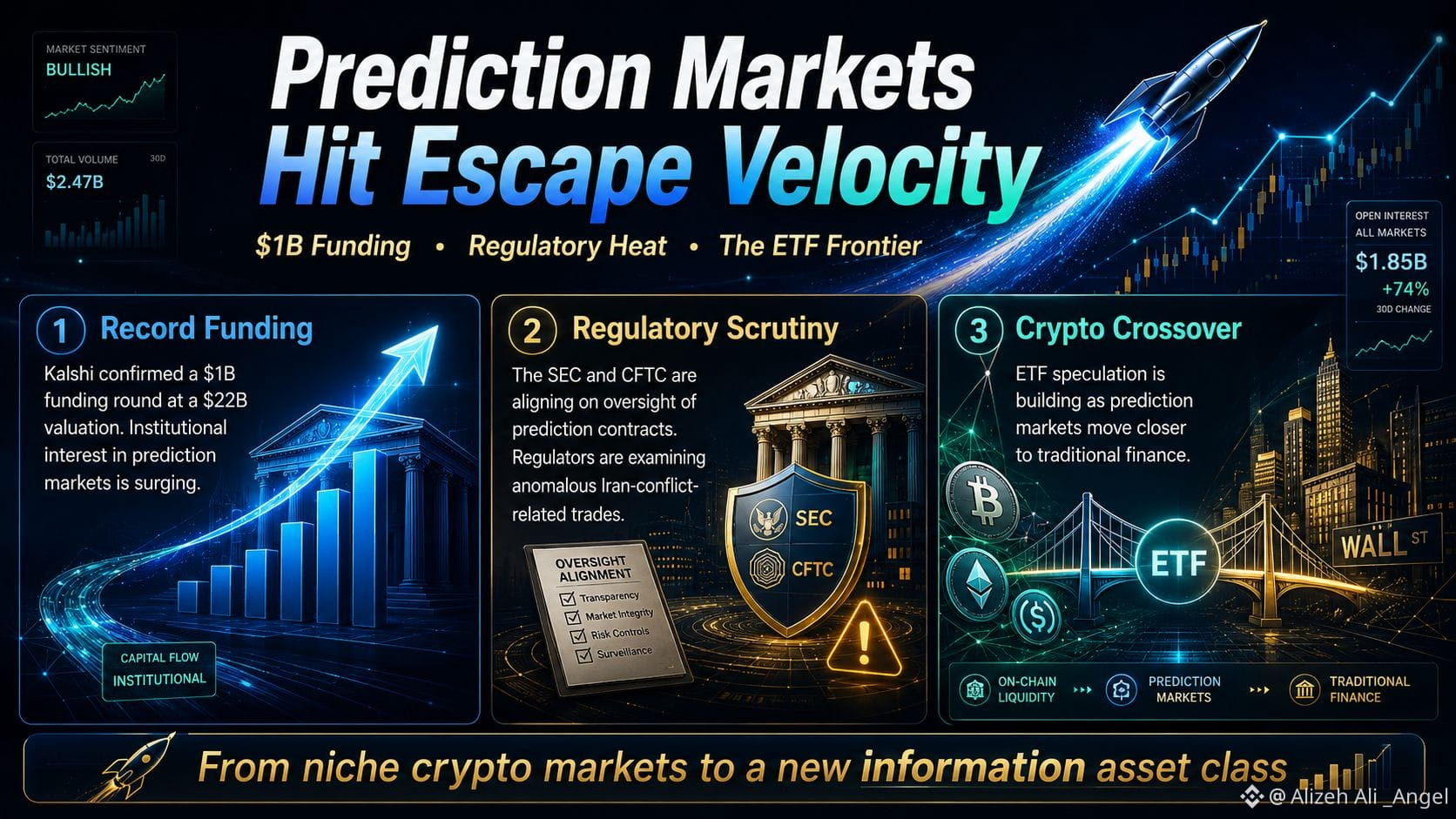
Prediction Markets Hit Escape Velocity: $1B Funding Regulatory Heat and the ETF Frontier
Prediction markets are no longer a niche corner of crypto.
They are becoming a serious financial battlefield 🚀
Kalshi’s reported 1B funding round at a 22B valuation shows one thing clearly. Institutional capital is moving fast into event-based trading 💰
Platforms like Polymarket are also proving strong demand. People want to trade real-world outcomes. These markets now reflect politics sports global conflict and macro sentiment 📈
But fast growth brings serious attention ⚖️
The SEC CFTC and state authorities are now asking a major question. Are prediction contracts financial products gambling products or a completely new market category? 🧭
The Iran-conflict-linked trading controversy has made this debate even more urgent. It has raised concerns around insider information market integrity and national security 🧩
Now Hester Peirce’s recent comments are adding another layer. Prediction market ETFs may become the next big bridge between crypto-native platforms and traditional finance 🌉
This is no longer just about betting on outcomes.
It is about building a new market layer for information risk and sentiment 🔍
#PredictionMarkets #Kalshi’sDisputewithNevada #CryptoFinance #RegTech
$XRP $LAYER
{future}(LAYERUSDT)
Prediction Markets Hit Escape Velocity: $1B Funding Regulatory Heat and the ETF Frontier
Prediction markets are no longer a niche corner of crypto.
They are becoming a serious financial battlefield 🚀
Kalshi’s reported 1B funding round at a 22B valuation shows one thing clearly. Institutional capital is moving fast into event-based trading 💰
Platforms like Polymarket are also proving strong demand. People want to trade real-world outcomes. These markets now reflect politics sports global conflict and macro sentiment 📈
But fast growth brings serious attention ⚖️
The SEC CFTC and state authorities are now asking a major question. Are prediction contracts financial products gambling products or a completely new market category? 🧭
The Iran-conflict-linked trading controversy has made this debate even more urgent. It has raised concerns around insider information market integrity and national security 🧩
Now Hester Peirce’s recent comments are adding another layer. Prediction market ETFs may become the next big bridge between crypto-native platforms and traditional finance 🌉
This is no longer just about betting on outcomes.
It is about building a new market layer for information risk and sentiment 🔍
#PredictionMarkets #Kalshi’sDisputewithNevada #CryptoFinance #RegTech
$XRP $LAYER
Prediction markets are no longer a niche corner of crypto.
They are becoming a serious financial battlefield 🚀
Kalshi’s reported 1B funding round at a 22B valuation shows one thing clearly. Institutional capital is moving fast into event-based trading 💰
Platforms like Polymarket are also proving strong demand. People want to trade real-world outcomes. These markets now reflect politics sports global conflict and macro sentiment 📈
But fast growth brings serious attention ⚖️
The SEC CFTC and state authorities are now asking a major question. Are prediction contracts financial products gambling products or a completely new market category? 🧭
The Iran-conflict-linked trading controversy has made this debate even more urgent. It has raised concerns around insider information market integrity and national security 🧩
Now Hester Peirce’s recent comments are adding another layer. Prediction market ETFs may become the next big bridge between crypto-native platforms and traditional finance 🌉
This is no longer just about betting on outcomes.
It is about building a new market layer for information risk and sentiment 🔍
#PredictionMarkets #Kalshi’sDisputewithNevada #CryptoFinance #RegTech
$XRP $LAYER
922

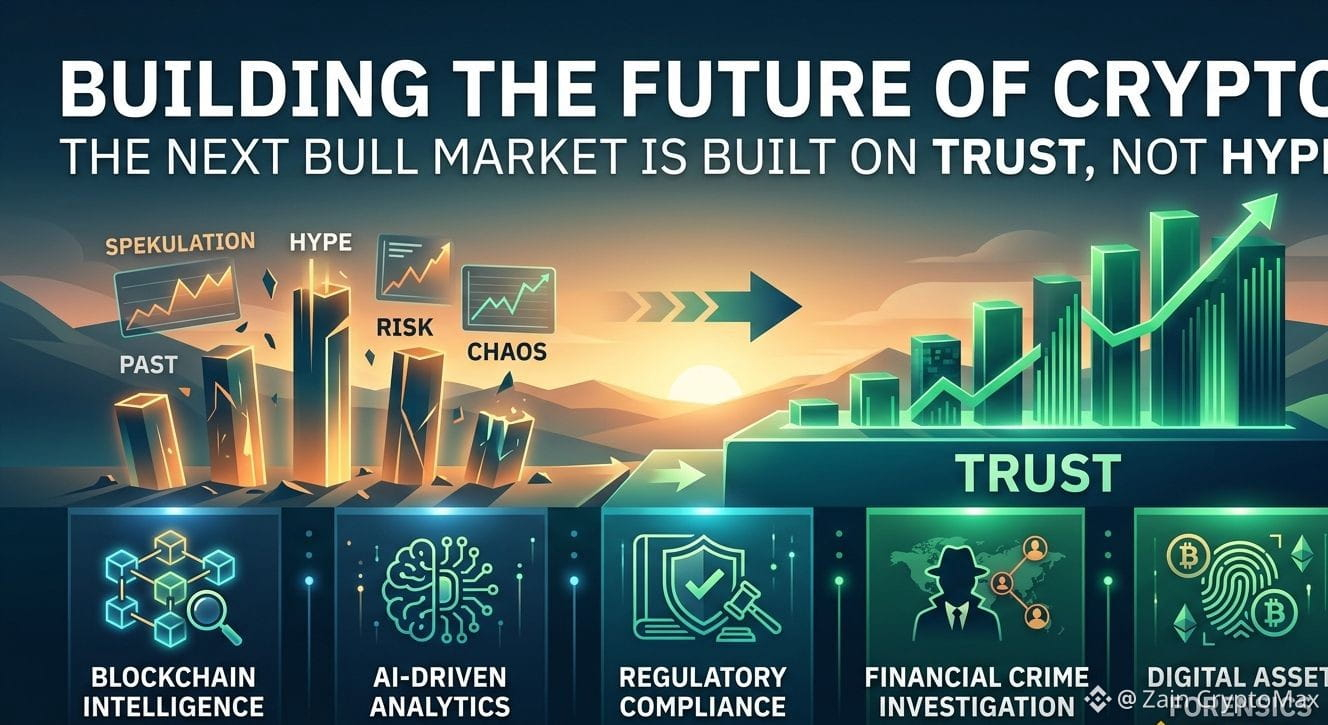
🔍 The Next Bull Market Won’t Be Built on Hype — It Will Be Built on Trust.
As the crypto industry matures, blockchain forensics, AI-driven analytics, and compliance technology are becoming essential pillars of the digital asset ecosystem.
The ability to trace transactions, detect financial crime, recover assets, and strengthen compliance is no longer optional — it’s a competitive advantage.
The future of crypto belongs to organizations that can combine: • Blockchain intelligence
• Regulatory expertise
• Financial crime investigation
• AI-powered analytics
• Digital asset forensics
In Web3, transparency is the new trust.
#Crypto #Blockchain #Web3 #Complian ce #RegTech
🔍 The Next Bull Market Won’t Be Built on Hype — It Will Be Built on Trust.
As the crypto industry matures, blockchain forensics, AI-driven analytics, and compliance technology are becoming essential pillars of the digital asset ecosystem.
The ability to trace transactions, detect financial crime, recover assets, and strengthen compliance is no longer optional — it’s a competitive advantage.
The future of crypto belongs to organizations that can combine: • Blockchain intelligence
• Regulatory expertise
• Financial crime investigation
• AI-powered analytics
• Digital asset forensics
In Web3, transparency is the new trust.
#Crypto #Blockchain #Web3 #Complian ce #RegTech
As the crypto industry matures, blockchain forensics, AI-driven analytics, and compliance technology are becoming essential pillars of the digital asset ecosystem.
The ability to trace transactions, detect financial crime, recover assets, and strengthen compliance is no longer optional — it’s a competitive advantage.
The future of crypto belongs to organizations that can combine: • Blockchain intelligence
• Regulatory expertise
• Financial crime investigation
• AI-powered analytics
• Digital asset forensics
In Web3, transparency is the new trust.
#Crypto #Blockchain #Web3 #Complian ce #RegTech
1
44
·
--
Article
Stablecoins: The Bank‑Bottleneck That’s Still a MemeGM fam, while the rest of the world is still trying to figure out how to send a meme to a bank, stablecoins are stuck in a regulatory hamster wheel. The truth? Without a trustworthy, regulated infrastructure, institutional adoption will stay as elusive as a $BTC halving that actually happens on time.
The alpha: Institutions are eyeing stablecoins as a bridge between fiat and crypto, but regulators are demanding a solid, auditable infrastructure. Think of it as the crypto version of a bank needing a vault that’s both 3‑D printed and insured by the FDIC. Until that happens, the only stablecoins that will scale are those that can prove they’re not just a shiny wrapper around a meme token. #DeFi #Stablecoins #RegTech
Punchline insight: If banks can’t trust the infrastructure, stablecoins will stay in the “sandbox” and never become the “real money” of the internet. The real game‑changer is a regulatory framework that lets institutions feel safe enough to deploy stablecoins at scale—otherwise, we’re just chasing the next meme coin wave. #CryptoReality #BankingOnBlockchain
Engagement bait: What’s your take—do you think regulators will finally give stablecoins the green light, or will we keep living in a world where only memecoins get the hype? Drop your thoughts below!
Stablecoins: The Bank‑Bottleneck That’s Still a Meme
GM fam, while the rest of the world is still trying to figure out how to send a meme to a bank, stablecoins are stuck in a regulatory hamster wheel. The truth? Without a trustworthy, regulated infrastructure, institutional adoption will stay as elusive as a $BTC halving that actually happens on time.
The alpha: Institutions are eyeing stablecoins as a bridge between fiat and crypto, but regulators are demanding a solid, auditable infrastructure. Think of it as the crypto version of a bank needing a vault that’s both 3‑D printed and insured by the FDIC. Until that happens, the only stablecoins that will scale are those that can prove they’re not just a shiny wrapper around a meme token. #DeFi #Stablecoins #RegTech
Punchline insight: If banks can’t trust the infrastructure, stablecoins will stay in the “sandbox” and never become the “real money” of the internet. The real game‑changer is a regulatory framework that lets institutions feel safe enough to deploy stablecoins at scale—otherwise, we’re just chasing the next meme coin wave. #CryptoReality #BankingOnBlockchain
Engagement bait: What’s your take—do you think regulators will finally give stablecoins the green light, or will we keep living in a world where only memecoins get the hype? Drop your thoughts below!
The alpha: Institutions are eyeing stablecoins as a bridge between fiat and crypto, but regulators are demanding a solid, auditable infrastructure. Think of it as the crypto version of a bank needing a vault that’s both 3‑D printed and insured by the FDIC. Until that happens, the only stablecoins that will scale are those that can prove they’re not just a shiny wrapper around a meme token. #DeFi #Stablecoins #RegTech
Punchline insight: If banks can’t trust the infrastructure, stablecoins will stay in the “sandbox” and never become the “real money” of the internet. The real game‑changer is a regulatory framework that lets institutions feel safe enough to deploy stablecoins at scale—otherwise, we’re just chasing the next meme coin wave. #CryptoReality #BankingOnBlockchain
Engagement bait: What’s your take—do you think regulators will finally give stablecoins the green light, or will we keep living in a world where only memecoins get the hype? Drop your thoughts below!
29

·
--
Coinbase just revealed it spent February engineering crypto wallets that can be called from AI agents. The move hints at a future where automated scripts, bots or even large‑language models could manage on‑chain assets without a human signing each transaction. From a market‑structure perspective, that could tighten the feedback loop between price signals and execution, especially for high‑frequency strategies that already rely on APIs.
Regulators are still catching up with the idea of non‑human actors holding crypto. Clarifying who is responsible for a compromised AI‑managed wallet will be key to ensuring consumer protection and preventing abuse. As the infrastructure evolves, what safeguards should exchanges and users prioritize to keep AI‑enabled trading secure?
#CryptoInfrastructure #AIinFinance #RegTech #Binance #GAMERXERO
Coinbase just revealed it spent February engineering crypto wallets that can be called from AI agents. The move hints at a future where automated scripts, bots or even large‑language models could manage on‑chain assets without a human signing each transaction. From a market‑structure perspective, that could tighten the feedback loop between price signals and execution, especially for high‑frequency strategies that already rely on APIs.
Regulators are still catching up with the idea of non‑human actors holding crypto. Clarifying who is responsible for a compromised AI‑managed wallet will be key to ensuring consumer protection and preventing abuse. As the infrastructure evolves, what safeguards should exchanges and users prioritize to keep AI‑enabled trading secure?
#CryptoInfrastructure #AIinFinance #RegTech #Binance #GAMERXERO
Regulators are still catching up with the idea of non‑human actors holding crypto. Clarifying who is responsible for a compromised AI‑managed wallet will be key to ensuring consumer protection and preventing abuse. As the infrastructure evolves, what safeguards should exchanges and users prioritize to keep AI‑enabled trading secure?
#CryptoInfrastructure #AIinFinance #RegTech #Binance #GAMERXERO


67
Log in to explore more content
Join global crypto users on Binance Square
⚡️ Get latest and useful information about crypto.
💬 Trusted by the world’s largest crypto exchange.
👍 Discover real insights from verified creators.
Email / Phone number
Trending Topics
1
#EthereumDropsBelow$2300
1,517 views
64 Discussing
2
#BitcoinSlipsBelow$80KAgain
2,443 views
40 Discussing
3
#ThailandLaunchesWORPTStablecoinToQRPaymentApp
3,976 views
120 Discussing
4
#StrategySkipsBitcoinPurchasesSpends$205MOnSTRCBuybacks
3,493 views
73 Discussing
5
#BitmineAdds10452ETH
38,907 views
593 Discussing
6
#SouthKoreaConsidersEducationTaxOnCryptoExchanges
21,324 views
460 Discussing
7
#OCCUrgesCommunityBanksToEnterStablecoinPayments
17,014 views
301 Discussing
8
#RippleWinsFullApprovalAsNationalTrustBank
22,631 views
295 Discussing
9
#AkashSelectsSolanaAsMigrationTarget
11,670 views
153 Discussing
10
#OndoToOpenSubscriptionsForOpenAIPreIPOTokenizedNotes
660 views
25 Discussing