

#tokenomics
tokenomics
2.1M views
4,323 Discussing
Hot
Latest

Today is one of the biggest unlock days of the month. Let me explain how to read it without overreacting.
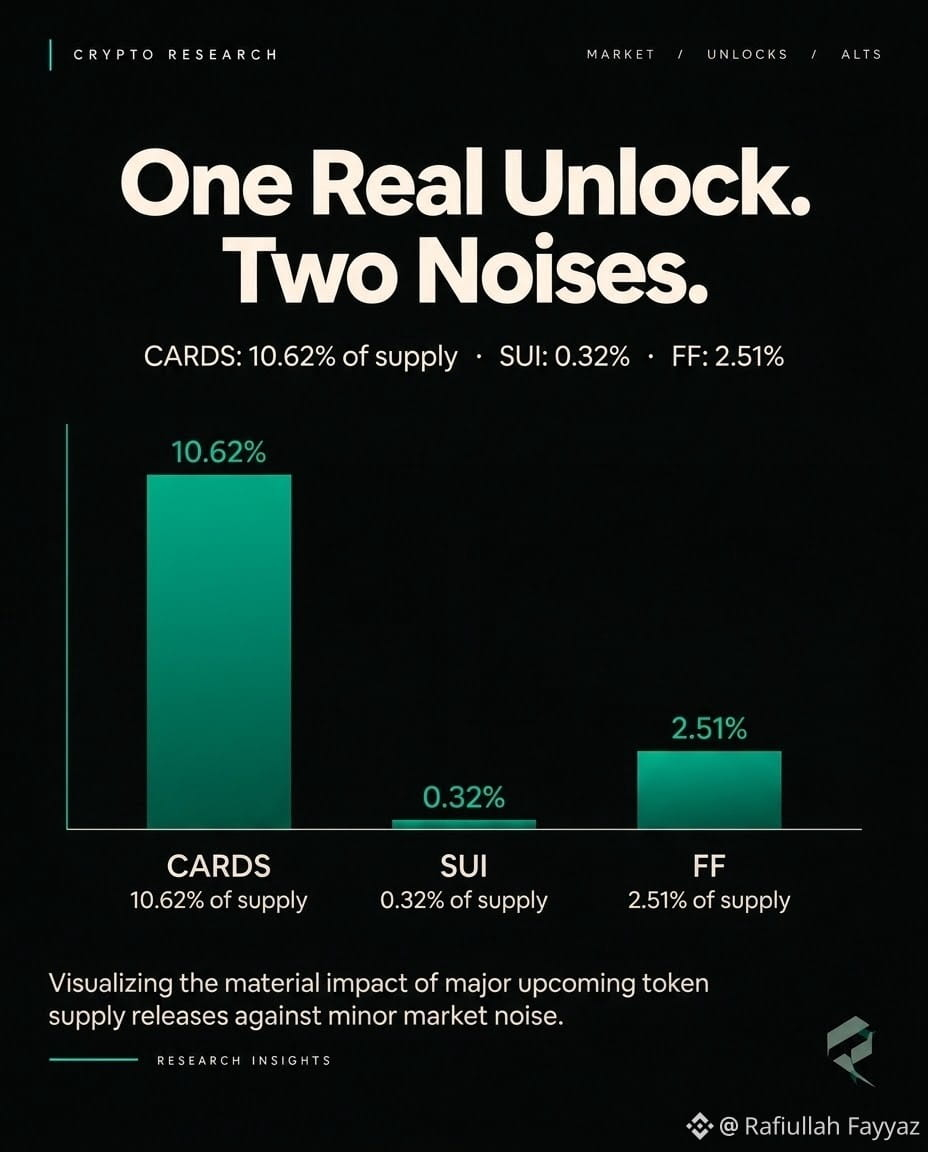
$CARDS unlocks today. 59.26 million tokens. About $11.66 million. But here's the number that matters: 10.62% of circulating supply.
$SUI also unlocks today. 13.26 million tokens. About $16.71 million. Only 0.32% of circulating supply.
$FF unlocks today. $10.09 million. 2.51% of supply.
Three unlocks. One is a real supply event (CARDS at 10.62%). Two are noise (SUI at 0.32%, FF at 2.51%).
That's the pattern I keep coming back to: dollar value tells you the headline. Percentage tells you the impact.
But there's another layer — the recipient. CARDS' unlock could be ecosystem or team. SUI's unlock is likely foundation or ecosystem. The recipient matters as much as the percentage.
The unlock calendar doesn't tell you what to think. It tells you what to check.
#CryptoEducation #TokenUnlocks #Tokenomics
{spot}(SUIUSDT)
{spot}(FFUSDT)
Today is one of the biggest unlock days of the month. Let me explain how to read it without overreacting.
$CARDS unlocks today. 59.26 million tokens. About $11.66 million. But here's the number that matters: 10.62% of circulating supply.
$SUI also unlocks today. 13.26 million tokens. About $16.71 million. Only 0.32% of circulating supply.
$FF unlocks today. $10.09 million. 2.51% of supply.
Three unlocks. One is a real supply event (CARDS at 10.62%). Two are noise (SUI at 0.32%, FF at 2.51%).
That's the pattern I keep coming back to: dollar value tells you the headline. Percentage tells you the impact.
But there's another layer — the recipient. CARDS' unlock could be ecosystem or team. SUI's unlock is likely foundation or ecosystem. The recipient matters as much as the percentage.
The unlock calendar doesn't tell you what to think. It tells you what to check.
#CryptoEducation #TokenUnlocks #Tokenomics
$CARDS unlocks today. 59.26 million tokens. About $11.66 million. But here's the number that matters: 10.62% of circulating supply.
$SUI also unlocks today. 13.26 million tokens. About $16.71 million. Only 0.32% of circulating supply.
$FF unlocks today. $10.09 million. 2.51% of supply.
Three unlocks. One is a real supply event (CARDS at 10.62%). Two are noise (SUI at 0.32%, FF at 2.51%).
That's the pattern I keep coming back to: dollar value tells you the headline. Percentage tells you the impact.
But there's another layer — the recipient. CARDS' unlock could be ecosystem or team. SUI's unlock is likely foundation or ecosystem. The recipient matters as much as the percentage.
The unlock calendar doesn't tell you what to think. It tells you what to check.
#CryptoEducation #TokenUnlocks #Tokenomics
198

·
--
🚨 $PAID RESTRUCTURES TOKENOMICS TO BOOST BUYBACKS AND PROTOCOL TREASURY EFFICIENCY! 🦈
Solana ecosystem protocol $PAID has officially launched its updated claim architecture, shifting tokenomic mechanics toward aggressive buyback support. 📊 Under the new framework, fee distribution pivots to 25% dedicated buybacks and 10% protocol treasury retention, optimizing structural value accrual.
This shift actively reduces recipient dilution while establishing a recurring liquidity bid directly within the order flow. 🧠 Smart money typically views enhanced buyback allocations as a long-term supply contraction catalyst. 💡 Does this tokenomics pivot give $PAID the structural backing needed to sustain its momentum? 👇
⚠️ Not financial advice. Always manage your risk. 🛡️
🏷️ #PAID #Solana #Tokenomics #Crypto
🎯 🦈
🚨 $PAID RESTRUCTURES TOKENOMICS TO BOOST BUYBACKS AND PROTOCOL TREASURY EFFICIENCY! 🦈
Solana ecosystem protocol $PAID has officially launched its updated claim architecture, shifting tokenomic mechanics toward aggressive buyback support. 📊 Under the new framework, fee distribution pivots to 25% dedicated buybacks and 10% protocol treasury retention, optimizing structural value accrual.
This shift actively reduces recipient dilution while establishing a recurring liquidity bid directly within the order flow. 🧠 Smart money typically views enhanced buyback allocations as a long-term supply contraction catalyst. 💡 Does this tokenomics pivot give $PAID the structural backing needed to sustain its momentum? 👇
⚠️ Not financial advice. Always manage your risk. 🛡️
🏷️ #PAID #Solana #Tokenomics #Crypto
🎯 🦈
Solana ecosystem protocol $PAID has officially launched its updated claim architecture, shifting tokenomic mechanics toward aggressive buyback support. 📊 Under the new framework, fee distribution pivots to 25% dedicated buybacks and 10% protocol treasury retention, optimizing structural value accrual.
This shift actively reduces recipient dilution while establishing a recurring liquidity bid directly within the order flow. 🧠 Smart money typically views enhanced buyback allocations as a long-term supply contraction catalyst. 💡 Does this tokenomics pivot give $PAID the structural backing needed to sustain its momentum? 👇
⚠️ Not financial advice. Always manage your risk. 🛡️
🏷️ #PAID #Solana #Tokenomics #Crypto
🎯 🦈
1
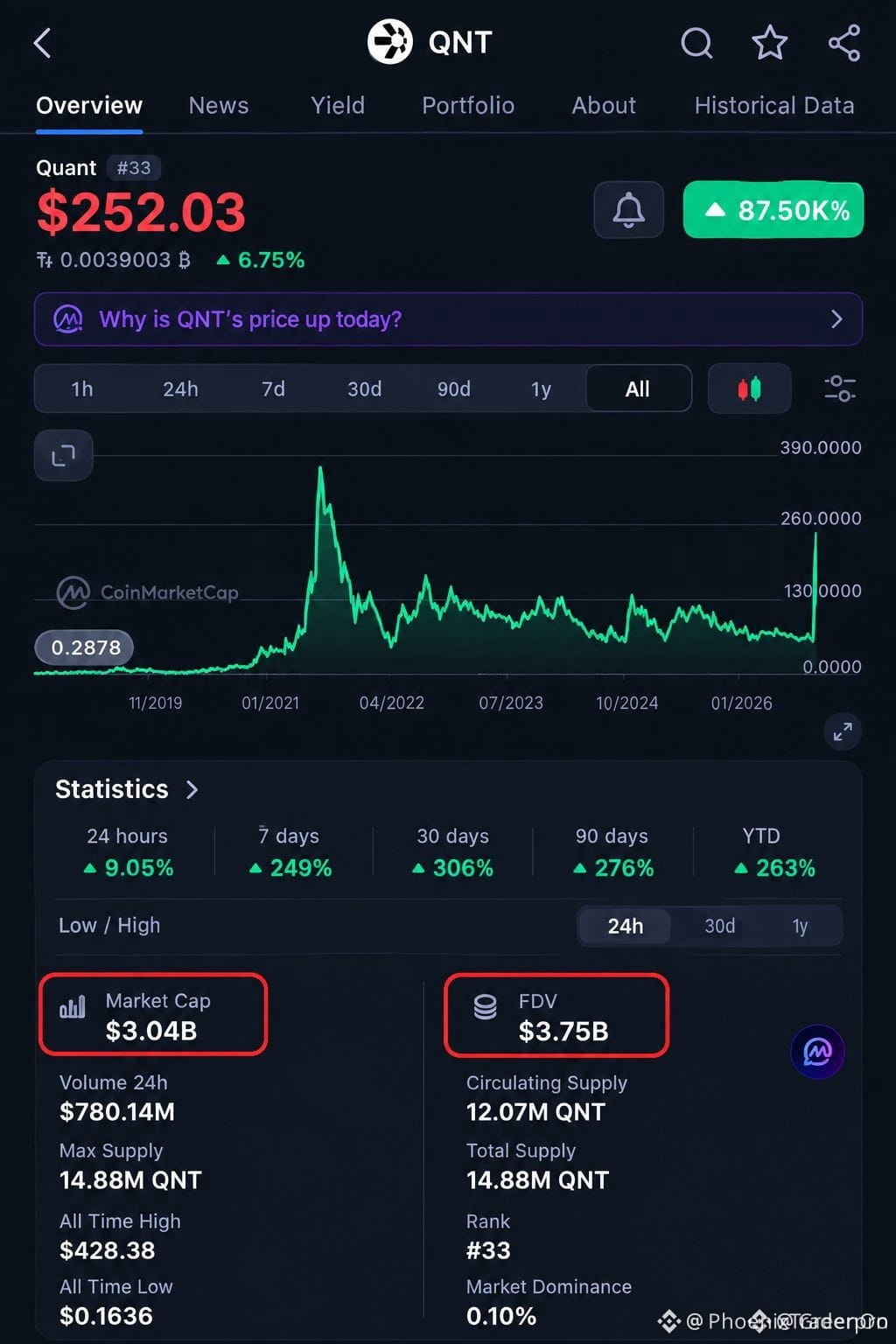
🚨 WHILE NEW TOKENS BLEED FROM UNLOCKS $QNT RIDES A ZERO-DILUTION STRUCTURE! 💎
Most modern altcoins are ticking time bombs, heavily burdened by 90% insider allocations waiting to flood the order books on every unlock schedule. 📉 $QNT plays by a completely different playbook, offering a clean structure with zero supply overhang. 🔒
When structural selling pressure is eliminated, price action responds purely to real market demand and organic buyer absorption. 📊 Smart money appreciates tokens where early investor dumps will not ruin a textbook breakout setup. ⚡
💬 Are you still holding tokens with heavy cliff unlocks, or are you prioritizing clean supply dynamics for this next cycle? 👇
⚠️ Not financial advice. Always manage your risk. 🛡️
🏷️ #QNT #Tokenomics #Crypto #Altcoins
💎 🎯
🚨 WHILE NEW TOKENS BLEED FROM UNLOCKS $QNT RIDES A ZERO-DILUTION STRUCTURE! 💎
Most modern altcoins are ticking time bombs, heavily burdened by 90% insider allocations waiting to flood the order books on every unlock schedule. 📉 $QNT plays by a completely different playbook, offering a clean structure with zero supply overhang. 🔒
When structural selling pressure is eliminated, price action responds purely to real market demand and organic buyer absorption. 📊 Smart money appreciates tokens where early investor dumps will not ruin a textbook breakout setup. ⚡
💬 Are you still holding tokens with heavy cliff unlocks, or are you prioritizing clean supply dynamics for this next cycle? 👇
⚠️ Not financial advice. Always manage your risk. 🛡️
🏷️ #QNT #Tokenomics #Crypto #Altcoins
💎 🎯
Most modern altcoins are ticking time bombs, heavily burdened by 90% insider allocations waiting to flood the order books on every unlock schedule. 📉 $QNT plays by a completely different playbook, offering a clean structure with zero supply overhang. 🔒
When structural selling pressure is eliminated, price action responds purely to real market demand and organic buyer absorption. 📊 Smart money appreciates tokens where early investor dumps will not ruin a textbook breakout setup. ⚡
💬 Are you still holding tokens with heavy cliff unlocks, or are you prioritizing clean supply dynamics for this next cycle? 👇
⚠️ Not financial advice. Always manage your risk. 🛡️
🏷️ #QNT #Tokenomics #Crypto #Altcoins
💎 🎯
84

·
--
Every token ships with a sell order written years before the first trade.
When a new token launches, most of its supply is usually not circulating yet. It's allocated to investors, teams, and treasuries — with vesting dates attached. Those vesting dates are sell orders with a calendar: pre-programmed, publicly visible, mechanical. No sentiment required.
This is why the gap between market cap and fully diluted valuation matters more than price. A token trading with a 15% float and a $10B FDV has $8.5B of potential sell pressure queued on a schedule its buyers don't control. Low float plus high FDV isn't a valuation opinion — it's a countdown.
Markets partially pre-price unlocks, which is why price rarely crashes on the exact day. But pre-pricing assumes insiders behave rationally and evenly. In practice, vesting cliffs cluster behavior: treasuries fund operations, early investors hit return targets, and supply leans on the bid in the same weeks.
What to watch instead of price:
– FDV-to-circulating ratio (the hidden float)
– Unlock calendar density (cliffs matter more than dribbles)
– Where unlocked coins actually go: operational wallets vs exchange deposits
$BTC avoided this model entirely — miners earn supply into existence and demand absorbs it. $ETH's staking emissions are subscribed, not vested. $BNB burns instead of mints. Most newer tokens still carry the vesting invoice.
Unlocks don't predict direction. They predict where supply shows up.
#Tokenomics #CryptoMarkets #MarketStructure #Altcoins
Every token ships with a sell order written years before the first trade.
When a new token launches, most of its supply is usually not circulating yet. It's allocated to investors, teams, and treasuries — with vesting dates attached. Those vesting dates are sell orders with a calendar: pre-programmed, publicly visible, mechanical. No sentiment required.
This is why the gap between market cap and fully diluted valuation matters more than price. A token trading with a 15% float and a $10B FDV has $8.5B of potential sell pressure queued on a schedule its buyers don't control. Low float plus high FDV isn't a valuation opinion — it's a countdown.
Markets partially pre-price unlocks, which is why price rarely crashes on the exact day. But pre-pricing assumes insiders behave rationally and evenly. In practice, vesting cliffs cluster behavior: treasuries fund operations, early investors hit return targets, and supply leans on the bid in the same weeks.
What to watch instead of price:
– FDV-to-circulating ratio (the hidden float)
– Unlock calendar density (cliffs matter more than dribbles)
– Where unlocked coins actually go: operational wallets vs exchange deposits
$BTC avoided this model entirely — miners earn supply into existence and demand absorbs it. $ETH 's staking emissions are subscribed, not vested. $BNB burns instead of mints. Most newer tokens still carry the vesting invoice.
Unlocks don't predict direction. They predict where supply shows up.
#Tokenomics #CryptoMarkets #MarketStructure #Altcoins
When a new token launches, most of its supply is usually not circulating yet. It's allocated to investors, teams, and treasuries — with vesting dates attached. Those vesting dates are sell orders with a calendar: pre-programmed, publicly visible, mechanical. No sentiment required.
This is why the gap between market cap and fully diluted valuation matters more than price. A token trading with a 15% float and a $10B FDV has $8.5B of potential sell pressure queued on a schedule its buyers don't control. Low float plus high FDV isn't a valuation opinion — it's a countdown.
Markets partially pre-price unlocks, which is why price rarely crashes on the exact day. But pre-pricing assumes insiders behave rationally and evenly. In practice, vesting cliffs cluster behavior: treasuries fund operations, early investors hit return targets, and supply leans on the bid in the same weeks.
What to watch instead of price:
– FDV-to-circulating ratio (the hidden float)
– Unlock calendar density (cliffs matter more than dribbles)
– Where unlocked coins actually go: operational wallets vs exchange deposits
$BTC avoided this model entirely — miners earn supply into existence and demand absorbs it. $ETH 's staking emissions are subscribed, not vested. $BNB burns instead of mints. Most newer tokens still carry the vesting invoice.
Unlocks don't predict direction. They predict where supply shows up.
#Tokenomics #CryptoMarkets #MarketStructure #Altcoins
77

Have you noticed how most traders chase random meme pumps while ignoring actual protocol revenue engines?
Most retail investors end up holding worthless bags because they buy purely on hype without looking at underlying tokenomics. When the volume dries up, the price collapses, leaving late buyers deep in the red.
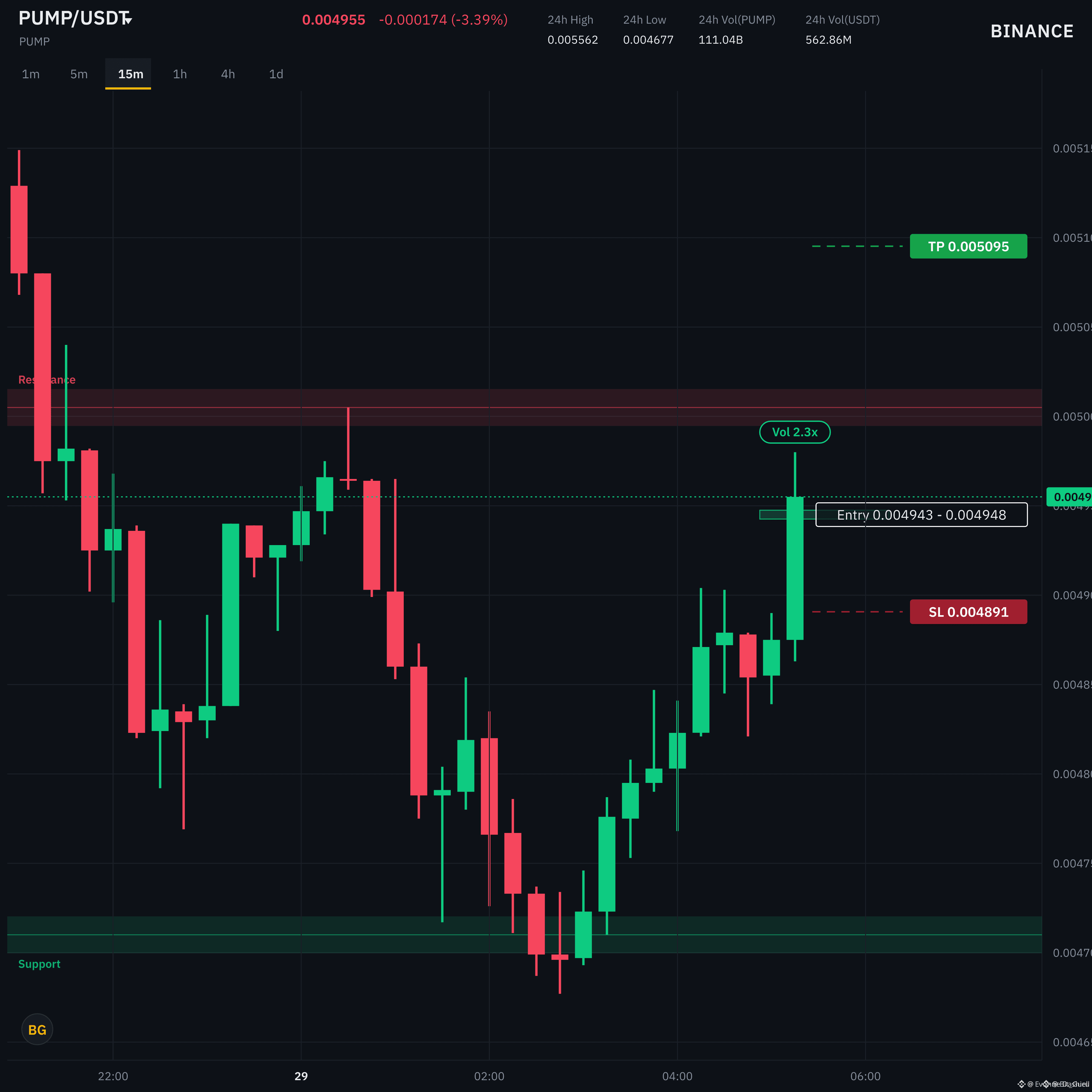
The real sustainability play right now is looking at models where protocol fee income directly powers deflation. Take $PUMP as a case study: instead of relying on pure speculative momentum, its destruction mechanism ties straight into active fee generation. As long as launchpad activity stays elevated, the supply burn does the heavy lifting quietly in the background.
A holding position yielding +1,496.48 $USDT with a steady +10.00% gain shows how structural mechanics can outperform frantic scalping. When actual platform revenue constantly retires supply, steady value accrual naturally follows the volume.
Where do you think this deflationary model goes from here once sector volume peaks?
#CryptoTrading #Tokenomics #Altcoins
Have you noticed how most traders chase random meme pumps while ignoring actual protocol revenue engines?
Most retail investors end up holding worthless bags because they buy purely on hype without looking at underlying tokenomics. When the volume dries up, the price collapses, leaving late buyers deep in the red.
The real sustainability play right now is looking at models where protocol fee income directly powers deflation. Take $PUMP as a case study: instead of relying on pure speculative momentum, its destruction mechanism ties straight into active fee generation. As long as launchpad activity stays elevated, the supply burn does the heavy lifting quietly in the background.
A holding position yielding +1,496.48 $USDT with a steady +10.00% gain shows how structural mechanics can outperform frantic scalping. When actual platform revenue constantly retires supply, steady value accrual naturally follows the volume.
Where do you think this deflationary model goes from here once sector volume peaks?
#CryptoTrading #Tokenomics #Altcoins
Most retail investors end up holding worthless bags because they buy purely on hype without looking at underlying tokenomics. When the volume dries up, the price collapses, leaving late buyers deep in the red.
The real sustainability play right now is looking at models where protocol fee income directly powers deflation. Take $PUMP as a case study: instead of relying on pure speculative momentum, its destruction mechanism ties straight into active fee generation. As long as launchpad activity stays elevated, the supply burn does the heavy lifting quietly in the background.
A holding position yielding +1,496.48 $USDT with a steady +10.00% gain shows how structural mechanics can outperform frantic scalping. When actual platform revenue constantly retires supply, steady value accrual naturally follows the volume.
Where do you think this deflationary model goes from here once sector volume peaks?
#CryptoTrading #Tokenomics #Altcoins
44
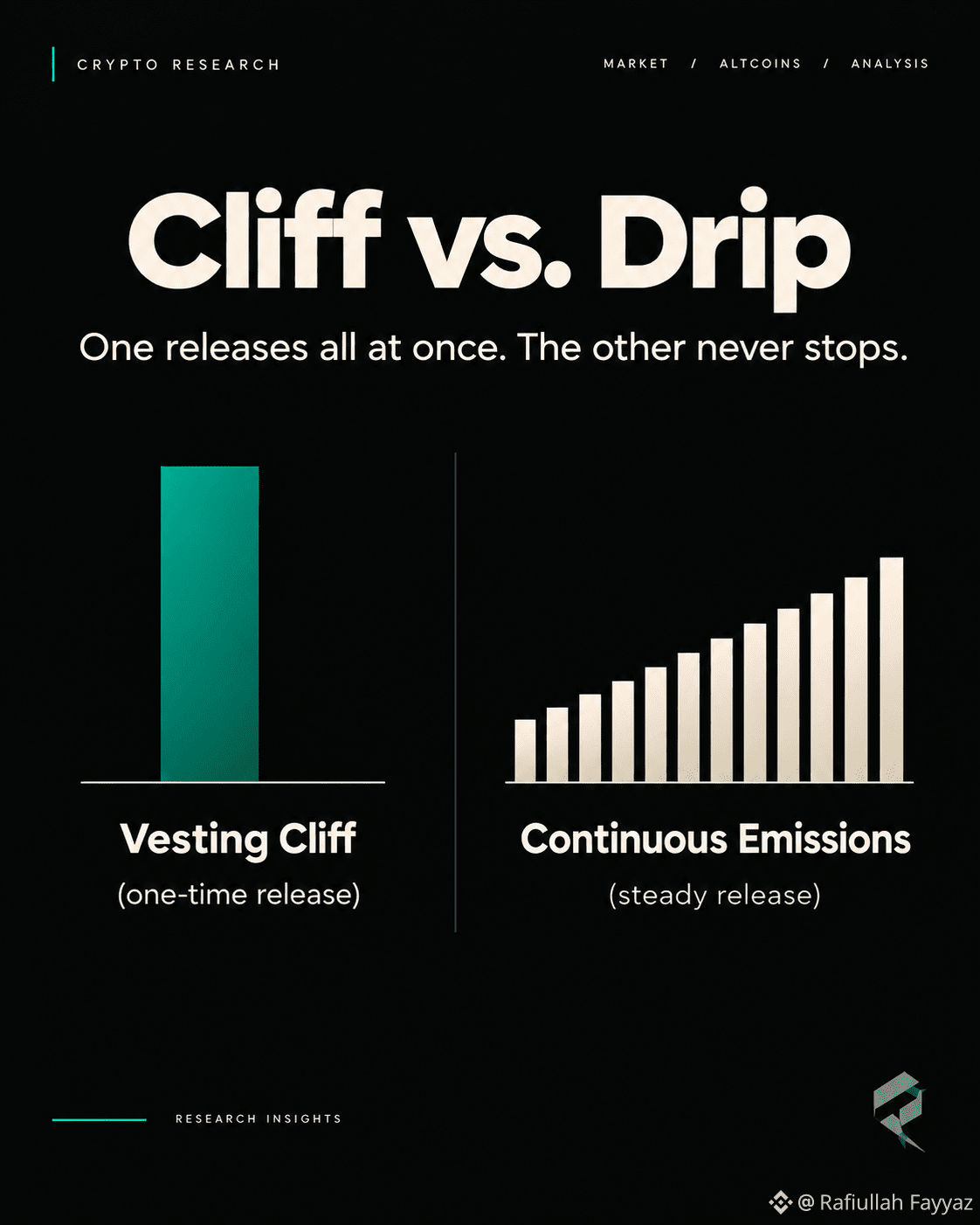
Yesterday I wrote about unlock percentages. Today I want to talk about a related but separate idea: vesting cliffs vs. continuous emissions.
A vesting cliff is a specific date when a large batch of tokens unlocks. It's binary — before the date, nothing releases. On the date, everything does. Falcon Finance (FF) has one today: 203 million tokens, about 6.47% of circulating supply.
Continuous emissions are different. Instead of one big release, tokens drip into circulation steadily. Staking rewards, liquidity mining incentives, and ecosystem grants often work this way. There's no single "unlock day" — just constant, predictable supply growth.
Why this matters: cliff unlocks are easier to trade around because the date and size are known. Continuous emissions are harder to react to because they're always happening. They're baked into the price over time.
Today has both types. FF has a cliff unlock. HYPE also has an unlock today — roughly 14 million tokens, worth about $1.2 billion, representing about 2.7% of market cap. But HYPE's unlock is part of a monthly schedule that continues through 2029. It's not a one-time event.
The question with any supply event: is this a cliff or a drip? And is the market already expecting it?
$FF $HYPE
#CryptoEducation #TokenUnlocks #Tokenomics
{spot}(FFUSDT)
{spot}(HYPEUSDT)
Yesterday I wrote about unlock percentages. Today I want to talk about a related but separate idea: vesting cliffs vs. continuous emissions.
A vesting cliff is a specific date when a large batch of tokens unlocks. It's binary — before the date, nothing releases. On the date, everything does. Falcon Finance (FF) has one today: 203 million tokens, about 6.47% of circulating supply.
Continuous emissions are different. Instead of one big release, tokens drip into circulation steadily. Staking rewards, liquidity mining incentives, and ecosystem grants often work this way. There's no single "unlock day" — just constant, predictable supply growth.
Why this matters: cliff unlocks are easier to trade around because the date and size are known. Continuous emissions are harder to react to because they're always happening. They're baked into the price over time.
Today has both types. FF has a cliff unlock. HYPE also has an unlock today — roughly 14 million tokens, worth about $1.2 billion, representing about 2.7% of market cap. But HYPE's unlock is part of a monthly schedule that continues through 2029. It's not a one-time event.
The question with any supply event: is this a cliff or a drip? And is the market already expecting it?
$FF $HYPE
#CryptoEducation #TokenUnlocks #Tokenomics
A vesting cliff is a specific date when a large batch of tokens unlocks. It's binary — before the date, nothing releases. On the date, everything does. Falcon Finance (FF) has one today: 203 million tokens, about 6.47% of circulating supply.
Continuous emissions are different. Instead of one big release, tokens drip into circulation steadily. Staking rewards, liquidity mining incentives, and ecosystem grants often work this way. There's no single "unlock day" — just constant, predictable supply growth.
Why this matters: cliff unlocks are easier to trade around because the date and size are known. Continuous emissions are harder to react to because they're always happening. They're baked into the price over time.
Today has both types. FF has a cliff unlock. HYPE also has an unlock today — roughly 14 million tokens, worth about $1.2 billion, representing about 2.7% of market cap. But HYPE's unlock is part of a monthly schedule that continues through 2029. It's not a one-time event.
The question with any supply event: is this a cliff or a drip? And is the market already expecting it?
$FF $HYPE
#CryptoEducation #TokenUnlocks #Tokenomics
246

·
--
everyone thinks token burns automatically make a coin pump forever, but actually relying blindly on fee destruction without checking real volume trends will get you rekt.
most traders fomo into $PUMP the second they hear about burn mechanics, only to sit on underwater bags when activity cools down. getting trapped at local tops because you assumed token burns create an unbreakable floor is a painful mistake.
ngl looking at live data shows how easily people get complacent ser. seeing accounts sitting on +1,496.48 $USDT in cumulative pnl with a clean +10.00% return makes it look like smooth sailing. as long as the hype track stays active and platform fees keep rolling in, the supply destruction keeps holders happy.
the catch is that fee-driven burns only work when trading volume stays high. the moment market attention rotates elsewhere, that fee revenue shrinks instantly and the burn engine stalls out, leaving late buyers exposed.
where do you think this goes from here?
#CryptoTrading #Tokenomics #Altcoins
everyone thinks token burns automatically make a coin pump forever, but actually relying blindly on fee destruction without checking real volume trends will get you rekt.
most traders fomo into $PUMP the second they hear about burn mechanics, only to sit on underwater bags when activity cools down. getting trapped at local tops because you assumed token burns create an unbreakable floor is a painful mistake.
ngl looking at live data shows how easily people get complacent ser. seeing accounts sitting on +1,496.48 $USDT in cumulative pnl with a clean +10.00% return makes it look like smooth sailing. as long as the hype track stays active and platform fees keep rolling in, the supply destruction keeps holders happy.
the catch is that fee-driven burns only work when trading volume stays high. the moment market attention rotates elsewhere, that fee revenue shrinks instantly and the burn engine stalls out, leaving late buyers exposed.
where do you think this goes from here?
#CryptoTrading #Tokenomics #Altcoins
most traders fomo into $PUMP the second they hear about burn mechanics, only to sit on underwater bags when activity cools down. getting trapped at local tops because you assumed token burns create an unbreakable floor is a painful mistake.
ngl looking at live data shows how easily people get complacent ser. seeing accounts sitting on +1,496.48 $USDT in cumulative pnl with a clean +10.00% return makes it look like smooth sailing. as long as the hype track stays active and platform fees keep rolling in, the supply destruction keeps holders happy.
the catch is that fee-driven burns only work when trading volume stays high. the moment market attention rotates elsewhere, that fee revenue shrinks instantly and the burn engine stalls out, leaving late buyers exposed.
where do you think this goes from here?
#CryptoTrading #Tokenomics #Altcoins

142

·
--
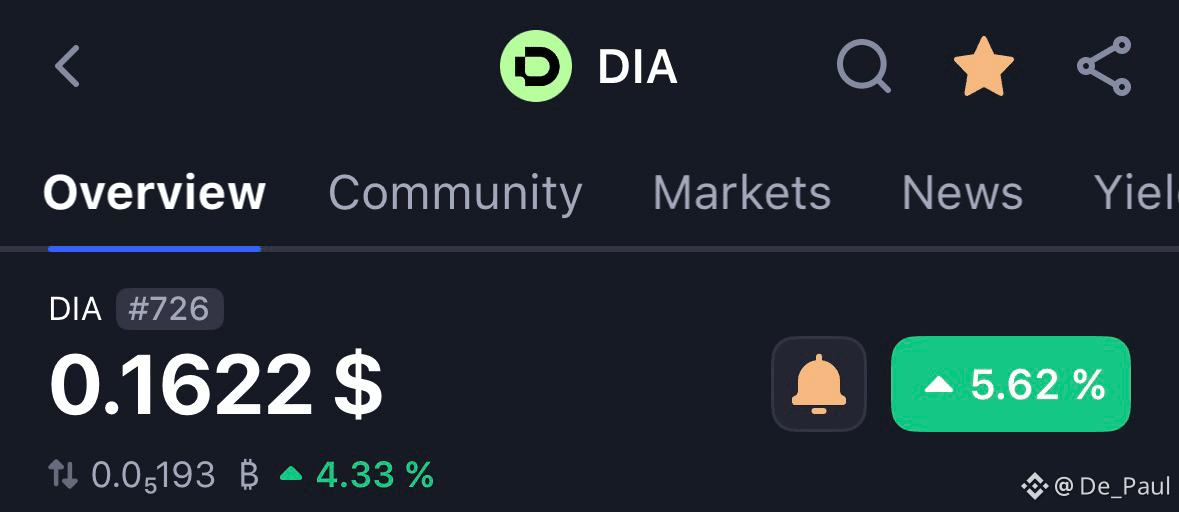
I think the question around $DIA right now is fair:
DIA is shipping infrastructure, integrations are growing, and the network is expanding.
But how much of that activity actually flows back to the token?
$DIA has utility through Lasernet gas, staking and governance. The longer-term staking model also points toward delegation and stronger economic incentives around oracle operators.
That’s the part I’m watching.
The tech can be solid. The real question is whether network usage eventually creates meaningful demand for the token.
What do you think $DIA needs to make that connection clearer?
#DIAUSDT #crypto #defi #oracles #Tokenomics
I think the question around $DIA right now is fair:
DIA is shipping infrastructure, integrations are growing, and the network is expanding.
But how much of that activity actually flows back to the token?
$DIA has utility through Lasernet gas, staking and governance. The longer-term staking model also points toward delegation and stronger economic incentives around oracle operators.
That’s the part I’m watching.
The tech can be solid. The real question is whether network usage eventually creates meaningful demand for the token.
What do you think $DIA needs to make that connection clearer?
#DIAUSDT #crypto #defi #oracles #Tokenomics
DIA is shipping infrastructure, integrations are growing, and the network is expanding.
But how much of that activity actually flows back to the token?
$DIA has utility through Lasernet gas, staking and governance. The longer-term staking model also points toward delegation and stronger economic incentives around oracle operators.
That’s the part I’m watching.
The tech can be solid. The real question is whether network usage eventually creates meaningful demand for the token.
What do you think $DIA needs to make that connection clearer?
#DIAUSDT #crypto #defi #oracles #Tokenomics
166

·
--
"The Merchant of Venice" and the SEC’s New Golden Rule ⚖️💼
In the classic "The Merchant of Venice," Shakespeare shows how a strict contract and the collection of a debt can change the fate of everyone involved. In the cryptocurrency market, the contracts (tokenomics) have just undergone the most optimistic shift in recent years.
The U.S. SEC (the CVM of the U.S.) has just issued guidance paving the way for crypto projects to repurchase their own tokens without automatically classifying them as securities. This is a colossal relief for developers and changes the game for those generating real revenue. The DeFi sector is leading this comeback with brute force: $AAVE pulls the line for decentralized finance, while protocols that rely on buyback-and-burn mechanics, like $MKR and the giant $UNI , are back on the radar of major investment funds.
The value generated on the blockchain can now return directly to the token, and the market is already pricing that in.
🎯 Which protocols in your portfolio generate real revenue for buybacks? Click on AAVE, MKR, or UNI to see the impact of this news on the charts and make your conversions!
#DeFi #SEC #Shakespeare #Tokenomics #Write2Earn
"The Merchant of Venice" and the SEC’s New Golden Rule ⚖️💼
In the classic "The Merchant of Venice," Shakespeare shows how a strict contract and the collection of a debt can change the fate of everyone involved. In the cryptocurrency market, the contracts (tokenomics) have just undergone the most optimistic shift in recent years.
The U.S. SEC (the CVM of the U.S.) has just issued guidance paving the way for crypto projects to repurchase their own tokens without automatically classifying them as securities. This is a colossal relief for developers and changes the game for those generating real revenue. The DeFi sector is leading this comeback with brute force: $AAVE pulls the line for decentralized finance, while protocols that rely on buyback-and-burn mechanics, like $MKR and the giant $UNI , are back on the radar of major investment funds.
The value generated on the blockchain can now return directly to the token, and the market is already pricing that in.
🎯 Which protocols in your portfolio generate real revenue for buybacks? Click on AAVE, MKR, or UNI to see the impact of this news on the charts and make your conversions!
#DeFi #SEC #Shakespeare #Tokenomics #Write2Earn
In the classic "The Merchant of Venice," Shakespeare shows how a strict contract and the collection of a debt can change the fate of everyone involved. In the cryptocurrency market, the contracts (tokenomics) have just undergone the most optimistic shift in recent years.
The U.S. SEC (the CVM of the U.S.) has just issued guidance paving the way for crypto projects to repurchase their own tokens without automatically classifying them as securities. This is a colossal relief for developers and changes the game for those generating real revenue. The DeFi sector is leading this comeback with brute force: $AAVE pulls the line for decentralized finance, while protocols that rely on buyback-and-burn mechanics, like $MKR and the giant $UNI , are back on the radar of major investment funds.
The value generated on the blockchain can now return directly to the token, and the market is already pricing that in.
🎯 Which protocols in your portfolio generate real revenue for buybacks? Click on AAVE, MKR, or UNI to see the impact of this news on the charts and make your conversions!
#DeFi #SEC #Shakespeare #Tokenomics #Write2Earn
130


·
--
🧠 VVV’s Utility Is Measurable, but Its Holder Concentration Remains the Hard Risk
Venice’s VVV reached a reported all-time high of $34.51 on September 21 after trading as low as $0.92 the previous December. Decrypt reported a market capitalization near $1.6 billion at the time.
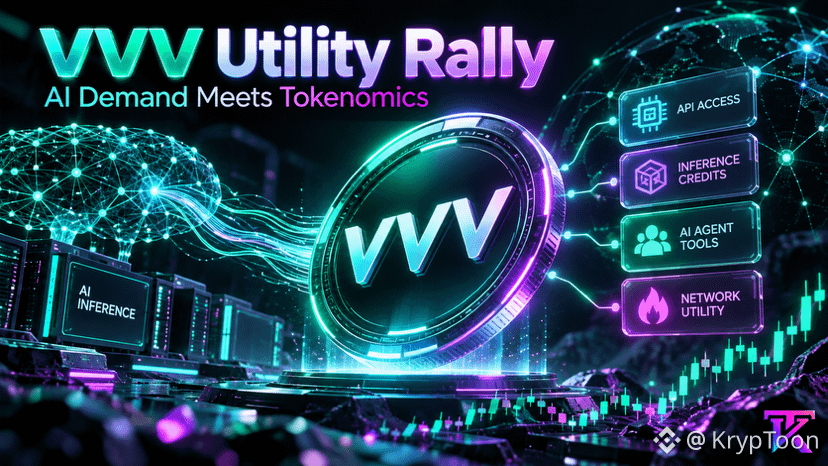
VVV has a measurable utility model. Holders can stake it to access Venice AI inference capacity and use staked positions to mint DIEM, which provides recurring API credits. Venice also uses portions of platform activity to buy and burn VVV.
Annual issuance was reduced to 2.5 million VVV on September 1, with a further reduction to 2 million scheduled for October 1. Venice also reported crossing a $100 million annualized revenue run rate in August.
The major counterweight is concentration. Onchain data cited by Decrypt indicated that the 100 largest wallets controlled roughly 98% of supply. Concentrated ownership can dominate liquidity and price discovery even when product usage grows.
The useful dashboard is therefore not price alone: API consumption, revenue, staking, burns, net issuance and holder distribution all matter.
Disclaimer: Project analysis only, not financial advice. VVV is highly volatile, and concentrated ownership can increase liquidity risk.
$VVV
Venice AI • Token Utility • AI Inference
#VVV #AICrypto #Tokenomics
🧠 VVV’s Utility Is Measurable, but Its Holder Concentration Remains the Hard Risk
Venice’s VVV reached a reported all-time high of $34.51 on September 21 after trading as low as $0.92 the previous December. Decrypt reported a market capitalization near $1.6 billion at the time.
VVV has a measurable utility model. Holders can stake it to access Venice AI inference capacity and use staked positions to mint DIEM, which provides recurring API credits. Venice also uses portions of platform activity to buy and burn VVV.
Annual issuance was reduced to 2.5 million VVV on September 1, with a further reduction to 2 million scheduled for October 1. Venice also reported crossing a $100 million annualized revenue run rate in August.
The major counterweight is concentration. Onchain data cited by Decrypt indicated that the 100 largest wallets controlled roughly 98% of supply. Concentrated ownership can dominate liquidity and price discovery even when product usage grows.
The useful dashboard is therefore not price alone: API consumption, revenue, staking, burns, net issuance and holder distribution all matter.
Disclaimer: Project analysis only, not financial advice. VVV is highly volatile, and concentrated ownership can increase liquidity risk.
$VVV
Venice AI • Token Utility • AI Inference
#VVV #AICrypto #Tokenomics
Venice’s VVV reached a reported all-time high of $34.51 on September 21 after trading as low as $0.92 the previous December. Decrypt reported a market capitalization near $1.6 billion at the time.
VVV has a measurable utility model. Holders can stake it to access Venice AI inference capacity and use staked positions to mint DIEM, which provides recurring API credits. Venice also uses portions of platform activity to buy and burn VVV.
Annual issuance was reduced to 2.5 million VVV on September 1, with a further reduction to 2 million scheduled for October 1. Venice also reported crossing a $100 million annualized revenue run rate in August.
The major counterweight is concentration. Onchain data cited by Decrypt indicated that the 100 largest wallets controlled roughly 98% of supply. Concentrated ownership can dominate liquidity and price discovery even when product usage grows.
The useful dashboard is therefore not price alone: API consumption, revenue, staking, burns, net issuance and holder distribution all matter.
Disclaimer: Project analysis only, not financial advice. VVV is highly volatile, and concentrated ownership can increase liquidity risk.
$VVV
Venice AI • Token Utility • AI Inference
#VVV #AICrypto #Tokenomics
344

·
--
Bullish
THERE’S A NUMBER I CHECK BEFORE BUYING ANY ALTCOIN.
And it isn’t the price.
It’s how much supply is still waiting to enter the market.
A token can have:
📈 Strong technology
📈 Growing users
📈 Big partnerships
📈 Increasing attention
…and still struggle if a large amount of new supply is scheduled to hit the market.
That’s why I always check:
1. Circulating supply
How much of the total supply is already trading?
2. Upcoming unlocks
How many tokens could enter circulation soon?
3. Who receives them?
Team? Investors? Treasury? Community?
4. Unlock size vs daily volume
This is the part many people overlook.
A $100M unlock means something very different for a token trading $20M/day versus one trading $500M/day.
The chart tells you what happened.
Tokenomics can help explain what might happen next.
This doesn’t mean every unlock is bearish.
Sometimes the market has already priced it in. Sometimes demand absorbs the additional supply.
That’s exactly why I think token unlocks deserve more attention than another “🚀 coin to 100x” post.
What’s one token you think has the most interesting tokenomics right now?
Give me the ticker + the reason.
I want to see which projects this community thinks have the strongest supply structure.
Educational discussion only, not financial advice. Always DYOR.
#crypto #Tokenomics #altcoins #CryptoAnalysis #BinanceSquareFamily
$AAPLB
{spot}(AAPLBUSDT)
THERE’S A NUMBER I CHECK BEFORE BUYING ANY ALTCOIN.
And it isn’t the price.
It’s how much supply is still waiting to enter the market.
A token can have:
📈 Strong technology
📈 Growing users
📈 Big partnerships
📈 Increasing attention
…and still struggle if a large amount of new supply is scheduled to hit the market.
That’s why I always check:
1. Circulating supply
How much of the total supply is already trading?
2. Upcoming unlocks
How many tokens could enter circulation soon?
3. Who receives them?
Team? Investors? Treasury? Community?
4. Unlock size vs daily volume
This is the part many people overlook.
A $100M unlock means something very different for a token trading $20M/day versus one trading $500M/day.
The chart tells you what happened.
Tokenomics can help explain what might happen next.
This doesn’t mean every unlock is bearish.
Sometimes the market has already priced it in. Sometimes demand absorbs the additional supply.
That’s exactly why I think token unlocks deserve more attention than another “🚀 coin to 100x” post.
What’s one token you think has the most interesting tokenomics right now?
Give me the ticker + the reason.
I want to see which projects this community thinks have the strongest supply structure.
Educational discussion only, not financial advice. Always DYOR.
#crypto #Tokenomics #altcoins #CryptoAnalysis #BinanceSquareFamily
$AAPLB
And it isn’t the price.
It’s how much supply is still waiting to enter the market.
A token can have:
📈 Strong technology
📈 Growing users
📈 Big partnerships
📈 Increasing attention
…and still struggle if a large amount of new supply is scheduled to hit the market.
That’s why I always check:
1. Circulating supply
How much of the total supply is already trading?
2. Upcoming unlocks
How many tokens could enter circulation soon?
3. Who receives them?
Team? Investors? Treasury? Community?
4. Unlock size vs daily volume
This is the part many people overlook.
A $100M unlock means something very different for a token trading $20M/day versus one trading $500M/day.
The chart tells you what happened.
Tokenomics can help explain what might happen next.
This doesn’t mean every unlock is bearish.
Sometimes the market has already priced it in. Sometimes demand absorbs the additional supply.
That’s exactly why I think token unlocks deserve more attention than another “🚀 coin to 100x” post.
What’s one token you think has the most interesting tokenomics right now?
Give me the ticker + the reason.
I want to see which projects this community thinks have the strongest supply structure.
Educational discussion only, not financial advice. Always DYOR.
#crypto #Tokenomics #altcoins #CryptoAnalysis #BinanceSquareFamily
$AAPLB

32
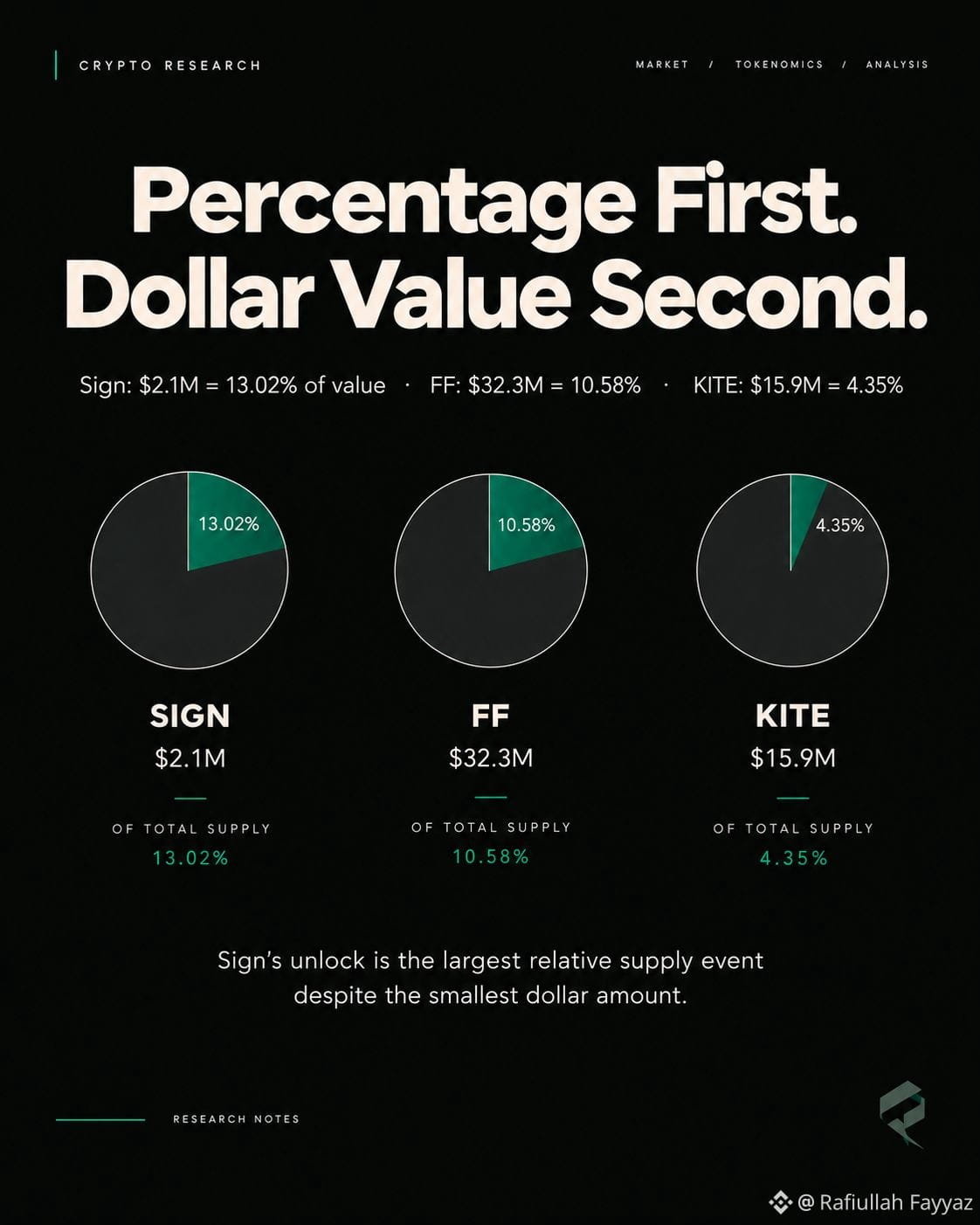
Today is one of the bigger unlock days of the month. Let me explain the difference between an unlock that barely matters and one that changes the supply picture.
Sign unlocks today. The numbers: $2.11 million worth of tokens. That sounds small. But it's 13.02% of the token's market value. That's a significant supply increase for a smaller cap.
CORN also unlocks today. $1.59 million worth. 11.69% of market value. Same story — small dollar amount, large percentage.
Now look ahead: Falcon Finance (FF) unlocks $32.34 million on September 29. That's 10.58% of its market value. **Kite (KITE)** unlocks $15.95 million on October 1. That's only 4.35% of its market value.
The pattern: FF's dollar amount is 15 times larger than Sign's, but the percentage impact is actually smaller. Sign's unlock is a bigger relative supply event than FF's.
The rule: percentage first, dollar value second. A $2 million unlock that's 13% of supply is more significant than a $15 million unlock that's 4% of supply.
Who receives the tokens matters too. But the percentage tells you how much the market has to absorb.
#CryptoEducation #TokenUnlocks #Tokenomics
$SIGN $KITE
{spot}(SIGNUSDT)
{spot}(KITEUSDT)
Today is one of the bigger unlock days of the month. Let me explain the difference between an unlock that barely matters and one that changes the supply picture.
Sign unlocks today. The numbers: $2.11 million worth of tokens. That sounds small. But it's 13.02% of the token's market value. That's a significant supply increase for a smaller cap.
CORN also unlocks today. $1.59 million worth. 11.69% of market value. Same story — small dollar amount, large percentage.
Now look ahead: Falcon Finance (FF) unlocks $32.34 million on September 29. That's 10.58% of its market value. **Kite (KITE)** unlocks $15.95 million on October 1. That's only 4.35% of its market value.
The pattern: FF's dollar amount is 15 times larger than Sign's, but the percentage impact is actually smaller. Sign's unlock is a bigger relative supply event than FF's.
The rule: percentage first, dollar value second. A $2 million unlock that's 13% of supply is more significant than a $15 million unlock that's 4% of supply.
Who receives the tokens matters too. But the percentage tells you how much the market has to absorb.
#CryptoEducation #TokenUnlocks #Tokenomics
$SIGN $KITE
Sign unlocks today. The numbers: $2.11 million worth of tokens. That sounds small. But it's 13.02% of the token's market value. That's a significant supply increase for a smaller cap.
CORN also unlocks today. $1.59 million worth. 11.69% of market value. Same story — small dollar amount, large percentage.
Now look ahead: Falcon Finance (FF) unlocks $32.34 million on September 29. That's 10.58% of its market value. **Kite (KITE)** unlocks $15.95 million on October 1. That's only 4.35% of its market value.
The pattern: FF's dollar amount is 15 times larger than Sign's, but the percentage impact is actually smaller. Sign's unlock is a bigger relative supply event than FF's.
The rule: percentage first, dollar value second. A $2 million unlock that's 13% of supply is more significant than a $15 million unlock that's 4% of supply.
Who receives the tokens matters too. But the percentage tells you how much the market has to absorb.
#CryptoEducation #TokenUnlocks #Tokenomics
$SIGN $KITE
545

·
--
Article
📉
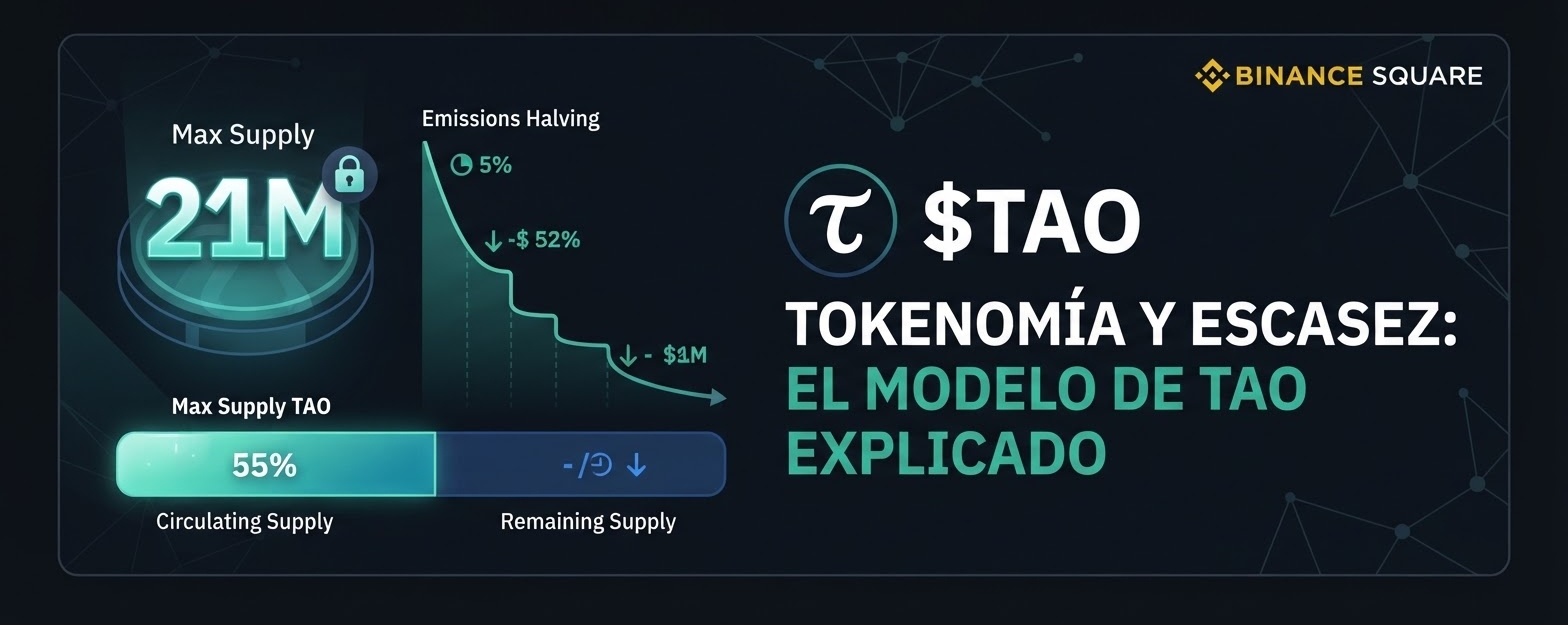
Scarcity and Halving: Why TAO’s Tokenomics Imitates Bitcoin’s Model?When we analyze long-term infrastructure projects, tokenomics is our fundamental roadmap. In the case of Bittensor (TAO), its monetary design replicates Bitcoin’s absolute scarcity to incentivize structural value:
🪙 Strict max supply: Unchangeable limit of 21,000,000 tokens in total. There will never be another TAO.
🔄 Current circulation:
About 11.5 million TAO are already in circulation (approximately 55% of the total issued).
⏳ Scheduled issuance: Periodic reduction in the entry of new tokens into the market (halving), rewarding a long-term vision.
📉 Scarcity and Halving: Why TAO’s Tokenomics Imitates Bitcoin’s Model?
When we analyze long-term infrastructure projects, tokenomics is our fundamental roadmap. In the case of Bittensor (TAO), its monetary design replicates Bitcoin’s absolute scarcity to incentivize structural value:
🪙 Strict max supply: Unchangeable limit of 21,000,000 tokens in total. There will never be another TAO.
🔄 Current circulation:
About 11.5 million TAO are already in circulation (approximately 55% of the total issued).
⏳ Scheduled issuance: Periodic reduction in the entry of new tokens into the market (halving), rewarding a long-term vision.
🪙 Strict max supply: Unchangeable limit of 21,000,000 tokens in total. There will never be another TAO.
🔄 Current circulation:
About 11.5 million TAO are already in circulation (approximately 55% of the total issued).
⏳ Scheduled issuance: Periodic reduction in the entry of new tokens into the market (halving), rewarding a long-term vision.
2
311

·
--
Bullish
Midnight Separates The Asset From The Fuel ⛽
Every interaction on $ETH consumes a transferable asset, while $SOL made the same basic model dramatically cheaper without changing what users ultimately spend.
Midnight approaches network resources differently through NIGHT and DUST.
The model has three unusual properties:
- NIGHT is the utility asset: it supports network participation and can be registered to generate DUST. .
- DUST powers transactions: applications use it as network capacity rather than spending NIGHT itself.
- DUST isn’t a normal token: it is shielded and non-transferable, separating network usage from another freely traded asset.
That distinction becomes more interesting at application scale.
Instead of treating every interaction as another moment where users need to source a liquid gas asset, an application can think about the capacity generated by the NIGHT behind it.
Midnight’s roadmap even treats a future DUST Capacity Exchange around surplus capacity separately rather than simply making DUST another transferable gas coin.
Most chains spent years optimizing how cheaply users can buy gas.
Midnight is experimenting whether gas needs to behave like a normal coin at all.
#Tokenomics #Infrastructure
Midnight Separates The Asset From The Fuel ⛽
Every interaction on $ETH consumes a transferable asset, while $SOL made the same basic model dramatically cheaper without changing what users ultimately spend.
Midnight approaches network resources differently through NIGHT and DUST.
The model has three unusual properties:
- NIGHT is the utility asset: it supports network participation and can be registered to generate DUST. .
- DUST powers transactions: applications use it as network capacity rather than spending NIGHT itself.
- DUST isn’t a normal token: it is shielded and non-transferable, separating network usage from another freely traded asset.
That distinction becomes more interesting at application scale.
Instead of treating every interaction as another moment where users need to source a liquid gas asset, an application can think about the capacity generated by the NIGHT behind it.
Midnight’s roadmap even treats a future DUST Capacity Exchange around surplus capacity separately rather than simply making DUST another transferable gas coin.
Most chains spent years optimizing how cheaply users can buy gas.
Midnight is experimenting whether gas needs to behave like a normal coin at all.
#Tokenomics #Infrastructure
Every interaction on $ETH consumes a transferable asset, while $SOL made the same basic model dramatically cheaper without changing what users ultimately spend.
Midnight approaches network resources differently through NIGHT and DUST.
The model has three unusual properties:
- NIGHT is the utility asset: it supports network participation and can be registered to generate DUST. .
- DUST powers transactions: applications use it as network capacity rather than spending NIGHT itself.
- DUST isn’t a normal token: it is shielded and non-transferable, separating network usage from another freely traded asset.
That distinction becomes more interesting at application scale.
Instead of treating every interaction as another moment where users need to source a liquid gas asset, an application can think about the capacity generated by the NIGHT behind it.
Midnight’s roadmap even treats a future DUST Capacity Exchange around surplus capacity separately rather than simply making DUST another transferable gas coin.
Most chains spent years optimizing how cheaply users can buy gas.
Midnight is experimenting whether gas needs to behave like a normal coin at all.
#Tokenomics #Infrastructure
1
527
·
--
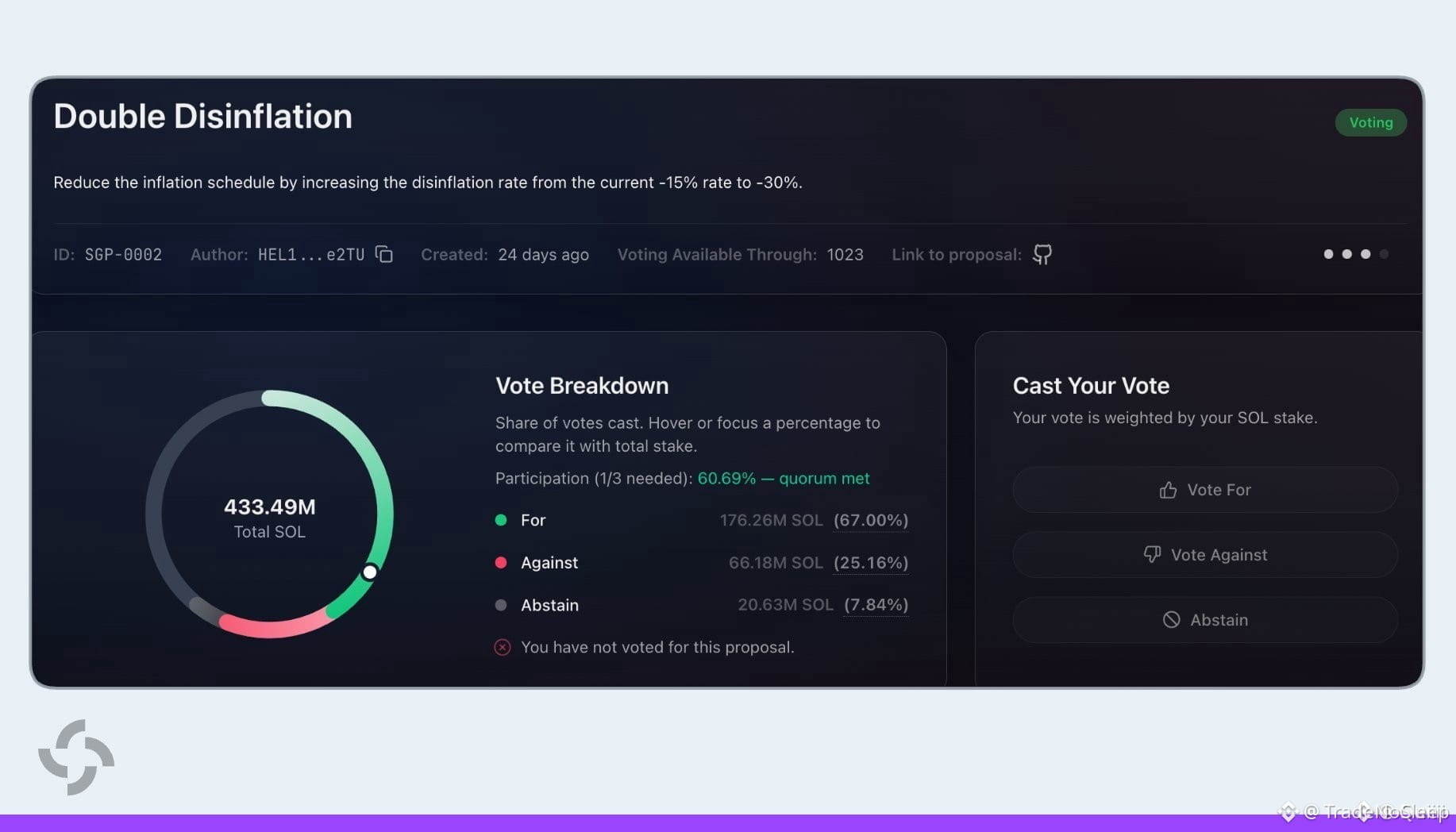
🚨 $SOL GOVERNANCE PASSES PROPOSAL TO CUT ISSUANCE BY 18.9M TOKENS! ⚡
Solana validators have officially approved the double disinflation proposal, driving the disinflation rate to 30%. 📊 This structural shift strips roughly 18.9M $SOL ($1.47B) from projected supply over the next six years, fundamentally altering the macro supply curve.
From an institutional lens, curbing token issuance during structural consolidation zones significantly reduces ongoing sell-side pressure. 💡 Smart money tracks these long-term supply recalibrations closely as baseline market liquidity tightens over extended timeframes.
💬 Will this systematic reduction in sell-side issuance trigger a long-term re-pricing for $SOL ? 👇
⚠️ Not financial advice. Always manage your risk. 🛡️
🏷️ #SOL #Solana #Tokenomics #Crypto
🦈 ⚡
🚨 $SOL GOVERNANCE PASSES PROPOSAL TO CUT ISSUANCE BY 18.9M TOKENS! ⚡
Solana validators have officially approved the double disinflation proposal, driving the disinflation rate to 30%. 📊 This structural shift strips roughly 18.9M $SOL ($1.47B) from projected supply over the next six years, fundamentally altering the macro supply curve.
From an institutional lens, curbing token issuance during structural consolidation zones significantly reduces ongoing sell-side pressure. 💡 Smart money tracks these long-term supply recalibrations closely as baseline market liquidity tightens over extended timeframes.
💬 Will this systematic reduction in sell-side issuance trigger a long-term re-pricing for $SOL ? 👇
⚠️ Not financial advice. Always manage your risk. 🛡️
🏷️ #SOL #Solana #Tokenomics #Crypto
🦈 ⚡
Solana validators have officially approved the double disinflation proposal, driving the disinflation rate to 30%. 📊 This structural shift strips roughly 18.9M $SOL ($1.47B) from projected supply over the next six years, fundamentally altering the macro supply curve.
From an institutional lens, curbing token issuance during structural consolidation zones significantly reduces ongoing sell-side pressure. 💡 Smart money tracks these long-term supply recalibrations closely as baseline market liquidity tightens over extended timeframes.
💬 Will this systematic reduction in sell-side issuance trigger a long-term re-pricing for $SOL ? 👇
⚠️ Not financial advice. Always manage your risk. 🛡️
🏷️ #SOL #Solana #Tokenomics #Crypto
🦈 ⚡
60

·
--
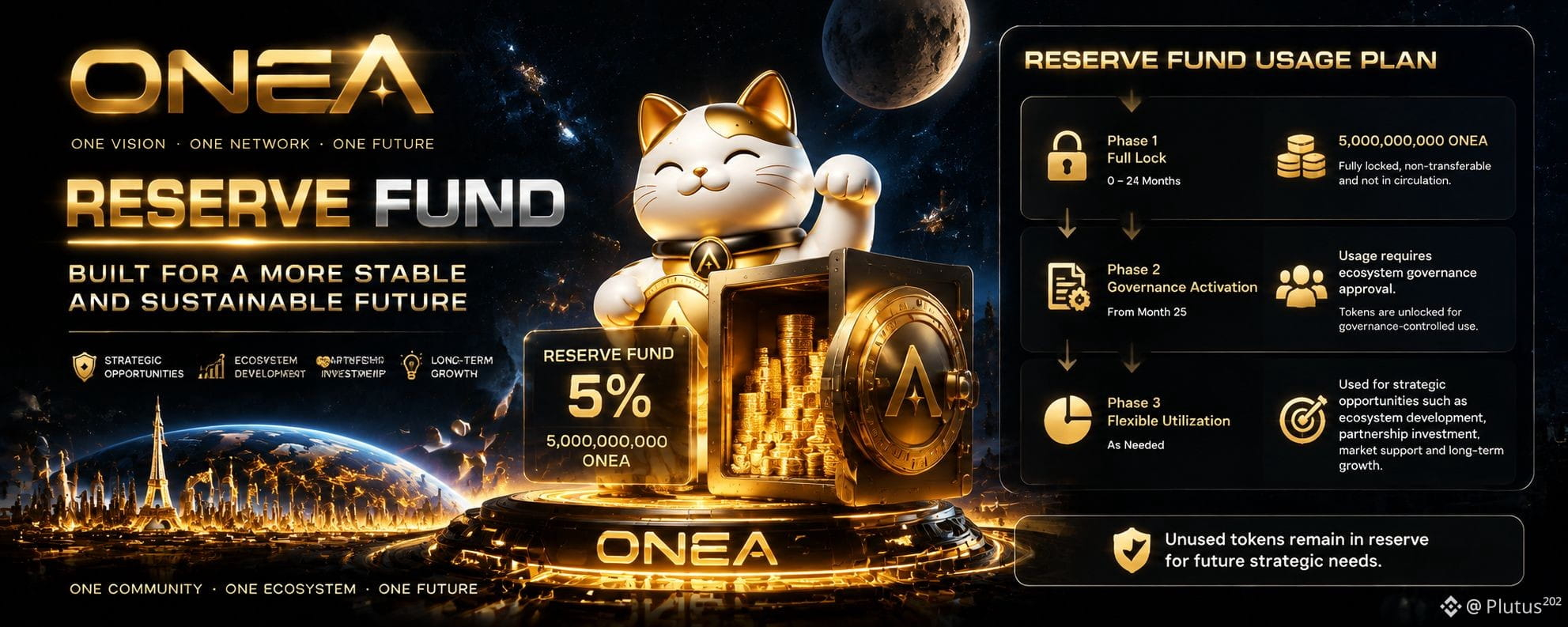
$ONEA 🔐 ONEA Reserve Fund|Preparing for Long-Term Ecosystem Development
A strong ecosystem not only needs to grow continuously, but also requires long-term planning.
ONEA designs a transparent reserve fund mechanism to support future ecosystem building and strategic development needs.
⸻
🏦 Reserve Fund Allocation
ONEA Reserve Fund:
🔹 Allocation: 5%
🔹 Amount: 5,000,000,000 ONEA
This portion of funds will be used for:
✨ Ecosystem development
✨ Strategic opportunities
✨ Partnership expansion
✨ Long-term ecosystem building
⸻
🔒 Transparent Vesting & Lock-up Mechanism
The reserve fund adopts phased management:
Phase 1:
🔐 Full lock-up period
Time:
0–24 months
During this period, all reserve tokens remain locked and do not enter market circulation.
⸻
🌍 Governance Mechanism Begins
Starting from Month 25:
The reserve fund enters the governance and usage stage.
Any use must be aligned with ecosystem development needs and long-term planning.
Unused portions will continue to serve as future strategic reserves.
⸻
💎 Built for Long-Term Development
ONEA believes:
Long-term ecosystems require patience.
Future development needs to be prepared.
Every decision centers around ecosystem growth and community value.
🐾 The lucky cat of ONEA will continue to accompany the ecosystem as it grows together.
A vision.
A network.
A future.
🚀 ONEA Network
#ONEA #Web3 #Blockchain #Tokenomics
$ONEA 🔐 ONEA Reserve Fund|Preparing for Long-Term Ecosystem Development
A strong ecosystem not only needs to grow continuously, but also requires long-term planning.
ONEA designs a transparent reserve fund mechanism to support future ecosystem building and strategic development needs.
⸻
🏦 Reserve Fund Allocation
ONEA Reserve Fund:
🔹 Allocation: 5%
🔹 Amount: 5,000,000,000 ONEA
This portion of funds will be used for:
✨ Ecosystem development
✨ Strategic opportunities
✨ Partnership expansion
✨ Long-term ecosystem building
⸻
🔒 Transparent Vesting & Lock-up Mechanism
The reserve fund adopts phased management:
Phase 1:
🔐 Full lock-up period
Time:
0–24 months
During this period, all reserve tokens remain locked and do not enter market circulation.
⸻
🌍 Governance Mechanism Begins
Starting from Month 25:
The reserve fund enters the governance and usage stage.
Any use must be aligned with ecosystem development needs and long-term planning.
Unused portions will continue to serve as future strategic reserves.
⸻
💎 Built for Long-Term Development
ONEA believes:
Long-term ecosystems require patience.
Future development needs to be prepared.
Every decision centers around ecosystem growth and community value.
🐾 The lucky cat of ONEA will continue to accompany the ecosystem as it grows together.
A vision.
A network.
A future.
🚀 ONEA Network
#ONEA #Web3 #Blockchain #Tokenomics
A strong ecosystem not only needs to grow continuously, but also requires long-term planning.
ONEA designs a transparent reserve fund mechanism to support future ecosystem building and strategic development needs.
⸻
🏦 Reserve Fund Allocation
ONEA Reserve Fund:
🔹 Allocation: 5%
🔹 Amount: 5,000,000,000 ONEA
This portion of funds will be used for:
✨ Ecosystem development
✨ Strategic opportunities
✨ Partnership expansion
✨ Long-term ecosystem building
⸻
🔒 Transparent Vesting & Lock-up Mechanism
The reserve fund adopts phased management:
Phase 1:
🔐 Full lock-up period
Time:
0–24 months
During this period, all reserve tokens remain locked and do not enter market circulation.
⸻
🌍 Governance Mechanism Begins
Starting from Month 25:
The reserve fund enters the governance and usage stage.
Any use must be aligned with ecosystem development needs and long-term planning.
Unused portions will continue to serve as future strategic reserves.
⸻
💎 Built for Long-Term Development
ONEA believes:
Long-term ecosystems require patience.
Future development needs to be prepared.
Every decision centers around ecosystem growth and community value.
🐾 The lucky cat of ONEA will continue to accompany the ecosystem as it grows together.
A vision.
A network.
A future.
🚀 ONEA Network
#ONEA #Web3 #Blockchain #Tokenomics
84
·
--
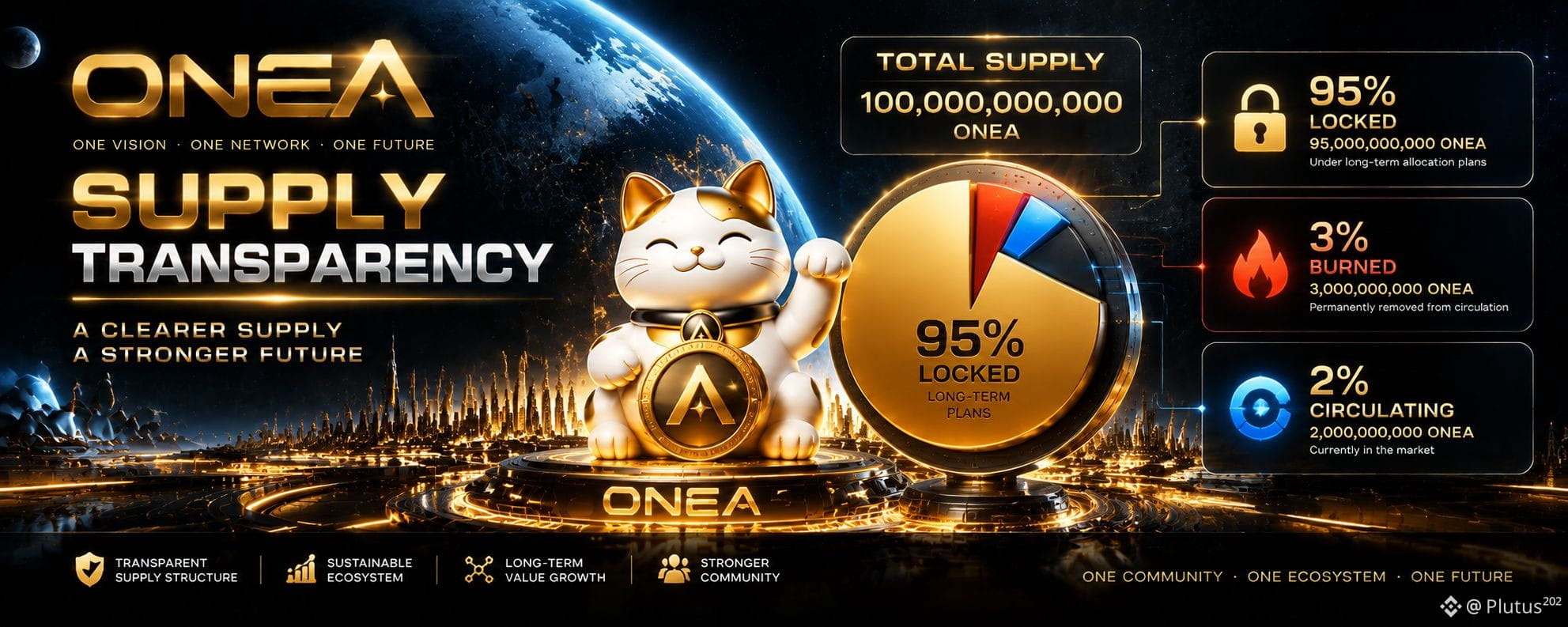
$ONEA 🔥 ONEA transparent supply mechanism|95% planned allocation locked, 3% permanently burned, 2% initial circulation
A healthy ecosystem requires a clear and transparent supply structure.
Through long-term locking, rational allocation, and controlling circulating supply, ONEA is building a more stable Tokenomics model.
⸻
💎 ONEA total supply
Total:
🔹 100,000,000,000 ONEA
Current supply breakdown:
🔒 95% enters long-term planning management
🔥 3% permanently burned
🌍 2% initial circulation
⸻
🔥 Permanent burn mechanism
ONEA has completed the first round of burns:
🔥 3,000,000,000 ONEA
These tokens have been permanently removed from the circulating supply system and no longer participate in market circulation.
⸻
🌱 Control initial circulation
Current market circulation:
2,000,000,000 ONEA
The remaining tokens will be gradually released according to a transparent locking and release plan as the ecosystem develops.
⸻
💎 Building long-term value
ONEA believes:
Transparent supply management is the foundation for ecosystem development.
Transparency creates trust.
Long-term building creates the future.
🐾 The Lucky Cat of ONEA will continue to accompany the community as it grows together.
One vision.
One network.
One future.
🚀 ONEA Network
#ONEA #Web3 #Blockchain #Tokenomics
$ONEA 🔥 ONEA transparent supply mechanism|95% planned allocation locked, 3% permanently burned, 2% initial circulation
A healthy ecosystem requires a clear and transparent supply structure.
Through long-term locking, rational allocation, and controlling circulating supply, ONEA is building a more stable Tokenomics model.
⸻
💎 ONEA total supply
Total:
🔹 100,000,000,000 ONEA
Current supply breakdown:
🔒 95% enters long-term planning management
🔥 3% permanently burned
🌍 2% initial circulation
⸻
🔥 Permanent burn mechanism
ONEA has completed the first round of burns:
🔥 3,000,000,000 ONEA
These tokens have been permanently removed from the circulating supply system and no longer participate in market circulation.
⸻
🌱 Control initial circulation
Current market circulation:
2,000,000,000 ONEA
The remaining tokens will be gradually released according to a transparent locking and release plan as the ecosystem develops.
⸻
💎 Building long-term value
ONEA believes:
Transparent supply management is the foundation for ecosystem development.
Transparency creates trust.
Long-term building creates the future.
🐾 The Lucky Cat of ONEA will continue to accompany the community as it grows together.
One vision.
One network.
One future.
🚀 ONEA Network
#ONEA #Web3 #Blockchain #Tokenomics
A healthy ecosystem requires a clear and transparent supply structure.
Through long-term locking, rational allocation, and controlling circulating supply, ONEA is building a more stable Tokenomics model.
⸻
💎 ONEA total supply
Total:
🔹 100,000,000,000 ONEA
Current supply breakdown:
🔒 95% enters long-term planning management
🔥 3% permanently burned
🌍 2% initial circulation
⸻
🔥 Permanent burn mechanism
ONEA has completed the first round of burns:
🔥 3,000,000,000 ONEA
These tokens have been permanently removed from the circulating supply system and no longer participate in market circulation.
⸻
🌱 Control initial circulation
Current market circulation:
2,000,000,000 ONEA
The remaining tokens will be gradually released according to a transparent locking and release plan as the ecosystem develops.
⸻
💎 Building long-term value
ONEA believes:
Transparent supply management is the foundation for ecosystem development.
Transparency creates trust.
Long-term building creates the future.
🐾 The Lucky Cat of ONEA will continue to accompany the community as it grows together.
One vision.
One network.
One future.
🚀 ONEA Network
#ONEA #Web3 #Blockchain #Tokenomics
83

🚨 UNPOPULAR OPINION: Retail is Ignoring $SUI Supply Pressures! 🛑
The narrative around $SUI ecosystem growth is extremely bullish right now, but most traders are completely ignoring the liquidity mechanics behind the scenes!
Here is the Breakdown:
1️⃣ Narrative vs. Utility: Enterprise adoption looks great, but does it actually FORCE market buying of the token?
2️⃣ Supply Pressure: Keep an eye on upcoming unlock schedules and treasury distribution. Unlocks can easily absorb retail buy volume!
3️⃣ Liquidity Flow: Thin order books mean volatility goes both ways—don't mistake short-term leverage pumps for organic spot demand.
💡 Key Takeaway: Never trade pure headlines without checking on-chain flows and unlock schedules first!
Are you holding $SUI long-term or waiting for a dip? Let’s debate below! 👇
#SUI #CryptoAnalysis #Tokenomics #Altcoins #BinanceSquare
🚨 UNPOPULAR OPINION: Retail is Ignoring $SUI Supply Pressures! 🛑
The narrative around $SUI ecosystem growth is extremely bullish right now, but most traders are completely ignoring the liquidity mechanics behind the scenes!
Here is the Breakdown:
1️⃣ Narrative vs. Utility: Enterprise adoption looks great, but does it actually FORCE market buying of the token?
2️⃣ Supply Pressure: Keep an eye on upcoming unlock schedules and treasury distribution. Unlocks can easily absorb retail buy volume!
3️⃣ Liquidity Flow: Thin order books mean volatility goes both ways—don't mistake short-term leverage pumps for organic spot demand.
💡 Key Takeaway: Never trade pure headlines without checking on-chain flows and unlock schedules first!
Are you holding $SUI long-term or waiting for a dip? Let’s debate below! 👇
#SUI #CryptoAnalysis #Tokenomics #Altcoins #BinanceSquare
The narrative around $SUI ecosystem growth is extremely bullish right now, but most traders are completely ignoring the liquidity mechanics behind the scenes!
Here is the Breakdown:
1️⃣ Narrative vs. Utility: Enterprise adoption looks great, but does it actually FORCE market buying of the token?
2️⃣ Supply Pressure: Keep an eye on upcoming unlock schedules and treasury distribution. Unlocks can easily absorb retail buy volume!
3️⃣ Liquidity Flow: Thin order books mean volatility goes both ways—don't mistake short-term leverage pumps for organic spot demand.
💡 Key Takeaway: Never trade pure headlines without checking on-chain flows and unlock schedules first!
Are you holding $SUI long-term or waiting for a dip? Let’s debate below! 👇
#SUI #CryptoAnalysis #Tokenomics #Altcoins #BinanceSquare
120
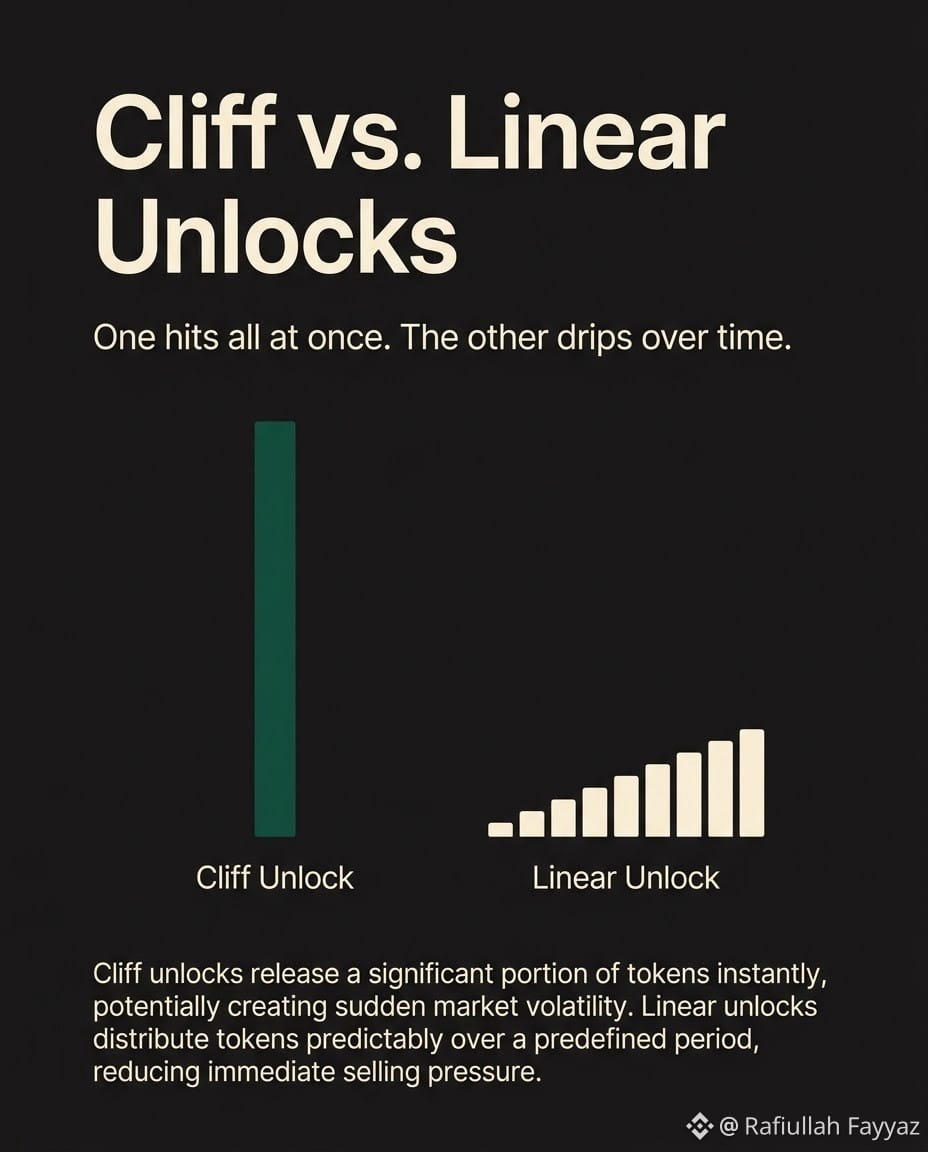
Yesterday I wrote about how unlock percentages matter more than dollar values. Today I want to add one more layer: the difference between cliff unlocks and linear unlocks.
A cliff unlock releases all tokens at once. One day, nothing. The next day, millions of tokens hit the market. XPL's 63.2% unlock on September 25 was a cliff unlock — 1.76 billion tokens released in a single event.
A linear unlock releases tokens gradually over time. Instead of one big event, you get a steady drip — daily or weekly. The supply increase is spread out.
Why this matters: cliff unlocks create sudden supply shocks. Linear unlocks create constant, predictable pressure.
Cliff unlocks are easier to trade around because the date is known and the size is fixed. Linear unlocks are harder to react to because they're continuous — there's no single "unlock day" to watch.
Today, Walrus ( $WAL ) is doing a smaller release — about 38.33 million tokens, worth roughly $1.21 million. This is part of WAL's ongoing vesting schedule.
The rule I'm developing: check not just the size and percentage, but the structure. A 10% cliff unlock is very different from 10% released linearly over a year.
#CryptoEducation #TokenUnlocks #Tokenomics
{spot}(XPLUSDT)
{spot}(WALUSDT)
Yesterday I wrote about how unlock percentages matter more than dollar values. Today I want to add one more layer: the difference between cliff unlocks and linear unlocks.
A cliff unlock releases all tokens at once. One day, nothing. The next day, millions of tokens hit the market. XPL's 63.2% unlock on September 25 was a cliff unlock — 1.76 billion tokens released in a single event.
A linear unlock releases tokens gradually over time. Instead of one big event, you get a steady drip — daily or weekly. The supply increase is spread out.
Why this matters: cliff unlocks create sudden supply shocks. Linear unlocks create constant, predictable pressure.
Cliff unlocks are easier to trade around because the date is known and the size is fixed. Linear unlocks are harder to react to because they're continuous — there's no single "unlock day" to watch.
Today, Walrus ( $WAL ) is doing a smaller release — about 38.33 million tokens, worth roughly $1.21 million. This is part of WAL's ongoing vesting schedule.
The rule I'm developing: check not just the size and percentage, but the structure. A 10% cliff unlock is very different from 10% released linearly over a year.
#CryptoEducation #TokenUnlocks #Tokenomics
A cliff unlock releases all tokens at once. One day, nothing. The next day, millions of tokens hit the market. XPL's 63.2% unlock on September 25 was a cliff unlock — 1.76 billion tokens released in a single event.
A linear unlock releases tokens gradually over time. Instead of one big event, you get a steady drip — daily or weekly. The supply increase is spread out.
Why this matters: cliff unlocks create sudden supply shocks. Linear unlocks create constant, predictable pressure.
Cliff unlocks are easier to trade around because the date is known and the size is fixed. Linear unlocks are harder to react to because they're continuous — there's no single "unlock day" to watch.
Today, Walrus ( $WAL ) is doing a smaller release — about 38.33 million tokens, worth roughly $1.21 million. This is part of WAL's ongoing vesting schedule.
The rule I'm developing: check not just the size and percentage, but the structure. A 10% cliff unlock is very different from 10% released linearly over a year.
#CryptoEducation #TokenUnlocks #Tokenomics
474

·
--
SEC Employee Guidance: Token Buybacks on Functional Networks Do Not Automatically Constitute Securities
According to Decrypt, the latest staff guidance from the U.S. Securities and Exchange Commission (SEC) makes clear that announcing token buybacks on a functional network does not necessarily amount to a commitment to turn the tokens into securities. This statement draws a direct line between token buybacks and the determination of whether something is a security. The core logic is that as long as the network itself has real functionality, the buyback action is more a part of the token’s economic mechanism, rather than a promise of profits under an investment contract.
The impact of this guidance on the crypto market is that it significantly reduces compliance uncertainty when projects implement buybacks. In the past, many projects chose to be cautious, fearing that buybacks could be interpreted as a “guarantee of returns.” Now, clarification from the SEC staff provides clearer operational space for token economic design. Market sentiment may therefore receive support—especially for protocols that rely on buyback mechanisms to maintain token value, or that may reassess their capital allocation strategies.
However, it remains to be seen that the SEC staff guidance is not an official rule. It could still be overturned or further refined later. If the market over-interprets the guidance, there may be a surge in token buyback activity in the short term, but long-term compliance risk has not been fully eliminated. In addition, the definition of a “functional network” in the guidance still requires specific cases to be further clarified, and different projects may apply different evidentiary standards for “functionality.”
Next, attention should focus on whether the SEC will incorporate this guidance into the formal rulemaking process, and how major exchanges and project teams will adjust the wording of their buyback announcements. If, subsequently, a first case emerges where the guidance is successfully used to avoid a securities determination, it would have a tangible effect on market confidence.
#SEC #CryptoRegulation #Tokenomics
The above is an information summary and personal analysis, and does not constitute investment advice.
If you like this kind of ad-free market analysis, you can follow me—important updates will continue to be provided.
SEC Employee Guidance: Token Buybacks on Functional Networks Do Not Automatically Constitute Securities
According to Decrypt, the latest staff guidance from the U.S. Securities and Exchange Commission (SEC) makes clear that announcing token buybacks on a functional network does not necessarily amount to a commitment to turn the tokens into securities. This statement draws a direct line between token buybacks and the determination of whether something is a security. The core logic is that as long as the network itself has real functionality, the buyback action is more a part of the token’s economic mechanism, rather than a promise of profits under an investment contract.
The impact of this guidance on the crypto market is that it significantly reduces compliance uncertainty when projects implement buybacks. In the past, many projects chose to be cautious, fearing that buybacks could be interpreted as a “guarantee of returns.” Now, clarification from the SEC staff provides clearer operational space for token economic design. Market sentiment may therefore receive support—especially for protocols that rely on buyback mechanisms to maintain token value, or that may reassess their capital allocation strategies.
However, it remains to be seen that the SEC staff guidance is not an official rule. It could still be overturned or further refined later. If the market over-interprets the guidance, there may be a surge in token buyback activity in the short term, but long-term compliance risk has not been fully eliminated. In addition, the definition of a “functional network” in the guidance still requires specific cases to be further clarified, and different projects may apply different evidentiary standards for “functionality.”
Next, attention should focus on whether the SEC will incorporate this guidance into the formal rulemaking process, and how major exchanges and project teams will adjust the wording of their buyback announcements. If, subsequently, a first case emerges where the guidance is successfully used to avoid a securities determination, it would have a tangible effect on market confidence.
#SEC #CryptoRegulation #Tokenomics
The above is an information summary and personal analysis, and does not constitute investment advice.
If you like this kind of ad-free market analysis, you can follow me—important updates will continue to be provided.
According to Decrypt, the latest staff guidance from the U.S. Securities and Exchange Commission (SEC) makes clear that announcing token buybacks on a functional network does not necessarily amount to a commitment to turn the tokens into securities. This statement draws a direct line between token buybacks and the determination of whether something is a security. The core logic is that as long as the network itself has real functionality, the buyback action is more a part of the token’s economic mechanism, rather than a promise of profits under an investment contract.
The impact of this guidance on the crypto market is that it significantly reduces compliance uncertainty when projects implement buybacks. In the past, many projects chose to be cautious, fearing that buybacks could be interpreted as a “guarantee of returns.” Now, clarification from the SEC staff provides clearer operational space for token economic design. Market sentiment may therefore receive support—especially for protocols that rely on buyback mechanisms to maintain token value, or that may reassess their capital allocation strategies.
However, it remains to be seen that the SEC staff guidance is not an official rule. It could still be overturned or further refined later. If the market over-interprets the guidance, there may be a surge in token buyback activity in the short term, but long-term compliance risk has not been fully eliminated. In addition, the definition of a “functional network” in the guidance still requires specific cases to be further clarified, and different projects may apply different evidentiary standards for “functionality.”
Next, attention should focus on whether the SEC will incorporate this guidance into the formal rulemaking process, and how major exchanges and project teams will adjust the wording of their buyback announcements. If, subsequently, a first case emerges where the guidance is successfully used to avoid a securities determination, it would have a tangible effect on market confidence.
#SEC #CryptoRegulation #Tokenomics
The above is an information summary and personal analysis, and does not constitute investment advice.
If you like this kind of ad-free market analysis, you can follow me—important updates will continue to be provided.
1
73
Log in to explore more content
Join global crypto users on Binance Square
⚡️ Get latest and useful information about crypto.
💬 Trusted by the world’s largest crypto exchange.
👍 Discover real insights from verified creators.
Email / Phone number
Trending Topics
1
#BitcoinClears$85200
800 views
71 Discussing
2
#AltcoinSeasonIndexHoldsAbove60For5Days
7,899 views
453 Discussing
3
#USADPAdds90000JobsInSeptember
2,036 views
207 Discussing
4
#USCorePCEEasesTo3%InAugust
2,045 views
180 Discussing
5
#KospiPostsWorstQuarterSince2020
2,658 views
233 Discussing
6
#SECToClarifyOnChainFundraisingRules
8,824 views
396 Discussing
7
#UKFCAOpensCryptoFirmAuthorization
12,352 views
371 Discussing
8
#JapanMOFStudyGroupOnTokenizedGovtBonds
10,705 views
309 Discussing
9
#QNTRises287%
52,166 views
708 Discussing
10
#TrumpRejectsAIRulesForVoluntaryAudits
34,174 views
634 Discussing