
#circle
circle
936,570 views
2,388 Discussing
Hot
Latest


🛒 Time to shopping?
Circle is printing like crazy, minting around $5B USDC over the past week, according to Lookonchain.
That’s a lot of fresh stablecoin liquidity entering the market.
Now the real question:
Where is all that USDC going? 👀
Time to shopping. 🛍️
#USDC #Circle #crypto #stablecoin
Circle is printing like crazy, minting around $5B USDC over the past week, according to Lookonchain.
That’s a lot of fresh stablecoin liquidity entering the market.
Now the real question:
Where is all that USDC going? 👀
Time to shopping. 🛍️
#USDC #Circle #crypto #stablecoin

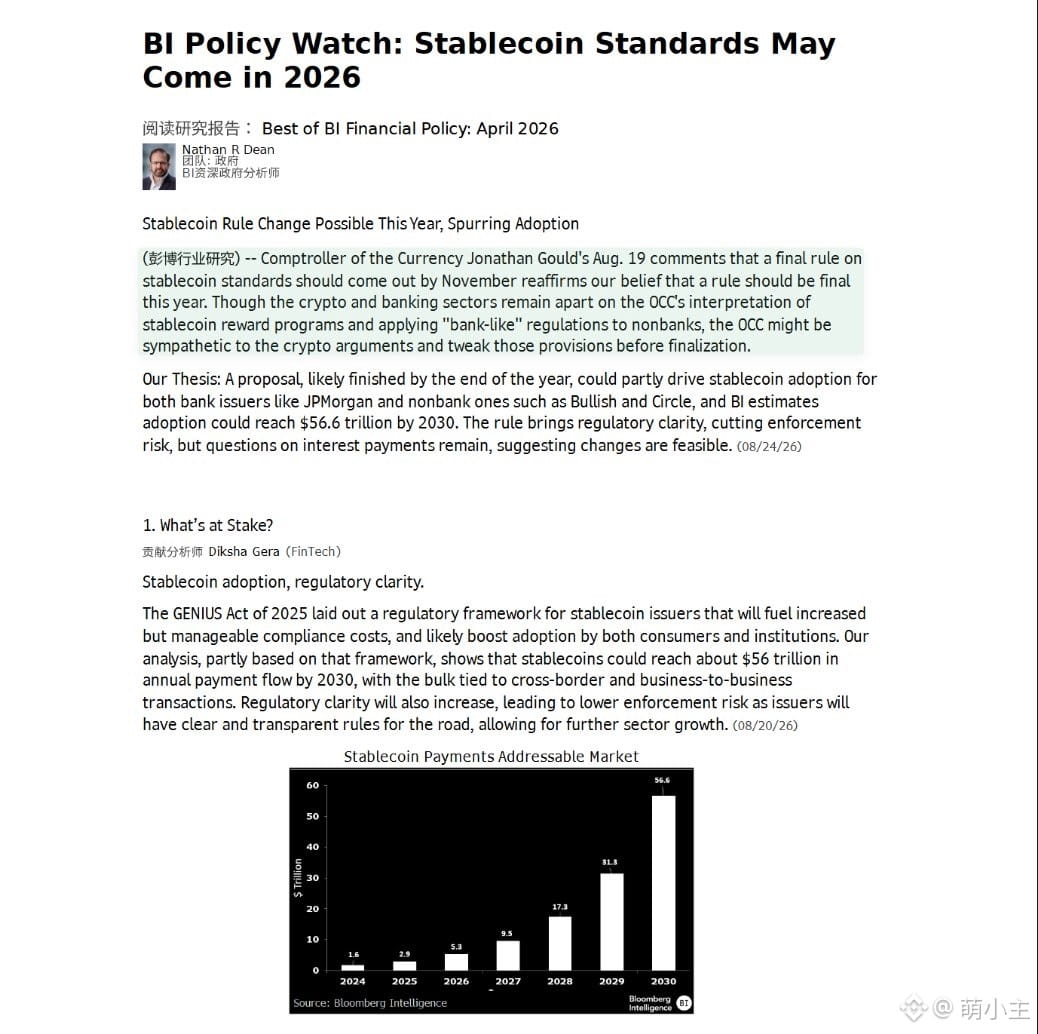
U.S. Office of the Comptroller of the Currency (OCC) head Gould said last week that stablecoin regulations are expected to be set in November.
Circle also has to register with the OCC, and the money must be backed 100% by cash and short-term debt.
They calculated that by paying transaction flow per year from 2030, cross-border and B2B transfers together will reach 5.6 quadrillion
The interest rate hasn’t been set yet—go hard on Circle, I’m betting on them!
#Circle #稳定币 #USDC https://t.co/kBZNSc57dm
Circle also has to register with the OCC, and the money must be backed 100% by cash and short-term debt.
They calculated that by paying transaction flow per year from 2030, cross-border and B2B transfers together will reach 5.6 quadrillion
The interest rate hasn’t been set yet—go hard on Circle, I’m betting on them!
#Circle #稳定币 #USDC https://t.co/kBZNSc57dm
风中浪客:
稳定币这块监管落地其实是好事,至少Circle这种合规玩家能活下来,但56万亿这个数吹得有点大,先看利息怎么定吧。$USDC

This year’s harshest research report on Circle on Wall Street—when it was published, it happened to coincide with the stock’s intra-year low. Morgan Stanley cut its rating to “Sell” (reduce holdings), slashed the price target by more than half; on the same day TD Cowen flipped the script and initiated a “Buy.” Three weeks later, the price of $CRCLB had left both firms’ targets in the dust. Needless to say, the bearish note was wrong; but even the bullish one didn’t keep up.
On August 3, Morgan Stanley’s James Faucette downgraded CRCL from Hold/Watch to Sell (reduce holdings), setting a target price of $38. On the same day, TD Cowen initiated coverage with a Buy rating and a target price of $82. That day CRCL closed at $60.35—the lowest day in three months. On Monday, on the NYSE, it closed at $87.72. On Binance’s spot market, $CRCLB is now quoted at $85.9, and in pre-market trading it has pulled back slightly, tracking the crypto-concept stocks.
This rally has little to do with reserve income. In Q2, Circle’s reserve income year over year increased by only a low double-digit percentage—or rather, just a single-digit gain. Its reserve yield was also lower than last year, and total revenue failed to beat market expectations. What the market bought were two other things. At the end of July, Circle fully acquired IBM’s blockchain patent portfolio, instantly becoming the U.S. company with the most blockchain patents in hand. Then on August 19 it also announced that Arc mainnet is scheduled for September 16. The day that news broke, CRCL’s trading volume more than doubled versus the prior day.
The money-making machine at Circle hasn’t been fixed yet. Today, USDC circulating supply stands at $73.8 billion—almost unchanged since the end of June. This year’s high was $79.6 billion on March 18. Coincidentally, CRCL’s own closing high this year also occurred on March 18, at $132.84. Both curves peaked on the same day. Before that, the market’s valuation of Circle was basically calculated based on circulating supply. Faucette’s downgrade landed right on that point. He cut his assumptions for USDC in 2027 and 2028 by 30% to 40%, and added a more unkind line: stablecoin usage is always concentrated in crypto trading and has not expanded into payments. Tokenized money market funds and tokenized deposits—both of these “things” steal both balances and fee rates.
Stopping circulating supply is only the surface. Circle’s trouble is buried in the cost line. In the same quarter, reserve income was $668 million, while distribution, trading, and other costs were $412 million. More than 60% of the money changes hands and gets paid out. The main recipient is Coinbase: all reserve income attributable to the portion of USDC held on the Coinbase platform goes entirely to Coinbase, while the two other counterparties split it fifty-fifty for USDC held elsewhere. At the end of June, about 30% of USDC was sitting on Coinbase’s books. This profit-sharing agreement was renewed in August under the original terms through 2029—effectively “welding shut” the cost structure for the next three years in advance.
Coinbase signed that agreement and is also one of the initiators of Open USD. This alliance includes more than 100 institutions—Visa, Mastercard, BlackRock, Stripe, Google are all in it. The rule of the game is: reserve earnings minus management fees are returned to the participating merchants. The slice of income that Circle and Tether have survived on by earning the spread has been carved out in this design. BlackRock is also a collaboration partner for Arc. These institutions sign on both sides; what they’re betting on is the #稳定币 track itself. As for who the issuer ends up being, they don’t care as much.
This year, the interest-rate line has actually been a tailwind. Warsh is scheduled to speak at Jackson Hole this Friday—his first public appearance since becoming chair of the Fed. Inflation hasn’t yet returned to target. In the July minutes, three votes favored tightening. Market pricing for a September rate cut has been drifting downward for weeks. Higher rates are good for Circle’s reserve income. If the shorts bet that rate cuts would thin the spread, then this year’s logic has not played out. The pressure comes from stalled circulating supply and that profit-sharing table, not from the Fed.
The market has shifted the way it values Circle—from an interest-rate ledger to a network-usage ledger—and in terms of direction, I agree. Faucette’s $38 target treats Circle as pure interest-rate beta and cut it too aggressively. Things like licenses, patents, and a clearing chain that is about to go live—none of that belongs in a spread model. But at $85, the market is already buying September 16 as the realization date. Arc going live is only the start of work; even if the testnet is bustling, it still hasn’t reached the point of charging.
The doubled full-year other-income guidance in Q2 included roughly $180 million from staged confirmations of Arc token pre-sales—one-time revenue. If you strip that out, look at whether other income in Q3 and Q4 can stand on its own. If it can, then this round of gains has a basis for accounting. If you strip it out and it’s still only in the low tens of millions range, then what you’re buying with $85 is simply the story.
On September 16, the Arc mainnet launch coincided with this round of the FOMC. If you want to follow the path of #Circle , you can compare the USDC circulating supply before and after with the actual settlement volume on Arc itself—it’s more useful than staring at the order book.
On August 3, Morgan Stanley’s James Faucette downgraded CRCL from Hold/Watch to Sell (reduce holdings), setting a target price of $38. On the same day, TD Cowen initiated coverage with a Buy rating and a target price of $82. That day CRCL closed at $60.35—the lowest day in three months. On Monday, on the NYSE, it closed at $87.72. On Binance’s spot market, $CRCLB is now quoted at $85.9, and in pre-market trading it has pulled back slightly, tracking the crypto-concept stocks.
This rally has little to do with reserve income. In Q2, Circle’s reserve income year over year increased by only a low double-digit percentage—or rather, just a single-digit gain. Its reserve yield was also lower than last year, and total revenue failed to beat market expectations. What the market bought were two other things. At the end of July, Circle fully acquired IBM’s blockchain patent portfolio, instantly becoming the U.S. company with the most blockchain patents in hand. Then on August 19 it also announced that Arc mainnet is scheduled for September 16. The day that news broke, CRCL’s trading volume more than doubled versus the prior day.
The money-making machine at Circle hasn’t been fixed yet. Today, USDC circulating supply stands at $73.8 billion—almost unchanged since the end of June. This year’s high was $79.6 billion on March 18. Coincidentally, CRCL’s own closing high this year also occurred on March 18, at $132.84. Both curves peaked on the same day. Before that, the market’s valuation of Circle was basically calculated based on circulating supply. Faucette’s downgrade landed right on that point. He cut his assumptions for USDC in 2027 and 2028 by 30% to 40%, and added a more unkind line: stablecoin usage is always concentrated in crypto trading and has not expanded into payments. Tokenized money market funds and tokenized deposits—both of these “things” steal both balances and fee rates.
Stopping circulating supply is only the surface. Circle’s trouble is buried in the cost line. In the same quarter, reserve income was $668 million, while distribution, trading, and other costs were $412 million. More than 60% of the money changes hands and gets paid out. The main recipient is Coinbase: all reserve income attributable to the portion of USDC held on the Coinbase platform goes entirely to Coinbase, while the two other counterparties split it fifty-fifty for USDC held elsewhere. At the end of June, about 30% of USDC was sitting on Coinbase’s books. This profit-sharing agreement was renewed in August under the original terms through 2029—effectively “welding shut” the cost structure for the next three years in advance.
Coinbase signed that agreement and is also one of the initiators of Open USD. This alliance includes more than 100 institutions—Visa, Mastercard, BlackRock, Stripe, Google are all in it. The rule of the game is: reserve earnings minus management fees are returned to the participating merchants. The slice of income that Circle and Tether have survived on by earning the spread has been carved out in this design. BlackRock is also a collaboration partner for Arc. These institutions sign on both sides; what they’re betting on is the #稳定币 track itself. As for who the issuer ends up being, they don’t care as much.
This year, the interest-rate line has actually been a tailwind. Warsh is scheduled to speak at Jackson Hole this Friday—his first public appearance since becoming chair of the Fed. Inflation hasn’t yet returned to target. In the July minutes, three votes favored tightening. Market pricing for a September rate cut has been drifting downward for weeks. Higher rates are good for Circle’s reserve income. If the shorts bet that rate cuts would thin the spread, then this year’s logic has not played out. The pressure comes from stalled circulating supply and that profit-sharing table, not from the Fed.
The market has shifted the way it values Circle—from an interest-rate ledger to a network-usage ledger—and in terms of direction, I agree. Faucette’s $38 target treats Circle as pure interest-rate beta and cut it too aggressively. Things like licenses, patents, and a clearing chain that is about to go live—none of that belongs in a spread model. But at $85, the market is already buying September 16 as the realization date. Arc going live is only the start of work; even if the testnet is bustling, it still hasn’t reached the point of charging.
The doubled full-year other-income guidance in Q2 included roughly $180 million from staged confirmations of Arc token pre-sales—one-time revenue. If you strip that out, look at whether other income in Q3 and Q4 can stand on its own. If it can, then this round of gains has a basis for accounting. If you strip it out and it’s still only in the low tens of millions range, then what you’re buying with $85 is simply the story.
On September 16, the Arc mainnet launch coincided with this round of the FOMC. If you want to follow the path of #Circle , you can compare the USDC circulating supply before and after with the actual settlement volume on Arc itself—it’s more useful than staring at the order book.

Cathie Wood has again directed her criticism at Wall Street’s “old-school” analysts. Her core argument is pretty blunt: analysts who spend their days building models around Visa and Mastercard simply can’t grasp Circle’s disruptive potential—despite the fact that the company has quietly risen 84% since going public.
This sounds like a podium pitch, but the logic chain is actually quite clear. #Circle is who? It’s the issuer of the #USDC stablecoin. $USDC is not a typical crypto asset; it’s a “on-chain dollar” that’s 1:1 pegged to the U.S. dollar. What Circle is really selling isn’t the coin itself, but a *blockchain-based payments infrastructure*—money can move within seconds, across borders, with near-zero friction, bypassing the old systems of layered clearing, exchange-rate add-ons, and T+2 settlement used by traditional card networks.
In Cathie Wood’s view, this is the real “dimensionality reduction” attack. Even if Visa$V and #Mastercard are strong, they’re still built on a banking network that’s taken decades to accumulate. Circle’s underlying logic is code and smart contracts; its marginal cost trends toward zero, and expansion doesn’t rely on a stack of physical cards or rows of POS terminals. So she believes that when traditional analysts try to map Circle using the framework of “transaction volume × fee rate × market share,” they’re essentially using an abacus to measure cloud computing—mismatched dimensions.
The pain point she highlights is crucial: traditional financial analysis frameworks can’t evaluate the disruptive value of new types of infrastructure. Analysts are good at linear extrapolation—how much profit last year, how much growth this year, and a PEG. But Circle’s story isn’t simply “taking existing Visa market share.” It’s “redefining how money moves.” This kind of nonlinear, platform-level narrative often ends up in Excel with just one undervalued forward assumption. By the time the market catches up, the stock price has already moved ahead—hence the 84% surge.
Circle$CRCLB also has vulnerabilities on the table: it is highly dependent on the size of USDC and the interest-rate environment. If regulation tightens or if USDC de-pegs, the story immediately changes. Moreover, “disrupting Visa” is more potential than reality right now—#Visa itself is also embracing stablecoins and tokenized settlement, and traditional networks aren’t exactly lying down to be killed off
This sounds like a podium pitch, but the logic chain is actually quite clear. #Circle is who? It’s the issuer of the #USDC stablecoin. $USDC is not a typical crypto asset; it’s a “on-chain dollar” that’s 1:1 pegged to the U.S. dollar. What Circle is really selling isn’t the coin itself, but a *blockchain-based payments infrastructure*—money can move within seconds, across borders, with near-zero friction, bypassing the old systems of layered clearing, exchange-rate add-ons, and T+2 settlement used by traditional card networks.
In Cathie Wood’s view, this is the real “dimensionality reduction” attack. Even if Visa$V and #Mastercard are strong, they’re still built on a banking network that’s taken decades to accumulate. Circle’s underlying logic is code and smart contracts; its marginal cost trends toward zero, and expansion doesn’t rely on a stack of physical cards or rows of POS terminals. So she believes that when traditional analysts try to map Circle using the framework of “transaction volume × fee rate × market share,” they’re essentially using an abacus to measure cloud computing—mismatched dimensions.
The pain point she highlights is crucial: traditional financial analysis frameworks can’t evaluate the disruptive value of new types of infrastructure. Analysts are good at linear extrapolation—how much profit last year, how much growth this year, and a PEG. But Circle’s story isn’t simply “taking existing Visa market share.” It’s “redefining how money moves.” This kind of nonlinear, platform-level narrative often ends up in Excel with just one undervalued forward assumption. By the time the market catches up, the stock price has already moved ahead—hence the 84% surge.
Circle$CRCLB also has vulnerabilities on the table: it is highly dependent on the size of USDC and the interest-rate environment. If regulation tightens or if USDC de-pegs, the story immediately changes. Moreover, “disrupting Visa” is more potential than reality right now—#Visa itself is also embracing stablecoins and tokenized settlement, and traditional networks aren’t exactly lying down to be killed off

Partly True
Cathie Wood: Traditional payment giants are being disrupted, and Circle should be a primary beneficiary for the industry
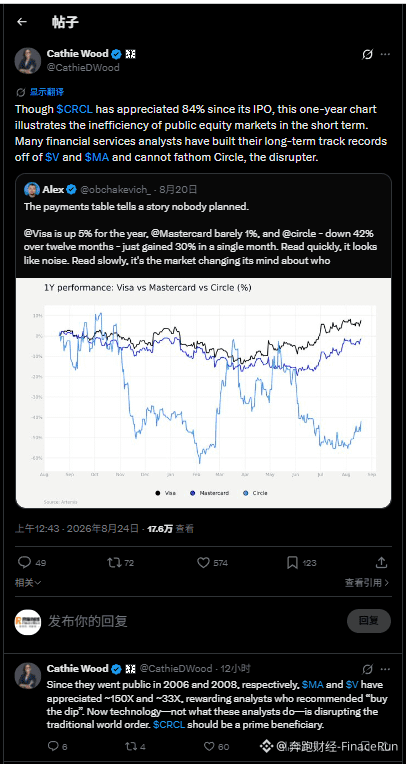
On August 24, ARK Invest founder Cathie Wood posted her views on X, noting that although stablecoin issuer Circle (CRCL) has risen 84% since its IPO, the one-year stock chart reveals exactly the short-term inefficiency of the public market.
She referenced a tweet by Alex, along with the attached performance table comparison, showing that over the past twelve months, Visa has only risen 5%, Mastercard has gained just 1%, while Circle’s month-over-month increase within the past month reached 30%, indicating that the new challenger is full of explosive momentum.
Wood pointed out that financial services analysts’ long-term performance assumptions have long been built on Visa and Mastercard, so it is difficult for them to understand Circle’s disruptive potential—but Circle’s performance is actually better than these two traditional finance giants.
Not only that, since both companies listed in 2006 and 2008, their stock prices have risen by roughly 150 times and 33 times respectively, also allowing those analysts who advised “buy the dip” to profit handsomely.
However, Wood still insists that today, as a representative of emerging industry technology, Circle’s long-term value is severely undervalued by the market and should be a major beneficiary of the transformation of the financial world’s order.
#CathieWood #Circle
On August 24, ARK Invest founder Cathie Wood posted her views on X, noting that although stablecoin issuer Circle (CRCL) has risen 84% since its IPO, the one-year stock chart reveals exactly the short-term inefficiency of the public market.
She referenced a tweet by Alex, along with the attached performance table comparison, showing that over the past twelve months, Visa has only risen 5%, Mastercard has gained just 1%, while Circle’s month-over-month increase within the past month reached 30%, indicating that the new challenger is full of explosive momentum.
Wood pointed out that financial services analysts’ long-term performance assumptions have long been built on Visa and Mastercard, so it is difficult for them to understand Circle’s disruptive potential—but Circle’s performance is actually better than these two traditional finance giants.
Not only that, since both companies listed in 2006 and 2008, their stock prices have risen by roughly 150 times and 33 times respectively, also allowing those analysts who advised “buy the dip” to profit handsomely.
However, Wood still insists that today, as a representative of emerging industry technology, Circle’s long-term value is severely undervalued by the market and should be a major beneficiary of the transformation of the financial world’s order.
#CathieWood #Circle

Circle changes the rules of the game
You see Cathy Wood believe that focusing on Visa and Mastercard may obscure the scale of the disruption Circle creates in digital payments.
The Circle stock rise of about 84% since the IPO reflects the strength of market interest in this shift.
The real competition may be in the infrastructure of digital money.
#Circle #crypto #USDC #fintech
You see Cathy Wood believe that focusing on Visa and Mastercard may obscure the scale of the disruption Circle creates in digital payments.
The Circle stock rise of about 84% since the IPO reflects the strength of market interest in this shift.
The real competition may be in the infrastructure of digital money.
#Circle #crypto #USDC #fintech

Mu Tou Jie made her move. After Cathie Wood’s ARK funds went public on Circle, the stock price fell more than 40%—and yet they bought in against the trend, claiming that Visa and Mastercard analysts simply can’t understand the disruptive potential of stablecoins.
Circle is the company that issued $USDC . After it went public, the stock price surged by more than 80% at one point, then turned downward. Mu Tou Jie said that analysts at traditional payment giants are looking at new things with old eyes, and they can’t figure out this whole stablecoin play.
Even so, whether the money can be made back depends on whether stablecoins can truly make their way onto Wall Street. Can you trust that? In any case, Mu Tou Jie has put real money on the line.
#Circle #稳定币 #USDC
Circle is the company that issued $USDC . After it went public, the stock price surged by more than 80% at one point, then turned downward. Mu Tou Jie said that analysts at traditional payment giants are looking at new things with old eyes, and they can’t figure out this whole stablecoin play.
Even so, whether the money can be made back depends on whether stablecoins can truly make their way onto Wall Street. Can you trust that? In any case, Mu Tou Jie has put real money on the line.
#Circle #稳定币 #USDC


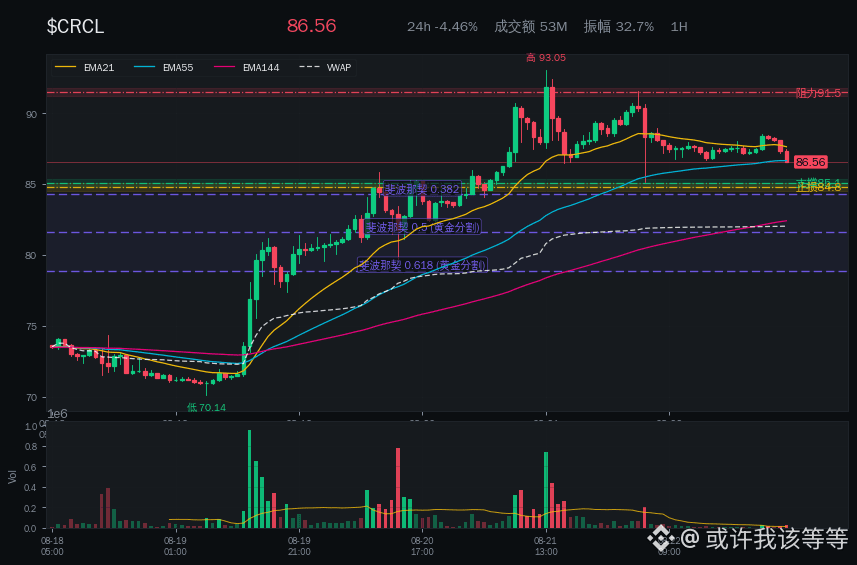
Another day of following BTC and panting. $CRCL dumped from 91.5 to 85.1, and only now has it crawled back to 87—yet the total trading volume in 24 hours is just 52M. The liquidity is so thin that if you really short it, you’re afraid of getting your slippage eaten alive.
Don’t blame me for being sharp-tongued. Bakkt’s earnings report already says it all: full-year revenue of 2.3B, down 32% year-over-year. Restarting “digital infrastructure,” in plain terms, is an admission that the previous setup didn’t work. For stablecoin issuers like $CRCL , their valuation is now essentially all-in on regulatory expectations, not on the actual circulating supply of USDC. Trump threw out a line about the Clarity Act. Then Ripple’s CEO followed with some talk about crypto not being a sideshow—then you see Bitcoin bounce, and $CRCL pops along too. But after the bounce, it turns weak again. This is the third time this month.
Technically, the 87–85 zone is a short-term bottom. If it breaks, watch for 82—don’t bet on the rebound strength. The long upper wick around 91.5 is resistance. If you want to get in, wait for it to hold above 88.5. Set your stop-loss at 84.8. Over in the US stock market, Walmart plunged 9%, and Bessent’s rescue plan doesn’t look great either. When macro sentiment turns sour, high-beta products like $CRCL are the first to get tossed aside. The safer approach is to wait until the daily candle closes well away from 85 before considering a move—going in now is just handing fees to the market makers.
#Circle
Don’t blame me for being sharp-tongued. Bakkt’s earnings report already says it all: full-year revenue of 2.3B, down 32% year-over-year. Restarting “digital infrastructure,” in plain terms, is an admission that the previous setup didn’t work. For stablecoin issuers like $CRCL , their valuation is now essentially all-in on regulatory expectations, not on the actual circulating supply of USDC. Trump threw out a line about the Clarity Act. Then Ripple’s CEO followed with some talk about crypto not being a sideshow—then you see Bitcoin bounce, and $CRCL pops along too. But after the bounce, it turns weak again. This is the third time this month.
Technically, the 87–85 zone is a short-term bottom. If it breaks, watch for 82—don’t bet on the rebound strength. The long upper wick around 91.5 is resistance. If you want to get in, wait for it to hold above 88.5. Set your stop-loss at 84.8. Over in the US stock market, Walmart plunged 9%, and Bessent’s rescue plan doesn’t look great either. When macro sentiment turns sour, high-beta products like $CRCL are the first to get tossed aside. The safer approach is to wait until the daily candle closes well away from 85 before considering a move—going in now is just handing fees to the market makers.
#Circle

📰 Circle acquires IBM patents in the blockchain space
Reports say that Circle, the issuer of the stablecoin USDC, has acquired more than 1,000 blockchain-related patents from IBM. Circle has not yet disclosed plans to leverage this vast portfolio of intellectual property.
━━━━━━━━━━━━━━
📊 Impact: 📈 High
🏷️ DEFI
#Circle #IBM #Blockchain #Patents #USDC
📰 Source: fortune.com
Reports say that Circle, the issuer of the stablecoin USDC, has acquired more than 1,000 blockchain-related patents from IBM. Circle has not yet disclosed plans to leverage this vast portfolio of intellectual property.
━━━━━━━━━━━━━━
📊 Impact: 📈 High
🏷️ DEFI
#Circle #IBM #Blockchain #Patents #USDC
📰 Source: fortune.com
Today this market is a bit interesting. Over on the traditional side, Walmart saw a drop of 9% overnight. Bessent’s market-stabilization plan didn’t really spark much. But in the U.S. stock premarket, the crypto sector is broadly green. The reason is obvious to everyone: Trump’s remarks on the Clarity Act directly ignited market sentiment, and CFTC Chair Selig even mentioned bringing Hyperliquid into the U.S. Those kinds of signals are more useful than any technical analysis.
$CRCL is up about 5% today, hovering around $85. In terms of the order book, the $80 round-number level has already formed strong support. It dipped to a low of 79.68 yesterday and then rebounded, which shows the buying interest underneath is quite firm. My view is that as long as BTC holds and doesn’t get slammed downward, $CRCL will most likely test the 86.5–87 range. After all, Circle currently holds USDC issuance volumes—on the compliance front, it’s a moat that other projects can’t catch up to for a while.
As for execution, my own plan is: don’t chase at the current price. If it pulls back to around 82.5–83, you can enter there, with a stop-loss set below 79.5. If it breaks above 86 with volume, then wait for confirmation before moving up—don’t rush to take the first bite of profit. This time, Wall Street capital is clearly rotating into the crypto compliance track. Ripple’s CEO has also started urging people to stop treating it as some fringe asset—trends are changing, so don’t look at the new market with old eyes.
#Circle
$CRCL is up about 5% today, hovering around $85. In terms of the order book, the $80 round-number level has already formed strong support. It dipped to a low of 79.68 yesterday and then rebounded, which shows the buying interest underneath is quite firm. My view is that as long as BTC holds and doesn’t get slammed downward, $CRCL will most likely test the 86.5–87 range. After all, Circle currently holds USDC issuance volumes—on the compliance front, it’s a moat that other projects can’t catch up to for a while.
As for execution, my own plan is: don’t chase at the current price. If it pulls back to around 82.5–83, you can enter there, with a stop-loss set below 79.5. If it breaks above 86 with volume, then wait for confirmation before moving up—don’t rush to take the first bite of profit. This time, Wall Street capital is clearly rotating into the crypto compliance track. Ripple’s CEO has also started urging people to stop treating it as some fringe asset—trends are changing, so don’t look at the new market with old eyes.
#Circle
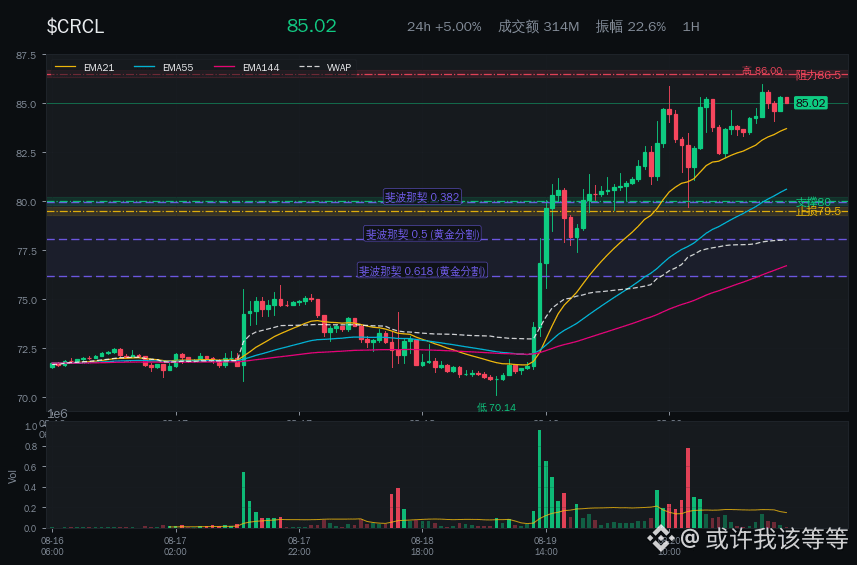
Oh wow $CRCL is directly up +19% to $85 today!! The brothers who bought the dip at 71 this morning must be printing money
Cathie Wood’s ARK portfolio update shows $CRCL has been bought into the top ten holdings. This signal is clear enough. The old money on Wall Street finally recognizes this USDC-focused space as legitimate. After all, regulated stablecoins are the future on-ramp and pipeline for capital flows.
Now look at the macro picture: the 10-year US Treasury yield is moving downward. Trump is also going to meet with the crypto community again. Risk assets are going to run together—$COIN $IBIT is taking off. But $CRCL is the real “core” player here: a token with a commission-and-rewards model—rock solid.
Who’s the most panicked right now? Definitely the traditional institutions that are still on the sidelines... Once the CLARITY bill actually gets implemented, $CRCL could break 100 in minutes.
If you already have bags, hold tight—this move is a Davis double-tap.
#Circle
Cathie Wood’s ARK portfolio update shows $CRCL has been bought into the top ten holdings. This signal is clear enough. The old money on Wall Street finally recognizes this USDC-focused space as legitimate. After all, regulated stablecoins are the future on-ramp and pipeline for capital flows.
Now look at the macro picture: the 10-year US Treasury yield is moving downward. Trump is also going to meet with the crypto community again. Risk assets are going to run together—$COIN $IBIT is taking off. But $CRCL is the real “core” player here: a token with a commission-and-rewards model—rock solid.
Who’s the most panicked right now? Definitely the traditional institutions that are still on the sidelines... Once the CLARITY bill actually gets implemented, $CRCL could break 100 in minutes.
If you already have bags, hold tight—this move is a Davis double-tap.
#Circle
Partly True
Just finished going through the transcript of $CRCL 's Q2 earnings call, and then took another look at the market board. The roughly 10% surge over the past 24 hours is indeed pretty interesting.
The core driver, in plain terms, is the comeback of the stablecoin narrative. Circle’s current USDC circulating supply is around $60 billion. Against the backdrop of rising expectations for Fed rate cuts, that number acts as a kind of barometer for capital flowing back into the crypto market. But there’s a catch—market sentiment also comes and goes fast. In the Q2 call, I didn’t really see many big new business breakout points; it was mostly emphasizing compliance and progress on banking partnerships.
$CRCL surged from 70 to 81. That level is right within the area crowded with previous trapped positions. Turnover of $270 million isn’t small, but compared with the trading volume momentum in recent days, this kind of pulse-like rally doesn’t have sustained buy-side support. More importantly, the overall market is currently locked in a battle for limited liquidity. BTC is consolidating sideways around key levels, and it’s not easy for a stablecoin issuer’s stock to break out and trade independently stronger.
The key is whether it can hold the 78–80 range. If it falls back, then this move is just another sentiment pulse. Keep an eye on the share changes of $PYUSD as well—after all, it directly reflects the data on competitive dynamics in the stablecoin market.
#Circle
The core driver, in plain terms, is the comeback of the stablecoin narrative. Circle’s current USDC circulating supply is around $60 billion. Against the backdrop of rising expectations for Fed rate cuts, that number acts as a kind of barometer for capital flowing back into the crypto market. But there’s a catch—market sentiment also comes and goes fast. In the Q2 call, I didn’t really see many big new business breakout points; it was mostly emphasizing compliance and progress on banking partnerships.
$CRCL surged from 70 to 81. That level is right within the area crowded with previous trapped positions. Turnover of $270 million isn’t small, but compared with the trading volume momentum in recent days, this kind of pulse-like rally doesn’t have sustained buy-side support. More importantly, the overall market is currently locked in a battle for limited liquidity. BTC is consolidating sideways around key levels, and it’s not easy for a stablecoin issuer’s stock to break out and trade independently stronger.
The key is whether it can hold the 78–80 range. If it falls back, then this move is just another sentiment pulse. Keep an eye on the share changes of $PYUSD as well—after all, it directly reflects the data on competitive dynamics in the stablecoin market.
#Circle

$CRCL Today, following Circle’s rise in U.S. stocks, it’s up about 6.6%. Binance’s perpetual contract volume over the past 24 hours is close to $190 million. This is not a token; it’s a perpetual contract that tracks Circle’s stock, and its price action basically follows U.S. stocks.
This wave of funds is still buying stablecoin infrastructure. In the second quarter, Circle’s USDC circulation reached $73.3 billion, up 19% year over year. Its Arc mainnet is also planned to go live on September 16. What the market is trading now is no longer just “issuing USDC,” but whether Circle can build out the payment and settlement network.
For the short term, I won’t chase. The price is already near the day’s highs. About 70% of the Binance account positioning is net long, which indicates the long side isn’t exactly quiet. Next, we’ll first see whether U.S. stocks can hold above the ~$76 area. If it holds, and contract volumes keep expanding, only then will there be room for a second leg higher. If U.S. stocks pull back but the contracts remain at a premium, the first thing to get cut is often leveraged positions.
$CRCL #Circle #USDC
This wave of funds is still buying stablecoin infrastructure. In the second quarter, Circle’s USDC circulation reached $73.3 billion, up 19% year over year. Its Arc mainnet is also planned to go live on September 16. What the market is trading now is no longer just “issuing USDC,” but whether Circle can build out the payment and settlement network.
For the short term, I won’t chase. The price is already near the day’s highs. About 70% of the Binance account positioning is net long, which indicates the long side isn’t exactly quiet. Next, we’ll first see whether U.S. stocks can hold above the ~$76 area. If it holds, and contract volumes keep expanding, only then will there be room for a second leg higher. If U.S. stocks pull back but the contracts remain at a premium, the first thing to get cut is often leveraged positions.
$CRCL #Circle #USDC



The most "crypto" moment of all bStocks — I didn’t notice it right away
I looked again at the list of the first assets and caught myself thinking: among NVIDIA, Tesla, Micron, SanDisk, there’s CRCLB — a tokenized share of Circle.
And then it gets funny: Circle is the company that issues USDC. That means you can go to Binance, buy a tokenized share of the issuer company of the stablecoin... using the very same stablecoin that company produces. A closed loop in the literal sense.
This isn’t just an interesting fact for a post — it’s an indicator of how deeply crypto has already grown into traditional finance. A couple of years ago, Circle was a "crypto company" that classic investors avoided like it was nobody’s business. Now it’s a public stock that you can tokenize and trade 24/7 alongside NVIDIA and Tesla — like it’s just another blue-chip.
Personally, for me $CRCLB is the most interesting ticker in the entire list not because of potential profit, but because it symbolizes the whole trend with a single asset: crypto is no longer a parallel world of finance — it’s part of the same market.
Is anyone else also taking a closer look at CRCLB, or am I the only one seeing the irony here? 😄
#CRCLB #Circle #Crypto #bstockscis @BinanceCIS $CRCLB
I looked again at the list of the first assets and caught myself thinking: among NVIDIA, Tesla, Micron, SanDisk, there’s CRCLB — a tokenized share of Circle.
And then it gets funny: Circle is the company that issues USDC. That means you can go to Binance, buy a tokenized share of the issuer company of the stablecoin... using the very same stablecoin that company produces. A closed loop in the literal sense.
This isn’t just an interesting fact for a post — it’s an indicator of how deeply crypto has already grown into traditional finance. A couple of years ago, Circle was a "crypto company" that classic investors avoided like it was nobody’s business. Now it’s a public stock that you can tokenize and trade 24/7 alongside NVIDIA and Tesla — like it’s just another blue-chip.
Personally, for me $CRCLB is the most interesting ticker in the entire list not because of potential profit, but because it symbolizes the whole trend with a single asset: crypto is no longer a parallel world of finance — it’s part of the same market.
Is anyone else also taking a closer look at CRCLB, or am I the only one seeing the irony here? 😄
#CRCLB #Circle #Crypto #bstockscis @BinanceCIS $CRCLB
🇪🇺 EURC JUST PASSED €400M IN CIRCULATION 👀
Circle’s EURC stablecoin has surpassed €400M in circulating supply, up more than 100% over one year.
EURC is now deployed natively across multiple blockchains:
→ Ethereum
→ Avalanche
→ Stellar
→ Solana
→ Base
I find it noteworthy that stablecoins are no longer only centered around the USD. EURC’s more-than-doubling in one year suggests demand for euro-denominated stablecoins is also expanding.
USDC: “The dollar is enough.”
EURC: “Hold my euro.” 💀
If this trend continues, EURC could become one of the important bridges bringing euro liquidity on-chain.
#stablecoin #EURC #Circle
Circle’s EURC stablecoin has surpassed €400M in circulating supply, up more than 100% over one year.
EURC is now deployed natively across multiple blockchains:
→ Ethereum
→ Avalanche
→ Stellar
→ Solana
→ Base
I find it noteworthy that stablecoins are no longer only centered around the USD. EURC’s more-than-doubling in one year suggests demand for euro-denominated stablecoins is also expanding.
USDC: “The dollar is enough.”
EURC: “Hold my euro.” 💀
If this trend continues, EURC could become one of the important bridges bringing euro liquidity on-chain.
#stablecoin #EURC #Circle

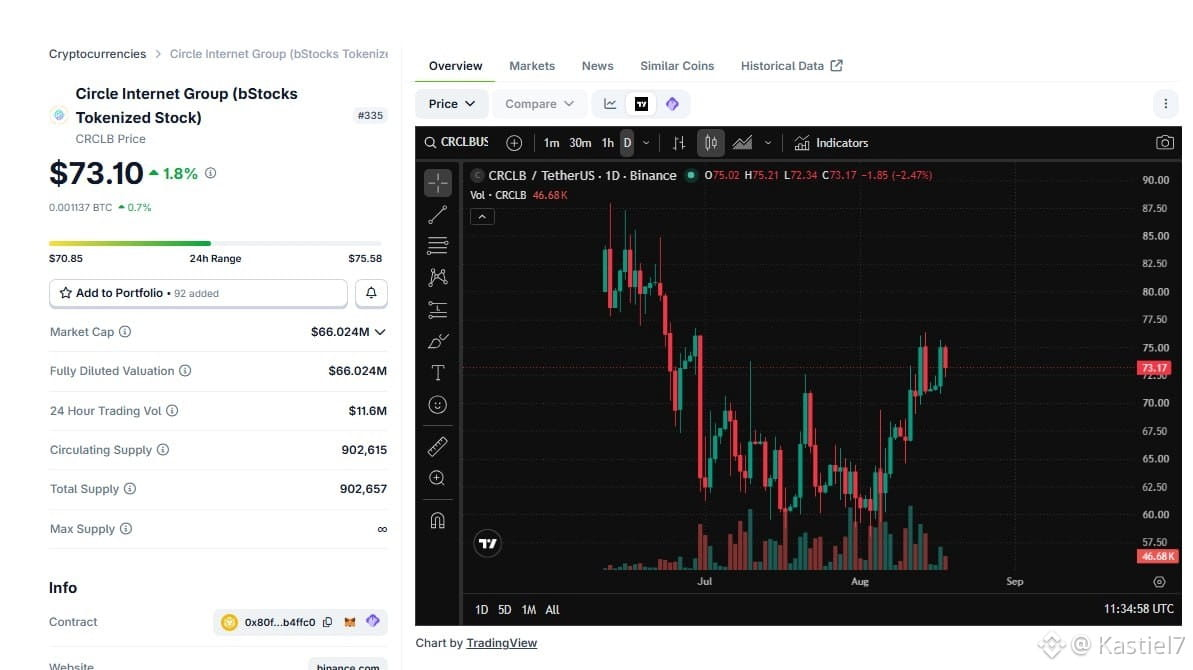
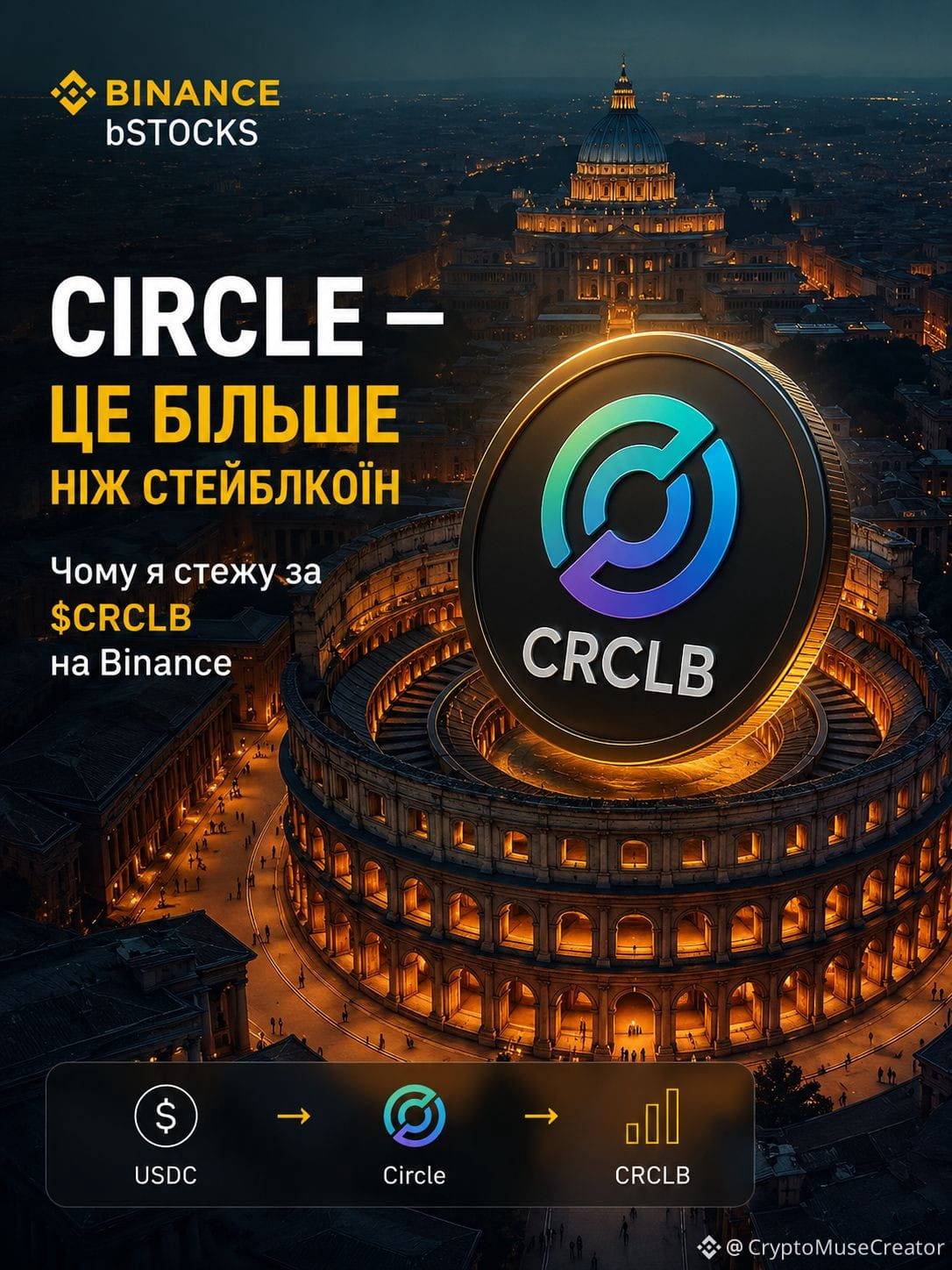
#bstockscis @BinanceCIS Recently I noticed the company Circle, and for me it’s not just a company behind a stablecoin
I’ve been using $USDC for a long time, but now I look at it a little differently.
$NVDAB — AI.
$SPCXB — space.
And CRCLB — for me, it’s a bet on the infrastructure around the on-chain dollar.
I use USDC, and Circle is building a business around scaling it and developing digital finance.
But it’s important to separate:
USDC ≠ a stake in Circle.
By using USDC, I don’t receive a share of the company. $CRCLB is a separate investment exposure to Circle through the bStock structure.
So I’m interested not only in how much USDC is used, but in how Circle turns the scaling of this ecosystem into a business.
USDC growth doesn’t automatically mean CRCLB growth. There’s competition, costs, regulatory risks, and dependence on the reserve economy.
But that’s exactly why I’ll keep watching $CRCLB .
For me, it’s one of the most interesting bStocks, because Circle is very close to the on-chain economy that we’re already using every day.
And do you look at Circle as a bet on the future of digital dollars?
@BinanceCIS #CRCLB #Circle
I’ve been using $USDC for a long time, but now I look at it a little differently.
$NVDAB — AI.
$SPCXB — space.
And CRCLB — for me, it’s a bet on the infrastructure around the on-chain dollar.
I use USDC, and Circle is building a business around scaling it and developing digital finance.
But it’s important to separate:
USDC ≠ a stake in Circle.
By using USDC, I don’t receive a share of the company. $CRCLB is a separate investment exposure to Circle through the bStock structure.
So I’m interested not only in how much USDC is used, but in how Circle turns the scaling of this ecosystem into a business.
USDC growth doesn’t automatically mean CRCLB growth. There’s competition, costs, regulatory risks, and dependence on the reserve economy.
But that’s exactly why I’ll keep watching $CRCLB .
For me, it’s one of the most interesting bStocks, because Circle is very close to the on-chain economy that we’re already using every day.
And do you look at Circle as a bet on the future of digital dollars?
@BinanceCIS #CRCLB #Circle
⚡️ Circle Gateway integrates ERC-1271 support to enhance access to USDC
Circle Gateway announced the addition of support for the ERC-1271 standard, allowing smart contracts to access the stablecoin USDC directly without needing complex alternative solutions. This update aims to improve interoperability and simplify transactions within the decentralized finance (DeFi) ecosystem.
━━━━━━━━━━━━━━
📊 Impact: 📈 High
🏷️ DeFi
#Circle #USDC #DeFi #ERC1271 #Blockchain
📰 Source: cryptobriefing.com
Circle Gateway announced the addition of support for the ERC-1271 standard, allowing smart contracts to access the stablecoin USDC directly without needing complex alternative solutions. This update aims to improve interoperability and simplify transactions within the decentralized finance (DeFi) ecosystem.
━━━━━━━━━━━━━━
📊 Impact: 📈 High
🏷️ DeFi
#Circle #USDC #DeFi #ERC1271 #Blockchain
📰 Source: cryptobriefing.com

Did you know that the amount of USDC in circulation is around 72 billion? And it will be even more!
Circle announced that it is preparing to launch the mainnet of Arc, an institutional blockchain—an institutional-grade Layer 1 for payments in stablecoins and tokenized assets.
It is also reported that among the founding validators are BlackRock, DTCC, Visa, Mastercard, Galaxy, ICE, and others, and that fees are paid in USDC.
Circle’s shares $CRCLB have jumped a bit in price, but clearly not by 72 billion 😀😀😀
#Circle #USDC✅ #crypto #Stablecoins #CRCLB
Circle announced that it is preparing to launch the mainnet of Arc, an institutional blockchain—an institutional-grade Layer 1 for payments in stablecoins and tokenized assets.
It is also reported that among the founding validators are BlackRock, DTCC, Visa, Mastercard, Galaxy, ICE, and others, and that fees are paid in USDC.
Circle’s shares $CRCLB have jumped a bit in price, but clearly not by 72 billion 😀😀😀
#Circle #USDC✅ #crypto #Stablecoins #CRCLB


#bstockscis @BinanceCIS What if, instead of cryptocurrency, you buy shares in a company that is directly connected to the crypto industry?
That’s why I’m interested in $CRCLB - Circle. It’s the company behind $USDC , one of the largest stablecoins in the crypto market.
So it’s a rather unusual combo: via Binance you can buy bStock associated with a company from the traditional financial market, but whose business is directly tied to cryptocurrencies.
I think for Binance users this is one of the clearest examples of why bStocks are needed in the first place.
You don’t have to choose between stocks and crypto. You can hold crypto assets and at the same time keep an eye on the companies that are developing the crypto industry itself.
At the same time, CRCLB trades 24/7, is bought with USDT, and is available in the bStock format.
Personally, I find companies like these more interesting than just well-known brands—there’s a direct link to the market we use every day. #CRCLB #Circle #Binance
That’s why I’m interested in $CRCLB - Circle. It’s the company behind $USDC , one of the largest stablecoins in the crypto market.
So it’s a rather unusual combo: via Binance you can buy bStock associated with a company from the traditional financial market, but whose business is directly tied to cryptocurrencies.
I think for Binance users this is one of the clearest examples of why bStocks are needed in the first place.
You don’t have to choose between stocks and crypto. You can hold crypto assets and at the same time keep an eye on the companies that are developing the crypto industry itself.
At the same time, CRCLB trades 24/7, is bought with USDT, and is available in the bStock format.
Personally, I find companies like these more interesting than just well-known brands—there’s a direct link to the market we use every day. #CRCLB #Circle #Binance
Log in to explore more content