

#blockchain
blockchain
35.2M views
167,030 Discussing
Hot
Latest
·
--
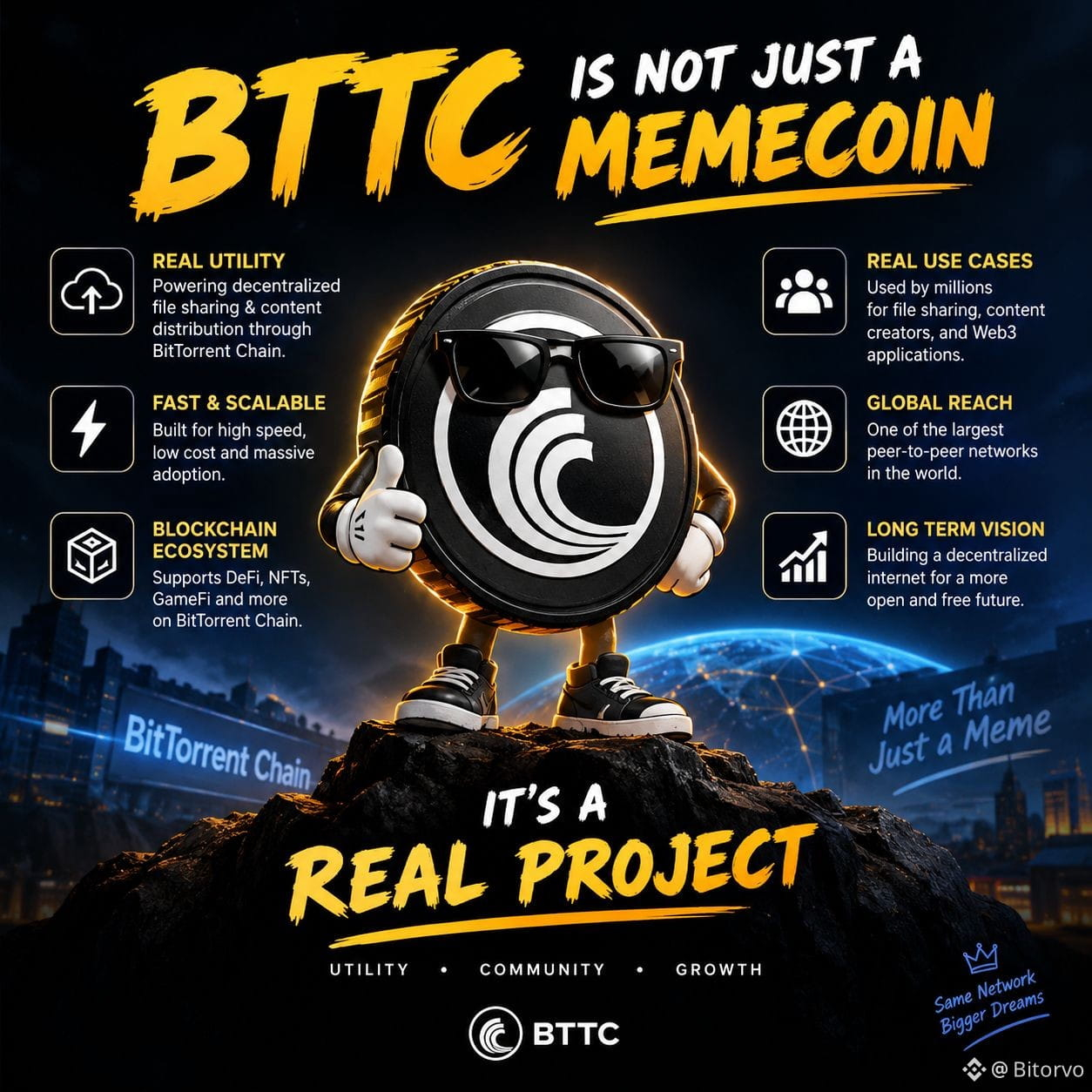
I Think $BTTC is Just a MemeCoin but It can't 😧
🚀 BTTC is helping make Web3 more connected! 🔗🌐
it's Uses👀👀👀....
✨ Cross-Chain Connectivity: Move beyond single-chain limitations.
🔄 Better Flexibility: Explore multiple blockchain ecosystems more easily.
🌍 Less Fragmentation: Help networks and users interact across chains.
⚡ More Utility: Assets and apps can gain broader use across Web3.
🤝 Stronger Ecosystem: A connected future can create smoother experiences for everyone.
BTTC reflects the vision of a more interoperable blockchain world. 🌉
💬 What matters most to you in cross-chain tech—speed, accessibility, or liquidity?
#BTTC #BTT #Web3 #Blockchain #Crypto
I Think $BTTC is Just a MemeCoin but It can't 😧
🚀 BTTC is helping make Web3 more connected! 🔗🌐
it's Uses👀👀👀....
✨ Cross-Chain Connectivity: Move beyond single-chain limitations.
🔄 Better Flexibility: Explore multiple blockchain ecosystems more easily.
🌍 Less Fragmentation: Help networks and users interact across chains.
⚡ More Utility: Assets and apps can gain broader use across Web3.
🤝 Stronger Ecosystem: A connected future can create smoother experiences for everyone.
BTTC reflects the vision of a more interoperable blockchain world. 🌉
💬 What matters most to you in cross-chain tech—speed, accessibility, or liquidity?
#BTTC #BTT #Web3 #Blockchain #Crypto
🚀 BTTC is helping make Web3 more connected! 🔗🌐
it's Uses👀👀👀....
✨ Cross-Chain Connectivity: Move beyond single-chain limitations.
🔄 Better Flexibility: Explore multiple blockchain ecosystems more easily.
🌍 Less Fragmentation: Help networks and users interact across chains.
⚡ More Utility: Assets and apps can gain broader use across Web3.
🤝 Stronger Ecosystem: A connected future can create smoother experiences for everyone.
BTTC reflects the vision of a more interoperable blockchain world. 🌉
💬 What matters most to you in cross-chain tech—speed, accessibility, or liquidity?
#BTTC #BTT #Web3 #Blockchain #Crypto
Quality Pic:
Bttc is a dead coin
3
8
990

🚨 🇯🇵 WALL STREET’S TOKENIZATION PUSH JUST GOT BIGGER: BLACKROCK IS EXPLORING A LINK BETWEEN TOKENIZED FUNDS AND A YEN STABLECOIN.
The $15.5 trillion asset manager is working with Japan’s SBI Holdings and Startale Group on exploring connections between tokenized money market funds and JPYSC, a stablecoin pegged to the Japanese yen.
Tokenized money market funds bring traditional financial assets onto blockchain infrastructure.
A yen stablecoin could provide a digital payment and settlement layer.
Connecting the two could help explore how tokenized financial assets and digital money interact onchain.
And the bigger picture is even more significant.
BlackRock is already a major player in traditional finance and tokenized investment products. SBI brings financial infrastructure, while Startale focuses on blockchain technology.
If this initiative progresses, it could help advance Japan’s tokenized finance ecosystem.
But remember: this is an exploration, not proof that a fully integrated product is already live.
The real question is whether traditional financial assets and blockchain-based money can eventually operate together at institutional scale.
#BlackRock #Tokenization #Stablecoins #Crypto #Blockchain
🚨 🇯🇵 WALL STREET’S TOKENIZATION PUSH JUST GOT BIGGER: BLACKROCK IS EXPLORING A LINK BETWEEN TOKENIZED FUNDS AND A YEN STABLECOIN.
The $15.5 trillion asset manager is working with Japan’s SBI Holdings and Startale Group on exploring connections between tokenized money market funds and JPYSC, a stablecoin pegged to the Japanese yen.
Tokenized money market funds bring traditional financial assets onto blockchain infrastructure.
A yen stablecoin could provide a digital payment and settlement layer.
Connecting the two could help explore how tokenized financial assets and digital money interact onchain.
And the bigger picture is even more significant.
BlackRock is already a major player in traditional finance and tokenized investment products. SBI brings financial infrastructure, while Startale focuses on blockchain technology.
If this initiative progresses, it could help advance Japan’s tokenized finance ecosystem.
But remember: this is an exploration, not proof that a fully integrated product is already live.
The real question is whether traditional financial assets and blockchain-based money can eventually operate together at institutional scale.
#BlackRock #Tokenization #Stablecoins #Crypto #Blockchain
The $15.5 trillion asset manager is working with Japan’s SBI Holdings and Startale Group on exploring connections between tokenized money market funds and JPYSC, a stablecoin pegged to the Japanese yen.
Tokenized money market funds bring traditional financial assets onto blockchain infrastructure.
A yen stablecoin could provide a digital payment and settlement layer.
Connecting the two could help explore how tokenized financial assets and digital money interact onchain.
And the bigger picture is even more significant.
BlackRock is already a major player in traditional finance and tokenized investment products. SBI brings financial infrastructure, while Startale focuses on blockchain technology.
If this initiative progresses, it could help advance Japan’s tokenized finance ecosystem.
But remember: this is an exploration, not proof that a fully integrated product is already live.
The real question is whether traditional financial assets and blockchain-based money can eventually operate together at institutional scale.
#BlackRock #Tokenization #Stablecoins #Crypto #Blockchain

2
302

·
--
🔷 ETHEREUM: MORE THAN JUST A COIN?
Ethereum is one of the most important projects in crypto because it supports smart contracts, decentralized applications, and a huge ecosystem of blockchain projects.
Here’s why ETH deserves attention 👇
⚙️ Smart contracts: They allow applications to run on the blockchain without relying on a traditional central authority.
🌐 DeFi ecosystem: Ethereum supports many decentralized finance applications.
🔥 Network activity matters: Adoption, competition, fees, and network usage can all influence Ethereum’s long-term outlook.
📉 But remember: A great technology doesn’t automatically mean its token price will rise. Crypto markets remain volatile.
💬 Let’s discuss!
Do you think Ethereum will remain one of the leading blockchain networks over the next five years?
👇 Tell us why in the comments.
#Ethereum #ETH #CryptoNews #Blockchain #BinanceSquare
🔷 ETHEREUM: MORE THAN JUST A COIN?
Ethereum is one of the most important projects in crypto because it supports smart contracts, decentralized applications, and a huge ecosystem of blockchain projects.
Here’s why ETH deserves attention 👇
⚙️ Smart contracts: They allow applications to run on the blockchain without relying on a traditional central authority.
🌐 DeFi ecosystem: Ethereum supports many decentralized finance applications.
🔥 Network activity matters: Adoption, competition, fees, and network usage can all influence Ethereum’s long-term outlook.
📉 But remember: A great technology doesn’t automatically mean its token price will rise. Crypto markets remain volatile.
💬 Let’s discuss!
Do you think Ethereum will remain one of the leading blockchain networks over the next five years?
👇 Tell us why in the comments.
#Ethereum #ETH #CryptoNews #Blockchain #BinanceSquare
Ethereum is one of the most important projects in crypto because it supports smart contracts, decentralized applications, and a huge ecosystem of blockchain projects.
Here’s why ETH deserves attention 👇
⚙️ Smart contracts: They allow applications to run on the blockchain without relying on a traditional central authority.
🌐 DeFi ecosystem: Ethereum supports many decentralized finance applications.
🔥 Network activity matters: Adoption, competition, fees, and network usage can all influence Ethereum’s long-term outlook.
📉 But remember: A great technology doesn’t automatically mean its token price will rise. Crypto markets remain volatile.
💬 Let’s discuss!
Do you think Ethereum will remain one of the leading blockchain networks over the next five years?
👇 Tell us why in the comments.
#Ethereum #ETH #CryptoNews #Blockchain #BinanceSquare
1
106

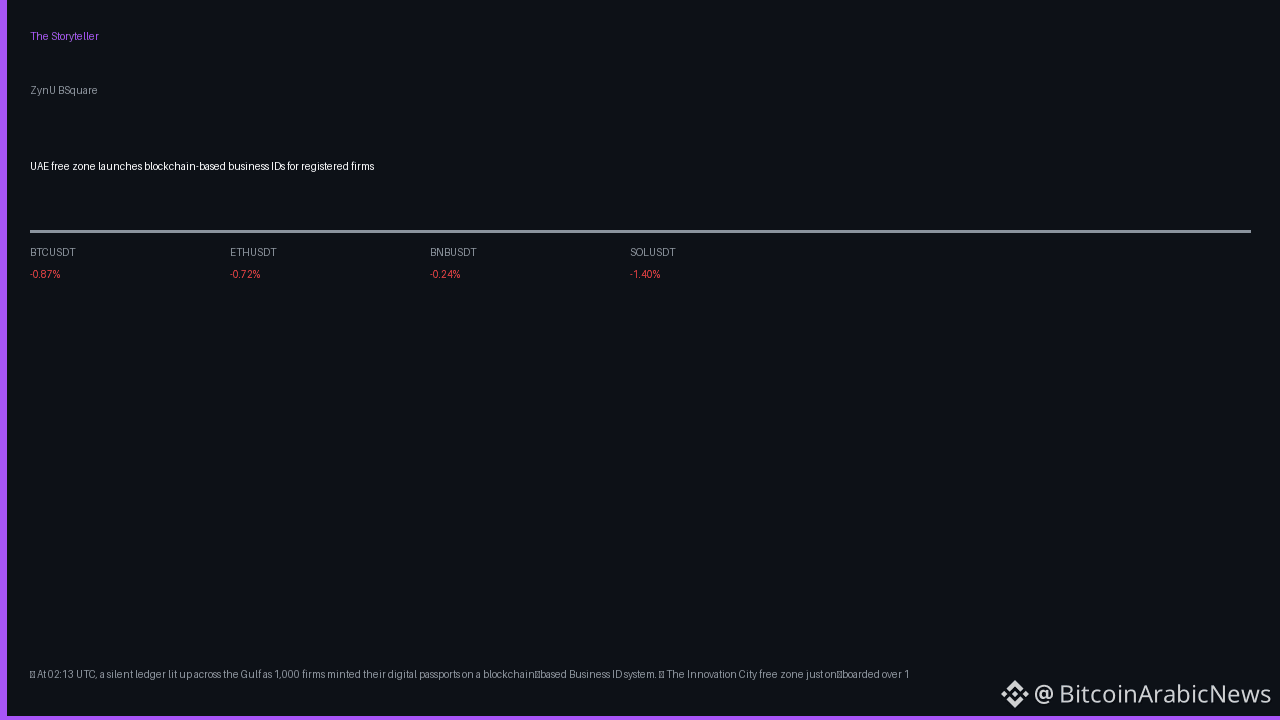
🔥 At 02:13 UTC, a silent ledger lit up across the Gulf as 1,000 firms minted their digital passports on a blockchain‑based Business ID system.
📊 The Innovation City free zone just on‑boarded over 1,000 companies onto immutable credentials, turning legal paperwork into verifiable tokens in seconds. While #BTC trades at $79,769 with a bullish MACD crossover and RSI 37.6, smart wallets like wiener are loading Solana (+1.73%) to tap the new identity layer, and #DeFi platforms on BSC are buzzing about token Q’s 44% surge as firms eye faster compliance #Blockchain #UAE.
💡 The twist: regulators are betting that the same chain securing these IDs will also become the backbone for cross‑border trade financing, turning compliance into a profit engine.
❓ Will the next wave of corporate capital flow through these on‑chain IDs and rewrite the rules of global trade?
🔥 At 02:13 UTC, a silent ledger lit up across the Gulf as 1,000 firms minted their digital passports on a blockchain‑based Business ID system.
📊 The Innovation City free zone just on‑boarded over 1,000 companies onto immutable credentials, turning legal paperwork into verifiable tokens in seconds. While #BTC trades at $79,769 with a bullish MACD crossover and RSI 37.6, smart wallets like wiener are loading Solana (+1.73%) to tap the new identity layer, and #DeFi platforms on BSC are buzzing about token Q’s 44% surge as firms eye faster compliance #Blockchain #UAE.
💡 The twist: regulators are betting that the same chain securing these IDs will also become the backbone for cross‑border trade financing, turning compliance into a profit engine.
❓ Will the next wave of corporate capital flow through these on‑chain IDs and rewrite the rules of global trade?
📊 The Innovation City free zone just on‑boarded over 1,000 companies onto immutable credentials, turning legal paperwork into verifiable tokens in seconds. While #BTC trades at $79,769 with a bullish MACD crossover and RSI 37.6, smart wallets like wiener are loading Solana (+1.73%) to tap the new identity layer, and #DeFi platforms on BSC are buzzing about token Q’s 44% surge as firms eye faster compliance #Blockchain #UAE.
💡 The twist: regulators are betting that the same chain securing these IDs will also become the backbone for cross‑border trade financing, turning compliance into a profit engine.
❓ Will the next wave of corporate capital flow through these on‑chain IDs and rewrite the rules of global trade?
20

·
--
🌐 Blockchain Is Changing More Than We Think! 🚀
Technology is moving fast, and blockchain is becoming more than just a way to transfer digital assets. It has the potential to transform how we manage data, protect digital identities, and build trust online.
💡 Imagine a future where digital ownership is easier to verify, online transactions are more transparent, and creators have greater control over their work.
The real value of innovation isn't just in the technology itself, but in how it solves real problems and makes people's lives better.
I believe the next big step for blockchain will come from practical solutions that people can actually use in their everyday lives. 🔥
💬 What real-world problem would you like blockchain technology to solve first?
Let's discuss! 👇
#BinanceSquare #blockchain #Web3 #INNOVATION #Technology
🌐 Blockchain Is Changing More Than We Think! 🚀
Technology is moving fast, and blockchain is becoming more than just a way to transfer digital assets. It has the potential to transform how we manage data, protect digital identities, and build trust online.
💡 Imagine a future where digital ownership is easier to verify, online transactions are more transparent, and creators have greater control over their work.
The real value of innovation isn't just in the technology itself, but in how it solves real problems and makes people's lives better.
I believe the next big step for blockchain will come from practical solutions that people can actually use in their everyday lives. 🔥
💬 What real-world problem would you like blockchain technology to solve first?
Let's discuss! 👇
#BinanceSquare #blockchain #Web3 #INNOVATION #Technology
Technology is moving fast, and blockchain is becoming more than just a way to transfer digital assets. It has the potential to transform how we manage data, protect digital identities, and build trust online.
💡 Imagine a future where digital ownership is easier to verify, online transactions are more transparent, and creators have greater control over their work.
The real value of innovation isn't just in the technology itself, but in how it solves real problems and makes people's lives better.
I believe the next big step for blockchain will come from practical solutions that people can actually use in their everyday lives. 🔥
💬 What real-world problem would you like blockchain technology to solve first?
Let's discuss! 👇
#BinanceSquare #blockchain #Web3 #INNOVATION #Technology
40

·
--
Article
How Does Blockchain Work ?Have you ever wondered how Bitcoin transactions are recorded without a central bank controlling the network? 🤔
Let's understand blockchain with a simple example!
📒 Imagine a shared digital notebook.
You send 100 taka to your friend. The transaction is recorded in a digital system that multiple network participants can verify.
Here's how blockchain works:
1️⃣ Transaction: A user initiates a transaction.
2️⃣ Verification: Network participants verify it according to the system's rules.
3️⃣ Block: Verified transactions are grouped into a block.
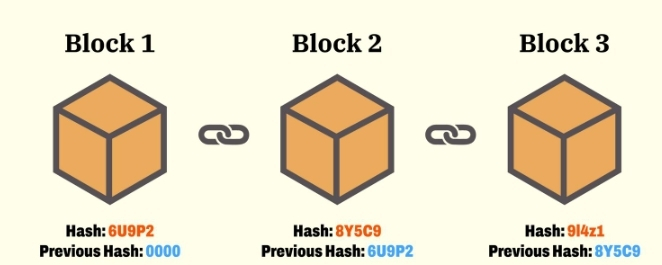
4️⃣ Connection: Each block contains a cryptographic link to the previous block, helping connect the chain.
5️⃣ Shared Record: Once accepted by the network, the new block becomes part of the blockchain's transaction history.
💡 Why is this important?
Blockchain makes records easier to verify and unauthorized changes easier to detect. However, no system is completely risk--free.
🎯 Quick Question:
Which blockchain concept would you like to learn next?
A) Bitcoin Mining
B) Crypto Wallets
C) Smart Contracts
Comment A, B, or C below! 👇
#Blockchain #CryptoEducation #Bitcoin #BTC #BinanceSquar
How Does Blockchain Work ?
Have you ever wondered how Bitcoin transactions are recorded without a central bank controlling the network? 🤔
Let's understand blockchain with a simple example!
📒 Imagine a shared digital notebook.
You send 100 taka to your friend. The transaction is recorded in a digital system that multiple network participants can verify.
Here's how blockchain works:
1️⃣ Transaction: A user initiates a transaction.
2️⃣ Verification: Network participants verify it according to the system's rules.
3️⃣ Block: Verified transactions are grouped into a block.
4️⃣ Connection: Each block contains a cryptographic link to the previous block, helping connect the chain.
5️⃣ Shared Record: Once accepted by the network, the new block becomes part of the blockchain's transaction history.
💡 Why is this important?
Blockchain makes records easier to verify and unauthorized changes easier to detect. However, no system is completely risk--free.
🎯 Quick Question:
Which blockchain concept would you like to learn next?
A) Bitcoin Mining
B) Crypto Wallets
C) Smart Contracts
Comment A, B, or C below! 👇
#Blockchain #CryptoEducation #Bitcoin #BTC #BinanceSquar
Let's understand blockchain with a simple example!
📒 Imagine a shared digital notebook.
You send 100 taka to your friend. The transaction is recorded in a digital system that multiple network participants can verify.
Here's how blockchain works:
1️⃣ Transaction: A user initiates a transaction.
2️⃣ Verification: Network participants verify it according to the system's rules.
3️⃣ Block: Verified transactions are grouped into a block.
4️⃣ Connection: Each block contains a cryptographic link to the previous block, helping connect the chain.
5️⃣ Shared Record: Once accepted by the network, the new block becomes part of the blockchain's transaction history.
💡 Why is this important?
Blockchain makes records easier to verify and unauthorized changes easier to detect. However, no system is completely risk--free.
🎯 Quick Question:
Which blockchain concept would you like to learn next?
A) Bitcoin Mining
B) Crypto Wallets
C) Smart Contracts
Comment A, B, or C below! 👇
#Blockchain #CryptoEducation #Bitcoin #BTC #BinanceSquar
72

·
--
🤖 WHAT HAPPENS WHEN AI AGENTS START USING CRYPTO? 🔥
Imagine an AI assistant that can:
✅ Pay for digital services automatically
✅ Purchase computing resources
✅ Verify transactions on blockchain
✅ Interact with decentralized applications
This is one of the fascinating possibilities emerging at the intersection of AI and blockchain.
But security, permissions, and accountability remain major challenges.
🌍 The next chapter of Web3 may involve machines interacting economically, not just humans trading tokens.
💬 Would you trust an AI agent to manage small crypto payments on your behalf?
#AI #Web3 #blockchain #BinanceSquar
🤖 WHAT HAPPENS WHEN AI AGENTS START USING CRYPTO? 🔥
Imagine an AI assistant that can:
✅ Pay for digital services automatically
✅ Purchase computing resources
✅ Verify transactions on blockchain
✅ Interact with decentralized applications
This is one of the fascinating possibilities emerging at the intersection of AI and blockchain.
But security, permissions, and accountability remain major challenges.
🌍 The next chapter of Web3 may involve machines interacting economically, not just humans trading tokens.
💬 Would you trust an AI agent to manage small crypto payments on your behalf?
#AI #Web3 #blockchain #BinanceSquar
Imagine an AI assistant that can:
✅ Pay for digital services automatically
✅ Purchase computing resources
✅ Verify transactions on blockchain
✅ Interact with decentralized applications
This is one of the fascinating possibilities emerging at the intersection of AI and blockchain.
But security, permissions, and accountability remain major challenges.
🌍 The next chapter of Web3 may involve machines interacting economically, not just humans trading tokens.
💬 Would you trust an AI agent to manage small crypto payments on your behalf?
#AI #Web3 #blockchain #BinanceSquar
30

·
--
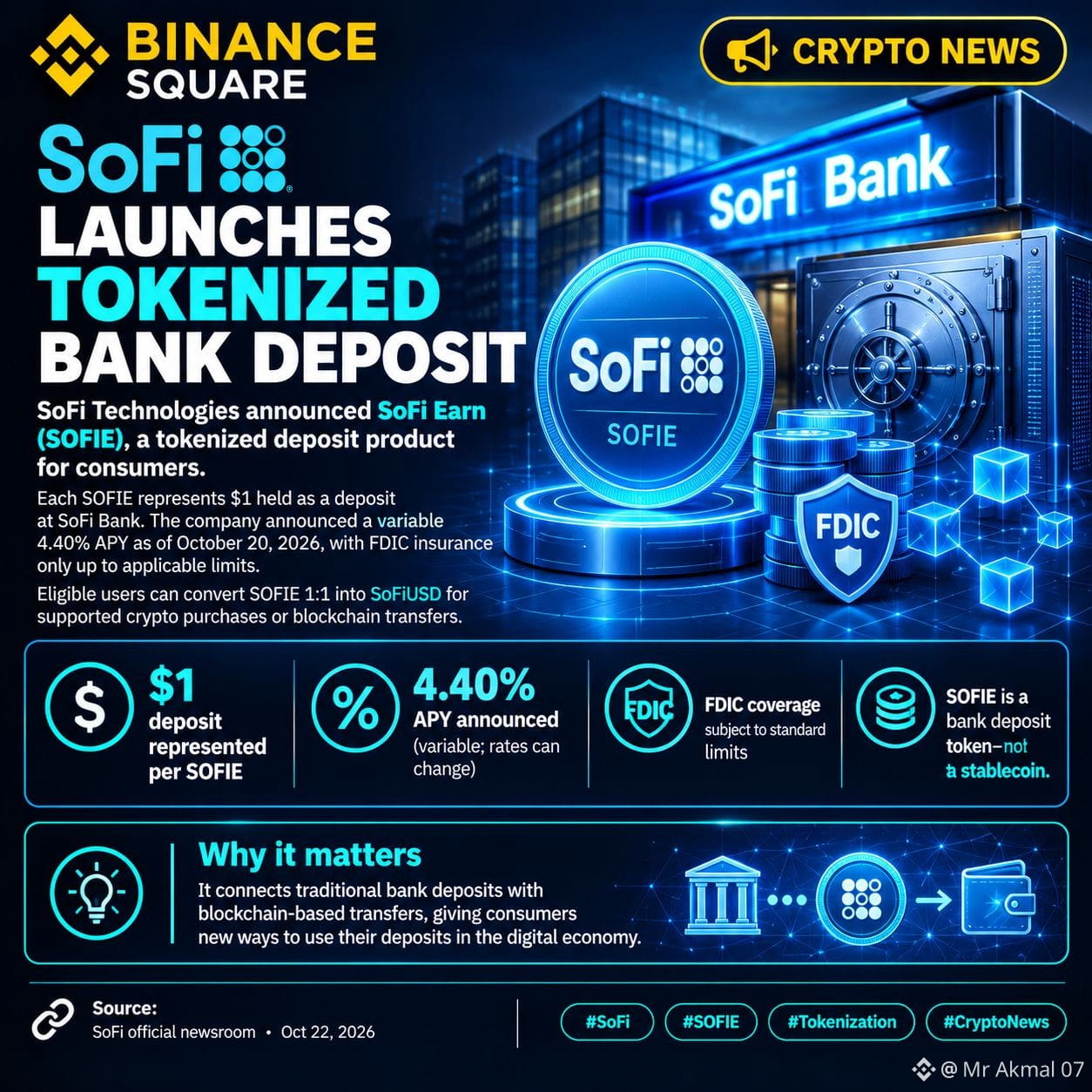
$SOFI 🚨 SoFi LAUNCHES SOFIE: A TOKENIZED BANK DEPOSIT
SoFi Technologies announced SoFi Earn (SOFIE) on October 22, introducing a tokenized bank deposit designed to connect traditional banking with blockchain-based digital payments.
🔍 Key highlights:
🔹 Each SOFIE represents $1 held on deposit at SoFi Bank.
🔹 The announced annual percentage yield (APY) was 4.40%, variable and subject to change.
🔹 Eligible members can convert SOFIE 1:1 into SoFiUSD.
🔹 The deposit is eligible for FDIC insurance up to applicable limits.
🔹 SOFIE is a bank deposit token, not a stablecoin.
🌐 Why it matters: Tokenized deposits could help bridge traditional banking and digital asset infrastructure while retaining the legal structure of a bank deposit.
📌 Important: The product is rolling out to eligible SoFi members. FDIC protection applies to qualifying deposits under standard rules and limits; it does not cover SoFiUSD or other crypto assets.
🔗 Official source: https://www.sofi.com/newsroom/sofi-launches-sofi-earn-sofie-the-first-and-only-national-bank-issued-tokenized-deposit-for-consumers/
What do you think—will tokenized bank deposits become an important part of digital payments? 👇
#SoFi #blockchain #CryptoNews #BinanceSquare
{future}(SOFIUSDT)
$SOFI 🚨 SoFi LAUNCHES SOFIE: A TOKENIZED BANK DEPOSIT
SoFi Technologies announced SoFi Earn (SOFIE) on October 22, introducing a tokenized bank deposit designed to connect traditional banking with blockchain-based digital payments.
🔍 Key highlights:
🔹 Each SOFIE represents $1 held on deposit at SoFi Bank.
🔹 The announced annual percentage yield (APY) was 4.40%, variable and subject to change.
🔹 Eligible members can convert SOFIE 1:1 into SoFiUSD.
🔹 The deposit is eligible for FDIC insurance up to applicable limits.
🔹 SOFIE is a bank deposit token, not a stablecoin.
🌐 Why it matters: Tokenized deposits could help bridge traditional banking and digital asset infrastructure while retaining the legal structure of a bank deposit.
📌 Important: The product is rolling out to eligible SoFi members. FDIC protection applies to qualifying deposits under standard rules and limits; it does not cover SoFiUSD or other crypto assets.
🔗 Official source: https://www.sofi.com/newsroom/sofi-launches-sofi-earn-sofie-the-first-and-only-national-bank-issued-tokenized-deposit-for-consumers/
What do you think—will tokenized bank deposits become an important part of digital payments? 👇
#SoFi #blockchain #CryptoNews #BinanceSquare
SoFi Technologies announced SoFi Earn (SOFIE) on October 22, introducing a tokenized bank deposit designed to connect traditional banking with blockchain-based digital payments.
🔍 Key highlights:
🔹 Each SOFIE represents $1 held on deposit at SoFi Bank.
🔹 The announced annual percentage yield (APY) was 4.40%, variable and subject to change.
🔹 Eligible members can convert SOFIE 1:1 into SoFiUSD.
🔹 The deposit is eligible for FDIC insurance up to applicable limits.
🔹 SOFIE is a bank deposit token, not a stablecoin.
🌐 Why it matters: Tokenized deposits could help bridge traditional banking and digital asset infrastructure while retaining the legal structure of a bank deposit.
📌 Important: The product is rolling out to eligible SoFi members. FDIC protection applies to qualifying deposits under standard rules and limits; it does not cover SoFiUSD or other crypto assets.
🔗 Official source: https://www.sofi.com/newsroom/sofi-launches-sofi-earn-sofie-the-first-and-only-national-bank-issued-tokenized-deposit-for-consumers/
What do you think—will tokenized bank deposits become an important part of digital payments? 👇
#SoFi #blockchain #CryptoNews #BinanceSquare
21

·
--
$ZAMA
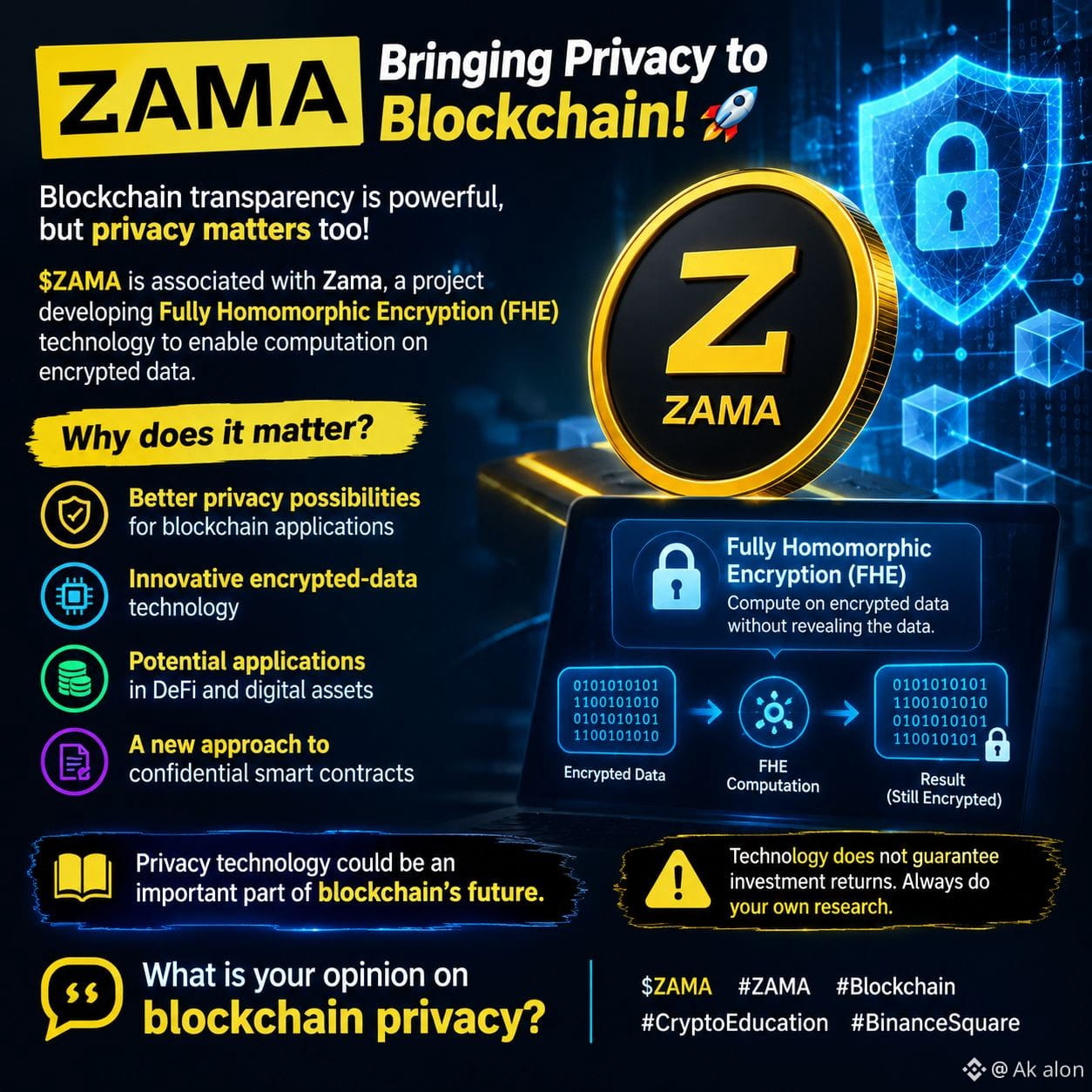
🔐 ZAMA: Bringing Privacy to Blockchain! 🚀
Blockchain transparency is powerful, but privacy matters too!
$ZAMA is associated with Zama, a project developing Fully Homomorphic Encryption (FHE) technology to enable computation on encrypted data.
🌟 Why does it matter?
🔹 Better privacy possibilities for blockchain applications
🔹 Innovative encrypted-data technology
🔹 Potential applications in DeFi and digital assets
🔹 A new approach to confidential smart contracts
📚 Privacy technology could be an important part of blockchain's future.
⚠️ Technology does not guarantee investment returns. Always do your own research.
What is your opinion on blockchain privacy?
$ZAMA #blockchain #cryptoeducation #BinanceSquare
$ZAMA
🔐 ZAMA: Bringing Privacy to Blockchain! 🚀
Blockchain transparency is powerful, but privacy matters too!
$ZAMA is associated with Zama, a project developing Fully Homomorphic Encryption (FHE) technology to enable computation on encrypted data.
🌟 Why does it matter?
🔹 Better privacy possibilities for blockchain applications
🔹 Innovative encrypted-data technology
🔹 Potential applications in DeFi and digital assets
🔹 A new approach to confidential smart contracts
📚 Privacy technology could be an important part of blockchain's future.
⚠️ Technology does not guarantee investment returns. Always do your own research.
What is your opinion on blockchain privacy?
$ZAMA #blockchain #cryptoeducation #BinanceSquare
🔐 ZAMA: Bringing Privacy to Blockchain! 🚀
Blockchain transparency is powerful, but privacy matters too!
$ZAMA is associated with Zama, a project developing Fully Homomorphic Encryption (FHE) technology to enable computation on encrypted data.
🌟 Why does it matter?
🔹 Better privacy possibilities for blockchain applications
🔹 Innovative encrypted-data technology
🔹 Potential applications in DeFi and digital assets
🔹 A new approach to confidential smart contracts
📚 Privacy technology could be an important part of blockchain's future.
⚠️ Technology does not guarantee investment returns. Always do your own research.
What is your opinion on blockchain privacy?
$ZAMA #blockchain #cryptoeducation #BinanceSquare
164
·
--
$NEAR
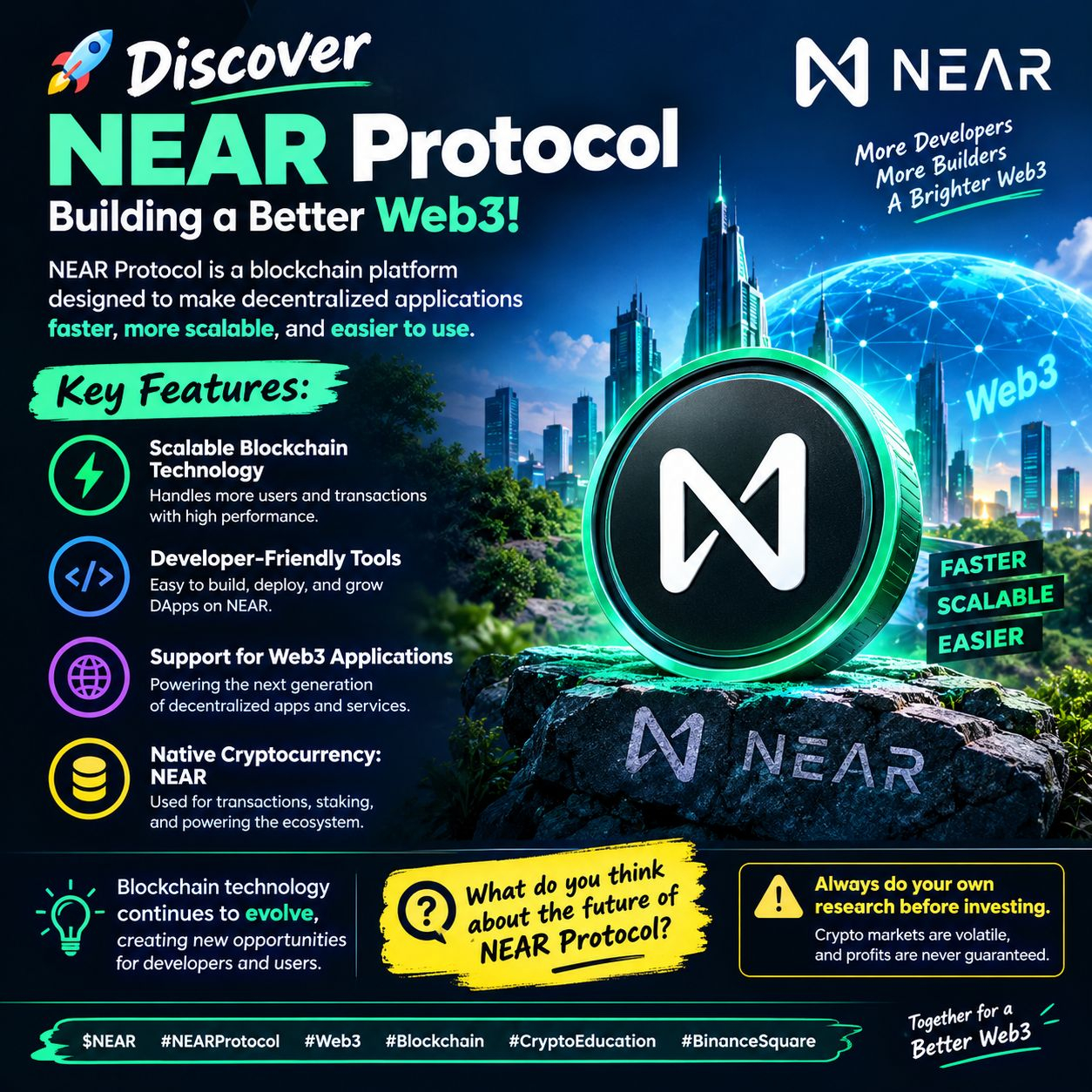
🚀 Discover NEAR Protocol: Building a Better Web3!
NEAR Protocol is a blockchain platform designed to make decentralized applications faster, more scalable, and easier to use.
🌐 Key Features:
🔹 Scalable blockchain technology
🔹 Developer-friendly tools
🔹 Support for Web3 applications
🔹 Native cryptocurrency: NEAR
💡 Blockchain technology continues to evolve, creating new opportunities for developers and users.
⚠️ Always do your own research before investing. Crypto markets are volatile, and profits are never guaranteed.
What do you think about the future of NEAR Protocol?
$NEAR #NEARProtocol #Web3 #blockchain #cryptoeducation #BinanceSquare
$NEAR
🚀 Discover NEAR Protocol: Building a Better Web3!
NEAR Protocol is a blockchain platform designed to make decentralized applications faster, more scalable, and easier to use.
🌐 Key Features:
🔹 Scalable blockchain technology
🔹 Developer-friendly tools
🔹 Support for Web3 applications
🔹 Native cryptocurrency: NEAR
💡 Blockchain technology continues to evolve, creating new opportunities for developers and users.
⚠️ Always do your own research before investing. Crypto markets are volatile, and profits are never guaranteed.
What do you think about the future of NEAR Protocol?
$NEAR #NEARProtocol #Web3 #blockchain #cryptoeducation #BinanceSquare
🚀 Discover NEAR Protocol: Building a Better Web3!
NEAR Protocol is a blockchain platform designed to make decentralized applications faster, more scalable, and easier to use.
🌐 Key Features:
🔹 Scalable blockchain technology
🔹 Developer-friendly tools
🔹 Support for Web3 applications
🔹 Native cryptocurrency: NEAR
💡 Blockchain technology continues to evolve, creating new opportunities for developers and users.
⚠️ Always do your own research before investing. Crypto markets are volatile, and profits are never guaranteed.
What do you think about the future of NEAR Protocol?
$NEAR #NEARProtocol #Web3 #blockchain #cryptoeducation #BinanceSquare
92

·
--
$XAUT 🪙 Tether Gold ($XAU₮): Real Gold Meets Blockchain! 🥇
Tether Gold bridges traditional gold ownership with blockchain technology. Each XAU₮ token represents ownership of one fine troy ounce of physical gold, combining gold-backed value with digital portability. 🌍
✨ Physical gold backing
🔗 Blockchain-powered transfers
💛 A modern approach to gold ownership
Discover the future of digital gold! 🚀
🔗 https://gold.tether.to/
#TetherGold #XAUt #Gold #Crypto #blockchain
$XAUT 🪙 Tether Gold ($XAU₮): Real Gold Meets Blockchain! 🥇
Tether Gold bridges traditional gold ownership with blockchain technology. Each XAU₮ token represents ownership of one fine troy ounce of physical gold, combining gold-backed value with digital portability. 🌍
✨ Physical gold backing
🔗 Blockchain-powered transfers
💛 A modern approach to gold ownership
Discover the future of digital gold! 🚀
🔗 https://gold.tether.to/
#TetherGold #XAUt #Gold #Crypto #blockchain
Tether Gold bridges traditional gold ownership with blockchain technology. Each XAU₮ token represents ownership of one fine troy ounce of physical gold, combining gold-backed value with digital portability. 🌍
✨ Physical gold backing
🔗 Blockchain-powered transfers
💛 A modern approach to gold ownership
Discover the future of digital gold! 🚀
🔗 https://gold.tether.to/
#TetherGold #XAUt #Gold #Crypto #blockchain
212

·
--
Bullish
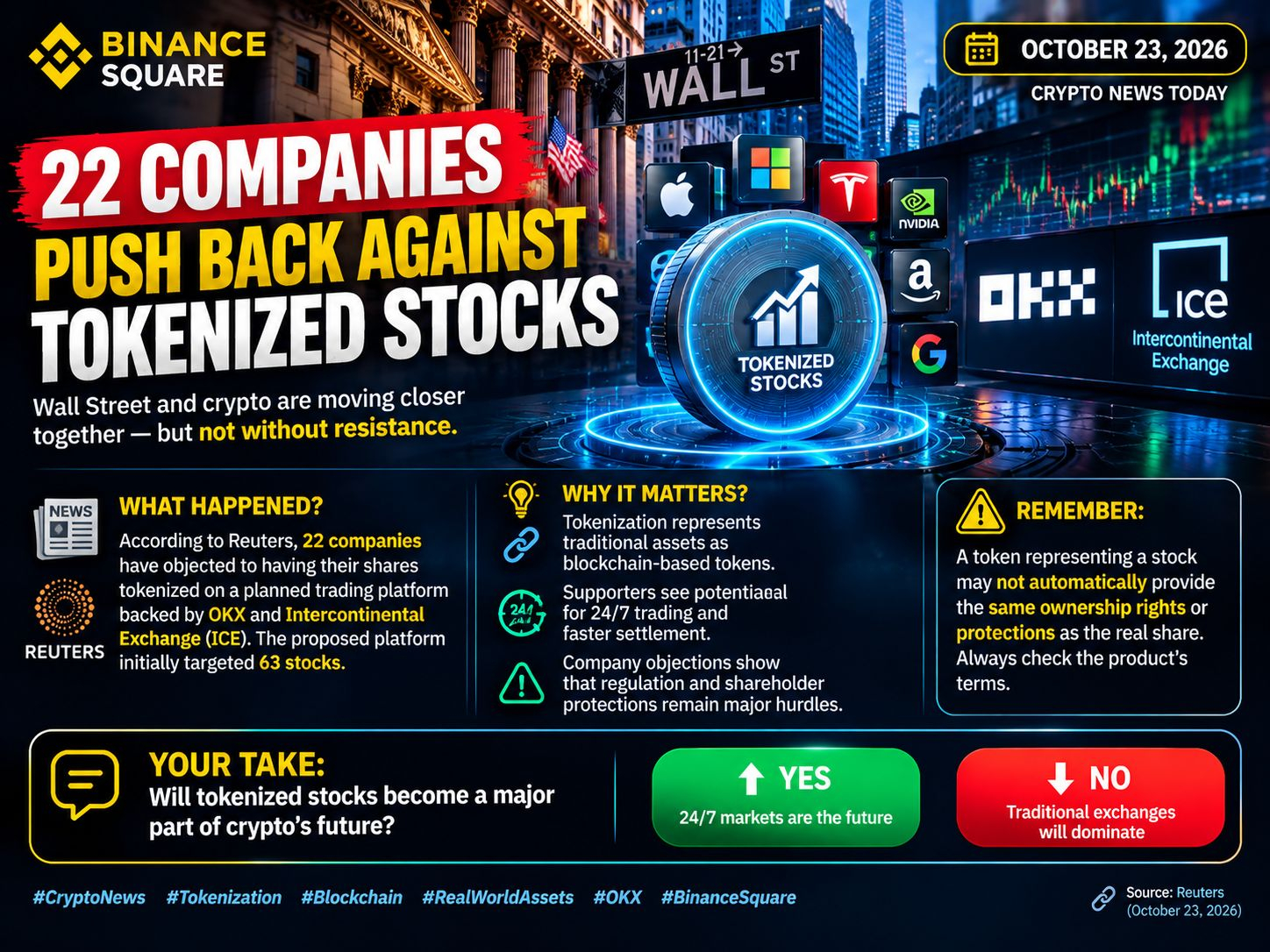
🚨 CRYPTO NEWS — THE STOCK MARKET IS MOVING ON-CHAIN! 📈⛓️
Wall Street and crypto are moving closer together — but not without resistance.
📰 What happened?
According to Reuters, 22 companies have objected to having their shares tokenized on a planned trading platform backed by OKX and Intercontinental Exchange (ICE). The proposed platform initially targeted 63 stocks. citeturn288564news7
💡 Why it matters:
🔹 Tokenization represents traditional assets as blockchain-based tokens.
🔹 Supporters see potential for 24/7 trading and faster settlement.
🔹 Company objections show that regulation and shareholder protections remain major hurdles.
⚠️ Remember: A token representing a stock may not automatically provide the same ownership rights or protections as the real share. Always check the product's terms.
🔥 YOUR TAKE: Will tokenized stocks become a major part of crypto's future?
🟢 YES — 24/7 markets are the future
🔴 NO — traditional exchanges will do minate
#CryptoNewson #Blockchain #RealWorldAssets #OKX #BinanceSquare
{spot}(SPCXBUSDT)
🚨 CRYPTO NEWS — THE STOCK MARKET IS MOVING ON-CHAIN! 📈⛓️
Wall Street and crypto are moving closer together — but not without resistance.
📰 What happened?
According to Reuters, 22 companies have objected to having their shares tokenized on a planned trading platform backed by OKX and Intercontinental Exchange (ICE). The proposed platform initially targeted 63 stocks. citeturn288564news7
💡 Why it matters:
🔹 Tokenization represents traditional assets as blockchain-based tokens.
🔹 Supporters see potential for 24/7 trading and faster settlement.
🔹 Company objections show that regulation and shareholder protections remain major hurdles.
⚠️ Remember: A token representing a stock may not automatically provide the same ownership rights or protections as the real share. Always check the product's terms.
🔥 YOUR TAKE: Will tokenized stocks become a major part of crypto's future?
🟢 YES — 24/7 markets are the future
🔴 NO — traditional exchanges will do minate
#CryptoNewson #Blockchain #RealWorldAssets #OKX #BinanceSquare
Wall Street and crypto are moving closer together — but not without resistance.
📰 What happened?
According to Reuters, 22 companies have objected to having their shares tokenized on a planned trading platform backed by OKX and Intercontinental Exchange (ICE). The proposed platform initially targeted 63 stocks. citeturn288564news7
💡 Why it matters:
🔹 Tokenization represents traditional assets as blockchain-based tokens.
🔹 Supporters see potential for 24/7 trading and faster settlement.
🔹 Company objections show that regulation and shareholder protections remain major hurdles.
⚠️ Remember: A token representing a stock may not automatically provide the same ownership rights or protections as the real share. Always check the product's terms.
🔥 YOUR TAKE: Will tokenized stocks become a major part of crypto's future?
🟢 YES — 24/7 markets are the future
🔴 NO — traditional exchanges will do minate
#CryptoNewson #Blockchain #RealWorldAssets #OKX #BinanceSquare
91

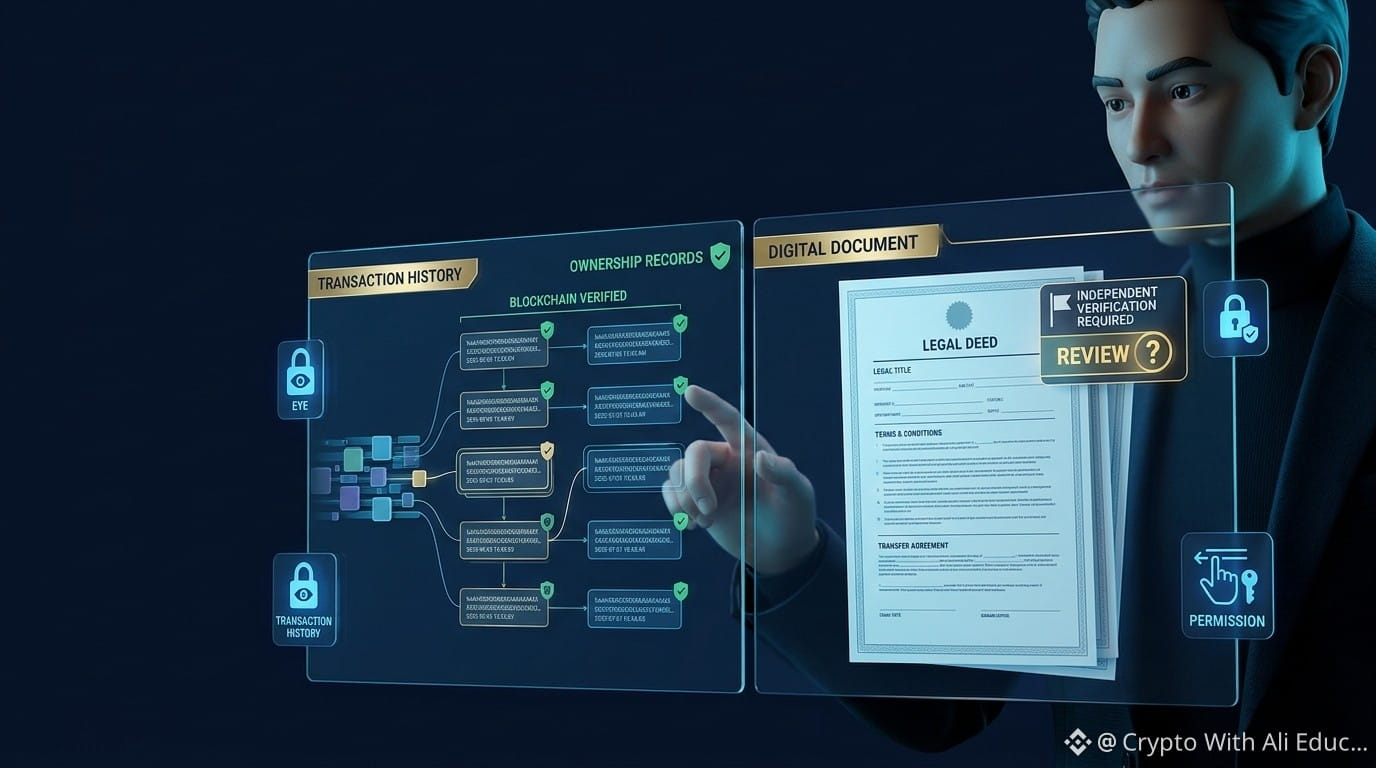
🌐 A Blockchain Record Doesn't Automatically Prove Ownership
Blockchain can help trace certain digital asset transactions, but a recorded token does not automatically prove legal ownership,
copyright, or the accuracy of information linked to it.
Digital ownership also depends on permissions, privacy, applicable rights, and the ability to exercise meaningful control.
That is why understanding what you own—and what you've actually authorized—matters.
📖 Read Part 4 of our AI + Web3 series on Binance Square.
#blockchain #Web3 #DataPrivacy #DigitalIdentity #transparency
🌐 A Blockchain Record Doesn't Automatically Prove Ownership
Blockchain can help trace certain digital asset transactions, but a recorded token does not automatically prove legal ownership,
copyright, or the accuracy of information linked to it.
Digital ownership also depends on permissions, privacy, applicable rights, and the ability to exercise meaningful control.
That is why understanding what you own—and what you've actually authorized—matters.
📖 Read Part 4 of our AI + Web3 series on Binance Square.
#blockchain #Web3 #DataPrivacy #DigitalIdentity #transparency
Blockchain can help trace certain digital asset transactions, but a recorded token does not automatically prove legal ownership,
copyright, or the accuracy of information linked to it.
Digital ownership also depends on permissions, privacy, applicable rights, and the ability to exercise meaningful control.
That is why understanding what you own—and what you've actually authorized—matters.
📖 Read Part 4 of our AI + Web3 series on Binance Square.
#blockchain #Web3 #DataPrivacy #DigitalIdentity #transparency
71

Article
AI, Web3 and Digital Ownership: Who Controls Your Assets and Data?Part 4 of the AI + Web3 Series | Digital Identity, User Permissions, Ownership, and Blockchain Provenance
Every day, people create digital information, use online services, and interact with applications that store personal data or manage digital assets. As artificial intelligence becomes more capable and Web3 applications evolve, an important question deserves attention:
Who really controls your digital identity, assets, and data?
AI agents may help users organize information and interact with digital services. Blockchain technology may help record transactions and trace the history of certain digital assets. But neither technology automatically guarantees ownership, privacy, or control.
Understanding the differences is essential to the future of digital trust.
1. What Does Digital Ownership Mean?
Digital ownership can refer to different rights, depending on the asset and the system involved.
For example, it may involve:
Control over a crypto asset held in a wallet.Rights to use or transfer a digital item.Access to personal information.Permission to publish, modify, or distribute digital content.Legal rights associated with a digital document or tokenized asset.
These rights are not interchangeable.
Holding a token may provide control over that token, but it does not automatically grant copyright to the artwork it represents. Controlling a wallet does not necessarily mean owning every asset or legal right associated with an address.
Digital ownership depends on the technology, applicable agreements, and relevant laws.
2. Digital Identity: Who Controls Your Information?
Digital identity includes information and credentials used to identify or authenticate a person, account, or organization.
Traditional online services often manage identity information through centralized databases. This can make access convenient, but users may have limited visibility into how their information is stored, shared, or reused.
Some digital identity systems aim to give users more control over their credentials and the information they disclose. For example, a system may allow a person to prove a specific attribute without revealing unnecessary information.
However, not every Web3 identity system offers these capabilities, and using a blockchain does not automatically make an identity private or secure.
A useful design principle is data minimization: disclose only the information necessary for a particular purpose.
3. How Can Blockchain Support Digital Ownership?
Blockchains can record transactions and changes in ownership or control according to the rules of a particular network or application.
Depending on the system, these records may help people:
Trace the transfer history of a token.Inspect transactions involving a digital asset.Verify that a particular on-chain event was recorded.Review the history of a tokenized item.Interact with applications that enforce predefined rules through smart contracts.
This can improve traceability and make selected records independently inspectable.
But an on-chain record is not a universal legal certificate. It cannot automatically prove that the original creator had the rights they claimed, that an external document is authentic, or that a real-world asset was properly transferred.
Recording a claim is not the same as proving that the claim is true.
4. What Is Provenance, and Why Does It Matter?
Provenance means the documented history or origin of an item, record, or piece of content.
For a digital asset, provenance might include when a token was created, which addresses transferred it, and which smart contract recorded relevant activity.
For AI-generated content, a provenance system might record information about its creation, modification, or publication. Such records can help people investigate where an item came from.
However, provenance has limits.
If inaccurate information enters a system, recording it on a blockchain does not automatically make it accurate. Records may also be incomplete, and the connection between a token and a physical object may require separate verification.
Reliable provenance therefore depends on both the integrity of the recorded history and the quality of the information entered into the system.
5. What Happens When AI Agents Access Your Data?
AI agents may help users search documents, summarize information, manage digital workflows, or interact with authorized applications.
These capabilities can be useful, but they introduce important permission questions.
Before giving an AI agent access to personal information or digital assets, consider:
What can it read? Access to a document or account may expose information beyond what the task requires.
What can it change? Permission to view information is different from permission to edit, share, or delete it.
What can it authorize? An agent with transaction authority may have the ability to initiate actions with financial or other consequences.
What is recorded? Users should understand what information the application stores and whether actions can be audited.
Can access be revoked? A well-designed system should make it clear how permissions can be changed or withdrawn, where supported.
Giving an AI agent access to a task should not automatically give it unrestricted control over the user's digital life.
6. Practical Ways to Protect Digital Ownership
Several principles can help users make more informed decisions.
Use minimum necessary permissions. Grant only the access required for the intended task.
Separate identity from public activity where possible. Avoid linking personal information to public addresses unnecessarily.
Protect wallet credentials. Never disclose recovery phrases or private keys to an AI assistant or untrusted application.
Review smart-contract approvals. Understand which assets or actions a permission covers, and remove unnecessary permissions where the system supports revocation.
Check provenance claims. Look for reliable evidence beyond the existence of an on-chain record.
Understand the terms. A token, digital certificate, or account may not provide the legal rights a user assumes it does.
Choose privacy-conscious systems. Consider what information is collected, how long it is retained, and who can access it.
No technology removes every risk. Good security practices, transparent policies, and informed users remain important.
7. Can Web3 Give Users More Control?
Web3 applications can support new ways to manage digital assets, interact with smart contracts, and verify selected transaction histories. Some identity systems also aim to give users more control over credentials and disclosure.
Yet greater control is not automatic.
Users may still depend on centralized interfaces, external storage providers, wallet software, legal agreements, and organizations that control important parts of a service.
The real question is not simply whether an application uses blockchain. It is whether users can understand their rights, manage permissions, protect their information, and exercise meaningful control.
Final Thoughts
AI and Web3 may help reshape how people manage digital identity, assets, and information.
AI agents can make digital tasks easier to perform. Blockchain records may improve the traceability of certain transactions and asset histories. But privacy, legal ownership, and the accuracy of provenance claims require more than technology alone.
Digital ownership is meaningful when people understand what they own, what they have authorized, and what control they can actually exercise.
As digital systems become more automated, informed consent, limited permissions, privacy, and accountability will remain essential.
This is Part 4 of the AI + Web3 Series. In Part 5, we will explore why human oversight and accountability still matter when AI and Web3 systems work together.
🔎 Continue the AI + Web3 Series
Who should control your digital assets and personal data in an increasingly automated world?
Follow Crypto With Ali for educational insights into AI agents, blockchain infrastructure, digital ownership, and the future of Web3.
📖 Coming in Part 5: AI + Web3 — Why Human Oversight Still Matters.
Educational content only. Not financial advice.
#BinanceSquare #Web3 #blockchain #DigitalIdentity #DataPrivacy
AI, Web3 and Digital Ownership: Who Controls Your Assets and Data?
Part 4 of the AI + Web3 Series | Digital Identity, User Permissions, Ownership, and Blockchain Provenance
Every day, people create digital information, use online services, and interact with applications that store personal data or manage digital assets. As artificial intelligence becomes more capable and Web3 applications evolve, an important question deserves attention:
Who really controls your digital identity, assets, and data?
AI agents may help users organize information and interact with digital services. Blockchain technology may help record transactions and trace the history of certain digital assets. But neither technology automatically guarantees ownership, privacy, or control.
Understanding the differences is essential to the future of digital trust.
1. What Does Digital Ownership Mean?
Digital ownership can refer to different rights, depending on the asset and the system involved.
For example, it may involve:
Control over a crypto asset held in a wallet.Rights to use or transfer a digital item.Access to personal information.Permission to publish, modify, or distribute digital content.Legal rights associated with a digital document or tokenized asset.
These rights are not interchangeable.
Holding a token may provide control over that token, but it does not automatically grant copyright to the artwork it represents. Controlling a wallet does not necessarily mean owning every asset or legal right associated with an address.
Digital ownership depends on the technology, applicable agreements, and relevant laws.
2. Digital Identity: Who Controls Your Information?
Digital identity includes information and credentials used to identify or authenticate a person, account, or organization.
Traditional online services often manage identity information through centralized databases. This can make access convenient, but users may have limited visibility into how their information is stored, shared, or reused.
Some digital identity systems aim to give users more control over their credentials and the information they disclose. For example, a system may allow a person to prove a specific attribute without revealing unnecessary information.
However, not every Web3 identity system offers these capabilities, and using a blockchain does not automatically make an identity private or secure.
A useful design principle is data minimization: disclose only the information necessary for a particular purpose.
3. How Can Blockchain Support Digital Ownership?
Blockchains can record transactions and changes in ownership or control according to the rules of a particular network or application.
Depending on the system, these records may help people:
Trace the transfer history of a token.Inspect transactions involving a digital asset.Verify that a particular on-chain event was recorded.Review the history of a tokenized item.Interact with applications that enforce predefined rules through smart contracts.
This can improve traceability and make selected records independently inspectable.
But an on-chain record is not a universal legal certificate. It cannot automatically prove that the original creator had the rights they claimed, that an external document is authentic, or that a real-world asset was properly transferred.
Recording a claim is not the same as proving that the claim is true.
4. What Is Provenance, and Why Does It Matter?
Provenance means the documented history or origin of an item, record, or piece of content.
For a digital asset, provenance might include when a token was created, which addresses transferred it, and which smart contract recorded relevant activity.
For AI-generated content, a provenance system might record information about its creation, modification, or publication. Such records can help people investigate where an item came from.
However, provenance has limits.
If inaccurate information enters a system, recording it on a blockchain does not automatically make it accurate. Records may also be incomplete, and the connection between a token and a physical object may require separate verification.
Reliable provenance therefore depends on both the integrity of the recorded history and the quality of the information entered into the system.
5. What Happens When AI Agents Access Your Data?
AI agents may help users search documents, summarize information, manage digital workflows, or interact with authorized applications.
These capabilities can be useful, but they introduce important permission questions.
Before giving an AI agent access to personal information or digital assets, consider:
What can it read? Access to a document or account may expose information beyond what the task requires.
What can it change? Permission to view information is different from permission to edit, share, or delete it.
What can it authorize? An agent with transaction authority may have the ability to initiate actions with financial or other consequences.
What is recorded? Users should understand what information the application stores and whether actions can be audited.
Can access be revoked? A well-designed system should make it clear how permissions can be changed or withdrawn, where supported.
Giving an AI agent access to a task should not automatically give it unrestricted control over the user's digital life.
6. Practical Ways to Protect Digital Ownership
Several principles can help users make more informed decisions.
Use minimum necessary permissions. Grant only the access required for the intended task.
Separate identity from public activity where possible. Avoid linking personal information to public addresses unnecessarily.
Protect wallet credentials. Never disclose recovery phrases or private keys to an AI assistant or untrusted application.
Review smart-contract approvals. Understand which assets or actions a permission covers, and remove unnecessary permissions where the system supports revocation.
Check provenance claims. Look for reliable evidence beyond the existence of an on-chain record.
Understand the terms. A token, digital certificate, or account may not provide the legal rights a user assumes it does.
Choose privacy-conscious systems. Consider what information is collected, how long it is retained, and who can access it.
No technology removes every risk. Good security practices, transparent policies, and informed users remain important.
7. Can Web3 Give Users More Control?
Web3 applications can support new ways to manage digital assets, interact with smart contracts, and verify selected transaction histories. Some identity systems also aim to give users more control over credentials and disclosure.
Yet greater control is not automatic.
Users may still depend on centralized interfaces, external storage providers, wallet software, legal agreements, and organizations that control important parts of a service.
The real question is not simply whether an application uses blockchain. It is whether users can understand their rights, manage permissions, protect their information, and exercise meaningful control.
Final Thoughts
AI and Web3 may help reshape how people manage digital identity, assets, and information.
AI agents can make digital tasks easier to perform. Blockchain records may improve the traceability of certain transactions and asset histories. But privacy, legal ownership, and the accuracy of provenance claims require more than technology alone.
Digital ownership is meaningful when people understand what they own, what they have authorized, and what control they can actually exercise.
As digital systems become more automated, informed consent, limited permissions, privacy, and accountability will remain essential.
This is Part 4 of the AI + Web3 Series. In Part 5, we will explore why human oversight and accountability still matter when AI and Web3 systems work together.
🔎 Continue the AI + Web3 Series
Who should control your digital assets and personal data in an increasingly automated world?
Follow Crypto With Ali for educational insights into AI agents, blockchain infrastructure, digital ownership, and the future of Web3.
📖 Coming in Part 5: AI + Web3 — Why Human Oversight Still Matters.
Educational content only. Not financial advice.
#BinanceSquare #Web3 #blockchain #DigitalIdentity #DataPrivacy
Every day, people create digital information, use online services, and interact with applications that store personal data or manage digital assets. As artificial intelligence becomes more capable and Web3 applications evolve, an important question deserves attention:
Who really controls your digital identity, assets, and data?
AI agents may help users organize information and interact with digital services. Blockchain technology may help record transactions and trace the history of certain digital assets. But neither technology automatically guarantees ownership, privacy, or control.
Understanding the differences is essential to the future of digital trust.
1. What Does Digital Ownership Mean?
Digital ownership can refer to different rights, depending on the asset and the system involved.
For example, it may involve:
Control over a crypto asset held in a wallet.Rights to use or transfer a digital item.Access to personal information.Permission to publish, modify, or distribute digital content.Legal rights associated with a digital document or tokenized asset.
These rights are not interchangeable.
Holding a token may provide control over that token, but it does not automatically grant copyright to the artwork it represents. Controlling a wallet does not necessarily mean owning every asset or legal right associated with an address.
Digital ownership depends on the technology, applicable agreements, and relevant laws.
2. Digital Identity: Who Controls Your Information?
Digital identity includes information and credentials used to identify or authenticate a person, account, or organization.
Traditional online services often manage identity information through centralized databases. This can make access convenient, but users may have limited visibility into how their information is stored, shared, or reused.
Some digital identity systems aim to give users more control over their credentials and the information they disclose. For example, a system may allow a person to prove a specific attribute without revealing unnecessary information.
However, not every Web3 identity system offers these capabilities, and using a blockchain does not automatically make an identity private or secure.
A useful design principle is data minimization: disclose only the information necessary for a particular purpose.
3. How Can Blockchain Support Digital Ownership?
Blockchains can record transactions and changes in ownership or control according to the rules of a particular network or application.
Depending on the system, these records may help people:
Trace the transfer history of a token.Inspect transactions involving a digital asset.Verify that a particular on-chain event was recorded.Review the history of a tokenized item.Interact with applications that enforce predefined rules through smart contracts.
This can improve traceability and make selected records independently inspectable.
But an on-chain record is not a universal legal certificate. It cannot automatically prove that the original creator had the rights they claimed, that an external document is authentic, or that a real-world asset was properly transferred.
Recording a claim is not the same as proving that the claim is true.
4. What Is Provenance, and Why Does It Matter?
Provenance means the documented history or origin of an item, record, or piece of content.
For a digital asset, provenance might include when a token was created, which addresses transferred it, and which smart contract recorded relevant activity.
For AI-generated content, a provenance system might record information about its creation, modification, or publication. Such records can help people investigate where an item came from.
However, provenance has limits.
If inaccurate information enters a system, recording it on a blockchain does not automatically make it accurate. Records may also be incomplete, and the connection between a token and a physical object may require separate verification.
Reliable provenance therefore depends on both the integrity of the recorded history and the quality of the information entered into the system.
5. What Happens When AI Agents Access Your Data?
AI agents may help users search documents, summarize information, manage digital workflows, or interact with authorized applications.
These capabilities can be useful, but they introduce important permission questions.
Before giving an AI agent access to personal information or digital assets, consider:
What can it read? Access to a document or account may expose information beyond what the task requires.
What can it change? Permission to view information is different from permission to edit, share, or delete it.
What can it authorize? An agent with transaction authority may have the ability to initiate actions with financial or other consequences.
What is recorded? Users should understand what information the application stores and whether actions can be audited.
Can access be revoked? A well-designed system should make it clear how permissions can be changed or withdrawn, where supported.
Giving an AI agent access to a task should not automatically give it unrestricted control over the user's digital life.
6. Practical Ways to Protect Digital Ownership
Several principles can help users make more informed decisions.
Use minimum necessary permissions. Grant only the access required for the intended task.
Separate identity from public activity where possible. Avoid linking personal information to public addresses unnecessarily.
Protect wallet credentials. Never disclose recovery phrases or private keys to an AI assistant or untrusted application.
Review smart-contract approvals. Understand which assets or actions a permission covers, and remove unnecessary permissions where the system supports revocation.
Check provenance claims. Look for reliable evidence beyond the existence of an on-chain record.
Understand the terms. A token, digital certificate, or account may not provide the legal rights a user assumes it does.
Choose privacy-conscious systems. Consider what information is collected, how long it is retained, and who can access it.
No technology removes every risk. Good security practices, transparent policies, and informed users remain important.
7. Can Web3 Give Users More Control?
Web3 applications can support new ways to manage digital assets, interact with smart contracts, and verify selected transaction histories. Some identity systems also aim to give users more control over credentials and disclosure.
Yet greater control is not automatic.
Users may still depend on centralized interfaces, external storage providers, wallet software, legal agreements, and organizations that control important parts of a service.
The real question is not simply whether an application uses blockchain. It is whether users can understand their rights, manage permissions, protect their information, and exercise meaningful control.
Final Thoughts
AI and Web3 may help reshape how people manage digital identity, assets, and information.
AI agents can make digital tasks easier to perform. Blockchain records may improve the traceability of certain transactions and asset histories. But privacy, legal ownership, and the accuracy of provenance claims require more than technology alone.
Digital ownership is meaningful when people understand what they own, what they have authorized, and what control they can actually exercise.
As digital systems become more automated, informed consent, limited permissions, privacy, and accountability will remain essential.
This is Part 4 of the AI + Web3 Series. In Part 5, we will explore why human oversight and accountability still matter when AI and Web3 systems work together.
🔎 Continue the AI + Web3 Series
Who should control your digital assets and personal data in an increasingly automated world?
Follow Crypto With Ali for educational insights into AI agents, blockchain infrastructure, digital ownership, and the future of Web3.
📖 Coming in Part 5: AI + Web3 — Why Human Oversight Still Matters.
Educational content only. Not financial advice.
#BinanceSquare #Web3 #blockchain #DigitalIdentity #DataPrivacy
1
83

·
--
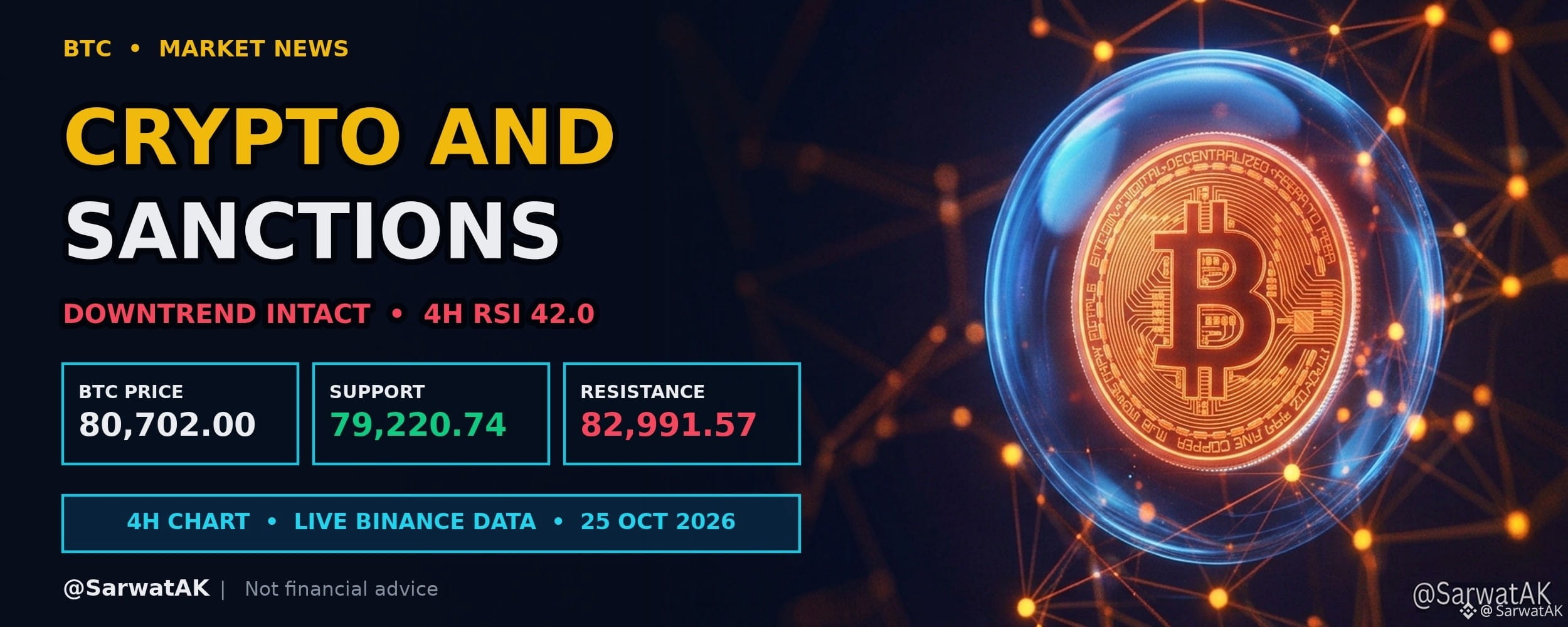
Netanyahu Suggests Blockchain Use to Bypass Potential Financial Sanctions
WHAT HAPPENED
▪️ Ahead of elections, Prime Minister Benjamin Netanyahu stated Israel could turn to blockchain and crypto to skirt potential international sanctions.
▪️ The proposal faced pushback from political opponents and dismay from the country’s central banker.
WHY IT MATTERS FOR TRADERS
Discussions around state-level crypto use for sanction evasion may prompt stricter international regulatory oversight. Increased compliance demands could subsequently weigh on broader market liquidity and institutional involvement.
MARKET SNAPSHOT
▪️ $BTC : 80,702.00 USD, up 1.2% (24h), 4H RSI 42.0
▪️ Range to watch: 79,220.74 support / 82,991.57 resistance
How might sovereign proposals regarding blockchain alter regulatory expectations across global markets?
Source: Cointelegraph
Not financial advice. Always DYOR.
Like & Follow for Daily Trade Analytics & Insider News. @SarwatAK
#Bitcoin #blockchain
Netanyahu Suggests Blockchain Use to Bypass Potential Financial Sanctions
WHAT HAPPENED
▪️ Ahead of elections, Prime Minister Benjamin Netanyahu stated Israel could turn to blockchain and crypto to skirt potential international sanctions.
▪️ The proposal faced pushback from political opponents and dismay from the country’s central banker.
WHY IT MATTERS FOR TRADERS
Discussions around state-level crypto use for sanction evasion may prompt stricter international regulatory oversight. Increased compliance demands could subsequently weigh on broader market liquidity and institutional involvement.
MARKET SNAPSHOT
▪️ $BTC : 80,702.00 USD, up 1.2% (24h), 4H RSI 42.0
▪️ Range to watch: 79,220.74 support / 82,991.57 resistance
How might sovereign proposals regarding blockchain alter regulatory expectations across global markets?
Source: Cointelegraph
Not financial advice. Always DYOR.
Like & Follow for Daily Trade Analytics & Insider News. @SarwatAK
#Bitcoin #blockchain
WHAT HAPPENED
▪️ Ahead of elections, Prime Minister Benjamin Netanyahu stated Israel could turn to blockchain and crypto to skirt potential international sanctions.
▪️ The proposal faced pushback from political opponents and dismay from the country’s central banker.
WHY IT MATTERS FOR TRADERS
Discussions around state-level crypto use for sanction evasion may prompt stricter international regulatory oversight. Increased compliance demands could subsequently weigh on broader market liquidity and institutional involvement.
MARKET SNAPSHOT
▪️ $BTC : 80,702.00 USD, up 1.2% (24h), 4H RSI 42.0
▪️ Range to watch: 79,220.74 support / 82,991.57 resistance
How might sovereign proposals regarding blockchain alter regulatory expectations across global markets?
Source: Cointelegraph
Not financial advice. Always DYOR.
Like & Follow for Daily Trade Analytics & Insider News. @SarwatAK
#Bitcoin #blockchain
1
4
·
--
The national team enters the blockchain space! China National Data Group, with registered capital of 30 billion yuan, is established in Xiong’an, and its business scope explicitly includes blockchain technology services. Jointly owned by the State-owned Assets Supervision and Administration Commission, three major telecom operators, and two major power grid companies, this national-level blockchain initiative is not to be underestimated! #区块链 #数据经济 $BTC $ETH
China's national data group officially enters blockchain space! With $30B registered capital in Xiong'an, their business scope explicitly includes blockchain tech services. Backed by State-owned assets regulator + 3 major telecom operators + 2 power grids, this national-level blockchain move is huge! #blockchain #dataeconomy $BTC $ETH
The national team enters the blockchain space! China National Data Group, with registered capital of 30 billion yuan, is established in Xiong’an, and its business scope explicitly includes blockchain technology services. Jointly owned by the State-owned Assets Supervision and Administration Commission, three major telecom operators, and two major power grid companies, this national-level blockchain initiative is not to be underestimated! #区块链 #数据经济 $BTC $ETH
China's national data group officially enters blockchain space! With $30B registered capital in Xiong'an, their business scope explicitly includes blockchain tech services. Backed by State-owned assets regulator + 3 major telecom operators + 2 power grids, this national-level blockchain move is huge! #blockchain #dataeconomy $BTC $ETH
China's national data group officially enters blockchain space! With $30B registered capital in Xiong'an, their business scope explicitly includes blockchain tech services. Backed by State-owned assets regulator + 3 major telecom operators + 2 power grids, this national-level blockchain move is huge! #blockchain #dataeconomy $BTC $ETH
1
114


Article
Alastria announces finalists for its 2026 Blockchain Awards: digital identity, tokenization, industry, and sustainabilityTwelve projects, selected from around 60 submissions, are in the running for Alastria’s 2026 Blockchain Awards. Alastria is Spain’s public-permissioned blockchain network, with more than 450 members. The winners will be announced on November 4 at the Movistar Arena in Madrid.
There are three finalists in each category:
• Decentralized digital identity: AETHERIA (Izertis), BerpIA Academy (WAVEXT), and the digitization of energy-saving certificates by Sybol and Repsol Soluciones Energéticas.
• Tokenization and digital assets: Asseto (ioBuilders), Kenomic (CALEA), and The Muxic Exchange, which tokenizes music rights starting at €100.
Alastria announces finalists for its 2026 Blockchain Awards: digital identity, tokenization, industry, and sustainability
Twelve projects, selected from around 60 submissions, are in the running for Alastria’s 2026 Blockchain Awards. Alastria is Spain’s public-permissioned blockchain network, with more than 450 members. The winners will be announced on November 4 at the Movistar Arena in Madrid.
There are three finalists in each category:
• Decentralized digital identity: AETHERIA (Izertis), BerpIA Academy (WAVEXT), and the digitization of energy-saving certificates by Sybol and Repsol Soluciones Energéticas.
• Tokenization and digital assets: Asseto (ioBuilders), Kenomic (CALEA), and The Muxic Exchange, which tokenizes music rights starting at €100.
There are three finalists in each category:
• Decentralized digital identity: AETHERIA (Izertis), BerpIA Academy (WAVEXT), and the digitization of energy-saving certificates by Sybol and Repsol Soluciones Energéticas.
• Tokenization and digital assets: Asseto (ioBuilders), Kenomic (CALEA), and The Muxic Exchange, which tokenizes music rights starting at €100.
67

·
--
Article
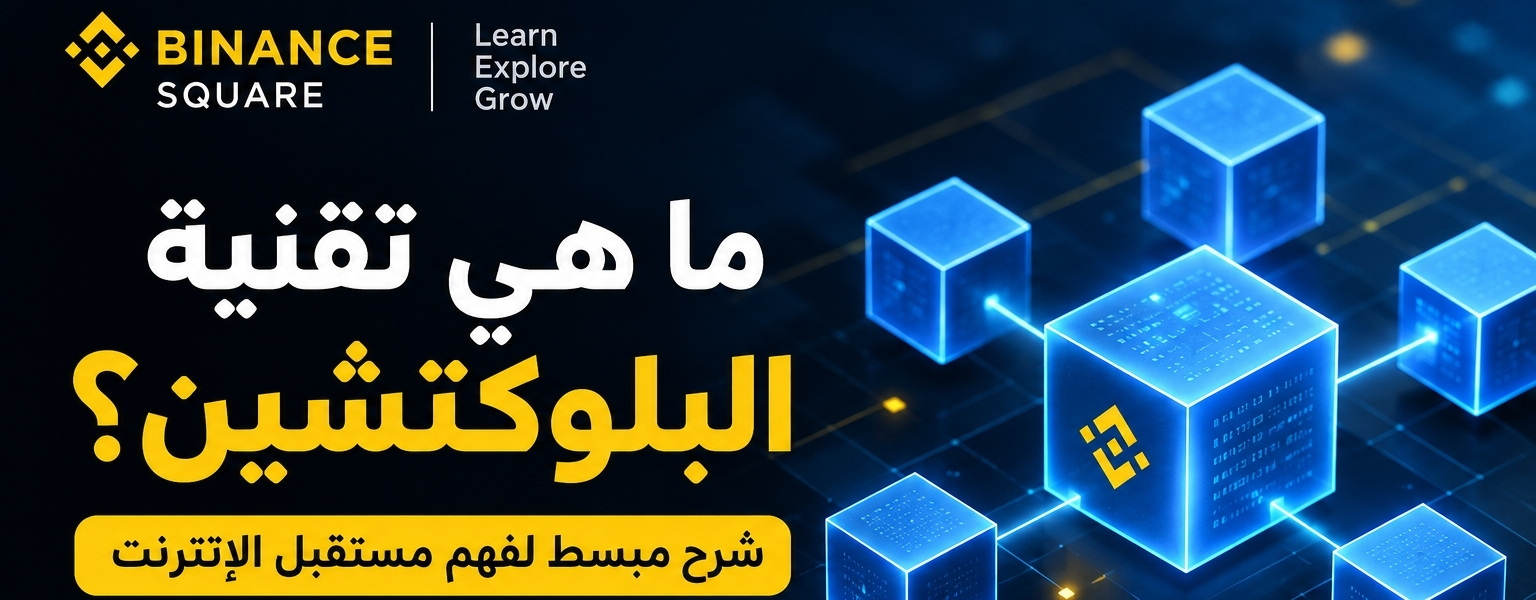
What Is Blockchain Technology? A Simple Guide to Understanding the Future of the Internet🔗 Have you ever wondered how digital transactions can be recorded and verified without relying on a single central authority? That’s where blockchain technology comes in.
📌 What is blockchain?
A blockchain is a shared digital database in which information is recorded in cryptographically linked blocks. Multiple devices on the network maintain copies of the ledger according to a set of rules.
What Is Blockchain Technology? A Simple Guide to Understanding the Future of the Internet
🔗 Have you ever wondered how digital transactions can be recorded and verified without relying on a single central authority? That’s where blockchain technology comes in.
📌 What is blockchain?
A blockchain is a shared digital database in which information is recorded in cryptographically linked blocks. Multiple devices on the network maintain copies of the ledger according to a set of rules.
📌 What is blockchain?
A blockchain is a shared digital database in which information is recorded in cryptographically linked blocks. Multiple devices on the network maintain copies of the ledger according to a set of rules.
80

Article
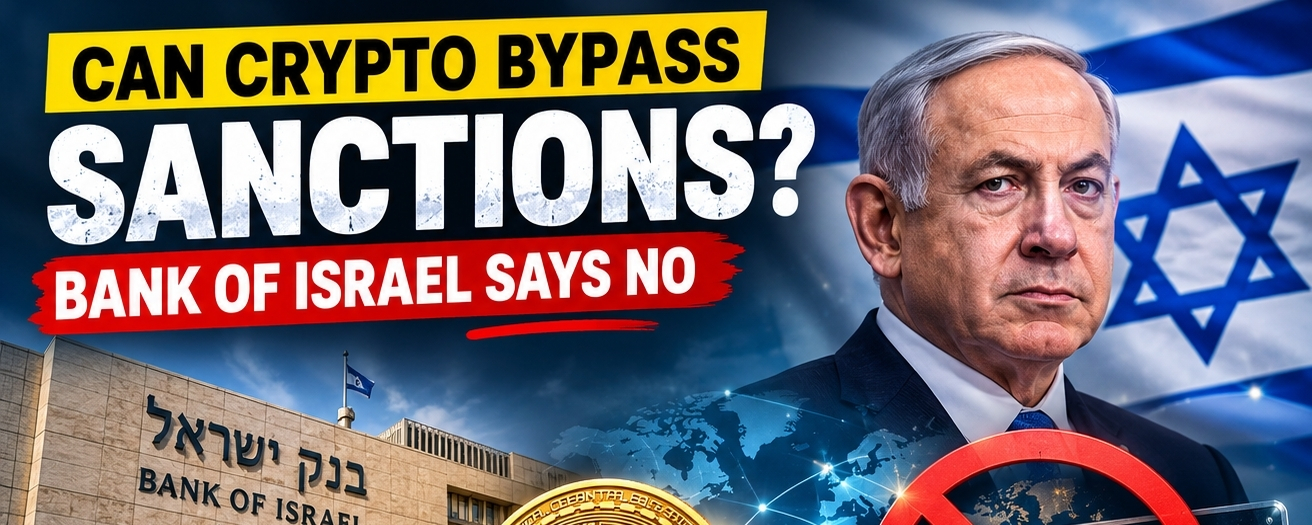
🚨 BANK OF ISRAEL REJECTS CRYPTO AS A WAY TO BYPASS POTENTIAL SANCTIONS🚨 BANK OF ISRAEL REJECTS CRYPTO AS A WAY TO BYPASS POTENTIAL SANCTIONS
🌍 Can Cryptocurrency Protect a Nation From International Financial Restrictions?
A significant debate over the future of digital finance has emerged following reports that the Bank of Israel rejected a proposal to explore cryptocurrencies as a way to circumvent potential international financial sanctions.
According to the report you shared, Prime Minister Benjamin Netanyahu raised concerns about possible international banking restrictions and requested plans to explore alternative financial systems, including blockchain technology and cryptocurrencies.
The Bank of Israel reportedly warned that crypto cannot provide a reliable solution for bypassing sanctions and emphasized the importance of preserving economic relationships with major international trading partners.
🔍 WHY THIS MATTERS FOR THE CRYPTO INDUSTRY
1️⃣ Crypto Is Not Completely Outside the Financial System
Bitcoin and other decentralized cryptocurrencies can operate without traditional banks for certain transactions. However, converting digital assets into national currencies, accessing regulated exchanges, and conducting international business can still involve intermediaries subject to legal and regulatory requirements.
2️⃣ Blockchain Does Not Mean Financial Anonymity
Public blockchains can provide transparency and traceability. Transactions may be analyzed, wallets can be monitored, and regulated platforms may enforce sanctions and compliance rules.
3️⃣ International Trade Still Depends on Trust
Even if a country explores alternative payment infrastructure, international commerce also relies on correspondent banking, trade finance, insurance, liquidity, and confidence among business partners. Cryptocurrency alone cannot replace this entire system.
4️⃣ Governments Are Facing a Digital Finance Dilemma
Blockchain technology offers opportunities for faster settlement, transparent transactions, and new payment infrastructure. At the same time, governments must consider financial stability, regulatory compliance, geopolitical risks, and international cooperation.
📊 WHAT COULD THIS MEAN FOR BITCOIN AND ALTCOINS?
This development should not automatically be interpreted as bullish or bearish for Bitcoin.
Bitcoin (BTC): The debate highlights Bitcoin's potential role as a decentralized asset, while also illustrating the limits of using it as a substitute for the international banking system.
Stablecoins: They can facilitate digital payments, but their issuers and supporting financial infrastructure may remain subject to restrictions.
Blockchain infrastructure: The broader opportunity may lie in legitimate cross-border payments, settlement efficiency, and transparent financial systems.
Crypto regulation: Geopolitical tensions could intensify discussions about compliance, sanctions enforcement, and the responsibilities of digital-asset platforms.
🧠 THE BIGGER PICTURE
The key question is not simply whether cryptocurrency can move value without a traditional bank. It is whether a country can maintain the liquidity, international acceptance, and commercial relationships needed to sustain its economy when facing financial restrictions.
Blockchain can transform parts of the financial system, but technology alone cannot eliminate geopolitical and economic consequences.
🎯 FINAL TAKEAWAY
Crypto is becoming part of the global debate about financial independence. However, decentralization does not guarantee immunity from sanctions, and blockchain adoption does not automatically replace access to international markets.
The future of digital finance will depend on technology, regulation, market trust, and global economic cooperation.
💬 What do you think? Could decentralized finance eventually reduce countries' dependence on traditional banking networks, or will international financial regulation remain the decisive factor?
#bitcoin #CryptoNews #blockchain #BTC走势分析 #cryptocurrency $BTC
🚨 BANK OF ISRAEL REJECTS CRYPTO AS A WAY TO BYPASS POTENTIAL SANCTIONS
🚨 BANK OF ISRAEL REJECTS CRYPTO AS A WAY TO BYPASS POTENTIAL SANCTIONS
🌍 Can Cryptocurrency Protect a Nation From International Financial Restrictions?
A significant debate over the future of digital finance has emerged following reports that the Bank of Israel rejected a proposal to explore cryptocurrencies as a way to circumvent potential international financial sanctions.
According to the report you shared, Prime Minister Benjamin Netanyahu raised concerns about possible international banking restrictions and requested plans to explore alternative financial systems, including blockchain technology and cryptocurrencies.
The Bank of Israel reportedly warned that crypto cannot provide a reliable solution for bypassing sanctions and emphasized the importance of preserving economic relationships with major international trading partners.
🔍 WHY THIS MATTERS FOR THE CRYPTO INDUSTRY
1️⃣ Crypto Is Not Completely Outside the Financial System
Bitcoin and other decentralized cryptocurrencies can operate without traditional banks for certain transactions. However, converting digital assets into national currencies, accessing regulated exchanges, and conducting international business can still involve intermediaries subject to legal and regulatory requirements.
2️⃣ Blockchain Does Not Mean Financial Anonymity
Public blockchains can provide transparency and traceability. Transactions may be analyzed, wallets can be monitored, and regulated platforms may enforce sanctions and compliance rules.
3️⃣ International Trade Still Depends on Trust
Even if a country explores alternative payment infrastructure, international commerce also relies on correspondent banking, trade finance, insurance, liquidity, and confidence among business partners. Cryptocurrency alone cannot replace this entire system.
4️⃣ Governments Are Facing a Digital Finance Dilemma
Blockchain technology offers opportunities for faster settlement, transparent transactions, and new payment infrastructure. At the same time, governments must consider financial stability, regulatory compliance, geopolitical risks, and international cooperation.
📊 WHAT COULD THIS MEAN FOR BITCOIN AND ALTCOINS?
This development should not automatically be interpreted as bullish or bearish for Bitcoin.
Bitcoin (BTC): The debate highlights Bitcoin's potential role as a decentralized asset, while also illustrating the limits of using it as a substitute for the international banking system.
Stablecoins: They can facilitate digital payments, but their issuers and supporting financial infrastructure may remain subject to restrictions.
Blockchain infrastructure: The broader opportunity may lie in legitimate cross-border payments, settlement efficiency, and transparent financial systems.
Crypto regulation: Geopolitical tensions could intensify discussions about compliance, sanctions enforcement, and the responsibilities of digital-asset platforms.
🧠 THE BIGGER PICTURE
The key question is not simply whether cryptocurrency can move value without a traditional bank. It is whether a country can maintain the liquidity, international acceptance, and commercial relationships needed to sustain its economy when facing financial restrictions.
Blockchain can transform parts of the financial system, but technology alone cannot eliminate geopolitical and economic consequences.
🎯 FINAL TAKEAWAY
Crypto is becoming part of the global debate about financial independence. However, decentralization does not guarantee immunity from sanctions, and blockchain adoption does not automatically replace access to international markets.
The future of digital finance will depend on technology, regulation, market trust, and global economic cooperation.
💬 What do you think? Could decentralized finance eventually reduce countries' dependence on traditional banking networks, or will international financial regulation remain the decisive factor?
#bitcoin #CryptoNews #blockchain #BTC走势分析 #cryptocurrency $BTC
🌍 Can Cryptocurrency Protect a Nation From International Financial Restrictions?
A significant debate over the future of digital finance has emerged following reports that the Bank of Israel rejected a proposal to explore cryptocurrencies as a way to circumvent potential international financial sanctions.
According to the report you shared, Prime Minister Benjamin Netanyahu raised concerns about possible international banking restrictions and requested plans to explore alternative financial systems, including blockchain technology and cryptocurrencies.
The Bank of Israel reportedly warned that crypto cannot provide a reliable solution for bypassing sanctions and emphasized the importance of preserving economic relationships with major international trading partners.
🔍 WHY THIS MATTERS FOR THE CRYPTO INDUSTRY
1️⃣ Crypto Is Not Completely Outside the Financial System
Bitcoin and other decentralized cryptocurrencies can operate without traditional banks for certain transactions. However, converting digital assets into national currencies, accessing regulated exchanges, and conducting international business can still involve intermediaries subject to legal and regulatory requirements.
2️⃣ Blockchain Does Not Mean Financial Anonymity
Public blockchains can provide transparency and traceability. Transactions may be analyzed, wallets can be monitored, and regulated platforms may enforce sanctions and compliance rules.
3️⃣ International Trade Still Depends on Trust
Even if a country explores alternative payment infrastructure, international commerce also relies on correspondent banking, trade finance, insurance, liquidity, and confidence among business partners. Cryptocurrency alone cannot replace this entire system.
4️⃣ Governments Are Facing a Digital Finance Dilemma
Blockchain technology offers opportunities for faster settlement, transparent transactions, and new payment infrastructure. At the same time, governments must consider financial stability, regulatory compliance, geopolitical risks, and international cooperation.
📊 WHAT COULD THIS MEAN FOR BITCOIN AND ALTCOINS?
This development should not automatically be interpreted as bullish or bearish for Bitcoin.
Bitcoin (BTC): The debate highlights Bitcoin's potential role as a decentralized asset, while also illustrating the limits of using it as a substitute for the international banking system.
Stablecoins: They can facilitate digital payments, but their issuers and supporting financial infrastructure may remain subject to restrictions.
Blockchain infrastructure: The broader opportunity may lie in legitimate cross-border payments, settlement efficiency, and transparent financial systems.
Crypto regulation: Geopolitical tensions could intensify discussions about compliance, sanctions enforcement, and the responsibilities of digital-asset platforms.
🧠 THE BIGGER PICTURE
The key question is not simply whether cryptocurrency can move value without a traditional bank. It is whether a country can maintain the liquidity, international acceptance, and commercial relationships needed to sustain its economy when facing financial restrictions.
Blockchain can transform parts of the financial system, but technology alone cannot eliminate geopolitical and economic consequences.
🎯 FINAL TAKEAWAY
Crypto is becoming part of the global debate about financial independence. However, decentralization does not guarantee immunity from sanctions, and blockchain adoption does not automatically replace access to international markets.
The future of digital finance will depend on technology, regulation, market trust, and global economic cooperation.
💬 What do you think? Could decentralized finance eventually reduce countries' dependence on traditional banking networks, or will international financial regulation remain the decisive factor?
#bitcoin #CryptoNews #blockchain #BTC走势分析 #cryptocurrency $BTC
194

·
--
🔗 CRYPTO BASICS #15 — What Are Crypto Oracles?
Blockchains are powerful, but they have one important limitation: they can’t directly access information from the outside world. 🌍
That’s where blockchain oracles come in.
💡 What is an oracle?
An oracle is a service that brings external data to a blockchain so smart contracts can use it.
Think of it as a bridge between the blockchain and the real world.
📊 Here’s a practical example:
Imagine a DeFi lending platform that needs to know the current price of ETH to calculate the value of your collateral.
A smart contract can’t simply check a regular website for ETH’s price on its own.
An oracle provides the price data, allowing the smart contract to perform its programmed actions based on that information.
🌐 Oracles can provide different types of data:
▪️ Cryptocurrency prices
▪️ Exchange rates
▪️ Weather conditions
▪️ Real-world event results
⚠️ But there’s a catch.
Smart contracts can only act on the data they receive. If an oracle provides inaccurate or manipulated information, the contract may execute incorrectly.
That’s why reliable data sources and decentralized oracle networks matter. Using multiple independent sources can reduce reliance on a single provider, although it doesn’t eliminate every risk.
💛 The key takeaway:
Oracles help smart contracts interact with the real world, making more advanced blockchain applications possible.
But remember: a smart contract is only as reliable as the data it depends on.
📚 Learn more from Binance Academy:
https://www.binance.com/en/academy/articles/blockchain-oracles-explained
#blockchain #DeFi #Binance
🔗 CRYPTO BASICS #15 — What Are Crypto Oracles?
Blockchains are powerful, but they have one important limitation: they can’t directly access information from the outside world. 🌍
That’s where blockchain oracles come in.
💡 What is an oracle?
An oracle is a service that brings external data to a blockchain so smart contracts can use it.
Think of it as a bridge between the blockchain and the real world.
📊 Here’s a practical example:
Imagine a DeFi lending platform that needs to know the current price of ETH to calculate the value of your collateral.
A smart contract can’t simply check a regular website for ETH’s price on its own.
An oracle provides the price data, allowing the smart contract to perform its programmed actions based on that information.
🌐 Oracles can provide different types of data:
▪️ Cryptocurrency prices
▪️ Exchange rates
▪️ Weather conditions
▪️ Real-world event results
⚠️ But there’s a catch.
Smart contracts can only act on the data they receive. If an oracle provides inaccurate or manipulated information, the contract may execute incorrectly.
That’s why reliable data sources and decentralized oracle networks matter. Using multiple independent sources can reduce reliance on a single provider, although it doesn’t eliminate every risk.
💛 The key takeaway:
Oracles help smart contracts interact with the real world, making more advanced blockchain applications possible.
But remember: a smart contract is only as reliable as the data it depends on.
📚 Learn more from Binance Academy:
https://www.binance.com/en/academy/articles/blockchain-oracles-explained
#blockchain #DeFi #Binance
Blockchains are powerful, but they have one important limitation: they can’t directly access information from the outside world. 🌍
That’s where blockchain oracles come in.
💡 What is an oracle?
An oracle is a service that brings external data to a blockchain so smart contracts can use it.
Think of it as a bridge between the blockchain and the real world.
📊 Here’s a practical example:
Imagine a DeFi lending platform that needs to know the current price of ETH to calculate the value of your collateral.
A smart contract can’t simply check a regular website for ETH’s price on its own.
An oracle provides the price data, allowing the smart contract to perform its programmed actions based on that information.
🌐 Oracles can provide different types of data:
▪️ Cryptocurrency prices
▪️ Exchange rates
▪️ Weather conditions
▪️ Real-world event results
⚠️ But there’s a catch.
Smart contracts can only act on the data they receive. If an oracle provides inaccurate or manipulated information, the contract may execute incorrectly.
That’s why reliable data sources and decentralized oracle networks matter. Using multiple independent sources can reduce reliance on a single provider, although it doesn’t eliminate every risk.
💛 The key takeaway:
Oracles help smart contracts interact with the real world, making more advanced blockchain applications possible.
But remember: a smart contract is only as reliable as the data it depends on.
📚 Learn more from Binance Academy:
https://www.binance.com/en/academy/articles/blockchain-oracles-explained
#blockchain #DeFi #Binance
Abu Fahadأ:
💛
1
4
126
Log in to explore more content
Join global crypto users on Binance Square
⚡️ Get latest and useful information about crypto.
💬 Trusted by the world’s largest crypto exchange.
👍 Discover real insights from verified creators.
Email / Phone number
Trending Topics
1
#BitcoinSlipsBelow$80KAgain
493 views
21 Discussing
2
#ThailandLaunchesWORPTStablecoinToQRPaymentApp
304 views
53 Discussing
3
#StrategySkipsBitcoinPurchasesSpends$205MOnSTRCBuybacks
2,900 views
66 Discussing
4
#BitmineAdds10452ETH
28,643 views
518 Discussing
5
#SouthKoreaConsidersEducationTaxOnCryptoExchanges
17,608 views
418 Discussing
6
#OCCUrgesCommunityBanksToEnterStablecoinPayments
13,508 views
267 Discussing
7
#RippleWinsFullApprovalAsNationalTrustBank
17,100 views
267 Discussing
8
#AkashSelectsSolanaAsMigrationTarget
9,879 views
141 Discussing
9
#OndoToOpenSubscriptionsForOpenAIPreIPOTokenizedNotes
525 views
22 Discussing
10
#AnthropicTTMRevenueGrewAbout1200%
67,864 views
664 Discussing