

Orppa
43 Beiträge

Orppa
Melden
Nutzer blockieren
3 Following
7 Follower
28 Like gegeben
Beiträge
PINNED
·
--
Je länger ich mir TermMax anschaue, desto mehr denke ich, dass die größte Herausforderung nicht darin besteht, Märkte zu schaffen.
es geht vielmehr darum sicherzustellen, dass diese Märkte auch wirklich etwas bedeuten.
TermMax kann einen Markt um einen Vermögenswert mit seinem eigenen:
— Sicherheiten
— Orakel
— LTV-Parametern
— Laufzeit
— Zinssatz
erstellen.
das ist stark, weil ein neuer Vermögenswert nicht erst darauf warten muss, dass ein großes Kreditprotokoll ihn unterstützt.
aber da gibt es einen Trade-off, der meiner Meinung nach zu wenig diskutiert wird.
Einen Markt zu erstellen ist einfach im Vergleich dazu, zweiseitige Nachfrage zu schaffen.
Du brauchst Kreditnehmer, die diese spezifische Laufzeit und die Finanzierungskosten wirklich wollen.
Du brauchst Kreditgeber, die bereit sind, die Gegenseite einzunehmen.
Und du brauchst genügend Aktivität, damit der Markt nach dem anfänglichen Liquiditätszufluss nützlich bleibt.
Sonst kann am Ende etwas entstehen, das auf einem Dashboard beeindruckend aussieht, aber nur wenig wirtschaftliche Aktivität erzeugt.
Deshalb denke ich auch, dass sich das Gebührenmodell von TermMax lohnt, genau zu beobachten.
Wenn der Protokollumsatz hauptsächlich aus tatsächlicher Marktaktivität entsteht und nicht nur daraus, dass Kapital hinterlegt ist, dann wird TVL allein zu einem schwachen Maß für den Erfolg.
Ich würde lieber sehen:
Kapital → Kredite → Handel → Rückzahlung → Gebühren
wiederholt.
Denn das ist der Unterschied zwischen einem Protokoll mit Liquidität und einem Protokoll, das tatsächlich ein Geschäft hat.
Und das stellt einen interessanten Test für TermMax dar:
Können permissionless Markt-Erstellungen eher nützlichere Märkte hervorbringen—
oder einfach nur mehr Märkte?
Ich denke, diese Frage wird uns viel mehr über das langfristige Potenzial von TermMax verraten als noch ein weiterer TVL-Screenshot.
#termmax @termmax
Je länger ich mir TermMax anschaue, desto mehr denke ich, dass die größte Herausforderung nicht darin besteht, Märkte zu schaffen.
es geht vielmehr darum sicherzustellen, dass diese Märkte auch wirklich etwas bedeuten.
TermMax kann einen Markt um einen Vermögenswert mit seinem eigenen:
— Sicherheiten
— Orakel
— LTV-Parametern
— Laufzeit
— Zinssatz
erstellen.
das ist stark, weil ein neuer Vermögenswert nicht erst darauf warten muss, dass ein großes Kreditprotokoll ihn unterstützt.
aber da gibt es einen Trade-off, der meiner Meinung nach zu wenig diskutiert wird.
Einen Markt zu erstellen ist einfach im Vergleich dazu, zweiseitige Nachfrage zu schaffen.
Du brauchst Kreditnehmer, die diese spezifische Laufzeit und die Finanzierungskosten wirklich wollen.
Du brauchst Kreditgeber, die bereit sind, die Gegenseite einzunehmen.
Und du brauchst genügend Aktivität, damit der Markt nach dem anfänglichen Liquiditätszufluss nützlich bleibt.
Sonst kann am Ende etwas entstehen, das auf einem Dashboard beeindruckend aussieht, aber nur wenig wirtschaftliche Aktivität erzeugt.
Deshalb denke ich auch, dass sich das Gebührenmodell von TermMax lohnt, genau zu beobachten.
Wenn der Protokollumsatz hauptsächlich aus tatsächlicher Marktaktivität entsteht und nicht nur daraus, dass Kapital hinterlegt ist, dann wird TVL allein zu einem schwachen Maß für den Erfolg.
Ich würde lieber sehen:
Kapital → Kredite → Handel → Rückzahlung → Gebühren
wiederholt.
Denn das ist der Unterschied zwischen einem Protokoll mit Liquidität und einem Protokoll, das tatsächlich ein Geschäft hat.
Und das stellt einen interessanten Test für TermMax dar:
Können permissionless Markt-Erstellungen eher nützlichere Märkte hervorbringen—
oder einfach nur mehr Märkte?
Ich denke, diese Frage wird uns viel mehr über das langfristige Potenzial von TermMax verraten als noch ein weiterer TVL-Screenshot.
#termmax @TermMax
es geht vielmehr darum sicherzustellen, dass diese Märkte auch wirklich etwas bedeuten.
TermMax kann einen Markt um einen Vermögenswert mit seinem eigenen:
— Sicherheiten
— Orakel
— LTV-Parametern
— Laufzeit
— Zinssatz
erstellen.
das ist stark, weil ein neuer Vermögenswert nicht erst darauf warten muss, dass ein großes Kreditprotokoll ihn unterstützt.
aber da gibt es einen Trade-off, der meiner Meinung nach zu wenig diskutiert wird.
Einen Markt zu erstellen ist einfach im Vergleich dazu, zweiseitige Nachfrage zu schaffen.
Du brauchst Kreditnehmer, die diese spezifische Laufzeit und die Finanzierungskosten wirklich wollen.
Du brauchst Kreditgeber, die bereit sind, die Gegenseite einzunehmen.
Und du brauchst genügend Aktivität, damit der Markt nach dem anfänglichen Liquiditätszufluss nützlich bleibt.
Sonst kann am Ende etwas entstehen, das auf einem Dashboard beeindruckend aussieht, aber nur wenig wirtschaftliche Aktivität erzeugt.
Deshalb denke ich auch, dass sich das Gebührenmodell von TermMax lohnt, genau zu beobachten.
Wenn der Protokollumsatz hauptsächlich aus tatsächlicher Marktaktivität entsteht und nicht nur daraus, dass Kapital hinterlegt ist, dann wird TVL allein zu einem schwachen Maß für den Erfolg.
Ich würde lieber sehen:
Kapital → Kredite → Handel → Rückzahlung → Gebühren
wiederholt.
Denn das ist der Unterschied zwischen einem Protokoll mit Liquidität und einem Protokoll, das tatsächlich ein Geschäft hat.
Und das stellt einen interessanten Test für TermMax dar:
Können permissionless Markt-Erstellungen eher nützlichere Märkte hervorbringen—
oder einfach nur mehr Märkte?
Ich denke, diese Frage wird uns viel mehr über das langfristige Potenzial von TermMax verraten als noch ein weiterer TVL-Screenshot.
#termmax @TermMax

6
9
72
PINNED
·
--
Ich habe für einen Moment nicht mehr auf TermMax' TVL geschaut und eine andere Frage gestellt:
Was macht das Protokoll eigentlich wirklich profitabel?
Die Antwort ist interessanter, als ich erwartet habe.
Aktuelle Daten zeigen ungefähr 31 Mio. USD TVL und fast 28 Mio. USD in aktiven Krediten.
Aber der Teil, der meine Aufmerksamkeit geweckt hat, war die Gebührenaufstellung.
Liquidationsgebühren sind winzig im Vergleich zu den normalen Protokollgebühren.
Das sagt mir etwas Wichtiges.
TermMax' Ökonomie scheint nicht vor allem davon abhängig zu sein, dass Nutzer liquidiert werden.
Das Geschäft hängt viel stärker davon ab, dass Menschen die Märkte tatsächlich nutzen.
Kredite.
Kredite vergeben.
Positionen eröffnen.
Kapital durch das System bewegen.
Das ist im Grunde ein gesünderes Modell.
Aber es bringt ein anderes Risiko mit sich.
Wenn die Aktivität stark nachlässt, hat das Protokoll nicht eine große Liquidationsgebühren-Maschine unter dem Geschäft, die für schwächere organische Nutzung ausgleicht.
Also begann ich, TermMax' Wachstum anders zu denken.
TVL sagt mir, wie viel Kapital dort geparkt ist.
Aktive Kredite sagen mir, wie viel Kapital tatsächlich genutzt wird.
Gebühren sagen mir, ob diese Nutzung eine wirtschaftliche Antriebskraft erzeugt.
Und das sind drei sehr unterschiedliche Zahlen.
Der interessante Test für TermMax ist nicht, ob es Kapital anziehen kann.
Sondern ob dieses Kapital weiterhin genug echte Aktivität generiert, nachdem die Anreize und die Aufmerksamkeit rund um TMX verblassen.
Denn ein Protokoll kann beeindruckendes TVL haben und trotzdem einen schwachen wirtschaftlichen Kreislauf.
Für mich ist das die Kennzahl, die als Nächstes relevant ist:
Wie viel nachhaltige Gebührenaktivität kann TermMax für jeden Dollar Kapital erzeugen, den es anzieht?
Wenn sich diese Zahl weiter verbessert, bekommt das TVL eine völlig andere Bedeutung.
#termmax @termmax
Ich habe für einen Moment nicht mehr auf TermMax' TVL geschaut und eine andere Frage gestellt:
Was macht das Protokoll eigentlich wirklich profitabel?
Die Antwort ist interessanter, als ich erwartet habe.
Aktuelle Daten zeigen ungefähr 31 Mio. USD TVL und fast 28 Mio. USD in aktiven Krediten.
Aber der Teil, der meine Aufmerksamkeit geweckt hat, war die Gebührenaufstellung.
Liquidationsgebühren sind winzig im Vergleich zu den normalen Protokollgebühren.
Das sagt mir etwas Wichtiges.
TermMax' Ökonomie scheint nicht vor allem davon abhängig zu sein, dass Nutzer liquidiert werden.
Das Geschäft hängt viel stärker davon ab, dass Menschen die Märkte tatsächlich nutzen.
Kredite.
Kredite vergeben.
Positionen eröffnen.
Kapital durch das System bewegen.
Das ist im Grunde ein gesünderes Modell.
Aber es bringt ein anderes Risiko mit sich.
Wenn die Aktivität stark nachlässt, hat das Protokoll nicht eine große Liquidationsgebühren-Maschine unter dem Geschäft, die für schwächere organische Nutzung ausgleicht.
Also begann ich, TermMax' Wachstum anders zu denken.
TVL sagt mir, wie viel Kapital dort geparkt ist.
Aktive Kredite sagen mir, wie viel Kapital tatsächlich genutzt wird.
Gebühren sagen mir, ob diese Nutzung eine wirtschaftliche Antriebskraft erzeugt.
Und das sind drei sehr unterschiedliche Zahlen.
Der interessante Test für TermMax ist nicht, ob es Kapital anziehen kann.
Sondern ob dieses Kapital weiterhin genug echte Aktivität generiert, nachdem die Anreize und die Aufmerksamkeit rund um TMX verblassen.
Denn ein Protokoll kann beeindruckendes TVL haben und trotzdem einen schwachen wirtschaftlichen Kreislauf.
Für mich ist das die Kennzahl, die als Nächstes relevant ist:
Wie viel nachhaltige Gebührenaktivität kann TermMax für jeden Dollar Kapital erzeugen, den es anzieht?
Wenn sich diese Zahl weiter verbessert, bekommt das TVL eine völlig andere Bedeutung.
#termmax @TermMax
Was macht das Protokoll eigentlich wirklich profitabel?
Die Antwort ist interessanter, als ich erwartet habe.
Aktuelle Daten zeigen ungefähr 31 Mio. USD TVL und fast 28 Mio. USD in aktiven Krediten.
Aber der Teil, der meine Aufmerksamkeit geweckt hat, war die Gebührenaufstellung.
Liquidationsgebühren sind winzig im Vergleich zu den normalen Protokollgebühren.
Das sagt mir etwas Wichtiges.
TermMax' Ökonomie scheint nicht vor allem davon abhängig zu sein, dass Nutzer liquidiert werden.
Das Geschäft hängt viel stärker davon ab, dass Menschen die Märkte tatsächlich nutzen.
Kredite.
Kredite vergeben.
Positionen eröffnen.
Kapital durch das System bewegen.
Das ist im Grunde ein gesünderes Modell.
Aber es bringt ein anderes Risiko mit sich.
Wenn die Aktivität stark nachlässt, hat das Protokoll nicht eine große Liquidationsgebühren-Maschine unter dem Geschäft, die für schwächere organische Nutzung ausgleicht.
Also begann ich, TermMax' Wachstum anders zu denken.
TVL sagt mir, wie viel Kapital dort geparkt ist.
Aktive Kredite sagen mir, wie viel Kapital tatsächlich genutzt wird.
Gebühren sagen mir, ob diese Nutzung eine wirtschaftliche Antriebskraft erzeugt.
Und das sind drei sehr unterschiedliche Zahlen.
Der interessante Test für TermMax ist nicht, ob es Kapital anziehen kann.
Sondern ob dieses Kapital weiterhin genug echte Aktivität generiert, nachdem die Anreize und die Aufmerksamkeit rund um TMX verblassen.
Denn ein Protokoll kann beeindruckendes TVL haben und trotzdem einen schwachen wirtschaftlichen Kreislauf.
Für mich ist das die Kennzahl, die als Nächstes relevant ist:
Wie viel nachhaltige Gebührenaktivität kann TermMax für jeden Dollar Kapital erzeugen, den es anzieht?
Wenn sich diese Zahl weiter verbessert, bekommt das TVL eine völlig andere Bedeutung.
#termmax @TermMax

10
11
78
·
--
#termmax @termmax
Ich habe darüber nachgedacht, was passiert, bevor ein Asset im traditionellen DeFi-Markt groß genug ist, um relevant zu werden.
Normalerweise gibt es eine Lücke. Ein neues Token taucht auf. Die Leute wollen es ausleihen. Kreditgeber wollen Rendite.
Aber niemand möchte das erste Protokoll sein, das das Risiko eingeht. Also bleibt der Markt klein.
Deshalb hat mich @termmax Alpha Zone aufmerksam gemacht.
Der interessante Teil ist nicht einfach, dass es mehr Märkte schafft.
Sondern dass der Markt selbst mit seinen eigenen Annahmen geschaffen werden kann.
Ein Asset, ein Debt Token, ein Oracle, eine Laufzeit, ein L-LTV.
Diese Parameter definieren effektiv die Regeln des Experiments.
Und das eröffnet einen anderen Weg für neue Assets.
Anstatt zu warten, dass ein großes Lending-Protokoll entscheidet:
„Dieses Asset ist reif genug.“
kann ein permissionless Markt dem Markt selbst überlassen, ob es tatsächlich eine Nachfrage dafür gibt.
Aber es gibt eine unangenehme Seite an dieser Idee. Permissionless bedeutet nicht risikofrei.
Wenn jemand einen Markt für ein stark volatiles oder dünn gehandeltes Asset schafft, werden die Parameter unglaublich wichtig.
Wenn du das Risiko zu aggressiv festlegst, könnten Kreditgeber Verluste erleiden. Wenn du es zu konservativ festlegst, nutzt niemand den Markt.
Alpha Zone ist also nicht nur ein Marktplatz. Es ist fast ein Labor für die Preisfindung von Risiko.
Verschiedene Assets können mit unterschiedlichen Laufzeiten, Sicherheitenannahmen und Risikoprämien ankommen.
Der Markt muss dann die Frage beantworten:
„Welche Rendite ist ausreichend, um diese Risikoübernahme zu entschädigen?“
Das ist für mich ein viel interessanterer Use Case, als einfach noch ein weiteres Lending-Paar hinzuzufügen.
Denn wenn es funktioniert, könnte TermMax zu einem Ort werden, an dem aufkommende Assets ihren ersten echten Credit-Markt entdecken, bevor sie Mainstream-Sicherheit werden.
Und wenn es nicht funktioniert, wird auch der Misserfolgsmodus gleichermaßen aufschlussreich sein:
Wie viel Risiko drückt das permissionless Erstellen von Märkten tatsächlich auf Kreditgeber?
Das ist das Experiment, dem ich zusehen werde.
#termmax @TermMax
Ich habe darüber nachgedacht, was passiert, bevor ein Asset im traditionellen DeFi-Markt groß genug ist, um relevant zu werden.
Normalerweise gibt es eine Lücke. Ein neues Token taucht auf. Die Leute wollen es ausleihen. Kreditgeber wollen Rendite.
Aber niemand möchte das erste Protokoll sein, das das Risiko eingeht. Also bleibt der Markt klein.
Deshalb hat mich @TermMax Alpha Zone aufmerksam gemacht.
Der interessante Teil ist nicht einfach, dass es mehr Märkte schafft.
Sondern dass der Markt selbst mit seinen eigenen Annahmen geschaffen werden kann.
Ein Asset, ein Debt Token, ein Oracle, eine Laufzeit, ein L-LTV.
Diese Parameter definieren effektiv die Regeln des Experiments.
Und das eröffnet einen anderen Weg für neue Assets.
Anstatt zu warten, dass ein großes Lending-Protokoll entscheidet:
„Dieses Asset ist reif genug.“
kann ein permissionless Markt dem Markt selbst überlassen, ob es tatsächlich eine Nachfrage dafür gibt.
Aber es gibt eine unangenehme Seite an dieser Idee. Permissionless bedeutet nicht risikofrei.
Wenn jemand einen Markt für ein stark volatiles oder dünn gehandeltes Asset schafft, werden die Parameter unglaublich wichtig.
Wenn du das Risiko zu aggressiv festlegst, könnten Kreditgeber Verluste erleiden. Wenn du es zu konservativ festlegst, nutzt niemand den Markt.
Alpha Zone ist also nicht nur ein Marktplatz. Es ist fast ein Labor für die Preisfindung von Risiko.
Verschiedene Assets können mit unterschiedlichen Laufzeiten, Sicherheitenannahmen und Risikoprämien ankommen.
Der Markt muss dann die Frage beantworten:
„Welche Rendite ist ausreichend, um diese Risikoübernahme zu entschädigen?“
Das ist für mich ein viel interessanterer Use Case, als einfach noch ein weiteres Lending-Paar hinzuzufügen.
Denn wenn es funktioniert, könnte TermMax zu einem Ort werden, an dem aufkommende Assets ihren ersten echten Credit-Markt entdecken, bevor sie Mainstream-Sicherheit werden.
Und wenn es nicht funktioniert, wird auch der Misserfolgsmodus gleichermaßen aufschlussreich sein:
Wie viel Risiko drückt das permissionless Erstellen von Märkten tatsächlich auf Kreditgeber?
Das ist das Experiment, dem ich zusehen werde.
Ich habe darüber nachgedacht, was passiert, bevor ein Asset im traditionellen DeFi-Markt groß genug ist, um relevant zu werden.
Normalerweise gibt es eine Lücke. Ein neues Token taucht auf. Die Leute wollen es ausleihen. Kreditgeber wollen Rendite.
Aber niemand möchte das erste Protokoll sein, das das Risiko eingeht. Also bleibt der Markt klein.
Deshalb hat mich @TermMax Alpha Zone aufmerksam gemacht.
Der interessante Teil ist nicht einfach, dass es mehr Märkte schafft.
Sondern dass der Markt selbst mit seinen eigenen Annahmen geschaffen werden kann.
Ein Asset, ein Debt Token, ein Oracle, eine Laufzeit, ein L-LTV.
Diese Parameter definieren effektiv die Regeln des Experiments.
Und das eröffnet einen anderen Weg für neue Assets.
Anstatt zu warten, dass ein großes Lending-Protokoll entscheidet:
„Dieses Asset ist reif genug.“
kann ein permissionless Markt dem Markt selbst überlassen, ob es tatsächlich eine Nachfrage dafür gibt.
Aber es gibt eine unangenehme Seite an dieser Idee. Permissionless bedeutet nicht risikofrei.
Wenn jemand einen Markt für ein stark volatiles oder dünn gehandeltes Asset schafft, werden die Parameter unglaublich wichtig.
Wenn du das Risiko zu aggressiv festlegst, könnten Kreditgeber Verluste erleiden. Wenn du es zu konservativ festlegst, nutzt niemand den Markt.
Alpha Zone ist also nicht nur ein Marktplatz. Es ist fast ein Labor für die Preisfindung von Risiko.
Verschiedene Assets können mit unterschiedlichen Laufzeiten, Sicherheitenannahmen und Risikoprämien ankommen.
Der Markt muss dann die Frage beantworten:
„Welche Rendite ist ausreichend, um diese Risikoübernahme zu entschädigen?“
Das ist für mich ein viel interessanterer Use Case, als einfach noch ein weiteres Lending-Paar hinzuzufügen.
Denn wenn es funktioniert, könnte TermMax zu einem Ort werden, an dem aufkommende Assets ihren ersten echten Credit-Markt entdecken, bevor sie Mainstream-Sicherheit werden.
Und wenn es nicht funktioniert, wird auch der Misserfolgsmodus gleichermaßen aufschlussreich sein:
Wie viel Risiko drückt das permissionless Erstellen von Märkten tatsächlich auf Kreditgeber?
Das ist das Experiment, dem ich zusehen werde.

1
1
86
·
--
Teilweise korrekt
Ich habe versucht, den Teil von TermMax zu finden, mit dem ich mich am wenigsten wohlfühle.
Und ich glaube, ich habe ihn gefunden:
Festzinsmärkte können das Produkt leichter verständlich machen, aber das Liquiditätsproblem schwerer zu ignorieren.
Beim Kreditgeschäft mit variablem Zinssatz ist die Liquidität relativ kontinuierlich.
Du kannst normalerweise in einen Pool hinein- oder wieder herausgehen, ohne dich um ein bestimmtes Fälligkeitsdatum kümmern zu müssen.
TermMax ist anders.
Eine Position mit festem Laufzeitende hat ein Ende.
Das ist großartig, wenn du genau weißt, wie lange dein Kapital gebunden sein soll.
Aber was passiert, wenn sich dein Plan ändert?
Du könntest eine Position haben, die beim Einstieg attraktiv aussieht, aber plötzlich brauchst du das Kapital, bevor die Laufzeit abläuft.
Genau dort werden die sekundären Mechanismen des Protokolls extrem wichtig.
TermMax hat Funktionen wie Smart Unwind eingebaut, um dieses Problem zu adressieren, aber dadurch verschwindet die zugrunde liegende wirtschaftliche Frage nicht.
Jemand muss immer noch Liquidität für den Ausstieg bereitstellen.
Und das schafft einen Trade-off, über den ich nicht genug Leute reden höre:
Zinssicherheit kann mit Kosten für Liquiditätsflexibilität einhergehen.
Da ist noch etwas, das ich beobachte.
Die aktuelle Aktivität von TermMax ist immer noch stark auf Ethereum konzentriert. DefiLlama zeigt derzeit ungefähr 34 Mio. $ TVL, davon etwa 32 Mio. $ auf Ethereum, während aktive Kredite rund 34 Mio. $ ausmachen.
Das ist nicht unbedingt ein Problem.
Aber es bedeutet, dass ich „Multichain-Verfügbarkeit“ nicht mit wirklich tiefer Liquidität in jedem Markt verwechseln würde.
Und es gibt noch eine noch größere Frage danach:
Kann TermMax eine effiziente Preisbildung aufrechterhalten, wenn Märkte dünn, volatil oder stark über Laufzeiten und Sicherungsarten hinweg fragmentiert sind?
Denn eine Infrastruktur mit Festzins schafft nicht automatisch Liquidität.
Sie muss verdient werden.
Wahrscheinlich ist das das Wichtigste, das ich beobachten werde.
Nicht, ob TermMax einen Festzins anbieten kann.
Das wissen wir bereits.
Die schwierigere Frage ist, ob diese Festzinsmärkte liquide, wettbewerbsfähig und verlässlich bleiben können, wenn Nutzer tatsächlich aussteigen müssen.
Das ist der Test, den ich sehen möchte.
#termmax @termmax
Ich habe versucht, den Teil von TermMax zu finden, mit dem ich mich am wenigsten wohlfühle.
Und ich glaube, ich habe ihn gefunden:
Festzinsmärkte können das Produkt leichter verständlich machen, aber das Liquiditätsproblem schwerer zu ignorieren.
Beim Kreditgeschäft mit variablem Zinssatz ist die Liquidität relativ kontinuierlich.
Du kannst normalerweise in einen Pool hinein- oder wieder herausgehen, ohne dich um ein bestimmtes Fälligkeitsdatum kümmern zu müssen.
TermMax ist anders.
Eine Position mit festem Laufzeitende hat ein Ende.
Das ist großartig, wenn du genau weißt, wie lange dein Kapital gebunden sein soll.
Aber was passiert, wenn sich dein Plan ändert?
Du könntest eine Position haben, die beim Einstieg attraktiv aussieht, aber plötzlich brauchst du das Kapital, bevor die Laufzeit abläuft.
Genau dort werden die sekundären Mechanismen des Protokolls extrem wichtig.
TermMax hat Funktionen wie Smart Unwind eingebaut, um dieses Problem zu adressieren, aber dadurch verschwindet die zugrunde liegende wirtschaftliche Frage nicht.
Jemand muss immer noch Liquidität für den Ausstieg bereitstellen.
Und das schafft einen Trade-off, über den ich nicht genug Leute reden höre:
Zinssicherheit kann mit Kosten für Liquiditätsflexibilität einhergehen.
Da ist noch etwas, das ich beobachte.
Die aktuelle Aktivität von TermMax ist immer noch stark auf Ethereum konzentriert. DefiLlama zeigt derzeit ungefähr 34 Mio. $ TVL, davon etwa 32 Mio. $ auf Ethereum, während aktive Kredite rund 34 Mio. $ ausmachen.
Das ist nicht unbedingt ein Problem.
Aber es bedeutet, dass ich „Multichain-Verfügbarkeit“ nicht mit wirklich tiefer Liquidität in jedem Markt verwechseln würde.
Und es gibt noch eine noch größere Frage danach:
Kann TermMax eine effiziente Preisbildung aufrechterhalten, wenn Märkte dünn, volatil oder stark über Laufzeiten und Sicherungsarten hinweg fragmentiert sind?
Denn eine Infrastruktur mit Festzins schafft nicht automatisch Liquidität.
Sie muss verdient werden.
Wahrscheinlich ist das das Wichtigste, das ich beobachten werde.
Nicht, ob TermMax einen Festzins anbieten kann.
Das wissen wir bereits.
Die schwierigere Frage ist, ob diese Festzinsmärkte liquide, wettbewerbsfähig und verlässlich bleiben können, wenn Nutzer tatsächlich aussteigen müssen.
Das ist der Test, den ich sehen möchte.
#termmax @TermMax
Und ich glaube, ich habe ihn gefunden:
Festzinsmärkte können das Produkt leichter verständlich machen, aber das Liquiditätsproblem schwerer zu ignorieren.
Beim Kreditgeschäft mit variablem Zinssatz ist die Liquidität relativ kontinuierlich.
Du kannst normalerweise in einen Pool hinein- oder wieder herausgehen, ohne dich um ein bestimmtes Fälligkeitsdatum kümmern zu müssen.
TermMax ist anders.
Eine Position mit festem Laufzeitende hat ein Ende.
Das ist großartig, wenn du genau weißt, wie lange dein Kapital gebunden sein soll.
Aber was passiert, wenn sich dein Plan ändert?
Du könntest eine Position haben, die beim Einstieg attraktiv aussieht, aber plötzlich brauchst du das Kapital, bevor die Laufzeit abläuft.
Genau dort werden die sekundären Mechanismen des Protokolls extrem wichtig.
TermMax hat Funktionen wie Smart Unwind eingebaut, um dieses Problem zu adressieren, aber dadurch verschwindet die zugrunde liegende wirtschaftliche Frage nicht.
Jemand muss immer noch Liquidität für den Ausstieg bereitstellen.
Und das schafft einen Trade-off, über den ich nicht genug Leute reden höre:
Zinssicherheit kann mit Kosten für Liquiditätsflexibilität einhergehen.
Da ist noch etwas, das ich beobachte.
Die aktuelle Aktivität von TermMax ist immer noch stark auf Ethereum konzentriert. DefiLlama zeigt derzeit ungefähr 34 Mio. $ TVL, davon etwa 32 Mio. $ auf Ethereum, während aktive Kredite rund 34 Mio. $ ausmachen.
Das ist nicht unbedingt ein Problem.
Aber es bedeutet, dass ich „Multichain-Verfügbarkeit“ nicht mit wirklich tiefer Liquidität in jedem Markt verwechseln würde.
Und es gibt noch eine noch größere Frage danach:
Kann TermMax eine effiziente Preisbildung aufrechterhalten, wenn Märkte dünn, volatil oder stark über Laufzeiten und Sicherungsarten hinweg fragmentiert sind?
Denn eine Infrastruktur mit Festzins schafft nicht automatisch Liquidität.
Sie muss verdient werden.
Wahrscheinlich ist das das Wichtigste, das ich beobachten werde.
Nicht, ob TermMax einen Festzins anbieten kann.
Das wissen wir bereits.
Die schwierigere Frage ist, ob diese Festzinsmärkte liquide, wettbewerbsfähig und verlässlich bleiben können, wenn Nutzer tatsächlich aussteigen müssen.
Das ist der Test, den ich sehen möchte.
#termmax @TermMax

1
2
85
·
--
Ich glaube, ich habe zunächst nicht richtig verstanden, was TermMax so interessant macht.
„Kreditaufnahme zu Fixzinssätzen“ klingt wie eine einfache Alternative zur Kreditvergabe zu variablen Zinssätzen. Aber je genauer ich hinschaue, desto deutlicher wird: Die eigentliche Veränderung liegt darin, wann und wie man die Kapitalkosten kennt.
Bei einem variablen Zinssatz kann sich die Verbindlichkeit ändern, während die Position bereits offen ist.
Du weißt vielleicht, wie viel du dir leihst, aber du weißt nicht unbedingt, was diese Finanzierung später kosten wird.
TermMax geht hier anders vor: mit Positionen zu festen Zinssätzen und festen Laufzeiten.
Das bedeutet, dass vor Beginn der Position zwei wichtige Faktoren bekannt sind:
die Kreditkosten + die Laufzeit.
Für jemanden, der Kapital einsetzt, verändert das die Berechnung.
Anstatt eine Strategie auf geschätzte zukünftige Finanzierungskosten aufzubauen, kannst du die Position anhand einer definierten Finanzierungsausgabe bewerten.
Aber hier gibt es einen wichtigen Trade-off, über den meines Erachtens zu wenig gesprochen wird.
Zinssicherheit beseitigt kein Risiko.
Sie verlagert im Grunde nur einen Teil der Unsicherheit an einen anderen Ort.
Wenn die Laufzeit endet, während die Strategie noch Finanzierung benötigt, wird die Verlängerung (Rollover) wichtig. Und wenn sich die Marktbedingungen ändern, bevor die Laufzeit abläuft, kann die Flexibilität einer Position mit fester Laufzeit genauso wichtig sein wie die Gewissheit ihres Zinssatzes.
Deshalb glaube ich nicht, dass die eigentliche Frage ist:
„Sind feste Zinssätze besser als variable?“
Vielleicht ist die Frage eher:
Für welche Strategien lohnt es sich, im Voraus die Finanzierungskosten zu kennen—und dafür etwas Flexibilität aufzugeben?
Genau dort wird, so denke ich, TermMax’ festzinsbasiertes Fundament interessant.
#termmax @termmax
Ich glaube, ich habe zunächst nicht richtig verstanden, was TermMax so interessant macht.
„Kreditaufnahme zu Fixzinssätzen“ klingt wie eine einfache Alternative zur Kreditvergabe zu variablen Zinssätzen. Aber je genauer ich hinschaue, desto deutlicher wird: Die eigentliche Veränderung liegt darin, wann und wie man die Kapitalkosten kennt.
Bei einem variablen Zinssatz kann sich die Verbindlichkeit ändern, während die Position bereits offen ist.
Du weißt vielleicht, wie viel du dir leihst, aber du weißt nicht unbedingt, was diese Finanzierung später kosten wird.
TermMax geht hier anders vor: mit Positionen zu festen Zinssätzen und festen Laufzeiten.
Das bedeutet, dass vor Beginn der Position zwei wichtige Faktoren bekannt sind:
die Kreditkosten + die Laufzeit.
Für jemanden, der Kapital einsetzt, verändert das die Berechnung.
Anstatt eine Strategie auf geschätzte zukünftige Finanzierungskosten aufzubauen, kannst du die Position anhand einer definierten Finanzierungsausgabe bewerten.
Aber hier gibt es einen wichtigen Trade-off, über den meines Erachtens zu wenig gesprochen wird.
Zinssicherheit beseitigt kein Risiko.
Sie verlagert im Grunde nur einen Teil der Unsicherheit an einen anderen Ort.
Wenn die Laufzeit endet, während die Strategie noch Finanzierung benötigt, wird die Verlängerung (Rollover) wichtig. Und wenn sich die Marktbedingungen ändern, bevor die Laufzeit abläuft, kann die Flexibilität einer Position mit fester Laufzeit genauso wichtig sein wie die Gewissheit ihres Zinssatzes.
Deshalb glaube ich nicht, dass die eigentliche Frage ist:
„Sind feste Zinssätze besser als variable?“
Vielleicht ist die Frage eher:
Für welche Strategien lohnt es sich, im Voraus die Finanzierungskosten zu kennen—und dafür etwas Flexibilität aufzugeben?
Genau dort wird, so denke ich, TermMax’ festzinsbasiertes Fundament interessant.
#termmax @TermMax
„Kreditaufnahme zu Fixzinssätzen“ klingt wie eine einfache Alternative zur Kreditvergabe zu variablen Zinssätzen. Aber je genauer ich hinschaue, desto deutlicher wird: Die eigentliche Veränderung liegt darin, wann und wie man die Kapitalkosten kennt.
Bei einem variablen Zinssatz kann sich die Verbindlichkeit ändern, während die Position bereits offen ist.
Du weißt vielleicht, wie viel du dir leihst, aber du weißt nicht unbedingt, was diese Finanzierung später kosten wird.
TermMax geht hier anders vor: mit Positionen zu festen Zinssätzen und festen Laufzeiten.
Das bedeutet, dass vor Beginn der Position zwei wichtige Faktoren bekannt sind:
die Kreditkosten + die Laufzeit.
Für jemanden, der Kapital einsetzt, verändert das die Berechnung.
Anstatt eine Strategie auf geschätzte zukünftige Finanzierungskosten aufzubauen, kannst du die Position anhand einer definierten Finanzierungsausgabe bewerten.
Aber hier gibt es einen wichtigen Trade-off, über den meines Erachtens zu wenig gesprochen wird.
Zinssicherheit beseitigt kein Risiko.
Sie verlagert im Grunde nur einen Teil der Unsicherheit an einen anderen Ort.
Wenn die Laufzeit endet, während die Strategie noch Finanzierung benötigt, wird die Verlängerung (Rollover) wichtig. Und wenn sich die Marktbedingungen ändern, bevor die Laufzeit abläuft, kann die Flexibilität einer Position mit fester Laufzeit genauso wichtig sein wie die Gewissheit ihres Zinssatzes.
Deshalb glaube ich nicht, dass die eigentliche Frage ist:
„Sind feste Zinssätze besser als variable?“
Vielleicht ist die Frage eher:
Für welche Strategien lohnt es sich, im Voraus die Finanzierungskosten zu kennen—und dafür etwas Flexibilität aufzugeben?
Genau dort wird, so denke ich, TermMax’ festzinsbasiertes Fundament interessant.
#termmax @TermMax

1
87
·
--
Nimm am neuen Binance-Event „Pick and Win“ teil.
Gewinne bis zu 1 BNB. Probier es jetzt
#BinancePickAndWin
https://www.binance.com/activity/pick-and-win/2026-football-challenge?ref=1254230398
Nimm am neuen Binance-Event „Pick and Win“ teil.
Gewinne bis zu 1 BNB. Probier es jetzt
#BinancePickAndWin
https://www.binance.com/activity/pick-and-win/2026-football-challenge?ref=1254230398
Gewinne bis zu 1 BNB. Probier es jetzt
#BinancePickAndWin
https://www.binance.com/activity/pick-and-win/2026-football-challenge?ref=1254230398
16
·
--
Nimm an der neuen Binance-Aktion „Pick and Win“ teil.
Gewinne bis zu 1 BNB. Probier’s jetzt
#BinancePickAndWin
https://www.binance.com/activity/pick-and-win/2026-football-challenge?ref=1254230398
Nimm an der neuen Binance-Aktion „Pick and Win“ teil.
Gewinne bis zu 1 BNB. Probier’s jetzt
#BinancePickAndWin
https://www.binance.com/activity/pick-and-win/2026-football-challenge?ref=1254230398
Gewinne bis zu 1 BNB. Probier’s jetzt
#BinancePickAndWin
https://www.binance.com/activity/pick-and-win/2026-football-challenge?ref=1254230398
23
·
--
Nimm an der neuen Binance-Aktion „Pick and Win“ teil.
Gewinne bis zu 1 BNB. Jetzt mitmachen
#BinancePickAndWin
https://www.binance.com/activity/pick-and-win/2026-football-challenge?ref=1254230398
Nimm an der neuen Binance-Aktion „Pick and Win“ teil.
Gewinne bis zu 1 BNB. Jetzt mitmachen
#BinancePickAndWin
https://www.binance.com/activity/pick-and-win/2026-football-challenge?ref=1254230398
Gewinne bis zu 1 BNB. Jetzt mitmachen
#BinancePickAndWin
https://www.binance.com/activity/pick-and-win/2026-football-challenge?ref=1254230398
17
·
--
Nimm am neuen Binance-Event „Pick and Win“ teil.
Gewinne bis zu 1 BNB. Versuch es jetzt
#BinancePickAndWin
https://www.binance.com/activity/pick-and-win/2026-football-challenge?ref=1254230398
Nimm am neuen Binance-Event „Pick and Win“ teil.
Gewinne bis zu 1 BNB. Versuch es jetzt
#BinancePickAndWin
https://www.binance.com/activity/pick-and-win/2026-football-challenge?ref=1254230398
Gewinne bis zu 1 BNB. Versuch es jetzt
#BinancePickAndWin
https://www.binance.com/activity/pick-and-win/2026-football-challenge?ref=1254230398
17
·
--
Tritt dem neuen Binance-Event „Pick and Win“ bei.
Gewinne bis zu 1 BNB. Jetzt ausprobieren
#BinancePickAndWin
https://www.binance.com/activity/pick-and-win/2026-football-challenge?ref=1254230398
Tritt dem neuen Binance-Event „Pick and Win“ bei.
Gewinne bis zu 1 BNB. Jetzt ausprobieren
#BinancePickAndWin
https://www.binance.com/activity/pick-and-win/2026-football-challenge?ref=1254230398
Gewinne bis zu 1 BNB. Jetzt ausprobieren
#BinancePickAndWin
https://www.binance.com/activity/pick-and-win/2026-football-challenge?ref=1254230398
15
·
--
@grvt_io ist ein Projekt, das ich mir im Rahmen der Binance Web3 Booster Kampagne anschaue. Ich finde, es lohnt sich, sich damit zu beschäftigen.
Die Hauptidee hinter GRVT ist, die schnelle Handelserfahrung, die sich die Leute wünschen, mit dem Nutzen von Web3 zu verbinden. Du kontrollierst deine eigenen Assets – nicht eine dritte Partei.
Einige wichtige Punkte zu GRVT:
* Dein Geld bleibt bei dir durch nicht treuhänderisches (non-custodial) Trading.
* Es ist für schnelles Derivate-Trading gebaut.
* GRVT möchte dezentrales Trading einfach nutzbar machen.
* Es ist für den Handel gedacht, nutzt aber dennoch Web3.
Die aktuelle Binance-Web3-Kampagne ist eine Chance, die Plattform auszuprobieren: Aufgaben erledigen, testen und sehen, wie alles funktioniert.
Ich lerne GRVT noch immer kennen. Es scheint, als wollten sie ein echtes Problem lösen: Dezentrales Trading zum Funktionieren zu bringen – für normale Trader. Wenn sie damit erfolgreich sind, könnte GRVT ein Projekt sein, das man im Blick behalten sollte.
#grvt #BinanceSquareTalks @grvt_io
@grvt_io ist ein Projekt, das ich mir im Rahmen der Binance Web3 Booster Kampagne anschaue. Ich finde, es lohnt sich, sich damit zu beschäftigen.
Die Hauptidee hinter GRVT ist, die schnelle Handelserfahrung, die sich die Leute wünschen, mit dem Nutzen von Web3 zu verbinden. Du kontrollierst deine eigenen Assets – nicht eine dritte Partei.
Einige wichtige Punkte zu GRVT:
* Dein Geld bleibt bei dir durch nicht treuhänderisches (non-custodial) Trading.
* Es ist für schnelles Derivate-Trading gebaut.
* GRVT möchte dezentrales Trading einfach nutzbar machen.
* Es ist für den Handel gedacht, nutzt aber dennoch Web3.
Die aktuelle Binance-Web3-Kampagne ist eine Chance, die Plattform auszuprobieren: Aufgaben erledigen, testen und sehen, wie alles funktioniert.
Ich lerne GRVT noch immer kennen. Es scheint, als wollten sie ein echtes Problem lösen: Dezentrales Trading zum Funktionieren zu bringen – für normale Trader. Wenn sie damit erfolgreich sind, könnte GRVT ein Projekt sein, das man im Blick behalten sollte.
#grvt #BinanceSquareTalks @grvt_io
Die Hauptidee hinter GRVT ist, die schnelle Handelserfahrung, die sich die Leute wünschen, mit dem Nutzen von Web3 zu verbinden. Du kontrollierst deine eigenen Assets – nicht eine dritte Partei.
Einige wichtige Punkte zu GRVT:
* Dein Geld bleibt bei dir durch nicht treuhänderisches (non-custodial) Trading.
* Es ist für schnelles Derivate-Trading gebaut.
* GRVT möchte dezentrales Trading einfach nutzbar machen.
* Es ist für den Handel gedacht, nutzt aber dennoch Web3.
Die aktuelle Binance-Web3-Kampagne ist eine Chance, die Plattform auszuprobieren: Aufgaben erledigen, testen und sehen, wie alles funktioniert.
Ich lerne GRVT noch immer kennen. Es scheint, als wollten sie ein echtes Problem lösen: Dezentrales Trading zum Funktionieren zu bringen – für normale Trader. Wenn sie damit erfolgreich sind, könnte GRVT ein Projekt sein, das man im Blick behalten sollte.
#grvt #BinanceSquareTalks @grvt_io
1
75
·
--
Nimm an der neuen Binance-Aktion „Pick and Win“ teil.
Gewinne bis zu 1 BNB. Jetzt mitmachen
#BinancePickAndWin
https://www.binance.com/activity/pick-and-win/2026-football-challenge?ref=1254230398
Nimm an der neuen Binance-Aktion „Pick and Win“ teil.
Gewinne bis zu 1 BNB. Jetzt mitmachen
#BinancePickAndWin
https://www.binance.com/activity/pick-and-win/2026-football-challenge?ref=1254230398
Gewinne bis zu 1 BNB. Jetzt mitmachen
#BinancePickAndWin
https://www.binance.com/activity/pick-and-win/2026-football-challenge?ref=1254230398
18
·
--
4,5M$ das ist riesig, nur für #BinanceTurns9 Event. Das ist die beste Gelegenheit für Nutzer, sich den Anteil an der 4,5M-Belohnung aus der Umfrage zu sichern.
4,5M$ das ist riesig, nur für #BinanceTurns9 Event. Das ist die beste Gelegenheit für Nutzer, sich den Anteil an der 4,5M-Belohnung aus der Umfrage zu sichern.

16
·
--
Der nächste Kampf im Krypto-Bereich ist nicht CEX vs. DEX — es geht um die Nutzererfahrung.
Seit Jahren streiten Krypto-Nutzer über eine Frage:
„Sollte ich auf einer zentralisierten Börse oder einer dezentralisierten handeln?“
Aber ich glaube, wir stellen die falsche Frage.
Der eigentliche Wettbewerb von heute ist: Wer kann die beste Trading-Erfahrung bieten, ohne Nutzer dazu zu zwingen, das Eigentum an ihren Assets aufzugeben.
Genau deshalb haben Projekte wie GRVT meine Aufmerksamkeit erregt.
Warum viele Trader immer noch zentrale Börsen wählen
Seien wir ehrlich.
Zentralisierte Börsen sind beliebt, weil sie:
✅ schnell
✅ einfach zu bedienen
✅ voller fortschrittlicher Trading-Tools
✅ sehr liquide
Der Nachteil?
Du vertraust einer dritten Partei mit deinen Assets.
Wir alle haben gesehen, warum das riskant sein kann.
───
Warum viele Trader zögern, zu DeFi zu wechseln
Dezentrales Trading löst zwar das Verwahrungsproblem — bringt aber oft neue Herausforderungen mit sich:
• komplizierte Wallet-Interaktionen
• langsamere Nutzererfahrung
• Lernkurve für neue Nutzer
• unterschiedliche Oberflächen je nach Protokoll
Für viele Neulinge reichen diese Hürden aus, um sie auf zentralisierten Plattformen zu halten.
───
GRVTs Vision
Anstatt Trader zwischen Bequemlichkeit und Eigentum wählen zu lassen, baut GRVT an eine Zukunft, in der Nutzer beides haben können.
Die Vision fokussiert auf:
🔹 Selbstverwahrung
🔹 High-Performance-Infrastruktur
🔹 datenschutzbewussten Entwurf
🔹 Web3-natives Trading
🔹 professionelle Trading-Tools
Die Idee ist nicht, über Nacht jede bestehende Plattform zu ersetzen — sondern die Reibung zu verringern, die die Verbreitung von DeFi ausgebremst hat.
───
Warum das wichtig ist
Die nächste Welle der Krypto-Adoption wird wahrscheinlich nicht passieren, weil noch eine weitere Blockchain gelauncht wird.
Sie wird passieren, wenn dezentrale Produkte so einfach werden, dass Nutzer nicht das Gefühl haben, Kompromisse eingehen zu müssen.
Wenn jemand eine vertraute Trading-Erfahrung genießen kann — und gleichzeitig die Kontrolle über seine Assets behält — dann ist das ein bedeutender Schritt nach vorn für Web3.
───
👇 Ich würde gern eure Gedanken dazu hören.
#grvt @grvt_io
Der nächste Kampf im Krypto-Bereich ist nicht CEX vs. DEX — es geht um die Nutzererfahrung.
Seit Jahren streiten Krypto-Nutzer über eine Frage:
„Sollte ich auf einer zentralisierten Börse oder einer dezentralisierten handeln?“
Aber ich glaube, wir stellen die falsche Frage.
Der eigentliche Wettbewerb von heute ist: Wer kann die beste Trading-Erfahrung bieten, ohne Nutzer dazu zu zwingen, das Eigentum an ihren Assets aufzugeben.
Genau deshalb haben Projekte wie GRVT meine Aufmerksamkeit erregt.
Warum viele Trader immer noch zentrale Börsen wählen
Seien wir ehrlich.
Zentralisierte Börsen sind beliebt, weil sie:
✅ schnell
✅ einfach zu bedienen
✅ voller fortschrittlicher Trading-Tools
✅ sehr liquide
Der Nachteil?
Du vertraust einer dritten Partei mit deinen Assets.
Wir alle haben gesehen, warum das riskant sein kann.
───
Warum viele Trader zögern, zu DeFi zu wechseln
Dezentrales Trading löst zwar das Verwahrungsproblem — bringt aber oft neue Herausforderungen mit sich:
• komplizierte Wallet-Interaktionen
• langsamere Nutzererfahrung
• Lernkurve für neue Nutzer
• unterschiedliche Oberflächen je nach Protokoll
Für viele Neulinge reichen diese Hürden aus, um sie auf zentralisierten Plattformen zu halten.
───
GRVTs Vision
Anstatt Trader zwischen Bequemlichkeit und Eigentum wählen zu lassen, baut GRVT an eine Zukunft, in der Nutzer beides haben können.
Die Vision fokussiert auf:
🔹 Selbstverwahrung
🔹 High-Performance-Infrastruktur
🔹 datenschutzbewussten Entwurf
🔹 Web3-natives Trading
🔹 professionelle Trading-Tools
Die Idee ist nicht, über Nacht jede bestehende Plattform zu ersetzen — sondern die Reibung zu verringern, die die Verbreitung von DeFi ausgebremst hat.
───
Warum das wichtig ist
Die nächste Welle der Krypto-Adoption wird wahrscheinlich nicht passieren, weil noch eine weitere Blockchain gelauncht wird.
Sie wird passieren, wenn dezentrale Produkte so einfach werden, dass Nutzer nicht das Gefühl haben, Kompromisse eingehen zu müssen.
Wenn jemand eine vertraute Trading-Erfahrung genießen kann — und gleichzeitig die Kontrolle über seine Assets behält — dann ist das ein bedeutender Schritt nach vorn für Web3.
───
👇 Ich würde gern eure Gedanken dazu hören.
#grvt @grvt_io
Seit Jahren streiten Krypto-Nutzer über eine Frage:
„Sollte ich auf einer zentralisierten Börse oder einer dezentralisierten handeln?“
Aber ich glaube, wir stellen die falsche Frage.
Der eigentliche Wettbewerb von heute ist: Wer kann die beste Trading-Erfahrung bieten, ohne Nutzer dazu zu zwingen, das Eigentum an ihren Assets aufzugeben.
Genau deshalb haben Projekte wie GRVT meine Aufmerksamkeit erregt.
Warum viele Trader immer noch zentrale Börsen wählen
Seien wir ehrlich.
Zentralisierte Börsen sind beliebt, weil sie:
✅ schnell
✅ einfach zu bedienen
✅ voller fortschrittlicher Trading-Tools
✅ sehr liquide
Der Nachteil?
Du vertraust einer dritten Partei mit deinen Assets.
Wir alle haben gesehen, warum das riskant sein kann.
───
Warum viele Trader zögern, zu DeFi zu wechseln
Dezentrales Trading löst zwar das Verwahrungsproblem — bringt aber oft neue Herausforderungen mit sich:
• komplizierte Wallet-Interaktionen
• langsamere Nutzererfahrung
• Lernkurve für neue Nutzer
• unterschiedliche Oberflächen je nach Protokoll
Für viele Neulinge reichen diese Hürden aus, um sie auf zentralisierten Plattformen zu halten.
───
GRVTs Vision
Anstatt Trader zwischen Bequemlichkeit und Eigentum wählen zu lassen, baut GRVT an eine Zukunft, in der Nutzer beides haben können.
Die Vision fokussiert auf:
🔹 Selbstverwahrung
🔹 High-Performance-Infrastruktur
🔹 datenschutzbewussten Entwurf
🔹 Web3-natives Trading
🔹 professionelle Trading-Tools
Die Idee ist nicht, über Nacht jede bestehende Plattform zu ersetzen — sondern die Reibung zu verringern, die die Verbreitung von DeFi ausgebremst hat.
───
Warum das wichtig ist
Die nächste Welle der Krypto-Adoption wird wahrscheinlich nicht passieren, weil noch eine weitere Blockchain gelauncht wird.
Sie wird passieren, wenn dezentrale Produkte so einfach werden, dass Nutzer nicht das Gefühl haben, Kompromisse eingehen zu müssen.
Wenn jemand eine vertraute Trading-Erfahrung genießen kann — und gleichzeitig die Kontrolle über seine Assets behält — dann ist das ein bedeutender Schritt nach vorn für Web3.
───
👇 Ich würde gern eure Gedanken dazu hören.
#grvt @grvt_io

1
100
·
--
Nimm an der neuen Binance-Aktion „Pick and Win“ teil.
Gewinne bis zu 1 BNB. Versuch es jetzt
#BinancePickAndWin
https://www.binance.com/activity/pick-and-win/2026-football-challenge?ref=1254230398
Nimm an der neuen Binance-Aktion „Pick and Win“ teil.
Gewinne bis zu 1 BNB. Versuch es jetzt
#BinancePickAndWin
https://www.binance.com/activity/pick-and-win/2026-football-challenge?ref=1254230398
Gewinne bis zu 1 BNB. Versuch es jetzt
#BinancePickAndWin
https://www.binance.com/activity/pick-and-win/2026-football-challenge?ref=1254230398
22
·
--
Nimm an der neuen Binance-Aktion „Pick and Win“ teil.
Gewinne bis zu 1 BNB. Jetzt mitmachen
#BinancePickAndWin
https://www.binance.com/activity/pick-and-win/2026-football-challenge?ref=1254230398
Nimm an der neuen Binance-Aktion „Pick and Win“ teil.
Gewinne bis zu 1 BNB. Jetzt mitmachen
#BinancePickAndWin
https://www.binance.com/activity/pick-and-win/2026-football-challenge?ref=1254230398
Gewinne bis zu 1 BNB. Jetzt mitmachen
#BinancePickAndWin
https://www.binance.com/activity/pick-and-win/2026-football-challenge?ref=1254230398
22
·
--
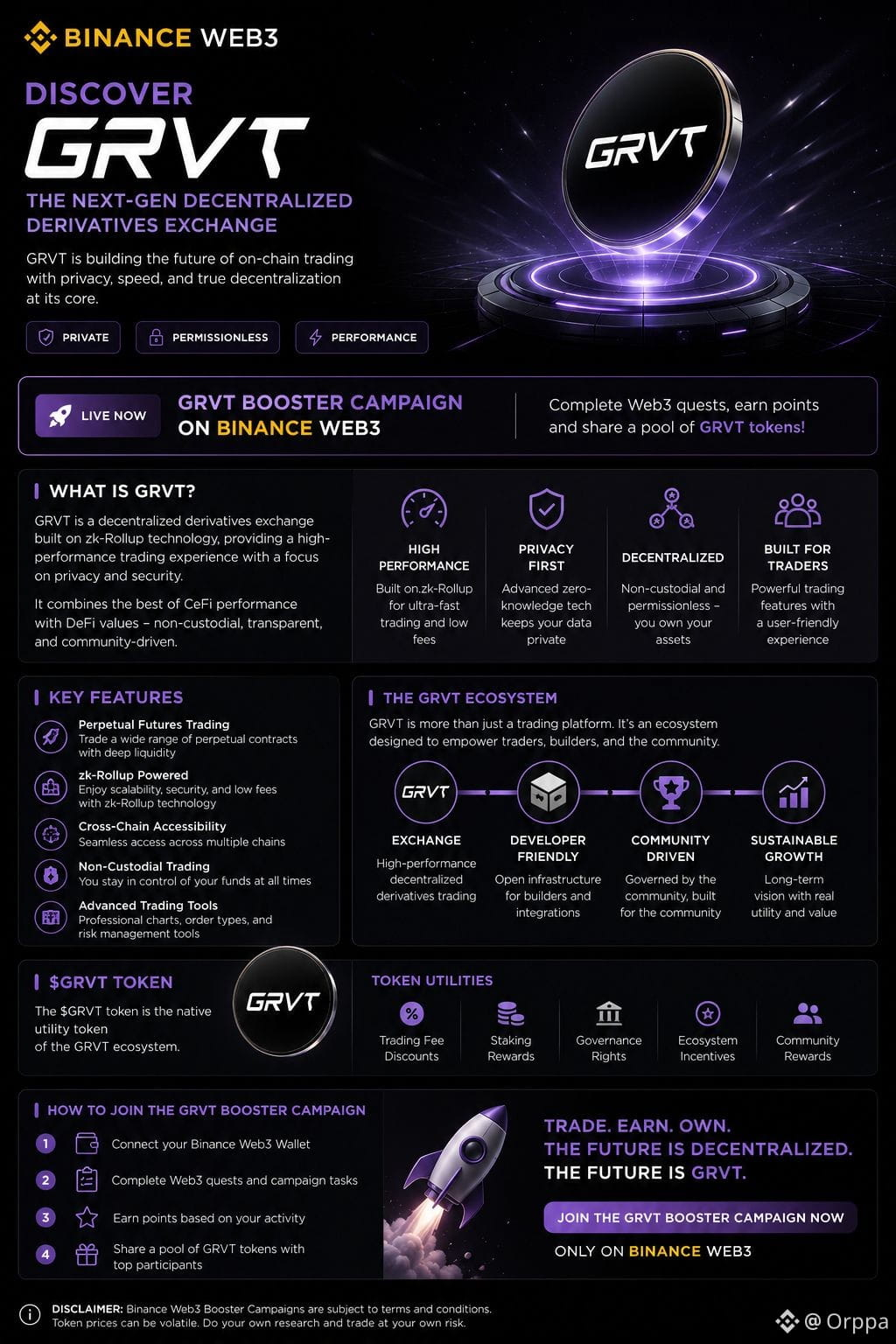
Entdecke GRVT – Eine neue Generation dezentralen Tradings
Die Blockchain-Branche entwickelt sich weiter, und ein Projekt, das zunehmend Aufmerksamkeit auf sich zieht, ist @grvt_io – eine dezentrale Derivatebörse, die die Performance zentralisierter Börsen mit der Transparenz und Sicherheit des dezentralen Finanzwesens verbinden soll.
Im Gegensatz zu traditionellen Börsen, bei denen Nutzer oft die Kontrolle über ihre Assets abgeben müssen, setzt GRVT auf eine nicht-verwahrende Trading-Erfahrung. So können Trader mehr Kontrolle über ihre Mittel behalten und gleichzeitig von einer modernen Handelsplattform profitieren.
🔹 Was macht GRVT interessant?
✅ Hochleistungs-Trading
GRVT zielt darauf ab, ein schnelles und effizientes Handelserlebnis zu bieten – ausgelegt für aktive Trader und mit dem Ziel, unnötige Reibung zu reduzieren.
✅ Datenschutz & Sicherheit
Das Projekt nutzt fortschrittliche Blockchain-Technologien, um die Privatsphäre der Nutzer zu verbessern und die Sicherheit zu stärken – ohne die Benutzerfreundlichkeit zu beeinträchtigen.
✅ Dezentrale Infrastruktur
Mit Dezentralisierung im Blick gebaut, arbeitet GRVT an einem Ökosystem, in dem Nutzer auf professionelle Trading-Tools zugreifen können, ohne vollständig auf zentralisierte Verwahrer angewiesen zu sein.
✅ Für Web3 entwickelt
GRVT greift die Prinzipien von Web3 auf, indem es Nutzern mehr Eigentum an ihren digitalen Assets gibt und gleichzeitig die Community-Beteiligung sowie das Wachstum des Ökosystems fördert.
🌐 GRVT auf Binance Web3
Die aktuelle GRVT-Booster-Kampagne auf Binance Web3 bietet Nutzern die Möglichkeit, das Ökosystem durch interaktive Missionen zu erkunden. Durch das Abschließen berechtigter Aufgaben können Teilnehmende Kampagnenpunkte verdienen und – gemäß den Regeln der Kampagne – um einen Anteil am verfügbaren Belohnungspool konkurrieren.
Diese Kampagne ist außerdem eine großartige Möglichkeit für Einsteiger, Web3-Wallets, dezentrale Anwendungen und das GRVT-Ökosystem auf einfache, geführte Weise kennenzulernen.
💡 Warum ich dieses Projekt verfolge
Ich mag es, Projekte zu entdecken, die darauf fokussieren, die dezentrale Trading-Erfahrung zu verbessern – und GRVT ist eine der Plattformen, die ich derzeit erkunde.
Wie immer: Denke daran, vor der Teilnahme an einem Blockchain-Projekt oder einer Kampagne deine eigene Recherche durchzuführen (DYOR).
#grvt @grvt_io
Entdecke GRVT – Eine neue Generation dezentralen Tradings
Die Blockchain-Branche entwickelt sich weiter, und ein Projekt, das zunehmend Aufmerksamkeit auf sich zieht, ist @grvt_io – eine dezentrale Derivatebörse, die die Performance zentralisierter Börsen mit der Transparenz und Sicherheit des dezentralen Finanzwesens verbinden soll.
Im Gegensatz zu traditionellen Börsen, bei denen Nutzer oft die Kontrolle über ihre Assets abgeben müssen, setzt GRVT auf eine nicht-verwahrende Trading-Erfahrung. So können Trader mehr Kontrolle über ihre Mittel behalten und gleichzeitig von einer modernen Handelsplattform profitieren.
🔹 Was macht GRVT interessant?
✅ Hochleistungs-Trading
GRVT zielt darauf ab, ein schnelles und effizientes Handelserlebnis zu bieten – ausgelegt für aktive Trader und mit dem Ziel, unnötige Reibung zu reduzieren.
✅ Datenschutz & Sicherheit
Das Projekt nutzt fortschrittliche Blockchain-Technologien, um die Privatsphäre der Nutzer zu verbessern und die Sicherheit zu stärken – ohne die Benutzerfreundlichkeit zu beeinträchtigen.
✅ Dezentrale Infrastruktur
Mit Dezentralisierung im Blick gebaut, arbeitet GRVT an einem Ökosystem, in dem Nutzer auf professionelle Trading-Tools zugreifen können, ohne vollständig auf zentralisierte Verwahrer angewiesen zu sein.
✅ Für Web3 entwickelt
GRVT greift die Prinzipien von Web3 auf, indem es Nutzern mehr Eigentum an ihren digitalen Assets gibt und gleichzeitig die Community-Beteiligung sowie das Wachstum des Ökosystems fördert.
🌐 GRVT auf Binance Web3
Die aktuelle GRVT-Booster-Kampagne auf Binance Web3 bietet Nutzern die Möglichkeit, das Ökosystem durch interaktive Missionen zu erkunden. Durch das Abschließen berechtigter Aufgaben können Teilnehmende Kampagnenpunkte verdienen und – gemäß den Regeln der Kampagne – um einen Anteil am verfügbaren Belohnungspool konkurrieren.
Diese Kampagne ist außerdem eine großartige Möglichkeit für Einsteiger, Web3-Wallets, dezentrale Anwendungen und das GRVT-Ökosystem auf einfache, geführte Weise kennenzulernen.
💡 Warum ich dieses Projekt verfolge
Ich mag es, Projekte zu entdecken, die darauf fokussieren, die dezentrale Trading-Erfahrung zu verbessern – und GRVT ist eine der Plattformen, die ich derzeit erkunde.
Wie immer: Denke daran, vor der Teilnahme an einem Blockchain-Projekt oder einer Kampagne deine eigene Recherche durchzuführen (DYOR).
#grvt @grvt_io
Die Blockchain-Branche entwickelt sich weiter, und ein Projekt, das zunehmend Aufmerksamkeit auf sich zieht, ist @grvt_io – eine dezentrale Derivatebörse, die die Performance zentralisierter Börsen mit der Transparenz und Sicherheit des dezentralen Finanzwesens verbinden soll.
Im Gegensatz zu traditionellen Börsen, bei denen Nutzer oft die Kontrolle über ihre Assets abgeben müssen, setzt GRVT auf eine nicht-verwahrende Trading-Erfahrung. So können Trader mehr Kontrolle über ihre Mittel behalten und gleichzeitig von einer modernen Handelsplattform profitieren.
🔹 Was macht GRVT interessant?
✅ Hochleistungs-Trading
GRVT zielt darauf ab, ein schnelles und effizientes Handelserlebnis zu bieten – ausgelegt für aktive Trader und mit dem Ziel, unnötige Reibung zu reduzieren.
✅ Datenschutz & Sicherheit
Das Projekt nutzt fortschrittliche Blockchain-Technologien, um die Privatsphäre der Nutzer zu verbessern und die Sicherheit zu stärken – ohne die Benutzerfreundlichkeit zu beeinträchtigen.
✅ Dezentrale Infrastruktur
Mit Dezentralisierung im Blick gebaut, arbeitet GRVT an einem Ökosystem, in dem Nutzer auf professionelle Trading-Tools zugreifen können, ohne vollständig auf zentralisierte Verwahrer angewiesen zu sein.
✅ Für Web3 entwickelt
GRVT greift die Prinzipien von Web3 auf, indem es Nutzern mehr Eigentum an ihren digitalen Assets gibt und gleichzeitig die Community-Beteiligung sowie das Wachstum des Ökosystems fördert.
🌐 GRVT auf Binance Web3
Die aktuelle GRVT-Booster-Kampagne auf Binance Web3 bietet Nutzern die Möglichkeit, das Ökosystem durch interaktive Missionen zu erkunden. Durch das Abschließen berechtigter Aufgaben können Teilnehmende Kampagnenpunkte verdienen und – gemäß den Regeln der Kampagne – um einen Anteil am verfügbaren Belohnungspool konkurrieren.
Diese Kampagne ist außerdem eine großartige Möglichkeit für Einsteiger, Web3-Wallets, dezentrale Anwendungen und das GRVT-Ökosystem auf einfache, geführte Weise kennenzulernen.
💡 Warum ich dieses Projekt verfolge
Ich mag es, Projekte zu entdecken, die darauf fokussieren, die dezentrale Trading-Erfahrung zu verbessern – und GRVT ist eine der Plattformen, die ich derzeit erkunde.
Wie immer: Denke daran, vor der Teilnahme an einem Blockchain-Projekt oder einer Kampagne deine eigene Recherche durchzuführen (DYOR).
#grvt @grvt_io
73
·
--
Nimm an der neuen Binance-Aktion „Pick and Win“ teil.
Gewinne bis zu 1 BNB. Jetzt mitmachen
#BinancePickAndWin
https://www.binance.com/activity/pick-and-win/2026-football-challenge?ref=1254230398
Nimm an der neuen Binance-Aktion „Pick and Win“ teil.
Gewinne bis zu 1 BNB. Jetzt mitmachen
#BinancePickAndWin
https://www.binance.com/activity/pick-and-win/2026-football-challenge?ref=1254230398
Gewinne bis zu 1 BNB. Jetzt mitmachen
#BinancePickAndWin
https://www.binance.com/activity/pick-and-win/2026-football-challenge?ref=1254230398
13
·
--
Die GRVT-Booster-Kampagne ist offiziell bei Binance Web3 angekommen! 🚀
Das ist eine großartige Gelegenheit, das GRVT-Ökosystem zu erkunden, während du einfache Web3-Aufgaben erledigst und wertvolle Belohnungspunkte sammelst. Egal, ob du ein regelmäßiger Binance-Web3-Nutzer bist oder gerade erst anfängst: Wenn du früh beitrittst, kannst du deine Belohnungen möglicherweise maximieren, bevor die Kampagne endet.
Verpasse die Chance nicht—verknüpfe deine Wallet, schließe die Missionen ab und fang heute an, Belohnungen zu verdienen!
#BinanceWeb3 #grvt @grvt_io
Die GRVT-Booster-Kampagne ist offiziell bei Binance Web3 angekommen! 🚀
Das ist eine großartige Gelegenheit, das GRVT-Ökosystem zu erkunden, während du einfache Web3-Aufgaben erledigst und wertvolle Belohnungspunkte sammelst. Egal, ob du ein regelmäßiger Binance-Web3-Nutzer bist oder gerade erst anfängst: Wenn du früh beitrittst, kannst du deine Belohnungen möglicherweise maximieren, bevor die Kampagne endet.
Verpasse die Chance nicht—verknüpfe deine Wallet, schließe die Missionen ab und fang heute an, Belohnungen zu verdienen!
#BinanceWeb3 #grvt @grvt_io
Das ist eine großartige Gelegenheit, das GRVT-Ökosystem zu erkunden, während du einfache Web3-Aufgaben erledigst und wertvolle Belohnungspunkte sammelst. Egal, ob du ein regelmäßiger Binance-Web3-Nutzer bist oder gerade erst anfängst: Wenn du früh beitrittst, kannst du deine Belohnungen möglicherweise maximieren, bevor die Kampagne endet.
Verpasse die Chance nicht—verknüpfe deine Wallet, schließe die Missionen ab und fang heute an, Belohnungen zu verdienen!
#BinanceWeb3 #grvt @grvt_io

1
85
·
--
Nimm am neuen Binance-Event „Pick & Win“ teil.
Gewinne bis zu 1 BNB. Jetzt mitmachen
#BinancePickAndWin
https://www.binance.com/activity/pick-and-win/2026-football-challenge?ref=1254230398
Nimm am neuen Binance-Event „Pick & Win“ teil.
Gewinne bis zu 1 BNB. Jetzt mitmachen
#BinancePickAndWin
https://www.binance.com/activity/pick-and-win/2026-football-challenge?ref=1254230398
Gewinne bis zu 1 BNB. Jetzt mitmachen
#BinancePickAndWin
https://www.binance.com/activity/pick-and-win/2026-football-challenge?ref=1254230398
12
Anmelden und weiter Inhalte entdecken
Krypto-Nutzer weltweit auf Binance Square kennenlernen
⚡️ Bleib in Sachen Krypto stets am Puls.
💬 Die weltgrößte Kryptobörse vertraut darauf.
👍 Erhalte verlässliche Einblicke von verifizierten Creators.
E-Mail-Adresse/Telefonnummer