

Trend Finder
1.3k Beiträge

Trend Finder
Melden
Nutzer blockieren
Self Dependent Trader - Growth and Alpha Tracker - Navigating Crypto Chaos - Sharing strategies and daily insights
Gelegenheitstrader
6.6 Monate
15 Following
65 Follower
1.1K+ Like gegeben
Beiträge
·
--
Übersetzung ansehen
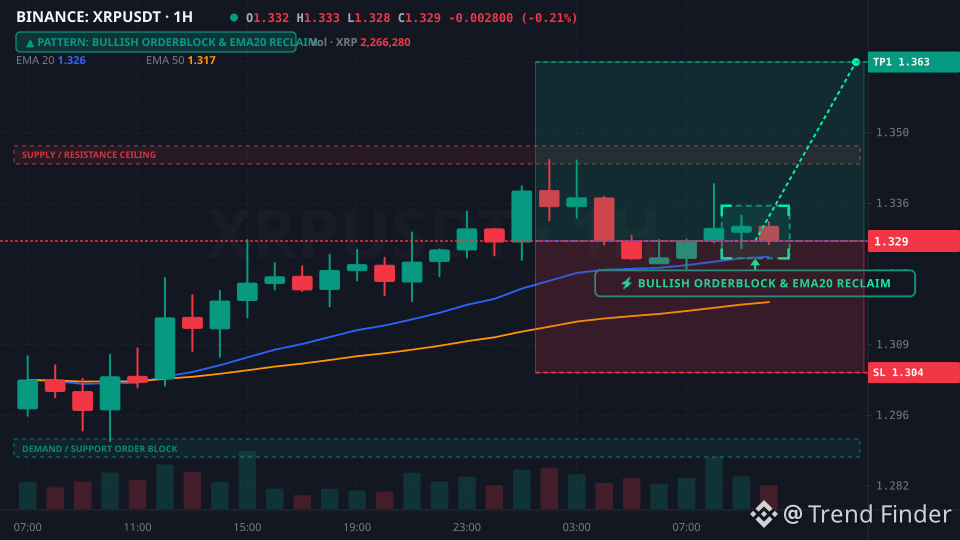
$XRP order flow is screaming accumulation as retail gets bored with $BTC. We just locked in a 55-point LONG breakout on the 1H, flipping the Bullish Orderblock and EMA20. Spot absorption is massive here with RSI sitting at a healthy 56.
Entry: 1.329 | SL: 1.304 | TP1: 1.363 | TP2: 1.385
#BinanceSquare #CryptoTrading #XRP
$XRP order flow is screaming accumulation as retail gets bored with $BTC . We just locked in a 55-point LONG breakout on the 1H, flipping the Bullish Orderblock and EMA20. Spot absorption is massive here with RSI sitting at a healthy 56.
Entry: 1.329 | SL: 1.304 | TP1: 1.363 | TP2: 1.385
#BinanceSquare #CryptoTrading #XRP
Entry: 1.329 | SL: 1.304 | TP1: 1.363 | TP2: 1.385
#BinanceSquare #CryptoTrading #XRP
·
--
Übersetzung ansehen
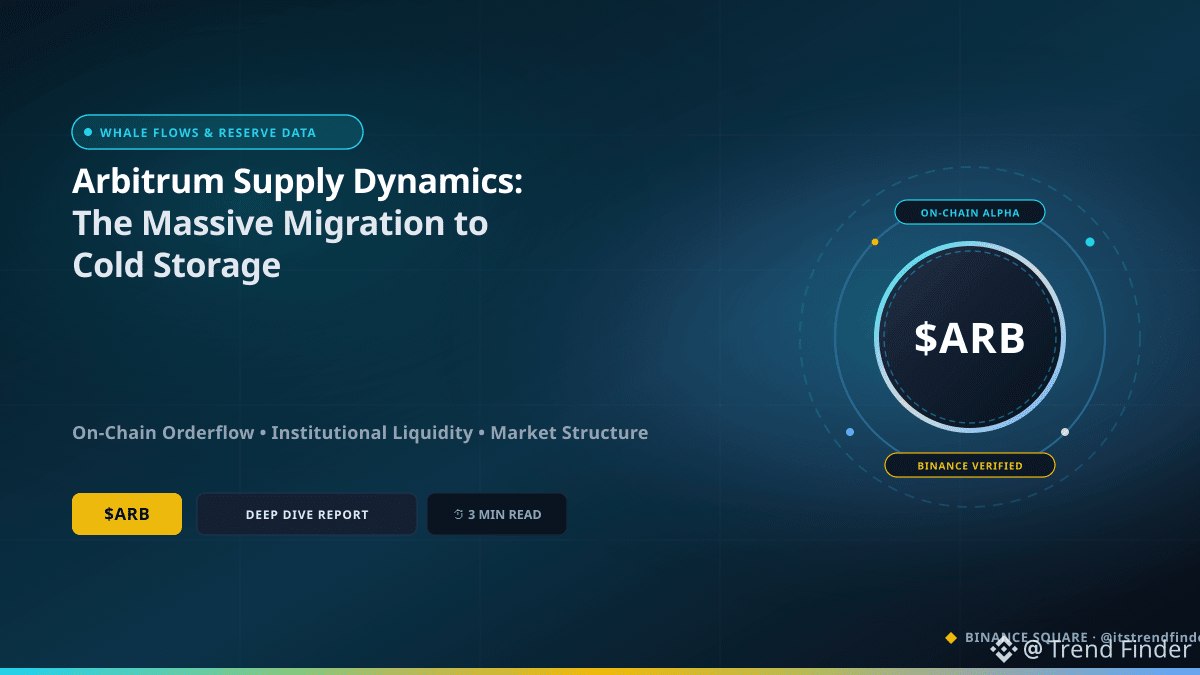
Arbitrum Supply Dynamics: The Massive Migration to Cold StorageArbitrum Supply Dynamics: The Massive Migration to Cold Storage
The noise surrounding the recent price volatility on $ARB is masking a significant structural shift in who actually owns the network. While the crowd is busy debating the impact of the next unlock cycle, the on-chain footprint of wallets holding between 1,000 and 10,000 units tells a much more disciplined story. We are seeing a relentless absorption of retail sell-side pressure by institutional-grade participants who are pulling assets off exchanges at a rate we have not seen in months.
When you analyze the exchange netflow data, the velocity of these withdrawals has accelerated. This is a clear migration from hot wallets to cold storage, effectively reducing the liquid float. The MVRV Z-Score is currently hovering in a zone that suggests ARB is significantly undervalued compared to its realized cap and the actual growth of the ecosystem Total Value Locked. Despite the looming unlock schedules that usually scare off the speculative cohort, the conviction among long-term holders is solidifying.
The supply distribution is undergoing a classic bottoming process where short-term holder addresses are thinning out while long-term whale cohorts steadily increase their balances. This tightening of the circulating supply against the backdrop of massive network utility is noteworthy. With a spot reference sitting around 0.17, the market is essentially pricing the asset as if ecosystem growth has stalled, yet the on-chain activity says otherwise. The gap between sentiment and the math is widening every single day.
Are you guys seeing the same exhaustion in the order books, or do you think the upcoming supply injections will continue to suppress any meaningful recovery?
#OnChainData #WhaleAlert
Arbitrum Supply Dynamics: The Massive Migration to Cold Storage
Arbitrum Supply Dynamics: The Massive Migration to Cold Storage
The noise surrounding the recent price volatility on $ARB is masking a significant structural shift in who actually owns the network. While the crowd is busy debating the impact of the next unlock cycle, the on-chain footprint of wallets holding between 1,000 and 10,000 units tells a much more disciplined story. We are seeing a relentless absorption of retail sell-side pressure by institutional-grade participants who are pulling assets off exchanges at a rate we have not seen in months.
When you analyze the exchange netflow data, the velocity of these withdrawals has accelerated. This is a clear migration from hot wallets to cold storage, effectively reducing the liquid float. The MVRV Z-Score is currently hovering in a zone that suggests ARB is significantly undervalued compared to its realized cap and the actual growth of the ecosystem Total Value Locked. Despite the looming unlock schedules that usually scare off the speculative cohort, the conviction among long-term holders is solidifying.
The supply distribution is undergoing a classic bottoming process where short-term holder addresses are thinning out while long-term whale cohorts steadily increase their balances. This tightening of the circulating supply against the backdrop of massive network utility is noteworthy. With a spot reference sitting around 0.17, the market is essentially pricing the asset as if ecosystem growth has stalled, yet the on-chain activity says otherwise. The gap between sentiment and the math is widening every single day.
Are you guys seeing the same exhaustion in the order books, or do you think the upcoming supply injections will continue to suppress any meaningful recovery?
#OnChainData #WhaleAlert
1
·
--
Übersetzung ansehen
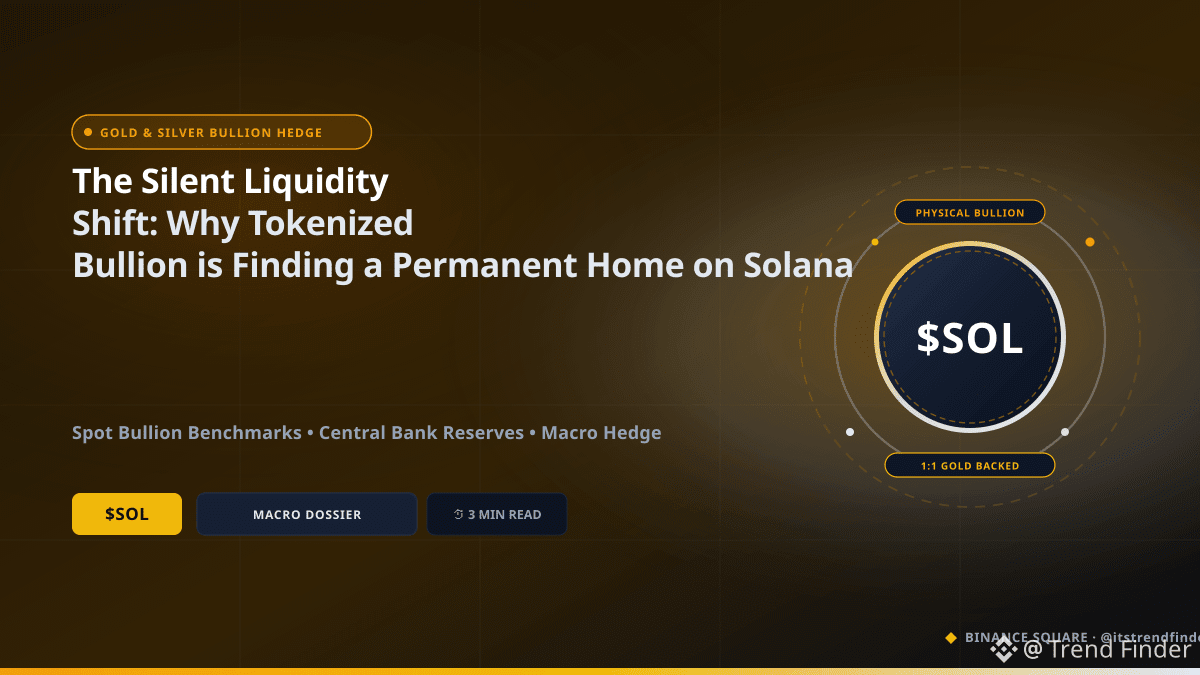
The Silent Liquidity Shift: Why Tokenized Bullion is Finding a Permanent Home on SolanaThe Silent Liquidity Shift: Why Tokenized Bullion is Finding a Permanent Home on Solana
While most traders are busy chasing high-leverage perps on base-layer volatility, a much more significant structural rotation is happening under the surface. The migration of hard assets into the digital ecosystem isn't a theory anymore; it is visible in the on-chain velocity of $SOL, which is currently holding steady around 102.61. Institutional desks are increasingly looking for ways to bridge the gap between physical gold and instant finality, and the data suggests they have found their pipeline.
Right now, spot gold is holding near 4140 per ounce while silver sits around 60.27, keeping the gold-silver ratio at a critical 68.5 level. In traditional finance, moving this kind of value involves settlement delays and heavy custodial fees. By using PAXG as a 1:1 physically backed bridge, capital is moving onto Solana to leverage its high-frequency settlement infrastructure. We are seeing the circulating float of these tokenized commodities tighten as more supply gets locked into yield-bearing DeFi vaults. This essentially turns gold from a static hedge into productive collateral that can be moved or traded instantly.
We are watching the birth of a 24/7 global commodity exchange that does not care about banking holidays or DXY fluctuations. When you combine sub-cent transaction costs with the transparency of on-chain bullion, the utility of SOL extends far beyond retail speculation. It becomes the foundational layer for institutional-grade real-world assets. Smart money is clearly positioning for a macro environment where liquidity and physical backing are the only things that matter.
Are you watching the gold-silver ratio closely for the next rotation, or are you waiting for the mainstream headlines to tell you the move already happened?
#Gold #Silver
The Silent Liquidity Shift: Why Tokenized Bullion is Finding a Permanent Home on Solana
The Silent Liquidity Shift: Why Tokenized Bullion is Finding a Permanent Home on Solana
While most traders are busy chasing high-leverage perps on base-layer volatility, a much more significant structural rotation is happening under the surface. The migration of hard assets into the digital ecosystem isn't a theory anymore; it is visible in the on-chain velocity of $SOL , which is currently holding steady around 102.61. Institutional desks are increasingly looking for ways to bridge the gap between physical gold and instant finality, and the data suggests they have found their pipeline.
Right now, spot gold is holding near 4140 per ounce while silver sits around 60.27, keeping the gold-silver ratio at a critical 68.5 level. In traditional finance, moving this kind of value involves settlement delays and heavy custodial fees. By using PAXG as a 1:1 physically backed bridge, capital is moving onto Solana to leverage its high-frequency settlement infrastructure. We are seeing the circulating float of these tokenized commodities tighten as more supply gets locked into yield-bearing DeFi vaults. This essentially turns gold from a static hedge into productive collateral that can be moved or traded instantly.
We are watching the birth of a 24/7 global commodity exchange that does not care about banking holidays or DXY fluctuations. When you combine sub-cent transaction costs with the transparency of on-chain bullion, the utility of SOL extends far beyond retail speculation. It becomes the foundational layer for institutional-grade real-world assets. Smart money is clearly positioning for a macro environment where liquidity and physical backing are the only things that matter.
Are you watching the gold-silver ratio closely for the next rotation, or are you waiting for the mainstream headlines to tell you the move already happened?
#Gold #Silver
4
·
--
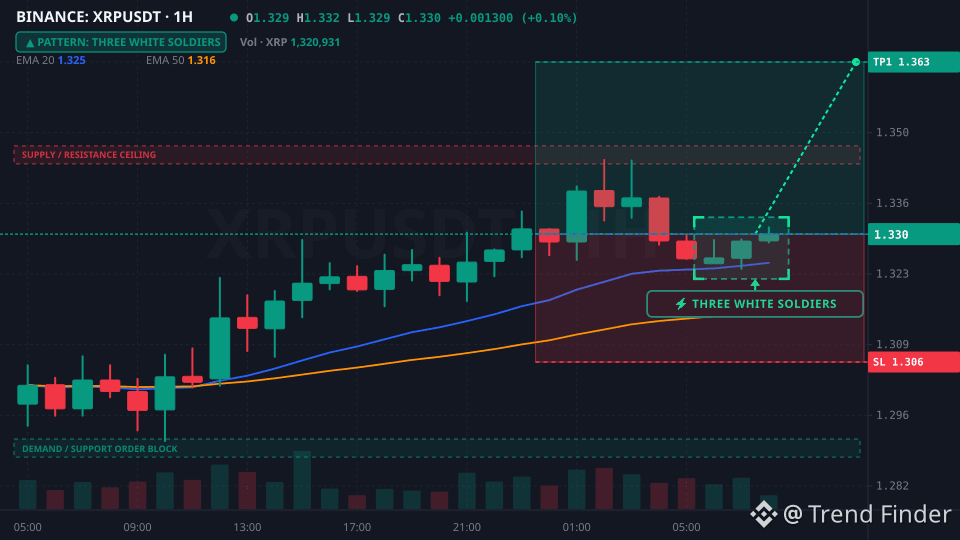
Institutionelle Desks positionieren sich aggressiv vor dem nächsten Move auf $XRP , während BTC konsolidiert. Dieser 55-Punkte-Ausbruch mit Three White Soldiers im 1-Stunden-Chart bestätigt die Rückeroberung des EMA20 bei 1.32468. Ein RSI von 56 signalisiert eine starke Absorption am Spotmarkt.
Einstieg: 1.3303 | SL: 1.306 | TP1: 1.363 | TP2: 1.385
$BTC
_
#BinanceSquare #CryptoTrading #XRP
Einstieg: 1.3303 | SL: 1.306 | TP1: 1.363 | TP2: 1.385
$BTC
_
#BinanceSquare #CryptoTrading #XRP
·
--
Übersetzung ansehen
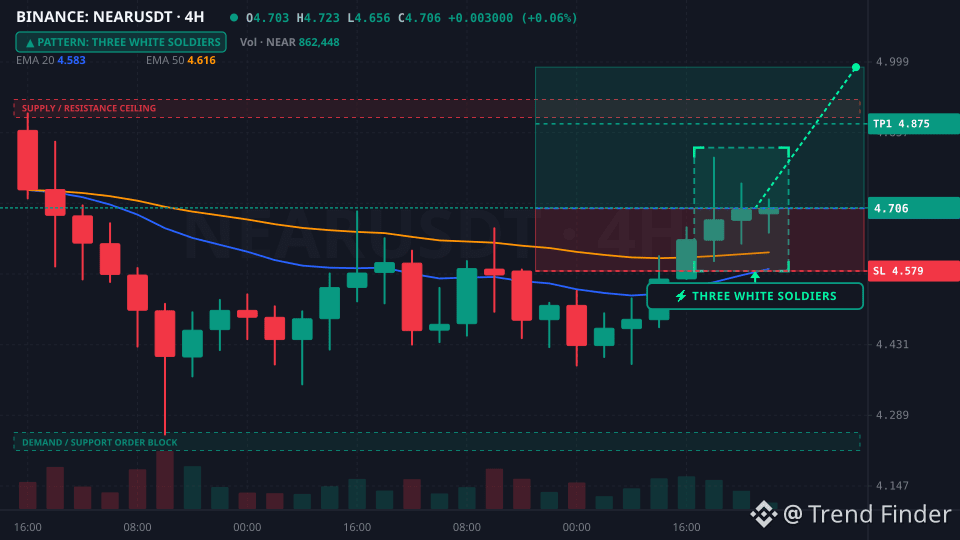
Smart money just finished mopping up retail panic on $NEAR. With $BTC range-bound, this clean 4H Three White Soldiers print confirms spot absorption pushing above EMA20. Momentum favors expansion here.
Entry: 4.705
SL: 4.579
TP1: 4.875
TP2: 4.989
#BinanceSquare #CryptoTrading #NEAR
Smart money just finished mopping up retail panic on $NEAR . With $BTC range-bound, this clean 4H Three White Soldiers print confirms spot absorption pushing above EMA20. Momentum favors expansion here.
Entry: 4.705
SL: 4.579
TP1: 4.875
TP2: 4.989
#BinanceSquare #CryptoTrading #NEAR
Entry: 4.705
SL: 4.579
TP1: 4.875
TP2: 4.989
#BinanceSquare #CryptoTrading #NEAR
·
--
Übersetzung ansehen
Fetch.ai On-Chain Health: Why ZK-Scaling and Settlement Speed Matter More Than NoiseFetch.ai On-Chain Health: Why ZK-Scaling and Settlement Speed Matter More Than Noise
The structural transition behind the Artificial Superintelligence Alliance is quietly rewriting the execution layer for $FET, yet most market participants remain fixated on surface-level price chop.
Looking past the immediate spot handle floating near 0.1805, on-chain metrics reveal a protocol aggressively optimizing its mainnet for high-throughput AI agent settlement. Daily active addresses have stabilized nicely after the initial merger noise, while computational overhead has dropped thanks to enhanced data availability layers and ZK-rollup architecture. By compressing transaction validation cycles, the network maintains consistent throughput without driving up gas fees for autonomous agent operations.
On-chain balance flows indicate that whale cohorts are actively treating current supply float as an accumulation zone. Post-merger tokenomics have front-loaded unlock schedules to mitigate long-tail sell pressure, giving FET a far cleaner float dynamic than competing infrastructure assets. With finality speeds shortening, the stack is asserting itself as an optimized AI settlement hub rather than a generic layer-2 alternative.
If network utilization and core developer commit frequency remain at current elevated levels, the underlying mainnet architecture will prove far more resilient than the broader altcoin market during the next liquidity expansion. Are you tracking developer commits and mainnet execution metrics, or are you just glued to the short-term chart?
#Layer2 #BlockchainScaling
Fetch.ai On-Chain Health: Why ZK-Scaling and Settlement Speed Matter More Than Noise
Fetch.ai On-Chain Health: Why ZK-Scaling and Settlement Speed Matter More Than Noise
The structural transition behind the Artificial Superintelligence Alliance is quietly rewriting the execution layer for $FET , yet most market participants remain fixated on surface-level price chop.
Looking past the immediate spot handle floating near 0.1805, on-chain metrics reveal a protocol aggressively optimizing its mainnet for high-throughput AI agent settlement. Daily active addresses have stabilized nicely after the initial merger noise, while computational overhead has dropped thanks to enhanced data availability layers and ZK-rollup architecture. By compressing transaction validation cycles, the network maintains consistent throughput without driving up gas fees for autonomous agent operations.
On-chain balance flows indicate that whale cohorts are actively treating current supply float as an accumulation zone. Post-merger tokenomics have front-loaded unlock schedules to mitigate long-tail sell pressure, giving FET a far cleaner float dynamic than competing infrastructure assets. With finality speeds shortening, the stack is asserting itself as an optimized AI settlement hub rather than a generic layer-2 alternative.
If network utilization and core developer commit frequency remain at current elevated levels, the underlying mainnet architecture will prove far more resilient than the broader altcoin market during the next liquidity expansion. Are you tracking developer commits and mainnet execution metrics, or are you just glued to the short-term chart?
#Layer2 #BlockchainScaling
10
·
--
Dogecoin jenseits des Memes: Wie On-Chain-Renditestrategien still und leise das Angebot verknappen
Jahrelang hing das Schicksal von Dogecoin von der Handelsdynamik zentralisierter Börsen und Ausschlägen der Stimmung in sozialen Medien ab. Doch gerade verändert ein struktureller Wandel bei der Kapitaleffizienz grundlegend, wie erfahrene Anleger mit $DOGE umgehen. Wir erleben den stillen Übergang eines spekulativen Wertspeichers zu einem renditegenerierenden Baustein für Sicherheiten in der dezentralen Finanzwelt.
On-Chain-Kennzahlen zeigen eine bemerkenswerte Verlagerung von Whale-Kapital: Es fließt aus den Hot Wallets von Börsen direkt in Liquiditätsbereitstellung und Kreditprotokolle. Da sich überbrückte Varianten und Wrapped-Versionen auf leistungsstarken Blockchains verbreiten, steigt der Gesamtwert der mit Derivaten aus dem Dogecoin-Ökosystem verbundenen, gesperrten Vermögenswerte stetig. Statt Spot-Token ungenutzt in Orderbüchern liegen zu lassen, setzen Inhaber mit institutionellem Anlagevolumen zunehmend auf Gebühren aus automatisierten Market Makern und auf Renditeprotokolle.
Das Aufkommen von Liquid-Staking-Abstraktionen und besicherten Krediten schafft eine starke Dynamik für die zugrunde liegende Tokenomics. Auch ohne native Proof-of-Stake-Belohnungen auf der Haupt-Blockchain binden Wrapped-Utility-Ebenen einen Teil des umlaufenden Bestands effektiv in Smart Contracts. Wird dieser Bestand gesperrt, um Protokolleinnahmen zu erzielen oder dezentrale Kredite zu besichern, schrumpft das effektiv verfügbare Spot-Angebot für starken Verkaufsdruck deutlich. Diese strukturelle Verknappung des Angebots sorgt in der Nähe der Referenzmarke von 0.07973 für eine echte On-Chain-Deckung.
Da die DEX-Volumenquoten im Vergleich zum Spot-Handelsvolumen auf zentralisierten Börsen steigen, beweist DOGE, dass es als produktive dezentrale Liquidität dienen kann – und nicht nur als spekulativer Handelsbestand. Die zugrunde liegende Marktstruktur entwickelt sich zu etwas deutlich Beständigerem.
Hältst du deine DOGE noch als Spot-Bestand auf Börsen und wartest auf den nächsten Stimmungsschub, oder beginnst du, deine Position als renditetragenden Vermögenswert zu betrachten?
#DeFi #TVL

1
5
·
--
Übersetzung ansehen
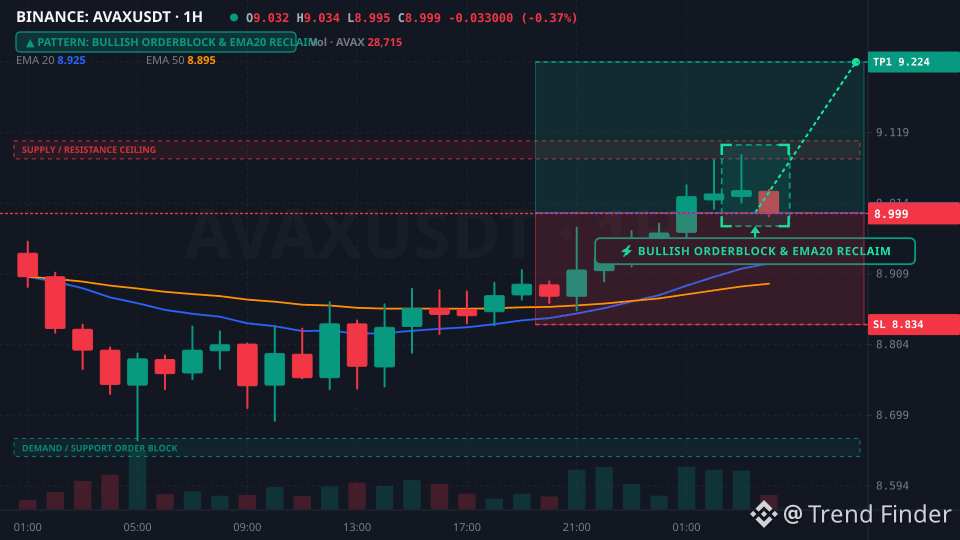
That liquidity flush on $AVAX was a textbook trap for late shorts. Desks are aggressively absorbing supply around the 1H EMA20 reclaim while $BTC stabilizes, priming orderflow for a run to range highs.
Entry: 9
SL: 8.834
TP1: 9.224
TP2: 9.373
#BinanceSquare #CryptoTrading #AVAX
That liquidity flush on $AVAX was a textbook trap for late shorts. Desks are aggressively absorbing supply around the 1H EMA20 reclaim while $BTC stabilizes, priming orderflow for a run to range highs.
Entry: 9
SL: 8.834
TP1: 9.224
TP2: 9.373
#BinanceSquare #CryptoTrading #AVAX
Entry: 9
SL: 8.834
TP1: 9.224
TP2: 9.373
#BinanceSquare #CryptoTrading #AVAX
1
28
·
--
Übersetzung ansehen
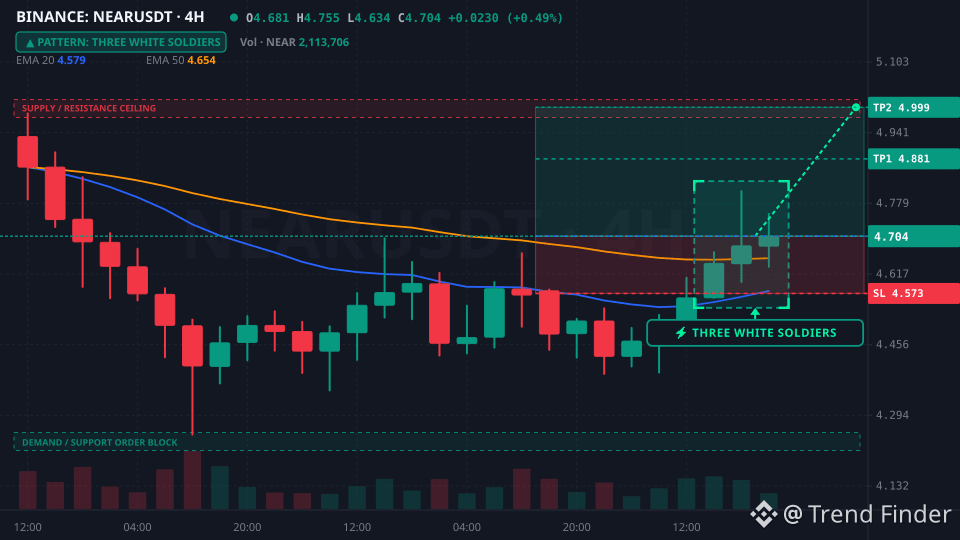
Retail got shaken out on that quick dip, but spot absorption on $NEAR has been relentless. A clean 4H Three White Soldiers print signals buyers defending the EMA20 while $BTC holds the range.
Entry: 4.704
SL: 4.573
TP1: 4.881
TP2: 4.999
#BinanceSquare #CryptoTrading #NEAR
Retail got shaken out on that quick dip, but spot absorption on $NEAR has been relentless. A clean 4H Three White Soldiers print signals buyers defending the EMA20 while $BTC holds the range.
Entry: 4.704
SL: 4.573
TP1: 4.881
TP2: 4.999
#BinanceSquare #CryptoTrading #NEAR
Entry: 4.704
SL: 4.573
TP1: 4.881
TP2: 4.999
#BinanceSquare #CryptoTrading #NEAR
1
33
·
--
Übersetzung ansehen
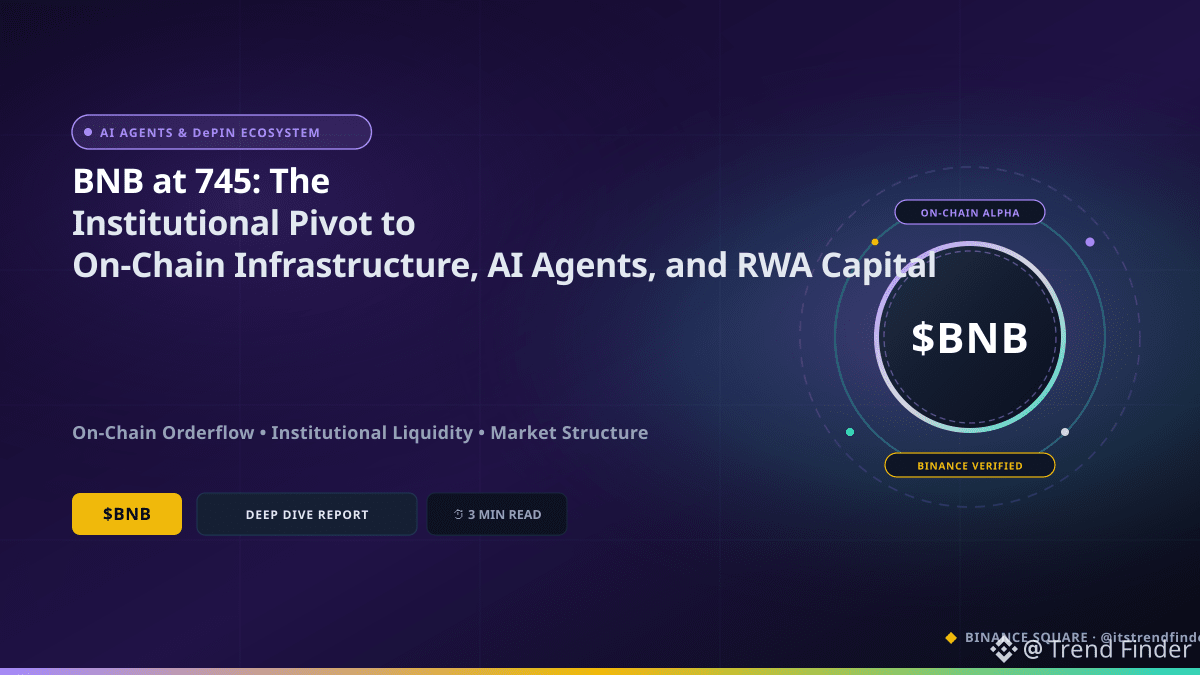
BNB at 745: The Institutional Pivot to On-Chain Infrastructure, AI Agents, and RWA CapitalBNB at 745: The Institutional Pivot to On-Chain Infrastructure, AI Agents, and RWA Capital
The quiet accumulation around the 745.02 mark for $BNB is shifting from simple exchange utility into a complex narrative about infrastructure dominance. While retail focus remains fragmented across short-term token rotations, institutional capital is quietly wiring the plumbing for the next multi-year expansion. We are watching a direct convergence between BNB Chain and three critical pillars: autonomous AI agents, DePIN node growth, and tokenized real-world assets.
On the AI front, developer adoption of account abstraction tools across the BNB ecosystem is accelerating rapidly. These frameworks allow autonomous agents to execute complex dApp transactions seamlessly without requiring constant manual wallet signatures. Parallel to this, DePIN hardware networks on the chain are recording all-time high node uptime metrics, establishing BNB as a foundational settlement layer for decentralized compute tasks previously locked within centralized cloud services.
The most compelling structural trend, however, sits within the RWA vertical. Tokenized treasury TVL on BNB Chain is trending noticeably upward as institutional desks allocate liquidity toward yield-bearing on-chain assets. When paired with the ongoing programmatic burn mechanism and tight circulating float management, the net supply dynamic is becoming increasingly inelastic. On-chain metric monitoring confirms that long-term whale wallets are absorbing spot supply rather than liquidating into broader market volatility, signaling a strong bet on structural utility.
As utility expands beyond trading fees into autonomous agent execution and enterprise treasury settlement, the fundamental valuation framework for the chain is evolving fast.
Are you tracking the steady institutional inflow into RWA protocols on BNB Chain, or is your focus still on short-term market noise?
#CryptoAI #RWA
BNB at 745: The Institutional Pivot to On-Chain Infrastructure, AI Agents, and RWA Capital
BNB at 745: The Institutional Pivot to On-Chain Infrastructure, AI Agents, and RWA Capital
The quiet accumulation around the 745.02 mark for $BNB is shifting from simple exchange utility into a complex narrative about infrastructure dominance. While retail focus remains fragmented across short-term token rotations, institutional capital is quietly wiring the plumbing for the next multi-year expansion. We are watching a direct convergence between BNB Chain and three critical pillars: autonomous AI agents, DePIN node growth, and tokenized real-world assets.
On the AI front, developer adoption of account abstraction tools across the BNB ecosystem is accelerating rapidly. These frameworks allow autonomous agents to execute complex dApp transactions seamlessly without requiring constant manual wallet signatures. Parallel to this, DePIN hardware networks on the chain are recording all-time high node uptime metrics, establishing BNB as a foundational settlement layer for decentralized compute tasks previously locked within centralized cloud services.
The most compelling structural trend, however, sits within the RWA vertical. Tokenized treasury TVL on BNB Chain is trending noticeably upward as institutional desks allocate liquidity toward yield-bearing on-chain assets. When paired with the ongoing programmatic burn mechanism and tight circulating float management, the net supply dynamic is becoming increasingly inelastic. On-chain metric monitoring confirms that long-term whale wallets are absorbing spot supply rather than liquidating into broader market volatility, signaling a strong bet on structural utility.
As utility expands beyond trading fees into autonomous agent execution and enterprise treasury settlement, the fundamental valuation framework for the chain is evolving fast.
Are you tracking the steady institutional inflow into RWA protocols on BNB Chain, or is your focus still on short-term market noise?
#CryptoAI #RWA
1
49
·
--
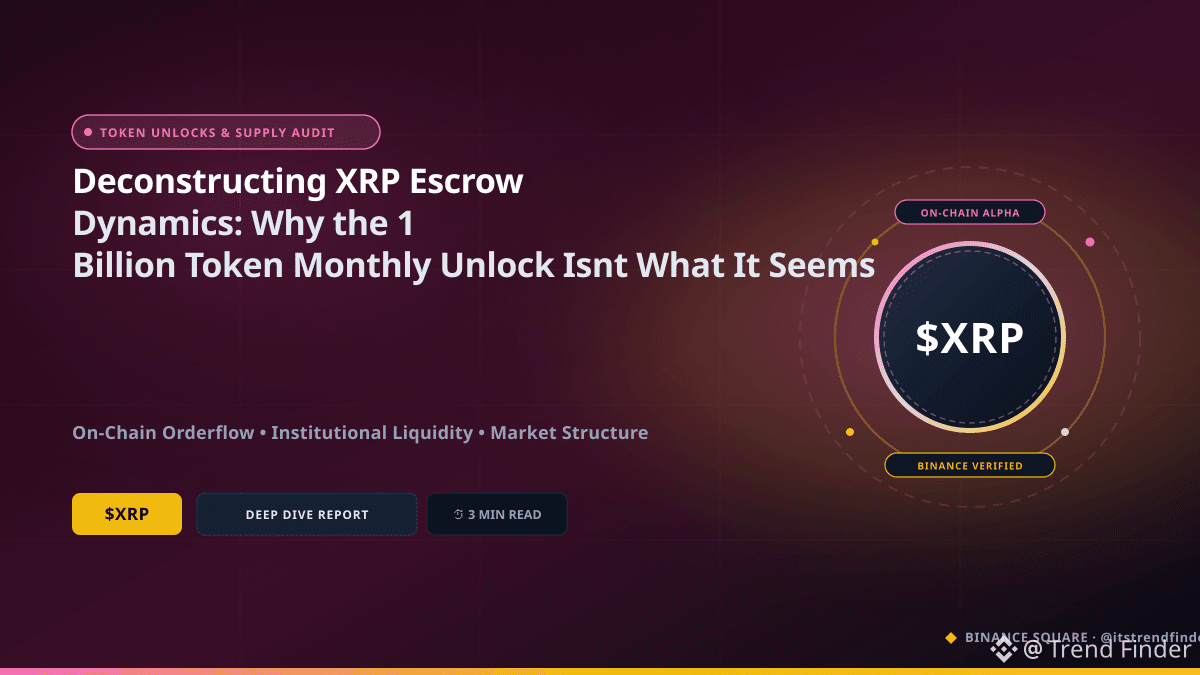
Die Dynamik der XRP-Escrows entschlüsselt: Warum die monatliche Freigabe von 1 Milliarde Token nicht das ist, was sie zu sein scheint
Wenn Sie beobachten, wie sich $XRP hover um den Referenzwert von 1,331 bewegt, übersehen Sie den entscheidenden Mechanismus, der das handelbare Angebot beeinflusst, wenn Sie nur auf die maximale Obergrenze von 100 Milliarden Token schauen. Jeden Monat werden programmatisch 1 Milliarde Token aus den Escrows von Ripple freigegeben. Auf dem Papier klingt das nach einer enormen Angebotsinflation, die die Orderbücher überwältigen könnte. Doch das tatsächliche On-Chain-Ledger erzählt eine ganz andere Geschichte.
Daten aus den vergangenen Quartalen zeigen, dass regelmäßig 600 bis 800 Millionen der gerade freigegebenen Token wieder in brandneue Escrow-Verträge eingezahlt werden, die erst Jahre später auslaufen. Damit gelangen netto effektiv nur 200 bis 400 Millionen Token pro Monat neu in den Umlauf. Berücksichtigt man außerdem den nativen Gebührenverbrennungsmechanismus des XRP Ledger-Protokolls, bei dem bei jeder Transaktion winzige Token-Bruchteile dauerhaft vernichtet werden, fällt die Nettoinflationsrate deutlich geringer aus als oberflächliche Schätzungen vermuten lassen.
Gleichzeitig haben von Großanlegern verwaltete Custody-Wallets und institutionelle Liquiditätspools erhebliche Teile des Nettoangebots im Umlauf aufgenommen. Das institutionelle Escrow-Management wirkt wie ein kontrollierter Wasserhahn statt wie ein geöffnetes Schleusentor und trägt dazu bei, das Gleichgewicht der Liquidität am Sekundärmarkt zu bewahren. Steigt bei einem hohen Transaktionsvolumen die Verbrennungsrate, entsteht ein aktiver Ausgleich zu den netto freigegebenen Token.
Dieses Zusammenspiel aus erneuten Escrow-Einzahlungen, der Geschwindigkeit der Transaktionsverbrennung und institutionellen Verwahrungs-Lockups zu verstehen, ist weitaus wichtiger, als auf Schlagzeilen über Freigabemengen zu reagieren.
Beobachten Sie genau, welcher Anteil der monatlichen Escrow-Freigaben zurückgeführt wird, oder verfolgen Sie eher die allgemeinen Veränderungen des umlaufenden Angebots?
#TokenUnlocks #Tokenomics
1
65
·
--
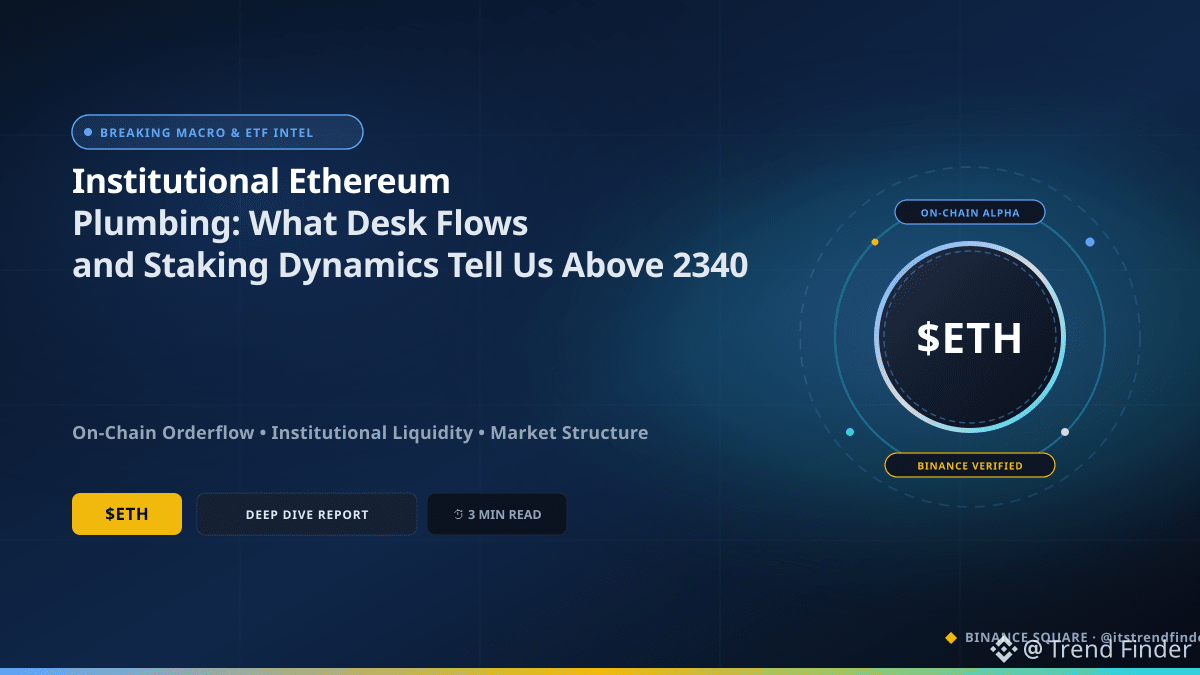
Die institutionelle Ethereum-Infrastruktur: Was Desk-Flows und Staking-Dynamiken oberhalb von 2340 verraten
Der Bildschirmglanz um 06:12 Uhr morgens wirkt ganz anders, wenn man über die unmittelbare Kursbewegung hinausblickt und untersucht, wo sich institutionelles Kapital tatsächlich positioniert. Während die Aufmerksamkeit von Privatanlegern weiterhin zwischen lokalen Marktschwankungen hin- und hergerissen ist, erzählen die Liquiditätskennzahlen unter $ETH von einer gezielten Absorption des Angebots.
Der Spot-ETH-Kurs bewegt sich derzeit um 2349.32 und liegt damit genau in einer Zone, in der institutionelle Desks über mehrere Sitzungen hinweg still und leise Verkaufsdruck aufgenommen haben. Anders als die hektischen spekulativen Rallys früherer Zyklen zeigen die aktuellen Zuflüsse in Spot-Produkte von BlackRock und Fidelity einen strukturierten Übergang vom kurzfristigen Handel hin zu Bilanzreserven.
Die eigentliche strukturelle Verknappung zeichnet sich bei der Dynamik des freien Umlaufs ab. Ein beträchtlicher Teil des umlaufenden Angebots bleibt in institutionellen Staking-Vaults und langfristigen Renditeprotokollen gebunden. Diese strukturelle Bindung des Token-Floats schafft einen anhaltenden Angebotsabfluss. Das bedeutet: Selbst eine moderate Spot-Nachfrage wirkt sich überproportional auf die verfügbare Orderbuchtiefe aus, sobald sich die makroökonomische Stimmung stabilisiert.
Gleichzeitig gewinnen die regulatorischen Rückenwinde an Kraft. Europas MiCA-Rahmen zwingt Desks dazu, ihre Verwahrungsinfrastruktur zu vereinheitlichen, während asiatische Finanzzentren regulatorische Vorlagen vorantreiben, die westlichen institutionellen Standards ähneln. Das aggregierte verwaltete Vermögen (AUM) an den großen Spot-Desks wächst stetig. Das signalisiert, dass Staatsfonds und traditionelle Vermögensverwalter von Erkundungspilotprojekten zu zentralen Allokationsmodellen übergehen.
Die Orderbücher werden systematisch von Akteuren bereinigt, die sich auf strukturelle Klarheit statt auf Intraday-Rauschen einstellen. Beobachtest du diese stille Verknappung des freien Umlaufs in deinen On-Chain-Daten, oder glaubst du, dass der makroökonomische Gegenwind institutionelle Desks noch etwas länger vorsichtig bleiben lässt?
#BitcoinETF #CryptoNews
1
64
·
--
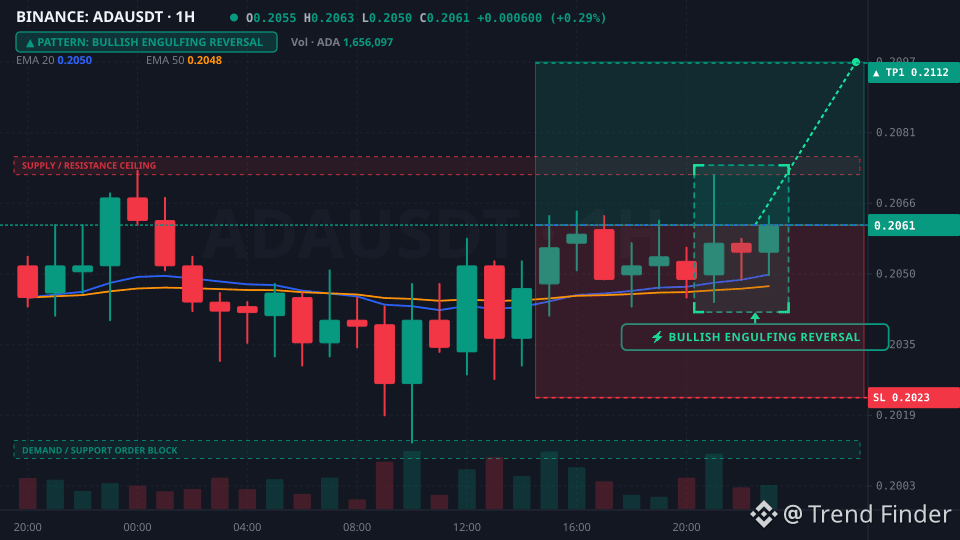
Die über Nacht platzierten Stops wurden bei $ADA sauber abgeholt, bevor eine starke bullische Engulfing-Kerze im 1-Stunden-Chart die Absorption durch institutionelle Akteure bestätigte. Während $BTC konsolidiert, deutet der Orderflow auf einen raschen Anstieg hin.
Einstieg: 0.2061
SL: 0.20229
TP1: 0.21124
TP2: 0.21467
#BinanceSquare #CryptoTrading #ADA
Einstieg: 0.2061
SL: 0.20229
TP1: 0.21124
TP2: 0.21467
#BinanceSquare #CryptoTrading #ADA
1
8
·
--
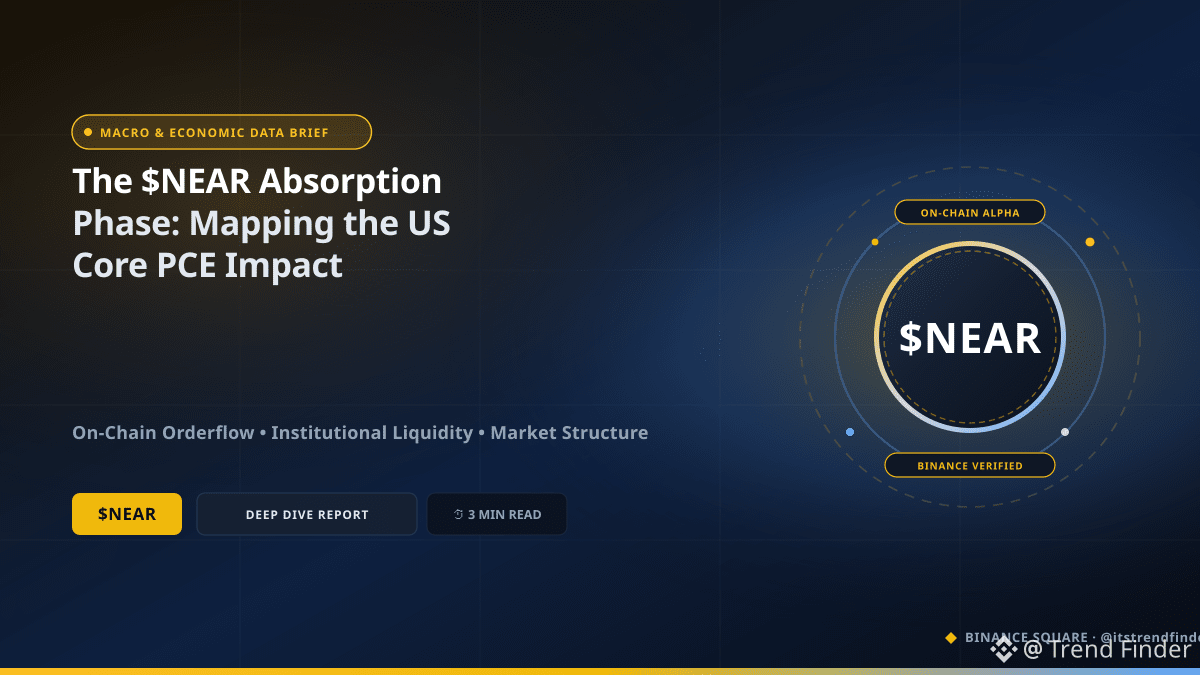
The $NEAR Absorptionsphase: Die Auswirkungen des US-Core-PCE einordnen
Die Stunden vor Tagesanbruch bieten stets die größte Klarheit, bevor das US Bureau of Economic Analysis die Zahlen veröffentlicht. Derzeit richten sich alle Augen auf den US-Core-PCE-Preisindex, der um 12:30 UTC erwartet wird. Da der Marktkonsens für die jährliche Veränderung bei 2,6 Prozent liegt, dürfte der eigentliche Impuls vom Wert der persönlichen Konsumausgaben ausgehen, für den derzeit ein Anstieg von 0,4 Prozent gegenüber dem Vormonat erwartet wird. Für diejenigen unter uns, die NEAR beobachten, ist dies mehr als nur ein makroökonomisches Ereignis: Es ist ein Test für die Angebotsstruktur, deren Aufbau wir im vergangenen Quartal verfolgt haben.
Bei einem Spot-Referenzkurs von etwa 4.702 erzählen die Tokenomics eine Geschichte von zunehmender Reife, die den üblichen Volatilitätsjägern entgeht. Wir befinden uns nicht mehr in einer Phase, in der frühe Freigaben von Venture-Investoren den täglichen Trend bestimmen. Stattdessen zeigen On-Chain-Daten, dass ein erheblicher Teil des umlaufenden Angebots von den Orderbüchern der Börsen in institutionelle Cold Wallets wandert. Diese Absorption trocknet die Liquidität auf der Verkaufsseite praktisch aus. Dadurch könnte jede positive makroökonomische Überraschung zu einem raschen Anstieg führen, denn es gibt schlicht nicht genug frei verfügbares Angebot, um einen plötzlichen Nachfrageschub abzufedern.
Die Korrelation zwischen dem DXY und Risikoanlagen ist hier der entscheidende Anker. Sollten die PCE-Daten die Erzählung der Federal Reserve von einer nachlassenden Inflation bestätigen, wird der knappe Bestand des derzeitigen NEAR-Angebots eher als Unterstützung denn als Belastung wirken. Besonders aufmerksam beobachte ich das Verhältnis zwischen dem umlaufenden Angebot und dem 24-Stunden-Handelsvolumen, während wir uns der Marke von 18:00 Uhr IST nähern. Die Erschöpfung des Verkaufsdrucks ist offensichtlich, und dass sich der Kurs trotz der makroökonomischen Unsicherheit stabil hält, deutet auf ein ganz anderes Käuferprofil hin als noch vor sechs Monaten. Rechnet ihr mit einem Volatilitätsschub, der schwache Hände aus dem Markt drängt, oder ist die institutionelle Unterstützung inzwischen zu solide, um zu brechen?
#NFP #MacroData
1
7
·
--
Übersetzung ansehen
Cardano On-Chain Valuation Disconnect: Whale Absorption Tightens Available FloatCardano On-Chain Valuation Disconnect: Whale Absorption Tightens Available Float
It is 03:31 AM and while the broader market stays distracted by quick-flip narratives, the raw chain data for $ADA is revealing a clear structural divergence. Looking past the range-bound spot reference near 0.2052, the 10k to 100k wallet cohort has been steadily net-adding to their balances over the past 72 hours. This steady absorption during a period of muted retail sentiment is a classic marker of deliberate smart money positioning.
The exchange reserve metrics tell an equally compelling story. Over the last 30 days, exchange-held balances have experienced a persistent downward drift as withdrawal velocity into cold storage accelerates. Mid-term sell-side pressure is being quietly absorbed without causing dramatic spikes in spot volatility. From a valuation standpoint, the MVRV Z-Score continues to sit well below the historical realized cap valuation, indicating that the token is priced far closer to fundamental re-accumulation than any speculative top.
Equally telling is the ratio between Long-Term Holders and Short-Term Holders. LTH addresses have shown zero appetite for panic selling into current liquidity gaps, maintaining their positions while short-term speculators exit. This creates a scenario where available spot float on exchanges is actively shrinking while realized valuation sits at deeply discounted levels. If exchange outflows maintain this pace, supply mechanics will likely dictate the next structural phase well before retail notices.
Are you seeing similar cold storage migration patterns in your on-chain tracking, or are you waiting for spot market momentum to catch up first?
#OnChainData #WhaleAlert
Cardano On-Chain Valuation Disconnect: Whale Absorption Tightens Available Float
Cardano On-Chain Valuation Disconnect: Whale Absorption Tightens Available Float
It is 03:31 AM and while the broader market stays distracted by quick-flip narratives, the raw chain data for $ADA is revealing a clear structural divergence. Looking past the range-bound spot reference near 0.2052, the 10k to 100k wallet cohort has been steadily net-adding to their balances over the past 72 hours. This steady absorption during a period of muted retail sentiment is a classic marker of deliberate smart money positioning.
The exchange reserve metrics tell an equally compelling story. Over the last 30 days, exchange-held balances have experienced a persistent downward drift as withdrawal velocity into cold storage accelerates. Mid-term sell-side pressure is being quietly absorbed without causing dramatic spikes in spot volatility. From a valuation standpoint, the MVRV Z-Score continues to sit well below the historical realized cap valuation, indicating that the token is priced far closer to fundamental re-accumulation than any speculative top.
Equally telling is the ratio between Long-Term Holders and Short-Term Holders. LTH addresses have shown zero appetite for panic selling into current liquidity gaps, maintaining their positions while short-term speculators exit. This creates a scenario where available spot float on exchanges is actively shrinking while realized valuation sits at deeply discounted levels. If exchange outflows maintain this pace, supply mechanics will likely dictate the next structural phase well before retail notices.
Are you seeing similar cold storage migration patterns in your on-chain tracking, or are you waiting for spot market momentum to catch up first?
#OnChainData #WhaleAlert

1
20
·
--
Übersetzung ansehen
Tokenized Bullion is Silently Outperforming: The Macro Thesis Behind PAXGTokenized Bullion is Silently Outperforming: The Macro Thesis Behind PAXG
The quiet hours of the morning are when structural shifts become obvious while the rest of the market hunts high-beta volatility. Tracking the divergence in tokenized real-world assets shows a significant macro realignment underway. With the spot reference for $PAXG hovering near 4059.3, we are watching a major real-world stress test of London Good Delivery vault backing in real time.
Physical gold spot prices testing 4140 per ounce alongside silver holding near 60.27 per ounce has driven the Gold/Silver Ratio to 68.5. This consolidation indicates that large-scale institutional capital is opting for on-chain commodity liquidity over the traditional friction and storage costs of physical bullion. As the Dollar Index displays ongoing fluctuations, the appetite for hard-backed digital assets is accelerating.
The mechanics of PAXG offer a unique framework compared to standard crypto assets. Because every single token represents a specific allocated gold bar in a London vault, the circulating float is strictly inelastic and tied 1:1 to physical supply. This structural design eliminates the dilution risks inherent in inflationary governance models. Institutional whales are recognizing that holding tokenized gold on-chain provides immediate DeFi composability, settlement efficiency, and 24/7 liquidity that traditional vaults simply cannot match. If this strategic accumulation continues, the rotation into tokenized commodities could redefine how modern portfolios manage macro downside risks.
Are you allocating to tokenized commodities as a long-term hedge against macro uncertainty, or are you still sticking strictly to crypto-native assets?
#Gold #Silver
Tokenized Bullion is Silently Outperforming: The Macro Thesis Behind PAXG
Tokenized Bullion is Silently Outperforming: The Macro Thesis Behind PAXG
The quiet hours of the morning are when structural shifts become obvious while the rest of the market hunts high-beta volatility. Tracking the divergence in tokenized real-world assets shows a significant macro realignment underway. With the spot reference for $PAXG hovering near 4059.3, we are watching a major real-world stress test of London Good Delivery vault backing in real time.
Physical gold spot prices testing 4140 per ounce alongside silver holding near 60.27 per ounce has driven the Gold/Silver Ratio to 68.5. This consolidation indicates that large-scale institutional capital is opting for on-chain commodity liquidity over the traditional friction and storage costs of physical bullion. As the Dollar Index displays ongoing fluctuations, the appetite for hard-backed digital assets is accelerating.
The mechanics of PAXG offer a unique framework compared to standard crypto assets. Because every single token represents a specific allocated gold bar in a London vault, the circulating float is strictly inelastic and tied 1:1 to physical supply. This structural design eliminates the dilution risks inherent in inflationary governance models. Institutional whales are recognizing that holding tokenized gold on-chain provides immediate DeFi composability, settlement efficiency, and 24/7 liquidity that traditional vaults simply cannot match. If this strategic accumulation continues, the rotation into tokenized commodities could redefine how modern portfolios manage macro downside risks.
Are you allocating to tokenized commodities as a long-term hedge against macro uncertainty, or are you still sticking strictly to crypto-native assets?
#Gold #Silver

1
22
·
--
Übersetzung ansehen
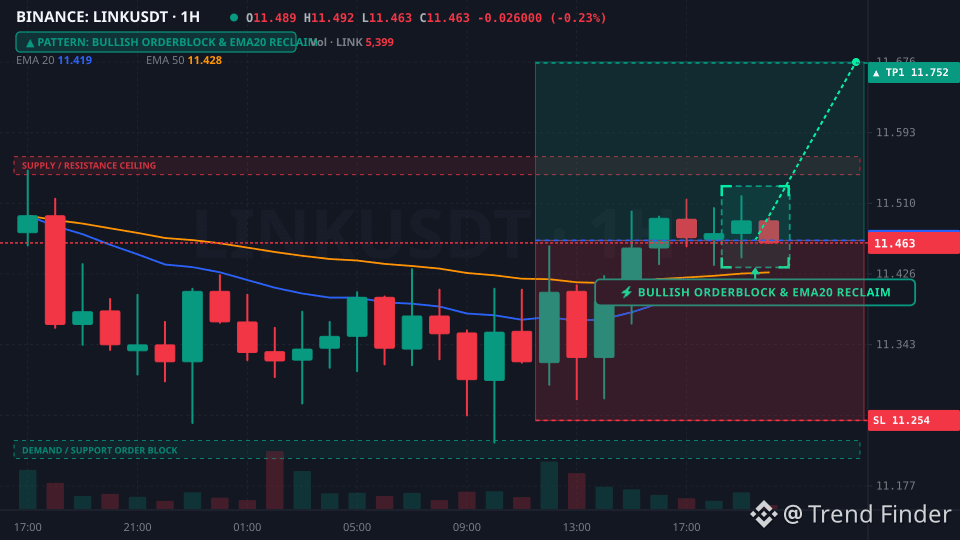
The silence of the early hours often exposes the cleanest footprints. Tracking a strategic shift in $LINK as the 1H Bullish Orderblock and EMA20 reclaim signal a clear trend flip. While $BTC remains stable, institutions are soaking up the lingering sell-side heat.
Entry: 11.466
SL: 11.254
TP1: 11.752
TP2: 11.943
#BinanceSquare #CryptoTrading #LINK
Entry: 11.466
SL: 11.254
TP1: 11.752
TP2: 11.943
#BinanceSquare #CryptoTrading #LINK
1
2
·
--
Übersetzung ansehen
It is 1:03 AM and while the rest of the market is fixated on the latest narrative flips...It is 1:03 AM and while the rest of the market is fixated on the latest narrative flips, I am staring at the supply delta behind $SOL. At a spot reference near 101.05, the narrative around Solana has shifted from pure meme-coin casino back to fundamental infrastructure scaling. What caught my eye today is the specific calibration of the circulating float versus the total supply. We are seeing a mature distribution phase where the initial venture unlocks have largely been absorbed by the secondary market, shifting control from early private rounds to on-chain decentralized liquidity pools.
Looking at the tokenomics, the FDV-to-circulating supply ratio is currently tightening as ecosystem utility expands through Solana-native liquid staking and protocol-level fee burns. Unlike the flash-in-the-pan new listings hitting the Binance Launchpool, SOL has transitioned into a utility-heavy asset where staking yield acts as a primary buffer against inflationary pressure. On-chain data shows smart money is moving away from purely speculative tokens and consolidating into core L1 layers where transaction throughput and active address growth are hitting new local highs.
The whale flow is telling a specific story: large wallets are not dumping into current spot strength. Instead, they are positioning for upcoming mainnet roadmap catalysts that focus on Firedancer and continued validator decentralization. The lack of heavy vesting cliffs in the immediate horizon is a major signal for institutional stability. When you strip away the noise of the last few weeks, it is clear that the network is sustaining a higher base level of capital efficiency than it was this time last year. The liquidity provisioning on Binance for SOL is now deep enough to handle institutional-grade volume without the extreme volatility seen in previous cycles. Does the current staking yield strike you as attractive enough to hold through the next volatility expansion, or are you looking for more aggressive growth in smaller ecosystem plays?
#BinanceLaunchpool #NewCryptoLaunch
It is 1:03 AM and while the rest of the market is fixated on the latest narrative flips...
It is 1:03 AM and while the rest of the market is fixated on the latest narrative flips, I am staring at the supply delta behind $SOL . At a spot reference near 101.05, the narrative around Solana has shifted from pure meme-coin casino back to fundamental infrastructure scaling. What caught my eye today is the specific calibration of the circulating float versus the total supply. We are seeing a mature distribution phase where the initial venture unlocks have largely been absorbed by the secondary market, shifting control from early private rounds to on-chain decentralized liquidity pools.
Looking at the tokenomics, the FDV-to-circulating supply ratio is currently tightening as ecosystem utility expands through Solana-native liquid staking and protocol-level fee burns. Unlike the flash-in-the-pan new listings hitting the Binance Launchpool, SOL has transitioned into a utility-heavy asset where staking yield acts as a primary buffer against inflationary pressure. On-chain data shows smart money is moving away from purely speculative tokens and consolidating into core L1 layers where transaction throughput and active address growth are hitting new local highs.
The whale flow is telling a specific story: large wallets are not dumping into current spot strength. Instead, they are positioning for upcoming mainnet roadmap catalysts that focus on Firedancer and continued validator decentralization. The lack of heavy vesting cliffs in the immediate horizon is a major signal for institutional stability. When you strip away the noise of the last few weeks, it is clear that the network is sustaining a higher base level of capital efficiency than it was this time last year. The liquidity provisioning on Binance for SOL is now deep enough to handle institutional-grade volume without the extreme volatility seen in previous cycles. Does the current staking yield strike you as attractive enough to hold through the next volatility expansion, or are you looking for more aggressive growth in smaller ecosystem plays?
#BinanceLaunchpool #NewCryptoLaunch
1
2
·
--
Übersetzung ansehen
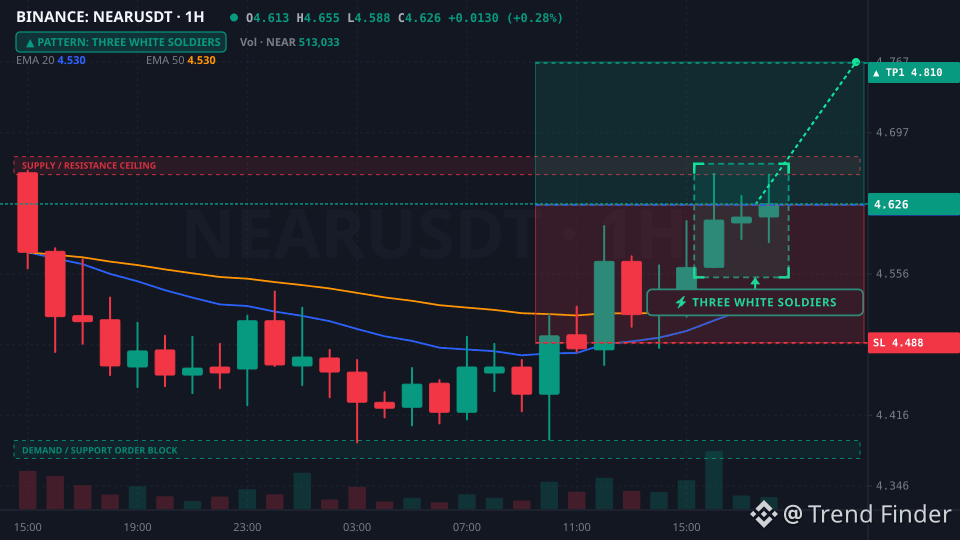
Heavy institutional bid walls are propping up $NEAR as a confirmed 1H Three White Soldiers breakout clears the EMA20. This 55-point move, paired with RSI 56 and $BTC stability, suggests a strong expansion phase. Spot absorption is evident as sell-side liquidity is exhausted.
Entry: 4.625 | SL: 4.488 | TP1: 4.81 | TP2: 4.933
#BinanceSquare #CryptoTrading #NEAR
Entry: 4.625 | SL: 4.488 | TP1: 4.81 | TP2: 4.933
#BinanceSquare #CryptoTrading #NEAR
1
2
·
--
Übersetzung ansehen
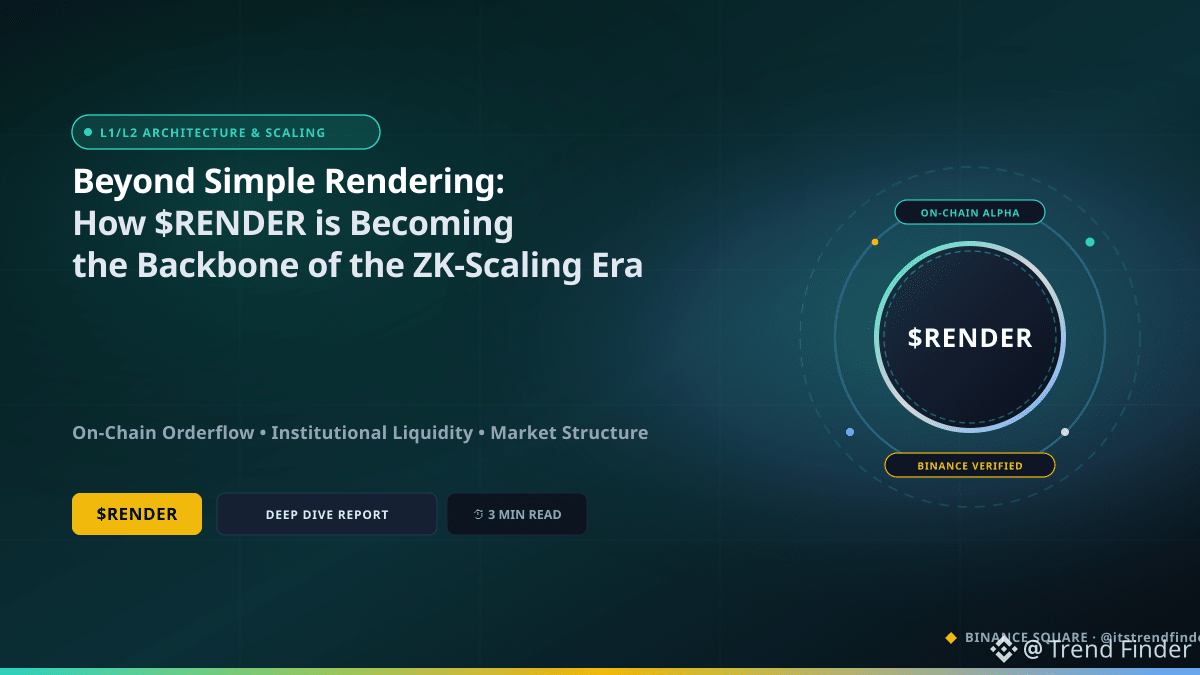
Beyond Simple Rendering: How RENDER is Becoming the Backbone of the ZK-Scaling EraBeyond Simple Rendering: How $RENDER is Becoming the Backbone of the ZK-Scaling Era
While the broader market fixates on the 1.687 price level, a more profound architectural shift is occurring within the decentralized compute sector. We are witnessing the maturation of the Render Network from a simple marketplace for 3D artists into a critical infrastructure layer for the zero-knowledge (ZK) ecosystem. As ZK-rollups scale, the demand for massive, verifiable compute power is skyrocketing, and that is where the real value proposition for RENDER now lies.
Looking at the current circulating supply metrics, we see a significant reduction in sell-side pressure compared to previous cycles. The float has matured, and on-chain whale flows suggest that institutional players are quietly absorbing liquidity in anticipation of the burn-and-mint equilibrium shifts. Unlike traditional L2s that compete solely on transaction speed, the Render Network is positioning itself to solve the actual compute bottleneck required for ZK-proof generation. Ethereum L2 blob fees have optimized data storage, but they do not solve the raw hardware requirements for high-throughput proofs at scale.
The correlation between daily active addresses and compute demand shows that the network migration is more than just a technical update; it is a fundamental pivot toward modular data availability. By offloading heavy compute tasks from the primary settlement layers, the ecosystem gains a massive efficiency boost without sacrificing finality. The migration stats tell the story better than any hourly candle: the network is successfully transitioning into a heavy-duty engine room for the modular future. As RENDER integrates deeper into the ZK-compute layer, the utility shift becomes undeniable.
The real question for the coming months isn't about gas costs—it is about who provides the power to verify the next billion transactions. Will decentralized GPU networks eventually replace centralized cloud providers as the primary source for ZK-proof compute?
_
#Layer2 #BlockchainScaling
Beyond Simple Rendering: How RENDER is Becoming the Backbone of the ZK-Scaling Era
Beyond Simple Rendering: How $RENDER is Becoming the Backbone of the ZK-Scaling Era
While the broader market fixates on the 1.687 price level, a more profound architectural shift is occurring within the decentralized compute sector. We are witnessing the maturation of the Render Network from a simple marketplace for 3D artists into a critical infrastructure layer for the zero-knowledge (ZK) ecosystem. As ZK-rollups scale, the demand for massive, verifiable compute power is skyrocketing, and that is where the real value proposition for RENDER now lies.
Looking at the current circulating supply metrics, we see a significant reduction in sell-side pressure compared to previous cycles. The float has matured, and on-chain whale flows suggest that institutional players are quietly absorbing liquidity in anticipation of the burn-and-mint equilibrium shifts. Unlike traditional L2s that compete solely on transaction speed, the Render Network is positioning itself to solve the actual compute bottleneck required for ZK-proof generation. Ethereum L2 blob fees have optimized data storage, but they do not solve the raw hardware requirements for high-throughput proofs at scale.
The correlation between daily active addresses and compute demand shows that the network migration is more than just a technical update; it is a fundamental pivot toward modular data availability. By offloading heavy compute tasks from the primary settlement layers, the ecosystem gains a massive efficiency boost without sacrificing finality. The migration stats tell the story better than any hourly candle: the network is successfully transitioning into a heavy-duty engine room for the modular future. As RENDER integrates deeper into the ZK-compute layer, the utility shift becomes undeniable.
The real question for the coming months isn't about gas costs—it is about who provides the power to verify the next billion transactions. Will decentralized GPU networks eventually replace centralized cloud providers as the primary source for ZK-proof compute?
_
#Layer2 #BlockchainScaling
1
11
Anmelden und weiter Inhalte entdecken
Krypto-Nutzer weltweit auf Binance Square kennenlernen
⚡️ Bleib in Sachen Krypto stets am Puls.
💬 Die weltgrößte Kryptobörse vertraut darauf.
👍 Erhalte verlässliche Einblicke von verifizierten Creators.
E-Mail-Adresse/Telefonnummer
Trendthemen
CanMicrosoftDeliverOnAI
241,201 Aufrufe
1,958 Kommentare
Berichtssaison, Session 3: Übertreffen Google und Microsoft die Gewinnerwartungen?
Binance Square Official
·113 Likes
·43.3k Aufrufe
CanGoogleDefindItsCore
139,156 Aufrufe
1,431 Kommentare
EarningsSeason
5.8M Aufrufe
27,955 Kommentare